BIOGRAPHICAL (continued 8)
Reading edition
While pursuing his study in the university Mr. Monty was president of the law students of Laval in 1895-6 and at the same time was one of the most active members of the model parliament established among the students. His eloquence and skill as a debater secured for him the leadership of the opposition in those early days. He also filled the offices of minister of railways and canals and speaker of the house. He is now governor general of the model parliament. He could undoubtedly win parliamentary honors today if he cared to do so, but, while possibly not without that laudable ambition which is so useful as an incentive in public life, he regards the pursuits of private life as in themselves abundantly worthy of his best efforts and concentrates his energies upon his professional duties. His devotion to his clients’ interests is proverbial and on many occasions he has proven himself capable of solving some of the most involved and intricate problems of the law. In politics he is a conservative, while socially he is connected with the St. Denis Club, the Club Canadien and the Délormier Club.
THE HON. SIR GEORGE A. DRUMMOND, K. C. M. G., C. V. O.
Sir George A. Drummond, whose strong intellectual force gave him mastery over the grave problems which confronted him as a member of parliament and enabled him to wisely direct his individual interests until success placed him among the most prosperous residents of Montreal, was born in Edinburgh, Scotland, in 1829. He enjoyed the educational opportunities offered by the high school of his native city and then entered the university in the Scottish capital. His laudable ambition and keen insight into conditions prompted him to seek the advantages offered in the new world when but twenty-five years of age, and therefore in 1854 he embraced the opportunity to come to Canada and assume the practical and technical management of a sugar refinery which was established in Montreal by John Redpath. In this connection the Gazette, at the time of his death, wrote: “The superior education he received in the institutions of his native Scotland was a powerful help to him when he was called upon to grapple with the problems which demanded solution in an undeveloped country like the Canada of that day. When he became interested in the Redpath sugar refinery in the year 1854 he was perhaps the best educated business man in the city, and whether as a member of the Board of Trade, a commanding figure in the realm of banking and commerce, or in social life, he maintained that scholarly supremacy and distinction which was willingly accorded him by his fellow citizens more than half a century ago.”
The Redpath sugar refinery proved a profitable enterprise from the beginning until tariff changes forced the plant to close down in 1874. Before resuming operations in that line in 1879, in which year he founded the Canada Sugar Refining Company, of which he became president, Sir George spent five years abroad in study, travel and recreation. In connection with the Canada Sugar Refining Company he developed one of the most important productive industries of the country and into other fields extended his efforts with equal discernment and success. He became a director in the Bank of Montreal in 1882 and in 1887 was elected vice president and subsequently president, so continuing until his death. He became president of the company owning and developing the coal and iron mines at Londonderry, Nova Scotia, and was prominently connected with many other commercial interests and projects. He was prominent as a stockholder and officer in the Mexican Light, Heat & Power Company and was a director of the Canadian Pacific Railway Company and the Ogilvie Milling Company and vice president of the Royal Trust Company. He was also largely interested in the Cumberland Coal & Railway Company, and his connection extended to various other corporations which have been important factors in the development and upbuilding of Canada’s manufacturing interests.
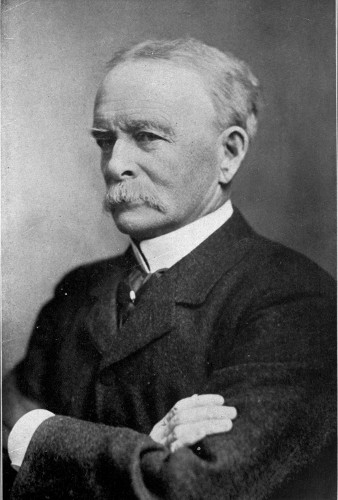
SIR GEORGE A. DRUMMOND
From the time that he became a resident of Canada Sir George Drummond also became a student of the conditions of the country as affected by political interests. Perhaps no better account of his prominent connection with political affairs can be given than by quoting from one of the local papers, which wrote: “Though coming from a country wedded to free trade ideas, he discovered that new industries could not thrive here in competition with the advanced and enterprising industrial activity on the other side of the line. Hence his early advocacy of protection, designated during the campaign of 1878 as the National Policy. Sir George Drummond had formed strong friendships with Sir John A. Macdonald, Sir Charles Tupper and the more aggressive leaders of the conservative party as represented in the Canadian parliament. He was induced, much against his will, to accept the party candidature in Montreal West against one of the most popular men of the day, Hon. John Young. The contest will be remembered by some of the older citizens as one of extreme bitterness, although Mr. Drummond’s utterances on the platform were marked by ability, force and breadth of view, and those who heard him during that campaign of 1872 were not by any means surprised when he developed later into an authority on banking and finance and a leader in the discussion of matters pertaining to trade and commerce. That contest preceded by two years the fall of the Macdonald government and the acceptance of office by pronounced free traders. As delegation after delegation went to Ottawa, and were told by the finance minister that ministers were as flies on a wheel in the matter of bringing prosperity to the land, Sir George Drummond and his friends, recruited from both of the old political parties, started to organize the downfall of free trade in Canada. It was, however, when the victory had been won at the polls, when Sir Charles Tupper’s powerful efforts at the by-elections in Ontario, Quebec and Nova Scotia had brought forth their fruit that the hardest work had to be done, and here the ability of Sir George came powerfully into play. Sir Leonard Tilly was finance minister, Sir Mackenzie Bowell was in charge of the customs and Sir John Macdonald was powerful in the country and in parliament. He had received a mandate to bring the National Policy into force; but this was easier to say than to do. The fiscal and customs policy of the country had to be changed. It was at this time that the counsel and business experience of Sir George Drummond were brought into requisition and with a great degree of success. Time convinced men of good-will and fair mind that the broad device of ‘Canada for the Canadians’ and ‘that which is beneficial to the manufacturer will be equally beneficial to the consumer and to the country at large,’ were right. Mr. Drummond was not a conservative during his active participation in party conflicts because of individual gain. He adhered to principle rather than to party name. In 1888, Sir John Macdonald being premier, Mr. Drummond was called to the senate, and up to the time of his death was the ablest representative of the mercantile classes in the upper house of the Canadian parliament. As chairman of the banking and commerce committee of the senate his word was as law. His opinions relating to matters of financial import were received without question by minister and member alike, and when Senator Drummond had spoken upon a question of this kind there was a general consensus of opinion that little remained to be said. It was by his mastery of his subject and by his prominence in all matters affecting the moneyed interests of the Dominion that he won the respect of his fellow legislators at the capital. There are many men who are members of the Montreal Board of Trade who look back to the days when Sir George Drummond was the president of that organization and remember the manner in which he filled that office, the highest in the gift of the merchants of the commercial metropolis of the Dominion. They remember the high character of his addresses and his wise contributions to the deliberations of the council. It was accepted as a matter of course that he should lead off either as the mover or the seconder in any great question that was to be presented to the government or to the other colonies or for the consideration of the whole empire. It was as director, vice president and president of the Bank of Montreal that the citizens of the financial center of the Dominion will remember Sir George Drummond long. His ability was freely acknowledged on both continents. He was at headquarters early and late, and his attention to the interests of the bank was as marked when the financial atmosphere was serene as when there were lowering clouds on the horizon. His attitude at the annual bank meetings was the personification of tact and courtesy, and his able addresses on such occasions, uttered as they were with a practiced finger resting upon the financial and commercial pulse of the continent, were read by Wall Street and London as eagerly as by the public men and bankers of his own country.”
Sir George Drummond was married twice. In 1857 he wedded Helen, daughter of John Redpath, and following her demise he was married in 1884 to Mrs. Grace Julia Hamilton, the widow of George Hamilton and a daughter of A. Davidson Parker, a Montreal pioneer. Two sons of the first marriage, Huntly R. and Arthur L., are living. The former succeeded his father as president of the Canada Sugar Refining Company, Ltd., and is ex-president of the Montreal Board of Trade; while the latter is actively identified with the Canada Sugar Refining Company, Ltd. One son, Guy, of the second marriage, is living and is a resident of Montreal.
The death of Sir George Drummond occurred February 2, 1910, removing from the stage of Canadian activity one of its most prominent and honored figures. He was a member of the St. James Club, the Rideau Club of Ottawa, the Reform Club of London, England, and the Manhattan Club of New York.
Sir George and Lady Drummond were in entire sympathy in their benevolent work. He was the founder of the Home for Incurables in Montreal, which was opened in 1894 under the charge of the Sisters of St. Margaret, and Lady Drummond bestowed much care and thought on the preparation of the interior of the institution. She has been connected with many societies and movements in Montreal that have to do with the betterment of the people, the city or its conditions. She is president of the Montreal Charity Organization and is actively connected with the Victorian Order of Nurses and with various other bodies. She was also a member of the Quebec Tercentennial celebration in 1908. She was the first president of the local branch of the National Council of Women. She was elected president of the Women’s Canadian Club of Montreal for 1907-8, and Lady Aberdeen places her “at the head of the Canadian sisterhood for activity in ‘promoting all that is true and just and beautiful among women, and for a consuming hatred for unrighteousness in every form.’” She presented a silver cup for competition by the members of the Royal Montreal Ladies’ Golf Club in 1905. Her name is not unknown in literary circles and among her writings is an essay entitled “Purity of Speech and Accent.” She was the first woman to speak at a public banquet in Montreal, being thus honored in 1898. In 1902 Sir George and Lady Drummond were presented at court.
On the occasion of the visit of our present King and Queen to Canada as Duke and Duchess of Cornwall and York Lady Drummond drew up and presented an address to Her Royal Highness on behalf of the National Council of Women of Canada, while Sir George Drummond at the same time presented to His Royal Highness the citizens’ commemorative medal. Lady Aberdeen has characterized Lady Drummond as “a woman of distinguished presence, with great personal charm, gifts of rare eloquence and the power of clothing her thoughts in most expressive language.” She is a member of the Anglican church, to which Sir George also belonged.
Sir George was much interested in agriculture and the breeding of fine stock. Huntlywood, his magnificent country place at Beaconsfield, was one of the finest country estates on the continent. He took great pride in its well kept condition, his private golf links affording an opportunity for indulgence in a recreation that he was fond of. He kept only the finest live stock that he could procure. His first Southdown sheep were bred from stock he secured from King Edward. In live-stock breeding Sir George aimed to maintain the same high standard of excellence that characterized everything he did. His stock nearly always won first prize at the big stock shows in Canada and the United States, where he met in competition the most noted breeders of his day. Sir George also maintained a beautiful country house, Gads Hill, at Cacouna, now the summer home of Lady Drummond. He took a most deep and helpful interest in all those things which promote the aesthetic and moral nature of the individual and which act as broadening and uplifting influences in the lives of all. He was the owner of one of the finest galleries of paintings on the American continent and was for some time president of the Art Association of Montreal. It is said of him that he “derived greater pleasure in pinning a badge to the breast of a member of the Victorian Order of Nurses and wishing a hearty God-speed to that devoted agent of good than in talking in millions around the directors’ table of the Bank of Montreal.” He was a knight commander of the Order of St. Michael and St. George and his character and his ability made his presence an honor in any gathering.
High encomiums were passed upon him by various members of the senate when he was called from this life on the 2d of February, 1910. One of the local papers said: “Flags flying at half-mast from many of the chief public and commercial buildings of the city yesterday testified at once to the extent of the interests with which Sir George A. Drummond was in his life connected, and to the respect in which he was held for his character, his ability and his public services.” The council of the Board of Trade, of which he had been president, said he was “long regarded as Montreal’s most eminent citizen and one of the oldest and most distinguished members of this board.” Senator Lougheed said that he “doubted if any other name had been more closely linked with the industrial life of Canada during the early part of the present generation than that of Sir George Drummond. Not only has he been associated with the material development of Canada, but he was equally a supporter of the arts and sciences and the great sociological questions of this progressive age. In 1903 he was the recipient of very distinguished honors at the hands of his sovereign on account of the eminent public services which he had rendered Canada. His name should long be revered in Montreal, where it was identified with the great commercial, educational and philanthropic institutions.” Senator Dandurand said of Sir George: “He was esteemed in Montreal as a liberal-minded man who did his utmost to maintain good understanding between the races in that city, always showing an earnest desire to promote harmony. He was a benefactor of all institutions that needed private help and will be missed by the community at large, as he was whole-souled, kind-hearted and one who played a most important role in all the affairs of the city.”
L. JOSEPH THEOPHILE DECARY.
L. Joseph Theophile Decary, an architect of pronounced ability and prominently known as a water color artist, was born at St. Jerome, Quebec, September 21, 1882, a son of Jean Baptiste and Marie Theolinde (Lauzon) Decary, natives of Lachine and St. Jerome respectively. When the north was open for settlement in 1876 the father went to St. Jerome to establish business as a jeweler and has there since resided. He is of the eighth generation in direct descent from Jean Decarys, who came to Canada with Maisonneuve in 1642. The name has since been variously spelled Decary, Decaire and Descarries.
L. Joseph Theophile Decary, whose name introduces this record, pursued a commercial course in St. Jerome, leaving the school there in 1900. He afterward spent a year in a pharmaceutical establishment and a year as a telegraph operator at St. Jerome Junction on the Canadian Pacific and Canadian Northern of Quebec Railroads. When nineteen years of age he left home, without funds, to go to Boston, hoping there to find the opportunity which would enable him to develop his latent talents in drawing. From an early age he had displayed considerable ability in that direction and believed that his line of life should be determined thereby. After reaching Boston he secured a situation in an architect’s office which brought him a salary of two dollars per week. He learned quickly and won the confidence and assistance of Guy Lowell, architect, who sent him to the Massachusetts Institute of Technology in Boston in October, 1903. There he followed a special course in architecture until 1905, and he now holds a degree from the association of architects of the Province of Quebec Architects’ Association. Following his return to Canada he opened an office in Montreal, where he has since practiced his profession, his ability gaining him a large clientage. He made the architectural design and plans for the Ecole des Hautes Etudes Commerciales of Montreal for Messrs. Gauthier and Daoust. His talent has been further developed in the field of fine arts as shown in his exhibitions in water colors at the season exhibit of the Art Association of Montreal in 1910. He is a member of the National Gallery of Ottawa.
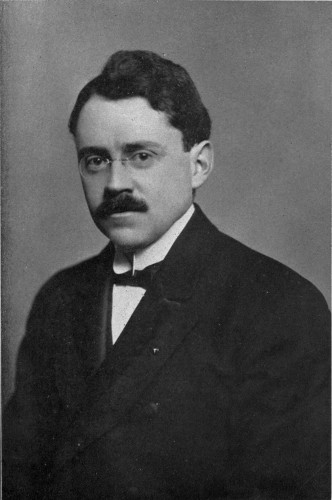
L. J. T. DECARY
On the 23d of April, 1906, at Point St. Charles, Montreal, Mr. Decary was united in marriage to Hattie G. Blanchard, a daughter of Captain J. B. Blanchard and widow of John Weatherburn. In his political views Mr. Decary is a liberal and is without political ambition or aspiration. He finds pleasant association with men of similar professional talents in the Technology Club of Lower Canada and interest and recreation through his membership in the St. John Yacht Club, of which he was vice commodore in the year 1913.
ALEXANDER DRUMMOND STEWART, M. D.
Dr. Alexander Drummond Stewart, a successful physician and since 1903 connected with the department of the interior of the port of Montreal, is a native of Toronto, Ontario, and acquired his preliminary education in the public schools of that city. He studied medicine in McGill University, graduating with the degree of M. D. in 1888. Since that time he has been continuously in practice.
Dr. Stewart opened his first office in Richmond, Quebec province, and he continued there until 1898, building up a large and representative clientage and in addition to its conduct serving in an able way as medical officer for the Grand Trunk Railway at that point. From Richmond he came to Montreal and in this city is now a successful practitioner. Besides conducting his extensive private practice he is medical officer of the department of the interior of the port of Montreal, an office to which he was elected in 1903.
Dr. Stewart married Miss Emma Christie of Lachute, Argenteuil county, Quebec, and they have become the parents of a daughter, Bessie. Dr. Stewart is a member of St. Paul’s Presbyterian church. He belongs to the Outremont Golf Club and the University Club. Along professional lines he is connected with the Montreal Medico-Chirurgical Society, and he keeps in touch with the most advanced medical thought, remaining always a close and earnest student.
JOHN MITCHELL.
John Mitchell, deceased, who was for thirty years a produce merchant of Montreal, was born at Dufftown, Scotland, in 1830, and his life record covered the intervening years to the 23d of November, 1904. His is a history of intense and well directed activity along the line in which he engaged. Educated in Scotland, he came to Quebec when sixteen years of age, having a brother, Robert, in this province. He made his entrance into business life as an employe of a Mr. Symes, a merchant; but after a short time he left the city of Quebec for Montreal at the solicitation of his uncle, Alexander Simpson, who was manager of the Bank of Montreal. Mr. Mitchell embarked in business in connection with others as a wholesale dealer in molasses, sugar and grain in the West Indies, but the business failed and for a short time thereafter Mr. Mitchell was a resident of Chicago, Illinois. Later he went to Milwaukee, Wisconsin, but soon returned to Montreal and here engaged in the produce business in which he continued for thirty years, or until his death. He lived a quiet life, being modest and unassuming in manner, and his uprightness and his honorable qualities won him the admiration and respect of all.
Mr. Mitchell was married to Margaret Turner of Keith, Scotland, and they became the parents of two children: John Alexander, living near Edmonton, Canada; and Alice Margaret, who is a member of the editorial staff of the Montreal Weekly Star. In 1871 Mr. Mitchell was again married in the cathedral of Montreal to Miss Elizabeth Scott, a daughter of Dr. Alexander Scott, who came from Keith, Scotland, and practiced in Montreal, but died when his daughter, Mrs. Mitchell, was but five years of age. In later years Mrs. Scott lived with her daughter until her death. The children of Mr. Mitchell’s second marriage were four in number, of whom two are living: Walter Scott, a resident of Sorrento, Notch Hill, British Columbia; and Charles Stewart, who is with the Ogilvie Flour Mills Company of Montreal.
The family attend the First Presbyterian church, of which Mr. Mitchell was a devout member. He was also one of the founders of the St. James Club and one of the original members of the Thistle Curling Club. While quiet and unassuming in manner, the circle of his friends was almost coextensive with the circle of his acquaintances, a fact indicative of an honorable and well spent life.
BARUCH BLOOMFIELD.
In the history of Judaism on the American continent the name of few deserve equal prominence with that of Baruch Bloomfield, scholar, educator and philanthropist, actuated at all times by the highest spirit of humanitarianism and moral force. He was born in Russia. He had liberal educational advantages for his time and throughout his life was a close and discriminating student. Crossing the Atlantic to the new world, he settled first in New York, where he engaged in teaching for about ten years. He was one of the greatest Hebrew and Talmudic scholars of his time. About 1870 he removed from New York to Montreal, which city remained his place of residence throughout the rest of his life. His family is one of the oldest Jewish families in Montreal, having been represented here for close to a century. For a quarter of a century prior to his demise he was a representative in Montreal of the German Jews in Jerusalem and was a prominent member of the McGill College Avenue synagogue to which he rendered great services at various times. A part of his life work was the collection of funds which he forwarded to the Holy Land, and to the cause he was himself a most generous contributor.
Mr. Bloomfield was united in marriage to Miss Dora Albert and they became the parents of five sons, four of whom still survive, Abraham, David, Harry and Samuel, together with the mother. In 1901 the family were called upon to mourn the loss of a daughter and sister, Jessie, whose death was an irreparable blow to the household. It was while still grieving over the loss of this daughter that Mr. Bloomfield went to New Orleans, called there by the sudden illness of his son, Moses, who was traveling through the south for a Canadian firm. He was a young man of twenty-five years and was looked upon in the community as a model young man of sterling character, of the highest honor and integrity, and of ideal purity in life. The father hastened to his bedside and every possible thing was done to restore him to health, but a few days after the father’s arrival Moses Bloomfield passed away. This death following so closely upon the death of the daughter was more than Mr. Bloomfield could bear. He died almost literally of a broken heart, passing away in New Orleans on the 31st of December, 1901, aged fifty-six years. The sudden demise of father and son has been greatly deplored by the entire Jewish community and especially by the Shaar (Hashomayim) congregation to which they belonged. A beautiful memorial service was held at the McGill College Avenue synagogue. The remains of father and son were interred in a cemetery in New Orleans, but at the memorial service in Montreal hundreds of their friends gathered to pay the last tribute of respect and to thus honor their memory. In his address Rabbi Bernard M. Kaplan said: “We have assembled in this House of God from all parts of the city to mourn a great and grievous loss which we have sustained by the untimely demise of two most virtuous, most pious and most respected members of the community, a father and son who under the most pathetic circumstances found their graves in a strange land. The son, while yet in the freshness and bloom of life, expired in the embrace of a loving father who had traversed almost a continent to gaze once more upon the innocent and serene countenance of his child.” Rabbi Kaplan said that some would mourn more deeply the loss of the young man—his associates and friends who were closely connected with him—while to others the death of the father, which had come as a more telling blow, yet by all the death of each would be felt, for each was a man largely ideal in his home relations and in his relations to his friends and to his congregation. Mr. Bloomfield was a most devoted and loving father as well as a most kind, considerate and affectionate husband. “He not only loved his wife, but true to the teachings of the Talmud, of which he was a great student, he honored and respected her. His family life was an inspiration to every lover of ideal home life. His modest home was a veritable sanctuary whose atmosphere was permeated by serene peace, true purity, and sincere piety. And, again, every one who appreciates gentleness of manner and gentleness of disposition, purity of life and purity of thought, faith in God and faith in humanity, devotion to religion and devotion to every other duty, sincerity of speech and sincerity of action, must lament the loss which the community sustains by the death of Baruch Bloomfield, for he embodied all these qualities and many more. He loved peace and pursued it. He loved Hebrew learning and devoted his life to it. He loved Judaism and made great sacrifices for it. He loved charity and gave it. I approached him myself several times on matters of charity. Not only did he contribute a great deal more that I thought his means allowed him, but what is more, he gave his share with all his heart and soul—so much so that he reminded me of the proverbial romantic Hebrew charity which meant not only the giving of money but also the giving, so to speak, of the very heart with it.
“For a period of twenty-five years Baruch Bloomfield, from time to time collected and forwarded considerable funds to the Holy Land. It was the supreme passion of his life to step some day on the Holy Land. His wish like that of Moses has not, however, been realized. He died on this side of the Jordan. But, friends, there was no need for Baruch Bloomfield to go to Palestine in order to be on holy land. I say in all sincerity, that the ground where so pure and so pious a man as Baruch Bloomfield stood, studied or prayed, was holy. It was sanctified by the holiness of an ideal Jewish life. Yea, the very ground wherein his body, the shrine of so beautiful a soul is deposited is positively holy. Baruch Bloomfield was an ish kaddish, a holy man in the traditional sense of the term. A truly holy man sanctifies his surroundings.”
SIR THOMAS GEORGE RODDICK, M. D., LL. D., F. R. C. S.
Sir Thomas George Roddick, M. D., LL. D., F. R. C. S., was born at Harbour Grace, Newfoundland, July 31, 1846, a son of the late John Irving Roddick and Emma Jane Martin. His father was a native of Dumfriesshire, Scotland, and was for many years principal of the government school at Harbour Grace. After pursuing his preliminary education with his father, and, later, in the Truro Model and Normal Schools of Nova Scotia, Sir Thomas entered McGill University in 1864 in preparation for the practice of medicine, which he intended to make his life’s work. He graduated M. D., C. M., in 1868, and was the Holmes Gold Medallist and final prizeman of his year. Immediately following his graduation he was appointed assistant house surgeon and afterwards house surgeon of the Montreal General Hospital, which position he held for six years. Later, he received an appointment as attending surgeon to that institution and in 1874 entered upon private practice. From 1872 to 1874 he was lecturer on hygiene in McGill University and was demonstrator of anatomy during 1874 and 1875. In the latter year he was made professor of clinical surgery, which position he held for fifteen years, when he became professor of surgery, occupying that chair until 1907. He was dean of the medical faculty of McGill from 1901 till 1908.
In 1896 Sir Thomas was elected president of the British Medical Association, being the first colonial physician ever honored by election to that office, which he held from 1896 to 1898. He presided at the Montreal meeting and was subsequently elected vice president for life of that, the largest and most important medical body in the world.
He is president of the Montreal branch of the Victorian Order of Nurses; president of the Alexandra Hospital for Contagious Diseases; vice president of the Royal Edward Institute; consulting surgeon to the Royal Victoria Hospital and Montreal General Hospital. He was a member of the royal tuberculosis commission recently appointed by the Quebec government; is a past president of the Medico-Chirurgical Society of Montreal, and of the Canadian Medical Association, of which latter body he was recently appointed honorary president. When the Newfoundland Society of Montreal was organized a few years ago he was appointed honorary president. In 1898 Edinburgh University recognized his services to medicine by conferring upon him the honorary degree of LL. D.; in 1903 Queen’s University honored him in a like manner; in 1899 he was elected an honorary F. R. C. S., London. After resigning the deanship of the medical faculty of McGill in 1908, he was appointed a governor of McGill University. He was one of the first surgeons on this continent to employ Lister’s methods in the treatment of wounds.
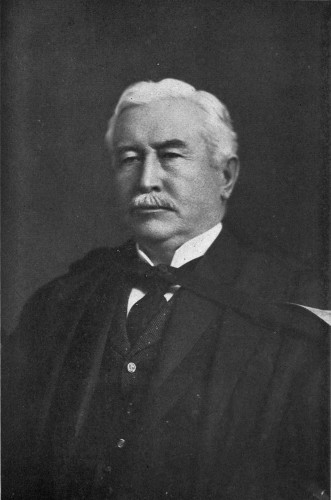
SIR THOMAS G. RODDICK
Sir Thomas’ connection with the militia of Canada dates as far back as 1868, when he joined the Grand Trunk Artillery as assistant surgeon, and was under orders for the second Fenian raid in 1870. He subsequently commanded the University Company of the Prince of Wales Rifles and was appointed surgeon to that regiment in 1885. During the Northwest rebellion in the same year he organized the hospital and ambulance service for the expeditionary force and was in charge of the medical service in the field, holding the rank of deputy surgeon general of militia, was mentioned in despatches and recommended for the C. M. G. For his services on this occasion, and for the Fenian raid, he holds the service medals, and also the long-service medal. He attained the rank of lieutenant colonel in 1900 and is now on the retired list of officers.
Sir Thomas is a conservative in politics and represented St. Antoine division over two parliaments, sitting in the house of commons from 1896 until 1904. His chief reason for entering politics was to exploit a scheme which he had long advocated, viz., that of Dominion medical registration, for which a federal act was necessary. The “Roddick Bill” so-called, passed parliament in 1902, was amended and became operative in 1911. Thus was established a one-portal system for entrance to the practice of medicine throughout the Dominion of Canada. A Dominion medical council was at once organized, of which Sir Thomas was elected first president.
Sir Thomas was married in 1880 to Miss Marion McKinnon, a daughter of the late William McKinnon of Pointe Claire, P. Q. Her death occurred in 1890, and he afterwards wedded in September, 1906, Miss Amy Redpath, daughter of the late J. J. Redpath of Montreal. His religious faith is that of the Presbyterian church.
He is a member of the Hunt Club, the University Club and the Mount Royal Club. His residence is at 705 Sherbrooke Street, West.
Patriotism, courage and generosity have always characterized him, and, notwithstanding the demands ever made upon him in his professional life, he has always found time to take an active part in all movements having to do with the social and moral welfare of his adopted city.
FERDINAND GUSTAVE LEDUC.
Among the representative bankers of Montreal is Ferdinand Gustave Leduc, manager of the Banque d’Hochelaga, and as such enjoys high prestige among his colleagues. He is considered an authority upon financial matters, and that this judgment is not misplaced is evident from the success with which he manages this eight-million-dollar institution. Although he has attained a high place among the captains of finance he is modest and unassuming in his demeanor, ever ready to receive a caller or listen to the most humble of his employes in order to keep in touch with the smallest details of his business and all situations and conditions that might affect the financial world. Mr. Leduc is a native of the province of Quebec, his birth having occurred at Beauharnois on the 31st of March, 1871. He is a son of Michel Ferdinand and Mathilde (Vachon) Leduc and was educated in his native city in 1884, became a student at St. Joseph’s College of Burlington, Vermont. The earliest records of the Leduc family in Canada refer to one Jean Le Duc, born in 1624, a son of Jean and Cécile (La Chaperon) Le Duc. On May 11, 1652, Jean Le Duc, first mentioned, married Marie Soulinié at Montreal and died about fifty years later, on April 19, 1702. This record is taken from the “Dictionnaire Généalogique,” compiled by Abbé Tanguay.
Ferdinand G. Leduc early displayed an interest in the banking business and in 1886, after leaving the academy in Vermont, entered upon a position with La Banque Jacques Cartier, with which institution he remained until 1899, becoming well acquainted with all the details as regards investments and credits and the multitudinous duties and responsibilities connected with the management and direction of a large financial establishment. Since 1899 Mr. Leduc has been manager of the Banque d’Hochelaga, his extraordinary ability finding recognition in this important position. The bank has a capital and reserve of about eight million dollars and is one of the strongest financial institutions in the Dominion.
On the 14th of January, 1894, Mr. Leduc married Miss Corinne Bisson, a daughter of E. H. Bisson, a prominent man along various lines and well known as a member of the provincial parliament. Mr. and Mrs. Leduc have three children: Louis Philippe, aged seventeen; Gabrielle, aged twelve; and Jeanne Aimée, aged ten. The family affiliates with the Catholic church.
Mr. Leduc takes a deep interest in the metropolitan development of Montreal and is ever ready to extend or place at the disposal of the general public his time or means in order to promote worthy public enterprises. Although he has not cared to actively participate in public life, he has done much to promote the growth of the city in his private capacity. Personally he is approachable, kindly and dignified—a gentleman of pleasing manners and fine appearance, combining with grace of manner an American demeanor of democracy which readily makes for him friends who are devoted to him on account of the substantial qualities of his character.
FREDERICK ERNEST THOMPSON, M. D.
Dr. Frederick Ernest Thompson, who since 1890 has been in continuous practice of his profession in Montreal, his signal ability commanding for him a distinguished place in medical circles and a wide and representative patronage, was born in the city of Quebec, Quebec province, and acquired his early education in the grammar and high schools there. He followed this by a course in Morrin College and after completing this entered McGill University from which he was graduated M. D. in 1890. He still remains a close and earnest student of his profession, keeping in touch with its most advanced and modern thought.
Dr. Thompson began practice in Montreal in the fall of 1890, and his ability attained instant recognition. Since that time constant study and research and steadily widening experience have broadened and developed his powers, and he is today one of the most successful and prominent physicians and surgeons in the city where he makes his home. In the latter line of work he has become especially proficient as his position in the department of obstetrics and operative surgery on the staff of the Women’s Hospital plainly shows. He is a member of the Montreal Medico-Chirurgical and the Canadian Medical and British Medical Associations, and a fellow in the Edinburgh Obstetrical Society, and his ability is widely recognized in professional circles.
PROFESSOR CHARLES EBENEZER MOYSE.
Professor Charles Ebenezer Moyse, a member of the faculty of McGill University since 1878 and since 1903 dean of the faculty of arts and vice principal of McGill, needs no introduction to the readers of this volume, for his fame and ability as an educationist and writer, both of verse and of prose, have made his name a familiar one from coast to coast. He was born at Torquay, England, March 9, 1852, a son of the late Charles Westaway and Mary Anne (Jenkins) Moyse, the former of Torquay and the latter a daughter of John Jenkins, of Exeter. He was educated first of all at the Independent College, Taunton, and subsequently at University College, London. He obtained the Bachelor of Arts degree of the University of London in 1874. He was university exhibitioner in English and also headed the honor list in animal physiology. His career as an educationist has been a successful one from the outset. He was appointed headmaster of St. Mary’s College, Peckham, and while filling that position was elected in 1878 to the Molson professorship of English literature at McGill University, Montreal. In 1903 McGill conferred upon him the honorary degree of LL. D. In the same year he was appointed dean of the faculty of arts and vice principal. His position in the university at once indicates his high standing in the profession. He was editor in chief of the McGill University Magazine, now the University Magazine, for five years, and has for many years been president of the McGill College Cricket Club, a fact which indicates that his interest is not merely along literary lines.
Professor Moyse has ever been a close and discriminating student and has found his greatest pleasure as well as his chief activity in roaming through the fields of the world’s literature and finding companionship with the men of master minds. The result of his labors has, in part, been given to the world in a number of published volumes and articles. In 1879 he brought out a volume entitled “The Dramatic Art of Shakespeare,” and in 1883 “Poetry as a Fine Art.” In 1889, under the pseudonym “Belgrave Titmarsh,” he published a volume entitled “Shakespeare’s Skull,” and he published in 1910, a volume entitled “Ella Lee; Glimpses of Child Life,” consisting of poems reminiscent of his childhood days in Devonshire. In 1911 appeared “The Lure of Earth,” a volume of poems of a more serious character. He has also written various poems and literary articles which have appeared in the leading magazines of the day.
In June, 1883, Professor Moyse wedded Janet McDougall, the eldest daughter of John Stirling of Montreal. Mrs. Moyse has been deeply interested in a movement for providing playgrounds for children in Montreal, her efforts in that direction being untiring, and she is now a director of the Parks and Playgrounds Association. Professor Moyse has been a close student of all the interesting problems and significant questions of the day and absorption in books has never made him neglectful of the duties and obligations of citizenship. His social nature finds expression in his membership in the Thistle Curling Club and University Club. He has been characterized as “a highly cultured man who has had a brilliant career as an educationist.”
GEORGE HAGUE.
Respected by all who know him, no man occupies a more creditable position in banking circles than does George Hague of Montreal, who for many years was prominently identified with the management of important financial affairs. He has been equally well known by reason of his active support of benevolent and philanthropic objects and by his interest in phases of public-spirited citizenship. He was born at Rotherham, Yorkshire, England, January 13, 1825, a son of Mr. John Hague, and comes from an old family of bankers, as some or other of his relatives have for generations back been connected with the leading bank in the town. Mr. Hague has passed the eighty-ninth milestone on life’s journey and his career has been one of usefulness and honor.
His early education was acquired at Morgate Academy, in his native town, where his proficiency in mental arithmetic placed him at the head of the school when yet a mere boy. His school days over, he entered into active connection with financial interests as an employe of the Sheffield Banking Company. He remained in Great Britain until 1854, when he came to Canada, having accepted the position of financial manager of a firm of railway contractors. Two years later he became accountant at the head office in the newly organized Bank of Toronto. The steps in his orderly progression are easily discernible. He advanced from one position to another which brought upon him larger responsibilities and duties, each, however, finding him adequate to the demands made upon him. He was appointed manager of the Bank of Toronto at Cobourg, Ontario, and in 1863 succeeded the late Mr. Angus Cameron as cashier of the bank, in which capacity he remained until 1876. It was during this period that Mr. Hague’s influence was felt in some of the most important legislation affecting banking interests in Canada. The government had brought in two measures in succession, for the regulation of the currency. To the first, some of the western bankers were inclined to agree, but Mr. Hague conceived its operation would be prejudicial to the interests of a bank like the Bank of Toronto, and the finance minister was prevailed on to make it optional instead of compulsory. Only one bank consented to embrace its provisions, and, for some years, matters went along undisturbed. The second measure was far more dangerous, and was wholly compulsory. It was founded on the American currency plan, which was then at the zenith of its popularity, and had not yet developed any of the unfavorable features which afterwards transpired. This Canadian government measure, many bankers, particularly from Ontario and Nova Scotia, concluded would be utterly unsuitable to the circumstances of Canada, and they determined to give it strenuous opposition. Mr. Hague was appointed secretary of an informal association for the purpose, and the contest was maintained through two or three sessions of parliament. There were powerful influences at the back of the government in favor of the measure and the contest was a very determined one. At length when Sir Francis Hincks had been appointed finance minister, a satisfactory compromise was proposed, accepted, and its provisions incorporated in the Dominion note act, and the Canadian bank act, which both shortly followed.
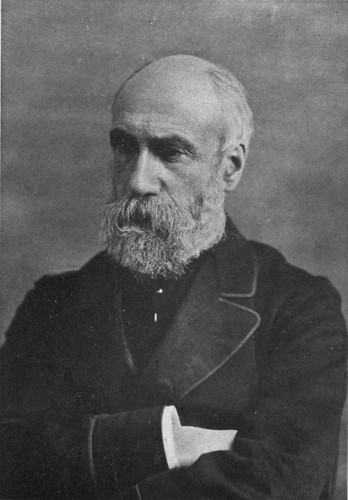
GEORGE HAGUE
Previous to this every bank was worked under a separate charter, but now these various charters were amalgamated under one compendious act, the preparation of which occupied the leading bankers and lawyers in the house of commons for several months. In these discussions Mr. Hague naturally took a leading part, along with Mr. E. H. King of the Bank of Montreal. Hon. Mr. Lewin, of the Bank of New Brunswick, Hon. Edward Blake of Toronto, Mr. Peter Jack who represented the banks of Nova Scotia and, of course, the finance minister. This act, together with the Dominion note act, has been at the foundation of Canadian banking ever since. During the progress of these discussions Mr. Hague was offered the general managership of the Bank of Commerce, as well as one of the higher positions in the Bank of Montreal. Both however were declined.
After the exacting labors entailed by this contest, Mr. Hague concluded that the time had arrived when he might fairly carry out a project that he had cherished for many years, viz., to devote the remainder of his life to religious and philanthropic work. In preparation for this he resigned his position in the Bank of Toronto and made other arrangements for a change in his mode of life. Upon severing his connection with the Bank of Toronto, the directors of that institution presented Mr. Hague with a service of plate and a handsome sum of money, in consideration of his efficient services to the bank as well as for his most valuable services to the banking interests of Canada generally.
Subsequent events proved that Mr. Hague’s preparations for retirement from the banking business were premature.
A cloud had been gathering over the commercial and financial position of Canada for some time back, and it was never darker or deeper than in the opening months of 1877. The records of failures and insolvencies grew to alarming proportions, fully four times the usual average, and the losses of the banks told on them severely. The general manager of the Merchants Bank of Canada having resigned, the directors of that institution offered the position to Mr. Hague and pressed upon him to accept it.
It was like taking command of a ship in the midst of a storm, but he felt it his duty to undertake the task, but did so with a full understanding that he should be at liberty to devote a reasonable amount of time to religious and philanthropic work. It was several years before the financial cloud passed by, and of the strenuous labors of bankers at that time it is needless to speak. Suffice to say that Mr. Hague held on to his post with careful attention to the matters he had stipulated for, and only retired after twenty-five years more of service, at a ripe old age, and having in the meantime assisted in the decennial reviews of the banking act that transpired from time to time according to its provisions. At the time of his resignation as general manager in 1902, the directors of the Merchants Bank presented Mr. Hague with a valuable piece of solid silver, gold plated, and made a handsome provision for the remainder of his life.
Whilst general manager of this bank, Mr. Hague was several times requested by the American Bankers’ Association to address its annual meeting, and took an active part in preventing the adoption of silver as the basis of the finances of the United States. He also drew up a paper in which a strenuous protest was made against the adoption of silver as part of the basis of the currency of the Bank of England. This had been urged by a school of financiers known as bi-metallists, but Canada has always stood solidly on a gold basis, and so has England remained.
When the Bankers’ Association of Canada was founded, Mr. Hague took an active part in company with Mr. Wolferstan Thomas, Mr. Duncan Coulson, and other bankers in drawing up its constitution, and was chosen its first president. Since his retirement from banking circles he has been honorary president, an office to which he was reelected at the last annual meeting of that association.
In the intervening years, since his retirement to the present time, Mr. Hague has given his attention to literary and philanthropic work and has become widely known by reason of his contributions to the press and his cooperation in many organized charitable and benevolent projects, especially the Young Men’s Christian Association.
He has written many articles which have appeared in the financial papers and also reviews on banking and philanthropic subjects. He also published a valuable treatise, entitled Banking and Commerce. His published works include, Some Practical Studies in the History and Biography of the Old Testament.
Another phase of his activity has brought Mr. Hague not only into close connection with many charitable and benevolent movements, but also with projects of vital importance to the city and its material, intellectual and moral development. He is today a governor of McGill University, vice president of the Montreal Diocesan College; a governor of the Montreal General Hospital, and a director of the House of Industry and other kindred organizations. He is vice president of the Canadian Bible Society and was at one time president of the Young Men’s Christian Association, to which he has been a generous contributor.
Some years ago, after an era of extravagant expenditure of the city council during which the debt of the city was doubled in five years, an association was formed for maintaining a watchful oversight over the finances of the city. This was called the Good Government Association, and many of Montreal’s most prominent citizens became members of it. Of this association Mr. Hague was chosen president, and under its auspices an efficient check was placed upon extravagant spending by the Montreal Corporation, through an act of the legislature, brought in by Mr. George Washington Stephens. Mr. Hague often went to Quebec on the business of this association which has now, however, been dissolved and superseded.
At a certain period of our parliamentary history, when the late Sir John Abbott was premier, a great outcry was made as to abuses in connection with the civil service. A Royal commission was appointed for examination of which Edmond Barbeau and J. M. Courtney, deputy finance minister, were members. Of this commission Mr. Hague was appointed chairman. The examination was very thorough and extended over several months. Every department of the service was overhauled and at its close a series of recommendations were made, all of which tended to correct abuses and promote efficiency, and, which if adopted, would have resulted in a large annual saving to the country. Some of these were adopted, but others unfortunately were not, and another commission became necessary later on.
Mr. Hague still has financial interests in several corporations, being a director of the Guarantee Company of North America, and others of a similar character.
Mr. Hague has never been an active politician, but his connection is with the liberal-conservative element, his support being given to the Chamberlain policy. No movement tending to promote civic virtue or civic pride has failed to receive his indorsement and support. His interest in public affairs is that of a broad-minded, public-spirited citizen, looking beyond the exigencies of the moment to the possibilities and opportunities of the future. His religious faith is that of the Anglican church, in which he has been a most active worker for many years.
Mr. Hague has been married twice. In 1852 he wedded Sarah Cousins, a daughter of Mr. Joseph Cousins, a manufacturer of Sheffield, England. Her death occurred in 1900 and in March, 1902, he wedded Mary Frances Mitcheson, a daughter of the late McGregor Mitcheson, of Philadelphia, Pennsylvania. He is now past the eighty-ninth milestone on life’s journey, but in spirit and interest seems yet in his prime. The Canadian American has truly styled him, “A high-minded Christian gentleman, public-spirited and always at the front in every philanthropic movement ..., never knew a fairer man or one more actively unselfish.” All this indicates that his life was never self-centered but has reached out along lines of constantly broadening usefulness and activity for the benefit of the people, seeking rather the welfare and benefit of the many than the advancement of self. His life has indeed been one of signal usefulness.
WILLIAM ROBERTSON.
Insurance interests found a prominent representative in William Robertson in Montreal, who was largely a pioneer in the work of adapting English companies to the business methods pursued on this side of the Atlantic. A Canadian by birth, his native town was Lachute, province of Quebec, and his natal year 1847. His father, Dr. William Robertson, a graduate of the Edinburgh Medical College, settled in Lachute when a young man, there establishing himself in practice, but later removed to St. Andrews East, where he continued actively in the profession until his death, greatly endearing himself to the community by the willingness to which he responded to the call of the sick, even though it meant a self-sacrificing ride of from sixty to seventy-five miles. His patients had the utmost confidence in him and his professional efforts were a blessing to the inhabitants of that, then scarcely settled district. He married Miss Mary A. Tierney, of Ireland, and they had two sons and three daughters, the surviving son being Dr. Patrick Robertson of England. An uncle of our subject was Colin Robertson, who won fame in the northwest.
William Robertson pursued his education in the schools of St. Andrews East and from his youth up was an underwriter, having begun business when quite young by entering the insurance office of Simpson & Bethune of Montreal. Such was the reputation which he won for superior business qualifications, for executive power and administrative ability, that in 1873, when but twenty-six years of age he was elected as representative for Canada of the London & Lancashire Life Assurance Company. The duties of this office he filled most acceptably for about seventeen years, or until his life’s labors were ended in death. He projected many changes and improvements in the methods of the English offices, transacting business on this side of the Atlantic. He made thoroughly Canadian in spirit and activity, the London & Lancashire Company in the Dominion, bringing about its popularity and success. He carefully organized and systematized the business here, with the result that the London & Lancashire Company became one of the strongest insurance companies of the country.
In 1871 Mr. Robertson was married to Miss Helen I. Barnston, a daughter of George Barnston, who throughout his active life was engaged in the Hudson’s Bay service in British Columbia and in the northwest country. He came to Canada in 1821 and retired, after many years service with the Hudson’s Bay Company, spending the remainder of his days in a well earned rest in Montreal. His wife was Miss Helen Mathews of England. Mr. and Mrs. Robertson became the parents of two children, who are living: Dr. William Graeme Robertson of England, who is attached to the White Star service; and Helen M. C., at home.
Mr. Robertson was active as a faithful member of St. James Episcopal church, in which he served as warden and he also belonged to the St. James Club. His keen sagacity enabled him to recognize the different spirits of the business circles in the old world and in the new, to adapt himself to changed conditions and to work along lines of new world progress. Thus he became a recognized leader in insurance circles occupying a prominent position until 1889 when he went to Denver, Colorado, for his health, there passing away on the 26th of February, of that year.
CHARLES P. HEBERT.
Charles P. Hébert, the first president of the wholesale grocery firm of Hudon, Hébert & Company, Ltd., of Montreal, was born in the pretty little village of St. Charles on the Richelieu river, and when a young man made his way to the city which was ever afterward his home. Here he began business in a small way and by energy and industry soon built up his establishment. In 1883 he became a member of the firm of Hudon, Hébert & Company. The business was originally established under the style of E. & V. Hudon and subsequently was conducted under the name of V. Hudon and later became J. Hudon & Company. In 1906 it was incorporated as Hudon, Hébert & Company, Charles P. Hébert becoming the first president of that corporation. They are wholesale grocers and wine merchants, the premier establishment of its kind in the Dominion, importing directly from manufacturers in Europe, China, Japan, Asia Minor and the United States. They employ one hundred and seventy people in their Montreal establishment and have twenty-five salesmen constantly visiting all Canada, selling their goods from the Atlantic to the Pacific to the amount of five million dollars annually.
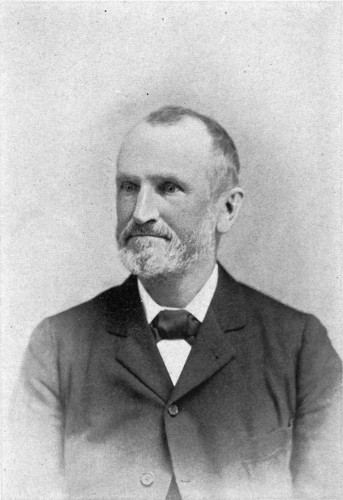
CHARLES P. HEBERT
Mr. Hébert always took a deep interest in Montreal’s charitable institutions. He was president of the board of management of the Notre Dame Hospital and was also connected with other benevolent organizations and projects. He served as a member of the council of the Montreal Board of Trade and filled honorable positions in that body, including those of vice president and member of the board of arbitration. He was one of the directors of the City and District Savings Bank and also a director of the Masson estate.
Mr. Hébert died at his home at No. 117 Champ de Mars, Montreal, July 17, 1906, and was survived by a widow and six children.
After the death of Mr. Hébert Mr. Joseph Hudon was elected president of the corporation and on his death in 1908 Mr. Albert Hébert, son of Charles P. Hébert, succeeded to the presidency, and following his demise in 1911 Mr. Zéphirin Hébert, also a son of Charles P. Hébert, became president of the company.
REV. ALEXANDER CHARLESON MANSON, Ph. D., D. D.
In Presbyterian circles in North America the name of the Rev. Alexander Charleson Manson is well known and since the 19th of April, 1912, he has been pastor of the Taylor Presbyterian church of Montreal, one of the largest organizations of the city. A native of Thurso, Scotland, he pursued his education in the schools of Edinburgh and of Winnipeg, Manitoba. Studying theology, he won his Doctor of Divinity degree at the University of Chicago and he first served as superintendent of missions of North Dakota. Later he accepted a pastorate in Duluth, Minnesota, and afterward became pastor of the Eleventh Presbyterian church in Chicago, Illinois. From that city he went to Detroit, Michigan, in response to a call from the Second Avenue Presbyterian church and left that city to come to Montreal on the 19th of April, 1912, where he entered upon his duties as minister of the Taylor Presbyterian church, which was organized July 23, 1876, with Rev. J. J. Casey as its first pastor. He continued in that position until March 16, 1882, and was succeeded by the Rev. Thomas Bennett, who remained in charge from the 1st of December, 1885, until December 31, 1897. His successor was the Rev. W. D. Reid, who continued in charge until 1912, when Rev. Manson became pastor. The present edifice of the Taylor Presbyterian church was erected in 1893, at a cost of about sixty thousand dollars. There is a membership of nine hundred and thirteen, with a Sunday school of four hundred and fifty members, and the Junior Christian Endeavor Society is the largest in the city. There is a strong Sunday Afternoon Club, a First Company of Montreal Boys Brigade and a Ladies Athletic Club as auxiliary organizations to the church. In fact, the church work has been thoroughly systematized in every department, and splendid results are being accomplished. The church is in touch with the broader idea that the best Christian service can be accomplished with better physical and mental as well as moral development. Much attention is paid to the social life, and yet nothing for a moment overshadows the foundation work of the organization, which is the salvation of souls. Rev. Manson is a fluent, earnest speaker, who studies life and its problems and with notable clearness shows the relation of modern day conditions to the lessons that have come down to us through the ages from the moral teachers of the past.
Rev. Manson was married June 24, 1889, to Miss Mary Elizabeth Ferguson, of Hamilton, Ontario, and their children are: Berith Du Val, of New York city; and Vera Charleson, Allena Conklin, and Leslie Worden, all at home. At this point it would be almost tautological to enter into any series of statements as showing Rev. Manson to be a man of broad intelligence and genuine public spirit, for these have been shadowed forth between the lines of this review. Strong in his individuality, he never lacks the courage of his convictions but there are as dominating elements in this individuality a lively human sympathy and an abiding charity, which, as taken in connection with the sterling integrity and honor of his character, have naturally gained for him the respect and confidence of men.
REV. THOMAS JOSEPH MacMAHON.
One of the most able Catholic educators in Quebec province, a man sincere, straightforward and reliable in the discharge of the duties and obligations of life, most earnest and consecrated in his work as a priest of the Society of Jesus, is Rev. Thomas Joseph MacMahon, rector of Loyola College in Montreal. He has been connected with this institution since 1912 and, constantly following high ideals and guiding his actions by sound and practical judgment, has been an important factor in its later development and growth.
Father MacMahon was born at Hamilton, Ontario, December 12, 1874, and received his primary education at the Catholic separate schools in that city, later attending Hamilton high school and St. Mary’s College, Montreal. Entering the Society of Jesus in 1895, he was sent to St. Louis, Missouri, where he received a long Jesuit training in philosophy and theology, after which he returned to Montreal, where he was ordained to the priesthood in 1910. Father MacMahon then went to England for further training preparatory to taking the position of prefect of studies at Loyola College, a post which he assumed in May, 1912. He proved a capable educator and an excellent disciplinarian and in 1913 was advanced to the position of rector of the college. This is a large and growing institution conducted by the Jesuit Fathers for English-speaking Catholic boys and has an enviable reputation throughout eastern Canada for the thoroughness of its training and the comprehensive courses of study offered. The high standard of efficiency, traditional in the school, has been maintained under Father MacMahon’s able management and the institution has made a creditable growth during the period of his incumbency. He has made himself thoroughly conversant with the affairs of the college and is rapidly pushing forward the work on the construction of the new buildings at Notre Dame de Grace, Sherbrooke Street, Montreal West, where the institution will be moved within the next two years.
Besides being an able educator and a farsighted and reliable business man, Father MacMahon is known also as a preacher of rare ability and power and has filled most of the pulpits in Montreal and the vicinity in a creditable manner. He has made his talents, powers and abilities forces in the spread of the Catholic religion in this province and has accomplished a great deal of beneficial and lasting work among the students of Loyola College and the people of the city. He has their love in large measure, while his upright and honorable character and his life of service has gained him the respect and esteem of people of all denominations.
ROBERT WARD SHEPHERD.
An age of intense commercial activity calls forth the powers of men who can grapple with new conditions and utilize the opportunities that come with successive changes. Adequate to the demands of the hour, Robert Ward Shepherd occupied a central place on the stage of business activity at Montreal for more than a half century. The high ideals which he cherished found embodiment in practical effort for their adoption. He was no dreamer, for his theories were such as could be put into successful execution and his business record balanced up with the principles of truth and honor. As the president of the Ottawa River Navigation Company, he was known to thousands of people in Ottawa valley and he also figured in financial circles as vice president of the Molson Bank.
Of English birth, Mr. Shepherd came to Montreal immediately after his arrival in Canada and soon entered into active connection with the Ottawa River Navigation Company, then under the presidency of Sir George Simpson. For some years he was captain of one of the boats of the line but was called into the office to fill a position demanding executive force and keen discrimination. He was made manager and from that post rose to the position of president, in which connection he continued until his demise. Under his guidance the business of the Ottawa River Navigation Company continuously developed along substantial lines, and progressiveness was as manifest in the care of its patrons and the equipment of its vessels as in any other line or field of business. Those who met Mr. Shepherd found him genial, courteous and obliging, and at the same time he possessed the keen sagacity and clear reasoning so indispensable to the successful conduct of any enterprise. Becoming interested in Molson’s Bank, he was elected vice president and director, filling the former position for more than twenty years. In all business affairs he was clear-headed, farsighted, and the record which he left behind him for integrity and sterling worth is one which might be envied by all.
Mr. Shepherd was married to Miss Mary C. de Les Derniers of the province of Quebec, and they became the parents of nine children: Robert W., who died in 1912; Miss F. A. R.; Dr. Francis J.; Sherringham A.; A. Maude M., who is the widow of Haldane Haswell; Esther E., who married Dr. W. A. Molson and is now deceased; Beatrice H., who married Arthur Henshaw; Mary R., the widow of George R. Robertson; and de Les Derniers. The mother passed away in 1902, having for seven years survived Mr. Shepherd, whose death occurred August 29, 1895, when he was seventy-six years of age.
Mr. Shepherd was a member and one of the founders of St. George’s church and in his Christian faith was found the root of his activities in behalf of his fellowmen and of the principles which governed his life. He belonged to the St. James Club and was greatly interested in art, acting as vice president of the Art Gallery of the city. He was one of the committee of management of the Montreal General Hospital; was a member of the committee of management of the Mackay Institution, and a generous supporter of the Protestant Hospital for the Insane. He gave freely of his means to various charitable institutions which seek to ameliorate the hard conditions of life for the unfortunate. Duty and honor were his watchwords and justice one of his strong characteristics.
JUDSON ALBERT DECEW.
Judson Albert DeCew, chemical engineer, whose identification with leading chemical societies in this country and the United States attests his higher professional standing, was born in Waterford, Ontario, on the 14th of December, 1874. He is descended from Captain John DeCew, a United Empire Loyalist, who served in the War of 1812 and in whose house, at DeCew Falls near St. Catharines, Ontario, Lieutenant Fitzgibbon and his soldiers were quartered, when Laura Secord gave the warning which enabled them to capture the United States forces under Colonel Boerstler. Mr. DeCew’s parents are Thomas Howard and Valdora (Beemer) DeCew, both of whom are living at Sault Ste. Marie, Ontario. He was married on August 20, 1913, to Mabel Marshall, daughter of John Marshall, educationist, of Weyburn, Saskatchewan. She is a graduate in arts of Queen’s University with the class of 1910.
After finishing his early education at Woodstock College, he attended the School of Practical Science of Toronto, graduating in 1896. After spending four years in practical work he held a fellowship in the University of Toronto in 1901 and took the degree of Bachelor of Applied Science with the class of 1902. In the same year he took a position as chemical engineer with the Canada Paper Company, which he held until 1905. In 1906 Mr. DeCew came to Montreal and established himself as a consulting chemical engineer. In 1913 he organized the Process Engineers Company, of which he is the president. He is the leading member of the chemical engineering profession in Canada and one of its most eminent representatives on the American continent. He is the inventor of a number of important chemical processes, and his name has become widely known as the author of articles relating to the manufacture of paper, which have appeared from time to time in technical journals. Mr. DeCew has delivered lectures on the manufacture of paper and has been appointed on advisory committees for technical researches. He has been a member of the American Institute of Chemical Engineers since 1908 and an associate member of the Canadian Society of Civil Engineers since 1906. He is also a member of the American Society of Testing Materials, the American Chemical Society, the Society of Chemical Industry, and the American Wood Preservers Association. Mr. DeCew is a member of the Chemists Club, New York, and the Outremont Golf Club and the University Club of Montreal.
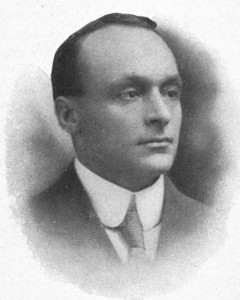
JUDSON A. DECEW
FISCHEL SHIP.
A position of leadership is accorded Fischel Ship in Jewish circles in Montreal because of his active and prominent identification with commercial, educational and benevolent projects. He was for many years a very successful business man, and as he has prospered he has given generously in support of measures tending to the intellectual progress of his people, and generous aid to those in need of assistance. He was born January 6, 1853, in Paranshoff, Poland, a son of Abraham Jacob and Pearl (Leah) Ship. The father engaged in the tailoring business in Poland, and it was in that country that Fischel Ship pursued his education. He was a young man of nineteen years when he crossed the Atlantic, making his way to Montreal in 1872. He had received business training under his father and had become thoroughly acquainted with the tailoring trade. Following his arrival in this city he established a merchant tailoring business and as the years went on won a liberal patronage, bringing him a gratifying competence. At the time that he entered trade circles of Montreal there were only five merchants in his line of business in the city. Throughout the succeeding period up to the time of his retirement he always managed to keep in the front rank among the merchant tailors of Montreal, receiving a liberal patronage from the best class of citizens, because of excellent style and workmanship, which were features of his shop, and his thoroughly reliable business methods. He always carried on business on St. Lawrence Main Street, but about eleven years ago retired from active connection with commercial interests to enjoy a well earned and well merited rest.
Mr. Ship, however, continues his activities along other lines resulting directly in the benefit of his fellowmen. He is chairman of the building committee, governor, trustee, and member of the relief and cemetery committees of the Baron De Hirsch Institute. He is a life governor of the Montreal General Hospital. For a quarter of a century he has been a trustee of the McGill College Avenue synagogue, was vice president of the synagogue for four years and has always been chairman of the building committee. He is most loyal to his religious belief and at all times has been generous and helpful toward the unfortunate.
On the 10th of February, 1869, Mr. Ship was united in marriage to Miss Flora Blumenthal, a daughter of Phillip Blumenthal, who was the first owner of the coaches in Ozerkoff, Poland. Unto Mr. and Mrs. Ship have been born three children: Leah, now the wife of C. Sisenwain; Ray, now Mrs. S. P. Myers; Abe Phillip, who is engaged in the practice of medicine in Montreal and who married Leah Sessenwain, of this city. In politics Mr. Ship has always been a liberal, nor has he sought office as a reward for party fealty. However, for the past sixteen years he has been justice of the peace for the island of Montreal and has discharged his duties with promptness, fidelity and impartiality. He is a veteran of the Odd Fellows Association and also a member of the Royal Arcanum. He has never had occasion to regret his determination to come to the new world, for here he has found the opportunities which he sought and has gradually worked his way upward until he has won place among the substantial and highly respected citizens of Montreal.
RENE HEBERT, M. D.
Dr. René Hébert, successfully engaged in the practice of medicine in Montreal, in which city he was born October 2, 1869, is a son of Charles P. Hébert, one of the founders of the wholesale grocery house of Hudon, Hébert & Company. He was educated at Plateau Academy, Montreal College and Laval University, being graduated from the last named with the degree of M. D. in 1892. During the succeeding year he was an interne at Notre Dame Hospital and then went abroad for further study, spending two years in study and research work in Paris, specializing in diseases of the heart and lungs.
In 1895 Dr. Hébert began active practice in Montreal, opening an office on St. Denis Street. He is superintendent of St. Paul’s Hospital, physician to Notre Dame Hospital, and a professor in the medical and dental departments of Laval University. His professional connections are important, and it is recognized that he is a thorough and discriminating student and most conscientious in the performance of his professional duties.
Dr. Hébert married Miss Alice Auger. Their religious faith is that of the Roman Catholic church. Aside from his professional interests, Dr. Hébert is a director of the wholesale grocery firm of Hudon, Hébert & Company. In strictly professional lines he is connected with La Société de Médicine and Officier d’Académie. At all times he holds to high standards, and wide reading is constantly augmenting his skill and efficiency, manifested in the successful manner with which he copes with the intricate problems that are continually confronting the physician.
CLEMENT ANTOINE GUERTIN.
Of old and distinguished pioneer stock of French extraction Clément Antoine Guertin upholds the traditions of family prominence as one of the most able legal representatives of the Montreal and provincial bar. Although he has been in practice for not many years he enjoys a reputation second to none, as he has proven his ability in connection with important interests. Not only is Mr. Guertin well versed in the letter of the law and the principles that affect its administration, not only is he a deep thinker and logical reasoner, but he has an insight into the conduct of human beings which permits him to clearly define cause and effect in human actions, and he therefore readily penetrates to the root of such problems as demand legal help for solution. He has long been recognized as one of the able general practitioners in the city, and his services are in large demand, resulting in a gratifying measure of financial returns.
Clément Antoine Guertin was born at St. Antoine, in the county of Verchères, province of Quebec, on the 22d of November, 1870, a son of Léon Guertin, an agriculturist of St. Antoine, who was born in 1817 and passed away in 1876, and Marie Louise Euchariste (Geoffrion) Guertin, a native of Varennes. The first of the family in Canada was the famous and well known Guertin, called Louis Le Sabotier, who was born in 1635, a son of Louis and Georgette (LeDuc) Guertin, from Daumeray, near Angers, France. He married first at Montreal on January 26, 1659, Elizabeth Le Camus, and second, Catherine Roy. Among his children were Louis, Pierre, Paul and others. Paul Guertin, alias Chertin, alias Diertin, was a son of Louis, born in Montreal on the 2d of May, 1680. At Contrecoeur, on the 19th of March, 1702, he married Madeleine Plouffe and among their children were Pierre, Paul and François. The latter married Catherine Dudevoir at St. Antoine in 1745 and among their children were Pierre, Joseph, François and others. Joseph, born March 6, 1755, married Marie Louise Circé, called St. Michel, at St. Antoine in 1777 and among their children was Pierre, born October 9, 1781. He married Marguerite Duhamel, who bore her husband the following children: Pierre, Noël, Léon, Marguerite, Flavien, Alexis, Calixte, Zoé and Louis. Léon Guertin, third son of Pierre, was born March 12, 1817. His first union was with Théotis Brodeur, who bore him the following children: Octavie, Pauline, Léopold, Stanislas and Mélanie. His second wife was Marie Louise Euchariste Geoffrion and the children of this marriage were Joseph, Louis, Marie Louise and Clément Antoine. Léon Guertin, the father of our subject, is the sixth in direct descent from Louis Guertin, Le Sabotier. Pierre Guertin, the grandfather of our subject, and his sons, Pierre, Noël and Léon, took part in the battle of St. Denis, November 22, 1837. Louis Guertin, a brother of our subject, is father of the Holy Cross Congregation, a director of Memramcook University of New Brunswick, and took in Rome in philosophy and theology the degree of Doctor cum maxima laude, also taking scientific work at Harvard. A brother of the mother of our subject, Father L. Geoffrion, of the Holy Cross Congregation, was for fifteen years director of St. Laurent College, near Montreal.
Clément Antoine Guertin received a thorough and varied education. He attended the St. Antoine village school, the St. Denis Commercial College and also took courses in commercial English, French and classical studies at St. Laurent. He received the degree of B. L. in 1893 from the law faculty of Laval University, in 1896 became LL. B. and in January, 1897, was made an advocate. He has ever since followed his profession successfully in Montreal and as his experience has expanded has become one of the few successful lawyers whose reputation marks them for distinction.
On the 24th of April, 1901, at Montreal, Mr. Guertin was married to Miss Marie Anne Josephine Lamontagne, a daughter of G. A. Lamontagne, a merchant tailor of Montreal and Malvina (Beauchamp) Lamontagne. They had one daughter, Simonne, born April 16, 1902, who died July 2d of the same year. The mother passed away on June 26, 1912.
From September, 1910, to May, 1912, Mr. Guertin was a member of the Montreal council of the bar and from May, 1911, to May, 1912, a member of the provincial council. His club relations are with the St. Denis, Délorimier and the Union du Commerce of Montreal. His faith is that of the Roman Catholic church. He has secured one of the most exclusive and representative practices in Montreal, his success being the best evidence of his capability. His pleas are always characterized by terse logic and lucid presentation, and he always has a decisive conviction as to the rights of the question he represents. It is his ambition to make his native talents subserve the demands of the social and business conditions of the day, and he stands today as a splendid representative of a lawyer to whom personal prosperity is but secondary in importance and who considers many ideal elements more vital in the making up of human existence. His industry and energy have found a reward which is based on a distinguished name and accomplishments rather than incidental prosperity.
WILLIAM SUTHERLAND MAXWELL.
William Sutherland Maxwell, an architect of Montreal, whose high professional standing is indicated by the large number of fine structures which stand as monuments to his skill and ability, brought to bear at the outset of his professional career the broad knowledge gained from comprehensive and thorough training. Montreal numbers him among her native sons, his birth having here occurred on the 14th of November, 1874, his parents being E. J. and Johanna (MacBean) Maxwell. In the acquirement of his education William Sutherland Maxwell, after attending the Montreal high school, went to Boston, Massachusetts, for professional training and afterward entered the Ecole des Beaux Arts of Paris, France. His training was thus received from men eminent in the profession in America and in Europe, and in 1898 he was admitted to the Quebec Architects Association. Beginning the practice of his profession he formed a partnership with his brother, Edward Maxwell, and in his chosen life work he has made steady advancement, his unfolding powers and increasing ability gaining for him distinction and success. In 1909 he was elected a member of the Royal Canadian Academy and in 1908 was chosen a councillor of the Association of Architects of the province of Quebec. He is president of the Province of Quebec Association of Architects for 1914. While practicing his profession in association with his brother there stand as monuments to their skill and ability many fine structures not only in the east but also in the west. Among the works executed by them are the Hotel Alexandra at Winnipeg, for the Canadian Pacific Railway Company, the Canadian Pacific Railway station at Winnipeg, the residence of C. R. Hosmer, the Alexandra Hospital for Infectious Diseases, the Nurses Home for the Royal Victorian Hospital, the monument to Lord Strathcona and South African soldiers of which George W. Hill was the sculptor, the monument to the Hon. John Young, of which Philip Hébert was the sculptor, the bank buildings for the Bank of Montreal, Molson’s Bank, the Royal Bank and the buildings of the Montreal General Hospital. They were also the architects of the Government House in Regina, Saskatchewan, the Calgary Hotel for the Canadian Pacific Railway Company, at Calgary, and the Montreal Art Association’s new building in Montreal. No more definite indication of Mr. Maxwell’s high professional standing can be given than the list of these buildings which have become tangible factors in the improvement of various cities.
WILLIAM S. MAXWELL
In May, 1902, occurred the marriage of Mr. Maxwell and Miss Mary Ellis Bolles, of New York, who is well known in connection with charitable and philanthropic work, being now a councillor of the Children’s Aid Society. He is a member of the St. James Club, the Arts Club, the Pen and Pencil Club and the Kanawaki Golf Club. The family residence is at No. 716 Pine Avenue, Montreal. Mr. Maxwell has concentrated his energies upon his profession, and he has every reason to be proud of the fact that he has been elected to membership in the Ecole des Beaux Arts Society of Paris. He was president of the Arts Club of Montreal for 1913 and is so serving for 1914.
HENRI ROY.
With intense activity well directed, with untiring energy, business ability, resourcefulness and controlled ambition, Henri Roy has reached a position of importance in the affairs of La Société des Artisans Canadiens-Français, of which he has been secretary and treasurer since 1892.
His influence has affected the policies and the direction of developments of this great fraternal insurance company of Montreal, and the years of his connection with it have proven mutually useful and beneficial.
Mr. Roy was born September 11, 1864, in St. Alexandre, near St. Jean, Quebec, and acquired his education in the public schools and in St. Cesaire Commercial College, fitting himself in the latter institution for the business career which he had determined upon.
When he left his native city he went to Quebec where for some years he was connected with a wholesale firm. In 1888 he came to Montreal and until 1899 was associated with the wholesale house of Hodgson, Sumner & Company.
Upon coming to Montreal in 1888, Mr. Roy began his connection with La Société des Canadiens-Français as an accountant, employing his evenings in this capacity. Advancement came rapidly, for Mr. Roy proved himself a farsighted, resourceful and discriminating business man who could be relied upon to carry forward to successful completion whatever he undertook. In 1892 he was elected secretary and treasurer of the society, positions which he has filled with ability and distinction since that time. The work has made continued demands upon his tact, his versatility, his administrative ability, and these demands have been met fully and completely, Mr. Roy being today one of the most prominent and widely known officials of the company he represents.
In 1888 when he became associated with the society it had accumulated funds of ten thousand seven hundred thirty-one dollars and ten cents, and a membership of one thousand three hundred thirty-two, limited to the island of Montreal; today (1914) its accumulated funds are two million three hundred thirty-seven thousand three hundred eighty-two dollars and seventy-two cents, its membership numbers thirty-nine thousand ninety-four and its field of action covers all American territory where there are French-Canadians.
May 6, 1896, Mr. Roy married Miss Celina Canty of Bathurst, New Brunswick, and to them have come a family of eleven children, seven of whom are living, Berthe, Pierre, Olive, Jeanne, Celina, Louis and Victoria.
Mr. Roy is well and favorably known in Montreal, where for more than a quarter of a century he has made his home. His success and the standards by which it has been obtained have gained for him the respect of his business associates, and his sterling qualities of character the esteem and good-will of many friends.
LUDGER GRAVEL.
Ludger Gravel is well known in business circles of Montreal as a dealer in carriage maker’s and blacksmith’s supplies, as president of Société des Artisans Canadiens-Français and also as a successful manufacturer’s agent, connected in this way with some of the most important industrial concerns in Canada, the United States and Europe. The industry and the spirit of enterprise, progress and initiative which have brought him success have also been factors in his conduct of his extensive interests and place him today among the men of marked ability and substantial worth in this community.
Mr. Gravel was born in 1864, at St. Raphael, Ile Bizard, Canada, and acquired his education in Montreal, beginning his business career immediately after laying aside his books. He was for eight months with Thomas Wilson & Company of this city and at the end of that time became connected with P. P. Mailloux at 223 St. Paul Street, with whom he remained over twenty years, rising during that time to a position of weight and responsibility and proving himself a farsighted, capable and progressive business man. Having shown his worth and his capability, Mr. Gravel eventually engaged in business for himself, establishing the extensive business which he now conducts. Under his able management this has become a large and important enterprise and it is still growing, for Mr. Gravel is constantly extending the field of his activity and forming new commercial relations. In addition to his retail business he is also acting as exclusive agent in Montreal for a number of manufacturing firms in Canada, the United States and Europe, and his important connections along this line are conclusive proof of his prominence and high standing in business circles. Among the firms which he represents may be mentioned the following: Ontario Asphalt Block Company, Ltd., Walkerville, Ontario; The Standard Paint & Varnish Works, Ltd., Windsor, Ontario; The Frank Miller Company, New York, New York; Windsor Turned Goods Company, Ltd., Windsor, Ontario; The Conboy Carriage Company, Ltd., Toronto, Ontario; The Neverslip Manufacturing Company, New Brunswick, New Jersey; Sem. Lacaille, Nominingue, Quebec; Meilink’s Home Deposit Vaults, Toledo, Ohio; Propriétaire de l’Huile Balmoral; James Boyd & Brothers, Philadelphia, Pennsylvania; and Jacob Maas & Company, New Orleans, Louisiana.
Mr. Gravel became connected with Société des Artisans Canadiens-Français in 1903 when he was elected a director, and his ability and executive skill soon commanded for him a place of power in this organization. He was made second vice president in 1904 and first vice president in 1906 and in 1910 was elected president, a position which he has held since that time. The demands which it has made upon his energy, his enterprise and his executive ability have been completely met, and the fortunes of the society under his hands have been constantly prosperous. He has been a member of the Chamber of Commerce since its organization and at present is one of its directors. His membership in mutual, charitable, antiquarian, social, political and sporting clubs is extensive and in a number of them he holds official position. However his business never suffers from these connections and his time and attention are so distributed that he proves a valuable member in all of the organizations.
On May 26, 1891, in Montreal Mr. Gravel was married to Laura Roy, the daughter of Alfred Roy. Of the fourteen children born to Mr. and Mrs. Gravel, six are now living as follows, Olympe, L. Pierre, Germaine, Emelia, Lucette and Simone.
With the extension of his interests Mr. Gravel’s powers have continually developed, his insight has deepened, his view broadened and with the passing years he has become a man of power and prominence, finding in the field of business the best scope for his interests and activities. He is a devout member of the Roman Catholic church and his upright life which has been guided by its principles, has brought him prominence, substantial fortune and the respect and esteem of many friends.
SEVERIN LETOURNEAU, K. C.
Severin Letourneau, who has advanced beyond the ranks of the many and stands among the able and successful few in the practice of law and in liberal leadership, is a native of St. Constant, born on the 23d of May, 1871. His preliminary education acquired in the Jacques Cartier Normal school, was supplemented by a course in Laval University, in which he completed his law studies and was graduated with the class of 1895. In July following he was called to the bar and at once entered upon active practice of his profession in which he has made continuous progress. Advancement at the bar is proverbially slow and yet, no dreary novitiate awaited Mr. Letourneau, who, during the eighteen years of his practice has won a high reputation by reason of his broad legal knowledge and the skill and ability in which he handles his cases, mastering the points in evidence with the precision of a military commander who marshals his troops on the field of battle. In 1906 he was appointed king’s counsel. He is today practicing as a member of the firm of Pelletier, Letourneau & Beaulieu, advocates, with a clientage that is extensive and important.
Mr. Letourneau is prominently known as one of the leaders of the liberal party and as the liberal organizer for the district of Montreal has justified his appointment by the series of brilliant successes that have been scored for the liberal party in and around the city. He has rendered to his party service as a tactician and he is now sitting for Hochelaga in the provincial legislature, stanchly supporting Sir Lomer Gouin in his policy of progressive legislation. Mr. Letourneau is also a member of the Montreal Reform Club. He is a man of unfaltering determination, carrying forward to successful completion whatever he undertakes, whether in the field of law or politics. He stands stanchly for the right as he sees it, and his position is never an equivocal one.
CHARLES HAVILAND ROUTH.
Charles Haviland Routh, insurance broker, occupying a position among the foremost representatives of insurance interests in the Dominion, has in this direction, followed in the footsteps of his father, the late John H. Routh, who was for a quarter century agent at Montreal for the Western Assurance Company. Haviland L. Routh, grandfather of Charles H. Routh, was also prominent in insurance circles, being Canadian manager for the Royal Insurance Company. Charles H. Routh was born and educated in this city and throughout the period of his identification with business interests has been connected with the insurance profession. He is lacking in none of the qualities requisite for advancement and success in his chosen calling, which has brought him a wide business acquaintance. He is, however, perhaps, more widely known as a yachtsman, having for some years been commodore of the Royal St. Lawrence Yacht Club, of which he became a charter member in 1891. Several times has he successfully defended the Seawauhaka Cup and there are those who feel they know Mr. Routh at his best when he is acting in that capacity, because of his resourcefulness and the joy he feels in the sport. The Toronto Telegram wrote of him; “He has been pitted against the best skippers and the best boats that the United States can produce, but has remained the same level-headed sailorman in all his contests.” Aside from his connections with the Royal St. Lawrence Yacht Club, he belongs to the Montreal Club and the Montreal Curling Club. He is enthusiastic in his sports and equally so in anything that he undertakes, his energy and interest carrying him forward to the point of success whether it be along the line of business or of pleasure.
JOSEPH LEON ST. JACQUES.
In no profession does advancement depend more surely upon individual merit than in the practice of law. Comprehensive knowledge of legal principles must constitute the foundation for success which can only be won at the cost of earnest, persistent effort and study. Recognizing this fact, Joseph Leon St. Jacques has closely applied himself to the mastery of the principles of jurisprudence and to the preparation of his cases, with a result that he now has an extensive and representative clientele. He practices in Montreal and has spent his entire life in the province of Quebec, his birth having occurred at St. Hermas, in the county of Two Mountains, July 13, 1877, his parents being Joseph and Cazilde (Lafond) St. Jacques, the former a farmer of St. Hermas. The grandfather, F. X. St. Jacques, was born at St. Augustin, in the county of Two Mountains and resided for many years in Ottawa, but is now deceased. The great-grandfather was Captain Eustache Cheval dit St. Jacques of St. Augustin, who in 1837 remained loyal to the crown and in 1838 was presented a sword in token of the recognition of his loyalty by Her Majesty, Queen Victoria. The ancestors of the family have the name of Cheval as well as St. Jacques.