BIOGRAPHICAL (continued 14)
Reading edition
He is widely and popularly known in club circles, holding membership in the leading organizations of that character in Montreal, including the St. James, Canada, Forest and Stream, Montreal Hunt, Montreal Jockey, Mount Royal, Montreal Royal Golf and Royal St. Lawrence Yacht Clubs. He is likewise a member of the Rideau Club of Ottawa, Ontario; and the Canada, the Wellington and Junior Carlton Clubs of London, England.
EUGENE-REAL ANGERS.
Eugène-Réal Angers, a well known barrister and solicitor in Montreal, was born in that city, October 1, 1883, a son of Réal and Joséphine (Trudel) Angers, and a grandson of François-Réal Angers, K. C., one of the leaders of the Quebec bar. The father, Réal Angers, was born in Quebec and for many years was a member of the wholesale hardware firm of Frothingham & Workman in Montreal. He died December 22, 1901, and his widow passed away in 1908. They were the parents of two sons and a daughter: Eugène-R.; Charles, who is with Frothingham & Workman, Limited, of Montreal; and Joséphine, the wife of Robert La Roque de Roquebrune, of Beloeil, Quebec.
Eugène-Réal Angers was educated in Montreal, winning the Bachelor of Arts degree upon the completion of a classical course in St. Mary’s College. He was graduated from Laval University with the degree of LL. L. in June, 1907. In July of that year he was admitted to the bar at Quebec and soon after formed a partnership for the practice of law in Montreal with Ernest Guimont under the firm name of Guimont & Angers. A year later the senior partner removed to St. Hyacinthe and Mr. Angers entered into other partnership relations, leading to the adoption of the firm style of Brosseau, Brosseau, Tansey & Angers. In September, 1913, he joined with Howard Salter Ross, K. C., in forming the law firm of Ross & Angers. They now have offices in the Transportation building, where they care for the interests of a growing clientele. Broad reading and study have constantly augmented Mr. Angers’ ability to handle complex and intricate problems of law, and he is becoming recognized as one of the ablest of the younger representatives of the Montreal bar.
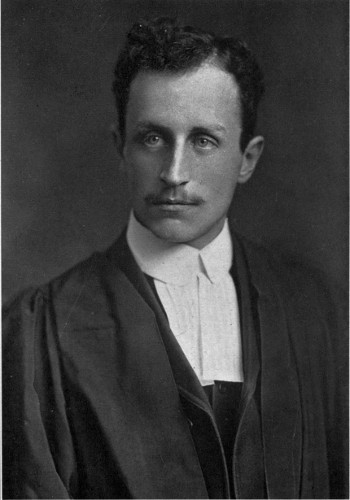
EUGENE-REAL ANGERS
On the 15th of September, 1909, Mr. Angers was married to Germaine Tousignant and they have one son, Pierre.
REV. THOMAS F. HEFFERNAN.
Rev. Thomas F. Heffernan is now in the sixth year of his able service as pastor of St. Thomas Aquinas’ church in Montreal, a parish which he has built up through his energy, zeal and well directed enterprise into one of the most popular and well managed in the city. He was born December 22, 1869, on Colborne Street, in St. Anne’s parish, Montreal, a son of the late Thomas and Ellen (Murray) Heffernan. In his infancy the parents moved to the east end of the city, where the father purchased several properties, some of these on Craig, Lagauchetiere and Dorion Streets.
As a child Father Heffernan attended St. Bridget’s school, taught by the Christian Brothers, and when he was twelve years of age he entered St. Mary’s College. After one year and a half he enrolled in St. Lawrence College, conducted by the Fathers of the Holy Cross. Here success attended his efforts and in due time he became professor. He afterward took a four years’ course in the Grand Seminary and was ordained to the Roman Catholic priesthood December 22, 1894, when he was twenty-five years of age. His first appointment was with the Rev. William O’Meara, pastor of St. Gabriel’s, with whom he remained for three years. At the end of that time, at the request of His Grace Archbishop Bruchesi he was appointed in September, 1898, professor extreme at Montreal College and did excellent work in this field for two years. Resigning at the end of that time, he was appointed assistant to Rev. J. E. Donnelly, pastor of St. Anthony’s, and he retained this connection for eight years, severing it in order to accept the appointment to the newly-founded parish of St. Thomas Aquinas. This was established for the English-speaking people of the west end who were living within the district bounded on the east by Atwater Avenue, on the west by the middle of Cote St. Paul Road, on the south by the canal and on the north by the Canadian Pacific Railroad track. There were about three hundred families; about one hundred residing between Atwater and Rose de Lima Streets, who belonged to St. Anthony’s parish; and two hundred attached to St. Henry’s. For a number of years previous there had been dissatisfaction among the St. Henry’s portion inasmuch as it was difficult for the Rev. Canon Decary to meet their needs satisfactorily. Accordingly a new parish was formed and placed in charge of Father Heffernan, who has since made St. Thomas Aquinas one of the most important Catholic congregations in the diocese. He has accomplished during the period of his incumbency a great deal of remarkable work. He had no money and he required fifteen thousand dollars to pay for the ground. He secured thirty thousand dollars from the Travelers Insurance Company and fifteen thousand dollars from Molson’s Bank and erected a thirty-five thousand dollar building now used as a church. The structure is two stories in height and so constructed that an additional two stories may be added if necessary. Father Heffernan also erected an attractive residence and has now a property valued at one hundred and fifty thousand dollars and a debt of only thirty thousand dollars. During the year of 1914 he is to build a new church of Florentine style of architecture, on Convent Street. When asked to explain how this work was accomplished Father Heffernan said: “God has visited his people and this people received him. My people work from conviction, illumined by the light of faith. I have no sick, no infirm, no needy. Health, wealth and blessings are ours. But you must leave here. Never, until they sing my Mass of Requiem. I attribute the whole success to the prayers of the children and to the good work of my Reverend assistant, Father Polan.”
Father Heffernan gives all of his time and attention to the affairs of his parish, working zealously and conscientiously in the promotion of the spiritual and material interests of his congregation. He has indeed accomplished a wonderful work at St. Thomas Aquinas and has the love of his people in large measure as well as the high regard and warm confidence of people of all denominations.
THOMAS BUSBY.
Thomas Busby, an old time Montreal merchant and in his day well known in connection with the retail hardware trade, was born in Montreal, a grandson of Thomas Busby, who was the founder of the family in Canada.
This first Thomas Busby came from Ireland and had charge of landscape gardening for the Baroness of Longueuil. He became a man of considerable property for those days. His daughter married Dr. Digby of Brantford, Ontario, and their daughter became the wife of Dr. Henwood of Brantford. Thomas Busby had a son Thomas, who married Mary Lacasse, and they were the parents of Thomas Busby of this review.
Thomas Busby, the third, was educated in the schools of Montreal and when a young man began to learn the hardware business in this city. He later lived for a few years in what was then called Upper Canada but in 1857 returned to Montreal and established himself in the hardware business, which he successfully conducted until his death, which occurred April 20, 1862.
Mr. Busby was married in Montreal in June, 1853, to Miss E. C. Greene, a daughter of Thomas J. Greene, who came to this city in early life from Saratoga, New York. He was a furrier and was for years at the head of the firm of Thomas Greene & Son, while later the sons continued the business under the style of Greene & Sons. Mr. and Mrs. Busby became the parents of four children, but the only one now living is Fred Busby, a resident of Denver, Colorado. Mrs. Busby still makes her home in Montreal, where she has now resided for more than six decades, witnessing therefore much of the development and modern progress of the city, and she is one of the highly esteemed of Montreal’s older residents.
GEORGES MAYRAND.
Through individual effort and ability Georges Mayrand has attained to a position of prominence as a representative of the notarial profession in Montreal, being now senior partner in the firm of Mayrand, Loranger, Ecrement & Melancon. A native of Port Neuf county, he was born at Grondines, on the 21st of August, 1876, and was educated under Jesuit instruction, attending St. Mary’s College of Montreal and afterward Laval University, in which he pursued the study of law, winning his B. L. degree on the completion of his law course in 1900. Having determined to concentrate his energies upon practice as a notary public, he opened an office in Montreal in September following his graduation and has created and developed an important business at No. 99 St. James Street. He has been joined by others as his clientage has grown until he is now head of the firm of Mayrand, Loranger, Ecrement & Melancon. He has also taken an active and helpful part in promoting the growth and progress of the city and is associated with several land companies, including the Greater Montreal Land Company, the Summerlea Realty Company and the Sault au Recollet Island Company. He has become thoroughly conversant with property values, readily recognizes a possible rise or diminution in realty prices and accordingly makes his investments so that he has secured good returns from his property holdings.
Mr. Mayrand’s public service has also included prompt and faithful discharge of the duties of alderman, he being elected to that position from the Delorimier ward and his efficiency was rewarded by reelection in April, 1914. He has likewise filled the office of school commissioner and coming prominently before the public in these positions has made an excellent record, creditable to himself and satisfactory to his supporters. In politics he is a liberal and in addition to the local offices he has filled he is representing Dorion county in the provincial legislature. He is now vice president and secretary of the Club Delorimier, is a member of the National Amateur Athletic Association and takes an exceedingly active interest in outdoor sports. He is a typical man of the times, alert and energetic in action, progressive in purpose and thoroughly alive to the opportunities which are presented for business advancement and public improvement.
REV. GERALD FRANCIS JOSEPH McSHANE.
The Roman Catholic church numbers among its most distinguished representatives in Canada Rev. Gerald Francis Joseph McShane, pastor of St. Patrick’s church in Montreal and one of the best known lecturers and preachers in this province. He has been identified with religious activity in this city since 1900 and has since that time accomplished a great deal of constructive work here, his lectures, his eloquent preaching, his organizing and administrative activities constituting forces in the later development in Montreal of the doctrines in which he believes.
He was born in this city, December 5, 1872, and is a son of Michael and Margaret (Loftus) McShane, of Irish origin. In the acquirement of an education he attended Belmont school, the Archbishop’s Academy and Montreal College and later the Grand Seminary in that city, supplementing this by a four years’ course of study in Paris and Rome, receiving in the latter city degrees in philosophy and divinity. In 1896 he joined the Sulpician Order of this city and the same year left to complete his studies at St. Sulpice in Paris. In 1897 he was ordained priest, and three years later, in 1900, returned to Canada as curate of St. Patrick’s church, Montreal. For three years he did able work in that capacity and was then transferred to Notre Dame church in this city, where his sermons delivered in both French and English attracted much attention, they first bringing him into prominence as an orator. He has since that time become one of the most eloquent and widely known speakers in the city and is in great demand for lectures, sermons or orations of any kind. Since December, 1907, he has been pastor of St. Patrick’s church in Montreal and his address at his inaugural was regarded as more than an ordinary piece of tact and eloquence. Since that time he has carried forward a great deal of earnest and consecrated work in the management of his parish, which, being an important one, requires at its head a man of wide attainments, broad knowledge and discriminating business ability—qualities which Father McShane possesses in an unusual degree. He has been one of the greatest individual forces in the development of Catholic institutions in Montreal, having founded the Columbian Club, a social organization for Catholic students of McGill University. He is also a director and trustee of St. Patrick’s Orphanage. His congregation is one of the largest and most important in Montreal and its prestige is continually increasing as Father McShane’s ability as a pastor, a business man, an organizer and an orator becomes more widely recognized.
One of the city’s most brilliant, sincere and earnest Christian gentlemen, he occupies an enviable place in the regard of his parishioners and, indeed, of all who know him. The late Judge Curran, speaking of him, called him “a man of scholarly attainments, of fine tastes, of patriotic impulses and of considerable gifts as a speaker,” and this opinion is almost uniformly held throughout Montreal, where Father McShane has always made his home.
THIBAUDEAU RINFRET, K. C.
Thibaudeau Rinfret, a prominent and successful advocate of Montreal, brought to the outset of his career certain rare gifts, a strong individuality, laudable ambition and the indefatigable energy without which success and honors are seldom won by representatives of the bar. His advancement has been continuous and his energies have been largely concentrated upon his professional duties.
He was born in Montreal June 22, 1879, a son of F. O. R. and Alvina R. (Pominville) Rinfret, the former an advocate of Montreal, while the latter was a daughter of the late F. P. Pominville, Q. C., and a law partner of the late Sir G. E. Cartier, baronet. Having attended St. Mary’s (Jesuit) College, from which he was graduated on completion of the arts course with the B. A. degree in 1897, Mr. Rinfret afterward entered McGill University and won his B. C. L. degree in 1900. He was created king’s counsel in 1912, a fact indicative of the success which he has achieved in his law practice. He entered upon the active work of the profession in 1901 and successfully followed law practice at St. Jerome in partnership with Hon. Jean Prevost until 1910. Upon the appointment of Charles Archer, K. C., to the bench he joined the firm headed by J. L. Perron, K. C. The firm is now Perron, Taschereau, Rinfret, Genest, Billette & Plimsoll, and Mr. Rinfret has been connected with it since 1910. He carefully prepares his cases and is seldom at fault in the application of a legal principle, while his analytical ability enables him to readily understand the relation of cause and effect. Since 1902 he has been attorney for County Terrebonne for the inland revenue department, and he contested Terrebonne in the liberal interests at the federal general election of 1908 against the Hon. W. B. Nantel, now minister of inland revenue. Though his party was in the minority, he failed to secure the seat by only seventy-nine votes. Mr. Rinfret has rendered valuable service to the liberal party of whose principles he is a strong supporter.
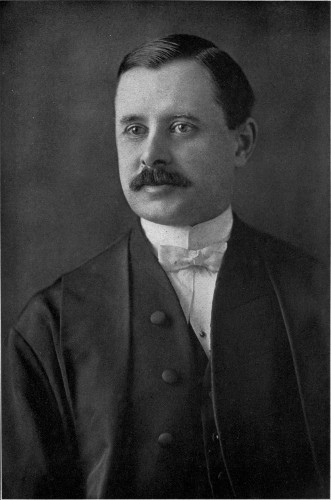
THIBAUDEAU RINFRET
The zeal with which he has devoted his energies to his profession, the careful regard evinced for the interests of his clients and an unrelaxing attention to all the details of his cases, have won him an enviable and well merited reputation. His acquaintance is wide, and he has a host of friends whose high regard he has gained through his professional ability, his deference to the opinions of others, his genial manner and unfailing courtesy.
Mr. Rinfret was married to Miss Georgine Rolland, a daughter of J. B. Rolland, of Montreal, where they make their home. Mr. Rinfret holds membership in the Catholic church.
CLARENCE I. DE SOLA.
The great industrial undertakings which have led to the substantial development and upbuilding of Canada have found a prominent representative in Clarence I. de Sola, today regarded as one of the foremost men engaged in public works and in shipbuilding in Canada. Moreover, he is prominent in the consular service and is a recognized leader in various movements for the improvement of the economic condition of the Hebrew people, some of his work in that direction being of world-wide significance. Montreal numbers him among her worthy and honored native sons, his birth having occurred here on the 15th of August, 1858. He is a member of an ancient and illustrious Jewish family that long resided in Spain, where it produced many distinguished men. He is the third son of the late Rev. Abraham de Sola, LL. D., who was one of the most eminent and scholarly exponents of orthodox Judaism in America and an author of international repute.
Liberal educational opportunities were accorded the subject of this sketch, and his life has been one of steadily expanding and increasing usefulness. Step by step he has advanced in business connections, and in 1887 he was made managing director of the Comptoir Belgo-Canadien, a syndicate of the leading Belgian manufacturers of steel and other structural material and builders of bridges, railroads and canal locks. The syndicate includes the famous Cockerill Works, of Seraing, employing eighteen thousand hands. His duties and responsibilities in this direction are most important. He secured and executed contracts in the building of the Soulanges and Trent canals, in re-laying large portions of the track of the Inter-Colonial Railway and the Prince Edward Island Railway, and in the construction of many of our largest public bridges. He was associated with the engineers Lafontaine and Lemoine in the construction of the Brock Street tunnel. It was largely due to his efforts that hydraulic lift locks were first used in American or Canadian canals.
It was in recognition of the ability he had shown in developing commercial relations between Belgium and Canada that Mr. de Sola was appointed, in 1904, vice consul for Belgium at Montreal, and his work in helping to negotiate the arrangement between the Belgian and Canadian governments, whereby the benefits of the intermediate Canadian customs tariff was secured for Belgian manufacturers, was rewarded by his advancement, in 1911 to the full rank of consul.
Extensive as have been Mr. de Sola’s efforts in connection with Belgian trade, he has also employed his energies in other fields, for he is the managing director of the Canadian office of Swan, Hunter and Wigham Richardson, Ltd., the great shipbuilders of Wallsend-on-Tyne, and he has undertaken and executed many contracts for the building of a large number of ships for traffic on the Canadian Great Lakes, the River St. Lawrence and the Atlantic oceans, amounting in all to quite a large fleet. The Canadian government has also had several ships built for its service by contracts awarded to Mr. de Sola, including some very fine vessels for hydrographic survey work, that have made their way through the ice-bound waters of Hudson’s Bay in dangerous seasons. The first ship ever seen in American waters, or that ever crossed the Atlantic ocean propelled by oil combustion engines, was built by Swan Hunter and Wigham Richardson for Mr. de Sola as consignee. It was the ship Toiler, and it was run by Mr. de Sola on the St. Lawrence and lake route until sold by him to James Playfair. An improvement on the Toiler, the ship Calgary, was built during the following year and these were the first Diesel oil combustion engined vessels to run in Canadian waters.
Clarence de Sola is a director of the Reid-Donald Steamship Company, of which he is the Canadian manager, and he is also a director of the Farrar Transportation Company.
Mr. de Sola has become widely known as a leading factor in the world-embracing Zionist Movement, for the settlement in Palestine of the persecuted Jews emigrating from Russia and other eastern European countries and for the restoration of the Holy Land as the national home of the Hebrew race. He was for a long period on the Actions Committee, which is the supreme governing council of the Zionist Movement, and for many years has been president of the Federation of Zionist Societies of Canada. This federation is a huge organization having branch societies in about sixty different cities and towns throughout the Dominion, and is the most representative Jewish body in Canada. It was through his initiative and foresight that the Zionists of Canada, at their eleventh convention, established a special fund for purchasing land in Palestine on which to settle Jewish colonists and two Jewish colonies in the Holy Land owe their existence entirely to this measure. The Canadian Century has aptly styled him “the head and shoulders of the Zionist Movement in Canada.” He has also figured prominently in the Zionist International Congresses.
Mr. de Sola is a recognized authority on Jewish history, more especially the early records of the Jews of this country, to which he has given years of research. A number of his articles on this subject have appeared in print. He is an honorary corresponding member of the American-Jewish Historical Society and member of the Anglo-Jewish Historical Society. When Funk & Wagnalls published the Jewish Encyclopedia Mr. de Sola was selected to be one of the writers of the articles on Jewish history and his contributions are to be found in most of the twelve volumes. One of his most salient characteristics is his loyalty to any cause which he espouses. Men have learned to know that what he promises he will do, that what he undertakes he will execute, and to all his work he brings the correct principles of business; accomplishing with dispatch, with accuracy and decision that which he sets out to do. He does not confine his efforts to institutions for the benefit of those of his own race. In fact his work has always been broad and nonsectarian in character and any call for humanity’s sake has met with ready response from him. He is a governor of the Montreal General Hospital and an officer of numerous philanthropic societies. He is the presiding warden (Parnas) of the Corporation of Spanish and Portuguese Jews of Montreal, the handsome design of whose synagogue building is due to the architectural taste of Mr. de Sola, a taste which also made itself felt in the striking beauty and individuality of his own home.
In 1901 Mr. de Sola was married to Miss Belle Maud Goldsmith, daughter of Leopold Goldsmith, a prominent citizen of Cleveland, Ohio. She completed a collegiate course with the Bachelor of Arts degree, and is an active officer of various organizations, including among nonsectarian ones the Victorian Order of Nurses, the Royal Edward Institute, the Needlework Guild and many others. Among Jewish societies she is founder of the Daughters of Zion in Canada and of the Women’s League for Cultural Work in Palestine. She also was one of those who organized the Friendly League of Jewish Women, of which she was the first president. She has written several absorbingly interesting literary articles, among them being “The Higher Education of Women,” “The Origin of the French Salon,” and “The Jew—Imaginary and Real.”
Mr. and Mrs. Clarence de Sola’s home, on Pine Avenue, is one of the most beautiful in Montreal. It is a splendid example of Saracenic architecture, such as is seen in southern Spain. In both its general outlines and in its rich ornamental details it is an exquisite specimen of the highest form of Andalusian art. It is a home that is additionally attractive by reason of a gracious and cordial hospitality.
EDOUARD GOHIER.
There is probably no other line of business that is equal as a factor in a city’s growth and development to the real-estate business when conducted by men who are reliable and who aim to develop only properties of merit and value. Included among such men in Montreal is Edouard Gohier, senior member of Edouard Gohier & Company. Mr. Gohier has been connected with a number of the largest high-class suburban property deals that have taken place around Montreal in recent years. His long experience in that line of business, as well as his straightforward business methods, has secured for him a high position in real-estate and financial circles.
Mr. Gohier comes from one of the oldest families in the province of Quebec and was born April 29, 1861, at St. Martin, Laval county, his parents being Benjamin and Celina (Crevier) Gohier. Mr. Gohier’s early life was spent on a farm, but when about twenty-two years old he entered business circles in connection with the dry-goods trade at St. Laurent and was thus engaged about seven years. He then turned his attention to the real-estate business in that town and Cartierville, later opening an office in Montreal. For sixteen years he served as mayor of St. Laurent and has always taken a deep interest in public affairs in that town. Among the larger deals negotiated by Edouard Gohier & Company of late years have been La Cie des Boulevards de l’Ile de Montreal and the sale to the Canadian Northern Land Company of the land for the Model City, a suburb of Montreal, transactions that have been profitable to the principals and valuable acquisitions to the city. Mr. Gohier is managing director of the Northmount Land Company as well as one of the original promoters of the company. His connection with public interests has been of value in various lines and always marked by the same careful consideration given his own business affairs. He is a director of Notre Dame Hospital and of Le Devoir, while in March, 1914, he was appointed by the federal government as a member of the Georgian Bay Canal Commission. In political matters he is a supporter of the conservative party, while his religious faith is that of the Roman Catholic church.
Mr. Gohier married at St. Laurent Phomela Gosselin, a daughter of Narcise Gosselin, and to them have been born thirteen children, eight of whom are living. Horace, a graduate of St. Lawrence College, later attended Notre Dame University of South Bend, Indiana. Aside from his connection with the firm of Edouard Gohier & Company he is a member of the firm of Gohier & Bigras, who handle city properties, Laval on the Lake and the properties of the Montreal Extension Land Company. He is likewise a director of the Montreal Turnpike Trust. Politically he is a conservative and is an alderman of the town of St. Laurent. His wife bore the maiden name of Rosa Jasmin. The other children of Edouard and Phomela (Gosselin) Gohier are as follows: Joseph, a farmer of St. Laurent, who married Alice Valois; Ernest, a graduate of McGill University, who married Berthe Mont Briant of Montreal and who is a civil engineer and a partner of F. C. Laberge of Montreal; Edouard, a graduate of St. Lawrence College, who has taken post-graduate work in Notre Dame University at South Bend, Indiana, and is now a lumber merchant of St. Laurent; Amanda, who married J. Bruno Nantel; Yvonne; Lorette; and Leo.
Mr. Gohier has always resided in St. Laurent, while his summer home is in Cartierville. Among his individual holdings of real estate in St. Laurent is a valuable stock farm of five hundred acres. He is a successful business man whose career has been marked by honorable methods and whose progressive ideas in educational and civic matters have long since caused him to be numbered among the valued and respected citizens of his town.
JOSEPH EMERY-CODERRE.
Joseph Emery-Coderre, a well known notary of Montreal, was born April 14, 1880, at Ste. Anne de Stukely, in Shefford county, Quebec, and is descended from an old family of St. Antoine on the Richelieu river. He is a grandnephew of Dr. J. Emery-Coderre, who was a professor at Victoria and Laval Universities in Montreal.
J. Emery-Coderre, father of him whose name introduces this review, removed to Indian Orchard, Massachusetts, 1882 and to Woonsocket, Rhode Island, in 1886 and there the son was educated in the parochial school, while from 1892 until 1897 he attended the Brothers of Mary school at Waterloo, Quebec, and from September, 1897, to January, 1898, the Seminary of St. Hyacinthe. In April, 1898, he returned to Woonsocket, Rhode Island, and for two years was employed in the Globe Cotton Mills, old Braid Shop, and by the American Wringer Company. In 1900 he left the mills to continue his education at the Séminaire of St. Marie de Monnoir at Marieville, Quebec, remaining there for six years. In 1906 he won his Bachelor of Arts degree from Laval University and during the ensuing two years he clerked in the office of Boisseau & Bazinet, notaries at St. Hyacinthe, Quebec. During the succeeding two years he studied at Laval University and clerked in the office of Biron & Savignac, notaries. Thus alternating business activity with the acquirement of an education, he at length reached a position that enabled him to pass the examination before the board of notaries on the 10th of July, 1910. Immediately afterward he became a member of the firm of Biron & Savignac, notaries, with offices at 99 St. James Street, Montreal, the said firm having now another member and being known as Biron, Savignac, Coderre & Poirier.
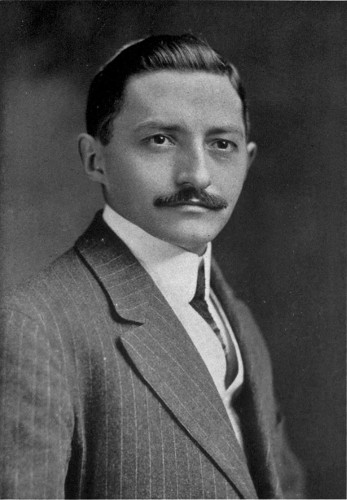
JOSEPH EMERY-CODERRE
J. Emery-Coderre is secretary and treasurer of the corporation of Montreal East and is a member of the Montreal East Land Company. At the same time the firm with which he is connected is accorded an extensive clientage, and thus his professional and business interests are important. He has made wise use of time, talents and opportunities, and his ability has advanced him to an enviable position.
On the 12th of October, 1910, J. Emery-Coderre was married at St. Hyacinthe to Bertha Tetrault, a daughter of François Xavier Tetrault, and they have become parents of two children, François Xavier and Maurice. J. Emery-Coderre is a member of the Club Champetre Canadien. A young man, he has won popularity in both professional and social circles, and he now has a wide and favorable acquaintance in Montreal.
HON. COLONEL SIR RODOLPHE FORGET, M. P.
“One of the most powerful men in financial circles in Canada; he can make and unmake and has seldom been beaten in a financial battle.” Thus wrote the Canadian Courier concerning one of the foremost French-Canadian citizens of Montreal—Colonel Joseph David Rodolphe Forget, better known as Sir Rodolphe Forget, banker, broker and legislator. He was born at Terrebonne, Province of Quebec, December 10, 1861, and while spending his youthful days in the home of his parents, David and Angele (Limoges) Forget, he attended Masson College. In early manhood he established a home of his own through his marriage in October, 1885, to Mlle. Alexandra Tourville. Subsequent to her death he was married, in April, 1894, to Miss Blanche, youngest daughter of the late A. R. McDonold, a stock broker of Quebec. Lady Forget is prominent in charitable and benevolent circles, being a director of the Montreal Day Nursery and the Notre Dame Hospital, while in 1909 she was elected vice president of the Women’s Canadian Club.
Sir Rodolphe Forget’s active connection with financial affairs began in 1890, when he joined the Montreal Stock Exchange, of which he was chosen chairman in 1908, continuing in that position until 1911, when he resigned. He was for a time connected with the business of L. J. Forget & Company, the senior partner being the late Hon. L. J. Forget. In 1909 a branch house was established in Paris and as banker and broker Sir Rodolphe Forget has attained prominence equal to that which has come to him in connection with public affairs. Many of the extensive and important corporation interests of Canada have been quickened and stimulated through his cooperation, while his sound judgment has constituted a controlling force in their management. He is president of the Quebec and Saguenay Railway, the Quebec Railway Light, Heat & Power Company; vice president of the Montreal Light, Heat & Power Company; and director of the Toronto Railway Company, the Quebec Gas Company, the Sterling Coal Company, Limited, the Canadian General Electric Company, and the St. Lawrence Flour Mills Company. He was formerly president of the Richelieu & Ontario Navigation Company, the Eastern Canada Steel & Iron Works, Limited, the Royal Electric Company, and the Mount Royal Assurance Company; and vice president of the Canadian Securities Corporation and La Société d’Administration Générale; and director of the Duluth Street Railway Company, the Montreal-London Securities Corporation, the Black Lake Consolidated Asbestos Company, the Union Brewery Company, the Murray-Bay Lumber & Pulp Company, the City Central Real Estate Company, the Montreal Smelting & Reduction Company, the Prudential Trust Company, the Wayagamack Pulp & Paper Company, the Crown Life Insurance Company, the Canada Marconi Wireless Telegraph Company, the Payne Consolidated Mining Company, La Banque Provinciale and Le Journal. In 1911 he founded La Banque Internationale du Canada. He was rated as a millionaire by the Montreal Star in 1907, which in itself is a testimonial of his power as a financier. In 1911 he headed the navigation merger. He has also been connected with the Canada Car Foundry Company, the Industrial Development Company, the Butte Central Copper Company, and the Montmorency Cotton Mills Company. All these indicate something of the wonderful scope of his business interests and activity and yet by no means give a complete record of his interest and his efforts, which have been equally strong forces in the control, development and upbuilding of organizations having to do with the public welfare. In 1911 he made a gift of two hundred and fifty thousand dollars to the Notre Dame Hospital, of which he is a director. He is also president of the Province of Quebec Rifle Association, and he was appointed honorary lieutenant colonel of the Sixty-fifth Carabiniers, “Mount Royal” of Montreal in 1907, and was promoted to honorary colonel in March, 1914. He is a director of the Canadian National Bureau of Breeding and is a life governor of the Antiquarian and Numismatic Society. He was vice president of Credit Foncier Franco-Canadien. He has been a member of the executive committee of the Canadian Handicrafts Guild of Montreal, holding the office in 1908.
In politics an independent-conservative, Sir Rodolphe Forget has sat for Charlevoix in the house of commons since 1904. In 1911 he was elected for Charlevoix and Montmorency—said to be the first occasion in the history of the Dominion in which a member in opposition was elected for two constituencies. He was offered a portfolio when Premier Borden formed his cabinet, but declined. He believes in a direct contribution from Canada for the imperial navy and opposed the Taft-Fielding reciprocity pact. His religious faith is that of the Roman Catholic church. In club circles he is well known as a member of the Mount Royal, the St. James, Club Lafontaine, Club Canadien, Club St. Denis, Canada, Montreal, Montreal Jockey, Montreal Hunt, Canadian, Forest and Stream, Montreal Curling, Montreal Military Institute, Royal Montreal Golf, Royal St. Lawrence Yacht Clubs, of Montreal, and the Garrison Club of Quebec, in many of which he has held official positions. He has been termed “the young Napoleon of St. François Xavier Street.” He has manifested Napoleonic powers in other connections and his strength, power and resource have given him the position of honor and distinction which he now occupies. His residence is at No. 71 Ontario Avenue, and his summer home is “Gil Mont,” St. Irenee les Bains, Quebec.
FITZ-JAMES E. BROWNE.
One of the best known citizens of Montreal whose reputation in business is international is Fitz-James E. Browne, president of the famous and highly successful firm known as “The House of Browne, Limited,” real-estate experts, auctioneers, architects and fire insurance agents. He was born in Montreal on the 22d of September, 1871, a son of the late John James and Agnes Dunlop (Hay) Browne, and comes of Irish and Scotch ancestry. He acquired his early education at the McTavish school and afterward attended Lincoln College at Sorel, province of Quebec.
After leaving school Mr. Browne became associated in the architectural profession with his father and soon after the death of the latter, in 1893, Fitz-James E. Browne engaged in the real-estate business, continuing the firm name of John James Browne until 1894, when the present title of “The House of Browne, Limited” was assumed, and no real-estate firm in the Dominion is as widely known. Mr. Browne’s advertising measures are both progressive and aggressive as well as unique. He has been a pioneer in methods that others attempt to imitate. As a real-estate auctioneer it is doubtful if he has an equal. He has officiated at the biggest sales on record in Canada and holds the proud honor of having sold the highest priced property per foot in Montreal. He possesses a comprehensive and accurate knowledge of values as well as a thorough and practical understanding of all the intricacies of the real-estate business in the city, and his upright business methods have won him the esteem and confidence of all. His knowledge of architecture from both the scientific and practical standpoint is broad, and as a real-estate expert he stands in the front rank. He is frequently called upon to address meetings of real-estate dealers and deliver lectures upon real-estate selling in both Canada and the United States.
Mr. Browne was married in August, 1896, to Miss Sarsie Geraldine Nagle of Montreal. Her tragic death, resulting from injuries sustained in being struck by a tram car, occurred on November 15, 1913. She is survived by two sons: John James Ethelbert and Henry Shewbridge Bashford.
Like the majority of progressive business men of the day, Mr. Browne keeps well informed on leading questions and issues, but does not seek nor desire the honors and emoluments of office, preferring to concentrate his attention upon his business affairs. In his younger days he devoted much time to amateur sport, in which he still retains deep interest. As a member of the Montreal Amateur Athletic Association he was foremost in opposition to the introduction of professionalism into the organization. He was a prime factor in the organization of the St. Patrick’s Amateur Athletic Association and has since been its leading spirit. Mr. Browne is a very public-spirited man and any movement for the advancement of the city, province or Dominion finds in him a most hearty supporter.
PAUL BRISSET DES NOS.
Prominent in real-estate circles of Montreal is Paul Brisset des Nos, whose activities in that field have had an important bearing upon the growth of the city. He has successfully handled important deals and has been connected with some of the largest transactions consummated in real estate. At present he is manager of the L’Alliance Immobilière, Incorporated, which he established in 1912 and which is capitalized at one hundred thousand dollars. He is among the successful Parisians who have selected Montreal as their field of labor, and yet he often visits the land of his birth. Having had all the advantages of an excellent education, he understands mankind and judges conditions correctly, and these features are largely the corner stone of his success. He was born in Paris, November 17, 1873, and comes of a distinguished family, his father being André Brisset des Nos, for many years manager for La Foncière, Paris, and his mother Clémentine Hébert de la Rousselière.
Paul Brisset des Nos enjoyed the advantages of a classical course, attending the College of the Jesuits in his native city, located at the rue de Madrid, and also the school of the same order at the rue Bleury at Montreal. He made his first step into the business world as partner of his father, who was engaged in the wholesale wine and liquor business at 23 Gosford Street, Montreal, the business being conducted under the name of André Brisset & Fils. He was connected with this firm for six years but in 1906 he opened a real-estate office. For about seven years he was located at Pointe-aux-Trembles but subsequently gave much of his time to two tracts of land which he had acquired in the district of the Rivière des Prairies, which he subdivided into eighteen hundred lots, all of which have been disposed of today. Among other enterprises he was concerned in the building of four butter factories near Montreal. In 1912 he established and incorporated the L’Alliance Immobilière, with a capital of one hundred thousand dollars, and has since been manager thereof. He is a number of the Montreal Real Estate Exchange.
On the 11th of February, 1901, at Montreal, Mr. Brisset des Nos was united in marriage to Miss Yvonne Lareau, a daughter of the late Edmond Lareau, deputy of Rouville. Mr. and Mrs. Brisset des Nos have the following children: Paul, ten years of age; Aliette, aged eight; Yves six; and Madeleine, three.
It is conceded on all sides that realty activities largely contribute to the growth of a community and in that way Mr. Brisset des Nos has participated in the development and commercial expansion of Montreal. He is public-spirited and takes a deep interest in any forward movement promoted in the cause of the general welfare. Although he has been connected with real-estate transactions for a comparatively short time, he has made his influence felt in that field to such an extent that his opinions and advice are often sought by investors. L’Alliance Immobilière, founded upon a solid basis, may well look toward a prosperous future under the able management of Mr. Brisset des Nos, whose wide experience and sound judgment are among the most important assets of the corporation.
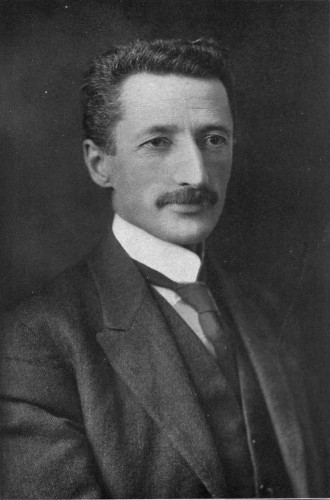
PAUL BRISSET DES NOS
HON. SIR LOMER GOUIN.
Hon. Sir Lomer Gouin, a distinguished representative of the Montreal bar and a statesman whose grasp of affairs has made him largely master of situations affecting government interests, was born at Grondines, P. Q., March 19, 1861, a son of Dr. J. N. and Victorie Seraphine (Fugere) Gouin. The family has long been established in this province. Sir Lomer Gouin in the attainment of his education attended successfully Sorel College, Levis College and the Laval University. He won his LL. B. degree in 1884 and in 1902 the honorary degree of LL. D. was conferred upon him while McGill also created him an LL. D. in 1911. He pursued his law studies under the direction of the late Sir John Abbot and the late Hon. R. Laflamme, two of the most eminent members of the bar of Montreal. Passing the required examinations, Sir Lomer Gouin was admitted to practice as an advocate in 1884, and his advancement in his profession has brought him to a position of leadership at the provincial bar. He was at one time a law partner of Judge Pagnuelo and afterward of the late Hon. H. Mercier. His knowledge of the law is comprehensive and exact and in the application of its principles he has proven himself one of the ablest representatives of the bar in Montreal. He was elected batonnier-general of the provincial bar in 1910, was appointed an officer of de l’Institut Public of France in 1902 and also of the Legion of Honor in 1907. Aside from his profession, he is known in financial circles as a director of the Royal Trust Company, of the Montreal City and District Savings Bank and of the Mount Royal Assurance Company. The Venerable Archdeacon Kerr characterized him as “a straightforward business man,” and in all his career he has never deviated from high standards of manhood and citizenship.
In 1908 he was knighted by King George at the Quebec Tercentenary celebration. His public service has been of an important character and is of wide scope, and in 1898 he was appointed a member of the council of public instruction, P. Q., and in 1910 was elected president of the North American Fish and Game Protective Association. He has likewise been president of the Canadian Camp. In 1900 he was chosen an alderman of Montreal and exercises his official prerogatives in support of various measures for the general good. Mr. Gouin is a liberal in politics and for some years has been active in the party. He unsuccessfully contested Richelieu for the House of Commons at the general election in 1891, and he sat for Montreal, St. James division, in the local house in 1897-1908. Since then he has sat for Port Neuf. He is regarded as an administrator of breadth of view, great knowledge and ability and unimpeachable probity. From 1900 until 1904 Sir Lomer Gouin was commissioner of public works under the Parent administration, and since March 23, 1905, has been premier and attorney-general for the province of Quebec. An eminent statesmen has characterized him as “the greatest prime minister the province has ever known.” His comprehensive knowledge of the law and his ready grasp of affairs, combined with his unfaltering loyalty to the best interests of government, classes him with the most prominent Canadian statesmen. In 1906 he was chairman of the Ottawa Inter-Provincial Conference and was a delegate thereto in 1910. He has edited a special edition of the Quebec Municipal Code, and he seems familiar with all the various phases of the important municipal, provincial and national problems which are now engaging public attention.
Sir Lomer Gouin was married in May, 1888, to Miss Eliza Mercier, a daughter of the late Hon. Honore Mercier, prime minister of Quebec. Lady Gouin passed away in September, 1904, and in September, 1911, he wedded Alice, daughter of the late Auguste Amos of Montreal. Sir Lomer Gouin was present by invitation at the coronation of King George and Queen Mary in Westminster Abbey in June, 1911. He is well known in club circles as a member of the Garrison Club of Quebec; the Club St. Denis, the Montreal Reform Club, and the Mount Royal Club of Montreal. His religious affiliation is with the Roman Catholic church.
ISAAC GOUVERNEUR OGDEN.
The enterprise which has brought the western world to a par with the old world in all that touches business activity and progress finds exemplification in the life record of Isaac Gouverneur Ogden, now vice president of the Canadian Pacific Railway Company. It would be a partial view, however, if one were to consider his life record only from the standpoint of business advancement, as his labors have been directed with equal efficiency along lines which touch the general interests of society or have their root in a broad humanitarian spirit.
Born across the border, Mr. Ogden is a native of New York, the date of his birth being October 10, 1844. His parents were Isaac Gouverneur and Elizabeth Katherine (Williamson) Ogden, representatives of old and distinguished families of the Empire state. His education was acquired in local public schools, while his early business training came to him in a mercantile house in his native state where he secured employment in 1860. He early recognized the eternal principle that industry wins, and industry became the beacon light of his life. He turned from merchandising to banking, entering the house of Fisk & Hatch with which he remained until March, 1871, when he made his initial step in railway service as paymaster and accountant for the Chicago & Pacific Railway Company. The duties of the dual position were promptly and capably discharged until 1876, when he was made auditor, serving in that capacity for five years under a receiver.
In 1881 he became auditor for the western division of the Canadian Pacific Railway Company, was advanced to the position of auditor for the Canadian Pacific in 1883 and so remained until 1887. For fourteen years thereafter he was comptroller for the Canadian Pacific and since December, 1901 has been vice president of the most important railway that crosses the Dominion. Long experience has made him familiar with various phases of railway operation and management, and thus he came well equipped to his present position, ready for administrative direction and executive control.
In early manhood Mr. Ogden wedded Miss Julia M. Baker and they reside at No. 457 Mackay Street. Home and business interests, however, by no means comprise the extent of his activities which reach out into the fields of religious and philanthropic work and also prominently into club life. He is an Anglican, is president of the Montreal College of Homeopathic Physicians and Surgeons; and is a life governor of the Montreal Homeopathic Hospital. In 1901 he was elected president of the Association of American Railway Accounting Officers and in 1905 was a delegate to the International Railway Congress. He brings to bear upon public questions the same keen discrimination and sound judgment that have characterized his activities in railway circles. His social nature finds expression in his membership in the St. James, Mount Royal, Forest and Stream, Royal St. Lawrence Yacht and Montreal Hunt Clubs of Montreal; the Lotus and Transportation Clubs of New York, and the Manitoba Club of Winnipeg.
CHARLES HAZLITT CAHAN.
It cannot be denied that members of the bar have been more prominent actors in public affairs than any other class of the community. This is but the natural result of causes which are manifest and require no explanation. The ability and training which qualify one to practice law also qualify him in many respects for duties which lie outside the strict path of his profession and which touch the general interests of society. Holding marked precedence among the members of the bar and recognized also as an influential factor in political circles, Charles Hazlitt Cahan is a well known and honored resident of Montreal. He comes of a family of Irish origin and was born at Hebron, Yarmouth, Nova Scotia, October 31, 1861, his parents being the late Charles and Theresa Cahan, of Yarmouth. He supplemented his early educational training by study at Yarmouth Seminary and in Dalhousie University, winning his Bachelor of Arts degree in 1886 and Bachelor of Laws degree in 1890. He began practice as a barrister of Nova Scotia in 1893 and was created king’s counsellor there in 1907. In the same year he entered upon the practice of law in the province of Quebec and was made king’s counsellor in this province in 1909. While a resident of Halifax he was a member of the law firm of Harris, Henry & Cahan but since 1909 has been in practice in Montreal. He has always specialized in corporation law, in which department he has had wide and varied experience in North and South America and in Europe.
There was an interval between the completion of his course and his active connection with the bar in which he devoted his time and energies to journalistic interests, being connected with the Halifax Evening Mail and Herald, resigning, however, to devote his attention to law and politics in 1894, and he has made for himself a prominent name and position in the latter as well as in the former connection. He contested Shelburne, Nova Scotia, in the conservative interest and following the election sat in the Nova Scotia legislature from 1890 until 1894, during which period he was the recognized leader of the opposition. In 1896 he unsuccessfully contested Shelburne and Queen’s for the house of commons, and also Cumberland at the general election in 1900. He declined a nomination for the St. Lawrence division of Montreal at the general election of 1911, and he also refused political honors when he decided not to accept the portfolio offered him in the Dominion cabinet in 1896. Public activity has ever been with him a matter of public duty, as he has ever placed the general good before partisanship or self-aggrandizement. He was for several years honorary secretary of the Halifax branch of the Imperial Federation League and honorary secretary of the Liberal-Conservative Association in Nova Scotia. With all the duties that have been imposed upon him in his political and professional connections, he has found time and opportunity to cooperate in the management of various successful business corporations and interests. He is now the president of the Western Canada Power Company and of the Corporation Agencies, Ltd., and a director of several other important financial and industrial companies. He has closely studied vital public problems, and he took a decided stand against the Taft-Fielding reciprocity compact, against which he delivered various addresses during the political campaign of 1911. He has been termed a courageous, ready and powerful speaker. He presents his arguments with clearness and force, and their logic is convincing.
On March 1, 1887, Mr. Cahan was united in marriage to Mrs. Mary J. Hetherington of Halifax, Nova Scotia, and they now reside at No. 740 University Street, Montreal, with a summer residence at “Belmont,” Halifax, Nova Scotia. Mr. Cahan’s club relationship is with the Mount Royal and Montreal Clubs, Montreal; the Halifax Club, Halifax; and the Jockey Club of Mexico. He filled the presidency of the Dalhousie University Alumni Association in 1893-4. One of the elements of his success is found in his ability to entirely concentrate his thought and efforts upon the question or work in hand and then turn with equal enthusiasm and capability to his next duty or undertaking. The trend of his mind is analytical, logical and inductive, and as a corporation lawyer he stands among the foremost representatives of the profession in Montreal.
LEANDRE BELANGER.
Leandre Bélanger, for forty years or more one of the most prominent notaries of the province of Quebec, was born March 29, 1848, at St. François de Sales, Laval county. His father, Leandre Bélanger, was a carriage maker by trade and married Marie Nadon. His grandfather, François Bélanger, was a farmer of Laval county.
In his native village Leandre Bélanger, Jr., spent his boyhood and was educated at Terrebonne College. For five years he studied law in the office of Melasippe Prevost in Terrebonne and on the 11th of June, 1871, was commissioned a licensed notary in Quebec. For a year thereafter he engaged in practice at St. François de Sales, but, seeking a more extensive field, he located in Montreal on the 1st of May, 1872, and in this city soon built up a large and lucrative practice. Until 1909 he was alone in practice, but in that year formed a partnership with his son Adrien under the name of Bélanger & Bélanger, with offices at No. 30 St. James Street. For twenty-five years Mr. Bélanger has been a member of the board of notaries of the province of Quebec and for three years served as president of that board. For eight years he was president of the Montreal Association of Notaries and his contemporaries in the profession accord him a high position in their ranks. He has been a member of the Antiquarian and Numismatic Society for many years, and he is also a member of the Chambre de Commerce.
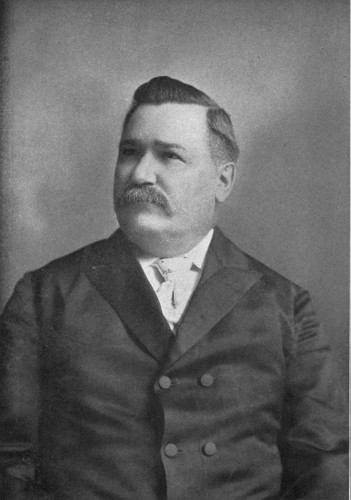
LEANDRE BELANGER
Mr. Bélanger is a member of the Catholic church and of L’Union Catholique and has served as a director and vice president of the latter. In politics he has ever remained independent. In 1870 he was married at St. François de Sales, to Claire Viger, and they became parents of two children: Joseph, a resident of St. Hyacinthe; and Maria, the wife of Dr. Archambault, of Fall River, Massachusetts. In 1879 Mr. Bélanger was married, in Montreal, to Miss Laura Viau and they have seven children: Leandre, an electrician in Montreal; Adrien, who is in partnership with his father; Armand; Laura; Evelina; Antoinette; and Alice. The family home is on St. Catherine road in Outremont.
HON. LOUIS ONESIME LORANGER.
Hon. Louis Onesime Loranger, whose name is prominently associated with the history of Montreal’s judiciary, retired from the bench in May, 1910, but has never ceased to feel a deep interest in his profession or in the great and vital problems which are most closely connected with the welfare and progress of the country.
He was born at Yamachiche in the province of Quebec on the 7th of April, 1837, a son of the late Joseph and Marie Louise (Dugal) Loranger. In the acquirement of his education he attended Montreal College and St. Mary’s College, the latter a Jesuit school of Montreal, and in preparation for the bar, having determined to make the practice of law his life work, he began a thorough course of reading and on the 3d of May, 1858, was admitted to practice at Montreal. He then joined his brothers, Hon. T. J. I. Loranger, late judge of the superior court and the late J. M. Loranger, K. C. They acquired an extensive practice and, in fact, were accorded a large share of the most important law work in the city during the greater part of the later half of the nineteenth century. Mr. Louis O. Loranger was created a king’s counsel by the Marquis of Lorne in 1881 and the honorary degree of LL. D. was conferred upon him by Laval University in 1901. He continued in the active profession of law until appointed judge of the superior court for the district of Montreal in 1882, and remained upon the bench for twenty-seven years, or until May, 1910, when he entered into the enjoyment of a full pension.
Judge Loranger’s public service aside from his connection with the judiciary has been extensive and of an important character. He was alderman of Montreal from 1868 until 1879, covering a period of eleven years, and he sat for Laval in the local legislature for a period of seven years, or from 1875 until 1882. He was attorney general in the Chapleau administration from 1879 until 1882. It was upon his retirement from that position that he was made puisne judge, continuing upon the bench for twenty-seven years thereafter. His public service also covers incumbency in the office of president of the St. Jean Baptiste Society in 1895-6. In 1906 he was elected governor of Laval University and the same year was made president of Notre Dame Hospital.
Judge Loranger was twice married. In 1867 he married Marie Anne Rosalie Lafranboise, a daughter of the late Hon. Mr. Justice Lafranboise. To them were born seven children: Louise, the deceased wife of Henry Masson; Louis J., a prominent advocate of Montreal, whose sketch appears elsewhere in this volume; Adele, now Mrs. H. Prefontaine; Caroline, now Mrs. Hubert Desjardins; Joseph, a well known advocate of Montreal; Maurice, a well known attorney of this city; and Rosalie, now Mrs. Emile Chaput, of Montreal. The mother of these children died in May, 1883, and Judge Loranger was again married in May, 1888, his second wife being Mrs. Antonette (Valois) Verin, a daughter of the late S. Valois.
Hon. L. O. Loranger is a communicant of the Roman Catholic church. He belongs to Club Lafontaine and is an advocate to conservative principles. He enjoys high reputation as a lawyer and as a debater and still takes an exceedingly active interest in political affairs. He has long since passed the Psalmist’s span of three score years and ten, having now reached the age of seventy-seven, but in spirit and interest seems yet in his prime. Old age need not necessarily suggest inactivity; on the contrary, there is an old age which grows stronger and better mentally and morally as the years go by and gives out of the rich store of its experience for the benefit of others. Such is the record of Hon. Louis Onesime Loranger, whose opinions carry weight in many councils and are always worthy of an interested hearing.
EDOUARD O. CHAMPAGNE.
Edouard O. Champagne, superintendent of the department of boiler inspection for the city of Montreal, has been connected with that department of the city government for thirty-five years, during which time he has established a reputation for capability and efficiency in his line that is probably unsurpassed on the continent. Thoroughly progressive and up-to-date, he has kept fully abreast of the advancement made in all lines of manufacture and usage affecting his department.
Mr. Champagne comes from one of the old and prominent families of the province, a family whose members for nearly two hundred and fifty years have been identified with provincial history and have been regarded as of the highest type of French-Canadian citizenship. Edouard O. Champagne was born at Sorel, Quebec, in 1848. His education was acquired at the Christian Brothers College, where he excelled in mechanical drawing and civil engineering and also at the John Allan Model and Classical school of Sorel. He served his apprenticeship as a machinist in the St. Lawrence engine works, after which he was for fourteen years employed on steamboats on the Ottawa and St. Lawrence rivers and Lakes Champlain, Erie and Ontario in his professional capacity.
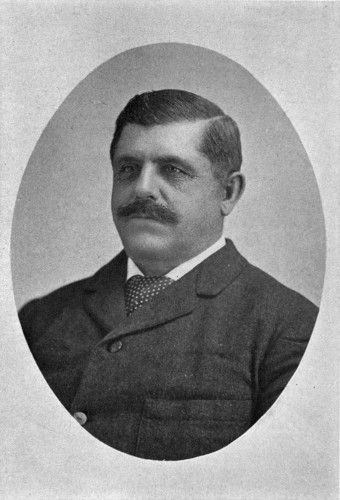
EDOUARD O. CHAMPAGNE
His splendid record as an engineer of various boats induced the harbor commissioners of Montreal to engage him to run the St. Peter, their best boat, which was never outdistanced during the four years in which he was in charge. In 1872 he obtained a first class certificate from the federal government as a mechanical engineer, being the first French-Canadian to whom was accorded that distinction. In 1879 he was appointed boiler inspector for the city of Montreal by a council, the majority of whose members were English-speaking. His experience has enabled him to solve many of the difficult and intricate problems that arise in connection with the operation of engines, pumps, steam plants, elevators and water and gas plants. In a word, he has expert scientific knowledge and practical mechanical ability and is splendidly qualified for the onerous and important duties which devolve upon him in this connection. As an example of his capability, as well as the value of his services to the city, mention might be made of the heating apparatus of the public baths. In July, 1913, when the question of heating water for the public baths was being considered by the city officials, various types of expensive and complicated apparatus were shown and inspected. The expense of installation, as well as that of fuel and maintenance, represented a large sum if any of those systems had been adopted. Mr. Champagne had given the matter some thought and, with a system of entirely his own planning, offered to install an efficient and economical apparatus for that purpose. How well he succeeded may be inferred from the fact that at an expense of ten dollars he secured the same result, in less than one-half the time, that a system costing ten thousand dollars would have accomplished. Three such equipments were supplied by him, representing a first cost saving of thirty thousand dollars to the city. Being in the city’s employ, he waived all claims to remuneration as an inventor. The city’s requirements in the future will call for a number of such installations, each one of which will mean a saving of an additional ten thousand dollars.
At their annual meeting in 1880 the various members of the Association of Boiler Inspectors of the United States and Canada were invited to submit designs from which the organization’s official seal was to be selected. Mr. Champagne, through illness in his family, was unable to attend this meeting. However, he submitted the design he had planned, and it was adopted. This has ever since been in use as the official seal of the association. The first impression made from the seal, together with a small photogravure of the original drawing, were sent to Mr. Champagne by the officials. The design of the seal is unique and highly appropriate, containing accurate drawings of sixteen dangerous types of boilers which form its circular border. Mr. Champagne has frequently been called upon as an expert in determining causes of boiler explosions, and in matters generally pertaining to his line of business there are few, if any, better posted men in the Dominion.
Mr. Champagne is also a noted marksman and one of the best snapshots in the Dominion. He came into permanent possession of several challenge cups as evidence of his skill. Few men would probably display more modesty over achievements of equal importance and significance than he has done.
In 1895 he came into public notice through his heroism at the Longue Pointe Asylum fire, when he and Chief Benoit saved the lives of over ninety inmates. It is characteristic of him that he never considers himself in the presence of imminent danger, and his faithfulness and fidelity in public service have won him the confidence and high regard of all who know aught of his career. As a citizen he represents the best of the French-Canadian type, has reared an excellent family and, with them, is highly esteemed and respected.
HON. FRANCOIS XAVIER CHOQUET.
Hon. François Xavier Choquet, judge of the juvenile court, Montreal, since January 2, 1912, is uniformly recognized as an eminent legist and jurist, as well as an able member of the judiciary. He occupied for many years a position of distinction at the Montreal bar, where his name figured in connection with the court records of some of the most prominent cases heard in the province.
Judge Choquet was born on the 8th of January, 1851, at Varennes, in the province of Quebec. His father, Jean Baptiste Choquet, was a farmer at Varennes and descended from one of the oldest French families in the province, while the mother of Judge Choquet, Adeline Provost, a daughter of Amable Provost, also belonged to an old and honorable family.
The Choquet family has been identified with the history of the province since 1665, the founders, who originally belonged to Picardie, France, settling in Canada in that year.
Judge Choquet added to the fundamental principles of education the knowledge acquired in attendance at L’Assomption College, the Montreal Seminary and McGill University, being graduated from the last named in 1874 with the B. C. L. degree, having determined to make the practice of law his life work. In the meantime he had studied law under Sir La Jette and Senator Beique, in the firm of Jette & Beique, and after being called to the bar on the 10th of January, 1875, he began the practice of his profession in Montreal as a partner of his former law preceptors, being admitted to the firm of Jette & Beique, where he remained about four years. Subsequently he practiced alone for six years, during which time he acquired a clientele that was not surpassed by any of his contemporaries. He afterwards became partner in the firm of Mercier, Beausoleil & Choquet, so continuing from 1884 until 1892, when the senior partner, the late Hon. Honore Mercier, withdrew, and the firm style of Beausoleil & Choquet was adopted. Judge Choquet was created a king’s counsellor by the Earl of Aberdeen on March 7, 1893.
Many important duties have devolved upon him, either in the direct or indirect path of his profession. He was a royal commissioner to revise the charter of Montreal in September, 1897, and was appointed judge of the session of the peace, police magistrate, and license commissioner of Montreal on the 27th of December, 1898. He was also appointed an extradition commissioner under the extradition act, July 20, 1901. In more strictly professional lines his service as a member of the council of the Montreal bar continued from 1894 until 1897, and he was appointed a delegate to the general council of the bar of the province of Quebec.
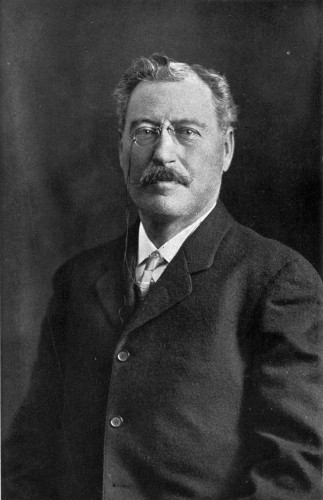
HON. FRANCOIS X. CHOQUET
He has been a continuous student of his profession, constantly broadening his knowledge by reading, study, research and investigation until today his opinions are largely accepted as authority concerning any vital legal problems.
In the course of his professional career, Judge Choquet successfully handled many important railway and municipal cases. He made a special study of the law relating to transportation matters and also the laws governing municipal affairs, while on the law of elections, the Montreal Herald has referred to him as “the highest authority of the province.”
In June, 1884, Judge Choquet was married to Miss Marie Caroline Barry, a daughter of John E. Barry, of Saguenay and Trois Pistoles. Both Judge and Mrs. Choquet are prominently connected with the Montreal Children’s Aid Society, of which he was president for some time, while Mrs. Choquet has been vice president. He is also president of the Cooperative Funeral Expense Society. Their religious faith is that of the Roman Catholic church, and Mrs. Choquet was granted an audience by the pope in 1906. Judge Choquet is vice president of the Shawinigan Fishing Club, holds membership also with the Engineers and Winchester Clubs, and has been president of the latter for ten years. He resides at No. 814 Dorchester Street, West, Montreal, through the winter seasons and has a summer home at Rigaud, P. Q.
HON. LOUIS TELLIER.
On the list of representatives of the judiciary of Montreal appears the name of Hon. Louis Tellier, puisne judge of the superior court of the province of Quebec. A native of Berthier, Quebec, he was born on the 25th of December, 1844, a son of Zephirin Tellier of Ste. Melanie d’Aillebout and Luce Ferland, the latter a daughter of V. Prisque Ferland. After attending Joliette College Louis Tellier was called to the bar in 1866, and thus for almost half a century he has been a representative of the legal profession in the province. For a number of years he held the office of deputy prothonotary of the superior court, also deputy clerk of the circuit court and deputy clerk of the peace and of the crown for the district of St. Hyacinthe. He had studied law under the late Mr. Baby, who became a justice of the court of queen’s bench in the province of Quebec, and afterward under Mr. Chagnon, who became a judge of the superior court for the province of Quebec in the district of Iberville, and had come to the bar well equipped for the honors and responsible duties of the profession. His ability was early manifest in the manner in which he prepared and conducted his cases, and in 1873 he was appointed crown prosecutor for the district of St. Hyacinthe. He also became a recognized leader in political as well as in legal circles, and in 1878 he was elected to the house of commons for the St. Hyacinthe riding at the general election and sat for that district until 1882. He was appointed queen’s counsel in 1882 by the Marquis of Lorne. He resumed the practice of law and was raised to the bench as puisne judge of the superior court of the province of Quebec by the Marquis of Lansdowne on the 12th of November, 1887. He was appointed for the district of St. Hyacinthe, succeeding Justice Sicotte, but in 1903 he was removed to the district of Montreal, where he now presides. His decisions on the bench are models of judicial soundness, showing a comprehensive grasp of the law with ability to accurately apply its principles.
On the 26th of May, 1868, Judge Tellier married Hermine, daughter of the late Dr. A. Malhiot. She died in 1878, and on the 18th of July, 1882, Judge Tellier married Elzire Hamel, daughter of Joseph A. Hamel, collector of customs in St. Hyacinthe division. Her death occurred October 6, 1906. On the 26th of January, 1914, the Judge married Mrs. Jules Richard whose maiden name was Regina Royer and who was the widow of Jules Richard, advocate, practicing his profession at Sherbrooke in the district of St. Francis. Judge Tellier has three sons and five daughters.
He is an administrator of Laval University and is a member of the Catholic church. His mind is naturally analytical, logical and inductive, and his clear reasoning finds expression in judicial opinions from which colleagues and contemporaries seldom take exception.
HENRY JOHNSTONE ELLIOTT.
Henry Johnstone Elliott, senior member of the law firm of Elliott & David, has been a lifelong resident of Montreal, and is a son of the late Hugh Elliott. He received his early education in the schools of his native city and pursued his preparation for the bar at McGill University, from which he was graduated B. C. L. in 1898. The same year he began practice as an advocate, and ten years’ successful work as a representative of the legal profession won him position among the king’s counselors, being created such in 1908. He understands thoroughly the necessity for careful preparation before presenting his cause in the courts, and in the trial of cases it is seen that his knowledge of the law is exact and comprehensive, while in the application of legal principles he is seldom if ever at fault.
Mr. Elliott finds enjoyment in golf, and interest and recreation in various outdoor sports, exercises and athletics. He belongs to the Beaconsfield Golf Club, Outremont Golf Club, Montreal Athletic Association, the Engineers Club and the Temple Club, all of Montreal. His religious belief is that of the Anglican church and he has been a delegate to the synod.
REV. MALCOLM A. CAMPBELL.
Rev. Malcolm A. Campbell, pastor of the First Presbyterian church of Montreal and known in that city as a man of superior attainments and of active religious zeal, was born in Bruce county, Ontario, October 10, 1875. He acquired his education in high school at Port Elain, in his native province, and later attended the Collegiate Institute at Owen Sound. He supplemented this by a course in McGill University and in the Presbyterian College at Montreal, from which he was graduated in April, 1909. He was ordained in the following October and in January, 1910, became minister of the First Presbyterian church of this city, a position which he still retains. This is one of the most important parishes in Montreal, being a combination of St. Gabriel’s and Chalmers Presbyterian churches, the former the first Protestant church in Canada. Rev. Campbell brings to the duties of his responsible position well directed energy, unflagging zeal and a firm belief in the importance of the work in which he is engaged, and the results of his labors are seen in the excellent condition of the parish and its constant growth.
On the 26th of October, 1910, Rev. Campbell was united in marriage to Miss Louise Crippen, of Trout River, New York. He is a member of the Masonic order, being grand chaplain of the Grand Lodge of Quebec province, and he is widely and favorably known in Montreal, where he is recognized as a man sincere in his aims and purposes and one whose honorable and upright life is always in strict conformity with the doctrines which he professes.
ARTHUR JOSEPH RICHER, M. D.
In preparation for the onerous and difficult duties and responsibilities of the profession Dr. Arthur Joseph Richer has studied under eminent physicians and surgeons of the old world and the new, and his labors have manifestly been of marked value to his fellowmen, especially in the conduct of the Brehmer Rest, a sanitarium promoting a preventive treatment for tuberculosis.
He was born at Upton, P. Q., November 16, 1868, and is a son of Damase and Celina (Larvie) Richer, of Antonvale, P. Q. His education was acquired at Sabrevois Mission College and in Bishop’s College at Lennoxville, P. Q., where he was accorded the degrees of M. D. and C. M. in 1892. Since that time he has taken post-graduate work in New York and for a year and a half he was connected with the Pasteur Institute of Paris. He was also assistant under Dr. Roux in his private laboratory, and under his guidance and that of Pasteur, Metchkinoff and others, Dr. Richer performed many successful experiments. Later he was assistant at L’Ecole de Pharmacie Superieure at Paris for a short time and was appointed house surgeon at the faculty surgical clinic at Krakow, Austria, in 1895. He next went to Breslau for a winter’s study before returning to Canada. At different times he was a student at Dresden, Leipzig, Halle, Berlin and Hamburg and was an assistant in the laboratory of physiology of the faculty of medicine of Paris.
Dr. Richer returned to Canada in 1897 and located for practice in Montreal. He has since carried on an active crusade against tuberculosis in this country. The scheme of a recuperative home such as Brehmer Rest at Ste. Agathe des Monts was suggested by Dr. Richer. He has been a lifelong worker in fighting the dread disease and in the early spring of 1905 Brehmer Rest was opened as the result of his untiring efforts. In his first annual report concerning the institution he said: “When we select for treatment convalescents from pneumonia, pleurisy, and typhoid fever, as well as those affected with anaemia, chlorosis and debility, we do so with a definite object in view. Nine-tenths of those affected as above will inevitably become victims of tuberculosis.
“If they can be treated and trained before they become a prey to the dread scourge, the saving is evident from every viewpoint. In the pre-tuberculosis stage a patient can be restored to health in eight or ten weeks; when tuberculosis has developed it becomes a matter of as many months. At the last International Congress, held in Paris, October, 1905, one of the delegates present expressed his opinion in very strong terms regarding the treatment of the conditions of disease known as ‘pre-tuberculosis;’ they comprise the group above mentioned. In this respect Brehmer Rest stands out as supplying an actual need, and enjoys the unique distinction of being the first institution in the world devoted to that special class of work. Brehmer Rest has undoubtedly anticipated the movement of the future, particularly when considered in the light of the statements recently made by Von Behring in connection with his method of vaccination against tuberculosis. The new product (Tulase), which this distinguished scientist offers to the world, is a substance extracted from the cultivated germ of the disease (tuberculosis), so modified as to impart resisting power to the human organism without impairing health. It is markedly curative in the first stage of the disease, thus its action is twofold, protective and curative.”
Dr. Richer’s efforts along this line have gained him not only national but international fame and distinction. His name is known on the other side of the Atlantic as well as on this, and he has joined hands with the men of earnest purpose who are using the highest scientific skill and knowledge to blot out the dread disease. His labors have been effective in hundreds of cases and thus his life work has been a valuable contribution to mankind, placing him with the benefactors of the race.
JOSEPH TREMBLAY.
Joseph Tremblay, chief of the Montreal fire brigade, was born at St. Isidore, a little village a few miles from Montreal, where his parents were the proverbially poor but honest French-Canadian small farmers. His education was the usual course of reading, writing and arithmetic gleaned from the village priest. At the age of twelve years he left school and the farm, thinking to find more congenial and profitable occupation in the city. He made his way to Montreal with all his earthly possessions tied in a bundle, after the manner of Dick Whittington of old. At that period he knew no English, but he had little difficulty in finding a position as errand boy with one Beauvais, a merchant tailor of Chaboillez Square. Being an errand boy had small attractions in those days and it did not suit Joe Tremblay to remain one for long. He, therefore, gathered up his bundle, put his money in his sock and departed for the United States. For a while he lingered on that side the border, learning many lessons in the school of experience which have since been of much use to him. Following his return to Montreal he sought to establish himself in the tailoring business, which he had followed during his sojourn in the United States. He located at Ste. Cunegonde, then a separate municipality south of Westmount and north of Point St. Charles. There he hung out two neat brass signs, one of which read Joseph Tremblay, Tailleur, and the other Joseph Tremblay, Tailor, thus soliciting business from both the English and French population. While he was then ready for business, it appeared that business was not ready for him. F. Beecher Edwards, in an article in a Montreal paper, said:
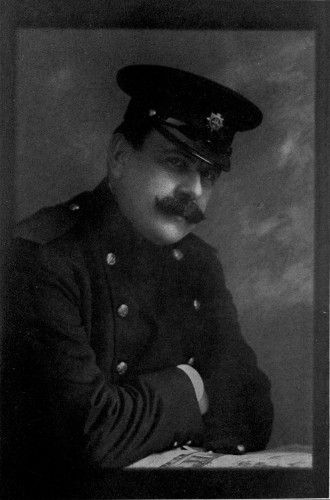
JOSEPH TREMBLAY
“Fate, wishing to do some good to poor old Montreal for a change, glimpsed one Joseph Tremblay working busily in his little tailoring and men’s furnishing shop on the southwestern borders of the city. Whereupon, things went very badly for the said Joseph Tremblay in his little tailoring and men’s furnishing business. People to whom he owed money camped on his doorstep and people who owed him money left for parts unknown in the dead of night, so Joseph Tremblay put up the shutters on his little tailoring and men’s furnishing shop on the southwestern borders of the city and went into the Ste. Cunegone fire department. Consequently the Montreal fire department is today a thing to be proud of in a city which has little enough reason to be proud of the vast majority of its civic enterprises.
“Fate, it will be observed, may be a trifle circumlocutious in her methods, but she gets there in the end. So we may thank fate that made Joseph Tremblay an unsuccessful tailor and haberdasher, for the fact that during the tragic Christmas week—1913—when through somebody’s outrageous blundering the greater portion of this great Canadian metropolis went inadvertently dry; when the fire menace, ever present, hovered more threateningly over thousands of human lives and millions of dollars worth of property, because of the fact that our strongest barrier of defense was broken down with the collapse of a few feet of unstable concrete somewhere out beyond Point St. Charles, we may thank fate for the fact that we had at the head of the Montreal fire department, deprived from no fault of its own of its heaviest ammunition, a man of the quality, the resource and the ability of Joseph Tremblay, the bad tailor who became one of the greatest, if not the greatest of fire chiefs on the North American continent.
“At the time that Joseph Tremblay became a member of the fire department he was much as he is now, with the exception of recent inclination to embonpoint, a well set up, good looking man of above the average build and as strong as two ordinary men. He had a brain, too, but they did not find that out until he had been in the Ste. Cunegonde force at least a week, when it began to be hinted that there was more to this young man than to the average. Six months after Joe Tremblay joined the Ste. Cunegonde fire brigade the chief of the brigade retired from office; whereupon, to the amazement of one and all, the Ste. Cunegonde council made the new recruit, the man who had been an unsuccessful tailor, chief. This may safely be put forward as the world’s record for rapid promotion.
“In the course of time Ste. Cunegonde was annexed to Montreal and Chief Tremblay became Sub-Chief Tremblay, in charge of the western division. This was in 1906. In 1907 he was made a deputy chief to Chief Benoit and when one year later the veteran retired in his turn Deputy Chief Tremblay became head of the Montreal fire brigade.
“Chief Tremblay is an omnivorous reader of all literature appertaining to fires and fire fighting and he is not above learning from other cities and makes at his own expense at least one trip a year to the principal cities in the States to see what helpful piece of information he can pick up.
“One of his first official acts was to institute an inspection system which was largely instrumental in reducing the rates of fire insurance here. In 1905, 1906 and 1907 the fire loss was around nine dollars per annum per capita. In 1913 it was something like two dollars and thirty-four cents per capita. He was responsible for the introduction of automobile fire apparatus here; he started the firemen’s drill school at Chaboillez Square, and he had the fire headquarters transferred from the City Hall to its present location on Craig Street. The chief is well known by sight to Montrealers. His inspiring figure has bulked large on the horizon of many a panic stricken householder at hundreds of fires during the last few years. He is a big, handsome man, and his very size begets confidence. He works his men hard and he works himself just as hard, for he believes that the citizens should get full value for their money. He has one or two hobbies, all of them connected with fire fighting, a high pressure system for the down town district, a fire tug for the harbor and the placing of the firemen’s benevolent fund on a sound footing. Chief Joseph Tremblay is a man’s size man and if there was any doubt on the subject lingering in anyone’s mind it was banished by the splendidly efficient manner in which he handled the appalling situation during the water famine of December, 1913.”
PAUL E. MERCIER.
Paul E. Mercier, one of the best known civil engineers in Montreal and a member of the firm of Baulne & Mercier, has won a position of high standing in his profession. He was born at St. Hyacinthe, Quebec, March 15, 1877. His father was the late Hon. Honore Mercier, premier of Quebec, of whom a more extended mention appears elsewhere in this work, while his mother previous to her marriage was Virginie St. Denis.
When four years of age Mr. Mercier was brought to Montreal and in the schools of the city pursued his early education. He afterward attended St. Mary’s College and was graduated with honor from Ecole Polytechnique with the Bachelor of Science degree in 1899. During his holiday periods he was employed by the Canadian Pacific Railway Company and following the completion of his college course he went to the Yukon, where he spent a year as assistant engineer of the Dominion public works and two years as district engineer in the Yukon.
Following his return Mr. Mercier was for two years district engineer of Dominion public works for the district of Quebec and from 1904 until 1907 was engineer in charge of work of the National Transcontinental Railway. In the latter year he returned to Montreal and opened an office as consulting engineer, while in 1910 he formed a partnership with S. A. Baulne, with offices in the Shaughnessy Building. Reading between the lines one may see that his progress has been continuous and that he has advanced step by step until he now occupies a commanding position in engineering circles. His ability has increased through experience and continuous study and investigation. He keeps abreast with the leaders of the profession in all that pertains to his chosen life work and his ability has won him wide recognition and well earned reputation. In 1911 he was appointed professor of railway engineering at Ecole Polytechnique and in 1913 was appointed on the board of examiners for the Canadian Society of Civil Engineers. On May 16, 1914, he was appointed deputy chief engineer of public works of Montreal. He has important membership relations along professional lines. He has been secretary of the Association des Anciens Elèves de L’Ecole Polytechnique since its organization and he has been professor of transportation and communication at l’Ecole des Hautes Etudes Commerciales de Montreal. He is a member of the American Railway Engineering Association, the Quebec Land Surveyors’ Corporation, the Society of Civil Engineers of France and the Association International Congress of Navigation. Mr. Mercier is also well known in military connections. He is captain of the Corps of Guides of the Canadian Volunteer Militia and organized and commands as major the Canadian Officers Training Corps of Laval University.
On the 29th of June, 1901, Mr. Mercier was married, at Whitehorse, Yukon, to Miss Marie Louise Tache, of Ottawa, Ontario, and their children are Simone, Jeanne, Yvonne and Heva.
JAMES MORGAN.
James Morgan, an influential citizen of Montreal, is perhaps best known as president of Henry Morgan & Company, Limited. His activities, however, have extended to other lines, all of which have proved beneficial to Montreal in its material, civic or moral upbuilding. In the utilization of opportunities that others have passed heedlessly by, he has achieved distinction and honorable success, and yet the acquirement of wealth has been but one phase of his existence, never excluding his active participation in and support of other vital interests which go to make up community and national life. He was born in Glasgow, Scotland, a son of the late James Morgan, a native of Saline, Fifeshire, who was associated with his brother, Henry Morgan, in the conduct of the business now carried on by Henry Morgan & Company, Limited.
In early life James Morgan became a resident of Montreal and attended the Montreal high school. He then became connected with the business founded by his uncle and father, and gradually worked his way upward in that connection. Mr. Morgan, moreover, is president of the Colonial Real Estate Company and has been prominently connected with various other business enterprises of far-reaching importance. He aided in promoting the British Columbia Bank Note Company in 1904 and in organizing and developing the Montreal Cement Company in 1905. He was likewise vice president of the Accident & Guarantee Company of Canada, and in all these associations his judgment is sound, while his ability to coordinate and unify seemingly diverse elements has been one of the strong features in his growing success. While he has reached the millionaire class, his business methods have ever been such as will bear the closest investigation and scrutiny, in that there is no esoteric phase in his entire career and what he has accomplished, both for himself and the community at large, represents the fit utilization of the innate powers and talents which are his.
Mr. Morgan was united in marriage to Miss Anna Lyman, a daughter of Frederick Lyman, of Connecticut. They are influential members of the Church of the Messiah (Unitarian) of Montreal, in which Mr. Morgan is serving as trustee. His interests and activities extend to many beneficent projects and to those which spread culture and stimulate intellectual activities. He is a director of the Montreal Horticultural and Fruit Growing Association and one of the principal promoters of the Montreal Citizens Association, of which he is now a director and treasurer. He was likewise one of the promoters of the Montreal Board of Control, but declined election thereto. He is one of the governors of the Montreal General Hospital and is interested in various projects seeking to meet public needs along broad humanitarian lines. He is a councillor of the National Historical Society, belongs to the St. Andrews Society, to the Montreal Art Association and to the Antiquarian and Numismatic Society. He is also a member of the Canada and the Reform Clubs. His life has been one of intense and well directed activity, fruitful of good results for the general public as well as for himself.
ANSELME SERAPHIN DEGUIRE.
Anselme Séraphin Deguire enjoys high distinction as a lawyer and has also given much evidence of his public spirit in his position as alderman of the city of Montreal. He comes of an old Canadian French family, the earliest ancestor recorded in Abbé Tanguay’s Dictionnaire being François De Guire, who was born in 1641 and who died at Montreal. In 1669 he married Mlle. Rose Colin, born in 1641, and they became the parents of nine children.
Anselme S. Deguire was born at Côte des Neiges on the 25th of November, 1874, a son of Séraphin Deguire and Alphonsine Pilon of Ste. Anne de Bellevue. The father was a gardener by profession. Mr. Deguire of this review studied at Montreal College, from which he was graduated in 1895 with the degree of B. A., and afterwards took a law course at Laval University. He was admitted to practice in 1901. Immediately afterwards he interested himself in municipal affairs and his aptitude along financial lines made him valuable in a number of important positions which he held in the administration of the village of Côte des Neiges. Under his leadership the proceedings to erect the village into a town were successfully completed.
As a lawyer Mr. Deguire soon secured a select clientele, no long novitiate awaiting him in his practice. He is one of a coterie of lawyers, or more correctly, he continues the traditions of a coterie of lawyers who had their origin in Côte des Neiges and several of whom were well known and very prominent. Such were the late Judge Madore and Judges Charbonneau and Demers. Mr. Deguire is universally esteemed by his fellow citizens and since the annexation of Côte des Neiges to the city of Montreal, of which annexation he was an ardent advocate, he has been its representative in the Montreal city hall. He was elected first for the Côte des Neiges ward in 1910 and reelected by acclamation in 1912.
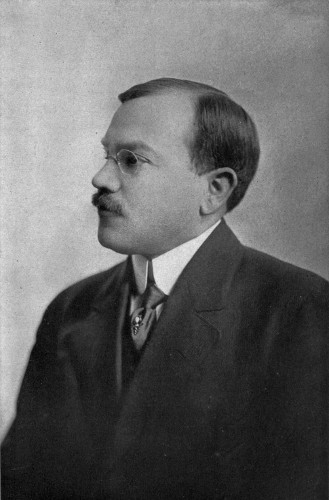
ANSELME S. DEGUIRE
At the Church of St. Louis de France, on the 18th of November, 1902, Mr. Deguire married Mlle. Aloysia Chopin, a daughter of the late Dr. J. Nestor Chopin of Sault au Récollet. Mr. and Mrs. Deguire have one son, René, born January 1, 1904. Mr. Deguire is not only a successful advocate and lawyer, but a patriotic citizen and a splendid example of a loyal French-Canadian. Fraternally he is affiliated with the Royal Arcanum.
JOHN J. ARNTON.
When death claimed John J. Arnton on the 13th of November, 1894, he was the oldest real-estate man in Montreal in years of continuous connection with the business in this city. Montreal numbers him among her native sons, his birth having occurred in 1832. He began his business career with the firm of John Leeming & Company and later practically succeeded to the business and good will of the firm. He watched the notable development in real estate methods and, keeping abreast of the progress of the times, met substantial success. He was in business at the time of the real-estate boom of the ‘70s and he gained a patronage as large as he could handle. Realizing fair profit from his real estate negotiations, he was at length able to retire with a comfortable competence. The integrity of his business methods was one of the features of his growing success, and his progressiveness was also an element in his advancement.
Mr. Arnton entered the city council but retired before completing his term. For some years he was a director of the Canadian Bank of Commerce and his name was an honorable one on commercial papers. He was at one time president of the Irish Protestant Benevolent Society and was a man of generous spirit, giving freely of his means to the poor and needy and extending a helping hand to the unfortunate. He was survived by six children, when on the 13th of November, 1894, he passed away at the age of sixty-two years, leaving behind the memory of a well spent life, fraught with many good deeds.