BIOGRAPHICAL (continued 5)
Reading edition
In March, 1877, Mr. Barlow was married to Margaret Coutts, a daughter of the late Rev. William Darrach, and they reside at No. 78 St. Luke Street. Mr. Barlow is a member of the Engineers Club and also of the Canadian Society of Civil Engineers, in which he was elected to membership in 1887. His fraternal relations are with the Masons, and his religious faith is that of the Presbyterian church. His professional relations have brought him an extensive acquaintance, while his sterling traits of character have gained him firm hold upon the affectionate regard of those with whom he has been brought in contact.
WILLIAM SMITH.
Clearly defined purposes and close application were salient features in the career of William Smith, who died in Montreal on the 14th of March, 1910, when nearly eighty-four years of age. He was born in Lanarkshire, Scotland, September 20, 1826, and came to Canada when a young man. He practically spent his remaining days in this city. He at first engaged in the dry-goods business, which he followed for many years with good success. Eventually he became a manufacturing tobacconist and again prosperity attended his efforts in the commercial field. He also owned valuable real estate, having taken advantage of early opportunities for investment along that line. The soundness of his judgment and the clearness of his vision were indicated in the rise in his property values, making his holdings well worthy of consideration.
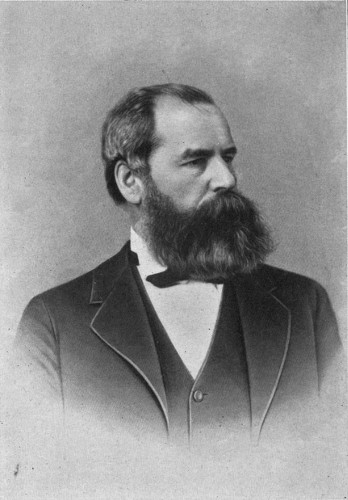
WILLIAM SMITH
Mr. Smith was married in Montreal to Miss Margaret Watson, daughter of George and Margaret (Selkirk) Watson of Montreal. He continued to make the city his home until his life’s labors were ended in death, when he had reached a venerable age. He was a man respected by all and such was the regard entertained for his opinions, that his advice was frequently sought upon important questions. He was an attendant at Erskine church. Mr. Smith is survived by his widow, who resides in what has been for years the family residence, built by Mr. Smith at No. 56 Simpson Street and which home stands on the site of the former home of Sir Alexander Mackenzie, discoverer of the Mackenzie river and the first European to cross the Rocky mountains.
JOSEPH ARTHUR BOURGAULT.
Joseph Arthur Bourgault is one of the most prominent figures in real-estate circles in Montreal, his well defined and carefully executed plans constituting a potent force in the substantial development and improvement of various sections of the city. He is yet a young man but has already attained a position that many a one of twice his years might well envy. He was born May 30, 1887, at St. Louis de Bonsecours, Richelieu county, P. Q., his parents being Henri and Caroline (Loriviere) Bourgault, the former a native of Ste. Victoire, Richelieu county, and the latter of St. Judes in St. Hyacinthe county, P. Q.
Joseph Arthur Bourgault pursued his education in the schools at Sorel, P. Q., and was graduated from St. Bernard College on the 19th of June, 1905. He started in the business world as a bookkeeper and afterward was traveling salesman, but eventually turned his attention to the real-estate business, which he conducts under the name of J. A. Bourgault & Company with offices at No. 97 St. James Street in Montreal. His progress has been continuous, and his efforts have been constantly of greater public value, as he has developed and improved property which hitherto had been an unsightly waste or had little commercial value. In 1911 he developed and sold Montmorency Park including eleven hundred lots which brought three hundred and seventy-five thousand dollars; and in 1912 he sold a part of Niagara Garden including thirty-two hundred lots, of which nineteen hundred brought four hundred and twenty thousand dollars. He also sold a subdivision on the south shore called Woodbine Park including over eleven hundred lots. All this extensive property has been sold exclusively by Mr. Bourgault. He is a wide-awake, alert, enterprising young man thoroughly in touch with the real-estate market. He knows what property is for sale, is conversant with values and seems never to make a mistake in his investments. He was graduated at the National Salesmen Training Association, which has its headquarters in Chicago, and he is a member of the Headquarters International Realty Company of that city.
On the 25th of November, 1912, in Montreal, Mr. Bourgault was married to Miss Berthe Daignault, a daughter of the late J. Daignault. They have gained many friends during the period of their residence here. Mr. Bourgault has attractive social qualities which render him popular socially and add not a little to his success in the management and control of an extensive and growing real-estate business.
DANIEL WILSON.
In Montreal stand many evidences of the ability and skill of Daniel Wilson in a number of the larger and more substantial buildings of the city, where for a long period he engaged in the business of general contracting. He was born in Avoch, Scotland, March 2, 1827, and was in the seventy-ninth year of his age when he passed away. He had been a resident of Canada since 1853, having come to the Dominion to take charge of stone quarries at Pointe Claire for the construction of the Victoria bridge. After the completion of the bridge he entered upon the work of general contracting and erected many of the largest buildings of Montreal, including the Royal Insurance building, Molson’s Bank, the Merchants Bank, the Mutual Telegraph building, the Erskine church, the Windsor Hotel, and others. He retired from business about 1886, having met with notable success that brought him a gratifying income.
Mr. Wilson was prominent in public affairs. For eight years he represented St. Antoine ward in the city council and was interested and active in support of various projects which have had to do with the welfare and upbuilding of this city. He was also Protestant school commissioner for a number of years and aside from positions having to do with the public service he was connected officially with various charitable and benevolent projects. For six years he was on the board of the Outdoor Relief and the Protestant Hospital for the Insane, was a life governor of the General Hospital and a trustee of Mount Royal Cemetery Association. He was also one of the oldest members and for eleven years a deacon and twelve years elder of the Crescent Street Presbyterian church and when other interests left him leisure for sports, he enjoyed curling and became one of the founders of the Caledonia Curling Club.
Mr. Wilson was married in Scotland to Miss Margaret Stephen, who died in Montreal in 1856, being the mother of two children: James, a resident of Montreal; and Margaret, the widow of Henry Downs, of St. Paul, Minnesota. In Montreal, in 1858, Mr. Wilson married Miss Catherine MacGregor, a daughter of Daniel MacGregor, and to this union six children were born: Robert, a contractor residing in Vancouver; Lillias Ann, who died in young girlhood; Lillias Isabella, the wife of Peter C. Small, of Vancouver; Christina, who married James Sutherland and died in Montreal in 1896; Kate, who is Mrs. William A. Coates, of Montreal; and John William, a contractor of Montreal.
On the 14th of February, 1906, Daniel Wilson was called from this life, leaving behind him a record of many good deeds undertaken for the benefit of his fellowmen and consummated in following the highest ideals of manhood and responsibility toward those with whom and for whom he lived.
ARTHUR ECREMENT, B. A.
Arthur Ecrement, who for many years has figured prominently in the public life of the province and is a well known representative of the notarial profession, was born at St. Gabriel de Brandon, on the 29th of June, 1879. Liberal educational opportunities were accorded him and after attending Montreal College and Laval University he entered upon public life. In fact his activities have always been of a public or semi-public character and his labors have been of far-reaching and beneficial effect. For five years he was secretary to the Hon. R. Dandurand, speaker of the senate, and he was also secretary of the liberal organization of the district of Montreal. He was first elected to the house of commons in 1908, in the liberal interests, and his efforts as a member of that body have been pursued with a singleness of purpose in the interest of general progress and good government. He brings to bear in the discharge of his duties executive ability, keen insight into the situation and a loyalty to the public good that is above question.
REV. FRANK CHARTERS.
One of the most popular and able ministers in the Anglican church in eastern Canada is Rev. Frank Charters, who for the past seventeen years has done earnest and zealous work as rector of St. Simon’s church, Montreal. He is a man of force, experience and capacity, high in his ideals, earnest in his purposes and straightforward in his methods, and his labors have been potent forces in the spread of the doctrines in which he believes and in the promotion of the moral development of the community in which he resides.
Dr. Charters was born in Montreal, March 16, 1865, and acquired his preliminary education at Arnold school and Fettis College. He afterward entered McGill University, from which he was graduated with the class of 1888. In the same year he completed a course in the Montreal Diocesan College, and in 1911 he was given the honorary degree of D. C. L. from the University of Bishop’s College in Lennoxville. He is a governor of the Montreal Diocesan College and a member of the corporation of the University of Bishop’s College. He was ordained deacon in the Anglican church in 1888 and received full orders in the following year, going immediately afterward to Iron Hill and West Brome, Quebec, of which he became Incumbent. In 1896 he was transferred to Montreal, and here since that time he has done earnest and capable work as rector of St. Simon’s parish. This congregation was organized in 1892 and the church building erected in the same year by Dean Carmichael. Rev. Samuel Massey was first pastor and officiated until the spring of 1896, Dr. Charters succeeding him. The latter has proved a capable and efficient rector, fully conscious of the obligations and responsibilities which devolve upon him, and he has accomplished in the course of years a great deal of consecrated work among his people, whose love he holds in large measure. He is, moreover, a man of good business ability and foresight, and the affairs of his parish have been ably administered and the funds carefully conserved. Dr. Charters has two hundred and seventy-five families under his charge and manages a church property valued at fifty thousand dollars. He is very popular among people of all denominations in Montreal and his unostentatious life, filled with well directed and zealous labor and characterized by earnest personal service, has brought him the esteem and confidence of all who are associated with him.
JOHN T. WILSON.
The life record of John T. Wilson spanned sixty-four years. He was born in Greenup, Scotland, February 9, 1841, and died in Montreal on the 23d of February, 1905. His parents were John and Mary (Thomson) Wilson, the former a sea captain. The youth of John T. Wilson was marked by events and experiences such as come to the lot of all. He reached a turning point on the journey of life, however, when he bade adieu to friends and native country and sailed for Canada. Settling in Montreal, in 1866, he became one of the city’s foremost business men, his name being engraved high on the roll of those who contributed most largely to the commercial greatness and consequent prosperity of the city. He was for forty years the senior member of the firm of Wilson, Paterson & Company, importers and general manufacturers’ agents, continuing in active business until his demise. The volume of trade developed with the growth of the city and had its inception in the progressive methods, initiative spirit and undaunted enterprise of the partners.
When business hours were over and the cares of the day were put aside, Mr. Wilson greatly enjoyed a game of golf or billiards. His interest, too, reached out to many of those projects which recognize the needs of the city and the claims of humanity. He attended St. Paul’s Presbyterian church. For ten years he was a member of the council of the Board of Trade and was ever keenly alive to the projects instituted by that society for the benefit and upbuilding of the city. He belonged to the Canadian and St. James Clubs of Montreal, and the Hunt Club. His business activity was evenly balanced with his honorable methods in trade; his interest in club life and in manly outdoor sports giving him the necessary rest and recreation from that line of work which takes strong hold upon the emotions and calls forth the more tender sentiment in nature. In a word, his was a well rounded character and his place as a representative citizen of Montreal none contest.
CHARLES BYRD.
Successful in business, Charles Byrd rejoiced in his prosperity not so much because of the opportunities which came to him from his wealth, but because it enabled him to again and again aid his fellowmen. In this he was prompted by no sense of duty but by a higher interest in humanity—a genuine regard for his fellow travelers upon life’s journey. His hand was ever downreaching to aid those who were struggling to raise and he shed around him much of the sunshine of life not only through his material assistance, but also through the words of encouragement and inspiration which he spoke.
Mr. Byrd was born at Lachute, province of Quebec, March 4, 1848, and was therefore sixty-three years of age when he passed away at Nassau, Bahama Islands, on the 3d of March, 1911. He had been a resident of Montreal from early manhood, embarking in the grocery business upon his arrival here. This he abandoned to enter the Munderloh firm in 1868, at which time its founder, William C. Munderloh was in control. After the death of this gentleman Mr. Byrd entered into partnership with Henry Munderloh, son of William C. Munderloh, in the continuation of the business. In 1909 the firm was organized as a joint stock company and Mr. Byrd had active voice in its control, assisting in formulating plans which had to do with its substantial growth and progress. It became one of the important enterprises of the kind in the city and through his connection therewith Mr. Byrd won notable, gratifying and enviable success.
Mr. Byrd was united in marriage in 1873 to Miss Kate Macdonald, a daughter of the late Alexander Roy Macdonald of Montreal. During the last years of his life Mr. Byrd was in poor health and, accompanied by his wife, had spent two winters in the West Indies. He went again in February, 1911, in order to escape the rigors of the Canadian winter and there passed away on the 3d of March.
His memory is enshrined in a halo of good deeds, for he was continually active in support of organized charities or in individual assistance. He gave liberally to a number of the benevolent organizations of Montreal and served on the board of management of the Protestant Hospital for the Insane at Verdun to which he made a contribution of five thousand dollars. He was also one of the board of managers of the Montreal General Hospital to which he gave ten thousand dollars; was vice president of the Protestant House of Industry and Refuge at Longue Pointe, to which he gave ten thousand dollars; was vice president of the Moore Home and an officer of the Irish Protestant Benevolent Society, to which his contribution was five thousand dollars. He gave twenty-five hundred dollars to the Western General Hospital; two thousand dollars to the Alexandra Hospital; two thousand to the Montreal Protestant Orphan Asylum; five hundred dollars to the Boys’ Home; one thousand dollars to St. Patrick’s Society, a goodly sum to the Erskine church for home movements and a sum of twenty-five thousand dollars for foreign movements. He was an elder of the old St. Gabriel church on St. Catherine Street and afterward joined the Erskine Presbyterian church when it was amalgamated with the Chalmers church. A high-minded Christian gentleman, the principles of his religion permeated his life in all of its different connections and his contribution to the world’s progress along moral and religious lines was a valuable one.
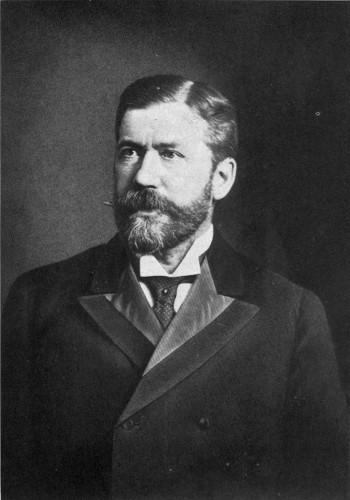
CHARLES BYRD
DAVID MORRICE.
The life record of David Morrice might be summed up in the term successful achievement. It has, however, been more than the success that is calculated in the terms of dollars and cents, for his outlook of life has ever been broad, his conceptions of its opportunities accurate and his recognition of its duties and obligations correct. He has as fully and carefully met the last mentioned as he has his chances in a business way. While he has passed the eighty-fourth milestone on life’s journey, in spirit and interest he seems yet in his prime. To him might be applied the words of Victor Hugo: “The snows of age are upon his head, but the spring of youth is in his heart.” He was born in St. Martin, Perthshire, Scotland, August 11, 1829, and after acquiring his early education there, started in business life as an employe in dry-goods stores, remaining for some time in that connection in Dublin, Liverpool, Manchester and London. The growing western country attracted him with its almost limitless opportunities, and in 1863 he established himself in Montreal where he founded the business that has since become one of the most important commercial enterprises of the city. Under the name of The D. Morrice Company the business is now one of extensive proportions. Manufacturers’ agents and general merchants, they have one of the largest and best appointed establishments of the city, and Mr. Morrice is also at the head of important productive industries and is said to be one of the best authorities in cotton matters in the Dominion. He is president of Penman’s Limited; of the Canadian Cottons, Ltd.; and of the Montreal Investment & Freehold Company. He is likewise a director of the Bank of Montreal; of the Dominion Textile Company; and of the Mount Royal Cemetery Company. While he has now in large measure retired from active management of these interests, his opinions still carry weight in business councils, and his judgment and discrimination are those of a man of not more than three score years and ten. While conducting important and extensive commercial and manufacturing interests, he has found time to become a factor in the management and control of many projects for the benefit of his fellowmen in the alleviation of the hardships of life for the unfortunate. He is now vice president of the Montreal Tubercular Association; president of the Montreal General Hospital; president of the Montreal Sailors’ Institute; president of the Mackay Institute for the Deaf and Dumb; and governor of the Montreal Boys’ Home. He has long been an interested member of the Montreal Art Association of which he is one of the councillors and he maintains an equal interest in Christian education as chairman of the board of managers of the Montreal Presbyterian College, in which position he has remained for forty-two years. He has ever been a firm believer in the early religious training of the young and has labored untiringly to advance the interests of moral direction for the youth of the land. In 1905 he was chosen vice president of the Quebec Sunday School Union and in 1902 was president of the Presbyterian Sunday School Association. In 1882 he erected the David Morrice Hall of the Montreal Presbyterian College at a cost of ninety thousand dollars. His gift to the Montreal General Hospital in 1906 made that institution richer by twenty-five thousand dollars and in 1910 he gave ten thousand dollars to the Montreal Art Association.
On the 14th of June, 1860, Mr. Morrice married Anne S. Anderson of Toronto, and of their children, William J. and David J., are connected with The D. Morrice Company. The others are Robert B., who is connected with Penman’s Limited; Arthur A., a resident of Toronto; James Wilson, a distinguished artist; and a daughter, who is now the wife of Allen G. Law, of the firm of Law, Young & Company of Montreal. The son, James Wilson Morrice, born in Montreal in 1864, attended the city schools and the Toronto University and afterward developed his art talent by study in Paris. He has not only won high reputation in that city but also in London and is considered one of the greatest painters of Brittany coast scenes. He has been a frequent exhibitor at the Paris Salon and one of his pictures has been purchased by the French government and another by the Canadian government for the National Art Gallery at Ottawa. He largely paints landscapes, yet gives some attention to figures and in all of his work there is an even balance maintained between technique, creative faculty and poetic feeling.
Mr. David Morrice is now eighty-four years of age, but still maintains deep and active interest in the church and in the benevolent and civic projects with which he is identified. Moreover, he still holds membership in the St. James Club, the Montreal Club, the Mount Royal Club, the Montreal Hunt Club and the Forest and Stream Club. Someone has said, “there is an old age which need not suggest idleness or lack of occupation; on the contrary there is an old age which grows stronger and better, mentally and morally as the years advance and gives out of the rich stores of its wisdom and experience for the benefit of others.” Such is the record of David Morrice.
J. F. DUBREUIL.
One of the able advocates of Montreal and one who has filled with honor various official positions, is J. F. Dubreuil, a descendant of a distinguished family which has found mention in Abbé Tanguay’s “Dictionnaire Généalogique.” In this book L’Abbé Cyprien Tanguay mentions among the earliest ancestors of the house of Dubreuil the following. Christopher Dubreuil, born in 1696; Jean Du Breuil, born in 1655, a son of Pierre and Catherine (Gosselin) Du Breuil, married September 28, 1682, at Montreal; wife died December 22, 1685: one child; married August 6, 1686, Ste. Famille Marguerite Gaultier: seven children. Jean Etienne Dubreuil was a notaire royal and a brother of the above mentioned Jean. He married twice and had a family of many sons and daughters.
J. F. Dubreuil was born at Lachine, province of Quebec, January 24, 1845, and is a son of Joseph and Hélène (Barré) Dubreuil, the former of Pointe-aux-Trembles and the latter, of Montreal. The father was for many years a notary public. J. F. Dubreuil received his education at the Jesuit College of Montreal, famed for its thorough teachers, and completed the course of instruction by graduation on February 6, 1866. He subsequently engaged as an advocate and as he was able, capable and conscientious, soon enjoyed a profitable practice, his services being demanded by a representative clientèle. He served from 1873 to 1882 as deputy clerk of the crown and peace, and from June, 1883, until June, 1889, as deputy sheriff of Montreal.
On January 26, 1869, at Sorel, Mr. Dubreuil was united in marriage to Miss Marie L. C. Beaupré and they have the following children: J. F. L., vice president of the Commercial Travelers Association; George, who is employed in the registry office at Hochelaga; Charles, of Richelieu, Ontario; and Raoul, who is with the Canadian Electric Company.
In his political faith Mr. Dubreuil is a conservative, giving his support to that organization. For many years he has made Montreal his home and has witnessed the change from a comparatively small city to that of a world’s metropolis, having participated in bringing about the transformation according to the best of his ability. He is deeply interested in the growth of the city along material, as well as intellectual, lines and as he has always lived a life of conscientious righteousness, is highly esteemed and respected in the community where he is widely known.
JOHN RANKIN.
No worthy enterprise of Montreal sought in vain the assistance of John Rankin, and his public spirit found expression in tangible effort for the general good. At the same time he conducted important business affairs as representative of large corporate interests of his native land. He was born in Lanark, Scotland, in 1825, and had traveled far on life’s journey when death called him February 27, 1908. Coming to Canada in 1854, he carried on business first under his own name and afterward as senior partner in the firm of Rankin, Beattie & Company. He also represented J. & P. Coates, the world renowned thread manufacturers of Paisley, for many years, and was instrumental in establishing for them a large Canadian business. He was likewise financial agent for the house of Arthur & Company, of Glasgow, and in the further development of his business interests became one of the founders of the Shedden Company and of the Guarantee Company of North America. As his worth and business talent became recognized his cooperation was sought along many lines and when keen business judgment prompted his investment in any interest he was almost at once accorded voice in the management. He became a promoter of the New York Daily Graphic, the Consolidated Bank and of the Montreal & Sorel Railway, now a part of the Delaware & Hudson system. As a business man, his position was second to none and his record was one which any man might be proud to possess. He never made engagements that he did not keep, nor incurred obligations that he did not meet, and his name became a recognized synonym of integrity and enterprise in commercial and industrial circles. At River David, in 1861, Mr. Rankin was married to Miss Louisa S. C. Wurtele, a daughter of Jonathan Wurtele, in his life time, Seignor of River David. The following children were born to Mr. and Mrs. Rankin: James L., a contractor of Montreal; Archibald J., who resides in Edmonton, Alberta, where he is a clerk in the government offices; John, who is a civil engineer, residing at Victoria, British Columbia; Norman S., who is connected with the Canadian Pacific Railway at Calgary; Allan C., a bacteriologist in the employ of the Siam government, at Bangkok; A. G. Ernest, who is a notary of Montreal; Louisa M., who is Mrs. John Fair, of Montreal; and Isobel S., at home.
None ever questioned Mr. Rankin’s interest in the city and the general welfare of its people. He stood for all those things which are a feature in civic betterment and his interest in moral progress was evidenced in his membership in St. Paul’s Presbyterian church, of which he was secretary and treasurer when the present edifice was erected. He was also a governor of the Montreal General Hospital. His high standing is further indicated in the fact that his name was on the membership roll of St. James Club. To him were accorded the “blest accompaniments of age—honor, riches, troops of friends.”
The summer home of Mrs. Rankin is “Manor House,” Pointe Seche, County Kamouraska, Quebec.
EMMANUEL PERSILLIER LACHAPELLE, M. D.
While Dr. Emmanuel Persillier Lachapelle has gained prominence and won honor in various directions, perhaps the one act which will longest stand as an enduring monument to his worth and work will be the creation of the board of health of the province of Quebec, of which he is now the president. His efforts were a potent factor in bringing about the organization of this board, the far-reaching effects of which are immeasurable. In this and other connections he has entered upon a campaign of education for the purpose of bringing to the public a knowledge of sanitary and health conditions that will forever prevent widespread contagion and check the ravages of disease even in individual cases. A man of strong character and wide knowledge of men and things, his life work has by no means reached its full fruition. In private and hospital practice he has gained eminence and his name is associated with one of the strongest and best equipped medical schools of the country.
Dr. Lachapelle was born on the 21st of December, 1845, at Sault au Récollet, Quebec, his parents being Pierre Persillier and Marie Zoe (Toupin) Lachapelle, descendants of some of the earliest settlers of New France. His father was born at Cote des Neiges, in the county of Hochelaga, in the province of Quebec. Making his home at Sault au Récollet he followed farming and was proprietor of grain mills. His parents were Pascal Persillier and Marie (Ladouceur) Lachapelle, who lived at Cote des Neiges. The maternal grandparents of Dr. Lachapelle were Charles P. and Angelique (Leduc) Toupin, of Montreal. The ancestors came to this country in the early days of the French colony and were married at Laprairie, near Montreal, on the south shore of the St. Lawrence river.
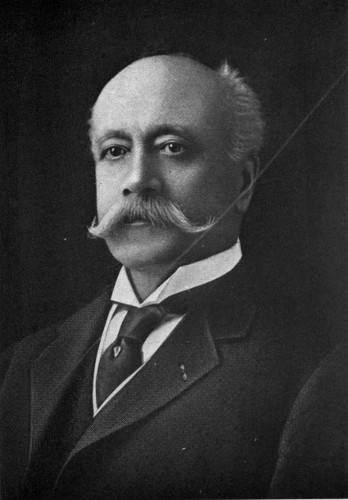
DR. EMMANUEL P. LACHAPELLE
After acquiring a classical education in the Montreal College Dr. Lachapelle entered upon the study of medicine in the old Montreal School of Medicine and Surgery and after a brilliant course was admitted to practice in 1869. From the first years of his professional life he devoted considerable attention to the question of hygienic science. He continued his reading and research after leaving college and is still as keen and devoted a student as ever. He has long been ranked as a successful practitioner of high standing in Montreal, especially prominent in the field of hygiene.
In 1872 Dr. Lachapelle was appointed surgeon of the Sixty-fifth Regiment, Mount Royal Rifles, and retained the appointment until 1886. He was unable to accompany the regiment on active service to the northwest in 1885, owing to the demands of his professional engagements, but he personally superintended the preparation of the medical equipment which the regiment took on service and secured the services of an assistant surgeon, who went with the regiment.
Dr. Lachapelle took a very active part in the refounding of the medical legislation and in 1878 was elected a governor and the treasurer of the College of Physicians and Surgeons of the Province of Quebec, retaining an official connection with that important body almost continuously since, while for nine years he has held the position of president. At the time of the memorable small-pox epidemic in Montreal in 1885-6, when hundreds of new cases of the disease were reported daily, until the death rate claimed ten thousand victims, and when the city was practically placed in a state of quarantine in respect to the rest of the continent, Dr. Lachapelle came to the front as an outspoken and fearless advocate of the drastic measures adopted to check the disease. The contagion was spreading so rapidly throughout the country that it became necessary to take advantage of an old statute law and to create a central board of health which would apply throughout the province means for prevention and cure. Such a course had previously been adopted in Montreal. The moment the horror of the great pestilence was at an end Dr. Lachapelle proceeded to organize the forces of medical science for the conservation of the health of the people. He was chiefly instrumental in getting the provincial government to pass a law for the creation of a provincial board of health with powers coterminus with provincial bounds. Prior to that time there was only a local authority operating within restricted bounds. From that time forward the body which Dr. Lachapelle may be said to have created was to have jurisdiction over the whole province. The beneficial results of this measure were soon seen in better methods, improved sanitation and, above all, in the general vaccination of the people who had been so terribly scourged because of the lack of this preventative in 1885. For the most important and valuable work which he did in this connection Dr. Lachapelle received high encomiums from all sections of the American continent and from foreign lands as well, not the least flattering being the recognition of the French republic in 1898 which conferred upon him the Order of the Legion of Honor. With the establishment of the provincial board of health he was appointed its president, a position which he has since filled with credit to himself and great advantage to the entire province.
Moreover the name of Dr. Lachapelle has been intimately associated with the effort to improve medical legislation and to raise the standard of medical education in Quebec. On the establishment of a branch of Laval University in Montreal, decided upon in 1878, and the inauguration of the medical faculty in temporary class-rooms in the old Chateau du Ramezay, on Notre Dame Street, he was one of the most ardent instigators and supporters of the movement and contributed in a great measure to its success. At the present time he holds the positions of dean of the medical faculty at the university and of professor of hygiene; from 1876 until 1894 he was proprietor and editor of L’Union Médicale. In 1885 he had the honor of presiding as president over the convention of the American Public Health Association. He had the honor of being elected an associate member of the Société Française d’Hygiène of Paris. He has been closely and prominently associated with the Notre Dame Hospital ever since its establishment and can almost be called its founder. The splendid institution which owes its establishment partly to the clinical requirements of the then recently founded medical faculty of Laval was incorporated in 1880, Dr. Lachapelle being a member of the board of governors and holding the position of general superintendent until 1906, while to the present time he is president of the hospital.
A stanch member of the liberal party, Dr. Lachapelle has often been urged to become a candidate in nomination for political preferment but although willing to use his influence for the benefit of his party he has invariably declined to accept a nomination because of a sense of duty toward his professional interests and benevolent engagements. In 1902 he was urged by many of the most influential citizens of Montreal, both French and English, irrespective of party to accept nomination for the mayoralty. He did accept provisionally but later withdrew to avoid racial complications. When the city government was changed about three years ago it was deemed fitting that one so eminent as an authority on sanitation and hygiene and one so dignified and high-minded as a foremost citizen should be a member of the new board which was henceforth to administer the affairs of the city. The Doctor has little inclination for publicity but yielded to the appeals addressed to him and became controller of Montreal. He has made a most admirable official, the value of his service being widely recognized. It is his desire to accomplish the best possible measures of reform during his term of office, and his efforts have already been productive of great good. He was elected in 1910 for a term of four years.
Aside from his professional and public activities previously mentioned Dr. Lachapelle is also a director of the Credit Foncier Franco-Canadien and of other financial institutions and life insurance companies. He has been identified with various national and benevolent movements and in 1876 had the honor of serving as general president of the St. Jean Baptiste Society. He is also a member of the British Medical Association, the Canadian Medical Association, the American Public Health Association, Société Médicale de Montreal, the Medico-Chirurgical Society of Montreal, the Royal Edward Institute of Montreal and the Canadian Anti-Tuberculosis League. He has been attending physician to the Hôtel-Dieu and other institutions, and served as a delegate from the Canadian government to the second Pan-American Medical Congress held in Mexico in 1896, and to other similar bodies. He has been a frequent contributor to medical literature, writing largely for the Union Médicale du Canada and other periodicals. He is a councillor of the University Club and a member of the metropolitan parks commission. In religious faith he is a Roman Catholic and in political belief a liberal. He belongs to the Mount Royal, University and Montreal Jockey Clubs. By reason of notable ability he has attained to a position of prominence and power and has been termed “a second Laurier.” Were his ambitions along political lines he would undoubtedly attain distinction in that field. He prefers, however, the even broader field of professional activity wherein his scientific investigation and research combined with practical knowledge and skill have gained him eminence and made his life work of signal serviceableness to mankind.
BERNARD MELANCON.
Bernard Melancon, a notary public who has engaged in the practice of his profession for more than four years in Montreal, was born at St. Jacques l’Achigan on the 20th of August, 1881, a son of Moise and Elodie (Gaudet) Melancon, the former a zouave who participated in active military duty in 1869-70. The son attended College Ste. Marie, a Jesuit school, and Laval University of Montreal. He prepared for the notarial profession, becoming a notary on the 16th of July, 1909, after which he was associated with M. M. Loranger under the firm name of Loranger & Melancon. Subsequently he became a member of the firm of Mayrand, Loranger, Ecrement & Melancon, but now practices as a member of the firm Loranger, Seguin & Melancon, with offices at No. 99 St. James Street, Montreal. He is conducting a successful business and stands well in the profession, possessing the comprehensive knowledge so necessary to success as well as the energy and ability which must precede progress in any profession or business line.
Mr. Melancon is a nationalist in political faith and allegiance and in religious belief is a Roman Catholic. He was married at Montreal on the 18th of June, 1912, to Miss Annette Jodian, a daughter of L. O. Jodian, who died on the 17th of May, 1913. Mr. Melancon is yet a young man, but has already made progress that many an older member of the profession might well envy, and his past record gives indications of future advancement.
GABRIEL HURTUBISE.
The earliest record of the Hurtubise family leads back to one Louis Heurtebise (the spelling having been changed later), who was born in 1667 and married on May 3, 1688, at Montreal, Jeanne Gatteau and died on January 24, 1703. The present generation of this old and distinguished French-Canadian family is represented by Gabriel Hurtubise, a civil engineer and land surveyor, who is independently established in business under the firm name of Hurtubise & Hurtubise, his brother Louis being his partner. He was born on November 3, 1883, in the city of Montreal, and is a son of Edwin and Emélie (Brault) Hurtubise, both of whom have passed away. The father was prominent in insurance circles in Montreal as a member of the firm of Hurtubise & St. Cyr, representatives of the Royal Insurance Company, and died on the 30th of December, 1913, in Montreal.
Gabriel Hurtubise enjoyed advantageous educational facilities at St. Mary’s College, pursuing his more professional studies at the Polytechnic School of Laval University, from which he graduated on June 14, 1907, as civil engineer, and on June 10, 1909, as land surveyor. He has since been prominently engaged in this line in Montreal, having had charge of most important contracts. He began his career under F. C. Laberge, C. E. and Q. L. S., of Montreal. At present he is a member of the firm of Hurtubise & Hurtubise, who are doing an extensive and profitable business.
On May 30, 1911, at Montreal, Mr. Hurtubise was united in marriage to Miss Yvette Brault, a daughter of H. A. A. Brault, a well known notary of this city. In his political views Mr. Hurtubise is independent, preferring to entirely follow his judgment in support of candidates. His religious faith is that of the Catholic church. Fraternally he is a member of La Fontaine Council of the Knights of Columbus. Yet a young man, Gabriel Hurtubise has already made his mark in the world and has taken his place in business circles of Montreal. Ambition has been the beacon light of his life and his career again is proof of the fact that ambition, coupled with industry and energy, will lead to success.
GEORGE BROWNING CRAMP, K. C.
George Browning Cramp was for many years a veteran member of the Montreal bar and a distinguished representative of the profession, his opinions being largely accepted as authority on questions of real-estate law, in which department of jurisprudence he specialized. He was born in England in 1833, a son of Rev. J. M. Cramp, who came to Montreal to accept a position at the Baptist College. For years he was at the head of Acadia University in Nova Scotia and was one of the prominent educators in the maritime provinces.
In the schools of England and of Nova Scotia George B. Cramp pursued his education and qualified for the bar as a student in the law office of J. J. Day, K. C., an eminent member of the bar. Thorough and careful preliminary training resulted in his being called to the bar about 1855 and he entered upon active practice in connection with his former preceptor. The latter had been called to the bar in 1837 and was one of the most distinguished lawyers of Montreal at an early day. Following his retirement, Mr. Cramp entered upon active professional association with A. F. Lunn, K. C., under the style of Lunn & Cramp, a connection that was continued until the death of Mr. Lunn in 1894. Four years later, or in 1898, Mr. Cramp was joined by J. Armitage Ewing, K. C., under the style of Cramp & Ewing, and two years later they admitted George S. McFadden, at which time the firm name was changed to Cramp, Ewing & McFadden. This relation was maintained until the death of the senior partner, who was then in his eightieth year. While well versed in the various departments of the law, he specialized in the field of real estate and became an expert on legal questions relative thereto. He was regarded as an expert in the matter of titles. He was retained in a consulting capacity by such corporations as McGill University, Liverpool & London & Globe Insurance Company, the Montreal Loan & Mortgage Company, and the White Star Dominion Line. He remained throughout his entire professional career an active and discriminating student of law, constantly broadening his knowledge by reading and investigation, as well as experience.
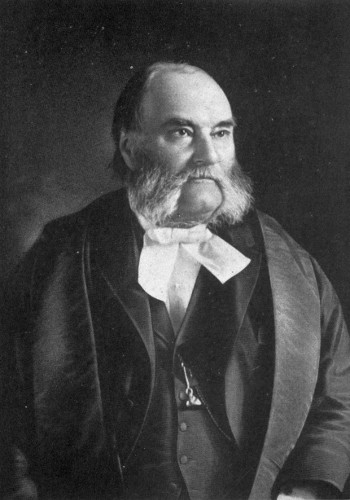
GEORGE B. CRAMP
Mr. Cramp held membership in the Mount Royal Club and the St. James Club and was a casual attendant of the Olivet Baptist church. For many years Mr. Cramp spent the summer season at Saratoga, New York, or at Lachine, while his city residence was at No. 62 McTavish Street, where his sister, the last survivor of the family, now resides. He passed away February 16, 1913, at the age of eighty years, leaving behind him the record of a well spent life, in which he had wisely employed his time and talents.
THOMAS PRINGLE.
High on the list of mechanical and hydraulic engineers appears the name of Thomas Pringle. Scientific study, investigation and experience brought him to the enviable position which he long occupied, making his word authority upon many problems relating to the profession. He was born in Huntingdon, province of Quebec, in 1830, and died in Montreal on the 7th day of May, 1911. His father, David Pringle, was a farmer of Huntingdon and it was there that the son was reared and educated, but in 1850, when a young man of twenty years, he engaged in business in Montreal as a milling engineer and for many years was prominently connected with many water power developments and mill building operations throughout Canada. Every phase of the milling business seemed familiar to him and each forward step that he made seemed to bring him a wider outlook and broader opportunities. He later interested himself in the Montgomery Cotton Mills, the Hochelaga and St. Ann’s Mills, of the Dominion Cotton Company, and the Magog Print Mills, owned by the same corporation. His connection with all these different important projects constituted him a forceful factor in the industrial development of the country. He was thus associated with many of the chief productive industries of Canada and beyond this he became one of the foremost consulting engineers. It was in the ‘60s that his attention was first attracted to the water power possibilities of the Lachine Rapids, which were subsequently utilized by the Lachine Rapids Hydraulic & Land Company. At that early date, now more than half a century ago, he made preliminary plans and wrote a report upon the feasibility of the development in the interests of Hugh Fraser, founder of the Fraser Institute. Mr. Pringle predicted then that the water power would some day be used and he lived to see the day when the prediction was fulfilled. In 1891 he was again asked to report on this power in the interest of the Royal Electric Company, and the following year was asked to report on the Chambly water power for the same concern. In 1892 his eldest son was admitted to the business under the firm style of T. Pringle & Son, hydraulic engineers, and during the succeeding three years close observations were made and much data accumulated concerning the water power resources of the country, the firm being regarded as authority upon many questions relative thereto.
Mr. Pringle retired from the firm in 1898 but the business has since been continued by his son under the same name. His services were greatly sought, owing to his sound judgment, his scientific attainments, his keen insight, and his practical experience. He was considered the soul of honor and none ever questioned his integrity. He assisted many men to gain a start in life and many others were benefited by his powers of perception and keen insight. His services were in constant demand as an arbitrator when insurance companies were concerned in milling matters. John McDougall took delight in giving him credit for the creation of the large McDougall fortune and others acknowledged their indebtedness to him in a similar way. As a natural mathematician he perhaps had no superior in all Canada and he was regarded as one of the most distinguished members of the Canadian Society of Civil Engineers.
In 1861 Mr. Pringle was united in marriage to Miss Catherine Ross, a daughter of Alexander and Isabella (Lang) Ross, of Chateauquay Basin. The mother, who came from Scotland in 1832, made her home at Chateauquay Basin, until death called her at the notable old age of ninety-seven years. Alexander Ross was a builder and assisted in the construction of the locks at Lachine Canal but his death occurred when he was yet a young man. Mr. and Mrs. Pringle had two sons: David Alexander, a mechanical engineer of Montreal; and R. E. T. Pringle, of Toronto, an electrical engineer.
ANDREW JOSEPH DAWES.
One of Montreal’s foremost business men, whose prominent identification with the financial and industrial life of this city has made him an important factor in business circles, is Andrew J. Dawes, president of the National Breweries, Ltd., and also president of Dawes & Company, Ltd. The latter is the oldest established industrial institution in the Dominion, and was founded more than a century ago by Thomas A. Dawes, the grandfather of Andrew J. Dawes, who was the first of the family to leave England and settle in Canada.
Thomas A. Dawes was first connected with the brewery at River St. Pierre. Ambitious to engage in business on his own account, he established the Dawes Brewery in 1811, placed it upon a substantial and profitable basis and was later joined in its management by his sons, Thomas A. and James P., who were admitted to a partnership in the business. When James P. Dawes passed away in 1878 his share in the business passed to his two sons, James P. Dawes, Jr., and Andrew J. Dawes, who then became associated with their uncle, Thomas A. Dawes, in continuing the business which developed steadily until it became one of the most extensive enterprises of its kind in the Dominion.
Thomas Dawes, Jr., son of Thomas Dawes, the founder of the family in Canada, was familiarly and affectionately styled Tom throughout Lachine and wherever he was known. He there resided for nearly eighty years and it was said that such was the regularity of his habits that one could tell the time of day by his actions. He always took the same train into town each morning and the same walk in the evening and visited the bank at the same hour each day. His life was to the utmost methodical and systematic, and he was modest in demeanor and of retiring disposition. He occupied a beautiful home on the river bank of Lachine with his maiden sister. There he passed away on the 14th of May, 1908, when he was in the seventy-ninth year of his age, his birth having occurred in Lachine on the 19th of September, 1829.
James P. Dawes, Sr., another son of Thomas Dawes, the founder of the family in Canada, married a Miss Leishman, who died in 1856, leaving three sons, James P., Andrew J. and Thomas A. James P. Dawes, Sr., was prominently identified with the business during his active life, and contributed his part towards its progress and expansion. He died in 1878. His son, Andrew Joseph Dawes is now at the head of the mammoth business, which had its inception in the brain of his grandfather and took on material form through his efforts, and grew and developed through the labor of representatives of the family in intermediate generations to the present.
To accumulate a fortune requires one kind of genius; to retain a fortune already acquired, to add to its legitimate increment and to make such use of it that its possessor may derive therefrom the greatest enjoyment and the public the greatest benefit, requires another kind of genius. Mr. Dawes belongs to that generation of business men called upon to shoulder responsibilities differing materially from those that rested upon their predecessors. In a broader field of enterprise they find themselves obliged to deal with affairs of greater magnitude and to solve more difficult and complicated financial and economic problems. Such is the position in which Andrew J. Dawes found himself and he has proven at all times equal to the occasion and the demands made upon him.
Born in Lachine, June 15, 1846, he received his education in that town, and also in Montreal. His business career began early in connection with the interests of his father and on the death of that parent he assumed additional responsibilities in the business, which have been continued to the present time. Mr. Dawes has been a prominent factor in the development of the business. With its gradual growth facilities were increased, new buildings were added and the plant has thus expanded until it is represented by immense blocks of buildings, covering several acres on each side of the main street in Lachine. Aside from his extensive interests in the brewery business, Andrew J. Dawes is prominently identified with various projects and organizations for the development and improvement of the province along horticultural and agricultural lines, being especially interested in the subject of fruit growing.
He is a director of the Montreal Horticultural and Fruit Growing Association; is president of the Council of Agriculture of the Province of Canada, and at one time was president of the Lachine Horticultural Association. He is a director of the Merchants Bank and holds the same official position in regard to the London and Lancashire Fire Insurance Company, Ltd. He is well known in social and club circles and was president of the Auto Club of Canada from 1903 to 1906, while his membership relations extend to the Mount Royal, St. James, Forest and Stream, Royal Montreal Golf, Royal St. Lawrence Yacht, Montreal Hunt, Auto and Aero, Montreal Jockey, Montreal Polo, and St. George Snow Shoe Clubs and to the Rideau Club of Ottawa.
Mr. Dawes married Miss Mary O. A. Wilgress, of Lachine, and they have two daughters: Rachel M., the wife of F. L. Bond, of Montreal; and Frances H., the wife of B. Hazen Porteous, of Montreal.
A man of unusual energy whose exceptionally well preserved physical condition enables him to display a capacity for business more becoming to one twenty years his junior, success has made possible for Mr. Dawes the enjoyment of many social pleasures and interests. Yet prominent club man, that he is, Mr. Dawes’ first interest is the extensive business of which he is the controlling head and he is everywhere recognized as a forceful, resourceful man, ready to meet any emergency and ever looking beyond the exigencies of the moment to the opportunities and possibilities of the future.
T. STERRY HUNT, LL. D., F. R. S.
It is a trite saying that there is always room at the top, for while the lower ranks of life are crowded, comparatively few have the ambition and the energy to climb to the heights in connection with business or professional interests. Recognizing and utilizing his opportunities and wisely employing his time and talents, T. Sterry Hunt became recognized as one of the eminent Canadian scientists, his ability winning for him the unusual honor of being made a fellow of the Royal Society of London. He was born in Norwich, Connecticut, September 5, 1826, a representative of an old New England family. It was his parents’ desire that he should become a representative of the medical profession, but a strong inclination toward the study of chemistry, mineralogy and geology prevented him from becoming a physician. In 1845 he pursued his studies under Professor Benjamin Silliman of Yale University and later became his assistant. His constantly expanding powers marked him a man above the ordinary and distinguished honors came to him as the years passed. As early as 1846 the result of his original research work was published in an article which he wrote for the American Journal of Science. When the Geological Survey of Canada, then recently organized by Mr. (later Sir) William E. Logan, required the service of a competent chemist and mineralogist, Mr. Logan applied to Professor Silliman to supply the man and Mr. Hunt was recommended for the position, which he accepted early in 1847. His connection with the survey continued until 1872, when, much against the wish of the government, he resigned. His work embraced a large amount of field geology. The most difficult problems presented by the geological formation of Canada are those of its crystalline rocks. To this study Mr. Hunt addressed himself from the beginning and made the first clear exposition ever presented of the earlier rocks of the country. He afterward gave the names of Laurentian and Huronian to these rocks and in his investigations, analyses and scientific research laid the foundation of what he regarded as his life work. He also gave constant attention to the economic and practical departments of the survey and was the first to make known the deposits of phosphate of lime in Canada and call attention to its commercial value for fertilizing purposes, collecting and sending specimens of the same to the foreign exhibits of 1851, 1855 and 1867. He analyzed soils, investigated the petroleums of Canada and their distribution, and his studies of the mineral waters of the Dominion were the first and most complete ever made. His work in many respects constituted the foundation, basis and stimulus of all later investigation.
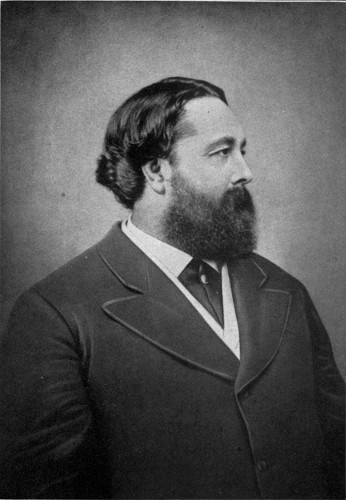
T. STERRY HUNT
During his connection with the survey work Mr. Hunt took part in the great exhibitions of 1856 and 1867, acting as judge at both, while his services in a similar connection were sought at the Centennial Exposition in Philadelphia in 1876. His fame was world-wide as the result of his investigations and researches were made known, for he took the lead in much pioneer geological work on the North American continent.
From 1856 until 1862 Dr. Hunt was professor of chemistry at Laval University in Quebec and was continued as one of its honorary professors until his death. His annual course of instruction there comprised forty lectures in the French language and for some years he was also lecturer at McGill University. In 1872 he accepted the chair of geology in the Massachusetts Institute of Technology in Boston, there remaining until 1878, when he resigned in order to concentrate his efforts upon further study and professional work. His scientific attainments have gained him recognition both on the American and European continents. Harvard University created him Master of Arts in 1852 and from Laval and McGill Universities he received the degree of Doctor of Science. In 1881 he had the unusual honor of receiving the degree of Doctor of Laws from Cambridge University of England, and in special recognition of his eminence as a geologist he was created a fellow of the Royal Society of London in 1859. In 1874 he was elected to membership in the National Academy of Sciences of the United States and in 1882 he was one of those called upon by the Marquis of Lorne to aid in the organization of the New Royal Society of Canada, becoming that year chief of the section of physical and mathematical sciences. In 1884 he was elected its president. Thus year after year honors were conferred upon him—honors well merited yet worn with becoming modesty. He was one of the founders of the American Association for the Advancement of Science at Philadelphia and in 1870 was elected to its presidency. He was also an early member of the American Institute of Mining Engineers and was its president in 1877, while in 1880 he became the founder and president of the American Chemical Society. Among the decorations conferred upon him was that of the Legion of Honor, bestowed by Napoleon III, and the cross of St. Mauritius and St. Lazarus from the king of Italy. He contributed much to scientific literature and was a well known lecturer on scientific subjects. He frequently went abroad for study, spending much time in that way in Great Britain, Switzerland and Italy. A chemical green ink which he invented in 1859 was the cause of giving the name of greenbacks to American currency. His explorations on the American continent had extended from the Gulf of St. Lawrence southward to the Gulf of Mexico and westward to the Pacific.
In January, 1878, Dr. Hunt was married to Miss Anna Rebecca Gale, the eldest daughter of Justice Samuel Gale of Montreal, who was judge of the court of queen’s bench for Lower Canada. His wife was Mary M. Hawley, who was born in Montreal and was educated in this city and abroad. One of their daughters became the Baroness von Friesen, of Dresden. After the death of the father in 1865, Mrs. Hunt traveled extensively in Europe in company with her two sisters. She is the author of one or two volumes of poems of considerable merit, so that her name, like her husband’s, is known in literary circles. Dr. Hunt passed away in February, 1892. His contribution to the world’s work was a valuable one. His investigation, research and native intelligence constituted the key which unlocked for us many of the portals beyond which lay nature’s mysteries. The earth and its construction were largely to him an open book and he made it a readable volume for others, placing his investigations before mankind in a way that has constituted the foundation for further research.
LIEUTENANT COLONEL FREDERICK WILLIAM HIBBARD.
Lieutenant Colonel Frederick William Hibbard has been frequently before the public as a speaker and writer upon topics of public interest. Although never a candidate he was for years a participant in both federal and provincial politics and has appeared on numerous public occasions both in the province of Quebec and in that of Ontario. He is the senior member of the firm of Hibbard, Boyer & Gosselin, and a successful member of the Montreal bar. Ireland claims him as a native son, his birth having occurred in Dublin on the 19th of October, 1865. His father was the late Lieutenant Colonel Ashley Hibbard, of Montreal, and his mother was Sarah Ann Hibbard, the second daughter of the Rev. Ambrose Lane, M. A., perpetual curate of St. Thomas, Pendleton, Manchester, England.
After spending some years under private instruction, Lieutenant Colonel F. W. Hibbard entered McGill University, where he took his Bachelor of Arts degree in 1886. After a couple of years spent in teaching he returned to the university for the study of law, graduating as B. C. L. in 1891. In addition to the degree of B. C. L. received in that year he was also gold medallist. In 1892 he received the degree of M. A. He began practice as a barrister in 1893 and was created king’s counsel in 1907. His advancement at the bar has been continuous and long since he left the ranks of the many to stand among the successful few. From 1907 until 1910 he was crown prosecutor for the district of Montreal, and his clientele of a private character has been extensive and important. In literary circles he is known and has given papers and addresses upon a number of subjects. In 1903 he was president of the St. James Literary Society of Montreal. His popularity as a lecturer is based both upon the entertaining and the instructive nature of his discourses. He has addressed various audiences upon the following comprehensive subjects:—Canadian Constitutional Government, The Land Defence of Canada, The Value of Organized Effort in Municipal Affairs, The Prophecy of the West, and Canadians at Home and Abroad. He is not merely a theorist, for his ideas have many times taken practical, tangible form, and in 1910 his fitness for the position led to his appointment to the presidency of the Quebec public utilities commission. In military circles his name is known, for he holds a first class certificate from the Royal School of Artillery, and in 1894 joined the Second Regiment Canadian Artillery as a lieutenant. He was advanced to the rank of captain in 1895, major in 1897, lieutenant colonel in command in 1901 and R. O. in 1906. He was one of the artillery officers of the Second Canadian Contingent at Queen Victoria’s Jubilee, received the Diamond Jubilee medal from the hand of King Edward, and was presented to the late Queen Victoria at Windsor Castle. In 1900 he was elected to the presidency of the Montreal Military Institute and in 1905 became vice president of the Dominion Artillery Association.
Lieutenant Colonel Hibbard was married in November, 1898, to Miss Emily Laura Baker, the third daughter of Joseph S. Baker, of Dunham, P. Q. He finds recreation in golf and has been president of the Outremont Golf Club. He is a member of the St. James and University Clubs and the Quebec Garrison Club. A liberal in politics, he has been active in support of the principles of his party, recognizing the duties and obligations as well as the privileges of citizenship. In religious belief is an Anglican, having twice served as warden of his church, is a member of the synod of Montreal and of the executive committee of the diocese. Mr. D. A. Lafortune, his colleague as crown prosecutor, has characterized him as “a man of dignity and learning.” His lifelong habit of study and investigation, his deep and continuous interest in important public questions, and his earnest purpose, prompting him to action in behalf of the public welfare, have made him a citizen of value in advancing progress and working toward that better ordering of things which is always the goal of progress.
J. ADELARD OUIMET.
Among the better known advocates of Montreal is J. Adélard Ouimet, who is a member of the firm of Ouimet & Guertin. He is one of the most successful men in his line, and by his career carries forward the tradition of the family which to a large extent has been connected with the legal fraternity. The grandfather, Michel Ouimet, was justice of the peace of St. Rose, in the county of Laval, and also took an active part in the insurrection of 1837. The father of J. Adélard Ouimet was Landré Ouimet, and his wife was in her maidenhood Miss Euphémie Bourqué. A brother of our subject, also named Landré Ouimet, was for ten years an alderman for St. Jean Baptiste ward and an uncle on the paternal side was judge of the court of appeals and president of the City and District Savings Bank.
J. Adélard Ouimet was born at Ste. Scholastique, in the county of Two Mountains, on the 7th of March, 1868. He pursued his classical studies in the Seminary of Ste. Thérèse and at the University of Ottawa and his law course at Laval University, being admitted to the bar in 1895. He then became a partner of the well known legal firm of Ouimet, Emard, Maurault & Ouimet, but after the appointment of the Hon. J. A. Ouimet, his uncle, to the judgeship of the court of appeals he entered into partnership with A. Délisle, Q. C., then a member of parliament for Portneuf county, but two years later decided to engage in practice independently. In May, 1913, he formed a partnership with C. A. Guertin, Q. C., under the firm name of Ouimet & Guertin. He possesses every quality of which a lawyer may be proud—skill in the presentation of his evidence, marked ability in cross-examination, persuasiveness before the jury, a strong grasp of every feature of the case, the ability to secure a favorable ruling from the judge, unusual familiarity with human nature and the springs of human conduct and, last but not least, untiring energy. He has often occasion to demonstrate his ability and has handled many important cases since his admission to the bar, his clientele being of the most representative character. He is dignified and impressive, deliberate in manner, his speeches always commanding attention. Entirely free from ostentation and display, he largely relies upon the simple weight of his character and is ever prepared to meet any attack of the opposing counsel, as his mind works with a rapidity which often excites the wonder and admiration of his colleagues.
On the 3d of September, 1901, Mr. Ouimet was united in marriage in Montreal to Miss Dersina Vaillancourt, a daughter of Benjamin Vaillancourt, a well known grain merchant of Montreal, and they have one son, George Etienne. As is but natural, Mr. Ouimet has taken a conspicuous part in the public life of his city and province, having participated in all elections since 1890, not only in the province of Quebec but also in Ontario. He is a conservative in his political affiliations and stanchly upholds the principles of his party. He was the founder and first president of Le Club Morin, holding the executive office during 1893 and 1894. From 1894 to 1896 he was also president of Le Club des Jeunes Conservateurs and is an active member of Le Club Cartier, of which he served as treasurer from 1910 to 1912. He is also a military man. After having been in the Sixty-fifth Regiment for ten years, he then joined the Eighty-fifth Regiment, becoming captain in 1900. He will be major of that regiment in 1914. Fraternally he is chief ranger of the Catholic Order of Foresters and is a member of the Royal Guardians and of the Catholic Foresters Club. His religious faith is that of the Roman Catholic church, to the work of which he gives his moral and material support. At the Ottawa University he was the founder of La Société des Débats Canadien Français in 1889 and served as its first president. In 1908 he was also elected president of L’Association St. Jean Baptiste of St. Jean Baptiste parish. Mr. Ouimet is a successful lawyer in the truest sense of the word, a man unusually broad-minded and intelligent, tolerant and of wide experience, never mercenary or grasping, believing in something greater than mere material wealth, who in the course of a distinguished career, spent simply and unostentatiously, has been a factor for good along various lines. His public-spirited citizenship has been a boon to Montreal, who proudly claims him as one of her citizens, and Mr. Ouimet returns the honor which the city’s people entertain for him by a loyalty which could not be more devoted.
CHARLES FRANCIS SMITH.
Charles Francis Smith, for half a century a leading figure in the business and social life of Montreal, was born in Aylesford, Hampshire, England, in 1841. He had reached the psalmist’s allotted span of three score years and ten when death called him in Montreal on the 30th of September, 1911. His position was one which gained for him not only the respect but also the admiration and love of his associates. Important and extensive as were his business enterprises, they constituted but one phase of an existence that was largely devoted to charitable works and civic affairs and he was no less esteemed for his generosity and unfailing kindness than he was admired for his business acumen. His residence in Canada covered a period of forty-eight years. He came to this country as a member of the standing army. The shed in which he and his fellow soldiers slept the first night after landing at St. Andrews, New Brunswick, is still standing near the beautiful summer home which he afterward built for himself there. His entrance into commercial circles in Montreal was made as proprietor of a shoe store on St. Mary Street. He afterward entered into partnership with the late James McCready and upon the latter’s death became sole proprietor of the business and so remained for almost one-third of a century; yet in order to give his employes the opportunity of sharing in the profits of the business he formed a limited company nine years prior to his demise. In April, 1911, the business was sold to D. Lorne McGibbon, although Mr. Smith retained an interest in the new company,—the Ames, Holden, McCready, Limited,—of which he became a director.
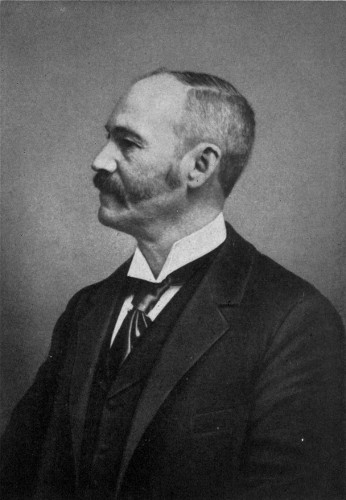
CHARLES F. SMITH
Public affairs as well as private interests profited by the efforts, the sound judgment and keen discrimination of Mr. Smith. He was at one time alderman of Montreal; was a member of the finance committee and was again and again urged to become a candidate for the mayoralty. Native modesty, however, caused him to remain in private life even when it was almost a certainty that he would be elected to any office to which he might aspire. He was the only English member of the French Commercial School which was established by the Gouin government, and he belonged to the Board of Trade for five or six years, being first a member of the council and rising through the offices of treasurer and vice president to that of president, being elected by acclamation. He was also a vice president of the Dominion Express Company; managing director of the Laurentide Pulp Company; a director of the Merchants Bank; a director of the Montreal Trust Company; a director of the Dominion Textile Company; was at one time the president of the Western Hospital, and had been for years one of the governors of both the Notre Dame and General Hospitals, and vice president of the Royal Alexandra. He was a well known figure in the city’s fashionable clubs, belonging to the Mount Royal and St. James Clubs, the Royal Montreal Golf Club, the Forest and Stream Club and the Royal St. Lawrence Yacht Club. He was also a charter member of Canada Council of the Knights of Columbus; a prominent parishioner of St. Patrick’s church, as well as warden of the same; a director of St. Patrick’s Orphan Asylum, and president of the Catholic Sailors’ Club. He was also a well known member of St. George’s Society.
His kindness of heart was invariable, he was especially devoted to his home and shunned ostentation. At St. Andrews where he spent every summer, one of his greatest pleasures consisted in the companionship of those friends of his who lived near him, of whom Sir Thomas Shaughnessy was among the number. Taking a great interest in matters pertaining to education, he was one of the founders of the Catholic high school, and a member of the administration of Laval University, and though, well known in life as a conservative in politics, he was appointed by Hon. Lomer Gouin as governor of L’Ecole des Hautes Etudes Commerciales. Besides being a practical manufacturer, Mr. Smith gave special attention to tariff matters, and his contributions to the campaign against unrestricted reciprocity in 1891, when Sir Wilfrid Laurier, Mr. Erastus Wiman and their friends endeavored to establish free trade between Canada and the United States, did more than a little to secure the protectionist victory of that year.
For years Mr. Smith did not actively participate in civic affairs, but in 1890, when a reform wave was sweeping over the commercial metropolis he was asked to come forward as a candidate in one of the civic divisions. He hesitated for some time, but finally consented to contest the west ward if his warm personal friend, the late Mr. Frank Hart, would also seek a seat in the city council. At that time the late Colonel Stevenson was a landmark in civic politics as well as in military and social circles, and so well was the colonel known that there were many who considered that with him as an opponent Mr. Smith had hardly a fighting chance. It was contended that a Roman Catholic could not be elected in such a pronounced Protestant district as the west ward, but the success achieved by Mr. Smith in that contest proved that the reform candidate’s reputation was too well established to leave him a victim of the religious cry. He served in the council during 1890 and 1891, on the finance committee, and though assured that he could have a second election by acclamation, he declined both the aldermanic and mayoralty honors that were offered him.
In a quiet and unostentatious manner he was a generous contributor to deserving charities, irrespective of nationality or creed. He was one of the most prominent English-speaking Catholics in Montreal. As a personal friend of Archbishop Bruchesi, Mr. Smith was frequently consulted in the church’s temporal affairs.
Mr. Smith twice married: His first wife was Miss Mary A. McGlynn and his second wife who survives him, was Miss Margaret M. McNally, daughter of the late Bernard McNally. Two sons were the issue of the first marriage, Clarence F. Smith, vice president and general manager of the Ames, Holden, McCready, Limited, and Frederick H. Smith, who lived in the West Indies, until his death in April, 1912. To the second marriage the following children were born: Rose M.; Charles F., who died on August 20, 1911; Marguerite M.; Francis C.; May G.; and Geraldine M.
The Montreal Herald said of Mr. Smith: “There was no better citizen of Montreal than the late Charles F. Smith. He had made his way in the world by dint of rare power of business organization. In addition he was a man who made friends and held them. He had no taste for public life himself, but he had a deep interest in public affairs and in the men who in public life supported his views. It was so in the affairs of the Board of Trade and resulted in his becoming president of that body. It was so in civic affairs and resulted in his being much against his inclination, elected to the council. It was so in Dominion politics, and if he has passed away before his party friends had the opportunity of showing their appreciation, it is certain that the fighting ranks of the conservative party had few more prudent or more generous counsellors.
“Mr. Smith went to the city council with Mr. Laporte, Mr. Ames and the late Mr. Hart at a time when the city had just been aroused to the need of wholesale reforms. He played a part of much importance, for with two or three other trained business men he sat in at the centre of things, on the old finance committee and supervised a general cleaning up of the city hall. It was the good work of those days that made possible the larger reforms of later years.”
The Montreal Gazette said editorially of him: “By the death of Mr. Charles F. Smith another able and successful man has been taken from Montreal’s commercial life. Mr. Smith through years of painstaking energy built up a successful business, from which the city benefited as well as himself.
“In the process he won the respect of all with whom he became associated. Commercial organizations valued his advice. The Board of Trade counted him as a wise counsellor. When the city’s affairs were in need of improvement he served in the council and with his associates did useful work in its behalf. He could have had other public offices had he desired, but his preference was for private life. He has passed away at a ripe age, held in regard alike for the qualities of his mind and of his heart, and leaving a memory that will encourage others to follow his footsteps.”
GERALD OTHO ROUSSKI ELIOTT.
Since 1908 Gerald O. R. Eliott has occupied the position of assistant marine superintendent of the Canadian Pacific Railroad Company’s Atlantic steamship lines. He was born March 28, 1874, in Dalhousie, India, and is a son of George Augustus and Helen (Jardine) Eliott.
Gerald Eliott received his education at Taplow grammar school, the Maidenhead high school and then served as a cadet on H. M. S. School Ship Conway. Naval life having a particular attraction for him, he entered the mercantile marine and served for some time in sailing vessels of the White Star line. He was an officer in connection with various steamship lines and was doing service on boats which carried British troops during the South African war. In 1901 he joined the Canadian Pacific steamship lines and served as an officer on various ships until he was appointed to his present important position of assistant superintendent in 1908.
Mr. Eliott’s naval career includes the following appointments: midshipman, R. N. R., 1890; appointed acting lieutenant in H. M. S. Jupiter in 1900, having gone through the gunnery and torpedo course; received naval reserve decoration for fifteen years’ service in commissioned rank; retired in 1912 as commander.
In 1908, in Toronto, Ontario, Mr. Eliott married Miss Edith Aspden, a daughter of Thomas Aspden, of Lancashire, and later of Chicago, Illinois, and Toronto. Mr. Eliott is a member of the Church of England and upholds conservative principles at the polls. His club is that of the Commercial Travelers of Montreal.
AURELIEN BOYER.
Aurelien Boyer, a man of recognized professional ability and prominence, who since 1899 has been an associate member of the Canadian Society of Civil Engineers, was born in Montreal and pursued his education in schools of the city. He was graduated with honors as civil engineer and metallurgist from Ecole Polytechnique, a department of Laval University, with the class of 1896 and at once entered upon the active work of his chosen profession. He was in charge of the survey and location of the Yukon telegraph line and resigned from the department of public works of Canada after his appointment as superintendent of government telegraphs and cables for Quebec and the maritime provinces. In 1905 he was chemical engineer and local manager of the A. D. Gall Petroleum & Chemical Company, having charge of their wood distillation plant at Mont Tremblant, Quebec, and in 1909 became vice president and chief engineer of the Duckworth Boyer Engineering & Inspection Company, Ltd., which was later consolidated with the Canadian Inspection Company, Ltd., under the name of the Canadian Inspection & Testing Laboratories, Ltd. Of the latter company he is now vice president and treasurer. Scientific knowledge, acquired skill and ability have brought him to a place in the front rank of those who are engaged in similar enterprises in the province.
In June, 1903, Mr. Boyer married Madame Elmira Corinne Dufresne, of Three Rivers, Quebec. He belongs to the Engineers Club and the Winchester Club. He is now a member of the board of administration of L’Ecole Polytechnique and a director of Association des Anciens Elèves de L’Ecole Polytechnique.
LIEUTENANT COLONEL JAMES GEORGE ROSS.
Lieutenant Colonel James George Ross, president of the Ross Realty Company, Ltd., and favorably known in Montreal as a prominent figure in financial circles, was born in this city, October 18, 1861, a son of the late Phillip Simpson and Christina Chalmers (Dansken) Ross, both of whom were natives of Scotland. His early education was acquired in private schools, with later attendance at the high school of Montreal and subsequent attendance at the Ontario Agricultural College in Guelph, from which he was graduated with the class of 1881.
Mr. Ross went to the northwest upon an extended trip with a view to settling there, but returned to Montreal and associated himself with his father, who was a representative of the profession of chartered accountant. Shortly afterward he was admitted to partnership with his brother, the business being carried on under the firm style of P. S. Ross & Sons, and on the death of his father he became the head of the firm. He is a chartered accountant and a member of the Association of Accountants and is a fellow of the Dominion Association of Chartered Accountants. Aside from his business in that connection he is president of the Ross Realty Company, Ltd., and as such figures prominently in real-estate circles, negotiating and managing many important property transfers.
Mr. Ross has always evinced a great interest in military matters. In 1879 he joined the Ontario Field Battery, retiring in the year 1883. In 1884 he held a commission as officer in the Victoria Rifles, retiring in 1891 with the rank of captain. In 1898 he joined the Fifth Royal Highlanders and in 1899 was gazetted captain while in August, 1906, he was promoted to the rank of major and in May, 1909, was made lieutenant colonel. In 1907 he received the Long Service medal for officers having served for twenty years. He is in active connection with the Montreal Board of Trade and is a director of the Crown Trust Company. His interest and support extend to charitable and benevolent projects and he is a life governor of the Montreal Western Hospital. Fraternally he is a Scottish Rite Mason, while in club circles he is widely and favorably known, his membership being in the St. James Club, Canada Club, Beaconsfield Golf Club, Canadian Club, Montreal Curling Club, Royal St. Lawrence Yacht Club, Montreal Amateur Athletic Association, Westmount Athletic Club and the Junior Army and Navy Club of London, England. In his younger days he was very active in athletic sports, especially in running, and he handled the snowshoe with expert skill. In 1887 it was claimed that he was “the best man in Canada who ever strapped on a racing shoe.” In the winter of 1888 he accompanied Lieutenant Schwatka in the explorer’s trip through the Yellowstone Park and was the only man who came out in as good shape as he went in.
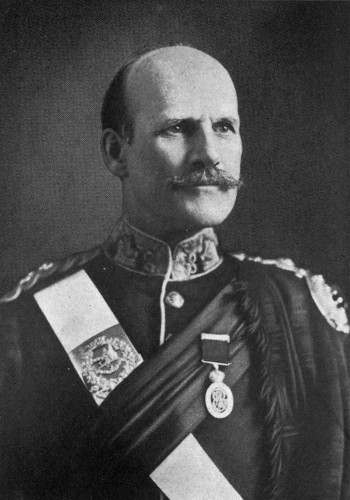
LIEUTENANT COLONEL JAMES G. ROSS
In March, 1891, Mr. Ross married Miss Alice Margaret Monk, daughter of the late John Monk, an advocate of Montreal, and they have two daughters, Marjorie and Evelyn.
THOMAS MUSSEN.
One of the best known merchants of the past generation in Montreal, and a man whose well ordered life and high business principles commanded the respect of all who knew him, was born in 1804, in Yorkshire, England, and came to Canada with his parents in 1817, the family home being established in the south part of the province of Quebec near the Vermont line.
Thomas Mussen early entered business life in Montreal, becoming a clerk with the firm of William Smith & Company with whom he remained for about ten years. He was careful with his earnings and in 1827, he had saved sufficient capital to enable him to purchase a small stock of dry goods, opening a store on St. Paul Street, near Jacques Cartier Square, then the heart of the retail district.
The business prospered from the first and when larger quarters were demanded he removed to Notre Dame Street, at the corner of St. Gabriel, being the first merchant to locate on Notre Dame Street, and afterwards located at the corner of St. Lawrence boulevard and Notre Dame Street, where he continued until 1865. In that year the store was removed to Craig Street, near St. Lawrence boulevard, where he continued until his new building was erected at the corner of St. Lambert and Notre Dame. There the business was successfully continued by him until his death April 5, 1892. Each removal had indicated a demand for larger quarters. The business was marked by continuous growth and development under the strong guiding hand of Mr. Mussen, who came to be ranked with the leading merchants of the city. His store was one of the leading commercial establishments of the province. After the death of Mr. Mussen, the business was carried on by his sons, William W. and Henry S., until 1900 when it was discontinued, the brothers retiring from active business. William W. Mussen died in 1904 and Henry S. Mussen passed away in 1912.
Harold Beaufort Mussen, son of William W., and a well known insurance and real-estate broker of Montreal, after acquiring his education in the schools of his native city, entered the employ of the Canada Atlantic Railway, where his developing powers and ability won him promotion until he became general agent. He continued with them until October, 1904, when after a service of twelve years he withdrew to engage in business on his own account.
PETER LYALL.
In the death of Peter Lyall Montreal lost a citizen who left the impress of his individuality for good upon the community in which he lived. He was a man of fine personal appearance, and his splendid physique was an indication of the strength of his mental and moral nature. For many years he was connected with business interests as a prominent contractor, being the head of the Peter Lyall & Sons Construction Company, Ltd. While in his seventieth year at the time of his death, he had always remained in active connection with his business until a few days prior to his demise.
Scotland numbered Mr. Lyall among her native sons, his birth having occurred at Castletown, Caithness, Scotland, where he gained a practical knowledge of the contracting business before crossing the Atlantic in 1870. When he sought a home in the new world Montreal was his destination and he made his initial step in circles here in the employ of his cousin, the later Peter Nicholson. Six years were sufficient to bring him a wide acquaintance that he believed justified him in embarking in business on his own account. He was joined by his two sons, William and Traill O. in 1892, who are still connected with the business that was established in Montreal in 1876. The third son, Peter D. Lyall, is head of a large contracting firm in Winnipeg. From the time that he started out independently Peter Lyall was successful and his name figured prominently in connection with building operations in Montreal and this part of Canada. He kept in close touch with all phases of the business and with all progressive steps therein. Many of the business structures of Montreal still stand as monuments to his ability, his energy and his notable ambition. He carried out the erection of the Quebec Bank Building, the Royal Victoria Hospital, Macdonald Engineering buildings at McGill, the Sun Life building, the Canada Life, the Grand Trunk general offices, the Coristine building, the new Board of Trade, the Stock Exchange, the Guardian Life, the Dominion Express and Transportation buildings, and hundreds of others. Some of the finest residences of the city also stand as monuments to his handiwork, notably among which are the homes of the late Sir Edward S. Clouston and George L. Cains. From the time that he started out in business his rise was continuous. It was soon evident that he understood the building business, both from a scientific and practical standpoint, that his reliability made him worthy of a liberal patronage, and that his energy and indomitable spirit made possible the prompt and faithful execution of his contracts. Success came to him soon and was well merited, so that he gained place among the prosperous residents of the city. His ability in management, his power of carefully formulating plans and then executing them with determination was seen in his cooperation in the organization of a number of companies which have constituted leading factors in industrial, commercial and financial circles. He was one of the promoters of the Lachine Rapids Hydraulic & Land Company, formed in 1896, and of the Midway Land Company in the same year. He was one of the organizers of the Laprairie Brick Company in 1904.
Mr. Lyall was united in marriage to Miss Christina Oman, who, like her husband, was a native of Castletown, Caithness, Scotland. They became the parents of three sons, William and Traill O., of Montreal, Peter D., of Winnipeg and a daughter, now Mrs. D. W. Lockerby, of Montreal. Mr. Lyall possessed a social nature that found expression in his membership in the Canada, Reform, Canadian, Country and Engineers Clubs. His kindly disposition made him a favorite in all circles, and among no class of people was he more appreciated than by his own employes. He was deeply interested in all that pertained to affairs of government and to municipal progress. For many years he was a prominent member of the liberal party, earnestly striving to promote its success, and in 1904 he unsuccessfully contested the St. Antoine district for the Dominion parliament. At one time he was president of the Montreal Reform Club and at all times took a firm stand in opposition to misrule in public affairs and in support of all that he believed would uphold the honored tenets of government and promote the best interests of the people in general. For two years he was a member of the Montreal city council and brought his splendid business acumen to bear on civic problems, proving himself one of the strongest men at the council table. He was afterward eagerly besought to again become a member of the council but declined. He took a deep and helpful interest in the Citizens Association, being in hearty sympathy with its purpose, and at the time of his demise was one of its vice presidents. Above and beyond all this Mr. Lyall was known as a man of most generous and benevolent spirit, ever seeking to promote the welfare and happiness of his fellowmen. He could not listen unmoved to a tale of sorrow or distress, and to the extent of his ability he extended a helping hand to the needy. He gave not only freely of his money but also a large portion of his time to good works. He was president of the Protestant Hospital for the Insane at Verdun, and his efforts were a potent force in making it one of the excellent institutions of its character in the country. The Western Hospital found him equally helpful and generous. Thus he made his presence felt beneficially in commercial, political and philanthropic circles. To know him was to esteem and honor him by reason of what he accomplished and the methods he pursued. The most envious could not grudge him his success, so honorably was it won and so worthily used.
ALFRED B. DUFRESNE.
In insurance circles in Montreal and among business men in general the name of Alfred B. Dufresne is well known because of his activity in the field to which he directs his efforts. He was born April 13, 1874, at Joliette, Canada, a son of J. Alfred and Honorine (Delfausse) Dufresne, who now reside in Montreal. He was educated in Plateau Academy and at the age of eighteen years began work as a clerk in the office of the Alliance Assurance Company in Montreal. During the twelve years he served the company he won promotion from time to time until he became chief clerk, his capability and fidelity thus winning him recognition and gaining for him substantial advancement. In 1903 he was appointed inspector for the Mount Royal Assurance Company and so continued until 1907, when he was appointed chief specific rating inspector of the Canadian Fire Underwriters Association. In 1908 he was appointed manager of the Montreal-Canada Fire Insurance Company, filling the position for two years, or until 1910, when he took up general agency work, now representing the Northwestern National Insurance Company, the Montreal-Canada Fire Insurance Company, the Anglo-American Fire Insurance Company, the Protection Fire Insurance Company and the Rimouski Fire Insurance Company, with offices in the Duluth building.
On the 12th of October, 1909, Mr. Dufresne was married to Miss Gabrielle Mathieu, and to them have been born two daughters, Jacqueline and Françoise. The family reside at No. 171 Esplanade Avenue, and Mr. Dufresne is a member of the St. Denis Club. Much of his life has been passed in the city where he now resides, and his admirable traits of character, as well as his business ability, have gained him firm hold on the regard and good-will of all with whom he has been associated.
CHARLES ALBERT DUCLOS.
The name of Charles Albert Duclos figures in professional circles in Montreal as that of a lawyer whose ability has won for him a large clientage. He is a man of scholarly attainments, which, added to his knowledge of the law, has gained him prestige among the successful advocates of the city. A native of Joliette, P. Q., he was born on the 3d of August, 1861, his parents being the Rev. R. P. and Sophie A. Jeaureneaud Duclos. The father was a French-Canadian, while the mother was born in Switzerland. The Rev. R. P. Duclos has devoted his life to the work of the ministry as a representative of the Presbyterian church. Realizing the value of education as a factor for success in any chosen field of labor, the father provided his son with good opportunities in that direction and, after attending the Montreal high school, Charles A. Duclos entered McGill University, in which he pursued the arts course, winning the B. A. degree in 1881, and then entered upon the study of law, winning the B. C. L. degree, with the Elizabeth Torrance gold medal in 1884. His high standing in scholarship constituted the basis upon which his friends builded their belief in his successful future, and the faith which they manifested has found justification in his professional career. Following his graduation he at once entered upon active practice in Montreal, where he has remained continuously since. Aside from his practice he is the vice president of the Ross Realty Company, which was organized in 1906, and in that connection he has displayed sound business judgment and enterprise.