BIOGRAPHICAL (continued 7)
Reading edition
In 1891 Mr. Robb was united in marriage to Miss Elizabeth McLaren, a daughter of Andrew McLaren. Their religious faith is that of the Presbyterian church and Mr. Robb belongs to St. Andrew’s Society. He is a justice of the peace for Montreal and district. He is likewise a member of the Engineers Club and of the Canadian Club and has gained the warm friendship of many in both organizations.
HON. JOHN JOSEPH CURRAN.
Hon. John Joseph Curran, barrister, jurist and orator, whose life record was an honor to the land of his ancestors and to the land of his birth was born in Montreal, February 22, 1842, his parents being Charles and Sarah (Kennedy) Curran, both natives of Ireland, the former born in County Down and the latter in County Wexford. Emigrating to the new world they retained the intense love of native land, so characteristic of the Irish race and instilled the same deep attachment into their son, who with his increasing age and powers gave freely of his time and talents for the benefit of Erin’s green isle.
In the pursuit of his education Judge Curran attended a Jesuit school and St. Mary’s College at Montreal, where he entered upon a classical course. He afterward became a student in St. Joseph’s College at Ottawa and in 1891 the University of Ottawa conferred upon him the LL. D. degree. In the continuance of his education, he entered McGill University as a student in the law department and won his D. C. L. degree in 1862. It was in the spring of 1859 that he began preparation for the bar, reading at times under the direction of such distinguished lawyers as Bernard Devlin, Hon. T. J. J. Loranger and Andrew Robertson, K. C. While pursuing his classical courses he cultivated a taste for literature and oratory and in his student days developed the natural gifts that in course of time made him one of the foremost Canadian orators. It was also in his early manhood that he joined the Irish national movement and thus his life was taking shape along those lines which were to make him a power in moulding the history of province and country.
The year following his graduation from McGill, or in 1863, he was called to the bar of Quebec. No dreary novitiate awaited him. Almost immediately his talents won him recognition and he gained prominence as one of the younger members of the profession, by the important part which he took in the conduct of a number of notable criminal cases, including the Shehan, Havern, Kehoe and Considine murder cases and the Dunbar, Brown, Kearney and T. F. O’Brien frauds.
It is said that he had no superior in the conduct of election cases. He was successful in the Devlin-Ryan, Tansey-Malone and the James McShane-Loprairie contests and all these drew to him the attention and favorable comment of the profession. He was equally capable in the practice of civil law and was the legal representative of some of the largest contractors of the continent including men prominent in business in New York, Ottawa and Montreal. His legal counsel was sought by men of prominence again and again. Probably his last appearance as an advocate was when he represented the Dominion government in an arbitration with the province, the case being heard in the city of Quebec about 1894.
Judge Curran was created a king’s counsel by the Marquis of Lorne and was appointed secretary of the commission for the codification of the statutes of the first De Boucherville government. He was called to judiciary honor when made a puisne judge of the superior court, December 5, 1892. He was appointed solicitor general in the ministry of Sir John Thomas and continued to hold that office after Sir Mackenzie Bowell became premier. A contemporary writer said, “on the occasion of his appointment his lordship was congratulated by the press without distinction of party, both on public and personal grounds in acknowledgment of his ‘indefatigable efforts to promote the interests of his constituents’ and he was presented in 1890, chiefly by citizens in Montreal, with a purse of seven thousand dollars.” Judge Curran remained upon the bench for fourteen years and proved himself the peer of the ablest jurist who has gained the superior court bench. There were those who opposed him in the beginning, but all came to acknowledge his capability, his record being a credit and honor to the bench. His opinions were models of judicial soundness and his record as a jurist was such as any man might be proud to possess.
Politically his lordship was a liberal-conservative and he rendered valuable service to his party. He was elected by a large majority for Montreal Center to the house of commons in 1882, 1887 and again in 1891, and upon his appointment to the solicitor generalship of Canada in 1892 he was reelected by acclamation.
On the organization of a law faculty in connection with the University of Ottawa in 1892 Judge Curran was appointed to one of the legal chairs and elected vice dean. He was also a member of the senate of that university and president of its Alumni Association. As an orator he swayed all by his eloquence. He gained high rank as a lecturer and was frequently called upon to address public gatherings.
In religious faith Judge Curran was a most earnest Catholic and was ever watchful of opportunity to assist those of his faith in public or in private. While his health permitted he never failed to appear annually with his colleagues of the bench and bar in the Tete Dieu procession and his piety and devotion in the closing years of his life were an encouragement to the old and an edifying example for the young. As a Canadian his life work was one of conciliation and he strove to promote harmony between all creeds and colors. He accepted invitations to address gatherings of foreign colonists, and the Jews, Germans and Italians knew him well, while among the people of his nationality he was not only loved but respected. He yielded to none in the breadth of his sympathy and generous desire for the union of all denominations in the best and noblest objects. Following his elevation to the bench he said “that as a public man it had been his constant aim to bring about the union of hearts and minds among all creeds and classes,” and “he was satisfied that if we desired to have a prosperous country with a happy and contented people we could only secure those blessings by all creeds and classes uniting together for one common end, ‘the advancement and welfare of Canada and the empire.’” In August, 1896, Judge Curran was elected a delegate to the Irish Race convention, which met in Dublin in September of that year. He had previously been president of St. Patrick’s Society of Montreal and prior to his elevation to the bench was one of the directors of the True Witness Publishing Company. After his trip to the old country in 1907 the Burns Club honored him with an invitation to a banquet and to respond to a toast to the memory of Robert Burns. On rising to speak he said, that all had become brothers the world over since men of such intense love for Old Scotia had, here in our happy Canadian home, called upon a descendant of old Ireland to do honor to the name and fame of Scotland’s greatest bard. There are few, indeed, who have greater love for the land which shelters their race than had Judge Curran. He was perfectly familiar with Irish history, was a reader of Irish literature and a lover of Irish music, and he was an ardent and unflinching advocate of home rule.
In 1865 Judge Curran married Mary Elizabeth, the youngest daughter of the late Patrick Brennan of Montreal. His third son, Francis Joseph Curran, following his graduation from Manhattan University of New York and McGill University of Montreal, was called to the bar of his native province.
Something of the position which Judge Curran occupied in public regard is indicated in works written of him ere his demise, which occurred on October 1, 1909. Morgan in his volume of Canadian Men and Women said, “by the Irish community of Montreal he was regarded as one who had stood the test of devotion to their common fatherland, but it is to Canada that he has given his best service and by his fellow-Canadians, without distinction of origin or creed, he is held in the highest esteem and honor.” A Montreal citizen wrote of him, “he bears a character without reproach and is as popular in legal and political circles as he is respected.” The Montreal Gazette said editorially, “no constituency in Canada has ever had a representative who gave up more of his time, his talent and his energy to the promotion of its interests than did Mr. Curran during the thirteen years he has enjoyed the confidence of his electors. His genial kindly nature, his large-heartedness, his conspicuous liberality of mind, absolutely free from every trace of bigotry, and his splendid oratorical powers caused him to be in constant requisition whenever men were gathered together in the promotion of worthy objects for the discussion of public affairs or the advancement of the material and social welfare of the country.” The Montreal Herald concluded an admirable eulogy with the following paragraph: “Unselfishness and genuine consideration for others, probably explained his personal popularity and his political success. He used to say that the man in public life erred in dodging office seekers. ‘When I saw one who looked as if he wanted to get at me I always went to him first, and gave him his chance to speak,’ he once explained. He gave freely of his presence where he thought a good cause could be served, or a good example be set. He did his duty, as he saw it, without flinching. He was a good citizen, and he leaves a name to be held in honor.”
PIERRE-CHRYSOLOGUE LACASSE.
Pierre-Chrysologue Lacasse, who follows the profession of notary in Montreal, is widely and favorably known in this city. He enjoys a representative clientele and his practice is extensive as he has gained a wide reputation on account of his extensive knowledge, which is based on a thorough education. The Lacasse family is an old and distinguished one in Canada, the first ancestor to come to this country being Antoine Lacasse, also called Casse or Cassé, who came to this country from Douai (French Flanders) about 1650, or more correctly, between 1639 and 1665. This statement is based upon a reference made in an appendix to the History of Canada by Abbé Ferland. The paternal grandfather, François Lacasse, was born at St. Vincent de Paul (Jesus Island) and the forefathers were born in the same parish. The maternal grandfather, Joseph Brissette, was a native of St. Cuthbert, of the county of Berthier, where his ancestors also were born. The father of our subject, Narcisse Lacasse, was born on February 5, 1821, of the marriage of François Lacasse with Thérèse Bastien and died on December 27, 1892. He was a notary, receiving his commission on June 15, 1849. The mother, Mathilde Brissette, was born on November 1, 1820, a daughter of Joseph Brissette and Marie Lavoie. She died in Montreal on August 29, 1911, at the advanced age of nearly ninety-one years. The father followed his occupation in the parish of Ste. Elizabeth, in the county of Joliette, where his wife was born.
Pierre-Chrysologue Lacasse was born on January 7, 1866, at Ste. Elizabeth, county of Joliette, in the province of Quebec, and in the acquirement of his education attended the model school of Ste. Elizabeth, also receiving private tuition. In furtherance of his knowledge he then attended Joliette College, now known as the Seminary of Joliette, and Laval University at Montreal, graduating with the Bachelor of Arts degree from the latter institution in 1885. From the same institution he received his degree of LL. B. in 1891. However, on June 3, 1890, he had already been commissioned a notary and has followed that profession ever since. On January 29, 1891, he was admitted to the study of law for the profession of advocate. His professional reputation is of the very highest character and he has also extensively engaged in real estate and in dealing in bank and insurance stock. Among important estates which he has handled as testamentary executor were those of John Pratt, Thomas Philippe Barron, L. C. Gravel and others.
The position conceded him by the profession is evident from numerous important official and semi-official positions which he has held. He was elected a member of the board of notaries for the district of Montreal in 1897, 1900, 1903, 1906, 1909 and 1912. He was a member and afterwards president of the committee of discipline and also of the committee of surveillance of said board and a member and afterwards president of the commission for the admission to the study of the notarial profession, which position he now holds. In his political views he is independent, giving his support to measures and candidates as dictated by his judgment. His religious faith is that of the Catholic church. Mr. Lacasse was connected with military life during a few years as lieutenant in Company 4, Eighty-third Battalion of Infantry of Joliette.
A man of wide experience and with a wide outlook upon life, he is interested along lines of endeavor that touch upon the progress of the city and can always be found among those who loyally support any movement undertaken for public betterment. He is highly respected and esteemed in the city where he is widely known and enjoys the confidence and good-will of the foremost citizens of Montreal.
ARTHUR A. BROWNE, M. D.
The tendency of the age is toward specialization and the professional man who achieves distinction usually concentrates his efforts not upon the broad field of his profession but upon some particular branch thereof, and thus develops a proficiency which he could not otherwise hope to attain. Such was the record of Dr. Arthur A. Browne, educator and practitioner, who gained eminence as an obstetrician. He practiced for more than forty years in Montreal, entering upon the active work of the profession in early manhood. He was born in Eastern township, in 1848, and was descended from Irish parentage, and of a family whose name figures prominently in military circles. His more specifically literary course was completed by graduation from McGill with the Bachelor of Arts degree in 1866. A year or two thereafter was devoted to business but feeling that a professional career would prove more congenial, he entered upon the study of medicine and was graduated M. D., C. M., in 1872. He then spent a year abroad, during which time he investigated the methods of eminent physicians and surgeons of the old world, after which he opened an office in Montreal. The usual experiences of the professional man were his. He had to work his way upward in face of competition with men who had long been in the profession and had well established reputations. The conscientious care which he gave to the cases entrusted to him at length won him recognition and his practice grew until it became one of the largest in the city. As time passed he concentrated his efforts more largely upon obstetrical diseases until he gained a wide and most enviable reputation in that field, his opinions coming to be regarded as authority upon many involved and intricate questions relating thereto. In 1883 he was appointed professor of obstetrics at McGill University, succeeding the late Professor Duncan MacCallum, at the same time taking charge of the University Maternity Hospital. Three years later, however, owing to his growing practice, already extensive, and his distaste for the drudgery of teaching, he resigned his professorship. Yet, he was always intensely interested in McGill and her welfare, and no function held by the medical department was thought to be complete if Dr. Browne was absent. He was not only thoroughly informed concerning his chosen calling but possessed a fine literary mind and his broad reading made him one of the best informed men on general literature among the practitioners of medicine and surgery in Montreal. He was a student of the classics, and all these things had influence to make him a noble-minded man, whose life exemplified the high principles which constituted the basis of his character. He possessed an artistic taste that found expression in his intense admiration of the beautiful in both art and nature. Moreover, keen sympathy was one of his strongly marked traits and featured as one of the elements of his success. He might well be called “the beloved physician,” for his cheery presence as well as his scientific skill brought comfort and assurance to many households. He inspired and encouraged his patients and thus assisted them far on the road to recovery.
In Montreal, in 1878, Dr. Browne was married to Miss Jane Labatt, of London, Ontario, and their children were: H. Dalzell, of Montreal; R. Russell, of Bassano, Alberta; Captain G. Sackville Browne, of B Battery, Royal Canadian Horse Artillery, of Kingston; and F. Dora.
Dr. Browne held membership with the Masonic fraternity and in his life exemplified the beneficent spirit of the craft. He had passed the sixty-second milestone on life’s journey when his death occurred January 26, 1910. His eminent ability gained him honor, his kindliness and consideration won him gratitude and friendship; and thus it is that his memory is cherished and remains as a blessed benediction to all who knew him.
THOMAS McDOUGALL.
Important corporation and financial interests have felt the stimulus of the enterprise, keen business insight and intellectual force of Thomas McDougall, who is known in literary as well as financial circles. He was born at Three Rivers, P. Q., May 21, 1843, a son of the late John McDougall, a merchant of Three Rivers, who sat in the Canadian parliament from 1851 until 1854 and a brother of the late Hon. Justice McDougall of Aylmer, P. Q. For many years Thomas McDougall was in the service of the Quebec Bank and was agent of that institution in 1870. Later he became manager at Montreal and in 1894 was made assistant general manager, from which position he was advanced to that of general manager in December of the same year. He continued actively in control of the extensive and important financial interests that came under his guidance until 1909, when he resigned but remained a director of the bank. With him close reasoning has become habitual, and he has therefore found ready solution for difficult and involved financial problems. He was chairman of the clearing house at Montreal and was active in the meeting of bankers, convened to revise the banking act in 1890. In 1898-9 he was president of the Canadian Bankers Association, which indicates his place of prominence and influence in the moneyed circles of the country. He is still a member of the advisory board of the Scottish Union & National Insurance Company, is vice president of the Shawinigan Water & Power Company and a director of the Asbestos Corporation of Canada.
In many public connections outside the field of business and finance his name has figured prominently and his labors have been effectively and helpfully felt. In 1908 he was the general treasurer of the Quebec tercentenary committee. He possesses literary taste in high degree. He has written on banks, bankers and banking, being the author of a well known article entitled, T. Pomponius Atticus, a Roman Banker.
Mr. McDougall was married at Three Rivers, P. Q., to Miss Helen Baptist, a daughter of the late George Baptist. His religious connection is with the Presbyterian church and in club circles he is well known as a member of the St. James Club of Montreal and the Quebec Garrison Club of Quebec. His social qualities and marked ability along many lines as well as his important business interests have gained him the prominence which is today his.
JEAN BAPTISTE DAVID LEGARE.
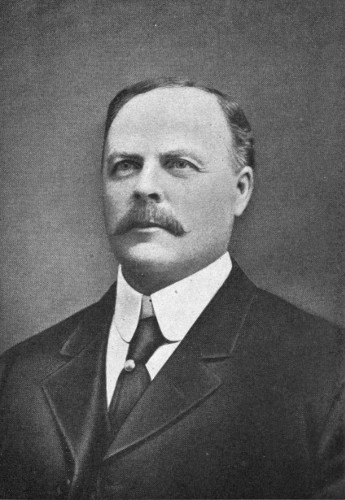
Jean Baptiste David Legare, one of the most successful real-estate promoters in the city of Montreal, was born in the parish of Sillery, near Quebec, June 7, 1865. Fortune did not smile on him for many years. His father having died when the son was an infant of but three months, he was reared in the home of his maternal grandfather, F. Cote, of St. Foy. While there he acquired his elementary education and later attended the academies at Sillery and Quebec. Manifesting laudable ambition from early youth, at the age of eighteen years he began business life as a clerk in the general store of Louis Bourget in Quebec. Subsequently he was employed in the wholesale dry-goods houses of P. Garneau and William McLimont & Sons in Quebec. Later he became a representative of large grain and flour mills and also became proprietor of a wine and vinegar manufactory in Quebec. Fate was against him and he failed for seventy-two thousand dollars. This would have utterly discouraged and disheartened many a man of less resolute spirit, but an optimistic nature would not allow Mr. Legare to acknowledge defeat and still held before him the promise of later success. He then engaged in promoting various undertakings in Quebec, but still the results were not such as were desired.
In 1908 Mr. Legare came to Montreal and continued in the promoting business, making a specialty of real estate. This proved to be the turning point in the career of Mr. Legare and he has since gradually but surely advanced to the goal of success. In the past five years he has made over three hundred thousand dollars and when the sum he had acquired was sufficient to cancel all of his indebtedness he made a special journey to Quebec for that purpose. Mr. Legare says that through all of the dark days, when the storm clouds gathered about him that threatened disaster and defeat, it was his wife’s encouragement and her faith in his future that buoyed him up and made possible his ultimate prosperity.
The principal companies which Mr. Legare has successfully promoted during the past five years are: The Greater Montreal Land Investment Company, Limited; and The Chateauguay Garden City Company, Limited. He was also the promoter of the town of Chateauguay. He is the owner of twenty-seven lakes on the seigniory of Mille Isles and the water rights pertaining thereto. A strong man physically and mentally, his optimistic temperament makes him an ideal promoter. The various business enterprises which he has promoted during his career have contributed a great deal toward the development of the natural resources of the Dominion.
JEAN BAPTISTE D. LEGARE
Mr. Legare was married in Quebec, in 1891, to Alda Garneau, daughter of Charles Garneau, ex-sergeant of arms of the Quebec assembly. Upon the maternal side she is descended from the De Villers and the De Lachevrotiere families, both being of the noblest families of France. Mr. and Mrs. Legare are parents of a daughter, Yvonne, who was married in 1913 to Dr. Rene Turcot, and they reside in Quebec.
JOHN ALEXANDER GORDON, D. D.
One of the greatest individual forces in the promulgation of Baptist doctrines in Canada, a man who has worked long and earnestly in the promotion and spread of Baptist principles, giving of his unusual talents, his great energy and tireless labor to the cause, is Rev. John Alexander Gordon, for fourteen years pastor of the First Baptist church in Montreal and now the incumbent of the chair of pastoral theology at Brandon Theological College, active in the work of the foreign missionary societies and in the spread of temperance doctrines throughout the Dominion.
Dr. Gordon is of Scottish ancestry and was born in Uigg, Prince Edward Island. He acquired his early education in the public and high schools of his native province and in Acadia University, graduating with the degree of B. A., and acquired his theological training in the Newton Theological Seminary in Newton, Massachusetts. He was ordained to the Baptist ministry in 1875 and has since been prominent and active in the work of the Baptist church. He received the honorary degree of M. A. from Acadia College in 1894 and the honorary degree of D. D. from the same institution in 1904. Previous to his ordination he had been engaged in the mercantile and commission business at Montague, Prince Edward Island, and his first ministerial charge was as pastor of the church in that community. He was afterward called to Milton church, Yarmouth, Nova Scotia, where he remained from 1880 to 1885, after which he went to St. John, New Brunswick, serving as pastor of the Leinster Street Baptist church, and from there went to the First Baptist church, Charlottetown, Prince Edward Island, remaining there until 1893, when he became pastor of the Main Street Baptist church at Charlottetown. In 1899 he was called to Montreal as minister of the First Baptist church of this city, a position which he held until June, 1913, when he accepted the chair of pastoral theology at Brandon Theological College. Dr. Gordon has been found most earnest, zealous and consecrated in his work and has been carried forward by the force of his ability and the extent of his interests into important relations with religious work of many kinds, notably that of the local branch of the Lord’s Day Alliance, of which he is vice president; the Prisoners’ Aid Association, of which he is also vice president; the Grand Ligne Missionary Society, of which he is president; and the Maritime Baptist Union. No individual has done more powerful or effective work than he in the propagation of Baptist doctrines or in the promotion of the church’s interests for he was in 1906 appointed a member of the committee on Church Union and two years later was one of the promoters and a member of the committee which organized the Baptist Union. He is a governor of Acadia University and is especially interested in the work of the Foreign Mission Board of Ontario and Quebec, of the British and Foreign Bible Society and the Moral and Social Reform Council. He has written a “History of the First Baptist Church of Montreal,” published in 1906, and in August, 1908, entered a vigorous protest against the celebration of high mass on the Plains of Abraham as a part of the tercentenary celebration.
Dr. Gordon married at Kingsborough, Prince Edward Island, Margaret Ford, eldest daughter of the late John Ford, and to them were born five sons: John, a resident of Charlottetown, Prince Edward Island; Dr. Alvah H., of Montreal; Peter W., of Calgary; Herbert F., of Winnipeg; and Walter H., city editor of The Gazette of Montreal. Dr. Gordon has been a lifelong temperance worker and reformer and has accomplished a great deal of excellent work along this line, being uncompromising in his attitude toward the liquor evil and battling against it always to the extent of his great ability. In Montreal he is known as a man whose actions conform closely to his principles and whose energy, aggressiveness and untiring activity have been elements in the accomplishment of great and lasting work.
CHARLES HENRY GOULD.
Charles Henry Gould, librarian of McGill University and president of the American Library Association, 1908-09, is son of Joseph G. and Abigail (DeWitt) Gould, the latter a daughter of the late Jacob DeWitt, M. P., of Montreal. Born in Montreal on the 6th of December, 1855, Charles H. Gould pursued his education in the city schools through successive grades until he completed the high school course, after which he entered McGill University and was graduated B. A. with first rank honors in 1877, also winning the Chapman medal in classics. Through the succeeding scholastic year he devoted some time to post-graduate work in physics. With the completion of his education he entered business circles, in which he continued for several years. He afterward took up the study of library economy and also spent some time in travel before entering upon his present connection as librarian of McGill University. For twenty years he has filled his present position with eminent ability, having entered upon his duties in September, 1893. He was made governor’s fellow in 1891. There is no Canadian, perhaps, who has made a more thorough study of the work and opportunities of the librarian than has Charles Henry Gould, and realizing the deficiencies of many who undertake the librarian’s task, he founded the McGill School for Librarians in 1904. His prominence in his chosen field is indicated in his election to the first vice presidency of the American Library Association for 1907 and 1908 and his subsequent election to the presidency for 1908-9. He has continued his labors at McGill although offered the appointment of associate librarian of the public library of Brooklyn, New York, in 1908, and that of librarian of the Toronto public library. A fellow of the American Library Institute, he belongs to the Champlain Society, was president of the Bibliographical Society of America 1912-13 and is a member of other bodies which have for their basis the promotion of scientific and literary knowledge. He is also a member of the University Club, and the Canada Journal names him as a loyal and valuable citizen.
DONAT BRODEUR, K. C.
Specializing in the field of civil and commercial law, Donat Brodeur has gained recognition as a man capable of handling intricate and involved legal problems. He is a native of Montreal, born in March, 1863. His preliminary education was acquired in St. Mary’s Jesuit College, with the later professional course in Laval University, from which he was graduated with the degree of B. C. L. with the class of 1887. He was called to the bar at the beginning of the succeeding year, and since that date he has practiced his profession continuously in this city, now covering a period of a quarter of a century. Each year has found him in a point in advance of that which he occupied the previous year both in knowledge and in the nature and importance of his practice. He is a well known writer on legal subjects and a frequent contributor to legal periodicals. He has also lectured on law topics before the Canadian Accountants Association and the Chamber of Commerce. He has ever been a student of his profession, constantly broadening his knowledge by wide reading and research, and the care and precision with which he prepares his cases constitute a strong element in his success.
Attractive social qualities are the basis of his personal popularity, making him a valued member of different social organizations.
ROBERT FOWLER.
Robert Fowler, a merchant, was born in Montreal, November 17, 1851, and died in April, 1903. He was a son of Robert J. Fowler, who was born in England in 1818 and was educated there. He was brought up in the cathedral, having from the age of ten years made his own way, becoming a choir boy in the church. In 1847 he crossed the Atlantic going to Sorel, Canada, with Sir Benjamin Levine and his staff, to teach the daughters music. In 1849 he came to Montreal and was the first instructor of the city to hold musicales. For forty years he was professor of music in the normal school and at different times was organist in nearly all of the churches of the city. He could play any instrument and was recognized as the best instructor in music, by far, of his day. He was also known to some extent as a composer and, in a word, his musical talent was highly developed, while his professional labors and influence were an element in promoting and cultivating musical tastes and standards in the city. His was an artistic nature. He wielded the painter’s brush with skill and he was, moreover, a great naturalist. He took deep interest in the city’s improvement and in all projects for civic betterment. He held membership in Christ Church Cathedral, renting a pew there for thirty-five years. His life thus became a potent force in the artistic and moral progress of the city. He was married in Weymouth, England, to Miss Annie Wadsworth and they became the parents of five children, who reached adult age but only one, Annie, is now living. The others were William, Susan, Robert and John Henry. The death of the father occurred March 14, 1900, and the mother passed away in 1911.
Robert Fowler supplemented a public-school course by study in the normal school of Montreal and started in the business world as an employe in Robertson’s dry-goods store, in which he acquainted himself with every phase of the business and gained practical experience which made him a successful merchant when he started out on his own account.
He carefully saved his earnings until his frugality and economy had brought him sufficient capital to become a partner in the purchase of a stock of goods and the establishment of a store. The firm of Fowler & Leishman was then organized for the conduct of a retail dry-goods business and after a few years Mr. Fowler was able to purchase his partner’s interest becoming sole proprietor. He then devoted his entire time to the business and enjoyed a liberal patronage, deriving a fair and gratifying profit from his investment.
In Montreal in 1892, occurred the marriage of Robert Fowler and Miss Amy Hamilton, a daughter of Robert Hamilton. Their three children were Gordon, Wallace and Doris.
Mr. Fowler belonged to the Episcopal church and to its teachings was loyal and faithful. He was a member of the Philharmonic Club. He manifested the qualities of good citizenship and was devoted to the welfare of his family, who, when he passed away in April, 1903, lost a loving and generous husband and father, while his associates mourned the death of a loyal, faithful friend.
ALEXANDER COWPER HUTCHISON.
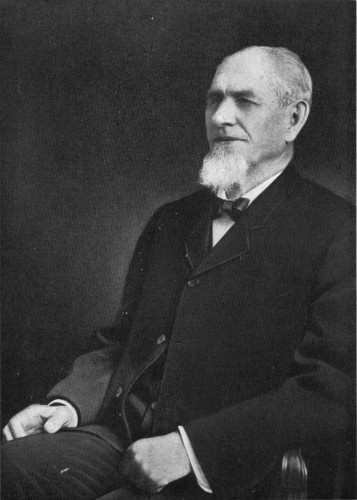
The history of Montreal’s architectural development would be incomplete were there failure to make reference to Alexander Cowper Hutchison, who, though in his seventy-seventh year, is yet active in his profession in which he has long been a recognized leader. His position today is that of consulting architect and his utterances are accepted as words of wisdom by younger representatives of the profession. Mr. Hutchison is one of the old-time residents of Montreal. In fact, his entire life has here been passed with the exception of a period of three years spent in Ottawa, Ontario. He has seen this city develop from less than forty thousand to a metropolitan center of over six hundred thousand inhabitants.
Mr. Hutchison was born April 2, 1838, on the east side of Queen Street between Wellington and William Streets, at Montreal and many years later it fell to his lot in the course of his business, to tear down the old house in which his birth had occurred, this being done to make room for the Ives and Allen warehouse which was erected upon that site. He comes of old Scotch ancestry. His father was William Hutchison who came from Ayrshire, Scotland. He was a builder in Montreal and afterward was connected with the public works department. The mother, whose maiden name was Helen Campbell Hall, was also a native of Ayrshire, Scotland.
ALEXANDER C. HUTCHISON
Such schools as existed in Montreal during his youthful days provided Alexander Cowper Hutchison with his educational opportunities. When but a boy of twelve years he began to learn the stone-cutter’s trade under the direction of his father and during the winter months for two or three years after he had commenced work he attended the school conducted by the late C. P. Watson. Subsequently he became a student in night school and devoted all of his spare time to study, having come to a full realization of the value of education. He possessed an inherited talent for drawing and to develop his powers in that direction he attended drawing classes that were conducted at the Mechanics’ Institute. He had made rapid progress from the very first as a stone-cutter and displayed exceptional ability and skill in that direction.
When scarcely out of his teens he was placed in charge of the cut stone work on Christ Church Cathedral and some of the finest stone work around the altar in that edifice was cut by him before he had attained his majority. After the completion of that building he was placed in charge of the cut stone work of the eastern block of the parliament buildings at Ottawa during their erection, his efforts in that connection continuing through the year 1862. While engaged in that work he successfully conducted classes in drawing which were largely attended. On the completion of the government buildings he was called to Montreal to conduct classes in connection with the Mechanics’ Institute, giving instructions in architectural and geometric drawing. These classes were afterward transferred to the Board of Arts and Manufacturers and it was while connected therewith that he took up the active practice of his profession which he followed for many years. The beauty and utility which have always been salient features of his designs are evident in many of the principal buildings of Montreal.
Among the many structures designed by Mr. Hutchison independently or in a partnership relation, and which stand as monuments to his skill and ingenuity may be mentioned: Redpath Museum; McGill University; Erskine church; Crescent Street Presbyterian church; Warren Memorial church at Louisville, Kentucky; St. Andrew’s church, at Westmount; Montreal high school and a number of other school buildings; Royal Insurance building; London & Liverpool & Globe Insurance Company’s building; Canadian Express Company’s building; La Presse building; Queen’s Hall block; Henry Birks & Sons’ building; Lord Strathcona’s residence; Macdonald College buildings at Ste. Anne de Bellevue, Quebec, as well as a large number of residences in Montreal and elsewhere together with many warehouses, factories etc. One of the most recent expressions of his architectural skill is seen in the Chalmers church at Ottawa. He has not only practiced his profession as one of its active followers, but has also gained renown as an educator in his special field. He has lectured on ecclesiastical architecture before the Presbyterian College of Montreal and he was one of the original members, selected by its founder, the Marquis of Lorne, of the Royal Canadian Academy of Art, and remained its vice president until 1907, when he resigned. He has likewise been honored with the presidency of the Quebec Architects’ Association, of which he was one of the founders, and thus has come to him direct recognition of the honor and respect entertained for him by the profession.
In political affairs Mr. Hutchison has taken a prominent part but never as a party leader in the commonly accepted sense of the term. With him men and measures have ever been considered before partisanship, and the public welfare has ever stood before personal aggrandizement. For years he was a member of the council and was the second mayor of Cote St. Antoine, now Westmount. His deep interest in and loyalty to the cause of education was demonstrated in his eighteen years of service as a school trustee. For a number of years he was a member of No. 5 Queen’s Company Volunteer Fire Brigade. He was likewise a member of the First Company Rifles which was originally an independent company and afterwards became the First Company of Prince of Wales’ Regiment. He was also an officer in a rifle company in Ottawa, while subsequently he became an officer of the Montreal Engineers, retiring with the rank of lieutenant. He took part in the Fenian raids of 1866 and 1870 and was accorded the Queen’s medal.
Mr. Hutchison manifested great interest in church work. He was formerly an elder in Erskine church, but afterward became connected with St. Andrew’s church at Westmount, which had previously been known as Melville church but differences of opinion caused a split in the congregation and the portion that left took the name with them. St. Andrew’s church was then organized and remained on the old site, at the corner of Stanton and Cote St. Antoine road. Mr. Hutchison was one of its founders and since the organization of this church has taken a most prominent part in its affairs. He has been an elder for many years, was superintendent of the Sunday school for thirty years and since 1886 has continuously served as session clerk. He is a member of the board of managers of the Montreal Presbyterian College and was a member of the national committee of the Presbyterian Laymen’s Missionary movement in 1909. He has likewise served as president of the Provincial Sunday School Union of Quebec.
No good work done in the name of charity or religion has ever sought his aid in vain, and his broad humanitarianism has been manifest in his helpful support of many movements to benefit the poor and needy or ameliorate the hard conditions of life for the unfortunate. He is a life governor of the Montreal General Hospital, of the Protestant Hospital for the Insane, governor of the Western Hospital, and president of the Protestant House of Industry and Refuge. He is an ex-president of the Canadian branch of the Royal Caledonian Curling Club and of the Montreal Caledonian Curling Club, being now honorary president of the latter and an ex-president of the Heather Curling Club of Westmount. He was a warm personal friend of the late Hon. Alexander Mackenzie and he counts among his close associates many of the most distinguished and eminent residents of Montreal and the province. The Ottawa Free Press has termed him “one of Montreal’s best known and most honored citizens.” He has long occupied positions of distinction, not only by reason of what he has accomplished along professional lines, but also owing to the fact that he has made his life of signal service and benefit to his fellowmen in his support of benevolent and religious plans and projects. His life has ever been actuated by the highest principles of honor and no citizen of Montreal is more worthy of high regard.
On the 10th of July, 1862, in Cobourg, Ontario, Mr. Hutchison was united in marriage to Miss Margaret Burnet of that place, and they celebrated their golden wedding in July, 1912. Mr. and Mrs. Hutchison have two sons and one daughter: William B., of the firm of Hutchison, Wood & Miller, architects, who is married; Charles Alexander, engaged in ornamental iron work, who is married and has two children, Margaret and Lorne; and Helen, the wife of George W. Wood of that firm. She has three sons: Alexander Campbell, George Arthur and Douglas Fletcher.
Mr. Hutchison resides at No. 240 Kensington Avenue and has lived in that immediate vicinity for nearly fifty years. During his boyhood his parents resided on the north side of St. James Street just a short distance west of Bleury Street which was then one of the attractive residential sections of the city and Mr. Hutchison relates some highly interesting incidents of those early days.
In 1865 when he took up his residence in what is now Westmount, that district was supposed to be far out in the country. In fact, the nearest residence, other than homes of farmers, was on Dorchester West near what is now Greene Street. While Mr. Hutchison has passed the seventy-sixth milestone upon life’s journey, he is a well preserved man, active in mind and body. Regular in his habits, he has never tasted intoxicating liquors or used tobacco in any form. His great vitality has enabled him to withstand three very serious operations since reaching the age of seventy years and his complete recovery has attracted the attention of members of the medical profession. He is a splendid type of a high-minded gentleman of the old school, whose natural politeness and courtesy are in evidence at all times.
DAVID W. CAMPBELL.
David W. Campbell, prominently connected with marine transportation interests, is now general agent in Canada for the Elder-Dempster Company in the South African and Mexican service. He was born in Montreal in 1861, a son of the late John and Sarah (Evans) Campbell, of this city. His youthful days were spent in his parents’ home and his education was completed in the Montreal high school. He comes of Scotch ancestry and in his career has manifested many of the sterling traits characteristic of the land of the heather. His initial step in business was made in the service of Thompson, Murray & Company, then managing agents of the Beaver line of steamships in Canada. Fidelity, industry and capability won him promotion from time to time and after twenty years’ continuous connection with the company he was appointed to the position of general manager in 1895. While acting in that capacity he was the first to establish a direct steamship service during the winter months to a Canadian port—that of St. John, New Brunswick. It was through his instrumentality that the vessels of the Beaver line were sold to the Elder-Dempster Company in 1898 and two years later, or in 1900, he became Canadian manager for the latter company. His efficiency in the field of steamship service management led to his selection, in 1903, for the position of general superintendent of the Canadian Pacific Railway Company’s Atlantic fleet of steamers at Montreal, in which position he remained until June, 1905, when he resigned in order to take control for Canada of the interests of the Elder-Dempster Company in connection with the South African and Mexican service. He subsequently became general agent in Canada for the same company, and his efforts have greatly furthered its interests. He readily recognizes the possibilities of a situation, utilizes the opportunities that are presented and accomplishes substantial and gratifying results. He is a director of several shipping companies and is on the board of the Montreal Sailors’ Institute and the Shipping Federation of Canada, all of which are more or less directly connected with the line of business in which he has so long been engaged. Moreover, he has done much to popularize the St. Lawrence route. He is serving on the executive committee of the Canadian Shipping Federation, and his long experience with maritime interests well qualifies him to speak authoritatively upon matters with which the federation deals.
Mr. Campbell has for some years been a member of the Montreal Board of Trade, in 1910 was elected one of its councillors and in 1914 a vice president. He is also Cuban consul at Montreal.
In November, 1900, Mr. Campbell married Miss Emily Maud Baird, a daughter of the late H. N. Baird of Toronto. They hold membership in the Presbyterian church, and Mr. Campbell belongs to the St. James Club. He favors free trade with the Empire and has been a close student of many political situations and questions having to do with the welfare and progress of the Dominion. His opinions upon such questions are never lightly valued, for experience has developed in him sound judgment and keen discrimination.
LOUIS DUFOUR DIT LATOUR.
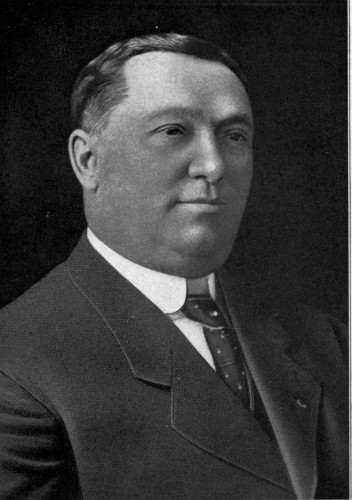
Louis Dufour dit Latour, member of the real-estate firm of Latour & Guindon, with offices in the Versailles building, Montreal, was born in this city, June 15, 1867, a son of François Xavier Latour dit Dufour of Lavaltrie, P. Q., where he followed farming, and of Elizabeth (Prud’homme) Latour of St. Sulpice, P. Q. His great-grandfather was Michel Dufour dit Latour, a church builder, and his great-grandmother was Charlotte Du Moulin from France.
In the acquirement of his education Louis Dufour dit Latour attended the College of Chambly—the Brethren of Christian School, pursuing a commercial course. His early experience in business lines came to him as office boy with the Thomas Davidson Manufacturing Company, tinware and granite ware manufacturers of Montreal. He was in the employ of the company for twenty-six years, gradually working his way upward as his developing powers and ability prepared him for further activities and responsibilities. He served successively as custom house clerk, cashier, bookkeeper and as manager of the Montreal branch of the business, continuing in that position of responsibility for twelve years. No higher testimonial of his business integrity, enterprise and fidelity could be given than the fact that he remained with one company for over a quarter of a century. He left them in 1909 to open a real-estate office in connection with J. M. Guindon, a hardware merchant of Montreal, under the firm style of Latour & Guindon at No. 1202 Mount Royal East Street, where they remained from 1909 until 1913. They then transferred their business to No. 52 St. James Street, retaining the old office, however, as a branch. In May, 1914, the offices were removed to the new Versailles building on St. James Street.
L. D. LATOUR
On the 28th of May, 1888, in Montreal, Mr. Latour was united in marriage to Miss Marie Joseph Leblanc, a daughter of Alphonse Leblanc and Aveline Amirault of L’Epiphanie, P. Q. Her grandfather was a pioneer of L’Epiphanie. Mr. and Mrs. Latour have three children: Lydia, the wife of Eugene Brissette, who is with La Patrie Publishing Company; René, a hardware merchant of Montreal; and Ernest, who holds a responsible position with The Mark Fisher Sons & Company, Limited.
The religious faith of the family is that of the Roman Catholic church, and the political allegiance of Mr. Latour is given to the conservative party. That he is today one of the successful real-estate brokers of the city is attributable entirely to his own labors and his laudable ambition. Step by step he has worked his way upward, the trend of his orderly progression being easily discernible.
REV. NATHAN GORDON.
A man of deep learning, broad knowledge and scholarly attainments, of force, experience and capacity, Rev. Nathan Gordon has become known as one of the most able educators in Quebec province, and as one of the successful and consecrated workers among the Jewish people of Montreal. He was born in Odessa, Russia, and took his arts course in the Cincinnati University, from which he was graduated, B. A., in 1906. He is also a graduate of the Hebrew Union Theological College of that city and in 1909 received the degree of M. A. from McGill University.
Mr. Gordon came to Montreal in 1906, having been appointed in September of that year Rabbi of Temple Emmanu-El, and since that time he has accomplished a great deal of earnest and zealous work among the people of his congregation, who recognize him as a sincere, upright and God-fearing man. The church property is valued at one hundred thousand dollars, and the business affairs connected with its administration are ably conducted, Mr. Gordon assisting his associates by his executive skill and sound and practical judgment. Combining religious zeal with the ability necessary to make it effective among his people, he has indeed been a force for good at Temple Emmanu-El and an able propagator as well as a conserver of the doctrines in which he believes.
A scholar, a deep thinker and a broadly educated man, Mr. Gordon has long been an ardent student of Oriental languages and literature and has paid particular attention to the language of his own race, in which he is thoroughly proficient. In 1909 he was appointed lecturer on rabbinical and mediæval Jewish literature and instructor in Semitic languages at McGill University and in this position has done a great deal to promote a more general interest in these subjects and a more widespread knowledge of the customs, language and traditions of the Jews. An ardent champion of his race and an upholder of its creed, a foe to the injustices and wrongs which have continually oppressed it, he has supported the cause of the Hebrew people on every occasion and one of the most eloquent and telling appeals on behalf of the nationalization of the Plains of Abraham came from him. The people of Temple Emmanu-El are fortunate in having at their head a man so fearless in conviction, so able in argument, so uncompromising in support of his professed beliefs, and the city of Montreal is fortunate also, having in Rabbi Gordon an upright, public-spirited and loyal citizen.
EDOUARD CHOLETTE.
Edouard Cholette, a member of the notarial profession of Montreal, is a representative of one of the oldest French families of the city, tracing his ancestry back to Sebastian Cholette, who was born in 1679 and was married in Montreal on the 19th of October, 1705, to Miss Anne Hard. They became the parents of a large family. Edouard Cholette, born in Montreal on the 3d of April, 1880, is a son of L. E. A. and Marie Antoinette (Le Sieur) Cholette, and in the acquirement of his education attended St. Mary’s College, from which he was graduated in June, 1899. He completed a course in Laval University in June, 1903, winning the Bachelor of Arts degree for work done in the classical course and the Master of Laws degree, indicative of his preparation for the profession which he now follows. Since his graduation he has practiced in Montreal as a notary public and has been accorded liberal support.
In religious faith Mr. Cholette is a Roman Catholic. He is well known socially in the city where his entire life has been spent and is a valued member of the Canadian and St. Denis Clubs.
CARL RIORDON.
As vice president and managing director of the Riordon Pulp & Paper Company, Ltd., Carl Riordon occupies an important position in the commercial life of the city. He was born June 3, 1876, at St. Catharines, Ontario, and is a son of Charles and Edith (Ellis) Riordon. Carl Riordon was educated at Upper Canada College, Bishop Ridley College and Toronto University, where he took the degree of B. A. in 1896. He entered business fields in the Merritton mill, a property of the Riordon Paper Mills in St. Catharines, becoming connected with the sulphite department. He did work in the various departments of the concern and subsequently took charge of the repairs which were made on the Hawkesbury mill, of which he later became superintendent. In 1902 he returned to the Merritton mill in the capacity of manager and in 1906 was made general manager of the Riordon Paper Mills, which concern absorbed the business of G. H. Perley & Company in 1910, the firm adopting the name of the Riordon Paper Company and establishing headquarters at Montreal. In 1912 the Riordon Pulp & Paper Company took over the business of the former company. It is one of the foremost concerns of its kind in the Dominion. Mr. Riordon is vice president and managing director and is also director of The Mail Printing Company of Toronto and the Niagara Falls Suspension Bridge Company.
Mr. Riordon has an interesting military record to his credit, being gazetted second lieutenant in the Nineteenth St. Catharines Infantry Regiment in 1898. He was made captain in the following year and in 1901 became quartermaster with the honorary rank of captain. For some time he led B Company of that regiment. He retired in 1904.
Carl Riordon married on June 23, 1900, Miss Amy Louise Paterson, a daughter of the late Rev. Charles Paterson, of Port Hope, Ontario. To this union have been born five children: Charles Harold, Edith Amy, John Eric Benson, Mary Kathleen and Peter Hamilton.
In his religious faith Mr. Riordon is an Anglican. He is prominent in clubdom, being a member of the Mount Royal, the St. James, the University and the Hunt Clubs of Montreal; the Toronto Club of Toronto; and the British Empire Club of London, England. He also is a member of the Alpha Delta Phi Club of New York city. His political views incline him toward the conservative party and although his commercial interests are so extensive as to prevent active participation in governmental affairs, he shows great interest in matters of public importance. In the world of paper making his name is well known and he is considered one of the foremost authorities along that line. At a comparatively early age he has attained a position of importance and distinction. He is shrewd, able, energetic and technically highly trained and his success therefore is but natural, being typical of the younger Canadian business men of the most modern and progressive tendencies.
LAWRENCE LEOPOLD HENDERSON.
Among the successful business men of Montreal is Lawrence Leopold Henderson, general manager of the Montreal Transportation Company. He was born in Kingston, Ontario, March 5, 1866, a son of Peter Robertson and Henrietta Jane (Sweetland) Henderson, the former a merchant of Kingston, born in Aberdeen, Scotland, and the latter of English ancestry. The father died in 1895 and the mother in 1896.
Lawrence L. Henderson received his education in private schools and in the collegiate institute at Kingston. In 1884, at the age of eighteen, he entered the employ of the Montreal Transportation Company as a clerk. Devoting himself assiduously to the work at hand, he was promoted from position to position in the various departments of the institution until he became in 1896 agent at Kingston. In January, 1909, he was made general manager and at that time left Kingston for Montreal, having since occupied this important position. Mr. Henderson is a director of the National Real-Estate and Investment Company of Montreal, the Montreal Transportation Company, the Montreal Dry Docks and Ship Repairing Company, the Rothesay Realty Company, and president of the Dominion Marine Association. He is also a member of the Montreal Board of Trade.
While in Kingston Mr. Henderson was a member of the city council from 1907 to 1908 and of the school board from 1904 to 1906. He also served on the executive of the Dominion Marine Association. He was prominent as a member of the Board of Trade of Kingston and upon leaving that town was presented with a handsome silver salver on behalf of the board and with a silver loving cup by the employes of the company.
He is a member of the Canada Club, the Engineers Club, the St. George Snowshoe Club, the Canadian Club of Montreal, the Country Club of Montreal, the Frontenac Club of Kingston, the Kingston Curling Club, and the Heather Club of Westmount.
On April 30, 1890, Mr. Henderson was married to Miss Jennie Lena Spencer, a daughter of the late L. B. Spencer, of Kingston. Their children are Lawrence Spencer, Mabel Spencer, Ruth Sweetland, Kenneth Robertson, Florence Lillian and Jean Lewis.
ALBERT PIERRE FRIGON.
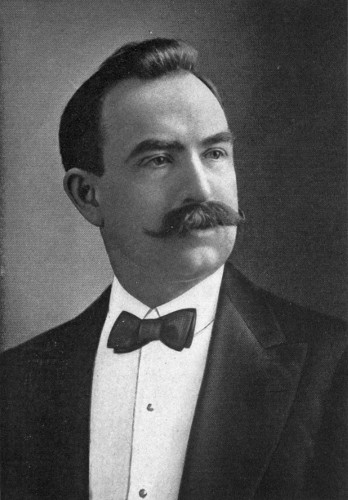
Various corporate interests have felt the stimulus of the cooperation and enterprising spirit of Albert Pierre Frigon, who today stands in a prominent place on the stage of financial activity in Montreal, his native city. He was born on the 14th of June, 1872, a son of Benjamin and Philomene (Cassan) Frigon, the former a general contractor for more than thirty years. Both he and his wife are still living. The ancestors of the family were all from France and the genealogy can be traced back to the fifteenth century.
Albert P. Frigon was educated in the Catholic commissioner’s school, Archambault’s, where he was graduated with the class of 1888. Crossing the threshold of business life, he became bookkeeper for P. P. Mailloux, a hardware merchant on St. Paul Street in Montreal, with whom he remained for thirteen years, his capability and fidelity being attested by his long connection with the house. He resigned in 1901 to become business and financial manager for the Seminary of St. Sulpice of Montreal and in the intervening years to the present his activities have constantly broadened in scope and importance. He is now a controlling figure in various corporate interests and has large investments in others. At the present writing he is a member of the firm of St. Cyr, Gonthier & Frigon, bankers and brokers, is vice president of Viauville Lands, Ltd., president of the Star Realty Company, president of the Compagnie Immobilière d’Outre-Mer, president of the Canadian Siegwart Beam Company of Three Rivers, vice president of the New Ontario Oil & Gas Company, Ltd., president of the Société de Construction Lafontaine, president of the executive board of the General Animals Insurance Company, president l’Immobilière du Canada, vice president of the France-Canada Company, president of St. Francis-Valley Railway Company and president of the St. Francis Construction Company. This recital of his connections indicates clearly the breadth of his interests and of his capabilities. In various companies he is bending his energies to administrative direction and executive control and he possesses notable power in unifying and coordinating seemingly diverse elements into a harmonious and resultant whole. His opinion upon complex and involved financial problems is ever accepted with respect and consideration by those well qualified to judge thereof. He is the vice president of the General Trust Company of Canada, president of Comité de Surveillance Caisse Nationale d’Economie and is a member of the board of La Chambre de Commerce of Montreal.
ALBERT P. FRIGON
Mr. Frigon’s activities also extend to various public interests which have no bearing upon his individual prosperity but arise from a deep interest in the general welfare. He votes with the liberal party but takes no active part in politics. He is a gouverneur à vie de l’Hôpital Notre Dame and he belongs to Société St. Jean Baptiste. He is also a Knight of Columbus and one of the most sincere, earnest and enthusiastic workers of the order, in which he has held a number of offices. His religious faith is indicated in the fact that he is a past president of a number of Roman Catholic societies. Along more strictly social lines he is connected with the St. Denis and Canadian Clubs. Of the former he is a life member and has also been a life member since 1901 of the Montreal Amateur Athletic Association. He is an honorary member of the Sixty-fifth Regiment. His official municipal service has been that of mayor of the new village of Sault au Récollet, to which office he was called in February, 1910, and as school commissioner of the same village, to which position he was chosen in August, 1913.
On the 18th of April, 1898, in Montreal, Mr. Frigon was married to Miss Malvina Perreault, a daughter of Jérémie and Victoria (Saint Dizier) Perreault, both of whom are now deceased. Her father was for a term of years alderman of the city of Montreal and president of l’Association St. Jean Baptiste of Montreal. For thirty years he conducted business here as a dry-goods merchant. Mr. and Mrs. Frigon are the parents of two children: Jeanne, born in Montreal on the 12th of February, 1899; and Germaine, on the 12th of November, 1900.
Mr. Frigon is a most enthusiastic supporter of his native city, in which his entire life has been passed, taking keen interest in its progress and having firm belief in the great future. He has been an untiring worker for the construction of the Georgian Bay canal, acting as president of the special commission appointed by the Chamber of Commerce of Montreal to take charge of that project. In all of his public as well as his private connections he has been a man of action rather than of theory, formulating his plans carefully and carrying them forward to successful termination.
HUGH MACKAY.
On the list of Montreal’s lawyers appears the name of Hugh Mackay, who in 1913, was created king’s counsel. His practice covers a period of fourteen years, in which he has made continuous advancement. He was born in Montreal in 1875, a son of the Hon. Robert Mackay. His early educational opportunities were supplemented by a course in McGill, where he was graduated in 1900, with the B. C. L. degree. He has since practiced as an advocate in his native city, and his professional career has been one of growing success, a liberal and distinctively representative clientage being now accorded him.
Mr. Mackay was married in 1903 in Montreal to Miss Isabel, a daughter of J. N. Greenshield, K. C.
Mr. Mackay’s military history covers service as a captain of the Royal Highlanders, and he is widely and favorably known in military, professional and social circles, having many warm friends in this city where his entire life has been passed.
ANDRE ODORIE RONDEAU.
Capable, earnest and conscientious, and well versed in the knowledge of the law, André Odorie Rondeau enjoys a large practice, especially among the French citizenship of Montreal, ably representing valuable French interests in the local courts. A man of sound judgment and logical reasoning, he readily discerns the moving factor in any legal situation and presents his views and conclusions so concisely that he seldom fails to convince court or jury. He is gifted with all the qualities of which a lawyer may be proud and has a deep insight into human nature, understanding the springs of human conduct, which qualities assist him in his work. As the years have passed he has come more and more to the fore in his profession and is now recognized as an authority upon many subjects of the law.
Born at St. Marcel, in the county of Richelieu, on the 8th of June, 1876, André O. Rondeau is the son of Louis Rondeau, a successful agriculturist, who was born in the county of Berthier, and Lucie (Ouellette) Rondeau, a daughter of Godefroy Ouellette, born in St. Ours, in the county of Richelieu. Both parents are highly respected in their locality. The earliest record of the Rondeau family goes back to one Pierre Rondeau, a son of Jean, who married Catherine Verrier on September 30, 1669, at Ste. Famille, and had a large family. Another of these early records mentions Jacques Rondeau, born in 1663, who married Françoise Beaudry at Trois Rivières on November 6, 1691, and had a family of seven children.
André O. Rondeau after acquiring his preliminary education attended a commercial college at St. Aimé and the preparatory seminary of Ste. Marie de Monnoir, from which he obtained his bachelor’s degree. He received his law diploma from Laval University of Montreal, after having studied for two years at St. Hyacinthe under the supervision of Blanchet & Chicoine, well known barristers. Since Mr. Rondeau has joined the legal fraternity of Montreal he has made great strides towards success, having left the ranks of the many and joined those of the successful few. He is skillful in the presentation of his evidence, shows marked ability in cross-examination, persuasiveness before the jury and has a strong grasp of every feature of the case in hand. While his learning never intrudes itself when uncalled for and he makes no display thereof, it comes into requisition when wanted. He is a man who exemplifies in his conduct the lofty ideals of his nation and noble calling and he honors his profession by paying it honor and by his adherence to the solid virtues and enlightened principles underlying the law. It is his ambition to make his native talent subserve the demands of the social and business conditions of the day and he stands today as a splendid representative of a lawyer to whom personal prosperity is secondary in importance to the public welfare and less vital than many other elements which go to make up human existence.
On June 29, 1908, at Montreal, at the church of St. Jacques, Mr. Rondeau was united in marriage to Miss Rose Blanche Trudeau, a daughter of Louis Napoléon Trudeau, a well known dentist. The religious affiliations of Mr. and Mrs. Rondeau are with the Catholic church. In his political views he was during his earlier years a liberal but since 1906 has endorsed the nationalist movement as he is in sympathy with their ideas. Outside of his profession he has had important interests and is the builder of the Boulevard Trudeau and Rondeau, in the Prairie River district, which leads through lots Nos. 16 and 17. He was one of the founders and also one of the first directors of La Cie Zootechnique de Labelle, Limitée, at Macaza, P. Q., which has for its purpose the raising of fur-bearing animals. Mr. Rondeau is highly respected in Montreal as an able lawyer and as a citizen of public worth and is especially popular and influential with the French, of which race he is an able representative in this city.
SAMUEL COTTINGHAM STEVENSON.
There was no man to whom the success of Canadian expositions and exhibitions was more largely attributable than to Samuel C. Stevenson, who as a commissioner, represented his province and country in connection with a number of leading affairs of this kind on the continent. He was born in Montreal in 1848 and came of Scotch ancestry, being a son of James Stevenson, a native of Scotland, who after his arrival in Canada was identified with shipping interests, owning a number of boats. His wife was, in her maidenhood, Miss Elizabeth Cottingham.
Their son, Samuel C. Stevenson, pursued a high-school course and in 1872 was granted his Bachelor of Arts degree at McGill. He was assistant secretary to the first large provincial exhibition and was identified with all the expositions of the province from that time until his death. When the first one was held at Mile End, he was given entire charge of the industrial department. In 1876 he was appointed a commissioner of the province of Quebec to the great Centennial Exposition held in Philadelphia and in 1877 when a permanent exposition committee was appointed for the province, he was made its secretary for the industrial department and held that position until the organization of the Montreal Exposition Company in 1889. He was chief organizer and manager of all the important expositions that were held in Montreal from 1886 until his demise and he represented the Canadian interests as commissioner for the province of Quebec at the Colonial and Industrial Exhibition in London, in 1886. In 1892 he was appointed a member and secretary of the provincial commission in connection with the World’s Columbian Exposition in Chicago and was secretary of the council of arts and manufacture of the province of Quebec. His long experience enabled him to know adequately just what was most attractive for exhibition purposes and how to assemble such, and the success of Canada’s exhibits, both provincial and at the international expositions in the United States, was due in large measure to his efforts. He was a corresponding member of the Industrial Education Association of New York and a director of the Great Northern Railway of Canada.
Mr. Stevenson’s military experience began in his youth. When a boy he belonged to the High School Cadets and afterward joined the Victoria Rifles, going to the front with his regiment at the time of the Fenian raid of 1866. Later he received a commission in the Prince of Wales regiment and was a subaltern in the company of that corps which was sent to the relief of the force that engaged the Fenians at Eccles Hill. He remained in the corps until 1881, when he retired with the rank of major. Mr. Stevenson’s interests and activities aside from those already indicated were manifest from his membership in the Art Association and in the Crescent Street church.
At Saugerties, New York, in 1878 Mr. Stevenson was married to Mrs. Gertrude (Caldwell) Bennett, a representative of a southern family, that lived in Virginia until the time of the Civil war and then removed to New York. Mr. and Mrs. Stevenson had three children: James Corliss; Elizabeth Lois, the wife of Herbert Yuile; and Gladys Arnold, the wife of J. Hal Pangman.
Such is the record of Samuel C. Stevenson, who passed away January 2, 1898. As a public-spirited citizen he was widely known. None questioned his fidelity. He responded to every appeal when it was needed for the benefit of the general good; to build up rather than to destroy was his policy and he attacked everything with a contagious enthusiasm.
FARQUHAR ROBERTSON.
The nature and variety of his interests and activities at once place Farquhar Robertson among those citizens whose lives constitute a most useful and serviceable force in bringing about modern day conditions, progress and prosperity. While he is well known as a business man, he has at the same time been a close student of the sociological, economic and political questions of the day, and has been actively allied with many movements seeking the betterment of conditions for the benefit of the individual physically, intellectually and morally. He has also been connected with many projects that promote the municipal welfare, and thus his life has come to be one of great usefulness in his adopted city. A native of Ontario, he was born April 14, 1850, at North Branch, Glengarry, a son of Hugh and Flora (McLennan) Robertson and a brother of Lieutenant Colonel D. M. Robertson, Toronto, Ontario. His education was acquired in his native county and since entering upon his business career, he has largely given his attention to the coal trade. In business affairs he carries forward to successful completion what he undertakes, and his well formulated plans are productive of far-reaching and beneficial results.
His activities along other lines have been equally broad and beneficial. He is identified with many movements which seek to meet and improve modern conditions, and to this end he is serving as a director of the Parks and Playgrounds Association, and is vice president of the Montreal City Improvement League. He was one of the promoters of the Montreal Typhoid Emergency Hospital, and is one of the managing committee of the Montreal General Hospital, a member of the committee of management of Royal Edward Institute, and vice president of Victorian Order of Nurses. Mr. Robertson is president of the firm of Farquhar Robertson, Limited, and director of Merchants Bank of Canada, Montreal Transportation Company, Canada Cement Company and the Prudential Trust Company. He was president of the Montreal Board of Trade in 1909, and it was largely due to his efforts during his term of office, that a change in civic administration took place, to a board of commissioners.
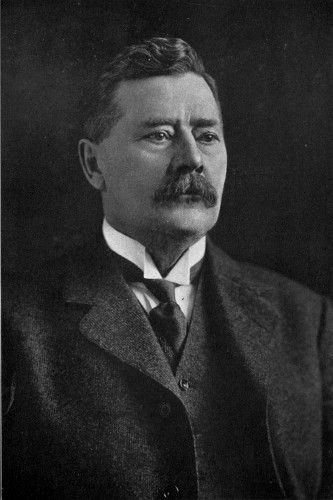
FARQUHAR ROBERTSON
Mr. Robertson represented St. Andrew’s ward in the Montreal city council for six years and was the council’s representative on the Protestant board of school commissioners for the same period.
Mr. Robertson married Miss Flora Craig, daughter of the late James Craig, M. P. P., Glengarry. They reside at No. 30 Ontario Avenue, Montreal. They are Presbyterians in religion.
While not an office seeker in politics (in which he is a conservative), in the usually accepted sense of the term, he is deeply interested in all that pertains to the public welfare, and the present government thought fit to appoint him as one of the present harbor commission.
Mr. Robertson is president of the St. Andrew’s Society of Montreal. He is well known in club circles, being a member of St. James, Montreal, Montreal Hunt and Outremont Golf Clubs, and life member of The Caledonian Society and Montreal Amateur Athletic Association. His recreation is devoted to curling and farming.
JOHN ALLAN.
John Allan was a splendid example of what industry and determination will accomplish for a man. Born in Strathmiglo, Scotland, on the 28th of November, 1863, a son of David and Christian (Roy) Allan, he became one of the successful merchants of Montreal, dealing in clothing, hats, caps and men’s furnishings. He was educated in the schools of his native country and when eighteen years of age crossed the Atlantic to Canada, making his way to Montreal, where he entered the employ of Henry Morgan & Company. After some time spent with that house he joined his brother, Robert Allan, who was engaged in the bottling of ginger ale. Subsequently he embarked in business on his own account on Craig Street in a small way, having a limited line of clothing, hats, caps and men’s furnishings. He closely applied himself to the development of the trade and in that connection steadily worked his way upward, his patronage increasing as the years went by until he won a substantial measure of success. He was truly a self-made man, having been both the architect and builder of his own fortunes and his record proved what may be accomplished when determination and energy point out the way.
Mr. Allan was married in Cupar, Scotland, in 1894, to Maria Isabella Hood, a native of that place and a daughter of Robert and Agnes (Moncrief) Hood, and they became parents of five children: John Roy, Agnes Isabelle, Robert Bruce, Douglas Hood and Malcolm Moncrief. Mr. Allan enjoyed curling as a recreation and his more serious interests were represented in membership in the Masonic fraternity and in Knox church. He was a member of the Young Men’s Christian Association for many years and took a deep interest in its affairs. His death occurred January 11, 1912, and thus was ended a life of activity and usefulness. He had made good use of his time and opportunities and had proved that prosperity and an honored name may be gained simultaneously.
REV. JOSEPH LEONIDAS DESJARDINS.
Rev. Joseph Léonidas Desjardins, secretary general of Laval University at Montreal since September 14, 1907, was born at Ste. Thérèse, in the county of Terrebonne, on the 27th of November, 1880, a son of Joseph and Odile (Boileau) Desjardins, the former of whom followed agricultural pursuits. The son pursued his early studies in the Seminary of Ste. Thérèse and in the Grand Seminary of Montreal. His determination to prepare for the priesthood, followed by a thorough course of study, led to his ordination by Monsignor P. La Rocque on the 3d of July, 1904. His time and energies have ever since been devoted to educational service save for a period which he devoted to further study. Following his ordination he became a professor in the Seminary of Ste. Thérèse, where he remained during 1904 and 1905. The following year he went abroad for further study in Rome, where he remained from 1905 until 1907, winning the degree of Doctor of Theology. Following his return to the new world he entered again upon active connection with educational interests as secretary general of Laval University at Montreal, being appointed to his present position on the 14th of September, 1907. In his life work mental and moral instruction go hand in hand, and his efforts constitute an important element not only in the upbuilding of character among individual students but also in the extension of Catholic teachings and influence.
HIRSCH COHEN.
Hirsch Cohen, most actively identified with the educational and moral progress of the Jewish people in Montreal, may point with justifiable pride to various schools and synagogues which have been established through his instrumentality. A Russian by birth, his natal day was in April, 1863, his parents being Hircom and Sarah Cohen, both of whom have now passed away, the latter dying in 1896 and the former in 1911 at a ripe old age, being over ninety years old. Liberal educational advantages constituted the foundation for the important and far-reaching life work of Hirsch Cohen who was educated in a Hebrew college in Russia. The year 1890 witnessed his arrival in Montreal, since which time he has been active in promoting work among the people of his own faith. He has established eight synagogues, including one in Lachine and one in the city of Quebec. At that period the people of his faith could not stand the regular tithing system and there were only a few small synagogues to carry on the work among the Hebrew people. Prosperity, however, has come to many and a fair degree of success to others and as they have prospered they have contributed to the work of intellectual and moral progress with a result that there are today a number of large congregations and various smaller ones, each an active force in promoting the moral development of the Hebrew people. Mr. Cohen has been a leader in this work and he is also a director on the school board of the Baron de Hirsch Institute. For the past seven years he has been acting as chaplain for the Jewish prisoners in the province of Quebec. He is chairman of various Hebrew schools in the city and has been practically the founder of them all and in the meantime has established places of study where adult Hebrews can acquaint themselves with various lines of knowledge. He has founded three different synagogues in Montreal since his arrival and another important branch of his work has been the care which he has given to newcomers during the periods of largest immigrations to Canada among the Hebrew people. Moreover, he has taken a most active and helpful part in bringing about the amalgamation of the charitable institutions of the Jewish people into a coordinate whole. He has seemed to neglect no line of effort that contributes to the welfare of people of his faith. It was through his instrumentality that all Jewish slaughter houses were brought under the required supervision. He was one of those who took part in the organization of the Free Loan Association, and he was one who aided in establishing the Jewish Daily Eagle, to the columns of which he makes frequent and welcome contributions. He is one of the officers in the Zionist movement and one of the officers in the Association of Orthodox Rabbis of the United States and Canada, in which he is also a member of the executive committee.
Mr. Cohen’s first wife was Miss Sarah First, whom he married in 1888, and their children were Mrs. Annie Presnau, Mary, Julius, Ethel, Goldie and Lazarus. In 1913 he married Leah Nochumofsky. It would be difficult to determine how important has been the life work of Hirsch Cohen, for there is no standard whereby to judge influence, especially when it is exerted along lines of intellectual and moral progress. His worth, however, is widely recognized, not only by those of his own faith, but also by the Gentiles who respect him as a man and honor him for his loyalty to his belief and for his great work in behalf of his cause.
HARRY BLOOMFIELD.
A prominent representative of the Jewish element in the citizenship of Montreal is Harry Bloomfield, a partner in the well known wholesale jewelry firm of Bloomfield Brothers. He is largely regarded as a representative business man, enterprising, progressive, alert and energetic. He was born in Montreal in 1879, a son of Baruch Bloomfield, a scholar and educator who for many years resided in Montreal and enjoyed the respect of all who knew him. It was in the schools of this city that Harry Bloomfield pursued his education and after entering business circles he traveled for the American Clock Company of New York for five and a half years, in which he gained much valuable experience concerning business methods and procedure. On the expiration of that period he entered the employ of the Canadian jewelry house of Pinfort & Company, whom he represented upon the road as a traveling salesman for another period of five and a half years. All during this time he was ambitious to engage in business on his own account, and in 1904 he saw the realization of his hopes, for in that year he was the organizer of the firm of Bloomfield Brothers, wholesale jewelers. Through the intervening period the business has steadily grown and developed under the careful guidance and management of its proprietors who are energetic, progressive young men, realizing and utilizing their opportunities. They carry a large and carefully selected line of jewelry, and their trade is growing year by year, having already reached extensive and profitable proportions.
On the 7th of June, 1905, Mr. Bloomfield was united in marriage to Miss Sadie Davies, a daughter of Morton Davies of New York, and their children are Bernard, Louis, Dorothy and Florence. Mr. Bloomfield has been somewhat active in connection with civic affairs. He was made justice of the peace for the city and district of Montreal, October 12, 1904, and he was twice a candidate in St. Lawrence ward in conservative interests as M. P. P.
He is identified with a number of social and fraternal organizations, for beside being president of the Independent Voters League he is a director of the Baron de Hirsch Institute, a director of the Hebrew Sheltering Home, a director of the Montefiore Club and president of the D’Israeli Conservative Club. At the time of the ritual murder charge against Mendel Beiliss six judges were appointed by the Jewish citizens to forward a protest to the governor general and Mr. Bloomfield was appointed as one of the judges. He is a high type of young Jewish manhood in Montreal and is rapidly winning for himself an enviable position in business circles.
JOHN BRADFORD McCONNELL, M. D., D. C. L.
Dr. John Bradford McConnell, an able educator in the field of medical science and actively engaged in hospital and private practice, was born at Chatham, Quebec, August 28, 1851, a son of the late Andrew and Martha Jane (Bradford) McConnell, of Lachute, Quebec. In the acquirement of his education he became a student at Dr. Wanless Academy at Carillon, Quebec, and ultimately graduated from McGill University with the degrees of M. D., C. M. in 1873. Still not content with the opportunities that had already been his for preparation for the medical profession, he went abroad and did post-graduate work in Berlin under Professor Koch. From the outset his professional career has been marked by advancement and constantly expanding powers have enabled him to successfully control and check disease when others of less thorough training or of minor devotion to the profession would have failed. His high standing is indicated in the fact that Bishop’s College of Lennoxville selected him for the honor of receiving the D. C. L. degree in 1905. He has long been eminent in the field of medical education and was vice president of the College of Physicians and Surgeons, while for many years he was a professor on the medical faculty of Bishop’s College. He has successively occupied the chairs of professor of botany, professor of materia medica, professor of pathology, professor of medicine and of clinical medicine, and was vice dean for a number of years and was acting dean in 1905, when the medical faculty was amalgamated with McGill University, so that his name is inseparably associated with Bishop’s College and the high rank it has attained. Dr. McConnell has also been a member of the staff of the Western Hospital since its establishment and is medical examiner for the Aetna and the Mutual Life Insurance Companies. He was for several years editor of the Canada Medical Record. He has written extensively on medical subjects and his opinions elicit attention, admiration and consideration whenever publicly expressed.
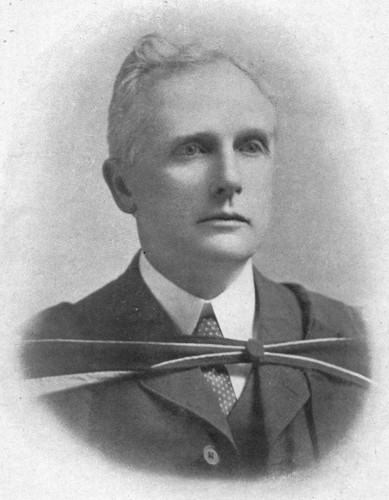
DR. JOHN B. McCONNELL
Aside from the strict path of the profession Dr. McConnell has been active and is now a senator of the Wesleyan Theological College of Montreal. He also has an interesting military chapter in his life record, having from 1875 until 1884 served as assistant surgeon of the First Prince of Wales Regiment. In 1875 he married Miss Theodora Lovell, daughter of the late Robert Miller, of Montreal. Dr. McConnell is yet in the prime of life. He has not reached the zenith of his powers, which are constantly unfolding and developing. He keeps in the vanguard of those to whom science is revealing its secrets as the result of careful investigation and wide research, and the broader knowledge which each year brings is familiar to him.
JOHN GEORGE ADAMI.
Dr. John George Adami, scientist, educationist and author whose eminent position in his profession was indicated in his election to the presidency of the Association of American Physicians in 1911, was born in Manchester, England, January 12, 1862, a son of the late John George Adami of Manchester and Ashton-upon-Mersey, Cheshire. The mother of Dr. Adami, who in her maidenhood was Sarah Ann Ellis Leech, was a daughter of Thomas Leech of Urmston, Lancashire, and a sister of the late Sir Bosdin Leech, one of the founders of the Manchester Ship Canal, while another brother was Professor Leech, a leading member of the staff of Owen’s College and the Manchester Medical School.
Dr. Adami began his more advanced schooling when he entered Owen’s College, Manchester, and in 1880 entered Christ’s College, Cambridge, becoming a scholar of the same and in 1882 gaining a first class in the first part of the Natural Science Tripos followed in 1884 by a first class in the second part of the same tripos. Following upon this he spent eight months in physiological research at Breslau, Germany, under the distinguished physiologist Heidenhain. In 1885, Dr. Adami was awarded the Darwin prize of his college, for original research. The Master of Arts degree was conferred upon him in 1887, and with the completion of the course of medicine at Manchester in this year, he was appointed house physician at the Manchester Royal Infirmary, following upon which he was called to Cambridge to become demonstrator of pathology under Professor Roy.
In 1890, he was appointed to the John Lucas Walker studentship of pathology in the University of Cambridge, and went to Paris for bacteriological research in the Institute Pasteur, under Professor Metchnikoff. He won his M. D. degree in 1891, and in the same year was elected a fellow of Jesus College.
The following year he was called to Montreal, as professor of pathology in McGill University, and his continued success in research work, in practice and in the educational field, led to various degrees and honors being conferred upon him. In 1898, McGill conferred upon him the degrees of M. A. and M. B. Ad Eund.
The University of New Brunswick honored him with the LL. D. degree in 1900, the University of Toronto conferring the same degree in 1911, while in 1912 he received the Sc. D. of Trinity College, Dublin. He had previously, in 1905, been elected a fellow of the Royal Society. He is also a fellow of the Royal Societies of Edinburgh and Canada. In February, 1914, the Fothergillian medal of the Medical Society of London was awarded to Dr. Adami for his “work on Pathology in its application to practical medicine and surgery.” The Fothergillian gold medal was first awarded in 1787 and now is given every third year.
It would be tautological in this connection to enter into any series of statements showing him to be a man of scholarly attainments, for this has been shadowed forth between the lines of this review in the work that he has performed as an investigator and in the honors which have been conferred upon him.
He is perhaps even better known in the field of authorship than in educational circles. The work by which he is most widely known is his “Principles of Pathology” in two volumes (the second in connection with Professor A. G. Nicholls of McGill).
Dr. Adami has written various papers on pathological subjects which have appeared in a number of the leading medical journals in England and America and have also been translated into French. His smaller text-book upon pathology written along with Dr. John McCrae, is being translated into Chinese.
That his activities have not been solely in the path of his profession are indicated by not a few addresses he has delivered on biographical and literary subjects. He stands prominently with those men of broad humanitarian principles and high scientific attainment who are doing everything in their power to prevent the spread of disease and educate the people to a knowledge of preventive methods and sanitary conditions.
He presided at one of the meetings of the International Tuberculosis Congress held in Washington in 1908, and was one of the promoters of the Royal Edward Tuberculosis Institute in 1909. He was a member of the Royal Commission, of the province of Quebec, re spread of tuberculosis in 1909, and in that same year became president of the Canada Association for the Prevention of Tuberculosis, being reelected for three years in succession. In 1911 he was honored with election to the presidency of the Association of American Physicians. He has been president of the local Medico-Chirurgical Society and is a joint secretary of the Victorian Order of Nurses. In 1899 he was president of the Montreal branch of the British Medical Association and was president of the pathological section of that organization at the meeting in Toronto in 1905. He was a vice president of the section of pathology at the International Congress of Medicine, London, 1913.
He has been offered many prominent positions in the educational field both in England and the United States, but has preferred to remain in Montreal, recognizing that he has a broad field of labor in this city.
His teaching ranks him as one of the foremost educators of the land, and in the class room he enthuses his pupils with much of the high idealism which has always characterized his professional connections.
Aside from all of these activities and interests, bearing upon the practice and science of medicine, Dr. Adami was chosen president of the City Improvement League in 1909, and was elected vice president of the University Club in the same year. He holds membership in the St. James Club, and in the Savile Club of London.
Dr. Adami was married in 1894, to Mary Stuart, a daughter of James A. Cantlie of Montreal, and a niece of Lord Mount Stephen. Their residence, No. 34 Macgregor Avenue, is one of Montreal’s attractive homes, while the family are well known in the best social circles of the city. The Herald has said of Dr. Adami: “Endowed with youth, energy and enthusiasm, his investigations have been important and of great benefit to mankind.” His name in connection with his professional ability and research work is known not only throughout the American continent but in many educational centers of Europe, as his authorship has made him known to the profession.
RODOLPHE MONTY, K. C.
Since admitted to the bar in 1897 Rodolphe Monty has continuously and successfully practiced in Montreal, advancing step by step to the position which he now occupies as one of the able representatives of the legal profession in this city. He is a member of the firm of Monty & Duranleau and their clientage is of an extensive and important character. Montreal claims Mr. Monty as a native son. He was born November 30, 1874, and in the acquirement of his education attended Ste. Marie de Monnoir College, McGill University and Laval University, his classical course winning for him the Bachelor of Arts degree, while his professional course gained for him the degree of LL. L. In January, 1897, he was called to the bar and at once entered upon the active practice of a profession for which he had fully prepared. No dreary novitiate awaited him. He came almost immediately into prominence and in 1909 was created a king’s counsel. He is now senior partner of the firm of Monty & Duranleau, one of the strongest at the Montreal bar, and the thoroughness and care with which he prepares his cases excites the admiration and surprise of his contemporaries, who find him prepared not only for attack but for defense as well. For eight years he has been a member of the council of the bar of Montreal and for five years has been examiner. He has served as delegate to the general council of the bar of the province of Quebec for three years and as treasurer of the bar of Montreal for two years.