THE LORELEI: by a Student-Traveler
Reading edition

JUST where the river Rhine narrows and inclines, making a drop of five feet which causes the water to flow more swiftly, towers the Rock of the Lorelei, four hundred and fifty feet high and nearly perpendicular, at the base of which sunken rocks form a whirlpool in the rapidly flowing stream. At the top of the high rock in olden days, so the legend runs, a maiden sat and sang, and as she sang she combed her golden hair. And her song was so full of magic that boatmen on the river below, falling under the spell of her enchantment, as they listened to the song, forgot the dangers of the whirling waters and were dashed to pieces on the sunken rocks underneath.
Is the tale of the Lorelei a mere poetical personification of the whirlpool and rocks? If so, how account for the tale being universal? Who does not know the story of Ulysses and the Sirens? Virgil's Harpies had the faces of maidens, but ended in foul feathers and talons. And so with many another destructive enchantress in ancient myth. People seem to have loved to trace out in the topography of their native land its analogies with that internal region wherein the Soul goes its pilgrimage. In every land there were sacred mountains, healing founts, caves of the Sibyl, rocks of the Lorelei, etc. The eternal drama of the human Soul has been allegorized again and again, always with the same features, though the topography is changed to suit the race and time. Every man knows the luring enchantress, for who has not been seduced by the captivating charms of promised pleasure, only to be mocked and punished?
And why these cheating experiences of the Soul? Are they the chiding hand of a God or the mocking malice of a fiend; or are we the sport of a Chance whose utter indifference outclasses alike the wrath of deity and the malice of devil? The answer is a commonsense one. Life is not a cradle of down nor a pleasure-garden. It is a drama full of incident, an enterprise full of adventure, a world full of people. In it we find the helper and the adversary; and if there are sirens and wicked giants, there are also the meed of victory, the bride won, the warrior's home-coming. Life is worth while, for the triumphs it contains; and it is because we aspire to the triumphs that we engage in the fights, though our lower nature, the mere varlet, may cry out at the discomfort. The Dragon, once defeated, becomes our ally.
If we would win beauty and truth, we must not seek in them mere balm for the senses, but rise in our strength and be worthy of them. What is worth having is not to be had for the taking.
Beauty rhymes with duty. Truth rhymes with ruth.
Tarry not in the pleasure grounds of sense, heed not the sweet voices of illusion, thou who aspirest to wisdom—say the ancient teachings. It is the illusion produced by the senses and desires that we have to overcome, if we would not be dashed on the rocks of the Lorelei.
LORELEI
(Heinrich Heine)
ICH weisz nicht was soll es bedeuten Dass ich so traurig bin, Ein Märchen von alten Zeiten Das kommt mir nicht aus dem Sinn. Die Luft ist kühl und es dunkelt Und ruhig flieszt der Rhein, Der Gipfel des Berges funkelt Im Abendsonnenschein. Die schönste Jungfrau sitzet Dort oben wunderbar, Ihr gold'nes Geschmeide blitzet, Sie kämmt ihr goldenes Haar;
Sie kämmt es mit goldenem Kamme Und singt ein Lied dabei Das hat eine wundersame Gewaltige Melodei. Den Schiffer im kleinen Schiffe Ergreift es mit wildem Weh' Er sieht nicht die Felsenriffe Er schaut nur hinauf in die Höh'. Ich glaube die Wellen verschlingen Am Ende Schiffer und Kahn, Und das hat mit ihrem Singen Die Lorelei gethan.
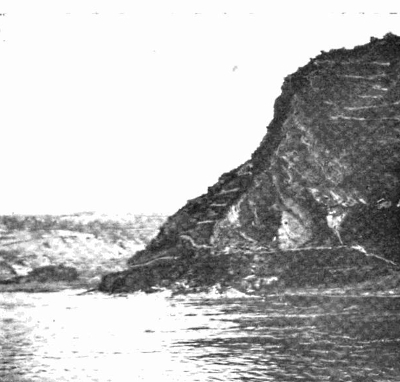
Lomaland Photo. and Engraving Dept.
THE ROCK OF THE LORELEI
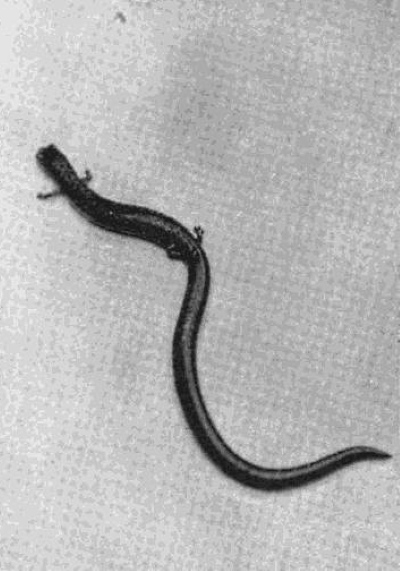
Lomaland Photo. and Engraving Dept.
THE WESTERN FOUR-TOED SALAMANDER (Batrachoseps attenuatus)