VI. Conclusions. (continued 2)
Reading edition
The instances in which the animal swims with its body in a straight line, propelling itself only with its flappers, are few in comparison with its swimming with vertical undulations (3, 18, 34, 38, 56, 59, 83, 93, 104, 115, 118, 120, 129, 130, 132, 138, 143, 145, 146, 147, 150, 160, see also figg. 28, 29, 31, 36, 45). The animal in this position resembled some drift of sea-weed (143), a mast of a vessel floating (83), an enormous log of timber floating (83), a trunk of a large tree floating (104), an unwrought spar (18), a long spar (150), a log of wood (150), an immense tree floating (157).
A change in its mode of swimming is sometimes also witnessed, it may be that it first swam with vertical undulations, and then with its body in a straight line, or vice versa (3, 83, 115).
In swimming the end of the tail only (118, 122, 146), or nearly the whole tail (31, 34, 38, 60, 63, 69, 74, 80, 81, 85, 93, 102, 114, 115, 121, 148, 150) is concealed under water and invisible. The flappers are always below the surface of the water and invisible (31, 34, 80, 85, 122, 138, 146, 150), save the above-mentioned four times (118, 129, 137, 148). The head may be held just at the surface of the water (31, 39, 44, 66, 74, 91, 137, 146, 148, figg. 32, 33, 37, 38), so that it sometimes is recorded as not having been visible (41, 113, 114), or may be, and this is generally the case, held above water (31, 44, 51, 63, 83, 91, 97, 128, figg. 24, 26, 27, 28, 29, 51). The height above water is said to be but little (94), some feet (70), well above water (150), several feet (155), high (32), considerable (102), quite erect in the air (95), six inches (48, 63), eight inches (44), one foot (38, 41, 42, 92, 137, 138), two feet (9, 39, 63, 80, 138), three feet (63), four feet (17, 19, 29, 60, 118), five feet (19, 29, 60), six feet (60, 74, 97), seven feet (60, 101, 142), eight feet (101), ten or twelve feet (131).
The head may, of course, sometimes be gradually laid down (63), or gradually raised higher (51), is generally held in an acute angle (94), which is of course the case when it is only a few feet above the surface, and the angle becomes the less acute the more the head is elevated; but sometimes the neck is curved (97) in the form of a semicircle (115). The head may be held constantly above water as long as the animal was visible (29, 31, 92, 94, 118), or raised and lowered at intervals (128, 129, 148).
Sometimes, evidently when darting on some prey, the animal raises its whole neck quite stiff in the air: “head and neck stood upright like a mast” (56), “the whole neck raised above water like a snake preparing to dart on his prey” (115), “the animal protruded its head above water to the length of about thirty feet at an angle of sixty degree to the horizon” (126), “a large spar sticking out of the water one end, and some thirty feet above the level of the sea” (132), “it resembled the lower mast of some wrecked vessel, passing rapidly” (132), “darting rapidly out of the water and splashing in again, head and neck to a height of about twenty or thirty feet out of the water” (149, fig. 46), “head and neck reared about thirty feet out of water” (151), “a neck rose out of the water, about twenty feet, moving with great speed” (152), “at first it was taken to be an immense tree floating, but this illusion was soon dispelled as the neck was thrown twenty feet in the air” (160).
When swimming the whole animal is not always above water, but may occasionally dip under without any noise, or disappear with a distinctly audible splash (31, 39, 41, 44, 60, 63, 69, 74, 114, 117, 126, 132, 137, 139, 149, 151, 152, 157).
The speed is said to be: faster than we could row (9), rapid (p. 132, 31, 97, 114, 117, 134, 137), an incredible velocity, like an arrow (p. 134), moderate (29), the greatest rapidity (29), a great rapidity (34, 138), slow (39, 115, 120, 131, 137), much more rapid than whales or any other fish (48), very rapid (63, 69, 132), nearly still (69), very slow (83), very swiftly (94), a great swiftness (101), that of a light boat rowed by four active men (117), very quick (123), at a great rate (137), at a rapid pace (149), a great speed (152), a great velocity (157)—or it was estimated at—two miles an hour (83, 120), three miles an hour (39), four miles (60), ten miles (146), ten to twelve miles (42, 138), twelve to fourteen miles (48), fifteen miles (41, 118, 149), fifteen or twenty miles (35), twenty miles (44, 156), twenty four miles (38), twenty to thirty miles (41), thirty miles (122, 155), thirty-six to forty-two miles (51), sixty miles (43, 50).
The animal may swim for a considerable time with the same speed, steadily and uniformly (48, 118, 134, 138, 146), or decreasing, or increasing it (29, 51, 60, 69).
Of course the animal swimming rapidly propels the water before it, so that the water curls up before its throat (51, 93, 118), or even foams (44, 63, 85, 95, 115, fig. 26), and when it swiftly darts forwards for prey and elevates its flappers above water, the motion of its flappers causes distinctly visible splashes (137, 149, 152, fig. 46, of course in no. 129 and 148 the movements of the flappers must also have caused a severe splashing, though this is neither mentioned nor delineated, figg. 36, 45). Also when it drops its neck like a log of wood into the water, an enormous splash or spray on both sides was visible (149, 152).
In the open sea the animal generally swims “as straight forward as you could draw a line” (39, 41, 114, 134), “not deviating in the slightest degree from its course, which it held on apparently on some determined purpose” (118), seldom it is recorded as “taking a turn” (114, 122, 128), but when in a harbour it may move “in several directions” (41), as if “playing” (39, 63, 69, 130), “in circles” (39), or “bringing the body into a letter S” (63, 130). The mode of turning is so characteristic and unique that I feel obliged to repeat all that I have found about it:—“he turned short and quick and the first part of the curve that he made in turning resembled the link of a chain, but when his head came parallel with his tail, his head and tail appeared near together” (39),—“his motion when he turned was quick; the first part of the curve that he made in turning was of the form of a staple, and as he approached towards his tail he came near his body with his head, and then ran parallel with his tail, and his head and tail then appeared near together” (41),—“in changing his course he brought his head to where his tail was, or in fact to the extreme hinder-part visible; raising himself as he turned six or eight inches out of water” (41),—“he turned quick and short and the first part of the curve that he makes in turning is in the form of a staple, but his head seems to approach rapidly towards his body, his head and tail moving in opposite directions, and when his head and tail came parallel they appear almost to touch each other” (41),—“when he changed his course he diminished his velocity but little; the two extremes that were visible appeared rapidly moving in opposite directions, and when they came parallel, they appeared not more than a yard apart” (41),—“he turned very short; the form of the curve when he turned resembled a staple; his head seemed to approach towards his body for some feet, then his head and tail appeared moving rapidly, in opposite directions, and when his head and tail were on parallel lines they appeared not more than two or three yards apart” (44),—“he turned slowly, and took up considerable room in doing it” (69),—“it turned with considerable noise” (117).
When the animal swims, either with vertical undulations, or with its body in a straight line, holding, however, its head just at water-level, so that the nostrils are only above the surface to breathe, it generally shows nearly its whole length, only the very end of its tail being under water. In such a condition it must swim very easily, for the water carries its total weight, so that it is actually null, and the animal in swimming has only to surmount the friction and the resistance of the water made against an object in motion. But as soon as the head is lifted above the surface, the weight of it must immediately be carried by the body. It is therefore not astonishing if an observer states: “its progressive motion under water was rapid; when the head was above water, its motion was not near so quick” (31), “when immersed in the water his speed was greater” (41). It is very natural too, that when the head is held above water, and when consequently the body must carry the weight of the head, the body sinks a little deeper into the water: “his head was now more elevated above the water, and his body more depressed below” (51), and that when the animal has raised its whole neck quite erect in the air, the body has sunk so deep that it is: “not visible at all” (149), and that “the disturbance on the surface was too slight to attract notice” (149). Therefore figg. 33, 34, 35, 37, 38, 46, 48 and 49, are tolerably well delineated. Fig. 33 shows us the animal swimming with vertical undulations, holding its head on the level of the water, and having nearly its whole length visible on the surface. In fig. 34 the head is held a little above the surface, and the end of the tail is already below it. Fig. 35 shows the head still more elevated while of the tail nothing more is visible. Figg. 37 and 38 represent the animal floating on the surface, showing the ridge of its whole back. In figg. 46, 48 and 49 the animal’s neck is elevated as high as possible, but its body is of course too deep to be seen.
A few lines above we have spoken of the increased speed of the animal swimming under water. The question arises how was this to be seen; and the answer is given by the eye-witnesses themselves: “I saw it coming rapidly under water” (31), “when moving under water you could often trace him by the motion of the water on the surface, and from this circumstance I conclude he did not swim deep” (41), “we could trace his course under water” (69), “swimming below the surface so that merely a stripe indicated the rapid course” (117), “in swimming under the surface the animal swims not deeply, for on the surface one can trace its course” (126), “and moved away just under the surface of the water, for we could trace its course by the waves it raised on the still sea” (137).
This, however, is not always the case. The animal can swim so deep that its course is not betrayed on the surface. Once “it swum directly under a boat” in which two men were (41), and once “it passed below the boat at the depth of eight or ten feet, swimming slowly with a vermicular motion” (82), which shows us at the same time that it swims under water with vertical undulations. There is, of course, reason to believe that it may also occasionally swim with its body in a straight line; and Captain Hope saw it at still greater depths swimming evidently with its flappers and with vertical undulations (119).
So we have gradually approached to the way in which the animal disappears from the surface of the vaste ocean. In some instances it is only said that “it disappeared” (36), “it all at once vanished” (74), “it all at once disappeared” (74), “it suddenly disappeared” (132, 143, 155), evidently withdrawing itself beneath the surface of the water deep enough to avoid a rippling of it. In other instances the way how it disappeared is more circumstantially described: “it sank” (49, 60, 69, 117, 137), “it sunk gradually into the water” (63), “it sank quietly beneath the surface” (134), “it sank rather abruptly” (137), “it sunk apparently down” (39), “he did not turn down like a fish, but appeared to settle down like a rock” (41), “he apparently sunk directly down like a rock” (41); this “sinking like a rock” is of course effectuated by a sudden upward movement of all the flappers together. But the animal may also plunge violently under water (31), or go down with a tremendous splash (157), or when it is swimming with its neck high elevated above the surface, it dives like a duck head foremost (124, 151), and finally, when it has apparently remained a long time under water in great depths, and suddenly comes to the surface with so much force that its head, long neck, and a part of its trunk with its formidable foreflappers become visible, it throws itself backwards, and in doing so, raises its enormous tail high above the surface of the water (5), and disappearing under the waves, the last part which is visible of it, is the end of the tail (fig. 20). Generally, however, it happens that the swimming animal grows gradually smaller and smaller to the eyes of the observers, and at last disappears in the distance to be seen no more.
3. Voice.—In none of the reports gathered in this volume there is a single notice about the animal’s voice. It is probable that the individual gripped by the spermwhale (144) uttered a sound which, however, was not heard amidst the tremendous noise, made by the two animals fighting.
d. Generation, Growth.
I am sure that nobody will believe any longer, as was the case in 1817, that sea-serpents are oviparous. Animals with a hairy skin, save the Monotrymata, are viviparous, consequently sea-serpents are viviparous.
Though Pontoppidan believes that sea-serpents “seek the other sex most probably in July and August” (p. 133), and that “July and August are its pairing time” (p. 129), I am satisfied that March and April must be taken as their months of amours, and that July and August are the months of whelping.
A new born pup most probably has a length of about twenty feet (14).
It seems that the months during which two sea-serpents were seen together are July and August, probably also September (23, 27, 66, 72). It would seem, therefore, that a male remains in the neighbourhood of his companion during her pregnancy and probably also during the first month or during the first two months of the new-born young.
It seems also that the females are much smaller than the males, as the pups are comparatively very small, and as twice one of the two which were seen together is described smaller than the other (23, 66).
We have already met with two instances in which the head of the individual is delineated or described as having a hollow at its top (60, fig. 30). I am satisfied that these were two males not yet full-grown, showing the two cushions of their enormously developed masticatory muscles, which were not yet closed in the centre of the top of the head, and whose skulls therefore, could not show the occipital and medial crests.
6. PSYCHICAL CHARACTERS.
a. Not taking notice of objects.
There are instances that the animal is reported as taking no notice at all of men, vessels or other objects (29, 34, 48, 82, 83).
b. Taking notice of objects.
At other instances, however, the animal was thought to notice objects (43), or is said to have turned its head two or three times slowly round towards and from the vessel, as if taking a view of some object on board (60), or that it slowly turned its head towards the observers (93), and numerous are the reports that it lifted itself high above the surface apparently to take a survey towards the vessel, or to take a view of objects (31, 36, 60, 63, 74, p. 225, 80, 93, 121, 128, 131, 145, 149, 152 A).
c. Curiosity, probably mixed with suspicion.
The many instances that sea-serpents are said to have followed a boat (p. 133, 31, 36, 103, 110, 117, 158) or to have taken a survey towards vessels, sufficiently prove that they are curious beings, and that their curiosity as in so many animals, is generally mixed with some suspicion, which of course is again a proof that the animal is constantly prepared for selfpreservation. One of the most striking proofs of this is to be read in no. 92: the individual swam towards a boat, passed within a few feet or some fathoms, and swam away, to repeat the same movement two times.
d. Suspicion.
That some of the eye-witnesses got the impression that it is sometimes really suspicious may be seen from the following lines: “he appeared to avoid the boat wherein I was” (39), “he seemed suspicious of the boat” (69), “they chased the animal fruitless for seven hours” (59), “Captain George Little made many attempts of pursuing and killing it, but without any result, as the serpent ever kept a distance of a quarter of a mile” (19), “on both days it seemed to keep about us, and as we were always rowing then, we were inclined to think it might perhaps be attracted by the measured sound of the oars.” (137, 138).
e. Harmlessness.
The animal is evidently a quite harmless creature (p. 107). Though very close to several boats, it offered them no molestation (32). “After the shot” of Matthew Gaffney “it turned towards him immediately, sank down, went directly under his boat, and made its appearance one hundred yards from where it sank and continued playing as before” (41), “he appeared to us to be a harmless animal” (63), “it was harmless” (69). A proof of perfect harmlessness may be found in no. 92: it approached a fisherman in his boat to within six feet and offered him no molestation. See also no. 94 and 112.
f. Timidity.
Pontoppidan already concluded that these animals are really timid ones, “for when it follows a boat, the fishermen throw any object, for instance a scoop, at it, and then the animal generally plunges into the deep” (p. 134), and Mr. Prince also says: “he appeared to us to be a timid animal” (63).
g. Fearlessness.
It were perhaps better if I used here the expression: “Involuntary consciousness of the harmlessness of vessels, boats, and men”, in which, however, it was often mistaken! “It did not appear to avoid anything” (41), “it appeared to be amusing itself, though there were several boats not far from it” (41); after the shot of Matthew Gaffney “it did not appear more shy” (41); once it lay extended on the surface, the night was falling, and a boat rowed by four men, passed just before its snout at an oar’s length, and yet it remained lying quite still (43), “it did not appear to be at all disturbed by the vessel” (48, 80, 93, 112, 118); it may swim or come to the surface very close to boats, and swim parallel with them (72, 109, 112, 121, 157).
h. Fear.
A stronger expression of suspicion is evidently to be seen in the animal’s sinking and being seen no more at the approach of a vessel (49).
i. Fright.
I think that in the following we see true expressions of fright. When Lorenz von Ferry fired at it, the animal plunged down under water and was seen no more (9); some strangers fired at it and it suddenly disappeared (90); it gracefully rose once from the deep, but seeing a ship, it immediately disappeared (124); it once raised its head out of the water within twenty yards of a ship, when it suddenly disappeared, but here its curiosity got hold of its fright, and after half a minute it made its appearance again in the same manner (131).
j. Fury.
The animal does not always plunge down after a shot, and is then seen no more: Matthew Gaffney fired at it, when it was thirty feet from him. The animal turned towards him immediately after the shot, sank down, went directly under his boat and made its appearance at about one hundred yards from where it sunk. It continued playing as before, and did not appear more shy (41); once when it was fired at, it turned and pursued the boat to the shore and then disappeared (110); a boatmen struck it with a boathook, upon which it immediately gave him chase (112); when Lund fired at it, it stretched its long neck quite erect in the air, like a snake preparing to dart on its prey, and darted towards Lund, who reached the shore in time (115). I am convinced that the animal, when fired at and hit, in most instances grows suddenly furious and darts on the enemy, but it seems that its fury is soon dispelled by the emotion of fear, suspicion, timidity, etc. Hitherto I have not found one single proof that it ever attacked a man, with the result of having hurt him, though it had more than once a favourable opportunity of doing so.
k. Toughness.
It is evident that the animal is a tough one; it is not easy to kill it. A single rifle-ball seems to be insufficient, and I think the only manner to kill it is by explosive balls or by harpoons loaden with nitro-glycerine, which will at once destroy a considerable part of its brain and skull, or body.
l. Playsomeness.
Like the seals and sea-lions in our Zoological Gardens, sea-serpents have often been seen amusing themselves for hours when in a harbour, gracefully gliding in circles, as has been stated above. Twice an individual just as in seals, showed its head and tail quite above the surface, the body slightly under (135, 162), stretching itself comfortably; at other times crooking up its back to sun itself (114, 137).
m. Sensibility of fine weather.
Evidently the animals feel comfortable in fine weather and when there is no wind. Repeatedly we have found the statement that they disappear as soon as the wind begins to blow. But as they are air-breathing animals, they are obliged to come every now and again to the surface, and it is, therefore, not wonderful that there are reports which, though in a slight degree, contradict the other statements. But upon the whole it is clear that in such circumstances the animal will only raise their nostrils for a moment above the surface of the water in order to breathe, and this is clearly the reason why in many instances they are never high enough and long enough above the surface to be observed by men.
When the animal appeared, the weather is reported to have been calm (2, 3, 5, 25, 29, 61, 64, 79, 103, 128, 130, 137, 144, 157), quite calm (35), good (60), clear (34, 60, 63, 83, 114, 128, 132, 152, 154, 162), very clear (60), fine (44, 79, 128, 129, 144, 146, 152), brisk (114), sunshiny (137, 149, 157), warm and sunshiny (138), hot (150, 157), very hot (64), excessively sultry (61), cloudy (131), dark and cloudy (118).
The surface of the sea is described as smooth (34, 41, 126, 146), quite smooth (80), very smooth (29), perfectly smooth (44, 137, 148), extremely smooth (63), smooth as a mirror (92, 95), as smooth as a glass (150), as smooth as the surface of a pond (114), calm (2, 60), quite calm (p. 129, 115), almost calm (60), perfectly calm (83, 119), exceptionally calm (148), moderate (144). But there may be also some sea on (120), or a sharp sea on (122), or the surface may be only little moved by waves (154), or occasionally disturbed by slight flaws of wind, “catpaws” (128), or there may be a long ocean swell (118), or a strong ebb tribe (51).
In the reports we read that there was no wind (48), not a breath of wind (150), not a breath of air (114, 137), a very little wind (29), a light wind (34, 126, 132), a light air of wind (60), a fresh wind (118, 129), a variable wind (132), a moderate wind (144), a gale of wind (124), a light breeze (80, 130), a brisk breeze (51), a fresh breeze (104, 120), or there were strong breezes (122, 131).
7. ENEMIES.
Undoubtedly sea-serpents have some enemies of which we are and probably will remain ignorant. But spermwhales and men are certainly their most terrible foes, the former on account of their enormous beak with formidable teeth (144), the latter on account of their nets (14), boathooks (112), harpoons (59, 121), and rifles (9, 19, 41, 69, 90, 110, 115, 129, 130).
8. REPOSE, SLEEP, DEATH.
I believe that repose and sleep are the same for the animal, and that like a seal, it is always on the look out, shutting the eyes for only a few seconds. I say, I believe so, for I cannot deduce it from one of the reports. Once it is said that it lay motionless, without bunches, holding its head above water, and that the eyes were visible (80); another time it lay perfectly still, spouting like a whale; consequently the nostrils were just below the surface, or just at water level, so that the water was sprayed by every exhalation; it had a rugged appearance, consequently it was most probably a male with a mane (74). The other instances in which the animal was evidently resting are the following: it lay almost motionless in the sea; probably in a straight line, for undulations or bunches are not mentioned (17). It was in the evening between eight and nine o’clock; it lay extended on the surface of the water, it appeared straight, exhibiting no protuberances, “we were within two oars’ length of him, when we first discovered him and were rowing directly for him. We immediately rowed from him, and at first concluded to pass by his tail, but fearing we might strike him with the boat, concluded to pass around his head, which we did, by altering our course. He remained in the same position, till we lost sight of him. We approached so near to him, that I believe I could have reached him with my oar” (43). It lay perfectly still extended on the water, probably with its body in a straight line, for no protuberances are mentioned; neither its head nor its tail were visible; yet I believe that its nostrils were above water level, and so it remained for half an hour (46). Very seldom it seems to avail itself of an opportunity to support itself on a sand bank. I have found but one case in which it is, however, stated that the bank had about four feet water upon it. “It lay dormant on the rocks, partly on the rocks, partly in the water,” resembling from afar a large log of wood. “It lay stretched out, partly over the white sandy beach, which had four or five feet water upon it, and lay partly over the channel” (45).
Till now it seems that no individual has ever been killed by the rifle balls of men. It is probable that the individual attacked by the sperm-whale (144) was finally killed by it, but it is also probable that it escaped. Yet I believe that sperm-whales may occasionally wound sea-serpents to death.
Generally, however, I believe that these animals die a natural death.
Dead sea-serpents are more likely to sink than to float, as the enormous neck and tail are most probably not provided with a comparatively thick layer of bacon, and are, therefore, too heavy for the comparatively small quantity of air in the animal’s lungs, and for the layer of bacon of the animal’s trunk. Yet it may occasionally occur that sea-serpents dying near some shore, may be stranded by the waves. Pontoppidan reports that a dead sea-serpent stranded on the cliffs near Amond in Nordfjord and that its carrion caused a dreadful smell (6), and that another stranded near the isle of Karmen (7), and that the stranding of dead sea-serpents took place in more localities (7). Such carrions must be a dainty to all kinds of mews, which sometimes even follow living individuals (69). The fear of the Norwegians of sea-serpents, even of such carrions, is great enough to keep them at a considerable distance. It may be true “that some time ago a part of a skeleton of a sea-serpent was present in the Museum of Natural History at Bergen” (p. 374). It is possible that the fate of this part of a skeleton was the same as that of so many meteoric stones (see my Preface), or as that of the two eggs of Platypus or Ornithorhynchus, which reached the Manchester Museum in the year 1829, and remained there for some years, till they were condemned to the rubbish hill (Nature, 11 Dec. 1884, p. 133), and it was not before September 1884 that zoologists knew that Ornithorhynchus and Echidna are really oviparous, and that the Manchester Museum was once in the possession of two eggs!!
9. GEOGRAPHICAL DISTRIBUTION.
The Rev. Abraham Cummings, after having mentioned that the animal swims with vertical undulations, wrote in August 1803: “this renders it highly probable that he never moves on land to any considerable distance, and that the water is his proper element” (29).
I wish to express here my firm conviction that these animals never come ashore, nor even on the ice, but always remain in the water. It is true that we have one observation that an individual rested upon a sandy beach, which, however, at that time had about four feet water upon it. But we have other observations that individuals which, following a boat, come into shallow water, immediately and apparently with some difficulty took a turn and went away (31, 115).
It seems that in Norway it has happened a few times that these animals, which are in the habit of frequenting the fjords, swam even up the mouths or the lower parts of rivers, consequently swam in fresh water, which probably gave rise to the fable of these animals being born on land, remain there till they are too large to hide themselves, and then swim down to the sea, where they can move much more easily. Their swimming in fresh water is once recorded, viz. in the Hudson-mouth, New Jersey, U. S. A. (158).
Moreover they are sea-animals, and according to their air-breathing condition, live on the surface, though they may sometimes seek great depths (119).
I have already shown that these animals like sunshiny and hot weather. They don’t like wind, and consequently we may conclude that they are averse of cold weather and of cold water. Therefore they are seen near Norway especially in July and August, which led Pontoppidan to suggest that they “perpetually live in the depths of the sea, except in July and August” (p. 129). The Bishop seems not to have hit upon the idea that the sea-serpents could be migratory animals.
The sea-serpents, it is true, may remain for a long time in a place where they enjoy all that they can possibly wish to have, i. e. room enough, bright weather and plenty of food. They may stay a few days in the same fjord (3, 4, 96) or in the same place or harbour (31 and 32, 34 and 35, 37, 38, 39, 40, 41, 42, 43, 44, 45, 46, 47, 48 and 49, 50 and 51, &c., &c.). But then, it may be that the fish is flown for the enemy, or that the season proceeds, the sea-serpents look for an other provender place, or swim to a warmer part of the ocean, i. e. they migrate.
And so we come to their horizontal geographical distribution. We may at once assert that they are cosmopolites though we have not a single report of an appearance at a higher degree than 46° S. latitude, i. e. they have not been met with in the Antarctic Ocean.
Up to this time the animals have appeared 1. In the Arctic Ocean, and 2. In the Atlantic Ocean.
a. All along the coasts of Norway from North Cape up to the boundary of Norway and Sweden, east of Christiania fjord (1, 3, 4, 6, 7, 8, 9, 10, 11, 12, 13, 14, 57, 58, 61, 64, 65, 66, 67, 68, 72, 79, 85, 86, 87, 88, 89, 90, 91, 92, 94, 95, 96, 102, 103, 107, 108, 109, 110, 111, 111 A, 112, 113, 115, 117, 125, 157). Of the whole coast of Norway that of the northern provinces (washed by the Arctic Ocean) seems to be frequented more than that of the southern (p. 130). It seems that they appear along these coasts almost every year.
b. Along the coasts of Sweden, from the boundary of Norway and Sweden, east of Christiania fjord, to the southmost point of Sweden, Falsterbo. I have but one report (2), and the locality of the appearance of the animal I have supposed to have been in the Sund near Malmö.
c. In the Baltic or Swedish Sea. According to Olaus Magnus it is also recorded from this sea, but I think that this happens no more.
d. North of Scotland: between Iceland and the Faroe Isles (124), between the Faroe Isles and the Hebrides (56, 153, 154), and near Dunrossness, one of the Shetland Isles (78).
e. On the eastern coast of Scotland (141, 142, 143).
f. Along the western coasts of Scotland, Wales and England (31, 32, 82, 137, 138, 140, 155, 156).
g. A hundred miles west of Brest, France, (152).
h. In the Gulf of Biscay (74).
i. West of Portugal (120).
j. In the Mediterranean (148).
k. North-east of the Azores (25).
l. South of the Azores and west of the Canaries, 29° N., 34° W., (128).
m. From the Canaries to Cape Verde (135).
n. In a line from Cape Verde to the Cape of Good Hope and a little further south (93, 114, 118, 129, 130, 131, 132, 152 A), not along the coast, except three appearances in Table Bay (114, 130, 152 A).
o. In Davis Straits, 64° N., (5).
p. Along the east coast of North America from Newfoundland to Florida (15, 16, 17, 18, 19, 20, 21, 22, 23, 24, 26, 27, 28, 29, 30, 34, 35, 37, 38, 39, 40, 41, 42, 43, 44, 45, 46, 47, 48, 49, 50, 51, 52, 53, 54, 55, 59, 60, 62, 63, 69, 70, 71, 73, 75, 76, 77, 81, 83, 84, 97, 98, 99, 100, 101, 105, 106, 106 B, 107 A, 121, 133, 134, 158, 159, 160, 162). So these coasts seem to be frequented almost every year. In Mr. Traill’s paper on the subject (Proc. Roy. Soc. Edinb. 1854, Vol. 3,) we read: “I shall not here discuss the notices we have, from time to time, received of late years of a great sea-serpent seen by mariners in crossing the Atlantic to America”. I am convinced that these meetings took always place not far from the American coast. Our no. 161 is also one of these “notices received of a sea-serpent seen by a mariner in crossing the Atlantic from America”.
q. In the Gulf of Mexico (106 A.)
r. East of Cape San Roque (144, 145).
s. East of La Plata river mouth (80).
t. In the South Atlantic (104).
3. In the Indian Ocean.
a. In the Gulf of Aden (149).
b. Probably between 40° lat. and 20° lat. S., and between 50° and 70° long. E. (123).
c. In lat. 2° N., long. 90° E. (147).
d. In the Malacca Straits (146).
e. Near the coast of Australia (136).
f. In Geographe Bay (150).
4. In the Pacific Ocean.
a. South of Australia (122).
b. Near Cape Satano, the southmost point of the Isle of Kiu Siu (Japan) (151).
c. Near Behring Isle (36). The Aleutians declare that they have often seen this animal (36).
d. In the Gulf of California (119).
That so many appearances took place in the Atlantic and so few in the Indian Ocean and in the Pacific only results from the Atlantic being the great highway of nations.
Along the coasts of Norway they appear only “at certain times” (2) i. e. evidently “in the dog days” (92, p. 138), viz. from the 23th. of July to the 23th. of August, and when we consult those reports which mention the dates of the appearances we observe that they really appear along the Norwegian coasts in July (61, 92, 115) and August (9, 64, 68, 117, 157), but that after the dog days they swim further south: from the 24th. of August to the 9th. of September one or more individuals appeared in Christiania fjord (85, 86, 87, 88, 89), and in the month of October (?) an individual was observed near Ibbestad, in the neighbourhood of Christiansand (111 A). The occurrences between the Faroe Isles and the Hebrides took place in the last days of May (153, 154) and in July (56), those on the east coast of Scotland in the middle of November (141, 142, 143), those on the western coasts of Scotland, Wales and England: in June in the neighbourhood of Coll and Eigg (31, 32), in the last days of August in the neighbourhood of Loch-Hourn (137, 138, 139, 140), in the beginning of September near Orme’s Heads, Wales, (155), and in the middle of October in Bristol Channel (156). The occurrence a hundred miles west of Brest, France, took place on the 5th. of August (152), that west of Portugal on the 31st. of December (120), that in the Mediterranean on the 2d. of June (148), that north-east of the Azores on the 1st. of August (25), that south of the Azores and west of the Canaries on the 30th. of March (128), that between the Canaries and Cape Verde on the 16th. of May (135), and those between Cape Verde and Cape of Good Hope and southwest of the latter: on January 26 (132), February 16 (130), July 8 (129), in the end of July (93), in the summer (114), on August 6 (118), on November 12 (152 A), and on December 12 (131).
Egede saw an individual in Davis’ Straits in July (5); the sea-serpents frequent the coast of North America from Newfoundland to Florida in February (121), March or April (101), May (19, 97, 161), June (34, 35, 53, 54, 60, 83, 84, 106 B?, 162), July (29, 55, 75?, 81?, 98, 99, 100?), August (37, 38, 39, 40, 41, 42, 43, 44, 45, 46, 47, 48, 49, 59, 62, 63, 69, 73, 105?, 133, 134, 158, 159, 160), September (70, 71, 77, 106?), and October (50, 51). It occurred in the Gulf of Mexico in April (106 A), was east of Cape San Roque in July (144, 145), and visited the South Atlantic east of Uruguay in January (80).
January was the month in which it appeared in the Gulf of Aden (149), September in about lat. 15° S. and 60° E. (123), May in about lat. 2° N. and long. 91° E. (147), September in the Malacca Straits (146), and March in Geographe Bay (150).
In May it was observed south of Australia (122), and in April south of Kiu Siu, Japan (151).
A few lines above I have already expressed my firm conviction that they are migratory and don’t like cold water. If this be true, they will be generally observed (and I purposely draw the reader’s attention to the expression “generally”, for animals are not bound by laws of nature), in the northern hemisphere when summer is there, and they will generally appear in the southern hemisphere when summer visits those parts of our globe. To follow this rule they must be able to migrate from north to south, and vice versa. Consequently the Atlantic and the Pacific are the only two oceans in which we shall observe that generally this rule is followed, for in the Indian Ocean the animals are checked in their course towards the north by the continent of Asia.
We are therefore obliged to take no account of the appearances which occurred in the Indian Ocean. And as we have only two appearances observed in the Pacific, of which the dates are mentioned, we are also obliged to pass over those in the Pacific too.
Let us now see where the animals were met with in the different months.
January.
South of St. Helena. 19° S. (132).
East of Uruguay. 34¹⁄₂° S. (80).
February.
East coast of North America. 31° N. (121).
Table Bay. 34° S. (130).
March.
East coast of North America. 42° N. (101).
South of the Azores. 29° N. (128).
April.
East coast of North America. 42° N. (101).
Gulf of Mexico. 24° N. (106 A).
May.
Near Butt of Lewis. 58¹⁄₂° N. (153, 154).
East coast of North America. 44° N. (19).
East coast of North America. 43° N. (97).
East coast of North America. 40° N. (161).
Between Canaries and Cape Verde. 22° N. (135).
June.
Coast of Norway. 64° N. (103).
West coast of Scotland. 57° N. (31, 32).
East coast of North America. 45° N. (83).
East coast of North America. 42° N. (34, 35, 60, 84, 106 B).
East coast of North America. 41° N. (53, 54, 162).
Mediterranean. 38° N. (148).
East coast of North America. 37° N. (52).
July.
Coast of Norway. 65° N. (61).
Coast of Norway. 64° N. (103).
Davis’ Straits. 64° N. (5).
Coast of Norway. 63° N. (92, 115).
Between the Far-Öer and the Hebrides. 60° N. (56).
East coast of North America. 44° N. (29, 55).
East coast of North America. 42° N. (98, 99).
East of Cape San Roque. 5° S. (144, 145).
West of Cape of Good Hope. 35° S. (129).
South West of Cape of Good Hope. 38° S. (93).
August.
Coast of Norway. 70° N. (68).
Coast of Norway. 66¹⁄₂° N. (157).
Coast of Norway. 66° N. (64).
Coast of Norway. 63° N. (9).
Coast of Norway. 60° N. (117).
Coast of Norway. 59° N. (85, 86).
West coast of Scotland. 57° N. (137, 138, 139, 140).
100 miles west of Brest. 48° N. (152).
North east of the Azores. 42° N. (25).
East coast of North America. 42° N. (37, 38, 39, 40, 41, 42, 43, 44, 45, 46, 47, 48, 49, 59, 62, 63, 69, 73, 133, 134).
East coast of North America. 41° N. (158, 159, 160).
Between St. Helena and Cape of G. H. 24° S. (118).
September.
Coast of Norway. 59° N. (87, 88, 89).
North of Wales. 53¹⁄₂° N. (155).
East coast of North America. 42° N. (71).
East coast of North America. 41° N. (77).
South west of Cape of Good Hope. 38° S. (126).
October.
Near Ibbestad, Christiansand. 58° N. (111 A).
Bristol Channel. 51° N. (156).
East coast of North America. 41° N. (50, 51).
November.
East of Scotland. 58° N. (141, 142, 143).
Near Monillepoint. 34° S. (152 A).
December.
West of Portugal. 41° N. (120).
North-east of St. Helena. 15° S. (131).
What conclusions may now be drawn from these facts?
1o. That these animals seldom appear in the North Sea, between Great Britain, France, Belgium, the Netherlands and Denmark (141, 142, 143); that they don’t frequent the Baltic Ocean since two centuries; that they seldom appear in the so-called Skagerrak (85, 86, 87, 88, 89, 111 A); rarely show themselves in the Gulf of Mexico (106 A) or in the Mediterranean (148); but that they moreover inhabit the whole of the Atlantic Ocean.
2o. That, when they remove their quarters, they seem to swim as much as possible in the so-called warm ocean-currents. The number of appearances, it is true, is very small, but surveying the foregoing list of appearances in the different months I am inclined to think that these animals in their migration from north to south really swim against the current, while, on the contrary, in their migration from south to north they move with the current. Only a very few times they were met with in the so-called cold ocean-currents.
3o. We observe that in the month of August some individuals reached the highest northern latitude, i. e. 70 degrees, and that a series of appearances took place from 70° N. to 41° N. latitude,—that in the month of September they seem not to appear beyond 59° N. latitude; and so on;—so that we may conclude that in the beginning or in the middle of August they have reached their most northern point and begin to migrate towards the south, as in December we read of no appearances beyond 41° N. latitude, and in January of no one beyond 19° S. latitude. And further we conclude that they seem to leave the southern hemisphere to migrate again towards the north already in January, for in February they generally have already reached the northern latitudes, in March still higher, and so on.
4o. We observe that in one month not all the appearances took place in the same latitude, consequently in one and the same month they are scattered over a vast portion of the ocean.
5o. When the migration from north to south begins, which of course must be influenced by the early or late setting in of autumn, it seems that not only the individuals which have proceeded to the most northern coasts of Norway, but also some other individuals begin their migration towards the south. I think that we must find in this fact the explanation that even in July appearances took place at from 5° to 38° southern latitude, and that on August 6 an individual was seen at lat. 24° S. swimming towards the S. W. Though I have no appearances in the South Atlantic in the month of October, I am convinced that the greater part of the individuals are there during this month, as well as in November, December and January.—The reason that there are so few reports from these regions is of course that in comparison with the North Atlantic, a far smaller number of vessels visits the South Atlantic.
The two appearances which happened in the Pacific, and of which the dates are mentioned, are:
April.
South of Japan 31° N. (151)
May.
South of Australia 43° S. (122)
And those of the Indian Ocean:
January.
Gulf of Aden 12° N. (149)
March.
Geographe Bay 33° S. (150)
May.
Indian Ocean 2° N. (147)
September.
Straits of Malacca 3° N. (146)
Indian Ocean 15° S.? (123)
Suppose that some individuals in the Atlantic migrate towards the south beyond the latitude of the Cape of Good Hope and get much farther than 20° eastern latitude, they will come into the Indian Ocean. I think that when these individuals returning to the north, find themselves checked by the continent of Asia, they will swim in any direction, and that perhaps most of them will find back the outlet round the Cape of Good Hope or south of Australia, so that in such cases individuals will be met with in the South Atlantic, or in the South Pacific, at times that one would not expect to find any.
10. NOMENCLATURE.
Gesner (p. 107) and Pontoppidan (p. 132) believed that there were at least two species of the same genus. Aldrovandus, however, doubted of this, and thought that there was only one species (p. 110). Dr. Hamilton was evidently of the same opinion (p. 126). Rafinesque Schmaltz at last believed that there were several species (p. 199).
In his Dissertation on Water-Snakes, Sea-Snakes and Sea-Serpents, (Nov. 1819) he gives his different species different names. Of the Massachusetts Sea-Serpent (his no. 1) he says:
“It is evidently a real sea-snake, belonging probably to the genus Pelamis, and I propose to call it Pelamis megophias. It might, however, be a peculiar genus; in that case the name of Megophias monstrosus might have been appropriated to it” (see p. 200).
Of Captain Brown’s sea-serpent (his no. 2) he writes: “It had eight gills under the neck; which decidedly evinces that it is not a snake, but a new genus of fish! I shall call this new genus Octipos (meaning eight gills beneath). And its scientific name will be Octipos bicolor” (see no. 56).
Mr. W. Lee’s sea-serpent according to Rafinesque Schmaltz (no. 4 of his “Additions”) “appears to be the largest on record, and might well be called Pelamis monstrosus; but if there are other species of equal size, it must be called Pelamis chloronotis (see no. 30).
The author of the present volume proposed in Nov. 1881 to give it the name of Zeuglodon plesiosauroides (see p. 445).
It is one of the laws of Nomenclature that the oldest name of a species or genus has the priority, no matter whether the author wrote it right or wrong, and whether the author placed his species, or genus, in a genus, or family, or group, other than zoologists would do at present.
Consequently the oldest specific name of the sea-serpent is megophias, and this specific name must be kept. Rafinesque placed his species in the genus Pelamis. This genus, however, was established by Daudin, in 1802, for some real sea-snakes, and with some other genera it forms the family of Hydrophidae Sws. It must, therefore, be rejected.
Rafinesque himself doubting of the identity of the Great Sea-Serpent with the common small sea-snakes, proposes in that case the name of Megophias monstrosus. Here we have the oldest generic name for these animals, viz. Megophias. In my opinion, the only name to be given to the sea-serpent is that of
Megophias megophias (Raf.) Oud.
I know that such a double name will offend the eyes and ears of some zoologists. But it will not do to give a wrong name simply to please some zoologists; and it is here the question: by what name must these animals be called according to the law of nomenclature, and then I say:
Megophias megophias (Raf.) Oud.
and its synonyms are:
Pelamis megophias, Raf., Nov., 1819, (no. 1), Megophias monstrosus, Raf., Nov., 1819, (no. 1), Octipos bicolor, Raf., Nov., 1819, (no. 2), Pelamis monstrosus, Raf., Nov., 1819, (Add. no. 4), Pelamis chloronotis, Raf., Nov., 1819, (Add. no. 4), Zeuglodon plesiosauroides, Oud., Nov., 1881.
The name of Halsydrus Pontoppidani, proposed by Mr. Patric Neill, for the “great sea-snake cast ashore on the isle of Stronsa” (Phil. Mag. Vol. 33, p. 90, Jan., 1809) can of course not be accepted as the scientific name of the sea-serpent, although it is older than Megophias megophias (Raf.) Oud. (See our Chapter on Would-be Sea-Serpents.)
Nor can there be any question to consider the name of Hydrarchos Sillimanni, proposed by Dr Koch for his so-called fossil sea-serpent, as a synonym of Megophias megophias (Raf.) Oud. (See our Chapter on Hoaxes).
C. Conclusions.
1. COMPARISON WITH ALLIED ANIMALS.
It will be quite superfluous to tell my readers to which order of animals I think that this Megophias megophias belongs. It runs like a red thread through my whole volume, that I firmly believe that it belongs to the Order of Pinnipedia.
More than once I have already shown the relation to this Order, but probably not often enough to convince some headstrong scepticals, or even those who believe in the existence of sea-serpents, but think that they belong to other orders of the Animal Kingdom.
I will first show my readers some drawings and sketches of sea-lions and of a sea-bear.
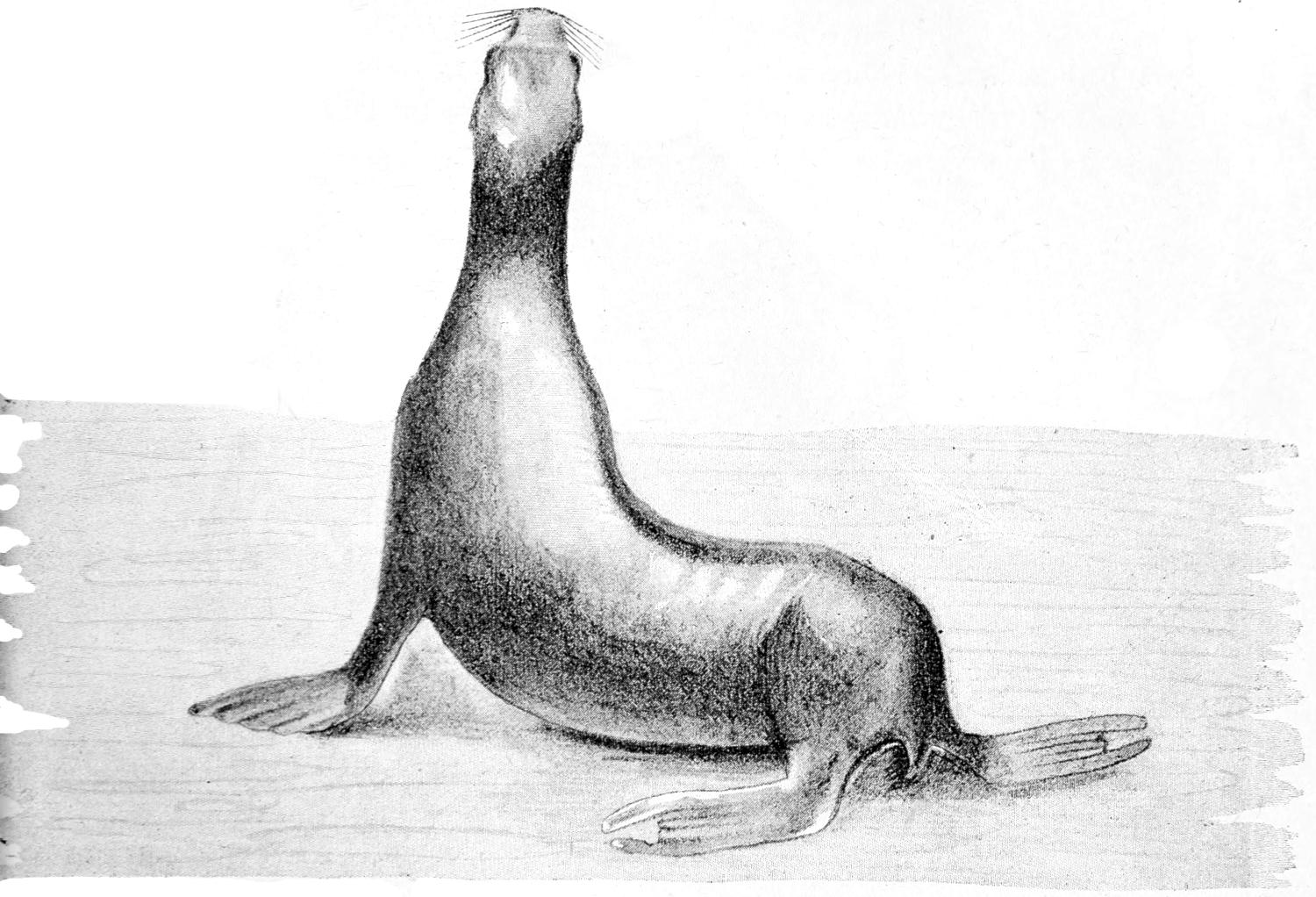
Fig. 74.—Zalophus californianus (Less.) Allen?—Drawn by W. P. from a living specimen in the Brighton Aquarium.—From the Illustrated London News of Jan. 6, 1877.
Fig. 74 represents a sea-lion of the Brighton Aquarium. I think it is a Zalophus californianus (Less.) Allen. We observe that it has a rather pointed, rather blunt snout, with whiskers; that the eyes protrude like those of a toad, that there is a little bunch a little above and behind the eye, that its neck is long in comparison with that of common seals, that in this position the neck is narrower than the head, and the shoulders are visible, that the flappers resemble somewhat those of turtles, that the body is round and slender, and the skin smooth and glittering in the sun, though, in fact, it is hairy and not shining when it is dry.
Fig. 75 shows the same species in another position. The neck is not extended as much as possible, and so the head seems to be as large as the neck; the forehead and nose form nearly a straight line; in the bunch above the eye protruding from the surface we clearly see the heavy eye-brow; the head is held at nearly right angles with the neck, so that the latter gets wrinkles on the throat, which resemble four gills (read gillsplits), or pouches of loose skin. Compare for a moment the left foreflapper with the flappers of a sea-serpent, drawn in figg. 36, 45, and 50. The skin is smooth and shining, though when dry it is hairy and dull.
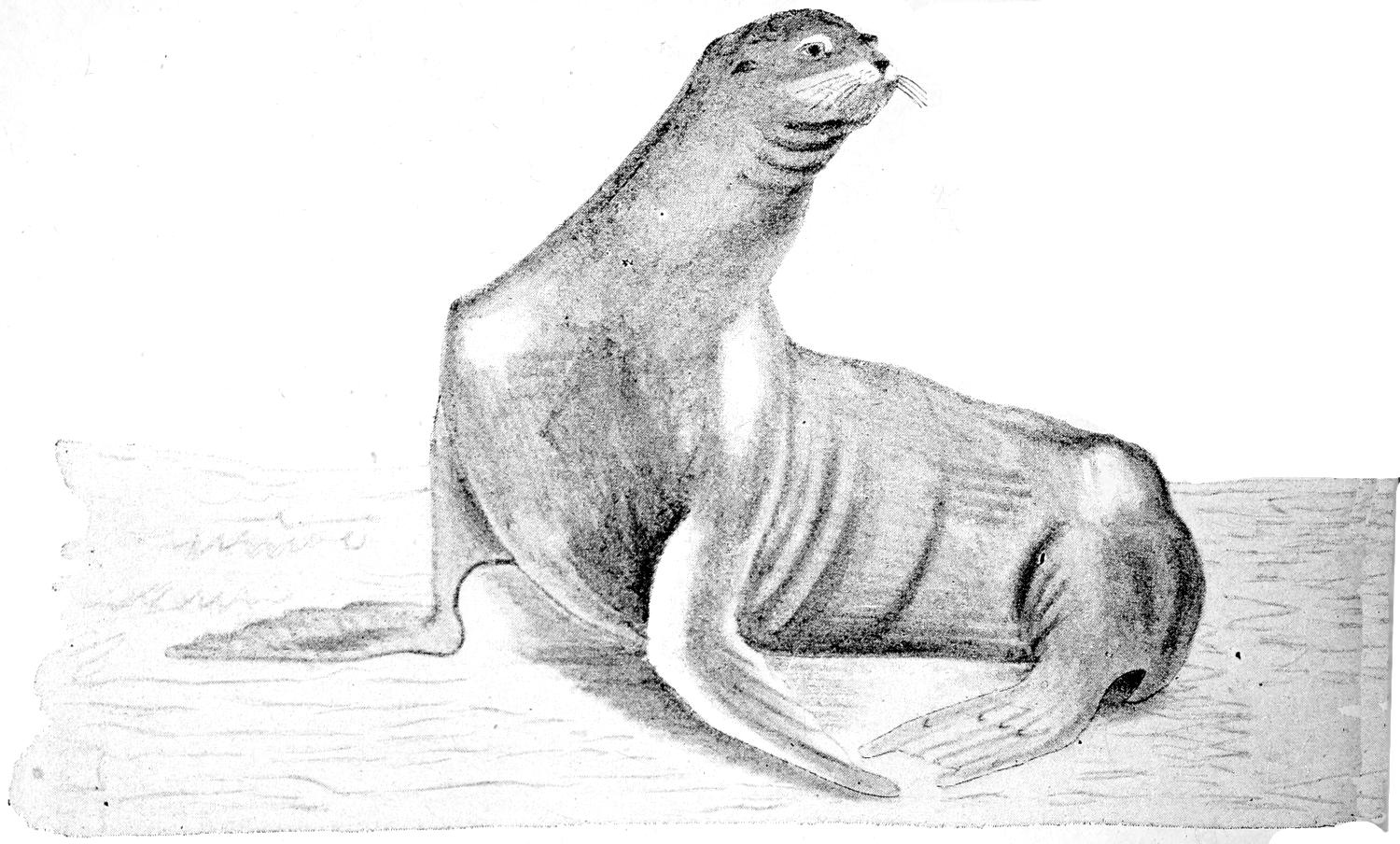
Fig. 75.—Zalophus californianus (Less.) Allen.—?—Drawn by W. P. from a living specimen in the Brighton Aquarium.—From the Illustrated London News of Jan. 6., 1877.
Fig. 76 is a drawing of Eumetopias Stelleri (Lesson) Peters, also a sea-lion. This genus is characterized by its considerably vaulted fore head (eu = well developed, metopion = forehead). The skin shows numerous folds or wrinkles, on the throat a fold again forms a distinctly visible “gill”.—The form of the foreflappers resemble those of a turtle. The neck is in comparison with that of seals much longer and as it is not extended as much as possible, it is thicker than the head. The skin is smooth, being wet.
Fig. 77 represents the same species. Here the animal swims with vertical undulations.
Fig. 78 represents the same species with its neck totally contracted so that several wrinkles encircle it, resembling “kinds of scrolls, or tufts of loose skin”, and it seems as if the animal has no neck at all.
Fig. 79 shows us the same species standing nearly upright in the water, with its neck contracted, so that it looks as having no neck, or a neck much larger than the head; the head seen in front is as round as a barrel; the skin is wrinkled. The individual looks at us, as if it would take a view of us.
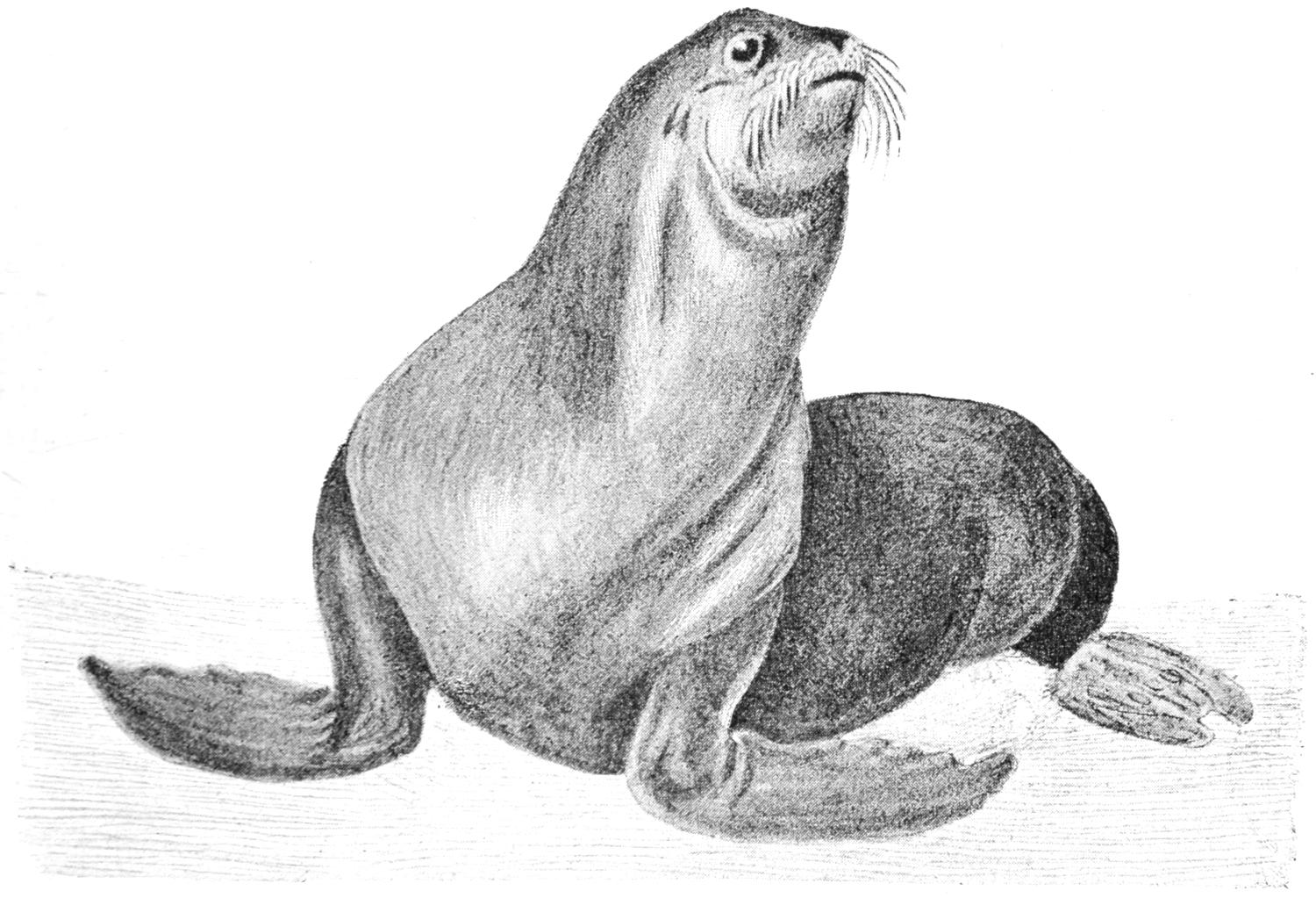
Fig. 76.—Eumetopias Stelleri (Lesson) Peters.—Drawn by the animal-painter G. Mützel from a living specimen in the Zoological Gardens of Berlin. From the Illustrirte Zeitung of Jan. 27, 1877.—
Fig. 80 is the same individual in the same position but seen from aside. The head is now much longer, the snout neither too pointed, nor too blunt; the head is held at nearly right angles with the neck, forming a “gill” (read gillsplit) by wrinkling the skin on the throat.
Fig. 81 is a drawing of Otaria jubata, quite dry. The head is held at nearly right angles with the neck forming two “gills”. The snout is rather blunt, apparently quadrangular in front. The nostrils are at the end of the snout and wide open, “nearly semicircular valves overarching” them. The eyes are wide open and disproportionately large. The neck in comparison with that of seals is long. The skin is hairy, the hairs of the neck are much longer. This mane begins at the occiput. The form of the flappers is like that of a turtle’s. Compare the form of the foreflappers with that of figg. 36, 45 and 50. The body is round and slender.
Fig. 82 represents a sea-bear, Callorhinus ursinus, quite dry. The little hairy bunch which is visible in the forepart of the back, is the shoulder of the other side. The hairs of the back-line are longer than the others, forming a mane extending all over the neck and back. The reader will see that I have represented this animal with only four toes on both the foreflappers and hindflappers; this is because I give a facsimile of the figure occurring in Brehm’s “Thierleben”.
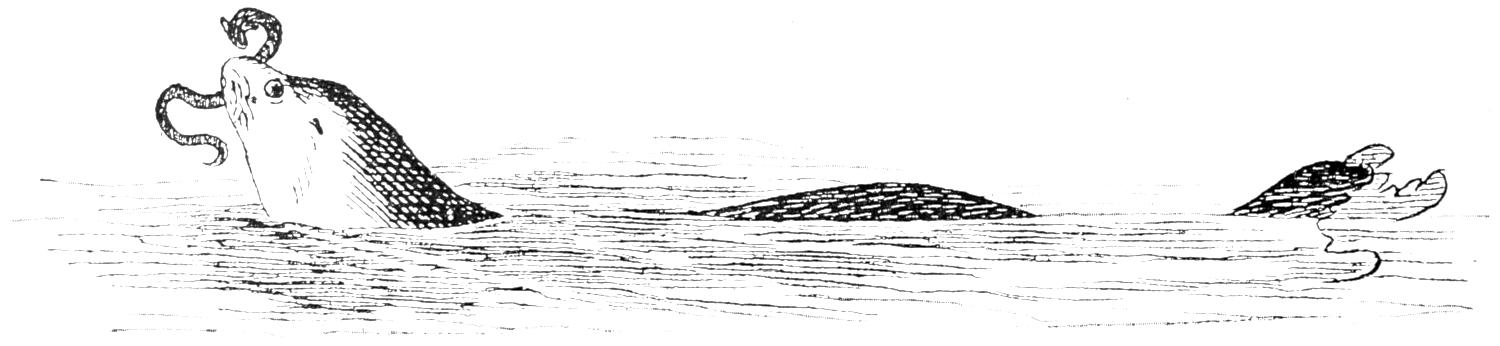
Fig. 77.—Eumetopias Stelleri (Lesson) Peters.—Sketched by the animal-painter G. Mützel, from a living specimen in the Zoological Gardens of Berlin.—From the Illustrirte Zeitung of Jan. 27, 1877.
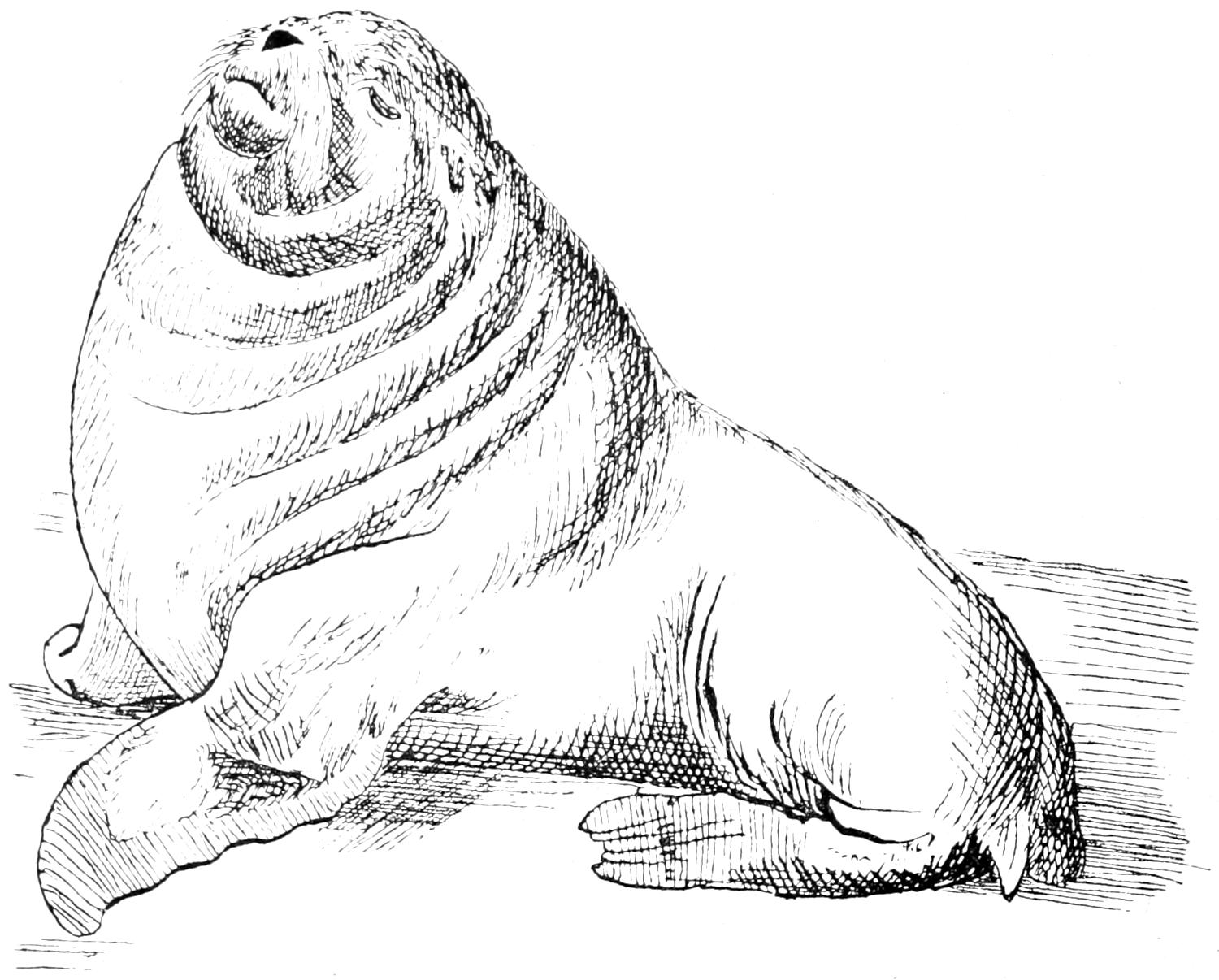
Fig. 78.—Eumetopias Stelleri (Lesson) Peters.—Sketched from a living specimen by the animal-painter G. Mützel in the Zoological Gardens of Berlin.—From the Illustrirte Zeitung of Jan. 27, 1877.
It is not the place here to give a monograph of Pinnipeds, but to compare the different known characters of the sea-serpents with those of the other of Pinnipeds, and therefore I am obliged to take the same order I have followed above.
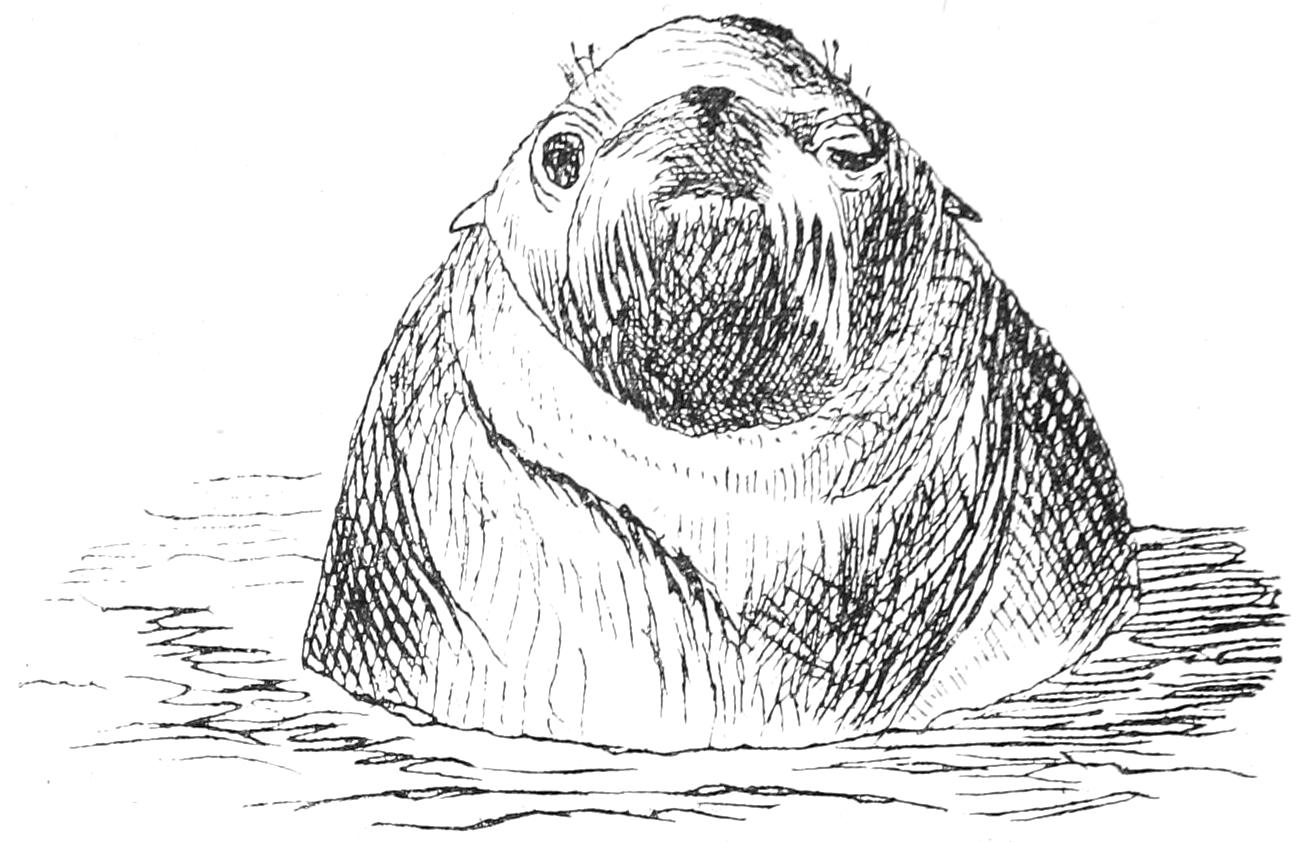
Fig. 79.—Eumetopias Stelleri (Lesson) Peters.—Sketched by the animal-painter G. Mützel from a living specimen in the Zoological Gardens of Berlin.—From the Illustrirte Zeitung of Jan., 27, 1877.
Dimensions. At first sight it will be doubted if such an enormous animal can be a pinniped? It is so immensely large in comparison with the known species of this order! Suppose for a moment that whale-bone whales, spermwhales and finwhales were not yet known, and that one of these animals was caught; what would be our astonishment! Suppose that pythons and boas were not yet discovered, and somebody showed us a skin of a python of 26 feet long, I think that the first thought would be “you are a handy fellow, but you will not cheat me with your story!” I will add here some other striking comparisons.
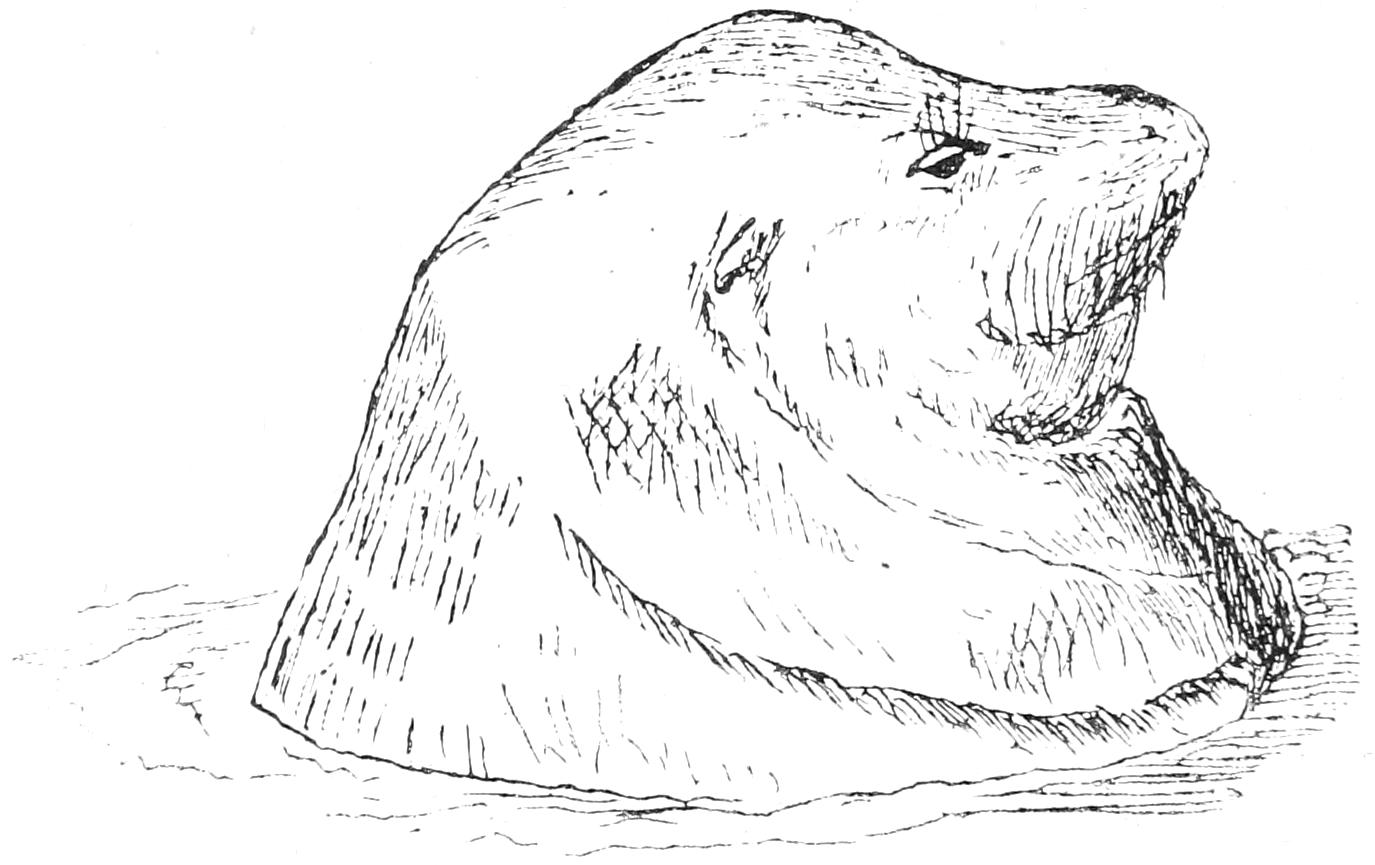
Fig. 80.—Eumetopias Stelleri (Lesson) Peters.—Sketched by the animal-painter G. Mützel from a living specimen in the Zoological Gardens of Berlin.—From the Illustrirte Zeitung of Jan., 27, 1877.
The largest known now living cartilaginous fishes are of 36 (Selache maxima) and of 42 feet (Carcharodon Rondeletii); but a fossil species of the latter genus reached a length of 81 feet (Carcharodon megalodon), and earlier Northern truthful and accurate writers even mention 100 feet as occasional dimension of the Selache maxima, an animal eagerly pursued by the Norwegians for the oil of its liver.
We, who in our latitudes look already with amazement on a salmon of 5 feet length, must be perplexed when seeing for the first time an osseous fish of 10 (Thynnus thynnus), of 15 (Arapaima gigas), or of 20 feet (Regalecus Banksii).
The largest known living Amphibium is 4 feet long (Cryptobranchus), and caused great astonishment, when it was discovered, but fossil Amphibia have been found larger than 15 feet (Mastodonsaurus).
The largest actually measured living Reptile has a length of 30 feet (Crocodilus), but some fossilized reptiles show a length of 38 feet (Hadrosaurus, Ichthyosaurus), 45 feet (Elasmosaurus), 58 feet (Rhamphosuchus), 70 feet (Brontosaurus) nay even of 100 (Liodon) and of 115 feet (Atlantosaurus), and probably many kinds of Reptiles are still longer, the skeletons of which have been dug up only partially!
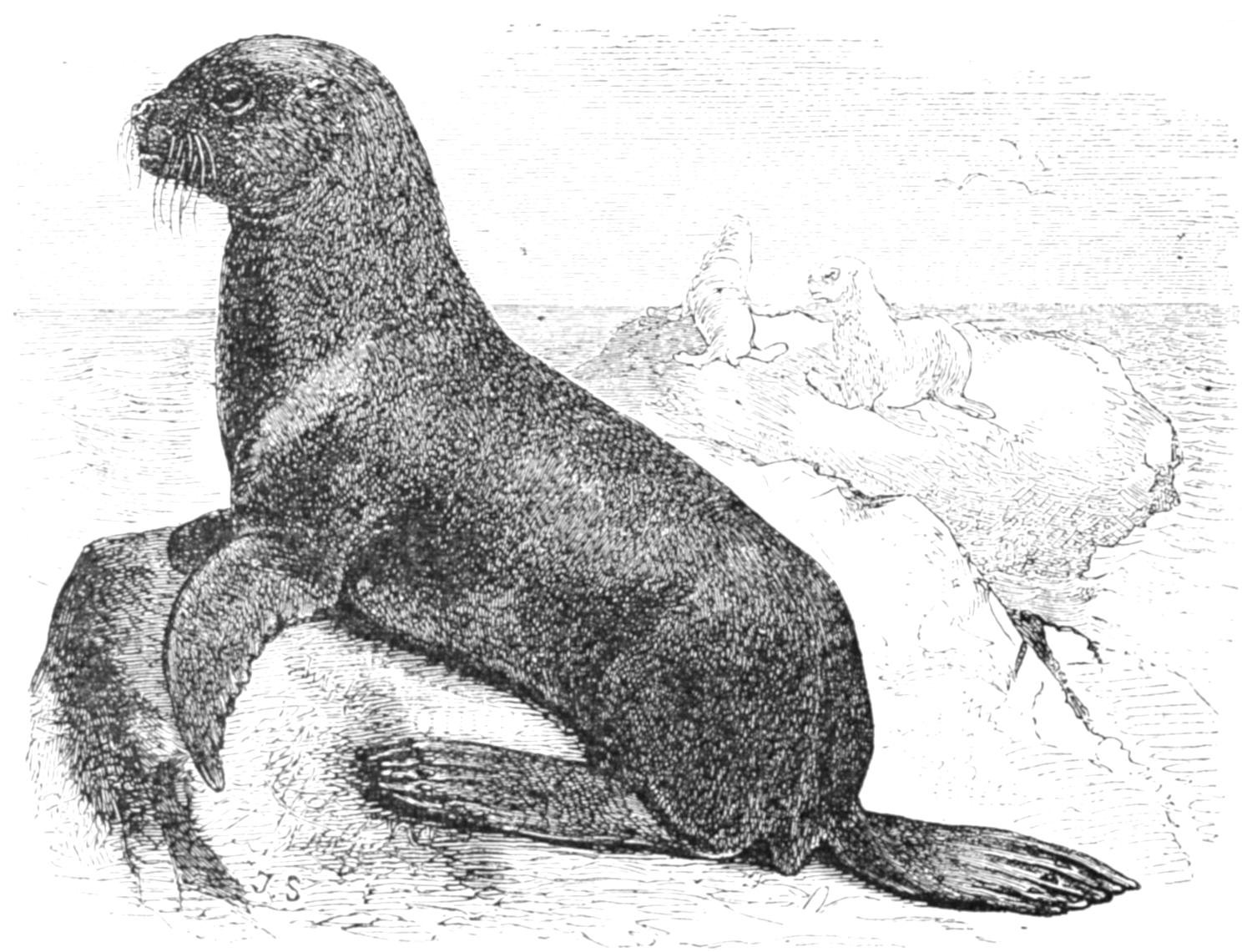
Fig. 81.—Otaria jubata (Forster) Desm.—From the “List of the Vertebrated Animals now or lately living in the Gardens of the Zoological Society of London, 1877.”
Whale-bone-whales of 88 feet, sperm whales of 90 feet, and finwhales of 120 feet are occasionally mentioned to have been measured in the foregoing century, but at present such dimensions are not more recorded, because these animals have been so incessantly persecuted for ages!
Well, let us stop here, and say that there are many wonders still hidden in the sea, and that there will be always a chance that of every species of animals individuals will be discovered, still larger than the largest specimen ever measured. If of all Pinnipeds the sea-elephants were hitherto the largest known, this is no more the case: they are surpassed by sea-serpents. If of all known living and fossil animals the Atlantosaurus and the Balaenoptera were hitherto the largest known, this is no more the case: they are surpassed by the Megophias.
Of all Pinnipeds the family of the Auriculata (Eared Seals) has the longest necks. In this particular they are surpassed by sea-serpents.
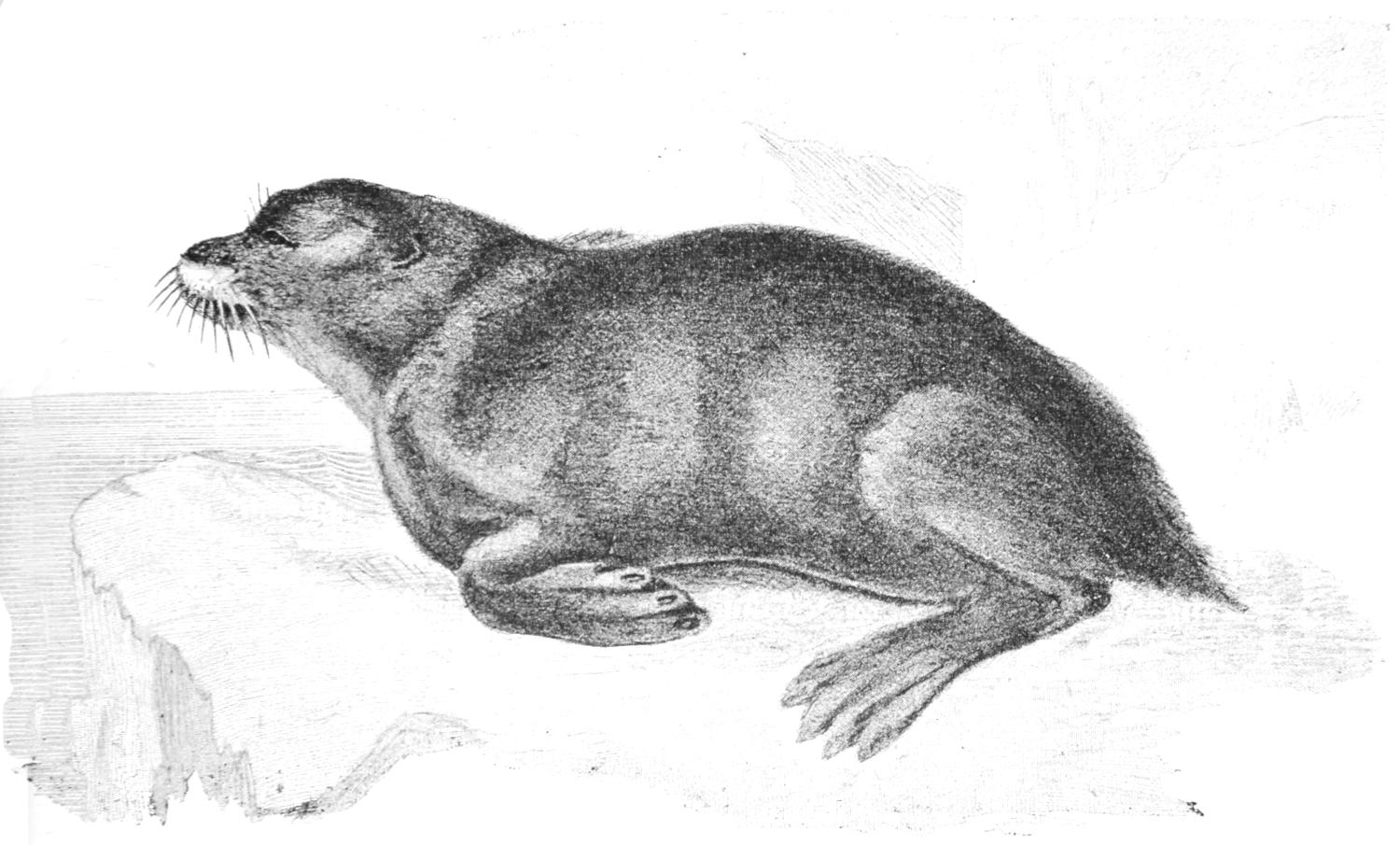
Fig. 82.—Callorhinus ursinus (Linné) Gray.—From Brehm’s “Thierleben”.
None of the hitherto known living Pinnipeds has such an enormous tail as the sea-serpent, but the fossil Basilosaurus, an animal more or less allied to the earless seals, has an enormous tail. Of the singular appearance of a family of which some members have immensely long tails, and others are almost wholly without, we have more instances in the animal kingdom. Of the Monkeys the family of the Simiidae have no tails, whilst the other families have generally long tails. Amongst the tailed monkeys we find in one genus species with very long tails, as the Macacus cynamolgos (the Macaque Monkey), and others with very short tails, as the Macacus maurus (Moor Macaque). This difference in the length of the tail is present in all orders of the Quadrupedia.
Form.—The shape of Megophias megophias is exactly that of Zalophus californianus, with a longer neck, and with a tail as long as trunk, neck, and head together. The shape of the head too, in my opinion, more resembles that of Zalophus californianus than that of any other Pinniped. The shape of the neck, the trunk, and the flappers is exactly that of the same portions of the Auriculata, especially in Zalophus californianus, viz: all are slender: “The body is rather slender, and the head is narrow, long, and pointed, and with this slenderness of form is coordinated a corresponding litheness of movement”. (Allen, History of North American Pinnipeds, p. 276). It may be that the hindflappers have a form hitherto unknown in Pinnipeds, as we have of the hindflappers neither a description nor any tolerable illustration. The forehead being flat, very much resembles that of Zalophus californianus. The snout or muzzle too, is of all Pinnipeds most resembling that of Zalophus californianus.
All Pinnipeds have whiskers. In some species they are large, as in Callorhinus ursinus, the sea-bear, in other comparatively small, as in Monachus tropicalis Gray, and in the males of the genus Macrorhinus, and even very small in the Trichecidae.
The eyes of Megophias megophias seem to be comparatively larger than those in other species of Pinnipeds, though Otaria jubata and Phoca foetida are known to have comparatively large eyes. I have nowhere found any remark about the colour of the eye, with regard to its tapetum lucidum, and till now I have had no opportunity to convince myself of the tapetum of Zalophus or Eumetopias being red. But is it not remarkable that Mr. H. W. Elliot too asserts of Eumetopias Stelleri: “it has a really leonine appearance and bearing, greatly enhanced by the rich, golden-rufous of its coat, ferocity of expression, and bull-dog-like muzzle and cast of eye”? (Allen, Hist. N. Am. Pinn. p. 258).
Skin.—As in all Pinnipeds the skin is hairy, most probably the hairs are quite stiff and not woolly like fur.
Colours, Individual Variations.—We have only to read different descriptions of seals, sea-lions, and sea-bears, to observe that every species varies much as to its colour, but that in some there is a wide range of individual variations. Only in a few species the under part is darker than the upper part, but generally the upper part is much darker than the under part, and with regard to their colours the animals are so to say longitudinally divided into two sections, dark above, lighter beneath. Their being variegated with spots or streaks occurs in many species, less in sea-lions and sea-bears, more in seals, but is the most striking in the Hooded Seal (Cystophora cristata, (Erxl) Nilss.). If we closely examine this species, the question arises: is not the lighter colour the ground-colour, and are not the dark spots and streaks and circles secondary appearances? And I think that this question must be answered in the affirmative. Remarkable is also the black colour of the region of the mouth and round the eye in some individuals of sea-serpents. This singularity occurs also in some specimens of other Pinnipeds. Of Eumetopias Stelleri “the end of the nose.... is naked and.... dull blue black” (Allen, Hist. N. Am. Pinn. p. 234, 235); of Zalophus californianus we read: “A third is.... blackish around the eyes and nostrils” (Allen, Hist. N. Am. Pinn. p. 277). In a foetal specimen: “nose and face, to and around the eyes” are “black” (Ibid., p. 278); and Nilsson’s black variety of the Ringed Seal (Phoca foetida Fabr.) has “nose and eye-rings uniform black” (Ibid. p. 602).
Sexual differences, Mane.—The males of some species of Pinnipeds have a mane, i. e. the hairs of the neck are longer than on the rest of the body. Of Eumetopias Stelleri “the hair is longest on the anterior upper portion of the body, where on the neck and shoulders it attains a length of 40 mm.; it decreases in length posteriorly, and toward the tail has a length of only 15 mm.” (Allen, Hist. N. Am. Pinn. p. 234). Of the hairs of Callorhinus ursinus we read: “It is longest on the top of the head, especially in the males, which have a well marked crest. The hair is much longer on the anterior half of the body than on the posterior half, it being longest on the hinder part of the neck, where in the males it is very coarse. On the crown the hair has a length of 42 mm.; on the hinder part of the neck it reaches a length of 50 to 60 mm. From this point posteriorly it gradually shortens, and near the tail has a length of only 20 mm. The males have much longer hair than the females, in which it is much longer than in Eumetopias Stelleri.” (Allen, Hist. N. Am. Pinn. p. 315).
The difference in size of males and females is also a peculiar character of some species of Pinnipeds, as may be seen from the following tables:
NAME VERY OLD MALE. VERY OLD FEMALE. RATIO.
Zalophus californianus 8 ¹⁄₃ ft. 6 ³⁄₄ ft. 100:81
Eumetopias Stelleri 13 „ 9 „ 100:69
Macrorhinus leoninus 25 „ 15 „ 100:60
Macrorhinus angustirostris 22 „ 13 „ 100:59
Callorhinus ursinus 8 „ 4 „ 100:50.
In Callorhinus ursinus the female, as we observe, attains only half the length of a male. The weight of a fullgrown female being less than one sixth that of a full-grown male.
The losing of hair when the animals grow very old, is very striking in both Odobaenus rosmarus and in Odobaenus obesus.
Food. The food of all Pinnipeds consists of mussels, and other mollusks, especially, however, of all kinds of fish, but that they are not averse to cetacean flesh, may be proved by the following fact: Mr. Brown says of Odobaenus rosmarus: “I have only to add that whenever it was killed near where a whale’s carcass had been let adrift, its stomach was unvariably found crammed full of the krang or flesh of that Cetacean” (Allen, Hist. N. Am. Pinn. p. 135). Eumetopias Stelleri occasionally eats birds (Ibid. p. 274).
Breathing.—Even in seals and sea-lions it may be occasionally observed that they “blow like a whale”; I myself saw it more than once, when the animals lay with their nose at water level, or when they appeared on the surface after having remained under water for a long time. It is sufficiently known that the average time these animals remain under water is eight or ten minutes, but they have also been observed lying quite still on the bottom for more than three hours. I read in Mr. Allen’s work (p. 180) that also walruses “blow not unlike a whale”.
Excretion.—The emitting a very strong odour is also known in Pinnipeds. Krascheninikow says of Callorhinus ursinus: “Such as are old, or have no mistresses, live apart; and the first that our people found upon Behring’s Island were such old ones, and all males, extremely fat and stinking” (Allen, p. 342). Of Eumetopias Stelleri Choris reports: “L’odeur qu’ils répandent est insupportable. Ces animaux étaient alors dans le temps du rut” (Allen, p. 254), and of Phoca foetida Kumlien asserts:
“It is only the adult males (called Tigak, = Stinker, by the Eskimo) that emit the horribly disagreeable, all-permeating, ever-penetrating odor that has suggested its specific name. It is so strong that one can smell an Eskimo some distance when he has been partaking of the flesh; they say it is more nourishing than the flesh of the females, and that a person can endure great fatigue after eating it. If one of these Tigak comes in contact with any other Seal meat it will become so tainted as to be repulsive to an educated palate; even the atluk of the Tigak can be detected by its odor.” (Allen, p. 624).
Respecting the foetid odour emitted by this species, Dr. Rink observes as follows:
“It derives its scientific name from the nauseous smell peculiar to certain older individuals, especially those captured in the interior ice-fjords, which are also on an average perhaps twice as large as those generally occurring off the outer shores. When brought into a hut, and cut up on its floor, such a seal emits a smell resembling something between that of assafoetida and onions, almost insupportable to strangers. This peculiarity is not noticeable in the younger specimens or those of a smaller size, such as are generally caught, and at all events the smell does not detract from the utility of the flesh over the whole of Greenland”.—Danish Greenland, its People and its Products p. 123 (Allen, Hist. N. Am. Pinn. p. 624).
Feeling. Also in seals and sea-lions in our Zoological Gardens we may often observe that they dislike wind, and hold only the top of their nose above water, that they shut their eyes, and like to bask in the sun.
Smell, Hearing, Sight. It is also known of Pinnipeds that their smell is very good and their hearing very sharp, but that their sight is quite limited. This must not surprise us. Their eyes are adapted to see under water, but such eyes don’t see so well in the air. Yet I have observed that seals distinguish their keeper from other persons at a distance of twenty or thirty yards.
Relative mobility of organs. Every one who has ever witnessed the graceful movements of seals and sea-lions, especially those of Zalophus californianus will admit that these animals, like sea-serpents, are “as limber and active as an eel”. There is not one movement made by the sea-serpent, which cannot be made in perfectly the same way by sea-lions, especially by Zalophus californianus, save the movement of the tail.
Motion. The same may be observed in comparing the motions of sea-serpents with those of Zalophus californianus. They too may appear on the surface, exposing head, neck, and so much of the forepart of the trunk, as to show their flappers; nay, they may like all kinds of whales, jump clear out of the water. When swimming slowly, they may occasionally swim with vertical undulations, they usually, however, propel themselves by means of their flappers, holding their body in a straight line; and sometimes horizontal undulations are distinctly visible; in darting on some prey they swim not only with their flappers, but undulate their body both horizontally and vertically at intervals. Of course generally only one or two, seldom three undulations are to be counted.
I don’t know if sea-lions have ever been seen swimming with fixed bunches, or folds. When at rest their skin may enormously wrinkle, like that of walruses, and as is shown in our fig. 78.
In swimming the sea-lion usually holds its head above water, and may occasionally raise its long neck as high as possible to take a view of a boat or another object.
Owing to the form and size of its flappers the speed of the sea-lion is really astonishing; it is much less in seals.
Though in a less degree, than in sea-serpents, the water curls up before its chest, or better throat, in swimming; foam is occasionally observed, and waves are seen in the form of a V, a wake is of course formed, and a rushing may be heard at times.
That seals swim so low under the surface of the water, that the course of the animal can be traced only by the rippling surface, I have myself witnessed, but I do not know if sea-lions, especially, if Zalophus californianus, are in the habit of swimming in this way.
The manner of disappearing of the sea-serpent is exactly the same as that of other Pinnipeds. They may turn down with a severe splash, or sink gradually below the surface, or even, by a sudden upward motion of their flappers, “sink down like a rock”.
As to the voice of other Pinnipeds it is different in the different species, but as we have not a single statement of the voice of sea-serpents, comparison is out of the question here.
Generation.—The rutting time and the time of whelping differ in different species, but on an average the month of March and April may be fixed upon as the pairing time, and July and August as those in which the females bring forth the young ones.
In some species the males are much larger than the females, and the new born young ones, like the young sea-serpents are in exact proportion to the old males, as may be seen from the following table.
NAME. VERY OLD MALE. NEW BORN YOUNG ONE. RATIO.
Zalophus californianus 8 ¹⁄₃ ft. 2 ¹⁄₃ ft. ¹⁄₃-¹⁄₄
Macrorhinus angustirostris 22 „ 4 „ ¹⁄₅-¹⁄₆
Eumetopias Stelleri 13 „ 2 „ ¹⁄₆-¹⁄₇
Callorhinus ursinus 8 „ 10 in. ¹⁄₈-¹⁄₉
Taking notice of objects. It is well enough known that seals will sometimes keep near a vessel, turning their head towards it; or will play round the vessel, disappearing on one side, reappearing on the other, as if playing hide and seek; from this it may be concluded they are in no dread of the vessel, but are curious, and suspicious of the living objects on it. I don’t know whether sea-lions and sea-bears behave in the same way, but I know that walruses do.
Curiosity and Suspicion are known characters in all kinds of Pinnipeds, and it is noteworthy that they are most striking in walruses and seals.
Harmlessness and Timidity. There is hardly any Pinniped which is not harmless and timid.
Fearlessness is a common trait in walruses and sea-elephants. One may come very near them. On the other hand scores of them, especially of the former, will sometimes follow a boat, roaring and crying and uttering the most horrible sounds, which may be expressions of their curiosity, suspicion, and fury, but it may also be a way they have of driving away their enemy.
Fear on the contrary, though less noticeable in walruses, is a prominent trait in seals, sea-lions and sea-bears. When men approach them they fly away as fast as possible, and in their hurry to reach the water crawl over each other, and roar, and cry, and lament in a most horrible way.
Fright. It is superfluous to touch upon this subject in Pinnipeds; every one knows the effects and consequences of a shot at these timid animals.
Fury. As in sea-serpents, most Pinnipeds, but especially sea-lions, sea-bears and walruses only get furious when wounded, or when neared while they are protecting their offspring.
Toughness. I know of no observations about this character in seals, sea-lions, sea-bears, and sea-elephants, but I believe that they are not tough; one heavy blow with a thick cudgel on the nose killing them instantly, but the toughness of walruses is known well enough; these animals are not an easy prey; they may be struck with axes on their cranium and hit by several rifle balls in their brain, and yet not die; they die a hard death.
Playsomeness is a well known character of all Pinnipeds; it may of course be less observable in the bulky and unwieldy walruses.
Remark. It is time that the volume comes to an end, and therefore I have made my comparison as short as possible. I have only to advise those who wish to know more about the agreement of sea-serpents with Pinnipeds, to read Allen’s often quoted work “History of North-American Pinnipeds”, and his “On Eared Seals”, (Bull. Mus. Comp. Zool. Harvard College. Cambr. Mass. Vol. II, no. 1.), and Brehm’s Thierleben.
There is one great difference between all the known Pinnipeds on one side, and sea-serpents on the other. The former are gregarious or social animals, only living in colonies or great herds, whilst Megophias megophias is a solitary being. This remarkable difference can be only accounted for by the two facts 1. That this species is a cosmopolitan, and 2. That these animals become extinct and that there exist at present only a very few individuals.
I don’t know if I have convinced my readers of the existence of sea-serpents, and if so, if they are convinced that these animals are closely related to Pinnipeds. But I am obliged to proceed on my way, and consider the rank which sea-serpents occupy in the system of Nature.
2. ITS RANK IN THE SYSTEM OF NATURE.
Zoologists admit as a fact that Pinnipeds originate in true land-animals. We are convinced that these land-animals were long-tailed Viverrine animals. The tail must have been longer than one half of the total length. This is no impossibility, as we have still living forms, the tail of which is as long as half of the total length of the animal, e. g. Herpestes Widdringtonii. The dentition must have been the typical carnivorous one: i 33, c 11, m 77; or there were more molars, perhaps 88, as a genus of wild dogs, Otocyon, has 8 molars on each side of each jaw; its dentition is i 33, c 11, m 88. (The Cynoidea, or dog-like animals are also considered as having their origin in Viverrine animals.)
Some of the descendants of these long-tailed Viverrine animals had gradually got such characters, that zoologists would term them long-tailed Musteline animals. They may be called long-tailed ancestors of weasels and stoats, for our common weasel (Putorius vulgaris L.) and our common stoat (Putorius ermineus L.) are still living descendants of them, though the tail has become very short, most probably because they have accustomed themselves to live in holes. The long tail has shown itself to be an inconvenient organ for this new manner of living, and therefore has gradually become shorter.
Some of these long-tailed ancestors of weasels and stoats took to another manner of living, compelled thereto by certain circumstances. They viz. took to eating fresh water fish. Gradually this grew to be a habit; they learned to swim, which happened by vertical undulations, they paddled with the feet, and used the tail as a rudder. This group may be called long-tailed ancestors of polecats and minks, for our common polecat (Putorius putorius L.) and the Russian minks (Putorius lutreolus L.) are still living descendants of them, though the tail has become short, because they have accustomed themselves to live in holes. The long tail has shown itself to be an inconvenient organ for such a manner of living, and therefore has gradually become shorter, not so short, however, as in weasels and stoats. Zoologists place the polecats and minks in the same genus as the weasels and stoats. The minks live especially in the neighbourhood of rivers and brooks, often go into the water and swim exceedingly well. Besides on poultry and rats, they feed on frogs, crabs, cray-fish, and all kinds of fish.
Some of these long-tailed ancestors of polecats and minks got so used to the water, that it finally became their proper element, and they came ashore only to rest from swimming, to bask themselves in the sun, or to find another brook or river. They began to feed on fish, crayfish, and frogs, and only when driven by hunger they fed on rats and poultry. It is evident that those individuals which by nature were best adapted to their new element, must gradually have survived their less privileged brethren, and so we may admit that a form gradually arose, which swam very easily with vertical undulations, using the tail as a rudder and as propelling organ. Also of great advantage must have been more sharply pointed teeth, and more jagged molars, smaller ears, a more woolly skin, and toes on the hind limbs, which were capable of expansion and more or less provided with a web. This group may be called long-tailed ancestors of otters, for all the known species of otters (Lutra) are still living descendants of them, though the tail has become shorter, shorter than one third of the total length of the animal, because they too like to live in holes. The face greatly resembles that of the polecat and mink, but the upper lips are thicker and the whiskers are longer and stronger. The change was not only great enough for zoologists to create for this group a new genus: Lutra Storr, but even to establish for it a new subfamily Lutrina Gray.
These long-tailed ancestors of otters were again survived by their congeners which were still better adapted to the new medium, so that from them another group gradually arose, which had broader webs on the hind feet. This group may be called long-tailed ancestors of fin-tailed otters, for the fin-tailed otter (Lutra Sanbachii Gray) is a still living descendant of them. The tail of this animal is shorter than that of its ancestors, longer, however, than that of the otters (Lutra), surpassing one third of the animal’s total length. Moreover it is somewhat flattened and shows on its hindmost half lateral fin-like dilatations. The change was great enough for zoologists to place the animal into a new genus: Pteronura Gray. Its ancestors, however, were not provided with these lateral fin-like dilatations on the tail.
Some of these long-tailed ancestors of the fin-tailed otter which in their migration had reached the sea-shore, probably by following the course of rivers, began to accustom themselves to eat sea-fish, and ended by feeding on them exclusively. The sea-water became their home, and their resting places and nests were found on the strand, and among sea-weed; they seldom came ashore to sleep or to sun themselves. Besides on sea-fish, they fed on crabs, lobsters, mussels, and some sea-weed. They left off eating poultry, frogs, and rats. The long tail was of great profit, as they used it as a rudder and as propelling organ in swimming with vertical undulations. Of course those individuals which were the best adapted to this new manner of living, survived the less privileged by nature, and so a group gradually arose which had a sharper dentition, and smaller ears; the skin was also changed to the most valuable fur, the toes of the hind-legs had become more webbed, and with such legs the animals could swim more easily; those of the fore-limbs had sharper nails, and with such nails the animals could more easily crawl upon the rocks; the eyes were larger, and with such eyes the owners could see better in great and dark depths, and in the sea-water near the shore, which is commonly troubled; the whiskers were longer and stronger, consequently the upper-lips, in which these whiskers were planted and which contained numerous and thick sensorial nerves, were very thick, and with such whiskers the animals could exceedingly well touch and feel when searching for their food between stones and sea-weed, and in the sandy bottom. The face resembled but little more that of the otters and fin-tailed otters, and the large eyes and shorter ears gave it a slight resemblance to seals. This group may be called long-tailed ancestors of sea-otters, for our sea-otters (Lutra lutris L.) are still living descendants of them. But as these animals have accustomed themselves to live more among sea-weed, ice, and rocks than their direct ancestors, the long tail must have been inconvenient, so that individuals with a shorter tail must have survived the others, and finally a species arose with a tolerably short tail: our sea-otter. To make up for this loss of tail, the hind-feet had become more webbed, and were gradually stretched more backwards, and, modified in this way, they were valuable swimming organs. The change was great enough for zoologists to create a new genus for this animal, which is called Enhydra Cuv.
Some of the long-tailed ancestors of sea-otters took to a still more aquatic, or better pelagic life, migrated more towards the north, accustomed themselves to the icy regions, to swim greater distances and to remain longer under water. The consequences of this change in the manner of living were that all little adapted to this new life became extinct, and that all which were better privileged survived them, so that at last a group of animals arose of which we may safely admit that they had the following characters: The head and fore-feet resembled still more those of seals, the hind-legs were still more able swimming organs, and less fit for terrestrial locomotion, they were smaller than the fore-legs, because they were not always used in swimming, as the best manner of swimming must have been by means of vertical undulations; the long tail surpassed half of the total length, and served as a rudder and as propelling organ; the ears were still smaller, the dentition was still a normal carnivorous one (i 33, c 11, m 77), especially the molars were sharp and pointed, and on the skull were found peculiar modifications which are so distinctly visible on that of Pinnipeds. The animals must have resembled our common seals, having, however, small external ears, and a tail, surpassing one half of the total length. It is difficult to believe that these animals, which I will call Propinnipedia, moved on land; probably they came from time to time aland or on the ice to rest with the fore-part of the body on it, leaving, however, most certainly the long tail in the water. These Propinnipedia gave origin to two groups of animals, which are marked below with A and B.
A.—This group, by their having lived almost constantly far from land, and having come only very seldom near the shore to rest, supporting themselves on the chest or breast, clinging with the nails of the fore-legs to the beach, rock, or ice, changed in such a way, that zoologists can hardly reckon them any longer among Pinnipeds, but generally consider them as a link between Pinnipeds and Whales. Professor D’Arcy W. Thompson (Studies from the Museum of Zoology in University College, Dundee, Vol. I, No. 9, 1890) rejects any affinity of this group to Whales. I should like to go still farther and pretend that it has just as much claim to the title of Pinnipeds, as seals, sea-elephants, sea-bears, sea-lions, and sea-serpents. The skull was somewhat lengthened in front; the brain-case diminished in size; the deciduous dentition probably cut the gum; the permanent dentition was the typical heterodont carnivorous one (i 33, c 11, m 77); the nostrils were placed on the tip of the nose, as in seals, but directed upwards; the fore-limbs were perfectly those of seals, and provided with nails; but the rest of the body must have resembled that of a slender and elongated dolphin, or whale, with an enormous pointed tail. The most successful manner of swimming for these animals was by means of vertical undulations, which, as the forepart of the body (head and trunk) was somewhat bulky, and therefore somewhat inflexible, were strongest in the tail-part of the animal; consequently the hind-legs, used less and less, disappeared, if not quite, at least for the greater part. The animals were still hairy, though the hairs were most probably thinly scattered; the whiskers remained on the lips. The head was relatively large, not with regard to the animal’s total length, but to the trunk, and therefore the neck was very short. Externally the neck must not have been plainly visible. The animals could not move the head as easily as seals and sea-lions do, and therefore it was of great advantage that the nostrils were directed upwards. The vertebrae have the type of those of the Pinnipeds.—Such animals are now extinct, but their fossil remains are found and called Basilosaurus by Harlan in 1824 (afterwards Owen gave them the name of Zeuglodon, 1839).
B.—This second group is called Pinnipedia by Illiger in 1811, and Allen gives of it the following characters:
“Limbs pinniform, or modified into swimming organs, and enclosed to or beyond the elbows and knees within the common integument. Digits of the manus decreasing in length and size from the first to the fifth; of those of the pes, the first and fifth largest and longest, the three middle ones shorter and subequal. Pelvis with the iliac portion very short, and the anterior border much everted; ischia barely meeting by a short symphysis (never anchylosed) and in the female usually widely separated. Skull generally greatly compressed interorbitally; facial portion usually short, rather broad, and the brain-case abruptly expanded. Lachrymal bone imperforate and joined to the maxillary, enclosed wholly within the orbit. Palatines usually separated by a vacuity, often of considerable size, from the frontals. Tympanic bones separated also by a vacuity from the exoccipitals. Dentition simple, generally unspecialized, the molars all similar in structure. Deciduous dentition rudimentary, never truly functional, and generally not persistent beyond the foetal stage of the animal. Permanent incisors usually 64 or 44, sometimes 42 (Cystophora and Macrorhinus) or even 22 (Odobaenus); canines 22; molars 55, 65, or 53.”
And we may add: Tail either very long: about as long as one half of the animal’s total length, or very short: almost disappearing between the hind-legs.
Already very early the Pinnipeds divided themselves into two different branches, marked below with I and II.
I.—The members of this branch changed their manner of living. They very often crawled on land, ice, and rocks; the long tail was a very unconvenient organ in their new manner of living, consequently all the individuals with a somewhat shorter tail than their congeners’ were better adapted to the new manner of living and survived them, so that at last a group of animals arose of which the tail has become very short, almost disappearing between the hind-legs, and to make up for this loss the hind-legs grew much larger than the fore-legs, were turned hindwards, gradually grew incapable of being turned forwards, and of no use in terrestrial locomotion. This branch is called Inauriculata by Péron in 1816 (afterwards called Phocidae by Gray in 1825, and Reptigrada by Elliot Coues, invited thereto by Allen in 1880). The characters are described by Allen as follows:
“Hind-legs not capable of being turned forward, and not serviceable for terrestrial locomotion. Neck short. Skull with the mastoid processes swollen, but not salient, and without distinct alisphenoid canals. Anterior limbs smaller than the posterior, the first digit little, if any, longer than the next succeeding ones, all armed with strong claws, which are terminal. Hind feet capable of moderate expansion, short; digits (usually) all armed with strong claws, and without terminal cartilaginous flaps. Femur with no trace of the trochanter minor. Without external ears. Postorbital processes wanting, or very small. Incisors variable (64, 44, or 42). Deciduous dentition not persistent beyond foetal life.”
The group includes all true seals and sea-elephants.
II.—This branch is called Gressigrada by Elliot Coues in 1880, who was thereto invited by Allen, though this skilled zoologist was then unaware of the existence of the sea-serpent, or at least must have doubted its belonging to this branch. I have not a single reason to give another name to it; I purposely keep the name of Gressigrada, to avoid the increase of synonyms. The early forms of the Gressigrada must have had hind-legs which were smaller than the fore-legs, and a tail, which was as long as the head, neck and trunk together. They had also small external ears, and a somewhat lengthened neck. Further characters are: “Hind-legs capable of being turned forward and used in terrestrial locomotion. Neck lengthened (especially in section b). Skull with the mastoid processes large and salient (especially in the males), and with distinct alisphenoid canals. Anterior feet either nearly as large as the posterior, or much larger, their digits rapidly decreasing in length from the first to the fifth, with distinct claws, and with a broad cartilaginous border extending beyond the digits.” (They are called flappers.) “Hind-feet susceptible of great expansion, the three middle digits only with claws, and all the digits terminating in long, narrow, cartilaginous flaps, united basally.” (The hind-feet may also safely be called flappers.) “Femur with the trochanter minor well developed”.—Already at a very early date the branch of the Gressigrada divided itself into two sections, which are marked below with a and b.—
a.—The members of this section changed their manner of living. They very often crawled on ice, land, and rocks; the long tail was a very inconvenient organ in their new manner of living, consequently all the individuals with a somewhat shorter tail than their congeners’ were better equipped, and survived the others, so that at last a group of animals arose of which the tail has become very short, scarcely, if at all, visible, being enclosed within the tegument of the body, and to make up for this loss, the hind-flappers grew much larger than the fore-flappers. The further characters for this group are: “Without external ears. Form thick and heavy. Anterior portion of the skull greatly swollen, giving support to the enormously developed canines, which form long, protruding tusks. Incisors of deciduous (foetal) dentition 66; of permanent dentition 26. No postorbital processes, and the surface of the mastoid processes continuous with the auditory bullae.”—This section is called Trichecidae by Gray in 1821 (afterwards it was named Trichechidae by Gray in 1825, Broca by Latreille in 1825, Campodontia by Brookes in 1828, Trichecina by Gray in 1837, Trichechoidea by Giebel in 1847, Trichechina by Gray in 1850, Rosmaridae by Gill in 1866, Rosmaroidea by Gill in 1872, and Odobaenidae by Allen in 1880!!!). The section contains only the walruses.
b.—The early forms of this section must have had hind-flappers which were smaller than the fore-flappers, and a tail which was as long as the head, neck and trunk together. The animals were very slender and elongated in form, the neck being somewhat more elongated; external ears, though small, were still present. Further characters are: “Anterior portion of the skull not unusually swollen, and the canines not highly specialized.” They came very seldom aland, and when doing so, they must have only supported themselves on their breast and on their fore-flappers, leaving the long tail always in the water. They swam with vertical undulations, using also sometimes the flappers.—For this section I choose the name of Tenuia, or Animals which are slender.—Very early the section of the Tenuia divided itself into two smaller divisions which are marked below with 1 and 2.—