II. Attempts to discredit the Sea-Serpent. Cheats and Hoaxes. (continued 2)
Reading edition
“The “Buffalo Daily Republic” of the 13th. of August, announces the capture of the great American water-snake on that day in the Silver Lake, near Perry village, New York. On Sunday, the 12th. the snake came to the surface, displaying 30 feet length of his body. On Monday morning all were on the alert. At nine o’clock the snake appeared between the whaleman’s boat and the shore: he lay quiescent on the surface, and the whaleman’s boat moved slowly towards him, Mr. Smith, of Covington, pointing his patent harpoon. On reaching within ten feet of the snake, the iron whistled in the air, and he darted off towards the upper part of the lake, almost dragging the boat under water by his movement. Line was given him, and in half an hour his strength seemed much exhausted. The whaleman then went ashore and gradually hauled the line in. When within fifty feet of the shore, the snake showed renewed life, and with one dart nearly carried off the whole line; but he was dragged slowly ashore amid excitement unexampled in the district. Four or five ladies fainted on seeing the snake, who, although ashore, lashed his body into tremendous folds, and then straightened himself out in agony with a noise that made the earth tremble. The harpoon had penetrated a thick muscular part, eight feet from his head. He is 59 feet 8 inches in length, and has a most disgusting look. A slime a quarter of an inch thick covers his body, and if removed is instantly replaced by exudation. The body is variable in size. The head is the size of a full grown calf. Within eight feet from the head the neck gradually swells to the thickness of a foot in diameter; it then tapers down, and again gradually swells to a diameter of two feet in the centre, giving about six feet girth; it then tapers off towards the tail, and ends in a fin, which can expand in fan-shape three feet across, or close in a sheath. Double rows of fins are alternately placed along the belly. The head is most singular. The eyes are large, staring and terrific, with a transparent membrane attached to the lids, protecting the eye without impeding the vision. No gills appear. The mouth is like that of the fish called a sucker; it can stretch so as to swallow a body a foot and a half in diameter: there are no teeth; a bony substance, extending in two parallel lines, covers the upper and lower part of the head. The sides and back are dusky brown; the belly is dirty white. Although sinuous like a snake, there are hard knot-like substances along the back. The harpoon is still in him. He lies in the water, confined with ropes, which keep his body in a curve, so that he cannot get away. He can use his head and tail, with which he stirs the water all around. When he rears his head (which he generally keeps under water) he presents a fearful aspect. In expanding his mouth he exhibits a blood-red cavity, horribly to look at, and the air rushes forth with a heavy short puff.”
The well known Mr. Spencer F. Baird, the late zealous Secretary of the Smithsonian Institution, Washington, U. S. on reading this in the Zoologist, sent to the Editor the following letter (Zoologist, 1856, p. 4998):
“In the November number of the “Zoologist” (Zool. 4896) I notice an extract from an American paper, respecting the capture of the “Great American Snake”. You have probably since learned that the account is an unmitigated hoax, manufactured by a newspaper-editor, while on a summer vacation, for the purpose of furnishing material for his editorial correspondence.—Spencer F. Baird, Smithsonian Institution Washington, U. S. December 28, 1855.”
The following splendid trick is of Captain Taylor, who is even called “a respectable and trustworthy gentleman”, nay, who, when the truth of it was inquired into, even “confirmed the statement”!
In the Zoologist of 1860, p. 6985, we read:
“The following extract from the log of the “British Banner”, which arrived at Liverpool on Sunday, 18 March, last, appeared in the Liverpool Daily Post of March 20. “On the 25th. April in lat. 12° 7′ east, and longitude 93° 52′ south, felt a strong sensation as if the ship were trembling. Sent second mate to see what was up; the latter called out to me to go up the fore rigging and look over the bows. I did so, and saw an enormous serpent shaking the bowsprit with his mouth. There was about thirty feet of the serpent out of the water, and I could see in the water abaft of our stern; must have been at least three hundred feet long; was about the circumference of a very wide crinoline petticoat, with black back, shaggy mane, horn on his forehead, and large glaring eyes, placed rather near the nose, and jaws about eight feet long; he did not observe me, and continued to shake the bowsprit and to throw the sea alongside into a foam, until the former came clear away of the ship. The serpent was powerful enough, although the ship was carrying all sail, and going at about six knots at the time, he attacked us, to stop her way completely. When the bowsprit with the jibboom sails and rigging went by the board, the monster swallowed the foretopmast staysail and flying jib, with the greatest apparent ease; he also snapped the thickest of the rigging asunder like thread. He sheered off a little after this, and returned apparently to scratch himself against the side of the ship, making a most extraordinary noise, resembling that on board a steamer when the boilers are blowing off. A whale breached within a mile of the ship at this time, and the serpent darted off after it like a flash of lightning, striking the vessel with his tail, and staving in all the starboard quarter gaily. Saw no more of it, but caught a young one in the afternoon, and brought it on to Melbourne.—William Taylor, Master, “British Banner”.”
“[The British Banner arrived here on Sunday, and is now in the Albert Dock. Captain Taylor declares that the above statement is perfectly correct.—Editor Daily Post.]”
Mr. Edward Newman, the Editor of the Zoologist, adds hereto:
“It is impossible for any story to read more like a hoax than this, but I had ready means of procuring, through a friend at Lloyd’s, the information that there is such a ship as the “British Banner”, that she is commanded by Mr. William Taylor, a respectable and trustworthy gentleman, and that she did arrive at Liverpool on Sunday, 18 March, last past, and is now in the Albert Dock. Armed with this information I wrote to Capt. Taylor, who has replied in the most courteous manner; he confirms the above statement, adding that he sent it to the Daily Post himself, and adding also that the young one reported to have been caught was presented to the Museum at Melbourne, where it was thoroughly inspected and pronounced to be a veritable sea-serpent.”—
It is not quite clear whether Mr. Newman was a second time the dupe of a trick, or not, but I think he really was!
Mr. George Guyon, Ventnor, Isle of Wight, on the contrary, wrote the following poem (see Zoologist, p. 7051, 1860):
“I’ve a story to tell—I don’t say that it’s true— But just as I heard it I tell it to you. A ship there was sailing upon the blue sea With her canvas all set, when the captain, said he “I feel that the vessel is all of a tremble, A sort of sea earthquake it seems to resemble; Send forward the mate to see what is the matter.” When lo! what he saw would have made your teeth shatter, An enormous big snake rising out of the sea, Some three hundred feet long it might possibly be, And in bulk it might equal a “wide crinoline” (At least seven yards round that description must mean). With jaws eight feet long, and with eyes fiercely glaring, A horn and a mane; he looked horribly daring, While the bowsprit he shook in his terrible mouth. ’T was in Latitude east and in Longitude south, This is somewhat obscure, but I think on the whole It occurred th’ other side of the Antarctic pole, The ship making six knots—leaving foam in her wake, Yet she stopped at the touch of this wonderful snake; And the jibboom and bowsprit were snapped like a straw; But his strength was outdone by his marvellous maw; For he swallowed the stay-sail and also the jib, Like a boy gulping oysters—they went down to glib. With his stay to his stomac he turned him about, And gave with his tail such a vigorous flout, That some timbers to atoms were crushed by the blow, And what more might have happened we none of us know, When an object appeared for the which he set sail, And both object and story were much like a whale.”
Afterwards, (Zoologist, p. 7278, of the same year) we find the following about the young sea-serpent of Captain Taylor:
“Captain Taylor’s Sea-Serpent.—A friend, who has the opportunity of communicating with Melbourne on the subject of the young sea-serpent which Captain Taylor says (Zool. 6985) he presented to the Museum at Melbourne, has ascertained through Mr. Coates, of that town, that Captain Taylor is so far correct, that he did at the time specified present a specimen of Pelamys bicolor to the Museum in question, and Professor M’Coy exhibited the same to Mr. Coates. Of course there is no rational ground for concluding that this small sea snake is the young of any such gigantic creature as Captain Taylor has described.—Edward Newman.”
But of a great Sea-Serpent of Captain Taylor we don’t find any more statements!
We have read the various hoaxes which appeared in the Cork Constitution of 1850; the Skibbereen Eagle too is not averse to publishing a similar hoax (See Zoologist, 1861, p. 7354):
“As Samuel Townsend, Esq., J. P., of Whitehall, was sailing in Whitehall Harbour, he saw, following his wake, what appeared to him (from the many descriptions he had read of the monster) to be a sea-serpent about twenty five or thirty feet in length; and being in a small boat he endeavoured to keep as respectful a distance as possible. There was, however, another boat in the harbour at the time, in which was Mr. Samuel Kingston, his brother, Mr. John Kingston (of Trinity College, Dublin), and a party of ladies. These parties also saw the huge monster; and upon raising its neck about six feet above the surface the females became greatly alarmed, when Mr. John Kingston, who is a remarkably good shot, fired at it, upon which it immediately disappeared. Mr. Townsend informed us the serpent presented a beautiful appearance, having large, brilliant scales of a yellow hue, and is of opinion it was struck by the shot fired by Mr. Kingston. It was likewise distinctly seen from the windows of Whitehall-House. Mr. Robert Atkins told us he saw it the day before of Barlogue.”—
The following hoax is not inferior to any of the foregoing (Nature, of 13th. of June 1872):
“Mr. J. Cobbin of Durban, forwards to the Natal Colonist the following account of a “sea-serpent” seen by him:—“During my last passage from London, I saw no less than three sea-serpents, but an account of the last will suffice. On 30th. December last, on board the Silvery Wave, in lat. about 35′ 0″ S., and long. 33′ 30″ E., at 6.20 P. M. solar time, an enormous sea-serpent passing nearly across our bows compelled the alteration of our course. He was at least one thousand yards long, of which about one third appeared on the surface of the water at every stroke of his enormous fan-shaped tail, with which he propelled himself, raising it high above the waves, and arching his back like a land-snake or a caterpillar. In shape and proportion he much resembled the cobra, being marked by the same knotty and swollen protuberance at the back of the head on the neck. The latter was the thickest part of the serpent. His head was like a bull’s in shape, his eyes large and glowing, his ears had circular tips and were level with his eyes, and his head was surrounded by a horny crest, which he erected and depressed at pleasure. He swam with great rapidity and lashed the sea into a foam, like breakers dashing over jagged rocks. The sun shone brightly upon him; and with a good glass I saw his overlapping scales open and shut with every arch of his sinuous back coloured like the rainbow.”
I don’t know whether the following, taken from the Graphic, is a true hoax, or an optical illusion, but I think it is a hoax. There we read in the number of August, 17th., 1872:
“Concerning this much discussed animal, whose existence mariners from the earliest times have firmly asserted, and landsmen as obstinately persisted in doubting, we have received the following from Mr. Walthew, a well-known ship-owner and merchant in Liverpool:—“Report of Captain A. Hassel, of barque St. Olaf, from Newport to Galveston, Texas.—Two days before arrival at Galveston, and about 4.30 P. M. on May 13, weather calm, smooth sea, lat. 26° 52′, long. 91° 20′, I saw a shoal of sharks passing the ship. Five or six came under the vessel’s stern, but before we could get out a line they went off with the rest. About two minutes after, one of the men sang out that he saw something on the weather bow, like a cask on its end. Presently another one called out that he saw something rising out of the water like a tall man. On a nearer approach we saw it was an immense serpent, with its head out of the water, about 200 ft. from the vessel. He lay still on the surface of the water, lifting his head up, and moving the body in a serpentine manner. Could not see all of it; but what we could see, from the after part of the head, was about 70 ft. long and of the same thickness all the way, excepting about the head and neck, which were smaller, and the former flat, like the head of a serpent. It had four fins on its back, and the body of a yellow greenish colour, with brown spots all over the upper part and underneath white. The whole crew were looking at it for fully ten minutes before it moved away. It was about six feet in diameter. One of the mates has drawn a slight sketch of the serpent, which will give some notion of its appearance.—A. Hassel, master of Norwegian barque St. Olaf.—Witness to signature, J. Fredk. Walthew.”—
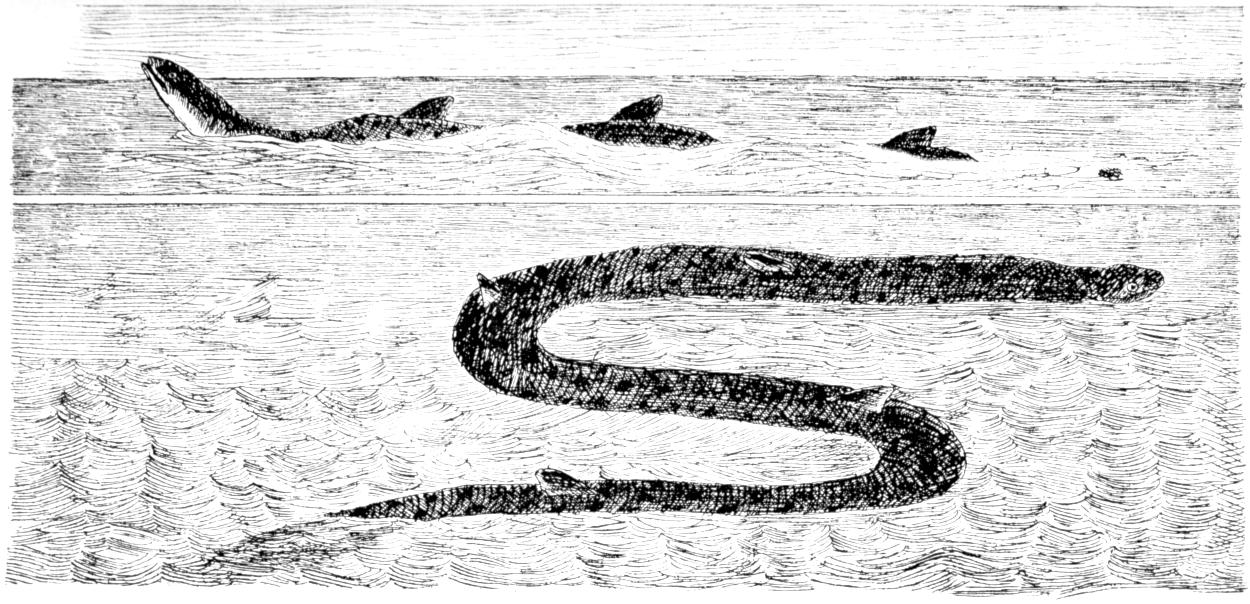
Fig. 3 and 4. Would be Sea-Serpent seen near Galveston.
The accompanying engravings are also published, and I give facsimiles of them in Fig. 3 and 4.—I think that Captain Hassel after having seen the shoal of sharks, two minutes afterwards saw four of these individuals swimming perfectly in a line, the foremost occasionally lifting its head above the surface, and the backs with the backfin of each animal being visible. The distance between the first and the last being about seventy feet, the whole row looked like a huge serpent, and gave thus rise to the story, which, as I have already said above, may be a hoax, or a true statement of what they saw. Evidently one of the mates first drew the sketch exactly as he saw the four sharks, but afterwards, answering his own question: “how would the serpent look, if floating on the surface?” sketched the second figure, where a boa or python with four fins is represented floating on the water like a cork, or better like the skin of such an animal puffed up!
A splendid hoax was again communicated by a correspondent of the Monde Illustré to the Editor, and published in the number of October, 8, 1881, of that journal.
“On board the steamer The Don, of the Royal Mail Steam Packet Company.—Captain Robert Woolward.”
“Sunday, August 14, 1881”.
“To the Editor.”
“I commence my letter by asking you a correspondent’s diploma of the journal Le Monde Illustré for my friend Mr. E. de Contreras y Alcantara, an inhabitant of Ponce, Isle of Porto Rico, Spanish colony.”
“I owe to Mr. de Contreras the subjoined sketch, the exactness of which is guaranteed by the seven signatures of the eye witnesses, who are:
“Mr. E. de Contreras y Alcantara, of Ponce, Isle of Porto Rico,
Mr. Carlo Lopez Aldana, of Lima, Peru,
Mr. Henrique Roman, of Cartagena, Columbia,
Mr. A. E. Ximenes de San José, of Costa Rica,
Mr. Maurice Renard, of Paris,
Mr. C. Renard, of Paris, your correspondent.
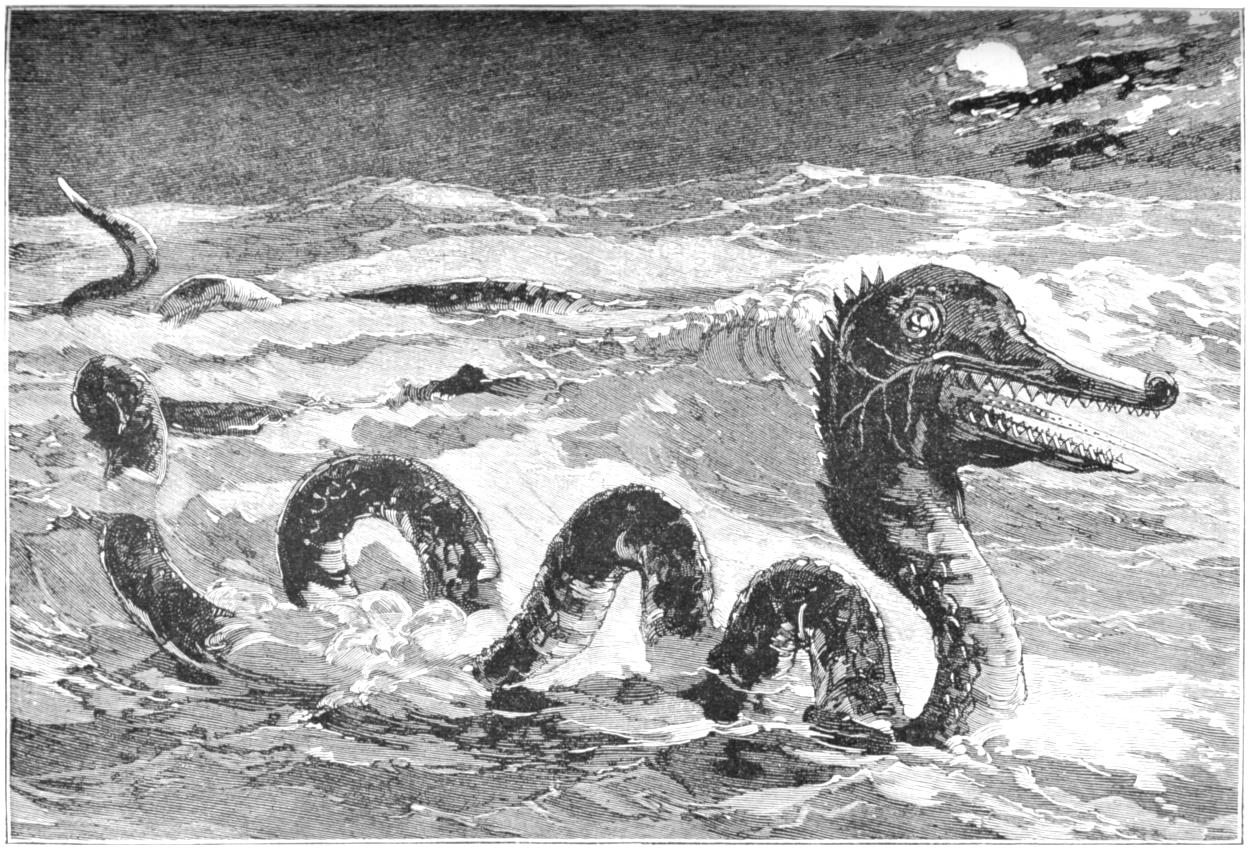
Fig. 5.—The sea-monster, as Mr. C. Renard supposed to have seen it.
“The appearance lasted for ten minutes, in full moonlight. As I made the sketch, my son noted down his observations, Mr. Contreras too; we compared and exchanged our several observations, these gentlemen at the little window of the smoking-saloon, and I just above, resting upon the port-hole and supported by a rope.”
“The monster seemed to measure about forty or fifty meters, from the head to the tail, as far as the numerous coils made an approximative estimation possible. The body from the dorsal ridge to the midst of the belly seemed to be covered by several ranges of scales, or a rough skin like that of sharks, but forming overlapping layers of scales. The back is very darkish and gradually growing lighter towards the belly, where it is a dirty grey. The entire body is marked with alternating transversal stripes, darkish green, chesnut coloured, and grey; the tail seems to taper in a point, like that of eels. I preserve for the end the description of the head, which we have properly examined, and which is very remarkable. This head is not oval, and rather pointed, as in most of the snakes; it forms at its cranium a great mass with rough and irregular outlines. From the occiput it is provided with a hard and movable crest, with very sharp points; this crest may be lowered on the neck so as to become invisible. The upper jaw projects, as is shown in the sketch, the end is doubled up, and a dark hollow, like a nostril is visible there; the lower jaw, more pointed, shows below hollow and convex outlines, like sacs, doubtless for the act of swallowing. The teeth are sharp, enormous, and white. From the throat, attached to a kind of cushion, projects a hard tongue, pointed, provided with suckers, and glittering like steel, and phosphorescing as the sea occasionally does; the eye is round, very glittering, very movable, and seems to be able to look backward, so rapid and “bien combinées” are the animal’s evolutions; the orbit is bordered by a ring of lighter colour and seems to be overarched by an eye-brow provided with hairs or bristles.”
“The face, from the snout to the neck presents a lateral oblique line, grey in colour, on both sides of which three other similar lines run towards it.”
“The movement of the animal in the water, seems to produce no sound at all, but undulating waves and a very slight ripple.”
“It caused a stench enough to make one ill; this smell, which hung about us for more than half an hour, was like that of a fermentation by heat on a large scale of the house of Lesage, the great gatherers of Asnières, mingled with that of a dozen of charcoal-black works of Billancourt.”
“To neutralize it, all the shops of several of our best perfumers would be wanted.”
“The monster seems to be old, judging partly from its dimensions, and partly from its colour and the roughness of its integument.”
“This is not the first time that similar animals are observed.”
“The first time it was seen in 1847 by the Portuguese ship Ville de Lissabonne, captain Juan Alphonso Zarco y Capeda.”
“This date coincides with the buffooneries of the Charivari on the Constitutionel, and with the first disease of the potatoes.”
“In 1864, the second of The Don observed a similar animal near the coast of Japan; he tattooed it on his arm.”
“I end this series of reports by assuring you that the monster was seen on Wednesday evening, August 10, 1881, by the undersigned, at a quarter to ten P. M. in
latitude 29° 60′ longitude 42° 40′
reckoning the degrees, according to the log-book on board, from the meridian of Greenwich.”
“C. Renard.”
“(Here follow the seven signatures above-mentioned).”
The Editor of the Monde Illustré adds:
“We leave to the author of this letter and of the subjoined sketch all the responsibility of an assertion which seems to us, least to say, strange, and the details of which we communicate to our readers with due reserve.”
Let us now pass on to reports of would-be sea-serpents.