IV. The various accounts and reports concerning observations of Sea-Serpents, chronologically arranged and thoroughly discussed; and criticisms of the papers written about the subject.
Reading edition
An account of the appearance of a Sea-Serpent, published in Nature of Nov. 18, 1880, induced me to make a study of that subject. A few months afterwards I wrote a little paper for the Album der Natuur, a Dutch periodical, designed to bring the latest progress and problems of Science in a very popular manner under the eyes of non-scientific readers.
In that paper I discussed the probability of the existence of an animal which was unknown to zoologists, but which nevertheless existed, and gave rise to all the narratives of the Great Sea-Serpent.
In January, 1889, I happened to come across a paper on the same subject by Mr. Henry Lee. In this work “Sea Monsters Unmasked” the sea-serpent is explained in several manners, as having been a row of porpoises following one another, as some gigantic sea-weed, as huge calamaries, and though hesitatingly as any still unknown animal belonging to a genus of reptiles, the representatives of which are only known in the fossil state.
Having given another explanation in my above-mentioned paper, and seeing that Mr. Lee did not mention my supposition, I am now so bold as to repeat my attempt at explaining the Sea-Serpent in another manner; I have chosen the English language as being known to all zoologists and to all navigators.
The Sea-Serpents and other serpents of extraordinary dimensions, quoted by Aristoteles (History of Animals, Book 8, chapt. 28), Plinius (Naturalis Historiae, Lib. 4, cap. 23, Lib. 8, cap. 14), Valerius Maximus (de Factis Dictisque Memorabilibus, Lib. 1, cap. 8, 1st. century), Florus (Lib. 2), Seneca (litt. 82), Silvius Italicus (Lib. 6), Aulus Gellius (Lib. 6, cap. 3), Orosius, Zonares, Diodorus Siculus, Voleterranus (Commentariorum Urbanorum libri 38, book 12), Petr. Martyr (Decad. 1, lib. 10), Bakius (Posidonii Vita et Reliquiae, p. 115), Aelianus, Vergilius, etc., were most probably nothing but pythons.
The various kinds of Serpens marinus alluded to by Aristoteles and Plinius, and afterwards described and figured by many other authors, evidently belong to the sea-eels, e. g. those of Père Jean Baptiste Labat in 1722, or were doubtless real sea-snakes, which reach no greater length than about twelve feet.
For these reasons we will pass all the descriptions of these different animals, and review only reports of no earlier date than the year 1500 A. D.
Having examined all the descriptions and figures of the Great Sea-Serpent published from 1500 A. D. up to this day, we come to the conclusion, as we have already stated above, that some of the so-called sea-serpents were fishes of slender form, others were cuttles of extraordinary dimensions (Cephalopoda Decapoda Chondrophora). In all these cases it is not impossible, and sometimes not difficult for a zoologist, who is familiar with these creatures and their habits, to explain those observations, but the greater part of the accounts of Great Sea-Serpents do not agree with the well-known shape of sea-weeds and cuttles, nor with the habits of porpoises. Mr. Lee tries a few times to identify the Sea-Serpent with these kinds of animals, but all who saw the sea-serpent moving with vertical undulations, and figured it thus, knew the habits of those animals, and some of them testified, that it could not have been porpoises, which they knew well enough to be sure of it. I will add here that porpoises move irregularly and have dorsal fins, which must of course be visible whenever they appear on the surface, whilst in none of the accounts mentioning the sea-serpent moving in vertical undulations, there is any question of dorsal fins visible on the coils of the sea-serpent.
But let us now pass to the accounts that have come within our reach, and peruse them in order of their date.
1.—1522.—(See Olaus Magnus, Historia de gentibus, etc.) “There is also another serpent of an astonishing size in an island called Moos, in the diocese of Hammer: which portends a change in the Kingdom of Norway, as a comet does in the whole world, as it was seen, anno 1522, raising itself high above the surface of the water and circling like a spire. Seen from afar this serpent was estimated by conjecture to be fifty cubits long; this event was followed by the banishment of King Christiernus and by a great persecution of the Bishops; and it also showed the destruction of the country, as Isidorus tells us of the birds of Diomedes.”
In the original Latin we read atque in modum sphaerae convolvens (and wrinkling like a ball), but as this has no sense, I am convinced that we have to do with a misprint, and that the author evidently wrote atque in modum spirae convolvens, which I have translated above “and circling like a spire”. This evidently signifies that the observer saw the animal swimming with vertical undulations, parts of which were visible above the surface of the water.
Further we must direct our attention to the statement that the animal raised itself high above the surface of the water.
Finally that it was estimated to be fifty cubits long, i. e. about seventy-five feet.
Olaus Magnus, the Archbishop of Upsala wrote in 1555 as follows:
“They who, either to trade, or to fish, sail along the shores of Norway, relate with concurring evidence a truly admirable story, namely that a very large serpent of a length of upwards of 200 feet, and 20 feet in diameter lives in rocks and holes near the shore of Bergen; it comes out of its caverns only on summernights and in fine weather to devour calves, lambs and hogs, or goes into the sea to eat cuttles, lobsters and all kinds of sea-crabs. It has a row of hairs of two feet in length, hanging from the neck, sharp scales of a dark colour, and brilliant flaming eyes. It attacks boats, and snatches away the men, by raising itself high out of the water, and devours them: and commonly this does not happen without a terrible event in the Kingdom, without a change being at hand, either that the princes will die or will be banished, or that a war will soon break out.”
This narrative tells us that the sea-serpent frequents the shores of Norway, that it appears mostly in summer, that it has large dimensions, and a considerable thickness. It has a row of hairs hanging down from its neck, its colour is dark, its eyes are brilliant and flaming. It only appears in fine weather.
We consider its devouring hogs, lambs and calves, and its appearance on summernights on land to take its prey to be a fable. The eating of squids, cuttles, crabs and lobsters may be a fiction, or it may have been truly witnessed, the animal chewing them with its head above water, as seals and sea-lions do. The story of snatching away a man from the ships is evidently confounded with another tale, as it is not mentioned anywhere else with regard to the sea-serpent. It evidently refers to gigantic calamaries which occasionally attack boats and snatch away one of the crew. (See Lee, Sea Monsters Unmasked, I, The Kraken.). Its being covered with scales must be fictitious too, for they who saw a sea-serpent at a short distance, are unanimous in stating that it had no scales but a smooth skin.
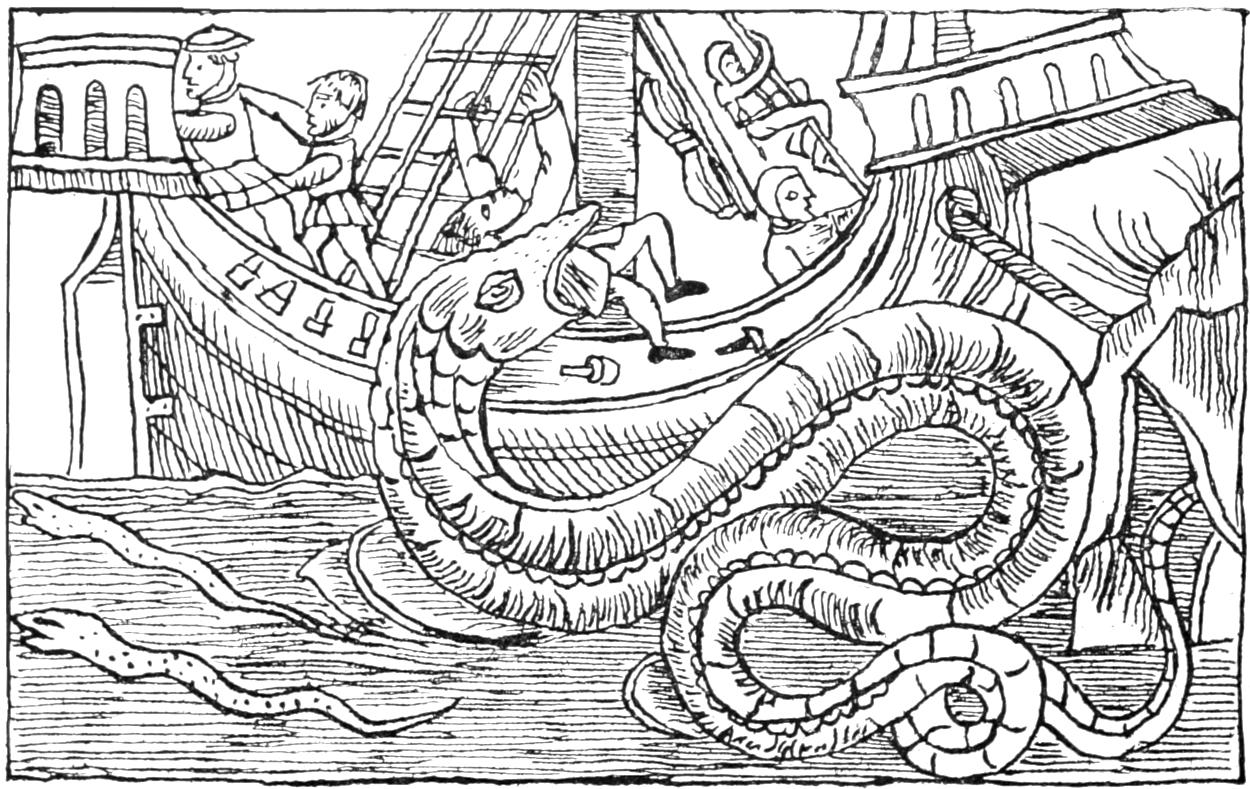
Fig. 14.—The sea-serpent as represented by Olaus Magnus.
On the same page of the text, Olaus Magnus has figured a sea-serpent in the act of swallowing a man from a boat, which has just anchored on a rock, wherein the serpent has its hole. I give a facsimile of that figure in Fig. 14.—Mr. Henry Lee who mostly sees calamaries and no other animals in the tales and figures representing the Great Sea-Serpent, tells us that: “the presumed body of the serpent was one of the arms of the squid, and the two rows of suckers thereto belonging are indicated in the illustration by the medial line traversing its whole length (intended to represent a dorsal fin) and the double row of transverse septa, one on each side of it”.—As to the snatching away a man of the crew, I quite agree with Mr. Lee, as already said above, but as to the figure of the serpent itself, I am strongly convinced that Olaus Magnus or his draughtsman had no other intention than to delineate a large snake, and they gave it the large scales, mentioned in the text, but the scales are badly drawn. They further gave it a medial row of scales, as all snakes have such a medial row.
Gesner in his Nomenclator aquatilium animantium, 1560, gives two figures of the sea-serpent of which I give facsimiles in Fig. 15 and 16.—Gesner says that there is a large map of Scandinavia in Olaus Magnus’ work, and on this map our fig. 15 is drawn in the Baltic Sea, and our fig. 16 in the Atlantic Ocean. In the original edition of 1555 there is but a small map of Scandinavia, which shows only the heads of several animals in the sea. I therefore conclude that there still exists another edition of Magnus’ work which I don’t know. Returning to our figures we immediately observe that the drawer has delineated large snakes, the one without scales, and swimming with vertical undulations, the other with large scales, and that he did not intend to represent a dorsal fin by the medial line, but only a medial row of scales, unequal to the lateral. On the head three transversal rows of protuberances are visible, which evidently serve to represent the long hairs hanging down from the neck of the animal.
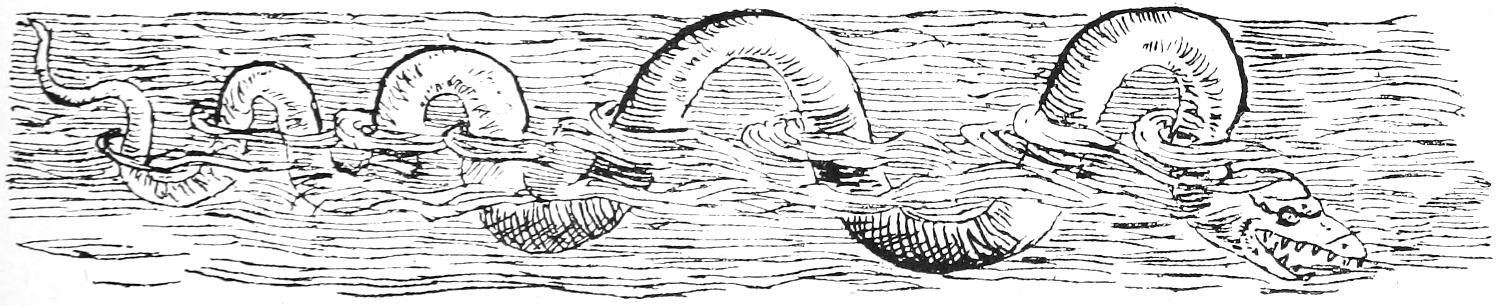
Fig. 15.—The sea-serpent illustrating the text of Gesner.
Of the sea-serpent Gesner tells us:
“In the Baltic or Swedish Ocean are found certain yellow sea-serpents of thirty or forty feet in length, which, when not provoked, do not harm any one. Of these sea-serpents Olaus Magnus gives the following figure in his Map of Scandinavia”.—(See our fig. 15).
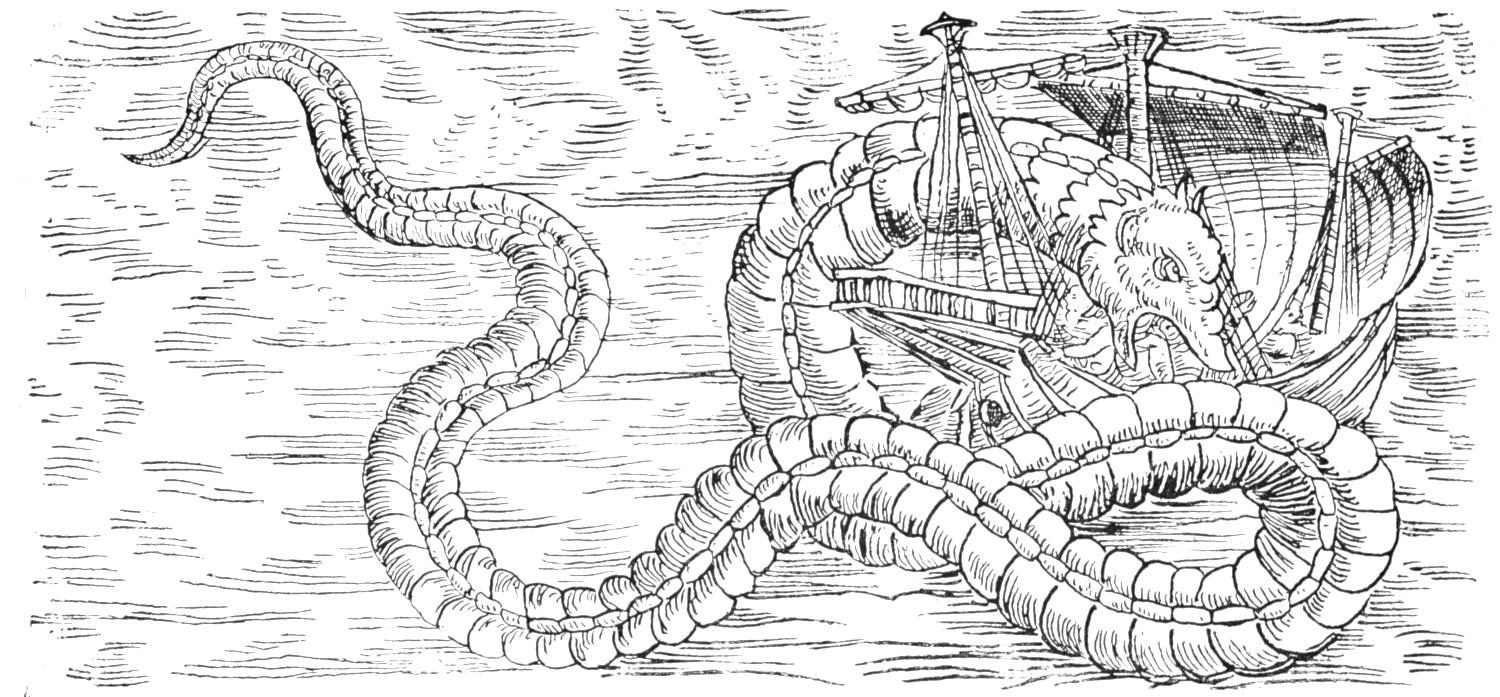
Fig. 16.—The second sea-serpent illustrating the same work.
“On the same Map there is another sea-serpent, a hundred or two hundred feet long (as says the text, or three hundred, as states the number added to the figure), which sometimes appears near Norway in fine weather, and is dangerous to Sea-men, as it snatches away men from the ships. Mariners tell that it incloses ships, as large as our trading vessels, made on our rivers and lakes, by laying itself round them in a circle, and that the ship then is turned upside down. It sometimes makes such large coils above the water, that a ship can go through one of them. I give the figure as it is on the Map.”—(See our fig. 16.)
Here we meet with three other characteristics of the sea-serpent: it is harmless when not provoked, it encircles ships and turns them upside down, and its coils are so gigantic that a ship can go through one of them. The first characteristic is a real one: the sea-serpent is perfectly harmless, if not provoked. We observe this in almost every account. The other two are of course extraordinary exaggerations of its dimensions.
The two figures of Gesner copied on a reduced scale, with an extract of his text, appeared in the Graphic of January 29, 1876.
The text in the edition of Olaus Magnus’ work printed at Basle in 1567 is the same as that of the first edition printed in 1555 at Rome, but the figure between the text differs, and is doubtless a combination of our figg. 14 and 16, in miniature; see our fig. 17.
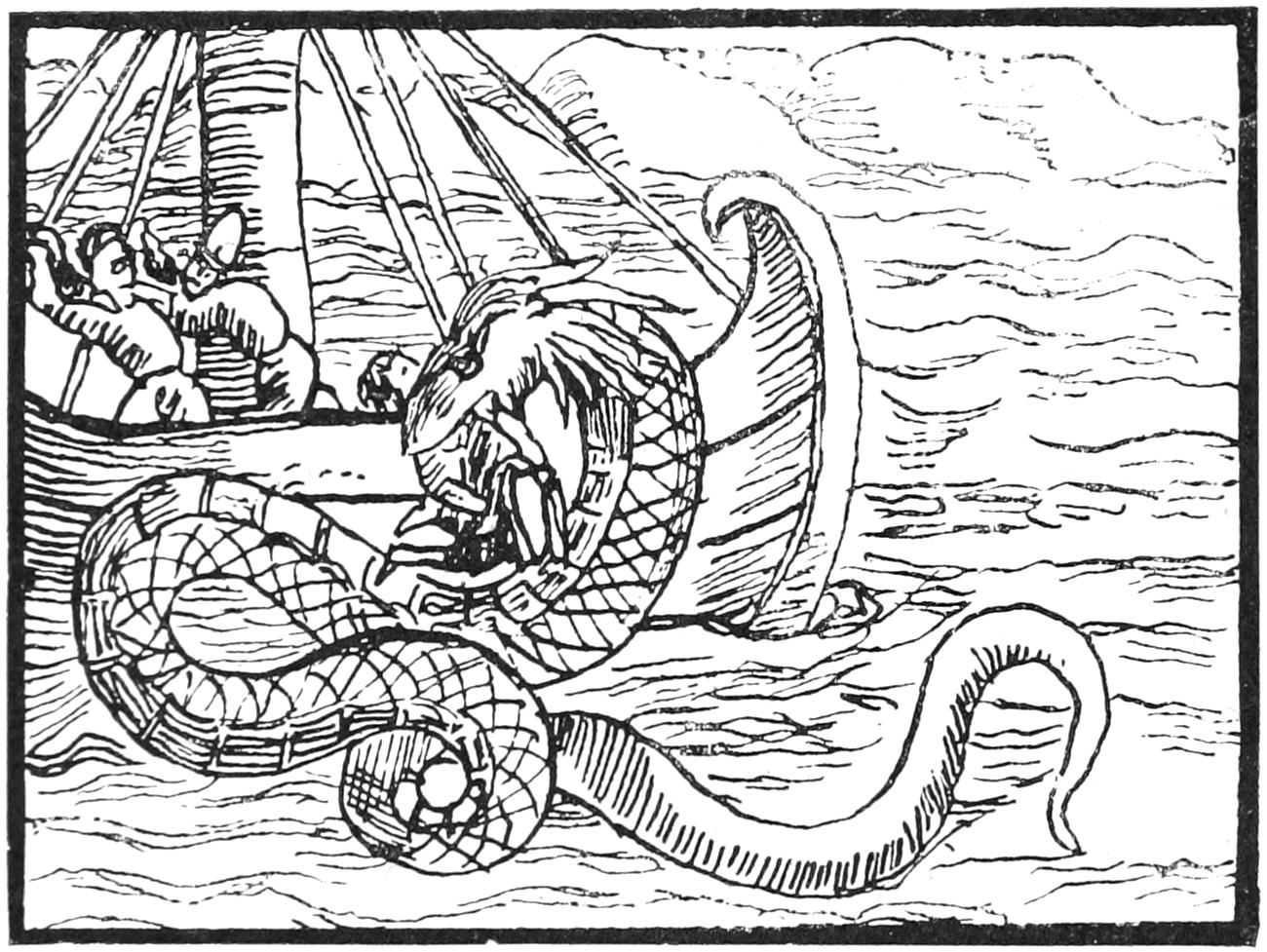
Fig. 17.—The sea-serpent as represented in the Basle edition of Olaus Magnus’ work.
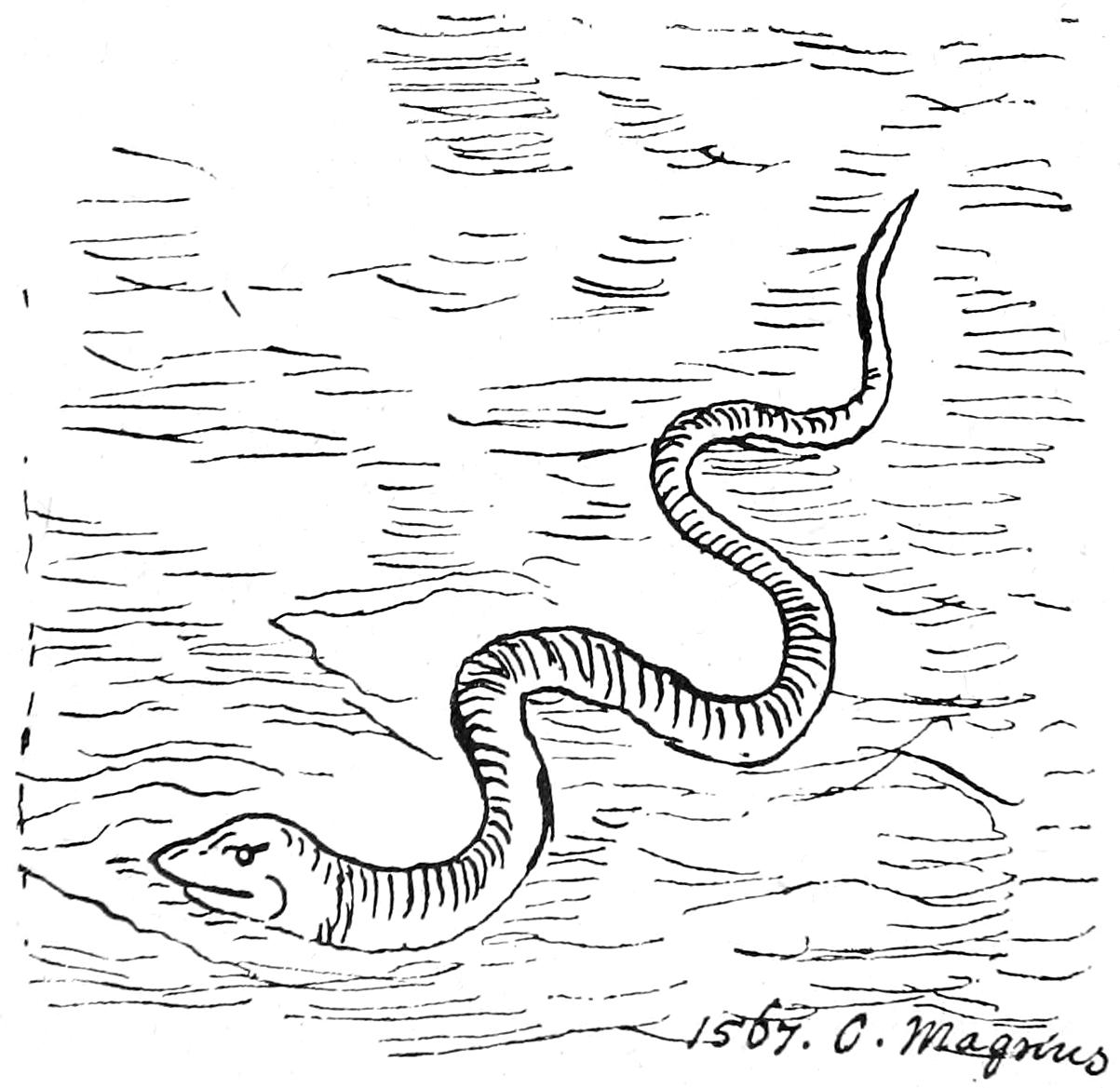
Fig. 18.—The sea-serpent, illustrating the Map of Scandinavia in the Basle edition of Olaus Magnus’ work.
On the map of Scandinavia subjoined to the work also occurs a figure of the sea-serpent, which we have copied in our fig. 18.—This figure does not claim our attention; it represents an eel or a snake, it has no scales.—Not so fig. 17: it distinctly shows dorsal scales and ventral plates, just as snakes have. This seems to me a confirmation of my opinion that in all these figures the drawers had no other intention than to delineate a large snake, without any notion of the arms of a calamary. As to the seizing of a man, we believe that a large calamary was the robber, whose deed is wrongly attributed to the sea-serpent. Last not least, it distinctly shows the long hairs, hanging down from its neck, a true mane, and several credible persons declare to have seen them.
Aldrovandus, 1640, believes that the sea-serpent of the Baltic or Swedish Ocean is the same as that of the Norwegian Ocean. I believe he is right. Moreover he repeats the texts of Olaus Magnus and Gesner. His figures are enlargements of the figures on the Map of Scandinavia, which accompanies the edition of Olaus Magnus’ work, unknown to me, and mentioned above. He only omits the water, the ship and the man in its mouth. Of his figures I don’t give copies, because they are exact enlargements of our fig. 15 and 16.—
2.—1640?—(See Adam Olearius, Gottorfische Kunstkammer, Ed. I, 1650, Ed. II, 1674) “and that this is true has not long ago been confirmed by a Swedish nobleman at Gottorf, who declared to have heard from the Burgomaster of Malmoi, a trustworthy man, that, whilst standing on a hill on the Norwegian coast, he saw in the calm water a large serpent, which seen from afar, had the thickness of a wine barrel, and 25 windings. These serpents are said to appear on the surface of the water only in calm weather and at certain times.”
Here again we have the statement, that in the Norwegian sea, and most probably in the Sound between Sweden and Danmark, a large animal was seen, looking like a huge serpent, and the confirmation that it comes to the surface of the water only in calm weather and at certain times. I beg the reader to fix his attention on those apparently insignificant statements, as it will be seen that they are given several times independant of one another.
Jonston in his Historia naturalis, and his Theatrum universale omnium animalium of which several editions appeared in 1653, 1657, 1660, 1665, 1718 (edited by Ruysch, quoted by Prof. W. D. Peck in Mem. Amer. Acad. 1818, Vol. IV), 1764 and 1768, repeats the tales of Olaus Magnus, and the figures of Gesner and Aldrovandus.—
Milton in his Paradise Lost, printed in 1667, comparing Satan with huge monsters, also mentions the sea-serpent of the Norwegians, calling it Leviathan (Book I, verse 192-208):
“Thus Satan, talking to his nearest mate, With head up-lift above the wave, and eyes That sparkling blaz’d; his other parts besides Prone on the flood, extended long and large, Lay floating many a rood, in bulk as huge As whom the fables name of monstrous size Titanian, or Earth-born, that war’d on Jove, Briareus, or Typhon, whom the den By ancient Tarsus held; or that sea-beast Leviathan, which God of all his works Created hugest that swim th’ ocean stream: Him, haply slumb’ring on the Norway foam, The pilot of some small night founder’d skiff Deeming some island, off, as seamen tell, With fixed anchor in his scaly rind, Moors by his side under the lee, while night Invests the sea, and wished morn delays.”
We observe that he mixes here also another story of a large sea-monster on which sea-men, believing it some island, will anchor, a story told about the Kraken and about the sperm-whales.
Charleton in 1668 quotes only Aldrovandus and Olaus Magnus, giving neither description nor figures.
3.—1687.—(Ramus, Norges Beskrivelse, quoted by Pontoppidan).
“In the year 1687 a Great Sea-Serpent was seen several times by several persons in the Damsfjord, and once by eleven persons together. The weather was calm, but as soon as the sun set and the wind began to blow, it left the fjord, and like one who runs out a coil of rope can know the length thereof, so one could see how long it was, before it had wound off all its coils, and stretched itself at full length.”
In this account we read again that the animal is seen in calm weather and that it shows coils or windings. For the first time the fact is mentioned that it can stretch itself, evidently in a straight line. Further on we shall read this several times.
4.—1720.—(Pontoppidan, Det förste Forsög paa Norges naturlige Historie).
“Thorlack Thorlacksen has told me that in 1720 a sea-serpent had been shut up a whole week in a little inlet, into which it came by high tide through a narrow entrance of seven or eight fathoms deep, and that eight days afterwards, when it had left the inlet, a skin of a snake or serpent was found. One end of the skin had entirely sunk into the water of the inlet, and no one could guess how long it was, the inlet in which the skin partly lay, being several fathoms deep. The other end of this skin was washed ashore by the current, where everybody could see it; apparently it could not be used, for it consisted of a soft, slimy mass. Thorlacksen was a native of the harbour of Kobbervueg”.
It is evident that a true sea-serpent visited the little fjord daily during that week, most probably in its pursuit of fish, for the sea-serpent is sufficiently known to the Norwegians, and if it had been an animal different from the common Norwegian sea-serpent, I am sure that it would not have been called a sea-serpent. It is also stated that the animal left the inlet. But the skin found afterwards was certainly nothing else but a putrified long arm or tentacle of a great calamary. The soft slimy nature of the skin sufficiently proves my hypothesis. The great calamary died in the fjord or inlet, and its long dead arm was washed ashore by the current, while the body sunk.
5.—1734, July 6.—The earliest account of Hans Egede’s encounter with the sea-serpent we find in his work published in Danish at Kopenhagen in 1740, entitled: “A Full and Particular Relation of his voyage to Greenland, as a Missionary, in the year 1734”.
I have not had the opportunity of consulting this work, but the passage about the sea-serpent runs most probably as follows:
“Anno 1734, July. On the 6th. appeared a very terrible sea-animal, which raised itself so high above the water, that its head reached above our main-top. It had a long sharp snout, and blew like a whale, had broad, large flappers, and the body was, as it were, covered with a hard skin, and it was very wrinkled and uneven on its skin; moreover on the lower part it was formed like a snake, and when it went under water again, it cast itself backwards and in so doing it raised its tail above the water, a whole ship-length from its body: That evening we had very bad weather.”
In the same year there appeared a German edition of this work, entitled Ausführliche und Wahrhafte Nachricht vom Anfange und Fortgange der Groenländischen Mission, etc., Hamburg, 1740, 4o, which I have not been able to consult either.
I don’t know whether there is an English or a French edition. In the Illustrated London News of Oct. 28, 1848, the writer of the article Evidences of the former appearance of the Sea-Serpent translated the passage from a Danish copy of Egede’s Full and Particular Relation in the British Museum. Evidently he was not very well up in the Danish language, for his translation is partly incorrect. I am convinced that in the original text Egede does not mention the exact locality where he saw the animal. The translator tells us that it was off the south coast of Greenland, which of course is incorrect, as Greenland has no south coast. Of “sea-animal” he makes “sea-monster”, for “above our main-top” he has “on a level with our main-top”, for “it blew like a whale” he has “it blew water almost like a whale”, for “its body was as it were covered with a hard skin” he has “its body was covered with shell-fish, or scales”, and some parts are not translated at all.
In 1738 Hans Egede wrote a Journal of his mission, in which he did not mention the meeting, but his son Paul Egede in the continuation of this Journal, entitled Continuation af Relationerne betreffende den Groenlandske Mission, Kjoebenhavn, 1741, gives a full account of it, which we have translated above word for word.
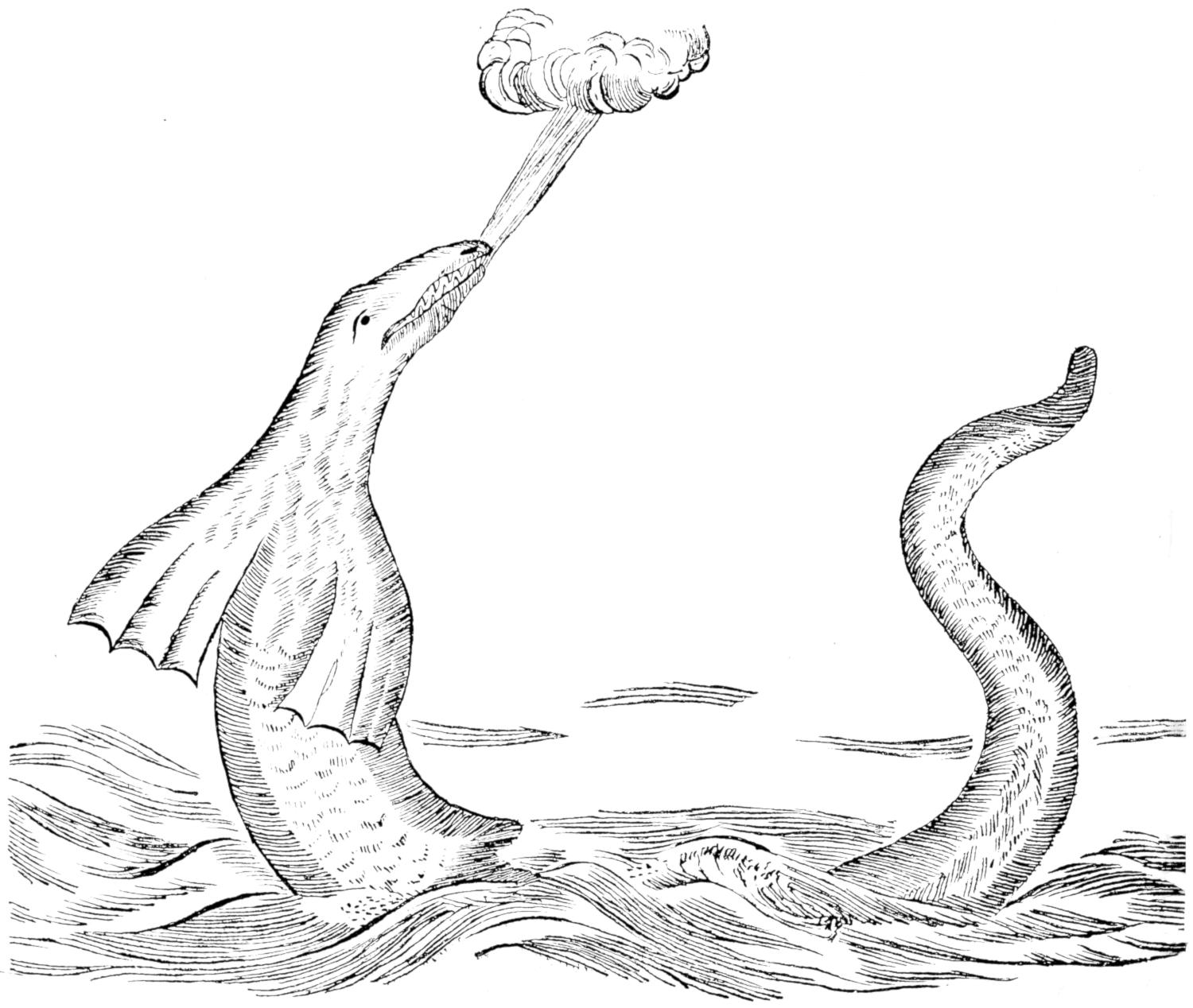
Fig. 19.—The Sea-Serpent, as seen by Hans Egede, drawn by Bing.
I have not had the means of consulting the German translation of this work, entitled Fortgesetzte Relationen die Groenländische Mission betreffend, Kopenhagen, 1741, so I cannot say anything about the text or figures, but the translation which I found in the German edition of Pontoppidan’s Natural History of Norway is correct. Not so the English translation entitled Journal of the Mission to Greenland, 2d. Vol. There we find, according to Mr. Lee who quotes the passage in his Sea-Monsters Unmasked, first sea-monster instead of sea-animal, further, that it spouted water like a whale, instead of it blew like a whale. There is a great difference between these two expressions. A whale does not spout water as is generally believed and figured. Further, that the body seemed to be covered with scales, instead of with a hard skin or crust, for the Danish skiell or skiaell is singular, and not plural. Finally, that the tail above the water was a whole ship-length from the head instead of from the body, for the Danish Kroppen signifies “the body”. Of course I cannot say anything of the figures in this edition.
In the original Danish work of Paul Egede there is a map of a part of the coast of Greenland and of the Davis’ Straits, called Baals Rivier, on which is situated the Danish Colony, the Good Hope (Gothaab). As it was generally done in those days, Mr. Bing, a brother-missionary of Egede’s, drew on his map not only the animal but also the vessel in the sea. I give here a facsimile of the figure of the animal, without the ship. We distinctly see that the animal has rather a serpentlike form with a large head, showing formidable teeth, an eye with a heavy eye-brow, and a nostril; two flappers on the fore-part of the body, the uneven skin, and a tail ending in a point.
On the same map there is also another figure, showing the animal’s tail, after it had plunged back into the water. The tail is again figured terminating in a point.
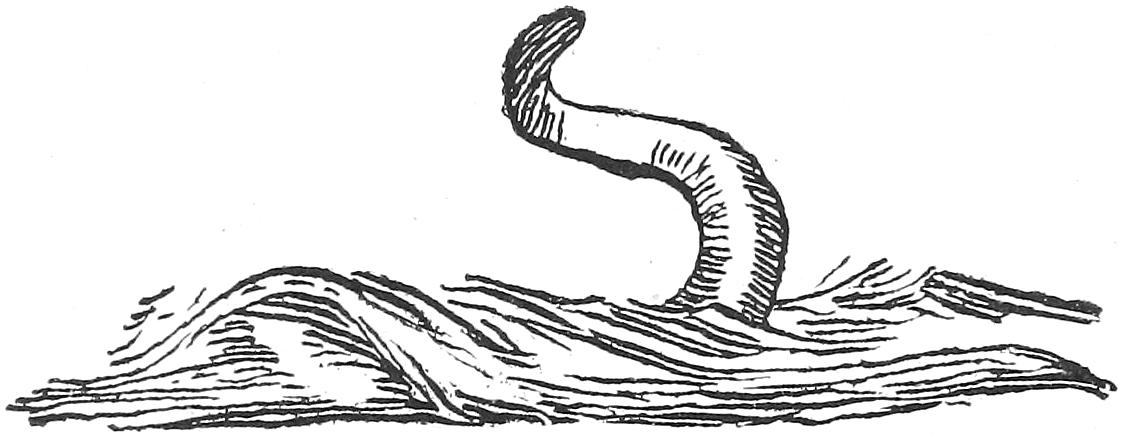
Fig. 20.—The same individual plunging back into the water.
We shall do well to observe the fact that the figure is an accurate illustration of the text with regard to the animal blowing like a whale; the breath which the animal exhales immediately after having been under water a long time, is condensed in the cold air and forms little curling clouds.
In the original Danish work of Hans Egede, entitled A Full and Particular Relation, etc., of which we have spoken above, there is also a figure. Though I have not had the opportunity to consult this work, I am thoroughly convinced, that the map of Baals Rivier with the two figures of the animal are quite the same, true facsimiles. The above mentioned translator drew this figure on a reduced scale for his article in the Illustrated London News, and as his text is incorrect, his figure is so too, for he changed the rough skin into scales, according to his own translation. (See our fig. 21.)
Afterwards Mr. Lee in his Sea-Monsters Unmasked made use of the figure of the Illustrated London News and so gave his readers again an altered figure. For history’s sake I show here a true facsimile of the figure as it appeared in the Illustrated London News, Oct. 28, 1848, and in Mr. Lee’s Sea Monsters Unmasked, London, 1883. A reduced copy of it also appeared in the Illustrirte Zeitung of February 3, 1877.
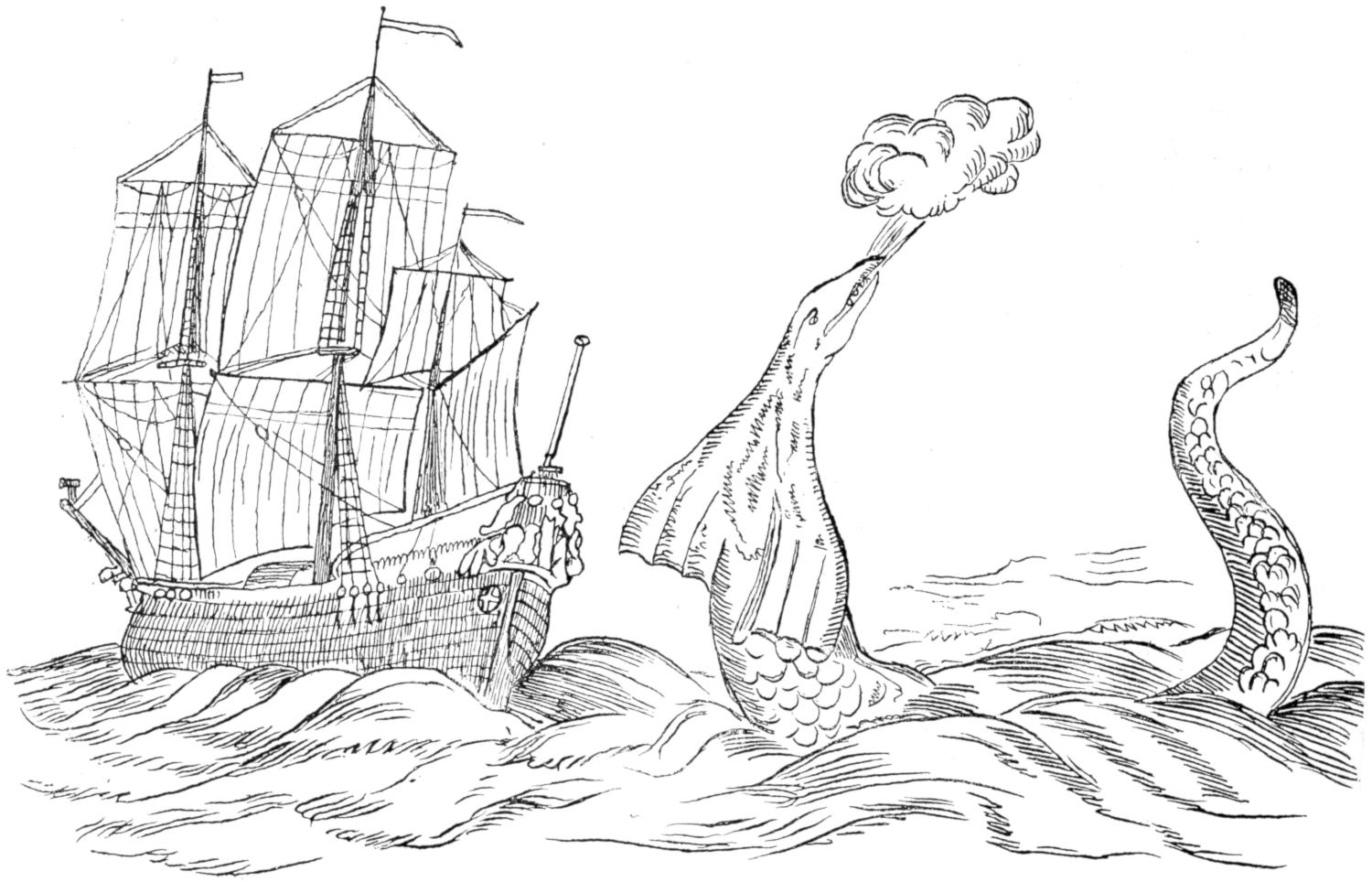
Fig. 21.—The drawing of Bing, as reprinted and altered in the Illustrated London News of 1848.
In the Danish work of Hans Egede Det gamle Groenlands nye Perlustration we read: “that it was seen at 64° lat. before the colony”. “Its body was as thick as the ship and three or four times longer”. Moreover the description of the animal is the same as in Paul Egede’s Continuation of the Journal.
In the German edition of this work, entitled Des alten Groenlands neue Perlustration, Copenhagen, 1742, we read: “that it was seen before the Danish Colony, the Good Hope, that it had two broad flappers on the fore-part of the body”.
In the Dutch edition, entitled: Beschrijving van Oud Groenland, Delft, 1746, the translator did not allow himself so many liberties as the English and the German translators did, but was more correct in his expressions.
In the French edition, entitled Description et histoire naturelle du Groenland, Copenhagen et Genève, 1763, the translator allowed himself the liberty to tell his readers that “when the animal, which was covered with scales, plunged back into the water, it did so with the belly turned upwards!”
In the same year appeared a second German edition (translated from the French) entitled Beschreibung und Naturgeschichte von Groenland, Berlin, 1763, in which we even read that the animal lay upon the water with its belly turned upwards when it plunged back into the water!
In many respects the figure of Mr. Bing and Egede’s text complete each other.
Let us now have a look at both the text and the figures. We may do this most safely, being convinced of the truth of Egede’s words and Bing’s figure. Egede “was a truthful, pious, and single-minded man, possessing considerable powers of observation, and a genuine love of natural history; his statements are modest, accurate, and free from exaggeration. His illustrations bear the unmistakable signs of fidelity.” (Lee, Sea-Monsters Unmasked, p. 65.)
From what has been said of the animal, seen by Egede, we gather that it appeared on the 6th. of July, 1734, in fine weather before the Danish Colony the Good Hope, Davis Straits, Greenland; (Egede says: “the following evening we had very bad weather”, so we may conclude that:) the weather was fine, when the animal was seen; it had a considerable length, say a hundred feet, and was much thicker than a snake of those dimensions would be, say some eight feet; it raised its head, its neck and the fore-part of its trunk high above the surface of the water, it had a long, sharp snout, it blew like a whale (the breath of an animal as large as a whale must of course have been distinctly visible in those cold regions; I also wish to fix the reader’s attention on the figure where the animal is not spouting a stream of water, but where its breath is condensed by the cold, and forms little curling clouds of vapour). It had broad and large flappers. Egede does not say: it had broad flappers on the forepart of the trunk; as Egede does not state that the figure, made by Mr. Bing aboard his ship, directly after the appearance of the animal, is not truthful, we must consider it as being correct; so the animal had two large and broad flappers on the fore-part of the trunk. The body seemed to be covered with a hard skin. For truth’s sake Egede wrote seemed, which is well done; for a hard skin or crust would not have been wrinkled when the animal bends its body. Like all known air-breathing sea-animals of those dimensions the animal must of course have had under its skin a relatively thick layer of bacon, and I myself have often seen that the skin of sea-lions and seals wrinkled, when the animal bent its body in such a manner as the Sea-Serpent of Egede did. And we shall afterwards repeatedly see that the sea-serpent has no scales but a smooth skin, as seals have. And if the animal could have scales, they would be very large ones, considering its colossal dimensions, in which case it must have been easy to see the scales from a distance, though they were wet with the water; but I can hardly believe that one can say of an animal, seen at some distance and quite wet and shining with the water, whether it has a crust or a soft skin. The latter has been the case, for the animal showed wrinkles when bending its body. Its lower part was formed like that of a snake, by which Egede evidently means to say that it was perfectly round and tapered to the end of the tail, and that he did not see any appendages (which does not exclude their presence, for the middle part of the body remained invisible, hidden by the water). The creature plunged backwards into the water. It evidently has a considerable flexibility, as is also shown in the figure. Consequently it cannot have been a snake, which has no dorso-ventral flexibility, nor a gigantic calamary, as Mr. Lee thinks, which has no flexibility at all! It had a very flexible, long tail, almost one half of the length of its body, which was distinctly seen by Egede and figured by Mr. Bing. The tail of the animal, being of a considerable length, tapered in a point, and had no caudal fins, neither horizontal nor vertical ones. The figure shows an eye with a heavy eye-brow, a nostril, and teeth; the flappers have external visible fingers, as sea-lions have; those of porpoises and dolphins are without them. Afterwards we shall more than once have occasion to observe that the sea-serpent’s head is drawn by Bing too large, and the neck too short.
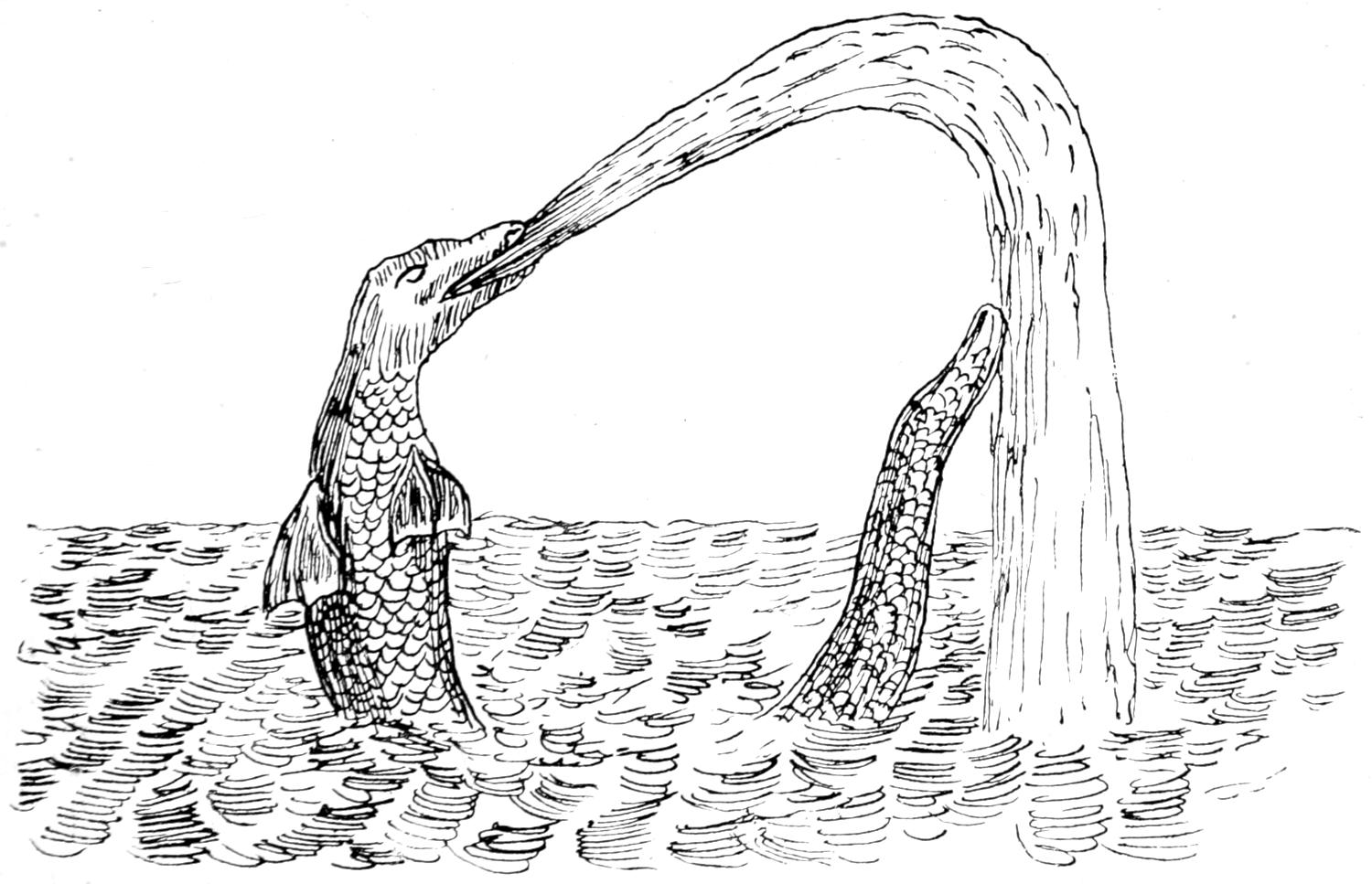
Fig. 22.—Bing’s drawing as copied by Pontoppidan.
Mr. Lee says in his frequently quoted work Sea-Monsters Unmasked, “The sea-monster seen by Egede was of an entirely different kind” (viz. from those mentioned by Magnus and Pontoppidan). I am of the opinion that if Mr. Lee had written: The sea-monster seen by Egede was the same, but seen in an entirely different position, condition and direction, he would have been nearer the truth; for careful inquiry has shown me that the sea-serpents of Magnus and Pontoppidan are the same as those which still appear in the Norwegian seas, and those have all the characters of Egede’s animal. Moreover we saw that the animal, mentioned in our accounts 1, 2, 3 and 4, and according to the descriptions of Magnus and Gesner had the following characteristics: 1. It raises itself out of the water to a considerable height. 2. It swims with vertical undulations. 3. It has an enormous length, probably upwards of a hundred feet. 4. It is much thicker than a snake of the same length would be. 5. It has a row of hairs hanging down from its neck. 6. Its colour is dark. 7. Its eyes are brilliant and flaming. 8. Its food consists of squids, cuttles, crabs and lobsters. 9. It is harmless, if not provoked. 10. It appears in fine weather. 11. It can stretch itself in a straight line.—Of these facts the 1st., 3d., 4th., and 10th. are stated by Egede; he could not mention the 2d., 8th., and 11th., because he did not see the animal swimming or eating. Most probably he could not see the 5th., because he did not see the animal on its back, but as the figure shows, somewhat on its belly and somewhat from aside; moreover there are individuals without a mane. Egede says nothing of its colour, its eyes, its harmlessness. Its colour was evidently a dark brown one, the common colour of large sea-animals, else he would have called it brilliant white, or green, or red. The eyes are figured by Bing, though not described by Egede, but in Pontoppidan’s work we read in a note to Chapt. VIII, § 7, that Mr. Bing mentioned to his brother-in-law, Parson Sylow, at Hougs in the parish of Bergen, that the eyes seemed to be reddish and like a burning fire. So its harmlessness is the only fact we cannot derive with certainty from Egede’s account.
Pontoppidan relating Egede’s observation of the monster gives a copy of Mr. Bing’s figure, but as often occurred in those days, it is not copied with great accuracy, and Bing’s drawing has been altered by Pontoppidan so as to give quite another figure. (Our fig. 22 is a facsimile of that of the German edition.) Mr. Bing was right in figuring the vaporous breath of the animal, and Pontoppidan changes it wrongly into a waterspout of more than 100 feet long! Pontoppidan is convinced, when seeing Bing’s figure, that there are several species of sea-serpents, all belonging to the same genus. I do not wish to discuss this point.
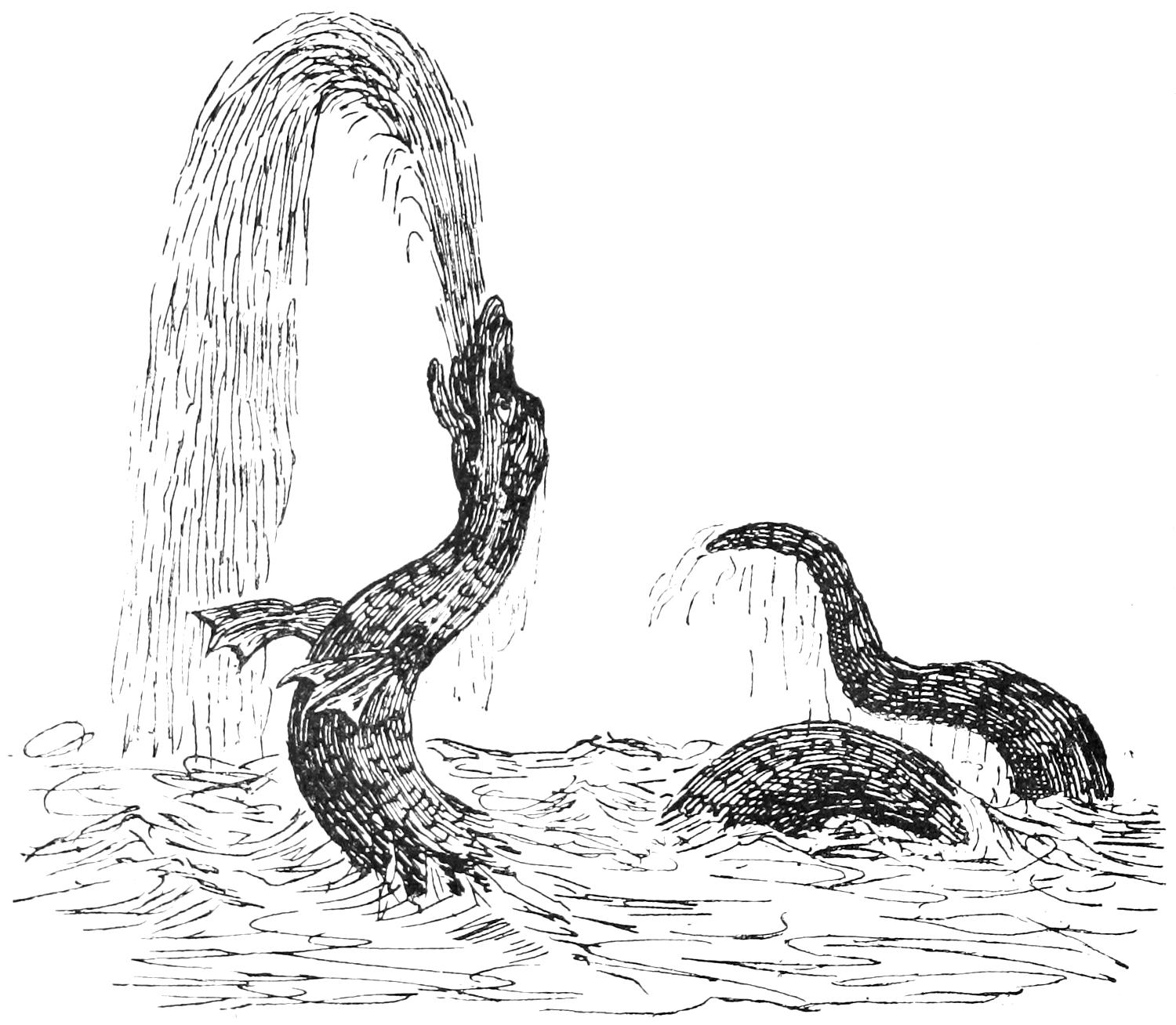
Fig. 23.—Bing’s drawing as altered in Dr. Hamilton’s work.
Still more exaggerated is the figure of Jardine’s Naturalist’s Library, or rather that which Dr. R. Hamilton presents to his readers. He makes of it a serpentine dragon which has also the power of spouting a splendid set of water some twenty feet high, a water-mass equalling nearly half the volume of the animal’s body!
In his Essay towards a Natural History of Serpents, 1742, Mr. Owen repeats only (p. 14, and p. 143) the tales and reports of Olaus Magnus and Gesner.
6.—1743?—(Pontoppidan, Chapt. VIII, § 7).—“It is said that a few years ago a sea-serpent stranded on the cliffs near Amund in Nordfjord, perhaps with high water, and died there and the carrion also caused a dreadful smell.”
7.—1744?—(Pontoppidan, Chapt. VIII, § 7).—“It is also told that a sea-serpent stranded near the Isle of Karmen and that the stranding of sea-serpents took place in more localities.”
There is nothing strange in the stranding of sea-serpents. Unluckily the fear of the Norwegian people of sea-serpents is great enough to keep them far away from them, even from their carrions, and so these accounts don’t mention anything as a result of closer investigation.
8.—1745?—(Pontoppidan, Chapt. VIII, § 1, note).—“A fisherman relates to me that, on Sundsland, two miles from Bergen, he once saw a long, large and strange animal so close to his boat, that the water, brought in motion by the animal, dashed against it, but immediately it disappeared again under water. The head resembled that of a seal, its skin was also as woolly, but the body was as thick and as long as a yacht of fifty tons, and the tail, which seemed to be about thirty-five feet long, tapered towards the end which was as pointed as a boat-hook.”
Though Pontoppidan did not seem to believe that this animal was his sea-serpent, I am convinced that such was indeed the case, because the whole description is exactly that of the animal. It is remarkable that all the persons who saw the sea-serpent so close to their boat, as this fisherman did, agree in giving it a smooth skin; now seals when wet have also a smooth skin, and our fisherman was near enough to the animal to detect the real nature of such a skin, viz. that it is hairy, or as he expresses himself woolly. We shall afterwards more than once meet with statements in which the head is compared with that of a seal. The head, though resembling that of a seal, was of course much larger. The body was as thick and as long as a yacht of fifty tons, say about forty feet, and the tail was about thirty-five feet in length, and tapered to its pointed end, like the animal of Egede and those of the former writers Magnus, Olearius and Ramus, who compared the body with that of a snake. As the fisherman mentions the length of the tail, it is evident that he could see the beginning of it, so that it may be supposed that there was a difference in thickness between the body and the tail.
9.—1746, August.—(Pontoppidan, Det förste Forsög, etc.).—Pontoppidan relates:
“Last winter I happened to meet the Royal Commander and Pilot-general at Bergen, Mr. Lorenz von Ferry, and we spoke about this subject. He told me that for a long time he had doubted the existence of the sea-serpent, but that at last his experiences in 1746 had convinced him. And though I could not say anything of importance against it, he ordered to my satisfaction and that of others, two seamen, who were with him in his boat, and had seen the animal and its blood which coloured the water red after a shot of von Ferry at it, to appear before the public court of justice at Bergen. What those men confirmed on oath may be found in the following instrument which I received in original, and which I therefore think valuable enough to communicate in extenso:”
“Albert Christian Dass, His Royal Majesty’s Stadtholder at Bergen, Hans Christian Gartner, His Royal Majesty’s Councillor of Justice and Commerce, at the same time Secretary of the town, together with Jan Clies, Ole Simensen, Ole Brinchmand, Joergen Koenig for Conrad von Lange, Matthias Gram for Elias Petrus Tuchsen, Claus Natler for Didrich Haslop, Jochem Foegh for Henrich Hiort, and Joergen Wiers for Hans Christian Byszing, sworn citizens and additional deniers there, declare, that on February the 22th., 1751, the Procurator Johann Reutz appeared before the public court of justice at Bergen, and presented a paper he had received that day, and bearing the date of the day before, from the honourable Captain and Pilot-general Lorenz von Ferry. And as the services of the appearer are requested in it, to supply him a judicial hearing of witnesses, concerning the event mentioned in the same paper, so the appearer, being there for that purpose, pointed out two men living in this town, named Niels Petersen Kopper and Niels Nielsen Anglewigen, begging that these men might be admitted to a declaration on oath, that all has happened in particulars so as is mentioned in the paper, which he begged to be registered in said instrument. The above mentioned paper was read to the witnesses and runs as follows:
“Mr. Johann Reutz.” “Sir,”
“In the latter end of August, in the year 1746, as I was on a voyage, on my return from Trundheim, on a very calm and hot day, having a mind to put in at Molde, it happened that when we had arrived with my yacht within a mile of the aforesaid Molde, being at a place called Jule-Naess, as I was reading in a book, I heard a kind of murmuring voice from amongst the men at the oars, who were eight in number, and observed that the man at the helm kept off from the land. Upon this I inquired what was the matter, and was informed that there was a sea-serpent before us. I then ordered the man at the helm to keep the land again, and to come up with this creature of which I had heard so many stories. Though the fellows were under some apprehension, they were obliged to obey my orders. In the meantime the sea-snake passed by us, and we were obliged to tack the vessel about in order to get nearer to it. As the snake swam faster than we could row, I took my gun which was loaded with small shot, and fired at it; on this he immediately plunged under water. We rowed to the place where it sank down (which in the calm might be easily observed) and lay upon our oars, thinking it would come up again to the surface; however it did not. Where the snake plunged down, the water appeared thick and red; perhaps the small shot might have wounded it, the distance being very little. The head of this sea-serpent, which it held more than two feet above the surface of the water, resembled that of a horse. It was of a greyish colour, and the mouth was quite black, and very large. It had black eyes, and a long white mane, which hung down from the neck to the surface of the water. Besides the head and neck, we saw seven or eight folds, or coils, of this snake, which were very thick, and as far as we could guess there was a fathom’s distance between each fold. I related this affair in a certain company, where there was a person of distinction present, who desired that I would communicate to him an authentic detail of all that happened; and for this reason two of my sailors who were present at the same time and place where I saw this monster, namely, Niels Petersen Kopper, and Niels Nielsen Anglewigen, will appear in court, to declare on oath the truth of every particular herein set forth; and I desire the favour of an attested copy of the said descriptions.”
“I remain, Sir, your obliged servant,” “L. von Ferry.”
“Bergen, 21st. February 1751.
“After this the above-named witnesses gave their corporal oaths, and, with their finger held up according to law, testified and declared the aforesaid letter or declaration, and every particular set forth therein to be strictly true. A copy of the said attestation was made out for the said Procurator Reutz, and granted by the Recorder. That this was transacted in our court of justice we confirm with our hand and seals.”
“Actum Bergis, Anno, Die et Loco ut supra.”
“A. C. Dass.” “J. Clies.” “O. Brinchmand” “M. Gram.” “J. Foegh.”
“H. C. Gartner.” “O. Simensen.” “J. Koenig.” “C. Natler.” “J. Wiers.”
As to Mr. von Ferry’s declaration that the head of the sea-serpent resembled that of a horse, we cannot give another explanation than that it evidently was held at nearly right angles with the neck, that the nostrils were wide opened and large, and that the mane on the animal’s neck altogether must have led him to think so. The statement that the colour of the head was greyish, apparently contradictory to what had as yet been said about the animal’s colour, viz., that it is a dark brown one, may be explained, I think, as follows: the sea-serpent has a skin as woolly as seals and sea-lions have; it had swum a long time with its head two feet above the water, and the weather being very hot, its skin was dried up, and had got a colour quite different from that when being wet. When wet the common seal has a greenish or brownish black colour, but when dry a greyish yellow one, with a somewhat dark greenish hue; and the spots become less visible. So we see that sea-lions are dark brown when wet, but when lying on the stone border of their basin in our Zoological Gardens they very soon become dry in the sunbeams and show a greyish yellow colour. But returning to Mr. von Ferry’s sea-serpent, the mouth, however, was black and very large. The eyes were black, the mane long and white (being dry) hanging down to the surface of the water. The coils, seven or eight in number, were very thick and the distance between them was a fathom. The colour of the coils is not mentioned; we may suppose that they were dark brown.
Prof. W. D. Peck (Mem. Amer. Acad. Arts. Sc. IV, I, 1818) calls this account a rational and credible one. “The figure which he” (Pontoppidan) “gives seems to have been made from the description of Capt. de Ferry, the officer above alluded to. In this figure, the head and jugular region are raised out of the water; a little below the head is a mane which seems to be inserted all round the back of the neck. The appearance of this mane was most probably an optical deception, and was nothing more than the water displayed by the neck in the progress of the animal through it, returning to its level. It had probably no mane. But of the existence of the animal, the testimony presented by the Rev. Bishop is sufficiently conclusive.”
Prof. Peck seems not to have read Pontoppidan so accurately as might be expected from him, for the figure in Pontoppidan’s work has quite another origin, as we shall see below. Prof. Peck would not have written his supposition of the mane, if one of the eye-witnesses of the animal near Cape Ann (see below, 1817), had seen a mane. Moreover Pontoppidan asserts that nearly all agree in representing the animal with a mane, and we shall read of several declarations further on.
As to the colour of the coils, Mr. Lee seems to be at one with me for in his frequently quoted work Sea Monsters Unmasked he says: “The supposed coils of the serpent’s body present exactly the appearance of eight porpoises following each other in line”, and: “I believe that in every case so far cited from Pontoppidan, as well as that given by Olaus Magnus, the supposed coils or protuberances of the serpent’s body were only so many porpoises swimming in line, in accordance with their habit before mentioned.” If Captain von Ferry had described the coils of his serpent as being white or red, Mr. Lee certainly would not have supposed that they were eight porpoises.
Further Mr. Lee remarks: “If an upraised head, like that of a horse, was preceding them, it was either unconnected with them, or it certainly was not that of a snake; for no serpent could throw its body into those vertical undulations.”
Very well, but if Mr. Lee wishes to explain the coils by porpoises, he ought to account for the head which preceded them; this he silently passes by, only saying it was not that of a snake. A fine explanation indeed!
10.—1747?—(Pontoppidan, Chapt. VIII, § 7).—“Governor Benstrup is said to have had some years ago a similar meeting with the sea-serpent” (to Mr. von Ferry’s) “and he has figured it. I should like to possess this figure to show it to my readers. I, however, show here another one sent to me by Parson Hans Stroem, which he himself has copied from the original.”
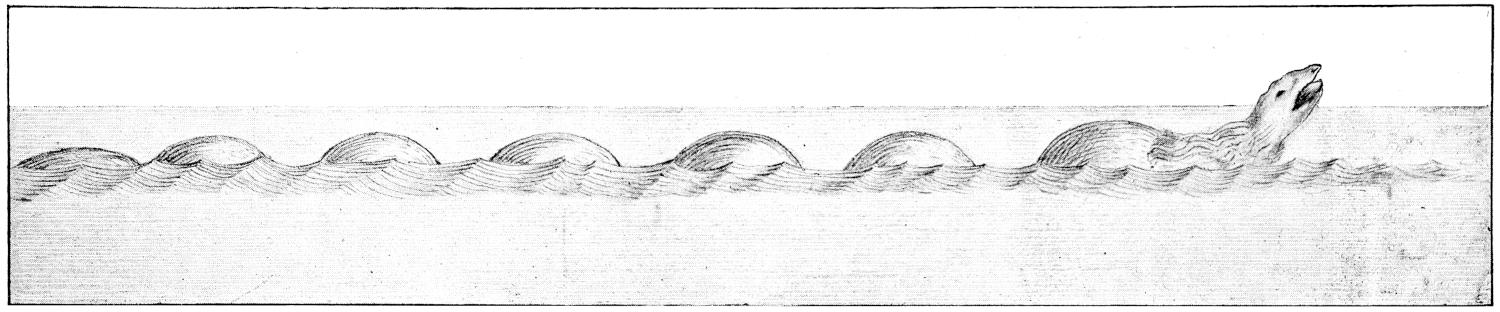
Fig. 24.—The Sea-Serpent as seen by Governor Benstrup.
The figure shows a head with a mane, and six coils of the body. The nostril is indicated, the mouth has no teeth, the eye is large.
It is remarkable that Mr. Lee tells us: “The figure of the sea-serpent given by Pontoppidan was drawn, he tells us, under the inspection of a clergyman, Mr. Hans Strom, from descriptions given of it by two of his neighbours, Messrs. Reutz and Tuchsen, of Herroe; and was declared to agree in every particular with that seen by Captain de Ferry, and another subsequent observed by Governor Benstrup.”
Not only does not the first part of this statement tally with the words of Pontoppidan, but also the second part is discrepant, for the learned Bishop goes on saying: “This figure agrees with the descriptions given by two of his neighbours Messrs. Reutz and Tuchsen.”
Mr. von Ferry is not mentioned at all on this occasion by Pontoppidan!
Mr. Benstrup’s figure has also been copied by Dr. R. Hamilton in the volume of Phocidae (seals) of Jardine’s Naturalist’s Library, but it has been greatly exaggerated. It seems that Dr. R. Hamilton thought it to be the same animal as that seen by Egede, for he figures both animals with the same head and features. Of the figure of Benstrup too he makes a serpentine dragon, swimming with corkscrew motions! O horror!
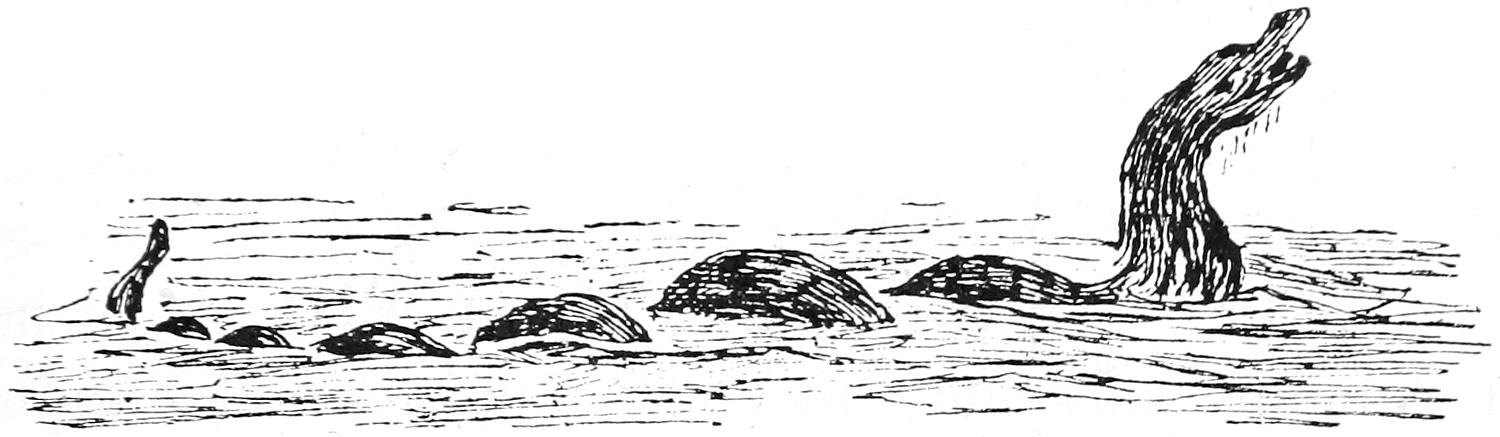
Fig. 25.—Benstrup’s drawing as altered in Dr. Hamilton’s work.
11.—1748?—Mr. Reutz of Herröe declared to Pontoppidan that the drawing of Parson Hans Stroem agreed even in particulars with what he saw of the serpent several times when he went in his boat to church.
12.—1749?—Also Mr. Tuchsen of Herröe made the same declaration. He too saw the animal several times when he went to church in his boat. Pontoppidan adds: “and then I do not even mention many other persons of the same high rank and trustworthiness. The same Mr. Tuchsen is the only one who told me that he distinctly saw the difference in thickness between the trunk and the tail of the animal, viz., the trunk is not gradually growing smaller where the tail begins, but becomes smaller at once and very distinctly. The body is as thick as a barrel of two hogsheads. The tail is tapering towards its end, which is very pointed.”
This account is remarkable for the reason that it mentions the fact that the beginning of the tail is distinctly visible. So we must infer from it that the animal had thighs, and consequently had also hind-limbs. And knowing that the fore-limbs which Egede saw, are flappers, the hind-limbs too must be flappers; consequently the animal has four flappers.
13.—1750?—Pontoppidan, telling what he has learned from the north-sailors says:
“One of these north-sailors tells that he was once so close to the serpent, that he might have touched its smooth skin.”
Here is stated by a person who saw the sea-serpent close to his boat, that the skin is smooth, a statement apparently contradictory to that of the fisherman (no. 8), who declared it as woolly as a seal-skin. The fact is that the one has distinctly recognized the hairy nature of the skin, whilst the other did not discern it.
14.—1751?—(Pontoppidan, Chapt. VIII, § 1, note). “An incertain rumour tells me, that some peasants of Sundmöer have lately captured in their nets a serpent of eighteen feet with four paws under its belly; which they brought ashore. Thus it resembled a crocodile. The peasants in their terror fled from their nets, and by doing so they gave an opportunity to the serpent to do the same.”
Though the Bishop does not call this animal a sea-serpent, I am sure it was one. In the Norwegian and Danish languages an Orm is a serpent, viz., a long slender animal with a rather small head and a pointed tail; and as it was captured in nets in the sea, it is certain, that this animal, which Pontoppidan compares with a crocodile, having a slender and round body like a snake and four paws (or flappers) is the same as the animal afterwards seen by Captain Hope (no 119) and compared by him with an alligator. The dimensions not surpassing twenty feet, the animal must have been very young.
Now let us see what Pontoppidan himself says of the sea-serpent, after having heard hundreds of eye-witnesses:
“The sea-serpent, serpens marinus, by some people also called Aale Tust, is the second wonderful and frightful sea-monster which ought to be studied by him who looks with delight on the great deeds of the Lord, and which is considered as the greatest wonder next to the Kraken, which will be described hereafter. Before describing its habit and shape, I feel again obliged to prove the real existence of the serpent, as I did before with the mermen.”
The first kind of wonderful and frightful sea-monsters were the mermen and mermaids. At present, we know with certainty what were and are the mermen and mermaids of ancient days and our own time. All zoologists are convinced they were nothing else but sea-cows or manatees (Thrichechus manatus L. and Thrichechus senegalensis Desm.) or dugongs (Dagungus dugung Gmel.). Mr. Lee believes that the occurrences of mermen and mermaids in the northern seas and even in the waters round Great-Britain and Ireland “afford some slight hope that the remarkable rytina (Rytina borealis Gmel.) may not have become extinct in 1768, as has been supposed, but that it may still exist somewhat further south than it was met with by its original describer, Steller.” Some of the mermen of Pontoppidan were nothing else but Bladdernosed seals (Cystophora cristata (Erxl) Nilss) as I already proved in my little paper in the Album der Natuur of 1882, and I see that Mr. Lee comes to the same conclusion (Sea Fables Explained, London, 1883).
We also know with certainty that the Kraken of the Norwegian tales and the gigantic Octopus of Denys de Montfort really exist, and that they are nothing else but gigantic calamaries and cuttles (Cephalopoda).
But we don’t know with certainty what the Great-Sea-Serpent really is. That it exists, has already been stated by the highest scientific persons, so no doubt need any longer be felt as to that fact.
“If it were not the wise and careful arrangement of the Creator, that this sea-animal perpetually lives in the depths of the sea, except in July and August, its pairing-time, during which it appears, when the sea is quite calm, but dives as soon as the wind ruffles the surface of the water; if this arrangement, I say, were not thus made for man’s safety, the existence of the sea-serpent would want fewer proofs, than even in Norway, thanks to God! is the case, the shores of which are the only ones of Europe, frequented by this monster.”
Here again it is stated that the sea-serpent is only seen in July and August (and Pontoppidan believes that these two months are the pairing-time of the animal), that it only appears in calm weather, and dives under water as soon as the wind rises. The writer believes that the animal frequents only the shores of Norway. According to an account of Olaus Magnus, it seems, however, that the sea-serpent was also seen in the Baltic Ocean, and we know now for certain that the animal which Egede saw in Davis’ Straits at 64° N. lat., was also our Sea-Serpent. Evidently our Bishop did not hit on the idea that the Sea-Serpent could be a migratory animal.
“Like all who are enemies to credulousness I too doubted of the existence of the sea-serpent, when at last my doubt was dispelled by incontestable proofs. Amongst our ablest navigators and fishermen of this country there are many hundreds who prove the existence of the sea-serpent as eye-witnesses, and they agree pretty well in their descriptions, though there are many others who declare that they know the sea-serpent only from the tales of their neighbours. I, however, in my inquiry hardly met with a person who, when born in the Northern provinces, did not answer immediately with the greatest certainty and assurance. Nay, some so-called north-sailors, who are here (in Bergen) every year for commercial interests, even consider it as a shame to be earnestly questioned on that subject. They consider this question as superfluous as that one, whether there exists a cod-fish or an eel.”
We see hereby that in Norway the belief in the existence of the sea-serpent was as firm as possible amongst the sea-faring people.
“Though no one has ever been able to measure this animal, many witnesses agree in telling that the serpent must be as long as a cable, viz., 100 fathoms or 300 ells, whilst it lay on the surface of the water, so that only here and there behind the head, which is held upwards, some parts of the back were visible, which were also held upwards, whilst the serpent bent; and from afar one would have believed that he saw some tuns or hogsheads, which floated in a line, so that there was a space between each of them.”
Though the length of a cable or six hundred feet given to the sea-serpent is exaggerated, it may be more than 100 feet, why not? For there are other sea-animals, such as the whale, which measures more than 88 feet, and the fin-fish (Balaenoptera loops) which sometimes attains a length of about 105 feet.
It has been stated to Pontoppidan by most of the eye-witnesses that the animal shows by its vertical undulations several coils above the water, and that these coils resembled from afar tuns or hogsheads floating in a line. It is very remarkable that these facts are repeatedly stated by witnesses who are independent of one another, even by persons who never heard of a sea-serpent.
“The head of all these animals has rather a high and broad forehead; some, however, have a sharp snout, others a quadrangular beak as cows and horses have, with large nostrils, and on the sides there are a few stiff hairs, or bristles, as other animals have with a good nose. And that the sea-serpent has a good nose, is proved by its flying away at the smell of castoreum, which the people who go out in summer to fish on the great bank, will never forget to take with them.”
The various ways of describing the head may be owed to this that different persons saw the head in different positions, that some of them saw it for such a short moment that it was impossible to say with certainty what form it had. It is not always explicable why one describes the head of an animal in one way and another in quite another. As to me I see in the head of a seal that of an otter, others distinctly see a man’s or a cat’s head in it, and the people in the service of the Zoological Gardens in the Hague exclaim “why, I can very well understand why that animal is called a sea-dog; it has a dog’s head, to be sure!” The fact is that we don’t know with any certainty the form of the sea-serpent’s head, but most probably it resembles that of a sea-lion, which has also a head with a broad and flattened forehead, rather pointed, seen from one side, and blunt, seen in front. Here mention is also made of the large nostrils and the bristles on the lips of the animal.
“The eyes are, as one says, large and blue, they are rather like a pair of pewter plates.”
The eyes again are described differently. We have already heard them described as being black, red as fire, and now they are blue, viz. the ordinary blue, called tin-colour, that is a bluish-grey or a greyish-blue; so a grey rabbit is also called a blue rabbit; and grey fowls are called blue-fowls; there is rather a lilac tint to be observed in it. I cannot explain those differences otherwise than in the following way: when an observer sees the eyes in an oblique direction, he will always see this grey colour; when more in the axis of the eye, the colour is a bright dark black one, and when occasionally seen thus that the “tapetum lucidum” of the eye reflects the day-light, it is, as if the eyes were sparkling like fire.
“The serpent’s colour is dark brown over the whole body, but thereby spotted, and with light streaks, or maculated with distinctly visible light spots, like a turtle or a lackered table, except in the region of mouth and eyes where it is rather dark, so that it resembles those horses which we call moorish-heads or black-faces.”
We shall repeatedly have occasion to observe that these statements are correct. All eye-witnesses agree in this point.
“That this animal spouts like a whale through its nostrils, as Mr. Egede saw, has never been seen here by anybody.”
It is remarkable that though Egede has nowhere asserted that his animal was a sea-serpent, our learned Bishop seems to have recognized it as such at once, believing, however, it to be another species of the same genus. We have already stated that Egede did not see the animal spouting water, but he only saw the warm breath of the animal condensed in the cold air, just as Bing, his brother missionary, figured it, and just as it is mentioned by accurate observers of whales. It is very easy to understand that Egede saw it, for the animal had apparently been under water for a long time; it suddenly appeared with so much violence, that a considerable part of its body was elevated above the surface of the sea, whilst, by a violent blow, the breath, hitherto held in, was pushed into the air. In this way parts of mucus of the inner surface of the nostrils and the little quantity of water adhering to the valves of the nose, must have been driven away at the same time, and the whole effect has been very accurately described by Egede and figured by Bing, but has afterwards been exaggerated and altered by Pontoppidan (see our fig. 22), and also in our century by Dr. R. Hamilton (see our fig. 23).
“But many agree in telling that when it swims rapidly through the water, it propels before it the water with such a violence that it murmurs like a small mill-brook.”
This peculiarity has been repeatedly confirmed by the most trustworthy eye-witnesses as we will observe more than once afterwards.
“Also the common sea-serpents of our shore differ from those of the Greenland-coasts, seen by Egede, in having no rough and hard skin, but a smooth one like a mirror, except on the neck, on which it has a mane, resembling sea-weed.”
Remarkable again is the statement of its smooth skin, remarkable too is the declaration of the sea-serpent having a mane, and most remarkable the resemblance of this mane to sea-weed, an observation made by several eye-witnesses independant of each other. It is surprising that Pontoppidan silently passes over the difference between his two kinds of sea-serpents: that the Greenland one has two flappers on the fore-part of its trunk.
“As they cast their skin like common snakes, some people pretend, that a few years ago, a table-cloth has been made of such a slough found in the harbour of Kobbervueg. This made me so curious, that I wrote to one of the inhabitants of that harbour, to inquire after it, and as the proverb says, to get a strap of the skin. However, there was nothing of that skin, at least at that time. And a man of that harbour, who came to Bergen, told me he knew nothing at all about it.”
As to the renewing of the skin, we see that the Bishop was taken in! But we must respect him that he did not rest before he knew the truth or the untruth of the fact, and that he also mentions his inquiry. Though the Bishop may have been deceived, his endeavours to find out the truth enhance his trustworthiness.
“That the flesh of these animals is soft, has been stated by some who tell of a small, and probably young sea-serpent which was taken unexpectedly on board a ship. It instantly died, and nobody dared to touch it, till the crew was forced at last to cast it over board, owing to the intolerable smell arising from the soft and tough slime, in which it was dissolved by the action of the air. But this animal cannot have been a sea-serpent, for, as will be remembered, it is only seen in the calmest weather and sinks into the deep at the least motion in the air.”
We agree with the Bishop, though for other reasons than he.
After having related the two strandings of a sea-serpent (no. 6, 7), Pontoppidan goes on:
“I would that in such cases some one had inquired whether this serpent had a strong backbone, which seems to be necessary to keep together the mass of such a gigantic animal. The sharks, however, which are also cartilaginous fishes without bones, have such a backbone, but it is very subtile and even in the largest sharks only ten ells long. The sea-serpent, like sharks, eels and whales also seems to be a viviparous, not an oviparous fish, and most probably it seeks the other sex in the above mentioned season. It is said, that when this animal is ruttish, it looks after ships and boats, which it probably takes for something else. If this be true, as seamen say, those are wrong who think that the sea-serpent is not born in the sea, but on land, and lives in forests and among mountains, till it can no longer hide its body in it; it is said that it then seeks some river, and floats out to the sea, as some people pretend to have seen.”
There is but one single reason why we think the sea-serpent is a viviparous being, viz. its hairy skin. It is certain that an animal with long hairs on its neck, has also hairs on its whole body, which has also been stated once already (no. 8), and hairy animals are viviparous (except the Monotrymata). Most probably Pontoppidan called the sea-serpent viviparous for the same reason, otherwise I cannot find a single fact that would have led him to this conclusion. Its seeking the other sex cannot be a reason, for all animals do so in the warm season. I think that it looked after ships because it is a curious animal, knowing no fear of strange things or persons. It is evidently a fable that it brings forth young ones on the shore, probably originating in the fact that the sea-serpent has sometimes been seen in fjords, even in small ones, or probably originating in the fact that also seals creep ashore in the critical moment, whelp there and return with their young ones to the sea as soon as possible.
“The question which troubles us most is the following: Is this animal dangerous to men, and how are they to defend themselves against this monster? Arendt Berndsen (Danmarks og Norges frugtbare Herlighed p. 308) answers the first question in the affirmative, and tells us that the sea-serpent, as well as the sperm-whale, even often runs down men and ships. That such things happened in this region, I never heard of with certainty; but the north-sailors tell that it had occasionally happened that the sea-serpent raised itself and threw itself straight across a boat, nay across a large yacht of several hundred tons, and had dragged it to the depths. One of these north-sailors tells that he was once so close to the serpent, that he might have touched its smooth skin; he mentions at the same time that this serpent sometimes snatches a man from a boat, with its head raised upward and gives the others of the crew an opportunity to escape. Whether these reports are to be believed or not, I don’t know, because it is uncertain whether these serpents live on prey.”
We see the Bishop weighing and considering whatever he heard, and not accepting everything for truth. We think that Pontoppidan is right in giving no credit to the narrative that the sea-serpents made themselves guilty of sinking ships and eating men. It is mentioned already twice, that the sea-serpent raised itself high above the surface of the water; yet the flappers are not mentioned; so we may conclude that these are situated far from the head, or, what is the same, that the animal has a very long neck.
Pontoppidan further tells us that the sea-serpent sometimes encloses ships by laying itself round them in a circle, that the fishermen then row over its body there where a coil is visible, for when they reach the coil, it sinks, while on the contrary the invisible parts rise. Further, that the serpent swims with an incredible velocity, and that the fishermen who are much afraid of it, when seeing that it follows them, throw any object, for instance a scoop, at it, when the animal generally plunges into the deep. But most fishermen are in the habit of taking castoreum with them, for the serpent cannot bear the smell of it. And still further on he tries to explain the considerable length of the animal some witnesses speak of; the Bishop namely believes that two or more individuals followed each other, for they are only seen in rutting-time. And in his tenth paragraph, trying to answer the question, why those large serpents only frequent the northern seas, he says:
“To this question I answer that the Creator of all beings disposes of the dwellings of His different creatures in different places by His wise intentions, which are not to be known to us. Why won’t the reindeer thrive anywhere but in the high and cold mountains? Why do the whales frequent only the north pole? Why are India and Egypt almost the only countries, where men have to fear crocodiles? No doubt because it pleases the wise Creator.”
Here Pontoppidan takes leave of the Sea-Serpent, and begins to treat of the large snakes mentioned by Plinius and other ancient authors, and we too will take leave of our honest and trustworthy Bishop, who has so often been laughed at for what he relates in his chapter on monsters. And yet two of his monsters, the mermaids and the Kraken, are unmasked, why cannot his third be accounted for?
Now let us again collect all the facts which are not impossible from a zoologist’s point of view.
We have before us an animal of the following imperfect description:
The whole length of this animal far surpasses one hundred feet, and the smallest individual ever seen measured eighteen feet. The greatest thickness or diameter seems to be in the foremost third of its whole length, and in large individuals surpasses ten or even fifteen feet. Its head is small in reference to the body, its neck is long and slender, round as the body of a snake or eel; the thick trunk too is round: The tail is also round, thinner than the body and gradually grows thinner to its end, which is pointed. The animal has four flappers. The foremost are probably found about one fourth of the length, the hindmost probably in the middle of the whole length. The skin of the animal is hairy or woolly as a seal-skin; when wet it is smooth and glittering as a mirror. A long mane hangs down from the neck, and that mane is sometimes described as resembling sea-weed; when dry, the mane is whitish, or pale. The head is described as resembling that of a seal, or that of a horse. It tapers to the nose of the animal, so that some witnesses declare it has a sharp snout, others, however, that its end is like that of a cow’s, or a horse’s head, it has a broad and high, but flattened forehead. The nostrils are large, but as they are not always seen, it is evident that the animal can close them like a seal; on the lips some stiff hairs or bristles are planted. The colour of the head, when wet, is dark brown, when dry, however, greyish, except round the mouth and the eyes, where it is almost black. The mouth is large and provided with teeth. The eyes are large, sometimes described as being bluish and dull, sometimes black, glittering and brilliant, and sometimes reddish as a burning fire. We have already tried to explain these different statements. Its eye-brows are distinctly visible. Of the neck no particulars are observed except that it is long, round, and bears a mane, I should say like that of the Antarctic Sea-lions (Otaria jubata) but much more developed. Its fore-flappers are broad and large, and have probably an indented hind-edge, for Mr. Bing drew externally visible fingers. Of its hind-flappers nothing is mentioned. There is a visible difference in thickness between the trunk and the very long tail of the animal: the body is not gradually growing smaller where the tail begins, but becomes small at once, and very distinctly. Here the animal’s hind-flappers must be placed. The colour of the body is said to be a dark brown, spotted and with light streaks, or marked with distinctly visible light spots. It has an astonishing flexibility in the neck as well as in the trunk and in the tail. It can bend its body sideways and backwards, and undulate it up and down like a rope. When the animal bends till it is U- or horse-shoe shaped, the skin obtains many folds or wrinkles. The mode of swimming is mostly by vertical undulations, which are partly visible above the surface of the water; the end of the tail is always hidden under water when the animal swims. From afar the visible parts of the coils are said to resemble tuns, buoys, wine-barrels or hogsheads. The coils are either very large, and then 7 or 8 of them are visible, and a distance of a fathom is between each two coils, or they are very small, and then it is said that twenty-five of them are visible. This is only to be explained by the degree of speed with which the animal undulates its body. For the same reason it also swims more or less swiftly; it may also swim with its body in a straight line, using in this case of course its flappers; this, however, happens very seldom; when swimming rapidly it propels the water before it with such a violence, that it boils and splashes up, with foam and a distinctly audible rushing. When swimming, the animal holds its head two feet above the surface of the water. Sometimes it raises its neck and head to a considerable height. Once the condensed breath of the animal was visible, and it was said to blow like a whale. It is only seen in summer and in fine weather. It is harmless when not provoked, it is curious and stupid. It feeds probably on cuttles, lobsters and crabs, (certainly however on fish.).
Now we will go on with the perusal of the accounts concerning the animal and we shall observe that in general the accounts or rather the descriptions of the eye-witnesses repeat, and sometimes even in particulars, what we have gathered from the 14 above mentioned accounts and from what Pontoppidan has taught us. I first invite the reader to follow me to the eastern coasts of the United States, next to the Northern Pacific, on the western coasts of Scotland, then again to the United States, and finally to Norway. In all these places, nay in every part of the world we shall meet with the animal which we shall find to be a true cosmopolitan, though the Atlantic seems to be its proper place of residence.
15.—1751.—In a letter from Capt. George Little to the Rev. Alden Bradford, printed in the second volume of Silliman’s American Journal of Science and Arts, we read:
“A monster of the above description was seen in the same place, by Joseph Kent, of Marshfield, 1751. Kent said he was longer and larger than the main boom of his sloop, which was 85 tons. He had a fair opportunity of viewing him, as he saw it within ten or twelve yards of his sloop.”
In the “above description” the sea-serpent is described as having the appearance of a large black snake, from 45 to 50 feet long, with a head of nearly the size of that of a man, which he carried four or five feet above the water, and with the greatest diameter of 15 inches. The individual which was seen by Joseph Kent was evidently larger; by “the same place” is meant Round Pond in Broad Bay and near Muscongus Island.
Knud Leems, as we learn in A. de Capell Brooke’s Travels through Norway, a northern divine, wrote his Beskrivelse over Finmarkens Lappen, 1765, in which he mentions, p. 332, the sea-serpent in the following terms:
“The Finmark Sea also produces the hydra or sea-serpent, a huge monster, forty “passus” long, with a head resembling in size that of large sea-fishes, in shape that of a snake. This beast has a neck with a mane like a horse’s, a grey back and a whitish belly. In the dog days, when the sea is free from wind, the sea-serpent will come to the surface, bend itself in several coils, of which some are partly visible above the water, whilst others remain hidden under it. The seamen greatly fear this monster, and they do not trust themselves on the sea, when the animal is on the surface.”
The length of forty “passus”, i. e. 200 feet, the large head, resembling that of a snake, the mane, the grey back, the habit of the animal to swim with vertical undulations, are all characters known to us. We have here a new one, viz. that the belly is whitish, which we shall frequently meet hereafter. It is, however, not the belly that is meant here, but the animal’s throat. The animal’s neck being cylindrical, and its flappers constantly hidden under water, the observers thinking that the animal is eel-shaped, always call its throat “the belly”. We may safely suppose that the whole throat and the breast were seen, though not described, by Hans Egede, but that even he did not see the true belly.
16.—1770?—In a letter from Mr. Mc. Lean to the Rev. Alden Bradford written in Aug. 1803, and published in Silliman’s American Journal of Science and Arts (Vol. II) we read:
“One of the same kind was seen above thirty years ago, by the deceased Capt. Paul Reed, of Boothbay.”
17.—1777 or 1778.—(Mem. Amer. Acad. Arts Sc. Vol. IV, Part I).
“The next notice is from Capt. Eleazar Crabtree, who saw it in the same (Penobscot) Bay about the year 1785; he estimated its length at sixty feet, and its diameter he thought equal to that of a barrel, which is about twenty two inches.”
A testimony on oath was forwarded by Capt. Crabtree to the American Academy of Arts and Sciences, “but this was lost or mislaid.”—Fortunately, however, the notice was afterwards found back, and, as Prof. Bigelow (see Silliman’s Am. Journ. Sc. Arts Vol. II) says, “is now in the hands of the corresponding Secretary of the Academy,” Mr. John Q. Adams, “where it may be seen.”
Mr. A. Bradford anxious to have all the information he could get, did not rest satisfied till he had a testimony of Capt. Crabtree. Capt. Crabtree, however, at that time an old man did not write this testimony himself, but had it written by another in his presence and signed it as a correct statement. It is published in the above mentioned Journal, Vol. II, and runs as follows:
“Capt. Crabtree, now of Portland, (late of Fox Islands, in the Bay of Penobscot), declares, that in the year 1777 or 1778, upon information of a neighbour, that a large serpent was in the water, near the shore, just below his house, and having often been told by individuals that they had before seen a similar sea-monster in that quarter, and doubting of the correctness of their reports, was induced to go down to the water to satisfy his own mind—that he saw a large animal, in the form of a snake, lying almost motionless in the sea, about thirty rods from the bank where he stood—that his head was about four feet above water—that, from the appearance of the animal, he was 100 feet in length—that he did not go off to the animal through fear of the consequences, and that he judged him to be about three feet diameter; he also says, that before that time, many people, living on those islands, on whose reports he could depend, had declared to him that they had seen such an animal—and that more than one had been seen by several persons together.”
“Signed” “Eleazar Crabtree.”
We have again the statement that the sea-serpent held its head four feet above the surface of the water; its length was estimated at 100 feet, its diameter three feet; it was evidently this slenderness which led Capt. Crabtree to compare the sea-serpent with a snake. The undulations are not mentioned, consequently most probably it lay stretched out.
18.—1779.—(Mem. Amer. Acad. Arts Sc. Vol. IV. P. 1). “It appears by papers sent to the Academy in the year 1810, that this serpent was first seen in Penobscot Bay about the year 1779, by Mr. Stephan Tuckey: he compared it to an unwrought spar (meaning probably one of spruce), which the scaly surface and dark colour of the animal would very much resemble; he thought it fifty or sixty feet in length.”
It is evident that Mr. Stephan Tuckey only compared it with an unwrought spar, and estimated the length of the visible part to be fifty or sixty feet. Now Mr. W. D. Peck adds: “which the scaly surface and the dark colour of the animal would very much resemble”. I, however, take it that the animal swam with its body in a straight line, elevating its back but very little above the surface of the water, yet showing a length of fifty to sixty feet, and so the back of the neck and trunk quite covered with a mane resembling sea-weed, and the dark colour of the animal must have led Mr. Stephan Tuckey to the comparison with an unwrought spar.
19.—1780, May.—“Captain George Little” who saw the animal, wrote “a letter” containing his observation to the American Academy of Arts and Sciences, “but this letter is lost or mislaid” (Mem. Amer. Acad. Arts Sc. Vol. IV, P. 1.). When we consult Silliman’s Am. Journ. of Sc. and Arts (Vol. II, 1820), we observe that Mr. Alden Bradford collected for truth’s sake some affidavits of eye-witnesses; he had learned that Capt. George Little was an eye-witness, he asked him for an affidavit, which he received and forwarded to the corresponding Secretary of the Academy; after some trouble the letter was found back and published. It runs as follows:
“Marshfield, March, 13th., 1804.”
“Sir”,
“In answer to yours of 30th. of January last, I observe, that in May, 1780, I was lying in Round Pond, in Broad Bay, in a public armed ship. At sunrise, I discovered a large Serpent, or monster, coming down the Bay, on the surface of the water. The cutter was manned and armed. I went myself in the boat, and proceeded after the serpent. When within a hundred feet, the mariners were ordered to fire on him, but before they could make ready, the Serpent dove. He was not less than from 45 to 50 feet in length; the largest diameter of his body, I should judge, 15 inches; his head nearly of the size of that of a man, which he carried four or five feet above the water. He wore every appearance of a common black snake. When he dove he came up near Muscongus Island—we pursued him, but never came up within a quarter of a mile of him again.”
“I have the honor to be sir,
“Your friend and humble servant “Geo. Little.”
It is evident that the animal moved away from the Captain, who thus saw only its occiput. As the head is thought to have nearly the size of that of a man, and the whole length to be 45 to 50 feet, it is evident that either the head is estimated too small, or the length too great; moreover it is clear that the captain saw nearly the whole length; this sometimes occurs; generally, however, only the foremost part is visible. Again it is mentioned that the sea-serpent held its head four feet above the surface of the water, and that the colour was black.
A letter from Mr. A. Mc. Lean to the Rev. Alden Bradford, printed in the same pages, contains a passage, running as follows:
“Another was seen in Muscongus Bay in time of the American war, two miles from the place where I lived then.”
I consider this passage as relative to Capt. George Little’s observation.
20.—1781?—In the same letter the above mentioned lines are followed by the words:
“and another soon afterwards off Meduncook”.
21.—1782?—In a letter from the Rev. Mr. William Jenks, of Bath, to the Hon. Judge Davis, of Boston, dated September 7, 1818, and published in the Report of 1817, we read:
“Mr. Cummings observes, that the British saw him in their expedition to Bagaduse”...... “The British supposed the length of that which they saw to be three hundred feet, but this Mr. Cummings imagines to be an exaggeration.”
I think Mr. Cummings is right in this supposition.
22.—1783? —In the same letter we read:
“People also of Mount Desert have seen the monster.”
23.—1784?—In the same letter we find:
“June 28th., 1809. Mr. Cummings observes that a Mr. Crocket saw two of them together about twenty years since”....... “One of those seen by Mr. Crocket was smaller than that seen by Mr. Cummings, and their motion in the sea appeared to be a perpendicular winding, and not horizontal.”
This appearance is also mentioned in the Mem. Am. Acad. Arts Sc. (IV, I, 1818) where we read about the inhabitants of Fox and Long Islands:
“and one of them, a Mr. Crocket, had seen two of them together about the year 1787.”
And in Silliman’s Am. Journ. Sc. Arts (Vol. II, 1820) we read in a letter from Mr. Abraham Cummings to the Rev. Alden Bradford, written Jan., 1804:
“About twenty years since, two of those serpents, they say, were seen by one Mr. Crocket, who then lived upon Ash Point.”
The fact that there were two animals together only claims our attention, which is of course not wonderful, as they may have been a male and a female, or a mother and a young one. One of the two must have been quite small, as it is reported: “One of those was smaller than that seen by Mr. Cummings”; consequently the other was as large as or even larger than that seen by Mr. Cummings, ergo the difference in size of these two must have been considerable. The occurrence of two together is reported only a very few times. Evidently these animals lead solitary lives.
We see that the dates differ, but we will take the date of 1784, relying upon the words of Mr. Cumming’s letter of 1804: “about twenty years since”.
24.—1785?—In the same letter it says:
“Sept. 10, 1811. Have heard to day further testimony respecting the Sea-Serpent of the Penobscot. A Mr. Staples, of Prospect, of whom I inquired as I passed, was told by a Mr. Miller, of one of the Islands in the bay, that he had seen it; and “it was as big as a sloop’s boom, and about sixty or seventy feet long”.
25.—1786, August 1.—(Zoologist, 1847, p. 1911).—
“Having seen much notice taken in the Zoologist of the question of the great sea-serpent, allow me to subjoin an extract from the log-book of a very near relative, dated August 1st., 1786, onboard the ship “General Coole”, in lat. 42° 44′ N., and long. 23° 10′ W.—”
“A very large snake passed the ship; it appeared to be 16 or 18 feet in length, and 3 or 4 feet in circumference, the back of a light ash-colour and the belly thereof yellow.”
“According to the log the ship was becalmed at the time. You may rely on the correctness of this, and any one desiring of satisfy himself may see the original log.” “S. H. Saxby; Bouchurch, Isle of Wight. September, 8, 1847.”
Of course only the length is given of the visible part, else it would be impossible that an animal of 16 feet in length and 3 or 4 feet in circumference made the impression of being a serpent or snake; the whole trunk and tail must have been hidden under water. As the colour of the animal’s back is noted as a light ash-colour, I suppose that the animal having swum a long time in the sun without diving under water, the skin had become dry and showed the ash-colour; the colour of the belly (read throat) is stated to be yellow. This statement already mentioned above we shall see repeated more than once.
26.—1787?—In the letter from the Rev. Mr. William Jenks, dated, Bath, September 17, 1817, to the Hon. Judge Davis of Boston, and printed in the Report of 1817, we read:
“Aug. 23, 1809.—Mr. Charles Shaw (then of Bath, now an attorney in Boston,) informed me, that a Capt. Lillis, with whom he had sailed, observed cursorily in conversation, that he had seen off the coast a very singular fish; it appeared, said he, more like a snake than a fish, and was about forty feet long. It held its head erect, had no mane, and looked like an ordinary serpent. He asked Mr. Shaw if he had ever seen, or read, or heard of such an animal.”
27.—1794?—In the same letter from the Rev. Mr. Jenks, printed in the Report of 1817, we find:
“Mr. Cummings observes that the inhabitants of Fox and Long Islands have seen such an animal”......
“When he was seen by the inhabitants of Fox and Long Islands two persons were together at both times.”
It is clear that the year 1794 must be fixed as the date for one of the two times, for in the letter from Mr. Cummings to the Rev. Alden Bradford, written in Jan., 1804, and printed in the second volume of Silliman’s American Journal of Science and Arts, (1820), we find the following passage:
“A few years before, perhaps ten years since, two of those large serpents were seen by two other persons on that Island” (Fox Island) “as their neighbours informed me.”
Again two individuals were seen together.
28.—1799?—And the date of the second time, that the animal was seen, must be the year 1799, for in the same letter from Mr. Cummings (1804), it says:
“Two young men of Fox Island, intelligent and credible, saw an animal of this kind about five years since, as they then informed me. They told me, that the serpent which they saw was about sixty feet long, and appeared to have an ascending and descending motion.”
29.—1802 July.—In the letter from the Rev. Mr. William Jenks, of Bath, to the Hon. Judge Davis, of Boston, dated September 17, 1817, and published in the Report of 1817, we read:
“June 28th. 1809. The Rev. Mr. Abraham Cummings who has been much employed in Missions in the District of Maine, and navigated his own boat among the islands, &c. in the discharge of his duty, informs me, in conversation, which was immediately written from his lips, that in Penobscot bay has been occasionally seen within these thirty years, a sea-serpent, supposed to be about sixty feet in length, and of the size of a sloop’s mast. Rev. Mr. Cummings saw him, in company with his wife and daughter, and a young lady of Belfast, Martha Spring; and judged he was about three times the length of his boat, which is twenty three feet. When he was seen this time he appeared not to notice the boat, though he was distant, as nearly as could be ascertained, but about fifteen rods.” ..... “A gentleman of intelligence (Rev. Alden Bradford of Wiscasset, now Secretary of the Commonwealth) inquired of Mr. Cummings whether the appearance might not be produced by a number of porpoises following each other in a train; but Mr. Cummings asserts, that the animal held its head out of water about five feet till he got out to sea; for when seen he was going out of the bay, and Mr. Cummings was ascending it. The colour was a bluish green about the head and neck, but the water rippled so much over his body, that it was not possible to determine its tint. The shape of the head was that of a common snake, flattened, and about the size of a pail. He was seen approaching, passing, and departing. Till this, Mr. Cummings was as incredulous in respect to its existence, as many of his neighbours. The weather was calm, and it was the month of August, in which month, Mr. Cummings remarks, that, as far as he had heard, the serpent makes his appearance on the coast.”
“I am inclined to suppose that Mr. Cummings’ account is that, which in one of the public papers was lately alluded to, as having been communicated to the American Academy of Arts and Sciences, but mislaid.”
In the Mem. Am. Acad. Arts and Sc. Vol. IV. Part 1, 1818, we read also:
“A letter from this gentleman” (Mr. Cummings) “was forwarded to the Academy about the year 1806, giving a particular account of the animal, as he saw it at a small distance; but this letter is lost or mislaid.”
Fortunately this letter was only mislaid, and found back in the hands of the corresponding Secretary, the Hon. John Q. Adams, and printed in Silliman’s American Journal of Science and Arts (Vol. II, 1820). The letter runs as follows:
“Sullivan, Aug. 17th. 1803.”
“My Dear Sir,”
“With peculiar pleasure I comply with your request, though the urgency of my affairs must excuse my brevity. It was sometime in July 1802 that we saw this extraordinary sea monster, on our passage to Belfast, between Cape Rosoi and Long Island. His first appearance was near Long Island. I then supposed it to be a large shoal of fish with a seal at one end of it, but wondered that the seal should rise out of water so much higher than usual; but, as he drew nearer to our boat, we soon discovered that this whole appearance was but one animal in the form of a serpent. I immediately perceived that his mode of swimming was exactly such as had been described to me by some of the people of Fox Islands, who had seen an animal of this kind before, which must confirm the veracity of their report. For this creature had not the horizontal but an ascending and descending serpentine motion. This renders it highly probable that he never moves on land to any considerable distance and that the water is his proper element. His head was rather larger than that of a horse, but formed like that of a serpent. His body we judged was more than sixty feet in length. His head and as much of his body as we could discover was all of a blue colour except a black circle round his eye. His motion was at first but moderate, but when he left us and proceeded towards the ocean, he moved with the greatest rapidity. This monster is the sixth of the kind, if our information be correct, which has been seen in this bay within the term of eighteen years. Mrs. Cummings, my daughter and Mss. Martha Spring were with me in the boat all that time, and can attest to the above description.”
“I continue yours in Christian affection “Abraham Cummings.” “Rev. Alexander Mc. Lean.”
Mr. Mc. Lean forwarded this letter to the Rev. Alden Bradford who says of it:
“The account was liable to some objections, and not so particular as might be wished. I therefore wrote Mr. Cummings, and in reply, received a statement more in detail,”
which runs as follows:
“Sullivan, Jan. 18th. 1804.”
“Rev. and Dear Sir,”
“I can recollect nothing material which could render my description of that animal more convincing. I am not sure that this motion was ascending and descending; all we can say is, it appeared so to us (for he was seen not only by me, but by three other persons). His real motion might be horizontal. Perhaps his nearest distance from us was ten rods. The sea was then very smooth, and very little wind, but still there was such a constant rippling of the water over his body, that I could not distinctly observe the magnitude or colour of any part but his head and neck. The degree of his rapidity I cannot explain. But certain I am that he had a serpent’s head, of a colour as blue as possible, and a black ring round his eye. The head was three feet in circumference at least. Who ever saw fifty or sixty porpoises moving after each other in a right line, and in such a manner that those who formed the rear were no larger than haddock or mackerel, and none but the foremost shewed his head? Who ever saw a serpent’s head upon a porpoise or whale? We saw him swim as far as from Long Island to the Cape before he disappeared. His head and neck all the time out of water. Now who ever saw a porpoise swim so great a distance without immerging at all? This is the best information which you can obtain from