IV. The various accounts and reports concerning observations of Sea-Serpents, chronologically arranged and thoroughly discussed; and criticisms of the papers written about the subject. (continued 7)
Reading edition
The Graphic of June 16, 1877, tells us p. 563, 3d. column:
“The Sea-Serpent has once more made his appearance, and this time the officers of the Royal Yacht Osborne are the witnesses to his existence. The Commander, says the Portsmouth Times and Navel Gazette, has sent an official report to the Admiralty, stating that on the 2nd. inst. a curious creature was seen off the coast of Sicily in a smooth sea. The serpent was “of immense length, with a smooth scaleless skin, and a ridge of fins, 15 feet in length, and 6 ft. apart along the back, a bullet-shaped head, and a face like an alligator. It moved slowly, and was distinctly seen by all the officers.”
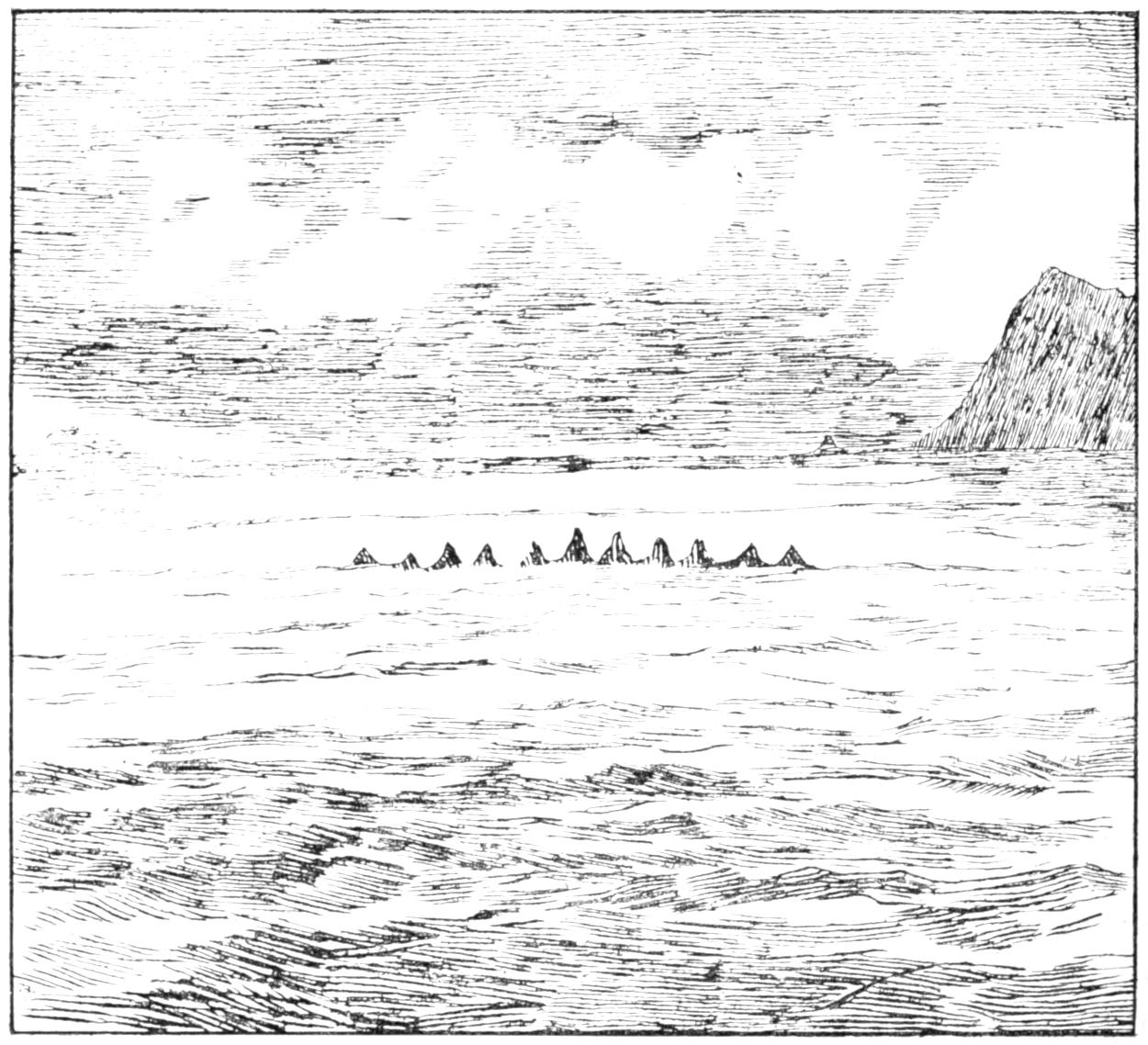
Fig. 44.—The ridge of fins mentioned in the report of the Osborne.
The same Journal of the 30th. of June publishes the following account and sketch by Lieutenant Haynes:
“We are indebted to Lieut. W. P. Haynes, of H. M. S. Osborne, for the sketch of the sea-monster seen by the officers and crew of that vessel off the north coast of Sicily on the 2nd. inst. In a letter accompanying the sketch, he says:—“My attention was first called by seeing a long row of fins appearing above the surface of the water at a distance of about 200 yards and “away on our beam”. They were of irregular heights, and extending about 30 or 40 feet in line (the former number is the length I gave, the latter the other officers), in a few seconds they disappeared, giving place to the foremost part of the monster. By this time it had passed astern, swimming in an opposite direction to that we were steering, and as we were passing through the water at 10¹⁄₂ knots, I could only get a view of it, “and on”, which I have shown in the sketch. The head was bullet-shaped, and quite six feet thick, the neck narrow and its head was occasionally thrown back out of the water, remaining there for a few seconds at a time. It was very broad across the back or shoulders, about 15 or 20 feet, and the flappers appeared to have a semi-revolving motion, which seemed to paddle the monster along. They were about 15 feet in length. From the top of the head to the part of the back where it became immersed, I should consider 50 feet, and that seemed about a third of the whole length. All this part was smooth, resembling a seal. I cannot account for the fins, unless they were on the back below, where it was immersed.”
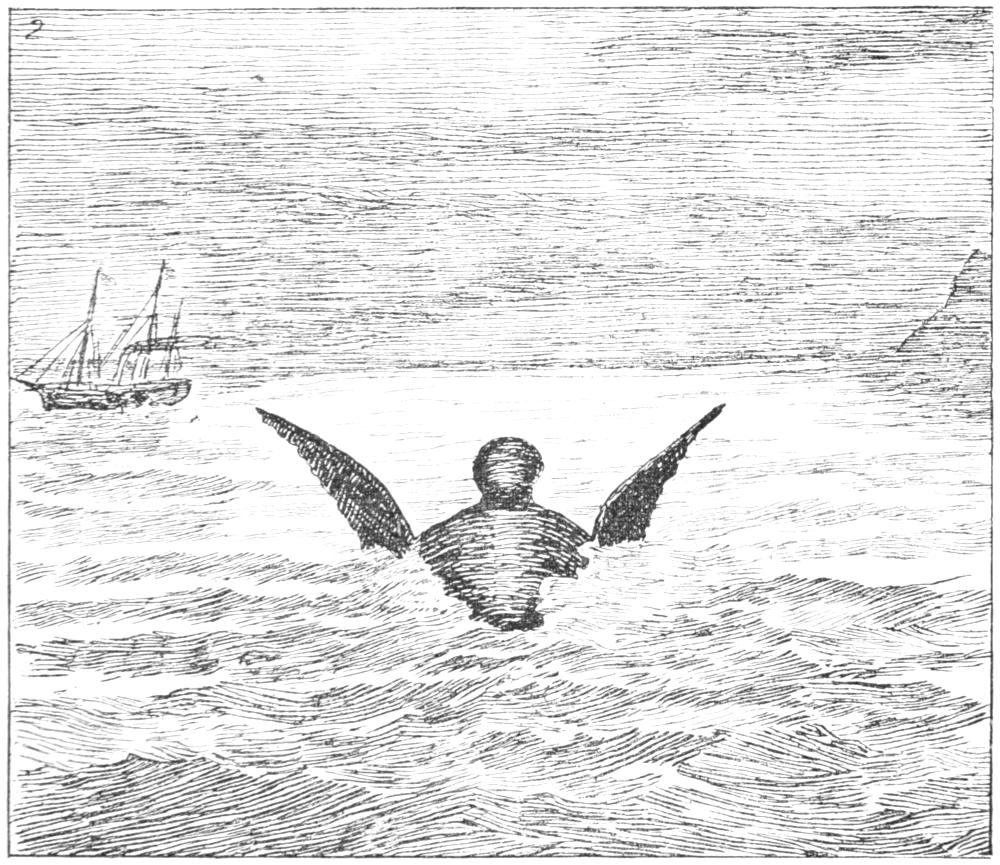
Fig. 45.—The sea-serpent as seen by Commander Pearson and Lieutenant Haynes of the Osborne.
According to Mr. Henry Lee a Mr. Frank Buckland has suggested (where? this is not mentioned) that “the ridge of dorsal fins might, possibly, belong to four basking sharks, swimming in line, in close order.” Mr. Lee himself seems to be of this opinion too. As to me, I don’t believe it, for the simple reason that the basking sharks only live in the Arctic Sea, and are never observed farther south than the coasts of Great-Britain and of Massachusetts. So Mr. Frank Buckland’s whole supposition falls to the ground. At all events the fins have nothing to do with the sea-serpent. This is also the opinion of Mr. Lee, who asserts: “The combination of them with long flippers, and the turtle-like mode of swimming, forms a zoological enigma which I am unable to solve.”
We will first speak of the account Lieutenant Haynes wrote on the 6th. of June, when at Gibraltar. The sea was perfectly smooth, and he saw the ridge of fins. He took his glasses and instead of fins he distinctly saw something quite different. In the short time that he fixed his glasses, the ridge of fins had no doubt disappeared, and the huge animal emerged. The owners of the fins were evidently frightened at the approach of the sea-serpent. Lieut. Haynes “distinctly saw a head, two flappers, and about thirty feet of an animal’s shoulder”. We may safely add: and a long neck connecting this head with the shoulder, and we may safely read for shoulder: a part of its back. The head was about six feet thick, the neck narrower, about four or five feet; consequently the animal had stretched its neck as forward as possible. The back, on the level of the flappers, was about fifteen feet broad, “and the flappers each about fifteen feet in length. The movements of the flappers were those of a turtle.” I should like to say: were those of a sea-lion, for a sea-turtle cannot possibly elevate its flappers so high above the surface of the water, while sea-lions are able to do so. Moreover the fashion is the same, that is to say, the paddling happens alternately, i. e. when the right flapper is brought as forward as possible to commence the act of paddling, the left one is kept as backward as possible, nearly touching the trunk, having just brought the act of paddling to an end. “The animal resembled a huge seal, the resemblance being strongest about the back of the head.” This is in my opinion the most remarkable statement of this report. We have more than once met with the comparison of the head or face of the animal with that of a seal, but Lieutenant Haynes clearly states the animal (seen from behind) resembled a seal. “I could not see the length of the head, but from its crown or top to just below the shoulder (where it became immersed) I should reckon about fifty feet.” Going by known descriptions and figures, we may suppose that the length of the head may have been between eight and nine feet. When from the top of the head to just below the shoulder the length is estimated at about fifty feet, I reckon that the neck of the animal must have been one of forty feet, reckoning two feet from the top of the head to the occiput, and eight feet from the flappers to where the animal became immersed, i. e. the visible part of its back. The estimated measurements of the individual of captain M’Quhae (no. 118) were: length of the head about three feet, breadth about two feet; diameter of neck below the head about one foot and a third; length of the neck to the fore-flappers about twenty feet; length of the trunk from the fore-flappers to the hind-flappers about twenty feet, length of the tail about forty feet, length of the whole animal between eighty and ninety feet. Let us now repeat those of the individual of the Osborne, which seems to be about three times larger. The breadth of the head is about six feet, consequently the length of the head about nine feet; the diameter of the neck below the head about four or five feet, say four feet, i. e. three times one foot and a third; the distance from the occiput to the flappers—forty feet, according to my calculation given above but,—comparing the dimensions of the individual of Captain M’Quhae with the present, I don’t hesitate a moment to put down sixty feet for the distance from the head to the fore-flappers. The officers of the Daedalus were in a more favourable situation to estimate this distance, the distance from the fore-flappers to the hind-flappers and the whole length of the animal they saw,—than Lieutenant Haynes; for the former saw the animal from aside, whilst the latter beheld it from behind, and was consequently in a bad situation to estimate the different lengths of the animal, but in a more favourable to estimate its different breadths. The length of the neck must really have been formidable, for though the animal (see drawing) showed hardly any neck at all, (resembling an enormous ball just visible above the surface of the water, with another smaller bullet on its top,) Lieutenant Haynes estimated the distance from the top of the head to the part of its back, where it became immersed, at fifty feet! The remaining part of the back and the animal’s tail and hind-flappers were entirely invisible. I have already expressed my firm conviction that the ridge of fins has nothing at all to do with the animal. It is evident that Lieutenant Haynes himself had his doubts about this point, for else he would not have written: “unless the ridge of fins....... were really the continuation of the shoulder to the end of the object’s body”. Evidently the animal elevated its head from time to time some feet into the air to take a survey before it. Evidently it never dropped its head so as to come with its nostrils below water, for “there was an entire absence of blowing or spouting”.
In the account of the Times only the following sentences are interesting. The ridge of fins moved slowly along. They were replaced by the foremost part of a sea-serpent. In my opinion this statement is very correct. Its skin was altogether devoid of scales, appearing rather to resemble in sleekness that of a seal. This is a remarkable statement, for in the foregoing account the animal is said to resemble a huge seal! Again: the head was bullet-shaped (seen from behind) with an elongated termination (read snout) being somewhat similar in form to that of a seal, and was about six feet in diameter. The assertion of one of the officers who saw the animal’s features and described them as like those of an alligator, cannot surprise us, as this comparison has been made more than once. As much of the body as could be seen was developed in form like that of a gigantic turtle. Evidently this reporter did not observe that the head and trunk were connected by a long neck, as did Lieutenant Haynes. I cannot approve of the supposition that the animal would have been started by the volcanic disturbance, which took place a hundred miles more southward and a fortnight ago!!
The rough account of the Portsmouth Times and Naval Gazette partly reprinted in the Graphic, is as the reader will already have observed himself, for the greater part, wrong: the fins of the ridge were estimated to be from five to six feet high, and not 15 feet in length. They were never seen along the back. Lieutenant Haynes clearly doubted of it, and I believe that nobody of my readers will admit the possibility of such a position! It was the ridge of fins that moved slowly, and not the animal. Though it is not expressed in words, the figure shows us that the sea-serpent moved with the greatest velocity, paddling so violently, that it lifted up its flappers as high as possible.
In the letter which Lieutenant Haynes forwarded to the Editor of the Graphic, we read that the animal passed the stern, swimming in an opposite direction to that they were steering to; consequently the animal could have been seen for a few seconds only from aside, and then only from behind. Most probably in passing the yacht, the animal turned its face once towards it, for we read in the Times of 14th. June: “its features were seen only by one officer.” The breadth of the back is now stated to be about 15 or 20 feet. “The flappers appeared to have a semi-revolving motion,” which is indeed a nearly exact expression for this motion. The length of 50 feet is now considered by the gallant officer to seem to be about a third of the whole length. The reason of this estimation is not mentioned; probably it was the rippling of the water behind the back of the animal, which led to it. I firmly believe that this individual was more than two hundred feet in length. Again, the Lieutenant seems not to have had the least idea of what could have been the ridge of fins! No wonder!
Of the second sketch (fig. 45) I will only say that it is partly wrong; for only one flapper must have been visible at one time, though it may be that the animal was paddling with such a rapidity that it seemed as if the two flappers were visible together. And when seen from aside in this position it would appear that the animal had more than two flappers, had a row of them, as is shown in our fig. 36.—It is also clear that the severe splashing and foaming of the water, which must have been caused by the movements of the flappers, is omitted in the figure.
Mr. Andrew Wilson in his Leisure Time Studies notes that the details furnished in the account of the Times appear to be explicable by a tape-fish (Gymnetrus or Regalecus). I need not say that I am not at all at one with him. There is not one simple character either in the ridge of fins, or in the animal described, which agrees in the least with that of a tape-fish! Moreover tape-fishes are deep-sea fishes, and only rise to the surface, dying or dead!
Mr. Searles V. Wood, Jun’s comparison of the animal with a manatee (Nature, 1880, Nov. 18) is better at first view, but the length of the neck, the form of the flappers and the dimensions of both animals differ in such a degree, that it is superfluous to dwell any longer on it.
In January 1879, Mr. Andrew Wilson published his Leisure Time Studies, a very interesting and captivating book. His fifth chapter is entitled “The sea-serpents of Science”. As might be expected the author treats of the various explanations of the sea-serpent given by men of science as well as by others, and declares himself to be a firm believer of the fact that large unknown animals exist. I wish to quote here the most interesting parts, or better said, those parts which are, at present, of great interest. In considering the authenticity of the reports and the admission that really “something” must have been seen, the author says:
“Can we, after perusing the mass of evidence accumulated during past years, dismiss the subject simpliciter, as founded on no basis of fact? The answer to such a question must be an emphatic negative; since the evidence brought before our notice includes the testimony of several hundreds of sane and reasonable persons, who in frequent cases have testified on oath and by affidavit to the truth of their descriptions of curious marine forms, seen and observed in various seas. The second supposition, that all of these persons have simply been deceived, is one which must also be dismissed. For, after making all due allowance for exaggeration, and for variations in accounts arising from different modes of expression and even from mental peculiarities in the witnesses, there remains a solid body of testimony, which, unless there is some special tendency to mendacity on the part of persons who travel by sea, we are bound, by all the rules of fair criticism and of evidence, to receive as testimony of honest kind. As I have elsewhere observed: There are very many calmly and circumstantially related and duly verified accounts of serpentine, or at any rate, of anomalous marine forms, having been closely inspected by the crew and passengers of vessels. Either, therefore, we must argue that in every instance the senses of intelligent men and women must have played them false, or we must simply assume that they are describing what they have never seen. The accounts in many instances so minutely describe the appearance of such forms, inspected from a near standpoint, that the possibility of their being mistaken for inanimate objects, as they might be if viewed from a distance, is rendered entirely improbable. We may thus, then, affirm firstly that there are many verified pieces of evidence on record, of strange marine forms having been met with,—which evidences, judged according to ordinary and common sense rules, go to prove that certain hitherto undescribed marine organisms do certainly exist in the sea-depths.”
“The first issue I must therefore submit to the reader, as representing one of a large and impartial jury, is, that the mass of evidence accumulated on the sea-serpent question, when weighed and tested, even in a prima facie manner, plainly shuts us up to the belief that appearances, resembling those produced by the presence in the sea of huge serpentine forms, have been frequently noted by competent and trustworthy observers. Unless we are to believe that men and women have deliberately prevaricated, and that without the slightest excuse or show of reason, we must believe that they have witnessed marine appearances, certainly of unwonted and unusual kind. That “something” has assuredly been seen, must be the verdict on this first issue. What that “something” is or was, and whether or not the evidence will support the opinion that the appearances described bear out the existence of a “sea-serpent” in the flesh, form points for discussion in the next instance.”
Mr. Andrew Wilson mentions some pages further on a curious case of fear of popular ridicule in telling that
“one ship-captain related that when a sea-serpent had been seen by his crew from the deck of the vessel, he remained below; since, to use his own words, “had I said I had seen the sea-serpent, I should have been considered to be a warranted liar all my life after!”
In examining whether that “something” was a dead or living organism, Mr. Wilson concludes that:
“Numerous cases exist in which the object, presumed to be a living being, has been scrutinized so closely that, save on the supposition that senses have played their owners false, or that minds have given way to an unaccountable impulse for lying, we must face and own the belief that living animals have been seen.”
He now speaks of a few accounts, viz. the various reports of the animal seen by the officers of the Daedalus (no. 118), by the crew of the Pauline (no. 144, 145), and by the captain and the surgeon of the Nestor (no. 146), and explains them in his own way, believing that these sea-serpents were gigantically developed sea-snakes, or a great calamary. Next he treats of the appearance of the animal as reported by the officers of the Osborne (no. 148), explaining it to be a tape-fish. Finally he defends his hypothesis of gigantically developed sea-snakes and ribbon-fishes. These parts, however, I have inserted in my Chapter on various explanations.
In a review of Mr. Andrew Wilson’s Leisure Time Studies, which I have found in Nature of the 30th. of January, 1879, Vol. XIX, the following is written about the chapter on the sea-serpent:
“The lecture on “The Sea-Serpents of Science” is interesting, both as giving a very fair summary of the most recent evidence on this subject, and as showing that the age of incredulity is past, and that naturalists are now prepared to admit that several distinct kinds of oceanic monsters probably exist, of which no single specimen has yet been obtained. Recollecting, however, the number of clever hoaxes to which this subject has given rise we think that the newspaper account at p. 104, of the declaration before a Liverpool J. P., made by the master and crew of a merchant-ship, to the effect that they had seen a huge serpent twice coiled round a sperm-whale, and a similar serpent with its head raised “sixty feet perpendicularly in the air,” should not have been inserted as evidence without first ascertaining that such a declaration was actually made before the magistrate named. The troubling of writing a single letter would probably have been sufficient, and would have settled the preliminary question of whether, from beginning to end, it was not a newspaper canard.”
I am convinced that, after having attentively read what they find in this book about the appearance of the sea-serpent as seen by the crew of the Pauline (no. 144, 145) my readers will be convinced that the report of Captain Drevar was not a canard. We read moreover in Nature of Febr. 10, 1881, that Captain Drevar has circulated a printed account of the conflict which he witnessed, and of the subsequent appearance of the animal rearing its long neck out of the water. Mr. Wood, the writer of the article in which this is communicated, adds: “This is satisfactory as showing that the declaration was no hoax”. I quite agree with him.
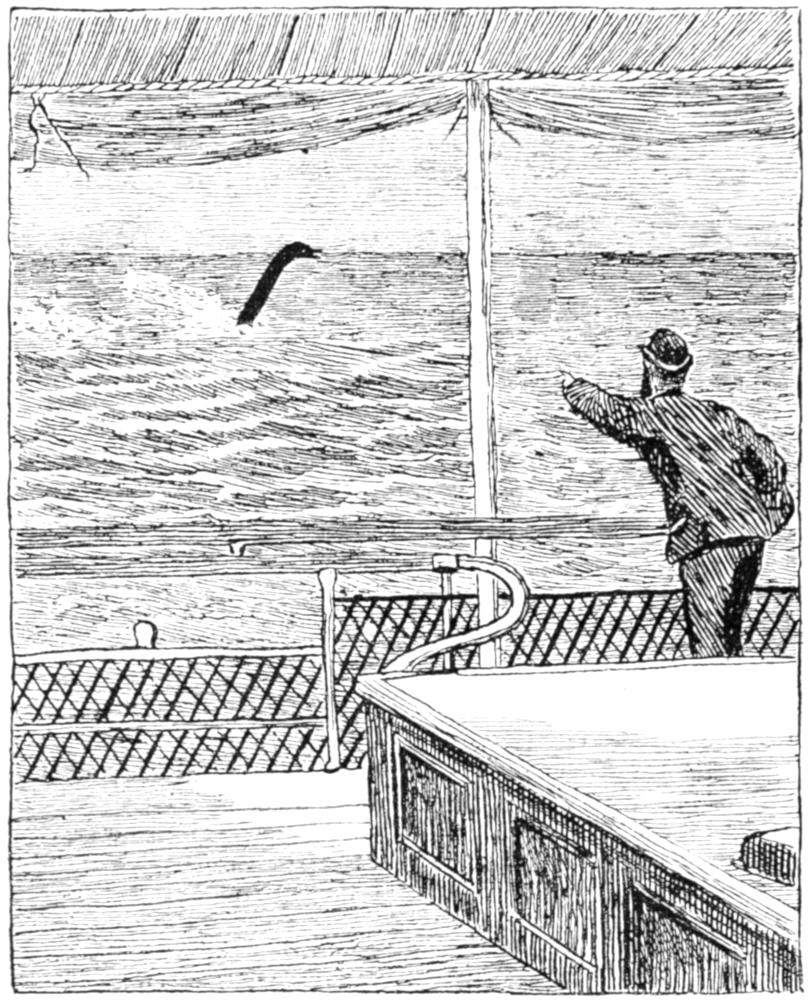
Fig. 46.—The sea-serpent as seen by Major Senior of the City of Baltimore.
149.—1879, January 28.—The Graphic of April, 19, 1879, says:
“The following is an extract from the account given by our correspondent, Major H. W. J. Senior, of the Bengal Staff Corps, to whom we are indebted for the sketch from which our engraving is taken:—“On the 28th. of January, 1879, at about 10 a. m., I was on the poop deck of the steamship City of Baltimore in lat. 12° 28′ N., long 43° 52′ E. I observed a long black object abeam of the ship’s stern on the starboard side, at a distance of about three-quarters of a mile, darting rapidly out of the water, and splashing in again with a sound distinctly audible, and advancing nearer and nearer at a rapid pace. In a minute it had advanced to within half a mile, and was distinctly recognizable as the veritable “sea-serpent”. I shouted out “Sea-serpent! sea-serpent! call the captain!” Dr. C. Hall, the ship’s surgeon, who was reading on deck, jumped up in time to see the monster, as did also Miss. Greenfield, one of the passengers on board. By this time it was only about 500 yards off, and a little in the rear, owing to the vessel then steaming at the rate of about ten knots an hour in a westerly direction. On approaching the wake of the ship the serpent turned its course a little away, and was soon lost to view in the blaze of sunlight reflected on the waves of the sea. So rapid were its movements that when it approached the ship’s wake, I seized a telescope, but could not catch a view as it darted rapidly out of the field of the glass before I could see it. I was thus prevented from ascertaining whether it had scales or not but the best view of the monster obtainable when it was about three cables’ length, that is about 500 yards’ distant, seemed to show that it was without scales. I cannot, however, speak with certainty. The head and neck, about two feet in diameter, rose out of the water to a height of about twenty or thirty feet, and the monster opened its jaws wide as it rose, and closed them again as it lowered its head and darted forward for a dive, reappearing almost immediately some hundred yards ahead. The body was not visible at all, and must have been some depth under water, as the disturbance on the surface was too slight to attract notice, although occasionally a splash was seen at some distance behind the head. The shape of the head was not unlike pictures of the dragon I have often seen, with a bull-dog appearance of the forehead and eyebrow. When the monster had drawn its head sufficiently out of the water it let itself drop, as it were, like a huge log of wood, prior to darting forward under the water. This motion caused a splash of about fifteen feet in height on either side of the neck, much in shape of a pair of wings.”
“Major Senior’s statement is countersigned by the two persons whom he mentions as co-witnesses, and he expresses his willingness to answer any questions which may be put to him by any one interested in the subject. His address while on furlough is Rosebank Villa, Southfield Rode, Cotham, Bristol.”
The appearance took place in the Gulf of Aden, as pointed out by the latitude and longitude. The account here is very correct as I now will try to show. The colour of the animal is called black and the appearance of the skin was that it was without scales. The head and neck, about two feet in diameter, rose out of the water to a height of about twenty or thirty feet, and the animal opened its jaws wide as it rose, evidently swallowing some fish, captured under water in its pursuit of a shoal of them, and closed them again as it lowered its head and darted forward for a dive, reappearing almost immediately some hundred yards ahead. The body was not visible at all, and must have been some depth under water, as the disturbance on the surface was too slight to attract notice. This is very natural, as I have already pointed out on a former occasion: if the head and neck are above the surface, the remaining parts of the body must carry their weight and sink a little below the surface. Not very much, however, for the foreflappers, as well as the hindflappers, paddling very rapidly caused a splash distinctly visible on the base of the neck (or on the shoulders), and “occasionally a splash was seen at some distance behind the head”. Examining the figure, which is very exact, we may take it that the foremost splash was caused by the foreflappers, about twenty-five feet in the rear of the head, the very same place where the officers of the Daedalus (no. 118) “occasionally saw a fin”, and that about twenty-five feet more backward the hindmost splash was caused by the hindflappers, the place, where Captain M’Quhae (no. 118) “occasionally saw another fin”. The animal seen from the Daedalus seems to have been a little smaller than that seen from the City of Baltimore. The comparison of the head with a dragon’s is a little far-fetched. The animal furiously pursuing its prey, sometimes opening its jaws, knitting its heavy eye-brows, which as we know are a little prominent, in short, expressing in its features hurry and a wild longing for its prey, may under these circumstances have had a feature terrible enough to cause Mr. Senior’s expression “the shape of the head was not unlike pictures of the dragons I have often seen, with a bull-dog appearance of the fore-head and eye-brow”. We have learned already that on such occasions the animal curved its neck swan-like and diving head foremost like a duck, disappeared. Here we have another habit of pursuing: “when the monster had drawn its head sufficiently out of water it let itself drop, as it were, like a huge log of wood, prior to darting forward under the water. This motion caused a splash of about fifteen feet in height on either side of the neck, much in shape of a pair of wings”. This last might have been fairly omitted as every one can imagine the splash of water, caused by a log of wood falling into it. I think this comparison also far-fetched: such a splash cannot be compared with an object.
Our figure is taken from Mr. Lee’s often quoted work. It is the middle third of the one which illustrated the text in the Graphic, but as it is drawn on the same scale, I saw no reason to give my readers the whole illustration of the Graphic.
150.—1879, March 30th.—Nature of the 24th. of July, 1879, contains the following of Surgeon Barnett, respecting the appearance of a sea-serpent near Cape Naturaliste in Australia.
“In Nature, Vol. XIX, p. 286, I observed some remarks respecting sea-serpents, and especially noted one passage which stated that “The age of incredulity is past, and naturalists are now prepared to admit that several distinct kinds of oceanic monsters probably exist.”
“I was pleased to read this statement, as I have for many years been convinced that some of the accounts published from time to time in the newspapers are accurate descriptions of what has actually been witnessed, but I little expected that I should so soon be able to forward to you a description of one of these creatures, as given by an eye-witness, of whose accuracy there can be no question, and whose observations were made when very close to the animal.”
“Busselton is a little seaport about 150 miles south of Fremantle, on the west coast of Australia, situated on the shore of Geographe Bay, which is sheltered by Cape Naturaliste; the northern point of that singular projection on the south-west corner of Australia.”
“During the greater part of the year the water of Geographe Bay is as smooth as a lake, though it is a portion of that vast Indian Ocean which extends unbrokenly to the African coast. The beach is of smooth white sand, so hard at the water’s edge that it is frequently used as a road for riding or driving from Busselton to Lockville; the latter place, a few miles to the north, is the station of the Ballarat Timber Company, containing their steam saw mills, the termination of their railway, and the jetty from which large quantities of that imperishable and valuable timber called jarrah is exported to be used as piles, railway sleepers, etc.”
“Last month I heard a report that the sea-serpent had been seen near Busselton, and that the resident clergyman had been one of the spectators. Having the pleasure of personal acquaintance with that gentleman, I wrote to him on the subject, and received from him such an interesting account, that I applied to him for permission to communicate the facts to your paper, and verify them by publishing his name. It is fortunate that the principal eye-witness was an educated gentleman, who has for twenty seven years been a Colonial chaplain in this colony, and whose description of what he saw is clear, simple, and free from exaggeration.”
“I copy from the letters of the Rev. H. W. Brown the following extracts:—
“On Sunday, March 30, I left Lockville just as the sun was setting, on my way home by the beach”.
“The afternoon had been oppressively hot, not a breath of wind, and the sea was as smooth as a glass. I met C. M’Guire and his wife walking towards Lockville.”
“Soon afterwards, when abreast of the track to Richardson’s, I noticed ahead of me what looked like a black log of wood in the water a stone’s throw from the shore, nearly end-on to me, and apparently more buoyant at that end; getting nearer, I noticed that it was drifting apparently towards Lockville, and soon discovered that it was moving, leaving behind it a very long, narrow ridge on the smooth water. I then turned my horse’s head, and, at a walking pace kept just abreast of it, unnoticed apparently, till I had gained sufficiently on M’Guire to make him hear. I then coo-eed once; he turned and came back to meet me; but at the sound of my coo-ee the fish started off seawards out of sight (under water), and doubled again in shore, but so rapidly as to leave both outward and inward “ridge” on the water distinctly visible at once, like a wide V with quite a sharp corner. It gave me the idea of two fishes, the one darting outward, the other crossing its track inward at the same moment.”
“Not knowing where it might show up next, but satisfied that it had come in-shore again, I tried by pointing seaward to direct M’Guire’s attention that way”.
“Just as I met him the fish again came to the surface, showing gradually more and more of his length, till, when he was almost at rest, and all apparently was in view, I estimated the length to be 60 feet, straight and taper, like a long spar, with the butt end, his head and shoulders, showing well above the surface.”
“I can only describe the head as like the end of a log, bluff, about two feet diameter; on the back we noticed, showing very distinctly above water, several square-topped fins.”
“I here make an exact tracing from Mr. Brown’s letter of his sketch:—
“It was now getting rather too dark to see details distinctly. The fish proceeded toward Lockville, and I turned homeward. M’Guire said he would go on to Lockville jetty and look out for him there.”

Fig. 47.—Outline of the back of the sea-serpent as seen by the Rev. H. W. Brown.
“Whether he saw him again I know not, but M’Mullan, the fisherman, told me next morning that he had seen it about fifty yards from that jetty, and it looked to him about twenty feet long. So it did to me while in motion; only when at rest for a moment did its whole length show up sufficiently. What its propelling power was I cannot say from observation; I saw no lateral fins and no fish-tail.”
“When it started away at the sound of my voice, it was with the rapid movement of a pike or sword-fish, and yet the thick bluff head had but little resemblance to a snake.”
“There was an unusual abundance of fish close in shore the same afternoon, yet when I saw the stranger there were certainly no fish of which it could be in pursuit.”
“Since the year 1848, when the captain and officers of a British man-of-war gave evidence that they passed within 100 yards of a snake, which they estimated to be 60 feet in length above water, with probably 40 feet beneath, I do not know of any more clear account than the above. Many independant accounts of the existence of marine monsters have been placed on record, and it seems mere folly to treat these repeated reports with ridicule.”
“I trust that your readers will no longer doubt that the “age of credulity” is past.”
“H. C. Barnett.”
“Fremantle, W. Australia, May 19.” “Colonial surgeon.”
I need not tell my readers that the figure is very rude, and only gives a very indistinct representation of four “bunches”, or visible parts of vertical undulations, called “fins” in the narrative. The blunt head, compared with the end of a log, the imperfect description, and the so-called square appearance of the bunches must be ascribed to the falling darkness. The other details of the report: the swimming of the animal in bunches, its causing the “ridges” in the water in the shape of a wide V, its holding its head well above the surface, its length, its resemblance with a spar, straight and taper, are in my opinion convincing enough to call this “fish” a sea-serpent.
151.—1879, April 5.—In the Graphic of July, 19th., 1879, and in Nature for November 18th., 1880, we find the following statement:
“The accompanying engraving is a fac-simile of a sketch sent to us by Captain Davison, of the steamship Kiushiu-maru, and is inserted as a specimen of the curious drawings which are frequently forwarded to us for insertion in the pages of this journal. Capt. Davison’s statement, which is countersigned by his chief officer, Mr. McKechnie, is as follows:—Saturday, April 5th., at 11.15 a. m. Cape Satano distant about nine miles, the chief officer and myself observed a whale jump clear out of the sea, about a quarter of a mile away. Shortly after it leaped out again, when I saw there was something attached to it. Got glasses, and on the next leap distinctly saw something holding on the belly of the whale. The latter gave one more spring clear of the water, and myself and chief then observed what appeared to be a large creature of the snake species rear itself about thirty feet out of the water. It appeared to be about the thickness of a junk’s mast and after standing about ten seconds in an erect position, it descended into the water, the upper end going first. With my glasses I made out the colour of the beast to resemble that of a pilot fish.”
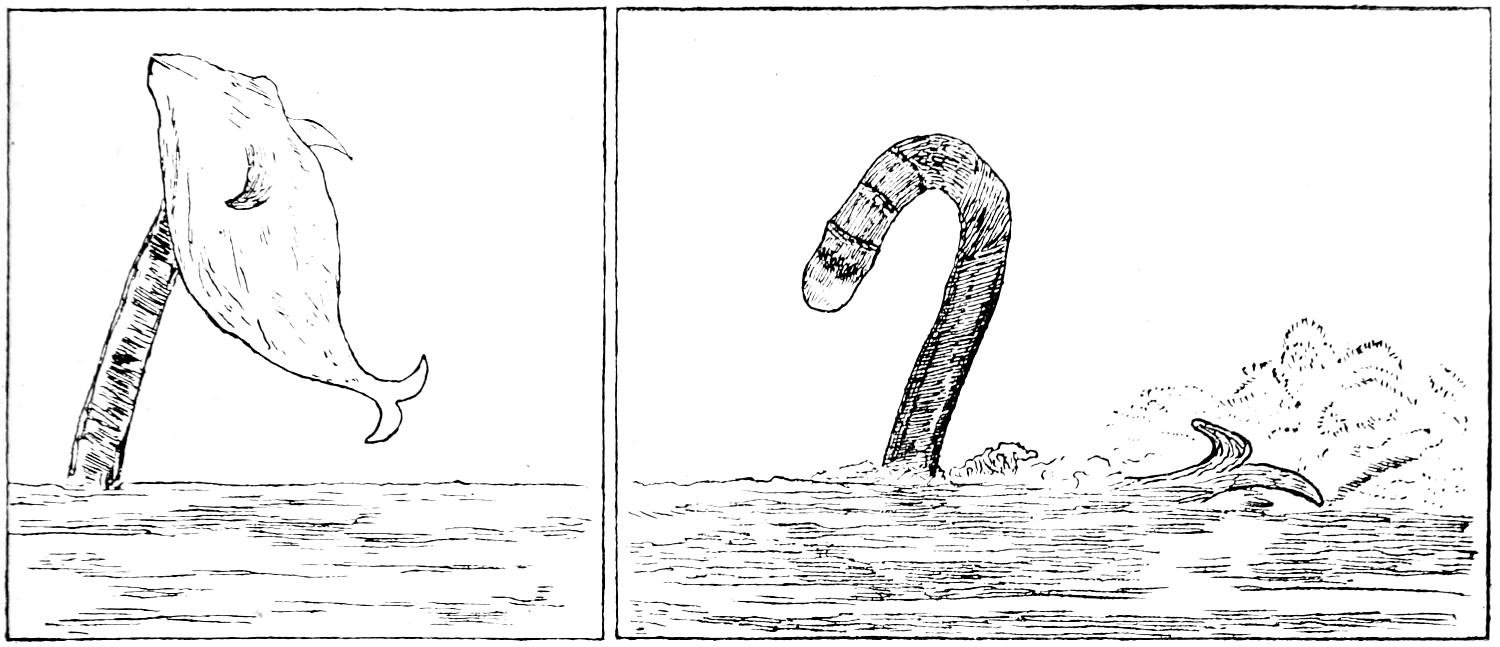
Fig. 48 and 49.—Two positions of the sea-serpent as seen by Captain Davison of the Kiushiu Maru.
It is clear that the Editor of the Graphic is an unbeliever, else he would not have called these figures “specimens of the curious drawings which are frequently forwarded to us for insertion in the pages of this journal”. I think that there is nothing curious in these figures, which are as correct as possible.
Cape Satano is the most southern point of Japan, or better, of the Isle of Kiu Siu. It is also called Satano Misaki, of which “Saki” or “Misaki” signifies “cape”. The Russians call it Cape Chichakoff. This is the third time that we read of the sea-serpent being seen in the Pacific Ocean (see no. 36 and 119).
The most remarkable fact mentioned in this report is the gripping the whale. The reader will remember the report of a sea-serpent engaged with a whale, of course one of the smaller kind (no. 54). In 1833 some British officers saw a shoal of grampuses near Halifax, Nova Scotia, which appeared in an unusual state of excitement” and a little while afterwards the sea-serpent appeared, evidently hunting after the grampuses (no. 97). Again in 1850 (?) Captain Christmas saw “an immense shoal of porpoises rushing by the ship, as if pursued” and soon afterwards a sea-serpent made its appearance, curving its neck swan-like, evidently keeping a lookout and disappearing “head foremost like a duck diving” (no. 124). Also Captain Brown saw it “surrounded by porpoises” (no. 56). And now we have for the fifth time the sea-serpent pursuing whales, and a second time that it is engaged with one which it had evidently gripped in its pectoral fin. I am convinced that the description “holding on the belly of the whale” is incorrect. The dimensions of the neck estimated at thirty feet in length and of about the thickness of the mast of a junk are certainly not exaggerated. After the whale’s escape, the sea-serpent for about ten seconds stood in an erect position, like the animal of Captain Brown (no. 56), taking evidently a survey all around, then bent its neck swan-like as in shown in the figure and finally “descended into the water, the upper end going first”, exactly the way in which the animal behaved seen by Capt. Christmas (no. 124). The description of the colour as “resembling that of a pilot-fish”, is very vague, for the different pilot-fishes (Naucrates) have different colours, generally grey with some hue of blue, brown, or purple. The vague definition may be the result of a damp atmosphere, or it must be that the throat was turned towards the spectators, and not the back-part of the neck, which is nearly black. As the sea-serpent has a very long and pointed tail, the fan-shaped or double finned tail in fig. 49 must be accounted for. This I think may be done in the following four ways: 1. The tail represents the whale, disappearing in the water, which in so doing caused a severe splash as is shown in the figure. 2. The tail is an optical illusion and the two fins of it were in fact the animal’s hindflappers paddling furiously, which may be explained as an expression of the animal’s emotion, as the whale escaped, and in doing so, the flappers caused the violent splash. 3. Not the flappers but the tail of the animal was lashing the water vehemently, and caused the optical illusion and the immense splash and foam. 4. The drawer, believing that the animal had a cetacean tail or a fish-tail, drew one, lashing the water, and so represented more his own imagination than the reality; but in no case a double finned tail has ever belonged to an animal with a long swan-like curved neck, as is really believed by Mr. Searles V. Wood in that number of Nature!
152.—1879, August 5.—(Times of September 24, 1879).
“Capt. J. F. Cox, master of the British ship Privateer, which arrived at Delaware breakwater on the 9th. inst. from London, says:—“On the 5th. ult., 100 miles west of Brest (France), weather fine and clear, at 5 p. m., as I was walking the quarter deck, looking to windward, I saw something black rise out of the water about twenty feet, in shape like an immense snake about three feet in diameter. It was about 300 yards from the ship, coming towards us. It turned its head partly from us, and went down with a great splash, after staying up about five seconds, but rose again three times at intervals of ten seconds, until it had turned completely from us and was going from us with great speed, and making the water all boiling round it. I could see its eyes and shape perfectly. It was like a great eel or snake, but as black as coal tar, and appeared to be making great exertions to get away from the ship. I have seen many kinds of fish in five different oceans, but was never favoured with a sight of the great sea-snake before.”
Of this unvarnished account Mr. Wood says with reason (Nature, February 10, 1881), that it is “almost a duplicate of that of Major Senior” (no. 149). The colour of the animal is called black, the head and neck, like those of a snake, were elevated about twenty feet in the air. The animal stood so about five seconds, went down with a great splash, but rose again three times at intervals of ten seconds, thus behaving in the same way as the individual seen from the City of Baltimore (no. 149). The thickness here is estimated at three feet. The animal moved from the vessel with great speed. Consequently the captain could not discern four different splashes, two of the fore and two of the hind-flappers, but he reports that the water was boiling all around it. I think that the animal here again was pursuing a shoal of fish and not trying to escape the vessel.—
152 A.—1881, Nov. 12?—The Zuid-Afrikaan, of Nov. 17, 1881, mentions:
“In the Argus we read the following:—“Mr. C. M. Hansen, functionary to the harbour-office, mentions, that on Saturday evening a little after six o’clock, being occupied in his garden near Monillepoint, he perceived near the spot where the Athens was wrecked, a great sea-serpent, and that he immediately drew the attention of his wife and children, and several of his neighbours to this appearance. After viewing the coast at its ease for half an hour the monster turned its head seaward and disappeared. Mr. Hansen describes this sea-monster as being about 75 feet long, of a dark colour and with a head of the size of a 54 gallon hogshead, resembling that of a bull-dog, and provided with a long and brown mane, hanging down.”
Undoubtedly the length of 75 feet is that of the part visible above the surface of the water. It is not mentioned whether the animal swam with its body in a straight line or in vertical undulations. It is not for the first time that we hear of the sea-serpent near Cape-Town, (for Argus must no doubt be read Cape Argus), I pass the dimension of the head as I don’t know that of a 54 gallon hogshead. Remarkable is the comparison of the head with a bull-dog’s; it must have been seen in front, in order to make this impression. Again a mane was present and its colour is now called brown.
153.—1882, May 28th.—In the next account we read:
“At our arrival in Newcastle, I learned that some days before some fishermen of Lewis had observed the same or a similar animal.”
154.—1882, May 31.—(Illustrirte Zeitung of 1st. of July, 1882).—
“The following report, with the accompanying engraving has been forwarded to us by Mr. Weisz, Captain of the Stettin Lloyd Steamer Kätie.”
“When the Stettin Lloyd Steamer Kätie, on her return from New-York to Newcastle, on the 31st. of May of this year, shortly after sunset and in that clear light which in this season takes place in fine weather in high northern latitudes, was about eight miles W. N. W. of Butt of Lewis (Hebrides), we observed on starboard before us, at a distance of about two miles a dark object lying on the surface, which was only slightly moved by the waves; first we took it for a wreck, as the highest end resembled the bow and the forepart of a ship, and the remaining hilly part resembled the broken waist-cloth of a ship filled with water. As we got nearer we saw with a glass on the left of the visible object, the water moving in a manner, as if the object extended there under the water, and this motion was of the same length as the part of the object, visible above the surface. Therefore we took care, not to steer too near, lest the screw should be damaged by some floating pieces of the wreck. But on getting nearer observed that the object was not a wreck, and, if we had not known with certainty that on these coasts there are no shallows, we should have taken this dark connected row of hills for cliffs. When we, however, changed our course obliquely from the object, which lay quite still all the time, to our astonishment there rose, about eighty feet from the visible end a fin about ten feet in height, which moved a few times, whilst the body gradually sunk below the surface. In consequence of this the most elevated end rose, and could distinctly be made out as the tail of a fish kind of immense dimensions.”
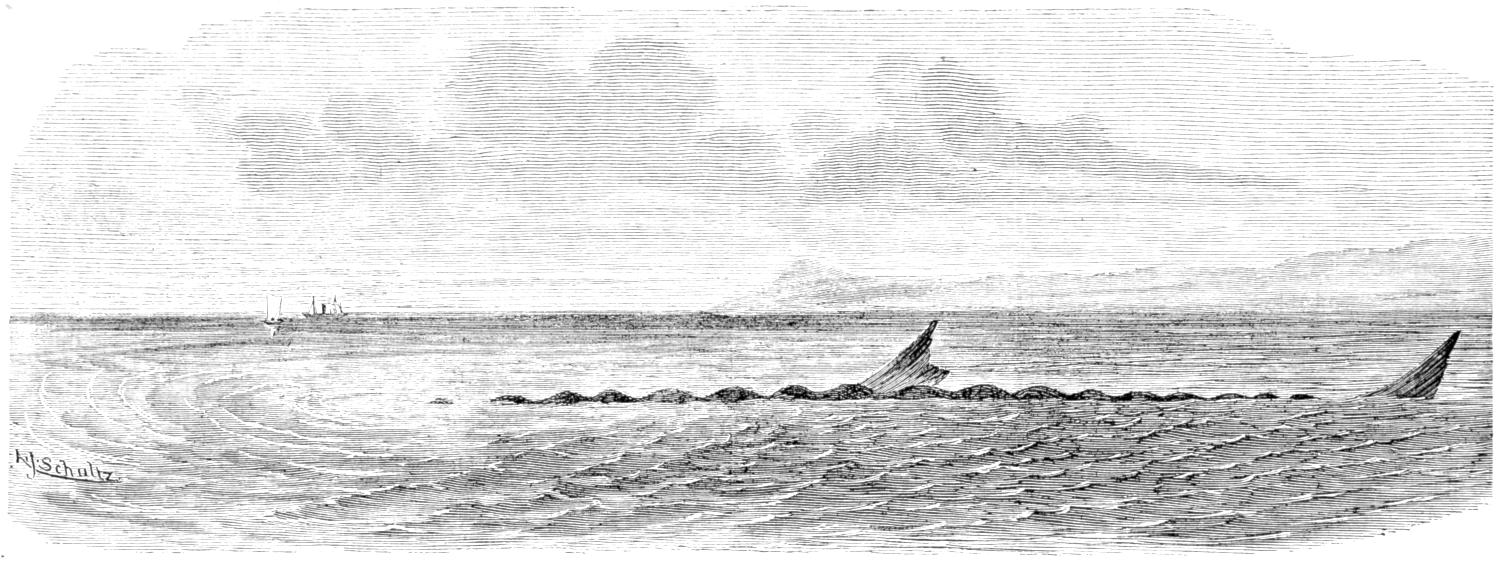
Fig. 50.—The sea-serpent, as seen from the Stettin Lloyd Steamer Kätie, near the Hebrides, drawn under the supervision of the captain Mr. Weisz, by the American animal-painter Mr. Andrew Schultz.—
“The length of the visible part of this animal which had in no case any resemblance with the back of a whale, measured, according to our estimation, about 150 feet, the hills, which were from three to four feet in height, and about six or seven feet distant from each other, were smaller on the tail end, than on the head end, which withdrew from our observation.”
“At our arrival at Newcastle, I learned that some days before some fishermen of Lewis had observed the same or a similar animal. Had I directly recognized the object before us, to be one of these creatures, which for so long time belonged to the fables, I should certainly have neared it with the Kätie as much as possible.”
It is obvious that captain Weisz saw, and Mr. Andrew Schultz sketched the animal, ignorant of its being a sea-serpent. It became clear to them, when they arrived at Newcastle where they learned that a “sea-serpent” was seen by some fishermen of Lewis.
Here we have again the assertion that the animal showed bunches, though it lay still or nearly still, an observation already reported more than once, as the reader will remember. I am convinced that the dimensions are exaggerated, and that the disturbance of the water was caused by the length of the tail, and not of the head of the animal, which evidently was searching for food in a playful manner, as we may observe in seals and sea-lions in our Zoological Gardens, and in doing so turned for a moment its body round, and raised once or twice first one of its hindflappers “which it moved a few times”, and then raised one of its foreflappers, which was taken for a tail by the captain and the drawer. The long neck here commences, but was, with the head, constantly under water, evidently directed downwards, for there was no disturbance of the water visible here. It is clear that the Kätie remained at a good distance from the animal, so that Mr. Schultz, a well-known animal painter, could not obtain a better view of the flappers. The outlines of the flappers, however, are as correct as possible.
155.—1882, September 3.—(Nature, 1883, January 25).
“Believing it to be desirable that every well-authenticated observation indicating the existence of large sea-serpents should be permanently registered, I send you the following particulars.”
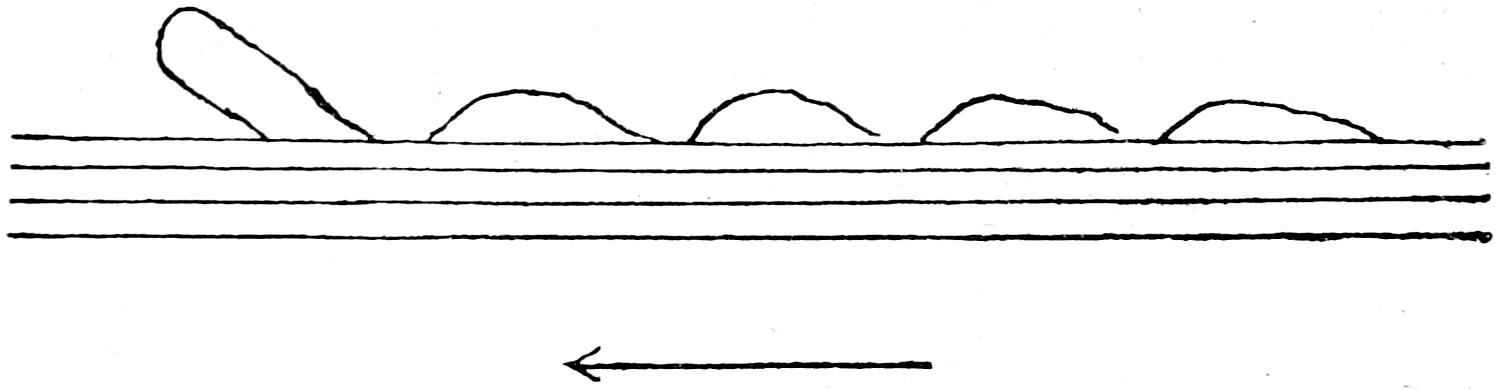
Fig. 51.—Outline of the sea-serpent seen near Little Orme’s Head, drawn by Mr. F. T. Mott after three different sketches.
“About 3 p. m. on Sunday, September 3, 1882, a party of gentlemen and ladies were standing at the northern extremity of Llandudno pier, looking towards the open sea, when an unusual object was observed in the water near to the Little Orme’s Head, travelling rapidly westwards towards the Great Orme. It appeared to be just outside the mouth of the bay, and would therefore be about a mile distant from the observers. It was watched for about two minutes, and in that interval it traversed about half the width of the bay, and then suddenly disappeared. The bay is two miles wide, and therefore the object, whatever it was, must have travelled at the rate of thirty miles an hour. It is estimated to have been fully as long as a large steamer; say 200 feet; the rapidity of its motion was particularly remarked as being greater than that of any ordinary vessel. The colour appeared to be black, and the motion either corkscrew like or snake-like, with vertical undulations. Three of the observers have since made sketches from memory, quite independently of the impressions left on their minds, and on comparing these sketches, which slightly varied, they have agreed to sanction the accompanying outline as representing as nearly as possible the object which they saw. The party consisted of W. Barfoot, J. P. of Leicester, F. J. Marlow, solicitor, of Manchester, Mrs. Marlow, and several others. They discard the theories of birds or porpoises as not accounting for this particular phenomenon.”
“F. T. Mott.”
“Bristal Hill, Leicester, January 16.”
The appearance took place, as is stated, near Orme’s Head, a headland of the Northern coast of Wales, projecting in a north-western direction into the Irish Sea. The great rapidity of the movement through the water, estimated at thirty miles an hour, its great length of about 200 feet, its black colour, its vertical undulations and the whole external appearance of the animal, outlines of which are represented in the figure, at once betray the sea-serpent.
Another correspondent of Nature immediately wrote to the Editor as follows: “I have seen four or five times something like what your correspondent describes and figures, at Llandudno, and have no doubt whatever that phenomenon was simply a shoal of porpoises. I never, however, saw the head your correspondent gives.” There! It is just the head which shows that the animal seen by the party of gentlemen and ladies above mentioned, was one single animal and not a row of porpoises!
And therefore, one of the eye-witnesses, Mr. W. Barfoot, promptly answered in Nature of Febr. 8, 1883:
“Like your correspondent, Mr. Sidebotham (in Nature Vol. XXVII, p. 315), I have frequently seen a shoal of porpoises in Llandudno Bay, as well as in other places, and on the occasion referred to by Mr. Mott, in Nature, Vol. XXVII, p. 293, the idea of porpoises was at first started but immediately abandoned. I will venture to suggest that no one has seen a shoal of these creatures travel at the rate of from twenty five to thirty miles an hour. I have seen whales in the ocean, and large flocks of sea-birds, such as those of the eider-duck, skimming its surface; but the strange appearance seen at Llandudno on September 3 was not to be accounted for by porpoises, whales, birds, or breakers, an opinion which was shared by all present.”
“William Barfoot.”
In 1883 Mr. Henry Lee published his Sea Monsters Unmasked, one of the Series of publications of the International Fisheries Exhibition. This delightful book treats of the Kraken and the sea-serpent.
In the Preface Mr. Lee remarks:
“In treating of the so-called “sea-serpent”, I have been anticipated by many able writers. Mr. Gosse, in his delightful book “The Romance of Natural History”, published in 1862, devoted a chapter to it; and numerous articles concerning it appeared in various papers and periodicals.”
“But, for the information from which those authors have drawn their inferences, and on which they have founded their opinions, they have been greatly indebted, as must be all who have seriously to consider this subject, to the late experienced editor of the Zoologist, Mr. Edward Newman, a man of wonderful power of mind, of great judgment, a profound thinker, and an able writer. At a time when, as he said, “the shafts of ridicule were launched against believers and unbelievers in the sea-serpent in a very pleasing and impartial manner”, he, in the true spirit of philosophical inquiry, in 1847, opened the columns of his magazine to correspondence on this topic, and all the more recent reports of marine monsters having been seen are therein recorded. To him, therefore, the fullest acknowledgements are due.”
I too am under obligations to Mr. Newman, as to one who has collected so many reports of the sea-serpent and published them in his journal, but I fail to see in him what Mr. Lee asserts him to be.
As to the contents of Mr. Lee’s “Great Sea-Serpent”, the second part of his Sea-Monsters Unmasked, I may be allowed to note the following.
First he mentions the various great snakes of antiquity and believes them to be merely boas (read pythons) and real sea-snakes. Next he represents a figure, found on a sarcophagus or coffin in the Catacombs of Rome, and tells us that it corresponds in many respects with some of the descriptions of the sea-serpent given several centuries afterwards. I, however, don’t observe any resemblance in them. I consider this monster as a singular combination of a horse and a fish, badly drawn, as one of the representations of those wonderful ideas or beliefs of antiquity concerning the existence of such monsters as sirens, tritons, the minotaurus, etc.
Further he treats of Olaus Magnus, Bishop Pontoppidan, Hans Egede, the Animal of Stronsa, and of various reports of the sea-serpent, and it is obviously a favoured idea of his that the sea-serpent is only to be accounted for by a great calamary; to prove this, he makes himself guilty of all kinds of misrepresentations and improbabilities; he considers every one as having been the dupe of optical deceptions, or as having made exaggerations, and their observations to be “full of error and mistakes”! And he who has never seen a sea-serpent, but sits pen in hand in his chair at his desk, knows it best of all: all sea-serpents were calamaries, except a very few, which were a row of porpoises! But the more Mr. Lee has to deal with more recent reports, the less he is able to explain the various sea-serpents by reference to his favoured calamary. Of the animals seen in the Harbour of Gloucester in 1817 he says: “Of this I can offer no zoological explanation”. He neither gives an explanation of the sea-serpent seen in 1833 by British officers (no. 97), nor of that in Lochourn (no. 137, 138, 139, 140). Then he says: “Many other accounts have been published of the appearance of serpent-like sea-monsters, but I have only space for two or three more of the most remarkable of them”. Truly, an easy way to get rid of them! One of these two or three more remarkable reports is the fight between the whale and the sea-serpent (no. 144) of which he proposes several explanations (I beg to refer the readers to that account), ending with the words: “it must be left for further elucidation”. The sea-serpent of the City of Baltimore (no. 149) was misunderstood by him. He compares the splash of the water, caused by the animal’s dropping its neck like a log of wood into it, with the caudal fins of a calamary (just imagine!) but ends: “but, as one with a bull-dog expression of eye-brow, visible at 500 yards distance, does not come within my ken, I will not claim it as much.” And of the animal of the Osborne he says:
“It seems to me that this description cannot be explained as applicable to any one animal yet known. The ridge of dorsal fins might, possibly, as was suggested by Mr. Frank Buckland, belong to four basking sharks, swimming in line, in close order; but the combination of them with long flippers, and turtle-like mode of swimming, forms a zoological enigma which I am unable to solve.”
Nevertheless, in answering the question: “To which of the recognized class of created beings can this huge rover of the ocean be referred?” he says: “I reply: To the Cephalopoda” (i. e. calamaries). Such a contradiction I do not understand.
And notwithstanding his cherished great-calamary-hypothesis, and after having said some words about Mr. Newman’s Plesiosaurus theory and Mr. Wilson’s ideas of the extraordinary development of snakes, he ends his work with the following conclusions:
“I arrive, then, at the following conclusions: 1st. That, without straining resemblances, or casting a doubt upon narratives not proved to be erroneous, the various appearances of the supposed “Great Sea-Serpent” may now be nearly all accounted for by the forms and habits of known animals; especially if we admit, as proposed by Dr. Andrew Wilson, that some of them, including the marine snakes, may, like the cuttles, attain to an extraordinary size.”
“2nd. That to assume that naturalists have perfect cognizance of every existing marine animal of large size, would be quite unwarrantable. It appears to me more than probable that many marine animals, unknown to science, and some of them of gigantic size, may have their ordinary habitat in the great depths of the sea, and only occasionally come to the surface; and I think it not impossible that amongst them may be marine snakes of greater dimensions than we are aware of, and even a creature having close affinities with the old sea-reptiles whose fossil skeletons tell of their magnitude and abundance in past ages.”
I am unable to follow out such a reasoning.
156.—1883, October 15?—The Graphic of 20th. October, 1883, mentions, p. 387:
“The inevitable sea-serpent has turned up again. This time he has been seen going down the Bristol Channel towards the Atlantic at the rate of twenty-five miles per hour, and afterwards he was noticed off the north coast of Cornwall. The monster was about half a mile long, and left a greasy trail behind him.”
I have no doubt about the appearance of a sea-serpent in Bristol Channel, and a few hours or a day afterwards off the north coast of Cornwall, as several individuals have already been reported on the west coast of Great Britain. The greasy trail left behind it is not an improbability, but the length of half a mile is most probably an invention of the incredulous Editor of the Graphic!
Mr. C. Honigh in his Reisschetsen uit Noorwegen in de Gids for 1884, p. 300 speaking of strange and violent motions in the water of the lake of Mjösen in Norway during perfectly calm weather tells us as a specimen of Norwegian superstition:
“People ascribe these motions to sea-serpents, in which many persons in Norway firmly believe upon the authority of undeniable witnesses and their observations. One of the most famous of these monsters lived some centuries ago in the lake of Mjösen, in the neighbourhood of Hamar, where it became entangled in the shallow. A monk killed it with arrow-shots in its eye, and the monster then floated to near the “Holy-Isle” to a place which is still called “Pilestöa”. And yet there is still a sea-serpent in the lake, which has coiled itself round the great bell of Hamar, which in the time of the seven years’ war was lowered to the bottom.”
Mr. Honigh adds:
“After all I heard and saw at Bergen, I don’t doubt in the least that in the Atlantic and on the coasts of Norway really appear from time to time immensely large mammals of the seal-kind, known by the name of “great sea-serpent”, though I therefore don’t admit all fabulous tales about it.”
The words “mammals of the seal-kind” are explained by the following circumstance. In November, 1881, appeared from my pen, then a student’s pen, a little article on the sea-serpent, in which I tried to show that a sea-serpent is a yet undescribed long marine animal, closely allied to the pinnipeds, with a long neck and a long tail. Mr. Honigh, in preparing his paper for the Gids requested me to let him have a copy of my article, which I sent him, and he evidently accepted my supposition.
In a letter Mr. Honigh tells me:
“In the literature of the Norwegians the sea-serpent or soe-orm is repeatedly mentioned, and in such an indisputable manner, that in my opinion there is no doubt of its existence.”
“On my return I learned from a gentleman of Bergen, that some time ago there was a part of the skeleton of a sea-serpent in the Museum of Natural History of Bergen.”
Though I begged Mr. Honigh, teacher at the National Agricultural School at Wageningen, to communicate to me further particulars about the sea-serpent and about its literature, learned by him on his travels through Norway, and repeated this my question in February 1889, I am still waiting for an answer.
157.—1885, August 16.—(Nature of September 10, 1885).
“It was hardly to be expected that the season should pass without the appearance of the sea-serpent somewhere, and if we are to believe the information forwarded to us from a correspondent in Norway, it has just visited the coast of Nordland. Three sundays ago some lads were returning to the Island of Röd from the church at Melö, in the middle of the day, when they saw far out in the fjord a streak in the sea which they believed to be a flock of wild ducks swimming. On proceeding further, however, they heard a whizzing as of a rushing fountain and in a few moments perceived a great sea-monster with great velocity making straight for the boat. It appeared to be serpentine in shape, with a flat scaly head, and the lads counted seventeen coils on the surface of the water just as it passed the stern of the boat so closely that they could have thrown a boathook into it. By subsequent measurements on land the length of the animal was estimated at about 200 feet. It pursued its course on the surface of the sea until close behind the boat when it went down with a tremendous noise, but reappeared a little after, shaping its course for the Melö, where it disappeared from view. Naturally, the lads were greatly frightened. The weather at the time was hot, calm, and sunny. Our informer states that the lads are intelligent and truthful, and that there is no reason to discredit their unanimous statement, made, as it were, in a terribly frightened condition. It might be added that the waters in which the animal was seen are some of the deepest on the Norwegian coast, and that it is not the first time fishermen have averred having seen the sea-serpent here. The existence of the sea-serpent is fully believed in along the coast of Norway.”
The sea-serpent in its rapid motion made, as is often stated, the water curl before its throat, which rushing sound was distinctly heard by the lads. Notwithstanding their great fright they yet saw the head was flat, but they were mistaken as to its being scaly. Moreover the account is unvarnished and the description of the animal’s motions is correct.
Mr. W. E. Hoyle, busy on the article “Sea-Serpent” for the 9th. Edition of the Encyclopedia Britannica, published in 1886 (June?) a number of titles of books and journals, which came in his way while studying the subject. This bibliography contains 89 numbers. They were printed, as the author says: “in the hope that they might be the means of saving time and labor on the part of others”. Alas, his hope has not been realized on my part, for I had nearly finished my work when I happened to find Mr. Hoyle’s paper quoted in the decennial Register of the Zoologischer Anzeiger. Only 25 of the numbers published by Mr. Hoyle were new additions to my “Literature on the subject”, and I could consult only three of them, amongst which Mr. Hoyle’s article “Sea-Serpent” in the Encyclopedia Britannica quoted above.
Though Mr. Hoyle states: “no satisfactory explanation has yet been given of certain descriptions of the sea-serpent”, among others of “the huge snake seen by certain of the crew of the Pauline” (no. 144, 145) and of “Lieutenant Hayne’s account” (no. 148), and though he ends his article with the words: “It would thus appear that, while, with very few exceptions, all the so-called sea-serpents can be explained by reference to some well-known animal or other natural object, there is still a residuum sufficient to prevent modern zoologists from denying the possibility that some such creature may after all exist”, he himself was evidently taken in by the different persons who explained the sea-serpent by reference to the most impossible suppositions! He enumerates eight different explanations and seems fully to agree with them. It is evident that his only purpose was to satisfy the request of writing an article on the Sea-Serpent for an Encyclopedia.
158.—1886, August.—In the Graphic of September, 25, we read:
“The sea-serpent has now crossed the Atlantic, and has suddenly appeared near Kingston Point, on the Hudson. It was seen by two young men, who were rowing in a boat, and who, it seems, the monster fruitlessly chased. They describe the animal as growing furious, when it found them escaping. “It lashed the water with its tail, which seemed to be about seventy-five feet distance from its head. The head was as large and round as a flour-barrel; and its eyes of a greenish hue, looked “devilish”. Before resuming its journey up the Hudson, it squirted from its mouth a stream of foamy stuff resembling long shavings from a pine plank.”
I have no reason to consider this account as a hoax, though it almost reads like one. In the Norwegian accounts it is said that the sea-serpent very often follows boats. I have explained this by the animal’s curiosity, mixed with some fear. The young men may have observed the animal paddling with its hind flappers, a possible expression of some emotion, as I have also explained when speaking of the animal seen from the Kiushiu Maru (no. 151), and they may have ascribed the foam to the lashing of its tail; or it really lashed its tail, as I also supposed on that occasion (no. 151). The length between head and tail estimated at seventy-five feet, is certainly not exaggerated. As the head is described round as a flour-barrel, it was evidently seen in its face. I refer to the animal of the Osborne (no. 148) where the head seen from behind is also described and figured round as a bullet. Of the young men’s description that the eyes “looked devilish”, and also that of their colour being “of a greenish hue” I will only say that it is unique. The “stream of foamy stuff resembling long shavings from a pine plank” was of course nothing but a sudden exhalation, probably held for some time from curiosity and fear, and then suddenly sent forth. The locality where the sea-serpent appeared, may be apparently strange, it is, however, very well explicable, owing to the animal’s habit of frequenting shores, and to the habit of other pinnipeds of frequenting brackish water and even mouths of large rivers.—
159.—1886, August?—In the same number of the Graphic it says:
“The serpent was also seen by the captain of a steamer, who “gave it the right of way”.”
160.—1886, August?—(On the same page):
“And yet another man (appropriately) named Jonah, who at first took the monster to be an immense tree floating with the tide—a notion which was quickly dispelled by the supposed tree throwing twenty feet of its length out of water.”
As the reader will remember, the comparison of the sea-serpent, swimming or lying on the surface, with a floating tree or log of wood, has been made more than once; evidently the animal raised its enormous neck for a moment out of water, to take a look-out.
161.—1889, May.—In the Haagsche Courant of June 6, of this year, I read:
“The sea-serpent has again appeared, and been seen by a captain sailing from Liverpool to Philadelphia, who hitherto obstinately refused to believe in its existence.”
Of course I immediately wrote to the Editor, begging him for the name of the journal, from which this statement had been taken. The Editor courteously answered that one of his correspondents had forwarded him a written copy of the account taken from the 38th. number of the Grondwet of May 21st., of this year, published in Holland, Michigan, but the written copy had already disappeared in the paper-basket, and the correspondent requested to send the original, answered that he was unable to do so for the same reason.
In the first days of December 1889, Mr. John Ashton published his Curious Creatures in Zoology. Pages 268-278 of his volume treat of the sea-serpent. The illustrations which accompany this part are: 1. A representation of a piece of sculpture on a wall of the Assyrian palace at Khorsabad, which as I believe, has nothing at all to do with the sea-serpent, but which is a bad drawing of a Hydrophis. 2. The drawing of Gesner (our fig. 16) twice reduced. 3. Egede’s sea-serpent, as it was published in Pontoppidan (our fig. 22). 4. An eel-kind taken from Aldrovandus’ work, and 5. A reduced copy of Captain M’Quhae’s sea-serpent (our fig. 28).—
Curious is Mr. Ashton’s assertion, when speaking of the sea-serpent of Khorsabad-palace and of Aristoteles: “These ........ were doubtless marine snakes, which are still in existence, and are found in the Indian Ocean, but the larger ones seem to have been seen in more northern waters”. Consequently he believes, like Mr. Andrew Wilson that the Hydrophidae may develop gigantically and when in this condition make little trips from their common tropical residences to more northern latitudes!
Further he quotes Olaus Magnus, Gesner, Topsell, Aldrovandus, Pontoppidan, and Egede, but all by the way.
More space is devoted to the accounts of Walter Scott, and to the observations of Mr. Maclean (no. 31), of a party of British officers (no. 97), of Lars Johnöen (no. 92), of Captain M’Quhae (no. 118), and of Lieutenant Haynes (no. 148). All this, however, without giving the least explanation, and ending with these words:
“I think the verdict may be given that its existence although belonging to “Curious Zoology”, is not impossible, and can hardly be branded as a falsehood.”
162.—1890, June.—De Amsterdammer, Weekblad voor Nederland, of July 12th. of this year, mentions:
“The sea-serpent again.—Captain David Tuits, of the British schooner Anny Harper, has been favoured with a sight of it, near Long Island, not far from the coast of Connecticut. He is a perfectly trustworthy gentleman, who hitherto has never believed in sea-serpents, but who has now seen one on a clear day; the tail which was coloured brown with black spots, was about forty feet out of the water. The captain estimates the total length of the monster at over one hundred feet.”
I think it not too bold to consider this report almost a duplicate of our no. 135. There the sea-serpent is called “a large snake about 100 feet long, of a dark brown colour, head and tail out of water, the body slightly under”. Most probably captain Tuits also saw only the head and the tail of the animal, and not the trunk. The tail is described here to be brown with black spots. It is evident that only the upper part of the tail was seen.
I immediately enquired of the Editor of the Amsterdammer about the source of this article; he, however, promptly answered me that his correspondent did not remember from which of the five or six German newspapers daily read by him, he had copied it.—
“To what class of known beings does this monster of the deep belong?” This question has caused various suppositions, to which we will turn our attention in the next chapter.—