IV. The various accounts and reports concerning observations of Sea-Serpents, chronologically arranged and thoroughly discussed; and criticisms of the papers written about the subject. (continued 5)
Reading edition
“P. W. Deinbolt.”
“Molde, 29th. Nov. 1845.”
I need scarcely observe that the eye-witnesses of this appearance were deceived as to their opinion that the “boiling of the water on both sides of the head” was caused by “two fins on the forepart of the body, nearest the head”. The two fore-flappers of the sea-serpent are situated at rather a great distance from the head. The animal has a very long neck. This assertion is proved by their own words: “it raised its neck in the air”. If there were two fins near the head, large enough to cause any boiling of water, they would have been seen then by the persons, who would have mentioned them. The so-called boiling of the water was nothing but the commonly observed rushing caused by the animal’s motion through the water.
117.—1846, August 8.—(Zoologist, 1847, p. 1608).
“Sunds Parsonage, August 31, 1846.”
“On Saturday, the 8th. inst., in the course between the islands of Sartor Leer and Tös, a sea-monster, supposed to be a sea-serpent, was seen by several persons. Early on this day as the steamer Biörgvin passed through Rognefjord towing a vessel to Bergen, Daniel Salomonson, a cotter, saw a sea-monster, whose like he declares he never met with although accustomed to the sea and its inhabitants from his earliest years. The animal came swimming from Rognefjord in a westerly direction towards his dwelling at Grönnevigskioeset, in the northern part of the parish of Sund. The head appeared like a Foering boat (about twenty feet long) keel uppermost, and from behind it raised itself forward in three, and sometimes four and five undulations, each apparently about twelve feet long: its rate appeared to be that of a light boat rowed by four active men. When it reached Grönnevigskioeset at a distance of two rifle-shots it turned with considerable noise and continued its course towards Lundenoes. Later about eleven o’clock on the same day his wife Ingeborg, in Daniel’s absence, heard a loud noise in the sea, and she and two little children saw a great sea monster, such as described above, take a northerly course, close by their place at such a rate that the waves were dashed on the shore in the same way as when a steamer is passing by. Neither of them say that they saw anything like eyes or fins, or indeed anything projecting from its round form, but they declare that the colour of the animal was dark brown, and that it often rose up with gentle undulations, sometimes, however, sinking below the surface so that merely a stripe indicated the rapid course of the gigantic body.—On the same morning a lad, by name Abraham Abrahamsen Hagenoes, was out fishing in the Rognefjord, not far from Lundenoes, and just ready to throw out his line, when he, as he asserts, became aware that on about one hundred fathoms a monster with a head as large as a Foering boat (about twenty feet long) and a long body lay upon the sea like large kegs and was nearing his boat: seized with a panic he exerted all his strength to reach the shore, and as the animal, apparently following him, was only about forty fathoms off, he leaped ashore, drew up the boat and ran up the bank, whence he viewed the monster which had by this time approached the shore within twenty fathoms. He says that that part of the body which was visible was about sixty feet in length, and that its undulating course was similar to the eel: that the colour of the back was blackish, shining strongly, and as far as he could distinguish there was a whitish stripe under the belly.”
“Report also says that the sea-serpent was seen by several persons in Biornfjord causing a great deal of dread, but of this our informants want authentic accounts. Our informant further says that he has no reason whatever to doubt the truth of the story of the man and his wife, or the truthworthiness of the lad Abraham, except as far as that his fears may have caused him to see several things through a magnifying glass.”
I am convinced that by a head as large as a Foering boat (about twenty feet long) must be meant the head and a great part of the neck. The other characters are mere repetitions of what we have so often observed. Very interesting again is the statement of the lad that the animal had a white stripe “under the belly”. As the lad cannot have seen the proper belly of the animal, it must have been the throat; the boy thought that he saw a snake, and I think that he, being questioned, would tell me that a snake has a head, a trunk and a tail, and hardly any neck and throat. I am also convinced, that the boy has not seen with a magnifying glass: the measurements, he gives, are not exaggerated.
In 1847, Mr. Edward Newmann, the Editor of the Zoologist had the courage to open the columns of his Journal to all kinds of reports and discussions about the great sea-serpent. He says (p. 1604):
“It has been the fashion for so many years to deride all records of this very celebrated monster, that it is not without hesitation I venture to quote the following paragraphs in his defence. A month only has elapsed since I had occasion to quote with approbation, a very marked passage from the pen of Sir J. W. Hershell (Zool. 1586): I may apply it with equal propriety to the enquiry of the era of the Irish deer, or of the existence of the Great Sea-Serpent. Naturalists, or rather those who choose thus to designate themselves, set up an authority above that of fact and observation, the gist of their enquiries is whether such things ought to be, and whether such things ought not to be; now fact-naturalists take a different road to knowledge, they enquire whether such things are and whether such things are not. The Zoologist, if not in itself the fountain-head of this fact movement, may at least claim to be the only public advocate of that movement; and it is therefore most desirable, that it should call the attention of its readers to the following remarkable paragraphs. They are quoted from one of our daily papers, which gives them as literal translations from the Norse papers, in which they originally appeared; the localities mentioned are intimately known to all travellers in Norway; and the witnesses are generally highly respectable and of unimpeachable veracity. The very discrepancies in the accounts prove the entire absence of any preconcerted scheme of deception. The only question therefore for the fact-naturalists to decide, is simply, whether all of the records now collected, can refer to whales, fishes, or any other marine animals with which we are at present acquainted.”
I have no reason to doubt Mr. Newman’s veracity, and so I am willing to believe that the five reports which follow this introduction “are quoted from one of” the British “daily papers, which gives them as literal translations from the Norse papers, in which they originally appeared”. I only ask why Mr. Newmann did not mention the daily paper? For the assertion of this daily paper that they are “literal translations from Norse papers in which they originally appeared” is at all events a fabrication, as the reports which Mr. Newman published here are the evidences which Mr. Heinrich Rathke took, when on a journey in Norway, near Christiansund, apparently in the year 1840, and which he published in the Archiv für Naturgeschichte of 1841, six years later! I have inserted them above (n°. 90, 91, 92, 94, 95, 102). As to the “discrepancies in the accounts” I have already showed that there are, in fact, hardly any discrepancies, but that the accounts complete one another. I must also observe here that the accounts are not translated literally. Many, and among them very interesting passages, are omitted. The reader, who will convince himself of the truth of my assertion, has only to compare the accounts, as they are inserted in the Zoologist with my translations of the German originals, or with the originals themselves.
Mr. Gosse, too, in his Romance of Natural History, 1860, writes: “The public papers of Norway, during the summer of 1846, were occupied with statements of the following effect”, and he too publishes extracts from the evidences printed in the Archiv für Naturgeschichte of 1841!
Also Mr. Lee, in his Sea-Monsters Unmasked, 1883, says: “In 1847 there appeared in a London daily paper a long account translated from the Norse journals of fresh appearances of the sea-serpent.”
And Mr. John Ashton in his Curious Creatures in Zoology, 1889, asserts: “In 1847 a sea-serpent was seen frequently in the neighbourhood of Christiansund and Molde, by many persons, and by one Lars Johnöen, fisherman at Smölen, especially.”
All these writers have copied Mr. Newman, and have therefore quite overlooked the fact that the originals were in the Archiv für Naturgeschichte of 1841, and that the appearances took place long before the year 1847!
The last number of the Zoologist for 1847 appeared in October of that year. The reader must know that the matter of this journal is arranged according to the class of the animals, treated of in each article. This I must mention for the better understanding of the following passage which Mr. Newman wrote in his preface to the above mentioned volume of the Zoologist.
“In Reptiles, the communications and quotations about “the Sea-Serpent” are well worthy of attentive perusal: it is impossible to suppose all the records bearing this title to be fabricated for the purpose of deception. A natural phenomenon of some kind has been witnessed: let us seek a satisfactory solution rather than terminate enquiry by the shafts of ridicule. The grave and learned have often avowed a belief that toads can exist some thousands of years without food, light or air, and immured in solid stone: surely it is not requiring too much to solicit a suspension of judgment on the question whether a monster may exist in the sea which does not adorn our collections.”
Mr. Newman, viz. believed that the sea-serpent belonged to the class of Reptiles. The “communications and quotations” spoken of here, have already been inserted above (n°. 25, 90, 91, 92, 94, 95, 97, 102, 106 A, 115, 116, 117.).
118.—1848, August 6.—No report of the sea-serpent has ever more shaken the incredulity of hundreds and thousands than that generally known as the account of the Daedalus, after the frigate from which the sea-serpent was seen.
The Times newspaper of October, 9, 1848, published the following paragraph:
“Intelligence from Plymouth, dated 7 Oct.”
“When the Daedalus frigate, Captain M’Quhae, which arrived at Plymouth on the 4th. instant, was on her passage home from the East Indies, between the Cape of Good Hope and St. Helena, her captain, and most of her officers and crew, at four o’clock one afternoon, saw a sea-serpent. The creature was twenty minutes in sight of the frigate, and passed under her quarter. Its head appeared to be about four feet out of the water, and there was about sixty feet of its body in a straight line on the surface. It is calculated that there must have been under water a length of thirty-three or forty feet more, by which it propelled itself at the rate of fifteen miles an hour. The diameter of the exposed part of the body was about sixteen inches; and when it extended its jaws, which were full of large jagged teeth, they seemed sufficiently capacious to admit of a tall man standing upright between them”.
The Admiralty instantly inquired into the truth of the statement, and in the Times of the 13th. the gallant captain’s official reply was published in the following terms:
“Her Majesty’s Ship Daedalus, Hamoaze, Oct. 11.”
“Sir,—In reply to your letter of this date, requiring information as to the truth of a statement published in The Times newspaper, of a sea-serpent of extraordinary dimensions having been seen from Her Majesty’s ship Daedalus, under my command, on her passage from the East Indies, I have the honour to acquaint you, for the information of my Lords Commissioners of the Admiralty, that at five o’clock P. M., on the 6th. of August last, in latitude 24° 44′ S., and longitude 9° 22′ E., the weather dark and cloudy, wind fresh from the N. W., with a long ocean swell from the S. W., the ship on the port tack heading N. E. by N., something very unusual was seen by Mr. Sartoris, midshipman, rapidly approaching the ship from before the beam. The circumstance was immediately reported by him to the officer of the watch, Lieutenant Edgar Drummond, with whom and Mr. William Barrett, the master, I was at the time walking the quarterdeck. The ship’s company were at supper.”
“On our attention being called to the object, it was discovered to be an enormous serpent, with head and shoulders kept about four feet constantly above the surface of the sea, and, as nearly as we could approximate, by comparing it with the length of what our main-topsail yard would show in the water, there was at the very least sixty feet of the animal à fleur d’eau, no portion of which was, to our perception, used in propelling it through the water, either by vertical or horizontal undulation. It passed rapidly, but so close under our lee quarter, that had it been a man of my acquaintance, I should easily have recognized his features with the naked eye; and it did not, either in approaching the ship or after it had passed our wake, deviate in the slightest degree from its course to the S. W., which it held on at the pace of from twelve to fifteen miles per hour, apparently on some determined purpose.”
“The diameter of the serpent was about fifteen or sixteen inches behind the head, which was, without any doubt, that of a snake; and it was never, during the twenty minutes that it continued in sight of our glasses, once below the surface of the water; its colour a dark brown, with yellowish white about the throat. It had no fins, but something like a mane of a horse, or rather a bunch of seaweed, washed about its back. It was seen by the quartermaster, the boatswain’s mate, and the man at the wheel, in addition to myself and officers above-mentioned.”
“I am having a drawing of the serpent made from a sketch taken immediately after it was seen, which I hope to have ready for transmission to my Lords Commissioners of the Admiralty by to-morrow’s post.”
“Peter M’Quhae, Captain.”
“To Admiral Sir W. H. Gage, G. C. H., Devonport.”
In the Literary Gazette of Oct. 21st., 1848, the Editor published an engraving of Pontoppidan’s representation, and adds some accompanying conclusions, appended to copious extracts from the learned Bishop’s work:
“We have now only to point to the very remarkable resemblance between Captain M’Quhae and Pontoppidan’s description. One might fancy the galant Captain had read the old Dane, and was copying him, when he tells of the dark brown colour and white about the throat, and the neck clothed as if by a horse’s mane or a bunch of sea-weed—the exact words of the historian. This snake, however, did not seem to care for the fresh wind and ruffish weather, but kept, as in the calm, its head several feet above the water, and stretched out its length so as to be visible for some sixty or eighty feet. The motion was not perceptibly impelled by vermicular or lent-serpent action! Had it then large fins? There must be some power. The picture engraved in the folio represents it like a series of six barrels, or risings, with the intermediate parts under the sea.”

Fig. 28.—The Sea-Serpent, as seen by the officers of the Daedalus.
In the Illustrated London News of Oct. 28st. was reprinted all that has been mentioned above, and there appeared three representations of the sea-serpent, as seen from the Daedalus, which I here show my readers in fig. 28, 29 and 30, omitting, however, the ship’s stern, because the drawings would be too large for our pages. The Editor of the Illustrated London News adds:
“The drawings above-named have been received by the Lord Commissioners to the Admiralty, and by the courtesy of Capt. M’Quhae, our artist has been permitted to copy this pictorial evidence, as well as further to illustrate the appearance of the Serpent, under the supervision of Captain M’Quhae, and with his approval of the Authenticity of their details as to position and form.”
On the 28th. of October Lieutenant Drummond, the officer of the watch, mentioned in the report of Captain M’Quhae, published his own impressions of the animal, in the form of an extract from his own journal. As far as I can discover it did not appear before the 1st. of December, in the Zoologist (p. 2306) and runs as follows:
“I beg to send you the following extract from my journal.”
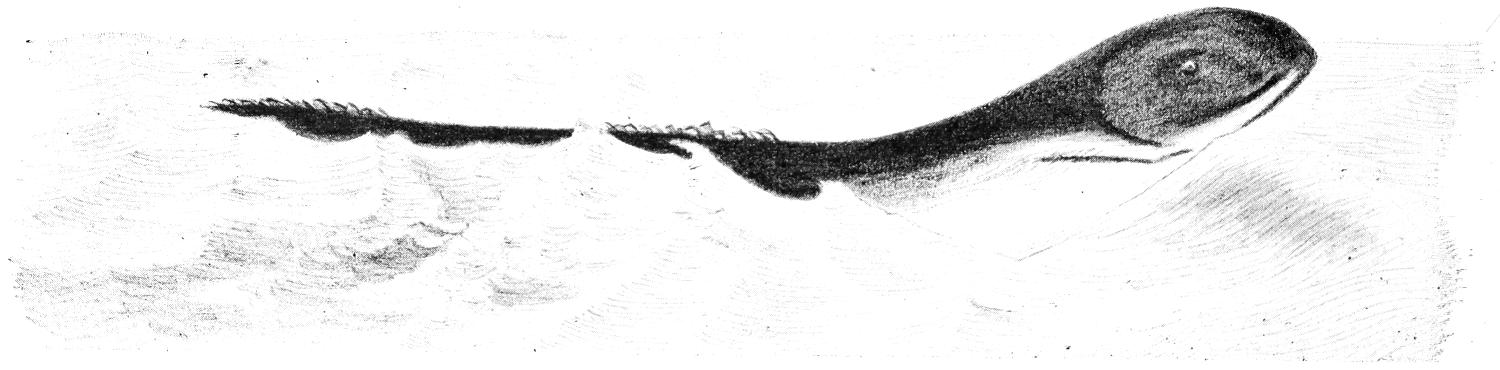
Fig. 29.—Another sketch of the same individual.
“H. M. S. Daedalus, August, 6, 1848, lat. 25° S., long 9° 37′ E., St., Helena 1015 miles. In the 4 to 6 watch, at about five o’clock, we observed a most remarkable fish on our lee quarter, crossing the stern in a S. W. direction; the appearance of its head, which, with the back fin, was the only portion of the animal visible, was long, pointed, and flattened at the top, perhaps ten feet in length, the upper jaw projecting considerably; the fin was perhaps twenty feet in the rear of the head, and visible occasionally; the captain also asserted that he saw the tail, or another fin about the same distance behind it; the upper part of the head and shoulders appeared of a dark brown colour, and beneath the under jaw a brownish white. It pursued a steady undeviating course, keeping its head horizontal with the surface of the water, and in rather a raised position, disappearing occasionally beneath a wave for a very brief interval, and not apparently for purposes of respiration. It was going at the rate of perhaps from twelve to fourteen miles an hour, and when nearest, was perhaps one hundred yards distant. In fact it gave one quite the idea of a large snake or eel. No one in the ship has ever seen anything similar, so it is at least extraordinary. It was visible to the naked eye for five minutes, and with a glass for perhaps fifteen more. The weather was dark and squally at the time, with some sea running.”
The following article appeared in the Times of Nov. 2d.:
“Amidst the numerous suggestions of those of your correspondents who are disposed to admit the account given by Captain M’Quhae of the marine monster seen by him and several of his brother officers, on the 6th. of August last, as not altogether imaginary, it appears surprising that it should not have occurred to any one to suggest an explanation of some apparent anomalies in the account, which have no doubt tended to stagger the belief even of some readers who are not disposed to assume (any more than myself) that a number of officers in Her Majesty’s navy would deliberately invent a falsehood, or could have been deceived in an appearance which they describe with such precise details”
“One of the greatest difficulties on the face of the narrative and which must be allowed to destroy the analogy of the motions of the so called “sea-serpent” with those of all known snakes and anguilliform fishes, is that no less than sixty feet of the animal were seen advancing à fleur d’eau at the rate of from twelve to fifteen miles an hour, without it being possible to perceive, upon the closest and most attentive inspection, any undulatory motion to which its rapid advance could be ascribed. It need scarcely be observed that neither an eel nor a snake, if either of those animals could swim at all with the neck elevated, could do so without the front part of its body being thrown into undulation by the propulsive efforts of its tail.”
“But, it may be asked, if the animal seen by Captain M’Quhae was not allied to the snakes or to the eels, to what class of animals could it have belonged? To this I would reply, that it appears more likely that the enormous reptile in question was allied to the gigantic Saurians, hitherto believed only to exist in the fossil state, and, among them, to the Plesiosaurus.”
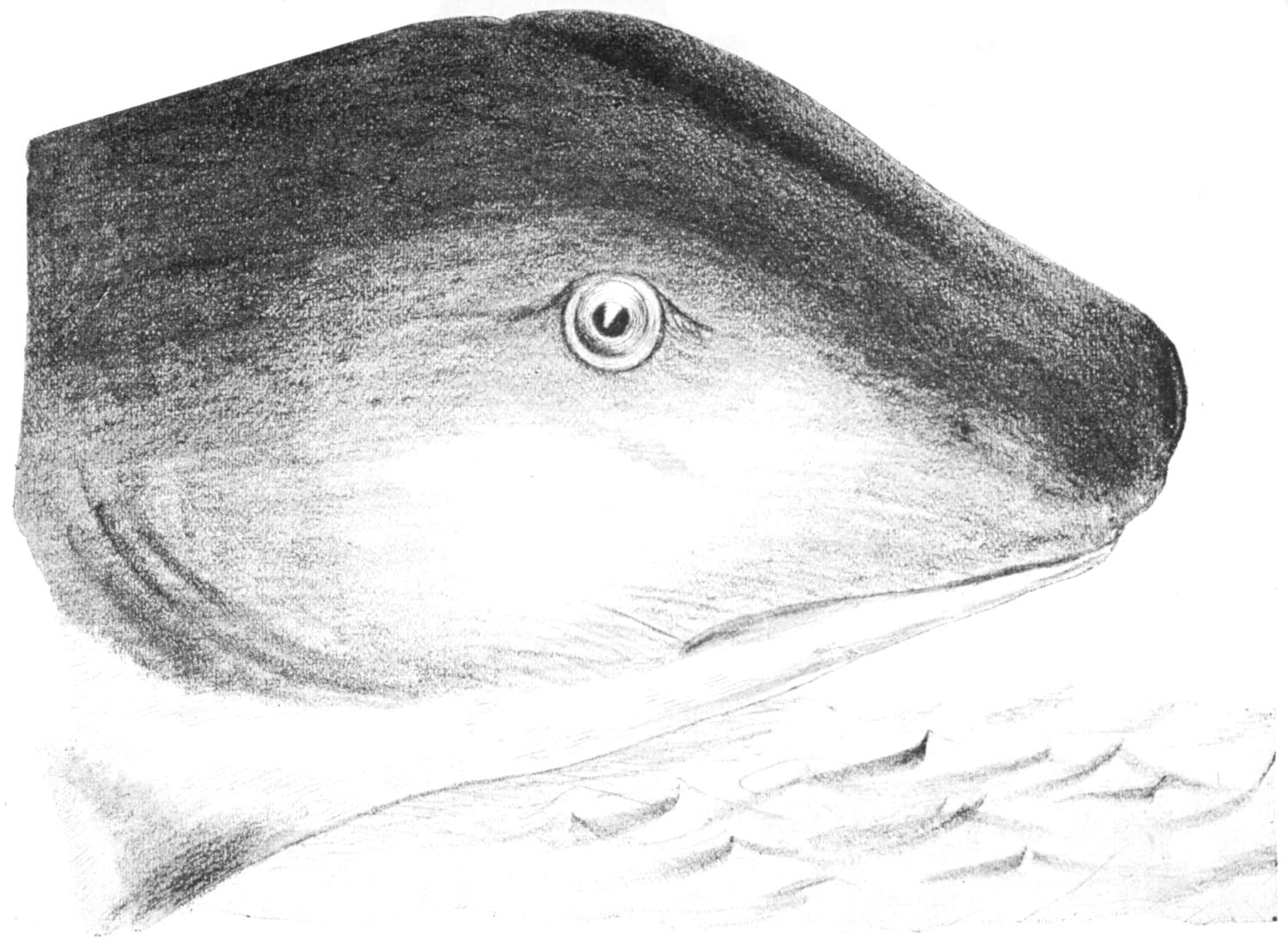
Fig. 30.—A sketch of the head of the same individual.
“From the known anatomical characters of the Plesiosauri, derived from the examination of their organic remains, geologists are agreed in the inference that those animals carried their necks (which must have resembled the bodies of serpents) above the water, while their progression was effected by large paddles working beneath—the short but stout tail acting the part of a rudder. It would be superfluous to point out how closely the surmises of philosophers resemble, in these particulars, the description of the eye-witnesses of the living animal, as given in the letter and drawings of Captain M’Quhae. In the latter we have many of the external characters of the former, as predicated from the examination of the skeleton. The short head, the serpent-like neck, carried several feet above the water, forcibly recall the idea conceived of the extinct animal; and even the bristly mane in certain parts of the back, so unlike anything found in serpents, has its analogy in the Iguana, to which animal the Plesiosaurus has been compared by some geologists. But I would most of all insist upon the peculiarity of the animal’s progression, which could only have been effected with the evenness, and at the rate described, by an apparatus of fins or paddles, not possessed by serpents, but existing in the highest perfection in the Plesiosaurus.”—F. G. S.—
In the number of the Illustrated London News of November 4, 1848, the letter of Captain M’Quhae was published in which he expresses his special approbation of the figures:
“I have observed with very great satisfaction the Engravings of the “Sea-Serpent” in the Illustrated London News of the 28th. inst.; they most faithfully represent the appearance of the animal, as seen from Her Majesty’s ship Daedalus on the 6th. of August last; and it is evident that much care has been bestowed upon the subject by the artist employed, to whom I beg to acknowledge myself greatly indebted for the patience and attention with which he listened to the various alterations suggested by me during the progress of the drawings.”
In the Times of Nov. 4th., we find the following remark:
“As some interest has been excited by the alleged appearance of a sea-serpent, I venture to transmit a few remarks on the subject, which you may or not may think worthy of insertion in your columns. There does not appear to be a single well authenticated instance of these monsters having been seen in any southern latitudes; but in the north of Europe, notwithstanding the fabulous character so long ascribed to Pontoppidan’s description, I am convinced that they both exist and are frequently seen. During three summers spent in Norway I have repeatedly conversed with the natives on this subject.”
Here follow the descriptions of two appearances which I have inserted above, (no. 109, 110).
“They expressed great surprise at the general disbelief attaching to the existence of these animals amongst naturalists, and assured me that there was scarcely a sailor accustomed to those inland lakes, who had not seen them at one time or another.”—Oxoniensis.
An unknown writer in one of the daily papers, after suggesting, whether the animals in question might not be full grown specimens of the Saccopharynx flagellum of Dr. Mitchill (described in the Annals of the New York Lyceum of Natural History, for March, 1824), or of the Ophiognathus ampullaceus of Dr. Harwood (Phil. Trans., 1827), gives Captain M’Quhae the benefit of a further conjecture, viz., whether some land species, as the boas, among which are individuals “forty feet” in length, may not sometimes betake themselves to the sea, or even “transport themselves from one continent to another.” (See Zoologist, 1848; p. 2320).
Some days after the figures of Captain M’Quhae were published, a nobleman, whose name is not mentioned, wrote to Prof. Owen to know his opinion about the animal seen by the Captain. The Professor, it would seem, did not answer the nobleman directly, but sent his answer to the Editor of the Times, evidently with a view of bringing his opinion under the eyes of thousands. This letter is too important to be abridged; I therefore give it in extenso; it appeared in the Times of November 11, 1848.
The Great Sea-Serpent.
“Sir,—Subjoined is the answer to a question relative to the animal seen from the Daedalus, addressed to me by a nobleman distinguished in literature, and taking much interest in science.”
“As it contains the substance of the explanation I have endeavoured to give to numerous inquirers, in the Hunterian Museum and elsewhere, and as I continue to receive many applications for my opinion of the “Great Sea Serpent,” I am desirous to give it once for all through the medium of your columns, if space of such value may be allotted to it.”
“I am, Sir, your very obedient servant
“Richard Owen.” “Lincoln’s Inn Fields, Nov. 9.”
“The sketch (this was a reduced copy of the drawing of the head of the animal seen by Captain M’Quhae; attached to the submerged body of a large seal, showing the long eddy produced by the action of the terminal flippers) will suggest the reply to your query, “Whether the monster seen from the Daedalus be anything but a saurian?” If it be the true answer, it destroys the romance of the incident, and will be anything but acceptable to those who prefer the excitement of the imagination to the satisfaction of the judgment. I am far from insensible to the pleasures of the discovery of a new and rare animal; but before I can enjoy them, certain conditions—e. g. reasonable proof or evidence of its existence—must be fulfilled. I am also far from undervaluing the information which Captain M’Quhae has given us of what he saw. When fairly analized, it lies in a small compass, but my knowledge of the animal kingdom compels me to draw other conclusions from the phenomena than those which the gallant captain seems to have jumped at. He evidently saw a large animal moving through the water, very different from anything he had before witnessed—neither a whale, a grampus, a great shark, an alligator, nor any of the larger surface swimming creatures which are fallen in with in ordinary voyages. He writes—“On our attention being called to the object, it was discovered to be an enormous serpent” (read “animal”), “with the head and shoulders kept about four feet constantly above the surface of the sea. The diameter of the serpent” (animal) “was about fifteen or sixteen inches behind the head; its colour a dark brown, with yellowish white about the throat”. No fins were seen (the captain says there were none; but from his own account, he did not see enough of the animal to prove the negative). “Something like the mane of a horse, or rather a bunch of sea-weed, washed about its back.” So much of the body as was seen was “not used in propelling the animal through the water, either by vertical or horizontal undulation.” A calculation of its length was made under a strong preconception of the nature of the beast. The head, e. g., is stated to be, “without any doubt, that of a snake;” and yet a snake would be the last species to which a naturalist conversant with the forms and characters of the heads of animals, would refer such a head as that of which Captain M’Quhae has transmitted a drawing to the Admirality, and which he certifies to have been accurately copied in the Illustrated London News for October 28, 1848, p. 265. Your Lordship will observe that no sooner was the captain’s attention called to the object, than “it was discovered to be an enormous serpent”, and yet the closest inspection of as much of the body as was visible, à fleur d’eau, failed to detect any undulations of the body, although such actions constitute the very character which would distinguish a serpent or serpentiform swimmer from any other marine species. The foregone conclusion, therefore, of the beast’s being a sea-serpent, notwithstanding its capacious vaulted cranium, and stiff, inflexible trunk, must be kept in mind in estimating the value of the approximation made to the total length of the animal, as “(at the very least) sixty feet”. This is the only part of the description, however, which seems to me to be so uncertain as to be inadmissible, in an attempt to arrive at a right conclusion as to the nature of the animal. The more certain characters of the animal are these:—Head with a convex, moderately capacious cranium, short obtuse muzzle, gape of the mouth not extending further than to beneath the eye, which is rather small, round, filling closely the palpebral aperture; colour, dark brown above, yellowish white beneath; surface smooth, without scales, scutes, or other conspicuous modifications or hard and naked cuticle. And the captain says, “Had it been a man of my acquaintance, I should have easily recognized his features with my naked eye.” Nostrils not mentioned, but indicated in the drawing by a crescentic mark at the end of the nose or muzzle. All these are the characters of the head of a warm-blooded mammal—none of them those of a cold-blooded reptile or fish. Body long, dark brown, not undulating, without dorsal or other apparent fins; “but something like the mane of a horse, or rather a bunch of sea-weed, washed about its back.” The character of the integuments would be a most important one for the zoologist in the determination to the class to which the above defined creature belonged. If an opinion can be deduced as to the integuments from the above indication, it is that the species had hair, which, if it was too short and close to be distinguished on the head, was visible where it usually is the longest, on the middle line of the shoulders or advanced part of the back, where it was not stiff and upright like the rays of a fin, but “washed about.” Guided by the above interpretation, of the “mane of a horse, or a bunch of sea-weed”, the animal was not a cetaceous mammal, but rather a great seal. But what seal of large size, or indeed of any size, would be encountered in latitude 24° 44′ south, and longitude 9° 22′ east—viz. about three hundred miles from the western shore of the southern end of Afrika? The most likely species to be there met with are the largest of the seal tribe, e. g. Anson’s sea lion, or that known to the southern whalers by the name of the sea-elephant, the Phoca proboscidea, which attains the length of from twenty to thirty feet. These great seals abound in certain of the islands of the southern and antarctic seas, from which an individual is occasionally floated off upon an iceberg. The sea lion exhibited in London last spring, which was a young individual of the Phoca proboscidea was actually captured in that predicament; having been carried by the currents that set northwards towards the Cape, where its temporary resting-place was rapidly melting away. When a large individual of the Phoca proboscidea or Phoca leonina is thus borne off to a distance from its native shore, it is compelled to return for rest to its floating abode, after it has made its daily excursions in quest of the fishes or squids that constitute its food. It is thus brought by the iceberg into the latitudes of the Cape, and perhaps farther north, before the berg was melted away. Then the poor seal is compelled to swim as long as strength endures, and in such a predicament I imagine the creature was that Mr. Sartoris saw rapidly approaching the Daedalus from before the beam, scanning, probably, its capabilities as a resting-place, as it paddled its long stiff body past the ship. In so doing, it would raise a head of the form and colour described and delineated by Captain M’Quhae, supported on a neck also of the diameter given; the thick neck passing into an inflexible trunk, the longer and coarser hair on the upper part of which would give rise to the idea, especially if the species were the Phoca leonina, explained by the similes above cited. The organs of locomotion would be out of sight. The pectoral fins being set on very low down, as in my sketch, the chief impelling force would be the action of the deeper immersed terminal fins and tail, which would create a long eddy, readily mistakable, by one looking at the strange phenomenon with a sea-serpent in his mind’s eye, for an indefinite prolongation of the body.”
“It is very probable, that not one on board the Daedalus ever before beheld a gigantic seal freely swimming in the open ocean. Entering unexpectedly from that vast and commonly blank desert of waters, it would be a strange and exciting spectacle, and might well be interpreted as a marvel; but the creative powers of the human mind appear to be really very limited, and, on all the occasions where the true source of the “great unknown” has been detected—whether it has proved to be a file of sportive porpoises, or a pair of gigantic sharks—old Pontoppidan’s sea-serpent with the mane has uniformly suggested itself as the representative of the portent, until the mystery has been unravelled.”
“The vertebrae of the sea-serpent described and delineated in the Wernerian Transactions, vol. I., and sworn to by the fishermen who saw it off the Isle of Stronsa (one of the Orkneys), in 1808, two of which vertebrae are in the Museum of the College of Surgeons, are certainly those of a great shark, of the genus Selache, and are not distinguishable from those of the species called “basking-shark”, of which individuals from thirty to thirty-five feet in length have been from time to time captured or stranded on our coasts.”
“I have no unmeet confidence in the exactitude of my interpretation of the phenomena witnessed by the captain and others of the Daedalus. I am too sensible of the inadequacy of the characters which the opportunity of a rapidly passing animal, “in a long ocean swell”, enabled them to note, for the determination of its species or genus. Giving due credence to the most probably accurate elements of their description, they do little more than guide the zoologist to the class, which, in the present instance, is not that of the serpent or the saurian.”
“But I am usually asked, after each endeavour to explain Captain M’Quhae’s sea-serpent, “Why should there not be a great sea-serpent?”—often, too, in a tone which seems to imply, “Do you think, then, there are not more marvels in the deep, than are dreamt of in your philosophy?” And, freely conceding that point, I have felt bound to give a reason for scepticism as well as faith. If a gigantic sea-serpent actually exists, the species must, of course, have been perpetuated through successive generations, from its first creation and introduction into the seas of this planet. Conceive, then, the number of individuals that must have lived, and died, and have left their remains to attest the actuality of the species during the enormous lapse of time, from its beginning, to the 6th. of August last! Now, a serpent, being an air breathing animal, with long vesicular and receptacular lungs, dives with an effort and commonly floats when dead; and so would the sea-serpent, until decomposition or accident had opened the tough integument, and let out the imprisoned gases. Then it would sink, and, if in deep water, be seen no more until the sea rendered up its dead, after the lapse of the aeons requisite for the yielding of its place to dry land,—a change which has actually revealed to the present generation the old saurian monsters that were entombed at the bottom of the ocean, of the secondary geological periods of our earth’s history. During life the exigencies of the respiration of the great sea-serpent would always compel him frequently to the surface; and when dead and swollen—
“Prone on the flood, extended long and large,”
he would
“Lie floating many a rood; in bulk as huge, “As whom the fables name of monstrous size, “Titanian, or Earth-born, that warr’d on Jove.”
“Such a spectacle, demonstrative of the species if it existed, has not hitherto met the gaze of any of the countless voyagers who have traversed the seas in so many directions. Considering, too, the tides and currents of the ocean, it seems still more reasonable to suppose that the dead sea-serpent would be occasionally cast on shore. However, I do not ask for the entire carcase. The structure of the back-bone of the serpent tribe is so peculiar, that a single vertebra would suffice to determine the existence of the hypothetical Ophidian; and this will not be deemed an unreasonable request, when it is remembered that the vertebrae are more numerous in serpents than in any other animals. Such large blanched and scattered bones on any sea-shore, would be likely to attract even common curiosity; yet there is no vertebra of a serpent larger than the ordinary pythons and boas in any museum in Europe.”
“Few sea-coasts have been more sedulously searched, or by more acute naturalists (witness the labours of Sars and Lovén), than those of Norway. Krakens and sea serpents ought to have been living and dying thereabouts from long before Pontoppidan’s time to our day, if all tales were true; yet they have never vouchsafed a single fragment of the skeleton to any Scandinavian collector; whilst the great denizens of those seas have been by no means so chary. No museums, in fact, are so rich in skeletons, skulls, bones and teeth of the numerous kind of whales, cachelots, grampuses, walrusses, sea unicorns, seals, etc., as those of Denmark, Norway, and Sweden; but of any large marine nondescript or indeterminable monster they cannot show a trace.”
“I have inquired repeatedly whether the natural history collections of Boston, Philadelphia, or other cities of the United States, might possess any unusually large ophidian vertebrae or any of such peculiar form as to indicate some large and unknown marine animal; but they have received no such specimens.”
“The frequency with which the sea-serpent has been supposed to have appeared near the shores and harbours of the United States, has led to its being specified as the “American sea-serpent;” yet, out of the two hundred vertebrae of every individual that should have lived and died in the Atlantic since the creation of the species, not one has yet been picked up on the shores of America. The diminutive snake, less than a yard in length, “killed upon the sea-shore”, apparently beaten to death, “by some labouring people of Cape Ann,” United States (see the 8vo pamphlet, 1817, Boston, page 38), and figured in the Illustrated London News, October 28, 1848, from the original American memoir, by no means satisfies the conditions of the problem. Neither does the Saccopharynx of Mitchill, nor the Ophiognathus of Harwood—the one four and a half feet, the other six feet long: both are surpassed by some of the congers of our own coasts, and, like other muraenoid fishes and the known small sea snake (Hydrophis), swim by undulatory movements of the body.”
“The fossil vertebrae and skull which were exhibited by Mr. Koch, in New York and Boston, as those of the great sea-serpent, and which are now in Berlin, belonged to different individuals of a species which I had previously proved to be an extinct whale; a determination which has subsequently been confirmed by Professors Müller and Agassiz. Mr. Dixon of Worthing has discovered many fossil vertebrae, in the Eocene tertiary clay at Bracklesham, which belong to a larger species of an extinct genus of serpent (Palaeophis), founded on similar vertebrae from the same formation in the Isle of Sheppey. The largest of these ancient British snakes was twenty feet in length; but there is no evidence that they were marine.”
“The sea saurians of the secondary periods of geology have been replaced in the tertiary and actual seas by marine mammals. No remains of Cetacea have been found in lias or oolite, and no remains of Plesiosaur, or Ichthyosaur, or any other secondary reptile, have been found in Eocene or later tertiary deposits, or recent, on the actual sea-shores; and that the old air-breathing saurians floated when they died has been shown in the Geological Transactions (vol. V., second series, p. 512). The inference that may reasonably be drawn from no recent carcase or fragment of such having ever been discovered, is strengthened by the corresponding absence of any trace of their remains in the tertiary beds.”
“Now, on weighing the question, whether creatures meriting the name of “great sea serpent” do exist, or whether any of the gigantic marine saurians of the secondary deposits may have continued to live up to the present time, it seems to me less probable that no part of the carcase of such reptiles should have ever been discovered in a recent or unfossilized state, than that men should have been deceived by a cursory view of a partly submerged and rapidly moving animal, which might only be strange to themselves. In other words, I regard the negative evidence from the utter absence of any of the recent remains of great sea serpents, krakens, or Enaliosauria, as stronger against their actual existence, than the positive statements which have hitherto weighed with the public mind in favour of their existence. A larger body of evidence from eye-witnesses might be got together in proof of ghosts than of the sea-serpent.”
What speaks for itself, this letter appeared in several journals and newspapers. So I have found it in the Annals and Magazine of Natural History, 2d. Ser. Vol. II, p. 458 (15? Nov. 1848), in Galignani’s Messenger of Nov. 23, 1848, in the Illustrated London News of Nov. 25, 1848, and in the Zoologist, of Nov. 27, 1848. As it came from such a quarter it is not surprising that many persons were willing to acquiesce in the decision.
Captain M’Quhae, however, promptly replied to Professor Owen. His answer was also addressed to the Editor of the Times (Times, Nov. 21, 1848):
“Sir,—Will you do me the very great favour to give a place in your widely-circulating columns to the following reply to the animadversions of Professor Owen on the serpent or animal seen by me and others from Her Majesty’s ship Daedalus on the 6th. of August last, and which were published in the Times of the 14th. inst.?
“I am, Sir, your obedient servant “P. M’Quhae. “Late Captain of Her Majesty’s ship Daedalus.
“London, November 18.
“Professor Owen correctly states that I “evidently saw a large creature moving rapidly through the water very different from anything I had before witnessed, neither a whale, a grampus, a great shark, an alligator, nor any of the larger surface-swimming creatures fallen in with in ordinary voyages”. I now assert, neither was it a common seal nor a sea elephant; its great length, and its totally differing physiognomy, precluding the possibility of its being a Phoca of any species. The head was flat, and not a “capacious vaulted cranium;” nor had it “a stiff inflexible trunk”—a conclusion to which Professor Owen has jumped, most certainly not justified by the simple statement, that “no portion of the sixty feet seen by us was used in propelling it through the water, either by vertical or horizontal undulation.”
“It is also assumed that the “calculation of its length was made under a strong preconception of the nature of the beast;” another conclusion quite contrary to the fact. It was not until after the great length was developed by its nearest approach to the ship, and until after that most important point had been duly considered and debated, as well as such could be in the brief space of time allowed for so doing, that it was pronounced to be a serpent by all who saw it, and who are too well accustomed to judge of lengths and breadths of objects in the sea to mistake a real substance and an actual living body, coolly and dispassionately contemplated, at so short a distance too, for the “eddy caused by the action of the deeper immersed fins and tail of a rapidly moving gigantic seal raising its head above the water,” as Professor Owen imagines, “in quest of its lost iceberg.””
“The creative powers of the human mind may be very limited. On this occasion they were not called into requisition; my purpose and desire being, throughout, to furnish eminent naturalists, such as the learned Professor, with accurate facts, and not with exaggerated representations, nor with what could by any possibility proceed from optical illusion; and I beg to assure him that old Pontoppidan’s having clothed his sea-serpent with a mane could not have suggested the idea of ornamenting the creature seen from the Daedalus with a similar appendage, for the simple reason that I had never seen his account, or even heard of his sea-serpent, until my arrival in London. Some other solution must therefore be found for the very remarkable coincidence between us in that particular, in order to unravel the mystery.”
“Finally, I deny the existence of excitement, or the possibility of optical illusion. I adhere to the statement, as to form, colour, and dimensions, contained in my official report to the Admiralty; and I leave them as data whereupon the learned and scientific may exercise the “pleasures of imagination” until some more fortunate opportunity shall occur of making a closer acquaintance with the “great unknown”,—in the present instance assuredly no ghost.”
It also appeared in the Illustrated London News of Nov. 25 1848.
And a gentleman, who signed his letter with the initials J. C., wrote a letter to the Editor of the Illustrated London News (see this Journal of Nov. 25, 1848) to rectify another statement of the learned Professor:
“The very interesting account of the sea-serpent seen by Captain M’Quhae, and the drawing in your paper, are to my mind quite satisfactory as to the existence of the animal, and I have no doubt we shall hear of his being again seen sooner or later. But my object in writing to you is to remark on the conclusions come to by Mr. Owen, in his letter to the Editor of the Times, of November 9th., that it was not of the serpent species, because “they failed to detect any undulations of the body”, whereas the fact of there being “no vertical or horizontal undulations perceptible” stamps the character of the animal; for it is well known by all observers of snakes in India, that when the animal is in chase of game, small or great, or when scared away, and moving at a rapid pace, he is propelled entirely by the tail, or the smaller half of the body, while the other portion, with a curve of the head, is kept quite stiff—and this exactly corresponds with the Captain’s account, that it held on at the pace of twelve to fifteen miles an hour, apparently on some determined purpose.”
In May, 1854, Dr. T. S. Traill read a paper before the Royal Society of Edinburgh, comparing the animal of the Daedalus, with the Animal of Stronsa. The part of his dissertation concerning the present occurrence runs as follows:
“In their statements there are no suspicious affectations of minute detail. Their simple narrative appears to deserve more attention than it has yet received from naturalists; and I strongly incline to the belief, that the animal seen by the crew of the Daedalus was an analogue of, if not the very same species, as the animal cast ashore in Orkney in 1808.”
“Considering the derision with which, in this country, the subject of the sea-serpent has been treated, and the ridicule attempted to be thrown on all who were bold enough to assert that they had seen such an animal, nothing but a consciousness of his unimpeachable veracity could have tempted the gallant Captain M’Quhae to encounter the sneers of his incredulous countrymen. From all I have heard of his character for sagacity and veracity, from those who intimately knew him, I have not the smallest doubt that he has faithfully described what he and his crew saw distinctly, and at a short distance from the ship.”
“It was seen rapidly approaching before the beam.” Captain M’Quhae says: “On our attention being called to the object, it was discovered to be an enormous serpent, with head and shoulders kept about four feet constantly above the surface of the sea. The diameter of the serpent was about fifteen or sixteen inches behind the head; its colour of a dark brown, with yellowish-white about the throat.”
“The Captain could discover no fins, but “something like the mane of a horse, or rather a bunch of sea-weed, washed about its back.” He thought that its head did certainly resemble that of a snake; but the drawing which he transmitted to the Admiralty has not, to the eye of a naturalist, the form of that of any snake. The figure published in the Illustrated London News for October 28, 1848, is said to be an accurate copy of that drawing.”
“Captain M’Quhae estimates the length of its body at the surface of the water, “à fleur d’eau, at the very least equal to sixty feet, no part of which was to our perception used in propelling it through the water, either by vertical or horizontal undulations. It passed rapidly, but so close under our quarter, that had it been a man of my acquaintance, I should easily have recognized his features with the naked eye, and it did not, either in approaching the ship, or after it had passed our wake, deviate in the slightest degree from its course to the S. W., which it held on at the pace of twelve or fifteen miles an hour, apparently on some determined purpose.””
“If we may judge from the engraving, the cranium is very convex, of moderate size, with a short obtuse muzzle, a mouth reaching beyond the eye; which last organ is round, and of a moderate size. The surface of the body is represented as smooth, and destitute of scales—of which they were enabled to judge, because it passed close under the quarter of the ship. It was in sight for twenty minutes.”
“The description certainly does not belong to any Ophidian; and as certainly militates against an opinion thrown out by Mr. Owen, that it might be a specimen of the leonine seal, which has, it is alleged, occasionally reached those latitudes. The leonine seal never exceeds twenty-five feet in length, and such would have a circumference at its shoulders of twenty feet, while this appears to be eel-shaped, with a diameter of not more than fifteen or sixteen inches behind the head; the mane too, of the male of the leonine seal extends only over the head and neck; but in the other, it extended down the back.”
“With all deference to so eminent a naturalist as Mr. Owen, I humbly conceive that his conjecture respecting the identity of Captain M’Quhae’s animal with the leonine seal, is not more probable than Home’s identification of the Basking shark with the Orkney animal.”
“Both M’Quhae’s and the Orkney animal would appear to be a cartilaginous fish, totally different from any genus known to naturalists.”
Three years afterwards Captain Harrington’s report (no. 131) was published in the Times. Some days afterwards Captain Frederic Smith published his encounter with a sea-serpent, which after being harpooned and hoisted on board, proved to be a piece of a gigantic sea-weed, and the sea-serpents of the Daedalus and of Captain Harrington were in his opinion undoubtedly pieces of the same kind of weed.
Now “An Officer of Her Majesty’s Ship Daedalus felt obliged to state again that it was a living animal. As in this letter further particulars of the animal are mentioned, I insert it here in toto, (The Times of Febr. 16th., 1858):
“Sir,—Observing in your paper of yesterday’s date a letter from a correspondent to the marine animal commonly called the “sea-serpent”, in the concluding paragraph of which he mentions that he has no doubt the object seen from Her Majesty’s Ship Daedalus in the month of August, 1848, when on the passage from the Cape of Good-Hope to St. Helena, was a piece of the same sea-weed observed by himself, I beg to state that the object seen from her Majesty’s ship was, beyond all question, a living animal, moving rapidly through the water against a cross sea, and within five points of a fresh breeze, with such velocity that the water was surging under its chest, as it passed along at a rate probably of ten miles per hour. Captain M’Quhae’s first impulse was to tack in pursuit, ourselves being on a wind on the larboard tack, when he reflected that we could neither lay up for it nor overhaul it in speed. There was nothing to be done, therefore, but to observe it as accurately as we could with our glasses, as it came up under our lee quarter and passed away to windward, at its nearest position being not more than two hundred yards from us; the eye, the mouth, the nostril, the colour and form, all being most distinctly visible to us. We all felt greatly astonished at what we saw, though there were sailors among us of thirty and forty years’ standing, who had traversed most seas and seen many marvels in their day. The captain was the first to exclaim: “This must be that animal called the sea-serpent”, a conclusion which, after sundry guesses, we all at last settled down to. My impression was that it was rather of a lizard than a serpentine character, as its movement was steady and uniform, as if propelled by fins, not by any undulatory power. It was in sight, from our first observing it, about ten minutes, as we were fast leaving one another on opposite tacks with a freshening breeze and the sea getting up.”
“I feel, Sir, I have already occupied more of your time and space than is justifiable, and have the honour to remain your obedient servant,
“An Officer of Her Majesty’s ship Daedalus.”
Now let us run over all the prominent important particulars in the reports of the appearance of the sea-serpent as seen from the Daedalus. The first report, which appeared in the Times of October, 9, 1848, contains the description of the mouth: “and when it extended its jaws, which were full of large and jagged teeth, they seemed sufficiently capacious to admit of a tall man standing upright between them.” It is not said from whom the report came, nor is it signed. All the details, except this last, were afterwards substantiated by Captain M’Quhae himself and by Lieutenant Drummond. To me it seems quite impossible that the head was longer than three feet; as the neck is estimated at 16 inches in diameter, or one foot and a third, the breadth of the head, according to what we already know of the relative dimensions, cannot have been more than about two feet, and the length not more than about three feet. So the jaws, when extended, may open the mouth to about one and a half or two feet, a space which never can admit “of a tall man standing upright between them!”
The animal seen by the captain and some of the officers and crew of the Daedalus, was as follows: It swam with its body in a straight line. About sixty feet of its body were visible. Its head appeared to be about four feet out of the water. The part of the body hidden under water was estimated at thirty feet at least. The diameter of the neck behind the head was estimated at one foot and a third. When the animal opened its mouth, large jagged teeth were seen. “It moved with such velocity that the water was surging under its chest” (read throat, for the very chest, situated between the foreflappers, was invisible and much farther back). The head and a portion of the neck (Captain M’Quhae says, though without any reason, shoulders) were kept above the surface of the sea. The animal was, during the time it was in sight, never once below the surface. Lieutenant Drummond, however, says: the head disappeared occasionally beneath a wave for a very brief interval. The colour of the animal was a dark brown, with yellowish white under the throat. Something like the mane of a horse, or rather like a bunch of sea-weed, washed about its back. Though the Captain says: it had no fins. Lieutenant Drummond stated, that there was “a backfin” which was perhaps twenty feet in the rear of the head, “and visible occasionally”. If this were a true back-fin, it ought to have been constantly visible. As, however, it was only occasionally seen, we conclude that it was nothing else but one of the animal’s foreflappers, occasionally coming above the surface of the water. “The captain also asserted that he saw the tail, or another fin about the same distance behind it.” This of course must have been one of the animal’s hind flappers. Lieutenant Drummond must have been mistaken as to the length of the head, which he described as “perhaps ten feet.” His calculation evidently includes a portion of the neck. The head moreover was rather pointed, rather blunt, flattened at the top; the upper-jaw projecting considerably. He too, uses the terms of shoulders in saying: “the upper part of the head and shoulders appeared of a dark brown colour, and beneath the under-jaw a brownish-white.”
The three figures are tolerably well drawn; in fact they are the best of all the sketches ever made of this animal. They are as if they were delineated after the description above, but they were in reality “made from a sketch taken immediately after the animal was seen.” Here, as in foregoing reports, the figures and the text complete one another. The head is not that of a serpent, but that of a mammal. The proportions of length and height, the outlines of the jaws, the length of the mouth-split, the exact place of the eye, even the flattened appearance of forehead and nose are true mammalian characters. No whiskers or bristles on the upper-lips, and no ears or earholes are drawn, or mentioned. The distance, when nearest, was about one hundred yards. It is clear that they were not visible at that distance. The nostrils are indicated in the drawing by a crescentic mark at the end of the nose or muzzle, and are afterwards mentioned as having been visible.
In short, the descriptions as well as the figures agree with our present notion of the external appearance of the animal, known as the sea-serpent. I only wish to point out here that in none of the three figures the head can boast of great correctness; for such a head would never have been described as resembling that of a snake. It is clear that it is drawn too high, too short and not flat enough.
I will insert here a single remark on a passage in Prof. Owen’s reply. It is the following: Prof. Owen rejects the existence of the sea-serpent in the Norwegian Seas. “Few sea-coasts have been more sedulously searched, or by more acute naturalists (witness the labours of Sars and Lovén) than those of Norway. Krakens and sea-serpents ought to have been living and dying thereabouts from long before Pontoppidan’s time to our day, if all tales were true; yet they have never vouchsafed a single fragment of the skeleton to any Scandinavian collector.” It may be true that Mssrs. Sars and Lovén often navigated along the coasts of Norway and yet never saw a sea-serpent. Prof. Owen forgets that his own countryman, Mr. Morries Stirling, saw one with his own eyes! Is this proof not decisive enough? The absence of remains is not a proof of the non-existence of the sea-serpent, as there are whales with two backfins, which are seen by three different naturalists, yet not one single bone has ever fallen under the notice of zoologists. Prof. Owen also mentions the Kraken. Now my readers know well enough that the Krakens are abundant enough, being gigantic calamaries; it is, however, possible that before the year 1848 there was no official report of such a calamary. At present, however, they may be found by scores! It may be remarked here, too, that it was not before the year 1861, that a piece of a Kraken, or gigantic calamary, was brought to Paris by the commander of the Alecton, nota bene notwithstanding Prof. Owen’s assertion that they did not exist, as else the naturalists of Norway, and amongst them especially Sars and Lovén, would have found them!!
Of course it was impossible that the statement of Capt. M’Quhae agreed in details with that of Lieutenant Drummond, because the latter was immediately written after the appearance of Aug. 6th., whilst the letter of Captain M’Quhae was addressed to the Admiralty on the 11th. of October, two months afterwards and apparently written from memory.
Mr. Andrew Wilson in his Leisure Time Studies says of the “fin” mentioned by Lieutenant Drummond:
“This fin evidently corresponds to the structure described in the captain’s report as “something like a mane of a horse”, and which the introduction of the word “like” (as I have inserted it in parentheses after the word “rather” in his description) serves to correlate with the “bunch of sea-weed” which “washed about its back”.”
I believe to have clearly shown that the “fin” of Lieutenant Drummond was nothing but one of the animal’s fore-flappers and the other fin, “twenty feet more backward”, was one of the animal’s hind-flappers, and I believe that I may express my conviction that Mr. Andrew Wilson was just as wrong in supposing this, as in his conviction that the sea-serpent of Captain M’Quhae was merely an extraordinarily developed sea-snake! A few pages further on, viz., the writer of Leisure Time Studies, quoting the report of Captain M’Quhae says:
“The idea that the animal observed in this instance was a huge serpent, seems to have been simply slurred over without that due attention, which this hypothesis undoubtedly merits.” (!)
And on the following page:
“Suppose that a sea-snake of gigantic size is carried out of ordinary latitude, and allow for slight variations and inaccuracies in the accounts given by Captain M’Quhae, and I think we have in these ideas the nearest possible approach to a reasonable solution of this interesting problem.” (!!)
Though they don’t touch our subject directly, the following words of Mssrs. H. E. Strickland and A. G. Melville, treating of the Dodo, are well worth our notice; they say (Annals and Magazine of Natural History 2d. Series, Vol. II, p. 444, Nov. 15?, 1848):
“In proof of the existence of the Dodo we have—unlike the assumed evidence of the existence of some other anomalous monsters of which we have lately heard much—every canon of cautious truthseeking fully satisfied. With no traditional superstition or belief to give an origin to such a story (a point of no little importance in such an investigation), we have here fifteen or sixteen separate and independant authorities all alluding incidentally to the Dodo, each different in language and description, yet each of which has points of resemblance that cannot be mistaken as referring to similar objects. We have moreover drawings of the creature itself, made by different hands, and at different times, and with different objects; some of them rude and coarse to grotesqueness, other finished works of art. Yet throughout all these there run characters which it is impossible to mistake, and which satisfy us that the draughtsmen drew, not from imagination, but from something real, and from individuals of one and the same species.”
I am obliged to remark here that the proof of the existence of the Dodo, quoted by them, is not unlike the proof of the existence of great sea-serpents. If they, however, had known and mentioned that a head and a foot of the Dodo are preserved in Kopenhague, they would have been right. This is not the case with the sea-serpent. As far as I know, there is not one material proof of the existence of sea-serpents. But it is with the sea-serpent just as with the different accounts and pictures of the Dodo, “throughout all which run characters which it is impossible to mistake, and which satisfy us, that the draughtsmen drew, not from imagination, but from something real, and from individuals of one and the same species”.
I hope that every-one who has read all the accounts I have collected and published in this volume, and thoroughly studied the figures, will grant that there is no question of “assumed evidences of the existence of some anomalous monsters”.
119.—1848?—In the Zoologist of 1849, p. 2356, we read:
“Enormous undescribed animal apparently allied to the Enaliosauri, seen in the Gulf of California.—Captain the Hon. George Hope states that when in H. M. S. “Fly”, in the Gulf of California, the sea being perfectly calm and transparent, he saw at the bottom a large marine animal with the head and general figure of the alligator, except that the neck was much longer, and that instead of legs the creature had four large flappers, somewhat like those of turtles, the anterior pair being larger than the posterior; the creature was distinctly visible, and all its movements could be observed with ease; it appeared to be pursuing its prey at the bottom of the sea; its movements were somewhat serpentine, and an appearance of annulations, or ring-like divisions of the body, was distinctly perceptible. Captain Hope made this relation in company, and as a matter of conversation. When I heard it from the gentleman to whom it was narrated, I enquired whether Captain Hope was acquainted with those remarkable fossil animals Ichthyosauri and Plesiosauri, the supposed forms of which so nearly correspond with what he describes as having seen alive, and I cannot find that he had heard of them; the alligator being the only animal he mentioned as bearing a partial similarity to the creature in question.”
Mr. Newman, the Editor of this Journal, considers this testimony “in all respects, the most interesting natural-history-fact of the present century” (Zoologist, 1849, Preface, Nov. 11).
Though I think that all reports of sea-serpents are very interesting natural-history facts, it is indisputable that this testimony is a very important one. If the reader for a moment brings before his mind the animal of the Daedalus, about eighty feet long, with a head of about three feet, a neck like the body of a serpent, the thickness behind the head being somewhat smaller than that of the head itself; at twenty feet in the rear of the head the body becoming at once much broader and provided there with two flappers; twenty feet more backwards again two flappers, and then a tail of about forty feet, ending in a point. If the reader now imagines this animal to be on the bottom of the sea, whilst he himself is placed on the deck of a vessel, the sea perfectly calm, is it not true that such an animal must make the impression of an alligator with a long neck, and having instead of paws flappers like those of a sea-turtle? If moreover the animal moved in vertical undulations, is it not very well conceivable and clear that, by the light and shadow falling on the animal from above, the curves of the animal’s back (called bunches when it swims on the surface) must be taken as distinctly perceptible annulations or ring-like divisions of the body? I think that there can be no question but this animal was a sea-serpent. The reader will remember that Pontoppidan relates an account of a very young sea-serpent, eighteen feet in length, entangled in a fisherman’s net, “a worm with four paws on the belly”, and that the learned Bishop himself made the comparison: “thus it resembled a crocodile”!
120.—1848, December 31.—(Illustrated London News of 1849, April 14.)
“To the Editor of the Illustrated London News.” “H. M. S. Plumper, Plymouth Harbour, April 10, 1849.”
“Not having seen a sketch of the extraordinary creature, we passed between England and Lisbon, and being requested by several gentlemen to send you the rough one I made at the time, I shall feel much obliged by your giving it publicity in your instructive and amusing columns.”
“On the morning of the 31th. December, 1848, in lat. 41° 13′ N., and long 12° 31′ W., being nearly due West of Oporto, I saw a long black creature with a sharp head, moving slowly, I should think about two knots, through the water, in a north westerly direction, there being a fresh breeze at the time, and some sea on. I could not ascertain its exact length, but its back was about twenty feet if not more above water; and its head, as near as I could judge, from six to eight. I had not time to make a closer observation, as the ship was going six knots through the water, her head E. half S., and wind S. S. E. The creature moved across our wake towards a merchant barque on our lee-quarter, and on the port tack. I was in hopes she would have seen it also. The officers and men who saw it, and who have served in parts of the world adjacent to whale and seal fisheries, and have seen them in the water, declare they have neither seen nor heard of any creature bearing the slightest resemblance to the one we saw. There was something on its back that appeared like a mane, and, as it moved through the water, kept washing about, but before I could examine it more closely, it was too far astern.—I remain, yours very truly
A Naval Officer.”
Evidently the Naval Officer did not send the description of the appearance and the figure, before he was repeatedly requested by several gentlemen to do so. These gentlemen would not have been so pressing, if an appearance like that of the Daedalus had not happened very recently. How many written testimonies of the existence of sea-serpents will not be found in log books and private journals of navigators!
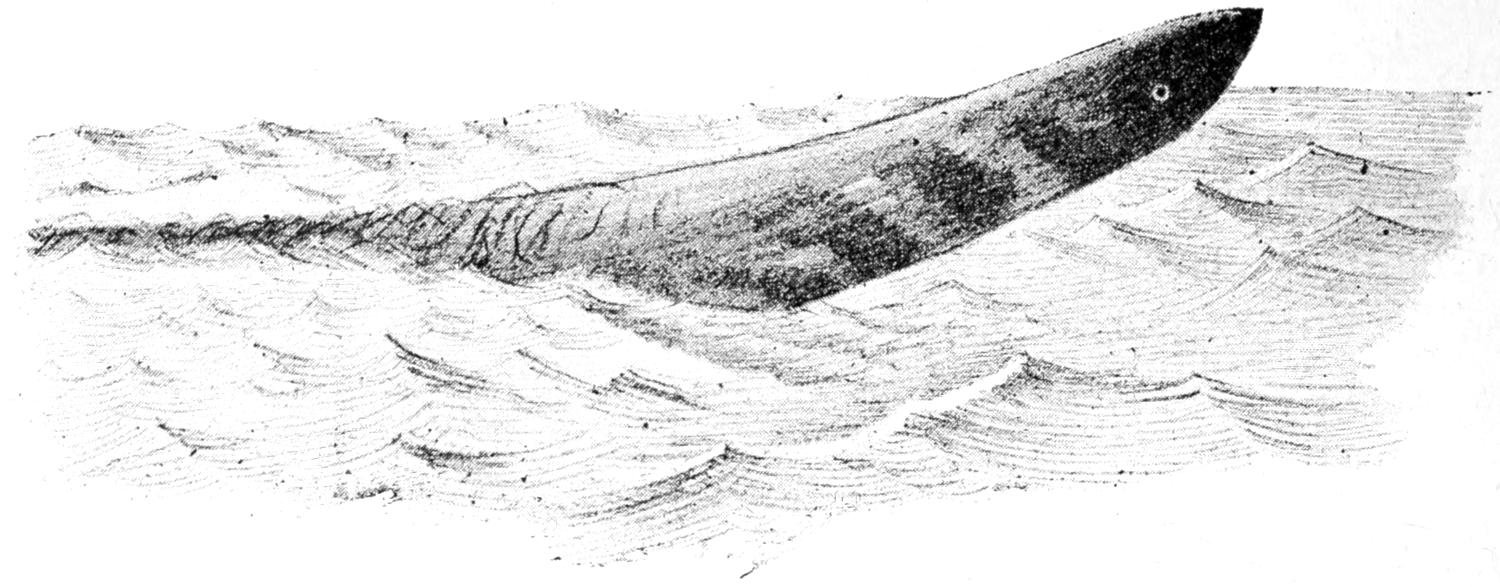
Fig. 31.—The sea-serpent as seen by an officer of H. M. S. Plumper.
121.—1849, February 18.—In the Zoologist of 1849 we read, p. 2459:
“Captain Adams, of the schooner Lucy and Nancy, which arrived at Jacksonville, Florida, on the 1st of April, from New York, had sight of a monster in many respects resembling the sea-monsters described by many others. Captain Adams states that on the morning of Sunday, the 18th. of February, about nine o’clock, when off the south point of Cumberland Island, about twelve miles from the St. John’s (Florida) bar, the attention of himself, crew and passengers, was suddenly rivetted upon an immense sea monster, which he took to be a serpent. It lifted its head, which was that of a snake, several times out of the water, seemingly to take a survey to the vessel, and at such times displayed the largest portion of its body, and a pair of frightful fins or claws, several feet in length. His tail was not seen at any time; but, judging from the dimensions of the body, the captain supposes the leviathan to be about 90 feet in length. Its neck tapered small from the head to the body and it appeared to measure about seven feet across the broadest part of the back. The colour was that of a dirty brown. When first seen it was moving towards the mouth of the St. John’s. The monster moved from the side of the vessel, and placed itself athwart its track, in front of her bows; but Captain Adams, not feeling partial to an encounter with his snakeship, ordered the vessel to be kept off. A boy on the deck, not knowing his antagonist, had seized a harpoon, and was in the act of striking, when he was prevented by the vessel’s moving off”—“Boston Atlas”.
At a glance we recognize the sea-serpent, as it appeared to Hans Egede. “The largest portion of its body” was seen, “and a pair of frightful fins or claws, several feet in length”. The reader may compare the fig. 19 in our report no. 5.—
122.—1849, May 30.—(Illustrated London News, 1850, January, 19.—)
“The following is an extract from the private log of Captain Edwards of the Alpha.—“Wednesday, May 30, P. M., strong breezes at N. N. W., and a sharp sea on; about 1.15 I felt a strange shaking of the ship. Mr. Thomson, my chief officer; Mr. George Park, civil engineer, cabin passenger on board, ran on deck as well as myself, when we beheld immediately under our lee quarter a monster of huge dimensions. It had no fins or broad tail, as whales have. It was of a light fawn colour, with large brown spots behind the shoulders; the head pointed like that of a porpoise. It had large glossy eyes; the shoulder was much darker than the rest of the body, which was the thickest part of it, (say twenty feet in diameter), from thence diminishing to the tail, to about the size of our mainyard in the slings (say twenty-four inches diameter). He took a turn round, and we afterwards saw him astern, and he went away in a S. E. by S. direction, at about thirty miles an hour.”—Melbourne Daily News, July, 1.—(“A correspondent, who sends us the above, adds that he believes this to be the first time the sea-serpent is stated to have been seen so far south.”)
Evidently the animal remained under water for a long time, and struck the vessel in coming to the surface. Seen from very near the colour evidently did not seem dark brown, but of a lighter hue. The absence of visible fins, the pointed tail, the brown spotted skin (no scales are mentioned, so it must have been smooth), the pointed head, the appearance of shoulders, the large eyes, its astonishing rapidity in swimming, all these statements characterize the sea-serpent. Alarmed at its having struck the vessel, off it went! Evidently Captain Edwards did not see the tip of the tail, which is rather pointed; he described, it is clear, what he took for the end of it, the extreme end being under water. No latitude is given in this report, but we may conclude that the appearance took place more towards the south than Melbourne is situated. This town is situated at about 38° S. lat., so the appearance may have taken place between 40° and 45° S. lat., and of course between 110° and 145° W. longitude, in the common track of vessels.
123.—1849, September 15.—(Illustrated London News for 1850, January 12).—Extract from a letter, dated “H. M. S. Cleopatra, Singapore, Oct. 26, 1849”, from an officer of that ship:—“Sept. 15. This evening they reported the Sea-Serpent: several of the men, as well as the officer of the forecastle, saw the monster; and they all ran aft to see it from the stern: they say it was about thirty feet long. After the report, all hands came to deck; but the evening was fast drawing to a close, and the ship going at eight knots, soon left the monster astern, going through the water very quickly to the N. W.”—(From a Correspondent.)
Most probably this appearance took place in the Indian Ocean between latitude 10 and 20 S. and longitude 50 and 70 E.
If one of the gentlemen of the Cleopatra is still in the land of the living, he will greatly oblige me by sending me some more details of the external appearance of the animal, and of the place where the animal was seen.
“The Rev. Alfred Charles Smith, M. A., an excellent naturalist, who passed the three summer months of 1850 in Norway, and who published” his Notes on Observations in Natural History during a Tour in Norway “in the Zoologist for that and the following year, thus alludes to his own inquiries, which, if they add nothing to the amount of fact accumulated, add weight to the testimonies already adduced”. (Gosse, Romance of Natural History, 13th. Ed., Vol. I., p. 282.)
“Being in the country of the renowned Bishop Pontoppidan, and in the fjords which are generally claimed as the home, or, at any rate, as one of the habitations of the sea-serpent, whose existence seems yet to be a disputed point in England, I lost no opportunity of making inquiries of all I could see, as to the general belief in the country regarding the animal in question; but all, with one single exception—naval officers, sailors, boatmen, and fishermen—concurred in affirming most positively that such an animal did exist, and had been repeatedly seen off their coasts and fjords, though I was never fortunate enough to meet a man who could boast of having seen him with his own eyes. All, however, agreed in unhesitating belief as to his existence and frequent appearance; and all seemed to marvel very much at the scepticism of the English, for refusing credence to what to the minds of the Norwegians seemed so incontrovertible. The single exception to which I have alluded, was a Norwegian officer, who ridiculed what he called the credulity or gullibility of his countrymen; though I am bound to add my belief, that he did this, not from any decided opinion of his own, but to make a show of superior shrewdness in the eyes of an Englishman, who, he at once concluded, must undoubtedly disbelieve the existence of the marine monster. That Englishman, however, certainly partakes of the credulity of the Northmen, and cannot withhold his belief in the existence of some huge inhabitant of those northern seas, when, to his mind, the fact of his existence has been so clearly proved by numerous eye-witnesses, many of whom were too intelligent to be deceived, and too honest to be doubted.”
The reader will remember the splendid hoax of the New York Tribune (1852); now Mr. Robert Froriep in his Tagsberichte über die Fortschritte der Natur- und Heilkunde, no 486, already doubted this report. After some time (no. 491) he communicated to his readers that according to the Philadelphia Bulletin, the whole was a hoax, but to show them how firm a believer Mr. Froriep, nevertheless, remained, he adds:
“This, however, will not prevent us from bestowing further attention on the subject of the Sea-Serpent.”
124.—1850?—The following evidence may be called one of the more interesting which tell about the habits of the sea-serpent. In the Zoologist of 1862, p. 7850, we read:
“Off Madeira, on board R. M. S. Thames. Made acquaintance with a Captain Christmas, of the Danish Navy, a proprietor in Santa Cruz, and holding some office about the Danish Court. He told me he once saw a sea-serpent between Iceland and the Faroe Islands. He was lying in to a gale of wind, in a frigate of which he had the command, when an immense shoal of porpoises rushed by the ship, as if pursued, and lo and behold a creature with a neck moving like that of a swan, about the thickness of a man’s waist, with a head like a horse, raised itself slowly and gracefully from the deep, and seeing the ship it immediately disappeared again, head foremost, like a duck diving. He saw it only for a few seconds; the part above water seemed about eighteen feet in length. He is a singularly intelligent man, and by no means one to allow his imagination to run away with him.—Stephen Cave, M. P. for Shoreham; 35, Wilson Place, April 29, 1861, in a letter to Mr. Gosse.”
It is a very remarkable fact that we meet here the sea-serpent between Iceland and the Far-Oer, a place situated between the two most frequented parts of the North Atlantic, i. e. the coasts of Norway and the coasts of the United States. But it is not the first time; the readers will remember the report of Hans Egede (no. 5) and that of Capt. Brown (no. 56). Remarkable, too, is the fact that the sea-serpent now made its appearance in a gale of wind. Is this not a matter of surprise as everywhere else is stated that it appears only in fine weather? Is it not reasonable therefore, to conclude that the animal feels comfortable in fine weather, but that, being an air-breathing animal it must come to the surface from time to time and may consequently be seen at times when there is wind? There is the statement of Captain M’Quhae, who speaks of a “breeze” and here we meet with “a gale of wind”. It is also worthy of our notice that Capt. Cristmas mentions the immense shoal of porpoises rushing by the ship, as if pursued, and a sea-serpent making its appearance. I need not remind my readers of the same observation of some gentlemen near Nova Scotia (no. 97). Later on we shall have the report in which a sea-serpent gripped “a whale” (of the smaller kind) in its fin, and we have already learned that a sea-serpent (no. 54) was engaged with “a whale” (of the smaller kind).
Not less important is the description of the long neck, moving like that of a swan, and disappearing head foremost like a duck diving. Nearly exactly the same thing was observed in 1879, April 5.
The thickness of the neck was that of a man’s waist, the part above the water measured eighteen feet in length, and yet the foreflappers remained hidden under water. The head is described as resembling that of a horse, which may be the result of the animal bearing a mane, and when first rising out of the water, holding its head in a nearly right angle with the neck. Moreover the nostrils might have been widely opened. The animal of Capt. M’Quhae had also a neck of one foot and a third in diameter; head and neck had a length of about twenty feet, for at about twenty feet in the rear of the head was seen the animal’s fore flapper. So we may conclude that these two individuals were of the same or nearly of the same length.
125.—1853?—Dr. Traill says in the Proceedings of the Royal Society at Edinburgh, no. 44, May, 1854, that it “is said to have been seen lately in some of their fjords.”
126.—1854, September 4.—(Illustrated London News, for 1855, February 17.—)
“It is reported by the British Brig Albeona, arrived at Liverpool, that on the 4th. of September last, about five in the afternoon, in lat. 38 S., long 13 E., while the ship was under a light wind and in smooth water, a sea-monster of great size and singular appearance was descried. Attention was first directed to it by the broken action of the water, which otherwise was smooth all around. The animal was discovered protruding its head above water to the length of about 30 feet, at an angle of 60 degrees to the horizon. His head was about 12 feet long and was marked by a white stripe or streak down each side. At about six feet from the termination of the streaks, which were presumed to be its jaws, there was a protuberance on its back like a small water-cask. The creature kept its mouth shut, but its eyes were plainly visible. At the point of contact with the water the body seemed about as much as the ship’s long-boat round. The general colour of the body was black, but under the jaw was a quantity of loose skin, like a pouch, of a lighter colour than the rest of the animal. While under observation he dipped under water three times, remaining submerged about a minute each time. From the broken action of the water at different points, it seemed as if protuberances, similar to that on the back existed on various parts of the body. From the best conjecture that could be made, it was computed at 180 feet in length over all.”
The length of the head may be somewhat exaggerated, the largest dimensions admissible are 6 feet in breadth and about 8 feet in length, as we shall afterwards observe from one of the most recent reports. It is a remarkable fact that here mention is made of a white stripe or streak down on each side of the head, presumed to be its jaws. In the deposition of Captain Finney (no. 34) too, we read “It had a white stripe extending the whole length of the head just above the water, there where the underjaw must have been”. And in the figures of the animal seen by the gentlemen of the Daedalus (fig. 28, 29, 30) the underjaw is drawn white, and described whitish brown or yellowish white. The protuberance on its back (read on the back of its neck) was a fold in the animal’s skin, as may be seen in the sea-lions in our Zoological Gardens, when they contract their long necks, and then the other “protuberances, similar to that on the back” were of the same character. This character of having bunches occasionally, is well known to us. Or all these protuberances were merely vertical undulations.
Attention was first paid to it by the broken action of the water, which otherwise was smooth all around. So the animal first swam for a moment just below the surface, a habit which we have often observed in foregoing reports. The general colour of the body was black, but under the jaw was a quantity of loose skin, like a pouch, of a lighter colour than the rest of the animal. As to the description of the colour of the animal’s throat, it agreed with foregoing statements. As to the loose skin, and the pouch, this is also only explicable by the animal’s having a skin just like sea-lions. It is so loose and folds so easily, that if the head is bent a little downward, or if the neck is somewhat contracted, several folds are seen, which led Captain Brown (no. 56) to mention “eight gills under the neck”. He had better have written “gill-splits”, meaning the furrows between the folds.—The length of 180 feet may be somewhat exaggerated, though we will afterwards prove that individuals of still greater length must exist.
127.—1855, August?—In the letter from Capt. G. H. Harrington to Rear-Admiral W. A. B. Hamilton, dated Liverpool, February 8, 1858, which letter will be inserted afterwards, we read:
“I am informed by Messrs. Lamport and Holt, shipowners of this place, that one of their captains reported a similar thing about two years ago, off the Island of St. Helena, but they took no further notice of it, supposing that he might have been deceived.”
I am convinced that the captain really saw a sea-serpent. The reader will, I hope, be convinced of it himself, after having read Captain Harrington’s report (no. 131).
128.—1856, March 30.—(Illustrated London News of the 3d. of May, 1856).
“To the Editor of the Illustrated London News.”
“Imogen, Channel, 15th. April, 1856.”
“Sir.—We beg to hand you the enclosed Sketch of a Sea-Serpent we had the good fortune to sight on the 30th. of March last.”
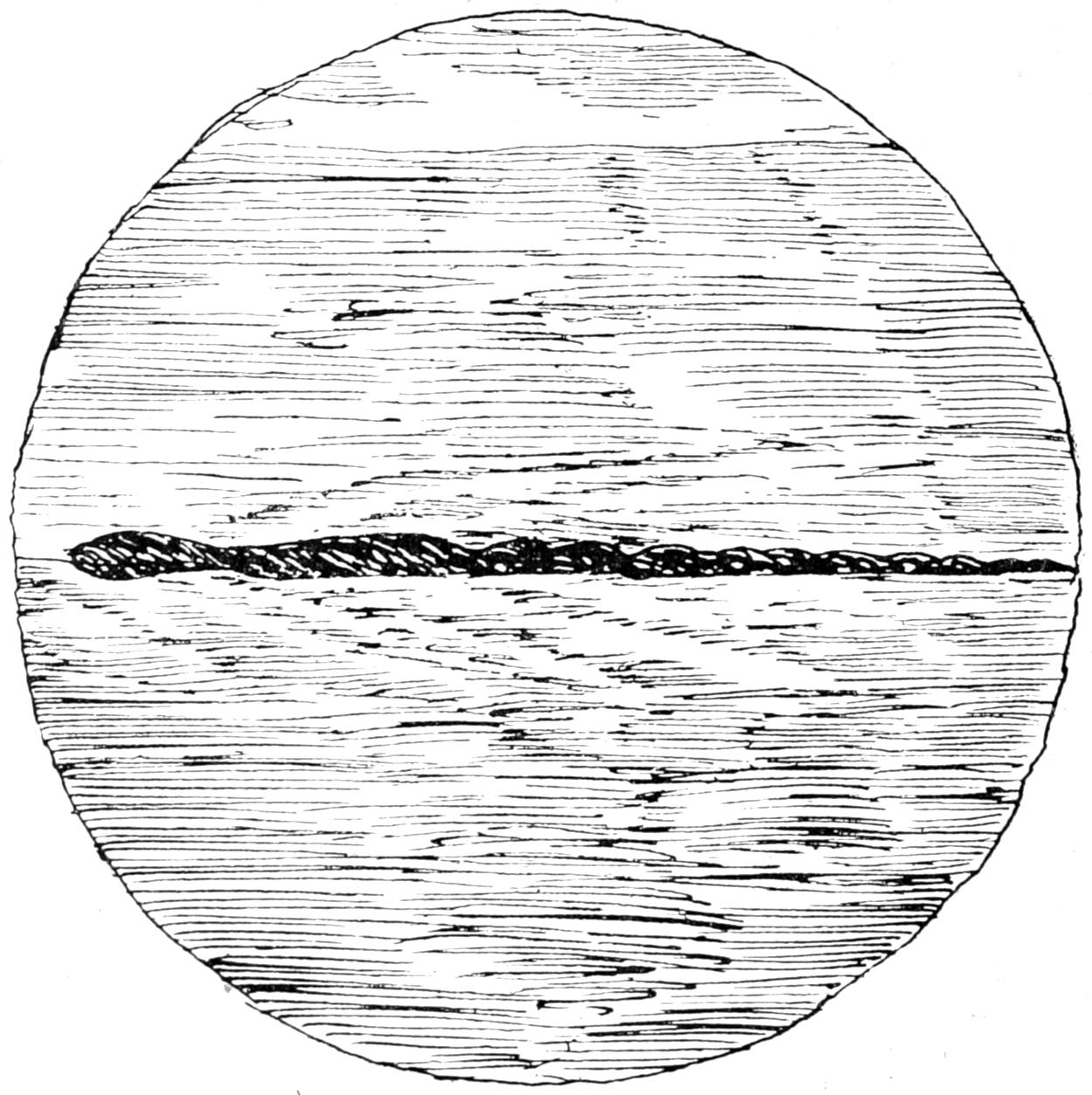
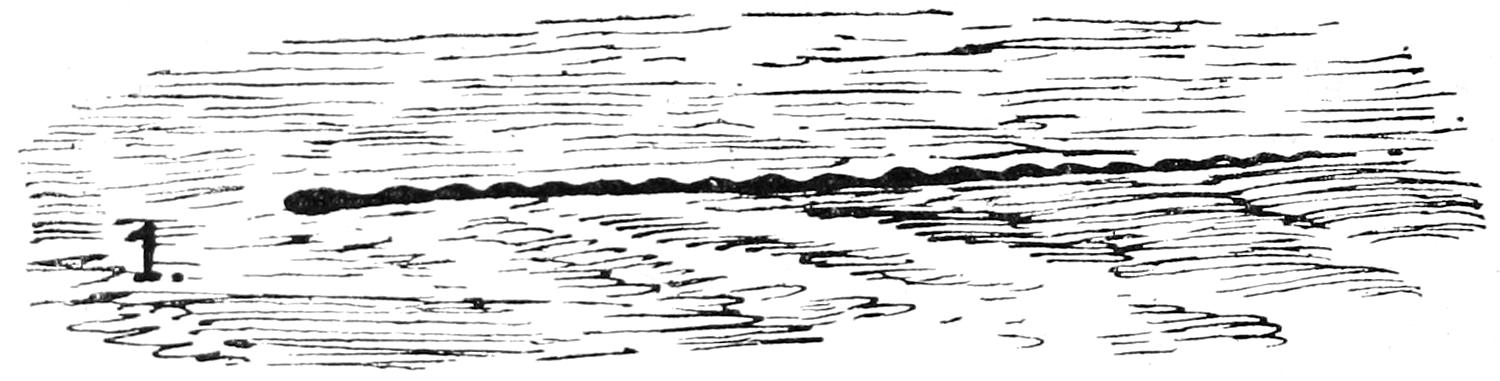
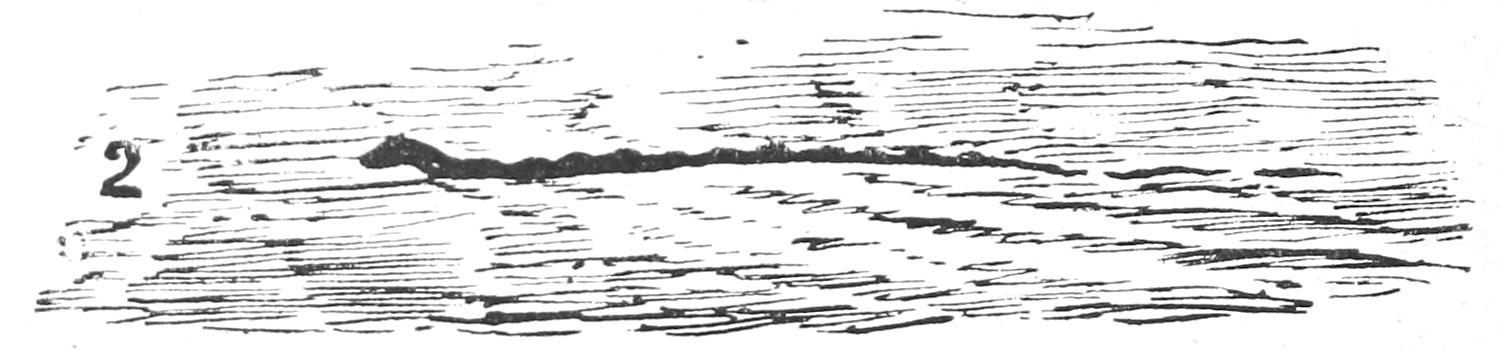
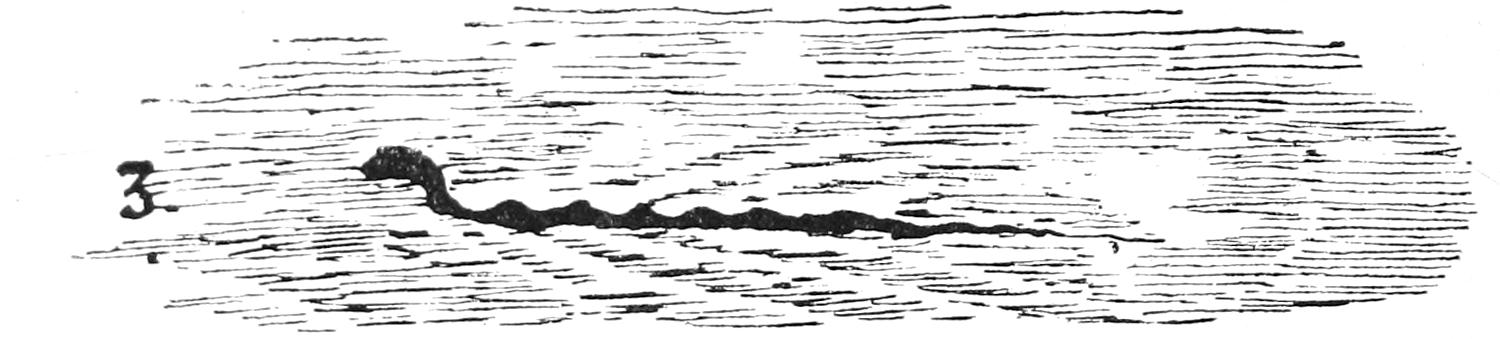
Fig. 32, 33, 34 and 35.—The sea-serpent as seen by Capt. Guy of the Imogen. Fig. 32 = Fig. 33, seen with a telescope.
“Imogen, from Algoa Bay, towards London. Sunday 30th. March, 1856. Lat. 29 deg., 11 min. N., Long. 34 deg., 36 min. W., bar. 30.50; calm and clear. Four vessels visible to southward and westward.”
“About five minutes past eleven A. M., the helmsman drew our attention to something moving through the water, and causing a strong ripple about 400 yards distant from our starboard quarter.”
“In a few moments it became more distinct, presenting the appearance in fig. 1., and showing an apparent length of about forty feet (above the surface of the sea), the undulations of the water extending on each side to a considerable distance in its wake. Mr. Statham immediately ascended to the maintopsailyard, Captain Guy and Mr. Harries watching the animal from the deck with the telescope. After passing the ship about half a mile, the serpent “rounded to” and raised its head, seemingly to look at us (fig. 2), and then steered away to the northward (N. E.), possibly to the neighbourhood of the Western Islands, frequently lifting its head (fig. 3). We traced its course until nearly on the horizon, from the topsailyard, and lost sight of it from deck about 11 h. 45 m. A. M. No doubt remained on our minds as to its being an immense snake, as the undulations of its body were clearly perceptible, although we were unable to distinguish its eyes.”
“The weather being fine and the glossy surface of the sea only occasionally disturbed by slight flaws (catspaws) of wind, we had a perfect opportunity of noticing its movements.”
“In conformity to your regulations we inclose our references, and remain,
“Sir, your obedient servants, “James Guy, Commander, “J. H. Statham, Julian B. Harries, D. J. Williamson, Passengers.”
After the figures of Capt. M’Quhae of the Daedalus (no. 118, fig. 28, 29, 30), which show the animal swimming with its body in a straight line, these four figures of the animal are the best we have, but here it is swimming with vertical undulations. To the description I can add nothing, nor need I explain anything. Description and figures complete each other and give an accurate and very natural idea of a sight of the animal seen from afar.—
129.—1856, July 8.—(The Illustrated London News of the 4th. of October, 1856.)
“To the Editor of the Illustrated London News.”
“Colonial Agency, 4, Cullum-street, London, September 25th. 1856.”
“We hand you the following extract from the log-book of our ship Princess, Captain A. R. N. Tremearne, in London Docks 15th. inst., from China, viz:—”
““Thuesday, July 8, 1856.—Latitude accurate 34° 56′ S.; Longitude accurate 18° 14′ E. At one P. M. saw a very large fish, with a head like a walrus, and twelve fins, similar to those in a black fish, but turned the contrary way. The back was from 20 to 30 feet long; also a great length of tail. It is not improbable that this monster has been taken for the great sea-serpent. Fired and hit it near the head with rifle-ball. At eight, fresh wind and fine.”
“We submit that the repeated accounts of seeing a marine monster, whatever be its correct name or kind, yet harmonising in some leading descriptions forbid longer doubt of one such creature existing, and we inclose you a rough sketch as this one appeared, signed by Captain Tremearne, who has been six years in our employ, and is otherwise well known. His own private log contains a similar record, and we have interrogated others of the Princess crew, who assert the fact of such appearance.”
“Captain Tremearne states that Captain Morgan, a passenger by the Princess, but who at St. Helena joined the ship Senator, to command her to Liverpool (where she is daily expected), also saw this monster, and can corroborate the statements.”
“Until 13th. of October the Princess will be at London Dock jetty, loading for Melbourne, and naturalists and other scientific persons can there make further inquiries, provided they do not subject Captain Tremearne to correspondence or interrupt ship’s duties, which are urgent for her speedy departure. The ship’s log-book and the rough sketch of the fish can also be inspected at our office.”
“Edmund J. Wheeler and Co.”

Fig. 36.—The sea-serpent as seen by Captains Tremearne and Morgan.
Though the description is very short, the figure enables us to make the following conjecture. Captain Tremearne really saw a sea-serpent, swimming with extraordinary speed, most probably because, on coming to the surface, it was alarmed by the unexpected presence of the ship. Having remained under water a long time it suddenly exhaled on coming to the surface, and blew like a whale, as the figure shows. The extreme velocity of its motion is cause that the impression of the head was that of a walrus. But this is a remarkable fact. We have already observed that a Norwegian fisherman described the head as resembling that of a seal (no. 8), and that Mr. Cummings (no. 29), too described at first sight the head to resemble that of a seal. Afterwards Mr. Kriukof (no. 36) better acquainted with sea-lions, described it as resembling a sea-lion’s; more than once the bristles on the upper lip are mentioned; one of the gentlemen of the Daedalus drew a head distinctly that of a Pinniped, and Captain Tremearne declares that it had the head of a walrus. Most probably he has seen the animal close to him and in its face, and saw the upper-lip with bristly whiskers, though this is neither mentioned nor figured. The same uncommonly rapid motion of the animal caused the captain to draw the neck too short and to see “twelve fins”. He was the dupe of an optical illusion, resulting from the very rapid paddling of the animal’s fore-flappers. But he has very well observed that the posture of the flappers when directed as upward as possible is “turned the contrary way to those in a black fish”. The head is described by him as that of a mammal, belonging to the order of Pinnipeds, the posture of the flappers is exactly that which pinnipedian mammals, as sea-lions and walruses, would exhibit, when swimming with extreme velocity. No reptile is able to lift up its fore-limbs to such a height. The animal in this position, but seen from behind, would have the external features as shown in the figure of Lieutenant Haynes (fig. 45, no. 148). And captain Tremearne has also very well observed and delineated that six of the fins were on the left, and six on the right sight of the animal as if rising out of the water, and that the twelve were not situated on the animal’s back. The rough back, too, is a proof that the animal had a mane. The violent motions of the flappers must have caused a severe splashing and foaming of the water; it is clear that this is omitted by captain Tremearne when drawing his figure. So this report, though apparently of no worth, is, with the figure, one of the most valuable reports of an appearance of the sea-serpent, throwing light upon its rank in the system of nature. Remarkable is the fact that captain Tremearne writes: “it is not improbable that this monster has been taken for the great sea-serpent”.