Part 1 — CHAPTER VI
Reading edition
LISSAMPHIBIA (CONTINUED)–ANURA
Order III. ANURA or TAILLESS AMPHIBIA.
The recent tailless Amphibia, or Frogs and Toads in the widest sense, contain such a great number of species (about 900), with such a diversity of characters, that it is necessary, if only for the sake of mere convenience, to group them into a considerable number of families and sub-families. The characters available for this purpose are few.
1. The possession of a tongue characterises the Phaneroglossa, the absence of a tongue the Aglossa.
2. The character of the shoulder-girdle.–Overlapping of the two halves of the shoulder-girdle on the ventral side characterises the Arcifera, while in the Firmisternia the two ventral halves meet in the middle line and form a firm, median bar. See, for details, p. 24.
3. The shape of the transverse processes or diapophyses of the sacral vertebra which carries the iliac or hip-bones. These processes are either dilated or cylindrical.
4. The presence or absence of teeth in the upper and lower jaws. This is indicated by a formula in which 0 means absence of teeth; max. means presence of teeth in the upper jaw; mand. means presence of teeth in the lower jaw.
5. The terminal joints or phalanges of the fingers and toes are sometimes claw-shaped. See p. 26.
6. The shape of the centra of the vertebrae.–Opisthocoelous, if the posterior end is cup-shaped or concave, procoelous if the anterior end is concave and the posterior is convex. See p. 19.
By means of these characters we can arrange the Anura in the following key:–
II. Aglossa. Sacral diapophyses dilated. AGLOSSA, p. 143.

Vertebrae opisthocoelous, with ribs.
II. Phaneroglossa.
A. Arcifera.
a. Sacral diapophyses dilated.
α. Terminal phalanges not claw-shaped.
Opisthocoelous, with ribs, max./0 DISCOGLOSSIDAE, p. 152.
Procoelous, without ribs, 0/0 BUFONIDAE, p. 166.
Precocious, or opisthocoelous, without ribs, max./0 PELOBATIDAE, p. 160.
β. Terminal phalanges claw-shaped– max./mand. Amphignathodontinae, p. 188.

HYLIDAE max./0 Hylinae, p. 189.
b. Sacral diapophyses cylindrical– max./mand. Hemiphractinae, p. 210. max./0 Cystignathinae, p. 211. 0/0 Dendrophryniscinae, p. 227.

CYSTIGNATHIDAE
B. Firmisternia.
a. Sacral diapophyses dilated– max./0 Dyscophinae, p. 235. 0/mand. Genyophryninae, p. 236. 0/0 Engystomatinae, p. 225.
ENGYSTOMATIDAE
b. Sacral diapophyses cylindrical– max./mand. Ceratobatrachinae, p. 237. max./0 Raninae, p. 238. 0/0 Dendrobatinae, p. 272.
RANIDAE
Concerning the evolution of the classification of the Anura, it is interesting to follow the changes of the value attached to the various anatomical characters by systematists. At first the presence or absence of teeth and of adhesive discs on the fingers and toes were considered to be of prime importance for the division of the Phaneroglossa.
Duméril et Bibron, 1841. "Erpétologie générale."
II. Phrynaglosses = Aglossa of Wagler: Pipa and Xenopus.
II. Phanéroglosses. 1. With teeth. a. Without discs: Raniformes.
II. Phanéroglosses. 1. With teeth. b. With discs:out Hylaeformes.
II. Phanéroglosses. 2. Toothless. Bufoniformes.
Stannius, 1856 (see p. 8), separated the Engystomatidae as "Systomata," and used the presence or absence of the "manubrium sterni" (omosternum) as a character of distinction between his Bufoninae and Raninae.
Günther, 1858, "Catalogue of the Batrachia Salientia." No progress was made by his scheme, which relied upon the tongue and digits.
Aglossa with Myobatrachus.
Opisthoglossa. a. Oxydactyla. b. Platydactyla.
Proteroglossa: Rhinophrynidae.
Cope, 1864. "On the limits and relations of the Raniformes."[68] He introduces the shoulder-girdle and the sacral diapophyses, and drops the discs as too adaptive and misleading. He distinguishes between Raniformes and Arciferi.
Cope, 1865. "Sketch of the primary groups of the Batrachia Salientia."[69]
Aglossa.
Bufoniformia (Bufonidae).
Arcifera (Discoglossidae, Scaphiopodidae, and Hylidae).
Raniformia.
In 1867 Cope separates the genus Hemisus as Gastrechmia on account of its peculiar pectoral arch.[70]
In 1875, "Check-list of North American Batrachia and Reptilia," Cope elaborates his system:
Class Batrachia. Order Anura.
1. Raniformia.
2. Firmisternia. [Dendrobatinae and Engystomatidae.]
3. Gastrechmia: Hemisus.
4. Bufoniformia. [Bufonidae.]
5. Aglossa. Pipa.
6. Odontaglossa. Xenopus.
7. Arcifera. [Cystignathidae, Hylidae, Pelobatidae and Discoglossidae.]
Cope consequently considered the characters of the pectoral arch as equivalent to those of the dentition.
Boulenger, 1882, "Catalogue of the Batrachia Gradientia s. Ecaudata," recognises that the pectoral arch is of greater systematic value than the dentition. The latter is used, together with the shape of the sacral diapophyses, for the separation into families.
I. Phaneroglossa. A. Firmisternia. 1. Ranidae.

2. Dendrobatidae.
3. Engystomatidae.
4. Dyscophidae.
B. Arcifera. 5. Cystignathidae.

6. Dendrophryniscidae.
7. Bufonidae.
8. Hylidae.
9. Pelobatidae.
10. Discoglossidae.
11. Hemiphractidae.
12. Amphignathodontidae.
II. Aglossa. 13. Dactylethridae.
14. Pipidae.
This emendation of the Arcifera and Firmisternia was accepted by Cope in his synopsis of the families of Vertebrata (Amer. Natural. xxiii., 1890), except that he still retained his suborder Gastrechmia.
Since the publication of Boulenger's great work a number of forms have been discovered which, from the characters of their dentition, have necessitated the establishment of certain new families, namely, Ceratobatrachidae and Genyophrynidae; and Boulenger was the first to recognise that the taxonomic value of the mere presence or absence of teeth in the jaws had been overestimated. I therefore propose using it as a character distinctive of the sub-families only, thereby reducing the number of families, relying first (leaving the Aglossa aside) upon the firmisternal or arciferous condition of the pectoral arch, secondly upon the dilated or cylindrical shape of the sacral diapophyses, thirdly upon the dentition. Blindly consistent application of these principles would reduce the Phaneroglossa to four families only, namely Ranidae, Engystomatidae, Cystignathidae and a fourth family comprising all the Arcifera with dilated sacral diapophyses. This would obviously be wrong. We have therefore to resort to other additional characters or rather peculiarities. The opisthocoelous character of the vertebrae and the possession of distinct ribs, together with the disc-shaped tongue, separate the Discoglossidae and justify their retention as a family. The Hylidae are marked off by the claw-shaped terminal phalanges, but the remaining forms, comprising the Bufonidae and Pelobatidae, cannot be separated except by their dentition, and I plead guilty of inconsistency in retaining them as separate families.
After all, our classification may not represent the natural system, and it may be nothing but a convenient key.
When we have eliminated the characters of the vertebrae, the dentition, the claw-shaped phalanges and the adhesive discs, it may well be asked what characters remain. The firmisternal is a further, higher modification of the older, more primitive arciferous condition. The difference between the dilated and cylindrical shape of the sacral diapophyses is in not a few cases very slight, and there are various, most suggestive exceptions. The presence or absence, size and shape of the omosternum and metasternum are of very limited taxonomic value, not always applicable to all the members of the same family. The fact is, that the Anura are a very recent and a most adaptive, plastic group. The earliest known fossils are scarcely older than the Middle Eocene.
Almost every one of the greater families has produced terrestrial, arboreal, aquatic, and burrowing forms. Their habits have modified, and are still shaping their various organs, first of course those by which the animals come first and most directly into contact with their surroundings (e.g. adhesive discs, dentition, general shape of the body, length of limbs, wartiness of the skin, tympanic disc). These are the so-called adaptive characters, sometimes decried as merely physiological; as if habits, use, and requirements did not likewise influence and ultimately model every other organ (e.g. tympanic cavity, Eustachian tubes, vertebrae, ribs, coccyx, pectoral arch, etc.). There are true Toads, Bufonidae, which are as smooth, wartless, slender-bodied and long-legged as the most typical of "Frogs"; true Ranidae, like Rhacophorus, which by their green colour, large adhesive discs and arboreal habits may well put many of the Hylidæ to shame. Ceratohyla has developed the claw-shaped terminal phalanges which are otherwise typical of, and peculiar to, the Hylidae, but this genus reveals itself by various details as a close relation of the other Hemiphractinae; and these fall in with the Cystignathidae on the strength of their cylindrical, not dilated, sacral diapophyses.
In sketching the phylogenetic tree of the families of the Anura we have to proceed with great caution.
There is not much doubt about the Aglossa. They have retained some of the most primitive characters, but have by now been so much modified and specialised that they are to be looked upon as an early side-branch.
Among the Phaneroglossa the Discoglossidae are with certainty the oldest, but are now scarce in genera and species, and much specialised. The Pelobatidae connect them with the Bufonidae. The Cystignathidae form a rather ill-defined assembly which points downwards to the Pelobatidae, upwards to the Hylidae. There is no divergence of opinion about the Ranidae being the highest of all the Anura, and amongst them the Raninae the most typical, the Dendrobatinae the most specialised. If we assume that moderately dilated sacral diapophyses represent a more primitive stage than cylindrical processes, we shall naturally look to the Engystomatidae as the connecting link between the Ranidae and the Arcifera, through Bufonoid creatures still with teeth in both jaws. If, on the other hand, we take the dilatation to be a further development from more or less cylindrical processes, then the Ranidae can be considered as having sprung from Cystignathoid creatures, which have consolidated their pectoral arch into the firmisternal condition; and in this case the Firmisternia would not be a natural group, the Engystomatidae pointing, to the Bufonoid stock. This would, to a great extent, mean a reversion to Cope's idea.
Sub-Order 1. Aglossa.–The two diagnostic peculiarities of the few members of this group are: first, the absence of a tongue; secondly, the union of the Eustachian tubes into one median pharyngeal opening in the posterior portion of the palate.
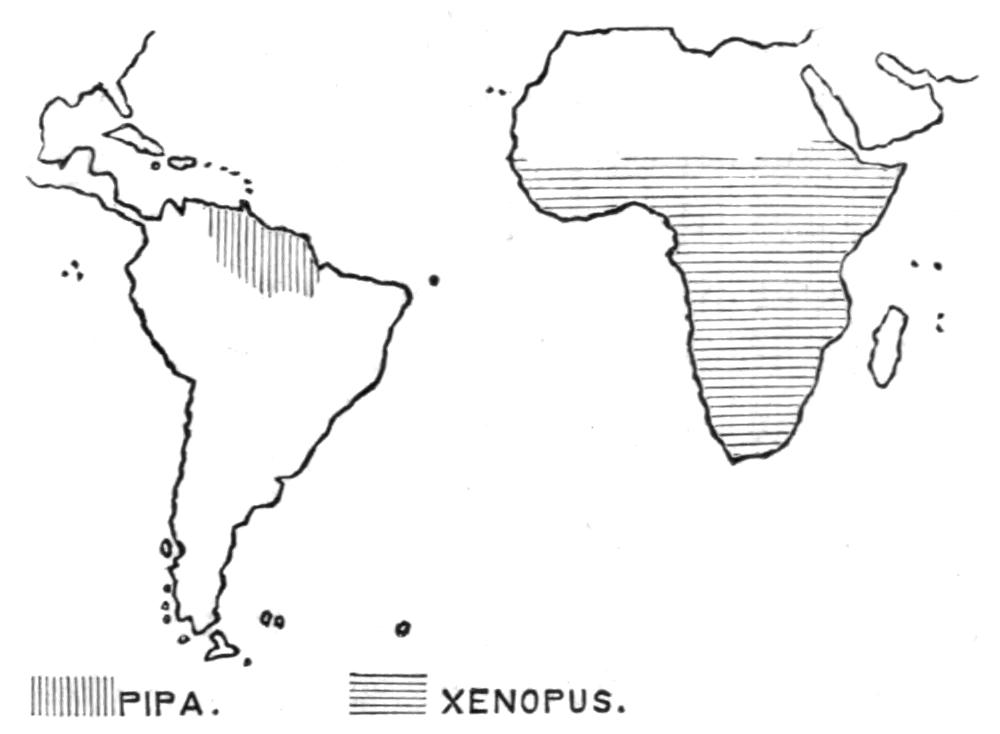
Fig. 28.–Map showing distribution of Aglossa. Hymenochirus to be added in Equatorial Africa.
The pharyngeal opening and the tubes themselves are wide, the tympanic cavities are present, but the tympanic discs are not distinct from the rest of the skin. The fronto-parietal bones are fused into one mass, a rare feature in the Anura. The nasals are large. Pipa and Hymenochirus have no teeth, Xenopus has teeth on the upper jaw. The vertebrae are opisthocoelous and typically epichordal in their development; the second, third, and fourth carry long ribs, which in old specimens fuse with the supporting diapophyses. The sacral diapophyses are enormously dilated, and the sacrum is fused with the os coccygeum. The serial number of the sacral vertebrae exhibits a most interesting gradation. In Xenopus the ilium is carried by the diapophyses of the 9th, in Pipa the 9th and 8th, in Hymenochirus the 7th and 6th. In these cases the two diapophyses of each side are fused together into a single broad blade, and their original duplicity is indicated only by the holes for the spinal nerves. Hymenochirus has consequently only 5 presacral vertebrae, the vertebral column being shortened to the greatest extent known amongst Vertebrata. For further information see p. 22. The ilia are much broadened vertically, and are firmly attached to the sacrum. The shoulder-girdle is sometimes described as of the arciferous type, but this is quite unjustifiable. The epicoracoid cartilages do not overlap each other, but meet, and partly fuse in the middle line. The three genera exhibit some differences. In Pipa and Hymenochirus the bony portions of the coracoids are much expanded dorsally, and there is a considerable amount of epicoracoid cartilage, that of the precoracoid bars extending backwards as a broad-based and blunt omosternum. Xenopus is devoid of an omosternum, and the configuration of the whole apparatus is more slender. The metasternum of Xenopus and Hymenochirus broadens out laterally. Hymenochirus greatly resembles Breviceps, a genus of Engystomatinae, in the relative position and size of the various parts of the shoulder-girdle and sternum.
The tibio-fibula of Hymenochirus has a wing-like expansion of thin bone on each side, forming a deep groove on the outer aspect. The astragalus and calcaneum are united by a similar bony expansion with wing-like projections.
The lungs are remarkable for the prominent development of trabecular projections and niches, so that their free lumen is much restricted; they have thereby reached a much higher stage than in any other Amphibia or even many Autosauri. The persistence of an arteria sacralis s. caudalis, a vessel absolutely absent in the adult Rana, is a primitive feature, and the same applies to the presence of a true first spinal or suboccipital nerve.
The skin of the back and belly is supplied by two great branches from the arteria anonyma, one arising proximally, the other distally from the subclavian; herewith is correlated the almost complete absence of the arteria cutanea magna, which as a branch of the ductus pulmo-cutaneus plays such a prominent rôle in the other Anura. Only in Pipa, but not in Xenopus, is the great cutaneous vein represented by a very small branch. Both these genera possess a much more complicated "diaphragm" than the other Anura, chiefly owing to a special muscle which arises from the anterior end of the ilia and spreads out fan-like to the oesophagus and to the bases of the lungs.[71] This diaphragmatic arrangement is correlated with the great development of the lungs, and is not a primitive but an advanced feature. It is reasonable to suppose that this has caused the reduction of the usual arteria pulmo-cutanea, and that the other two cutaneous arteries have been developed secondarily. The Aglossa are generally considered as the lowest Anura, and only Cope looked upon Pipa and Xenopus as two convergent terminal branches. Beddard came to the conclusion that both are closely related to each other, chiefly on account of their peculiar diaphragmatic arrangement. The whole question has entered upon a new stage since the recent discovery of Hymenochirus, which is in many ways intermediate between the two other genera. Moreover, the mid-Tertiary Palaeobatrachus of Europe is undoubtedly related to them, and we conclude now that all these four genera belong to one group with a distribution formerly much wider than Africa and part of South America. But this does not necessarily mean that the Aglossa are in all respects the most primitive group of living Anura. On the contrary, they possess few decidedly primitive characters, namely, the long typical ribs, the presence of the first spinal nerve, the unimportant persistence of the arteria sacralis, and lastly, the possession in the tadpoles of a right and left opercular "spiracle." The absence of the tongue cannot possibly be an archaic feature, considering its universal presence in all the other Amphibia, including the Apoda, and the suggestive circumstance that this organ is least developed in the entirely aquatic members of the Urodela. In fact, thoroughly aquatic creatures, which seize and swallow their prey under water, require no elaborate tongue; and since we know that the Anura must owe their typical formation to terrestrial life, it follows that those which have again taken to the water and are tongueless, have lost this organ. As I have shown elsewhere,[72] the epichordal development of the vertebrae is likewise a secondary feature, far from primitive; and the tendency of the shortening of the vertebral column, which has reached its extreme in Hymenochirus, points to the same conclusion. The apparatus of the shoulder-girdle and sternum is in the last transitional stage from the former arciferous to the typically consolidated firmisternal type. In fact there is little left which is primitive, but much that is very specialised and highly developed in the Aglossa, mostly in adaptation to their absolutely aquatic life, to which they must however have taken very early. They are in a position somewhat analogous to the Ratitae among Birds, which are likewise an old group, although many of their most striking features have been acquired secondarily.
Xenopus s. Dactylethra. The upper jaw is furnished with teeth. The ilia are attached to the ninth vertebra. The pupil is round. The terminal phalanges are pointed. The fingers are free, the toes broadly webbed, and the first three are covered with sharply pointed, horny, black-brown nails, a feature which is alluded to by the alternative generic names. A cutaneous tentacle projects from below the eye and naturally invites comparison with the tentacle of the Apoda and of Urodela. The skin is smooth, rich in mucous glands, besides certain tube-like apparatuses, possibly sensory, which are scattered over the body, especially on the head, and form a conspicuous series of white dots along the dorso-lateral line, from the eye to the vent. The general colour of the upper parts is olive brown, mottled darker, while the under parts are whitish. The female has three cutaneous flaps closing the vent. The male develops black nuptial brushes along the inner side of the fingers. There are several species, all African (Ethiopian).
X. laevis, ranging from the Cape to Abyssinia, is distinguished by the absence of a metatarsal spur. The tentacle is very short. Size about 3 inches. X. muelleri of Zanzibar and Benguella, is smaller. The tentacle is conspicuous, as long as the diameter of the eye. The inner metatarsal tubercle carries a sharp claw. X. calcaratus of tropical West Africa is only 2 inches long, and has strong metatarsal claws, short tentacles and very minute eyes.
The habits and oviposition of the "Clawed Toad" have been described by Leslie.[73] The Boers call it "Plathander," i.e. flat hand. Entirely aquatic, it rests floating in the water, with the nostrils exposed, and leaves the water only if it has to change the locality on account of drought or scarcity of food. The pairing takes place, at least at Port Elizabeth, in the early spring, i.e. in the month of August. The only sound which is emitted is heard during this time, a very slight and dull tick-tick, audible at only a few feet distance. The male grasps the female by the loins; the eggs are extruded singly, measuring only 1.5 mm. in diameter, but swell to double that size. They are attached singly to stones or water-plants.
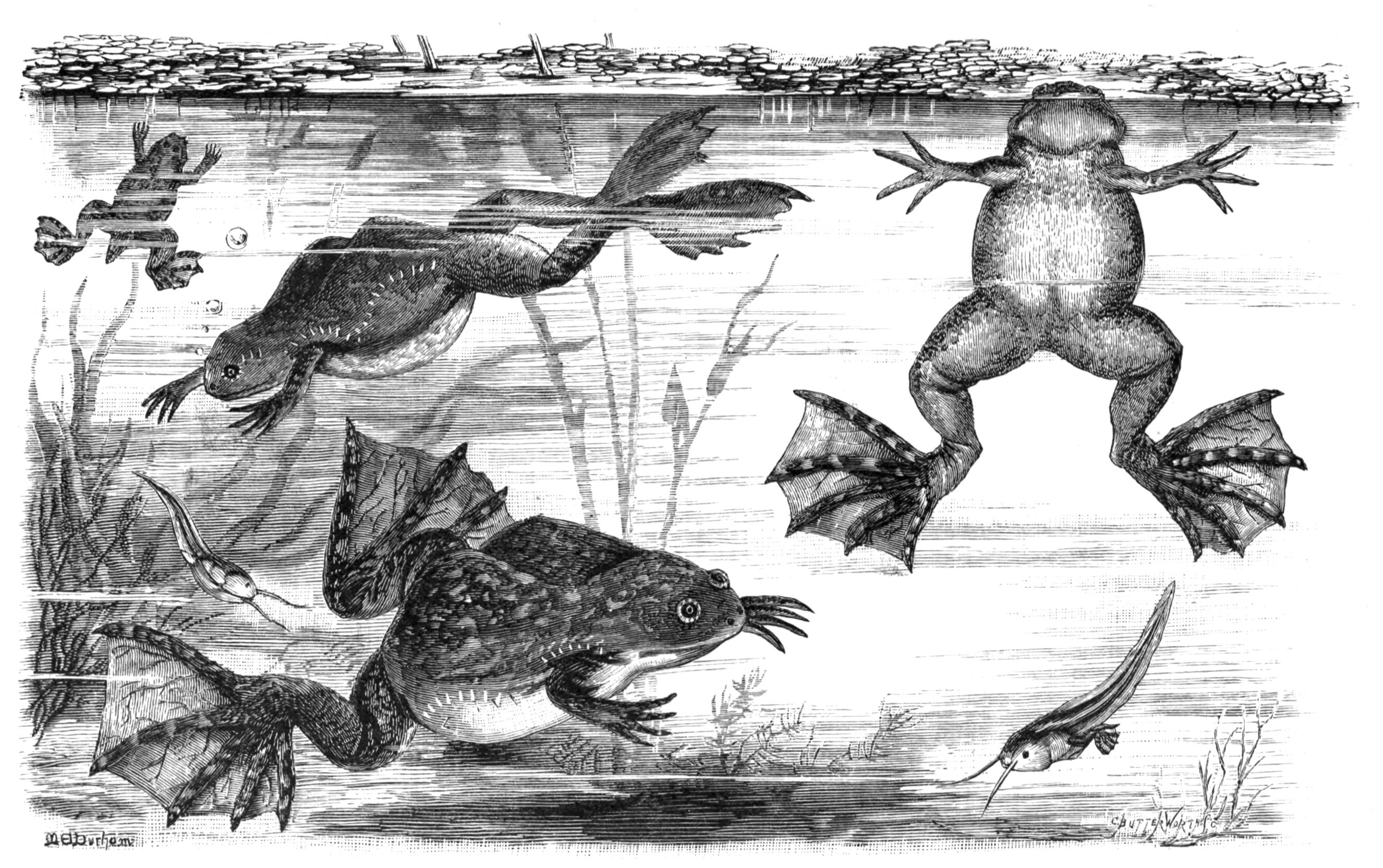
Fig. 29.–Xenopus laevis. Clawed Toad, adult and larvae, × ⅔.
Latterly these creatures have frequently been brought over to England. They stand confinement very well, even in a little aquarium with sufficient water-weeds to keep the water fresh; and they do not require special heat. They greedily snap up worms, strips of liver, or meat, and poke the food in with their hands. A few kept by Boulenger in a glass jar have lived for the last eleven years in the ordinary temperature of a room in London. Curiously enough they are often in amorous embrace, regardless of the season, but they have never shown any signs of spawning.
Some of those in the Zoological Gardens in London laid eggs on Saturday the 27th of May, and on the morning of the following Monday the larvae were already hatched. They have been described by Beddard.[74] The larvae are provided with an unpaired circular, ventral sucker. The tentacles begin to sprout out on the sixth day after hatching, at first not in connexion with the cranial cartilage, but soon a cartilaginous rod runs into the tentacle from the ethmoid "just above the joint with the under jaw.". Boulenger has most reasonably compared these organs with the "balancers" of Triton and Amitystoma (cf. p. 46 for the possible homologies of the balancers). The tentacles soon reach a great length and give the tadpole a curious appearance. In tadpoles of X. calcaratus, 65 mm. long, the tentacles are 30 mm. long, and are inserted just at the angle of the mouth. By the time that these tadpoles show their fore-limbs, the feelers are reduced to 4 mm. in length, and their relative position has been shifted to a little above the angle of the gape, and whilst the latter gradually extends further and further back, the feelers come to lie, or rather remain, below and a little in front of the eyes.
The tadpoles have no traces of horny teeth. External gills project as low conical or lamellar processes from the first three branchial arches, but so-called internal gills are not developed.
Amongst a number of Clawed Toads imported in the spring one female became swollen with eggs, but as they did not show signs of wanting to breed, a pair was put into the tropical tank in the Cambridge Botanic Gardens, a transfer which had the desired effect. Eggs were laid, and more during the following nights; they hatched out within thirty hours. The whole brood was lost, before any of them were older than a few days, since they were attacked, beyond the possibility of a cure, by a Saprolegnia or some similar pest.
Hymenochirus, represented by one species, H. boettgeri, has been discovered in the Ituri, German East Africa, and in the French Congo, and has no doubt a much wider distribution. It is scarcely 1½ inch long, and is easily recognised by the toothless mouth, the half-webbed fingers (hence the generic name), the incompletely webbed toes, the third of which is longer than the fourth, and the absence of sensory muciferous canals in the skin. The three inner toes are, as in Xenopus, furnished with small black claws. The skin is rough, beset with small granular tubercles. The general colour above and below is olive-brown. The vent is, as in Xenopus, produced into a spout or semi-canal, but is devoid of dorsal flaps of skin.
Pipa.–This Neotropical member of the Aglossa is quite toothless, but the jaws of the adult have horny substitutes. The only species is P. americana, the famous Surinam Toad, chiefly known from the Guianas, but undoubtedly extending much further, having recently been reported from the neighbourhood of Pará.
The general shape of this creature is very peculiar. The head is much depressed and triangular; the eyes are very small; the skin forms several short, irregularly-shaped flaps and tentacles on the upper lips and in front of the eye, and at the angle of the mouth. The tympanum is invisible. The pupil is round. The fingers are very slender and free, ending in star-shaped tips; the toes are broadly webbed. The whole skin is covered with small tubercles and is dark brown above, while the under parts of the very flat and depressed body are whitish, sometimes with a dark brown stripe along the middle line. In the female the skin of the back forms growths for the reception of the eggs, and in these the young undergo their whole metamorphosis.
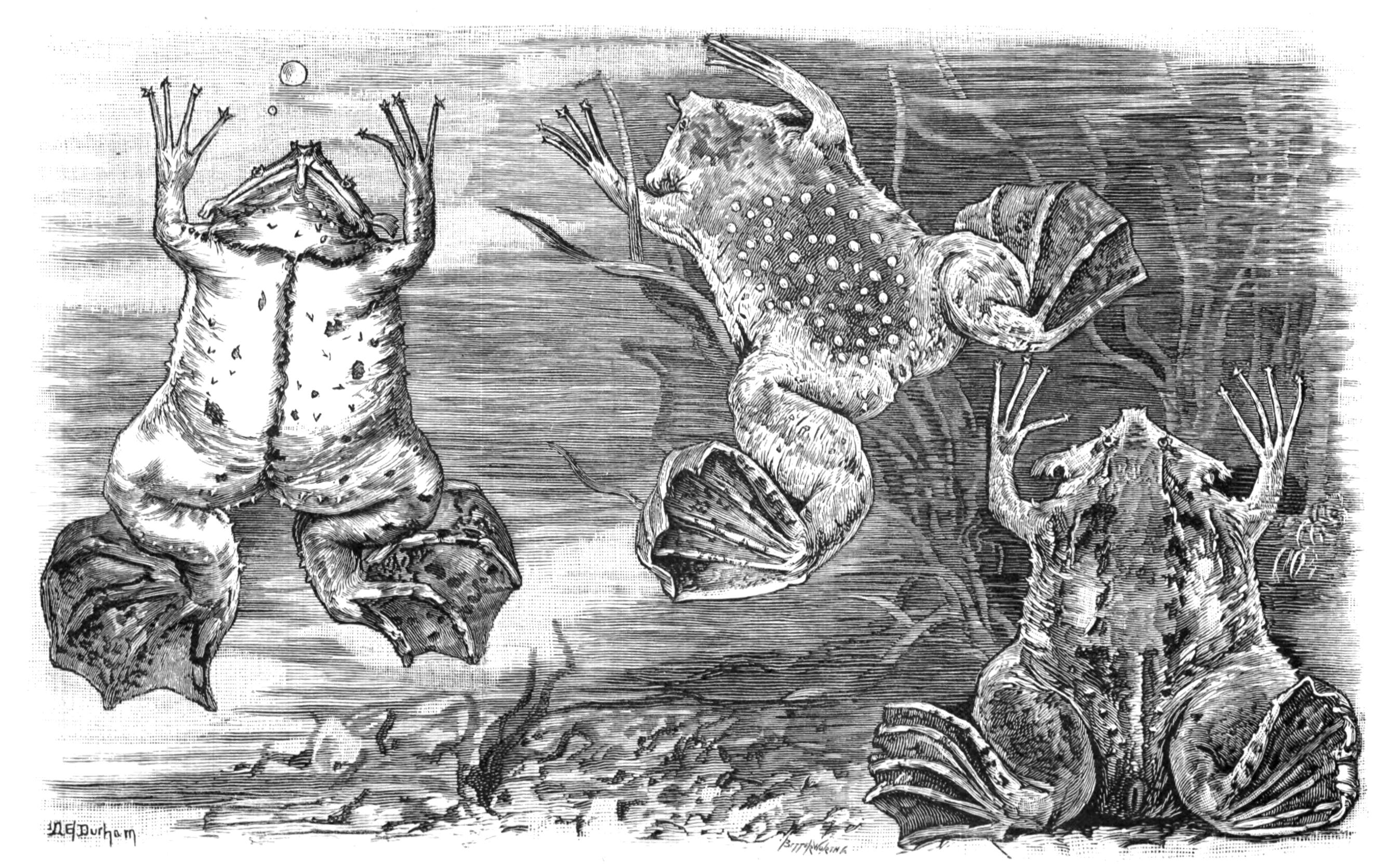
Fig. 30.–Pipa americana. Surinam Toad. × ⅔.
The most characteristic feature of the skin,[75] which has exactly the same structure in both sexes, is the papillae, which are spread over the whole surface, except on the webs of the toes, on the cornea and on the star-shaped points of the fingers. Each papilla carries a little horny spike, and a poison-gland frequently opens near its base. Larger poison-glands exist on the dorsal and ventral side in four rows, and smaller glands open upon the sides of the body, but there are no parotoid complexes. Slime-glands occur all over the surface. The epidermis consists of the usual layers, namely the Malpighian, the stratum corneum, and the part which is shed periodically. The latter is completely horny, appearing to be structureless like a cuticle, but it is in reality composed of polygonal cells with flattened nuclei; each little spike is one modified horny cell. The whole outermost layer contains black-brown pigment. The upper portion of the cutis is devoid of pigment, then follows a layer of clusters of ramified dark pigment-cells, and lastly the rest of the cutis.
Each of the four fingers ends in a four-armed star, the tips of which again carry four or five sensory papillae. The cartilage of the terminal phalanges is correspondingly star-shaped.
According to Klinckowstroem these toads, which are entirely aquatic, are easily collected at the end of the long dry period, when they are all confined to the half-dried-up pools. But they do not spawn there. This happens after the rains have inundated the forest, and then it is very difficult to get the females with eggs on their backs. Each of the eggs, when once they have been glued on to the back, sinks into an invagination of the skin. The initial stages are probably the same as those caused by the eggs on the belly of Rhacophorus reticulatus (see p. 248). Later, each egg is quite concealed in a cavity with a lid. These cavities are simply pouches of the skin, and are not formed by enlarged glands as has been suggested by some anatomists. Each cavity consists of the epidermal pouch and the lid. How the latter is produced is not known. According to the authors quoted above, the lid looks like a shiny or sticky layer which has hardened into horn-like consistency. It lies exactly like a lid upon the rim of the pouch itself, and is certainly not in structural or organic continuity with the epidermis. Most probably it is produced by the remnant of the egg-shell itself, which, after the larva is hatched, is cast up to and remains on the top of the cup.
Bartlett[76] has described the spawning of specimens in the Zoological Gardens in London.
"About the 28th of April 1896 the males became very lively, and were constantly heard uttering their most remarkable metallic, ticking call-notes. On examination we then observed two of the males clasping tightly round the lower part of the bodies of the females, the hind parts of the males extending beyond those of the females. On the following morning the keeper arrived in time to witness the mode in which the eggs were deposited. The oviduct of the female protruded from her body more than an inch in length, and the bladder-like protrusion being retroverted, passed under the belly of the male on to her own back. The male appeared to press tightly upon this protruded bag and to squeeze it from side to side, apparently pressing the eggs forward one by one on to the back of the female. By this movement the eggs were spread with nearly uniform smoothness over the whole surface of the back of the female to which they became firmly adherent. On the operation being completed, the males left their places on the females, and the enlarged and projected oviduct gradually disappeared from one of the females. In the other specimen, the oviduct appears not to have discharged the whole of the eggs."
Boulenger, who examined this second specimen, which died, confirmed this egg-bound condition. He remarks further: "The ovipositor formed by the cloaca (not by the prolapsed uterus), was still protruding and much inflamed. It may be deduced from the observation made by the keeper, that fecundation must take place before the extrusion of the eggs, and it is probable that the ovipositor serves in the first instance to collect the spermatozoa which would penetrate into the oviducts, the eggs being laid in the impregnated condition, as in tailed Batrachians."
Sub-Order 2. Phaneroglossa–Fam. 1. Discoglossidae.–The tongue has the shape of a round disc, adherent by nearly the whole of its base, and it cannot be protruded. The vertebrae are opisthocoelous, and in the aquatic genera are of the most exaggerated epichordal type; the diapophyses of the second to the fourth vertebrae carry short, free ribs, and those of the sacral vertebra are dilated. The metasternum behind is forked. The upper jaw and the vomers are provided with teeth. The males have no vocal sac. The tadpoles are distinguished by having the opercular spiracle placed in the middle of the thoracic region (see general anatomical part, p. 44).
The few members of this family have a peculiar distribution. Liopelma is confined to New Zealand, where it is the solitary representative of the Amphibia. Ascaphus is found in North America. The other genera, Discoglossus, Bombinator, and Alytes, are typical of the Palaearctic sub-region, and are, with the exception of Bombinator, confined to the Western Provinces (cf. Map, Fig. 32, on p. 161).
Discoglossus.–The tympanum is frequently more or less concealed by the skin. The pupil is round or triangular. The omosternum is small. The vertebrae are of the epichordal type.
D. pictus, the only species, has a smooth and shiny skin, provided with numerous small mucous glands. The palms of the hands are provided with three tubercles, of which the innermost is the largest, and is carried by the vestige of the thumb. The coloration of this species is very variable. The ground-colour of the upper parts is a rich olive brown with darker, light-edged patches, which are either separate or confluent in various ways, forming broad, longitudinal bands, or a few larger asymmetrical patches, separated in some individuals by a broad and conspicuous light brown or yellowish vertebral stripe. An irregular reddish band frequently extends from the eyes backwards along the sides. The under parts are mostly yellowish white. This variability is purely individual, the most differently marked and variously coloured specimens being found in the same locality and even amongst the members of one and the same brood. The male develops various nuptial excrescences, consisting of minute, dark, horny spines, notably on the inner palmar pad, on the inner side of the first and second finger, on the chin and throat, and smaller and more scattered spicules on the belly and legs.
This pretty and extremely active little creature, which measures between 2 and 3 inches in length, is confined to the south-western corner of the Palaearctic sub-region, being found in Algiers and Morocco, Sicily, Sardinia, Corsica, and the southern and western parts of the Iberian Peninsula. Curiously enough it is absent in the Balearic Isles. Rather aquatic in its habits, frequenting pools and streams, it is also often found on land.
The male has a feeble voice, which sounds like "ha-a, ha-a-a," or "wa-wa-wa," uttered in rapid succession. The pairing season lasts a long time, in Algeria from January to October, but a much shorter time in the north of Portugal, where it extends over the spring and summer months. Boulenger has made extensive observations on many specimens kept in captivity. The embrace, which never lasts long, is lumbar. The eggs are small, 1 to 1.5 mm. in diameter, dark brown above and greyish below, each surrounded by a gelatinous capsule of 3-7 mm. in diameter. The eggs are laid singly, and a set amounts to from 300 to 1000, the whole mass sinking to the bottom of the pool. Each female lays several times during the season. The eggs are developed very rapidly, the larvae escaping sometimes after thirty-six hours, but usually from the second to the fourth day. The external gills are lost on the seventh day, when the tadpoles are 11 mm. long; the hind-limbs appear on the tenth, and after four weeks the tadpoles reach their greatest length, namely from 25-30 mm. The fore-limbs appear on the thirtieth day, and a few days later the most precocious specimens leave the water and hop about. Others, however, of the same brood took from two to three months in metamorphosing.
This species lives on insects and worms, and can swallow its prey under water.
Bombinator.–The tympanum is absent and the Eustachian tubes are very minute. The pupil is triangular. The omosternum is absent. The vertebrae are absolutely epichordal. The fingers are free, the toes are webbed. The upper parts are uniformly dark, and are covered with small porous warts. The general shape of the head and body is depressed or flattened downwards. The habits are eminently aquatic. This genus consists of three species, two of which are European, the third Chinese.
B. igneus.–The under parts are conspicuously coloured bluish black with large irregular red or orange-red patches; the upper parts are more or less dark grey or olive black. The iris is golden, speckled with brown. The male has a pair of internal vocal sacs by which the throat can be inflated; nuptial excrescences are developed on the inner side of the fore-arm and the first two fingers. Total length from 1½ to 2 inches, the males being generally smaller than the females. This "Fire-bellied toad," the "Unke" of the Germans, is essentially a native of lakes, ponds, and other standing waters of the plains.
It ranges through the whole of North Germany, Bohemia, and Hungary into Russia, eastwards as far as the Volga. The latter river, the Danube, and the Weser form, roughly speaking, its boundaries; northwards it extends into Denmark and the southern extremity of Sweden.
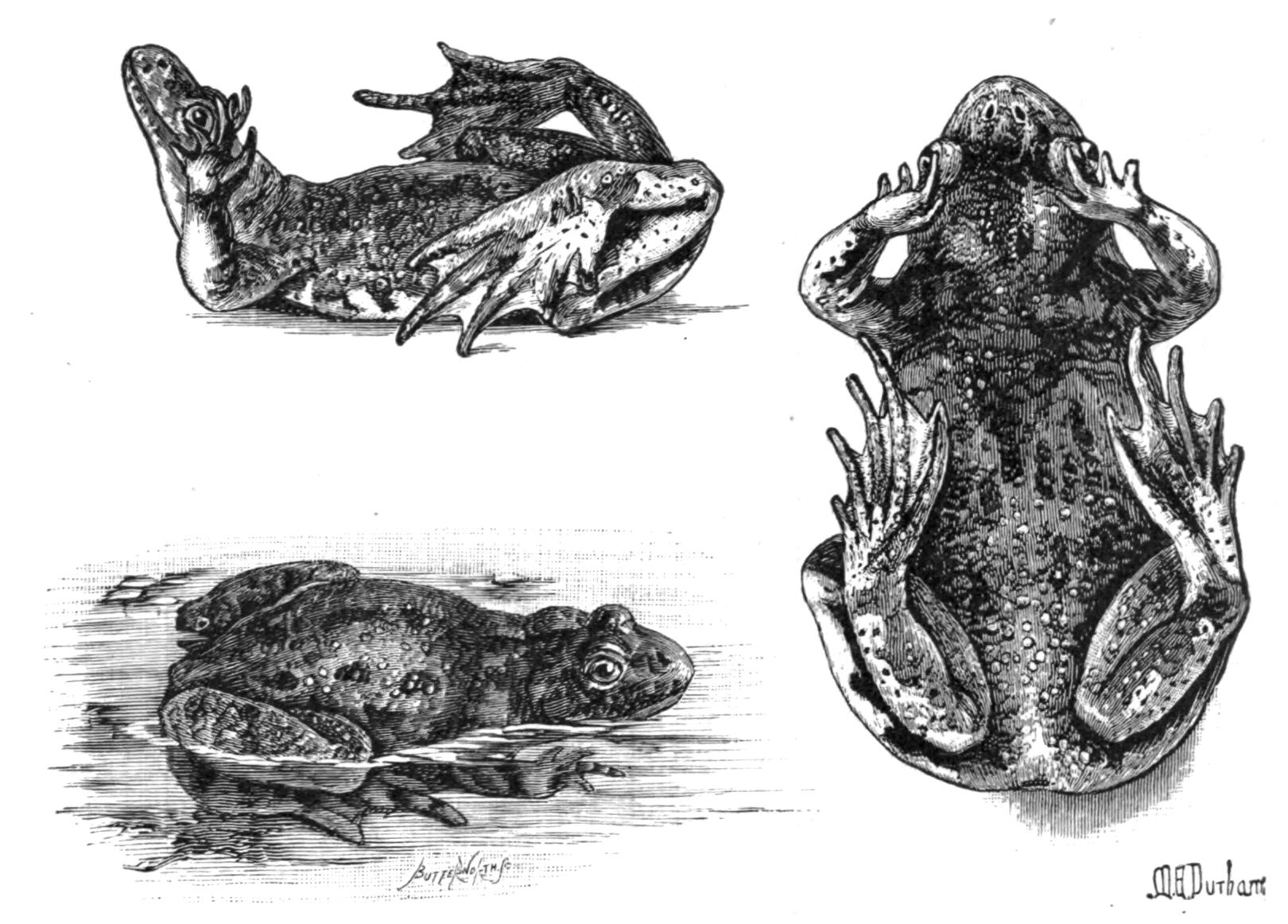
Fig. 31.–Bombinator igneus. × 1. Fire-bellied Toad. Two of them in "warning" attitude.
B. pachypus.–The under parts are yellow instead of red. The male is devoid of vocal sacs, but has nuptial excrescences on the under surface of most of the toes, in addition to those on the fore-arm and fingers. The "Yellow-bellied Toad" is the representative of the red-bellied species in Southern and Western Europe, preferring, although not exclusively, the hilly and mountainous districts. It ranges from France and Belgium through South-Western Germany, continental Italy, and the whole of Austria and Turkey in Europe. Where both species meet, for instance in the hilly districts between the Weser and the Rhine, in Thuringia and in Austria, the predilection of the yellow-bellied species for the hills, and that of the other for the plains, is well marked.
While B. igneus prefers standing waters with plenty of vegetation, B. pachypus is often found in the smallest occasional puddles produced by recent rain, for instance in the ruts of roads. Both species have otherwise much in common. They are essentially aquatic. They hang in the water, with their legs extended, nose and eyes just above the surface, and bask or lie in wait for passing insects, the fire-bellied kind preferring to conceal itself in the vegetation of the margins of ponds. During the pairing season, in Germany in the month of May, they are very lively and perform peculiar concerts, one male beginning with a slowly repeated note like "hoonk, hoonk," or "ooh, ooh," in which all the other males soon join, so that, when there are many, an almost continuous music is produced. This sound is not at all loud, a little mournful and very deceptive. It appears to be a long way off, certainly at the other end of the pond, until by careful watching you see the little creature almost at your very feet. But on the slightest disturbance the performance ceases, they dive below and hide at the bottom. The yellow-bellied kind, when surprised in a shallow puddle, skims over the mud, disturbs it, and allows it to settle upon its flat body, so that nothing but the little glittering eyes will betray its concealment. When these toads are surprised on land, or roughly touched, they assume a most peculiar attitude, as shown in Fig. 31. The head is partly thrown back, the limbs are turned upwards with their under surfaces outwards, and the whole body is curved up so that as much as possible of the bright yellow or red markings of the under parts is exposed to view. The creature remains in this strained position until all danger seems passed. In reality this is an exhibition of warning colours, to show the enemy what a dangerous animal he would have to deal with. The secretion of the skin is very poisonous, and the fire-toads are thereby well protected. I know of no creature which will eat or even harm them. I have kept numbers in a large vivarium, together with various snakes, water-tortoises, and crocodiles, but for years the little fire-bellies remained unmolested, although they shared a pond in which no other frog or newt could live without being eaten. Hungry water-tortoises stalk them under water, touch the intended prey with the nose in order to get the right scent, and then they withdraw from the Bombinator, which has remained motionless, well knowing that quick movements, or a show of escape, would most likely induce the tortoise to a hasty snap, with consequences to be regretted by both.
After they have been handled frequently, they do not readily perform, but simply lie still, or hop away. Miss Durham experienced considerable difficulty in inducing her tame specimens to assume and to keep up the correct warning attitude. The statement that they "turn over on the back" is a fable, graphically fixed in various illustrated works.
It has been said that these two species are diurnal and thoroughly aquatic. They are certainly active in the daytime, sing in full sunshine, and spend most of their time in the water, but they display much more liveliness towards the evening and during the night, especially when there is a moon. My fire-toads live by no means always in the water, but conceal themselves in the daytime under stones, while they are regularly all astir at night in search of worms and all kinds of small insects.
The spawning takes place several times during the spring and summer. The amplexus is lumbar, and the eggs are extruded singly. They sink to the bottom, or are attached to water-plants. The oviposition takes a long time, perhaps the whole night, and several dozen eggs, not hundreds as in the allied genera, make a set. The egg, with its swollen gelatinous capsule, is large for so small a creature, namely 7-8 mm. in diameter. The embryos escape after a week, and the tadpoles reach two inches in total length. Those of B. igneus have a triangular mouth, but in B. pachypus this is elliptical, as in Alytes and Discoglossus. Metamorphosis is completed in the same autumn; the little toad is then about 15 mm. long, and differs from the adult by the absence of the conspicuous coloration of the under parts. In reasonable conformity herewith it does not take up the warning attitude. The colour appears gradually during the second year, but full growth is generally not reached until the third year. They do not hibernate in the water, but hide on land out of the reach of frost.
Alytes.–The tympanum is distinct, the pupil vertical, the omosternum is absent. The only two species live in South-Western Europe. The male attaches the eggs to its hind limbs, and nurses them until they are hatched.
A. obstetricans, the "Midwife-toad," has the general appearance of a smooth toad. The upper parts are rather smooth, sometimes almost shiny, in spite of the numerous more or less prominent warts, of which those of the lateral lines, and those above the ear, are generally most marked. The colour of the upper parts varies a great deal according to the prevalence of greenish and reddish spots upon the grey or brown ground-colour. The red is sometimes, especially in the breeding males, rather conspicuous on the parotoid region and on the upper sides of the body. The under parts are whitish grey. The iris is pale golden, with black veins. The male has no vocal sac, and is as a rule smaller than the female, the latter reaching a length of two inches.
This species occurs in the whole of the Iberian Peninsula and in France, extending into Switzerland and beyond the Rhine valley into Thuringia. Altitude above the sea does not seem to have any influence upon its range, which reaches from sea-level to the tops of subalpine mountains. I have found great quantities of its tadpoles in Portugal on the Serra d'Estrella, nearly 6000 feet high, and they are recorded from 6500 feet in the Pyrenees. They seem to be ubiquitous in Spain and Portugal, not that they are often found or seen, but they are heard everywhere; besides, tadpoles are sure to be in the clear cold lakes on the tops of the mountain-ranges, in the dirty puddles caused by the village fountains, and in the sun-heated swampy ditches on the roadside with scarcely enough water to hold the wriggling mass. Wherever there is water within easy reach, on the lonely mountains, in fertile valleys, in the gardens of the busy towns, you hear during the whole night, from March to August, the double call-note of the male, sounding like a little bell; but to see the performer is quite a different matter. He sits in front of his hole, dug out by himself or appropriated from a mouse, in a crack of the bottom of a wall, under stones, or in a similar place into which he withdraws for the day.
The pairing and the peculiar mode of taking care of the eggs by the male, which habit has given it the specific name obstetricans, the midwife, have been most carefully observed by A. de l'Isle du Dréneuf, near Nantes. A condensed account has been given by Boulenger. Several males collect around a female on land, not in the water, and the successful one grasps her round the waist. For nearly half an hour the male lubricates the cloacal region of the female by more than one thousand strokes of his toes, whereupon the female extends the hind-limbs, forming with the bent hind-limbs of the male a receptacle for the eggs, which are then expelled with a sudden noise. The eggs are yellow and large, up to 5 mm. in diameter, and are fastened together in two rosary-like strings, several dozen making one set. During the expulsion of the eggs the male shifts its body forwards, clasps his fore-limbs round the female's head, and fecundates the eggs. After a rest he pushes first one hind-limb and then the other through the convoluted mass of eggs, which then have the appearance of being wound round the hind-limbs in a figure of 8. Then the sexes separate and the male withdraws with its precious load into its hole, which it, however, leaves during the following nights, in search of food, taking this opportunity to moisten the eggs in the dew, occasionally even immersing them in the water. After at least three weeks, when the larvae are nearly ready, he betakes himself to the nearest water, and the larvae burst the thereby softened gelatinous cover of the eggs. Not infrequently the same male ventures upon a second pairing, and adds another load to the one which already hampers its movements. The eggs being large, owing to the great amount of yellow food-yolk, the embryos are enabled to be hatched in a more advanced stage than in most other Anura. The larva develops only one pair of external gills within the egg. These appear first in the shape of oval bags upon the third branchial arch, which sprout out secondary branches, soon in their turn to be resorbed and replaced by the so-called internal gills before hatching.
Fischer-Sigwart[77] gives the following account of the growth of this species. The male took to the water, with its load of twenty to thirty eggs, on the 6th of June. The larvae escaped out at once, 16-17 mm. long, the body measuring 5 mm. On the 14th they had reached 32 mm. in length, whereupon they grew very slowly, although they were well fed, in a temperature of about 50° F. This same brood did not metamorphose until May of the next year. The growth took place as follows:–The hind-limbs appeared on the 8th of September, when the tadpoles were 50 mm. long; by the middle of the next May they had reached their greatest length, 76 mm., the hind-limbs being 18 mm. long, whilst the fore-legs were just indicated. On the 21st of May the hind-limbs were 27 mm. long, and the whole creature was practically metamorphosed, except for the tail. The latter was resorbed on the 13th of July, and the little toads, 25 mm. in length, were actually smaller, certainly far less bulky and heavy, than the tadpoles, which had required one year and a quarter for their metamorphosis.
The early broods probably finish their development by the autumn of the same year, but those which are born later, in July and August, certainly hibernate in the water. I have found very small tadpoles, scarcely 15 mm. long, on the Cantabrian mountains as late as the end of September, and rather large ones in the spring at the time of first pairing; the fact that this takes place during the whole summer explains the occurrence of tadpoles in all stages of development almost the whole year round.
A. cisternasi has only two palmar tubercles, the middle or third one of A. obstetricans being absent; the outer finger is short and thick. Instead of a very long and wide fronto-parietal fontanelle, the fronto-parietal bones diverge only in front so that there are two fontanelles, a small one in the parietal and a large triangular one in the frontal region. The limbs are relatively shorter and stouter in conformity with the habits of this species, which prefers to burrow in sandy localities. Otherwise it leads the same kind of life as A. obstetricans, and the male carries the eggs. It has hitherto been found in Central Spain and in the middle provinces of Portugal.
Liopelma is intermediate between Alytes and Bombinator, agreeing with the latter, in conformity with its essentially aquatic life, in the absence of a tympanum, while the Eustachian tubes are entirely suppressed. The tongue is disc-shaped, but is slightly free behind. The pupil is triangular. The male is devoid of a vocal sac. L. hochstetteri is the sole representative of the Amphibia in New Zealand, where it is apparently rare. The upper parts are covered with smooth tubercles, and are dark brown with blackish spots; the under parts are whitish. Total length only 1½ inch.
Fam. 2. Pelobatidae.–The upper jaw and, as a rule, the vomers are provided with teeth. The tongue is oval, slightly nicked, and free behind, so that it can be thrown out, except in Asterophrys turpicola of New Guinea, which has a large but entirely adherent tongue. The vertebrae are procoelous, except in Asterophrys and the Malay genus Megalophrys, where they are opisthocoelous. The sacral diapophyses are strongly dilated. The omosternum is small and cartilaginous. The metasternum has a bony style, and ends in a cartilaginous, rounded or heart-shaped disc, but in Scaphiopus it forms an entirely cartilaginous plate. The tympanic disc is mostly hidden or indistinct, and is quite absent in Pelobates. The Eustachian tubes are very small in Pelobates, and exceedingly minute in Scaphiopus stagnalis of New Mexico. The pupil is vertical. This family contains seven genera with about twenty species, with a rather scattered distribution.
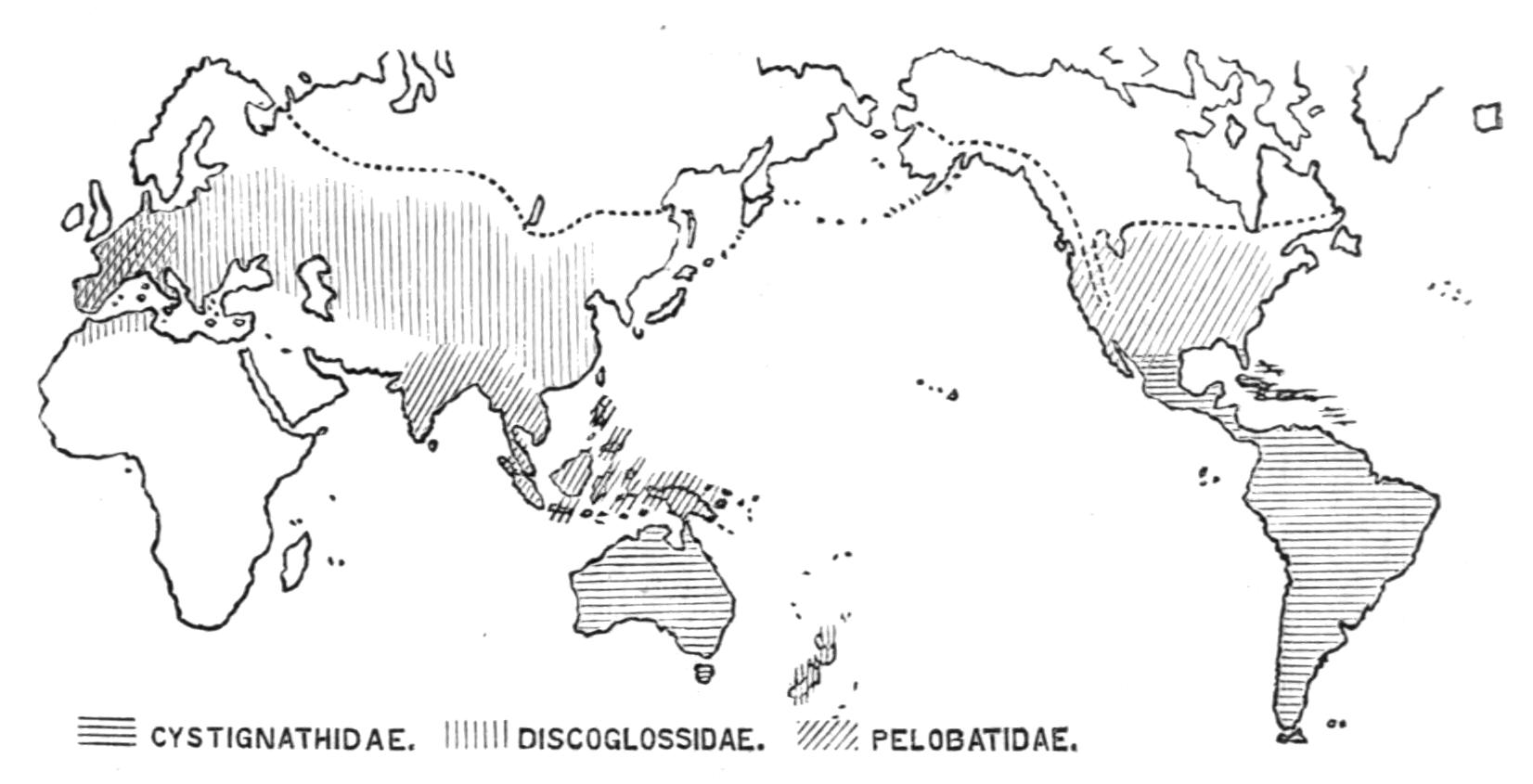
Fig. 32.–Map showing distribution of Cystignathidae, Discoglossidae, and Pelobatidae.
A. Toes extensively webbed, sacrum and coccyx confluent.
a. Metasternum a cartilaginous plate. America .......... Scaphiopus, p. 164.
b. Metasternum with a bony style. Europe .......... Pelobates, p. 162.
B. Toes nearly free. Metasternum with a bony style.
a. Vertebrae procoelous.
α. Sacral vertebra articulating by one condyle with the coccyx.
Europe .......... Pelodytes, p. 165.
New Guinea .......... Batrachopsis.
β. Sacral vertebra with two condyles.
India and Malaya .......... Leptobrachium, p. 166.
b. Vertebrae opisthocoelous.
Ceylon and Malayan Islands .......... Megalophrys, p. 60 (Fig. 11).
New Guinea .......... Asterophrys.
Pelobates ("Spade-foot").–The tympanum is absent; the toes are webbed. The inner tarsal tubercle is large, and is transformed into a shovel which is covered with a hard, sharp-edged, horny sheath. The skin of the upper surface of the head is partly co-ossified with the underlying cranial bones, giving them a pitted appearance. The general shape is toad-like.
P. fuscus.–The smooth skin is brown above, with darker marblings, while the under parts are whitish, but the coloration varies greatly, from pale to dark brown or olive-grey with more or less prominent irregular dark, sometimes confluent, patches. Some specimens are adorned with numerous red spots. The tarsal spur is yellow or light brown. The iris is metallic red or golden. The male has a long oval gland on the upper surface of the upper arm, and although possessed of a voice, has no vocal sacs. The total length of full-grown females is nearly 3 inches, that of males half an inch less.
The "Spade-footed Toad," which occurs throughout the whole of Central Europe, extends from Belgium and the middle of France to North-Western Persia, and from the southern end of Sweden to Northern Italy. It prefers sandy localities, in order to dig its deep hole, in which it sits concealed during the daytime. Owing to the looseness of the sand, the hole is filled up so that no trace of its inhabitant is left. The digging is done by means of the spades, and in suitable localities the animal soon vanishes, sinking backwards out of sight. Except in the breeding season, or at night, it is therefore found only accidentally. The sand-loving habits do not, however, prevent it from enjoying moist localities. Several which I have kept for years dig themselves into the wettest moss in preference to the drier parts of their habitation. Being thoroughly nocturnal, they hunt after nightfall, the food consisting of all sorts of insects and of worms. When captured they utter a startling shrill cry, and their skin becomes covered with a dermal secretion which smells like garlic, a peculiarity which has given them in Germany the name of "Knoblauchskröte," "garlic-toad." Although they become very tame, so that they no longer smell when handled, they can be made ill-tempered by being pinched or otherwise teased, whereupon they take up a defiant attitude, and with open mouth continue to cry for several minutes. Some such scenes occur now and then, without my interference, with the specimens which share their abode with several species of Amblystoma and Spelerpes; there are heard now and then sudden loud yells, like the squeak of a cat or the yapping of a little dog.
In the spring the Spade-footed Toads take to the water for about a week, and the male's call-note is an ever-repeated clucking sound, which can also be produced under water, with the mouth shut, the air being shifted backwards and forwards through the larynx. The male grasps his mate below the waist; the eggs are combined into one thick string, which is about 18 inches long, and is wound round and between the leaves and stalks of water-plants. The eggs measure 2-2.5 mm., and are very numerous, a large string containing several thousands. The larvae are hatched on the fifth or sixth day in a very unripe condition. They are only 4 mm. long, quite black, and still devoid of gills and tail. They attach themselves to the empty gelatinous egg-membranes, which they possibly live upon. On the following day the tail begins to grow; two days later fringed external gills sprout out and serve for about ten days, when they in turn give way to new, inner gills. The little tadpoles then leave their moorings and become independent. The hind-limbs appear in the ninth week, the fore-limbs in the twelfth. At the age of three months they begin to leave the water. The most remarkable feature is the enormous size of the full-grown tadpole, the body of which is as large as a pigeon's egg; the usual total length, including the tail, amounts to about 4 inches or 100 mm., but occasionally regular monsters are found. This was the case some thirty years ago, when the Berlin Museum received a number of tadpoles, the largest of which measured nearly 7 inches. They were found in the month of December near Berlin, in a deep clay-pit with high, steep walls, so that the tadpoles were prevented from leaving the water. Similarly hemmed-in broods probably hibernate in the water under the ice, and such instances have been recorded. Normally they metamorphose into the much smaller toad within the same year.
P. cultripes.–This is the Spade-foot of the whole of Spain and Portugal and of the southern and western parts of France. It is similar in habits to P. fuscus, from which it differs but slightly. The tarsal spur is black, and there is a parieto-squamosal bridge which completely roofs over the temporal fossa and closes the orbit behind.–Boulenger has discovered the rare, individual occurrence of minute teeth on the parasphenoid and on the pterygoids of this species. These teeth are unquestionably the last reminiscences of a condition almost entirely superseded in the recent Anura.
P. syriacus from Asia Minor and Syria agrees with P. cultripes in the cranial configuration, but has the yellow or brown spur of P. fuscus.
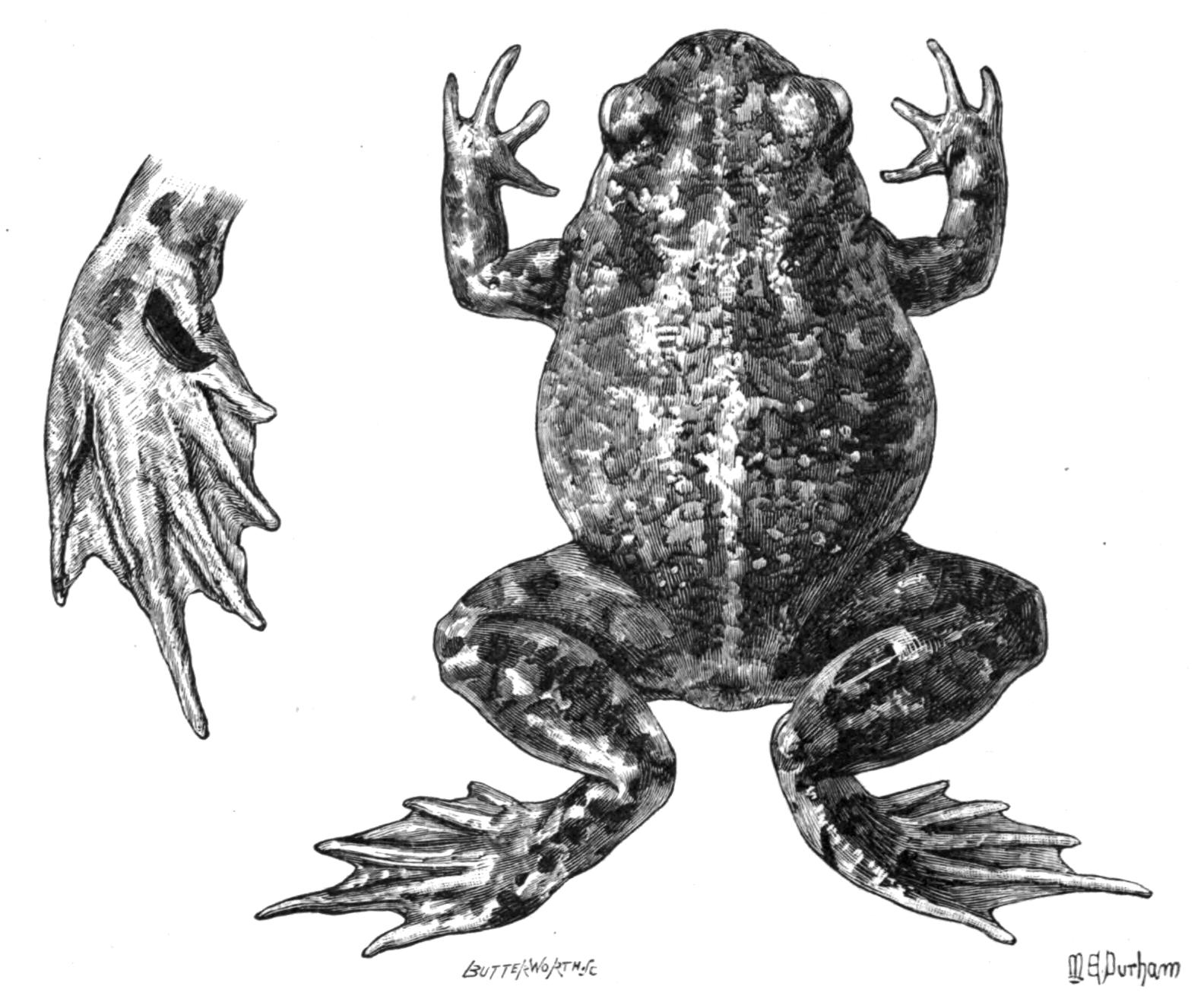
Fig. 33.–Pelobates cultripes, Spade-foot Toad, × 1, and under surface of left foot.
Scaphiopus.–The Spade-foot of North America and Mexico differs slightly from those of Europe, chiefly by the presence of a more or less hidden tympanum and of a subgular vocal sac, and by the sternum, which forms an entirely cartilaginous plate without a special style. The close relationship of these two genera is further indicated by the occurrence of peculiar large glandular complexes in some of the species, pectoral in S. solitarius, tibial in S. multiplicatus of Mexico. At the same time this genus approaches Pelodytes.–About eight species are known, two of which inhabit the United States, the others Mexico.
S. solitarius is the commonest species of the Southern States. It is brown above, with darker patches; its total length is about 2 inches. According to Holbrook it excavates small holes half a foot deep, in which it resides, seizing upon such unwary insects as may enter its dwelling. It never leaves the hole except in the evening or after long-continued rains. It appears early in March, and soon pairs; as an instance of hardiness Holbrook mentions that he has met it whilst there was still snow on the ground. When teased they assume a humble attitude, bending the head downwards with their eyes shut, as illustrated by Boulenger.[78]
Pelodytes is, like the rest of the genera, devoid of the tarsal digging spur. The tympanic disc is rather indistinct; the male has a subgular sac. The general appearance of the slender body with long hind-limbs and toes is frog-like. Two species only are known, one in South-Western Europe, the other in the Caucasus.
P. punctatus.–The "Mud-diver" has the upper parts covered with small warts, and is about 1½ inch in length. Its coloration is variable, and changes much. One day it may appear greenish brown, the next day pale grey; in the daytime perhaps with many bright green spots, and in the evening spotless and unicoloured. The under parts are mostly white, sometimes with a fleshy tinge. The male has a voice like "kerr-kerr" or "creck-creck," uttered during the breeding season, which lasts from the end of February until May, according to the temperature and the more Southern or Northern locality. Occasionally they breed a second time in the summer or autumn. The male develops nuptial excrescences, chiefly three rough patches on the inner side of the fore-limbs or on the inner side of the first two fingers, while the belly and thighs are covered with small granules. In the mode of copulation, the laying of the small and numerous eggs, the hatching of the larvae in a tail- and gill-less condition, this genus closely resembles Pelobates; but the tadpoles never reach a colossal size, the usual length being 2 inches, and even this is comparatively large for so small a species. It inhabits the greater part of France, most of Portugal, and the southern half of Spain, avoiding, however, the central plateaux and the mountain-ranges. Its habits are essentially nocturnal, living in the immediate vicinity of the water, into which it hops with a long jump in order to hide in the mud. Easily kept, it breeds regularly in captivity, according to circumstances at almost any time of the year.
P. caucasicus has been discovered in the Caucasus at an altitude of 7000 feet. The remaining genera of this family contain only a few species each, and are restricted to South-Western Asia, the Malay and Papuan Islands. The commonest is Leptobrachium, which ranges from the Himalayas to Borneo and Java. Pupil vertical. Vomerine teeth sometimes absent. Tongue roundish, very slightly nicked behind. Tympanum indistinct. Omosternum small, cartilaginous. Male with internal vocal sacs. Tarsus with a roundish tubercle. Some of the species, e.g. L. carinense from the Karen Hills, attain to a large size, namely, 6 inches; they seem to live on rats and mice, and one specimen contained a young squirrel.
Fam. 3. Bufonidae (Toads).–The formula:–no teeth in the upper and lower jaws, vertebrae procoelous and without ribs, sacral diapophyses dilated,–is sufficiently diagnostic of this cosmopolitan family. The generally entertained notion that toads have a rather thick-set, short-limbed, warty appearance, does not apply to all the members of the family. The majority are quite terrestrial, many are burrowing, the Javanese Nectes is aquatic, the Afro-Indian Nectophryne is arboreal, while the Australian Myobatrachus and the Mexican Rhinophrynus eat termites and are correspondingly modified; lastly, Bufo jerboa is a slender, long-legged creature.
Teeth are almost entirely absent, except in Notaden, which has teeth on the vomers. The omosternum is mostly absent, except in Engystomops and in some species of Bufo, while in Notaden it is merely vestigial. The metasternum shows more variety. The tympanum is usually distinct, but varies even within the same genus, being hidden beneath the skin or being entirely absent. The terminal phalanges are modified according to the habits of the species, but they are never claw-shaped.
The Bufonidae are connected in various directions. The Neotropical Engystomops greatly resembles the likewise Neotropical Cystignathoid Paludicola, and the Australian Pseudophryne closely approaches the Australian Cystignathoid Crinia. It is therefore all the more remarkable that a similar approach, in another direction, namely, towards the Firmisternal family of the Engystomatidae, is indicated by the Mexican Rhinophrys and the Australian Myobatrachus. However, since there are no true Engystomatidae in Australia, although several genera occur in Papuasia, these cases may be instances of convergence without necessarily implying relationship. An unmistakable line of connexion leads, according to Boulenger, to the Pelobatidae, the link being the Himalayan Cophophryne, with very strongly dilated sacral diapophyses, with a single condylar articulation of the coccyx with the sacral vertebra (as in some Indo-Malayan Pelobatidae), while this articulation is bicondylar in all the other Bufonidae.
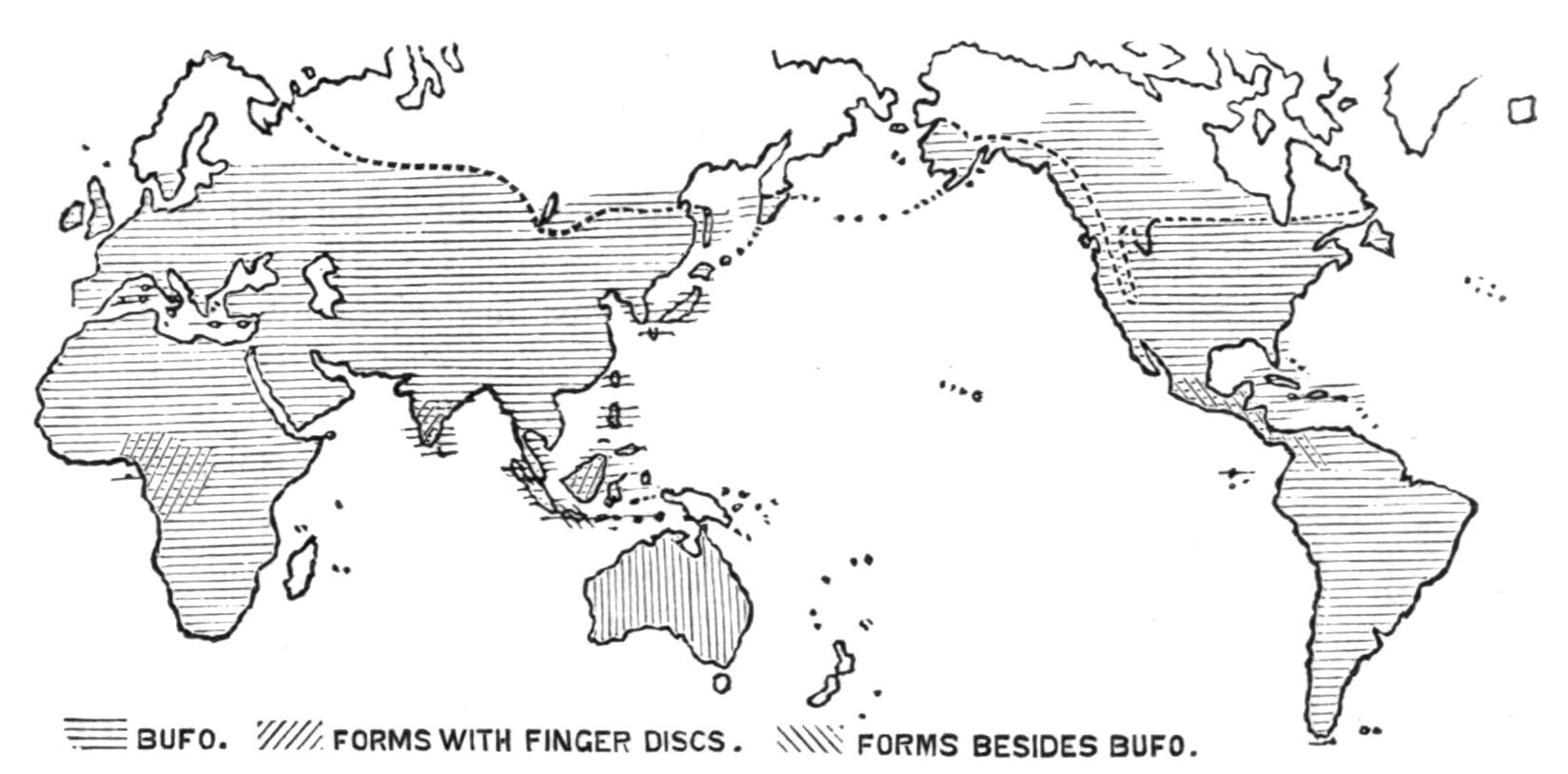
Fig. 34.–Map showing distribution of Bufonidae. The vertical lines indicate the occurrence of Bufonidae, but not of Bufo.
The whole family is divided into nine genera with more than a hundred species, of which only about fifteen do not belong to the genus Bufo. The distribution of the family is well-nigh cosmopolitan, with the remarkable exception of Madagascar, Papuasia, and the small islands of the Pacific; Bufo has been wrongly said to inhabit the Sandwich Islands. The greatest number of species, chiefly Bufo, occur in the Neotropical region, the greatest number of genera in Central America, where Bufo is rare, and in Australia, where it is absent.
A. Pupils contracted to a horizontal slit. Typically arciferous.
a. Australian. Tympanum invisible. Fingers and toes not dilated.
1. With vomerine teeth. Both the omo- and meta-sternum are rudimentary. East Australia: .......... Notaden bennetti.
2. Without vomerine teeth. Omosternum absent. Metasternum cartilaginous: .......... Pseudophryne, p. 168.
b. Not Australian.
1. Omosternum narrow and cartilaginous. Metasternum with a bony style ending in a cartilaginous disc. Fingers and toes slightly swollen. Neotropical: .......... Engystomops, p. 168.
2. Omosternum absent. Metasternum cartilaginous.
α. Fingers and toes webbed; terminal phalanges T-shaped and with adhesive broadened tips. Africa and India: .......... Nectophryne, p. 169.
β. Fingers free, toes webbed; terminal phalanges simple, not dilated. Tympanum distinct. Java: .......... Nectes, p. 169.
3. Metasternum cartilaginous, sometimes ossified along the middle. Fingers free; toes more or less webbed; tips simple or dilated into very small discs: .......... Bufo, p. 169.
B. Pupil a vertical slit. The epicoracoid cartilages are narrow and scarcely overlap. Omosternum absent except in Cophophryne. Vomerine teeth absent. Sacral diapophyses strongly dilated. The terminal phalanges are simple and the tips are pointed.
a. Australian. Tympanum distinct. The metasternum is calcified along the middle: .......... Myobatrachus, p. 184.
b. Mexican. Tympanum absent. Metasternum rudimentary: .......... Rhinophrynus, p. 185.
c. Himalayan. Tympanum absent. Metasternum with a slender bony style: .......... Cophophryne sikkimensis.
Engystomops is interesting because it closely resembles the Cystignathoid genus Paludicola, and thereby seems to connect these two families. It differs from Paludicola chiefly by the absence of teeth, by the moderately dilated sacral diapophyses and by the slightly swollen tips of the fingers and toes, the end-phalanges of which are, in one species, E. petersi, T- or anchor-shaped The tympanic disc is either distinct or hidden. The males have a large subgular vocal sac. The generic name refers to the small head with a prominent snout. Three species are known from Central America and Ecuador.
Pseudophryne appears to be another link with the Cystignathidae by its resemblance to the Australian genus Crinia, from which it differs by the absence of teeth and by the absence of an omosternum. The sacral diapophyses are but moderately dilated. The males have a flat oval gland on the hinder side of the thighs, and they are provided with a subgular vocal sac. The 3 or 4 species of this genus which live in Australia, both East and West, are not unlike Bombinator in their general shape, short limbs and coloration. The skin of P. australis and P. bibroni is covered with small smooth warts and is blackish brown, while the under parts are blackish with large yellow patches. Total length little more than one inch. Concerning the breeding habits, see p. 223.
Nectophryne.–The sacral diapophyses are strongly dilated. N. afra, without a tympanum, but with fully-webbed digits and several broad, cushion-like or lamellar pads on the fingers and toes, inhabits the Cameroons, N. tuberculosa of Malabar, and N. guentheri and N. hosei of Borneo, have a visible tympanum and the fingers are webbed at the base only. These slender and long-legged species are most probably arboreal, as indicated by the broadened, but truncated, tips of their fingers and toes. N. hosei is about 4 inches long, N. misera is a little creature of only ¾ inch in length. Nectes, hitherto known by one species, N. subasper of Java, is a swimmer and exceeds 6 inches in length. The tympanum is very distinct; the small nostrils look upwards. The toes are long and webbed to the tips; the hind-limbs are very long. The sacral diapophyses are strongly dilated. The skin of the upper parts is very rugose, covered with round warts, and dark brown; the under parts are granular and uniformly light brown.
Bufo.–The great number of species, more than 100, renders a strict definition of this genus difficult. The tongue is pear-shaped, thicker in front, entire, not cut out, but free behind, so that it can be projected. The fingers are free, the toes more or less webbed although never completely so. The terminal phalanges are obtuse and sometimes carry tiny discs. The omosternum is absent or merely vestigial. The metasternum is a rather large cartilaginous plate with a waist, which is sometimes incompletely calcified. The sacral diapophyses are moderately dilated. The tympanum is distinct or hidden. The skin of the upper parts is always rich in specific poison-glands, a concentration of which forms in many species very conspicuous, thickened parotoid glands. The surface of the skin may be smooth, moist and slimy, or rough and warty, sometimes covered with tiny, sharp, horny spikes and quite dry.
The genus is cosmopolitan, with the exception of the whole Australian region and Madagascar, from which we may perhaps conclude that its original centre was not in Notogaea, in spite of the diversity of species in the Neotropical region, which now contains about half of all the species known. Next to Central America the Indian region is richest in species of Bufo.
B. vulgaris.–The Common Toad of the Palaearctic region. The skin of the upper parts is much wrinkled and beset with numerous round warts or poison-glands, the openings of which can be seen with the naked eye, especially on the large parotoid complexes. The outermost layer of the epiderm, in fact all that portion which is periodically shed, is elevated into numerous little cornified spines. The extent of their development varies much; southern specimens, especially those from Portugal, being perhaps the roughest. Others appear quite smooth to the touch, and this is the case with many English specimens. The skin of the under parts is more granular and devoid of specific glands. The general colour of the upper parts is olive grey to dark brown, more or less mottled; the under parts are whitish, often with a brown, yellow or reddish tinge.
The coloration of this species varies considerably and is moreover very changeable. These changes depend chiefly upon the surroundings and the locality, in which certain styles of coloration seem to be the fashion, not necessarily to the absolute exclusion of others. Some specimens are of a rich brown colour, with or without dark brown spots and patches, and these are sometimes confluent, forming irregular, longitudinal bands. The ground-colour of other individuals is olive grey, with or without darker patches, and these paler tones prevail in toads which live on light-coloured soil, for instance on chalk. I recently found one between two dark-coloured slates, and this creature was so black that it gave the impression of having soiled itself with coal-dust. One and the same specimen will appear paler or darker according to its mood and the leading tones of its immediate surroundings, but it cannot change its dominant ground-colour. A third colour-variety occurs more frequently in the mountainous districts of Southern Europe. I have obtained the most handsome specimens in the Serra Gerez, in North Portugal. Their ground-colour is pale brownish-yellow, with many large and small, rich brown patches, or if the latter colour predominates, these patches and spots are separated from each other by creamy seams, with the occasional effect of dark brown, yellow-ringed eyes. Eastern Asiatic specimens often have a fine yellow vertebral line and the under parts are inclined to be marked with dark spots.
The iris is red or coppery, mottled with black. The male has no vocal sacs, and, besides being smaller than the female, is distinguished by slight nuptial excrescences in the shape of little horny brushes on the inside of the inner palmar tubercle and the three inner fingers. The full size of this toad varies extremely. Taking the standard of everyday experience in England and Central Europe, one would call any female beyond 3½ inches in length, and any male of more than 2½ inches, unusually large. But occasionally they grow to a much larger size, especially in the mountains of Southern Europe, provided there is a rich vegetation of meadows and deciduous trees so as to insure a variety of plentiful food. Although Fatio[79] mentions a toad 153 mm. = 6 inches long, and Boulenger succeeded in getting a toad from Paris which measured 132 mm., i.e. almost 5¼ inches, one of my specimens from the Serra Gerez seems to hold the record with a total length from snout to vent of 135 mm. or more than 5¼ inches. Jersey is also famous for its large toads, possibly on account of the many large greenhouses. These large specimens do not constitute a special race. The monsters among them are without exception females, often but not always sterile, as I have often found large masses of eggs in them. Food is the chief cause. At least I have observed that the more voracious of some Spanish and Portuguese specimens, which were already 3½ inches long, and therefore entitled to respect, continued to grow rather rapidly, adding about half an inch within a year. Again, if the growth of a promising toad is arrested for a season–not necessarily by starvation, but by uncongenial surroundings, sameness, and unvaried nature of food–they consolidate so to say, or settle down, and no amount of future good feeding will turn them into exceptionally big specimens. There are no data to tell how old such monsters really are. At least ten years are required by the Southerners to reach four inches. The usual length of life attained by a toad is likewise unknown. Boulenger kept one in a box provided with a sod, a pan of water and plenty of varied food, but twelve years of close captivity did not make any appreciable difference in its appearance.
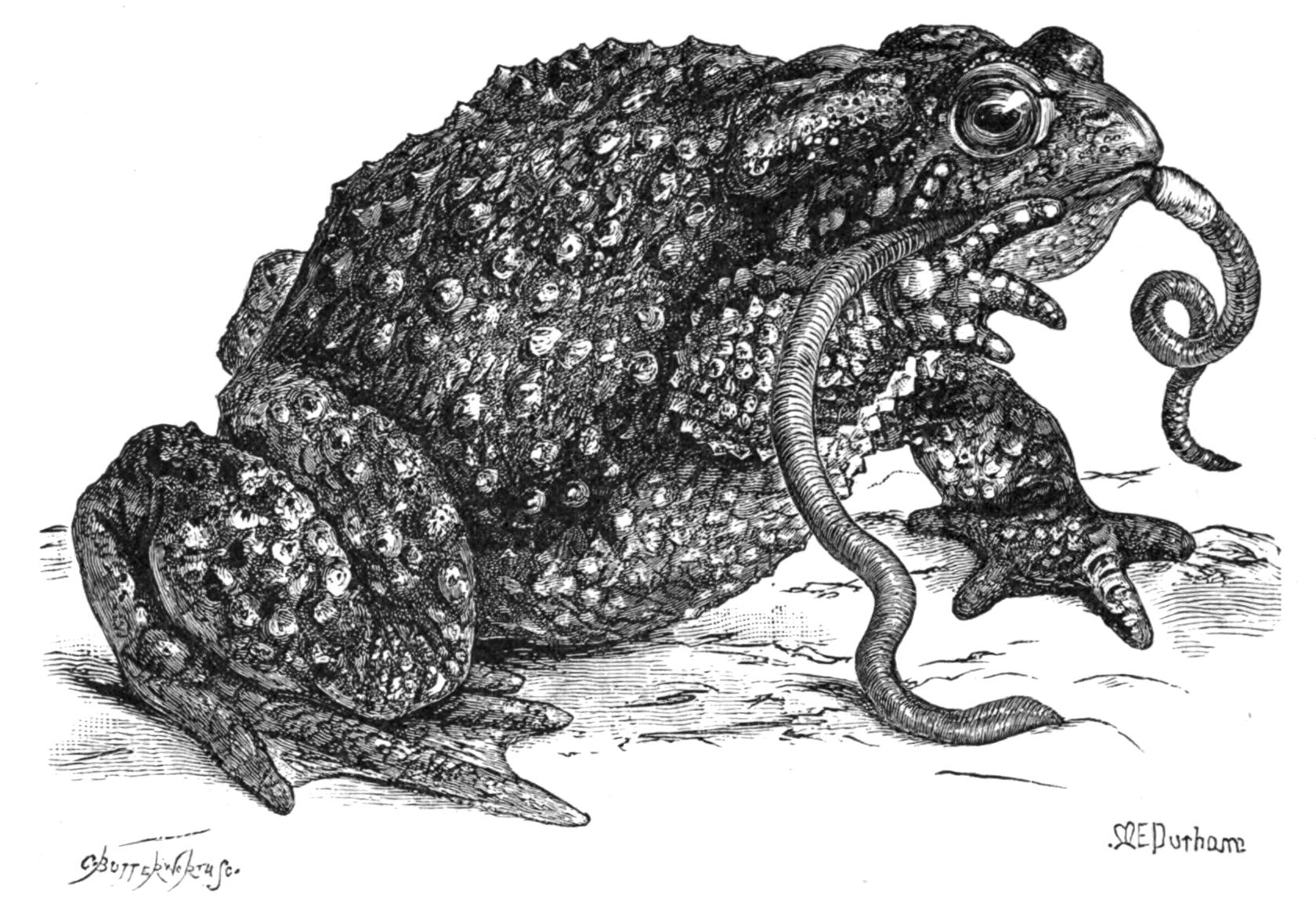
Fig. 35.–Bufo vulgaris. Portuguese specimen. × ⅔.
A number of large Spanish and Portuguese specimens in my greenhouse were at first very shy, and tried every possible means of escape or sullen hiding, but gradually they condescended to take food when lifted on to the slate-covered stage upon which their food was spread. After a few weeks they had learned this so thoroughly that, towards the usual hour of feeding, they climbed most laboriously on to the slates, lying in wait between the flower-pots, and coming forward when we entered the house. The rest of the day and night they spent on the ground, under stones or plants, each in its individual lair. The biggest of all, and several others, became so tame that they took food whilst sitting on the hand, and then they looked up for more. The food must be alive and show movement. Mealworms, snails, beetles and other small creatures are first carefully inspected with bent-down head, and are sometimes followed for a few inches; then comes an audible snap, a flash of the rosy tongue and the prey has disappeared. Large earthworms are nipped up with the jaws and laboriously poked in with the hands, the fingers being so placed as to clean the worm of adherent soil and other impurities. Very large worms are shaken, twisted, pressed against the ground and gulped down with convulsive movements, but not unfrequently the tip-end remains for some minutes sticking out of the tightly shut mouth. Several are taken at one sitting, until the toad is gorged. One of the biggest took full-grown mice, which were not "fascinated by the fiery eyes" but were stalked into a corner and then pounced upon immediately when they moved. The shells of snails can for half a day be felt through the body; they then dissolve or are disgorged. The dung, which is passed in large, long masses, is often full of fine earthy matter, the contents of the earthworm's intestines, and sometimes it contains the chitinous remains of certain beetles which are supposed to be excessively rare. I know of no instance of slugs being eaten.
The regular hunting-time begins with the evening and is continued throughout bright nights, the toads crawling and hopping about. They are expert climbers of rocks, and succeed in reaching apparently inaccessible places by shoving themselves up between vertical walls, and taking advantage of any roughnesses for foothold. Every few weeks they shed their skins. Without any preliminary symptoms or loss of appetite or liveliness, the body makes a few twisting motions, the back is now and then curved, and the skin splits down the middle line. Owing to the more forcible contortions of the body it slides down to the right and left of the back, whereupon the toad gets hold of the peeling-off skin with fingers and toes, scraping the head and sides, and conveys the thin, transparent, slightly tinged skin into the mouth, slips out of it backwards and swallows it. The new surface is then quite wet and shiny, but it soon dries and hardens.
Many toads, for instance the Common Toad and the Pantherine Toad, assume a peculiar attitude when surprised. Instead of blowing themselves up by filling their lungs with air, they raise themselves upon their four limbs as high as possible, but turning the back towards the enemy in a slanting position, either to the right or to the left side, apparently in order to present as much surface as possible, in other words to look their biggest.
Some of my specimens hibernated regularly for a few months, burying themselves completely in loose, dry soil, under leaves, or,–a favourite place,–in a heap of cocoa-nut fibre. Others, and this applies also to English specimens transferred from the garden into the greenhouse, are lively all the year round, but even they withdraw for an occasional sleep of a few weeks at any time of the year.
The whole family of large toads came to a sad end after four years, when they were put into new temporary quarters, a slate-bottomed terrarium. Being kept during my absence in wringing wet moss, which became fouled by their own excretions, they contracted a mysterious disease from which they never recovered. They are rather averse to wet surroundings, and except during the short pairing season they live in cool, shady places, preferably with just a little dampness. Occasionally they take a soaking bath. One specimen, living in the garden, repaired during the hot and dry summer nights to a standpipe in the garden, enjoying the occasional drips of water.
Considering the amount of snails and other noxious creatures destroyed by them during their regular nocturnal hunts, toads are eminently useful creatures. Nevertheless, they suffer much through the stupid superstition of people who ought to know better. It is difficult to find a gentle, absolutely harmless and useful creature that is more maligned than the European toad. It brings ill-luck to the house, the "slimy toad" spits venom, sucks the cows' udders and after that destroys their power of giving milk; it poisons the milk in the cellar, and a certain builder's horse, which was grazing in the grounds of the Cambridge Museums, and died there from a large concrement obstructing its bowels, was solemnly declared to have swallowed one of my toads. Silly superstitions, owing to faulty, or rather entire want of, observation! The toad is not slimy, but dry; it is often found in buildings, where it keeps down the woodlice; it cannot suck, nor does it drink at all; it does not spit venom, but becomes covered with milky white and very strong poison when in acute agony, for instance when trodden upon; and unless the big skin-glands be forcibly squeezed, there will be no squirting. Therefore, leave it alone, or put down food on its evening beat, and it will soon come to know and to recognise its friends.
The Common Toad can exist without food for a long time, provided the locality is cool and damp, but it wastes away almost to skin and bones. In order to disprove the persistently cropping up fable and sensational newspaper-accounts of toads having been discovered immured in buildings, where they were supposed to have lived for many years, Frank Buckland put a dozen specimens into separate holes bored in a block of porous limestone, covered them up tightly with a glass plate and buried the block a yard deep in the soil. A second dozen were treated similarly, but were put into a block of dense sandstone. After a year and two weeks all the toads enclosed in the latter block were of course found dead and decomposed, but most of those in the porous block were still alive, with their eyes open, and did not succumb to starvation until eighteen months of confinement. These poor creatures could of course not move about, and were practically undergoing enforced continuous hibernation. Otherwise they would soon have wasted away and have died within six months. Those which tumble into deep and dry wells remain rather small, but generally manage to keep alive for years on the spiders, woodlice, earwigs and other insects which likewise tumble in.
Toads hibernate far from the water in dry holes or clefts, retiring in the middle of October in Central Europe, and they do not reappear before March. Soon after, and this depends naturally upon the season, they congregate in ponds or pools, and the males, which far outnumber the females, for whom they fight, make a peculiar little noise, something like the whining bleat of a lamb, uttering this sound day and night. The male having, after much wrestling with competitors, secured a female, which is often several times bigger than himself, clasps her tightly, by pressing his fists into the armpits, and the pair swim or crawl about in this position sometimes for a week before the spawning takes place. The number of eggs laid at one sitting is enormous, varying from 2000 to 7000. They are very small, only 1.5-2.0 mm. in diameter, and are expelled in two double rows or strings, one coming out of each oviduct. These strings consist of a soft gelatinous mass, in which the double rows of entirely black eggs are imbedded, and they measure in the swollen condition about 6 mm. or ¼ inch in diameter, and from 10 to 15 feet in length. The strings are wound round and between water-plants by the parents, which move about during the laying and fertilising process. According to the coldness or warmth of the season the larvae are hatched in about a fortnight, and for the next few days they hang on to the dissolving gelatinous mass of the egg-strings. They then leave the slime and fasten themselves by means of their suckers to the under side of grasses and water-plants or sticks, with their tails hanging downwards, still in a rudimentary condition, but henceforth progressing rapidly.
Fischer-Sigwart[80] found the time of development as follows:–The eggs were laid on the 6th of March; the larvae left the jelly on the 16th, being 4 mm. long. On the 2nd of April they measured 13 mm.; on the 25th, 20 mm. On the 7th of May the hind-limbs appeared. On the 18th of May the tadpoles had reached their greatest length, namely 24 mm., and this is a rather small size for so large a species. The fore-limbs broke through on the 28th, and the metamorphosis was completed eighty-five days after the eggs were laid, the creatures leaving the water on the 30th of May. The tadpoles showed a preference for rotten pieces of Agaricus, which were floating in the water. The little baby-toads are surprisingly small, scarcely 15 mm. long, and live in the grass, under stones, in cracks of the ground, and hop about in much better style than their heavier and more clumsy-looking parents. Where many broods have been hatched they can be met with in myriads, the ground literally swarming with them, and as they are naturally stirred up by a sudden warm rain, perhaps after a drought, people will occasionally state it as an observed and well-ascertained fact that "it has rained toads."
What becomes of all these hopeful little creatures? Although it takes them fully five years to reach maturity, one would expect that the whole country would be swarming with toads; but since this is not the case, there being not more toads now than there were before, it follows that their enormous fecundity is only just sufficient to keep the race going. Adult toads seem to have scarcely any enemies except the Grass Snake, which takes them in default of anything better. But how about the reduction where there are no snakes? We know nothing about epidemics which might carry them off, but elderly toads are liable to a horrible disease produced by various kinds of flies, notably by Lucilia bufonivora and Calliphora silvatica, the maggots of which somehow or other eat their way from the nostrils into the brain and into the eyes. Those which reach the brain at first produce effects similar to those of Coenurus cerebralis, the hydatid or bladder-worm of sheep. The toad inclines its head towards one side, and cannot crawl straight, but walks in a circle. By eating away the brain they gradually destroy the host's life. But if none enter the brain, and a few only find their way into the eye, they only impair or destroy its sight. Such toads show signs of pain, poking at or stroking the affected eye, which becomes inflamed, and ultimately remains enlarged, with the iris partially or entirely destroyed by the maggot, which does not develop further, but dies in the eye-chamber, this being really an unsuitable place for it. The eyesight is of course affected, and is mostly, but not in all cases, lost. Such half-blind individuals–the disease affecting sometimes one eye only–recover their health, and except for a little awkwardness, behave like normal specimens. This applies to Bufo vulgaris as well as to B. calamita. Australian Anura are cursed with a fly of their own, called Batrachomyia.[81]
B. vulgaris inhabits almost the whole of the Palaearctic region;–the whole of Europe, with the exception of Ireland, the Balearic Islands, Sardinia and Corsica. Northwards it extends to Trondhjem, and thence along a line drawn across Russia and Siberia to the Amoor. Its southern limit in Asia is indicated by a line drawn from the Caucasus through the Himalayas into China. In Asia Minor and in Persia it is absent. South of the Mediterranean it occurs only in Morocco and Algeria.
B. melanostictus is the common toad of the whole Indian region and of the Malay Archipelago. The epidermis of the fingers and toes is thicker and more cornified than usual, and is stained black brown, hence its specific name. The male has a subgular vocal sac. In other respects the Indian species much resembles the more spinous or rough-skinned and brown varieties of the European species. According to S. S. Flower this toad is very common in the Straits Settlements, hiding by day under stones or logs, or in holes, coming out shortly before sunset, and remaining abroad till dawn; it may be met with on the roads and in the grass, hopping or crawling about in search of ants, bees, and similar food. It utters a rather feeble, plaintive cry when handled for the first time. It can change its colour from light yellowish to dark brown. The spawn, which resembles that of B. vulgaris, may be seen in March and April in ponds, in long strings twined about the water-weeds. The tadpoles are very like those of the common English toad in form, size, colour, and structure of mouth. The largest adult found in Penang measured 115 mm. (about 4 inches) from snout to vent.
B. lentiginosus s. americanus is the common toad of North America, from Mexico to the Great Bear Lake. It is worth noting that this species resembles in its coloration the Eastern races of B. vulgaris, in so far as they generally have a light vertebral line, and frequently dark spots on the under surface. The upper parts are brown and olive, with darker spots, two of which form a chevron behind the eyes. But the tympanum is large, and the male has a subgular vocal sac; the inner metatarsal tubercle is very large, and is used as a kind of digging spur. During the pairing time they take to the pools in great numbers, uttering their music, which consists of a prolonged trill, continued by different individuals, both day and night. Holbrook knew an individual which was kept for a long time, and became perfectly tame. During the summer months it retired to a corner of the room into a habitation which it had prepared for itself in a small quantity of earth placed there for its convenience. Towards the evening it wandered about in search of food. Some water having been squeezed from a sponge upon its head one hot day in July, it returned the next day to the spot, and seemed well pleased with the repetition, nor did it fail during the extreme heat of the summer to repair to it frequently in search of its shower-bath.
Several varieties of this widely distributed species, whose average length is 2½ inches, have been described. The prettiest was called B. quercinus by Holbrook–according to whom it is mostly found in sandy places covered with a small species of oak–which springs up abundantly where pine-forests have been destroyed. It is called the "oak-frog," as it spends most of its time in concealment under fallen oak-leaves, or partially buried in the sand.
B. marinus s. agua is the giant among toads, and is one of the commonest species of the Neotropical region, ranging from the Antilles and Mexico to Argentina. It frequently reaches a length of 6 inches, with a width of 4 inches when squatting down in its favourite attitude. The upper parts are rough, owing to the prominent warty glands, of which the parotoid complex is enormous. The general colour above is dark brown, with sooty dark patches; below whitish, often with blackish patches. This creature appears at dusk, often in large numbers, especially during the rainy season, hopping about, not crawling, with surprising activity. The voice of the male, strengthened by a subgular sac, is said to be a kind of loud snoring bark. The pairing time begins, according to Hensel,[82] with the winter rainy season, especially June, and lasts several months, until October, but it is interrupted by the cold, which in the hills of South-Eastern Brazil covers the ponds with ice. Then the tremulous bass voice of the males is heard no longer; they have all withdrawn beneath stones and trees in the neighbourhood of the water. The eggs are laid in strings. The larvae are at first quite black and very small, and the young baby-toads are only 1 cm. in length. They differ considerably from the adult until they are more than 1 inch long; the upper parts are yellowish brown, with darker ocellated patches, each with a light seam, most conspicuous along the sides of the head and back. The under parts are grey, finely stippled with yellow.
Budgett[83] remarks that B. marinus feeds on all kinds of insects. "One half-grown specimen sitting by a man's foot picked off fifty-two mosquitoes in the space of one minute, picking them up with the tongue as they settled. The call of this very common toad consists of three bell-like notes; the middle one being the highest. The enormous parotoid glands are discharged like squirts when the creature is roughly handled. When wet weather comes on it hops out from its hiding-place to sit in a puddle, with its head out."
In many species of Bufo the crown of the head forms more or less prominent ridges, especially strong in the region between the eyes; for instance, in B. melanostictus and B. lentiginosus. The skin overlying these ridges is liable to be involved in the cranial ossification, and this reaches its greatest extent in the two Cuban species B. empusus and B. peltocephalus. It is a curious coincidence, to say the least, that such dermal ossifications should be best developed in Neotropical species, in those very countries which amongst the Cystignathidae have produced the abnormal genera Triprion, Calyptocephalus, and Pternohyla. The most peculiar and odd-looking species is Bufo ceratophrys, a native of Ecuador, which has the upper eyelid produced into a horn-like appendage, the two sharply-pointed cones standing out transversely, reminding us of several species of the Cystignathoid genus Ceratophrys; there is also a series of four small pointed appendages on each side of the body. Protective concealment is possibly the reason of these queer outgrowths.
B. viridis s. variabilis, the Green or Variable Toad, reaches a length of about 3 inches, and is the prettiest toad of Europe. The skin is distinctly smooth, the numerous porous, large and small warts being flattened. Parotoid glands are well developed, and a similar pair of glands sometimes occurs on the inner side of the calf, especially in Central Asiatic and in Algerian specimens. The coloration is very variable and changeable. The ground-colour of the upper parts is creamy, with large and small, partly confluent and irregularly shaped spots and patches of green, here and there interspersed with vermilion-red specks, especially along the sides of the back. The under parts are whitish, sometimes spotted with black. The iris is brass-coloured, greenish-yellow, with fine dark dots. The male does not differ from the female in size, but has an internal subgular vocal sac, a conspicuous callosity on the inner side of the first finger, and nuptial brushes on the first three fingers and on the inner palmar tubercle.
The changing of colour affects mainly the intensity of the green; the same individual which now looks almost uniformly dull, almost grey, with dusky olive patches, will, if put into grass and sprinkled with water, within a few minutes appear in a tastefully combined garb of grass-green on a creamy ground. Some Southern and Eastern specimens have a creamy stripe along the vertebral line, thereby closely resembling B. calamita, from which, however, they can always be distinguished by the little pads below the joints of the toes; these pads being single in B. viridis, and double in B. calamita and in B. vulgaris.
The Green Toad spends most of the day in holes, although it is not averse to daylight, and it roams about chiefly in the evening. It can jump well, much better and oftener than the Brown Toad. The food consists strictly of insects of all kinds, and most individuals prefer slow starvation to eating an earthworm. Although continuing to live four or five years in captivity, they do not readily become tame; they are indeed no longer wild, and when handled they no longer emit their peculiar insipid smell, but on being approached they still crouch deeply into the grass, or withdraw into their holes, just as they did when recently caught. The voice is heard during the pairing season, and sounds like the slow creaking of a door, or a combination of a spinning top and rattle. In Germany, during the months of April and May, they take to the ponds, or, improvident like the common frog, to a roadside ditch. The male sits upon the female and grasps her below the arms, his hands on her breast, and in this position they remain for days. The eggs are laid in two strings, twisted around water-plants, and are very numerous. Héron-Royer has calculated them at 10,000 or more in one set. The embryos are hatched, like those of the Common Toad, before the appearance of the external gills and of the tail. In this imperfect condition they remain in the jelly of the egg-strings for a few days, while their external gills sprout out like unbranched little stumps, only to disappear again. In about eight weeks the tadpoles, which reach a length little more than 1½ inch or 40 mm., have metamorphosed and leave the water as baby-toads scarcely half an inch in length.
This species has a very wide range, namely, the whole of Middle Europe excepting the British Isles, France and the Iberian Peninsula; the region between the Elbe and Rhine being its western limit; southwards it extends over all the Mediterranean islands and the north coast of Africa, eastwards through the whole of Russia, Western and Central Asia, not entering India, but spreading along the Himalayas into China. Stoliczka mentions its having been found in the Himalayas at an altitude of 15,000 feet, the highest record of any Amphibian, at least in such latitudes.
B. calamita.–The Natterjack is practically the representative of the Green Toad in Western Europe, but both species occur together in Denmark, Southern Sweden, and nearly the whole of Germany. Its southern limit is Gibraltar. In the British Isles it occurs in South-Western Ireland, in Co. Kerry, and in England and Wales, being however local, and preferring sandy localities, where it is found in considerable numbers. This predilection is shown by its frequency on the sandy dunes of most of the islands off the German and Dutch coast, where it may be seen running about in glaring sunshine.
Besides in the coloration, it differs from B. viridis in the following points. The little subarticular pads of the toe-joints are paired, not single, and the hind-limbs are decidedly shorter, so much so that this species cannot hop. But it runs well, like a mouse, generally in jerks, stopping every few seconds, and owing to this habit it is called the "running toad" by the field-labourers of Cambridgeshire. The skin is smooth, but less so than in B. viridis, owing to the slightly more prominent warts; the parotoids are small; a similar pair of glands lies on the upper surface of the fore-arm and another on the calf. The tympanum is rather indistinct. The ground-colour of the upper parts is light brownish yellow, with a green tinge and scattered green spots; most specimens have a narrow yellow stripe along the vertebral line and over the head. The under parts are white, more or less speckled with black. The iris is greenish yellow and speckled. The male, which is of the same size as the female,–very large specimens reaching 3 inches in length,–has a large subgular vocal sac, and develops nuptial brushes on the first three fingers, but the first lacks the thickened pad of B. viridis.
The yellow vertebral line is sometimes absent in specimens from the south of France and the Iberian Peninsula; and since these southerners are as a rule more handsomely marked, the green being more pronounced and arranged in larger patches, interspersed with red spots, they much resemble B. viridis. Boulenger, who has paid especial attention to this vertebral streak, which is a not uncommon design in various species of different families, has made the interesting observation that the streak has never been found in Danish and German specimens of B. viridis, where B. calamita occurs also, while it is not uncommon in B. viridis of Italy, South-Eastern Europe, Asia, and North Africa, where B. calamita is not found. Lastly, he remarks that in Eastern Asia, where neither B. viridis nor B. calamita with such a line occurs, the same character is assumed by some specimens of B. vulgaris. The only conclusion we can draw from these facts is, that for some unknown reason the streak is a desirable, but not necessary, possession, but that it is not kept by two species in the same country, B. viridis dropping it entirely where the typically streaked species, B. calamita, also occurs. The breeding season does not begin in England and Middle Europe until the end of April, in cold springs not before May, but it lasts for several months. The males, congregating in pools in great numbers, make a loud noise, each individual uttering a rattling note which lasts a few seconds, the repetition distending its bluish throat into the shape of a globe as large as its head. As the note is taken up by all the other males, a continuous chorus is established, which on warm and still nights can be heard nearly a mile off. Single croaks are uttered at any time of the day. The embrace, the male digging its fists into the armpits of the female, often takes place on land, near the edge of the water, to which they resort in the night for spawning. The egg-strings are slung around water-plants, unless the water is a mere puddle, and are much shorter than those of B. viridis, measuring only 5 to 6 feet, and containing altogether 3000 to 4000 eggs. The larvae, when hatched, are very small, imperfect, and blackish; the external gills last a very short time. The young tadpoles live on mud, subsisting on diatoms and low Algae; they are the smallest tadpoles of all the European kinds, scarcely reaching more than one inch in length, and they metamorphose quickly, the baby-toads leaving the water and running about in less than six weeks, when they are only 10 mm., scarcely three-eighths of an inch, in length. By the end of their second summer they are still only three-quarters of an inch long, and they do not reach maturity until the fourth or fifth year, with a size of 1½ to 2 inches; still smaller young males become mature several years before they are full grown.
Natterjacks stand captivity well and become very tame. When discovered, they first do their best to run away, instead of hiding or squatting down, and when caught they become covered with a slightly foamy lather, the exudation of their glands, which has a peculiar smell, reminding some people of gunpowder, others of india-rubber. They are not very particular as to food, all sorts of insects and earthworms being taken. Natterjacks are great climbers and diggers. Many of mine have established themselves in the peat with which the walls of the greenhouse are covered, where they have dug out, or enlarged, holes in which they pass the daytime, just peeping out with their bright eyes; others sit high up, always in dry places, and bask. In the evening they descend, hunting about on the ground, and occasionally they go into the water, whereupon they become quite flaccid and soft. When taken up and held between two fingers, being slightly pressed under the armpits, both sexes utter little jerky notes, as–by the way–most toads and frogs do under similar conditions.