PART SECOND. SUGARS AND STARCHES. (continued 2)
Reading edition
The sugar solution is placed in a flask, marked on the neck at 100 and 110 cubic centimeters; or if smaller quantities are used, in a flask marked on the neck at fifty and fifty-five cubic centimeters. The flask is filled with the sugar solution to the first mark and then a sufficient quantity of strong hydrochloric acid added to bring the volume of the liquid to the second mark. The mouth of the flask is then closed with the thumb and its contents thoroughly mixed by shaking. A thermometer is placed in the flask which is set in a water-bath in such a way that the water comes just above the level of the liquid in the neck of the flask. The water is heated in such a manner as to bring the temperature of the contents of the flask, as determined by the thermometer, exactly to 68° and at such a rate as to require fifteen minutes to reach this result. At the end of fifteen minutes the temperature having reached 68° the flask is removed and placed at once in another water-bath at the temperature of the room, to which temperature the contents of the flask are cooled as rapidly as possible. To make the polarimetric observation a tube twenty-two centimeters in length is filled with the inverted sugar solution by means of a tubulure in its center, which serves not only the purpose of filling the tube but also afterwards to carry the thermometer, by means of which the temperature of observation can be taken. If the sugar solution be turbid, or contain any lead chlorid due to the previous use of basic lead acetate in clarification, it should be filtered before being introduced into the observation tube. This tube being one-tenth longer than the original compensates for the dilution caused by the addition of the hydrochloric acid in inversion.
When reading, the bulb of the thermometer should be withdrawn far enough to permit the free passage of the ray of light and the exact temperature of the solution noted.
The above outline of Clerget’s method of inversion is given in order that the analyst may compare it with any of the variations which he may find in other works. The chief points to which attention is called, are, first, the fact that only a little over sixteen grams of sugar are used for ten cubic centimeters of strong hydrochloric acid, and second, that the time of heating is exactly fifteen minutes, during which time the contents of the flask should be raised from room temperature to exactly 68°.
From the above it is seen that the process of Clerget, as originally described, can be applied directly to all instruments, using approximately sixteen grams of sugar in 100 cubic centimeters. Experience has also shown that even when larger quantities of sugar are employed, as for instance, approximately twenty-six grams, the inversion is effected with practical completeness in the same circumstances. It is advised, therefore, that in all analytical processes, in which cane sugar is to be determined by the process of inversion with an acid, the original directions of Clerget be followed as strictly as possible. Experience has shown that no one of the variations proposed for Clerget’s original method has any practical advantage and the analyst is especially cautioned against those methods of inversion in which the temperature is continued at 68° for fifteen minutes or in which it is allowed to go above that degree.
93. Influence of Strength of Solution and Time of Heating on the Inversion of Sucrose.—As has been intimated, the strength of a sugar solution and the time of heating with hydrochloric acid are factors that must be considered in determining a formula for the calculation of sucrose by inversion. The Clerget formula holds good only for the conditions specified and these conditions must be rigidly adhered to in order to secure the proper results. This matter has been thoroughly studied by Bornträger, who also gives a nearly complete bibliography of the subject.[54] As a result of his investigations it seems well established that the original Clerget formula is practically correct for the conditions indicated, Bornträger modifying it only by substituting in the formula 143.66 for 144. This is so nearly the same as the Clerget factor that it is not advisable to substitute it therefor. If, however, the inverted sugar solution be diluted to double its volume before polarization the factor proposed by Landolt, viz., 142.4, gives more nearly accurate results. If the hydrochloric acid be neutralized before polarization by an alkaline body, the character of the salt which is formed also influences, to a greater or less extent, the specific rotatory power of the solution. Hydrochloric acid itself also influences the rotation to a certain degree.[55]
94. Calculation of Results.—The percentage of sucrose in a solution which has been polarized before and after inversion is calculated by an appropriate formula from the data obtained or is taken directly from tables. These tables are too long to insert here, and in point of fact the calculation can be made from the formula almost as quickly as the result can be taken from a table.
Two factors are commonly used in the calculations, one based on the supposition that a sugar solution polarizing 100° to the right will, after inversion, give a reading of 44° to the left, at zero temperature. In the second formula in common use the polarization to the left in the circumstances mentioned above is assumed to be 42.4, a number reached by Landolt after a long series of experiments.[56] The principle of the calculation of the percentage of sucrose is based upon the original observation of Clerget to the effect that the algebraic difference of the two readings, divided by 144, less half of the temperature, will give the percentage of sucrose desired. The formula by which this is obtained is
S = a - b .
K - t
2
In this formula a is the polarization on the sugar scale before inversion, b the polarization after inversion, K the constant representing the algebraic difference of the two polarizations of pure sugar at 0° and t the temperature of the observation. To K may be assigned the values 144 or 142.4, the one in more common use. In case the polarization, after inversion, is to the left, which is more commonly the case, the sum of the two readings is taken for a - (-b) = a + b; when both polarizations are to the right or left the difference is taken. S is the percentage of sucrose desired.
Example.— Let the polarization before inversion be +95
and after inversion -26
and the temperature 20°
Then S = 95 + 26 = 121 ÷ 134 = 90.6.
144 - 10
Substituting the value 142.4 for K, the result of the calculation is 91.4.
In high grade sugars, therefore, the difference in the results secured by taking the two values of K amounts to about 1 per cent of sucrose.
For a further discussion of the theory and practice of inversion the reader is referred to the articles of Herles, Herzfeld, and Wohl.[57]
95. Method Of Lindet.—Courtonne recommends the method of Lindet for securing the inversion instead of the method of Clerget.[58] Modified by Courtonne, the method is as follows:
Make two or three times the normal weight of sugar dissolved in water to a volume of 200 or 300 cubic centimeters, as the case may be. After thoroughly mixing proceed as follows:
First, to Obtain the Polarization Direct.—Place fifty or 100 cubic centimeters of the prepared solution in a flask marked at fifty and fifty-five or at 100 and 110 cubic centimeters, add a sufficient quantity of lead acetate to secure a complete clarification, make the volume to fifty-five or 110 cubic centimeters, shake thoroughly, filter, and polarize in a 220 millimeter tube.
Second, to Obtain the Rotation after Inversion.—Place twenty cubic centimeters of the original solution, in a flask marked at fifty cubic centimeters, containing five grams of powdered zinc. The flask should be placed in boiling water. Add, little by little so as to avoid a too rapid evolution of hydrogen, ten cubic centimeters of hydrochloric acid made of equal parts of the strongest acid and water. After the operation is terminated, cool to the temperature of the room, make the volume to fifty cubic centimeters, polarize, and determine the rotation. The volume occupied by the zinc which is not dissolved, will be about one-half cubic centimeter, hence the deviation should be multiplied by the factor 2.475 in order to get the true deviation which would have been produced by the pure liquor. We have then:
A = the deviation direct.
B = the deviation after inversion.
C = the algebraic difference of the deviations.
The amount of sucrose, therefore, would be calculated by the formula of Creydt,[59]
X = C - 0.493A ;
0.827
for raffinose the formula would be
Y = A - S ;
1.57
in which S is the deviation due to the sucrose present. The solutions inverted in the manner described are absolutely colorless. There is no need of employing bone-black to secure the saccharimetric reading nor does it present any uncertainty. It is thought by Courtonne that this method will soon take the place of the method of Clerget on account of the advantages above mentioned. The method will be somewhat improved by adopting the following suggestions:
1. Instead of allowing any arbitrary number for the volume of the undissolved zinc, decant the liquid, after inversion, into another flask and wash repeatedly with hot water until all trace of sugar is removed from the flask in which the inversion took place.
2. Instead of polarizing in a 200 millimeter tube make the observation in a 500 millimeter tube, which will permit of the reading being made without any correction whatever.
96. Inversion by Means of Invertase.—Instead of using acids for the inversion of cane sugar the hydrolysis can be easily effected by means of a ferment derived from yeast. A complete history of the literature and characteristics of this ferment, together with a study of its properties and the various methods of preparing it, has been given by O’Sullivan and Tompson.[60] In the preparation of invertase, the method found most effective is the following:
The yeast is allowed to liquify for at least a month in a fairly warm room without stirring. At the end of this time the surface is removed and any supernatant liquid poured away. The lower sedimentary part is thrown on a quick-acting filter and allowed to drain for two days. To the filtrate, alcohol of specific gravity 0.87 is gradually added to the extent of one and a half times its volume, with continued and vigorous stirring. The process of adding the alcohol and stirring should require about half an hour, after which the mixture is allowed to stand for twenty-four hours to allow the precipitated invertase to settle. The supernatant liquid is poured away and the precipitate washed several times on successive days by decantation with alcohol of 0.92 specific gravity. When the washings become nearly colorless the precipitate is thrown on a filter, allowed to drain, and immediately removed and mixed with a large bulk of alcohol of 0.92 specific gravity. The precipitate is again collected, mixed thoroughly with its own bulk of water, and some alcohol of 0.97 specific gravity, allowed to stand for a few hours and thrown on a filter. The filtrate contains the invertase.
97. Determination of Activity of Invertase.—The activity of a solution of invertase, prepared as above, is measured by the number of minutes required for it to reduce to zero the optical power of a solution of 100 times its weight of cane sugar at a temperature of 15°.5. In order to facilitate the action of the invertase, a trace of sulfuric acid is added to the solution. The manipulation is as follows:
Fifty grams of sucrose are dissolved in water and made to a volume of nearly a quarter of a liter and placed in a bath maintained at 15°.5. Half a gram of the invertase is added, the time noted, the solution immediately made up to a quarter of a liter and well shaken. The contents of the flask are poured rapidly into five beakers; the actual quantity in each beaker is not necessarily the same. To each of these beakers, in succession, are added the following amounts of decinormal sulfuric acid, viz., one-tenth, three-tenths, six-tenths, one, and one and four-tenths cubic centimeters. After an hour a small quantity of the solution is taken from beaker No. 3 and the reaction of the invertase stopped by adding a few drops of strong potassium hydroxid and the time of adding this reagent noted. This solution is then read in the polariscope and the percentage of sugar inverted is calculated from the formula C₁₂H₂₂O₁₁ + H₂O = C₆H₁₂O₆ + C₆H₁₂O₆.
The calculation of the amount of cane sugar inverted is based on the formula,
(38.4 - d) ÷ 0.518 = p.
In this formula d equals the divisions of the sugar scale read on the polariscope; p the percentage of cane sugar inverted; 38.4 the reading on the sugar scale of the original sugar solution and 51.8 the total number of divisions of the cane sugar scale that the polariscope reading would fall through if all the sugar were inverted. The observation tubes used in the polarization are only 100 millimeters in length. After stopping the action of the invertase with potassium hydroxid the solution is allowed to stand for some time before polarization inasmuch as the dextrose formed appears to assume the state of birotation and some time is required for it to reach its normal rotatory power. If the invertase be used in the alcoholic solution a sufficient quantity should be added to be equivalent to 0.01 of the sucrose present. The time which the contents of beaker No. 3 will take to reach optical activity is calculated in a manner described by O’Sullivan and Tompson, but too long to be inserted here.[61] The five beakers mentioned above are examined in succession and the amount of sulfuric acid best suited to the maximum inversion thus determined. This quantity is then used in subsequent hydrolyses with the given sample of invertase.
The action of invertase on sucrose is very rapid at the first and becomes very much slower towards the end. At a temperature of 15°.5 it is advisable to let the solution stand for forty-eight hours in order to be sure that complete inversion has taken place. For this reason the method by inversion by means of invertase is one of no great practical importance, but it may often be useful to the analyst when the employment of an acid is inadmissible.
98. Inversion by Yeast.—Owing to the difficulty of preparing invertase, O’Sullivan and Thompson[62] propose to use yeast as the hydrolytic agent, as first suggested by Kjeldahl. It is shown that in the use of yeast it is not necessary to employ thymol or any other antiseptic. The method of procedure is as follows: The cane sugar solution of usual strength should not be alkaline, but, if possible, should be exactly neutral. If there be any ferment suspected, the temperature should be momentarily raised to 80° to destroy its activity. The polariscopic reading of the solution is then taken at 15°.5 and the amount of copper reduced by the solution should also be determined.
Fifty cubic centimeters of the solution are poured into a beaker and raised to a temperature of 55° in a constant temperature bath. Some brewers yeast amounting to about one-tenth of the total amount of sugar to be inverted, pressed in a towel, is thrown into the hot solution and the whole stirred until mixture is complete. The solution is left for four hours in the water-bath, at the end of this time it is cooled to 15°.5, a little freshly precipitated aluminum hydroxid added, and the volume made to 100 cubic centimeters. A portion of this solution is filtered and its polariscopic reading observed. The solution is then left till the next day, when another polariscopic reading is taken in order to prove that inversion is complete. The copper reducing power is also determined. The method of calculating the results is the same as when invertase is used. The following formulas are employed.
a = the number of divisions indicated by the polariscopic reading for a 200 millimeter tube:
aʹ = the same number after inversion:
m = the number of the divisions of the polariscopic scale which 200 millimeters of the sugar solution containing one gram of cane sugar per 100, alter at 15°.5 on being inverted: In the case of the ventzke polarimeter scale, one gram of cane sugar in 100 cubic centimeters, indicates +3.84 divisions and after inversion it gives -1.34 div. In experiments of this kind, therefore, m = 5.18.
P = the weight of cane sugar present in 100 cubic centimeters of the original solution:
The formula employed then is
P = a - 2aʹ .
m
For the copper reduction data the following are used:
G = the weight of 100 cubic centimeters of the original solution:
Gʹ; = the same for the inverted solution: Allowance must be made here both for the dilution and for the 5 per cent increase of the inverted sugar, but the latter number is so small that it need not be calculated accurately.
w = the weight of the original solution used for the estimation:
wʹ = the same factor for the inverted solution:
k = the weight of cupric oxid reduced by w:
kʹ = the same factor for wʹ:
p = the weight of cane sugar present in 100 cubic centimeters of the original solution: The formula to be employed then is
p = 0.4308 2 Gʹ kʹ - G k .


wʹ w
This method has been applied to the estimation of cane sugar in molasses, apple juices and other substances. It is recommended by the authors as a simple and accurate means of estimating sucrose in all solutions containing it. The methods of making the copper reductions will be given hereafter.
99. Application of the Process.—In practice the process of inversion is used chiefly in the analysis of molasses and low grade massecuites. In approximately pure sugars the direct polarization is sufficiently accurate for all practical purposes. In molasses resulting from the manufacture of beet sugar are often found considerable quantities of raffinose, and the inversion process has been adapted to that character of samples. In molasses, in sugar cane factories, the disturbing factors are chiefly invert sugars and gums. The processes used for molasses will be given in another paragraph. In certain determinations of lactose the process of inversion is also practiced, but in this case the lactose is converted into dextrose and galactose, and the factors of calculation are altogether different. The process has also been adapted by McElroy and Bigelow to the determination of sucrose in presence of lactose, and this method will be described further on. In general the process of inversion is applicable to the determination of sucrose in all mixtures of other optically active bodies, which are not affected by the methods of inversion employed.
100. Determination of Sucrose and Raffinose.—Raffinose is a sugar which often occurs in beets, and is found chiefly in the molasses after the chief part of the sucrose has been removed by crystallization. It is also found in many seeds, notably in those of the cotton plant. In a pure solution of sucrose and raffinose, both sugars may be determined by the inversion method of Creydt.[63] The inversion is effected by means of hydrochloric acid in the manner described by Clerget. The following formulas are calculated for a temperature of observation of 20°, and the readings should be made as near that temperature as possible.
(1)S = C - 0.493A
0.827
(2) R = A - S = 1.017A - 6
1.57 1.298
In these formulas S and R are the respective per cents of sucrose and raffinose desired, A the polarization in sugar degrees before inversion, B the polarization after inversion read at 20°, and C is the algebraic difference between A and B. It must be understood that these formulas are applicable only to a solution containing no other optically active substances, save sucrose and raffinose.
101. Specific Rotatory Power.—In order to compare among themselves the rotations produced on a plane of polarized light by different optically active bodies in solution, it is convenient to refer them all to an assumed standard. The degree of rotation which the body would show in this condition, is found by calculation, since, in reality, the conditions assumed are never found in practice. In the case of sugars and other optically active bodies, the standard of comparison is called the specific rotatory power. This factor in any given case, is the angular rotation which would be produced by any given substance in a pure anhydrous state if it were one decimeter in length and of a specific gravity equal to water. These are conditions which evidently do not exist in the case of sugars, since crystalline sugar particles have no polarizing power, and it would be impossible to pass a ray of light through an amorphous sugar column of the length specified. The specific rotatory power is therefore to be regarded as a purely theoretical factor, calculated from the actual data obtained by the examination of the solution of any given substance. If the length of the observation tube in decimeters be represented by l, the percentage of the polarizing body in 100 grams by p, and the specific gravity of the solution by d, and the observed angle of rotation by a, then the factor is calculated from the formula:
[a]Dj = a. 100 .
p. d. l.
The symbols Dj refer to the character of light employed, D indicating the monochromatic sodium flame, and j the transition tint from white light.
If the weight of the polarizing body c be given or known for 100 cubic centimeters of the solution the formula becomes
[a]Dj = a. 100 .
c. l.
The latter formula is the one easier of application since it is only necessary in applying it to dissolve a given weight of the active body in an appropriate solvent and to complete the volume of the solution exactly to 100 cubic centimeters. It is therefore unnecessary in this case to determine the specific gravity.
102. Formulas for Calculating Specific Rotatory Power.—In order to determine the specific rotatory power (gyrodynat[64]) of a given substance it is necessary to know the specific gravity and percentage composition or concentration of its solution, and to examine it with monochromatic polarized light in an instrument by which the angular rotation can be measured. The gyrodynat of any body changes with its degree of concentration, in some cases with the temperature, and always with the color of the light. With the red rays the gyrodynat is least and itprogressively increases as the violet end of the spectrum is approached. In practice the yellow ray of the spectrum has been found most convenient for use, and in the case of sugars the gyrodynat is always expressed either in terms of this ray or if made with color compensating instruments in terms of the sensitive or transition tint. In the one case the symbol used is (a)D and in the other (a)j. From this statement it follows that (a)D is always numerically less than (a)j. Unless otherwise specified the gyrodynat of a body is to be considered as determined by yellow monochromatic light, and therefore corresponds to aD.[65]
103. Variations in Specific Rotatory Power.—The gyrodynat of any optically active body varies with the nature of the solvent, the strength of the solution, and the temperature.[66]
Since water is the only solvent of importance in determining the gyrodynat of sugars it will not be necessary here to discuss the influence of the nature of the solvent. In respect of the strength of the solution it has been established that in the case of cane sugar the gyrodynat decreases while with dextrose it increases with the degree of concentration. The influence of temperature on the gyrodynat of common sugars is not of great importance save in the case of levulose, where it is the most important factor, the gyrodynat rapidly increasing as the temperature falls. It is of course understood that the above remarks do not apply to the increase or decrease in the volume of a solution at changed temperatures. This influence of temperature is universally proportional to the change of volume in all cases, and this volumetric change is completely eliminated when the polarizations are made at the temperatures at which the solutions are completed to standard volumes.
104. Gyrodynatic Data for Common Sugars.—In the case of cane sugar the gyrodynat for twenty-five grams of sugar in 100 grams of solution at 20° is [a]D = 66°.37. This is about the degree of concentration of the solutions employed in the shadow lamplight polariscopes. For seventeen grams of sugar in 100 grams of solution the number is [a]D = 66°.49. This is approximately the degree of concentration for the laurent instrument.
For any degree of concentration according to Tollens the gyrodynat may be computed by the following formula: [a]D = 66°.386 + 0.015035p - 0.0003986p², in which p is the number of grams of sugar in 100 grams of the solution.[67] In the table constructed by Schmitt the data obtained are as follows:
In 100 parts by weight of solution. Specific gravity Concentration Rotation a for 100 mm. [a]D.
Sugar p. Water q. at 20° C.d. c = pd. at 20° C.
64.9775 35.0225 1.31650 85.5432 56°.134 65°.620
54.9643 45.0357 1.25732 69.1076 45°.533 65°.919
39.9777 60.0223 1.17664 47.0392 31°.174 66°.272
25.0019 74.9981 1.10367 27.5938 18°.335 66°.441
16.9926 83.0074 1.06777 18.1442 12°.064 66°.488
9.9997 90.0003 1.03820 10.3817 6°.912 66°.574
4.9975 95.0025 1.01787 5.0868 3°.388 66°.609
1.9986 98.0014 1.00607 2.0107 1°.343 66°.802
105. Bi-Rotation.—Some sugars in fresh solution show a gyrodynat much higher than the normal, sometimes lower. The former phenomenon is called bi- the latter semi-rotation. Dextrose shows birotation in a marked degree, also maltose and lactose. After standing for a few hours, or immediately on boiling, solutions of these sugars assume their normal state of rotation. The addition of a small quantity of ammonia also causes the birotation to disappear.[68] This phenomenon is doubtless due to a certain molecular taxis, which remains after solution is apparently complete. The groups of molecules thus held in place have a certain rotatory power of their own and this is superadded to that of the normal solution. After a time, under the stress of the action of the solvent, these groups are broken up and the solution then assumes its normal condition.
106. Gyrodynat of Dextrose.—The gyrodynat of dextrose, as has already been mentioned, increases with the degree of concentration, thus showing a property directly opposite that of sucrose.
The general formula for the anhydrous sugar is [a]D = 52.°718 + 0.017087p + 0.0004271p². In this formula p represents the grams of dextrose in 100 grams of the solution. In a ten per cent solution the gyrodynat of dextrose is therefore nearly exactly [a]D20° = 53°. As calculated by Tollens the gyrodynats corresponding to several degrees of concentration are shown in the following table:
p = grams in 100 grams of solution. [a]D20° calculated for anhydrous dextrose.
7.6819 52°.89
9.2994 52°.94
9.3712 52°.94
10.0614 52°.96
10.6279 52°.98
12.9508 53°.05
18.6211 53°.25
31.6139 53°.83
40.7432 54°.34
43.9883 54°.54
53.0231 55°.17
82.6111 57°.80
107. Gyrodynats of Other Sugars.—Of the other sugars it will be sufficient to mention only levulose, maltose, lactose, and raffinose. For complete tables of gyrodynatic powers the standard books on carbohydrates may be consulted.[69]
The gyrodynat of levulose is not definitely established. At 14° the number is nearly expressed by [a]D14° = -93°.7.
Invert sugar, which should consist of exactly equal molecules of dextrose and levulose, has a gyrodynat expressed by the formula [a]D0° = -27°.9, with a concentration equivalent to 17.21 grams of sugar in 100 cubic centimeters. The gyrodynat decreases with increase of temperature, according to the formula [a]Dt° = - (27°.9 - 0.32t°). According to this formula the solution is neutral to polarized light at 87°.2, and this corresponds closely to the data of experiment.
Maltose, in a ten per cent solution at 20°, shows a gyrodynat of [a]D20° = 138°.3.
The general formula for other degrees of concentration is [a]D = 140°.375 - 0.01837p - 0.095t, in which p represents the number of grams in 100 grams of the solution and t the temperature of observation.
In the case of lactose [a]D = 52°.53, and this number does not appear to be greatly influenced by the degree of concentration; but is somewhat diminished by a rising temperature.
The gyrodynat of raffinose in a ten per cent solution is [a]D = 104°.5.
CHEMICAL METHODS OF ESTIMATING SUGARS.
108. General Principles.—The methods for the chemical estimation of sugars in common use depend on the reducing actions exerted on certain metallic salts, whereby the metal itself or some oxid thereof, is obtained. The reaction is either volumetric or the resulting oxid or metal may be weighed. The common method is, therefore, resolved into two distinct processes, and each of these is carried out in several ways. Not all sugars have the faculty of exerting a reducing action on highly oxidized metallic salts and the most common of them all, viz., sucrose is practically without action. This sugar, however, by simple hydrolysis, becomes reducing, but the two components into which it is resolved by hydrolytic action do not reduce metallic salts in the same proportion. Moreover, in all cases the reducing power of a sugar solution is largely dependent on its degree of concentration, and this factor must always be taken into consideration. Salts of copper and mercury are most usually selected to measure the reducing power of a sugar and in point of fact copper salts are almost universally used. Copper sulfate and carbonate are the salts usually employed, and of these the sulfate far more frequently, but after conversion into tartrate. Practically, therefore, the study of the reducing action of sugar as an analytical method will be confined almost exclusively to the determination of its action on copper tartrate.
Direct gravimetric methods are also practiced to a limited extent in the determination of sugars as in the use of the formation of sucrates of the alkaline earths and of the combinations which certain sugars form with phenylhydrazin. Within a few years this last named reaction has assumed a marked degree of importance as an analytical method. The most practical treatment of this section, therefore, for the limited space which can be given it, will be the study of the reducing action of sugars, both from a volumetric and gravimetric point of view, followed by a description of the best approved methods of the direct precipitation of sugars by such reagents as barium hydroxid and phenylhydrazin.
VOLUMETRIC METHODS.
109. Classification.—Among the volumetric methods will be given those which are in common use or such as have been approved by the practice of analysts. Since the use of mercuric salts is now practiced to a limited extent, only a brief study of that process will be attempted. With the copper methods a somewhat extended description will be given of those depending on the use of copper sulfate, and a briefer account of the copper carbonate process.
In the copper sulfate method two distinct divisions must be noted, viz., first an indirect process depending first upon the reduction of the copper to a suboxid, the subsequent action of this body on iron salts, measured finally by titration with potassium permanganate; and second, a direct process determined either by the disappearance of the blue color from the copper solution, or by the absence of copper from a drop of the solution withdrawn and tested with potassium ferrocyanid. This last mentioned reaction is one which is found in common use. The volumetric methods are not, as a rule, as accurate as the gravimetric, depending on weighing the resultant metal, but they are far more rapid and well suited to technical control determinations.
110. Reduction of Mercuric Salts.—The method of determining sugar by its action on mercuric salts, is due to Knapp.[70] The method is based on the observation that dextrose and other allied sugars, will reduce an alkaline solution of mercuric cyanid, and that the mercury will appear in a metallic state.
The mercuric liquor is prepared by adding to a solution of ten grams of mercuric cyanid, 100 cubic centimeters of a solution of caustic soda of 1.145 specific gravity, and making the volume to one liter with water. The solution of sugar to be titrated, should be as nearly as possible of one per cent strength.
To 100 cubic centimeters of the boiling solution, the sugar solution is added in small portions from a burette and in such a way as to keep the whole mass in gentle ebullition.
To determine when all the mercuric salt has been decomposed, a drop of the clear boiling liquid is removed and brought into contact with a drop of stannous chlorid solution on a white surface. A brownish black coloration or precipitate will indicate that the mercury is not all precipitated. Fresh portions of the sugar must then be added, until no further indication of the presence of mercury is noted. The approximate quantity of sugar solution required to precipitate the mercury having thus been determined, the process is repeated by adding rapidly, nearly the quantity of sugar solution required, and then only a few drops at a time, until the reduction is complete.
One hundred cubic centimeters of the mercuric cyanid solution prepared as directed above, will be completely reduced by
202 milligrams of dextrose,
200 ” ” invert sugar,
198 ” ” levulose,
308 ” ” maltose,
311 ” ” lactose.
By reason of the unpleasant odor of the boiling mercuric cyanid when in presence of a reducing agent, the process should be conducted in a well ventilated fume chamber. With a little practice the process is capable of rapid execution, and gives reasonably accurate results.
111. Sachsse’s Solution.—The solution of mercuric salts proposed by Sachsse, is made by dissolving eighteen grams of mercuric iodid in twenty-five cubic centimeters of an aqueous solution of potassium iodid. To this solution are added 200 cubic centimeters of potash lye, containing eighty grams of caustic potash. After mixing the solution, the volume is completed to one liter. The sugar solutions used to reduce this mixture, should be more dilute than those employed with the mercuric cyanid, and should not be over one-half per cent in strength. The end of the reduction is determined as already described. After a preliminary trial, nearly all the sugar necessary to complete reduction, should be added at once, and the end of the reduction then determined by the addition of successive small quantities. One hundred cubic centimeters of the mercuric iodid solution prepared as directed above, require the following quantities of sugar to effect a complete reduction:
325 milligrams of dextrose,
269 ” ” invert sugar,
213 ” ” levulose,
491 ” ” maltose,
387 ” ” lactose.
By reason of the great difference between the reducing power of dextrose and levulose in this solution, it has been used in combination with the copper reduction method, to be described, to determine the relative proportion of dextrose and levulose in a mixture.[71]
It is now known that copper solutions require slightly different quantities of dextrose, levulose, or invert sugar to effect complete reduction, but the variations are not great and in the calculation above mentioned, it may be assumed that these differences do not exist.
Instead of using stannous chlorid as an indicator, the end of the reaction may be determined as follows: A disk of filtering paper is placed over a small beaker containing some ammonium sulfid. A drop of the clear hot solution is placed on this disk, and if salts of mercury be still present a dark stain will be produced; or a drop of the ammonium sulfid may be brought near the moist spot formed by the drop of mercury salt. An alkaline solution of zinc oxid may also be used.
The methods depending on the use of mercuric salts have, of late, been supplanted by better processes, and space will not be given here to their further discussion.
112. The Volumetric Copper Methods.—The general principle on which these methods depend, is found in the fact that certain sugars, notably, dextrose, (glucose), levulose, (fructose), maltose and lactose, have the property of reducing an alkaline solution of copper to a lower state of combination, in which the copper is separated as cuprous oxid. The end of the reaction is either determined by the disappearance of the blue color of the solution, or by the reaction produced by a drop of the hot filtered solution, when placed in contact with a drop of potassium ferrocyanid acidified with acetic.
The copper salt which is found to give the most delicate and reliable reaction, is the tartrate. The number of volumetric processes proposed and which are in use, is very great, and an attempt even to enumerate all of these can not be made in this volume. A few of the most reliable and best attested methods will be given, representing if possible, the best practice in this and other countries. The rate of reduction of the copper salt to suboxid, is influenced by the rate of mixing with the sugar solutions, the temperature, the composition of the copper solution and the strength of the sugar solution.
The degree of reduction is also modified by the rate at which the sugar solution is added, and by the degree and duration of heating, and all these variables together, make the volumetric methods somewhat difficult and their data, to a certain extent, discordant. By reason, however, of the ease with which they are applied and the speed of their execution, they are invaluable for approximately correct work and for use in technical control.
113. Historical.—It is not the purpose in this paragraph to trace the development of the copper reduction method for the determination of reducing sugars, but only to refer to the beginning of the exact analytical application of it.
Peligot, as early as 1844, made a report to the Society for the Encouragement of National Industry on methods proposed by Barreswil and Fromherz for the quantitive estimation of sugar by means of copper solution.[72] These methods were based on the property of certain sugars to reduce alkaline copper solution to a state of cuprous oxid first announced by Trommer.[73] This was followed by a paper by Falck on the quantitive determination of sugar in urine.[74]
In 1848 the methods, which have been proposed, were critically examined by Fehling, and from the date of his paper the determination of sugar by the copper method may be regarded as resting on a scientific basis.[75]
Since the date mentioned the principal improvements in the process have been in changing the composition of the copper solution in order to render it more stable, which has been accomplished by varying the proportions of copper sulfate, alkali and tartaric acid. For the better keeping of the solution the method of preserving the copper sulfate and the alkaline tartrates in separate flasks and only mixing them at the time of use has been found very efficacious.[76] For testing for the end of the reaction by means of an acetic acid solution of potassium ferrocyanid the filtering tube suggested by the author, the use of which will be described further on, has proved quite useful. Pavy has suggested that by the addition of ammonia to the copper solution the precipitated suboxid may be kept in solution and the end of the reaction thus easily distinguished by the disappearance of the blue color.[77] Allen has improved on this method by covering the hot mixture with a layer of paraffin oil whereby any oxidation of the suboxid is prevented.[78]
The introduction and development of the gravimetric process depending on securing the reduced copper oxid in a metallic state as developed by Allihn, Soxhlet, and others, completes the resumé of this brief sketch of the rise and development of the process.
114. Action of Alkaline Copper Solution on Dextrose.—The action to which dextrose and other reducing sugars are subjected in the presence of a hot alkaline copper solution is two-fold in its nature. In the first place there is an oxidation of the sugar which is transformed into tartronic, formic and oxalic acids, the two latter in very small quantities. At the same time another part of the sugar is attacked directly by the alkali and changed to complex products among which have been detected lactic, oxyphenic and oxalic acids, also two bodies isomeric with dioxyphenolpropionic acid. When the sugar is in large excess melassic and glucic acids have also been detected. The glucic acid may be regarded as being formed by simple dehydration but becomes at once resolved into pyrocatechin and gluconic acid according to the reaction C₁₂H₁₈O₉ = C₆H₆O₂ + C₅H₁₂O₇. The gluconic acid also is decomposed and gives birth to lactic and glyceric acids according to the formula C₆H₁₂O₇ = C₃H₆O₃ + C₃H₆O₄. The glyceric acid also in the presence of a base is changed into lactic and oxalic acids. Between lactic acid and pyrocatechin, existing in a free state, there is produced a double reciprocal etherification in virtue of which there arise two ethers isomeric with hydrocaffeic acid, C₉H₁₀O₄. One of these bodies is an acid and corresponds to the constitution
CH₃
/
O ── CH
/ \
C₆H₄ CO₂H (2)
\
OH (2)
and the other is of an alcoholic nature corresponding to the formula
CO₂ ── CHOH ── CH₃ (1)
/
C₆H₄
\
OH₂ (2)
Of all these products only oxyphenic and lactic acids and their ethers and oxalic acid remain unchanged and they can be isolated. All the others are transformed in an acid state and they can only be detected by operating in the presence of metallic oxids capable of precipitating them at the time of their formation.[79]
115. Fehling’s Solution.—The copper solution which has been most used in the determination of reducing sugars is the one proposed by Fehling as a working modification of the original reagent used by Trommer.[80]
Following is the formula for the preparation of the fehling solution:
Pure crystallized copper sulfate CuSO₄.5H₂O, 34.64 grams:
Potassium tartrate, 150.00 ”
Sodium hydroxid, 90.00 ”
The copper sulfate is dissolved in water and the potassium tartrate in the aqueous solution of the sodium hydroxid which should have a volume of about 700 cubic centimeters. The two solutions are mixed and the volume completed to a liter. Each cubic centimeter of this solution will be reduced by five milligrams of dextrose, equivalent to four and a half milligrams of sucrose.
The reaction which takes place is represented by the following molecular proportions:
C₆H₁₂O₆ = 10CuSO₄.5H₂O
Dextrose. Copper sulfate.
180 2494
Fehling’s solution is delicate in its reactions but does not keep well, depositing cuprous oxid on standing especially in a warm place exposed to light. The fehling liquor was soon modified in its constitution by substituting 173 grams of the double sodium and potassium tartrate for the neutral potassium tartrate first used, and, in fact, the original fehling reagent contained forty grams of copper sulfate instead of the quantity mentioned above. Other proportions of the ingredients are also given by many authors as fehling solution.
116. Comparison of Copper Solutions for Oxidizing Sugars.—For the convenience of analysts there is given below a tabular comparison of the different forms of fehling liquor which have been proposed for oxidizing sugars. The table is based on a similar one prepared by Tollens and Rodewald, amended and completed by Horton.[81] The solutions are arranged alphabetically according to authors’ names:
1. Allihn:
34.6 grams copper sulfate, solution made up to half a liter; 173 grams potassium-sodium tartrate; 125 grams potassium hydroxid (equivalent to 89.2 grams sodium hydroxid) solution made up to half a liter.
2. A. H. Allen:
34.64 grams copper sulfate, solution made up to 500 cubic centimeters; 180 grams potassium-sodium tartrate; 70 grams sodium hydroxid (not less than 97° NaOH), solution made up to half a liter.
3. Bödeker:
34.65 grams copper sulfate; 173 grams potassium-sodium tartrate; 480 cubic centimeters sodium hydroxid solution, 1.14 specific gravity; 67.3 grams sodium hydroxid; fill to one liter; 0.180 gram grape sugar reduces according to Bödeker, 36.1 cubic centimeters of the copper solution = 0.397 gram copper oxid. The same quantity of milk sugar reduces, however, only twenty-seven cubic centimeters copper solution = 0.298 copper oxid.
4. Boussingault:
40 grams copper sulfate; 160 grams potassium tartrate; 130 grams sodium hydroxid.
5. Dietzsch:
34.65 grams copper sulfate; 150 grams potassium-sodium tartrate; 250 grams sodium hydroxid solution, 1.20 specific gravity; 150 grams glycerol.
6. Fleischer:
69.278 grams copper sulfate dissolved in about half a liter of water, add to this 200 grams tartaric acid; fill to one liter with concentrated sodium hydroxid solution; twenty cubic centimeters copper solution = forty cubic centimeters sugar solution, that contain in every cubic centimeter five milligrams grape sugar.
7. Fehling:
40 grams copper sulfate; 160 grams di-potassium tartrate = 600-700 cubic centimeters sodium hydroxid solution, 1.12 specific gravity, or from 54.6 to 63.7 grams sodium hydroxid, fill to 1154.4 cubic centimeters.
8. Gorup-Besanez:
34.65 grams copper sulfate; 173 grams potassium-sodium tartrate; 480 cubic centimeters sodium hydroxid solution, 1.14 specific gravity; equal 67.3 sodium hydroxid. Fill to one liter.
9. Grimaux:
40 grams copper sulfate; 160 grams potassium-sodium tartrate; 600-700 cubic centimeters sodium hydroxid solution, 1.20 specific gravity, equal to 92.5-107.9 grams sodium hydroxid. Fill to 1154.4 cubic centimeters. Ten cubic centimeters of this solution are completely decolorized by 0.050 gram glucose.
10. Holdefleis:
34.632 grams copper sulfate in one liter of water; 125 grams potassium hydroxid, equivalent to 89.2 grams sodium hydroxid; 173 grams potassium-sodium tartrate. Fill to one liter.
11. Hoppe-Seyler:
34.65 grams copper sulfate; 173 grams potassium-sodium tartrate; 600-700 cubic centimeters sodium hydroxid solution, 1.12 specific gravity; equal to 63.0-73.5 grams potassium hydroxid. Fill to one liter. One cubic centimeter is reduced by exactly 0.005 gram grape sugar.
12. Krocker:
6.28 grams copper sulfate; 34.6 grams potassium-sodium tartrate; 100 cubic centimeters sodium hydroxid solution, 1.14 specific gravity. Fill to 200 cubic centimeters. In 100 cubic centimeters of this solution is contained 0.314 gram copper sulfate, which is reduced by 0.050 grape sugar.
13. Liebermann:
4 grams copper sulfate; 20 grams potassium-sodium tartrate; 70 grams sodium hydroxid solution, 1.12 specific gravity. Fill to 115.5 cubic centimeters.
14. Löwe:
15 grams copper sulfate; 60 grams glycerol; 80 cubic centimeters sodium hydroxid, 1.34 specific gravity; 160 cubic centimeters water. Fill to half a liter.
15. Mohr:
34.64 copper sulfate; 150 grams di-potassium tartrate; 600-700 cubic centimeters sodium hydroxid solution, 1.12 specific gravity, equal to 70.5-82.3 grams sodium hydroxid. Fill to one liter.
16. Märcker:
35 grams copper sulfate, solution made up to one liter: 175 grams potassium-sodium tartrate; 125 grams potassium hydroxid, equivalent to 89.2 grams sodium hydroxid, solution made up to one liter.
17. Maumenè:
375 grams copper sulfate; 188 grams potassium-sodium tartrate;
166 grams potassium hydroxid. Fill to nine liters.
18. Monier:
40 grams copper sulfate; 3 grams stannic chlorid; 80 grams cream of tartar; 130 grams sodium hydroxid. Fill to one liter.
19. Neubauer and Vogel:
34.639 grams copper sulfate; 173 grams potassium-sodium tartrate; 500-600 grams sodium hydroxid solution, 1.12 specific gravity. Fill to one liter.
20. Pasteur:
40 grams copper sulfate; 105 grams tartaric acid; 80 grams potassium hydroxid; 130 grams sodium hydroxid.
21. Possoz:
40 grams copper sulfate; 300 grams potassium-sodium tartrate; 29 grams sodium hydroxid; 159 grams sodium bicarbonate, allow to stand six months before use. Fill to one liter. One cubic centimeter equals 0.0577 gram dextrose. One cubic centimeter equals 0.0548 gram cane sugar.
22. Rüth:
34.64 grams copper sulfate; 143 grams potassium-sodium tartrate; 600-700 cubic centimeters sodium hydroxid solution, 1.12 specific gravity. Fill to one liter.
23. Rodewald and Tollens:
34.639 grams copper sulfate, solution made up to half a liter; 173 grams potassium-sodium tartrate; 60 grams sodium hydroxid, solution made up to half a liter.
24. Schorlemmer:
34.64 grams copper sulfate; 200 grams potassium-sodium tartrate; 600-700 cubic centimeters sodium hydroxid solution, 1.20 specific gravity. Fill to one liter.
25. Soxhlet:
34.639 grams copper sulfate, solution made up to half a liter. 173 grams potassium-sodium tartrate; 51.6 grams sodium hydroxid, solution made up to half a liter.
26. Soldaini:
3.464 grams copper sulfate; 297 grams potassium bicarbonate. Fill to one liter.
27. Violette:
34.64 grams copper sulfate; 187.0 potassium-sodium tartrate; 78.0 sodium hydroxid made up to one liter. Ten cubic centimeters equal 0.050 gram dextrose. Ten cubic centimeters equal 0.0475 gram cane sugar.
117. Volumetric Method used in this Laboratory.—The alkaline copper solution preferred in this laboratory has the composition proposed by Violette. The copper sulfate and alkaline tartrate solutions are kept in separate vessels and mixed in proper proportions immediately before use, and diluted with about three volumes of water. The reduction is accomplished in a long test tube at least twenty-five centimeters in length, and from thirty-five to forty millimeters in diameter.
The sugar solution employed should contain approximately one per cent of reducing sugar. If it should have a greater content it should be reduced with water to approximately the one named. If it have a less content, it should be evaporated in a vacuum at a low temperature until it reaches the strength mentioned above. A preliminary test will indicate almost the exact quantity of the sugar solution to be added to secure a complete reduction of the copper. This having been determined the whole quantity should be added at once to the boiling copper solution, the test tube held in the open flame of a lamp giving a large circular flame and the contents of the tube kept in brisk ebullition for just two minutes. The lamp is withdrawn and the precipitated suboxid allowed to settle. If a distinct blue color remain an additional quantity of the sugar solution is added and again boiled for two minutes. When the blue coloration is no longer distinct, the presence or absence of copper is determined by aspirating a drop or two of the hot solution with the apparatus described below. This clear filtered liquor is then brought into contact with a drop of potassium ferrocyanid solution acidulated with acetic. The production of a brown precipitate or color indicates that some copper is still present, in which case an additional quantity of the sugar solution is added and the operation continued as described above until after the last addition of sugar solution no coloration is produced.
118. The Filtering Tube.—The filtering tube used in the above operation is made of a long piece of narrow glass tubing with thick walls. The length of the tube should be from forty to forty-five centimeters. One end of the tube being softened in the flame is pressed against a block of wood so as to form a flange. Over this flange is tied a piece of fine linen.[82]
Instead of using a linen diaphragm the tube is greatly improved, as suggested by Knorr, by sealing into the end of the tube while hot a perforated platinum disk. Before using, the tube is dipped into a vessel containing some suspended asbestos felt and by aspiration a thin felt of asbestos is formed over the outer surface of the platinum disk. By inverting the tube the water which has entered during aspiration is removed. The tube thus prepared is dipped into the boiling solution in the test tube above described and aspiration continued until a drop of the liquor has entered the tube. It is then removed from the boiling solution, the asbestos felt wiped off with a clean towel, and the drop of liquor in the tube blown through the openings in the platinum disk and brought into contact with a drop of potassium ferrocyanid in the usual way. In this way a drop of the liquor is secured without any danger of a reoxidation of the copper which may sometimes take place on cooling.
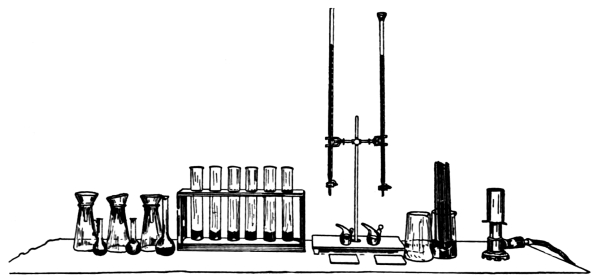
Figure 42. Apparatus for the Volumetric Estimation of Reducing Sugars.
The careful analyst by working in this way with the volumetric method is able to secure highly accurate results. The apparatus used is shown in the accompanying illustration.
119. Suppression of the Error Caused by the Action of the Alkali on Reducing Sugars.—Three methods are proposed by Gaud for correcting or suppressing the error due to the action of the alkali upon reducing sugars. In the first place, the common method followed may be employed, depending upon the use of an alkaline copper solution of known composition and the employment of a reducing sugar solution of a strength varying between one-half and one per cent. The error which is introduced into such a reaction is a constant one and the solution having been tested once for all against pure sugar is capable of giving fairly accurate results.
In the second place, a table may be constructed in which the error is determined for sugar solutions for varying strengths, viz., from one-tenth of one per cent to ten per cent. If y represent the error and x the exact percentage of reducing sugar present then the correction may be made by the following formula;
y = - 0.00004801x + 0.02876359x².
In order to use this formula in practice the percentage of reducing sugar obtained by the actual analysis must be introduced and may be represented by θ. The formula for correction then becomes 0.02876x² - 1.000048x + θ = 0; whence the value of x is easily computed.
In the third place, the error may be eliminated by substituting for an alkali which acts upon the glucose one which does not, viz., ammonia. At the temperature of boiling water ammonia does not have any decomposing effect upon reducing sugars. It is important, however, that the reduction take place in an inert atmosphere in order to avoid the oxidation of the dissolved cuprous oxid and the temperature need not be carried beyond 80°. The end of the reaction can be easily distinguished in this case by the disappearance of the blue color. When one reaction is finished the copper may be completely reoxidized by conducting through it a current of air or oxygen for half an hour, when an additional quantity of ammonia may be added to supply any that may have evaporated, and a new reduction accomplished with exactly the same quantity of copper as was used in the first. The solution used by Gaud contains 36.65 grams of crystallized copper sulfate dissolved in water and the volume completed to one liter with ordinary aqueous ammonia.[83]
120. Permanganate Process for the Estimation of Reducing Sugars.—Dextrose, invert sugar, and other reducing sugars can also be determined with a fair degree of accuracy by an indirect volumetric process, in which a standard solution of potassium permanganate is used as the final reagent.[84] The principle of the process is based upon the observation that two molecules of dextrose reduce from an alkaline cupric tartrate solution five molecules of cuprous oxid. The five molecules of cuprous oxid thus precipitated when added to an acid solution of ferric sulfate, will change five molecules of the ferric sulfate to ten molecules of ferrous sulfate. The reaction is illustrated by the following equation:
5Cu₂O 715 parts + 5Fe₂(SO₄)₃ 2000 parts + 5H₂SO₄ 490 parts = 10CuSO₄ 1595 parts


+ 10FeSO₄ 1520 parts + 5H₂O 90 parts
The ten molecules of ferrous sulfate formed as indicated in the above reaction, are reoxidized to ferric sulfate by a set solution of potassium permanganate. This reaction is illustrated by the equation given below:
10FeSO₄ 1520 parts + K₂Mn₂O₈ 316.2 parts + 5H₂SO₄ 784 parts = 5Fe₂(SO₄)₂ 2000 parts
+ 2MnSO₄ 302 parts + K₂SO₄ 174.2 parts + 8H₂O 144 parts
By the study of the above equations it is seen that two molecules of dextrose or other similar reducing sugar, are equivalent to one molecule of potassium permanganate, as is shown by the following equations:
2C₆H₁₂O₆ 360 parts = 5Cu₂O 715 parts = 10FeSO₄ 1520 parts = K₂Mn₂O₈ 316.2 parts
It is thus seen that 316.2 parts by weight of potassium permanganate are equivalent to 360 parts by weight of dextrose; or one part of permanganate corresponds to 1.1385 parts by weight of dextrose. If, therefore, the amount of permanganate required in the above reaction to restore the iron to the ferric condition, be multiplied by the factor mentioned above, the quotient will represent in weight the amount of dextrose which enters into the reaction. The standard solution of potassium permanganate should contain 4.392 grams of the salt in a liter. One cubic centimeter of this solution is equivalent to five milligrams of dextrose.
121. Manipulation.—The saccharine solution whose strength is to be determined should contain approximately about one per cent of sugar. Of this solution ten cubic centimeters are placed in a porcelain dish together with a considerable excess of fehling solution. When no sucrose is present, the mixture may be heated to the temperature of boiling water and kept at that temperature for a few minutes until all the reducing sugar is oxidized. There should be enough of the copper solution used to maintain a strong blue coloration at the end of the reaction. A greater uniformity of results will be secured by using in all cases a considerable excess of the copper solution. When sucrose or other non-reducing sugars are present, the temperature of the reaction should not be allowed to exceed 80° and the heating may be continued somewhat longer. At this temperature the copper solution is absolutely without action on sucrose. The precipitated suboxid is allowed to settle, the supernatant liquid poured off through a filter and the suboxid washed thoroughly a number of times by decantation with hot water, the washings being poured through the filter. This process of washing is greatly facilitated by decanting the supernatant liquid from the porcelain dish first into a beaker and from this into a third beaker and so on until no suboxid is carried off. Finally the wash water is poured through a filter-paper bringing as little as possible of the suboxid onto the paper. The suboxid on the filter-paper and in the beakers is next dissolved in a solution of ferric sulfate made strongly acid with sulfuric; or in a sulfuric acid solution of ammonia ferric sulfate which is more easily obtained free from impurities than the ferric sulfate. When all is dissolved from the beakers the solution is poured upon the suboxid which still remains in the porcelain dish. When the solution is complete it is washed into a half liter flask and all the vessels which contain the suboxid are also thoroughly washed and the wash waters added to the same flask. The whole is rendered strongly acid with sulfuric and made up to a volume of half a liter.
The process carried out as directed, when tested against pure sugar, gives good results, not varying from the actual content of the sugar by more than one-tenth per cent below or three-tenths above the true content. The distinct pink coloration imparted to the solution by the permanganate solution as soon as the iron is all oxidized to the ferric state marks sharply the end of the reaction. In this respect this process is very much to be preferred to the usual volumetric processes depending upon the coloration produced with potassium ferrocyanid by a copper salt for distinguishing the end of the reaction. It is less convenient than the ordinary volumetric process by reason of the somewhat tedious method of washing the precipitated cuprous oxid. When a large number of analyses is to be made, however, the whole can be washed with no more expenditure of time than is required for a single sample. One analyst can, in this way, easily attend to fifty or a hundred determinations at a time.
In the application of the permanganate method to the analysis of the juices of sugar cane and sorghum it is directed to take 100 cubic centimeters of the expressed juice and clarify by the addition of twenty-five cubic centimeters of basic lead acetate, diluted with water, containing enough of the lead acetate, however, to produce a complete clarification. It is not necessary to remove the excess of lead from the filtrate before the determination. Ten cubic centimeters of the filtrate correspond to eight cubic centimeters of the original juice. For percentage calculation the specific gravity of the original juice must be known. Before the addition of the alkaline copper solution, from fifty to seventy-five cubic centimeters of water should be added to the clarified sugar juice and the amount of fehling solution used in each case should be from fifty to seventy-five cubic centimeters. The heating at 75° should be continued for half an hour in order to insure complete reduction and oxidation of the sugar. The sucrose can also be estimated in the same juices by inverting five cubic centimeters of the clarified juice with five cubic centimeters of dilute hydrochloric acid, by heating for an hour at a temperature not above 90°. Before adding the acid for inversion, about 100 cubic centimeters of water should be poured over the five cubic centimeters of sugar solution. The washing of the suboxid and the estimation of the amount reduced are accomplished in the manner above described.
This method has been extensively used in this laboratory and with very satisfactory results. The only practical objection which can be urged to it is in the time required for filtering. This fault is easily remedied by adopting the method of filtering through asbestos felt described in the next paragraph.
For the sake of uniformity, however, the copper solution should be boiled for a few minutes before the addition of the sugar in order to expel all oxygen, the sugar solutions should be made with recently boiled water and the precipitation of the suboxid should be accomplished by heating for just thirty minutes at 75°. At the end of this time an equal volume of cold, recently boiled, water should be added and the filtration at once accomplished.
122. Modified Permanganate Method.—The permanganate method as used by Ewell, in this laboratory, is conducted as follows: After the precipitate is obtained, according to the directions given in the methods described, it is thoroughly washed with hot, recently boiled water, on a gooch. The asbestos, with as much of the precipitate as possible, is transferred to the beaker in which the precipitation was made, beaten up with from twenty-five to thirty cubic centimeters of hot, recently boiled water, and from fifty to seventy-five cubic centimeters of a saturated solution of ferric sulfate in twenty-five per cent sulfuric acid are added to the beaker and then poured through the crucible to dissolve the cuprous oxid remaining therein. If the precipitate be first beaten up with water as directed, so that no large lumps of it remain, there is no difficulty in dissolving the oxid in the ferric salt; while if any lumps of the oxid be allowed to remain there is great difficulty. After the solution is obtained, it is titrated with a solution of potassium permanganate of such a strength that each cubic centimeter is equivalent to 0.01 gram of copper.
In triplicate determinations made by this method the precipitates obtained required after solution in the ferric salt, 28.7, 28.9, 28.6 cubic centimeters of potassium permanganate solution, respectively. For the quantities taken this was equivalent to an average percentage of reducing sugars of 4.19. The percentage obtained by the gravimetric method was 4.26.
The method seems to be sufficiently accurate for all ordinary purposes and is extremely rapid.
The permanganate solution used should be standardized by means of metallic iron, but in ordinary work it is also recommended to standardize by check determinations of reducing sugars in the same sample by the gravimetric method.
123. Determination of Reducing Sugar by the Specific Gravity of the Cuprous Oxid.—Gaud proposes to determine the percentage of reducing sugar from the specific gravity of the cuprous oxid. The manipulation is carried out as follows:
In a porcelain dish are placed fifty cubic centimeters of the alkaline copper solution and an equal quantity of water and the mixture maintained in ebullition for two or three minutes. The dish is then placed on a boiling water-bath and twenty-five cubic centimeters of a reducing sugar of approximately one per cent strength added at once. The reduction is thus secured at a temperature below 100°, which is an important consideration in securing the minimum decomposing effect of the alkali upon the sugar. The dish is kept upon the water-bath for about ten minutes when the reduction is complete and the supernatant liquor should still be intensely blue. The precipitate is washed by decantation with boiling water, taking care to avoid the loss of any of the cuprous oxid. The washing is continued until the wash waters are neutral to phenolphthalein. The cuprous oxid is then washed into a pyknometer of from twenty to twenty-five cubic centimeters capacity, the exact content of which has been previously determined at zero. It is filled with boiling water, the stopper inserted, and after cooling the flask is weighed. Let P be the weight of the pyknometer plus the liquid and the precipitate, the total volume of which is equal to the capacity of the flask at the temperature at which it was filled, that is Vₜ = V₀ [1 + 3β(t-t₀)].
This formula is essentially that given in paragraph 51, for calculating the volume of a pyknometer at any temperature, substituting for 3β, γ the cubical expansion of glass, viz., 0.000025.
The specific gravity of the dry cuprous oxid is Δ = 5.881 and let the specific gravity of water at the temperature of filling, which can be taken from any of the tables of the density of water, be d. The total weight p of the precipitated suboxid may then be calculated by the following formula:
P = P-Vₜ d .
1 - d
Δ
The density of water at 99°, which is about the mean temperature of boiling water for laboratories in general, is 0.95934, and this may be taken as the weight of one cubic centimeter for purposes of calculation in the formula above.
In order to obtain exact results, it is important that the weight P be reduced to a vacuum. The weight of cuprous oxid not varying proportionally to the weight of reducing sugar, it is necessary to prepare a table showing the principal numerical values of the two, in order to be able to calculate easily all the possible values, either directly from the table or by appropriate interpolations. Following are the chief values which are necessary for the calculation:
Milligrams cuprous oxid. Milligrams dextrose. Milligrams cuprous oxid. Milligrams dextrose.
10 5.413 100 46.221
20 9.761 200 91.047
30 14.197 300 138.842
50 23.036 400 188.928
It is claimed by the author that the above method is both simple and rapid and can be applied with an error of not more than one-thousandth if the corrections for temperature and pressure be rigorously applied.[85]
124. The Copper Carbonate Process.—While the copper solutions which have been mentioned in previous paragraphs have only a slight action on sucrose and dextrin yet on prolonged boiling even these bodies show a reducing effect due probably to a preliminary change in the sugar molecules whereby products analogous to dextrose or invert sugar are formed. In order to secure a reagent, to which the sugar not reducing alkaline copper solutions might be more resistant Soldaini has proposed to employ a liquor containing the copper as carbonate instead of as tartrate.[86] This solution is prepared by adding to a solution of forty grams of copper sulfate one of equal strength of sodium carbonate. The resulting copper carbonate and hydroxid are collected on a filter, washed with cold water, and dried. The reaction which takes place is represented by the following formula:
2CuSO₄ + 2Na₂CO₃ + H₂O = CuCO₃ + CuO₂H₂ + 2Na₂SO₄ + CO₂.
The dry precipitate obtained, which will weigh about fifteen grams, is placed in a large flask with about 420 grams of potassium bicarbonate and 1400 cubic centimeters of water. The contents of the flask are heated on a steam-bath for several hours with occasional stirring until the evolution of carbon dioxid has ceased. During this time the liquid is kept at the same volume by the addition of water, or by attaching a reflux condenser to the flask. The potassium and copper compounds at the end of this time will be found dissolved and the resulting liquor will have a deep blue color. After filtration the solution is boiled for a few minutes and cooled to room temperature. The volume is then completed to two liters. A more direct method of preparing the solution, and one quite as effective, consists in adding the solution of the copper sulfate directly to the hot solution of potassium bicarbonate and heating and shaking the mixture until the copper carbonate formed is dissolved. After filtering the volume is made as above. The proportions of reagents employed are placed by Preuss at 15.8 grams of crystallized copper sulfate and 594 grams of potassium bicarbonate.[87] The soldaini reagent is extremely sensitive and is capable of detecting as little as half a milligram of invert sugar. The presence of sucrose makes the reagent more delicate, and it is especially useful in determining the invert sugar arising during the progress of manufacture by the action of heat and melassigenic bodies on sucrose.
125. The Analytical Process.—As in the case of fehling solution a great many methods of conducting the analysis with the soldaini reagent have been proposed. The general principle of all these processes is the one already described for the alkaline copper tartrate solution, viz., the addition of the reducing sugar solution to the boiling reagent, and the determination of the end of the reaction by the disappearance of the copper.[88]
Practically, however, these methods have had no general application, and the use of the soldaini reagent has been confined chiefly to the determination of invert sugar in presence of a large excess of sucrose. For this purpose the sugar solution is not added until the blue color of the reagent has been destroyed, but on the other hand, the reagent has been used in excess, and the cuprous oxid formed collected and weighed as metallic copper. The weight of the metallic copper found, multiplied by the factor 0.3546, gives the weight of invert sugar in the volume of the sugar solution used. According to Preuss, the factor is not a constant one, but varies with the quantity of invert sugar present, as is seen in the formula y = 2.2868 + 3.3x + 0.0041x², in which x = the invert sugar, and y the metallic copper.[89]
126. Tenth Normal Copper Carbonate Solution.—In the study of some of the solutions of copper carbonate, proposed for practical work, Ettore Soldaini was impressed with the difficulty of dissolving so large a quantity of carbonate in the solvent employed.[90] The solution recommended by Bodenbender and Scheller,[91] in which forty grams of the crystallized copper sulfate were used, failed to disclose an equivalent amount of copper in the reagent ready for use. For this reason a tenth-normal copper solution is prepared by Soldaini containing the equivalent of 3.464 grams of copper sulfate in one liter. The reagent is easily prepared by adding slowly the dissolved or finely powdered copper salt to a solution of 297 grams of potassium bicarbonate, and after complete solution of the copper carbonate formed, completing the volume to one liter. With this reagent as little as one-quarter of a milligram of reducing sugar can be easily detected. For the quantitive estimation of sugar a solution of the above strength is to be preferred to the other forms of the soldaini reagent by reason of the ease of direct comparison with standard fehling solutions.
The analytical process is conducted with the tenth-normal solution, prepared by Soldaini and described above, as follows: Place 100 cubic centimeters of the reagent in each of several porcelain dishes heat to boiling, and add little by little the sugar solution to one dish until the blue color has disappeared. Having thus determined nearly the exact quantity of sugar solution required for the copper in 100 cubic centimeters of the reagent the whole of the sugar solution is added at once, varying slightly the amounts added to each dish. The boiling is continued for fifteen minutes, and the contents of the dishes poured on filters. That filtrate which contains neither copper nor sugar represents the exact quantity of sugar solution which contained fifty milligrams of dextrose.
127. Relation of Reducing Sugar to Quantity of Copper Suboxid Obtained.—The relation of the quantity of copper reduced to the amount of sugar oxidized by the copper carbonate solution has been determined by Ost, and the utility of the process thereby increased.[92] The solution used should have the following composition: 23.5 grams of crystallized copper sulfate, 250 grams of potassium carbonate, and 100 grams of potassium bicarbonate in one liter. Without an indicator the end reaction is distinctly marked by the passage of the blue color into a colorless solution. Ost affirms that this solution is preferable to any form of fehling liquor because it can be kept indefinitely unchanged; it attacks sucrose far less strongly, and an equal quantity of sugar precipitates nearly double the quantity of copper. The boiling requires a longer time, as a rule ten minutes, but this is a matter of no importance, when the other advantages are taken into consideration. The relations of the different sugars to the quantity of copper precipitated are given in the table in the next paragraph.
128. Factor for Different Sugars.—For pure dextrose the relation between sugar and copper reduced has been determined by Ost, and the data are given in the table below. The data were obtained by adding to fifty cubic centimeters of the copper solution twenty-five cubic centimeters of sugar solutions of varying strength and collecting, washing, and reducing the cuprous oxid obtained in a current of hydrogen in a glass tube by the method described further on.
The boiling in all cases was continued, just ten minutes, although a slight variation from the standard time did not produce so great a difference as with fehling reagent. In the case of dextrose, when fifty milligrams were used with fifty cubic centimeters of the solution, the milligrams of copper obtained after six, ten and twenty minutes’ boiling were 164.6, 165.5, and 166.9 respectively.[93]
The data differ considerably from those obtained by Herzfeld, but in his experiments the boiling was continued only for five minutes, and this is not long enough to secure the proper reduction of the copper.[94]
Table Showing the Quantity of Copper Reduced by Different Sugars.
Copper. Milligrams Invert Sugar. Milligrams Dextrose. Milligrams Levulose. Milligrams Galactose. Milligrams Arabinose. Milligrams
50 15.2 15.6 14.7 17.4 17.0
55 16.6 17.0 16.1 19.1 18.6
60 18.0 18.5 17.5 20.8 20.3
65 19.4 19.9 18.9 22.5 21.9
70 20.8 21.4 20.3 24.2 23.5
75 22.3 22.9 21.7 25.9 25.1
80 23.7 24.4 23.0 27.7 26.7
85 25.2 25.8 24.3 29.3 28.3
90 26.6 27.3 25.7 31.1 29.9
95 28.1 28.8 27.1 32.8 31.5
100 29.5 30.3 28.5 34.5 33.1
105 31.0 31.8 29.9 36.2 34.7
110 32.4 33.3 31.2 38.0 36.3
115 33.9 34.8 32.6 39.7 37.9
120 35.3 36.3 34.0 41.4 39.5
125 36.8 37.8 35.4 43.1 41.1
130 38.2 39.3 36.8 44.8 42.8
135 39.7 40.8 38.2 46.5 44.4
140 41.1 42.3 39.6 48.3 46.0
145 42.6 43.8 41.0 50.0 47.6
150 44.0 45.3 42.5 51.8 49.3
155 45.5 46.8 43.9 53.6 50.9
160 47.0 48.3 45.3 55.4 52.6
165 48.5 49.8 46.7 57.2 54.3
170 50.0 51.4 48.1 59.0 55.9
175 51.5 52.9 49.5 60.8 57.5
180 53.0 54.5 51.0 62.7 59.2
185 54.5 56.0 52.5 64.5 60.9
190 56.0 57.6 54.0 66.4 62.7
195 57.5 59.2 55.5 68.3 64.4
200 59.1 60.8 57.0 70.3 66.2
205 60.7 62.4 58.6 72.3 68.0
210 62.4 64.1 60.2 74.3 69.8
215 64.1 65.8 61.8 76.3 71.6
220 65.8 67.5 63.5 78.3 73.5
225 67.5 69.2 65.2 80.3 75.4
230 69.3 70.9 66.9 82.4 77.3
235 71.1 72.7 68.7 84.5 79.3
240 72.9 74.5 70.6 86.6 81.3
245 74.8 76.4 72.5 88.9 83.4
250 76.7 78.4 74.4 91.2 85.5
255 78.6 80.5 76.5 93.5 87.6
260 80.5 82.8 78.8 95.9 89.8
265 82.5 85.1 81.1 98.3 92.2
270 84.7 87.5 83.5 100.7 94.6
275 87.1 89.9 85.9 103.3 97.1
280 89.7 92.4 88.6 106.1 99.6
285 92.3 94.9 91.3 109.0 102.3
290 95.1 97.6 94.2 112.0 105.1
295 98.0 100.4 97.2 115.1 107.9
298 100.0 102.5 99.0 117.0 109.5
VOLUMETRIC METHODS BASED UPON THE USE OF AN AMMONIACAL COPPER SOLUTION.
129. Pavy’s Process.—The well-known solubility of cuprous oxid in ammonia led Pavy to adopt a copper reagent containing ammonia in the volumetric determination of reducing sugars.[95] In Pavy’s process an alkaline copper solution is employed made up in the usual way, to which a sufficient quantity of ammonia is added to hold in solution all the copper when precipitated as cuprous oxid. The solution used by Pavy has the following composition: One liter contains
Crystallized copper sulfate 34.65 grams
Potassium-sodium tartrate 173.00 ”
Caustic potash 160.00 ”
For use 120 cubic centimeters of the above reagent are mixed with 300 of ammonia of specific gravity 0.88, and the volume completed to one liter with distilled water. Twenty cubic centimeters of this reagent are equivalent to ten milligrams of dextrose or invert sugar when added in a one per cent solution.
In the use of ammoniacal copper solution, care must be taken that all the liquids employed be entirely free of oxygen and that the contents of the flask in which the reduction takes place be in some way excluded from contact with the air. Pavy secured this by conducting the reduction in a flask closed with a stopper carrying two holes; one of these served for the introduction of the burette carrying the sugar solution and the other carried a tube dipping into a water seal by means of a slit rubber tube, which would permit of the exit of the vapors of steam and ammonia, but prevent the regurgitation of the water into the flask.
The complete decoloration of the copper solution marks the end of the reaction. The usual precautions in regard to the length of the time of boiling must be observed.
It is easy to see that in the Pavy process the quantity of ammonia in the solution is rapidly diminished during the boiling and this has led to the suggestion of other methods to exclude the air. Among these have been recommended the introduction of a current of hydrogen or carbon dioxid. One of the best methods of procedure is that proposed by Allen, who recommends covering the copper solution by a layer of paraffin oil (kerosene).[96]
130. Process Of Peska.—Peska has also independently made use of Allen’s method of covering the solutions with a layer of paraffin oil and finds it reliable.[97] The copper reagent employed by him has the following composition:
Crystallized copper sulfate 6.927 grams
Ammonia, twenty-five per cent strength 160.00 cc.
The copper sulfate is dissolved in water, the ammonia added, and the volume completed to half a liter with distilled water. A second solution containing half a liter is made by dissolving 34.5 grams of potassium-sodium tartrate and ten grams of sodium hydroxid and completing the cool solution to half a liter with distilled water. In all cases the water used in making up the above solutions must be freshly boiled to exclude the air.
For the titration, fifty cubic centimeters of each of the above solutions are taken, mixed and covered with a layer of paraffin oil half a centimeter in depth. The reduction is not accomplished at a boiling temperature, but at from 80° to 85°. The manipulation is conducted as follows:
The mixed solutions are placed in a beaker, covered with oil, and heated to 80°. The temperature is measured by a thermometer which also serves as a stirring rod. The sugar solution is run down the sides of the beaker from a burette of such a shape as to be protected from the heat. After each addition of the sugar solution the mixture is carefully stirred, keeping the temperature at from 80° to 85°. The first titration is made to determine approximately the quantity of sugar solution necessary to decolorize the copper. This done, the actual titration is accomplished by adding at once the total amount of sugar solution necessary to decolorize, less about one cubic centimeter. Any sugar solution adhering to the side of the beaker is washed down by distilled water, the contents of the beaker well stirred, and the temperature kept at 85° for two minutes. The rest of the sugar solution is then added in quantities of one-tenth of a cubic centimeter until the decoloration is completed. The total time of the final titration should not exceed five minutes. The sugar solution should be as nearly as possible of one per cent strength. If a lower degree of strength be employed a larger quantity of the sugar is necessary to reduce a given quantity of copper.
In the case of dextrose, when a one per cent solution is used, eight and two-tenths cubic centimeters, corresponding to 80.2 milligrams of dextrose, are required to reduce 100 cubic centimeters of the mixed reagent. On the other hand, when the sugar solution is diluted to one-tenth of a per cent strength 82.1 milligrams are required.
With invert sugar slightly larger quantities are necessary, the reducing power being as 94.9 to 100 as compared with dextrose. With a one per cent strength of invert sugar it is found that eighty-four milligrams are required to reduce 100 cubic centimeters of the mixed reagent and when the strength of the invert sugar is reduced to one-tenth per cent 87.03 milligrams are required.
131. Method Of Allein and Gaud.—Allein and Gaud have proposed a further modification of the ammonia process which consists essentially in the suppression of rochelle salt and fixed caustic alkali and the entire substitution therefor of ammonia. Ammonia acts with much less vigor upon sugars than the caustic alkalies, and it is therefore claimed that the decomposition of the sugar due to the alkali is reduced to a minimum when ammonia is employed.[98] The copper solution is made as follows:
Dissolve 8.7916 grams of electrolytic copper in ninety-three grams of concentrated sulfuric acid diluted with an equal volume of water. Complete the resulting solution to one liter with concentrated ammonia. Ten cubic centimeters of this solution are equal to fifty grams of dextrose.
It is recommended that the reduction be accomplished in an atmosphere of hydrogen, but it is apparent that the use of kerosene is permissible in this case, and on account of its greater simplicity it is to be recommended as the best means of excluding the oxygen. The reduction is accomplished at a temperature of about 80°.
It is also proposed to reoxidize the copper by substituting a current of air for the hydrogen at the end of the reaction, and thus use the same copper a number of times. The danger of loss of ammonia, and the difficulty of determining when the oxidation is complete, render this regeneration of the reagent undesirable.
132. Method of Gerrard.—The method of Gerrard does not depend upon the use of ammonia, but the principle involved is the same, viz., the holding of the separated cuprous oxid in solution and the determination of the end of the reaction by the disappearance of the blue color. As first proposed by Gerrard, the copper sulfate solution is made of double the strength usually employed and to each 100 cubic centimeters thereof, before use, three and three-tenths grams of potassium cyanid are added. This is sufficient to hold the precipitated cuprous oxid in solution.[99]
The original method of Gerrard is found difficult of execution and the author, in conjunction with Allen, has lately modified it and reduced it to a practical working basis.[100]
In the new method the ordinary fehling solution is employed and it is prepared for use in the following way: Ten cubic centimeters of the fehling solution, or half that quantity of each of the component parts kept in separate bottles, are placed in a porcelain dish with forty cubic centimeters of water and brought to the boiling-point. To the boiling liquid is added, from a pipette, a five per cent solution of potassium cyanid until the blue color just disappears, or only a very faint tint of blue remains, avoiding any excess of the cyanid. A second portion of the fehling solution equal to that first employed is added, and to the boiling mixture the solution of sugar is added, from a burette, until the blue color disappears. The contents of the dish should be kept boiling during the addition of the sugar solution. The volume used will contain fifty milligrams of dextrose. The sugar solution should be of such a strength as to contain no more than half a per cent of reducing sugar.
The principle of the preparation of the solution may be stated as follows: If to a solution of copper sulfate, potassium be added until the blue color disappears, a double cyanid of copper and potassium cyanid is formed according to the following reaction:
CuSO₄ + 4KCN = Cu(CN)₂.2KCN + K₂SO₄.
This double cyanid is a salt of considerable stability. It is not decomposed by alkalies, hydrogen or ammonium, sulfid. With mineral acids it gives a whitish, curdy precipitate. With fehling solution the same double cyanid is formed as that described above. If, however, fehling solution be present in excess of the amount necessary to form the double cyanid of copper, this excess can be used in the oxidation of reducing sugar and the colorless condition of the solution will be restored as soon as the excess of the fehling is destroyed. The double cyanid holds in solution the cuprous oxid formed and thus complete decoloration is secured.
133. Sidersky’s Modification of Soldaini’s Process.—In all cases where the sugar solutions are not too highly colored, Sidersky finds that the method of reduction in a large test tube, as practiced by Violette, is applicable with the copper carbonate solution.[101] For more exact work it is preferred to determine the quantity of copper reduced by an indirect volumetric method. The sugar solution, properly clarified and the lead removed if subacetates have been used, is made of such a volume as to contain less than one per cent of reducing sugars. In a flask or large test tube are placed 100 cubic centimeters of the copper solution, which is boiled for a short time and the sugar solution added, little by little, from a pipette, at such a rate as not to stop the ebullition. The boiling is continued for five minutes after the last addition of the sugar. The vessel is taken from the flame and 100 cubic centimeters of cold water added, the whole brought on an asbestos felt and the cuprous oxid washed with hot water until the alkaline reaction has disappeared. The residual cuprous oxid is dissolved in a measured quantity of set sulfuric acid, semi- or fifth-normal, a few particles of potassium chlorate added, and the mixture boiled to convert any cuprous into cupric sulfate. The reaction is represented by the following formula:
3Cu₂O + 6H₂SO₄ + KClO₃ = 6CuSO₄ + KCl + 6H₂O.
The residual sulfuric acid is titrated with a set alkali in excess, ammonia being preferred.
The solution of ammonia is made by diluting 200 cubic centimeters of commercial aqua ammonia with 800 of water. Its strength is determined by adding a little copper sulfate solution as indicator and then the set solution of sulfuric acid until the blue color disappears. The copper sulfate secured from the cuprous sulfate as described above is cooled, and a quantity of the ammonia, equal to twenty-five cubic centimeters of the set sulfuric acid, added. The excess of the ammonia is then determined by titration with the sulfuric acid, the disappearance of the blue color being the indication of the end of the reaction. The number of cubic centimeters of the set sulfuric acid required to saturate the ammonia represents the equivalent of cuprous oxid originally present. One cubic centimeter of normal sulfuric acid is equivalent to 0.0317 gram of metallic copper.
To determine the weight of invert sugar oxidized, multiply the weight of copper, calculated as above described, by the factor 0.3546.[102] For a general application of this method of analysis the relative quantities of copper reduced by different quantities of sugar must be taken into consideration.
While, as has already been stated, the copper carbonate process has heretofore been applied chiefly to the detection of invert sugar, it has merits which justify the expectation that it may some time supplant the fehling liquor both for volumetric and gravimetric work. Large volumes of the reagent can be prepared at once and without danger of subsequent change. The action of the reagent on the hexobioses and trioses is far less vigorous than that of the alkaline copper tartrate, and the end reactions for volumetric work are, at least, as easily determined in the one case as the other.
134. Method Depending on Titration of Excess of Copper.—Instead of measuring the quantity of copper reduced, either by its disappearance or by reducing the cuprous oxid to a metallic state, Politis has proposed a method of analysis depending on the titration of the residual copper.[103] The reagents employed are:
(1) A copper solution containing 24.95 grams of crystallized copper sulfate, 140 grams of sodium and potassium tartrate, and twenty-five grams of sodium hydroxid in one liter:
(2) A solution of sodium thiosulfate containing 24.8 grams of the salt in one liter:
(3) A solution of potassium iodid containing 12.7 grams of iodin in one liter.
The reaction is represented by the formula
2CuCl₂ + 4KI = Cu₂I₂ + 4KCl + I₂.
The analytical process is carried out as follows: In a 100 cubic centimeter flask are boiled fifty cubic centimeters of the copper solution, ten cubic centimeters of about one-tenth per cent reducing sugar solution are added, the boiling continued for five minutes, the flask filled to the mark with boiling water and its contents filtered. Fifty cubic centimeters of the hot filtrate are cooled, slightly acidified, potassium iodid solution added in slight excess; and the iodin set free determined by titration with sodium thiosulfate. The quantity of iodin obtained corresponds to the unreduced copper remaining after treatment with the reducing sugar. The number of cubic centimeters of thiosulfate used subtracted from twenty-five will give the number of cubic centimeters of the copper solution which would be reduced by five cubic centimeters of the sugar solution used.
Example.—In the proportions given above it was found that eleven cubic centimeters of thiosulfate were required to saturate the iodin set free. Then 25 - 11 = 14 cubic centimeters of copper solution reduced by five cubic centimeters of the sugar solution. Since one cubic centimeter of the copper solution is reduced by 0.0036 gram of dextrose the total dextrose in the five cubic centimeters = 0.0036 × 5 = 0.0180 gram.
The above method does not seem to have any practical advantage over those based on noting the disappearance of the copper and is given only to illustrate the principle of the process. While the titration of the iodin by sodium thiosulfate is easily accomplished in the absence of organic matter, it becomes difficult, as shown by Ewell, when organic matters are present, as they always are in the oxidation of a sugar solution. Ewell has therefore proposed to determine the residual copper by a standard solution of potassium cyanid, but the method has not yet been developed.[104]
GRAVIMETRIC COPPER METHODS.
135. General Principles.—In the preceding pages the principles of the volumetric methods of sugar analysis by means of alkaline copper solution have been set forth. They depend either on the total decomposition of the copper solution employed by the reducing sugar, or else on the collection and titration of the cuprous oxid formed in the reaction. In the gravimetric methods the general principle of the process rests upon the collection of the cuprous oxid formed and its reduction to metallic copper, the weight of which serves as a starting point in the calculations of the weight of reducing sugar, which has been oxidized in the solution.
The factors which affect the weight of copper obtained are essentially those which influence the results in the volumetric method. The composition of the copper solution, the temperature at which the reduction is accomplished, the time of heating, the strength of the sugar solution and the details of the manipulation, all affect more or less the quantity of copper obtained. As in the volumetric method also, the kind of reducing sugar must be taken in consideration, dextrose, levulose, invert sugar, maltose and other sugars having each a definite factor for reduction in given conditions. It follows, therefore, that only those results are of value which are obtained under definite conditions, rigidly controlled.
136. Gravimetric Methods of the Department of Agriculture Laboratory.—The process used in this laboratory is based essentially on the methods of Maercker, Behrend, Morgen, Meissl, Hiller and Allihn.[105] Where dextrose alone is present, the table of factors proposed by Allihn is used and also the copper solution corresponding thereto.
For pure invert sugar, the tables and solutions of Meissl are used. For invert sugar in the presence of sucrose, the table and process proposed by Hiller are used.
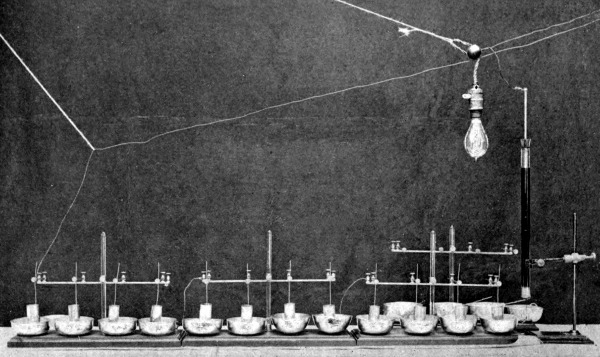
Figure 43. Apparatus for the Electrolytic Deposition of Copper.
The reduction of the copper solution and the electrolytic deposition of the copper are accomplished as follows:
The copper and alkali solutions are kept in separate bottles. After mixing the equivalent volume of the two solutions in a beaker, heat is applied and the mixture boiled. To the boiling liquid the proper volume of the cold sugar solution is added. This must always be less than the amount required for complete reduction. The solution is again brought into ebullition and kept boiling exactly two minutes. A two-minute sand glass is conveniently used to determine the time of boiling. At the end of this time an equal volume of freshly boiled cold water is added, and the supernatant liquor at once passed through a gooch under pressure. The residual cuprous oxid is covered with boiling water and washed by decantation until the wash water is no longer alkaline. It is more convenient to wash in such a way that, at the end, the greater part of the cuprous oxid is in the gooch. The felt and cuprous oxid are then returned to the beaker in which the reduction is made. The gooch is moistened with nitric acid to dissolve any adhering oxid and then is washed into the beaker. Enough nitric acid is added to bring all the oxid into solution, an excess being avoided, and a small amount of water added. The mixture is again passed under pressure through a gooch having a thin felt, to remove the asbestos and the filtrate collected in a flask of about 150 cubic centimeters capacity. The washing is continued until the gooch is free of copper, when the volume of the filtrate should be about 100 cubic centimeters. The liquid is transferred to a platinum dish holding about 175 cubic centimeters and the flask washed with about twenty-five cubic centimeters of water. From three to five cubic centimeters of strong sulfuric acid are added and the copper deposited by an electric current.