PART SIXTH. DAIRY PRODUCTS. (continued 2)
Reading edition
489. Other Precipitants of Milk Proteids.—Many other reagents besides those mentioned have been used for precipitating milk proteids, wholly or in part. Among these may be mentioned the dilute mineral acids, lactic acid, rennet, mercuric iodid in acetic acid, phosphotungstic acid, acid mercuric nitrate, lead acetate and many others.
It has been shown by the author that many of these precipitants do not remove all the nitrogen but that among others the mercury salts are effective.[491] When nitrogen is to be subsequently determined the acid mercuric nitrate cannot be employed.
490. Precipitation by Dialysis.—Since the casein is supposed to be held in solution by the action of salts it is probable that it may be precipitated by removing these salts by dialysis.
491. Carbohydrates in Milk.—The methods of determining lactose in milk, both by the copper reduction and optical processes, have been fully set forth in foregoing paragraphs (243, 244, 259, 262). In general, the optical method by double dilution is to be preferred as practically exact and capable of application with the minimum consumption of time.[492] For normal milks a single polarization is entirely sufficient, making an arbitrary correction for the volume occupied by the precipitated proteids and fat. This correction is conveniently placed at six and a half per cent of the volume of milk employed.
The polarimetric estimation of lactose in human milk is likely to give erroneous results by reason of the existence in the serum of polarizing bodies not precipitable by the reagents commonly employed for the removal of proteids.[493] The same statement may be made in respect of ass and mare milk. The use of acetopicric acid for removing disturbing bodies, as proposed by Thibonet[494] does not insure results free from error. With the milks above mentioned, it is safer to rely on the data obtained by the alkaline copper reagents.
492. Dextrinoid Body in Milk.—In treating the precipitate, produced in milk by copper sulfate, with alcohol and ether for the purpose of removing the fat, Ritthausen isolated a dextrin like body quite different from lactose in its properties.[495] The alcohol ether extract evaporated to dryness leaves a mass not wholly soluble in ether, and therefore not composed of fat. This residue extracted with ether, presents flocky particles, soluble in water and mostly precipitated therefrom by alcohol. This body has a slight reducing effect on alkaline copper salts and produces a gray color with bismuth nitrate. The quantity of this material is so minute as to lead Ritthausen to observe that it does not sensibly affect the fat determinations when not separated. It is not clearly demonstrated that it is a dextrinoid body and the analyst need not fear that the optical determination of milk sugar will be sensibly affected thereby.
Raumer and Späth assume that certain discrepancies, observed by them in the data obtained for lactose by the copper and optical methods, are due to the presence of this dextrinoid body, but no positive proof thereof is adduced.[496]
493. Amyloid Bodies in Milk.—Herz has observed in milk a body having some of the characteristics of starch.[497] Observed by the microscope, these particles have some of the characteristics of the starch grains of vegetables, with a diameter of from ten to thirty-five micromillimeters. They are colored blue by iodin. When boiled with water, however, these particles differ from starch in not forming a paste. The particles are most abundant in the turbid layer found immediately beneath the ether fat solution in the areometric process of Soxhlet.
The amyloid particles may be collected from cheese and butter by boiling with water, when they settle and can be observed on the sediment after freeing of fat by ether.
Some of the statements regarding the adulteration of dairy products with starch may have been made erroneously by reason of the natural occurrence of these particles.
As in the case of the dextrin like body mentioned above this starchy substance, if it really exist, occurs in too minute a quantity to influence the results of any of the analytical methods heretofore described.
In connection with the supposed presence of an amyloid body in milk, it should be remembered that certain decomposition nitrogenous bodies give practically the same reactions as are noted above.[498] Among these may be mentioned chitin, which occurs very extensively in the animal world. The proof of the existence of dextrinoid and amyloid bodies in milk rests on evidence which should be thoroughly revised before being undoubtedly accepted.
ANALYSIS OF BUTTER.
494. General Principles.—The general analysis of butter fat is conducted in accordance with the methods described in the part of this volume devoted to the examination of fats and oils. The methods of sampling, drying, filtering, and of determining physical and chemical properties, are there developed in sufficient detail to guide the analyst in all operations of a general nature. There remain for consideration here only the special processes practiced in butter analysis and which are not applied to fats in general. These processes naturally relate to the study of those properties of a distinctive nature, by means of which butter is differentiated from other fats for which it may be mistaken or with which it may be adulterated. These special studies, therefore, are directed chiefly to the consideration of the peculiar physical properties of butter fat, to its content of volatile acids and to its characteristic forms of crystallization as observed with the aid of the microscope. For dietetic, economic and legal reasons, it is highly important that the analyst be able to distinguish a pure butter from any substitute therefor.
495. Appearance of Melted Butter.—Fresh, pure butter, when slowly melted, shows after a short time the butter fat completely separated, of a delicate yellow color and quite transparent. Old samples of butter do not give a fat layer of equal transparency. Oleomargarin, or any artificial butter when similarly treated, gives a fat layer opalescent or opaque. By means of this simple test an easy separation of pure from adulterated butter may be effected. In mixtures, the degree of turbidity shown by the separated fats may be regarded as a rough index of the amount of adulteration. In conducting the work, the samples of butter, in convenient quantities according to the size of the containing vessel, are placed in beakers and warmed slowly at a temperature not exceeding 50°. After a lapse of half an hour the observations are made.
If one part of the melted butter be shaken with two volumes of warm water (40°) and set aside for five minutes the fat is still found as an emulsion, while oleomargarin, similarly treated, shows the fat mostly separated. This process has some merit, but must not be too highly valued.[499]
496. Microscopic Examination of Butter.—The microscope is helpful in judging the purity of butter and the admixture of foreign fats, if not in too small quantity to be of any commercial importance, can easily be detected by this means.[500] The methods of preparing butter fat in a crystalline state are the same as those described in paragraphs 307-309. The crystals of butter fat differ greatly in appearance with the different methods of preparation. When butter is melted, filtered, heated to the boiling point of water and slowly cooled, it forms spheroidal crystalline masses as seen by the microscope, which present a well defined cross with polarized light. This cross is not peculiar to butter fat, but is developed therein with greater distinctiveness than in other fats of animal origin.
Pure, fresh, unmelted butter, when viewed with polarized light through a plate of selenite, presents a field of vision of uniform tint, varying with the relative positions of the nicols. When foreign fats, previously melted, as in rendering, are mixed with the butter the crystallization they undergo disturbs this uniformity of tint and the field of vision appears particolored. Old, rancid or melted butter may give rise to the same or similar phenomena under like conditions of examination. The microscope thus becomes a most valuable instrument for sorting butters and in distinguishing them in a preliminary way from oleomargarin.

Fig. 112. Thermometer for Butyrorefractometer.
497. Judgment of Suspected Butter or Lard by Refractive Power.—In discriminating between pure and adulterated butters by the aid of the butyrorefractometer (301), the absolute reading of the instrument is of less importance than the difference which is detected between the highest permissible numbers, for any degree of temperature, and the actual reading obtained at that temperature. These differences, within certain limits, do not perceptibly vary with the temperature, and heretofore they have been determined with the aid of a table, and in this respect the observations have been made the more laborious.
Wollny has rendered these tables unnecessary by constructing a thermometer in which the mercury column does not indicate degrees of temperature, but the highest permissible number for butter or lard at the temperature of observation. The scale of the instrument is so adjusted as to include temperatures of from 30° to 40°, which renders it suited to the examination of butter and lard. The oleothermometer is shown in Fig. 112.
The side of the scale B is for butter and that marked S for lard. The use of the instrument is the simplest possible. The sample of fat is placed in the prisms in the usual manner. When the mercury in the thermometer is at rest, the scale of the instrument is read. In the case of a butter, if the reading of the scale give a higher number than that indicated by the thermometer, the sample is pronounced suspicious and the degree of suspicion is proportional to the difference of the two readings.
498. Estimation of Water, Fat, Casein, Ash and Salt.—The methods proposed by the author for conducting these determinations, with minor amendments, have been adopted by the Association of Official Agricultural Chemists.[501]
Water.—The sample held in a flat bottom dish is dried to constant weight at about 100°. The weight of the sample used should be proportional to the area of the bottom of the dish, which should be just covered by the film of melted fat. The dish may be previously partly filled with sand, asbestos or pumice stone. The drying may take place in the air, in an inert gas or in a vacuum.
Fat.—The fat in a sample of butter is readily determined by treating the contents of the dish after the determination of water with an appropriate solvent.
The process is conducted as follows:
The dry butter from the water determination is dissolved in the dish with ether or petroleum spirit. The contents of the dish are then transferred to a weighed gooch with the aid of a wash bottle containing the solvent, and washed till free of fat. The crucible and contents are heated at the temperature of boiling water till the weight is constant. The weight of fat is calculated by difference from the data obtained.
The fat may also be determined by drying the butter on asbestos or sand, and subsequently extracting the fat by anhydrous alcohol free ether. The extract, after evaporation of the ether, is dried to constant weight at the temperature of boiling water and weighed.
Casein or Curd and Ash.—The crucible containing the residue from the fat determination is covered and heated, gently at first, gradually raising the temperature to just below redness. The cover may then be removed and the heat continued till the contents of the crucible are white. The loss in weight of the crucible and contents represents casein or curd, and the residue is mineral matter or ash.
Salt.—It is the usual custom in the manufacture of butter in this country to add, as a condiment, a certain proportion of salt. In Europe, the butter offered for consumption is usually unsalted. A convenient method of determining the quantity of salt is found in the removal thereof, from the sample, by repeated washing with hot water and in determining the salt in the wash water by precipitation with silver nitrate. The operation is conducted as follows: From five to ten grams of the sample are placed in a separatory funnel, hot water added, the stopper inserted and the contents of the funnel well shaken. After standing until the fat has all collected on top of the water, the stopcock is opened and the water is allowed to run into an erlenmeyer, being careful to let none of the fat globules pass. Hot water is again added to the beaker, and the extraction is repeated several times, using each time from ten to twenty cubic centimeters of water. The resulting washings contain all but a mere trace of the sodium chlorid originally present in the butter. The sodium chlorid is determined in the filtrate by a set solution of silver nitrate, using a few drops of a solution of potassium chromate as an indicator.
It is evident that the quantity of salt may also be determined from the ash or mineral matter obtained, as above noted, by the same process. If desirable, which is rarely the case, the gravimetric method of estimating the silver chlorid may be used.
499. Volatile or Soluble Acids.—The distinguishing feature of butter, from a chemical point of view, is found in its content of volatile or soluble fat acids. Among the volatile acids are reckoned those which are carried over in a current of steam at a temperature only slightly higher than that of boiling water. As soluble acids are regarded those which pass without great difficulty into solution in hot water. These two classes are composed essentially of the same acids. Of these butyric is the most important, followed by caproic, caprylic and capric acids. Small quantities or rather traces of acetic, lauric, myristic and arachidic acids are also sometimes found in butter. Palmitic, stearic and oleic acids also occur in large quantities. The above named acids, in combination with glycerol, form the butter fat.
500. Relative Proportion of Ingredients.—The composition of butter fat is given differently by different authorities.[502] A typical dry butter fat may be regarded as having the following composition:
Per cent.
Butyrin 7.00
Caproin, Caprylin and Caprin 2.30
Olein 37.70
Palmitin, stearin, etc. 53.00
Pure butter fat consists principally of the above glycerids, some coloring principles, varying in quantity and composition with the food of the animal, and a trace of lecithin, cholesterol, phytosterol and a lipochrome.
501. Estimation of Volatile or Soluble Acids.—The volatile or soluble acids in butter fat are estimated by the methods already described (349, 351). In practice preference is given to the method of determining volatile acids, based on the principle that under standard conditions practically all the acids of this nature are secured in a certain volume of the distillate. This assumption is not strictly true, but the method offers a convenient and reliable manner of obtaining results which, if not absolute, are at least comparative.
The quantity of acid distilled is determined by titration with tenth normal alkali and for convenience the data are expressed in terms of the volume of the alkali consumed. Five grams of normal butter fat will give a distillate, under the conditions given, requiring about twenty-eight cubic centimeters of tenth normal alkali for complete saturation. This is known as the reichert-meissl number. Occasionally this number may rise to thirty-two or may sink to twenty-five. Cases have been reported where it fell below the latter number, but such samples cannot be regarded as normal butter.
The determination of the reichert-meissl number is the most important of the chemical processes applied to butter fat analysis.
502. Saponification Value and Reichert Number.—It may often be convenient to make the same sample of butter fat serve both for the determination of the saponification value and of the reichert number. For this purpose it is convenient to use exactly five grams of the dry filtered fat. The saponification may be accomplished either under pressure or by attaching a reflux condenser to the flask as suggested by Bremer.[503] When the saponification, which is accomplished with alcoholic potash lye containing about 1.25 grams in each ten cubic centimeters of seventy per cent alcohol, is finished, and the contents of the flask are cooled, the residual alkali is titrated with a set sulfuric acid solution, using phenolphthalein as indicator. When the color has almost disappeared, an additional quantity of the indicator is added and the titration continued until the liquid is of an amber tint. A sample of the alkali, treated as above, is titrated at the same time and from the two sets of data obtained, the saponification number is calculated as indicated in paragraph (345).
A few drops of the alcoholic lye are added to the contents of the flask and the alcohol removed by evaporation. The residual soap and potassium sulfate are dissolved in 100 cubic centimeters of recently boiled water, some pieces of pumice added, and the volatile acids removed by distillation in the usual way after adding an excess of sulfuric acid. It is important to conduct blank distillations in the same form of apparatus to determine the magnitude of any corrections to be made. The size of the distilling flask and the form of apparatus to prevent mechanical projection of sulfuric acid into the distillate should be the same in all cases.
503. Modification of the Reichert-Meissl Method.—Kreis has proposed the use of strong sulfuric acid for saponifying the fats, the saponification and distillation being accomplished in one operation. A source of error of some inconvenience in this method is due to the development of sulfurous acid by the reducing action of the organic matter on the oil of vitriol. Pinette proposes to avoid this difficulty by adding, before the distillation is begun, sufficient potassium permanganate to produce a permanent red coloration. By this means the sulfurous acid is completely oxidized and its transfer to the standard alkali during distillation entirely prevented. The same result is accomplished by Micko by the use of potassium bichromate. The details of the manipulation are as follows:[504]
About five grams of the fused fat (butter or oleomargarin) are placed in a flask of approximately 300 cubic centimeters capacity. After cooling, there are added ten cubic centimeters of sulfuric acid containing three grams of water to each ninety-seven grams of the strongest acid.
The fat and acid are well mixed by a gentle rotatory motion of the flask and placed in a water bath at a temperature of 35° (circa) for fifteen minutes. At the end of this time the flask is removed from the bath and 125 cubic centimeters of water added, little by little, keeping the contents cool. Next are added four cubic centimeters of a four per cent solution of potassium bichromate. The contents of the flask are vigorously shaken and, after five minutes, a solution of ferrous sulfate is added gradually from a burette until the reaction with a drop of potassium ferrocyanid shows a slight excess of the iron salt. The volume of the liquor in the flask is then increased to 150 cubic centimeters by the addition of water and 110 cubic centimeters distilled. After mixing and filtering through a dry filter, the acid in 100 cubic centimeters is determined by standard tenth normal barium hydroxid solution and the number thus obtained increased by one-tenth representing the total acid obtained.
504. Elimination of Sulfurous Acid.—Prager and Stern[505] propose to eliminate the sulfurous acid by a stream of air, succeeded by one of carbon dioxid, and proceed as follows: Five grams of the butter fat are brought into a liter flask, ten cubic centimeters of strong sulfuric acid are added and the flask is kept for ten minutes at 30-32° with constant agitation. When the liquid is cold, air is bubbled through it until the odor of sulfurous acid has disappeared. One hundred cubic centimeters of water are added, with precautions against rise of temperature, and carbon dioxid is bubbled through for ten minutes. This is then displaced by a stream of air for another ten minutes, the delivery tube is washed into the flask with fifty cubic centimeters of water and the distillation is effected. The following results are quoted:
Cubic centimeters of tenth normal alkali required by five grams of butter fat:
Reichert-Meissl. Prager-Stern.
Sample a 29.86 29.60
” b 30.23 29.65
” c 28.34 27.76
” d 28.20 28.10
The authors do not comment on the possibility of loss of acids other than sulfurous in the stream of air, but they admit that further investigation is requisite to render the suggestion of Kreis serviceable.
505. Errors Due to Poor Glass.—The easy solubility of the glass holding the reagents is the cause of some of the difficulties attending the determination of the saponification value. The separated silica tends to carry down, mechanically, a part of the alkali. This is shown by the fact that after the color has been discharged by titration with acid and the flask set aside a reappearance of the red color is noticed, after a time, beginning at the bottom of the flask.[506] In order to avoid difficulties of this nature, either cold saponification should be practiced or the digestion vessels used for moist combustion in sulfuric acid be employed.
Errors may also be easily introduced by the use of uncalibrated burettes and from the employment of varying quantities of the phenolphthalein solution.
506. Estimation of the Molecular Weight of Butter and Butter Substitutes.—Garelli and Carono have proposed a method for discriminating between butter and its substitutes by the kryoskopic determination of molecular weights.
The molecular weights of stearin, palmitin and olein are 890, 806 and 884, and of butyrin, caproin and caprylin 303, 386 and 470 respectively. Pure butter, therefore, has a lower mean molecular weight than margarin.
The method and apparatus of Beckmann are used in the determination, fifteen grams of benzol being employed as a solvent.
The constant for the molecular depression of the benzol is found to be 53.
The molecular weight obtained with samples of pure butter varied from 696 to 716, and for oleomargarin from 780 to 883.
The figures obtained with mixtures of twenty, twenty-five, thirty-three and fifty per cent of margarin with butter were 761, 720, 728 and 749 respectively. The method can be relied upon to classify samples as follows:
1. Pure butter.
2. Butter containing margarin.
3. Suspicious butter.[507]
507. Substitutes and Adulterants of Butter.—In this country, butter is never adulterated with cocoa or sesame oil, as is sometimes the case in other lands. The common substitute for butter here is oleomargarin, and the most common butter adulterant, neutral lard. The methods of analyses, by means of which these bodies can be identified, have already been sufficiently described. By the use of certain digestive ferments and other bodies, butter may be made to hold an excessive quantity of casein, sugar and water in the form of a somewhat permanent emulsion.[508] This form of adulteration is revealed at once on melting the sample.
508. Furfurol Reaction with Sesame Oil.—Olive oil and sometimes butter are mixed with the cheaper body, sesame oil. The latter is detected with certainty, from the red coloration it gives when mixed with furfurol and hydrochloric acid. Instead of furfurol, some body yielding it when subjected to the action of hydrochloric acid, viz., sucrose or a pentose sugar, may be used. It has been found by Wauters, however, that an alcoholic solution of two grams of furfuraldehyd in 100 cubic centimeters of alcohol is the best reagent. One-tenth of a cubic centimeter of this reagent is used for each test.[509]
The test is made as follows: The quantity of the furfuraldehyd solution mentioned above is mixed with ten cubic centimeters of hydrochloric acid, and there are added, without mixing, an equal volume of the suspected oil. On standing, a red coloration is produced at the zone of separation of the two liquids. If the oil be sesame, the coloration is produced instantly. As little as one per cent of sesame in a mixed oil will show the color in two minutes. The manipulation is also varied by shaking together the reagents and the melted butter. Turmeric, which is sometimes used in coloring butter, also gives the rose-red color when treated with hydrochloric acid, but turmeric supplies its own furfuraldehyd. It is easy to distinguish therefore the coloration due to sesame oil, which is developed only when furfuraldehyd is present, from that due to the turmeric, which is produced without the aid of the special reagent.
509. Butter Colors.—Where cows are deprived of green food and root crops, such as carrots, and kept on a poorly balanced ration, the butter made from their milk may be almost colorless. To remedy this defect it is quite a common practice to color the product artificially. Almost the sole coloring matter used in this country is anatto.[510] Other coloring matters which are occasionally employed are turmeric, saffron, marigold leaves, yellow wood (Chlorophora tinctoria), carrot juice, chrome yellow (lead chromate) and dinitrocresol.
The use of small quantities of anatto, turmeric or saffron is unobjectionable, from a sanitary point of view, but this is not the case with such a substance as lead chromate. The detection of anatto or saffron in butter may be accomplished by the method of Cornwall.[511] About five grams of the warm filtered fat are dissolved in about fifty cubic centimeters of ordinary ether, in a wide tube, and the solution is vigorously shaken for from ten to fifteen seconds, with from twelve to fifteen cubic centimeters of a very dilute solution of caustic potash or soda in water, only alkaline enough to give a distinct reaction with turmeric paper, and to remain alkaline after separating from the ethereal fat solution. The corked tube is set aside, and in a few hours, at most, the greater part of the aqueous solution, now colored more or less yellow by the anatto, can be drawn from beneath the ether with a pipette or by a stopcock below, in a sufficiently clear state to be evaporated to dryness and tested in the usual way with a drop of concentrated sulfuric acid.
Sometimes it is well to further purify the aqueous solution by shaking it with some fresh ether before evaporating it, and any fat globules that may float on its surface during evaporation should be removed by touching them with a slip of filter paper; but the solution should not be filtered, because the filter paper may retain much of the coloring matter.
The dry yellow or slightly orange residue turns blue or violet blue with sulfuric acid, then quickly green, and finally brownish or somewhat violet this final change being variable, according to the purity of the extract.
Saffron can be extracted in the same way; it differs from anatto very decidedly, the most important difference being in the absence of the green coloration.
Genuine butter, free from foreign coloring matter, imparts at most a very pale yellow color to the alkaline solution; but it is important to note that a mere green coloration of the dry residue on addition of sulfuric acid is not a certain indication of anatto (as some books state) because the writer has thus obtained from genuine butter, free from foreign coloring matter, a dirty green coloration, but not preceded by any blue or violet-blue tint.
Blank tests should be made with the ether.
Turmeric is easily identified by the brownish to reddish stratum that forms between the ethereal fat solution and the alkaline solution before they are intimately mixed. It may be even better recognized by carefully bringing a feebly alkaline solution of ammonia in alcohol beneath the ethereal fat solution with a pipette, and gently agitating the two, so as to mix them partially.
Another method of separating artificial coloring matter has been proposed by Martin.[512]
A method of determining the relative amount of butter color has been worked out by Babcock.[513]
EXAMINATION OF CHEESE.
510. Composition Of Cheese.—Pure cheese is made from whole milk by precipitating the casein with rennet. The precipitated casein carries down also the fat of the milk and a little lactose and whey remain incorporated with the cheesy mass. The ingredients of cheese are therefore those of the whole milk less the greater part of the whey, id est, milk sugar, lactalbumin, globulin, soluble mineral matters and water. In the conversion of the crude precipitate noted above into the cheese of commerce, it is subjected to a ripening process which is chiefly conditioned by bacterial action. It is not possible here to enter into a discussion of methods of isolating and identifying the bacteria which promote or retard the ripening process.[514] As a rule, about a month is required for the curing process, before the cheeses are ready for boxing and shipment. The most important changes during ripening take place in the proteid matter, which is so altered as to become more palatable and more digestible as a result of the bacterial activity.
The percentage composition of the principal cheeses of commerce are shown in the following table:[515]
Water, Per cent. Casein, Per cent. Fat, Per cent. Sugar, Per cent. Ash, Per cent.
Cheddar 34.38 26.38 32.71 2.95 3.58
Cheshire 32.59 32.51 26.06 4.53 4.31
Stilton 30.35 28.85 35.39 1.59 3.83
Brie 50.35 17.18 25.12 1.94 5.41
Neufchatel 44.47 14.60 33.70 4.24 2.99
Roquefort 31.20 27.63 33.16 2.00 6.01
Edam 36.28 24.06 30.26 4.60 4.90
Swiss 35.80 24.44 37.40 2.36
Full cream, 38.60 25.35 30.25 2.03 4.07
(mean of 143 analyses)
It is evident that the composition of the cheese will vary with the milk from which it is made and the manipulation to which it is subjected. A good American green cheese made from milk of the composition noted below will have the composition which is appended.[516]
Table Showing Mean Composition of Milk and Cheese Made Therefrom.
Milk. Cheese.
Per cent. water 87.38 36.70
” ” fat 3.73 34.18
” ” proteids 3.13 23.44
” ” sugar, ash etc. 5.76 5.68
From the above it is seen that in full milk cheese the ratio of fat to casein is 1.46: 1, and to solids not fat 1.17: 1. This is a point of some importance in judging the purity of a cheese. When the full milk of a mixed herd is used the percentage of fat in a cheese will always be considerably higher than that of casein.
511. Manipulation of the Milk.—When sweet milk is received at the cheese factory, a starter of sour milk is added to it in order to hasten its ripening. When it is thought that the proper degree of acidity has been secured, it is subjected to a rennet test. In this test 160 cubic centimeters of the milk are heated to 30° and mixed with five cubic centimeters of the rennet solution made by diluting five cubic centimeters of the rennet of commerce with fifty cubic centimeters of water. The number of seconds required for the milk to curdle is noted. The observation is facilitated by distributing throughout the milk a few fine fragments of charcoal. The contents of the vessel are given a circular motion and, at the moment of setting, the movement of the black particles is suddenly arrested. If coloring matter be added to the milk, it should be done before it becomes sour. The quantity of rennet required is determined by the nature of the cheese which it is desired to make. For a cheese to be rapidly cured, enough rennet should be added to produce coagulation in from fifteen to twenty minutes, and when slow curing is practiced in from thirty to forty-five minutes. When the mass is solid so that it can be cut with a knife, the temperature is raised to 37°, and it is tested on a hot iron until it forms threads an eighth of an inch in length. This test is made by applying an iron heated nearly to redness to the curd. When the curd is in proper condition threads from a few millimeters to two centimeters in length are formed, when the iron is withdrawn. The longer threads indicate, but only to a limited extent, a higher degree of acidity.[517] This test is usually made about two and one-half hours from the time of coagulation. The whey is then drawn off through a strainer and the curd is placed on racks with linen bottoms in order that the residual whey may escape, the curd being stirred meanwhile. In from fifteen to twenty minutes it can be cut into blocks eight or ten inches square and turned over. This is repeated several times in order to facilitate the escape of the whey. When the curd assumes a stringy condition, it is run through a mill and cut into small bits and is ready for salting, being cooled to 27° before the salt is added. From two to three pounds of salt are used for each 100 pounds of curd. The curd is then placed in the molds and pressed into the desired form. The cheeses thus prepared are placed on shelves in the ripening room and the rinds greased. They should be turned and rubbed every day during the ripening, which takes place at a temperature of from 15° to 18°.[518]
512. Official Methods of Analysis.—The methods of cheese analysis recommended by the Association of Official Agricultural Chemists are provisional and are not binding on its members. They are as follows:[519]
Preparation of Sample.—Where the cheese can be cut, a narrow wedge reaching from the edge to the center will more nearly represent the average composition than any other sample. This should be chopped quite fine, with care to avoid evaporation of water, and the several portions for analysis taken from the mixed mass. When the sample is obtained with a cheese trier, a plug perpendicular to the surface one-third of the distance from the edge to the center of the cheese more nearly represents the average composition than any other. The plug should either reach entirely or half way through the cheese. For inspection purposes the rind may be rejected, but for investigations where the absolute quantity of fat in the cheese is required the rind should be included in the sample. It is well, when admissible, to secure two or three plugs on different sides of the cheese, and, after splitting them lengthwise with a sharp knife, use portions of each for the different determinations.
Determination of Water.—From five to ten grams of cheese are placed in thin slices in a weighed platinum or porcelain dish which contains a small quantity of freshly ignited asbestos to absorb the fat. The dish is heated in a water oven for ten hours and weighed; the loss in weight is considered as water. If preferred, the dish may be placed in a desiccator over concentrated sulfuric acid and dried to constant weight. In some cases this may require as much as two months. The acid should be renewed when the cheese has become nearly dry.
Determination of Ether Extract.—Grind from five to ten grams of cheese in a small mortar with about twice its weight of anhydrous copper sulfate. The grinding should continue until the cheese is finely pulverized and evenly distributed throughout the mass, which will have a uniform light blue color. This mixture is transferred to a glass tube having a strong filter paper, supported by a piece of muslin, tied over one end. Put a little anhydrous copper sulfate into the tube next to the filter before introducing the mixture containing the cheese. On top of the mixture place a tuft of ignited asbestos, and place the tube in a continuous extraction apparatus and treat with anhydrous ether for fifteen hours. Dry the fat obtained at 100° to constant weight.
Determination of Nitrogen.—The nitrogen is determined by the kjeldahl method, using about two grams of cheese, and multiplying the percentage of nitrogen found by 6.25 for proteid compounds.
Determination of Ash.—The dry residue from the water determination may be used for the ash determination. If the cheese be rich in fat, the asbestos will be saturated therewith. This may be carefully ignited and the fat allowed to burn, the asbestos acting as a wick. No extra heat should be applied during this operation, as there is danger of spurting. When the flame has died out, the burning may be completed in a muffle at low redness. When desired, the salt may be determined in the ash in the manner specified under butter (498).
Determination of Other Constituents.—The sum of the percentages of the different constituents, determined as above, subtracted from 100 will give the amount of organic acids, milk sugar etc., in the cheese.
513. Process of Mueller.—The process of Müller,[520] as modified by Kruger,[521] is conducted as follows: About ten grams of a good average sample of cheese are rubbed in a porcelain mortar with a mixture of three parts of alcohol and one part of ether. After the mixed liquids have been in contact with the cheese five or ten minutes they are poured upon a weighed filter of from fifteen to sixteen centimeters diameter, and this process is repeated from one to three times, after which the contents of the mortar are brought upon the filter. The filtrate is received in a weighed flask, the alcohol ether driven off by evaporation and the residue dried. Since it is difficult to get all the particles of cheese free from the mortar, it is advisable to perform the above process in a weighed dish which can afterwards be washed thoroughly with ether and alcohol and dried and the amount of matter remaining thereon accounted for. The residue remaining in the flask after drying is treated several times with pure warm ether, and the residue also remaining upon the filter mentioned above is completely extracted with ether. The dried residue obtained in this way from the filter plus the residue in the flask which received the filtrate, plus the amount left upon the dish in which the cheese was originally rubbed up, constitute the total dry matter of the cheese freed of fat. All the material soluble in ether should be collected together, dried and weighed as fat.
By this process the cheesy mass is converted into a fine powder which can be easily and completely freed from fat by ether, and can be dried without becoming a gummy or horny mass.
For the estimation of the nitrogen, about three grams of the well grated cheese are used and the nitrogen determined by moist combustion with sulfuric acid.[522]
For the estimation of ash, about five grams are carbonized, extracted with water, and the ash determined as described below.[523]
Char from two to three grams of the substance and burn to whiteness at the lowest possible red heat. If a white ash cannot be obtained in this manner, exhaust the charred mass with water, collect the insoluble residue on a filter, burn, add this ash to the residue from the evaporation of the aqueous extract and heat the whole to a low redness till the ash is white.
514. Separation of Fat from Cheese.—It is often desirable to secure a considerable quantity of the cheese fat for physical and chemical examination without the necessity of effecting a complete quantitive separation. In this laboratory this is accomplished by the method of Henzold.[524] The cheese, in quantities of about 300 grams, is cut into fragments about the size of a pea and treated with 700 cubic centimeters of potash lye, which has previously been brought to a temperature of about 20°. The strength of the lye should be such that about fifty grams of the caustic potash are contained in each liter of the solution.
The treatment is conveniently conducted in a wide neck flask and the solution of the casein is promoted by vigorous shaking. After from five to ten minutes, it will be found that the casein is dissolved and the fat is found swimming upon the surface of the solution in the form of lumps. The lumps of fat are collected in as large a mass as possible by a gentle shaking to and fro. Cold water is poured into the flask until the fat is driven up into the neck, whence it is removed by means of a spoon.
The fat obtained in this way is washed a few times with as little cold water as possible in order to remove the residue of potash lye which it may contain. Experience shows that the fat by this treatment is not perceptibly attacked by the potash lye. In a short time, by this procedure, the fat is practically all separated and is then easily prepared for chemical analysis by filtering and drying in the manner already described (283). The fat may also be separated, but with less convenience, by partially drying the sample, reducing it to a finely divided state and applying any of the usual solvents. The solvent is removed from the extract by evaporation and the residual fat is filtered and prepared for examination as usual.
515. Filled Cheese.—The skim milk coming from the separators is unfortunately too often used for cheese making. The abstracted fat is replaced with a cheaper one, usually lard. These spurious cheeses are found in nearly every market and are generally sold as genuine. The purchasers only discover the fraud when the cheese is consumed. Many of the States have forbidden by statute the manufacture and sale of this fraudulent article. Imported cheeses may also be regarded with suspicion, inasmuch as the method of preparing filled cheese is well known and extensively practiced abroad. A mere determination of the percentage of fat in the sample is not an index of the purity of the cheese. It is necessary to extract the fat by one of the methods already described and, after drying and filtering, to submit the suspected fat to a microscopic and chemical examination. A low content of volatile fat acid and the occurrence of crystalline forms foreign to butter will furnish the data for a competent judgment.
When the reichert-meissl number falls below twenty-five the sample may be regarded with suspicion. The detection of the characteristic crystals of lard or tallow is reliable corroborating evidence (308).
It is stated by Kühn[525] that the margarin factory of Mohr, at Bahrenfeld-Altona, has made for many years a perfect emulsion of fat with skim milk. This product has been much used in the manufacture of filled cheese which is often found upon the German market.
516. Separation of the Nitrogenous Bodies in Cheese.—The general methods of separation already described for proteid bodies (417-425) are also applicable to the different nitrogenous bodies present in cheese, representing the residue of these bodies as originally occurring in the milk, and also the products which are formed therefrom during the period of ripening. For practical dietary and analytical purposes, these bodies may be considered in three groups:
(a) The useless (from a nutrient point of view) nitrogenous bodies, including ammonia, nitric acid, the phenylamido-propionic acids, tyrosin, leucin and other amid bodies.
(b) The albumoses and peptones, products of fermentation soluble in boiling water.
(c) The caseins and albuminates, insoluble in boiling water.
The group of bodies under (a), according to Stutzer, may be separated from the groups (b) and (c) by means of phosphotungstic acid. For this purpose a portion of an intimate mixture of fine sand and cheese (100 cheese, 400 sand) corresponding to five grams of cheese, is shaken for fifteen minutes with 150 cubic centimeters of water. After remaining at rest for another fifteen minutes 100 cubic centimeters of dilute sulfuric acid (one acid, three water) are added, followed by treatment with the phosphotungstic acid as long as any precipitate is produced. The mixture is thrown on a filter and the insoluble matters washed with dilute sulfuric acid until the filtrate amounts to half a liter. Of this quantity an aliquot part (200 cubic centimeters) is used for the determination of nitrogen. From the quantity of nitrogen found, that representing the ammonia, as determined in a separate portion, is deducted and the remainder represents the nitrogen present in the cheese as amids.[526]
Albumoses and Peptones.—Albumoses and peptones are determined in cheese by the following method:[527] A quantity of the sand mixture already described, corresponding to five grams of the cheese, is treated with about 100 cubic centimeters of water, heated to boiling, and the clear liquid above the sand poured into a flask of half a liter capacity. The extraction is continued with successive portions of water in like manner until the volume of the extract is nearly half a liter. When cold, the volume of the extract is completed to half a liter with water, the liquor filtered, 200 cubic centimeters of the filtrate treated with an equal volume of dilute sulfuric acid (one to three) and phosphotungstic acid added until no further precipitate takes place. The nitrogen is determined in the precipitate after filtration and washing with dilute sulfuric acid.
Casein and Albuminates.—The quantity of casein and albuminates in cheese is calculated by subtracting from the total nitrogen that corresponding to ammonia, amids, that in the indigestible residue and that corresponding to the albumose and peptone. In three samples of cheese, viz., camembert, swiss, and gervais, Stutzer found the nitrogen, determined as above, distributed as follows:[528]
Camembert. Swiss. Gervais.
N as ammonia 13.0 3.7 1.6
N as amids 38.5 9.0 5.2
N as albumose peptone 30.5 8.6 15.5
N indigestible 4.0 2.4 8.6
N as casein, albuminates 14.0 76.3 69.1
Ammoniacal Nitrogen.—The ammoniacal nitrogen is determined by mixing a quantity of the sand-cheese corresponding to five grams of cheese, with 200 cubic centimeters of water, adding an excess of barium carbonate and collecting the ammonia by distillation in the usual way.
Digestible Proteids.—The digestible proteids in cheese are determined by the process of artificial digestion, which will be described in the part of this volume treating of the nutritive value of foods.
These data show the remarkable changes which the proteids undergo where the ripening is carried very far as in the camembert cheese.
517. Koumiss.—Fermented mare milk has long been a favorite beverage in the East, where it is known as koumiss. In Europe and this country cow milk is employed in the manufacture of fermented milk, although it is less rich in lactose than mare milk. The process of manufacture is simple, provided a suitable starter is at hand. A portion of a previous brewing is the most convenient one, the fermentation being promoted by the addition of a little yeast. After the process of fermentation is finished the koumiss is placed in bottles and preserved in a horizontal position in a cellar, where the temperature is not allowed to rise above 12°.
518. Determination of Carbon Dioxid.—The carbon dioxid in koumiss is conveniently estimated by connecting the bottle by means of a champagne tap with a system of absorption bulbs.[529] The exit tube from the koumiss bottle passes first into an erlenmeyer, which serves to break and retain any bubbles that pass over. The water is next removed by means of sulfuric acid. The koumiss bottle is placed in a bath of water which is raised to the boiling point as the evolution of the gas is accomplished. The arrangement of the apparatus is shown in Fig. 113. At the end of the operation any residual carbon dioxid in the apparatus is removed by aspiration after removing the tap and connecting it with a soda-lime tube to hold the carbon dioxid in the air. A large balance suited to weighing the koumiss bottle is required for this determination. The carbon dioxid may also be determined, but less accurately, by loss of weight in the koumiss bottle after adding weight of water retained in the apparatus.
519. Acidity.—Although koumiss may contain a trace of acetic acid, it is best to determine the acid as lactic. The clarification is most easily accomplished by mixing the koumiss with an equal volume of ninety-five per cent alcohol, shaking and filtering. The first filtrate will usually be found clear. If not it is refiltered. In an aliquot part of the filtrate the acidity is determined by titration with tenth-normal sodium hydroxid solution, using phenolphthalein as indicator. The necessary corrections for dilution and volume of the precipitated casein are to be made. A linen filter may be used when paper is found too slow.
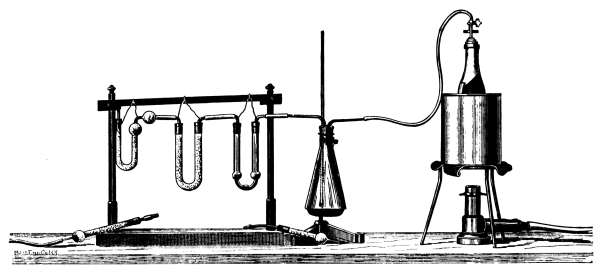
Fig. 113. Apparatus for Determining Carbon Dioxid in Koumiss.
520. Alcohol.—Half a liter of koumiss, to which 100 cubic centimeters of water have been added, is distilled until the distillate amounts to 500 cubic centimeters.
If the distillate be turbid 100 cubic centimeters of water are added and the distillation repeated. The alcohol is determined by the processes described hereafter.
521. Lactose.—The milk sugar may be determined by any of the methods described, but most conveniently by double dilution and polarization (86).
522. Fat.—Evaporate twenty grams of the sample to dryness and extract with pure ether or petroleum spirit in the manner already described (455).
The analysis is more quickly accomplished by the volumetric method of Babcock or Gerber (473-475).
523. Proteids.—The total proteids are most easily estimated by the official kjeldahl method.[530] The separation of the proteid bodies is accomplished by the methods described in paragraphs 475-489.
In addition to the methods already described for separating the soluble and suspended proteid bodies in milk, and which may be used also for koumiss, the following should also be mentioned as of especial worth:
Separation by Filtration through Porous Porcelain.—A purely physical method, and one which is to be recommended by reason of the absence of any chemical action upon the different proteid matters, is that proposed by Lehmann, depending upon the principle that when milk is forced through porous porcelain, the albumin passes through together with the milk, sugar and other soluble constituents as a clear filtrate, while the casein and fat are perfectly retained.[531]
By this method it is quite certain that the albumin and other perfectly soluble proteids of milk may be obtained in the purest form.
Separation by Precipitation with Alum.—Probably the best chemical method of separating the two classes of proteid matters is that proposed by Schlosmann, which is effected by means of precipitating the casein with a solution of alum.[532]
The principle of this separation rests upon the fact that a solution of potash alum, when added to milk diluted with four or five times its volume of water, will completely separate the casein without affecting the albumin or globulin. The operation is conducted as follows:
Ten cubic centimeters of the milk are diluted with from three to five times that quantity of water and warmed to a temperature of about 40°. One cubic centimeter of a concentrated solution of potash alum is added, the mixture well stirred and the coagula which are formed allowed to subside. If the coagulation of the casein does not take place promptly, a small addition of the alum solution is made, usually not exceeding half a cubic centimeter, until the precipitation is complete. The temperature during the process should be kept as nearly as possible 40°. After a few minutes, the mixture is poured upon a filter and the filtrate, if not perfectly clear, is poured back until it is secured free of turbidity. In difficult cases the filtration may be promoted by the addition of some common salt or calcium phosphate, the latter acting mechanically in holding back the fine particles of casein. The precipitate is washed with water at a temperature of 40°, and afterwards with alcohol, not allowing the alcohol wash water to flow into the filtrate. When the water has been chiefly removed from the precipitate by washing with alcohol, the fat of the precipitated casein is removed with ether and the residue used for the determination of nitrogen in the usual way. The albumin is removed from the filtrate by a tannin solution in the manner already described (480). If it be desired to separate the albumin and globulin, the methods described in paragraph 399 may be used.
524. Mercurial Method.—A volumetric method for determining the total proteid matter in milk has lately been proposed by Deniges.[533] It is based upon the observation that in the precipitation of proteid matter by mercury salts, a definite quantity of mercury in proportion to the amount of proteid, is carried down therewith. The precipitation is made with a mercurial salt of known strength and the excess of the mercurial salt in the filtrate is determined by titration. For the details of the manipulation, the paper cited above may be consulted.
525. Water and Ash.—From two to five grams of the koumiss are dried to constant weight in a flat platinum dish over ignited sand, asbestos or pumice stone, and the dried residue incinerated.
526. Composition of Koumiss.—The composition of koumiss varies with the character of the milk used and the extent of the fermentation. Some of the data obtained by analysts are given below:[534]
Composition of Koumiss.
Kind of milk. Water, Per cent. Sugar, Per cent. Alcohol, Per cent. Fat, Per cent. Proteid, Per cent. Carbon dioxid, Per cent. Acidity, Per cent.
Cow 89.32 4.38 0.76 2.08 2.56 0.83 0.47
Probably cow skim’d 3.95 1.38 0.88 2.89 0.82
Mare 91.87 0.79 2.89 1.19 1.91 1.04
From the above it is seen that koumiss is made either from whole or skim milk, and that the percentage of alcohol may vary within large limits, its proportion being inverse to that of the milk sugar.
Koumiss is a beverage which is very palatable, easily digested and one which is not appreciated in this country in proportion to its merits, especially for the use of invalids.