Part 2 — CHAPTER IX.
Reading edition
NEW SWEDEN, OR THE SWEDES ON THE DELAWARE.
BY GREGORY B. KEEN,
Late Professor of Mathematics in the Theological Seminary of St. Charles Borromeo, Corresponding Secretary of the Historical Society of Pennsylvania.
THE honor of projecting the first Swedish settlement in foreign parts is due to Willem Usselinx,—a native of Antwerp, who resided for several years in Spain, Portugal, and the Azores, and was afterward engaged in mercantile pursuits in Holland, acquiring distinction as the chief founder of the Dutch West India Company.[907]
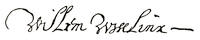
Failing to obtain adequate remuneration for his services in the Netherlands, he visited Sweden, and succeeded in inducing Gustavus II. (Adolphus) to issue a Manifest at Gottenburg, Nov. 10, 1624, instituting a general commercial society, called the Australian Company, with special privileges of traffic with Africa, Asia, and America. Authority was conferred on Usselinx to solicit subscriptions, and a contract of trade was drawn up to be signed by the contributors, the whole scheme being commended in a paper of great length by the projector of it. On the 14th of June, 1626, a more ample charter was conceded, which was confirmed in the Riksdag of 1627,[908] and followed by an order of the sovereign requiring subscribers to make their payments by May, 1628. The King himself pledged 400,000 daler of the royal treasure on equal risks, and other members of his family took stock in the Company, which embraced the Royal Council, the most distinguished of the nobility, officers of the army, bishops and other clergymen, burgomasters and aldermen of the cities, and many of the commonalty.
It was believed that the enterprise would prove of great commercial benefit to Sweden, besides affording private individuals opportunity to recover fortunes lost through the disastrous wars of the period, and furnishing, in the colonies to be established, safe places of retreat for many exiles. By means of a union, in 1630, with the Ship Company, instituted by agreement of the cities of Sweden, at the Riksdag of the preceding year, the Australian—or, as it was now generally called, the South—Company acquired the control of sixteen well-equipped vessels, which they proceeded to send to sea. No advantage, however, was derived from any of the voyages made, and in 1632 four of the ships were taken by Spain.
Meanwhile the momentous conflicts of the age diverted the attention of the monarch and drained the resources of the country, causing inevitable delay in carrying out the plans of the Company, until at last it was determined to seek the aid of foreign capital. Just before the battle of Lützen closed the earthly career of Gustavus, a new charter was prepared for his signature, extending the privileges of the former one to the inhabitants of Germany, and prolonging the enjoyment of them until the first day of January, 1646. This paper, which was already dated, was published by Axel Oxenstjerna, Chancellor of the Kingdom of Sweden,[909] at Heilbronn, April 10, 1633, and was confirmed, with certain modifications, by the Deputies of the four Upper Circles at Frankfort, Dec. 12, 1634.
Another, written at the same time and signed by the Chancellor May 1, 1633, recognized Usselinx as “Head Director of the New South Company,” with authority to receive subscriptions and promote the undertaking; in discharge of which duty the zealous Belgian issued a fresh defence of his project, addressed especially to the Germans, besides reprinting in their language the earlier documents on the subject. Nevertheless, no success attended even this well-advertised revival of the long-cherished enterprise, and subsequent appeals of Usselinx to France and England, the Hanse Towns, and the States-General appear to have been without result.[910]

The first real advance towards the founding of New Sweden was made in 1635. In May of that year Chancellor Oxenstjerna visited Holland, and on his return home held correspondence upon the advantages of forming a Swedish settlement on the coast of Brazil or Guinea, with Samuel Blommaert, a merchant of Amsterdam and a member of the Dutch West India Company, who had participated five years before in an attempt to colonize the shores of the Delaware; and in the following spring he commissioned Peter Spiring, another Dutchman, dwelling in Sweden, to learn whether some assistance might not be obtained from the States-General. With this intent, proposals were made by Usselinx, now Swedish minister, to induce the States of Holland to found a “Zuid-Compagnie,” in conjunction with his Government; but the Assembly of the Nineteen (to whom the matter was referred) refusing their consent, the States postponed further action in the premises.

Nevertheless, if failure attended this appeal to the rulers of the nation, Spiring’s intercourse with private individuals had a happier issue; and conversations with Blommaert introduced to his acquaintance Peter Minuit, or Minnewit, a native of Wesel, who had served the Dutch West India Company from 1626 to 1632 as Director-General of New Netherland,[911] living in New Amsterdam, and who was then once more residing in Cleves,—the person who was destined to conduct the first Swedish expedition to America.
In a letter dated at Amsterdam, June 15, 1636,[912] borne home by Spiring, Minuit offered “to make a voyage to the Virginias, New Netherland, and other regions adjoining, certain places well known to him, with a very good climate, which might be named Nova Suedia;” and this proposal, or one grounded on it, was read in the Swedish Råd, the 27th of September. Soon afterward Spiring was again sent out to Holland as minister; and on further consultation with Minuit and Blommaert, now Swedish Commissary (or consul-general) at Amsterdam, it was determined to form a Swedish-Dutch Company to carry on trade with, and establish colonies on, portions of the North American coast not previously taken up by the Dutch or English. The cost of the first expedition was estimated at twenty-four thousand (it actually amounted to over thirty-six thousand) Dutch florins, half of which was to be contributed by Minuit and Blommaert and their friends, and the remaining half to be subscribed in Sweden. Minuit was to be the leader of it, and Blommaert the commissioner in Amsterdam. After these stipulations had been concluded, in February, 1637, Minuit set out for Stockholm. The Government embraced the scheme, and promised to place two fully-equipped vessels at the disposal of the Company, while the contribution of money required from Sweden was subscribed by Axel Oxenstjerna, his brother Gabriel Gustafsson Oxenstjerna, their cousin Gabriel Bengtsson Oxenstjerna, and Clas Fleming (Royal Councillors and Guardians of Queen Christina), and Peter Spiring.
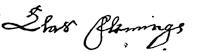
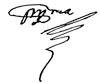
Fleming, like the Chancellor, was a very zealous promoter of the project, and, as virtual chief of the admiralty (the head-admiral was aged and disqualified for service), obtained a commission to fit out the ships, concerting the details with Minuit and Blommaert, who procured an experienced crew and suitable cargo in Holland. The vessels were sent over to Gottenburg during the spring, when the expedition was to start. Delays occurred, however, and the vessels,—the “Kalmar Nyckel” (Key of Calmar), a man-of-war, under Captain Anders Nilsson Krober, and the sloop “Gripen” (the Griffin), Lieutenant Jacob Borben commander, both belonging to the United South and Ship Company,—did not receive their passports before the 9th of August, and were not ready to sail until late in the autumn. Soon after leaving, they encountered severe storms, and were obliged to put into the Dutch harbor of Medemblik for repairs and fresh provisions, but set out once more in December for their place of destination.
Here they arrived not later than March, 1638, Minuit exercising his discretion as commander of the expedition to direct his course to the River Delaware, with which, under the name of the South River of New Netherland, he had become acquainted during his former sojourn in America. According to Campanius, the colonists first landed on the west side of Delaware Bay, below the Mordare Kil (Murderkill Creek), at a place they called Paradis Udden (Paradise Point), “probably,” says he, “because it seemed so grateful and agreeable.” They afterward proceeded up the river, and on the 29th of March Minuit concluded a purchase of land from five chiefs of the Minquas (belonging to the great Iroquois race), appropriately rewarding them with articles of merchandise. The territory thus acquired embraced the west shore of the Delaware, from Bomtiens Udden (near Bombay Hook) northward to the River Schuylkill, no limit being assigned towards the interior.[913] At its boundaries Minuit erected posts bearing the insignia of his sovereign, designating the country as New Sweden, and immediately built a fort, called, in honor of the queen,[914] Christina, at a point of rocks about two miles from the mouth of the Minquas (now Christeen) Creek, to which stream he gave the name of Elbe.

Soon after his arrival he despatched “Gripen” to Jamestown, in Virginia, for a cargo of tobacco to carry to Sweden free of duty,—a privilege which the governor declined to grant, out of regard to the instructions of the English king, while the Treasurer of the Province wrote to Sir Francis Windebanke, Principal Secretary to Charles I., suggesting the removal of the Swedes from the neighborhood of the Delaware, which he described as “the confines of Virginia and New England,” claiming it as appertaining to his sovereign. The sloop was suffered to remain “ten days, to refresh with wood and water,” and then returned to Minuit. Subsequently the Swedish commander sent her up the river for purposes of traffic, when he was summarily challenged by the Dutch at Fort Nassau, a stronghold built in 1623, by Cornelis Jacobsen Mey, at Timber Creek on the east side of the Delaware, which had afterward been abandoned and reoccupied several times, and was then in the possession of traders from New Amsterdam. The actions of Minuit were also reported by the Assistant-Commissary at that place to Willem Kieft, the Director-General of New Netherland, and were in turn communicated by Kieft, in a letter of the 28th of April, to the Directors of the West India Company in Holland, and were made the subject of a formal protest, addressed by Kieft to Minuit, the 6th of May, claiming jurisdiction over the South River for the Dutch. No heed was paid, however, to remonstrances of either Hollanders or English; and Minuit proceeded to improve his fort by building two log-houses in the inclosure for the accommodation of the garrison, while he stocked it plentifully with provisions, leaving a portion of his cargo to be used in barter with the Indians, “all whose peltries,” says Governor Kieft, “he had attracted to himself by liberal gifts.”

The colonists who remained in New Sweden numbered twenty-three men, under the command of Lieutenant Måns Kling (the only Swede expressly named as taking part in this first expedition to the Delaware), who had charge of the military affairs, and Hendrick Huygen, a relative of Minuit, likewise born in Cleves, who was intrusted with the civil and economical duties of the direction. Minuit himself departed for the West Indies, probably in July, on board the “Kalmar Nyckel,” having sent “Gripen” thither before him. After disposing of his merchandise, and securing a cargo of tobacco at the Island of St. Christopher, while paying a visit to a Dutch ship lying near by, he perished by the destruction of that vessel in a sudden and violent storm. The “Kalmar Nyckel” had the good fortune to escape, and soon afterward sailed for Sweden, but was forced by November gales to take refuge in a port of Holland; while “Gripen” returned to the Delaware, and, obtaining a load of furs, acquired by traffic with the Indians, set out for Gottenburg, where she arrived at the close of May, 1639.
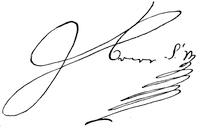
A second expedition to New Sweden had already been projected, which Queen Christina and the Swedish partners in the South Company determined to render more national in character than that conducted by Minuit. Natives of Sweden were particularly invited to engage in it; and none volunteering to do so, the governors of Elfsborg and Värmland were directed to procure married soldiers who had evaded service or committed some other capital offence, who, with their wives and children, were promised the liberty of returning home at pleasure at the end of one or two years.
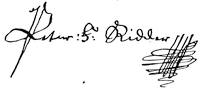
Through the zeal of Fleming, the President of the College of Commerce, and his efficient secretary Johan Beier, a number of emigrants were at last assembled at Gottenburg, and put on board the “Kalmar Nyckel,” freshly equipped and provided with a new crew by Spiring and Blommaert in Holland, and commanded by a Dutch captain, Cornelis van Vliet, who had been for several years in the Swedish service. The vessel was also to carry out the second governor of New Sweden, Lieutenant Peter Hollender, commissioned July 1, 1639, who was probably, as his name indicates, a Dutchman, and (since he signed himself “Ridder”) doubtless a nobleman. The ship sailed in the beginning of autumn, but, springing a leak in the German Ocean, was obliged thrice to return to Holland for repairs, when the captain was finally discharged for dishonesty and negligence, and another, named Pouwel Jansen, was engaged to take his place. At length, on the 7th of February, 1640, the “Kalmar Nyckel” left the Texel, and reached Christina in safety the 17th of the following April.[915]
How the first settlers had fared since the departure of Minuit, we are unfortunately not informed by them; but it is testified by Governor Kieft that they succeeded in appropriating a large trade with the natives, which “wholly ruined” that of the Dutch. Still, according to the same authority, the arrival of the second colony was singularly opportune, since they had determined to quit the Delaware and remove the very next day to New Amsterdam. Such an intention was of course at once abandoned, and Governor Hollender strengthened his foothold on the river by securing a title from the Indians to the western bank of it as far north as Sankikan (near Trenton Falls), in spite of the protests of the Dutch Commissary, who even fired upon him as he sailed past Fort Nassau. A letter of remonstrance was sent to this officer by the Swedish governor, but his instructions requiring him to deal gently with the Hollanders, and his people being afterward treated by Governor Kieft “with all civility,” no serious collisions occurred between the rival nations during his direction of the colony. The “Kalmar Nyckel” was soon made ready for her return voyage, and, sailing in May, arrived in July at Gottenburg.
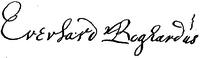
The constant intercourse of the Swedish authorities with prominent merchants of Amsterdam in founding the Colony of New Sweden had by this time attracted the attention of other Hollanders to the settlement now successfully established, and the liberality of the terms accorded the Swedish company induced Myndert Myndertsen van Horst, of Utrecht, to appeal to Queen Christina for the privilege of planting a Dutch colony within the limits of her territory, after the model of the patroonships of their own West India Company. This favor was conceded in a charter of the 24th of January, 1640, which was transferred by Van Horst to Hendrik Hoochcamer and other fellow-countrymen, granting the right to take up land on both sides of the Delaware, four or five German miles below Christina, to be held hereditarily under the Crown of Sweden, with freedom from taxation for ten years, but subject to the restriction that their trade be carried on in vessels built in New Sweden and confined to Swedish ports, and also assuring liberty for the exercise of their so-called Reformed religion. Simultaneously with the charter, a passport was issued for the ship “Fredenburg,” Captain Jacob Powelsen, to carry the emigrants, and a commission for Jost van Bogardt, as Swedish agent in New Sweden, with special authority over this colony. The latter was likewise the leader of the expedition, which was composed chiefly of persons from the province of Utrecht; and he arrived with it at the Delaware on the 2d of November, 1640. The Dutchmen appear to have seated themselves three or four Swedish miles from Christina. So little mention, however, is afterward made of this peculiarly constituted settlement,[916] it seems probable that it soon lost its individuality.
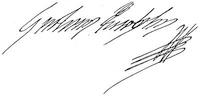
About this time occurred the first attempt on the part of the inhabitants of New England to obtain a foothold in New Sweden. Captain Nathaniel Turner is said to have bought land from the Indians “on both sides of Delaware Bay or River,” as agent of New Haven, in 1640; and in April, 1641, a similar purchase was made by George Lamberton, also of New Haven, notwithstanding one of the tracts acquired in this manner was comprised within that long before sold by the natives to the Swedish governors, while the other, extending from Cape May to Narraticons Kil (or Raccoon Creek), on the eastern shore of the Delaware, had been conveyed only three days earlier, by the same sachem, to Governor Hollender. Taking advantage of this nugatory title, and in contravention of engagements entered into with Director Kieft, some twenty English families, numbering about sixty persons, settled at Varkens Kil (now Salem Creek, New Jersey), whose “plantations” were pronounced, at a General Court held in New Haven, Aug. 30, 1641, to be “in combination with” that town.
Meanwhile preparations were making in Sweden to send forth a fresh expedition to America. On the 13th of July, 1640, the Governor of Gottenburg was enjoined to persuade families of his province to emigrate, “with their horses and cattle and other personal property.” On the 29th the Governor of Värmland and Dal was directed to enlist certain Finns, who had been forced to enter the army as a punishment for violating a royal edict against clearing land in that province by burning forests; and on the 30th the Governor of Örebro was instructed to induce people of the same race, roaming about the mining districts under his jurisdiction, to accompany the rest to the Transatlantic Colony. Lieutenant Måns Kling, who had returned in the “Kalmar Nyckel,” was also especially commissioned, on the 26th of the following September, to aid in this work in the mining regions and elsewhere, and particularly to procure homeless Finns, who were living in the woods upon the charity of the settled population of Sweden. In all these mandates the fertility of the new country and the advantages of colonists in it are clearly intimated; and in the last it is declared to be the royal aim that the inhabitants of the kingdom may enjoy the valuable products of that land, increase in commerce and in knowledge of the sea, and enlarge their intercourse with foreign nations. In May, 1641, the people collected by Kling accompanied him on the ship “Charitas” from Stockholm to Gottenburg, where they were joined by the others, who by that time were ready to set forth. On the 20th of February the Government had resolved to buy out the Dutch partners in their enterprise, instructing Spiring to pay them eighteen thousand gulden from the public funds, provided they abandoned all further claims. This, no doubt, was done; and thus the third Swedish expedition to New Sweden sailed under the auspices of a purely Swedish company. It comprised the well-tried “Kalmar Nyckel” and the “Charitas,” and arrived at its place of destination probably in the summer or autumn of 1641.[917]
Nothing is known with regard to New Sweden at this period; but in the spring of 1642 some of the colonists from New Haven, already spoken of, took possession of a tract of land, which they claimed to have purchased of the Indians on the 19th of April, on the west side of the Delaware, extending from Crum Creek a short distance above the Schuylkill, and proceeded to build a trading-house on the latter stream. This attracted the attention of Director Kieft, and on the 22d of May he despatched two sloops from New Amsterdam with instructions to Jan Jansen van Ilpendam, the Dutch commissary at Fort Nassau, to expel the English from the Delaware. His orders were promptly executed; and the settlements on the Schuylkill and (it is said) at Varkens Kil were broken up, partly through the aid of the Swedes, who had agreed with Kieft “to keep out the English,” the trespassers being taken to Fort Amsterdam, from whence they were sent home to New Haven. Lamberton, still persisting in trading on the Delaware, was arrested not long afterward at Manhattan, and compelled to give an account of his peltries, and to pay duties on his cargo. According to Governor John Winthrop, of Massachusetts, such “sickness and mortality” prevailed this summer in New Sweden as “dissolved” the plantations of the English, and seriously affected the Swedes.
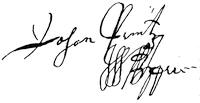
In Sweden the interest in the little American colony was now at its height; and in July and August, 1642, Spiring was consulted in the Råd and the Räkningekammår upon the question of appropriating the funds of the South and Ship Company for the expenses of another expedition across the ocean. This resulted in the formation of a new company, styled the West India, American, or New Sweden Company, although oftener known as the South Company, with a capital of thirty-six thousand riksdaler, half being contributed by the South and Ship Company, one sixth by the Crown, and the remainder by Oxenstjerna, Spiring, Fleming, and others. To it, also, was transferred the monopoly of the tobacco trade in Sweden, Finland, and Ingermanland, which had been granted to the South Company in 1641. On the 15th of August a third governor was commissioned to succeed Hollender in the direction of New Sweden; namely, Johan Printz, who had taken part in the Thirty Years’ War as Lieutenant-Colonel of the West Götha Cavalry, and, after his dismissal from the service for the capitulation of Chemnitz, was engaged in 1641 in procuring emigrants for the colony in Northern Finland. He had been restored to royal favor and ennobled in July. His “Instructions” were likewise dated Aug. 15, 1642, and were signed by Peter Brahe, Herman Wrangel, Clas Fleming, Axel Oxenstjerna, and Gabriel Bengtsson Oxenstjerna, Councillors of the Kingdom and Guardians of Queen Christina, who was still in her minority. They are comprised in twenty-eight articles, endowing him with extensive authority in the administration of justice, and enjoining him to keep the monopoly of the fur-trade, and to pay particular attention to the cultivation of the soil,—especially for the planting of tobacco, of which he was expected to ship a goodly quantity on every vessel returning to Sweden,—as well as to have a care of the raising of cattle, of the obtaining of choice woods, of the growth of the grape, production of silk, manufacture of salt, and taking of fish. He was to maintain the Swedish Lutheran form of religion and education of the young, and treat the Indians “with all humanity,” endeavoring to convert them from their paganism, and “in other ways bring them to civilization and good government.” His territory was defined to include all that had been purchased of the natives by Minuit and Hollender, extending, on the west side of the Delaware, from Cape Hinlopen[918] northwards to Sankikan, and on the east from Narraticons Kil southwards to Cape May. Over the whole of this region he was commanded to uphold the supremacy of his sovereign, keeping the Dutch colony under Jost van Bogardt to the observance of their charter, and bringing the English settlers under subjection, or procuring their removal, as he deemed best. His relations with the Holland West India Company and their representatives at Manhattan and Fort Nassau were to be friendly but independent, and, in case of hostile encroachments, “force was to be repelled by force.” On the 30th of August a budget was adopted for New Sweden, specifying, besides the Governor, a lieutenant, sergeant, corporal, gunner, trumpeter, and drummer, with twenty-four private soldiers, and (in the civil list) a preacher, clerk, surgeon, provost, and executioner, their salaries being estimated at 3,020 riksdaler per annum. Fleming and Beier (this year appointed postmaster-general) had the chief direction of the enterprise, and special factors were designated for the Company’s service in Gottenburg and Amsterdam. At length all preparations were completed, and the fourth Swedish expedition to New Sweden, consisting of the ships “Fama” (Fame) and “Svanen” (the Swan), set sail from Gottenburg on the 1st of November, 1642, carrying Printz, with his wife and children, Lieutenant Måns Kling, the Rev. Johan Campanius Holm, and many others, among whom were a number of forest-destroying Finns, sent out as formerly by their respective governors.[919] They pursued the usual course through the English Channel and past the Canary Islands, spending Christmas with the hospitable Governor of Antigua; and, after encountering severe storms, towards the close of January entered Delaware Bay, and on the 15th of February, 1643, landed in safety at Fort Christina.
Unfortunately, the first and very full report of the new governor to the West India Company, dated April 13, 1643, and despatched on the return voyage of the “Fama,” appears to have been irrecoverably lost; but in letters addressed the day before and the day after, respectively, to Councillors Peter Brahe and Axel Oxenstjerna, still preserved in Sweden, Printz gives a favorable account of the country and an interesting description of the natives, and earnestly advises the sending out of more emigrants. Soon after his arrival he made a journey through his territory, sailing up the Delaware to Sankikan, and determined to take up his abode on the Island of Tennakong, or Tinicum, situated about fifteen miles above Christina. Here he built himself a house (Printzhof), and erected a fort of heavy logs, armed with four brass cannon, called Nya Göteborg (New Gottenburg),—a name also bestowed on the whole place in a patent from his sovereign of the 6th of the following November, granting it “to him and his lawful issue as a perpetual possession.” About twenty emigrants settled on this island, with their families, including Printz’s book-keeper and clerk, with his body-guard and the crew of a little yacht used by the Governor. A redoubt was likewise constructed “after the English plan, with three angles,” on the eastern shore, “close to the river,” by a little stream now known as Mill Creek, three or four miles below Varkens Kil, which was named Nya Elfsborg.
It was defended by eight brass twelve-pounders, and committed to the charge of Lieutenant Sven Schute and Sergeant Gregorius van Dyck, with a gunner and drummer and twelve or fifteen common soldiers; and was already occupied in October, when a Dutch skipper, carrying David Pieterszen de Vries on his last voyage to the Delaware, was required to strike his flag in passing the place and give account of his cargo, although the noted patroon was afterward courteously entertained five days at Tinicum by Governor Printz, who bought “wines and sweetmeats” of his captain, and accompanied him on his return as far as Fort Christina.

The latter post remained the chief place of deposit of the stores of the colony under Commissary Hendrick Huygen, and was settled by about forty persons and their families, including the Reverend Johan Campanius, a miller, two carpenters, a few sailors and soldiers, and a dozen peasants, who were occupied in the cultivation of tobacco. A tobacco plantation was also formed the same year on the west side of the Delaware, four or five miles below Tinicum, under the direction of Peter Liljehöck, assisted by an experienced tobacco-grower, specially hired for the service, with a dozen or more husbandmen, and received the name of Upland. About the same time another was begun by Lieutenant Måns Kling, with seven or eight colonists, on the Schuylkill. At first both of these places were destitute of forts, although log houses, strengthened by small stones, were built for the accommodation of the settlers.[920] A large quantity of maize was sown by Printz immediately after his arrival for the sustenance of the colony, but not yielding the results anticipated from certain statements of Governor Hollender, the deficiency was supplied by purchase of some cattle and winter rye at the Island of Manhattan. Provisions were also obtained from Dutch and English vessels which visited the Delaware. During the autumn, rye was planted in three places, and in the following spring some barley, which grew so well, says the Governor, “it was delightful to behold.” For greater convenience of communication between the scattered settlements two boats were built by the carpenters, one for the use of Elfsborg, the other for Christina.
Although the instructions to Governor Printz concerning his relations with the English were probably issued in ignorance of the attempt of Kieft to dislodge the latter from the Delaware, the success of the Dutch Director-General does not seem to have been so complete as to render them superfluous. Lamberton still visited the river for purposes of trade, and a few settlers from New Haven yet remained at Varkens Kil. Printz, therefore, “went to the houses” of these English families, and “forced some of them to swear allegiance to the crown of Sweden.” He also found opportunity of apprehending Lamberton, and brought him before a tribunal comprising Captains Christian Boije and Måns Kling, Commissaries Huygen and Jansen, and six other persons then on the Delaware, assembled in the name of the Swedish sovereign at Fort Christina, July 10, 1643. Printz met two protests made by the Englishman at his trial, claiming land on both sides of the river in virtue of purchases from the Indians, by showing that the territory in question was embraced in tracts already bought of the savages by Governors Minuit and Hollender. He also proved to the satisfaction of the court that Lamberton had traded with the natives in the vicinity even of Fort Christina without leave and in spite of repeated prohibitions, obtaining a quantity of beaver skins, for which the defendant was required by the tribunal to pay double duty. And, finally, Lamberton was accused by the Governor of bribing the Indians to murder the Swedes and Dutch,—a charge which was supported by several witnesses, who also testified that on the day agreed upon an unusual number of savages had assembled in front of Fort Christina, who were, however, frightened off before they could attain their purpose. In passing upon this grave indictment, the court preferred to treat the defendant with clemency “on this occasion,” and postponed action on the subject. These decisions naturally did not content Lamberton, and at a meeting of the Commissioners of the United Colonies of New England, held at Boston September 7, complaint was made by his associates, Governor Theophilus Eaton and Thomas Gregson, of “injuries received from the Dutch and Swedes at Delaware Bay;” when it was “ordered that a letter be written to the Swedish governor, expressing the particulars and requiring satisfaction,” to be signed by John Winthrop “as Governor of Massachusetts and President of the Commissioners.” This resolution was complied with, and a commission was given to Lamberton “to go treat with” Printz upon the subject, and “to agree with him about settling their trade and plantation” on the Delaware. Winthrop’s letter was answered by the Governor of New Sweden, Jan. 12, 1644, with a statement of the facts established at his court already mentioned, and a fresh examination of the matter was instituted on the 16th. This was likewise conducted at Fort Christina, in the presence of the Governor, Captains Boije, Kling, and Turner, Commissary Huygen, Sergeant Van Dyck, Isaac Allerton, and Secretary Carl Janson, and resulted in the exculpation of Printz from the offences charged against him. Copies of these proceedings and of all others relating to the New Haven people were transmitted to a General Court of Massachusetts which met at Boston in March, and Governor Winthrop, in acknowledging the receipt of them in a friendly letter to Governor Printz, promised “a full and particular response at the next meeting of the Commissioners of the United Colonies.” At the same time a fresh commission was issued to Governor Eaton, though “with a salvo jure, allowing him to go on with his plantation and trade in Delaware River,” accompanied by a copy of the Massachusetts patent, which he desired “to show the Swedish governor.” Certain merchants of Boston likewise obtained the privilege of forming a company for traffic in the vicinity of a great lake believed to be the chief source of the beaver trade, which was supposed to lie near the headwaters of the Delaware; and, to carry out their project, despatched a pinnace, well manned and laden, to that river, with a commission “under the public seal,” and letters from the Governor of Massachusetts to Kieft and Printz for liberty to pass their strongholds. “This,” says Winthrop, “the Dutch promised” to concede, though under “protest;” but “when they came to the Swedes, the fort shot at them ere they came up,” obliging them to cast anchor, “and the next morning the Lieutenant came aboard and forced them to fall lower down.” On complaint to Governor Printz, the conduct of that officer was repudiated, and instructions were sent to him from Tinicum not to molest the expedition. All further progress was, however, checked by the Dutch agent at Fort Nassau, who showed an order from his Governor not to let them pass that place; and since neither Printz nor Kieft would permit them to trade with the Indians, they returned home “with loss of their voyage.” The letter which Printz addressed to Winthrop, explaining his actions on this occasion, dated at Tinicum, June 29, 1644, is more amiable than truthful; for in the copy sent to the authorities in Sweden the Governor qualifies his intimation that he promoted the undertaking, with the statement that he took care that the Dutch at Fort Nassau brought it to nought, since it was the purpose of the persons who were engaged in it “to build a fort above the Swedish post at Sankikan, to be armed with men and cannon, and appropriate to themselves all the profits of the river.” Not less successful was the opposition of the Governor to an attempt to invade his territory by the English knight, Sir Edmund Plowden, who had recently come to America to take possession, in virtue of a grant from King Charles I. of England, of a large tract of land, in which New Sweden was included. For though certain of the retainers of this so-styled “Earl Palatine of New Albion,” who had mutinied and left their lord to perish on an island, were apprehended at Fort Elfsborg in May, 1643, and courteously surrendered to him by Printz, the latter refused to permit any vessels trading under his commission to pass up the Delaware, and so “affronted” Plowden that he finally abandoned the river.[921]
The relations between the Swedes and Dutch were seemingly more friendly. “Ever since I came here,” says Printz in his Report of 1644, “the Hollanders have shown great amity, particularly their Director at Manhattan, Willem Kieft, who writes to me very frequently, as he has opportunity, telling the news from Sweden and Holland and other countries of Europe; and though at the first he gave me to understand that his West India Company laid claim to our river, on my replying to him with the best arguments at my command, he has now for a long while spared me those inflictions.”
The Indians always exhibited the most amicable dispositions towards the Swedes, partly no doubt through timidity, but at least equally in consequence of the kind treatment habitually shown them by the colonists of that nation. Still, in the spring of 1644, influenced, it is presumed, by the example of their brethren in Virginia and Maryland and the vicinity of Manhattan, who had recently been provoked to fierce hostility against the Dutch and English, some of the savages massacred two soldiers and a laborer between Christina and Elfsborg, and a Swedish woman and her husband (an Englishman) between Tinicum and Upland. Printz, however, immediately assembling his people at Christina to defend themselves from further outrages, the natives “came together,” says he, “from all sides, heartily apologizing for, and denying all complicity in, the murderous deeds, and suing earnestly for peace.” This was accorded them by the Governor, but “with the menace of annihilation if the settlers were ever again molested.” Whereupon a treaty was signed by the sachems, and ratified by the customary interchange of presents, assuring tranquillity for the future and restoring something of the previous mutual confidence.[922]
During the six years now elapsed since the founding of New Sweden the colonists were compelled to undergo the privations which inevitably attend the first settlement of a wild and untitled country; and the frequent scarcity of food and insufficiency of shelter, combined with the novelty and uncertainty of the climate, and occasional seasons of disease, had the usual effect of diminishing their numbers. Especially fatal was the last summer, that of 1643, when no fewer than seventeen (between six and seven per cent) of the male emigrants died, among these being the Reverend Reorus Torkillus, the first pastor of the colony.
The need, therefore, for fresh recruits to take the places of those who proved themselves unequal to the trials of their situation constantly presented itself to the survivors, and ought, surely, to have been appreciated by the authorities in Sweden. Nevertheless, the fifth Swedish expedition to the Delaware, which arrived at Christina on the “Fama,”[923] March 11, 1644, added very little to the numerical strength of the settlement;[924] while, through the carelessness of the agent at Gottenburg, some of the clothing and merchandise was shipped in a damaged condition.
The principal emigrant on this occasion was Johan Papegåja, who had already been in New Sweden, and now returned, bearing letters of recommendation to the Governor from his sovereign and from Peter Brahe, President of the Royal Council, in consequence of which he was at once appointed to the chief command at Fort Christina. He was likewise accepted as a suitor for the hand of Printz’s daughter, Armgott, and not long afterward became the Governor’s son-in-law. Brahe acknowledged the receipt of Printz’s letter, before referred to, on the 18th of August; and congratulating him on his safe arrival at the Delaware he expresses the hope that he will “gain firm foothold there, and be able to lay so good a foundation in tam vasta terra septentrionali, that with God’s gracious favor the whole North American continent may in time be brought to the knowledge of His Son, and become subject to the crown of Sweden.” He particularly admonishes the Governor to cultivate friendship with “the poor savages,” instructing them, and endeavoring to convert them to Christianity. “Adorn,” says he, “your little church and priest after the Swedish fashion, with the usual habiliments of the altar, in distinction from the Hollanders and English, shunning all leaven of Calvinism,” remembering that “outward ceremonial will not the less move them than others to sentiments of piety and devotion.” He likewise enjoins “the use of the Swedish language in spoken and written discourse, in all its purity, without admixture of foreign tongues. All rivers and streams, forests, and other places should receive old Swedish names, to the exclusion of the nomenclature of the Dutch, which,” he has heard, “is taking root. In fine,” he adds, “let the manners and customs of the colony conform as closely as possible to those of Sweden.” To Printz’s reply to this letter we are indebted for the fullest account of the religious rites observed in the settlement which has been preserved to us. “Divine service,” says the Governor, “is performed here in the good old Swedish tongue, our priest clothed in the vestments of the Mass on high festivals, solemn prayer-days, Sundays, and Apostles’ days precisely as in old Sweden, and differing in every respect from that of the sects around us. Sermons are delivered Wednesdays and Fridays, and on all other days prayers are offered in the morning and afternoon; and since this cannot be done everywhere by our sole clergyman, I have appointed a lay-reader for each place, to say prayers daily, morning and evening, and dispose the people to godliness. All this,” he continues, “has long been witnessed by the savages, some of whom we have had several days with us, attempting to convert them; but they have watched their chance, and invariably run off to rejoin their pagan brethren,”—a statement not inconsistent with the testimony of Campanius, who admits that, although his grandfather held many conversations with the Indians, and translated the Swedish Lutheran catechism into their language[925] for their instruction in Christian doctrine, no more definite result was reached than to convince them of the relative superiority of the religion thus expounded.
In the course of three months a cargo was obtained for the return voyage of the “Fama,” consisting of 2,142 beaver skins, 300 of which were from the Schuylkill, and 20,467 pounds of tobacco, part being bought in Virginia, while the rest was raised by the Swedes and their English neighbors at Varkens Kil, Printz allowing a higher price for this, to encourage the cultivation of the plant and to induce immigration to New Sweden. The Governor also freighted the vessel with 7,300 pounds on his personal account. Five of the colonists embraced this opportunity to go back to Sweden, among whom were Captain Boije, the clergyman “Herr Israel,” and a barber-surgeon. The “Fama” set sail on the 20th of June, and reached Europe in the autumn, but putting into a Dutch harbor to revictual was detained there pending a long controversy as to the payment of duty between Peter Spiring, then Swedish Resident at the Hague, and the States-General, and did not arrive at Gottenburg till May, 1645.
At the date of Governor Printz’s second Report to the Swedish West India Company, which was sent home by the “Fama,” the colonists in New Sweden numbered ninety men, besides women and children. About half of these were employed, at stipulated wages, in the discharge of various civil and military functions on behalf of the Crown and Company. The “freemen” (frimännen)—so called because they had settled in the colony entirely of their own will, and might leave it at their option—held land granted them in fee, temporarily not taxed, which they cultivated for themselves, being aided also by the Company with occasional gifts of money, food, and raiment. Persons who had been compelled to immigrate, as elsewhere stated, in punishment for offences committed by them in Sweden, were required to till ground reserved to the Company, which fed and clothed them, or to perform other work, at the discretion of the Governor, for a few years, when they were admitted to the privileges of freemen, or assigned duty in the first class above mentioned.
In the autumn of 1644 a bark was sent by the merchants of Boston to trade in the Delaware, which passed the winter near the English plantation at Varkens Kil, and the following spring fell down the bay, and in three weeks secured five hundred skins of the Indians on the Maryland side. Just as the vessel was about to leave, she was treacherously boarded by some of the savages, who rifled her of her goods and sails, killing the master and three men, and taking two prisoners, who were brought six weeks afterward to Governor Printz, and were returned by him to New England.
On the 25th of November, 1645, a grievous calamity befell the colony in the burning of New Gottenburg, which was set on fire, between ten and eleven o’clock at night, by a gunner, who was tried and sentenced by Printz, and subsequently sent to Sweden for punishment. “The whole place was consumed,” says the Governor, “in a single hour, nought being rescued but the dairy;” the loss to the Company amounting to four thousand riksdaler. “The people escaped, naked and destitute; but the winter immediately setting in with great severity, and the river and creeks freezing, they were cut off from communication with the mainland,” and barely avoided starvation until relief arrived in March. Printz continued, however, to reside at Tinicum, and soon rebuilt a storehouse, to receive “provisions and cargoes to be sold on behalf of the Company.” He also erected a church upon the island, “decorating it,” says he, “so far as our resources would permit, after the Swedish fashion,” which, with its adjoining burying-ground, was consecrated by Campanius, Sept. 4, 1646.
In the summer of the same year occurred the first outbreak of the jealousy which had existed from the beginning between the Swedes and Hollanders, however well it may have been concealed, especially during the need of concerted action against their common rival the English. On the 23d of June a sloop arrived at Fort Nassau with a cargo from Manhattan, to trade with the Indians, and was directed by Andries Hudde, the Dutch commissary who had succeeded Jan Jansen, “to go into the Schuylkill.” She was immediately commanded by the Swedes to leave the place,—an order which was repeated to Hudde, and reiterated the next day by Campanius. The result was a conference between the Dutch commissary and Commissary Huygen, Sergeant Van Dyck, and Carl Janson, on behalf of Printz; which was followed on the 1st of July by so menacing an admonition from the Governor, that Jurriaen Blanck the supercargo, fearing his vessel and goods might be confiscated, felt constrained to yield, and abandoned his enterprise. Soon afterward Hudde was prevented from executing a commission of Director Kieft, to search for minerals at Sankikan, through the opposition of the Indians, prompted by a report of the warlike intentions of the Hollanders circulated among the savages by Printz. And when, in September, in obedience to instructions from Manhattan, the Dutch commissary purchased from the natives land on the “west shore” of the Delaware, “distant about one league to the north of Fort Nassau” (within the limits of the present city of Philadelphia), and erected the arms of his West India Company upon it, these were pulled down “in a hostile manner,” on the 8th of October, by Commissary Huygen, and a protest against his action was delivered to him on the 16th by Olof Stille and Mans Slom, on the part of the Swedish governor. The latter likewise forbade his people to have any dealings with the Hollanders, and treated a counter-protest, sent to him by Hudde on the 23d, with such contempt as effectually completed the rupture.
It was now two years and three months since the “Fama” left the Delaware, during the whole of which time no letters were received in the colony either from Sweden or from Holland. This apparent neglect of her offspring by the mother country was accounted for by Chancellor Oxenstjerna through the occurrence of the war with Denmark, which absorbed the attention of the Government and cost the life of Admiral Fleming, who had been the chief administrator of the interests of the settlement. Not until the 1st of October, 1646, did the sixth Swedish expedition arrive in New Sweden, on the ship “Gyllene Hajen” (the Golden Shark), after a tempestuous voyage of four months, in which the vessel lost her sails, topmasts, and other rigging, and the crew almost to a man fell sick. Few, if any, emigrants came out on this voyage; but the cargo was valuable, comprising cloth, iron implements, and other goods, which supplied the needs of the settlers, with something to spare for sale in New England. Printz was also enabled to revive his languishing trade with the Indians. He “immediately despatched Commissary Hendrick Huygen, with Sergeant Gregorius van Dyck and eight soldiers, to the country of the Minquas, distant five German miles, who presented the savages with divers gifts, and induced them to agree to traffic with the Swedes as formerly, particularly,” says the Governor, “as the Commissary promised them higher prices than they could get from the Hollanders.” On the 20th of February, 1647, the vessel sailed on her return, carrying 24,177 pounds of tobacco, of which 6,920 pounds were raised on the Delaware, while the rest was purchased elsewhere. Lieutenant Papegåja went home in her, commissioned to execute some private behests of the colonists, and to present the Governor’s third Report to the Swedish West India Company.
In the document referred to, dated at New Gottenburg the day “Gyllene Hajen” left, Printz gives a very satisfactory account of the settlement, which, he says, at that time numbered one hundred and eighty-three souls. “The people,” he adds, “have always enjoyed good health, only two men and two young children having died” since the second Report. “Twenty-eight freemen were settled, and beginning to prosper; many more being willing to follow their example if they could be spared from the fortified posts.” Of these, Fort Elfsborg had been considerably strengthened; Fort Christina, which was quite decayed, repaired from top to bottom; and Fort Nya Korsholm, on the Schuylkill, was nearly ready for use. This last was doubtless the structure called by Campanius “Manaijung, Skörkilen,”[926]—“a fine little fort of logs, filled in with sand and stones, and surrounded by palisades with sharp points at the top.” “I have also built,” says Printz, “on the other side of Korsholm, by the path of the Minquas, a fine house called Wasa,[927] capable of defence against the savages by four or five men; and seven stout freemen have settled there. And a quarter of a mile farther up the same Indian highway I have erected another strong house, settling five freemen in the vicinity,—this place receiving the name of Mölndal, from a water-mill I have had constructed, which runs the whole year, to the great advantage of the country; especially,” adds he, “as the windmill, which was here before I came, was good for nothing, and never would work.” Both of these posts the natives were obliged to pass in going to Fort Nassau; and the Swedish governor hoped, by storing them with merchandise for barter, to intercept the traffic with the Dutch. Printz insists upon the need of getting rid of the latter, accusing them of ruining his trade, and supplying the savages with ammunition, and inciting them against the Swedes. “The English Puritans,” he continues, “who gave me a great deal of trouble at first, I have been able finally to drive away; and for a long time have heard nothing from them, except that last year Captain Clerk, through his agent from New England, attempted to settle some hundred families here under our flag, which I civilly declined to permit until further instructed in the matter by her Majesty.” The Governor earnestly solicits the sending of more people from Sweden, particularly “families to cultivate the country,” artisans and soldiers, “and, above all, unmarried women as wives for the unmarried freemen and others.” He likewise mentions the names of several officers who wished to be allowed to return home, and desires himself to be relieved, especially as he had been in New Sweden more than a year and a half beyond the term agreed upon.
Printz’s Report and Papegåja’s representations seem to have hastened the sending of another vessel to the Delaware, for on the 25th of September, 1647, the seventh expedition sailed from Gottenburg on “Svanen,” Captain Steffen Willemsen. Papegåja returned on the ship, bearing a letter of commendation from Queen Christina to Governor Printz, promising to consider a request of the latter for augmentation of his salary and a grant of “seventy farms,”[928] but requiring him to remain in the colony until his place could be supplied.
A great deal of the ammunition asked for by the Governor was sent out on this vessel, but very few emigrants,[929]—a circumstance which was explained, in a communication from Chancellor Oxenstjerna in reply to Printz’s Report, by the near approach of winter. Action was likewise taken some months later by the Crown making good the deficiency of the South Company through payment of the salaries of its officers in New Sweden,—a burden which had been temporarily assumed by it in consequence of the misappropriations, as well as insufficiency, of the tobacco excises which had been granted towards that object by statute of the 30th of August, 1642. And by the same royal letter, dated Jan. 20, 1648, merchandise coming from Holland for transportation to New Sweden was freed from duty, as also tobacco and furs which arrived in the kingdom from the colony. On the 16th of the following May “Svanen” set out again from the Delaware, and after a remarkably quick voyage arrived on the 3d of July at Stockholm. The clergyman Johan Campanius Holm returned in her, and Lieutenant Papegåja wrote to Chancellor Oxenstjerna, begging the favor of a position in Sweden, since the people in New Sweden were too inconsiderable for him to be of any service to the company where he was, and “the country was troublesome to defend, both on account of the savages and of the Christians, who inflict upon us,” says he, “every kind of injury.”
This complaint is evidently directed against the Hollanders, who now began to strengthen their position on the Delaware. Willem Kieft, so amiably pacific in his comportment towards the Swedes, was superseded in the government of New Netherland in May, 1647, by Peter Stuyvesant,—a man of arbitrary and warlike character, who declared it to be his intention to regard as Dutch territory not only New Sweden, but all land between Cape Henlopen and Cape Cod. Meanwhile, Governor Printz persisted in a haughty demeanor towards the Dutch, continuing to impede or prevent their navigation of the “South River,” and he is charged with inciting suspicion of his rivals among both Indians and Christians,—actions which were protested against by Stuyvesant, to whom the Swedish governor made a reply which was transmitted to Manhattan by Commissary Hudde in December. During the winter Printz collected a great quantity of logs for the purpose of erecting more buildings at the Schuylkill; and when in the spring Hudde, instigated by the natives, constructed a fort called Beversrede at Passajung, Lieutenant Kling opposed the work, and ordered his men, some twenty-four in number, to cut down the trees around the spot. On news of this, and in consequence of a complaint of the Directors of the Dutch West India Company that the limits between the Swedes, English, and Hollanders were still unsettled, Councillors Lubbertus van Dincklagen and Johannes la Montagne, despatched by Stuyvesant on that mission in June, procured from the natives confirmation of a grant of land on the Schuylkill made to Arendt Corssen on behalf of the Dutch in 1633, and, visiting New Gottenburg, protested before the Governor against the actions of the Swedes. No attention was paid to this, however, and houses which two Dutchmen immediately began to build upon the tract were destroyed by Printz’s son (Gustaf Printz) and Sergeant Van Dyck. In September the Governor caused a house to be built within a dozen feet of Fort Beversrede, and directly between it and the river, while Lieutenant Sven Schute prevented the construction of houses by the Hollanders in November. Another Dutchman obtained permission from Director-General Stuyvesant to settle on the east side of the Delaware, at Mantaes Hoeck (near the present Mantua Creek, New Jersey), and solicited the aid of Governor Printz in carrying out his purpose. This was promised him, provided he acknowledged the jurisdiction of that officer; but, fearing some advantage might be taken of the concession by the Hollanders, Printz immediately bought from the Indians the land between this place and Narraticons Kil, which constituted the northern boundary of the purchase of Governor Hollender, and erected the Swedish arms upon it. According to Hudde, the Governor of New Sweden likewise endeavored to acquire from the natives territory about Fort Nassau, more completely to isolate that place from intercourse with Manhattan, but was anticipated by the Dutch, who secured it for themselves in April, 1649.
Meanwhile, in the mother country an expedition was preparing, which but for its untimely fate would have furnished the colony with such ample means of security and self-defence as might very probably have postponed or even altogether prevented the ultimate subjugation of the latter by the Hollanders. On the 24th of March, 1649, Queen Christina issued orders to the College of the Admiralty to equip the “Kalmar Nyckel,” then lying at Gottenburg, for the projected voyage across the ocean; and finding it would take too long to get her ready, on the 13th of April her Majesty authorized the substitution of the ship “Kattan” (the Cat), under the command of Captain Cornelius Lucifer. A certain Hans Amundson Besk was appointed leader of this, the eighth, Swedish expedition to New Sweden, which comprised his wife and five children, and sixty-three other emigrants, including a clergyman, clerk, and barber-surgeon, many mechanics, and some soldiers, with sixteen unmarried women, designed no doubt as wives for the earlier settlers. The fact that three hundred Finns applied for the privilege of joining the party showed there was no lack of voluntary colonists. The cargo embraced implements of every sort, and a large quantity of the materials of war,—“two six-pounder brass cannon, two three-pounder, twelve six-pounder, and two four-pounder iron cannon, powder, lead, grenades, muskets, pistols,” and so forth, besides rigging for a ship to be built on the Delaware. The vessel sailed on the 3d of July from Gottenburg, and arrived in safety at the West Indies, where, through the carelessness of the captain, on the 26th of August she struck a rock near an island fourteen miles from Porto Rico. When ready to set out afresh, the emigrants were pillaged by the inhabitants, who were Spaniards, and were taken to the latter place, where certain of them permanently settled, while others contrived in the course of one or two years to get back to Sweden. Eighteen, only, determined to continue their voyage to the Delaware, leaving Porto Rico with that intention in a little bark which they were able to purchase, May 1, 1651. They were seized the very next day, however, by a frigate, which carried them to Santa Cruz, then in the possession of France, where they were most barbarously treated by the Governor and his people. In a few weeks all died but five, who were taken off by a Dutch vessel, of whom a single survivor finally reached Holland. Commander Amundson and his family were sent by the Governor of Porto Rico to Spain, where they arrived in July of the same year, and whence they afterward proceeded to Amsterdam, and at last returned to Sweden.
This expedition, therefore, effected nothing for the colonists on the Delaware, who must have been greatly depressed by the news of its calamities. This reached them, through a letter of Director-General Stuyvesant to Commissary Hudde, on the 6th of August, 1650 (N. S.).[930] Printz immediately wrote by a Dutch vessel to Peter Brahe, referring to the report, and giving some account of the settlement since the departure of “Svanen,” two years and three months before. “Most of the people,” says he, “are alive and well. They are generally supplied with oxen and cattle, and cultivate the land with assiduity, sowing rye and barley, and planting orchards of delicious fruit, and would do better if all had wives and servants. Last year the crops were particularly excellent, our freemen having a hundred tuns of grain to sell. In short, the governor who relieves me will find his position as good as any similar one in Sweden. I have taken possession of the best places, and still hold them. Notwithstanding repeated acts and protests of the Dutch, nothing whatever has been accomplished by them; and where, on several occasions, they attempted to build within our boundaries, I at once threw down their work: so that, if the new governor brings enough people with him, they will very soon grow weary and disgusted, like the Puritans, who were most violent at first, but now leave us entirely in peace. This year, however, they had all the trade, since we received no cargoes; and so long as this is the case we must entertain some fear of the savages, although as yet we have experienced no hostility from them.” Further details as to the condition of the colony were to be orally communicated to the authorities in Sweden by Lieutenant Sven Schute, who was sent home for that purpose. Printz earnestly renewed his appeal to be released, urging his age and great feebleness, and recalling the services he had rendered to his country during the past thirty years.
So determined had been the opposition of the Governor to the encroachments of the Hollanders, that the Directors of the Dutch West India Company now began to think of applying to Queen Christina for a settlement of limits between the rival jurisdictions,—a purpose they communicated to the Director-General of New Netherland in a letter of the 21st of March, 1651, meantime requiring him, however, to “endeavor to maintain the rights of the Company in all justice and equity.” In accordance with these instructions, and in consequence, it is likely, of Printz’s fresh interference in the spring with operations of the Dutch in the neighborhood of Fort Beversrede and on an island in the Schuylkill, the energetic Stuyvesant despatched “a ship, well manned and equipped with cannon,” from New Amsterdam, which made her appearance at the mouth of the Delaware on the 8th of the following May, and “dropping anchor half a (Swedish) mile below Fort Christina, closed the river to navigation of all vessels, large and small.”
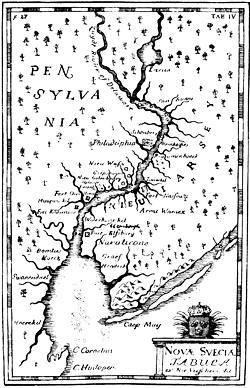
VISSCHER’S MAP, 1651.
This is an extract from Visscher’s map as given by Campanius, and the date is fixed from the presence on it of Fort Casimir (built that year) and Fort Elfsborg (abandoned that year). The name above the latter one is a manuscript addition in the copy used in the reproduction. It is also reproduced in Dr. Egle’s Pennsylvania, p. 43.
She was, to be sure, soon forced to withdraw by an armed yacht made ready by Printz; but her captain sending tidings of his situation to Manhattan, on the 25th of June Stuyvesant himself came overland, with a hundred and twenty men, being joined at Fort Nassau by eleven sail (including four well-furnished ships), and after proceeding up and down the river several times, with demonstrations of hostility, finally landed two hundred of his soldiers at a place on the west bank between Forts Christina and Elfsborg, called Sandhoeck (near New Castle, Delaware), where he built a small fort, to which he gave the name of Casimir. He likewise cut down the Swedish boundary posts, and sought by threats to compel the freemen to acknowledge the rule of the Hollanders. Abandoning and razing Fort Nassau, because of its less convenient position (too far up the stream), he stationed two men-of-war at his new fort, and collected toll of foreign vessels, even plundering and detaining several Virginia barques on account of duty demanded on their traffic in New Sweden for the previous four years. Printz was not strong enough to resist these acts by force; but when the Dutch director-general found some Indians ready to deny the rights of the Swedes, and even to undertake to sell to him the territory which he had seized, the Governor held a meeting on the 3d of July at Elfsborg with the heirs of the sachem who had conveyed to Governor Minuit the land between Christina and Bomtiens Udden, embracing the site of Fort Casimir, and obtained a confirmation of that grant, with a denial of the title of the savages who disposed of it to Stuyvesant. A protest was addressed to the latter from New Gottenburg on the 8th, claiming this region as well as that above Christina to Sankikan, and appealing for observance of “the praiseworthy alliance between her Royal Majesty of Sweden and the High and Mighty States-General.” Similar conferences were likewise held at New Gottenburg on the 13th and the 16th of the same month, resulting in still more explicit recognition, on the part of the natives, of the right of the Swedes to the territory on the Delaware; but neither this action of the savages nor a personal visit of Printz produced any effect on the Dutch director-general, although, it is said, at his departure the rival governors mutually promised to maintain “neighborly friendship and correspondence,” and to “refrain from hostile or vexatious deeds against each other.” The Governor of New Sweden related these events in letters of the 1st of August to Chancellor Oxenstjerna and Councillor Brahe, saying that he had been obliged to abandon all save his three principal posts (New Gottenburg, Nya Korsholm, and Christina), which he had strengthened and reinforced. In other respects the colony had prospered, reaping “very fine harvests at all the settlements, besides obtaining delicious crops of several kinds of fruit” that year. “Nothing is needed,” he adds, “but a much larger emigration of people, both soldiers and farmers, whom the country is now amply able to sustain.”
Although the Director-General of New Netherland had informed Printz that his invasion of New Sweden was authorized by the States of Holland, this was not precisely true; and the Directors of the Dutch West India Company, in a letter of the 4th of April, 1652, expressed considerable surprise at the boldness of his action, fearing it might be resented by her Swedish Majesty. The subject was, in fact, discussed by the Royal Council of Sweden on the 18th of March, when “the Queen declared it to be her opinion that redress might fairly be required of the States-General, and the Chancellor of the Kingdom deemed the question well worthy of deliberation.” Two days before, also, a consultation was held on the condition of New Sweden, at which were present, by special summons, Postmaster-General Beier (who, since the death of Admiral Fleming, acted as superintendent of the enterprise in Sweden), the book-keeper Hans Kramer (a zealous co-operator in the work), Henrik Gerdtson (only known as having been a resident of New Netherland), the assessor in the College of Commerce, and finally Lieutenant Schute, who gave a good report of the colony and the resources of the country, and attested the need of a greater number of emigrants. Of these, it was stated, plenty could be found “willing to go forth and settle;” and, in accordance with the judgment of the Queen and the sentiments of her Chancellor, it was resolved to commit the undertaking for the future to the care of the College of Commerce, and to order the Admiralty to prepare a vessel for another expedition to the Delaware. A few days later a ship was designated by her Majesty, namely, “Svanen,” but more than a whole year elapsed before the final execution of the project.
The situation of the colony, meanwhile, awakened great anxiety in the mind of the Governor. Not since the arrival of “Svanen,” between four and five years before, had any message or letter been received from Sweden, and the emigrants naturally began to fear that they had been abandoned by their sovereign. Some of them, therefore, left the country, while others were disposed to do so on a more favorable opportunity. According to a letter from Printz to Chancellor Oxenstjerna, dated Aug. 30, 1652, forty Dutch families had settled on the east side of the Delaware, although, like the rest of their compatriots in New Sweden, they were miserably provided for the pursuit of agriculture, and could only sustain themselves by traffic with the savages. In the latter particular, however, both Hollanders and English had great advantages over the Swedes, who having no cargoes of their own were forced to buy merchandise for barter of their rivals at double prices, or entirely lose their trade. This year, unfortunately, “the water spoiled the grain;” still, says Printz, the country “was in tolerably good condition, the freemen, with their cattle and other possessions, doing well, and the principal places being occupied and fortified as usual.” A vessel also had been built, of ninety or a hundred läster,[931] and was only waiting for sails and rigging, and some cannon, which cost too dear to purchase there. On the 26th of April, 1653, the Governor again wrote to the Chancellor, saying,—
“The people yet living and remaining in New Sweden, men, women, and children, number altogether two hundred souls. The settled families do well, and are supplied with cattle. The country yields a fair revenue. Still the soldiers and others in the Company’s service enjoy but a very mean subsistence, and consequently seek opportunity every day to get away, whether with or without leave, having no expectation of any release, as it is now five years and a half since a letter was received from home. The English trade, from which we used to obtain a good support, is at an end, on account of the war with Holland; while the fur-trade yields no profit, particularly now that hostilities have broken out between the Arrigahaga and Susquehanna Indians, from whom the beavers were procured. The Hollanders have quit all their places on the river except Fort Casimir, where they have settled about twenty-six families. To attempt anything against them with our present resources, however, would be of no avail. More people must be sent over from Sweden, or all the money and labor hitherto expended on this undertaking, so well begun, is wasted. We have always been on peaceful terms with the natives so long as our cargoes lasted, but whenever these gave out their friendship has cooled; for which reason, as well as for the sustenance of our colonists, we have been compelled to purchase a small cargo, by drawing a bill to be paid in Holland, which we expect to discharge by bartering half of the goods for tobacco.”
Finally, on the 14th of July, Governor Printz wrote once more to Brahe concerning a speculation of the Dutch and English for supplying tobacco for Sweden, through the aid of a Virginia merchant sailing under a Swedish commission; and, to give further weight to his appeals on behalf of the colony, he sent home his son, Gustaf Printz, who had been a lieutenant in the settlement since 1648. The situation of the emigrants did not improve during the summer; and nothing yet being heard from Sweden, the Governor felt he could wait no longer, and determined to leave the country. When this resolution became known, some of the Swedes were inclined to remove to Manhattan and put themselves under the protection of Stuyvesant; but being refused permission by the Director-General until instructions should come from Holland, they seem to have abandoned the project. Before taking his departure, Printz promised the inhabitants that he would either himself return in ten months or send back a vessel and cargo, and appointed in his place, as Vice-Governor of the Colony, his son-in-law Johan Papegåja. In company with his wife and Hendrick Huygen, and some others of the settlers, he left the Delaware in the beginning of October, and, crossing the ocean in a Dutch vessel, by the 1st of December reached Rochelle, from whence he went to Holland early in 1654, and in April of that year at last arrived in Sweden.

The reiterated appeals of Governor Printz to his superiors had begun at length to produce their effect, and Aug. 13, 1653, Queen Christina ordered the Admiralty to equip the ship “Vismar” for the expedition to New Sweden which had been projected (and for which “Svanen” had been selected) the previous year. Three hundred persons were to take part in it, and rigging was to be procured for the vessel which had been built on the Delaware. The same day, also, the College of War was enjoined to supply ammunition for the defence of the settlement. The College of Commerce, which was now fully organized, had, by her Majesty’s desire, assumed the direction of the colony, and the honor of restoring and actively conducting its affairs belongs to the President of that College, Erik, son of Axel, Oxenstjerna.
On the 25th of August Sven Schute was commanded to enrol fifty soldiers as emigrants, preferring such as possessed mechanical skill, sending them to Stockholm, besides two hundred and fifty persons, including some women, to be obtained in the forests of Värmland and Dal. Instead of the “Vismar,” the ship “Örnen” (the Eagle) was supplied by the Admiralty, which was ready to receive her cargo by autumn, and was put under the command of Johan Bockhorn, the mate of the ill-fated “Kattan;” while the West India Company fitted out “Gyllene Hajen,” which had borne the sixth expedition to New Sweden, to be commanded by Hans Amundson, who, as Captain of the Navy, was to superintend the construction of vessels and have charge of the defences of the colony. Schute was to accompany the expedition as “Captain in the country, and particularly over the emigrants to be sent out on ‘Örnen,’” both he and Amundson having been granted patents for land on the Delaware.[932]
Not aware that Printz had already left New Sweden, the Queen wrote a letter, December 12, permitting him to come home, but deprecating his doing so until arrangements could be made in regard to his successor; and the same day Johan Claesson Rising, the Secretary of the College of Commerce, was appointed Commissary and Assistant-Councillor to the Governor, at an annual salary of twelve hundred daler-silfver, besides receiving fifteen hundred daler-silfver for the expenses of his voyage, with the privilege of resuming his position in the College if he returned to Sweden.
He was also granted as much land in New Sweden as he could cultivate with twenty or thirty peasants, and received a Memoir from his sovereign, as well as Instructions from the College of Commerce, in twenty-four articles, signed by Erik Oxenstjerna and Christer Bonde on the 15th, prescribing his duties in the colony. He was to aid Printz in the administration of justice and the promotion of agriculture, trade, fishing, and so forth; and to endeavor to extend the settlement, encouraging the immigration of worthy neighbors of other nations. The Dutch were to be peacefully removed from Fort Casimir and the vicinity, if possible, care being taken that the English did not obtain a foothold on the Delaware; and a fort might be built, if needed, at the mouth of the river. On the way to America another commission was to be executed by Captain Amundson, in obtaining from the Spaniards at Porto Rico compensation for “Kattan.”
The final preparations for the departure of the ninth expedition to New Sweden were made under the directions of the book-keeper Hans Kramer, in Stockholm, and Admiral Thijssen Anckerhelm at Gottenburg, where “Örnen” remained for several months awaiting the arrival of “Gyllene Hajen” from the capital. This did not occur, however, until the close of January, 1654; and the ship having met with such disasters at Öresund as necessitated her stopping for repairs before she could continue her journey, “Örnen” was forced to sail alone. On the 27th of that month the emigrants, numbering (with women and children) three hundred and fifty souls, swore allegiance to their sovereign and to the West India Company, and on February 2 weighed anchor for the Delaware. No fewer than a hundred families, who had sold all their property in expectation of uniting in the expedition, were obliged to stay behind for lack of room. Besides Commissary Rising and Captain Schute, Elias Gyllengren, who had accompanied Governor Printz to New Sweden, sailed on this vessel, with the commission of lieutenant.
Two Lutheran clergymen, Petrus Hjort and Matthias Nertunius, the latter of whom had embarked on the unfortunate “Kattan,” and Peter Lindström, a military engineer, from whose letters, journal, and maps we derive much information concerning the Swedish colony, likewise were of the company. After a very adventurous voyage, during which half of the travellers fell sick, and the ship was dismantled by a violent hurricane, and nearly captured by the Turks, “Örnen” arrived on the 18th of May in Delaware Bay, and two days afterward at Fort Elfsborg, now deserted and in ruins. On the 21st she cast anchor off Fort Casimir, then in charge of Gerrit Bikker and a dozen Dutch soldiers. Although in the general instructions of his superiors Rising was cautioned against engaging in hostilities with the Hollanders, such was not the personal counsel of Axel Oxenstjerna; and a letter of Erik Oxenstjerna, dated Jan. 18, 1654, expresses the opinion that the present was “an opportunity for action which it were culpable to neglect.” This probably accounts for the energy exhibited by the Commissary in inaugurating his administration of the affairs of the colony; for, immediately on reaching the Dutch post, he sent Captain Schute with twenty soldiers to demand the surrender of the garrison. Not receiving a satisfactory reply, the Captain ordered Lieutenant Gyllengren to enter the place, where the latter soon triumphantly displayed the Swedish flag. The stronghold was named anew from the day of its capture (Trinity Sunday), Trefaldighets Fort (Trinity Fort). The next day “Örnen” sailed up to Christina, and on the 23d the inhabitants of that region assembled to hear the commands of their sovereign, and the Dutch settlers who were permitted to remain on the Delaware took the oath of fealty to Sweden,—an act which, with the surrender of Fort Casimir, was at once reported in a letter from Rising to Stuyvesant.
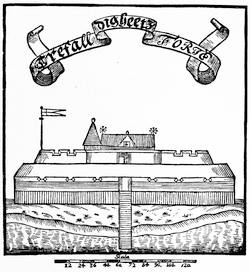
TRINITY FORT.
This follows the sketch given in Campanius, p. 76, copied from Lindström.
A meeting of the rest of the people for the same object was held at Tinicum on the 4th of June. Since the departure of Governor Printz the colonists had been greatly reduced in numbers through desertion and other causes, and Fort Nya Korsholm had been abandoned, and had afterwards been burned by the savages. Lieutenant Papegåja, therefore, cheerfully resigned the responsibility of the government to Commissary Rising, who retained him, however, as his counsellor, in conjunction with Captain Schute.
The new Governor spent several days in visiting the various settlements on the river, in company with Engineer Lindström, and on the 17th of June concluded a treaty of peace and friendship with the Indians, represented by ten of their sachems, at a council at Printzhof. The day after, “Lawrence Lloyd, the English commandant of Virginia,” took supper with Rising, and intimated the claim made by his nation to the Delaware, referring especially to the grant to Plowden, already spoken of. The Swedes defended their title to the territory by an appeal to the donations and concessions of the natives. The Virginians subsequently desiring to buy land and settle it with colonists, Rising, remembering the encroachments of the Puritans in New Netherland, felt constrained to deny their request until special instructions on the subject should be received from Sweden. On the other hand, an open letter was addressed by the Governor, July 3, to all Swedes who had gone to Virginia, inviting them to return to the Delaware, and promising that they should then be granted permission to betake themselves wherever they wished. On the 8th of the same month still further recognition of the Swedish dominion over the west shore of the river, from Fort Trinity to the Schuylkill, was obtained from two Indian chieftains, who met Rising for that purpose at Fort Christina. The relations with New England at this period were quite friendly, and a shallop was despatched thither, under the charge of Jacob Svenson, to procure a larger supply of food. At the same time an “Ordinance” was promulgated, determining many details “concerning the people, land, agriculture, woods, and cattle,” designed to promote the internal welfare of the colony. The progress made during the first two months of Governor Rising’s administration was very satisfactory; and hopeful letters were addressed by him, July 11 and 13, to Erik and Axel Oxenstjerna, respectively, and a full Report of measures recommended and adopted, bearing the latter date, was rendered to the College of Commerce. “For myself,” says the Governor, “thank God, I am very contented. There is four times more ground occupied at present than when we arrived, and the country is better peopled; for then we found only seventy persons, and now, including the Hollanders and others, there are three hundred and sixty-eight.” Some of the old freemen, induced by the immunity from taxation which had been accorded to persons who occupied new land, requested fresh allotments. These relinquished ground already cleared, which was purchased for the Company and settled with young freemen, who were supplied with seed and cattle, subject to an equal division with the Company of the offspring and of the crops. Rising also deemed it advisable to found a little town of artisans and mechanics, and for that purpose selected a field near Fort Christina, which Lindström laid out in lots, naming the place Christinahamn (Christina Haven), where he proposed “to build houses in the autumn;” and among sites for cities and villages he mentions Sandhoeck, or Trinity, where about twenty-two houses had been erected by the Hollanders. The Dutch fort at the latter spot, which he had captured, was reconstructed by Captain Schute, who armed it with four fourteen-pounder cannon taken from “Örnen.” In accordance with the permission granted, Rising selected for himself a piece of “uncleared land below Fort Trinity;” and since this was rather remote from his place of residence, Christina, he requested the privilege of cultivating “Timmerön (Timber Island), with the land to Skölpaddkilen (Tortoise-shell Creek).”
“Örnen” sailed from New Sweden in July, carrying home some of the older colonists, with Lieutenant Papegåja, who was deputed to give further information about the condition of the settlement. It was impossible to provide the vessel with a sufficient cargo, but Rising shipped some tobacco, which he had purchased in Virginia, to be sold on his private account in Sweden.
We now know that news of Printz’s departure from the Delaware was received soon after “Örnen” had left Gottenburg for America; and on the 28th of February, 1654, Queen Christina commissioned Rising as temporary Governor of New Sweden. By the same royal letter Hans Amundson was removed from the supervision of “the defence of the land and the forts,” and this duty was intrusted to Sven Schute, in unwitting anticipation of a request in Rising’s report of the following July. In consequence of incapacity exhibited on the voyage of “Gyllene Hajen” from Stockholm to Gottenburg, he was likewise replaced in the command of his vessel on the 4th of March, by Sven Höök, subject to the superior orders of Henrich von Elswich, of Lübeck, who was deputed to succeed Huygen as commissary in the colony, taking care of the cargoes and funds, and keeping the books of the Company.

In the hope of further developing the growth of the settlement, on the 16th of the same month Queen Christina granted a “privilegium for those who buy land or traffic in New Sweden or the West Indies,” in accordance with which, whoever purchased ground of the Company or of the Indians, with recognition of the jurisdiction of her Majesty was assured allodial enfranchisement for himself and his heirs forever; while subjects who exported goods which had already paid duty in the kingdom or dependencies of Sweden, should be free from all imposts on the Delaware, and were required to pay only two per cent (and nothing in Sweden) on what they exported from that river. On the 15th of April “Gyllene Hajen” was at last able to leave Gottenburg, with a number of emigrants and a quantity of merchandise, and arrived at Porto Rico on the 30th of June. Commissary Elswich was kindly received by the Spanish governor of the island, Don Diego Aquilera, and on presenting letters from his Catholic Majesty and Antonio de Pimentelli, the Spanish ambassador to Sweden, with his claim for damages for “Kattan,” he was offered 14,030 Spanish dollars as compensation from the Governor, but not deeming that sum sufficient declined to accept it, in view of the good-will of the Spaniards and the prospect of more satisfactory negotiations on the subject in the future. Amundson, who had been permitted to accompany the expedition with his family, to press his personal demands at Porto Rico, and settle as a private individual upon the Delaware, died on the 2d of July, and was buried on the island. The ship continued her voyage in August, and arrived off the continent September 12, when, either through the rashness or the malice of the mate, she was conducted into a bay, believed to be the Delaware, which was in fact the present New York harbor,—an error not discovered till she had reached Manhattan. So favorable an opportunity to retaliate the seizure of Fort Casimir by the Swedish governor was not suffered to pass unimproved by the energetic Stuyvesant, who detained the vessel and cargo, and on the refusal of Rising to visit New Amsterdam, or restore or pay for the Dutch fort, the Dutch governor confiscated the goods, and equipped “Gyllene Hajen,” under the name of “Diemen,” for the Curaçoa trade, in the service of his West India Company. Most of the emigrants remained in New Netherland; and Commissary Elswich, who vainly protested against such hostile actions, did not arrive at the Delaware until the close of November.
On the occasion of the English Minister Whitelocke’s embassy to Sweden, in May, 1654, a convention was adopted for the observance of friendship between New Sweden and the English colonies in America, and for the adjustment of their boundaries. Probably in ignorance of this, during the ensuing summer the colonists of New Haven renewed their project of forming a settlement on the Delaware. By order of the General Court of July 5, Governor Theophilus Eaton addressed a letter on the subject to Governor Rising, to which the latter replied August 1, affirming the right of his sovereign to “all the lands on both sides Delaware Bay and River,” and referring to “a conference or treaty before Mr. Endicott, wherein New Haven’s right was silenced or suppressed.” This was deemed unsatisfactory by the Commissioners of the United Colonies, to whom the letters were submitted by Governor Eaton on the 23d of September, and the same day another letter was written by these gentlemen to the Governor of New Sweden, reciting their purchases of land from the Indians, and desiring explanations. These communications being read at a General Court at New Haven on the 2d of November, a committee was appointed to receive applications from persons willing to emigrate, a company of whom appealed to the Court for aid in their enterprise on the 30th of the following January. This was readily accorded, and one of the number visited the Delaware to ascertain the sentiment of the people residing there; but returning in March, announced “little encouragement in the Bay,” while “a report of three ships being come to the Swedes seemed to make the business more difficult.” Although the undertaking was favored by the town of New Haven both then and during April, no attempt appears to have been made to carry it on.
During the summer of 1654 occurred the abdication of Queen Christina and the death of her aged Chancellor, Axel Oxenstjerna; but these events entailed no diminution of interest on the part of Sweden in the welfare of her colony in America. Observing that the partners in the West India Company “had not entered into their work with proper zeal,” on the 23d of December King Charles X. (Gustavus) instructed the College of Commerce “to admonish them to do their duty, under penalty of forfeiting their share of future profits,” and for their encouragement renewed the privilege of the monopoly of the tobacco trade in Sweden and her dependencies, which had been withdrawn Oct. 25, 1649.

In April, 1655, members of the Company, including Johan Oxenstjerna, son of the late chancellor, and Jöran Fleming, son of the late admiral, were summoned before the College of Commerce, now presided over by Olof Andersson Strömsköld, who at the same time became Director of the Company, to decide “whether they would contribute the capital needed to carry on the enterprise, or relinquish their pretensions.” The associates not relishing the latter alternative, the resolution was taken to disburse the last of their funds, and to try to induce other persons to join them in their work.
It was even proposed to form a new company, enjoying proprietorship of the land subject to the Crown of Sweden, with increased privileges and immunities,—the scheme for this (dated in May) being still preserved in the Archives of the kingdom, although it does not seem to have been adopted, since it lacks the royal signature, and is not comprised in the registry. On the 30th of July Johan Rising was commissioned by the College of Commerce “Commandant” in New Sweden,—the budget for 1655 also embracing a captain, a lieutenant, an ensign, a sergeant, two gunners, a corporal, a drummer, and thirty-six soldiers, a provost, and an executioner, with three clergymen, a commissary, an assistant-commissary, a fiscal, a barber-surgeon, and an engineer, at an annual expense of 4,404 riksdaler for the colony. In addition, certain employés were occupied in Stockholm, at a charge of 834 riksdaler. The Company likewise succeeded in fitting out the tenth and last Swedish expedition to the Delaware, under the command of the former Commissary, Hendrick Huygen, including Johan Papegåja, a Lutheran minister called Herr Matthias, six Finnish families from Värmland, and other emigrants, numbering in all eighty-eight souls, a hundred more being turned away for want of room. The vessel selected on this occasion was the “Mercurius,” which was ready to receive her cargo, consisting chiefly of linen and woollen stuffs and salt, in July, but was obliged to wait for cannon and ammunition, and did not sail from Gottenburg until the 16th of October. She bore a letter to Rising promising that another ship should very soon follow.
The efforts of the last two years to strengthen the Swedish dominion on the Delaware were certainly sufficiently earnest to merit success; but they were made too late. Their inadequacy to the present extremity rather hastened the bursting of the storm which engulfed the political destiny of the settlement. The Dutch West India Company had never entirely abandoned their claim to jurisdiction over the shores of the “South River,” and in April, 1654, apparently apprehending danger from the expedition under Rising, determined to occupy Fort Casimir with a force of two hundred men, who had been enlisted for service in New Netherland against the English,—a duty for which they were not needed, in consequence of the recent conclusion of peace. The surrender of this fort by Bikker was severely censured by the Directors, who addressed letters to Stuyvesant, in November, authorizing and urging the immediate undertaking of an expedition projected by him, “to avenge this misfortune, not only by restoring matters to their former condition, but also by driving the Swedes at the same time from the river.” Documents were likewise called for, to be sent to Holland, confirmatory of the claim of the Dutch company to the territory on the Delaware, in anticipation, doubtless, of diplomatic controversies likely to arise between the governments of Sweden and the States-General. Before the receipt of these communications, however, Stuyvesant had gone on a voyage to the West Indies, whence he did not return to New Amsterdam until the middle of the following summer. Meanwhile the Dutch Directors wrote to him approving of his seizure of “Gyllene Hajen,” and informing him that they had chartered “one of the largest and best ships” of Amsterdam, carrying thirty-six guns and two hundred men, to unite in the enterprise against New Sweden, which was to be undertaken by the authorities of New Netherland immediately on her arrival, in view of the “great preparations making in Sweden to assist their countrymen on the South River.” At the same time the orders of November were modified, so that the Swedes might be permitted to retain the ground on which Fort Christina was built, “with a certain amount of garden-land for the cultivation of tobacco,” provided they considered themselves subjects of the Dutch “State and Company.”
The ship referred to, called “De Waag” (the Balance), reached New Amsterdam on the 4th of August, 1655, and Director-General Stuyvesant at once completed his preparations for the invasion of New Sweden. A small army of six or seven hundred men[933] was at length assembled, and distributed upon “De Waag,” commanded by the Director-General in person, and six other vessels, comprising a galiot, flyboat, and two yachts, each mounting four guns. The whole force sailed on the 26th of August, arriving off Delaware Bay the following afternoon, and casting anchor the day after before the old Fort Elfsborg. On the night of the 30th their presence was made known to the Swedes by a vigorous discharge of cannon, and by the capture of some colonists by a party who had landed at Sandhoeck. The next morning the Dutch appeared in front of Fort Trinity. In consequence of intimations received from the Indians, and confirmed by the testimony of two spies who had been sent by Rising to Manhattan, the advent of the Hollanders was not unexpected, and the garrison had been increased to forty-seven men, while orders had been issued by the Governor to Captain Schute, who still commanded at that post, to fire upon the Dutch in case they should attempt to pass. This fact was communicated by that officer to persons sent by Stuyvesant to demand the surrender of the fort; and in a personal interview with the Director-General, Schute solicited the privilege of transmitting an open letter to Rising asking for further instructions. This was peremptorily denied him, although a delay was afterward granted till the next morning, for a response to the summons. Nevertheless during the night Schute contrived to get word to Christina about his perilous situation, and nine or ten men were despatched to his relief. These were intercepted, however, by the Hollanders, two only escaping capture by retreating to their boat and returning to their fort. At the same time a mutiny occurred among the garrison of Fort Trinity, and fifteen or sixteen men were disarmed and put under arrest. Two others deserted and reported the condition of affairs to Stuyvesant. Resistance now seeming worse than useless, Schute met the Director-General on “De Waag,” on the 1st of September, and consented to capitulate, on promise of security for the persons and private property of the officers, and the restoration to Sweden of the four iron guns and five field-pieces constituting the armament of the redoubt. The captain accordingly marched forth, with a guard of twelve men and colors flying, and the place was occupied by the Dutch. In consequence of the omission to stipulate a point of retreat for the garrison, on the 7th most of these were sent by Stuyvesant, on his flyboat, to New Amsterdam. The day of the surrender of Fort Trinity Factor Elswich presented himself before the Director-General, on the part of Governor Rising, “to demand an explanation of his conduct, and dissuade him from further hostilities,” but was compelled to return without receiving satisfaction. Measures were therefore immediately taken for the defence of Fort Christina, all the people available being assembled at that place, where they “labored by night and by day, strengthening the ramparts and filling gabions.” On the 2d of September the Dutch appeared in force on the opposite bank of Christina Creek, and on the 3d seized a Swedish shallop, and threatened to occupy a neighboring house. Lieutenant Sven Höök was sent by Rising to inquire their purpose, but he was detained by Stuyvesant on “De Waag.” By the 4th the Hollanders had planted gabions about the house referred to, and under cover of these threw up a battery; and on the 5th landed on the north side of Christina Creek, and erected batteries on Timber Island, at Christinahamn, and on the west side of the fort. They completed their investment of the place by anchoring their ships at the mouth of the Fiske Kil, on the southeast. Some volleys of shot, fired over-head from either side, assured Rising that he was entirely surrounded; and on the 6th a letter was brought by an Indian from Stuyvesant, “arrogantly claiming the whole river,” and requiring all the Swedes to evacuate the country, except such as were willing to remain under the protection of the Dutch. A council of war was immediately held, at which it was determined not to begin hostilities, but to act on the defensive, and, if possible, to repel assaults.