Part 2 — CHAPTER V.
Reading edition
DISCOVERY ALONG THE GREAT LAKES.
BY THE REV. EDWARD D. NEILL, A.B., ST. PAUL, MINNESOTA.
Corresponding Member Massachusetts Historical Society; Hon. Vice-President New England Historic Genealogical Society.
PURCHAS in his Pilgrimage quaintly writes, that “the great river Canada hath, like an insatiable merchant, engrossed all these water commodities, so that other streames are in a manner but meere pedlers.”[438]
This river of Canada, the Hochelaga of the natives, now known as the St. Lawrence, is the most wonderful of all the streams of North America which find their way into the Atlantic Ocean. Its extreme headwaters are on the elevated plateau of the continent, near the birthplace of the Mississippi, which flows into the Gulf of Mexico, and the Red River of the North, which empties into Hudson’s Bay. Expanding into the interior sea, Lake Superior, after rippling and foaming over the rocks at Sault Ste. Marie it divides into Lake Michigan and Lake Huron; and passing through the latter and Lake St. Claire[439] and Lake Erie, with the energy of an infuriated Titan it dashes itself into foam and mist at Niagara. After recovering composure, it becomes Ontario, the “beautiful lake,”[440] and then, hedged in by scenery varied, sublime, and picturesque, and winding through a thousand isles, it becomes the wide and noble river which admits vessels of large burden to the wharves of the cities of Montreal and Quebec; and until lost in the Atlantic, “many islands are before it, offering their good-nature to be mediators between this haughty stream and the angry ocean.”[441] The aborigines, who dwelt in rude lodges near its banks, chiefly belonged to the Huron or Algonquin family; and although there were variations in dialect, they found no difficulty in understanding one another, and in their light canoes they made long journeys, on which they exchanged the copper implements and agate arrow-heads of the far West for the shells and commodities of the sea-shore.[442]
Cartier, born at the time that the discoveries of Columbus were being discussed throughout Europe, who had toughened into a daring navigator, sailed in 1535 up the St. Lawrence, giving the river its present name, and on the 2d of October he reached the site now occupied by the city of Montreal. Escorted by wondering and excited savages, he went to the top of the hill behind the Indian village, and listened to descriptions of the country from whence they obtained caignetdaze, or red copper, which was reached by the River Utawas, which then glittered like a silver thread amid the scarlet leaves of the autumnal forest.[443] The explorations of the French and English in the western world led the merchants of both countries to seek for its furs, and to hope for a shorter passage through it to “the wealth of Ormus and of Ind.” Apsley, a London dealer in beads, playing-cards, and gewgaws in the days of Queen Elizabeth, wrote that he expected to live long enough to see a letter in three months carried to China by a route that would be discovered across the American continent, between the forty-third and forty-sixth parallel of north latitude.[444] The explorations of Champlain have been sketched in an earlier chapter.[445] To the incentive of the fur-trade a new impulse was added when, in the spring of 1609, some Algonquins visited the trading-post, and one of the chiefs brought from his sack a piece of copper a foot in length, a fine and pure specimen. He said that it came from the banks of a tributary of a great lake, and that it was their custom to melt the copper lumps which they found, and roll them into sheets with stones.
It was in 1611, when returning from one of his visits to France, where he had become betrothed to a twelve-year-old maiden, Helen, the daughter of a Huguenot, Nicholas Boullé, secretary of the King’s Chamber, that Champlain pushed forward his western occupation by establishing a frontier trading-post where now is the city of Montreal, and arranging for trade with the distant Hurons, who were assembled at Sault St. Louis.
Again in 1615, as we have seen, he extended his observations to Lake Huron, while on his expedition against the Iroquois. With the Hurons he passed the following winter, and visited neighboring tribes, but in the spring of 1616 returned to Quebec; and although nearly twenty years elapsed before his remains were placed in a grave in that city, he appears to have been contented as the discoverer of Lakes Champlain, Huron, and Ontario, and relinquished farther westward exploration to his subordinates.
The fur-trade of Canada produced a class of men hardy, agile, fearless, and in habits approximating to the savage.[446] Inured to toil, the voyageurs arose in the morning, “when it was yet dark,” and pushing their birch-bark canoes into the water, swiftly glided away, “like the shade of a cloud on the prairie,” and often did not break fast until the sun had been for hours above the horizon. Halting for a short period, they partook of their coarse fare, then re-embarking they pursued their voyage to the land of the beaver and buffalo, the woods echoing their chansons until the “shades of night began to fall,” when,
“Worn with the long day’s march and the chase of the deer and the bison, Stretched themselves on the ground, and slept where the quivering firelight Flashed on their swarthy cheeks, and their forms wrapped up in their blankets.”
Among the pioneers of these wanderers in the American forests was Étienne (Anglicized, Stephen) Brulé, of Champigny.[447] It has been mentioned that he went with Champlain to the Huron villages near Georgian Bay, but did not with his Superior cross Lake Ontario. After three years of roaming, he came back to Montreal, and told Champlain that he had found a river which he descended until it flowed into a sea,—the river by some supposed to be the Susquehanna, and the sea Chesapeake Bay.[448] While in this declaration he may have depended upon his imagination, yet to him belongs the undisputed honor of being the first white man to give the world a knowledge of the region beyond Lake Huron.
Sagard[449] mentions that this bold voyageur, with a Frenchman named Grenolle, made a long journey, and returned with a “lingot” of red copper and with a description of Lake Superior which defined it as very large, requiring nine days to reach its upper extremity, and discharging itself into Lake Huron by a fall, first called Saut de Gaston, afterward Sault Ste. Marie. Upon the surrender of Quebec, in 1629, to the English, Étienne Brulé chose to cast in his lot with the conquerors.[450] During the occupation of nearly three years the English heard many stories of the region of the Great Lakes, and they encouraged the aborigines of the Hudson and Susquehanna to purchase English wares.
The very year that the English occupied Quebec, Ferdinando Gorges and associates, who had employed men to search for a great lake, received a patent for the province of Laconia, and the governor thereof arrived in June, 1630, in the ship “Warwick,” at Piscataway, New Hampshire.[451] Early in June, 1632, Captain Henry Fleet, in the “Warwick,” visited the Anacostans, whose village stood on the shores of the Potomac where now is seen the lofty dome of the Capitol of the Republic. These Indians told Fleet that they traded with the Canada Indians; and on the 27th of the month, at the Great Falls of the Potomac, he saw two axes of the pattern brought over by the brothers Kyrcke to Quebec.[452]
About the time Quebec was restored to the French, on the 23d of September, 1633,[453] Captain Thomas Young received a commission from the King of England to make certain explorations in America.[454] The next spring he sailed, and among his officers was a “cosmographer, skilful in mines and trying of metals.” Entering Delaware Bay on the 24th of July, 1634, he sailed up the river, which he named Charles, in honor of the King, and by the 1st of September had reached the vicinity of the falls, above Trenton, the capital of New Jersey. In a report from this river, dated the 20th of October, he writes: “I passed up this great river, with purpose to have pursued the discovery thereof till I had found the great lake[455] from which the great river issues, and from thence I have particular reason to believe there doth also issue some branches, one or more, by which I might have passed into that Mediterranean Sea which the Indian relateth to be four days’ journey beyond the mountains; but having passed near fifty leagues up the river, I was stopped from further proceedings by a ledge of rocks which crosseth the river.”
He then expresses a determination the next summer to build a vessel above the falls, from whence he hoped to find “a way that leadeth into that mediterranean sea,” and from the lake. He continues: “I judge that it cannot be less than one hundred and fifty or two hundred leagues in length to our North Ocean; and from thence I purpose to discover the mouths thereof, which discharge both into the North and South Sea.”[456] The same month that Captain Young was exploring the Valley of the Delaware, an expedition left Quebec which was not so barren of results.
The year that Étienne Brulé came back from his wandering in the far West, in 1618, Jean Nicolet, the son of poor parents at Cherbourg, came from France, and entered the service of the fur company known as the “Hundred Associates,” under Champlain. For several years he lived among the Algonquins of the Ottawa Valley, and traded with the Hurons; and because of his knowledge of the language of these people, he was valued as an interpreter by the trading company. On the 4th day of July, 1634, on his eventful journey to distant nations, he was at Three Rivers, a trading post just begun. Threading his way in a frail canoe among the isles which extend from Georgian Bay to the extremity of Lake Huron, he, through the Straits of Mackinaw, discovered Lake Michigan, and turning southward found its Grand Bay, an inlet of the western shore, and impressive by its length and vastness.
Here were the Gens de Mer,[457] or Ochunkgraw, called by the Algonquins Ouinipegous or Ouinipegouek,—people of the salt or bad-smelling water; and the traders gave them the name of Puants.
Calling a council of these Winnebagoes and the neighboring tribes, and knowing the power of display upon the savage, he appeared before them in a grand robe of the damask of China, on which was worked flowers and birds of different colors, and holding a pistol in each hand,—a somewhat amusing reminder of the Jove of mythology, with his variegated mantle and thunderbolts. To many he seemed a messenger from the spirit-land; and the women and children, on account of his pistols, called him the man who bore thunder in his hands.[458]
Nicolet announced that he was a peacemaker, and that he desired that they should settle their quarrels and be on friendly terms with the French at Quebec. His words were well received, and one chief, at the conclusion of the conference, invited him to a feast, at which one hundred and twenty beaver were served. He came back to Three Rivers during the next summer, and renewed the interest in the discovery of a route to the Western Ocean, by the declaration that if he had paddled three days more on a large river (probably the Wisconsin), he would have found the sea. There was no design to deceive; but the great water at that distance was what has been called “the father of waters,” the Mississippi. Before December, 1635, he was appointed interpreter at the new trading-post of Three Rivers, and was there when, on Christmas Day, at the age of sixty-eight years, one who had been the life of the fur-trade and the Governor of New France, Samuel de Champlain, expired at Quebec. After the death of the fearless and enterprising Champlain, there was a lull in the zest for discovery, and then difficulties arose which for a time led to the abandonment of all the French trading-posts on the shores of Lake Huron and Lake Michigan.
The Iroquois had for years longed to be revenged upon those who, with the aid of French arquebuses, had defeated them in battle. Friendly relations were established between them and the Dutch traders on the banks of the Hudson River; and for beaver skins, powder and firearms were received. With these they gratified their desire for revenge. They became a terror to the savage and civilized in Canada; and traders and missionaries, women and infants, fled from their scalping-knives.
The following graphic description of affairs was penned in 1653:—
“The war with the Iroquois has dried up all sources of prosperity. The beaver are allowed to build their dams in peace, none being able or willing to molest them. Crowds of Hurons no longer descend from their country with furs for trading. The Algonquin country is depopulated, and the nations beyond it are retiring farther away, fearing the musketry of the Iroquois. The keeper of the Company’s store here in Montreal has not bought a single beaver-skin for a year. At Three Rivers, the small means in hand have been used in fortifying the place, from fear of an inroad upon it. In the Quebec storehouse all is emptiness.”
At length, in the year 1654, peace was effected between the French and Iroquois, and traders again appeared on the upper lakes, and Indians from thence appeared at Montreal. In August, two Frenchmen accompanied some Ottawas to the region of the upper lakes; and in the latter part of August, 1656, these traders came back to Quebec with a party of Ottawas,[459] whose canoes were loaded with peltries; and about this time a trader told a Jesuit missionary that “he had seen three thousand men together, for the purpose of making a treaty of peace, in the country of the Gens de Mer.”
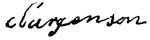
In 1659, while the new governor Argenson was experiencing the perplexities of administration at Quebec, the extremity of Lake Superior was reached by two energetic and intelligent traders,—Medard Chouart, known in history as Sieur des Groseilliers, and Pierre d’Esprit or Sieur Radisson. Chouart was born a few miles east of Meaux, and left France when he was about sixteen years of age, and became a trader among the Hurons. In 1647 he married the widow Étienne, of Quebec, the father of whom was the pilot Abraham Martin, whose baptismal name was given to the suburb of that city, the Plains of Abraham. She gave birth to a son in 1651, named after his father, and soon after died. Chouart, the Sieur des Groseilliers, then married Marguérite Hayet Radisson, and through her he became a sympathizer with the Huguenots.[460] His brother-in-law, Sieur Radisson, was born at St. Malo, France, and in 1656 married at Three Rivers, Canada, Elizabeth Herault; and after her death he espoused a daughter of the zealous Protestant, Sir David Kyrcke, to whose brothers Champlain had surrendered Quebec.
Pushing beyond Lake Superior, after travelling six days in a southwesterly direction, these traders found the Tionnotantés, a band incorporated with the Hurons, called by the French Petuns, because they had raised tobacco. These people dwelt in the country between the sources of the Black and Chippeway Rivers in Wisconsin, where they had been wanderers for several years. Driven from their homes by the Iroquois, they migrated with the Ottawas to the isles of Lake Michigan, at the entrance of Green Bay. Hearing that the Iroquois had learned where they had retreated, they descended the Wisconsin River until they found the Mississippi, and, ascending this twelve leagues, they came to the Ayoes (Ioway) River, now known as the Upper Iowa, and followed it to its source, being kindly treated by the tribes. Although buffaloes were in abundance, they were disappointed when they found no forests, and retracing their steps to the Mississippi, ascended to a prairie island above Lake Pepin, about nine miles below the mouth of the River St. Croix, and here they often received friendly visits from the Sioux. Confident through the possession of firearms, the Ottawas and Hurons conspired to drive the Sioux away, and occupy their country. The attack was unsuccessful, and they were forced to look for another residence. Going down the Mississippi, they entered one of the mouths of the Black River, near the modern city La Crosse, and the Hurons established themselves about its sources, while their allies, the Ottawas, continued their journey to Lake Superior, and stopped at a point jutting out like a bone needle,—hence called Chagouamikon.
Groseilliers and Radisson, while sojourning with the Hurons, learned much of the deep, wide, and beautiful river, comparable in its grandeur to the St. Lawrence,[461] on an isle of which they had for a time resided. Proceeding northward, these explorers wintered with the Nadouechiouec, who hunted and fished among the “Mille Lacs” of Minnesota, between the St. Croix and Mississippi Rivers. The Sioux, as these people were called by traders, were found to speak a language different from the Huron and Algonquin, and to have many strange customs. Women, for instance, were seen whose noses had been cut off as a penalty for adultery, giving them a ghastly look. Beyond, upon the northwest shore of Lake Superior, about the Grand Portage, and at the mouth of a river which upon early maps was called Groseilliers, there was met a separated warlike band of Sioux, called Poualak, who, as wood was scarce in the prairie region, made fire with coal (charbon de terre), and lived in skin lodges, although some of the more industrious built cabins of mud (terre grasse), as the swallows build their nests. The Assinepoualacs, or Assineboines, were feared by the Upper, as the Iroquois were dreaded by the Lower, Algonquins.
After an absence of about a year, these traders, about the 19th of August, 1660, returned to Montreal with three hundred Indians and sixty canoes laden with a “wealth of skins,”—
“Furs of bison and of beaver, Furs of sable and of ermine.”
The settlers there, and at Three Rivers, and at Quebec, were deeply interested by the tales of the vastness and richness of the new-found land and the peculiarities of the wild Sioux. As soon as the furs were sold and a new outfit obtained, Groseilliers, on the 28th of August, again took his way to the westward, accompanied by six Frenchmen, besides the aged Jesuit missionary René Menard and his servant Guérin.
Just beyond the Huron Isles and Huron Bay, which still retain their name, on the southern shore of Lake Superior, is Keweenaw Bay; and on the 15th of October, Saint Theresa’s Day in the calendar of the Church of Rome, the traders and René Menard, with the returning Indians, stopped, and here some traders and the missionary passed the winter among the Outaouaks.[462] Father Menard, discouraged by the indifference of these Indians, resolved to go to the retreat of the Hurons among the marshes of what is now the State of Wisconsin. He sent three Frenchmen who had been engaged in the fur-trade to inform them of his intention; but after journeying for some days they were appalled by the bogs, rapids, and long portages, and returned. Undaunted by their tale of the difficulties of the way, and some Hurons having come to visit the Outaouaks, he resolved to return with them. On the 13th of June, 1661, Menard and his servant, Jean Guérin, by trade a gunsmith, followed in the footsteps of their Indian guides, who, however, soon forsook them in the wilderness. For fifteen days they remained by a lake, and finding a small canoe in the bushes, they embarked with their packs; and week after week in midsummer, annoyed by myriads of mosquitoes, and suffering from heat, hunger, and bruised feet, they advanced toward their destination, and about the 7th of August, while Guérin was making a portage around a rapid in a river, Menard lost the trail. His servant, becoming anxious, called for him, yet there was no answer; and then he five times fired his gun, in the hope of directing him to the right path, but it was of no avail. Two days after, Guérin reached the Huron village, and endeavored without success to employ some of the tribe to go in search of the aged missionary.
Afterward Guérin met a Sauk Indian with Menard’s kettle, which he said he found in the woods, near footprints going in the direction of the Sioux country.[463] His breviary and cassock were said to have been found among the Sioux, and it is supposed that he was either killed, or died from exposure, and that his effects were taken by wandering Indians.[464] Perrot writes: “The Father followed the Ottawas to the Lake of the Illinois [Michigan], and in their flight to Louisiana [Mississippi] as far as the upper part of Black River.” Upon a map prepared by Franquelin, in 1688,[465] for Louis XIV., there is a route marked by a dotted line from the vicinity of Keweenaw Bay to the upper part of Green Bay. If Perrot’s statement is correct, Menard and his devoted attendant Guérin saw the Mississippi twelve years before Joliet and his companion looked upon the great river. The reports of Nicolet and Groseilliers led to a correction and enlargement of the charts of New France. On a map[466] accompanying the Historia Canadensis, by Creuxius, Lake Michigan is marked as “Magnus Lacus Algonquinorum, seu Lacus Fœtetium,” and a lake intended for Nepigon is called “Assineboines,” near which appear the nations Kilistinus and Alimibegôecus. The lake of the Assineboines is connected by a river with an arm of Hudson’s Bay called “Kilistonum Sinus;” and west of this is Jametus Sinus, or James’s Bay.
Pierre Boucher, an estimable man, sent by the inhabitants of Canada to present their grievances to the King of France, in a little book which in 1663 he published at Paris,[467] wrote: “In Lake Superior there is a great island which is fifty leagues in circumference, in which there is a very beautiful mine of copper.” He also stated that he had heard of other mines from five Frenchmen lately returned, who had been absent three years, and that they had seen an ingot of copper which they thought weighed more than eight hundred pounds, and that Indians after making a fire thereon would cut off pieces with their axes.
Groseilliers[468] returned to Canada, and on the 2d of May, 1662, again left Quebec, with ten men, for the North Sea, or Hudson’s Bay. His journey satisfied him that it was easy to secure the trade of the North by way of Lake Superior; but the Company of Canada, which had the monopoly of the fur traffic, looked upon Groseilliers’ plans for securing the peltries of distant tribes as chimerical. Thus disappointed and chagrined, Groseilliers next went to Boston, and presented his schemes to its merchants.
The Reverend Mother of the Incarnation, Superior of the Ursulines at Quebec, in allusion to him, wrote: “As he had not been successful in making a fortune, he was seized with a fancy to go to New England to better his condition. He excited a hope among the English that he had found a passage to the Sea of the North.” Passing from Boston to France, and securing the influence of the English ambassador at Paris, he went to London, and became acquainted with Prince Rupert, nephew of Charles I., who led the cavalry charge against Fairfax and Cromwell at Naseby. This brilliant man was now devoted to study and to the exhibition of the philosophical toy known to chemists as “Rupert’s drops;” but he was ready to indorse the project for extending the fur-trade, and seeking a northwestern passage to Asia. Men of science also showed interest in explorations which would enlarge the sphere of knowledge. The Secretary of the Royal Society wrote a too sanguine letter to Robert Boyle, the distinguished philosopher, and friend of the apostle Eliot. His words were: “Surely I need not tell you, from hence, what is said here with great joy of the discovery of a northwest passage, and by two Englishmen and one Frenchman, lately represented by them to his Majesty at Oxford, and answered by the grant of a vessel to sail into Hudson’s Bay and channel into the South Sea.” The ship “Nonsuch” was fitted out in charge of Captain Zachary Gillam, a son of one of the early settlers of Boston, and in this vessel Groseilliers and Radisson left the Thames in June, 1668, and the next September reached a tributary of Hudson’s Bay, which in honor of their chief patron was called Rupert’s River. The next year, by way of Boston, they returned to England, where their success was applauded; and in 1670 the trading company was chartered,—still in existence, and among the most venerable of English corporations,—known as “The Hudson’s Bay Company.”
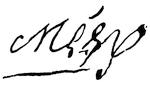

While the Canadian Fur Company did not respond to the proposals of Groseilliers for the extension of commerce, the French Government, in view of the fact that the Dutch on the south side of the St. Lawrence and in the valley of the Hudson River had acknowledged allegiance to England, determined to show more interest in the administration of Canadian affairs, and Mézy having been recalled, hardly before his death, Daniel de Remi, Seigneur de Courcelles, was sent as provincial governor. They also created the new office of Intendant of Justice, Police, and Finance, and made Talon—a person of talent, experience, and great energy—the first incumbent. Arriving at Quebec in 1665, Talon took decided steps for the promotion of agriculture, tanneries, and fisheries, and was enthusiastic in the desire to see the white banner of France, with its fleur-de-lis, floating in the far West.[469]
In the autumn of 1668 he took with him to France one of the hardy voyageurs who had lived in the region of the lakes, and on the 24th of the next February he writes to Colbert, the Colonial Minister, that this man “had penetrated among the western nations farther than any other Frenchman, and had seen the copper mine on Lake Huron. The man offers to go to that mine and explore, either by sea, or by the lake and river, the communication supposed to exist between Canada and the South Sea, or to the region of Hudson’s Bay.”
During the summer of 1669 the active and intelligent Louis Joliet, with an outfit of four hundred livres, and one Peré, perhaps the same person who gave his name to a river leading from Lake Nepigon to Hudson’s Bay,[470] with an outfit of one thousand livres, went to search for copper on the shores of Lake Superior, and to discover a more direct route from the upper lakes to Montreal. Joliet went as far as Sault Ste. Marie, where he did not long remain; but in the place of a mine found an Iroquois prisoner among the Ottawas at that point, and obtained permission to take him back to Canada. In company with another Frenchman, he was led by the Iroquois from Lake Erie through the valley of the Grand River to Lake Ontario, and on the 24th of September, at an Iroquois village between this river and the head of Burlington Bay, he met La Salle with four canoes and fifteen men, and the Sulpitian priests, Galinée and De Casson, who on the 6th of July had left the post at La Chine.
La Salle, alleging ill health, at this point separated from the missionaries, and Joliet, before proceeding toward Montreal, drew a chart of the upper lakes for the guidance of the Sulpitians. By the aid of this the priests reached Lake Erie through a direct river, and near the lake they erected a hut and passed the winter. On the 23d of March, 1670, they resumed their voyage, and on the 25th of May reached Sault Ste. Marie, where there were about twenty-five Frenchmen trading with the Indians. Here was also the mission of the Jesuits among the Ottawas,—a square enclosure defended by cedar pickets twelve feet high, and within were a small house and chapel which had recently been built. Remaining but three days, they returned to Montreal by the old route along the French River of Lake Huron to Lake Nipissing, and thence by portage to the Ottawa River.
About the time of their arrival Talon had learned from some Algonquins that two European vessels had been seen in Hudson’s Bay, and he wrote to Colbert,—
“After reflecting on all the nations that might have penetrated as far north as that, I can fall back only on the English, who under the conduct of one named Desgrozeliers, in former times an inhabitant of Canada, might possibly have attempted that navigation, of itself not much known, and not less dangerous. I design to send by land some men of resolution to invite the Kilistinons, who are in great numbers in the vicinity of that bay, to come down to see us as the Ottawas do, in order that we may have the first handling of what the latter savages bring us, who, acting as retail dealers between us and those natives, make us pay for the roundabout way of three or four hundred leagues.”
To draw the trade from the English, it was determined to make an alliance of friendship with all the nations around Lake Superior. One of the Frenchmen[471] who roved among the tribes west of Lake Michigan, and in the valley of the Fox River, was Nicholas Perrot. Accustomed from boyhood to the scenes and excitements of frontier life, quick-witted, with some education, a leading spirit among coureurs des bois, and looked upon with respect by the Indians, he was an intelligent explorer of the interior of the continent. In the spring of 1670, when twenty-six years of age, Perrot left Green Bay with a flotilla of canoes filled with peltries and paddled by Indians. By way of Lake Nipissing he reached the Ottawa River, and descended to Montreal, and in July he visited Quebec. By the Intendant Talon he was invited to act as guide and interpreter to his deputy, Simon François Daumont, the Sieur Saint Lusson, who on the 3d of September was commissioned to go to Lake Superior to search for copper mines and confer with the tribes.
It was not until October that Perrot and Saint Lusson left Montreal. When Manitoulin Island in Lake Huron was reached, it was decided that Saint Lusson should here remain for the winter hunting and trading, while Perrot went on and visited the tribes of the Green Bay region. On the 5th of May, 1671, he met Saint Lusson at Sault Ste. Marie, accompanied by the principal chiefs of the Sauks, Menomonees, Pottawattamies, and Winnebagoes. After the delegates of fourteen tribes had arrived, a council was held, on the 14th of June, by Saint Lusson, in the presence of the Jesuits André, Claude Allouez, Gabriel Dreuilletes, and the head of the mission Claude d’Ablon, Nicholas Perrot the interpreter, Louis Joliet, and some fur-traders;[472] and a treaty of friendship was formed, and the countries around Lakes Huron and Superior were taken possession of in the name of Louis XIV., King of France. Talon announces the result of the expedition in these words:—
“Sieur de Saint Lusson is returned, after having advanced as far as five hundred leagues from here, and planted the cross and set up the King’s arms in presence of seventeen Indian nations,[473] assembled on this occasion from all parts, all of whom voluntarily submitted themselves to the dominion of his Majesty, whom alone they regard as their sovereign protector. This was effected, according to the account of the Jesuit Fathers, who assisted at the ceremony, with all the formality and display the country could afford. I shall carry with me the record of taking possession prepared by Sieur de Saint Lusson for securing those countries to his Majesty.
“The place to which the said Sieur de Saint Lusson has penetrated is supposed to be no more than three hundred leagues from the extremities of the countries bordering on the Vermillion or South Sea. Those bordering on the West Sea appear to be no farther from those discovered by the French. According to the calculation made from the reports of the Indians and from maps, there seems to remain not more than fifteen hundred leagues of navigation to Tartary, China, and Japan. Such discoveries must be the work of either time or of the King. It can be said that the Spaniards have hardly penetrated farther into the interior of South, than the French have done up to the present time into the interior of North, America.
“Sieur de Lusson’s voyage to discover the South Sea and the copper mine will not cost the King anything. I make no account of it in my statements, because, having made presents to the savages of the countries of which he took possession, he has reciprocally received from them in beaver that which replaces his outlay.”
The Hurons and Ottawas did not arrive in time to witness the formal taking possession of the country by the representative of France, having been detained by difficulty with the Sioux. About the year 1662, the Hurons, who had lingered about the sources of the Black River of Wisconsin, joined again their old allies, the Ottawas, who were clustered at the end of the beautiful Chegoimegon Bay of Lake Superior. The Ottawas lived in one village, made up of three bands,—the Sinagos, Kenonché, and Kiskakon. After this union, a party of Saulteurs, Ottawas, Nipissings, and Amikoués were securing white-fish not far from Sault Ste. Marie, when they discovered the smoke of an encampment of about one hundred Iroquois. Cautiously approaching, they surprised and defeated their dreaded foes, at a place to this day known as Iroquois Point, just above the entrance of Lake Superior.
After this, the Hurons, Ottawas, and Saulteurs returned in triumph to Keweenaw and Chegoimegon, and remained in quietness until a number of Hurons went to hunt west of Lake Superior, and were captured by some of the Sioux. While in captivity they were treated with kindness, asked to come again, and sent away with presents. Accepting the invitation, the Sinagos chief, with some warriors and four French traders, visited the Sioux, and were received with honor and cordiality. Again, a few Hurons went into the Sioux country, and some of the young warriors made them prisoners; but the Sioux chief, who had smoked the calumet with the Sinagos chief, insisted upon their release, and journeyed to Chegoimegon Bay to make an apology. Upon his arrival, the Hurons proved tricky, and persuaded the Ottawas to put to death their visitor. It was not strange that the Sioux were surprised and enraged when they received the intelligence, and panted for revenge. Marquette, who had succeeded Allouez at the mission which was between the Huron and Ottawa villages, in allusion to this disturbance, wrote:—
“Our Outaouacs and Hurons, of the Point of the Holy Ghost, had to the present time kept up a kind of peace with them [the Sioux], but matters having become embroiled during last winter, and some murders having been committed on both sides, our savages had reason to apprehend that the storm would soon burst on them, and they deemed it was safer for them to leave the place, which they did in the spring.”
The Jesuits retired with the Hurons and Ottawas, and more than one hundred and fifty years elapsed before another Christian mission was attempted in this vicinity, under the “American Board of Foreign Missions.” The retreating Ottawas did not halt until they reached an old hunting-ground, the Manitoulin Island of Lake Huron, and the Hurons stopped at Mackinaw. From time to time they formed war-parties with other tribes, against the Sioux. In 1674 some Sioux warriors arrived at Sault Ste. Marie to smoke the pipe of peace with adjacent tribes. At a grand council the Sioux sent twelve delegates, and the others forty. During the conference one of the opposite side drew near and brandished his knife in the face of a Sioux, and called him a coward. The Sioux replied he was not afraid, when the knife was plunged into his heart, and he died. A fight immediately began, and the Sioux bravely defended themselves, although nine were killed. The two survivors fled to the rude log chapel of the Jesuit mission, and closed the door, and finding there some weapons they opened fire upon their enemies. Their assailants wished to burn down the chapel, which the Jesuits would not allow, as they had beaver skins stored in the loft. In the extremity a lay brother of the mission, named Louis Le Boeme, advised the firing of a cannon shot at the cabin’s door. The discharge killed the last two of the Sioux.[474] Governor Frontenac made complaint against Le Boeme for this conduct, in a letter to Colbert.[475]
After the Iroquois had made a treaty of peace with the French, they did not cease to lurk and watch for the Ottawas as they descended to trade at Montreal, Three Rivers, or Quebec, and, as occasion offered, rob them of their peltries and tear their scalps from their heads. Governor Courcelles, in 1671, determined to establish a post on Lake Ontario which would act as a barrier between the Ottawas and Iroquois, and at the same time draw off the trade from the Hudson River.
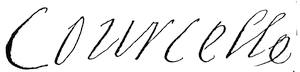
Before entering upon his journey he had constructed a large plank flat-boat to ascend the streams,—a novelty which was a surprise. It was of two or three tons burden, and provided with a strong rope to haul it over the rapids and shoal places. On the morning of the 3d of June the expedition left Montreal, consisting of the flat-boat, filled with supplies and manned by a sergeant and eight soldiers, and thirteen bark canoes. The party numbered fifty-six persons, who were active and willing to endure the hardships of the journey. At night, with axe in hand, the men cut poles for a lodge frame, which they covered with bark stripped from the trees. The Governor, to protect himself from mosquitoes, had a little arbor made on the ground, about two feet high, and covered with a sheet, which touched the ground on all sides, and prevented the approach of the insects which disturb sleep and irritate the flesh. The second day of the voyage the flat-boat found difficulty in passing the first rapids, and Courcelles plunged into the water, and with the aid of the hardy voyageurs pushed the boat into smooth water. On the 10th of June the first flat-boat reached the vicinity of Lake Ontario, and the Governor two days after, in a canoe, reached the entrance of the lake. Here he found a stream with sufficient water to float a large boat, and bordered by fine land, which would serve as a site for a post. On the 14th, at the time that the deputy Saint Lusson, at Sault Ste. Marie, was taking possession of the region of Lake Superior, Courcelles was descending the rapids of the St. Lawrence on his return to Montreal.[476]
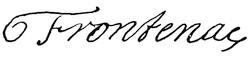
The report of this expedition was sent to Louis XIV., and it met with his approval; but for the benefit of his health Courcelles was permitted to return to France, and on the 9th of April, 1672, Louis de Buade, Count de Frontenac, was appointed Governor and Lieutenant-General in Canada and other parts belonging to New France. It was not until the leaves began to grow old that Frontenac arrived in Quebec, and, full of energy, was ready to push on the work of exploration which had been initiated by his predecessor. Upon the advice of the Intendant Talon, he soon despatched Louis Joliet to go to the Grand River, which the Indians alleged flowed southward to the sea. Joliet (often spelled Jolliet) was born in Canada, the son of a wagon-maker. In boyhood he had been a promising scholar in the Jesuits’ school at Quebec, but, imbibing the spirit of the times, while a young man he became a rover in the wilderness and a trader among Indians. Three years before his appointment to explore the great river beyond the lakes, he had been sent with Peré to search for a copper-mine on Lake Superior, and the year before he stood by the side of Saint Lusson as he planted the arms of France at Sault Ste. Marie.
It was not until Dec. 8, 1672, that he reached the Straits of Mackinaw, and as the rivers between that point and the Mississippi were by this time frozen, he remained there during the winter and following spring, busy in questioning the Indians who had seen the great river as to its course, and as to the nations on its shores. On May 17, 1673, he began his journey toward a distant sea. At Mackinaw he found Marquette, who became his companion, but had no official connection with the expedition, as erroneously mentioned by Charlevoix. With five voyageurs and two birch-bark canoes, Joliet and Marquette, by the 7th of June, had reached a settlement of Kikapous, Miamis, and Mascoutens, in the valley of the Fox River, and three leagues beyond they found a short portage by which they reached the Wisconsin River, and following its tortuous course amid sandbars and islands dense with bushes, on the 17th of June they entered the broad great river called the Mississippi, walled in by picturesque bluffs, with lofty limestone escarpment, whose irregular outline looked like a succession of the ruined castles and towers of the Rhine. In honor of his patron, Governor Frontenac, Joliet called it Buade, the Governor’s family name. Passing one great river flowing from the west, he learned that through its valley there was a route to the Vermeille Sea [Gulf of California], and he saw a village (which was about five days’ journey from another) which traded with the people of California.[477]
This river is without name on his map,[478] but on its banks he places villages of the Missouri, Kansa, Osages, and Pawnee tribes. The River Ohio he marked with the Indian name Ouabouskigou; and the Arkansas, beyond which he did not descend, and which was reached about the middle of July, he named Bazire, after a prominent merchant of Quebec interested in the fur-trade. After ascending the stream, he entered the Illinois River, which he designated as the Divine, or Outrelaise, in compliment, it is supposed, to Frontenac’s wife, a daughter of Lagrange Trianon, noted for her beauty, and Mademoiselle Outrelaise, her fascinating friend, who were called in Court circles “les divines.”[479] Upon the west bank of one of its tributaries, the Des Plaine River, there stands above the prairie a remarkable elevation of clay, sand, and gravel, a lonely monument which has withstood the erosion of a former geologic age. It was a noted landmark to the Indians in their hunting, and to the French voyageurs on their trading expeditions. By this Joliet was impressed, and he gave the elevation his own name, Mont Joliet, which it has retained, while all the others he marked on his map have been forgotten.[480] It was not until about the middle of August, 1674, that he returned to Quebec, and Governor Frontenac, on the 14th of November, writes to the French Government,—
“Sieur Joliet, whom Monsieur Talon advised me, on my arrival from France, to despatch for the discovery of the South Sea, returned three months ago, and found some very fine countries, and a navigation so easy through the beautiful rivers, that a person can go from Lake Ontario and Fort Frontenac in a bark to the Gulf of Mexico, there being only one carrying place, half a league in length, where Lake Ontario communicates with Lake Erie. A settlement could be made at this post, and another bark built on Lake Erie.... He has been within ten days’ journey of the Gulf of Mexico, and believes that water communication could be found leading to the Vermillion and California Seas, by means of the river that flows from the west, with the Grand River that he discovered, which rises from north to south, and is as large as the St. Lawrence opposite Quebec.
“I send you, by my secretary, the map[481] he has made of it, and the observations he has been able to recollect, as he lost all his minutes and journals in the wreck he suffered within sight of Montreal, where, after having completed a voyage of twelve hundred leagues, he was near being drowned, and lost all his papers, and a little Indian whom he brought from those countries.”
Governor Frontenac was satisfied with the importance of establishing a post on Lake Ontario, as Courcelles had suggested, and in the summer of 1673 visited the region. On the 3d of June he departed from Quebec, and at five o’clock in the afternoon of the 15th was received at Montreal amid the roar of cannon and the discharge of musketry. On the 9th of July he had reached a point supposed to be in the present town of Lisbon, in St. Lawrence County, New York, at the head of all the rapids of the St. Lawrence; and while sojourning there, at six o’clock in the evening two Iroquois canoes arrived with letters from La Salle, who two months before went into their country.
After exchanging civilities with the Iroquois, and guided by them, Frontenac was led into a beautiful bay about a cannon-shot from the River Katarakoui, which so pleased him as a site for a post, that he stayed until sunset examining the situation. The next day his engineer, Sieur Raudin, was ordered to trace out the plan of a fort, and on the morning of the 14th, at daybreak, soldiers and officers with alacrity began to clear the ground, and in four days the fort was finished, with the exception of the abatis. After designating the garrison and workmen who were to remain at the post, and making La Salle the commandant, on the 27th Frontenac began his homeward voyage, about the time that Joliet began to ascend the Mississippi from the mouth of the Arkansas.[482]
The reports of Joliet led to the formation of plans for the occupation of the valley of the Mississippi by the leading merchants and officers of Canada; and the application of Joliet, its first explorer, to go with twenty persons and establish a post among the Illinois, was refused by the French Government.[483]
Frontenac, in the fall of 1674,[484] sent La Salle to France. Under the date of the 14th of November, he wrote to Minister Colbert that La Salle was a man of character and intelligence, adapted to exploration, and asking him to listen to his plans. A few weeks before La Salle’s arrival in Paris, the Prince of Condé had fought a battle at Seneffe, and obtained a victory over the Prince of Orange and the allied generals, and every one was full of the praise of the King’s household guards, who without flinching remained eight hours under the fire of the enemy. La Salle could hardly have thought at that moment that the future was yet to reveal as his associates in the exploration of the distant valley of the Mississippi a gend’arme of his Majesty’s guard and a field chaplain of that bloody day.[485] In a memorial to the King, he asked for the grant of Fort Frontenac and lands adjacent, agreeing to repay Frontenac the money he had expended in establishing the post, to repair it, and keep a garrison therein at his own expense. He further asked, in consideration of the voyages he had made at his own expense during the seven years of his residence in Canada, that he might receive letters of nobility.[486] The King, upon the report of Colbert, accepted the offer, and on the 13th of May, 1675, conferred upon La Salle the rank of esquire, with power to attain all grades of knighthood and gendarmerie.[487] This year he came back to Canada in the same ship with Louis Hennepin, and going to Fort Frontenac in August, 1676, he increased the buildings, erected a strong wall on the land side, and strengthened the palisades toward the water. From time to time he had cattle brought thither from Montreal, and constructed barks to navigate the lake, keep the Iroquois in check, and deter the English from trading in the region of the upper lakes.[488] In November, 1677, he made another visit to France,[489] and obtained a permit, dated the 12th of May, 1678, allowing him to explore the western part of New France, with the prospect of penetrating as far as Mexico.[490] The expedition was to be at the expense of himself and associates, with the privilege of trade in buffalo skins, but with the express condition that he should not trade with the Ottawas and other Indians who brought their beavers to Montreal.
Frontenac was not only in full sympathy with La Salle, but with other enterprising adventurers, and there is but little doubt that he shared the profits of the fur-traders. About the time that La Salle was improving Fort Frontenac as a trading-post, Raudin,[491] the engineer who had laid out the plan of that fort, was sent by Frontenac with presents to the Ojibways and Sioux, at the extremity of Lake Superior.[492] A nephew of Patron, named Daniel Greysolon du Lhut,[493] and who had made two voyages from France before 1674, had then entered the army as squire of Marquis de Lassay, was in the campaign of Franche-Comté and at Seneffe, having now returned to Quebec was permitted to go on a voyage of discovery in the then unknown region where dwelt the Sioux and Assineboines.
On the 1st of September, 1678, with three Indians and three Frenchmen, Du Lhut left Montreal for Lake Superior, and wintered at some point on the shore of, or in the vicinity of, Lake Huron. On the 5th of April, 1679, he was in the woods, three leagues from Sault Ste. Marie, when he wrote in the third person to Governor Frontenac: “He will not stir from the Nadoussioux until further orders; and peace being concluded he will set up the King’s arms, lest the English and other Europeans settled toward California take possession of the country.”[494] On the 2d of July, 1679, Du Lhut planted the arms of France beyond Lake Superior, among the Isanti Sioux,[495] who dwelt at Mille Lacs, in what is now the State of Minnesota, and then visited the Songaskitons (Sissetons) and Houetbatons, bands of the Sioux, whose villages were one hundred and twenty leagues beyond. Entering by way of the St. Louis River, it would be easy, by a slight portage, to reach the Sioux village, which was at that time on the shores of the Sandy Lake of the Upper Mississippi.
Among those who went to the Lake Superior region at the same time as Du Lhut, were Dupuy, Lamonde, and Pierre Moreau, alias La Taupine, who had been with Saint Lusson at the planting of the French arms in 1671 at Sault Ste. Marie, and was trading among the Illinois when Joliet was in that country. In the summer of 1679 La Taupine returned, and it was rumored that he had obtained among the Ottawas in two days nine hundred beavers. Duchesneau, Intendant of Justice, feeling that Moreau had violated the law forbidding coureurs des bois to trade with the Indians, had him, in September, arrested at Quebec; but Moreau produced a license from Governor Frontenac, permitting him, with his two comrades, to go to the Ottawas, to execute his secret orders, and so was liberated. He had not left the prison but a short time when an officer and some soldiers came with an order from Frontenac to force the prison, in case he were still there. In a letter to Seignelay he writes: “It is certain, my Lord, that the said La Taupine carried goods to the Ottawas, that his two comrades remained in the country, apparently near Du Lhut, and that he traded there.”[496]
On the 15th of September Du Lhut had returned to Lake Superior, and at Camanistigoya, or the Three Rivers, the site of Fort William of the old Northwest Company, he held a conference with the Assineboines, an alienated band of the Sioux, and other northern tribes, and persuaded them to be at peace, and to intermarry with the Sioux. The next winter he remained in the region near the northern boundary of Minnesota; but in June, 1680, he determined to visit the Issati Sioux by water, as he had before gone to their villages by land.[497] With two canoes, an Indian as an interpreter, and four Frenchmen,—one of whom was Faffart, who had been in the employ of La Salle at Fort Frontenac,[498]—he entered a river eight leagues from the extremity of Lake Superior, now called Bois Brulé, a narrow, rapid stream, then much obstructed by fallen trees and beaver-dams. After reaching its upper waters a short portage was made to Upper Lake St. Croix, the outlet of which was a river, which, descending, led him to the Mississippi.
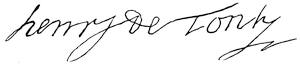
Two weeks after Du Lhut left Montreal to explore the extremity of Lake Superior, La Salle returned from France, accompanied by the brave officer Henry Tonty, who had lost one hand in battle, but who, with an iron substitute for the lost member, could still be efficient in case of a conflict. He also brought with him, beside thirty persons, a supply of cordage, anchors, and other material to be used at Fort Frontenac and on his proposed journey toward the Gulf of Mexico.

After reaching Frontenac, La Motte, who had been a captain in a French regiment, was sent in advance, with the Franciscan Hennepin and sixteen men, to select a site for building a vessel to navigate the upper lakes. On the 8th of January, 1679, La Salle and Tonty, late at night, reached La Motte’s encampment at the rapids below the Falls of Niagara, only to find him absent on a visit to the Senecas. The next day La Salle climbed the heights, and following the portage road round the cataract he found at the entrance of Cayuga Creek an admirable place for a ship-yard. La Motte having returned to his encampment, with La Salle and Tonty he visited the selected site, and Tonty was charged with the supervision of the ship-builders.
Four days later, the keel of the projected vessel was laid, and in May it was launched with appropriate ceremonies, and named after the fabulous animal—the symbol of strength and swiftness,—the “Griffin,” two of which were the supporters of the escutcheon of Count Frontenac. Tonty, on the 22d of July, was sent forward with five men to join fourteen others who had been ordered by La Salle to stop at the mouth of the Detroit River. On the 7th day of August the “Griffin” spread her sails upon her voyage to unknown waters whose depths had never been sounded, and early on the morning of the 10th reached Tonty and his party, who had anxiously awaited its coming, and received them on board. On the 10th of August, the day in the calendar of the Church of Rome devoted to the memory of the virgin Saint Clare, foundress of the Franciscan Order of Poor Clares, the vessel entered the lake called by the Franciscan priests after her, although now written St. Clair. On the 27th they reached the harbor of Mackinaw,—a point on the mainland south of the straits; and upon his landing La Salle was greatly surprised to find there a number of those whom he had sent, at the close of the last year, to trade for his benefit with the Illinois. Their excuse for their unfaithfulness was credence in a report that La Salle was a visionary, and that his vessel would never arrive at Mackinaw. Four of the deserters were arrested. La Salle, learning that two more—Hemant and Roussel, or Roussellière—were at Sault Ste. Marie, sent Tonty on the 29th with six men to take them into custody. While the lieutenant was absent on this errand, La Salle lifted his anchor and set sail for the Grand Bay, now Green Bay, where he found among the Pottawattamies still others of those whom he had sent to the Illinois, and who had collected furs to the value of twelve thousand livres. From this point he determined to pursue his journey southward in a canoe, and to send back the “Griffin” with the peltries here collected. On the 18th of September the ship—in charge of the pilot, a supercargo, and five sailors—sailed for the magazine at the end of Lake Erie, but it never came to Mackinaw. Some Indians said it had been wrecked, but there was never any certain information obtained. A Pawnee lad, fourteen or fifteen years of age, who was a prisoner among the Indians near a post established among the Illinois, reported that the pilot of the “Griffin” had been seen among the Missouri tribes, and that he had ascended the Mississippi, with four others, in two canoes, with goods stolen from the ship, and some hand-grenades. It was the intention of this party to join Du Lhut, and if they could not find him, to push on to the English on Hudson’s Bay. Meeting some hostile Indians, a fight occurred, and all the Frenchmen were killed but the pilot and another, who were sold as prisoners to the Missouri Indians. In the chapter on the exploration of the lakes, it is only necessary to allude to that portion of La Salle’s expedition which pertains to this region.
After La Salle had established Fort Crèvecœur among the Illinois, on the 29th of February, 1680, he sent Michel Accault (often spelt Ako) on a trading and exploring expedition to the Upper Mississippi. He took with him Anthony Augelle, called the Picard, and the Franciscan priest Louis Hennepin, in a canoe, with goods valued at about a thousand livres. In ascending the Mississippi the party was hindered by ice near the mouth of the Illinois River until the 12th of March, when they resumed their voyage. Following the windings of the Mississippi, La Salle mentions in a letter written on the 22d of August, 1682, at Fort Frontenac,[499] that they passed a tributary from the east called by the Sioux Meschetz Odéba,[500] now called Wisconsin, and twenty-three or twenty-four leagues above they saw the Black River, called by the Sioux Chabadeba.[501] About the 11th of April, at three o’clock in the afternoon, a war-party of Sioux going south was met, and Accault, as the leader, presented the calumet,[502] and gave them some tobacco and twenty knives. The Sioux gave up their expedition, and conducted Accault and his companions to their villages. On the 22d of April the isles in the Mississippi were reached, where two Sioux had been killed by the Maskoutens, and they stopped to weep over their death, while Accault, to assuage their grief, gave them in trade a box of goods and twenty-four hatchets. Arriving at an enlargement of the river, about three miles below the modern city of St. Paul, the canoes were hidden in the marshes, and the rest of the journey to the villages of Mille Lacs was made by land. Six weeks after they reached the villages, the Sioux determined to descend the Mississippi on a buffalo hunt, and Hennepin and Augelle went with the party.
When Du Lhut reached the Mississippi from Lake Superior, he found eight cabins of Sioux, and learned that some Frenchmen were with the party hunting below the St. Croix River. Surprised by the intelligence, leaving two Frenchmen to guard his goods, he descended in a canoe with his interpreter and his other two men, and on the morning of the third day he found the hunting camp and the Franciscan Hennepin. In a letter to Seignelay, written while on a visit in France, Du Lhut writes:—
“The want of respect which they showed to the said Reverend Father provoked me, and this I showed them, telling them he was my brother. And I had him placed in my canoe to come with me into the villages of the said Nadouecioux, whither I took him; and a week after our arrival I caused a council to be convened, exposing the ill treatment which they had been guilty of, both to the said Reverend Father and to the other two Frenchmen who were with him, having robbed them and carried them off as slaves,[503] and even taken the priestly vestments of said Reverend Father.
“I had two calumets, which they had danced to, returned, on account of the insults which they had offered, being what they hold most in esteem to appease matters, telling them I did not take calumets from the people who, after they had seen me and received my peace presents, and had been for a year always with Frenchmen, robbed them when they went to visit them. Each one in the council endeavored to throw the blame from himself, but their excuses did not prevent my telling the Reverend Father Louis that he would have to come with me towards the Outagamys [Foxes], as he did; showing him that it would strike a blow at the French nation, in a new discovery, to suffer an insult of this nature without manifesting resentment, although my design was to push on to the sea in a west-northwesterly direction, which is that which is believed to be the Red Sea [Gulf of California], whence the Indians who had gone to war on that side gave salt to three Frenchmen whom I had sent exploring, and who brought me said salt, having reported to me that the Indians had told them that it was only twenty days’ journey from where they were to find the great lake, whose waters were worthless to drink. They had made me believe that it would not be absolutely difficult to find it, if permission were given to go there.
“However, I preferred to retrace my steps, exhibiting the just indignation I felt, rather than to remain, after the violence which they had done to the Reverend Father and the other two Frenchmen who were with him, whom I put in my canoes and brought back to Michelimakinak.”
It was not until some time in May, 1681, that Du Lhut arrived at Montreal, and although he protested that his journey had only been in the interest of discovery and of peace-making with the tribes, the Intendant of Justice accused him of violating the King’s edict against trading with the Indians, and Frontenac held him for a time in the castle at Quebec, more as a friend than as a prisoner. It was but a little while before an amnesty came from the King of France to all suspected of being “coureurs des Bois,” and authorizing Governor Frontenac to issue yearly twenty-five licenses to twenty-five canoes, each having three men, to trade among the savages.
Duchesneau, the Intendant of Justice, still complained that the Governor winked at illicit trade, and on the 13th of November, 1681, he wrote to Seignelay, who had succeeded his father as Minister for the Colonies:—
“But not content with the profits to be derived within the countries under the King’s dominion, the desire of making money everywhere has led the Governor, Sieurs Perrot, Boisseau, Du Lhut, and Patron, his uncle, to send canoes loaded with peltries to the English. It is said that sixty thousand livres’ worth has been sent thither; and though proof of this assertion cannot be adduced, it is a notorious report.... Trade with the English is justified every day, and all those who have pursued it agree that beaver carried to them sells for double what it does here, for that worth fifty-two sous, six deniers, the pound, duty paid, brings eight livres there, and the beaver for Russia sells there at ten livres the pound in goods.”
On grounds of public policy Frontenac in 1682 was recalled, and De la Barre, his successor, in October of this year held a conference with the most influential persons, among whom was Du Lhut, who afterward sailed for France, and early in 1683[504] there wrote the letter to Seignelay from which extracts have been made.
The Iroquois having found it profitable to carry the beavers of the northwest to the English at Albany, determined to wage war against the tribes of the upper Lakes, seize Mackinaw, and drive away the French. Governor de la Barre, to thwart this scheme, in May, 1683, sent Oliver Morrel, the Sieur de la Durantaye, with six canoes and thirty good men, to Mackinaw, and the Chevalier de Baugy was ordered to the fort established by La Salle on the Illinois River, in charge of Tonty. As soon as Durantaye reached Mackinaw, he immediately sent parties to Green Bay to take steps to humble the Pottawattamies for the hostility exhibited toward the French. He afterward went down the west side of Lake Michigan, and Chevalier de Baugy proceeded on the other side, hoping to meet La Salle, who was expected to go to Mackinaw by following the eastern shore.
Du Lhut, upon his return from France, obtained a license to trade, and in August arrived at Mackinaw with men and goods for trading in the Sioux country[505] by way of Green Bay. Upon the 8th of the month he left Mackinaw with about thirty persons; and after leaving their goods at the extremity of the Bay, they proceeded, armed for war, to the village of the Pottawattamies, and rebuked them for the bad feelings which they had exhibited. Some Cayuga Iroquois in the vicinity captured five of the Wyandot Hurons that Du Lhut had sent out to reconnoitre, but avoided the French post. “The Sieur du Lhut,” writes the Governor to Seignelay, “who had the honor to see you at Versailles, happening to be at that post when my people arrived, placed himself at their head, and issued such good orders that I do not think it can be seized, as he has employed his forces and some Indians in fortifying and placing himself in a condition of determined defence.” Having been advised of the retreat of the Iroquois, Du Lhut proceeded toward the north to execute his design of stopping English trade in that direction. The project is referred to in a despatch of the Canadian to the Home Government in these words: “The English of Hudson’s Bay have this year attracted many of our northern Indians, who for this reason have not come to trade to Montreal. When they learned by expresses sent them by Du Lhut, on his arrival at Messilimakinak, that he was coming, they sent him word to come quickly, and they would unite with him to prevent all others going thither any more. The English of the Bay excite us against the savages, whom Sieur du Lhut alone can quiet.”
Departing from his first post at Kaministigouia, the site of which is in view of Prince Arthur’s Landing, he found his way between many isles, varied and picturesque, to a river on the north shore of Lake Superior leading to Lake Nepigon (Alepimigon). Passing to the northeastern extremity, he built a post on a stream connecting with the waters of the Hudson’s Bay, called after a family name, La Tourette. He returned the next year, if not to Montreal, certainly to Mackinaw. Keweenaw by this time had become a well-known resort of traders; and in its vicinity, in the summer of 1683, two Frenchmen, Colin Berthot and Jacques Le Maire, had been surprised by Indians, robbed and murdered. While Du Lhut was at Mackinaw, on the 24th of October, he was told that an accomplice, named Folle Avoine, had arrived at Sault Ste. Marie with fifteen Ojibway families who had fled from Chagouamigon Bay, fearing retaliation for an attack which they had made upon the Sioux during the last spring. There were only twelve Frenchmen at the Sault at the time, and they felt too weak, without aid, to make an arrest of Folle Avoine.
At the dawn of the next day after the information was received, Du Lhut embarked with six Frenchmen to seize the murderer, and he also gave a seat in his canoe to the Jesuit missionary, Engelran. When within a league of the post at the Sault, he left the canoe, and with Engelran and the Chevalier de Fourcille, on foot, went through the woods to the mission-house, and the remaining four—Baribaud, Le Mere, La Fortune, and Maçons—proceeded with the canoe.
Du Lhut, upon his arrival, immediately ordered the arrest of the accused, and placed him under a guard of six men; then calling a council, he told the Indians that those guilty of the murder must be punished. But they, hoping to exculpate the prisoner, said that the murder had been committed by one Achiganaga and his sons. Peré had been sent to Keweenaw to find Achiganaga and his children, and when he arrested them they acknowledged their guilt, and told him that the goods they had stolen were hidden in certain places. The powder and tobacco were found soaked in water and useless, and the bodies of the murdered were found in holes in marshy ground, covered with branches of trees to prevent them from floating. The goods not damaged were sold at Keweenaw, to the highest bidder among the traders, for eleven hundred livres, to be paid in beavers to M. de la Chesnaye. On the 24th of November Peré, at ten o’clock at night, came and told Du Lhut that he had found eighteen Frenchmen at Keweenaw, and that he had brought down as prisoners Achiganaga and sons, and had left them under a guard of twelve Frenchmen at a point twelve leagues from the Sault. The next day, at dawn, he went back, and at two o’clock in the afternoon returned with the prisoners, who were placed in a room in the house where Du Lhut was, and watched by a strong guard, and not allowed to converse with each other.
On the 26th a council was held. Folle Avoine was allowed two of his relatives to defend him, and the same privilege was accorded to the others. He was interrogated, and his answers taken in writing, when they were read to him, and inquiry made whether the record was correct. He being removed, Achiganaga was introduced, and in like manner questioned; and then his sons. The Indians watched the judicial examination with silent interest, and the chiefs at length said to the prisoners: “It is enough! You accuse yourselves; the French are masters of your bodies.”
On the 29th all the French at the place were called together. The answers to the interrogatories by the prisoners were read, and then by vote it was unanimously decided that they were guilty and ought to die. As the traders at Keweenaw desired all possible leniency to be shown, Du Lhut decided to execute only two,—man for man, for those murdered; and in this opinion he was sustained by De la Tour, the Superior of the Jesuit missionaries at the Sault. Folle Avoine and the eldest of Achiganaga’s sons were selected. Du Lhut writes: “I then returned to the cabin of Brochet [a chief], with Mess’rs Boisguillot, Peré, De Repentigny, De Manthet, De la Ferte, and Maçons, where were all the chiefs of the Outawas du Sable, Outawas Sinagos, Sauteurs, D’Achiliny, a part of the Hurons, and Oumamens, chief of the Amikoys. I informed them of our decision; ... that the Frenchmen having been killed by the different tribes, one of each must die; and that the same death they had caused the French to suffer they must also suffer.” The Jesuit Fathers then proceeded to baptize the prisoners, in the belief of the Church of Rome that by the external application of water they might become citizens of the kingdom of heaven. One hour later, a procession was formed of forty-two Frenchmen, with Du Lhut at their head, and the prisoners were taken to a hill, and in the sight of four hundred Indians the two murderers were shot.
To Du Lhut must always be given the credit of being the first in the distant West, at the outlet of Lake Superior, to exhibit the majesty of law, under the forms of the French code. While some of the timid and prejudiced, in Canada and France, condemned his course as harsh and impolitic, yet, as the enforcer of a respect for life, he was upheld by the more thoughtful and reasonable.[506]
During the summer of 1683 (Aug. 10), René Le Gardeur, Sieur de Beauvais, with thirteen others who had a permit to trade among the Illinois, departed from Mackinaw, and early in December reached the lower end of Lake Michigan, and wintered in the valley of the Theakiki or Kankakee River. About the 10th of March, 1684, while on their way to Fort St. Louis, on the Illinois River, they were robbed by the Seneca Iroquois of their seven canoes of merchandise, and after nine days sent back to the Chicago River with only two canoes and some powder and lead. The Indians, on the 21st, approached and besieged Fort St. Louis,[507] which was gallantly defended by the Chevalier de Baugy and the brave Henry Tonty, the Bras Coupé (Cut Arm), as he was called by them, because he had lost his hand in battle.[508]
Upon the receipt of the news of this incursion, Governor de la Barre, under a pressure from the merchants of Quebec, whose goods were imperilled, determined to attack the Iroquois in their own country. Orders were sent to the posts of the upper lakes for the commandants to bring down allies to Niagara. While on his way, Du Lhut wrote to De la Barre:—
“As I was leaving Lake Alemepigon [Nepigon], I made in June all the presents necessary to prevent the savages carrying their beavers to the English. I have met the Sieur de la Croix, with his two comrades, who gave me your despatches, in which you demand that I omit no step for the delivery of your letters to the Sieur Chouart at the River Nelson. To carry out your instructions Monsieur Péré will have to go himself,[509] the savages having all at that time gone into the wilderness to gather their blueberries. The Sieur Péré will have left in August, and during that month will have delivered your letters to the said Sieur Chouart.[510]
“It remains for me to assure you that all the savages of the north have great confidence in me, and this makes me promise you that before two years have passed not a single savage will visit the English at Hudson’s Bay. This they have all promised, and have bound themselves thereto by the presents which I have given or caused to be given.
“The Klistinos, Assenepoualacs, Sapiniere, Opemens Dacheliny, Outouloubys, and Tabitibis, who comprise the nations who are west of the Sea of the North, having promised next spring to be at the fort which I have constructed near the River à la Maune, at the end of Lake Alemepigon,[511] and next summer I shall construct one in the country of the Klistinos, which will be an effectual barrier.... It is necessary, to carry out my promises, that my brother[512] should, in the early spring [of 1685], go up again, with two canoes loaded with powder, lead, fusils, hatchets, tobacco, and necessary presents.”
Durantaye, Du Lhut, and Nicholas Perrot left Mackinaw with one hundred and fifty Frenchmen and about five hundred Indians[513] to join De la Barre’s army; and they had not been six hours at Niagara, on the 6th of September, before orders were received that their services were not needed, as the French troops were suffering from sickness, and a truce had been made with the Iroquois.[514] Du Lhut and the other Frenchmen slowly returned to their posts, and when the new governor (Denonville) arrived, he wrote to De la Durantaye at Mackinaw, and sent orders to Du Lhut, who was at a great distance beyond, to inform him of the number of allies he could furnish in case of a war against the Iroquois.
Nicholas Perrot, in the spring of 1685, was commissioned to go to Green Bay and have chief command there, and of any countries he might discover.[515] He left Montreal with twenty men, and arriving at Green Bay, some Indians told him that they had visited countries toward the setting sun, where they obtained the blue and green stones suspended from their ears and noses, and that they saw horses and men like Frenchmen,—probably the Spaniards of New Mexico; and others said that they had obtained hatchets from persons who lived in a house that walked on the water in the Assineboine region,—alluding to the English established at Hudson’s Bay. At the portage between the Fox and Wisconsin rivers thirteen Hurons were met, who were bitterly opposed to the establishment of a post near the Sioux. After reaching the Mississippi, Perrot sent a few Winnebagoes to notify the Aiouez (Ioways) who roamed on the prairies beyond, that the French had ascended the river, and that they would indicate their stopping-place by kindling a fire. A place was found suitable for a post,[516] where there was wood, at the foot of a high hill (au pied d’une montagne), behind which there was a large prairie.[517] In eleven days a number of Ioways arrived at the Mississippi, about twenty-five miles above, and Perrot ascended to meet them; but as he and his men drew near, the Indian women ran up the bluffs and hid in the woods. But twenty of the braves met him and bore him to the chief’s lodge, and he, bending over Perrot, began to weep, and allowed the tears to fall upon his guest. After he had exhausted himself, the principal men continued this wetting process. Buffalo tongues were then boiled in an earthen pot, and after being cut into small pieces, the chief took a piece, and, as a mark of respect, placed it in Perrot’s mouth. During the winter Perrot traded with the Sioux; and by 1686 a post was established on the Wisconsin shore of Lake Pepin, just above its entrance, called “Fort St. Antoine.”[518]
Denonville discovered upon his arrival at Quebec that the policy which De la Barre had pursued in making peace had rendered the Iroquois more insolent, and had made the allies of the French upon the upper lakes discontented, on account of their long and fruitless voyage to Niagara. He therefore determined, as soon as he could gather a sufficient force, to march into the Iroquois country[519] “and not chastise them by halves, but if possible annihilate them.” Orders were again sent to the posts at Mackinaw and Green Bay to prepare for another expedition against the Seneca Iroquois. Perrot at the time he received the order to return was among the Sioux, and his canoes had been broken by the ice. During the summer of 1686 he visited the Miamis, sixty leagues distant. Upon his return he perceived a great smoke, and at first thought it was a war-party going against the Sioux. Fortunately he met a Maskouten chief, who had been at the post to visit him, and from him he learned that the Foxes, Kickapoos, Maskouten, and others had determined to pillage the post, kill its inmates, and then go forward and attack the Sioux. Hurrying on, he reached the post, and was told that on that very day three spies had been there and discovered that there were only six men in charge. The next day two more appeared, but Perrot had taken the precaution to put loaded guns at the door of each hut, and made his men frequently change their clothes. To the query of the savage spies, “How many French were there?” the reply was, “Forty, and that more were daily expected, who had been on a buffalo hunt, and that the guns were loaded and the knives well sharpened.” They were then told to go back to their camp and bring a chief of each tribe; and that if Indians in large numbers came they would be fired at.
In accordance with this message, six chiefs presented themselves, and after their bows and arrows had been taken from them, they were invited to Perrot’s cabin, where he gave them something to eat and tobacco to smoke. Looking at Perrot’s loaded guns, they asked “if he were afraid of his children?” He answered, “No.” They continued, “Are you displeased?” To this he said, “I have good reason to be. The Spirit has warned me of your designs; you will take my things away and put me in the kettle, and proceed against the Nadouaissioux. The Spirit told me to be on my guard, and he would help me.” Astonished at these words, they confessed he had spoken the truth. That night the chiefs slept within the stockade, and early the next morning a part of the hostile force came and wished to trade. Perrot had now only fifteen men, and arresting the chiefs, he told them he would break their heads if they did not make the Indians go away. One of the chiefs, therefore, stood on the gate of the fort and said to the warriors: “Do not advance, young men, the Spirit has warned Metaminens of your designs.” The advice was followed, and the chiefs, receiving some presents, also retired.
A few days after, Perrot returned to Green Bay in accordance with the order of the Governor of Canada. His position toward the Jesuits at this point was different from that of La Salle. This latter explorer had declared that the missionaries were more anxious to convert, at their blacksmith shop, iron into implements, to be exchanged for beaver, than to convert souls.
After being buried in the earth for years, there has been discovered a silver soleil or ostensorium, fifteen inches high, and weighing twenty ounces, intended for the consecrated wafer;[520] around the oval base of the rim is the following inscription in French: “This soleil was given by Mr Nicholas Perrot, to the mission of St. Francis Xavier, at the Bay of Puans, 1686.”[521]
Governor Dongan of New York, although an Irishman and Roman Catholic, was aggressive in the interests of England, and asserted the right of traders from Albany to go among the Indians of the Northwest. As early as 1685 he licensed several persons, among whom was La Fontaine Marion, a Canadian, to trade for beaver in the Ottawas country; and their journey was successful, and created consternation at Quebec. Governor Denonville wrote to Seignelay of the pretences of the English, who claimed the lakes to the South Sea. His language was terse and emphatic: “Missilimakinak is theirs. They have taken its latitude, have been to trade there with our Outawas and Huron Indians, who received them cordially on account of the bargains they gave by selling them merchandise for beaver at a much higher price than we. Unfortunately we had but very few Frenchmen there at that time.”
THE SOLEIL.
A despatch on the 6th of June, 1686, was sent to Du Lhut, that he should go and establish a post at some point on the shore of St. Clair River, between Lake Erie and Lake Huron, which would serve as a protection for friendly Indians, and a barrier to the English traders. After he had built the post he was ordered to leave it in command of a lieutenant and twenty-eight men, return to Mackinaw, and then take thirty men more to the post, which was called Fort St. Joseph. A party of English, under Captain Thomas Roseboome, of Albany, consisting of twenty-nine whites and five Indians, and La Fontaine as interpreter, in the spring of 1687 were arrested by Durantaye on Lake Huron, twenty leagues from Mackinaw, and their eau de vie (brandy) given to the Indians.
In June, Durantaye left Mackinaw with allies for Denonville, and was afterward followed by Perrot; and at Fort St. Joseph he met Du Lhut and Henry Tonty, who had arrived from Fort St. Louis with a few Illinois Indians.[522] After the united company had left this post, they met in St. Clair River a second party of Englishmen, consisting of twenty-one whites, six Indians, and eight prisoners, in charge of Major Patrick Macgregory, of Albany, a native of Scotland. These were also arrested, making about sixty then in the hands of the French.
On the 27th of June, Durantaye and associates, to the number of one hundred and seventy Frenchmen, and about four hundred Indians, arrived at Niagara. Sieur de la Foret, who had been with Tonty at Fort St. Louis, on the 1st of July reported their arrival to Denonville, then at Fort Frontenac. The Governor was pleased to hear of the capture of the English, and in a subsequent despatch wrote: “It is certain that had the two English detachments not been stopped and pillaged, had their brandy and other goods entered Michillimaquina, all our Frenchmen would have had their throats cut by a revolt of all the Hurons and Outaouas, whose example would have been followed by all the other far nations, in consequence of the presents which had been secretly sent to the Indians.”
BOTTOM OF THE SOLEIL.
On the 10th of July, as the Canadian and French troops entered Irondequoit Bay, they were elated by the approach, under sail, of the Indian allies from Mackinaw who on the 6th had left Niagara. On the 12th, the march to the Seneca village was begun; but the story of it has been told elsewhere.[523]
The officers who came from the posts of the upper lakes were well spoken of by Denonville. In one of his despatches he writes: “A half-pay captaincy being vacant, I gave it to Sieur de la Durantaye, who since I have been in this country has done good service among the Outawas, and has been very economical in labor and expense in executing the orders he received from me. He is a man of rank, unfortunate in his affairs, and who, by his great assiduity at Missillimakinak, efficiently carried out the instructions to seize the English; he arrested one of the parties within two days’ journey of Missillimakinak. Sieurs de Tonty and Du Lhut have acquitted themselves very well; all would richly deserve some reward.”
After the allies had left Niagara for the scene of battle, Greysolon de la Tourette, a brother of Du Lhut, described as “an intelligent lad,” arrived there from Lake Nepigon, north of Lake Superior, in a canoe, without an escort. Denonville a few weeks after wrote: “Du Lhut’s brother, who has recently arrived from the rivers above the Lake of the Allemepigons, assures me that he saw more than fifteen hundred persons come to trade with him, and they were very sorry he had not sufficient goods to satisfy them. They are of the tribes accustomed to resort to the English at Port Nelson and River Bourbon.”[524]
The destruction of the Seneca villages having been completed, Du Lhut, with his brave cousin Henry Tonty, returned in September to Fort St. Joseph,[525] near the entrance of Lake Huron, garrisoned at his own charges by coureurs des bois, who had in the spring sown some bushels of Turkey wheat. The next year, to allay the irritation of the Iroquois, Governor Denonville issued an order to abandon the fort, and on the 27th of August the buildings were destroyed by fire.
Perrot, in 1688, was ordered to return to his post on the Upper Mississippi, and take formal possession of the country in the King’s name. With a party of forty men, he left Montreal to trade with the Sioux, who, according to La Potherie, “were very distant, and could not trade with us easily, as the other tribes and the Outagamis [Foxes] boasted of having cut off the passage thereto.” Reaching Green Bay in the fall of the year, Perrot was met by a deputation of Foxes, and afterward visited their village. In the chief’s lodge there was placed before him broiled venison, and for the rest of the French raw meat was served; but he refused to eat, because, he said, “meat did not give him any spirit. But he would take some when they were more reasonable.” He then chided them for not having gone, as requested by the Governor of Canada, on the expedition against the Senecas. Urging them to proceed on the beaver hunt, and to fight only the Iroquois, and leaving a few Frenchmen to trade, he proceeded toward the Sioux country. Arriving at the portage, the ice formed some impediment, but, aided by Pottawattamies, his men transported their goods to the Wisconsin River, which was not frozen. Ascending the Mississippi, he proceeded to the post which he occupied before he was summoned to fight the Senecas.
As soon as the ice left the river, in the spring of 1689, the Sioux came down and escorted Perrot to one of their villages, where he was received with much enthusiasm. He was carried around upon a beaver robe, followed by a long line of warriors, each bearing a pipe and singing. Then, taking him to the chief’s lodge, several wept over his head, as the Ioways had done when he first visited the Upper Mississippi. After he had left, in 1686, a Sioux chief, knowing that few Frenchmen were at the fort, had come down with one hundred warriors to pillage it. Of this, complaint was made by Perrot, and the guilty leader came near being put to death by his tribe. As they were about to leave the Sioux village, one of his men told Perrot that a box of goods had been stolen, and he ordered a cup of water to be brought, into which he poured some brandy. He then addressed the Indians, and told them he would dry up their marshes if the goods were not restored, at the same time setting on fire the brandy in the cup. The savages, astonished, and supposing that he possessed supernatural powers, soon detected the thief, and the goods were returned.
On the 8th of May, 1689, at the post St. Antoine, on the Wisconsin side of Lake Pepin, a short distance above the Chippewa River, in the presence of the Jesuit missionary, Joseph J. Marest, Boisguillot,[526] a trader near the mouth of the Wisconsin River, Pierre Le Sueur, whose name was afterward identified with the exploration of the Minnesota, and a few others, Perrot took possession of the country of the rivers St. Croix, St. Pierre, and the region of Mille Lacs, in the name of the King of France.
When he returned to Montreal, he found a great change had occurred in political affairs. It had become evident that the Iroquois were mere agents of the English. The Albany traders had searched the land between the Hudson River and Lake Erie, and had made a report that the Valley of the Genesee was fertile and beautiful to behold, and every year an increasing number of pale-faces wandered among the Indian villages toward Lake Ontario. Old officers in Canada saw that their only hope was to destroy the source of supply to the Iroquois. The question to be determined was whether the King of France or the King of England should control the region of the Great Lakes. Chevalier de Callières, who had seen much service in Europe, and was in command of the troops in Canada, insisted that decisive steps should be taken. The crisis was hastened by the arrival of the intelligence that a revolution had occurred in England, and that William and Mary had been acknowledged. Callières wrote to Seignelay relative to the condition of affairs: “It would be idle to flatter ourselves with the hope to find them improved since the usurpation of the Prince of Orange, who will be assuredly acknowledged by Sir Andros,[527] who is a Protestant, born in the Island of Jersey, and by New York, the inhabitants whereof are mostly Dutch, who planted this colony under the name of New Netherland, all of whom are Protestant.”
He urged that the war should be carried into New York, and that a force be sent strong enough to seize Albany, and then to move down and capture Manhattan. “It will give his Majesty,” he said, “one of the finest harbors in America, accessible at almost all seasons, and it will give one of the finest countries of America, in a milder and more fertile climate than that of Canada.” The sequel was a conflict of drilled troops under European officers upon the borders of New England and New York.

CRITICAL ESSAY ON THE SOURCES OF INFORMATION.
1609-1640.—The Voyages of Champlain, as published in 1632 at Paris, are valuable in facts pertaining to discovery along the shores of Lake Champlain and Lake Huron; but the book is the subject of special treatment in another chapter.[528] The Grand Voyage of Sagard[529] contains little more than what may be found in Champlain and the Relations of the Jesuit missionaries. Charlevoix mentions that Sagard passed “some time among the Hurons, but had not time to see things well enough, still less to verify all that was told him.”
1640-1660.—Benjamin Sulté, in his “Notes on Jean Nicolet,” printed in the Wisconsin Historical Society Collections, viii. 188-194,[530] shows that Nicolet, the trader, must have visited Green Bay between July, 1634, and July, 1635, because this interval is the only period of his life when he cannot be found on the shores of the St. Lawrence. The recently published History of the Discovery of the Northwest in 1634 by Jean Nicolet, with a Sketch of his Life by C. W. Butterfield, Cincinnati, 1881, is a useful book, and gives evidence that Nicolet did not descend the Wisconsin River.
The Relations des Jésuites (of which a full bibliographical account is appended to the following chapter) are important sources for the tracing of these western explorations.
The Relation of 1640 has an extract from a letter of Paul Le Jeune, in which, after giving the names of the tribes of the region of the Lakes, he adds that “the Sieur Nicolet, interpreter of the Algonquin and Huron languages for Messieurs de la Nouvelle France, has given me the names of these natives he has visited, for the most part in their country.” This Relation shows how near an approach Nicolet made to discovering the Mississippi. See in this connection Margry’s “Les Normands dans l’Ohio et le Mississippi,” in the Journal général de l’Instruction publique, 30 Juillet, 1862. Shea, Mississippi Valley, p. xx, contends that Nicolet reached the river or its affluents. The Relation of 1643 records the death of Nicolet, with some particulars of his life.
For slight notices of the period, with dates of the departure and arrival of traders and missionaries, there is serviceable aid to be had from Le Journal des Jésuites publié d’après le Manuscrit original conservé aux Archives du Séminaire de Québec. Par MM. les Abbés Laverdière et Casgrain. Quebec, 1871.[531] Under date of Aug. 21, 1660, is noted the arrival of a party of Ottawas at Montreal, who departed the next day, and arrived at Three Rivers on the 24th, and on the 27th left. It adds: “They were in number three hundred. Des Grosilleres was in their company, who had gone to them the year before. They had departed from Lake Superior with one hundred canoes; forty turned back, and sixty arrived, loaded with peltry to the value of 200,000 livres. At Montreal they left to the value of 50,000 livres, and brought the rest to Three Rivers. They come in twenty-six days, but are two months in going back. Des Grosillers wintered with the Bœuf tribe, who were about four thousand, and belonged to the sedentary Nadouesseronons [Dakotahs]. The Father Menar, the Father Albanel, and six other Frenchmen went back with them.”