1820. ALTERATIONS FROM COPY OF RULES OF JULIA SEYMOUR—1820.
Reading edition
17th. Every person is forbidden to tell or be told in lesson.
QUESTIONS.
Been neat in your chambers?
Combed your hair?
Cleaned your teeth?
Left anything out of place?
Been present at table?
At family prayers?
Been to bed at the proper time?
Rose in season?
Studied two hours without speaking?
Disturbed others? Been angry?
Been impolite? Told an untruth?
Wasted time in school?
Mis-spent the Sabbath?
Read in the Scriptures?
Borrowed or lent?
Hurt the feelings of anyone?
Studied your lesson at the proper time?
Known any fault which you should have informed of?
Taken or read any book without permission?
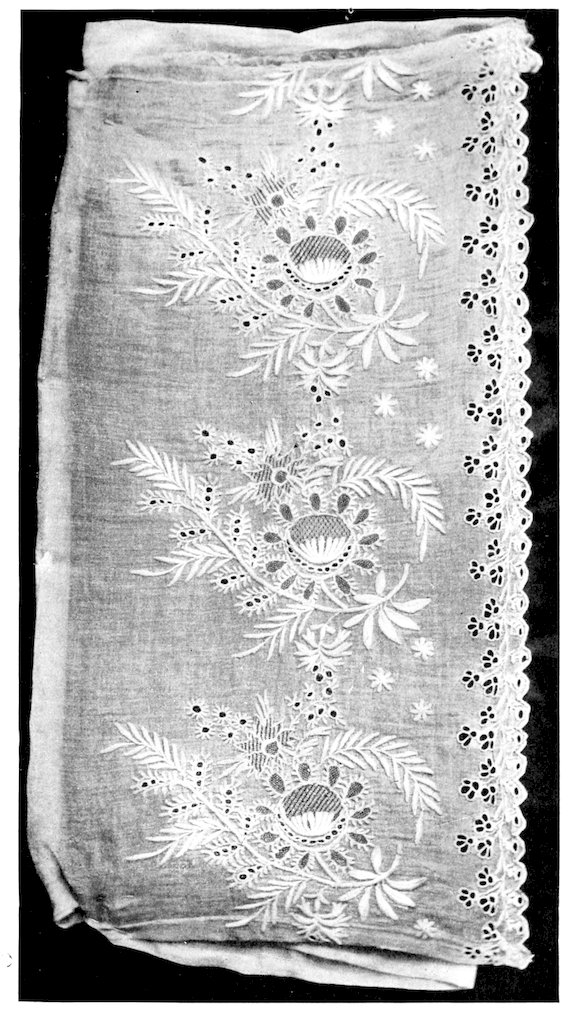
Pl. XXXIX.—Embroidery of Louisa C. Lewis
Speaking or moving once without permission, or with, will take off the extra—and more than once will give ¼ of a miss. Two hours holy day lost for noise. 30 credit marks lost for homesickness.
Miss Sarah Pierce, Principal.
Mr. John P. Brace, Assistant.
(A definition of politeness). Persons truly polite will treat their superiors with respect and deference; their equals with affability and complaisance. They will never smile at the mistakes of those who may be more ignorant than themselves; will never make sport of the faults or follies of their companions, much more at their misfortunes, but will on all occasions treat others as they would be themselves. They will never be boistrous or rude in their manners, will never talk or laugh loud, will avoid all vulgar and profane words as mean and sinful. They will never consider loud laughter as a mark of wit; or romping as indicative of sprightliness.
231