Chapter VIII · THE ORDERS SIRENIA AND CETACEA
Reading edition
Order Sirenia.
The purely aquatic habits and fish-like form of the animals of this order caused them to be formerly confounded with the Cetacea, but a more intimate knowledge of their structure has shown that they really belong to a widely different type of the mammalian class.
The head is rounded and not disproportionate in size as compared with the trunk, from which it is scarcely separated by any externally visible constriction or neck. Nostrils valvular, separate, and placed above the fore part of the obtuse truncated muzzle. Eyes very small, with imperfectly formed eyelids, capable, however, of contraction, and with a well-developed nictitating membrane. Ear without any pinna. Mouth of small or moderate size, with tumid lips beset with stiff bristles. General form of the body depressed, fusiform. No dorsal fin. Tail flattened and horizontally expanded. Fore limbs paddle-shaped, the digits being enveloped in a common cutaneous covering, on which rudiments of nails are sometimes present. No trace of hind limbs in existing forms. External surface covered with a tough, finely wrinkled, or very rugose skin, naked, or with fine hairs sparsely scattered over it.
The skeleton is remarkable for the massiveness and density of most of the bones of which it is composed, especially the skull and ribs, which must add to the specific gravity of these slow-moving animals, and aid in keeping them to the bottom of the shallow waters in which they dwell, while feeding on aquatic vegetables. The skull presents many peculiarities, among which may be indicated the large size and backward position of the anterior narial aperture, a further modification of that met with in the Tapirs among Ungulates, and presenting some approach to that so characteristic of the Cetacea. The nasal bones are generally absent in the recent forms, or are only found in a most rudimentary condition, attached to the edge of the frontals, far away from the middle line; but in some at least of the extinct species these bones, though small in size, are normal in situation and relations. In very few other respects does the skull present any resemblance to that of the Cetacea. In the spinal column of existing forms none of the vertebræ are united together to form a sacrum, and the flat ends of the bodies do not ossify separately, so as to form disc-like epiphyses in the young state, as in nearly all other mammals; traces of epiphyses have, however, been recently detected in Manatus, and they were fully developed in Halitherium and other fossil forms. The anterior caudal vertebræ have well-developed chevron bones. In one genus (Manatus) there are only six cervical vertebræ. There are no clavicles. The humerus has a small but distinct trochlear articulation at the elbow-joint. The two bones of the forearm are about equally developed, and generally ankylosed together at both extremities. The carpus is short and broad, and the digits five in number, with moderately elongated and flattened phalanges, which are never increased in number beyond the limit usual in the Mammalia. The pelvis is extremely rudimentary, consisting of a pair of bones suspended at some distance from the vertebral column. In no existing species is there any trace of a hind limb, but in the extinct Halitherium an acetabular depression and rudimentary femur have been discovered.
Two kinds of teeth, incisors and molars, separated by a wide interval, are generally present. The former may be developed into tusks in the upper jaw, or may be quite rudimentary. The molars vary much in character. In one genus (Rhytina) no teeth of any kind are present, at least in the adult. Some fossil forms show a more decidedly heterodont dentition, while Halitherium has milk-teeth, of which no traces have been observed in the recent genera. In all recent types the anterior part of the palate, and a corresponding surface on the prolonged symphysis of the lower jaw, are covered with rough horny plates of peculiar structure, which doubtless assist in mastication. The tongue is small and fixed in position, with a surface resembling that of the plates just spoken of. The salivary glands are largely developed. The stomach is compound, being divided by a valvular constriction into two principal cavities, the first of which is provided with a singular glandular pouch near the cardiac end, and the second usually with a pair of elongated, conical, cæcal sacs or diverticula. The intestinal canal is long, and has very muscular walls. There is a cæcum, either simple, conical, and with extremely thick walls, as in Halicore, or bifid, as in Manatus. The heart is broad and flat, with its apex deeply cleft between the ventricles. The principal arteries form very extensive and complex retia mirabilia. The lungs are remarkably long and narrow, as, owing to the very oblique position of the diaphragm, the thoracic cavity extends far back over the abdomen. The epiglottis and arytenoid cartilages of the larynx do not form a tubular prolongation as in the Cetacea, so that the epiglottis is not intranarial. The brain is of comparatively small size, and the convolutions on the surface of the cerebrum are few and shallow. The kidneys are simple. The testes abdominal. The uterus is bicornuate. The placenta (in the Dugong) is non-deciduate and zonary. The umbilical vesicle disappears early. The mammæ are two, and pectoral, or rather postaxillary in position.
The Sirenia pass their whole life in the water, being denizens of shallow bays, estuaries, lagoons, and large rivers, but, unlike the Cetacea, are not met with in the high seas, far away from the shore. Their food consists entirely of aquatic plants, either marine algæ or freshwater grasses, upon which they browse beneath the surface, as the terrestrial herbivorous mammals do upon the green pastures on shore. They are generally gregarious, slow and inactive in their movements, mild, inoffensive, and apparently unintelligent in disposition. Though occasionally found stranded by the tide or waves, there is no satisfactory evidence that they voluntarily leave the water to bask or feed on the shore. The habit of the Dugong of raising its round head out of the water, and carrying its young under the fore fin, seems to have given rise, among the imaginative early voyagers in the Indian Ocean, to the legendary beings, half human and half fish, in allusion to which the name Sirenia was bestowed by Illiger on the order, though certainly the face of a Dugong, when closely inspected, does not bear the slightest resemblance to that of the mermaid of romance. The species now existing are very few, and there is reason to believe that the time is not far distant when they will all become extinct. One species, Rhytina stelleri, of the North Pacific, was totally exterminated through the agency of man during the last century; and the others, being valuable for their flesh as food, for their hides, and especially for the oil obtained from the thick layer of fat which lies immediately beneath their skin, rapidly diminish in numbers as civilised populations occupy the regions forming their natural habitat. The surviving species are confined to the tropical regions of the shores of both sides of the Atlantic and the great rivers which empty themselves into that ocean, and to the coasts of the Indian Ocean from the Red Sea to North Australia. In the Miocene and early Pliocene epoch Sirenians abounded in the seas of Europe, and their remains have been found in deposits of corresponding periods in North America. Evidence has also been discovered of the existence of an animal of this group in the seas at the bottom of which the Eocene nummulitic limestone mountain ranges of Egypt were deposited.
The existing genera present such well-marked distinguishing characters that it is on the whole convenient to place them in separate families, although, as in so many similar cases, our knowledge of the extinct forms, imperfect as it is, goes far to bridge over the distinction between them.
Family Manatidæ.
The characters of this and the two following families may be conveniently included under the heading of the single genus by which they are respectively represented.
Manatus.[116]—Incisors ²⁄₂, rudimentary, concealed beneath the horny oral plates, and disappearing before maturity. Molars ¹¹⁄₁₁, but rarely more than ⁶⁄₆ present at one time, the anterior teeth falling before the posterior come into use; similar in characters from beginning to end of the series; with square, enamelled crowns, the grinding surface raised into tuberculated transverse ridges. The upper teeth with two ridges and three roots, the lower teeth with an additional (posterior) ridge, or talon, and two roots. The cervical vertebræ present the remarkable anomaly of being reduced to six in number, the usual vertebral formula being C 6, D 17, L 2, and C 23-25. Rostrum of the skull, formed by the union of the premaxillæ in front of the anterior narial aperture, shorter than the length of the aperture and scarcely deflected from the basicranial axis; premaxillæ and mandibular symphysis not markedly deflected (Fig. 72). Tail entire, rounded, or shovel-shaped. Rudimentary nails on the fore limbs. Cæcum bifid. Habitat the shores of, and the great rivers which empty themselves into, the Atlantic within the tropics. These animals are rather fluviatile than marine, ascending large rivers almost to their sources.
The Manatee may be selected for a somewhat full description, as being one of the best known representatives of this very remarkable order.
The name Manati was apparently first applied to this animal by the early Spanish colonists of the West Indies, in allusion to the hand-like use which it frequently makes of its fore limbs; by English writers from the time of Dampier (who gives a good account of its habits) downwards it has been generally spelt “Manatee.” It was placed by Linnæus in his heterogeneous genus Trichechus, but Storr’s name Manatus is now generally accepted for it by zoologists. The question of the specific distinction of the African and American Manatees will be treated of further on, but it will be chiefly to the latter and better known form that the following description applies.
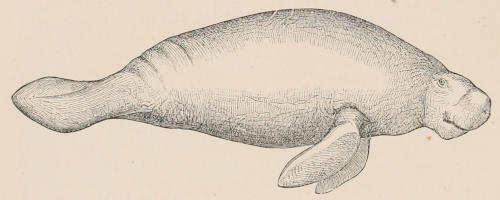
Fig. 71.—American Manatee (Manatus americanus), from life. Proc. Zool. Soc. 1881, p. 457.
The size of the Manatee has been much exaggerated, but there is no trustworthy evidence of its attaining a greater length than 8 feet. Its general external form may be seen in Fig. 71, taken from a living example in the Brighton Aquarium. The body is somewhat fish-like, but depressed and ending posteriorly in a broad, flat, shovel-like, horizontal tail, with rounded edges. The head is of moderate size, oblong, with a blunt, truncated muzzle, and divided from the body by a very slight constriction or neck. The fore limbs are flattened oval paddles, placed rather low on the sides of the body, and showing externally no signs of division into fingers, but with a tolerably free motion at the shoulder, elbow, and wrist joints, and with three diminutive flat nails near their extremities. No traces of hind limbs are discernible either externally or internally; and there is no dorsal fin. The mouth is very peculiar, the tumid upper lip being cleft in the middle line into two lobes, each of which is separately movable, as will be described in speaking of its manner of feeding. The nostrils are two semilunar valve-like slits, at the apex of the muzzle. The eyes are very minute, placed at the sides of the head, and with a nearly circular aperture with wrinkled margins. The external ear is a minute orifice situated behind the eye, without any trace of pinna. The skin generally is of a dark grayish colour, not smooth and glistening, like that of the Cetacea, but finely wrinkled. At a little distance it appears naked, but a close inspection, at all events in young animals, shows a scanty covering of very delicate hairs, and both upper and under lips are well supplied with short stiff bristles.
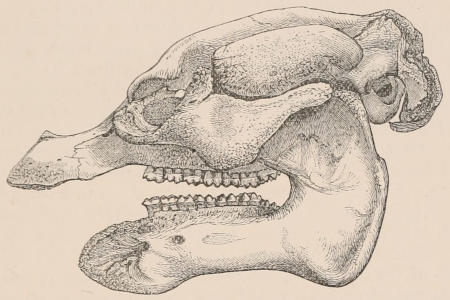
Fig. 72.—Skull of African Manatee (Manatus senegalensis). ⅕ natural size. From Mus. Roy. Coll. Surgeons.
The general form of the skull is seen in Fig. 72. The cerebral cavity is rather small as compared with the size of the animal, and of oblong form; its roof is formed of the parietal bones as in ordinary mammals. The squamosal has an extremely large and massive zygomatic process, which joins the largely developed jugal bone in front. The orbit is small, but prominent and nearly surrounded by bone. The anterior nares taken together form a lozenge-shaped aperture, which looks upwards and extends backwards considerably behind the orbits. Their sides are formed by the ascending processes of the premaxillæ below, and by the supraorbital processes of the frontals above, no traces of nasals being found in most skulls, though these bones are occasionally present in a most rudimentary condition, attached to the edges of the frontals, far away from the middle line, in a position quite unique among the Mammalia. In front of the narial aperture the face is prolonged into a narrow rostrum, formed by the premaxillæ, supported below and at the sides by the maxillæ. The under surface of this is very rugose, and in life covered by a horny plate. The rami of the mandible are firmly united together at the symphysis, which is compressed laterally, slightly deflected, and has a rugose upper surface; to this another horny plate is attached, which, with that of the upper jaw, functionally supplies the place of teeth in the anterior part of the mouth. In the young state there are rudimentary teeth concealed beneath these horny plates, which never penetrate through them, and must therefore be quite functionless, and altogether disappear before the animal is full-grown. There is besides on each side of the hinder part of both upper and lower jaws, a parallel row of molar teeth, similar in characters from the beginning to the end of the series, with square enamelled crowns raised into tuberculated transverse ridges; something like those of the Tapir and Kangaroo. The upper teeth have two ridges and three roots; the lower teeth have an additional posterior small ridge or talon, and but two roots. These teeth succeed each other from before backwards, as in the Proboscidea, those at the front of the mouth being worn out and shed before those at the back are fully developed. There are altogether about eleven on either side of each jaw, but rarely more than six are present at one time. The brain is remarkably simple in structure, its hemispheres exhibiting none of the richness of convolution so characteristic of the Cetacea. The mammary glands of the female are situated just behind and to the inner side of the origin of the pectoral limb. The red corpuscles of the blood are among the largest of those of any members of the class, averaging in diameter, according to Gulliver, ¹⁄₂₄₀₀ of an inch.
Manatees pass the whole of their life in the water, inhabiting bays, lagoons, estuaries, and large rivers; but the open sea, so congenial to the Cetacea, is quite unsuited to their peculiar mode of life. As a general rule they prefer shallow water, in which, when not feeding, they lie near the bottom, supporting themselves on the extremity of the tail, or slowly moving about by the assistance of the fore limbs, the tips of which are just allowed to touch the ground, and only raising the top of the head above the surface for the purpose of breathing at intervals of two or three minutes. In deeper water they often float, with the body much arched, the rounded back close to the surface, and the head, limbs, and tail hanging downwards. The air in the lungs obviously assists them to maintain this position, acting in the same manner as that in the air-sac of fishes. Their food consists exclusively of aquatic plants, on which they browse beneath the water. They are extremely slow and inactive in their movements, and perfectly harmless and inoffensive. Frequent attempts have been made to keep specimens alive in captivity, and sometimes with considerable success, one having lived in the Brighton Aquarium for upwards of sixteen months. It was fed chiefly on lettuce and endive, but would also eat leaves of the dandelion, sow-thistle, cabbage, turnip, and carrot. From this and other captive specimens some interesting observations upon the mode of life of the animal have been made. One of these is the free use it makes of its fore limbs. From the shoulder-joint, they can be moved in all directions, and the elbow and wrist permit of free extension and flexion. In feeding these creatures push the food towards their mouths by means of one of the hands, or both used simultaneously, and any one who has seen these members thus employed can readily believe the stories of their carrying their young about under their arms. Still more interesting and quite unique among mammals is the action of the peculiar lateral pads formed by the divided upper lip, thus described by the late Professor Garrod: “These pads have the power of transversely approaching towards and receding from one another simultaneously (see Fig. 73, A and B). When the animal is on the point of seizing (say) a leaf of lettuce, the pads are diverged transversely in such a way as to make a median gap of considerable breadth. Directly the leaf is within grasp the lip-pads are approximated, the leaf is firmly seized between their contiguous bristly surfaces, and then drawn inwards by a backward movement of the lower margin of the lip as a whole.” The animal is thus enabled by the unaided means of the upper lip to introduce food placed before it without the assistance of the comparatively insignificant lower lip, the action greatly recalling to the observer that of the mouth of the silkworm and other caterpillars, in which the mandibles diverge and converge laterally during mastication. When out of water the Manatee is an extremely helpless animal; and, although statements are frequently met with in books of its voluntarily leaving the water for the purpose of basking or feeding on shore, all trustworthy observations of those acquainted with it, either in a state of nature or in captivity, indicate that it has not the power of doing so. None of the specimens in confinement have been observed to emit any sound.
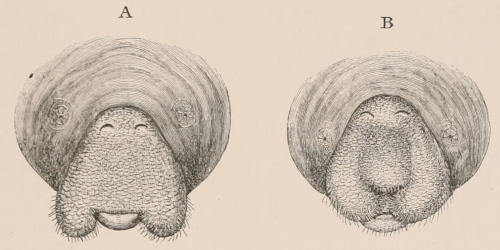
Fig. 73.—Front view of head of American Manatee, showing the eyes, nostrils, and mouth. A, With the lobes of the upper lip divaricated; B, with the lip contracted. From Murie, Trans. Zool. Soc. vol. xi.
Manatees, though much less numerous than formerly, are still occasionally found in creeks, lagoons, and estuaries in some of the West India Islands, and at various spots on the Atlantic coast of America from Florida as far south as about 20° S. lat., and in the great rivers of Brazil, almost as high as their sources. They are also met with in similar situations on the opposite African coast, from about 16° N. to 10° S. lat., and as far into the interior as Lake Tchad. Their range may even extend, if native reports obtained by Schweinfurth are correctly interpreted, to the river Keebaly, 27° E. long.
A considerable number of specific names have been applied to the existing Manatees, but according to the researches of Dr. Hartlaub[117] they may be reduced to three species, distinguished from one another, among other features, by the characters of the skull, and more especially the relations of the nasals to the adjacent bones. Of these the American Manatee may be known as M. americanus, although it has been described under the names of M. latirostris, and M. australis. The African Manatee (M. senegalensis) differs from the American species in the following cranial characters: the anterior part of the rostrum is shorter, shallower, and altogether smaller; the orbit is smaller; the zygomatic process is more deep and massive; the jugal bone is deeper from above downwards; the upper margin of the anterior nares is narrower and with a smooth and rounded, instead of a thin and serrated, edge; the upper surface of the frontal is flat, instead of concave; the foramen magnum and occipital condyles are narrower from side to side, and the symphysis of the mandible is smaller and shallower.
Finally, M. inunguis is a fluviatile species confined to the Amazon and Orinoco, which has been but recently fully brought under the notice of zoologists.
Family Halicoridæ.
Halicore.[118]—In the upper jaw a pair of large, nearly straight, tusk-like incisors, directed downwards and forwards, partially coated with enamel. In the male they have persistent pulps, and bevelled cutting edges, which project a short distance from the mouth, but in the female, though they remain through life in the alveolar cavity, they are not exserted, and, the pulp-cavity being filled with osteodentine, they soon cease to grow (as in the female Narwhal). In the young there is also a second small deciduous incisor on each side above. At this age there are also beneath the horny plate which covers the anterior portion of the mandible four pairs of slender conical teeth lodged in wide alveolar depressions; these become absorbed before the animal reaches maturity. The molars are usually ⁵⁄₅, sometimes ⁶⁄₆, altogether, but not all in place at once, as the first falls before the last rises above the gum; they are more or less nearly cylindrical in section (except the last, which is compressed and grooved laterally), without distinction into crown and root, increasing in size from before backwards, with persistent pulps and no enamel. The summits of the crowns are tuberculated before wearing, afterwards flattened or slightly concave. Skull with rostrum formed by the union of the premaxillæ in front of the narial aperture, longer than the aperture itself, bending downwards at a right angle with the basicranial axis, and enclosing the sockets of the large incisor tusks. Anterior part of the lower jaw bent down in a corresponding manner. Vertebræ: C 7, D 18-19, L and C 30. Tail broadly notched in the middle line, and with two pointed lateral lobes. No nails on the fore limbs. Cæcum single.
The Dugongs are more distinctly marine in their habits than the Manatees, feeding chiefly on sea-water algæ. They inhabit the shallow bays and creeks of the Red Sea, east coast of Africa, Ceylon, islands of the Bay of Bengal and the Indo-Malayan Archipelago (including the Philippines), and the north coast of Australia, ranging from Barrow Reefs on the west to Moreton Bay on the east. Although the distinctive characters are not very obvious, they have been divided into three species, according to the localities which they respectively inhabit:—H. tabernaculi from the Red Sea, H. dugong from the Indian seas, and H. australis from Australia. The last-named has lately been the object of a regular “fishery,” chiefly on account of its oil, which is peculiarly clear, limpid, and free from disagreeable smell, and is said to have the same medicinal properties as cod-liver oil. Although often stated in books to attain the length of 20 feet when adult, there does not appear to be any evidence from actual specimens in museums that Dugongs ever reach half that size, 8 feet being the common length of adult animals.
The placentation of this genus has been recently described by Sir W. Turner, who first indicated its zonary form.
Family Rhytinidæ.
Rhytina.[119]—No teeth, their place being supplied functionally by the dense, strongly-ridged, horny oral plates. Premaxillary rostrum about as long as the anterior narial aperture, and moderately deflected. Vertebræ: C 7, D 19, L and C 34-37. Head very small in proportion to the body. Tail with two lateral pointed lobes. Pectoral limbs small and truncated. Skin naked and covered with a very thick, hard, rugged, bark-like epidermis. Stomach without cæcal appendages to the pyloric cavity. Cæcum simple.
Only one species of this genus is known, R. stelleri, the Northern Sea-cow, by far the largest animal of the order, attaining the length of 20 to 25 feet. It was formerly an inhabitant of the shores of two small islands in the North Pacific, Behring and the adjacent Copper Island, on the former of which it was discovered by the ill-fated navigator whose name the island bears, when, with his accomplished companion, the German naturalist Steller, he was wrecked upon it in 1741. Twenty-seven years afterwards (1768), as is commonly supposed, the last of the race was killed,[120] and its very existence would have been unknown to science but for the interesting account of its anatomy and habits left by Steller, and the few more or less imperfect skeletons which have recently rewarded the researches carried on in the frozen soil of the islands around which it dwelt. There is no evidence at present of its having inhabited any other coasts than those of the islands just named, although it can hardly be supposed that its range was always so restricted. When first discovered it was extremely numerous in the shallow bays round Behring Island, finding abundant nutriment in the large laminariæ growing in the sea. Its extirpation is entirely due to the Russian hunters and traders who followed upon the track of the explorers, and, upon Steller’s suggestion, lived upon the flesh of the great Sea-cows. Its restricted distribution, large size, inactive habits, fearlessness of man, and even its affectionate disposition towards its own kind when wounded or in distress, all contributed to accelerate its final extinction.
According to Steller’s account, the Rhytina had a skin of a dark brown colour, sometimes spotted or streaked with white. The fore limb was covered with short brush-like hairs.
Extinct Sirenians.
Halitherium.[121]—The Miocene and early Pliocene seas of Europe abounded in Sirenians, to which the generic name of Halitherium was given by Kaup, but which have also received other names. They had large tusk-like incisors in the upper jaw, as in the existing Dugongs, though not so greatly developed. Their molar teeth were ⁵⁄₅ or ⁶⁄₆, anteriorly simple and single-rooted, posteriorly those above with three and those below with two roots, and with enamelled and tuberculated or ridged crowns, in all which respects they more resemble those of the Manatee than of the Dugong. The anterior molars were deciduous; and there is evidence of the presence of milk-teeth. Germs of inferior incisors were also present. Some species at least had nasal bones, short, broad, but normal in position, whereas in all the existing genera these bones are quite rudimentary. Another and still more important evidence of conformity to the general mammalian type is the better development of the pelvic bone, and the presence of a small styliform femur articulated to the acetabulum, although no traces of any other part of the limb have been discovered. These ancient Sirenians, which may be regarded as representing a distinct family—Halitheriidæ—were thus, in dental, cranial, and other osteological characters, less specialised than are either of the existing species, and if the intermediate links could be discovered might well be looked upon as the ancestral forms from which the latter have been derived, but at present the transitional conditions have not been detected. So far as is yet known, when changes in the physical conditions of the European seas rendered them unfitted to be the habitation of Sirenians, the Halitherium type still prevailed. If the existing Dugongs and Manatees are descended from it, their evolution must have taken place during the Pliocene and Pleistocene epochs, the one in seas to the east, the other to the west of the African continent, which has long formed a barrier to their intercommunication. Halitherium remains have been found in many parts of Germany, especially near Darmstadt, also in France, Italy, Belgium, Malta, etc. Until a few years ago none were known from England, probably owing to the absence of beds of an age corresponding to those in which they are found on the European continent; but a skull and several teeth have been detected among the rolled debris of which the Red Crag of Suffolk is partially composed. The species are not yet satisfactorily characterised. Some of them appear to have attained a larger size than the existing Manatee or Dugong. One of these, from the Pliocene of Italy and France, having but ⁵⁄₅ molar teeth, has been separated generically under the name of Felsinotherium by Capellini, by whom it has been fully described; but the difference in the number of the teeth does not afford sufficient grounds for separation from Halitherium. Miosiren of the Belgian Miocene, differs in that the last upper molar is the smallest, in place of the largest of the whole series of teeth.
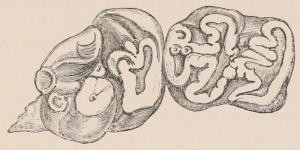
Fig. 74.—The penultimate and last right lower molars of Halitherium fossile; from the Miocene of the Continent. (After De Blainville.)
Other forms.—Remains from the Pliocene of France described as Prohalicore are regarded as indicating a Sirenian closely allied to Halicore; while a molar from the Tertiary of California has been made the type of Desmotylus, which is likewise referred to the Halicoridæ. Dioplotherium, from the Phosphorites of South Carolina, has been considered to connect Halicore with Halitherium, but even its ordinal position is uncertain.
A portion of a skull found in the Pliocene of Belgium has been described as Crassitherium by Van Beneden; and some compressed teeth, somewhat similar to but larger than those of the Dugong, discovered in the Miocene of the department of Lot-et-Garonne, France, gave origin to the genus Rytiodus of E. Lartet. Of this genus, which may be identical with Trachytherium of the French Miocene, better preserved remains have subsequently been described by Delfortrie. These show that the rostrum is more elongated than in Halitherium, but the skull is otherwise very similar, as are the molar teeth. The incisors are very large, exserted, strongly compressed, almost sabre-like, rounded on the upper or anterior surface, sharp below, concave on the external and convex on the inner side, and transversely striated.
Pachyacanthus from the Miocene of the Vienna basin is also, according to Van Beneden, another form of Sirenian, of which, however, the skull is not known. In various Miocene marine formations of the United States of America other remains of Sirenians have been found, but mostly in such a fragmentary condition that they afford at present little evidence of the early history of the group in that country. A more satisfactory discovery is that of a nearly complete skull and some bones from a Tertiary limestone formation in Jamaica. It is of smaller size than the Manatee, and, so far as the teeth are concerned, of a still more generalised character than Halitherium, the dentition being apparently i ³⁄₃, c ¹⁄₁, p + m (?⁸⁄?₈) = 48. The incisors are small, not developed into tusks; the canines (wanting in all existing Sirenians) are rather larger than the incisors, judging by the sockets; and the molars are bilophodont, and covered with enamel. It has been described by Sir R. Owen under the name of Prorastomus sirenoides. Some writers regard this genus as the type of a distinct family—the Prorastomatidæ. Unfortunately we have no knowledge of the geological antiquity of the formation in which it was embedded. Lastly must be mentioned the Eotherium egyptiacum, Owen, founded on the cast of a brain, with a small quantity of surrounding bone, discovered in the nummulitic limestone of Eocene age in the Mokattam Hills, near Cairo. The brain is narrower than in Manatus, and resembles that of Halitherium. This is of interest as the most ancient known evidence of any Sirenian whose age has been geologically determined. Teeth from the same deposits referred to Manatus not improbably belong really to Eotherium.
The few facts as yet collected relating to the former history of the Sirenia leave us as much in the dark as to the origin and affinities of this peculiar group of animals as we were when we only knew the living members. They lend no countenance to their association with the Cetacea, and on the other hand their supposed affinity with the Ungulata, so much favoured by modern zoologists, receives no very material support from them.
Bibliography of Sirenia.—J. F. Brandt, Symbolæ Sirenologicæ, St. Petersburg, 3 fasciculi, 1846-61-68—an exhaustive account of the anatomy, affinities, and literature of the group, with copious illustrations of the osteology of Rhytina. Anatomy of Dugong:—Everard Home, Phil. Trans. 1820, p. 315; Owen, Proc. Zool. Soc. 1838, p. 29. Placenta of do.:—W. Turner, Trans. Roy. Soc. Edin. vol. xxxv. (1889). Manatee:—W. Vrolik, Bijdragen tot de Dierkunde, 1851; J. Murie, “On the Form and Structure of the Manatee,” Trans. Zool. Soc. Lond. vol. viii. p. 127, 1872, and “Further Observations on the Manatee,” Ibid. vol. xi. p. 19, 1880; A. H. Garrod, “Notes on the Manatee recently living in the Zoological Society’s Gardens,” Ibid. vol. x. p. 137, 1875; H. C. Chapman, “Observations on the Structure of the Manatee,” Proc. Acad. Nat. Sciences of Philadelphia, 1875, p. 452; A. Crane, “Notes on the Habits of the Manatees in Captivity in the Brighton Aquarium,” Proc. Zool. Soc. Lond. 1881, p. 456. Extinct Sirenia:—Gervais, Journal de Zoologie, tom. i. p. 332, 1872. R. Lydekker, Catalogue of Fossil Mammalia in the British Museum, pt. v.
Order Cetacea.
This is perhaps the most distinctly circumscribed and natural of all the larger groups into which the class is divided.
The external form is fish-like, the body being fusiform, passing anteriorly into the head without any distinct constriction or neck, and posteriorly tapering off gradually towards the extremity of the tail, which is provided with a pair of lateral, pointed expansions of skin supported by dense fibrous tissue, called “flukes,” forming together a horizontally-placed triangular propelling organ, notched in the middle line behind.
The head is generally large, in some species attaining to even more than one-third of the entire length of the animal, and the aperture of the mouth is always wide, and bounded by stiff immobile lips. The fore limbs are reduced to the condition of flattened ovoid paddles, encased in a continuous integument, showing no external sign of division into arm, fore arm, and manus, or of separate digits, and without any trace of nails. There are no traces of hind limbs visible externally. The general surface of the skin is smooth and glistening, and devoid of hair, although in many species there are a few fine bristles in the neighbourhood of the mouth, which may either persist through life, or be present only in the young state. Immediately beneath the skin, and intimately connected with it, is a thick layer of fat, held together by a dense mesh of areolar tissue, constituting the “blubber,” which serves the purpose of the hairy covering of other mammals in retaining the heat of the body. In nearly all species a compressed median dorsal tegumentary fin is present. The eye is small, and is not provided with a nictitating membrane or true lachrymal apparatus. The external auditory meatus is a very minute aperture in the skin situated at a short distance behind the eye, and there is no vestige of a pinna. The nostrils open either separately or by a single crescentic valvular aperture, not at the extremity of the snout, but near the vertex of the head.
The bones generally are spongy in texture, the cavities being filled with oil. In the vertebral column the cervical region is remarkably short and immobile, and the vertebræ, originally always seven in number, are in many species more or less fused together into a solid mass. The odontoid process of the axis, when that bone is free, is usually very obtuse, or even obsolete. None of the vertebræ are united together to form a sacrum. The lumbar and caudal vertebræ are numerous and large, and, as their arches are not connected by any articular processes (zygapophyses), they are capable of a very free motion in all directions. The epiphyses at the ends of the vertebral bodies are very distinct flattened disks, not uniting until after the animal has attained its full dimensions.[122] There are largely developed chevron bones, the presence of which indicates the distinction between the caudal and lumbar vertebræ.
The skull (Fig. 75) is modified in a very peculiar manner. The brain-case is short, broad, and high, in fact almost spherical. The supraoccipital bone rises upwards and forwards from the foramen magnum, to meet the frontals at the vertex, thus completely excluding the parietals from the upper region of the cranium. The frontals are expanded laterally to form the roof of the orbits. The anterior narial aperture opens upwards, and has in front of it a more or less horizontally prolonged rostrum, formed of the maxillæ, premaxillæ, vomer, and mesethmoid cartilage, extending forwards to form the upper jaw or roof of the mouth.
There are no clavicles. The humerus is freely movable on the scapula at the shoulder-joint, but beyond this the articulations of the limb are imperfect, the flattened ends of the bones coming in contact with each other, with fibrous tissue interposed, allowing of scarcely any motion. The radius and ulna are distinct, about equally developed, and much flattened, as are also all the bones of the manus. There are four, or more commonly five digits, and the number of the phalanges of the second and third digits always exceeds the normal number in mammals, sometimes very considerably (hyperphalangism); they present the exceptional character of having epiphyses at both ends.[123] The pelvis is represented by a pair of small styliform bones placed longitudinally, suspended below and at some distance from the vertebral column at the commencement of the caudal region. These appear to represent the ischia, as the crura of the corpora cavernosa are attached to them. In some species, to the outer surface of these are fixed other small bones or cartilages, the rudiments of the hind limb.
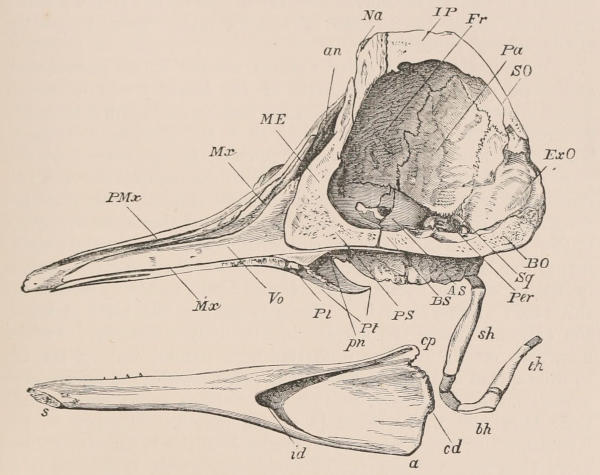
Fig. 75.—A section of the skull of a young Dolphin (Globicephalus melas) × ⅕. PMx, Premaxilla; Mx, maxilla; ME, ossified portion of the mesethmoid; an, anterior nares; Na, nasal; IP, interparietal; Fr, frontal; Pa, parietal; SO, supraoccipital; ExO, exoccipital; BO, basioccipital; Sq, squamosal; Per, periotic; AS, alisphenoid; PS, presphenoid; Pt, pterygoid; pn, posterior nares; Pl, palatine; Vo, vomer; s, symphysis of mandible; id, inferior dental canal; cp, coronoid process of mandible; cd, condyle; a, angle; sh, stylohyal; bh, basihyal; th, thyrohyal. (From Flower’s Osteology of Mammalia.)
Teeth are generally present, but exceedingly variable in number. In the existing species they are of simple, uniform character, all having conical or compressed crowns and single roots, and are never preceded by milk-teeth. They are therefore homodont and monophyodont. In one group, the Mystacocetes, the teeth are absent (except, in the fœtal condition), and the palate is provided with numerous transversely placed horny laminæ or “baleen.” The salivary glands are rudimentary or absent. The stomach is multilocular, its structure being fully noticed under the genus Phocæna. The intestinal canal is simple, and only in some species provided with a small cæcum. The liver is very little fissured, and there is no gall-bladder. The vascular system is greatly complicated by arterial and venous plexuses, or retia mirabilia. The larynx is of peculiar shape, the arytenoid cartilages and the epiglottis being much elongated, and together forming a tubular prolongation, which projects into the posterior nares, and when embraced by the soft palate produces a continuous passage between the nostrils and the trachea, as in Ungulates, but in a more perfect manner. The brain is large relatively to the size of the animal, very round in form, and with its surface divided by sulci into very numerous and complex convolutions. The kidneys are deeply lobulated. The testes are abdominal. There are no vesiculæ seminales, nor os penis. The uterus is bicornuate, and the placenta non-deciduate and diffuse. The mammæ are two in number, and the nipples placed in depressions on each side of the vulva. The principal ducts of the gland are dilated during lactation into large reservoirs, into which the milk collects, and from which it is injected by the action of a compressor muscle into the mouth of the young animal, by which means the process of sucking under water is greatly facilitated and expedited.
The animals of the order Cetacea abound in all known seas, and some species are inhabitants of the larger rivers of South America and Asia. Their organisation necessitates passing their life entirely in the water, as on land they are absolutely helpless. They have, however, to rise very frequently to the surface for the purpose of respiration; and, in relation to the constant upward and downward movement in the water thus necessitated, their principal instrument of motion, the tail, is expanded horizontally, quite unlike that of a fish, whose movements are mainly in straight-forward or lateral directions. The position of the respiratory orifice or nostril on the highest part of the head is very important for this mode of life, since it is the only part of the body of which the exposure above the surface is absolutely necessary. Of the numerous erroneous ideas connected with natural history, few are so wide spread and still so firmly believed, notwithstanding repeated expositions of its falsity, as that the Cetacea spout out through their blowholes water taken in at the mouth. The fact is, the “spouting,” or more properly “blowing,” of the Whale is nothing more than the ordinary act of expiration, which, taking place at longer intervals than in land animals, is performed with a greater amount of emphasis. The moment the animal rises to the surface it forcibly expels from its lungs the air taken in at the last inspiration, which of course is highly charged with watery vapour in consequence of the natural respiratory changes. This, rapidly condensing in the cold atmosphere in which the phenomenon is generally observed, forms a column of steam or spray, which has been erroneously taken for water. It also often happens, especially when the surface of the ocean is agitated into waves, that the animal commences its expiratory puff before the orifice has quite cleared the top of the water, some of which may thus be driven upwards with the blast, tending to complete the illusion. In hunting Whales the harpoon often pierces the lungs or air passages of the unfortunate victim, and then fountains of blood may be forced high in the air through the blowholes, as commonly depicted in scenes of Arctic adventure; but this is nothing more (allowance being made for the Whale’s peculiar mode of breathing) than what always follows severe wounds of the respiratory organs of other mammals.
All the Cetacea are predaceous, subsisting on living animal food of some kind. One genus alone (Orca) eats other warm-blooded animals, as Seals, and even members of its own order, both large and small. Some feed on fish, others on small floating crustaceans, pteropods, and medusæ, while the principal staple of the food of many is constituted by the various species of cephalopods, Loligo and other Teuthidæ, which must abound in certain seas in vast numbers, as they form almost the entire support of some of the largest members of the order. In size the Cetacea vary much, some of the smaller Dolphins scarcely exceeding 4 feet in length, while others are the most colossal of all animals. It is true that most statements of their bulk found in general and even zoological literature are greatly exaggerated, but even when reduced to their actual dimensions (which will be stated under the respective genera) some of the existing Whales exceed in size any animal living either at present or in former times of which we have any certain evidence. With some exceptions, the Cetacea generally are timid inoffensive animals, active in their movements, and very affectionate in their disposition towards one another, especially the mother towards the young, of which there is usually but one, or at most two at a time. They are generally gregarious, swimming in herds or “schools” (so termed by the whalers) sometimes amounting to many thousands in number; though some species have hitherto only been met with either singly or in pairs.
Although by their mode of life so far removed from close observation that it is impossible to become as familiar with them in their natural condition as with many other animals, Whales are in many respects the most interesting and wonderful of all creatures; and there is much in their structure and habits well worthy of study, much that is difficult to understand, and much that leads to great generalisations and throws light upon far-reaching philosophical speculations. One of the first lessons which a study of these animals affords is that, in the endeavour to discover what a creature really is, from what others it is descended, and to what it is related, the general outward appearance affords little clue, and we must go deep below the surface to find out the essential characteristics of its nature. There was once, and may be still in many places, a common idea that a Whale is a fish. To realise the fallacy of this notion we have only to consider what a fish really is, what under all the diversities of form, size, and colour known among fishes there is common to them all, and we see that in everything which characterises a true fish and separates it from other classes, as reptiles, birds, and mammals, the Whale resembles the last-named and differs from the fish. It is as essentially a mammal as a Cow or a Horse, and simply resembles a fish externally because it is adapted to inhabit the same element; but it is no more on that account a fish than is a bat, because adapted to pass a great part of its existence on the wing in the air, nearly related to a bird. The whole structure of a whale is a most instructive instance of a type of organisation which is common to and characteristic of the class Mammalia, but specially modified or adapted to a peculiar mode of life. We see in every part the result of two great principles acting and reacting upon each other—on the one hand, adherence to type, or rather to fundamental inherited structural conditions, and, on the other, adaptation to the peculiar circumstances under which it lives, and to which in all probability it has become gradually more and more fitted. The external fish-like form is perfectly suited for swimming through the water; the tail, however, is not placed vertically as in fishes, but horizontally, a position which accords better with the constant necessity for rising to the surface for the purpose of breathing. The hairy covering characteristic of all mammals, which if present might interfere with rapidity of movement through the water, is reduced to the merest rudiments—a few short bristles about the chin or upper lip—which are often only present in very young animals; and the function of keeping the body warm is supplied by the “blubber.” The forelimbs, though functionally reduced to mere paddles, with no power of motion except at the shoulder-joint, have beneath their smooth and continuous external covering all the bones, joints, and even most of the muscles, nerves, and arteries of the human arm and hand; and the rudiments of hind legs found buried deep in the interior of the animal apparently subserve no useful purpose, but point an instructive lesson to those who are able to read it.
As before said, the Cetacea form a perfectly well-defined group, sharply separated from all other mammals, and with no outlying or doubtful forms at present known. Among the existing members of the order, there are two very distinct types, the Toothed Whales or Odontoceti and the Baleen Whales or Mystacoceti, which present as many marked distinguishing structural characters as are found between many other divisions of the Mammalia which are reckoned as orders. The extinct Zeuglodon, so far as its characters are known, does not fall into either of these groups, but is in some respects an annectant form, and therefore must be placed, provisionally at least, in a third group by itself.
The Mystacocetes appear at first sight to be the most specialised and aberrant of the existing Cetacea, as indicated by the absence of teeth, the presence of baleen, and the form and size of the mouth; but, as we see in other groups, dental characters, and all such as relate to the prehension of food generally, are essentially adaptive and consequently plastic or prone to variation, and hence cannot well be relied upon as tests of affinity. In another character, also adaptive, the laxity of the connection of the ribs with the vertebral column and with the sternum, and the reduction of that bone in size, allowing great freedom of expansion of the thoracic cavity for prolonged immersion beneath the water, the Mystacocetes have passed beyond the Odontocetes in specialisation. On the other hand, the greater symmetry of the skull, the more anterior position of the external nostrils and their double external orifice, the form of the nasal bones, the presence of a distinctly developed olfactory organ, the mode of attachment of the periotic bone to the cranium, the presence of a cæcum and the regular arrangement of the alimentary canal, the more normal characters of the manus and the better development of the muscles attached to it, and the presence, in many species at least, of parts representing not only the bones but also the ligaments and muscles of a hind limb,[124] all show less deviation from the ordinary mammalian type than is presented by the Odontocetes. Taking all these characters into consideration, it does not appear reasonable to suppose that either type has been derived from the other, at all events in the form in which we see it now, but rather that they are parallel groups, both modified in different fashions from common ancestors.
Among the Mystacocetes, in the especially distinguishing characters of the division, the Rorquals are less specialised than the Right Whales, which in the greater size of the head, the length and compression of the rostrum, the development of the baleen, and shortness of the cervical region, are exaggerated forms of the type, and yet they retain more fully some primitive characters, as the better development of the hind limb, the pentadactylous manus, and the absence of a dorsal fin. Both types are found distinct in a fossil state at least as far back as the early Pliocene age, but generally represented by smaller species than those now existing. Some of the Pliocene Rorquals (Cetotherium) were, in the elongated flattened form of the nasal bones, the greater distance between the occipital and frontal bone at the top of the head, and the greater length of the cervical vertebræ, more generalised than those now existing. In the shape of the mandible also, Van Beneden, to whose researches we are much indebted for a knowledge of these forms, discerns some approximation to the Odontocetes.
Among the last-named group there are several distinct types, of which that represented by Platanista, although in some respects singularly modified, has been considered to present on the whole approximations towards the more normal and general type of mammalian structure. It is therefore interesting to find an apparently allied form well represented among the earliest fossil remains of Cetaceans in Europe. Almost all the other members of the suborder range themselves under the two principal heads of Ziphioids (or Physeteroids) and Delphinoids. The former is an ancient and once abounding type, of which the Sperm Whale (Physeter) is a highly specialised form. Among the latter, Globicephalus is a modified form as regards the structure of its anterior extremity, and Monodon as regards its dentition, while Delphinus, with the various allied genera, may be regarded as the dominating type of Cetaceans at the present day, abundant in slightly differentiated species and also in individuals. They are in this respect to the rest of the order much as the hollow-horned Ruminants are to the other Ungulates.
The earliest Cetaceans of whose organisation we have anything like complete evidence are the Zeuglodonts of the Eocene period,[125] which approach in the structure of the skull and teeth to a much more generalised mammalian type than either of the existing suborders. The smallness of the cerebral cavity compared with the jaws and the rest of the skull they share with the primitive forms of many other types. The forward position of the narial aperture and the length and flatness of the nasal bones, which distinguish them from all existing forms, we must also suppose to be a character at one time common to all Cetaceans, though now retained (but to a less degree) only by the Mystacocetes. Even Squalodon, which in its heterodont dentition so much resembles Zeuglodon as to have been placed by some zoologists in the same genus, entirely differs from it, and conforms with the ordinary Dolphins in its essential cranial characters.
The origin of the Cetacea is at present involved in much obscurity. They present no signs of closer affinity to any of the lower classes of vertebrates than do many other members of their own class. Indeed in all that essentially distinguishes a mammal from the oviparous vertebrates, whether in the osseous, nervous, reproductive, or any other system, they are as truly mammalian as any other group. Any supposed marks of inferiority, as absence of limb structure, of hairy covering, of lachrymal apparatus, etc., are obviously modifications (or degradations, as they may be termed) in adaptation to their special mode of life. The characters of the teeth of Zeuglodon and other extinct forms, and also of the fœtal Mystacocetes, clearly indicate that they have been derived from mammals in which the heterodont type of dentition was fully established. The steps by which a land mammal may have been modified into a purely aquatic one are indicated by the stages which still survive among the Carnivora in the Otariidæ and in the true Seals. A further change in the same direction would produce an animal somewhat resembling a Dolphin; and it has been thought that this may have been the route by which the Cetacean form has been developed. There are, however, great difficulties in the way of this view. Thus if the hind limbs had ever been developed into the very efficient aquatic propelling organs they present in the Seals, it is not easy to imagine how they could have become completely atrophied and their function transferred to the tail. So that from this point of view it is more likely that Whales were derived from animals with long tails, which were used in swimming, eventually with such effect that the hind limbs became no longer necessary. The powerful tail, with its lateral cutaneous flanges, of an American species of Otter (Lutra brasiliensis) may give an idea of this member in the primitive Cetaceans. But the structure of the Cetacea is, in so many essential characters, so unlike that of the Carnivora that the probabilities are against these orders being nearly related. Even in the skull of the Zeuglodon, which has been cited as presenting a great resemblance to that of a Seal, quite as many likenesses may be traced to one of the primitive Pig-like Ungulates (except in the purely adaptive character of the form of the teeth), while the elongated larynx,[126] complex stomach, simple liver, reproductive organs both male and female, and fœtal membranes of the existing Cetacea are far more like those of that group than of the Carnivora. Indeed it appears probable that the old popular idea which affixed the name of “Sea-Hog”[127] to the Porpoise contains a larger element of truth than the speculations of many accomplished zoologists of modern times. The fact that Platanista, which, as mentioned above, appears to retain more of the primitive characteristics of the group than any other existing form, and also the somewhat related Inia from South America, are both at the present day exclusively fluviatile, may point to the freshwater origin of the whole group, in which case their otherwise rather inexplicable absence from the seas of the Cretaceous period would be accounted for.
On the other hand, it should be observed that the teeth of the Zeuglodonts approximate more to a carnivorous than to an ungulate type. It is scarcely necessary to allude to the hypothesis started by some Continental writers to the effect that the Whales are the most primitive type of mammals with which we are acquainted, and that they are the descendants of the Mesozoic reptilian order Ichthyopterygia, from which their hyperphalangism is a direct inheritance. The Ichthyopterygia have been shown, on very strong evidence, to have been derived from land reptiles, and to have gradually acquired their hyperphalangism as an adaptive character suitable to their peculiar mode of life, and there can be but little doubt that a similar adaptation has taken place in the case of the Whales.
Suborder Mystacoceti, the Balænoidea, Whalebone, or True Whales.[128]
Family Balænidæ.
Teeth never functionally developed, but always disappearing before the close of intra-uterine life. Palate provided with plates of baleen or “whalebone.” Skull symmetrical. Nasal bones forming a roof to the anterior nasal passages, which are directed upwards and forwards. Maxilla produced in front of, but not over, the orbital process of the frontal. Lachrymal bones small and distinct from the jugal. Tympanic bone involuted (Fig. 76), and ankylosed with the periotic, which is attached to the base of the cranium by two strong diverging processes. Olfactory organ distinctly developed. Rami of mandible arched outwards, their anterior ends meeting at an angle, and connected by fibrous tissue without any true symphysis. All the ribs at their upper extremities articulating only with the transverse processes of the vertebræ; their capitular processes, when present, not articulating directly with the bodies of the vertebræ. Sternum composed of a single piece, and articulating only with a single pair of ribs. No ossified sternal ribs. External openings of nostrils distinct from each other, longitudinal. A short conical cæcum.
These animals have, when in the fœtal state, numerous minute calcified teeth lying in the dental groove of both upper and lower jaws. They are best developed about the middle of fœtal life, after which period they are absorbed, and no trace of them remains at the time of birth.[129] The baleen or whalebone does not make its appearance until after birth. It consists of a series of flattened horny plates, between three and four hundred in number, on each side of the palate, with a bare interval along the middle line. These plates are placed transversely to the long axis of the palate, with very short intervals between them. Each plate or blade is somewhat triangular in form, with the base attached to the palate and the apex hanging downwards. The outer edge of the blade is hard and smooth; but the inner edge and apex fray out into long bristly fibres, so that the roof of the Whale’s mouth looks as if covered with hair, as described by Aristotle. At the inner edge of each principal blade are two or three much smaller or subsidiary blades. The principal blades are longest near the middle of the series, and gradually diminish towards the front and back of the mouth. The horny plates grow from a dense fibrous and highly vascular matrix, covering the palatal surface of the maxillæ, and sending out lamellar processes, one of which penetrates the base of each blade. Moreover, the free edge of these processes is covered with very long vascular thread-like papillæ, one of which forms the central axis of each of the hair-like epidermic fibres of which the blade is mainly composed. A transverse section of fresh whalebone shows that it is made up of numbers of these soft vascular papillæ, circular in outline, each surrounded by concentrically arranged epidermic cells, and the whole bound together by other epidermic cells, that constitute the smooth cortical (so-called “enamel”) surface of the blade, which, disintegrating at the free edge, allows the individual fibres to become loose and assume the hair-like appearance before spoken of. These fibres differ from hairs in not being formed in depressed follicles in the enderon, but rather resemble the fibres composing the horn of the Rhinoceros. The whalebone in fact consists of nothing more than modified papillæ of the buccal mucous membrane, with an excessive and cornified epithelial development. The blades are supported and bound together for a certain distance from their base by a mass of less hardened epithelium, secreted by the surface of the palatal membrane or matrix of the whalebone in the intervals of the lamellar processes. This is the “intermediate substance” of Hunter, the “gum” of the whalers. Baleen varies much in colour in different species. In some it is almost jet black, in others slate-colour, horn-colour, yellow, or even creamy-white. In some the blades are variegated with longitudinal strips of different hues. Baleen differs also greatly in other respects, being short, thick, coarse, and stiff in some, and greatly elongated and highly elastic in those species in which it has attained its fullest development. Its function is to strain the water from the small marine molluscs, crustaceans, or fish upon which the Whales subsist. In feeding the immense mouth is filled with water containing shoals of these small creatures, and then, on the Whale closing the jaws and raising the tongue, so as to diminish the cavity of the mouth, the water streams out through the narrow intervals between the hairy fringe of the whalebone blades, and escapes through the lips, leaving the living prey to be swallowed.[130]
Our knowledge of the different structural modifications attained by members of this important group of mammals, though largely increased of late years, is still imperfect. Formerly they were all divided into Right Whales (Balæna) and Rorquals or Fin-Whales (Balænoptera), the latter distinguished by their smaller heads, elongated and slender form, free cervical vertebræ, tetradactylous manus, and the presence of very conspicuous longitudinal furrows or folds in the skin of the throat and chest, and of a small adipose dorsal fin. Recent discoveries have, however, brought to light several forms holding a somewhat intermediate position, and presenting combinations of characters not found in either of the longer known sections. According to our present knowledge the group is naturally divided into five very distinct genera, of which the leading characters are given below.
Balæna.[131]—Skin of throat smooth, not furrowed. No dorsal fin. Cervical vertebræ united into a single mass. Pectoral limb short, broad, and pentadactylous. Head very large. Baleen very long and narrow, highly elastic, and black. Scapula high, with a distinct coracoid and acromion process. Tympanic (Fig. 78) deep and angular, its inflation comparatively slight, and the involuted portion not fig-shaped, and frequently without a well-marked depression at the anterior extremity of the superior border of the inner surface for the Eustachian canal.
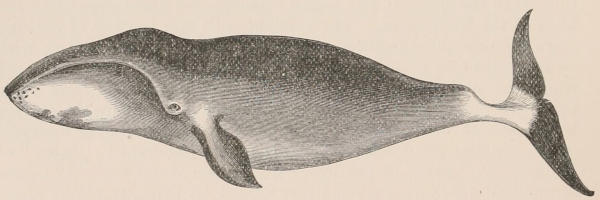
Fig. 76.—Greenland or Arctic Right Whale (Balæna mysticetus).
The Greenland, or more properly Arctic, Right Whale (Balæna mysticetus) attains, when full grown, a length of from 45 to 50 feet. Its usual vertebral formula is C 7, D 12, L 14, C 22. The external form is shown in Fig. 76 from a careful drawing by Mr. Robert Gray. In this species all the peculiarities which distinguish the head and mouth of the Whales from those of other mammals have attained their greatest development. The head is of enormous size, exceeding one-third of the whole length of the creature. The cavity of the mouth is actually larger than that of the body, thorax and abdomen together. The upper jaw is very narrow, but greatly arched from before backwards, to increase the height of the cavity and allow for the great length of the baleen blades; the rami of the mandible are widely separated posteriorly, and have a still further outward sweep before they meet at the symphysis in front, giving the floor of the mouth the shape of an immense spoon. The baleen blades attain the number of 380 or more on each side, those in the middle of the series having a length of 10 or sometimes 12 feet. They are black in colour, fine and highly elastic in texture, and fray out at the inner edge and ends into long, delicate, soft, almost silky, but very tough, hairs. The remarkable development of the mouth and the structures in connection with it, which distinguishes the Right Whale among all its allies, is entirely in relation to the nature of its food. It is by this apparatus that the animal is enabled to avail itself of the minute but highly nutritious crustaceans and pteropods which swarm in immense shoals in the seas it frequents. The large mouth enables it to take in at one time a sufficient quantity of water filled with these small organisms, and the length and delicate structure of the baleen provide an efficient strainer or hair-sieve by which the water can be drained off. If the baleen were rigid, and only as long as is the aperture between the upper and lower jaws when the month is shut, a space would be left beneath it when the jaws were separated, through which the water and the minute particles of food would escape together. But instead of this the long, slender, brush-like, elastic ends of the whalebone blades fold back when the mouth is closed, the front ones passing below the hinder ones in a channel lying between the tongue and the lower jaw. When the month is opened, their elasticity causes them to straighten out like a bow unbent, so that at whatever distance the jaws are separated the strainer remains in perfect action, filling the whole of the interval. The mechanical perfection of the arrangement is completed by the great development of the lower lip, which rises stiffly above the jaw-bone and prevents the long, slender, flexible ends of the baleen from being carried outwards by the rush of water from the mouth, when its cavity is being diminished by the closure of the jaws and raising of the tongue.
If, as appears highly probable, the “bowhead” of the Okhotsk Sea and Behring Strait belongs to this species, its range is circumpolar. Though found in the seas on both sides of Greenland, and passing freely from one to the other, it is never seen so far south as Cape Farewell; but on the Labrador coast, where a cold stream sets down from the north, its range is somewhat farther. In the Behring Sea, according to Scammon, “it is seldom seen south of the fifty-fifth parallel, which is about the farthest southern extent of the winter ice, while on the Sea of Okhotsk its southern limit is about the latitude of 54°.” As has been abundantly shown by Eschricht and Reinhardt in the case of the Greenland seas, “everything tends to prove,” Scammon says, “that the Balæna mysticetus is truly an ‘ice whale,’ for among the scattered floes, or about the borders of the ice-fields or barriers, is its home and feeding-ground. It is true that these animals are pursued in the open water during the summer months; but in no instance have we learned of their being captured south of where winter ice-fields are occasionally met with.” The occurrence of this species, therefore, on the British or any European coast is exceedingly unlikely, as when alive and in health the southern limit of its range in the North Sea has been ascertained to be from the east coast of Greenland at 64° N. lat. along the north of Iceland towards Spitsbergen, and a glance at a physical chart will show that there are no currents setting southwards which could bear a disabled animal or a floating carcase to British shores. To this à priori improbability may be added the fact that no authentic instance has been recorded of the capture or stranding of this species upon any European coast; for the cases in which it has been reported as seen in British waters may be explained by the supposition of one of the other species of the genus being mistaken for it. Still, as two other essentially Arctic Cetaceans, the Narwhal and the Beluga, have in a few undoubted instances found their way to British shores, it would be rash absolutely to deny the possibility of the Greenland Right Whale doing the same.
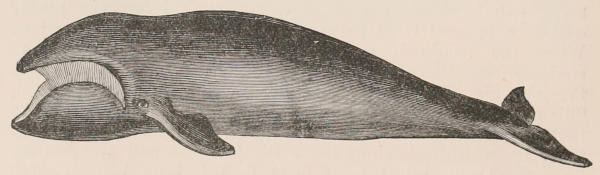
Fig. 77.—Southern Right Whale (Balæna australis).
The southern Right Whale (B. australis, Fig. 77) resembles the last in the absence of dorsal fin and of longitudinal furrows in the skin of the throat and chest, but differs in that it possesses a smaller head in proportion to its body, shorter baleen, a different shaped contour of the upper margin of the lower lip, and a greater number (fifteen) of ribs and dorsal vertebræ. This form inhabits the temperate seas of both northern and southern hemispheres, and is divided into several so-called species, according to their geographical distribution:—B. biscayensis of the North Atlantic, B. japonica of the North Pacific, B. australis of the South Atlantic, and B. antipodarum and B. novæ-zealandiæ of the South Pacific. The differential characters by which they have been separated, external as well as anatomical, are, however, slight and subject to individual variation; and the number of specimens available for comparison in museums is not yet sufficient to afford the necessary data to determine whether these characters can be regarded as specific or not. The most interesting of these is the Atlantic Right Whale, which was formerly abundant in the North Atlantic, but is now so scarce as to appear verging on extinction. This was the Whale the pursuit of which gave occupation to a numerous population on the shores of the Basque provinces of France and Spain in the Middle Ages. From the tenth to the sixteenth centuries Bayonne, Biarritz, St. Jean de Luz, and San Sebastian, as well as numerous other towns on the north coast of Spain, were the centres of an active Whale “fishery,” which supplied Europe with oil and whalebone. In later times these Whales were pursued as far as the coast of Newfoundland. They were, however, already getting scarce when the voyages undertaken towards the close of the sixteenth century for the discovery of the north-eastern route to China and the East Indies opened out the seas around Spitzbergen; then for the first time the existence of the Greenland Whale became known, and henceforth the energies of the European whale-fishers were concentrated upon that animal. It is a singular fact that the existence of the Atlantic Right Whale was quite overlooked by naturalists till lately, all accounts referring to it being attributed to the Greenland Whale, supposed once to have had a wider distribution than now, and to have been driven by the persecution of man to its present circumpolar haunts. To the two Danish cetologists Eschricht and Reinhardt is due the credit of having proved its existence as a distinct species, from a careful collation of numerous historical notices of its structure, distribution, and habits; and their restoration of the animal, founded upon these documents, has been abundantly confirmed by the capture of various specimens in recent times, showing that it still lingers in some of the localities where it formerly was so abundant. The only known instances of its occurrence on the coasts of Europe in modern times are in the harbour of San Sebastian in January 1854, in the Gulf of Taranto, in the Mediterranean, in February 1877, and on the Spanish coast between Guetaria and Zarauz (Guipuzcoa) in February 1878. The skeletons of these three whales are preserved in the museums of Copenhagen, Naples, and San Sebastian respectively. On the coast of the United States several Whales of this species have been taken within the last few years. In the North Pacific a very similar if not identical species is regularly hunted by the Japanese, who tow the carcases ashore for the purposes of flensing and extracting the whalebone. In the tropical seas, however, according to Captain Maury’s whale charts, Right Whales are never or rarely seen; but the southern temperate ocean, especially the neighbourhood of the Cape of Good Hope, Kerguelen’s Island, Australia, and New Zealand, is inhabited by “Black Whales,” once abundant, but now nearly exterminated through the wanton destruction of the females as they visit the bays and inlets round the coast, their constant habit in the breeding time. The range of these Whales southward has not been accurately determined; but no species corresponding with the Arctic Right Whale has as yet been met with in the Antarctic icy seas.
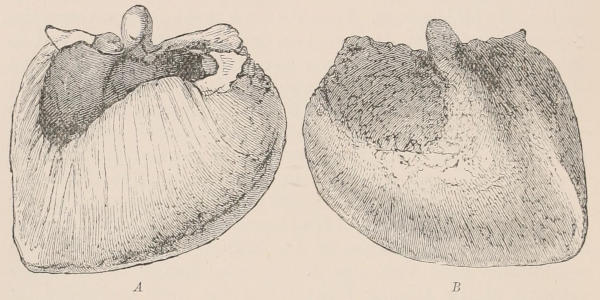
Fig. 78.—The right tympanic bone of an immature individual of the Greenland Whale (Balæna mysticetus), from the inner (A) and outer (B) aspects. ¹⁄₃ natural size. (From the Proc. Zool. Soc.)
Remains of Right Whales are of not uncommon occurrence in the Pliocene Crag deposits of England and Belgium. The tympanics of B. affinis from these deposits appear to indicate a species closely allied to B. mysticetus, in which this bone is long and angulated anteriorly (Fig. 78); while the tympanics from the same deposits described as B. primigenia are shorter and more rounded at the antero-inferior angle, thus resembling those of B. australis. A smaller species, having an estimated length of about 20 feet, has been described as Balænula balænopsis, the generic distinction being made on account of the free condition of the atlas and seventh cervical vertebræ; but it seems scarcely advisable to regard such a feature as indicating more than a less specialised species. Balæna (Balænotus) insignis is a whale of somewhat larger dimensions, in which the atlas is generally, and the seventh cervical vertebra always, free, while in young individuals the axis vertebra may likewise be separate.
Neobalæna.[132]—Head about one-fourth the total length. Skin of the throat not plicated. A small falcate dorsal fin. Vertebræ, C 7, D 17, L 3, C 16 = 43. The cervical vertebræ are united. The manus small, narrow, and tetradactylous, wanting the pollex. The ribs remarkably expanded and flattened. The scapula very low and broad, with completely developed acromion and coracoid processes. Tympanic approximating to that of Balæna, but with certain very characteristic peculiarities of shape. Baleen very long, slender, elastic, and white. A single species, at present very rare, N. marginata, from the Australian and New Zealand seas is the smallest of the Whalebone Whales, being not more than 20 feet in length.
Rhachianectes.[133]—This combines the small head, elongated form, and narrow pectoral fin of Balænoptera with the smooth skin of the throat and absence of the dorsal fin of Balæna. The baleen is the shortest and coarsest of any of the group. Its osteology is imperfectly known. One species, R. glaucus, the Gray Whale of the North Pacific.
Megaptera.[134]—Head of moderate size. Baleen plates short and broad. Vertebræ, C 7, D 14, L 11, C 21 = 53. Cervical vertebræ free. Scapula with acromion and coracoid process absent or rudimentary. Skin of throat plicated. Dorsal fin low. Pectoral limb tetradactylous, very long and narrow, attaining about one-fourth of the length of the entire animal, the metacarpus and phalanges being greatly developed, and the latter very numerous. Tympanic still more inflated than in Balænoptera, with the involuted portion more distinctly pyriform, the Eustachian part of the aperture well defined, and two well-marked longitudinal ridges on the lower surface of adult specimens.
The Whale commonly called “Humpback” (Megaptera boops) by whalers, perhaps on account of the low hump-like form of the dorsal fin, is very distinctly characterised from all others of the group, especially by the immense length of the pectoral fins or flippers, which are indented or scalloped along their margins, and are, except at their base, of a white colour, nearly all the rest of the body being black. The baleen plates are of a deep black colour. Though common in the North Atlantic between Norway and Greenland, this Whale does not frequently appear on the coasts of the British Isles. One came ashore at Newcastle in 1839; another, a young one, was taken in the estuary of the Dee in 1863, and its skeleton is preserved in the Liverpool museum; and a nearly full-grown animal was captured in the mouth of the Tay in the winter of 1883-84.[135] The usual length of the adult ranges from 45 to 50 feet, the female being larger than the male. Whales of the genus Megaptera are found in the South Atlantic and in both the North and the South Pacific. They resemble those of British seas so closely that it is doubtful whether the differences which have been observed, and upon which several species have been founded, may not be individual peculiarities; but zoologists have not yet had the opportunity of examining and comparing such a series of specimens of different ages and sexes from different localities as would be necessary to determine these points satisfactorily.
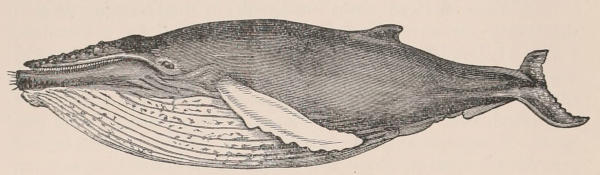
Fig. 79.—Humpbacked Whale (Megaptera boops).
Tympanic bones of Megaptera occur in the English and Belgian Crags, although somewhat less commonly than those of Balæna and Balænoptera; they have been described under the names of Megapteropsis and Burtinopsis.

Fig. 80.—The Common Rorqual (Balænoptera musculus).
Balænoptera.[136]—Head small and flat, and pointed in front. Body long and slender. Skin of throat plicated. A small falcate dorsal fin. Baleen short and coarse. Cervical vertebræ free. Scapula low and broad, with a large acromion and coracoid process. Pectoral limb tetradactylous, small, narrow, and pointed. Tympanic (Fig. 81) long, much inflated, and rounded, with the involuted portion thickened and pyriform, and the notch for the Eustachian canal sharply defined; inner surface flattened, without the vertical groove found in Megaptera.
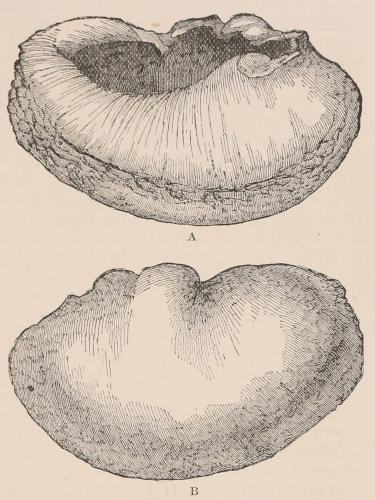
Fig. 81.—The right tympanic of Balænoptera musculus from the inner (A) and outer (B) aspects. ½ natural size. (From the Proc. Zool. Soc.)
The Rorquals, Fin-Whales, Fin-backs, Finners, or Razor-backs, as they are variously called, have the plicated skin of the throat like that of Megaptera, the furrows being more numerous and close set; but the pectoral fin is comparatively small, the dorsal fin distinct and falcate, and the tail very much compressed before it expands into the “flukes.” The Rorquals are perhaps the most abundant and widely distributed of all the whales, being found in some of their modifications in all seas, except the extreme Arctic, and probably Antarctic regions. Owing to the small quantity and inferior quality of their whalebone, the comparatively limited amount of blubber, and their great activity and the difficulty of capturing them by the old methods, these Whales were not until recently an object of pursuit by whale-fishers; but, since the introduction of steam-vessels, and especially of explosive harpoons fired from guns in the place of those hurled by the human hand, a regular fishery has been established on the coast of Finmark. There are four distinct species of this genus in British seas. (1) Balænoptera sibbaldi, the “Blue Whale,” the largest of all known animals, attains a length of 80 or even sometimes 85 feet. Its colour is dark bluish gray, with small whitish spots on the breast; the baleen is black; the flippers are larger proportionally than in other Rorquals, measuring one-seventh of the total length of the body; and the dorsal fin is small and placed very far back. This Whale has usually 64 vertebræ, of which 16 bear ribs. Like the others of the genus, this species seems to pass the winter in the open seas, and approaches the coast of Norway at the end of April or beginning of May. At this time its sole food is a small crustacean (Euphausia inermis) which swarms in the fjords. Several specimens have been taken on the British coasts, two fine skeletons from the Firth of Forth being preserved in the Edinburgh museums. (2) Balænoptera musculus, the Common Rorqual, has a length of 65 to 70 feet, is of a grayish slate colour above and white underneath, and the baleen is slate colour variegated with yellow or brown. It has usually 62 vertebræ, of which 15 bear ribs. This is the commonest of all the large Whales on the British coasts, scarcely a winter passing without the body of one being somewhere washed ashore, usually after stormy weather, and more frequently on the south coast, as this species has a more southern range than the last, and frequently enters the Mediterranean. It feeds largely on fish, and is frequently seen feasting among shoals of herring. (3) Balænoptera borealis, often called Rudolphi’s Whale from its first describer, is a smaller species, scarcely attaining a length of 50 feet. It is bluish-black above, with oblong, light-coloured spots, whilst the under parts are more or less white; the whole of the tail and both sides of the flippers are black; the baleen is black, and the bristly ends fine, curling, and white; the flippers are very small, measuring one-eleventh of the total length of the body. There are 56 vertebræ, with 14 pairs of ribs. This species, according to Collett, feeds chiefly on minute crustaceans, mainly Calanus finmarchicus and Euphausia inermis, and not on fish. Until lately it was considered the rarest of the Whales of European seas, and was only known to science from a few individuals stranded on the coasts of northern Europe at long intervals, the skeletons of which have been preserved in museums. The most southern point at which it has been met with hitherto is Biarritz in France. Since the establishment of the whaling station near the North Cape it has been shown to be a regular summer visitor, and in 1885, 771 individuals were captured on the coast of Finmark. (4) Balænoptera rostrata, the lesser Fin-Whale or Rorqual, is the smallest species found in the northern seas, rarely exceeding 30 feet in length. Its colour is grayish-black above, whilst the under side is white, including the whole of the lower side of the tail; the inner side of the flippers is white; and there is a broad white band across the outer side, which is a very characteristic mark of the species; the baleen is yellowish-white. The dorsal fin in this and the last species is comparatively high, and placed far forwards on the body. This Whale has usually 48 vertebræ, 11 of which bear ribs. It is common in summer in the fjords of Norway, and is often seen around the British Isles. It has been taken, though rarely, in the Mediterranean; and ranges as far north as Davis’s Straits.
Rorquals are met with in almost all seas throughout the world, but further and more accurate observations are required before their specific characters and geographical distribution can be made out. Nearly all the individuals hitherto examined with any care, whether from the North Pacific, the Australian seas, or the Indian Ocean, come very near in structure to one or the other of the Atlantic forms described above, so much so that some zoologists have been induced to believe that there are but four species, each of which has a wide, almost cosmopolitan range, while others have described and named almost every individual specimen captured as belonging to a different species.[137]
Tympanics, vertebræ, and other bones of Rorquals are among the commonest cetacean remains found in the Pliocene Crags of England and Belgium. Several species, varying in dimensions, are known from these deposits, B. definita (sibbaldina) being apparently nearly related to the existing B. sibbaldi. A caudal vertebra from the Upper Eocene of Hampshire has been referred to Balænoptera, but does not afford sufficient evidence to prove the existence of the genus at that date.
Extinct Genera.—The extinct genus Cetotherium of the European Pliocene may be taken to include a number of fossil Whalebone Whales allied to the Balænopterine group, several of which have been described under other names, such as Plesiocetus, Heterocetus, and Amphicetus. They are readily characterised by the form of the tympanic bone, which is much narrower in front than behind, the roughened inferior surface being in the shape of an isosceles triangle, and the notch for the Eustachian canal being smaller, and descending nearer to the inferior border of the inner wall than in Balænoptera. The skull is longer than the latter, with a greater interval between the occiput and the frontal, and with longer and more flattened nasals. The relative thickness of the cervical vertebræ is also greater. In the typical forms (e.g. C. brialmonti and C. dubium) the mandibular condyle is simple; but in C. (Heterocetus) brevifrons it is furnished with a projecting posterior talon, as in the Sperm Whale.
Herpetocetus is known by a comparatively small species from the Belgian and English Crags, characterised by the extreme inflation of the egg-shaped tympanic bone, which approximates to that of Megaptera, but has the greater part of the cavity filled by bone. There is a talon to the condyle of the mandible.
Palæocetus, as already mentioned (p. 232), is founded upon the ankylosed cervical vertebræ of a small Whale originally considered as having been derived from the Kimeridge Clay, but which doubtless came from the Suffolk Crag; if it belongs to the Balænidæ it indicates a Right Whale.
Suborder Archæoceti.
Family Zeuglodontidæ.
This group is formed to include certain extinct Cetacean-like animals at present only known by more or less fragmentary portions of their skeleton and teeth, and whose position and affinities are, therefore, still subject to doubt.[138]
In the anterior part of both jaws the teeth are simple, conical, or slightly compressed, and sharp pointed. The first three in the upper jaw are distinctly implanted in the premaxillary bone, and so may be reckoned as incisors. The tooth which succeeds, or the canine, is also simple and conical, but it does not exceed the others in size. This is followed by five teeth having two distinct roots and compressed pointed crowns, with denticulated cutting-edges. The dentition is therefore i ³⁄₃, c ¹⁄₁, p and m ⁵⁄₅ = 36, resembling that of some Seals.[139] General form of the skull elongated and much depressed. Brain-cavity very small, and the skull between it and the orbits elongated and narrow. Temporal fossæ very large. A strong sagittal crest. Rostrum long and narrow, differing from that of other Cetaceans in the large extent to which the premaxillæ form the sides of the anterior extremity. Nasal bones elongated, flat, and narrow, the opening of the anterior nares being over the middle of the elongated compressed rostrum. All the cervical vertebræ free. The characters of the dorsal vertebræ and mode of articulation of the ribs appear to have resembled those of Platanista rather than Balæna, Physeter, or Delphinus. Lumbar vertebræ with elongated bodies, low neural spines, and the transverse processes placed low down on the bodies. Characters of the limbs not known with certainty.[140]
All the known fossil remains belonging to the animals of this group may be referred, provisionally at least, to the genus Zeuglodon, so named because the first section of a molar tooth examined was taken from the base of the crown, where it was beginning to divide into the two roots, and looked like two single teeth “linked or yoked together.” This name was substituted by Owen for the earlier one Basilosaurus of Harlan, with the consent of that author, on the mammalian nature of the animal being demonstrated.[141] The latter name is, however, still generally retained by American zoologists. The remains have hitherto been found chiefly in the Eocene formations of the States of Alabama, Louisiana, Mississippi, and Arkansas, and have been assigned to several species. A portion of a skull is recorded from the Barton Clay (Eocene) of Hampshire, England.
Suborder Odontoceti, the Delphinoidea, or Toothed Whales.
Calcified teeth always present after birth; generally numerous, but sometimes a very limited number (in a few cases none) are functionally developed. No baleen. Upper surface of the skull more or less asymmetrical. Nasal bones in the form of nodules or flattened plates, applied closely to the frontals, and not forming any part of the roof to the narial passage, which is directed upwards and backwards. Olfactory organ rudimentary or absent. Hinder end of the maxilla expanded and covering the greater part of the orbital plate of the frontal bone. Lachrymal bone either inseparable from the jugal, or, when distinct, very large, and forming part of the roof of the orbit. Tympanic bone not ankylosed with the periotic, which is usually only attached to the rest of the skull by ligament. Rami of mandible nearly straight, much expanded in height posteriorly, with a wide funnel-shaped aperture to the dental canal, and coming in contact in front by a flat surface of variable length, but always constituting a true symphysis. Several of the anterior ribs with well-developed capitular processes, articulating with the bodies of the vertebræ. Sternum almost always composed of several pieces, placed one behind the other, with which several pairs of ribs are always connected by the intervention of well-developed cartilaginous or ossified sternal ribs. External respiratory aperture single, the two nostrils uniting before they reach the surface, usually in the form of a transverse subcrescentic valvular aperture, situated on the top of the head. Manus always pentadactylous, though the first and fifth digits are usually very little developed. No cæcum, except in Platanista.
Family Physeteridæ.
No functional teeth in the upper jaw. Mandibular teeth various, often much reduced in number. Bones of the cranium raised so as to form an elevated prominence or crest behind the nares. Pterygoid bones thick, produced backwards, meeting in the middle line, and not involuted to form the outer wall of the post-palatine air-sinuses, but simply hollowed on their outer side. Anterior facet of periotic bone (Fig. 87) for articulation with the tympanic quite smooth; and the posterior tympanic surface of the former broad, with a median longitudinal ridge. Transverse processes of the arches of the dorsal vertebræ, to which the tubercles of the ribs are attached, ceasing abruptly near the end of the series, and replaced by processes on the body at a much lower level, and not on a line or serially homologous with them, but serially homologous anteriorly with the heads of the ribs, and posteriorly with the transverse processes of the lumbar vertebræ. (In some genera, as Physeter, the two processes, upper and lower on each side, are both present and well developed in the same vertebra in the region of transition. In others, as Ziphius and Berardius, they are not both developed on any single vertebra.) Costal cartilages not ossified.
Subfamily Physeterinæ.—Numerous teeth in the mandible, which are not set in distinct bony alveoli, but in a long groove imperfectly divided by partial septa, and held in place by the strong, fibrous gum surrounding them. No distinct lachrymal bone. Cranium strikingly asymmetrical in the region of the narial apertures, in consequence of the left opening greatly exceeding the right in size.
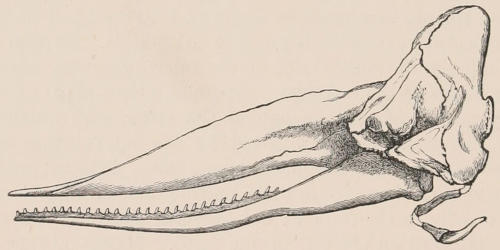
Fig. 82.—Skull of Sperm Whale (Physeter macrocephalus).
Physeter.[142]—Upper teeth apparently of uncertain number, rudimentary, and functionless, being embedded in the gum. Lower jaw with from 20 to 25 teeth on each side, stout, conical, recurved, and pointed at the apex until they are worn, without enamel. Upper surface of the cranium concave; its posterior and lateral edges raised into a very high and greatly compressed semicircular crest or wall. Zygomatic processes of jugal bones thick and massive. Rostrum greatly elongated, broad at the base, and gradually tapering to the apex. Upper edge of the mesethmoid forming a roughened irregular projection between the narial apertures, inclining to the left side. Mandible exceedingly long and narrow, the symphysis being more than half the length of the ramus. Vertebræ: C 7, D 11, L 8, C 24; total 50. Atlas free; all the other cervical vertebræ united by their bodies and spines into a single mass. Eleventh pair of ribs rudimentary. Head about one-third the length of the body; very massive, high and truncated, and rather compressed in front; owing its huge size and remarkable form mainly to the accumulation of an oily substance secreted by the lining membranes of great cells surrounding the narial passage and filling the large hollow on the upper surface of the cranium and overlying the rostrum. The single blowhole is longitudinal, slightly sigmoid, and placed at the upper and anterior extremity of the head to the left side of the middle line. The opening of the mouth is on the under side of the head, considerably behind the end of the snout. Pectoral fin short, broad, and obliquely truncated. Dorsal fin a mere low protuberance.
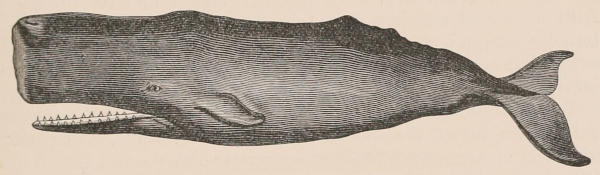
Fig. 83.—The Sperm Whale (Physeter macrocephalus).
The only representative of this genus is the Cachalot or Sperm Whale (P. macrocephalus, Fig. 83), one of the most colossal of animals, quite equalling, if not exceeding, the Greenland Whale in bulk. The length of the full-grown male is from 55 to 60 feet, but the female is stated not to reach more than half that size. The general colour of the surface is black above and gray below, the colours gradually shading into each other. The Sperm Whale is one of the most widely distributed of animals, being met with usually in herds or “schools” in almost all tropical and subtropical seas, but not occurring, except accidentally, in the Polar regions. Not unfrequently specimens appear on the coasts of the British Isles, but only as solitary stragglers, or as dead carcases, floated northwards by the Gulf Stream. It is remarkable that every one of these of which we have an accurate record has been an old male. The food of this Whale consists mainly of various species of cephalopods (squid and cuttle-fish), but fish of considerable size are also eaten. The substance called “ambergris,” formerly used in medicine and now in perfumery, is a concretion formed in the intestine of this Whale, and is found floating on the surface of the seas it inhabits. Its genuineness is proved by the presence of the horny beaks of the cephalopods on which the Whale feeds.
The oil contained in the great cavity above the skull, when refined, yields “spermaceti,” and the thick covering of blubber which everywhere envelops the body produces the valuable “sperm-oil” of commerce; hence this animal has long been the subject of a regular chase, by which its numbers have been greatly diminished.
Cogia.[143]—Teeth of the upper jaw absent, or reduced to a rudimentary pair in front; in the lower jaw 9 to 12 on each side, rather long, slender, pointed, and curved, with a coating of enamel. Upper surface of the cranium concave, with thick, raised posterior and lateral margins, massive and rounded at their anterior terminations above the orbits. Upper edge of the mesethmoid forming a prominent sinuous ridge, constituting a kind of longitudinal septum to the base of the great supra-cranial cavity. Rostrum not longer than the cranial portion of the skull, broad at the base, and rapidly tapering to the apex. Zygomatic process of the jugal styliform. Mandible with the symphysis less than half the length of the entire ramus. Vertebræ: C 7, D 13 or 14, L and C 30; total 50 or 51. All the cervical vertebræ united by their bodies and arches. External characters not well known, but, judging by the somewhat conflicting accounts of those that have had an opportunity of observing them, the head is about one-sixth of the length of the body, and obtusely pointed in front; the mouth small, and placed far below the apex of the snout; the spiracle crescentic, and placed obliquely on the top of the head anteriorly to the eyes, and to the left of the middle line; the pectoral fins are obtusely falcate; and there is a triangular dorsal fin.
The history of this genus is a good illustration of the difficulties in which the study of the Cetacea has been involved by the superficial manner in which it has been investigated. The first known example, a skull from the Cape of Good Hope in the Paris Museum, was described by De Blainville under the name of Physeter breviceps. This was afterwards with good reason generically separated by Gray. Until within a very few years ago only five other individuals had been met with, each of which had been described under a different specific name (viz. grayi, macleayi, simus, floweri, and potsii), and which are arranged by Gray in two distinct genera. The most careful examination of the description given of these specimens, or of the now numerous osteological remains available, fails to detect any differences beyond those which may be attributed to age or sex, and hence, according to our present knowledge, these six supposed species must all be included under one name, C. breviceps. This animal appears to attain the length of 10 feet when adult, and has been met with at various distant localities in the Southern Ocean, and also off the coast of Madras and in the North Pacific.