Chapter XIV · THE ORDER PRIMATES
Reading edition
This order in the system of Linnæus includes Man, the Monkeys, the Lemurs, and the Bats. By common consent of all zoologists the last-named animals have been removed into a distinct order; but with regard to the association of the others there has been, and still is, much difference of opinion.
That all the Monkeys, from the highest Anthropoid Apes to the lowest Marmosets, form a natural and tolerably homogeneous group seems never to have been questioned; but whether the Lemurs on the one hand and Man on the other should be united with them in the same order are points of controversy. If, in accordance with the traditional views of zoologists, the former are still considered to be members of this order, they must form a suborder apart from all the others, with which they have really very little in common except the opposable hallux of the hind foot, a character also met with in the Opossums, and which is therefore of very secondary importance.[640]
Using the term Primates in this wider sense it is not easy to give any precise definition of the order. The dentition is diphyodont and heterodont; the number of incisors being very generally ²⁄₂, and that of the molars, with the exception of the Hapalidæ, being ³⁄₃. The cheek-teeth are adapted for grinding, the molars being more complex than the premolars, and usually having four main tubercles, which may be either subconical or more or less compressed. The orbit is invariably surrounded by a ring of bone; the clavicles are well developed; and the radius and ulna are never united. The scaphoid and lunar of the carpus, and commonly also the centrale, remain distinct from one another. There are usually five digits furnished with well-developed nails in both the manus and the pes; but the pollex may be rudimentary or wanting. The hallux, except in Man, is opposable to the other digits, and has a flat nail (absent in Simia); and the pollex, when present, is usually also more or less opposable. The terminal phalanges of the digits are flattened (except in the second digit of the pes of the Lemuroidea), and not cleft at their extremities. The fingers and toes generally do not taper towards their extremities, but (except in Chiromys) are dilated, flattened, and rounded at their tips. The humerus has no entepicondylar foramen, nor the femur a third trochanter. In the alimentary canal (Fig. 324) the stomach is generally simple, although sacculated in the subfamily Semnopithecinæ of the Cercopithecidæ; and there is always a cæcum, which is generally of large size. The placenta may be either non-deciduous, or discoidal and deciduous. There are always two mammæ in the pectoral region, except in Chiromys; and the testes descend into a scrotum.
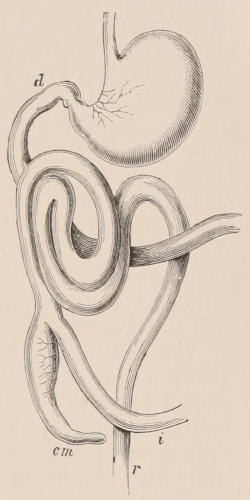
Fig. 324.—Alimentary canal of Galago, the greater part of the small intestine being omitted. d, duodenum; i, ileum; cm, cæcum; r, rectum.
The Lemuroidea are decidedly low in the scale of organisation, their placentation being of a lower type than that of the Insectivora; and all the Primates retain generalised features in their pentadactylate limbs and more or less bunodont cheek-teeth. In respect to cerebral characters and other features the higher representatives of the order have, however, acquired a specialisation clearly indicating their right to occupy the highest position in the animal kingdom. So far as the available material admits of forming an opinion, fossil forms appear to indicate an intimate connection between the Lemuroidea and Insectivora, so that in some cases it is almost impossible to determine whether an extinct type should be referred to the former or to the latter group. It is noteworthy that while in all existing Primates the upper molars are of a quadrituberculate type, in the extinct Lemuroid genus Anaptomorphus they are trituberculate.
Suborder Lemuroidea.
The Latin term Lemur was applied by Linnæus to the typical representatives of the present group of Primates, having been suggested by the nocturnal habits and strange ghost-like appearance of some of its members. As these animals had previously no vernacular appellation in English, this name has been generally adopted, and is now completely anglicised, making “Lemurs” in the plural. The French call them Makis, and the Germans Halbaffen, in allusion to their forming a transition from monkeys to ordinary quadrupeds. For the same reason they are called Prosimiæ by some systematic writers. When the name was bestowed by Linnæus only five species were known, of which one, L. volans, Linn. (Galeopithecus volans of modern writers), is now removed by common consent from the group. Notwithstanding the discovery of many new and curious forms, the Lemurs remain a very natural and circumscribed division of the animal kingdom, though no longer considered a single genus, but divided up into many genera and even families.
The existing species are not numerous, and do not diverge widely in their organisation or habits, being all of small or moderate size, all adapted to an arboreal life, climbing with ease, and, as they find their living, which consists of fruits, leaves, birds’ eggs, small birds, reptiles, and insects, among the branches of the trees, they rarely have occasion to descend to the ground. None are aquatic, and none burrow in the earth. Many of the species, although by no means all, are nocturnal in their habits, spending the day in sleeping in holes, or rolled up in a ball, perched on a horizontal branch, or in the fork of a tree, and seeking their food by night. Their geographical distribution is very peculiar; by far the larger proportion of species, including all those to which the term “Lemur” is now especially restricted, being exclusively inhabitants of Madagascar, where they are so abundant and widely distributed that it is said by M. Grandidier, who has contributed more than any other traveller to enrich our knowledge of the structure and manners of these animals, that there is not a little wood in the whole island in which some of them cannot be found. From Madagascar as a centre a few species less typical in character extend through the African continent westward as far as Senegambia, and others are found in the Oriental region as far east as the Philippine Islands and Celebes.
The following are the essential characters by which the suborder as a whole is distinguished from the Anthropoidea. Skull with the orbit opening freely into the temporal fossa beneath the postorbital bar (except in Tarsius); and the lachrymal foramen situated externally to the margin of the orbit (Fig. 327). The pollex and hallux are always well developed, the latter being especially large; the second or index digit of the manus may be rudimentary; while in the pes the second digit invariably terminates in a long pointed claw. The cerebral hemispheres do not completely overlap the cerebellum, and are but slightly convoluted. The uterus is bicornuate. The placenta is non-deciduate, and either diffused or bell shaped—the whole of the chorion except the cephalic pole being covered with villi; and the allantois is of very great size. There may be abdominal mammæ. Except in Chiromys, the first pair of upper incisors are separated in the middle line. In marked contrast to the Anthropoidea, the middle or transverse portion of the colon is almost always folded or convoluted on itself. (See Fig. 324.)
In subdividing the group for the purpose of a more detailed description of the different animals of which it is composed it must first be noted that there are two very aberrant forms, each represented by a single species—the little Tarsius of the Indian archipelago, and the singular Chiromys or Aye-aye, which, though an inhabitant of Madagascar, the headquarters of the suborder, and living in the same forests and under the same external conditions as the most typical Lemurs, exhibits a most remarkable specialisation in the structure of its limbs and teeth, the latter being modified so as to resemble, at least superficially, those of the Rodents, in which order it was once placed. The differences between these two forms and the remaining Lemurs are so great that the whole suborder naturally divides itself into three families, the first of which may be again divided into four subfamilies.
Family Lemuridæ.
Upper incisors two on each side, small and separated by an interval in the middle line. Upper canine large, conical, compressed, and pointed. Premolars two or three, molars three on each side above and below, with numerous more or less pointed cusps. In the front of the lower jaw are on each side two or three closely approximated, long, slender teeth lying almost horizontally and projecting forwards. These are generally considered to represent the incisors and canine, but there is some doubt about their homologies, and they may be all considered as incisors, the canine being absent. The first lower premolar larger than those behind it, and shaped like a canine, of which it performs the function (Fig. 327). The orbit and temporal fossa widely continuous beneath the bar of bone (formed by the frontal and jugal) constituting the posterior boundary of the former cavity. The fibula well developed and distinct from the tibia. All the digits of both feet (except the second of the hind foot) with flat nails, and corresponding form of ungual phalanges.
Subfamily Indrisinæ.—The dentition of the adult consists of thirty teeth, usually expressed by the formula i ²⁄₁, c ¹⁄₁, p ²⁄₂, m ³⁄₃; but, as indicated above, they may be i ²⁄₂, c ¹⁄₀, p ²⁄₂, m ³⁄₃. In the milk-dentition there are twenty-two teeth, the true molars of course not being represented, but there are two additional teeth in the fore part of the lower jaw which have no successors in the permanent series. Hind limbs greatly developed, but the tarsus normal. Hallux of large size, and very opposable. The other toes united at their base by a fold of skin, which extends as far as the end of the first phalanx. Mammæ two, pectoral. Cæcum very large, and colon extremely long and spirally coiled.
The animals of this group are, as their organisation indicates, essentially arboreal, and feed exclusively on fruit, leaves, buds, and flowers. They are restricted geographically to the island of Madagascar. Among them are the largest members of the suborder. A detailed and beautifully illustrated account of their characters, external and internal, and distribution and habits, is given in the Histoire Naturelle de Madagascar, by A. Grandidier and Alphonse Milne-Edwards (1875). The species are not numerous and are distributed into three genera.
Indris.[641]—Upper incisors subequal in size. Upper canine larger than the first premolar. Muzzle moderately long. Ears exserted. Carpus without an os centrale. Tail rudimentary. Vertebræ: C 7, D 12, L 9, S 4, C 9.
The only well-established species is the Indris (I. brevicaudata, Fig. 325), discovered by Sonnerat in 1780. It is the largest of the Lemurs, the length of the head and body being about 2 feet, and the tail 2 inches. It is very variable in colour, for although usually nearly black, marked with whitish spots principally in the lumbar region and forearm, individuals have been found quite white. It inhabits exclusively the forests of a part of the east coast of Madagascar, living in small troops of four or five in number, and resembling in most of its habits the animals of the next genus.
Propithecus.[642]—Second upper incisor much smaller than the first. Upper canine larger than the first premolar. Muzzle rather short. Ears short, concealed by the fur. An os centrale in the carpus. Tail long. Vertebræ: C 7, D 12, L 8, S 3, C 28.
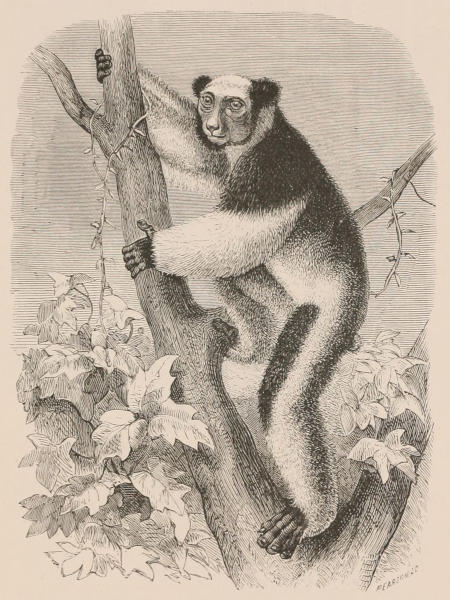
Fig. 325.—Indris (Indris brevicaudata). From Milne-Edwards and Grandidier, Mammifères de Madagascar, pl. 12.
The species are all subject to great variations in colour, which has led to much difficulty in discriminating them, and to much confusion of synonymy. Grandidier and Milne-Edwards recognise three as certainly distinct—P. diadema, P. verreauxii, and P. coronatus (Fig. 326). Some of these are to be found in almost every part of the island of Madagascar, living in the woods in small bands of six or eight together, and feeding exclusively on buds, flowers, and berries. Their powerful hind limbs enable them to leap from tree to tree, often to a distance of 10 yards, without any apparent effort, and thus seeming to fly through the air. When obliged to descend to the ground to pass from one clump of trees to another they do not run on all fours, but stand erect, and throwing their arms above their heads progress by a series of short jumps, producing an effect which is described by travellers who have seen them thus in their native haunts as exceedingly ludicrous. They are not nocturnal, but most active in the morning and evening, remaining seated or coiled up among the branches during the heat of the day. They are naturally of a quiet and gentle disposition, and do not show much intelligence. All the species are also less vociferous than the true Lemurs, only when alarmed or angered making a noise which has been compared to the clucking of a fowl. Like the rest of the subfamily they never have more than a single young one at a time.
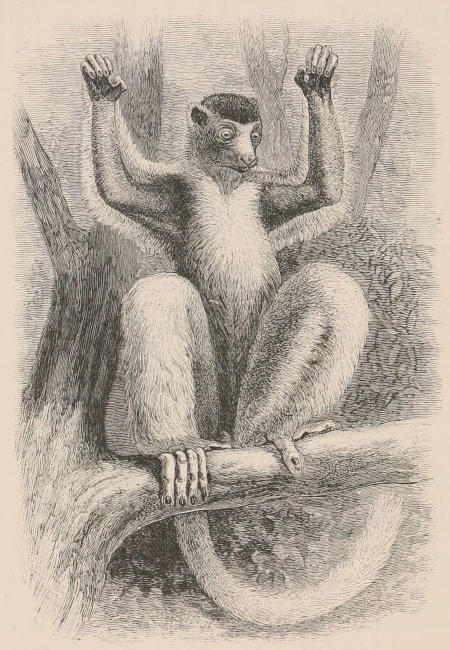
Fig. 326.—Propithecus coronatus. (From Milne-Edwards and Grandidier, Mammifères de Madagascar, pl. 7.)
Avahis.[643]—Second upper incisor larger than the first. Upper canine scarcely larger than the first premolar. Muzzle very short. Ears very small and hidden in the fur, which is very soft and woolly. Carpus without an os centrale. Tail long. Vertebræ: C 7, D 11, L 9, S 3, C 23.
One species, A. laniger, the Woolly Lemur, or Avahis, considerably smaller than any of the last genus. It differs from them in its habits, being quite nocturnal, and not associating in small troops, but being always met with either alone or in pairs. It is very slow in its movements, and rarely descends to the ground, but when it does it walks upright like the other Indrisinæ. It is found throughout the forests which clothe the mountains on the east coast of Madagascar, and also in a limited district on the north-west coast, the specimens from the latter locality being of smaller size and rather different in colour.
Subfamily Lemurinæ.—The dentition in the adult consists of thirty-six teeth, which, as usually enumerated, are i ²⁄₂, c ¹⁄₁, p ³⁄₃, m ³⁄₃. In the fore part of the lower jaw are on each side three elongated, compressed, procumbent teeth, of which the outer, usually considered the homologue of the canine, is larger than the others. All the forms have long tails. Hind limbs not of the same disproportionate size as in the last group; and the cæcum much less developed. Tarsus but slightly elongated, the calcaneum being always less than one-fourth the length of the tibia. Toes of the hind feet free to the base. Habitat, Madagascar, and some of the adjacent Comoro Islands.
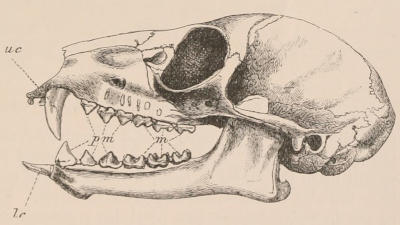
Fig. 327.—Skull of Ring-tailed Lemur (Lemur catta). × ⅓; uc, Upper canine; lc, lower canine; pm, premolars; m, molars.
This group contains the typical Lemurs, or rather those to which the term is now chiefly restricted. Two somewhat aberrant members make it necessary to divide it into three genera.
Lemur.[644]—Upper incisors separated by an interval in the middle, and not in contact with each other or the canine, in front of which they are both placed. Muzzle elongated. Ears conspicuous and tufted. Mammæ two, pectoral. Vertebræ: C 7, D 12, L 7 (or D 13, L 6), S 3, C 27.
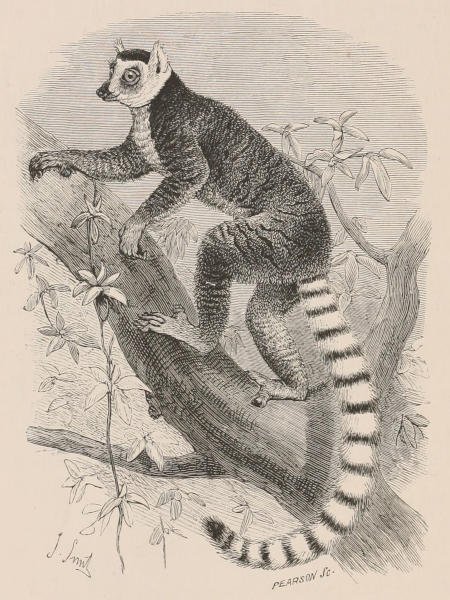
Fig. 328.—The Ring-tailed Lemur (Lemur catta).
Animals much about the size of a common Cat, with Fox-like faces, soft thick fur, and long tails well clothed with hair. Not having the same disproportionate size of the limbs as the last group, they are much more quadrupedal in their actions, walking on the ground or running along the branches of trees on all four feet, but also jumping with marvellous agility. They are gregarious, living in small troops, are diurnal in their habits, but most active towards evening, when they make the woods resound with their loud cries. They feed not only on fruits and buds, but also on eggs, young birds, and insects. When at rest or sleeping they generally coil their long, bushy tails around their bodies, apparently for the sake of the warmth it affords. They have either one or two young ones at a birth, which are at first nearly naked, and are carried about, hanging close to and almost concealed by the hair of the mother’s belly. After a while they change their position and mount upon the mother’s back, where they are carried about until they are able to climb and leap by themselves. Though no member of the Indrisinæ has as yet lived long enough in captivity to be brought alive to Europe, various species of Lemurinæ are commonly seen in menageries, and often breed in England. They present a great tendency to variation in their colouring, in consequence of which many nominal species have been made. The most distinct, and at the same time most beautiful, is the Ring-tailed Lemur (L. catta, Fig. 328), of a delicate gray colour, and with a long tail marked with alternating rings of black and white. This is said by Mr. G. A. Shaw[645] to be an exception to all the other Lemurs in not being arboreal, but living chiefly among rocks and bushes. Pollen, however, says that it inhabits the forests of the south-west parts of Madagascar, living, like its congeners, in considerable troops, and not differing from them in its habits. He adds that it is extremely gentle, and active and graceful in its movements, and utters at intervals a little plaintive cry like that of a domestic cat. All the others have the tail of uniform colour. The largest species is L. varius, the Ruffed Lemur, sometimes black and white, and sometimes reddish-brown, the variation apparently not depending on sex or age, but on the individual. In L. macaco the male is black and the female red. L. mongoz, L. collaris, and L. albifrons are other well-known species.
Hapalemur.[646]—Upper incisors very small, subequal, separated widely in the middle line. Those of either side in contact with each other and with the canine, the posterior one being placed on the inside, and not in front of the latter. Muzzle very short and truncated. Mammæ four. There is apparently but one species, H. griseus, smaller than any of the true Lemurs, of a dark gray colour, with round face and short ears. It is quite nocturnal, and lives chiefly among bamboos, subsisting on the young shoots. A second species has been named H. simus, but it is doubtful if it is more than a variety.
Lepidolemur.[647]—Upper incisors absent or rudimentary. Muzzle more elongated than in the last. No distinct os centrale in the carpus. L. mustelinus is the best-known species. It has, at all events when adult, no upper incisors. It is rare, and like Hapalemur nocturnal in its habits. A second closely allied species, but with better developed premaxillæ, containing a pair of small styliform incisors, has been described by Peters[648] under the name of Myxocebus caniceps.
Subfamily Galaginæ.—Dentition as in Lemurinæ, from which the members of this subfamily are distinguished by the elongation of the tarsus, caused by a peculiar modification of the calcaneum and the navicular, the distal portion of the former and the whole of the latter having the form of almost cylindrical rods placed side by side, while the other bones retain nearly their normal form and proportion.
Chirogaleus.[649]—Last upper premolar very much smaller than the first molar, with only one external cusp. The animals included under this name appear to form a transition between the true Lemurs and the Galagos. The genus was originally established by Geoffroy St. Hilaire in 1812 for the reception of three species only known at that time by drawings made in Madagascar by the traveller Commerson. Subsequent discoveries have brought to light several others that may be referred to it, including one or two which are sometimes considered as forming a genus apart under the name of Microcebus. They are all small, some being less than a rat in size, long-tailed, and nocturnal in their habits. One of the largest, C. furcifer, is of a reddish-gray colour, and distinguished by a dark median stripe on its back which divides on the top of the head into two branches, one of which passes forwards above each eye. The most interesting peculiarity of these animals, a knowledge of which we owe to M. Grandidier, is that certain species (C. samati, C. gliroides, C. milii, etc.) during the dry season coil themselves up in holes of trees and pass into a state of torpidity like that of the hibernating animals in the winter of northern climates. Before this takes place an immense deposit of fat accumulates upon certain parts of the body, especially upon the basal portion of the tail, which has then dimensions corresponding to that of the well-known fat-tailed Sheep of the Cape, but which by the time they emerge from their torpor has acquired its normal proportions. The smallest species, to which many names have been given (C. pusillus, rufus, smithi, etc.), lives among the small branches on the tops of the highest trees, feeding on fruit and insects, and making nests which resemble those of birds.
Galago.[650]—Last upper premolar with two large external cusps, and nearly equalling the first molar in size. Calcaneum about one-third the length of the tibia, and the navicular much longer than the cuboid. Vertebræ: C 7, D 13, L 6, S 3, C 22-26. Tail long, and generally bushy. Ears large, rounded, naked, and capable of being folded at the will of the animal. Mammæ four, two pectoral and two inguinal.
The Galagos differ from all the Lemuroids previously mentioned, inasmuch as they are inhabitants, not of Madagascar, but of the African continent, being widely distributed in the wooded districts from Senegambia in the west to Abyssinia in the east, and as far south as Natal. They pass the day in sleep, but are very active at night, feeding on fruit, insects, and small birds. When they descend to the ground they sit upright, and move about by jumping with their hind legs, like jerboas and kangaroos. They are pretty little animals, varying in size from that of a small cat to less than a rat, with large eyes and ears, soft woolly fur, and long tails. There are several species, of which G. crassicaudatus, from Mozambique, is the largest. A similar species, or perhaps variety, from Angola is G. montieri. G. garnetti, alleni, maholi, demidoffi, and senegalensis are other recognised species. The last-mentioned was the first known to science, having been brought from Senegal by Adanson, and described in 1796 by Geoffroy, who adopted the name Galago, by which it was said to be called by the natives.
Subfamily Lorisinæ.—Dental formula as in Lemurinæ. Index finger very short, sometimes rudimentary and nailless. Fore and hind limbs nearly equal in length. Tarsus not specially elongated. Pollex and hallux diverging widely from the other digits, the hallux especially being habitually directed backwards. Tail short or quite rudimentary. Mammæ two, pectoral.
A small group of very peculiar animals, of essentially nocturnal habits, and remarkable for the slowness of their movements. They are completely arboreal, their limbs being formed only for climbing and clinging to branches, not for jumping or running. They have rounded heads, very large eyes, short ears, and thick, short, soft fur. They feed not only on vegetable substances, but, like many of the Lemuridæ, on insects, eggs, and also birds, which they steal upon while roosting at night. None of the species are found in Madagascar. One of the greatest anatomical peculiarities of these animals is the breaking up of the large arterial trunks of the limbs into numerous small parallel branches, constituting a rete mirabile, which is found also in the Sloths, with which the Loris are sometimes confounded on account of the slowness of their movements. The animals of this group are usually divided into four genera, though the characters by which they are separated are very trivial. There are more properly two natural divisions.
A. Characterised by the index finger being small, but having the complete number of phalanges, and by their Asiatic habitat.
These form the genus Loris of Geoffroy St. Hilaire (1796), Stenops of Illiger (1811), but they were in 1812 divided by Geoffroy into two genera, Nycticebus and Loris, a division which has been accepted by most modern zoologists.
Nycticebus.[651]—First upper incisor larger than the second, which is often early deciduous. Inner margins of the orbits separated from each other by a narrow flat space. Nasal and premaxillary bones projecting but very slightly in front of the maxillæ. Body and limbs stout. No external tail. Vertebræ: C 7, D 17, L 6, S 3, C 12. The species are N. tardigradus, the common Slow Lemur or Loris, of the Malay Countries, Sumatra, and Borneo; N. javanicus, of Java; and N. cinereus (Fig. 329) of Siam and Cochin China. The habits of all are much alike. They lead a solitary life in the recesses of large forests, chiefly in mountainous districts, where they sleep during the day in holes or fissures of large trees, rolled up into a ball, with the head between the hind legs. On the approach of evening they awake; and during the night they ramble among the branches of trees, slowly and quietly, in search of their food, which consists of tender leaves and fruit, small birds, insects, and mice. When in quest of living prey they move noiselessly till quite close, and then suddenly seize it with one of their hands. The female produces but one young one at a time. L. tardigradus was placed by Linnæus at the head of the list of species of his genus Lemur, and its habits doubtless suggested the generic name which was transferred by Geoffroy to the less nocturnal and spectre-like Madagascar members of the group.[652]
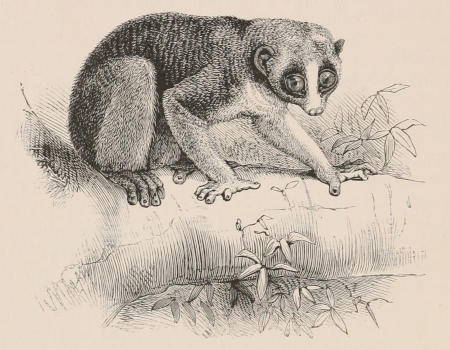
Fig. 329.—The Gray Loris (Nycticebus cinereus). From A. Milne-Edwards, N. Archives du Muséum, vol iii. pl 3.
Loris.[653]—Upper incisors very small and equal. Orbits very large, and only separated in the middle line above by a thin vertical plate of bone. Nasals and premaxillæ produced forwards considerably beyond the anterior limits of the maxillæ, and supporting a pointed nose. Body and limbs slender. No external tail. Vertebræ: C 7, D 14, L 9, S 3, C 6. This genus is represented only by the Slender Loris (L. gracilis) of Southern India and Ceylon (Fig. 330). This species is common in some of the forest regions of Southern India, and may be purchased in the bazaars at Madras, its eyes being regarded as a remedy by the natives for ophthalmic diseases. It is a strange-looking creature, about the size of a squirrel, of a yellowish-brown colour, with large, prominent eyes, pointed nose, long thin body, long, angularly bent, slender limbs, and no tail. Its habits, according to Mr. W. T. Blanford,[654] are “very similar to those of Nycticebus tardigradus, except that the Slender Loris is rather quicker in its movements, though still slow in general. Like its ally, it is purely nocturnal and arboreal, living upon shoots and young leaves, insects, birds’ eggs, birds, and lizards. It is said to be very fond of honey or syrup. It sleeps rolled up in a ball with its head between its legs, grasping its perch with its arms.”
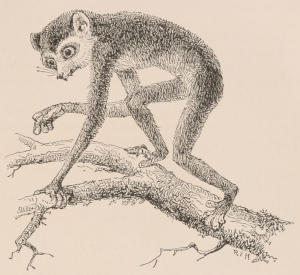
Fig. 330.—The Slender Loris (Loris gracilis). From Blanford, Mammalia of British India, p. 47.
B. Index fingers reduced to a mere tubercle without nail. Both the known species are from West Africa.
Perodicticus.[655]—A short tail, about a third of the length of the trunk. Two or three of the anterior dorsal vertebræ have very long slender spinous processes which in the living animal project beyond the general level of the skin, forming distinct conical prominences, covered only by an exceedingly thin and naked integument. The Potto, P. potto, is one of the oldest known members of the lemuroid group, having been described in 1705 by Bosman, who met with it in his voyage to Guinea. It was, however, lost sight of until 1825, when it was rediscovered in Sierra Leone, and fully described by Bennett in 1830 under the name of Perodicticus geoffroyi. Bennett’s generic name has been retained, but the specific name bestowed by Gmelin, adopted from Bosman, has been restored. It is also found in the Gaboon. It is strictly nocturnal, and slower in its movements even than Nycticebus tardigradus, which otherwise it much resembles in its habits.
A second species, the Awantibo (P. calabarensis), rather smaller and more delicately made, with smaller hands and feet and rudimentary tail, constitutes the genus Arctocebus of Gray. It is found at Old Calabar, and is very rare, only a few individuals having as yet been met with. Vertebræ: C 7, D 15, L 7, S 3, C 9.[656]
Family Tarsiidæ.
Dentition: i ²⁄₁, c ¹⁄₁, p ³⁄₃, m ³⁄₃; total 34. The first upper incisor large, and in contact with its fellow of the opposite side. Canine of moderate size. Molars with numerous pointed cusps. Lower canine semi-erect, its apex diverging from that of the single incisor. First lower premolar smaller than those behind it. Orbit to a large extent separated from the temporal fossa by a bony partition. Fibula slender, with its lower half confluent with the tibia. Second and third digits of the hind foot with compressed claws; all the other digits of both feet with flat nails. Calcaneum and navicular bone of the foot elongated as in the Chirogales and Galagos, but to a still greater extent. Colon short and not folded. Vertebræ: C 7, D 13, L 6, S 3, C 27.
Tarsius.[657]—The family contains the single genus Tarsius, of which but one species is known, T. spectrum, the Tarsier, a very singular little animal, rather smaller than an English squirrel, with very large eyes and ears, a long thin tail, tufted at the end, and immensely elongated tarsal portion of the foot, in allusion to which its generic name was given to it. It inhabits the forests of many of the islands of the Indo-Malayan archipelago, including Sumatra, Borneo, Celebes, and some of the Philippines, feeds chiefly on insects and lizards, sleeps during the day, but is tolerably active at night, moving chiefly by jumping from place to place, an action for which the structure of its hind legs, which present a curious resemblance to those of a frog, seems particularly well adapted. It is rare, not more than two being generally found together, and only brings forth one young at a time.[658]
Family Chiromyidæ.
Dentition of adult: i ¹⁄₁, c ⁰⁄₀, p ¹⁄₀, m ³⁄₃; total 18. Incisors very large, compressed, curved, with persistent pulps and enamel only in front, as in Rodents. Teeth of cheek series with flat, very indistinctly tuberculated crowns. In the young the first set of teeth more resemble those of the normal lemurs, being i ²⁄₂, c ¹⁄₀, m ²⁄₂, all very small. Orbit surrounded by a ring of bone posteriorly, beneath which it communicates freely with the temporal fossa. Fibula well developed and distinct from the tibia. All the digits of both feet with pointed rather compressed claws, except the hallux, which has a flattened nail. Middle digit of the hand excessively attenuated. Vertebræ: C 7, D 12, L 6, S 3, C 27.
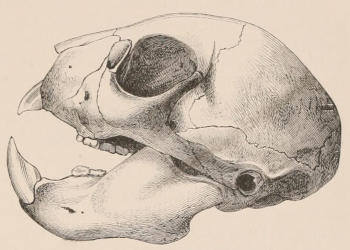
Fig. 331.—Skull of Aye-aye (Chiromys madagascariensis). × ⅙ Mus. Roy. Coll. Surgeons.
Chiromys.[659]—This family, like the last, is formed for the reception of a single genus, Chiromys,[660] containing one species, C. madagascariensis, the Aye-aye, an animal about the size of a cat, with a broad rounded head, short face, and large and naked ears. It has very large hands and long thin fingers with pointed claws, one of which (the middle or third) is remarkable for its extreme slenderness. The foot resembles that of the other lemurs in its large opposable hallux, with a flat nail, but all the other toes have pointed compressed claws, like that of the second toe in the Lemurinæ and the second and third in the Tarsiidæ. Tail long and bushy. General colour dark brown, the outer fur being long and rather loose, with a woolly undercoat. Mammæ two, inguinal in position. It is a native of Madagascar, where it was discovered by Sonnerat in 1780. The specimen brought to Paris by that traveller was the only one known until 1860. Since then many others have been obtained, and they may frequently be seen living in the gardens of the Zoological Society of London. Like so many of the Lemurs, the Aye-aye is completely nocturnal in its habits, living either alone or in pairs, chiefly in the bamboo forests. Observations upon captive specimens have led to the conclusion that it feeds principally on succulent juices, especially of the sugar-cane, which it obtains by tearing open the hard woody circumference of the stalk with its strong incisor teeth. It is said also to devour certain species of wood-boring caterpillars, which it obtains by first cutting down with its teeth upon their burrows, and then picking them out of their retreat with the claw of its attenuated middle finger. It constructs large ball-like nests of dried leaves, lodged in a fork of the branches of a tree with the opening on one side. The resemblance of its teeth to those so characteristic of the Rodentia caused it to be placed formerly in that order, and it was only when its anatomical characters were fully known that its true affinities with the Lemurs became apparent.[661]
Extinct Lemuroids.
The discoveries of the last few years have revealed the former existence, both in Europe and North America, of a number of extinct animals more or less closely allied to the living Lemurs, which are of especial interest as showing in some instances characters of a more generalised type than is the case with the living representatives of the suborder. It is, however, in some cases very difficult to determine whether these extinct forms should be referred to the Lemuroidea or Insectivora; and if those naturalists are right who regard these groups as survivors of a very generalised ancestral type of mammalian organisation, it is to be expected that as we recede in time we should find that the two groups show more and more marked signs of a natural connection. The earliest reference of one of these extinct Upper Eocene types to the Primates was made in 1862 by Professor L. Rütimeyer, of Basle, who described part of an upper jaw with three teeth from the so-called Bohnerz of Egerkingen, near Soleure in Switzerland, under the name of Cænopithecus lemuroides, regarding the animal to which the specimen belonged as partaking of the characters both of the Lemurs and the American Monkeys. Most other palæontologists refused, however, to accept this determination, and it was not until many years later that the researches of Gaudry and Filhol showed not only that Cænopithecus was indeed a true Lemuroid, but also that it was either identical with or closely allied to a form described by Cuvier in the early part of this century under the name of Adapis and regarded as referable to the Ungulata. Later researches have brought to light other Lemuroids in the Tertiaries of both the Old and the New World; and it is very noteworthy that all these types seem to have disappeared from both regions with the close of the upper portion of the Eocene period.
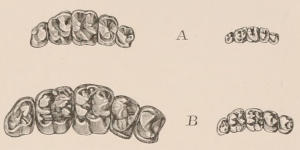
Fig. 332.—The last five right upper cheek-teeth of Microchœrus antiquus (A) and Microchœrus erinaceus (B). Twice natural size, and natural size.
Among the more interesting of the forms which are generally regarded as true Lemuroids we may first mention a small species from the Quercy Phosphorites, of which the hinder cheek-teeth are shown in Fig. 332, A, which was originally described as Necrolemur antiquus, but appears to be generically identical with Microchœrus erinaceus, of the upper Eocene of Hampshire, of which the corresponding teeth are shown in B of the same figure. In this genus, according to Dr. Schlosser, the dental formula is i ²⁄₁, c ¹⁄₁, p ³⁄₃, m ³⁄₃, or the same as in the existing Tarsius; but it is not improbable that in some instances the first lower premolar may have been developed. The upper molars of M. erinaceus differ from those of M. antiquus by the simpler structure of their columns and the smaller size of the external cingulum, which lacks the median cusp found in the latter. The angle of the mandible is produced into a large hook-like flange which at once distinguishes the genus from all existing Lemurs; and the anterior lower premolar is not canine-like. M. antiquus is of very small size, but the larger M. edwardsi of the same deposits comes nearer in dimensions to M. erinaceus. The upper molars decrease in size from the first to the third, the first and second having a median cusp in the external cingulum, by which they are readily distinguished from the corresponding teeth of the under-mentioned genus Hyopsodus. The third upper molar differs from that of Hyopsodus by its small size and the abortion of its posterior columns. The skull approximates to that of the living genus Galago, exhibiting the same inflation of the auditory bulla. The upper molars are also not unlike one species of that genus, but the fourth upper premolar has but one outer cusp, as in Chirogaleus.
The small Anaptomorphus, from the North American Eocene, has a skull of about the same size as that of the smallest species of Microchœrus, but the dental formula is i ²⁄₂, c ¹⁄₁, p ²⁄₂, m ³⁄₃, and the upper molars are of the tritubercular type.
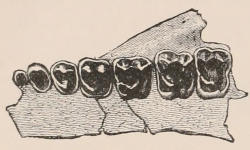
Fig. 333.—The left upper cheek-teeth of Adapis magna, from the Upper Eocene of Hampshire.
The well-known Adapis (Aphelotherium or Palæolemur), of the Upper Eocene of France and England, differs from all existing Lemuroids in possessing four premolars[662]; the dental formula being i ²⁄₂, c ¹⁄₁, p ⁴⁄₄, m ³⁄₃. The fourth upper premolar has two outer cusps, and the upper molars (Fig. 333) resemble those of Lepidolemur and Hapalemur, while the lower canine is a well-developed tooth performing the usual function of biting against the canine of the upper jaw. The lower incisors have upright, spatulate crowns, as in the true Apes. The skull is said to approximate in contour to that of Propithecus. The typical A. parisiensis is of comparatively small size, but the species of which the upper cheek-teeth are shown in the woodcut is of much larger dimensions. The skull of A. magna, which measures upwards of 4 inches in length, resembles that of A. parisiensis in its general characters, but is modified much in the way that the skulls of larger animals differ from the smaller ones of the same natural group. Thus the brain-chamber and orbits are relatively smaller, the face larger, the muscular crests more developed, and the constriction between the cerebral and the facial portion of the skull more marked. These modifications remove the skull in its general characters still farther from the existing Lemurs—so much so that M. Filhol refers it and the other species of Adapis to a distinct zoological type, intermediate between the lemurs and the pachyderms, to which he gives the name of Pachylemuriens, but later researches do not support this view. As mentioned above, it has been suggested that Cænopithecus lemuroides is inseparable from Adapis parisiensis, but the postero-internal column of the upper molars is said to be larger. The genera Tomitherium and Notharctus, of the Eocene of the United States, appear to be allied to Adapis, but the second has a larger lower canine. The same deposits have also yielded more or less imperfect remains of other forms departing more widely from the existing Lemuroid type. Of these Hyopsodus, of the Wasatch and Bridger Eocene of the United States, has the dental formula i ²⁄₂, c ¹⁄₁, p ⁴⁄₄, m ³⁄₅. The quadrituberculate upper molars have well-developed accessory intermediate columns (protoconule and metaconule), and thus resemble those of Microchœrus; the external surfaces of the outer columns of their teeth being flattened, with vertical ridges and a distinct cingulum. The third upper molar has its postero-internal column (hypocone) partly aborted, but is otherwise as well developed as the preceding molars. Microsyops, of the North American Eocene, appears to have been an allied form in which there were probably only three premolars.
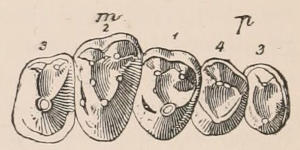
Fig. 334.—The right upper cheek-teeth of Plesiadapis remensis; from the Lowest Eocene of Rheims. × ³⁄₂. p, 3, 4, premolars; m, 1, 2, 3, molars. (From Osborn.)
The genera Protoadapis and Plesiadapis, from the lowest Eocene of Rheims, may not improbably be regarded as primitive Lemuroids. The lower molars are quinquetubercular, and not unlike those of Microsyops; the dental formula of the lower jaw is i 2, c 1, p 3-4, m 3 in the first-named genus, but in the second the dentition is reduced to i ²⁄₁, c ¹⁄₀, p ²⁄₂, m ³⁄₃. In Plesiadapis the lower and the first upper incisor are enlarged, the upper molars (Fig. 334) tritubercular, and the lower quadritubercular. Indrodon, of the lowest Eocene of the United States, resembles Plesiadapis in its tritubercular upper molars, and appears to have a nearly similar dental formula. Mixodectes, of the same deposits, was probably a more or less closely allied type. Pelycodus of the Wasatch Eocene of North America, in which the hallux was not opposable, and Cryptopithecus of the German Eocene, may be regarded as very generalised Lemuroids.
Bibliography.—Besides the works and memoirs on particular families and genera referred to above, see St. G. Mivart, “Notes on the Crania and Dentition of the Lemuridæ,” in Proc. Zool. Soc. 1864 (pp. 611-648) and 1867 (pp. 960-975); Mivart and Murie, “On the Anatomy of the Lemuroidea,” in Trans. Zool. Soc. 1872, vol. vii. pp. 1-113; W. Turner, “On the Placentation of the Lemurs,” in Phil. Trans. vol. clxvi. pp. 569-587; F. Pollen and D. C. Van Dam, Recherches sur la Faune de Madagascar. 2ᵐᵉ parte, “Mammifères,” 1868. For the fossil types see M. Schlosser, “Die Affen, Lemuren, etc., des Europäischen Tertiärs,” in Beitr. Pal. Œstr-Ungar, 1888.
Suborder Anthropoidea.
This suborder includes the whole of the remaining members of the Primates, namely, those animals commonly known as Marmosets, Monkeys, Baboons, and Apes, together with Man himself. The characters by which the Anthropoidea are distinguished as a whole from the Lemuroidea may be summarised as follows. Skull with the orbit separated from the temporal fossa by a vertical plate of bone joining the postorbital bar, and the lachrymal foramen situated within the margin of the orbit. Pollex sometimes rudimentary or absent; second digit of manus always well developed, and that of the pes usually with a flattened nail (not so in Hapalidæ). The cerebral hemispheres of the brain either completely or almost completely cover the cerebellum, and are much convoluted. Uterus not bicornuate. The placenta is deciduate and discoidal; and the allantois is small. There are never abdominal mammæ. As additional points of distinction from the Lemuroidea, it may be mentioned that the anterior cornu of the hyoid is shorter than the posterior; the inner pair of upper incisors are in contact in the middle line; and the transverse portion of the colon extends uninterruptedly across the abdomen.
The Anthropoidea may be divided into the five families—Hapalidæ, Cebidæ, Cercopithecidæ, Simiidæ, and Hominidæ, of which the first and second are confined to the New, and the third and fourth to the Old World.
In noticing some of the salient features in the external and internal structure of the Anthropoidea it will be found convenient to allude to all the members of the first four families as Apes, in contradistinction to Man. In respect to relative size the extremes are found in the Gorilla on the one hand and Hapale on the other; the difference in this respect between these two forms being greater than that between Man and a Squirrel. The relative proportions between the limbs and the body, and also between the fore and hind limbs, are subject to great variation. Thus in Hylobates and Ateles both pairs of limbs are much elongated; in the former case the pectoral being much longer than the pelvic pair (Fig. 335). In other cases, as in the Orang (Fig. 354), while the arms are very long, the legs are short; but in the subfamily Cercopithecinæ both pairs are short and subequal. Only in the Hapalidæ and some of the Cebidæ are the legs proportionately as long as in Man.
The tail is as much as three times the length of the body in Ateles; while in the Simiidæ it is totally absent. In the majority of genera it is long in all the species; but in some cases, as in Macacus, it may be either long, short, or absent in the different species of a single genus.
Equally marked variations occur in the shape of the head. Thus in Ateles it is rounded; while in the Orang it is elevated vertically; in Chrysothrix it is produced posteriorly; and in the Baboons (Cynocephalus) it is characterised by the great production of the muzzle and the terminal position of the nostrils, whereby a characteristic Dog-like form is assumed. The eyes are always directed forwards, and are never more separated from one another than in Man, although, as in Chrysothrix, they may be closer together. They are of very large size in Nyctipithecus, while in the Baboons they are relatively small in proportion to the size of the head. The ears are invariably well developed, and are usually pointed at their postero-superior angle. Those of man are characterised by the soft depending portion known as the “lobule,” of which there is a rudiment in the Gorilla. In the majority of Apes the nose is but very slightly prominent; but it attains an extraordinary development in Nasalis larvatus, and is scarcely less remarkable in Semnopithecus roxellanæ (Fig. 349). Among the Gibbons the Hoolock has a distinctly aquiline nose. The nostrils are terminal in the true Baboons; and while in all the Old World Apes they are approximated, in those of the New World they are separated by a broad septum. With the exception of the Orang, the lips of the Apes are thin.
The pollex makes a nearer approach in form to the human thumb in the Chimpanzee than in any other Ape. Man differs from all the Apes in having the hallux frequently longer instead of shorter than the other digits of the foot. The hallux of the Orang is peculiar in having no nail, but in other cases the nail is flat; the nails of the other digits of the Apes are never quite flat, and in some of the Cebidæ they are decidedly compressed laterally, while in the Hapalidæ they assume the form of sharp and curved claws.
All the Apes have the greater part of the body well clothed with hair. In the Gibbons and the Cercopithecidæ the buttocks have naked ischiatic callosities, which attain their greatest development in Cynocephalus and its allies. The male of the Orang has a well-developed beard, and in Cercopithecus diana there is long hair on the cheeks and chin, while in Macacus silenus the face is surrounded by a fringe of long hair, separated by an interval on the forehead. Long hair is found on the head in Hapale œdipus and in some species of Semnopithecus; while in the Bonnet Monkey (Macacus sinicus) it radiates in all directions from a central point on the vertex. Long hair clothes the shoulders in Cynocephalus hamadryas and Hapale humeralifer; and the end of the tail has a tuft in two species of Cynocephalus and in Macacus sinicus. Many of the African Colobi and some species of the Howlers have very long hair on the flanks; and in Pithecia this development of hair extends to the greater part of the body and the tail, P. satanas also having a long beard. In all the lower Apes the hairs on the arm and forearm are directed towards the hand quite down to the wrist; and the same arrangement obtains in Hylobates. In the other Simiidæ, however (as in man), the points of the hairs of the arm and forearm converge at the elbow. Darwin’s explanation of this peculiarity is that these Apes are accustomed to sit with the arms bent, so that the rain is thus enabled to run off at the elbow.
In one species of Hapale the hair is of a silky texture, and in the South American Eriodes, and Macacus tibetanus (as in all the mammals inhabiting the arid and severe climate of Tibet) it becomes woolly.
The development of very brilliant colours on the naked parts of the body, such as the face, sexual organs, and ischiatic callosities is a marked feature of many of the Cercopithecidæ and some other Apes.
With the exception of the long tail found in most forms, the general structure of the skeleton of the Apes is very similar to that of man, but there are marked differences in the form of the jaws and of the innominate bones. The proportion of the facial to the cranial region of the skull varies with the shape of the head, of which brief mention has already been made; the greatest development of the facial portion being in the Baboons. Curiously enough, some of the lower American Monkeys, and more especially Chrysothrix, have the greatest relative development of the cranial part of the skull of all the Apes; this character being, however, one common to all the smaller representatives of particular groups, and obviously necessary to provide the requisite amount of brain-space. In the convexity of the frontal region of the skull the American forms, and more especially Pithecia, make the nearest approximation to man, and the same is true with regard to the occipital production, which is most developed in Chrysothrix. Most of the Simiidæ exhibit, however, a distinct convexity of the occiput, and thereby differ markedly from the Cercopithecidæ, in which this region is flat. The rotundity of the cranium is obscured in the larger Apes, such as the Orang (Fig. 353) and Gorilla, by the development of prominent bony ridges for muscular attachment; these attaining their maximum in the males of the species last named, where the sagittal crests and the supraorbital ridges are very prominent. The mastoid process is always smaller in the Apes than in Man, and as it diminishes in size the petrosal tends to assume an inflated or bullate condition. The orbits in shape are most like that of Man in the Gorilla; and, in accordance with the size of the eyes, they are of enormous dimensions in Nyctipithecus.
The angle formed by the plane of the foramen magnum with that of the basicranial axis is subject to variation according to the degree of convexity of the occiput, but is generally smaller than in Man, although larger in Chrysothrix. There is an external bony meatus auditorius in Man, the Simiidæ, and the Cercopithecidæ, but none in the Cebidæ and Hapalidæ.
The premaxillæ of the Apes are always large; and, except in the Chimpanzee, the premaxillo-maxillary suture persists until after the permanent dentition has been developed. The nasals are smaller and flatter than in Man, but are largest in Mycetes. The two rami of the mandible are invariably completely ankylosed at the symphysis in the adult. The Siamang (Hylobates syndactylus) is the only ape in which the mandibular symphysis slows a slight projection in front corresponding to the human chin. In Mycetes the angle of the mandible attains an enormous development (Fig. 338) to protect the huge inflated basihyal. The frontal sinuses, though present, in the Simiidæ, are generally replaced in the Cercopithecidæ by a coarse diploë, but they are present in the Cebidæ and Hapalidæ, being especially large in Cebus. In fully adult individuals the cranial sutures become obliterated, the internasal suture disappearing at an early age in the Simiidæ and most of the Cercopithecidæ. As in many Carnivora, the tentorium, or membrane separating the cerebrum from the cerebellum, may become ossified in some of the American forms.
The number of the teeth in the Old World Apes is invariably the same as in Man, namely i ²⁄₂, c ¹⁄₁, p ²⁄₂, m ³⁄₃, total 32; but in the Cebidæ the cheek-teeth are p ³⁄₃, m ³⁄₃, and in the Hapalidæ p ³⁄₃, m ²⁄₂. It is probable that the two pairs of incisors correspond to the first and third of the typical series of three. In all Apes the dental series is interrupted by a diastema, and the canines of the males are large. Man alone has an uninterrupted dental series of a horse-shoe-form, without prominent canines.
According to recent researches the Chimpanzee and some of the other Simiidæ exhibit a more or less close approximation to the sigmoid curvature of the vertebral column which is so characteristic of Man, and there is also some approach to it in the Baboons. The number of dorsal vertebræ in the Apes may vary from eleven, as in some species of Cercopithecus and Macacus, to fourteen in certain forms of Hylobates, and to fifteen in Nyctipithecus. The Cebidæ generally have thirteen; and the same number obtains in the Chimpanzee and Gorilla, while the Orang resembles Man in having but twelve. The lumbar vertebræ show a range in number of from four to seven. In the Simiidæ there are four or five of these vertebræ, the length of the lumbar region being shorter in this family than in the other Apes, with the exception of Ateles. The shortness of the lumbar region in the last-named genus is compensated by the relative length of the dorsal region, as is shown in Fig. 335.
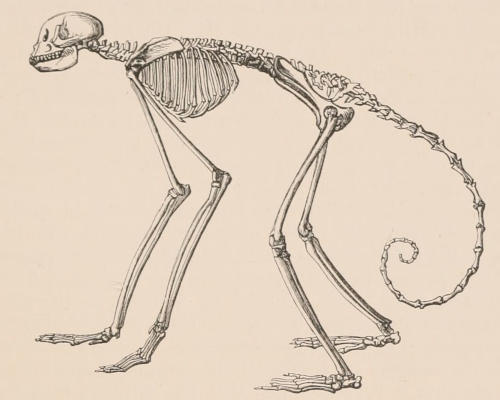
Fig. 335.—Skeleton of the Black-handed Spider Monkey (Ateles geoffroyi). From De Blainville.
The sacrum is longest in the Simiidæ and Man, its greatest absolute length occurring in the Gorilla, and the relative greatest length being found in Hylobates. The Simiidæ never have less than five, and may have six sacral vertebræ; while in the lower forms there are generally only two or three, although occasionally four in some of the American forms. The Orang and some of the Baboons make the nearest approximation to Man in the marked angle formed at the junction of the sacrum with the lumbar vertebræ. Except in the Simiidæ and Macacus inuus, the number of caudal vertebræ in the Apes always exceeds four, but they may be reduced to five in the Mandrill (Cynocephalus maimon). In Macacus and Uacaria the shortness of the tail is attained by the small size of the vertebræ themselves, the number of which may be from fifteen to seventeen. Other forms usually have from twenty to thirty-three caudals, the latter number occurring in Ateles (Fig. 335), where the tail is relatively the longest. The tail is, however, absolutely longest in Semnopithecus, Colobus, and their allies, the length being partly due to the size of the component vertebræ. Chevron bones are present in all forms having a distinct tail; and, together with other processes for muscular attachment, attain their greatest development in Ateles.
The vertebral processes known as metapophyses and anapophyses, which are generally inconspicuous in Man, and are but small in the Simiidæ, attain a large development in the lower forms. The metapophyses generally commence in the eighth or ninth dorsal, and continue to the anterior caudals, where they gradually merge in the prezygapophyses. The anapophyses, which are most developed in the Cebidæ, project outwards and backwards from one vertebra to embrace the prezygapophyses of the succeeding one. They occur generally in the same region as the metapophyses, but usually cease at the penultimate lumbar, although in some cases they can be traced on to the posterior cervicals and anterior caudals, in the latter region passing into the transverse processes.
In most Apes the sternum is narrow, and consists of a more or less enlarged manubrium, followed by a chain of subequal and antero-posteriorly elongated bones, from three to six in number. In the Simiidæ alone is there a broad sternum, or one consisting of a manubrium, followed by a single bone only, as in Hylobates. The Orang presents a peculiarity, in that the sternum long remains made up of ossifications arranged in pairs, side by side, successively. The true ribs are seven in number on each side in the highest forms, but in Hylobates there are sometimes eight. In Ateles there are sometimes nine pairs. In Hapale the number varies from six to eight, and it is seven or eight in the other genera. The angles of the ribs are never so marked as in Man; although most marked in Hylobates. Pithecia is distinguished by the greater relative breadth of the ribs. In no Ape is the thorax half as broad again as it is deep from back to breast; but in the Simiidæ its transverse diameter exceeds its depth by from about one-fourth to a little under one-third of the latter. In Ateles, and sometimes in Mycetes, the thorax is wider than deep, but in all the rest it is deeper than wide.
In regard to the appendicular skeleton it may be observed that the Gorilla and Orang make the nearest approach to Man in the form of the scapula; and that the supraspinous fossa of this bone is largest in Gorilla and Mycetes, being remarkably small in Simia. The Cebidæ have a distinct suprascapular notch which is often converted by a bar of bone into a foramen; this bar in Mycetes giving rise to a peculiar flat process. The acromion and coracoid processes are most developed in the Simiidæ and Ateles.
The relative length of the fore and hind limbs has been already briefly touched upon. The humerus closely resembles that of Man throughout the suborder; the nearest approximation occurring in the Simiidæ. As in the Lemuroidea, this bone never has an entepicondylar foramen, but in many of the American forms it has a supracondylar perforation. The radius and ulna, like the tibia and fibula, are always perfectly distinct throughout their length; and the hand can be pronated and supinated upon the forearm. Man, the Gorilla, and the Chimpanzee differ from other forms in having no os centrale in the carpus.
The brain of Apes is always much smaller in absolute dimensions than in Man. Thus, according to Professor Mivart,[663] “the cranial capacity is never less than 55 cubic inches in any normal human subject, while in the Orang and Chimpanzee it is but 26 and 27½ cubic inches respectively. The relative size of the brain varies inversely with the size of the whole body, but this is the case in warm-blooded vertebrates generally. The extreme length of the cerebrum never exceeds, as it does in Man, two and a quarter times the length of the basicranial axis. The proportion borne by the brain to its nerves is less in the Apes than in Man, as also is that borne by the cerebrum to the cerebellum. In general structure and form the brain of Apes greatly resembles that of Man. Each half of the cerebrum contains a triradiate lateral ventricle, and though in some Cercopithecidæ the posterior cornu is relatively shorter than in man, it again becomes elongated in the Cebidæ, and in many of the latter it is actually longer relatively than it is in man. The posterior lobes of the cerebrum are almost always so much developed as to cover over the cerebellum, the only exceptions being the strangely different forms Mycetes and Hylobates syndactylus. In the latter the cerebellum is slightly uncovered, but it is so considerably in the former. In Chrysothrix the posterior lobes are much more largely developed relatively than they are in man. The cerebrum has almost always a convoluted external surface. In this group, however, as in mammals generally, a much-convoluted cerebrum is correlated with a considerable absolute bulk of body. Thus in Hapale (and there only) we find the cerebrum quite smooth, the only groove being that which represents the Sylvian fissure. In Simia and Gorilla and Anthropopithecus, on the contrary, it is very richly convoluted. A hippocampus minor is present in all Apes, and in some of the Cebidæ it is much larger relatively than it is in Man, and is absolutely larger than the hippocampus major. Of all Apes, the Orang has a brain which is most like that of Man; indeed, it may be said to be like Man’s in all respects, save that it is much inferior in size and weight, and that the cerebrum is more symmetrically convoluted and less complicated with secondary and tertiary convolutions. If the brain of Simia be compared with that of Gorilla and Anthropopithecus, we find the height of the cerebrum in front greater in proportion in the former than in the latter; also the bridging convolutions, though small, are still distinguishable, while they are absent in the Chimpanzee. Nevertheless this character cannot be of much importance, since it reappears in Ateles, while two kinds of the genus Cebus (so closely allied as to have been sometimes treated as one species) differ strangely from each other in this respect. The corpus callosum, in Apes generally, does not extend so far back as in Man, and it is very short in Pithecia. In the Orang and Chimpanzee there are, as in Man, two corpora albicantia, while in the lower Monkeys there is but one. The vermis of the cerebellum is larger in the Cebidæ than in the Simiidæ and Cercopithecidæ. In all Apes below the Simiidæ each lateral lobe of the cerebellum gives off a small lobule, which is received into a special fossa of the petrous bone. Certain prominences of the medulla oblongata, termed corpora trapezoidea, which are found in lower mammals, begin to make their appearance in the Cebidæ.”
The organs connected with the functions of alimentation, circulation, and excretion, as well as the muscles, conform generally to the type obtaining in Man, of which full description will be found in works on human anatomy. The tongue is longer in Apes than in Man; and a uvula is generally present, although rudimentary in the Cebidæ. The peculiar sacculation of the stomach in the subfamily Semnopithecinæ has been already mentioned; this sacculation is most developed at the cardiac extremity, where it somewhat resembles a colon spirally coiled. In Hylobates the stomach is very like that of Man, differing only in the more elongated and distinct pylorus. Pithecia has a more globular stomach, while in Hapale the cardiac and pyloric apertures are approximated. The intestine of Apes is devoid of valvulæ conniventes, and it is only in Man and the Simiidæ that the colon is furnished with a vermiform appendage. The colon varies from a fully sacculated form in Hylobates to a smooth one in Cebus.
The liver of Apes is subject to a considerable amount of variation. In the Simiidæ it comes more or less close to the human type; that of the Orangs being usually divided only into two principal lobes by the umbilical vein, and showing no trace of lateral fissures. In the Gorilla these fissures are present, so as to produce right and left lateral and central lobes. Hylobates has a liver (Fig. 352) which perhaps is nearer to the human than that of any of the other Simiidæ. In the Cercopithecidæ the liver differs from that of the Simiidæ by the deeply cleft lateral fissures, and has a comparatively small and pointed caudate lobe. The enormous size of the stomach in Colobus causes the liver to be very narrow, and pushed to the left side. The liver of the Cebidæ (Fig. 336) and Hapalidæ, in addition to the deeply cleft lateral fissures, is characterised by the great size and quadrangular form of the caudate lobe (c), which attains its maximum development in Ateles. The gall-bladder is always present.
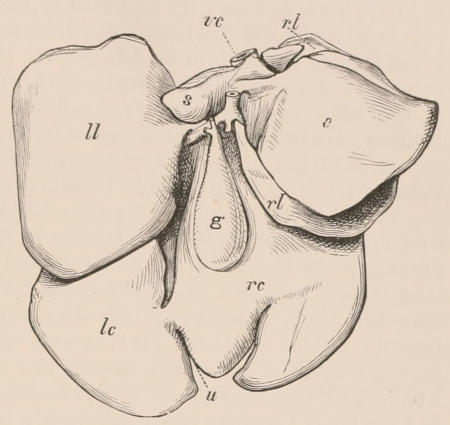
Fig. 336.—Under surface of the liver of the Black-handed Spider Monkey (Ateles melanochir). u, Umbilical fissure; vc, vena cava; ll, left lateral lobe; lc, left central lobe; rc, right central lobe; rl, right lateral lobe; s, Spigelian lobe; c, caudate lobe; g, gall-bladder.
The larynx is in many Apes furnished with sac-like appendages, which are variable in different species as regards number, size, and situation. They may be dilatations of the laryngeal ventricle, as in Simia, Gorilla, and Anthropopithecus, or they may open above the false vocal chords so as to be extensions of the thyro-hyoid membrane, as in Hylobates. There may be but a single median opening in the front part of that membrane at the base of the epiglottis, as in the Cercopithecidæ. There may be a single median opening at the back of the trachea, just below the cricoid cartage, as in Ateles; there may be but a single sac, or there may be five, as sometimes in Mycetes. These may be enormous, meeting in the middle line in front and extending down to the axillæ, as in the Gorilla and Orang. A sac may occupy the cavity of the expanded body of the hyoid, as in Mycetes.
The hyoid has its basilar part generally somewhat more convex and enlarged than in Man; but in Mycetes it becomes greatly enlarged and deeply excavated, so as to form a great bony bladder-like structure. The posterior cornua of the hyoid (thyrohyals) are never entirely absent, but the anterior or lesser cornua may be so, as in Mycetes. The anterior cornua never exceed the posterior cornua in length; but they may be (e.g. in Cercopithecus) more largely developed relatively than in Man, and may even be jointed, as in Lagothrix.
The lungs have generally the form of those of man; but the right lung may have four lobes, as in Hylobates. The great arterial trunks in Simia, Gorilla, and Anthropopithecus are arranged as in Man. In Hylobates and the lower Apes, however, the left carotid artery may take its origin from the innominate artery.
In regard to their distribution in time the earliest record that we as yet have of the occurrence of Apes is in the Middle Miocene of Europe, where forms are met with apparently so closely allied to some of the higher existing types that it is evident we must look much farther back before we can get any clue to the origin of the suborder. Since all the known fossil Old World Apes are referable to the Simiidæ or Cercopithecidæ, and no representatives of these families have been obtained from the Tertiaries of America, it would appear that the distinction of the Apes of the Old World from those of the New is of very old standing.
At the present day Apes are mainly confined to tropical and subtropical regions. In the Old World Macacus inuus is found as far north as Gibraltar, M. tibetanus and Semnopithecus roxellanæ inhabit western Tibet, while in Japan we have M. speciosus. In the New World one species of Ateles is known to occur as far north as latitude 19° in Southern Mexico, and may range a few degrees higher. To the southward species are found near the Cape, in Timor, and the Malay Archipelago; while in America they range in Brazil and Paraguay to about latitude 30°. The Tibetan species are found at a very high elevation; and in the outer Himalaya the Langurs (Semnopithecus) may be seen in winter and spring leaping from bough to bough of snow-covered pines.
Apes are very abundant in the Ethiopian and Oriental regions, as well as in that part of America which extends from Panama to Southern Brazil. Ceylon, Borneo, Sumatra, and Java may be mentioned as islands where Ape-life attains great development; but they are unknown in Madagascar and the West Indian Islands, and of course in the Australasian region.
We have already alluded to the circumstance that while the Simiidæ and Cercopithecidæ are exclusively confined to the Old World, the Cebidæ and Hapalidæ are equally restricted to the New, and we may accordingly proceed to notice a few points in relation to generic distribution. Of the larger Simiidæ the Gorilla and Chimpanzee are confined to Equatorial Africa, and the Orang to Malayana; but there is evidence of the former existence of a species of Chimpanzee (Anthropopithecus) and not improbably of an Orang (Simia) in Northern India. The Gibbons (Hylobates) are now exclusively Oriental. Europe has only Macacus inuus of Gibraltar, also found in Africa north of the Sahara, and therefore strictly Palæarctic in distribution. The Ethiopian region includes in the Cercopithecidæ the genus Colobus (the African analogue of Semnopithecus), Cercopithecus, and the Baboons (Cynocephalus, etc.) The Baboons range, however, into Arabia and Syria, and also existed during the Pliocene epoch in Northern India. Semnopithecus and Macacus are very characteristic of the Oriental region; but, as already mentioned, outlying species extend into various parts of the Palæarctic region. Macacus has indeed a very wide distribution, extending from Gibraltar and North Africa to Japan. The allied Cynopithecus, represented only by C. niger of Celebes, approximates to the Baboons; while the one species of Nasalis is peculiar to Borneo. Remains of Semnopithecus and Macacus occur in the Tertiaries of India and Europe, which also yield allied extinct types noticed in the sequel.
In America, north of Panama, the genera known to be represented are Chrysothrix, Nyctipithecus, Cebus, Ateles, Mycetes and Hapale in Veragua; Nyctipithecus, Cebus, Ateles, and Mycetes in Costa Rica and Nicaragua; Ateles and Mycetes in Guatemala; and Ateles in Southern Mexico. Brazil is the headquarters of the American Apes; but different portions of that vast region have a somewhat distinct Ape fauna. Thus the genus Eriodes appears in South-Eastern Brazil to represent the species of Ateles inhabiting the more northern and western parts of the empire. Southwards, the genera Cebus, Mycetes, Chrysothrix, and Callithrix extend farthest; but they do not probably all extend to the farthest limit yet known, namely 30° S. The species found farthest south are Mycetes caraya, Cebus fatuellus, and Callithrix personatus.
Family Hapalidæ.
Dentition: i ²⁄₂, c ¹⁄₁, p ³⁄₃, m ²⁄₂; total 32. No bony external auditory meatus, a broad internarial septum, and no cheek-pouches. Tail non-prehensile; no ischiatic callosities. Pollex not opposable; a long, curved, and pointed claw to all the digits except the hallux.
This family, which includes the smallest representatives of the suborder, commonly known as Marmosets, is confined to the New World. In addition to the diagnostic characters given above, it may be mentioned that the pollex is elongated and the hallux very small, while the pectoral limbs are not longer than the pelvic pair; and the tail is long and more or less thickly covered with elongated hairs.
The dentition of the Marmosets sufficiently distinguishes them from all other members of the suborder, although they are evidently nearly allied to the Cebidæ. The small size of the hallux, and the total incapacity of the pollex to oppose itself in the least degree to the other digits, as well as the presence of claws on all the digits of the manus, are, however, equally characteristic features. These animals (Fig. 337) are not larger than Squirrels, and are of active arboreal habits, living in small companies, and adding insects to the ordinary fruit diet. Frequently, as in the figured species, the head is furnished on either side with a long tuft of hair projecting outwards and backwards. They give birth to as many as three young ones at a time, and thereby differ from all other members of the suborder, in which one is the normal number. They are divided into two genera, according to the proportionate size of the lower canine to the incisors; but some species present an intermediate condition, so as to render this distinction of somewhat doubtful value.
Hapale.[664]—Lower canine not longer than the incisors. A number of species have been described, among which may be mentioned H. jacchus, H. albicollis, H. aurita, and H. humeralifer. Remains of species of this genus have been found in the cavern-deposits of Brazil.
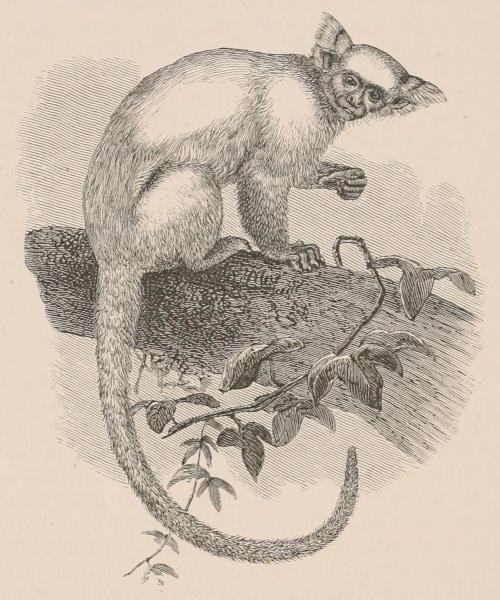
Fig. 337.—The Golden Marmoset (Midas chrysoleucas). From Proc. Zool. Soc. 1868, pl. 24.
Midas.[665]—Lower canine considerably longer than the incisors. No less than twenty-four species of this genus have been named, among which the Silky Marmoset (M. rosalia) of Columbia, the Pinche Monkey (M. œdipus) of South-Eastern Brazil, and the Golden Marmoset (M. chrysoleucas, Fig. 337) are well-known types.
Family Cebidæ.
Dentition: i ²⁄₂, c ¹⁄₁, p ³⁄₃, m ³⁄₃; total 36. Tail frequently prehensile; digits with nails; other characters as in the Hapalidæ.
The members of this American family are at once distinguished by the dental formula, which is numerically higher than in any other Apes. The various species range over the whole of tropical America, but are most abundant in the dense forest regions of Brazil, where they live a completely arboreal life, to which the prehensile tails of many of them are so specially adapted. They are in most respects closely allied to the Hapalidæ, but the pollex diverges somewhat from the plane of the other digits; while the retention of the third molar is a very distinctive feature. None of the species attain the dimensions of the larger Cercopithecidæ of the Old World. The genera are usually arranged in five subfamilies.
Subfamily Mycetinæ.—Lower incisors vertical; hyoid bones enormously inflated; tail long and prehensile, naked beneath at the end; pollex well developed.
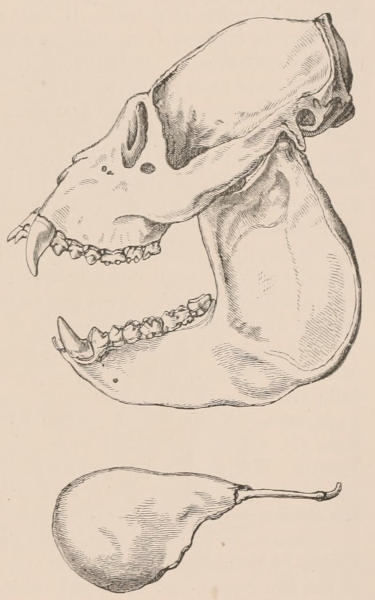
Fig. 338.—Side view of skull and hyoid bone of the Red Howling Monkey (Mycetes seniculus). From De Blainville.
Mycetes.[666]—The sole representatives of this subfamily are the well-known Howling Monkeys, all of which are included in the genus Mycetes. They are of more bulky build, and have more produced muzzles than the other members of the family. The truncated occipital region, and the extraordinary development of the rami of the mandible, especially of their angular and ascending portions, are the chief peculiarities by which the skulls (Fig. 338) of the members of this genus are characterised. The last named character, which is more marked in the male than in the female sex, is related to the enormous size of the vocal organs, which the rami of the mandible enclose and protect. The inflated hyoid bone, which forms a deep cup, is shown in the figure. The Howlers are subject to great individual and sexual variation of colours, so that the discrimination of species from local races is difficult. In one species the male is black and the female straw-coloured; and several of the species have bright red or golden hair on the flanks. In disposition these creatures are sluggish and stupid, but their chief characteristic is their prodigious power of voice. Mr. Bates, in his Naturalist on the Amazons, observes that “when Howlers are seen in the forest there are generally three or four of them mounted on the topmost branches of a tree. It does not appear that their harrowing roar is emitted from sudden alarm; at least it was not so in captive individuals. It is probable, however, that the noise serves to intimidate their enemies.”
Several species have been described, the Red Howler (M. seniculus) and the Ursine Howler (M. ursinus) being well-known forms. Remains of this genus probably referable to existing types are found fossilised in the cavern-deposits of Brazil. An allied fossil form from the South American Pleistocene has been described as Protopithecus.
Subfamily Pitheciinæ.—Lower incisors inclined forward at their summits; hyoid bone normal; tail long or short, non-prehensile; pollex well developed. Two genera are included in this subfamily, readily distinguished by the length of the tail.
Pithecia.[667]—The Sakis, as the representatives of this genus are commonly termed, are readily characterised by the length of the tail; the angle of the mandible is expanded, although less so than in Mycetes. A number of species have been described, the Black Saki (P. satanas) of the Lower Amazons, being one of the best known. While some species, like P. hirsuta, have long hair covering the whole of the head, body, and tail, in others only the head, or the cheeks and chin, are so clothed.
Uacaria.[668]—The Uakari Monkeys differ from all the other Cebidæ by their short Baboon-like tail. The Bald Uakari (U. calva) of the Rio Negro, and the closely allied U. rubicunda of the Upper Amazons, are remarkable for their scarlet face, which forms a striking contrast to the long, silky, whitish hair covering the body. According to Mr. Bates, the Uakaris live in forests which are inundated during a great part of the year, and never descend to the ground; they appear to be rare and of local distribution. The third species, U. melanocephala, differs considerably from both the others. The cæcum of U. calva, according to Mr. F. E. Beddard, measures upwards of “10 inches along the greater curvature; it is separated from the colon by a very marked constriction; it is not sacculated, and when fully distended with air is curved on itself into a little less than a circle; it is furnished with a well-developed median frenum carrying blood-vessels.” A similar type of cæcum is also found in Callithrix and Pithecia.
Subfamily Nyctipithecinæ.—Lower incisors vertical; hyoid normal; tail long, non-prehensile; pollex well developed.
Three genera are included in this subfamily, the species being partly insectivorous.
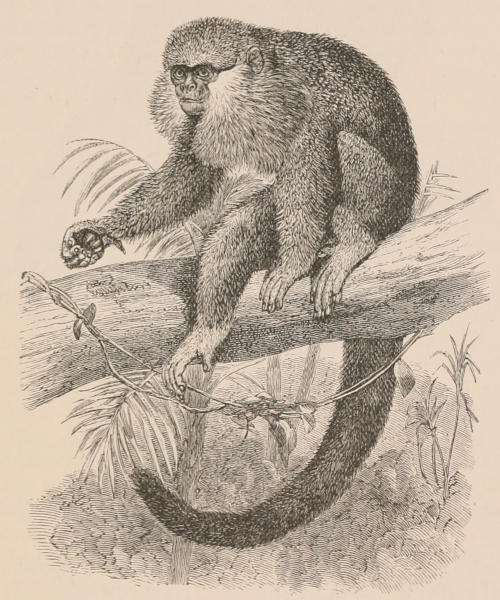
Fig. 339.—The Moloch Teetee (Callithrix moloch). From Archives du Muséum, vol. iv. pt. 3.
Callithrix.[669]—Head small, depressed, and not elongated; nares widely separated; canines small; angle of mandible expanded as in Pithecia; tail with long hair.
This genus comprises several small species, mostly from Brazil and the Amazons, and commonly known as Teetees, one of the best-known species (C. moloch, Fig. 339) being represented in the accompanying woodcut. The smaller eyes and the more widely separated nostrils distinguish them from Nyctipithecus; while the small canines and the bushy tail readily mark their distinction from Chrysothrix. Remains of Callithrix have been found in the Brazilian caves.
Chrysothrix.[670]—Head greatly elongated; orbits large and closely approximated; canines well developed; tail with comparatively short hair.
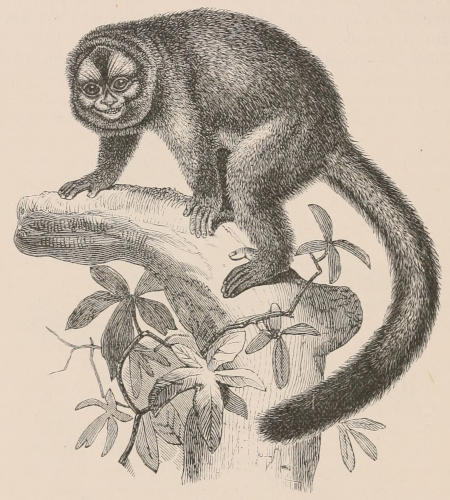
Fig. 340.—The Lemurine Douroucouli (Nyctipithecus lemurinus). From Archives du Muséum, vol. iv, pl. 2.
The small Squirrel Monkeys, of which four species have been described, are characterised by the great backward projection of the occipital region of the skull, and by orbits approximating in size to those of the next genus.
Nyctipithecus.[671]—Head rounded; orbits very large, separated by a narrow septum; nares somewhat approximated.
The Douroucoulis (Fig. 340), as the members of this genus are called, are of nocturnal habits, in association with which the eyes are of enormous dimensions, as in the Lemuroid genus Loris. The following account, of two species of this genus is taken from Mr. Bates’s Naturalist on the Amazons: “They sleep all day long in hollow trees, and come forth to prey on insects and eat fruit only in the night. They are of small size, the body being about a foot long, and the tail 14 inches, and are thickly clothed with soft gray and brown fur, similar in substance to that of the Rabbit. Their physiognomy reminds one of the Owl or Tiger-Cat; the face is rounded and encircled by a ruff of whitish fur; the muzzle is not at all prominent; the mouth and chin are small; the ears are very short, scarcely appearing above the hair of the head; and the eyes are large and yellowish in colour, imparting the staring expression of nocturnal birds of prey. The forehead is whitish, and decorated with black stripes, which in one of the species (N. trivirgatus) continue to the crown, and in the other (N. felinus) meet on the top of the forehead. N. trivirgatus was first described by Humboldt, who discovered it on the banks of the Cassiquiare, near the headquarters of the Rio Negro.”
Subfamily Cebinæ.—Lower incisors vertical; hyoid bone normal; tail long and prehensile; pollex present or absent.
This subfamily includes the typical members of the family, which are arranged in four genera.
Ateles.[672]—Form slender; limbs very long; fur not woolly; pollex absent; tail naked beneath distally; nails not much laterally compressed and pointed.
This genus includes the well-known Spider Monkeys (Fig. 341), which by their long limbs and tail are admirably adapted to a purely arboreal life, although they lack the active and agile habits of the Old World Gibbons. The tail with the under surface of its extremity naked affords the most completely prehensile type of this organ, and can sustain the weight of the whole body. Objects are not unfrequently grasped by it and brought within reach of the hand or mouth. Owing to the absence of the pollex the power of grasping is very imperfect in the hand. At least fourteen species of this genus have been described, among the best-known being A. melanochir (Fig. 341), A. paniscus of Guiana, A. geoffroyi of Central America, A. ater of Eastern Peru, and A. hybridus of Colombia.
Eriodes.[673]—Form slender; limbs very long; fur woolly; internasal septum narrower than usual in the family; pollex rudimentary; tail naked beneath distally; nails exceedingly compressed laterally, and pointed.
This genus is represented by three species from South-East Brazil, which, while closely allied to the true Spider Monkeys, differ by their woolly hair, the narrow internasal septum, the presence of a rudimentary pollex, and the great compression of the nails. The species are E. arachnoides, E. hemidactylus, and E. hypoxanthus.
Lagothrix.[674]—Form rather robust; limbs moderate; fur woolly; pollex well developed; tail distally naked beneath.
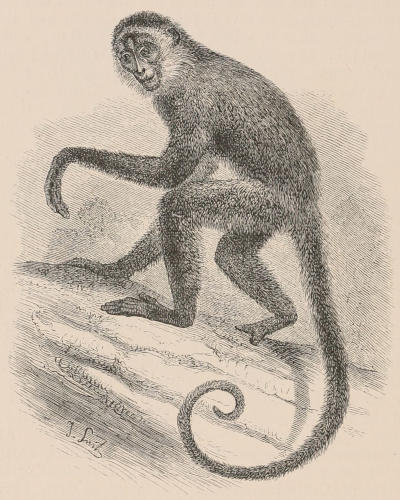
Fig. 341.—The Black-handed Spider Monkey (Ateles melanochir). From Proc. Zool. Soc. 1871, pl. 15.
The Woolly Monkeys differ from the preceding genera by the presence of a well developed pollex. They resemble Eriodes in their fur and compressed nails, but differ in the more widely separated nares. The tail resembles that of the preceding genera. Speaking of these Monkeys Mr. Bates observes that “the Barrigudos are very bulky animals, whilst the Spider Monkeys are remarkable for the slenderness of their bodies and limbs. I obtained specimens of what have been considered two species, one (L. olivaceus?) having the head clothed with gray, the other (L. humboldti, Fig. 342) with black fur. They both live together in the same places, and are probably only differently coloured individuals of one and the same species. I sent home a very large male of one of these kinds, which measured 27 inches in length of trunk, the tail being 26 inches long; it was the largest monkey I saw in America, with the exception of a black Howler, whose body was 28 inches in height. The skin of the face in the Barrigudo is black and wrinkled, the forehead is low, with the eyebrows projecting.... In the forests the Barrigudo is not a very active animal; it lives exclusively on fruits, and is much persecuted by the Indians on account of the excellence of its flesh as food.” Five species are usually recognised, viz. L. canus, L. humboldti, L. castelnaui, L. tschudii, and L. geoffroyi.
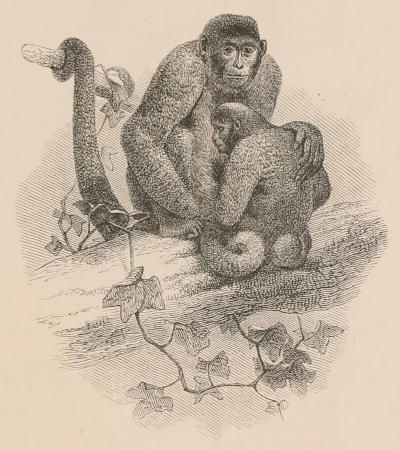
Fig. 342.—Humboldt’s Lagothrix (Lagothrix humboldti). From Proc. Zool. Soc. 1863, pl. 31.
Cebus.[675]—Form rather robust; limbs moderate; fur not woolly; pollex well developed; tail not naked beneath distally.
This, the typical, genus includes the Sapajous or Capuchins (Fig. 343), which are so commonly seen in this country in captivity, being the favourite Monkeys of itinerant musicians. They are smaller and stouter in build than the Spider Monkeys, from which they are readily distinguished by the well-developed pollex, and the absence of a naked under surface to the extremity of the tail. At least twenty species have been described (C. fatuellus, C. lunatus, C. capucinus, C. albifrons, C. hypoleucus, etc.), but it is probable that some of these are not entitled to stand, since there is a large amount of individual variation. Fossil remains of species of Cebus have been described from the Pleistocene cavern-deposits of Brazil.
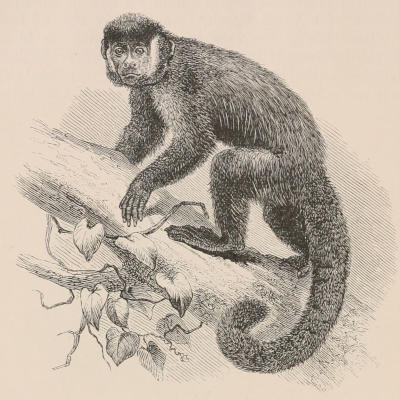
Fig. 343.—The White-cheeked Sapajou (Cebus lunatus). From Proc. Zool. Soc. 1865, pl. 45.
Family Cercopithecidæ.
Dentition: i ²⁄₂, c ¹⁄₁, p ²⁄₂, m ³⁄₃; total 32. Crowns of molars elongated antero-posteriorly, with the tubercles forming a pair of imperfect transverse ridges, and the last lower molar usually with a hind talon. A bony external auditory meatus. A narrow internarial septum. Tail non-prehensile. Ischiatic callosities present. Cheek-pouches present or absent. Pollex, when present, opposable. Pelvic limbs never much longer than pectoral. Sternum narrow. Cæcum without vermiform appendage.
This family includes all the Old World Apes, with the exception of the Simiidæ, and may be divided into the subfamilies Cercopithecinæ and Semnopithecinæ.
Subfamily Cercopithecinæ.—Pelvic and pectoral limbs approximately equal; tail variable; cheek-pouches present; stomach simple.
This subfamily comprises, the African Baboons, the common Indian Monkeys constituting the genus Macacus, together with the African Cercopithecus and Cercocebus and a few allied types.
Cynocephalus.[676]—Muzzle much elongated (Fig. 344), with the nostrils terminal; ischial callosities very large; tail more or less short; muzzle swollen by enlargement of the maxillæ. Now confined to Africa and Arabia.
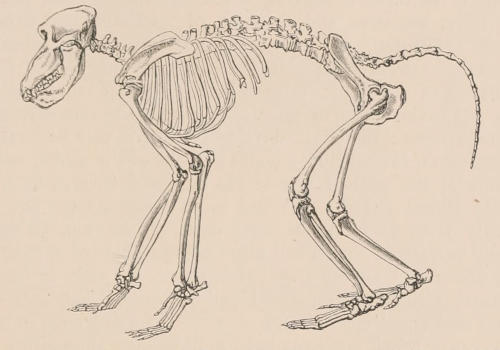
Fig. 344.—Skeleton of the Chacma Baboon (Cynocephalus porcarius). From De Blainville.
This genus comprises the typical Baboons, and we may select the well-known Mandrill (C. maimon), of tropical West Africa, as a good illustrative example. It may be mentioned in passing that the name Mandrill appears to have been first introduced into English literature by William Smith in his New Voyage to Guinea, published in 1744, wherein he mentions among the animals of Sierra Leone one “called by the white men in this country Mandrill,” but adds, “why it is so called I know not.”[677] Smith gives sufficiently accurate details to show that his animal is not that now called Mandrill, but the Chimpanzee. Buffon, however, while quoting Smith’s description, transferred the name to the very different species now under consideration, and to that it has been attached ever since.
The Baboons generally are distinguished from most other Monkeys by the comparative equality of the length of their limbs, which with the structure of the vertebral column adapts them rather for quadrupedal progression on the ground than for climbing among the branches of trees; and some of them, like the South African Chacma (C. porcarius), of which the skeleton is shown in Fig. 344, live habitually among rocks, and are much less completely frugivorous than other Apes. They are also remarkable for the great size of their face and jaws as compared with the part of the skull which encloses the brain. The Mandrill, in addition to these characters, is distinguished by the heaviness of its body, stoutness and strength of its limbs, and exceeding shortness of its tail, which is a mere stump, not 2 inches long, and usually carried erect. It is, moreover, remarkable for the prominence of its brow ridges, beneath which the small and closely approximated eyes are deeply sunk; the immense size of the canine teeth; the great development of a pair of oval bony prominences on the maxillary bones in front of the orbits, rising on each side of the median line of the face, and covered by a longitudinally ribbed naked skin; and more especially for the extraordinarily vivid colouring of some parts of the skin. The body generally is covered with a full soft coating of hair of a light olive-brown above and silvery-gray beneath, and the chin is furnished underneath with a small pointed yellow beard. The hair of the forehead and temples is directed upwards so as to meet in a point on the crown, which gives the head a triangular appearance. The ears are naked and of a bluish-black colour. The hands and feet are naked and black. A large space around the greatly developed ischial callosities, as well as the upper part of the insides of the thighs, are naked and of a crimson colour, shading off on the sides to lilac or blue, which, depending not upon pigment but upon injection of the superficial blood-vessels, varies in intensity according to the condition of the animal—increasing under excitement, fading during sickness, and disappearing after death. But it is in the face that the most remarkable disposition of vivid hues occur, more resembling those of a brilliantly coloured flower than what might be expected in the cutaneous covering of a mammal. The cheek-prominences are of an intense blue, the effect of which is heightened by deeply sunk longitudinal furrows of a darker tint, while the central line and termination of the nose are a bright scarlet. Notwithstanding the beauty of these colours in themselves, the whole combination, with the form and expression of features, quite justifies Cuvier’s assertion that “il serait difficile de se figurer un être plus hideux que le Mandrill.”
It is only to fully adult males that this description applies. The female is of much smaller size, and of more slender make; and, though the general tone of the hairy parts of the body is the same, the prominences, furrows, and colouring of the face are very much less marked. The young males have black faces. At the age of three the blue of the cheeks begins to appear, but it is not until they are about five, when they cut their great canine teeth, that they acquire the characteristic red of the end of the nose.
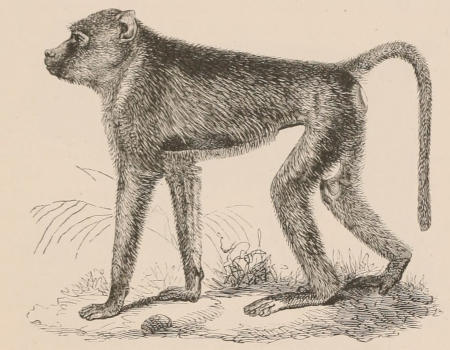
Fig. 345.—The Yellow Baboon (Cynocephalus babuin). From Archives du Muséum, Vol. ii. pl. 34.
The Mandrills, especially the old males, are remarkable for the ferocity of their disposition, as well as for other disagreeable qualities, which are fully described in Cuvier’s account of the animal in La Ménagerie du Muséum d’Histoire Naturelle (1801), but when young they can easily be tamed. Like the rest of the Baboons, they appear to be rather indiscriminate eaters, feeding upon fruit, roots, reptiles, insects, scorpions, etc., and inhabit open rocky ground rather than forests. Not much is known of the Mandrill’s habits in the wild state, nor of the exact limits of its geographical distribution. The specimens brought to Europe all come from the west coast of tropical Africa, from Guinea to the Gaboon.
An allied species, the Drill (C. leucophæus), which resembles the Mandrill in size, general proportions, and shortness of tail, but wants the bright colouring of the face which makes that animal so remarkable, inhabits the same district. Other well-known species are the Yellow Baboon (C. babuin), of West Africa (Fig. 345); the Arabian Baboon (C. hamadryas), of Arabia and Abyssinia; and the Anubis Baboon (C. anubis), of West Africa.
It is very noteworthy from a distributional point of view, as showing the former intimate connection between the faunas of the Oriental and Ethiopian regions, that fossil remains of Baboons have been found in the Pleistocene cavern-deposits of Madras, and also in the older Pliocene beds of the Siwalik Hills in Northern India; the two species from the latter deposits having been described as C. subhimalayanus and C. falconeri.
Theropithecus.[678]—Distinguished from Cynocephalus by the nostrils not being terminal, but situated as in Macacus. This genus is represented by the Abyssinian Gelada (T. gelada) and the allied T. obscurus.
Cynopithecus.[679]—The Black Ape of Celebes (C. niger) forms a connecting link between the Baboons and the genus Macacus; the skull differing from that of the latter in the development of longitudinal ridges on the sides of the upper surface of the maxillæ, as in some of the species of Cynocephalus. The muzzle is also more produced than in Macacus.
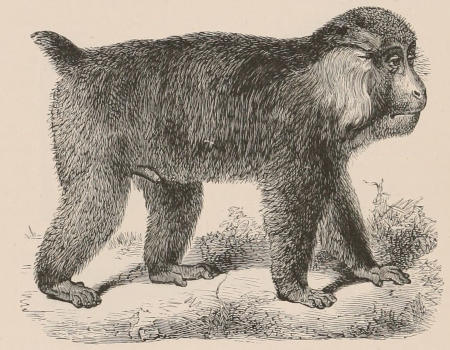
Fig. 346.—The Tibetan Macaque (Macacus tibetanus). From Milne-Edwards, Recherches des Mammifères, pl. 34.
Macacus.[680]—Muzzle considerably produced; nostrils not terminal; cheek-pouches and ischial callosities well developed; tail long, short, or absent; a distinct talon to the third lower molar.
With the exception of the Barbary Ape (M. inuus) of Northern Africa and Gibraltar, the Macaques are now exclusively Asiatic, one species (Fig. 346) occurring in Tibet, and another (M. speciosus) being found in Japan. All these Monkeys are of stout build, and it is chiefly by the greater production of the muzzle, the larger ischiatic callosities, and the frequent shortness of the tail that they are distinguished from the under-mentioned African genera. The transition from the longer-tailed to the short-tailed forms is so complete that the proposed generic separation of the latter as Innus is impracticable. In M. innus the tail is wanting; in M. tibetanus (Fig. 346) and M. nemestrinus of Tenasserim it is short; in the common Bengal Monkey (M. rhesus) it is about one-half the length of the head and body, while in M. cynomolgus and its allies it is still longer. In the Indian Lion-tailed Monkey (M. silenus) it is tufted at the end.
The following summary of the habits of the Macaques is taken from Mr. W. T. Blanford’s Mammals of British India: “The species of the present genus resemble each other in their habits; they are found in flocks, often of considerable size, and generally composed of individuals of both sexes and of all ages. They are active animals, though less rapid in their movements, whether on trees or on the ground than the Semnopitheci. Their food is varied, most of the species, if not all, eating insects as well as seeds, fruits, etc., and one kind feeding partly on crustacea. They have occasionally been known to devour lizards, and, it is said, frogs also. All have the habit of cramming food into their cheek-pouches for mastication at leisure—a practice that must be familiar to any one who has fed monkeys in confinement. The voice and gestures of all the species are similar, and differ entirely from those of both the Gibbons and Semnopitheci.... The majority of the species are very docile when young. They thrive well, and several of them have bred in confinement. The period of gestation is almost seven months, only a single young one, as a rule, being produced at a birth. They become adult at the age of four or five years, but breed earlier.”
The Common Indian M. rhesus is found in the Himalaya at an elevation of over 8000 feet.
Fossil remains of Macacus are found in India in the Pleistocene of Madras and the Pliocene of the Punjab; and they also occur in the Pliocene of France and Italy, those from the latter deposits having been incorrectly separated as Aulaxinuus. Part of the jaw of a Monkey from the Pleistocene of Essex has been described as Macacus pliocenus, and is very interesting as showing the presence of Apes in Europe at that late period.
Cercocebus.[681]—An African genus agreeing with Macacus in the presence of a hind talon to the third lower molar, but with the other characters of Cercopithecus. The species of this genus are known as Mangabeys, or White-eyelid Monkeys, and include C. collaris, C. fuliginosus, C. æthiops, and C. albigena; all being from West Africa.
Cercopithecus.[682]—Muzzle more or less short; ischial callosities moderate; tail long; no talon to third lower molar. Build more slender than in Macacus. Confined to Africa.
The members of this and the last genus include those Monkeys which in their comparative slender build and length of tail make the nearest approach to the next subfamily. There are numerous species, among which the Green Monkey (C. cullitrichus), the Grivet (C. griseo-viridis), the Vervet (C. lalandi), the Pluto Monkey (C. pluto, Fig. 347). The Patas (C. ruber), the Diana Monkey (C. diana), and the Mona Monkey (C. mona) are well-known types.
Subfamily Semnopithecinæ.[683]—Pelvic limbs longer than the pectoral, tail very long; no cheek-pouches; stomach sacculated. Build slender.
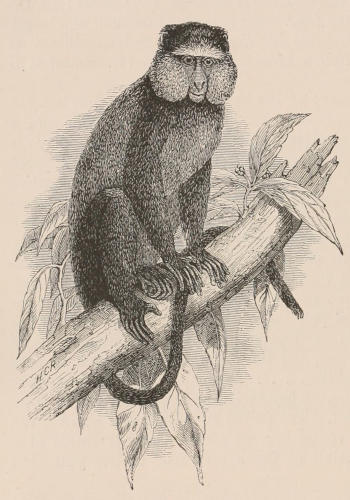
Fig. 347.—The Pluto Monkey (Cercopithecus pluto). From Gray, Proc. Zool. Soc. 1848, p. 57.
This subfamily is represented by three genera, of which one is African and two are Asiatic. Mr. W. T. Blanford, in his Mammals of British India, observes that “the members of this subfamily are readily distinguished by their slender form, and by the absence of cheek-pouches. They are more purely herbivorous than the Macaque Monkeys, and a considerable portion of their food consists of leaves and young shoots. In consequence probably of the nature of their food, these Monkeys are more delicate than the species of Macacus, and are thus less easily kept in captivity. They are consequently far less well represented in European museums, and have been less studied by European naturalists. Very little is known of their general life-history or of their feeding habits.”