Chapter XI · THE ORDER CARNIVORA (continued 2)
Reading edition
Crossarchus.[460]—Dentition: i ³⁄₃, c ¹⁄₁, p ³⁄₃, m ²⁄₂; total 36. Snout elongated. Toes 5-5. Claws on fore feet long and curved. Hallux very short. Under surface of tarsus naked. Tail shorter than the body, tapering. Palate flat. Fur harsh. Species: C. obscurus, the Kusimanse, a small burrowing animal from West Africa, of uniform dark brown colour; C. fasciatus; C. zebra; and C. gambianus.
Suricata.[461]—A more distinct genus than any of the above. The dental formula as in the last, but the teeth of the cheek-series remarkably short in the antero-posterior direction, corresponding with the shortness of the skull generally (Fig. 222). Orbits complete behind. Vertebræ: C 7, D 15, L 6, S 3, C 20. Though the head is short and broad, the nose is pointed and rather produced and movable. Ears very short. Body shorter and limbs longer than in Herpestes. Toes 4-4, the pollex and hallux being absent. Claws on fore feet very long and narrow, arched, pointed, and subequal. Hind feet with much shorter claws, soles hairy. Tail rather shorter than the body. One species only is known, the Suricate, S. tetradactyla, a small gray-brown animal, with dark transverse stripes on the hinder part of the back, from South Africa. The cæcum is short.
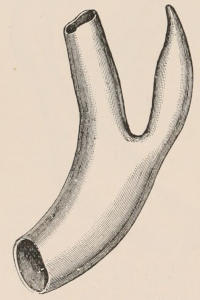
Fig. 242.—Cæcum of Galidea elegans. (From Mivart, Proc. Zool. Soc. 1882, p. 508.)
Galidictis,[462] Galidea,[463] and Hemigalidea[464] are names of three slight generic modifications of the Viverrine type, allied to the Herpestinæ, but placed by Mivart in a distinct subfamily, Galidictiinæ. They are all characterised by the absence of the alisphenoid canal in the skull, as well as of the entepicondylar foramen to the humerus; and are inhabitants of Madagascar. The best known, Galidea elegans, is a lively Squirrel-like little animal with soft fur and a long bushy tail, which climbs and jumps with agility. It is of a chestnut-brown colour, the tail being annulated with darker brown. The cæcum (Fig. 242) is remarkable for its comparative length and pointed termination. Hemigalidea is distinguished by the absence of rings on the tail. Galidictis vittata and striata chiefly differ from the Ichneumons in their coloration, being gray with parallel longitudinal stripes of dark brown.
Eupleres[465] is another form, also from Madagascar, which has been placed in a subfamily apart. It differs remarkably from all the other Viverridæ in the weak development of the jaws and the small size of the teeth (Fig. 243), in consequence of which it was, when first discovered, placed in the order Insectivora. Dentition: i ³⁄₃, c ¹⁄₁, p ⁴⁄₄, m ²⁄₂; total 40. Vertebræ: C 7, D 13, L 7, S 3, C 20. No alisphenoid canal; an entepicondylar foramen to the humerus. But one species is known, E. goudoti.
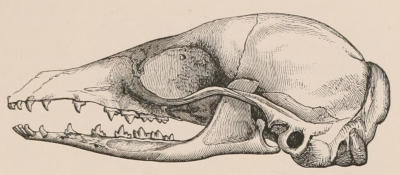
Fig. 243.—Skull of Eupleres goudoti. ⅘ natural size. Mus. Roy. Coll. Surgeons.
Extinct Genera.—The Tertiaries of the Old World have yielded several genera allied to the existing Viverroids, some of which show decided signs of affinity with other families. Of these the Lower Miocene Amphictis appears to be nearly related to Viverra, but is distinguished by the form of the second lower molar, which is longer and has two distinct roots. Palæoprionodon, of the French Phosphorites, has a dentition very like that of Prionodon, the molars being reduced to ¹⁄₂; the skull has an alisphenoid canal and the general basal characters of the Viverridæ, but resembles the Mustelidæ in the presence of a glenoid foramen and in the position of the condylar foramen. In Stenoplesictis, of the same deposits, the dental formula is i ³⁄₃, c ¹⁄₁, p ⁴⁄₄, m ²⁄₂; and although the skull has a complete septum in the bulla, yet some of the cranial and dental features approximate so decidedly towards those of the extinct Mustelidæ, as to lead some authorities to refer the genus to that family. The most probable explanation of this resemblance is that the Musteloids have originated from generalised Viverroids allied to Stenoplesictis. The Lower Pliocene Ictitherium differs from all other Viverroids in the presence of three distinct lobes to the upper carnassial, and thereby connects the other members of the family so closely with the Hyænidæ that it is practically impossible to draw up a definition which will distinguish the two families.
The North American Eocene genera Miacis and Didymictis are generally regarded as representing a separate family—Miacidæ—with affinities both to the Viverridæ and Canidæ.
Family Proteleidæ.
Skull with no alisphenoid canal; and the auditory bulla divided into two distinct chambers. Dorsal vertebræ 15. Molars ¹⁄₁. Premolar and molar teeth very small and simple in character.
Proteles.[466]—This genus contains but a single species, P. cristatus, the Aard-Wolf or Earth-Wolf of the Dutch colonists of the Cape, an animal nearly allied to the Hyænas, but remarkably modified in its dentition, the molar teeth being very small, placed far apart, and almost rudimentary in character (Fig. 244). The canines are long and rather slender. The dental formula is i ³⁄₃, c ¹⁄₁, p and m ⁴⁄₃₋₄; total 30 or 32. Vertebræ: C 7, D 15, L 5, S 2, C 24. The fore feet with five toes; the pollex though short, with a distinct claw. The hind feet with four subequal toes. Claws all strong, blunt, subcompressed, and non-retractile. The general external appearance is very like that of a small Striped Hyæna, but the muzzle is more pointed and the ears larger. It has a copious mane of long hair, capable of being erected when the animal is excited, along the middle line of the neck and back. It is a native of South Africa, and is a burrowing nocturnal animal, feeding on decomposing animal substances, larvæ, and termites. Observations upon specimens in captivity indicate that it has neither inclination nor power to attack or feed upon living vertebrated animals.
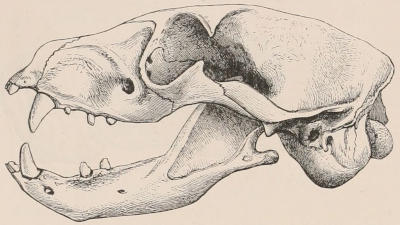
Fig. 244.—Skull and Dentition of the Aard-Wolf (Proteles cristatus). ½ natural size.
Some writers regard Proteles as representing a subfamily of the Hyænidæ.[467]
Family Hyænidæ.
Skull with no alisphenoid canal; and the auditory bulla not divided by a septum into two chambers. Dorsal vertebræ 15. Molars usually ¹⁄₁, but in some fossil forms ¹⁄₂, or ²⁄₂, the second lower molar being very small; upper carnassial with three distinct lobes; lower carnassial with a large blade and small talon. No entepicondylar foramen to the humerus. This family is confined to the Old World, where it is now represented by a single genus, which, although evidently nearly related to the Viverridæ, is sufficiently distinct to be regarded as not referable to that family. The extinct Ictitherium, however, as already mentioned, connects the more generalised members of the Hyænidæ very closely with the Viverridæ.
Hyæna.[468]—Dentition in existing forms usually i ³⁄₃, c ¹⁄₁, p ⁴⁄₃, m ¹⁄₁; total 34. Teeth, especially canines and premolars, very large, strong, and conical. Upper carnassial (Fig. 245) with a very large, distinctly trilobed blade and a moderately developed inner tubercle placed at the anterior extremity of the blade. Molar very small, and placed transversely close to the hinder edge of the last, as in the Felidæ. Lower carnassial consisting of little more than the bilobed blade. Zygomatic arches of cranium very wide and strong. Sagittal crest high, giving attachment to very powerful biting muscles. Orbits incomplete behind. Vertebræ: C 7, D 15, L 5, S 4, C 19. Limbs rather long, especially the anterior pair, digitigrade, four subequal toes on each, with stout non-retractile claws. Pollex and hallux only represented by rudimentary metacarpal and metatarsal bones. Tail rather short. A large post-anal median glandular pouch, into which the largely developed anal scent glands pour their secretion.
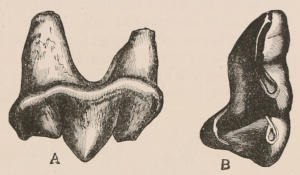
Fig. 245.—Outer (A) and palatal (B) aspects of the right upper carnassial tooth of the Striped Hyæna (Hyæna striata). From the Quart. Journ. Geol. Soc.
The three existing species of Hyæna are divisible into two sections, to which some zoologists assign generic rank, but fossil forms show such a transition between these two types as to render any such division impracticable.
The typical or Euhyænine group presents the following distinctive features. Upper molar moderately developed and three-rooted. An inner cusp and hind talon more or less developed on the lower molar. Ears large, pointed. Hair long, forming a mane on the back and shoulders. H. striata, the Striped Hyæna (Fig. 246) of Northern Africa and Southern Asia. H. brunnea, of South Africa, in some respects intermediate between this and the next group.
The Striped Hyæna is dirty gray in colour, with narrow transverse tawny or blackish stripes on the body and legs; the length of the head and body is 3½ feet, and that of the tail, with its hair, 1½ feet. It occurs throughout peninsular India, where it is most common in open hilly districts, and in North Africa. Mr. Blanford[469] gives the following account of its habits: “It is a nocturnal animal, and although an occasional individual may be met with returning to its den in the early morning, its rambles are usually commenced after sunset and ended before sunrise. During the night it roams far and wide, and no tracks of wild animals are more common in the countries where it is found than its unmistakable footprints, very like a dog’s in shape, but with the marks of the hind feet conspicuously smaller than those of the fore feet. Unlike the Spotted Hyæna, the Striped species appears to be solitary in its habits, and it is rare to meet with more than two together. The principal food of the Hyæna consists of the carcases of animals that have died of disease or been killed by beasts of prey, and very often it carries off portions of the body to its den. I once shot one that was carrying away the hind leg of a Nilghai. The powerful jaws and large teeth are admirably adapted for crushing bones, which are consumed by Hyænas, after the flesh has been picked off by vultures and jackals. Occasionally sheep or goats, and more often dogs, are carried off by Hyænas, and the latter at all events are often taken alive to the animal’s den.” The Striped Hyæna is essentially a cowardly animal, and one that is much more silent than H. crocuta. Remains of H. striata are found in the cavern-deposits of the south of France, and also in the Upper Pliocene of the Val d’Arno in Tuscany, and in the English Red Crag.
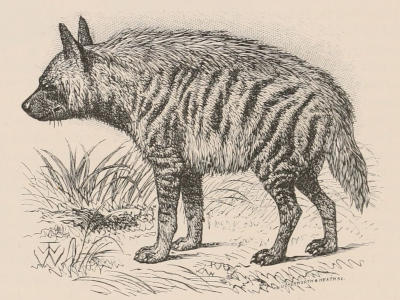
Fig. 246.—The Striped Hyæna (Hyæna striata).
The Crocutine group presents the following characters. Upper molar extremely small, two- or one-rooted, often deciduous. Lower molar without trace of inner cusp, and with an extremely small talon. Ears moderate, rounded. Hair not elongated to form a mane. H. crocuta, the Spotted Hyæna (Fig. 247), from Africa south of the Sahara. In dental characters as well as in its visceral anatomy, especially as regards the reproductive organs of the female,[470] this species may be considered as by far the more specialised form. The Spotted Hyæna is a larger and bolder animal than the Striped species, hunting in packs, and uttering very frequently its unearthly cry. The coloration consists of dark brown spots on a yellowish ground. It was formerly very common at the Cape. Remains of a large race of this species are exceedingly common in the cavern-deposits of Europe, where they were first described under the name of Hyæna spelæa; teeth have also been met with in the Norfolk Forest-bed, and in cavern-deposits in Madras—the latter locality being exceedingly interesting from a distributional point of view.
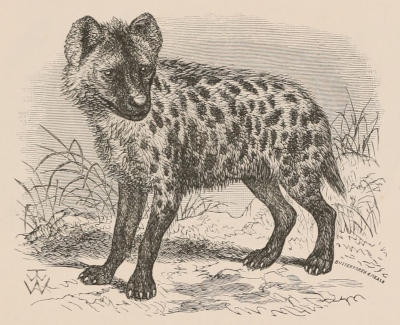
Fig. 247.—The Spotted Hyæna (Hyæna crocuta).
In addition to the remains of existing species, to which reference has been already made, there were numerous extinct forms of Hyæna in the upper Tertiaries of Europe, from the horizon of the Lower Pliocene Pikermi beds of Greece upwards. In the Crocutine group H. colvini of the Pliocene of India (Fig. 248), and H. robusta of that of Italy, appear to have been ancestral forms allied to H. crocuta; the former being distinguished by the loss of the first upper premolar. H. eximia, of the Pikermi beds, is a more generalised form, in which the first lower premolar (lost in existing forms) is retained. In the typical group, H. arvernensis and H. perrieri, of the Upper Pliocene of the Continent, approximate to H. brunnea; although H. perrieri makes a farther step towards the Crocutine group by the loss of the inner cusp in the lower carnassial. The extinct Hyænictine group, as represented by the Indian H. sivalensis and the Grecian H. græca, connects H. striata with Palhyæna. Both are characterised by the presence of a small second lower molar behind the carnassial; while H. græca also has four lower premolars. Still more generalised is the Lychyænine group; comprising H. macrostoma of India and H. chæretis of the Pikermi beds; in these forms the muzzle was longer, and the premolars much more compressed than in the existing species, thus making a very decided approach to the Viverridæ. There were four lower premolars; the lower carnassial had an inner cusp, and it is probable that there was a second lower molar; while the first upper molar was placed partially behind the carnassial. The Lower Pliocene Palhyæna hipparionum, in which the dental formula is i ³⁄₃, c ¹⁄₁, p ⁴⁄₄, m ²⁄₂, is a smaller form with long jaws and compressed premolars which approaches so closely to the Viverroid genus Ictitherium as to show pretty clearly how the Hyænas have been gradually modified from that stock.
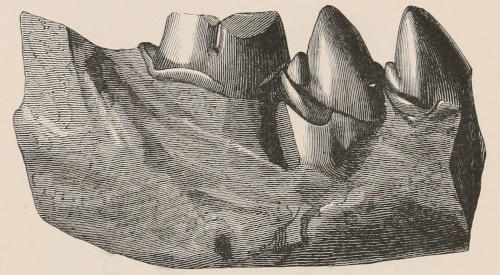
Fig. 248.—Outer view of part of the right ramus of the mandible of Hyæna colvini, showing the third and fourth premolars and the carnassial. (From the Palæontologia Indica.)
Section Cynoidea.
Family Canidæ.
This section contains the single family of the Canidæ, or Dog-like animals, which appear to hold an intermediate position between the other two sections, retaining also many of the more generalised characters of the ancient members of the order. The structure of the auditory bulla and adjacent parts of the bones of the skull is intermediate between that of the Æluroid and Arctoid forms. In the number and arrangement of the teeth they more nearly approach the primitive heterodont type than any other existing Carnivora. A cæcum is always present, sometimes short and simple, but when long it is folded upon itself in a characteristic manner.
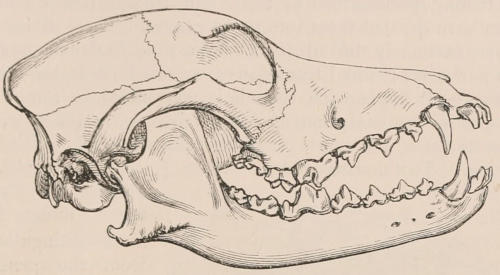
Fig. 249.—Right lateral aspect of the skull of the Dog (Canis familiaris).
The characters of the base of the cranium are shown in Fig. 8 (p. 38), where it will be seen that the auditory bulla is inflated, although it has only a rudimental internal septum; the paroccipital process, although in contact with the bulla, is prominent, and there is a large glenoid foramen. In all the existing forms the humerus has lost the entepicondylar foramen; the crowns of the upper molars are triangular in shape (Fig. 251), and the blade of the upper carnassial consists of two lobes.
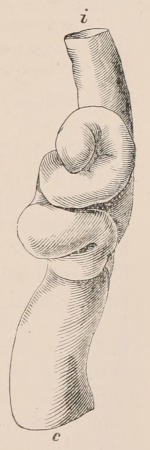
Fig. 250.—Cæcum of the Arctic Fox (Canis lagopus). i, Ileum; c, colon. In the natural position the colon is uppermost.
In the alimentary canal the cæcum (Fig. 250) is extremely characteristic. It is a simple appendage of nearly uniform width (about equal to that of the ileum) attached to the side of the canal, just beyond the ileo-cæcal valve, and with a rounded termination. In a Dog of average size it is 5 or 6 inches long if uncoiled, but it is normally folded by its mesenteric attachments backwards and forwards several times on itself by the side of the ileum, after the manner shown in the figure.
The existing Dogs form a very compact group, with numerous species closely resembling each other in essential characters, though differing considerably externally. The most marked differences are slight variations in the number of the true molar teeth, which exceed the usual number in the Cape Long-eared Fox (Otocyon), and fall short of it in some other less aberrant forms to which the names of Icticyon and Cyon have been given, and a diminution in the number of toes in the Cape Hunting Dog (Lycaon), which has 4-4, instead of 5-4 as in the remainder of the family. After taking these away, there remain a great number of animals called Dogs, Wolves, Jackals, and Foxes, varying from one another only in the characters of the tail, ears, fur, form of the pupil, and some trifling peculiarities of skull and teeth, upon which some authors have divided them into many genera. These divisions are, however, extremely difficult, if not impossible, to define, on account of the numerous gradual transitions from one form to the other.
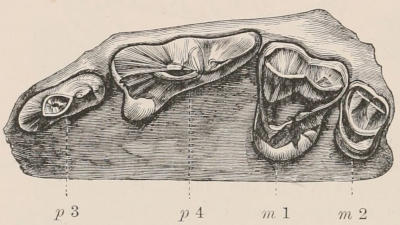
Fig. 251.—The last four left upper teeth of an extinct Wolf (Canis cautleyi). From the Palæontologia Indica.
Canis.[471]—It appears on the whole convenient to retain all the species, with the exception of Otocyon, Icticyon, and Lycaon, in the old genus Canis, the most prominent characters of which are the following. Teeth, usually i ³⁄₃, c ¹⁄₁, p ⁴⁄₄, m ²⁄₃; total 42. The absence of the last upper molar (m ³⁄), alone distinguishes this from the generalised dentition of heterodonts, and this tooth is occasionally present in one species (C. cancrivorus). In certain Asiatic species (C. primævus and its allies), which on this account have been separated to form the genus Cyon of Hodgson, the last lower molar ⁄m₃ appears to be constantly absent. The milk-dentition is di ³⁄₃, dc ¹⁄₁, dm ³⁄₃; total 28,—the first permanent premolar having no predecessor. The teeth of both permanent and milk or temporary series are figured on p. 26, Fig. 3, from the outer aspect, while the woodcut 251 shows the palatal aspect of the hinder upper teeth. The upper carnassial (p ⁴⁄) consists of a stout blade, of which the anterior lobe is almost obsolete, the middle lobe large, conical, and pointed backwards, and the posterior lobe in the form of a compressed ridge; the inner tubercle is very small, and placed quite at the fore part of the tooth. The first molar is more than half the antero-posterior length of the carnassial, and considerably wider than it is long; its crown consists of two prominent conical cusps, of which the anterior is the larger, and a low broad inward prolongation, supporting two more or less distinct cusps and a raised inner border. The second molar resembles the first in general form, but is considerably smaller. The lower carnassial ⁄m₁ is a very large tooth, with a strong compressed bilobed blade, the hinder lobe being considerably the larger and more pointed, a small but distinct inner cusp placed at the hinder margin of the posterior lobe of the blade, and a broad, low, tuberculated talon, or heel, occupying about one-third of the whole length of the tooth. The second molar is less than half the length of the first, with a pair of cusps placed side by side anteriorly, and a less distinct posterior pair. The third is an extremely small and simple tooth, with a subcircular tuberculated crown and single root.
The cranium (Fig. 249) is more or less elongated, the facial portion tapering forwards and compressed. The jaws are elongated, and the zygomata moderately strong. The postorbital processes of the frontal short, leaving the orbit widely open posteriorly. Vertebræ: C 7, D 13, L 7, S 3, C 17-22. Clavicles present, but very rudimentary. Limbs of moderate proportions, digitigrade. Feet short; five toes on the fore foot, the pollex much shorter than the others, and not reaching to the ground. Four toes on the hind foot, the hallux being represented by a rudiment of the metatarsal.[472] All the toes are provided with exserted, non-retractile, slightly curved, and blunt claws, which, being exposed, become worn at the tips. Tail moderate, or rather long, generally somewhat bushy. The pupil of the eye, when contracted, is in some species round, in others elliptical and vertical.
This extensive genus may be considered as truly cosmopolitan. One or more species occur in every part of the American continent from Greenland to Patagonia and the Falkland Isles; and similarly, in the Old World, Europe, Africa, and Asia, with most of the large islands adjacent, and even Australia, have their wild Dogs, though in the last case they may belong to a feral race, introduced originally by man. They are generally sociable animals, hunting their prey in packs. Many species burrow in the ground; none habitually climb trees. Though mostly carnivorous, feeding chiefly on animals they have chased and killed themselves, many, especially among the smaller species, eat garbage, carrion, insects, and also fruit, berries, and other vegetable substances. The species are very numerous, and, as in most other large genera, very ill-defined, few zoologists agreeing as to which of the many slightly different modifications should be considered as local varieties and which true species. Perhaps the best cranial character by which the different members of the genus can be distinguished is that pointed out by Burmeister, viz. that in the animals generally called Dogs, Wolves, and Jackals the postorbital process of the frontal bone is regularly smooth and convex above, with its extremity bent downwards, whereas in Foxes this process is hollowed above, with its outer margin (particularly of the anterior border) somewhat raised. This modification coincides in the main with that upon which Professor Huxley[473] has based his division of the group into two parallel series, the Thooids or Lupine forms and Alopecoids or Vulpine forms, which he characterises by the presence of frontal air-sinuses in the former, which not only affect the external contour but to a still greater degree the shape of the anterior part of the cranial cavity, and the absence of such sinuses in the latter. The pupil of the eye when contracted is round in most members of the first group, and vertically elliptical in the others, but more observations are required before this character can be absolutely relied upon. The form and length of the tail is often used for the purposes of classification, but its characters do not coincide with those of the cranium, since many of the South American Canidæ have the long bushy tails of Foxes and the skulls of Wolves. Taking into account various combinations of these and other minor characters, the species may be arranged in the following groups, which some authors have considered as of generic importance.
A. Thooid or Lupine Series.—The typical group, or Canis proper, contains the largest members of the genus, the true Wolves of the northern parts of both Old and New Worlds (C. lupus, etc.), the Jackals of Southern Asia and Africa (C. aureus, mesomelas, etc.), and the various breeds of the domestic Dog (C. familiaris). The true Wolves are (excluding some varieties of the domestic Dog) the largest members of the genus, and have a wide geographical range, extending over nearly the whole of Europe and Asia, and North America from Greenland to Mexico, but they are not found in South America or Africa, being replaced in both of these continents by various species of Jackals and Foxes. As might be expected from this extensive range, and the varied character of the climatic conditions of the countries they inhabit, they present great diversities of size, length and thickness of fur, and coloration, although resembling each other in all important structural characters. These differences have given rise to a supposed multiplicity of species, expressed by the names of C. lupus, C. lycaon (Central Europe), C. laniger and C. niger (Tibet), C. pallipes (India), C. occidentalis, C. nubilis, C. mexicanus, etc., of North America, but it is very doubtful whether some of these ought to be distinguished as other than local varieties. Mr. W. T. Blanford, in his recent work on the mammals of India, regards the two forms from Tibet mentioned above as inseparable from C. lupus. In North America there is a very distinct smaller species, called the Coyote or Prairie Wolf (C. latrans); and perhaps the Japanese Wolf (C. hodophylax) may also be distinct, although, except for its smaller size and shorter legs, it is scarcely distinguishable from the common species. Though generally distributed throughout the Indian peninsula, the Indian Wolf (C. pallipes), which is rather smaller and slighter than C. lupus, is not found in Ceylon, nor in Burma and Siam. The ordinary colour of the Common Wolf is a yellowish or fulvous gray, but specimens have been met with almost pure white and others entirely black. In northern countries the fur is longer and thicker, and the animal generally larger and more powerful than in the southern portion of its range; this being especially the case with the Tibetan races. The habits of the Wolf are similar everywhere, and it is still, and has been from time immemorial, especially known to man in all the countries it inhabits as the devastator of his flocks of sheep. They do not catch their prey by lying in ambush, or stealing up close to it and making a sudden spring as the Cat tribe do, but by fairly running it down in open chase, which their speed and remarkable endurance enable them to do; and usually, except during summer, when the young families of cubs are being separately provided for by their parents, they assemble in troops or packs, and by their combined and persevering efforts are able to overpower and kill even such great animals as the American Bison. It is singular that such closely allied species as the Domestic Dog and the Arctic Fox are among the favourite prey of Wolves, and, as is well known, children and even full-grown people are not unfrequently the objects of their attack when pressed by hunger. Notwithstanding the proverbial ferocity of the Wolf in a wild state, many instances are recorded of animals taken when quite young becoming perfectly tame and attached to the person who has brought them up, when they exhibit many of the ways of a Dog. They can, however, rarely be trusted by strangers.
The history of the Wolf in the British Isles and its gradual extirpation has been thoroughly investigated by Mr. J. E. Harting in his work on Extinct British Animals, from which the following account is abridged: To judge by the osteological remains which the researches of geologists have brought to light, there was perhaps scarcely a county in England or Wales in which, at one time or another, wolves did not abound, while in Scotland and Ireland they must have been still more numerous. The fossil remains which have been discovered in Britain are not larger than, nor in any way to be distinguished from, those of European wolves of the present day. Wolf-hunting was a favourite pursuit of the ancient Britons as well as of the Anglo-Saxons. In Athelstan’s reign these animals abounded to such an extent in Yorkshire that a retreat was built by one Acehorn, at Flixton, near Filey, wherein travellers might seek refuge if attacked by them. As is well known, great efforts were made by King Edgar to reduce the number of wolves in the country, but, notwithstanding the annual tribute of 300 skins paid to him during several years by the king of Wales, he was not altogether so successful as has been commonly imagined. In the reign of Henry III the number of wolves in some parts of the country was sufficient to induce the king to make grants of land to various individuals upon the express condition of their taking measures to destroy these animals wherever they could be found. In Edward II’s time the king’s forest of the Peak, in Derbyshire, is especially mentioned as infested with wolves, and it was not until the reign of Henry VII (1485-1509) that wolves appear to have become finally extinct in England. This, however, is rather a matter of inference from the cessation of all mention of them in local records than from any definite evidence of their extirpation. Their last retreat was probably in the desolate wolds of Yorkshire. In Scotland, as might be supposed from the nature of the country, the wolf maintained its hold for a much longer period. There is a well-known story of the last of the race being killed by Sir Ewen Cameron of Lochiel in 1680, but there is evidence of wolves having survived in Sutherlandshire and other parts into the following century (perhaps as late as 1743), though the date of their final extinction cannot be accurately fixed. In Ireland, in Cromwell’s time, wolves were particularly troublesome, and said to be increasing in numbers, so that special measures were taken for their destruction, such as the offering of large rewards for their heads, and the prohibition (in 1652) of the exportation of “wolf-dogs,” the large dogs used for hunting the wolves. The active measures taken then and later reduced their numbers greatly, so that towards the end of the century they became scarce, but, as in the case of the sister island, the date of their final disappearance cannot now be ascertained. It has been placed, upon the evidence of somewhat doubtful traditions, as late as 1766.
Remains of C. lupus are common in the European Pleistocene; while the Indian Pliocene C. cautleyi, of which the upper teeth are shown in Fig. 251, was probably the ancestor of C. pallipes. C. neschersensis, of the Upper Pliocene of France, was a smaller extinct Wolf. A lower jaw from the French Pleistocene, described under the name of Lycorus, has only three premolars, but evidently belongs to the Wolf.
The Jackals are smaller than the Wolves, with the bushy tail about one-third the length of the head and body, and the carnassials relatively shorter as compared with the tubercular molars. The Common Jackal (C. aureus, Fig. 252) has a very wide distribution, ranging from South-Eastern Europe through South-Western Asia to India and Burma, and also occurring in Northern Africa; being replaced in the Ethiopian region by closely allied species. Remains indistinguishable from C. aureus occur in the Pliocene Siwaliks of Northern India. Jackals hunt at night in packs, uttering the piercing cries so well known to all who have resided in countries where these animals are found.
The origin of the Domestic Dog, with its numerous breeds, has been the subject of much controversy. Some naturalists believe it to be a distinct species, descended from one that no longer exists in a wild state; others have sought to find its progenitors in some one of the wild or feral races, either of true Dogs, Wolves, or Jackals; while others again believe that it is derived from the mingling of two or more wild species or races. It was probably the earliest animal domesticated by man, and few if any other species have undergone such an extraordinary amount of variation in size, form, and proportion of limbs, ears, and tail—variations which have been perpetuated and increased by careful selective breeding. The Dingo or Australian Dog is met with wild, and also as the domestic companion of the aboriginal people. Dogs were also in the possession of the natives of New Zealand and other islands of the Pacific, where no placental mammals exist naturally, on their discovery by Europeans in the last century.
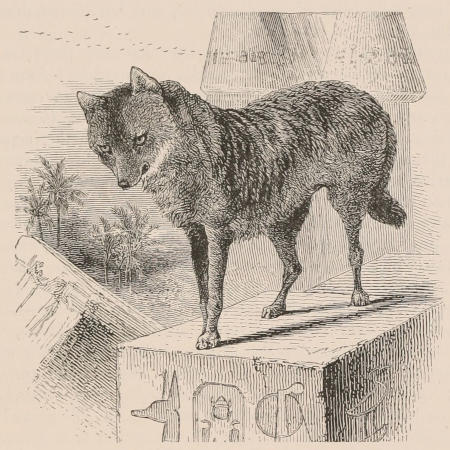
Fig. 252.—The Jackal (Canis aureus).
The second group includes the wild Dogs of the south-east of Asia, described as Cyon, and distinguished by slight modifications as C. rutilans, C. dukhunensis, and C. javanicus, and differing from the above in wanting the small last lower tubercular molar. This difference reduces the number of the teeth to the same as in Viverra, and is precisely paralleled by some of the species of the extinct genus Cynodictis mentioned below. The muzzle is shorter than in other species, and the facial profile is slightly convex instead of concave. The mammæ are also 12 or 14 instead of the normal 10; while there is long hair between the foot-pads. Wild Dogs inhabit not only the whole of the Oriental region, but extend into Central Asia as far north as the Altai and Amurland (C. alpinus). C. dukhunensis ranges from the forest regions of peninsular India to Gilgit and Western Tibet, where it must inhabit open country. In their general form, and more especially the shortness of the legs, these animals come nearer to the Jackals than to the Wolves. They hunt their prey in packs. Remains of species of this group occur in the cavern-deposits of the Continent, and have been described under the name of C. europæus.
A group for which the name Lycalopex has been proposed comprises certain South American Canidæ, distinguished from Canis proper by their longer tails and Fox-like aspect:—C. cancrivorus, C. brasiliensis, C. melampus, C. vetulus, C. fulvicaudus, C. azaræ, C. magellanicus, C. griseus. The last three have been further separated (under the name of Pseudalopex) on account of slight differences in the relative size of the molar teeth, and of their pupil being elliptical when contracted. Nyctereutes (one species, C. procyonides, from Japan and North-East Asia) has no claims to generic distinction but such as are founded upon its long loose fur, short ears, and short bushy tail, which give it some superficial resemblance to a Raccoon.
B. Alopecoid or Vulpine Series.—The Vulpine group (Vulpes) includes the true Foxes, of which there are numerous varieties and species, spread over North America, Eurasia, and Africa, which have been described under the names of C. vulpes (Vulpes alopex), the common Fox of Europe; C. niloticus, adustus, and variegatus, Africa; C. flavescens, montanus, bengalensis, japonicus, corsac, Asia; C. fulvus, macrurus, velox, North America. Mr. Blanford[474] concludes, however, that the Asiatic C. flavescens and C. montanus, and very probably the North American Cross-Fox (C. fulvus) are merely local races of C. vulpes, distinguished by certain peculiarities of coloration. The English Fox measures about 2 feet in length exclusive of the tail, which is about a foot long. Its fur is of a reddish-brown colour above, and more or less white beneath; the back of the ears and the fore part of the limbs are black, and the tip of its bushy tail is white. Its long, sharp muzzle, erect pointed ears, and sharp eye, give it the well-known appearance of sagacity and cunning. The Fox is a solitary animal, inhabiting a burrow, which it either excavates for itself, or obtains by ejecting the badger or the rabbit. So averse, indeed, is the Fox to dig for itself, that when foiled in its attempts to dispossess the badger, it has been known to take up its quarters with the latter, and it can be induced to make its home in artificial burrows constructed of stone and earth for the purpose of facilitating the operation of digging out the cubs. The Fox also occurs in woods, and even in the open country without burrows, lying in its “cover” by day and stealing forth at night in search of its prey. Remains of the Common Fox occur not unfrequently in the Pleistocene deposits of Europe. The Indian C. bengalensis is a very much smaller and well-marked species.
The tail of the above forms is clothed with soft fur and long hair, uniformly mixed; from them Baird distinguishes, under the name of Urocyon, other species which have a concealed erect mane of stiff hairs along the upper line of the tail. These have also a shorter muzzle and a wide space between the temporal crests; they are C. virginianus and C. littoralis, both from North America. The Arctic Fox (C. lagopus, genus Leucocyon, Gray) has the tail very full and bushy and the soles of the feet densely furred below. Its colour changes according to season from bluish-gray to pure white.
Certain small elegant African Foxes (C. zerda, famelicus, and chama), with very large ears and corresponding large auditory bullæ, have been separated under the name of Fennecus, and are commonly known as Fennecs.
The earliest undoubted occurrence of the genus Canis seems to be in the Upper Miocene of Switzerland, where it is represented by the Fox-like C. œningensis. In the Upper Pliocene of France C. megamastoides is said to be allied to the Foxes and Jackals, but with some signs of affinity to the extinct Cynodictis. In the Pliocene Siwaliks of India there occurs C. curvipalatus, of the size of a small Fox, which appears to have certain resemblances to Otocyon.
Lycaon.[475]—This genus resembles in most of its characters the Dogs of the Lupine series, but the teeth are rather more massive and rounded, the skull is shorter and broader, and there are but four toes on each limb, as in Hyæna. The one species, L. pictus, the Cape Hunting Dog (Fig. 253) from South and East Africa, is very distinct externally from all the other Canidæ. It is nearly as large as a Mastiff, with large, broadly ovate erect ears, and singularly coloured, being not only variable in different individuals, but unsymmetrically marked with large spots of white, yellow, and black. It presents some curious superficial resemblances to Hyæna crocuta, perhaps a case of mimetic analogy. It hunts its prey in large packs. A lower jaw from a cave-deposit in Glamorganshire, which agrees with that of the existing form in the presence of an anterior cusp to the last lower premolar, has been made the type of a distinct species (L. anglicus).
Icticyon.[476]—The Bush-Dog (I. venaticus), from Guiana and Brazil, is a species about the size of a Fox, with close hair, and short legs and tail, distinguished from all other Dogs by the reduction of the molar teeth to ¹⁄₂, and their comparatively small size. The lower carnassial is also characterised by the loss of the inner cusp of the blade, and the secant form of its hind talon; both these features indicating a specialised type. Remains of the Bush-Dog are found in the Pleistocene cavern-deposits of Brazil, and were originally described under the name of Speothos.
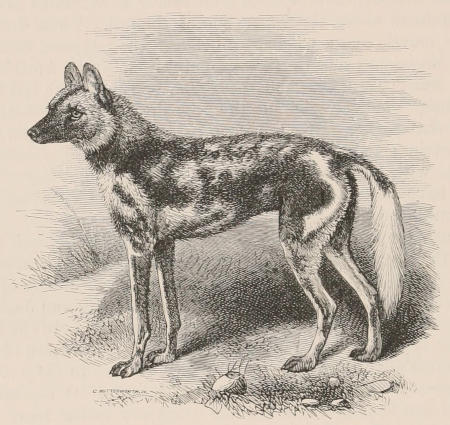
Fig. 253.—The Cape Hunting Dog (Lycaon pictus).
Otocyon.[477]—Dentition: i ³⁄₃, c ¹⁄₁, p ⁴⁄₄, m ³⁻⁴⁄₄; total 46 or 48. The molar teeth are thus in excess of any other living heterodont mammal. They have the same general characters as in Canis, with very pointed cusps. The lower carnassial shows little of its typical characters, having five cusps on the surface; these can, however, be identified as the inner cusp, the two greatly reduced and obliquely placed lobes of the blade, and two cusps on the talon. The skull generally resembles that of the smaller Foxes, particularly the Fennecs. The auditory bullæ are very large. The hinder edge of the mandible has a very peculiar form, owing to the great development of an expanded, compressed, and somewhat inverted subangular process. Vertebræ: C 7, D 13, L 7, S 3, C 22. Ears very large. Limbs rather long. Toes 5-4. One species, O. megalotis, from South Africa, rather smaller than a common Fox.
Professor Huxley looks upon this as the least differentiated or most primitive existing form of the family, regarding the presence of the four molar teeth as a survival of a condition of the dentition exhibited by the common ancestors of the existing Canidæ and the existing carnivorous Marsupials. There is, however, at present no palæontological proof of this, as none of the numerous fossil forms of Canidæ yet discovered have more than the normal number of molars.
Extinct Genera.—A large number of fossil Carnivora have been described from various Tertiary deposits which are more or less closely allied to the existing Canidæ, although, as already mentioned, connecting the latter so closely on the one hand with the Viverridæ and on the other hand with the Ursidæ, that it is almost, if not quite impossible to say where one family begins and the other ends. A few only of the more important of these annectant types will be mentioned here. Temnocyon, of the Miocene of the United States, is a true Dog, which agrees with Icticyon in having a secant hind talon to the lower carnassial, but preserves a generalised character in having an entepicondylar foramen to the humerus. An extremely interesting form is Cynodictis, of the Middle Tertiaries of Europe and the United States, which (as now restricted by Dr. Schlosser) includes a number of species mostly not larger than Foxes. The dental formula is generally the same as in Canis, but (as in that genus) the last lower molar may be absent. The teeth are very like those of Viverridæ, the lower carnassial never being greatly elongated antero-posteriorly, and its inner cusp being situated immediately on the inner side of the hinder lobe of the blade, instead of somewhat behind it, as is the case in most Dogs. In the skull the auditory bulla is inflated, but is said to have no distinct septum; while the humerus invariably has an entepicondylar foramen. It is suggested that Cynodictis is not far removed from the ancestral type of many of the Viverroids and Canoids, and may itself have been derived from the under-mentioned genus Amphicyon. M. Boule considers, indeed, that from the resemblance of the Pliocene Canis megamastoides (p. 553) to Cynodictis we ought to regard the Foxes and Jackals as the descendants of Cynodictis, while the Wolves have been derived directly from Amphicyon. The last named genus, which includes some species as large as a Bear, is found in the Upper Eocene and Lower Miocene of Europe, and is represented in the Miocene of the United States by the allied Daphœnus. It is characterised by the presence of three upper molars—thus bringing up the dental formula to the full Eutherian number; by the five digits on all the feet, which were plantigrade; and by the presence of a third trochanter to the femur and an entepicondylar foramen to the humerus. The teeth are essentially those of a dog, and the base of the skull is also dog-like, although it is highly probable that the auditory bulla had no trace of a septum. According, however, to Dr. Filhol[478] the minute foramina described by Professor Cope[479] in the postparietal and mastoid which occur in Ursus, but are said to be absent in Canis, are present in Amphicyon. So far, however, as we can see, the presence or absence of those foramina cannot be regarded as diagnostic of Ursus and Canis, although they are generally more strongly developed in the former. Amphicyon may, indeed, be considered as a very generalised Dog, with affinities to the Bears in the structure of its limbs. Dinocyon is a still larger form, from the Middle Miocene of France, which, so far as its teeth are concerned, connects Amphicyon with the Ursoid genus Hyænarctus so closely as to render it absolutely impossible to indicate any characters of family importance by which they can be distinguished. The upper carnassial of Dinocyon is unknown. For other genera, see p. 562.
Section Arctoidea.
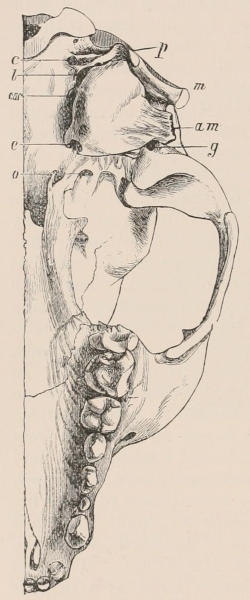
Fig. 254.—Right half of the palatal aspect of the cranium of the Raccoon (Procyon lotor). Letters as in Fig. 8, p. 38. (From the Proc. Zool. Soc. 1869, p. 10.)
This section includes a considerable number of forms which agree in the essential characteristics of the structures of the base of the cranium and reproductive organs, and in the absence of a cæcum to the intestinal canal. They have no Cowper’s glands, but there is a rudimentary prostate and a large cylindrical penial bone; while all the members of the group have five completely developed toes on each foot. Considerable diversity is found in the characters of the base of the skull in the various forms, but the following features are common to all. The cavity of the auditory bulla is simple, and has no trace of a dividing septum; the inferior lip of the auditory meatus (am, Fig. 254) is considerably prolonged; the paroccipital process (p) of the exoccipital is more or less triangular, directed backwards, outwards, and downwards, and standing quite apart from the bulla; the mastoid process (m) of the periotic is always widely separated from the paroccipital, and generally very prominent; the carotid foramen (car) is large, and placed on the inner margin of the bulla, usually near the middle, but occasionally more posteriorly; the condyloid foramen is distinct and exposed, and never sunk into a common opening with the foramen lacerum posticum; and the glenoid foramen is always present, and usually conspicuous. The alisphenoid canal is absent except in Ursus, Melursus, and Ælurus.
It has been already observed (p. 501) that the evidence of fossil forms, so far as it goes, is not in favour of the Arctoidea being a natural group; so that its retention must be regarded as a somewhat provisional measure, largely based on its convenience. The group may be divided into the three families, Ursidæ, Procyonidæ, and Mustelidæ.[480]
Family Ursidæ.
In existing forms the true molars ²⁄₃, with broad, flat tuberculated crowns. Typically the three anterior premolars of both jaws rudimentary and often deciduous. Fourth upper premolar (carnassial) with no third or inner root. An alisphenoid canal (except in Æluropus). Skull with the auditory bulla depressed, and scarcely at all inflated. Feet plantigrade. No entepicondylar foramen to the humerus. Kidneys conglomerate. Geographical distribution extensive.
Ursus.[481]—Dentition: i ³⁄₃, c ¹⁄₁, p ⁴⁄₄, m ²⁄₃; total 42. The three anterior premolars above and below one-rooted, rudimentary, and frequently wanting. Usually the first (placed close to the canine) is present, and after a considerable interval the third, which is situated close to the other teeth of the molar series. The second is very rarely present in the adult state. The fourth (upper carnassial) differs essentially from the corresponding tooth of other Carnivores in wanting the inner tubercle supported by a distinct root. Its sectorial characters are very slightly marked, and it is much smaller than the first molar. The crowns of both the true molars are longer than broad, with flattened, tuberculated, grinding surfaces. The second has a large backward prolongation or heel. The lower carnassial has a small and indistinct blade and greatly developed tubercular heel. The second molar is of about the same length, but with a broader and more flattened tubercular crown. The third is smaller. The milk-teeth are comparatively small, and shed at an early age. Skull more or less elongated. Orbits small and incomplete behind. Palate prolonged considerably behind the last molar tooth. Vertebræ: C 7, D 14, L 6, S 5, C 8-10. Body heavy. Feet broad, completely plantigrade; the five toes on each foot all well developed, and armed with long compressed and moderately curved non-retractile claws. Palms and soles naked. Tail very short. Ears moderate, erect, rounded, hairy. Fur generally long, soft, and shaggy.
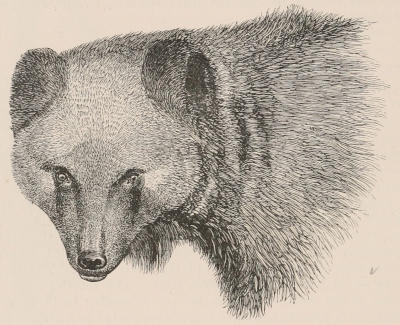
Fig. 255.—Head of the Brown Bear (Ursus arctos). From Sclater, Proc. Zool. Soc. 1867, p. 817.
The Bears are all animals of considerable bulk, and include among them the largest members of the order. Though the species are not numerous, they are widely spread over the earth’s surface (but absent from the Ethiopian and Australian regions, and only represented by one species in the Neotropical region), and differ much among themselves in their food and manner of life. They are mostly omnivorous or vegetable feeders, and even the Polar Bear, usually purely carnivorous or piscivorous, devours grass with avidity in summer. The various species maybe arranged in the following groups:—
Thalassarctine Group.—Head comparatively small, molar teeth small and narrow. Soles more covered with hair than in the others. This group is represented only by the well-known Polar or White Bear (U. maritimus) of the Arctic regions, which is one of the few mammals which are completely white at all seasons of the year.
The typical, or Ursine, group includes a number of species, of which the Common Brown Bear (U. arctos) is the best known example. This species is an exceedingly variable one, and has a very wide range in the Palæarctic region; the Syrian form described as U. syriacus, as well as the Hairy-eared Bear (U. piscator, Fig. 255) of North-Eastern Asia, and the Snow-Bear (U. isabellinus) of Kashmir and Nipal, not being specifically separable. The Brown Bear hibernates in cold regions, and in the Himalaya keeps to comparatively high regions, emerging from its winter lair in March, April, or May, according to the season and elevation, to feed on the numerous bulbous plants which abound in the regions it inhabits. Both the Syrian and Himalayan varieties are generally of lighter colour and smaller size than the typical European form. Bears were at one time found in the British Isles, from which, however, they have been long since exterminated. They are still found in the Pyrenees, and are comparatively abundant in parts of Norway, Hungary, and Russia. In the Kashmir Himalaya they were very abundant in some districts a few years ago, one of the present writers having in 1874 seen no less than seven examples at one time from the top of a mountain ridge; of late years their numbers have, however, been greatly diminished. The Brown Bear, although with strong powers of smelling, is very slow of sight and hearing, and in the Himalaya it is easy to approach so near that they may be shot with a smooth-bore gun. The Grizzly Bear (U. horribilis) of North America is so closely allied to the Brown Bear that some writers think it should only rank as a very well-marked local variety. The Black Bears of the Himalaya (U. torquatus), Japan (U. japonicus), and North America (U. americanus) belong to this group. The Himalayan species ranges from Persia to Assam, and thence to China and Formosa. In the greater part of this area it is essentially a forest animal, and may be found in autumn in the forests of the Kashmir valley feeding upon chestnuts and other fruits. It is also exceedingly fond of maize, mulberries, and walnuts; and a few years ago it was no very uncommon sight to see three or even five of these bears up a single mulberry or walnut tree in Kashmir. The Spectacled Bear (U. ornatus) of the Peruvian Andes is another member of this group.
The Helarctine group is represented only by the Malay Bear or Sun Bear (U. malayanus), in which the head is short and broad; the molar teeth are comparatively broad (but the length still exceeding the breadth), the tongue is very long and extensile, and the fur short and smooth. This small species inhabits the Malay Peninsula, Sumatra, Java, Borneo, Tenasserim, Arakan, Chittagong, and the Garo hills of India; it inhabits forest districts, and is an expert climber.
The earliest known occurrence of the genus is in the Lower Pliocene of the Indian Siwalik Hills; where it is represented by U. theobaldi, which was probably the ancestor of the existing Melursus. The genus is represented in the Upper Pliocene of Europe by the small U. etruscus; and in the Pleistocene by the existing U. arctos, as well as by the great extinct Cave-Bear (U. spelæus), distinguished by the complexity of the crowns of the molars and the total loss of the three anterior premolars in the adult condition. Remains of Bears are also found in cavern-deposits in the north of Africa. The small U. namadicus, from the Pleistocene of the Narbada valley, India, may have been allied to U. malayanus.
Melursus.[482]—This differs from the true Bears in the first upper incisor being absent or shed at a very early age, in the very small size of the other teeth, in the very large extensile lips, the deep concavity of the palate, and other minor characters. The one species, M. labiatus, the well-known Sloth-Bear of India, feeds chiefly on black ants, termites, beetles, fruit, honey, etc. This species inhabits peninsular India, from near the Himalaya to Cape Comorin and Ceylon, and its remains are found in the cavern-deposits of Madras. The black hair is very long and coarse; there is a light horse-shoe-shaped mark on the chest (as in Ursus torquatus), and the extremity of the muzzle is of an ashy gray.
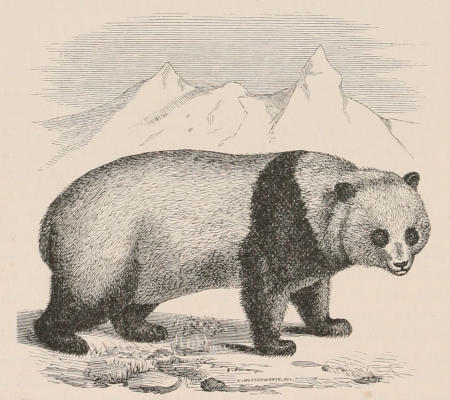
Fig. 256.—Æluropus melanoleucus. (From Milne-Edwards.)
Æluropus.[483]—Dentition: i ³⁄₃, c ¹⁄₁, p ⁴⁄₃, m ²⁄₃; total 40. Premolars large, increasing in size from first to last, and two-rooted except the first. First upper molar with quadrate crown, broader than long; second larger than the first. Cranium with zygomatic arches and sagittal crest immensely developed, and ascending ramus of mandible very high, giving greater spaces for attachments of temporal muscle than in any other existing member of the order. Facial portion short. Bony palate not extending behind the last molar tooth. No alisphenoid canal. Feet bear-like, but soles more hairy, and perhaps less completely plantigrade. Fur long and thick. Tail very short. One extremely rare species, A. melanoleucus (Fig. 256), discovered by Père David in 1869, in the most inaccessible mountains of Moupin in Eastern Tibet. Said to feed principally on roots, bamboos, and other vegetables. It is of the size of a small Brown Bear, of a white colour, with ears, spots round the eyes, shoulders and limbs black. In the large size and complex crowns of the upper premolars this genus differs very markedly from the true Bears. The fourth upper premolar (carnassial) makes no approach to the markedly sectorial type presented by the corresponding tooth of Hyænarctus, its structure being, on the whole, more like that of Ælurus.
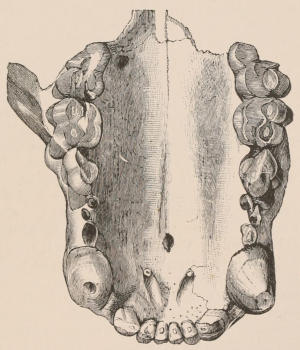
Fig. 257.—Palate of Arctotherium bonariense, Pleistocene, South America—¼ natural size. (From the Palæontologia Indica.)
Extinct Genera.—The genus Arctotherium includes some very large Bear-like animals from the Pleistocene of South America and California, in which the dentition departs less widely from a normal carnivorous type than in the true Bears. Thus the upper carnassial (Fig. 257) is relatively larger than in Ursus; while the crowns of the upper molars are broader and shorter. The humerus is said to have an entepicondylar foramen. Hyænarctus, of the Miocene and Pliocene of Europe and Southern Asia, has the crowns of the upper molars either square or triangular; the upper carnassial having three distinct lobes to the blade, while the lower carnassial is practically indistinguishable from that of the Dog-like Dinocyon (p. 556). The proximal extremity of the ulna differs from that of Ursus in having a long olecranon, and thereby resembles the corresponding bone of the Dogs. Indeed all the characters at present available tend to show a complete passage from the Tertiary Dog-like animals, through Dinocyon, Hyænarctus, and Arctotherium, to the true Bears. Most of the species of Hyænarctus were of very large dimensions, but smaller forms occur in the Miocene. Cephalogale, of the Continental Tertiaries, is a genus represented by several species of medium size showing evident signs of affinity with Hyænarctus. The upper molars have subtriangular crowns, while the carnassial is short, and has two comparatively low lobes. Here also may be mentioned several other genera, apparently more or less closely allied to the present group, some of which are regarded by Dr. Schlosser as showing marked signs of affinity to the Procyonidæ. Among these are Simocyon from the Pliocene of Europe, with p ²⁄₂₋₄, m ²⁄₂; and Enhydrocyon of the North American Miocene, with p ³⁄₃, m ²⁄₂, a secant talon to the lower carnassial, and a very short skull. The Miocene Ælurodon comprises several large North American forms, having a trilobed upper carnassial like that of Hyænarctus, and a dental formula similar to that of the latter and Canis Prohyæna is founded upon a much-worn jaw of Ælurodon. Hyænocyon, of the Miocene of the United States, with p ³⁄₃, m ¹⁄₂, appears to be an allied form, also having a trilobed upper carnassial.
Family Procyonidæ.
True molars ²⁄₂, tuberculated or multicuspid; upper carnassial short and broad. Alisphenoid canal absent, except in Ælurus. Feet plantigrade. Tail generally annulated. In some cases an entepicondylar foramen to the humerus. Typically American, but with the outlying Oriental genus Ælurus.
Ælurus.[484]—Dentition: i ³⁄₃, c ¹⁄₁, p ³⁄₄, m ²⁄₂; total 38. First lower premolar very minute and deciduous. Molars (Fig. 259) remarkable for their great transverse breadth and the numerous cusps of their crowns. Vertebræ: C 7, D 14, L 6, S 3, C 18. Skull (Fig. 259) high and compressed, very convex, with the facial portion short, the palate convex antero-posteriorly, and the ascending ramus of mandible extremely high. Head round. Face short and broad. Ears large, erect, pointed. Limbs stout, with large sharp semiretractile claws. Tail nearly as long as body, cylindrical, annulated, and clothed with long hairs. Fur long and thick. One existing species, Æ. fulgens, the Panda (Fig. 258), an animal rather larger than a Cat, found in the South-East Himalaya, at heights of from 7,000 to 12,000 feet above the sea, among rocks and trees, and chiefly feeding on fruits and other vegetable substances. Its fur is of a remarkably rich reddish-brown colour, darker below.
The genus Ælurus has been made the type of a distinct family, but its relationship to the Raccoons is regarded by Mr. W. T. Blanford[485] as sufficiently close to admit of its being included in the same family. According to this zoölogist the Panda often sleeps coiled up like a Cat, with the bushy tail over its head, but at other times resting on its legs with the head tucked under the chest and between the fore legs, after a manner said to be common with the Raccoons. Although by no means strictly nocturnal, these animals sleep much during the day, and roam out in search of food in the morning and evening. The young are born in a very helpless condition, and remain for a long period concealed in the holes of trees or rocks.
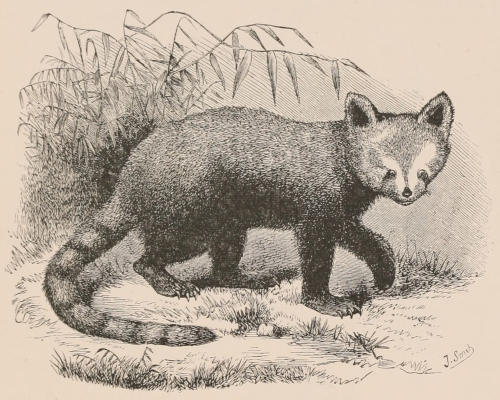
Fig. 258.—The Panda (Ælurus fulgens). The dark nasal stripe shown in this figure is generally absent. (From Sclater, Proc. Zool. Soc. 1869, p. 408.)
Fossil remains of a species of Ælurus (Æ. anglicus) have been obtained from the English Pliocene Crag deposits which indicate an animal of about one and half times the size of Æ. fulgens. The first evidence of this fossil species was afforded by part of the mandible with the last molar in place, and the subsequent discovery of an entire first upper molar renders full confirmation of the generic determination. This distribution of Ælurus is very important, as showing how its area may have once approximated to that of the ancestors of the American representatives of the family. It is probable that the genus existed in India during the Siwalik period.
The whole of the under-mentioned genera are American, and are characterised by the absence of an alisphenoid canal in the skull.
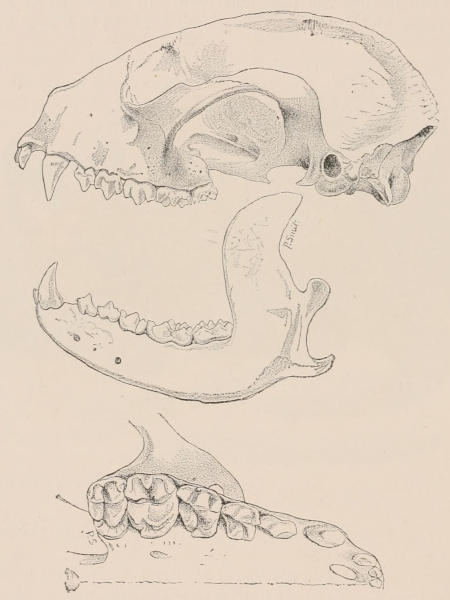
Fig. 259.—Lateral view of skull and right half of palate of Ælurus fulgens. (From Blanford, Mammalia of British India, p. 190.)
Procyon.[486]—Dentition: i ³⁄₃, c ¹⁄₁, p ⁴⁄₄, m ²⁄₂; total 40. The molar teeth broad and tuberculated (Fig. 259). The upper carnassial with three cusps along the outer margin, and a very broad bicuspid inner tubercle, giving an almost quadrate form to the crown. First molar with a large tuberculated crown, rather broader than long; second considerably smaller, with transversely oblong crown. Lower carnassial with an extremely small and ill-defined blade, placed transversely in front, and a large inner cusp and hind talon. Second molar as long as the first, but narrower behind, with five obtuse cusps. Vertebræ: C 7, D 14, L 6, S 3, C 16-20. Body stout. Head broad behind, but with a pointed muzzle. Limbs plantigrade, but in walking the entire sole is not applied to the ground as it is when the animal is standing. Toes, especially of the fore foot, very free, and capable of being spread wide apart. Claws compressed, curved, pointed, and non-retractile. Tail moderately long, cylindrical, thickly covered with hair, annulated, non-prehensile. Fur long, thick, and soft. The well-known Raccoon[487] (Procyon lotor, Fig. 260) of North America is the type of this genus. It is a clumsy thickly-built animal about the size of a Badger, with a coat of long coarse grayish-brown hairs, short ears, and a bushy black and white ringed tail. Its range extends over the whole of the United States, and stretches on the west northwards to Alaska and southwards into Central America, where it attains its maximum size. The following notes on the habits of the Raccoon are taken from Dr. C. H. Merriam’s Mammals of the Adirondack Region:—
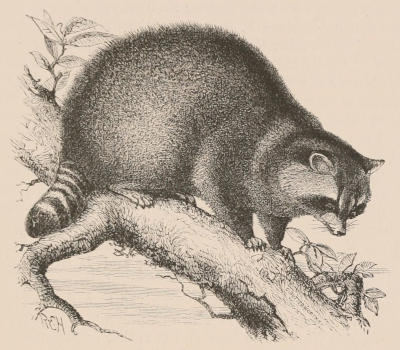
Fig. 260.—The Raccoon (Procyon lotor).
“Raccoons are omnivorous beasts, and feed upon mice, small birds, birds’ eggs, turtles and their eggs, frogs, fish, crayfish, molluscs, insects, nuts, fruits, maize, and sometimes poultry. Excepting the bats and flying squirrels, they are the most strictly nocturnal of all our mammals, and yet I have several times seen them abroad on cloudy days. They haunt the banks of ponds and streams, and find much of their food in these places, such as crayfish, mussels, and fish, although they are unable to dive and pursue the latter under water, like the otter and mink. They are good swimmers, and do not hesitate to cross rivers that lie in their path.... The Raccoon hibernates during the severest part of the winter, retiring to its nest rather early, and appearing again in February or March, according to the earliness or lateness of the season. It makes its home high up in the hollow of some large tree, preferring a dead limb to the trunk itself. It does little in the way of constructing a nest, and from four to six young are commonly born at a time, generally early in April in this region. The young remain with the mother about a year.”
The South-American P. cancrivorus, the Crab-eating Raccoon, is very similar to P. lotor, but differs by its much shorter fur, larger size, proportionally more powerful teeth, and other minor characters. It extends over the whole of South America, as far south as the Rio Negro, and is very common in all suitable localities. Its habits are similar to those of the North-American species. Fossil remains of Procyon have been described from the Pleistocene deposits of the United States.
Bassaris.[488]—A form closely allied to Procyon, but of more slender and elegant proportions, with a sharper nose, longer tail, and more digitigrade feet, and with teeth otherwise like, but smaller, and more sharply denticulated. It was formerly, but erroneously, placed among the Viverridæ. Two species:—B. astuta, from the southern parts of the United States and Mexico, and B. sumichrasti, from Central America.
Bassaricyon.[489]—This name has been given to a distinct modification of the Procyonine type of which at present only two examples are known, one from Costa Rica and the other from Ecuador, which, appearing to be different species, have been named B. gabbi and B. alleni. They much resemble the Kinkajou (Cercoleptes) in external appearance, but the skull and teeth are more like those of Procyon and Nasua.
Nasua.[490]—Dentition as in Procyon, but the upper canines are larger and more strongly compressed, and the molars smaller. The facial portion of the skull is more elongated and narrow. Vertebræ: C 7, D 14, L 6, S 3, C 22-23. Body elongated and rather compressed. Nose prolonged into a somewhat upturned, obliquely truncated, mobile snout. Tail long, non-prehensile, tapering, annulated. These animals, commonly called Coatis or Coati-Mundis, live in small troops of eight to twenty, are chiefly arboreal, and feed on fruits, young birds, eggs, insects, etc. Recent researches have reduced the number of supposed species to two, N. narica of Mexico and Central America, and N. rufa of South America from Surinam to Paraguay. Remains of this genus, mostly referable to the existing species, occur in the cavern-deposits of Brazil.
Cercoleptes.[491]—Dentition: i ³⁄₃, c ¹⁄₁, p ³⁄₃, m ²⁄₂; total 36. Molars with low flat crowns, very obscurely tuberculated. Skull short and rounded, with flat upper surface. Vertebræ: C 7, D 14, L 6, S 3, C 26-29. Clavicles present, but in a very rudimentary condition. Head broad and round. Ears short. Body long and musteline. Limbs short. Tail long, tapering, and prehensile. Fur short and soft. Tongue long and very extensile. But one species of this somewhat aberrant genus is known, C. caudivolvulus, the Kinkajou, found in the forests of the warmer parts of South and Central America. It is about the size of a Cat, of a uniform, pale, yellowish-brown colour, nocturnal and arboreal in its habits, feeding on fruit, honey, eggs, and small birds and mammals, and is of a tolerably gentle disposition and easily tamed.
Family Mustelidæ.
True molars ¹⁄₂ (or ¹⁄₁ in Mellivora[492]). No alisphenoid canal. In the upper molar the inner tubercular portion is always longer in the antero-posterior direction than the secant external portion; the degree of inflation of the auditory bulla is but slight; and the palate is generally much produced behind the last molars, as is the case with the members of the preceding family. The post-glenoid process of the cranium is generally considerably curved over the glenoid fossa, so as to hold very tightly the condyle of the mandible. The humerus may or may not have an entepicondylar foramen. Except in the Otters, the kidneys resemble those of the Procyonidæ in being of simple structure.
This family is a large and widely distributed one, especially in the northern temperate regions of the earth. The different genera, which are very difficult to arrange in any natural order, are rather artificially divided, chiefly according to the characters of their feet and claws, into the Otter-like (Lutrine), Badger-like (Meline), and Weasel-like (Musteline) forms.
Subfamily Lutrinæ.—Feet short, rounded (except the hind feet of Latax). Toes webbed. Claws small, curved, blunt. Head broad and much depressed. Upper molar large and quadrate, with its inner tubercular portion much expanded antero-posteriorly (Fig. 261). Kidneys conglomerate. Habits aquatic.
Lutra.[493]—Dentition: i ³⁄₃, c ¹⁄₁, p ⁴⁄₃, m ¹⁄₂; total 36. Upper carnassial with a trenchant tricuspid blade, and a very large inner lobe, hollowed on the free surface, with a raised sharp edge, and extending along two-thirds or more of the length of the blade. True molar large, with a quadricuspidate crown, broader than long. First upper premolar very small, and in some cases absent (Fig. 261). Skull broad and depressed, contracted immediately behind the orbits. Facial portion very short; brain case large. Vertebræ: C 7, D 14-15, L 6-5, S 3, C 20-26. Body very long. Ears short and rounded. Limbs short. Feet more or less completely webbed; claws usually well developed on all the toes, although they may be rudimentary or absent. Tail long, thick at the base and tapering, rather depressed. Fur short and close. The humerus may or may not have an entepicondylar foramen. In conformity with the shape of the skull, the posterior part of the brain is expanded laterally.
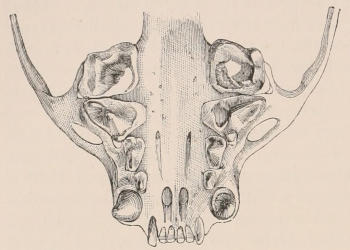
Fig. 261.—Palate of Lutra cinerea. (From the Palæontologia Indica.)
The Common British Otter (L. vulgaris), as the type of the genus, may be described somewhat fully. It has an elongated, low body, short limbs, short broad feet, with five toes on each, connected together by webs, and all with short, moderately strong, compressed, curved, pointed claws. Head rather small, broad, and flat; muzzle very broad; whiskers thick and strong; eyes small and black; ears short and rounded. Tail a little more than half the length of the body and head together, very broad and strong at the base, and gradually tapering to the end, somewhat flattened horizontally. The fur is of very fine quality, consisting of a short soft under fur of a whitish-gray colour, brown at the tips, interspersed with longer, stiffer, and thicker hairs, very shining, grayish at the base, bright rich brown at the points, especially on the upper parts and outer surface of the legs; the throat, cheeks, under parts and inner surface of the legs brownish-gray throughout. Individual Otters vary much in size; but the total length from the nose to the end of the tail averages about 3½ feet, of which the tail occupies 1 foot 3 or 4 inches. The weight of a full-sized male is from 18 to 24 lbs., that of a female about 4 lbs. less.
As the Otter lives almost exclusively on fish, it is rarely met with far from water, and usually frequents the shores of brooks, rivers, lakes, and, in some localities, the sea itself. It is a most expert swimmer and diver, easily overtaking and seizing fish in the water, but when it has captured its prey it brings it to shore to devour it. When lying upon the bank it holds the fish between its forepaws, commences at the head, and then eats gradually towards the tail, which it is said always to leave. The female produces three to five young ones at a time, in the month of March or April, and brings them up in a nest formed of grass or other herbage, usually placed in a hollow place in the bank of a river, or under the shelter of the roots of some overhanging tree. The Common Otter is found in localities suitable to its habits throughout Great Britain and Ireland, though far less abundantly than formerly, for, being very destructive to fish, and thus coming into keen competition with those who pursue the occupation of fishing either for sport or for gain, it is rarely allowed to live in peace when once its haunts are discovered. Otter-hunting with packs of hounds of a special breed, and trained for the purpose, was formerly a common pastime in the country. When hunted down and brought to bay by the dogs, the Otter is finally despatched by long spears carried for the purpose by the huntsmen.
The Common Otter ranges throughout the greater part of Europe and Asia, the Indian L. nair not being distinct. A closely allied but larger species, L. canadensis, is extensively distributed throughout North America, where it is systematically pursued by professional trappers for the value of its fur. The Common Otter is regularly trained by the natives of some parts of Bengal to assist them in fishing, by driving the fish into the nets. In China Otters are taught to catch fish, being let into the water for the purpose attached to a long cord.
Otters are widely distributed over the earth, and, as they are much alike in size and coloration, their specific distinctions are by no means well defined.[494] Besides those mentioned above, the following may be noticed. In the Oriental region there are L. ellioti[495] of India, L. sumatrana of the Malay countries, and L. cinerea ranging over the greater part of the region. The latter species (often known as L. leptonyx) is of small size, with a short head, and rudimentary claws, which may be absent; it was at one time regarded as generically distinct, under the name of Aonyx. The upper true molar (Fig. 261) is characterised by the great development of its inner tubercular portion, and the first upper premolar is absent. In the Ethiopian region there are two species, L. capensis and L. maculicollis. Of the Neotropical forms it will suffice to mention the small L. felina and the large L. brasiliensis. The latter is by far the largest of the existing forms, and is characterised by the presence of a prominent flange-like ridge along each lateral margin of the tail, on which account it was referred by Dr. Gray to a distinct genus, with the name of Pteronura sambachi. It should be observed that all Otters have a very distinct inner cusp to the blade of the lower carnassial, but that the relative size of this cusp varies in the different species.
Extinct Otters.—Several species of fossil Otters have been described. Thus in the Indian Siwaliks we have L. palæindica, which is closely allied to L. sumatrana, and a larger form described as L. bathygnathus. The Pliocene of Hessen-Darmstadt yields L. hessica; while L. dubia, of the Middle Miocene of France, is a species characterised by the small size of the inner cusp of the lower carnassial—a character in which it resembles those Tertiary forms described as Trochictis, which are believed to connect Lutra with the Mustelinæ. Two very large Otters, respectively from the Indian Siwaliks and the Italian Miocene, named L. sivalensis and L. campanii, may be regarded either as representing a very distinct Enhydriodont group of Lutra or as referable to a separate genus Enhydriodon. They are characterised by certain peculiarities in the structure of the teeth, and the second upper premolar may be absent in the Indian form. Lastly, the genus Potamotherium contains a small Otter (P. valetoni) from the Lower Miocene of the Continent, which differs from all other known Mustelidæ in having a minute second upper true molar. This species is evidently a very generalised form approximating to the Viverridæ in its dental formula, and also in the characters of the teeth themselves. The brain, as recently described by Dr. Filhol, differs from that of Lutra and other Mustelines in the great relative width of the anterior extremity of the hemispheres and olfactory lobes, and also in the disposition of the sulci, in both of which respects it more nearly resembles the Viverridæ.
Latax.[496]—Dentition: i ³⁄₂, c ¹⁄₁, p ³⁄₃, m ¹⁄₂; total 32. Differs from all other existing Carnivora in having but two incisors on each side of the lower jaw, the one corresponding to the first (very small in the true Otters) being constantly absent. Though the molar teeth generally resemble those of Lutra in their proportions, they differ very much in the exceeding roundness and massiveness of their crowns and bluntness of their cusps. Feet webbed. Fore feet small, with five subequal toes, furnished with short compressed claws; palms naked. Hind feet very large, depressed, and fin-like. The phalanges flattened as in the Seals. The fifth toe the longest and stoutest, the rest gradually diminishing in size to the first, all with moderate claws. Tail moderate, cylindrical, and obtuse; about one-fourth the length of the head and body.
The Sea-Otter (L. lutris, Fig. 262) is the sole representative of this genus. The entire length of the animal from nose to end of tail is about 4 feet, so that the body is considerably larger and more massive than that of the English Otter. The skin is peculiarly loose, and stretches when removed from the animal so as to give the idea of a still larger creature than it really is. The pellage is remarkable for the preponderance of the beautifully soft woolly under fur, the longer stiffer hairs being very scanty. The general colour is a deep liver brown, everywhere silvered or frosted with the hoary tips of the longer hairs. These are, however, removed when the skin is dressed for commercial purposes.
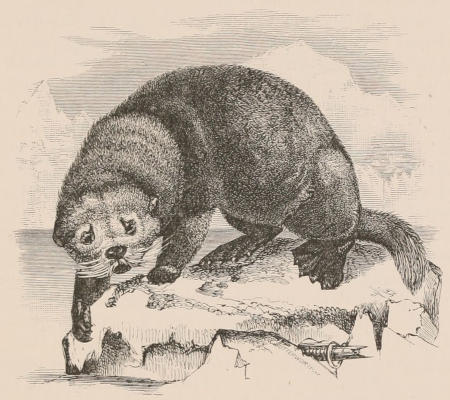
Fig. 262.—The Sea-Otter (Latax lutris). From Wolf, Proc. Zool. Soc. 1865, pl, vii.
Sea-Otters are only found upon the rocky shores of certain parts of the North Pacific Ocean, especially the Aleutian Islands and Alaska, extending as far south on the American coast as Oregon; but, owing to the unremitting persecution to which they are subjected for the sake of their skins, which rank among the most valuable known to the furrier, their numbers are greatly diminishing, and, unless some restriction can be placed upon their destruction, such as that which protects the Fur-Seals of the Pribyloff Islands, the species is threatened with extermination, or, at all events, excessive scarcity. When this occurs, the occupation of five thousand of the half-civilised natives of Alaska, who are dependent upon Sea-Otter hunting as a means for obtaining their living, will be gone. The principal hunting grounds at present are the little rocky islets and reefs around the island of Saanach and the Chernobours, where they are captured by spearing, clubbing, or nets, and recently by the more destructive rifle bullet. They do not feed on fish, like the true Otters, but on clams, mussels, sea-urchins, and crabs, for the mastication of which the blunt cusps of their teeth are admirably suited. The female brings forth but a single young one at a time, apparently at any season of the year. They are excessively shy and wary, and all attempts to rear the young ones in captivity have hitherto failed.
Subfamily Melinæ.—Feet elongated. Toes straight. Claws non-retractile, slightly curved, subcompressed, blunt; those of the fore foot especially large. Upper molar variable. Kidneys simple. Habits mostly terrestrial and fossorial.
Mephitis.[497]—Dentition: i ³⁄₃, c ¹⁄₁, p ³⁄₃, m ¹⁄₂; total 34. Upper molar larger than the carnassial, subquadrate, rather broader than long. Lower carnassial with talon less than half the length of the whole tooth. Bony palate terminating posteriorly opposite the hinder border of the last molar tooth. Facial portion of skull short and somewhat truncated in front. Vertebræ: C 7, D 16, L 6, S 2, C 21. Head small. Body elongated. Limbs moderate, subplantigrade. Ears short and rounded. Tail long, abundantly clothed with very long fine hair. Anal glands largely developed. The secretion of these glands, which can be discharged at the will of the animal, has an intolerably offensive odour, which circumstance has rendered the Skunks, as they are commonly called, proverbial. They are strictly nocturnal animals, terrestrial and burrowing, feeding chiefly on small mammals, birds, reptiles, insects, worms, roots, and berries. All the known species have a prevalent black colour, varied by white strips or spots on the upper part (Fig. 263). They generally carry the body, much arched, and the tail erect, the long loose hair of which waves like a plume over the back. There are three species, all inhabitants of the American continent, over which they have an extensive range.
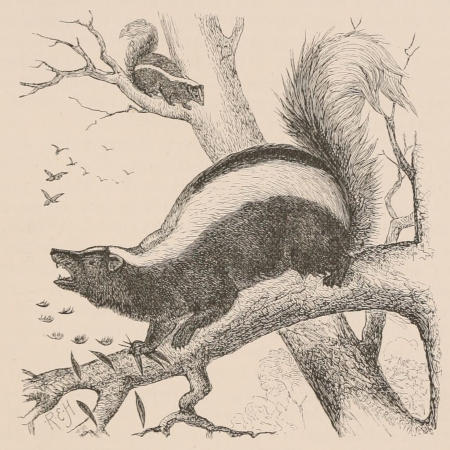
Fig. 263.—The Common Skunk (Mephitis mephitica).
The Common Skunk (M. mephitica, Fig. 263) is an animal of about the size of a small Cat, ranging from Hudson’s Bay to Guatemala. The following account of its habits is given by Dr. C. H. Merriam in his Mammals of the Adirondack Region:—
“The skunk preys upon mice, salamanders, frogs, and the eggs of birds that nest on or within reach from the ground. At times he eats carrion, and if he chances to stumble upon a hen’s nest the eggs are liable to suffer; and once in a while he acquires the evil habit of robbing the hen-roost, but as a rule skunks are not addicted to this vice. Of all our native mammals perhaps no one is so universally abused and has so many unpleasant things said about it as the innocent subject of the present biography; and yet no other species is so valuable to the farmer. Pre-eminently an insect-eater, he destroys more beetles, grasshoppers, and the like than all our other mammals together, and in addition to these he devours vast numbers of mice. He does not evince that dread of man that is so manifest in the great majority of our mammals, and when met during any of his circumambulations rarely thinks of running away. He is slow in movement and deliberate in action, and does not often hurry himself in whatever he does. His ordinary gait is a measured walk, but when pressed for time he breaks into a low shuffling gallop. It is hard to intimidate a skunk, but when once really frightened he manages to get over the ground at a very fair pace. Skunks remain active throughout the greater part of the year in this region, and hibernate only during the severest portion of the winter. They differ from most of our hibernating mammals in that the inactive period is apparently dependent solely on the temperature, while the mere amount of snow has no influence whatever upon their movements. Skunks, particularly when young, make very pretty pets, being attractive in appearance, gentle in disposition, interesting in manners, and cleanly in habits—rare qualities indeed! They are playful, sometimes mischievous, and manifest considerable affection for those who have the care of them. Their flesh is white, tender, and sweet, and is delicious eating. Skunks have large families, from six to ten young being commonly raised each season; and as a rule they all live in the same hole until the following spring.”
The two ducts leading from the anal glands open at the tips of two small conical papillæ placed in such a position that the animal can protrude them externally, and can thus guide the direction of the jet of nauseous fluid, which can be propelled by the powerful muscles surrounding the glands to a distance of from 8 to 12 feet.
The Long-tailed Skunk (M. macrura), from Central and Southern Mexico, has two lateral stripes, and a longer and more bushy tail than the common species. M. putorius, of the Southern United States and thence southwards to Yucatan and Guatemala, is of a much smaller size, with four interrupted white lateral stripes, and a skull differing considerably in form from that of the type species. It is regarded by some writers as representing a distinct genus, Spilogale; and has been recently divided by Dr. C. H. Merriam into several nominal species.
Conepatus.[498]—The Skunk of tropical America (C. mapacito), ranging from Texas to Chili and Patagonia, differs considerably from the true Skunks, although in colour it is almost precisely similar to the common species, with which it also agrees in the variation of the relative development of the black and white. Its build is heavier than that of Mephitis; the snout and head are more Pig-like; and the nostrils open downwards and forwards instead of laterally on the sides of the muzzle. The skull also has many special characters, and the teeth are different in shape and, as, a rule, in number also, the first minute premolar of Mephitis being almost invariably absent, so that the dental formula is i ³⁄₃, c ¹⁄₁, p ²⁄₃, m ¹⁄₂; total 32.
Remains of Conepatus, which have been referred to three species, are found in the cavern-deposits of Brazil.
Arctonyx.[499]—Dentition: i ³⁄₃, c ¹⁄₁, p ⁴⁄₄, m ¹⁄₂; total 38. Incisor line curved, the outer teeth being placed posteriorly to the others. Lower incisors proclivous. First premolars often rudimentary or absent. Upper molar much larger than the carnassial, longer in the antero-posterior direction than broad; lower carnassial with a very large, low, tuberculated talon. Cranium elongated and depressed; face long, narrow, and concave above. Bony palate extending as far backwards as the level of the glenoid fossa; palatal bones dilated; suborbital foramina very large. Vertebræ: C 7, D 16, L 4, S 4, C 20. Snout long, naked, mobile, and truncated, with large terminal nostrils, much like that of a Pig. Eyes small. Ears very small and rounded. Body compressed rather than depressed. Limbs of moderate length and digitigrade in walking. Tail moderate, tapering. A full soft under fur, with longer, bristly hairs interspersed. The best-known species is A. collaris, the Sand-Badger, or Bhálu-soor[500] (i.e. Bear-pig) of the natives, found in the mountains of the north-east of India and Assam. It is rather larger than the English Badger, higher on its legs, and very Pig-like in general aspect, of a light gray colour, with flesh-coloured snout and feet; and is nocturnal and omnivorous in habits. The imperfectly known A. taxoides from Assam and Arakan, and perhaps China, is a much smaller species. A third form probably exists in Eastern Tibet. Professor Mivart remarks that the brain-case of Arctonyx is narrower than in any other Arctoid; while the palate is relatively longer than in any other Carnivore except Procyon; and the metatarsus is relatively shorter than in any other member of the order.
Mydaus.[501]—Dentition as in the last genus, but the cusps of the teeth more acutely pointed. Cranium elongated, face narrow and produced. Suborbital foramen small, and the palate, as in all the succeeding genera of this group, produced backwards about midway between the last molar tooth and the glenoid fossa. Vertebræ: C 7, D 14-15, L 6-5, S 3, C 12. Head pointed in front; snout produced, mobile, obliquely truncated, the nostrils being inferior. Limbs rather short and stout. Tail extremely short, but clothed with rather long bushy hair. Anal glands largely developed, and emitting an odour like that of the American Skunks. One species, M. meliceps, the Teledu, a small burrowing Badger, found in the mountains of Java at an elevation of 7000 or more feet above sea-level.
Meles.[502]—Dentition: i ³⁄₃, c ¹⁄₁, p ⁴⁄₄, m ¹⁄₂; total 38. The first premolar in both jaws extremely minute and often deciduous. Upper molar very much larger than the carnassial, subquadrate, as broad as long. Lower carnassial with a broad, low, tuberculated talon, more than half the length of the whole tooth. The post-glenoid processes of the skull are so strongly developed, and the glenoid fossa is so deep, that the condyle of the lower jaw is firmly held in its place even after all the surrounding soft parts are removed. Vertebræ: C 7, D 15, L 5, S 3, C 18. Muzzle pointed. Ears very short. Body stout, broad. Limbs short, strong, subplantigrade. Tail short. The best-known species is the common Badger (M. taxus) of Europe and Northern Asia, still found in many parts of England, where it lives in woods, is nocturnal, burrowing, and very omnivorous, feeding on mice, reptiles, insects, fruit, acorns, and roots. Other nearly allied species, M. leucurus and M. chinensis, are found in continental Asia, M. canescens in Persia, and M. anakuma in Japan.
The appearance of the common Badger is too well known to need description, but, it may be mentioned that a full-grown individual stands about a foot in height at the shoulder, and measures from 2½ to 3 feet in length. The young are born in a naked and blind condition, usually in litters of three or four. It appears that the usual period of gestation is about eleven and a half months, but instances are recorded where the period has been protracted to upwards of fifteen months.
Fossil remains of the common Badger are found in the Pleistocene deposits of Europe, while extinct species have been described from the Lower Pliocene beds of Maragha, in Persia.
Taxidea.[503]—Dental formula as in Meles, except that the rudimentary anterior premolar appears to be always wanting in the upper jaw. The upper carnassial much larger in proportion to the other teeth. Upper molar about the same size as the carnassial, triangular, with the apex turned backwards. Talon of lower carnassial less than half the length of the tooth. Skull very wide in the occipital region; the lambdoidal crest very greatly developed, and the sagittal but slightly, contrary to what obtains in Meles. Vertebræ: C 7, D 15, L 5, S 3, C 16. Body very stoutly built and depressed. Tail short. The animals of this genus are peculiar to North America, where they represent the Badgers of the Old World, resembling them much in appearance and habits. T. americana is the common American Badger of the United States; T. berlandieri, the Mexican Badger, is perhaps only a local variety.
Mellivora.[504]—Dentition: i ³⁄₃, c ¹⁄₁, p ³⁄₃, m ¹⁄₁; total 32. Upper carnassial large, with its inner tubercle quite at the anterior end of the blade, as in the following genera; molar much smaller and transversely extended, having a very small outer and a larger rounded inner lobe. Talon of lower carnassial very small, scarcely one-fourth of the whole length of the tooth, and with but one cusp; lower tubercular molar absent. Vertebræ: C 7, D 14, L 4, S 4, C 15. Body stout, depressed. Limbs short, strong. Head depressed, nose rather pointed. External ears rudimentary. Tail short. The animals of this genus are commonly called Ratels. M. indica from India, and, M. ratel (Fig. 264) from South and West Africa, have nearly the same general appearance and size, being rather larger than a common Badger. Their coloration is peculiar, all the upper surface of the body, head, and tail being ashy gray, while the lower parts, separated by a distinct longitudinal boundary line, are black. The two species may be distinguished by the circumstance that the African one has a distinct white line round the body at the junction of the gray of the upper side with the black of the lower, while in the Indian form this line is absent; the teeth also of the former are, on the whole, larger, rounder, and heavier than those of the latter. In spite of these differences the two are, however, so nearly allied that they might almost be considered as local races of a single widely spread species.
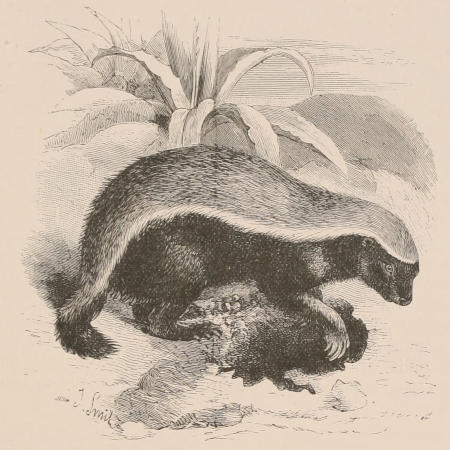
Fig. 264.—The African Ratel (Mellivora ratel).
The following account of the Indian species is extracted from Dr. Jerdon’s Mammals of India: “The Indian badger is found throughout the whole of India, from the extreme south to the foot of the Himalayas, chiefly in hilly districts, where it has greater facilities for constructing the holes and dens in which it lives; but also in the north of India in alluvial plains, where the banks of large rivers afford equally suitable localities wherein to make its lair. It is stated to live usually in pairs, and to eat rats, birds, frogs, white ants, and various insects, and in the north of India it is accused of digging out dead bodies, and is popularly known as the grave-digger. It doubtless also, like its Cape congener, occasionally partakes of honey. It is often very destructive to poultry, and I have known of several having been trapped and killed whilst committing such depredations in Central India and in the northern Circars. In confinement the Indian badger is quiet and will partake of vegetable food, fruits, rice, etc.”
A fossil species of Millivora, apparently closely allied to the existing forms, occurs in the Pliocene Siwaliks of India. The same deposits have also yielded remains of an extinct genus described as Mellivorodon.
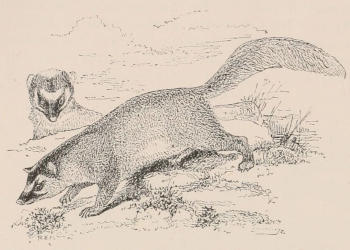
Fig. 265.—Helictis personata. (From Blanford, Mammalia of British India, p. 175.)
Helictis.[505]—Dentition: i ³⁄₃, c ¹⁄₁, p ⁴⁄₄, m ¹⁄₂; total 38. Upper carnassial with a large bicuspid inner tubercle; upper molar smaller, wider transversely than in the antero-posterior direction. Lower carnassial with talon about one-third the length of the tooth. Skull elongated, rather narrow and depressed. Facial portion especially narrow. Infraorbital foramen very large. Head rather small and produced in front, with an elongated, obliquely truncated, naked snout. Ears small. Body elongated. Limbs short. Tail short or moderate, bushy. Several species are described (H. orientalis, personata [Fig. 265], moschata, subaurantiaca), all from Eastern Asia; they are all small animals compared with the other members of the subfamily, climbing trees with agility and living much on fruit and berries as well as on small mammals and birds. The two first named species occur in British India, H. orientalis also ranging into Java; the Chinese H. subaurantiaca is brilliantly coloured in the region of the throat.[506]
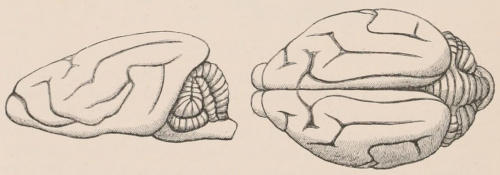
Fig. 266.—Left lateral and superior aspect of the brain of Helictis subaurantiaca. (From Garrod, Proc. Zool. Soc. 1879, p. 307.)
The brain of Helictis, represented in the accompanying figure, shows the general type of cerebral structure characteristic of the Mustelidæ. The brain of this genus differs, however, from that of every other Carnivore in that the hippocampal gyrus rises to the surface on either side of the great longitudinal fissure, in consequence of which there is no crucial fissure, and the so-called “Ursine lozenge,” so characteristic of the Arctoidea, is incomplete behind. The superior gyrus, as in Ictonyx and Mustela, ceases at the superior posterior angle of the hemisphere.
Ictonyx.[507]—Dentition: i ³⁄₃, c ¹⁄₁, p ³⁄₃, m ¹⁄₂; total 34. In general characters the teeth much resemble those of the Polecats (Mustela), being more delicately cut and sharply cusped than in most of the foregoing. Upper molar smaller than the carnassial, narrow from before backwards. Lower carnassial with a small narrow talon and distinct inner cusp. General form of body Musteline. Limbs short. Fore feet large and broad, with five stout, nearly straight, blunt, and non-retractile claws, of which the first and fifth are considerably shorter than the others. Tail moderate, with longer hairs towards the end, giving it a bushy appearance. Hairs generally long and loose. The best known species of this genus, I. zorilla, the Cape Polecat, was placed by Cuvier in the genus Mustela, and by Lichtenstein in Mephitis; and in many characters it forms a transition between these genera. It is about the size of an English Polecat, but conspicuous by its coloration, having broad, longitudinal bands of dark brown, alternating with white. Its odour is said to be as offensive as that of the American Skunks. From the Cape of Good Hope it ranges as far north as Senegal. Another species, I. frenata, from Sennaar and Egypt, has been described.
Subfamily Mustelinæ.—Toes short, partially webbed; claws short, compressed, acute, curved, often semiretractile. Upper molar of moderate size, wide transversely. Kidneys simple. Terrestrial and arboreal in habits.
Galictis.[508]—Dentition: i ³⁄₃, c ¹⁄₁, p ³⁄₃, m ¹⁄₂; total 34. Molars small but stout. Upper carnassial with the inner tubercle near the middle of the inner border of the tooth. Lower carnassial with talon small, and inner cusp small or absent. Body long. Limbs short; claws non-retractile. Palms and soles naked. Head broad and depressed. Tail of moderate length. The best-known species are G. vittata, the Grison (genus Grisonia, Gray), and G. barbara, the Tayra (genus Galera, Gray), both South American; G. allamandi is an intermediate form.
Remains of Galictis occur in the Pleistocene cavern-deposits of Brazil, and also in the Pleistocene of North America.
Mustela.[509]—Dentition: i ³⁄₃, c ¹⁄₁, p ³⁻⁴⁄₃₋₄, m ¹⁄₂; total 34 or 38. Upper carnassial with inner tubercle close to the anterior edge of the tooth. Molar nearly as large as carnassial. Lower carnassial with small or no inner cusp. Vertebræ: C 7, D 14, L 6, S 3, C 18-23. Body long and slender. Limbs short, digitigrade. Feet rounded; toes short, with compressed, acute, semiretractile claws. Tail moderate or long, more or less bushy.
The genus Mustela, as restricted by Cuvier (Règne Animal, 1817), contains a very natural assemblage of animals commonly called Martens, Sables, Polecats, Stoats, Ermines, and Weasels, all closely allied in structure and habits. A structural division, however, occurs between the two first-named and all the others, especially shown in the presence of an additional small premolar tooth on each side of the jaw; and, availing himself of this and some other minor characters, Cuvier divided the genus into two subgenera, for the first of which he retained the name of Mustela, and to the second assigned that of Putorius. Three years later Nilsson (Skand. Fauna, 1820) definitely constituted the two groups into genera, applying to the first the name of Martes, by which the animals composing it had been generally designated by the Latin writing zoologists of the preceding century, and keeping Mustela for the more typical Weasels and their immediate allies. Later zoologists have been divided between the nomenclature of Cuvier, which has the priority, and that of Nilsson, which on other grounds is preferable. Those who adopt the latter affirm that Cuvier’s names, being only used by him in a subgeneric sense, and not binominally, need not be applied generically, but this is contrary to the practice usually followed in such cases; and therefore, if the original genus be divided, the name Mustela should be retained for the Martens, and Putorius for the Polecats and Weasels. Here, however, the genus will be employed in its wider sense, and divided into two groups.
The typical group of the Martens[510] presents the following distinctive features. Body long, slender, and very flexible, though less so than in the true Weasels. Head somewhat triangular; muzzle pointed, the nose extending a little beyond the lips; eyes large and prominent; ears conspicuous, broad, somewhat triangular, rounded at the ends, furred outside and in. Limbs short; feet rounded; toes short, five on each foot, all with short, compressed, curved, sharp-pointed claws; soles densely furred between the naked pads. Tail moderately long, more or less bushy. Outer fur long, strong, and glossy; a very abundant soft under fur. Skull elongated and depressed. Facial portion moderate and rather compressed. Zygomata arched and wide, but slender. Postorbital processes small. Auditory bullæ large, but not very globose. Mandible with a strong triangular vertical coronoid process and a well-developed angular process. Premolars ⁴⁄₄. Upper incisors in a straight transverse line, rather long and compressed; first and second subequal, third considerably larger. Lower incisors very small, especially the first, and crowded together, the second placed rather behind the others. Canines long and sharp-pointed. Upper premolars: first very small, with simple crown and one root; second and third nearly equal in size and two-rooted, with simple compressed sharp-pointed crowns, with very slightly developed accessory cusps; fourth (the carnassial) with blade consisting chiefly of the central and posterior lobes, the anterior being rudimentary, inner tubercle small and confined to the anterior part of the tooth. True molar tubercular, about twice as wide transversely as in the antero-posterior direction, having an outer, more elevated, but smaller portion, bearing three blunt tubercles; to the inner side of this the crown is contracted, and its surface deeply hollowed; it then expands again into a broad low lobe, with the central part elevated, and a raised, even, semicircular, slightly crenated internal border. Lower premolars: first very small, simple, and one-rooted; second, third, and fourth increasing slightly in size, with high compressed pointed crowns and posterior accessory cusps, best marked in the third. First molar (carnassial) with well-marked bilobed blade, talon scarcely more than one-third of the length of the tooth, and a very small inner cusp. Second molar small, single-rooted, with a low, flattened, subcircular or oval tubercular crown.