Chapter XIX · PHOSPHORUS AND THE OTHER ELEMENTS OF THE FIFTH GROUP
George Kamensky translation
Nitrogen is the lightest and most widely distributed representative of the elements of the fifth group, which form a higher saline oxide of the form R2O5, and a hydrogen compound of the form RH3. Phosphorus, arsenic, bismuth, and antimony belong to the uneven series of this group. Phosphorus is the most widely distributed of these elements. There is hardly any mineral substance composing the mass of the earth's crust which does not contain some—it may be a small—amount of phosphorus compounds in the form of the salts of phosphoric acid. The soil and earthy substances in general usually contain from one to ten parts of phosphoric acid in 10,000 parts. This amount, which appears so small, has, however, a very important significance in nature. No plant can attain its natural growth if it be planted in an artificial soil completely free from phosphoric acid. Plants equally require the presence of potash, magnesia, lime, and ferric oxide, among basic, and of carbonic, sulphuric, nitric, and phosphoric anhydrides, among acid oxides. In order to increase the fertility of a more or less poor soil, the above-named nutritive elements are introduced into it by means of fertilisers. Direct experiment has proved that these substances are undoubtedly necessary to plants, but that they must be all present simultaneously and in small quantities, and that an excess, like an insufficiency, of one of these elements is necessarily followed by a bad harvest, or an imperfect growth, even if all the other conditions (light, heat, water, air) are normal. The phosphoric compounds of the soil accumulated by plants pass into the organism of animals, in which these substances are assimilated in many instances in large quantities. Thus the chief component part of bones is calcium phosphate, Ca3P2O8, and it is on this that their hardness depends.[1]
Phosphorus was first extracted by Brand in 1669, by the ignition of evaporated urine. After the lapse of a century Scheele, who knew of the existence of a more abundant source of phosphorus in bones, pointed out the method which is now employed for the extraction of this element. Calcium phosphate in bones permeates a nitrogenous organic substance, which is called ossein, and forms a gelatin. When bones are treated exclusively for the extraction of phosphorus, neglecting the gelatin, they are burnt, in which case all the ossein is burnt away. When, however, it is desired to preserve the gelatin, the bones are immersed in cold dilute hydrochloric acid, which dissolves the calcium phosphate and leaves the gelatin untouched; calcium chloride and acid calcium phosphate, CaH4(PO4)2, are then obtained in the solution. When the bones are directly burnt in an open fire their mineral components only are left as an ash, containing about 90 per cent. of calcium phosphate, Ca3(PO4)2, mixed with a small amount of calcium carbonate and other salts. This mass is treated with sulphuric acid, and then the same substance is obtained in the solution as was obtained from the unburnt bones immersed in hydrochloric acid—i.e. the acid calcium phosphate soluble in water, in which reaction naturally the chief part of the sulphuric acid is converted into calcium sulphate:
Ca3(PO4)2 + 2H2SO4 = 2CaSO4 + CaH4(PO4)2. Ca3(PO4)2 + 4HCl = 2CaCl2 + CaH4(PO4)2.
On evaporating the solution, crystallisable acid calcium phosphate is obtained. The extraction of the phosphorus from this salt consists in heating it with charcoal to a white heat. When heated, the acid phosphate, CaH4(PO4)2, first parts with water, and forms the metaphosphate, Ca(PO3)2, which for the sake of simplicity may be regarded, like the acid salt, as composed of pyrophosphate and phosphoric anhydride, 2Ca(PO3)2 = Ca2P2O7 + P2O5. The latter, with charcoal, gives phosphorus and carbonic oxide, P2O5 + 5C = P2 + 5CO. So that in reality a somewhat complicated process takes place here, yielding ultimately products according to the following equation:
2CaH4(PO4)2 + 5C = 4H2O + Ca2P2O7 + P2 + 5CO.
After the steam has come over, phosphorus and carbonic oxide distil over from the retort and calcium pyrophosphate remains behind.[1 bis]
As phosphorus melts at about 40°, it condenses at the bottom of the receiver in a molten liquid mass, which is cast under water in tubes, and is sold in the form of sticks. This is common or yellow phosphorus. It is a transparent, yellowish, waxy substance, which is not brittle, almost insoluble in water, and easily undergoes change in its external appearance and properties under the action of light, heat, and of various substances. It crystallises (by sublimation or from its solution in carbon bisulphide) in the regular system, and[2] (in contradistinction to the other varieties) is easily soluble in carbon bisulphide, and also partially in other oily liquids. In this it recalls common sulphur. Its specific gravity is 1·84. It fuses at 44°, and passes into vapour at 290°; it is easily inflammable, and must therefore be handled with great caution; careless rubbing is enough to cause phosphorus to ignite. Its application in the manufacture of matches is based on this.[2 bis] It emits light in the air owing to its slow[3] oxidation, and is therefore kept under water (such water is phosphorescent in the dark, like phosphorus itself). It is also very easily oxidised by various oxidising agents and takes up the oxygen from many substances.[3 bis] Phosphorus enters into direct combination with many metals and with sulphur, chlorine, &c., with development of a considerable amount of heat. It is very poisonous although not soluble in water.
Besides this, there is a red variety of phosphorus, which differs considerably from the above. Red phosphorus (sometimes wrongly called amorphous phosphorus) is partially formed when ordinary phosphorus remains exposed to the action of light for a long time. It is also formed in many reactions; for example, when ordinary phosphorus combines with chlorine, bromine, iodine, or oxygen, a portion of it is converted into red phosphorus. Schrötter, in Vienna, investigated this variety of phosphorus, and pointed out by what methods it may be produced in considerable quantities. Red phosphorus is a powdery red-brown opaque substance of specific gravity 2·14. It does not combine so energetically with oxygen and other substances as yellow phosphorus, and evolves less heat in combining with them.[4] Common phosphorus easily oxidises in the air; red phosphorus does not oxidise at all at the ordinary temperature; hence it does not phosphoresce in the air, and may be very conveniently kept in the form of powder. It does not, like yellow phosphorus, fuse at 44°. After being converted into vapour at 290° or 300°, it again passes into the ordinary variety when slowly cooled. Red phosphorus is not soluble in carbon bisulphide and other oily liquids, which permits of its being freed from any admixture of the ordinary phosphorus. It is not poisonous, and is used in many cases for which the ordinary phosphorus is unsuitable or dangerous; for example, in the manufacture of matches, which are then not poisonous or inflammable by accidental friction, and therefore the red variety has now replaced the ordinary phosphorus.[4 bis]
The heads of the ‘safety’ matches do not contain any phosphorus, but only substances capable of burning and of supporting combustion. Red phosphorus is spread over a surface on the box, and it is the friction against this phosphorus which ignites the matches. There is no danger of the matches taking fire accidentally, nor are they poisonous.[5] This red phosphorus is prepared by heating the ordinary phosphorus at 230° to 270°; it is evident that this must be done in an atmosphere incapable of supporting combustion—for example, in nitrogen, carbonic anhydride, steam, &c. On a large scale, ordinary phosphorus is placed in closed iron vessels,[5 bis] and immersed in a bath of different proportions of tin and lead, by which means the temperature of 250° necessary for the conversion is easily attained. It is kept at this temperature for some time. The temperature is at first cautiously raised, and the air is thus partially expelled by the heat, and also by the evolution of steam (the phosphorus is damp when put in), whilst the remaining oxygen is also partially absorbed by the phosphorus, so that an atmosphere of nitrogen is produced in the iron vessel. Red phosphorus enters into all the reactions proper to yellow phosphorus, only with greater difficulty and more slowly;[6] and, as its vapour tension (volatility) is less than that of the yellow variety, it may be supposed that a polymerisation takes place in the passage of the yellow into the red modification, just as in the passage of cyanogen into paracyanogen, or of cyanic acid into cyanuric acid (Chapter IX. Notes 39 bis and 48).
The vapour of phosphorus is colourless; its density remains constant between 300° and 1000° (Dumas, 1833; Mitscherlich, Deville, and Troost, 1859, and others). The density with respect to air has been determined as from 4·3 to 4·5. Hence, referred to hydrogen, it is 4·4 × 14·4 = 63, corresponding with a molecular weight 124, i.e. the molecule of phosphorus in a state of vapour contains P4. The reader will remember that the molecule of nitrogen contains N2, of sulphur S6 or S2, and of oxygen O2 or O3.
The chemical energy of phosphorus in a free state more nearly approaches that of sulphur than nitrogen. Phosphorus is combustible and inflames at 60°; but having in the act of combination parted with a portion of its energy in the form of heat it becomes analogous to nitrogen, so long as there is no question of its reduction back again into phosphorus. Nitric acid is easily reduced to nitrogen, whilst phosphoric acid is reduced with very much greater difficulty. All the compounds of phosphorus are less volatile than those of nitrogen. Nitric acid, HNO3, is easily distilled; metaphosphoric acid, HPO3, is generally said to be non-volatile; triethylamine, N(C2H5)3, boils at 90°, and triethylphosphine, P(C2H5)3, at 127°.
Phosphorus not only combines easily and directly with oxygen, but also with chlorine, bromine, iodine, sulphur, and with certain metals, and red phosphorus when heated combines with hydrogen also.[6 bis] So, for instance, when fused with sodium under naphtha, phosphorus gives the compound Na3P2. Zinc, absorbing the vapour of phosphorus, gives the phosphide Zn3P2 (sp. gr. 4·76); tin, SnP; copper, Cu2P; even platinum combines with phosphorus (PtP2, sp. gr. 8·77).[6 tri] Iron, when combined even with a small quantity of phosphorus, becomes brittle.[7] Some of these compounds of phosphorus are obtained by the action of phosphorus on the solutions of metallic salts, and by the ignition of metallic oxides in the vapour of phosphorus, or by heating mixtures of phosphates with charcoal and metals. Phosphides do not exhibit the external properties of salts, which are so clearly seen in the chlorides and still distinctly observable in the sulphides. The phosphides of the metals of the alkalis and of the alkaline earths are even immediately and very easily decomposed by water, whereas this is found to be the case with only a very few sulphides, and still more rarely and indistinctly with the chlorides. We may take calcium phosphide as an example.[7 bis] Phosphorus is laid in a deep crucible, and covered with a clay plug, over which lime is strewn. At a red heat the vapours of phosphorus combine with the oxygen of the lime and form phosphoric anhydride, which forms a salt with another portion of the lime, whilst the liberated calcium combines with the phosphorus and forms calcium phosphide. Its composition is not quite certain; it may be CaP (corresponding with liquid phosphuretted hydrogen). This substance is remarkable for the following reaction: if we take water—or, better still, a dilute solution of hydrochloric acid—and throw calcium phosphide into it, bubbles of gas are evolved, which take fire spontaneously in the air and form white rings. This is owing to the fact that the liquid hydrogen phosphide, PH2, is first formed, thus, CaP + 2HCl = CaCl2 + PH2, which, owing to its instability, very easily splits up into the solid phosphide, P2H, and gaseous phosphide, PH3; 5PH2 = P2H + 3PH3; the latter corresponds with ammonia. The mixture of the gaseous and liquid phosphides takes fire spontaneously in the air, forming phosphoric acid. The same hydrogen phosphides are formed when water acts on sodium phosphide (P2Na3). A similar mixture of gaseous liquid and solid phosphuretted hydrogen (Retgers 1894) is formed by heating (in a glass tube) red phosphorus in a stream of dry hydrogen. Hence we see that there are three compounds of phosphorus with hydrogen. (1) The first or solid yellow phosphide, P2H (more probably P4H2), is obtained by the action of strong hydrochloric acid on sodium phosphide; it takes fire when struck or at 175°. (2) The liquid, PH2, or more correctly expressed as the molecule, P2H4, is a colourless liquid which takes fire spontaneously in the air, boils at 30°, is very unstable, and is easily decomposed (by light or hydrochloric acid) into the two other phosphides of hydrogen. It is prepared by passing the gases evolved by the action of water on calcium phosphide through a freezing mixture.[8] And, lastly, (3), gaseous hydrogen phosphide, phosphine, PH3, which is distinguished as being the most stable. It is a colourless gas, which does not take fire in the air. It has an odour of garlic, and is very poisonous. It resembles ammonia in many of its properties.[8 bis] It is easily decomposed by heat, like ammonia, forming phosphorus and hydrogen; but it is very slightly soluble in water, and does not saturate acids, although it forms compounds with some of them which resemble ammonium salts in their form and properties. Among them the compound with hydriodic acid, PH4I, analogous to ammonium iodide, is remarkable. This compound crystallises on sublimation in well-formed cubes, like sal-ammoniac, which it resembles in many respects. However, this compound does not enter into those reactions of double decomposition which are proper to sal-ammoniac, because its saline properties are very feebly developed. Phosphuretted hydrogen also combines, like ammonia, with certain chloranhydrides; but they are decomposed by water, with the evolution of phosphine. Ogier (1880) showed that hydrochloric acid also combines with phosphine under a pressure of 20 atmospheres at +18°, and under the ordinary pressure at -35°, forming the crystalline phosphonium chloride PH4Cl, corresponding to sal-ammoniac. Hydrobromic acid does the same with greater ease, and hydriodic acid with still greater facility, forming phosphonium iodide, PH4I.[9]
Phosphuretted hydrogen, or phosphine, PH3, is generally prepared by the action of caustic potash on phosphorus.[10] Small pieces of phosphorus are dropped into a flask containing a strong solution of caustic potash and heated. Potassium hypophosphite, H2KPO2, is then obtained in solution; gaseous phosphuretted hydrogen is evolved:
P4 + 3KHO + 3H2O = 3(KH2PO2) + PH3.
Liquid phosphuretted hydrogen (and free hydrogen) is also formed, together with the phosphine, so that the gaseous product, on escaping from the water into the air, takes fire spontaneously, forming beautiful white rings of phosphoric acid. In this experiment, as in that with calcium phosphide, it is the liquid, P2H4, that takes fire; but the phosphine set light to by it also burns, PH3 + O4 = PH3O4. The same phosphuretted hydrogen, PH3, may be obtained pure, and not spontaneously combustible, by igniting the hydrates of phosphorous acid (4PH3O3 = PH3 + 3PH3O4) and hypophosphorous acid (2PH3O2 = PH3 + PH3O4); or, more simply, by the decomposition of calcium phosphide by hydrochloric acid, because then all the liquid phosphide, P2H4, is decomposed into non-volatile P2H and gaseous PH3. Pure phosphine liquefies when cooled to -90°, boils at -85°, and solidifies at -135° (Olszewski). When phosphorus burns in an excess[10 bis] of dry oxygen, then only phosphoric anhydride, P2O5 is formed. It is prepared by dropping pieces of phosphorus through a wide tube, fixed into the upper neck of a large glass globe, on to a cup suspended in the centre of the globe. These lumps are set alight by touching them with a hot wire, and the phosphorus burns into P2O5. The dry air necessary for its combustion is forced into the globe through a lateral neck, and the white flakes of phosphoric anhydride formed are carried by the current of air through a second lateral neck into a series of Woulfe's bottles, where they settle as friable white flakes. Phosphoric anhydride may also be formed by passing dry air through a solution of phosphorus in carbon bisulphide. All the materials for the preparation of this substance must be carefully dried, because it combines with great eagerness with water, at the same time developing a large amount of heat and forming metaphosphoric acid, HPO3, from which the water cannot be separated by heat. Phosphoric anhydride is a colourless snow-like substance, which attracts moisture from the air with the utmost avidity. It fuses at a red heat, and then volatilises. Its affinity for water is so great that it takes it up from many substances. Thus it converts sulphuric acid into sulphuric anhydride, and carbohydrates (wood, paper) are carbonised, and give up the elements of water when brought into contact with it.
When moist phosphorus slowly oxidises in the air, it not only forms phosphorous and phosphoric acids, but also hypophosphoric acid, H4P2O6, which when in a dry state easily splits up at 60° into phosphorous and metaphosphoric acids (H4P2O6 = H3PO3 + HPO3), but differs from a mixture of these acids in that it forms well-characterised salts, of which the sodium salt, H2Na2P2O6, is but slightly soluble in water (the sodium salts of phosphoric and phosphorous acids are easily soluble), and that it does not act as a reducing agent, like mixtures containing phosphorous acid.[11]
Judging by the general law of the formation of acids (Chapter XV.), the series of phosphorus compounds should include the following ortho-acids and their corresponding anhydrides, answering to phosphuretted hydrogen, H3P:—
H3PO4, phosphoric acid, and P2O5, anhydride,
H3PO3, phosphorous acid, and P2O3, anhydride,
H3PO2, hypophosphorous acid, and P2O, anhydride.[12]
The last of these (the analogue of N2O) is almost unknown. Phosphoric anhydride (P2O5) with a small quantity of water does not at first give orthophosphoric acid, PH3O4, but a compound P2O5,H2O, or PHO3, whose composition corresponds with that of nitric acid; this is metaphosphoric acid. Even with an excess of water, combining with phosphoric anhydride, this metaphosphoric acid, and not the ortho-, passes at first into solution. Metaphosphoric acid in solution only passes into orthophosphoric acid when the solution is heated or after a lapse of time.
Orthophosphoric acid[13] is obtained by oxidising phosphorus with nitric acid until the phosphorus entirely passes into solution and the lower oxides of nitrogen cease to be evolved. The reaction takes place best with dilute nitric acid, and when aided by heat. The resultant solution is evaporated to a syrup. If a weighed quantity of phosphorus (dried in a current of dry carbonic anhydride) be taken, a crystalline mass of the acid can be obtained by evaporating the solution until it consists only of the quantity[14] of phosphoric acid corresponding with the amount of phosphorus taken (from 31 parts of P, 98 parts of solution). The acid fuses at +39°; specific gravity of the liquid 1·88. Phosphorus pentachloride, PCl5, and oxychloride, POCl3 (see further on), give orthophosphoric acid and hydrochloric acid with water. The two other varieties of phosphoric acid, with which we shall presently become acquainted, give the same ortho-acid when under the influence of acids, with particular ease when boiled and more slowly in the cold. By itself orthophosphoric acid (either in solution or when dry) does not pass into the other varieties; it does not oxidise, and therefore presents the limiting and stable form. When heated to 300°, it loses water and passes into pyrophosphoric acid, 2H3PO4 = H2O + H4P2O7, whilst at a red heat it loses twice as much water and is converted into metaphosphoric acid, H3PO4 = H2O + HPO3. In aqueous solution orthophosphoric acid differs clearly from pyro- or metaphosphoric acids, because the solutions of these latter acids give different reactions: thus orthophosphoric acid does not precipitate albumin, does not give a precipitate with barium chloride, and forms a yellow precipitate of silver orthophosphate, Ag3PO4, with silver nitrate (in the presence of alkalis, but not otherwise); whilst a solution of pyrophosphoric acid, H4P2O7, although it does not precipitate albumin or barium chloride, gives a white precipitate of silver pyrophosphate, Ag4P2O7, with silver nitrate; and a solution of metaphosphoric acid, HPO3, precipitates both albumin and barium chloride, and gives a white precipitate of silver metaphosphate, AgPO3, with silver nitrate. These points of distinction were studied by Graham, and are exceedingly instructive. They show that the solution of a substance does not determine the maximum of chemical combination with water, that solutions may contain various degrees of combination with water, and that there is a clear difference between the water serving for solution and that entering into chemical combination. Graham's experiments also showed that the water whose removal or combination determines the conversion of ortho- into meta- and pyrophosphoric acids differs distinctly from water of crystallisation, for he obtained the salts of ortho-, meta-, and pyrophosphoric acids with water of crystallisation, and they differed in their reactions, like the acids themselves. This water of crystallisation was expelled with greater ease than the water of constitution of the hydrates in question.[14 bis]
Orthophosphoric acid has a pleasant acid taste and a distinctly acid reaction; it is used as a medicine, and is not poisonous (phosphorous acid is poisonous). Alkalis, like sodium, potassium, and ammonium hydroxides, saturate the acid properties of phosphoric acid when taken in the ratio 2NaHO : H3PO4—that is, when salts of the composition HNa2PO4 are formed. When taken in the ratio NaHO : H3PO4, a solution having an acid reaction is obtained, and when 3NaHO : H3PO4—that is, when the salt Na3PO4 is formed—an alkaline reaction is obtained. Hence many chemists (Berzelius) even regarded the salts of composition R2HPO4 as normal, and considered phosphoric acid to be bibasic. But the salt Na2HPO4 also shows a feeble alkaline reaction, so that it is impossible to judge the characteristic peculiarities of acids by the reactions on litmus paper, as we already know from many examples. Orthophosphoric acid is tribasic, because it contains three equivalents of hydrogen replaceable by metals, forming salts, such as NaH2PO4, Na2HPO4, and Na3PO4. It is also tribasic, because with silver nitrate its soluble salts always give Ag3PO4,[15] a salt with three equivalents of silver, and because by double decomposition with barium chloride it forms a salt of the composition Ba3(PO4)2, and silver and barium hardly ever give basic salts. With the metals of the alkalis, phosphoric acid forms soluble salts, but the normal salts of the metals of the alkaline earths, R3(PO4)2 and even R2H2(PO4), are insoluble in water, but dissolve in feeble acids, such as phosphoric and acetic, because they then form soluble acid salts, especially RH4(PO4)2.[16]
Phosphoric anhydride, or any of its hydrates, when ignited with an excess of sodium hydroxide, carbonate, &c., forms normal or trisodium orthophosphate, Na3PO4, but when a solution of sodium carbonate is decomposed by orthophosphoric acid, only the salt Na2HPO4 is formed; and when an excess of sodium chloride is ignited with orthophosphoric acid, hydrochloric acid is evolved, and the acid salt H2NaPO4 alone is formed. These facts clearly indicate the small energy of phosphoric acid with respect to the formation of the tri-metallic salt, which is seen further from the fact that the salt Na3PO4 has an alkaline reaction, decomposes in the presence of water and carbonic acid, forming Na2HPO4, corrodes glass vessels in which it is boiled or evaporated, just like solutions of the alkalis, disengages, like them, ammonia from ammonium chloride, and crystallises from solutions, as Na3PO4,12H2O, only in the presence of an excess of alkali. At 15° the crystals of this salt require five parts of water for solution; they fuse at 77°.
Disodium orthophosphate, or common sodium phosphate, Na2HPO4, is more stable both in solution and in the solid state. As it is used in medicine and in dyeing, it is prepared in considerable quantities, most frequently from the impure phosphoric acid obtained by the action of sulphuric acid on bone ash. The solution thus formed—which contains, besides phosphoric and sulphuric acids, salts of sodium, calcium, and magnesium—is heated, and sodium carbonate added so long as carbonic anhydride is disengaged. A precipitate is formed containing the insoluble salts of magnesium and calcium, whilst the solution contains sodium phosphate, Na2HPO4, with a small quantity of other salts, from which it may be easily purified by crystallisation. At the ordinary temperature its solutions, especially in the presence of a small amount of sodium carbonate, give finely-formed inclined prismatic crystals, Na2HPO4,12H2O; when the crystallisation takes place above 30° they only contain 7H2O. The former crystals even lose a portion of their water of crystallisation at the ordinary temperature (the salt effloresces), and form the second salt with 7H2O; whilst under the receiver of an air-pump and over sulphuric acid they also part with this water.[17] When ignited they lose the last molecule of water of constitution, and give sodium pyrophosphate, Na4P2O7.
Monosodium orthophosphate, NaH2PO4, crystallises with one equivalent of water; its solution has an acid reaction. At 100° the salt only loses this water of crystallisation, and at about 200° it parts with all its water, forming the metaphosphate NaPO3. It is prepared from ordinary sodium phosphate by adding phosphoric acid until the solution does not give a precipitate with barium chloride, and then evaporating and crystallising the solution. The solution of this salt does not absorb carbonic anhydride, and does not give a precipitate with salts of calcium, barium, &c.[18]
As a hydrate, orthophosphoric acid should be expressed, after the fashion of other hydrates, as containing three water residues (hydroxyl groups), i.e. as PO(OH)3. This method of expression indicates that the type PX5, seen in PH4I, is here preserved, with the substitution of X2 by oxygen and X3 by three hydroxyl groups. The same type appears in POCl3, PCl5, PF5, &c. And if we recognise phosphoric acid as PO(OH)3, we should expect to find three anhydrides corresponding with it: (1) [PO(OH)2]2O, in which two of the three hydroxyls are preserved; this is pyrophosphoric acid, H4P2O7. (2) PO(OH)O, where only one hydroxyl is preserved. This is metaphosphoric acid. (3) (PO)2O3 or P2O5, that is, perfect phosphoric anhydride. Therefore, pyro- and metaphosphoric acids are imperfect anhydrides (or anhydro-acids) of orthophosphoric acid.[19]
Pyrophosphoric acid, H4P2O7, is formed by heating orthophosphoric acid to 250° when it loses water.[19 bis] Its normal salts are formed by igniting the dimetallic salts of orthophosphoric acid of the types HM2PO4. Thus from the disodium salt we obtain sodium pyrophosphate, Na4P2O7 (it crystallises from water with 10H2O, is very stable, fuses when heated, has an alkaline reaction, and does not form ortho-salts when its solution is boiled): and from the monosodium salt NaH2PO4 the acid salt Na2H2P2O7 (easily soluble in water) is formed; this has an acid reaction, and when ignited further gives the meta-salt.[20]
Metaphosphoric acid, HPO3 (the analogue of nitric acid), is formed by the ignition of the pyro- and ortho-acids (or, better, of their ammonium salts), as a vitreous, hygroscopic, fused mass (glacial phosphoric acid, acidum phosphoricum glaciale), soluble in water and volatilising without decomposition. It is also formed in the first slow action of cold water on the anhydride, but metaphosphoric acid gradually changes into the ortho-acid when its solution is boiled, or when it is kept for any length of time, especially in the presence of acids.[21]
In order to see the relation between phosphoric acid and the lower acids of phosphorus, it is simplest to imagine the substitution of hydroxyl in H3PO4 or PO(OH)3 by hydrogen. Then from orthophosphoric acid, PO(OH)3, we shall obtain phosphorous acid, POH(OH)2, and hypophosphorous acid, POH(OH); and, furthermore, phosphorous acid should be bibasic if orthophosphoric acid was tribasic, and hypophosphorous acid should be monobasic. This conclusion[21 bis] is, in fact, true, and hence all the acids of phosphorus may be referred to one common type, PX5, whose representatives are PH4I and PCl5, POCl3, PCl2F3, &c.
Phosphorous acid, PH3O3, is generally obtained from phosphorus trichloride, PCl3, by the action of water: PCl3 + 3H2O = 3HCl + PH3O3. Both acids formed are soluble in water, but are easily separated, because hydrochloric acid is volatile whilst phosphorous acid volatilises with difficulty, and if a small amount of water be originally taken the hydrochloric acid nearly all passes off directly. Concentrated solutions of phosphorous acid give crystals of H3PO3, which fuse at 70°, attract moisture from the air, and deliquesce when ignited, giving phosphine and phosphoric acid,[22] and are oxidised into orthophosphoric acid by many oxidising agents. In its salts only two hydrogen atoms are replaced by metals (Würtz); the salts of the alkaline metals are soluble, and give precipitates with salts of the majority of other metals.
The monobasic hypophosphorous acid, PH3O2, gives salts PH2O2Na, (PH2O2)2Ba, &c.; the two remaining atoms of hydrogen (which exist in the same form as in phosphine, PH3) are not replaceable by metals, and this determines the property of these salts of evolving phosphuretted hydrogen when heated (especially with alkalis). In acting on substances liable to reduction it is this hydrogen which acts, and, for example, reduces gold and mercury from the solutions of their salts, or converts cupric into cuprous salts. In all these instances the hypophosphorous acid is converted into phosphoric acid. Under the action of zinc and sulphuric acid it gives phosphine, PH3. Nevertheless, neither hypophosphorous acid nor its dry salts absorb oxygen from the air. The salts of hypophosphorous acid are more soluble than those of the preceding acids of phosphorus. Thus the sodium salt PNaH2O2 does not give a precipitate with barium chloride, and the salts of calcium, barium, and many other metals are soluble.[23] The hypophosphites are prepared by boiling an alkali with phosphorus so long as phosphuretted hydrogen is evolved. The acid itself is obtained from barium hypophosphite (prepared in the same manner by boiling phosphorus in baryta water), by decomposing its solution with sulphuric acid. By concentration of the solution of hypophosphorous acid (it must not be heated above 130°, at which temperature it decomposes) a syrup is formed which is able to crystallise. In the solid state hypophosphorous acid fuses at +17°, and has the properties of a clearly defined acid.
The types PX3 and PX5, which are evident for the hydrogen and oxygen compounds of phosphorus, are most clearly seen in its halogen compounds,[24] to the consideration of which we will proceed, fixing our attention more especially on the chlorine compounds, as being the most important from the historical, theoretical, and practical point of view.
Phosphorus burns in chlorine, forming phosphorous chloride, PCl3, and with an excess of chlorine, phosphoric chloride, PCl5. The oxychloride, POCl3, as the simplest chloranhydride according to the type PX5, and also phosphoric chloride, correspond with orthophosphoric acid, PO(OH)3, while phosphorous chloride, PCl3, corresponds with phosphorous acid and the type PX3. Phosphoric oxychloride, POCl3, is a colourless liquid, boiling at 110°. Phosphorus trichloride is also a colourless liquid, boiling at 76°,[25] whilst phosphoric chloride is a solid yellowish substance, which volatilises without melting at about 168°. They are all heavier than water, and form types of the chloranhydrides or chlorine compounds of the non-metallic elements whose hydrates are acids, just as NaCl or BaCl2 are types of halogen metallic salts.
If a piece of phosphorus be dropped into a flask containing chlorine, it burns when touched with a red-hot wire, and combines with the chlorine. If the phosphorus be in excess, liquid phosphorus trichloride, PCl3, is always formed, but if the chlorine be in excess the solid pentachloride is obtained. The trichloride is generally prepared in the following manner. Dry chlorine (passed through a series of Woulfe's bottles containing sulphuric acid) is led into a retort containing sand and phosphorus. The retort is heated, the phosphorus melts, spreads through the sand, and gradually forms the trichloride, which distils over into a receiver, where it condenses. Phosphoric chloride or phosphorus pentachloride, PCl5, is prepared by passing dry chlorine into a vessel containing phosphorus trichloride (purified by distillation). Phosphorous chloride combines directly with oxygen, but more rapidly with ozone or with the oxygen of potassium chlorate (3PCl3 + KClO3 = 3POCl3 + KCl), forming phosphorus oxychloride, POCl3 (Brodie). This compound is also formed by the first action of water on phosphoric chloride; for example, if two vessels, one containing phosphoric chloride and the other water, are placed under a bell jar, after a certain time the crystals of the chloride disappear and hydrochloric acid passes into the water. The aqueous vapour acts on the pentachloride, and the following reaction occurs: PCl5 + H2O = POCl3 + 2HCl, the result being that liquid phosphorus oxychloride is found in one vessel, and a solution of hydrochloric acid in the other. However, an excess of water directly transforms phosphoric chloride into orthophosphoric acid, PCl5 + 4H2O = PH3O4 + 5HCl,[26] since POCl3 reacts with water (3H2O), forming 3HCl and phosphoric acid PO(OH)3.
The above chlorine compounds serve not only as a type of the chloranhydrides, but also as a means for the preparation of other acid chloranhydrides. Thus the conversion of acids XHO into chloranhydrides, XCl, is generally accomplished by means of phosphorus pentachloride. This fact was discovered by Chancel, and adopted by Gerhardt as an important method for studying organic acids. By this means organic acids, containing, as we know, RCOOH (where R is a hydrocarbon group, and where carboxyl may repeat itself several times by replacing the hydrogen of hydrocarbon compounds), are converted into their chloranhydrides, RCOCl. With water they again form the acid, and resemble the chloranhydrides of mineral acids in their general properties.
Since carbonic acid, CO(OH)2, contains two hydroxyl groups, its perfect chloranhydride, COCl2, carbonic oxychloride, carbonyl chloride or phosgene gas, contains two atoms of chlorine, and differs from the chloranhydrides of organic acids in that in them one atom of chlorine is replaced by the hydrocarbon radicle RCOCl, if R be a monatomic radicle giving a hydrocarbon RH. It is evident, on the one hand, that in RCOCl the hydrogen is replaced by the radicle COCl, which is also able to replace several atoms of hydrogen (for example, C2H4(COCl)2 corresponds with the bibasic succinic acid); and, on the other hand, that the reactions of the chloranhydrides of organic acids will answer to the reactions of carbonyl chloride, as the reactions of the acids themselves answer to those of carbonic acid. Carbonyl chloride is obtained directly from dry carbon monoxide and chlorine[27] exposed to the action of light, and forms a colourless gas, which easily condenses into a liquid, boiling at +8°, specific gravity 1·43, and having the suffocating odour belonging to all chloranhydrides. Like all chloranhydrides, it is immediately decomposed by water, forming carbonic anhydride, according to the equation COCl2 + H2O = CO2 + 2HCl, and thus expresses the type proper to all chloranhydrides of both mineral and organic acids.[28]
In order to show the general method for the preparation of acid chloranhydrides, we will take that of acetic acid, CH3·COOH, as an example. Phosphorus pentachloride is placed in a glass retort, and acetic acid poured over it; hydrochloric acid is then evolved, and the substance distilling over directly after is a very volatile liquid, boiling at 50°, and having all the properties of the chloranhydrides. With water it forms hydrochloric and acetic acids. The reaction here taking place may be explained thus: the substitution of the oxygen taken from the acetic acid (from its carboxyl) by two atoms of chlorine from the PCl5 should be as follows: CH3·COOH + PCl5 = CH3·COHCl2 + POCl3. But the compound CH3·COHCl2 does not exist in a free state (because it would indicate the possibility of the formation of compounds of the type CX6, and carbon only gives those of the type CX4); it therefore splits up into HCl and the chloranhydride CH3·COCl. The general scheme for the reaction of phosphorus pentachloride with hydrates ROH is exactly the same as with water; namely, ROH with PCl5, gives POCl3 + HCl + RCl—that is a chloranhydride.[28 bis]
Containing, as they do, chlorine, which easily reacts with hydrogen, phosphorus pentachloride, trichloride, and oxychloride enter into reaction with ammonia, and give a series of amide and nitrile compounds of phosphorus. Thus, for example, when ammonia acts on the oxychloride we obtain sal-ammoniac (which is afterwards removed by water) and an orthophosphoric triamide, PO(NH2)3, as a white insoluble powder on which dilute acids and alkalis do not act, but which, when fused with potassium hydroxide, gives potassium phosphate and ammonia like other amides. When ignited, the triamide liberates ammonia and forms the nitrile PON, just as urea, CO(NH2)2, gives off ammonia and forms the nitrile CONH. This nitrile, called monophosphamide, PON, naturally corresponds with metaphosphoric acid, namely, with its ammonium salt. NH4PO3 - H2O = PO2·NH2, an as yet unknown amide, and PO2·NH2 - H2O gives the nitrile PON. This relation is confirmed by the fact that PON, moistened with water, gives metaphosphoric acid when ignited. It is the analogue of nitrous oxide, NON. It is a very stable compound, more so than the preceding.[29]
The most important analogue of phosphorus is arsenic, the metallic aspect of which and the general character of its compounds of the types AsX3 and AsX5 at once recall the metals. The hydrate of its highest oxide, arsenic acid (ortho-arsenic acid), H3AsO4, is an oxidising agent, and gives up a portion of its oxygen to many other substances; but, nevertheless, it is very like phosphoric acid. Mitscherlich established the conception of isomorphism by comparing the salts of these acids.[30]
Arsenic occurs in nature, not only combined with metals, but also, although rarely, native and also in combination with sulphur in two minerals—one red, realgar, As2S2, and the other yellow, orpiment, As2S3 (Chapter XX., Note 2929). Arsenic occurs, but more rarely, in the form of salts of arsenic acid—for instance, the so-called cobalt and nickel blooms, two minerals which are found accompanying other cobalt ores, are the arsenates of these metals. Arsenic is also found in certain clays (ochres) and has been discovered in small quantities in some mineral springs, but it is in general of rarer occurrence in nature than phosphorus. Arsenic is most frequently extracted from arsenical pyrites, FeSAs, which, when roasted without access of air, evolves the vapour of arsenic, ferrous sulphide being left behind. It is also obtained by heating arsenious anhydride with charcoal, in which case carbonic oxide is evolved. In general, the oxides and other compounds are very easily reduced. Solid arsenic is a steel-grey brittle metal, having a bright lustre and scaly structure. Its specific gravity is 5·7. It is opaque and infusible, but volatilises as a yellow vapour which on cooling deposits rhombohedral crystals.[30 bis] The vapour density of arsenic is 150 times greater than that of hydrogen—that is, its molecule, like that of phosphorus, contains 4 atoms, As4. When heated in the air, arsenic easily oxidises into white arsenious anhydride, As2O3, but even at the ordinary temperature it loses its lustre (becomes dull), owing to the formation of a coating of a lower oxide. The latter appears to be as volatile as arsenious anhydride, and it is probable that it is owing to the presence of this compound that the vapours of arsenious compounds, when heated with charcoal (for example, in the reducing flame of a blow-pipe), have the characteristic smell of garlic, because the vapour of arsenic itself has not this odour.
Arsenic easily combines with bromine and chlorine;[31] nitric acid and aqua regia also oxidise it into the higher oxide, or rather its hydrate, arsenic acid.[32] As far as is known, it does not decompose steam, and it acts exceedingly slowly on those acids, like hydrochloric, which are not capable of oxidising.
Arseniuretted hydrogen, arsine, AsH3, resembles phosphuretted hydrogen in many respects. This colourless gas, which liquefies into a mobile liquid at -40°, has a disagreeable garlic-like odour, is only slightly soluble in water, and is exceedingly poisonous. Even in a small quantity it causes great suffering, and if present to any considerable amount in air it even causes death. The other compounds of arsenic are also poisonous, with the exception of the insoluble sulphur compound and some compounds of arsenic acid. Arseniuretted hydrogen, AsH3, is obtained by the action of water on the alloy of arsenic and sodium, sodium hydroxide and arseniuretted hydrogen being formed. It is also formed by the action of sulphuric acid on the alloy of arsenic and zinc: Zn3As2 + 3H2SO4 = 2AsH3 + 3ZnSO4.[33] The oxygen compounds of arsenic are very easily reduced by the action of hydrogen at the moment of its evolution from acids, and the reduced arsenic then combines with the hydrogen; hence, if a certain amount of an oxygen compound of arsenic be put into an apparatus containing zinc and sulphuric acid (and thus serving for the evolution of hydrogen), the hydrogen evolved will contain arseniuretted hydrogen. In this case it is diluted with a considerable amount of hydrogen. But its presence in the most minute quantities may be easily recognised from the fact that it is easily decomposed by heat (200° according to Brunn) into metallic arsenic and hydrogen, and therefore if such impure hydrogen he passed through a moderately-heated tube metallic arsenic will be deposited as a bright layer on the part of the tube which was heated (see Note 30 bis). This reaction is so sensitive that it enables the most minute traces of arsenic to be discovered; hence it is employed in medical jurisprudence, as a test in poisoning cases. It is easy to discover the presence of arsenic in common zinc, copper, sulphuric and hydrochloric acids, &c. by this method. It is obvious that in testing for poison by Marsh's apparatus it is necessary to take zinc and sulphuric acid quite free from arsenic. The arsenic deposited in the tube may be driven as a volatile metal from one place to another in the current of hydrogen evolved, owing to its volatility. This forms a distinction between arseniuretted and antimoniuretted hydrogen, which is decomposed by heat in just the same way as arseniuretted hydrogen, but the mirror given by Sb is not so volatile as that formed by As.
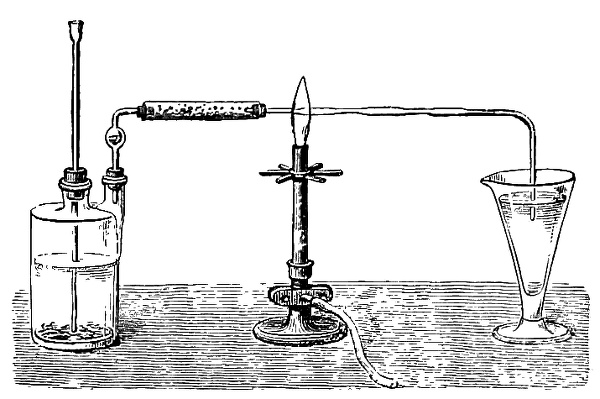
Fig. 84.—Formation and decomposition of arseniuretted hydrogen. Hydrogen is evolved in the Woulfe's bottle, and when the gas comes off, a solution containing arsenic is poured through the funnel. The presence of AsH3 is recognised from the deposition of a mirror of arsenic when the gas-conducting tube is heated. If the escaping hydrogen be lighted, and a porcelain dish be held in the flame, a film of arsenic is deposited on it. The gas is dried by passing through the tube containing calcium chloride. This apparatus is used for the detection of arsenic by Marsh's test.
If hydrogen contains arseniuretted hydrogen, it also gives metallic arsenic when it burns, because in the reducing flame of hydrogen the oxygen attracted combines entirely with the hydrogen and not with the arsenic, so that if a cold object, such as a piece of china, be held in the hydrogen flame the arsenic will be deposited upon it as a metallic spot.[34]
The most common compound of arsenic is the solid and volatile arsenious anhydride, As2O3, which corresponds with phosphorous and nitrous anhydrides. This very poisonous, colourless, and sweet-tasting substance is generally known under the name of arsenic, or white arsenic. The corresponding hydrate is as yet unknown; its solutions, when evaporated, yield crystals of arsenious anhydride. It is chiefly prepared for the dyer, and is also used as a vermin killer, and sometimes in medicine; it is a product from which all other compounds of arsenic can be prepared. It is obtained as a by-product in roasting cobalt and other ores containing arsenic. Arsenical pyrites are sometimes purposely roasted for the extraction of arsenious anhydride. When arsenical ores are burnt in the air, the sulphur and arsenic are converted into the oxides As2O3 and SO2. The former is a solid at the ordinary temperature, and the latter gaseous, and therefore the arsenious anhydride is deposited as a sublimate in the cooler portion of the flues through which the vapours escape from the furnace. It collects in condensing chambers especially constructed in the flues. The deposit is collected, and after being distilled gives arsenious anhydride in the form of a vitreous non-crystalline mass. This is one of the varieties of arsenious anhydride, which is also known in two crystalline forms. When sublimed—i.e. when it rapidly passes from the state of vapour to the solid state—it appears in the regular system in the form of octahedra.[35] It is obtained in the same form when it is crystallised from acid solutions. The specific gravity of the crystals is 3·7. The other crystalline form (in prisms) belongs to the rhombohedral system, and is also formed by sublimation when the crystals are deposited on a heated surface, or when it is crystallised from alkaline solutions.[36]
Solutions of arsenious anhydride have a sweet metallic taste, and give a feeble acid reaction. Its solubility increases with the admixture of acids and alkalis. This shows the property of arsenious anhydride of forming salts with acids and alkalis. And in fact compounds of it with hydrochloric acid (Note 3131), sulphuric anhydride (see further on), and with the alkali oxides are known.[37] If silver nitrate be added to a solution of arsenious anhydride, it does not give any precipitate unless a certain amount of the arsenious anhydride is saturated with an alkali—for instance, ammonia. It then gives a precipitate of silver arsenite, Ag3AsO3. This is yellow, soluble in an excess of ammonia, and anhydrous; it distinctly shows that arsenious acid is tribasic, and that it differs in this respect from phosphorous acid, in which only two atoms of hydrogen can be replaced by metals.[38] The feeble acid character of arsenious anhydride is confirmed by the formation of saline compounds with acids. In this respect the most remarkable example is the anhydrous compound with sulphuric acid, having the composition As2O3,SO3. It is formed in the roasting of arsenical pyrites in those spaces where the arsenious anhydride condenses, a portion of the sulphurous anhydride being converted into sulphuric anhydride, SO3, at the expense of the oxygen of the air. The compound in question forms colourless tabular crystals, which are decomposed by water with formation of sulphuric acid and arsenious anhydride.[39]
Antimony (stibium), Sb = 120, is another analogue of phosphorus. In its external appearance and the properties of its compounds it resembles the metals still more closely than arsenic. In fact, antimony has the appearance, lustre, and many of the characteristic properties of the metals. Its oxide, Sb2O3, exhibits the earthy appearance of rust or of lime, and has distinctly basic properties, although it corresponds with nitrous and phosphorous anhydride, and is able, like them, to give saline compounds with bases. At the same time antimony presents, in the majority of its compounds, an entire analogy with phosphorus and arsenic. Its compounds belong to the type SbX3 and SbX5. It is found in nature chiefly in the form of sulphide, Sb2S3. This substance sometimes occurs in large masses in mineral veins and is known in mineralogy under the name of antimony glance or stibnite, and commercially as antimony (Chapter XX., Note 29). The most abundant deposits of antimony ore occur in Portugal (near Oporto on the Douro). Besides which antimony partially or totally replaces arsenic in some minerals; thus, for example, a compound of antimony sulphide and arsenic sulphide with silver sulphide is found in red silver ore. But in every case antimony is a rather rare metal found in few localities. In Russia it is known to occur in Daghestan in the Caucasus. It is extracted chiefly for the preparation of alloys with lead and tin, which are used for casting printing type.[40] Some of its compounds are also used in medicine, the most important in this respect being antimony pentasulphide, Sb2S5 (sulfur auratum antimonii), and tartar emetic, which is a double salt derived from tartaric acid and has the composition C4H4K(SbO)O6. Even the native antimony sulphide is used in large quantities as a purgative for horses and dogs. Metallic antimony is extracted from the glance, Sb2S2, by roasting, when the sulphur burns away and the antimony oxidises, forming the oxide Sb2O3, which is then heated with charcoal, and thus reduced to a metallic state. The reduction may be carried on in the laboratory on a small scale by fusing the sulphide with iron which takes up the sulphur.[40 bis]
Metallic antimony has a white colour and a brilliant lustre; it remains untarnished in the air, for the metal does not oxidise at the ordinary temperature. It crystallises in rhombohedra, and always shows a distinctly crystalline structure which gives it quite a different aspect from the majority of the metals yet known. It is most like tellurium in this respect. Antimony is brittle, so that it is very easily powdered; its specific gravity is 6·7, it melts at about 432°, but only volatilises at a bright red heat. When heated in the air—for instance, before the blow-pipe—it burns and gives white odourless fumes, consisting of the oxide. This oxide is termed antimonious oxide, although it might as well be termed antimonious anhydride. It is given the first name because in the majority of cases its compounds with acids are used, but it forms compounds with the alkalis just as easily.
Antimonious oxide, like arsenious anhydride, crystallises either in regular octahedra or in rhombic prisms; its specific gravity is 5·56; when heated it becomes yellow and then fuses, and when further heated in air it oxidises, forming an oxide of the composition Sb2O4. Antimonious oxide is insoluble in water and in nitric acid, but it easily dissolves in strong hydrochloric acid and in alkalis, as well as in tartaric acid or solutions of its acid salts. When dissolved in the latter it forms tartar emetic. It is precipitated from its solutions in alkalis and acids (by the action of acids on the former and alkalis on the latter). It occurs native but rarely. As a base it gives salts of the type SbOX (as if the basic salts = SbX3, Sb2O3) and hardly ever forms salts, SbX3. In the antimonyl salts, SbOX, the group SbO is univalent, like potassium or silver. The oxide itself is (SbO)2O, the hydroxide, SbO(OH), &c.; tartar emetic is a salt in which one hydrogen of tartaric acid is replaced by potassium and the other by antimonyl, SbO. Antimonious oxide is very easily separated from its salts by any base, but it must be observed that this separation does not take place in the presence of tartaric acid, owing to the property of tartaric acid of forming a soluble double salt—i.e. tartar emetic.[41]
If metallic antimony, or antimonious oxide, be oxidised by an excess of nitric acid and the resultant mass be carefully evaporated to dryness, metantimonic acid, SbHO3, is formed. Its corresponding potassium salt, 2SbKO3,5H2O, is prepared by fusing metallic antimony with one-fourth its weight of nitre and washing the resultant mass with cold water. This potassium salt is only slightly soluble in water (in 50 parts) and the sodium salt is still less so. An ortho-acid, SbH3O4, also appears to exist;[41 bis] it is obtained by the action of water on antimony pentachloride, but it is very unstable, like the pentachloride, SbCl5, itself, which easily gives up Cl2, leaving antimony trichloride, SbCl3, and this is decomposed by water, forming an oxychloride—SbOCl, only slightly soluble in water. When antimonic acid is heated to an incipient red heat, it parts with water and forms the anhydride, Sb2O5, of a yellow colour and specific gravity 6·5.[42]
The heaviest analogue of nitrogen and phosphorus is bismuth, Bi = 208. Here, as in the other groups, the basic, metallic, properties increase with the atomic weight. Bismuth does not give any hydrogen compound and the highest oxide, Bi2O5, is a very feeble acid oxide. Bismuthous oxide, Bi2O3, is a base, and bismuth itself a perfect metal. To explain the other properties of bismuth it must further be remarked that in the eleventh series it follows mercury, thallium and lead, whose atomic weights are near to that of bismuth, and that therefore it resembles them and more especially its nearest neighbour, lead. Although PbO and PbO2, represent types different from Bi2O3 and Bi2O5, they resemble them in many respects, even in their external appearance, moreover the lower oxides both of Pb and Bi are basic and the higher acid, which easily evolve oxygen. But judging by the formula, Bi2O3 is a more feeble base than PbO. They both easily give basic salts.
Bismuth forms compounds of two types, BiX3 and BiX5,[43] which entirely recall the two types we have already established for the compounds of lead. Just as in the case of lead, the type PbX2, is basic, stable, easily formed, and passes with difficulty into the higher and lower types, which are unstable, so also in the case of bismuth the type of combination BiX3 is the usual basic form. The higher type of combination, BiX5,[44] in fact behaves toward this stable type, BiX3, in exactly the same manner as lead dioxide does to the monoxide; and bismuthic acid is obtained by the action of chlorine on bismuth oxide suspended in water, in exactly the same way as lead dioxide is obtained from lead oxide. It is an oxidising agent like lead dioxide, and even the acid character in bismuthic acid is only slightly more developed than in lead dioxide. Here, as in the case of lead (minium), intermediate compounds are easily formed in which the bismuth of the lower oxide plays the part of a base combined with the acid which is formed by the higher form of the oxidation of bismuth.
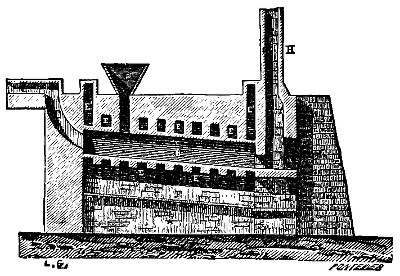
Fig. 85.—Furnace used for the extraction of bismuth from its ores.
In nature, bismuth occurs in only a few localities and in small quantities, most frequently in a native state, and more rarely as oxide and as a compound of bismuth sulphide with the sulphides of other metals, and sometimes in gold ores. It is extracted from its native ores by simple fusion in the furnace shown in fig. 85. This furnace contains an inclined iron retort, into the upper extremity of which the ore is charged, and the molten metal flows from the lower extremity. It is refined by re-melting, and the pure metal may be obtained by dissolving in nitric acid, decomposing the resultant salt with water, and reducing the precipitate by heating it with charcoal. Bismuth is a metal which crystallises very well from a molten state. Its specific gravity is 9·8; it melts at 269°, and if it be melted in a crucible, allowed to cool slowly, and the crust broken and the remaining molten liquid poured out, perfect rhombohedral crystals of bismuth are obtained on the sides of the crucible.[44 bis] It is brittle, has a grey-coloured fracture with a reddish lustre, is not hard, and is but very slightly ductile and malleable; it volatilises at a white heat and easily oxidises. It recalls antimony and lead in many of its properties. When oxidised in air, or when the nitrate is ignited, bismuth forms the oxide, Bi2O3, as a white powder which fuses when heated and resembles massicot. The addition of an excess of caustic potash to a solution of a bismuthous salt gives a white precipitate of the hydroxide, BiO(OH), which loses its water and gives the anhydrous oxide when boiled with a solution of caustic potash. Both the hydroxide and oxide easily dissolve in acids and form bismuthous salts.
Bismuthous oxide, Bi2O3, is a feeble and unenergetic base. The normal hydroxide of the oxide Bi2O3 is Bi(OH)3; it parts with water and forms a metahydroxide (bismuthyl hydroxide), BiO(OH). Both of these hydroxides have their corresponding saline compounds of the composition BiX3 and BiOX. And the form BiOX is nothing else but the type of the basic salt, because 3ROX = RX + R2O3. It is evident that in the type BiX3 the bismuth replaces three atoms of hydrogen. And indeed with phosphoric acid solutions of the bismuthous salts give a precipitate of the composition BiPO4. On the other hand, in the form of compounds BiOX or Bi(OH)2X, the univalent group (BiO) or (BiH2O2) is combined with X. Many bismuth salts are formed according to the type BiOX. For instance the carbonate, (BiO)2CO3, which corresponds with the other carbonates M2CO3. It is obtained as a white precipitate when a solution of sodium carbonate is added to a solution of a bismuth salt.[45] The compound radicle BiO is not a special natural grouping, as it was formerly represented to be; it is simply a mode of expression for showing the relation between the compound in question and the compounds of other oxides.
Three salts of nitric acid are known containing bismuthous oxide. If metallic bismuth or its oxide be dissolved in nitric acid, it forms a colourless transparent solution containing a salt which separates in large transparent crystals containing Bi(NO3)3,5H2O. When heated at 80° these crystals melt in their water of crystallisation, and in so doing lose a portion of their nitric acid together with water, forming a salt whose empirical formula is Bi2N2H2O9. If the preceding salt belongs to the type BiX3, this one should belong to the form BiOX, because it = BiO(NO3) + Bi(H2O2)(NO3). This salt may be heated to 150° without change. When the first colourless crystalline salt dissolves in water it is decomposed. There is no decomposition if an excess of acid be added to the water—that is to say, the salt is able to exist in an acid solution without decomposing, without separation of the so-called basic salt—but by itself it cannot be kept in solution; water decomposes this salt, acting on it like an alkali. In other words the basic properties of bismuthic oxide are so feeble that even water acts by taking up a portion of the acid from it. Here we see one of the most striking facts, long since observed, confirming that action of water on salts about which we have spoken in Chapter X. and elsewhere. This action on water may be expressed thus:—BiX3 + 2H2O = Bi(OH)2X + 2XH. A salt of the type Bi(OH)2X is obtained in the precipitate. But if the quantity of acid, HX, be increased, the salt BiX3 is again formed and passes into solution. The quantity of the salt BiOX which passes into solution on the addition of a given quantity of acid depends indisputably on the amount (mass) of water (Muir). The solution, which is perfectly transparent with a small amount of water, becomes cloudy and deposits the salt of the type BiOX, when diluted. The white flaky precipitate of Bi(OH)2NO3 formed from the normal salt Bi(NO3)3 by mixing it with five parts of water, and in general with a small amount of water, is used in medicine under the name of magistery of bismuth.[46]
Metallic bismuth is used in the preparation of fusible alloys. The addition of bismuth to many metals renders them very hard, and at the same time generally lowers their melting point to a considerable extent. Thus Wood's metal, which contains one part of cadmium, one part of tin, two parts of lead, and four parts of bismuth, fuses at about 60°, and in general many alloys composed of bismuth, tin, lead, and antimony melt below or about the boiling point of water.[47]
Just as in group II., side by side with the elements zinc, cadmium, and mercury in the uneven series, we found calcium, strontium, and barium in the even series; and as in group IV., parallel to silicon, germanium, tin, and lead, we noticed thallium, zirconium, cerium, and thorium; so also in group V. we find, beside those elements of the uneven series just considered by us, a series of analogues in the even series, which, with a certain degree of similarity (mainly quantitative, or relative to the atomic weights), also present a series of particular (qualitative) independent points of distinction. In the even series are known vanadium, which stands between titanium and chromium, niobium, between zirconium and molybdenum, and tantalum, situated near tungsten (an element of group VI. like chromium and molybdenum). Just as bismuth is similar in many respects to its neighbour lead, so also do these neighbouring elements resemble each other, even in their external appearance, not to mention the quality of their compounds, naturally taking into account the differences of type corresponding with the different groups. The occurrence in group V. determines the type of the oxides, R2O3 and R2O5, and the development of an acid character in the higher oxides. The occurrence in the even series determines the absence of volatile compounds, RH3, for these metals, and a more basic character of the oxides of a given composition than in the uneven series, &c.[48] Vanadium, niobium, and tantalum belong to the category of rare metals, and are exceedingly difficult to obtain pure, more especially owing to their similarity to, and occurrence with, chromium, tungsten and other metals, and also in combination among themselves; therefore it is natural that they have been far from completely studied, although since 1860 chemists have devoted not a little time to their investigation. The researches carried out by Marignac, at Geneva, on niobium, and by Sir Henry Roscoe, at Manchester, on vanadium deserve special attention. The undoubted external resemblance of the compounds of chromium and vanadium, as well as the want of completeness in the knowledge of the compounds of vanadium, long caused its oxides to be considered analogous in atomic composition to those formed by chromium. The higher oxide of vanadium was therefore supposed to have the formula VO3. But the fact of the matter is, that the chemical analogy of the elements does not hold in one direction only; vanadium is at one and the same time the analogue of chromium, and consequently of the elements like sulphur of group VI, and also the analogue of phosphorus, arsenic, and antimony; just as bismuth stands in respect to lead and antimony. Investigation has shown that the compounds of vanadium are always accompanied by those of phosphorus as well as of iron, and that it is even more difficult to separate it from the compounds of phosphorus than from those of iron and tungsten. We should have to extend our description considerably if we wished to give the complete history, even of vanadium alone, not to mention niobium and tantalum, all the more as questions would not unfrequently arise concerning the compounds of these elements which have not yet been fully elucidated. We shall therefore limit ourselves to pointing out the most important features in the history of these elements, the more so since the minerals themselves in which they occur are exceedingly rare and only accessible to a few investigators.
An important point in the history of the members of this group is the circumstance that they form volatile compounds with chlorine, similar to the compounds of the elements of the phosphorus group, namely, of the type RX5. The vapour densities of the compounds of this kind were determined, and served as the most important basis for the explanation of the atomic composition of these molecules. In this we see the power of general and fundamental laws, like the law of Avogadro-Gerhardt. An oxychloride, VOCl3, is known for vanadium, which is the perfect analogue of phosphorus oxychloride. It was formerly considered to be vanadium chloride, for just as in the case of uranium (Chapter XXI.), its lower oxide, VO, was considered to be the metal, because it is exceedingly difficultly reduced—even potassium does not remove all the oxygen, besides which it has a metallic appearance, and decomposes acids like a metal; in a word, it simulates a metal in every respect. Vanadium oxychloride is obtained by heating the trioxide, V2O3, mixed with charcoal, in a current of hydrogen; the lower oxide of vanadium is then formed, and this, when heated in a current of dry chlorine, gives the oxychloride VOCl3 as a reddish liquid which does not act on sodium and may be purified by distillation over this metal. It fumes in the air, giving reddish vapours; it reacts on water, forming hydrochloric and vanadic acids; hence, on the one hand it is very similar to phosphorus oxychloride, and on the other hand to chromium oxychloride, CrO2Cl2 (Chapter XXI.). It is of a yellow colour, its specific gravity is 1·83, it boils at 120°, and its vapour density is 86 with respect to hydrogen; therefore the above formula expresses its molecular weight.[49]
Vanadic anhydride, V2O5, is obtained either in small quantities from certain clays where it accompanies the oxides of iron (hence some sorts of iron contain vanadium) and phosphoric acid, or from the rare minerals: volborthite, CuHVO4, or basic vanadate of copper; vanadinite, PbCl23Pb3(VO4)2; lead vanadate, Pb3(VO4)2, &c. The latter salts are carefully ignited for some time with one-third of their weight of nitre; the fused mass thus formed is powdered and boiled in water: the yellow solution obtained contains potassium vanadate. The solution is neutralised with acid, and barium chloride added; a meta-salt, Ba(VO3)2, is then precipitated as an almost insoluble white powder, which gives a solution of vanadic acid when boiled with sulphuric acid. (The precipitate is at first yellow, as long as it remains amorphous, but it afterwards becomes crystalline and white.) The solution thus obtained is neutralised with ammonia, which thus forms ammonium (meta) vanadate, NH4VO3, which, when evaporated, gives colourless crystals, insoluble in water containing sal-ammoniac; hence this salt is precipitated by adding solid sal-ammoniac to the solution. Ammonium vanadate, when ignited, leaves vanadic acid behind. In this it differs from the corresponding chromium salt, which is deoxidised into chromium oxide when ignited. In general, vanadic acid has but a small oxidising action. It is reduced with difficulty, like phosphoric or sulphuric acid, and in this differs from arsenic and chromic acids. Vanadic acid, like chromic acid, separates from its solution as the anhydride V2O5, and not in a hydrous state. Vanadic anhydride, V2O5, forms a reddish-brown mass, which easily fuses and re-solidifies into transparent crystals having a violet lustre (another point of resemblance to chromic acid); it dissolves in water, forming a yellow solution with a slightly acid reaction.[50]
Niobium and tantalum[51] occur as acids in rare minerals, and are mainly extracted from tantalite and columbite, which are found in Bavaria, Finland, North America, and in the Urals. These minerals are composed of the ferrous salts of niobic and tantalic acids; they contain about 15 per cent. of ferrous oxide in isomorphous mixture with manganous oxide, in combination with various proportions of tantalic and niobic anhydrides. These minerals are first fused with a considerable amount of potassium bisulphate, and the fused mass is boiled in water, which dissolves the ferrous and potassium salts and leaves an insoluble residue of impure niobic and tantalic acids. This raw product is then treated with ammonium sulphide, in order to extract the tin and tungsten, which pass into solution. The residue containing the acids (according to Marignac) is then treated with hydrofluoric acid, in which it entirely dissolves, and potassium fluoride is added to the resultant hot solution; on cooling, a sparingly soluble double fluoride of potassium and tantalum separates out in fine crystals, while the much more soluble niobium salt remains in solution. The difference in the solubility of these double salts in water acidified with hydrofluoric acid (in pure water the solution becomes cloudy after a certain time) is so great that the tantalum compound requires 150 parts of water for its solution, and the niobium compound only 13 parts. The Greenland columbite (specific gravity 5·36) only contains niobic acid, and that from Bodenmais, Bavaria (specific gravity 6·06) almost equal quantities of tantalic and niobic acids. Having isolated tantalic and niobic salts, Marignac found that the relation between the potassium and fluorine in them is very variable—that is, that there exist various double salts of fluoride of potassium, and of the fluorides of the metals of this group, but that with an excess of hydrofluoric acid both the tantalum and niobium compounds contain seven atoms of fluorine to two of potassium, whence it must be concluded that the simplest formula for these double salts will be K2RF7 = RF5,2KF; that is, that the type of the higher compounds of niobium and tantalum is RX5, and hence is similar to phosphoric acid. A chloride, TaCl5, may be obtained from pure tantalic acid by heating it with charcoal in a current of chlorine. This is a yellow crystalline substance, which melts at 211°, and boils at 241°; its vapour density with respect to hydrogen is 180, as would follow from the formula TaCl5. It is completely decomposed by water into tantalic and hydrochloric acids. Niobium pentachloride may be prepared in the same manner; it fuses at 194°, and boils at 240°. When treated with water this substance gives a solution containing niobic acid, which only separates out on boiling the solution. Delafontaine and Deville found its vapour density to be 9·3 (air = 1), as is shown by its formula NbCl5.[52]
Footnotes: