Chapter XX · SULPHUR, SELENIUM, AND TELLURIUM
George Kamensky translation
The acid character of the higher oxides RO3 of the elements of group VI. is still more clearly defined than that of the higher oxides of the preceding groups, whilst feeble basic properties only appear in the oxides RO3 of the elements of the even series, and then only for those elements having a high atomic weight—that is, under those two conditions in which, as a rule, the basic characters increase. Even the lower types RO2 and R2O3, &c., formed by the elements of group VI., are acid anhydrides in the uneven series, and only those of the elements of the even series have the properties of peroxides or even of bases.
Sulphur is the typical representative of group VI., both on account of the fact that the acid properties of the group are clearly defined in it, and also because it is more widely distributed in nature than any of the other elements belonging to this group. As an element of the uneven series of group VI., sulphur gives H2S, sulphuretted hydrogen, SO3, sulphuric anhydride, and SO2, sulphurous anhydride. And in all of them we find acid properties—SO3 and SO2 are anhydrides of acids, and H2S is an acid, although a feeble one. As an element sulphur has all the properties of a true non-metal; it has not a metallic lustre, does not conduct electricity, is a bad conductor of heat, is transparent, and combines directly with metals—in short it has all the properties of the non-metals, like oxygen and chlorine. Furthermore, sulphur exhibits a great qualitative and quantitative resemblance to oxygen, especially in the fact that, like oxygen, it combines with two atoms of hydrogen, and forms compounds resembling oxides with metals and non-metals. From this point of view sulphur is bivalent, if the halogens are univalent.[1] The chemical character of sulphur is expressed by the fact that it forms a very slightly stable and feebly energetic acid with hydrogen. The salts corresponding with this acid are the sulphides, just as the oxides correspond to water and the chlorides to hydrochloric acid. However, as we shall afterwards see more fully, the sulphides are more analogous to the former than to the latter. But although combining with metals, like oxygen, sulphur also forms chemically stable compounds with oxygen, and this fact impresses a peculiar character on all the relations of this element.[2]
Sulphur belongs to the number of those elements which are very widely distributed in nature, and occurs both free and combined in various forms. The atmosphere, however, is almost entirely free from compounds of sulphur, although a certain amount of them should be present, if only from the fact that sulphurous anhydride is emitted from the earth in volcanic eruptions, and in the air of cities, where much coal is burnt, since this always contains FeS2. Sea and river water generally contain more or less sulphur in the form of sulphates. The beds of gypsum, sodium sulphate, magnesium sulphate, and the like are formations of undoubtedly aqueous origin. The sulphates contained in the soil are the source of the sulphur found in plants, and are indispensable to their growth. Among vegetable substances, the proteïds always contain from one to two per cent. of sulphur. From plants the albuminous substances, together with their sulphur, pass into the animal organism, and therefore the decomposition of animal matter is accompanied by the odour of sulphuretted hydrogen, as the product into which the sulphur passes in the decomposition of the albuminous substances. Thus a rotten egg emits sulphuretted hydrogen. Sulphur occurs largely in nature, as the various insoluble sulphides of the metals. Iron, copper, zinc, lead, antimony, arsenic, &c., occur in nature combined with sulphur. These sulphides frequently have a metallic lustre, and in the majority of cases occur crystallised, and also very often several sulphides occur combined or mixed together in these crystalline compounds. If they are yellow and have a metallic lustre they are called pyrites. Such are, for example, copper pyrites, CuFeS2, and iron pyrites, FeS2, which is the commonest of all. They are all also known as glances or blendes if they are greyish and have a metallic lustre—for example, zinc blende, lead glance, PbS, antimony glance, Sb2S3, &c. And, lastly, sulphur occurs native. It occurs in this form in the most recent geological formations in admixture with limestone and gypsum, and most frequently in the vicinity of active or extinct volcanoes. As the gases of volcanoes contain sulphur compounds—namely, sulphuretted hydrogen and sulphurous anhydride, which by reacting on one another may produce sulphur, which also frequently appears in the craters of volcanoes as a sublimate—it might be imagined that the sulphur was of volcanic origin. But on a nearer acquaintance with its mode of occurrence, and more especially considering its relation to gypsum, CaSO4, and limestone, the present general opinion leads to the conclusion that the ‘native’ sulphur has been formed by the reduction of the gypsum by organic matter and that its occurrence is only indirectly connected with volcanic agencies. Near Tetush, on the Volga, there are beds containing gypsum, sulphur, and asphalt (mineral tar). In Europe the most important deposits of sulphur are in the south of Sicily from Catania to Girgenti.[3] There are very rich deposits of sulphur in Daghestan near Cherkai and Cherkat in Khyut, near Mount Kanabour-bam, near Petrovsk, and in the Kira Koumski steppes in the Trans-Caspian provinces, which are able to supply the whole of Russia with this mineral. Abundant deposits of sulphur have also been found in Kamtchatka in the neighbourhood of the volcanoes. The method of separation of the sulphur from its earthy impurities is based on the fact that sulphur melts when it is heated. The fusion is carried on at the expense of a portion of the sulphur, which is burnt, so that the remainder may melt and run from the mass of the earth. This is carried on in special furnaces called calcaroni, built up of unhewn stone in the neighbourhood of the mines.[4]
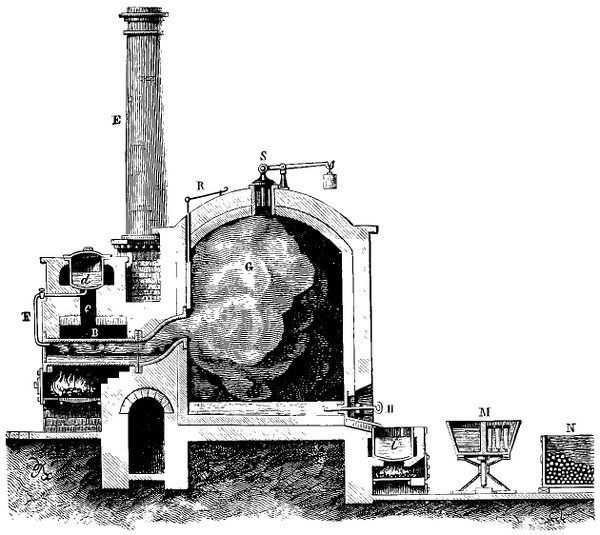
Fig. 86.—Refining sulphur by sublimation.
Sulphur is purified by distillation in special retorts (see fig. 86) by passing the vapour into a chamber G built of stone. The first portions of the vapour entering into the condensing chamber are condensed straightway from the vapour into a solid state, and form a fine powder known as flowers of sulphur.[5] But when the temperature of the receiver attains the melting point of sulphur, it passes into a liquid state and is cast into moulds (like sealing wax), and is then known under the name of roll sulphur.[6]
In an uncombined state sulphur exists in several modifications, and forms a good example of the facility with which an alteration of properties can take place without a change of composition—that is, as regards the material of a substance. Common sulphur has the well-known yellow colour. This colour fades as the temperature falls, and at -50° sulphur is almost colourless. It is very brittle, so that it may be easily converted into a powder, and it presents a crystalline structure, which, by the way, shows itself in the unequal expansion of lumps of sulphur by heat. Hence when a piece of sulphur is heated by the warmth of the hand, it emits sounds and sometimes cracks, which probably also depends on the bad heat-conducting power of this substance. It is easily obtained in a crystalline form by artificial means, because although insoluble in water it dissolves in carbon bisulphide, and in certain oils.[7] Solutions of sulphur in carbon bisulphide when evaporated at the ordinary temperature yield well-formed transparent crystals of sulphur in the form of rhombic octahedra, in which form it occurs native. The specific gravity of these crystals is 2·045. Fused sulphur, cast into moulds and cooled, has, after being kept a long time, a specific gravity 2·066; almost the same as that of the crystalline sulphur of the above form, which shows that common sulphur is the same as that which crystallises in octahedra. The specific heat of octahedral sulphur is 0·17; it melts at 114°, and forms a bright yellow mobile liquid. On further heating, the fused sulphur undergoes an alteration, which we shall presently describe, first observing that the above octahedral state of sulphur is its most stable form. Sulphur may be kept at the ordinary temperature in this form for an indefinite length of time, and many other modifications of sulphur pass into this form after being left for a certain time at ordinary temperature.
If sulphur be melted and then slightly cooled, so that it forms a crust on the surface and over the sides of the crucible, while the internal mass remains liquid, then the sulphur takes another crystalline form as it solidifies. This may be seen by breaking the crust, and pouring out the remaining molten sulphur.[8] It is then found that the sides of the crucible are covered with prismatic crystals of the monoclinic system; they have a totally different appearance from the above-described crystals of rhombic sulphur. The prismatic crystals are brown, transparent, and less dense than the crystals of rhombic sulphur, their specific gravity being only 1·93, and their melting point higher—about 120°. These crystals of sulphur cannot be kept at the ordinary temperature, which is indeed evident from the fact that in time they turn yellow; the specific gravity also changes, and they pass completely into the ordinary modification. This is accompanied by a considerable development of heat, so that the temperature of the mass may rise 12°. Thus sulphur is dimorphous—that is, it exists in two crystalline forms, and in both forms it has independent physical properties. However, no chemical reactions are known which distinguish the two modifications of sulphur, just as there are none distinguishing aragonite from calcspar.[9]
If molten sulphur be heated to 158° it loses its mobility and becomes thick and very dark-coloured, so that the crucible in which it is heated may be inverted without the sulphur running out. When heated above this temperature the sulphur again becomes liquid, and at 250° it is very mobile, although it does not acquire its original colour, and at 440° it boils. These modifications in the properties of sulphur depend not only on the variations of temperature, but also on a change of structure. If sulphur, heated to about 350°, be poured in a thin stream into cold water, it does not solidify into a solid mass, but retains its brown colour and remains soft, may be stretched out into threads, and is elastic, like guttapercha. But in this soft and ductile state, also, it does not remain for a long time. After the lapse of a certain period this soft transparent sulphur hardens, becomes opaque, passes into the ordinary yellow modification of sulphur, and in so doing develops heat, just as in the conversion of the prismatic into the octahedral variety. The soft sulphur is characterised by the fact that a certain portion of it is insoluble in carbon bisulphide. When soft sulphur is immersed in this liquid, only a portion of common sulphur passes into solution, whilst a certain portion is quite insoluble and remains so for a long time. The maximum proportion of insoluble sulphur is obtained by heating slightly above 170°. It melts at 114°. An exactly similar insoluble amorphous sulphur is obtained in certain reactions in the wet way, when sulphur separates out from solutions. Thus sodium thiosulphate, Na2S2O3, when treated with acids, gives a precipitate of sulphur, which is insoluble in carbon bisulphide. The action of water on sulphur chloride also gives a similar modification of sulphur. Certain sulphides, when treated with nitric acid, also yield sulphur in this form.[10]
At temperatures of 440° to 700° the vapour density of sulphur is 6·6 referred to air—i.e. about 96 referred to hydrogen. Hence, at these temperatures the molecule of sulphur contains six atoms, it has the composition S6. The agreement between the observations of Dumas, Mitscherlich, Bineau, and Deville confirms the accuracy of this result. But in this respect the properties of sulphur were found to be variable. When heated to higher temperatures, that is to say, above 800°, the vapour density of sulphur is found to be one-third of this quantity, i.e. about 32 referred to hydrogen. At this temperature the molecule of sulphur, like that of hydrogen, oxygen, nitrogen, and chlorine, contains two atoms; hence the molecular formula is then S2. This variation in the vapour density of sulphur evidently corresponds with a polymeric modification, and may be likened to the transformation of ozone, O3, into oxygen, O2, or better still, of benzene, C6H6, into acetylene, C2H2.[11]
In its faculty for combination, sulphur most closely resembles oxygen and chlorine; like them, it combines with nearly all elements, with the development of heat and light, forming sulphur compounds, but as a rule this only takes place at a high temperature. At the ordinary temperature it does not enter into reactions, owing, amongst other things, to the fact that it is a solid. In a molten state it acts on most metals and on the halogens. It burns in air at about 300°, and with carbon at a red heat, but it does not combine with nitrogen.
Fine wires, or the powders of the greater number of metals, burn in the vapour of sulphur. The direct combination of hydrogen with sulphur is restricted by a limit—that is, at a given temperature and under other given conditions it does not proceed unrestrictedly; there is no explosion or recalescence. Sulphuretted hydrogen, H2S, decomposes at its temperature of combination—that is, it is easily dissociated.[12] The same phenomenon is repeated here as with water, except that the temperatures at which the attraction of hydrogen for sulphur begins and ceases are much lower than in the case of oxygen and hydrogen. The temperature at which combination takes place is here, as in many other instances, nearly the same as that at which dissociation begins. Hence sulphuretted hydrogen is formed in a small quantity by the direct ignition of a mixture of the vapour of sulphur and hydrogen. However, the temperature must not be high, because otherwise the whole of the sulphuretted hydrogen is decomposed; but at lower temperatures a small amount of sulphuretted hydrogen is formed by direct combination.[13] Sulphuretted hydrogen however, like all other hydrogen compounds, may be easily obtained by the double decomposition of its corresponding metallic compounds, the replacement of the metal by hydrogen being effected by the action of acids on the sulphides. The metallic sulphides are, as a rule, easily formed. A sulphide, when mixed with a non-volatile acid, may give, by double decomposition, a salt of the acid taken and sulphuretted hydrogen, M2S + H2SO4 = H2S + M2SO4. However, it is not all sulphides nor solutions of all acids that will evolve sulphuretted hydrogen, which fact is exceedingly characteristic, because, for example, all carbonates evolve carbonic anhydride when treated with any acid. Sulphuric acid will only evolve sulphuretted hydrogen from those sulphides which contain a metal capable of decomposing the acid with the evolution of hydrogen. Thus zinc, iron, calcium, magnesium, manganese, potassium, sodium, &c., form sulphides which evolve sulphuretted hydrogen when treated with sulphuric acid, and the metals themselves evolve hydrogen with acids.[14] The sulphides of those metals which do not liberate hydrogen from acids do not generally act on acids—that is, do not form sulphuretted hydrogen with them; such are, for example, the sulphides of lead, silver, copper, mercury, tin, &c. Therefore, the modus operandi of the formation of sulphuretted hydrogen by the action of acids on metallic sulphides may be looked on as a phenomenon of the combination of hydrogen, at the moment of its evolution, with the sulphur, which is combined with the metal. Such a representation is all the more simple as all the circumstances under which sulphuretted hydrogen is formed are exactly similar to the conditions of the formation of hydrogen itself. Thus the usual mode of preparing sulphuretted hydrogen is by the action of sulphuric acid on ferrous sulphide, in which the same apparatus and method are employed as in the preparation of hydrogen, only replacing the metallic iron or zinc by ferrous sulphide or zinc sulphide. The reaction between sulphide of iron and sulphuric acid takes place at the ordinary temperature, and is accompanied by just as small a development of heat as in the liberation of hydrogen itself, FeS + H2SO4 = FeSO4 + H2S.[15]
In nature sulphuretted hydrogen is formed in many ways. The most usual mode of its formation is by the decomposition of albuminous substances containing sulphur, as mentioned above. Another method is by the reducing action of organic matter on sulphates, and by the action of water and carbonic acid on the sulphides formed by this reduction. Volcanic eruptions are a third source of sulphuretted hydrogen in nature. Although sulphuretted hydrogen is formed in small quantities everywhere, it nevertheless soon disappears from the atmosphere, owing to its being easily decomposed by oxidising agencies. Many mineral waters contain sulphuretted hydrogen, and smell of it; they are called ‘sulphur waters.’
Sulphuretted hydrogen, at the ordinary temperature, is a colourless gas, having a very unpleasant odour. It has, as its composition H2S shows, a specific gravity seventeen times greater than hydrogen, and therefore it is somewhat heavier than air. Sulphuretted hydrogen liquefies at about -74°, and at the ordinary temperature when subjected to a pressure of 10 to 15 atmospheres; at -85° it is converted into a solid crystalline mass.[15 bis] The easy liquefaction of sulphuretted hydrogen is evidently allied to its solubility. One volume of water at 0° dissolves 4·37 volumes of sulphuretted hydrogen, at 10° 3·58 volumes, and at 20° 2·9 volumes.[16] The solutions impart a very feeble red coloration to litmus paper. This gas is poisonous. One part in fifteen hundred parts of air will kill birds. Mammalia die in an atmosphere containing 1⁄200 of this gas.
Sulphuretted hydrogen is very easily decomposed into its component parts by the action of heat or a series of electric sparks. Hence it is not surprising that sulphuretted hydrogen undergoes change under the action of many substances having a considerable affinity for hydrogen and oxygen. Very many metals[17] evolve hydrogen with sulphuretted hydrogen, so that in this respect it presents the property of an acid; for instance, 2H2S + Sn = 2H2 + SnS2. This may be taken advantage of for determining the composition of sulphuretted hydrogen, because a given volume then leaves the same volume of hydrogen. On the other hand, oxygen,[18] chlorine,[19] and even iodine decompose sulphuretted hydrogen, removing the hydrogen from it and leaving free sulphur, so that in this reaction the sulphur is replaced by the above-named elements; for example, H2S + Br2 = 2HBr + S. In no other hydrogen compound is it so easy to show the substitution, both of hydrogen and of the element combined with it, as in hydrogen sulphide. This clearly proves the feeble union between the elements forming this gas. Compounds containing a considerable amount of oxygen, with which they easily part, can accomplish the separation of the sulphur very easily. Such are, for instance, nitrous acid, chromic acid, and even ferric oxide and the higher oxides like it. Thus, if sulphuretted hydrogen be passed into a solution of chromic acid or an acid solution of ferric oxide, water is formed, and the sulphur is separated in a free state. Thus, sulphuretted hydrogen acts as a reducing agent, in virtue of the hydrogen it contains. Salts of iodic, chlorous, chloric, and other acids are reduced by sulphuretted hydrogen, their oxygen acting mainly on its hydrogen; but in the presence of an excess of a powerful oxidising agent a portion of the sulphur may also be oxidised to sulphurous anhydride. The reducing action of sulphuretted hydrogen is frequently applied in chemical manipulations for the preparation of lower oxides, and for the conversion of certain oxygen compounds into hydrogen compounds: thus, the higher oxides of nitrogen are converted into ammonia by it, and in the presence of alkalis the nitro-compounds are converted into ammonia derivatives. The reaction of sulphuretted hydrogen on sulphurous anhydride belongs to this class of phenomena, the chief products of which are sulphur and water, 2H2S + SO2 = 2H2O + S3.
The acid character of sulphuretted hydrogen is clearly seen in its action on alkalis and salts.[19 bis] Thus lead oxide and its salts in the presence of sulphuretted hydrogen form water or an acid, and sulphide of lead: PbX2 + H2S = PbS + 2HX. This reaction takes place even in the presence of powerful acids, because lead sulphide is one of those sulphides which are unacted on by acids, and in solutions the reaction is a complete one. This reaction is taken advantage of for the preparation of many acids, by first converting into a lead salt, and then submitting this salt to the action of sulphuretted hydrogen. For example, lead formate with sulphuretted hydrogen gives formic acid. Sulphuretted hydrogen in acting on a number of metallic acid substances in solution or in an anhydrous state also forms corresponding sulphates: (1) if it does not reduce the acid; (2) if the sulphur compound corresponding with the anhydride of the acid be insoluble in water, the reaction proceeds in solutions; (3) if the sulphuretted hydrogen and the acid taken do not come in contact with an alkali, on which they would be able to act first; and (4) if the sulphur compound be not decomposed by water. Thus solutions of arsenious acid give a precipitate of arsenious sulphide, As2S3, with sulphuretted hydrogen. This reaction proceeds not only in the presence of water, but also of acids, because the latter do not decompose the resultant sulphur compounds. The type of the decomposition is the same as with bases—that is, the sulphur and oxygen change places: ROn+nH2S = RSn + nH2O. Some sulphides corresponding with acid anhydrides are decomposed by water, and therefore are not formed in the presence of water. Such, for example, are the sulphides of phosphorus.[20]
The metallic sulphides corresponding with the metallic oxides have either a feeble alkaline or a feeble acid character, according to the character of the corresponding oxide, and therefore by combining together they are able to form saline substances—that is, salts in which the oxygen is replaced by sulphur. Thus sulphuretted hydrogen having the properties of a feeble acid[21] has, at the same time, the properties of water, and forms the type of the sulphur derivatives, which may also be formed by means of sulphuretted hydrogen, just as the oxides may be formed by the aid of water. But as sulphuretted hydrogen has acid properties, it combines more easily with the basic metallic sulphides. Hence, for instance, there exists a compound of sulphuretted hydrogen with potassium sulphide, potassium hydrosulphide, 2KHS = K2S + H2S, just as there are potassium hydroxides; but there are scarcely any compounds of sulphuretted hydrogen with the sulphides corresponding with acids. Thus the sulphides of the metals may be regarded either as salts of sulphuretted hydrogen or as oxides of the metals in which the oxygen is replaced by sulphur. In general terms the sulphides exhibit the same degrees of difference with respect to their solubility in water as do the oxides. Thus the oxides of the alkali metals, and of some of the metals of the alkaline earths, are soluble in water, whilst those of nearly all the other metals are insoluble. The same may be said as to the sulphides; the sulphides of the metals of the alkalis and certain of the alkaline earths are soluble in water, whilst those of the other metals are insoluble. Those metals, like aluminium, whose oxides—for example, Al2O3—have intermediate properties and do not form compounds with feeble acids, at least in a wet way, also do not form sulphides by this method, although these may be obtained indirectly. And in general the sulphides of the metals are easily formed in a wet way, and with particular ease if they are insoluble in water. In this case their salts enter into double decomposition with sulphuretted hydrogen, or with soluble sulphides, and give an insoluble sulphide—for instance, a salt of lead gives lead sulphide with sulphuretted hydrogen. By the action of sulphuretted hydrogen on a salt of a metal, a free acid must be formed besides the metallic sulphide. Thus if a metal M be in a state of combination MX2, then by the action of sulphuretted hydrogen there will be formed, besides MS,[22] an acid 2HX. It is evident that sulphuretted hydrogen will not precipitate an insoluble sulphide from the salts of those metals whose sulphides react with free acid, such as zinc, iron, manganese, &c. The reaction FeCl2 + H2S = FeS + 2HCl, and the like, do not take place because the acid acts on the ferrous sulphide. Antimonious sulphide is not acted on by dilute hydrochloric acid, but it is decomposed by strong acid, and therefore in presence of an excess of hydrochloric acid antimonious chloride does not entirely react with hydrogen sulphide, whilst the reaction 2SbCl3 + 3H2S = Sb2S3 + 6HCl is a complete one in a dilute solution and with a small quantity of acid. Those metallic sulphides which are decomposed by acids may be obtained in a wet way by the double decomposition of the salts of the metals, not with hydrogen sulphide, but with soluble metallic sulphides, such as sulphide of ammonium or of potassium, because then no free acid is formed, but a salt of the metal (potassium or ammonium) which was taken as a soluble sulphide. So, for example, FeCl2 + K2S = FeS + 2KCl.[23]
Metallic sulphides may be obtained by many other means besides the action of sulphuretted hydrogen on salts and oxides, or by the simple combination of metals with sulphur when heated or fused. Thus they may also be formed by the reduction of sulphates by heating them with charcoal or other means. Charcoal takes up the oxygen from many sulphates, leaving corresponding sulphides. Thus sodium sulphate, Na2SO4, when heated with charcoal, forms sodium sulphide, Na2S. Besides which metallic sulphides are also obtained by heating metals or their oxides in the vapours of many sulphur compounds—for example, in the vapour of carbon bisulphide, CS2, when the carbon takes up the oxygen and the sulphur combines with the metal. The sulphides formed in this manner are often crystalline, and often appear with those properties and in that crystalline form in which they occur in nature. Besides which we must mention that many of the sulphides of the metals are oxidised in air at the ordinary, and especially at a higher, temperature, forming either SO2 and the oxide of the metal or sulphates. This oxidation proceeds with particular ease, even at the ordinary temperature, when a metallic sulphide is precipitated from its solutions, as a fine powder containing water. The sulphides of iron and manganese, &c., are very easily oxidised in this manner. But if these hydrates be ignited, they lose their water (the ignition must be carried on in a stream of hydrogen to prevent their oxidation during the process), become denser, and are no longer oxidised at the ordinary temperature. Those sulphides whose corresponding sulphates are decomposed by heat part with their sulphur in the form of sulphurous anhydride when they are ignited in air, and the metal, as a rule, remains behind as oxide. This is taken advantage of in the treatment of sulphurous ores. The process is called roasting.
Hydrogen not only forms sulphuretted hydrogen with sulphur, but it also combines with it in several other proportions, just as it combines with oxygen, forming not only water but also hydrogen peroxide. Moreover these polysulphides of hydrogen are also unstable, like hydrogen peroxide, and are also obtained from the corresponding polysulphides of the metals of the alkaline earths, just as hydrogen peroxide is obtained from barium peroxide. Thus calcium forms not only calcium sulphide, CaS, but also as bi-, tri-, and pentasulphide, CaS5, and all these compounds are soluble in water. Sodium also combines with sulphur in the same proportions, forming sulphides from Na2S to Na2S5. If an acid be added to a solution of a polysulphide, it gives sulphur, sulphuretted hydrogen, and a salt of the metal. For instance, MS5, + 2HCl = MCl2 + H2S + 4S. If we reverse the operation, and pour a solution of a polysulphide into an acid, sulphur is not precipitated, but an oily liquid is formed which is heavier than water and insoluble in it. This is the polysulphide of hydrogen: MS5 + 2HCl = MCl2 + H2S5. As Rebs showed (1888), whatever polysulphide be taken—of sodium, for instance—it always gives one and the same hydrogen pentasulphide,[24] of specific gravity 1·71 (15°). It can only be preserved in the absence of water and at low temperatures, and then not for long: for, especially in the presence of alkalis and when slightly warmed, it splits up very easily into sulphuretted hydrogen and sulphur.[25]
The soluble sulphides and polysulphides of the metals of the alkalis and alkaline earths—for example, of ammonium,[26] potassium,[27] and calcium,[28]—have the appearance and properties of salts, just as the hydrated oxides have, whilst the sulphides of the metals of the higher groups resemble their oxides and have not at all the appearance of salts, and this is more especially the case with regard to the crystalline forms in which they frequently occur in nature.[29]
As the acids derived from chlorine, phosphorus, and carbon are the oxidised hydrogen compounds of these elements, so also we can form an idea of the acid hydrates of sulphur, or of the normal acids of sulphur, by representing them as the oxidised products of sulphuretted hydrogen—
HCl H2S H3P H4C
HClO H2SO(?) H3PO(?) H4CO
HClO2 H2SO2(?) H3PO2 H4CO2
HClO3 H2SO3 H3PO3 H4CO3
HClO4 H2SO4 H3PO4 H4CO4[30]
In the case of chlorine, if not all the hydrates, at all events salts of all the normal hydrates are known, whilst in the case of sulphur only the acids H2S, H2SO3 and H2SO4 are known. But, on the other hand, the latter are obtained not only as hydrates but also as stable anhydrides, SO2 and SO3, which are formed with the evolution of heat from sulphur and oxygen; 32 parts of sulphur in combining with 32 parts of oxygen—that is, in forming SO2—evolve 71,000 heat units,[31] and if the oxidation proceeds to the formation of SO3, 103,000 heat units are evolved. These figures may be compared with those which correspond with the passage of carbon into CO and CO2, when 29,000 and 97,000 units of heat are evolved. This determines the stability of the higher oxides of sulphur, and also expresses the peculiarity of sulphur as an element which, although an analogue of oxygen, forms stable compounds with it, and thus fundamentally differs from chlorine. The higher and lower oxides of chlorine are powerful oxidising agents, whilst the higher oxide of sulphur, SO3, has but feeble oxidising powers, and the lower oxide, SO2, frequently acts as a reducing agent, and is formed by the direct combustion of sulphur, just as carbonic anhydride, CO2, proceeds from the combustion of carbon. In the combustion of sulphur, and also in the oxidation (roasting) of the sulphides and polysulphides by their ignition in air, sulphurous oxide, or sulphurous anhydride, or sulphur dioxide, SO2,[31 bis] is exclusively formed. It is prepared on a large scale by burning sulphur or roasting iron pyrites or other sulphides[32] for the manufacture of sulphuric acid (Chapter VI.), and for direct application in the manufacture of wine or for bleaching tissues and other purposes. In the latter instances its application is based on the fact that sulphurous anhydride acts on certain vegetable matters, and has the property of a reducing and feeble acid.[32 bis]
In the laboratory—that is, on a small scale—sulphurous anhydride is best prepared by deoxidising sulphuric acid by heating it with charcoal, or copper, sulphur, mercury, &c. Charcoal produces this decomposition of sulphuric acid at but moderately high temperatures; it is itself converted into carbonic anhydride,[32 tri] and therefore when sulphuric acid is heated with charcoal it evolves a mixture of sulphurous and carbonic anhydrides: C + 2H2SO4 = CO2 + 2SO2 + 2H2O. The metals which are unable to decompose water, and which do not, therefore, expel hydrogen from sulphuric acid, are frequently capable of decomposing sulphuric acid, with the evolution of sulphurous anhydride, just as they decompose nitric acid, forming the lower oxides of nitrogen. These metals are silver, mercury, copper, lead, and others. Thus, for example, the action of copper on sulphuric acid may be expressed by the following equation: Cu + 2H2SO4 = CuSO4 + SO2 + 2H2O. In the laboratory this reaction is carried on in a flask with a gas-conducting tube, and does not take place unless aided by heat.[33]
In its physical and chemical properties sulphurous anhydride presents a great resemblance to carbonic anhydride. It is a heavy gas, somewhat considerably soluble in water, very easily condensed into a liquid; it forms normal and acid salts, does not evolve oxygen under the direct action of heat,[34] although such metals as sodium and magnesium burn in it, just as in carbonic anhydride. It has a suffocating odour, which is well known owing to its being evolved when sulphur or sulphur matches are burnt. In characterising the properties of sulphurous anhydride, it is very important to remember (Chapter II.) also that it is more easily liquefied (at -10°, or at 0° under two atmospheres pressure) than carbonic anhydride (thirty-six atmospheres at 0°),[35] that it is more soluble than carbonic anhydride (Vol. I. p. 79); at 0°, 100 vols. of water dissolve 180 vols. of carbonic anhydride and 688 vols. of sulphuric anhydride), that the molecular weight of SO2 = 64 and of CO2 = 44, and that the density of liquid sulphurous anhydride at 0° = 1·43 (molecular volume = 45) and of carbonic anhydride = 0·95 (molecular volume = 49). Although sulphur dioxide is the anhydride of an acid, nevertheless, like carbonic anhydride, it does not form any stable compounds with water, but gives a solution from which it may be entirely expelled by the action of heat.[36] The acid character of sulphurous anhydride is clearly expressed by the fact that it is entirely absorbed by alkalis, with which it forms acid and normal salts easily soluble in water. With salts of barium, calcium, and the heavy metals, the normal salts of the alkalis, M2SO3, give precipitates exactly like those formed by the carbonates. In general, the salts of sulphurous acid are closely analogous to the corresponding carbonates.
Acid sodium sulphite, NaHSO3, may be obtained by passing sulphurous anhydride into a solution of sodium hydroxide. It is also formed by saturating a solution of sodium carbonate with the gas (carbonic anhydride is then given off), and as the solubility of the acid sulphite is much greater than that of the carbonate, a further quantity of the latter may be dissolved after the passage of the sulphurous anhydride, so that ultimately a very strong solution of the sulphite may be formed in this manner, from which it may be obtained in a crystalline form, either by cooling and evaporating (without heating, for then the salt would give off sulphurous anhydride) or by adding alcohol to the solution. When exposed to the air this salt loses sulphurous anhydride and attracts oxygen, which converts it into sodium sulphate. The acid sulphites of the alkali metals are able to combine not only with oxygen, but also with many other substances—for example, a solution of the sodium salt dissolves sulphur, forming sodium thiosulphate, gives crystalline compounds with the aldehydes and ketones, and dissolves many bases, converting them into double sulphites. Having the faculty of attracting or absorbing oxygen, acid sodium sulphite is also able to absorb chlorine, and is therefore employed, like sodium thiosulphate, for the removal of chloride (as an antichlor), especially in the bleaching of fabrics, when it is necessary to remove the last traces of the chlorine held in the tissues, which might otherwise have an injurious effect on them. If a solution of an alkali hydroxide be divided into two parts, and one half is saturated with sulphurous anhydride, and then the other half added to it, a normal salt will be obtained in the solution, having an alkaline reaction, like a solution of sodium carbonate. The acid salt has a neutral reaction.[36 bis] Like sodium carbonate, normal sodium sulphite has the composition Na2SO3,10H2O, and its maximum solubility is at 33°—in a word, it very closely resembles sodium carbonate. Although this salt does not give off sulphurous anhydride from its solution, it is able, like the acid salt, to absorb oxygen from the air, and is then converted into sodium sulphate.[37]
Besides the acid character we must also point out the reducing character of sulphurous anhydride. The reducing action of sulphurous acid, its anhydride and salts, is due to their faculty of passing into sulphuric acid and sulphates. The reducing action of the sulphites is particularly energetic, so that they even convert nitric oxide into nitrous oxide: K2SO3 + 2NO = K2SO4 + N2O. The salts of many of the higher oxides are converted into those of the lower—for example, FeX3 into FeX2, CuX2 into CuX, HgX2 into HgX; thus 2FeX3 + SO2 + 2H2O = 2FeX2 + H2SO4 + 2HX. In the presence of water, sulphurous anhydride is oxidised by chlorine (SO2 + 2H2O + Cl2 = H2SO4 + 2HCl), iodine, nitrous acid, hydrogen peroxide, hypochlorous acid, chloric acid, and other oxygen compounds of the halogens, chromic, manganic, and many other metallic acids and higher oxides, as well as all peroxides. Free oxygen in the presence of spongy platinum is able to oxidise sulphurous anhydride even in the absence of water, in which case sulphuric anhydride SO3 is formed, so that the latter may be prepared by passing a mixture of sulphurous anhydride and oxygen over incandescent spongy platinum, or, as it is now prepared on a large scale in chemical works, by passing this mixture over asbestos or pumice stone moistened with a solution of platinum salt and ignited. Sulphurous anhydride is completely absorbed by certain higher oxides—for instance, by barium peroxide and lead dioxide (PbO2 + SO2 = PbSO4).[38]
There are, however, cases where sulphurous anhydride acts as an oxidising agent—that is, it is deoxidised in the presence of substances which are capable of absorbing oxygen with still greater energy than the sulphurous anhydride itself. This oxidising action proceeds with the formation of sulphuretted hydrogen or of sulphides, while the reducing agent is oxidised at the expense of the oxygen of the sulphurous anhydride. In this respect, the action of stannous salts is particularly remarkable. Stannous chloride, SnCl2, in an aqueous solution gives a precipitate of stannic sulphide, SnS2, with sulphurous anhydride—that is, the latter is deoxidised to sulphuretted hydrogen, while SnX2 is oxidised into SnX4. A solution of sulphurous anhydride has also an oxidising action on zinc. The zinc passes into solution, but no hydrogen is evolved,[39] because a salt of hydrosulphurous acid, ZnS2O4, is formed. The free acid is still less stable than the salt.
The faculty of sulphurous anhydride of combining with various substances is evident from the above-cited reactions, where it combines with hydrogen and with oxygen, and this faculty also appears in the fact that, like carbonic oxide, it combines with chlorine, forming a chloranhydride of sulphuric acid, SO2Cl2, to which we shall afterwards return. The same faculty for combination also appears in the salts of sulphurous acid, in their liability to oxidation and in the exceedingly characteristic formation of a peculiar series of salts obtained by Pelouze and Frémy. At a temperature of -10° or below, nitric oxide NO is absorbed by alkaline solutions of the alkali sulphites, forming a peculiar series of nitrosulphates. At a higher temperature these salts are not formed but the nitric oxide is reduced to nitrous oxide. But in the cold the liquid saturated with nitric oxide after a certain time gives prismatic crystals resembling those of nitre. The composition of the potassium salt is K2SN2O3—that is, the salt contains the elements of potassium sulphite and of nitric oxide.[40]
There are also several other substances, formed by the oxides of nitrogen and sulphur, which belong to this class of complex and, under some circumstances, unstable compounds. In the manufacture of sulphuric acid, both these classes of oxides come into contact with each other in the lead chambers, and if there be insufficient water for the formation of sulphuric acid they give crystalline compounds, termed chamber crystals. As a rule, the composition of the crystals is expressed by the formula NHSO3. This is a compound of the radicles NO2 of nitric acid, and HSO3 of sulphuric acid, or nitro-sulphuric acid, NO2.SHO3, if sulphuric acid be expressed as OH.SHO3 and nitric by NO2.OH. The tabular crystals of this substance fuse at about 70°, are formed both by the direct action of nitrous anhydride or nitric peroxide (but not NO, which is not absorbed by sulphuric acid) on sulphuric acid (Weltzien and others), and especially on sulphuric acid containing an anhydride and the lower oxides of sulphur and nitric acid.[41]
Thiosulphuric acid, H2S2O3—that is, a compound of sulphurous acid and sulphur—also belongs to the products of combination of sulphurous acid. In the same way that sulphurous acid, H2SO3, gives H2SO4 with oxygen, so it gives H2S2O3 with sulphur. In a free state it is very unstable, and it is only known in the form of its salts proceeding from the direct action of sulphur on the normal sulphites; if endeavours be made to separate it in a free state, it immediately splits up into those elements from which it might be formed—that is, into sulphur and sulphurous acid. The most important of its salts is the sodium thiosulphate (known as hyposulphite), Na2S2O3,5H2O, which occurs in colourless crystals, and is unacted on by atmospheric oxygen either when in a dry state or in solution. Many other salts of this acid are easily formed by means of this salt,[41 bis] although this cannot be done with all bases, for such bases as alumina, ferric oxide, chromium oxide, and others do not give compounds with thiosulphuric acid, just as they do not form stable compounds with carbonic acid. Whenever these salts might be formed, they (like the acid) split up into sulphurous acid and sulphur, and furthermore the elements of thiosulphuric acid in many cases act in a reducing manner, forming sulphuric acid and taking up the oxygen from reducible oxides. Thus when treated with a thiosulphate the soluble ferric salts give a precipitate of sulphur and form ferrous salts. The thiosulphates of the metals of the alkalis are obtained directly by boiling a solution of their sulphites with sulphur: Na2SO3 + S = Na2S2O3. The same salts are formed by the action of sulphurous anhydride on solutions of the sulphides; thus sodium sulphide dissolved in water gives sulphur and sodium thiosulphate when a stream of sulphurous anhydride is passed through it: 2Na2S + 3SO2 = 2Na2S2O3 + S. The polysulphides of the alkali metals when left exposed to the air attract oxygen and also form thiosulphates.[42]
Although sulphur, oxidising at a high temperature, only forms a small quantity of sulphuric anhydride, SO3, and nearly all passes into sulphurous anhydride, still the latter may be converted into the higher oxide, or sulphuric anhydride, SO3, by many methods. Sulphuric anhydride is a solid crystalline substance at the ordinary temperature; it is easily fusible (15°), and volatile (46°), and rapidly attracts moisture. Although it is formed by the combination of sulphurous anhydride with oxygen, it is capable of further combination. Thus it combines with water, hydrochloric acid, ammonia, with many hydrocarbons, and even with sulphuric acid, boric and nitrous anhydrides, &c., and also with bases which burn directly in its vapour, forming sulphates in the presence of traces of moisture (see Chapter IX., Note 29). The oxidation of sulphurous anhydride, SO2, into sulphuric anhydride, SO3, is effected by passing a mixture of the former and dry oxygen or air over incandescent spongy platinum. An increase of pressure accelerates the reaction (Hanisch). If the product be passed into a cold vessel, crystalline sulphuric anhydride is deposited upon the sides of the vessel, but as it is difficult to avoid all traces of moisture it always contains compounds of its hydrates: H2S2O7 and H2S4O13, whose presence so modifies the properties of the anhydride (Weber) that formerly two modifications of the anhydride were recognised. The same sulphuric anhydride may be obtained from certain anhydrous sulphates, or those which are almost so, which are decomposed by heat, whilst an impure but perfectly anhydrous anhydride is formed by distillation over phosphoric anhydride. For instance, acid sodium sulphate, NaHSO4, and the pyro- or di-sulphate, Na2S2O7 (Chapter XII.) formed from it, when ignited evolve sulphuric anhydride. Green vitriol—that is, ferrous sulphate, FeSO4—belongs to the number of those sulphates which easily give off sulphuric anhydride under the action of heat. It contains water of crystallisation and parts with it when it is heated, but the last equivalent of water is driven off with difficulty, just as is the case with magnesium sulphate, MgSO47H2O; however, when thoroughly heated, this evolution of sulphuric anhydride does take place, although not completely, because at a high temperature a portion of it is decomposed by the ferrous oxide (SO3 + 2FeO), which is converted into ferric oxide, Fe2O3, and in consequence part of the sulphuric anhydride is converted into sulphurous anhydride. Thus the products of the decomposition of ferrous sulphate will be: ferric oxide, Fe2O3, sulphurous anhydride, SO2, and sulphuric anhydride, SO3, according to the equation: 2FeSO4 = Fe2O3 + SO2 + SO3. As water still remains with the ferrous sulphate when it is heated, the result will partially consist of the hydrate H2SO4, with anhydride, SO3, dissolved in it. Sulphuric acid was for a long time prepared in this manner; the process was formerly carried on on a large scale in the neighbourhood of Nordhausen, and hence the sulphuric acid prepared from ferrous sulphate is called fuming Nordhausen acid. At the present time the fuming acid is prepared by passing the volatile products of the decomposition of ferrous sulphate through strong sulphuric acid prepared by the ordinary method. The sulphurous anhydride is insoluble in it, but it absorbs the sulphuric anhydride. Sulphuric anhydride may be prepared not only by igniting FeSO4 or sodium pyrosulphate, Na2S2O7 (the decomposition proceeds at 600°), but also by heating a mixture of the latter and MgSO4 (Walters); in the former case a stable double salt MgNa2(SO4)2 finally remains. It is also obtained by the direct combination of SO2 and O under the action of spongy platinum or asbestos coated with platinum black (C. Winkler's process). Nordhausen sulphuric acid fumes in air, owing to its containing and easily giving off sulphuric anhydride, and it is therefore also called fuming sulphuric acid; these fumes are nothing but the vapour of sulphuric anhydride combining with the moisture in the air and forming non-volatile sulphuric acid (hydrate).[43]
Nordhausen sulphuric acid contains a peculiar compound of SO3 and H2SO4, or pyrosulphuric acid; an imperfect anhydride of sulphuric acid, H2S2O7, analogous in composition with the salts Na2S2O7, K2Cr2O7, and bearing the same relation to H2SO4 that pyrophosphoric acid does to H3PO4. The bond holding the sulphuric acid and anhydride together is unstable. This is obvious from the fact that the anhydride may easily be separated from this compound, by the action of heat. In order to obtain the definite compound, the Nordhausen acid is cooled to 5°, or, better still, a portion of it is distilled until all the anhydride and a certain amount of sulphuric acid have passed over into the distillate, which will then solidify at the ordinary temperature, because the compound H2SO4,SO3 fuses at 35°. Although this substance reacts on water, bases, &c., like a mixture of SO3 + H2SO4, still since a definite compound, H2S2O7, exists in a free state and gives salts and a chloranhydride, S2O5Cl2,[44] we must admit the existence of a definite pyrosulphuric acid, like pyrophosphoric acid, only that the latter has a far greater stability and is not even converted into a perfect hydrate by water. Further, the salts M2S2O7 dissolved in water react in the same manner as the acid salts MHSO4, whilst the imperfect hydrates of phosphoric acid (for example, PHO3, H4P2O7) have independent reactions even in an aqueous solution which distinguish them and their salts from the perfect hydrates.
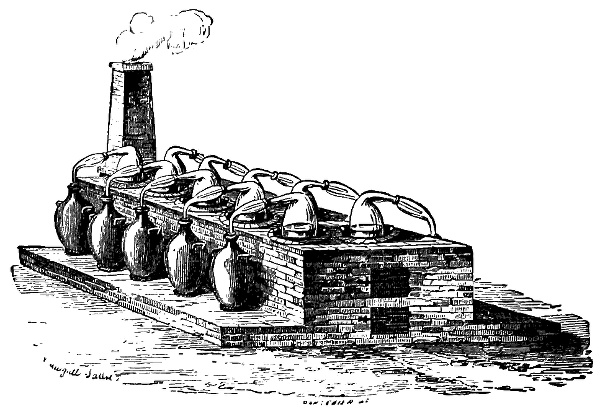
Fig. 87.—Concentration of sulphuric acid in glass retorts. The neck of each retort is attached to a bent glass tube, whose vertical arm is lowered into a glass or earthenware vessel acting as a receiver for the steam which comes over from the acid, as the former still contains a certain amount of acid.
Sulphuric acid, H2SO4, is formed by the combination of its anhydride, SO3, and water, with the evolution of a large amount of heat; the reaction SO3 + H2O develops 21,300 heat units. The method of its preparation on a large scale, and most of the methods employed for its formation, are dependent on the oxidation of sulphurous anhydride, and the formation of sulphuric anhydride, which forms sulphuric acid under the action of water. The technical method of its manufacture has been described in Chapter VI. The acid obtained from the lead chambers contains a considerable amount of water, and is also impure owing to the presence of oxides of nitrogen, lead compounds, and certain impurities from the burnt sulphur which have come over in a gaseous and vaporous state (for example, arsenic compounds). For practical purposes, hardly any notice is taken of the majority of these impurities, because they do not interfere with its general qualities. Most frequently endeavours are only made to remove, as far as possible, all the water which can be expelled.[45] That is, the object is to obtain the hydrate, H2SO4, from the dilute acid (60 per cent.), and this is effected by evaporation by means of heat. Every given mixture of water and sulphuric acid begins to part with a certain amount of aqueous vapour when heated to a certain definite temperature. At a low temperature either there is no evaporation of water, or there can even be an absorption of moisture from the air. As the removal of the water proceeds, the vapour tension of the residue decreases for the same temperature, and therefore the more dilute the acid the lower the temperature at which it gives up a portion of its water. In consequence of this, the removal of water from dilute solutions of sulphuric acid may be easily carried on (up to 75 p.c. H2SO4) in lead vessels, because at low temperatures dilute sulphuric acid does not attack lead. But as the acid becomes more concentrated the temperature at which the water comes over becomes higher and higher, and then the acid begins to act on lead (with the evolution of sulphuretted hydrogen and conversion of the lead into sulphate), and therefore lead vessels cannot be employed for the complete removal of the water. For this purpose the evaporation is generally carried on in glass or platinum retorts, like those depicted in figs. 87 and 88.
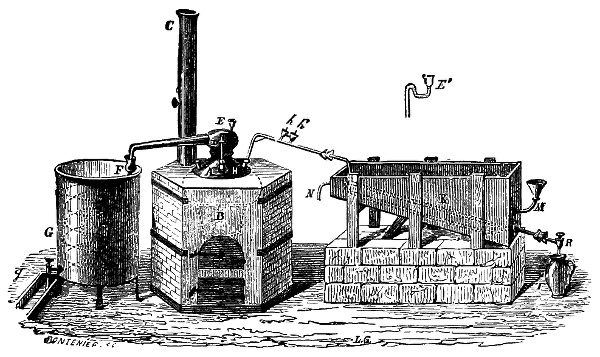
Fig. 88.—Concentration of sulphuric acid in platinum retorts.
The concentration of sulphuric acid in glass retorts is not a continuous process, and consists of heating the dilute 75 per cent. acid until it ceases to give off aqueous vapour, and until acid containing 93–98 per cent. H2SO4 (66° Baumé) is obtained—and this takes place when the temperature reaches 320° and the density of the residue reaches 1·847 (66° Baumé).[46] The platinum vessels designed for the continuous concentration of sulphuric acid consist of a still B, furnished with a still head E, a connecting pipe E F, and a syphon tube H R, which draws off the sulphuric acid concentrated in the boiler. A stream of sulphuric acid previously concentrated in lead retorts to a density of about 60° Baumé—i.e. to 75 per cent. or a sp. gr. of 1·7—runs continuously into the retort through a syphon funnel E′. The apparatus is fed from above, because the acid freshly supplied is lighter than that which has already lost water, and also because the water is more easily evaporated from the freshly supplied acid at the surface. The platinum retort is heated, and the steam coming off[47] is condensed in a worm F G, whilst as fresh dilute acid is supplied to the boiler the acid already concentrated is drawn off through the syphon tube H B, which is furnished with a regulating cock by means of which the outflow of the concentrated acid from the bottom of the retort can be so regulated that it will always present one and the same specific gravity, corresponding with the strength required. For this purpose the acid flowing from the syphon is collected in a receiver R, in which a hydrometer, indicating its density, floats; if its density be less than 66° Baumé, the regulating cock is closed sufficiently to retard the outflow of sulphuric acid, so as to lengthen the time of its evaporation in the retort.[48]
Strictly speaking, sulphuric acid is not volatile, and at its so-called boiling-point it really decomposes into its anhydride and water; its boiling-point (338°) being nothing else but its temperature of decomposition. The products of this decomposition are substances boiling much below the temperature of the decomposition of sulphuric acid. This conclusion with regard to the process of the distillation of sulphuric acid may be deduced from Bineau's observations on the vapour-density of sulphuric acid. This density referred to hydrogen proved to be half that which sulphuric acid should have according to its molecular weight, H2SO4, in which case it should be 49, whilst the observed density was equal to 24·5. Besides which, Marignac showed that the first portions of the sulphuric acid distilling over contain less of the elements of water than the portion which remains behind, or which distils over towards the end. This is explained by the fact that on distillation the sulphuric acid is decomposed, but a portion of the water proceeding from its decomposition is retained by the remaining mass of sulphuric acid, and therefore at first a mixture of sulphuric acid and sulphuric anhydride—i.e. fuming sulphuric acid—is obtained in the distillate. It is possible by repeating the distillation several times and only collecting the first portions of the distillate, to obtain a distinctly fuming acid. To obtain the definite hydrate H2SO4 it is necessary to refrigerate a highly concentrated acid, of as great a purity as possible, to which a small quantity of sulphuric anhydride has been previously added. Sulphuric acid containing a small quantity (a fraction of a per cent. by weight) of water only freezes at a very low temperature, while the pure normal acid, H2SO4, solidifies when it is cooled below 0°, and therefore the normal acid first crystallises out from the concentrated sulphuric acid. By repeating the refrigeration several times, and pouring off the unsolidified portion, it is possible to obtain a pure normal hydrate, H2SO4, which melts at 10°·4. Even at 40° it gives off distinct fumes—that is, it begins to evolve sulphuric anhydride, which volatilises, and therefore even in a dry atmosphere the hydrate H2SO4 becomes weaker, until it contains 1½ p.c. of water.[49]
In a concentrated form sulphuric acid is commercially known as oil of vitriol, because for a long time it was obtained from green vitriol and because it has an oily appearance and flows from one vessel into another in a thick and somewhat sluggish stream, like the majority of oily substances, and in this clearly differs from such liquids as water, spirit, ether, and the like, which exhibit a far greater mobility. Among its reactions the first to be remarked is its faculty for the formation of many compounds. We already know that it combines with its anhydride, and with the sulphates of the alkali metals; that it is soluble in water, with which it forms more or less stable compounds. Sulphuric acid, when mixed with water, develops a very considerable amount of heat.[50]
Besides the normal hydrate H2SO4, another definite hydrate, H2SO4,H2O (84·48 per cent. of the normal hydrate, and 15·52 per cent. of water) is known; it crystallises[50 bis] extremely easily in large six-sided prisms, which form above 0°—namely, at about +8°·5; when heated to 210° it loses water.[51] If the hydrates H2SO4 and H2SO4,H2O exist at low temperatures as definite crystalline compounds, and if pyrosulphuric acid, H2SO4SO3, has the same property, and if they all decompose with more or less ease on a rise of temperature, with the disengagement of either SO3 or H2O, and in their ordinary form present all the properties of simple solutions, it follows that between sulphuric anhydride, SO3, and water, H2O, there exists a consecutive series of homogeneous liquids or solutions, among which we must distinguish definite compounds, and therefore it is quite justifiable to look for other definite compounds between SO3 and H2O, beyond the conditions for a change of state. In this respect we may be guided by the variation of properties of any kind, proceeding concurrently with a variation in the composition of a solution.
But only a few properties have been determined with sufficient accuracy. In those properties which have been determined for many solutions of sulphuric acid, it is actually seen that the above-mentioned definite compounds are distinguished by distinctive marks of change. As an example we may cite the variation of the specific gravity with a variation of temperature (namely K = ds/dt, if s be the sp. gr. and t the temperature). For the normal hydrate, H2SO4, this factor is easily determined from the fact that—
s = 18528 - 10·65t + 0·013t2,
where s is the specific gravity at t (degrees Celsius) if the sp. gr. of water at 4° = 10,000. Therefore K = 10·65 - 0·026t. This means that at 0° the sp. gr. of the acid H2SO4 decreases by 10·65 for every rise of a degree of temperature, at 10° by 10·39, at 20° by 10·13, at 30° by 9·87.[52] And for solutions containing slightly more anhydride than the acid H2SO4 (i.e. for fuming sulphuric acid), as well as for solutions containing more water, K is greater than for the acid H2SO4. Thus for the solution SO3,2H2SO4, at 10° K = 11·0. On diluting the acid H2SO4 K again increases until the formation of the solution H2SO4,H2O (K = 11·1 at 10°), and then, on further dilution with water, it again decreases. Consequently both hydrates H2SO4 and H2SO4,H2O are here expressed by an alteration of the magnitude of K.
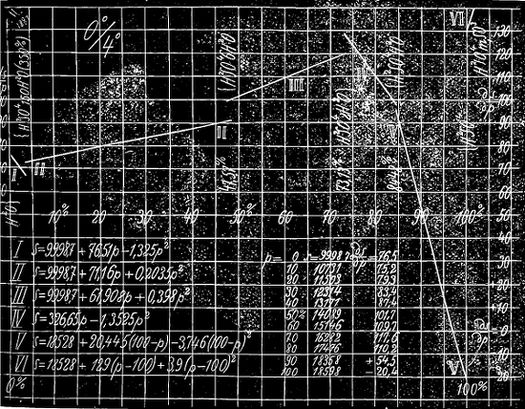
Fig. 89.—Diagram showing the variation of the factor (ds/dp) of the specific gravity of solutions of sulphuric acid. The percentage quantities of the acid, H2SO4, are laid out on the axes of abscissæ. The ordinates are the factors or rises in sp. gr. (water at 4 = 10,000) with the increase in the quantity of H2SO4.
This shows that in liquid solutions it is possible by studying the variation of their properties (without a change of physical state) to recognise the presence or formation of definite hydrate compounds, and therefore an exact investigation of the properties of solutions, of their specific gravity for instance, should give direct indications of such compounds.[53] The mean result of the most trustworthy determinations of this nature is given in the following tables. The first of these tables gives the specific gravities (in vacuo, taking the sp. gr. of water at 4° = 1), at 0° (column 3), 15° (column 4), and 30° (column 5),[53 bis] for solutions having the composition H2SO4 + nH2O (the value of n is given in the first column), and containing p (column 2) per cent. (by weight in vacuo) of H2SO4.[53 tri]
n p 0° 15° 30°
100 5·16 1·0374 1·0341 1·0292
50 9·82 1·0717 1·0666 1·0603
25 17·88 1·1337 1·1257 1·1173
15 26·63 1·2040 1·1939 1·1837
10 35·25 1·2758 1·2649 1·2540
8 40·50 1·3110 1·2649 1·2998
6 47·57 1·3865 1·3748 1·3622
5 52·13 1·4301 1·4180 1·4062
4 57·65 1·4881 1·4755 1·4631
3 64·47 1·5635 1·5501 1·5370
2 73·13 1·6648 1·6500 1·6359
1 84·48 1·7940 1·7772 1·7608
0·5 91·59 1·8445 1·8284 1·8128
H2SO4 100 1·8529 1·8372 1·8221
In the second table the first column gives the percentage amount p (by weight) of H2SO4, the second column the weight in grams (S15) of a litre of the solution at 15° (at 4° the weight of a litre of water = 1,000 grams), the third column, the variation (dS/dt) of this weight for a rise of 1°, the fourth column, the variation dS/dp of this weight (at 15°) for a rise of 1 per cent. of H2SO4, the fifth column, the difference between the weight of a litre at 0° and 15° (S0 - S15), and the sixth column, the difference between the weight of a litre at 15° and 30° (S15 - S30).
p S15 dS15/dt dS15/dp S0-S15 S15-S15
0 999·15 0·148 7·0 0·7 3·4
5 1033·0 0·27 6·8 3·1 5·0
10 1067·7 0·28 7·1 5·2 6·4
20 1141·9 0·58 7·7 8·6 8·9
30 1221·3 0·69 8·2 10·4 10·4
40 1306·6 0·75 8·8 11·3 11·2
50 1397·9 0·79 9·9 11·9 11·8
60 1501·2 0·86 10·8 13·0 12·7
70 1613·1 0·93 11·6 14·1 13·8
80 1731·4 1·04 11·0 15·8 15·4
90 1819·9 1·08 5·4 16·4 16·0
95 1837·6 1·03 +1·7 15·8 15·1
100 1837·2 1·03 -1·9[54] 15·7 15·1
The figures in these tables give the means of finding the amount of H2SO4 contained in a solution from its specific gravity,[55] and also show that ‘special points’ in the lines of variation of the specific gravity with the temperature and percentage composition correspond to certain definite compounds of H2SO4 with OH2. This is best seen in the variation of the factors (dS/dt and dS/dp) with the temperature and composition (columns 3, 4, second table). We have already mentioned how the factor of temperature points to the existence of hydrates, H2SO4 and H2SO4,H2O. As regards the factor dS/dp (giving the increase of sp. gr. with an increase of 1 per cent. H2SO4) the following are the three most salient points: (1) In passing from 98 per cent. to 100 per cent. the factor is negative, and at 100 per cent. about -0·0019 (i.e. at 99 per cent. the sp. gr. is about 1·8391, and at 100 per cent. about 1·8372, at 15°, the amount of H2SO4 has increased whilst the sp. gr. has decreased), but as soon as a certain amount of SO3 is added to the definite compound H2SO4 (and ‘fuming’ acid formed) the specific gravity rises (for example, for H2SO4 0·136 SO3 the sp. gr. at 15° = 1·866), that is the factor becomes positive (and, in fact, greater by +0·01), so that the formation of the definite hydrate H2SO4 is accompanied by a distinct and considerable break in the continuity of the factor[55 bis]; (2) The factor (dS/dp) in increasing in its passage from dilute to concentrated solutions, attains a maximum value (at 15° about 0·012) about H2SO42H2O, i.e. at about the hydrate corresponding to the form SX6; proper to the compounds of sulphur, for S(OH)6 = H2SO42H2O; the same hydrate corresponds to the composition of gypsum CaSO42H2O, and to it also corresponds the greatest contraction and rise of temperature in mixing H2SO4 with H2O (see Chapter I., Note 28); (3) The variation of the factor (dS/dp) under certain variations in the composition proceeds so uniformly and regularly, and is so different from the variation given under other proportions of H2SO4 and H2O, that the sum of the variations of dS/dp is expressed by a series of straight lines, if the values of p be laid along the axis of abscissæ and those of dS/dp along the ordinates.[56] Thus, for instance, for 15°, at 10 per cent. dS/dp = 0·0071, at 20 per cent. = 0·0077, at 30 per cent. = 0·0082, at 40 per cent. = 0·0088, that is, for each 10 per cent. the factor increases by about 0·0006 for the whole of the above range, but beyond this it becomes larger, and then, after passing H2SO42H2O, it begins to fall rapidly. Such changes in the variation of the factor take place apparently about definite hydrates,[56 bis] and especially about H2SO44H2O, H2SO42H2O and H2SO4H2O. All this indicating as it does the special chemical affinity of sulphuric acid for water, although of no small significance for comprehending the nature of solutions (see Chapter I. and Chapter VII.), contains many special points which require detailed investigation, the chief difficulty being that it requires great accuracy in a large number of experimental data.
The great affinity of sulphuric acid for water is also seen from the fact that when the strong acid acts on the majority of organic substances containing hydrogen and oxygen (especially on heating) it very frequently takes up these elements in the form of water. Thus strong sulphuric acid acting on alcohol, C2H6O, removes the elements of water from it, and converts it into olefiant gas, C2H4. It acts in a similar manner on wood and other vegetable tissues, which it chars. If a piece of wood be immersed in strong sulphuric acid it turns black. This is owing to the fact that the wood contains carbohydrates which give up hydrogen and oxygen as water to the sulphuric acid, leaving charcoal, or a black mass very rich in it. For example, cellulose, C6H10O5, acts in this manner.[57]
We have already had frequent occasion to notice the very energetic acid properties of sulphuric acid, and therefore we will now only consider a few of their aspects. First of all we must remember that, with calcium, strontium, and especially with barium and lead, sulphuric acid forms very slightly soluble salts, whilst with the majority of other metals it gives more easily soluble salts, which in the majority of cases are able, like sulphuric acid itself, to combine with water to form crystallo-hydrates. Normal sulphuric acid, containing two atoms of hydrogen in its molecule, is able for this reason alone to form two classes of salts, normal and acid, which it does with great facility with the alkali metals. The metals of the alkaline earths and the majority of other metals, if they do form acid sulphates, do so under exceptional conditions (with an excess of strong sulphuric acid), and these salts when formed are decomposable by water—that is, although having a certain degree of physical stability they have no chemical stability. Besides the acid salts RHSO4, sulphuric acid also gives other forms of acid salts. An entire series of salts having the composition RHSO4,H2SO4, or for bivalent metals RSO4,3H2SO4,[58] has been prepared. Such salts have been obtained for potassium, sodium, nickel, calcium, silver, magnesium, manganese. They are prepared by dissolving the sulphates in an excess of sulphuric acid and heating the solution until the excess of sulphuric acid is driven off; on cooling, the mass solidifies to a crystalline salt. Besides which, Rose obtained a salt having the composition Na2SO4,NaHSO4, and if HNaSO4 be heated it easily forms a salt Na2S2O7 = Na2SO4,SO3; hence it is clear that sulphuric anhydride combines with various proportions of bases, just as it combines with various proportions of water.
We have already learned that sulphuric acid displaces the acid from the salts of nitric, carbonic, and many other volatile acids. Berthollet's laws (Chapter X.) explain this by the small volatility of sulphuric acid; and, indeed, in an aqueous solution sulphuric acid displaces the much less soluble boric acid from its compounds—for instance, from borax, and it also displaces silica from its compounds with bases; but both boric anhydride and silica, when fused with sulphates, decompose them, displacing sulphuric anhydride, SO3, because they are less volatile than sulphuric anhydride. It is also well known that with metals, sulphuric acid forms salts giving off hydrogen (Fe, Zn, &c.), or sulphur dioxide (Cu, Hg, &c.).[58 bis]
The reactions of sulphuric acid with respect to organic substances are generally determined by its acid character, when the direct extraction of water, or oxidation at the expense of the oxygen of the sulphuric acid,[59] or disintegration does not take place. Thus the majority of the saturated hydrocarbons, CnH2m, form with sulphuric acid a special class of sulphonic acids, CnH2m-1(HSO3); for example, benzene, C6H6, forms benzenesulphonic acid, C6H5.SO3H, water being separated, for the formation of which oxygen is taken up from the sulphuric acid, for the product contains less oxygen than the sulphuric acid. It is evident from the existence of these acids that the hydrogen in organic compounds is replaceable by the group SO3H, just as it may be replaced by the radicles Cl, NO2, CO2H and others. As the radicle of sulphuric acid or sulphoxyl, SO2OH or SHO3, contains, like carboxyl (Vol. I., p. 395), one hydrogen (hydroxyl) of sulphuric acid, the resultant substances are acids whose basicity is equal to the number of hydrogens replaced by sulphoxyl. Since also sulphoxyl takes the place of hydrogen, and itself contains hydrogen, the sulpho-acids are equal to a hydrocarbon + SO3, just as every organic (carboxylic) acid is equal to a hydrocarbon + CO2. Moreover, here this relation corresponds with actual fact, because many sulphonic acids are obtained by the direct combination of sulphuric anhydride: C6H5,(SO3H) = C6H6 + SO3. The sulphonic acids give soluble barium salts, and are therefore easily distinguished from sulphuric acid. They are soluble in water, are not volatile, and when distilled give sulphurous anhydride (whilst the hydroxyl previously in combination with the sulphurous anhydride remains in the hydrocarbon group; thus phenol, C6H5.OH, is obtained from benzenesulphonic acid), and they are very energetic, because the hydrogen acting in them is of the same nature as in sulphuric acid itself.[60]
Sulphuric acid, as containing a large proportion of oxygen, is a substance which frequently acts as an oxidising agent: in which case it is deoxidised, forming sulphurous anhydride and water (or even, although more rarely, sulphuretted hydrogen and sulphur). Sulphuric acid acts in this manner on charcoal, copper, mercury, silver, organic and other substances, which are unable to evolve hydrogen from it directly, as we saw in describing sulphurous anhydride.
Although the hydrate of a higher saline form of oxidation (Chapter XV.), sulphuric anhydride is capable of further oxidation, and forms a kind of peroxide, just as hydrogen gives hydrogen peroxide in addition to water, or as sodium and potassium, besides the oxides Na2O and K2O, give their peroxides, compounds which are in a chemical sense unstable, powerfully oxidising, and not directly able to enter into saline combinations. If the oxides of potassium, barium, &c., be compared to water, then their peroxides must in like manner correspond to hydrogen peroxide,[61] not only because the oxygen contained in them is very mobile and easily liberated, and because their reactions are similar, but also because they can be mutually transformed into each other, and are able to form compounds with each other, with bases and with water, and indeed form a kind of peroxide salts.[62] This is also the character of persulphuric acid, discovered in 1878 by Berthelot, and its corresponding anhydride or peroxide of sulphur S2O7. It is formed from 2SO3 + O with the absorption of heat (-27 thousand heat units), like ozone from O2 + O (-29 thousand units of heat), or hydrogen peroxide from H2O + O (-21 thousand heat units).
Peroxide of sulphur is produced by the action of a silent discharge upon a mixture of oxygen and sulphurous anhydride.[63] With water S2O7 gives persulphuric acid, H2S2O8. The latter is obtained more simply by mixing strong sulphuric acid (not weaker than H2SO4,2H2O) directly with hydrogen peroxide, or by the action of a galvanic current on sulphuric acid mixed with a certain amount of water, and cooled, the electrodes being platinum wires, when persulphuric acid naturally appears at the positive pole.[64] When an acid of the strength H2SO4,6H2O is taken, at first the hydrate of the sulphuric peroxide, S2O7,H2O only is formed; but when the concentration about the positive pole reaches H2SO4,3H2O, a mixture of hydrogen peroxide and the hydrate of sulphuric peroxide begins to be formed. Dilute solutions of sulphuric peroxide can be kept better than more concentrated solutions, but the latter may be obtained containing as much as 123 grams of the peroxide to a litre. It is a very instructive fact that hydrogen peroxide is always formed when strong solutions of persulphuric acid break up on keeping. So that the bond between the two peroxides is established both by analysis and synthesis: hydrogen peroxide is able to produce S2H2O8, and the latter to produce hydrogen peroxide. A mixture of sulphuric peroxide with sulphuric acid or water is immediately decomposed, with the evolution of oxygen, either when heated or under the action of spongy platinum. The same thing takes place with a solution of baryta, although at first no precipitate is formed and the decomposition of the barium salt, BaS2O8, with the formation of BaSO4, only proceeds slowly, so that the solution may be filtered (the barium salt of persulphuric acid is soluble in water). Mercury, ferrous oxide, and the stannous salts, are oxidised by S2H2O8. These are all distinct signs of true peroxides. The same common properties (capacity for oxidising, property of forming peroxide of hydrogen, &c.) are possessed by the alkali salts of persulphuric acid, which are obtained by the action of an electric current upon certain sulphates, for instance ammonium or potassium sulphate. The ammonium salt of persulphuric acid, (NH4)2S2O8, is especially easily formed by this means, and is now prepared on a large scale and used (like Na2O2 and H2O2) for bleaching tissues and fibres.[65]
In order to understand the relation of sulphuric peroxide to sulphuric acid we must first remark that hydrogen peroxide is to be considered, in accordance with the law of substitution, as water, H(OH), in which H is replaced by (OH). Now the relation of H2S2O8 to H2SO4 is exactly similar. The radicle of sulphuric acid, equivalent to hydrogen, is HSO4;[65 bis] it corresponds with the (OH) of water, and therefore sulphuric acid, H(SHO4), gives (SHO4)2 or S2H2O8, in exactly the same manner as water gives (HO)2—i.e. H2O2.[66]
The largest part of the sulphuric acid made is used for reacting on sodium chloride in the manufacture of sodium carbonate; for the manufacture of the volatile acids, like nitric, hydrochloric, &c., from their corresponding salts; for the preparation of ammonium sulphate, alums, vitriols (copper and iron), artificial manures, superphosphate (Chapter XIX., Note 18) and other salts of sulphuric acid; in the treatment of bone ash for the preparation of phosphorus, and for the solution of metals—for example, of silver in its separation from gold—for cleaning metals from rust, &c. A large amount of oil of vitriol is also used in treatment of organic substances; it is used for the extraction of stearin, or stearic acid, from tallow, for refining petroleum and various vegetable oils, in the preparation of nitro-glycerine (Chapter VI., Notes 37 and 37 bis), for dissolving indigo and other colouring matters, for the conversion of paper into vegetable parchment, for the preparation of ether from alcohol, for the preparation of various artificial scents from fusel oil, for the preparation of vegetable acids, such as oxalic, tartaric, citric, for the conversion of non-fermentable starchy substances into fermentable glucose, and in a number of other processes. It would be difficult to find another artificially-prepared substance which is so frequently applied in the arts as sulphuric acid. Where there are not works for its manufacture, the economical production of many other substances of great technical importance is impossible. In those localities which have arrived at a high technical activity the amount of sulphuric acid consumed is proportionally large; sulphuric acid, sodium carbonate, and lime are the most important of the artificially-prepared agents employed in factories.
Besides the normal acids of sulphur, H2SO3, H2SO3S, and H2SO4, corresponding with sulphuretted hydrogen, H2S, in the same way that the oxy-acids of chlorine correspond with hydrochloric acid, HCl, there exists a peculiar series of acids which are termed thionic acids. Their general composition is SnH2O6, where n varies from 2 to 5. If n = 2, the acid is called dithionic acid. The others are distinguished as trithionic, tetrathionic, and pentathionic acids. Their composition, existence, and reactions are very easily understood if they be referred to the class of the sulphonic acids—that is, if their relation to sulphuric acid be expressed in just the same manner as the relation of the organic acids to carbonic acid. The organic acids, as we saw (Chapter IX.), proceed from the hydrocarbons by the substitution of their hydrogen by carboxyl—that is, by the radicle of carbonic acid, CH2O3 - HO = CHO2. The formation of the acids of sulphur by means of sulphoxyl may be represented in the same manner, HSO3 = H2SO4 - HO. Therefore to hydrogen H2, there should correspond the acids H.SHO3, sulphurous, and SHO3.SHO3 = S2H2O6, or dithionic; to SH2 there should correspond the acids SH(SHO3) = H2S2O3 (thiosulphuric), and S(SHO3)2 = H2S3O6 (trithionic); to S2H2 the acids S2H(SHO3) = H2S3O2 (unknown), and S2(SHO3)2 = H2S4O6 (tetrathionic); to S3H2 the acids S3H(SHO3) and S3(SHO3)2 = H2S5O6 (pentathionic). We know that iodine reacts directly with the hydrogen of sulphuretted hydrogen and combines with it, and if thiosulphuric acid contains the radicle of sulphuretted hydrogen (or hydrogen united with sulphur) of the same nature as in sulphuretted hydrogen, it is not surprising that iodine reacts with sodium thiosulphate and forms sodium tetrathionate. Thus, thiosulphuric acid, HS(SHO3), when deprived of H, gives a radicle which immediately combines with another similar radicle, forming the tetrathionate S2(SO2HO)2. On this view[67] of the structure of the thionic acids and salts, it is also clear how all the thionic acids, like thiosulphuric acid, easily give sulphur and sulphides, with the exception only of dithionic acid, H2S2O6, which, judging from the above, stands apart from the series of the other thionic acids. Dithionic acid stands in the same relation to sulphuric acid as oxalic acid does to carbonic acid. Oxalic acid is dicarboxyl, (CHO2)2 = C2H2O4, and so also dithionic acid is disulphoxyl, (SHO3)2 = S2H2O6. Oxalic acid when ignited decomposes into carbonic anhydride and carbonic oxide, CO, and dithionic acid when heated decomposes into sulphuric anhydride and sulphurous anhydride, SO2, and SO2 stands in the same relation to SO3 as CO to CO2. This also explains the peculiarity of the calcium, barium, and lead, &c. salts of the thionic acids being easily soluble (although the corresponding salts of H2SO3, H2SO4, and H2S dissolve with difficulty), because the former are similar to the salts of the sulphonic acids, which are also soluble in water. Thus the thionic acids are disulphonic acids, just as many dicarboxylic acids are known—for example, CH2(CO2H)2, C6H4(CO2H)2.[68]
Sulphur exhibits an acid character, not only in its compounds with hydrogen and oxygen, but also in those with other elements. The compound of sulphur and carbon has been particularly well investigated. It presents a great analogy to carbonic anhydride, both in its elementary composition and chemical character. This substance is the so-called carbon bisulphide, CS2, and corresponds with CO2.
The first endeavours to obtain a compound of sulphur with carbon were unsuccessful, for although sulphur does combine directly with carbon, yet the formation of this compound requires distinctly definite conditions. If sulphur be mixed with charcoal and heated, it is simply driven off from the latter, and not the smallest trace of carbon bisulphide is obtained. The formation of this compound requires that the charcoal should be first heated to a red heat, but not above, and then either the vapour of sulphur passed over it or lumps of sulphur thrown on to the red-hot charcoal, but in small quantities, so as not to lower the temperature of the latter. If the charcoal be heated to a white heat, the amount of carbon bisulphide formed is less. This depends, in the first place, on the carbon bisulphide dissociating at a high temperature.[69] In the second place, Favre and Silberman showed that in the combustion of one gram of carbon bisulphide (the products will be CO2 + 2SO2) 3,400 heat units are evolved—that is, the combustion of a molecular quantity of carbon bisulphide evolves 258,400 heat units (according to Berthelot, 246,000). From a molecule of carbon bisulphide in grams we may obtain 12 grams of carbon, whose combustion evolves 96,000 heat units, and 64 grams of sulphur, evolving by combustion (into SO2) 140,800 heat units. Hence we see that the component elements separately evolve less heat by their combustion (237,000 heat units) than carbon bisulphide itself—that is, that heat should be evolved (at the ordinary temperature) and not absorbed in its decomposition, and therefore that the formation of carbon bisulphide from charcoal and sulphur is in all probability accompanied by an absorption of heat.[70] It is therefore not surprising that, like other compounds produced with an absorption of heat (ozone, nitrous oxide, hydrogen peroxide, &c.), carbon bisulphide is unstable and easily converted into the original substances from which it is obtained. And indeed if the vapour of carbon bisulphide be passed through a red-hot tube, it is decomposed—that is, it dissociates—into sulphur and carbon. And this takes place at the temperature at which this substance is formed, just as water decomposes into hydrogen and oxygen at the temperature of its formation. In this absorption of heat in the formation of carbon bisulphide is explained the facility with which it suffers reactions of decomposition, which we shall see in the sequel, and its main difference from the closely analogous carbonic anhydride.
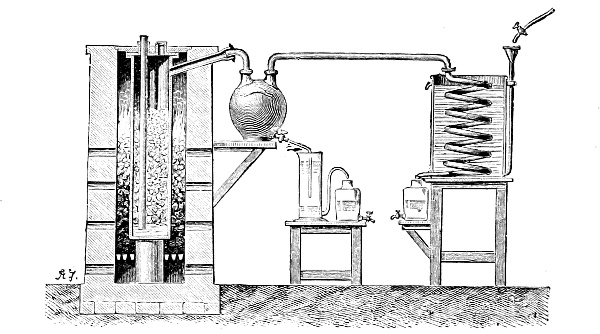
Fig. 90.—Apparatus for the manufacture of carbon bisulphide.
In the laboratory carbon bisulphide is prepared as follows: A porcelain tube is luted into a furnace in an inclined position, the upper extremity of the tube being closed by a cork, and the lower end connected with a condenser. The tube contains charcoal, which is raised to a red heat, and then pieces of sulphur are placed in the upper end. The sulphur melts, and its vapour comes into contact with the red-hot charcoal, when combination takes place; the vapours condense in the condenser, carbon bisulphide being a liquid boiling at 48°. On a large scale the apparatus depicted in fig. 90 is employed. A cast-iron cylinder rests on a stand in a furnace. Wood charcoal is charged into the cylinder through the upper tube closed by a clay stopper, whilst the sulphur is introduced through a tube reaching to the bottom of the cylinder. Pieces of sulphur thrown into this tube fall on to the bottom of the cylinder, and are converted into vapour, which passes through the entire layer of charcoal in the cylinder. The vapour of carbon bisulphide thus formed passes through the exit tube first into a Woulfe's bottle (where the sulphur which has not entered into the reaction is condensed), and then into a strongly-cooled condenser or worm.[71]
Pure carbon bisulphide is a colourless liquid, which refracts light strongly, and has a pure ethereal smell; at 0° its specific gravity is 1·293, and at 15° 1·271. If kept for a long time it seems to undergo a change, especially when it is kept under water, in which it is insoluble. It boils at 48°, and the tension of its vapour is so great that it evaporates very easily, producing cold,[72] and therefore it has to be kept in well-stoppered vessels; it is generally kept under a layer of water, which hinders its evaporation and does not dissolve it.[73]
Carbon bisulphide enters into many combinations, which are frequently closely analogous to the compounds of carbonic anhydride. In this respect it is a thio-anhydride—i.e. it has the character of the acid anhydrides,[73 bis] like carbonic anhydride, with the difference that the oxygen of the latter is replaced by sulphur. By thio-compounds in general are understood those compounds of sulphur which differ from the compounds of oxygen as carbon bisulphide does from carbonic anhydride—that is, which correspond with the oxygen compounds, but with substitution of sulphur for oxygen. Thus thiosulphuric acid is monothiosulphuric acid—that is, sulphuric acid in which one atom of sulphur replaces one atom of oxygen. With the sulphides of the alkalis and alkaline earths, it forms saline substances corresponding with the carbonates, and these compounds may be termed thiocarbonates. For example, the composition of the sodium salt Na2CS3 is exactly like that of sodium carbonate. They are formed by the direct solution of carbon bisulphide in aqueous solutions of the sulphides; but they are difficult to obtain in a crystalline form, because they are easily decomposable. When the solutions of these salts are highly concentrated they begin to decompose, with the evolution of sulphuretted hydrogen and the formation of a carbonate, water taking part in the reaction—for example, K2CS3 + 3H2O = K2CO3 + 3H2S.[74]
A remarkable example[74 bis] of the thio-compounds is found in thiocyanic acid—i.e. cyanic acid in which the oxygen is replaced by sulphur, HCNS. We know (Chapter IX.) that with oxygen the cyanides of the alkaline metals RCN give cyanates RCNO; but they also combine with sulphur, and therefore if yellow prussiate of potash be treated as in the preparation of potassium cyanide, and sulphur be added to the mass, potassium thiocyanate, KNCS, is obtained in solution. This salt is much more stable than potassium cyanate; it dissolves without change in water and alcohol, forming colourless solutions from which it easily crystallises on evaporation. It may be kept exposed to air even when in solution; in dissolving in water it absorbs a considerable amount of heat, and forms a starting-point for the preparation of all the thiocyanates, RCNS, and organic compounds in which the metals are replaced by hydrocarbon groups. Such, for example, is volatile mustard oil, C3H5CSN (allyl thiocyanate),[75] which gives to mustard its caustic properties. With ferric salts the thiocyanates give an exceedingly brilliant red coloration, which serves for detecting the smallest traces of ferric salts in solution. Thiocyanic acid, HCNS, may be obtained by a method of double decomposition, by distilling potassium thiocyanate with dilute sulphuric acid. It is a volatile colourless liquid, having a smell recalling that of vinegar, is soluble in water, and may be kept in solution without change.[75 bis]
The sulphur compounds of chlorine Cl2S and Cl2S2 may be regarded on the one hand as products of the metalepsis of the sulphides of hydrogen, H2S and H2S2; and on the other hand of the oxygen compounds of chlorine, because chloride of sulphur, Cl2S, resembles chlorine oxide, Cl2O, whilst Cl2S2 corresponds with the higher oxide of chlorine; or thirdly, we may see in these compounds the type of the acid chloranhydrides, because they are all decomposed by water, forming hydrochloric acid, and sulphur tetrachloride, SCl4, is decomposed with the formation of sulphurous anhydride.[76]
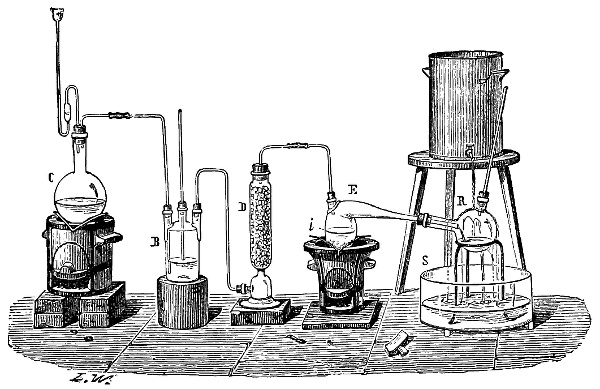
Fig. 91.—Apparatus for the preparation of sulphur chloride, and similar volatile compounds prepared by combustion in a stream of chlorine.
The compounds of sulphur with chlorine are prepared in the apparatus depicted in fig. 91. As sulphur chloride is decomposed by water, the chlorine evolved in the flask C must be dried before coming into contact with the sulphur. It is therefore first passed through a Woulfe's bottle, B, containing sulphuric acid, and then through the cylinder D containing pumice stone moistened with sulphuric acid, and then led into the retort E, in which the sulphur is heated. The compound which is formed distils over into the receiver R. A certain amount of sulphur passes over with the sulphur chloride, but if the resultant distillate be re-saturated with chlorine and distilled no free sulphur remains, the boiling-point rises to 144°, and pure sulphur chloride, S2Cl2, is obtained. It has this formula because its vapour density referred to hydrogen is 68. It is also obtained by heating certain metallic chlorides (stannous, mercuric) with sulphur; both the metal and chlorine then combine with the sulphur. Sulphur chloride is a yellowish-brown liquid, which boils at 144°, and has a specific gravity of 1·70 at 0°. It fumes strongly in the air, reacting on the moisture contained therein, and has a heavy chloranhydrous odour. It dissolves sulphur, is miscible with carbon bisulphide, and falls to the bottom of a vessel containing water, by which it is decomposed, forming sulphurous anhydride and hydrochloric acid; but it first forms various lower stages of oxidation of sulphur, because the addition of silver nitrate to the solution gives a black precipitate. With hydrogen sulphide it gives sulphur and hydrochloric acid, and it reacts directly with metals—especially arsenic, antimony, and tin—forming sulphides and chlorides. In the cold, it absorbs chlorine and gives sulphur dichloride, SCl2. The entire conversion into this substance requires the prolonged passage of dry chlorine through sulphur chloride surrounded by a freezing mixture. The distillation of the dichloride must be conducted in a stream of chlorine, as otherwise it partially decomposes into sulphur chloride and chlorine. Pure sulphur dichloride is a reddish-brown liquid, which resembles the lower chloride in many respects; its specific gravity is 1·62; its odour is more suffocating than that of sulphur chloride; it volatilises at 64°.[77]
Thionyl chloride, SOCl2, may be regarded as oxidised sulphur dichloride; it corresponds with sulphur chloride, S2Cl2, in which one atom of sulphur is replaced by oxygen. At the same time it is chlorine oxide (hypochlorous anhydride, Cl2O) combined with sulphur, and also the chloranhydride of sulphurous acid—that is, SO(HO)2, in which the two hydroxyl groups are replaced by two atoms of chlorine, or sulphurous anhydride, SO2, in which one atom of oxygen is replaced by two atoms of chlorine. All these representations are confirmed by reactions of formation, or decompositions; they all agree with our notions of the other compounds of sulphur, oxygen, and chlorine; hence these definitions are not contradictory to each other. Thus, for instance, thionyl chloride was first obtained by Schiff, by the action of dry sulphurous anhydride on phosphorus pentachloride. On distilling the resultant liquid, thionyl chloride comes over first at 80°, and on continuing the distillation phosphorus oxychloride distils over at above 100°, PCl5 + SO2 = POCl3 + SOCl2. This mode of preparation is direct evidence of the oxychloride character of SOCl2. Würtz obtained the same substance by passing a stream of chlorine oxide through a cold solution of sulphur in sulphur chloride; the chlorine oxide then combined directly with the sulphur, S + Cl2O = SOCl2, whilst the sulphur chloride remained unchanged (sulphur cannot be combined directly with chlorine oxide, as an explosion takes place). Thionyl chloride is a colourless liquid, with a suffocating acrid smell; it has a specific gravity at 0° of 1·675, and boils at 78°. It sinks in water, by which it is immediately decomposed, like all chloranhydrides—for example, like carbonyl chloride, which corresponds with it: SOCl2 + H2O = SO2 + 2HCl.[77 bis]
Normal sulphuric acid has two corresponding chloranhydrides; the first, SO2(OH)Cl, is sulphuric acid, SO2(HO)2, in which one equivalent of HO is replaced by chlorine; the second has the composition SO2Cl2—that is, two HO groups are substituted by two of chlorine. The second chloranhydride, or the compound SO2Cl2, is called sulphuryl chloride, and the first chloranhydride, SO2HOCl, may be called chlorosulphonic acid, because it is really an acid; it still retains one hydroxyl of sulphuric acid, and its corresponding salts are known. Thus, potassium chloride absorbs the vapour of sulphuric anhydride, forming a salt, SO3KCl, corresponding with SO3HCl as acid. In acting on sodium chloride it forms hydrochloric acid and the salt NaSO3Cl. This first chloranhydride of sulphuric acid, SO2HOCl, discovered by Williamson, is obtained either by the action of phosphorus pentachloride on sulphuric acid (PCl5 + H2SO4 = POCl3 + HCl + HSO3Cl), or directly by the action of dry hydrochloric acid on sulphuric anhydride, SO3 + HCl = HSO3Cl. The most easy and rapid method of its formation is by direct saturation of cold Nordhausen acid with dry hydrochloric acid gas (SO3 + HCl = HSO3Cl), and distillation of the resultant solution; the distillate then contains HSO3Cl. It is a colourless fuming liquid, having an acrid odour; it boils at 153° (according to my determination, confirmed by Konovaloff), and its specific gravity at 19° is 1·776. It is immediately decomposed by water, forming hydrochloric and sulphuric acids, as should be the case with a true chloranhydride. In the reactions of this chloranhydride we find the easiest means of introducing the sulphonic group HSO3 into other compounds, because it is here combined with chlorine. The second chloranhydride of sulphuric acid, or sulphuryl chloride, SO2Cl2, was obtained by Regnault by the direct action of the sun's ray on a mixture of equal volumes of chlorine and sulphurous oxide. The gases gradually condense into a liquid, combining together as carbonic oxide does with chlorine. It is also obtained when a mixture of the two gases in acetic acid is allowed to stand for some time. The first chloranhydride, SO3HCl, decomposes when heated at 200° in a closed tube into sulphuric acid and sulphuryl chloride. It boils at 70°, its specific gravity is 1·7, it gives hydrochloric and sulphuric acids with water, fumes in the air, and, judging by its vapour density, does not decompose when distilled.[78]
In the group of the halogens we saw four closely analogous elements—fluorine, chlorine, bromine, and iodine—and we meet with the same number of closely allied analogues in the oxygen group; for besides sulphur this group also includes selenium and tellurium: O, S, Se, Te. These two groups are very closely allied, both in respect to the magnitudes of their atomic weights and also in the faculty of the elements of both groups for combining with metals. The distinct analogy and definite degree of variance known to us for the halogens, also repeat themselves in the same degree for the elements of the oxygen group. Amongst the halogens fluorine has many peculiarities compared to Cl, Br and I which are more closely analogous, whilst oxygen differs in many respects from S, Se, Te, which possess greater similarities. The analogy in a quantitative respect is perfect in both cases. Thus the halogens combine with H, and the elements of the oxygen group with H2, forming H2O, H2S, H2Se, H2Te. The hydrogen compounds of selenium and tellurium are acids like hydrogen sulphide. Selenium, by simple heating in a stream of hydrogen, partially combines with it directly, but seleniuretted hydrogen is more readily decomposable by heat than sulphuretted hydrogen, and this property is still more developed in telluretted hydrogen. Hydrogen selenide and telluride are gases like sulphuretted hydrogen, and, like it, are soluble in water, form saline compounds with alkalis, precipitate metallic salts, are obtained by the action of acids on their compounds with metals, &c. Selenium and tellurium, like sulphur, give two normal grades of combination with oxygen, both of an acid character, of which only the forms corresponding to sulphurous anhydride—namely, selenious anhydride, SeO2, and tellurous anhydride, TeO2[79]—are formed directly. These are both solids, obtained by the combustion of the elements themselves and by the action of oxidising agents on them. They form feebly energetic acids, having distinct bibasic properties; however, a characteristic difference from SO2 is observable both in the physical properties of these compounds and in their stability and capacity for further oxidation, just as in the series of the halogens already known to us, only in an inverse order; in the latter we saw that iodine combines more easily than bromine or chlorine with oxygen, forming more stable oxygen compounds, whereas here, on the contrary, sulphurous anhydride, as we know, is difficultly decomposed, parts with its sulphur with difficulty, and is easily oxidised and especially in its salts, while selenious and tellurous anhydrides are oxidised with difficulty and easily reduced, even by means of sulphurous acid.