Volume 6 — PLATE CCCCXXVIII.
Reading edition
ELYCHRISUM STÆHELINA.
Stæhelina-like Eternal-flower.
CLASS XIX. ORDER II.
SYNGENESIA POLYGAMIA SUPERFLUA. Tips united. Superfluous Polygamy.
ESSENTIAL GENERIC CHARACTER.
Receptaculum nudum. Pappus pilosus, vel plumosus. Calyx imbricatus, radiatus, radio colorato.
Receptacle naked. Down hairy, or feathery. Empalement imbricated, rayed, with the ray coloured.
SPECIFIC CHARACTER, &C.
Elychrisum, fruticosum, erectum, foliis oblongo-lanceolatis basi attenuatis sericeis, pedunculis nudis unifloris terminalibus. Willd. Sp. Pl. 3. 1910.
Elychrisum, shrubby, erect, with leaves oblong-lanced attenuated at the base and silky, and terminal naked one-flowered peduncles.
Xeranthemum (Stæhelina) pedunculis terminalibus exertis nudis unifloris, foliis lanceolatis tomentosis. Syst. Veg. 624.
Xeranthemum foliis lanceolato-oblongis carinatis lanatis, caule erecto. Thunb. Prod. 153.
Obs. Caulis lignosus, tener, paniculato-ramosus, ut tota herba albo-tomentosus. Pedunculi longi terminales. Willd. l. c.
REFERENCE TO THE PLATE.
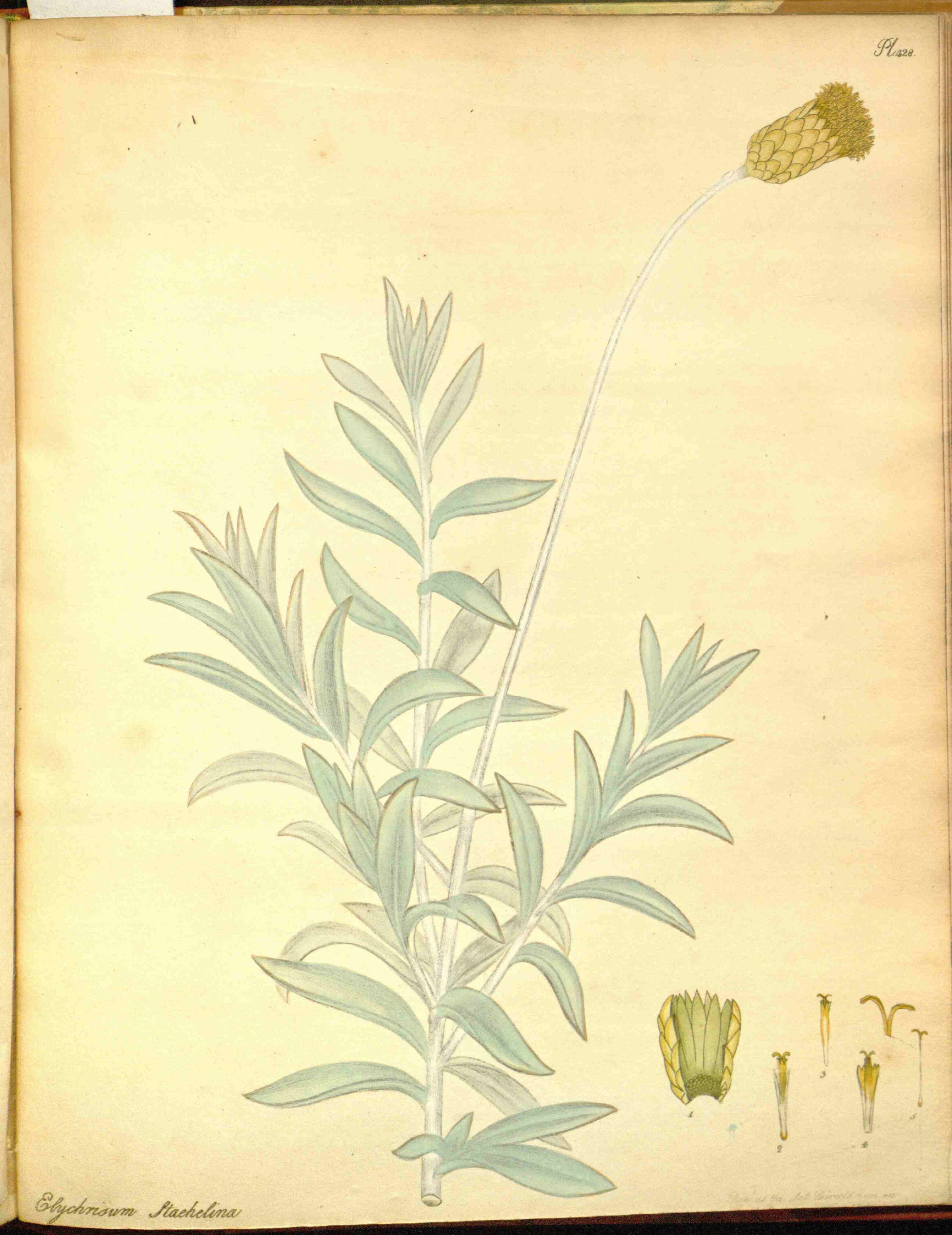
1. A flower cut open. 2.An hermaphrodite floret with its down. 3.The same without the down. 4.The same spread open. 5. The seed-bud and pointal, with the summit detached and magnified
In the last volume of Willdenow’s Species Plantarum, containing the great class Syngenesia, are found many valuable botanical alterations and amendments, respecting the division and distribution of the genera and species; and amongst others, we find the Linnæan genus Xeranthemum, and even its species the annuum, with its supposed variety the inapertum, divided and arranged exactly after the manner proposed in our account of X. bracteatum (Plate 375), now Elychrisum bracteatum: those few species only being now called Xeranthema which have a squamous receptacle: viz. the annuum, and inapertum, of European origin; and the orientale, a native of Armenia.
The plant here depicted was drawn from a living specimen in the Clapham collection, last December, where at first it only threw up one flower-stalk; but it has since become stronger, and shows a peduncle from the end of almost every branch.
Although this species comes nearer Elychrisum in its generic characters than to any other genus, Gnaphalium not excepted, yet still we cannot help remarking, how much it recedes from the external appearance of most of its congeners, in being quite destitute of radiating scales.
It is a green-house plant, a native of the Cape, and is propagated by cuttings; but is not at present in any collection we are acquainted with, except Mr. Hibbert’s.