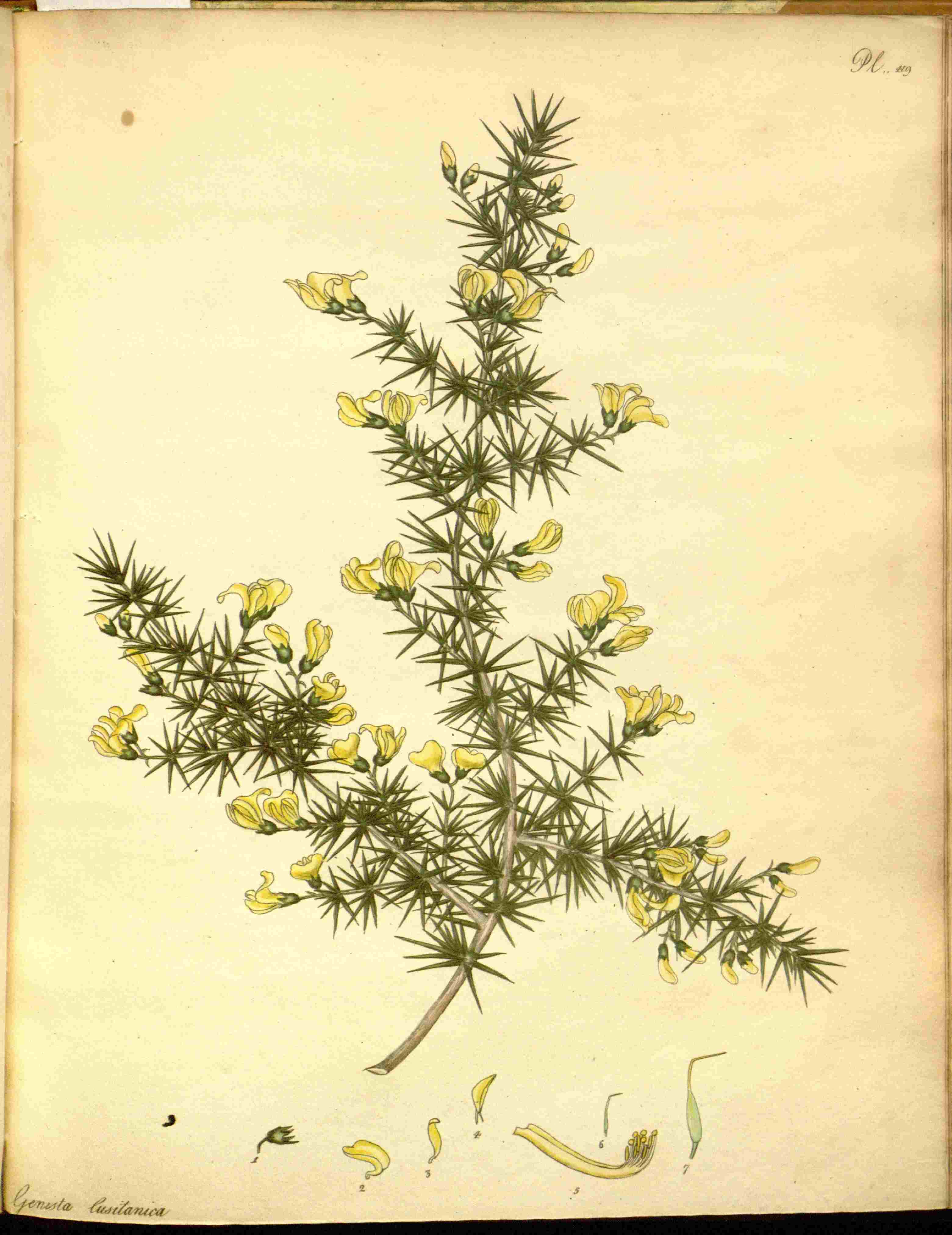
Volume 6 — PLATE CCCCXIX.
Reading edition
GENISTA LUSITANICA.
Portugal Genista.
CLASS XVII. ORDER IV.
DIADELPHIA DECANDRIA. Two Brotherhoods. Ten Chives.
ESSENTIAL GENERIC CHARACTER.
Calyx bilabiatus: 2-3 dentibus, binis superioribus brevissimis. Vexillum oblongum a pistillo staminibusque deorsum reflexum.
Empalement two-lipped: with 2-3 teeth, the two uppermost very short. The standard oblong, and reflexed downwards from the chives and pointal.
SPECIFIC CHARACTER, &C.
Genista, caule aphyllo, spinis decussatis. Willd. Sp. Pl. 2. 946.—Ait. Hort. Kew. 2. 16.
Genista, with a leafless stem, and decussated spines.
Scorpius secundus. Clus. Hist. 1. p. 107.
REFERENCE TO THE PLATE.
1. The empalement. 2.The standard. 3.One of the wings. 4.The keel. 5.The chives. 6.The seed-bud and pointal. 7. The same magnified
The Portugal Genista is a very spiny, and almost leafless shrub, of bushy growth; and although very well known to most of the old Botanists, does not appear to have been cultivated in the British gardens until the year 1771; when, according to Mr. Aiton’s Hortus Kewensis, it was introduced by Mrs. Primmet. It is a native of Portugal and Spain, but is sufficiently hardy to resist the cold of our ordinary winters, if planted in a sheltered situation: yet is extremely liable to be injured, or even destroyed, in those which take place with rigour and severity: but as it very frequently produces good seeds, a supply of it is not difficult to be kept up that way. The best time of sowing them is spring, and they will require some slight protection from frost while young.
The plant blooms freely from March till May, and when decorated with its golden flowers, makes a very ornamental appearance in the shrubbery; in which, although it has been so long in cultivation, we cannot help regretting that it but seldom occurs: and we venture to recommend it along with G. germanica (a closely allied species) to the further attention of our cultivating friends.
Like many other shrubby leguminous plants, this Genista is averse to being frequently transplanted; and never suffers the operation of removal with impunity. Let that business therefore, when necessary, be performed with all possible diligence and care. Our figure was taken from plants in the Clapham collection.