THE FORMAL TACTICS OF INFANTRY. (continued 9)
Walter Krueger translation
During the Russo-Japanese war such frontal counter-attacks were very frequently made. When undertaken with inadequate numbers, they were invariably repulsed by the fire of the Japanese, especially when the latter found cover in previously constructed trenches.
Provisions of Various Regulations.
Austria-Hungary. If a counter-attack is contemplated, the commander should resist every temptation to employ parts of the general reserve for other purposes than for carrying out that attack. In this case, the general reserve should be placed in readiness so that, while the opponent advances within the decisive zone, it can quickly deploy and carry out the counter-attack with determination by directing a powerful fire against the flank of the enemy. Freedom of movement on one flank is absolutely essential to the execution of the counter-attack. Local frontal counter-attacks are to be avoided; the enemy is to be annihilated by fire.
When it is not contemplated to make a counter-attack with the general reserve, the latter is to be employed either for directly reinforcing the troops in one of the sections, or for engaging the hostile troops making an enveloping attack on the position.
France. The regulations make a distinction between counter-attack (contre attaque) and offensive return (retour offensif). A counter-attack is made by the reserve before the enemy penetrates into the energetically defended supporting points. In contrast herewith, every attempt to retake a captured position is called an offensive return.
A counter-attack with troops of the second line is to be made as soon as the assailant presses the fighting line too closely. A powerful and suddenly executed counter-attack, supported by the fire of the first line, will, at the very least, check the enemy until the fighting line has had time to recover.
Occasionally, it may be advantageous not to await the crisis, but to force the assailant to deploy by directing a heavy fire upon him, then to break off the action, inducing the enemy to press on, in order to draw him, by this means, onto previously selected and reconnoitered terrain, where he is suddenly attacked in flank by fresh troops. Military history shows that this very procedure has frequently been successful. “If the attacker presses forward too hastily and if he threatens to carry the defender’s position, fresh troops, which have been assembled in a place sheltered from view, attack him energetically, while the troops already engaged increase the intensity of their fire. This powerful and energetic counter-attack produces confusion in the enemy’s ranks and compels him to retire, or at least to discontinue his forward movement until he has had time to recover.”
“The same activity, the same determination to maneuver, must prevail everywhere. Every mistake and every weakness of the enemy must be quickly perceived and promptly utilized. The troops in the counter-attack should move forward without hesitation and regardless of the cost When such a forward movement has to be discontinued, the commander must decide where it shall cease. The efforts of all should be directed toward one object, that of tiring and demoralizing the enemy by constant counter-attacks, until the moment arrives when the commander must order the offensive to be assumed.”
England. The counter-attack may be made either by the garrison of the firing trenches, as a frontal counter movement, or by the general reserve, accompanied by artillery and cavalry, as a decisive counter-attack. The moment when the attacker has used up his reserves and is about to assault is generally considered as the most propitious for making the counter-attack.
Japan. The Japanese entertain the same views as the Germans. “The better the position, the location and construction of the intrenchments, and the distribution of troops, the greater the number of men that can be saved in garrisoning the position, and the stronger the general reserve available for an offensive movement. By this means the chances of victory are increased. * * * Frequently there is danger that the defender will be committed to purely passive defense, and that freedom of action will be lost. Therefore, when the proper moment arrives, the decisive counter-attack should be made.”
XII. THE RETREAT. (Par. 426 German I. D. R.).
A retreat under effective hostile fire means annihilation; only the presence of cover immediately in rear of the fighting line should induce a commander to come to the weighty decision of reaching it by running. (Russia). On account of the great range of modern weapons, defeated troops, on open ground, cannot escape from fire by running.[478] No rules can be laid down in regulations as to the conduct of a retreat after a defeat. As a rule, further resistance is no longer possible; neither is it practicable to leave some troops in position to cover the retreat. The defeated force must retire in a direction perpendicular to the front of the enemy,[479] and cannot re-form until the fire of the opponent ceases or at least abates. (Par. 428 German I. D. R.). Artillery which is moved to the rear at a timely moment, and all available cavalry should cover the retreat of the infantry, so as to prevent the hostile cavalry from making the most of its opportunities for effective action.
To order a retreat at the right moment requires military instinct; rules cannot be laid down in regard to it.
“Troops which, while engaged with the enemy, are either withdrawn by order or defeated, can no longer choose their line of retreat. If the enemy pursues, they must retire perpendicularly to their former front, without changing formation, and need a force on which they can rally in order to prepare for renewed resistance. From this it follows that a systematic retreat can only be carried out when the force still has some distribution in depth. It would be wrong however, for a force intended for decisive action to retain a reserve for covering the retreat instead of employing it for the purpose of gaining the victory.”
To break off the action by systematically relieving the troops engaged with the enemy,[480] is only possible if the force still has reserves available, if cavalry and artillery are in a position to take a hand in the fight, or if the troops that have been withdrawn are sheltered from the enemy’s fire by features of the ground—all of which depends in many cases on chance.
It is much more difficult to break off an action in defense than in attack, as in the former case, the assailant approaches closer with every moment. This brings up the question, as to whether it would not be better for the defender to hold out until darkness sets in than expose his troops to the incalculable results of a retreat under fire. When the assailant has once entered the zone of short ranges, the defender will no longer be able to effect a systematic retreat. If the defender has used up all his reserves, the withdrawal should be begun at the point where the enemy is not pressing his attack, or where he has been unable to gain a superiority of fire. When a withdrawal is made, the whole local front should retire at once and simultaneously; it would be a mistake to reduce gradually the strength of the units engaged, for this would only give the enemy an opportunity to annihilate completely the remaining parts. If a company cannot maintain its position, a platoon certainly could not do so.
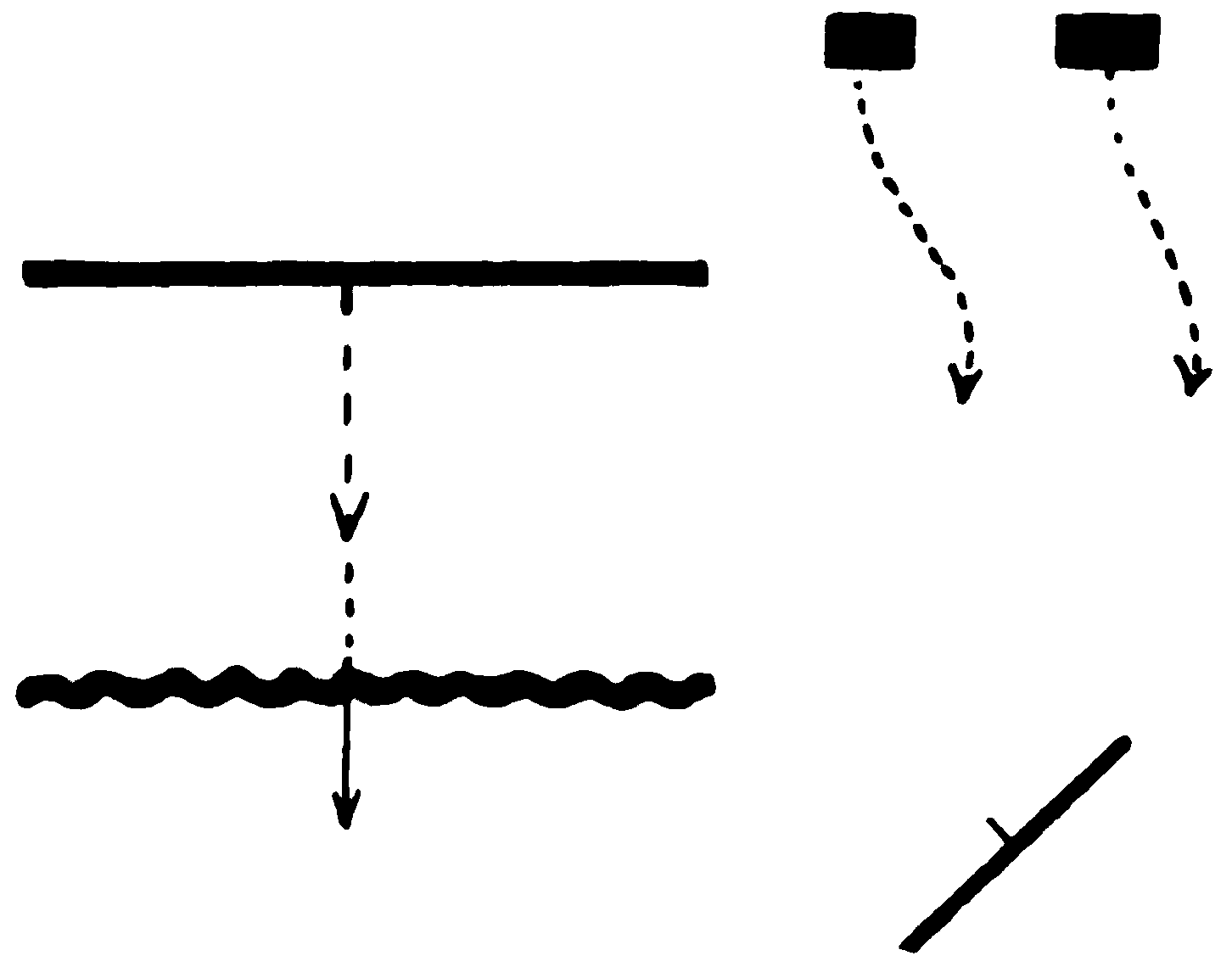
As soon as the commander decides to break off the action, the reserve, if one is still available, should be sent to the rear to take up a rallying position, which should be so situated that it can make its influence felt as soon as the main position is evacuated. As every defeated force, or one that is withdrawn by order, retires straight to the rear, the rallying position, in order to allow the troops holding it to fire effectively, must be located as far as possible to a flank of the line of retreat. If the outer flank of the position can be advanced, fire may be opened at an earlier moment, but this will only be practicable in minor engagements. The distance of the rallying position from the main defensive position should be such as to compel the enemy to advance again under fire, and prevent his carrying both the main defensive position and the rallying position at one rush. On the other hand, the rallying position should not be so far to the rear that the retreating troops may be annihilated before they enter its effective zone. However, as the troops in the rallying position are also to effect a withdrawal, it is not a good plan for them to engage the enemy from the start at too short a range. “It is most desirable when artillery and machine guns supported by cavalry suffice for this purpose, while the infantry uninterruptedly continues its retreat. The mounted arms follow later at an increased gait.” (Par. 429 German I. D. R.).
The rallying position should be occupied in time, so that all dispositions for holding it can be made calmly and without precipitation. A powerful fire at mid and long ranges is requisite to prevent the enemy from reaching decisive ranges. The firing line should, therefore, be strong and the supports weak. If a reserve is still available, it is at once sent back into a second rallying position, to cover the withdrawal of the troops occupying the first rallying position. A free field of fire down to the shortest ranges is not necessary. If the position is on elevated ground, the firing line should be posted so far in rear of the crest that, while its fire can still sweep the ground at mid ranges, and perhaps at the extreme limit of short ranges, the skirmishers, on retiring, will be sheltered as soon as possible. Fire should be opened as soon as possible, in order to retard the enemy’s advance.
The troops holding a rallying position should delay the enemy’s advance long enough to give the retiring force ample time and room to re-form, so that it can effect its retreat in good order. When this has been accomplished, the troops occupying the rallying position retire, unless there is hope that fresh troops may bring about a change in the state of affairs. As a rule, a second rallying position will be necessary, but it would be a mistake to halt in every seemingly favorable position. When a retreat has once been decided upon, it is generally necessary to get away from the enemy as quickly as possible.
“The commander must conduct the combat attending a retreat according to a well-ordered plan. He must indicate where the rallying position is to be, what troops are to occupy it, and assign march directions to the different columns. Only after he has given these orders and has assured himself that they will be executed, does he leave the battlefield, in order to meet his troops soon thereafter with new orders.[481] The rest is the business of subordinate leaders.” (Par. 432 German I. D. R.). The latter remain with their organizations for the purpose of maintaining order and cohesion. (Par. 297 German I. D. R.). Adjutants and officers detailed to receive orders should be sent to the rear ahead of the troops.[482]
XIII. CONTAINING ACTIONS.
THE DELAYING ACTION AND THE HOLDING ATTACK.
Since the attacker will invariably seek to overpower the defender, and the latter will endeavor to prevent this by force of arms, it is obvious that an enemy can be “delayed” or “held” only when he permits this to be done. It is difficult to conduct a delaying action or a holding attack, because our training, which is based on offensive action, causes subordinate leaders to follow up every little advantage. In delaying actions, the defensive, and in holding attacks, the offensive intention predominates. The latter may consist of merely threatening the enemy with an attack, or of seriously engaging him. (Par. 392 German I. D. R.). Both the delaying action and the holding attack aim at deceiving the enemy.[483] Accordingly, the characteristic features of these combats are great frontage, large expenditure of ammunition, and long range fire, but, at the same time, few rifles, in order to deceive the enemy as to the strength of our force. In both combats, troops require considerable distribution in depth. The object of a delaying action is to gain time until the troops in rear can deploy, neighboring columns can come up, or a turning movement can become effective. (Par. 417 German I. D. R.). Troops fighting a delaying action require considerable distribution in depth so that they can effect a withdrawal. Distribution in depth is still more necessary in a holding attack,[484] in order that the troops may be able to repulse a counter-attack made by the enemy, or, by attacking him energetically, prevent his withdrawing. A force fighting a delaying action should keep its supports far to the rear, while a force charged with holding the enemy should keep them in close proximity. By properly employing his artillery, the commander can best exercise an influence on the course of the combat. (Par. 419 German I. D. R.). Since a delaying action is to be fought at long ranges, a field of fire is only required at those ranges; defiladed spaces in the foreground may frequently be a positive advantage. The fire fight is kept up only so long as it is necessary to keep the enemy at a distance. In a holding attack, it will not be proper to keep up a continuous fire; the violent fire breaking forth from time to time must teach the defender that a force is lying in waiting opposite him, ready to rush forward at a moment’s notice.
The object of threatening with an attack may frequently be accomplished by engaging the enemy with several detachments which are separated by intervals. (Par. 288 German I. D. R.). The negative object of preventing the enemy from withdrawing may be accomplished with a weak force; the positive object of compelling the enemy to use up his reserves in the early stages of the fight and at a less decisive point, requires that lie be engaged with a stronger force. A determined commander will not allow himself to be held by demonstrations. The manner in which the Vth Army Corps forced the French to bring up their reserves into the first line at Wörth, is worthy of imitation.
The size of the group charged with holding the enemy depends upon the extent of front to be covered and the probable duration of the combat. The conduct of such a force will vary considerably, depending upon the distance to the point where the decisive action is to be fought. When the holding force is close to this point, it should engage the enemy energetically.
England. The holding attack is to deceive the enemy as to the direction in which the main attack will be made, and, when the crisis of the action approaches, prevent his withdrawing troops from those parts of his front which are only threatened and opposing the decisive attack with nearly his entire force. Accordingly, the troops making the holding attack should act vigorously, as soon as the attack develops, and be in readiness to transform their demonstration instantly into a real attack.
XIV. THE INFANTRY COMBAT ACCORDING TO VARIOUS DRILL REGULATIONS.
THE AUSTRIAN DRILL REGULATIONS OF 1903.[485]
ATTACK.
Both the rencontre and the attack on a position prepared for defense are considered. The regulations in regard to the rencontre have been revised, so as to permit a commander to launch the battalions of his main body directly from route column, or to concentrate his main body farther to the rear, while his advance guard stands on the defensive. The attack on a position prepared for defense, even after the attacker’s artillery has succeeded in paving the way for its infantry, consists of a laborious advance from one firing position to another. The question as to whether an attack is feasible without the support of artillery fire, is answered to the effect that it will, as a rule, be a difficult undertaking, unless the artillery has sufficiently silenced the batteries of the defender. The regulations divide the attack into two clearly defined phases, viz., the advance to the decisive firing position (the main firing position), and the decisive action.
The provisions of the regulations coincide very nearly with the views considered sound in Germany, and therefore an attempt will here merely be made to point out several differences. The combat formation necessary for the decisive stage of the action is taken up during the preparatory stage, so that, when the forward movement commences, the troops need only move straight to the front. (Par. 568). In a division, by appropriately combining “tactical units”, echelons are formed, whose strength depends upon the purpose of the combat, the information of the enemy, and the relation of the division to other bodies of troops. (Pars. 533, 540 and 541). Rules for the employment of thin or dense firing lines are not given. “The attacker should advance impetuously to the point where he can employ his rifles effectively,” (Par. 582).
“In an attack, everything should be done to get within effective range of the opponent before fire is opened by the whole line.” (Par. 323). When acting as part of a larger force, a platoon may open fire independently, if it suddenly encounters the enemy or if it finds a good opportunity for firing which the company commander has overlooked. (Par. 338). Unless the battalion commander has reserved to himself the right of designating the moment for opening fire, the company commanders direct when fire shall be opened, and conduct the fire fight at mid and short ranges. At long ranges, the battalion commander designates the companies that are to fire.
Kinds of fire. Fire at will and volley fire are employed. As a rule, volleys are only used when the troops are in close order, but may also be used in skirmish line to test the range. According to par. 331, the rate of fire may be accelerated, and in pars. 327 and 686, fire surprises are authorized.
When exposed to effective fire, the firing line is to advance by rushes. These are to be made by alternate units moving forward, supported by the fire of those remaining behind. Rushes are only in exceptional cases to be made by units smaller than a platoon. “The length of the rushes depends upon the character of the ground and the tactical situation, as well as upon the physical condition of the men. They serve as an expedient for reaching the next firing position.” (Par. 313).
Movements under effective hostile fire may sometimes be made by crawling. This is considered especially useful in rectifying alignments. (Par. 196).
For envelopment, see p. 362 supra.
For the use of the spade in attack, see p. 393 supra.
Assault. “The close approach of a long firing line to an enemy who occupies a good position, may well pass as a proof of the assailant’s superiority. Nevertheless, this does not, under all circumstances, furnish assurance that a forward movement for the purpose of penetrating the hostile position will now succeed; a premature assault may still result in disaster.
“As long as the conduct of the opponent does not show clear indications that his fire power is crippled, nothing remains for the attacker but to continue the fight for the superiority of fire. In doing this, the commander should not hesitate to put in his last man if necessary. The assault—in case the enemy still offers resistance—should not be made until the attack has been pushed sufficiently close to the enemy’s position, and the power of resistance of the enemy is palpably broken.
“It is immaterial what formations are taken up for this closing act of the combat, as it should be the natural culmination of a situation strained to the utmost. The troops must understand that there is no longer any chance to go back; that on the contrary, at this moment, honor and salvation lie wholly in moving to the front.
“When the assault has once begun, the hostile position should be carried in one rush. Any hesitation or halting, at this critical stage of the action, may nullify the previous success, and must therefore be quickly overcome by the reserves, if any are still available, taking a hand in the fight.” (Pars. 590-592).
The decision to assault may emanate either from the firing line, from the commander of the whole force, or from the commander of one of the units. If the decision emanates from the firing line, all the troops are to conform to the movement of that line. The following provision, which applies even to a company acting alone, differs from the German regulations, viz., “During the assault, a part of the assailant’s force should, whenever practicable, continue its fire and direct it upon any hostile reserves that may appear.”
DEFENSE.
The regulations governing the defense seeking a decision differ but little from the views entertained in Germany. The actual work of preparing a position for defense is not to commence until the direction in which the enemy is going to make his attack is known. The assailant is to be prevented, as far as possible, from obtaining information of the position and the measures taken for strengthening it. This is to be accomplished by pushing small detachments to the front to hamper the enemy’s advance.
In the past, advanced positions were decidedly opposed by the Austrians, but at present their use is recommended in cases where time is to be gained or the enemy is to be deceived, or where fire from such positions would inflict considerable losses on the enemy. However, the regulations seek to obviate the danger of the principal fight taking place in the advanced position instead of in the main position, by adding: “But such a measure should not cause the commander to swerve from the firm determination to carry out his original intention.”
The tremendously increased fire power of infantry is to make it possible to hold the front with a comparatively weak force, while the remaining troops are concentrated as a reserve with which the actual decision is to be brought about. The commander should resist every temptation to use the general reserve for other purposes than for carrying out the counter-attack, which should be ordered when the assailant is under the most effective fire of the position. The general reserve should then be quickly deployed and should make its attack with determination, by directing a violent fire against the flank of the enemy. Local frontal counter-attacks are to be avoided. The garrison is only charged with the task of annihilating the enemy with its fire, which should be increased to the utmost intensity.
THE ITALIAN DRILL REGULATIONS OF 1903 AND 1906.[486]
ATTACK.
The peculiar character of the probable Italian theater of war in Upper Italy, with its numerous forests of tall timber, and its many defiles, causes special attention to be paid to the offensive.[487] The regulations emphasize the necessity of the coöperation of infantry and artillery.
Although the platoons intended for the firing line are brought up in close order formation, the actual combat formation is not taken up until the situation makes this necessary; but, in any case, the leading element is to enter the zone of hostile fire in a deployed formation. To neutralize the mixing of units as much as possible as the action progresses, the firing line is formed into groups separated by intervals of 4-5 paces, although this increases the casualties. These intervals may be increased, when required, to 10 paces. (Intervals between skirmishers in the firing line are usually at least 15 cm., otherwise 3 paces). The firing line is to advance until increased casualties force it to open fire.
Kinds of fire. Only fire at will is employed. (This is also used when the troops are in close order and formed in four ranks). The battalion commander in the first line directs that fire be opened, as soon as it is certain that a good effect can be produced. When two targets appear, the fire is to be directed upon the one promising the best results (i.e., not necessarily the one that is tactically most important). “In order that the intensity of the fire may correspond to the requirements of the tactical situation existing at the moment, officers, by reason of their tactical training, should be able to state approximately how many rounds are necessary to produce the desired effect, the range, degree of visibility and character of the target, the nature of the terrain and of their position, as well as the physical condition and morale of their men being given. From these estimates may be deduced how many rifles must be employed in order to bring about a decisive result in the shortest possible time.”
The advance by rushes may be made either at a walk or at a run, but the regulations do not prescribe in detail how it shall be conducted. The following points are considered especially important: The time for making a rush, its length, and whether it should be made by a whole unit simultaneously or in echelon. All this depends upon various circumstances, which the leader, alter due consideration of the terrain and the hostile fire, as well as of the physical condition and morale of his men, is to judge in each particular case. In doing this, he is to bear in mind that the rush must be made as unobserved by the enemy as possible, so that the latter cannot direct his lire upon the advancing unit.
The rushes are to be made first by those parts of the firing line which are favored by the terrain and which have gained a superiority of fire over the hostile troops immediately opposed to them. Units which could only advance by rushes at the cost of considerable and useless losses, are to wait until the neighboring units have pushed ahead, support these with their fire, and then advance in turn under cover of the fire of the others.
As a general rule, so long as the hostile fire permits, rushes are to be made by entire companies, or at least by whole platoons. The length of the rushes and whether they are made at a walk or at a run, depends upon the nature of the terrain. Upon completing a rush, fire is to be opened at once.
When the intensity of the hostile fire increases, or after the organizations have become mixed, rushes can no longer be made by entire units but only by squads or like fractions. These leave the firing line and endeavor to reach the next cover at a rapid run. or, if cover be lacking, throw themselves down in order to open fire again at the shorter range thus gained. As a rule, the leading echelons open fire at once from their new positions, so as to facilitate the advance of the others, unless special circumstances make it advisable to delay the firing until all the other units have reached a good position and are able to direct an effective fire upon the enemy.
At short ranges, in covered terrain, or on ground swept by hostile fire, the best way to avoid losses is to advance in small groups consisting of several skirmishers. During each rush, the adjoining flanks of neighboring units cease firing, so as not to injure the men of the advancing unit. Platoon and company commanders hurry ahead, while squad leaders see that all of the men move forward.
Standing crops frequently enable the echelons in rear to follow the firing line in closer order, and may even permit supports, which are to carry that line forward, to come up in that formation.
The assault is to be made either in close or extended order to the tune of the Royal March and with loud cheers.
The regulations assume, however, that the superiority of fire, gained by the mutual coöperation of infantry and artillery and by the participation of the reserves, will induce the opponent to retreat. When engaged with an obstinate opponent, who remains in his position, only a part of the leading line is to be launched against certain sections (tratti) of the defensive position, while other parts, by means of rapid fire, prevent the enemy from supporting the threatened sections. In conjunction with this frequently emphasized scheme of penetrating several specially important sections of the hostile position, the regulations express the view—by no means generally considered sound-that the capture of several judiciously chosen points will force the enemy to retreat.
The assault is, as a rule, to be made by order of the commander of the whole force. The short burst of rapid fire preceding the assault is suddenly terminated by the command “attention” (attenti), and at the command “to the assault” (per l’assalto), the men throw themselves with loud cheers, accompanied by the sounding of trumpets and the beating of drums, upon the enemy. When a unit has already gotten so close to the enemy that further waiting would be useless, it advances to the assault, after getting permission therefor, or, otherwise, on its own responsibility. All the rest of the troops are to join in this movement.
DEFENSE.
So long as it is not definitely known in which direction the enemy will approach, the position is to be occupied with as weak a force as possible. The decision is to be brought about by a counter-attack. Long range fire is only considered proper on broad stretches of open terrain devoid of cover; and, in general, fire is not to be opened until the enemy arrives at short ranges. As soon as fire is opened, all the supports are to be in the firing line. A counter-attack is undertaken by the first line only in exceptional cases.
THE FRENCH DRILL REGULATIONS OF 1904.
ATTACK.
Both the French and the German regulations show a decided preference for the offensive, and both have eliminated all rules which might produce normal formations. There is an unmistakable inclination towards shock tactics in the French regulations, although the term “shock troops” has been replaced by “maneuvering troops”. “The forward movement alone is decisive and irresistible.... The fire is the element that executes”. The habit of looking upon the German army as a probable opponent leads the French to provide for reconnaissance with mixed detachments. The regulations do not touch upon the tactics of the rencontre, and prescribe a more cautious conduct for the advance guard than the German regulations.[488] The advance guard is to occupy supporting points, under cover of which the main body can deploy, and to complete the reconnaissance by its fight. The necessity of infantry detachments completing the reconnaissance made by the cavalry is particularly emphasized.
Another difference between the two regulations considered lies in the manner of making use of the cover afforded by the ground. The danger of going too far in this direction is guarded against in the German regulations by assigning combat sections to the various units. The French regulations prescribe a group formation of the several combat elements, and a concentration at favorable points, while the plain devoid of cover is left unoccupied. The center of gravity of a French attack does not lie in the firing line—the fight for the superiority of fire is not mentioned—but in maneuvering troops cautiously led after the firing line. The defender is to be engaged all along the line and, when the weak points of his position are recognized, the commander-in-chief is to give the order for the assault.
This division of a force into a fire and a shock group causes the French to prefer the echelon formation on general principles. A brigade is formed as follows, for example: Two battalions of the 1st regiment in the first line, which is followed at 400 m. by the third battalion (troupe d’entrainement); the 2nd regiment follows at a like distance as a reserve.
The regulations divide the attack into the artillery and the infantry preparation (préparation), the decisive action (l’action décisive), and the completion (l’achèvement).
The artillery in the preparatory action. The artillery is to endeavor to silence the hostile artillery as quickly as possible, without, however, expending more ammunition than is absolutely necessary.... The commander is not to give the order for the attack until the preparation is considered sufficient.
The troops are led forward over the terrain in a particularly careful manner (see p. 208 supra), and are then concentrated in a sheltered and protected place. Twelve mounted men (Reservists) are attached to every infantry regiment for reconnaissance purposes. The manner in which the French utilize the ground is typical. In this, widely separated parts of the force may unexpectedly encounter a strong hostile firing line, and may be defeated in detail.
The official regulations are supplemented by special regulations issued in March 1907 for the army maneuvers by General Lacroix, formerly commanding the VIIth Army Corps, and at present Vice President of the Supreme War Council.
Assembly. The division is assembled in division square (carré de division), in which the brigades are in line or in echelon, the regiments in line of double columns or in line of company columns, abreast or in echelon. If a frontal attack is to be made, in which successive lines are pushed forward without any attempt to envelop (in other words a pure frontal attack), the division is concentrated with the brigades abreast, their regiments in echelon. If a flank attack is to be made, in which the leading brigade must be protected by an echelon and a reserve ready for any eventuality, the division is concentrated with the brigades in echelon, their regiments abreast. The artillery is posted in section column near a road in rear of the carré. The pioneer company is divided into four parts, corresponding to the four heads of columns of the assembled troops, for the purpose of removing obstacles and cutting passages during the forward movement. The cavalry is pushed forward and the assembled force is protected in all directions by outposts of infantry and cavalry.
Preparations for the advance in mass formation. During the concentration, mounted officers reconnoiter the covering features of the terrain which are to be utilized during the advance of the massed division, and later these officers act as guides.
Preparatory attack formation.
A. Pure frontal attack. The leading regiment in each brigade is to have two battalions in the firing line and supports, the third to be echeloned in the rear of the outer flank. All of the battalions are to be protected by infantry patrols and by a small detachment of cavalry. The second regiment is to have one battalion echeloned in rear of the inner flank of the leading regiment, and the divisional cavalry is to be held in rear of the division, in readiness to advance to the right or the left.
B. Flank attack. The two regiments of the leading brigade are to furnish their own firing lines, supports, and reserves. The third regiment is to be echeloned 500 m. in rear of the others, and the fourth regiment is to form the general reserve. The cavalry is to reconnoiter on the outer flank. In this case, as well as in a pure frontal attack, the artillery is to take up a position from which it can support the attack. Drummers, trumpeters, and bands, are to march with the general reserve. The regulations state that it is absolutely essential for infantry units to be sheltered from hostile observation during their forward movement, and that they must remain under control of their leaders up to the last moment. Troops are not to deploy until they enter terrain swept by the enemy’s fire. (According to the decision of umpires at peace maneuvers, this would be at 5000 m.). It should be borne in mind that deployed troops cannot move by a flank, but only straight to the front.
The forward movement, in which the terrain will invariably cause lateral displacements of troops, is made from cover to cover, when necessary, from one supporting point to another. No hard and fast rules or normal formations are prescribed for this advance.
The advance is to be made as long as possible without firing a shot. When this is no longer practicable, recourse is to be had to fire, as the only means of making a further advance possible.
Kinds of fire. Fire at will (feu à volonté), principally used at short ranges, for the purpose of retarding the enemy’s advance; fire with counted cartridges (feu à cartouches comptées), the number being given (this is the fire usually employed); magazine fire (feu à répétition); and the fire of specially designated marksmen. Volley fire has been again prescribed. “Bursts of fire” (rafales) are typical of French fire tactics. (See p. 164 supra).
After fire has been opened, the advance is to be made by rushes, but the regulations do not prescribe how these shall be made.
The regulations contain a very realistic description of the infantry combat with its fluctuations, isolated attacks, and reverses. They emphasize that all must be animated by a desire to carry forward, by means of reinforcements, any troops that may have been checked. At the point where an advance is absolutely impossible, as many hostile troops as possible are to be held fast by an energetic fire fight, while the troops in the decisive attack engage the enemy and advance impetuously.
A series of attacks is to be made from the various covering features all along the line. These, made with the impetuosity inculcated by the regulations, are very apt to fail prematurely. This is particularly likely to happen because some of the troops will fall behind, while others are able to push ahead more rapidly. These attacks are to destroy the power of resistance of the enemy and to exhaust him physically. The leading units are to cover with their fire the advance of those who are less favored by the terrain.[489] During peace maneuvers, the fight now comes to a standstill at a range of 600 to 800 m.
The supports (renforts) follow in a similar manner, ready to move up into the firing line at the first signal to that effect, or independently in case the situation requires it. Their entry into action is in a general way determined by the commander of the whole force. They are to augment the fire power of the firing line or to carry it forward. The efforts of all are to be directed toward constantly keeping up the advance.
At some points, the troops, when reinforced by their supports, will be able to attack some of the enemy’s supporting points, and to effect a lodgment on the ground captured. At other points the attacking group will be too weak to push the attack home. In such a case, the troops are to effect a lodgment on the terrain (s’accrochent sur le sol) in rear of the nearest cover, as close as possible to the enemy’s position, and are to maintain themselves there until artillery or neighboring troops can support them. The fire of these troops is to give the enemy the impression that an attack is to be made here also. “No matter how successful these usually protracted fights may be. troops must be launched in a decisive attack at some points. The infantry should endeavor to compensate for its numerical inferiority by skillfully utilizing the ground and intrenchments, by great activity, and, above all else, by invincible pertinacity. The supporting point will thus become the center of the fight of a separate combat group.”
The commander should endeavor to maintain cohesion, and to equalize fluctuations in the combat by controlling the activity of the artillery and by putting in fresh troops. During this group combat, the commander must decide where the retained troops should be launched for the assault. The selection of a point of attack is essentially the personal task of the commander and is an index of character and of eye for the value of ground, neither of which can be regulated by fixed rules. The regulations do not believe that close order formations can be dispensed with in launching the assaulting troops. Troops in close order, utilizing the ground to the best advantage, so as to suffer but slight losses from hostile fire, are to be brought up to the fighting line in a flexible echelon formation in order to give to that line, as troupes d’assaut, the impetus for the assault.
According to Thomas de Colligny,[490] formerly general staff officer of the 9th Infantry Division, a battalion designated to make an assault should form in four lines, each consisting of one company; the distance between lines being 150 m., and the front covered likewise 150 m. Each of the three leading lines should be formed in line of platoons in columns of route at deploying intervals sufficient to allow single rank line to be formed, and the fourth line in a similar formation with 10-pace intervals between platoons. When one of the lines is checked, the next succeeding one is to carry it forward. If the French believe such close order formations to be indispensable, they will be compelled to make a more extensive use of cover.
Colonel Dencausse is the exponent of a suggestion made by General Bonnal. The latter forms a division for attack as follows: One regiment, on a front of 600 m., as the advanced line (avant ligne), in rear of that, the assaulting troops (troupes d’assaut). First line: one regiment, its twelve company columns abreast; second line: one regiment, its three battalions in double column at extended intervals, 300 m. in rear of the first line; third line: the fourth regiment, its battalions in route column abreast of each other, 300 m. in rear of the second line. While, during our peace maneuvers, we continue to fire on the enemy’s firing line in the expectation that his supports and reserve will in the end enter our zone of fire, it might be advisable, when confronted by a French opponent, to direct our fire on his reserves as soon as these become visible.
Envelopment. This is occasionally mentioned in the regulations (for example in pars. 290, 301 and 302). However, the Field Service Regulations, in discussing the attack, whose phases may vary in length depending upon the intentions of the commander, state that the attacker “may assail a wing or a flank of the enemy with superior forces for the purpose of annihilating him.”
For the use of the spade in attack, see p. 392 supra.
DEFENSE.
The French defense is characterized by group fortifications, advanced positions, and advanced posts[491] (intended to prevent hostile reconnaissance), and numerous counter-attacks.
For defense, a force is divided into the firing line with its supports, and the maneuvering troops (general reserve) intended for offensive action. In addition to calling attention to the necessity of overwhelming with fire the hostile troops advancing over open ground, the regulations recommend that the fire be withheld occasionally and that the enemy be allowed to run into the greatly accelerated fire which is unexpectedly directed upon him. The fire is to be discontinued as soon as the enemy takes to cover, and is to be increased to the utmost intensity when he moves in dense formation over open ground. The supports are to be used to augment the fire power of the firing line.
Counter-attack. General Lacroix states: “The frontal attack is met by the offensive return (retour offensif), the flank attack by the counter-attack. In order to prepare for this, the commander should ride ahead to examine the ground, and to consider what counter-measures he should take. The artillery can render the most effective assistance by registering its fire upon the points at which the enemy will probably advance, and by preventing him from leaving his position. If the attack is successful, the local reserve advances beyond the firing line, which has entered the hostile position, and fires upon the retreating enemy. The general reserve now becomes the local reserve, and the former firing line re-forms and becomes the general reserve.”
The regulations make a distinction between counter-attack (contre attaque) and offensive return (retour offensif). A counter-attack is made by the reserve before the enemy penetrates into the energetically defended supporting points. In contrast herewith, every attempt to retake a captured position is called an offensive return. (For details see p. 439 supra).
Occasionally, it may be advantageous not to await the crisis, but to force the assailant to deploy by directing a heavy fire upon him. then to break off the action, inducing the enemy to press on, in order to draw him, by this means, onto previously selected and reconnoitered terrain, where he is suddenly attacked in flank by fresh troops. Military history shows that this very procedure has frequently been successful.
“The same activity, the same determination to maneuver, must prevail everywhere. Every mistake and every weakness of the enemy must be quickly perceived and promptly utilized. The troops in the counter-attack should move forward without hesitation and regardless of the cost. When such a forward movement has to be discontinued, the commander must decide where it shall cease. The efforts of all should be directed toward one object, that of tiring and demoralizing the enemy by constant counter-attacks, until the moment arrives when the commander must order the offensive to be assumed.”
THE BRITISH DRILL REGULATIONS OF 1905.[492]
ATTACK.
The regulations do not mention the rencontre. A normal offensive battle consists of “an advance from point to point. Every lodgment made in a new firing position weakens the enemy’s strength in his main position, and paves the way for a further advance; every advance must be thoroughly prepared and systematically carried out.”
In the following, the attack made by a brigade of four battalions is used as a basis. While the commander reconnoiters under the protection of his advance guard, the troops are concentrated in a “preparatory formation”, the battalions in one or more lines of “quarter columns” (column of companies). As soon as the commander has decided which flank of the enemy he will envelop, against which portion of the enemy’s line he will launch his decisive attack, he assembles his subordinate commanders to receive the orders. According to the regulations, it will rarely be possible to issue orders while the troops are still in march. The orders are, as a general rule, to be given in writing, and are to be supplemented by verbal instructions, in which the commander calls attention to the peculiarities of the terrain, especially where a hostile counter-attack is possible. In exceptional cases, the brigade commander designates the position to be taken up by the machine guns, and gives directions to them in regard to supporting the advance by long range fire. A base battalion is to be designated. When the enemy’s position is visible, a point of attack is assigned to every unit. When this is not practicable, the base battalion is led forward by officers familiar with the ground, or it is given a compass direction. Every leader is to provide independently for reconnaissance and for communication by signal flags and also by telephone; a mounted signal corps man accompanies the brigade commander.
Every unit is formed in three lines for attack.
The first line, consisting of scouts and skirmishers with supports, is made as weak as possible; without supports rarely more than one-fourth of the whole force.
The second line, the reserves of the firing line, is under the orders of the appropriate battalion commanders, and is to reinforce the firing line, protect the Hanks, and deliver long range fire. The second line is to fill up the firing line to the maximum density, i.e., to one man per yard of front (0.9 m.).
The third line, the general reserve, is to assure the success of the attack. It is to be made as strong as possible, seldom less than one-fourth of the whole force.[493] “The general reserve is directly under the orders of the commander of the whole force. It enables him to meet the varying contingencies of an engagement or to ward off counter-attacks. If the attack succeeds, the general reserve pushes forward rapidly to take up the pursuit; if the attack fails, it serves as a rallying force, but before the commander decides to leave behind even a part of it, he should consider whether, by launching all the troops at his disposal, he could break down the resistance of the defender. The commander can only exercise an influence on the course of the action by means of a reserve. If he keeps in his own hands a strong reserve, he will have it in his power to take advantage of any mistake the enemy may commit, to restore the battle should the leading troops meet with a serious check, to meet a counter-attack in force, or, in case of need, to provide the additional strength required to drive the attack home.”
In contrast with these provisions, we find, strangely enough, under the heading “Brigade”, the hint that, when advancing to the assault, it is advisable to keep back a portion of the reserve in a rallying position. Even a battalion commander is invariably to retain at least half a company at his disposal. The British were not without reason censured because their flank attacks were ineffective in South Africa on account of the lack of energy of the frontal groups, and their new regulations accordingly contain detailed rules for the conduct of the “holding attack”. The troops holding the enemy in front are to threaten him for the time being. This is to be accomplished by wide extension, and by deceiving the enemy by occasional bursts of lire (rafales), by employing machine guns, by retaining supports far in rear, and by retraining, for the time being, from advancing to decisive ranges. But the troops are to be ready to join in the main attack when the latter advances. The regulations state that, in order to deceive the enemy effectually, adequate forces will have to be launched and that the commander will have to act vigorously. (See p. 447 supra).
Fixed rules for the front to be covered by a unit in action are no longer given. A unit fighting alone may cover considerably more front than when acting as part of a larger force. In a decisive attack, a battalion in the first line may put 125 rifles on every 100 yards (90 m.) of front; these are distributed between firing line, supports, and battalion reserve; the latter may consist of one or more companies. Entire companies are only deployed in exceptional cases, for example on open ground, where it is difficult to bring up the supports. The size of the reserve depends upon the losses to be anticipated in the firing line; when these will be small, in all probability, the reserve may be made as strong as the firing line plus supports. In attack, a battalion may accordingly deploy on a front not exceeding 800 yards (formerly 540 m. was prescribed). A brigade of four battalions may deploy on a front of 1400-2100 m., depending upon the number of battalions engaged.
When the force arrives within 4 or 5 km. of the enemy, the battalions are formed in two lines of companies. Each company in the first line is preceded by a platoon in close order, and this is in turn protected by scouts. As soon as these scouts can advance no farther, they lie down and await the arrival of the fighting line. The latter advances under cover of the supporting fire of infantry, machine guns, and artillery. Fire of position is considered necessary. Fire at will is from now on used. This is to vary in intensity according to the character of the target, and the range. It is to increase to special violence when the attacking infantry advances over level ground or encounters obstacles. The fire is to be discontinued when the advancing skirmishers reach cover. The firing line is to advance as close to the enemy as it can without suffering excessive losses. Fire is to be opened when the hostile fire makes this necessary, but small losses are to be borne.
After the fire fight is once begun, it is to be conducted with more rifles than the enemy has in action. “Battles are only won by controlled fire directed upon targets at decisive ranges” (according to the regulations, at ranges under 540 m.). Within the zone of effective fire, all the troops are to deploy. In consequence of this, skirmishers, who endeavor to work forward independently, are scattered all over the terrain over which the attack is being made. At the initial deployment, the interval between skirmishers is to be about 5-15 paces; at short ranges, at points where the decision is sought, there is to be at least one rifle for every two or three yards of front (1.80-2.70 m. = 21⁄2-31⁄2 paces). Another paragraph of the regulations prescribes that the maximum density is to be one rifle per yard of front. The British views, when compared to those entertained by them immediately after the South African war, have undergone a noticeable change, especially as regards the frontage of a firing line; dense firing lines, possessing strong fire power, are at present deemed essential to a decisive fight, while the fire of widely extended lines is considered ineffective. The intervals may vary considerably, but the regulations state that it should be borne in mind that the difficulties of conducting a fight are increased and the fire power reduced when too great a front is covered; moreover, that in covered terrain, and when counter-attacks may be anticipated, an overextension is actually dangerous. Because of the necessity of moving in thin skirmish lines, it is considered essential that the men be trained to act independently, to continue the fight even in a difficult situation, and to do everything in their power to carry out the original intentions of the commander.
Rushes over open ground are not to exceed 80-100 yards (72-92 m.) in length; as a rule they are to be shorter. According to an example given in the Firing Regulations, rushes are to be 25 yards (22 m.) long, at ranges from 650-500 yards (580-450 m.). A rush is to be continued while the enemy’s surprise lasts and he finds no opportunity to deliver aimed fire. In covered terrain, the rushes are to be made from one covering feature to another.
“On open ground and within effective range, long lines of skirmishers, rising simultaneously, will suffer heavy losses even when making short rushes; the sudden movement of smaller units may take the enemy unawares, so that for a time at least well aimed fire is avoided. The rush is continued only while the surprise of the enemy lasts. The shorter the range, the smaller the advancing unit will have to be, and the shorter the length of the rushes.”
The dispositions for a rush are to be made as unostentatiously as possible. The rearward detachments, which follow by rushes, are to advance, if possible, beyond the group already firing. When squads are unable to advance by rushes, the men may crawl forward singly.
The regulations state that, when in close order, units of the strength of company columns (80-100 men, 4 platoons, in column of platoons at full distances), having a front of 10-12 files, suffer comparatively small losses when exposed to long range fire (1800-1200 m.). The troops are to deploy before reaching effective ranges (1200-600 m.), as they will otherwise suffer serious losses. At decisive ranges the firing line is to be filled up to its maximum density.
The whole force, a small part excepted, is to be launched in the assault; a sudden and unexpected advance of the assaulting troops is considered particularly important. The order for the assault is to be given by the commander of the whole force, but the manner of conducting it is left to company commanders.
When the attack would be too costly by day, however, the troops are to intrench, wait until it is dark, and then advance to assaulting distance, where they again intrench (machine guns, and even single field guns are to be taken along). The assault is to be made, after a brief but violent fire fight, at the first streak of dawn.
DEFENSE.
In defense, a force is divided into the fighting line with supports, and the reserve. The latter furnishes the outposts and the garrisons for the advanced positions (so-called temporary positions). The object of advanced positions is to mislead, deceive, and check the enemy. They are to be evacuated before the troops in them become seriously engaged. It is not considered necessary for the main position to consist of a continuous line of trenches; every platoon and even every squad may have its own trench. The principal requirements are good field of fire and mutual support by oblique or enfilade fire.
The strength of the garrison is to be governed by the size of the field of fire and the character of the works. The regulations state that, under favorable conditions, a few men can defend a broad front, but that, when the attack is favored by the terrain, a strong garrison is required. Firing trenches, unless they are to serve as dummy intrenchments, are not to be constructed so as to stand out against the horizon. The importance of masking firing trenches, and of constructing overhead cover is emphasized; special cover trenches for the supports may be constructed in rear of the crest.
Against skirmishers, fire is to be opened at 1000 m., but it is also considered desirable to withhold the fire until they get within short range. It is believed that this will be attended by success when the assailant is ignorant of the position of the defender or makes his attack with poorly disciplined troops. Continuous long range firing tires the eye and the hand. The decision is to be brought about by a counter-attack made by the general reserve. Local counter-attacks by section reserves are also recommended. The tendency of the British to make the section reserves very strong has been frequently observed. The final stage of the combat consists, as in Wellington’s day, of a counter-attack all along the line. As soon as the opponent has arrived within assaulting distance, the troops holding the position are to fix bayonets and, after delivering magazine fire, are to make a short frontal counter-attack.
THE JAPANESE DRILL REGULATIONS OF 1907.
ATTACK.
The Japanese views coincide almost exactly with the German, but take their peculiar theater of war into consideration.
Kinds of fire. Fire at will, volley fire, and rapid fire are used.
Rushes are not to exceed 100 m. in length, as a rule, but the regulations admonish leaders to “guard against the mistake of making rushes that are too short. When rushes are shorter than 30-40 m., their value will be insignificant, as a rule.” Leaders are likewise to avoid sending forward units smaller than a platoon, in order that the advance may not be too much retarded and the difficulties of leading increased.
The regulations particularly emphasize that it will rarely be possible “to shoot an enemy out of his position”, and that, on this account, the decision will, as a rule, be brought about by the assault with cold steel. They further state that, when the enemy can be kept down by artillery fire, the advance of the infantry will be easy; that, as it is difficult to obtain a timely effect from artillery fire directed upon an enemy who takes advantage of cover or who occupies a fortified position, the infantry cannot wait for the successful termination of the artillery combat, but, on the contrary, should advance while that combat is in progress, for only by so doing can it count upon the effective coöperation of its artillery. But, nevertheless, infantry is to make the attack independently, even if it has to dispense entirely with the coöperation of the artillery.
The regulations consider the rencontre and the attack on a position prepared for defense.
Rencontre. The regulations prescribe that in a rencontre the advance guard should make a vigorous but, at the same time, deliberate attack; that the commander should promptly decide what to do, even if the situation is not entirely clear; and that, when practicable, the main body should be launched as an entity. A fight against a superior enemy is only to be avoided, for the time being, in case the latter has gained a start in deployment.
Attack on a position prepared for defense. The commander frames his plan of attack according to the results of the reconnaissance, and leads his troops forward provisionally into a preparatory position, where he assigns deployment spaces and, if practicable, combat sections to the different units. In order that they may utilize the covering features of the ground to the best advantage, the different units are to avoid advancing abreast. On account of the difficulties attending an advance over ground swept by hostile fire, it is considered desirable for the troops to take advantage of the cover afforded by darkness. In order that, in such a case, serious lateral displacements of the troops may be avoided, the fighting line is to be sent forward the day before to endeavor to drive back the troops posted in front of the enemy’s main position. The regulations state that, when an attack is contemplated to be made during daylight against a strong position prepared for defense, there is no alternative but to approach the assaulting position by intrenching successive attack positions, but that, when circumstances permit, an attempt must be made to advance under cover of darkness to the enemy’s position. In the latter case, the assaulting position is to be designated during the day, after a thorough reconnaissance, and detailed preparations are to be made for the advance. As soon as the troops arrive during the night in the selected position, they are to construct cover quickly, and to intrench. When the ground is so hard that intrenching tools cannot be used without difficulty, recourse is to be had to the sand bags that are carried along. The men engaged in digging trenches are at all times to be ready for action.
The regulations state that whether a force which has occupied an assaulting position should make the assault immediately at dawn or should first prepare it by fire, will depend on circumstances; and that, if attempted at dawn, the success of the assault will depend on the suddenness and rapidity with which it is carried out. The reconnaissance of the position and the work of removing obstacles is to be completed, if possible, during the night, so that avenues of approach will be open for the assaulting troops.
If the reconnaissance has gained all the necessary information, and if the preparations are completed, the assault may be made before the night is over. The regulations say that, when an assault is made at night, the distance to be covered should be very short; and that it will depend on circumstances whether the assault is made suddenly, directly from the last firing position, or whether it is carried out upon the completion of works of approach. When necessary the assaulting bodies are to carry along hand grenades and demolition tools, the latter being selected in conformity with the results of the reconnaissance.
The regulations state that to have captured a position does not suffice; that only the pursuit and dispersion of the enemy makes the victory complete. The troops that have penetrated into the hostile position are to continue the advance until they again find a field of fire, whereupon they are to fire upon the retreating enemy. The troops which do not take part in this fire are to re-form quickly, secure the captured position, take requisite measures for security, and make preparations to meet any hostile counter-attack. Troops are not to be assembled in large bodies at points exposed to hostile artillery fire. As soon as the enemy has gotten out of range, all the troops are promptly to resume the forward movement, and are to pursue him vigorously so far as due regard for cohesion and order permits.
Intrenching tools are to be used in attacks on fortified positions, and in strengthening ground captured from the enemy.
DEFENSE.
In defense, the Japanese regulations, like the German, provide for economical occupation of the front (group fortifications) and a general reserve, which is to be used offensively or to protect the flanks. Dummy intrenchments, patrols, and outposts are to make it difficult for the enemy to gain information of the defensive position. The Japanese views in regard to advanced positions are not so pronounced as the German, for, while their regulations mention the combat of the outposts pushed forward from the position, the danger of advanced positions is not especially emphasized.
The training of the soldier is to be such that even after he has fired away all of his ammunition, he will still defend his position with the bayonet.
Nothing is said in regard to the distance of the infantry position from that of the artillery. If information is received that the attacker has made a lodgment during the night in the assaulting position, small detachments are to advance and prevent him from strengthening his position.
THE RUSSIAN DRILL REGULATIONS OF 1907.
The present regulations only treat of the formal matters of training and combat.
THE SWISS DRILL REGULATIONS OF 1908.
ATTACK.
There is considerable similarity between the Swiss and the German regulations. The keynote is the offensive. The purpose of the combat and the condition of the troops are to govern the commander in deciding whether to stand on the defensive or to attack. The regulations state that decisive results are only offered by the attack; that considerations of a presumable hostile superiority and other apparently unfavorable conditions should not diminish the energy of the attack; and that the decision to launch the troops should never be made dependent upon the receipt of reports in regard to the enemy.
The offensive is invariably to be assumed, unless the situation or the mission compel the force to stand on the defensive. The regulations state that, in attack, success does not rest alone upon superiority of fire and superiority of numbers; but that an impetuous advance and an unswerving determination to win are of just as much importance. The conduct of the Swiss attack varies, depending upon whether it is made in a rencontre or on a position prepared for defense.
The views entertained in regard to the rencontre coincide with the German views. The regulations say that the result of the reconnaissance should not be awaited, because success depends largely upon prompt action. The commander may launch parts of his main body in succession, as soon as they arrive, when the force is operating in close country, when it is necessary to gain ground quickly on debouching from a defile, or when the enemy makes an impetuous advance. The commander is to direct all his efforts toward throwing the enemy upon the defensive, and then to launch the main body as an entity.
The Swiss regulations, similar to those of the Japanese, only discuss the attack on a fortified position; various modifications of the attack, depending upon the preparations made by the enemy, are authorized. Advantage is to be taken of the cover afforded by darkness, and an extensive use is to be made of intrenching tools. The regulations state that an assault by day only has a chance of succeeding when the defender is completely subdued, and when only insignificant obstacles and defenses are encountered. When this is not the case, the day is to be used for making preparations for the attack, and the night for executing it.
DEFENSE.
The regulations consider the involuntary defense in a rencontre; the deliberately prepared defense seeking a decision and contemplating an assumption of the offensive; the defense for the purpose of gaining time; and the occupation of a position in readiness, when the direction in which the hostile attack will be made is still in doubt, or when the commander intends to assail the enemy while the latter is in the act of deploying. In the defense seeking a decision, advanced positions are not to be used, because it is believed that the employment of detachments of troops in front of the defensive position will weaken the latter, and a hostile enveloping attack will soon force the advanced troops to fall back upon the main position. The regulations point out that if the advanced troops are supported by fire from the main position, the latter will be prematurely disclosed to the assailant. The employment of advanced troops is, however, considered justifiable to hold defiles, to deceive the enemy, or to support the cavalry.
The works of a position are not to be continuous, but are to be constructed in groups. Infantry positions over which artillery is to fire are not to be less than 500 m. in front of the latter.
XV. THE EXPENDITURE AND SUPPLY OF AMMUNITION.[494]
1. HISTORICAL SKETCH.
The question of ammunition supply in action is of vital importance to the infantry. To solve it correctly means to assure the success of the infantry in fire action. The first question that needs consideration is, whether the experiences of past wars show that the ammunition at present carried by the infantry is sufficient, under all circumstances, even when ammunition columns cannot reach the battlefield in time because all the roads are choked with troops.
For our purpose, it is sufficient to go back as far as the Franco-German war, in which breechloaders were used for the first time against breechloaders. Every German soldier carried 80 cartridges, and the 6-horse battalion ammunition wagons carried 20 additional rounds per man.[495]
When one considers the total number of cartridges expended during any campaign, it seems impossible that a shortage of ammunition could ever have taken place. In the Franco-German war, the expenditure of ammunition in the Ist Bavarian Army Corps amounted to 4,163,000 rounds (166 per rifle); in the IInd Army Corps, 1,105,600 rounds (44 per rifle); and in the Saxon Army Corps, 1,450,000 rounds (about 58 per rifle). The compilation of a table, showing the amount of ammunition expended in the Prussian army, was begun, but was soon discontinued, as it was found that the necessary data were lacking, the only information available being the record of the number of rounds issued by the reserve ammunition parks. The troops sent to the field army from the depot battalions, must have brought with them in each case a very considerable amount of ammunition, as each man carried 80 rounds, but no records are available to show how much ammunition was forwarded in this way. Furthermore, there is no record of the number of rounds actually expended and of the amount of ammunition lost or left on the dead and wounded. It is well known, that in the long periods, during which no engagement had taken place, an enormous amount of ammunition was lost on marches and in bivouacs. This applies likewise to battlefields. The commander of an ammunition column had his men pick up 22,000 rounds of needle gun ammunition in unbroken packages on the battlefield of Hühnerwasser.
A shortage of ammunition first manifested itself where the troops, on removing their knapsacks, had neglected to take out the tin boxes filled with ammunition (for example in the 12th Jäger-Battalion at Sedan),[496] or where the ammunition wagons had been sent to the rear with the field train (for example in the 50th Infantry, on January 19th, 1871, in the battle at Mont Valérien, and in the 38th Brigade, at the battle of Beaune la Rolande).[497]
The regimental histories contain only a few statements in regard to the amount of ammunition expended in the various engagements. Moreover, these statements are only approximations and, as a rule, cannot lay claim to trustworthiness.
The amount of ammunition expended in the opening battles of the war was very small, due to the training and fighting methods of the Prussian infantry, and to the support it received from the artillery. Moreover, the short range of the rifle prohibited long range firing.
“In order to hold its own against the intensity and long range of the hostile fire, the German infantry was compelled to fire more rapidly and at longer ranges than it had intended. In addition, the difficulties of fire control and fire direction were frequently increased on account of the tremendous loss of leaders. Under these circumstances, so much ammunition was expended that, among the troops fighting in the first line, the ammunition carried by the men was no more than enough. This explains why it not infrequently happened that the fighting efficiency of the infantry was impaired by a lack of ammunition. The first general shortage of ammunition occurred at the battle of Mars-la-Tour in the infantry of the IIIrd Army Corps.”[498]
On August 16th, at the battle of Vionville, the Prussian IIIrd Army Corps, whose effective strength was 21,050 rifles, expended 720,486 cartridges, which corresponds to only 34.5 rounds per rifle; yet, in spite of this, the ammunition ran short. During the lull in the battle at noon, by removing the cartridges from the dead and wounded, each man in the 35th Infantry[499] was again supplied with about 200 rounds of ammunition, which were then expended in the course of the afternoon, so that toward evening another shortage occurred.
The following figures in regard to the expenditure of ammunition during the battle of Vionville are taken from Kriegsgeschichtliche Beispiele, 8 and 9, by Major Kunz:
IInd Bn. Leib Regt. 12,749 rounds for 850 rifles, or 15 per rifle.
Ist Bn. 40th Inf. 35,000 „ „ 450 „ „ 78 „ „
IInd Bn. 40th Inf. 6,650 „ „ 350 „ „ 19 „ „
IIIrd Bn. 40th Inf. 4,520 „ „ 300 „ „ 15 „ „
A very annoying shortage of ammunition occurred in those parts of the Leib Regiment which were with the 72nd and 40th Infantry Regiments in front of the wood. The retained echelons in the wood had sufficient ammunition, but the troops in front lacked the means wherewith to inform the retained units of the shortage. In the 11th and 72nd Infantry Regiments a serious shortage of ammunition occurred after they had been engaged but a short time. (In a little less than two hours, the 72nd Infantry suffered the following percentage of losses: Ist Battalion, 53.2%; Füsilier Battalion, 48.2%).[500]
The defense of the stone wall at Buzanval by the 50th Infantry (German), on January 19th, 1871, was one of the most obstinate defensive fights of the war. The numerical superiority of the enemy at this point was overwhelming and his troops were excellent, nevertheless the regiment maintained the same splendid fire discipline it had already exhibited at Lundby. The fight lasted nine hours. In his history of the regiment (p. 350), Lieutenant-General v. Boguslawski says:
“The number of cartridges fired can no longer be accurately determined. Only the war diary of the IInd Battalion contains a note showing that 14,206 rounds were expended. As the 5th Company did not fire at all, and the 7th Company was only partially engaged, by far the greater portion of the ammunition must have been expended by the 6th and 8th Companies.” The IInd Battalion, like the rest, has no record showing what ammunition was supplied to it during the battle. To cite an example: The 12th Company received about 3,000 rounds of ammunition during the fight. As the strength of this company was 180 men in round numbers, each man received 17 additional cartridges. He therefore had 97 rounds available, including the ammunition originally supplied him.
“Now, as each man still had an average of 5 cartridges on going into billets, he must have expended 92 rounds. From this we may assume that during the nine hours’ fight, he fired a little more than ten rounds per hour.”
In the battle of Beaune la Rolande, some of the companies of the 56th Infantry near Romainville had expended all their ammunition. In the 38th Brigade, only the Ist Battalion, 57th Infantry, was able to replenish its ammunition directly from the ammunition wagons near Romainville. The defenders of Beaune did not receive such assistance however, as only one ammunition wagon was brought up (by the Füsilier-Battalion, 16th Infantry), toward the close of the battle, for the units engaged there. The ammunition it contained was distributed among the men, but was not used. Organizations belonging to the IIIrd Army Corps turned over some of their ammunition, but, in general, the brigade had to rely practically on the ammunition carried by the men, for all the ammunition wagons had driven off at the beginning of the battle. Consequently, this battle was fought almost exclusively with the ammunition carried by the men—about 80 rounds per rifle. As the French attack was not simultaneously directed against the whole front of Beaune, lulls occurred in the fight, which enabled the officers to send a supply of ammunition to the most seriously threatened points of the line. In a well disciplined organization, it is not difficult to send ammunition promptly to the most seriously threatened points by simply passing it along the line. This was actually done at Beaune la Rolande. In consequence of this redistribution, at some points in the cemetery, men fired as many as 200 rounds each, but others fired only 40 or less; the result, however, was the same, for the ammunition was almost exclusively supplied from that carried by the men—80 rounds per rifle. Moreover, a great many cartridges, and even unopened packages of ammunition, were found, on November 29th, in the position occupied by the 38th Brigade.
The following figures give an idea of the amount of ammunition expended at St. Privat by the 2nd Regiment of the Guard. On August 19th, the Ist Battalion required 27,340, the IInd Battalion 17,820, and the Füsilier-Battalion 7,870 rounds to replenish their ammunition supply. When the heavy losses suffered by this regiment are taken into account, the average expenditure of ammunition cannot be considered excessive.[501]
At 10:30 P. M., on August 18th, the Rifle Battalion of the Guard managed to supply each one of its men with 20 rounds of ammunition, without drawing upon the contents of the ammunition wagons, which were left intact.[502]
The expenditure of ammunition on the French side was considerably greater in all the battles. At Champigny, every French infantry soldier carried 118 rounds of ammunition, which did not prove sufficient, however, to meet the demand. In the French Army of the Rhine, the average expenditure of ammunition from August 6th to 31st was 30 rounds, and in the fights of August 16th and 18th, 13 to 27 rounds per rifle. In individual cases, the expenditure of ammunition was far in excess of these figures. The men of Grenier’s Division, against which the attack of the 38th Brigade was directed, claim that they fired as many as 150 rounds apiece, on August 16th. In the evening, at the close of the battle, the commanding general of the IVth Army Corps reported a shortage of ammunition.[503] Shortage of ammunition caused Marshal Bazaine to fall back to Metz on August 17th. Notwithstanding the proximity of the fortress of Metz, the French VIth Corps was unable to replenish its supply of ammunition before it was attacked by the Prussian Guard. Detailed information available in regard to the ammunition expended by the 25th Infantry (French)[504] shows that each man had only 30 instead of 90 cartridges. (This was the regiment attacked by the Franz and 3rd Guard Regiments, who lost 2,160 men—9% hits). The statement made in the history of the 2nd Guard Regiment (p. 233), that every French soldier had 300 rounds of ammunition available on August 18th, cannot be substantiated by French records.
The expenditure of ammunition in the Russo-Turkish war of 1877-78, amounted to 33 rounds per rifle and carbine on the Russian side. The following detailed statements in regard to the expenditure of ammunition are available. In the engagement at Aiaslar, on August 23rd, 1877, the Sofia Regiment expended 94 rounds, and at Karahassankioi, the 140th Infantry expended 155 rounds per man. On December 28th, 1877, the 13th Rifle Battalion expended 122 rounds per man. In this connection, it may be remarked that the Russian infantryman of that day carried 60 rounds of ammunition in his cartridge boxes. The ammunition carts carried 55 additional rounds per man, and the ammunition parks 62. If, as prescribed by the regulations at that time, only one ammunition wagon followed an organization into action, each infantryman had 78 rounds available, and each man of a rifle battalion 106 rounds.
In front of Plevna, on July 20th, 1877, the Russians expended in six hours all the ammunition carried by the men and by the ammunition carts. On July 30th, during the second assault on Plevna, they expended in four hours all the ammunition carried by the men.[505] In the engagement at Lovtcha, the 3rd Rifle Brigade only fired during the pursuit. The brigade commander explained afterwards that his ammunition had run short nevertheless. During the advance, the ammunition wagons did not follow in rear of the organizations to which they belonged, and no provision had been made for bringing up the necessary ammunition.[506]
On September 1st, 1877, the regiments which made the fruitless attack on the Omar Bey Tabia, expended the following ammunition:
63 rd Infantry [507] 55,296 rounds, or 21 per rifle
119 th „ [507] 99,744 „ „ 43 „ „
64 th „ 24,650 „ „ 10 „ „
115 th „ 45,360 „ „ 24 „ „
In the Kasan Regiment (No. 64), which had expended less ammunition than any of the others on this day, the ammunition began to run short at the moment when the successful and decisive counter-attack of the Turks commenced. The same misfortune befell other organizations, after the fire fight had lasted but a comparatively short time, as apparently they had neglected to remove the cartridges from the dead and wounded.
During the assault on Scheinovo, on January 9th, 1878, each man of the 11th Rifle Battalion fired 120 rounds in four hours. This is an average of 2 rounds per man, per minute.
The Turks took more advantage of the rapidity of fire of their rifles than did the Russians.[508] It is said that at Gorni Dubniac, each man had 800-900 rounds of ammunition available, and it is a fact, that the force of 3,570 men garrisoning the group of works placed 3,533 Russians out of action, in a fight lasting 91⁄2 hours, while the Turkish losses in killed and wounded only amounted to 1,280 men. During the attack, some Turks managed to fire more than 100 rounds apiece. Kuropatkin found 120 empty cartridge shells beside a dead Turkish soldier.[509] In the engagement at Tashkessen (31st December, 1877),[510] which lasted eight hours, the Prisrend Battalion expended 292, the Tuzla Battalion 275, and a Rifle Battalion 263 rounds per man (30 rounds per man, per hour).
There is very little information available in regard to the expenditure of ammunition during the Russo-Japanese war. The Russian infantryman carried 120 rounds of ammunition, the 8 one-horse ammunition carts carried 6,600 rounds per company, and the 2 two-horse ammunition wagons of the battalions 14,400 rounds each. Assuming the strength of a company as 200, this would give 210 rounds per man. In the engagement at Hamatan (Yalu), several Russian organizations ran entirely out of ammunition. A number of rifle companies (the 6th Company, 11th Infantry, and the 2nd, 3rd and 4th, 12th Infantry), were able to replenish their supply without difficulty from the ammunition wagons. The following is taken from a thoroughly reliable report published in the Kölnische Zeitung of September 24th, 1905:
During the battle of Liao Yang, which lasted six days, the 138th Infantry fired 99,460, and the 139th Infantry 96,040 rounds. On September 1st, the 137th Infantry expended 189,000 rounds, in other words, nearly twice as much in one day as either of the other regiments expended in six. This excessive expenditure of ammunition was due to the very severe attacks which this regiment had to withstand on that day. These attacks were repeated on the next day and the regiment expended 169,000 rounds of ammunition. From October 13th to 18th, at Linshinpu, the 139th Infantry expended 351,800 rounds. During this engagement the Japanese succeeded in getting within 10 m. of the Russian lines. Thirty bodies were picked up at 15 paces, and 580 bodies from 100 to 150 paces from the Russian position. The 139th Infantry lost 54 men killed, and 6 officers and 250 men wounded. Major V. Tettau[511] states that during the battle of Liao Yang (30th August, 1904), the 36th Infantry expended 416,800 rounds of ammunition, and the 34th Infantry (two battalions), 250,000 rounds, or for 4,200 Russian rifles an average of not less than 160 rounds per rifle.
The Japanese infantryman carried 120 rounds, and each company had, in addition, one two-wheeled ammunition cart carrying 16,000 rounds of ammunition. When packs were removed, each man carried a bag in which were packed three days’ rations, and from 200 to 250 cartridges. The Japanese infantry invariably followed the principle that each man should be supplied with as much ammunition as possible before going into action. In the engagement at Kinchau (26th November, 1904), the 1st Infantry Division expended 64, the 3rd 54, and the 4th 143 rounds per man of the original effective strength.[512]
Although, according to the examples cited, 100 to 150 rounds of ammunition per man will in general suffice in battle, cases may arise where troops could fire a greater number of rounds to good advantage. This must be taken into account when determining the number of rounds with which the infantryman should be supplied—on his person and in the ammunition wagons. Moreover, it must be remembered that the supply can be replenished without difficulty from the ammunition columns after a battle, so long as it is still possible to assign a separate road to each army corps. When this is no longer practicable, the ammunition columns will encounter almost insurmountable difficulties in supplying the infantry with ammunition.
AMMUNITION SUPPLY OF THE PRINCIPAL ARMIES OF THE WORLD.
C o u n t r y . Year of construction. Caliber. Weight of cartridge. System of loading. Weight of clip. Weight of clip filled. Number of rounds carried by a man. Ammunition wagons. Number of rounds carried by ammunition wagons. Reserve supply. Supply available in a division. Supply available in an army corps.
mm. g. g. g. No. Weight kg. No. No. per rifle. [513]
G E R M A N Y 1905 S. 7.9 27.19 Mag. in rear of barrel, loaded with clip holding 5 cartridges. 7 126 150 N. C. O. 45 Trumpeter 90 Drummer 30 4.5 4 Company ammunition wagons. 14,400 77 Each of the 34 am. wagons of the 4 inf. am. columns of an army corps, carries 23,000 rounds or 144 per rifle. 150 77 227 150 77 144 361
A U S T R I A 1895 8. 28.35 Mag. in rear of barrel, loaded with frame holding 5 cartridges. Frame 16.5 158.25 120 N. C. O. 40 4.31 4 Company ammunition wagons. 9,450 47.2 Each division has one div. am. park of 30 am. wagons, which carry 769,500 rounds or 57 per rifle. The corps am. park same strength as a div. park. 16 battalions of 800 rifles each. 3 divisions
120 47.2 57 224. 224 18 about 242
I T A L Y 1891 Carcan-Mannlicher. 6.5 22. Mag. in rear of barrel, loaded with frame holding 6 cartridges. 12 138 162 Sergt. and Trumpeter 126 Inf. Pioneers 108 3.736 Infantry of the line, in field train 24 Alpini, on pack animals and on carts 244 In the 3rd section of the am. column, 40 rounds per rifle; In the Arty. park of the army corps, 45 rounds per rifle; In the Alpini am. column, 90 rounds per rifle. Line: Alpini: 162 162 24 244 40 90 226 496 Inf. of the line:
162 24 40 45 271
E N G L A N D 1908 Lee-Enfield. 7.71 27.5 Mag. in rear of barrel, loaded with clip holding 5 cartridges. [514] Clip 12.5 150 115 3.48 8 Pack animals 250 8 Ammunition wagons In the division am. column, 125 rounds per rifle. 115 250 125 490 400 rounds per 1,000 rifles.
F R A N C E 1886-98, 1905 D Lebel. 8. 29. Mag. under barrel, cartridges loaded singly. — — 120 N. C. O. 56 3.48 4 Company ammunition wagons. 16,384 or 19,000 [515] 82 In the corps am. park: Ist echelon 44.2 IInd echelon 66.2 120 82 202 110 312
R U S S I A [516] 1891 (Three line rifle). 7.62 25.812 Mag. in rear of barrel, loaded with clip holding 5 cartridges. 9.6 137 120 3.33 24 am. carts: Ist echelon, 8 1-horse carts IInd echelon, 16 2-horse carts In each of the 8 1-horse carts 6000 =36 In each of the 16 2-horse carts 14,400 =30 66 In the light Arty. park 81 In the reserve park 164 245 120 66 81 267 267 164 431
J A P A N [516] 1897 Arisaka (Meidji 80). 6.50 22.4 Mag. in rear of barrel, loaded with clip holding 5 cartridges. 8.5 120 120 2.9 Each company has one cart. 16,000 80 — — —
By way of comparison with the above, the following table shows the number of rounds to 3 kg. of the ammunition for the several rifles specified:
Paper Shells - Prussian smooth-bore infantry musket 85 rounds
Prussian rifled infantry musket(new model) 55 „
Prussian needle gun M/41-69 78 „
French chassepot rifle M/66 90 „
Metal Shells - Infantry rifle M/71 69 „
Swiss rifle, M/67, 69/71, 81 98 „
Rifle, M/98 with loading clips 103 „
The cartridges are carried as follows by the soldier:
Germany: 45 rounds in each of the two cartridge boxes in front, and 60 in the knapsack;
Austria: 20 rounds in each of the two cartridge boxes in front, and 60 in the knapsack;
Russia: 30 rounds in each of the two cartridge boxes attached to the waist belt, in a breast cartridge box, and in a reserve cartridge box attached to the knapsack;
France: 120 rounds, in three cartridge boxes, two in front, and one behind;
England: In eight pockets attached to the waist belt, each holding 15 rounds (in addition each soldier carries a shoulder belt holding 50 rounds);
Japan: 30 rounds in each of the cartridge boxes in front, and 60 rounds in the cartridge box behind.
2. REGULATIONS GOVERNING THE SUPPLY OF AMMUNITION IN THE VARIOUS ARMIES.
GERMANY. (Pars. 479-482 F.S.R.)
On the march, it is best to assemble all the company ammunition wagons of the battalions, as this renders supervision easier, and enables the battalion commander to regulate the replenishment of ammunition. Companies acting alone, as well as those forming the support of an advance guard, are followed by their ammunition wagons. It does not seem desirable to unite the ammunition wagons of a regiment or of a brigade on account of the distance separating the different battalions. During the march to the battlefield, the ammunition should be taken out of the knapsacks, and the contents of the ammunition wagons distributed among the men. The men carry this extra ammunition in their haversacks and in their coat and trousers’ pockets, etc.
The two-horse company ammunition wagon, Model 1897, has a width of track of 1.53 m., and, when empty, weighs 450 kg. Compared with the ammunition wagon Model C, 1887, which was originally designed to carry ammunition in boxes, it is lighter by 75 kg., and can be turned within a shorter radius. The wagon body is provided with double doors in front and in rear. The interior is divided into four compartments (to be emptied separately), each capable of holding 16 bundles of cartridges placed on end. Each bundle contains 15 packages of 15 cartridges in clips each. Each bundle of 225 cartridges weighs 7.25 kg.
As three bundles of cartridges are to be carried by one man, according to the Field Service Regulations (par. 480), 1 non-commissioned officer and 21 men are detailed to unload the ammunition wagon. The unloading is managed as follows: Four men take post on each side of the wagon, two handing out the bundles to the other two, who lay them on the ground. The remaining men place the bundles in piles of three in such a manner that the carrying loops of two in each pile can be interlaced and held together by a stick or a bayonet. An ammunition wagon can be emptied in this manner in four minutes. The two ammunition bundles tied together are slung over the left shoulder, the rifle is slung over the right shoulder, and the third bundle is carried in the right hand. In this way, a man can carry 21.8 kg.
Each man is issued 60 to 75 cartridges from the ammunition wagon. These weigh from 1.8 to 2.4 kg. When issued too soon, this additional burden causes considerable inconvenience, and consequently reduces the marching power of the men. The leader must also decide what shall be done with the ammunition in case it has been issued prematurely, and the troops fail to get into action. As soon as the ammunition wagons are emptied, they are sent to the rear in charge of the mounted wagonmaster, and refilled from the ammunition columns. When refilled, they rejoin their proper organizations. If requested, ammunition must be issued to any body of troops.
On the battlefield, ammunition wagons, unless they have been emptied, follow the movements of the several companies and take up a position under cover, indicated by the wagonmaster, as close as possible to the firing line—never more than 800 m. in rear of it. In urgent cases, this must be done without regard to losses. The firing line is supplied with ammunition, when practicable, by the reinforcements sent forward. When the firing line is about to run short of ammunition, this fact is communicated to the troops in rear by repeatedly making the signal “m”. This signal, when made to the front by the troops in rear, signifies, “ammunition is coming up at once.”
In exceptional cases, when ammunition must be sent to the firing line by individual men, the latter should invariably be detailed from troops in rear which have not as yet been engaged. These men must endeavor to reach the firing line by rushes or by crawling, and must then remain with that line.
It is the duty of the battalion commander to see that the ammunition taken from the ammunition wagons is promptly replaced. The higher commanders would do well to provide a reserve supply of ammunition, until the arrival of the ammunition columns, by assembling the ammunition wagons of the troops held in reserve. (Par. 482 F. S. R.). It will also be advisable to assign some of the ammunition wagons of the troops held in reserve to the organizations who will, in all probability, expend a large amount of ammunition.
The ammunition should be removed from the dead and wounded. If this is done by the men of an advancing skirmish line, there is danger that the forward movement will be retarded, and that some of the men will take advantage of this opportunity to make themselves “scarce.” Officers and men should endeavor to replenish ammunition at every opportunity, without awaiting specific orders to that effect, and, in general, see that not only the prescribed number of rounds, but, on the contrary, as much ammunition as possible is on hand in the organization.