THE FORMAL TACTICS OF INFANTRY.
Walter Krueger translation
I. ORGANIZATION AND EQUIPMENT.
1. THE IMPORTANCE AND EMPLOYMENT OF INFANTRY.
In all modern armies infantry is, in virtue of its numbers and importance, the principal arm. Since the introduction of firearms, infantry has gradually increased in importance and numbers as compared with the other arms.
In the Thirty Years’ war, the proportion of cavalry to infantry was as 1:1, or 1:2, and frequently the cavalry even predominated. In the Swedish army one gun per 1,000 men was considered sufficient. During the era of linear tactics in the 18th Century the proportion between the two principal arms had become as 1:2 and 1:3; in the Napoleonic wars as 1:6 and 1:8. The number of guns was increased to 4 per 1,000 men. In the course of a campaign the ratio changes to the disadvantage of infantry. At the outbreak of the war of 1870-71, the relative proportions of the three arms in the German IInd Army were as follows: cavalry to infantry as 1:8; and 3.4 guns per 1,000 men. The proportion between the two principal arms in the IIIrd Army Corps of the German army, at the outbreak of the Franco-German war, was as 1:18.8; on the first day of the battle of Le Mans it was as 1:16.6; at the opening of the campaign there were 4.6 guns per 1,000 men, at the close of the campaign 5.8 guns per 1,000 men. This was still more marked in the Ist Bavarian Army Corps, which, on October 31st, had 5.8 guns and on December 9th even 11.1 guns per 1,000 men. At present Germany has approximately 6, and France 3.63 guns per 1,000 infantry.
The manner in which infantry fights imprints its distinguishing mark on the tactics of an entire period; thus, according to the combat formations of infantry, we may speak of a period of “linear,” “column,” and “extended order” tactics. Infantry can be equipped more cheaply and trained more quickly than the other arms. In July, 1870, the French army consisted of 116 infantry regiments and 21 rifle battalions, but 38 rifle battalions were raised in addition to a large number of regiments of gardes mobiles and volunteers.
Infantry is as well adapted for combat with firearms as for combat with the bayonet, for attack as for defense, for action in close as in extended order. It can fight on any terrain which is at all passable, and is more independent of weather and seasons than the other arms; it surpasses the other arms in endurance, a man, on account of his will power, bearing privations and exertions better than a horse. On the other hand, the losses suffered by foot troops in action and through exertions on the march are greater than those of the mounted arms.[25]
The rate of march of infantry is so slow that in reconnaissance it can only by great exertions attain results which a small force of cavalry would obtain without appreciable effort. Infantry acting alone therefore unquestionably requires the assignment of mounted men for reconnaissance and messenger duty. As regards reconnaissance, infantry is like a man walking in the dark, who can guard against collisions only by stretching out his hand and feeling his way.
The lack of artillery support will also make itself felt when infantry encounters fire at ranges at which it is defenseless, owing to the limited range of its rifle. Infantry cannot dispense with artillery when it has to attack localities or fortified points in villages.
The infantry of the 19th Century fell heir to the distinction made in the 18th Century between heavy infantry (infantry of the line) and light infantry, the latter being employed only in skirmish duty and in the service of security. In the 18th Century the expensive method of recruiting by means of bounties made it necessary to avoid using troops in indecisive, costly fire actions, and to preserve the expensive personnel for decisive shock action en masse. Skirmishing was left to volunteer battalions, to Jägers, and to Füsiliers. In Prussia the number of Füsilier battalions was increased to 24 at the close of the 18th Century. Napoleon I. was, on principle, opposed to the theory of light infantry. He demanded but one species of infantry, “a good infantry.” In spite of this, however, he became the originator of an élite infantry, when, for reasons of discipline, he created one voltigeur and one grenadier company in each battalion. While battalion tactics predominated, i.e., until the close of the campaign of 1866, this arrangement was imitated in most states. At the time of the Russo-Turkish war, Russia still had in each battalion a fifth company, one of sharpshooters, which, though not recruited at the expense of the other companies, was formed of better material and received special training in extended order fighting. Following the example set by Austria, Prussia, in 1812, designated the third rank principally for extended order fighting, by forming it into a third platoon in each company when in action. This was called the sharpshooters’ platoon and was composed of the best shots and the most skillful men of the company. As late as the campaign of 1866 there were instances of the employment of the combined sharpshooter platoons of a battalion. Here we have an actual élite force assembled in provisional organizations, not at the expense of the rest of the troops, however.
The system of column tactics, which required that every company should be equally skilled in extended order fighting, led to the abolishment of élite companies. The Prussian élite, consisting of the platoons formed from the third rank, although not always compatible with the employment of company columns, was not abolished until 1876. The experience of the Franco-German war had shown that, in view of the extensive use of extended order formations, an independent employment of single platoons was out of the question, as in the course of an action the firing line absorbs not only entire companies, but regiments and brigades; and, moreover, that every platoon, as a unit for fire action, must possess those elements which will carry it forward even after its leader has fallen.
Napoleon formed his Guards by selecting men and officers from the entire army for use as a battle reserve. By granting them privileges and by loading them with distinctions, he attached them to his person, and they assumed the character of household troops of a dynasty.
The Prussian and Russian Guards are differently constituted. They are not, strictly speaking, corps d’élite, for they are not selected from the ranks of the army. While it is true that the Prussian Guard receives a better class of recruits and the composition of its corps of officers and the selection of its commanders guarantee conspicuous results, its principal superiority lies in the fact that it serves constantly under the eye of the emperor.
Since the introduction of accurate breechloading weapons, and their use by all infantry, Jägers and riflemen have no tactical excuse for existing, except where they are specially trained in mountain warfare (Chasseurs alpins, Alpini)[26], or where they are intended to serve as a support for cavalry divisions. (France). While Jäger-battalions are at present employed like the rest of the infantry, they are retained by us as such because of tradition and for reasons of organization (they are recruited from forestry personnel), and an attempt is made in their tactical employment to turn their excellent marksmanship and skill in the use of ground to good account whenever possible. Jägers will be employed in defense, preferably for holding important points, and for combat and service of security on difficult terrain. Military experience has shown, however, that in actual war it was seldom possible to take advantage of these special characteristics; that in most cases the Jägers were used as other infantry, and that infantry units fighting shoulder to shoulder with Jägers accomplished as good results as the latter. Since the war of 1866 the demand for special employment of Jägers has ceased. The brief course of the campaign of 1866, in which our infantry acted mostly on the offensive, gave the Jägers an opportunity for profitable employment only where, contrary to accepted notions, they fought side by side with the rest of the infantry.[27]
Mountain warfare presents such difficult problems to troops, requires a sum total of endurance, energy and intelligence, physical qualifications and special familiarity, that neither every recruit nor every unit of the army will quite fulfill all its demands, although the experience of Suworov, during his campaign in the Alps, apparently contradicts this statement. Many disadvantages can be neutralized by peace training and discipline, of course, but training alone will not suffice. For overcoming the difficulties peculiar to mountain warfare, a suitable equipment permitting free movement, and at the same time ensuring the comfort of the men while at rest, is necessary. The lack of such mountain equipment is keenly felt even during short exercises lasting only a few days. Even Switzerland plans at present the formation of three mountain brigades. Austria already has special mountain brigades assembled for mountain warfare in its Kaiser-Jäger, Rural Riflemen, and also in the troops of Bosnia and Dalmatia. The Italian Alpini (consisting of 22 battalions in time of peace, to which militia companies are attached on mobilization, and which have in addition a reserve of 22 territorial companies) form a selected corps which is doubtless capable of accomplishing excellent results. The Italians propose to attach machine guns to these units. It is worthy of note that these troops carry explosives. In France the troops garrisoned in the Alpine districts are divided into thirteen groups, each consisting of one battalion, one mountain battery, one engineer company, and machine guns.
As modern fire effect makes it impossible for mounted officers to direct the firing line, it was natural to use the more improved means of communication, the telephone and telegraph, in addition to the visual signals employed by the navy.
The improvements made in weapons have had a further influence on the transformation of the infantry. Even a small force of infantry can with its magazine fire inflict annihilating losses in a very short time on closed bodies offering favorable targets, especially when this fire is delivered from a flanking position. This requires, on the one hand, that greater attention be paid during combat to local reconnaissance, which can be but imperfectly made by mounted officers with the troops, and, on the other hand, it necessitates the employment of smaller independent detachments for our own security and for harassing the enemy. Intimately connected herewith is the introduction of machine guns, possessing great mobility, which enables them to take advantage of rapidly passing moments for pouring a heavy fire on the enemy and also for reinforcing the independent cavalry in advance of the army.
In England it was decided to form mounted infantry charged with the additional duty of augmenting the fire of a cavalry division, and of furnishing the commander-in-chief with a reserve possessing the requisite mobility to permit its being thrown to any threatened point of the long battle lines of today. But of what importance is the fire of a single battalion in the large armies of the present day? The principal drawback to the employment of mounted infantry is, however, that, when mounted, it is defenseless against cavalry, and that, while in motion, it really needs a supporting force. In the Boer war the mounted infantry grew finally to a strength of 50,000 men. As it was not confronted by cavalry, it made good during the execution of wide turning movements, which Lord Roberts employed with success for the purpose of striking the flank of the Boers, who always rapidly extended their lines. In spite of these good services, it could not be denied that mounted infantry had many faults. The men knew nothing of the care of their mounts, as is evidenced by the large percentage of horses which became unserviceable. As mounted infantry units were improvised bodies, they lacked the requisite training in marching and tactical employment. After the war had lasted for some time, the mounted infantrymen, however, had completely forgotten their infantry character and deported themselves like cavalrymen, even if only as poor ones. Thus, we find toward the close of the campaign numerous attacks made by mounted infantry on the British side, as, strange to relate, also on that of the Boers.
In this experiment of creating mounted infantry, all those drawbacks which had been learned for centuries were exemplified. As an improvisation, mounted infantry disturbs the cohesion of organizations; if permanently organized, it must become cavalry, just as the dragoons became cavalry: for mounted infantry is neither flesh, fish, nor fowl and cannot endure.
The British Drill Regulations (1904) for mounted infantry lay down the following principles for its employment:
In the practical employment of mounted infantry, sight must not be lost of the fact that this arm is drilled and trained as infantry. On account of its greater mobility, it should be able to cover greater distances, and, in addition, be capable of executing wider turning movements than infantry. As a rule, mounted infantry is to be used in the following cases:
(a) It is to perform the service of security in the immediate front of infantry divisions in conjunction with cavalry and the horse batteries assigned to the latter, in addition to augmenting the fire of the cavalry. It is further to occupy, as expeditiously as possible, tactically important positions. It is to find positions from which it can bring fire, preferably flanking fire, to bear on the flanks of hostile cavalry before the actual combat begins. It is to improve every success gained and constitute a formed nucleus in case of a retreat. Moreover, mounted infantry should enable the cavalry divisions, far in advance of the army, to devote themselves exclusively to the strategical reconnaissance with which they are charged.
(b) In addition, the mounted infantry is to constitute a light mobile reserve which the commander-in-chief can despatch at a moment’s notice from one wing to the other for the purpose of lending assistance, or for influencing the action at particular points and for which other troops are not available on account of the extraordinary extension of modern lines of battle.
(c) Finally, mounted infantry is to fill the role of a mobile column in minor warfare or in expeditions in colonial wars, and in performing this duty assume the functions of the absent cavalry in the service of reconnaissance and patrolling.
The following is the organization and strength of mounted infantry organizations:
In war every infantry battalion is to furnish one company of mounted infantry, consisting of 5 officers, 138 men, and 144 horses; and every brigade (4 battalions) one battalion of four companies. To each battalion of mounted infantry is assigned: one machine gun platoon, consisting of two guns and two ammunition carts (2 officers, 40 men, and 54 horses). Hence the aggregate strength of a battalion of mounted infantry is: 28 officers, 630 men, and 676 horses.
The creation of mounted infantry is only proper where climatic conditions make long marches by European troops impossible, or in cases where the arrival of a few soldiers at distant points will exert a potent influence on the actions of an opponent. As shown by our experience in Southwest Africa, the proper field for mounted infantry is colonial (guerrilla) warfare, especially when it is important to prevent the outbreak of threatened disorders and to let the country return quickly to a state of peace upon completion of the principal actions. On European theaters of war, space is lacking for the employment of mounted infantry, and, moreover, there are not enough horses. In organizing mounted infantry, an auxiliary arm, which can be of use only occasionally, has been created at the expense of infantry and cavalry. The infantry itself should endeavor to meet all demands for local reconnaissance and communication, without weakening the cavalry for its principal duties, and without, in so doing, crippling its own fighting efficiency.
For the purpose of reconnaissance, patrols or scouting detachments are used. Their usefulness in difficult country and in enterprises against the enemy’s flank or rear cannot be denied. In minor operations, by advancing on side roads, they can hamper the enemy’s reconnaissance, secure the flanks of their own force, ascertain the probable extent of the prospective battlefield, and, finally, having gained a firm foothold, they can become very annoying to the hostile artillery. In a large battle the necessary elbow room for such employment is lacking. To form special organizations of picked men, as is done in Russia, is always of doubtful value. An organization cannot dispense with its best men in action; it needs them as group leaders and as substitutes for disabled non-commissioned officers. While everything goes without a hitch, the withdrawal of good men from an organization is of little importance; the drawbacks to this procedure become apparent, however, when heavy losses deplete the ranks, when the line begins to waver, when, in the absence of officers, only the example of courageous men prevents the weak-kneed from running away. Our regulations properly appreciate the importance of psychological impressions during critical combat situations; they state: “The man who feels his courage and coolness going, in the excitement of battle, should look toward his officers. Should they have fallen, he will find plenty of non-commissioned officers and brave privates whose example will revive his courage.” (Par. 268 German I. D. R.). If it becomes necessary to despatch a stronger infantry force on a mission of minor importance, it will usually be better to detail an entire company than to improvise a detachment whose leader would know his men only imperfectly. From the standpoint of training, scouting detachments have an entirely different value. They give young infantry officers, who are tied to a command, an opportunity to develop self-confidence, decision, and tactical judgment; to cope with hardships and difficulties on their own responsibility. In this manner characteristics may be developed in the young officers which will be of benefit to them in a large battle. It is obvious that scouts should be assigned bicycles to give them the mobility which infantry lacks.
If the roads are good, cyclists[28] will frequently be able to take the place of cavalry in messenger service. In this case they remain with their organizations and perform the same duties as the other soldiers. The employment of cyclists is in accord with the principle that in war every resource the country offers for warfare should be utilized. The advantage of the use of cyclists for messenger service and their value to the command generally is obvious; they are, in addition, adapted for reconnaissance work and for reinforcing the divisional cavalry. Cyclists, however, do not lend themselves to the formation of separate organizations for battle purposes (each division has 110 cyclists), for a large number of picked men would thereby be withdrawn from the ranks of the troops engaged. An improvised cyclist detachment would, in addition, accomplish very little, as it would lack the thorough peace training requisite for cohesive action as an organization. If the opinion is entertained that cyclist detachments could furnish substantial aid to the cavalry[29] in advance of the army, that they could be employed profitably in the supply districts and in minor operations, and, finally, if the available material in the country is to be utilized, nothing remains but to proceed to the creation of cyclist companies in time of peace. The material necessary for repairs and for ammunition supply can only be entrusted to permanent organizations. The advantages of cyclists are their great mobility,[30] their prompt readiness for firing, and, above all else, the noiselessness of their movements. Their weakness lies in their dependence upon a complicated machine, in the comparatively large road space taken up by them on the march (100 cyclists in column of twos take up about 250 to 300 m. road space), and in their dependence on the terrain. The last mentioned drawback can be remedied apparently only by the adoption of a folding wheel, but, since the cyclist’s equipment cannot be secured on the machine, it is better in difficult country to push the wheels or to leave them behind under guard when necessary.
In Italy, France, and England more has been done towards the formation of cyclist detachments than elsewhere. In Italy each Bersaglieri Regiment has one company of cyclists, which is to be employed in supporting a cavalry brigade. Cyclists have accomplished a good deal in surmounting difficulties of the terrain. In England the development of cyclist bodies is left mostly to the volunteers and their exercises have demonstrated that such units are capable of expanding in a brief space of time.
In France the cyclist movement is led by Major Gerard, who rendered valuable service during a short maneuver of the cavalry division (1905). Opinions are as yet divided as to the advisability of forming cyclist battalions. Both Major Gerard and General Langlois are advocates of their employment. General Langlois desires to oppose the brutal German battle tactics with rapid maneuvers of mobile reserves which he would form of cyclist battalions, artillery, and cavalry.
According to the Cyclist Regulations dated September 10th, 1904, the cyclist company is to be looked upon as infantry, which is capable of moving at great speed, but is tied to the network of roads. The cyclist companies are principally intended for defensive action, holding an important point until the arrival of infantry. They are also to serve as support for cavalry and artillery, but are not adapted for reconnaissance work. Since it is difficult for them to secure their flanks on the march, they are to be used mainly in combination with other arms.
In winter campaigns, when wheel and horse cannot be used, recourse is had to the Canadian snowshoe (a web shoe) or to the Norwegian snowshoe or ski (skee). In France, Italy, Austria,[31] Norway, Sweden, and Switzerland marching on snowshoes is assiduously practiced, while in Germany the troops have so far done little in this line. The ski is, however, coming more and more into vogue among the rural population of the German mountains.
Deep snow is an effective obstacle for troops not equipped with snowshoes. This is not entirely due to the fact that the march is retarded, but to the unusual difficulties attending the service of security. Covering bodies are stalled. Besides, the difficulties of maintaining communication with neighboring detachments are increased when valleys or abrupt declivities intervene between the forces. The only remedy in such cases is to employ the snowshoe, upon which one can move rapidly without regard to roads, and up or down hill without difficulty. Patrols can be despatched to adequate distances from the marching body on skis alone. Ski-runners can perform the same duty which cavalry performs on the plain; for instance, they can occupy points in advance which are of importance to us, dispute crossings with the enemy, and hold him at bay. Ski detachments alone are able to reconnoiter the condition of roads and test the carrying power of snow in advance of a command, and they alone can furnish the connecting links in an extended outpost position, because they alone are able to move off the roads. During halts they furnish guards; in action they easily turn the enemy’s flanks, reconnoiter his weak points as well as the position of his reserves; and after the fight they maintain contact with him as patrols. They can hasten forward in advance of a command and prepare cantonments and bivouacs, and attend to the cooking.
The great depth of a detachment of ski-runners is a disadvantage. Each ski-runner takes up 2.20 m., and in addition a distance of 1 m. must be left between men. Besides, as the men are not all equally skilled in using skis, the road space taken up by a detachment of runners is increased considerably. This necessitates the employment of small detachments not exceeding 100 men. The proper sphere of ski-runners is patrol duty. In winter campaigns ski-runners are a necessary substitute for cavalry. In Scandinavia reconnaissance detachments are composed of ski-runners and cavalry, the horses pulling the runners. This permits a very rapid movement over snow-covered ground and may also be employed where the use of the much slower sled is impracticable owing to the nature of the terrain. Much practice is undoubtedly necessary to acquire proficiency in this sport[32], for it surely cannot be easy to preserve an upright position on skis behind a galloping horse, while at the same time overcoming all the difficulties of the ground. When troopers cannot continue to perform reconnaissance work, they are replaced by snowshoe or ski-runners. The snowshoe performances in France, since the establishment by War Department order of a training school in Briançon, are worthy of note. According to the experiences gained at that institution, a period of four weeks is ample for training men for extended mountain marches. On January 18th, 1904, a body of men on snowshoes covered a distance of 80 km., including a climb of 1,700 m., in 20 hours (4 hours’ rest included).
2. THE TACTICAL UNIT.
By the term tactical unit is meant the smallest element of a body of troops capable of sustaining an action independently, of performing a simple combat task, and the elements of which (man and horse) are personally known to the leader. Moreover, the tactical unit should be small enough to allow of its being controlled by the voice of a single leader. This requirement limits the battle front of the tactical unit to about 100 m., which corresponds approximately to the front of a troop[33] (Eskadron) in line, or to that of a battery of six pieces. The frontage of the tactical unit of cavalry might with advantage be decreased, while that of artillery, on account of its stability in action, might be extended, were it not for the fact that the increase in the quantity of matériel and in the number of horses involved in such extension would make the supervision of the unit too difficult for a single person. In nearly all large armies the strength of a troop (Eskadron) of cavalry and of a field battery is approximately 150 horses.[34] This corresponds approximately to what the farmer of northern Germany considers suitable to keep together in one establishment. If the estate is larger, requiring more than 150 men and horses, subsidiary farms[35] are established.
While column tactics were in vogue, the above mentioned requirements of a tactical unit were completely fulfilled by the battalion, but this is no longer the case. It is quite impossible for one voice to control the movements of a battalion in action; this is scarcely possible in case of a company. On the other hand, a company is too weak to carry out an independent mission in action. Nothing less than a battalion possesses the requisite fighting power, strength, and capacity for subdivision, to sustain an action independently, to solve minor problems of combat, and to remain a body full of fighting efficiency even after sustaining serious losses such as are unavoidable in every modern infantry action.
To attempt a further definition of the term “tactical unit” would be of little value. General von Scherff in a logical manner[36] constructs a “troop unit”[37] from “fighting groups”[38] (squad of infantry or cavalry, or one gun), several of which form a “fighting unit”[39] (company, troop or battery), “possessing the requisite power to carry out a specific task,” and placed under the command of a responsible leader. “The definition of a fighting unit includes, on principle, its indivisibility in action. Dispersion is a crime, division at least an evil.” The “combat unit”[40] consists of a number of fighting units. “The commander of the combat unit (infantry battalion, cavalry regiment, or artillery battalion) should be able to lead it as a compact entity, and should have the power of employing its component parts independently for combined action against some point.” General von Scherff has found imitators in Austria, where the term body of troops (Truppenkörper) is applied to an organization having the necessary means for feeding, clothing, and equipping the men, and which is composed of a number of “basic units.”[41] Such “basic units” as can be supervised, handled, and controlled directly by one leader, who knows the individual men thereof and their characteristics, are the troop (Eskadron), battery, and company. Von Boguslawski[42] applies the term “fighting unit” to organizations from the company (troop) to the brigade, which act in accordance with the tactics of their arm, supported by the other arms, in the sphere assigned to them by orders or by circumstances. Divisions, which, by the coöperation of the three arms, are capable of independent employment on the march and in action, he calls “combat units.” According to Boguslawski, army corps are “battle units,”[43] with which the commander reckons in battle, and which are strong enough to meet an energetic attack or to execute one themselves.
3. ORGANIZATION.
The basic unit of infantry is the company, from 200 to 250 men strong in the larger armies. It seems hardly practicable to exceed a strength of 150 men, as this is about the greatest number in which a relation based upon personal influence of the leader on his subordinates can still be obtained. In armies in which companies are composed of more than 200 men, the numbers in excess of this figure may be regarded as a margin of safety, intended to maintain the company at a strength of 200 rifles after the first casualties of a campaign, produced by marching, detached service and battle losses. In view of the losses, which frequently increase with extraordinary rapidity in modern battles, it appears undesirable to fix a lower figure than that above mentioned, as the companies would otherwise lose their independence and could no longer be considered basic units.
Company. (a) PEACE STRENGTH. (b) WAR STRENGTH. Difference between minimum peace strength and war strength.
Offi- cers. N. C. O. Musi- cians. Pri- vates. Offi- cers’ Ser- vants. Hosp. Corps Men. Offi- cers. N. C. O. Musi- cians. Pri- vates. Train Sol- diers. Litter Bear- ers. Hosp. Corps Men.
Offi- cers. N. C. O. Pri- vates.
GERMANY Minimum 4 15 4 128 ... ... 5 20 4 226 4 4 1 1 5 103
Maximum 5 17 4 142 ... ... ... ... ... ... ... ... ... ... ... ...
AUSTRIA Minimum 4 11 2 76 4 ... 4 19 4 195 ... 4 ... ... 5 132
Maximum 4 14 2 109 4 ... ... ... ... 4 Pio- neers. 4 Officers’ servants. ... ... ...
ITALY Infantry, Bersaglieri 3 13 ... 87 ... ... 5 16 ... 180 ... ... ... 2 3 93
Musicians (trumpeters only) and sappers armed with rifle.
Alpini 4 19 ... 121 ... ... ... ... ... ... ... ... ... ... ... ...
FRANCE Ordinary 3 15 2 108 ... ... 4 28 4 218 ... 2 1 1 18 110
Maximum 3 15 2 158 ... ... ... ... ... ... ... ... ... ... ... ...
Chasseurs 3 21 2 125 ... ... ... ... ... ... ... ... ... ... ... ...
... ... ... and 150 ... ... ... ... ... ... ... ... ... ... ... ...
RUSSIA non- combatants.
Approximately 3 7 ... 96 4[44] ... 4 22 ... 200 ... 20 ... 1 15 104
After the heavy losses at St. Privat, two companies were combined into one for tactical purposes in some regiments of the Guard Corps. The administration of the consolidated companies had to remain distinct on account of the preparation of casualty lists, recommendations for promotion and decorations. On the day of the battle of Orleans, the strength of the German battalions varied from 459 men in the 1st Bavarian Army Corps to 747 men in the 40th Infantry Brigade. During the pursuit after the battle of Le Mans, the strength of the 56th Füsilier-Battalion was even reduced to 280 men.
The actual training of troops must be completed in the company. Combat by an independent company is the exception; combat by battalion the rule. By the consolidation of four companies into one unit, the battalion, consisting of 800-1,000 rifles, is formed. The French Chasseur battalions are the only ones that consist of six companies, because their proposed independent employment, for instance, in mountain warfare, makes it more often necessary to detach small units than is the case in operations on more favorable terrain.
As, in the course of time, the independence of companies in action developed, and as the combat of the battalion as an entity was transformed into combined action of the four companies, the strength of the company increased from 120 to 250 rifles while the number of companies in a battalion diminished. The battalion of Frederick the Great was divided for administrative purposes into five companies and for tactical purposes into eight pelotons. The battalion of the first empire consisted of six Füsilier and two Voltigeur companies, and the Austrian battalion, until the reorganization after 1866, consisted of six companies of which each two formed a division. Until 1866 the six company battalion predominated in the infantry of all European armies (France, Italy, Austria, and the minor German states), but early in the seventies most of the states adopted the four company battalion, Russia being the last to do this (four line and one sharpshooter company). In the regulations of 1812, Prussia had adopted the four company battalion. The independent employment of the four united sharpshooter platoons of a battalion was the exception even during the campaign of 1866. At present only the British battalion consists of eight companies, which cannot, however, be said to possess a capacity for independent action on account of their small size.
In the four-company organization the battalion possesses an asset which enables it to adapt itself easily to any combat situation. The battalion organization is the outgrowth of practical necessity; the regimental commander cannot handle 12-16 companies without difficulty, and an intermediate unit, the battalion, is necessary. The battalion is the practical, and the regiment, consisting of 3 or 4 battalions, the ideal unit. Regiments consisting of two battalions do not possess the same advantages, as the regimental staff becomes superfluous during each necessary division of the regiment. Two battalion regiments do indeed facilitate command; they are, however, more expensive in time of peace and are of advantage in action only when formed into brigades of six battalions each, in which case the commander has a compactly organized reserve available.
“The regiment, by reason of its history, the uniformity of its training, the esprit de corps of its officers, and its division into three battalions—thereby facilitating subdivision—is pre-eminently fitted for carrying out definite combat tasks.” (Par. 470 German I. D. R.). A glance at the map of the battle of Vionville (5B of the German General Staff work on the Franco-German war) shows that regiments, whenever they entered the field intact, fought as unbroken units throughout the battle, whereas brigade organizations were frequently broken up.
This breaking up of brigades is practically induced by the two regiment brigade organization. (Par. 471 German I. D. R.). When once the brigade commander has assigned sections or points of attack to his regiments, there remains very little for him to do. He can form a reserve only by taking two battalions from one regiment, or one battalion from each. The brigade is, however, not like the regiment, an entity of bodies of troops, but a unit assembled for tactical purposes, which may, without regard to the whole, be increased or diminished by one or more battalions in case of necessity. On the march and in action the brigade organization as a subdivision of the division cannot always be maintained; groups are frequently formed in which the normal units must be broken up. In large battles the brigade is the largest force which may yet be employed as an intact unit, although the employment of infantry by regiments will continue to be the rule. Brigade commanders are necessary for decreasing units of command and desirable for relieving the division commanders of a part of their work. In time of peace brigade commanders are useful for directing recruitment and, moreover, as connecting links between regiments and the division. The unmistakable advantages of the three-battalion organization have induced the United States to form its brigades of three regiments, each of three battalions (of 400 men each). An English division consists of three brigades of four battalions each.
4. INTRENCHING TOOL EQUIPMENT.[45]
Earth as a covering material and, incidental thereto, the adoption of the small spade after the Russo-Turkish war, have increased in importance owing to the greater penetrating power of the modern infantry bullets. The disadvantages of the spade lie in the danger of its being misused and in the consequent impairment of offensive spirit. There is, moreover, danger that the fire effect will be impaired and subordinated to considerations of cover. The spade should therefore not be employed on every occasion, but only when the tactical purpose in view requires it.
What the weight of the portable intrenching equipment of the Japanese, Russian, and British infantry will be, is still undecided, but experiments are being made with a uniform tool. When we consider, that for the purpose of intrenching, one man requires a space of 1.20 m., and for handling his rifle a space of 0.8 m., and that when intrenching under fire all the men cannot work, it is obvious that it would be impracticable to equip each man with an intrenching tool. According to all experience, it is sufficient to furnish every other man with spade or pick. In addition to this, however, a company requires a large number of wire cutters. Only the French infantry is equipped with explosives, every regiment having 108 cartridges.
The following table shows the intrenching tool equipment available in each battalion:
FOR EARTH WORK. FOR TIMBER WORK.
Small Intrenching Tools. Large Intrenching Tools. Small Large
Intrenching Tools.
Spades. Mattocks. Spades. Picks. Hatchets. Axes. Total.
Germany 400 40 20 10 35 8 513
Austria 400 64 8 16 8 [46] ... ...
Italy[47] 32 8 36 18 62 ... ...
France[48] 448 128 ... ... ... ... ...
5. THE LOAD OF THE INFANTRYMAN.
The load carried by the infantryman should not exceed one-third of the man’s weight (84 kg.), or not more than 28 kg. According to the “Regulations for the Employment of Infantry Equipment, M/95,” the load of a soldier whose height is 1.67 m. (the equipment consisting of new experimental pieces) is about 27 kg., distributed as follows:
Clothing 5.397 kg.
Equipment[49] 3,964 „
Baggage[50] 5.600 „
Arms and ammunition 8.507 „
Rations (including breakfast). 3.238 „
Total 26.706 kg.
To this must be added intrenching tools:
Small spade and scabbard 0.89 kg.
Hatchet 1.08 „
Mattock 1.48 „
Load with spade 27.596 „
COMPARISON.[51]
Without spades. With spades. Clothing. Weight of knap- sacks. Weight of rifles. Weight of ammuni- tion.[52]
Germany 26. 706 27. 596 5. 397 20. 919 4. 707 4. 714 kg.
Austria[53] 26. 615 26. 443 4. 428 22. 187 4. 200 4. 080 „
Russia 28. 216 29. 206 4. 000 22. 622 4. 576 3. 426 „
France 26. 125 ... 6. 222 19. 903 5. 049 3. 675 „
Italy 29. 135[54] ... 5. 993 23. 143 4. 505 4. 320 „
Japan 26. 365 ... 3. 475 22. 890 4. 435 3. 600 „
II. THE FORMATIONS.
1. THE ISSUE OF ORDERS.
Troops are set in motion by words of command, and, when these do not suffice, by orders. (Orders give information of the situation and the intentions of the commander, and assign tasks, but leave the recipient free to choose the method of carrying them out). When commands are given from a distance, time and energy may be saved by employing the telephone and visual signals. To these may be added shouts, signs, and the following signals: To advance, the leader raises the arm; to indicate that the command is to follow him, he extends his raised arm in the direction of march; to halt, he lowers the arm; to deploy, both arms are raised laterally to the height of the shoulders, and if necessary the direction the skirmish line is to take is subsequently indicated with one extended arm; to assemble his men, the leader describes a circle above his head with one arm. These signals may also be made with the sabre or rifle. Additional signals should be agreed upon beforehand in each separate case. If a signal is made to a body of troops in close order, it is meant, in the first place, for its leader. (Par. 11 German I. D. R.). Other signals, such as those indicating a change of direction of march, or a change in the battle formation, must be specially agreed upon beforehand. Trumpet signals are only used by troops in garrison at drills, and in barracks or billets as service calls. To prevent troops from misunderstanding signals or from obeying those not intended for them, all trumpet calls in battle, except “charge,” “fix bayonet,” and “attention,” are forbidden.
During the engagement of Trautenau (27th June, 1866), the trumpet signal “assemble,” given at another point, caused four Prussian battalions to withdraw.[55] See also the effect of the signal “assemble” after the taking of Problus.[56] Notice the effect of the signal “form square” during the assault on the Forest of Bor (Königgrätz).[57]
On the morning of June 26th, 1866 (day of rest), reveille sounded by a trumpeter was mistaken for an alarm signal. The 7th Infantry Division assembled and the signal was repeated in two other army corps. Two days previous another useless alarm had occurred because a trumpeter, surprised by a number of Radetzky Hussars, had blown the alarm signal.[58]
The village of Diletz (action at Gitschin, 1866) was to be evacuated at the sounding of the signal (Saxon) “First Brigade withdraw.” The signal was, however, understood and carried out by only three battalions; two battalions, which were at the time engaged, did not hear it at all and maintained their position until they were taken in reverse by hostile fire and forced to withdraw.[59]
In the crisis of the fight of the Füsilier Battalion of the 48th Infantry and the 1st Battalion of the 52nd at Vionville, the signal “assemble” was sounded and repeated by other trumpeters, further mischief being averted by the energetic efforts of the officers who prevented trumpeters from blowing the call and ordered them to blow “commence firing” instead.[60]
2. THE PURPOSE OF FORMATIONS. COMPARISON BETWEEN LINE AND COLUMN.
The object of assembly formations is to unite troops, usually prior to a movement, in a restricted space permitting an easy survey of the entire body. Assembly formations serve also the purpose of placing troops in readiness before starting on a march, before beginning an action, and for moving them on the battlefield when out of reach of hostile fire (columns). Route formations should permit an orderly, comfortable march of the troops, as much of the available width of road being used as possible, a space being left for orderlies and mounted messengers, and for troops which are drawn forward. In order to permit a prompt deployment of troops for action, it is necessary to reduce their depth. Columns only are suitable for moving troops. The situation existing at the moment will determine to what extent allowances may be made for the comfort of the troops, or how far considerations of comfort should be ignored in view of readiness for action, and to what extent the depth of the columns should be decreased.
The formations for moving troops (to be employed in marching across country and to be used on the battlefield) should be such as to cause the least discomfort to the troops, should make it possible to avoid obstacles, to utilize cover, facilitate changes of front and direction of march, and permit a prompt deployment in any direction. These formations are columns unless the hostile fire effect makes a deployment into line necessary.
Battle formations should be such as to permit the employment of all weapons (rifles, lances, sabres, and guns). This requirement is not satisfied by columns, but only by the line. Modern fire effect excludes every employment of close order formations under effective hostile fire and compels the most extensive deployment.
Whether line or column is the preferable battle formation is a question belonging to a bygone age. The battles of the British in Spain and at Waterloo, the engagement at Groszbeeren, and the attack of the six battalions of Borke’s Brigade (the 8th) at the Katzbach,[61] amply demonstrate that the defeat of the Prussians at Jena was not due to the employment of linear battle formations alone. In a fight with an equal opponent, formed in columns, well trained and disciplined troops, formed in line that allows of the use of all the rifles and is suitable for shock action as well, have always carried off the victory.[62] On the other hand, in the battles of the Empire we find columns formed, which of necessity excluded a large part of the men from participation in the action, but which were designed to break through the hostile battle line by sheer momentum. At Wagram, Macdonald’s Corps was formed with eight deployed battalions in rear of each other in a single column, supported on the flanks by seven and eight battalions respectively, also in column. At Austerlitz and Waterloo we find attack formations in which from eight to twelve battalions of a division were deployed one in rear of the other at distances of twenty paces. Column and line must be examined with reference to their mobility, their vulnerability and their fire and shock power.
The column possesses greater mobility and is better adapted than the line for executing changes of front and for taking advantage of the cover afforded by the ground. In a column steadiness and shock power (produced by the crowding forward of the ranks in rear) and the influence exerted by the officers, is greater than in a line.
The line is more dependent on the terrain in its movements. The characteristics of the line are great frontal fire power, weakness of the flanks, difficulty of quickly changing front, and the ever present danger of being pierced. The line has been called the formation of the bold, the column that of the weak.
The column[63] was proposed as a battle formation in France as early as 1774 by Mesnil Durand, but did not find practical application until the wars of the Revolution. In those wars columns were used because the raw levies lacked the training necessary for making movements in line. Whenever a line formation was used, battalions, owing to the scarcity of efficient officers, resolved themselves into disorderly skirmish lines which were exceedingly difficult to control. The adoption of the column was, therefore, the result of practical experience, but as a formation it could be justified on the battlefield only so long as it remained capable of development for the purpose of firing. The endeavor to combine the advantages of column and line by a combination of both formations led to the placing of columns in rear of the wings of the battalions deployed in line. This formation was employed for the first time in the attack made by a demi-brigade during the battle on the Tagliamento (1797), and subsequently it was used at Marengo (attack made by Desaix’s Division).

During the first decade of the 19th Century the French leaders had a marked penchant for this formation, until it sank more and more into insignificance in face of the deep column. (Ney at Waterloo, and Macdonald at Wagram). Formations suggesting the above are found even in the Prussian regulations of 1876. (Posting of sharpshooter platoons of the companies at first in rear of the wings of the deployed battalion, and later in rear of the outer flank platoons of the companies).
On account of the increased penetrating power of infantry projectiles, especially at short ranges, a column will suffer greater losses than a line; at longer ranges the curvature of the trajectory causes bullets which pass over the first echelon to strike the second or third. On ground falling with respect to the line of sight, lines, and on ground rising with respect to the line of sight, columns are exposed to greater losses when they come within the beaten zone.[64]
3. THE COMPANY.
(a) Formation of the Company. (Par. 83 German I. D. R.).
In the company the files are placed in two ranks according to height from right to left. Each four files form a squad or group, and the entire company is divided into three platoons (Züge). When a platoon consists of more than three squads it is divided into two sections (Halbzüge).
In the normal formation of the company, the three platoons, each in two ranks,[65] are posted on a line in numerical order from right to left. This formation facilitates firing and in garrison meets the requirements of barrack life, each two squads forming a section (Korporalschaft) under a non-commissioned officer. During the campaign of 1866 Prince Frederick Charles gave permission to arrange companies so that friends and relatives could serve together in the same squad or section. A company formed in this fashion would, of course, not look so well on parade as one formed regularly, the men according to height from right to left flank, but it would without doubt give a better account of itself in action. For details of the formation of a company and division into fractions see pars. 82-85, German I. D. R. The squad leaders and the two range finders in each platoon are posted as file closers at facing distance in rear of the rear rank of the company.
Germany.
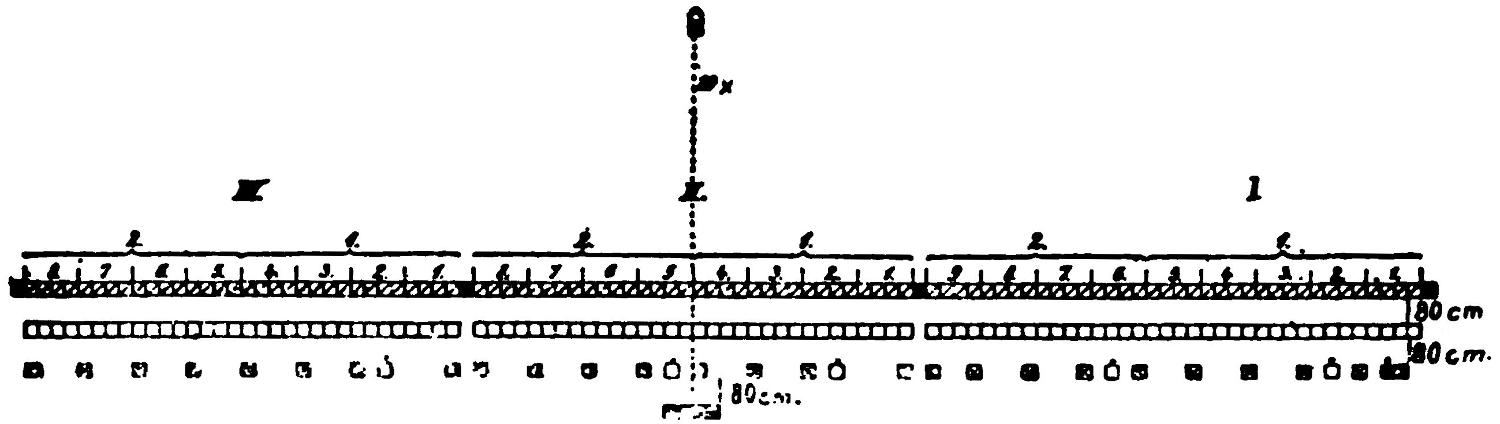
The non-commissioned officers are posted in the front rank, on the flanks and in the center of the platoons in Russia, Austria, and Switzerland. In Germany and Italy they are all posted in rear of the line as file closers, and it is their duty to supervise the men. In France a part of the non-commissioned officers are posted in the front rank, the remainder as file closers. A German company of 200 men has a front of 100 paces, or 80 m. The infantryman with field equipment occupies a space about 75 cm. square.
The German Infantry Drill Regulations define interval (intervalle) as the space between two elements on the same line, and distance as the space between two elements in the direction of depth. An interval is measured from the left flank of the element on the right to the right flank of the element on the left (or vice versa); and distance in the company and in the battalion is measured from the rear of the element in front to the head of the element in rear (or vice versa). If the distance between two elements is equal to their front, the column is called an “open column”, otherwise it is called a “close column.”
FRONT AND FACING DISTANCE.
Front. (Per man.) Facing Distance. (Distance between ranks.)
Germany About 0.80 m. Loose elbow contact. 0.80 m. from back of front rank man to breast of rear rank man.
Austria About 0.75 m. Files are separated by an interval of the width of a hand. 120 cm. from heels of front rank man to those of rear rank man (according to German method of measuring, about 0.88 m.).
Italy 0.70 m. 0.75 m. from breast of front rank man to breast of rear rank man(according to German method of measuring, 0.45 m.) on the march, 1.20 m. (according to German method of measuring, 0.90).
France 0.70 m. including 0.15 m. interval between files. 1 m. from back or knapsack of front rank man to breast of rear rank man.
Russia 0.70 m. Files are separated by an interval of the width of a hand. Rear rank man is an arm’s length from back of knapsack of front rank man = 60-70 cm.
England About 0.80 m. 1.50 m. from heel of front rank man to heel of rear rank man (according to German method of measuring, about 1.20 m.).
Switzerland About 0.75 m. 0.80 m. from back of front rank man to breast of rear rank man.
Belgium About 0.80 m. 1 m. from heel of front rank man to heel of rear rank man (according to German method of measuring, about 0.70 m.).
Japan About 0.85 m. 0.75 m. from back (or knapsack) of front rank man to breast of rear rank man.
(b) Division of the Company Into Three or Four Platoons.
In Austria, France, and Italy, platoons are considered as distinct bodies, so long as they have sufficient numerical strength. They are placed side by side and constitute the company in line. In Germany and Russia the company is at each formation divided into platoons of approximately equal strength. In the armies of Austria, France, and Italy, it is contended that the soldier has nothing further to learn when once he is taken up for duty in the company. All movements are executed, after preparatory commands given by the company commanders, by commands of execution or signals given by platoon commanders. The execution of movements is retarded by this procedure and the movement itself becomes clumsy. It would also seem that the multiplicity of commands in the simple, oft-repeated movements, is superfluous, especially in the weak platoons at peace strength.
France.
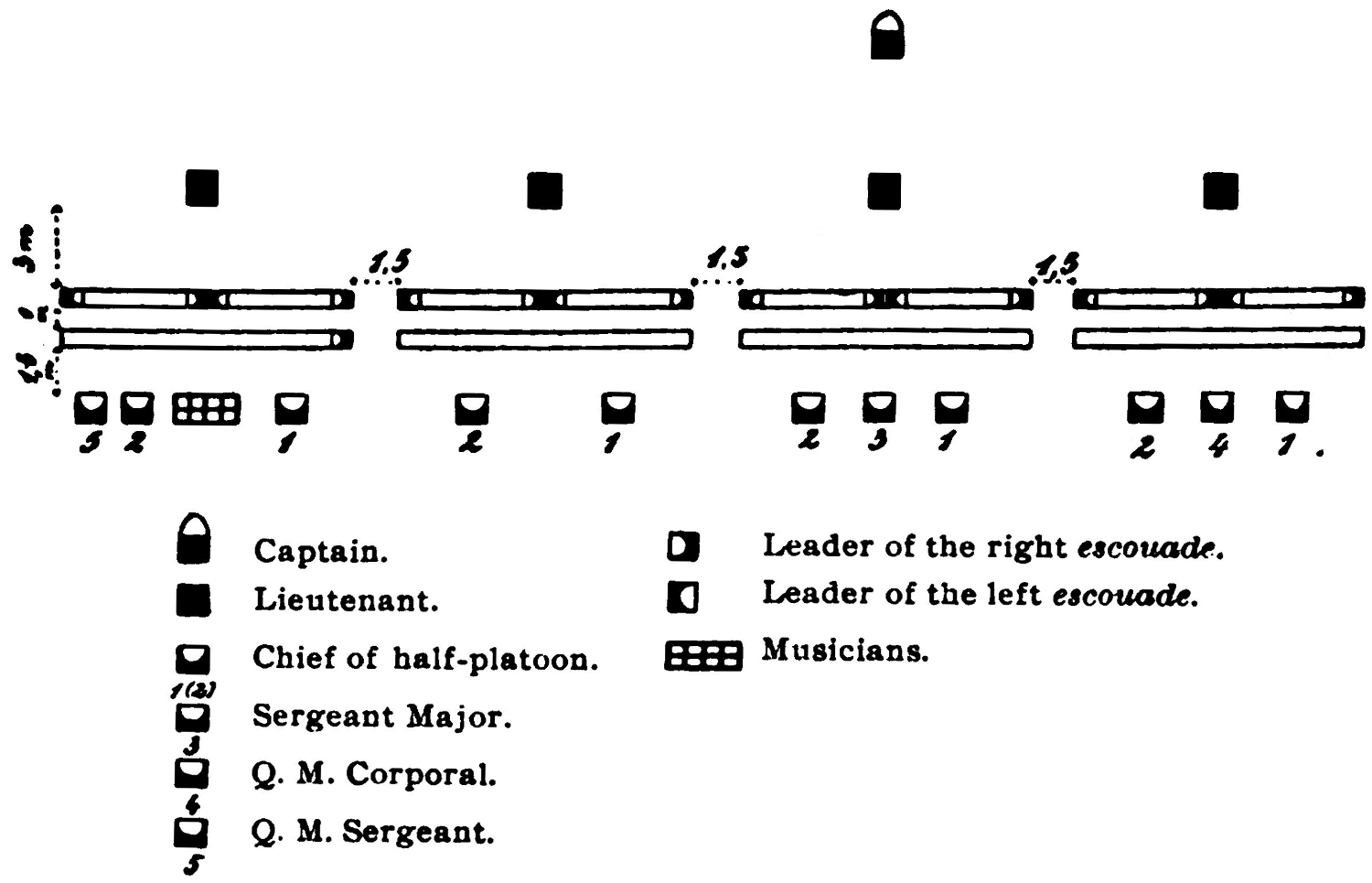
Column of platoons from line (par. 121 German I. D. R.: “Form column of platoons”) is formed in Austria as follows (Austrian I. D. R. par. 360): At the preparatory command, “Column,” given by the company commander, the leaders of the 1st, 3rd, and 4th platoons command at once, as in forming column of fours to the front, “Fours right (left), column right (left).” At the command “march,” the platoons step off, each turning in column to the rear, and are conducted to their new positions, halted, and dressed to the right (left).
The companies of all powers, those of Germany, Japan, and Belgium excepted, are divided into four platoons; each two platoons may in addition be combined into a half-company. The German, Japanese, and Belgian companies are divided into three platoons. “The platoon is not an independent subdivision by reason of the mere fact that it consists of a certain number of men, but because the term platoon denotes a force led by a man of superior intelligence. The officer commanding the platoon makes it what it should be. The strength of the platoon is therefore solely dependent upon the number of officers available.” (von Scherff).
The obvious advantage of the three-platoon organization of the company is that fewer platoon commanders are required, which fact is well worthy of attention in the mobilization of units of both Line and Reserve, especially in view of the extraordinarily heavy casualties among the troop leaders in the course of a campaign.[66]
It is only necessary to recall the situation of the Guard Corps and of the IIIrd Army Corps after the battles around Metz, and the condition of the German troops during the advance to Le Mans. On January 7th, 1871, there were 36 officers with the 57th Infantry, of which 16 led platoons of the 36 platoons in the first line, and 8 lieutenants commanded companies. On mobilizing, 25 lieutenants were assigned as platoon commanders and six as company commanders in the 57th Infantry.[67]
The eight infantry regiments and the Jäger-Battalion of the Xth Army Corps had, at this time, instead of the required 506 officers, only 286, of which number 174 were for duty. The 22nd Infantry Division had only 108 officers left; companies and even half-battalions were led into action by very young officers of the Reserve, and, on many occasions, even by vice 1st sergeants.
On the morning of August 17th, 1870, the 40th Füsilier Regiment had two field officers and four captains present for duty. Two captains, two first lieutenants and eight second lieutenants (four of these belonging to the Reserve), led companies; only two lieutenants of the Reserve, one cadet, and four vice 1st sergeants remained available for duty as platoon commanders. The regiment participated in the battle of Gravelotte with this small number of officers.[68] The 6th Grenadier Regiment, which, in July, 1870, had marched out with four field officers, seven captains, six first, 14 second lieutenants, and four cadets, all on the active list, lost so many officers at Wörth and Sedan that a field officer of the 46th Infantry had to take command of the regiment; three first lieutenants of battalions; and four second lieutenants, two officers of the Reserve, and six vice 1st sergeants of the companies. The 12 companies had available five vice 1st sergeants as platoon commanders. The 1st Battalion of the 58th Infantry had only seven officers left (including its commander and the adjutant) after its losses at Weiszenburg.[69]
The 7th Grenadier Regiment lost 40 officers at Weiszenburg and Wörth. On August 7th, three captains commanded the battalions and three officers of the 5th Jäger-Battalion were detailed to command companies in it.[70] At Gravelotte the Füsilier-Battalion of the 1st, the Ist Battalion of the 2nd, and the IInd Battalion of the 3rd Regiment of the Guard lost all of their officers. The French organizations, having more officers and less men than we, were by no means so badly off in 1870-71. Upon mobilizing in 1870, the German army had 13.7 officers to every 1,000 men, the French army, 32.2 officers.
On the other hand, it should be remembered that in armies consisting of militia it is considerably more difficult to command a platoon of 60-70 men than to command one of 40-50 men. A disadvantage inseparably connected with the four-platoon company is the small size of the platoons during peace exercises. On account of this circumstance most regulations permit the three-platoon formation when the company is small, because platoons consisting of less than ten files are of no instructional value. An advantage of the three-platoon company is the simplicity and rapidity with which changes from one formation to another may be effected.
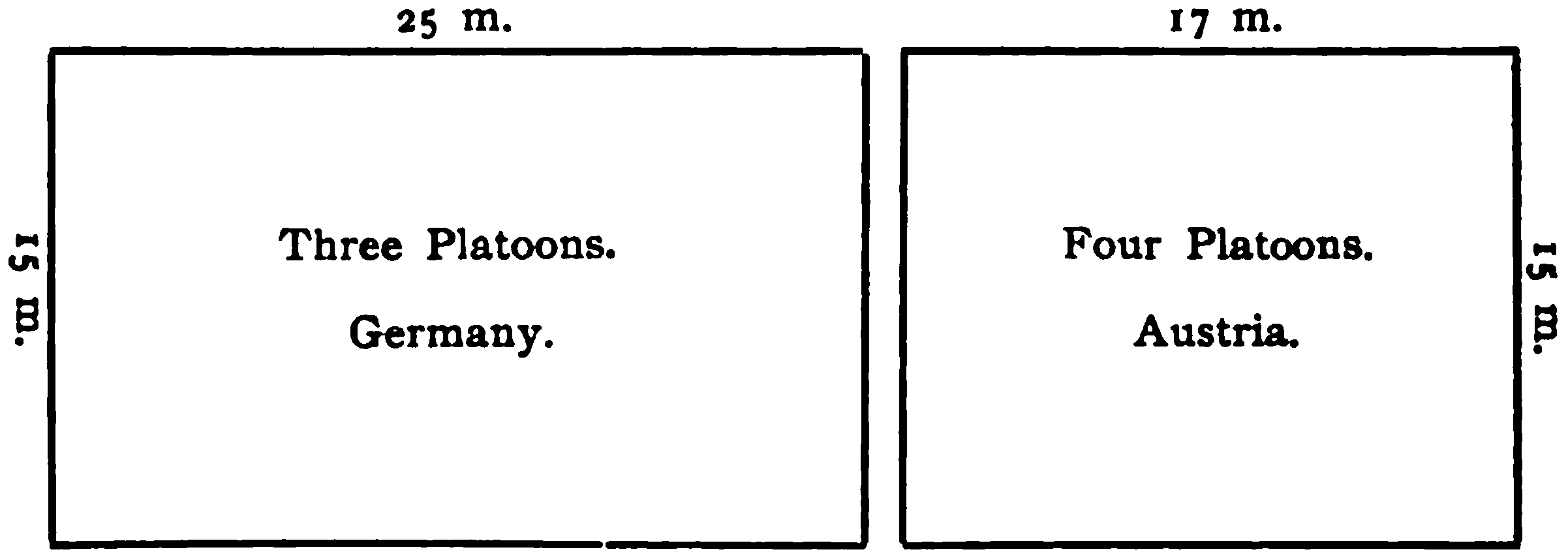
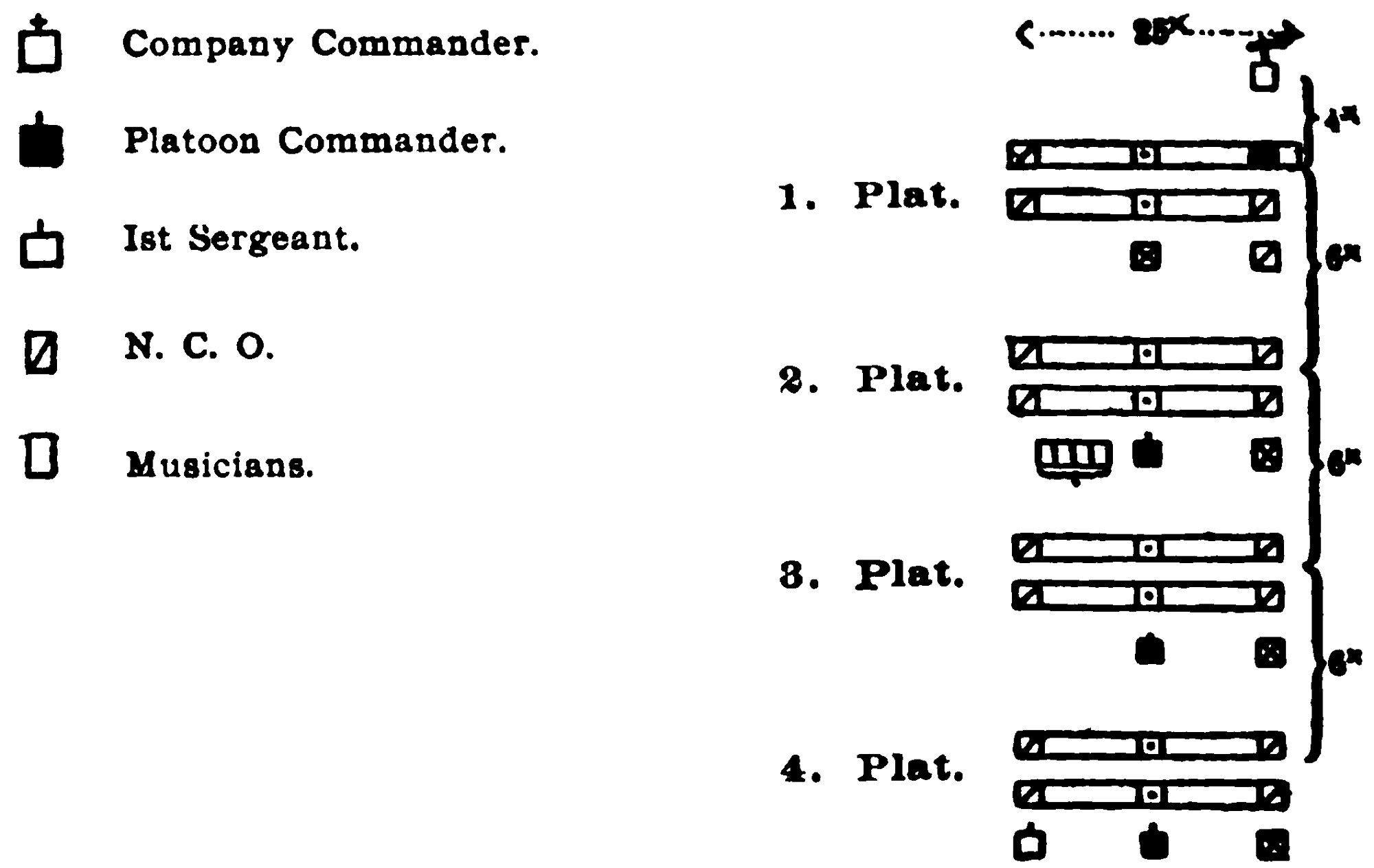
The three-unit column of platoons is very broad for movements on the battlefield. It offers, when numbering 200 rifles, a target about 25 m. wide and only 15 m. deep. The four-unit column of platoons is better suited for movements. With a front of 17 m., its depth is only 15 m., when the distances between platoons are assumed to be 6 paces (Austria, France, Italy, Russia, 5 paces). (See p. 62).
For a company consisting of 200 rifles, the following would be the forms:
The other advantages praised by advocates of the four-unit company are:
1. That a smaller platoon is more suitable for field service—that a picket is perhaps only in the rarest cases to be made 60 men strong.
2. That a small platoon makes a better and more comprehensive employment of the company in action possible, as the company commander has an opportunity to use 1⁄4, 1⁄2, or 3⁄4 of his company according to the requirements of the situation, while the three-unit company affords less favorable combinations, permitting only an employment of 1⁄3 or 2⁄3 of its strength.
These advantages can also be obtained in the German company by the employment of sections (1⁄6, 1⁄3, 1⁄2, 2⁄3, 5⁄6) so that the objections to the three-unit company would appear to be groundless.
The platoons (in Italy called plotone, in France, section) are subdivided into sections (demi-sections, Halbzüge), in Austria into two skirmish groups (Schwärme) of 4-7 files each, and, when consisting of 16 files, into four skirmish groups (in Italy this is also done, the groups being called squadriglio). In Germany the platoons are divided into groups or squads of four files each, and in Russia the platoons are divided into sections of 8-15 files each and these again into groups or squads of 4-6 men each. If the squad is to have any importance at all in action, it must have a leader, and it might easily happen that a mobilized company lacks the number of leaders necessary to provide one for each group. The withdrawal from the line of a number of good shots for duty as squad leaders is compensated for, in our opinion, by the more thorough supervision over the men. This consideration has, however, apparently caused other states (Austria and France) not to count on the activity of the squad leaders in a fire action to the same extent as is the case in Germany.
4. LENGTH OF PACE AND MARCHING.
An extended, swinging step, without haste and without unduly taxing the lungs, is advantageous in all movements. When accustomed to this pace on the drill ground, the men will march with practically the same step on varied ground, and this appears more desirable than to shorten the step, while at the same time increasing the distance to be covered in a given time. The length of the pace depends largely upon the height of the individual, but even small men can maintain a step of 0.80 m. without undue exertion.[71] In Switzerland the cadence has been fixed at 116-120 steps per minute “with a view of suiting the peculiarities and the varying degree of mobility which characterize the inhabitants of the different cantons.”(!) For purely practical reasons it is advisable to fix upon some even number of paces in order that the cadence may be tested with the watch. (Austria excepted). The longest pace in conjunction with the highest cadence (Bersaglieri, whose march is almost a double time, excepted) is found in England and Switzerland. Such a performance could not be kept up by a fully equipped man without impairing health.
QUICK TIME. ACCELERATED TIME. DOUBLE TIME.
Length of pace. PER MINUTE. Length of pace. PER MINUTE. Length of pace. PER MINUTE.
Number of paces. Number of paces. Number of paces.
m. m. m. m. m. m.
Germany 0.80 114 91 .2 0.80 120 96 .00 0 .75- 170 127 -
0 .90 180 162
Austria 0.75 115 86 .25 0.75 125 93 .75 0. 90 160 144
Italy, Line and Alpini 0.75 120 90 .00 ... ... ... 0 .90 170 153
Bersaglieri 0.86 140 120 . ... ... 1 .00 180 180
France 0.75 120 90 .00 0.80 124 99 .00 0 .30[72] 180 136
Russia 0.71 118 84 - 0.71 122 119 . 1 .066 170 - 181 -
0.89 122 109 0.89 181 192
Japan 0.75 114 85 .5 ... ... ... 0 .85 170 144
England 0.84 128 107 .5 0.91 128 116 .5 1 .02 180 183 .6
Switzerland 0.80 116 - 92 .8- 0.80 120 - 96 - 0 .90 160 144
120 96 .00 140 112
In general, double time is considered of little value. In Austria double time is to be maintained for periods of two minutes, quick time of five minutes duration alternating, up to sixteen minutes, i.e., until a distance of 1,726 m. has been covered. In Germany, an alternating quick and double time march in heavy marching order is prescribed. A different practice prevails in Italy. According to the Italian Regulations all troops are to be trained to march in double time without rest and without knapsacks for 2 kilometers (with knapsacks, 1 km.); Bersaglieri without knapsacks, 3 km. (with knapsacks, 11⁄2 km.), also without rest (i.e., 13 and 16.8 minutes respectively). When we consider that in double time with the necessary alternating step, 2,000 m. can be covered in 17 minutes, and in accelerated step, in 19-20 minutes, the time gained is unimportant when compared to the fatigue of the men and the exertion of the lungs, which interferes with deliberate, accurate firing. During an Austrian firing test the number of hits fell from 76.5%, attained while advancing in quick time, to 51% after a period of double time.
The run, without keeping step (Marsch! Marsch!) is employed in rapidly crossing short, fire-swept spaces, in changing quickly from one formation to another, and in the charge.
5. MOVEMENTS OF THE COMPANY IN LINE.
The commander of the center platoon is the guide.
A change of direction is effected by inclining toward the new direction (at the command: “Half right, march!” when the angular change of direction is less than 45 degrees), by indicating a new point to march on, or by executing a turn.
6. THE COLUMNS OF THE COMPANY; MOVEMENTS IN COLUMN; FORMATION OF LINE.
Column of Twos.[73]
Column of twos is formed by facing in the indicated direction. Marching at attention the depth of an organization in column of twos is equal to its front when in line. The column of twos is used in marching by the flank for short distances only, as the march at attention in this formation unduly fatigues the men. In addition, this formation may be used, in exceptional cases, on narrow roads; but the column becomes considerably elongated (as much as 165%), when marching at route step. Line is formed from column of twos either by facing, or by executing front into line.
Column of Squads.
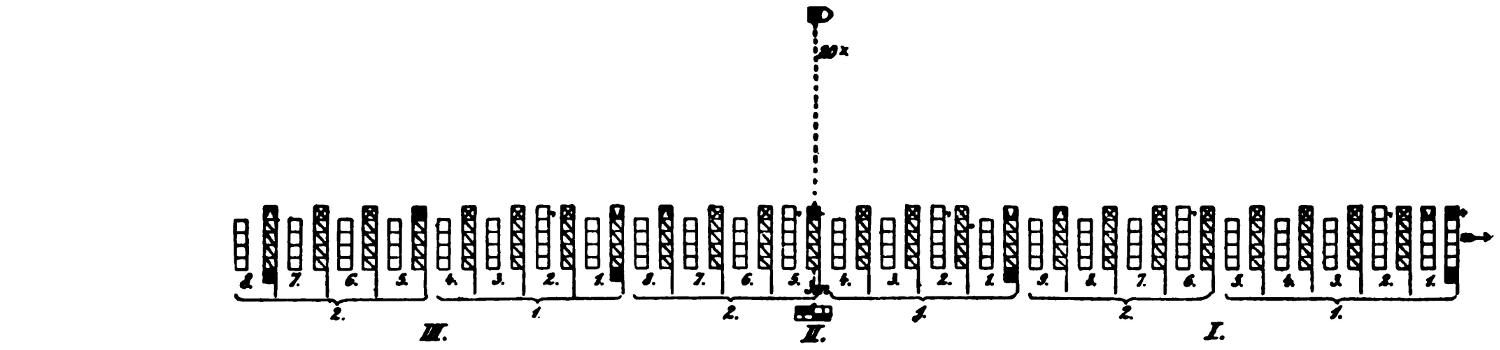
This is an open column formed (the company being in line at a halt or in motion) by each squad executing a turn of 90 degrees. It may also be formed from line at a halt by the squad on the designated flank moving straight to the front, the others executing a turn of 90 degrees toward the proper flank, then following the leading squad.[74] Column of squads may also be formed by executing “Squads right (left), column right (left).” Line is formed by each squad executing a turn of 90 degrees or by executing front into line (without regard to the original front).
Column of Squads.
Route Column.

Route column is formed from column of squads by the squads in each section closing to facing distance, the file closers, musicians, and hospital corps men forming ranks of four men, in the gaps thus created. (Par. 91 German I. D. R.) With the exception of Russia, which employs a section column, of Switzerland, which uses a column of squads, and of France, which has adopted a wheel by fours like that of the cavalry, all other armies employ the column of fours[75] as their march formation.
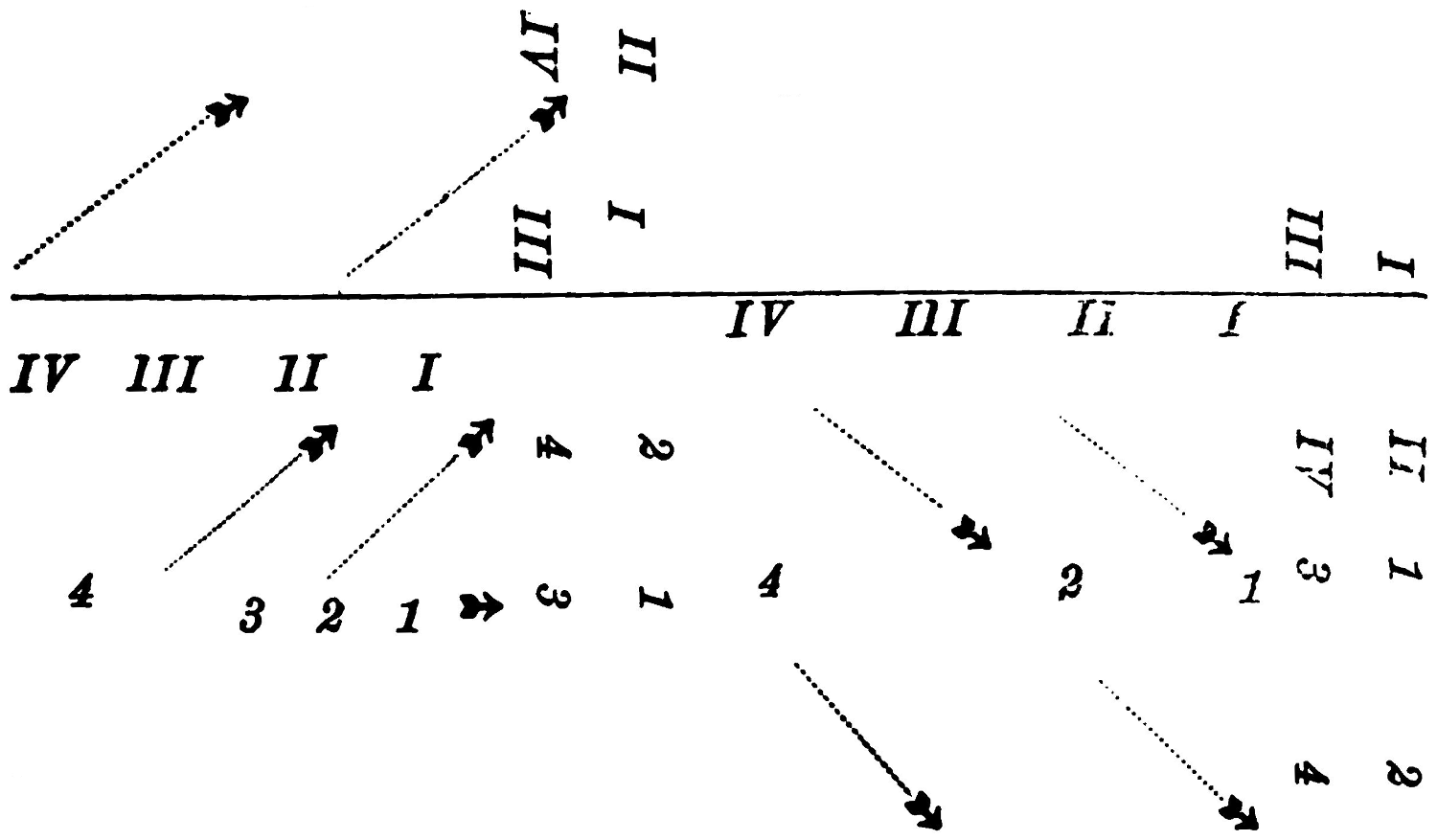
Column of fours is, as a rule, formed as follows:
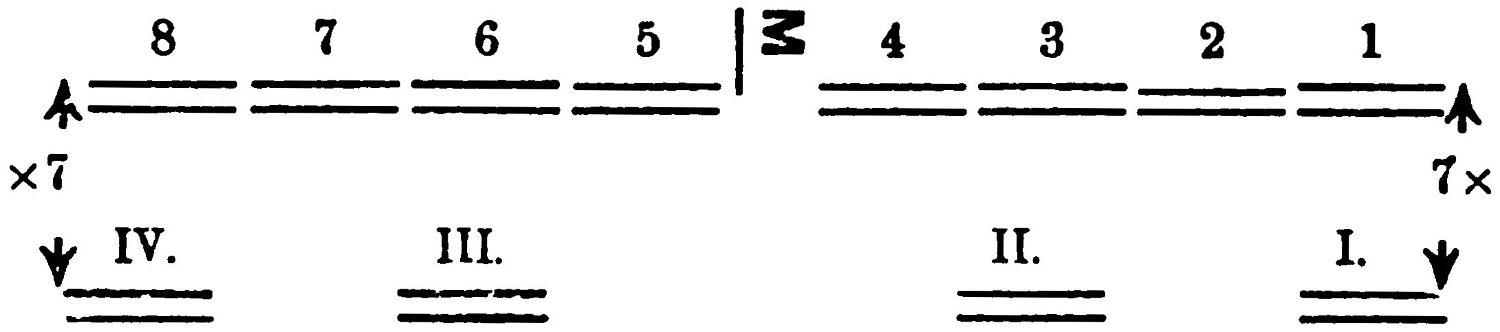
The even numbered men place themselves on the right or left of the odd numbered men by making an appropriate turn, thus forming a column of fours whose length is equal to the front of the company in line. In the plate below let the Roman numerals represent front rank men, the Arabic numerals rear rank men, and the horizontal line the original front occupied; column of fours will then be formed to the right, in the different states, as shown:
Austria.
Russia, England, Belgium, Sweden, and Japan.
Italy. Netherlands.
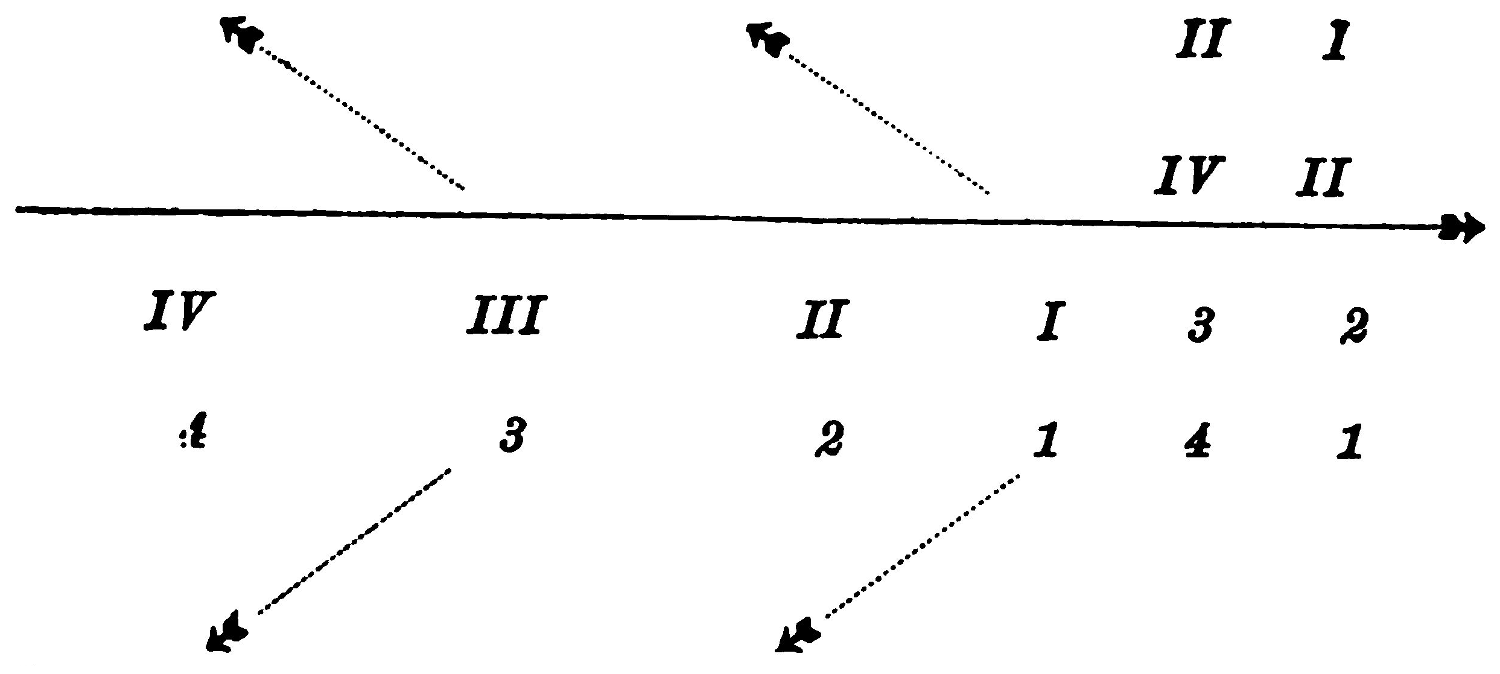
For the purpose of increasing the front of the column, the double column of squads, having a width of 8 files, may be employed. This is formed in practice by placing the columns of two organizations (companies or battalions) side by side. In large bodies of troops, the depth of a column is reduced in this manner by one-half. A column of fours formed by closing on the center instead of by wheeling to a flank, is employed in Italy and Russia for the purpose of reducing the front of an organization.
Comparison of Column of Fours with Column of Squads.
The column of fours has the advantage over our column of squads in that it can be more quickly and easily formed; that the front rank men must make a turn, while, at the same time, observing the march direction, can scarcely be considered a disadvantage.
The column of fours and the column of squads have the same depth. The Austrians consider movements made in column of fours on the battlefield more clumsy and fatiguing than when made in column of squads, because checks are transmitted to the whole column of fours owing to its rigidity, while in column of squads the march is easier, more rapid and more orderly. The squad organization, moreover, facilitates the employment of small parties in the service of security and increases the importance of the squad leader in fire action. For the last named reason we should not like to dispense with the column of squads.
The Employment of the Column of Squads.
The route column is suitable for movements under frontal artillery fire, as the cone of dispersion of bursting time shrapnel combines small lateral spread with great effect in the direction of depth, and as it is very difficult for the opponent to observe whether a shot falls short or goes over, unless it strikes just in front of the column. When artillery can bring a flanking fire to bear on the column it becomes necessary to neutralize this by placing the platoons side by side so as not to present an easily observed target to the enemy.
Movements by the flank and changes of front are easily made in column of squads, and after some practice the deployment into line of skirmishers from this formation offers no difficulties. This column is best adapted for movements over varied ground. In column of squads difficult terrain can be crossed and advantage can be taken of the most insignificant cover. In addition, it is difficult for an enemy to observe a force moving in column of squads along the edge of woods and rows of trees, and such a column entails the least expenditure of energy on the part of the men. The leaders must insist, however, that the men cover in file, and that elongation of the column does not take place. The column of squads or the route column is therefore to be employed on the battlefield as long as possible.
A column of squads or route column may be shortened by placing the platoons, each in column of twos or squads, side by side. By this means the Company Column (Kompagniekolonne) is formed.
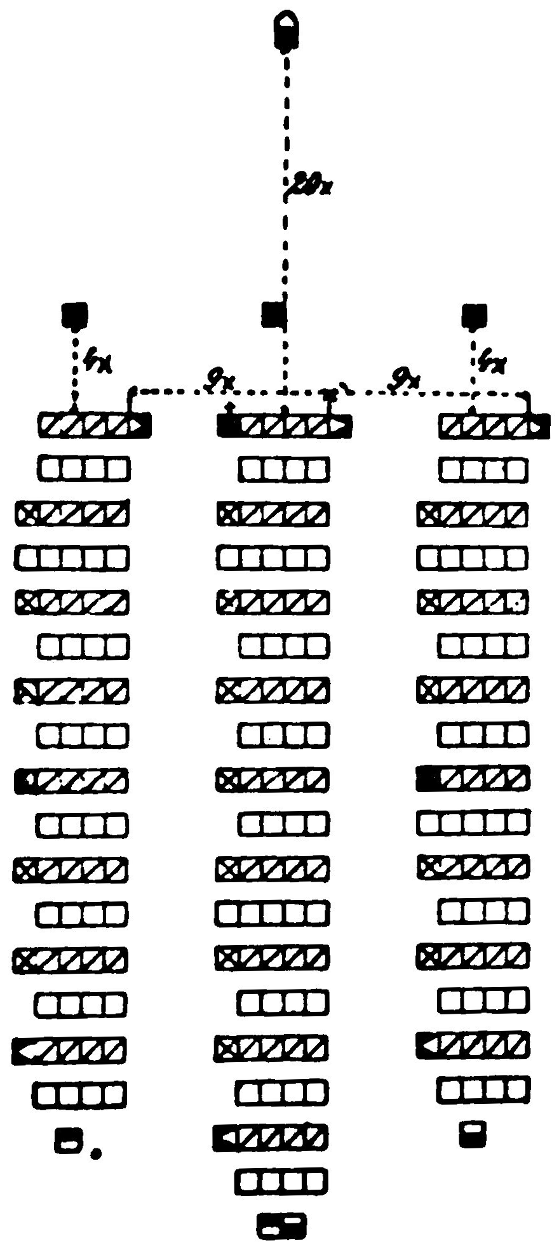
The normal interval between platoons in this formation, measured from the leading guide of one platoon to the leading guide of the next in line, is nine paces. This interval may be increased as required by the nature of the ground and the intended deployment for action (deployment on a broader front). Movements in company column are facilitated by the fact that platoon commanders are posted four paces in front of the center of their respective platoons. The leading squad follows the platoon leader, the guide of that squad moving directly in that officer’s tracks. Thus, small, unimportant deviations, unavoidable on varied ground, can easily be adjusted, while too definite rules would tend to restrict the mobility of the platoon commanders in front of their platoons. The principal thing is that the platoon follow its leader who guides it without command.
The musicians distribute themselves in rear of the platoons in readiness for their subsequent duty in action—that of maintaining communication between the several parts of the company. The intervals of nine paces between platoons are not rigid, but rather the reverse. The flexibility of the formation considerably facilitates movements in difficult country. This “meandering” of the company over the terrain requires special training. The old, historic company column, in which the platoons were formed in line one in rear of the other at a distance of nine paces (Russia 5 paces = 3.55 m., Austria, Italy, France, 6 paces = 4.50 m., and Japan, 8 paces = 6 m.), their commanders on their respective right flanks, is now called the
Column of Platoons.
Austria, France, and Italy have retained the old designation.
The front of the column of platoons may be decreased by forming column of sections. The column of sections is suitable as a route formation on broad roads; the transition from column of sections to column of squads is not difficult, and for the purpose of passing through occasional narrow stretches of road, the files on the flanks may be removed. In most cases it is, however, more desirable to place several columns abreast than to employ column of sections, because deployment is facilitated in the former case.
Company in Column of Platoons.
Germany.
Russia.
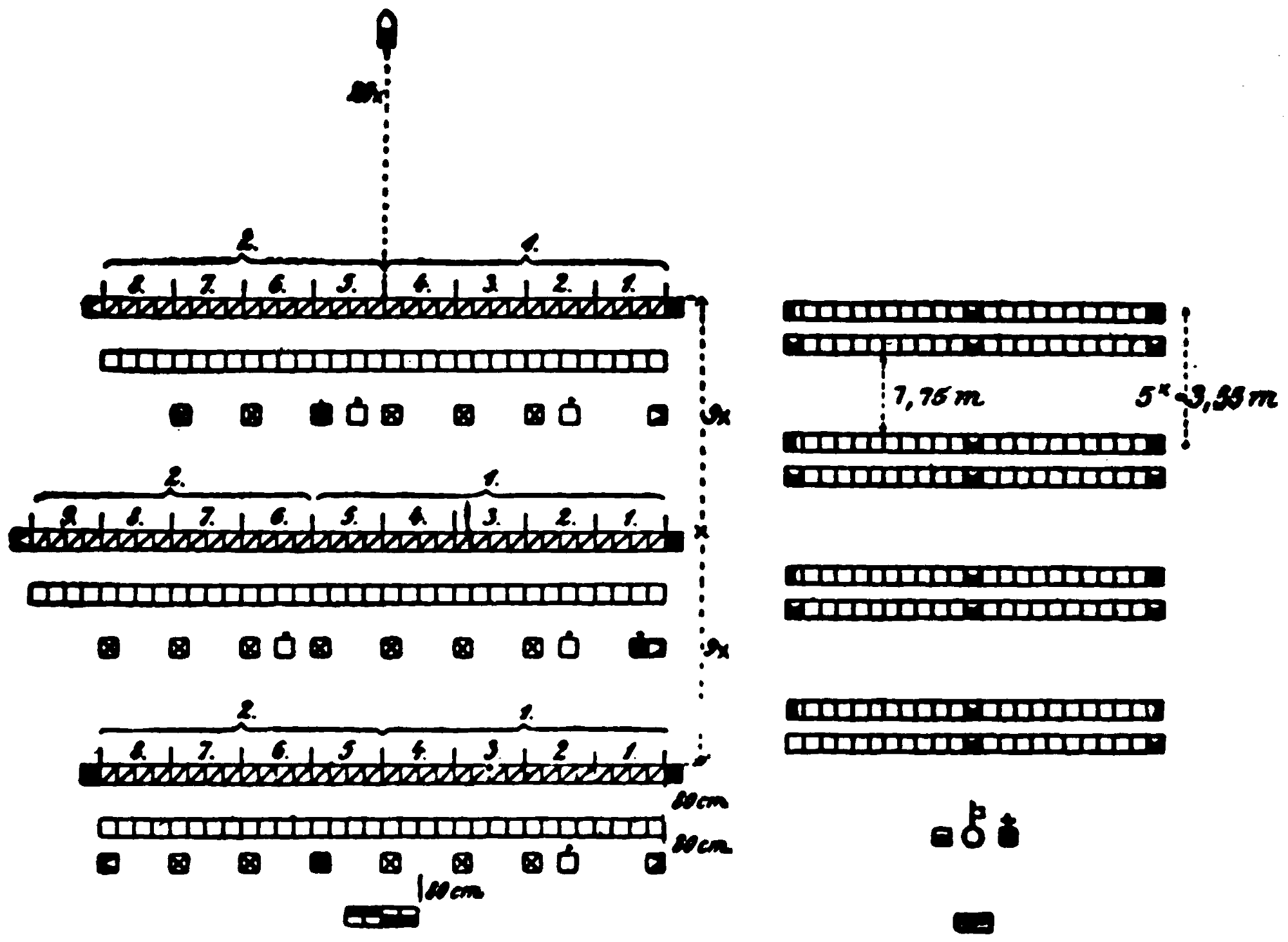
Russia. The four squad leaders of each platoon are posted on the flanks of the rear rank and in the center of each rank. The ranking non-commissioned officer of each platoon stands on the left flank of the front rank of his platoon. The 1st sergeant, the guidon bearer, and one trumpeter, and behind them two drummers, are posted in rear of the company.
Austria.
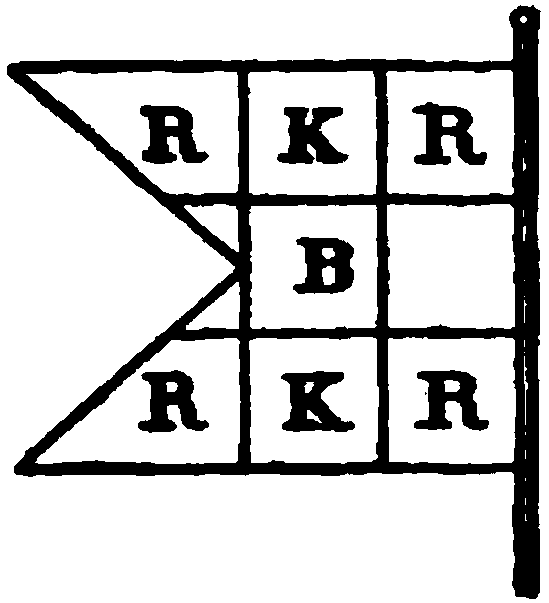
The staves of the guidon flags (Jalonneurflaggen) are inserted into the rifle barrel of a soldier (in case of a battalion into the rifle barrel of a N. C. O.) and serve to indicate battalions and companies.
According to the color scheme used in Russia: red = 1, blue = 2, white = 3, green = 4. “R” indicates the number of the regiment in the division, “B” the number of battalion, and “K” the number of the company. A red flag is carried by the 1st Company, and a red flag with one green horizontal and one blue vertical stripe is carried by the 8th Company of the 1st Regiment of an infantry division. In Japan and England so-called storm-flags (small national flags) have been adopted to facilitate mutual recognition of friendly troops.
Posts of Platoon Commanders.
In Switzerland, in Russia, and in Germany, the post of platoon commanders is on the flanks of their respective platoons when the company is in column of platoons. In England and Austria platoon commanders are posted in rear of their platoons, with the exception of the commander of the leading platoon, who is posted beside his guide. In all other states platoon commanders are posted in front of their platoons. Officers are posted in front of their platoons so as to facilitate observation on their part, and so that their platoons can follow them. This position becomes a necessity when the regulations require that all movements of the company be executed at commands given by platoon commanders. When they are posted in front of their platoons, they cannot supervise their men unless they turn around to do so.
The column of platoons is a close column from which line cannot be formed directly. It has not been found necessary in Germany to provide an open column permitting prompt deployment toward a flank. The column of platoons unites the company on the smallest space and facilitates supervision, but in companies at full war strength it is not well adapted for executing changes of front and for taking advantage of cover, on account of the size of the platoons (40 files each). In platoons at war strength the men look more toward the point upon which they are to march than upon the enemy, and the deployment of the rear platoons offers difficulties which occur principally when a deployment in an oblique direction or one by the whole company becomes necessary.
The column of platoons is formed by the flank platoons placing themselves in rear of the center platoon. Line is again formed by rear platoons moving to right and left and abreast of the leading platoon.
The German company column is much more flexible, and the advantage of a prompt deployment for action, made possible by the fact that all platoon commanders and the heads of platoons are in the lead and therefore can see the objective, should not be underestimated. The company column is formed from line by the center platoon forming column of squads to the front (or rear), the flank platoons, each in column of squads, closing on the center platoon, heads of the three columns on the same line. Company column is formed as follows from column of platoons: the leading platoon executes squads right (left), column left (right), the two rear platoons execute squads right (left), and are led to a position abreast of the leading platoon. Company column from column of squads is formed by rear platoons moving to the right and left respectively, and abreast of the leading platoon.
When line is to be formed from company column, the flank platoons have to incline to the right and left respectively in order to gain sufficient interval.
Movements in Column.
For marching short distances to a flank, column of twos may be employed; for longer distances, column of squads (or fours); and the march direction may be changed by inclining in the proper direction.
Since March 1904, experiments, which deserve to be mentioned here, have been made in France under the direction of Colonel Fumet, having for their object the simplification of the drill regulations. In the experiments a four-rank formation is being considered. In this proposed scheme the platoon is formed so as to place the four single-rank squads (escouades) in rear of each other at the very close facing distance of 0.50 m., the leaders of the escouades taking post on the right flank, a first class private being posted on each flank and in the center of each escouade.
Forming Double Rank from the Four-Rank Formation and the Reverse Movement.
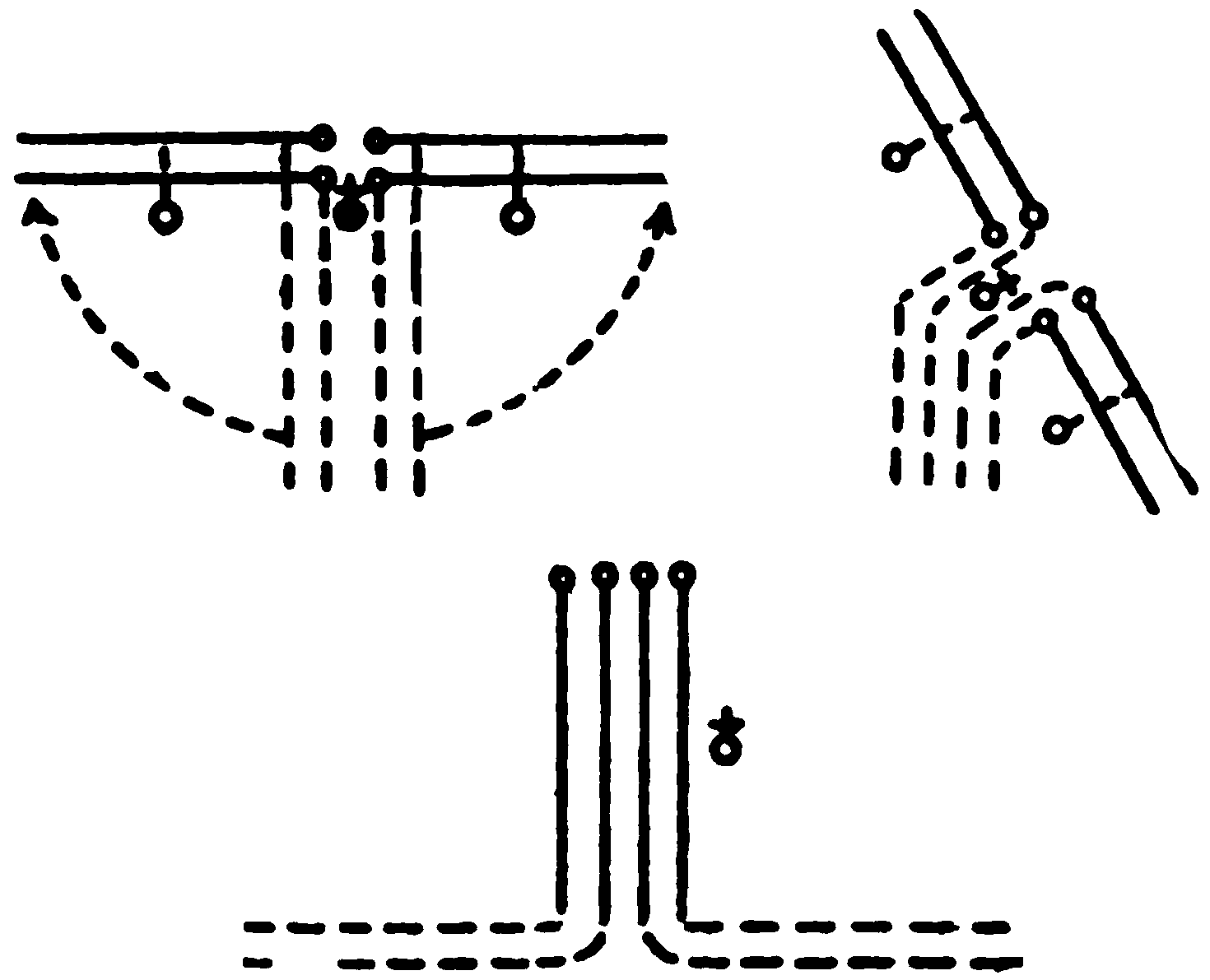
Deployment of a Half-Platoon formed in Four Ranks into Two Half-Platoons formed in Double Rank.
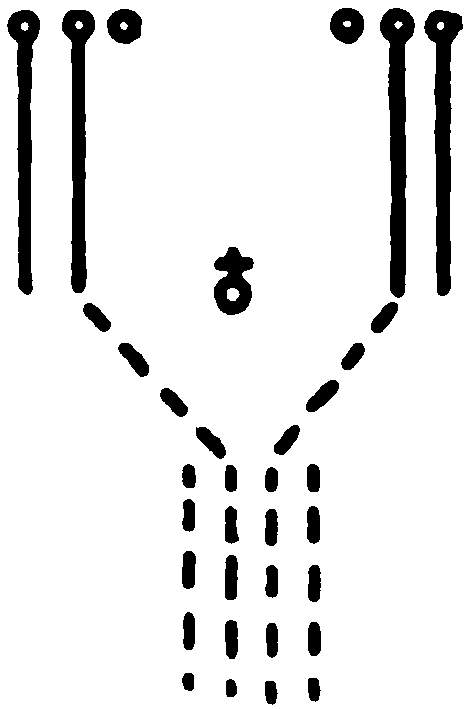
The Platoon (section) in Line.

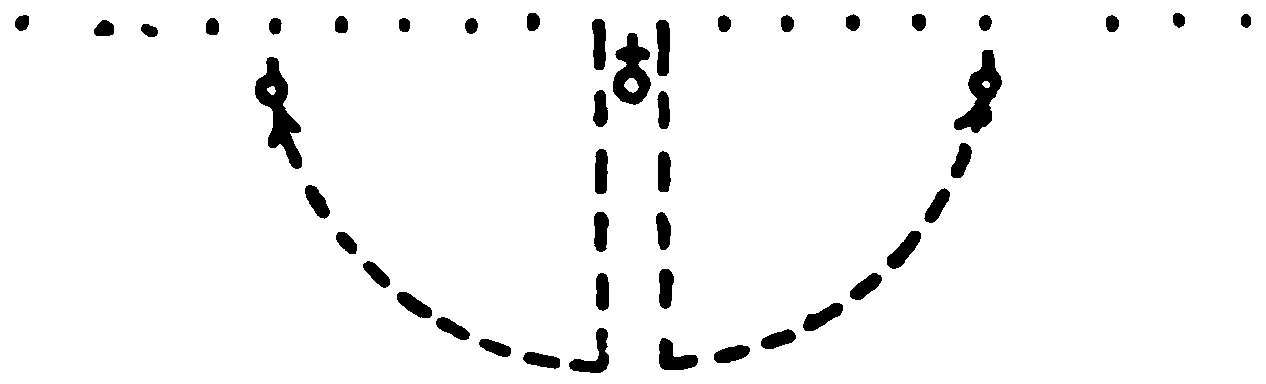
Deployment of a Half-Platoon Into Line of Skirmishers.
The Company.
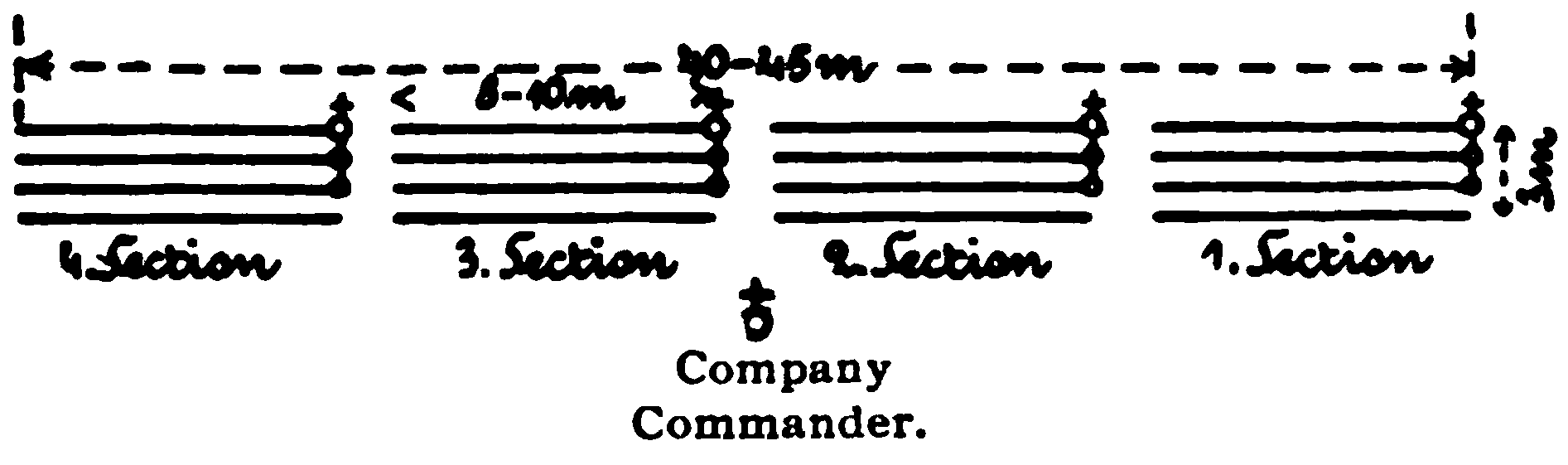
The platoon at war strength (50 men) has a front of 8-10 m. and a depth of 3 m. The movements are very simple. Route column is formed by simply facing to flank, without first dividing the platoon into squads. Double rank line may be formed from column of fours, by executing right and left front into line. The double rank line may be deployed into half-platoons. Furthermore, a single rank line may be formed by the men of the rear rank stepping up into the front rank. One drawback of this scheme is, that, in forming route column, facing distance of 0.80 m. between ranks is to be gradually gained after stepping off. The deployment of half-platoons into line of skirmishers offers no difficulties. It is otherwise, however, when the platoon is formed in four ranks and marching in platoon front, for then line of skirmishers can be formed only by deploying each rank in turn. The depth of the column may be decreased by placing platoons (formed in column of twos or fours) abreast, this expedient affording a suitable route formation on broad roads. The company is formed by placing the platoons on a line and abreast of each other at intervals of 2 m. In the battalion, column of platoons and “mass” are the only formations considered. In the “mass” formation the companies, each in line, are in rear of each other.
7. THE BATTALION.
The movements of the battalion have been considerably simplified in all armies. Battalion drill is, however, necessary, since, as shown by the advance of the IInd Army on the morning of August 18th, 1870, simultaneous movements of large masses across country will be unavoidable in future wars on account of the great size of modern armies.[76]
Normal Formation of the German Battalion.
The four columns of platoons, or the company columns of a battalion, may be placed, as dictated by space or purpose, abreast of each other as a broad column (Breitkolonne), or in rear of each other as a deep column (Tiefkolonne). The numerical order of companies is immaterial.
Deep Column.
Broad Column.
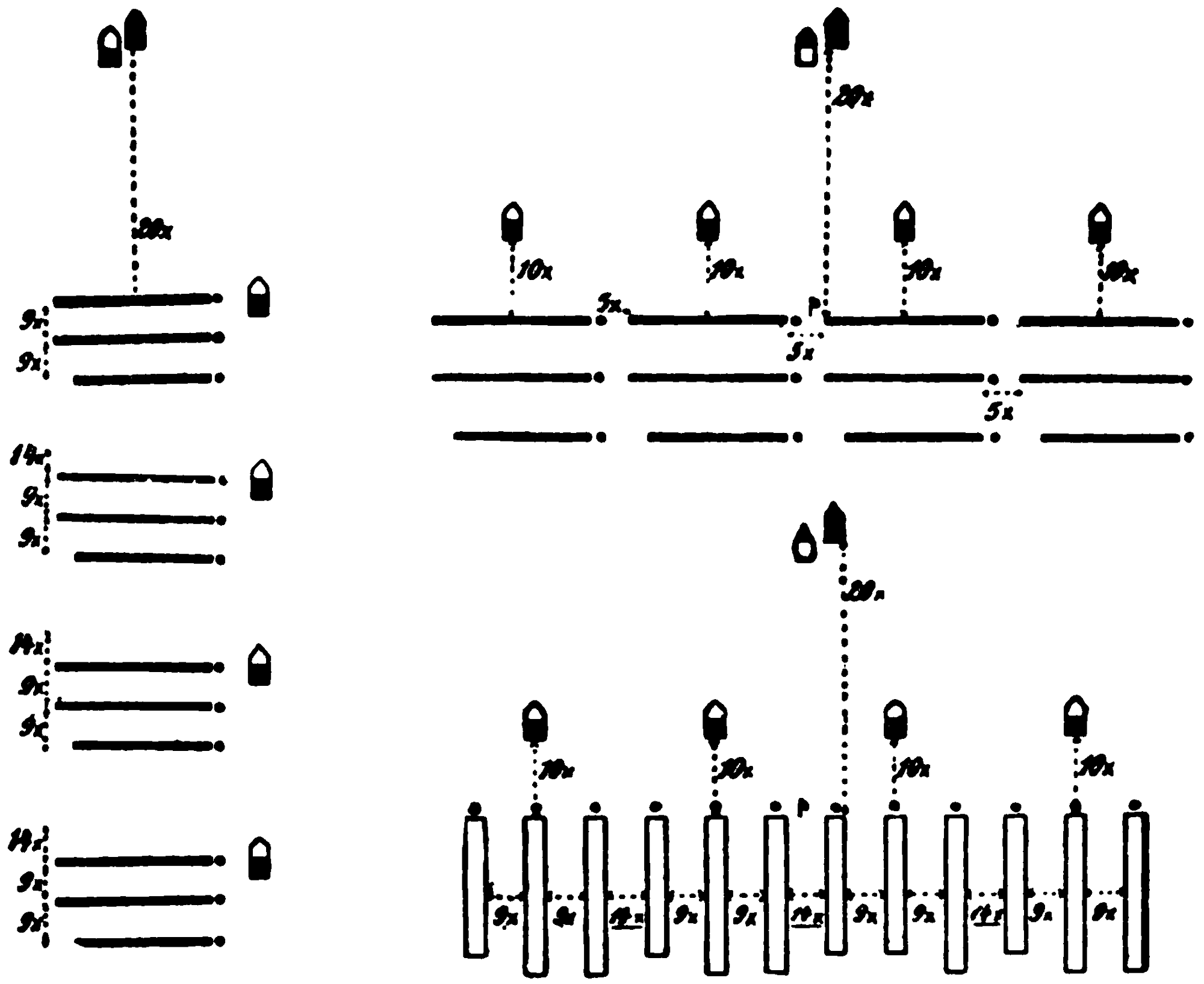

The deep column is employed for assembling troops if the terrain necessitates a formation on a narrow front. If sufficient distance is allowed between companies, line may be formed to a flank, but this increases the depth of the column to such an extent that movements at attention are impossible. The deep column may be used as a route formation in addition to the column of squads. During the change from route formation to that of action, the deep column formation may be retained so long as the depth of the whole column does not have to be further reduced. When necessary, the deep column may be replaced by a formation in which the four companies, each in route column, are placed abreast of each other.
The broad column finds proper employment, aside from parades, in cases where the terrain or the contemplated deployment requires more front than depth. It is also advisable to assemble the widely scattered troops in a broad column after an action. The broad column does not lend itself, however, to the execution of changes of front by battalion; but should such changes of front become necessary, they are always to be executed by company.
The color is posted between the right and left center companies, in broad column, and on the right flank of the third company, in deep column. In action the color remains with the company with which it happens to be at the moment.[77] Should this company also join the firing line, the color accompanies it; but under all circumstances one squad must remain with the color. (Par. 236 German I. D. R.). It has been contended that this is a disadvantage, as the enemy can direct his fire on the color and the men in its vicinity. If the colors, upon which the soldiers have been sworn, are taken into the field, it is always better to endure the unavoidable losses incidental to carrying them, and even to expose them to capture, than to send them back to a safe place under escort.[78] At the Albrechtshaus farm (Wörth) the colors served as rallying points around which the disordered skirmishers rapidly assembled.[79]
The figures given on pages 72 and 73 of the German Infantry Drill Regulations illustrate formations with organizations at peace strength. The approximate dimensions of broad and deep columns at war strength are as follows:
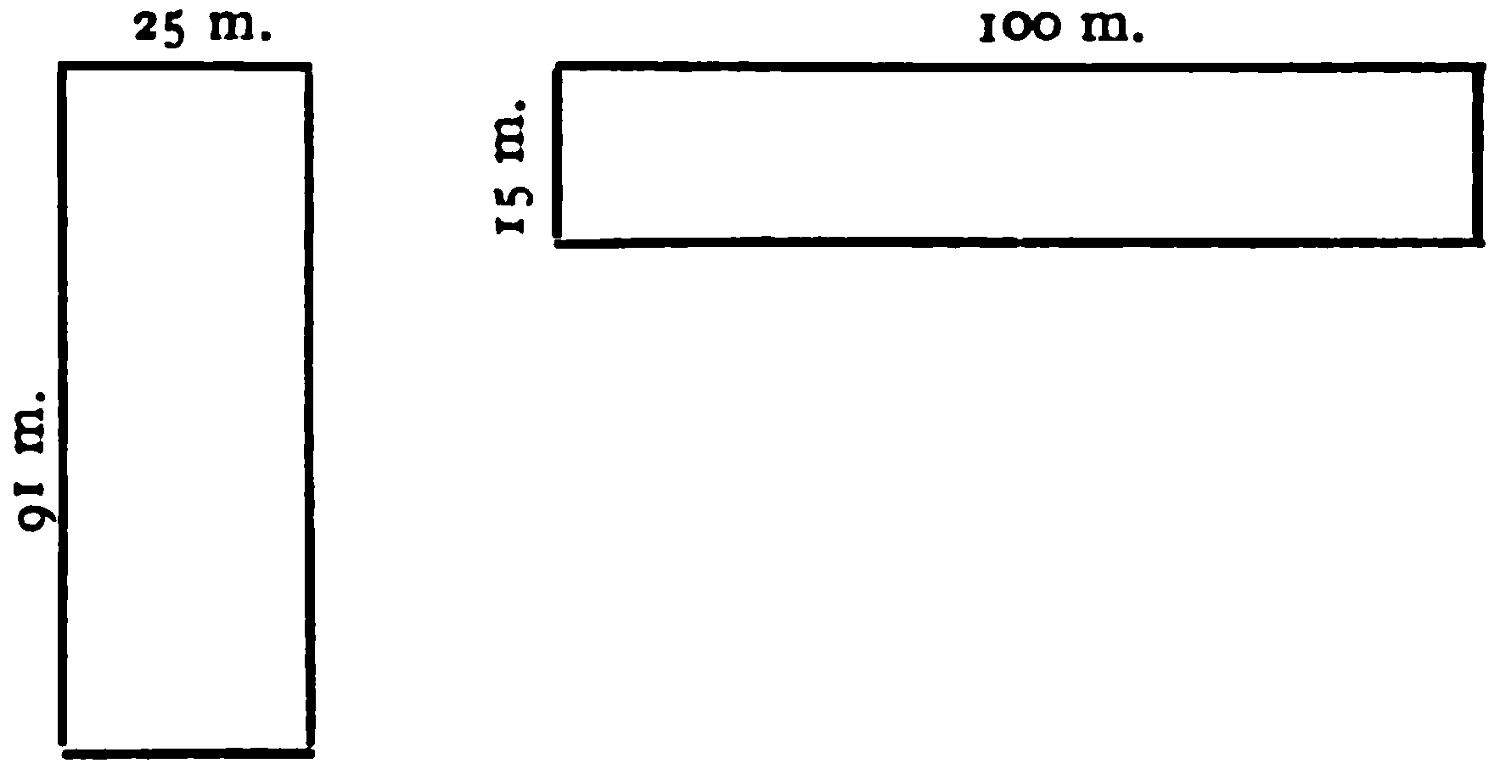
Russia. Numerous formations are prescribed. In addition to route column, columns with half company front and with company front are prescribed. Reserve columns are mentioned. These, according to the number of companies on the same line, are called single platoon column (deep column), two platoon column (double column), or four platoon column.
Austria. The mass, in which the companies of the battalion are on the same line, each company in company column[80] with intervals of three paces between companies, is employed for assembling the battalion in a restricted space in a position in readiness when out of range of hostile fire, or for assembling the battalion under cover. The line of columns, in which the companies, each in column or some other suitable formation, are formed abreast of each other at deploying intervals plus three paces, is also used.
The line. In this formation the companies, each in line, are placed abreast of each other at intervals of three paces.
The column. In this formation the companies are placed in rear of each other, each either in line or in column, with distances of nine paces between companies. The companies are numbered 1st, 2nd, 3rd, 4th, etc., from head to rear, if in column, and from right to left, if in line.
Italy. The formations are like those of Austria, but the double column has been retained.
Japan. The only formations prescribed are the broad and deep column.
France. The companies are formed in column or in ligne de sections par quatre, intervals and distances being 10 paces. Distances and intervals may be increased when required. The battalion in line in which the companies are formed in line in numerical order, abreast of each other at intervals of six paces, is only retained as a parade formation.
Line of company columns (ligne de colonnes). Companies abreast with intervals of six paces.
Deep column (colonne de bataillon). The companies in normal formation in rear of each other at distances of 10 paces.
Double column (colonne double). Intervals and distances 10 paces.
The formation in which the companies are abreast of each other, each in column of fours at deploying intervals, is employed in marching across country and also under artillery fire. Only the regiment carries a color, the battalion a guidon (fanion).
Deep Column (colonne de bataillon).
The companies in line of platoons in column of fours (ligne de sections par quatre).
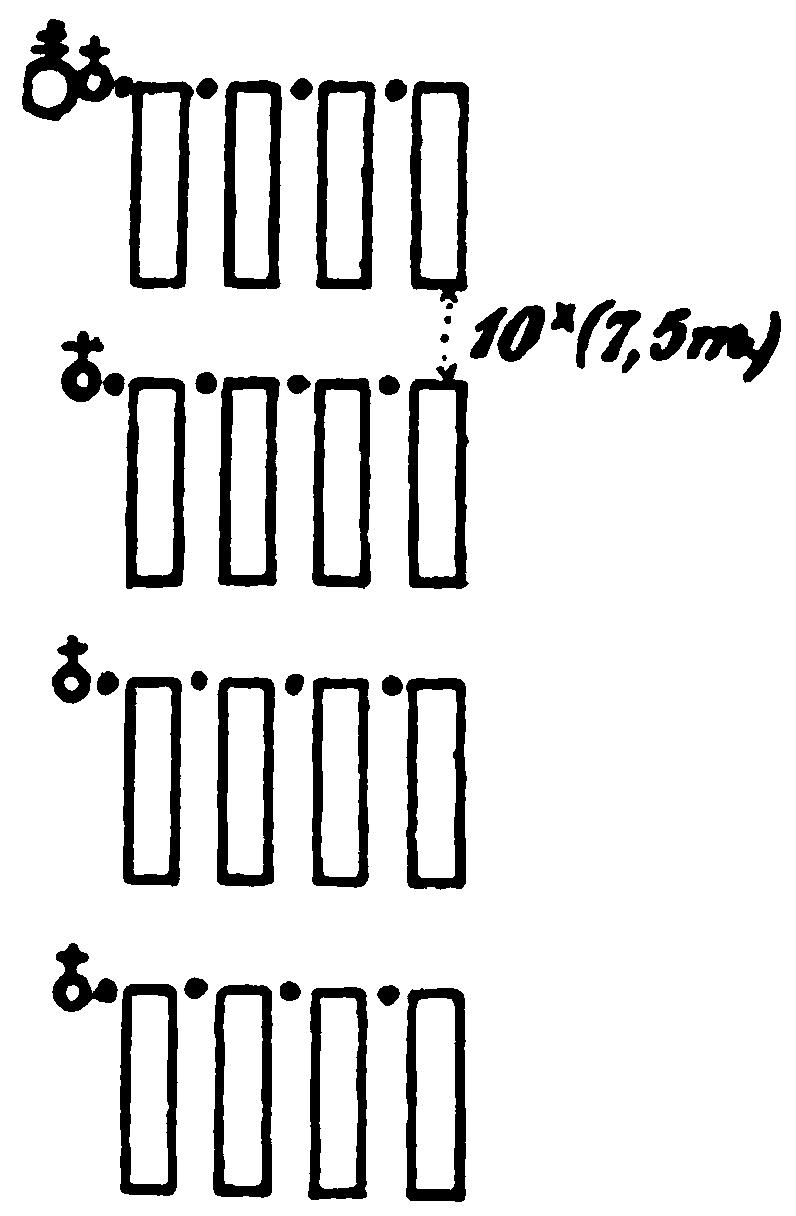
Double Column (colonne double).
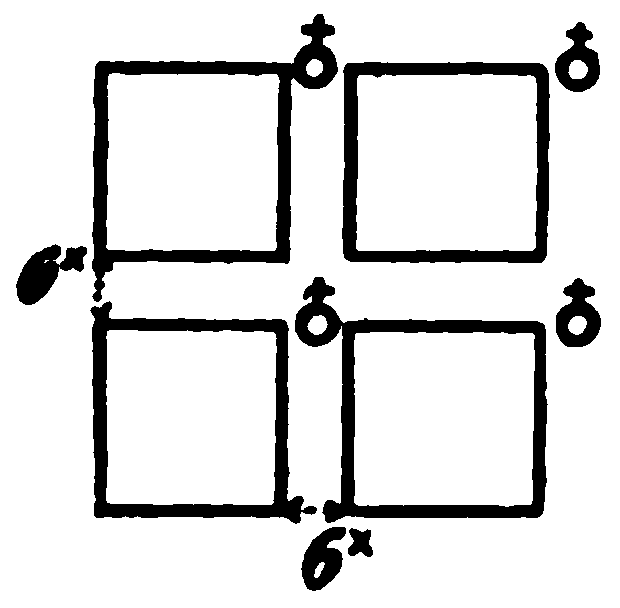
Deep Column (colonne de bataillon).
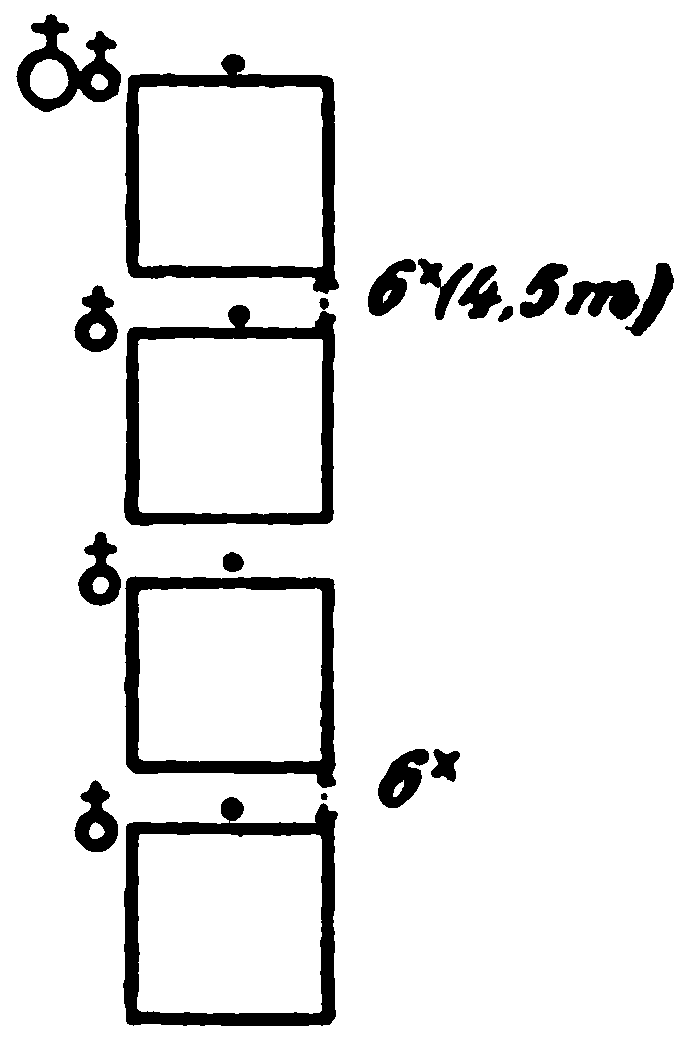
Line of Company Columns (ligne de colonnes).
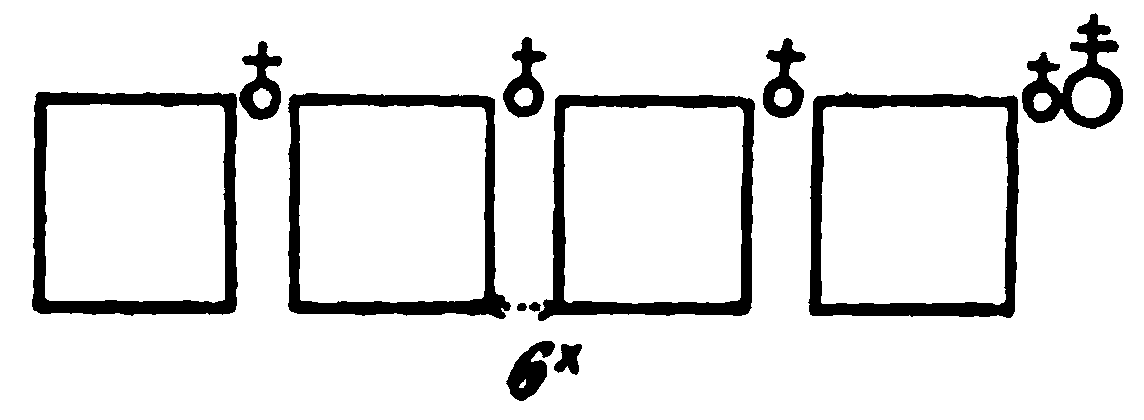
Double Column (colonne double).
The companies in line of platoons in column of fours (ligne de sections par quatre).
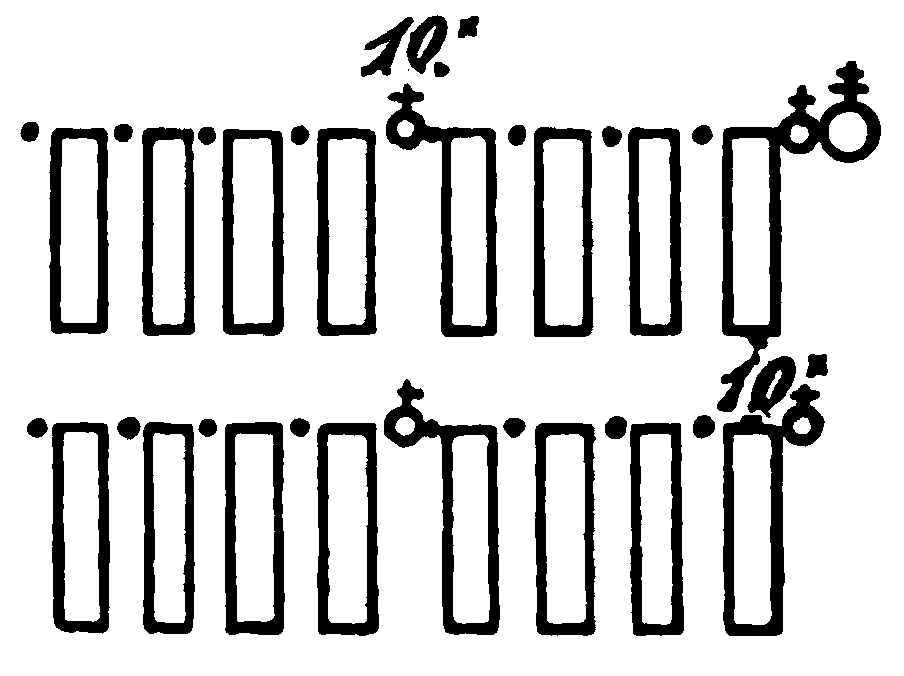
England. Columns are formed, in view of the (8) weak companies in a battalion, with company or half-company front at full or reduced distances (quarter column). In actions with savages echelon formations and the square are also employed.
Switzerland. The company is divided into four platoons. The line is used as an assembly formation and for purposes of parade. The company column, corresponding to the German formation of the same name, is used for movements on the battlefield. In both line and company column the platoons are posted abreast, at intervals of three paces. Finally the route column is used. This is formed either by wheeling by squads, or by platoons executing column right (left). On the battlefield the platoon may be deployed and formed in several lines.
In the battalion, company columns in line of columns, or route columns in the battalion column, are posted abreast at intervals of 10 paces. Line and double column are abolished.
Opinions are divided as to the value of the double column. Formerly, when the double column was still the column of attack from which deployment for fire action had to be made, a discussion of its merits was of special importance. While Austria abandoned the double column formation in 1881 and Germany in 1905, Switzerland replaced it by a column having a front of two platoons (Plotonkolonne), and Russia readopted it again recently. All other states utilize it as of equal value with the deep column in making movements beyond range of artillery fire and as an assembly formation in addition to the deep column. The change from double column to any company column formation is easier than a like change from the Swiss “Ploton column” (double column of platoons), which has the same front, since in the double column two companies can be deployed at the same time toward both flanks.
The deep column appears to be better adapted for making movements and for advancing under cover, and, on account of its narrow front, a force in this formation is better able to adapt itself to the forms of the ground in hilly or close country than a body of troops in double column of twice the width of front.
The Battalion in Route Column. (Par. 316 German F. S. R.).
The companies are formed in route column and follow each other at distances of 8 m. Mounted officers, musicians,[81] led horses and vehicles are to be included in actual depths of columns given and not in the distances. A permanent extension of distances for the purpose of restricting checks of the march to a single organization is as little permissible as the permanent elimination or reduction of distances; distances may be dispensed with temporarily only. The reduction of the depth of a column, obtained by eliminating distances between elements entirely, is so small that the rapidity of deployment gained does not, by any means, compensate for the increased exertion of the troops.[82]
During the march the company commander goes wherever his presence may be necessary for the proper supervision of his company. Neither are platoon commanders tied to a fixed place; one officer is, however, required to march in rear of the company. The company ammunition wagons follow in rear of their respective companies, or, assembled, in rear of the battalion. In marches in campaign the field train marches separately.
The depth of the battalion on the march, without field train, is 400 m., and the depth of the field train is 100 m.
Austria. Column of fours. Depth of a battalion on the march, including combat train, 670 paces (502 m.). The distance between companies is nine paces (6.7 m.).
France. The distance between companies is 10 paces (7.5 m.). The depth of each rank is reckoned at 1.40 m. on the march (in Germany 1.10 m.), and that of every 100 men at 50 m. Depth of a battalion, including combat train, on the march is 450 m.
Russia. The distance between companies is 10 paces (7.1 m.). The battalion without combat train has a depth of 350 paces (249 m.). The combat train follows in rear of the regiment.
A German regiment of four battalions with combat train has a depth of 1,650 m. on the march; a Russian regiment, a depth of 1,725 paces (@ 71 cm.)=1,215 m. (elongation on the march not considered).
Italy. The distance between companies is 10 paces (7.5 m.). The battalion has a depth of 422 m. on the march.
8. THE REGIMENT AND THE BRIGADE.
For a discussion of the importance of the regiment and of the brigade see page 37 supra. All movements must be executed in an orderly manner by regiment and brigade, in any formation, without breaking up tactical units, and the entity of the whole body must be preserved at the same time by a skillful use of the terrain. If necessary, a base battalion may be designated.
When regiments or brigades are assembled, the formation, disposition, intervals and distances of the tactical units depend upon the terrain and the intentions of the commander. Frequently the tactical units (battalions and regiments) are assembled in separate groups.
When considerations of the enemy and the terrain do not dictate otherwise, the battalions, each, as a rule, in deep column, are posted in one or more lines, at 30-pace intervals and distances, rear battalions covering those in front or the gaps between them. An appropriate formation will frequently be that in which route columns are placed abreast and on the same line.
In the brigade, when assembled or deployed, the regiments may be placed abreast of each other, on the same line, or in rear of each other, i.e., in line or in echelon. When the regiments are formed side by side, two adjacent independent sections are created, each commanded by a regimental commander; this insures better supervision, better control, and a more energetic conduct of the action, since the first line can be reinforced by troops belonging to the same organization. This formation, moreover, facilitates tactical combinations. It may, however, be a disadvantage that the first line is not subject to the orders of a single commander; that it is difficult to employ the reserve battalions in one body; and that the brigade commander can influence the action only by withdrawing units from the regiments for the purpose of forming a reserve.[83] The echelon formation, each echelon consisting of a regiment, is frequently used in rencontres, because troops are thrown into action directly from route column. The regimental commanders then become leaders of echelons, the first line cannot be reinforced by its own troops, and the organizations of different regiments finally become mixed. The echelon formation is proper only when the second line is intended to be used independently abreast of the first in the course of the action; for example, on a flank, for the purpose of making or warding off a flank attack.[84] When part of a larger force, the most suitable combat formation for troops is usually the one in which the regiments are formed side by side.
The disadvantages of the echelon formation, when taken up from route column, can be obviated by deploying the second regiment in rear of a flank of the first. It should be kept intact in that position until the decisive moment, although the state of the fight may, at the outset, invite a more rapid extension of front.
9. EXTENDED ORDER.
Combats are begun and carried out in extended order. The defender can be induced to disclose his dispositions, to occupy his position, and to open fire, only by the advance upon him of a skirmish line. The deployment of a thin firing line will frequently suffice to furnish the commander of the attacking force with a clue to the strength of the force holding the hostile position. In close country, skirmishers are pushed forward primarily to guard against surprise the force which sends them out, but when thrown forward only a few hundred meters in open country, such skirmishers are unable to furnish protection. The strength and density of a firing line (by means of which the fight is sustained) depend upon marksmanship, upon the purpose of the action, and upon the terrain. The poorer the marksmanship or the weapon, or the more unfavorable the field of fire, the greater the number of skirmishers needed (i.e., the denser the firing line).[85] If the enemy is merely to be kept at a distance, less skirmishers (i.e., a thinner firing line furnished with plenty of ammunition) will be required, than if the action is to be carried to a decisive conclusion.
Cohesion and order are best maintained, and the least time is lost in action, if efficient, dense firing lines are led forward as units up to the moment of opening fire. (Pars. 169, 321, 334 and 413 German I. D. R.). But on open terrain such dense firing lines would begin to suffer too great a loss at ranges at which they could not reply to the fire. Nothing remains then but to cover the available front with a very thin firing line, followed at irregular distances by thin skirmish lines which ploy for the purpose of utilizing cover or for opening fire. Skirmish lines of this description will hardly justify the opponent’s expenditure of ammunition, as he can only cover broad spaces with volley fire. On the other hand, these skirmish lines are in themselves too weak to facilitate the approach of the following echelons by their fire. Besides, it must not be overlooked that the soldier, separated by a considerable interval from his comrades in line during the advance, and withdrawn from the influence of his officers, succumbs more easily to temporary spells of weakness and is more apt to remain behind than the skirmisher in a dense firing line. The advance in several successive, thin skirmish lines is therefore only an expedient. In each case the leaders will have to decide whether, in view of the close proximity of the enemy, a united advance with dense, powerful skirmish lines is possible or advisable (for instance, when entering at once upon the decisive stage of the action). Before opening fire the firing lines must be sufficiently reinforced. (Par. 334 German I. D. R.).
This advance in thin skirmish lines stood the test both in the Boer war and in the Russo-Japanese war,[86] but we must not forget that thin skirmish lines are only maneuver formations in an attack that is to be pushed home, and that the mistake made by the British of attempting to make an attack with such weak skirmish lines should not be imitated. The Japanese also used this formation after they had once opened fire with a dense skirmish line.[87]
It might be well to mention here that thin and dense skirmish lines, when under fire, lose an equal number of men in proportion to their strength, provided the front occupied by them is the same.