THE DRAWING-ROOM. (continued 3)
Reading edition
When a player puts in only as much as has been put in by each player who has preceded him, that is called “seeing” the bet. When a player puts in that much, and raises it, that is called seeing the bet and “going better.”
When the bet goes around to the last better or player who remains in, if he does not wish to see and go better, he simply sees and “calls,” and then all playing must show their hands, and the highest hand wins the pool. When any one declines to see the bet, or the increase of bet which has been made, he “lays down” his hand, that is, throws it up with the cards, face downwards, on the table. If all the other players throw down their hands, the one who remains in to the last wins, and takes the pool without showing his hand.
To “bluff” is to take the risk of betting high enough on a poor hand or a worthless one to make all the other players lay down their hands without seeing or calling you.
When a hand is complete, so that the holder of it can play without drawing to better it, that is called a “pat” hand. A bold player will sometimes decline to draw any cards, and pretend to have a pat hand, and play it as such, when he has none.
A skilful player will watch and observe what each player draws, the expression of the face, the circumstances and manner of betting, and judge, or try to judge, of the nature of each hand opposed to him accordingly.
No one is bound to answer the question, how many cards he drew, except the dealer; and the dealer is not bound to tell after the betting has begun.
Drawing.—If the player determines to draw to a pair, he draws 3 cards.
If he draws to 2 pairs, he draws one card. If he holds 3 to begin with, he draws 2 cards, in order to have the best chance of making a full, inasmuch as, in playing, pairs are apt to run together. But, to deceive his adversaries and make them think he has nothing better than 2 pairs, a sharp player will often draw but one card to his 3’s.
It is advisable sometimes to keep an ace or other high card as an “outsider,” with a small pair, and draw but one card—thus taking the chance of matching the high cards and so getting a good 2 pairs, or something better possibly—while at the same time others may be deceived into believing that the player is drawing to 3’s.
When drawing to cards of the same suit to try to make a flush, or to cards of successive denominations to try to make a sequence, as many more cards are to be taken as will be needed to fill out the flush or the sequence. But it is seldom advisable to venture in to draw for either a flush or a sequence when more than one card is required to complete the hand.
When a player holds 4’s in his original hand it is as good as it can be, and yet it is best to throw away the outside card and draw one, because others may then think he is only drawing to 2 pairs, or for a flush or a sequence, and will not suspect the great value of the hand. When one is in (as he ought seldom to be) without even so much as a pair, his choice must be either to discard 4 cards, or 3 cards, and draw to the highest, or 2 highest in the hand, or throw away the whole hand and draw 5, or look content and serious, stand pat, and bet high!
The player determining to try this last alternative on a worthless hand had generally better begin by raising when he goes in, or else nobody will be likely to believe in his pretended strong hand.
Relative Value of Hands in their Order, beginning with the Best.—1. A Sequence Flush: Which is a sequence of 5 cards, and all of the same suit.
2. Fours: Which is 4 out of the 5 cards, of the same denomination.
3. A Full: Which is a hand consisting of 3 cards of the same denomination, and 2 of likewise equal denomination.
4. A Flush: Which is all 5 cards of the same suit.
5. A Sequence: Which is all 5 cards not of the same suit, but all in sequence. (In computing the value of a sequence an ace counts either as the highest or lowest card, that is, below a deuce or above a king.)
6. Threes: Which is 3 cards of the same denomination, but the other 2 of different denominations from each other.
7. Two Pairs.
8. One Pair.
9. Highest Card: When a hand has neither of the above, the count is by the cards of highest value or denomination. [Ace is highest.]
When parties opposed, each holds a pair, the highest pair wins, and the same when each party holds 3’s or 4’s.
When each party holds 2 pairs, the highest pair determines the relative value of the hands.
When each party holds a sequence, the hand commencing with the highest card in sequence wins; so also when two or more parties hold flushes against each other.
That full counts highest of which the 3 cards of the same denomination are highest. The 2 cards of the same denomination help only to constitute the full, but do not add to the value of the hand.
When hands are equal so far that each party holds a pair or 2 pairs of exactly the same value, then the next highest card or cards in each hand must be compared with the next highest card or cards in the other hand to determine which wins.
In case of the highest hands (which very seldom occurs) being exactly equal, the pool is divided.
The main elements of success in the game are: (1) good luck, (2) good cards, (3) plenty of cheek, and (4) good temper. (The Field.)
Vint, or Siberian Whist.—This game is at present much played and is very popular in Russia, and comprises some very interesting features. The scoring appears complicated, but is not really so, and may be easily learnt in one evening’s play.
It is similar to whist, with the difference that there are many more combinations, and the rewards and penalties are greater. The object is to make the number of tricks you declare, with a certain suit for trumps, or without trumps, according to the declaration; but should a less number of tricks be obtained, then a penalty of a certain number of points is scored to the opponents, according to the number of tricks short of the number declared. The side that reaches 400 first scores game, but the hands are played out and scores and penalties marked as usual. The laws of whist apply to revoke and general rules. Cut for partners and deal as in whist, the last card not to be turned up.
Value of Suits.—Spades, as seen below, are the lowest in value, and “without trumps” the highest.
“Spades”4“Two Spades”14“Three Spades”24
“Clubs”6“Two Clubs”16“Three Clubs”26
“Diamonds”8“Two Diamonds”18“Three Diamonds”28
“Hearts”10“Two Hearts”20“Three Hearts”30
“Without Trumps”12“Two without Trumps”22“Three without”32
Declaring.—The dealer commences with one declaration, then the player on left hand, and so on; each declaration must be of a higher value than the previous one. Any number of declarations may be made by any player, but after each declaration all the other players have the right to declare in their turn, but no declaration can be made after all the 4 players have consecutively said “Pass.” A player not wishing to declare says “Pass.” Should, at the commencement, no declaration be made by the dealer, and all the players in their turn say “Pass,” the cards are thrown up, and the deal passes on as usual. This is called a “Bird,” and 300 points are noted, to be added to the score of points of the winners of the rubber. Several “Birds” may occur during a rubber, and are noted thus ⩋ = 300 points. A declaration of “Spades” or other suit, or “Without trumps,” means that 7 or more tricks will be made with declared suit trumps; “2 Spades” or other suit, 8 tricks will be made; “3 of a suit, or without trumps,” 9 tricks, and so on.
Scoring—Is noted at the end of each hand, every trick counting thus, with a declaration of “Spades,” AB., 7 tricks = 28; CD., 6 tricks = 24. A declaration of, say “3 Diamonds,” then AB. 9 tricks = 252; and CD., 4 tricks = 112; or if AB. make 10 tricks = 280; and CD. 3 = 84. Big Schlem, 1000; little ditto, 500; rubber, 1000; game, 500. Bird 300 each, scored to winners of rubber.
Honours, &c.—The 10 counts as an honour; 1 or 2 honours do not count; 3 honours, score according to value of suit thus: 3 honours spades score 120 (a zero always being added); 4 = 160; 5 = 200.
3 honours in, say hearts = 300; 4, 400; 5, 500. 3 aces count 150; 4, 200; 1 or 2 do not count. A game being played “without trumps,” honours do not count; but aces score, for 3, 300, 4, 400. The honours and aces may be in the 2 partners’ hands, as at whist.
Penalties.—Should the number of tricks declared not be made, the penalty is reckoned thus: For a declaration of, say “Spades,” other suit, or “without trumps,” 400 points for every trick under the number declared; a declaration of “Two” of any suit, 800 points; for “Three,” 1200 points for every trick, and so on. Thus, if the declaration was “Five” of a suit, or “without trumps,” and only 9 tricks were made, or 2 short, the penalty would be 4000 to be scored to the opponents. Penalties, honours, aces, &c., are scored above the line, and do not count towards game, but are scored as points. The total number of points scored by the losers during the game, and also the rubber, must be deducted from the winners’ score, the balance, if any, credited to the winners; or it may happen that the winners of a rubber may lose in points. Should the game be for stakes, so much per point should be calculated.
Illustrative “Vint” Hand.
A.’s Hand.C.’s Hand.
Ace, 10, 7♠King, Qn, 5, 4♠
10, 5♥Ace, Kg, Kv, 7, 4♥
King, 7♣5, 3♣
Ace, Kg, Q, 8, 7, 2♦9, 5♦
B.’s Hand.D.’s Hand.
9, 3, 2♠Knave, 8, 6♠
3, 2♥Queen, 9, 8, 6♥
Ace, Knv, 9, 6, 2♣Queen, 10, 8, 4♣
Knave, 6, 3♦10, 4♦
A. and B. are partners. A. is the dealer, and begins declaring
A.—“Diamonds.”C.—“Pass.”
C.—“Hearts.”B.—“Pass.”
B.—“Two clubs.”D.—“Pass.”
D.—“Two hearts.”A.—“Four diamonds.”
A.—“Three spades.”C.—“Pass.”
C.—“Pass.”B.—“Pass.”
B.—“Three diamonds.” D.—“Pass.”
D.—“Pass.”A.—“Pass.”
A.—“Four clubs.”
A. and B. have to make 10 tricks, with diamonds as trumps. C. leads.
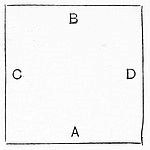
A. and B. make 10 tricks, scored thus:
CD.AB.3 aces150
4 honours320
————————————————
114380
The above hand is only given to show how the declaring may be made. (The Field.)
Supplementary Literature.
Mrs. Orrinsmith: ‘The Drawing-room; its decorations and furniture.’ London, 1878. 2s. 6d.
Henry J. Dakin: ‘The Stage in the Drawing-room; or the Theatre at Home. Practical Hints on Amateur Acting for Amateur Actors.’ London, 1883. 1s.
Capt. Crawley: ‘The Handy Book of Games for Gentlemen. Billiards, Bagatelle, Backgammon, Chess, Draughts, Whist, Loo, Cribbage, Écarté, Picquet, All Fours, Quadrille, Pope Joan, Matrimony, Vingt-un, Quinze, Put, Speculation, &c.’ London, 1876. 5s.
Cavendish’s ‘Pocket Guides to Backgammon, Chess, Draughts, &c.’ London, 1878. 6d. each.