Volume 1 / Part 7 — PART SEVENTH. THE ORIGIN AND ESTIMATION OF OXIDIZED NITROGEN IN SOILS, RAIN AND DRAINAGE WATERS. (continued 3)
Reading edition
4. The standard solutions of potassium nitrate are very readily prepared. The solutions which are to be compared directly with the waters examined, may be prepared as required, but if many determinations are to be made with a variety of waters, it will be found best to prepare a complete series, differing from each other by 0.02 part nitrogen in 100,000. This series may include solutions containing quantities of nitrogen in 100,000 parts, represented by all the odd numbers from 0.03 up to 0.39. It will be found convenient to prepare them in quantities of 100 cubic centimeters at a time, from a stock solution of potassium nitrate which contains 0.00001 gram nitrogen, or 0.000045 nitric acid in one cubic centimeter. Each cubic centimeter of this solution, when diluted to 100 cubic centimeters, represents 0.01 nitrogen in 100,000, and consequently if it is desired to make a solution containing 0.35 part nitrogen in 100,000, thirty-five cubic centimeters 543are taken and made up to 100 cubic centimeters, and so on. The solution of potassium nitrate (b) is best prepared from a stronger one (a) containing 0.0001 gram nitrogen to the cubic centimeter, or 0.7214 gram potassium nitrate to the liter; 100 cubic centimeters of (a) made up to one liter give the solution (b). It is obvious that the series of solutions, above described, could be made directly from (a), but by first making (b), greater accuracy is secured.
5. For purposes which will be presently described, a solution of aluminum sulfate is required, containing five grams to the liter. The salt used must be free from chlorin and iron; and the solution should give no reaction when tested with carbazol.
6. The solution of silver sulfate is required for the removal of chlorin from the water or soil extract to be examined. It is prepared by dissolving 4.3943 grams of the salt in pure distilled water and making up to one liter. The sulfate is preferably obtained by dissolving metallic silver in pure sulfuric acid. The solution should be tested with carbazol in the same way as will be presently described for water; if perfectly pure, no reaction will be obtained. As silver sulfate is often prepared by precipitation from the nitrate, it is very apt to contain nitric acid, and consequently, if the source of the salt be unknown, this test should on no account be omitted.
The analytical process is carried on as follows:
Two cubic centimeters of the water are carefully delivered by means of a pipette into the bottom of a test-tube; four cubic centimeters of sulfuric acid are added, and the solution thoroughly mixed by the help of a glass rod. The test-tube is then immersed in cold water, and when well cooled, one cubic centimeter of the sulfuric acid solution of carbazol is added, and the whole again mixed as before. The intensity of the color is now observed, and a little experience enables a fairly good opinion to be formed of the quantity of nitric acid present. Suppose that the water be roughly estimated to contain about 0.15 part nitrogen per 100,000; in such a case solutions of potassium nitrate containing 0.11, 0.15, 0.19 part nitrogen are selected from the series. Two cubic centimeters are taken from each, and treated, side by side, with a fresh quantity of the water, 544precisely as described for the preliminary experiment, the various operations being performed as nearly simultaneously as possible with each of the samples, and under precisely similar conditions. Two or three minutes after the carbazol has been added, the intensity of the color of each is observed. If that given by the water is matched by any of the standard solutions, the estimation is at an end. Similarly, if it falls between two of these, the mean may be taken as representing the nitrogen present in cases in which great accuracy is not required. If this be done, the maximum error will be 0.02 part nitrogen, or 0.09 part nitric acid per 100,000. If greater exactness be required, or it be found that the color given by the water is either darker or lighter than that given by all the standard solutions, a new trial must be made. In such a case the water must be again tested simultaneously with the solutions with which it is to be compared. This is rendered necessary principally for the reason that the shade of the solutions to which the carbazol has been added is apt to change on standing. Hence it is desirable that the water, and the standard potassium nitrate with which it is to be compared, should have the carbazol added at as nearly the same time as possible. When finally the color falls between that given by any two consecutive members of the standard potassium nitrate series, the estimation may be considered at an end, and the mean of these solutions taken as representing the nitrogen present.
The greatest neatness should be observed in all steps of the analysis. The quantity of water operated upon is so small that if the greatest care be not exercised throughout, sources of error may be readily introduced. The test-tubes should be rinsed out with nitrate-free water before being used and then dried. The tint should be determined by looking through the tube and not through the length of the column of liquid.
Influence of Nitrites.—If the quantity of nitrous acid in the water is known a correction can be applied for nitrates by deducting one-fifth of the number found for nitrites when estimated as nitrates.
Influence of Iron.—Although ferrous salts give no reaction with carbazol, nitrates are apt to be overestimated in their presence. 545Oh the other hand, ferric compounds, like other oxidizing agents, may give a characteristic green color with carbazol. In all cases when iron is present in any considerable quantity it is best to remove it by rendering the water slightly alkaline, evaporating to dryness, and redissolving the soluble residue until the solution reaches the original volume.
Influence of Chlorids.—The presence of chlorids furnishes by far the most serious source of error in the process by intensifying the action of the nitric acid. If, however, nitrates be absent chlorids give no reaction with carbazol. The chlorids are removed by a standard silver sulfate solution, the quantity of chlorids present having been first determined by a standard silver nitrate solution. For this purpose an ordinary sugar flask can be employed marked at 100 and 110 cubic centimeters. This flask is filled to the 100 cubic centimeter mark with the water to be examined; the necessary quantity of silver sulfate is added and then two cubic centimeters of the solution of aluminum sulfate, previously described, and the contents of the flask brought up to 110 cubic centimeters by the addition of pure distilled water. The whole is shaken up and filtered, the first portion of the filtrate being rejected. The aluminum sulfate by reacting with the carbonates usually present in the water and producing the precipitation of alumina, facilitates the removal of the precipitated silver chlorid.
The above-described method on account of its delicacy is not well suited to aqueous solutions of soils except where the quantity of nitric nitrogen present is extremely minute.
Hooker also first suggested the use of diphenylamin for detecting the presence of nitrates,[326] a method afterwards worked out by Spiegel.[327]
In the variation of the method as practiced by Rideal the standard potassium nitrate and the pure sulfuric acid mentioned below are required, and in addition, the following reagents:[328]
(a) Silver sulfate solution containing 4.3945 grams per liter.
(b) Aluminum sulfate solution free from chlorids and iron, five grams per liter.
546(c) Carbazol solution; six-tenths gram carbazol dissolved in glacial acetic acid and made up to 100 cubic centimeters with the glacial acid. For use, one cubic centimeter of this solution is withdrawn by a pipette and mixed with fifteen cubic centimeters of pure redistilled sulfuric acid.
The process is carried out as follows: To 100 cubic centimeters of water the amount of chlorin which has been previously ascertained is removed by the silver sulfate solution. Two cubic centimeters of the aluminum sulfate are added and the whole made up to a convenient volume, say about 110 cubic centimeters. The liquid is filtered and two cubic centimeters of the filtrate taken for an estimation of nitrates. To the two cubic centimeters are added four cubic centimeters of concentrated sulfuric acid and the mixture cooled.
One cubic centimeter of the carbazol solution in sulfuric acid is added and a bright green color appears in a few moments, if nitrates are present. Comparison is made with solutions of standard potassium nitrate.
497. Phenylsulfuric Acid Method.—Rideal also proposes a variation of the method described by Hooker, which consists in the substitution of phenylsulfuric acid for carbazol.[329]
The solutions required are:
(a) A standard solution of potassium nitrate containing 0.7215 gram of the pure crystallized salt in a liter of water.
(b) Phenylsulfuric acid, (acid phenyl sulfate,) prepared by dissolving fifteen grams of pure crystallized phenol in 92.5 cubic centimeters of pure, redistilled sulfuric acid free from nitrates and diluted with seven and one-half cubic centimeters of water.
The process is conducted as follows:
A known volume of water, from twenty-five to one hundred cubic centimeters, according to its richness in nitrates, is evaporated to dryness in a porcelain dish, one cubic centimeter of phenylsulfuric acid added then one cubic centimeter of pure water and three drops of strong sulfuric acid and the mixture gently warmed. A yellow color shows the presence of nitrates. Dilute to about twenty-five cubic centimeters with water and add ammonia in slight excess. Pour into a narrow nessler tube and add the washings and make up to 100 cubic centimeters. Imitate the 547color of the solution with the standard potassium nitrate treated with the same reagents.
The phenylsulfuric acid should be prepared some time before use, as the fresh solution imparts a greenish tint to the yellow of the ammonium picrate formed.
498. Variation of Leffmann and Beam.—The phenyl sulfate process, as described by Leffmann and Beam, is conducted as follows:[330]
Solutions Required.—Acid phenyl sulfate: 18.5 cubic centimeters of strong sulfuric acid are added to one and one-half cubic centimeters of water and three grams of pure phenol. Preserve in a tightly-stoppered bottle.
Standard potassium nitrate: 0.722 gram of potassium nitrate, previously heated to a temperature just sufficient to fuse it, is dissolved in water, and the solution made up to 1000 cubic centimeters. One cubic centimeter of this solution will contain 0.0001 gram of nitrogen.
Analytical Process.—A measured volume of the water is evaporated just to dryness in a platinum or porcelain basin. One cubic centimeter of the acid phenyl sulfate is added and thoroughly mixed with the residue by means of a glass rod. One cubic centimeter of water, and three drops of strong sulfuric acid are added, and the dish gently warmed. The liquid is then diluted with about twenty-five cubic centimeters of water, ammonium hydroxid added in excess, and the solution made up to 100 cubic centimeters.
The reactions are:
Acid phenyl sulfate. Trinitrophenol (picric acid).
HC₆H₅SO₄ + 3HNO₃ = HC₆H₂(NO₂)₃O + H₂SO₄ + 2H₂O.
Ammonium picrate.
HC₆H₂(NO₂)₃O + NH₄HO = NH₄C₆H₂(NO₂)₃O + H₂O.
The ammonium picrate imparts to the solution a yellow color, the intensity of which is proportional to the amount present.
Five cubic centimeters of the standard solution of potassium nitrate are similarly evaporated in a platinum dish, treated as above, and made up to 100 cubic centimeters. The color produced is compared to that given by the water, and one or the other of the solutions diluted until the tints of the two agree. 548The comparative volumes of the liquids furnish the necessary data for determining the amount of nitrate present, as the following example will show:
Five cubic centimeters of standard nitrate are treated as above, and made up to 100 cubic centimeters, representing 0.0005 gram nitrogen.
Suppose 100 cubic centimeters of water similarly treated are found to require dilution to 150 cubic centimeters before the tint will match that of the standard; then
100 : 150 :: 0.005 : 0.0075
i. e., the water contains seven and one-half milligrams of nitrogen as nitrate per liter.
The ammonium picrate solution keeps very well, especially in the dark. A good plan, therefore, is to make up a standard solution equivalent to, say, ten milligrams of nitrogen as nitrate per liter, to which the color obtained from the water may be directly compared.
The results obtained by this method are quite accurate. Care should be taken that the same quantity of acid phenyl sulfate be used for the water and for the comparison liquid, otherwise different tints instead of depths of tints are produced.
With subsoil and other waters probably containing much nitrates, ten cubic centimeters of the sample will be sufficient for the test, but with river and spring waters, twenty-five to one hundred cubic centimeters may be used. When the organic matter is sufficient to color the residue, it will be well to purify the water by addition of alum and subsequent filtration, before evaporating. The method may also be used to determine small quantities of nitrates in aqueous extracts of soils when the quantity is too small for estimation by the ferrous chlorid or reduction processes.
499. Variation of Johnson.—The ammonium picrate method has given very satisfactory results as practiced by Johnson, who varies the process as described below.[331]
The standard solution of potassium nitrate is prepared by dissolving 0.7215 gram of the pure salt in a liter of distilled water. Dilute 100 cubic centimeters of this solution to one liter with distilled water. Ten cubic centimeters of this dilute solution 549contain nitrogen equivalent to one part as nitrates in 100,000.
The Solution of Acid Phenyl Sulfate.—This is prepared by pouring two parts by measure of pure crystallized phenol liquefied by hot water into five parts by measure of pure concentrated sulfuric acid and digesting the whole in the water-bath for eight hours. After cooling, add one and one-half volumes of distilled water and one-half volume strong hydrochloric acid to each volume of the above mixture.
The analytical processes are carried on as follows: Ten cubic centimeters of the water under examination and ten cubic centimeters of the standard potassium nitrate are placed in small beakers and put near the edge of a hot plate. When nearly evaporated they are put on the top of the water-bath and left there until completely dry. The residue, in each case, is then treated with one cubic centimeter of the acid phenyl sulfate and the beakers placed on the top of the water-bath. In good water, a red color ought not to appear for about ten minutes.
After standing about fifteen minutes, the beakers are removed, the contents of each washed successively into 100 cubic centimeter flasks, about twenty cubic centimeters of 0.96 per cent. ammonia added, and the 100 cubic centimeters made up by the addition of water and the yellow liquid transferred to the nessler glass and the tints appropriately compared.
500. Estimation of Nitric in Presence of Nitrous Acid.—The detection of nitrous in presence of nitric acid can be accomplished by the method proposed by Griess, as described further on, through the development of azocolors, with metaphenylenediamin and other bodies, which are not produced under similar conditions by nitric acid. The detection and estimation of nitric in the presence of nitrous acid, however, is not so easy. Lunge and Lwoff propose brucin for this purpose, which, contrary to most authorities, does not give the red-yellow color with nitrous acid.[332] The reagent is prepared by dissolving two-tenths gram of brucin in 100 cubic centimeters of sulfuric acid, pure and concentrated. It is almost impossible to prepare a sulfuric acid which does not give a trace of color with brucin; but with the purest acids this trace may be neglected.
A solution of nitrate is also prepared containing 0.01 milligram 550of nitrogen as nitric acid in one cubic centimeter. It is made by dissolving 0.0721 gram of pure potassium nitrate in 100 cubic centimeters of distilled water, and diluting ten cubic centimeters thereof with pure concentrated sulfuric acid to 100 cubic centimeters. Both solutions are conveniently preserved in burettes with glass stop-cocks. The liquid to be tested for nitric acid should be mixed with sulfuric acid in such a way that the mixture will have a specific gravity of one and seven-tenths. If the liquid to be tested is water, this concentration is reached by adding three times its volume of the strong acid. For the comparison of colors, cylinders of colorless glass are employed, marked at fifty cubic centimeters. They should be about twenty-four centimeters high and extend about ten centimeters above the mark. There is placed in the cylinder one cubic centimeter of the solution of nitrate in sulfuric acid, and the same quantity of the brucin mixture, and it is filled to the mark with pure sulfuric acid. The contents of the cylinder are poured into a flask and warmed at from 70°–80°, until the final yellow tint is secured, and then poured into the cylinder again. The liquid to be tested is treated in exactly the same way. The tints are then equalized by pouring out a part of the contents of the deeper colored cylinder, taking account of the volume, and filling up with pure concentrated sulfuric acid.
In this manner the content of nitric acid in the liquid under examination can be compared directly with the solution of potassium nitrate of known strength. The coloration is distinctly produced with 0.01 milligram in fifty cubic centimeters of liquid, at least three-fourths of which must be sulfuric acid.
501. Piccini Process.—The method proposed by Piccini may also be used.[333]
About five cubic centimeters of the nitrite solution are placed in a small beaker, some pure urea dissolved therein and a few drops of sulfuric acid, and then held in boiling water for three minutes. The nitrous acid is thus completely destroyed. Ammonium chlorid may be substituted for urea. The reaction is given on page 478. The nitric acid present is then determined by diphenylamin or other suitable reagents. Diphenylamin reacts both with nitrous and nitric acids, producing a violet tint. Warington 551calls attention to a slight difference, however, in its deportment with these two acids. When the solution of the reagent is not too strong a drop of it produces but little turbidity when added to water or to a solution containing nitric acid. When, however, nitrous acid is present, a cream-colored turbidity is produced. The violet color also appears at once on adding sulfuric acid when a nitrite is present, while in the case of nitrates, more sulfuric acid is required, except when the solution is very strong. In this connection, it must not be forgotten that in heating nitrites with urea or ammonium chlorid in the presence of a slight excess of sulfuric acid a trace of nitric acid may be formed.
ESTIMATION OF NITROUS ACID BY COLORIMETRIC COMPARISON.
502. Application of the Method.—The most minute traces of nitrous acid may be detected by colorimetric methods and the determination of the quantity present may be approximated with great exactness by comparison with a solution of a nitrite of known strength. Especially in following the progress of nitrification is this method, in some of its forms, of essential importance. In delicacy and celerity it has the same advantages as the colorimetric methods for the determination of nitric acid.
503. Metaphenylenediamin Method.—This process depends upon the development of a yellow color in water containing nitrous acid on the addition of a reagent containing metaphenylenediamin; m-C₆H₄(NH₂)₂. This variety of the phenylenediamins is readily obtained from common dinitrobenzene. It melts at 63° and boils at 287°. In order to preserve the reagent in shape for use it should be prepared in the following manner:
Dissolve two grams of the chlorid in ten cubic centimeters of ammonia, and place the solution in a glass-stoppered flask. To this solution are added five grams of powdered animal-black, and the whole vigorously shaken. After allowing to settle, the shaking is repeated at intervals of an hour, three or four times, and the flask then allowed to remain at rest for twenty-four hours.
The supernatant liquid is generally sufficiently decolorized by this treatment. If not, the shaking and subsidence must be repeated until a completely colorless liquid is obtained. The 552solution can be kept, indefinitely, in contact with the animal-black. Aqueous and alcoholic solutions of the salt can not be kept.
The test is applied by mixing five drops of the reagent with five cubic centimeters of sulfuric acid. The mixture must be colorless. To the mixture add 100 cubic centimeters of the water to be tested, and heat on the water-bath for five minutes. A yellow coloration indicates the presence of nitrous acid.
The metaphenylenediamin test is fairly satisfactory in perfectly colorless waters and aqueous extracts. Many waters and soil extracts, however, have a yellowish tint, and this interferes in a marked way with a proper judgment of the yellow triaminazobenzol developed in the application of the above test.
The decoloration of such waters by means of sodium carbonate or hydroxid and alum, is a matter of some difficulty and not wholly without action on the nitrites which may be present. The method, therefore, is inferior to the one next described.
504. Sulfanilic Acid and Naphthylamin Test for Nitrous Acid.—A very delicate test for the presence of nitrous acid, first described by Griess, is the coloration produced thereby in an acid solution of sulfanilic acid and naphthylamin.[334]
Sulfuric or acetic acid may be used as the acidifying agent, preferably the latter. The solutions are prepared as follows:
(1) Dissolve one-half gram of sulfanilic acid in 150 cubic centimeters of dilute acetic acid.
(2) Boil one-tenth gram of naphthylamin with twenty cubic centimeters of water, decant the colorless solution from the residue and acidify it with 150 cubic centimeters of dilute acetic acid.
The two solutions may at once be mixed and preserved in a well-stoppered flask. The action of light on the mixture is not hurtful, but air should be carefully excluded because of the traces of nitrous acid which it may contain. Whenever the mixed solutions show a red tint it is an indication that they have absorbed some nitrous acid. The red color may be discharged and the solution again fitted for use by the introduction of a little zinc dust, and shaking.
The water, or aqueous solution of a soil, to be tested for nitrites, 553in portions of about twenty cubic centimeters, is treated with a few cubic centimeters of the mixed reagent and warmed to 70°–80°. If nitrous acid, in the proportion of one part to one million be present, the red color will appear in a few minutes. If the content of nitrous acid be greater, e. g., one part in one thousand, only a yellow color will be produced, unless a greater quantity of the reagent be used.
Leffmann and Beam recommend the following method of conducting the determinations.[335]
Solutions required:
Naphthylammonium Chlorid.—Saturated solution in water free from nitrites. It should be colorless; a small quantity of animal charcoal allowed to remain in the bottle will keep it in this condition.
Paraamidobenzene Sulfonic Acid (Sulfanilic Acid).—Saturated solution in water, free from nitrites.
Hydrochloric Acid.—Twenty-five cubic centimeters of concentrated pure hydrochloric acid added to seventy-five cubic centimeters of water, free from nitrites.
Standard Sodium Nitrite.—0.275 gram pure silver nitrite is dissolved in pure water, and a dilute solution of pure sodium chlorid added until the precipitate ceases to form. It is then diluted with pure water to 250 cubic centimeters and allowed to stand until clear. For use, ten cubic centimeters of this solution are diluted to 100. It is to be kept in the dark.
One cubic centimeter of the dilute solution is equivalent to 0.00001 gram of nitrogen.
The silver nitrite is prepared in the following manner: A hot concentrated solution of silver nitrate is added to a concentrated solution of the purest sodium or potassium nitrite available, filtered while hot and allowed to cool. The silver nitrite will separate in fine needle-like crystals, which are freed from the mother-liquor by filtration with the aid of a filter pump. The crystals are dissolved in the smallest possible quantity of hot water, allowed to cool and crystallize, and again separated by means of the pump. They are then thoroughly dried in the water-bath, and preserved in a tightly-stoppered bottle away from the light. Their purity may be tested by heating a weighed quantity to redness in a 554tared, porcelain crucible and noting the weight of the metallic silver. One hundred and fifty-four parts of silver nitrite leave a residue of 108 parts of silver.
Analytical Process.—One hundred cubic centimeters of the water are placed in one of the color-comparison cylinders, the measuring vessel and cylinder having previously been rinsed with the water to be tested. By means of a pipette, one cubic centimeter each of the solutions of sulfanilic acid, dilute hydrochloric acid, and naphthylammonium chlorid is dropped into the water in the order named. It is convenient to have three pipettes for this test, and to use them for no other purpose. In any case the pipette must be rinsed out thoroughly with nitrite-free water each time before using, as nitrites, in quantity sufficient to give a distinct reaction, may be taken up from the air.
One cubic centimeter of the standard nitrite solution is placed in another clean cylinder, made up with nitrite-free water to 100 cubic centimeters and treated with the reagents, as above.
In the presence of nitrites a pink color is produced, which, in dilute solutions, may require half an hour for complete development. At the end of this time the two solutions are compared, the colors equalized by diluting the darker, and the calculation made as explained under the estimation of nitrates.
The following are the reactions:
Paraamidobenzene sulfonic acid. Nitrous acid. Paradiazobenzene sulfonic acid.
C₆H₄NH₂HSO₃ + HNO₂ = C₆H₄N₂SO₃ + 2H₂O.
Naphthylammonium chlorid. Azoalphaamidonaphthalene parazobenzene sulfonic acid.
C₆H₄N₂SO₃ + C₁₀H₇NH₃Cl = C₁₀H₆(NH₂)NNC₆H₄HSO₃ + HCl.
The last named body gives the color to the liquid.
The method pursued by Tanner, in the preparation of the reagent, is as follows:
Sulfanilic acid is prepared by mixing thirty grams of anilin slowly, with sixty grams of fuming sulfuric acid, in a porcelain dish. The brown, sirupy liquid formed is carefully heated until quite dark in color, and until the evolution of sulfurous fumes is noticed. After cooling, the thick, semi-fluid mass is poured into half a liter of cold water and allowed to stand for some hours. 555The liquid portion is then decanted from the nearly black undissolved crystalline mass. To the residue half a liter of hot water is added and allowed to stand until cold, and the liquid again decanted. The undissolved portion is then treated with one liter of hot water and filtered. The filtrate is treated with animal charcoal to decolorize it, and allowed to stand for twenty-four hours and again filtered, the filtrate diluted to 1,500 cubic centimeters and used as required. This solution tends to turn pink on keeping, and thus its color interferes with the delicacy of the test, and a small amount of animal-char is kept in a small bottle containing the portion for immediate use, and this bottle is filled, from time to time, from the larger one.
The solution of naphthylamin hydrochlorate is made with one gram of the salt dissolved in 100 cubic centimeters of water. The solution is to be occasionally filtered, and not more than 100 cubic centimeters should be prepared at a time.
The analytical operations are carried on as follows:
A standard solution of pure potassium nitrite, made from the silver salt in distilled water perfectly free from nitrites, is placed in a color-glass, similar to those used in the nessler reaction, together with a second glass containing the water to be tested. These glasses should be marked to hold 100 cubic centimeters at the same depth. To each of the tubes a few drops of pure hydrochloric acid are added and two cubic centimeters of the sulfanilic solution. Afterwards, to each tube are added two cubic centimeters of the solution of naphthylamin hydrochlorate, and it is allowed to stand for twenty minutes, at the end of which time the color should be fully developed. Each tube is covered by a piece of glass in order to prevent access of air. It is unnecessary to add that the standard solutions of nitrite of different strength should be employed until the one is found which resembles, as nearly as possible, the color developed in the sample of water under examination.
505. Lunge and Lwoff’s Process for Nitrous Acid.—The reaction of nitrous acid with α naphthylamin, first described by Griess, may be made reliable, quantitatively, by proceeding as below:[336]
Boil 0.100 gram of pure white α naphthylamin for fifteen minutes 556with 100 cubic centimeters of water, add five cubic centimeters of glacial acetic acid, or its equivalent of dilute acid, and afterwards one gram of sulfanilic acid dissolved in 100 cubic centimeters of hot water. The mixture is kept in a well-closed flask. A slight red tint in the mixture is of no significance, inasmuch as this completely disappears when one part of it is mixed with fifty parts of the liquid to be examined. If the coloration be very strong it can be removed by adding a little zinc dust. One cubic centimeter of this reagent will give a distinct coloration with 0.001 milligram of nitrous nitrogen in 100 cubic centimeters of water.
The analysis is conducted in cylinders of white glass marked at fifty cubic centimeters. One cubic centimeter of the above reagent is placed in each of two cylinders with forty cubic centimeters of water and five grams of solid sodium acetate. In one of the cylinders is placed one cubic centimeter of a normal solution of a nitrite prepared by dissolving 0.0493 gram of pure sodium nitrite corresponding to ten milligrams of nitrogen in 100 cubic centimeters of water, and adding ten cubic centimeters of this solution to ninety cubic centimeters of pure sulfuric acid. This secures a normal solution of nitrosylsulfuric acid, of which each cubic centimeter corresponds to 0.01 milligram of nitrogen.
In the other cylinder is placed one cubic centimeter of the solution to be examined, and the contents of both cylinders are well mixed so that the nitrous acid in a nascent state may act on the reagent. The colors are compared after any convenient period, but, as a rule, after five minutes.
The chief improvement made by Lunge and Lwoff on the method of Griess is in keeping the reagent in a mixed state ready for use, by means of which any nitrous impurities in the components thereof are surely indicated. Its advantage over the method of Ilosvay[337] consists in using the comparative normal nitrite solution as nitrosylsulfuric acid, in which state it is much more stable.
506. Estimation of Nitrous Acid with Starch as Indicator.—The method of procedure, depending on the blue color produced in a solution of starch in presence of a nitrite and zinc iodid when treated with sulfuric acid, is not of wide application on account of the interference produced by organic matter. The soil extract 557or water is treated in a test-tube, with a few drops of starch solution and some zinc iodid, to which is added some sulfuric acid. The decomposition of the nitrite is attended with the setting free of an equivalent amount of iodin which gives a blue coloration to the starch solution. The depth of the tint is imitated by treating a standard solution of nitrite in a similar way until the proper quantity is found, which gives at once the proportion of nitrite in the sample examined. This process, however, is scarcely more than a qualitative one.
507. Estimation of Nitrites by the Method of Chabrier.—In order to make the estimation of the evolved nitrous acid more definite by the iodin method, Chabrier has elaborated a plan for titrating it with a reducing agent.[338]
The substance chosen for this purpose is sodium hyposulfite. In point of fact, it is not the nitrous acid which is attacked by the hyposulfite, but the equivalent amount of free iodin representing it. In the case of a soil where the quantity of nitrites is usually very small, it is well to take as much as one kilogram. The extraction should be made rapidly, with water, free of nitrites, in order to avoid any reducing action on the nitrates which may be present. In the case of water, from five to ten liters should be evaporated to a small volume. The concentration should take place in a large flask, rather than in an open dish, in order to avoid any possibility of the absorption of nitrites produced by combustion. When the volume has been reduced to about 100 cubic centimeters it is transferred to a small flask and the concentration continued until only ten or fifteen cubic centimeters are left. The residue is filtered into a woulff bottle, F, Fig. 89, of about 100 cubic centimeters capacity.
One of the side tubulures carries a burette, B, containing five per cent sulfuric acid, the other one filled with a hyposulfite solution of known strength. The middle tubule serves to introduce a glass tube through which carbon dioxid or illuminating gas passes for the purpose of driving out the air from the solution and the flask. If carbon dioxid be used it should be generated by the action of sulfuric acid on marble. The cork holding this is furnished with a slot or valve to permit the exit of the air and the excess of the gas.
558Before inserting the middle stopper, a few cubic centimeters of potassium iodid solution and a few drops of thin starch paste are added, the potassium salt being always used in excess of the nitrite supposed to be present.
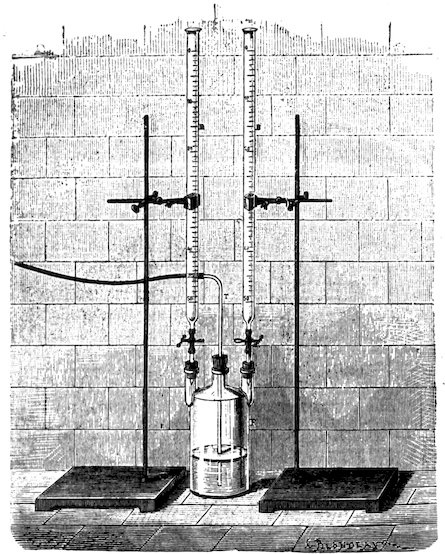
Figure 89. Method of Chabrier.
After the air has all been expelled from the flask the analytical process is commenced, the carbon dioxid current being slowly continued. At first, a few drops of the dilute sulfuric acid are allowed to flow into the flask. As soon as the liquid is colored blue a sufficient quantity of the thiosulfate solution is added to discharge the color. The successive addition of acid and thiosulfate is continued until another portion of the acid fails to develop the blue color, thus indicating that all the nitrite has been decomposed. From the volume of thiosulfate used the quantity of nitrite is calculated.
The Thiosulfate Solution.—The thiosulfate solution is conveniently prepared, when a large number of analyses is to be 559made, by dissolving twenty-five grams of pure crystallized sodium thiosulfate in 100 cubic centimeters of water and diluting any convenient part thereof to 100 or 1,000 cubic centimeters, according to the supposed strength of nitrite solution under examination.
For fixing the strength of the solution dissolve 3 348 grams of pure iodin in a solution of potassium iodid and make the volume up to one liter. Each cubic centimeter of this solution corresponds to one milligram of nitrous acid. A given volume of the iodin solution is titrated against the thiosulfate, but it is best not to add the starch paste until the greater part of the iodin has been removed. The starch paste is then added and the titration continued until the blue color has been discharged. Ten cubic centimeters of the iodin solution is a convenient quantity for the titration and the thiosulfate should be diluted by adding to ten cubic centimeters of the solution mentioned above, 990 cubic centimeters of water. Each liter of this dilute solution contains two and a half grams of the sodium thiosulphate.
Example.—Let us suppose that it has required 21.3 cubic centimeters of thiosulfate to absorb ten cubic centimeters of the iodin solution; further that ten liters of water have been evaporated and titrated as described above, and that the volume of thiosulfate employed was 13.8 cubic centimeters. From this is derived the following formula: 13.8 × 10 21.3 = 6.48 milligrams of nitrous acid; or 0.648 milligram per liter.
508. Estimation of Nitrous Acid By Coloration of Solution of Ferrous Salt.—This method, due to Picini is based on the production of the well-known brown color formed by the action of nitric oxid on a ferrous salt.[339] The nitrite is decomposed by heating with acetic acid while nitrates thus treated do not develop the reaction. The tint produced is imitated as above by testing against a standard solution of nitrite. Ferrous chlorid is to be preferred to other ferrous salts for the above purpose. The process should be carried on in solutions free of air.
509. Estimation of Nitrous Acid By Decomposition with Potassium Ferrocyanid.—The method of Schaeffer was first described in 1851, but little attention has been paid to it since. 560The method has lately been brought into notice again by Deventer.[340]
The reaction depends upon the decomposition of nitrous acid by potassium ferrocyanid in the presence of acetic acid with the formation of potassium ferricyanid and acetate, and nitric oxid. The reaction is expressed by the following equation:
2K₄FeCy₆ + 2HNO₂ + 2C₂H₄O₂
= K₆Fe₂Cy₁₂ + 2KC₂H₃O₂ + 2NO + 2H₂O.
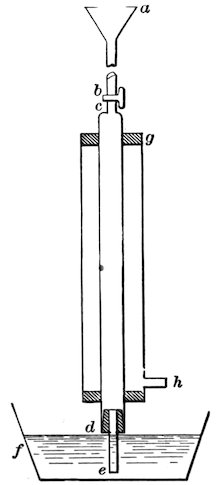
Figure 90. Schaeffer’s Nitrous Acid Method.
A eudiometer with a glass stop-cock is arranged as shown in Fig. 90. The lower part of the eudiometer is closed with a rubber stopper carrying a glass tube which ends in the pan f as shown at e. The eudiometer is filled to the stop-cock with a solution of potassium ferrocyanid of about fourteen per cent strength. The dish f is also filled up to the height indicated in the figure with the same solution. The solution of nitrite is used in such quantities that the nitric oxid evolved will occupy a space of about twenty cubic centimeters. The whole eudiometer should contain about fifty-seven cubic centimeters. The nitrite solution is added to the eudiometer by means of a funnel, a. The vessel containing it is washed out with a little water and then with acetic acid and finally with a few cubic centimeters of strong potassium ferrocyanid solution. The last fluid flows through the solution of nitrite and acetic acid and thus mixes it with the solution already in the eudiometer. The liquids reacting on each other float together on the strong ferrocyanid solution and each one of them is at once pressed downward by the gases which are evolved. When the evolution of gas becomes slower the apparatus should be shaken for about twenty minutes, moving it back and forth without taking the bottom of it out of the dish. When there is no longer any evolution of gas, water is added through a slowly, until the heavy 561potassium ferrocyanid solution is almost completely driven out of the eudiometer. The opening of the tube at e is then closed with the thumb, the apparatus is taken out of the dish, shaken for some time in a vertical direction and again placed in the dish. Water of any required temperature is now allowed to flow through the jacket, g, h, until the temperature is constant, when the volume of nitric oxid is read. The whole experiment can be performed in less than an hour. Operating in this way, at the end there is in the eudiometer a liquid which is not very different from water and one whose coefficient of solubility for nitric oxid is practically the same as that of water. The gas volume read is to be corrected for temperature, pressure, tension of the aqueous vapor, height of the water column in the eudiometer, and, after the end of the calculation, five per cent of the volume of water remaining in the eudiometer is to be added to the volume of gas obtained. This is to compensate for the volume of the gas absorbed by the water. The method gives good quantitive results.
510. Method of Collecting Samples of Rain Water for Analysis.—Warington collects rain water in a large leaden gauge having an area of 0.001 of an acre.[341] Of the daily collection of rain, dew, and snow water, an aliquot part amounting to a gallon for each inch of precipitation is placed in a carboy; at the end of each month the contents of the carboy are mixed, and a sample taken for analysis. In the carboy receiving the rain for nitric acid estimation a little mercuric chlorid is placed each month with the view of preventing any change of ammonia into nitric acid. It may be doubted, however, if this precaution is necessary, as the rain water thus collected always contains a very appreciable amount of lead; and experiments have shown that on the whole, rain water more frequently gains than loses ammonia by keeping.
Preparation of the Sample.—The method first employed by Warington was to concentrate ten pounds of the rain water in a retort, a little magnesia being used to decompose any ammonium nitrite or nitrate present. Concentration by evaporation in the open air, and especially over gas, results in a distinct addition to nitrites present. When concentrated to a small bulk, the 562water is filtered and evaporated to dryness in a very small beaker. The nitrogen as nitrates and nitrites is then determined by means of the methods already described.
DETERMINATION OF FREE AND ALBUMINOID AMMONIA IN RAIN AND DRAINAGE WATERS AND SOIL EXTRACTS.
511. Nessler Process.—The quantities of free ammonia in rain and most drainage waters are minute, but may reach considerable magnitude in some sewages. By reason of these minute proportions, gravi- and volumetric methods are not suitable for its quantitive determination. Recourse is therefore had to the delicate colorimetric reaction first proposed by Nessler. This reaction is based on the yellowish-brown coloration produced by ammonia in a solution of mercuric iodid in potassium iodid. The coloration is due to the formation of oxydimercuric ammonium iodid, NH₂Hg₂OI, and takes place between the molecule of free ammonia and the mercuric iodid dissolved in the alkaline potassium iodid as represented by the following equation:
Hg—O—Hg—I Hg
/ / \
O + 2H₂N = 2O NH₂I + H₂O
\ \ /
Hg—O—Hg—I HG
Nessler Reagent.—Dissolve thirty-five grams of potassium iodid in 100 cubic centimeters of water. Add to this solution gradually a solution of seventeen grams of mercuric chlorid in 300 cubic centimeters of water until a permanent precipitate of mercuric iodid is formed. Add now enough of a twenty per cent solution of sodium hydroxid to make 1000 cubic centimeters.
The mixed solutions, at room temperature, are treated with additional mercuric chlorid until the precipitate formed, after thorough stirring, remains undissolved. This precipitate is then allowed to subside, and when the supernatant liquid is perfectly clear, it is decanted or filtered through asbestos and kept in a well-stoppered bottle in a dark place. The part in use should be transferred to a smaller bottle as required. The solution should be made for a few days before using, since its delicacy is increased by keeping. The nessler reagent should show a faint yellow tint. If colorless it is not delicate, and shows the addition of an insufficient quantity of mercuric chlorid. When 563properly prepared, two cubic centimeters of the reagent poured into fifty cubic centimeters of water containing 0.05 milligram of ammonia will at once develop a yellowish-brown tint.
Preparation of Ammonia-Free Water.—To pure distilled water add pure, recently-ignited sodium carbonate, from one to two grams per one liter, and distill. When one-fourth of the whole has passed over, the distillate may be regarded as free from ammonia; fifty cubic centimeters of the following distillate should give no reaction with the nessler reagent. The distillation should be continued until the residual volume in the retort is about one-fourth of the original, and the distillate free of ammonia is carefully preserved in close glass-stoppered bottles previously washed with ammonia-free water. Pure water, free of ammonia may also be obtained by distilling with sulfuric acid.
Comparative Solution of Ammonium Chlorid containing 0.00001 gram Ammonia in one cubic centimeter.—Dissolve 3.15 grams H₄NCl in ammonia-free water and make the volume up to one liter. Take ten cubic centimeters of the above solution and dilute to 1000 with water, free from ammonia.
Solution containing 0.00001 gram Nitrogen in one cubic centimeter.—Dissolve 3.82 grams H₄NCl in water, free from ammonia and dilute with same to 1000 cubic centimeters. Dilute ten cubic centimeters of the above solution to 1000.
The Distillation.—Any kind of suitable retort or flask connected with a good condenser may be used. The capacity of the retort should be from 700 to 1,000 cubic centimeters. The retort and condenser preferred by Leffmann and Beam are shown in Fig. 91. Any good lamp may be used in which the flame is under complete control. The gauze burner shown in the figure is easily controlled and distributes the heat evenly over the surface of the retort thus diminishing the danger of fracture. The apparatus having been previously rinsed with distilled water receives 500 cubic centimeters of the liquid to be tested for ammonia, together with a few pieces of recently ignited pumice stone to prevent bumping and five cubic centimeters of the twenty percent sodium carbonate solution to render its contents alkaline. The water is raised to the boiling-point and with gentle ebullition fifty cubic centimeters of distillate collected. The distillate 564is conveniently collected in a color-comparison cylinder of thin white glass and flat bottom, about two and a half centimeters in diameter, and marked at fifty and one hundred cubic centimeters. Two cubic centimeters of the nessler reagent are added and if ammonia be present a yellowish-brown color will be developed, the intensity of which is matched by taking portions of the ammonium chlorid solution, diluting to fifty cubic centimeters with pure water and treating with the same quantity of the nessler reagent. The process is repeated until a distillate is obtained which gives no reaction for ammonia. The sum of the quantities obtained in the several distillates gives the total amount of ammonia in the 500 cubic centimeters of the water taken. In most cases practically all the ammonia is obtained in three or four portions of the distillate.
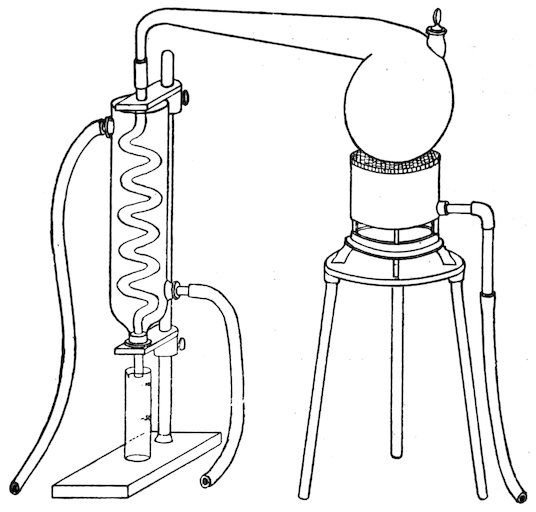
Figure 91. Retort for Distilling Ammonia.
Albuminoid Ammonia.—The residue from the process just described is employed for the purpose of determining the albuminoid ammonia. Two hundred grams of potassium hydroxid and eight grams of potassium permanganate are dissolved in 5651,000 parts of distilled water. Fifty cubic centimeters of the solution are placed in a porcelain dish with 100 cubic centimeters of distilled water and evaporated to fifty cubic centimeters. This liquid is placed in the retort and the distillation resumed and continued until an ammonia-free distillate is obtained. The total albuminoid ammonia is determined by taking the sum of the quantities in the several distillates.
512. Nessler Reagent of Ilosvay.—To secure greater delicacy in nesslerizing, Ilosvay uses a reagent prepared as follows:[342]
Dissolve two grams of potassium iodid in five cubic centimeters of water, heat the solution gently, and add three grams of mercuric iodid. After the solution is cooled, add an additional portion of three grams of the mercury salt, and then twenty cubic centimeters of water, and wait until the precipitation is complete. After filtering, there are added to the filtrate from twenty to thirty cubic centimeters of a twenty per cent solution of potassium hydroxid. Only the limpid supernatant liquid is used in the analytical work. With this reagent, Ilosvay has been able to detect 0.02 milligram of ammonia in 110 cubic centimeters of water.
AUTHORITIES CITED IN PART SEVENTH.
Note.—On page 158, paragraph 172, third line, insert, “and determining matters dissolved therein,” after “flow.”
568