Volume 1 / Part 6 — PART SIXTH. (continued 3)
Reading edition
361. Estimation of the Active Calcareous Matter in Soils.—Like other soil elements, the calcium carbonate exists in different degrees of fineness and availability in the soil. It must be admitted that the fine particles play the most important rôle. The calcium carbonate, which exists in large fragments, presents only a circumscribed surface and remains almost inactive, although it is easily corroded by the rootlets of plants. It is possible to estimate in a rapid way, the quantity of fine carbonate in the soil, considering that in a time relatively short, feeble acids act upon calcareous matter proportionally to the surface which it presents, and that it attacks, therefore, especially 382the finest particles. By measuring the amount of carbon dioxid set free under the action of dilute acids it is possible to estimate the content of available calcareous matter in the soil.
The apparatus of Mondesir is used for this purpose by the French chemists. It is composed of a tubulated flask of about 600 cubic centimeters capacity. The interior tubulature carries a manometer fixed by means of a stopper. This is formed of a rubber tube, terminated by a glass tube, whose extremity is united to a little rubber bag, very flexible, placed in the interior of the flask.
Graduation of the Apparatus.—If the apparatus is new it is necessary to begin by graduating it. The rubber bag is filled with water, the air being carefully excluded, in such a way that the level of the water comes just a little above the bend in the tube. There are placed in the flask 125 cubic centimeters of water and it is shaken for a few seconds. The flask and the manometer are then unstoppered and the level of the water in the manometer is made to equal the level of the water in the flask. With a rubber ring the level of the water in the manometer tube is marked. The manometer is then stoppered. There are then added to the flask two-tenths gram of pure calcium carbonate. The flask is closed and shaken for a minute. There are then added, enclosed in a little piece of filter paper, six-tenths of a gram of pulverized tartaric acid and the flask immediately closed and shaken several times. The manometer tube is then uncorked and moved until the level of the water reaches the point marked before. The difference in level after the height of the water remains constant is then read. The depression in the level observed, corresponds to two-tenths gram of pure calcium carbonate.
362. Estimation of the Available Calcareous Matter in the Soil.—There is introduced into the flask of the apparatus a quantity of soil varying in amount in accordance with the content of carbonate which it is supposed to contain. There are added 125 cubic centimeters of water and the flask is shaken for a minute. As in the test given before, the level of the water in the manometer is then made to correspond to that of the water in the flask. The level in the manometer is marked as before with a rubber band, and the manometer is then closed. There 383are then added, contained in a piece of filter paper, two grams of pulverized tartaric acid and the operation is finished as described before. The amount of tartaric acid added, in general, should be three times as much as the amount of calcium carbonate supposed to be contained in the earth. The pressure in the manometer being proportional to the quantity of carbon dioxid disengaged, it is easy to calculate the quantity of calcium carbonate in a state of fine division contained in the soil taken for the test.
In order to fill the rubber bag it is necessary to put it in its proper place in the apparatus. The flask is filled with water in order to flatten the rubber bag and expel the air from it. It is then closed with a cork. Afterwards, with the aid of a small funnel and with a copper wire placed in the tube, the lower extremity of which descends just to the elbow, the air in the tube is replaced by water. The operation is finished by uncorking the flask and inclining it or shaking it after a partial vacuum has been established. It is useless to attempt to drive off the last particles of the air. The rubber bag should have a content of about double the volume of the whole of the interior of the manometric tube. In the washing which is necessary between two successive operations, it is well to fill the flask entirely with water in order to expel all the carbon dioxid which it may contain.
The same remark may be made of this method of determination as was made of the last one. In the present case, however, the operation is not quite so complicated. When the apparatus is once arranged, it will admit of rapid determinations.
363. Lime Method at the Riga Station.—Ten grams of the non-ignited sample of the fine earth are digested with 100 cubic centimeters of ten per cent hydrochloric acid, in a 250 cubic centimeter erlenmeyer for twenty-four hours on the steam-bath, with frequent shaking. The filtrate, with washings after the addition of five cubic centimeters strong hydrochloric acid, is evaporated to dryness in a porcelain dish and the residue taken up with dilute hydrochloric acid. After filtering, ammonia is added in excess, the excess removed by evaporation, and the mass is again filtered. In the filtrate, the lime is thrown down with ammonium oxalate, filtered, ignited, and weighed as calcium oxid.
384The above method cannot give exact results chiefly because more or less lime may be carried down with the phosphoric acid. Also if manganese be present it will be thrown down with the lime. These errors are compensatory, but only by chance could the compensation lead to exactness. It would be better in all cases to remove the iron and alumina in such a way as would avoid loss of time.
364. Estimation of Assimilable Lime.—In the determination of the total lime in soils or even of that part present as carbonate, it is not to be assumed that the quantity assimilable by plants is known; particles of lime minerals in soils are corroded only superficially by the rootlets of plants and any process which would attack only the superficies of the lime particles would thus more nearly resemble the activity of the solvent forces of plant growth. Oxalic acid is a reagent of this kind, attacking only the surfaces of lime particles. Reverdin and de la Harpe guided by this fact have based a method for determining the amount of lime present in the soil in an available state on the solvent action of oxalic acid.[233] After the total lime content has been determined, twenty grams of the soil sample are covered with 200 cubic centimeters of a solution containing in molecular proportion a known quantity of sodium oxalate and carbonate. The mixture is digested on the water-bath for one hour. By this treatment all lime minerals are converted superficially into oxalate while particles containing magnesia are not affected. After filtering and washing well, the filtrate and wash-waters are acidulated with hydrochloric acid. If any precipitate of organic matter be produced separate it by filtration. Treat the filtrate with a slight excess of sodium acetate by which process the excess of hydrochloric acid is replaced with acetic after which the oxalic acid may be separated by treatment with calcium chlorid and subsequently titrated with potassium permanganate in presence of excess of sulfuric acid. The oxalic acid obtained, deducted from the quantity originally present will give the amount consumed on the surfaces of the lime particles and consequently the amount of lime corresponding thereto which may be considered as available for plant growth.
385365. Method of the Halle Station for Lime.[234]—a. In Phosphates, Limestones, etc.—Four grams of the prepared substance are heated with fifty cubic centimeters of hydrochloric acid and five cubic centimeters of nitric acid, in a porcelain dish on the water-bath to dryness, and left for a few hours at 105° for the purpose of separating the silicic acid. The dry residue is moistened with hot water and a few drops of hydrochloric acid, and allowed to stand for some time with frequent stirring. The contents of the dish are then washed into a half-liter flask, filled up to the mark and the separated silicic acid removed by filtration. If the silicic acid is not taken into account, the solution can be made directly in a half-liter flask.
After filtration, an aliquot part of the filtrate is neutralized in a 500 or 250 cubic centimeter flask with ammonia, again acidified with a few drops of hydrochloric acid and allowed to stand six hours at least, in the cold, with ammonium acetate. For each four grams of the substance fifty cubic centimeters of an ammonium acetate solution are used, made by dissolving in one liter of water 100 grams of ammonium acetate. If phosphoric acid is present in excess, iron and aluminum oxids are precipitated completely as phosphates. If iron and aluminum oxids are in excess, the excess must be precipitated by ammonia. If it is feared that in the subsequent precipitation of the lime by ammonium oxalate there may be still some phosphoric acid in solution, before precipitation with ammonium acetate the proper amount of ferric chlorid is added and the iron is afterwards precipitated with ammonia. It is certain that in the presence of oxalic acid and phosphoric acid the lime is precipitated as oxalate, but should it be feared that traces of calcium phosphate are precipitated with the iron and aluminum phosphates the precipitate of iron and aluminum phosphates may be dissolved in hydrochloric acid, neutralized with ammonia, again acidified and a second time precipitated with ammonium acetate and the filtrate added to that first obtained.
For the further estimation the filtrates are united and a quantity corresponding to a given part of the original sample, and being in volume from fifty to one hundred cubic centimeters is made slightly acid with acetic acid and while hot precipitated 386with dilute ammonium oxalate. The filtrate must contain acetic acid since calcium oxalate is best precipitated from a slightly acetic acid solution. The filtering of the calcium oxalate should not take place until from six to twelve hours after precipitation, and during this time it should stand in a warm place. Filter paper of the best quality should be used for the purpose.
The dried precipitate is brought into a platinum crucible together with the filter; the filter is first incinerated over an ordinary bunsen and the calcium oxalate converted into calcium oxid by ignition for fifteen minutes over the blast. It is then cooled in a well-closed desiccator and weighed as oxid. If in the precipitation of the iron and aluminum phosphates sodium acetate be employed instead of ammonium acetate, the precipitation must take place hot and filtration also be accomplished on a hot filter.
b. Estimation of Lime in Soils.—For the estimation of lime in soils there may be used either the acid soil-extract, prepared as under the direction for the estimation of potash, or twenty grams of the soil may be treated with hydrochloric acid and a few drops of nitric acid, and evaporated to dryness in a porcelain dish and the silicic acid separated as described for the estimation of lime in phosphates and limestones. In the case of soils, iron and aluminum oxids can be precipitated directly with ammonia since the small quantity of phosphoric acid usually contained in soils is not sufficient to influence in any way the estimation of the lime. For example suppose there is 0.10 per cent of phosphoric acid contained in a soil. In case the whole of this phosphoric acid is taken down with the lime it would only amount to about 0.10 per cent of calcium oxid precipitated as phosphate. This case, however, is very improbable since it is much more likely that the iron and aluminum phosphates will be precipitated and the whole of the phosphoric acid be carried down with them instead of being precipitated with the lime.
The precipitation of the lime and its subsequent treatment are to be conducted as just described.
366. Estimation of the Magnesia.—Magnesia is a much more rare element in the soil than lime. It is usually necessary to operate upon considerable quantities of earth in order to determine 387the magnesia with any degree of precision. From ten to twenty grams of the soil are taken. The decomposition is accomplished as in the case of lime. A few drops of barium nitrate are added for the purpose of precipitating any sulfuric acid present. Some ammonia and ammonium carbonate are added to precipitate the iron and aluminum oxids, the lime and the excess of barium introduced, as well as the phosphoric acid. The operation is best conducted on a dilute solution having a volume of from 400 to 500 cubic centimeters. The solution from which the lime has been precipitated, contains with the magnesia, large quantities of ammoniacal salts which it is necessary to destroy. For this purpose the solution is concentrated in a flask until its volume is about ten cubic centimeters. About ten cubic centimeters of nitric acid are added and the whole brought to the boiling point. Afterwards a few drops of hydrochloric acid are added. Continuing the heating, hydrochloric acid is added in small portions and, from time to time, some nitric acid until the bubbles indicating the setting free of gaseous nitrogen, resulting from the action of the nascent chlorin upon the ammonia, have completely ceased to appear. The whole is then evaporated on a sand-bath in a porcelain dish in order to separate the silica. The residue is taken up by water containing a few drops of nitric acid. It is filtered and evaporated to dryness in a covered porcelain dish. Upon the residue four or five grams of oxalic acid, in a state of powder, are placed. A little water is added in such a way that the moist mass covers entirely the matter in the dish. In order to avoid all losses there is placed upon the dish a funnel which serves as a cover. The dish is heated on a sand-bath, but when the film which is formed begins to break there are added from time to time, a little more oxalic acid and water until there is no longer any disengagement of the vapor of nitric acid. Afterwards it is evaporated to dryness and the heat raised to a low redness. The magnesia is found in a free state or mixed with alkalies. It is washed with a small quantity of water and collected upon a very small filter paper. The filter paper is dried, burned, the ignition carried to redness and afterwards cooled and weighed. In order to test the purity of the magnesia it is transformed into sulfate by the addition of a few drops of sulfuric 388acid. The excess of sulfuric acid is driven off by heating moderately by means of a gas-burner moving it in a circular manner round the bottom of the capsule and lifting the cover from time to time in order to allow the vapors of sulfuric acid to escape. The weight of the magnesium sulfate should correspond to that of the magnesia from which it was formed.
Magnesia exists most often in the soil in the state of carbonate or silicate. In this last state it is especially abundant in some soils, such as those which are derived from mica schists, serpentines, etc. In treating earth of this last quality with concentrated, nitric acid there is dissolved also a notable part of the magnesia of the silicates. If, however, it is treated for some minutes only with dilute hydrochloric acid the amount of magnesia present as carbonate alone can be estimated separately.
367. Estimation of Magnesia in Soils.—Method of the Halle Station.—For the estimation of magnesia the sample of soil or fertilizer is brought into solution in the same way as is given for the estimation of lime. After the separation of the silicic acid, the iron and alumina are precipitated with sodium acetate. In the case of phosphoric fertilizers, ferric chlorid should first be added in order that the excess of phosphoric acid shall be in all cases certainly combined with the iron. After this the lime is separated as usual with ammonium oxalate. After the precipitation of the lime, the magnesia is precipitated in an ammoniacal solution with sodium phosphate and the ammonium magnesium phosphate estimated exactly as in the case with the estimation of phosphoric acid, as magnesium pyrophosphate.
A simpler method for the estimation of magnesia consists in precipitating it as ammonium magnesium phosphate in the presence of a solution of ammonium citrate, the other bases remaining in solution. In this case the operation is carried on in an inverse way as described under the estimation of phosphoric acid, the proper quantity of the acid solution being neutralized with ammonia and after the addition of sodium phosphate, the required quantity of citrate solution added and a further excess of ammonia supplied.
368. Estimation of Manganese.—The estimation of manganese 389in the presence of Fe₂O₃, Al₂O₃, CaO, etc., presents peculiar difficulties. In ordinary alluvial clays the quantity of manganese is proportionately small and its estimation may be neglected. In volcanic clays the quantity of manganese, in proportion to the lime and magnesia, is much larger. The method used for estimating manganese is that of Carnot.[235] The hydrochloric acid extract of the soil is evaporated to dryness and heated with potassium bisulfate in order to destroy the organic substance, the neutralized solution of the residue precipitated with twenty cubic centimeters of hydrogen peroxid solution and thirty cubic centimeters of ammonia. The colorless filtrate gives, with nitric acid and bismuth peroxid, no trace of reaction for manganese. The precipitate, washed by decantation, is carried into a carbon dioxid apparatus and treated with oxalic acid and dilute sulfuric acid. From the amount of carbon dioxid obtained, the quantity of manganese is calculated on the supposition that the precipitate corresponds to the formula Mn₆O₁₁.
369. Estimation of the Manganese by the French Method.—Manganese exists in all plants and its presence in small quantities seems necessary to vegetation. The method of estimation adopted by the French Commission is the one proposed by Leclerc and is applicable even when the base exists in small quantities.
Twenty grams of the soil are taken and the organic matter destroyed by incineration. In a flask of 200 cubic centimeters capacity, are placed thirty cubic centimeters of water and, little by little, some hydrochloric acid for the purpose of decomposing the calcium carbonate. When effervescence has ceased ten cubic centimeters of the same acid are added and boiled for half an hour, filtered, washed, and the wash-water and filtrate evaporated to dryness in a porcelain dish. Afterwards there are added twenty cubic centimeters of nitric acid of one and two-tenths density, and ten cubic centimeters of water. The liquor is boiled with constant shaking. Afterwards there are thrown in, in two or three portions, ten grams of lead dioxid. The boiling is stopped just at the moment when all the lead oxid is introduced into the liquor and the mixture is then shaken vigorously. 390The manganese is transformed by this treatment into a highly oxygenized compound having a deep rose coloration. It is transferred immediately afterwards to a graduated cylinder of 100 cubic centimeters capacity, with the wash-waters the volume is completed to 100 cubic centimeters and it is vigorously stirred with a rod, flattened at its extremity, in order to obtain a complete homogeneity of the liquid. The stirring rod is withdrawn and the liquid left to settle. At the end of some minutes the principal part of the liquid is clear, and it is decanted by means of a pipette graduated at fifty cubic centimeters, and this quantity of the clear liquid is poured into a small glass precipitating jar to which is added immediately, with constant stirring, a solution of mercurous nitrate from a graduated burette. The addition of the nitrate is arrested at the moment when the rose color of the liquor disappears, and the volume of the mercurous nitrate employed is read from the burette.
It is now necessary to determine the strength of the mercurous nitrate, that is the quantity necessary to decolorize one milligram of manganese. For this purpose dissolve by means of five cubic centimeters of hydrochloric acid 150 milligrams of manganese dioxid, which is prepared perfectly pure by means of precipitation. When the solution is complete evaporate to dryness, add one cubic centimeter of sulfuric acid and heat on a sand-bath until white fumes of sulfuric acid appear. Redissolve in water and make the volume up to 100 cubic centimeters. Each cubic centimeter of this solution should contain one milligram of manganese. Take five cubic centimeters of this solution, equivalent to five milligrams of manganese, treat in a capsule with twenty cubic centimeters of nitric acid and ten cubic centimeters of water, afterwards add ten grams of lead dioxid, carrying on the operation exactly as described above. Fifty cubic centimeters, taken as before described, are then decolorized by the solution of mercurous nitrate, and thus it is easy to calculate the quantity of manganese which corresponds to one cubic centimeter of the mercurous nitrate employed. By a simple proportion the quantity of manganese contained in the twenty grams of earth to be analyzed is calculated.
The mercurous nitrate is prepared by dissolving five grams of 391crystallized mercurous nitrate in one liter of water; it is allowed to repose for some time and is preserved in a well-stoppered flask.
370. Estimation of Iron.—Iron, in general, is quite abundant in the soil where it is met with, principally in the state of anhydrous sesquioxid or the hydrated sesquioxid of silicates. Some soils, however, only contain iron in small proportions and it can happen that the introduction of iron as a fertilizing element may be useful. Plants assimilate iron only in small quantities, but it appears to be indispensable to their development and to the proper functional activity of their assimilating faculties. The method of estimation which is recommended is based upon the decoloration of potassium permanganate by iron in the ferrous state. The following description, based on the method proposed by the French Commission, will illustrate the process to be followed.
Ten grams of the soil are ignited in a porcelain capsule until all organic matter is destroyed. The ignited mass is then introduced into a flask of 100 cubic centimeters capacity with thirty cubic centimeters of hydrochloric acid and fifteen cubic centimeters of water. It is boiled for about half an hour. The iron oxid is dissolved and is found in solution in the form of ferric chlorid. After filtering and washing, the volume of the filtrate is reduced by evaporation to about twenty-five cubic centimeters. The liquor is afterwards placed in a flask of from 100 to 150 cubic centimeters capacity, which is closed by a stopper carrying a tube furnished with a valve destined to prevent the re-entrance of the air. Ten cubic centimeters of dilute sulfuric acid are added from a mixture containing twenty cubic centimeters of strong acid and eighty cubic centimeters of water. Afterwards the iron is reduced to the ferrous state by introducing into the flask, in quantities of about five decigrams, metallic zinc and waiting after each addition until the portion last added is dissolved before adding another. This addition of zinc is continued until the iron is all reduced. When this point is reached and the last portion of zinc added is dissolved, the contents of the flask are transferred rapidly to a precipitating glass of about one liter capacity, in which there has been placed a little lately boiled but cold water. The flask is washed several times with cold water, 392previously boiled, to remove from it all traces of oxygen. The volume is made up to 500 cubic centimeters, and afterwards, without any loss of time, by means of a graduated burette and with constant stirring, a solution of potassium permanganate is added which is stopped exactly at the moment when the liquor begins taking on a light rose tint. The quantity of permanganate employed is read from the burette and is proportional to the amount of iron contained in the soil. A blank operation is made for the purpose of detecting traces of iron which the zinc may contain. If, as often happens, the soil contains a large amount of iron it is advisable to use only one gram of it for this operation. The aspect of the earth will indicate in general if it be very ferruginous.
Preparation and Standardization of the Permanganate Liquor.—In one liter of water are dissolved ten grams of crystallized potassium permanganate and the quantity of iron which corresponds to one cubic centimeter of this liquor is determined. It may be well enough to remark that this liquor does not remain constant and it is necessary to titrate it from time to time. For this purpose pure iron is taken. Piano wire may be used, being almost pure iron. One-tenth of a gram of this wire is dissolved in a flask in the manner recommended for treating the soil and with the same quantities of acid and water. When the solution is complete it is transferred to the flask to be estimated. It is made up to one liter and permanganate added, just as in the case before mentioned, until the rose color persists. There is thus determined the quantity of iron which corresponds to each cubic centimeter of the permanganate, and by a simple proportion, the quantity of iron contained in the soil analyzed is determined.
The Italian agricultural chemists proceed essentially in the same manner in determining the iron in soils, first igniting the sample and afterwards extracting the iron in the ferric state with boiling hydrochloric acid, reducing with hydrogen, and titrating with potassium permanganate.
The following are the reactions which take place:
Fe₂O₃ + 6HCl = Fe₂Cl₆ + 3H₂O.
Fe₂Cl₆ + 2H = 2FeCl₂ + 2HCl.
10FeCl₂ + K₂Mn₂O₈ + 16HCl = 5Fe₂Cl₆ + 2KCl + 2MnCl₂ + 8H₂O.
393Sulfuric may take the place of hydrochloric acid in the above reactions.
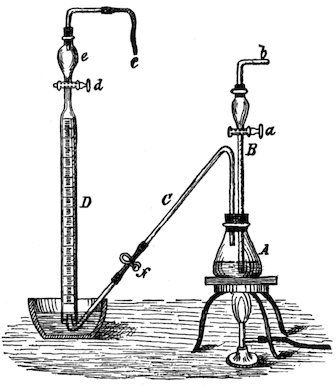
Figure 68. Apparatus by Sachsse and Becker.
371. Method of Sachsse and Becker.[236]—Ferric oxid (not as silicate) in soils can be estimated by reducing with hydrogen, and measuring the hydrogen which is evolved by the action of the reduced iron on an acid. The sample of soil is weighed in a platinum boat, the boat put into a wide glass tube and heated in a stream of dry hydrogen. While this is going on, water is boiled in the flask A (see Fig. 68) from which the stopper has been removed, to drive out the air. When the reduction of the ferric oxid is complete, the boat is slipped out of the tube into the flask without interrupting the hydrogen evolution. In order to accomplish this without allowing the reduced iron to come in contact with the air the flask is inclined, the end of the glass tube inserted until it is covered with water and the boat is then dropped beneath the water. The flask is closed with a cork provided with a funnel tube, B, and a delivery tube C; the tap a is opened, and tube b connected with a carbon dioxid apparatus from which the gas is passed into A until all the air is displaced. This point is determined by filling the burette D with potash-lye by aspiration at C and allowing the escaping gas from C to enter the burette as indicated in the figure. Any residual gas in D is removed by aspiration at C and allowing the potash-lye in e to enter in its place. The end of the tube C is now placed under the measuring tube D, and the clamp f opened and the tap a closed. The funnel is filled with dilute, boiled sulfuric acid, the cork of b replaced and connected with the carbon dioxid apparatus. The burner under A is lighted and acid let in. By continued boiling, all the hydrogen is driven into D, the 394carbon dioxid being absorbed. The measuring tube is then placed in a tall cylinder of water, the volume of gas read and reduced to 0° and 760 millimeters barometric pressure. To be certain that all carbon dioxid is absorbed, some fresh potash-lye may be introduced into D by carefully opening d. The iron is then computed from the volume and weight of the hydrogen by the formula (1) Fe + H₂SO₄ = 2H + FeSO₄.
If the substance analyzed contains iron silicates, these may be partly decomposed with formation of ferrous sulfate, according to the reaction (2) 2Fe + Fe₂(SO₄)₃ = 3FeSO₄. This will redissolve a part of the metallic iron and yield ferrous oxid. In this case the contents of the flask are cooled in an atmosphere of carbon dioxid, made up to 500 cubic centimeters, of which 250 cubic centimeters are quickly filtered and titrated with permanganate. In order to properly distribute the iron in harmony with its previously existing states the following computations may be made:
Represent the ferrous oxid corresponding to formula (1) by x
and that „ „ „ (2) by z
and that found by titration with permanganate by a.
We have then the equation x + z = a. Since seventy-two parts by weight of ferrous oxid formed by formula (1) are equivalent to two parts by weight of hydrogen, x parts of ferrous oxid would set free x 32 parts of hydrogen; and this corresponds to the hydrogen found in D; viz., b.
If a = ¹⁄₃₆ then by solving the equations: Z = a − 36b and X = 36b. The ferrous oxid arising according to formula (2), however, is derived in such a way that only one-third of it corresponds to metallic iron. Then: X + (⅓)z = (⅓)a + 24b. For computing the total ferric oxid reduced by hydrogen there must, therefore, be added twenty-four parts by weight of hydrogen for one-third of the ferrous oxid found by titration with permanganate, and this quantity of ferrous calculated to ferric oxid. Some silicates, such as the micas, give ferrous oxid with hot dilute sulfuric acid. A correction for this is made by making one or more determinations without previously reducing with hydrogen.
The method of procedure above described appears to be capable of giving in an easily attainable manner some valuable indications 395of the state in which iron exists in a soil. While plants do not use any notable quantity of iron during their growth nevertheless its physiological importance is unquestioned. The chief points of difficulty to be considered are found in the changes which the iron may undergo even while heating in a stream of hydrogen, and the practical difficulties of obtaining carbon dioxid entirely free of air. The latter difficulty may be overcome by making blank experiments with carbon dioxid alone and estimating the volume of residual gas. The total volume of hydrogen obtained is then to be diminished by the ascertained amount.
In regard to the second point it is known that both ferrous and ferric oxids when ignited with hydrated silicates partly decompose and form new silicates. Care should therefore be taken not to carry the temperature too high during the process of ignition.
372. Carnot’s Method for Estimating Phosphoric Acid in Soils.—Carnot[237] proposes the following procedure for the estimation of phosphoric acid in soils. The principle of this method depends upon the isolation of silica by the double precipitation of phosphomolybdate.
Ten grams of the sifted soil, dried at 100°, are charred if organic matter be present. The charred mass is next moistened with water and afterwards with nitric acid, until the carbonates are decomposed. Afterwards the mass is digested with ten cubic centimeters of nitric acid for two hours at about 100°, with frequent stirring and the addition of fresh acid, from time to time, to replace that which has been evaporated. After filtering and washing with hot water the filtrate is evaporated to a volume of fifty cubic centimeters and treated with five cubic centimeters of concentrated nitric acid and half a gram of crystals of chromic acid. After covering the dish with a funnel to return condensed vapors its contents are heated to the boiling point for half an hour. At the end of this time five grams of ammonium nitrate are added and afterwards fifty cubic centimeters of molybdate solution and the mixture kept at a temperature of about 100° for an hour. The precipitate obtained is washed twice by decantation with water containing one-fifth of its volume of ammonium 396molybdate solution. It is then dissolved in thirty cubic centimeters of ammonia diluted with an equal bulk of warm water. The solution and the washings should measure eighty cubic centimeters and the ammonia therein is neutralized with nitric acid, keeping the temperature below 40°. When the yellow precipitate formed ceases to redissolve on stirring, a mixture of three cubic centimeters of pure nitric acid and five cubic centimeters of water is added, together with the same quantity of molybdate solution. The precipitate is brought upon a filter, washed first with water containing one per cent of nitric acid and finally with a little pure water, and dried at 100° and weighed. The weight of the precipitate multiplied by the factor 0.0373 gives the quantity of phosphoric acid. The object of the second precipitation is to relieve the process of the necessity of rendering the silica insoluble, as the presence of silica in the solution as above treated does not interfere with the complete precipitation of the phosphate. This was proved by the author, by the introduction of considerable quantities of sodium silicate and these were found not to interfere with the accuracy of the operation.
The results are as accurate as those obtained by the methods of the consulting committee of the agricultural stations. The coefficient employed; viz., 0.0373, is not the same as that recommended by the committee; viz., 0.043. The committee, however, itself has recognized the inaccuracy of the latter number. The composition of the compound obtained by double precipitation according to Carnot is P₂O₅24MoO₃3(NH₄)₂O + 3H₂O.
373. Method of the Halle Experiment Station.—The available or easily soluble phosphoric acid in soils is estimated by Maercker and Gerlach, as follows:[238]
Sixty grams of the air-dried soil as prepared for analysis, are placed in an erlenmeyer with 300 cubic centimeters of two per cent citric acid solution and digested for twenty-four hours in the cold. It is necessary in this time to shake the flask four or five times and to put the stoppers in loosely in order to allow the escape of any evolved carbon dioxid. Of this mixture 200 cubic centimeters are filtered and evaporated in a 300 cubic centimeter dish to dryness. There remains, in most cases, a 397sirupy-like mass from which even by strong heating the silica is not completely separated. In order to reach this result the residue is treated with twenty cubic centimeters of concentrated sulfuric and five cubic centimeters of fuming nitric acid and heated over a bunsen. As soon as the appearance of foam denotes the beginning of the reaction the lamp must be removed. With strong foaming and the evolution of red-brown vapors the citric acid is completely oxidized. After the reaction is ended the contents of the dish are heated for about fifteen minutes over a small flame so that a continuous, yet not too violent evolution of sulfuric acid fumes takes place. After the silicic acid and the greater part of the lime have been separated in this way the contents of the dish are diluted with water, stirred with a glass rod, washed into a 200 cubic centimeter flask, cooled, filled up to the mark, and filtered. From the filtrate 100 cubic centimeters, corresponding to twenty grams of the earth, are taken, made slightly alkaline with ammonia, acidified by a few drops of hydrochloric acid, and after cooling treated with fifty cubic centimeters of the citrate solution and twenty-five cubic centimeters of the magnesia mixture. The complete separation of the precipitate requires about forty-eight hours and shaking of the precipitate is not necessary.
374. Estimation of total Phosphoric Acid in Soils.—In the method used at the Halle Station[239] twenty-five grams of the soil sample are boiled with twenty cubic centimeters of nitric acid and fifty cubic centimeters of concentrated sulfuric acid for half an hour. With very clayey soils only half the quantity of the sample mentioned above is used in order to avoid the too great accumulation of soluble alumina. The oxidation of the organic substances of the soils must be carried on at a moderate heat to avoid foaming. During the boiling, the flask is to be often shaken to prevent the soil constituents from accumulating too firmly at the bottom. The total volume is finally made up to 500 cubic centimeters.
For the estimation, 100 cubic centimeters of the solution, corresponding to five (or two and a half) grams of the soil, are taken. In order to nearly completely saturate the acid, the solution is treated with twenty cubic centimeters of twenty-four per 398cent ammonia, care being taken that the precipitate of iron and alumina which is formed is again completely dissolved. The solution is cooled and treated with fifty cubic centimeters of the citrate solution, and then with twenty cubic centimeters of ammonia of above strength, and precipitated with the magnesia mixture. The filtration of the precipitate should not be made for at least forty-eight hours, during which time the flask should be often shaken to prevent the attachment of ammonium magnesium phosphate to its sides and bottom.
A detailed description of the citrate method for estimating phosphoric acid will be found in the chapter devoted to this subject under fertilizers.
375. French Method for Phosphoric Acid.—Phosphoric acid is found in the soil principally in combination with alumina and iron oxid, with organic matters, or with lime and magnesia. Whatever may be the state in which it is found all the phosphoric acid, with the exception of that which enters into the constitution of insoluble mineral particles, can be brought into solution by acids and determined by some of the approved methods. This method of solution, therefore, is capable of determining very accurately the total proportion of phosphoric acid in the soil, but it is incapable of rendering account to us of the state in which the phosphorus is found and of its aptitude to be utilized by plants.
The estimation of soil phosphorus, as recommended by the French Commission, is carried on in the following way:[240] Twenty grams of the earth are submitted to ignition in a muffle heated to the temperature of redness but not higher. This calcination eliminates the organic materials, whose intervention in subsequent reactions might be able to prevent the precipitation of a part of the phosphoric acid. The calcined earth is placed in a capsule of about eleven centimeters diameter and saturated with water. There is then added in small quantities, as long as effervescence is produced, nitric acid of 36° baumé. When the effervescence has ceased, after thorough shaking and the addition of a new quantity of acid, it will be found that the whole of the calcium carbonate in the soil has been decomposed. It is necessary then to proceed to the solution of the phosphoric acid by 399adding twenty cubic centimeters of nitric acid and heating on the steam-bath for five hours, shaking from time to time, and avoiding complete desiccation. At the end of this time the whole of the phosphoric acid has entered into solution. It is taken up by warm water, filtered, and the insoluble residue washed with small quantities of boiling water. But from the solution obtained, which holds in addition to phosphoric acid, some oxid of iron, alumina, lime, magnesia, etc., it is necessary to separate the silica which has passed into solution. For this purpose the mass is evaporated to dryness on a sand-bath, heating toward the end of the operation with precaution and not allowing the temperature to pass beyond 110°–120°. In these conditions there is obtained a magma which sometimes remains quite sirupy when the earth is very highly impregnated with calcium carbonate, but in which the silica is insoluble. It is indispensable that it be eliminated wholly because it would introduce grave errors into the results, as will be seen later on. If the temperature be carried too high during the desiccation this silica would react upon the earthy salts and alkaline earths forming silicates and it would be found ultimately again in solution. The application of a too high temperature would also render somewhat insoluble in nitric acid the iron and aluminum oxids, and these would retain small quantities of phosphoric acid. The desiccation, therefore, requires to be conducted with great precaution. When it is accomplished there are placed in the capsule five cubic centimeters of nitric acid and five cubic centimeters of water, and the whole heated on the sand-bath until the entire amount of iron oxid is dissolved, that is to say, until there is no ferruginous deposit persisting in the liquid. The solution is then filtered and washed with small quantities of boiling water in such a way that the total volume of the filtrate will not exceed twenty-five to thirty-five cubic centimeters. Afterwards there are added twenty cubic centimeters of ammonium nitromolybdate and the whole is left at rest for twelve hours at the ordinary temperature. At the end of this time the whole of the phosphoric acid is precipitated in the form of ammonium phosphomolybdate. In order to be certain that an excess of nitromolybdate has been used in the precipitation, which is indispensable to the total precipitation 400of the phosphoric acid, a few cubic centimeters of the filtrate are removed by means of a pipette and are mixed with their own volume of the ammonium nitromolybdate. If, at the end of an hour or two, no precipitate is formed the operation can be regarded as terminated.
In order to collect and weigh the ammonium phosphomolybdate some precautions are necessary. Two smooth filters are used, one of which serves as a counter-weight for the other on the balance. One of these filters is placed within the other and the phosphomolybdate is collected upon the inner filter. The part of the phosphomolybdate adhering to the precipitating jar is detached by the aid of a stirring rod, one of the ends of which is covered with a piece of rubber tubing. The washing is accomplished with very small quantities of water containing five per cent of its volume of nitric acid. When all of the precipitate is collected upon the filter and the washing is terminated a few drops of water are thrown upon the upper borders of the filters; this is done to displace the acid liquor which has been used in washing. The filters are then carried to the drying oven where they are dried at a temperature not exceeding 90°. The application of a higher temperature would decompose the ammonium phosphomolybdate and lead to results which would be too low. After the drying is completed the two filters are separated and placed upon the arms of the balance and the increase in weight corresponds to the ammonium phosphomolybdate. This, multiplied by the coefficient 0.043, (see page 404) gives the quantity of phosphoric acid contained in the weight of the soil which has been employed. The ammonium phosphomolybdate is pure if all the silica has been eliminated, but if a part of that has remained in solution it would furnish an ammonium silicomolybdate whose weight would be added to that of the phosphomolybdate. The elimination of the silica, therefore, should be made with the greatest care.
Different processes have been proposed in order to determine the forms under which phosphoric acid should be regarded as most assimilable. Deherain has proposed acetic acid as a solvent for this purpose. Other scientists, oxalic or citric acid, and the ammonium oxalate or citrate. The solubility of phosphoric acid in these different reagents gives some information in regard 401to its state, but the relations which exist between this solubility and the assimilability of the acid have not yet been fixed.
Preparation of the Ammonium Nitromolybdate.—One hundred grams of molybdic acid are dissolved in 400 grams of ammonia with a density of ninety-five. The mixture is filtered, and the filtered liquor is received drop by drop in 1,500 grams of nitric acid of one and two-tenths density, constantly stirring. This mixture is left standing for some days in an unexposed locality, during which time a deposit is formed. The clear part is decanted and used.
The above method of the French chemists unfortunately attempts to determine the phosphorus content of the soil by weighing the yellow precipitate and using an empirical factor for the calculation, a factor which is probably too high.
Experience has shown that at this point it is far more accurate to continue the process by dissolving the yellow precipitate, and subsequently obtaining the phosphoric acid in combination with ammonia and magnesia, or according to the process of Pemberton the content of phosphoric acid in the yellow precipitate might be determined by titration. In regard to the latter method which will be given in full under fertilizers, it may be said that it has been found quite accurate by several analysts, although it is difficult to see how a precipitate which is so variable in its constitution as to be estimated with little safety by weight may yet be capable of rather exact determination by titration.
376. Petermann’s Method for the Estimation of the Phosphoric Acid Soluble in Alkaline Ammonium Citrate.[241]—From twenty-five to fifty grams of the sample of soil are triturated with 100 cubic centimeters of alkaline ammonium citrate and placed in a flask of 250 cubic centimeters capacity, and allowed to digest for one hour at a temperature of from 35°–40°. After cooling, make up to the mark, filter, take 200 cubic centimeters of the filtrate, evaporate to dryness on a sand-bath in a platinum dish, heat lightly at first, and afterwards to a higher temperature. Take up the residue of the incineration with water and about two cubic centimeters of nitric acid, heat a few minutes gently, filter into a bohemian flask and precipitate with fifty cubic centimeters of ammonium molybdate solution, and estimate the phosphoric acid in the usual way.
402377. Method of Dyer for Total and Assimilable Phosphoric Acid.—For the determination of phosphoric acid, soluble in citric acid, secured as described in paragraph 328, 500 cubic centimeters of the filtrate obtained, corresponding to fifty grams of the soil, are evaporated to dryness in a platinum dish, gently ignited, extracted with hydrochloric acid, again evaporated, ignited and extracted, and the phosphoric acid determined as below in the method applied to the hydrochloric acid extract of the soil itself.
The total phosphoric acid is determined in each case in ten grains of the dried soil and also in twenty-five grams, the mean of the two results being taken. The numbers obtained in each case are, however, all but identical, the difference in the duplicate percentages being in most cases only a small one in the third place of decimals.
The soil is incinerated and digested with hydrochloric acid, and evaporated to dryness, redigested with acid, filtered, and washed. The filtrate and washings are concentrated to a small bulk, and treated, in the cold, with excess of a solution of ammonium molybdate in nitric acid. After standing forty-eight hours, the liquor is decanted through a filter, the precipitate washed several times by decantation, first with dilute acid, then with pure water in very small doses, and finally transferred to the filter and washed free from excess of acid. The ammonium phosphomolybdate is then dissolved in ammonia, evaporated to dryness in a platinum capsule, and dried to constant weight at 100°. The residue contains three and one-half per cent of its weight of phosphoric acid. This is the method of Hehner; and for determining small quantities of phosphoric acid, such as occur in soils or in solutions of iron and steel, is in the opinion of Dyer very much to be preferred to the old-fashioned method of conversion into magnesium ammonium phosphate. The solubility of the yellow precipitate in the small quantity of wash-water used is in most cases negligible. As a matter of fact, the quantity of wash-water used in these analyses was found capable of dissolving only 0.005 gram of precipitate, of which only 0.00017 is phosphoric acid, making an error of 0.0017 per cent on the soil if ten grams be used, or of only 0.0006 if twenty-five grams be used. In the citric acid experiments the solution from fifty 403grams of soil is used, when the error due to solubility of precipitate shrinks to 0.0003 per cent. The correction for this solubility is, however, made in each case.
It may be observed that the method of Hehner is not applicable if the molybdic solution be added to a hot liquid, since, in that case, some molybdic acid is sure to crystallize with the yellow precipitate. Moderate and careful warming to about 35° hastens precipitation, but it is preferable, when speed is not a special object, to precipitate cold, and leave the beaker standing at the laboratory temperature over night, or longer if the quantity to be determined is very minute.
378. Methods of Berthelot and André.—The phosphorus in the soil may be found under three forms; viz.,
1. Phosphoric acid in phosphates.
2. Phosphoric acid in ethers which alkalies decompose slowly and oxidizing agents destroy with regeneration of phosphoric acid.
3. Organic compounds or mineral compounds of phosphorus which are resolved by alkaline solutions with formation of phosphoric acid and which are not reduced to this state by the reagents employed in the wet way of decomposition except after a contact of indefinite length and uncertainty.
It is, therefore, seen that the employment of oxidizing agents for the valuation of phosphoric acid in soils and vegetables is not a very reliable procedure. The same is true after incineration by which more or less phosphorus may be lost or rendered insoluble in acids. The methods used by Berthelot and André for the estimation of these forms of phosphorus are as follows:[242]
Total Phosphorus.—The sample is at first oxidized by a current of air near a red heat and the vapors are conducted over a column of sodium or potassium carbonate at the same temperature. The combustion is finished in a current of pure oxygen. All phosphorus compounds, even those which are volatile, are by this treatment converted into phosphoric acid. The part of the acid held by the carbonate is to be determined with the non-volatile portions.
A less certain method of oxidation consists in mixing the material with potassium nitrate and carefully throwing it little by little into a red hot platinum crucible.
404Estimation of the Phosphoric Acid Pre-existing as Phosphates.—The sample is treated with a cold dilute acid incapable of exercising an oxidizing or decomposing effect on the ethers. The dissolved acid is precipitated and weighed in the usual way. The precipitate first obtained should be ignited and the phosphoric acid taken up and reprecipitated. This is necessary to remove any organic matter or silica which the first precipitate may contain.
Estimation of Ethereal Phosphoric Acid.—The sample is boiled for some time with a non-oxidizing acid or with a concentrated solution of potash. The phosphoric acid dissolved represents that which was present as phosphates and as ethers. From this, deduct that portion pre-existing as phosphates and the remainder represents the part derived from the ethereal compounds.
Estimation of Phosphorus in Organic Compounds and Special Minerals.—From the total phosphoric acid deduct that found as phosphates and ethers. The difference represents the quantity combined as noted in the caption. Illustration.
A sample of soil contained:
Total phosphoric acid 0.292 per cent.
Of this, pre-existing as phosphoric acid 0.109 „
As ethereal phosphoric acid 0.074 „
As organic phosphoric acid 0.109 „
Sum 0.292 „
379. Method Used at the Riga Station.—In the method pursued at the experimental station at Riga[243] the organic matter in the fine earth is first destroyed by igniting twenty-five grams in a muffle. The ignited residue is placed in a 250 cubic centimeter erlenmeyer and digested with 150 cubic centimeters of ten per cent hydrochloric acid. The digestion is continued for forty-eight hours with frequent shaking. The filtrate is evaporated to dryness in a porcelain dish to separate any dissolved silica. The residue is taken up with dilute hot nitric acid, filtered, and the phosphoric acid precipitated with ammonium molybdate. The final weighing is made as magnesium pyrophosphate, following the usual procedure in respect of precipitation and washing. Experiments show that approximately ninety-five per cent of the phosphoric acid are obtained by one 405extraction and five per cent by a second, conducted exactly as the first. Thoms draws the following conclusions from a long series of determinations:
(1) For the simple purpose of determining the need of a soil for phosphorus fertilizer a single extraction with ten per cent hydrochloric acid is sufficient. The difference between the first and second extraction; viz., five to six per cent is too small to be of any value from a practical point of view.
(2) A soil which has been ignited until organic matter is destroyed gives up to the hydrochloric acid solvent about fourteen per cent more phosphoric acid than a non-ignited sample would.
(3) The mean temperature in the flask during extraction on a steam-bath is 74°.
380. Method of Hilgard.[244]—The weighed quantity of soil (usually from three to five grams) is ignited in a platinum crucible, care being taken to avoid all loss. The loss of weight after full ignition gives the amount of chemically combined water and volatile and combustible matter.
The ignited soil is now removed to a porcelain or glass beaker, treated with four or five times its bulk of strong nitric acid, digested for two days, evaporated to dryness, first over the water-bath and then over the sand-bath, moistened with nitric acid, heated and treated with water. After standing a few hours on the water-bath it is filtered and the filtrate is evaporated to a very small bulk (ten cubic centimeters) and treated with about twice its bulk of the usual ammonium molybdate solution, thus precipitating the phosphoric acid. After standing at least twelve hours, first at a temperature of about 50°, it is filtered and washed with a solution of ammonium nitrate acidified with nitric acid. The washed precipitate is dissolved on the filter with dilute ammonia water. After washing the filter carefully, the ammoniacal solution is treated with magnesia mixture, by which the phosphoric acid is precipitated. After allowing it to stand twenty-four hours it is filtered, washed in the usual way, dried, ignited, and weighed as magnesium pyrophosphate, from which the phosphoric acid is calculated. When a gelatinous residue remains on the filter after dissolving the phosphomolybdate with 406ammonia it may consist either of silica not rendered fully insoluble in the first evaporation, or, more rarely, of alumina containing phosphate. It should be treated with strong nitric acid, and the filtrate with ammonium molybdate; any precipitate formed is, of course, added to the main quantity before precipitating with magnesia solution.
381. Separation of Phosphoric Acid From Iron and Alumina.—The following methods are suggested by Wolff[245] for the complete separation of the phosphoric acid from the iron and alumina in soil analysis, where large quantities of these bases are found in solution:
1. After the separation of the greater part of the iron and alumina the phosphoric acid is precipitated from the solution in nitric acid by molybdic acid. The process is carried on as follows:
The acid extract is heated in a flask to boiling and the iron oxid completely reduced by the gradual addition of small particles of sodium sulfite. While still warm the free acid is neutralized with soda-lye, and ammonia added until the ferrous hydroxid and the aluminum hydroxid are completely separated. Acetic acid is now added in excess and until about four-fifths of the whole precipitate have passed again into solution. Then, after boiling for a moment, the whole is quickly filtered through a large filter with a cover, and the contents of the filter finally washed slightly. All the phosphoric acid is thus obtained in combination with some alumina and a very little iron. Nearly the whole of the iron and the larger part of the alumina, by this precipitation, are found in the filtrate and therefore cannot disturb the estimation of phosphoric acid in succeeding portions. The filter is now filled with boiling water and a little nitric acid added. The precipitate is dissolved and received in a beaker. The precipitation of the phosphoric acid is then accomplished by ammonium molybdate in the presence of nitric acid. After twenty-four hours all the phosphoric acid is thus precipitated and the precipitate is free from iron.
2. By the method of Schulze[246] the iron is completely, and the alumina, with the exception of a small quantity, separated, and the precipitation of the phosphoric acid is accomplished either by the addition of a small quantity of tartaric acid and afterwards 407magnesium sulfate, or directly by means of ammonium molybdate. The principle of the separation depends on the fact that when the hydrochloric acid is nearly neutralized with soda or ammonia, and the solution boiled after treatment with ammonium formate, the greater part of the alumina remains in solution. The precipitate is quickly filtered, washed with hot water, dried, taken from the filter and fused in a silver crucible with pure caustic alkali, either soda or potash. On solution and boiling with water, the iron is completely separated from the phosphoric acid, and from the small quantity of the alumina present the precipitation of the phosphoric acid can now be accomplished, either by saturation of the alkaline solution with hydrochloric acid and the direct addition of the magnesia solution after the addition of a little tartaric acid and ammonia, or after the addition of nitric acid by ammonium molybdate.
382. Estimation of Phosphoric Acid in Muck and Peat Soils.—The amount of phosphoric acid obtained by extraction with hydrochloric or sulfuric acid is markedly less in these soils than that obtained after the incineration of the sample, as pointed out by Schmoeger.[247] This is due to the fact that the phosphoric acid is ordinarily combined in the form of nuclein. Extraction of the soils with ether shows that it is not present in the form of lecithin. The nuclein products, as is well known, are decomposed by heating in presence of a liquid at a high temperature for some time. The heating can either take place in an autoclave or in sealed glass tubes. The method is as follows:
The sample of soil is thoroughly rubbed up in a mortar with water, and then hydrochloric acid added until one gram of the water-free peat is suspended in about ten cubic centimeters of twelve per cent hydrochloric acid. The sample is placed in a glass or porcelain vessel in an autoclave and heated to 140°–160° for ten hours. The phosphoric acid is then determined in the extract in the usual way. The percentage of phosphoric acid determined in this way is found to correspond to the amount determined by the incineration of the substance.
The total phosphoric acid is determined in peats by the incineration of the sample and the estimation of the phosphoric acid in the ash. The phosphoric acid soluble in hydrochloric acid 408solution is determined by extracting a sample of the soil with twelve per cent hydrochloric acid in the usual way. The difference between this and the total is calculated as phosphoric acid in organic compounds.
Or the total phosphoric acid is determined by treating the soil with twelve per cent hydrochloric acid, in the proportion of one gram of soil to ten cubic centimeters of the acid, and the solution is placed in an autoclave and heated for ten hours to 140°–160°, as above described. The phosphoric acid is then determined by the usual method. The difference between the total phosphoric acid as thus determined and the phosphoric acid soluble in hydrochloric acid is calculated as phosphoric acid in organic compounds.
383. Method of Goss.—On account of the length of time required to determine the phosphoric acid in soils by the usual methods, Goss[248] has proposed the following modification which in his hands has given satisfactory results:
Weigh ten grams of the air-dried soil, which has been sifted through a one millimeter mesh sieve, and transfer to a pear-shaped, straight necked, kjeldahl digestion flask, which has been marked to hold 250 cubic centimeters. Add approximately seven-tenths gram of yellow mercuric oxid and twenty to thirty cubic centimeters of concentrated sulfuric acid, as for the determination of nitrogen. Twenty cubic centimeters of acid are nearly always sufficient, but in the case of unusually finely divided clay soils containing little or no sand it is necessary to use thirty cubic centimeters to prevent caking of contents of flask. In doubtful cases twenty cubic centimeters of acid should first be added and at the end of five or ten minutes, if contents show a tendency to cake, ten cubic centimeters more should be introduced. Thoroughly mix the contents of the flask by shaking, place on a suitable support over a burner, boil for one hour, cool, add about 100 cubic centimeters of water, five cubic centimeters of concentrated hydrochloric acid, and two cubic centimeters of concentrated nitric acid, boil gently for two minutes to oxidize iron, cool, make up to volume, and filter through a dry folded paper until perfectly clear. In order to secure a clear filtrate it will usually be found necessary to pour the first portion of the 409filtrate back through the paper three or four times. Transfer 100 cubic centimeters of the filtrate to an ordinary flask of about 450 cubic centimeters capacity, add strong ammonia until a permanent precipitate forms, then six or eight cubic centimeters of nitric acid to dissolve the precipitate, and boil until clear. In the case of many soils it is not absolutely necessary to oxidize with hydrochloric and nitric acids, as a clear solution can be secured at this point without further oxidation. In the case of some soils, however, and especially in subsoils, the solution cannot be cleared up even by prolonged boiling with nitric acid, but if the solution have been previously oxidized, a clear solution can be secured without any difficulty whatever. Remove the flask from the lamp and after two minutes add seventy-five cubic centimeters of molybdate solution, place the unstoppered flask in an open water-bath kept at a temperature of 80° for fifteen minutes, shaking vigorously four or five times while in the bath; then remove, let stand ten minutes to allow precipitate to settle, filter through a nine centimeter filter avoiding too strong a pressure at first, wash the flask and precipitate thoroughly with ammonium nitrate solution, place the flask in which the precipitation was made under the funnel, shut off pump and close all valves to filtering jar to form an air-cushion and prevent too rapid filtration, fill paper two-thirds full of hot water, add a few cubic centimeters of strong ammonia, aid solution, if necessary, by stirring precipitate with a small glass rod.
As pointed out by Hilgard, aluminum is sometimes carried down with the phosphoric acid upon precipitating with molybdate solution, in which case some of the phosphoric acid will not be dissolved in the treatment with ammonia. This will be indicated, first, by the appearance of a white precipitate upon dissolving the yellow precipitate in ammonia; and, second, by the difficulty experienced afterward in washing. If such a precipitate be present in any appreciable quantity, proceed as follows:
After washing out all the ammoniacal solution in the usual manner, place a small beaker under the funnel, close all valves, fill the filter one-third full of hot water, add the same amount of concentrated hydrochloric acid, proceed as if dissolving phosphomolybdate in ammonia, and receive final solution and washings in 410flask used. As soon as the yellow precipitate is dissolved open the valve to filtering jar but do not turn on the pump; after the solution has all passed through rinse the filter once with a small amount of hot water; after the last portion has passed through remove the flask and place a No. 1 lipped beaker under the funnel and heat the solution in the flask to boiling. If the solutions have not been oxidized, a blue color is sometimes present upon dissolving the yellow precipitate in ammonia. This can be discharged by boiling the ammoniacal solution for a minute or two and shaking at the same time. Again pour the solution through the filter, avoiding use of pump at first, otherwise loss from spattering is likely to ensue, wash out flask and filter with a small amount of hot water, (the total filtrate should not exceed fifty cubic centimeters), add hydrochloric acid to contents of beaker while hot, until yellow color appears, then add a few drops of ammonia until solution clears, cool, add fifty cubic centimeters of filtered magnesia mixture from a burette, a drop at a time with constant stirring, let stand fifteen minutes, add twenty cubic centimeters of strong ammonia specific gravity nine-tenths, let stand over night, filter, wash precipitate with dilute ammonia, dry, ignite intensely over blast-lamp for ten minutes, cool in desiccator and weigh Mg₂P₂O₇ secured.
Time of Digestion.—Experience has shown that very little phosphoric acid is extracted from the sample by digestion with sulfuric acid after the first thirty minutes.
Time Required to Precipitate Phosphomolybdate.— When the yellow precipitate is obtained according to the method of Goss practically the whole of it will be thrown down in five minutes.
Agreement with Standard Methods.—Comparative tests of the Goss method against standard methods have shown that it gives almost identical results with them. The variations were never more than 0.02 to 0.03 per cent.
While this method has not been sufficiently tried to receive unconditional recommendation it possesses merits which entitle it to the attention of analysts.
384. Estimation of the Sulfuric Acid.—Sulfuric acid is generally present in small proportions in soils. Since the plants 411have need of sulfur it is proper to inquire into the presence of the compound which is its principal source. It is in combination with lime that sulfuric acid exists almost always. In addition to this there is also some sulfur combined with the organic matter of the soil.
By digesting a soil for six hours with hot, concentrated nitric acid the sulfates are dissolved, and there is transformed into sulfuric acid an important part of the sulfur which is combined with the humic substances. The quantity of soil to be operated upon should be about fifty grams.
After filtering and washing with hot water the filtered liquor is collected, in the French Commission method,[249] in a flask and carried to boiling, and five cubic centimeters of a saturated solution of barium chlorid or sufficient to be in slight excess are added. The boiling is continued for some minutes and the flask is allowed to stand for twenty-four hours. The filtrate is received upon a filter and washed with boiling water. The filter is dried and incinerated, allowed to cool, and as there may have been a slight reduction of the sulfate a few drops of nitric acid are added and a drop of sulfuric acid. It is now evaporated to dryness on a water-bath, heated to redness for a few moments, cooled and weighed. The weight of the barium sulfate obtained multiplied by 0.3433, gives the quantity of sulfuric acid obtained from the fifty grams of soil.
If it is desired to estimate only the sulfur which exists in the form of sulfate it is necessary to treat the soil with hydrochloric acid in a very dilute state, heating for a few moments only and afterwards precipitate by barium nitrate. If, on the other hand, it is desired to estimate the total sulfur which is sometimes of great interest, it is necessary to employ the process of Berthelot and André.
385. Method of Berthelot and André.—Sulfur may exist in the soil in three forms; viz.,
1. Mineral compounds, consisting generally of sulfates and sometimes of sulfids.
2. Sulfur, existing in ethereal compounds or their analogues, as in urine.
3. Organic compounds containing sulfur.
412Estimation of Total Sulfur.—The principle on which this operation, as described by Berthelot and André, rests is that already described for phosphorus; viz., oxidation in a current of oxygen and passing the vapors over a column of alkaline carbonate at or near a red heat.[250]
The ordinary methods of oxidation in the wet way give generally inexact results.
Estimation of Sulfur Pre-existing as Sulfates.—The sample is treated with cold, dilute hydrochloric acid. The filtrate is treated with barium chlorid, the precipitate collected, dried, ignited, washed with a mixture of sulfuric and hydrofluoric acids to remove silica, and afterwards weighed as barium sulfate.
Estimation of Sulfur as Sulfids.—The sample is distilled with dilute hydrochloric acid, and the hydrogen sulfid produced is made to pass through an acidulated solution of copper sulfate in such a way as to transform the sulfur in the hydrogen sulfid into a sulfid, which is afterwards collected and weighed in the usual way. The use of a titrated solution of iodin is not advisable on account of the organic matter which may be present.
Estimation of Sulfur in Ethereal Compounds.—These compounds can be decomposed by boiling with a solution of potash or concentrated hydrochloric acid. The resulting sulfuric acid is precipitated with barium chlorid. Subtract from the sulfates thus obtained those pre-existing as sulfates; the difference represents the sulfur present in ethers.
Estimation of Sulfur in Other Organic Compounds.—This is estimated indirectly by subtracting from the total sulfur that present as sulfates, sulfids, and ethers.
386. Method of Von Bemmelén.—As Von Bemmelén[251] observes, the estimation of sulfuric acid in soils presents a number of difficulties. A small part of it can be present as sulfate insoluble in water. In addition to this, there is always some sulfur in the organic bodies present. If the soil is extracted with water then the sulfuric acid can be estimated therein when only a trace of humus substance has gone into solution. On the contrary, if there is much humus substance in solution, and also iron oxid, as is the case when the extraction is made with hydrochloric acid, then both of these must be removed, otherwise the estimation 413is very inexact. By fusing the residue of the solution with sodium carbonate and a little potassium nitrate the organic substance is destroyed, and after treatment with water the iron oxid is separated. If any sulfur has been dissolved in the organic substance present, this is then oxidized to sulfuric acid. The estimation of the sulfuric acid and of the sulfur, therefore, remains unsatisfactory.
In a sample of clay from Java, which was rich in calcium carbonate, but which contained no basic iron sulfate, there was found the following percentages of sulfuric acid:
Exhausted in the cold with very weak hydrochloric acid, 0.04 per cent; the residue treated in the cold with concentrated hydrochloric acid, the solution evaporated and fused with sodium carbonate and potassium nitrate, 0.07 per cent; again, the residue treated with aqua regia to oxidize the sulfur, the solution evaporated to dryness, fused with sodium carbonate and potassium nitrate, 0.14 per cent; in all 0.25 percent. A sample of the same soil treated directly with aqua regia, and then evaporated and fused as above, gave two-tenths per cent sulfuric acid. A sample of the same soil ignited in a crucible with sodium carbonate and potassium nitrate gave 0.16 per cent of sulfuric acid. The difference between 0.04 and 0.07 per cent can be attributed to the sulfur in the organic substance which was dissolved by the concentrated hydrochloric acid; the quantity, however, is too small to draw any safe conclusion. Possibly it might have been that the very dilute hydrochloric acid did not dissolve all of the sulfate. The quantity of sulfur combined in the organic substance in the above soil may be derived from the following equation; viz., 0.2–0.07 80 × 32 = 0.05 per cent of sulfur.
The estimation of the sulfur in a sample of soil from Deli was carried on with still greater exactness by three different methods.
The quantities of hydrochloric acid, nitric acid, and sodium carbonate employed were measured or weighed, and the minute content of sulfuric acid therein estimated and subtracted from the final results. The methods employed were as follows:
(A) Extraction with water and afterwards with very dilute hydrochloric acid.
(B) Extraction with cold hydrochloric acid, one part to three of water.
414(C) Extraction with aqua regia.
(D) Ignition with sodium carbonate and potassium nitrate.
(F) Ignition in a combustion tube with sodium carbonate in a stream of oxygen.
The percentages of sulfuric acid obtained by the different methods were as follows:
(A) 0.058 per cent.
(B) 0.070 „ „
(C) 0.140 „ „
(D) 0.125 „ „
(F) 0.106 „ „
387. Method of Wolff.—In regard to the sulfuric acid Wolff calls attention to the fact that in soils which have been ignited, a larger quantity of this acid is found than in soils containing humus.[252] This, doubtless, arises from the oxidation of the organic sulfur. The following special method for determining the sulfuric acid is therefore proposed:
Fifty grams of fresh air-dried soil are placed in a platinum dish with a concentrated solution of pure sodium nitrate. After drying, the heat is raised gradually to redness. In this way the complete ignition of the humus present takes place. After cooling, the mass is diluted with hydrochloric acid, with the addition of a little nitric acid, and boiled. In the solution, the silicic acid is first separated and the sulfuric acid estimated in the usual way with barium sulfate.
388. Method of the Italian Chemists.—The determination of the sulfuric acid is conducted as follows by the Italian chemists:[253] The soil is completely extracted by diluted hydrochloric acid and the sulfuric acid precipitated in the solution with barium chlorid. If a soil is very rich in calcium sulfate it should first be treated with a warm solution of sodium carbonate to decompose the calcium sulfate, and the sulfuric acid determined in the solution after having added hydrochloric acid.
389. Estimation of the Chlorin.—The estimation of the chlorin is of great importance in certain cases. When this element is lacking in the soil, which, however, is rare, certain plants appear to suffer from its absence. The quality of the forage plants in particular is influenced by it; but when the chlorids are too abundant, which is a frequent case, they prevent 415or arrest completely the progress of vegetation. Salty soils are, in general, completely sterile. In the proportion of one pound in a thousand in the earth, sodium chlorid is to be regarded as injurious. It is necessary, therefore, in analysis to take account of two cases; viz., those of soils poor in chlorids and those of soils rich in chlorids.
For soils poor in chlorids the French method directs that[254] 200 grams of the earth are to be washed on a filter with boiling water. The liquor is evaporated to dryness and gently heated to a temperature inferior to redness in order to destroy the organic matter. The residue is taken up by small quantities of water and to the filtered liquor the volume of which should not exceed forty to fifty cubic centimeters are added ten cubic centimeters of pure nitric acid and a sufficient quantity of silver nitrate to produce a complete precipitation. The precipitate is vigorously shaken and allowed to stand for a few hours in a darkened locality. The precipitate is collected upon a double filter and the silver chlorid, after proper desiccation, is weighed.
When the soil is rich in chlorids it is washed as has just been described upon a filter. The wash-waters are made up to one liter and fifty cubic centimeters, equivalent to ten grams of the soil, are taken for analysis. This quantity is treated exactly as described above.
390. Wolff’s Method of Estimating Chlorin in Soils.[255]—Three hundred grams of the soil are treated with 900 cubic centimeters of pure water containing a little nitric acid for forty-eight hours with frequent shaking. Four hundred and fifty cubic centimeters are then filtered and the clear liquid evaporated to 200 cubic centimeters. The chlorin is then precipitated with silver nitrate. The quantity obtained, corresponds to that found in 150 grams of the air-dried soil.
A second method, Mohr’s, is as follows: Fifty grams of the soil are placed in a platinum dish and moistened with a concentrated solution of potassium nitrate, free from chlorin. The mass is evaporated to dryness and gradually heated to a red heat. After cooling it is moistened with water and washed into a beaker and the solid mass quickly separated. The clear liquid is poured off and the residue again washed with water. The 416clear liquid obtained is saturated with acetic acid, carefully evaporated to dryness and after solution in water, filtration and the addition of a little nitric acid, the chlorin therein is precipitated by a silver nitrate solution, and the precipitate collected and weighed as usual.
391. Method of Petermann.[256]—Chlorin in the soil is estimated at the Gembloux station by digesting 1,000 grams of the sample with two liters of distilled water with frequent shaking for thirty-six hours. After allowing to stand for twelve hours with the addition of one gram of powdered magnesium sulfate to facilitate the deposition of suspended matter one liter of liquid is siphoned and evaporated in a platinum dish with the addition of a few drops of a solution of potassium carbonate free from chlorin and nitric acid. The concentrated solution is filtered, washed, and made up to 250 cubic centimeters. Take 100 cubic centimeters of the solution add some nitric acid and precipitate the chlorin with silver nitrate. The rest of the solution is reserved for the estimation of nitrate.
392. Estimation of Silicic Acid.—Direct Estimation.—The sample of soil in the method of Berthelot and André[257] is mixed with two or three times its weight of pure sodium carbonate and fused in a silver crucible until complete decomposition has taken place. The residue is dissolved in water and dilute hydrochloric acid. The silicates are decomposed by this treatment and the solution is evaporated to dryness on the water-bath, and when dry slightly heated. The silicic acid (silica) is by this treatment rendered insoluble. It is collected on a filter, washed, ignited, and weighed. The resulting compound should be mixed with ammonium fluorid and sulfuric acid, and after the disappearance of the silica the residue should be dried and weighed. The loss in weight represents the true silica. The loss in weight should be corrected by calculating the sulfates of the alkalies back to oxids. This correction can be neglected when the work has been carefully done, and the washing of the original silica has been well performed.
Indirect Estimation.—The total silica may be estimated indirectly by subtracting from the total weight of the sample the sum of the weights of the other constituents resulting from the 417separate estimation of each of them after decomposing the sample with hydrofluoric acid.
393. Simultaneous Estimation of Different Elements.—The operations and processes for the estimation of each of the elements have been described, but it is often best to carry on an operation in such a way as to gain time by making a single decomposition upon a quantity of soil of some considerable magnitude, and using the results of the solution for the determination of the different substances. From the operations already described it will be easy to make a combination of methods by which all or nearly all the important constituents in a soil may be determined in a single sample. Of the various methods proposed, that of the commission of the French agricultural chemists may be taken as a type.[258] In the case of the estimation of lime, potash, magnesia, and sulfuric acid, in which the operation is carried on in a soil which is not incinerated, time may be saved by digesting a considerable quantity of the soil with concentrated nitric acid for a period of five hours. It is best to take 100 grams of the soil and increase proportionally the nitric acid. The filtrate, after washing, is made up to one liter and thoroughly shaken. From this amount of liquid, portions are taken corresponding to the weights of soil upon which the operation for the determination of each of the constituents would be conducted. For example, for the estimation of lime in the case of a very calcareous earth, ten cubic centimeters representing one gram of the original sample, in the case of a soil poor in carbonates 100 cubic centimeters representing ten grams, and for the estimation of potash, magnesia, and sulfuric acid 200 cubic centimeters, representing twenty grams of the soil, should be taken. This method avoids frequent weighings of the earth and separate treatments thereof by the acid.
On the other hand, in the same portion of the solution, the different elements can be estimated. For example, for the estimation of the potash as has been indicated, in the place of precipitating as a whole the sulfuric acid, lime, etc., and of afterwards separating the magnesia in the sole aim of eliminating these bodies, they can be collected separately and weighed, thus securing at a single operation several determinations.
418At the end, some barium chlorid is added and if the barium sulfate is then collected and weighed, the estimation of the sulfuric acid is effected. To the filtrate there are afterwards added some ammonia and ammonium carbonate to precipitate, at once, the excess of barium and the iron and aluminum oxids, the lime and the phosphoric acid. This separation being effected the filtrate contains still the magnesia and the alkalies. The first can be separated by carbonation by means of oxalic acid, collected, and weighed. Finally the potash itself can be estimated in the state of perchlorate. It has thus been possible in the same suite of operations to estimate in a given quantity of the liquid, the sulfuric acid, the magnesia, the lime, and the potash.
394. Estimation of Kaolin in Soils.—True kaolin is a hydrated aluminum silicate, having the formula H₄Al₂Si₂O₉. This substance is, even in concentrated hydrochloric acid, almost completely insoluble. It contains, theoretically, 13.94 per cent of water of combination. The following methods, due to Sachsse and Becker,[259] can be used for its determination.
Estimation of the Water of Combination.—Heat from one to two grams of kaolin, dried at 100°, for half an hour in a covered platinum crucible to a temperature which shows an incipient red heat when the crucible is partly protected from the daylight with the hand. This treatment does not quite give the whole of the water of combination but nearly all of it. A kaolin is changed by this treatment into a substance which is easily soluble in dilute hydrochloric acid.
Estimation of the Kaolin in Impure Kaolins.—Mineral kaolin, or the kaolin obtained by silt analysis, is dried at 100° to constant weight. It is then heated with strong hydrochloric acid until all the matters which will pass into solution have been dissolved. The residual kaolin is then washed thoroughly with water and ignited for half an hour at a low red heat. The residual mass is a second time extracted with hydrochloric acid until silica no longer passes into solution. The soluble silica is then estimated in the usual way and calculated to kaolin. The result will give the pure kaolin in the sample examined.
The estimation may also be made as follows: Two samples of 419the impure kaolin are taken and dried to constant weight at 100°. One is extracted with hydrochloric acid in the manner described above and the amount of silica determined. The second is treated directly by ignition to low redness for half an hour, dissolved in hydrochloric acid and the amount of silica determined. The difference in the two percentages of silica corresponds to the silica equivalent to the pure kaolin.
Statement of Results.—It is convenient to incorporate the data obtained by the above methods with the complete mass analysis of the silicate examined. In the sample given below the analysis was made on a clay silt obtained with a velocity of two-tenths millimeter per second.
The mass analysis gave the following data:
Loss on ignition 10.04
SiO₂ 51.52
Al₂O₃ 17.93
Fe₂O₃ 7.42
CaO 1.57
MgO 6.27
K₂O 4.1
Na₂O 1.61
The loss on ignition was made up of the combined water and a trace of humus. On gentle ignition only 7.52 per cent of water came off.
The examination of the non-ignited and the gently ignited silica by means of dilute hydrochloric acid, gave the following data:
Non-ignited. Gently ignited. Difference.
Water 10.04 10.04
Insoluble residue 40. 34.54 –5.46
Al₂O₃ 9.04 10. +0.96
Fe₂O₃ 5.96 7.27 +1.31
SiO₂ 25.27 28. +2.73
Alkalies and alkaline earths 9.69 10.15 +0.46
By a comparison of these data with those obtained by the mass analysis, the following representation of the distribution of the various components in the clay is obtained:
23.52 per cent SiO₂ in the form of quartz and undecomposed silicates.
2.73 per cent SiO₂ in the form of kaolin.
42025.27 per cent in the form of easily decomposable silicates and of the hydrates of SiO₂.
7.93 per cent Al₂O₃ in the form of undecomposed silicates.
0.96 per cent Al₂O₃ in the form of kaolin.
9.04 per cent Al₂O₃ in the form of easily decomposed silicates and of hydrates.
0.15 per cent Fe₂O₃ in the form of undecomposed silicates.
1.31 per cent Fe₂O₃ in the form of kaolin.
5.96 per cent Fe₂O₃ in the form of easily decomposable silicates and hydrates.
3.40 per cent of alkalies and alkaline earths in the form of undecomposed silicates.
9.69 per cent of alkalies and alkaline earths in the form of easily decomposable silicates.
10.04 per cent of water, including a trace of humus.
Collecting these results the following statement is obtained.
The clay analyzed contained:
10.04 per cent of water, a trace of humus.
35.15 per cent of undecomposed silicates and quartz.
5.00 per cent of kaolin.
50.27 per cent of easily decomposable silicates, hydrates of SiO₂ and hydroxids.
ESTIMATION OF NITROGEN IN SOILS.
395. Introductory Considerations.—The great economic and biologic value of nitrogen as a plant food renders its estimation in soils of especial importance. It is necessary, first of all, to remember that the nitrogen present in soils may be found in three forms; viz., first, in organic compounds, second, as ammonia, and third, as nitric or nitrous acid. Further than this each of these classes of nitrogen may be subdivided. The organic nitrogen may be in a form easily nitrified and rendered available for plant food, or it may be inert and resistant to nitrification, as in humus, or exist in an amid state. The ammoniacal nitrogen may exist in small quantities as gaseous ammonia, or be combined with mineral or organic acids. As nitric or nitrous acid the nitrogen will be found combined with bases, or perhaps in minute quantities as 421free acid, in passing under the influence of the nitrifying ferment from the organic to the inorganic state. To the latter state it must finally come before it is suited to absorption by plants.
In general, far the largest part of soil nitrogen, excluding the atmosphere diffused in the pores of the soil, is found in the organic state and is derived from the débris of animal and vegetable life and from added fertilizers. As ammonia, the nitrogen can only be regarded as in a transition state, arising from the processes of decay, or incomplete nitrification. As nitric acid, it is found as a completed product of nitrification, or as the result of electrical action. The processes of nitrification and the isolation and determination of the nitrifying organisms will be considered in a special chapter of this manual. By reason of the great solubility of the nitrates, and the inability of the soil to retain them, there can never be a great accumulation of nitric acid in the soil save in localities deficient in rain-fall or in specially protected spots, such as caves. The nitric acid, therefore, produced in the soil passes at once into growing vegetation, or is found eventually in the drainage waters.
The formation of ammonia in soil containing much vegetable matter is thought by Berthelot and André[260] to be due to the progressive decomposition of amid principles under the influence of dilute acids or alkalies, either in the cold or at an elevated temperature. Soils of the above description, of themselves, contain neither free ammonia nor ammoniacal salts, and the ammonia which is found in the analysis of these soils comes from the reaction above indicated. The ammonia which comes from these soils, in place of what is given off to the surrounding atmosphere, comes from the same class of decompositions, and these decompositions, in this case, are effected by the water itself, and by the alkaline carbonates of the soil. The amid principles which are thus decomposed belong either to the class of amids proper, derived by the displacement of hydrogen in ammonia by acids, or to the class of alkalamids derived from nitrogenous bases, both volatile and fixed. Among these alkalamids some are soluble in water and some insoluble, and the decomposition of these last by acids or by alkalies may furnish bodies which themselves are either soluble or insoluble in water.
422To determine the nature of the nitrogenous principles in a soil rather rich in humus, Berthelot and André applied the following treatment:
A soil containing 19.1 grams of carbon and 1.67 grams of nitrogen per kilogram was first subjected to treatment, at room temperature, with a concentrated solution of potash. By this treatment 17.4 per cent of the nitrogen content was set free under the form of ammonia. One-quarter of this was obtained during the first three days; one-eighth during the next three days. Afterward the action became much more feeble and was continued during forty days longer, and the evolution of the gas was diminished almost proportionately to the time. It appears from the above observations that the amid principles of the soil, decomposable by potash, belong to two distinct groups, which are broken up with very unequal velocities. The soil, treated on the water-bath for three hours at 100° with strong potash, showed the following behavior in respect of its nitrogenous constituents: Nitrogen eliminated in the form of ammonia, sixteen per cent; nitrogen remaining in the part soluble in potash, ten per cent; nitrogen remaining in the part insoluble in potash, seventy-four per cent.
Treatment with Acid.—The nitrogenous compounds of the soil are also decomposed by dilute acids, and often more rapidly than by the alkalies. The method of treatment is substantially the same as that set forth above. The decompositions effected either by alkalies or by acids tend in general to lower the molecular weights of the resulting products. The prolonged action of alkalies at the temperature of boiling water rendered soluble, after twenty-four hours of treatment, 93.6 per cent of the organic nitrogen found in the vegetable mould. By treating the earth successively with alkalies and acids 95.5 per cent of the total nitrogen were decomposed. These experiments show how the insoluble nitrogen in humic compounds can be gradually rendered assimilable. The action of vegetables is not assuredly identical with those which acids and alkalies exercise. However, both present certain degrees of comparison from the point of view of the mechanisms set in play by the earthy carbonates and carbon dioxid, as well as by the acids formed by vegetation. 423The reactions which take place naturally, while they are not so violent as those produced in the laboratory, make up by their duration what they lack in intensity.
For a more detailed study of the nature of the nitrogenous elements in soil the following method of treatment, due to Berthelot and André, is recommended:
Treatment of the Soil with Alkalies.—1. Reaction with cold, dilute solution of potash. Take fifty grams of the sample, dried at 110°, and mix with a large excess of ten per cent potash solution and place under a bell-jar containing standard sulfuric acid. The mixture is left for a long time in order to secure as fully as possible the ammonia set free.
Example: Fifty grams of a soil contained 0.0814 gram of nitrogen. Treated as above it gave the following quantities of nitrogen as ammonia:
Nitrogen as Ammonia.
After 3 days 0.0034 gram.
„ 6 „ 0.0054 „
„ 11 „ 0.0065 „
„ 17 „ 0.0078 „
„ 25 „ 0.0093 „
„ 41 „ 0.0107 „
„ 46 „ 0.0141 „
It is seen that the action still continued after forty days. In the space of forty days 17.4 per cent of the total nitrogen contained in the soil had been converted into ammonia by dilute potash. According to the above observations the amid principles transformed into ammonia under the influence of dilute potash, exist in groups which are acted on with very unequal rapidity.
2. Reaction with hot dilute solution of potash. Take 200 grams of the soil sample, mix with one and one-half liters of dilute potash solution containing fifty grams of potash. Place in a flask and heat on boiling water-bath for six hours. The flask is furnished with a stopper and tubes, and a current of pure hydrogen is made to pass through the liquid, having the double object of preventing any oxidizing effect from the air and of carrying away the ammonia which may be formed. The escaping hydrogen and ammonia are passed into a bulb apparatus containing titrated sulfuric acid.
424The sample of soil employed contained in 200 grams, 0.3256 gram of nitrogen. There was obtained at the end of six hours’ heating, 0.0366 gram of nitrogen. In other words, 11.24 per cent of the total nitrogen in the sample appeared as ammonia.
Examination of Residue.—After the separation of the ammonia as above described, pour the residue in the flask on a filter, wash with hot water, and determine nitrogen in filtrate and in solid matter on the filter by combustion with soda-lime. The filtrate is, of course, first evaporated to dryness after being neutralized with sulfuric acid.
The insoluble part contained 0.041 gram of nitrogen, i. e., 12.84 per cent of the entire amount.
The soluble part contained 0.2411 gram of nitrogen, i. e., 74.05 per cent of the whole.
Summary of Data.—In the sample analyzed the following data were obtained:
Of the whole.
Nitrogen as ammonia 11.24 per cent.
„ in insoluble part 12.84 „ „
„ „ soluble part 74.05 „ „
„ not determined 1.87 „ „
Sum 100.00 „ „
The same experiment in which the heating on the water-bath was continued for thirteen hours gave the following data:
Of the whole.
Nitrogen as ammonia 16.03 per cent.
„ in insoluble part 9.98 „ „