Chapter XIII · (continued 2)
Reading edition
Upon the accession of William and Mary the Privy Council directed Lord Baltimore to cause their majesties to be proclaimed in Maryland. He immediately despatched a messenger with orders to his council to proclaim the king and queen with the usual ceremonies. This messenger unfortunately died at Plymouth, and, although William and Mary had been acknowledged in the other colonies, the Maryland council shrank from acting without orders from the Proprietary, while they alarmed the inhabitants by collecting arms and ammunition. Information of this delay was sent to the Board of Trade from Virginia. Baltimore was consequently summoned before it, when he explained that he had sent the required directions to Maryland, but that they had failed to arrive. He was ordered to despatch duplicate instructions, but before they reached the Province the Proprietary’s power was overthrown. The absence of all colonial records from the close of the session of 1688 to the year 1692 makes it difficult to understand the exact cause of this revolution. Enough appears from other sources, however, to show that it was a rebellion fostered by falsehood and intimidation,—“a provincial Popish plot.” In April, 1689, John Coode and other disaffected persons formed “An Association in arms for the defence of the Protestant religion, and for asserting the right of King William and Queen Mary to the Province of Maryland and all the English dominions.” Early in July they began to gather in large numbers on the Potomac. They alleged that the Catholics had invited the northern Indians to join them in a general massacre of the Protestants in the following month, and that they had taken arms to defeat this conspiracy. When a similar rumor had been set on foot, in the preceding March, a declaration had been published, signed by several of those who were now Associators, asserting that the subscribers had examined into all the circumstances of the pretended design, and “found it to be nothing but a sleveless fear and imagination fomented by the artifice of some ill-minded persons.” But in July the Association availed itself of this baseless rumor to obtain the adherence of those who were foolish enough to believe it; while to others they asserted that their purpose was only to proclaim William and Mary.
By these means the neutrality or support of the greater part of the population was secured, and the Associators moved upon St. Mary’s. The council prepared for resistance, but, upon the approach of Coode with greatly superior forces, they surrendered the State House and the provincial records. The Association then published a “Declaration of the reasons and motives for the present appearing in arms of their Majesties’ Protestant subjects in the Province of Maryland.” This Declaration, dated July 25, 1689, signed by Coode and many others, was printed at St. Mary’s.[875] It is an ingenious and able paper, but certainly an audacious calumny, which could only have found credence in England. It set forth that, by the contrivances of Lord Baltimore and his officers, “the tyranny under which we groan is palliated,” and “our grievances shrouded from the eye of observation and the hand of redress.” These grievances were then stated in general terms. In the mean time Joseph and his council retired to a fort on the Patuxent. When Coode marched against them with several hundred men they were again compelled to surrender, and the Associators became masters of the situation. On the third of August, 1689, they sent an address to the king and queen congratulating them upon having restored the laws and liberties of England to their “ancient lustre, purity, and splendor,” and declaring that, without the expense of a drop of blood, they had rescued the government of Maryland from the hands of their enemies, and would hold it securely till a settlement thereof should be made. A convention was called to meet on the 23d of August, to which however several counties refused to send delegates. The convention sent an address to the King asking that their rights and religion might be secured under a Protestant government. The matter was now to be determined in England, and addresses from all the counties and from both parties poured in to the King. Many Protestants favored the Proprietary, and, in their addresses, denounced the falsehoods of the Associators. A number of the Protestants of Kent County declared in their address that “we have here enjoyed many halcyon days under the immediate government of Charles, Lord Baron of Baltimore, and his honorable father, ... by charter of your royal progenitors, wherein our rights and freedoms are so interwoven with his Lordship’s prerogative that we have always had the same liberties and privileges secured to us as other of your Majesty’s subjects in the Kingdom of England.” The greater number of signers, however, sided with the revolutionists. A friend of Lord Baltimore wrote that “people in debt think it the bravest time that ever was. No courts open nor no law proceedings, which they pray may continue as long as they live.” The same writer asserted that the best men and the best Protestants stood stiffly up for the Proprietary’s interest.
Those who had benefited by a Protestant Revolution in England were naturally disposed to look with favor upon a similar Revolution in America. And thus it came to pass that the Proprietary government “fell without a crime.”
King William on Feb. 1, 1690, in pursuance of the recommendation of the committee of the Council for Trade and Plantations, wrote to those in the administration of Maryland, acknowledging the receipt of their addresses and approving their motives for taking up arms. He authorized them to continue in the administration, and in the mean time to preserve the public peace. Lord Baltimore struggled hard to retain his province, although his chance of obtaining justice was desperate. He presented to the King and Council various affidavits and narratives showing the falsity of the charges against his government. In January, 1690, he petitioned the Board of Trade to grant a hearing to such inhabitants and merchants as had lived in and dealt with Maryland for upwards of twenty-five years, at the same time forwarding a list of their names. A few days later he requested the Board to hear his account of the disturbances, to the end that the government might be restored to him. In August, however, the Council directed the attorney-general to proceed by scire facias against Baltimore’s charter. Chief-Justice Holt had previously given an opinion that the King could appoint a governor of Maryland whose authority would be legal; and the attorney-general and solicitor-general were directed to draft a commission of governor.
On the 12th of March, 1691, Queen Mary wrote to the Grand Committee of Maryland that the Province was taken under the King’s immediate superintendence, that Copley would be governor, and, until his arrival, they were to administer the government in the names of their Majesties. In the following August Sir Lionel Copley was commissioned by the king and queen. He reached Maryland early in 1692, and the Province became a royal colony for a quarter of a century. The Proprietary was still allowed to receive his quit-rents and export duty, but all his other prerogatives were at an end.

CRITICAL ESSAY ON THE SOURCES OF INFORMATION.
THE earliest publication relating to Maryland was a pamphlet which appeared in London in 1634. It is entitled A Relation of the Successful Beginnings of the Lord Baltemore’s Plantation in Maryland: being an extract of certaine Letters written from thence by some of the Adventurers to their friends in England.[876] The similarity of the language of this relation with Father White’s Relatio Itineris would seem to show that he was its author. The relation describes the first settlement and the products of the soil, and narrates the naïve wonder of the Indians at the big ships and the thunder of the guns. It is dated “From Saint Marie’s in Maryland, 27 May, 1634.”
The next publication was, A Relation of Maryland, London, Sept. 8, 1635,—a work of great value to the student. It was evidently prepared under the direction of Lord Baltimore, and is an extensive colonizing programme. It recounts the planting of the colony and their intercourse with the Indians, and describes the commodities which the country naturally afforded and those that might be procured by industry. It also contains the “conditions propounded by the Lord Baltemore to such as shall goe or adventure into Maryland,” and gives elaborate instructions as to what the adventurers should take with them, together with an estimate of the cost of transporting servants and providing them with necessaries.[877]
A very full account of the voyage of the “Ark and Dove” to Maryland is contained in a letter written by Father Andrew White, S. J., to the General of the Order. The originals of this letter, as well as of different letters from the Jesuit missionaries in Maryland from 1635 to 1677, were discovered, about fifty years ago, by the Rev. W. M. Sherry, who was afterwards Provincial of the Jesuits in Maryland, in the archives of the Society in Rome. The copy he then made of these manuscripts is now in the possession of Loyola College, Baltimore. In 1874 and 1877 the Maryland Historical Society published this Relatio Itineris, and extracts from the annual letters, in the original Mediæval Latin, with a translation by Mr. Josiah Holmes Converse. This publication also contains an account of the colony in which the character of the country and its numerous sources of wealth are set forth in the glowing colors of anticipation. The original of this Declaratio Coloniæ was also found at Rome. It was probably written by Lord Baltimore soon after the grant of his patent, and sent to the General of the Society at the time of his request that priests might be sent out to the colony. These publications are enriched with the notes of the late Rev. E. A. Dalrymple, S. T. D.[878] then Corresponding Secretary of the Maryland Historical Society. The letters, which have been frequently used in the preceding narrative, throw much light upon the early days of the Province, and give a vivid picture of the activity of the missionaries.[879]
The reduction of Maryland at the time of the Commonwealth caused several pamphlets upon its affairs to be published in London. The first of these was The Lord Baltemore’s case concerning the Province of Maryland, adjoyning to Virginia in America with full and clear answers to all material objections touching his Rights, jurisdiction, and Proceedings there, etc. London, 1653. This tract was probably called forth by the report of the committee of the Navy on Maryland affairs in December, 1652. Although written by Lord Baltimore, or under his direction, it is a temperate and reliable statement. It contains his reasons of state why it would be more advantageous for the Commonwealth to keep Maryland and Virginia separate.
An answer to this pamphlet was published in London in 1655, entitled, Virginia and Maryland, or The Lord Baltemore’s printed case uncased and answered, etc.[880] This work is of value in giving a full statement of the Puritan side of the controversy down to 1655. It has the proceedings in Parliament in 1652 relating to Maryland, copies of the instructions of the commissioners for the reduction, and other documents.
There are four pamphlets bearing upon the battle of Providence in March, 1655. The first is called, An additional brief narrative of a late Bloody design against The Protestants in Ann Arundel County and Severn in Maryland in the County of Virginia.... Set forth by Roger Heaman, Commander of the Ship Golden Lyon, an eye-witness there. London, July 24, 1655. The author gives a detailed but unfair account of the fight, and of his connection with it, and of the previous proceedings of Governor Stone. Heamans was answered by John Hammond, “a sufferer in these calamities,” in a tract, called Hammond vs. Heamans; Or, an answer to an audacious pamphlet published by an impudent and ridiculous fellow named Roger Heamans, etc. The author was the person despatched by Stone, early in 1655, to remove the records from Patuxent. He declares that he “went unarmed amongst these sons of Thunder, and myself alone seized and carried away the records in defiance.” In the same year were published both Babylon’s Fall in Maryland, etc., by Leonard Strong, and John Langford’s Refutation of Babylon’s Fall, etc. Strong, the author of the former pamphlet, was one of the leading Puritans of Providence, and afterwards their agent in London, where he wrote the tract. It is a party work, containing a garbled statement of the facts. Langford’s Refutation has a letter from Governor Stone’s wife to Lord Baltimore describing the conduct of the Puritans and their treatment of her husband. Langford was rewarded for this work by Lord Baltimore with a gift of fifteen hundred acres of land in Maryland.[881]
In 1656 John Hammond published his Leah and Rachel; or, the Two fruitfull Sisters Virginia and Maryland. Their present condition impartially stated and related, etc.[882] This pamphlet is favorable to Lord Baltimore and condemns the Puritans.
A highly curious production is, A Character of the Province of Maryland, by George Alsop. London, 1666.[883] Alsop had been an indented servant in Maryland, and gives a favorable account of the condition of Maryland apprentices. The tract is written in a jocular style, and was designed to encourage emigration to the Province. It contains some interesting details concerning the Indian tribes.
Various causes, chief among which are Ingle’s Rebellion, time, and negligence, have resulted in the destruction of a large part of the early records of the Province. The principal portion of what now remains relating to the period before the Protestant Revolution is contained in the following manuscript folio volumes:—
1. Liber Z. The Proprietary Record-book from 1637-1642. This is the oldest record-book extant. It contains a full account of the proceedings of the Assembly held in 1638, and of the process against William Lewis for his violation of the proclamation prohibiting religious disputes. This volume also has the records of the Council acting as a county court, and of proceedings in testamentary causes. Many of the original signatures of Leonard Calvert, Secretary Lewger, and others are scattered through the volume.
2. A. 1647-1651. The original second Record-book of the Province. The first fifty-eight pages and several of the last are wanting. It has in it proceedings of assemblies, court records, appointments to office, demands and surveys of land, wills, etc.
3. Y. 1649-1669. Journals and acts of different assemblies, commissions from the Proprietary, etc. This volume contains the Toleration Act of 1649[884] and the proceedings of Fendall’s revolutionary assembly in 1660.
4. H. H. 1656-1668. Council proceedings. The original volume containing instructions from the Proprietary, commissions of Fendall and others, ordinances, and the proceedings against the Quakers.[885]
5. A. M. 1669-1673. Council Proceedings. A copy probably made in the last century.
6. F. 1637-1642. Council Proceedings and other documents in vol. i. of the Land-Office Records. This copy of the original, which is lost, was made in the first quarter of the eighteenth century, and is certified by a Judge of the Provincial Court to be correct. This volume contains Governor Leonard Calvert’s commission, Clayborne’s petition to the King, orders of the Privy Council, etc.
7. A. 1647-1650. Council and Court Proceedings. Some part of the original is lost. A copy in vol. ii. of the Land-Office Records.
8. B. 1648-1657. Council and Court Proceedings and Acts of Assembly. The original is lost. A copy is in vols. i. and iii. of the Land-Office Records. This volume contains the proceedings of Captain Fuller’s council and of the Puritan Assembly in 1654, lists of servants for whose importation land was demanded, etc.
9. Vellum folio. 1636-1657. Council Proceedings. A copy made in the eighteenth century. This volume has Stone’s commission, the conditions of plantation in 1648 and 1649, the proceedings of Bennett and Clayborne in the reduction of Maryland, and of Stone and the Puritans. The documents in this volume are not arranged in chronological order.
10. Vellum folio. 1637-1658. Proceedings of Assemblies. A copy.
11. F. F. 1659-1699. Upper House Journals. A copy. Contains a full account of the proceedings.
12. X. 1661-1663. Council-book. This original volume contains instructions from the Proprietary to Philip Calvert and Fendall, demands and grants of land, etc.
13. 1676-1702. Votes and Proceedings of the Lower House. A copy made by the State Librarian in 1838 from the original papers, which are not now to be found. It has the proceedings of the Assemblies in 1676,1683, and 1684.
14. C. B. 1683-1684. The original Council-book for land.
The first five of the above volumes are in the possession of the Maryland Historical Society, Baltimore, having been entrusted to its guardianship by a resolution of the Legislature in 1847. The remaining folios are in the Land Office at Annapolis.
The three following manuscript volumes are in the office of the Clerk of the Court of Appeals, at Annapolis:—
15. Liber W. H. Laws: erroneously lettered on the back 1676-1678. This volume contains laws made at different Assemblies from 1640 to 1688. They are not placed in strict chronological order. These copies were made in the seventeenth century, and many of the transcripts are attested by Philip Calvert as Cancellarius.
16. W. H. and L. 1640-1692. Laws made at some of the Assemblies held during these years.
17. C. and W. H. 1638-1678. Laws. A copy from older books made in 1726, and certified to be correct.
The two following original volumes are in the State Library at Annapolis:—
18. Proprietary, 1642-1644. Contains proceedings of the Council sitting as the Provincial Court, proclamations, commissions, etc. A part of this volume has been transcribed into one of the Land-Office Records.
19. Provincial Court of Maryland. Records. March, 1658-November, 1662. This volume is in bad condition and several pages are wanting. It contains the records of the Council as a Court, oaths of officers, depositions, etc.
A calendar of the state papers contained in Nos. 1-13 of the above volumes, and in some of a later date, was compiled in 1860 by the Rev. Ethan Allen, under the direction of J. H. Alexander.[886] No systematic publication of extracts from these records has ever been made. After the death of Mr. S. F. Streeter, in 1864, his large collection of manuscripts pertaining to the provincial history of Maryland was placed in the hands of Henry Stockbridge Esq., who prepared them for publication, and in 1876 some extracts from these with notes by Mr. Stockbridge were published by the Maryland Historical Society in a volume entitled, Papers Relating to the Early History of Maryland, by S. F. Streeter. This volume contains the proceedings and acts of the Assembly of 1638, with a list of the members and their occupations, the record of the case against William Lewis, the first will, the first marriage license and various court proceedings.
The Legislature of Maryland at its January session, 1882, passed an act directing that all the records and state papers belonging to the period prior to the Revolution be transferred to the custody of the Maryland Historical Society, and appropriating the sum of two thousand dollars to be expended by the Society in the publication of extracts from these documents.
In 1694, when the capital was removed from St. Mary’s to Annapolis,—then called Anne Arundel Town,—the Assembly directed that the records should be transported on horses, and in bags sealed with the great seal and covered with hides. The persons charged with this duty afterward reported to the Assembly that they had safely delivered the books to the sheriff of Anne Arundel County. There is a full list of these volumes in the Journal of the Lower House, and one perceives with regret that the greater part of them no longer exist. Many state papers were greatly damaged during this removal, and others were lost in the fire which destroyed the State House in 1704. When the government of the Province was restored to Lord Baltimore in 1716, an act was passed appointing commissioners to inspect the records and to employ clerks to transcribe and bind them. The preamble to the act set forth the loss of several important records, and that a great part of what remained was “much worn and damnified;” which was partly owing to the want of proper books at first. On such general revisions of the laws as were made in 1676, 1692, and at other times, it was customary to make transcripts in a “Book of Laws” only of those acts which were continued in force. The record of the laws not re-enacted was then neglected.
Very little care was bestowed upon the state papers generally. Many of the volumes cited by Bacon in his Laws of Maryland, published in 1765, are not now to be found. In 1836 the State librarian (Ridgely) made three reports to the governor and council upon the early records, which contain a partial list of those then discovered. He says that in the treasury department he found “the remains of two large sea-chests and one box which had contained records and files of papers which were in a state of total ruin.” He also discovered many early records, whose existence had not been suspected, in different public offices, and some “under the stairway as you ascend the dome.”[887]
Other original authorities for the history of the Province, second in importance only to its own records, are the documents preserved in the state-paper office in London. The peculiar nature of the palatinate proprietorship of Maryland, and the fact that the Proprietary generally resided in England, have caused the Maryland papers to be more abundant than those of any other colony. It was customary to send to the Proprietary documents concerning all the public affairs of the Province. A large number of these, as well as of the papers directly transmitted to the Privy Council or the Board of Trade, are in the state-paper office.[888] In 1852 Mr. George Peabody gave to the Maryland Historical Society a manuscript index, prepared by Henry Stevens, to the Maryland papers, then accessible in that office. This index contains abstracts of 1,729 documents relating to Maryland affairs between the years 1626 and 1780; and the abstracts are somewhat more full than those in Sainsbury’s Calendars of State Papers.[889]
Additional papers have been placed in the state-paper office since the Peabody Index was made, and it is therefore necessary to consult both calendars. There are other manuscripts relating to Maryland in the British Museum, the Bodleian Library, and elsewhere in England, of which no calendars have been published.[890]
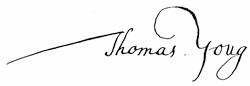
A letter of Captain Thomas Yong to Sir Tobie Matthew, written from Virginia in July, 1634, describes his interviews with Clayborne and Captain Cornwallis, and passes an unfavorable judgment upon the former. Yong gives an account of various plots of Clayborne and other Virginians against the colony at St. Mary’s, and of Clayborne’s refusal to attend a conference which had been arranged for the adjustment of the controversy. The letter is printed in Documents connected with the history of South Carolina, edited by P. C. J. Weston, London, 1856, p. 29, and in 4 Mass. Hist. Coll. ix. p. 81 (Aspinwall Papers), and in the Appendix to Streeter’s Papers Relating to the Early History of Maryland.
There are scarcely any remains of the buildings erected in the Province before 1688. Lord Baltimore wrote to the Lords of the Committee for Trade and Plantations in 1678 that “the principal place or town is called St. Mary’s where the General Assembly and provincial court are kept, and whither all ships trading there do in the first place resort; but it can hardly be called a town, it being in length by the water about five miles, and in breadth upwards towards the land not above one mile,—in all which space, excepting only my own house and buildings wherein the said courts and offices are kept, there are not above thirty houses, and those at considerable distance from each other, and the buildings (as in all other parts of the Province), very mean and little, and generally after the manner of the meanest farm-houses in England. Other places we have none that are called or can be called towns, the people there not affecting to build near each other, but so as to have their houses near the water for convenience of trade, and their lands on each side of and behind their houses, by which it happens that in most places there are not above fifty houses in the space of thirty miles.”[891]
The principal building at St. Mary’s was the State House, erected in 1674, at a cost of 330,000 pounds of tobacco. In 1720 it was given to the parish of William and Mary to be used as a church; and in 1830, being very much decayed, it was pulled down, and a new edifice built in the neighborhood. Lord Baltimore’s house—called the Castle—stood on the plain of St. Mary’s, at the head of St. John’s Creek. The spot is marked by a few mouldering bricks and broken tiles, and a square pit overgrown with bushes.[892] At St. Inigoe’s manor, near St. Mary’s, there is preserved the original round table at which the first council sat, besides a few other relics.[893]
The earliest historian of Maryland was George Chalmers, whose Political Annals of the present United Colonies was published in London in 1780. Chalmers was a Maryland lawyer, who returned to England at the outbreak of the Revolution. He had access to the English state papers in writing his work, and his account of Maryland is fair and, for the most part, accurate.[894]
The ablest man who has written upon the history of the Province was John V. L. McMahon. He was born in Cumberland, Maryland, in 1800, and, after graduating at Princeton, began the practice of the law in Maryland, where he soon became one of the leaders of a very able bar. The first volume of his Historical view of the Government of Maryland from its Colonization to the Present Day was published in 1831. Though the author did not die till 1871, this volume was never followed by its promised successor. The manuscript of the second volume is in the possession of McMahon’s heirs. The volume published brings the history of the Province down to the Revolution, but its strictly historical part is less than one half of the whole, and treats the subject only in outline. The remainder of the book is devoted to an examination of the legal aspects of the charter, the sources of Maryland law, and the distribution of legislative power under the State government. The work is founded on an original study of the records, so far as was thought necessary for its limited historical scope.[895]
The History of Maryland from its first settlement in 1633 to the Restoration in 1660, in two volumes, by John Leeds Bozman, was published in 1837. The manuscript of this work was offered to the State in 1834, after the death of its author, on condition of its being printed within two years. The offer was accepted by the Legislature, and the book was published under its direction. The first volume is introductory, and the history of the Province proper is contained in the second volume. The work is based on an exact study of the original records, and is a very careful and accurate summary in great detail. Bozman did not have access to the papers preserved in the English state-paper office, and much other material has been brought to light since he wrote. His strict pursuance of the chronological order often results in sacrificing the interest of the narrative. The appendix to the second volume has a valuable collection of extracts from the records. The work as a whole may be said to furnish materials for the history of the Province rather than to be the finished history itself.[896]
The History of Maryland from its first Settlement, in 1634, to the year 1848, in one volume, by James McSherry, a lawyer of Frederick City, Maryland, was first published in 1849. It is written in an agreeable style, and, so far as relates to the period under consideration, gives a clear summary of the leading occurrences, but does not appear to have been founded on original investigation of the sources.
In Burnap’s Life of Leonard Calvert, published in Sparks’s American Biography,[897] there is an excellent history of the colony to the death of Governor Calvert in 1647. Dr. Burnap was for many years pastor of the Unitarian Church in Baltimore. His chief authorities were Bozman and Father White’s Relatio Itineris.
To Mr. George Lynn-Lachlan Davis, a member of the Baltimore Bar, who died a few years ago, is due the credit of having settled the vexed question of the religious faith of the legislators who passed the Toleration Act of 1649. His work was based on an examination of wills, rent-rolls, and other records. His conclusions are those stated in the preceding narrative. The result of his investigations was published in 1855 in a volume entitled, The Day Star of American Freedom: or, The Birth and Early Growth of Toleration in the Province of Maryland. It also contains a summary of all that is known of the entire personal history of each member of the Assembly of 1649.[898]
The Rev. E. D. Neill’s Terra Mariæ: or, Threads of Maryland Colonial History, published in 1867, is a digressive account of the career of the first Lord Baltimore, with some notices of men more or less connected with the Province in its early days. He quotes many letters of the seventeenth century, but rarely refers to the source from which he drew them.[899] What the volume contains relative to the internal affairs of the Province is not always accurate. Mr. Neill has published several pamphlets and articles on the early history of Maryland, in which he endeavors to show that Maryland never was a Roman Catholic colony, that a majority of the colonists were from the beginning Protestants, and that the Church of England was established by the charter.[900]
The latest and most comprehensive History of Maryland is that by Mr. J. T. Scharf, in three octavo volumes, published in 1879. This work extends from the earliest period to the present day. Mr. Scharf publishes in full many valuable documents from the English state-paper office, among which is an English translation of the charter of Avalon.[901]
Histories of Kent, Cecil, and some other counties in the State have also been published.[902]
The subject of religious toleration in Maryland—its causes and significance—has given rise to much discussion both within and without the State. We shall refer only to a few of the many pamphlets and articles which have appeared on this topic. In 1845 the late John P. Kennedy delivered a discourse before the Maryland Historical Society on the Life and Character of the first Lord Baltimore. He maintained that toleration was in the charter and not in the Act of 1649, and that as much credit was due to the Protestant prince who granted as to the Catholic nobleman who received the patent, and that the settlement of the Province was mainly a commercial speculation. This discourse was reviewed in 1846 by Mr. B. U. Campbell, who contended with so much show of reason that the honor of the policy of toleration must be attributed to the Proprietary and the first settlers, that Mr. Kennedy felt called upon in the same year to reply to the review.[903] In 1855 the Rev. Ethan Allen published a pamphlet on Maryland Toleration, in which he upheld Clayborne’s side of the controversy with Lord Baltimore, denied that Maryland was a Catholic colony, and asserted that protection to all religions was guaranteed by the charter. This question was also referred to in the discussion between Mr. Gladstone and Cardinal Manning, concerning the Vatican decrees, in 1875. Cardinal Manning had pointed to the toleration established by Catholics in Maryland to refute Mr. Gladstone’s assertion that the Roman Church of this day would, if she could, use torture and force in matters of religious belief. Mr. Gladstone replied, in his Vaticanism, that toleration in Maryland was really defensive, and its purpose was to secure the free exercise of the Catholic religion, because it was apprehended that the Puritans would flood the Province.[904]
Students of Maryland history are fortunate in possessing an admirable edition of the laws of the Province, compiled in 1765 by Thomas Bacon, chaplain to the last Lord Baltimore. It contains all the laws then in force, and the titles of all the acts passed in the several assemblies from the settlement. There are references to the books where the different acts are recorded, and numerous notes upon historical and legal points.
The chief impetus to the study of the history of Maryland and to the preservation of its archives has been given by the Maryland Historical Society, which was organized in 1844.[905] One of the originators of this Society was Mr. Brantz Mayer, an accomplished man of letters, who until his death, two years ago, was active and efficient in promoting its welfare. The Society has a large membership and occupies a suitable building in Baltimore. Its library contains about 20,000 volumes, including nearly every book relating to the history of Maryland. The collection of manuscripts bearing upon the Colonial and Revolutionary history of the State is large and valuable. It has also many rare American maps, coins, and pamphlets, and a large collection of Maryland newspapers from the year 1728. The Society has published about eight volumes, relating chiefly to the history of Maryland. It now has a permanent publication fund, which it also owes to the generosity of George Peabody.
Notwithstanding the loss of many original records, there is still in the State archives an abundance of historical material which has never been adequately worked up by any writer. This material is now better known and more accessible than formerly. Many documents in the state-paper office are now being made known for the first time by the calendars published under the direction of the Master of the Rolls. It is probable that the papers in the British Museum and Bodleian Library will also be calendared. This varied treasure of interesting and important material relating to the provincial history of Maryland has never been thoroughly searched, and the history in which a satisfactory use of it is made remains to be written.
