Chapter XI
Reading edition
THE ENGLISH IN EAST AND WEST JERSEY. 1664-1689.
BY WILLIAM A. WHITEHEAD.
Corresponding Secretary of the New Jersey Historical Society.
ALTHOUGH that portion of the American Continent known as New Netherland was within the limits claimed by England by virtue of Cabot’s discovery, yet those in possession, from the comparatively little interest taken in their proceedings, remained undisturbed until 1664.[709] There had been some attempts on the part of settlers in Connecticut and on Long Island to encroach upon lands in the occupancy of the Dutch, or to purchase tracts from the Indians otherwise than through their intervention, yet nothing had resulted therefrom but estrangement and animosity. An application for the aid of the Royal government was the consequence, and Charles II. was induced to countenance the complaints of his North American subjects, and to enforce his right to the lands in question.
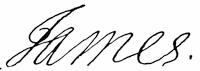
To effect the ends in view, a charter was granted to James, Duke of York,—Charles’s brother,—for all the lands lying between the western side of Connecticut River and the east side of Delaware Bay, including Long Island, Nantucket, Martha’s Vineyard, and the islands in their vicinity. This charter was dated March 12, 1663/4, and the following month a fleet of four vessels, having on board a full complement of sailors and soldiers, was despatched to eject the Dutch and put the representatives of the Duke of York in possession.
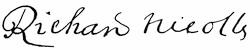
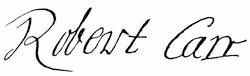
The fleet arrived in August, and articles of capitulation were signed on the 19th (20th) of the same month. Colonel Richard Nicolls, who commanded the expedition, received the surrender of the Province the following day; and in October Sir Robert Carr secured the capitulation of the settlements on the Delaware. By the treaty of Breda, in 1667, the possession of the country was confirmed to the English.[710]
Although, as the pioneers of civilization, the Hollanders had developed, to a considerable extent, the resources of what is now New Jersey, yet the cultivation of the soil and the increase of population, during the half century that had elapsed since their first occupancy, were by no means commensurate with what might have been expected. Settlements had been made on tracts known as Weehawken, Hoboken, Ahasimus, Pavonia, Constable’s Hook, and Bergen, on the western banks of the Hudson River, opposite New Amsterdam, but of their population and other evidences of growth nothing definite is known. On the Delaware, Cornelius Jacobsen Mey, in 1623, under the auspices of the West India Company of Holland, and David Pieterson de Vries, in 1631, attempted to colonize South Jersey at Fort Nassau; but to the Swedes must be accorded the credit of making the first successful settlements, though few in number and insignificant in extent.[711] These, in August, 1655, were surrendered to the Dutch under Peter Stuyvesant, and they had experienced very little growth or modification when surrendered to Sir Robert Carr in 1664.
Before the Duke of York was actually in possession of the territory, he had executed deeds of lease and release to Lord John Berkeley, Baron of Stratton, and Sir George Carteret, of Saltrum. The documents bore the dates of June 23 and 24, 1664, and granted all that portion of his American acquisition—
“lying and being to the westward of Long Island and Manhitoes Island, and bounded on the east part by the main sea and part by Hudson’s river, and hath upon the west Delaware bay or river, and extending southward to the main ocean as far as Cape May at the mouth of Delaware bay, and to the northward as far as the northernmost branch of the said bay or river of Delaware, which is forty-one degrees and forty minutes of latitude, and crosseth over thence in a straight line to Hudson’s river in forty-one degrees of latitude; which said tract of land is hereafter to be called by the name or names of New Cæsaria or New Jersey.”
The two courtiers, placed in these important and interesting relations to the people of New Jersey, were doubtless led to enter into them from being already interested in the Province of Carolina, and from their associations with the Duke of York.
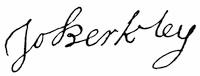
Sir John Berkeley had been the governor of the Duke in his youth, and in subsequent years had retained great influence over him. He, as well as Sir George Carteret, had been a firm adherent of Charles II.; and Carteret, at the Restoration, was placed in several important positions and was an intimate companion of James. Both Carteret and Berkeley were connected with the Duke in the Admiralty Board, of which he was at that time the head, and consequently enjoyed peculiar facilities for influencing him. The name of “Cæsaria” was conferred upon the tract in commemoration of the gallant defence of the Island of Jersey, in 1649, against the Parliamentarians, by Sir George Carteret, then governor of the island; but it was soon lost, the English appellation of “New Jersey” being preferred.
The grant to the Duke of York, from the Crown, conferred upon him, his heirs and assigns, among other rights and privileges, that of government, subject to the approval by the King of all matters submitted for his decision; differing therein from the Royal privileges conceded to the proprietors of Maryland and Carolina, which were unlimited. The Duke of York, consequently, ruled his territory in the name of the King, and when it was transferred to Berkeley and Carteret, they, “their heirs and assigns,” were invested with all the powers conferred upon the Duke “in as full and ample manner” as he himself possessed them, including, as was conceived, the right of government, although it was not so stated expressly,—thus transferring with the land the allegiance and obedience of the inhabitants.
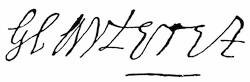
On Feb. 10, 1664/5, without having had any communication with the inhabitants, or acquiring a knowledge by personal inspection of the peculiarities of the country, Berkeley and Carteret signed an instrument which they published under the title of “The Concessions and Agreements of the Lords Proprietors of New Jersey, to and with all and every of the adventurers and all such as shall settle and plant there.” This, the first Constitution of New Jersey, was regarded by the people as the great charter of their liberties, and respected accordingly. By its provisions the government of the Province was confided to a governor, a council of not less than six nor more than twelve to be selected by the governor, and an assembly of twelve representatives to be chosen annually by the freemen of the Province. The governor and council were clothed with power to appoint and remove all officers,—freeholders alone to be appointed to office unless by consent of the assembly,—to exercise a general supervision over all courts, and to be executors of the laws. They were to direct the manner of laying out of lands, and were not to impose, nor permit to be imposed, any tax upon the people not authorized by the general assembly. That body was authorized to pass all laws for the government of the Province, subject to the approval of the governor, to remain in force one year, during which time they were to be submitted to the Lords Proprietors. To encourage planters, every freeman who should embark with the first governor, or meet him on his arrival, provided with a “good musket, bore twelve bullets to the pound, with bandoliers and match convenient, and with six months’ provisions for himself,” was promised one hundred and fifty acres of land, and the like number for every man-servant or slave brought with him similarly provided. To females over the age of fourteen, seventy-five acres were promised, and a similar number to every Christian servant at the expiration of his or her term of service. Those going subsequently, but before Jan. 1, 1666, were to receive one hundred and twenty acres, if master, mistress, or able man-servant or slave; and weaker servants, male or female, sixty acres. Those going during the fourth year were to have one half of these quantities.
In the laying out of towns and boroughs the proprietors reserved one seventh of the land to themselves. To all who might become entitled to any land, a warrant was to be obtained from the governor directing the surveyor to lay out the several tracts, which being done, a grant or patent was to be issued, signed by the governor and the major part of the council, subject to a yearly quit-rent of not less than one halfpenny per acre, the payment of which was to begin in 1670. Each parish was to be allowed two hundred acres for the use of its ministers. Liberty of conscience was guaranteed to all becoming subjects of England, and swearing allegiance to the King and fidelity to the Lords Proprietors; and the assembly of the Province was authorized to appoint as many ministers as should be thought proper, and to provide for their maintenance. Such were the principal provisions of this fundamental Constitution of the Province.
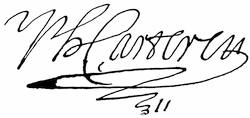
On the same day that the Concessions were signed, Philip Carteret, a distant relative of Sir George, was commissioned governor, and received his instructions. Preparations were at once made for his departure, accompanied by all such as were willing to emigrate to New Jersey; and in April he sailed, with about thirty adventurers and servants, in the ship “Philip,” laden with suitable commodities. The vessel was first heard of as being in Virginia in May, and she arrived at New York on July 29. Here Carteret was informed that Governor Nicolls, in entire ignorance of the transfer of New Jersey to Lords Berkeley and Carteret, had authorized and confirmed a purchase made of the Indians, by a party from Long Island, of a tract of land lying on the west side of the strait between Staten Island and the main land, and that four families had emigrated thither. Nicolls had also confirmed to other parties a tract lying near to Sandy Hook, which they had purchased from the Indians. This led to the settlement of Middletown and Shrewsbury, in what is now Monmouth County,—the two grants laying the foundation for much subsequent trouble in the administration of the public affairs of the Province.
In consequence of these developments the prow of the “Philip” was directed by Carteret towards the new settlement at what is now Elizabeth; and arriving there early in August, he landed, as it is said, with a hoe upon his shoulder, thereby indicating his intention to become a planter with those already there, and conferring upon the embryo town the name it now bears, after the lady of Sir George Carteret.
Among Carteret’s first measures for the improvement of the Province was the sending of messengers to New England and elsewhere, to publish the Concessions and to invite settlers,—measures which resulted in a considerable accession to the population. The ship “Philip” returned to England in about six months, and brought out the next year “more people and goods” on account of the Proprietors; and other vessels, similarly laden, followed from time to time.
In 1666 a division of the Elizabethtown tract was effected, leading to the settlement of Woodbridge and Piscataway. Another settlement,—formed by immigrants from Milford, Guilford, Branford, and New Haven, and having a desire, they said in their agreement, “to be of one heart and consent, through God’s blessing, that with one hand they may endeavor the carrying on of spiritual concernments, as also civil and town affairs according to God and a godly government,”—became the nucleus of Newark (now the most populous city in New Jersey), only such planters as belonged to some one of the Congregational churches being allowed to vote or hold office in the town. These, with the settlements mentioned as having been begun under the Dutch administration, comprised all which for some years attracted immigration from other quarters. Thus gradually New Jersey obtained an enterprising, industrious population sufficiently large to develop in no small degree its varied capabilities.
The Indians were considered generally as beneficial to the new settlements. The obtaining of furs, skins, and game, which added both to the traffic of the Province and to the support of the inhabitants, was thus secured with less difficulty than if they had been obliged to depend upon their own exertions for the needed supply. The different tribes were more or less connected with or subordinate to the confederated Indians of New York, and the settlers in New Jersey enjoyed, in consequence, peculiar protection. As the Proprietors evinced no disposition to deprive them of their lands, but in all cases made what was deemed an adequate remuneration for such as were purchased, New Jersey was preserved from those unhappy collisions which resulted in such vital injury to the settlements in other parts of the country.
Governor Carteret did not think that any legislation was immediately necessary for the government of the people or administration of the affairs of the Province. The Concessions having been tried were found quite adequate to the requirements of the new settlements, but on April 7, 1668, he issued his proclamation ordering the election of two freeholders from each town to meet in a general assembly the ensuing month at Elizabethtown; and on May 26 the first Assembly in New Jersey began a session which closed on the 30th. During the session a bill of pains and penalties was passed, identical in some respects with the Levitical law. Other subjects were considered; but “by reason of the week so near spent and the resolution of some of the company to depart,” definite action was postponed until the ensuing session, which was held on November 3, in which deputies from the southern portion of the Province on the Delaware took part. A few acts were passed relating to weights and measures, fines, and dealings with the Indians; but on the fourth day of the session the Assembly adjourned sine die, the deputies excusing themselves therefor in a message to the Governor and Council, in which they say:—
“We, finding so many and great inconveniences by our not sitting together, and your apprehension so different to ours, and your expectations that things must go according to your opinions, they can see no reason for, much less warrant from the Concessions; wherefore we think it vain to spend much time in returning answers by meetings that are so exceeding dilatory, if not fruitless and endless, and therefore we think our way rather to break up our meeting, seeing the order of the Concessions cannot be attended to.”
A proposition by the Governor and Council, that a committee should be appointed to consult with them upon the asserted deviations from the Concessions, was not heeded, and the Assembly adjourned. Seven years elapsed before another, of which there is any authentic record, met. There are intimations of meetings of deputies on two occasions in 1671; but what was done thereat is not known, excepting the establishing of a Court of Oyer and Terminer.
This neglect to provide for the regular meeting of the General Assembly of the Province was doubtless owing to the disaffection then existing among the inhabitants of what was subsequently known as the Monmouth Patent, including Middletown, Shrewsbury, and other settlements holding their lands under the grant from Nicolls, which has been mentioned. As they considered themselves authorized to pass such prudential laws as they deemed advisable, they were led to hold a local assembly for the purpose as early as June, 1667, at what is now called the Highlands; and not being disposed to acknowledge fully the claims of the Lords Proprietors, they refused to publish the laws passed at the first session of the General Assembly and would not permit them to be enforced within their limits, on the ground that the deputies, professedly representing them, had not been lawfully elected. Certain differences in the Nicolls grant, from the Concessions, were insisted on before the deputies representing those towns could be allowed to co-operate in any legislation affecting them.
These views were not acceded to, and the towns were consequently not represented in the Assembly of November, 1668, and the first open hostility to the government of Carteret was inaugurated. This, however, did not interfere materially with his administration of the affairs of the Province. In every other quarter harmony prevailed until the time came when, by the provisions of the Concessions, the first quit-rents became payable by those holding lands under the Proprietors. The arrival of March 25, 1670, when their collection was to begin, introduced decided and, in many quarters, violent opposition. Information received from England of a probable change in the proprietorship, which promised a reannexation of New Jersey to New York, no doubt added to the apprehensions of the Governor and his Council, and gave encouragement to the disaffected among the people.
The Elizabethtown settlers, asserting their right to the lands confirmed to them by Governor Nicolls independent of the requisitions of the Concessions, became the central instruments of action for the disaffected. The claims of the Proprietors’ officers, the oaths of allegiance which many of them had taken, as well as their duty to those whose liberal concessions constituted the chief inducements for settlement within their jurisdiction, were alike unheeded. The titles acquired through Nicolls they attempted to uphold as of superior force, and, following the example of Middletown and Shrewsbury, although on less tenable grounds, they were disposed to question the authority of the government in other matters. For two years there was a prevalent state of confusion, anxiety, and doubt.
On March 26, 1672, there was a meeting of deputies from the different towns; but the validity of such an Assembly, as it was called, the governor and council did not recognize. The proceedings are presumed to have had reference to the vexed question of titles; but the documents connected with the meeting were all suppressed by the secretary, who was also assistant-secretary of the council, and he acted, it is presumed, under their instructions. Another meeting was held at Elizabethtown on May 14, composed of representatives of Elizabethtown, Newark, Woodbridge, Piscataway, and Bergen; but assembling “without the knowledge, approbation, or consent” of the governor and council, they of course did not co-operate. The Concessions stipulated that the general assembly should consist of the “representatives, or the majority of them, with the governor and council,” and their absence afforded an excuse for another step toward independence of the established authorities. The Concessions provided that, should the governor refuse to be present in person or by deputy, the general assembly might “appoint themselves a president during the absence of the governor or the deputy-governor;” and the assembly proceeded to do so (not, however, a president merely to preside over their deliberations and give effect to their acts, but a “president of the country,” to exercise the chief authority in the Province), finding a ready co-operator in James Carteret, a son of Sir George, then in New Jersey on his way to Carolina, of which he had been made a landgrave.
He appears to have been courteously received by the authorities of the Province, from his near relationship to the proprietor, but his course argues little consideration for them or for the interests of his father. He did not hesitate to assume the chief authority; and, although the governor issued a proclamation denouncing both him and the body which had conferred authority upon him, yet power to enforce obedience seems to have been with the usurper. Officers of the government were seized and imprisoned, and in some instances their property was confiscated.
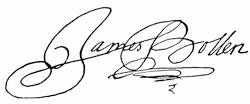
Governor Carteret had deemed it advisable to seek his safety by taking up his residence in Bergen, where on May 28 he convened his council for deliberation. They advised him to go to England, to explain to the Lords Proprietors the situation of the Province, and to have his authority confirmed. This he did, taking with him James Bollen, the secretary of the council, and appointing John Berry deputy-governor in his absence. Their reception by the Proprietors was all that they could have expected or desired. Sir George Carteret sent directions to his son to vacate his usurped authority at once and proceed to Carolina; and the Duke of York wrote to Governor Lovelace, who had succeeded Nicolls in the Province of New York, notifying him, and requiring him to make the same known to the insurgents, that the claims they had advanced would not be recognized by him; and King Charles II. himself sent a missive to Deputy-Governor Berry confirming his authority and commanding obedience to the government of the Lords Proprietors. Other documents from the Proprietors expressed in temperate but decided language their determination to support the rights which had been conferred upon them, and some modifications of the Concessions were made, which circumstances seemed to require, conferring additional powers on the governor and council.
These various documents were published by Deputy-Governor Berry in May, 1673. They served to quiet the previous agitation, and to re-establish his authority. A certain time was allowed the malecontents to comply with the terms of the Proprietors; and the inhabitants of Middletown and Shrewsbury placed themselves in a more favorable position than those of other towns by asking for a suspension of proceedings against them until they could communicate with the authorities in England. This they did, throwing themselves upon their generous forbearance by relinquishing any special privileges they had claimed under the Nicolls patent, receiving individual grants of land in lieu thereof; and thereafter the relations between them and the proprietary government were always harmonious.
The government was resumed by the representatives of the Proprietors without any exhibition of exultation; and further to insure tranquillity and good conduct the deputy-governor and council issued an order with the intent “to prevent deriding, or uttering words of reproach, to any that had been guilty” of the insubordination.
In March, 1673, Charles II., in co-operation with Louis XIV. of France, declared war against Holland; and before the time expired, within which the proffered terms were to be acceded to by the inhabitants, the Dutch were again in possession of the country. The manner in which New Netherland had been subdued by the English prompted a like retaliation, and a squadron of five vessels was at once despatched against New York. The fleet was increased, by captures on the way, to sixteen vessels, conveying sixteen hundred men; and on August 8 possession of the fort was obtained, and for more than a year the authority of the States General was acknowledged. On the one hand, no harshness or disposition to violate the just rights of the inhabitants was manifested; while, on the other, imaginary injuries from the proprietary government led to a ready recognition of what might prove an advantageous change. The natural consequences were harmony and good-will.
The inhabitants generally were confirmed in the possession of their lawfully acquired lands, and placed on an equality, as to privileges, with the Hollanders themselves. Local governments were established for each town, consisting of six schepens, or magistrates, and two deputies toward the constitution of a joint board, for the purpose of nominating three persons for schouts and three for secretaries. From the nominations thus made the council would select three magistrates for each town, and for the six towns collectively a schout and secretary. John Ogden and Samuel Hopkins were severally appointed to these offices on the 1st of September.
On November 18 a code of laws was promulgated “by the schout and magistrates of Achter Kol Assembly, held at Elizabethtown to make laws and orders,” but it does not appear to have been framed with any reference to the English laws in force, which it was intended to subvert. It was singularly mild in the character and extent of the punishments to be inflicted on transgressors, the principal aim of the legislators apparently being the protection of the Province from the demoralizing effects of sensual indulgence and other vicious propensities; but the whole code soon became a nullity, through the abrogation of the authority under which it was enacted.
On Feb. 9, 1674, a treaty of peace was signed at Westminster, the eighth article of which restored the country to the English; and they continued in undisturbed possession from the November following until the war which secured the independence of the United States of America.
On the conclusion of peace the Duke of York obtained from the King a new patent, dated June 29, 1674, similar in its privileges and extent to the first; and on October 30 Edmund Andros arrived with a commission as governor, clothing him with power to take possession of New York and its dependencies, which, in the words of the commission included “all the land from the west side of Connecticut River to the east side of Delaware Bay.” On November 9 he issued a proclamation in which he expressly declared that all former grants, privileges, or concessions, and all estates legally possessed by and under His Royal Highness before the late Dutch government, were thereby confirmed, and the possessors by virtue thereof to remain in quiet possession of their rights. King Charles on June 13, prior to the issuing of a new patent by the Duke of York, wrote a circular letter confirming in all respects the title and power of Carteret in East Jersey.
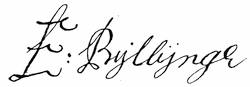
On July 28 and 29, 1674, Sir George Carteret received a new grant from the Duke of York, equally full as to rights and privileges, giving him individually all of the Province north of a line drawn from a certain “creek called Barnegat to a certain creek on Delaware River, next adjoining to and below a certain creek on Delaware River called Rankokus Kill,” a stream south of what is now Burlington,—the sale of Berkeley’s interest in the Province being evidently considered as leading to its division.
This had taken place on March 18, 1673/4, Lord Berkeley disposing of his portion of the Province to John Fenwicke,—Edward Byllynge being interested in the transaction. As these two were members of the Society of Quakers, or Friends, who had experienced much persecution in England, it is thought that in making this purchase they had in view the securing for themselves and their religious associates a place of retreat.
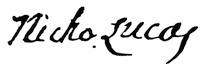
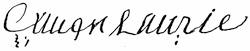
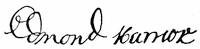
Some difficulty was experienced in determining the respective interests of Fenwicke and Byllynge in the property they had acquired, and the intervention of William Penn was secured. He awarded one tenth of the Province, with a considerable sum of money, to Fenwicke, and the remaining nine tenths to Byllynge. Not long after, Byllynge, who was a merchant, met with misfortunes, which obliged him to make a conveyance of his interest to others. It was therefore assigned to three of his fellow associates among the Quakers,—William Penn, Gawen Lawrie, and Nicholas Lucas. This conveyance was signed Feb. 10, 1674. The nine undivided tenths were assigned to the three persons just mentioned, to be held by them in trust for the benefit of Byllynge’s creditors; and not long after Fenwicke’s tenth was also placed under their control, although he had executed a lease to John Eldridge and Edmond Warner for a thousand years, to secure the repayment of sums of money obtained from them. A discretionary power to sell was conferred by the lease, leading to complications of title and management.
Philip Carteret had remained in England until the negotiations subsequent to the surrender of the Dutch were completed and the new grant for East Jersey obtained; and on July 31, 1674, he was recommissioned as governor, and returned to the Province, bringing with him further regulations respecting the laying out of lands, the payment of quit-rents, and other obligations of the settlers. His return seems to have greatly pleased the people of East Jersey. His commission, and the other documents of which he was made the bearer, were published at Bergen, Nov. 6, 1674, in the presence of his council and commissioners from all the towns except Shrewsbury.
After the Governor’s return the assemblies met annually with considerable regularity, the first at Elizabethtown on Nov. 5, 1675, and the others either there or at Woodbridge or Middletown. Sufficient unanimity seems to have prevailed among the different branches of government, to secure legislation upon all subjects which the advancement of the Province in population rendered essential.
As yet no material change in the condition of West Jersey as to settlement had taken place; but in 1675 John Fenwicke, with many others, came over in the ship “Griffith” from London and landed at what is now Salem,—so called by them from the peaceful aspect which the site then wore. No other settlers, however, arrived for two years.
Although the commission of Andros as governor of New York authorized him to take possession of the Province “and its dependencies,” yet having been conversant with the transactions in England affecting New Jersey, which had taken place subsequent to its date, he did not presume at first to assert his authority over that Province, otherwise than to collect duties there similar to those constituting the Duke’s revenue in New York. Soon after his arrival he took measures to collect the same customs at Hoarkill, in West Jersey; and on the arrival of Fenwicke with his settlers at Salem, a meeting of his council was held Dec. 5, 1675, at which an order was issued prohibiting any privilege or freedom of customs or trading on the eastern shore of the Delaware, nor was Fenwicke to be recognized as owner or proprietor of any land. As this prohibition was not regarded by Fenwicke, on Nov. 8, 1676, directions were given to the council at Newcastle to arrest him and send him to New York. This proceeding not being acquiesced in by Fenwicke, a judicial and military force was despatched in December to make the arrest. On producing, for the inspection of Andros, the King’s Letters Patent, the Duke of York’s grant to Berkeley and Carteret, and Lord Berkeley’s deed to himself, Fenwicke was allowed to return to West Jersey, on condition that he should present himself again on or before the 6th of October following,—the fact that the Duke was authorized to, and did, transfer all his rights in New Jersey, “in as full and ample manner” as he had received them, being an argument that Andros could not readily refute. Fenwicke complied with the prescribed terms of his release and, after some detention as a prisoner, was liberated (as asserted by Andros) on his parole not to assume any authority in West Jersey until further warrant should be given.
It being evident that the grant of the Duke of York to Sir George Carteret in July, 1674, had not made an equitable division of the Province between him and the assigns of Sir John Berkeley, the Duke induced Sir George to relinquish that grant, and another deed of division was executed on July 1, 1676, known as the Quintipartite Deed, making the dividing line to run from Little Egg Harbor to what was called the northernmost branch of the Delaware River, in 41° 40´ north latitude; and from that time the measures adopted by the Proprietors of the two provinces to advance the interests of their respective portions were enforced separately and independently of each other.
The trustees of Byllynge effected sales of land to two companies of Friends, one from Yorkshire and the other from London; and in 1677 commissioners were sent out with power to purchase lands of the natives, to lay out the various patents that might be issued, and otherwise administer the government. The ship “Kent” was sent over with two hundred and thirty passengers, and after a long passage she arrived in the Delaware in August (1677), and the following month a settlement was made on the site of the present Burlington.
The commissioners came in the “Kent,” which, on her way to the Delaware, anchored at Sandy Hook. Thence the commissioners proceeded to New York to inform Governor Andros of their intentions; and, although they failed to secure an absolute surrender of his authority over their lands, he promised them his aid in getting their rights acknowledged, they in the mean time acting as magistrates under him, and being permitted to carry out the views of the Proprietors. During the following months of 1677, and in 1678, several hundred more immigrants arrived and located themselves on the Yorkshire and London tracts, or tenths as they were called.
The settlers of West Jersey, as a body, were too intelligent for them to remain long without an established form of government, and on March 3, 1677, a code of laws was adopted under the title of “The Concessions and Agreements of the Proprietors, Freeholders, and Inhabitants of the Province of West Jersey.” It was drawn up, as is presumed, by William Penn and his immediate coadjutors, as his name heads the list of signers, of whom there were one hundred and fifty-one. The chief or executive authority was by these Concessions lodged in the hands of commissioners to be appointed by the then Proprietors, and their provisions cannot but meet with general approval. This code is to be considered as the first example of Quaker legislation, and is marked by great liberality. The framers, as a proprietary body, retained no authority exclusively to themselves, but placed all power in the hands of the people. The document was to be read at the beginning and close of each general assembly; and, that all might know its provisions, four times in a year it was to be read in a solemn manner in every hall of justice in the Province.
The settlers on Fenwicke’s tenth did not participate in the privileges of these Concessions. On returning to the Province, after his confinement in New York, Fenwicke proceeded to make choice of officers for his colony, demanding in the name of the King the submission of the people, and directly afterward issued a proclamation in which he—as “Lord and Chief Proprietor of the said Province [West Jersey], and in particular Fenwicke’s colony within the same”—required all persons to appear before him within one month and show their orders or warrants for “their pretended titles,” assuming an independent authority entirely at variance with the proprietary directions.
The commissioners of the Byllynge tenths, however, do not appear to have made any attempt to interfere with him, confining their authority to the limits of their own well defined tracts; but if Fenwicke escaped annoyance from his near neighbors he was not so fortunate in his relations with his former persecutor, Andros, as he is represented as being, not long after his return, again at Newcastle under arrest, waiting for some opportunity to be sent again to New York.
Although, as has been stated, general quietude prevailed in East Jersey for some years after Carteret’s return from England, yet it must be considered as resulting less from the desire of the people to co-operate with him, than from the want of leaders willing to guide and uphold them in ultra proceedings. The exaction of customs in New York, by direction of the representatives of the Duke of York, operated more to the annoyance of the inhabitants on the Delaware than to those in the eastern portion of the Province, and it was with great anxiety that the adventurers to West Jersey regarded the course of Andros in relation thereto; but in East Jersey, the proximity to New York rendered a direct trade with foreign lands less necessary. Andros steadily opposed all projects of the Governor to render East Jersey more independent of New York, and the death of Sir George Carteret in January, 1680, seems to have inspired him with fresh vigor in asserting the claims of the Duke of York. Recalling to mind that New Jersey was within the limits of his jurisdiction according to his commission, he addressed a letter to Governor Carteret in March, 1679/80, informing him that, being advised of his acting without legal authority to the great disturbance of His Majesty’s subjects, he required him to cease exercising any authority whatever within the limits of the Duke of York’s patent, unless his lawful power so to do was first recorded in New York. To this unlooked for and unwarranted communication, Governor Carteret replied on March 20, two days after its receipt, informing his indignant correspondent that after consultation with his council he and they were prepared to defend themselves and families against any and all aggressions, having a perfect conviction of the validity of the authority they exercised. Before this letter was received by Andros, or even written, he had issued a proclamation abrogating the government of Carteret and requiring all persons to submit to the King’s authority as embodied in himself. Emissaries were despatched to East Jersey to undermine the authority of Carteret, and every other means adopted to estrange the people from their adhesion to the Proprietary government.
On April 7 Andros, accompanied by his council, presented himself at Elizabethtown, and Carteret, finding that they were unattended by any military force, dismissed a body of one hundred and fifty men gathered for his defence; and, receiving his visitors with civility, a mutual exposition was made of their respective claims to the government of East Jersey. The conference ended as it had begun. Andros having now, as he said, performed his duty by fully presenting his authority and demanding the government in behalf of His Majesty, cautioned them against refusal. “Then we went to dinner,” says Carteret in his account of the interview, “and that done we accompanied him to the ship, and so parted.”
Carteret’s hospitality, however, was lost upon Andros. On April 30 a party of soldiers, sent by him, dragged the Governor from his bed and carried him to New York, bruised and maltreated, where he was kept in prison until May 27, when a special court was convened for his trial for having “persisted and riotously and routously endeavored to maintain the exercise of jurisdiction and government over His Majesty’s subjects within the bounds of His Majesty’s letters-patent to His Royal Highness.”
Carteret boldly maintained his independence under these trying circumstances. He fully acknowledged before the court his refusal to surrender his government to Andros without the special command of the King, submitted the various documents bearing upon the subject, and protested against the jurisdiction of a court where his accuser and imprisoner was also his judge.
The jury brought in a verdict of “not guilty,” which Andros would not receive, obliging them to reconsider their action, two or three times; and it is somewhat singular that they should have held firm to their first decision. They, however, gave in so far as to require Governor Carteret to give security not to exercise any authority on his return to East Jersey, until the matter could be referred to the authorities in England.
Andros lost no time in profiting by Carteret’s violent deposition, for although it is said that, attended by his whole retinue of ladies and gentlemen, he escorted Carteret to his home in Elizabethtown, yet on June 2 Andros met the Assembly at that place, presented again his credentials, and recommended such enactments as would confirm all past judicial proceedings, and the adoption of the laws in force in New York. The representatives, while they treated Andros with respect, were not unmindful of what was due to themselves as freemen. They were not prepared to bow in submission even to His Majesty’s Letters Patent, whenever at variance with their true rights. “What we have formerly done,” said they, “we did in obedience to the authority that was then established in this Province: these things, which have been done according to law, require no confirmation.” They presented for the approval of Andros the laws already in force as adapted to their circumstances, and expressed their expectations that the privileges conferred by the Concessions would be confirmed. It does not appear that their views were dissented from by Andros, or that his visit was productive of either good or evil results.
In consequence of the dilatoriness of the Proprietary in England, Carteret was kept in suspense until the beginning of the next year; but on March 2, 1681, he issued a proclamation announcing the receipt by him of the gratifying intelligence that the Duke of York had disavowed the acts of Andros and denied having conferred upon him any authority that could in the least have derogated from that vested in the Proprietary; and a letter from the Duke’s secretary, to Andros himself, notified him that His Royal Highness had relinquished all right or claim to the Province, except the reserved rent.
About this time Andros returned to England, leaving Anthony Brocholst, president of the council, as his representative. There is some mystery about his conduct towards New Jersey. He may have thought that the party in East Jersey, inimical to the proprietary government, might enable him to regain possession of it for the Duke, and thereby increase the estimation in which he might be held by him. For Andros had enemies in New York who had interested themselves adversely to his interests, making such an impression upon the Duke that his voyage to England at this time was taken in accordance with the express command of his superior, to answer certain charges preferred against him.
The withdrawal of the common enemy soon reproduced the bickerings and disputings which had characterized much of Carteret’s administration. He convened an Assembly at Elizabethtown in October, 1681, at which such violent altercations took place that the Governor, for the first time in the history of New Jersey, dissolved the Assembly, contrary to the wishes of the representatives. This was the last Assembly during the administration of Carteret, for the ensuing year he resigned the government into other hands.
Sir George Carteret died, as has been stated, in 1680, leaving his widow, Lady Elizabeth, his executrix. He devised his interest in New Jersey to eight trustees in trust for the benefit of his creditors; and their attention was immediately given to finding a purchaser, by private application or public advertisement. These modes of proceeding proving unsuccessful it was offered at public sale to the highest bidder, and William Penn and eleven associates, all thought to have been Quakers, and some of whom were already interested in West Jersey, became the purchasers for £3,400. Their deeds of lease and release were dated Feb. 1 and 2, 1681/2, and subsequently each one sold one half of his interest to a new associate, making in all twenty-four proprietors. On March 14, 1681/2, the Duke of York confirmed the sale of the Province to the Twenty-four by giving a new grant more full and explicit than any previous one, in which their names are inserted in the following order: James, Earl of Perth, John Drummond, Robert Barclay, David Barclay, Robert Gordon, Arent Sonmans, William Penn, Robert West, Thomas Rudyard, Samuel Groom, Thomas Hart, Richard Mew, Ambrose Rigg, John Heywood, Hugh Hartshorne, Clement Plumstead, Thomas Cooper, Gawen Lawrie, Edward Byllynge, James Brain, William Gibson, Thomas Barker, Robert Turner, and Thomas Warne,—those in italics being the names of eleven of the first twelve, Thomas Wilcox, the twelfth, having parted with his entire interest.
There was a strange commingling of religions, professions, and characters in these Proprietors, among them being, as the historian Wynne observes, “High Prerogative men (especially those from Scotland), Dissenters, Papists, and Quakers.” This bringing together such a diversity of political and religious ideas and habits was doubtless with a view to harmonize any outside influences that it might be deemed advisable to secure, in order to advance the interests of the Province. A government composed entirely of Quakers or Dissenters or Royalists might have failed to meet the co-operation desired, whereas a combination of all might have been expected to unite all parties.
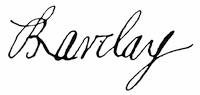
Robert Barclay of Urie, a Scottish gentleman, a Quaker, and a personal friend of William Penn, was selected to be governor. He occupied a high position among those of his religion for the influence exerted in their behalf, and for the numerous works written by him in defence of their principles,—the most celebrated being An Apology for the True Christian Divinity as the same is preached and held forth by the people, in scorn, called Quakers,—and moreover he was equally capable of excelling in worldly matters. He was subsequently commissioned governor for life; and, as if his name alone were sufficient to insure a successful administration of the affairs of the Province, he was not required to visit East Jersey in person, but might exercise his authority there by deputy. He selected for that position Thomas Rudyard, an eminent lawyer of London, originally from the town of Rudyard in Staffordshire. It was probably from his connection with the trials of prominent Quakers, in 1670, that he became interested in the East Jersey project. He took an active part in the preliminary measures for advancing the designs of the Proprietors. The Concessions, their plans for one or more towns, a map of the country, and other documents were deposited at his residence in London for the inspection of all adventurers.
The entire population of East Jersey at this time was estimated at about five thousand, occupying Shrewsbury, Middletown, Piscataway, Woodbridge, Elizabethtown, Newark, Bergen, and the country in their respective vicinities.
Deputy-Governor Rudyard, accompanied by Samuel Groom as receiver and surveyor-general, arrived in the Province in November 1682, and both were favorably impressed by the condition and advantages of the country. On December 10 following the council was appointed, consisting of Colonel Lewis Morris, Captain John Berry, Captain William Sandford, Lawrence Andress, and Benjamin Price, before whom, on December 20, the deputy-governor took his oath of office, having previously on the 1st been sworn as chief register of the Proprietors. The instructions with which Rudyard was furnished by the Proprietors or Governor Barclay are not on record, but they are presumed to have been in accordance with the terms of a letter to the planters and inhabitants, with which he was furnished, inculcating harmony and earnest endeavors to advance their joint interests. The previous Concessions being confirmed, Rudyard convened an Assembly at Elizabethtown, March 1, 1683; and during the year two additional sessions were held and several acts of importance passed. Among them was one establishing the bounds of four counties into which the Province was divided. “Bergen” included the settlements between the Hudson and Hackensack rivers, and extended to the northern bounds of the Province; “Essex” included all the country north of the dividing line between Woodbridge and Elizabethtown, and west of the Hackensack; “Middlesex” took in all the lands from the Woodbridge line on the north to Chesapeake Harbor on the southeast, and back southwest and northwest to the Province bounds; and “Monmouth” comprised the residue.
Although the administration of Rudyard appears to have been productive of beneficial results, securing a great degree of harmony among the varied interests prevailing in the Province, yet, differing from him in opinion as to the policy of certain measures, the Proprietors, while their confidence in him seems to have been unimpaired, thought proper to put another in his place. The principal reason, therefore, appears to have been that Rudyard and the surveyor-general Groom differed as to the mode of laying out lands. The Concessions contemplated the division of all large tracts into seven parts, one of which was to be for the Proprietors and their heirs. Groom refused to obey the warrants of survey for such tracts unless such an interest of the Proprietors therein was recognized, but the governor and his council took the position that the patents, not the surveys, determined the rights of the parties; and, to have their views carried out, Groom was dismissed and Philip Wells appointed to be his successor. The Proprietors in England, regarding this measure as probably in some way lessening their profits in the Province, sustained the surveyor-general’s views and annulled all grants not made in accordance therewith, and appointed as Rudyard’s successor Gawen Lawrie, a merchant of London,—the same influential Quaker whom we have seen deeply interested already in West Jersey as one of Byllynge’s trustees, and whose intelligence and active business qualifications made his administration of affairs conspicuous.
His commission was dated at London in July 1683, but he did not take his oath of office until February 28 following. Rudyard retained the offices of secretary and register and performed their duties until the close of 1685, when he left for Barbadoes, being succeeded as secretary by James Emott. Lawrie retained Messrs. Morris, Berry, Sandford, and Price of Rudyard’s council, and appointed four others, Richard Hartshorne of Monmouth, Isaac Kingsland of New Barbadoes, Thomas Codrington of Middlesex, Henry Lyon of Elizabeth, and Samuel Dennis of Woodbridge.
The new deputy-governor brought out with him a code of general laws—or fundamental constitutions as they were called, consisting of twenty-four chapters, or articles, adopted by the Proprietors in England—which was considered by its framers, for reasons not apparent, as so superior to the Concessions, that only those who would submit to a resurvey and approval of their several grants, arrange for the payment of quit-rents, and agree to pass an act for the permanent support of the government should enjoy its protection and privileges. All others were to be ruled in accordance with the Concessions. This virtually established two codes of laws for the Province. Lawrie, however, seems to have been convinced of the impropriety of putting the new code in force, although in his instructions he was directed as soon as possible to “order it to be passed in an assembly and settle the country according thereto.” Through his discretion, therefore, the civil policy of the Province remained unchanged.
The country made a most favorable impression upon Lawrie. “There is not a poor body in all the Province, nor that wants,” wrote he to the Proprietors in England; and he urged them to hasten emigration as rapidly as possible,—discovering in the sparseness of the population one great cause of the difficulties his predecessors had encountered, an increase in the number of inhabitants favorable to the Proprietors’ interests being essential.
The Proprietors, however, had not been so unmindful of their interests as not to exert themselves to induce emigration to their newly acquired territory. The first twelve associates directly after receiving the deed for the Province published a Brief Account of the Province of East Jersey, presenting it in a very favorable light, and in 1683 the Scotch Proprietors issued a publication of a similar character. These publications, aided by the personal influence of Governor Barclay over their countrymen, who at that time were greatly dissatisfied with their political condition, and suffering under religious persecution, excited considerable interest for the Province, and a number of emigrants were soon on their way across the Atlantic. Many of them were sent out in the employ of different Proprietors, or under such agreements as would afford their principals the benefits of headland grants, fifty acres being allowed to each master of a family and twenty-five for each person composing it, whether wife, child, or servant,—each servant to be bound three years, at the expiration of which time he or she was to be allowed to take up thirty acres on separate account.
Only a limited success, however, attended these exertions; national and religious ties were not so easily severed. Notwithstanding the ills that pressed so heavily upon them and their countrymen, the voluntary and perpetual exile which they were asked to take upon them required more earnest and pertinent appeals; and therefore, in 1685, a work appeared entitled The Model of the Government of the Province of East New Jersey in America, written by George Scot of Pitlochie at the request of the Proprietors, in which the objections to emigration were refuted, and the condition of the new country stated at length. Further reference to this publication will be made hereafter; it is sufficient to state at present that it led to the embarkation of nearly two hundred persons for East Jersey on board a vessel named the “Henry and Francis,”—a name which deserves as permanent a position in the annals of New Jersey as does that of the “Mayflower” in those of Massachusetts.
The instructions of the Proprietors to Deputy-Governor Lawrie—while firm in their requirements for the execution of all engagements which justice to themselves and other settlers called upon them to enforce—were calculated to restore tranquillity, and to quiet, for a time at least, the opposition to their government. The claims under the Indian purchases having been brought to their notice, and relief sought from the evils to which the claimants had been subjected, elicited a dignified letter in reply, upholding the proprietary authority, and presenting in a forcible manner the difficulties which would inevitably arise should that authority be subverted. In order to prevent further difficulties from the acquisition of Indian titles by individuals the right to purchase was continued in the deputy-governor, and he was directed to make a requisition upon the Proprietors for the necessary funds, as had been done in 1682, by shipping a cargo of goods valued at about one hundred and fifty pounds, and expending the amount for that purpose.
The necessity for the cultivation of good feelings with the Province of New York was manifest. Having for its chief executive one whose arbitrary temper and disposition led him to disregard solemn engagements, the relations between the provinces were not likely to be made more harmonious because he was heir-apparent to the throne of England; and it was consequently in accordance both with the principles of the Friends and the promptings of sound judgment and discretion, that the Proprietors urged upon Lawrie the propriety of fostering a friendly correspondence with New York, and avoiding everything that might occasion misapprehension or cause aggressions upon their rights.
Lawrie conformed himself to the tenor of his instructions. He visited Governor Dongan and remained with him two or three days, discussing their mutual rights and privileges, and was treated by him with kindness and respect; and being of a less grasping disposition than his predecessor, there were no open acts of hostility to the proprietary government manifested by him.
Immigration and a transfer of rights soon brought into the Province a sufficient number of Proprietors to allow of the establishment of a board of commissioners within its limits, authorized to act with the deputy-governor in the temporary approval of laws passed by the Assembly, the purchasing and laying out of lands, and other matters,—thus avoiding the necessary and consequent unpleasant delay attendant upon the transmission of such business details to the Proprietors in England before putting them in operation. This body was formed August 1, 1684, and became known as the “Board of Proprietors.” To this board was intrusted the advancement of a new town to be called Perth,—in honor of the Earl of Perth, one of the Proprietors,—for the settlement of which proposals had been issued in 1682, immediately on their obtaining possession of the Province.
The advancement of this town was a favorite project, and at the time of Lawrie’s arrival several houses were already erected, and others in progress (Samuel Groom having surveyed and laid out the site); and attention was immediately given to the execution of the plans of the projectors, based upon the expectation that it would become the chief town and seaport of the Province. Lawrie was particularly cautious, in carrying out their views as regarded the seaport, not to infringe any of the navigation laws respecting the payment of duties, or otherwise,—going so far as to admit William Dyre, in April, 1685, to the discharge of his duties as collector of the customs in New Jersey, which naturally led to difficulties. Previously vessels had been permitted by Lawrie to proceed directly to and from the Province, and the inhabitants valued the privilege; but Dyre had not been in execution of his office more than two or three months before he complained to the commissioners of the customs of the opposition encountered in enforcing the regulations he had established for entering at New York the vessels destined to East Jersey, and receiving there the duties upon their cargoes. This state of affairs continued for some months; for, although the authorities in England took the subject into consideration, it was not until April, 1686, that a writ of quo warranto was issued against the Proprietors,—it being thought of great prejudice to the country and His Majesty’s interest that such rights as they claimed should be longer exercised.
James, Duke of York, by the death of Charles II. in May, 1685, had been raised to the throne of England, and his assumption of royalty simplified considerably the powers for ignoring all measures conflicting with his private interests; and although he had thrice as Duke of York, by different patents and by numerous other documents, confirmed to others all the rights, powers, and privileges which he himself had obtained, the increased revenue which was promised him from the reacquisition of New Jersey could not admit of any hesitancy in adopting measures to effect it. The Proprietors, however, were firm in their expostulations, and made many suggestions calculated to remove the pending difficulties; but all were of no avail except one, looking to the appointment of a collector of the customs to reside at Perth,—or Perth Amboy as it began to be called, by the addition of Amboy, from ambo, an Indian appellation for point. The first session of the Assembly was held there as the seat of government, April 6, 1686.
The establishment of a local government in West Jersey in 1677 has been noticed. The next step toward rendering it more perfect was the election, by the Proprietors in England, of Edward Byllynge as governor of the Province, and the appointment by him of Samuel Jenings as his deputy. These events took place in 1680 and 1681, and Jenings arrived in the Province to assume the government in September of the latter year, the first West Jersey Assembly meeting at Burlington in November. The representatives seem to have had a full sense of the responsibilities resting upon them, and at once adopted such measures as were deemed essential under the altered condition of affairs, acknowledging the authority of the deputy-governor on condition that he should accept certain proposals or fundamentals of government affixed to the laws they enacted. This Jenings did, putting his hand and seal thereto; as did also Thomas Olive, the Speaker, by order and in the name of the Assembly.
Burlington was made the chief town of the Province, and the method of settling and regulating the lands was relegated to the governor and eight individuals. For greater convenience the Province was divided into two districts, the courts of each to be held at Burlington and Salem. The second Assembly met May 2, 1682, and a four days’ session seems to have been sufficient to establish the affairs of the Province on a firm basis. Thomas Olive, Robert Stacy, Mahlon Stacy, William Biddle, Thomas Budd, John Chaffin, James Nevill, Daniel Wills, Mark Newbie, and Elias Farre being chosen as the council.
Subsequent meetings of the Assembly were held in September, and in May, 1683. At this last some important measures were enacted contributing to good government. For the despatch of business the governor and council were authorized to prepare bills for the consideration of the Assembly, which were to be promulgated twenty days before the meetings of that body. The governor, council, and assembly were to constitute the General Assembly, and have definite and decisive action upon all bills so prepared. As John Fenwicke was one of the representatives to this Assembly, it is evident that he recognized for his Tenth the general jurisdiction which had been established. It is understood that Byllynge at this time had resolved to relieve Jenings from his position, as his own independent authority was thought to be endangered by Jenings’s continuance in office.
At this Assembly the question was discussed whether the purchase at first made was of land only or of land and government combined, and the conclusion arrived at was that both were purchased; and also that an instrument should be prepared and sent to London, there to be signed by Byllynge, confirmatory of this view; and, carrying out a suggestion of William Penn, Samuel Jenings was by vote of the Assembly elected governor of the Province,—a proceeding which was satisfactory to the people, as they desired a continuance of his administration. Thus again did the representatives of the people assert their claim to entire freedom from all authority not instituted by themselves.
As Byllynge did not acquiesce as promptly as was desired with the views of the Assembly, it was determined at a session held in March, 1684, that, for the vindication of the people’s right to government, Governor Jenings and Thomas Budd (George Hutchinson subsequently acted with them) should go to England and discuss the matter with Byllynge in person,—Thomas Olive being appointed deputy-governor until the next Assembly should meet. This was in the May following, at which time Olive was elected governor, and his council made to consist of Robert Stacy, William Biddle, Robert Dusdale, John Gosling, Elias Farre, Daniel Wills, Richard Guy, Robert Turner, William Emley and Christopher White.
The mission of Jenings was only partially successful. The differences between Byllynge and the people were referred to the “judgment and determination” of George Fox, George Whitehead, and twelve other prominent Friends; whose award was to the effect that the government was rightfully in Byllynge, and that they could not find any authority for a governor chosen by the people. This award was made in October, 1684, but was signed by only eight of the fourteen referees, George Fox not being one of them. The document subsequently became the cause of much discussion. As late as 1699 it was printed with the addition of many severe reflections upon the action of Jenings and his friends, drawing from him equally harsh animadversions upon those from whom they emanated. In accordance with this award Byllynge asserted his claims to the chief authority over the Province, and no important concessions appear to have been made to the people.
In 1685 Byllynge appointed John Skene to be his deputy-governor; and on September 25 the Assembly, expressly reserving “their just rights and privileges,” recognized him as such, Olive continuing to act as chairman, or speaker, of the Assembly.
Harmony to a great extent prevailed for some time, Skene not attempting to exercise any authority not generally acknowledged by the people; but in 1687 Byllynge died, and Dr. Daniel Coxe of London, already a large proprietor, having purchased the whole of Byllynge’s interest from his heirs, after consultation with the principal Proprietors in England, decided to assume the government of the Province himself. But while he thus assumed, in his own person, rights which the people had claimed as theirs, he did not refrain from granting to them a liberal exercise of power, giving assurances that all reasonable expectations and requests would be complied with, and that the officers who had been chosen by the people should be continued in their several positions. It is somewhat more than doubtful if Coxe ever visited the Province at all, and indeed he probably did not; meanwhile Byllynge’s deputy, John Skene, acted for him till the death of the latter in December, 1687, when Coxe appointed Edward Hunloke in his stead.
It was during Lawrie’s administration in East Jersey that the first steps were taken to settle the boundary line between that Province and New York. The subject was discussed by him and Governor Dongan at an early date; and on June 30, 1686, a council was held, composed of the two deputy-governors and several gentlemen of both New York and New Jersey, at which the course to be pursued in running the line was agreed upon. The points on the Hudson and Delaware rivers were subsequently determined; but nothing further was done for several years, and nearly a century elapsed before the line was definitely settled.
There are some allusions made to the fact that Lawrie was much interested in West Jersey, as accounting for his dismissal by the Proprietors from his position as their deputy-governor in East Jersey; but so far as the records of the period give an insight into the motives actuating him in the administration of the affairs of the Province, there is no evidence afforded of any want of interest in its prosperity. As the result of his administration did not meet their expectations of profit, it is not surprising that they should have regarded it as due to some mistaken policy on his part. In the appointment of a successor they were evidently led by the large influx of population from Scotland to look among the Proprietors residing there for a suitable person; and they therefore selected Lord Neill Campbell, a brother of the Earl of Argyle, who was obliged to flee from Scotland in consequence of his connection with that nobleman, who had been beheaded June 30, 1685, after the unfortunate termination of his invasion of that country. He left for East Jersey with a large number of emigrants not long after that event, and reached the Province in December of the same year.
Lord Neill was appointed deputy-governor June 2, 1686, for two years, but his commission did not reach him until October, on the 5th of which month it was published; and on the 18th he announced as his council Gawen Lawrie, John Berry of Bergen, Isaac Kingsland of New Barbadoes, Andrew Hamilton of Amboy, Richard Townley of Elizabethtown, Samuel Winder of Cheesequakes, David Mudie and John Johnstone of Amboy, and Thomas Codrington of Raritan.
It is a remarkable circumstance that the great diversity existing in the characters, religions, pursuits, and political relations of the Proprietors of East Jersey should have been overcome to such an extent as to allow of harmonious action in the appointment of Lord Neill Campbell. The Earl of Perth, a prominent member of the body, was one of the jury that found the Earl of Argyle guilty of high treason; and yet, stanch adherent as he was of James, he could consent to have his interests in East Jersey taken care of by that earl’s brother. Robert Barclay, with all the peculiarities of his peaceful sect, the advocate of gentleness and non-resistance, was willing to be associated with a stanch Scotch Presbyterian soldier, and join in commissioning him as his subordinate. It is evident that private prejudices and feelings were not allowed to interfere with whatever was thought likely to conduce to the advancement of their pecuniary interests in East Jersey.
Lord Neill’s administration, however, was very brief. On December 10 of the same year, “urgent necessity of some weighty matters” calling him to England, he appointed Andrew Hamilton to be his substitute, and sailed, it is presumed, the March following, Hamilton’s commission being published on the 12th of that month.
Andrew Hamilton had been a merchant in London, and came to the Province with his family in June, 1686, as an agent of the Proprietors in London. He at first declined accepting the position tendered him, and Lawrie, who was one of the council, openly protested against his appointment, because of his unpopularity with the planters; but his authority having been confirmed by a commission from Governor Barclay in August, 1687, all open opposition thereto seems to have ceased. Hamilton appears to have been a man of intelligence, and to have acted in a manner which he conceived to be calculated to advance the best interests of the Proprietors without involving them with the people, but it is doubtful if any great cordiality existed between the governor and the governed at that period.
Before his death Charles II. had been led to call for a surrender of the charter of Massachusetts Bay, and, meeting with a refusal from the General Assembly, a writ of quo warranto was issued in 1684. The death of the King left the proceedings to be consummated by his successor, whose rapacity prompted him to subvert the liberties of all the colonies; and his pliant servant Andros, whom he had knighted, was sent over with a commission that covered all New England. Sir Edmund took up his residence in Boston, assumed the supreme authority of Massachusetts, and the following year dissolved in succession the governments of Rhode Island and Connecticut, taking to himself all power and dominion, even beyond the limits granted by his royal master.[712]
The Proprietors, finding it impossible to overcome the determination of James to unite New York and New Jersey to New England under the same government, deemed it advisable to abandon the unavailing contest, and by acceding to the King’s design to obtain from him an efficient guarantee that he would respect their rights to the soil. A surrender of their patent, so far as the government was concerned, was therefore made in April, 1688, James having agreed to accept it; and, the Proprietors of West Jersey having acceded also to the arrangement, a new commission was issued to Sir Edmund Andros, annexing both provinces and New York to his government, and Francis Nicholson was appointed his lieutenant-governor.
The course of Andros in accepting the simple acknowledgment of his authority as sufficient, without revolutionizing the government and dismissing the functionaries in office in New Jersey, was doubtless in a great measure owing to the fact that the surrender by the Proprietors of their right to govern rendered necessary the issuing of a new grant to them from the Crown, confirmatory of all the immunities of the soil; and until that could be perfected, it may have been considered expedient not to disturb the existing regulations. It is nevertheless remarkable that any considerations of the kind should have had so mollifying an effect upon one whose arrogance, disregard of the rights of others, and impetuosity of temper were so intrusively manifest as in Edmund Andros.
By the seizure of Andros in New England in April, 1689, in anticipation of the successful revolution in England in favor of William and Mary, which promised the subversion of his authority not only there but also in the other colonies that had been placed within his jurisdiction, an opportunity was afforded the Proprietors of New Jersey to resume all the rights and privileges of which they had been despoiled. But there were impediments in the way. They were not sure of the support of the people, and being separated,—some in England, some in Scotland, and some in New Jersey,—it was not possible that unanimity of action could be secured. Many of them, having been closely allied to King James, were probably disposed to cling to him in his misfortunes, and had the deputy-governor thrown off the responsibilities he had so recently resumed as the representative of the Crown, for the purpose of re-establishing the authority of the Proprietors, it would have been attended with great doubt and uncertainty as to his success, the people having so definitely manifested their preference for a royal government.
In April Hamilton received a summons from the mayor of New York, acting as lieutenant of Andros; and, attended by the justices of Bergen, repaired thither to consult upon the proper course to be pursued in the peculiar situation of affairs prevailing in the two colonies, but nothing of consequence resulted from the conference. The deputy-governor on subsequent occasions was invited to similar consultations in New York, but does not seem to have compromised himself in any way with any party; and, as so much doubt existed as to what was the proper course for him to pursue, he resolved in August to proceed to England in person to advise with the Proprietors there. On his way thither he was taken prisoner by the French, and appears to have been detained in France until the May following, when he, being then in England, resigned his position as the deputy-governor. From the time of Hamilton’s departure for England until 1692 the inhabitants of East Jersey were left to the guardianship of their county and town officers, who seemed to have possessed all necessary powers to preserve the peace. So also in West Jersey. The course of events caused but little alteration in the general condition of the Province after the surrender of the government to Andros in April, 1688, and the subsequent suspension of his authority.
In 1687 George Keith, surveyor-general of East Jersey, under orders from the Proprietors there, attempted to run the dividing line between the two provinces, in accordance with the terms of the Quintipartite deed of 1676; but the result was unsatisfactory to West Jersey, as it was thought too great a quantity of the best lands came thereby within the bounds of East Jersey. In September, 1688, however, a consultation took place in London, between Governor Coxe of West Jersey and Governor Barclay of East Jersey, with the view of perfecting a settlement of Keith’s line, resulting in a written agreement signed and sealed by the two parties; but nevertheless no satisfactory termination of the matter was arrived at for many years. It was in 1688 that the “Board of Proprietors of West Jersey” was regularly organized.
It would be very gratifying to be able to state clearly, upon good authority, the condition of New Jersey at this eventful period in its history, and note its progress since its surrender to the English in 1664, but from the imperfection of the details, the information obtainable is not sufficiently definite to give satisfactory results.
That the population of East Jersey had largely increased there can be no doubt. It was a constant cause of complaint by the government of New York that the freedom from taxation and various mercantile restrictions had tended greatly to increase emigration to East Jersey, much to the detriment of New York; and the first towns, Newark, Elizabethtown, and Middletown, drew large numbers from New England and Long Island, leading to their becoming centres for the development of other towns and villages. The new capital, Perth Amboy, became in a very few years an important settlement, and both from Scotland and England numerous families had already arrived and settled in various parts of the Province; so that it is probable the increase during the quarter of a century had been more than a hundred-fold, making the total number of souls in East Jersey nearly, if not quite, ten thousand. There are no figures upon which any correct estimate can be based of the increase in West Jersey, but it may be safely considered as coming far short of the eastern Province.
Of the five counties recognized in 1670 Monmouth was the most populous; and of its three towns, Shrewsbury, Middletown, and Freehold, the first was the most important. Essex County came next; Elizabethtown, Newark, Acquackanock, and New Barbadoes being its towns, ranking in the order in which they are named. Middlesex followed, with Woodbridge, Piscataway, and Perth Amboy as its towns. Bergen stood fourth, with its towns of Bergen and Hackensack; and Somerset came last, having no specific townships. There were, of course, in all the counties small settlements not yet of sufficient importance to be recognized as separate organizations. In 1683 Bergen County was third in importance, and Middlesex fourth.
One great hindrance to the development of the agricultural and mineral resources of the two provinces was the want of roads and conveniences to promote intercourse between the different sections. The only Indian path ran from Shrewsbury River to the northwest limits of the Province, and the only road opened by the Dutch appears to have been that by which intercourse was kept up with the settlements on the Delaware, in what is now Maryland. From New Amsterdam a direct water communication was had with Elizabethtown Point (now Elizabethport), and thence by land to the Raritan River which was crossed by fording at Inian’s Ferry, now New Brunswick. Thence the road ran in almost a straight course to the Delaware River, above the site of the present Trenton, where there was another ford. This was called the Upper Road; another, called the Lower Road, branched off from the first about five or six miles from the Raritan, and by a circuitous route reached the Delaware at the site of what is now Burlington; but the whole country was a wilderness between the towns in Monmouth County and the Delaware River as late as 1675.
The first public measures for the establishment of roads was in 1675; two men in each town being clothed with authority to lay out the common highways; and in March, 1683, boards were created in the different counties to lay out all necessary highways, bridges, landings, ferries, etc., and by these boards the first effective intercommunication was established. The present generation have in constant use many of the roads laid out by them. In July, 1683, instructions were given to Deputy-Governor Lawrie to open a road between the new capital, Perthtown, and Burlington; but, although his instructions were complied with, and the road opened in connection with water communication between Perth and New York, the route by way of New Brunswick was the most travelled.
The character of the legislation and laws for the punishment and suppression of crime was very different in the two provinces. The penal laws in East Jersey partook more of the severity of the Levitical law, originating as they did with the settlers coming from Puritan countries, while those in West Jersey were exceedingly humane and forbearing. In the one there were thirteen classes of offences made amenable to the death penalty, while in the other such a punishment was unknown to the laws.
As might reasonably be expected from its proximity to New Amsterdam, the first church erected in New Jersey soil, of which any mention is made, was at Bergen. This was in 1680, the congregation having been formed in 1662. The first clergyman heard of in Newark was in 1667, a Congregationalist, and the first meeting-house was built in 1669. Elizabethtown’s first congregation was formed in 1668. Woodbridge succeeded in getting one established in 1670, and its first church was built in 1681. The Quakers immediately after their arrival in West Jersey, in 1675, organized a meeting at Salem (probably the one which Edmondson says he attended), and in 1680 purchased a house and had it fitted up for their religious services. It is said that the first religious meetings of the Quakers in New Jersey were held at Shrewsbury as early as 1670, the settlers there, about 1667, being principally of that denomination. Edmondson mentions a meeting held at Middletown in 1675. The first General Yearly Meeting for regulating the affairs of the Society was held at Burlington in August, 1681. Local meetings were held there in tents before a house was erected. John Woolston’s was the first, and its walls were consecrated by having worship within them. The Friends at Cape May in 1676, Cohansey in 1683, and Lower Alloway Creek in 1685 secured religious services.
Middletown, in Monmouth County, had an organized Baptist congregation in 1688; and Piscataway in Middlesex County one in 1689.
To what extent education had been fostered up to this period it is difficult to determine. The first schoolmaster mentioned in Newark was there in 1676; but Bergen had a school established under the Dutch administration in 1661. The first general law providing for the establishment and support of school-masters in East Jersey was not passed until 1693.
The currency of both East and West Jersey during the whole period of their colonial existence, for reasons which are not very apparent, was more stable than that of the neighboring colonies. The coins of England and Holland, and their respective moneys of account, were used, and Indian wampum afforded the means of exchange with the Aborigines. Barter was naturally the mode of traffic most followed, and tables are now found showing the value set upon the different productions of the soil that were used in these business operations, marking the diminution in value from year to year as compared with “old England money.” In 1681 an act was passed in West Jersey for the enhancing, or raising, the value of coins, which was extended also to New England money. About that time an individual, named Mark Newbie, increased the circulating medium by putting into circulation a large number of Irish half-pence of less value than the standard coin, which he had brought with him from Ireland; and, as thought by some, continued the manufacture of them after his arrival. The act of 1681, however, was repealed the following year, and another passed making Newbie’s half-pence equal in value to the current money of the Province, provided he gave security to exchange them “for pay equivalent on demand,” and provided also that no person should be obliged to take more than five shillings on one payment.[713] No repeal of this act appears in the records. It became inoperative probably in 1684, when Newbie disappears from the documentary history of the period. This supposition is in some measure confirmed by the passage of an act in May of that year, making three farthings “of the King’s coin to go current for one penny,” in sums not exceeding five shillings.[714]
The only attempt to regulate the value of gold and silver in East Jersey was in 1686. Its object was to prevent the transportation of silver from the Province by raising it above its true value in all business transactions. Its evil tendencies, however, were soon developed, and before the end of the year, at a subsequent session of the same Assembly, it was repealed.
The first grist-mill is mentioned in 1671, and was followed by another in 1679, hand-mills being generally used. The first saw-mill was erected in 1682. In 1683 Deputy-Governor Rudyard, in a letter to a friend, says that at that time there were two saw-mills at work, and five or six more projected, abating “the price of boards half in half, and all other timber for building; for altho’ timber cost nothing, yet workmanship by hand was London price or near upon it, and sometimes more, which these mills abate.”
The cider produced at Newark was awarded the preference over that brought from New England, Rhode Island, or Long Island. Clams, oysters, and fish received well merited commendation for their plentifulness and good qualities.
In 1685 the iron-mills in Monmouth County, belonging to Lewis Morris, were in full operation; but it was not until some years had elapsed that “the hills up in the country,” which were “said to be stony,” were explored, and the mineral treasures of Morris County revealed. Gabriel Thomas, in 1698, mentions rice among the products of West Jersey, adding that large quantities of pitch, tar, and turpentine were secured from the pine forests, and that the number of whales caught yearly gave the settlers abundance of oil and whalebone.

CRITICAL ESSAY ON THE SOURCES OF INFORMATION.
THE relations existing between New York and New Jersey, during the era of discovery and settlement, necessarily led to their being jointly noticed by all the early writers, and as they have been referred to in what has preceded this chapter,[715] it is thought unnecessary to comment further upon their revelations. Attention will therefore be given to those whose object was the making known the peculiarities, the advantages, and attractions of New Jersey independent of New York.
The first of these was an issue by John Fenwicke of a single folio leaf, in 1675, containing his proposals for planting his colony of New Cæsarea, or New Jersey. A copy was for sale in London in 1853,—perhaps the same copy sold at the Brinley sale to the Pennsylvania Historical Society. It is printed in Penn. Mag. of Hist., vi.
In 1682 the Proprietors of East Jersey published a small quarto of eight pages, giving an account of their recently acquired province.[716] This publication is not now obtainable, and it is doubtful if any copies have been seen for several generations. It is the basis of all the information respecting East Jersey contained in The Present State of His Majesty’s Isles and Territories in America, etc., by Richard Blome (London, 1687), which is frequently quoted, though abounding in errors. Although the original edition may not now be met with, the Brief Account may be found reprinted in Smith’s History of New Jersey, and in East Jersey under the Proprietary Governments. It gives a very fair and interesting account of the Province, and doubtless aided in inducing adventurers to embark for the new Eldorado.
In 1683 a small quarto of fifteen pages, including the titlepage, was published in Edinburgh for the Scotch Proprietors, of similar purport to the foregoing.[717] The only copy of the original, known, is in the possession of Samuel L. M. Barlow, Esq., of New York. This was used when the work was reproduced in the New York Historical Magazine, second series, vol. i.[718]
In 1684 a work of greater pretensions, comprising 73 pages, 12º, was published in London, entitled The Planter’s Speech to his neighbours and countrymen of Pennsylvania, East and West Jersey; and to all such as have transported themselves into new Colonies for the sake of a quiet, retired life. To which is added the complaints of our Supra-interior inhabitants. The title and introduction of this volume are all that have been met with. They will be found in Proud’s History of Pennsylvania.[719] The author’s name is not known, but it would seem that his object was more to impress upon his “dear friends and countrymen” their moral and religious duties as immigrants, than to portray the advantages of the section of country particularly referred to.
The purport of the treatise is thus summarized by Proud: “Divers particulars are proposed as fundamentals for future laws and customs, tending principally to establish a higher degree of temperance and original simplicity of manners,—more particularly against the use of spirituous liquors,—than had been usual before. Everything of a military nature, even the use of the instruments thereof, is not only disapproved, and the destruction of the human species thereby condemned in this Speech, but likewise all violence or cruelty towards, and the wanton killing of, the inferior living creatures, and the eating of animal food are also strongly advised against in those proposed regulations, customs, or laws, with the reasons given, etc., to the end that a higher degree of love, perfection, and happiness might more universally be introduced and preserved among mankind.”
In 1685 the most interesting and valuable of all the early publications was issued in Edinburgh,[720] reference to which has been made on a preceding page. The author, George Scot, of Pitlochie, was connected by descent and marriage with many distinguished families in Scotland, which connection probably led the Proprietors to confide the preparation of the work to him, as his extensive circle of friends and acquaintances would be likely to insure for it a more general acceptance, particularly as he was ready to add example to precept by embarking himself and family for East Jersey. Accompanied by nearly two hundred persons, he sailed from Scotland about Aug. 1, 1685, but before the vessel reached her destination Scot and his wife and many of their fellow-passengers were no longer living. One daughter, Eupham, became the wife of John Johnstone the ensuing year. Mr. Johnstone was one of her fellow-passengers. Their descendants became numerous, and for years before the war of Independence, and since that period, they filled high civil and military stations in East Jersey.
The author of The Model begins his work with a learned disquisition upon the manner in which America was first peopled, and then proceeds to meet and overcome the various scruples that were presumed to operate against its further settlement from Scotland, by arguments drawn from sacred and profane history and from the consideration due their families and the country; concluding with a portrayal of the advantages to be secured by a residence in East Jersey, and the superiority of that colony over others in America and the West Indies. In this respect the value of the work to the historian is very great, as numerous letters are given from the early settlers, presenting minute descriptions of various localities and their individual experiences in a manner calculated to produce a correct and, at the same time, a favorable impression upon their readers. The original edition is exceedingly rare, only ten copies being known, but the New Jersey Historical Society has caused it to be reprinted as an appendix to the first volume of its Collections, thus placing it within the reach of all.[721]
The year 1685 gave also to the world the interesting book of Thomas Budd, entitled Good Order established in Pennsilvania and New Jersey.[722] Mr. Budd arrived at Burlington, in West Jersey, in 1678, and during his residence there held many important offices; was associated with Jenings on the committee appointed in 1684 to confer with Edward Byllynge, and it was while he was in England that his book was printed. He probably removed to Philadelphia after his return to New Jersey. He made another brief visit to England in 1689, but continued to consider Philadelphia as his residence until his death in 1698. Mr. Budd’s work exhibits the possession of intelligence and public spirit to a remarkable degree. Some of his suggestions as to the education which should be given to the young in various pursuits show him to have been an early advocate of what are now termed Technical Schools, and are deserving of consideration even at this late day. The original work is seldom seen, but in 1865 a reprint was given to the public by William Gowans, of New York, having an introduction and copious notes by Mr. Edward Armstrong, of Philadelphia.
In 1698 Gabriel Thomas published a small octavo of forty-six pages on West Jersey, in connection with a similar work on Pennsylvania, with a map of both colonies. He was then, it is thought, a resident of London, but he had resided in America about fifteen years, the information contained in the book being the result of his own experiences and observation.[723] The book was dedicated to the West Jersey Proprietors, and its intent was to induce emigration of all who wished to better their worldly condition, especially the poor, who might in West Jersey “subsist very well without either begging or stealing.” French refugees or Protestants would find it also to their interest to remove thither where they might live “far better than in Germany, Holland, Ireland, or England.” The modes of life among the Indians, and the prevailing intercourse between them and the settlers were fully discussed, as well as the natural productions of the country and the improvements already introduced or in progress.
In 1699 two pamphlets were published in Philadelphia, referring to the difficulties in West Jersey between the people of the Province and Edward Byllynge in 1684, which led to the despatch, by the Assembly, of Samuel Jenings and Thomas Budd to confer in person with Byllynge. The first of these publications was aimed at Jenings, who was accused of being the head of “some West Jersians” opposed to Byllynge, and emanated from John Tatham, Thomas Revell, and Nathaniel Westland, although published anonymously.[724] Jenings took exceptions to many of its statements and answered it under his own name in a small quarto, boldly asserting his innocence of the serious charges made against him.[725] These publications throw considerable light upon a portion of West Jersey history which is very obscure, and have been used in the preparation of the foregoing narrative. They are both exceedingly rare, and historians are indebted to Mr. Brinton Coxe, of Philadelphia, for having them reprinted in 1881.
The Journal of William Edmundson has been referred to as furnishing some interesting items respecting New Jersey during the period we have had under review.[726] He visited the Province in 1676, and his statements respecting the condition of the country and his interviews with prominent Friends are valuable.
In addition to these publications, there are in the Secretary of State’s office at Trenton the original records of both the East Jersey and West Jersey Proprietors, which were transferred from Perth Amboy and Burlington about the middle of the last century, copies only being left in the original places of deposit.
The foregoing references include all the works published, prior to the surrender of the government of New Jersey to the Crown in 1703, relating to the history of the Province, previous to its separation from New York; but others were published subsequently which throw much light upon that early period, although not written for that purpose exclusively. Thus in 1747 the renowned Elizabethtown Bill in Chancery was drawn and put in print by subscription the same year,[727] which will ever be acknowledged as a structure of valuable materials illustrative of the conflicts between the Proprietors and their government and the discontented settlers. The bill was principally drawn by James Alexander, who during a long period was a prominent lawyer in both provinces. A Scotchman by birth he came to America in 1715, and shortly after his arrival entered the Secretary’s office, New York, and was deputy-clerk of the Court in 1719. Throughout his life, which did not terminate until April 2, 1756, he held very highly important positions in both New York and New Jersey, and was the owner of large land tracts in both provinces.[728] This bill, notwithstanding its great length and complicated nature, is drawn with much ability and makes out a very strong case for the plaintiffs. The defendants’ claims would seem to be, beyond controversy, invalid; but other matters were introduced rendering the case one not easily disposed of.
The answer to the Bill in Chancery was filed in 1751 and printed in 1752,—the counsel for the defendants being William Livingston, afterward Governor of New Jersey, and William Smith, Jr., who became Chief-Justice of New York, and subsequently, after the war of Independence, Chief-Justice of Canada. The copies now extant are very rare.[729] Although not as voluminous it was fully as prolix as the document which prompted it. Notwithstanding the great amount of labor which this case required both in its preparation and argument, it was never brought to a conclusion. The Revolution of 1776 effectually interrupted the progress of the suit, and it was never afterward revived. Both bill and answer, however, and other smaller publications which resulted from the trial of the case, must ever be considered as valuable historical documents, emanating as they all did from parties more or less interested in the questions involved, and consequently earnestly desirous of eliciting every fact that could throw any light upon them.[730]
The first general history of New Jersey was that of Samuel Smith, published in 1765.[731] It is valuable to all examining the early history of the State, from the author’s having had access to, and judiciously used, information obtained from various sources not now accessible. He gives some interesting letters from early settlers, elucidating the events comprehended in the period we have had under review; and although, as might naturally be expected, errors are occasionally found in it, Smith’s History of New Jersey has ever been deservedly considered a standard work.[732] Proud, whose History of Pennsylvania contains much matter referring to West Jersey that is usefully arranged, acknowledges his indebtedness to Smith, and gives him the credit of being “the person who took the most pains to adjust and reduce these materials into nice order, as might be proper for the public view,” previous to his own undertaking; and the old historian, if cognizant of what is taking place in his native State at this late day, must be gratified to find how freely modern writers have transferred his pages to their books, even though no acknowledgment of indebtedness to him has been made.