RELIGION OR MYTHOLOGY.ToC (continued 2)
Reading edition
But far above, in the pure heaven, Zeus beheld the deed of Ixion, and the tidings were sent abroad to all the gods of Olympos, and to all the sons of men, that Ixion had slain Hesioneus by craft and guile. A horror of great blackness fell on the heaven above and the earth beneath for the sin of which Zeus alone can purge away the guilt. Once more Dia made ready her husband's chariot, and once more he sped on his fiery journey; but all men turned away their faces, and the trees bowed their scorched and withered heads to the ground. The flowers drooped sick on their stalks and died, the corn was kindled like dried stubble on the earth, and Ixion said within himself, "My sin is great; men will not look upon my face as in the old time, and the gods of Olympos will not cleanse my hands from the guilt of my treacherous deed." So he went straightway and fell down humbly before the throne of Zeus, and said, "O thou that dwellest in the pure æther far above the dark cloud, my hands are foul with blood, and thou alone canst cleanse them; therefore purge mine iniquity, lest all living things die throughout the wide earth."
Then the undying gods were summoned to the judgment seat of Zeus. By the side of the son of Kronos stood Hermes, ever bright and fair, the messenger who flies on his golden sandals more swiftly than a dream; but fairer and more glorious than all who stood near his throne was the lady Here, the queen of the blue heaven. On her brow rested the majesty of Zeus and the glory of a boundless love which sheds gladness on the teeming earth and the broad sea. And even as he stood before the judgment-seat, the eyes of Ixion rested with a strange yearning on her undying beauty, and he scarce heard the words which cleansed him from blood-guiltiness.
So Ixion tarried in the house of Zeus, far above in the pure æther, where only the light clouds weave a fairy net-work at the rising and setting of the sun. Day by day his glance rested more warm and loving on the countenance of the lady Here, and Zeus saw that her heart, too, was kindled by a strange love, so that a fierce wrath was stirred within him.
Presently he called Hermes, the messenger, and said, "Bring up from among the children of Nephele one who shall wear the semblance of the lady Here, and place her in the path of Ixion when he wanders forth on the morrow." So Hermes sped away on his errand, and on that day Ixion spake secretly with Here, and tempted her to fly from the house of Zeus. "Come with me," he said; "the winds of heaven can not vie in speed with my deathless horses, and the palace of Zeus is but as the house of the dead by the side of my glorious home." Then the heart of Ixion bounded with a mighty delight, as he heard the words of Here. "To-morrow I will meet thee in the land of the children of Nephele." So on the morrow when the light clouds had spread their fairy net-work over the heaven, Ixion stole away from the house of Zeus to meet the lady Here. As he went, the fairy web faded from the sky, and it seemed to him that the lady Here stood before him in all her beauty. "Here, great queen of the unstained heaven," he said, "come with me, for I am worthy of thy love, and I quail not for all the majesty of Zeus." But even as he stretched forth his arms, the bright form vanished away. The crashing thunder rolled through the sky, and he heard the voice of Zeus saying, "I cleansed thee from thy guilt, I sheltered thee in my home, and thou hast dealt with me treacherously, as thou didst before with Hesioneus. Thou hast sought the love of Here, but the maiden which stood before thee was but a child of Nephele, whom Hermes brought hither to cheat thee with the semblance of the wife of Zeus. Wherefore hear thy doom. No more shall thy deathless horses speed with thy glistening chariot over the earth, but high in the heaven a blazing wheel shall bear thee through the rolling years, and the doom shall be on thee for ever and ever."
So was Ixion bound on the fiery wheel, and the sons of men see the flashing spokes day by day as it whirls in the high heaven.
TANTALOS.
Beneath the mighty rocks of Sipylos stood the palace of Tantalos, the Phrygian King, gleaming with the blaze of gold and jewels. Its burnished roofs glistened from afar like the rays which dance on ruffled waters. Its marble columns flashed with hues rich as the hues of purple clouds which gather round the sun as he sinks down in the sky. And far and wide was known the name of the mighty chieftain, who was wiser than all the sons of mortal men; for his wife, Euryanassa, they said, came of the race of the undying gods, and to Tantalos Zeus had given the power of Helios, that he might know his secret counsels and see into the hidden things of earth and air and sea. Many a time, so the people said, he held converse with Zeus himself in his home, on the high Olympos, and day by day his wealth increased, his flocks and herds multiplied exceedingly, and in his fields the golden corn waved like a sunlit sea.
But, as the years rolled round, there were dark sayings spread abroad, that the wisdom of Tantalos was turned to craft, and that his wealth and power were used for evil ends. Men said that he had sinned like Prometheus, the Titan, and had stolen from the banquet-hall of Zeus the food and drink of the gods, and given them to mortal men. And tales yet more strange were told, how that Panderos brought to him the hound which Rhea placed in the cave of Dikte to guard the child, Zeus, and how, when Hermes bade him yield up the dog, Tantalos laughed him to scorn, and said, "Dost thou ask me for the hound which guarded Zeus in the days of his childhood? It were as well to ask me for the unseen breeze which sounds through the groves of Sipylos."
Then, last of all, men spake in whispers of a sin yet more fearful, which Tantalos had sinned, and the tale was told that Zeus and all the gods came down from Olympos to feast in his banquet-hall, and how, when the red wine sparkled in the golden goblets, Tantalos placed savory meat before Zeus, and bade him eat of a costly food, and, when the feast was ended, told him that in the dish had lain the limbs of the child Pelops, whose sunny smile had gladdened the hearts of mortal men. Then came the day of vengeance, for Zeus bade Hermes bring back Pelops again from the kingdom of Hades to the land of living men, and on Tantalos was passed a doom which should torment him for ever and ever. In the shadowy region where wander the ghosts of men, Tantalos, they said, lay prisoned in a beautiful garden, gazing on bright flowers and glistening fruits and laughing waters, but for all that his tongue was parched, and his limbs were faint with hunger. No drop of water might cool his lips, no luscious fruit might soothe his agony. If he bowed his head to drink, the water fled away; if he stretched forth his hand to pluck the golden apples, they would vanish like mists before the face of the rising sun, and in place of ripe fruits glistening among green leaves, a mighty rock beetled above his head, as though it must fall and grind him to powder. Wherefore men say, when the cup of pleasure is dashed from the lips of those who would drink of it, that on them has fallen the doom of the Phrygian Tantalos.
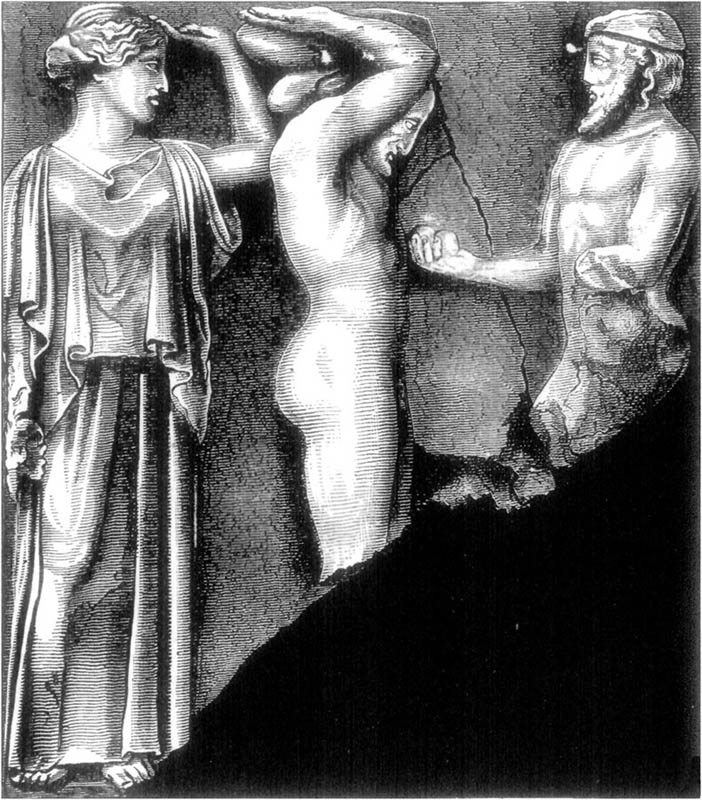
ANCIENT SCULPTURING ON TANTALOS.ToList
THE TOILS OF HERAKLES.
By the doom of his father Zeus, Herakles served in Argos the false and cruel Eurystheus. For so it was that Zeus spake of the birth of Herakles to Here, the Queen, and said, "This day shall a child be born of the race of Perseus, who shall be the mightiest of the sons of men." Even so he spake, because Ate had deceived him by her evil counsel. And Here asked whether this should be so in very deed, and Zeus bowed his head, and the word went forth which could not be recalled. Then Here went to the mighty Eileithyiai, and by their aid she brought it about that Eurystheus was born before Herakles the son of Zeus.
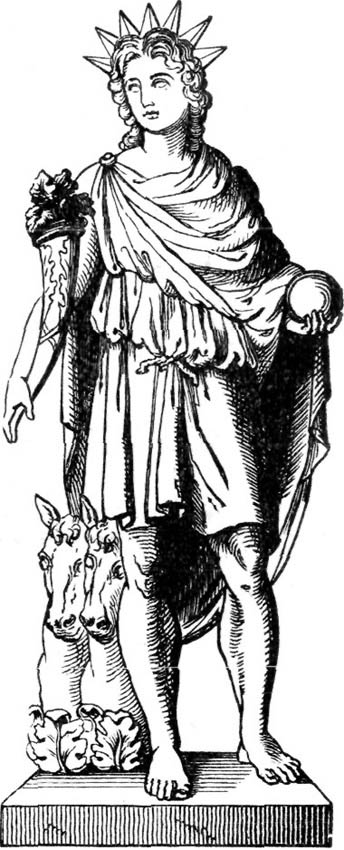
URANIA (Muse of Astronomy).ToList
So the lot was fixed that all his life long Herakles should toil at the will of a weak and crafty master. Brave in heart and stout of body, so that no man might be matched with him for strength or beauty, yet was he to have no profit of all his labor till he should come to the land of the undying gods. But it grieved Zeus that the craft of Here, the Queen, had brought grievous wrong on his child, and he cast forth Ate from the halls of Olympos, that she might no more dwell among the gods. Then he spake the word that Herakles should dwell with the gods in Olympos, as soon as the days of his toil on earth should be ended.
Thus the child grew in the house of Amphitryon, full of beauty and might, so that men marveled at his great strength; for as he lay one day sleeping, there came two serpents into the chamber, and twisted their long coils round the cradle, and peered upon him with their cold glassy eyes, till the sound of their hissing woke him from his slumber. But Herakles trembled not for fear, but he stretched forth his arms and placed his hands on the serpents' necks, and tightened his grasp more and more till they fell dead on the ground. Then all knew by this sign that Herakles must do great things and suffer many sorrows, but that in the end he should win the victory. So the child waxed great and strong, and none could be matched with him for strength of arm and swiftness of foot and in taming of horses and in wrestling. The best men in Argos were his teachers, and the wise centaur Cheiron was his friend, and taught him ever to help the weak and take their part against any who oppressed them. So, for all his great strength, none were more gentle than Herakles, none more full of pity for those who were bowed down by pain and labor.
But it was a sore grief to Herakles that all his life long he must toil for Eurystheus, while others were full of joy and pleasure and feasted at tables laden with good things. And so it came to pass that one day, as he thought of these things, he sat down by the wayside, where two paths met, in a lonely valley far away from the dwellings of men. Suddenly, as he lifted up his eyes, he saw two women coming towards him, each from a different road. They were both fair to look upon; but the one had a soft and gentle face, and she was clad in a seemly robe of pure white. The other looked boldly at Herakles, and her face was more ruddy, and her eyes shone with a hot and restless glare. From her shoulders streamed the long folds of her soft embroidered robe, which scantily hid the beauty of her form beneath. With a quick and eager step she hastened to Herakles, that she might be the first to speak. And she said, "I know, O man of much toil and sorrow, that thy heart is sad within thee, and that thou knowest not which way thou shalt turn. Come then with me, and I will lead thee on a soft and pleasant road, where no storms shall vex thee and no sorrows shall trouble thee. Thou shalt never hear of wars and battles, and sickness and pain shall not come nigh to thee; but all day long shalt thou feast at rich banquets and listen to the songs of minstrels. Thou shalt not want for sparkling wine, and soft robes, and pleasant couches; thou shalt not lack the delights of love, for the bright eyes of maidens shall look gently upon thee, and their songs shall lull thee to sleep in the soft evening hour, when the stars come out in the sky." And Herakles said, "Thou promisest to me pleasant things, lady, and I am sorely pressed down by a hard master. What is thy name?" "My friends," said she, "call me the happy and joyous one; and they who look not upon me with love have given me an evil name, but they speak falsely."
Then the other spake, and said, "O Herakles, I, too, know whence thou art, and the doom which is laid upon thee, and how thou hast lived and toiled even from the days of thy childhood; and therefore I think that thou wilt give me thy love, and if thou dost, then men shall speak of thy good deeds in time to come, and my name shall be yet more exalted. But I have no fair words wherewith to cheat thee. Nothing good is ever reached without labor; nothing great is ever won without toil. If thou seek for fruit from the earth thou must tend and till it; if thou wouldst have the favor of the undying gods thou must come before them with prayers and offerings; if thou longest for the love of men thou must do them good." Then the other brake in upon her words, and said, "Thou seest, Herakles, that Arete seeks to lead thee on a long and weary path, but my broad and easy road leads thee quickly to happiness." Then Arete answered her (and her eye flashed with anger), "O wretched one, what good thing hast thou to give, and what pleasure canst thou feel, who knowest not what it is to toil? Thy lusts are pampered, thy taste is dull. Thou quaffest the rich wine before thou art thirsty, and fillest thyself with dainties before thou art hungry. Though thou art numbered amongst the undying ones the gods have cast thee forth out of heaven, and good men scorn thee. The sweetest of all sounds, when a man's heart praises him, thou hast never heard; the sweetest of all sights, when a man looks on his good deeds, thou has never seen. They who bow down to thee are weak and feeble in youth, and wretched and loathsome in old age. But I dwell with the gods in heaven and with good men on earth; and without me nothing good and pure may be thought and done. More than all others am I honored by the gods, more than all others am I cherished by the men who love me. In peace and in war, in health and in sickness, I am the aid of all who seek me; and my help never fails. My children know the purest of all pleasures, when the hour of rest comes after the toil of day. In youth they are strong, and their limbs are quick with health; in old age they look back upon a happy life; and when they lie down to the sleep of death their name is cherished among men for their brave and good deeds. Love me, therefore, Herakles, and obey my words, and thou shalt dwell with me, when thy toil is ended, in the home of the undying gods."
Then Herakles bowed down his head and sware to follow her counsels; and when the two maidens passed away from his sight he went forth with a good courage to his labor and suffering. In many a land he sojourned and toiled to do the will of the false Eurystheus. Good deeds he did for the sons of men; but he had no profit of all his labor, save the love of the gentle Iole. Far away in Œchalia, where the sun rises from the eastern sea, he saw the maiden in the halls of Eurytos, and sought to win her love. But the word which Zeus spake to Here, the Queen, gave him no rest; and Eurystheus sent him forth to other lands, and he saw the maiden no more.
But Herakles toiled on with a good heart, and soon the glory of his great deeds were spread abroad throughout all the earth. Minstrels sang how he slew the monsters and savage beasts who vexed the sons of men, how he smote the Hydra in the land of Lernai, and the wild boar, which haunted the groves of Erymanthos, and the Harpies, who lurked in the swamps of Stymphalos. They told how he wandered far away to the land of the setting sun, when Eurystheus bade him pluck the golden apples from the garden of the Hesperides—how, over hill and dale, across marsh and river, through thicket and forest, he came to the western sea, and crossed to the African land, where Atlas lifts up his white head to the high heaven—how he smote the dragon which guarded the brazen gates, and brought the apples to King Eurystheus. They sang of his weary journey, when he roamed through the land of the Ethiopians and came to the wild and desolate heights of Caucasus—how he saw a giant form high on the naked rock, and the vulture which gnawed the Titan's heart with its beak. They told how he slew the bird, and smote off the cruel chains, and set Prometheus free. They sang how Eurystheus laid on him a fruitless task, and sent him down to the dark land of King Hades to bring up the monster, Kerberos; how, upon the shore of the gloomy Acheron, he found the mighty hound who guards the home of Hades and Persephone; how he seized him in his strong right hand and bore him to King Eurystheus. They sang of the days when he toiled in the land of Queen Omphale, beneath the Libyan sun; how he destroyed the walls of Ilion when Laomedon was King, and how he went to Kalydon and wooed and won Deianeira, the daughter of the chieftain, Oineus.
Long time he abode in Kalydon, and the people of the land loved him for his kindly deeds. But one day his spear smote the boy, Eunomos, and his father was not angry, because he knew that Herakles sought not to slay him. Yet Herakles would go forth from the land, for his heart was grieved for the death of the child. So he journeyed to the banks of the Evenos, where he smote the centaur, Nessos, because he sought to lay hands on Deianeira. Swiftly the poison from the barb of the spear ran through the centaur's veins; but Nessos knew how to avenge himself on Herakles, and with a faint voice he besought Deianeira to fill a shell with his blood, so that, if ever she lost the love of Herakles, she might win it again by spreading it on a robe for him to wear.
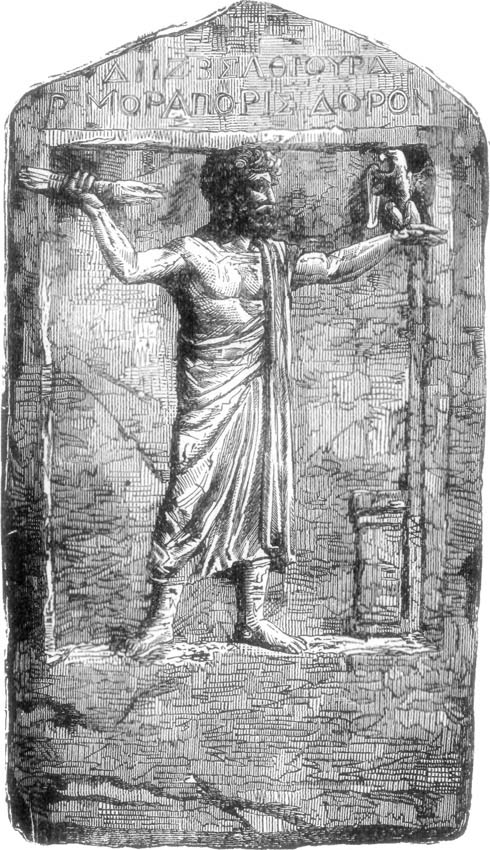
JUPITER (or Zeus with his Thunderbolt).ToList
So Nessos died, and Herakles went to the land of Trachis, and there Deianeira abode while he journeyed to the eastern sea. Many times the moon waxed and waned in the heaven, and the corn sprang up from the ground and gave its golden harvest, but Herakles came not back. At last the tidings came how he had done great deeds in distant lands, how Eurytos, the King of Œchalia, was slain, and how, among the captives, was the daughter of the King, the fairest of all the maidens of the land.
Then the words of Nessos came back to Deianeira, and she hastened to anoint a broidered robe, for she thought only that the love of Herakles had passed away from her, and that she must win it to herself again. So with words of love and honor, she sent the gift for Herakles to put on, and the messenger found him on the Keneian shore, where he was offering rich sacrifice to Zeus, his father, and gave him the broidered robe in token of the love of Deianeira. Then Herakles wrapt it closely round him, and he stood by the altar while the dark smoke went up in a thick cloud to the heaven. Presently the vengeance of Nessos was accomplished. Through the veins of Herakles the poison spread like devouring fire. Fiercer and fiercer grew the burning pain, and Herakles vainly strove to tear the robe and cast it from him. It ate into the flesh, and as he struggled in his agony, the dark blood gushed from his body in streams. Then came the maiden Iole to his side. With her gentle hands she sought to soothe his pain, and with pitying words to cheer him in his woe. Then once more the face of Herakles flushed with a deep joy, and his eye glanced with a pure light, as in the days of his might and strength, and he said, "Ah, Iole, brightest of maidens, thy voice shall cheer me as I sink down in the sleep of death. I loved thee in the bright morning time, when my hand was strong and my foot swift, but Zeus willed not that thou shouldst be with me in my long wanderings. Yet I grieve not now, for again thou hast come, fair as the soft clouds which gather round the dying sun." Then Herakles bade them bear him to the high crest of Oita and gather wood. So when all was ready, he lay down to rest, and they kindled the great pile. The black mists were spreading over the sky, but still Herakles sought to gaze on the fair face of Iole and to comfort her in her sorrow. "Weep not, Iole," he said, "my toil is done, and now is the time for rest. I shall see thee again in the bright land which is never trodden by the feet of night."
Blacker and blacker grew the evening shades, and only the long line of light broke the darkness which gathered round the blazing pile. Then from the high heaven came down the thick cloud, and the din of its thunder crashed through the air. So Zeus carried his child home, and the halls of Olympos were opened to welcome the bright hero who rested from his mighty toil. There the fair maiden, Arete, placed a crown upon his head, and Hebe clothed him in a white robe for the banquet of the gods.
ADMETOS.
There was high feasting in the halls of Pheres, because Admetos, his son, had brought home Alkestis, the fairest of all the daughters of Pelias, to be his bride. The minstrels sang of the glories of the house of Pherai, and of the brave deeds of Admetos—how, by the aid of the golden-haired Apollo, he had yoked the lion and the boar, and made them drag his chariot to Iolkos, for Pelias had said that only to one who came thus would he give his daughter, Alkestis, to be his wife. So the sound of mirth and revelry echoed through the hall, and the red wine was poured forth in honor of Zeus and all the gods, each by his name, but the name of Artemis was forgotten, and her wrath burned sore against the house of Admetos.
But one, mightier yet than Artemis, was nigh at hand to aid him, for Apollo, the son of Leto, served as a bondman in the house of Pheres, because he had slain the Cyclopes, who forged the thunderbolts of Zeus. No mortal blood flowed in his veins, but, though he could neither grow old nor die, nor could any of the sons of men do him hurt, yet all loved him for his gentle dealing, for all things had prospered in the land from the day when he came to the house of Admetos. And so it came to pass that when the sacrifice of the marriage feast was ended, he spake to Admetos, and said, "The anger of Artemis, my sister, is kindled against thee, and it may be that she will smite thee with her spear, which can never miss its mark. But thou hast been to me a kind task-master, and though I am here as thy bond-servant, yet have I power still with my father, Zeus, and I have obtained for thee this boon, that, if thou art smitten by the spear of Artemis, thou shalt not die, if thou canst find one who in thy stead will go down to the dark kingdom of Hades."
Many a time the sun rose up into the heaven and sank down to sleep beneath the western waters, and still the hours went by full of deep joy to Admetos and his wife, Alkestis, for their hearts were knit together in a pure love, and no cloud of strife spread its dark shadow over their souls. Once only Admetos spake to her of the words of Apollo, and Alkestis answered with a smile, "Where is the pain of death, my husband, for those who love truly? Without thee I care not to live; wherefore, to die for thee will be a boon."
Once again there was high feasting in the house of Admetos, for Herakles, the mighty son of Alkmene, had come thither as he journeyed through many lands, doing the will of the false Eurystheus. But, even as the minstrels sang the praises of the chieftains of Pherai, the flush of life faded from the face of Admetos, and he felt that the hour of which Apollo had warned him was come. But soon the blood came back tingling through his veins, when he thought of the sacrifice which alone could save him from the sleep of death. Yet what will not a man do for his life? and how shall he withstand when the voice of love pleads on his side? So once again the fair Alkestis looked lovingly upon him, as she said, "There is no darkness for me in the land of Hades, if only I die for thee," and even as she spake the spell passed from Admetos, and the strength of the daughter of Pelias ebbed slowly away.
The sound of mirth and feasting was hushed. The harps of the minstrels hung silent on the wall, and men spake in whispering voices, for the awful Moirai were at hand to bear Alkestis to the shadowy kingdom. On the couch lay her fair form, pale as the white lily which floats on the blue water, and beautiful as Eos when her light dies out of the sky in the evening. Yet a little while, and the strife was ended, and Admetos mourned in bitterness and shame for the love which he had lost.
Then the soul of the brave Herakles was stirred within him, and he sware that the Moirai should not win the victory. So he departed in haste, and far away in the unseen land he did battle with the powers of death, and rescued Alkestis from Hades, the stern and rugged King.
So once more she stood before Admetos, more radiant in her beauty than in former days, and once more in the halls of Pherai echoed the sound of high rejoicing, and the minstrels sang of the mighty deeds of the good and brave Herakles, as he went on his way from the home of Admetos to do in other lands the bidding of the fair mean Eurystheus.
EPIMETHEUS AND PANDORA.
There was strife between Zeus and men, for Prometheus stood forth on their side and taught them how they might withstand the new god who sat on the throne of Kronos; and he said, "O men, Zeus is greedy of riches and honor, and your flocks and herds will be wasted with burnt-offerings if ye offer up to Zeus the whole victim. Come and let us make a covenant with him, that there may be a fair portion for him and for men." So Prometheus chose out a large ox, and slew him and divided the body. Under the skin he placed the entrails and the flesh, and under the fat he placed the bones. Then he said, "Choose thy portion, O Zeus, and let that on which thou layest thine hands be thy share forever." So Zeus stretched forth his hand in haste, and placed it upon the fat, and fierce was his wrath when he found only the bare bones underneath it. Wherefore men offer up to the undying gods only the bones and fat of the victims that are slain.
Then in his anger Zeus sought how he might avenge himself on the race of men, and he took away from them the gift of fire, so that they were vexed by cold and darkness and hunger, until Prometheus brought them down fire which he had stolen from heaven. Then was the rage of Zeus still more cruel, and he smote Prometheus with his thunderbolts, and at his bidding Hermes bare him to the crags of Caucasus, and bound him with iron chains to the hard rock, where the vulture gnawed his heart with its beak.
But the wrath of Zeus was not appeased, and he sought how he might yet more vex the race of men; and he remembered how the Titan Prometheus had warned them to accept no gift from the gods, and how he left his brother Epimetheus to guard them against the wiles of the son of Kronos. And he said within himself, "The race of men knows neither sickness nor pain, strife or war, theft or falsehood; for all these evil things are sealed up in the great cask which is guarded by Epimetheus. I will let loose the evils, and the whole earth shall be filled with woe and misery."
So he called Hephaistos, the lord of fire, and he said, "Make ready a gift which all the undying gods shall give to the race of men. Take the earth, and fashion it into the shape of woman. Very fair let it be to look upon, but give her an evil nature, that the race of men may suffer for all the deeds that they have done to me." Then Hephaistos took the clay and moulded from it the image of a fair woman, and Athene clothed her in a beautiful robe, and placed a crown upon her head, from which a veil fell over her snowy shoulders. And Hermes, the messenger of Zeus, gave her the power of words, and a greedy mind, to cheat and deceive the race of men. Then Hephaistos brought her before the assembly of the gods, and they marveled at the greatness of her beauty; and Zeus took her by the hand and gave her to Epimetheus, and said, "Ye toil hard, ye children of men; behold one who shall soothe and cheer you when the hours of toil are ended. The undying gods have taken pity on you, because ye have none to comfort you; and woman is their gift to men, therefore is her name called Pandora."
Then Epimetheus forgot the warning of his brother, and the race of men did obeisance to Zeus, and received Pandora at his hands, for the greatness of her beauty enslaved the hearts of all who looked upon her. But they rejoiced not long in the gift of the gods, for Pandora saw a great cask on the threshold of the house of Epimetheus, and she lifted the lid, and from it came strife and war, plague and sickness, theft and violence, grief and sorrow. Then in her terror she set down the lid again upon the cask, and Hope was shut up within it, so that she could not comfort the race of men for the grievous evil which Pandora had brought upon them.
IO AND PROMETHEUS.
In the halls of Inachos, King of Argos, Zeus beheld and loved the fair maiden Io, but when Here, the Queen, knew it, she was very wroth, and sought to slay her. Then Zeus changed the maiden into a heifer, to save her from the anger of Here, but presently Here learned that the heifer was the maiden whom she hated, and she went to Zeus, and said, "Give me that which I shall desire," and Zeus answered, "Say on." Then Here said, "Give me the beautiful heifer which I see feeding in the pastures of King Inachos." So Zeus granted her prayer, for he liked not to confess what he had done to Io to save her from the wrath of Here, and Here took the heifer and bade Argos, with the hundred eyes, watch over it by night and by day.
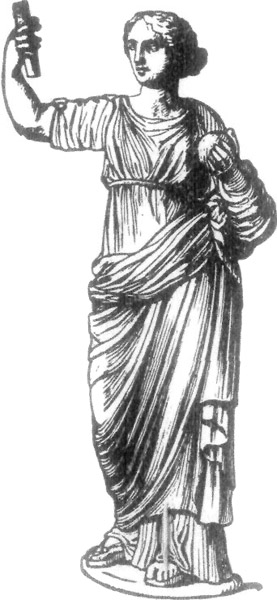
THALIA.ToList
Long time Zeus sought how he might deliver the maiden from the vengeance of Here, but he strove in vain, for Argos never slept, and his hundred eyes saw everything around him, and none could approach without being seen and slain. At the last Zeus sent Hermes, the bright messenger of the gods, who stole gently towards Argos, playing soft music on his lute. Soothingly the sweet sounds fell upon his ear, and a deep sleep began to weigh down his eyelids, until Argos, with the hundred eyes, lay powerless before Hermes. Then Hermes drew his sharp sword, and with a single stroke he smote off his head, wherefore men call him the slayer of Argos, with the hundred eyes. But the wrath of Here was fiercer than ever when she learned that her watchman was slain, and she sware that the heifer should have no rest, but wander in terror and pain from land to land. So she sent a gad-fly to goad the heifer with its fiery sting over hill and valley, across sea and river, to torment her if she lay down to rest, and madden her with pain when she sought to sleep. In grief and madness she fled from the pastures of Inachos, past the city of Erechtheus into the land of Kadmos, the Theban. On and on still she went, resting not by night or day, through the Dorian and Thessalian plains, until at last she came to the wild Thrakian land. Her feet bled on the sharp stones, her body was torn by the thorns and brambles, and tortured by the stings of the fearful gad-fly. Still she fled on and on, while the tears streamed often down her cheeks, and her moaning showed the greatness of her agony. "O Zeus," she said, "dost thou not see me in my misery? Thou didst tell me once of thy love, and dost thou suffer me now to be driven thus wildly from land to land, without hope of comfort or rest? Slay me at once, I pray thee, or suffer me to sink into the deep sea, that so I may put off the sore burden of my woe."
But Io knew not that, while she spake, one heard her who had suffered even harder things from Zeus. Far above her head, towards the desolate crags of Caucasus, the wild eagle soared shrieking in the sky, and the vulture hovered near, as though waiting close to some dying man till death should leave him for its prey. Dark snow-clouds brooded heavily on the mountain, the icy wind crept lazily through the frozen air, and Io thought that the hour of her death was come. Then, as she raised her head, she saw far off a giant form, which seemed fastened by nails to the naked rock, and a low groan reached her ear, as of one in mortal pain, and she heard a voice which said, "Whence comest thou, daughter of Inachos, into this savage wilderness? Hath the love of Zeus driven thee thus to the icy corners of the earth?" Then Io gazed at him in wonder and awe, and said, "How dost thou know my name and my sorrows? and what is thine own wrong? Tell me (if it is given to thee to know) what awaits thee and me in the time to come, for sure I am that thou art no mortal man. Thy giant form is as the form of gods or heroes, who come down sometimes to mingle with the sons of men, and great must be the wrath of Zeus, that thou shouldst be thus tormented here." Then he said, "Maiden, thou seest the Titan Prometheus, who brought down fire for the children of men, and taught them how to build themselves houses and till the earth, and how to win for themselves food and clothing. I gave them wise thoughts and good laws and prudent counsel, and raised them from the life of beasts to a life which was fit for speaking men. But the son of Kronos was afraid at my doings, lest, with the aid of men, I might hurl him from his place and set up new gods upon his throne. So he forgot all my good deeds in times past, how I had aided him when the earth-born giants sought to destroy his power and heaped rock on rock and crag on crag to smite him on his throne, and he caught me by craft, telling me in smooth words how that he was my friend, and that my honor should not fail in the halls of Olympos. So he took me unawares and bound me with iron chains, and bade Hephaistos take and fasten me to this mountain-side, where the frost and wind and heat scorch and torment me by day and night, and the vulture gnaws my heart with its merciless beak. But my spirit is not wholly cast down, for I know that I have done good to the sons of men, and that they honor the Titan Prometheus, who has saved them from cold and hunger and sickness. And well I know, also, that the reign of Zeus shall one day come to an end, and that another shall sit at length upon his throne, even as now he sits on the throne of his father, Kronos. Hither come, also, those who seek to comfort me, and thou seest before thee the daughters of Okeanos, who have but now left the green halls of their father to talk with me. Listen, then, to me, daughter of Inachos, and I will tell thee what shall befall thee in time to come. Hence from the ice-bound chain of Caucasus thou shalt roam into the Scythian land and the regions of Chalybes. Thence thou shalt come to the dwelling-place of the Amazons, on the banks of the river Thermodon; these shall guide thee on thy way, until at length thou shalt come to a strait, which thou wilt cross, and which shall tell by its name forever where the heifer passed from Europe into Asia. But the end of thy wanderings is not yet."
Then Io could no longer repress her grief, and her tears burst forth afresh; and Prometheus said, "Daughter of Inachos, if thou sorrowest thus at what I have told thee, how wilt thou bear to hear what beyond these things there remains for thee to do?" But Io said, "Of what use is it, O Titan, to tell me of these woeful wanderings? Better were it now to die and be at rest from all this misery and sorrow." "Nay, not so, O maiden of Argos," said Prometheus, "for if thou livest, the days will come when Zeus shall be cast down from his throne, and the end of his reign shall also be the end of my sufferings. For when thou hast passed by the Thrakian Bosporos into the land of Asia, thou wilt wander on through many regions, where the Gorgons dwell, and the Arimaspians and Ethiopians, until at last thou shalt come to the three-cornered land where the mighty Nile goes out by its many arms into the sea. There shall be thy resting-place, and there shall Epaphos, thy son, be born, from whom, in times yet far away, shall spring the great Herakles, who shall break my chain and set me free from my long torments. And if in this thou doubtest my words, I can tell thee of every land through which thou hast passed on thy journey hither; but it is enough if I tell thee how the speaking oaks of Dodona hailed thee as one day to be the wife of Zeus and the mother of the mighty Epaphos. Hasten, then, on thy way, daughter of Inachos. Long years of pain and sorrow await thee still, but my griefs shall endure for many generations. It avails not now to weep, but this comfort thou hast, that thy lot is happier than mine, and for both of us remains the surety that the right shall at last conquer, and the power of Zeus shall be brought low, even as the power of Kronos, whom he hurled from his ancient throne. Depart hence quickly, for I see Hermes, the messenger, drawing nigh, and perchance he comes with fresh torments for thee and me."
So Io went on her weary road, and Hermes drew nigh to Prometheus, and bade him once again yield himself to the will of the mighty Zeus. But Prometheus laughed him to scorn, and as Hermes turned to go away, the icy wind came shrieking through the air, and the dark cloud sank lower and lower down the hillside, until it covered the rock on which the body of the Titan was nailed, and the great mountain heaved with the earthquake, and the blazing thunderbolts darted fearfully through the sky. Brighter and brighter flashed the lightning, and louder pealed the thunder in the ears of Prometheus, but he quailed not for all the fiery majesty of Zeus, and still, as the storm grew fiercer and the curls of fire were wreathed around his form, his voice was heard amid the din and roar, and it spake of the day when the good shall triumph and unjust power shall be crushed and destroyed forever.
DEUKALION.
From his throne on the high Olympos, Zeus looked down on the children of men, and saw that everywhere they followed only their lusts, and cared nothing for right or for law. And ever, as their hearts waxed grosser in their wickedness, they devised for themselves new rites to appease the anger of the gods, till the whole earth was filled with blood. Far away in the hidden glens of the Arcadian hills the sons of Lykaon feasted and spake proud words against the majesty of Zeus, and Zeus himself came down from his throne to see their way and their doings.
The sun was sinking down in the sky when an old man drew nigh to the gate of Lykosoura. His gray locks streamed in the breeze, and his beard fell in tangled masses over his tattered mantle. With staff in hand he plodded wearily on his way, listening to the sound of revelry which struck upon his ear. At last he came to the Agora, and the sons of Lykaon crowded round him. "So the wise seer is come," they said; "what tale hast thou to tell us, old man? Canst thou sing of the days when the earth came forth from Chaos? Thou art old enough to have been there to see." Then with rude jeering they seized him and placed him on the ground near the place where they were feasting. "We have done a great sacrifice to Zeus this day, and thy coming is timely, for thou shalt share the banquet." So they placed before him a dish, and the food that was in it was the flesh of man, for with the blood of men they thought to turn aside the anger of the gods. But the old man thrust aside the dish, and, as he rose up, the weariness of age passed away from his face, and the sons of Lykaon were scorched by the glory of his countenance, for Zeus stood before them and scathed them all with his lightnings, and their ashes cumbered the ground.
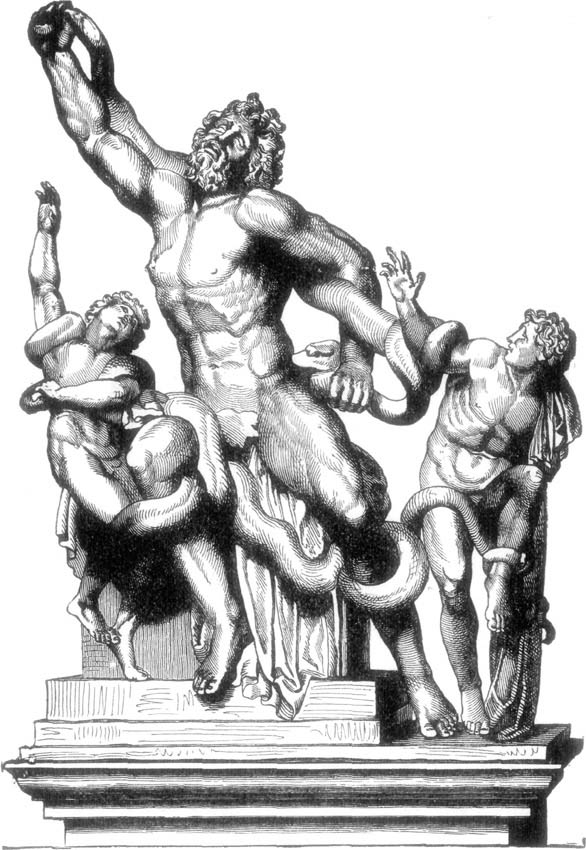
LAOCOON, THE FALSE PRIEST. (Sculptured 3000 years ago.)ToList
Then Zeus returned to his home on Olympos, and he gave the word that a flood of waters should be let loose upon the earth, that the sons of men might die for their great wickedness. So the west wind rose in his might, and the dark rain-clouds veiled the whole heaven, for the winds of the north which drive away the mists and vapors were shut up in their prison-house. On the hill and valley burst the merciless rain, and the rivers, loosened from their courses, rushed over the wide plains and up the mountain-side. From his home on the highlands of Phthia, Deukalion looked forth on the angry sky, and, when he saw the waters swelling in the valleys beneath, he called Pyrrha, his wife, the daughter of Epimetheus, and said to her, "The time is come of which my father, the wise Prometheus, forewarned me. Make ready, therefore, the ark which I have built, and place in it all that we may need for food while the flood of waters is out upon the earth. Far away on the crags of Caucasus the iron nails rend the flesh of Prometheus, and the vulture gnaws his heart, but the words which he spake are being fulfilled, that for the wickedness of men the flood of waters would come upon the earth, for Zeus himself is but the servant of one that is mightier than he, and must do his bidding."
Then Pyrrha hastened to make all things ready, and they waited until the waters rose up to the highlands of Phthia and floated away the ark of Deukalion. The fishes swam amidst the old elm groves, and twined amongst the gnarled boughs of the oaks, while on the face of the waters were tossed the bodies of men, and Deukalion looked on the dead faces of stalwart warriors, of maidens, and of babes, as they rose and fell upon the heaving waves. Eight days the ark was borne on the flood, while the waters covered the hills, and all the children of men died save a few who found a place of shelter on the summit of the mountains. On the ninth day the ark rested on the heights of Parnassos, and Deukalion, with his wife Pyrrha, stepped forth upon the desolate earth. Hour by hour the waters fled down the valleys, and dead fishes and sea-monsters lay caught in the tangled branches of the forest. But, far as the eye could reach, there was no sign of living thing, save of the vultures who wheeled in circles through the heaven to swoop upon their prey, and Deukalion looked on Pyrrha, and their hearts were filled with a grief which can not be told. "We know not," he said, "whether there live any one of all the sons of men, or in what hour the sleep of death may fall upon us. But the mighty being who sent the flood has saved us from its waters; to him let us build an altar and bring our thankoffering." So the altar was built and Zeus had respect to the prayer of Deukalion, and presently Hermes, the messenger, stood before him. "Ask what thou wilt," he said, "and it shall be granted thee, for in thee alone of all the sons of men hath Zeus found a clean hand and a pure heart." Then Deukalion bowed himself before Hermes, and said, "The whole earth lies desolate; I pray thee, let men be seen upon it once more." "Even so shall it come to pass," said Hermes, "if ye will cover your faces with your mantles and cast the bones of your mother behind you as ye go upon your way."
So Hermes departed to the home of Zeus, and Deukalion pondered his words, till the wisdom of his father, Prometheus, showed him that his mother was the earth, and that they were to cast the stones behind them as they went down from Parnassos. Then they did each as they were bidden, and the stones which Deukalion threw were turned into men, but those which were thrown by Pyrrha became women, and the people which knew neither father nor mother went forth to their toil throughout the wide earth. The sun shone brightly in the heaven and dried up the slime beneath them; yet was their toil but a weary labor, and so hath it been until this day—a struggle hard as the stones from which they have been taken.
But as the years passed on, there were children born to Pyrrha and Deukalion, and the old race of men still lived on the heights of Phthia. From Helen their son, sprang the mighty tribes of the Hellenes, and from Protogeneia, their daughter, was born Aethlios, the man of toil and suffering, the father of Endymion, the fair, who sleeps on the hill of Latmos.
POSEIDON AND ATHENE.
Near the banks of the stream Kephisos, Erechtheus had built a city in a rocky and thin-soiled land. He was the father of a free and brave people, and though his city was small and humble, yet Zeus, by his wisdom, foresaw that one day it would become the noblest of all cities throughout the wide earth. And there was a strife between Poseidon, the lord of the sea, and Athene, the virgin child of Zeus, to see by whose name the city of Erechtheus should be called. So Zeus appointed a day in which he would judge between them in presence of the great gods who dwell on high Olympos.
When the day was come, the gods sat each on his golden throne, on the banks of the stream Kephisos. High above all was the throne of Zeus, the great father of gods and men, and by his side sat Here, the Queen. This day even the sons of men might gaze upon them, for Zeus had laid aside his lightnings, and all the gods had come down in peace to listen to his judgment between Poseidon and Athene. There sat Phœbus Apollo with his golden harp in his hand. His face glistened for the brightness of his beauty, but there was no anger in his gleaming eye, and idle by his side lay the unerring spear, with which he smites all who deal falsely and speak lies. There, beside him, sat Artemis, his sister, whose days were spent in chasing the beasts of the earth and in sporting with the nymphs on the reedy banks of Eurotas. There, by the side of Zeus, sat Hermes, ever bright and youthful, the spokesman of the gods, with staff in hand, to do the will of the great father. There sat Hephaistos, the lord of fire, and Hestia, who guards the hearth. There, too, was Ares, who delights in war, and Dionysos, who loves the banquet and the wine-cup, and Aphrodite, who rose from the sea-foam, to fill the earth with laughter and woe.
Before them all stood the great rivals, awaiting the judgment of Zeus. High in her left hand, Athene held the invincible spear, and on her ægis, hidden from mortal sight, was the face on which no man may gaze and live. Close beside her, proud in the greatness of his power, Poseidon waited the issue of the contest. In his right hand gleamed the trident, with which he shakes the earth and cleaves the waters of the sea.
Then, from his golden seat, rose the spokesman, Hermes, and his clear voice sounded over all the great council. "Listen," he said, "to the will of Zeus, who judges now between Poseidon and Athene. The city of Erechtheus shall bear the name of that god who shall bring forth out of the earth the best gift for the sons of men. If Poseidon do this, the city shall be called Poseidonia, but if Athene brings the higher gift it shall be called Athens."
Then King Poseidon rose up in the greatness of his majesty, and with his trident he smote the earth where he stood. Straightway the hill was shaken to its depths, and the earth clave asunder, and forth from the chasm leaped a horse, such as never shall be seen again for strength and beauty. His body shone white all over as the driven snow, his mane streamed proudly in the wind as he stamped on the ground and scoured in very wantonness over hill and valley. "Behold my gift," said Poseidon, "and call the city after my name. Who shall give aught better than the horse to the sons of men?"
But Athene looked steadfastly at the gods with her keen gray eye, and she stooped slowly down to the ground, and planted in it a little seed, which she held in her right hand. She spoke no word, but still gazed calmly on that great council. Presently they saw springing from the earth a little germ, which grew up and threw out its boughs and leaves. Higher and higher it rose, with all its thick green foliage, and put forth fruit on its clustering branches. "My gift is better, O Zeus," she said, "than that of King Poseidon. The horse which he has given shall bring war and strife and anguish to the children of men; my olive-tree is the sign of peace and plenty, of health and strength, and the pledge of happiness and freedom. Shall not, then, the city of Erechtheus be called after my name?"
Then with one accord rose the voices of the gods in the air, as they cried out, "The gift of Athene is the best which may be given to the sons of men; it is the token that the city of Erechtheus shall be greater in peace than in war, and nobler in its freedom than its power. Let the city be called Athens."
Then Zeus, the mighty son of Kronos, bowed his head in sign of judgment that the city should be called by the name of Athene. From his head the immortal locks streamed down, and the earth trembled beneath his feet as he rose from his golden throne to return to the halls of Olympos. But still Athene stood gazing over the land which was now her own; and she stretched out her spear towards the city of Erechtheus, and said: "I have won the victory, and here shall be my home. Here shall my children grow up in happiness and freedom, and hither shall the sons of men come to learn of law and order. Here shall they see what great things may be done by mortal hands when aided by the gods who dwell on Olympos, and when the torch of freedom has gone out at Athens, its light shall be handed on to other lands, and men shall learn that my gift is still the best, and they shall say that reverence for law and freedom of thought and deed has come to them from the city of Erechtheus, which bears the name of Athene."
MEDUSA.
In the far western land, where the Hesperides guard the golden apples which Gaia gave to the lady Here, dwelt the maiden Medusa, with her sisters Stheino and Euryale, in their lonely and dismal home. Between them and the land of living men flowed the gentle stream of ocean, so that only the name of the Gorgon sisters was known to the sons of men, and the heart of Medusa yearned in vain to see some face which might look on her with love and pity, for on her lay the doom of death, but her sisters could neither grow old nor die. For them there was nothing fearful in the stillness of their gloomy home, as they sat with stern, unpitying faces, gazing on the silent land beyond the ocean stream. But Medusa wandered to and fro, longing to see something new in a home to which no change ever came, and her heart pined for lack of those things which gladden the souls of mortal men. For where she dwelt there was neither day nor night. She never saw the bright children of Helios driving his flocks to their pastures in the morning. She never beheld the stars as they look out from the sky, when the sun sinks down into his golden cup in the evening. There no clouds ever passed across the heaven, no breeze ever whispered in the air, but a pale yellow light brooded on the land everlastingly. So there rested on the face of Medusa a sadness such as the children of men may never feel; and the look of hopeless pain was the more terrible because of the greatness of her beauty. She spake not to any of her awful grief, for her sisters knew not of any such thing as gentleness and love, and there was no comfort for her from the fearful Graiai who were her kinsfolk. Sometimes she sought them out in their dark caves, for it was something to see even the faint glimmer of the light of day which reached the dwelling of the Graiai, but they spake not to her a word of hope when she told them of her misery, and she wandered back to the land which the light of Helios might never enter. Her brow was knit with pain, but no tear wetted her cheek, for her grief was too great for weeping.
But harder things yet were in store for Medusa, for Athene, the daughter of Zeus, came from the Libyan land to the dwelling of the Gorgon sisters, and she charged Medusa to go with her to the gardens where the children of Hesperos guard the golden apples of the lady Here. Then Medusa bowed herself down at the feet of Athene, and besought her to have pity on her changeless sorrow, and she said, "Child of Zeus, thou dwellest with thy happy kinsfolk, where Helios gladdens all with his light and the Horai lead the glad dance when Phœbus touches the strings of his golden harp. Here there is neither night nor day, nor cloud or breeze or storm. Let me go forth from this horrible land and look on the face of mortal men, for I, too, must die, and my heart yearns for the love which my sisters scorn." Then Athene looked on her sternly, and said, "What hast thou to do with love? and what is the love of men for one who is of kin to the beings who may not die? Tarry here till thy doom is accomplished, and then it may be that Zeus will grant thee a place among those who dwell in his glorious home." But Medusa said, "Lady, let me go forth now. I can not tell how many ages may pass before I die, and thou knowest not the yearning which fills the heart of mortal things for tenderness and love." Then a look of anger came over the fair face of Athene, and she said, "Trouble me not. Thy prayer is vain, and the sons of men would shrink from thee, if thou couldst go among them, for hardly could they look on the woeful sorrow of thy countenance." But Medusa answered, gently, "Lady, hope has a wondrous power to kill the deepest grief, and in the pure light of Helios my face may be as fair as thine."
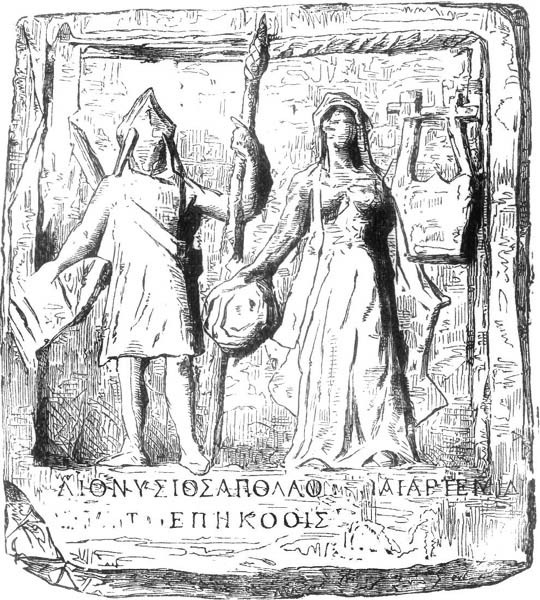
GRECIAN ALTAR. (3000 years old.)ToList
Then the anger of Athene became fiercer still, and she said, "Dost thou dare to vie with me? I stand by the side of Zeus, to do his will, and the splendor of his glory rests upon me, and what art thou, that thou shouldst speak to me such words as these? Therefore, hear thy doom. Henceforth, if mortal man ever look upon thee, one glance of thy face shall turn him to stone. Thy beauty shall still remain, but it shall be to thee the blackness of death. The hair which streams in golden tresses over thy fair shoulders shall be changed into hissing snakes, which shall curl and cluster round thy neck. On thy countenance shall be seen only fear and dread, that so all mortal things which look on thee may die." So Athene departed from her, and the blackness of the great horror rested on the face of Medusa, and the hiss of the snakes was heard as they twined around her head and their coils were wreathed about her neck. Yet the will of Athene was not wholly accomplished, for the heart of Medusa was not changed by the doom which gave to her face its deadly power, and she said, "Daughter of Zeus, there is hope yet, for thou hast left me mortal still, and, one day, I shall die."
DANAE.
From the home of Phœbus Apollo, at Delphi, came words of warning to Akrisios, the King of Argos, when he sent to ask what should befall him in the after days, and the warning was that he should be slain by the son of his daughter, Danae. So the love of Akrisios was changed towards his child, who was growing up fair as the flowers of spring, in her father's house, and he shut her up in a dungeon, caring nothing for her wretchedness. But the power of Zeus was greater than the power of Akrisios, and Danae became the mother of Perseus, and they called her child the Son of the Bright Morning, because Zeus had scattered the darkness of her prison-house. Then Akrisios feared exceedingly, and he spake the word that Danae and her child should die.
The first streak of day was spreading its faint light in the eastern sky when they led Danae to the sea-shore, and put her in a chest, with a loaf of bread and a flask of water. Her child slept in her arms, and the rocking of the waves, as they bore the chest over the heaving sea, made him slumber yet more sweetly, and the tears of Danae fell on him as she thought of the days that were past and the death which she must die in the dark waters. And she prayed to Zeus, and said, "O Zeus, who hast given me my child, canst thou hear me still and save me from this terrible doom?" Then a deep sleep came over Danae, and, as she slept with the babe in her arms, the winds carried the chest at the bidding of Poseidon, and cast it forth on the shore of the island of Seriphos.
Now it so chanced that Diktys, the brother of Polydektes, the King of the Island, was casting a net into the sea, when he saw something thrown up by the waves on the dry land, and he went hastily and took Danae with her child out of the chest, and said, "Fear not, lady, no harm shall happen to thee here, and they who have dealt hardly with thee shall not come nigh to hurt thee in this land." So he led her to the house of King Polydektes, who welcomed her to his home, and Danae had rest after all her troubles.
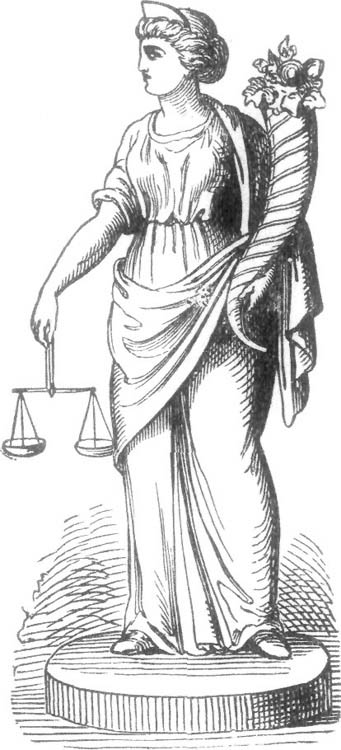
THEMIS (Goddess of Law).ToList
Thus the time went on, and the child Perseus grew up brave and strong, and all who saw him marveled at his beauty. The light of early morning is not more pure than was the color on his fair cheeks, and the golden locks streamed brightly over his shoulders, like the rays of the sun when they rest on the hills at midday. And Danae said, "My child, in the land where thou wast born, they called thee the Son of the Bright Morning. Keep thy faith, and deal justly with all men; so shalt thou deserve the name which they gave thee." Thus Perseus grew up, hating all things that were mean and wrong, and all who looked on him knew that his hands were clean and his heart pure.
But there were evil days in store for Danae—for King Polydektes sought to win her love against her will. Long time he besought her to hearken to his prayer, but her heart was far away in the land of Argos, where her child was born, and she said, "O King, my life is sad and weary; what is there in me that thou shouldst seek my love? There are maidens in thy kingdom fairer far than I; leave me, then, to take care of my child while we dwell in a strange land." Then Polydektes said, hastily, "Think not, lady, to escape me thus. If thou wilt not hearken to my words, thy child shall not remain with thee, but I will send him forth far away into the western land, that he may bring me the head of the Gorgon Medusa."
So Danae sat weeping when Polydektes had left her, and when Perseus came he asked her why she mourned and wept, and he said, "Tell me, my mother, if the people of this land have done thee wrong, and I will take a sword in my hand and smite them." Then Danae answered, "Many toils await thee in time to come, but here thou canst do nothing. Only be of good courage, and deal truly, and one day thou shalt be able to save me from my enemies."
Still, as the months went on, Polydektes sought to gain the love of Danae, until at last he began to hate her because she would not listen to his prayer. And he spake the word, that Perseus must go forth to slay Medusa, and that Danae must be shut up in a dungeon until the boy should return from the land of the Graiai and the Gorgons.
So once more Danae lay within a prison, and the boy Perseus came to bid her farewell before he set out on his weary journey. Then Danae folded her arms around him, and looked sadly into his eyes, and said, "My child, whatever a mortal man can do for his mother, that, I know, thou wilt do for me, but I can not tell whither thy long toils shall lead thee, save that the land of the Gorgons lies beyond the slow-rolling stream of Ocean. Nor can I tell how thou canst do the bidding of Polydektes, for Medusa alone of the Gorgon sisters may grow old and die, and the deadly snakes will slay those who come near, and one glance of her woeful eye can turn all mortal things to stone. Once, they say, she was fair to look upon, but the lady Athene has laid on her a dark doom, so that all who see the Gorgon's face must die. It may be, Perseus, that the heart of Medusa is full rather of grief than hatred, and that not of her own will the woeful glare of her eye changes all mortal things into stone, and, if so it be, then the deed which thou art charged to do shall set her free from a hateful life, and bring to her some of those good things for which now she yearns in vain. Go, then, my child, and prosper. Thou hast a great warfare before thee, and though I know not how thou canst win the victory, yet I know that true and fair dealing gives a wondrous might to the children of men, and Zeus will strengthen the arm of those who hate treachery and lies."
Then Perseus bade his mother take courage, and vowed a vow that he would not trust in craft and falsehood, and he said, "I know not, my mother, the dangers and the foes which await me, but be sure that I will not meet them with any weapons which thou wouldst scorn. Only, as the days and months roll on, think not that evil has befallen me, for there is hope within me that I shall be able to do the bidding of Polydektes and to bear thee hence to our Argive land." So Perseus went forth with a good courage to seek out the Gorgon Medusa.
PERSEUS.
The east wind crested with a silvery foam the waves of the sea of Helle, when Perseus went into the ship which was to bear him away from Seriphos. The white sail was spread to the breeze, and the ship sped gaily over the heaving waters. Soon the blue hills rose before them, and as the sun sank down in the west, Perseus trod once more the Argive land.
But there was no rest for him now in his ancient home. On and on, through Argos and other lands, he must wander in search of the Gorgon, with nothing but his strong heart and his stout arm to help him. Yet for himself he feared not, and if his eyes filled with tears, it was only because he thought of his mother, Danae; and he said within himself, "O, my mother, I would that thou wert here. I see the towers of the fair city where Akrisios still is King. I see the home which thou longest to behold, and which now I may not enter, but one day I shall bring thee hither in triumph, when I come to win back my birthright."
Brightly before his mind rose the vision of the time to come, as he lay down to rest beneath the blue sky, but when his eyes were closed in sleep, there stood before him a vision yet more glorious, for the lady Athene was come from the home of Zeus, to aid the young hero as he set forth on his weary labor. Her face gleamed with a beauty such as is not given to the daughters of men. But Perseus feared not because of her majesty, for the soft spell of sleep lay on him, and he heard her words as she said, "I am come down from Olympos, where dwells my father, Zeus, to help thee in thy mighty toil. Thou art brave of heart and strong of hand, but thou knowest not the way which thou shouldst go, and thou hast no weapons with which to slay the Gorgon Medusa. Many things thou needest, but only against the freezing stare of the Gorgon's face can I guard thee now. On her countenance thou canst not look and live, and even when she is dead, one glance of that fearful face will still turn all mortal things to stone. So, when thou drawest nigh to slay her, thine eye must not rest upon her. Take good heed, then, to thyself, for while they are awake the Gorgon sisters dread no danger, for the snakes which curl around their heads warn them of every peril. Only while they sleep canst thou approach them, and the face of Medusa, in life or in death, thou must never see. Take, then, this mirror, into which thou canst look, and when thou beholdest her image there, then nerve thy heart and take thine aim, and carry away with thee the head of the mortal maiden. Linger not in thy flight, for her sisters will pursue after thee, and they can neither grow old nor die."
So Athene departed from him, and early in the morning he saw by his side the mirror which she had given to him, and he said, "Now I know that my toil is not in vain, and the help of Athene is a pledge of yet more aid in time to come." So he journeyed on with a good heart over hill and dale, across rivers and forests, towards the setting of the sun. Manfully he toiled on, till sleep weighed heavy on his eyes, and he lay down to rest on a broad stone in the evening. Once more before him stood a glorious form. A burnished helmet glistened on his head, a golden staff was in his hand, and on his feet were the golden sandals, which bore him through the air with a flight more swift than the eagle's. And Perseus heard a voice which said, "I am Hermes, the messenger of Zeus, and I come to arm thee against thine enemies. Take this sword, which slays all mortal things on which it may fall, and go on thy way with a cheerful heart. A weary road yet lies before thee, and for many a long day must thou wander on before thou canst have other help in thy mighty toil. Far away, towards the setting of the sun, lies the Tartessian land, whence thou shalt see the white-crested mountains where Atlas holds up the pillars of the heaven. There must thou cross the dark waters, and then thou wilt find thyself in the land of the Graiai, who are of kin to the Gorgon sisters, and thou wilt see no more the glory of Helios, who gladdens the homes of living men. Only a faint light from the far-off sun comes dimly to the desolate land where, hidden in the gloomy cave, lurk the hapless Graiai. These thou must seek out, and when thou hast found them, fear them not. Over their worn and wrinkled faces stream tangled masses of long gray hair, their voice comes hollow from their toothless gums, and a single eye is passed from one to the other when they wish to look forth from their dismal dwelling. Seek them out, for these alone can tell thee what more remaineth yet for thee to do."
When Perseus woke in the morning, the sword of Hermes lay beside him, and he rose up with great joy, and said, "The help of Zeus fails me not; if more is needed will he not grant it to me?" So onward he went to the Tartessian land, and thence across the dark sea towards the country of the Graiai, till he saw the pillars of Atlas rise afar off into the sky. Then, as he drew nigh to the hills which lay beneath them, he came to a dark cave, and as he stooped to look into it, he fancied that he saw the gray hair which streamed over the shoulders of the Graiai. Long time he rested on the rocks without the cave, till he knew by their heavy breathing that the sisters were asleep. Then he crept in stealthily, and took the eye which lay beside them, and waited till they should wake. At last, as the faint light from the far-off sun, who shines on mortal men, reached the cave, he saw them groping for the eye which he had taken, and presently, from their toothless jaws, came a hollow voice, which said, "There is some one near us who is sprung from the children of men, for of old time we have known that one should come and leave us blind until we did his bidding." Then Perseus came forth boldly and stood before them, and said, "Daughters of Phorkos and of Keto, I know that ye are of kin to the Gorgon sisters, and to these ye must now guide me. Think not to escape my craft or guile, for in my hands is the sword of Hermes, and it slays all living things on which it may fall." And they answered, quickly, "Slay us not, child of man, for we will deal truly by thee, and will tell thee of the things which must be done before thou canst reach the dwelling of the Gorgon sisters. Go hence along the plain which stretches before thee, then over hill and vale, and forest and desert, till thou comest to the slow-rolling Ocean stream; there call on the nymphs who dwell beneath the waters, and they shall rise at thy bidding and tell thee many things which it is not given to us to know."
Onwards again he went, across the plain, and over hill and vale till he came to the Ocean which flows lazily round the world of living men. No ray of the pure sunshine pierced the murky air, but the pale yellow light, which broods on the land of the Gorgons, showed to him the dark stream, as he stood on the banks and summoned the nymphs to do his bidding. Presently they stood before him, and greeted him by his name, and they said, "O Perseus, thou art the first of living men whose feet have trodden this desolate shore. Long time have we known that the will of Zeus would bring thee hither to accomplish the doom of the mortal Medusa. We know the things of which thou art in need, and without us thy toil would in very truth be vain. Thou hast to come near to beings who can see all around them, for the snakes which twist about their heads are their eyes, and here is the helmet of Hades, which will enable thee to draw nigh to them unseen. Thou hast the sword which never falls in vain; but without this bag which we give thee, thou canst not bear away the head, the sight of which changes all mortal things to stone. And when thy work of death is done on the mortal maiden, thou must fly from her sisters who can not die, and who will follow thee more swiftly than eagles, and here are the sandals which shall waft thee through the air more quickly than a dream. Hasten, then, child of Danae, for we are ready to bear thee in our hands across the Ocean stream."
So they bare Perseus to the Gorgon land, and he journeyed on in the pale yellow light which rests upon it everlastingly.
On that night, in the darkness of their lonesome dwelling, Medusa spake to her sisters of the doom which should one day be accomplished, and she said, "Sisters, ye care little for the grief whose image on my face turns all mortal things to stone. Ye who know not old age or death, know not the awful weight of my agony, and can not feel the signs of the change that is coming. But I know them. The snakes which twine around my head warn me not in vain; but they warn me against perils which I care not now to shun. The wrath of Athene, who crushed the faint hopes which lingered in my heart, left me mortal still, and I am weary with the woe of the ages that are past. O sisters, ye know not what it is to pity, but something more, ye know what it is to love, for even in this living tomb we have dwelt together in peace, and peace is of kin to love. But hearken to me now. Mine eyes are heavy with sleep, and my heart tells me that the doom is coming, for I am but a mortal maiden, and I care not if the slumber which is stealing on me be the sleep of those whose life is done. Sisters, my lot is happier at the least than yours, for he who slays me is my friend. I am weary of my woe, and it may be that better things await me when I am dead."
But even as Medusa spake, the faces of Stheino and Euryale remained unchanged, and it seemed as though for them the words of Medusa were but an empty sound. Presently the Gorgon sisters were all asleep. The deadly snakes lay still and quiet, and only the breath which hissed from their mouths was heard throughout the cave.
Then Perseus drew nigh, with the helmet of Hades on his head, and the sandals of the nymphs on his feet. In his right hand was the sword of Hermes, and in his left the mirror of Athene. Long time he gazed on the image of Medusa's face, which still showed the wreck of her ancient beauty, and he said within himself, "Mortal maiden, well may it be that more than mortal woe should give to thy countenance its deadly power. The hour of thy doom is come, but death to thee must be a boon." Then the sword of Hermes fell, and the great agony of Medusa was ended. So Perseus cast a veil over the dead face, and bare it away from the cave in the bag which the nymphs gave him on the banks of the slow-rolling Ocean.
ANDROMEDA.
Terrible was the rage of the Gorgon sisters when they woke up from their sleep and saw that the doom of Medusa had been accomplished. The snakes hissed as they rose in knotted clusters round their heads, and the Gorgons gnashed their teeth in fury, not for any love of the mortal maiden whose woes were ended, but because a child of weak and toiling men had dared to approach the daughters of Phorkos and Keto. Swifter than the eagles they sped from their gloomy cave, but they sought in vain to find Perseus, for the helmet of Hades was on his head, and the sandals of the nymphs were bearing him through the air like a dream. Onwards he went, not knowing whither he was borne, for he saw but dimly through the pale yellow light which brooded on the Gorgon land everlastingly; but presently he heard a groan as from one in mortal pain, and before him he beheld a giant form, on whose head rested the pillars of the heaven, and he heard a voice, which said, "Hast thou slain the Gorgon Medusa, child of man, and art thou come to rid me of my long woe? Look on me, for I am Atlas, who rose up with the Titans against the power of Zeus, when Prometheus fought on his side; and of old time have I known that for me is no hope of rest till a mortal man should bring hither the Gorgon head which can turn all living things to stone. For so was it shown to me from Zeus, when he made me bow down beneath the weight of the brazen heaven. Yet, if thou hast slain Medusa, Zeus hath been more merciful to me than to Prometheus who was his friend, for he lies nailed on the rugged crags of Caucasus, and only thy child in the third generation shall scare away the vulture which gnaws his heart, and set the Titan free. But hasten now, Perseus, and let me look on the Gorgon's face, for the agony of my labor is well nigh greater than I can bear." So Perseus hearkened to the words of Atlas, and he unveiled before him the dead face of Medusa. Eagerly he gazed for a moment on the changeless countenance, as though beneath the blackness of great horror he could yet see the wreck of her ancient beauty and pitied her for her hopeless woe. But in an instant the straining eyes were closed, the heaving breast was still, the limbs which trembled with the weight of heaven were still and cold, and it seemed to Perseus, as he rose again into the pale yellow air, that the gray hairs which streamed from the giant's head were like the snow which rests on the peaks of the great mountain, and that in place of the trembling limbs he saw only the rents and clefts on a rough hill-side.
Onward yet and higher he sped, he knew not whither, on the golden sandals, till from the murky glare of the Gorgon land he passed into a soft and tender light, in which all things wore the colors of a dream. It was not the light of sun or moon, for in that land was neither day nor night. No breeze wafted the light clouds of morning through the sky, or stirred the leaves of the forest trees where the golden fruits glistened the whole year round, but from beneath rose the echoes of sweet music, as he glided gently down to the earth. Then he took the helmet of Hades from off his head, and asked the people whom he met the name of this happy land, and they said, "We dwell where the icy breath of Boreas can not chill the air or wither our fruits, therefore is our land called the garden of the Hyperboreans." There, for a while, Perseus rested from his toil, and all day long he saw the dances of happy maidens fair as Hebe and Harmonia, and he shared the rich banquets at which the people of the land feasted with wreaths of laurel twined around their head. There he rested in a deep peace, for no sound of strife or war can ever break it, and they know nothing of malice and hatred, of sickness or old age.
But presently Perseus remembered his mother, Danae, as she lay in her prison-house, at Seriphos, and he left the garden of the Hyperboreans to return to the world of toiling men, but the people of the land knew only that it lay beyond the slow-rolling Ocean stream, and Perseus saw not whither he went as he rose on his golden sandals into the soft and dreamy air. Onwards he flew, until far beneath he beheld the Ocean river, and once more he saw the light of Helios, as he drove his fiery chariot through the heaven. Far away stretched the mighty Libyan plain, and further yet, beyond the hills which shut it in, he saw the waters of the dark sea, and the white line of foam, where the breakers were dashed upon the shore. As he came nearer, he saw the huge rocks which rose out of the heaving waters, and on one of them he beheld a maiden, whose limbs were fastened with chains to a stone. The folds of her white robe fluttered in the breeze, and her fair face was worn and wasted with the heat by day and the cold by night. Then Perseus hastened to her, and stood a long time before her, but she saw him not, for the helmet of Hades was on his head, and he watched her there till the tears started to his eyes for pity. Her hands were clasped upon her breast, and only the moving of her lips showed the greatness of her misery. Higher and higher rose the foaming waters, till at last the maiden said, "O Zeus, is there none whom thou canst send to help me?" Then Perseus took the helmet in his hand, and stood before her in all his glorious beauty, and the maiden knew that she had nothing to fear when he said, "Lady, I see that thou art in great sorrow; tell me who it is that has wronged thee, and I will avenge thee mightily." And she answered, "Stranger, whoever thou art, I will trust thee, for thy face tells me that thou art not one of those who deal falsely. My name is Andromeda, and my father, Kepheus, is King of the rich Libyan land, but there is strife between him and the old man, Nereus, who dwells with his daughters in the coral caves, beneath the sea, for, as I grew up in my father's house, my mother made a vain boast of my beauty, and said that among all the children of Nereus there was none so fair as I." So Nereus rose from his coral caves, and went to the King Poseidon, and said, "King of the broad sea, Kassiopeia, hath done a grievous wrong to me and to my children. I pray thee let not her people escape for her evil words.
Then Poseidon let loose the waters of the sea, and they rushed in over the Libyan plains till only the hills which shut it in remained above them, and a mighty monster came forth and devoured all the fruits of the land. In grief and terror the people fell down before my father, Kepheus, and he sent to the home of Ammon to ask what he should do for the plague of waters and for the savage beast who vexed them; and soon the answer came that he must chain up his daughter on a rock, till the beast came and took her for his prey. So they fastened me here to this desolate crag, and each day the monster comes nearer as the waters rise; and soon, I think, they will place me within his reach." Then Perseus cheered her with kindly words, and said, "Maiden, I am Perseus, to whom Zeus has given the power to do great things. I hold in my hand the sword of Hermes, which has slain the Gorgon Medusa, and I am bearing to Polydektes, who rules in Seriphos, the head which turns all who look on it into stone. Fear not, then, Andromeda. I will do battle with the monster, and, when thy foes are vanquished, I will sue for the boon of thy love." A soft blush as of great gladness came over the pale cheek of Andromeda, as she answered, "O Perseus, why should I hide from thee my joy? Thou hast come to me like the light of the morning when it breaks on a woeful night." But, even as she spake, the rage of the waves waxed greater, and the waters rose higher and higher, lashing the rocks in their fury, and the hollow roar of the monster was heard as he hastened to seize his prey. Presently by the maiden's side he saw a glorious form with the flashing sword in his hand, and he lashed the waters in fiercer anger. Then Perseus went forth to meet him, and he held aloft the sword which Hermes gave to him, and said, "Sword of Phœbus, let thy stroke be sure, for thou smitest the enemy of the helpless." So the sword fell, and the blood of the mighty beast reddened the waters of the green sea.
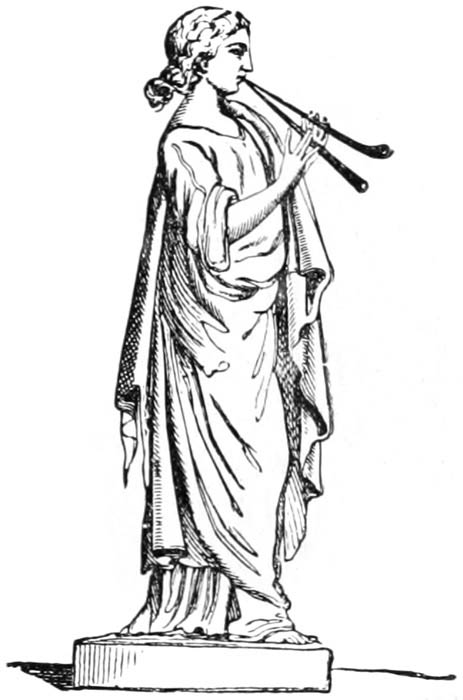
EUTERPE (Muse of Pleasure).ToList
In gladness of heart Perseus led the maiden to the halls of Kepheus, and said, "O King, I have slain the monster to whom thou didst give thy child for a prey; let her go with me now to other lands, if she gainsay me not." But Kepheus answered, "Tarry with us yet a while, and the marriage feast shall be made ready, if indeed thou must hasten away from the Libyan land." So, at the banquet, by the side of Perseus sate the beautiful Andromeda; but there arose a fierce strife, for Phineus had come to the feast, and it angered him that another should have for his wife the maiden whom he had sought to make his bride. Deeper and fiercer grew his rage, as he looked on the face of Perseus, till at last he spake evil words of the stranger who had taken away the prize which should have been his own. But Perseus said, calmly, "Why, then, didst thou not slay the monster thyself and set the maiden free?" When Phineus heard these words his rage almost choked him, and he charged his people to draw their swords and slay Perseus. Wildly rose the din in the banquet hall, but Perseus unveiled the Gorgon's face, and Phineus and all his people were frozen into stone.
Then, in the still silence, Perseus bare away Andromeda from her father's home, and when they had wandered through many lands they came at length to Seriphos. Once more Danae looked on the face of her son, and said, "My child, the months have rolled wearily since I bade thee farewell; but sure I am that my prayer has been heard, for thy face is as the face of one who comes back a conqueror from battle." Then Perseus said, "Yes, my mother, the help of Zeus has never failed me. When the eastern breeze carried me hence to the Argive land, my heart was full of sorrow, because I saw the city which thou didst yearn to see, and the home which thou couldst not enter, and I vowed a vow to bring thee back in triumph when I came to claim my birthright.
That evening, as I slept, the lady Athene came to me from the home of Zeus, and gave me a mirror so that I might take the Gorgon's head without looking on the face which turns everything into stone, and yet another night, Hermes stood before me, and gave me the sword whose stroke never fails, and the Graiai told me where I should find the nymphs who gave me the helmet of Hades, and the bag which has borne hither the Gorgon's head, and the golden sandals which have carried me like a dream over land and sea. O, my mother, I have done wondrous things by the aid of Zeus. By me the doom of Medusa has been accomplished, and I think that the words which thou didst speak were true, for the image of the Gorgon's face, which I saw in Athene's mirror, was as the countenance of one whose beauty has been marred by a woeful agony, and whenever I have looked since on that image, it has seemed to me as though it wore the look of one who rested in death from a mighty pain. So, as the giant Atlas looked on that grief-stricken brow, he felt no more the weight of the heaven as it rested on him, and the gray hair which streamed from his head seemed to me, when I left him, like the snow which clothes the mountain-tops in winter. So, when from the happy gardens of the Hyperboreans I came to the rich Libyan plain, and had killed the monster who sought to slay Andromeda, the Gorgon's face turned Phineus and his people into stone, when they sought to slay me because I had won her love." Then Danae answered the questions of Perseus, and told him how Polydektes had vexed her with his evil words, and how Diktys alone had shielded her from his brother. And Perseus bade Danae be of good cheer, because the recompense of Polydektes was nigh at hand.
There was joy and feasting in Seriphos when the news was spread abroad that Perseus had brought back for the King the head of the Gorgon Medusa, and Polydektes made a great feast, and the wine sparkled in the goblets as the minstrels sang of the great deeds of the son of Danae. Then Perseus told him of all that Hermes and Athene had done for him. He showed them the helmet of Hades, and the golden sandals, and the unerring sword, and then he unveiled the face of Medusa before Polydektes and the men who had aided him against his mother, Danae. So Perseus looked upon them, as they sat at the rich banquet, stiff and cold as a stone, and he felt that his mighty work was ended. Then, at his prayer, came Hermes, the messenger of Zeus, and Perseus gave him back the helmet of Hades, and the sword which had slain the Gorgon, and the sandals which had borne him through the air like a dream. And Hermes gave the helmet again to Hades, and the sandals to the Ocean nymphs, but Athene took the Gorgon's head, and it was placed upon her shield.