BIOGRAPHICAL (continued 7)
Reading edition
J. A. DARBY, M. D.
The northwest with its pulsing industrial activity and its limitless resources is constantly drawing to it men of enterprise and ability who find here opportunity for the expression of their dominant qualities. Among the number who have come from the Mississippi valley is Dr. J. A. Darby, now successfully engaged in the practice of medicine and surgery in Pomeroy.
J. A. Darby was born in Hunnewell, Shelby county, Missouri, on the 16th of October, 1874, and is a son of James A. and Mattie B. (Cox) Darby. The father came to Washington with his family in 1885, settling in Pomeroy, where he established a hardware store, with which he was identified until about a year prior to his death. He passed away in 1905 and is survived by Mrs. Darby, who is yet living in Pomeroy.
Dr. Darby was a lad of eleven years when his parents came to Washington and his education, begun in the public schools of Missouri, was continued in the public schools of Pomeroy. After leaving the high school he became a student in the Spokane Business College and still later, having determined upon the practice of medicine as a life work, he matriculated in the University of Oregon as a medical student and was graduated from that institution with the M. D. degree as a member of the class of 1909. Following his graduation he opened an office in Pomeroy and in the intervening eight years has built up an extensive and lucrative practice.
On the 18th of February, 1916, Dr. Darby was united in marriage to Mrs. Bessie McWilliams, of Walla Walla, and to them has been born a son, James A. Dr. Darby holds membership in Garfield Lodge, No. 25, K. P.; also in Lewiston Lodge, No. 896, B. P. O. E., and with the Woodmen of the World and the United Artisans. In politics he maintains an independent course but believes in republican principles. He does not seek nor desire office, preferring to concentrate his time and efforts upon his practice, the duties of which he discharges in a most conscientious and able manner. He is interested in everything that tends to bring to man the key to the complex mystery which we call life and by further reading and study is continually broadening his knowledge and promoting his efficiency. Colleagues and contemporaries acknowledge his ability and rank him with the progressive physicians of this part of the state.
JOHN J. ASHBY.
John J. Ashby was a pioneer of Garfield county and a citizen of worth whose passing was deeply regretted by many friends. He was held in high regard by those who knew him as a representative business man, as a progressive citizen and one who was faithful to the ties of home and friendship. A native of Illinois, he was born March 12, 1847, and was a great-grandson of a distinguished officer of the British army whose wife was a French lady. The ancestral line of the Ashby family can be traced back for over two hundred years and upon the records the names of many prominent men appear.
John J. Ashby was a son of Solomon and Jane (Ripley) Ashby, the former a native of Montreal, Canada, while the latter was born in the state of New York. They became residents of Stephenson county, Illinois, in the '40s and there resided until 1865, when they crossed the plains with teams and wagons and settled in the Willamette valley of Oregon. There they resided until 1873, when they became residents of Old Walla Walla county, making their home near the present site of the city of Pomeroy. The district was then largely wild and undeveloped, but with characteristic energy Mr. Ashby began the cultivation of his land, converting his place into a well improved farm, upon which he and his wife spent their remaining days. They had a family of three children but only one is now living.
John J. Ashby was a youth of eighteen years when he crossed the plains with his parents. The trip was a long and arduous one, fraught with many difficulties and hardships, but day after day they slowly proceeded on their way until the western coast was reached. He remained with his parents in the Willamette valley for a time and was married there in 1872 to Miss Mary Denny, a daughter of John F. Denny, whose birth occurred in Indiana in 1819. He crossed the plains in 1852 and settled in Marion county, Oregon, upon a donation claim. There he built a typical log cabin with puncheon floor and door, through which a string was inserted that was fastened to the latch in order that the traveler might pull the string and open the door. Such was the hospitality of that period. The little pioneer cabin also had a mud and stick chimney and its furnishings were perhaps as primitive as the exterior. In that little home the Denny family lived for several years. The father was a lifelong republican and was chosen to represent his district in the territorial legislature. In 1860 he was ordained to the ministry of the Methodist Episcopal church by Bishop C. W. Clark and thus he became actively identified with the moral development of the state as well as with its material and political progress. The grandfather of Mrs. Ashby was also a prominent figure in the northwest. He served in the War of 1812 under Colonel M. Johnston and was appointed by President Lincoln as governor of the territory of Washington in 1861, thus becoming prominently identified with the development of the northwest. He had two sons who were prominent citizens of the northwest. A. A. Denny was called "The father of Seattle," and D. T. Denny was the first to erect a white man's home where that city now stands.
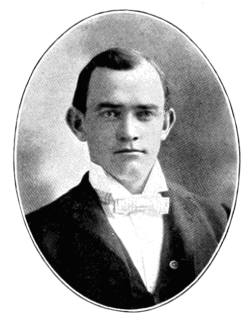
JOHN D. ASHBY
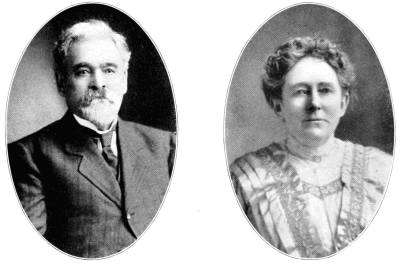
MR. AND MRS. J. J. ASHBY
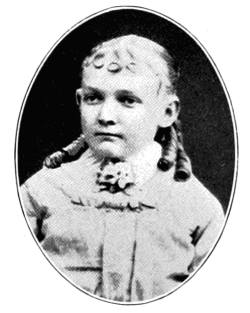
JENNIE ASHBY
To Mr. and Mrs. Ashby were born two children: Jennie, who died at the age of twelve years; and John Denny, whose biographical sketch follows this. It was in the year 1874 that Mr. and Mrs. Ashby took up their abode upon the farm in Garfield county and from that time until his death, which occurred November 10, 1914, he devoted his attention to general agricultural pursuits, becoming the owner of four hundred and eighty acres of fine wheat land. He also owned a very attractive residence in the city of Pomeroy, which is still the property of his widow. He was a consistent member of the Methodist Episcopal church, in the work of which he took an active and helpful part, and he was always ready to lend a helping hand to the poor and needy, his assistance being given in most generous manner. He was a great worker in behalf of the cause of temperance and assisted all church activities both by his moral and financial support.
JOHN DENNY ASHBY.
No death in Garfield county has been more deeply deplored than that of John Denny Ashby, who was born in this county, February 8, 1876. Spending his youthful days in the home of his parents, Mr. and Mrs. John J. Ashby, he attended the public schools until graduated from the high school at Pomeroy in 1895. He was afterward graduated from the Montana Wesleyan University with the class of 1899, winning the degree of Bachelor of Arts. During his student days there he was a member of the college debating club, was captain of the military company and president of the Young Men's Christian Association, thus showing his active connection with all the varied interests which constitute the commendable phases of college life. In 1900 he was honored by an offer of two positions, one as instructor of science and higher mathematics at his alma mater, the other a government position in China. At the persuasion of his parents he accepted the former. Speaking of his work in the schools, Professor Tenny, president of the Montana University, said: "I have had the very best men associated with me in the school work that I could hope for, but I have never found a man who was so unselfishly loyal to me, loyal to himself, loyal to God."
In 1901 Denny Ashby entered the New York Homeopathic College & Hospital as a member of the class of 1905. During his freshman year he served as senator for the class and he also won the freshman prize, while at the end of the junior year he won the Fiske prize for the highest standing in three years' work, the prize consisting of a valuable set of surgical instruments. On the 2d of August, 1904, while in bathing on the beach at Oak island, near Fire island, he was caught by a big wave and drowned while attempting to go to the rescue of a trained nurse. His death was deeply deplored by all who knew him for he was a young man of unusual promise and ability. At the age of fourteen years he united with the Methodist church and his life was dedicated to the work of a medical missionary, but death intervened and his remains were sent home from New York and laid to rest by the side of his sister in the Pomeroy cemetery, where his grandparents are resting and also his father. Of him it may well be said that he has joined "The choir invisible of those immortal dead who live again in lives made better by their presence."
From all parts of the country came letters and expressions of sympathy to Mr. and Mrs. Ashby, showing profound regret at the loss of one so richly endowed with God's best gifts to humanity. Clayton C. Ferguson, who had been his classmate in the medical college wrote: "The first hard grind of the year is over. As many grains growing luxuriously by the wayside owe their origin to seeds blown or dropped from some passing wagon laden with the harvest, so in reviewing this course I find that many of my present developed ideas have sprung from seeds sown by Denny's fruitful pen along the margins of books once loved by him, and which you kindly gave me. Some of these thoughtful seeds flowering have lined the pathway with fragrance; others have caused me at times to pause and admire their beauty; still others, bruised and broken by the rude blast, have given me moments of pain as in the contemplation of their destruction my thoughts reverted to a like condition of their creator. Among our family household seeds others than those sown on paper were sprinkled along life's pathway by the same loving hands during those happy days of association." In another letter the above writer says: "I have taken Denny's drugs and placed them in my desk, praying with God's help to use them as my dear loved one would have, always ready to help the suffering. Do accept my thanks for them and remember that I am at your service at all times to do for you anything in my power. Call upon me if you want medicine for yourself or anybody else. * * * You will never know the sorrow felt in our home, unless you had been in it when Denny was a part of it. No one can fill his place at the table, nor will anyone ever be allowed to sit there." One of his boy friends said: "If ever a soul reached heaven Denny Ashby is there," and another said: "If ever anybody could make a Christian of one by the good life he lived and the example he left, Denny Ashby was that one." At the opening of the college the dean, Dr. King, paid a glowing tribute to the memory of his former pupil, saying: "The class of 1905 has suffered a great loss through the death of John Denny Ashby," and made especial mention of his modest, retiring nature, which to a large degree obscured his "massive mental capacity." The class of 1905 passed the following resolution: "Realizing that by the death of your only son the class of 1905 of the New York Medical College has lost not only a man who has distinguished himself as a student, but also by his daily life proved himself to be a young man of most exemplary character. We, the class of 1905, do hereby extend to you in this hour of your great affliction our most heartfelt sympathy. We one and all feel that we have lost a true friend and brother physician." A beautiful and merited tribute was expressed by Dr. C. F. Sibly, who wrote: "His death bound east and west in mourning. There is a bright side, however, which we must not overlook. When his body was recovered at daybreak, August 3d, its appearance was like that of a hero and conqueror; his hands were folded defiantly across his breast, his characteristic peaceful smile was very manifest. It was evident to the observer that as he had lived a conqueror's life, so he had died a conqueror's death. For him death had no sting, the grave no victory. There was no moaning of the bar or midnight darkness when he put out to sea, but a glorious ushering in to the presence of that great company of just souls, robed white, washed clean by the blood of the Lamb—an introduction to the throng, arrayed with palms of victory and crowns of glory."
JAMES OTTO LONG.
James Otto Long, a well known grain dealer of Pomeroy, who was formerly extensively engaged in farming and stock raising, is a typical citizen of the golden west, alert, energetic, progressive and resourceful. He was born in Lane county, Oregon, August 15, 1864, and is a son of Ransom and Rosetta (Clark) Long, the former a native of Virginia, while the latter was born in Indiana. They were married in Fulton county, Illinois, having removed to that state with their respective parents in childhood days. After their marriage they became residents of Iowa and in 1852 crossed the plains with ox teams to the Willamette valley of Oregon, where they remained for about twenty years. In 1872 they came to Washington and spent the first year on the Patit creek near Dayton, after which they moved northward into what is now Garfield county and located on the Pataha prairie, seven miles south of the present site of Pomeroy. Here the father used his homestead and preemption rights and upon that place which he secured continued to make his home until the death of his wife. He later resided at the home of his children and passed away on the 5th of April, 1898, having for twelve years survived his wife, who died on the 27th of June, 1886. In politics he was a republican and was a progressive citizen, interested in all that pertained to the public welfare.
James O. Long was educated in the district schools and when about twenty-two years of age left the home farm, after which he devoted eight years to prospecting and mining but failed to find the proverbial pot of gold at the foot of the rainbow, as he desired. He then decided to return to agricultural life and on the 1st of October, 1895, he was united in marriage to Miss Mettie Williams, of Garfield county, a daughter of Nicholas Williams, who came to the county in 1873.
Following their marriage Mr. Long purchased a farm on the Pataha prairie and occupied the place for ten years. On the expiration of that period he took up his abode in Pomeroy in 1905 and for a decade gave his attention to the live stock business, owning a stock ranch halfway between Pomeroy and Lewiston, on the Alpowa, where he made a specialty of grazing sheep. His live stock interests were profitably conducted but about two years ago he disposed of his ranch and turned his attention to the grain business, establishing and operating a grain warehouse in Pomeroy. He is now prominently known in connection with the grain trade and has developed a business of extensive and gratifying proportions. He is a man of determined purpose and resolute will and whatever he undertakes he carries forward to successful completion.
Mr. and Mrs. Long have become the parents of eight children, seven of whom survive, as follows: Lois, the wife of Ray Gimlin, who follows farming in Garfield county, Washington; and Florence, Willena, Clark, Lewis, Marian and Burton, all at home.
Mrs. Long and her daughters are members of the Congregational church and the family is prominent socially in the community where they reside. In politics Mr. Long is a republican and keeps well informed on the questions and issues of the day but does not seek public office. His life has been one of diligence and his labors have been crowned with a substantial measure of success.
J. W. HARBERT.
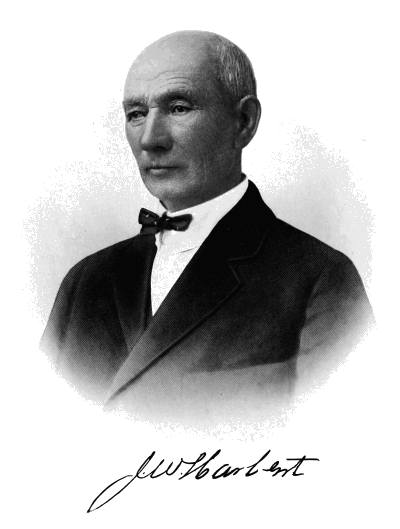
J. W. Harbert, of Small township, whose residence in Walla Walla county dates from 1859, is one of the earliest pioneers of this section now living. He was born in Fountain county, Indiana, September 25, 1835, a son of Richard J. and Mary (Zumwalt) Harbert, natives respectively of Havre de Grace, Maryland, and Cynthiana, Kentucky. Their marriage, however, was celebrated in Indiana, where they resided until 1844, when they removed with their family to Dubuque, Iowa. Three years later they went to Mount Vernon, a college town in Linn county, Iowa, which remained their place of residence for many years. The father came to Walla Walla in 1878, but after spending over a year in this locality returned to Iowa, where his wife died in 1888. Immediately after her death he again came to Washington and made his home with his son, J. W. Harbert, until his death, which occurred about a year later, in 1889.
J. W. Harbert was reared at home and received his education in the common schools. In 1859 he decided that the west offered the most favorable opportunities for an ambitious young man and accordingly made the long overland trip to Walla Walla county, driving an ox team for another man in exchange for the privilege of having his provisions transported. Following his arrival here he worked for Charles Russell for two years and then devoted eight years to freighting from Wallula and Umatilla Landing to the Idaho mines and to other points in this part of the country. When the railroad was built through, the need for freighting by team ceased and he turned his attention to farming. He worked hard, gave careful attention to the management of his affairs and in time acquired fourteen hundred acres of the finest farm land in the county. He was quick to recognize and take advantage of any unusual opportunity and one of the chief factors in his success has been the close personal supervision which he has given to his work. In 1863, while hauling a load of freight from Wallula to Idaho City, he camped on the night of July 2d on the site of Fort Boise, the officers choosing that site the following morning for a fort. In 1864 he hauled one hundred and seventy-five thousand feet of lumber from the mountains to Boise city and watched the loading and unloading of every board. His natural vigor and strength have been conserved by wholesome outdoor life, and today, at the age of eighty-two years, he superintends all his farm work and is as active as most men twenty-five years his junior. When he arrived in Walla Walla county he had but three dollars and the financial independence which is now his is the direct result of his own labors.
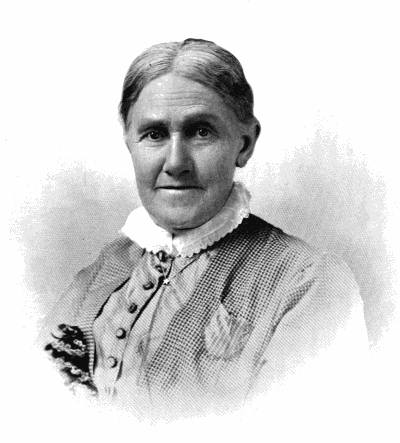
MRS. J. W. HARBERT
On the 13th of July, 1866, Mr. Harbert was united in marriage to Miss Emma Evans, a daughter of G. W. Evans, who came to Walla Walla county in 1861. To this union were born six children, three of whom survive, namely: Ida H., the wife of Thomas Paine, of Richland, Washington; Floy, who married Frank Holman, of Freewater, Oregon; and Liberty, the wife of Julius Jensen, of this county. On the 8th of January, 1878, Mrs. Harbert passed away and on the 8th of April, 1884, Mr. Harbert married Miss Lizzie D. Groff, a native of Iowa. They have two living children, Clifford G. and Hazel, both at home.
Mr. Harbert supports the republican party at the polls and for twenty years has served as school director, his continuance in the office indicating his ability and trustworthiness. Although he does not hold membership in the church his religious belief is in the main that of the Methodist Episcopal church and he contributes liberally to its support and also to various charitable projects. His many admirable qualities are generally recognized and there is no resident of the county more highly esteemed than he.
FRED M. YOUNG.
Fred M. Young, who since starting out in life on his own account at the age of sixteen has been continuously connected with the florist business, is now senior partner of the firm of Young & Lester, prominent florists and nurserymen of Walla Walla, where they conduct an extensive business. He was born in Cass county, Iowa, April 26, 1879, a son of Salathiel and Martha M. (Caughey) Young, both of whom were natives of Ohio. They were married in Iowa, however, having removed to that state in childhood with their respective parents. At the time of the Civil war the father responded to the country's call to arms, enlisting as a member of Company C, Eighth Iowa Volunteer Infantry, with which he served for more than four years, participating in many of the hotly contested battles which finally resulted in the winning of victory for the Union. With a most creditable military record he returned to his home in Iowa after the war was closed and there he engaged in gardening and fruit growing at Grove City. In 1900 he removed to Denver, Colorado, and in the fall of 1916 he sold his Denver home and returned to Iowa, residing with a daughter in Council Bluffs up to the time of his death, which occurred in February, 1917. His widow survives and yet makes her home with the daughter in Council Bluffs.
Fred M. Young had the benefit of educational training in the public schools until sixteen years of age, when he left the parental roof and went to Council Bluffs, entering the employ of his brother-in-law, J. F. Wilcox, a florist of that city. It was under his instruction that he acquainted himself with the florist business, gaining comprehensive and accurate knowledge in every department and in every connection. After three years he went to Chicago, where he was identified with the firm of Bassett & Washburn, well known florists, with whom he continued for a year. He next went to Denver, Colorado, where he was in the employ of the Colfax Floral Company for three years and on the expiration of that period he went to Pueblo, Colorado, as manager of the George Fleischer Floral Company, in which capacity he served for eighteen months. He was afterward in Salt Lake City, where he occupied the position of manager of the Huddard Floral Company, with which he remained for three years. He then spent a short time in San Francisco and still later went to Seattle, where he became head gardener at the Bremerton navy yards, occupying that position for about six months. At that time his sister, who was living in Walla Walla, persuaded him to come to this city and he arrived here with the intention of going into business but was disappointed in raising the necessary capital. He went to work for James Wait, a florist with whom he continued for ten months, and later removed to Portland, Oregon, where he was in the employ of Martin & Forbes, with whom he remained for about a year and a half. In November, 1907, he resigned this position and returned to Walla Walla, opening a small flower store at No. 7 East Main street known as Bedell's Bazaar. On the 1st of May following Hampton Huff, who had a small greenhouse property on the present site of the Young & Lester greenhouses and who had become too old to work proposed to Mr. Young to go into business with him. Their capital was limited and Mr. Young gave Mr. Huff his note for seven thousand dollars for a half interest in the business. Thus he started out independently. They made enough money that spring to build another greenhouse and put in a new boiler. The following year they were able to build three more greenhouses and in the succeeding year Mr. Huff retired and Mr. Young secured a lease on the whole property with an option to buy. In 1913 he sold Clyde Lester an interest in the business and the present firm of Young & Lester was thus formed. The business has developed rapidly. Their plant is strictly modern and up-to-date. They have eight and three-fourths acres of land under cultivation, with about twenty-five thousand square feet under glass. Their city store is at 19 East Main street and is one of the most modern and attractive florist establishments in eastern Washington. There is no phase of the business with which Mr. Young is not thoroughly familiar. He has made a close study of plant development and propagation and everything in the line of growing plants and blooming flowers that can be raised in this section of the country is found in his establishment.
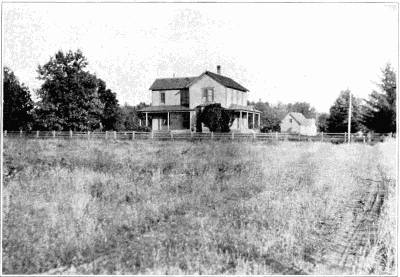
RESIDENCE OF J. W. HARBERT
In 1914 Mr. Young was united in marriage to Miss Effie Morrison, of Walla Walla, and in the social circles of the city they are widely and prominently known. Mr. Young is a stalwart republican, giving unfaltering allegiance to the party and its principles. He belongs to Walla Walla Lodge, No. 287, B. P. O. E.; to Enterprise Lodge, No. 121, I. O. O. F.; and to Columbia Lodge, No. 8, K. P. He is also identified with Alki Temple of the Dramatic Order of the Knights of Khorassan at Walla Walla and the Knights of the Maccabees and the Knights and Ladies of Security. He belongs to the Commercial Club and is interested in all of its plans and purposes for the upbuilding and development of the city. His wife is a member of the Christian church and Mr. Young gives his aid and influence on the side of all those forces which work for the upbuilding and progress of Walla Walla along material, social, intellectual and moral lines. In an analyzation of his life record it will be seen that concentration of purpose along a single line of business has been one of the salient features in his success. He started out as a florist and has continued in that field of activity. He has never allowed difficulties nor obstacles to bar his path but has overcome these by determined effort and has ever recognized that satisfied patrons are the best advertisement. He has sought earnestly to please his customers and his establishment, presenting everything that is most attractive, unique and beautiful in the line of floral culture, has been most liberally patronized.
THOMAS P. GOSE.
Thomas P. Gose, attorney at law practicing in Walla Walla as senior partner in the firm of Gose & Crowe, was born in Sullivan county, Missouri, May 11, 1855, a son of John M. and Hannah J. (McQuown) Gose. The father is a native of Kentucky, while the mother's birth occurred in Virginia. They were married, in Missouri, to which state they had removed with their respective parents in childhood days. The father was among the argonauts who started in search of the golden fleece to California in the year 1849. He made the overland trip by way of the Santa Fe trail and spent five years in the Golden state. He then returned to Missouri in 1854, crossing the plains, after which he continued his residence in Missouri until 1862, when he went to Denver, Colorado, again making a trip in quest of gold. He spent about one year there, after which he once more took up his abode in Missouri. The lure of the west, however, was upon him and in 1864 he removed with his family to Boise City, Idaho, where he arrived in August. The city was at that time a frontier village, far removed from civilization to the eastward or to the westward. Prices were so high that during that winter he was obliged to pay about fifty dollars for a fifty-pound sack of flour. In July, 1865, he came to Walla Walla and began farming in the vicinity of the city. Both he and his wife are still living, Mr. Gose having reached the notable old age of ninety-two years, while his wife is enjoying good health at the age of eighty-six years. They now make their home with their son, Thomas P. Gose, who is looking after their comfort and welfare and thus with filial devotion is repaying the love and care which they bestowed upon him in his youth.
Thomas P. Gose was a lad of about ten years when the family arrived in Washington and much of his education was therefore acquired in the public schools of Walla Walla, supplemented by study in the Whitman Academy. In the spring of 1886, having determined to engage in a professional career, he took up the study of law and in 1889, after a thorough reading of the principles of jurisprudence, he was admitted to the bar. In the fall of 1890 he opened his law office in Walla Walla and in the intervening period, covering twenty-seven years, he has had several law partnerships, being now senior member of the firm of Gose & Crowe, which was formed in August, 1914. This firm ranks with the foremost at the Walla Walla bar. Mr. Bose is devotedly attached to his profession, is systematic and methodical in habit, sober and discreet in judgment, diligent in research and conscientious in the discharge of every duty. An earnest manner, marked strength of character and a thorough grasp of the law, with ability to accurately apply its principles, make him an effective and successful advocate and he is also a safe and wise counselor.
On the 20th of December, 1893, Mr. Gose was united in marriage to Miss Clara Crowe, of Freewater, Oregon, by whom he has five children, as follows: Cecile, who was graduated from Whitman College with the class of 1916 and is now a teacher in the high school at Kalama, Washington; Gladys and Marjorie, both of whom are attending Whitman College; Vera, a high school graduate; and Thomas P., who is a high school student.
Mr. and Mrs. Gose are members of the Congregational church and are interested in all that pertains to individual uplift and community betterment. Mr. Gose votes with the democratic party and has served as deputy prosecuting attorney, while for four years he was a member of the Walla Walla board of education. He is the present chairman of the democratic county central committee and for years past has been a dominant factor in the affairs of his party, doing much to mold public thought and opinion and putting forth earnest and effective effort to secure party success. The limitless possibilities of the west have ever stirred his ambition and his energy, intelligently directed, has carried him into important professional relations.
BREWSTER FERREL.
Brewster Ferrel now occupies an attractive home at 336 South Palouse street in Walla Walla, where he is surrounded with all of the comforts and many of the luxuries of life. For many years he was prominently and actively identified with farming, taking up that work in Walla Walla county in early pioneer times and meeting with all of the hardships and privations which were incident to the settlement of the frontier. He was born in Trumbull county, Ohio, August 22, 1838, a son of Edward and Rosella (Fish) Ferrel, the former a native of Pennsylvania, while the latter was born in Ohio. They were married in the Buckeye state and in 1854 removed to Iowa, where both resided up to the time of their death.
Brewster Ferrel was a lad of sixteen years when his father removed to Iowa and in the public schools of that state he supplemented the educational training which he had already received in Ohio. He was trained to farm work, early becoming familiar with the tasks of plowing, planting and harvesting, and he early developed habits of industry and perseverance which later constituted very important elements in the attainment of his present-day success.
In 1861, Brewster Ferrel was united in marriage in Iowa to Miss Caroline Bott, a native of Muskingum county, Ohio, whose parents had removed to Iowa when she was a little maiden of ten summers. The young couple began their domestic life in the middle west but in 1864 left their Iowa home and started across the plains with a team of mules and a prairie schooner. They joined a wagon train and, traveling after the slow and tedious method of that period, at length arrived in Walla Walla on the 3d of August, 1864. For some time after reaching the northwest Mr. Ferrel, like many other of the pioneers, engaged in freighting and continued in that business up to the advent of the railroad, when freighting by team was no longer profitable. He then concentrated his energies upon farming. It was in 1864 that he had homesteaded and secured the farm property which he still owns. The first year after his arrival there was little wheat raised and so great was the demand for it in the mining regions of the Rocky Mountains that he sold all he had for a dollar and a quarter per bushel, which was considered a very high price in that day. The following year, however, the eastern demand fell off and the farmers were obliged to market their product in Portland, where the wheat brought only sixty cents per bushel. Stock could be ranged easily in the mountains and for a time Mr. Ferrel engaged in raising stock, driving his cattle to the different mining camps, where he would sell them. Eventually, however, he disposed of his live stock interests entirely. To his original farm of two hundred acres he gradually added four hundred acres and finally more and more, paying for his last tract a hundred dollars per acre—a tract that could have been bought at the time of his arrival for a dollar and a quarter per acre. Mr. Ferrel has always been actuated by a spirit of enterprise and progressiveness in anything that he has undertaken. He was among the first to build a barbed wire fence in Walla Walla county. Up to this time he had hauled rails from the mountains and tied them to posts by means of rawhide, thus using the otherwise useless hides to help fence his crops from the ranging herds. For the first barbed wire he paid eighteen cents per pound and it was a very crude article compared to that manufactured at the present time at that. The most improved farm machine was the old McCormick reaper, bearing little resemblance to the binders and headers of the present time. Mr. Ferrel even cradled large portions of his wheat crop in those early years and all the farmers would unite to harvest and thresh. At that day many believed that the Walla Walla valley would be abandoned as soon as the mines to the eastward were exhausted and many refused to take up land and settle. At times Mr. Ferrel may have become discouraged but with stout heart he pressed on and his diligence and determination have at length secured a substantial reward. His crops today bring ten per cent on an investment rated at one hundred dollars per acre and he and his sons have built up a grain growing business that is as carefully, methodically and successfully managed as any mercantile establishment. The old homestead is located on Russell creek, about eight miles east of Walla Walla, and thereon Mr. Ferrel resided until 1902, when he took up his abode in the city, where he has one of the most handsome homes to be found in southeastern Washington. In the meantime he had added to his possessions until he became the owner of three thousand acres of farm land, which make him one of the county's most substantial and prosperous citizens. All that he has acquired in the course of an active and busy life has been won since he came to Washington and most of it has been made in the past twenty or twenty-five years.
Mr. and Mrs. Ferrel became the parents of eight children, seven of whom survive, as follows: Thomas J., who is engaged in farming in Walla Walla county; Rosella E., the wife of Walter Barnett, an agriculturist of Walla Walla county; Seth A., David B. and Joseph W., all of whom follow farming in Walla Walla county; Fidelia C., the wife of Charles Maxson, who is a farmer residing in Walla Walla; and Myrtle M., who gave her hand in marriage to Thomas Jones, an agriculturist of Walla Walla county.
Mr. Ferrel gives his political allegiance to the republican party, which he has continuously supported since age conferred upon him the right of franchise. He and his wife are consistent members of the Methodist church and have ever been loyal to its teachings, while to its work they have been generous contributors. They are among the most highly esteemed citizens of Walla Walla, where they have resided since early pioneer times, and there is no phase of the county's development and improvement in all the intervening years with which they are not familiar. In his business affairs Mr. Ferrel has ever displayed indefatigable energy, close application and persistency of purpose and his record indicates that success and an honored name may be won simultaneously.
FRANK FITZGERALD.
Frank Fitzgerald, who is devoting his time and energies to the operation of an excellent farm on section 34, township 13 north, range 42 east, Garfield county, was born in Tennessee, April 17, 1855, a son of Alford and Temperance (Bradshaw) Fitzgerald, natives respectively of Virginia and North Carolina, who were married, however, in Tennessee. In 1860 the family removed to Missouri and later in the same year the father passed away. The mother continued to reside in that state until her death in 1906. All of their four children survive.
Frank Fitzgerald passed the greater part of his boyhood and youth in the state of Missouri, as he was but five years of age at the time of the removal there, and his education was that afforded by the public schools. In 1887 he removed to Garfield county, Washington, and for thirteen years operated rented land but in 1900 bought his present farm of three hundred and twenty acres on section 34, township 13 north, range 42 east. His success has been based upon the sure foundation of hard work and the most rigorous attention to the task in hand.
Mr. Fitzgerald was married September 23, 1880, to Miss May Temple, who was born in Wisconsin, and they have eleven children, namely: Pearl, the wife of S. E. Fanning; Harold, Frank and Justin, all now in the United States army; Letta, the wife of Emery Dye; Alford; Otto; Opal; Louise; and two deceased.
Mr. Fitzgerald supports the republican party at the polls and for years has been a member of the school board, in which connection he has been instrumental in securing gratifying progress in the educational system of his locality. He is well known and highly esteemed and his personal friends are many.
LEE BARNES.
Lee Barnes, who is now filling the position of sheriff in Walla Walla county, was born in Boone county, Missouri, July 20, 1866. His father, John S. Barnes, is a native of Sangamon county, Illinois, born in February, 1828, and is still a resident of Oregon, having reached the ninetieth milestone on life's journey. His life has been devoted to the occupation of farming. His wife, who bore the maiden name of Lucinda J. Sims, was born in Kentucky and is deceased. In their family were seven children who are still living: M. C., who is a resident of Boone county, Missouri; J. T., living in Touchet, Washington; C. H., a resident of Yakima, Washington; Lucy J., the wife of John W. Parks, of Freewater, Oregon; W. W., also a resident of Freewater; Lee, of this review; and Joseph S., of Kansas City, Missouri.
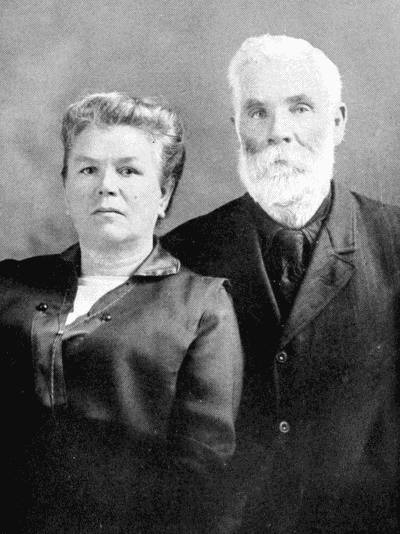
MR. AND MRS. FRANK FITZGERALD
Lee Barnes largely obtained his education in Saline county, Missouri, and afterward became a barber, following his trade at various places in his native state for seventeen years. On the expiration of that period he turned his attention to the confectionery business in Touchet, Washington, and has since made his home in Walla Walla county. He served for four years as deputy sheriff under Michael Toner and in 1914 was elected to the office of sheriff, in which position he is now serving for the second term, discharging his duties with promptness and fidelity and without fear or favor.
In 1859 Mr. Barnes was married to Miss Ollie N. Doty, a native of Iowa and a daughter of Lyman Doty. Mr. and Mrs. Barnes have become the parents of two children: Walter S., who married Vela Burns and has two children, Mildred and Audrey; and Lottie, the wife of Elvin Galloway, of Touchet, Washington, by whom she has one child, Elaine. On March 6, 1902, Mrs. Barnes passed away, sincerely mourned by her family and her many friends.
In politics Mr. Barnes has always been a stalwart advocate of democratic principles and has given earnest support to the party. He holds membership in the Baptist church and his life has been guided by its principles. Those who know him esteem him highly, for his marked characteristics of manhood and citizenship are those which commend him to the warm regard, the confidence and the goodwill of those with whom he has been brought in contact.
ROY ROBERT CAHILL.
Well qualified for his chosen calling, Roy Robert Cahill has made for himself a creditable position among the able attorneys of Dayton. Moreover, he deserves representation in this volume as one of the native sons of Columbia county, where his birth occurred June 19, 1884. He is a son of Alph P. and Irene M. (Starr) Cahill. The father is now cashier of the Broughton National Bank and a leading and influential business man of this section of the state.
Roy Robert Cahill was educated in the public schools of Dayton, after which he attended Whitman College at Walla Walla, there winning the degree of Bachelor of Arts upon the completion of a classical course in 1909. He thus laid broad and deep the foundation upon which to build the superstructure of professional learning. After his graduation from Whitman he entered the law department of Columbia University and there won his law degree as a member of the class of 1912. Following his graduation he returned to Dayton, where he opened an office and entered upon the practice of his chosen profession, which he has since followed independently.
In 1913 Mr. Cahill was united in marriage to Miss Jessie Criffield, a daughter of W. R. Criffield, of Walla Walla. He belongs to Dayton Lodge, No. 26, F. &. A. M. and he gives his political allegiance to the republican party. He is widely known as a representative young business man, possessing marked ability and enterprise, and that his has been a well spent life is indicated in the fact that many of his stanchest friends are those who have known him from his boyhood to the present time.
REV. ALEXANDER WALTER SWEENEY.
After a useful and well spent life Alexander W. Sweeney passed away on the 28th of November, 1903, honored and respected by all who knew him. He was born in Savannah, Hardin county, Tennessee, January 25, 1825, but before he was five years of age accompanied his parents on their removal to Arkansas, the family locating near Fayetteville, which was then a frontier settlement with no educational advantages. Being unable to attend school he was taught the elementary branches by his father until the latter's death, which occurred in 1833 when our subject was still quite young. The father had a contract with the government to carry the United States mail and during his illness the son often took the mail.
After his father's death Alexander W. Sweeney started out to make his own way in the world and was apprenticed to a tanner, whose cruelty soon forced him to leave and seek the protection of an older brother. During the autumn of 1839 while attending a camp meeting near Fayetteville, he joined the Cumberland Presbyterian church and desirous of becoming a minister, was received under the care of the Arkansas Presbytery as a probationer when about eighteen years of age. A school of academic grade had been established in the community and Mr. Sweeney became a student there, in the meantime working for his support and doing his studying at night.
When in his nineteenth year he was licensed to preach and according to the custom of his church was put on the circuit to preach a part of each year. During a period of six months of continuous service on the circuit he received only two dollars and forty cents in money, one pair of home knit socks and had his horse shod free. For four or five years he continued to attend school as opportunity afforded while preaching and in that time made sufficient progress in his studies to enable him to enter the sophomore year in college. Accordingly he went to Princeton, Kentucky, where he attended Cumberland College until 1850, and then returned to the Arkansas Presbytery, where he was at once ordained to the ministry at the age of twenty-five years, having spent eight years in preparation for his chosen work.
Soon after his ordination Rev. Sweeney joined a company of gold hunters who with ox teams crossed the plains and arrived at a gold camp on the American river in California, August 26, 1850. The following Sunday he preached to a company of miners that collected under the shade of a live oak tree, thus beginning a ministry on the Pacific coast which lasted until his physical health failed him. In 1851 he went to the Willamette valley in Oregon and was present as a visitor at the organization of the Oregon Presbytery, November 3, 1851. For seven years he preached throughout the Willamette valley, exerting a strong moral influence wherever he went.
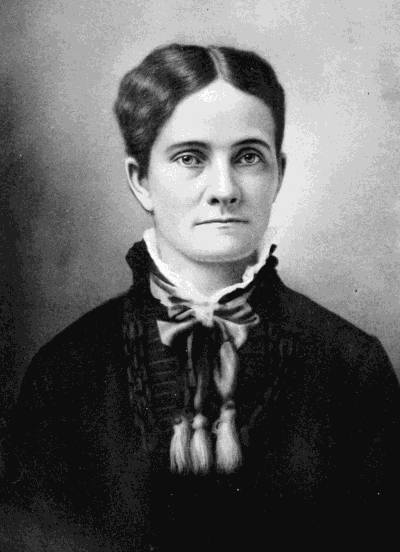
MRS. ALEXANDER W. SWEENEY
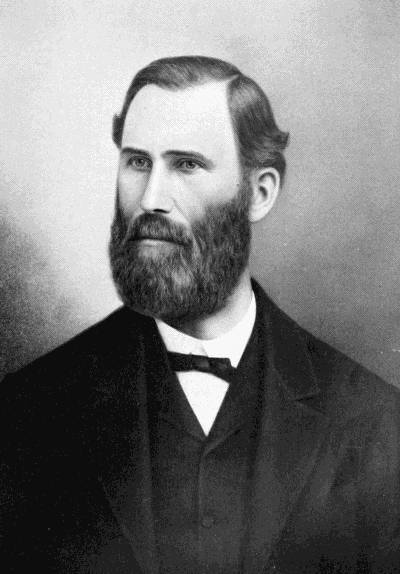
REV. ALEXANDER W. SWEENEY
On the 15th of July, 1852, Rev. Sweeney was united in marriage to Miss Angeline Allen, of Marion county, Oregon, a daughter of Samuel and Sarah (Benson) Allen. Of the three children born to Rev. and Mrs. Sweeney, Adelia, the eldest, died at the age of fifteen years. Those still living are Samuel B. and Mrs. Adna Sharpstein.
On account of throat trouble Mr. Sweeney and his family went to California in 1858 and remained in that state for about four years, during which time he taught school for a year and a half at Sonoma, being principal of the female department of a Presbyterian college. In 1862 he again came north, going with the gold seekers to Clearwater, Idaho, where he devoted his time to the work of the ministry and to his duties as justice of the peace. In 1867 he removed to Umatilla Landing on the Columbia river in Oregon, where he not only engaged in preaching but also taught school. There was no organized church at that place but he was paid about six hundred dollars by popular subscription, which was the best salary he had ever received for his ministerial services up to that time. For one year he served as superintendent of schools for Umatilla county.
In 1869 Mr. Sweeney returned to California, traveling by way of the Columbia river and Pacific ocean, and during his sojourn in that state taught school under supervision of the church at Collegeville, about eight miles from Stockton, in San Joaquin county for a year and a half, and on his retirement from that work returned to Oregon, spending two years at Albany. From there he came to western Washington about 1872 and did considerable missionary work among the pioneers of this region, traveling over a large territory, more than one hundred miles in extent. He started the first Presbyterian church in Walla Walla with but two members. He preached in Waitsburg, Dayton, Pomeroy and Colfax and often held services in school houses and groves throughout the country. Failing health at length caused him to retire from the active work of the ministry after thirty-five years of most faithful service. He preached occasionally up to the year 1900. His wife was a most competent help and by her good management made the sunset of his life much easier financially. His unselfish life and devotion to the work of the Master gained him the unqualified regard of all with whom he came in contact. Although now eighty-one years of age, Mrs. Sweeney is still well preserved, being strong and active and able to do considerable work, including the care of her own garden. Her intellect seems unimpaired and she appears to be much younger than she really is. She was always a faithful wife, a capable financier and a hard worker, being able to support herself and children and secure the property which kept Mr. Sweeney in comfort during his declining years.
GUY S. DEMARIS.
An excellent farm of one hundred and thirty acres pays tribute to the care and labor bestowed upon it by Guy S. Demaris, whose place is situated on section 12, township 7 north, range 37 east, in Walla Walla county. He was born November 4, 1885, on the farm where he now resides, his parents being Orlando and Mary (Lewis) Demaris, who are mentioned elsewhere in this work. His youthful days were spent under the parental roof and he early became familiar with the best methods of tilling the soil and caring for the crops, dividing his time between the acquirement of an education in the district schools, the pleasures of the playground and the work of the fields. He also had the advantage of a business course in the Empire Business College at Walla Walla and after completing his studies he worked for his brothers, Fred and David, in connection with their farming operations. In 1912 he began farming on his own account and has since given his attention to general agricultural pursuits. He took charge of the old home place of one hundred and thirty acres, which he is now cultivating, and the neat and thrifty appearance of his place indicates his careful supervision and his practical and progressive methods. The farm is divided into fields of convenient size by well kept fences, there are substantial buildings upon the land and he utilizes the latest improved machinery in carrying on the work of the fields. He annually harvests good crops and is winning success as the years go by.
On the 25th of December, 1906, Mr. Demaris was united in marriage to Miss Gertrude Tash, a daughter of Andrew J. Tash, one of the pioneers of Walla Walla county, still living on Mill creek. To this marriage were born two children but both have passed away.
In his political views Mr. Demaris is a democrat but not an office seeker. He belongs to Welcome Lodge, No. 117, I. O. O. F., of Dixie, and to Walla Walla Encampment, No. 3, and is also a member of the Uniformed Rank, Canton No. 1, of Walla Walla. He and his wife hold membership in the Presbyterian church and in social circles they occupy an enviable position, many of the best homes of their section of the county extending to them warm-hearted hospitality and welcome. Their good qualities are many and in matters of friendship they are always loyal and true.
JAMES T. ALLEN, D. M. D.
Among the able practitioners of dentistry in Washington is Dr. James T. Allen, who follows his profession in Dayton, his native city. He was here born on the 26th of December, 1877, and is a representative of one of the old pioneer families established in this section of the state in 1874. His parents were Albert O. and Sarah B. (Allen) Allen, the former a native of Tennessee, while the latter was born in Oregon. The father was reared in the state of his nativity and in 1872, at the age of twenty-three years, he made his way westward, remaining for about a year in Texas and then continuing his journey toward the Pacific coast. He spent another year in San Francisco and in 1874 arrived in Dayton. Subsequently he took up his abode upon a farm six miles east of the city and in the years that followed he acquired four hundred and eighty acres of excellent land. He continued upon his farm for some time, bringing his fields under a high state of cultivation and annually gathering good crops, which brought to him a very gratifying income. At length he retired from farm work and took up his abode in Dayton, where his remaining days were passed, his death occurring in 1899. He was quite prominent in public affairs, serving as deputy sheriff under Al Weatherford and while in that capacity he assisted in the capture of a notorious band of cattle thieves that had been raiding the country around for some time. His death was occasioned by being thrown from a horse and dragged for a considerable distance while in the mountains after an outlaw. His widow is still living and makes her home with her son James.
To the public school system of Dayton, James T. Allen is indebted for his early educational training. He passed through consecutive grades to his graduation from the high school with the class of 1897 and later he became a student in Whitman College, where he spent two years. In the fall of 1899 he entered the North Pacific Dental College at Portland, Oregon, and there won his D. M. D. degree upon graduation with the class of 1902. After completing the course he opened dental offices in Waitsburg, where he practiced for two years but in 1904 returned to his native city, where he has since been in continuous and successful practice. He is recognized as one of the skilled dentists of southeastern Washington and has been accorded a very liberal patronage.
In 1906 Dr. Allen was united in marriage to Miss Zada Estelle Baldwin, of Dayton, a daughter of Daniel Baldwin, now deceased, who was one of the pioneers of Columbia county. Dr. and Mrs. Allen have one child, Grace Corinne.
Fraternally Dr. Allen is connected with Dayton Lodge, No. 26, F. & A. M.; and Dayton Lodge, No. 3, K. P. His political endorsement is given to the democratic party but he does not seek nor desire office. On November 7, 1917, Dr. Allen was honored by appointment of Governor Lister to the position of member of the State Board of Dental Examiners, a recognition which justly reflects his high professional standing. His life stands in contradistinction to the old adage that a prophet is not without honor save in his own country, for in the city of his birth Dr. Allen has made for himself a most creditable and enviable position in professional circles and enjoys a practice that many an older representative of the profession might well envy.
FRANK FAURE.
Frank Faure, proprietor of the McFeely Hotel in Walla Walla, has been a resident of this city since 1902 and has made for himself a creditable position in its business circles. He was born in France, August 13, 1884, a son of Jean and Marie (Grant) Faure. The father was a farmer by occupation and spent his entire life in his native country, where he and his wife reared a family of three children, Jean and Leon being now soldiers of the French army. Frank Faure acquired a common school education in France and afterward attended the Superior school of La Mure Isère. After putting aside his textbooks he sought the opportunities offered in the new world, crossing the Atlantic in 1902, when a young man of eighteen years. Making his way westward to Walla Walla, he here became engaged in the hotel business and now owns and conducts the McFeely Hotel, located at Fourth and Alder streets. He has made of this a popular hostelry, catering to high-class trade, and his business has steadily grown because of the comforts which he affords to his guests.
In 1911 Mr. Faure was united in marriage to Miss Mary Daffis and they have a daughter, Frances. In his political views Mr. Faure is a democrat. Fraternally he is connected with the Benevolent Protective Order of Elks and with the Knights of Columbus, his association with the latter organization indicating his membership in the Catholic church. For fifteen years he has resided in Walla Walla, where he has become widely and favorably known, and he has never had occasion to regret his determination to try his fortune in the new world, for he here found good business opportunities and in their utilization has worked his way steadily upward.
ALBERT E. CORBETT.
A well spent life was that of Albert E. Corbett, whose industry and integrity in business affairs won him success and the respect of his fellowmen. He possessed many sterling traits of character, so that his death was the occasion of deep and widespread regret among those with whom he was associated. He was born in the province of Ontario, Canada, December 7, 1855, and was a son of John and Jane (Lewis) Corbett.
Albert E. Corbett was reared at home and under the direction of his father learned the miller's trade. In 1889 he left his family in Ontario and came to the west, looking for an opening that would give him better opportunities to attain success and to establish a home for his wife and children. He first located in Columbia county, where he secured a position as night miller in the Touchet Flouring Mills, then owned by Henry Richardson. Two months later, however, the mill closed down for the winter and Mr. Corbett went to the coast, looking for work. Not finding suitable employment in Seattle or Tacoma, he went on to Victoria, British Columbia, where he secured a situation in a sawmill. In May of the following year he was there joined by his brother, Judson A. Corbett, who also found employment in the same mill. While working there Mr. Corbett was writing to friends in Columbia county, Washington, and learned of a chance to buy the Touchet Mills. In the fall of 1892 he made his way to Huntsville therefore, and in company with his brother, Judson A., bought the mill. They had saved about five hundred dollars each from their wages and this amount was used as the first payment on the purchase price of the mill. Within the following two years they paid off the entire indebtedness on the property, which was thus free from all encumbrance. In the spring of 1890 Mr. Corbett sent for his wife and family, who joined him in Victoria, coming to the west with his brother, Judson A.
It was in April, 1885, that Mr. Corbett was united in marriage to Miss Hannah Baker and to them were born four children, three of whom are still living, namely: Lewis, who is engaged in the automobile business in Dayton; Gertrude, who is a teacher in the schools of Dixie, Washington; and Florence, at home. The wife and mother passed away in May, 1895, and in May, 1899, Mr. Corbett was united in marriage to Miss Laura Baker, a sister of his former wife. She is a graduate of the Normal School of Ottawa, Canada, and is a woman of liberal education and of broad culture and refinement. By this marriage there were born two children, Helen and Emma, both at home.
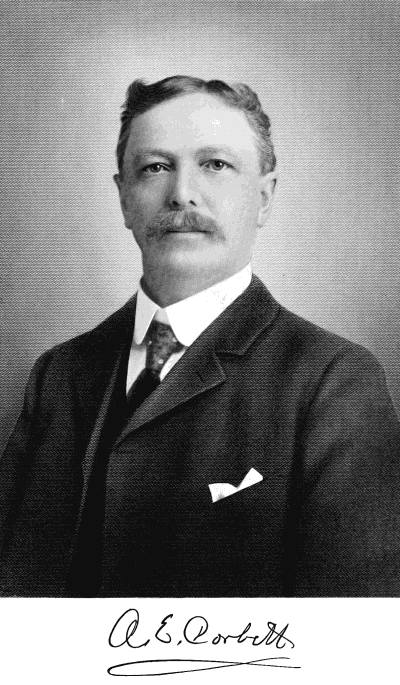
For many years Mr. Corbett continued successfully in the milling business and as his financial resources increased he invested in property, becoming the owner of a farm in a section of land in Alberta, Canada and also acquired an interest in a farm in Ontario. Mrs. Corbett still holds both these places. His carefully managed business affairs and his judicious investments enabled him to leave his family in very comfortable circumstances. He was a member of the Woodmen of the World and also held membership in the Episcopal church, to the teachings of which he was most loyal. His wife and children also belong to the same church. In that faith Mr. Corbett passed away December 10, 1906, his death being the occasion of deep and widespread regret not only to his immediate family but also to the many friends whom he had won during the period of his residence in the northwest. Mrs. Corbett survives her husband and has proven herself a capable business woman, wisely managing the property left to her. She is widely and favorably known in this section of the state.
MRS. MARY C. NICHOLS.
Mrs. Mary C. Nichols, of Dayton, is widely and favorably known as one of the worthy pioneer women of Columbia county, where she owns valuable farm property from which she derives a gratifying annual income. She was born in Wisconsin in 1854 and is a daughter of A. C. and Oral A. (Pelton) Woodward, who were natives of Wisconsin, whence they crossed the plains to Washington in 1860, settling in Old Walla Walla county, near Dayton. They became identified with the farming interests of that locality and upon their ranch spent their remaining days. In their family were eight children, four of whom are yet living.
Their daughter, Mary C., was a little maiden of but six years when the trip was made to Washington, so that practically her entire life has been passed in the northwest. She was but sixteen years of age when in June, 1870, she gave her hand in marriage to Isaac Wallace Monnett, a native of Ohio, who came to Washington in 1869 and settled on a farm ten miles southeast of Dayton. Mr. and Mrs. Monnett became the parents of three children: Oral, who is the wife of Grant Lowe; Elizabeth, who has departed this life; and A. A. Monnett, who is a hardware and implement merchant of Dayton. The husband and father passed away in 1876 and for nine years Mrs. Monnett remained a widow. In 1885 she became the wife of F. J. Nichols and to them have been born four daughters: Minnie, who is the wife of C. C. Kifer, of California; Grace, who is a graduate of the Walla Walla high school and is at home; Mary L., who is the wife of J. B. Thompson; and Hazel E., the wife of C. E. McQuary.
Mrs. Nichols still owns what is known as the old Monnett homestead of five hundred and sixty acres, all of which is fine wheat land. It is a valuable property from which she derives a gratifying annual income. She also owns an attractive residence in the city of Dayton and she is numbered among the worthy pioneer women of this section of the state. For fifty-seven years she has lived in Washington and has therefore witnessed the greater part of the growth and development of the commonwealth. Events which to others are matters of history are to her matters of personal knowledge and she can relate many interesting incidents of the early days when the great stretches of land were unclaimed and uncultivated, when forests were uncut, when rivers were unbridged and when the work of progress seemed dim and distant in the future. The most farsighted at that time could not have dreamed of the wonderful changes which were to occur and transform southeastern Washington into a well settled and populous district in which are to be found all of the advantages and all and more of the opportunities of the older east. Mrs. Nichols is a member of the Congregational church and her many excellent traits of character have gained for her respect and popularity among her many friends.
L. L. HUNT.
L. L. Hunt is familiar with the methods of Indian warfare in the northwest, as he early became connected with the army in this section of the state. Since then he has been active in business along various lines and step by step has progressed until he is now in possession of a handsome competence that enables him to live retired. He makes his home in College Place, Walla Walla county, and has important farming interests on section 36, township 7 north, range 35 east. His career in many respects has been an eventful one. The width of the continent separates him from his birthplace, for he is a native of Maine. He was born on the 2d of August, 1855, his parents being George and Mary Ann (Prescott) Hunt, both of whom were representatives of old families that sent forth soldiers to the Revolutionary war. Both the father and mother spent their entire lives in the Pine Tree state.
L. L. Hunt was reared under the parental roof until he reached the age of sixteen years, when he left home and went to Boston, Massachusetts, where for four years he was engaged in railroading. The opportunities of the west, however, attracted him and he left New England, making his way to Nevada. Locating in Carson City, for more than a year he there worked in the timber region, and in 1876 he went to San Joaquin county, California, where he engaged in driving a team during the following winter. In 1877 he came to Walla Walla, where he worked for the government during the Joseph Indian war, driving a team used for transportation of supplies. A year later he became identified with Joe Woodworth in the operation of the old Cayuse stables in Walla Walla. He was connected with the conduct of this business for about three years and then turned his attention to farming on the Eureka Flats, becoming one of the large operators on the flats. He homesteaded, preempted and also took up a timber claim and he likewise purchased railroad land, owning at one time seven quarter sections. He farmed altogether seventeen hundred acres of rented land and he remained on the flats for about twelve years. He next removed to Walla Walla but after a year took up his abode at College Place, where he engaged in gardening. Subsequently he organized the L. L. Hunt Fruit & Produce Shipping Company and built up the business to extensive proportions, his interests becoming one of the chief industries of this section. He managed his affairs wisely and well and prosperity resulted. He now has retired from active business life and is enjoying a rest which he has truly earned and richly merits.
In 1888 Mr. Hunt returned to Boston for his bride and was there married on the 21st of October of that year to Miss Olivia Crosby. She was born in Nova Scotia and came to the United States at the age of sixteen years, her parents continuing in Nova Scotia, where they passed away. Mr. Hunt brought his bride to the west and they have since been widely and favorably known in this section of the state. They are consistent members of the Presbyterian church, in the work of which they take an active and helpful interest, and Mr. Hunt is now serving as one of the elders of the church. His political endorsement is given to the republican party and while living on the Flats he served for two years as postmaster. He also belongs to Trinity Lodge, No. 121, I. O. O. F. Both he and his wife hold membership in the Pioneers Association and are honored as among the early settlers who have contributed in marked measure to the upbuilding and progress of this section of the country. Mr. Hunt has led a most busy, active and useful life. From the time when he became connected with a military post on the frontier he has done everything in his power to further the interests and development of this section of the country and his business affairs, too, have been of a character that have contributed to public progress and improvement as well as to personal success. His memory compasses the period when the majority of homes in this section of the state were little cabins, when few roads had been laid out, when the forests were uncut and the streams unbridged. He has lived to witness many changes since those days and in the work of transformation has borne his full share.
GEORGE F. PRICE.
George F. Price is actively identified with farming interests in Columbia county, while making his home in Dayton. He is one of the native sons of the county, his birth having occurred within its borders January 7, 1874. His parents were Alexander and Clarinda J. (Anderson) Price, who are mentioned elsewhere in this work. He spent his youthful days under the parental roof and mastered the branches of learning taught in the district schools, supplementing his early education by a commercial course in the Empire Business College at Walla Walla. He also attended the Gem City Business College at Quincy, Illinois, and when his studies were completed he became the active assistant of his father in farming enterprises. This association was maintained until the father's death, after which George F. Price operated the lands that constituted the family estate for several years. He is the owner of six hundred and forty acres of rich and valuable land and, also cultivating other tracts, is now successfully engaged in farming three thousand acres. This places him among the principal agriculturists of the county and in managing his business affairs he displays sound judgment, unremitting industry and notable perseverance. His record is therefore one crowned with success.
In 1903 Mr. Price was united in marriage to Miss L. Minerva Guernsey, a daughter of Dennis C. Guernsey, who took up his abode among the pioneer settlers of Columbia county and now resides in Starbuck. Mr. and Mrs. Price have two children, Dennis Alexander and Elizabeth Jane.
In his fraternal relations Mr. Price is a Knight of Pythias, belonging to Dayton Lodge, No. 3. His political endorsement is given to the democratic party and he is serving at the present time as a member of the city council and also as a member of the Dayton school board. He is much interested in everything that pertains to the public welfare and cooperates heartily in those measures and movements which are a matter of civic virtue and of civic pride. His wife is a member of the Congregational church and their influence is always felt on the side of reform and improvement. It is as a business man, however, that Mr. Price is perhaps best known and aside from controlling mammoth agricultural interests he is a director of the Columbia National Bank and a director of the Edwards-Hindle Company, which controls the leading mercantile establishment of Dayton. The call of opportunity is ever to him a call to action and one to which he readily responds. His power has grown through the exercise of effort. He has readily adapted himself to changing conditions in the business world and as he has progressed step by step he has gained a broader outlook and wider opportunities.
CONRAD HENRY KASEBERG.
Conrad Henry Kaseberg, a well known retired wagon maker residing in Walla Walla, was born in Germany, March 10, 1834, a son of Johannes and Mary Christina (Rumpf) Kaseberg, also natives of Germany, where they passed their entire lives.
Conrad Henry Kaseberg passed his boyhood and youth in his native country and there received his education. In 1857, when a young man, he crossed the Atlantic on a sailing vessel which docked at Baltimore, Maryland. From that city he removed to St. Louis, Missouri, whence, after a few weeks, he removed to Weston, Missouri, where his brother lived, and some three months later he went to St. Joseph, Missouri, where he remained from October, 1857, to June, 1859. The following two years were spent in St. Louis, after which he went to California. In 1867 he left the Golden state and returned to St. Louis, where he was married and where he continued to live until 1871, his business being across the river in Venice, Illinois. It was in that year that he came to Walla Walla county, Washington, and purchased the home where he still lives in the city of Walla Walla. He worked at the wagon maker's trade, which he had learned in Germany, having a shop at Second and Alder streets, until 1887, and he then bought seven hundred acres of fine wheat land on Dry creek, eleven miles out of Walla Walla, which he operated for a time and which he still owns, deriving a gratifying income from its rental. He is a stockholder in the Farmers Savings Bank.
Mr. Kaseberg was married on Christmas day, 1867, to Miss Augusta D. Timmermeister, also a native of Germany, and they became the parents of one child, who, however, died in infancy. Mrs. Kaseberg passed away in February, 1912, and was laid to rest in the Mountain View cemetery. She was an active member of the Lutheran church and her life was that of a devout Christian.
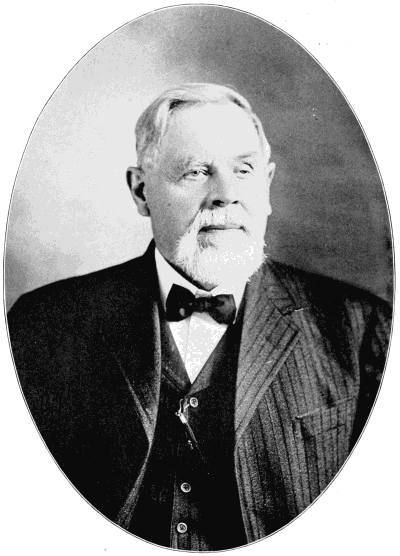
CONRAD H. KASEBERG
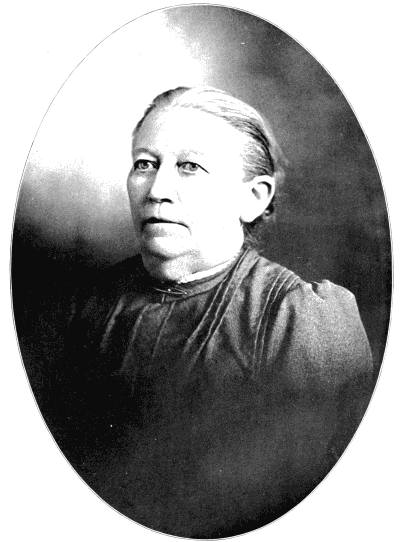
MRS. CONRAD H. KASEBERG
Mr. Kaseberg also belongs to that church and has never failed to give both his moral and financial support to its work. Fraternally he is a member of the Odd Fellows lodge of Walla Walla. He is a republican in politics but his interest in public affairs is only that of a loyal citizen, though he served one year on the city council. He is a self-made man, having come to this country empty-handed, but through the opportunities here offered and his industry and good management he has gained financial independence. He has reached an advanced age but is still keen of mind and active of body and is accorded the honor due those who have behind them the record of a long and honorable life.
JOHN A. LANE.
John A. Lane, concentrating his efforts and attention upon general agricultural pursuits, cultivating eleven hundred acres of land, makes his home on section 24, township 8 north, range 36 east, in Walla Walla county. Almost the width of the continent separates him from the place of his birth, which was in Cameron county, Pennsylvania. He was born September 28, 1878, a son of Joseph and Mary (Berfield) Lane, both of whom were natives of the Keystone state. The father was born in Philadelphia, where his youth was spent. His father died when the son was a lad in his teens and the burden of the support of the family fell upon his shoulders. He bravely met the task and throughout his entire life displayed the same spirit of resolution and energy. He continued his residence in his native state until 1880, when he came west to Walla Walla county, Washington, and took up his abode upon a farm near the present home of his son John. He purchased one hundred and sixty acres of land and as his financial resources increased kept adding to his holdings until his landed possessions aggregated three hundred and forty-six acres. He continued to give his undivided time and attention to his farming interests until death called him on the 10th of September, 1905. His widow is still living and now resides with a daughter in Walla Walla.
John A. Lane was educated in the district schools and in the Waitsburg Academy, which he attended through the winter months, while the summer seasons were devoted to farm work. Upon the completion of his education he began farming on his own account, renting a tract of three hundred and twenty acres of land in the township where he still resides. He cultivated that place for three years and then took up a homestead in what was Yakima county, now Benton county. This he improved and cultivated for five years and he still owns that place. In 1907, however, he returned to the old homestead farm, which is owned conjointly by himself and his mother. He cultivates this place of three hundred and forty-six acres and rents adjoining land, operating altogether eleven hundred acres. He has thus come to rank with the leading and extensive farmers of his section of the state and his business affairs are carefully managed and conducted.
On October 16, 1898, Mr. Lane was united in marriage to Miss Nora P. Smith, a daughter of Mrs. Charles Ellis, of Dixie. Her father died during her infancy and her mother afterward married again. To Mr. and Mrs. Lane have been born three children of whom two are living, Dorothy M., who is attending the Walla Walla high school, and John A., Jr.
In his political views Mr. Lane maintains an independent attitude, voting for men and measures in preference to party dictation. He is now serving on the school board and the cause of education finds in him a stalwart champion. He belongs to the Ancient Order of United Workmen and his wife and daughter hold memberships in the Christian church. The members of the family are highly esteemed in the part of the county where they reside and have a circle of friends almost coextensive with their circle of acquaintances.
JESSE DRUMHELLER.
Jesse Drumheller, deceased, an honored pioneer of the west of 1852, was during the remainder of his life a prominent factor in the advancement of the business interests and development of this section of the country. Widely known, his life history cannot fail to prove of interest to the many friends who still cherish his memory, and it is therefore with pleasure that we present this record of his career to our readers. His birth occurred in Tennessee in 1835. There the first eight years of his life were passed, after which he accompanied his parents on their removal to Missouri, the family home being established near Springfield, where he remained until 1851. He then located near Savannah, Missouri, where he remained for a year, and in 1852 he heard and heeded the call of the west. He started out across the plains with ox teams for Washington and located in Cowlitz county, where he turned his attention to the lumber business. Soon afterward he removed to California, where for several years he engaged in mining, and in 1855 he became a resident of Oregon. There he joined the Oregon Volunteers for service in the Indian war and was sent to Walla Walla. During the eleven months in which he was a part of that command he participated in several severe engagements with the red men and aided in winning the victory which crowned the arms of the white troops. After the cessation of hostilities he entered the employ of the United States government and assisted in building the government posts at The Dalles, at Walla Walla, at Colville and at Simcoe. His activities thus became an important factor in the development of this section of the country. In 1859 he took up his abode on land two miles south of Walla Walla and turned his attention to stock raising and general farming, a business which he followed until about 1900. In this he prospered and from time to time added to his holdings until his landed possessions aggregated nearly six thousand acres. He thus carried on farming most extensively and in 1899 his crop of wheat amounted to about sixty-five thousand bushels. He followed the most progressive methods in the development of his land and stood at all times as one of the most enterprising and representative farmers of the northwest. He also carried on stock raising with success and his diligence and determination brought him prominently to the front in connection with the line of his chosen occupation.
On the 8th of October, 1863, in Walla Walla, Mr. Drumheller was united in marriage to Miss Martha A. Maxson, a pioneer of 1859. They became the parents of five sons: Samuel, of Calgary, Alberta; Oscar; George, a stock-raiser of Walla Walla; Thomas J., who is engaged in the hardware business with his older brother, Oscar, they being members of the well known firm of Drumheller & Company, dealers in hardware, furniture and crockery; and R. M., collector of customs at Seattle.
Jesse Drumheller was a member of the Masonic fraternity, holding membership in the lodge and in the chapter. His death occurred on December 2, 1907. He stood in the front rank among those who have planted civilization in the northwest and was particularly active in the growth of Walla Walla county, where for many years he made his home, and his labors were of a nature that contributed in marked measure to the substantial and moral development and upbuilding of this section of the country. He was a progressive business man, wide-awake, alert and energetic, and carried forward to successful completion whatever he undertook. While his business interests became very extensive and important, he always found time to cooperate in plans and measures for the public good and was a most loyal and devoted citizen from the time when he aided in subduing the Indian uprising, through the period of later development and progress up to the time when death called him to the home beyond.
OLE HANNAS.
Ole Hannas, who resides on section 31, township 14, range 43, owns ten hundred and sixteen acres of Garfield county's valuable wheat and pasture lands and enjoys an enviable reputation as a successful and representative agriculturist. His present prosperity is entirely attributable to his own efforts, for he came to this state empty-handed about three decades ago. His birth occurred in Norway on the 9th of September, 1866, his parents being Ole and Anna (Kittelsaa) Hannas. The father passed away in that country in 1915, but the mother survives and yet makes her home in Norway.
Ole Hannas received a thorough common school education in his native country and there spent his youth. When twenty-one years of age he crossed the Atlantic to the new world, desiring to test the truth of the many favorable reports which had reached him concerning the opportunities and advantages to be enjoyed in America. After residing for one year in Minnesota he came west to Washington in the fall of 1888 and spent the succeeding winter and spring in Tacoma. In June, 1889, he made his way to Walla Walla and in the following October took up his abode in Garfield county. Having no money to invest in land, he secured employment as a farm hand. At the end of five years, in 1894, having saved his earnings, he began farming for himself on a small scale as a renter. Prosperity attended his efforts and about 1902 he purchased a half interest in five hundred and eighty acres of land where he now resides. From that time his success has been sure and rapid and today his holdings embrace ten hundred and sixteen acres of valuable wheat and pasture land in Garfield county, so that he has become one of the most extensive agriculturists and substantial citizens of the community.
On the 5th of April, 1905, Mr. Hannas was united in marriage to Miss Guri Tveit, crossing over to Norway for his bride, of which country she is a native. They have two children, Orle and John. Mr. Hannas gives his political allegiance to the republican party and is serving as a member of the school board, the cause of education finding in him a stalwart champion. Fraternally he is identified with the Woodmen of the World, while in religious faith both he and his wife are Lutherans. They have won an extensive circle of warm friends throughout the community, being recognized as people of genuine worth whose aid and influence are given on the side of right, progress, reform and improvement.
JAMES B. WARREN.
James B. Warren became the owner of a valuable tract of land on section 4, township 10 north, range 42 east, Garfield county, and also held title to other land, his holdings comprising fourteen hundred acres at the time of his death. He was widely known and his demise was the occasion of much sincere grief. He was born in Franklin county, Tennessee, January 9, 1853, and was a son of Stewart and Louisa (Walker) Warren, both also natives of that state. There the father passed away and later the mother removed with her family to Missouri, where her death occurred in 1875. All of the six children in the family have likewise passed away.
James B. Warren received a common school education and remained with his mother until her death. In 1875 he went to California but only remained there for two years, settling in Polk county, Oregon, at the end of that period. The following year, however, he became a resident of Dayton, Columbia county, Washington, and in 1882 he purchased the farm on which his widow still resides. It comprises eight hundred acres and the buildings are located on section 4, township 10 north, range 42 east. From the operation of that place he derived such a gratifying profit that he was able to add to his holdings and became the owner of fourteen hundred acres, all of which is now in the possession of his widow. He was likewise a stockholder in the Pomeroy Mercantile Company at Pomeroy. He was a keen business man and, adding to this industry, sound judgment and a ready recognition of opportunities, it was but natural that he should gain a signal measure of success.
Mr. Warren was married in 1882 to Miss Marietta McCanse, who was born in Missouri, a daughter of Andrew G. and Margaret E. (Williams) McCanse, both natives of Tennessee, who, however, became early settlers of Lawrence county, Missouri. In 1876 the McCanse family removed to Oregon, but a year later located four and a half miles northeast of Pomeroy, Washington. Subsequently the parents returned to Missouri, where Mrs. McCanse died in 1907, her husband passing away September 8, 1909. Only three of their six children survive.
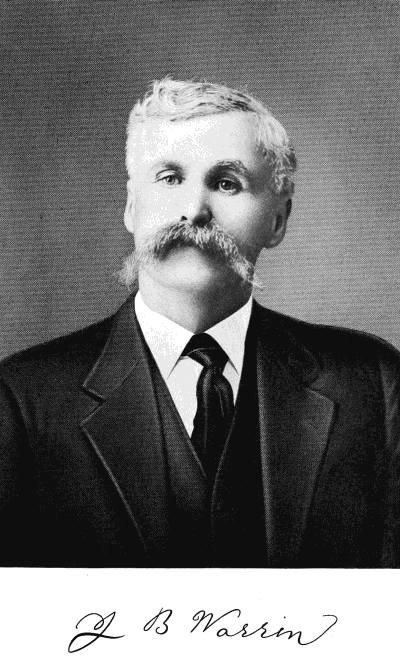
Mr. Warren was called to his final rest April 17, 1913, and his body was interred in the Chappele cemetery. He was a member of the Knights of Pythias and its teachings concerning the brotherhood of man found exemplification in his daily life. He took the interest of a good citizen in public affairs, although not an office seeker, and his ballot was cast in support of the republican party. He was for a third of a century a resident of Garfield county and during that time had a part in bringing about its development. His acquaintance was unusually wide and his friends were many. Mrs. Warren has retained her residence on the homestead and gives her personal supervision to its operation. The land is fertile, the improvements are modern, and she derives a handsome income from the place.
REV. A. R. OLDS.
Rev. A. R. Olds is superintendent of the Walla Walla County Poor Farm, situated on section 36, township 7 north, range 35 east in that county. He devoted many years of his life to the work of the ministry and then ill health obliged him to discontinue his labors in that connection. He is now making a most excellent record not only as superintendent of the Poor Farm in his care of the indigent ones but also in the management of crop production. He was called to this position in 1914 and has been most efficient in the discharge of all of the tasks that devolve upon him in this connection.
A native of Pennsylvania, his birth occurred in Bradford on the 30th of July, 1854, his parents being Robert D. and Hannah (Corkings) Olds, both of whom were natives of the state of New York, where they were reared and married. Soon afterward they removed to Bradford, Pennsylvania, where the father engaged in the shoe business until 1858, when he removed to Roanoke, Indiana, where he again conducted business as a boot and shoe merchant for twenty-eight years. The mother died in Roanoke and the father afterward came to the west, making his home with his son, Rev. A. R. Olds of this review, at Philomath, Oregon.
A. R. Olds pursued a public school education, supplemented by study in the Roanoke Seminary. He was thirteen years of age when he entered upon an apprenticeship to the shoemaking business, for his father conducted a custom made shoe business in connection with handling the factory product. After completing his apprenticeship A. R. Olds worked at the trade until 1882, when he made his way westward to Oregon, settling in Philomath. A year later he entered the ministry of the United Brethren church and for four years was minister at the college in Philomath. A little later he became connected with the Congregational church as a minister and for almost thirty years devoted his time and energies to the work, filling the pulpit in various churches. After his retirement from a regular charge he continued to do county missionary work until about a year ago. In September, 1896, he arrived in Walla Walla to take charge of the county missionary work but failing health caused him to give only a part of his time to the work in later years. Earnest and zealous in his efforts to upbuild the church, his labors wrought good results. He was not denied the harvest nor the full aftermath of his efforts. His high purpose, his ready sympathy, his words of wisdom all combined to act as an influencing factor drawing men to a better life.
In 1914 Rev. Olds was appointed superintendent of the County Poor Farm of Walla Walla county, in which capacity he has since served, and he has proven himself a master farmer, his crops at the present writing being among the finest in this section of the state. He also displays good business ability in the conduct and management of the Poor Farm and his official service in this connection is characteristic of traits which he has ever displayed, for it has always been his custom to carry forward to successful completion whatever he undertakes. He never falters in the face of difficulties nor obstacles and his labors have brought good results, both in promoting material and moral progress.
In 1876 Rev. Olds was united in marriage to Miss Etta Fast, of Roanoke, Indiana, by whom he has three children, namely: Earl L., who is a resident of Bend, Oregon; Francis R., living at Klamath Falls; and Ruth, the wife of H. W. Bathany, of Walla Walla.
Rev. Olds gives his political allegiance to the republican party, which he has long supported. He is prominent in Masonic circles, belonging to Walla Walla Lodge, No. 7, A. F. & A. M.; Walla Walla Chapter, No. 1, R. A. M.; and Oriental Consistory, No. 2, A. & A. S. R., of Spokane. He is likewise a member of Trinity Lodge, No. 121, I. O. O. F., and Walla Walla Encampment, No. 3, I. O. O. F., and in June, 1917, a high honor was conferred upon him, for in that month he was made grand chaplain of the grand lodge of Washington. He also belongs to the Woodmen of the World. He is one of Walla Walla county's most esteemed and representative citizens and enjoys the respect, goodwill and trust of all with whom he has come in contact. Ever ready to extend a helping hand where aid is needed, his character and work have been such as have shed around him much of life's sunshine.
ARTHUR P. BLOOMFIELD.
Arthur P. Bloomfield, who is living retired in Columbia county after many years of successful farming, was born in New Jersey, February 6, 1840, a son of Jonathan and Theodosia (Foster) Bloomfield, the former born in England and the latter in New Jersey, in which state they were married. The father passed away in New Jersey and subsequently the mother became a resident of California, where her demise occurred. To them were born three children, of whom only our subject survives.
Arthur P. Bloomfield was reared in his native state and enjoyed the educational advantages afforded by the common schools. In 1861, when he had attained his majority, he went to California, where for about twenty years he devoted his time to farming and gardening, but in 1880 he came to Old Walla Walla county, Washington, taking up as a homestead the farm on which he still lives. Here he met with success and was able to increase his holdings until he now owns one thousand and ten acres of wheat and pasture land, all within what is now Columbia county. At length, feeling that he had earned a rest, he retired and now leaves to others the active work of the fields. He also owns a half interest in the Palace Hotel at Pullman, from which he receives a rental of two hundred and fifty dollars per month.
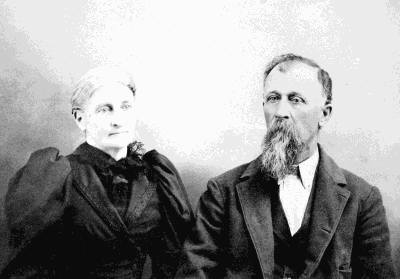
MR. AND MRS. ARTHUR P. BLOOMFIELD
Mr. Bloomfield was married in 1874, to Miss Anna Lang, and they became the parents of seven children: Lulu, the wife of Bert Kimball; Ida, who resides in Walla Walla; Hattie, deceased; Frank, who is farming the homestead; and three who have passed away. The wife and mother died Saturday, October 6, 1917, and was laid to rest in Walla Walla cemetery.
Mr. Bloomfield is a stanch supporter of the republican party and has served with credit as a member of the school board and as road supervisor. His career illustrates what may be accomplished in this land of opportunity by persistent hard work and good management, for he began his career empty handed and is now financially independent.
MARTIN HANSEN.
Martin Hansen is a self-made man who has gained a creditable position among the representative and prosperous farmers of Walla Walla county. He arrived in this section of the state empty-handed but he saw the opportunities here offered and has utilized them to good advantage. He is now the owner of a valuable farm property situated on section 33, township 7 north, range 35 east. He was born in Denmark on the 12th of January, 1876, and is a son of Lars and Mary Hansen, who came to the United States when he was a lad of twelve years. The family home was established in Nebraska, four sons of the family having preceded the parents to the new world. There the father and mother located and both passed away in that state, the death of the father occurring in 1915, while his wife died in 1914.
In the common schools of Denmark, Mr. Hansen pursued his education, supplemented by a winter term's study in Nebraska and by two winter terms in Walla Walla county. He also took two six-weeks winter courses at the State College of Washington. He made good use of his time and opportunities in promoting his intellectual development and he has always continued a student of men and events. In other words he has learned much in life through observation and experience and has become a substantial and well informed business man.