BIOGRAPHICAL (continued 10)
Reading edition
It was in 1866 that Mr. Preston came to Waitsburg, Walla Walla county, and identified himself with the Washington flouring mills and machinery business, which he and his brother, Platt A. Preston, had bought. Under his management these mills became the foremost industry of Waitsburg and the high quality of their product became well known throughout the state. In addition to his milling and mercantile business Mr. Preston was prominent in other lines, being a director of the Merchants Bank of Waitsburg and a stockholder and director of the Schwabacher Company of Walla Walla. He was also prominently identified with the Puget Sound Dressed Meat Company during its existence and was much interested in farming and stock raising. At the time of his death he was the owner of more than three thousand acres of land.
In 1869 Mr. Preston was united in marriage to Miss Matilda Cox, who was perhaps the first white child born near Boise, Idaho, her birth occurring in 1845 while her parents were making the overland journey to the Pacific coast. Her father, Anderson Cox, was a native of Ohio and a farmer by occupation. On coming west he located near Albany, Oregon, on a donation claim, where he remained for a number of years, but in 1862 came to Walla Walla county, Washington, and acquired land. He also built a sawmill, the first in this county. Both Mr. and. Mrs. Cox passed away here and six of their ten children are also deceased. To Mr. and Mrs. Preston were born four children: Herbert P., who is engaged in the feed business in Toppenish, Washington; William C., who died when six months old; Charles B., a resident of Portland, Oregon; and Dale H., deceased.
Mr. Preston was a stanch republican in his political belief and served for two terms as a member of the territorial legislature. In 1881, while a member of that body, he was made chairman of the ways and means committee. He was much interested in educational affairs, especially in his later years, and in 1913 erected the beautiful auditorium known as Preston Hall at Waitsburg, it being designed for vocational training and containing a swimming pool, gymnasium and large hall for public meetings, etc. In all the relations of life he was loyal to the teachings of the Presbyterian church, of which he was a member, and his integrity was never open to question. His death occurred on the 20th of February, 1916, and he was laid to rest in the Waitsburg cemetery. Like her husband, Mrs. Preston has also been a generous contributor to all worthy enterprises for the public good and she now makes her home in Walla Walla, where she is well known and highly esteemed.
JAMES L. ROBISON.
James L. Robison is a retired farmer residing in Walla Walla. He is familiar with all of the experiences of the stock raiser on the western frontier, having ridden the range as a cowboy, while in later years he became extensively engaged in stock raising on his own account. He was born in east Tennessee, July 28, 1842. His father died during the infancy of the son, and the mother later married John Grubb, by whom James L. Robison of this review was reared. He acquired a common school education and when he was but ten years of age crossed the plains with his parents. They spent the winter in Missouri and in the spring of 1853 started on the long westward journey to Oregon. They took up their abode in Linn county, twenty miles south of Albany, where Mr. and Mrs. Grubb spent the remainder of their lives. At the early age of fifteen Mr. Robison began to work for wages and in 1861 made his way northward into eastern Oregon and spent the hard winter on the T. K. McCoy ranch on the Tum-a-Lum in Umatilla county. He continued to work for others until 1868, when he bought some cattle and thus established himself in the cattle business. He had previously engaged in riding the range for seven years prior to engaging in the cattle business on his own account. He was therefore familiar with the business and from the beginning met with success. He spent fifteen years in the cattle business, having as high as a thousand head upon the range. At length, when the free range was cut off by the settlement of the country, he retired from that business, after which he had sheep on the range for a considerable period. Eventually, in 1913, however, he put aside all business cares and retired from active life. He still owns six hundred and forty acres of valuable wheat land ten miles north of Walla Walla and from the rental of his property secures a gratifying income.
In early manhood Mr. Robison was joined in wedlock to Miss Mary J. Cecil, a daughter of William Cecil, who crossed the plains to Oregon in 1862, locating in what is now Morrow county. Mr. and Mrs. Robison became the parents of three children but only one survives, Lena M., who is the wife of Otto Haar, of North Yakima, Washington. Mrs. Robison is a member of the Congregational church and a lady of many admirable qualities.
In politics Mr. Robison is independent in thought and at local elections does not consider party ties but has always voted the republican ticket in electing a president. His life has been a very busy, active and useful one. His business activities were connected with an era that is fast passing away—the era when Washington was still the country of the open range before its lands were divided and taken up for farms. He is therefore familiar with all the phases of the history of the state in its development from pioneer times and he rejoices in what has been accomplished as the work of improvement and advancement has been carried forward here, placing this great state on a par with the older commonwealths of the east. In fact, Washington has gained a position of leadership in various respects and has every reason to be proud of her splendid record in the line of business development and especially in the progress which she has made in the organization of her school system.
In his business career Mr. Robison has at all times displayed that spirit of enterprise so characteristic of the west and now, at the age of seventy-five years, he is able to enjoy well earned rest, his former labors having resulted in a competence which meets all of his needs and requirements and yet leaves a sufficiency for many of the luxuries of life.
JOSEPH GROTE.
The farming interests of Joseph Grote would be termed mammoth even in this great west where agricultural interests are on the whole conducted on a most extensive scale. He is now operating sixty-two hundred and eighty acres of land in Columbia and Walla Walla counties, making his home on section 22, township 11 north, range 38 east, of the former county. His long experience and his extensive operations enable him to speak with authority upon everything connected with farming in the west at the present day. He recognizes fully the possibilities and the opportunities of the country and what he has accomplished represents the fit utilization of the innate powers and talents which are his. Mr. Grote is a native of Ohio, his birth having occurred in Piqua on the 7th of April, 1885, his parents being John and Anna Grote, both of whom were natives of Germany, where they were reared and married. In 1881 they came to the United States and after a residence of nine years in Ohio made their way westward to Washington, the family home being established in the Palouse country, where Mr. Grote remained, however, for a period of only two years. He then came to Walla Walla county, where he purchased a ranch north of Prescott and there he successfully engaged in farming to the time of his death. For a number of years prior to his demise he resided in the city of Walla Walla and from that point superintended the operation of his ranch. He died October 14, 1915, and is survived by his widow, who is now making her home in southern California.
Joseph Grote, whose name introduces this review, was educated in the district schools near his father's farm and in the city schools of Walla Walla. After reaching young manhood he continued to assist his father in the development of the fields until 1909, when he started out to engage in farming independently, entering into partnership with his brother Theodore. They gradually increased their operations in extent and importance until their interests placed them at the head of the leading agriculturists of Columbia county. In 1914 the partnership between the two brothers was dissolved and Joseph Grote retained twenty-three hundred acres of their holdings. In addition to this he operates four hundred and eighty acres of school land in the township where he resides and he leases and operates the Sharpstein ranch in Walla Walla county, containing thirty-five hundred acres of land. He has thus become one of the foremost agriculturists of the northwest. He plants twenty-five hundred acres to grain each year and harvests mammoth crops.
In 1917 Mr. Grote was united in marriage to Miss Lillian Baumann, a daughter of F. A. Baumann, a retired farmer of Walla Walla. In politics he maintains an independent course, not caring to bind himself by party ties. He is not remiss in the duties of citizenship, however, but stands for progress and improvement in public affairs and reaches out along helpful lines in recognition of the needs and opportunities of county and state. He is an enthusiastic advocate of the great northwest, and well he may be, for in its opportunities he has found the path to success and is today numbered among the men of affluence in southeastern Washington.
JOHN ADKINS GROSS, M. D.
There is much that is inspiring in the life record of Dr. John Adkins Gross, who for many years was prominently associated with the agricultural development and activity of southeastern Washington, acquiring extensive landed possessions which he converted into rich and productive fields. His worth as a man and citizen was widely acknowledged and there are in his life record many chapters worthy of consideration.
Dr. Gross was born in Cape Cod, Massachusetts, July 30, 1840, a son of Dr. Oren and Jane (Snow) Gross. He was reared and educated on Cape Cod. In his youth he studied navigation and also taught school for a time but at the age of twenty-three years enlisted in 1863 as a member of the Forty-third Massachusetts Infantry for service in the Civil war, remaining at the front until the close of hostilities. He became corporal of his company and while he did not engage in any of the battles between the north and the south his service was of a hazardous nature, such as scout duty and running boats loaded with provisions past blockades, etc. He ever manifested the utmost loyalty to the nation's starry banner and the cause for which it stood and with a most creditable military record returned to his home.
Soon after leaving the army Dr. Gross went to New York city, where he engaged in carpenter work until the panic of 1873 swept away all his investments. He then crossed the continent to San Francisco, California, where he lived for two years. He afterward went to Astoria, Oregon, and was in that city and in Portland until 1879, when he came to Walla Walla. Here he took up the profession of teaching, which he followed for several years. He taught at Frenchtown, riding back and forth from Walla Walla. When he had saved enough he secured a homestead in Umatilla county, Oregon, and kept adding to his landed possessions until he had over eleven hundred acres, which he brought under a high state of cultivation. He afterward purchased a ranch of twenty-five hundred acres near Starbuck, Washington, all of which has been planted to crops and has been improved with very substantial and commodious buildings. In a word his labors wrought a marked transformation in the appearance of the place and also in its value and he won recognition as one of the foremost agriculturists of this section of the state.
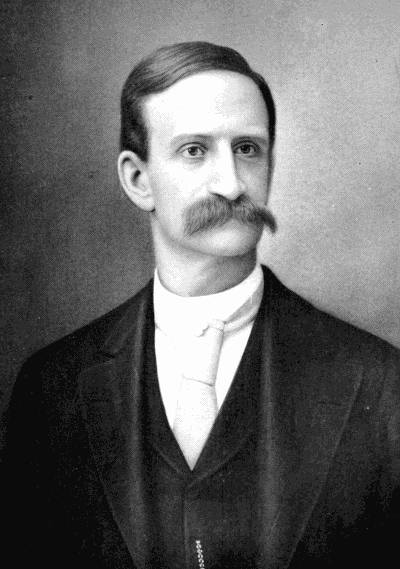
DR. JOHN A. GROSS
Dr. Gross was married twice and when he went to war left a bride of only a few weeks. He was married a second time at Pendleton, Oregon, on the 9th of February, 1891, when Miss Bessie S. Green, of Kansas, became his wife. He had four children by his first marriage, while four were born of his second union. Carrie B., the eldest, is now, the wife of R. C. Dunnington, of Walla Walla. Jennie I. is the wife of F. H. Richmond, of Walla Walla. Millie E. is the wife of Ralph E. Story, of Silver Lake, Oregon. O. E., of Seattle, Washington, was the youngest child of the first marriage. The others are: John E., who is now upon the ranch; Julia E., who was graduated from Wellesley College in the class of 1917; Marvin, now a high school pupil; and Mabel, who is also in high school.
The death of Dr. Gross occurred July 17, 1915, and he was laid to rest in Mountain View cemetery in Walla Walla. He was a man of marked ability and in his later years he studied medicine, being graduated from the Hahnemann College at Philadelphia, Pennsylvania, with the class of 1900. At that time he was over sixty years of age but he possessed an especial aptitude for the physician's work and a very retentive memory, which carried statistical knowledge. The greater part of his life, however, was devoted to farming and stock raising and he became one of the most extensive and prosperous farmers of Walla Walla county. His political endorsement was given to the republican party and he always took an active part in politics. Fraternally he was connected with the Knights of Pythias and also with the Grand Army post thus maintaining pleasant relations with his old military comrades, with whom he followed the stars and stripes on the battlefields of the south. He was a man of many sterling traits of character, genial and affable, and enjoyed the high esteem of those with whom he was associated. Since his death Mrs. Gross has erected a fine residence on Boyer avenue in Walla Walla but still has charge of her ranch property and is a woman of excellent business ability, fully capable of meeting the requirements put upon her in the management of her estate.
OSSIE MARTIN.
The stock raising interests of Columbia county have a worthy representative in Ossie Martin, who is the owner of a valuable farm of seven hundred and twenty acres on section 23, township 12 north, range 38 east. He is one of Washington's native sons, his birth occurring in Old Walla Walla county, February 8, 1867. His parents, James and Bridget E. Martin, were natives of Ireland but in early life emigrated to America and first located in Missouri. In 1861, however, they started for the Pacific coast in a covered wagon drawn by mules and at length reached Walla Walla. They located on a farm and later Mr. Martin took up a homestead near Waitsburg, where he lived until 1893, when he sold the place and removed to Walla Walla. Both he and his wife died in that city. To them were born seven children and all are living.
Ossie Martin was reared in much the usual manner of farmer boys and was educated at a Catholic school in Walla Walla. On starting out in life for himself he chose the occupation with which he was thoroughly familiar—that of farming, and has since followed that pursuit with most gratifying results. In 1909 he purchased his present farm comprising seven hundred and twenty acres and in connection with its operation has given considerable attention to the raising of stock, making a specialty of the breeding of shorthorn and Hereford cattle, now having about one hundred head upon his place. Besides his valuable farm property he owns a residence in Waitsburg, which he rents.
In 1892 Mr. Martin married Miss Mary Martin, who, although of the same name, was not a relative, and to them have been born seven children, as follows: Wesley J.; Harold A., who is in the army; Cecelia K., the wife of Albert Goodyear; Melba C.; Oswald D.; Esther M.; and Wilbert H.
The family are communicants of the Catholic church and Mr. Martin is a democrat in politics but has never cared for the honors of public office, preferring to give his undivided attention to his business interests. He is one of the leading citizens of his community, and takes a commendable interest in public affairs, as every true American citizen should.
GUSTAV VOLLMER.
Among the pioneers of Walla Walla county who persevered in spite of hardships of the early days and who are now reaping the reward of their faith in this section, is Gustav Vollmer, a resident of section 12, township 9 north, range 37 east, who owns more than eleven hundred acres of fine land, which he purchased years ago at far less than its present market value. As time has passed he has adapted his methods of farming to the changed conditions and his progressive spirit has been an important factor in his success. He was born in Germany, May 7, 1854, a son of John H. and Emelia (Flaskamp) Vollmer, who passed their entire lives in that country. Of their seven children, five survive and all but our subject are still residents of Germany.
Gustav Vollmer attended the public schools of his native country in the acquirement of his education but when seventeen years old emigrated to the United States. The first two years in this country were spent in Illinois, where he was employed as a farm hand, but in 1873 he went to Nebraska, where he remained until 1879. In that year he determined to take advantage of the unusual opportunities afforded the young man in the Pacific northwest and removed to Oregon. In 1880 he took up a homestead in Umatilla county, Oregon, twenty-five miles southwest of Walla Walla and for twenty years maintained his residence thereon. For a considerable period, in order to market his wheat, it was necessary to haul it to steamboat landings on the Columbia river, which required three days. While he was gone on such trips his wife remained upon the farm with her small children, although the nearest neighbors were miles away. The isolation was one of the greatest hardships which the early settlers had to endure, but there were also other discouraging features as, for instance, the low prices, wheat selling one year for twenty-three cents a bushel. Mr. Vollmer recognized, however, that with the settlement of the country these untoward conditions would change and that the fertility of the soil guaranteed the future of the farmers, and he consistently invested his savings in land. He owns 480 acres of land in Umatilla county, eighty acres adjoining Waitsburg, where he makes his home. His holdings total 1,193 acres. All the land is rich and productive and, moreover, his farms are well improved, the excellent buildings thereon adding materially to the value of his property. He has given the greater part of his time and attention to wheat growing and is thoroughly familiar with that business. In fact his success has been in a measure due to the fact that he has concentrated his energies upon that line of endeavor. He is now one of the men of wealth in Walla Walla county and takes justifiable pride in the fact that he is a self-made man, his prosperity being due entirely to his own foresight, energy and good management.
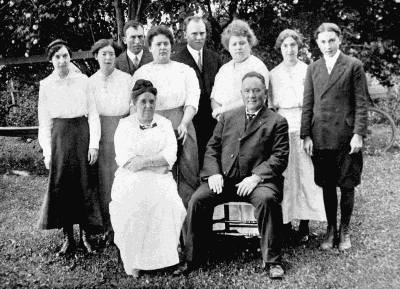
GUSTAV VOLLMER AND FAMILY
On the 12th of June, 1881, Mr. Vollmer was united in marriage to Miss Henrietta Schmitt, a daughter of John and Katherine (Martin) Schmitt. To this union have been born nine children: John H.; Clara Augusta, the wife of Harland Mills; Emma Caroline, the wife of William Harris; William, who is farming in this locality; Julia, the wife of William Stimmel; Zelma, Minnie and Charles, all at home and graduates of the high school; and Katherine, deceased.
The parents hold membership in the Evangelical Lutheran church and its work profits by their hearty support. In politics Mr. Vollmer is a stanch republican and he has served his district ably for two terms as a member of the state legislature. His interest in education has found expression in effective work as a member of the school board, and all projects for the advancement of the public welfare have received his endorsement. He finds great pleasure in contrasting the early days in this section, when the settlers were to a great extent cut off from the outside world, with the present day with its excellent means of communication with all parts of the country. As an illustration of the extent to which the pioneers were dependent upon their resources it may be mentioned that Mr. Vollmer made the furniture used in his home from timber which he had cut. For a number of years it was necessary to practice the strictest economy, but he has never regretted his pioneer experiences and finds pleasure in the knowledge that he has had a part in the development of this region.
JAMES CHRISTENSEN.
James Christensen, a well known farmer of Garfield county who owns five hundred and twenty acres of good land on section 2, township 12 north, range 41 east, has resided in various parts of the west and in Alaska and for some time engaged in mining but for several years past has devoted his attention to farming and stock raising exclusively. He was born in Denmark, February 25, 1866, a son of Christian and Gertrude Petersen, who passed their entire lives in that country. To them were born seven children, of whom six are living.
James Christensen attended the public schools of Denmark as a boy and youth, thus acquiring a good education, and in 1885, at the age of nineteen years, came to America. For one year he was employed as a farm hand in Nebraska and then was for several years a resident of California. Later he spent a year in Montana and in 1891 removed to Walla Walla county, Washington, where he worked on a farm until his removal to Alaska. A decade was devoted to gold mining there and during that time he made three trips to Europe. On leaving Alaska he went to Idaho, but remained there for only a short period, after which he again came to Walla Walla county, Washington. He decided to turn his attention to farm work and took up a homestead on Eureka flats which he cultivated for eight years. He then traded that place for a farm in the vicinity of Walla Walla but two years later exchanged that property for his present farm of five hundred and twenty acres on section 2, township 12 north, range 41 east, Garfield county. Much of his land is given over to the growing of wheat but he also engages in stock raising and derives a good profit from both branches of his business.
Mr. Christensen was married in 1905 to Miss Dora Renn, who was born in Minnesota. They are the parents of three children, namely: George F., Gertrude M. and Anna M.
Mr. Christensen is an adherent of the republican party and casts his ballot in support of its candidates. He has not taken a very active part in political affairs but is now serving as a school director, in which connection he constantly works for the advancement of the local schools. He is a self-made man, having attained prosperity solely through his own efforts, and his energy and determination have gained him the respect of all who know him.
JOHN C. WRIGHT.
John C. Wright, deceased, was an early settler of Walla Walla county, Washington, and engaged in farming here for many years. He was born in St. Lawrence county, New York, April 2, 1843, a son of Alexander and Jeannette Wright, both of whom passed away in the Empire state.
John C. Wright was reared at home and received his education in the public schools. As soon as he was old enough he went to work on the lake boats and was so employed until he enlisted for service in the Civil war as a member of Company L, Second Minnesota Cavalry. He was with the colors for three years and was then mustered out of the military service at Fort Snelling, Minnesota. In 1878 he and his wife came to the Pacific northwest, locating in Walla Walla county, Washington, where he took up a tree claim of one hundred and sixty acres. He subsequently purchased additional land and gave his entire time and attention to his farm work. He was successful, harvesting abundant crops, for which he found a ready sale, and as time passed his resources steadily increased. His widow still owns two hundred and eighty acres of excellent land with good improvements and derives a gratifying income from the rent of that property.
Mr. Wright married Mrs. Sallie Vangilder and to them were born three children: Emma Strand, a resident of Spokane, Washington; and two who died in infancy. In 1871 the wife and mother passed away and in 1872 Mr. Wright was again married, choosing as his wife Miss Carrie Griffin, a native of Vermont and a daughter of Daniel and Rhoda (Fullington) Griffin, natives respectively of New Hampshire and of Canada. In 1862 the family removed to Minnesota and there the father died, but the mother subsequently went to Kansas, where she spent her last days. To them were born eight children, of whom only two survive. Mr. and Mrs. Wright became the parents of eight children, of whom the first three died in infancy, the others being: Ada, who is married; Burt C., who is at home with his mother; Myrtle, the wife of Otis Denny; Carrie, who married Leigh Homer, of Montana; and Jack C., a railroad agent.
Mr. Wright was interested in public affairs and well informed on political issues but he never had the time nor inclination to hold office. His was a quiet, unostentatious life, marked by careful attention to his affairs, by the support of movements seeking the general good and by uncompromising honesty at all times. He passed away in 1898 and those who knew him well still cherish his memory.
CHARLES B. LAMBERT.
An eventful career is that of Charles B. Lambert, who, of Swedish birth, spent some time as a sailor on the high seas and also sojourned for a period in Alaska. He is now living a less spectacular but none the less useful life as an architect and contractor of Walla Walla and in professional circles has gained for himself a creditable position. Born in Sweden on the 6th of April, 1871, he is a son of August and Louise (Von Bose) Lambert, both of whom were natives of Sweden, where the mother passed away but the father is still living. In their family were five children, three of whom survive.
Charles B. Lambert was reared and educated in Sweden, where he attended the common schools until he reached the age of fourteen years. Desirous then of providing for his own support, he went to sea and spent three years as cabin boy and sailor. At the age of seventeen he returned to his native country and took up the study of architecture, to which he devoted two years, having thorough training in that regard. It was in the year 1890 that Mr. Lambert sailed for the new world, hoping to find better business opportunities on this side of the Atlantic. He landed in New York city, where he was employed for a time and later went to Chicago and to St. Paul, continuing in architectural work in these different cities. In 1897 he made his way to Alaska, where he remained for a year and a half, and in 1898 he arrived in Walla Walla, where he embarked in business on his own account. He has since become widely and prominently known as an architect and contractor and his skill and ability are manifest in many of the most substantial structures found in this city and through the surrounding district. The attractiveness of his plans has added much to the beauty of Walla Walla and in the erection of buildings he studies closely utility, comfort and convenience as well as the attractive exterior.
In 1901 Mr. Lambert was married to Miss Alma O. Jones, a native of Sweden, and they became the parents of two children: Ruth L., who is now a high school student; and Edith E. The family occupy an attractive residence which Mr. Lambert owns. He is prominent in Masonic circles, having taken all the degrees of the York and Scottish Rites up to and including the thirty-second degree in the consistory, and he is now eminent commander of the Knights Templar commandery. He also has membership with the Independent Order of Odd Fellows and with the Benevolent Protective Order of Elks. His study of the questions and issues of the day has led him to give his political endorsement to the republican party. He is a man of high personal worth and marked professional ability and a most progressive citizen who exemplifies in his life the spirit of western enterprise, progress and successful accomplishment.
BAILEY H. GROSS.
Bailey H. Gross was for more than a third of a century a resident of Walla Walla county and became one of its extensive landowners and prosperous farmers. He was a native of Illinois and ere reaching man's estate became a resident of Iowa—in fact continued to make his home in Iowa through the greater part of his childhood. It was there that he wedded Miss Julia A. Rice, who was born in Indiana and also became a resident of Iowa in her girlhood days. They began their domestic life in that state, where they continued until 1862 and then started on the long journey across the plains with the Pacific coast as their destination, but on reaching Virginia City, Nevada, were so pleased with the conditions they found that they decided to locate there. For eight years the father was engaged in dairying in that place and in 1870 resumed his interrupted journey westward and for ten years was a resident of what is now Modoc county, California. On the expiration of that decade he made his way northward into Walla Walla, Washington, arriving in the year 1880, accompanied by his family. Here he turned his attention to farming, in which he prospered greatly, and as his financial resources increased he kept adding to his landed possessions until he was the owner of thirteen hundred and sixty acres of fine wheat land. He personally supervised the operation of his farm, which was largely devoted to the production of wheat and other cereals. His methods were most progressive and his labors brought him most gratifying success. He continued to supervise the operation of his farm until 1913 and then retired, taking up his abode in Walla Walla, where his remaining days were passed in the enjoyment of well earned rest, his death occurring March 12, 1915. He had for about three years survived his wife, who died in June, 1912. During the thirty-five years of his residence in the county he witnessed great changes as the work of progress and of transformation was carried steadily forward. His activity as an agriculturist constituted a substantial contribution to the development of the state and, moreover, his life work proved what can be accomplished through individual effort and ability. He started out in the business world empty-handed and by reason of personal worth and effort gained a place among the substantial citizens of the northwest.
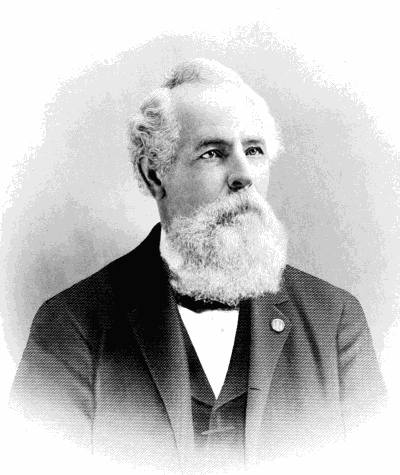
BAILEY H. GROSS
HENRY SCHMITT.
Henry Schmitt engaged in farming for many years and won a competence which enables him to live retired in Waitsburg. He was born in Lee county, Iowa, December 17, 1859, a son of John and Katharina (Martin) Schmitt, both natives of Germany. In 1840 they emigrated to America and located in Iowa, whence they removed to Nebraska where the mother passed away. Subsequently the father returned to Iowa with his children but after living there for a year went to Umatilla county, Oregon, and became the owner of a good farm there. He is deceased and six of his ten children have also passed away.
Henry Schmitt passed his boyhood and youth mainly in Iowa, and after completing the course in the common schools became a student in the high school at Burlington, from which he was graduated. For some time thereafter he resided at home, assisting his father, but on attaining his majority began farming in Umatilla county, Oregon, the family in the meantime having removed west. He purchased one hundred and sixty acres of land on which he resided for thirty-four years, during which time he brought the place to a high state of development and made many excellent improvements thereon. His practical methods and his industry were rewarded by large crops and he gave careful attention to the markets, and thus was able to dispose of his crops to good advantage. Since selling his farm he has taken up his abode in Waitsburg, where he owns a fine residence and three acres of land.
On the 7th of September, 1881, Mr. Schmitt was married to Miss Carrie Piepke, a native of Germany. Both hold membership in the Methodist Episcopal church and can always be counted upon to do their part in promoting its welfare. Mr. Schmitt is identified with the Independent Order of Odd Fellows in Oregon and has exemplified in his life the beneficent principles upon which that organization is based.
EMMETT S. HENNESSEY.
Emmett S. Hennessey, senior member of the firm of Hennessey & Calloway, a leading undertaking firm of Walla Walla, was born in Saratoga, Illinois, December 27, 1881, his parents being Joseph Daniel and Kathrine (Harney) Hennessey, who are natives of Illinois and of Irish parentage. In 1908 they removed westward to Walla Walla, where they still reside. They were the parents of five children, all of whom are yet living.
Emmett S. Hennessey, the eldest of the family, pursued his education in the public schools of Henry, Illinois, until graduated from the high school on the 1st of June, 1900. He is also a graduate licensed embalmer. After completing his high school course he spent one term as a teacher in a rural school at Grafton, Nebraska, and for one year was teller and accountant in a bank in Michigan, North Dakota, but fearing for his health, he left the bank to enter the University of Minnesota as a medical student. Later, however, he changed his course to the study of anatomy, embalming and sanitary science. He took up the undertaking business in Walla Walla in connection with the oldest undertaking company of the state in 1903, becoming a member of the firm of Picard & Hennessey. That association was maintained until 1908, when he bought out the interests of his partner and conducted the business alone until recently, when he became associated with Mr. Calloway. His reliable methods, his enterprise and the excellent line of goods which he carries have secured to him a very liberal and gratifying patronage and he is now regarded as one of the leading undertakers of the Inland Empire.
On the 25th of May, 1909, Mr. Hennessey was united in marriage to Miss Mary Harter, a native of Walla Walla and a daughter of Mr. and Mrs. Anton Harter, who are natives of Germany and came to America in 1868. In 1872 they established their home in Walla Walla, where, they still reside. To Mr. and Mrs. Hennessey have been born four children, namely: Charles, Patrick, Harry and Mary, all of whom are still under the parental roof.
Mr. and Mrs. Hennessey are members of the Catholic church, in which Mr. Hennessey is serving as a trustee. He also holds membership with the Knights of Columbus and is a past grand knight. He belongs to the Elks Lodge, No. 287, with which he has been identified for twelve years, and at the present writing, in 1917, is holding the office of loyal knight. He likewise belongs to the Commercial Club and cooperates in all of its well defined plans and movements for the upbuilding of the city. In politics he is a republican and in 1911 and 1912 filled the office of county coroner. He does not seek nor desire political preferment to any extent, however, as he wishes to concentrate his efforts and attention upon his business affairs. He is well known in this city and through the period of his residence here has gained an extensive circle of warm friends.
JAMES E. SHORT.
In the death of James E. Short, Walla Walla county lost one of its pioneer settlers and progressive farmers. He was born in Grant county, Wisconsin, April 8, 1847, and was a young lad of eleven years when his parents removed with their family to Iowa, where they continued to reside until he reached the age of nineteen. The family home was then established in Texas, where the parents later passed away.
James E. Short was reared and educated in Iowa, pursuing his studies in the public schools through the winter months, while in the summer seasons he worked in the fields. He was thus employed until he was twenty-three years of age. In the meantime the family had removed to Texas and in the Lone Star state he was married to Miss Martha E. Vickers, who was born in Texas. They began their domestic life there and after thirteen years removed to Oklahoma, where they resided for a number of years. On the expiration of that period they sold their property in the southwest and came to the Pacific coast country with Washington as their destination. In 1905 Mr. Short purchased land in the Walla Walla valley, becoming owner of six hundred and forty acres. This is wheat land, all under a high state of cultivation. He ranked with the leading and prosperous farmers of the county and followed the most progressive methods in all of his work. His place ever presented a neat and thrifty appearance, which indicated the careful supervision of a practical and progressive owner.
To Mr. and Mrs. Short were born nine children, namely: Adelaide T., who is a graduate nurse; James V.; Amie E., who is the wife of William F. Dolling; William E.; John W.; Oscar N.; Susan Eva; Elma M. C.; and Martha S.
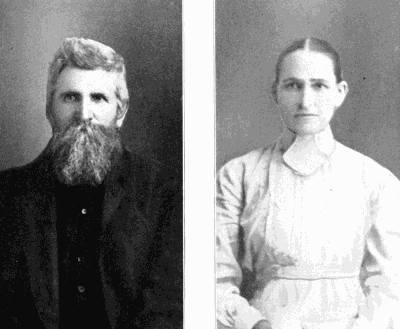
MR. AND MRS. JAMES E. SHORT
The family attend the Methodist Episcopal church, as did Mr. Short, and his influence was ever on the side of right, truth, reform and progress. His political allegiance was given to the democratic party and of its principles he was a stanch champion, but he never sought nor desired political office. He served, however, as a school director and was interested in all that pertained to the intellectual advancement of the community. He died May 7, 1917, and was laid to rest in Mountview cemetery in Walla Walla, leaving a widow and nine children to mourn his loss. His death was also the occasion of deep regret to many friends, for he had become widely and favorably known during the period of his residence in this section of the country. He had many substantial traits of character, was thoroughly reliable in business and was a public-spirited citizen. His widow and sons now operate the farm and the family occupies a prominent social position in this section of the state.
JAMES P. NEAL.
James P. Neal, deputy prosecuting attorney of Walla Walla county and a resident of the city of Walla Walla, was born in Westfield, Indiana, November 12, 1883, a son of the Rev. A. G. Neal, who is pastor of the First Methodist church of Fort Wayne, Indiana, and of Laura (Johns) Neal.
James P. Neal was accorded liberal educational opportunities. After graduating from the high school at Angola, Indiana, as a member of the class of 1901 he entered De Pauw University at Greencastle, that state, and pursued a classical course, winning his Bachelor of Arts degree in 1906. After leaving De Pauw he went east for law study and matriculated as a law student in Harvard University, where he remained until 1908. Having been admitted to practice law in Madison county, Indiana, in 1907, he maintained an office for a time at Alexandria, that state. He was admitted to practice before the supreme court of Indiana in 1908, was admitted to practice in Oregon in the same year and in Washington in 1914. In 1908 he opened an office in Freewater, Oregon, and in 1913 he became connected with the firm of Brooks & Bartlett in Walla Walla, that association being maintained until 1915. Since February of the latter year he has been a partner in the firm of Stafford & Neal and in this connection enjoys a large and lucrative practice which is constantly growing in volume and importance. He has filled various positions of a professional character. In 1907 he was deputy prosecuting attorney of Madison county, Indiana, and from 1909 until 1913 was city attorney of Freewater, Oregon. In 1915 he was made city attorney of Walla Walla, which position he yet fills, and in 1917 he became deputy prosecuting attorney of Walla Walla county and is yet the incumbent in that office.
Mr. Neal was married in Walla Walla, November 6, 1912, to Miss Louise Root, a daughter of F. F. and Margaret Root. In politics Mr. Neal is a republican and an active worker in party ranks, his opinions carrying considerable weight among the leaders of the party. He was a member of the county central committee of Umatilla county, Oregon, from 1910 until 1912 and in 1916 was a member of the county central committee of Walla Walla county. His fraternal relations are with the Masons, the Elks, the Moose, the Woodmen of the World and the Knights and Ladies of Security. He is also identified with Beta Theta Pi, a college fraternity. Mr. and Mrs. Neal are people of genuine worth, occupying an enviable position in social circles, and their many substantial traits of character have won them the respect and high regard of all with whom they have been brought in contact.
JOHN D. TAGGARD.
John D. Taggard is prominently connected with the development of horticultural interests of the northwest. His efforts have demonstrated the possibilities for fruit culture in Walla Walla county and he is now conducting a successful business as an orchardist, having his place on section 12, township 8 north, range 37 east. He was born amid the Ozark mountains of Missouri, near the city of Springfield, June 28, 1863, a son of Aaron and Ruth M. (Holland) Taggard, the former a native of Missouri, while the latter was born in Tennessee. For many years they resided upon a farm in Webster county, Missouri, but in later life the father retired from agricultural pursuits and took up his abode in Conway, where for some years he engaged with a younger brother in a mercantile enterprise, being associated with that business for several years. He died in 1910 and is survived by his widow, who yet resides in Conway.
John D. Taggard was reared under the parental roof and the common schools afforded him his preliminary educational privileges. He afterward attended the seminary at Lebanon, Missouri, and also became a student in the Mountain Dale Seminary, thus being accorded liberal advantages which well qualified him for life's practical and responsible duties. He left home at the age of about eighteen years and came to Washington, where he arrived in September, 1881. He took up his abode in Dayton, Columbia county, where he engaged in teaching at the Alex Baldwin schoolhouse for one year. During the following year he took the advice of friends and for the sake of his health accepted a position on the sheep ranch of Gretman Brothers and lived in the open for two years. He was at that time afflicted with pulmonary trouble and his life in the open completely restored him to health. He then went to Whitman county, where he took up a homestead six miles north of the Snake river, and there he engaged in the cattle business, remaining upon that place for nine years, but his business venture did not prove profitable and he was entirely without means when he left that country. He then removed to Waitsburg, Walla Walla county, where he engaged in gardening and fruit growing. He was a pioneer in the commercial apple business of the Walla Walla valley. From his boyhood days he was a lover and a student of tree life and is today said to be the foremost orchardist of Walla Walla county. He has studied every phase of the question both from a practical and scientific standpoint and there is perhaps no man in this section of the state better informed concerning the possibilities of fruit raising in the northwest. In 1905 Mr. Taggard and his very close friend, Rev. B. Z. Riggs, rented a twenty acre orchard of W. R. Amon and in the following year they purchased that tract together with sixteen acres adjoining, which had formerly been planted to trees, but the trees had been pulled out. Mr. Taggard and Mr. Riggs immediately replanted the sixteen acre tract and in 1907, when Mr. Riggs' health failed, Mr. Taggard took over the interests of his partner and soon afterward admitted Albert Dickinson to a partnership, the latter purchasing a half-interest in the twenty acre orchard. After three years, however, Mr. Taggard became sole owner of the orchard and the business. In 1910, in connection with others, he planted another orchard of fifty acres. He had entire charge of the planting and the care of the orchard, which is now in bearing and is one of the finest to be found in the fruit district of this section. At the present time Mr. Taggard has in course of construction a community packing house one hundred and fifty by forty feet, which will cost in the neighborhood of five thousand dollars and will have a storage capacity of twenty-five carloads of fruit. He expects to pack between fifty and sixty thousand boxes of fruit this year, which means practically one hundred carloads. In this way the association will be independent of the middleman and will allow the owner to hold the fruit until the market is right. Mr. Taggard has thus closely studied everything that has a bearing upon orcharding in the northwest and displays sound judgment, combined with the most progressive methods, in everything that he undertakes.
On the 4th of December, 1887, Mr. Taggard was married to Miss Rilda Boothe, of Dayton, and they have an adopted daughter, Lillian. In politics Mr. Taggard is a stalwart republican. In 1910 he followed the lead of Roosevelt and became a supporter of the progressive party and was nominated on its ticket for representative, but was too busy to give the time to the campaign that would secure an election. His personal popularity, however, carried weight, so that he was defeated by only a small majority. Mr. Taggard is a member of Delta Lodge, No. 5, I. O. O. F. He and his wife hold memberships in the Christian church, guiding their lives by its teachings and conforming their conduct to its principles at all times. He has been an officer of the church for twenty years. While his efforts have brought personal success, his labors have been of even broader reach and importance, for his example has been followed by many others. He has demonstrated what could be accomplished and others have taken up the ideas which he has set forth. Today there is no feature of orcharding in the northwest with which he is not familiar and his opinions are largely accepted as authority by all fruit growers in this section.
EDMOND J. JOHNSON.
Edmond J. Johnson is a self-made man who has gained a substantial position in business circles of Walla Walla as a dealer in wood and coal. He deserves great credit for what he has accomplished, as he started out in life empty-handed and has placed his dependence upon the substantial qualities of industry and perseverance. He was born in England in February, 1861, and was there reared and educated. He had attained the age of twenty-four years when he determined to try his fortune in America, hoping that he might find better business opportunities on this side the Atlantic. He crossed the continent after reaching American shores, making his way to Walla Walla, Washington, where he worked at the butchering trade, which he had previously learned in his native land. He followed that business for seven years and then went to work for the city in the street department, occupying a position of that character for fourteen years. On the expiration of that period he turned his attention to the wood and coal trade, in which he has since been engaged, and through the intervening years he has built up a business of very gratifying and substantial proportions. He also has the contract for street cleaning in the city and is leading a most active life. Energy has ever been one of his most marked characteristics and indefatigable effort has brought him the success which is now his.
In 1890 Mr. Johnson was united in marriage to Miss Leona Hastings, a native of Kansas, and they have become the parents of three children: Susie, who is now the wife of C. Brent, of Portland, Oregon; Hazel, who is the wife of Clem Burgman, living on a ranch in Walla Walla county; and William, who died at the age of three months.
The family occupy an attractive home in Walla Walla and Mr. Johnson has become the owner of some good residence properties in the city. His political allegiance is given to the republican party, which he has supported since becoming a naturalized American citizen. He belongs to the Independent Order of Odd Fellows and has made many warm friends in that organization. His life record should inspire and encourage others, for he started out when a lad of eleven years and has since been dependent upon his own resources. He early recognized the fact that industry wins. He may never have heard of the Greek philosopher Epicharmus, who said: "Earn thy reward; the gods give naught to sloth," but he knew the principle that underlies those words and indefatigable industry has characterized him at every point in his career. Step by step he has advanced and is now not only a substantial business man of Walla Walla but one who enjoys and deserves the respect, goodwill and confidence of all with whom he is associated.
JOHN WARREN LANGDON.
John Warren Langdon, one of the best known business men of eastern Washington, prominently identified with the commercial and financial interests and with the community life of Walla Walla, was born in New Hampton, Iowa, December 18, 1871, a son of Warren W. Langdon, who was a native of Illinois. The father was an expert tinner by trade and was also connected with banking interests of the northwest for a number of years, becoming a very prominent factor in business affairs in Moscow, Idaho.
He was superintendent of the Walla Walla waterworks for five years and figured prominently in connection with public affairs in this city. His attitude in respect to his country's welfare was clearly manifest at the time of the Civil war, when he put aside all business and personal considerations and responded to the country's call for troops, enlisting as a member of Company A, Ninety-fifth Regiment of the Illinois Volunteer Infantry, on the 9th of August, 1862, at Marengo, Illinois. He served for three years and was mustered out at Camp Butler, Illinois August 17, 1865. His wife, who bore the maiden name of Hester M. Robinson, is also a native of Illinois.
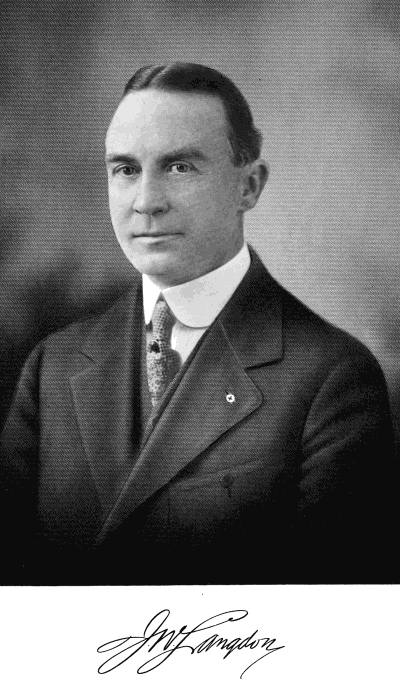
Their son, John Warren Langdon, acquired his early education in the common schools of Moscow, Idaho, and afterward attended the Bishop Scott grammar school of Portland, Oregon, where he stood at the head of his classes, receiving the headmaster's prize for the highest standing during the school year; his marks at this school were the highest received by any student during the seventeen years of the school's existence to that time, and he also received two additional prizes for excellence in deportment and penmanship.
At the age of sixteen years he left school and was placed in the First National Bank of Moscow, Idaho, of which his father was vice president. Two years later he accepted a position with the Dorsey S. Baker estate of Walla Walla, one of the richest estates in the northwest. Ten years later, upon division of the estate, he became secretary of the firm of Baker & Baker, a strong loan company, doing business in the Walla Walla valley. Two years later, owing to increased personal business responsibilities, he resigned, and at that time incorporated the Green Investment Company of Walla Walla for the purpose of handling the business affairs of Mary F. Green, his mother-in-law. This corporation is heavily interested in both city and country real estate, and its holdings are scattered throughout the state of Washington.
There is no man more familiar with property values and conditions in this section of the country than Mr. Langdon. At the present time he is one of the joint owners and managers of the Baker-Langdon Orchard Company of Walla Walla, owners of a six hundred acre apple orchard adjoining the city of Walla Walla, which is recognized as one of the finest commercial orchard properties in the United States; is also vice president and manager of the Green Investment Company of Walla Walla; a director of the Baker-Boyer National Bank of Walla Walla, the oldest bank in the state of Washington; is vice president of the Blalock Fruit Company, owning the largest fruit and vegetable farm in the northwest; is a director of the Northwestern Fruit Exchange of Seattle and New York, one of the largest and most widely known fruit shippers in the northwest, and has still other interests which place him in the foremost rank of the business men of this section of the country.
On the 16th of September, 1897, Mr. Langdon was married to Miss Philinda Green, who was born in Walla Walla, a daughter of William O. and Mary F. (Young) Green, who were pioneers of the Walla Walla valley, having crossed the plains by team at a very early period in the settlement of the northwest. Mr. and Mrs. Langdon have become parents of two sons: Warren Orville and John Green, both now attending Walla Walla high school.
While most important business interests have claimed the attention of Mr. Langdon, he has also found time and opportunity to cooperate in plans and measures for the public good and has been a most generous supporter of interests which are looking toward the upbuilding and development of city and state.
The cause of education finds in him a stalwart champion and he is a member of the board of trustees of Whitman College and chairman of the board of directors of the Whitman Conservatory of Music. He is also a director and vice president of the Walla Walla Commercial Club and chairman of its agricultural and horticultural committee. Elected president of the park board of Walla Walla, Mr. Langdon set about to construct an ideal park for the city. The city council having set aside a beautiful tract of forty acres owned by the city, for park purposes, Mr. Langdon prepared, with his own hands, plans for the park, and working in conjunction with the Woman's Park Club of Walla Walla, assisted in developing an unusually attractive landscape, embracing play grounds, boating lake, tiny streams and waterfalls, now known as City Park. Recently he has prepared elaborate plans for the development of Dreamland Park on Ninth street. He is now and for many years past has been secretary of the board of trustees of St. Paul's School, which was the first school for girls in the territory of Washington, and today is recognized as one of the state's best educational institutions.
Holding membership in St. Paul's Episcopal church, he has served for years as one of its vestrymen and as its junior warden. He is one of the trustees of the newly organized Young Women's Christian Association, and as the first vice president of the Young Men's Christian Association in Walla Walla assisted materially in raising funds for the construction of an elegant building for this association in Walla Walla. Mr. Langdon is chairman of the membership committee of the Red Cross in Walla Walla; vice president of the Washington State Harvesters League; and a member of the state executive committee for food conservation appointed by Herbert Hoover, chairman of food conservation. Mr. Langdon is interested in art, and has done some exceedingly creditable photographic work among the northwest Indians and has reproduced in enlargements and panoramas historical scenes in the states of Oregon and Washington, many of which he has personally hand-colored. He thoroughly enjoys home life and takes great pleasure in the society of his family and friends.
He is always courteous, kindly and affable and those who know him personally entertain for him warm regard. A man of great natural ability, his success in business from the beginning of his residence in Walla Walla has been uniform and rapid.
As has been truly remarked, after all that may be done for a man in the way of giving him early opportunities for obtaining the requirements which are found in schools and in books, he must essentially formulate, determine and give shape to his own character, and this is what Mr. Langdon has done. He has persevered in the pursuit of a persistent purpose and gained a most satisfactory reward. He has endeavored to make his life exemplary in all respects and he has ever supported those interests which are calculated to uplift and benefit humanity.
JOHN BACHTOLD.
John Bachtold is a well known and representative business man of Walla Walla who is now proprietor and manager of the Dacres Hotel, one of the leading hostelries of the city. He comes from a land that has produced many famous hotel proprietors. In every country on the face of the globe the Swiss have proven their capability in that field, many of the finest hotels of every land being conducted by those who were born within the shadow of the Alps. Mr. Bachtold was born in Switzerland in 1865 and spent the first fourteen years of his life in his native country. He then crossed the Atlantic to America and became a resident of South Dakota, where he engaged in farm work for nine years. On the expiration of that period he arrived in Washington, making his way to Grays Harbor, where he secured a position as clerk in a hotel, thus receiving his initial business training in the line to which he now directs his energies. The next year he became proprietor of a hotel in Oswego, Oregon.
In 1892 Mr. Bachtold removed to Walla Walla, where he established a restaurant. The following year, however, he turned his attention to other business interests, in which he was engaged for several years. At length he took over the management of the Dacres Hotel, which is an excellent hostelry, well equipped, while his keen interest in the successful management of the business leads him to put forth every effort for the comfort and welfare of his guests. He is likewise identified with several other business concerns of the city, all of which profit by his sound judgment and indefatigable energy. That Mr. Bachtold is deeply interested in the city's welfare has been manifest by his intense activity in maintaining the efficiency of the volunteer fire department, of which he was the president. He has also been very active in fraternal circles as a member of the Improved Order of Red Men, the Ancient Order of United Workmen, the Foresters, the Eagles and the Sons of Hermann. He is also connected with the Maennerchor, which indicates his love of music and a cultivated taste in that direction.
Mr. Bachtold was married in Grays Harbor in 1892 to Miss Annie Schuerch and to them have been born six children, Ida, Annie, George, John, Edward and Walter. Mr. Bachtold has never had occasion to regret his determination to come to the new world, for in this land he has found the opportunities which he sought and in their utilization has made steady progress along the high road to success.
GEORGE J. GUTHRIDGE.
Walla Walla rightly takes pride in her efficient fire department, which is highly systematized and is conducted along the most modern methods, and as chief of the department George J. Guthridge has accomplished work that entitles him to rank among the best fire chiefs of the northwest. He is a native son of Walla Walla, born April 7, 1870, in the house which he now occupies though it has since been remodeled. His parents, Benjamin G. and Ellen J. (Goss) Guthridge, were born respectively in London, England, and Cork, Ireland, but came to the United States in young manhood and young womanhood. At that time the father had been dependent upon his own resources for a number of years, as he ran away from home when a boy and went to sea and in the next few years visited all the principal ports of the world. It was in 1862 that he decided to settle permanently in the United States and the vessel on which he was then sailing, on putting into Portland, Oregon, was wrecked on the Columbia river bar, he and the negro cook being the only persons rescued. At that time there was considerable excitement in the northwest over the newly discovered mines in Idaho and he went to that section, where he remained for a short period, after which he drifted to Walla Walla. There he engaged in the restaurant business for a time and then turned his attention to the conduct of a meat market. He was engaged in that business for a quarter of a century and derived therefrom a gratifying profit which enabled him to retire. Having disposed of his private interests, he was then offered and accepted the appointment as steward of the state penitentiary, being the first man to hold that position after the institution had been removed from Seattle. For seven years he filled that important and difficult position and then retired from all active work, spending his last years in well deserved leisure. His death occurred June 4, 1912. He had survived his wife for many years, as she passed away July 21, 1885.
George J. Guthridge was reared under the parental roof and attended the Catholic boys' schools of Walla Walla and also took a business course in a night school. As a youth and young man he assisted his father in the management of his butchering business and after the latter disposed of his meat market the son was variously employed until 1890, when he was appointed a member of the city fire department. He served in that capacity for two years and then was for a similar length of time deputy sheriff. Again he became connected with the fire department but following an accident in 1896, which occurred when answering a fire call and in which his leg and ankle were broken, he was for four years out of the department. In 1900, however, he returned to the service and in April, 1904, was appointed captain. In January, 1912, he was appointed assistant chief and on the 1st of February, 1917, was made chief. His long experience in the department has given him a thorough knowledge of the needs of the service and as captain, assistant chief and chief he has worked tirelessly and effectively to raise the work to an ever higher standard.
On the 1st of October, 1902, Mr. Guthridge was united in marriage to Miss Augusta Berg, who was born August 17, 1879, six miles east of Vancouver, Washington, but at the age of ten years removed with her parents to North Yamhill, Oregon, living there until her marriage. Mr. and Mrs. Guthridge have become parents of six children, five of whom survive: Eugene, thirteen years old; Francis; Albert; Leona; and Walter.
Mr. Guthridge is a republican in politics and fraternally is identified with the Ancient Order of United Workmen, the Improved Order of Red Men, the Fraternal Order of Eagles and the Knights of Columbus. He and his family are members of the Catholic church and support the work of that organization. His entire life has been passed in the west and he is thoroughly imbued with the spirit of enterprise characteristic of this country and has great faith in the prosperous future before it.
D. C. EATON.
D. C. Eaton, a member of the present board of county commissioners, residing in Waitsburg, is ranked among the extensive wheat farmers of Walla Walla county, within the borders of which he has made his home for almost four decades and where he has acquired some quite valuable land. His birth occurred in Rock county, Wisconsin, on the 19th of September, 1854, his parents being Asael and Amanda (Pineo) Eaton, who were born, reared and married in Nova Scotia. Soon after their marriage they crossed the border into the United States, locating first in DeKalb county, Illinois, and a few years later in Wisconsin. Subsequently they took up their abode in Allamakee county, Iowa, and there spent the remainder of their lives.
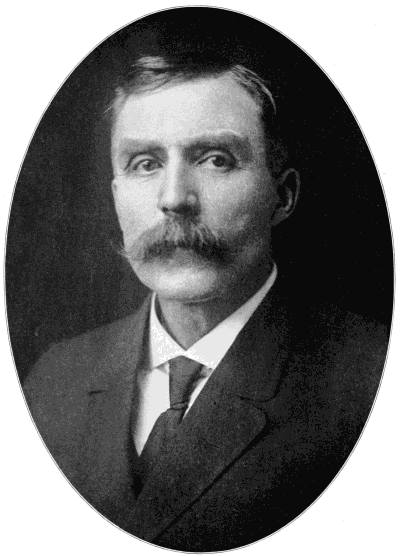
D. C. EATON
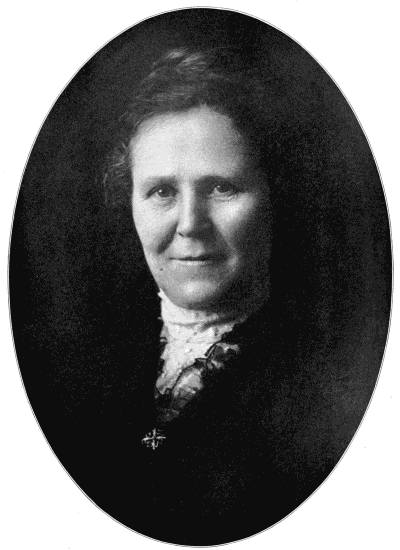
MRS. D. C. EATON
D. C. Eaton acquired his education in the public schools of Iowa and in 1877, when a young man of twenty-two years, he left the parental roof to make his own way in the world. Journeying westward to the coast, he spent a year or more in the vicinity of Portland, Oregon, and in the spring of 1878 came to Walla Walla county, Washington. Here he was engaged in the stock business for seven or eight years and about 1886 he turned his attention to farming, which has claimed his time and energies continuously since. Success has crowned his efforts in the intervening years, he now being numbered among the extensive wheat growers of Walla Walla county.
On July 15, 1886, Mr. Eaton was united in marriage to Miss Melvina Sickler, of Waitsburg, who is a native daughter of Walla Walla county, her father, Daniel Sickler, having crossed the plains in an early day. They have become the parents of six children, five of whom survive, namely: Clarence, who is a graduate of the State Agricultural College at Pullman of the class of 1910 and who now operates one of his father's ranches; and May, Marcia, Gladys and Ruth, all of whom are attending the State Agriculture College at Pullman.
Politically Mr. Eaton is a stanch republican and in 1898 he was elected to the board of county commissioners, in which connection he made an excellent record and to which office he was again chosen in the November election of 1916, so that he is again serving at the present time. Fraternally he is identified with the Masons, belonging to Waitsburg Lodge, No. 16, A. F. & A. M.; Dayton Chapter, No. 5, R. A. M.; Walla Walla Commandery, K. T.; and El Katif Temple, A. A. O. N. M. S., of Spokane. His is a highly creditable record and he well deserves mention in this volume as one of the foremost farmers and representative citizens of the county.
FRED GAYLORD WILLS.
Fred Gaylord Wills was born August 24, 1884, in Arlington, Oregon, a son of W. H. and Clara (Oviatt) Wills. The father was born in Plymouth, England, and when twenty-one years of age came to the states, settling in Cleveland, Ohio. In 1879 he made his way to the Palouse country to buy sheep and after spending the winter at Endicott came to Walla Walla. He considered this locality as the most desirable that he had seen and accordingly decided to make it his permanent home. He was married at Walla Walla to Miss Clara Oviatt, who was born in Akron, Summit county, Ohio, and resided there until the early '80s, when she came to Walla Walla and made her home with a sister until her marriage. Mr. and Mrs. Wills have watched with great interest the development of what was a mere hamlet to a prosperous and up-to-date city of over twenty-five thousand inhabitants and they have at all times done their full share in contributing to its upbuilding.
Fred Gaylord Wills attended the public schools of Walla Walla, Whitman Academy at Walla Walla, the Rindge Manual Training School at Cambridge, Massachusetts, and the University of Washington at Seattle, which in 1908 conferred upon him the degree of LL. B. It had been his intention to devote his life to the legal profession but being offered a position in July, 1908, a short time after his graduation, he entered the employ of the First National Bank of Walla Walla as messenger. In 1910 he was appointed deputy clerk of the superior court of Walla Walla county and while holding that office in addition to discharging his duties in that capacity he was employed in the First National Bank, working there after the hour of closing at the clerk's office. In 1912 he went to Seattle and for a short time engaged in the real estate business there, after which he went to Tacoma, where he turned his attention to accounting, which profession he has since followed. In 1916 he returned to Walla Walla and he has met with gratifying success here. His acquaintance among the business men of the city and his excellent business and official record were important factors in his obtaining the appointment of city clerk. He understands thoroughly the principles of finance and accounting, and his work gives uniform satisfaction.
Mr. Wills was appointed city clerk on the 20th of January, 1917, and his prompt and capable performance of his duties has won for him the commendation of the citizens. He has always given careful study to the questions and issues of the day and has been a stanch supporter of plans and projects calculated to promote the civic interests of his city and county. The greater part of his life has been passed in Walla Walla, and his genuine personal worth is indicated by the fact that those who have been intimately associated with him since boyhood are his stanchest friends.
On the 16th of June, 1917, Mr. Wills was married in Walla Walla to Miss Dorothy Frances Drum, who was graduated from the University of Washington with the A. B. degree and who from 1914 to 1917 was assistant librarian of the public library at Walla Walla. Her father, Henry Drum, was appointed warden of the state penitentiary by Governor Lister in 1912 and still holds that office.
WILLIAM LAMBIE.
William Lambie, prominent as a horse breeder and farmer of Garfield county, living on section 31, township 14 north, range 43 east, was born near Glasgow, Scotland, March 13, 1846, a son of John and Margaret (Bryson) Lambie, both of whom were born in the neighborhood of Glasgow, where they spent their entire lives, the father devoting his time and attention to the occupation of farming in order to provide for his family. His son, William Lambie, was reared under the parental roof and acquired a public school education. On attaining his twenty-first year he bade adieu to the land of hills and heather and made his way to New Zealand, where he spent four years. He then came to the United States, making his way to the Hawaiian Islands and thence to San Francisco. He spent a short time in the Sacramento valley of California, after which he removed from San Francisco to Portland, making the trip by steamer. He spent one month in the harvest fields of the Willamette valley and then came by steamer up the Columbia river to Wallula and thence by wagon to Walla Walla, Washington. This was in the summer of 1871. When he saw the Blue mountains and the Walla Walla valley he said to himself that he would travel no farther. During that fall and the succeeding winter he was employed by James Foster, located at the foot of the mountain and the following spring he started out to find land for himself. He assisted a party with cattle upon the Palouse river below Colfax and slept on the floor in his own blanket in the only house in sight in Colfax at that time. He then journeyed northward in search of land near the much-talked-of route of the Northern Pacific Railroad, which at that time, however, had not been surveyed. He pushed on to the neighborhood of Medical Lake, where he located on a beautiful prairie sloping toward the south. He then returned to Walla Walla for a team and wagon, and when he again traveled over the route he brought back with him some garden seed and grain and planted ten acres of his land that first season. In the summer he worked for a stock man upon the present site of the town of Sprague, putting up hay. In August he returned to his own place to look after his crop, but found that his potatoes had been frosted and he, therefore, abandoned his claim. That fall he started down the creek with his team and located in a big meadow on Cow creek, where he cut and sold hay, the purchaser being Thomas Durry, a sheep man. In this business he engaged for four years and afterward sold the ranch to Mr. Durry for eight hundred dollars. He then went to Lower Crab creek and bought mares with his money and began the breeding of horses. In the fall of 1877 he took up his abode upon what has since been his home farm and in the fall of that year he did the first plowing done on the bench land in the north half of Garfield county. He first preempted one hundred and sixty acres and at the same time took up a timber claim, while three years later he purchased one hundred and sixty acres of railroad land. This constituted the nucleus of his present extensive possessions and gave him his start toward his later success. From time to time he has bought adjoining land until his present holdings comprise something more than twenty-one hundred acres and he operates under lease four hundred and eighty acres in addition, which he has cultivated for more than a quarter of a century. He has been one of the foremost breeders of thoroughbred draft horses in southeastern Washington and for the first fifteen years he specialized in the breeding of Clydesdales, for which breed he has gained a wide reputation. For the last ten or twelve years he has given his attention largely to the breeding of black Percheron horses and has gained an enviable reputation in this respect throughout the entire northwest. He is regarded as one of the foremost breeders and one of the most reliable judges of good horses in Washington. In connection with his extensive operations as a breeder Mr. Lambie farms eight hundred acres to wheat and has one hundred and ten acres planted to alfalfa and annually he produces splendid crops because his methods are practical and progressive.
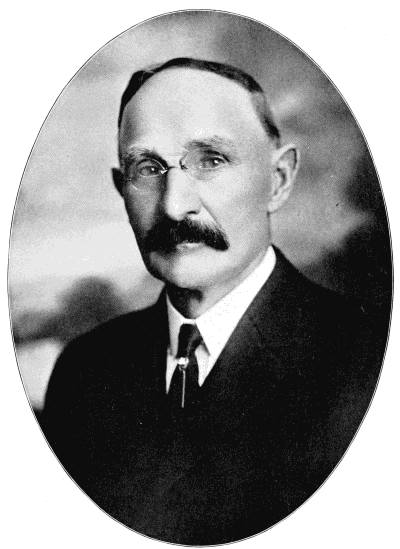
WILLIAM LAMBIE
In 1880 Mr. Lambie was united in marriage to Miss Emma Clark, of Fresno, California, by whom he had two children, one of whom survives, John Hazen, who is a resident of Longbeach, California. Mrs. Lambie has a home at Longbeach, California, where she spends much of her time, and Mr. Lambie there passes the winter months, while in the summer seasons he remains in Washington to superintend his business interests.
He is a member of the Farmers Union and he does everything in his power to promote the interests of the agriculturist and develop the farming possibilities of the state. He holds membership in the Unitarian church and is a man of genuine personal worth, progressive and reliable in business, patriotic in citizenship and at all times guiding his life by high and honorable principles. He has never had occasion to regret his determination to leave the land of his fathers and seek a home in the new world, for here he has found good opportunities and in their utilization has worked his way steadily upward until he is now numbered among the prosperous residents of Garfield county.
H. A. TRIPPEER, M. D. V.
Dr. H. A. Trippeer is one of the leading veterinarians of southern Washington and was one of the organizers of the Veterinary Hospital Company, which erected the fine City Veterinary Hospital of Walla Walla. His birth occurred in Peru, Indiana, July 6, 1881, and he is a son of Joseph E. and Alice (Alexander) Trippeer, the former also a native of Peru, Indiana, and the latter of Linneus, Missouri. Their marriage occurred in the latter town, to which the father had removed with his parents. Not long after he was married, however he returned to Indiana, and there engaged in breeding thoroughbred race horses and Devon cattle. In 1888 he took to Wasco county, Oregon, a number of horses and the first Devon cattle ever seen in the Pacific coast country. Among the horses was Mattie Mullen, who for a considerable period was the fastest short distance horse on the entire coast. He was prominently identified with live stock interests in the northwest for a number of years but is now living retired in Cove, Oregon.
H. A. Trippeer early began assisting his father in the care of his fine stock and the experience thus gained has been of great benefit to him in his professional career as a veterinarian. In 1904 he entered the Washington State College at Pullman and after two years' work in the veterinary department of that school he went to Chicago and continued his course in the famous McKillip Veterinary College, from which he was graduated with the class of 1907. He then came to Walla Walla and took the United States examination for veterinarian at Fort Walla Walla. While awaiting the action of the government on his application he entered into private practice at Walla Walla in partnership with Dr. J. W. Woods and as he met with marked success in that connection he decided to continue in private practice. Two years later he, Dr. Woods and Dr. Baddely, organized the Veterinary Hospital Company, which later built the city Veterinary Hospital, an institution which is one of the best of its kind in the northwest. Later Dr. Baddely withdrew from the company, selling his interest therein to Dr. Woods and Dr. Trippeer. The partners have gained an enviable reputation for thorough scientific knowledge and skill in practice, and their patronage is large and steadily increasing.
Dr. Trippeer married Miss Pearl G. Griffith, of Sioux City, Iowa, and they have become the parents of a daughter, Denise. The doctor belongs to Cove Lodge, No. 91, A. F. & A. M., of Cove, Oregon; to Walla Walla Lodge, No. 287, B. P. O. E., and to the Walla Walla Commercial Club, in which connection he is associated with other enterprising business men in projects for the upbuilding of the city. He and his wife attend the services of the Episcopal church and are liberal in their support of its work. Since becoming a resident of Walla Walla the Doctor has gained a wide circle of friends and is held in the highest esteem both professionally and personally.
ORLEY HULL.
Attracted by gold discoveries in California, Orley Hull came to the Pacific coast and throughout the intervening period until his death was a resident of this section of the country. He was born in Iowa in 1825 and there the period of his boyhood and youth was passed amid the conditions of frontier life, for at that time the state of Iowa was yet a part of the great western territory that lay uninhabited and undeveloped west of the Mississippi. He continued in that state until he reached the age of twenty-four years, when the news reached him concerning the discovery of gold in California and he determined to try his fortune upon the Pacific coast. Accordingly he made the necessary arrangements for the trip, securing a covered wagon and an ox team, with which he started across the plains in 1849. The journey was a long and arduous one over the hot stretches of sand and across the mountains, but he pushed on day after day and ultimately reached his destination. After spending some time in California he determined to make his way northward and came to Walla Walla county, Washington. Here he took up the occupation of farming and stock raising, to which he devoted a number of years, becoming one of the representative agriculturists of the county. Eventually he established his home in Walla Walla, where his last days were passed.
It was in Walla Walla that Mr. Hull was united in marriage to Mrs. Hannah M. Laird, a native of Rochester, New York, and a daughter of Dr. Hiram Preston, of that city. After reaching womanhood she married Leonard Laird and they subsequently removed to Minnesota, where he engaged in farming for a time. He possessed considerable musical talent and took an active interest in religious work. On leaving Minnesota he removed to Hillsboro, Oregon, where he conducted a hotel for two years, but about 1877 brought his family to Washington, and located on a farm seven miles from Walla Walla, where he spent his remaining days, dying there in 1879. To Mr. and Mrs. Laird were born six children, of whom four are still living, namely: Miss Florence, a resident of Walla Walla; George D., of Portland, Oregon; Jennie, the widow of Millard Roff, of Walla Walla; and Nellie A., who is the widow of James A. Delaney and is living with her mother in Walla Walla. During the Spanish-American war Mr. Delaney entered the service and died of Manila fever. He left one child, Adrian L., now a guard at the Washington penitentiary in Walla Walla.
Mr. Hull was a stalwart and loyal member of the Masonic fraternity, in the work of which he was actively and helpfully interested, being ever ready to extend a helping hand to a brother of the order. He also took an active part in the upbuilding of the city of Walla Walla and his aid and cooperation could be counted upon to further any measure or movement for the public good. Those who knew him esteemed him as a man of high purpose and of honorable life and when he passed away in April, 1892, his death was the occasion of deep and widespread regret in the southeastern section of the state, where he had long made his home and his funeral was widely attended. He was a man of marked integrity and his word was always as good as his bond.
YANCEY C. BLALOCK, M. D.
With the lasting example of his honored father before him, Dr. Yancey C. Blalock has followed in his professional footsteps and has won a place among the eminent physicians and surgeons of Walla Walla. He was born in Mitchell county, North Carolina, August 3, 1859, a son of Dr. Nelson G. and Panthea A. (Durham) Blalock, of whom extended mention is made elsewhere in this work. During his infancy his parents removed with the family to Macon county, Illinois, and he was a youth of fourteen when they started across the plains to Walla Walla, making the long and arduous journey according to the primitive methods of the time. Dr. Blalock has a very vivid recollection of many of the events of the trip as they passed on over the long stretches of hot sand and through the mountain passes that eventually brought them to the Pacific Coast. His education was largely acquired in the public schools of Walla Walla and in the Whitman Seminary. At length he determined to make the practice of medicine his life work and accordingly in 1881 entered the Jefferson Medical College at Philadelphia, Pennsylvania, from which his father had graduated many years before. He completed his course in that institution as a member of the class of 1884, after which he returned at once to Walla Walla and for a time was associated with his father in the active practice of medicine and surgery. Later, however, he established himself independently in practice, and in 1902 he accepted the appointment to the position of receiver of the United States land office at Walla Walla, serving in that capacity for two years, at the end of which time he resigned to resume the private practice of his profession. He has since given his undivided thought and attention to his professional interests and is ranked today among the leading practitioners of the county. He is most conscientious in the performance of his professional duties, recognizing how grave are the responsibilities which confront the physician.
In April, 1883, Dr. Blalock was united in marriage to Miss Julia Sanderson, a native daughter of Walla Walla, and to them was born a son, Jesse N. Mrs. Blalock passed away on the 6th of January, 1885, and in 1890 Dr. Blalock was again married, this union being with Miss Lillian Ballou, a native of Illinois and a daughter of Orlando and Elizabeth (Boyd) Ballou. To this marriage has been born a daughter, Phoebe I.
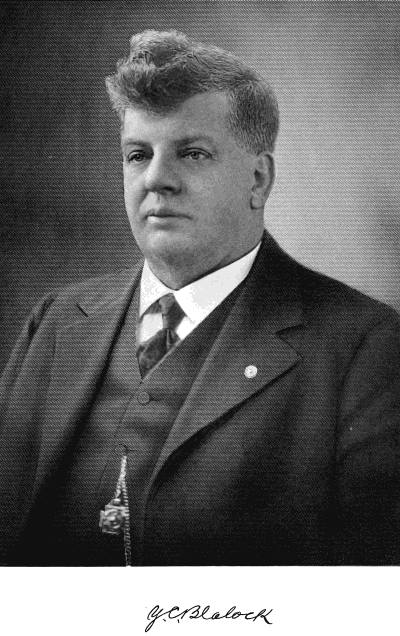
For many years Dr. Blalock has been prominent in fraternal circles. He has membership in Blue Mountain Lodge, No. 13, F. & A. M., of which he is a past master, and he also belongs to Walla Walla Chapter, No. 1, R. A. M., of which he is past high priest. He has taken the Knights Templar degree in Washington Commandery, of which he is a past eminent commander, and he belongs to Oriental Consistory, A. & A. S. R., of Spokane. He has also crossed the sands of the desert with El Katif Temple, A. A. O. N. M. S., of Spokane, and he and his wife are members of Alki Chapter, No. 25, O. E. S., of which Dr. Blalock is past patron, while his wife is a past matron. In Masonic circles the doctor occupies a very prominent position and is a past grand master of the grand lodge of the state and a past eminent commander of the grand commandery of the state. He likewise served as grand secretary of the grand chapter of the Royal Arch Masons for a number of years and was grand recorder of the grand commandery, Knights Templar. On March 6, 1914, he received the honorary thirty-third degree.
Dr. Blalock has occupied various civic offices and for three terms was county coroner. He served in the volunteer fire department of Walla Walla for twenty-two years, six of which he was chief. He is always loyal in positions of public trust and in all of his service in behalf of the community has been actuated by a singleness of purpose that has brought good results for the community. His political allegiance is given the republican party and he is an active and earnest worker in its ranks. He has served as chairman of the republican county central committee and puts forth every legitimate effort to further the success of the principles in which he so firmly believes. His prominence, professional and otherwise, is the outcome of his ability, his fidelity to duty and his high standards. His sterling characteristics commend him to the confidence and goodwill of all and throughout Walla Walla county, where almost his entire life has been passed, he has a circle of friends almost equal to the circle of his acquaintance.
THOMAS GILKERSON.
Thomas Gilkerson, who is residing on the family homestead in Walla Walla township, Walla Walla county, was born in England, October 19, 1837. His parents, George and Sarah (Rayson) Gilkerson, were also born in that country and in 1843 came with their family to America. They took up their residence in New York state, living there during their remaining days. To them were born seven children, of whom five survive, namely: Mrs. Mary Wallace, of Spokane; Thomas, of this review; James and William, who are living in New York; and Frances, who is now the wife of Thomas Curry, of Homer, New York.
Thomas Gilkerson grew to manhood in New York and there received his education. In 1860, when a young man, he and his brother James came west to Walla Walla county, Washington, and he of this review took up a homestead in Walla Walla township, where he has since remained. He proved successful in his farming operations and later from time to time added to his holdings, becoming the owner of a large and valuable tract. He now leaves the active work of the farm to others but still gives supervision to the management of his interests. He has gained a competence and the period of leisure which he is now enjoying is well deserved.
In 1862 Mr. Gilkerson was united in marriage to Mrs. Eliza (Sickles) McWhirk and they have had five children, of whom three are living, namely: Harry, Thomas J. and Dewitt A.
Mr. Gilkerson has supported the democratic party since gaining the right of franchise and has taken the interest of a good citizen in public affairs although never an aspirant for office. He has been identified with Walla Walla township for more than a half century and during that time has always proven a loyal citizen and a man of sterling worth.
CLINTON D. DAVIS.
Clinton D. Davis, who has lived in Garfield county continuously since 1878, covering a period of four decades, now owns three hundred and thirty-three acres of land on section 6, township 13 north, range 43 east, and is well known as one of the substantial farmers of the Mayview district. His birth occurred in Marion county, Oregon, on the 12th of December, 1854, his parents being Leander and Mary (Cox) Davis, the former a native of Ohio and the latter of Indiana. Leander Davis crossed the plains as a young man in 1846 or 1847, and at the same time Mary Cox, yet a young girl, accompanied her parents to Oregon, her father taking up a donation claim in Marion county. Mr. Davis also took up a donation claim in the same county and it was there that he was later married and spent the remainder of his life, passing away in 1875 at the age of forty-eight years. He served as a member of the Oregon legislature in 1866 and made a most excellent record in that connection. His widow continued her residence on the donation claim in Marion county, Oregon, until the time of her death, which occurred in the seventieth year of her age.
Clinton D. Davis attended the public schools at Silverton in the acquirement of an education and was about seventeen years of age when he began providing for his own support. During the following five years he worked for wages and was then married. He had saved enough money to feel justified in starting out independently as an agriculturist and in 1878 he brought his bride to Washington and took up a homestead in Garfield county which is a part of his present home farm, on which he has resided continuously to this time. As his financial resources have increased, owing to his untiring industry and capable management, he has extended the boundaries of his place by purchase until it now embraces three hundred and thirty-three acres. The property yields him a gratifying annual income and he has long been numbered among the representative agriculturists and substantial citizens of the county.
In 1877 Mr. Davis was united in marriage to Miss Elmira Hubbard, of Marion county, Oregon, a daughter of Joseph Hubbard, who crossed the plains from Illinois to Oregon in 1855 and took up a donation claim in Marion county, where he spent the remainder of his life. Mr. and Mrs. Davis became the parents of three children, namely: Edith, who is deceased; Alvin, at home; and Ella, who holds a clerical position in Spokane.
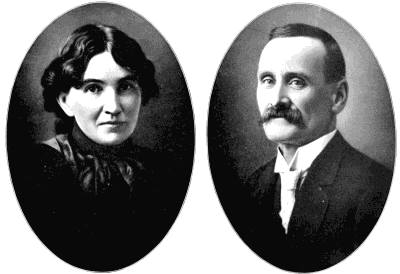
MR. AND MRS. CLINTON D. DAVIS
In politics Mr. Davis is is stanch republican, having supported the men and measures of that party since age conferred upon him the right of franchise. He has witnessed the development of this section of the state from pioneer times to modern and has borne his share in the work of progress and improvement, while in the conduct of his private business interests he has also manifested the sterling traits of character which have won him the high regard and esteem of his fellow citizens.
DANIEL HAYES.
Daniel Hayes is one of the well known and honored pioneer settlers of Walla Walla county. Six decades have come and gone since he arrived in the state of Washington, and there is not a feature of its development with which he is not familiar. He has had many interesting and varied experiences incident to the life of a pioneer, and his memory forms a connecting link between the primitive past and the progressive present.
Daniel Hayes was born in County Tipperary, Ireland, in the year 1840. His parents died while he was yet a boy, and at the age of twelve years he came to America, where a brother and sister had emigrated some years before. When in America but a short time he went to work as an errand boy for James A. Hamilton, a son of Alexander Hamilton, patriot and statesman, at his beautiful home on the Hudson river. He was affectionately known to the Hamilton family as "little Danny," and the only schooling he ever received was from Mr. Hamilton's daughter Angelica, who became interested in him and taught him evenings. Mr. Hayes has never forgotten his benefactress, and his youngest daughter bears her name. When seventeen years of age he left this good home and the opportunities he was promised, and came west. He made the trip by the way of the Isthmus of Panama and landed in San Francisco in April, 1857. Shortly after arriving in San Francisco, he entered the employ of the government in the quartermaster's department. He served for eleven months at Benicia, California, and then went to The Dalles, Oregon, with Captain Jordan. In 1858, when on the way to Fort Simcoe with a government train of forty wagons, news was received of Colonel Steptoe's defeat in a battle with the Indians near the present site of Rosalia. They then returned to The Dalles, where Colonel Wright fitted out troops, and moved to the mouth of the Tucanon river where Fort Taylor was built. Mr. Hayes was the driver of an ammunition wagon and brought supplies to Fort Taylor, where Major Wise was stationed. When Fort Taylor was abandoned he joined Captain Mullan's command and assisted in building the military road from Fort Walla Walla to Fort Benton, Montana. In 1861 he left the employ of the government and went to the mines at Orofino, Idaho. There he took up a claim and engaged in mining during the summer of that year. He later bought a pack train and engaged in the business of freighting until 1873, when he settled on the farm where he still resides.