BIOGRAPHICAL (continued 14)
Reading edition
E. J. CANTONWINE.
E. J. Cantonwine, a prosperous farmer of Walla Walla county, has passed his entire life in the county, as he is a native of the city of Walla Walla. His birth occurred November 12, 1887, and he is a son of W. J. and Clara E. (Cram) Cantonwine, natives of Iowa and Oregon respectively. In 1863 the father made the long overland journey with ox teams to Washington and located on Dry creek, where he engaged in farming for many years. He died in California, having gone there in the hope of benefiting his health. The mother survived for some time, passing away in April, 1917. Two of their three children are still living.
E. J. Cantonwine attended the schools of Dixie in the acquirement of his general education and prepared himself to manage his affairs in a businesslike manner by taking a course in a commercial college at Walla Walla. He remained at home, assisting his father with the farm work, until he attained his majority and then took charge of the operation of the homestead, which he managed for ten years. In the meantime he had acquired title to personal property which he sold at the end of that period. He then engaged in the undertaking business for five years, after which he disposed of his interests in that line and again turned his attention to agricultural pursuits. He owns four hundred and seventy-five acres of well improved land north of Dixie, Washington, and keeps its operation well in hand, realizing that farming is as much a business as manufacturing or merchandising and that to succeed the farmer most study both the problems of production and of marketing.
In 1900 Mr. Cantonwine was married to Miss Bessie Kershaw, a daughter of J. S. Kershaw, a sketch of whom appears elsewhere in this volume. Both belong to the Methodist Episcopal church, of which Mr. Cantonwine is a trustee, and he is also now a member of the building committee which has in charge the erection of the new house of worship. He belongs to Enterprise Lodge, No. 2, I. O. O. F., in which he has filled all the chairs, and he is likewise a member of the Modern Woodmen of America and of the Loyal Order of Moose, in which he is also an officer. He is a typical western man, alert, confident of the future, self-reliant and resourceful, and he has been a factor in the advancement of the agricultural interests of Walla Walla county.
HENRIK P. PETERSEN.
Henrik P. Petersen is one of the progressive business men of Waitsburg, where he is prominently associated with banking interests. He was born at Lukomkloster, Nord Slesvig, Germany, on the 12th of January, 1878, and was brought to America in 1881, when but three years of age. He is a son of Martin C. and Magdalene Petersen, both of whom are now living at Dannebrog, Nebraska.
The family home was established in Dannebrog when the parents came to the new world and in the schools of that place Henrik P. Petersen pursued his education, passing through consecutive grades to his graduation from the Dannebrog high school. When his textbooks were put aside he turned his attention to banking and became familiar with that business in Dannebrog, so that he was well qualified by experience to enter upon a similar field when he came to Waitsburg, Washington. Here he has resided for the past thirteen years and is now occupying the responsible position of cashier in the Exchange Bank at Waitsburg, of which he is also a director. He has made a creditable record in this connection and is now bending his energies to administrative direction and executive control. He has a thorough knowledge of the banking business and his ability has been manifest in the continued growth and success of the institution with which he is identified.
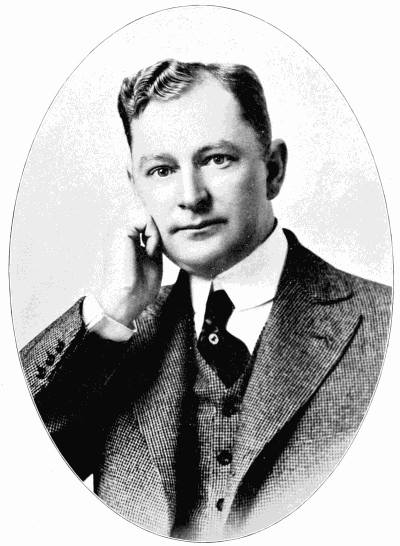
HENRIK P. PETERSEN
Mr. Petersen is also well known as an exemplary representative of the Masonic fraternity and he has been honored with the position of worshipful master of Waitsburg Lodge, No. 16, A. F. & A. M. He has a wide acquaintance in Waitsburg and his many substantial qualities have gained for him the high regard of those with whom he has been brought in contact. In all matters of citizenship he stands for progressiveness and improvement and gives his aid and cooperation most liberally and earnestly to those measures and movements which are a matter of civic virtue and civic pride.
HERMAN C. ACTOR.
A most interesting and eventful career was that of Herman C. Actor, who passed the last years of his life in the restfulness and the quietude of the farm. He was familiar with every phase of frontier life in the northwest and four times he was wounded by the Indians in the early struggles for supremacy between the white race and the redskins. He came to this section of the country when the work of progress and improvement seemed scarcely begun and when the red men were yet more numerous than the white settlers. Only here and there some venturesome spirit had penetrated into the wilderness of the Pacific northwest to establish a home and if possible utilize the resources of the country in the attainment of a competence or a fortune.
Mr. Actor was born in Ohio, September 18, 1832, and had passed the Psalmist's allotted span of three score years and ten at the time of his demise. In fact, he had reached the eighty-fifth milestone on life's journey and was the only survivor of a family of nine children when he passed to the Great Beyond. His parents were Herman and Margaret (Daterman) Actor, both natives of Germany, who had crossed the Atlantic to the new world in 1828 and established their home in Ohio, where they continued to reside until their deaths.
It was in that state that Herman C. Actor spent the days of his boyhood and youth and acquired an education in such schools as were available in that early day. He went to Missouri in 1852, when a young man of twenty years, and there remained for a year. He then entered the employ of the American Fur Company and purchased furs for that concern at their fort for two years. It was in the fall of 1855 that he came to Walla Walla, Washington, in company with Governor Stevens, and for one year he acted as one of the governor's guard. Later he was in the employ of the government for some time and while thus engaged was four times shot by the Indians, sustaining three wounds in the leg and one in the shoulder. Wild as was the life of the northwest and undeveloped as was the country, he felt the spell upon him and determined to remain, eager to take active part in the improvement and progress of this section. He purchased a farm where Dixie now stands and cultivated his land there for some time, but afterward disposed of that property and purchased the farm on which he died, on section 23, township 8 north, range 37 east, comprising four hundred acres. With characteristic energy he bent his efforts to the cultivation and improvement of the property and in the course of years his labors wrought a marked transformation in the appearance of the place. He carefully and wisely utilized his fields and as the years passed his crops multiplied and brought him a substantial competence, permitting him the well earned enjoyment of the comforts of life.
In 1858 Mr. Actor was united in marriage to Miss Sarah Davis, a native of Iowa, and they became the parents of six children: Margaret, who is the wife of George La Rue; Mary, the wife of Lincoln Kenwine; Louisa, the wife of P. Collinwood; Frank; George; and Arthur. The wife and mother died in 1908 and was laid to rest in the Dixie cemetery, her death being the cause of deep regret to her many friends and great sorrow to her family. Only recently Mr. Actor was also gathered to his fathers and with him there passed away one of those sturdy pioneers who had carried the banner of the white man's civilization into the wilds of the west and who planted well for the coming generations to reap.
Mr. Actor belonged to the Masonic lodge at Dixie and gave his political allegiance to the republican party. He never sought office but was public spirited and served as a member of the school board to good purpose. He was a self-made man who owed his success to his industry and perseverance alone. He met many hardships and difficulties incident to pioneer life and encountered many obstacles such as always are factors in a business career, but he did not allow himself to become discouraged and with resolute will pushed forward and in the span of his life he won for himself an honored place as one of the substantial men of the county. He was one of its venerable citizens, respected by all, and his worth to the community was widely acknowledged. While he has gone to the Beyond, his work lives and his memory is enshrined in the hearts of all who become cognizant of his sterling character.
H. F. CLODIUS.
Since the winter of 1882-3, H. F. Clodius has resided upon the Pacific coast and through more than a third of a century has been identified with farming interests in Walla Walla county. He is now living retired in Waitsburg, although he still owns valuable property holdings, constituting some of the best farm land in this section of the state. He was born in Germany on the 10th of November, 1847, and is a son of Claus H. and Catherine M. (Biernstein) Clodius, both of whom spent their entire lives in Germany. His paternal great-grandfather, Christopher Clodius, removed to that country from Denmark. The father was one of the prominent farmers of his section and was a man in affluent circumstances.
His son, H. F. Clodius, was given liberal educational opportunities and in his later years has been a broad reader, so that he is said to be one of the best informed men on general subjects in Walla Walla county. In his wide scope of reading he has twice read the Bible through from cover to cover. When he was a lad of but fifteen years of age the life on the seas attracted him and for three years he sailed, during this time visiting the countries of France, England, Belgium, Sweden, Norway and Russia. In 1865 his father died and H. F. Clodius then left the sea and returned home. He was the eldest in a family of four sons and he practically became the head of the family, assuming the responsibility of managing the valuable estate which his father left. He proved adequate to the duties that devolved upon him, for he has ever been a man of enterprise and adaptability who has readily and capably undertaken the tasks which have come to him.
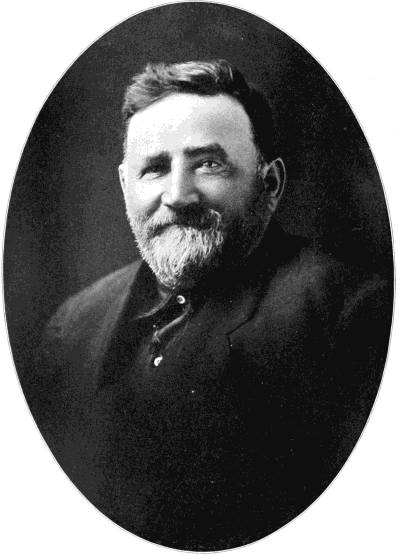
H. F. CLODIUS
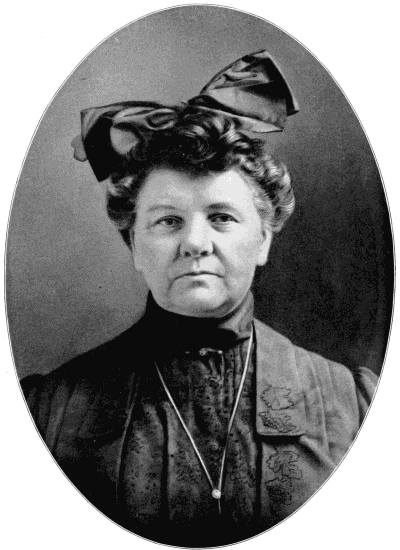
MRS. H. F. CLODIUS
In 1868 Mr. Clodius was united in marriage to Miss Catherine M. Rohde. Following his marriage he continued to cultivate his father's farm until 1875, when he determined to try his fortune on this side of the Atlantic and with his wife and one son sailed for the United States. On reaching American shores he penetrated into the interior of the country and established his home in Woodford county, Illinois, where he resided for eight years. It was in the winter of 1882-3 that he came to the Pacific coast, making his way by train to San Francisco and thence northward by boat to Portland, Oregon. From that point he traveled by train to Walla Walla county, Washington, arriving in the city of Walla Walla on the 1st of February, 1883. He remained in the town for a couple of months and then purchased a farm on Mill creek, ten miles from Walla Walla. He continued to reside upon that place for fifteen years, at the end of which time he sold the property and purchased a portion of his present farm in Spring Valley, about four miles southwest of Waitsburg. His holdings he has since increased by additional purchase until he now has thirteen hundred acres, and upon this property he continued to reside until 1914, when he removed to Waitsburg, where he has since lived retired. His business affairs were most carefully and wisely managed and his well directed interests brought to him a very gratifying and substantial measure of success, so that, possessing a very desirable competence, he is able to rest from further labor and yet enjoy all of the comforts and some of the luxuries of life.
Mr. and Mrs. Clodius became the parents of nine children, seven of whom are yet living, as follows: H. F., who is a farmer residing in Garfield county, Washington; Catherine M., the wife of David Kibler, of Mill Creek, Walla Walla county; Marie C., the wife of Charles Kibler, who is an agriculturist living on Spring creek, Walla Walla county; Rosa, who gave her hand in marriage to William Weller, of Columbia county; Augusta, who is the wife of Emory McCown, a farmer of Walla Walla county; Ella, the wife of Henry Züger, who also follows farming in Walla Walla county; and John W., who operates the home farm. Two of the children, H. F. and Claus, deceased, were born in Germany.
Mr. Clodius votes with the democratic party and he has twice been a candidate for the office of county commissioner but failed of election. He belongs to Walla Walla Lodge, K. P. He is one of the wealthy farmers of Walla Walla county, is one of its broad gauged men and enjoys the friendship and regard of a great majority of those with whom he has come in contact. He is forceful and resourceful, has ever accomplished what he has undertaken and in the attainment of his success has followed well defined plans and purposes.
LEWIS SCHMUCK.
Lewis Schmuck, now living retired, was for many years a prominent figure in the business circles of Walla Walla, where he operated extensively in connection with the lumber industry as a member of the firm that established the business now conducted under the name of Whitehouse-Crawford Company. His start in business life was most humble. He began earning his living by selling newspapers and shining shoes. His educational advantages were naturally limited but he made such good use of his time and opportunities for securing intellectual advancement that in young manhood he was able to secure a teacher's certificate and for a time engaged in teaching school. Each point in his career has brought him a broader outlook and wider opportunities and his life has been characterized by a most splendid and steady progression.
Mr. Schmuck was born in Peoria, Illinois, June 2, 1852, a son of Xavier and Mary Schmuck. The father was born in Alsace, and as a member of the French army fought against the Germans. The mother died when Lewis Schmuck was but a young child and at the early age of ten years he left home and began to shift for himself. He sold newspapers on the streets of Peoria during war times, when many extras were being published, and he also shined shoes, thus picking up many a stray nickel wherever possible. Later he drifted into the country, where he worked as a farm hand, and immediately following the close of the Civil war he went to Nebraska, where he engaged in farm work. Still later he was employed in a stone quarry and worked on the building of the state prison. He continued in Nebraska for almost seven years and by reason of his continuous employment that he might provide for his own support he had little chance to obtain an education. However, he was desirous of progressing along the line of intellectual culture and when possible attended a few months' school. He had pursued his studies to a limited extent before he left home in his tenth year and he did not again attend school until after he had attained his majority, when he devoted three months each winter for three years to improving his education in Nebraska. In the school of experience, however, he had learned many valuable lessons and, possessing an observing eye and retentive memory, was continually adding to his knowledge. After his nine months' school training in Nebraska he was able to secure two third grade certificates and later a second grade certificate. He taught one summer term in Nebraska, after which he resolved to try his fortune in the northwest, having heard favorable reports concerning this section of the country.
Arriving in Walla Walla on the 24th of December, 1877, Mr. Schmuck spent the following winter as an employe in the sawmill of Dr. Blalock and thus he obtained his initial experience in connection with the lumber industry. In the summer of 1878 he carried the hod in connection with the erection of the Schwabacher store building on the present site of the Gardner building. In the fall of that year he was employed in a wheat warehouse, loading grain on the Dr. Baker Railroad. Late in the fall of that year, in company with Charles Cooper, he established a small chop mill adjoining the Glassford planing mill, securing power from the latter plant. Subsequently they built a factory on the present site of the Whitehouse-Crawford Company and engaged in the manufacture of the cheaper kinds of household furniture. This business was conducted successfully for several years and was finally developed into the lumber business. In the meantime Mr. Schmuck and his partner acquired a ranch of nine hundred and sixty acres in Whitman county and stocked the ranch, after which Mr. Schmuck located thereon in order to look after their cattle business, while his partner attended to their lumber interests in Walla Walla. This business was subsequently purchased by the firm of Whitehouse & Crimmins and later became the Whitehouse-Crawford Company. Mr. Schmuck remained upon the ranch for twelve years and then established his home in Colfax, where he engaged in the farm implement business for five years. On the expiration of that period, or in 1911, he sold out and returned to Walla Walla, where he has since lived retired. He is still, however, the owner of twenty-two hundred and seventy acres of wheat land in Umatilla county, Oregon, and a tract of four hundred and twenty-seven acres in Dixie, Walla Walla county. His investments have been most judiciously made and from his realty holdings he derives a very gratifying annual income.
On the 30th of July, 1883, Mr. Schmuck was united in marriage to Miss Bettie Wade, a niece of T. T. Burgess, by whom she was reared. They became parents of a daughter, Sarah E., who is now the wife of Frank Vollendorff, state clerk of the penitentiary. The wife and mother passed away July 6, 1906, and Mr. Schmuck was again married on the 26th of September, 1907, when Mrs. J. B. Chamberlain became his wife. They had become acquainted in early life while he was boarding with her parents in Nebraska. In her maidenhood she was Miss Martha Gerking and was a native of Missouri. By her former marriage she had a daughter, Blanche, who is the wife of C. A. Sprague, owner and editor of the Journal-Times of Ritzville, Washington.
Mr. Schmuck has always given his political allegiance to the republican party and has served for one term as justice of the peace of Whitman county but has never been an aspirant for public office. He and his wife are members of the Methodist Episcopal church and Mrs. Schmuck belongs to the Order of the Eastern Star and to the United Artisans. Mr. Schmuck is one of the well known and highly esteemed citizens of Walla Walla. He has always been a liberal contributor to church and charitable work and has been foremost in all movements for the advancement of the community and its substantial upbuilding. He gave to the city of Colfax what is known as Schmuck Park and many other evidences of his public spirit could be cited. In business affairs he has always displayed sound judgment that has enabled him readily to discriminate between the essential and the non-essential. The methods which he has employed in the attainment of success awaken approval and admiration, for his course has been characterized by enterprise, by indefatigable energy and clear judgment which has won advancement in the business world without infringing on the rights of others. He is a man of well balanced capacities and powers and has long occupied a central place on the stage of action, being accorded leadership almost from the time when he made his initial effort in the field of business in the northwest.
HERBERT McARTHUR.
Herbert McArthur, deceased, was one of the representative residents of Walla Walla county and a self-made man who in his business career steadily progressed. He started out to earn his living when a little lad of but nine years and from that time forward depended entirely upon his own resources. He was born in the state of New York, November 11, 1868, and was a son of Albert and Grace (Scoville) McArthur, both of whom are natives of the Empire state and are still living there. In their family were four children, two of whom survive.
Herbert McArthur pursued his education in the schools of his native state but his opportunities in that direction were quite limited, for he left home when only nine years of age and began to earn his living. He came in time to be one of the most successful men of the Walla Walla valley. In 1890 he arrived in the city of Walla Walla without a cent. He was then a young man of twenty-two years, and though he lacked capital, he possessed ambition, determination and energy. He utilized every opportunity that promised advancement and he was not afraid of hard work. After a time he embarked in merchandising in Walla Walla and so continued for eight years, after which he sold his business and took charge of the interests of the Blalock Fruit Company, of which he became a large stockholder. This company owned seventeen hundred acres of valuable land devoted to fruit cultivation and Mr. McArthur remained in charge until his death. He closely studied every phase of fruit culture in the northwest, knew where to secure the best nursery stock and also knew just what soil conditions were required for the best production. He studied scientific methods for the care of his trees and the fertilization of the soil, the spraying of the trees, and in fact every branch of work that could facilitate the interests of the company was carefully looked after by him. Following his death Mrs. McArthur purchased two hundred and twenty-five acres of raw prairie land which she has since improved, erecting thereon fine buildings and bringing the fields under a high state of cultivation. She now has one of the finest farms in the state of Washington. All of the trees upon the place have been planted since it came into possession of Mrs. McArthur, who is a most capable business woman, readily recognizing and utilizing opportunities and discriminating quickly between the essential and the non-essential in all business affairs.
It was in 1886 that Mr. McArthur was united in marriage to Miss Jennie Abel Gee, who was born in Cuba, New York, daughter of Mr. and Mrs. Aaron G. Gee, who were also natives of the Empire state, where her father passed away, as did the mother, whose death occurred in Cuba. Both were laid to rest in New York. In their family were three children, two of whom are now living.
The death of Mr. McArthur occurred in June, 1908, and he was laid to rest in Walla Walla cemetery. His demise was deeply regretted by many friends, for he had won for himself a creditable position not only in business circles but in the regard of those with whom he was associated. Mrs. McArthur is also widely and favorably known in Walla Walla county and ranks with the most representative business women, controlling an estate valued at over three hundred thousand dollars. She possesses notable energy and sound judgment and carries forward to successful completion whatever she begins.
HENRY A. JOHNSON.
Henry A. Johnson, a well known stock raiser of Columbia county, has been a resident of Washington for forty years and has therefore been a witness of much of the growth and development of this section of the state. A native of Ontario, Canada, he was born in Lincoln county, August 18, 1844, a son of W. G. D. and Catherine (Miller) Johnson, who were also natives of Canada, where they spent their entire lives. They had a family of ten children, eight of whom are now living.
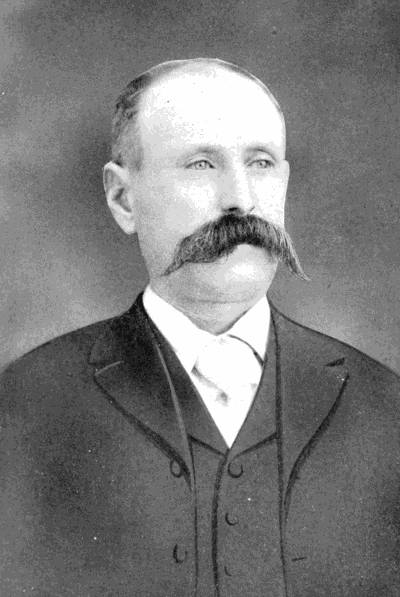
HENRY A. JOHNSON
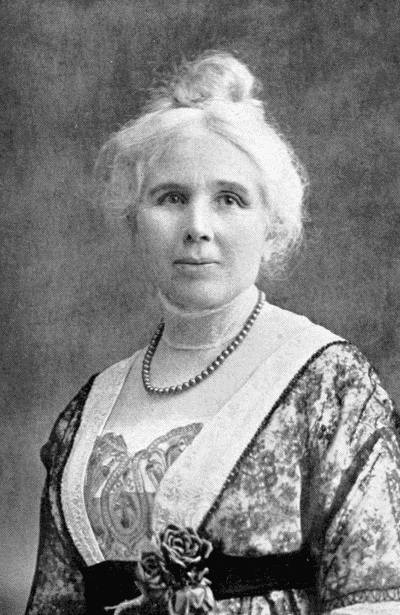
MRS. HENRY A. JOHNSON
Henry A. Johnson spent his youthful days in Canada and acquired his education as a public school pupil there. In 1865 he removed to the middle west, settling in Champaign county, Illinois, where he resided for a decade. In 1875 he made his way to the Pacific coast and located in California, where he spent two and a half years upon a farm. In 1877 he arrived in Walla Walla and in May, 1878, he purchased a herd of cattle and came to Starbuck. He rented a farm for several years but during that period carefully saved his earnings until his industry and economy had brought to him a capital sufficient to enable him to purchase land. He then invested in property which he owned for a time but afterward sold that farm. His wife, however, owns eleven hundred and twenty acres near Starbuck, which is excellent valley land, devoted to the cultivation of hay, fruit and vegetables.
In August, 1909, Mr. Johnson was united in marriage to Mrs. Nancy A. Pearson, a native of Restigouche county, New Brunswick, and a daughter of Robert and Mary Ann (Reid) Watson. Her father was born in Scotland, but her mother was a native of New Brunswick, where they were married. To them were born eight children in New Brunswick and two others were added to the family after their removal to California, Mrs. Johnson being the oldest. It was in 1868 that they came to the Pacific coast and settled in Rio Vista, California, where Mr. Watson owned and operated a ranch and where both he and his wife died. They have three sons still living: William, of San Jose, California; and R. W. and Alex M., both of Great Falls, Montana. Their daughter, Nancy A., was married in Rio Vista to J. S. Pearson and in 1878 they came to Dayton, Washington, being among the pioneers of that locality. Two years later they became residents of Starbuck. Mr. Pearson died at Spokane in 1908. The children born of that union were: Charles W., now an extensive wheat farmer of Eureka flats, Walla Walla county; Margaret J., deceased; Sadie M., the wife of a prominent physician of Sacramento, California; Marian E., whose husband is a prominent railroad man of Spokane; Florence P., the wife of an eminent physician of Sacramento; Robert G., also a prominent physician of that city; and Joseph N., a rancher of Marysville, California. All of the children were given excellent educational advantages, attending colleges in this state and finishing their course at the University of Washington. Charles was one of the first children to attend public school in Starbuck, Mr. and Mrs. Pearson with one or two others having organized the first school district in 1880, before the village of Starbuck had been started. Mr. and Mrs. Johnson now spend their winters in California but during the summer months occupy the ranch at Starbuck, where they have a beautiful and attractive home located on a knoll overlooking the Tucanon river which is modern in every respect, being lighted by electricity and supplied with all conveniences.
Mr. Johnson is prominent in Masonic circles, belonging to Starbuck Lodge, No. 106, F. & A. M., in which he has filled all of the chairs, and both he and his wife are connected with the Order of the Eastern Star. In politics he is a stalwart republican and has served as justice of the peace and as mayor of Starbuck, while for several years he has been a member of the school board. His public duties have been discharged with promptness and fidelity and he has manifested marked capability in the performance of every task that has devolved upon him. During the long years of his residence in Washington he has contributed much to the upbuilding and progress of his section of the state and has always stood for advancement, reform and improvement.
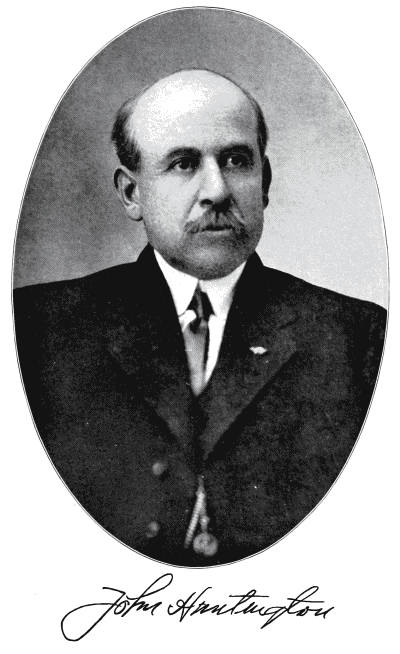
JOHN HUNTINGTON, M. D.
Dr. John Huntington, enjoying a lucrative practice at Starbuck, was born April 14, 1860, at the old home at Monticello, Washington, being the third son of Harry D. and Rebecca J. Huntington, who were early pioneers of western Washington. They had crossed the plains with ox teams in the year 1848 and on the journey met Joseph Meek conveying the news of the Whitman massacre to Washington. Mr. Huntington with his family spent the first winter at Oregon City and in the following spring removed to his donation claim, situated at the mouth of the Cowlitz river, on which was located a warehouse of the Hudson's Bay Company. There the pioneer town of Monticello grew up and was made memorable by the fact that the first convention was held there to organize the territory of Washington. It is a pleasing memory to Dr. Huntington to know that he as well as others of his brothers and sisters were born in the same house in which that convention was held. His father was a member of the first territorial legislature and his brother, Chandler Huntington, was a member of the first state legislature. Dr. Huntington attended the Territorial University, from which institution he won his Bachelor of Science degree upon graduation with the class of 1885. He was there a classmate of Professor Meany of the State University and of Charles V. Piper, who taught for many years in the Washington State College and for the past decade has been connected with the agricultural department of the United States government at Washington, D. C.
Dr. Huntington pursued his course in medicine in the medical department of the University of Oregon at Portland and was there graduated on the 1st of April, 1891. He located for practice near his old home in Cowlitz county, where he remained until the fall of 1898, when he entered the employ of the Oregon & Washington Railroad & Navigation Company as local surgeon at Starbuck. There he has since remained and, in addition to his work with the railroad company, he has enjoyed a lucrative practice. He is very conscientious in the performance of all professional work and by broad reading and study keeps in touch with the latest scientific researches and discoveries so that he is familiar with the most progressive methods.
For many years Dr. Huntington has been an active member and worker in the Masonic lodge and derives much pleasure therefrom, while in his life he exemplifies the beneficent spirit of the craft that is based upon a recognition of the brotherhood of mankind and the obligations thereby imposed. While a student at the university he became a member of the Presbyterian church, of which Dr. Matthews is now pastor, and is a member of that church at Walla Walla. He represents one of the old and honored pioneer families of the northwest, his parents having come here at a very early day, while in the same party was Captain Miller, who is well known in Walla Walla and along the Columbia and Snake rivers. His father was acquainted with Dr. McLoughlin, Rev. Eells and other notable pioneers. The work which the father began in the early days has been continued by the sons and the name of Huntington has ever stood as a synonym for progressiveness and loyalty in citizenship and for the support of all interests looking toward the upbuilding and betterment of the state.
FRANCIS M. CORKRUM.
Francis M. Corkrum is extensively engaged in farming in Walla Walla county, having supervision over fourteen hundred acres of land. He resides on section 19, township 8 north, range 37 east. It was in this township that he was born, April 11, 1892, a son of Uriah F. and Ida May (Chew) Corkrum, both of whom were natives of Walla Walla county. The paternal grandfather, Francis M. Corkrum, was one of the earliest pioneer settlers of this section of the state, arriving here in the late '50s. He figured most prominently in connection with the pioneer development of the county and is classed with those who aided in reclaiming this region for the purposes of civilization. At the time of his arrival the red men far outnumbered the white settlers in the state, the great forests were uncut, the streams unbridged and the lands uncultivated. In fact the work of progress and improvement seemed scarcely begun, yet here and there a few venturesome spirits had planted the seeds of civilization in the northwest. Mr. Corkrum bore a most active part in the work of general progress and improvement in that early period and this work has been carried on by his descendants to the present time. Uriah F. Corkrum is now living in Walla Walla and is the owner of seven hundred acres of land in this county.
Francis M. Corkrum, whose name introduces this review, spent his youthful days under the parental roof and acquired a district school education, supplemented by a course in the Empire Business College in Walla Walla. He was early trained to the work of the farm and at the age of twenty years began farming on his own account, renting land. He secured seven hundred acres owned by the Kibler brothers in the township where he now makes his home. This farm he is still cultivating and on the 1st of September, 1916, he took over the management of his father's farm and is now operating fourteen hundred acres of land, which places him among the most extensive farmers of his section of the county. He follows the most progressive methods and his enterprise and industry are producing splendid results. He is familiar with every phase of modern farming and he has secured the latest improved machinery to promote the work of the fields. Annually he harvests good crops and the neat and thrifty appearance of the places which he cultivates indicates his practical and progressive spirit.
On the 16th of October, 1913, Mr. Corkrum was united in marriage to Miss Edith Gwin, a daughter of J. A. Gwin, one of the substantial farmers of Walla Walla county. They are now the parents of two children, Mary Jane and Uriah F., Jr.
Fraternally Mr. Corkrum is identified with Walla Walla Lodge, No. 287, B. P. O. E. Mrs. Corkrum is a member of the Christian church. Mr. Corkrum gives his political allegiance to the democratic party, which he has supported since age conferred upon him the right of franchise, but he does not seek nor desire office as a reward for party fealty. He prefers to concentrate his time and energies upon his business affairs, which, wisely directed, are bringing to him substantial success.
FREEMAN C. ROMAINE.
Freeman C. Romaine, deceased, was one of the representative farmers of Columbia county, carrying on operations six miles north of Dayton. He was born on the 15th of July, 1867, in Fond du Lac, Wisconsin, which state was also the birthplace of his parents, Garrit and Martha Romaine, and he was only five years of age when the family crossed the plains and settled in Oregon, where the following three years were passed. In 1871 he came to Walla Walla county, Washington, and throughout the remainder of his life was actively identified with its agricultural interests. He took up a farm of three hundred and twenty acres six miles north of Dayton, which is still owned by his widow, and as time passed he became one of the most extensive farmers of his community, operating about twelve hundred acres. He not only raised grain but also devoted considerable attention to the raising of stock.
In 1898 Mr. Romaine was united in marriage to Miss Mary Bosqui, a native of California and a daughter of K. J. and Elizabeth (Wilson) Bosqui, who were also born in that state and removed to Washington about forty years ago. Here the mother died but the father is still living. The children born to Mr. and Mrs. Romaine are as follows: Helen E. and Doris E., now attending high school; and Donald Kenneth.
Mr. Romaine passed away on May 10, 1914, and was laid to rest in the Dayton cemetery. He was a very public-spirited and enterprising citizen who did much to promote the interests of his community, and he served as president of the Fair Association. He was a member of the Commercial Club and was a republican in politics. In his death the county realized that it had lost a valued and useful citizen and wherever known he was held in the highest regard. Mrs. Romaine still owns the farm of three hundred and twenty acres and also has a nice residence in Dayton, where the family now live. They are members of the Congregational church and have a host of warm friends in the city and surrounding country.
EDWARD A. LYONS.
Edward A. Lyons, a representative citizen and progressive farmer living on section 22, Russell Creek township, in Walla Walla county, was born on the old Lyons homestead in this township July 9, 1882, his parents being Patrick and Frances Lyons. The father became a very prominent and successful man, actively and extensively connected with agricultural interests. His business affairs were the result of carefully directed effort, indefatigable energy and perseverance, and as the years passed on he kept adding to his holdings until he was one of the wealthy men of this section of the state. He belonged to the Catholic church and his life was guided by high and honorable principles, while the circle of his friends constantly increased as the circle of his acquaintance broadened.
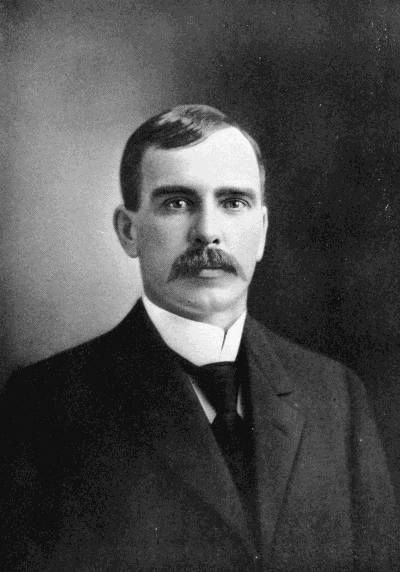
FREEMAN C. ROMAINE
Liberal educational opportunities were accorded Edward A. Lyons, who attended St. Vincent's parochial school in Walla Walla, also the Lincoln public school and the Binkey-Walker Commercial College in Portland, Oregon, from which institution he was graduated with the class of 1903. After his return home he began the management of his father's farming interests, of which he had charge during the following fourteen years, this bringing him broad experience and wide knowledge concerning the most effective and progressive methods of farming. In 1914 he began business on his own account, taking up his abode on his present farm in Russell Creek township. His place comprises three hundred and sixty acres of good land which he purchased in 1909. He has brought his fields under a high state of cultivation and the enterprise and energy with which he has directed his efforts have gained for him a very substantial measure of success.
On the 24th of January, 1912, Mr. Lyons was united in marriage to Miss Gladys Edna Field, a daughter of Simon Field, one of the early pioneer settlers of Walla Walla county. To Mr. and Mrs. Lyons have been born three children, two of whom are living, Andrew Edward and Dorothy Jane.
Politically Mr. Lyons is a democrat, exercising his right of franchise in support of the men and measures of that party. Both he and his wife are members of the Catholic church and he is identified with the Knights of Columbus. He also belongs to Walla Walla Lodge, No. 287, B. P. O. E. He has made for himself a very creditable position among the successful farmers and substantial men of Walla Walla county and is a well known representative of one of the honored pioneer families long connected with the development and progress of this section of the state.
PASQUALE SOTURNO.
It was a man of Italian birth who discovered America and thus brought to the world the knowledge of the resources of a new continent. Since that time many men who have had their nativity in the sunny land of Italy have crossed the Atlantic and have become valuable residents of America, their enterprise and business activity contributing to the upbuilding and progress of the districts in which they have resided. Pasquale Soturno is among those who have become identified with the development of the northwest. He makes his home in College Place, where he is now most pleasantly situated, occupying one of the beautiful residences in that town, while his attention is given to the conduct of an extensive gardening business. He was born in Italy, March 3, 1850, and was there reared and educated. He came to America in 1875, when a young man of twenty-five years, and for a brief period was a resident of the state of New York. The opportunities of the west attracted him and he made his way across the country to Walla Walla county, Washington, where he settled in 1876, becoming the first commercial gardener of the valley. He is today the owner of forty-six acres of very rich and productive land upon which he is now extensively engaged in gardening. He has followed this business for forty-one years and he has ever held to the highest standards in his work. He produces vegetables of most excellent quality, size and flavor, and by reason of this he has been assured of a very liberal patronage. His business has grown year by year and today he has a splendidly improved farm, having secured all of the improvements that facilitate work of that character.
Mr. Soturno was married in Italy before he left his native land. His wife died in 1916. In their family were three children: Carmen, who is at home with her father; Josephine, also at home; and Nicholas, who died at the age of twenty-eight years.
Mr. Soturno and his family are communicants of the Catholic church. He has long since become a naturalized American citizen and has always given his political allegiance to the republican party. He has never had occasion to regret his determination to seek a home in the new world, for here he found the business opportunities which he sought and in their utilization he has won a handsome fortune, being now numbered among the substantial citizens not only of College Place but of the county at large. Moreover, he was a pioneer in his field of labor and demonstrated the possibilities for successful gardening as a commercial venture in this section of the state.
LARS NILSSON.
Lars Nilsson is a hardware and implement dealer of Dayton, who for many years has ranked with the foremost business men of the city. The secret of success is not a difficult one to find. Careful analyzation of the careers of those men who have prospered indicates the fact that industry has constituted the foundation of their progress and close application and enterprise have enabled them to overcome all difficulties and obstacles and in time reach the goal of prosperity. Such is the record of Mr. Nilsson, who came as a young man to the new world, well qualified to meet business demands in America by reason of the thorough training which he had received as a wagon maker in his native country.
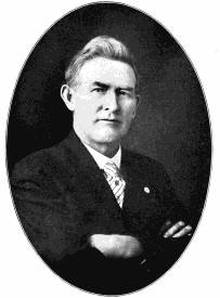
LARS NILSSON
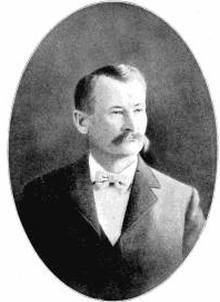
ANDREW NILSSON
————
Mr. Nilsson was born in Sweden, September 19, 1859, a son of Nils and Elna (Knudson) Larson. The father died in Sweden when his son was a lad of but ten years and the mother passed away when he was a youth of only twelve, so that he was early left an orphan. Following his mother's demise he was thrown upon his own resources and from that time forward has been dependent entirely upon individual labor for advancement. Ha was employed at farm work until his eighteenth year, at which time he apprenticed himself to the wagon maker's trade. He finished his apprenticeship in Sweden, where thoroughness is the watchword in every factory. After becoming a master builder of wagons he determined to try his fortune on this side of the Atlantic and in the spring of 1880 sailed for the United States, where his brother, Andrew Nilsson, had located ten years before. The brother had become a resident of Dayton, Washington, in 1877, and in the fall of 1879 he returned to Sweden on a visit. The following spring he again came to the United States and brought with him his younger brother, Lars, and a sister, Sophia, who is now the wife of John Ruply, of Portland, Oregon. Andrew Nilsson had previously established himself in the blacksmithing business in Dayton and on his return, Lars Nilsson entered the brother's shop, adding the wagon making industry to the blacksmithing business. He continued to work for his brother for eleven years and in 1892 they entered into partnership relations, conducting their business under the firm style of Nilsson Brothers for fourteen years. During that period they extended the scope of their interests and added new departments, opening a farm implement store. In 1905 Lars Nilsson purchased his brother's interest in the business and as his trade grew he was forced to give up the blacksmithing shop in order to concentrate his efforts and attention upon the mercantile branch. He also disposed of the machine shop, devoting his entire time to looking after the implement and vehicle business, which was removed to a handsome new brick building erected at the corner of Main and Third streets by Andrew Nilsson. In 1913 Arthur Nilsson became associated with his father in the business and displays marked enterprise in carrying on their interests. Mr. Nilsson has always maintained the highest standards in the line which he handles. For years he has sold the Studebaker vehicles, the Canton plows, Superior drills and the Holt combine and in more recent years he has handled the Studebaker motor car. He also handles engines and pumping outfits and in fact almost everything necessary to the complete equipment of a farm, including a line of power machinery. A local paper said of him: "He is known throughout the county as a conscientious, progressive, accommodating and capable business man and some of his customers have been doing business with him for many years with complete satisfaction to themselves." His brother Andrew died October 22, 1916, in Dayton, at the age of seventy-two years, leaving no family and, according to the terms of his will, our subject is sole executor of the estate and is acting as such without bar or any court proceedings.
On the 10th of May, 1890, Mr. Nilsson was united in marriage to Miss Johanna Stahlberg, a native of Sweden. He went to Sweden in the fall of 1889 and brought his prospective bride to this country with him in the spring of 1890, for having been naturalized in the United States, the laws of Sweden would not permit of his marriage there. To them were born two children: Esther J., who died in 1913, at the age of twenty-two years; and Arthur N., who is connected with his father in business. The wife and mother passed away March 16, 1894, and on Christmas day of 1895 Mr. Nilsson was married to Miss Lydia Stahlberg, a sister of his former wife. There have been two children of this marriage: Andrew L., who is taking a course in electrical engineering in the Washington State College; and Albert E., a lad of ten years, at home.
Mr. Nilsson is prominent in Masonic circles, belonging to Dayton Lodge, No. 26, F. & A. M.; Dayton Chapter, No. 5, R. A. M.; and Washington Commandery, No. 1, K. T., of Walla Walla. He is also a member of Dayton Lodge, No. 3, K. P., which he joined in 1886, and he belongs to Patit Lodge, No. 10, I. O. O. F. He has passed through all of the chairs in these different organizations save the commandery and is a most faithful follower of Masonic teachings, exemplifying in his life the beneficent spirit of the craft. He and his wife are consistent members of the Congregational church and they enjoy the high regard of all with whom they have been associated because of the many sterling traits which they display. Mr. Nilsson is a self-made man. He borrowed the money from his brother with which to pay his passage to this country and as the years have gone on he has steadily progressed in a business way until he is today one of the most substantial citizens of Dayton. He has ever been watchful of indications pointing to success and has never feared to venture where favoring opportunity has led the way. He has closely studied the market and the public demand in his line and has ever carried a stock that has been able to meet the needs of the most particular. In all his dealings he is thoroughly reliable as well as progressive and his word is considered as good as any bond solemnized by signature or seal.
OLIVER DeWITT.
On the 4th of July, 1864, Oliver DeWitt arrived in Walla Walla, a young man of twenty years, with twenty-three cents in his pocket, representing his entire capital. Today he is the owner of valuable farming property, from which he derives a gratifying annual rental that supplies him with all of the comforts and many of the luxuries of life. The intervening period was at the outset a struggle for existence but since then, step by step, he has steadily progressed and his record indicates clearly what may be accomplished when there is a will to dare and to do. Never afraid of hard work, he has also displayed sound business judgment in the management of his interests.
Mr. DeWitt was born in Knox county, Ohio, on the 7th of January, 1844, a son of David H. and Rachel (Starner) DeWitt, who removed from Ohio to Iowa in 1850, settling in Mahaska county near Oskaloosa, where they remained until called to their final rest.
Oliver DeWitt had very limited educational opportunities. In fact he is a self-educated as well as self-made man and many of his most valuable lessons have been gleaned from the school of experience. On reaching his twentieth year, in 1864, he decided to leave home and seek his fortune in the far west. Accordingly he bade adieu to friends and family and crossed the plains with an ox team to Boise City, Idaho, and from there made the journey to Walla Walla on foot, arriving as previously stated on the 4th of July, with twenty-three cents as his entire capital. The following day he secured employment with a farmer to pull onions. He worked for wages that fall and winter and in 1865 he engaged in teaming and packing, which business he followed for about ten years. He then became actively engaged in the live stock business, settling four miles northeast of Walla Walla. In 1877 he purchased two hundred and forty acres of land on Dry creek, nine miles northeast of Walla Walla, and taking up his abode upon that place, turned his attention to general farming. He subsequently increased his holdings to four hundred and fifty acres, which he still owns. For the past twenty years or more he has spent the winter seasons in Walla Walla in order to give his children the advantages of the city schools. The summer months were largely spent upon the home farm but for three years he has remained steadily in Walla Walla, renting his farm to others. He belongs to the Farmers Union and is one of the directors of the Farmers Union Warehouse Company.
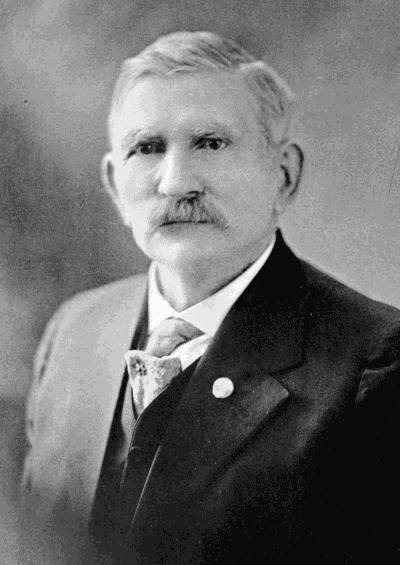
OLIVER DeWITT
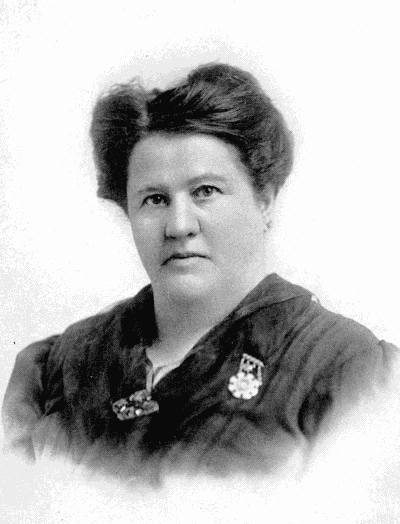
MRS. OLIVER DeWITT
In May, 1874, Mr. DeWitt was united in marriage to Miss America A. Roff, a daughter of Frederick and Rachael (White) Roff, who crossed the plains with ox teams from Missouri to Washington in 1864, settling in what is now Walla Walla. They made the trip with nine children and were six months and one day en route. On reaching his destination Mr. Roff had but fifty cents in his pocket. However, some of his Masonic brethren came to his assistance and after a short time he had made a good start. Four of his nine children were old enough to work and wages were good, the girls receiving nine dollars per week. The father engaged in farming and with the exception of a year and a half spent in Oregon he made his home continuously in the vicinity of Walla Walla up to the time of his death, which occurred in 1902. He was one of the well known and valued pioneer settlers of this section of the state. His widow survived him for six years, passing away in 1908. Mr. and Mrs. DeWitt are the parents of four children, as follows: Ella, who is the wife of Edward Bradbury, of Waitsburg; Harry L., who owns and operates a large ranch near Starbuck in Columbia county; Arthur Clyde, who is engaged in the grain business in Waitsburg; and Elsie D., who gave her hand in marriage to William L. Estes, a farmer of Walla Walla county. Mr. and Mrs. DeWitt have also reared a nephew, Charles F. Myers, whose parents died when he was seven years of age and he is now living on the farm.
In politics Mr. DeWitt is a stanch republican, exercising his right of franchise in support of the men and measures of that party. Fraternally he is identified with the Independent Order of Odd Fellows, belonging to Washington Lodge, No. 19, and also to the encampment, while both he and his wife are identified with the Rebekahs. Narcissa Lodge, No. 2, presented Mrs. DeWitt with the veteran's jewel, given for long and faithful service in the order. Mr. DeWitt belongs to the Methodist Episcopal church, while his wife holds membership in the Christian church. They are people of genuine personal worth and Mr. DeWitt is ever ready to extend a helping hand to those who need assistance. He comprehends what difficulties mean, having had his own hard knocks. He sympathizes with those whose lot has not been as fortunate as his and yet he does not condone the shirker nor have patience with the shiftless, because his life has been organized along lines that call for a full dole of labor within each turn of the wheel. Because of his industry and perseverance, obstacles and difficulties have vanished before him like mist before the morning sun and step by step he has advanced until he has reached the heights of prosperity.
JOSEPH W. LYONS.
The name of Lyons has long been associated with the agricultural development of Walla Walla county and has always been a synonym for progressiveness and advancement in that field of activity. Joseph W. Lyons, who now follows farming on section 16, Russell Creek township, was born upon the place where he still lives on the 6th of November, 1879, his parents being Patrick and Frances Lyons, who were well known and worthy pioneer people of this district. He was educated in the district schools, also attended Whitman College in Walla Walla and Gonzaga College at Spokane, now the University of Gonzaga. Following the completion of his school days he worked for his father for a time and subsequently was in the employ of the Great Northern Railroad Company for about five years. The major part of that period was spent in the general offices of the company at Spokane. At length he resigned his railroad position and returned to Walla Walla county, where he took up the occupation of farming, to which he had been reared, and with this pursuit he has since been identified. He has charge of his father's estate, operating two thousand acres of land, and is thus one of the extensive and representative farmers of the valley. His business affairs are most carefully managed. He is systematic in all that he does, is progressive and employs the most modern methods in carrying on his farm work, so that excellent results accrue.
On the 28th of September, 1910, Mr. Lyons was united in marriage to Miss Hattie Denzel, of Spokane. Following the completion of a course in the Holy Name Academy at Spokane, Mrs. Lyons attended the State Normal School at Cheney, Washington. By her marriage she has become the mother of four children, namely: Helen F., Joseph D., Louise E. and William R.
Both Mr. and Mrs. Lyons are consistent members of the Catholic church and he is identified with Walla Walla Lodge, No. 287, B. P. O. E. In politics he maintains an independent course, voting for men and measures rather than for party. He has a wide acquaintance in his native county and enjoys the friendship and high regard of many with whom he has been brought in contact. He is a typical western man, alert, energetic and progressive, and as the years have gone on he has made for himself a creditable position among the agriculturists of southeastern Washington.
JUDSON A. CORBETT.
Judson A. Corbett, a prominent representative of the milling industry, has conducted a feed mill at Dayton since 1907 and was also the proprietor of the Touchet Flouring Mills at Huntsville, Washington, for a quarter of a century but has recently disposed of his interests in the latter connection. His birth occurred in Ontario, Canada, on the 10th of October, 1857, his parents being John and Jane (Lewis) Corbett, both of whom were natives of Ireland. They emigrated to Canada in childhood with their respective parents, who settled near Ottawa, and it was there that they were reared and married, continuing residents of the province of Ontario throughout the remainder of their lives. John Corbett was a mill operator, conducting both a grist and sawmill.
Judson A. Corbett, whose name introduces this review, learned the milling business under the direction of his father, with whom he was identified in operations of that character until 1890. At that time, when a young man of thirty-three years, he made his way to Victoria, British Columbia, and two years later came to Huntsville, Washington. Here, in association with his brother, Albert E., he purchased the Touchet Flouring Mills, of which he continuously remained co-proprietor for a quarter of a century or until August, 1917, when he disposed of his interest therein to E. S. Isaacs. The widow of Albert E. Corbett, who passed away in 1906, still retains his late brother's interest. It was in 1907 that J. A. Corbett bought the feed mill in Dayton and this he has successfully operated to the present time. He owns an equity in a farm north of Dayton and is likewise the owner of a farm in Ontario, Canada, and of a section of land in Alberta, Canada.
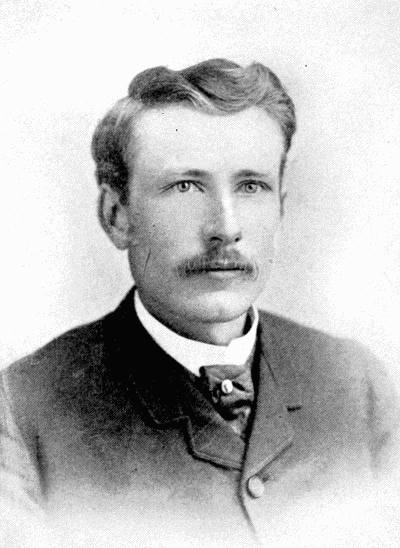
JUDSON A. CORBETT
In October, 1887, Mr. Corbett was united in marriage to Miss Jane Baker, of Ontario, Canada, by whom he had seven children, five of whom survive, namely: Fern W., the wife of Wilbur Bateman, who follows farming near Huntsville; Evelyn, who gave her hand in marriage to Lawrence Johnson of Huntsville, for many years a teacher in the public schools; and Gladys, Kenneth and Phyllis, all at home. Fraternally Mr. Corbett is identified with the Woodmen of the World, while his religious faith is indicated by his membership in the Episcopal church, to which his wife also belongs. The prosperity which has come to him in business is the merited reward of his enterprise and ability, while the regard and esteem which he enjoys in social circles has come in recognition of his high standards of conduct in every relation of life.
RALPH F. COFFIN.
Death often removes from our midst those whom we can ill afford to lose. It was with deep regret that the friends of Ralph F. Coffin learned of his demise, for he was a worthy and substantial citizen, loyal to his associates and devoted to his family. He was born in Oregon, March 7, 1876, and his life record covered the intervening years to the 28th of December, 1915. His parents were George D. and Lucinda (Haynes) Coffin, the latter a native of Iowa. The father was a native of England and at an early day crossed the plains to the Pacific coast and later removed to the Walla Walla valley. Both he and his wife spent their remaining days in this section of the state and were numbered among its worthy pioneer settlers. They had a family of seven children, of whom but two sons are now living.
Ralph F. Coffin, although born in Oregon, was reared and educated in Walla Walla county, having been brought to this section of the state by his parents when very young. When not busy with his textbooks his attention was given to the home farm and he was thus well qualified to undertake any branch of farm work. After putting aside his textbooks he accordingly began farming on his own account and devoted his attention to that business until his death. He became the owner of forty-one acres of valuable farm property on section 31, township 7 north, range 35 east, and his labors made it a splendidly improved tract of land, equipped with all modern conveniences and all of the accessories of the model farm and his careful cultivation of the tract brought to him and his family a substantial annual income.
In 1900 Mr. Coffin was united in marriage to Miss Ella Kroll, who was born in Wisconsin, a daughter of Lawrence and Tressa Kroll, both of whom were natives of Germany. They came to America in early life and established their home in Wisconsin, where they continued to reside until called to their final rest. They had a family of nine children, of whom seven are yet living. It was in the year 1908 that Mrs. Coffin crossed the country to Washington, becoming a resident of Walla Walla county, where in the following year she was married. To Mr. and Mrs. Coffin was born a daughter, Mary Estella. Mrs. Coffin and her daughter are favorably known and have many friends in the section of the county in which they reside.
THOMAS H. CROCKER.
Thomas H. Crocker, a retired agriculturist residing in Walla Walla, was long and successfully identified with farming interests in Walla Walla county. His birth occurred in St. Stephen, New Brunswick, Canada, on the 30th of August, 1854, his parents being John R. and Clarissa (Hill) Crocker, who spent their entire lives in that province. He was reared under the parental roof and attended the common schools in the acquirement of an education. At fifteen years of age he became a sailor on an American vessel, sailing "before the mast" and for five years sailed on different ships along the Atlantic coast. On one trip he acted as "sailing mate." This experience led him to the decision to go to the United States. Accordingly, soon after attaining his majority he left his native country and went to Reno, Nevada, where he spent one year. On the expiration of that period he made his way to California, in which state he was engaged in placer mining for three years and then spent a year on a ranch. Subsequently he resided for one year in Lakeview, Oregon, and at the end of that time returned to Wyoming, where he spent about twelve years in the stock business and in railroading. In 1888 in New Brunswick Mr. Crocker was united in marriage with Miss Edith Diffin, daughter of Thomas and Susan Diffin of that place. In 1895 they came to Walla Walla county, Washington, and have remained within its borders throughout the intervening twenty-three years. They took up their abode on a rented farm near Prescott and continued its cultivation for about ten years but in the meantime had purchased a farm of three hundred and twenty acres sixteen miles northwest of Walla Walla and later bought an adjoining half section, to which they removed in 1905. Thereon they continued to reside until 1914, when they took up their abode in the city of Walla Walla and have since lived retired. The property, which has been operated by a tenant during the past three years, now embraces eight hundred and eighty-seven acres of rich and productive land, all in one body. Mr. Crocker was long numbered among the active, enterprising, industrious and progressive farmers of the community and the rest which he now enjoys is the merited reward of his intelligently directed labors.
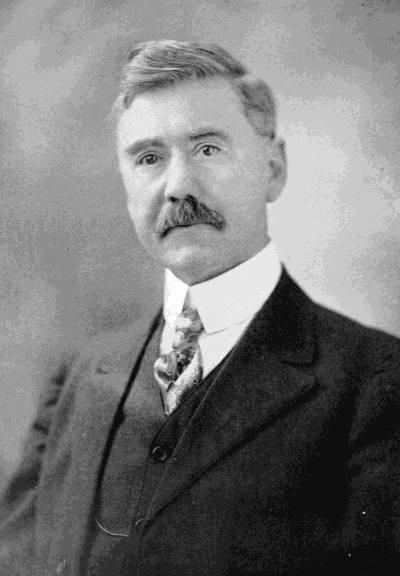
THOMAS H. CROCKER
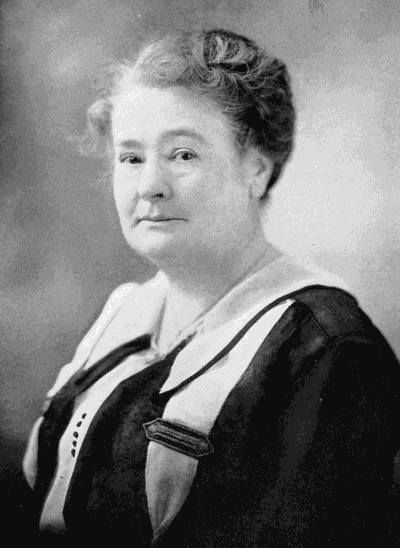
MRS. THOMAS H. CROCKER
Mr. and Mrs. Crocker have their home at 628 Pleasant street and they occupy an enviable position in social circles of Walla Walla. Mr. Crocker gives his political allegiance to the republican party, believing firmly in its principles. Fraternally he is identified with the Foresters of America, while his religious faith is indicated in his membership in the Congregational church, to which his wife also belongs. His record is indeed commendable and he well deserves representation in this volume as one of the leading agriculturists and respected citizens of Walla Walla county.
L. P. BERRYMAN.
L. P. Berryman is one of the younger representatives of successful farming operations in Walla Walla county. He was born April 8, 1887, on the farm on which he yet resides, on section 35, township 9 north, range 35 east. His place comprises three hundred and twenty acres of rich and valuable land which was originally the old family homestead. His parents were J. E. and Mary Berryman, both of whom were natives of England. They came to America in early life and established their home in Walla Walla county, where the father passed away, but the mother is still living.
L. P. Berryman acquired a public school education in Walla Walla county and was reared to the occupation of farming, which he has successfully followed as a life work. He continued to assist his father in the development of the fields until he attained his majority, when he began farming on the old homestead, which he afterward purchased. He has here a half section of land which he has brought under a high state of cultivation and to which he has added many improvements, making it a valuable and attractive farm which constitutes one of the pleasing features of the landscape. He also owns and operates the warehouse at Berryman Station and his business affairs are wisely, carefully and successfully conducted.
In 1907 Mr. Berryman was united in marriage to Miss Grace Mallory, who was born in Ohio and is a daughter of Charles Mallory, now a resident of Tennessee. To Mr. and Mrs. Berryman have been born three children, Joseph L., Jacqueline A. and Margaret. The parents attend the Methodist Episcopal church and Mr. Berryman gives his political allegiance to the republican party but the honors and emoluments of office have never had any attraction for him. He has served, however, as school director and has been interested in having good schools in the district, for he regards public education as one of the nation's strongest bulwarks. His thought, purpose and energy have been concentrated upon his agricultural pursuits and the careful management of his interests has brought to him a substantial measure of success.
HARRY LASATER.
Harry Lasater, one of the large landowners of Walla Walla county, is a representative of a prominent pioneer family of this section and is a native of the county, his birth occurring May 18, 1865. His parents, James H. and Emily (Moore) Lasater, were born respectively in McMinn county, Tennessee, and in Illinois.
Harry Lasater attended the Walla Walla city schools and completed his education in Whitman Academy and in Whitman College. When about eighteen years old he began farming in partnership with his father and so continued for about six years. Since then he has been alone in his agricultural operations, and as the years have passed he has acquired additional holdings, until he is now one of the leading farmers of the Walla Walla valley. Following the death of his father he acquired by inheritance and purchase the old home farm of three hundred and sixty acres, and to this he added adjoining land until the place comprised five hundred and forty-three and a half acres. He has since sold four hundred and fifteen acres of that property, so that his home farm now includes but one hundred and twenty-seven acres. He also owns, however, five hundred and thirty-three acres of excellent wheat land on Birch creek, in Umatilla county, Oregon, ten miles southeast of Walla Walla, three hundred and twenty acres of timber land in Umatilla county and one thousand acres of wheat land near Prescott, in Walla Walla county. The fact that he gives close personal supervision to his extensive farming operations indicates that he manages his affairs in a systematic manner and that he possesses marked business ability. He is a director of the Farmers Savings Bank of Walla Walla and is a member of its finance board, and he is likewise a stockholder in the Whitehouse & Drumheller Company.
In 1897 occurred the marriage of Mr. Lasater and Miss Jessie Crawford, who was born in Walla Walla county but later was a resident of Umatilla county, Oregon. To this union have been born three children: Thelma May, who is a student in Whitman College; Wythel Mary, who is a student in the Walla Walla high school; and Jessie Orena, who is in the grade school.
Mr. Lasater has followed in his father's political footsteps and is a stanch adherent of the democratic party. At one time he was a candidate on its ticket for treasurer, and in his early manhood he filled the office of county road supervisor for three terms. Fraternally he belongs to Enterprise Lodge, No. 2, I. O. O. F., and Blue Mountain Lodge, No. 13, F. & A. M. Both he and his wife hold membership in the Central Christian church and they give hearty support to the various phases of its activities. Both have passed their entire lives in the Pacific northwest and they are at all times loyal to its best interests.
WILLIAM RESER.
William Reser, a substantial farmer and representative citizen of Walla Walla county, living on section 4, township 6 north, range 35 east, came to the northwest from Davis county, Iowa, where he was born on the 18th of April, 1859, his parents being George and Mary (Waterman) Reser, who were reared and married in Iowa and in 1863 crossed the plains with horse teams to Washington. On reaching Walla Walla county the father homesteaded, securing one hundred and sixty acres of land in the valley near where is now seen the Whitman monument, and upon that place he and his wife lived until called to their final rest.
William Reser was a little lad of four years when the parents came to Washington. He acquired his education in one of the old-time log schoolhouses common at that frontier period. During his youth he rode the plains as a cowboy and he experienced all of the hardships and privations of frontier life. He has lived to witness marked transformation in all that pertains to agricultural progress and development in this section. An important event in his life occurred on Christmas day of 1883, at which date he was united in marriage to Miss Sarah J. Kirkland, a daughter of Andrew J. Kirkland, who crossed the plains from Arkansas to Oregon in 1852 and became a resident of Walla Walla county, Washington, in 1864. Here he took up a homestead claim in the township where his daughter still resides, and upon that place he spent his remaining days.
Following his marriage Mr. Reser purchased land in Umatilla county, Oregon, and there carried on farming for seven years. On the expiration of that period he purchased a farm in township 6 north, Walla Walla county, and to his property has since added from time to time as his financial resources have increased until he and his wife today own three hundred and sixty-five acres, constituting one of the valuable farm properties of this section of the state. He has carefully tilled his fields and developed his farm and as the years have gone by his labors have brought good results. To the household were added two sons: Byron E., who is now engaged in the automobile business in Kennewick, Washington; and Raymond K., who is operating the home farm for his father.
In his political views Mr. Reser has long been a stalwart democrat and, while not an office seeker, he has served as a member of the school board. He is interested in the cause of public education and in all that pertains to progress and improvement along any desired line. He ranks with the leading and representative citizens of Walla Walla. There have been no spectacular phases in his career. Almost his entire life has been devoted to the quiet pursuit of farming and through energy and persistency of purpose he has won success. His business affairs are always carefully managed and directed and the integrity of his business methods in trade transactions is questioned by none. Those who know him, and he has a wide acquaintance, acknowledge his sterling worth.
HON. H. H. HANSON.
Hon. H. H. Hanson is a wide-awake and progressive business man who figures prominently in connection with the agricultural and financial interests of Walla Walla county. He is the president of the Touchet State Bank and since 1900 he has been actively identified with farming, giving his attention largely to fruit growing and to dairying. He is a representative of one of the old pioneer families of this section of the state. His birth occurred in New Hampshire, February 24, 1865, his parents being John and Frances Hanson. The father was a native of Maine, while the mother was born in the old Granite state and there she spent her entire life. In 1876 the father left New England and made his way westward to California, where he remained until 1879, when he came to Walla Walla county and entered the employ of Mr. Baker. Here he continued to reside until called to his final rest. In the family were but two children: H. H., of this review; and Ena, now deceased.
H. H. Hanson was reared and educated in the east, continuing his residence in that section of the country until 1883, when owing to the fact that his father was living in Washington, he made his way to this state. Here he entered the employ of the Oregon Railroad & Navigation Company, which he represented as an operator until 1900. He preferred, however, to engage in business on his own account and in that year turned his attention to farming on the place on which he now resides on section 34, Hill township. Here he owns two hundred acres of alfalfa land and he is also engaged quite extensively in dairying and in fruit raising. He is thoroughly familiar with progressive methods of horticulture and his orchards indicate the most thorough and scientific care. His dairy interests, too, are characterized by the most capable management and the sanitary conditions that prevail make the products of his dairy a very much desired article. His business interests are wisely and carefully managed and he pursues with thoroughness anything that he undertakes, so that successful accomplishment crowns his labors.
In 1888 Mr. Hanson was united in marriage to Miss Lucinda Hall, a native of Pennsylvania, by whom he has twelve children, namely: Hayden, Fred, Preston, Ollie, Helen, Oliver, Francis, Allen, Ena May, Harry, Lawrence and Georgie.
Mr. Hanson is a member of the Grange and is interested in everything that has to do with advancing agricultural progress and welfare in the state. He thus cooperates in the organized movements to promote the interests of farmers and to promulgate knowledge that will render their labors of greatest effect in crop production and in stock raising. Moreover, Mr. Hanson is a recognized leader in the ranks of the republican party in Walla Walla county. For one term he filled the office of county commissioner and in 1908-9 he represented his district in the general assembly, where he gave careful consideration to all the vital questions that came up for settlement. His position upon any important subject is never an equivocal one. He does not hesitate to express his honest convictions and in fact he puts forth every effort to support his views and secure their adoption. In all matters of citizenship he is very progressive and has displayed as well the spirit of enterprise in all of his business undertakings, so that he now ranks with the leading bankers and farmers of his part of the state.
ORLANDO DEMARIS.
Orlando Demaris, who throughout his active business life followed farming but is now living retired in the city of Walla Walla, was born in Iowa on the 7th of January, 1851, and is a son of James and Eliza J. (White) Demaris, the former a native of Ohio and the latter of Kentucky. They came to Washington in 1863 and located on a farm in Walla Walla county on Dry creek, where the father built a log cabin with a clapboard roof, board floor and stick chimney, which was the home of the family for several years. Later the parents removed to Walla Walla, where both died. In their family were twelve children, of whom nine still survive.
Orlando Demaris was twelve years of age when he accompanied his parents on their removal to Walla Walla county, where he grew to manhood and attended school. After completing his education he remained under the parental roof until he attained his majority, giving his father the benefit of his labors. He then purchased a farm and engaged in its operation until his retirement, since which time he has made his home in the city of Walla Walla. He is still the owner, however, of seven hundred acres of land, well improved and under cultivation.
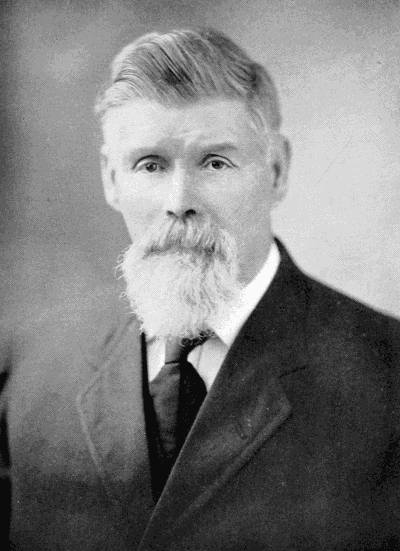
ORLANDO DEMARIS
In 1875 Mr. Demaris married Miss Mary M. Lewis, a native of Iowa, which state was also the birthplace of her parents, Reese and Mary (Jackson) Lewis, who brought their family to Walla Walla county in 1863 and settled on a farm, where they continued to make their home throughout the remainder of their lives. They had four children and three of the number are still living. The children born to Mr. and Mrs. Demaris are as follows: Laura and Frankie, both deceased; David, Fred, Guy, Alva and Edwin. Guy and Alva are now in the government service at Fort Riley, Kansas. The three other sons now operate their father's farm.
By his ballot Mr. Demaris supports the men and measures of the democratic party and he has served as school director. He is a member of the Odd Fellows lodge at Dixie and his wife belongs to the Rebekahs, taking a very active and prominent part in its work. She is now past noble grand. They attend the Methodist Episcopal church and are held in the highest esteem by all who know them.
R. C. McCAW.
When one views the great and growing cities of the northwest it seems hardly credible that any living man should have witnessed the entire development of this section of the country. Yet personal knowledge of the wonderful progress of the northwest enables R. C. McCaw to speak with authority concerning the events which have shaped its history. He was born in Linn county, Oregon, on the 11th of February, 1856, at which time Washington was still a part of the territory of Oregon and all of this vast region was practically undeveloped. Its coal deposits were untouched, its forests uncut and its wealth and natural resources awaited the demands of the white men who were yet to penetrate within its borders. The Indians far outnumbered the white settlers and the most farsighted could not have dreamed of the marvelous transformation which would take place within a few decades until today the west is not only abreast with the east in all of its advantages and its opportunities but has taken a position of leadership along many lines. The parents of Mr. McCaw were William and Sarah (Findley) McCaw, the former a native of Indiana and the latter of Illinois. They were married in Illinois and in 1847 started across the plains with ox teams for Oregon, reaching Oregon City on the day of the Whitman massacre. During the latter part of the journey Mr. McCaw had suffered with fever and his attack was so severe that it burst one of his eyeballs and he was carried into Oregon City on a stretcher. Finally, however, he recovered and continued his residence in Linn county, Oregon, up to the time of his demise.
There R. C. McCaw was reared and educated, experiencing many of the hardships and privations incident to frontier life and the development of a farm under pioneer conditions. He attended the district schools but his opportunities for the acquirement of an education were very limited, as the school system had not then been developed. On his twenty-first birthday he was united in marriage to Miss Emma Gorsline, of Linn county, Oregon, who had come to the northwest with her parents in 1875, the family removing from Kansas. Following his marriage Mr. McCaw brought his bride to Walla Walla county and here they began their domestic life. For two years after his arrival he was employed as a farm hand and in 1879 he went to the Big Bend country and filed on the second homestead that was taken up in that section. There he lived for eighteen years, performing the arduous task of developing and cultivating a new farm. The work of improvement was carried on, however, year by year and he brought his land under a high state of cultivation and derived a good profit from his labors. In 1897 he sold his interests there and in February following he returned to Walla Walla county, where he purchased four hundred and thirty-six acres of land, constituting his present home farm, situated on section 1, township 9 north, range 36 east. Upon this place he has since resided and in the intervening period he has purchased more land from time to time as his financial resources have permitted and is now the owner of between eleven and twelve hundred acres, constituting one of the most valuable farm properties in the Touchet valley. He has placed splendid improvements upon his land and his farm presents a most attractive appearance with its highly cultivated fields, its well kept fences, its substantial buildings and all the accessories of a model farm of the twentieth century.
To Mr. and Mrs. McCaw have been born ten children, nine of whom are yet living, namely: William O., a farmer of Walla Walla county; Samuel E., also engaged in farming in this county; Edith M., the wife of Robert McSherry, of Toronto, Nevada; Fred L., Benjamin H. and Edward Guy, all of whom are engaged in farming in this county; Jay M., who is assisting in the operation of the home farm; and Sarah E. and Robert Glenn, both at home.
Politically Mr. McCaw is a republican, having given stalwart support to the party since age gave to him the voting privilege. He is a member of Waitsburg Lodge, No. 16, F. & A. M., and exemplifies in his life the beneficent spirit of the craft. He and his wife are also consistent members of the Presbyterian church. The story of his life if written in detail would present a clear and interesting picture of the entire development of the northwest, for within his memory there has occurred a change so great as to seem almost magical. He can relate most interesting incidents of the early days and his name should be placed high on the record of honored pioneer settlers of this section of the country.
MARTIN MARBACH.
Martin Marbach, a farmer living on section 2, township 8 north, range 34 east, has been a resident of Walla Walla county for almost three decades and as the years have passed has prospered in his undertakings until he is now the owner of over two sections of wheat land. His birth occurred in Alsace-Lorraine on the 8th of February, 1863, and there he was reared to manhood, acquiring his education in the common schools of his native country.
MARTIN MARBACH
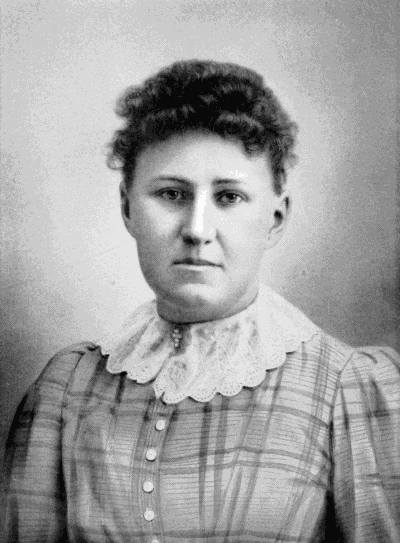
MRS. MARTIN MARBACH
In 1884, on attaining his majority, Mr. Marbach determined to try his fortune in the new world and crossed the Atlantic to the United States, landing in New York city. From the eastern metropolis he made his way westward to Missouri and for four years worked as a farm hand in Lafayette county, that state. The year 1888 witnessed his arrival in Walla Walla county, Washington, and here he secured employment, working for wages for a period of six years or until 1894. In that year, having carefully saved his earnings, he started out as an agriculturist on his own account, purchasing one hundred and sixty acres of his present home farm. From that period forward he prospered and kept adding to his holdings by additional purchase from time to time until he now owns two sections of wheat land and has won an enviable reputation as one of the substantial and enterprising agriculturists of the county. Close application and indefatigable energy have characterized him at all times, and the prosperity which he now enjoys is the merited reward of his intelligently directed activity.
On the 23d of October, 1894, Mr. Marbach was united in marriage to Miss Lizzie M. Rondema, of Walla Walla, by whom he has eight children, namely: Theodore, Margaret, Lizzie, Ludwine, Martin, Gertrude, Philip and George. Mrs. Marbach is a daughter of Andrew and Anna (Brower) Rondema, who were born, reared and married in Amsterdam, Holland, and came to America in 1870, locating first in Chicago, where Mr. Rondema engaged in business as a contractor and builder. In 1887 he came to Walla Walla and while residing in this state turned his attention to farming. Here he died in June, 1889, and his wife passed away in 1906. Of their ten children only two are now living, these being Mrs. Marbach and Theodore, a resident of Walla Walla. They were members of the Catholic church.
Mr. Marbach exercises his right of franchise in support of the men and measures of the democratic party, believing firmly in its principles. The religious faith of his family is that of the Catholic church and they attend church in Walla Walla. He has never had occasion to regret his determination to seek a home in the new world, for here he has found the opportunities which he sought and in their utilization has won a most creditable measure of success.
JAMES H. LASATER.
James H. Lasater became one of the pioneer residents and early attorneys of Walla Walla and for many years was closely associated with public events of importance which left their impress upon the growth, development and progress of city and state. He arrived in the northwest in April, 1863, and from that date until his death, or for a third of a century, was closely connected with interests which have had important bearing upon the progress and stable prosperity of Washington.
The birth of James H. Lasater occurred in McMinn county, Tennessee, on the 19th of October, 1823. He was reared in his native county, where he spent the period of his boyhood and youth and in fact there remained for a few years after reaching adult age. In 1850 he crossed the plains to California, where the gold fields were attracting thousands of fortune seekers, but in 1851 he returned to Tennessee, again making his way over the plains until he reached Illinois. Through the two following years he devoted his attention to the study of law under the direction of Judge William Kellogg in Canton and in Bloomington, Illinois, but in the fall of 1852 he again made his way westward, this time settling in Oregon City, Oregon, where he arrived in October. In 1855 he was admitted to the bar at Salem, Oregon, and became one of the well known attorneys of that section of the Sunset state.
There Mr. Lasater continued until April, 1863, when he removed to Walla Walla, where he opened a law office and entered upon the active practice of his profession. He was connected with much of the principal litigation heard in the courts of the district and was also prominent in public affairs. He was one of the leaders of the democratic party and was for years chairman of the county central committee. In 1864 he was elected district attorney but refused to qualify, and in 1869 he became a member of the legislature. He proved one of the ablest men in that body and contributed largely toward shaping the laws enacted in that session. In early manhood he had taken a medical course and received his degree and for a short time practiced, but disliking many features of the work, he abandoned that profession and turned his attention to law, in which he found a congenial field. He was quick to recognize the opportunity for becoming the owner of valuable lands open to the early settler and in the course of time acquired title to nineteen hundred acres in Walla Walla county and in Oregon. Much of his land is located in the richest part of Walla Walla valley and is now very valuable. He also owned city properties and was one of the men of affluence of Walla Walla county.
James H. Lasater was united in marriage to Miss Emily Moore, a native of Illinois, and for many years they traveled life's journey happily together, sharing with each other in the joys and sorrows, the adversity and prosperity which checker the careers of all. Mr. Lasater passed away on the 20th of August, 1896, and thus was brought to a close a life that had been instrumental in the upbuilding of his county along many lines. He was familiar with every phase of pioneer experience in the west and his spirit of enterprise and progress wrought results the benefits of which have been most lasting.
EDWARD BYRNES.
Edward Byrnes was a very substantial citizen of Walla Walla county whose death in 1916 was the occasion of deep and widespread regret. He belonged to that class who proudly wear the American title of a self-made man. He owed his progress and his prosperity entirely to his individual efforts, for he started out in life when very young and had no assistance from others as the years went on.
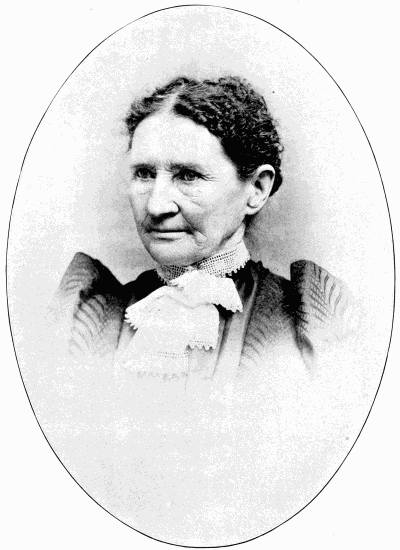
MRS. EDWARD BYRNES
Mr. Byrnes was born in Ireland, February 2, 1833, and was a youth of but fifteen years when he bade adieu to friends and native land and sailed for the new world. For a time he was a resident of Pennsylvania, where he worked as a farm hand. While still a resident of that state he was united in marriage, in 1854, to Miss Elizabeth Estell, who is a native of Pennsylvania, and they traveled life's journey together for sixty-three years and six months, lacking ten days. They began their domestic life there and remained residents of the east until 1857, when they removed westward to Minnesota, establishing their home upon a farm. For five years they continued in that state and then crossed the plains in 1862 with team and covered wagon. Their destination was Baker county, Oregon, but after living there for about a year they made their way northward to the Walla Walla valley, where Mr. Byrnes engaged in the live stock business. Later he purchased land and to his widow he left a tract of five hundred and forty acres, constituting one of the well improved properties in Hill township, the place being located on section 34. He was a very energetic man, was never afraid of hard work and his persistency of purpose and intelligently directed effort brought to him a substantial measure of success.
Mr. and Mrs. Byrnes became the parents of the following children, four of whom still survive: John E., a resident of Gardena, Washington; Ellen, the wife of G. E. Crow of Richland, Washington; Addie E., the deceased wife of James Cummins; Albert, a stock farmer and administrator of the estate residing in Hill township, Walla Walla county; Caroline, the wife of George Accuntius of Starbuck; Allen, who was deputy under Sheriff Painter and was accidentally killed; and Winfield, deceased.
The family circle was again broken by the hand of death when on the 10th of November, 1916, Mr. Byrnes was called to the home beyond. As the architect of his own fortunes he builded wisely and well. In early life it was necessary that he practice the strictest economy in order to gain a start, but difficulties and obstacles did not discourage him and with persistent energy he worked his way upward, becoming one of the prosperous residents of Walla Walla county. His personal worth was widely attested by his many friends and he possessed a genial disposition and kindly spirit that gained for him the warm regard of all with whom he was brought in contact. His family attends the Congregational church and the hospitality of the best homes of the community is freely accorded them. For more than a half century the family has been represented in this county, the parents arriving in 1863, so that Mrs. Byrnes has long been a witness of the growth and development of this section of the state, while her memory forms a connecting link between the primitive past and the progressive present. She now has twenty-six grandchildren and forty-four great-grandchildren.
CHARLES SEELIGER.
Charles Seeliger is the owner of an excellent farm of one hundred and twenty acres on section 2, township 7 north, range 35 east, and during the period in which this place has been in his possession he has made many excellent improvements thereon, converting it into one of the model farm properties of the county. He was born on Long Island, New York, March 1, 1864, a son of August and Catherine (Tauber) Seeliger, both of whom were natives of Germany. They came to America in 1861 and settled in the state of New York, where they resided for fifteen years, and in 1876 they removed to Butler county, Iowa. Subsequently they became residents of Walla Walla county, Washington, and both passed away here.
Charles Seeliger was largely reared in Iowa, the public schools affording him his educational privileges. It was in 1888 that he came to the northwest, then a young man of twenty-four years, thinking to find good business opportunities in this section of the country. He first made his way to the city of Walla Walla and after a considerable period determined to engage in farming on his own account and in 1902 purchased the land upon which he now resides. He acquired one hundred and twenty acres, which is highly cultivated and splendidly improved. Most of the improvements have been put upon the place by Mr. Seeliger, who is a most progressive farmer and enterprising business man. His place presents a very neat and attractive appearance and constitutes one of the pleasing features of the landscape. His work is carefully performed and the results are certain by reason of the fact that his industry is guided by sound judgment.