BIOGRAPHICAL (continued 5)
Reading edition
Horace G. Hart was reared under the parental roof upon the western frontier, having been but six years of age when the family came to Washington. His education was acquired in the district schools and as early as his eighteenth year he began farming on his own account, operating his father's farm, which he continued to manage until after his father's death. In the meantime, on attaining his majority, he filed on a homestead adjoining his father's place and continued its cultivation in connection with the further development of the old homestead. Following his father's demise he came into possession of the farm on which he still resides, but has sold much of the land, retaining one hundred acres as a home. His career has been that of a very busy man. He has closely applied himself to the care and management of his property interests and he has long ranked with the leading and representative agriculturists of his section of the state.
On the 28th of March, 1881, Mr. Hart was united in marriage to Miss Ollie L. McKinzie, of Walla Walla, a daughter of Isaac McKinzie, one of the early settlers of the county. To this union have been born ten children: Myrtle A., the wife of Daniel Callahan, a farmer of this county; Carl E., of Waitsburg, Washington; Ralph H., a farmer of Walla Walla county; Lulu P., the wife of Arthur Coe, a farmer residing at Milton, Oregon; Mabel, the wife of Herbert E. Carr, of Prescott; Dorsey, a resident of Detroit, Michigan; and Mary, Lester, Loverne and Horace, Jr., all at home.
Since attaining his majority Mr. Hart has given stalwart allegiance to the republican party but has never been an aspirant for public office. He, however, allowed his name to be used on the prohibition ticket for the office of county commissioner. He has always been a staunch advocate of temperance and does everything in his power to advance the cause. He belongs to Prescott Lodge, No. 46, I. O. O. F., and to the Ancient Order of United Workmen. He and his wife are members of the Federated church at Prescott and his aid can always be counted upon to further any movement that tends to uplift the individual or advance the best interests of the community. His standards of life are high and those who know him have come to recognize the fact that his word is as good as his bond.
ALEXANDER PRICE.
Alexander Price was a most prominent and progressive farmer of Columbia county for many years and in his death the community lost one of its valued citizens. He was born in Missouri, November 3, 1847, a son of Joseph S. and Sarah (Williams) Price, the former a native of Kentucky, while the latter was born in Indiana.
Alexander Price was reared and educated in Missouri and was a youth of seventeen years when he crossed the plains, traveling with ox team and wagon after the primitive methods of the period. There were no railroads across the country at that time and with the slow-plodding oxen only a few miles could be covered every day. Thus the trip lengthened out over weeks and months but eventually they reached their destination and Mr. Price became a resident of Yamhill county, Oregon. There he secured employment as a farm hand, remaining in that state until the fall of 1870, when he came to Walla Walla county and took up a homestead nine miles southwest of Dayton. Upon that farm he lived for seven years and his labors wrought a marked transformation in the appearance of the place. His widow still owns that property, which has now become very valuable.
In 1873 Mr. Price was united in marriage to Miss Clarinda J. Anderson, a native of Missouri and a daughter of Thomas and Mary (Power) Anderson, who were natives of Indiana. They removed from that state to Missouri, where the father died in the year 1850. The mother afterward crossed the plains with her family in 1865, spending her last days in Washington. To Mr. and Mrs. Price were born seven children: George F.; Martha, at home; Celestia, the wife of James J. Edwards; Susan M.; Alice L., who has passed away; Homer E.; and Joseph W.
The death of the husband and father occurred in 1906 and he was laid to rest in Dayton cemetery, leaving a widow and six children to mourn his loss. He had been devoted to their welfare and by reason of his capable business management and wise investments, combined with indefatigable energy and industry, he was able to leave his family in very comfortable financial circumstances. Mrs. Price and her children now own more than five thousand acres of valuable wheat land in Columbia county, all of which is improved, and she also has an attractive residence in the city of Dayton, where she is able to enjoy all the comforts and many of the luxuries of life. She belongs to the Congregational church and takes an active interest in its work. In fact, she is ever ready to endorse those plans and measures which tend to uplift the individual or uphold the betterment of the community at large. For many years the Price family has lived in this section of the state, coming here long before Washington was admitted to the Union, and they are prominent not only as pioneers but in those social circles where true worth and intelligence are accepted as the passports into good society.
HON. WILLIAM FARRISH.
In the front ranks of the columns which have advanced the civilization of Washington, Hon. William Farrish has led the way to the substantial development, progress and upbuilding of Asotin county, being particularly active in the growth and progress of the district in which he still makes his home. His memory goes back to the time when the entire Pacific coast was but sparsely settled, when much of the land had not been reclaimed for purposes of civilization but remained in the primitive condition in which it came from the hand of nature. He has lived in the same house in three different counties owing to the division of the old county necessitating change of name and installation of new county governments. He has seen the forests cut, the streams bridged and the work of development carried forward and at all times has borne his part in the general advancement and improvement which has brought Asotin county to its present condition. He was born in Richibucto, province of New Brunswick, Nova Scotia, August 9, 1835, a son of William and Catherine (Smith) Farrish, who were natives of Scotland. The father was a lumberman and thus provided for his family.
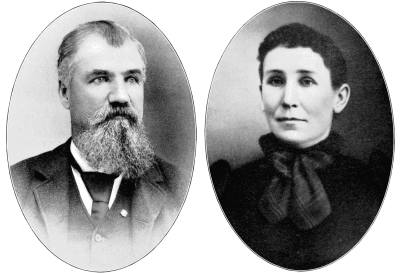
MR. AND MRS. WILLIAM FARRISH
Hon. William Farrish was the second in order of birth in a family of three sons and three daughters, of whom only three are now living. He acquired his early education in the paid schools of New Brunswick, which he attended for about three years. He left home in 1853, when eighteen years of age, and made his way to Wisconsin, settling in Grand Rapids, that state, after which he worked in the lumber camps, cutting logs and sawing lumber, which was then rafted down the Mississippi and sold. Part of the time he worked for others and during a part of the time engaged in business there on his own account. He continued a resident of Wisconsin until 1878, when he removed to the west, traveling by rail to San Francisco and thence by boat up the coast and up the Columbia river until he took up his abode in Columbia county, Washington, establishing his home in that section which is now Asotin county. He made his way by stage from Walla Walla to Dayton and on to Pomeroy and to Columbia Center, where his wife's people lived. From that point he came to Asotin, where he embarked in the lumber business in connection with his father-in-law, T. G. Bean. They were thus associated in business for twenty years, on the expiration of which period Mr. Farrish purchased his partner's interest and conducted the business alone. He came to Washington territory in the spring of 1878, when there were a number of Indian uprisings occurring in various sections. There were only about twenty families living in the Anatone country at that time and there was great fear among them because of the possibility of an outbreak of Indian hostility at any time. Some of the men began to build a stockade in the hills and Mr. Farrish sent two of his men to help them cut logs and build the stockade, into which all of the families were taken. The Indians, however, did not attack them although the people were expecting an attack daily. The association which existed between Mr. Bean and Mr. Farrish was ever most harmonious and their business affairs were carefully, wisely and successfully conducted. They would haul the lumber from the mountains by team and then raft the lumber down the Snake river. They furnished the lumber for the famous Truax interests, used for the building of the big warehouses, and also the lumber for the Columbia county plank road. They had a lumberyard at Ilia, in Columbia county, now Garfield, as well as at Asotin, and sold lumber throughout old Walla Walla county. They sold the lumber for the old grist mill at Almota, the frame of which is still standing although it was erected in 1878. After coming to Washington, Mr. Farrish lived in the timber for about five years. Later he removed his home on the ranch, where he remained for about fifteen years, when his residence was destroyed by fire. He then took up his abode in the town, where he had another home that had been erected several years before. He has always been actively identified with the lumber interests during the period of his residence in Washington and has done much to develop the lumber resources of this section of the country and has thus added materially to the wealth, development and progress of the state. He owns a ranch of eight hundred acres, half of which is under cultivation and is now being managed by his son, Harry H.
Mr. Farrish was united in marriage to Miss Content V. Bean, who was born April 14, 1847, in Union county, Wisconsin, a daughter of Mr. and Mrs. T. G. Bean, who were pioneers of Washington. On removing westward from Wisconsin they settled for a time on the Walla Walla river, where the father conducted a shingle mill. The marriage of Mr, and Mrs. Farrish was celebrated in Plover, Wisconsin, on the 31st of March, 1869, and to them were born seven children: William Thomas, born in Port Edwards, Wisconsin, February 14, 1870, and now a resident of Walla Walla, married Georgia Bradley and to them were born four children. Frank A., born in Port Edwards, Wisconsin, December 16, 1873, is now a resident of Anatone and operates the sawmill there. He married Nellie Smelcer and to them were born three children who are living and one who died in infancy. Harry H., born in Port Edwards, Wisconsin, April 16, 1876, and now ably conducting the home ranch, married Carrie Evans and they have two children: Gervais, who died in infancy; and Colin. The younger children of this family were all born in the same house although in different counties, owing to the various divisions which were made in the counties at that period. Arthur, who was born in Columbia county July 7, 1878, is now conducting his father's interests in the lumber business and lives at home. Grace was born in Columbia county June 25, 1880, and is the wife of George N. Ausman, a prominent rancher of Asotin county and a son of one of the early and honored pioneer settlers mentioned elsewhere in this work. They have six children. Robert Bruce was born July 14, 1883, and now occupies a homestead ten miles from the town of Asotin, in Asotin county. He married Maud Trent and they have become the parents of two daughters. Edith, born August 8, 1886, in Asotin county, is the wife of E. R. Downen, who served two terms as county treasurer and is now county assessor, and they have two sons. The wife and mother passed away in Asotin, November 14, 1906, and her death was the occasion of deep and widespread regret, for she had endeared herself to many with whom she had been brought into contact. She was a consistent member of the Methodist church, to which Mr. Farrish also belongs.
In politics he is a staunch republican and represented his district in the state legislature in the first, second and third sessions after Washington was admitted to the Union. He was made a Mason in Grand Rapids, Wisconsin, in 1852 and holds membership in the Royal Arch Chapter in Lewiston. He is the only living charter member of the Independent Order of Odd Fellows at Anatone.
FREDERICK J. FLEISCHER.
Frederick J. Fleischer occupies a central place on the stage of business and political activity in Prescott. Important public and private interests have been controlled by him to the benefit of the public and he well deserves the position of leadership which is accorded him. He is vice president and the cashier of the First State Bank of Prescott and is now serving as mayor of the city. He was born in Madison, Wisconsin, on the 16th of May, 1871, and is a son of John A. and Elizabeth (Miller) Fleischer. His paternal grandfather, Knute J. Fleischer, was of German descent on his father's side, although of Norwegian birth, and he came to the United States as Norwegian consul.
John A. Fleischer, father of Frederick J. Fleischer, was born in 1846 and was but five years of age when brought by his parents to the new world, so that he was reared in Madison, Wisconsin, where the family home was established. He was a youth of seventeen when, in response to the call of the country for troops to service in the Civil war, he enlisted in a Wisconsin regiment and through the following two years rose to the rank of second lieutenant. The war having ended, he was then honorably discharged and returned to Madison, Wisconsin, where he was united in marriage to Miss Elizabeth Miller, a native of that city, the wedding being there celebrated in 1868. They began their domestic life in Madison, where they continued to reside until 1872, and then removed to Pelican Rapids, in Otter Tail county, Minnesota, where the father secured a homestead and engaged in farming for thirty-four years, being thus ranked for more than a third of a century with the representative and honored residents of that part of that state. In 1906 he came west and settled first in Lewiston, Idaho, where he remained for five years, and after a year or more spent in Seattle and in Portland he came to Prescott, Washington, where he has since resided. He is now living retired, enjoying the fruits of his former toil, for his years of indefatigable industry and perseverance have brought to him a substantial competence that enables him to rest from further labor.
Frederick J. Fleischer, whose name introduces this review, was reared upon the home farm in Ottertail county, Minnesota, with the usual experiences of the farmbred boy. He supplemented his public school training by a business course received in Dixon, Illinois, and until his twenty-seventh year remained upon the home farm, assisting his father in its cultivation through the summer months, while in the winter seasons he engaged in teaching. In 1898 he accepted a position as bookkeeper in the J. P. Wallace State Bank of Pelican Rapids and three years later he became one of the stockholders in the bank and was made a member of its board of directors. He was also elected cashier of the bank, in which position he continued to serve until 1906, when he sold his interest in that institution and came to the west with his father, making his way to Lewiston, Idaho. On the 1st of January, 1907, he went to Moscow, Idaho, to accept the cashiership of the Moscow State Bank. During the following year the bank changed hands and in January, 1908, Mr. Fleischer went to Spokane, Washington, where he resided until the 1st of August of that year, when he came to Prescott. On the 1st of January following he purchased stock in the First State Bank and assumed the cashiership. This bank had passed through some severe financial reverses and the task of rebuilding it devolved upon Mr. Fleischer. How well this task has been performed is told in the present condition of the bank's affairs. When he took charge the deposits amounted to about thirty thousand dollars. Today and for several years past the deposits have averaged about one hundred and fifty thousand dollars and the affairs of the bank are in splendid condition in every way. Mr. Fleischer brought to his work long experience, keen sagacity and notably sound discrimination and his close application and careful management have brought most satisfactory results.
On the 26th of June, 1901, Mr. Fleischer was united in marriage to Miss Charlotte G. Hicks, of Milnor, North Dakota, and to them have been four children, of whom three are living, Ernestine Lois, Frederick J. and Hugh Warren.
Mr. Fleischer is a republican but not a narrow partisan. On the contrary he is a man of broad and liberal views, but is unfaltering in his allegiance to a principle in which he firmly believes. He has served as a delegate to the republican state conventions of Minnesota on two different occasions and he was city treasurer of Pelican Rapids for a number of years. Since coming to Prescott he has also been called upon to fill positions of public honor and trust by his fellow citizens, who recognized his splendid ability as a business man and desired that the city might benefit by that ability. He was made a member of the city council, in which he served for a number of years, and for two years he has been mayor of Prescott. His administration is businesslike and progressive. It has resulted in bringing about various improvements and while he avoids all useless expenditure he also equally avoids that retrenchment which blocks public progress. In a word his sound judgment discriminates between the essential and the non-essential in regard to municipal affairs just as surely as it does in relation to the interests of the bank, which has grown so steadily under his direction.
Mr. Fleischer is well known in Masonic circles, holding membership in Waitsburg Lodge, No. 16, F. & A. M.; Walla Walla Chapter, No. 1, R. A. M.; and Washington Commandery, No. 1, K. T. He is also identified with El Katif Temple, A. A. O. N. M. S., of Spokane, and he belongs to Whetstone Lodge, No. 157, K. P., of Prescott, in which latter he has held all the chairs. He and his wife are members of the Order of the Eastern Star at Waitsburg and both are actively identified with the Federated church of Prescott, taking an active and helpful interest in all that pertains to the improvement and upbuilding of their city along material, intellectual, social and moral lines. Without invidious distinction Mr. Fleischer may well be termed one of the foremost men of Prescott, loyal to every interest of general benefit, while his course in private affairs marks him as a man of high honor.
JOSEPHUS M. MOORE.
Josephus M. Moore came to Walla Walla county in 1870 and during the many years of his residence here became widely and favorably known. He was born in Rock Island, Illinois, September 17, 1838, a son of Amos L. and Mary Moore, both of whom were natives of Ohio, whence they removed to Illinois when the Prairie state was still but thinly settled. Still later they removed to a new frontier, coming to Walla Walla county, Washington in 1868, and here both passed away. To them were born five children.
Josephus M. Moore received his education in the public schools of Illinois and remained with his parents during his boyhood and youth. He continued to reside in the middle west until 1870, when he decided to try his fortune in the Pacific coast country, concerning which he had heard excellent reports. He arrived in Old Walla Walla county, Washington, in July, 1870, and turned his attention to farming in what is now Garfield county. This occupation claimed his time and energies throughout his remaining days. He was energetic and resolute and overcame all obstacles that lay between him and success, gaining a substantial competence.
Mr. Moore was married in Ohio to Miss Louisa Prescott, by whom he had one daughter, Mary, now the wife of Walter Preston, of Portland, Oregon. On coming to Washington Mr. Moore was accompanied by his wife and daughter, and Mrs. Moore died here some years later. In 1894 Mr. Moore was again married, his second union being with Miss Eva Abbott, a native of Ohio. Her parents, S. J. and Chloe (Russell) Abbott, were born respectively in Vermont and Ohio, but in 1862 made the long journey across the great plains to California, where they remained until 1880. In that year they came to Walla Walla county, Washington, and both are still living here, the father at the age of eighty-three years and the mother at the age of eighty. Both are still keen of mind and active of body and they are one of the most highly esteemed couples in the county. Four of the seven children born to them survive. To Mr. and Mrs. Moore was born a son, Amos A., who was graduated from the military academy at Staunton, Virginia; later was a student in the State University of Washington, at Seattle, and is now a student at Walla Walla Business College.
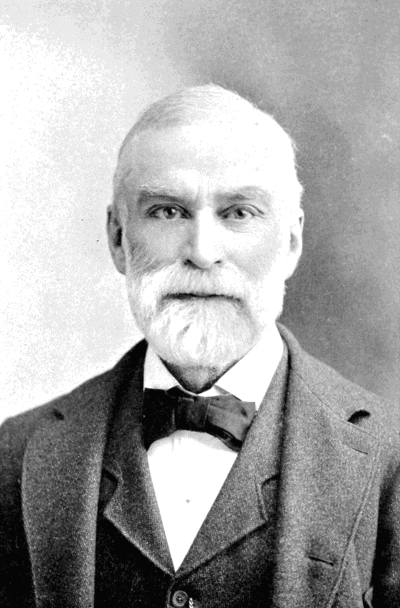
JOSEPHUS M. MOORE
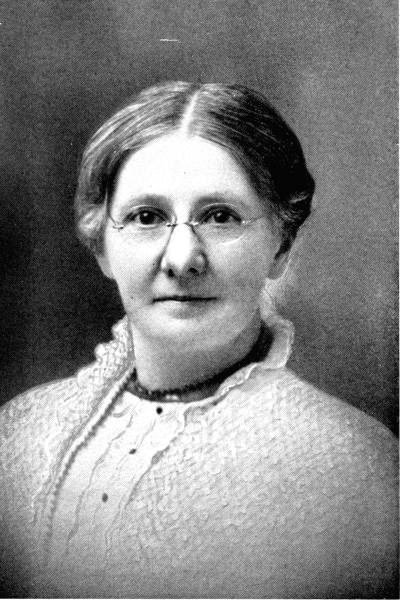
MRS. JOSEPHUS M. MOORE
Mr. Moore was a stanch advocate of republican principles and served with much satisfaction to his constituents in a number of local offices. The principles of conduct which guided his life were found in the teachings of the Masonic order, to which he belonged. His death occurred September 24, 1901, and he was buried in Mountain View cemetery. He was a man of many admirable traits and those who knew him well still cherish his memory. Mrs. Moore makes her home in the city of Walla Walla, where she owns a fine residence situated on five acres of ground.
ROBERT O. SANDERS.
Robert O. Sanders is living retired in Waitsburg, although for a long period he was actively identified with farming interests in Walla Walla County, and his capable management of his business affairs brought to him the measure of success which he is now enjoying. He was born in Jefferson county, Illinois, October 8, 1852, and is a son of Jacob and Mary (Breeze) Sanders. The father was a native of Indiana, while the mother's birth occurred in Illinois, where for many years they resided and where both passed away. In their family were seven children, four of whom are yet living.
Robert O. Sanders spent the period of his boyhood and youth upon the home farm in Illinois with the usual experiences that fall to the lot of the lad who divides his time between the duties of the schoolroom, the pleasures of the playground and the work of the fields. When he was sixteen years of age his father died and he continued to assist his mother until he attained his majority, when he began farming on his own account. In 1888 he removed to Walla Walla, since which time he has resided in the northwest, his connection with this section of the country now covering a period of almost thirty years. He began farming here and first rented land and while thus engaged he carefully saved his earnings until his industry and economy had brought him sufficient capital to enable him to purchase a farm. That he has prospered as the years have gone by is indicated in the fact that he now owns three hundred and twenty acres which he has greatly improved. It is wheat land and is cultivated according to the most progressive and scientific methods of crop production. His work has always been carefully performed and his industry and diligence have brought substantial results. He continued personally to cultivate his place until 1902, when he retired from active farm life and removed to Waitsburg, where he is now living.
On January 29, 1874, Mr. Sanders was married to Miss Eva Harned, a native of Indiana, and they became the parents of seven children: Addie, the wife of O. W. Abbey; Maud, who married J. W. Cram; Samuel C., living in Oregon; Alva H., who occupies his father's farm; and three who died in infancy.
Fraternally Mr. Sanders is connected with the Independent Order of Odd Fellows, belonging to Touchet Lodge, No. 5, while both he and his wife are connected with the Rebekahs. In politics he is a republican, having always been a firm believer in the principles of the party. He has served as school director for ten years and it is his earnest desire that excellent educational advantages shall be given to the youth of this section of the state. He and his wife are consistent members of the Christian church and have guided their lives according to its teachings. They are influenced by high principles of conduct and their genuine worth has commended them to the friendship and regard of all with whom they have been associated. The record of Mr. Sanders should serve to inspire and encourage others, showing what may be accomplished when one has the will to dare and to do, for he started out in life empty-handed and whatever success he has achieved or enjoyed has been won through his persistency of purpose, his unremitting diligence and his business integrity.
EMERY FLATHERS.
Emery Flathers, who followed farming on section 31, township 10 north, range 36 east, is a representative of one of the old pioneer families of Walla Walla county. From an early period in the development in this section of the state the family has taken an active part in the work of general progress and improvement and is particularly well and favorably known in connection with the agricultural development of this section. Emery Flathers was born on the old homestead farm adjoining the town of Prescott, March 27, 1872, a son of Benjamin F. and Melinda S. (McQuown) Flathers. The father was a native of Louisville, Kentucky, while the mother was a native of Virginia.
Upon the old homestead Emery Flathers was reared and in the schools of Prescott he pursued his education. In 1905 he entered into partnership with his brothers, John and Charles, and for five years they were associated in farming operations. In 1910, however, Emery Flathers withdrew from the firm and since that time has rented his land and lived retired. He owns two hundred acres, constituting a valuable property, and his rental returns to him a very gratifying income.
On December 23, 1908, Mr. Flathers was married to Miss Rae E. Dunlap, a daughter of John K. Dunlap, who has passed away. Mr. and Mrs. Flathers became the parents of two children, a son and a daughter, Howard and Frances. Mrs. Flathers departed this life July 17, 1915, and her death was deeply regretted not only by her immediate family but by many friends.
Mr. Flathers is independent in politics, voting for the men and measures he considers of the best interest of all the people. He keeps well informed on the questions and issues of the day but neither seeks nor desires office. He is a prominent member of the Masonic fraternity, belonging to Waitsburg Lodge, No. 16. A. F. & A. M.; Walla Walla Chapter, No. 1, R. A. M., of Walla Walla and Washington Commandery, K. T., also of Walla Walla. He has likewise crossed the sands of the desert with the Nobles of the Mystic Shrine, being a member of El Katif Temple of Spokane. He is a substantial citizen, widely and favorably known by reason of his business ability, his loyalty in citizenship and his personal worth. For forty-five years he has been a resident of Walla Walla county, witnessing its growth and development. He has lived to see its pioneer cabins replaced by commodious and substantial residences, its wild lands converted into productive fields, its hamlets developed into thriving cities, and as the years have gone by he has ever willingly cooperated in any plan or movement for the general good.
ALFRED J. BOLTER.
Alfred J. Bolter is a retired farmer living in Dixie. For a long period he was actively and prominently connected with agricultural interests and acquired several hundred acres of valuable land, from which he derived a very gratifying annual income as a result of the care and labor which he bestowed upon the fields. Moreover, his life record shows what may be accomplished by determined effort and perseverance, for he started out empty-handed and is now the possessor of a very substantial competence which enables him to rest from further labor. He was born in Northampton, Massachusetts, in September, 1853, a son of Ziba and Christina Bolter, the former a native of Massachusetts, while the latter was born in the state of New York. They spent their entire lives in the east and there they reared their family of ten children, nine of whom are yet living.
Alfred J. Bolter passed the days of his boyhood and youth in Massachusetts and is indebted to the public school system of that state for the educational opportunities which he enjoyed. In 1875, when a young man of twenty-two years, he came to the west and first settled in Dallas, Oregon, where he remained for three years. In 1878 he removed to Walla Walla county and took up a homestead sixteen miles north of the city of Walla Walla. With characteristic energy he began its development and improvement and occupied that place for ten years, during which time his labors wrought a marked transformation in its appearance. He then disposed of that property and invested in two hundred and eighty acres near Dixie. From time to time he extended the boundaries of his farm until it now comprises seven hundred acres, all of which is improved land and returns to him a most substantial annual income. He continued actively to develop his fields until 1902, when he retired, and since that time he has rented his land, while he is enjoying a well earned rest.
Mr. Bolter was married in 1876 to Miss Elsie A. Crystal, a native of Iowa, and they have become the parents of three children: Madie, the wife of S. M. Jones, now a resident of Spokane; Maud, who is the widow of Burt Roff; and Homer, who is engaged in merchandising in California.
Mr. Bolter belongs to the Independent Order of Odd Fellows and has filled all of the chairs in Welcome Lodge, No. 117, in which he has membership. He has also been called to all of the different offices in the Knights of Pythias lodge and is true and loyal to the teaching of these societies. He and his wife are members of the Christian church and endeavor to follow closely the Golden Rule. Their lives have been well spent, fraught with good deeds and actuated by kindly purposes. Many good things are spoken of them by friends and neighbors, who have enjoyed their companionship and who recognize their sterling worth in all the relations of life.
HON. JAMES EWEN EDMISTON.
High on the roll of Washington's distinguished citizens appears the name of Hon. James Ewen Edmiston, deceased, who was for many years a resident of Dayton. His ideals of life were very high and in early manhood he displayed conspicuously the traits of character that made his career brilliantly successful. He performed all the duties that devolved upon him, however humble and however small the recompense might be, conscientiously and industriously. He gave proof of his ability to cope with intricate problems of the law and his natural industry prompted him to prepare his cases with great thoroughness and care, so that he ever entered the courts well equipped to combat any attack or position of the opposing counsel. He lives in the memory of his friends enshrined in the halo of a gracious presence and of pronounced power in the legal profession.
Mr. Edmiston was born in Washington county, Arkansas, March 29, 1849, a son of Alexander E. Edmiston, who was a native of Virginia and removed to Arkansas early in the nineteenth century. He was a veteran of the Mexican war, serving as a lieutenant in his company under Colonel Yall. A forceful man of unquestioned integrity, he won a substantial financial success and left a valuable estate to his widow and four children, of whom James E. Edmiston was the eldest. A few years prior to his death, becoming convinced that the principle of slavery was wrong, he liberated all of his bondsmen. During the Civil war the vicinity of his home was the scene of great atrocities by both northern and southern renegades. He died in the year 1858.
James E. Edmiston, when a lad of fourteen years, enlisted in 1863 in the Confederate army, in which he had five uncles fighting for the cause. After the close of hostilities he returned to his home in Arkansas and remained long enough to assist in putting the plantation again into shape. He then went to Bentonville, Arkansas, where he attended the Bentonville College for two years, and while a student there he also taught school. In 1870 he went to Omaha, Nebraska, whence he made his way to the Pacific coast. He taught school for a time in Oregon and also pursued a course in the Corvallis College, from which he received his degree in 1873.
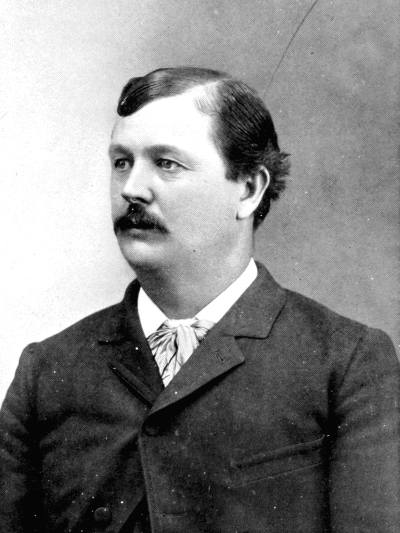
JAMES E. EDMISTON
On the 13th of March of the same year Mr. Edmiston was united in marriage to Miss Helen E. Lacey, a native of Clackamas county, Oregon, and a daughter of Lewis A. Lacey, who was of French-Huguenot stock, his ancestors having fled to the new world because of religious persecution early in the seventeenth century. The paternal grandfather of Mrs. Edmiston was an officer under Washington and Lafayette in the Revolutionary war and he lost two of his fingers in the battle of Bunker Hill. His son, Lewis A. Lacey, came to the northwest in 1852, making his way to Oregon accompanied by his wife, Leonora (Herring) Lacey, who was a native of Swansea, Wales, their marriage ceremony having been performed at Mount Morris, New York. The services were completed about fifteen minutes before they started on their westward journey to Indiana and from there they traveled with ox team and wagon to Oregon. Mr. Lacey's brother, his brother's wife and child died of mountain fever while en route and many other members of the party were buried by the side of the trail. They suffered on account of hostile Indians and the journey was a most hazardous and difficult one. On reaching the Willamette valley Mr. Lacey took up a donation claim and gave his attention to farming and stock raising, spending his remaining days upon the old homestead at Springwater in Clackamas county, where he passed away in 1899, at the notable old age of ninety-four years. His widow died on the 1st of March, 1900, at the age of seventy-one years.
Soon after their marriage Mr. and Mrs. Edmiston removed to Colfax, Washington, where for three years he was engaged in teaching school. In 1876 he took up his abode in Dayton, where for some years following he devoted his attention to teaching and then engaged in selling farm machinery. He also operated a large sawmill and was identified with various other business interests which have contributed to the material development and progress of this section of the state. Mr. Edmiston had been educated with a view to entering the ministry but subsequently turned his attention to law and pursued his reading under the preceptorship of John Y. Ostrander. In 1885 he was admitted to the bar and entered upon the practice of his profession, becoming one of the prominent lawyers of Columbia county. He then continued in active practice until a short time prior to his death, which occurred on the 8th of May, 1900. In his law practice he was long associated with Judge C. F. Miller and their friendship relations were very close. Their practice was extensive and of an important character. Mr. Edmiston was remarkable among lawyers for the wide research and provident care with which he prepared his cases. At no time was his reading ever confined to the limitations of the questions at issue. It went beyond and compassed every contingency and provided not alone for the expected but also for the unexpected, which happens in the courts quite as frequently as out of them. His legal learning, his analytical mind, the readiness with which he grasped the points in an argument all combined to make him one of the capable attorneys at the bar of Columbia county and the public and the profession acknowledged him the peer of the ablest regarding him as a jurist of exceptionally rare ability.
Aside from his professional connections Mr. Edmiston figured very prominently in the public life of the community. At one time he served as superintendent of schools of Columbia county. He first came prominently into public notice when elected a member of the upper house of the Washington territorial legislature and for many years he was a member of the state central committee of the democratic party. In 1894 he was offered the nomination for governor but refused to become a candidate. While undoubtedly not without that laudable ambition which is so valuable as an incentive to public service, he nevertheless regarded the pursuits of private life as in themselves abundantly worthy of his best efforts and with remarkable fidelity he labored for the interests of his clients. It is said that he never lost a case which he appealed to the supreme court. In 1886 he was prosecuting attorney of Columbia county.
Mr. Edmiston was considered the highest authority on Masonic jurisprudence in the state and was chairman of that committee in the grand lodge for ten years. He was past grand master of the state of Washington and past grand patron of the Eastern Star. There was a close relationship between him and Dr. Van Patten, who was his family physician from 1884 until his death and has continued as such to Mrs. Edmiston. They were the best of friends and while not associated together in business often consulted one another on business matters. Mr. Edmiston was leader of the choir in the Presbyterian church for many years and in this work was also associated with the Doctor and together they often took vacation trips. It was the earnest desire of Mr. Edmiston that Dr. Van Patten allow himself to be put in line for higher Masonic honors, which eventually resulted in the latter becoming grand junior warden in 1901 and grand master in 1904.
For a long period Mr. Edmiston was collecting data for a history of southeastern Washington but died before the completion of the work. He was president of the board of regents of the Washington State College at Pullman and on the day of his burial the college was closed in respect to his memory. Every business house and the schools of Dayton were also closed and the day was given over to sincere mourning by the entire community. He was buried with Masonic honors and the Grand Lodge of Washington took charge of the funeral services, the Hon. Levi Ankeny, past grand master of the state, officiating. The bar of Dayton passed appropriate resolutions and every mark of respect that could be shown, both in a public and a private way, was evidenced. He was a lifelong member of the Presbyterian church and was a teacher in its Sunday school for many years. Much more might be said in eulogy of this man, who was loved by all who knew him and whose influence was always for the betterment and uplift of mankind. His memory is enshrined in the hearts of those who knew him and remains as a blessed benediction to those who were his associates while he was still an active factor in the world's work. Mrs. Edmiston still lives in the old home in Dayton. She is a past grand matron of the Order of the Eastern Star and is now in charge of the Dayton Branch of the Red Cross, in which work she is very active, giving freely of her time and energies as well as her means and efforts to improve the conditions under which the young men of the country must serve in a military capacity. She was formerly president of the Monday Reading Club and has long been foremost in social circles and in welfare work in the northwest. Both Mr. and Mrs. Edmiston belong to that class who shed around them much of the sunshine of life.
JULES De RUWE.
Jules De Ruwe is the owner of one of the best improved farms of his section of the country, having an extensive acreage near Turner, Washington. He was born in Belgium, July 17, 1885, and is a son of Peter and Julia De Ruwe, who were natives of that land. Educated in Belgium, Jules De Ruwe acquired a good education there and in 1905, when a young man of twenty years, crossed the Atlantic to the new world, making his way direct to Washington, where he became identified with the sheep industry, conducting business on a large scale in connection with his brothers, prominently known as leading sheep men of this section of the state. They finally dissolved partnership, however, and each is now conducting his business interests individually. In the fall of 1917 Jules De Ruwe purchased his present ranch, comprising eleven hundred acres of land twelve miles north of Dayton on the Tucanon river. This is one of the best improved ranches in his part of the county and Mr. De Ruwe is now equipping it with a thoroughly modern set of buildings, in which he is installing electric light and running water. In fact, he is adding every modern equipment and comfort and his farm work is being conducted along progressive and scientific lines. His sheep are of the Rambouillet breed and are among the best to be found in the state of Washington.
On the 17th of October, 1917, Mr. De Ruwe was united in marriage to Miss Mabel Davidson, a daughter of Daniel and Ethel Davidson, of Starbuck, Washington, who were also ranch people. Mr. De Ruwe is a member of the Catholic church, while his wife holds membership in the Christian church. While he has been on this side the Atlantic for only a few years he is thoroughly American in spirit and interests, having a strong attachment for the government and the institutions of the new world. It often seems that native born citizens come by the privileges of American life too easily to appreciate them in the fullest degree. At least some of those who have sacrificed and suffered to obtain them value their blessings more highly than those to whom they come as a matter of course. Mr. De Ruwe is among the loyal residents of the northwest and in the utilization of the opportunities which have come to him he has made for himself a very creditable position among the successful business men of Washington.
F. E. MOJONNIER.
F. E. Mojonnier, a prominent and representative business man of Walla Walla county, is conducting his interests under the name of the Walla Walla Hothouse Vegetable Company. He is engaged in growing and wholesale shipping of hothouse and garden vegetables. He established this business in 1909, with no previous experience along this line to aid him, but he bent every energy toward acquainting himself with every phase of the business, studying the methods of the most successful houses of similar character in the east, and through this method and through study he has developed an enterprise of extensive and profitable proportions. He was born at Highland, Madison county, Illinois, on the 4th of October, 1874, and is a son of Samuel and Clara (Robert) Mojonnier, both of whom were natives of Switzerland and were of French descent. They came to the United States in childhood with their respective parents, the families establishing their homes in Madison county, Illinois. The father was a carpenter by trade but gave his attention largely to agricultural pursuits in Illinois. In 1886 he removed with his family to Los Angeles, California, where he engaged in carpentering up to the time of his death, which occurred about 1892. His widow is still living in that city.
F. E. Mojonnier was reared at home, acquiring his education in the public and high schools of Los Angeles. He was a youth of but twelve years when the family removed to California. After his textbooks were put aside he worked for some time in a grocery store in Los Angeles and in April, 1895, came to Walla Walla, Washington, where he entered the employ of the Walla Walla Produce Company. In 1900 he became a stockholder of the company and was identified with the conduct of the business until 1914, when he sold his interest in order to give his sole attention to his present business, which he had established in 1909. At that time he had no practical experience to assist him in its conduct, but he closely applied himself to the work and visited the largest plants of similar nature throughout the east, and since then he has built up one of the most modern establishments of the kind in the country. He has three acres under glass and he is producing high grade vegetables and, in fact, he is known as one of the leading hothouse vegetable growers in the northwest. His business has been thoroughly systematized, carefully managed and wisely conducted and his patronage has grown to extensive and gratifying proportions.
On the 1st of January, 1900, Mr. Mojonnier was united in marriage to Miss Mathilde Delepine, of Walla Walla, who was a student in the State College at Pullman at the time of her marriage. To them have been born three children, Claire, Harold and Elaine.
Mr. Mojonnier gives his political allegiance to the democratic party and keeps well informed on the questions and issues of the day, but has never been an aspirant for office. He is regarded as one of the representative citizens of Walla Walla county, actuated by a spirit of enterprise and progress in all that he does. Well defined plans and purposes have carried him forward and each step in his career has brought him a broader outlook and wider opportunities. He has ever been actuated by a laudable ambition that has caused him to reach out along still broader lines and his position in business circles is now a most creditable and enviable one.
HON. FREDERICK STINE.
Hon. Frederick Stine, who passed away in Walla Walla in 1909, had been a resident of the city for more than four decades and was most widely and favorably known. He was one of the early settlers of his section of the state and was largely instrumental in promoting the development and upbuilding of his city. He thus gained a wide acquaintance and was esteemed by all who knew him. He was a recognized leader in many lines and his strength of character and excellent judgment were features that brought beneficial results. A man of action rather than of theory, whenever opportunity called he made ready response.
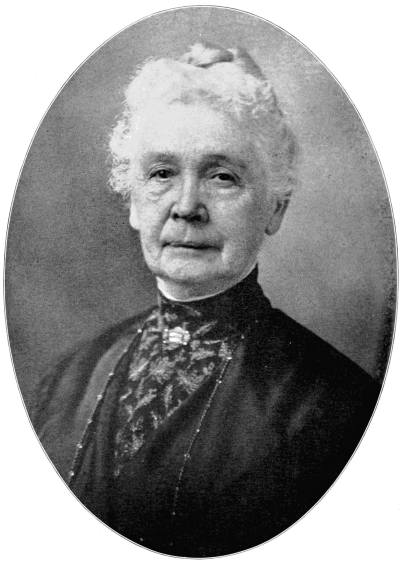
MRS. FREDERICK STINE
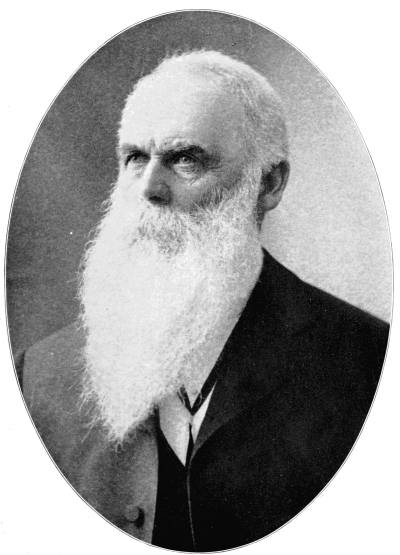
FREDERICK STINE
Mr. Stine was born in Union county, Pennsylvania, November 24, 1825. His father was a blacksmith by trade and in 1839 removed with his family from the Keystone state to Greene county, Ohio, settling in Fairfield, where he engaged in farming and also followed blacksmithing. With those pursuits Frederick Stine became thoroughly familiar, as he assisted his father in the work of the fields or of the smithy. In the spring of 1852, in company with his brothers, John and William, he started for the Pacific coast. Their departure was a great event to the family, which numbered eight sons and six daughters. Travel at that time to the western coast was by means of wagon or by way of water route and many months elapsed ere the journey was completed. It was indeed a serious undertaking, much more difficult than a trip around the world at the present time. The three brothers left St. Louis, Missouri, on the 1st of May, 1852, and on the 2d of July arrived in Sacramento, California. This was a record trip at the time. The train with which they traveled numbered twenty-six men, of whom Frederick Stine was chosen captain. The three brothers went to Marysville, California, where they began work, but after a few days Frederick Stine was prostrated with typhoid fever and for sixty days had a great struggle for his life. Eventually, however, the disease reached its crisis and it was said that he would live. When he recovered he began business for himself, but in 1854 met with losses through fire and the following year he removed to Yreka, California, where he concentrated his efforts and attention upon farming and blacksmithing, thus returning to the occupations to which he had been reared.
Selling his Yreka property on the 6th of February, 1862, Mr. Stine then started for the north and on the 12th of May arrived in Walla Walla, where he afterward made his home until called to his final rest. Within four days of his arrival he had opened a place of business on Main street and as the years passed he prospered. On the 3d of November, 1863, he went by way of Portland to San Francisco, traveling by stage to the latter city and thence by boat and the Panama route to Ohio on a visit to his family and his old home. On the 18th of April, 1864, he started again for the Pacific coast and this time made the trip by stage to Walla Walla, where he resumed blacksmithing and wagon making, maintaining a first class shop of that kind until September 1, 1873, at which date he retired from business. He had spent about a third of a century at his trade and was always industrious and conscientious in his work. In 1872 he erected the Stine House, which was the first brick hotel in Walla Walla, and in 1880 he purchased a farm of five hundred and sixty acres in Umatilla county, Oregon, about six miles south of Walla Walla. This he extensively improved and cultivated and to his holdings he added from time to time as his financial resources increased until he held in that vicinity over nineteen hundred acres of choice land. In 1905 his wheat crop was thirty-seven thousand bushels, raised upon one-half of his land, the other half being summer fallowed. His business affairs were wisely and carefully controlled, his investments most judiciously made and his enterprise brought to him a very substantial measure of success. The most envious could not grudge him his prosperity, so honorably was it gained, so worthily used.
In 1870, in Walla Walla, Mr. Stine was united in marriage to Mrs. Mary (Megrew) Silverthorn, a widow, and to them was born a daughter, Elizabeth, who became the wife of John Casper, of Walla Walla. Mrs. Stine was born near Uniontown, Pennsylvania, in 1836, a daughter of Archibald Megrew. In 1836, when Mrs. Stine was three months old, the father removed with his family to Ohio and when she was a little maiden of thirteen she lost her mother. In 1852 the father removed with the children to Iowa and there his last days were passed. It was in Iowa that Mary Megrew became the wife of John Silverthorn and they, with others, crossed the plains in 1864, making the trip with mules and horses and spending three months en route. They settled in Walla Walla, where the death of Mr. Silverthorn later occurred. Mrs. Stine now resides in a fine home on Catherine street, where for more than ten years she has lived.
Throughout the period of his residence in Walla Walla, Mr. Stine was an active worker for the upbuilding and development of the city. In politics he was an active democrat and in 1869 was chosen to represent his district in the lower house of the territorial legislature, while in 1873 he was elected a member of the senate. He made his presence felt there by his earnest support of all well devised plans and measures for the improvement of the commonwealth. His keen judgment was of great benefit in many instances. In 1865 he was chosen one of the members of the city council of Walla Walla and during the following year was made chairman of the council and thereafter was reelected many times. He exercised his official prerogatives in support of various plans and measures for the general good and his work was of great worth to the city. Many important measures for the benefit of Walla Walla originated with him and were carried forward to successful completion because of his endorsement and labor. In 1868 he succeeded in having established a Masonic lodge at Walla Walla and for ten years thereafter acted as its master. He was also a member of the chapter and was always an earnest worker and he labored untiringly for the advancement of Masonic interests in this locality. When death called him in 1909 he had been a resident of Walla Walla for more than forty-five years. His personal qualities were such as won for him the warm regard of many and there was sincere grief felt throughout the city at his passing.
WILLIAM THOMAS PETTIJOHN.
William Thomas Pettijohn has since 1905 resided upon his present farm on section 2, township 9 north, range 35 east, in Walla Walla county, and here has six hundred and fifty acres of valuable land, constituting one of the fine farms of this section of the state. Long before, however, he had become a resident of the county and in fact was one of the earliest settlers. He arrived here in 1859, when but five years of age, having been brought to Washington by his parents.
Mr. Pettijohn was born in Linn county, Oregon, July 26, 1854, a son of Jonathan and Hannah (Warner) Pettijohn. The father was a native of Ohio, while the mother's birth occurred in Indiana. In 1850 Jonathan Pettijohn crossed the plains to California and after spending a year or more in the gold fields of that state he went to Oregon, settling in Linn county, where he was employed for some time in the sawmills and also worked at barn building. He became familiar with all of the hardships and privations incident to life on the frontier. He had encountered also many difficulties while crossing the plains. The cattle with which the party started on leaving the east died en route and much of the distance during the latter part of the trip, their provisions having run short, they lived for days upon flour and water. Mr. Pettijohn traveled much of the distance on foot. After living for a number of years in Oregon he sold his interests there in 1859 and came to Walla Walla county. He first visited the county in the summer of that year, bringing with him some cattle, after which he returned for his family. He entered a homestead in townships 9 and 10, range 35 east, Walla Walla county, and thereon built a log cabin. His remaining years were spent in that immediate neighborhood and he was very successful. While he experienced many of the difficulties incident to the settlement of the frontier prosperity attended him as the years went by and he acquired three thousand acres of valuable land. From 1860 until 1866 or 1867 he was engaged in freighting with ox teams to the Idaho mines and later he gave his attention most successfully to the raising of cattle and horses. His business affairs were most wisely and successfully managed and he became the possessor of a very handsome competence, passing away June 13, 1913. His wife had crossed the plains with her parents in 1852, at which time the family home was established in Linn county, Oregon, where her marriage to Mr. Pettijohn afterward occurred. She passed away in January, 1893, and in the death of these two worthy people Walla Walla county lost an honored pioneer couple. They were respected and esteemed by all who knew them and most of all by those who knew them best, a fact indicative of their well spent lives.
William T. Pettijohn spent his youthful days upon the old homestead and acquired a district school education. In 1877 he went to Idaho, where he used both his preemption and homestead rights in the Potlach country, filing the first homestead right in that section. There he remained actively identified with farming and stock raising until 1905, when he left Idaho and returned to Walla Walla county, taking up his abode on his present home farm, which now comprises six hundred and fifty acres of rich and productive land. In addition he owns five hundred and sixty acres in another township. His landed possessions are thus extensive and he is actively and prominently identified with the farming interests of Walla Walla county. His business affairs are carefully directed and wisely managed. He utilizes the most modern methods carrying on the farm work and upon his place he has put many improvements which rank his farm with one of the model farm properties of the twentieth century in this section of the state.
On the 12th of December, 1883, Mr. Pettijohn was united in marriage to Miss Ella Humphrey, of Idaho, and to them have been born five children, four of whom are still living, namely: Ada, the wife of Frank Davis, who is operating one of the farms belonging to his father-in-law; Jonathan N., who is now operating the home farm; Ollie, the wife of Robert L. Temple, of Prescott, Washington; and Harry Elbert, who is in the United States army. For some, time the two sons operated the home farm together and proved progressive young business men by their capable direction of the interests which have come under their charge.
In politics Mr. Pettijohn has always followed an independent course but has never taken an active part in public affairs. He has always preferred to concentrate his time, efforts and attention upon his private business interests and by reason of his diligence and determination, his perseverance and his honesty he has won a very substantial measure of success. He is justly numbered among the honored pioneers of the northwest, having for fifty-seven years lived in this section of the country. Born in Oregon, reared in Washington and a resident for a time of Idaho, there is no feature of the development of the northwest with which he is not familiar and he has lived to witness a remarkable transformation, for the country has grown so rapidly that the story of its development seems almost magical. The result, however, is due to the earnest labors, the persistency of purpose and the indefatigable energy of such men as Mr. Pettijohn, who, unafraid of the hardships and privations of pioneer life, has utilized the natural resources of the country and has thus placed the wealth upon a par with the older east.
COLONEL WILLIAM HAVENS MILLER.
Colonel William Havens Miller, whose life was spent in the military service of his country, was under all circumstances an officer and a gentleman. He was born at Tuscaloosa, Alabama, January 31, 1849, and on the 14th of June, 1872, was graduated from the United States Military Academy at West Point and was assigned to duty with the First Cavalry. While with that regiment he participated in all the Indian wars in the Rocky mountains and on the Pacific coast and won frequent promotion in recognition of his efficiency and gallantry. Among the important campaigns in which he took part were: the Modoc war, which lasted from November, 1872, until June, 1873; the Nez Percé war, from June to October, 1877; the Bannock campaign, from June to September, 1878; and a minor engagement at Meacham's, in the Blue mountains of Oregon, in August, 1878. He was promoted to first lieutenant in the First Cavalry, March 4, 1879. From May, 1877, to March, 1887, he served as quartermaster in the field and in garrison and during the greater part of that time, or from August 15, 1878, to March 31, 1887, he was regimental quartermaster. On the 28th of February, 1890, he was brevetted first lieutenant for "gallant services in action against Indians at the Lava Beds, California, April 17, 1873, and gallant and meritorious conduct during the Modoc war." In 1896-7 he was employed in the designing and building of Fort George Wright, a military post at Spokane, Washington, being in charge of the work until December, 1898, at which time the post was ready for one battalion of infantry. During the greater part of 1899 and 1900 he was in Cuba and built the four company military post at Paso Caballos at the mouth of the harbor of Cienfuegos, Cuba, and finished the cavalry post, Hamilton barracks, at Matanzas, Cuba. Colonel Miller was in campaigns and garrisons in the northwest until September, 1890, being stationed a part of the time in northern California, Oregon, Washington, Nevada and Montana, and was then appointed captain and assistant quartermaster in the United States Army and was on duty as follows: Quartermaster at United States Military Academy, West Point, New York, from October, 1890, to November, 1894; quartermaster at Fort Riley, Kansas, from November, 1894, until July, 1896; constructing quartermaster at Spokane, Washington, from July, 1896, to December, 1898; appointed major and chief quartermaster in United States Volunteers, August 15, 1898; division chief quartermaster at Southern Camp; Anniston, Alabama, from December, 1898, to March, 1899; chief quartermaster, Departments of Santa Clara and Matanzas at Cienfuegos and Matanzas, Cuba, from March, 1899, to July, 1900; depot quartermaster, Boston, Massachusetts, from October, 1900, to August, 1901; depot and chief quartermaster, Department of the Lakes, Chicago, Illinois, front August, 1901, to August, 1905; in charge of the general depot of the quartermaster's department, New York city, from November 20, 1905, to May, 1907; chief quartermaster, Philippine Division, Manila, from September 2, 1907, to June 14, 1909; quartermaster at Seattle, Washington, and in charge of the United States transport service on Puget Sound from July, 1909, until retired at the age of sixty-four years, January 31, 1913. He was promoted to major and quartermaster, United States Army, August 12, 1900; to lieutenant colonel and deputy quartermaster general, August 15, 1903; and colonel and assistant quartermaster general, October 31, 1909. The title was changed to colonel, Quartermaster Corps, United States Army, by act of congress approved August 24, 1912. On the 5th of July, 1906, he was especially commended to the secretary of war by the inspector general of the army for efficiency. All work that was given to him to do was well done, for, holding himself to the strictest standards, he refused to accept anything less than the best work from those under him, but at the same time he was scrupulously just and held the respect of his men. He upheld the high traditions of the American army, was a constant student of military science and kept in close touch with the change in methods necessitated by new conditions of warfare. To him the army was a profession that demands all a man has to give but that makes abundant recompense in the knowledge of worthy service rendered the nation. He had the capacity for deep friendship characteristic of men of unusual strength of character and the place which he held in the esteem and affection of those who knew him intimately is indicated in the following tribute to his memory by his friend, G. P. Monell.
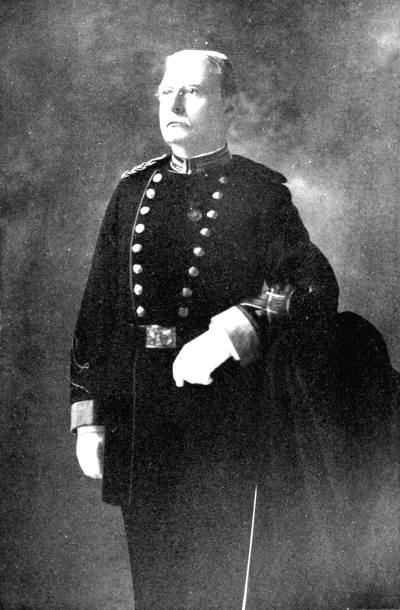
COLONEL WILLIAM H. MILLER
"'He was my friend, faithful and just, to me." This Shakepearean saying of Marcus Antonius over the body of dead Caesar, best describes the dominant characteristic of Colonel Miller's life. Faithful and just, tender and true, might well be inscribed upon the stone that marks the spot where he sleeps till the final reveille. These qualities, covering all that is knightly, all that is noble, went to make up the daily routine of the life he lived for the glory and honor of his country. No promise that he ever made, however lightly, was too small to be faithfully remembered and religiously fulfilled. No fault that he observed was too great or too trivial to meet with less or more than exact justice. Officially he had no friends; those who gave best service were best rewarded, regardless of his personal predilections. Looking back over the past four years of close and intimate friendship, they seem to reflect back his past and sound out his whole life as embodied living truth; even in his lightest moods he scorned exaggeration as beneath the dignity of his manhood. Deeply learned in all the intricate business of army life and regulations, quick to see the right and wrong of any question, recognizing no middle course, his decisions were instant and final and his reasons unassailable. Officially he was a dignified, gallant and knightly soldier. In private life he represented the highest type of American gentleman. Hospitable, kindly, witty, he made those who visited his home feel that they belonged 'right there' and his friends were part of himself. His character, always straightforward and intensely honest, presented so many sides and all so simple and unassuming that those who knew him best loved him most.
Colonel Miller was married in Walla Walla, November 20, 1879, to Miss Anna Abbott, a daughter of John F. Abbott, who was a well known resident of Walla Walla, and a sketch of whom appears elsewhere in this work. Colonel Miller passed away at the General Memorial Hospital in New York, April 13, 1913. To him and his wife were born three children, of whom the eldest died in infancy. Harlan Abbott, born at Fort Walla Walla, is now a rancher in Umatilla county, Oregon. Margaret Isabelle is the wife of Julian Foster Humphrey, chief officer of the Transport Crook, U. S. N.
HON. DENNIS COOLEY GUERNSEY.
Hon. Dennis Cooley Guernsey, whose history is closely interwoven with the records of Columbia county, is now extensively engaged in the real estate, insurance and loan business in Starbuck. He has at different periods figured prominently as a bank official, as the incumbent in public office in the county and as representative of his district in the territorial legislature of 1879, and with many business interests he has been closely associated, so that his labors have contributed in marked measure to the material development and to the upbuilding of the state. He was born in Janesville, Wisconsin, on the 13th of April, 1845, a son of Orrin and Sarah (Cooley) Guernsey, who were natives of Connecticut. They removed to New Hampshire in childhood days with their respective parents and were there reared and married. In 1843 they migrated westward, establishing their home in Janesville, Wisconsin, where they spent their remaining days. In early life the father was engaged in merchandising and in later years became identified with the insurance business.
Dennis C. Guernsey, whose name introduces this review, was educated in the Janesville schools, completing a high school course. He was a youth of but sixteen years when the Civil war broke out and in the fall of 1863, when but eighteen years of age, he enlisted for service and was assigned to duty with Company E of the Twenty-second Wisconsin Volunteer Infantry, which became a part of the Second Brigade, Third Division, of the Twentieth Army Corps, commanded by Colonel Joe Hooker. He was with Sherman on the celebrated march to the sea and after returning to Washington, following the close of hostilities, the members of Sherman's command were recruited and formed the temporary division of the Fourteenth Army Corps, which was sent under Jeff C. Davis to Louisville, Kentucky, Van Dorn of the Southwestern Department having not yet surrendered. They were mustered out at Louisville, Kentucky, on the 18th of July, 1865, and later Mr. Guernsey returned to Janesville, Wisconsin, where he engaged in the insurance business. Three years afterward, or in 1868, he went to Milwaukee, Wisconsin, where he became a dealer in wood and coal, continuing in that business until 1870. In January, 1871, he was appointed an officer of the reform school at Waukesha, Wisconsin. In the meantime, however, following his return to Janesville, he had done other military service. Major General Starkweather, who had gone out with the First Wisconsin as colonel and who rose to the rank of major general of volunteers, took command of the Milwaukee Light Guards, of which he had been captain at the outbreak of the war. Mr. Guernsey joined the Light Guards and was with that command at the inauguration of Governor Fairchilds at Madison in January, 1869. After spending a few months as an officer in the reform school in Waukesha, Wisconsin, he again went to Janesville, where he accepted a position with a hardware firm as bookkeeper. The lure of the west, however, was upon him and on the 14th of October, 1871, he turned his face toward the setting sun and on the 9th of November reached Walla Walla, having traveled by rail as far as Keton, Utah, and thence through Boise, Baker, LaGrande to Walla Walla by stage. After spending ten days in that city he proceeded to Dayton, the town having been platted only a few days before, and on Mr. Guernsey's arrival there were but two buildings in the town, one being the residence of J. N. Day, while the other was known as the "red store," the property of Kimball & Day. On the 1st of December Mr. Guernsey succeeded Ralph Kimball in the store and was employed by the firm until the fall of 1874, when he became a partner in the business under the firm style of Day, Guernsey & Company. In the fall of 1875 he withdrew from that organization and formed a new company, entering into partnership with F. G. Frary, superintendent of the Dayton Woolen Mills, and A. H. Reynolds, of Walla Walla, who was the only banker this side of The Dalles. The new firm was organized under the style of D. C. Guernsey & Company. In 1876 Mr. Frary and Mr. Reynolds withdrew and Mr. Guernsey was joined by H. H. Wolfe under the firm name of Guernsey & Wolfe. He thus continued active in merchandising in Dayton until 1880, when he sold out. From the beginning of his residence there he took active part in the upbuilding and progress of the new town.
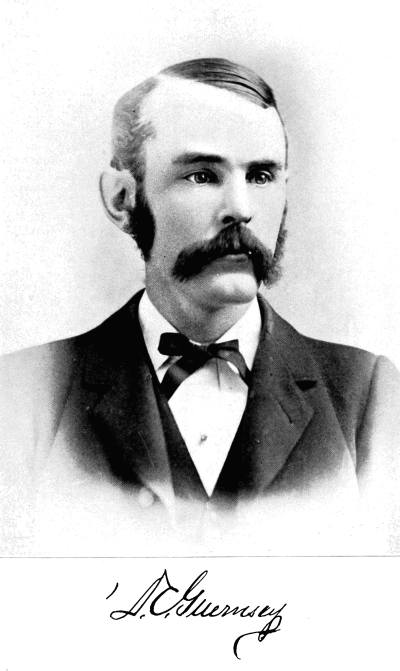
In 1876 Mr. Guernsey was instructed by the commissioners of the new county of Columbia—F. G. Frary, G. T. Pollard of Huntsville and E. Oliver of Pomeroy—to call a special election for the purpose of choosing county officers. Mr. Guernsey was elected county treasurer for one year and at the first biennial election was chosen for a full term at a salary of three hundred dollars per year, the officers being required to serve at a "moderate salary" inasmuch as this was an infant county. In 1878 he was chosen to represent his district in the territorial legislature and on the 31st of July, 1880, he succeeded L. F. A. Shaw in the office of deputy collector of internal revenue under Major James R. Hayden. He occupied that position for three years and then surrendered the office to H. W. Fairweather. On the 4th of May, 1884, Mr. Guernsey entered the Columbia National Bank of Dayton as cashier and had complete charge of the bank's affairs through the following sixteen years, at which time his brother, F. W. Guernsey, became cashier, while D. C. Guernsey was made vice president and manager of the institution. He successfully carried the bank through the panic of 1893, although he closed one Saturday night with but five hundred and fifty dollars in the bank. However, he most carefully safeguarded the interests of the institution and managed to weather the financial storm which swept over the entire country in that year. He remained in his official capacity with the bank until 1900, when he retired, the institution at that time having deposits of three hundred and seventy-four thousand dollars. He then turned his attention to the real estate, insurance and loan business in Dayton and in 1904 he took charge of a mining camp on the Omnaha in Willowa county, Oregon, for the Eureka Mining Company, his position being that of managing director. While there he built the wagon road down Deer creek from Dobbins Cabin to Snake river. He occupied the position of director of the mining camp for two years, after which he returned to Dayton and through the succeeding two years gave his attention to the real estate and insurance business. In 1908 he removed to Starbuck to assist in straightening out the affairs of the Bank of Starbuck, of which institution he was made cashier, occupying that position for a period of two and a half years. He then resigned and established his present business, with which he has since been prominently identified, being today one of the foremost real estate, loan and insurance agents in this part of the state. One of the local papers said: "D. C. Guernsey has been a most important factor in the development of Columbia county and the moulding of civilized life in the great state of Washington. During the early history of Columbia county, hardly a business transaction was carried through or a public enterprise launched that was not inspired by the brain or fostered by the public-spiritedness of Mr. Guernsey." He helped to organize and was the first president of the Dayton Electric Light Company and built many of the buildings in that city in the block in which the Columbia National Bank is located. He organized the Dayton Hotel Company, which built the hotel, and was its president for several years.
Mr. Guernsey has also left the impress of his individuality in marked manner upon the political history of the state. In politics he has always been a stanch republican and was a leader in the party from the time when there were but twelve republicans who went from Walla Walla to Lewiston. In 1879, when he became a member of the territorial legislature, he became a member of what was known as the bunch grass delegation, which became the controlling factor in the general assembly. He was made chairman of the ways and means committee and did important work in that connection. In 1890 he was appointed a member of the state harbor line commission by Governor Ferry, the first state governor, and was active in the work of the commission, which located all the harbor lines in the state and submitted the plans to the United States war department. Mr. Guernsey also became identified with the military interests of the northwest. He assisted in organizing the Dayton Grays, which merged into Company F of the First Washington Regiment for service in the Philippines. He was also paymaster and battalion adjutant of the Second Washington Regiment under Colonel Pike.
On the 23d of September, 1873, Mr. Guernsey was married to Miss Harriet E. Day, a daughter of Dr. W. W. Day, who was the first physician in Dayton, where his son and grandson are now practicing, so that the name of Dr. Day has always been associated with that city. To Mr. and Mrs. Guernsey have been born five children, four of whom are yet living: William Day, a journalist connected with a newspaper of Schenectady, New York; Frank Day, a mining man of Jerome, Arizona; Minerva G., the wife of George F. Price, of Dayton; and Helen G., the wife of Frank E. Girton, of Covello, Washington.
In fraternal relations Mr. Guernsey has occupied a very prominent position. He was made a Mason in Independence Lodge, No. 80, F. & A. M., of Milwaukee, Wisconsin, in November, 1869, and was made a Royal Arch Mason in Walla Walla Chapter, No. 1, in 1880. He became a charter member and is a past master of Columbia Lodge, No. 26, F. & A. M., of Dayton, and on the formation of Dayton Chapter, No. 5, R. A. M., he also became a charter member of that organization and is a past high priest. He is likewise a member and past eminent commander of Washington Commandery, No. 1, K. T., is a member of the Lodge of Perfection and the Chapter of Rose Croix in Walla Walla and of the Knights of Kodosh and of Spokane Consistory, A. A. S. R. He likewise has membership with the Knights Commander Court of Honor. He was the first chancellor commander in Organization Lodge, No. 3, K. P., and is the oldest chancellor commander in the state. He also has connection with various other fraternal organizations and has been very prominent in that connection for many years. His has been a guiding hand in shaping the history of southeastern Washington in its material, social and political progress and at all times he has been actuated by high ideals, looking ever to the benefit and upbuilding of his section of the state. Great indeed have been the changes which have occurred since his arrival in Columbia county. The seeds of civilization had scarcely been planted when he reached Dayton and from that time forward he has cooperated in all movements which have been instituted for public benefit, and without invidious distinction he may be termed the foremost resident of Starbuck.
DICK HARPER.
Dick Harper, who is filling the position of county auditor in Columbia county, Washington, and makes his home in Dayton, was born August 12, 1863, in Washburn, Woodford county, Illinois. His father, James D. Harper, was a native of Sullivan county, Indiana, born in 1838, and when quite young removed to central Illinois, where his boyhood and youth were passed. He was a graduate of Eureka College, Eureka, Illinois, and devoted his entire life to educational work. He married Marion A. Jenkins when twenty-five years of age and passed away in Dayton, Washington, in February, 1901. His wife is a representative of a pioneer family of New York and is now living in Dayton at the age of eighty years and is splendidly preserved. She lived for a few months in the same house with Abraham Lincoln during the famous Lincoln-Douglas campaign. She has a brother living at the age of ninety years, who was an officer in the Civil war, holding the rank of first lieutenant.
Dick Harper acquired a common school education in Missouri and also attended the State Normal School at Warrensburg, Missouri. In 1885, when a young man of twenty-two years, he took charge of a drug store for his brother-in-law at Rich Hill, Missouri, and successfully managed the business for a period of seven years, after which he came to the Pacific coast, arriving in Portland, Oregon, in the spring of 1892. In the fall of that year he came to Dayton, where he was identified with farming and with the grain trade until the spring of 1903, when he established a furniture store in Dayton and soon won for himself a place among the active and representative merchants of the city. In 1906 he purchased the Day drug store at Dayton, which he conducted successfully for seven years.
On the 27th of October, 1886, in Butler, Bates county, Missouri, Mr. Harper was united in marriage to Miss Laura A. Floyd, a daughter of John H. and Sarah A. Floyd. They have a daughter, Florence Marion, who is the wife of Lloyd R. Terwilliger, who is living in Walla Walla and is employed in the First National Bank of that city.
Mr. Harper has long been an active and helpful member of the Christian church and he has membership with the Odd Fellows, the Knights of Pythias and the Masons. For a number of years he served as secretary of Dayton Chapter, R. A. M., and in his life has always exemplified the beneficent spirit of the craft. He belongs to the Dayton Commercial Club and is a member of its governing board. In politics he is a democrat. In 1898 he was made county auditor of Columbia county by popular vote and in 1910 and 1911 served as councilman at large. He was chairman of the street and public property committee and also of the light and water committee. In 1912 he was elected mayor of the city and in 1916 was appointed police judge. He has thus long continued in public office and those who read between the lines will recognize the important part which he has played in public affairs in Dayton, winning for himself a most creditable position in commercial and political circles. In a word, he has exercised much influence over public thought and opinion and has done much to advance public progress in his adopted city.
CALDER H. WHITEMAN.
No class of Walla Walla's citizens is more highly esteemed than the many retired farmers who here make their home and among them is numbered Calder H. Whiteman, who was born in Keokuk county, Iowa, April 29, 1851. His parents, John B. and Eliza G. (Colville) Whiteman, were natives of West Virginia and Kentucky respectively but were married in Indiana. In 1850 they became settlers of Iowa but later returned to Indiana, where the mother died. The father was subsequently married twice. In 1874 he made the long journey to Oregon and four years later took up his residence in Umatilla county, that state. He died in Milton October 5, 1910.
Calder H. Whiteman, who is an only child by the first marriage, remained with his father until he attained his majority and received his education in the common schools. On beginning his independent career he rented a farm near Salem, Oregon, having decided to devote his life to the occupation to which he had been reared. After farming that place for three years he removed to Umatilla county and took up a homestead, the operation of which occupied his time and attention until his removal to Walla Walla in 1901. In the intervening years he brought the place to a high state of cultivation and made many improvements thereon, making it one of the most up-to-date and valuable farms in that locality. In 1911 he sold the Umatilla county property and bought a farm in Whitman county, Washington, near Lacrosse, which he still retains. He and his son now own fourteen hundred and forty acres, all fine wheat land, well improved, and their holdings place them among the large landowners of eastern Washington. Mr. Whiteman of this review makes his home in Walla Walla and his residence here is commodious, pleasing in design and thoroughly modern in its appointments.
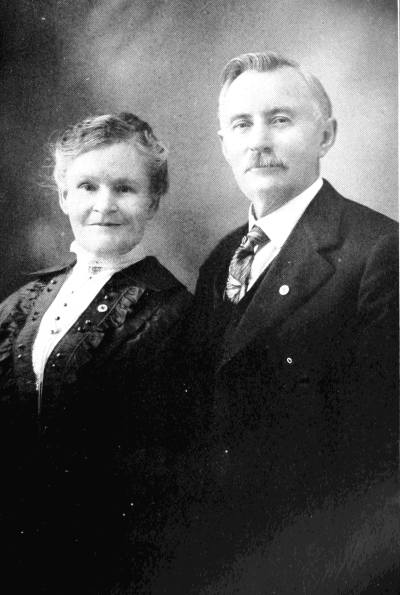
MR. AND MRS. CALDER H. WHITEMAN
Mr. Whiteman was married in 1874 to Miss Ella M. Dorman and they became the parents of four children, of whom three survive: Jessie L., the wife of F. E. Allison of Lind, Washington; Clarence C., a resident of Pendleton, Oregon; and Calder Otis, who is his father's partner in his farming interests. The wife and mother passed away in 1896 and in 1897 Mr. Whiteman was married to Mrs. Mary M. (Jackson) Morton, a native of Canada. By her first marriage she had two children, both of whom have passed away.
Mr. Whiteman endorses the principles of the republican party and gives his loyal support to its candidates at the polls. For four years he was a member of the city council of Walla Walla and his record in that office is one of unusually capable work in behalf of the welfare of the municipality. For twenty-two years he has been a member of the Independent Order of Odd Fellows and he also belongs to the Woodmen of the World and the women's branch of that organization, known as the Women of Woodcraft. Both he and his wife are active members of the Christian church, of which he is an elder, and he is also president of the board of directors of the Northwest Christian Home of Idaho, Montana, Oregon and Washington at Walla Walla. It is under the supervision of the Benevolent Association of the Christian church, which organization is designed to erect homes and hospitals for the young, old and needy of that church, and Mr. Whiteman gives much of his time to looking after the affairs of that institution. The prominence which he has gained establishes beyond question his ability, for his advancement has at all times come as the direct result of his own efforts and he is indeed a self-made man.
P. B. DOWLING.
The average farmer is apt to think of Washington as a great forest country, and while there are wonderful tracts of timber land, making this one of the leading centers of the lumber industry on the continent, there are also great stretches which are most splendidly adapted to farming and particularly to wheat raising, so that Washington has come to be known as one of the great wheat producing states of the Union. Among those who in following farming have devoted their attention to wheat culture in Walla Walla county is P. B. Dowling, who in 1887 arrived in this section of the state and who is now the owner of one hundred and forty acres of land, constituting one of the best farms in the Walla Walla valley. He was born in Springfield, Illinois, March 14, 1860, and is a son of William and Margaret Dowling, who were natives of Ireland. They came to America in early life and established their home in Illinois, but afterward both returned to Ireland and their last days were spent in that country.
P. B. Dowling was accordingly reared and educated in Ireland, where he had good opportunities for developing his intellectual powers, being given a college education. He was graduated from the London Veterinary College and engaged in the practice of his chosen profession with success for a number of years. In 1886, however, he determined to return to his native land and crossed the Atlantic to America, first establishing his home in De Kalb county, Illinois. He came to the northwest with W. L. Elwood, a well known importer of horses, and in 1887 brought the first carload of Percheron horses that was shipped into the valley. He afterward purchased the farm whereon he now resides, comprising one hundred and forty acres of very rich and productive farm land, upon which he has placed many modern improvements. Here he has lived continuously since and has long been numbered among the representative and successful agriculturists of this part of the state.
In 1890 Mr. Dowling was united in marriage to Miss Katherine Rourke, who was born and reared upon the farm where Mr. Dowling now resides. The wife passed away, however, in 1903, and was laid to rest in Mountain View cemetery. She left a husband, two brothers and three sisters to mourn her loss and there were many friends who deeply regretted her passing.
Mr. Dowling gives his political allegiance to the republican party and is thoroughly informed concerning the questions and issues of the day. He is a self-made man who owes his business advancement entirely to his own efforts. He is recognized as one of the prominent men of the valley, being forceful and resourceful in his business connections, while in matters of citizenship he stands with patriotic loyalty for all that tends to advance the welfare and progress of this section of the state.
HENRY A. KAUSCHE.
Henry A. Kausche devoted his active life to farming in Garfield county but at the time of his death was living retired in Pomeroy. His birth occurred in Germany, February 16, 1839, and he was a son of Christopherson and Hannah Kausche, who were born in Germany and there remained for a number of years after their marriage. In 1851, however, they came to America and for a short time lived in New York. They then removed to Michigan, which remained their home for more than twenty years. At length they came to Washington to make their home with their son, Henry A., and both passed away in Garfield county. All of their three children are likewise deceased.
Henry A. Kausche received the greater part of his education in Germany, as he was twelve years of age when brought by his parents to the United States. He grew to manhood in Michigan and lived there for five years after his marriage. At the end of that time he went to Johnson county, Missouri, but after residing there for six years cast in his lot with the Pacific northwest, settling in Linn county, Oregon. Some time later, in 1878, he came to Garfield county, Washington, and took up a claim. He resided upon that place continuously until 1902 and as the years passed he brought his farm to a high state of development. He extended its boundaries by purchase, becoming the owner of eight hundred acres, from which he derived a gratifying income. In 1902, feeling that he had earned a period of leisure, he retired and removed to Pomeroy, where he passed away July 4, 1903.
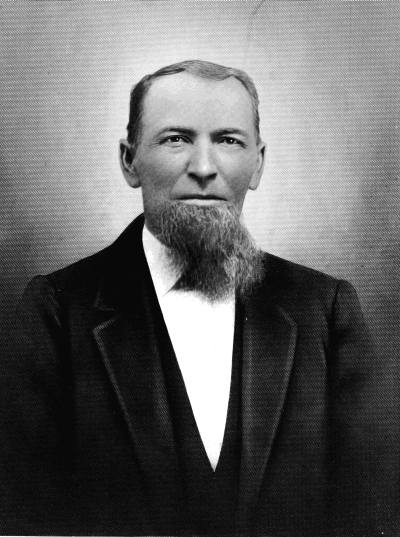
HENRY A. KAUSCHE
Mr. Kausche was married June 8, 1865, to Miss Paulina Lohrbert, who was born in Ohio and is a daughter of Frederick and Katherine (Rock) Lohrbert. The father was born in Germany but in young manhood came to the United States and took up his residence in Ohio, of which state his wife was a native, and there their marriage occurred. In 1860 they removed to Michigan, where they lived until called by death. All of their five children still survive. To Mr. and Mrs. Kausche were born eleven children, of whom five are living, namely: Laura, the wife of Andrew J. Brown, of Spokane, Washington; Evelyn, who married Leo McMullen and now resides in Canada; Ida A., the wife of George McCarty; Alvina, the wife of Henry Freeborn; and Charles A., who is operating the homestead.
Mr. Kausche was a democrat in politics and felt the concern of a good citizen for the public welfare but was never an aspirant for office. His life was a busy and useful one and his labors were felt as a factor in the agricultural development of Garfield county. He had made many friends and his demise was the occasion of deep regret.
ROBERT KENNEDY.
In the great wheat growing belt of eastern Washington lies the farm of Robert Kennedy, his place being situated on section 15, township 7 north, range 36 east, Walla Walla county. It is a valuable tract of land of nine hundred and twenty acres, all of which has been brought under a high state of cultivation and annually the great wheat yield returns to him a most gratifying income. Mr. Kennedy still gives supervision to the work, of the place although he has now passed the eighty-seventh milestone on life's journey. He was born in Rush county, Indiana, June 20, 1830, a son of John and Margaret Kennedy, both of whom were natives of Tennessee. Removing northward to Indiana, they resided in that state for a time and later became residents of Shelby county, Illinois, where both passed away.
Robert Kennedy started out in life on his own account when a youth of but fourteen years and in 1851, when twenty-one years of age, he crossed the plains to the Pacific coast, attracted by the opportunities of the great and growing west. He made his way to Oregon, where he settled on a farm and continued a resident of that place for eight years. In 1859 he arrived in Walla Walla county and settled on Dry creek, where he has since made his home. As the years have passed he has added to his possessions, his industry and determination bringing to him larger resources. His investments in farm property have made him the owner of nine hundred and twenty acres of valuable wheat land and upon his place are many substantial improvements. His farm presents a very neat and thrifty appearance and is supplied with all modern conveniences.
Mr. Kennedy has been married twice. He first wedded Miss Anna Smith and they became the parents of three children of whom only one is now living, L. L. Kennedy, a resident farmer of Oregon. The wife and mother passed away in 1876 and in 1879 Mr. Kennedy was again married, his second union being with Mrs. Margaret (Jackson) Dennison. Mrs. Kennedy is a cousin of William Dennison, who was governor of Ohio. To Mr. and Mrs. Kennedy have been born seven children: Rebecca, the deceased wife of Professor R. E. Stafford; Martha, the wife of John Connell; Robert P.; Edna; William B.; B. H.; and Edith May, who has passed away.
In his political views Mr. Kennedy is a republican, having supported the party since its organization. He has served on the school board and the cause of public education finds in him an earnest advocate. Fraternally he is connected with the Masons, although of late years he has not been active in lodge work. He and his wife are active and consistent members of the Christian church and Mrs. Kennedy is now the oldest member of the church at Walla Walla. Their lives have been guided by its teachings and their many excellent traits of character have won for them the warm regard and high esteem of all who know them. Mr. Kennedy is one of the venerable citizens of Walla Walla county and can look back upon the past without regret and forward to the future without fear, for his has ever been an honorable life. Fifty-six years have come and gone since he arrived in the west and therefore he has been a witness of the greater part of its growth and progress.
E. H. LEONARD.
E. H. Leonard, who has long been known as a prominent representative of milling interests in the northwest, is now the vice president of the Preston-Shaffer Milling Company and active manager of its mill at Waitsburg. He was born in Walla Walla, May 16, 1873, and is a son of Thomas S. and Sarilda R. (Herren) Leonard. The father was a native of the state of New York, and the mother of Oregon having been one of the first white children born in that state. The date of the father's birth was April 25, 1840. He acquired a good education in the schools of that early period and in 1860 removed westward to Illinois, where for three years he engaged in teaching school, spending a part of the time also in Iowa. In 1863 he enlisted in the government service, being made a member of an organization for the purpose of rendering assistance and guidance to emigrant trains crossing the plains. On reaching the Boise river his train, feeling in comparative safety, disbanded and Mr. Leonard continued his journey to the coast, arriving in Portland, Oregon, late in November, 1863, when that now populous and progressive city was a town of but three thousand inhabitants. He afterward drifted to various points in the northwest and subsequently again took up educational work, teaching in the vicinity of Salem, Oregon, where he remained until about 1871. In the fall of that year he came to Walla Walla and in the spring of 1872 he removed to Dayton, where he has since resided. In the fall of that year he and his wife took charge of the Dayton school and in the spring of 1873 removed to a government land claim. In 1876 Mr. Leonard assisted in the organization of Columbia county and was elected the first county superintendent of schools. On the expiration of his term in that office he returned to the homestead and has since been engaged in farming. He has taken an active and important part in promoting the development of county and state along material and intellectual lines and has left the impress of his individuality for good upon the history of the community. In 1868 Mr. Leonard was united in marriage to Miss Sarilda R. Herren, a daughter of John and Docia (Robbins) Herren, who crossed the plains from Kentucky to Oregon in 1845. They settled near Salem, among the very early pioneers of that section. On her mother's side Mrs. Leonard comes of a family represented in the Revolutionary war, her great-grandfather, William Robbins, having been a participant in that struggle which led to the attainment of American independence. T. S. Leonard is one of the prominent citizens of Dayton and has for many years taken a prominent and helpful part in the development of Columbia county.