BIOGRAPHICAL (continued 12)
Reading edition
Miss Mary J. Thomas, reared in Walla Walla, was educated in St. Vincent's Academy and became a grade teacher in the Baker school of Walla Walla. She has since devoted her life to that profession and became principal of the Baker school, while later she was transferred to the Sharpstein school, of which she is now the principal. She holds to high ideals in her work, is constantly studying out new methods to improve her efficiency and her own zeal and interest in the work have inspired and encouraged both teachers and pupils under her.
JAMES F. CROPP, M. D.
For almost forty years Dr. James F. Cropp has successfully engaged in the practice of medicine and surgery in Walla Walla, where he was also the promoter and founder of the Walla Walla Hospital, an institution of which the city has every reason to be proud. He has ever occupied a prominent position in professional circles and has been instrumental in maintaining the highest standards of activity in his chosen field, recognizing fully the duties and obligations which devolve upon the physician. He was born in Virginia, April 16, 1854. His father, Silas F. Cropp, was also a native of the Old Dominion, where he followed the occupation of farming. He married Maria Katherine Martin, born in the same state, and both have passed away. They had a family of four children, of whom two have departed this life.
Dr. Cropp pursued his early education in a little log cabin school in the state of Washington, which at one time was headquarters of the army that went to rescue General Steptoe on Steptoe Butte. The family had come to Washington in 1872. They made their way westward to American Falls, Idaho, driving a team of oxen across the country. They then proceeded by stage to Portland and on to Albany and from that point walked to Walla Walla across the Cascade mountains. From this city they proceeded to a point near the Farmington country and there plowed the ground upon which Farmington is built. From that point they proceeded to Dry creek, near Walla Walla, and Dr. Cropp of this review secured employment in the hay fields, working for Sergeant Smith during the summer. He obtained a dugout near there and gathered a few common school books, and in company with E. H. Nixon, now of Walla Walla, prepared himself as best he could for educational work, after the hours of harvesting were over. He at length secured a school, of which Sergeant Smith was a director, and taught through the winter months. This was a large school and he proved capable in its management and conduct. Later he taught in various other schools through the valley, being thus engaged until 1876, when he walked the greater part of the distance to Portland and there secured passage on the old steamer Ajax, on which he worked his way to San Francisco. This step was actuated by his laudable ambition to prepare for the practice of medicine, which he had determined to make his life work. He there entered the medical department of the University of California, which at that time was only a summer school. At the close of the session, in company with Charles E. Levitt Sajous, now a famous medical practitioner and author of Philadelphia, he started for the east. They worked their way on freight trains and walked part of the way until they reached Philadelphia, where they matriculated in the Jefferson Medical College, from which institution they were both graduated in March, 1878. The determination with which he pursued his education, making his way in spite of seemingly almost insurmountable difficulties, is characteristic of Dr. Cropp. He has never faltered in the performance of a task to which he has set himself and throughout his entire life he has ever carried his well defined plans forward to successful completion. Following his graduation he returned to Walla Walla and in the intervening years has continuously and successfully practiced medicine and surgery. During this period he has also served in various official capacities of a professional nature for the city, county and the state. He has been physician and surgeon to the state penitentiary for six years and since the building of the Odd Fellows Home he has been physician to that institution. In 1890 he built the Walla Walla Hospital, which has since been successfully conducted and from which numerous nurses of very high standing have been graduated, doing important duty in their professional capacity through the city, county and surrounding states, many of them occupying most important positions in other hospitals. While many years have elapsed since Dr. Cropp was graduated, he has by broad reading and thorough study kept in touch with the trend of modern scientific thought and investigation and with the progress that is being continuously made by the profession. His ability is pronounced and he stands not only as the dean of the medical profession in Walla Walla but as one of its most distinguished representatives in the northwest.
In 1879 Dr. Cropp was united in marriage to Miss Ida Hungate, a daughter of H. H. and Mary (Duncan) Hungate and a native of California. They have become parents of a daughter, Hallie H., who is at home. She is connected with the Daughters of the American Revolution, for the ancestors of Dr. Cropp served in the struggle for independence. Dr. Cropp is thoroughly familiar with the history of pioneer development in the northwest. On the trip across the plains, when the family were making their way to the Pacific coast, they encountered considerable trouble with the Indians. He has seen this entire section of the country reclaimed for the purposes of civilization, while the work of development and improvement has been carried steadily forward. His aid and influence have ever been on the side of progress and improvement and his work has had far reaching and beneficial results. His political allegiance is given to the democratic party and fraternally he is connected with the Independent Order of Odd Fellows. He belongs to the Commercial Club and cooperates heartily in all of its well defined plans and measures for the welfare and upbuilding of the city. Along strictly professional lines he has connection with the Walla Walla County Medical Society and the Washington State Medical Society. He is interested in their proceedings and contributes in no small measure to the success of some of the meetings, for his judgment is accepted as an authority upon many questions of vital importance to the profession. He has ever held to the highest professional standards and anything that tends to solve the intricate problem which we call life is of interest to him.
EDWARD WILSON CLARK.
Edward Wilson Clark, one of the leading attorneys of Columbia county, practicing at Dayton, was born in Morrow county, near Heppner, Oregon, on the 15th of November, 1865, his parents being Oscar F. and Mary A. (Allen) Clark, the former a native of the state of New York and the latter of Ohio. They were married, however, in Oregon, Mr. Clark having crossed the plains as a young man of twenty-one or twenty-two years in 1846. The mother's parents died when she was but a little child and she made the long trip to the west with her brother, Charles Allen, who arrived in Oregon about 1850. She continued to reside with her brother in this section of the country until her marriage. Oscar F. Clark took part in the Cayuse Indian war and in 1848 made his way northward and settled on what is now the city of Walla Walla in Walla Walla county, Washington. The previous year the Whitman massacre occurred. He became familiar with every phase of pioneer life and bravely met all of its hardships and privations. He was married about 1850 and for some years lived in Corvallis, Oregon. He had been engaged in teaching in the east and was identified with educational work for several years after his removal to Oregon. In later years he was elected county superintendent of schools of Benton county, Oregon, and he was also appointed the first probate judge of that county. In 1866 he became a member of the board of county commissioners of Umatilla county, Oregon, and he was one of those who were most earnest and effective in securing the establishment of the county seat at Pendleton. Indeed he was recognized as a very prominent and influential citizen of Oregon, where he remained until 1877, when he removed to Columbia county, Washington. Taking up his abode in Dayton, he was soon thereafter elected justice of the peace and served in that office for many years. His decisions were strictly fair and impartial, being based upon the law and the equity in the case, and that he enjoyed the full confidence of the public is indicated by his long retention on the justice bench. Death called him in 1898 and his widow, surviving for about a decade, passed away in 1908.
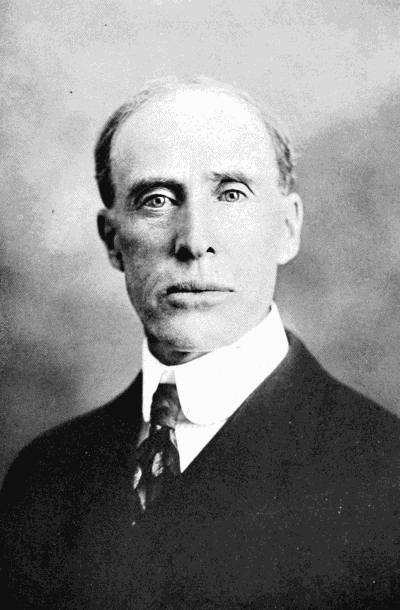
EDWARD W. CLARK
Edward W. Clark was reared under the parental roof and completed his education in the Dayton high school. In 1886 he took up the study of law, reading under the preceptorship of Judge M. M. Godman, of Dayton, and in 1888 he was admitted to the bar, after which he opened a law office in Dayton, his ability placing him, through the intervening years, in the front ranks of the profession. He served for ten years as prosecuting attorney of Columbia county and for five years was city attorney of Dayton. He was also for one year city clerk and at the present writing is a member of the board of education, in which position he has continuously served since 1893. The public school system indeed finds in him a stalwart champion and one whose efforts in its behalf have been characterized by marked progress.
On the 28th of February, 1892, Mr. Clark was united in marriage to Miss Nellie B. Gritman, of Dayton, a daughter of Delos W. and Mary (Davis) Gritman. Her father, who was one of the successful agriculturists and prominent citizens of Columbia county, served for a number of years as a member of the board of county commissioners and was widely recognized as a man of sterling character and genuine worth. Mr. and Mrs. Clark have a son, Roscoe L., who was graduated from Whitman College with the class of 1915 and is now a student in the medical department of the University of Pennsylvania at Philadelphia.
Fraternally Mr. Clark is connected with Dayton Camp, No. 95, W. O. W.; with Dayton Circle, No. 238, Women of Woodcraft; and with Dayton Lodge, No. 3, K. P. He ranks with the leading and representative residents of Dayton because of his loyalty in citizenship, because of his genuine personal worth and also by reason of his professional ability. He is a man of well balanced intellect, thoroughly familiar with the law, possessed also of comprehensive general information and of an analytical mind. He is recognized as a formidable adversary in legal combat but one who at all times holds to the highest standards of the profession, his record reflecting credit upon the history of the bench and bar of Washington.
BERT THOMAS, M. D.
Dr. Bert Thomas, occupying a leading position among the most capable and successful medical practitioners of Walla Walla, is well qualified in all those particulars which make for advancement in his chosen profession. His liberal preparatory training well qualified him at the outset of his professional career and in the intervening period he has studied closely and read broadly, thus keeping in touch with the trend of modern professional progress. He was born in Walla Walla county, March 4, 1874. His father, Alfred Thomas, a native of Kentucky, was born in 1828 and in the spring of 1870 made his way to the northwest, becoming identified with agricultural interests in this county. Here he spent his remaining days, covering a period of more than a quarter of a century, his death occurring in 1896. His wife, who bore the maiden name of Eleanor Lewis, was born in Iowa and has also passed away.
Dr. Thomas of this review was one of a family of twelve children, six of whom are yet living and all are residents of Walla Walla county. He acquired a common school education and afterward entered the Whitman College, from which in due time he was graduated. He next became a student in the University of Michigan, matriculating in the medical department, from which he was graduated with the class of 1904. He then put his theoretical knowledge to the practical test in a year's service in a hospital in Jackson, Michigan, and gained the broad and valuable knowledge and experience which can never be as quickly acquired in any other way as in hospital work. On the expiration of that period he returned to Walla Walla, where he has since practiced medicine and surgery, and throughout the intervening years he has maintained a place in the front ranks of the profession. He is very careful in the diagnosis of his cases and seldom, if ever, at fault in matters of professional judgment. He belongs to the Walla Walla Valley Medical Society, the Washington State Medical Association and the American Medical Association and thus keeps abreast with modern thought, investigation and research.
Dr. Thomas married Miss Orville Green, who was born in Walla Walla, a daughter of W. O. and Mary F. (Young) Green, who were pioneers of this county, having crossed the plains in 1852. Dr. Thomas belongs to the Masonic fraternity and is a faithful exemplar of the teachings of the craft. His entire life measures up to high standards and those whom he has met in social relations entertain for him the warmest friendship and regard, for his salient qualities are those which make for personal popularity.
PATRICK O'CONNOR.
Patrick O'Connor, deceased, was an enterprising and successful farmer and stock raiser of Columbia county and his name deserves a place upon the pages of its history. He was born in County Tipperary, Ireland, March 16, 1850, and was reared in the land of his birth. On reaching the age of sixteen, however, he determined to try his fortune in the new world, for he had heard favorable reports concerning its opportunities and advantages. On reaching American shores he at once crossed the continent to the Pacific coast and located in San Francisco, California, where he remained for nine years. He was there employed in a boiler factory and at street car work. After spending over five years in that city he came northward to Walla Walla in 1880 with the intention of returning to San Francisco but found Walla Walla to his liking and took up his abode there. He was made section foreman for the Union Pacific Railway and for a considerable period was active in that connection. In subsequent years he made several removals, living for a short time in Dayton and a short time on the present home ranch near Starbuck. In 1896 he took up his abode on his Columbia county farm, first purchasing forty-six acres of land. To this, however, he added from time to time as his financial resources permitted until at his death he was the owner of an excellent tract of land of two hundred and sixty-seven acres, upon which he engaged extensively in stock raising and in the growing of alfalfa. In business affairs he was energetic and determined. He allowed no obstacles nor difficulties to bar his path if they could be overcome by persistent and earnest effort. He worked diligently and as the years passed on gained a place among the substantial farmers of his adopted county, his attention being given to general agricultural pursuits and stock raising until his death, which occurred May 7, 1910.
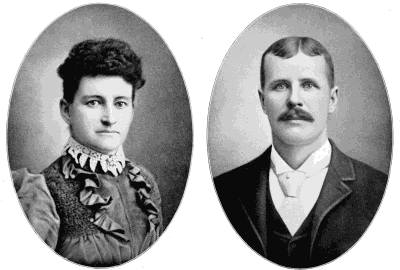
MR. AND MRS. PATRICK O'CONNOR
On the 30th of December, 1889, Mr. O'Connor was joined in wedlock to Miss Mary McGreevy, who was born in Iowa and came to Washington in 1887, locating on the present site of Jackson's Siding in Columbia county, where lived her uncle, Daniel McGreevy. Mr. and Mrs. O'Connor had one son, Daniel A., who is now operating the home farm.
In politics Mr. O'Connor was a stalwart democrat, giving unfaltering allegiance to the principles of his party. He served for some years as road supervisor and made an excellent official in that connection. In fact he was a progressive and public-spirited citizen, giving helpful aid to all movements for the advancement of the community. He belonged to the Catholic church, of which his widow and son are also communicants. The family has long been well known in Columbia county and, like her husband, Mrs. O'Connor enjoys the respect and goodwill of those with whom she has been brought in contact.
ALBERT M. JENSEN.
Albert M. Jensen, head of the A. M. Jensen Company of Walla Walla, was born in Denmark in 1868 and at the age of fourteen years began work in a general store. His life has been one of continuous business activity since that time. Coming to the new world in 1890, he settled in Minnesota and was employed by one of the largest department stores in St. Paul for eighteen years. He began work there as general utility boy, was advanced to the position of salesman and later became a buyer and department manager, and while thus engaged he made various trips to New York and abroad for his firm.
In 1910 Mr. Jensen came to Walla Walla and organized the A. M. Jensen Company, which then bought out the Skiles Dry Goods Company, which had been established in 1905 on a very small scale. The floor space now in use for the display and sale of women's merchandise is approximately fifteen thousand square feet.
In 1897 Mr. Jensen was united in marriage to Miss Effie Byland, who was born in Shelbyville, Indiana, and they have three children: Leon, Everett and Gladys. Mr. Jensen is a member of the First Presbyterian church, is a Scottish Rite Mason and member of the Mystic Shrine and also of the Odd Fellows lodge. In politics he is an independent republican but has never sought or held office. His military record covers six months' service in the Danish navy before coming to the United States. He has taken considerable interest in civic affairs and for several years was a member of the board of trustees of the Walla Walla Commercial Club and served for one year as its president. He is always anxious and willing to help wherever necessary for the good of the city, state or country and acted as chairman and member of several important Liberty Loan and Food Conservation sub-committees.
JOHN H. EDWARDS.
One of the well improved farm properties of Walla Walla county is that owned by John H. Edwards, an enterprising, alert and energetic agriculturist, whose home is on section 30, township 9 north, range 34 east. He is there extensively engaged in wheat growing and also in stock raising.
Mr. Edwards was born in Texas, March 8, 1859, a son of John C. and Sarah (Hillard) Edwards, the former a native of Tennessee, while the latter was born in Alabama. They removed to Texas in 1858 and while residing in that state the mother was called to her final rest. The father passed away in Tennessee, having returned to his native state. In their family were seven children, but only three of the number are now living.
John H. Edwards was largely reared and educated in Tennessee, having the usual opportunities and experiences of the farmbred boy. He was a young man of twenty-three years when he determined to try his fortune in the northwest and made his way to Walla Walla county, settling upon the farm on which he now resides in the fall of 1883. It has since been his home, and adding to his holdings from time to time as his financial resources have permitted, he has become the owner of thirty-four hundred acres of valuable wheat and pasture land. He has great broad fields, devoted to the raising of wheat, and rich pastures, in which are found large herds of cattle. He makes a specialty of raising Durham cattle and he is also engaged in raising Percheron horses and high grade hogs. He has improved his ranch with modern buildings. There is a commodious and attractive residence, in the rear of which stand good barns and outbuildings for the shelter of grain and stock, and these in turn are surrounded by broad fields, highly cultivated.
Mr. Edwards was united in marriage to Mrs. Margaret Woods and to them have been born two sons. Earl J., who is a graduate of the high school, was married in 1915 and has a son, Edwin. Eldon H., the younger son, is also a high school graduate.
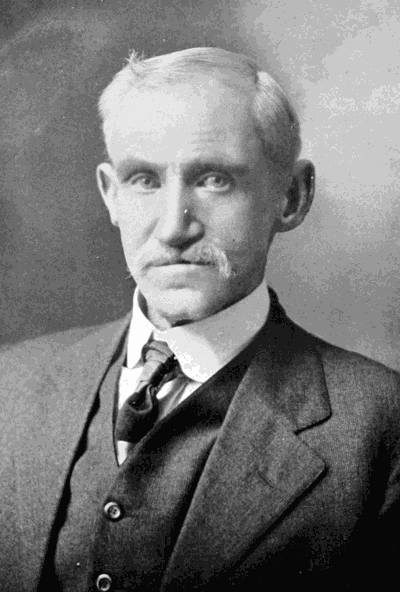
JOHN H. EDWARDS
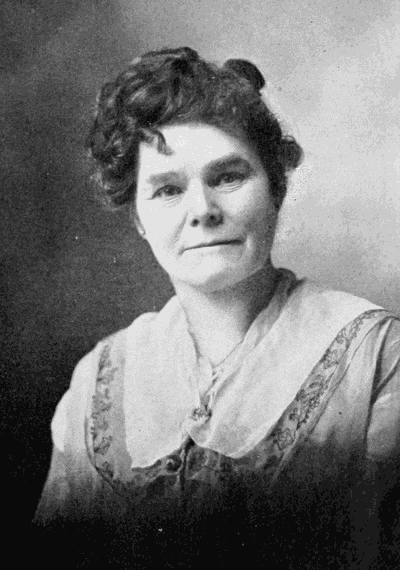
MRS. JOHN H. EDWARDS
Mr. Edwards is deeply interested in the cause of education, has served as school director, and has put forth every effort in his power to give his sons good opportunities, thus qualifying them for life's practical and responsible duties. He votes with the republican party but has never been an office seeker. He and his wife hold membership in the Christian church and are loyal to its teachings, while to its support they make generous contribution. The conditions which he found in the northwest gave him the opportunities which he sought and in their utilization he has worked his way steadily upward. His handclasp, however, is as warm for his friend in a threadbare coat as for the prosperous business friend of his later years. He appreciates what it means to overcome difficulties, having had his own hard times and his own life is organized along lines that have called for a full dole of labor with every turn of the wheel. In social intercourse he is genial, kindly and humanly sympathetic, while his business affairs are characterized by the most rigid integrity.
WILLIAM W. WALTER.
William W. Walter, an honored pioneer of Washington, was born in Wayne county, Indiana, September 7, 1827. He was a descendant through his mother, Rachel Doddridge, of the Doddridge family of England. The name of Phillip Doddridge is common in the Walter family and every branch of the family has one child bearing the name of Doddridge. The father, William Walter, Sr., was a Virginian who lived for a time in Maryland and afterwards became a resident of Ohio and still later of Indiana, where his son, William W. Walter, was born. When the latter was eight years of age the family removed to Iowa, which was then a wild, unclaimed country. In 1845 the spirit of emigration swept over the east and Mr. Walter, then a youth of seventeen years, was among those who desired to see the great country beyond the Rocky mountains. His father, being of a roving turn of mind, decided to emigrate. That spring all was made ready and soon they had started on that long and perilous journey. Several families of the relatives, with many others, formed a company of about sixty-five wagons and elected Sol Tetheroe, a man experienced in that line of work, as their captain. They moved in order, stood guard every night to avoid surprise, and parties of hunters were organized to furnish game for the camp. The first part of the journey was very pleasant. Dancing on the green at night and hunting big game by day was very pleasing to the youngsters at least. Buffaloes were so plentiful there was often trouble keeping them out of camp. As they traveled along immense herds would come bearing down on the train, when riders would be sent out and guns fired to turn them from their course and save the train from being run down and trampled by the huge beasts. On the eastern slope the company experienced the first Indian scare. They were in the Crow country and Indians had been in sight all day, skirting around in small parties. Late in the day several hundred Indians confronted them, yelling and beating drums and dashing wildly toward them. The emigrants thought an attack was imminent and corralled the wagons, thus making a fortification. They placed the women and children in the circle and the men made ready to fight. Then a Rocky Mountain man named Greenwood, who was acting as guide, rode out to meet the Indians and called a council. After a talk the Indians dispersed although they had intended an attack. Only the influence of Greenwood, whose wife was a Crow Indian, saved them from serious trouble. The greatest excitement on the trip was caused by a stampede of the teams. One never experiencing a stampede cannot form any idea of the terror and danger. There seems to be a sort of animal telepathy among cattle, so that at a signal from one, a thousand head will go wild in an instant. Then imagine if you can a train of sixty-five wagons with from five to ten yoke of oxen to a wagon tearing along the prairie at full speed, teams doubling, passing each other, tearing off wheels, amid the screams of children scattered along the way. Some teams ran two miles before stopping, yet with it all no one was killed, although one woman had a leg broken and several wagons were demolished. It took some time to get in moving order again and mothers were looking for their children and the babies crying for their mothers. The excitement was intense and it was an experience never to be forgotten. At length, however, the party moved on again. At Fort Hall they met Steve Meek, a brother of Joe Meek, who agreed to show them a new route to Oregon bearing more to the south, crossing the Cascade mountains near the head waters of the Willamette, thus avoiding the Blue mountains. He made the proposed route appear so feasible that they followed him, leaving the old trail near Boise, Idaho. They followed the Mathew river to the south and west and soon found themselves in a trackless desert of sagebrush, rock and sand but with little feed for the stock, and to add to their troubles they could no longer find water. They traveled on and on, sending men ahead to search for water. These men returned and reported water forty miles ahead, so that the party traveled all night to reach it. While encamped there resting, a man herding the cattle picked up a large nugget of gold and from that find originated the famous blue nugget gold find, but the spot has never been located again, at least no mine has been discovered. People starving would not remember places very well as they were more anxious about something to eat. The party forced the guide to pilot them to The Dalles, which he did. When at last they reached the Deschuttes river they were in a pitiable condition, many being sick from lack of food. There they lashed wagon boxes together for a raft and ferried over their effects, swimming the cattle. Finally they arrived at The Dalles, where they cut trees in the forest, made rafts of the logs, loaded wagons and families on them and proceeded to float down the Columbia, while the boys and younger men drove the cattle down the trails. The rafts were tied up at night and camp made on shore. It now began to rain and food was almost an unknown article. They had had no bread for weeks. Those are the hardships which try men's souls and show what stuff they are made of. When they reached the Cascades they made the portage with the teams over the muddiest roads ever seen, it requiring three days to travel six miles. Their only food until they reached Vancouver was a salmon now and then purchased of the Indians. Dr. McLoughlin came to their relief most nobly when they reached Vancouver. They afterwards moved out to the Tualitin plains, in Washington county, Oregon, and settled on as fine land as ever lay out of doors. The principal food supply that winter was boiled wheat and potatoes, with plenty of deer meat. The following year was a prosperous one and the hardships were forgotten and life in the main was a happy existence. In the fall of 1847 the news of the Whitman massacre reached that country. The people were wild with excitement and a company of volunteers was organized. All were eager to join it. Mr. Walter joined and served through the war.
In 1849 the discovery of gold in California caused great excitement and all the young men and many older ones rushed to the gold mines. Mr. Walter went in 1850. They traveled by land through the Rogue river country, where the treacherous Indian lurked at every turn. Mr. Walter had some thrilling adventures with the Indians. At one time he and a companion rode all one day and night with their guns ready for use. They saw many Indians in ambush watching them and their only theory concerning the failure of the red men to attack was the belief that there was a large party coming behind the two lone riders. The two young men lived in the open and their amusements were hunting bears, panthers and Indians. They mined on the American river, having fair luck, and afterwards remaining in California for a year returned to Oregon.
In 1856 William Walter married Miss Charity A. Marsh, a student in the Forest Grove Academy. She was a native of Michigan and crossed the plains in 1852. Following their marriage they removed to Douglas county, Oregon, where they remained a few years, and in March, 1860, arrived in Walla Walla county, Washington. After reaching Walla Walla county Mr. Walter engaged in cattle growing, in which he prospered. By 1861 he had a fine herd and was for those times a wealthy man, but an unusually severe winter came on, causing most of his herd to die. Broken in resources and in spirit, he gathered the remainder of his herd, numbering about thirty head of cattle and these he sold. He then bought a pack train of his own and became one of the earliest packers in this region and developed a business of extensive proportions in that connection. He hauled supplies to nearly all the mines in the surrounding states. Many strenuous and trying experiences came to him, for robbers were numerous and these road agents were always alert for the returning pack train to haul in the returns of the pack sales through their robbery, attaining their end, if necessary, by murder. Mr. Walter was a man of fine physique and great strength and his physical prowess often served to protect him. While the husband and father was away on his pack train trips, which often lasted for six or more months, the pioneer mother, left alone with her small children, with many hostile Indians about, had to bear heavy burdens in order to care for and protect the interests of her frontier home.
Four of their children are still living on or near the old homestead on the Touchet. The eldest, Mrs. O. M. Fine, was born in Douglas county, Oregon, July 12, 1857. Mrs. Kate W. Pettijohn was born in Douglas county, Oregon, December 18, 1858. Mrs. Fanny Dunlap was born in Walla Walla county, October 31, 1866, and John Doddridge Walter is also a native of Walla Walla county, born December 8, 1869.
W. W. Walter and his family were among the earliest settlers in the valley. At that time Walla Walla was but a little garrison town and the many flourishing towns of the present were unknown. On the Touchet, near a big spring, Mr. Walter built his first cabin of logs with a thatched roof covered with dirt. The earth served for a floor. They were very comfortable during the summer but when the fall rains set in there was trouble, for the roof would leak for several days after all was fair outside. Moreover, the snakes deemed the roof no bad place for a home and one morning while the family were enjoying their breakfast one of the reptiles caused a commotion, especially among the feminine portion of the family, by wriggling through the roof and dropping on the table. This necessitated a new roof and a trip to the Blue mountains for shakes. An Indian trail ran in front of the cabin door and on Sunday droves of Indians would pass by on their way to the home of Rev. H. H. Spalding, a half mile below, to hear him preach. The settlers also attended the services, for the sermons were spoken in English, an interpreter repeating them to the Indians. The singing of these Indians, led by Mrs. Spalding and her daughter, Amelia, will ever be a sweet memory, for their voices were soft and low. Visiting in those days meant more than a ceremonious call. A carriage was unknown in these parts and people usually traveled on horseback, even children learning to manage a horse at a very early age. People came from afar to visit and stayed for days and surprise parties and dances were frequent occurrences. In 1862, the neighborhood having become quite thickly settled, the number of children of school age demanded a school, so several of the leading citizens called a meeting to devise ways and means. They had no organized district and no public money. They went into the woods, cut cottonwood logs, drew them to a designated place and erected a schoolhouse in the dooryard of Mr. Walter. The roof was of shakes made in the Blue mountains and hauled down. The heating plant was a huge fireplace in the east end of the building, built of sod and the chimney was of sticks and mud. A log was cut out in the north wall and a row of eight by ten inch window panes fitted in and this furnished the only light except the open door. The seats were of puncheon. A subscription was taken up to pay the teacher, who was a Virginian with a very pronounced southern accent. The old elementary spelling book was the principal textbook. There are still many persons living who received their first lessons in this little log schoolhouse. Later a district was organized and a schoolhouse built a mile or so up the valley near the center of the neighborhood. The Walter family experienced the usual incidents and hardships of pioneer life. The nearest physician was at the garrison of Fort Walla Walla and a rider was sent there for aid on more than one occasion, yet altogether those were happy days. The whole wide country lay before them and everyone for miles around was friend and neighbor. Where today are seen immense wheat fields in those days there were seas of waving bunch grass. The hills were dotted with sleek cattle and horses and the ever present cayuse, or Indian pony. In those days cattle was king and times were good, although opportunities for an education were limited. Only public schools were available and very few studies were taught. The daughters in the Walter household had two winters in the Waitsburg public schools, which ended their attempt to acquire an education, although later they studied at home, especially history, rhetoric and the languages, although they had no teacher to assist them.
In 1861 the Civil war broke out, Washington's citizens had come from every state in the Union and their opinions were accordingly diversified. The patriotic contingent decided that they should have a flag, so the material was purchased and a sewing bee was held at the home of S. H. Erwin, where they made a flag, every stitch by hand. The thirty-four stars were whipstitched on the blue field and with patience and perseverance the stripes were set together. The old flag is still in existence though largely in tatters today. It has played a prominent part on the Fourth of July celebrations and is a valued pioneer memento. At the second election of President Lincoln the news was brought across the continent by pony express. Some one caught the word at Walla Walla and rode to the Touchet, stopping at each door with a shout and waving of the hat, telling the glad news and then passing on. The neighbors bore the flag to the schoolhouse, hoisted and unfurled it there, took off their hats and saluted with cheers, while the children marched around Old Glory, singing "Rally Round the Flag Boys." While the west was rejoicing over peace having been established once more the direful news was flashed over the country that Lincoln had been assassinated. Again the news was long on the way and again a rider brought in the word from Walla Walla, but there was no shout of joy or waving of flags as on the former occasion. A number of men, however, came to the schoolhouse and raised the old flag until it hung at half mast. The sturdy pioneers stood with bowed heads and solemn countenances, while the children were awed and half afraid, not knowing what it all meant.
Some time in the middle '60s the settlers conceived the idea of celebrating the Fourth of July, so the neighbors gathered at the home of Mr. Walter and proceeded to clear out a grove near the Big Spring, where they fitted up seats and a platform. People gathered from all parts of the valley, stage loads coming from Walla Walla, and Judge J. H. Lasater was the speaker of the day with "Uncle Billy" Smith, of Waitsburg, as master of ceremonies, while J. M. Hedrick read the Declaration of Independence and Jonathan Pettijohn and William Smith were also among those who spoke. A public dinner was served, all being invited to take part at one long table, and in the evening a dance was enjoyed by all. To that celebration the families came in wagons and the young people on horseback and they were among the happiest and most care-free people in the world. The people in this country went through the reconstruction period in a different way from the east and lawlessness reigned for a time. The chief offences were murder and horse stealing and as gold was discovered in Idaho and Walla Walla became an outfitting place for miners the town became infested with thieves, gamblers and gunmen. Then the Vigilantes came into existence as a protection to life and property and were very effective in ridding the country of its undesirable element. In the late '60s their work was done and the country took on a normal tone. Business enterprises were started, farms opened up where stock had previously ranged and wheat raising was begun with success. Today wheat is king and, like all of the west, stock raising has become largely a thing of the past in Walla Walla county, as have the cowboy and the Indian.
William Walter never left the home he had made for himself and family. His wife passed away December 23, 1897, and he continued to live on the old place with his youngest daughter until September 23, 1906, when he passed on. He was a man of sterling worth, a steadfast friend, doing his part in all affairs of public interest, was most hospitable in his home and he and his wife took the greatest pleasure in entertaining their friends. Their home was the gathering place for all the young people of the countryside.
While Mr. Walter volunteered to find the murderers of Dr. Whitman, whom he knew personally, he was a friend to the Indians as a whole and had some stanch friends among them, some of whom came to camp by his door until the time of his death. He attended the ceremonies at the erection of the monument to Dr. Whitman and the other martyrs and he was one of the party who buried the remains of Dr. Whitman and his wife. He became a member of the first organization of Pioneers of Walla Walla and was also a member of the Oregon Pioneers' Association. In 1880 the first railroad was built in the Touchet valley and little towns were started, among them Prescott, which became quite a railroad town with roundhouse and machine shops. It was filled with railroad men and cowboys which formed two factions, and as the town boasted three saloons and was wide open, a clash was due to come occasionally. Prescott went through all the phases of a frontier town, with gambling houses, etc., had her quota of murders and robberies until the boom dropped out, when it seemed for a time that the town was doomed to die a natural death. Then a new era came. The place began to revive, a good school was built, churches were established, the surrounding country was planted to wheat to furnish grain for one of the largest mills in the country, responsible men took hold of the business enterprises and today Prescott is one of the most thriving little towns in the county. The children of William Walter, having been reared in this valley, have seen all of the changes wrought in the last half-century. They have seen the wild, unbroken prairies developed to their present high state of cultivation and the eldest daughter, Mrs. Fine, still lives on a part of the old homestead. She is the mother of eight sons and a daughter, all grown to manhood and womanhood and all married and settled in homes of their own, with the exception of one. Mrs. Dunlap, another daughter, lives in the house in which she was born. J. D. Walter, the only son, also occupies a part of the old homestead and is mentioned elsewhere in this work. The other daughter, who in 1890 became the wife of John H. Pettijohn, is living on a homestead which was taken up in 1880 and they occupy an attractive little residence in which they expect to spend their declining years. The Walter family has indeed played an important part in the progress and development of this section of the country from the early days and the name is written high on the roll of honored pioneer settlers.
JOHN D. WALTER.
John D. Walter is a resident farmer of Walla Walla county and a well known representative of one of the honored pioneer families. He was born December 8, 1869, on the farm which he yet owns and cultivates, his parents being W. W. and Charity (Marsh) Walter, who in 1845 first crossed the plains and who are mentioned at length on another page of this work.
Spending his youthful days under the parental roof, John D. Walter became largely familiar with many of the experiences which constituted life for the pioneer. He was educated in the district schools, the first school of the neighborhood being built in his father's dooryard. He early became familiar with the best methods of tilling the soil and caring for the crops and later he engaged in the butchering business in Prescott and also devoted much time to buying and selling stock, being thus occupied for twenty years. On the expiration of that period he sold his business and turned his attention to farming on the old home place. Today he owns five hundred acres of rich and valuable land splendidly adapted to wheat raising and in addition he cultivates another five hundred acre tract which he rents, so that he is most extensively engaged in general farming. His crop is largely wheat and owing to his indefatigable energy and intelligently directed labor his efforts have been crowned with success. He is also engaged in stock raising and keeps on his place high grade cattle, horses and hogs.
In 1898 Mr. Walter was united in marriage to Miss Lula R. McSherry, a daughter of Nelson McSherry, mentioned elsewhere in this work. Mr. and Mrs. Walter have become the parents of four children, Ernestine O., Helen and Leila, twins, and Camille.
The family is now living in the city of Walla Walla at No. 114 Colville street. They attend the Presbyterian church and Mr. Walter belongs to the Independent Order of Odd Fellows, to the Elks and Knights of Pythias lodges. In the first named he has filled all of the chairs. His political endorsement is given to the republican party and he keeps well informed on the questions and issues of the day but does not seek nor desire office as a reward for party fealty. His children possess much musical talent, which is being thoroughly trained and cultivated. The family, connected with Walla Walla county since early pioneer times, has always kept pace with the trend of modern day thought and progress. The work begun by the father has been carried forward by the son, whose farm is today an expression of twentieth century methods in agriculture.
A. C. SEMROW.
One who does not delve below the surface of things seldom stops to consider what an important part the architect plays in the improvement of a city. However, his labors constitute one of the strongest features in its attractiveness, and in city building in the west there has been most earnest effort put forth with a view to equalling everything that is of convenience, comfort and beauty in the older structures of the east, while at the same time modern progress adapts all building operations to modern needs. It is in this field that A. C. Semrow has labored and is now regarded as one of the most successful and capable architects of Walla Walla. He was born in Milwaukee, Wisconsin, October 11, 1885, a son of August and Minnie Semrow. For the past twenty-five years the father has been prominently identified with the building and contracting business, ranking very high in connection with building operations in Milwaukee.
A. C. Semrow spent his youthful days in his father's home and at the usual age became a pupil in the public schools. He mastered the lessons therein taught until he had become a high school pupil and when he left that institution he had the benefit of a course of instruction in the Milwaukee University. As early as his fourteenth year, however, he became an assistant to his father in the contracting and building business and at the same time he began his studies as an architectural draftsman. He pursued his studies in the offices of some of the leading architects of Milwaukee and of Chicago and he likewise pursued a course in the Milwaukee University. He thus became thoroughly familiar with the scientific principles which underlie his work and gained expert knowledge of every phase of the profession. In April, 1914, well qualified for his chosen calling, he came to the west, making Seattle, Washington, his destination. There he opened an office but after a year he removed from that city to Walla Walla, where he has since remained, becoming widely and favorably known in professional connections. Throughout the city are found many evidences of his skill and ability. He has had the contract for designing and erecting some of the finest structures of Walla Walla and his work has indeed added to the beauty and attractiveness of the place.
On the 9th of May, 1911, Mr. Semrow was married to Miss Frances Wiseman, of Seattle, Washington, a daughter of Richard B. Wiseman, who was one of the pioneer residents of Walla Walla, locating here when the city was a small town and when the work of progress and improvement seemed scarcely begun. Subsequently he removed to Seattle, where he is now engaged in the real estate business.
Mr. Semrow, as one of the representative young business men, has gained a prominent position in public regard, for he has come to be recognized as one who is thoroughly reliable as well as progressive and one whose word is as trustworthy as any contract.
LOGAN P. MULKEY.
Logan P. Mulkey, who was one of the most successful business men of Walla Walla, devoted his later years to the buying and selling of city properties but previously operated a stock farm of twenty-five hundred acres. His birth occurred in Corvallis, Oregon, December 24, 1853, and he was a son of Johnson Mulkey, who crossed the plains three times, an achievement the meaning of which the present generation can scarcely realize, for at the present time the journey which a half century or more ago meant months of weary traveling with the danger of attack by Indians or of an outbreak of pestilence, is now a matter of a few days and is made with the utmost comfort. Johnson Mulkey was a slaveholder in Kentucky in the early days but freed all his slaves some years prior to the Civil war, as he had become convinced that the practice of holding men and women in bondage was wrong. However, such had been his kindness to his slaves that one old mammy refused to leave the family and accompanied them to the northwest. It was in 1845 that Mr. Mulkey first came to Oregon territory and he was so pleased with conditions in this section of the country that in 1846 he returned to Kentucky in order to settle up his affairs and in 1847 he again made the long journey to the west, this time accompanied by his family. His wife was ill when they reached the Whitman home and made plans to remain there until she recovered her health while the other members of the family should continue their journey but later she decided to accompany them and did so, thus escaping massacre at the hands of the Indians, for it was only a short time later that the Whitmans were killed by the red men. Mr. Mulkey located at Corvallis, Oregon, and in the succeeding years acquired extensive farm, timber and sawmill properties, together with valuable mining interests in Idaho. He became one of the wealthy men of Oregon and at the time of his death in the winter of 1861-2 carried in his belt something more than seven thousand dollars in gold dust. He had made a trip to some of his mining properties in Idaho and on his return reached John Day, Oregon, about fifty miles from The Dalles, where he became snowbound. Anxious to reach home as soon as possible, he started overland on foot and, being weighted down by the gold dust which he carried, he became exhausted and nearly perished from the cold. His companions buried him in the snow and then hurried for help to the home of William Graham, whose sons went after him and brought him to the Graham home, where a few days later he died. This was quite a coincidence, as it was years afterwards when Logan P. Mulkey and Georgia Graham were married that the facts were discovered that it was to her father's house that the dying man had been taken. The body was buried in the cemetery at The Dalles.
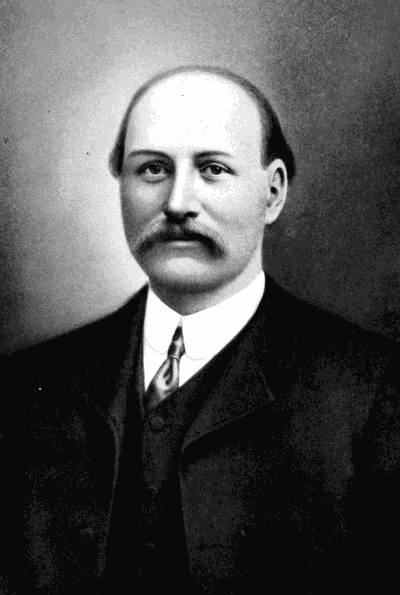
LOGAN P. MULKEY
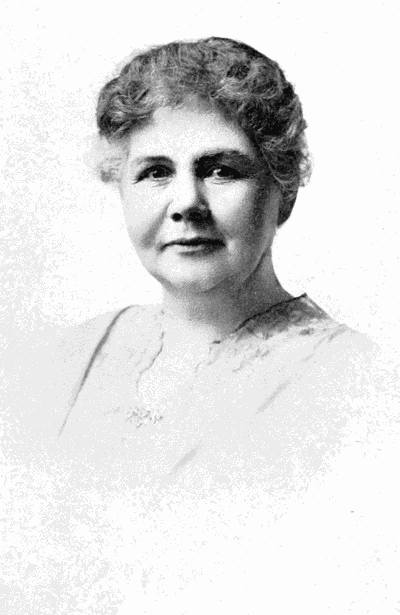
MRS. LOGAN P. MULKEY
Logan P. Mulkey received his education in the public schools of Corvallis, Oregon, and also gained valuable training in self-reliance and resourcefulness in the experiences which came to him in the pioneer settlement in which he grew to manhood. On starting out on his independent career he went to Pomeroy, Washington, where he became connected with the hardware business, and for twelve years he was engaged in that line. He erected one of the first store buildings in Pomeroy and was quite prominent in the early commercial life of that place. At length his health became impaired through close confinement and he sold his hardware store and bought a stock ranch of some twenty-five hundred acres seven miles from Pomeroy. For many years he gave his attention to raising stock on an extensive scale but in 1903 he disposed of his land and removed to Walla Walla, where he became a prominent operator in real estate, buying and selling city properties. He was highly successful in that business but his prosperity was not gained at the price of the failure of others, for he was never known to take advantage of any man. If he had sold a property and the purchaser found it difficult to make his payments at the time specified he was given an extension of time and his terms were made easier. Mr. Mulkey's high sense of honor and his probity inevitably won for him the respect and the warm regard of those with whom he was brought in contact and his friends were legion.
In 1885 Mr. Mulkey was united in marriage to Miss Georgia Graham, a daughter of William Graham, who was also a pioneer of the northwest, having crossed the plains from Ohio in 1852.
Mr. Graham was born in Wayne county, Ohio, in 1818, and at the age of twenty-one years married Miss Harriet Duncan. They removed to Missouri, where they spent seven years, and in 1852 started across the plains to Oregon with three wagons and twelve head of cattle. This trip was a very arduous one and while en route their money was stolen. Being a very generous man, Mr. Graham picked up all stranded travelers from other trains. He was accompanied by his wife and six children. In crossing the Cascade mountains an ox fell exhausted and by hand the wagons were lowered in order to proceed on their journey. The next morning this ox had wandered away and a man bought the wagon and brought the family to a place near Corvallis, for which Mr. Graham paid him one hundred dollars. On the journey westward nearly all provisions gave out and the men were forced to hunt in order to supply the party with something to eat. While on one of these hunting trips five Indians came and the women traded a wagon cover for flour. Mr. Graham took up a homestead near Corvallis, not far from the mouth of the Deschutes river, where he developed a fruit farm. In 1874 he came to Washington and purchased a farm one and one-half miles from Dayton, where he spent the remainder of his life. He died at the age of seventy-four years and his wife at the age of seventy. In their family were eleven children, of whom six are still living. Mr. and Mrs. Graham were both consistent members of the Congregational church and were very hospitable people, their home being always open to the travelers or newcomers of this region.
To Mr. and Mrs. Mulkey were born five children, of whom four survive, namely: Allen L., who operates a twenty-two hundred acre ranch in Walla Walla county belonging to his mother; Frances, at home; Marion, who volunteered June 1, 1917, and is now a member of Battery D, Twentieth Field Artillery, stationed at Camp Stanley, Leon Springs, Texas; and Helen, at home.
Mr. Mulkey was a member of the Knights of Pythias fraternity but was not very active in the work of that organization, preferring to spend his leisure time at home. One of his strongest characteristics was his devotion to his family and to his friends and anything that he could do to add to the pleasure of those whom he loved was a source of the greatest satisfaction to him. His death occurred on the 7th of August, 1910, but his memory lives in the hearts of many.
Since her husband's death Mrs. Mulkey has personally managed the large estate and in 1914 she erected the Mulkey apartments at No. 20 Park street and the following year erected an apartment building on the site of the old family home, which had been destroyed by fire, the new building being entirely designed by her. These buildings are thoroughly up-to-date and provided with all the improvements to be found in the highest class apartments and are valuable assets of Walla Walla. In addition to looking after her interests in connection with these apartments Mrs. Mulkey gives supervision to the operation of a splendid ranch of twenty-two hundred acres which she has acquired since the death of her husband and she also owns considerable city property. She and her children are members of the Congregational church and she also belongs to the Sunshine Club and the Reading Club of Walla Walla. All movements for the moral and civic as well as the material upbuilding of Walla Walla receive her hearty support. She combines the qualities necessary to the successful conduct of large business interests with the qualities of the home maker, for she has been a devoted mother and was in the fullest sense a true helpmate to her husband.
JOHN G. PAINE.
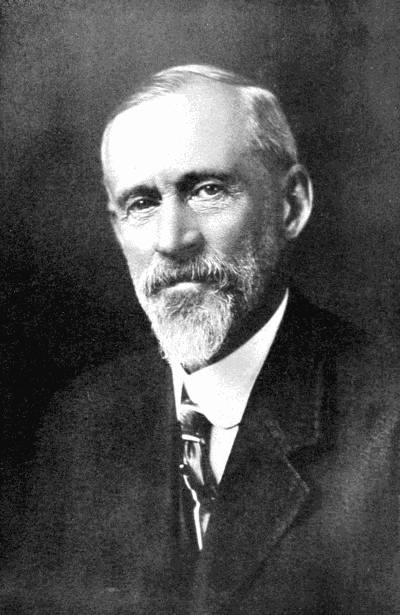
JOHN G. PAINE
John G. Paine, who has been actively identified with commercial, financial and agricultural interests in western Washington, was born in Mercer, Maine, July 8, 1842. He acquired a common school education in his home town, where he was reared upon a farm. Prompted by a desire to attempt something more promising than a New England farm offered, he followed Horace Greeley's advice to go west and in 1865 arrived in Walla Walla. Soon after his arrival he secured employment in the general merchandise store of Baker & Boyer, acting as a salesman in their establishment. In 1868 he entered into partnership with his brother, F. W. Paine, in the conduct of a general store and in 1871 took over the management of a branch store in Waitsburg. Six years later, having disposed of that business, he opened a branch store in Dayton and in the meantime he served as cashier of the Columbia National Bank. After a few years of confinement in indoor life, the firm having acquired several large tracts of wheat land, he undertook the development of that property and devoted several years to wheat growing. More recently, however, he has been largely interested in the development of alfalfa land and is thus prominently connected with an industry which is proving a source of wealth to eastern Washington. Mr. Paine occupies a homelike suite of rooms in the Paine building. He is widely known in the state as a most progressive business man and his enterprise has carried him into most important business connections.
OSCAR W. BRUNTON.
Well directed business activity finds expression in the life record of Oscar W. Brunton, vice president of the Dement Brothers Company, proprietors of a large flour mill at Walla Walla. He was born in Alton, Illinois, on the 15th of March, 1868, a son of David and Margaret P. (White) Brunton. The father was a native of Pennsylvania and the mother of Tennessee, while their marriage was celebrated in Illinois. The former was a winding stair builder and became actively identified with business interests in Alton, Illinois, where he passed away in 1870. His widow afterward removed with her three children to Macon City, Missouri, and thence to Hannibal, that state, and in August, 1876 they came to Walla Walla, where she joined her sister, who was the wife of Rev. H. W. Egan, who was presiding over the Cumberland Presbyterian church at this place. Here Mrs. Brunton reared her children and continued to make her home until 1907, when she took up her residence with a daughter in Berkeley, California, where she has since resided. She is now in her eighty-seventh year and is enjoying excellent health, while in possession of all of her faculties.
Oscar W. Brunton was educated in the Walla Walla public schools and in Whitman Seminary. In his boyhood days he took up the study of telegraphy and mastered the Morse code while he was but a child. A brother being an operator, he was desirous of studying along that line but he never followed the profession as a means of livelihood. For some years in his youth he worked as a job printer in the old Journal office, and in 1884 he entered the employ of Dement Brothers in the Eureka flour mills. There he proved efficient, capable and trustworthy and in 1892 he had risen to the position of mill manager, while in 1896, upon the incorporation of the company, he became one of the members of the concern and continued as manager of the mills. In 1907 he was elected to the vice presidency of the Dement Brothers Company and remained as manager as well. Since that time he has given his attention to administrative direction and executive control as well as to the operation of the mills and has contributed much to the success of the business. There is no phase of milling operations with which he is not familiar and his long experience and capability constitute an important element in the growing success of their trade.
Mr. Brunton was united in marriage on the 12th of May, 1891, to Miss Alice Roberta Egbert, a daughter of Marion D. Egbert, who is now deceased, but for many years was a well known publisher of Walla Walla. Mr. and Mrs. Brunton have become the parents of one child, Margaret A., who is a graduate of the University of California of the class of 1914 and is now a successful teacher in the Le Grand (Calif.) high school.
In his political views Mr. Brunton is a stalwart republican, having been a staunch supporter of the party since age conferred upon him the right of franchise. He belongs to the Walla Walla Commercial Club and cooperates in all of its well defined plans for the upbuilding of the city, for the extension of its trade relations and for the upholding of its high civic standards. He ranks with its foremost business men and representative residents, enjoying the goodwill and confidence of all with whom he has been associated.
HON. HARLAN D. ELDRIDGE.
A valuable farm property is that owned and operated by Hon. Harlan D. Eldridge, who is living on section 1, township 7 north, range 37 east, Walla Walla county. It is equipped with all the latest accessories and conveniences of a model farm property of the twentieth century and in its splendid appearance indicates the care and supervision of a practical and progressive owner. But while Mr. Eldridge is a representative and prosperous agriculturist, he is also a citizen wide awake to the duties and obligations that devolve upon him in connection with public affairs and has rendered active aid to his state as a member of the general assembly.
He was born in Dallas county, Iowa, April 6, 1858, and is a son of Joseph W. and Matilda (Parks) Eldridge, the former a native of Ohio, while the latter was born in Indiana. Removing westward, they settled in Iowa in 1856, taking up their abode upon a farm in Dallas county, where they remained for a number of years. Afterwards they became residents of Omaha, Nebraska, where both spent their remaining days. They had a family of three children, of whom two are now living.
Harlan D. Eldridge spent the period of his boyhood and youth in his native county and there completed a public school education which fitted him for life's practical duties and responsibilities. He received thorough training in the work of the farm and thus became well qualified for the tasks which he later undertook for his own benefit. In April, 1880, when a young man of twenty-two years, he arrived in Walla Walla county and took up a homestead north of Waitsburg, upon which he resided for ten years. On the expiration of that period he sold the property and bought his present farm, which is situated on section I, township 7 north, range 37 east. He has since improved the property with fine buildings, making it one of the attractive features of the landscape. In addition to the comfortable and commodious residence there are also barns and outbuildings for the shelter of grain and stock and the latest improved machinery facilitates the work of the fields. He has here six hundred and forty acres under cultivation and he makes a specialty of the growing of wheat and of stock raising, in both of which branches of business he is meeting with excellent success. He studies carefully the question of crop rotation and the productiveness of the soil and he employs the most scientific methods of carrying on his farm work-methods which are after all the practical elements of desired results.
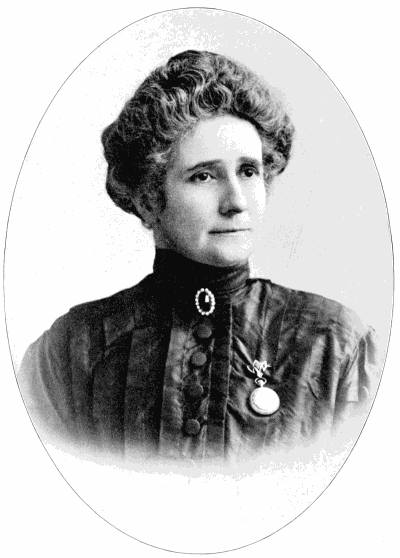
MRS. HARLAN D. ELDRIDGE
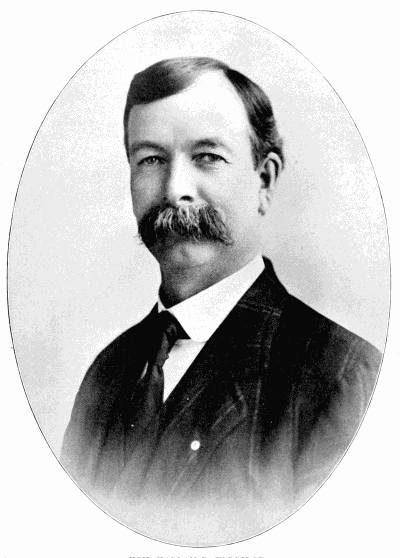
HON. HARLAN D. ELDRIDGE
In 1884 Mr. Eldridge was united in marriage to Miss Etta Barnes, who was born in Walla Walla county and is a daughter of William T. and Sarah A. (Blaine) Barnes, natives of Kentucky and of Indiana respectively. The family removed to Oregon in 1852 and settled on a ranch there, upon which the parents resided until 1864, when they came to Walla Walla county, here spending their remaining days. In their family were thirteen children, including one pair of twins, and of this number six are yet living. To Mr. and Mrs. Eldridge have been born five children: William W., who is now located on a ranch in Alberta, Canada; Taylor B., who is a merchant of Dixie, where he is also filling the position of postmaster; Earl V., at home; Geneva M., the wife of J. G. Brunton; and Bonnie G., the wife of Burt O'Neal. Her death occurred November 25, 1915.
The parents hold membership in the Christian church and guide their lives according to its teachings. Mr. Eldridge gives his political support to the republican party and in 1909 was elected on that ticket to the state legislature. He proved an earnest working member of the general assembly and gave thoughtful and earnest consideration to the vital questions which came up for settlement. He has also filled the office of county commissioner for four years and he has done effective service in behalf of the interests of the schools as a member of the school board. In a word, he stands for progress and improvement at all times and lends his support to those interests and activities which are matters of civic virtue and of civic pride. Fraternally he is connected with the Independent Order of Odd Fellows and has filled all of the chairs in the local lodge to which he belongs. He has also filled all of the offices in Mountain Gem Lodge, No. 136, K. P., of which he is a charter member. His life has been well spent and his many sterling traits of character have gained for him the warm regard and confidence of all who know him. Whatever he undertakes he does with thoroughness and energy and because of his genuine worth and public-spirited citizenship his fellow townsmen have honored him with high office.
RALPH E. GUICHARD.
Ralph E. Guichard, deceased, was born in Walla Walla on the 6th of January,. 1869, being a son of Judge Rudolph Guichard, who in a military capacity was sent to Walla Walla when there was nothing here but a fort. The father was a man of high intellectual attainments and of unswerving integrity. He was born at Zeitz, Prussia, December 8, 1830, and in 1854 came to the United States. For a year he resided in Rhode Island and in Massachusetts, after which he went to West Virginia and subsequently to Newport, Kentucky, where he enlisted in the United States army. On the 10th of August, 1857, he was sent to Fort Walla Walla and on retiring from the army he embarked in merchandising in this city, successfully conducting business here until 1871. He afterward took up the study of law and in 1884 was admitted to the bar. He held many public offices, including that of probate judge, was also register of the land office, was county treasurer and penitentiary commissioner. His public duties were discharged with marked fidelity and ability, so that over the record of his official career there falls no shadow of wrong or suspicion of evil. In politics he was a democrat, recognized as one of the leaders of his party. He was also a prominent Mason, loyal to the teachings and purposes of the craft. On the 14th of October, 1866, Judge Guichard was married to Miss Mary Morrison and to them were born three children: Ralph E., Albert and Mary. The father passed away on the 3d of April, 1898.
Ralph E. Guichard spent his entire life in Walla Walla. He pursued his education in the Catholic Academy and at the age of fifteen years he entered the drug store of Charles A. Hungate in the capacity of clerk, there remaining for seven years, during which time he thoroughly mastered pharmacy and became a registered pharmacist. He subsequently spent three years in the same store under J. W. Esteb and for one year was in the employ of James McAuliffe. He then became a partner in the business, under the firm style of Guichard & McAuliffe. After a few months, however, the partnership was dissolved and Mr. Guichard entered the employ of the Whitehouse Clothing Company and later became part owner of the business. In 1900 the entire business passed into his hands. His sagacity, his industry, his caution and his capable management, together with his close application, won for him substantial success and an honored place among the commercial leaders of this section. The Whitehouse Clothing Company or the R. E. Guichard Clothing Company, Inc., developed an excellent trade and has become one of the leading clothing houses of the city.
On December 30, 1903, Mr. Guichard was united in marriage to Miss Margaret A. Wooden, of New York, who taught for several years in the city schools of Walla Walla. They had a family of three children: Harold E., Dorothy-Mae, and Robert A.
Mr. Guichard passed away August 10, 1913, and his death was the occasion of deep and widespread regret. He was a member of the Catholic church, also of the Knights of Columbus and of the Benevolent Protective Order of Elks. He likewise held membership in the Commercial Club. His entire life, with the exception of a few years spent in travel, was passed in Walla Walla, so that he was largely familiar with its history, and events which to many were matters of record were to him familiar from personal knowledge and experience. He ever rejoiced in the upbuilding and progress of his city and cooperated to the extent of his time and ability in all matters that related to the general welfare and improvement.
HON. ELMER E. HALSEY.
Hon. Elmer E. Halsey, of Clarkston, is a lawyer, now following his profession in Washington and at the same time is taking active part in framing the laws of the state as a member of the legislature. He was born in Dover, New Jersey, January 23, 1861, a son of Thomas J. and Sarah E. Halsey, who were also natives of that state. He was reared in New Jersey and acquired his early education in the schools of Dover and Hackettstown. In 1878 he went to Missouri and worked on a farm. In 1883 he attended the St. Louis Law School in the same state. In 1885 and 1886 he was a law student in the State University of Michigan at Ann Arbor and was admitted to the bar in the spring of the latter year. In 1890 he was elected prosecuting attorney of Baraga county, Michigan, and was reelected in 1892 and 1894, having been elected to that office for three consecutive terms. He was also appointed to the position of receiver of the United States land office at Marquette, Michigan, in 1896 and occupied that position until 1898. In August of the latter year he made his way westward to Washington and took up his abode in Clarkston, opening a law office in that city and also in Lewiston. He has since engaged in the practice of law. In 1902 he was elected prosecuting attorney of Asotin county. He is recognized as a strong, able lawyer, and is considered one of the leaders in the legislature. He is a stalwart supporter of the republican party and in 1909 was elected to represent his district in the state legislature and is still serving at this date in that capacity, having been elected to the office for five consecutive terms, without opposition in his own party four times, and twice without opposition from the democrats.
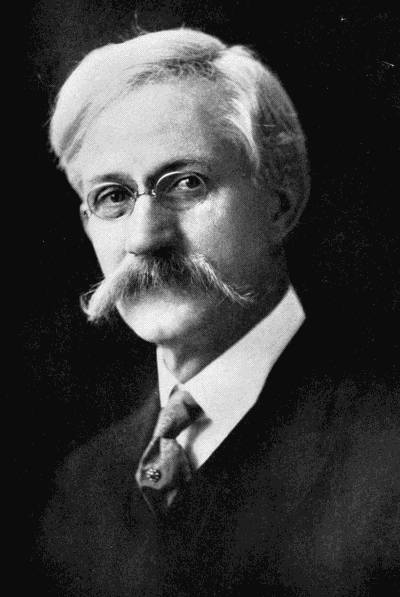
ELMER E. HALSEY
In 1886 Mr. Halsey was united in marriage to Miss Sarah Thomas, a daughter of John R. Thomas, of L'Anse, Michigan, but a native of Vermont. They have two children: Marion G., who is the wife of Dr. E. D. Sawyer, of Asotin, and Burt C., who is in the United States army in the Fourth Balloon Squadron of the Signal Corps, having enlisted while a student at the University of Washington.
Mr. Halsey is a Mason, having three times served as master of Clarkston Lodge, No. 143, F. & A. M. For fifteen years he served on the Clarkston school board and the cause of education has found in him a stalwart champion. He was largely instrumental in the legislature in promoting the bone-dry law of Washington and succeeded in having the bill passed through the house. His name is connected with much important legislation which has been enacted during his five terms connection with the house of representatives. His course has been characterized by the utmost devotion to the public good and the record of no member of the legislature has extended over a longer connection therewith and none has been more faultless in honor, fearless in conduct or stainless in reputation.
J. J. ROHN.
J. J. Rohn is now living retired in Walla Walla but for a long period was actively identified with farming interests in this section of the state and through close application and unremitting energy won a substantial measure of success. He was born in Baden, Germany, November 22, 1834, and is a son of Nicholas and Kate (Cipf) Rohn, who were also natives of that country, where they spent their entire lives. They had a family of six children, but so far as he knows, J. J. Rohn is the only one now living. He was reared and educated in his native country and was a youth of seventeen when he bade adieu to friends and native land and sailed for America, having determined to try his fortune on this side of the Atlantic. He crossed the water in 1851, making the trip on a sailing vessel, and landed at New York city, where he remained for two years, working at his trade of picture frame gilder, which he had learned in Germany. Subsequently he removed to Baltimore, Maryland, where he resided for one year, and in 1855 he enlisted for active service in the United States army and was sent to New York harbor, where he remained until May of that year. He was then transferred to San Francisco, California, and afterward was sent to Red Bluff, and still later to Fort Lane, Oregon, to which point he walked, making the entire distance on foot. In 1855 the Indian war broke out and that winter he was engaged in fighting the red men, being in the mountains throughout the entire period. He was fortunate in that he escaped all injury, although he experienced many of the hardships incident to such warfare. In 1857 he was sent to Fort Walla Walla, where he was stationed for several years. He went out with the Wright expedition in 1858 and in 1859 he was transferred to Vancouver, where he remained until honorably discharged in 1860.
Mr. Rohn then returned to Walla Walla and took up a homestead on Mill creek, where he has since lived. He still owns a farm of one hundred and sixty acres, which is highly improved. He has added to it all modern accessories and conveniences and was successfully engaged in farming for many years but eventually put aside the active work of the fields to enjoy a rest which he has truly earned and richly deserves. He is now eighty-three years of age and is most comfortably situated in life, the years of his former toil bringing to him a competence that supplies him with all necessities and many luxuries.
In 1866 Mr. Rohn was united in marriage to Miss Sarah E. Sanders, who was born in Indiana, a daughter of Joseph Sanders, who came to Walla Walla in 1864. To Mr. and Mrs. Rohn were born four children: Kate, who is the widow of T. J. Bryan; Malina J., who is the wife of Harry Gilkerson; Fred, who owns and operates three hundred and eighty acres of land in Whitman county; and Sarah Belle, deceased. The son is married and has seven children. The wife and mother passed away in 1872 and Mr. Rohn has never married again. He reared his children to man and womanhood alone, doing the part of both mother and father in his care of them.
In politics Mr. Rohn has always been a stalwart democrat, actively interested in the success of his party and doing everything in his power to secure the adoption of its principles. His has been a well spent life fraught with good results and characterized by all those traits which in every land and clime awaken confidence and regard. Industry, and perseverance, guided by keen intelligence, have been the basis of his success and he can look back over the past without regret. He has never had occasion to regret his determination to come to the new world, for he here found the opportunities which he sought and in their utilization has made steady progress.
HON. JAMES M. LAMB.
No history of Walla Walla county would be complete and satisfactory were there failure to make reference to Hon. James M. Lamb, who was familiarly known as Governor Lamb. When death called him in 1898 he had been a resident of this county for almost forty years. He was one of its first pioneers and one of its most progressive citizens. He had established the first blacksmith shop in this section of the state and he was the first to demonstrate the possibility of wheat growing on the hills. In many other ways he contributed to public progress and improvement though the utilization of the resources of this section of the country.
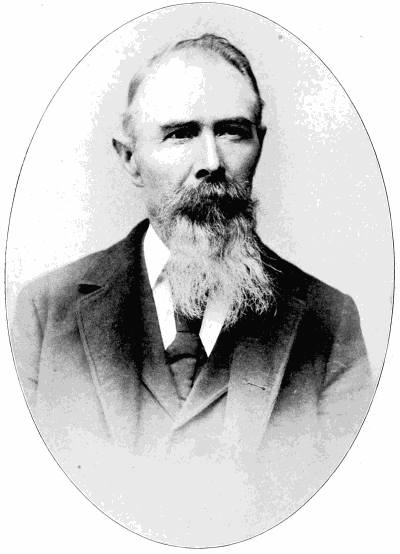
HON. JAMES M. LAMB
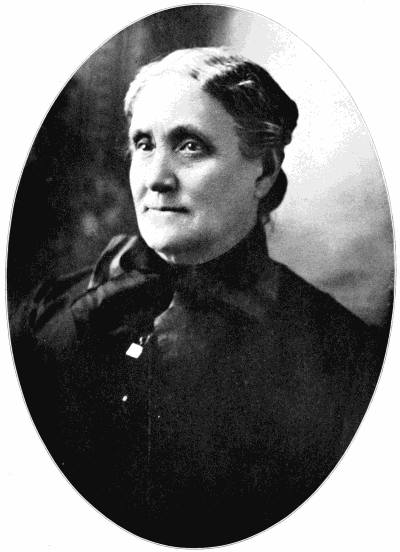
MRS. JAMES M. LAMB
Mr. Lamb was born in Logan county, Kentucky, February 19, 1835, a son of Downing and Elizabeth (Maxwell) Lamb, both of whom were natives of Logan county, Kentucky, where they resided until the '70s, when they came to Washington territory, establishing their home in Columbia county, where they resided until called to their final rest.
James M. Lamb remained a resident of his native state until he reached the age of nineteen years, when he crossed the plains to California with his parents in 1854, the gold fields being the attraction which brought them to the Pacific coast. He learned the blacksmith's trade after reaching California, where he conducted a shop and also engaged in farming. In 1856 he was married there to Miss Jane Pearce, also a native of Kentucky, and a daughter of John and Martha (King) Pearce. She crossed the plains from Atchison county, Missouri, in 1856.
Mr. and Mrs. Lamb began their domestic life in California but in 1859 came to Washington, establishing their home in Walla Walla county, where Mr. Lamb opened the first blacksmith shop in this section of the country, there being no shop between Walla Walla and Dayton at that period. He continued to operate his shop and conduct his farm up to the time of his death. About 1867 he went to a place near McMinnville, Oregon, to help perfect the first combination cutting and threshing machine used in this section of the country, as he was a master mechanic. This machine was first drawn by horses attached both in front and behind. Later he made a number of improvements on the machine, which was afterward sold to Holt & Company for two thousand dollars, and it has subsequently been perfected until today it is the standard machine of the kind used in this locality.
Mr. Lamb homesteaded eighty acres of land on his arrival in Walla Walla county and afterward added to his holdings by purchase from time to time until his farm comprised two hundred and eighty acres. This he brought under a high state of cultivation, carefully and persistently developing his fields, so that annually he gathered abundant harvests. It is said that he was the first man to demonstrate the possibility of growing wheat on the hills. He continually sought to improve his farm, was always ready to take up new methods and his sound judgment demonstrated to him the worth of any new idea that was advanced.
In politics Mr. Lamb was a democrat and one of the active workers of the party. He became a leader in molding public thought and opinion and exerted much influence over the affairs of the community. His aid was always given on the side of improvement and upbuilding. His fellow townsmen, recognizing his ability, called upon him to serve in several public offices. He was elected justice of the peace and filled that position for many years, his decisions being strictly fair and impartial, so that he won golden opinions from all sorts of people. In 1867 he was elected to the territorial legislature, where he served with honor and distinction, carefully aiding in the solution of many intricate and involved problems in connection with shaping the early legislation of the state. He also assisted in surveying Walla Walla county in pioneer times and there were many phases of public improvement with which he was closely identified. In 1885 he removed to Walla Walla, where he made his home until his death, although he passed away in Lodi, California, on the 5th of March, 1898, having gone to that place for the benefit of his health. His widow still survives and resides at the old home in Walla Walla with her son, Daniel W.
To Mr. and Mrs. Lamb were born six children: John D., a resident of Walla Walla; Georgia A., the wife of George Howard, of Berkeley, California; Martha E., who married A. H. Johnson, of Tacoma, Washington; Cora A., the widow of J. L. Cation and a resident of Walla Walla; William T., of this township; and Daniel W. The two sons, William T. and Daniel W. Lamb, conduct the old home farm and are representative agriculturists of this section of the state.
James M. Lamb was a most consistent Christian gentleman and an active worker in the church. He became one of the organizers of the First Christian church, services being held on the 4th of July, 1874, in an old log cabin at Dixie. The charter members were John R. Ware, Margaret Ware, Philip and Clarinda Beal, Elizabeth Neland, J. M. and Jane Lamb, W. T. Barnes, Sarah Barnes, Mr. Barnes becoming deacon and clerk, with J. R. Ware as elder. The life of James M. Lamb was ever guided by the highest and most honorable principles and he left to his family the priceless heritage of an untarnished name. For almost forty years he was a resident of Walla Walla and was one of its most valued citizens and honored pioneers. He contributed much to its early development as well as to its later progress and at all times he enjoyed the confidence and respect of those with whom he was brought in contact. His two sons are members of Mountain Gem Lodge, No. 136, K. P., of Dixie. Both have passed through all of the chairs and are members of the grand lodge and they are also identified with El Kindi Temple, No. 193, of the Knights of Khorassan. In business affairs they are progressive and enterprising, wisely managing their important farming interests, which are bringing to them a substantial annual return.
HON. HENRY PERRY ISAACS.
Hon. Henry Perry Isaacs, deceased, was one of the historic figures who have been dominant factors in the development of southeastern Washington and northeastern Oregon. His activities were of such a nature that he might be termed one of the empire builders of this section of the country. He saw the possibilities here and utilized the opportunities offered, his labors at all times contributed to public progress and prosperity as well as to individual success. He thus left his impress for good upon the history of Walla Walla and of the state and his memory is yet revered and honored by all who knew him.
Mr. Isaacs was a native of Philadelphia, Pennsylvania, where his birth occurred on the 17th of March, 1822. He came of Scotch-English ancestry and while spending his youthful days in the Keystone state acquired a common school education. He had no other opportunities for educational advancement save those which were self-acquired. He possessed, however, an observing eye and retentive memory and was continually storing his mind with facts that proved a basis for his success in later years. At an early age he entered the employ of one of Philadelphia's foremost mercantile houses and his training there constituted an important element in his later progress along commercial lines. When twenty-one years of age he removed to Indiana with a view of seeing something of the outside world and after reaching that state he engaged in merchandising on his own account. Subsequently he joined the rush for the California gold fields, but was not especially successful in his mining venture. However, he was a man of broad vision and saw wonderful opportunities in the new western country. This land of perpetual sunshine seemed to promise great things for the future and in 1858 he proved his faith in the country by erecting at Fort Colville, Washington, his first flour mill, demonstrating to the farmers of this section that wheat could be raised profitably upon the hills and uplands, which in those early days were given over to stock raising. This was the initial step in the development of his important milling interests. In 1862 he built the North Pacific Mills at Walla Walla and in 1864 he erected the War Eagle Mills at Boise City, Idaho. Wherever opportunity offered he eagerly grasped it and extended his efforts into various fields, his labors at all times proving profitable by reason of the intelligent direction of his efforts. In 1865 the Middleton mills at Middleton, Idaho, were built and in 1883 he still further extended his efforts by the building of the North Pacific Mills at Prescott, known as Mill B. In 1898 he built the North Pacific Mills at Wasco, Oregon. His wide experience in this line made him the foremost miller of the Pacific coast. His operations exceeded in volume and importance those of any other man engaged in the milling business. His knowledge concerning the best methods of manufacturing and handling flour became a matter of general comment and he was recognized as authority upon all matters pertaining to milling in any of its branches. The output of his mills was not only sold extensively in this section of the country but the production above what was needed in Washington and the northwest found a ready market in the orient and much of the product was exported to China. Mr. Isaacs was the first miller on the Pacific coast to adopt the roller system in the manufacture of flour, his first rolls being of porcelain and imported from Switzerland. He at all times kept his business in touch with the most modern processes and introduced the latest improved machinery into his plant.
Outside of milling circles Mr. Isaacs was perhaps best known by reason of his public spirit and his progressiveness. After demonstrating the possibilities of wheat growing and the development of kindred interests arising therefrom he did some pioneering in horticulture, planting in 1864 one of the first orchards in the vicinity of Walla Walla. Not long afterward he planted a vineyard and from this point he experimented successfully with almost every variety of fruit and vegetables grown in the north temperate zone. He was an enthusiast in all that pertained to progress and evolution in plants and tree life and he gave liberally of his time and means to further the cause. He was a leader in public affairs and he represented the county in the territorial council of 1885 and 1886, at which session he introduced the bill establishing the state penitentiary at Walla Walla. He was constantly watchful of opportunities pointing not only to his individual success but to the general development of this part of the country, and he ever looked beyond the exigencies of the moment to the possibilities and opportunities of the future. He was the first to attempt to induce G. W. Hunt to build the Washington & Columbia River Line from Dayton to Wallula and thence to Pendleton. The line was successfully built and operated and the completed project was a monument to his enterprise and farsightedness. He was also president of the Commercial Club at the time and used every effort to secure the early construction of the road. But few men in all Washington became so thoroughly conversant with the state, its varied interests and its possibilities or were so deeply interested in the success of its enterprises as Mr. Isaacs, and but few men have arisen to take so active a part in the development of this section of the country. With his death on the 14th of July, 1900, the state of Washington and in fact the entire Pacific northwest lost one of its most conspicuous figures, most esteemed citizens and most honored men.
CHRISTIAN J. BOWERS.
Christian J. Bowers has gained a gratifying measure of success as a farmer and is still active in that connection although now a resident of Walla Walla. He was born in Baltimore, Maryland, January 7, 1867, a son of George W. and Catherine M. (Brown) Bowers, also natives of that city, where they were reared. They continued to reside there for about ten years after their marriage and then removed successively to Pennsylvania, Illinois, Iowa and Kansas. From the last named state they crossed the plains in 1880 by horse team to Walla Walla, Washington, and located in the Dry creek hills, about seven miles north of Walla Walla. The father took up a homestead and also preempted one hundred and sixty acres of land and resided upon his farm until about 1896, when he disposed of his holdings and removed to Columbia county, where he purchased two hundred and forty acres on Patit creek, four miles from Dayton. He still owns that farm, but since 1905 has been a resident of Walla Walla. To him and his wife were born the following children: Christian J., of this review; Bertha S., who passed away at the age of eighteen years; Mae, who is now the wife of John W. Eby, of Walla Walla county; Charles E., a resident of Walla Walla; and Gertrude, who is the wife of Clarence Wilson, of Topeka, Kansas.
Christian J. Bowers received his early education in the district schools and in the Waitsburg public schools and at the Huntsville Seminary. He was reared to agricultural pursuits and following his marriage in 1888 he began farming on his own account in the Dry creek hills and maintained his residence upon his ranch until 1905, when he removed to Walla Walla. He still directs the operation of his holdings, which include three hundred and twenty acres near Lowden, and also owns about eight hundred acres in Whitman county. The financial independence which is now his is the direct result of his thorough knowledge of farming, his enterprise and his good management, and he justly ranks among the successful men of Walla Walla county.
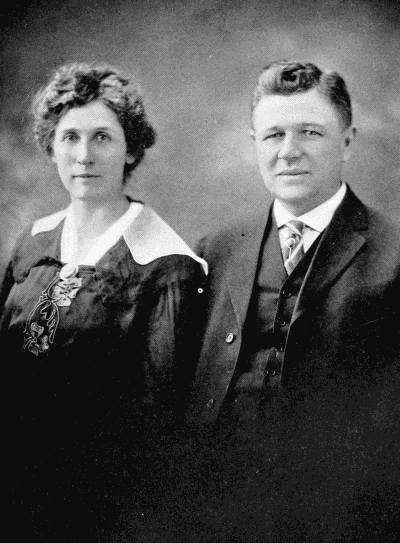
MR. AND MRS. CHRISTIAN J. BOWERS
On the 13th of May, 1888, occurred the marriage of Mr. Bowers and Miss Laura V. Coplen, a native of Washington. Her grandfather, Henry Coplen, removed with his family from Indiana to Colorado and thence in 1864 located in the Willamette valley, near Vancouver, Washington. Six years later, in 1870, he removed to Whitman county, Washington, where he founded the town of Latah. His son, Benjamin, was a scout in the early days and took part in the Indian wars in the northwest. The mastodon skeleton which is now preserved in Field Museum in Chicago was found upon his farm. James W. Coplen, father of Mrs. Bowers and son of Henry Coplen, was married in 1865, in the Willamette valley, to Miss Elizabeth Hoskins, a daughter of Dillon and Rachel (Emery) Hoskins, who had removed to the west with their family from Iowa, crossing the plains with ox teams in 1851 and reaching their destination after six months spent en route. They settled at Scio, in the Willamette valley, where they secured a donation claim of three hundred and twenty acres. The parents both died in Oregon, the father passing away in 1888 and the mother in 1898. Soon after their marriage James W. Coplen and his wife took up a donation claim on the old battleground near Vancouver, Washington, at which place Mrs. Bowers was born, and while there Mr. Coplen became ill and accordingly returned to his old home in the Willamette valley, where his death occurred in 1868. To him and his wife had been born two children: William, a resident of Lewiston, Idaho; and Laura V., who became the wife of Christian J. Bowers. Mrs. Coplen later removed to Walla Walla county, where she met the Rev. William C. Gallaher, and in 1871 they were married. Mr. Gallaher was born in Putnam county, Illinois, in 1835, and died on a farm which he owned near Milton, Oregon, December 22, 1915, his widow passing away upon the farm in February, 1916. They were the parents of two children: Minnie E., now the wife of O. E. Phillips, of Walla Walla; and Ernest U., who resides upon the old home farm near Milton, Oregon. Rev. Gallaher was one of the pioneer ministers of the northwest, coming as a missionary to Oregon. He was one of the earliest settlers of "Old Oregon," having made the long journey across the plains with his parents in 1845, when a boy of ten years. The family settled in Oregon and there he grew to manhood. In 1861 he removed to Walla Walla and helped to organize the first United Brethren church in the state. He remained active in the work of the ministry until he reached an advanced age and was one of the best known divines of the northwest.
To Mr. and Mrs. Bowers have been born four children, namely: Harry C., who is farming the Whitman county farm belonging to his father; George W., who is operating his father's farm in Walla Walla county; Violet B., the wife of Wayne Reid, who is also farming in Whitman county; and Sheldon H., who is at home.
Mr. Bowers gives his support to the candidates and measures of the democratic party and takes a commendable interest in the questions and issues of the day but has never been an office seeker. His wife belongs to the Christian church and aids in its work. She is also a member of the Sunshine Club and the president of the Woman's Educational Club of Walla Walla. He is a man of importance in his community and is also popular personally.