BIOGRAPHICAL
Reading edition
WILLIAM PARKHURST WINANS.
No history of Walla Walla would be complete without extended reference to William Parkhurst Winans, who was an octogenarian at the time of his demise. He had long been identified with the northwest and his life was one of great usefulness and activity. He was of Holland ancestry, descended from an ancient family belonging to the Holland nobility. The ancestral line is traced back to Jean Winants, who was a lawyer at Antwerp, living in 1580. The line comes down through Goswin Wynants, who was born March 22, 1630, and was pensionary adviser for the province of Limbourg in 1666 and was afterward a member of the high council of Brabant by letter patent April 16, 1668. Goswin Arnould, Comte de Wynants, was born July 20, 1661, was a member of the council of Brabant by letters patent August 20, 1692, and in 1716 became a member of the council of the privy council.
The following year he was called to Vienna as president of the supreme council of the affairs of the Lowlands. He was created a viscomte by letters patent December 24, 1721, then comte by letters patent September 23, 1727. He passed away in Vienna, March 8, 1732. He had married Catherine Christine Van-den-Broeck, who was born September 23, 1667, and died December 19, 1746. Ten children were born to them. The coat of arms is described as follows:
"On a field argent, three bunches of grapes; a chevron azure, surmounted by a cheif gules. A helmet with a mantle azure and gules, and the crest, a Moor holding a bunch of grapes." The motto—"Fors Non Mutat Genus," the liberal translation of which is "Fortune cannot change the race."
When the Dutch colonized the new world in the beginning of the seventeenth century, their descendants modified their name, adapting it to the English orthography and pronunciation—Winans.
John Winans, of Elizabethtown, New Jersey, born in Holland, 1617, was married in 1664 to Susanna Melyn. He was one of the eighty "associates" who bought land from the Indians. He died in December, 1694, and his will is now on file with the secretary of state at Trenton, New Jersey. His wife was Susanna, daughter of Cornelius Melyn, the famous patron of Staten Island, who led the popular party against Stuyvesant, "central figure of his day." In 1640, Cornelius Melyn had a grant of all of Staten Island.
The records show nine children born to John and Susanna Winans; and Isaac, the youngest, 1684-1723, was the direct ancestor of the Winans family as represented in Walla Walla. To him and his wife, Hannah, were born six children: Hannah, Phebe, Isaac, Abraham, William and Elias.
The third of this family, Isaac Winans, was born in 1710 and died in 1780. He served as a member of the committee of safety during the Revolutionary war and for loyalty to the colonies was taken prisoner by the British and died from cruelties in the Sugar House in New York. He was married twice and the children of Isaac and Margaret Winans were Isaac, Mathias and Abigal. To him and his second wife, Magdalene Winans, there were born five children, namely: Jane, Margaret, Moses, Susanna and Elizabeth.
The sixth member of the family whose record has just been given was Moses Winans, who was born November 9, 1753, and who departed this life January 28, 1822. He served during the Revolutionary war in Captain Squire's company of the Essex County Militia. His wife, Ruth, was born August 5, 1758, and died January 26, 1817. They were the parents of eight children.
The youngest one of these children was Jonas Wood Winans, who was born January 19, 1802, and died October 1, 1878. He married Sarah Stiles and they became the parents of William Parkhurst Winans, whose name introduces this review. It was on the 20th of December, 1827, that Jonas W. Winans wedded Sarah Stiles, who was born July 23, 1806, and who departed this life January 8, 1858. They had a family of eight children. Isaac, the eldest, was born October 20, 1828, was married December 20, 1851, to Sarah Webster and died August 31, 1907. Ebenezer Connett, born May 5, 1830, was married October 29, 1857, to Margaret B. Rose. Meline was born February 15, 1833, and died January 12, 1845. William Parkhurst was the next of the family. Sarah Jane, the fifth child, was born July 7, 1839, and on the 30th of November, 1866, became the wife of Augustus Dow. Her death occurred May 17, 1870. Jonas Wood, who was born November 11, 1840, was married September 13, 1876, to Alice E. Jones and died September 2, 1899. Elizabeth Magdaline, born June 3, 1843, became the wife of William A. Hubbard, and died March 21, 1895. Mary Stiles, born January 23, 1846, was married January 31, 1877, to Dorus E. Bates, who died August 15, 1880, and on the 25th of February, 1896, she became the wife of Augustus Dow.
William P. Winans lived to reach the age of eighty-one years and the long period was one of great usefulness and activity, characterized by rapid and substantial advance in business and by devotion to the general good. He was born in Elizabeth, New Jersey, on the 28th of January, 1836, and was a little lad of ten years when his parents removed with their family to Pittsfield, Illinois, where he continued his education in the public schools. He had started on a business career in that state when ill health caused him to cross the plains. In his early boyhood he had worked on his father's farm and at the age of eighteen had become a clerk in a store, being thus employed through the succeeding five years. At the doctor's orders, however, he was forced to "get outdoors" and, attracted by the Pike's Peak excitement, he joined three companions, and with a prairie schooner and four yoke of oxen they started for Colorado. When within ten days of their destination they met a party of miners who were returning home and who had had an encounter with the Indians, some of them being wounded. The next day they met scores of other wagons with their owners retracing their steps and in one day passed over seven hundred wagons eastward bound. All told the same story—that it was not a poor man's district, for the gold was in quartz formation instead of being placer gold. One night when Mr. Winans and his companions camped he noticed that the wagon was headed east instead of west.
The next morning his partners, who were older than he, told him that they had decided to return, but Mr. Winans refused to go back, whereupon his companions unyoked his two oxen, turned them loose, put his blankets and his share of the provisions by the side of the road and left him. Next day, at noon, a wagon westward bound halted and the driver asked Mr. Winans why he was camped there and which way he was headed. Mr. Winans replied "westward." He joined forces with this man and eventually they reached Cherry creek, now the city of Denver, then containing about six or seven houses. One day a man by the name of George Grimes, who had previously lived in Oregon, said: "I am through here. I am going to Oregon. Do any of you fellows want to go along?" Mr. Winans responded, "I'll go," and selling his oxen, he bought a good saddle and two horses, one for a pack horse and the other for a riding horse. One plan which the party pursued on their way westward was to camp at night, build a fire, get supper and then move on in the dark for a mile and camp, so the Indians would not surprise them, learning of their whereabouts by means of the fire. At length Mr. Winans arrived in Oregon in September, 1859, and located on the Umatilla river, stacking the first grain in that vicinity. He also taught school in Umatilla county in the winter of 1860-61 and he served as a clerk of the first election in Oregon, which was held in 1860, the year in which Lincoln was elected president. In July, 1861, he removed to Fort Colville, Washington, and upon the organization of Spokane county was appointed deputy county auditor.
The next year he was elected to the position of auditor, in which capacity he served for two terms. He was afterwards appointed clerk for the United States district court for the district comprising Spokane and Missoula counties under Judge E. P. Oliphant. At a later period Mr. Winans engaged in merchandising and in 1866 he was again called to office, being elected county superintendent of schools. He aided in building the first schoolhouse north of the Snake river in a district that was two hundred by four hundred miles, lying between the Cascades and the Rockies and extending from Snake river to the Canadian border. With all of the early events which aided in shaping the history and developing the country he was closely associated. In 1867 he was called upon to represent Stevens county in the territorial legislature, serving during that and the succeeding year and again in 1871. In 1870 he was appointed sub-agent of the six non-treaty tribes of the Colville country, thus having to do with a group of Indians who had refused to make peace with the government. He took the part of the settlers against a proposed change of boundary of the Indian reservation and saved some valuable lands for the settlers—lands which they had been using for years and which they had brought under a high state of cultivation.
All during these years Mr. Winans was engaged in merchandising, but in 1871 disposed of his commercial interests in Colville and removed to Walla Walla, where he formed a partnership with Major R. R. Rees, thus establishing and conducting the largest store in Walla Walla in the early days. The business was originally carried on under the firm style of Rees & Winans and afterward was Johnson, Rees & Winans. Mr. Winans remained very active in the conduct of the business, which was developed to extensive proportions, but in 1890 he withdrew from mercantile interests and became president of the Farmers Savings Bank, which had been organized in September, 1889. The bank was opened at Second and Main streets, where it has since been located. In 1890 the bank was in temporary quarters while the old building was torn down and the new Rees-Winans building was erected. Mr. Winans remained president of the bank and active in the management of its affairs until his death. He was always found at his desk and seldom took a vacation. His life was one of intense and well directed activity and he never stopped short of the successful accomplishment of his purpose, while at all times the methods which he followed were those which would bear the closest investigation and scrutiny. He had extensive interests other than his connection with the Farmers Savings Bank and for thirty years he was one of the directors of the First National Bank of Walla Walla. His activities were ever of a character that contributed to the progress and prosperity of the community in which he lived as well as to the advancement of his individual fortunes.
On the 6th of October, 1869, Mr. Winans was married to Miss Lida Moore and to them were born three sons who are yet living, sketches of whom follow this. Mrs. Winans passed away December 4, 1876, and on the 20th of November, 1879, W. P. Winans was married to Miss Christine McRae, who survives him. They were the parents of three children. William Stiles Winans was born May 6, 1881, and died December 16, 1891. Freeman Earl Winans was born February 19, 1883, and married Miss Florence Ladd, November 23, 1908. He is department manager of the United States Rubber Company at Seattle. He is also a member of various fraternal orders. Sarah Jean Winans, born September 19, 1885, was married in 1909 to Major George Leroy Converse, Jr., Fourth Cavalry, U. S. A. She is the mother of two children, George Leroy IV and William Parkhurst Winans.
It was on Sunday, the 22d of April, 1917, that Mr. Winans passed away. He had attended church on that day and in the afternoon went for an auto trip to pick wild flowers, of which he was very fond. Death called him suddenly, his illness lasting less than an hour, and the news of his demise was received with the deepest regret because of the prominent part which he had taken in the public life of the community and by reason of the firm hold which he had upon the affection of his fellow townsmen. He was a most public-spirited citizen, interested in everything pertaining to general progress and improvement, and he lived to witness the remarkable transformation of the county as it emerged from pioneer conditions. The funeral services were held in the Presbyterian church and his remains were interred in Mountain View cemetery, the Knights Templar commandery attending in a body and officiating at the interment. Resolutions of respect were passed by the Farmers Savings Bank and the First National Bank, and memorial services were afterward held in the Presbyterian church, in which speeches were delivered paying high tribute to Mr. Winans as a citizen, as a business man, as a Mason, as an educator and as a Christian. The children of the Sunday school, remembering his love for wild flowers, gathered many of the blossoms of the field to decorate his grave. Thus was ended a life of much usefulness, in which Walla Walla benefited greatly as the result of his public spirit and his devotion to high ideals.
GILBERT PARK WINANS.
Gilbert Park Winans, the eldest son of William P. Winans, was born January 25, 1870, at Fort Colville, near Spokane, Washington, and when quite young removed with the family to Walla Walla, where he pursued his education. He was married in Vancouver, Washington, to Carrie Duckett, a daughter of Henry Duckett and a descendant of an old English family. They now have one child, Yancey Park. Gilbert P. Winans is a merchant and is prominent in fraternal circles, holding membership with the Independent Order of Odd Fellows and the Benevolent Protective Order of Elks, being a past grand in the former, in which organization he has filled all of the chairs of the local lodge.
PHILLIP MOORE WINANS.
Phillip Moore Winans is a prominent figure in banking circles of the northwest, now occupying the position of cashier of the First National Bank of Walla Walla. The story of his life is the story of thrift and business sagacity grafted onto western energy and enterprise. It is true that Mr. Winans did not have a humble origin or experience the early privations of some men who have achieved success, but on the other hand not one in a thousand who have enjoyed his modest advantages have turned them to such excellent account. The wisdom, energy and success with which he has pushed his way along is a study for American youth. A native son of Walla Walla, he was born on the 10th of December, 1874, his parents being William P. and Lida (Moore) Winans, who are mentioned elsewhere in this work.
Reared under the parental roof, he acquired his early education in the public schools of Walla Walla and afterward attended the Whitman Academy and Whitman College, from which he received his Bachelor of Arts degree as a member of the class of 1894. Following his graduation he made his initial step in the business world in connection with banking interests. He entered the Farmers Savings Bank of Walla Walla in a clerical capacity and in March, 1895, he resigned his position there to become connected with the First National Bank, with which he has since been identified, covering a period of twenty-three years. Advancing through the various positions of clerk, paying teller, and assistant cashier, he became cashier in 1909 and has since occupied that important position. The thoroughness of his training, his laudable ambition and his keen sagacity have made him a most competent official of the bank and one who has contributed in marked measure to its growing success. His activity in this connection has not only made him one of Walla Walla's representative business men, but also one who is widely known in the banking circles of the northwest.
In 1899 Mr. Winans was united in marriage to Miss Rose M. Blalock, the youngest daughter of Dr. N. G. Blalock, one of Walla Walla's early pioneer settlers and a very prominent and gifted man of the northwest country. Mrs. Winans passed away in November, 1914, and in February, 1916, Mr. Winans was again married, his second union being with Miss Catherine V. Eppinger, of Portland, Oregon, a lady of culture and refinement, who holds membership in the Women's Reading Club of Walla Walla and takes a very active and helpful part in church and charitable work.
Both Mr. and Mrs. Winans are members of the Presbyterian church. Fraternally he is identified with the Masons and in his life exemplifies the beneficent spirit of the craft. He holds membership in Walla Walla Lodge, No. 7, F. & A. M.; Walla Walla Chapter, No. 1, R. A. M.; and Walla Walla Lodge, No. 287, B. P. O. E., of which he is a past exalted ruler. A prominent member of the Commercial Club, he served as its vice president and one of its directors for five years. He is also a member of the board of directors and is secretary and treasurer of the Walla Walla Golf Club. He was one of the organizers and has been a member of the executive board of the Associated Students of Whitman College and has filled the position of treasurer of that organization since it was formed. His political indorsement is given to the republican party and while he keeps in touch with the current of political thought and action he has never been an aspirant for office. He ranks, however, with Walla Walla's foremost citizens and has always been active in every movement for the promotion and upbuilding of city and state. He has conducted important business affairs without allowing personal ambition or interests to dwarf his public spirit or activities. His personal characteristics and social qualities are pronounced and he is an acceptable companion in any society in which intelligence is a necessary attribute to congeniality. The simplicity and beauty of his daily life as seen in his home and family relations constitute an even balance to his splendid business ability.
ALLEN LIDA WINANS.
Allen Lida Winans, the youngest son of William P. Winans, was born in Walla Walla, April 25, 1876, attended the common schools and was graduated from Whitman College with the class of 1901. He is now with the Hazelwood Company, Limited, of Walla Walla. Fraternally he is a Knight Templar and Consistory Mason and is very prominent in the order, in which he has held office. He is also identified with the Independent Order of Odd Fellows.
ALPH PATRICK CAHILL.
Alph Patrick Cahill, manager and cashier of the Broughton National Bank at Dayton, Columbia county, was born at Markesan, Green Lake county, Wisconsin, October 7, 1859, a son of William R. and Angeline C. (Church) Cahill. His paternal grandfather, Patrick Cahill, was born in Dublin, Ireland, in 1800, while his maternal grandfather was one of the pioneer preachers of western Pennsylvania. William R. Cahill, the father, became one of the early settlers of the state of Wisconsin and contributed in substantial measure to the pioneer development of Green Lake county. At the time of the Civil war he responded to the country's call to arms and went to the front in defense of the Union.
At the usual age Alph P. Cahill became a pupil in the public schools of his native state, passing through consecutive grades until he completed a high school course in Oshkosh, Wisconsin, in 1873. He then turned his attention to the occupation of farming but afterward engaged in merchandising and subsequently took up the milling business. Step by step he progressed as the years went on and in 1909 he assisted in the organization of the Broughton National Bank of Dayton, Columbia county, Washington, and has since continued as its manager and cashier, largely shaping the policy and directing the activities of the institution. He has been most careful to safeguard the interests of stockholders and depositors alike, while the progressive methods of the bank have ever been tempered by a wise conservatism.
On the 2d of December, 1882, Mr. Cahill was united in marriage to Miss Irene M. Starr, a native of Oregon. For his second wife he chose Frankie G. King, a native of Columbia county, and a daughter of one of the pioneers of this section, William B. King, who was an old-time stage man, operating the Walla Walla-Lewiston stage and mail route in the early days. The second marriage was celebrated April 14, 1915. Mr. Cahill's children are: Roy R., who is a graduate of Whitman College and also of the law school of Columbia University of New York and who married Jessie M. Criffield, a daughter of W. R. Criffield, of Walla Walla; Fred V., who is a graduate of Washington University and is now engaged in mercantile business and who married Grace J. Crossler; May, who is the wife of Frank G. Barclay, a Columbia county farmer; Patrick E., who married Ethel Johnston and is a bookkeeper in the Broughton National Bank; Mack, a graduate of the Newberg (Oregon) high school; and Burr, who is at home.
Fraternally Mr. Cahill is connected with the Odd Fellows, the Knights of Pythias and the Masonic orders, being a Royal Arch Mason. He has always been an active worker in these different organizations and has been presiding officer in each. In politics he has ever been a stalwart republican since age conferred upon him the right of franchise and from 1892 until 1896 he filled the position of county auditor, his re-election being an acknowledgment of his excellent service during his first term. He was county commissioner from 1910 until 1912 and he has always been loyal to every cause and trust reposed in him. His military record covers three years' service with the National Guard. His fidelity to duty has never been called into question, whether in behalf of the public or in the conduct of his business interests. There is nothing spectacular in his career but his record is that of a busy life, such as contributes to the substantial force of every community.
JOHN A. DAVIS.
At the time of his death John A. Davis was in excellent financial circumstances and was recognized as a prominent farmer of Walla Walla county but during the early days of his residence here he endured many hardships and privations, the conditions being then those of a frontier region. He was born in Owen county, Indiana, November 17, 1839, and was a son of Willoughby and Mary (Orman) Davis, both natives of Tennessee. However, they removed to Indiana at an early day and remained there until 1848, when they went to Wapello county, Iowa, where the father continued to follow agricultural pursuits until his death. There the mother also passed away.
It was in Iowa that John A. Davis received his education and grew to manhood. In 1863, following his marriage, he and his wife made the seemingly never ending journey across the great plains to the Pacific northwest by ox team. They settled on a homestead on Mill creek in Walla Walla county, and their first residence was a log cabin covered with a clapboard roof and with a stick chimney. At that time there were but few settlers in this region and there were many inconveniences to be endured, but the rich soil indicated that in time the country would be well settled and highly developed, and the pioneers labored with confidence in the future. After residing upon his homestead for a time Mr. Davis purchased 550 acres of excellent land on the Oregon state line and there made his home until his death. He made excellent improvements upon the place and followed up-to-date methods in his work with the result that his resources steadily increased.
Mr. Davis was married in Iowa to Miss Carolina Snoddy, a native of Clay county, Indiana, and a daughter of James and Anna (Kendall) Snoddy, the former native of Kentucky and the latter of Tennessee. The father died in Indiana and the mother removed with her children to Iowa and there spent her last years. To Mr. and Mrs. Davis were born fourteen children, namely: John H., deceased; Margaret, the wife of Charles Sweezy; James, deceased; Mary, the wife of William P. Reiser; Frank, a farmer residing in Oregon; Laura, the wife of Fred Kaser; William N.; Rosie, deceased; Estella, the wife of John Garvey; Clara, the wife of H. Miller; Edna, at home; Nellie, deceased; Gertrude, the wife of Raymond Reiser; and Elmer, who is married and living on the home farm.
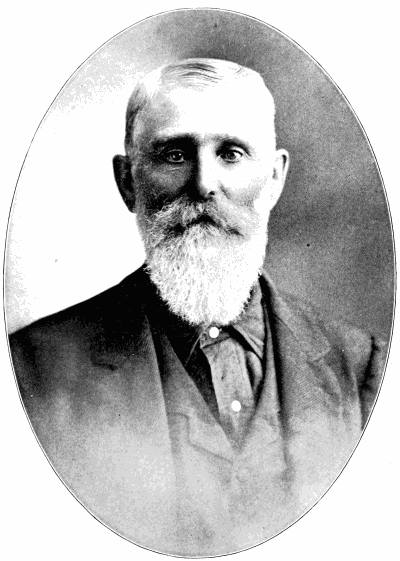
JOHN A. DAVIS
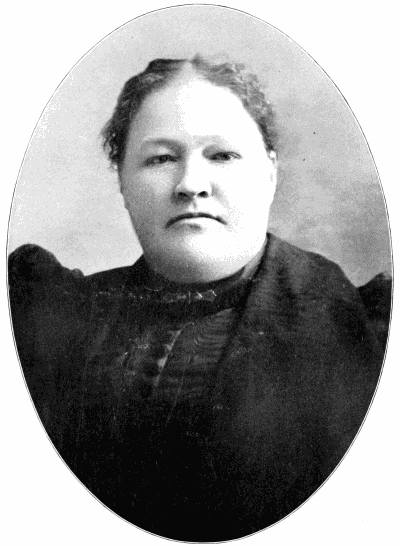
MRS. JOHN A. DAVIS
Mr. Davis was not active in politics, as the management of his farming interests left him little time for outside activities. He passed away in 1907 and was laid to rest in Mountain View cemetery at Walla Walla. He was an honored pioneer of the county, and his death was deeply regretted by all who had come in close contact with him. His salient qualities were determination, enterprise and industry, and these enabled him to do his part in bringing about the agricultural development of this section. Mrs. Davis gives her personal attention to the leasing of the farm and to the management of all the business affairs of the estate and is recognized as woman not only of excellent judgment but a typical pioneer mother of whom her children and grandchildren, in fact the entire community, justly feel proud.
ASEL HOYT BURNAP.
Asel Hoyt Burnap is a resident farmer of the Walla Walla valley, who since 1911 has lived upon his present place, comprising thirty acres on section 27, Hill township, Walla Walla county. Here he is engaged in the live stock business and his land is largely devoted to the raising of alfalfa. He was born in Barton county, Kansas, November 29, 1879, a son of William D. and Mary (Hoyt) Burnap, who were natives of Ohio. On leaving that state they became residents of Illinois in 1869 and there remained until 1876, when they established their home in Barton county, Kansas, where they continued to reside until 1881. In that year they removed to Lamar, Missouri, where they remained until 1885, when attracted by the opportunities of the northwest, they crossed the plains in one of the old-time prairie schooners and established their home in Wallowa county, Oregon. In 1893 they came to the Walla Walla valley and settled upon a farm but at a subsequent period became residents of La Grande, Oregon, where the father passed away. He was an honored veteran of the Civil war and served from beginning to end with the Seventh Missouri Cavalry, risking limb and life to win the cause for the Union. The mother survives and is now living in Pendleton, Oregon. Their family numbered seven children, five of whom are living.
Asel H. Burnap spent the period of his boyhood and youth largely in Oregon, where he acquired a public school education when not busy with work in the fields. He continued at home until he had attained his majority, after which he engaged in the live stock business on his own account. It was in 1911 that he purchased his present place of thirty acres on section 27, township 7 north, range 33 east. Here he has since resided and is extensively and successfully engaged in the raising of alfalfa, which furnishes excellent food for his stock. There is no finer tract to be found in the valley and Mr. Burnap is wisely and successfully directing his business affairs, so that prosperity is attending his labors. He is, moreover, the secretary and treasurer of the West Side Hawley Irrigation Corporation. He has not only closely studied the question of supplying water to the land but has taken up every phase of the business and knows exactly what can be accomplished in this section of the state along the line of profitable farming and stock raising.
In 1905 Mr. Burnap was united in marriage to Miss Evalina Cummins and to them have been born three children, Maud L., Leland G. and Melvina A. The wife and mother is a member of the Congregational church and Mr. Burnap holds membership in Trinity Lodge, No. 121, I. O. O. F., being a faithful follower of its principles. His political endorsement is given to the republican party, which he has supported since age conferred upon him the right of franchise. He is a progressive young business man, alert and enterprising, and well deserves mention among the substantial and worthy citizens of the Walla Walla valley.
J. C. WEATHERFORD.
One of the distinguished and honored citizens of Columbia county is J. C. Weatherford, a successful agriculturist, making a specialty of stock and wheat raising. He was born in this county on the 21st of May, 1882, and is a son of F. M. Weatherford, whose sketch appears on another page of this volume.
During his boyhood and youth J. C. Weatherford attended the common schools and completed his education by a course at Armstrong Commercial College, from which he was graduated. On putting aside his textbooks, he turned his attention to farming and purchased a tract of land which he has since operated with marked success. He is now the owner of five hundred acres of very valuable and productive land, most of which is devoted to wheat, and he gives considerable attention to the raising of stock.
In 1910 Mr. Weatherford married Miss Fleta Ward, also a native of Walla Walla county, and they have a little daughter, Antoinette, who was born November 19, 1916. Mrs. Weatherford is a member of the Episcopal church, and Mr. Weatherford's fraternal relations are with the Benevolent Protective Order of Elks and the Knights of Pythias. The democratic party has found in him a stanch supporter of its principles and his fellow citizens recognizing his worth and ability elected him state senator in 1912. For four years he filled that responsible position with credit to himself and to the entire satisfaction of his constituents. He has also served as school director and has done much to promote the interests of his community along various lines.
F. A. JONAS.
An energetic and farsighted business man, F. A. Jonas is meeting with a substantial measure of success as a member of the Perrine-Jonas Company; general merchants and foremost business men of Waitsburg. He was born in Lewiston, Idaho, on the 27th of October, 1865, and is a son of Milton and Eliza (Gilman) Jonas, both of whom were natives of Iowa. They were married, however, in Florence, Idaho, having removed to that state in young manhood and womanhood. The father crossed the plains with an ox team to California in 1860 and there engaged in gold mining until the winter of 1861-2, when he removed to Walla Walla county, Washington. He then turned his attention to farming and stock raising and continued to make his home in Walla Walla county until 1875, when he took up his abode in Columbia county, where he continued to devote his energies to general agricultural pursuits throughout the remainder of his active business life. He was very successful as a farmer and he and his sons acquired between thirteen and fourteen hundred acres of land. His business affairs were carefully managed and his investments judiciously made, and as the result of his close application and persistency of purpose he won a substantial measure of success. His death occurred September 8, 1908, while his wife had passed away September 16, 1906.
J. A. Jonas was reared upon the home farm and was educated in the district schools. In 1888 he started upon his business career a horse raiser and from that point gradually worked into farming, which he carried on upon leased school and railroad land. In 1891 he purchased six hundred acres of such land, but the widespread financial panic of 1893 swept away the profits of five years' work. His land, however, was bought under contract and he was to hold that. In 1895 or 1896 he had finished his payments upon the property and in 1905 he bought two hundred and forty acres adjoining. In 1909 he disposed of his landed holdings for fifty-four thousand dollars and in 1910 he purchased an interest in the mercantile business of the J. N. Gravelle Company of Waitsburg, at which time the style of the firm was changed to the Gravelle-Jonas Company. In 1911, L. R. Perrine purchased Mr. Gravelle's interest in the business and the present firm, known as the Perrine-Jonas Company, thus came into existence. They conduct a general mercantile business and are ranked among the leading firms in this line in Walla Walla county, carrying a fine stock of goods, while their reasonable prices, honorable dealing and earnest desire to please their patrons have secured to them a very gratifying trade.
On the 1st of January, 1888, Mr. Jonas was joined in wedlock to Miss Mary A. Kinder, of Waitsburg, by whom he has three children, namely: Beulah I., May I. and Ethel. Mr. Jonas gives his political allegiance to the republican party, while fraternally he is identified with the Masons, belonging to Waitsburg Lodge, No. 16, F. & A. M.; Dayton Chapter, No. 5, R. A. M.; Walla Walla Commandery, K. T.; El Katif Temple, A. A. O. N. M. S., of Spokane; and Waitsburg Chapter, No. 9, O. E. S., of which his wife is also a member. Mr. Jonas is now worthy patron of the Star, a position which he has occupied for the past ten years, and his wife is worthy matron. He is also identified with the Woodmen of the World and Mrs. Jonas holds membership in the Christian church. They rank among the leading and influential residents of Waitsburg, having much to do with its material, social, intellectual and moral progress, and they enjoy the highest respect of all who know them.
FRANK NEACE.
Frank Neace, who is actively engaged in farming in Columbia county, was born in Walla Walla, Washington, on the 19th of October, 1875, and has always been a resident of this state. The spirit of western enterprise which has been the dominant factor in the upbuilding of the Pacific coast country has been manifest throughout his entire career. He has worked with steady purpose to accomplish desired results and has attained a substantial measure of success. He is a son of Louis Neace, of whom extended mention is made elsewhere in this work, and while spending his youthful days under the parental roof he attended the public schools and also continued his education in the Waitsburg Academy. On reaching manhood he became associated with his brothers and father in the conduct of extensive farming operations and in 1903 located on the farm on which his brother Louis now resides and which was then owned by the father. For five years he cultivated about one thousand acres of land in that place and in 1908 he removed to his present home farm, which was then also owned by the father and which became his property after the father's death. His farm comprises thirteen hundred acres of land, which he cultivates to grain and his broad fields present an attractive picture giving proof of the industry and ability of their owner. Mr. Neace keeps in touch with the most progressive methods of soil cultivation and development and has added to his farm many modern improvements, so that the place is now splendidly equipped with all the accessories and conveniences known to the model farm of the twentieth century.
In 1903 Mr. Neace was united in marriage to Miss Katy Fulton, of Milton, Oregon, who is a graduate of the commercial department of Columbia College. Mr. Neace belongs to Touchet Lodge, No. 70, K. P., of Waitsburg, and he is widely and favorably known not only among his fraternal brethren but by the general public as a substantial and influential citizen, his life record being such as to commend him to the regard and confidence of all with whom he has been associated.
JAMES STOTT KERSHAW.
Among the residents of Walla Walla whose memory goes back to the pioneer days of this section is James Stott Kershaw, who became a resident of Walla Walla county in 1861. He at once turned his attention to farming, resolutely continuing the work of cultivating the fields in spite of many hardships, and at length prosperity began to reward his labors. He is now in excellent circumstances and is living retired, enjoying the comforts of life. He has reached an advanced age but is still hale and hearty and young in spirit and interests.
His birth occurred in Yorkshire, England, July 5, 1835, and he is a son of John and Mary (Dewhurst) Kershaw. The father passed away in 1841 and in the following year the mother came with her four children to the United States. They went to Carbondale, Pennsylvania, where an uncle of Mrs. Kershaw's was living. Ten days after the arrival of the family, however, the uncle died and the mother removed with her family to Wahpeton Falls, New York, where she and her children worked in factories engaged in the manufacture of cotton prints. While thus employed the oldest daughter, Hannah, at that time eleven years of age, was drowned in the creek in which she had been washing the blocks from which the calicoes were printed. A short time after this tragedy the family removed to Fall River, Massachusetts, where James S. Kershaw learned the carpenter's trade, while the other sons worked in factories. The mother also did whatever work she could find to do and thus by common effort the family succeeded in making a living. On July 28, 1856, they removed to Belvidere, Illinois, traveling by ocean, river and the Erie canal. They found that the middle west offered the opportunities which they had expected to find and James S. Kershaw soon found work at his trade, while his two brothers became farm hands. In a short time they had saved enough money to buy an acre of ground and built a small house thereon. In 1859 our subject started for Pike's Peak but on reaching the Missouri river heard such bad reports of that region that he and three companions turned back, while one proceeded westward.
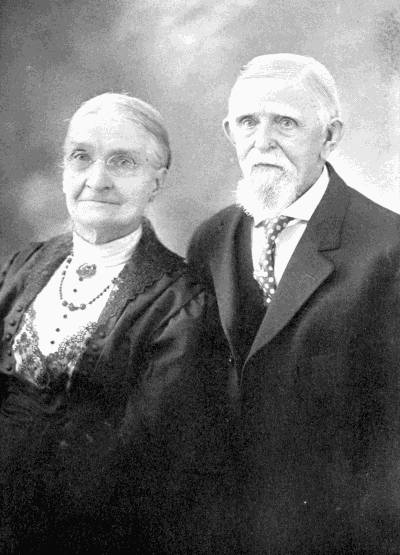
MR. AND MRS. JAMES S. KERSHAW
While living in Illinois Mr. Kershaw became acquainted with some who made a business of driving horses to California for sale. They were enthusiastic in their praise of the climate of the Pacific coast and the almost limitless opportunities for advancement there and their reports of the far west influenced the family to go to the coast. Accordingly they sold their home, bought a team and provisions to last them throughout the long journey and in the spring of 1861 set out for their new home. It was not definitely decided in what locality they should settle, but the general preference was for California. They had been advised to "never camp twice in the same place" and when the train of which they were a part made a halt of a few days at Fort Laramie, four families, including the Kershaw family, left the main train and continued the journey. Later they overtook four other families and not long afterward were joined by four more and still later caught up with a train of eight families under the command of Colonel Black. In this train was a Mr. Babcock, who had settled in the Walla Walla valley in 1859 and was just returning from the east with his family. His description of the country around his home was so attractive that the Kershaws gave up their half formed plan of going to California and decided to locate in the Walla Walla valley. For some time they were the guests of Mr. Babcock and then they inspected the surrounding country with the view of determining on which tract of land to settle. They chose the quarter section adjoining Charles Actor, on the present site of Dixie, and during the first winter lived with Mr. Actor. That first winter was one to discourage the faint-hearted, for the weather was severe, more so than it has ever been during the many years since. In addition to the extra work which the cold entailed in the care of stock the early settlers had a great deal of difficulty in securing enough wood to keep their homes warm and their food consisted almost entirely of beef and flapjacks. Moreover, the wheat had a great deal of smut in it and this had to be washed out and the wheat dried before the grain could be ground into coarse flour in a coffee mill. The following spring the Kershaws leased Mr. Actor's land and also began to improve their own holdings. As soon as possible they erected a log house and there resided until some years later when they erected a larger residence across the road from Dixie. This town received its name from the fact that the song "Dixie Land" was new at that time and had been introduced into Walla Walla county by the three Kershaw brothers, who were musicians and were often called upon to sing at local gatherings. They became known by the name of the "Dixie Boys" and when the founders of the new town were wondering what to name it, friends of the Kershaws suggested that it be named Dixie in their honor.
After operating Mr. Actor's land for two years William G. Kershaw took up a homestead adjoining the present town of Dixie and the family removed to that place. The mother passed away there on the 17th of January, 1875, dying of pneumonia after six days of illness, and was the first person buried in the Dixie cemetery, which is located on land included within the Kershaw homestead. Our subject was married in the same year and erected a home on land which he had acquired east of Dixie. He held title to three hundred acres there and also had a third interest in one hundred and sixty acres on Dry creek and forty acres of timber land. Year after year he gave his time and attention to the work of plowing, planting and harvesting and his labors were rewarded by abundant crops, from the sale of which he derived a gratifying income. Through hard work and good management he gained a competence and in 1900, when his son, A. C. Kershaw, was married he turned the farm over to him and for six years Mr. and Mrs. James S. Kershaw resided in Dixie. In 1906, however, they removed to Walla Walla, where they are still living.
Mr. Kershaw was married December 8, 1875, to Miss Mary A. Cook, who came to the United States from England in 1870 with an uncle, William Yeend, his wife and ten children. They made their way at once to California but after remaining there for a few months came to Walla Walla county, which they reached in December of that year. To Mr. and Mrs. Kershaw have been born two children: Arthur C., who, as before stated, is operating the home place; and Mary Bessie, the wife of E. J. Cantonwine, of Walla Walla.
Both Mr. and Mrs. Kershaw hold membership in the Methodist Episcopal church and in all the relations of life they conform their conduct to the highest ethical standards. During the more than half a century that Mr. Kershaw has resided in Walla Walla county he has at all times been recognized as a man of sound judgment, of public spirit and of the strictest integrity. He had a part in the hard task of developing a new country and it is but fitting that he should now enjoy the fruits of his labors. He finds pleasure not only in his individual prosperity but also in the general development of the county and has always been glad that in 1861 he elected to cast in his lot with that of this section.
HON. J. A. FONTAINE.
One of the most attractive homes of Dayton, known as Normandy, is the property of Hon. J. A. Fontaine, a progressive business man and citizen who has also left the impress of his individuality upon the political records of Columbia county, which he has represented in the state legislature. He has long been actively, successfully and extensively identified with farming in this section of the state. He was born in Maryland, August 9, 1850, and is a son of Charles G. and Susan W. Fontaine, both of whom were natives of Maryland, where they spent their entire lives. They reared a family of nine children, of whom four are now living.
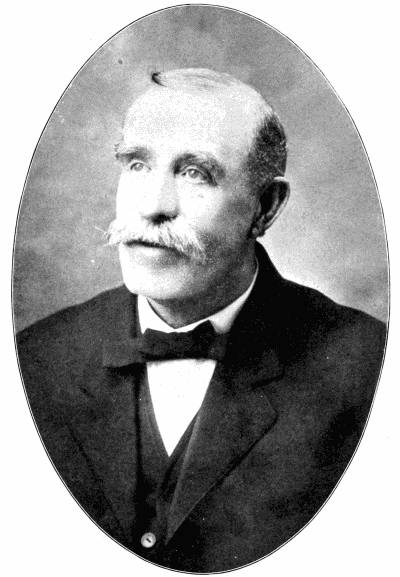
HON. J. A. FONTAINE
J. A. Fontaine spent the period of his boyhood and youth in Maryland and in 1870 came to Washington, where he has now lived for forty-seven years. He made his way first to Walla Walla, where he was employed as a hired hand for a year. He afterward worked with a pack train for four years and later entered the employ of the Baker Railroad Company as check agent at Wallula. In 1875 he engaged with General Cook as a packer and spent three years in that connection. In the spring of 1878 he bought a ranch and turned his attention to the raising of live stock, in which business he successfully engaged for eleven years. He then sold out and bought a farm eight miles from Dayton, comprising five hundred and sixteen acres of valuable land. Mr. Fontaine is also a stockholder in the warehouse of Dayton and his home in the city is a most beautiful residence property.
Mr. Fontaine married and had one daughter, Leota, who is now thirteen years of age. Fraternally he is a prominent Mason, belonging to the lodge in Dayton. His political endorsement is given to the democratic party and he served for two terms as a member of the state legislature, being first elected in 1911. He gave thoughtful and earnest consideration to all vital political problems which came up for settlement while he was a member of the house and did much to secure the passage of wise legislative measures. He has many warm friends in Dayton and this section of the state and his legislative service has gained him the high regard of many of those who are most prominent in Washington's political circles.
CLYDE LESTER.
Clyde Lester, a partner in the firm of Young & Lester, leading florists and representative business men of Walla Walla, was born in Bloomfield, Iowa, December 31, 1877. His parents, Franklin P. and Keturah (Hurless) Lester, were also natives of Bloomfield, Iowa, their respective parents having been among the pioneer settlers who reclaimed that section of the state for the purposes of civilization in early pioneer times. Franklin P. Lester was of the prominent farmers of Davis county, Iowa, for many years. In 1885 he removed to western Kansas and subsequently became a resident of Lincoln, Nebraska, where he resided until 1911, when again he heard and heeded the call of the west and this time made his way to Walla Walla, Washington. His wife passed away October 17, 1916, but Mr. Lester still remains a resident of Walla Walla and now makes his home with his son Clyde.
In the district schools Clyde Lester began his education and says his training also came to him between the handles of a plow, for at an early age he began work in the fields and thus he divided his time between farm labor and the acquirement of a district school education. His parents removed to Lincoln, Nebraska, in 1896 and at that time he entered upon an apprenticeship to the cigar maker's trade, in which he continued for nine years. It was while residing in Lincoln, Nebraska, that he was married on the 26th of June, 1907, and there he began his domestic life. Two years later he came to Walla Walla, attracted by the opportunities of the growing northwest, and here he has since made his home. In 1913 he entered into partnership with Fred M. Young, who was well established as a florist in this city, and under their management they have built up a business of very large and gratifying proportions. Their greenhouses, which are located on South Second street, are extensive. They have eight and three-fourths acres of land under cultivation, with twenty-five thousand square feet under glass. They raise the most beautiful flowers of every kind and have a very attractive salesroom at No. 19 East Main street, where are always to be found many kinds of cut flowers and potted plants to supply the retail trade.
Mr. and Mrs. Lester have become the parents of two daughters, Leah and Edna. In his political views Mr. Lester is independent and does not care to ally himself with any party nor bind himself by party ties voting according to the dictates of his judgment. He and his wife are consistent members of St. Paul's Episcopal church and in the social circles of the city occupy an enviable position. Fraternally he is connected with Walla Walla Lodge, No. 287, B. P. O. E.; Washington Lodge, No. 19, I. O. O. F.; the Loyal Order of Moose; the Improved Order of Red Men; the Woodmen of the World; and the Fraternal Order of Eagles. The west has proven to him a profitable field of labor. He recognized the opportunities here offered and has quickly utilized them to his own advancement, while his business methods have at all times measured up to the highest commercial standards, and thus he occupies a most enviable position in the confidence and goodwill of those with whom he has been associated.
MICHAEL KENNY.
Michael Kenny, of Walla Walla, is numbered among the pioneers of the northwest and can relate many interesting incidents concerning the early days and those events which constitute the pioneer history of this section. He has passed the eighty-fifth milestone on life's journey, his birth having occurred in Ireland, September 21, 1832. His parents, Patrick and Sophia (Cody) Kenny, were also natives of the Emerald isle, where they spent their entire lives, both having long since passed away. In their family were seven children.
Michael Kenny, who is the only survivor of that family, was reared and educated in Ireland and was less than twenty-one years of age when he bade adieu to friends and native land and sailed for the United States. He landed in New York, where he remained for about a year, and in 1854 he joined the regular army at Governor's Island for five years' service. He was then sent to Jefferson Barracks, Missouri, where he was stationed for a short time, after which he was transferred to Fort Leavenworth, Kansas, remaining there for two months. In June, 1854, he crossed the plains to Salt Lake City with the First Dragoon Cavalry under command of Colonel Steptoe, spending the winter at that point. In the spring the command was sent to Fort Lane, Jackson county, Oregon, where he was stationed for a time with other companies, remaining there through 1855 and 1856 during the Rogue River war. He was then with C Troop and later was promoted to the rank of sergeant. The winter of 1856 was spent in Yamhill county. In 1857 Mr. Kenny was sent to Fort Walla Walla. He continued with the army throughout his term of enlistment, covering five years, and was honorably discharged in 1859. He had participated in some of the Indian warfare on the frontier and had done excellent work to defend the interests of the white settlers against the hostility of the red men, who resented the encroachment of the pale faces upon what they regarded as their own "hunting grounds."
After leaving the army Mr. Kenny ran a pack train between Walla Walla and Orofino, and in 1865, when on his way to Boise, the Indians captured his train, taking his twenty-eight pack animals from him and leaving him afoot without anything. He finally managed to make his way back to Walla Walla and there he engaged in the saloon business, in which he continued for seven years. On the expiration of that period he sold out and began packing for the government, devoting some time to that work. In 1878 he became associated with the police force of Walla Walla and was one of its members for ten years.
In 1875 Mr. Kenny was united in marriage to Miss Jennie Johnston, a native of Glasgow, Scotland. She was only an infant when brought by her parents to this country, the family locating in Connecticut, where they spent the winter of 1855. The following year they removed to Illinois and in 1859 came to Walla Walla county, Washington, where Mr. Johnston followed farming throughout the remainder of his life. Here both he and his wife died. In 1865 Mr. Kenny erected his present residence at No. 7 North Sixth street and has therefore witnessed almost the entire development of the city, being one of the few remaining early pioneers. He took part in all of the battles with the Indians in this part of the country.
Mr. and Mrs. Kenny are members of the Catholic church and in politics he is a democrat, having always voted the ticket since becoming a naturalized American citizen. There is no phase of pioneer life in the northwest with which he is not familiar. He can remember the time when the Indians were more numerous than the white settlers, when the great forests stood in their primeval strength, for the work of cutting the timber had not then been begun. Streams were unbridged and on the sites of many of the most prosperous and progressive cities of the northwest there were found few if any buildings. Mr. Kenny has lived to see remarkable changes, has borne his part in the work of development and his memory forms a connecting link between the primitive past and the progressive present.
HON. ALFRED L. RAY.
Hon. Alfred L. Ray, residing on section 26, township 10 north, range 35, is one of the large wheat raisers of Walla Walla county and is also entitled to mention as a member of the state legislature. He was born in Hamilton county, Illinois, October 12, 1875, a son of Alfred M. and Rachel Ray. He grew to manhood and received his education in Illinois and remained in the middle west until 1901, when he became a resident of Columbia county, Washington. For eight years he engaged in farming there and also taught school, but in 1909 he came to Walla Walla county and took up his residence on his present home farm of three hundred and twenty acres. He also operates rented land, cultivating in all eighteen hundred acres. He specializes in the production of wheat and is recognized as an authority upon wheat growing and marketing. He uses the most up-to-date methods and implements and gives the same careful attention to his affairs that a business man gives to the conduct of his interests.
In 1896 Mr. Ray was united in marriage to Miss Rosa Malone, also a native of Illinois and a daughter of George W. and Cynthia J. (Huff) Malone, the former deceased but the latter still a resident of Illinois. To Mr. and Mrs. Ray have been born nine children, namely: Eugene D., Ernest T. and Hazel, all high school students; A. Melvin; George W.; J. Wesley; Paul; Virginia; and Stanley S.
Mr. Ray is well known in democratic circles and is now serving as representative in the state legislature from the twelfth district and is making a record highly satisfactory to his constituents. He and his wife belong to the Congregational church and seek to conform their lives to its teachings. He is respected for his ability, honored for his integrity and held in warm personal regard by reason of his attractive social qualities. Fraternally he is a member of the Independent Order of Odd Fellows at Prescott and the Modern Woodmen of America.
ANDREW J. McCULLOUCH.
Andrew J. McCullouch is living retired in Waitsburg after many years of active connection with farming interests. He was born in Mahaska, Iowa, June 9, 1850, of the marriage of Andrew J. and Polly (Stark) McCullouch. The father, who was born in West Virginia, removed to Monmouth, Illinois, at an early day and later went to Iowa, whence in 1850 he crossed the plains to California with an ox team and old fashioned prairie schooner. After three years he returned to Iowa by way of the Isthmus route and there he farmed until called by death, which occurred July 19, 1900, when he had reached the age of eighty-four years and seven months. His wife also passed away in that state in February, 1854, at the age of thirty years. To them were born four sons, of whom three survive.
Andrew J. McCullouch passed his boyhood and youth in Union county, Iowa, and his education was acquired in the public schools there. When twenty-five years old he went to Monona county, Iowa, where he was married and where he farmed until 1883. In that year he cast in his lot with the Pacific northwest, coming to Walla Walla county, Washington. He took up three hundred and twenty acres of land, nine miles north of Preston and that place remained his home until October 1903, when he removed to Waitsburg, where he has since lived retired. He was very successful as a farmer and, realizing that land would steadily increase in value as the country became more thickly settled, he invested his capital in additional land, now owning thirteen hundred and fifty-five acres of fine wheat land. The financial independence which he has gained is proof of his foresight, his sound judgment and his business ability, for he is a self-made man, having depended solely upon his own labors for advancement.
Mr. McCullouch was married on March 16, 1879, to Miss Rebecca Broomfield and they have become the parents of nine children: Elsie H., William, Josie, James A. and Walter, all of whom are deceased; Jessie M., the wife of D. H. Harris; Bertha, at home; Ruby, the wife of Wallace Heffron, and Chauncey L., who is on the home farm.
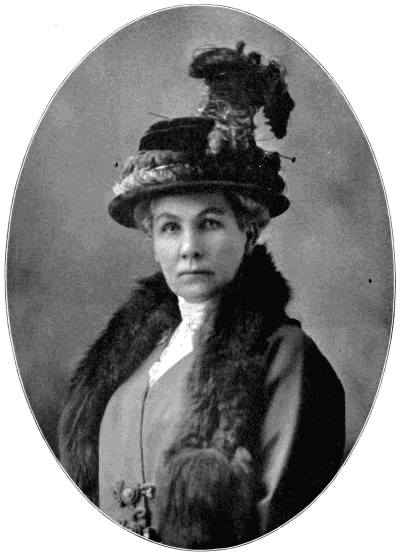
MRS. ANDREW J. McCULLOUCH
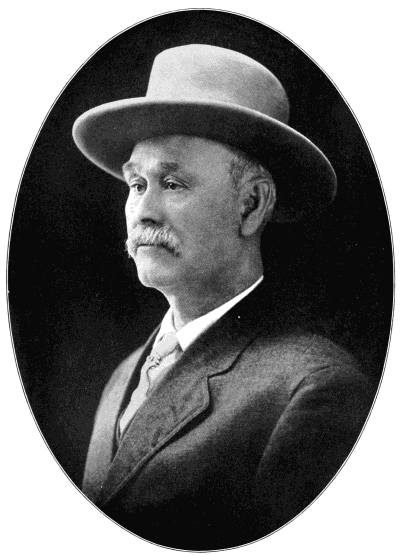
ANDREW J. McCULLOUCH
Mr. McCullouch is an adherent of the republican party and for fourteen years was school director, his continuance in the office indicating the acceptability of his services. In religious faith he is a Methodist and he can be counted upon to give his support to all projects looking toward the moral advancement of his community.
HENRY SCHNECKLOTH.
Henry Schneckloth, one of the well known pioneers and esteemed citizens of Garfield county, is now the owner of eleven hundred acres of valuable land and for the past thirty-six years has lived continuously on his farm of three hundred and twenty acres on section 31, township 13 north, range 43 east. His birth occurred in Schleswig-Holstein, Germany, on the 23rd of October, 1840, his parents being Joachim and Catherine (Ewalt) Schneckloth, who emigrated to the United States in 1853 and made their way to Davenport, Iowa. The father devoted the remainder of his life to farming in Scott county, that state, and there passed away about 1893, while the mother was called to her final rest in 1897.
Henry Schneckloth was largely educated in his native country, attending the city schools of Davenport for but one year after his emigration to the United States with his parents, at which time he was a youth of thirteen. On reaching man's estate he began farming on his own account and cultivated rented land in Scott county, Iowa, until 1881, when he came west to Washington. Here he purchased his present home farm of three hundred and twenty acres in Garfield county, for which he paid four thousand dollars and on which he has remained continuously throughout the intervening period of thirty-six years. As his financial resources have increased, owing to his unremitting industry and capable management, he has made additional purchase from time to time until his holdings now embrace eleven hundred acres of productive land. His success is well merited and he enjoys an enviable reputation as one of the representative and wealthy agriculturists of the community.
In 1867, in Scott county, Iowa, Mr. Schneckloth was joined in wedlock to Miss Margaret Kuhl, who was a native of Schleswig-Holstein, Germany, and came to the United States in young womanhood. By her marriage she became the mother of eight children, as follows: James H., who is serving as postmaster at Pomeroy, Washington; Gustav P., a farmer of Garfield county; William J., who is serving as sheriff of Garfield county; Katie, who is the wife of A. L. Shelton, a farmer of Garfield county; Herman O., who is deceased; Helen, the wife of W. H. Morrison, of Walla Walla, Washington; Adolph J., who follows farming in Idaho; and Emil R., who operates the home farm. The wife and mother passed away on the 27th of July, 1915, and her demise was the occasion of deep and widespread regret.
In his political views Mr. Schneckloth is independent, supporting men and measures rather than party. His religious faith is that of the Lutheran church, of which he is a loyal and devoted member. He also belongs to the Farmers Union. His life has been upright and honorable in every relation and his many sterling traits of character have won him the warm regard and friendship of all with whom he has been associated.
CHARLES F. DEMENT.
Charles F. Dement, who is serving for the second term as county auditor of Walla Walla county, was born February 8, 1880, in the city of Walla Walla, a son of Frank S. Dement, who is mentioned at length on another page of this work and who ranks with the leading business men of the northwest, being prominently connected with the milling business and the grain trade.
The son pursued his common school education in Walla Walla and passed through consecutive grades to the high school. Later he became a student in the Shattuck Military Academy at Faribault, Minnesota, where he remained for three years, and later he spent two years as a student in Whitman College of this state. When his textbooks were put aside he was appointed to the position of deputy state grain inspector, in which capacity he served for a year. Later he was made deputy county auditor and such was the excellent record which he made in that position that he was nominated by the republican party for the position of county auditor, was elected and has since been re-elected, so that he is now serving for the second term. He has also been clerk of the board of county commissioners, has been county sealer of weights and measures and in all these offices has discharged his duties with notable promptness, efficiency and fidelity. Over the record of his public career there falls no shadow of wrong or suspicion of evil. He is actuated by a public-spirited devotion to the general good and in discharging his duties is thoroughly prompt and reliable.
Mr. Dement belongs to the Benevolent Protective Order of Elks and is also a Blue Lodge Mason, while his name is likewise enrolled on the membership list of the Knights of the Maccabees. He is well known in Walla Walla, where his entire life has been passed, and such are his salient characteristics that he has won wide personal popularity as well as prominence in office.
SQUIRE T. PRATHER.
Squire T. Prather, bond agent and investment broker of Walla Walla, where he has made his home since 1910, occupies a creditable position in financial circles of the city and has made for himself an enviable place in the field of business to which he directs his efforts. A native of Missouri, he was born in Macon county, February 14, 1860, his parents being B. F. and Martha (Holman) Prather, both of whom were natives of that state, where they resided until 1874, when they crossed the plains to California. They at first took up their abode in Stockton, California, and the father engaged in farming. Subsequently he turned his attention to the sheep industry, with which he was connected until he was called to his final rest. His wife also died in California. In their family were seven children, all of whom are yet living.
Squire T. Prather was a lad of but fourteen years when the family came to the west and in California he was reared and educated. He attended the high school and afterward remained at home until he had attained his majority. He then turned his attention to the real estate business, in which he has been engaged from that time to the present. In 1910 he removed to Walla Walla and opened his present office, being now well known as a bond and loan agent. His long experience enables him to speak with authority upon real estate values and upon the value of commercial paper as well and the integrity and enterprise of his business methods have secured for him a most liberal clientage. In addition to his business in Walla Walla he is the owner of eighty acres of valuable fruit land in California which is now in bearing and he has recently sold six hundred and forty acres of land in Walla Walla county.
In 1879 Mr. Prather was married to Miss Alice J. Potts, a native of Canada. To them have been born four children: John, who is now engaged in the real estate business in Fresno, California, in which enterprise his father is also interested; Mattie, who is now the wife of Eugene Freeland, of Seattle, Washington; Elmer T., who is with his father in Walla Walla; and Lula, who is the wife of Clifford Crockett of Walla Walla and who is a graduate nurse. There are also four grandchildren. The wife of our subject, Dr. Alice J. Prather, was born in Canada and received her early education in the common schools of Montreal. Later she took up the study of medicine in San Francisco and in 1896 was graduated from the Naturopathic School of Healing at Los Angeles. Later she engaged in practice at San Jose, California, and is now following her profession in Walla Walla, being at the head of the Alice J. Prather Naturopathic Sanatorium, where the patients are treated by nature's remedies.
In politics Mr. Prather is a stalwart democrat, thoroughly informed concerning the questions and issues of the day and giving to his party stalwart allegiance because of his belief in its principles. Both he and his wife are consistent members of the Methodist Episcopal church South, and in social circles in Walla Walla occupy an enviable position, being cordially received into the best homes where true worth and intelligence are accepted as passports.
EDWARD J. HOFFMAN.
Edward J. Hoffman, who follows farming in Columbia county, concentrating his attention upon the cultivation and further development of four hundred and twenty-one acres of good land, was born in Walla Walla, Washington, on the 22d of February, 1883. His father, John Hoffman, was one of the early pioneers of Walla Walla and became one of the most progressive and successful agriculturists of southeastern Washington but is now living retired in Walla Walla. He well deserves mention among the representative residents of this section of the state and his record will be found on another page of this work.
Edward J. Hoffman was reared upon the old home farm, early becoming familiar with the best methods of tilling the soil and caring for the crops. Liberal educational opportunities were accorded him, for after attending the common schools of the neighborhood he benefited by a course in the Empire Business College of Walla Walla. Through the periods of vacation prior to this time he had become an active assistant of his father in farm work and after his textbooks were put aside he continued to follow farming in connection with his father until 1910. In that year he was united in marriage to Miss Blanche E. Hafner, a daughter of Charles G. Hafner, of Walla Walla, who was one of the early pioneers of Umatilla county, Oregon, settling just across the state line in Oregon upon his arrival in the west. He, too, was identified with farming interests for a long period but is now enjoying the fruits of his former toil in well earned rest in Walla Walla.
Following his marriage Edward J. Hoffman located on one of his father's farms eight miles northeast of Starbuck and there engaged in the operation of thirty-six hundred acres of land, a part of which was grazing land. He remained upon that ranch for five years, at the end of which time he removed to his present home, which is owned by his father. He farms four hundred and twenty-one acres and is regarded as one of the representative agriculturists of Whiskey creek. He employs the most progressive methods in tilling the soil, practices the rotation of crops and studies everything that has bearing upon the production of the cereals best adapted to climatic conditions here. His labors are being attended with excellent results and the neat and thrifty appearance of his place indicates his careful supervision and practical and progressive methods. He has made the farm one of the attractive features of the landscape—a proof of what may be accomplished along agricultural lines in this district, which at one time was believed to be thoroughly unadapted to farming.
The home of Mr. and Mrs. Hoffman has been blessed with four children: John E., Frances P., Bessie D. and Alfred A. In his political views Mr. Hoffman is a republican, having given stalwart support to the party since age conferred upon him the right of franchise. He has never sought or desired office, preferring to give his undivided time and attention to his business affairs, which are capably and wisely directed. He is an energetic man and obstacles and difficulties in his path seem to serve but as an impetus for renewed effort on his part. He and his wife are widely and favorably known in this section of the state and the hospitality of the best homes is freely accorded them.
GUSTAV E. BARTELL.
Gustav E. Bartell, an active factor in the business life of Dayton, is proving successful in the conduct of a garage and a machine shop. He was born in Pennsylvania, June 29, 1875, a son of G. P. and Julia Anna Bartell, who were born in Germany but in 1874 became residents of Pennsylvania. In 1890 they removed to The Dalles, Oregon, where the father followed the saddler's trade. Four years after coming west, however, he was called by death, but the mother survives and resides in Portland.
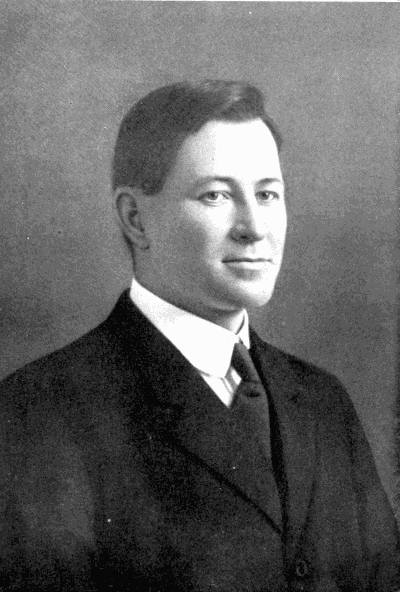
GUSTAV E. BARTELL
Gustav E. Bartell began his education in his native state but completed it in the schools of The Dalles. As a youth he learned the machinist's trade, which he has since followed, and in 1909 he came to Dayton, purchasing the machine shop which he now conducts. He does all kinds of work in that line and has gained an enviable reputation for accuracy and also for the speed with which he turns out orders. He also has a garage department and has likewise built up a good trade in that connection.
Mr. Bartell was married in The Dalles, Oregon, to Miss May Elton, who passed away three months later. In 1909 he was married in Dayton, to Miss Letty Clark, a native of this town and a graduate nurse, having completed the required course of training in the hospital at Walla Walla. To their union has been born a son, Charles G.
Mr. Bartell gives his political allegiance to the republican party, fraternally is identified with the Knights of Pythias and in religious faith is a Congregationalist, to which church his wife also belongs. His military record includes service as captain of Company D, Oregon National Guard. He began his independent career with no capital but with a thorough knowledge of his trade, and with that as a foundation he steadily advanced until he is now in excellent circumstances, and he is recognized as a prominent business man of Dayton.
FRED W. KASER.
Fred W. Kaser is the secretary and treasurer of the Davis-Kaser Company, house furnishers, who control one of the leading business enterprises of Walla Walla and of the northwest. He was born in Madison county, Illinois, March 24, 1868, a son of Samuel and Magdalene (Kamm) Kaser, both of whom were natives of Switzerland and came to the new world in childhood with their respective parents. They were married in Illinois and there resided until 1869, when they removed to western Missouri.
Fred W. Kaser spent his youthful days under the parental roof and acquired his education in the common schools of Missouri and also at the Empire Business College in Walla Walla, Washington. He arrived in this city in 1887, reaching his destination on the 20th of June. He was then a youth of nineteen years—empty-handed but possessed of an abundant amount of courage, determination and energy. He eagerly embraced any opportunity that offered whereby he might earn a living. He had been engaged in farm work when in the middle west and after reaching Walla Walla he was first employed at hop picking. He was not content with such a position save as an expedient to meet his momentary expenses and was constantly on the outlook for something better. He returned from the hop fields to the town and secured employment with the gas company. There he worked until almost midnight and through the school period he was busy with lessons, for he had come to a realization of the fact that educational training was necessary toward success in the business world. For two years he followed that course, working for the gas company and also in the Gilbert Hunt machine shop. He next turned his attention to commercial pursuits and secured a clerkship in the Schwabacher store. In the meantime he had pursued his course in business college and such was the thoroughness with which he did his work that the college sought his co-operation after his graduation and for one term he engaged in teaching there. He also correctly applied the knowledge that he had gained to his duties in the Schwabacher store and later he accepted the position of bookkeeper with G. H. Sutherland, with whom he remained for three years. In 1894 he embarked in business on his own account, becoming connected with John A. Davis in the purchase of a furniture store. They began business under the name of the Davis-Kaser Company in handling furniture and all kinds of house furnishings and after a year the business was incorporated under the present style, Mr. Davis becoming the president of the company, with Mr. Kaser as the secretary, treasurer and general manager. Their business has grown from a small concern with a stock valued at less than three thousand dollars until it is one of the largest mercantile institutions of Walla Walla.
On the 21st of October, 1894, Mr. Kaser was married to Miss Laura E. Davis, a daughter of John A. Davis, who was the president of the Davis-Kaser Company but is now deceased. Mrs. Kaser is a native of Walla Walla county, where she was reared and educated, and is an active worker in the Presbyterian church, to which she belongs. She is also a prominent member of the Women's Park Club of Walla Walla, the Sunshine Club and other similar organizations.
Mr. Kaser has always taken the deepest interest in community welfare and has done most efficient work for Walla Walla as president of the Commercial Club. He is a member of Trinity Lodge, No. 121, I. O. O. F.; also of Blue Mountain Lodge, No. 13, A. F. & A. M.; Walla Walla Chapter, No. 1, R. A. M.; Washington Commandery, No. 2, K. T., of Walla Walla; and El Katif Temple A. A. O. N. M. S., of Spokane. He is also connected with Walla Walla Lodge, No. 287, B. P. O. E.
EDWARD G. KNOTT.
Edward G. Knott, who is giving his entire time and attention to the operation of an excellent farm of twelve hundred acres in Columbia county, is a western man by birth as well as preference, being a native of Walla Walla. He was born May 12, 1883, a son of James and Josephine (Ulberg) Knott, who were natives respectively of England and Sweden, but were married in California. In the '70s they removed to the city of Walla Walla, where they still reside. For many years the father was actively engaged in the construction business, taking contracts for masonry.
Edward G. Knott is one of seven living children in a family of nine. He was reared at home and is indebted for his education to the public schools of Walla Walla. On attaining his majority he turned his attention to farming, recognizing the value of the fine land in this section, and after operating rented farms for ten years he bought twelve hundred acres, the greater part of which is fine wheat land in Columbia county and took up his residence on that place. He gives to his affairs the same careful attention that a business man gives to his interests and his work is conducted in a most systematic manner. He ranks among the most progressive and successful agriculturists of Columbia county and receives a gratifying profit from his land.
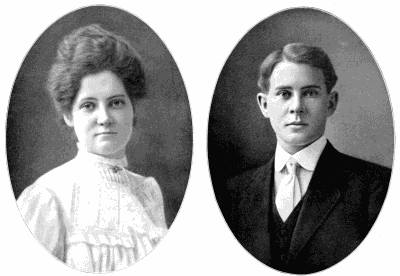
MRS. AND MR. EDWARD G. KNOTT
In 1908 Mr. Knott was married to Miss Della Richmond, also a native of Walla Walla county, and they are the parents of three children, Harold R., Robert E. and Arnold F. Mr. Knott casts his ballot in support of the democratic party but his participation in public affairs has been confined to the exercise of the right of franchise. However, he is deeply interested in the welfare of the public schools and has served with credit to himself as a member of the school board. He has a wide acquaintance in Columbia and Walla Walla counties, and his genuine worth is attested by the fact that those who have been most intimately associated with him since his boyhood are his stanchest friends.
OSCAR M. SHELTON.
Oscar M. Shelton, a prosperous and energetic young farmer residing on section 6, Russell Creek township, Walla Walla county, was born August 20, 1883, upon the farm which he is now operating. His parents, Frank M. and Nancy M. (Guinn) Shelton, came to the county in early days, the former in 1863 and the latter in 1864. They were married following their arrival here and took a quitclaim on a homestead which in time became their property. The father was successful as an agriculturist and at the time of his death in 1908 held title to four hundred and eighty acres of fine wheat land. The mother died in 1897.
Oscar M. Shelton was reared upon the home farm and received his education in the district schools. The year following his father's death he and his brothers operated the farm in partnership, but at the end of that time the estate was settled and he received eighty acres of the home place as his share. He has subsequently purchased an adjoining eighty acres, so that he now owns a quarter section of excellent land. He annually harvests large crops of wheat and as he manages his affairs in a businesslike manner he receives a good profit from his labors.
In 1910 Mr. Shelton was married to Miss Bessie McKay, a daughter of Angus McKay, who came to this country in 1861. The children born to Mr. and Mrs. Shelton are three in number, Bethine, Arline and Ibbie Lillian.
Mr. Shelton votes independently and gives careful study to the questions and issues of the day. He and his wife are devoted members of the Presbyterian church. He is thoroughly western in spirit, and his enterprise and progressiveness have enabled him to take rank among the successful men of his township.
ALFRED L. SHELTON.
Alfred L. Shelton, who is extensively engaged in stock and wheat raising, with residence on section 5, township 12 north, range 43 east, Garfield county, was born in Yamhill county, Oregon, July 1, 1869. His parents, John W. and Mary (Burford) Shelton, were both natives of Missouri and in 1853 made the long and tedious journey across the plains to the Pacific coast country, settling in Yamhill county, Oregon, where the mother passed away. The father survives at the age of eighty-five years and is now a resident of Portland. Ten of the thirteen children born to their union are still living.
Alfred L. Shelton was reared at home and his education was that afforded by the district schools of Oregon. In 1887, when about eighteen years old, he came to Garfield county, Washington, and purchased land, on which he has since resided. His systematic and practical labors have year by year been rewarded by large crops. He has also been successful as a stock raiser and his holdings now comprise eleven hundred and ninety-two acres, of which six hundred acres is devoted to the raising of wheat, while the remainder is fine pasture land. He keeps in close touch with the advancement that is continually being made along agricultural lines and justly ranks as one of the leading farmers of his section.
Mr. Shelton was married in 1894 to Miss Catherine Schnekloth, a native of Iowa and a daughter of Henry and Margaret Schnekloth, an account of whose lives appears elsewhere in this work. Nine children have been born to Mr. and Mrs. Shelton, namely, Arthur M., Wilber W., Henry E., Alma, Elmer, Herman, Dale, Hazel and Doris, all of whom are yet at home.
Mr. Shelton belongs to Harmony Lodge, No. 116, I. O. O. F., of Pomeroy, to the Woodmen of the World, to the Grange and the Farmers' Union. His political allegiance is given to the republican party and he has served for some time on the school board. He is a man of unusual energy, finding the opportunity to take part in public affairs in addition to looking after his extensive farming interests. He is manager of the No. 2 telephone line and in that capacity has made an excellent record for the fine service rendered patrons. He is distinctly a western man, possessing the self-reliance, resourcefulness and enterprise characteristic of this section.
MRS. IDA MAY WOLFE.
Mrs. Ida May Wolfe, widely and favorably known in Walla Walla county, is a representative of one of the oldest pioneer families. She resides on section 35, township 8 north, range 36 east, where she owns a valuable farming property. She was born on the site of the present city of Dayton and is a daughter of Oliver C. and Mary E. (Mealey) Gallaher. Her mother was a daughter of Dr. Mealey, who was one of the noted men of his day. Her father crossed the plains in 1845, when few white men had penetrated into the vast wilderness of the northwest. He drove across the hot stretches of sand over the mountain passes and at length reached the Willamette valley of Oregon, where he took up a donation claim. At that time the city of Portland had no existence and the work of progress and improvement had scarcely been begun in all the vast northwest. He resided in the Willamette valley until the spring of 1862, when he came to Walla Walla county and took up his abode in the Walla Walla valley, where he resided until the time of his death. His entire life was devoted to farming and he contributed much to the early agricultural development of this section of the country. His efforts were an important factor in promoting progress and improvement in the Inland Empire and he was among those who laid broad and deep the foundation upon which is built the present prosperity and progress of the county. His political allegiance was always given to the republican party and he took an active and helpful interest in politics, recognizing the duties and obligations as well as the privileges of citizenship. In a word, he left the impress of his individualuty for good upon the developmen of this section of the state and his memory is yet revered and honored by many who knew him in the early days. In his family were six children, three of whom are now living.
His daughter, Mrs. Wolfe, was reared and educated in Walla Walla county and is familiar with many phases of pioneer life here. In 1883 she became the wife of W. H. Buroker, a pioneer of this county, having come here in 1864. Through their united thrift and industry they acquired a large and valuable property, which at the death of Mr. Buroker in 1902 was equally divided among the legal heirs. To Mr. and Mrs. Buroker were born five children: Zenna, the wife of L. O. McInroe; Ina J., the wife of Frank McInroe, of Walla Walla county; Forrest L., who is a resident farmer of Walla Walla county; one who is deceased; and Mary E., the wife of R. W. Rigsby. Several years after the death of her first husband Mrs. Buroker became the wife of L. R. Wolfe in 1906. Her father died on the 29th of May, 1916, having long survived his wife, who passed away about thirty-nine years ago. They were both laid to rest in this county.
Mrs. Wolfe is now the owner of several hundred acres of fine land which has been brought under a high state of cultivation and returns splendid crops annually, thus providing the family with a very substantial income. Mr. Wolfe belongs to the Independent Order of Odd Fellows and to the Knights of Pythias and Mrs. Wolfe is connected with the Rebekah lodge, the ladies' auxiliary of the Odd Fellows. She is also a consistent and faithful member of the Methodist Episcopal church and takes a very active and helpful part in church work, contributing generously to its support. Her entire life has been passed in this county, where she is most widely known, and she has a very extensive circle of warm friends, who enjoy her companionship and entertain for her the highest regard.
JOHN F. ABBOTT.
John F. Abbott, of Walla Walla, is one of the pioneers of eastern Washington, arriving here in 1859, and for many years he was prominently connected with transportation interests as the owner of a stage line from Walla Walla to Boise, Idaho. Later, when the country became more settled, he turned his attention to farming and was also successful in that connection. His birth occurred in Rome, New York, March 25, 1823, and he remained in that state until he was thirteen years old. He then went to work and for the next few years was employed in various states. On removing to Wisconsin he became connected with a stage line and so continued until 1849, when he, like so many others, made the long and dangerous journey across the plains to the California gold fields. He devoted two years to mining and then went to La Fayette, Oregon, where he established a stage line between that point and Portland and another between Jacksonville and Sterlingville. He operated the two lines until 1859, when he came to Walla Walla, Washington, and at once became a factor in the business life of the town as the proprietor of a stage line from Walla Walla to Wallula. He also engaged in the livery business and later, in connection with Thomas & Ruckle, established a stage line from Walla Walla over the Blue mountains to Boise, Idaho. At that early day stage coaches furnished practically the only means of communication from one part of the western country to another and stage lines were as important to the development of the section as railroads are today. In 1873 Mr. Abbott sold his interests in that business and began farming and stock raising. He met with unusual success as an agriculturist and at the time of his death had extensive farm holdings in Walla Walla county and also held title to valuable city properties.
Mr. Abbott was married in Oregon, April 24, 1853, to Mrs. Susan (Snyder) Creighton, a native of Ohio, and they became the parents of three children: John H., who is one of the prominent farmers of Walla Walla county; Belle, the wife of H. G. Mauzey, of Walla Walla; and Anna A., who is the widow of Colonel W. H. Miller and is caring for her aged mother. Mrs. Abbott was born in New Lisbon, Ohio, October 22, 1824, and is a daughter of Stephen Snyder. She lost her parents when quite small and in 1845 came west with her aunt, Amelia Risley. They traveled by ox teams across the plains and settled in Yamhill county, Oregon. At the age of twenty years Susan Snyder was united in marriage to Nathaniel Creighton, by whom she had one child, Minnie, who married D. B. Day, of Walla Walla, but is now deceased. Mr. Creighton died in 1849 and his widow subsequently became the wife of John F. Abbott. In 1859, in company with their four children, they came to Walla Walla, and here Mrs. Abbott has since made her home. She is still alert of mind and active of body.
Mr. Abbott was prominent in the work of the Independent Order of Odd Fellows and was generous to a fault, contributing liberally to all deserving enterprises and charities. He was progressive and public-spirited and did all within his power to further the advancement of his community. His death, which occurred March 14, 1896, occasioned widespread regret, as it was generally recognized that his energy, sound judgment and civic spirit were valuable assets of Walla Walla.
JOHN K. RAINWATER.
The history of Dayton is to John K. Rainwater a matter of personal experience, as he settled upon the site of Dayton when it was government land as yet untouched by the hand of man. For years he engaged in farming but has now disposed of the greater part of his land, which is included within the city of Dayton, although he retains the ownership of seven acres, upon which he resides. His birth occurred in eastern Tennessee, January 3, 1834, and he is a son of James and Dalila (Keifer) Rainwater, natives of that state. The family removed to Arkansas, where the mother passed away, and subsequently the father went with his children to Missouri. His last years, however, were passed in Dayton, Washington, and here his death occurred. Four of his five children survive.
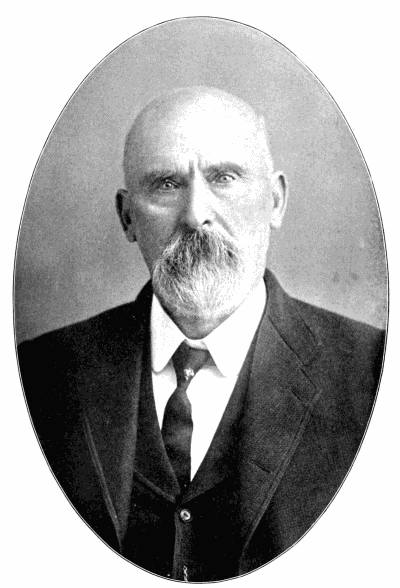
JOHN K. RAINWATER
John K. Rainwater grew to manhood in Arkansas and acquired his education in the public schools there. In early manhood he decided to try his fortune in the west and in 1861 made the long journey overland by ox team to Albany, Oregon. He rented a farm in that locality but in 1869 removed to Old Walla Walla county, Washington, settling on a farm now within the city limits of Dayton. He has now disposed of all of his land save seven acres but for a considerable period he was actively engaged in the operation of his farm and proved successful as an agriculturist. It has been a great pleasure to him to witness the steady and rapid development of this section and especially of Dayton and he has gladly given his aid to all projects seeking the public welfare. He is now living retired after a life of well directed industry and he is deservedly held in high esteem by his fellow townsmen.
Mr. Rainwater was married in 1854 to Miss Mary Sparks, also a native of Tennessee, and to them were born six daughters and one son: Dalila, the wife of George Munsey; Susan J., who married O. C. White, now of Olympia, Washington; Alice, the wife of Colonel F. Green, a resident of California; Ellen, who married William Robinson; Arthur L., who is living in Montana; Elizabeth, the deceased wife of Charles Door; and Nancy, the wife of Frank Desersy, of Seattle. The wife and mother was called to her reward December 30, 1889, and was laid to rest in the Dayton cemetery.
Mr. Rainwater is a stanch republican in politics and served ably as member of the city council of Dayton and for a number of years was a member of the school board. Fraternally he belongs to the Masonic order and is also affiliated with the Mystic Shrine. He has filled most of the chairs and is well known as a Mason who exemplifies in his life the beneficent teachings of the craft. For fifty-six years he has resided in this locality and his record has always been that of a public-spirited citizen, willing at all times to subordinate personal interests to the good of his community, county or state. The success which he gained and which enables him to enjoy the comforts of life was the direct result of his hard work and good management, and he is entitled to the praise that is given a self-made man.
ADAM FUDGE.
For almost thirty years Adam Fudge was identified with the agricultural interests of Walla Walla county and took a prominent part in its development. The greater part of his life was passed on the Pacific coast and he was thoroughly familiar with pioneer conditions in this section of the country. He was born in Illinois, May 26, 1845, a son of Adam and Catherine Fudge, who were natives of Virginia and early settlers of Illinois. In 1847 the family crossed the continent to Polk county, Oregon, where the father secured a farm and engaged in its operation for some years. His death occurred in Astoria, Oregon, and his wife died in Independence, that state.
Mr. Fudge, of this review, grew to manhood in Oregon and was indebted to the early schools of that state for the educational advantages he had. In 1872 he came to Walla Walla, where he continued to make his home throughout the remainder of his life. For five years he was engaged in the butcher business in Waitsburg and then purchased a ranch in Whitman county. He made his home in Waitsburg until coming to Walla Walla. His death occurred in May, 1901, his remains being interred in the Odd Fellows cemetery at Waitsburg. In his farming operations he met with good success and left to his widow a valuable tract of eight hundred acres of land in Whitman county, which she still owns.