BIOGRAPHICAL (continued 5)
Reading edition
CHARLES C. MAIDEN.
Charles C. Maiden, a progressive and up-to-date farmer of Walla Walla county, residing on section 9, township 6 north, range 35 east, was born in Virginia, February 28, 1865. His parents, James F. and Mary A. (Dutton) Maiden, were both born in Virginia and there passed their entire lives. They were the parents of ten children, but only four survive.
Charles C. Maiden grew to manhood in his native state and is indebted for his education to its common schools. In 1886, after attaining his majority, he removed to Kansas and three years later again started west, this time with the Pacific coast country as his destination. For two years he worked as a farm hand in Walla Walla county and then for four years operated rented land. At the end of that time he had saved enough money to purchase sixteen acres of rich land, well adapted to gardening, and on that place he has since remained. He now owns, however, one hundred and thirty-five acres devoted to truck gardening and to the raising of alfalfa. He has erected commodious and substantial buildings upon this place and otherwise improved it, thus adding greatly to its value.
Mr. Maiden was married on December 31, 1890, to Miss Laura D. Reynolds, a native of Illinois. Her parents, Evan and Urana (Stiles) Reynolds, were born respectively in Kentucky and Ohio. They became residents of Walla Walla county in 1881, and both lived upon their farm in that county until called by death. Mrs. Maiden is one of five living children in a family of twelve. By her marriage she has become the mother of two children: Florence D., the wife of F. A. Cline, of Clyde, Washington; and Franklin R., who is at home.
Mr. Maiden is a stalwart democrat in politics and for eleven years has held the office of accessor and for more than twenty years was a member of the school board. The length of his public service is proof of his ability and trustworthiness. Fraternally he belongs to Enterprise Lodge, No. 12, I. O. O. F., and the principles which guide his life are further indicated in the fact that both he and his wife belong to the Baptist church. When he came to Walla Walla county he was without capital and without influential friends, but he was quick to recognize the opportunities here offered and through taking advantage of all chances for advancement that have presented themselves he is now in comfortable circumstances.
CHARLES E. SHAFFER.
Charles E. Shaffer, who is farming in Walla Walla county, Washington, was born in Pennsylvania, July 2, 1862, a son of Christopher and Mary M. (Eckard) Shaffer, both natives of Germany. In 1840 they came to America and later were here married. They were for many years residents of Pennsylvania and there both passed away.
Charles E. Shaffer, who is one of four living children of a family of six, was reared and educated in Pennsylvania but in 1880, when about eighteen years old, went to California, where he remained for a short time. He then removed to Walla Walla county, Washington, where for a number of years he was employed by the Oregon-Washington Railroad & Navigation Company. In 1884 he returned to California, where he farmed for a decade, but in 1896 he returned to Walla Walla county and bought the farm of six hundred and forty acres which he still owns. He engaged in the cultivation of the soil until 1908, when he went to Dayton, where he bought a half interest in the J. W. Stevens hardware business, with which he was connected until 1914. He then removed to Waitsburg, where he has since resided. Whether engaged in farming or in the hardware business he has manifested a ready recognition of opportunities for advancement and has managed his affairs in an able manner. He is one of the directors of the Farmers Union Warehouse Company.
In 1887 Mr. Shaffer was married to Miss Amanda Scott, who was born in Baker county, Oregon, a daughter of John B. and Amanda M. (Cantonwine) Scott, the former of whom was born in the east and the latter in Iowa. They were pioneers of Baker county, Oregon, and both met death at the hands of the Indians. They were a young couple living beside the old Emigrant road on Lower Burnt river. It was about half a century ago that they started with a load of peaches and vegetables for the little mining town of Rye Valley, about eight miles distant, expecting to do some trading and also visit friends whom they thought they would meet at a dance that night. The next day they started home, Mr. and Mrs. Scott occupying the wagon seat and their two-year-old boy and baby girl asleep in the bottom of the wagon. Suddenly the Indians sprang from ambush with yells and delivered their fire at close range. Mr. Scott plunged forward across the dashboard dead and dropped the reins between the horses, but his wife caught him and dragged him back into the wagon. The team, of course, started to run, but she climbed over the dashboard to the wagon tongue, secured the trailing lines and regained her place in the wagon, where she crouched low, followed by many bullets. She guided the frightened animals down the difficult road, forded Burnt river at the foot of the hill and proceeded to her home. She had saved her husband's body and herself and the lives of their children, but received two mortal wounds. To those present she told her story, made her verbal will, consigning her babies to the care of their grandparents, Mr. and Mrs. George Cantonwine, of Walla Walla. She left in the hands of a neighbor the gold watch and chain which she took from her neck, with the request that they be given to her parents for her little daughter. If ever Oregon produced a heroine the girlish looking Mrs. Scott was she.
Mr. and Mrs. Shaffer have become the parents of five children, namely: Ernest M., of Spokane, Washington; Mary Ada, the wife of W. E. Volmer; Charles P., who is farming with his father; Audrey Grace, who is in high school; and Clarence, who is an eighth grade student.
Mr. Shaffer is a stanch republican and for two terms served as county commissioner. He has also been a member of the school board and many projects for the public welfare have benefited by his hearty co-operation. His fraternal connections are with Lodge No. 135, I. O. O. F., of Dayton, and with the Ancient Order of United Workmen. His wife belongs to the Congregational church and is much interested in its various activities. They have made many friends in Waitsburg since removing here and are well and favorably known throughout the county.
DOUGLAS V. WOOD.
Douglas V. Wood is the senior partner of the firm of Wood & Lane, prominent and successful dealers in automobiles in Walla Walla. He was born in middle Tennessee, on the 5th of October, 1859, a son of William and Elizabeth Wood. The father served as a soldier of the Union army in the Civil war and died while at the front.
Douglas V. Wood was educated in the public schools and in Mount Vale Academy, now Mount Vale College, at Celina, Tennessee. He took up the profession of teaching and in 1885 he came west to Walla Walla county, after which he was employed as teacher in the Waitsburg schools for two years. On the expiration of that period he turned his attention to the real estate and insurance business and also engaged in grain buying, with which undertaking he was identified in Waitsburg for fifteen years. He later spent two years in traveling over the country and in 1908 he took up his abode in Walla Walla. After one year devoted to the real estate business he turned his attention to the automobile trade and in 1911 sold an interest to C. B. Lane, thus forming the firm of Wood & Lane. The firm has the agency for the White, the Cadillac, the Oldsmobile and the Maxwell cars, and thus handling moderate and high priced cars, they do one of the largest automobile businesses in Walla Walla. They also maintain a splendidly equipped garage and their repair department is meeting with excellent success, while their annual sales of motor cars have reached a large figure.
On the 25th of December, 1888, Mr. Wood was united in marriage to Miss Laura R. Lane, a daughter of Joseph and Mary Lane, who were among the pioneer families of the county. To Mr. and Mrs. Wood have been born three children: Merrill D., who is a practicing physician of Spokane; Robert V., at home; and one who has passed away.
In politics Mr. Wood is a stalwart democrat and has served as a member of the town council of Waitsburg and was also mayor there for a number of years. His record as a public official is one which has brought to him honor and respect by reason of his loyalty to duty and his faithfulness in the performance of every task that devolves upon him. Fraternally he is connected with Touchet Lodge, No. 5, I. O. O. F., of Waitsburg, and with the Woodmen of the World. He and his wife are members of the Presbyterian church and are interested in its growth and development. Aside from his automobile interests Mr. Wood became one of the organizers of the Peoples State Bank and has continuously been one of its directors. His activities and his interests are thus broad and varied and he has done much to further the material, intellectual, social and moral progress of the community in which he resides. His aid and influence are always on the side of improvement and advancement and his labors have been resultant forces.
MRS. MARTHA ELLEN KIBLINGER BECKER.
Mrs. Martha Ellen Becker is living on section 6, township 7 north, range 35 east, Walla Walla county, and is the owner of a valuable farm property of six hundred and forty acres. She was born in Vermilion county, Illinois, and crossed the plains in 1861 in company with her parents, Jacob P. and Amanda A. (Rutledge) Kiblinger, both of whom were natives of the Prairie state. At length they determined to try their fortune in the northwest and made the long journey over the hot stretches of sand and across the mountains to Oregon, taking up their abode near Salem. Mrs. Becker was therefore reared and educated in Oregon and experienced all of the hardships and privations incident to the settlement of the frontier. After reaching young womanhood she gave her hand in marriage to Edwin F. Coffin and in 1879 they removed to the Walla Walla valley, where three years later they took up as a homestead the farm upon the Little Walla Walla river where Mrs. Becker still resides. Mr. Coffin bent his energies to the development and improvement of that place and his labors wrought a marked transformation in its appearance, for he broke the sod, tilled the fields and in course of years gathered good harvests, having brought all of the land under cultivation. Mrs. Becker now owns here six hundred and forty acres, constituting a very valuable farm on which are found all of the modern improvements and the accessories and conveniences known to the model farm of the twentieth century. She has continued to reside here since she took up her abode upon the place with her first husband and upon this farm she has reared her family of three children, two daughters and a son. The eldest, Myrtle, is the wife of Arthur Beard. The second daughter, Lula May, has become the wife of Fred Elsworth, of Deer Park, Washington, and the son, Guy H., remains upon the old homestead. After the death of Mr. Coffin, his widow became the wife of Philip Becker and to them have been born three children: Philip A. I.; Dora May, who is the wife of James Beeson; and George A., who is at home with his mother. Mrs. Becker is a very capable business woman, alert and energetic, and has successfully managed and controlled her farming interests. Her long residence in the county has made her largely familiar with events which have shaped the history of this section of the state. She can relate many an interesting tale of the early days and of the pioneer experiences which came to the lot of all those who settled in this section of the state when it was yet a frontier region. She has gained many friends during the years of her residence here and is highly esteemed by all who know her.
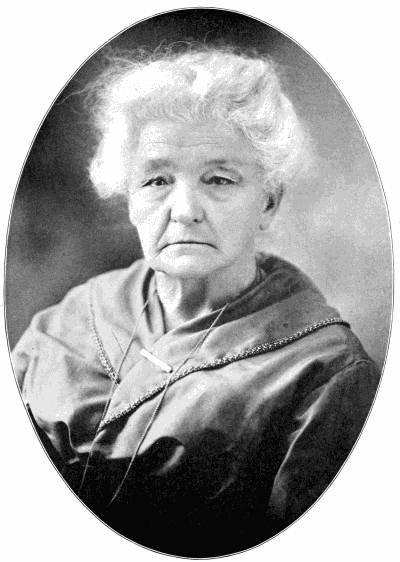
MRS. MARTHA E. K. BECKER
PATRICK J. HUGHES.
Patrick J. Hughes, one of the most successful farmers of Walla Walla county, was born in Westmeath, Ireland, in 1872, a son of Andrew and Delia (Kenan) Hughes. The father is still living in Westmeath, but the mother passed away, there, about 1894.
Their son, Patrick J. Hughes, was educated in the public schools of his native country and on reaching young manhood came to the United States, crossing the Atlantic in 1891. He landed in New York city on the 7th or 8th of May in that year and spent one week in the metropolis. He afterward came to the west, arriving in Walla Walla, Washington, with a cash capital of fifteen dollars, which was his entire possession in the way of finances. He was met at the train by Chris Ennis, who had been a friend of his parents in Ireland and who took him to his home, making him welcome there, for a week, after which he put him to work on his ranch at the wage of a dollar per day. He continued to work for wages for nine years, during which time he saved in the neighborhood of two thousand dollars. With this capital he started upon an independent career as a farmer. His beginning was a modest one as he rented land from Mr. Ennis, thus cultivating fourteen hundred and eighty acres. This farm he has since operated under lease and about 1903 he bought his first land, becoming owner of what was known as the Hastings ranch of three hundred and eighty-five acres. To his original purchase he had added from time to time until he now has nine hundred and thirty acres in that place. In 1915 he bought the Osborn ranch of twelve hundred and forty-four acres, for which he paid eighty thousand dollars. In 1917 he bought eighteen hundred and eighty-nine acres, and it may be said to be a curious coincidence that this is the very farm on which he first worked at a dollar per day upon coming to this country. For this property Mr. Hughes paid the munificent figure of two hundred and eighty-three thousand, five hundred dollars, or a little more than one hundred and fifty dollars per acre. Such is the notable record of Mr. Hughes, who a little more than twenty years ago arrived in Walla Walla county a poor boy with fifteen dollars in his pocket. He has accomplished what few others have done in so short a space of time, making himself one of the wheat kings of the Inland Empire. Mr. Hughes also has three brothers in Walla Walla county and all of them are successful as ranchers.
In politics Mr. Hughes has always maintained an independent course, voting for men and measures rather than party. His religious faith is that of the Catholic church. He is one of Walla Walla's most esteemed and valued citizens. He belongs to that class of resourceful men, who when one avenue of opportunity seems closed carves out another path whereby he can reach the desired goal. In a word, obstacles and difficulties have never been allowed to brook his course, but have been overcome by persistent, earnest effort and steadily he has progressed, reaching a most enviable and creditable position among the prosperous residents of the Inland Empire. His record may well serve to inspire and encourage others, for it is a story of honesty and thrift, the story of successful accomplishment through individual effort.
HERBERT C. BRYSON.
Herbert C. Bryson has won a conspicuous and honorable position in the ranks of the legal fraternity at Walla Walla, Washington, and is also most prominently and successfully connected with the sheep raising industry of the northwest. He was born in Athena, Oregon, on the 10th of February, 1879, and the spirit of western enterprise finds expression in all that he does and says. He is a son of Charles K. and Armilda C. (Darland) Bryson, the former a native of Kentucky, while the latter was born in Iowa. They came with their respective parents to the northwest and were married in Oregon. The father was one of the pioneers of Umatilla county, where he arrived in the early '70s, and for many years he was actively engaged in farming there. He still survives and now makes his home with a daughter in Enterprise, Oregon. His wife, however, passed away in December, 1894.
Herbert C. Bryson was reared on the old homestead farm in Umatilla county, Oregon, and early became familiar with the duties and labors that fall to the lot of the agriculturist, for his youthful days were divided between the work of the fields, the pleasures of the playground and the duties of the schoolroom. After attending the public schools of eastern Oregon he continued his studies in the State Normal at Weston, Oregon, and subsequently became a student in the University of Oregon, from which he was graduated with the class of 1899, winning the LL. B. degree. He had determined to make the practice of law his life work and his preparation therefore was most thorough. Following his graduation he opened an office in Grant's Pass, Oregon, where he entered upon the active work of the profession. In February, 1900, he came to Walla Walla, where he formed a law partnership with Oscar Cain, who was afterward United States attorney and is now located in Spokane. This partnership existed up to May, 1907, when Mr. Bryson was appointed deputy district attorney under Otto B. Rupp, in which capacity he served for two years. Since 1909 he has been practicing independently and in the intervening period of eight years he has gained a place in the front rank of the successful attorneys of Walla Walla county. He is thoroughly familiar with the principles of jurisprudence, is careful and painstaking in the preparation of his cases, is logical in his deductions and clear and sound in his reasoning. Aside from his law practice Mr. Bryson has gained a prominent position in connection with the sheep industry in the northwest. For a number of years he was actively engaged in the business in connection with Henry C. Adams, the pioneer banker and stockman of eastern Oregon and the founder of the town of Adams, Umatilla county. After the death of Mr. Adams in August, 1910, his interests were taken over by Mr. Bryson, their extensive sheep holdings including some twelve thousand acres of land and vast grazing privileges. His brother, Elmer D. Bryson, was placed in charge of the business, which in 1916 was incorporated under the name of the Bryson-Robison Corporation. This company has headquarters at Slater, Washington, with their large land holdings in Walla Walla county and their extensive grazing privileges in the Wenaha national forest in Oregon. This company is conducting the most extensive business in connection with sheep raising in northeastern Oregon or southeastern Washington. Mr. Bryson has closely studied every phase of the business and his intelligent direction of their interests has been a salient feature in their substantial success.
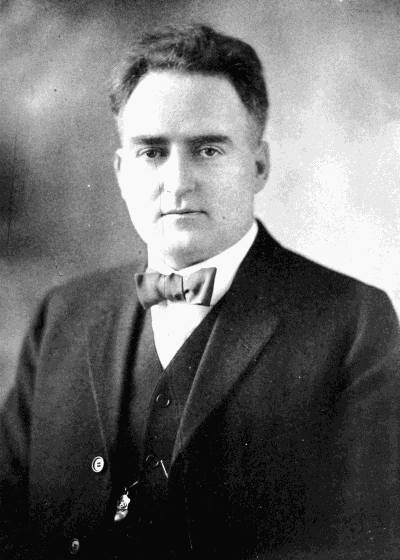
HERBERT C. BRYSON
On the 16th of October, 1899, Mr. Bryson was united in marriage to Miss Daisy Downing, of San Jose, California, and they have become the parents of a daughter, Juanita C., who is now a sophomore in the high school.
In politics Mr. Bryson is a republican and fraternally he is connected with Blue Mountain Lodge, No. 13, F. & A. M., and he and his wife are members of Alki Chapter of the Order of the Eastern Star. He is also a member of Walla Walla Lodge, No. 287, B. P. O. E., Columbia Lodge, No. 8, K. P., and Trinity Lodge, No. 121, I. O. O. F.; also of the Walla Walla Commercial Club and the Walla Walla Golf Club. His wife and daughter are members of the Episcopal church. In his professional connections Mr. Bryson is prominently known and is now vice president of the Walla Walla County Bar Association. He was also the organizer of the Wenaha Wool Growers' Association in 1905 and remained its president for four years, when he retired from active work in connection with the sheep industry, turning over the management of his interests to his brother. His ability both in business and professional circles is pronounced. He has ever held to high ideals, toward which he has made steady advancement, utilizing every opportunity that would bring him nearer the desired goal. His business career is indeed a creditable one, representing the force of active and intelligently directed effort, and his labors in connection with the sheep industry have done much to utilize the natural resources of the state. In a profession where advancement depends entirely upon individual merit he has also steadily progressed and his thorough understanding of the law and ability to accurately apply its principles have made him one of the foremost attorneys of the bar of the Inland Empire.
JAMES F. ROSE.
James F. Rose, an honored pioneer of Garfield county, still resides upon his farm on section 17, township 10 north, range 42 east, but leaves its operation to others and is enjoying well earned leisure.
He was born in Adams county, Ohio, February 5, 1839, a son of Israel and Mary (Peyton) Rose, who were also natives of the Buckeye state. He grew to manhood in that state and obtained his education in its schools, but in 1862 accompanied his parents to Walla Walla county, Washington, the journey being made by ox team. The father took up land but at length removed to Baker county, Oregon, where both he and the mother died. Two of their six children survive, including our subject, who was reared to agricultural pursuits. On accompanying his parents to Walla Walla county he took up his homestead on his present farm, which is situated on section 17, township 10 north, range 42 east, in Garfield county, which has been erected out of Old Walla Walla county. He owns four hundred and forty acres, nearly all of which is well adapted to the raising of wheat, and the fertile soil has yielded abundant crops in response to his well directed labors. For many years he personally operated his farm but is now living retired.
Mr. Rose was first married in 1865. Later he again married, choosing as his bride Mrs. Amanda (Fletcher) Jennings, and they have become the parents of two children: Frank, who is farming the homestead; and Lee, who is also an agriculturist by occupation.
Mr. Rose supports the democratic party at the polls but has never cared to take an active part in public affairs. He is a self-made man, having at all times relied solely upon his own resources for advancement. His accounts of conditions in Garfield county in the early days are very interesting and there is no one now living better informed on the history of the first settlement here, for he was the first man to take up land in his locality. He has always felt a keen interest in the development of the county and has thoroughly identified his interests with those of his community.
ANSON B. WOODS.
Since 1911 Anson B. Woods has resided in Walla Walla, enjoying a leisure made possible by his well directed labors as a farmer in former years. He was born in Iowa, near Dubuque, September 12, 1864, a son of James and Margaret (Daugherty) Woods, both of whom were born in Pennsylvania. However, they were taken to Iowa as children by their respective parents and there grew to mature years and were married. In 1883 they removed to Oregon and located upon a farm in Wasco, now Sherman, county, to the operation of which the father devotes his labors, and there both he and his wife are still making their home.
Anson B. Woods, who is one of a family of nine children, all of whom survive, was reared at home and attended the public schools of Iowa in the acquirement of his education. He was eighteen years of age at the time of the removal of the family to Oregon and at once began farming in that part of Wasco county, which has now become Sherman county. In 1896 he removed to Umatilla county and took up his residence upon a farm of four hundred and eighty acres which he purchased and which he still owns. For fifteen years his time and attention were completely taken up with the operation of that place, which is in a high state of cultivation and is well improved. As he was progressive in his methods and at the same time managed his business affairs well his resources steadily increased and in 1911 he retired and removed to Walla Walla, purchasing a comfortable residence on Boyer avenue.
Mr. Woods was married in 1895 to Miss Eliza McDonald, a native of Canada, and a daughter of D. M. and Ellen McDonald. The father died in July, 1914, and the mother makes her home still in Walla Walla. Mr. and Mrs. Woods have a daughter, Nellie Faith. They belong to the United Brethren church and for a number of years Mr. Woods has served capably as superintendent of the Sunday school. He supports the candidates and measures of the democratic party at the polls and while living in Oregon was, for some time, a member of the school board. He is a self-made man, having at all times depended upon his own powers and resources for advancement, and the success which he has gained is proof of his ability and energy.
JESSE D. SCOGGIN.
Jesse D. Scoggin, a prosperous and well known farmer residing on section 20, township 10 north, range 42 east, Garfield county, was born in Wisconsin, May 24, 1860, a son of J. G. and Olive (Madry) Scoggin, the former of whom was born in North Carolina and the latter in Tennessee. Following their marriage, which occurred in Jo Daviess county, Illinois, they went to Wisconsin and there remained for nineteen years. In 1865 they removed to Nebraska and twelve years later came to Washington, taking up as a homestead the farm now operated by our subject. There both the parents passed away. To them were born eleven children, of whom seven survive.
Jesse D. Scoggin obtained a public school education and received thorough training in farm work through assisting his father. He was seventeen years old at the time of the removal of the family to Washington and has since resided upon the family homestead here. He engaged in its operation in partnership with his father for a number of years but at length purchased the place and in the intervening years has added to the improvements thereon. He now owns four hundred and eighty acres, part of which is devoted to the growing of wheat and part to pasture, as he also engages in stock raising.
In 1884 Mr. Scoggin was married to Miss Jennie Janeway, a native of Jasper county, Iowa. They have three adopted children, Marie, Nellie and Leslie.
Mr. Scoggin is an adherent of the democratic party but has been content to remain a private citizen, leaving office holding to others. In giving the most careful attention to the development of his farm he has not only promoted his own financial interests but has also had a part in the agricultural development of Garfield county.
EDWARD C. RUCHERT.
Edward C. Ruchert, a prosperous and wide-awake young farmer operating two thousand acres of wheat and pasture land, with residence on section 19, township 12 north, range 42 east, Garfield county, is a son of Fred and Minnie (Garphard) Ruchert, both of whom were born in Germany. In 1877 they emigrated to America and for eight years resided in Wisconsin but at the end of that time removed to Oregon, whence in 1889 they went to Assotin county, Washington. The father took up a homestead there and for some time engaged in its development but at length removed to Idaho, where he and his wife resided for ten years. They then came to Garfield county, Washington, and here the mother passed away in 1915, while the father makes his home with his son, Edward C.
The last named, who is one of a family of eight children, all of whom survive, received adequate educational advantages, attending the public schools. His father also trained him carefully in farm work and at the age of eighteen years he found employment as a farm hand. In 1910 he began operating land on his own account and he now farms two thousand acres, part of which is pasture land, while the remainder is given over to the growing of wheat. His successful management of such extensive farming interests is possible only because he is systematic in his work, enterprising in his methods and because he utilizes the most improved farm machinery.
In 1915 Mr. Ruchert was married to Miss Anna Boyd, a native of North Dakota. In politics he is a strong republican and he is now filling the office of deputy game warden, in which capacity he is making a creditable record. Although he has been dependent upon his own resources for advancement he has already gained a measure of success that many a man twenty years his senior might well envy. He is strongly imbued with the characteristic western spirit of enterprise and self-reliance and is justly accounted one of the leading citizens of Garfield county.
JAMES C. ROBERTSON.
For more than a third of a century James C. Robertson has been identified with the farming interests of Garfield county and now carries on general agricultural pursuits on section 25, township 11 north, range 41 east, where he owns three hundred and seventeen acres and cultivates part of this tract or about one hundred and fifty acres. He started out in life empty-handed, so that whatever success he has achieved is attributable entirely to his persistent efforts and intelligently directed industry. He was born on Prince Edward Island, Canada, September 30, 1862, a son of John and Mary (Steel) Robertson, who are mentioned in connection with the sketch of their son, John Robertson, on another page of this work.
James C. Robertson spent the first ten years of his life in Canada and in 1873 accompanied his parents to California, where the family home was maintained until 1882. In the meantime the father died and the mother, accompanied by her family of four sons and a daughter, then came to Washington. James C. Robertson had been a pupil in the public schools of Canada and of California and was a youth of fifteen years at the time of his father's death. Being the oldest of the children, much of the responsibility of the farm work devolved upon him and he bravely met the task that was a heavy burden for young shoulders. In the spring of 1882 he came to Washington, making the trip in advance of the family. He journeyed northward with an uncle and on the 10th of May they arrived at Pomeroy. That fall the mother and his brothers and sister came and in connection with his brothers, Samuel N. and John, James C. Robertson began farming in a partnership relation that existed for twenty years. Unusual harmony existed between the family, the tie that binds them being very close. The brothers persistently and energetically continued the work of improving their fields and, as the years passed on, success in substantial measure rewarded their efforts. At length they divided their interests and James C. Robertson is today the owner of three hundred and seventeen acres of land, part of which he has brought under a high state of cultivation, his fields returning to him a gratifying annual income.
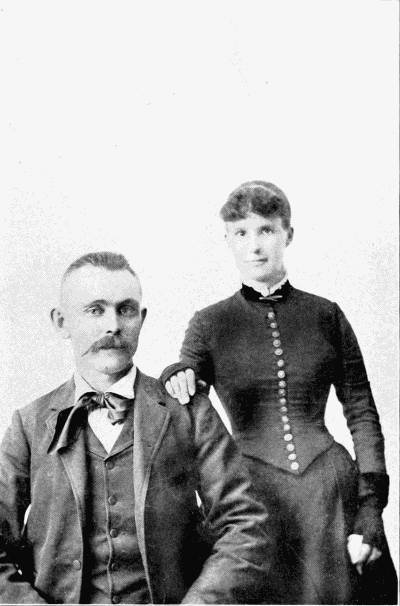
MR. AND MRS. JAMES C. ROBERTSON
In 1888 was celebrated the marriage of James C. Robertson and Miss Ollie M. Swank, of Garfield county, a daughter of John Swank, who is now in Orofino, Idaho, but was one of the earliest of the pioneer settlers of Garfield county. Mr. and Mrs. Robertson have become the parents of seven children, as follows: Rosella, who is the wife of C. E. Lewis, a farmer of Garfield county, Washington; Elvira, who gave her hand in marriage to Henry Rucket, an agriculturist of Garfield county; Fay, who is the wife of W. A. Lewis, a farmer of Garfield county; and Floyd, Belinda, Sybil and Byron, all at home. The wife and mother passed away February 13, 1905, and is laid to rest in the Petowa Flats cemetery, her demise causing deep sorrow to family and friends.
Mr. Robertson usually exercises his right of franchise in support of the men and measures of the republican party yet is liberal in his views and does not hesitate to vote for a candidate of the opposing party if his judgment dictates this to be the best course. He belongs to Harmony Lodge, No. 16, I. O. O. F., of Pomeroy; and to Pomeroy Lodge, K. P. He ranks with the leading farmers of Tatman Gulch and he well merits the high regard in which he is uniformly held, for his has been an active, useful and honorable life. He has concentrated his efforts and attention upon his business interests, has never been known to take advantage of the necessities of another in a business transaction, but along legitimate lines has won the success that places him among the substantial residents of his section of the state.
ALEXANDER RAY.
Alexander Ray, one of the largest grain and stock raisers of Walla Walla county, residing on what is known as the Sharp farm, on the Touchet river, was born in Hamilton county, Illinois, September 21, 1867, a son of A. M. and Rachel (Upton) Ray, both natives of the Prairie state, where they passed their entire lives. To them were born ten children, of whom five survive.
Alexander Ray remained at home until he was seventeen years of age and during that time acquired a common school education. In 1884 he crossed the plains of Walla Walla county, Washington, and for seven years was employed as a common laborer. He then bought land near Dayton and for twenty years gave his undivided time and attention to the cultivation of his farm there. In 1911 he disposed of that place and for five years rented land, but in 1916 bought twelve hundred acres of the old Rodgers ranch, which he operates, together with the farm where he now resides, which comprises twelve hundred and forty acres. That place is on section 16, township 10, north, range 35, and is known as the Sharp farm. He raises wheat and stock and derives a good income from both branches of his business.
In 1890 Mr. Ray was united in marriage to Miss Laura Bates, who was born in Nebraska, and they have become the parents of eight children: Alfred, who is a graduate of Whitman College and is now assisting his father; Ethel, the wife of William Kyme; Irl, who is now a student in Pullman College; Myrtle, the wife of Earl Jamison, of Montana; Ivory, who married A. McLaughlin; and Goldie, Wanda and Alton.
Mr. Ray supports the democratic party at the polls and takes the interest of a public-spirited citizen in governmental affairs, has never been an aspirant for office however, and always casts his influence on the side of right and justice. His wife belongs to the Methodist Episcopal church. In addition to his extensive holdings in Washington he owns a quarter section of land in Idaho which is also well improved. He possesses great energy and is a hard worker, giving the most careful personal supervision to all phases of his extensive agricultural operations.
CHARLES SNODERLEY.
Charles Snoderley, who follows farming on section 1, township 12 north, range 41 east, in Garfield county, was born in Page county, Iowa, on the 3d of September, 1866, but the greater part of his life has been passed upon the Pacific coast, for at a very early age he came to the west with his parents, Alfred and Bertha Snoderley, who were natives of Indiana and of Tennessee respectively. They continued their residence in Iowa until early in the '70s, when they crossed the plains to California, and a year later they removed to the Willamette valley in Oregon, where they remained for three years. On the expiration of that period they made their way to Washington and established their home in the Falling Spring district of Garfield county, where the father took up a homestead, upon which he continued to reside until his death, actively engaged in farming throughout the intervening period.
Charles Snoderley was reared upon the old home place and acquired his education in the district schools, but educational facilities at that time were very limited and, moreover, during much of his youth he had to work, his services being needed upon the home farm. When his father died he was not yet twenty-one years of age but he took charge of the home farm and became the head of the family. Later he took up a homestead in Coyote Gulch, on which he resided for a number of years, and about 1905 he removed to his present home farm, which he had previously purchased. He has prospered as the years have gone by, for he has worked diligently and persistently, knowing that industry is the basis of all legitimate and honorable success. He now owns seven hundred acres of land in the home farm and he also leases four hundred and eighty acres, all of which he rents to other parties.
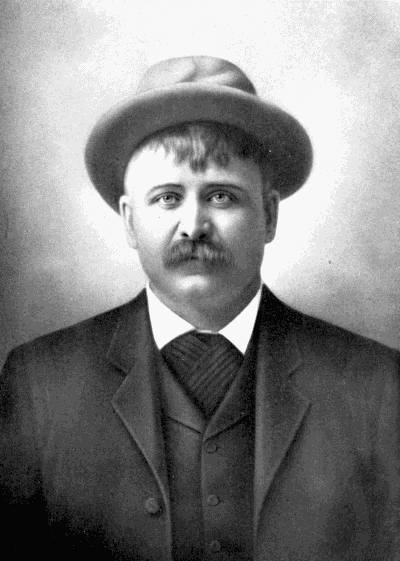
CHARLES SNODERLEY
In his political views Mr. Snoderley is a democrat, voting for the men and measures of the party but not seeking office. Fraternally he is connected with the Independent Order of Foresters. He has proven himself a financier as well as a farmer in the capable management of his business interests and investments and today he is ranked among the successful and substantial residents of Garfield county, where he has made his home for many years.
MILFORD H. BROUGHTON.
The northwest with its pulsing industrial activities, its unlimited opportunities and its many resources which constitute a call for action, has drawn to it a large number of progressive men who have achieved success in this field. Prominent among the number is Milford H. Broughton, the president and manager of the Walla Walla Iron Works of Walla Walla, Washington. He was born in Fond du Lac, Wisconsin, on the 8th of June, 1875, his parents being Edward and Jennie (Hersey) Broughton, the former a native of New York, while the latter was born in the Badger state. They were married in Wisconsin, to which state the father had migrated as a young man. He was a farmer by occupation and he lived in the middle west until 1879, when he came to Washington, establishing his home in Walla Walla county. Subsequently he removed to Umatilla county, Oregon, where he operated a farm for ten or eleven years, and then took up his abode in the city of Walla Walla in order that he might give his children the benefit of education in the city schools. Here he passed away in 1900 and is still survived by his widow, who yet makes her home in Walla Walla.
Milford H. Broughton is indebted to the public school system of Walla Walla for his early educational opportunities. He afterward became a student in Whitman College, which he attended for four years, but his course was interrupted by the outbreak of the Spanish-American war, which made a strong appeal to his patriotic spirit and to this appeal he responded, enlisting for active service in April, 1898. He went to the Philippines as a member of Company I, First Washington Volunteer Regiment, and was mustered out in November, 1899, after having done active duty in the orient.
During the spring following his return Mr. Broughton began work in the plant of the Gilbert Hunt Manufacturing Company of Walla Walla, where he was employed for four years. He next became instrumental in the organization of the Severance-Broughton Company, which was incorporated for the manufacture of iron products and agricultural machinery. In 1909 Mr. Broughton acquired the interest of his partner in the business, which was reorganized at that time under the firm name of the Walla Walla Iron Works, Mr. Broughton becoming the president and manager of the business, in which dual capacity he has since served. Under his control the business has become one of the most important productive industries of the city, the trade extending over a vast territory, the output being shipped as far south as San Jose, California, and as far east as Battle Creek, Michigan. The volume of their business, however is done on the Pacific coast, there being a liberal home market for all their product. The plant is thoroughly equipped with the latest improved machinery and is operated according to the most modern processes. The business is carefully systematized with the result that there is no loss of time, labor or material.
On the 10th of December, 1900, Mr. Broughton was married to Miss Mandana Bryant, of Walla Walla, a daughter of John P. Bryant, one of the pioneers of this city, now deceased. Mr. and Mrs. Broughton have become the parents of two children, Viretta and Loree.
In his political views Mr. Broughton is an earnest republican but has never been an aspirant for office. He has membership with the Spanish-American War Veterans and with the Loyal Order of Moose. He is also connected with the Commercial Club of Walla Walla. He and his wife are of the Christian Science faith and in social circles of the city they occupy an enviable position, having the warm regard of all with whom they have been brought in contact. In business circles Mr. Broughton is recognized as a strong man, strong in his honor and his good name, strong in his ability to plan and to perform. Persistency of purpose has been one of the strong factors in his growing success, combined with a thorough understanding of the business in which he engages and a close study of trade conditions at large. His efforts, too, have ever been of a character that have contributed to public progress as well as to individual prosperity.
RICHARD J. TOMPKINS.
Seemingly insurmountable obstacles have at times barred the path of Richard J. Tompkins, but with resolute purpose and determination he has sought out paths which would lead him around his difficulties and enable him to continue on the road to success. Many a man of less resolute purpose would have become utterly discouraged. He has never been afraid of hard work and his determination and energy have carried him steadily forward to the goal of prosperity. Mr. Tompkins is now residing in Walla Walla, from which point he controls his farming interests. His life record should serve to inspire and encourage others, showing what may be accomplished when one has the will to dare and to do.
Mr. Tompkins was born in Pike county, Missouri, August 20, 1862, a son of William and Melinda (Carter) Tompkins. The father was a native of Missouri, while the mother was probably also born in that state. William Tompkins died when his son Richard was a youth of fourteen years. He was the fourth in a family of eight children and at seventeen years of age he took charge of the home farm, which he managed until he reached his twenty-fourth year, when a younger brother became old enough to take care of the mother. Then our subject, in the spring of 1887, made his way westward to Washington. Here he entered the employ of A. C. Wellman on the Eureka Flats, Mr. Wellman having been an old friend of his father in Missouri. During the first summer he worked for a dollar per day. The following summer he received thirty dollars per month, working for J. C. Painter, and that summer he purchased a team, harness and wagon and went to work on the construction of the Washington & Columbia Railroad.
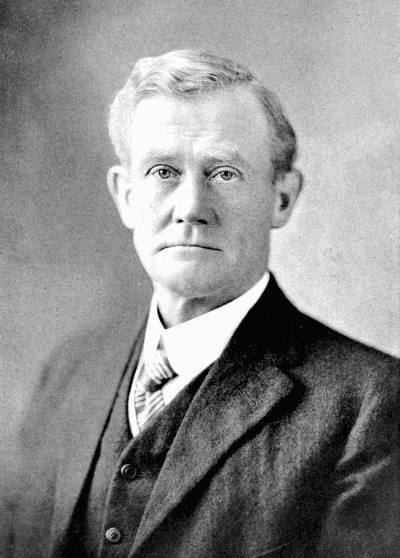
RICHARD J. TOMPKINS
In the spring of 1889 Mr. Tompkins bought a quit claim deed to a preemption of eighty acres, on which he filed as a preemption. He rigged up a five horse gang plow, plowed his own place and then hired out to plow for others, utilizing all his time that summer and fall in that manner. In 1890 he bought eighty acres adjoining, proved up on the preemption and mortgaged the one hundred and sixty acres. He cultivated his farm and continued to work out for others during those hard times. In the summer of 1892 he kept account of the days which he devoted to his own crop, and figuring his labor at the same price which he received when working for others, his wheat crop, which was a bounteous one, cost him in labor twenty-five cents per bushel and he hauled to market a mile and a half, where he received twenty-five and a half cents per bushel. The price of wheat continued low until 1896, selling from twenty-five to fifty cents per bushel, and the four years from 1893 until 1896 inclusive were years of crop failure on the Flats. Mr. Thompkins was keeping bachelor's hall and trying to hold his farm, but he determined that if he was not successful with his 1896 crop he would make no further effort to retain his land. Therefore, in January, 1897, he deeded his land to the mortgage company, they releasing him free from debt, and all he had left for his eight years of work was twelve head of horses at a value of about twenty-five dollars per head. During this time he received eight hundred dollars from his father's estate, which also went into the maelstrom. In the spring of 1897 he had six hundred acres of wheat in fallow and three hundred acres of stubble, with his lease expiring in November. The Oregon Mortgage Company wanted him to surrender his lease of three hundred acres without any compensation but Mr. Tompkins demanded fifty cents an acre. The company refusing to pay it, he turned in and sowed it to wheat in March and harvested forty-five bushels to the acre in the fall. This sold at a better price which gave him his start. He then bought back his one hundred and sixty acre claim for three hundred dollars less than he had deeded it over to the mortgage company and he also bought one hundred and sixty acres adjoining. In the fall of 1897 he planted his three hundred and twenty acres to wheat and in the spring of 1898 returned to Missouri.
While in the middle west Mr. Tompkins was united in marriage to a Missouri girl, Miss Mattie L. Hayden, the wedding being celebrated on the 8th of June, 1898. In the latter part of June he returned with his bride to Washington and located on his old homestead, where he lived through the summer, harvesting his crop, and in November following took up his abode in Walla Walla. In December of the same year he bought eight hundred acres adjoining his homestead, for which he paid at an average of eighteen dollars per acre.
In February, 1899, he returned to the farm and resided thereon until the fall of 1905, when he again moved into Walla Walla, having in the meantime erected his present commodious residence, which is one of the attractive homes of the city. In the intervening years he had added to his holdings from time to time until his landed possessions now aggregate twenty-eight hundred acres and he is one of the substantial farmers of Walla Walla county. Success at length crowned his labors and was well deserved as a fitting reward for his indefatigable industry, his perseverance, his courage and his persistency. Mr. Tompkins was the first farmer of his county to branch out into the "bulk wheat system" and built the first concrete elevator in the country in Walla Walla county. He found the change profitable and the system will probably be generally adopted by the farmers in this region.
In 1908 Mr. Tompkins was called upon to mourn the loss of his first wife, who passed away on the 13th of October of that year, leaving two children, Veryl and Richard. On the 1st of June, 1911, he wedded Daisy W. Wilson, a teacher in the Green Park school of Walla Walla and a daughter of James Wilson, one of the early pioneer settlers of Walla Walla county. There are three children of this marriage: Morton, Paul and Mary Anna.
The parents are members of the Nazarene church and are loyal to its teachings and purposes. In politics Mr. Tompkins largely maintains an independent course but leans toward the democratic party. He has become one of the substantial citizens of the Walla Walla valley and certainly deserves much credit and honor for what he has accomplished. With stout heart and willing hands he has pushed forward and in the course of years his life record has proven the eternal principle that industry wins.