BIOGRAPHICAL (continued 2)
Reading edition
In 1872 Mr. Fudge was united in marriage to Miss Mary M. Perkins, who was born in Marshall county, Illinois, and is a daughter of Joel B. and Margaret (Burt) Perkins, both natives of Kentucky. In that state the Perkins family lived about ten miles from Mammoth Cave. They removed to Oregon in 1852 and located on a farm near Portland, where they made their home until coming to Walla Walla in 1862. The parents both died at Waitsburg and two of their nine children have also passed away. Those living are: James A., for many years a banker of Colfax, Washington, but now engaged in the real estate business Mary; Mattie, the wife of Alfred Miller, of Lacrosse, Washington; T. J., of Spokane; Frank B., of the Big Bend country; E. L., of Harrington, Washington; and Garfield, of Spokane. To Mr. and Mrs. Fudge were born three children, namely: Grace, deceased; Adna, the wife of Samuel B. Sweeney; and Will C., assistant cashier of the Colfax National Bank. Mrs. Fudge rents the ranch and she and her daughter are now residing in Walla Walla, where they own a fine residence. She is a member of the Christian church and is a most estimable lady, who has a host of warm friends.
Mr. Fudge took a very active part in the Odd Fellows lodge to which he belonged and was a stanch supporter of the republican party. He was a man of good business and executive ability, who usually carried forward to successful completion whatever he undertook, and his course in life was ever such as to commend him to the confidence and regard of all with whom he came in contact. He was one of the representative pioneers of the Pacific northwest and to such men is due the present development and prosperity of this region.
EMERSON LEE WHEELER.
Emerson Lee Wheeler, owner and publisher of the Waitsburg Times, of which his father had long been the editor, is not only widely known in journalistic circles but is regarded as one of the most prominent and influential residents of his section of the state, a fact which finds its verification in his long continued service as mayor of his city. He was born in Waitsburg, March 22, 1878, a son of Charles and Alice Wheeler. The father was born in Cass county, Missouri, February 19, 1852, and was one of a family of ten children. After reaching manhood he wedded Alice Reavis, a daughter of Judge D. B. Reavis, the wedding being celebrated in 1877, and not long afterward they started for the west, making the journey by mule team across the plains. Arriving at Waitsburg, Mr. Wheeler learned that the village school was without a principal and applied for and secured the position. After a year spent as teacher he was nominated for the position of county superintendent of schools at the hands of the republican convention and was elected and re-elected in 1880. In the following year he was appointed by the governor as territorial superintendent of schools and during his five years' incumbency in that office did splendid work in organizing the schools, in promoting their standards and advancing their efficiency. On the expiration of that period he acquired a lease on the Waitsburg Times and afterward purchased the plant. He then successfully edited and conducted the paper until 1896, when he leased the plant to his son, Emerson L., who afterward purchased the paper and has since successfully conducted it. For about seven years Charles W. Wheeler was lecturer for the Woodmen of the World and gained an enviable reputation as a public speaker by reason of his eloquence and his clear presentation of every question which he handled. He died May 19, 1917, at the age of sixty-five years, respected by those who knew him and most of all by those who knew him best.
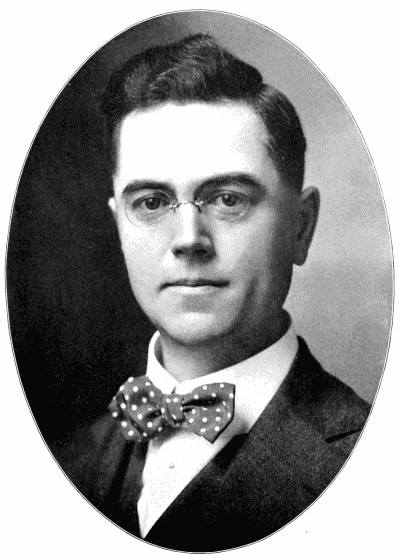
EMERSON L. WHEELER
Emerson L. Wheeler, spending his boyhood and youth in Waitsburg, acquired his education in its public schools and in the Waitsburg Academy. He, too, took up the profession of teaching, which he followed for a year, and he then leased the Waitsburg Times from his father and still continues its publication. He was practically raised in the print shop, being, as it were, "To the manner born." He had spent most of his vacations in the printing office up to the time when he assumed its active management. He has since given his undivided attention to the publication of the paper, which is a representative of high standards of journalism. Its columns have been used in large measure to further the interests and welfare of town and county and he has made the Times both the mirror and the moulder of public opinion.
In his home town on the 5th of June, 1900, Mr. Wheeler was united in marriage to Miss Myrtie V. Duncan, a native of California and a daughter of Mr. and Mrs. W. J. Duncan, who were pioneers of the Walla Walla valley.
Mr. Wheeler has an interesting military record. For four years he served as a member of Company D, First Infantry, of the National Guard of Washington, occupying that position until 1898, when the National Guard was mustered into the national service as Company K for active duty in the Philippines. He was, however, rejected on account of defective eyesight, so that he could not go to the orient. In politics he has always been a republican, giving stalwart support to the party since age conferred upon him the right of franchise. That he is one of the leaders of the party is indicated in the fact that he is the present mayor of Waitsburg and with the exception of one year he has continued in the office for the past decade. Previously he had been a member of the city council for several years and his official record is one over which there falls no shadow of wrong or suspicion of evil. He has always been active in the Commercial Club and is at the present time secretary of the Waitsburg Commercial Club, having been called to that position on its incorporation in 1911.
Fraternally Mr. Wheeler is connected with Delta Lodge, No. 70, K. P., in which organization he has always taken a very active part. He is likewise a member of Waitsburg Lodge, No. 16, F. & A. M.; of Occidental Lodge, No. 11, A. O. U. W.; and of Waitsburg Camp, No. 72, W. O. W. In all these organizations he is loyal to the purposes and teachings of the different societies. His standards of life are high and he never deviates from what he believes to be right between himself and his fellowmen. He is actuated by a spirit of progress in all that he undertakes in a business way or in relation to the public welfare and as an official of Waitsburg he has done splendid service in its behalf, looking ever to the benefit and upbuilding of the city.
A. HERBERT GRAVES.
A. Herbert Graves, appointed by President Wilson in January, 1916, to the position of postmaster of Asotin, was born December 2, 1871, in Shelbyville, Shelby county, Missouri, a son of Edmond and Sarah (Tuttle) Graves. He acquired a public school education in his native city and continued his studies at Macon, Missouri. On completing his course he took up the drug business, which he followed in Missouri for six years, and then went upon the road as a traveling salesman, representing a wholesale drug house, in which line of business he continued for about two years. He then became connected with the telephone business and on the 5th of April, 1913, he arrived in Asotin, Washington, where he bought out the Asotin Telephone Company, which at that time had but sixty-five patrons. The business is now conducted under the name of the Asotin Telephone Exchange and Mr. Graves is the sole owner. He gives service at the present time to three hundred patrons all over Asotin county and the adjoining territory. He has built up the business along substantial lines and he is accorded a gratifying patronage.
On the 14th of September, 1899, Mr. Graves was united in marriage to Miss Ida Algena Watson, a native of New York, and to them have been born three children: June Irene, who is a student in the Asotin high school; Herbert, a student in the eighth grade of the public schools; and Edward, now three years of age.
Mr. Graves and his wife are communicants of the Episcopal church and he belongs to the Masonic fraternity. His political allegiance is given to the democratic party and in January, 1916, by presidential appointment, he became postmaster of Asotin, in which connection he is now serving, discharging the duties of the office in a prompt and capable manner and at the same time conducting his telephone business. He is a progressive, energetic and farsighted business man and is meeting with well merited success.
J. BURRES HERROLD.
J. Burres Herrold, a well known farmer residing in Walla Walla, from which point he directs the operation of his extensive holdings, was born in Knox county, Illinois, November 14, 1858, a son of Bishop A. and Harriett (Cullison) Herrold, natives respectively of Indiana and Ohio. They were married, however, in Illinois, to which state they removed as children with their parents. In 1871 they came to the Pacific coast and for seven years lived in the Willamette valley of Oregon, after which they came to Washington, settling in Palouse, Whitman county. Seven years later they took up their residence on a farm on Eureka flats, Walla Walla county, and there the mother died in March, 1893. The father, a sketch of whom appears elsewhere in this work, is still living and makes his home with a son residing near Waitsburg.
J. Burres Herrold was reared at home and acquired his education in the common schools of Illinois. At the time of the arrival of the family in the Willamette valley he was thirteen years of age. A year after their removal to Washington, in June, 1878, he left home and began his independent career. In 1882 he filed on a homestead on Eureka flats, Walla Walla county, and retained the ownership of that place until 1907, when he disposed of it and purchased four hundred and thirty-four acres in Columbia county two and a half miles east of Waitsburg. He resided upon that place until 1915, when he removed to Walla Walla, where he now lives. He still, however, gives close attention to supervising the work of the farm and his progressive methods and excellent business judgment have enabled him to gain financial independence.
On the 8th of January, 1915, Mr. Herrold was united in marriage to Miss Nellie Perrigo, a daughter of Harlow and Ida (Daniels) Perrigo. Her father died in Wisconsin, and in 1909 her mother came to Walla Walla, where she now lives. Mrs. Herrold was for eight years prior to her marriage a teacher in the Walla Walla schools and is a woman of excellent education and good executive ability.
Mr. Herrold supports the republican party at the polls but is without ambition for office. He is connected with Touchet Lodge, No. 5, I. O. O. F., and with Coppei Encampment, No. 73. He is loyal to the order and to its teachings of mutual helpfulness and fraternity, and the principles which govern his life are further indicated in the fact that he is a member of the Christian church, to which his wife also belongs. They are progressive in spirit and willingly support all movements looking toward the advancement of the interests of their community.
HERBERT L. WILSON.
Herbert L. Wilson has devoted the greater part of his life to engineering work and is now a leader in his profession in southeastern Washington, being especially prominent in connection with the construction of state highways and bridges and the paving of city streets. He was born in Henry county, Iowa, June 25, 1877, a son of Jonah and Mary (Graham) Wilson, both of whom were born in Ohio, where they were reared. Soon after their marriage they left that state and removed to Henry county, Iowa, which was then just being settled. The father filed on a homestead and both he and the mother still reside on that place. His holdings now comprise four hundred and eighty acres and he is recognized as one of the most successful farmers and stock raisers of Henry county.
Herbert L. Wilson was educated in the public schools of Henry county and in Drake University of Des Moines, from which he received the degree of civil engineer in the class of 1899. Following his graduation he devoted some time to farming in his native county, but in 1904 came to the Pacific coast. For about a year he was employed on construction work in Portland and then came to Walla Walla. He remained in this city only a short time, however, and then took up a homestead in Franklin county, Washington. Later he commuted the homestead and proved up on his claim in less time that it would have taken to do so under the homestead law. He was instrumental in securing the establishment of a postoffice at Ringgold, and for a year and a half served as postmaster. After securing the title to his land he was employed in the engineering department of the North Coast Railroad Company, which has since become a part of the Union Pacific system, and while in that connection he worked on the construction of the road for two and a half years. In 1908 he went to Twin Falls, Idaho, where he developed a farm under the newly installed irrigation project, but after remaining upon the place for about a year he went to North Yakima, Washington, where he went into business on his own account as construction engineer. During the following two and a half years he completed a number of important projects and in 1912 came to Walla Walla, where he has since gained an enviable reputation as a capable engineer. He has given his attention largely to state highway construction and has also done a great deal of street paving in Walla Walla and has erected a large number of bridges. He has handled some of the largest jobs in these lines in this section of the state and has not only gained high professional standing but has won material success.
Mr. Wilson was married in 1908 to Miss Stella Nixon, a daughter of E. H. Nixon, a sketch of whom appears elsewhere in this work. To Mr. and Mrs. Wilson has been born a daughter, Mary Lavelle.
Mr. Wilson is an advocate of republican principles and supports the candidates of that party at the polls. He is connected fraternally with Blue Mountain Lodge, No. 13, F. & A. M., and with Walla Walla Chapter, No. 1, R. A. M., and is likewise a member of the Walla Walla Commercial Club. In religious faith he is a Presbyterian and his life has at all times been actuated by high moral principles.
JEREMIAH M. CAMP.
Jeremiah M. Camp, one of the prosperous and highly esteemed residents of Walla Walla, was for many years actively engaged in farming in Whitman county, where he still owns a large tract of valuable land, but is now living retired. A native of Ohio, he was born May 10, 1837, and is a son of John and Deborah (Martin) Camp, both of whom were born in Connecticut, the former in 1801. The parents removed to Ohio at an early day in the development of that state and there the mother passed away in 1856. Two years later the father removed with his family to Knox county, Illinois, and devoted the remainder of his life to the operation of a farm there. He died suddenly in 1865. There were five sons in the family but only three are now living.
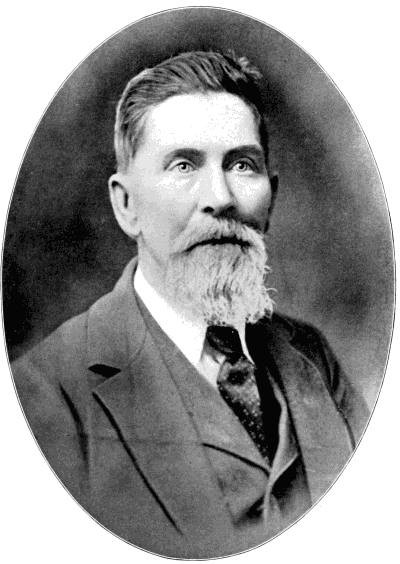
JEREMIAH M. CAMP
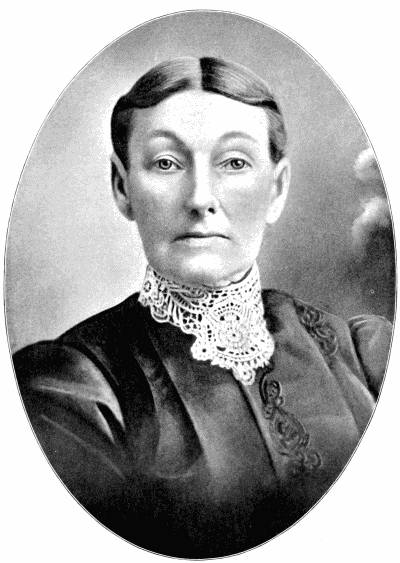
MRS. JEREMIAH M. CAMP
Jeremiah M. Camp passed the days of his boyhood and youth in his native state and is indebted for his education to its public schools. Following his marriage, February 12, 1858, at the age of twenty years, he became a resident of Knox County, Illinois. In 1862 he enlisted there in Company I, Eighty-third Illinois Volunteer Infantry, and served at the front until the close of the Civil war in 1865. Although he took part in a great deal of hard fighting he was never wounded nor imprisoned. After being mustered out at Chicago he returned to Ohio, where his wife was then residing, and they continued to make their home in that state until 1867, when they went to the vicinity of Washington, Iowa, where Mr. Camp engaged in farming for three years. In 1870 he went to Kansas and in 1883 came to Washington. After staying for a time in Walla Walla county he removed to Whitman county, where he took up a homestead. He at once gave his entire time and attention to the task of developing that farm and as the years passed made many improvements thereon. In 1904 he retired and took up his residence in Walla Walla, where he now lives. He still owns sixteen hundred and sixty acres of land in Whitman county, all in a high state of cultivation, and derives therefrom a gratifying income. The success which he has gained is doubly creditable in that it is due to his quickness to see and take advantage of opportunities, his good management and his hard work.
On the 12th of February, 1858, Mr. Camp was united in marriage to Miss Lucy Ann Merritt, also a native of Vinton county, Ohio, and they traveled life's journey together for fifty-two years, Mrs. Camp dying in Walla Walla on the 8th of October, 1911. They became the parents of nine children, as follows: Louis and Ida, both deceased; Hattie, the wife of William Barber, of Anthony, Kansas; A. I. and George, both residents of Whitman county, Washington; May, the wife of Theodore Harris, of Oklahoma; Sadie, the wife of Charles Pryor, of Dayton, Washington; and Archibald and Ira, both residents of Whitman county. The wife and mother was a consistent and faithful member of the Methodist Episcopal church.
Mr. Camp has voted the republican ticket since he cast his first vote for Abraham Lincoln. He has never been active in public affairs, preferring to concentrate his efforts upon his farm work, and in so doing he has not only won financial independence but has also contributed to the development of this district along agricultural lines. Through his membership in the local Grand Army post he keeps in touch with the other veterans of the war and finds great pleasure in recalling the experiences of those days.
JAMES A. YEEND.
James A. Yeend is a self-made man who is now the owner of three hundred and eighty acres, constituting a valuable farm property on section 20, township 8 north, range 36 east, Walla Walla county. He was born in Gloucestershire, England, on the 8th of March, 1856, and is a son of William and Ellen (Surman) Yeend, who were natives of England, whence they crossed the Atlantic to the new world in December, 1870. They settled on a farm in section 20, township 8 north, range 36 east, Walla Walla county, and here the father passed away, while the mother later became a resident of Walla Walla and died in that city. They were the parents of sixteen children, seven of whom survive.
James A. Yeend was a lad of fourteen years when he crossed the Atlantic to the United States in company with his parents. He had acquired his education in England and remained under the parental roof until twenty-one years of age, when he started out in life for himself. Two years later he took up a preemption claim of one hundred and twenty acres and bought one hundred and sixty acres of railroad land in Walla Walla county but in 1883 sold this property to his father. He then removed to Whitman county, Washington, where he took up a homestead and timber claim, upon which he lived for twelve years and through that period wrought a marked transformation in the appearance of his property, for he brought much of the land under a high state of cultivation. In 1896 he sold that place and came to Walla Walla county, where he now resides. Here he owns three hundred and eighty-four acres of rich and productive land, upon which he has placed many modern improvements, including an attractive home and substantial buildings that furnish ample shelter for grain and stock. He is an energetic and progressive farmer and his place presents a most attractive appearance, indicative of the care and labor which he bestows upon his fields and also indicative of the careful supervision which he gives to all branches of the farm work.
On the 15th of December, 1883, Mr. Yeend was united in marriage to Miss Lydia Chandler, also a native of Gloucestershire, England, and a daughter of Joseph and Eliza (Surman) Chandler. Her father died in that country and her mother came to America in October, 1882, locating in Whitman county, Washington, where she took up a homestead claim and spent the remainder of her life. To Mr. and Mrs. Yeend have been born eight children, namely: Ernest E., Edith M., Fred S. and Frank J., twins; Flora E., William A., Olive and Esther A.
Mr. and Mrs. Yeend are devoted members of the Methodist Episcopal church, in the work of which they take an active and helpful interest, Mr. Yeend serving now as one of the trustees. His political support is given to the republican party and he has served for sixteen years as a member of the school board. Fraternally he is connected with the Ancient Order of United Workmen. As the architect of his own fortunes he has builded wisely and well and is not only one of the self-made men of Walla Walla county but is also one of its most progressive farmers and in all that he does holds to the highest standards of agricultural development and activity.
SURMAN N. YEEND.
Surman N. Yeend, one of the leading wheat raisers of the Walla Walla valley, residing at Valley Grove, was born in England, May 21, 1866, a son of William and Ellen Yeend, who are mentioned elsewhere in this work in connection with the sketch of their son James.
Surman N. Yeend was reared and educated in Walla Walla county, having been but a young lad when brought by his parents to the new world. The family home was established in the northwest and he has since been familiar with the upbuilding and progress of this section of the country. His youthful days were spent in the usual manner of the farmbred boy who divides his time between the duties of the schoolroom, the pleasures of the playground and the work of the fields, and his early training in farm work well qualified him to take up work of that character on his own account after he had reached man's estate. He located on the place which is now his home and which comprises seven hundred acres of rich and productive land, all under cultivation. He makes a specialty of the growing of wheat and his broad fields present a most pleasing picture, giving indication of abundant harvests. He is also successfully engaged in stock raising and keeps upon his farm high grades of cattle, horses and hogs. In all of his business affairs he displays a progressive spirit and keeps in touch with every improvement that has to do with farm life.
Mr. Yeend has been married twice. He first wedded Miss Anna M. Harper and to them were born two children: Charles E.; and Helen, the wife of Arthur Anderson. The wife and mother passed away and in 1901 Mr. Yeend was again married, his second union being with Miss Mary Loland, a native of Washington. They have become parents of six children: Cleola M., Roland A., Allen C., Wilbur H., Lowell W. and Howard S.
Mr. and Mrs. Yeend are members of the Nazarene church. Mr. Yeend votes with the republican party and has served on the census board, filling that position in 1900. He is not active in politics, however, preferred to concentrate his time and energies upon his farming interests, and by his close application in business affairs and his unremitting industry he has won a very gratifying measure of success, being now numbered among the substantial and prosperous agriculturists of Walla Walla county.
WILLIS RESER.
Willis Reser is engaged in general farming and stock raising on section 5, township 6 north, range 35 east, Walla Walla county. He has been a resident of the Walla Walla valley since 1863 and in the intervening period, covering fifty-four years, has been closely and prominently identified with its agricultural development.
He was born in Davis county, Iowa, December 29, 1856, and is a son of George and Mary (Waterman) Reser, who are mentioned in connection with the sketch of their son, William Reser, on another page of this work. The family arrived in the Walla Walla valley in 1863, so that Willis Reser was here reared and educated. He became familiar with every phase of pioneer life and with the arduous task of developing a new farm. When he had attained his majority he began farming on his own account and later purchased the property upon which he now resides, a tract of one hundred and sixty acres which constituted his father's old homestead. Upon this place he has since lived and he also has a residence in Walla Walla, which he occupies a part of the time. He carries on general agricultural pursuits and stock raising and he has brought his fields under a high state of cultivation. In his pastures are found good grades of stock and everything about his place indicates the owner to be a man of progressive spirit and one who is thoroughly familiar with the line of work in which he engages. He has closely studied the soil and climatic conditions in relation to the production of crops and he has made an equally close study of the best methods of stock raising. Success is therefore attending his efforts and he is numbered among the substantial farmers of this section of the state.
In May, 1884, Mr. Reser was united in marriage to Miss Mima Kirkland, who was born in Oregon, a daughter of Joseph E. and Mary (Standefer) Kirkland. The father was a native of Illinois but was reared principally in Arkansas and crossed the plains in the '50s. The journey was made with teams over the long, hot stretches of sand and across the mountain passes until ultimately he reached Oregon. Still later he removed to Walla Walla county and settled upon a farm. Joseph E. Kirkland was an attorney by profession and engaged in the practice of law for several years in addition to the conduct of his agricultural interests. To Mr. and Mrs. Reser have been born four children: George, who is now located in Detroit, Michigan; Joseph, deceased; one who died in infancy; and Willis H., who is still at home.
Mrs. Reser is a member of the Congregational church and is a lady of many admirable traits of character who enjoys the warm regard of a large circle of friends. Politically Mr. Reser gives his support to the democratic party. He served for some years as a member of the school board but has always preferred that his public service should be done as a private citizen rather than as an office holder. He stands loyally, however, for what he believes to be for the best interests of the community and through the long years of his residence in this county he has given his aid and influence in behalf of those projects and measures which he has believed would prove of greatest benefit to the section. The county to which he came in 1863 bore little resemblance to the highly developed district which is here seen today. He has witnessed all of the changes which have occurred in the interim and can speak with authority upon many events which have shaped the history of Walla Walla county.
GILBERT HUNT.
Gilbert Hunt solely through his own efforts gained a place among the industrial leaders of Walla Walla, being the head of a company known as the largest manufacturers of farm machinery in the northwest, and he was equally prominent in civic affairs, serving for three terms as mayor. He was born in Ryegate, Vermont, January 27, 1855, a son of Solomon Sherman and Katherine Hunt. He was reared in a home where as he studied he was taught to work hard, think deeply and live simply, and his life was characterized by the "plain living and high thinking" characteristic of New England. The family were in limited financial circumstances and he early began to do his part toward providing for his own support. The first work that he performed for others was pasturing the cattle of the villagers, driving them to pasture in the early morning and returning with them in the evening. Later he worked his way through the academy at Peacham and each week end walked home, a distance of ten miles, in order to give his father the benefit of his labor on Saturday.
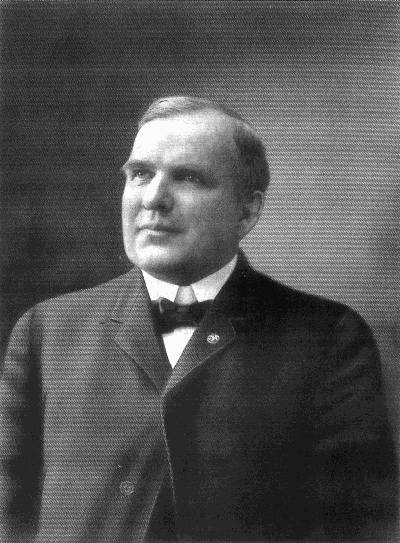
GILBERT HUNT
In early manhood Mr. Hunt was employed for some time as a millwright, later engaged in the manufacture of washboards, and he was also for a time a furniture painter and an organ tuner. During these early years he had to contend not only against poverty but also against ill health and at length it became necessary that he have outdoor employment and accordingly he peddled tinware through the country. At length, having received very favorable reports of Walla Walla from the Rev. Cobleigh, pastor of the Congregational church here and formerly pastor of the church in McIndoes, Vermont, Mr. Hunt decided to try his fortune in this new western country. After a journey of three weeks he reached this city and found work in the Glasford planing mill, which, however, shut down in the autumn. Although somewhat discouraged, he was dissuaded from carrying out his determination of going elsewhere by a merchant of the city and gradually he gained a foothold and in time became the head of the Gilbert Hunt Company, one of the largest industrial concerns of the entire northwest and the largest producers of farm machinery in this section. Mr. Hunt not only proved himself an executive of great force but also a successful inventor and was the originator of the Pride of Washington thresher. The memory of his early struggles remained with him and when boys applied for work in the "Hunt shops" and the foreman said that they had no vacancies Mr. Hunt gave orders that work be found in some way in order to give the boys a chance.
This desire to be of assistance found expression in many ways and there was no project for the advancement of his city that failed to receive his hearty support. In many instances Mr. Hunt initiated and carried to successful completion movements for public improvements, such as the paving of the center business district, the extension of the water system providing for the present intake twelve miles above the city, the betterment of the sewage system, the securing of the Carnegie library and the establishment of public parks. He was one of the most effective workers for well advised publicity for Walla Walla and its surrounding territory and recognized the value of building up a reputation for Walla Walla as a good convention city. For three terms he served as mayor and one who knew him for thirty years said of him in that connection: "Gilbert Hunt brought to the office of mayor long training and experience in large business affairs and great executive and administrative ability. He was a man of fine presence, meeting people easily and agreeably, was informed as to his official duties, had a clear idea of the things to be done, and inspired confidence in his ability to do them."
Mr. Hunt was married in McIndoes, Vermont, June 10, 1876, to Miss Hopie M. Osgood, who is descended from Revolutionary ancestry. To this marriage were born four children, of whom three survive: Mabelle H., the wife of Wilbur A. Toner, an attorney of Walla Walla; Eugene A., who married Jessie M. Babcock, a daughter of W. H. Babcock, of Walla Walla, and is now living in Hong-kong, China, engaged in the exporting and importing business; and Marguerite A., the wife of Gus Meese, Jr., of Spokane, Washington.
Mr. Hunt was a prominent Mason and was devoted to the order, which he recognized as a great force for good. He was master of Walla Walla Lodge, No. 7, F. & A. M., for seven years, was a Knight Templar and was also connected with the Mystic Shrine. In early manhood he belonged to the Congregational church but later was one of the organizers and the first president of the Christian Science church of Walla Walla. He manifested the keenest interest in educational matters and for eight years served on the board of education, during which time the High and Green Park school buildings were erected, and he was also connected in an official capacity with Whitman College, being a member of its board of trustees at the time of his death. He passed away December 15, 1914, and the grief felt by his many friends found expression in words of love and admiration for his splendid qualities. An editorial writer in the Portland Journal said: "Not alone in public service did his great heart beat, but the life of many an individual was made brighter by a helpful word and a charitable hand." A well known educator who had known him for twenty-five years wrote as follows: "I always found his wit, his geniality, his ready sympathy, his practical sagacity, his helpfulness, sources of strength and encouragement. In the great loss which his family, his friends, the community has suffered in his death we may assuredly find solace in the hope that those qualities which we loved in him are enduring."
PHILIP J. PENTECOST.
Philip J. Pentecost is now living retired in Walla Walla but for many years was actively and successfully identified with farming interests. He was born in Dodge county, Wisconsin, December 13, 1856, a son of William C. and Jemima (Wilcox) Pentecost, the former a native of Somersetshire, England, while the latter was born near Utica, New York. The father came to the United States when a lad of fourteen years in company with his parents and settled in New York, where he afterward married. Two children were born to him and his wife in the Empire state. Later he removed to Dodge county, Wisconsin, and in the spring of 1875 became a resident of Seattle, Washington. Soon afterward he went to Portland, Oregon, and still later to Albany, where he and his wife spent the summer. In the following fall they came northward to Walla Walla, looking for a suitable location, and soon after reaching this place the father and his son, Philip J., went up to Spokane, leaving the family in Walla Walla. They returned just before Christmas and spent the winter in this city. The following spring, however, they returned to Seattle, where they remained for a few weeks and thence removed to Forest Grove, Oregon. During their roamings they managed through their work to get together a spike team, consisting of three horses, one leading other two, and after spending the summer in Forest Grove they again came to Walla Walla, driving through by team. After passing through the Indian reservation they reached the Walla Walla valley. The mother was riding in the back of the wagon with the front cover drawn, but just before reaching the valley she had raised the cover to look out and soon remarked, "I should think all the children could find homes here," and a few moments later one of the sons said to her that they had reached their camping place. She did not reply and they found that she was dead, having expired from heart disease in the few moments after speaking to them. The family brought the body on to Walla Walla for interment. They spent the winter in the town and in the spring of 1877 Mr. Pentecost purchased a tract of four hundred acres of choice land located in Spring Valley, about eight miles northeast of the city, on the Waitsburg road. He contracted for this land at a basis of seven dollars per acre, to be paid for with wheat at fifty cents per bushel.
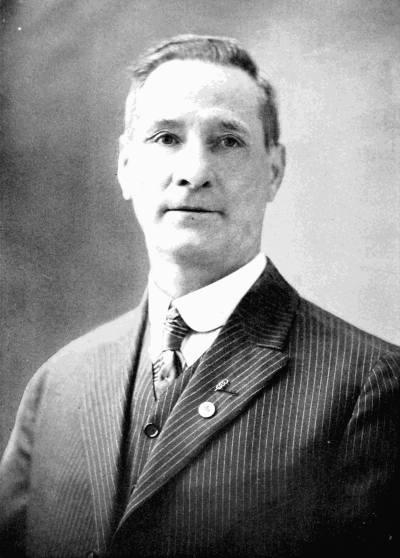
PHILIP J. PENTECOST
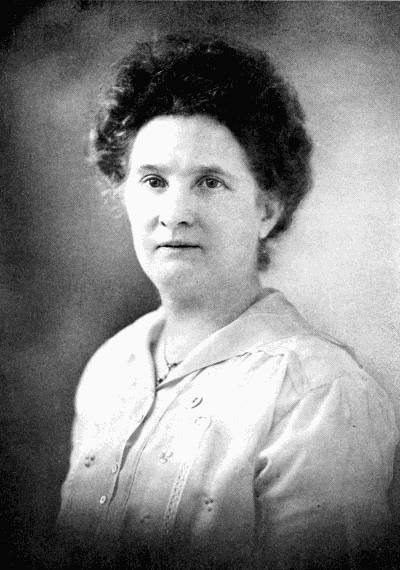
MRS. PHILIP J. PENTECOST
This land was afterward paid for by Philip J. Pentecost and an older brother, Charles N., and thus came into their possession. For thirty years the two brothers cooperated in their farming enterprise and in the meantime added to their holdings until the place comprised a thousand acres. Charles N. Pentecost afterward acquired extensive land holdings elsewhere and Philip J. Pentecost purchased his interest in the Walla Walla county farm, which he still owns independently. He also has four hundred acres on Blue Creek which is largely grazing land and on which he runs as high as a hundred head of cattle at a time. About 1901 he left the farm and took up his abode in the city in order to give his children better educational opportunities and since then has resided in Walla Walla, having a handsome residence at 603 Cherry street. He also owns four other city residences. For the past seven years he has rented his farm lands and has practically lived retired.
On the 29th of June, 1889, Mr. Pentecost was united in marriage to Mrs. Joseph Maul, who bore the maiden name of Nellie Wolfe and is a daughter of Harry Wolfe, who crossed the plains to Washington with a horse team in 1888. By her first husband Mrs. Pentecost had a daughter, Catherine Z. M., now Mrs. Stanley Sleeper of Lewiston, Idaho, and to Mr. and Mrs. Pentecost has also been born a daughter, Sadie R., who is the wife of A. E. Page, of Walla Walla.
Mr. Pentecost gives his political allegiance to the republican party, while fraternally he is identified with Trinity Lodge, I. O. O. F. and with Walla Walla Camp, No. 96, W. O. W. He and his wife and daughter are members of the Baptist church, of which he was a deacon for years and is now one of the trustees. The family is one of prominence in Walla Walla and the hospitality of the best homes of the city is freely accorded them. Mr. Pentecost has made for himself a very creditable position in business circles, ranking for many years as one of the leading wheat growers of this section of the state, and his life record constitutes an example well worthy of emulation.
GEORGE BENSON KUYKENDALL, M. D.
Dr. George Benson Kuykendall, one of the foremost physicians of eastern Washington, practicing at Pomeroy, was born near Terre Haute, Indiana, January 22, 1843, a son of John and Malinda (Stark) Kuykendall. The early family history is found in the New York Dutch Church or Dutch Reformed Baptismal records and in the county records of New York county. The family comes of Holland Dutch ancestry, the home being originally near Wageningen, in the Gelderland province, from which came the ancestors of Theodore Roosevelt. The first of the name in America was Jacob Luursen Van Kuykendael, who came to America on the ship de Princess from Holland in 1646 and landed at New Amsterdam, now New York. The Van in the family name was retained until about 1730. The ancestors were with the Van Rensselaer colony at old Fort Orange and afterward removed to Esopus, New York. Later the sons and daughters of that generation went to the Minisink region, on the Delaware, about 1700, and subsequently the branch of the family of which Dr. Kuykendall is a representative was founded in Virginia between 1743 and 1748, probably in the latter year. His mother came from the same ancestry as General John Stark of Revolutionary war fame, and their progenitors were originally from near Essen, Germany.
The father of Dr. Kuykendall, who was a mechanic, removed westward with his family when his son George was three years of age, residing in Wisconsin until 1852, when he crossed the plains to the Pacific slope. That was the memorable year of the cholera, smallpox and pestilence and they were delayed en route by illness and many difficulties. They found themselves far back in the rear part of the emigration. Their days were full of toil and anxiety and their nights were spent much of the time in vigils over the sick and dying or in warding against the prowling savages of the plains. When their train reached Snake river, their stock were almost famished and they crossed the river in the hope of finding better grass. From there they made their way over country never before traversed by wagons. At the crossing of the river the father became ill with mountain fever and a little daughter had already suffered from measles and was apparently growing worse. For weeks these helpless ones were dragged over the sagebrush and sand plains of southern Idaho in a rough emigrant wagon. Finally, when nearly all the stock had died, they abandoned their wagon, and the few household goods they could carry were put into the wagon belonging to a brother who was traveling in the same company. After almost incredible hardships and discouragements they reached The Dalles, Oregon, where they shipped their wagon and the household goods that remained upon an open barge and started to float down the Columbia. The father was still ill and the little sister at the point of death. That night the barge tied up on the Oregon side of the river and during the hours of darkness the mother kept tearful watch over the sick and wasted form of the father and her dying little girl, who about midnight passed away. Early in the morning a rude, improvised pine box was made ready and the little one was buried on the banks of Columbia, where the trade winds sweeping up from the ocean and the murmur of the river's flow are her eternal requiem. The pressing demands of the hour would not permit them to linger over the grave, but all had to press on, for they were far from their homeland and had no home or shelter for the coming winter. They reached the Cascades, passed over the portage and took a boat below, reaching the banks of the Willamette, where East Portland now stands, on the 19th of October, 1852.
The family spent their first winter at Milwaukee, above Portland, and in the fall of 1853 went to southern Oregon, locating near Roseburg. At a very early age Dr. Kuykendall manifested a taste for reading, which was encouraged by his father, who also found great delight in books. Dr. Kuykendall read with pleasure works on travel and discovery, exploration, history, biography and whatever he could find and as he approached manhood became very fond of metaphysical reading, delighting in poring over such writings as Kant, Abercrombie, Dugald Stewart and also reading works on mental philosophy. All this time he was pursuing the advanced studies of an academic and collegiate course and later took up the study of materia medica and medicine. About that time his father had a dangerous illness and reached the point where the attending physicians gave up the case. Dr. Kuykendall was not willing that his father should die, however, and said to the family: "We will go on and try still further—he may yet recover." This was before the son had become a student in medical college. He devoted himself assiduously to the study of his father's symptoms, scarcely leaving the bedside to eat or sleep for a week. The father recovered and enjoyed many years of later usefulness. The attending physicians, recognizing what the young son had accomplished, said: "Young man, it is clear what you ought to do in life. You should study and practice medicine."
A few years later, therefore, George Benson Kuykendall became a student in Willamette University and was graduated at the head of his class, in the medical department, and at once entered upon active medical practice. Within a few months he was appointed to the position of government physician at Fort Simcoe, Washington, where he enjoyed a large practice in addition to the government work. He there took up the special study of microscopy and chemical research, particularly as related to toxicology and medical jurisprudence. He also did much work in Micro-photography to aid in differentiation of tissues, cells and blood corpuscles and while thus engaged he made a fine collection of mounted specimens, both physiological and pathological.
While at Fort Simcoe he was requested by Professor J. W. Powell of the Smithsonian Institute of Washington, D. C., to make a study of the ethnology of the native Indians of the Pacific northwest—a line which he followed up as his time would permit. He collected many traditions, myths, ancient laws and customs of the Indian tribes and wrote an account of these for preservation. In this work all traditions and myths were obtained at first hand from the Indians themselves. Later he wrote a series of papers on the subject for The West Shore, a magazine then published in Portland, Oregon. After ten years with the government at Fort Simcoe, the Doctor found his family growing and needing better facilities for education and social culture and accordingly resigned his position and located at Pomeroy, Washington.
It was in 1868 that Dr. Kuykendall married Miss E. J. Butler, a daughter of Judge Benjamin Butler, of Douglas county, Oregon, who later removed to Pomeroy, where he was judge of probate for many years. The Doctor has an interesting and intelligent family of five sons and three daughters. In his marriage he was peculiarly fortunate, Mrs. Kuykendall being a lady of marked intelligence and practical good judgment. His eldest son, Chester Ernest, is a druggist and dealer in books, musical instruments and fancy holiday goods. He is a popular man who for years has been closely identified with the interests of Pomeroy as one of the leaders in educational work, being a member of the board of directors of the Pomeroy high school and also mayor of the city. He belongs to the Methodist Episcopal church and has been church organist for years. Elgin Victor, the next son, is a prominent attorney and was elected to the state senate from the counties of Garfield, Columbia and Asotin by a large majority. George Vivian, the third son, is chief operator in the offices of the Oregon Railway & Navigation Company. William B. is engaged in the real estate and insurance business and is now reading law preparatory to practice. Hubert John is in the drug store with his brother Chester. All these sons are married and with the exception of George all are residents of Pomeroy. Minnie Pearl and Grace Orlean, are the elder daughters. The former is the wife of R. B. Spencer, of Hermiston, Oregon, and the younger is the wife of G. C. Start, of Sunnyside, Washington. Both have decided talent for painting and Mrs. Spencer taught oil Painting in Pomeroy for years. The youngest daughter, Bessie, is at home with her parents.
Dr. Kuykendall has had an extensive acquaintance among the prominent pioneer settlers of Oregon, including Rev. J. H. Wilbur, pioneer missionary minister, Hon. Binger Herman, Judges J. F. Watson, E. B. Watson and P. L. Willis, who were early friends in southern Oregon, Judge M. P. Deady and General Joseph Lane, Delazon Smith, Colonel Hooker, Governor Chadwick and others. In addition to his professional attainments Dr. Kuykendall has an enviable reputation as a writer. He has written much for the press and has always been very industrious in gathering up material for use in future writings. He has completed a history of the Kuykendall family for the past three hundred years, the family being of the old Knickerbocker stock of New York and New Jersey, whence they have gone as pioneers across the country from the Atlantic to the Pacific. The family has been represented in every war of note since early colonial days. Dr. Kuykendall has retired from the active practice of medicine and spends his leisure in reading and writing. He has a collection of data pertaining to Indian mythology, ethnology and customs which he hopes yet to be able to publish, besides other matter written during the passing years.
Dr. Kuykendall has been a member of the Methodist Episcopal church for many years, actively connected with its social and moral endeavors for the benefit of the community. He has always made it a point to support every movement for the good of the community with his money as well as with his personal aid. He has been too busy to give much attention to money making but has prospered sufficiently to have gained a good competence. His father was liberal to a fault and when he gave, as the Doctor thought, too liberally of his means the Doctor always helped him out. The latter has always been glad to remember this generosity of his father and has been stimulated by his example to think more of "the other fellow." Since its organization he has been a member of the Garfield County Pioneer Association and for some years has been its secretary. He is a member of the Oregon Historical Society and the Holland Society of New York city. To belong to this society one must be able to show documentary evidence of having come from an ancestor born of a forefather who came from Holland to America before 1675.
WALLACE LEROY WHITMORE.
Few men of the northwest have been more widely known than Wallace Leroy Whitmore, now deceased. He resided on section 21, township 13 north, range 42 east, Garfield county, but for more than forty years he traveled extensively over this country as a commercial salesman and he was also known throughout the Pacific coast states as a breeder of fast horses. He had those special qualities which make for personal popularity and wherever he went he made friends. He was born in Oakland, Oregon, June 8, 1857, and was a son of George and Mary (Vaughn) Whitmore, both of whom were natives of Wisconsin. They crossed the plains to Oregon in 1852 and in 1867 removed to San Francisco, California, where they made their home for a number of years. The mother made her home with Wallace Leroy Whitmore most of her life, his filial care and attention rewarding her for the love which she had bestowed upon him in his boyhood days.
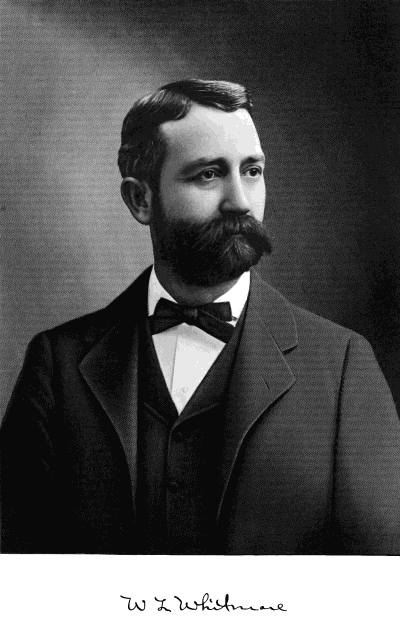
Wallace Leroy Whitmore was little more than a boy when he was sent out on the road by a wholesale clothing house of San Francisco. This, however, was not his initial experience in the business world, for through two years he had been employed as a messenger boy. For forty years he remained upon the road as a traveling salesman, representing two San Francisco houses—a wonderful record characterized by the utmost fidelity and loyalty as well as capability. He won for the houses which he represented a very liberal patronage, for he was thoroughly reliable in business affairs and men came to know that whatever he said was to be depended upon. After four decades devoted to travel he left the road in order to give his entire time to his stock and landed interests. In the meantime he had purchased property until he owned twenty-seven hundred acres in Garfield county. He was a lover of the thoroughbred horse and was a pioneer in the breeding of standard and thoroughbred horses in Garfield county, raising them more for pleasure than for profit. His blooded stock, of which Coloma, the noted sire, was the head, became known wherever racing was popular. In fact Mr. Whitmore's reputation in this regard spread wherever there was to be found anyone who desired a fast horse for pleasure driving. In his three-year-old form Coloma took every Derby in Montana and his owner refused ten thousand dollars for him. Bill Frazier, who was taken east from Portland, has a pacing mark of 2:12; Minnie Mann was also a horse with a notable record and Ken West at one time could step the quarter in thirty seconds, while Hallie Hinges, Daybreak, Sallie Goodwin and a long list of other running and pacing horses became well known on the circuit. Swiftsure, Coloma's first colt, sold for five thousand dollars at two years old and many others brought the breeder record prices, but despite this fact it was said that Mr. Whitmore put more money into race horse breeding than he ever got out of it. He was a very progressive man and his farm was one of the best improved properties in the county. He erected thereon good buildings, kept them painted and in good condition at all times, installed an electric light system and equipped his home and buildings with the most modern improvements.
On the 2d of December, 1889, Mr. Whitmore was united in marriage to Miss Minnie Williams, of San Francisco, who is a native of New York. Her father was Arthur Williams, a member of the One Hundred and Fiftieth New York Engineering Corps during the Civil war, who re-enlisted in the field after his discharge and was given a large bounty. Mrs. Whitmore's mother prior to her marriage was Miss Hannah E. Poorman. After the close of the Civil war she brought her two children to the Pacific coast, making the journey by sailing vessel around Cape Horn. She took up her abode in San Francisco and afterward became the wife of Horace Eldred, proprietor of the State House Hotel of Sacramento. Several years later Mr. Eldred's death occurred and his widow afterward lived in southern California until her death, which occurred in Portland, Oregon, in 1901.
Mrs. Whitmore is an accomplished woman of marked business ability as well as of many social graces. She manages her extensive property holdings with keen sagacity, displaying unfaltering enterprise, and her labors are attended with excellent results. The death of Mr. Whitmore occurred September 8, 1916, and was the occasion of deep and widespread regret to many friends. He was a man of genial, kindly nature, always approachable and at all times he held friendship inviolable. His well managed business affairs and investments enabled him to leave Mrs. Whitmore in very comfortable financial circumstances and she is today the owner of one of the valuable farm properties of Garfield county. Like her husband, she is widely and favorably known and her friends are legion.
W. E. AYRES.
W. E. Ayres, while actively engaged in agricultural pursuits, managed his affairs so ably that he attained financial independence and is now living retired upon his home farm in Columbia county. He was born in Adams county, Illinois, February 8, 1841, a son of Eli L. and Ruth (Stevens) Ayres, natives respectively of England and Canada. Following their marriage in the Dominion the parents removed to Illinois in the latter '30s and resided there for a few years but in 1842 went to Appanoose county, Iowa. There the father acquired title to land and engaged in farming until called by death, although he was by profession a physician and Baptist minister. Subsequently the mother removed with her family to Linn county, Oregon, reaching there in 1864, when the Pacific northwest was still largely undeveloped. Eventually she became a resident of Walla Walla county, Washington, and there passed away.
W. E. Ayres, who is one of four living children in a family of six, grew to manhood in Iowa and there obtained his education. He accompanied his mother to Oregon and for seven years was resident of that state but at the end of that time took up a homestead in Old Walla Walla county, Washington, his farm being located in what is now Columbia county. His first residence was a log cabin and his experiences for a few years were those of all pioneers. At length, however, his land was brought under cultivation, substantial improvements were made thereon and adequate facilities for transportation and communication with other parts of the country were secured. He found farming both profitable and congenial and continued to engage in stock and wheat raising until he retired. He still owns 960 acres of fine land.
In 1868 Mr. Ayres was married to Miss Martha S. Redford, of Henry county, Missouri, a daughter of Walker P. and Nancy (Davis) Redford, the former born in Virginia and the latter in Kentucky. In the '30s Mr. and Mrs. Redford removed to Missouri and there the father died in 1861. Three years later the mother, with her children, made the long journey across the plains by ox team. For three years they resided in Union county, Oregon, and then went to Linn county, when they came to Washington, where the mother passed away. Mr. and Mrs. Ayres have become the parents of eleven children: Eudora, the widow of W. J. Beal and a resident of Pomeroy, Washington; Willie and Robert, both deceased; James P., who is also living in Pomeroy; Anna; William S., a resident of Pineville, Oregon; Nancy, deceased; Mary C., a home missionary stationed in western Oregon; Palmer, a farmer; Sarah, the wife of Sanford Skillman, who is farming the home place; and Albert E., an agriculturist of Pomeroy.
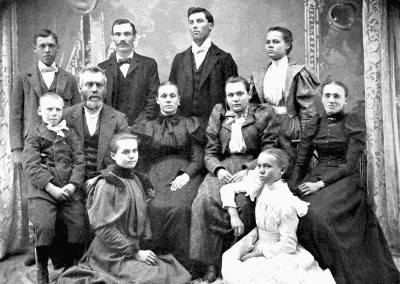
W. E. AYRES AND FAMILY
Mr. Ayres is a democrat in politics and has served as county treasurer, as county commissioner and as a member of the school board, which office he held for years. His record as a public official is highly creditable both to his ability and his devotion to the general good, and as a private citizen he has given his support to movements calculated to advance the interests of his community. He takes justifiable pride in the fact that he has had a part in the development of this section and believes that nowhere can the agriculturist find better opportunities.
LOUIS NEACE.
On the pages of Walla Walla county's pioneer history appears the name of Louis Neace, who took up his abode in the city of Walla Walla when it was a mere military post. As the years passed on he became prominently identified with agricultural interests in this section of the state and ranked with the foremost business men. He was born near Frankfort, Germany, September 27, 1835, and was but twelve years of age when he came to the United States with an uncle, who was a resident of Newark, New Jersey. From that time forward Louis Neace never saw his family nor his native country. His father had been a member of the forestry department in Germany, an official position to which only men who were scholars and had special training in the science of forestry were eligible.
Becoming a resident of Orange, New Jersey, Louis Neace was there employed in a sash and blind factory, in which he served a four years' apprenticeship, thereby gaining thorough and comprehensive knowledge of the work. In the meantime, however, he spent one winter in Florida, where he was employed in driving a mule team for the owner of a lumber mill on the St. Mary's river. When his apprenticeship was ended he removed to the middle west and at the recommendation of friends in Orange, New Jersey, he secured a position in a sash and blind factory at Fulton, Illinois.
The west, however, still lured him on and afterward he made a tour of Kansas, at which time the state was the battleground of the parties who were contending whether it should be admitted as a free or a slave state. Not desiring to become a landowner in Kansas under such conditions, Mr. Neace joined a construction crew at Independence, Missouri, and started across the country for Harney Lake, Oregon, the crew being engaged to lay out a road in that section. The Mormons were at that time a menace to all travelers through Utah and the crew was placed under military protection, spending the winter of 1856-7 at Fort Bridger, Wyoming. The Mormons destroyed several of the supply wagon trains of the fort and their rations were reduced for a period to two small biscuits per day. Hardly any salt was obtainable throughout the entire winter and the first that was brought in sold at a dollar per pound. In 1857 Mr. Neace became a resident of Los Angeles, California, which was then a tiny village, and from that point, he continued his journey northward to San Francisco, where he became a passenger on the steamer Columbia. A northward trip brought him to the mouth of the Umpqua river, where he disembarked and spent the winter, reaching The Dalles, Oregon, in the spring of 1858.
From that point Mr. Neace came to Walla Walla as an employe of Lieutenant Mullan, who was in charge of the construction of a military road from Fort Walla Walla to Fort Benton, Montana, which is still known as the Mullan road. After completing the work the crew spent the winter in Fort Benton and in the following year Major Blake arrived from St. Louis with troops on his way to Fort Walla Walla and Mr. Neace returned with him, after which he remained a resident of eastern Washington. When he first visited Walla Walla there was only a cantonment built by Colonel Steptoe in the fall of 1856. It consisted of a few rude log huts along what is now East Main street, west of Palouse, these huts constituting the winter quarters for the military troops who were here stationed as a protection to the few settlers who had penetrated into this region. In 1861 Mr. Neace took up his abode on the Tucannon river, at the present site of Starbuck, for the purpose of engaging in the cattle business there. The most severe winter ever known in the Pacific northwest followed. He was at the time a young man of but twenty-six. Undiscouraged by the severity of the winter, he bought a right to a place on the Pataha river, a tributary of the Tucanon, and continued in the live stock business, there remaining until 1870, when he removed to the Lock & Long mill near Dayton. A little later he took up his abode on a farm north of Waitsburg and the place has since been known as the Neace farm. He afterward purchased what was known as the Anderson Cox residence in Waitsburg and the family home was there established. As the years passed on Mr. Neace added to his holdings from time to time as his financial resources increased and became one of the most extensive landowners of Washington. When asked how great were his possessions he replied: "I do not know." In addition to his Washington holdings he had considerable land in Montana. Possessing sound judgment and keen sagacity, his investments were most judiciously made and with the settlement and development of the county his land rose constantly in value, making his estate a most substantial one.
On the 6th of October, 1864, Mr. Neace was united in marriage to Miss Elizabeth Harrington, of Walla Walla, and they became the parents of nine children, all of whom are living, namely: Mrs. D. C. Eaton; Mrs. S. F. Patton; Frank and Charles, of Waitsburg; John and Louis, of Millstone, Montana; Mrs. Ellen Hauber, of Portland; and James and Isaac, of Endicott.
Aside from his extensive connection with farming interests Mr. Neace had for a number of years been president of the First National Bank of Waitsburg. For more than forty years he was member of the Masonic fraternity exemplifying in his life the beneficent spirit of the craft which is based upon a recognition of the brotherhood of man and the obligations thereby imposed. He was a member of the constitutional convention of Washington and thus in many ways left the impress of his individuality upon the history of the state. His philanthropy was ever a salient factor in his life. He aided generously many benevolent institutions and gave freely to individuals. He never believed in that indiscriminate giving which fosters vagrancy and idleness, but wherever possible to extend a helping hand to assist a traveler, making earnest effort to progress on life's journey, he did not hesitate to do so. His life, honorable and upright in act and purpose, gained for him the high esteem of all with whom he was brought in contact, and what he did for the county in the way of its agricultural development and in other connections entitles him to prominent mention among the builders of the great Inland Empire. He died January 12, 1916.
ADOLPH SCHWARZ.
Adolph Schwarz, who is conducting a pool and billiard hall in Walla Walla, was born in Germany, December 24, 1853, son of John Joseph and Theresa (Rieder) Schwarz, who passed their entire lives in the fatherland. Mr. Schwarz of this review attended the public schools of Germany in the acquirement of his education and remained with his parents until he was sixteen years old. At that age he emigrated to America and for a year resided in New York, after which he spent a similar length of time in Pennsylvania. He then went to California but in 1876 went to Philadelphia, Pennsylvania, and later to New York. He spent the winter in the east but in the following spring he again came west and for about a year was employed on a boat running on the Columbia river. In October, 1877, he arrived in Walla Walla county, Washington, and for three years was in the employ of others. In 1880, however, he established a pool and billiard hall in the city of Walla Walla and has since conducted that business. His place is well equipped and is managed on such a high plane that it receives the support of the best class of people. He was also one of the organizers of the local brewing company and had an active part in the management of the business until the brewery closed down. The company is still in existence, however, and still owns the plant.
In 1894 Mr. Schwarz was united in marriage to Miss Lula Stahl, a daughter of J. H. Stahl, and to them have been born four children: Lillian E., a graduate of the local high school; Ruth and Adolph, both high school students; and Catherine.
Mr. Schwarz is independent in politics, believing the qualifications of a candidate to be of far greater importance than his party affiliation. Fraternally he is identified with the Eagles, the Red Men and the Foresters of the World. Both he and his wife belong to the Episcopal church and Mrs. Schwarz is active in its work.
FREDERICK P. YENNEY.
Frederick P. Yenney, a retired farmer residing in Walla Walla, was born in Baden, Germany, February 27, 1852, a son of Frederick and Susanna (Swigard) Yenney, both natives of that country, where they passed their entire lives. Frederick P. Yenney, who is the only son in a family of seven children, and the only one in America, grew to manhood in his native country and there acquired his education. In 1881 he came to the United States and after living for six years in Kankakee county, Illinois, removed to Minnesota, where he spent two years. In 1889 he came to Walla Walla county, Washington, but after residing here for one summer went to Lincoln county this state, and purchased a farm, which he operated until 1905. He then retired from active life and removed to Walla Walla, trading his farm in Lincoln county for land in Walla Walla county and now has four hundred and eighty-five acres of improved land near Walla Walla. He owns his fine residence at No. 350 South Third street.
Mr. Yenney was married in 1875, in Germany, to Miss Catharine Lavber and they have four children, namely: Conrad, John W. and Emil, all of whom are farmers; and Matilda, the wife of George C. Raymond, a resident of Fresno, California.
Mr. Yenney is a stanch supporter of the republican party but has never had the time nor inclination to seek office. Both he and his wife hold membership in the German Methodist Episcopal church of Walla Walla.
BENJAMIN FRANKLIN FLATHERS.
Benjamin Franklin Flathers, deceased, was one of the old and honored residents of Walla Walla, where he made his home for almost half a century. He was born near Louisville, Kentucky, on the 20th of August, 1836, and was a son of John and Julia Flathers. During his boyhood he received a limited education in the country schools near his home. He was only a small boy when the family removed to Iowa and located on a farm. When still quite young he sought new and more favorable conditions of life and left home, roughing it in various parts of the United States for some time. He finally arrived in New York city, where he mustered on a freight ship, and made the long voyage around the Horn, landing in San Francisco, after having experienced some very rough weather.
Throughout his business career Mr. Flathers was variously employed. When a young man he engaged in firing on a railroad for a short time and on reaching California in 1854 became a packer, operating a train along the coast. He remained a resident of the Golden state until 1861 and from there removed to The Dalles, Oregon, whence he came to Walla Walla, Washington. He continued to operate a pack train until 1869, traveling from Montana to Arizona, but in that year he sold his outfit to the government while in the latter state. In 1870 he located on a homestead in Walla Walla county, where for years he conducted a forage station, furnishing accommodations for travelers over the old Mullen trail from Walla Walla. He gradually worked into agriculture and continued to follow farming for thirty years with good success but at the end of that time retired from active labor and divided his magnificent farm among his children. With a comfortable fortune he then removed to Walla Walla, where his last days were spent in ease and quiet. There he passed away on May 10, 1910, leaving his immediate family as well as many friends to mourn his loss.
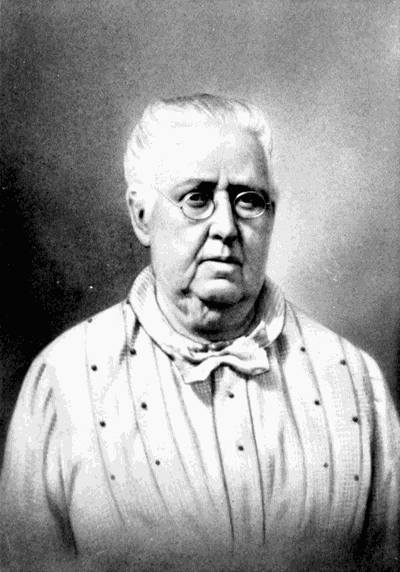
MRS. BENJAMIN F. FLATHERS
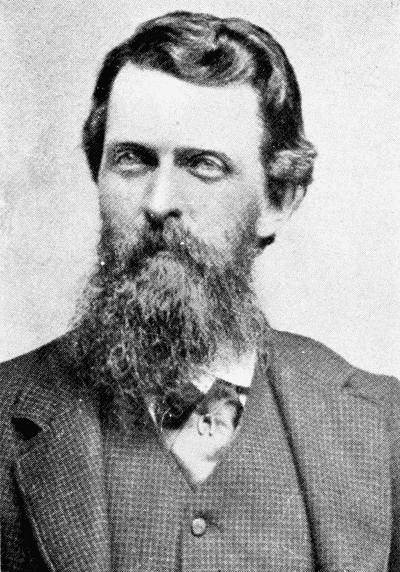
BENJAMIN F. FLATHERS At the age of about fifty
On the 1st of January, 1869, Mr. Flathers was united in marriage to Mrs. Malinda (McQuown) Harris, who was born in Russell county, Virginia, May 3, 1836, and in 1841 accompanied her parents, Patrick and Mary McQuown, on their removal to Sullivan county, Missouri, where she was reared and educated. In 1856 she married Mack F. Harris and on the 6th of May, 1863, they and their two small sons started across the plains by ox team. This was a very hazardous journey owing to the Indian troubles which they daily encountered but no consequences of a serious nature resulted. They finally landed in Idaho City in December of the same year and remained there until the spring of 1864, when they proceeded to Walla Walla, arriving in June. In 1865 Mr. Harris died leaving one son, the two children, born before they crossed the plains, having died in Idaho City. Mrs. Harris and her son continued to live near Walla Walla until 1869, when she became the wife of Benjamin F. Flathers, and they located on a farm on Touchet River belonging to H. H. Spaulding. The following year, however, they purchased of Mr. Spaulding the farm, which they continued to own throughout the remainder of their lives. To Mr. and Mrs. Flathers were born five children, as follows: Julia M., John Taylor, Emery, Charley F. and Harry J.
Mr. Flathers was reared in the Baptist faith and although he did not hold membership in any church he contributed to the support of all denominations when called upon to do so. He was an honored member of the Independent Order of Odd Fellows, the Masonic fraternity and the Elks, and for several years his wife was also identified with Clematis Rebekah Lodge, No. 30, of Prescott, but after removing to Walla Walla gave up lodge work. In early life she was a member of the Methodist Episcopal church, South, but later became a member of the Congregational church of Walla Walla, with which she was connected at the time of her death which occurred April 21, 1917. She was an earnest and consistent Christian and both she and her husband were held in the highest regard by all who knew them.
WALTER CLARENCE MINNICK.
Walter Clarence Minnick, who is carrying on extensive farming operations although a resident of Walla Walla, is a western man by birth as well as preference, as he was born in Old Walla Walla county, August 19, 1873. He is a son of Adam and Amanda (Davis) Minnick, the former of whom was born March 9, 1830, in Pennsylvania, whence he accompanied his parents to Dayton, Ohio, at the age of five years. Later, while he was still a youth, the family removed to Davis county, Iowa, and there he resided until 1852. He then went to California by ox team in Dr. Udell's train. In addition to the hardships of the road the Indians gave considerable trouble and cholera broke out, causing the death of many. In November, however, they reached the Sacramento valley of California and Mr. Minnick spent the next two years mining in different parts of that state. He then decided to return to Iowa and on the 1st of October, 1854, sailed from San Francisco on the steamer Yankee Blade. Unfortunately the ship was wrecked after being at sea only twenty-four hours, being wedged among the rocks, with one part broken off. The twelve hundred passengers remained on the ship for about twenty-four hours, at the end of which time they were rescued by a passing vessel, which landed them at San Diego. As he had lost his earnings on the wrecked ship Mr. Minnick decided to return to San Francisco, where he lived for two more years. In the year 1856 he again embarked for home and this time the voyage was uneventful and he reached New York in safety. He then went by rail to Iowa, where he was married. In 1872 Mr. Minnick again came to the Pacific coast and on landing at San Francisco, proceeded by boat to Portland, whence he came to Walla Walla county with his family by railroad. He preempted land on the Pataha prairie and resided there until 1876. He then removed to Spring valley, six miles south of Waitsburg, where he engaged in farming until 1900, when he retired and took up his residence on Park street, Walla Walla. In 1906 he removed to Los Angeles, California, in the hope of benefiting his health and there he lived until his death on the 9th of May, 1911. His remains were brought back to Walla Walla, Washington, and were interred in the Mountain View cemetery. He is survived by his widow, who bore the maiden name of Amanda Davis. She is a daughter of Dr. Moss Davis, for many years a prominent physician of Davis and Wapello counties, Iowa. She makes her home in Walla Walla and owns between eight and nine hundred acres of land, left her by her husband. To them were born the following children: Mrs. Mary Minnetta Hubbard, a resident of Waitsburg; George D. and John H., who are living in Walla Walla; Mrs. Anna Shepherd Crook, of Spokane, Washington; Walter Clarence, a resident of Walla Walla; Mrs. Ella Elisabeth Price, who is living in Waitsburg; and Chester Clifford, who is operating his mother's land but resides in Walla Walla.
Walter C. Minnick received his education in the district schools, the Waitsburg High School, the Waitsburg Academy, from which he was graduated in 1902, and Professor Walton's School of Expression of Spokane, which he attended during the four winters after leaving the academy. When about nineteen years of age he began farming on his own account and has continued to follow that occupation to the present time. He is now the owner of extensive tracts of land and is one of the large wheat growers of Walla Walla and Columbia counties. The fact that he can successfully manage such large interests is proof of his enterprise, keen business judgment and executive ability. He was one of the organizers of the Exchange Bank of Waitsburg, of which he was elected vice president at the time of its reorganization, and for seven or eight years he held that office, but has recently disposed of his bank holdings.
On the 23d of December, 1908, Mr. Minnick was married to Miss Amy Jane McCown, of Waitsburg, a daughter of Frank and Laura (Walker) McCown, both natives of this region. Her grandparents came west in 1852 by ox team and located in Oregon and both parents were born on the Pacific coast. Mrs. Minnick was born in Waitsburg, June 3, 1885, and was graduated from the Waitsburg high school and the organ department of Whitman Conservatory of Music. She also spent one year in study at Oberlin College, Oberlin, Ohio. To Mr. and Mrs. Minnick have been born three children, Walter Lawrence, Erma Helen and Virginia Pauline.
Mr. Minnick endorses the basic principles of the democratic party but on occasion votes independently, believing that the general welfare is of far more importance than party success. For four years he was state democratic committeeman from this district and his influence was strongly felt on the side of progress and clean government. He belongs to the United Artisans, and both he and his wife hold membership in the Christian church. Following his marriage he maintained his home in Waitsburg until 1914, when he removed to Walla Walla, where he has a residence at No. 216 Fulton street. For several years past he and his family have spent the winters in Los Angeles, California. He is one of the substantial men of Walla Walla and such is his efficiency and ability that he is able to keep all of his business affairs well in hand and yet find time to enjoy the worth-while pleasures of life. He has been a factor in the advancement of his community, being always ready to give not only of his means but also of his thought and time to the promotion of projects for the public good.
JOHN FORGEY.
John Forgey is numbered among the pioneer settlers of Asotin county who have contributed in marked measure to its material development and upbuilding and also to its progress and improvement along social, political and moral lines. He was born near Albany, Linn county, Oregon, August 9, 1865, a son of George and Martha (Shear) Forgey. The father, a native of Indiana, came to the west with an uncle when eleven years of age and settled in the Willamette valley, where he followed farming. He and his wife are now living with a daughter, Mrs. Phoebe Ramsey, in Linn county, Oregon, Mr. Forgey having retired from active business. In their family were the following children: Bellzena, who married James Newman, of Linn county, Oregon; Grover, who married Miss Margaret Milsaps and resides in Astoria, Oregon; Emma, the deceased wife of W. G. Dagget; two who died infancy; Phoebe, the wife of Alvin Ramsey; and Fred, who died at the age of eighteen years, being accidentally shot while hunting.
John Forgey of this review was but six years of age when brought by his parents to Washington, the family home being established in Ellensburg, where they lived for twelve years. In 1882 they came to Asotin county, where they took up their abode upon a homestead claim. John Forgey obtained his education in one of the old-time log schoolhouses and in the schools of Asotin. When twenty-one years of age he began farming independently and previous experience well qualified him for the work which he undertook. He first secured a preemption claim of one hundred and sixty acres but did not prove up on it. Later he bought three hundred and twenty acres, which he developed, bringing his land under a high state of cultivation, and afterward he bought another tract of one hundred and sixty acres, which he still owns. It is eleven miles south of Asotin and is largely devoted to wheat raising, extensive crops being annually gathered. Mr. Forgey makes his home in the city of Asotin during the winter months and in the summer resides upon the farm and manages his property.
On the 10th of October, 1886, Mr. Forgey was married to Miss Sadie Milsaps, a daughter of Robert and Holly (Carpenter) Milsaps, of a prominent old family of Asotin county, to which they removed from Missouri. Mrs. Forgey crossed the plains with her parents by mule team in 1885, the trip taking three months and eleven days. They arrived in Asotin county on the 31st of August of the same year and camped at what is known as the old Wamsley place on Ten Mile creek until October 1, moving from there to Asotin Flat, where they settled on a homestead, Mrs. Forgey residing there until married in 1886. Mr. and Mrs. Forgey have become the parents of the following named: Bellzena, who is the wife of Ben Moody, a farmer of Asotin county; Alva, who died in infancy; Joe, who was married in 1914 to Esther Hardy and follows farming in Montana; Jessie, who died in infancy; and Dell, who was a volunteer in the National Guard and then was transferred to the regular army, now serving in Company E, One Hundred and Sixteenth United States Engineers, in France.
Mr. Forgey and his family are members of the Christian church and are loyal adherents of its teachings. In politics he is a republican where national issues are involved, but casts an independent local ballot, supporting men and measures rather than party. Fraternally he is connected with the Woodmen of the World. He has been a resident of Asotin county for thirty-five years, having arrived when the work of development seemed scarcely begun in this section of the state. He has seen the little village grow to a nice town and has assisted largely in its upbuilding and progress. He now has an attractive home on Main street, in which he spends the winter months. He is a substantial citizen, loyal at all times to the best interests of community and of state, and as a business man he has a record for thorough reliability and enterprise, his success being attributable entirely to his persistency of purpose and his indefatigable energy intelligently directed.
L. C. CORBETT.
L. C. Corbett, who is well known as a dealer in grain and fuel and a fire insurance agent of Huntsville, Columbia county, was born in Canada, October 19, 1851. An account of the lives of his parents, John and Jane (Lewis) Corbett, is found elsewhere in this work. Our subject was reared in the Dominion and received excellent educational opportunities, graduating from Toronto University. For five years he was engaged in public school work, and for twenty years he taught in high schools and collegiate institutes in Canada as instructor in modern languages. In 1904 he came to Columbia county, Washington, and became bookkeeper and secretary for Corbett Brothers, at Huntsville. In 1907 he was joined by his family and has since made his home in Huntsville. He was in partnership with his brother until 1915, when their business connections were severed and Mr. Corbett of this review took over the warehouse which he now owns. He enjoys a large patronage as a dealer in grain and fuel, and has also built up a good insurance business. He owns an attractive residence surrounded by beautiful grounds, and is recognized as one of the substantial men of Huntsville.
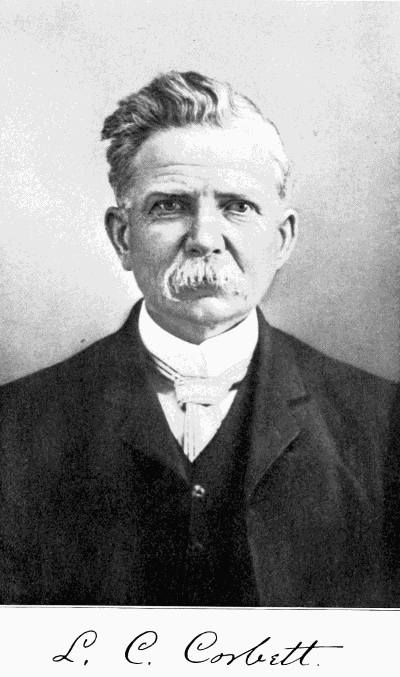
Mr. Corbett was married in Canada to Miss Sarah Kirk, a native of England and a daughter of Robert and Fannie (Holland) Kirk, both of whom were born in Ireland and were married in Canada. The father, who was in the English army, subsequently was stationed in England for some time but at length went to Canada and there both he and his wife passed away. They were the parents of ten children, of whom five survive. To Mr. and Mrs. Corbett have been born five children: Lewis H., a graduate of Toronto University, in which he was an instructor for four years and is now teaching modern languages in Harbord-Street Collegiate-Institute, Toronto, Canada; Edith, the wife of Wade H. Wolfe. who is associated with Mr. Corbett in business; Sarah Christabel, a graduate of the Ellensburg, Washington, normal school, who for three years followed the teacher's profession but is now taking training at Berkeley, California, for deaconess work; Alice Kathleen, also a graduate of the Ellensburg normal school, now teaching in Walla Walla County; and Frances Enid, a high school student, at home.
Mr. Corbett takes the interest of a good citizen in public affairs but has never sought office. He is well known fraternally, belonging to the Masonic order, and to the Foresters. Both he and his wife are members of the Protestant Episcopal church, in which he holds official position, and both are always willing to give of their time and means in the furtherance of its work. Although they have resided in Huntsville for only a few years they have already won the unqualified respect of their fellow townsmen and have made many warm friends.
BISHOP A. HERROLD.
Bishop A. Herrold, an honored old settler of Walla Walla county, residing on section 7, township 9 north, range 38 east, was born in Hamilton county, Indiana, May 5, 1836. His parents, Daniel and Frances (Fierce) Herrold, were both born in Westmoreland county, Pennsylvania, but were married in Athens county, Ohio. They resided there for a number of years and five of their children were born in that county. At length, however, the family removed to Indiana and in 1849 migrated still farther west, settling in Knox county, Illinois, which was then only partly settled. They continued to reside there until death, the father dying at the age of eighty-four years and the mother when eighty years old.
Bishop A. Herrold received a district school education and, through assisting his father with the farm work, gained practical training in the occupation to which he devoted his active life. On reaching mature years he began farming on his own account in Illinois and in 1870 removed to Jefferson, Oregon. For seven years he was a resident of that state, most of the time being spent in Linn county. In 1877 he took up his abode in Palouse, Whitman county, Washington, and preempted one hundred and sixty acres, on which he lived for six or seven years. He next came to Walla Walla county and took up a homestead on Eureka flats. He was successful as a farmer, his well directed labors being rewarded by good crops, and at length he felt that he had accumulated sufficient capital to enable him to retire and he took up his abode in Waitsburg, where he lived until the death of his wife, April 19, 1907. Since then he has made his home with his son on section 7, township 9 north, range 38 east, Walla Walla county.
Mr. Herrold was married May 29, 1856, to Miss Harriett Cullison, a native of Knox county, Illinois, and they became the parents of six children, of whom three survive: Jeremiah Burres; Hattie B., who is the widow of William Baim and resides with her brothers; and Morton C. The brothers are operating in partnership four hundred and thirty-four acres of excellent land, Morton C. residing upon the place, while J. B. lives in Walla Walla.
Mr. Herrold is an adherent of the republican party and loyally supports its candidates and measures at the polls. Fraternally he belongs to Waitsburg Lodge, No. 16, F. & A. M., and his religious faith is indicated by his membership in the Methodist church. He is widely known throughout the county and has gained the warm personal friendship of many.
ABRAHAM C. DICKINSON.
Abraham C. Dickinson, in whose death Walla Walla county lost one of its valued and representative citizens, was for a long period actively and prominently connected with agricultural interests. He lived for many years upon his farm and in his later years made his home in Waitsburg, where he passed away in 1911. He was born in Bartholomew county, Indiana, May 15, 1830. His father, Harvey Dickinson, was a native of Oneida county, New York, born in 1799, and on reaching young manhood he emigrated westward to Indiana, which was then a frontier state. There he wedded Miss Mary Finley and they began their domestic life in Indiana, where Abraham C. Dickinson was born, reared and educated. On attaining his majority he wedded Miss Abbie C. Carter, the wedding being celebrated on the 2d of February, 1854. Two years later they removed to Missouri accompanied by his father, his mother having passed away in November, 1847. They established their home in Linn county, where they prospered until the outbreak of the Civil war, when their competence was swept away.
In 1863, with a yoke of oxen hitched to a small wagon, Mr. Dickinson started across the plains with his family for the golden west and arrived in Walla Walla county, Washington, where he ever afterward made his home. He filed on a homestead in Spring Valley, four and one-half miles southwest of Waitsburg, and there built a one-room log cabin with clapboard roof. He occupied that primitive home for five years, after which he was able to replace it by a more commodious and modern frame dwelling. Thrift and industry at length brought him a substantial measure of prosperity and from time to time he added to his landed possessions until he became the owner of a thousand acres of valuable farm land, six hundred and eighty acres of which comprised the Spring Valley Home. In subsequent years he sold all of his holdings except one hundred and twenty acres, which his widow still retains. In 1882 he removed to Waitsburg, where he erected a comfortable residence and there he spent his remaining days, enjoying many of life's comforts and some of its luxuries. He well deserved the success which came to him, for his life was a busy and useful one, his industry was unfaltering and his energy untiring. Moreover, in all of his business affairs he was thoroughly reliable, honorable and upright and his word came to be recognized as good as any bond solemnized by signature or seal. When he came to Washington territory he brought with him his wife and six children but no money. He faced the necessity of at once providing for their support and by hard work and good management he overcame all difficulties and obstacles in his path and in the course of years gained a very substantial competence.
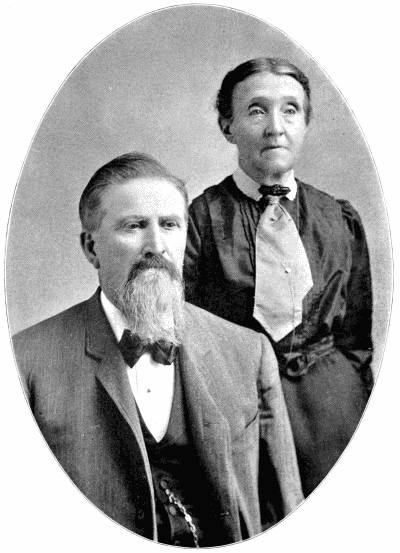
MR. AND MRS. ABRAHAM C. DICKINSON
To Mr. and Mrs. Dickinson were born eleven children, five of whom still survive, as follows: Mary M., who is the wife of E. D. Mills; Ella L., who gave her hand in marriage to Charles O. Cram; Cora B., the wife of F. T. Keiser; Lydia F., who is the wife of O. Conover; and Albert S., who is one of the prominent citizens of Waitsburg.
The family circle was again broken by the hand of death when in 1911 Mr. Dickinson passed away. He was a man of sterling character and a conscientious Christian, a devoted husband and loving father and a man highly esteemed as a friend and as a citizen. He long held membership in the Christian church, to which Mrs. Dickinson still belongs. She is now nearing her eighty-third year but is yet hale and hearty and occupies the old home in Waitsburg. She, too, has been a most consistent Christian and one whose life has been fraught with good deeds, as she has continually extended a helping hand where aid, counsel or sympathy were needed.
H. E. ANGERMANN
H. E. Angermann, the president and treasurer of the Model Bakery and Confectionery, Incorporated, at Walla Walla, has been a resident of this city since 1906 and progressive business methods have brought him to a place in the front ranks among the representative merchants. He has ever been actuated by laudable ambition and persistency of purpose has constituted one of the foundation stones on which he has built his success.
He was born in Philadelphia, Pennsylvania, on the 21st of June, 1865, and is a son of Traugott and Johanna (Kupke) Angermann, both of whom were natives of Germany and came to the United States when they were in the twenties. The father was a tailor by trade and followed that pursuit throughout his entire life. After living for some time in Pennsylvania he removed to New Jersey, where both he and his wife passed away. In their family were twelve children, nine of whom are living, five sons and four daughters.
H. E. Angermann, whose name introduces this record, was reared and educated in New Jersey, where he learned the trade of cigar making and followed that pursuit for twenty-three years in different states. Subsequently he took up carpentering and was thus employed for six years. In 1906 he arrived in Walla Walla and since 1911 has been engaged in the bakery and confectionery business, forming a partnership with Charles Retzer under the name of the Model Bakery and Confectionery, Incorporated. He has been continuously engaged in this business through the intervening period of six years and his patronage has steadily grown, for he has given to the public goods of the highest quality, and, moreover, his business methods are such as will bear the closest investigation and scrutiny. The Model Bakery and Confectionery is today one of the leading establishments of this kind in the Inland Empire and its patronage has reached most gratifying proportions. The building in which the business is carried on is a handsome structure and is the property of Mr. Angermann and Charles Retzer. Mr. Angermann is also the owner of an attractive residence in Walla Walla.
In 1890 Mr. Angermann was united in marriage to Miss Christina Wittmann, a native of Germany and a daughter of Carl and Katherine (Retzer) Wittmann. She came to America when sixteen years of age. Her mother had died in Germany and the father afterward crossed the Atlantic to the new world, becoming a resident of Walla Walla. To Mr. and Mrs. Angermann have been born five children; Arthur W.; Herman C.; Carrie W., deceased; Minnie C. and Martha K. The children are all assisting their father in the business.