BIOGRAPHICAL (continued 3)
Reading edition
The parents are members of the Lutheran church and are loyal to its teachings. Mr. Angermann gives his political allegiance to the republican party but does not seek office as a reward for party fealty. Fraternally he is connected with the Independent Order of Odd Fellows and also with the Improved Order of Red Men and the Sons of Hermann. Attracted to the west by its almost limitless opportunities, he has here made steady progress in his business career and, advancing step by step, now occupies an enviable position among its more successful men.
A. W. CLAXON.
Business enterprise in Walla Walla finds a worthy representative in A. W. Claxon, who is conducting a real estate and insurance agency. It is a well known fact that his plans are always carefully made and promptly executed and that his course at all times measures up to high business standards. He came to the new world actuated by the laudable purpose of finding opportunities here that would lead to advancement and success. He was born in the county of Durham, England, March 1, 1875, a son of William and Georgina (Croft) Claxon, both of whom were natives of England, where they spent their entire lives. The father was a huntsman, hunting with the South Durham hounds for thirty-four years. He was also well known as a farmer and his business activities were wisely and carefully directed.
A. W. Claxon began his education in the public schools and afterward had the benefit of high school instruction in his native country. He was a youth of seventeen years when in 1892 he bade adieu to friends and native land and sailed for the United States, coming to the new world with a cargo of horses. For some time he devoted his attention to such work, making several trips with horses between England and this country. He also made two trips to Japan, taking one cargo of horses from America to that country and another from England to the little flowery kingdom. The latter cargo was one of thoroughbreds imported to improve the grade of horses raised in Japan. They were imported by the Japanese government. While Mr. Claxon was in that country he was offered a very remunerative position by the government, but was required to reside in the country for at least twenty-five years and became a naturalized citizen. This plan was not altogether pleasing and the position was therefore not accepted. At the breaking out of the Boer war Mr. Claxon enlisted for service in South Africa, going to that country, where he was on active duty during the uprising them. Since his first trip to the United States he has crossed the ocean thirty-four times and has visited every important city in the world, gaining broad knowledge and experience from his wide travels and storing his mind with much interesting information and many amusing incidents.
In 1902 he located in New Jersey and engaged in the raising of thoroughbred race horses. When racing was abolished in the east by legislation he went to Canada, where he spent one year, and in 1908 he came to the Pacific coast. In Spokane he met a Mr. Harding and a Mr. Rutter of the Western Union Life Insurance Company, and Mr. Claxon accepted an agency with them and was sent to Walla Walla. Later he became associated with Gilbert Hunt, a manufacturer of threshing machines, whose business he represented upon the road for about six years, covering the states of Oregon, Washington and Idaho. In 1913 he engaged in the real estate and insurance business in partnership with O. Z. Skinner and is now active in that field. He is thoroughly conversant with realty values and has negotiated many important property transfers. He is constantly watchful of opportunities for judicious investment for himself or his clients and has become one of the well known real estate men of Walla Walla. In insurance circles, too, he has built up a business of considerable proportions, that department becoming a profitable branch of his interests.
On the 22d of August, 1905, Mr. Claxon was united in marriage to Miss Bethene Crayne, of Walla Walla, a daughter of Dr. W. H. and Anna Z. Crayne, the former for many years affiliated with Whitman College. Mrs. Claxon is a graduate of Whitman College of the class of 1903 and is an accomplished vocalist, having studied under Madam Riccardo of Berlin. Her splendid musical talent adds much to the interest in musical events in Walla Walla. By her marriage she has become the mother of two children, Colin C. and Catherine B.
Both Mr. and Mrs. Claxon hold membership in the Episcopal church and his political endorsement is given to the republican party, but while well informed on the questions and issues of the day, he has never been an office seeker. In social circles he and his wife occupy an enviable position, the hospitality of the best homes being freely accorded them. They occupy an attractive residence in Walla Walla and, in addition to his home and his business interests, Mr. Claxon owns a valuable farm of three hundred and twenty acres in Walla Walla county. He has never had occasion to regret his determination to come to the new world, for here he has found the business opportunities which he sought and in their utilization has steadily advanced, reaching a prominent place among the successful men of the northwest.
ARTHUR MAYNE McCOY.
Arthur Mayne McCoy has engaged in the lumber business in Waitsburg, Washington, since 1900 and also maintains a chop mill, planing mill and elevator, his combined interests making up an important part of Waitsburg's industrial enterprises. He was born in Dayton, Green county, Wisconsin, November 4, 1867. His parents, James and Margaret McCoy, emigrated from the northern part of Ireland in 1848 and settled on government land in Green county, Wisconsin, where they established their home and reared a family of eleven children, six of whom are still living.
Arthur M. McCoy began his education in the district schools and in 1887 was graduated from the high school of Evansville, Wisconsin. In 1891 he completed his course by graduating from the State University at Madison with the degree of B. L. After leaving the university he came west and was first engaged in the lumber business in Portland, Oregon. The following year he had occasion to pass through the Walla Walla valley and decided that the climate and location here were desirable and that he would make this section his future home. He has always allied himself with the lumber industry and in 1900 purchased the business and plant that he now owns from B. M. Kent & Sons in Waitsburg. In 1904 the entire plans and lumberyard were destroyed by fire but fortunately his trade was such as to encourage him to rebuild. In doing so Mr. McCoy materially increased the capacity of his plant and today it is a valuable asset to Waitsburg and vicinity. He is always anxious to please his customers and together with square dealing, energy and push has made a success of his line of business.
In 1900 Mr. McCoy was united in marriage to Miss Lizzie Twiss, of Iola, Kansas, and two children, Julius Mayne and Effie Elizabeth, were born to this union. In August, 1906, the wife and mother passed to the great beyond and in 1909 Mr. McCoy and Miss Margaret Hays, of Saratoga Springs, New York, were married. By the second union there are also two children, Arthur Hays and Robert Holmes McCoy. All of the children are now attending school.
Mrs. McCoy is very active in the social and educational life of the city of Waitsburg; holds official positions in several organizations; and is intensely interested in all charitable undertakings. Both Mr. and Mrs. McCoy are members of the First Presbyterian church of Waitsburg and he has been an elder and trustee of the society since coming to the city. In politics he has always been a republican but has never sought nor desired office.
JOHN M. GLOVER.
John M. Glover is the owner of an excellent farm property of three hundred acres situated on section 10, township 7, range 36 east, in Walla Walla county, about three miles from the city of Walla Walla. It is one of the finest farms to be found in this section of the state and for many years Mr. Glover was actively engaged in its further development and improvement, but he is now leaving the active work of the fields to his son and is enjoying a rest which he has truly earned and richly deserves. He was born in Preston county, West Virginia, on the 25th of September, 1854, a son of George W. and Nancy (Teats) Glover, both of whom were natives of the same county. They spent their entire lives in West Virginia, both having now passed away.
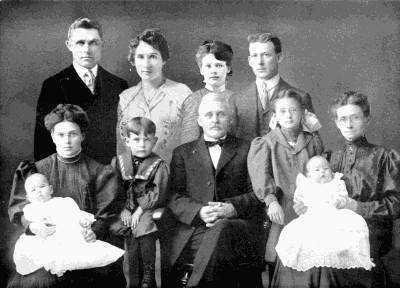
JAMES M. GLOVER AND FAMILY
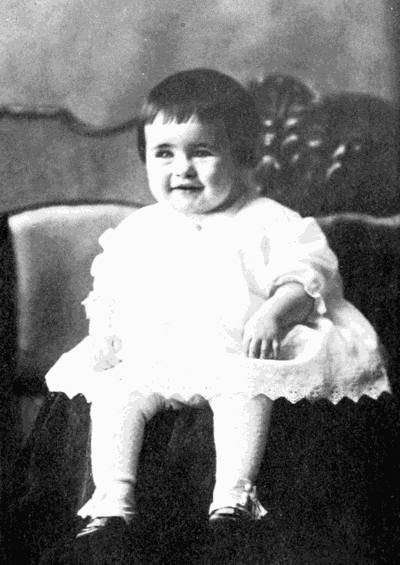
DAUGHTER OF E. W. GLOVER
John M. Glover was reared under the parental roof and acquired his education in the district schools. On attaining his majority, in the fall of 1875, he left home to start out upon an independent career and went to Ohio. He took up his abode in Muskingum county and there he was married on the 24th of October, 1878, to Miss Laura E. Sniff, a native of Muskingum county, where they remained until 1881. In that year they left the middle west for the Pacific coast, making their way to Walla Walla county, Washington. They journeyed over the Southern Pacific Railroad, Mr. Glover purchasing the first through tickets sold over this road after its completion. On reaching his destination he located in the foothills on the headwaters of Blue Creek, where he later acquired five hundred acres of land. He occupied that farm for twenty-four years and brought his fields under a high state of cultivation, utilizing the most progressive methods of agriculture in developing his place. In 1905 he removed to his present home farm, which is most pleasantly and conveniently situated about three miles northeast of Walla Walla. It is a tract of land of three hundred acres, and no better land can be found in all the valley. It is naturally rich and productive and responds readily to the care and labor that are bestowed upon it. Mr. Glover continued to successfully operate that farm until the fall of 1916, when he turned its business management and care over to his son, Erra W., who is now operating it, while Mr. and Mrs. Glover spend their winter months in California, returning to the farm to pass the summer months with their son.
To Mr. and Mrs. Glover have been born five children, two sons and three daughters, namely: Erra W., previously mentioned; Maud Estella; who became the wife of Clyde Fields and died leaving three children; Lorena E., who married Frank Phillips and died leaving one child; and Iva Bernice and Dorsey K., who are at home.
Politically Mr. Glover is a republican and is conversant with the leading questions and issues of the day, but while he has been a loyal supporter of his party, he has never sought nor desired public office. He and his wife are members of the Methodist Episcopal church and guide their lives according to its teachings. Their sterling worth has won wide recognition and they are held in the highest esteem by all who know them. They have never had occasion to regret their determination to leave the Atlantic coast and make their way to the Pacific seaboard. On the contrary they are greatly in love with the state of their adoption and are most loyal to it. Imbued by the spirit of western enterprise and progress, Mr. Glover carefully and wisely directed his business affairs and is now the possessor of a handsome competence as the result of his carefully managed interests.
CHARLES M. BERRYMAN.
Charles M. Berryman, residing on section 3, township 8 north, range 35 east, devotes his time and energies to the operation of a farm of seven hundred acres and is well known as one of the enterprising and successful young agriculturists of Walla Walla county. He is, moreover, one of its native sons, his birth having occurred in Walla Walla on the 29th of June, 1881. Extended mention of his father, James E. Berryman, is made on another page of this work.
Charles M. Berryman obtained his education in the Berryman school and also pursued a commercial course in the Walla Walla Business College. He worked on the home farm until the time of his marriage and then built his present residence on a part of his father's estate, where he has since resided, devoting his attention to the cultivation of seven hundred acres of land. In the conduct of his agricultural interests he has won a gratifying measure of success, his efforts being characterized by industry, enterprise and sound judgment.
On the 16th of January, 1907, Mr. Berryman was united in marriage to Miss Nellie D. Morrow, of Douds, Iowa, a daughter of Jeremiah and Alice (Chalfant) Morrow, who are natives of Ohio but have made their home in Iowa for many years. In early life the father followed mercantile pursuits but is now living retired. Mr. and Mrs. Berryman have a daughter, Mary Alice.
Politically Mr. Berryman is a stalwart republican and is now serving as a member of the school board, while for the past ten or twelve years he has been precinct committeeman, succeeding his father, who has the distinction of having worn the first street commissioner's badge issued in Walla Walla. Mrs. Berryman is a consistent and devoted member of the Methodist church, in the work of which she takes an active interest. In the community where his entire life has been spent Mr. Berryman is widely and favorably known, and his salient characteristics are such as in every land and clime awaken confidence and regard.
HON. WILLIAM FUDGE.
Hon. William Fudge, deceased, left the impress of his individuality upon the public life of Walla Walla and southeastern Washington in large and helpful measure. He was one of the foremost citizens of the county and one of its earliest pioneers. He was born in Illinois, April 27, 1838, and when a lad of but nine years crossed the plains with his parents to Polk county, Oregon, where he arrived in 1847. During the California gold excitement of 1849 his father went to the mines and died on the steamer on his return journey home. The following year the mother with her children settled upon a farm and William Fudge remained at home, assisting in the labors of the fields for nine years. In 1859, having attained his majority, he removed to Walla Walla county to start in the business world independently, settling on the present site of Huntsville, where he successfully engaged in farming and in the raising of live stock until 1884. He then removed to Whitman county, where he purchased a place three miles north of Hay and there carried on general agricultural pursuits for sixteen years. His success as a cattle man and a farmer continued and he acquired fifteen hundred acres of valuable land. In 1900 he left the ranch and returned to Walla Walla county, purchasing a home just outside Waitsburg, where he lived in practical retirement from active business for fourteen years or until his removal to Walla Walla in 1914. He then purchased a handsome city residence at 535 East Alder street, where his widow now resides. As a business man he was most energetic and progressive and his intelligently directed efforts brought splendid results.
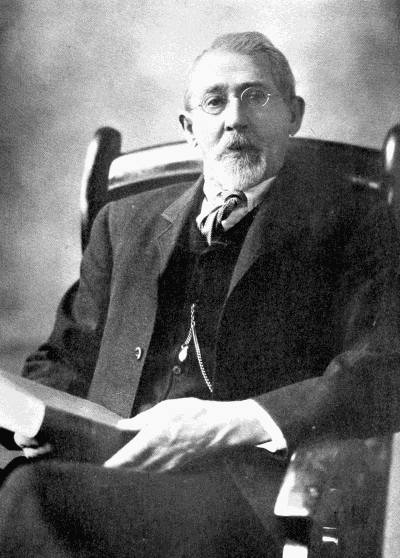
HON. WILLIAM FUDGE
On the 10th of September, 1862, Mr. Fudge was united in marriage to Miss Elizabeth Billups, a native of Iowa, who crossed the plains with her parents to Oregon in 1859, locating in Polk county, that state. In 1862 the family came to Washington, taking up their abode on a homestead in Walla Walla county, near Waitsburg.
Mr. Fudge was one of the most conspicuous figures in the early period of Walla Walla county's development and also left his impress upon the annals of the territory. He was a member of the territorial legislature, being a colleague of H. P. Isaacs. To Mr. Fudge belonged the distinction of having drafted the first railway freight bill ever presented to the territorial legislature and to him and Mr. Isaacs belonged the credit of having secured the location of the state penitentiary in Walla Walla. He was a most public-spirited citizen, giving of his time and of his means for any movement for the general good, and his labors resulted greatly not only in the benefit to the community but to the state at large. He held membership in the Masonic lodge of Waitsburg and was a loyal adherent of the organization, exemplifying in his life the beneficent spirit of the craft. Death called him January 30, 1917, and thus was ended a life of great usefulness and activity, covering seventy-eight years. It was a life of honor and of high purpose and the world is better by reason of the fact that he lived. He contributed much to the development of this section of the country and he held to the highest ideals of civic virtue, while the qualities he displayed in social relations endeared him to all with whom he came in contact.
FRANK W. TIERNEY.
Frank W. Tierney, of the firm of Tierney & Toner, dealers in automobiles and agricultural implements at Walla Walla, has built up a business of extensive proportions through well directed energy. He was born in Reedsburg, Wisconsin, January 20, 1874, a son of Patrick and Margaret (Hannon) Tierney. The father was a native of Ireland and came to the United States as an infant of but two years. The mother was born in Wisconsin, where the parents of the father settled. There he was reared and married and in that state he learned the wagonmaker's trade, with which he was identified for a number of years. Later he removed westward to South Dakota, taking up a homestead claim in Lake county, where he resided until about 1907. He then retired from active business life and came to the Pacific coast, locating in Portland, Oregon, where his death occurred in 1915. His widow survives and is still a resident of Portland.
Their son, Frank W. Tierney, was educated in the public schools of Madison, South Dakota, graduating from the high school with the class of 1894. He taught school and also engaged in selling books in order to meet the expenses of his high school course. This was indicative of the elemental strength of his character. He has ever recognized the fact that where there is a will there is a way and by persistent energy and intelligently directed effort he has accomplished his purposes. His experience as a book agent taught him salesmanship and also brought him keen knowledge of human nature and in 1896 he determined to become identified with the business interests of the growing west. Making his way to Washington, he settled in Walla Walla, where he entered the employ of John Smith, who was engaged in the implement business. For some years he was identified with that undertaking, after which he purchased the Nissin implement business, which was a small concern. His cash capital at that time consisted of but two hundred dollars and he borrowed a thousand dollars in order to establish himself in business. His activities were carefully directed and he watched every indication pointing to success. From the beginning the enterprise prospered and after three years he organized the Tierney-Toner Company, which was the foundation of the present extensive business. Today their firm ranks among the foremost in the city and conducts a very large business as automobile dealers and dealers in agricultural implements, their sales amounting to a most gratifying figure annually.
In 1904 Mr. Tierney was united in marriage to Miss Nellie Fitzgerald, of Ottumwa, Iowa, and they have become the parents of three children, Gerald F., Leonard J. and Patronilla M.
Mr. Tierney is identified with Walla Walla Lodge, No. 287, B. P. O. E., and also has membership with the Knights of Columbus, a fact which indicates that his religious faith is that of the Catholic church, to which both he and his wife belong. He is also a member of the Commercial Club and cooperates in all of its well defined plans and projects for the upbuilding and development of the city, for the extension of its trade relations and the upholding of its civic standards. Mr. Tierney certainly deserves great credit for what he has accomplished in life, for he started out practically empty handed, and when he arrived in Walla Walla he had but twenty dollars in cash, and this was borrowed. Resolute purpose, however, has enabled him to overcome obstacles and difficulties and persistent energy has brought him steadily forward until he now occupies a most enviable position among the merchants of Walla Walla. Success has come to him as the reward of his persistent, earnest labor and his straightforward dealings.
HARLEY B. STALLCOP.
Harley B. Stallcop is one of the younger farmers of Garfield county and already is numbered among the most successful. He was born on the farm which he is now operating July 3, 1881, a son of George and Sarah (Edwards) Stallcop, who are residents of Pomeroy. His education was acquired in the common schools, in the high school at Pomeroy and in the Northwestern Business College at Spokane, where he spent two years as a student. In 1904 he rented the homestead, and his time and attention have since been devoted to its operation and further improvement. He raises wheat and stock and derives a good profit from each branch of his business. His farm comprises nine hundred and fifty acres of excellent land and is one of the best properties in the township.
Mr. Stallcop was married September 27, 1905, to Miss Elizabeth Gustin, a native of Oregon, and they have five children, Fern L., Harley W., George A., Raymond C. and Gilbert E.
Mr. Stallcop is a republican in his political belief but has never been an aspirant for office. His fraternal connections are with the Knights of Pythias and the Foresters. The high esteem in which he is held by those who have known him well since boyhood, is the best proof of his genuine worth and attractive personal qualities.
FRED GLAFKE.
The upbuilding of the west is one of the wonders of the world. Those who travel to that section of the country are astounded by the beauty of the cities, well laid out with wide streets, equipped with every modern convenience and holding to the highest standards of progressiveness. This is due to the ability and enterprise of the men who have concentrated their business interests in that section of the country. Prominent among this class of men in Walla Walla is Fred Glafke, the manager and treasurer of the Interior Grocery Company, conducting a wholesale grocery business.
He was born in the state of New York, May 24, 1856, a son of Fred and Catherine (Brusher) Glafke, both of whom were natives of Germany. They came to the United States in young manhood and womanhood respectively and settled in Wayne county, New York, where they were later married. The father was a wagon maker by trade and conducted a shop in Wayne county until 1865, when he removed to Mendon, Michigan, where he carried on business as a wagon maker for many years. At length he removed to Portland, Oregon, in 1892 and there lived retired until his death, which occurred in 1914. He had long survived his wife, who passed away in 1905.
Fred Glafke was reared at home and acquired his education in the village and high schools of Mendon, Michigan, and in the Valparaiso (Ind.) Normal School. He began teaching in the Mendon graded schools in 1878 and was made principal of the schools of Mendon in 1882, continuing to serve in that capacity for six years. He proved a capable educator, imparting clearly and readily to others the knowledge which he had acquired. In 1888 he took charge of the schools of Centerville, the county seat of St. Joseph county, and continued as principal there until 1890, when he came to the Pacific coast, making his way to Portland, Oregon. There he was prominent in educational work for eleven years, having charge of the Holladay school, the Stephens school, the Atkinson school and afterward the Harrison school, which was the largest grammar school in that city. He did much to develop the educational activities and interests of Portland and the value of his work is still finding fruition in the public school system there today. In 1901 he resigned the position of principal and became connected with the Pacific Coast Biscuit Company of Portland, being placed in charge of the general books. He remained with that company in the office until 1904, at which time he came to Walla Walla, and entered into partnership with his brother, W. B. Glafke, in establishing a wholesale grocery business known as the W. B. Glafke Company. Their interests were conducted under that name until 1907, when the business was reorganized and incorporated under the name of the Interior Grocery Company, of which Fred Glafke became treasurer and manager. This business has been developed into one of the leading commercial enterprises of Walla Walla. They carry an extensive stock and their ramifying trade interests cover a broad territory. The house enjoys a most enviable reputation for progressiveness and reliability, for promptness and efficiency. The partners are men of well known business ability and executive force who are thoroughly acquainted with the trade and whose well directed efforts are producing most substantial results.
On the 23d of December, 1879, Mr. Glafke was united in marriage to Miss Nettie Hazen, of Colon, Michigan, and they have become the parents of three sons: Ransom F., who is living in Walla Walla; Dr. William Harley, a physician and surgeon of New York city; and Ralph H., whose home remains in Walla Walla. The oldest and the youngest are associated with the father in business and are representative and wide-awake young merchants of the city.
In his political views Mr. Glafke is a stalwart republican and he has served for many years as a member of the board of education of Walla Walla but does not seek office along strictly political lines. He stands for everything that tends to advance the public welfare, however, and his aid and co-operation can always be counted upon to further measures and movements for the general good. He has indeed been a stalwart supporter of the public school system and he does everything in his power to advance the material, intellectual, social and moral interests of the state. He belongs to Blue Mountain Lodge, No. 13, F. & A. M., and he and his wife are active members of the Presbyterian church, in which he is serving on the board of trustees. He belongs also to the Walla Walla Commercial Club and is one of its directors. Interested in the horticultural development of this section of the country, he has become the owner of a splendidly developed orchard in Umatilla county, Oregon.
It is to such men as he that the west owes her splendid development, men who have had the insight to recognize the natural resources of the country and its possibilities, who have foreseen something of what the future had in store and who have found justification for their faith and judgment in the results that have been attained.
GEORGE COCHRAN.
George Cochran, one of the substantial and valued farmers of Walla Walla county, living on section 27, township 8 north, range 37 east, was born December 2, 1873, in the township where he still makes his home, his parents being James W. and Cynthia A. (Angel) Cochran, both of whom were natives of Missouri, where they were reared and married. In 1864 they determined to try their fortune in the west and made their way to Walla Walla county, Washington, crossing the plains with ox teams in a wagon train of forty wagons. While en route they endured all the hardships and privations incident to the trip and after coming to this state they experienced all those things which constitute features in pioneer life. They took up their abode on Russell creek but in 1866 or 1867 removed to the Willamette valley of Oregon, where they remained until called to their final rest. The father died December 8, 1915, having for a considerable period survived his wife, who passed away May 9, 1904.
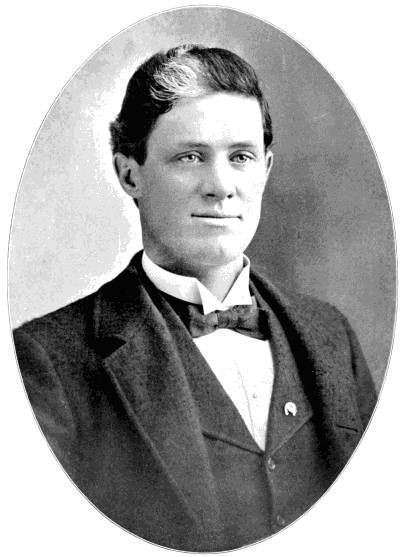
GEORGE COCHRAN
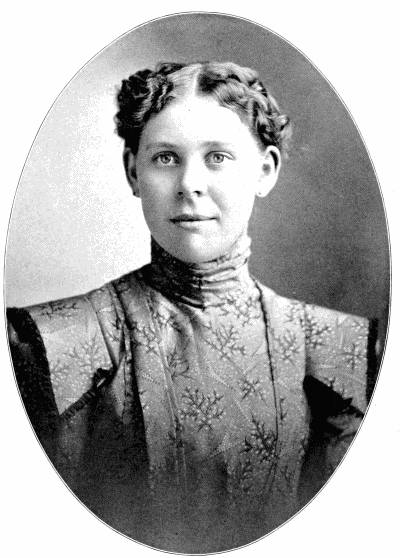
MRS. GEORGE COCHRAN
George Cochran was reared at home, acquiring his education in the public schools, and after his textbooks were put aside he continued to work upon the homestead farm, being thus engaged up to the time of his marriage, which occurred November 10, 1901, Miss Grace W. Meiners, a daughter of Martin Meiners, becoming his wife. Her father removed to this county from Illinois in 1882 or 1883 and is now living retired in the city of Walla Walla. The old homestead farm of the Cochran family was deeded to George Cochran and his two brothers some years before the marriage of the former and upon that event was taken over entirely by George Cochran, who purchased the interests of his brothers in the place. He has since owned this property, comprising two hundred and eighty-five acres of rich and arable land. He has brought his fields to a high state of cultivation and annually gathers large crops. He raises the cereals best adapted to climatic conditions here and he studies the needs of the soil, keeping his land at all times in good condition by the judicious use of fertilizer and by the rotation of crops.
To Mr. and Mrs. Cochran have been born six children, of whom five survive, namely, Cynthia W., Kay M., Ena G., Ira J. and George Allen. In religious faith Mrs. Cochran is a Lutheran. Mr. Cochran belongs to Welcome Lodge, No. 117, I. O. O. F., of Dixie. His political allegiance is given to the democratic party, and while he has never sought nor desired office he has served as a member of the school board and loyally defends all those interests and activities which he believes will prove of benefit to the community. As a business man he is thoroughly progressive and reliable and wherever he is known he is spoken of in terms of warm regard.
CHARLES RETZER.
For a quarter of a century Charles Retzer has been a resident of Walla Walla and throughout the entire period has been connected with the bakery business. He has prospered in his undertakings, and working his way steadily upward, has become vice president and manager of a large and profitable business conducted under the name of the Model Bakery and Confectionery, Incorporated. He was born in Waldangelloch, Baden, Germany, on the 30th of March, 1871, and is a son of George and Carrie (Niebergall) Retzer, both of whom were natives of Germany. They came to America in 1897 and located in Walla Walla, where their remaining days were passed. They had a family of eleven children, six of whom survive.
Charles Retzer acquired his education in his native country and there learned the baker's trade. When he was fifteen years of age, however, he bade adieu to friends and native land and sailed for the new world. He became a resident of Philadelphia, Pennsylvania, where he was employed at his trade for five years, after which he heard and heeded the call of the west and in 1892 arrived in Walla Walla, where he has since made his home. He immediately sought employment at the baker's trade and secured work, spending six years in the service of others. He was ambitious, however, to engage in business on his own account and carefully saved his earnings until his industry and economy had brought him sufficient capital to establish a bakery of his own. He formed a partnership with his brother William and the association was maintained for a year and a half after which he purchased his brother's interest. He was then alone in business for some time and afterward he sold a half interest to his brother-in-law, H. E. Angermann. They are now conducting their interests under the name of the Model Bakery and Confectionery, Incorporated, and they have a splendidly equipped establishment, in which are found all of the latest improved machines that are used in connection with the mixing of bread, cakes and other bakery goods. The most sanitary conditions prevail in the establishment and the excellence of the product is such as insures a very gratifying patronage.
Mr. Retzer has been married twice. In 1896 he wedded Miss Matilda Shellberg and to them was born a daughter, Carrie. In November, 1913, Mr. Retzer was again married, his second union being with Mrs. Stella M. Hawley. By her first marriage she had three children: Philip, a member of Sixth Field Artillery, who volunteered before the draft and is now somewhere in France in the service; and William and Catherine, at home.
The family occupy an attractive residence which is owned by Mr. Retzer, and he and his partner are owners of the building in which they conduct the bakery. In politics Mr. Retzer is a republican but has never been an office seeker. He is not neglectful of the duties of citizenship, however, but cooperates in many well defined plans and measures for the general good. He is a stalwart Mason, belonging to Walla Walla Lodge, No. 8, F. & A. M., and he is also identified with the Odd Fellows lodge. He is likewise a member of the Commercial Club and is in deep sympathy with its efforts to promote the upbuilding of the city, to extend its trade connections and to uphold its civic standards. His has been a busy and useful life and illustrates what may be accomplished when energy and determination mark the way. He started out empty handed but early realized the eternal principle that industry wins and he has therefore led a most industrious life which has gained for him a position among the substantial business men of Walla Walla.
WESLEY A. LLOYD.
Wesley A. Lloyd has resided for forty-seven years upon the farm on section 9, township 9 north, range 37 east, which he is now operating, and his birth occurred upon that place May 23, 1871. His parents, Albert G. and Lois H. (Jasper) Lloyd, are mentioned at length elsewhere in this work.
Wesley A. Lloyd attended the Waitsburg public schools in the acquirement of his education and, on reaching manhood, was taken into partnership by his father, who farmed on an extensive scale. This relation continued until after 1907, when the son took entire charge of the homestead, which he has since operated independently in addition to cultivating six hundred acres, which he owns, and four hundred acres of rented land, operating in all twelve hundred acres. The management of such extensive farming interests demands marked executive ability and thorough knowledge of the principles underlying all branches and familiarity with the most improved methods of farming. Mr. Lloyd possesses all these qualifications and his land makes a gratifying return on the capital invested therein.
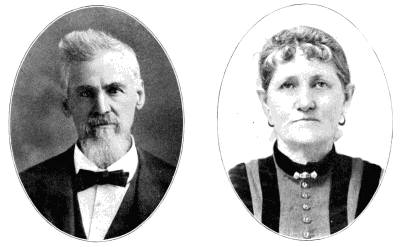
MR. AND MRS. JAMES W. COCHRAN
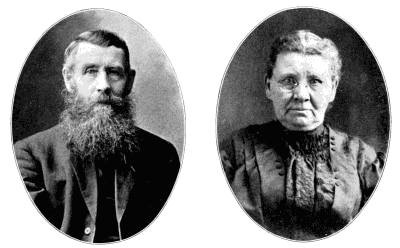
MR. AND MRS. MARTIN MEINERS
In 1910 Mr. Lloyd was married to Miss Ina Boynton, of Waitsburg, by whom he has had two children, of whom one, a son, Tony B., survives.
Mr. Lloyd belongs to Waitsburg Lodge, No. 16, F. & A. M.; Dayton Chapter No. 5, R. A. M.; Washington Commandery No. 1, K. T., of Walla Walla; and El Katif Shrine, A. A. O. N. M. S., of Spokane. His wife holds membership in the Christian church and its work profits from her co-operation. In politics Mr. Lloyd is a stanch democrat, but he has never been an aspirant for office. He ranks among the influential men of Walla Walla county and his personal qualities are such that his friends are legion.
MRS. MARY LONG.
Mrs. Mary Long, living on section 33, township 11 north, range 42 east, Garfield county, has very successfully managed her property interests and is recognized as a woman of marked business ability. She was born in Illinois on the 7th of February, 1847, a daughter of Job and Mary (Harper) Tatlow, the former a native of Virginia, while the latter was born in Ohio, in which state their marriage was celebrated. Soon afterward they removed to Illinois and in 1856 they removed to Garden Grove, Decatur county, Iowa, where they lived for two years. On the expiration of that period they removed to Nemaha county, Kansas, where they resided until called to their final rest.
Their daughter Mary accompanied her parents on their various removals and spent her girlhood under the parental roof until on the 10th of December, 1865, in Kansas, she gave her hand in marriage to Newell S. Patterson. They began their domestic life in the Sunflower state, but in 1867 crossed the plains, making the journey with horse team and wagon to Oregon. They were four months in completing the trip, which was fraught with various hardships and difficulties, but with stout hearts they pushed on their way and at length left behind them the long stretches of hot sand and the steep mountain ranges which had separated them from their destination. It was on the 14th of May that they bade adieu to their Kansas home and on the 14th of September they reached Oregon City. For five years they were residents of Clackamas county, Oregon, and in 1872 they made their way northward to Washington, settling near Dayton in what is now Columbia county. There Mr. Patterson took up a homestead, on which they lived for five years and during that period his labors wrought marked transformation in the appearance of the place, for his earnest toil brought a considerable portion of the land under cultivation. He then traded that property for the home farm near Pomeroy, upon which Mrs. Long has since resided. Mr. Patterson purchased two hundred acres adjoining his homestead and thus extended the boundaries of his farm until it included three hundred and sixty acres of excellent land. He was an energetic man, industrious, alert and enterprising, and his farm work was carefully and successfully conducted. He passed away January 9, 1885, and his death was the occasion of deep and widespread regret, for he had made for himself a creditable position in the regard of all with whom he had been brought in contact.
To Mr. and Mrs. Patterson were born nine children, all of whom are yet living, as follows: Frank H., who is a resident of Jerome, Idaho; Viola, who gave her hand in marriage to B. W. Yeoman, of Asotin county, Washington; William H., an agriculturist of Garfield county, Washington; Alice, who is the wife of J. T. Rhodes, of Garfield county; John T., who operates his mother's farm; George S., living in Butte, Montana; Mary, the wife of C. L. Williams, of Pomeroy; James, also a resident of Pomeroy; and Edgar A., a farmer of Garfield county. On the 22d of June, 1895, Mrs. Patterson was united in marriage to J. M. Long, a native of Illinois, who crossed the plains at an early day, settling in Oregon, and in 1872 he came to Washington but in subsequent years made several removals.
During the period of the Civil war Mr. Patterson had served as a member of Company A, Seventh Kansas Cavalry, being identified with the army for four years, during which he gave valuable aid to the Union cause. He was a member of the Masonic fraternity and was one of the well known and prominent farmers of Garfield county, respected by all with whom he was associated by reason of his genuine worth and his fidelity to high and honorable principles. Mrs. Long is a member of the Presbyterian church and a lady of many excellent qualities, possessing the truly womanly traits of character in addition to the business ability which she has displayed in the management of her interests. She owns a valuable farm property, which she carefully and systematically manages and in its control shows sound business judgment and keen sagacity.
WILLIAM HENRY HEDGES FOUTS.
William Henry Hedges Fouts, who is engaged in the general practice of law in Dayton, comes from an ancestry which in its lineal and collateral branches has been distinctively American for many generations. His parents were William Henry Harrison and Sarah Emily (Hedges) Fouts, who became pioneer settlers of Oregon, and William H. H. Fouts was born at Canemah, Oregon, on the 11th of July, 1869. He was a youth of about fourteen years when in 1883 his parents removed to Dayton and in the public schools of that city he completed his education, being one of the first graduates. He decided upon the practice of law as a life work and with that end in view he began reading under the direction of M. A. Baker. His reading was also directed by W. K. Rogers and R. F. Sturdevant and in September, 1890, he passed the required examination that secured him admission to the bar. Immediately afterward he opened an office in Dayton, where he engaged in practice for twenty years, making steady progress along professional lines. He then removed to Spokane, where he followed his profession for two years, but in 1914 he returned to Dayton, where he again opened an office. He now has a large general practice and is very successful in handling his cases, which he prepares with great thoroughness and care. He has tried cases in the state courts of Washington, Oregon and Idaho and also in the United States circuit court. He seems never at fault in the application of a legal principle nor in citing a precedent and his devotion to his clients' interests has become proverbial.
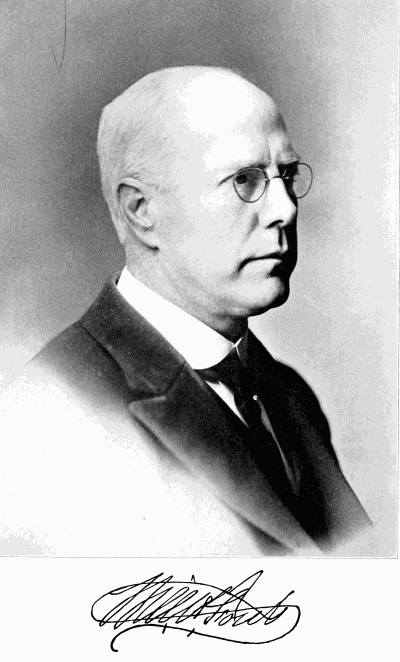
In 1894 Mr. Fouts was united in marriage to Miss Clara Kribs and they have two children who are yet living, namely: William and Rodney H. The wife and mother passed away on April 20, 1916, greatly mourned by all who knew her.
In fraternal circles Mr. Fouts is widely and prominently known, being a stalwart member of the Masonic lodge, the Knights of Pythias and the Woodmen of the World. His political support is given to the republican party and he has been called upon to fill several positions of public honor and trust. He was elected prosecuting attorney in 1892, again in 1894 and once more in 1898, and he has also held the office of city attorney and city clerk. His duties have been discharged with marked promptness and fidelity and his re-election is proof of the confidence reposed in him by his fellow townsmen. That his has been a well-spent life is indicated by the fact that many of his stanchest friends are those who have known him from his boyhood to the present time.
THOMAS J. HOLLOWELL.
Thomas J. Hollowell was at the time of his death a retired farmer residing in Waitsburg. Nature seems to have intended that man in the evening of life shall enjoy a period of rest. In youth he possesses enthusiasm and energy, which in later years benefits by the wise direction of a more mature mind. Therefore if one wisely utilizes his time, his talents and his opportunities, he will progress along the line of prosperity and will have accumulated a substantial competence by the time the evening of life is reached. Such had been the record of Thomas J. Hollowell, who was born in Orange county, Indiana, May 26, 1837, and had therefore passed the eightieth milestone on life's journey when called to his final rest October 8, 1917. His parents were Jonathan and Hannah (Copple) Hollowell, who were reared and married in Orange county, where their respective parents had located at a very early period in the development of that section of the country. Both the father and mother of Thomas J. Hollowell passed away in Orange county.
That district was still largely a frontier region during the period of Thomas J. Hollowell's boyhood and youth. He remained upon the home farm until his nineteenth year and received but limited educational privileges, although to some extent he attended the district schools. The home place, however, was heavily timbered and it was necessary that he aid in the arduous task of clearing the land and developing the farm. He therefore early became familiar with the work of cutting down the trees, grubbing up the stumps and clearing away the brush in order that the land might be tilled. In 1856 he left home and went to southern Illinois, residing in Jefferson county for nine years, during which period he purchased a small farm that he continued to cultivate and further develop until the spring of 1865. He then sold that property and joined the long procession that was wending its way across the plains with horses and mule teams, attracted by the opportunities of the northwest. Eventually he arrived in Walla Walla county about the last of October. Half of the emigrant train went on to Oregon, while Mr. Hollowell and his brother-in-law, Alexander Bundy, and others with their families stopped near the present site of Waitsburg and there camped. The land had not yet been surveyed for homestead entry, but Mr. Hollowell squatted on a quarter section that was not surveyed until six years later. In the meantime congress had passed the railroad bill, cutting the homestead down to eighty acres. Therefore he changed the homestead to a preemption, paying one dollar and a quarter per acre. Afterward he homesteaded eighty acres adjoining his first location, which was six miles southeast of Waitsburg. There he lived for a number of years but in the meantime erected a town house in Waitsburg, where he spent the winters in order that his children might have the opportunity of attending the city schools. During his last years he lived retired and spent all of his time in Waitsburg. He sold the old home farm but owned another tract of land of four hundred acres three miles from Waitsburg, which is operated by his son Albert.
On the 1st of April, 1858, Mr. Hollowell was united in marriage to Miss Sarah H. Bundy, of Washington county, Illinois, and they became the parents of twelve children, but only two are now living, Lilly May and Albert S.
While Mr. Hollowell was not actively connected with any business enterprise, he served as one of the directors of the First National Bank of Waitsburg, which he assisted in organizing. He gave his political allegiance to the democratic party, and while he was a believer in its principles he was never an aspirant for office. He and his wife held membership in the Christian church, in which for more than forty years he held office, being one of the elders at the time of his death. He served for two terms as mayor of Waitsburg and for several years as a member of the town council, but whether in office or out of it, he was always loyal to the best interests of the community and cooperated largely in plans and measures for the general good. He never had occasion to regret his determination to come to the northwest, for here he found the opportunities which he sought and in their utilization gained a place among the substantial and prosperous business men of his adopted state. While he traveled far on life's journey, he was a well preserved man and in spirit and interests seemed yet in his prime, keeping in touch with the trend of modern thought, development and progress.
OSCAR F. CANFIELD.
Oscar F. Canfield is one of the venerable and honored citizens of Washington, living in Clarkston. Moreover, no history of the state would be complete without extended reference to him, for he was one of the survivors of the Whitman massacre of 1847 and every phase of the state's development and progress from that time to the present is familiar to him. He has passed the eightieth milestone on life's journey, his birth having occurred in Pennsylvania on the 8th of March, 1838. His parents were W. D. and Sally Ann (Lee) Canfield, both of whom were natives of Bennington county, Vermont. The father was a blacksmith by trade and followed that pursuit in early manhood but afterward took up the business of farming and stock raising and also engaged in mining. In 1847 the father was one of those wounded and left for dead in the Whitman massacre, but life had not departed and he made his escape to Lapwai to the mission of Mr. Spalding. A courier was sent to Vancouver with dispatches for Peter Skeen Ogden, then chief factor of the Hudson's Bay Company at Vancouver. Mr. Ogden immediately manned three batteaus and came to Fort Walla Walla on the Columbia, where he bought seven women and thirty-two children from the Indians, paying for them on delivery, thus freeing those who had been captured by the red men.
On New Year's day of 1848 the Canfield family embarked for Vancouver in charge of the Hudson's Bay Company and were turned over to Governor Abernethy at Oregon City. They lived in Polk county, Oregon, until March, 1849, and then went to California in the gold stampede. They mined in Nevada that summer but afterward returned to Sonoma county. The mines were very rich at that period, but Mr. Canfield did not know how to mine, nor had he anything to mine with.
Oscar F. Canfield took up the occupation of mining with the removal of the family to Sonoma county, California, although a boy of but eleven years, and as he remarks, if he then knew what he now knows about mines and mining, he would have been many times a millionaire. In 1862 he started with Captain Gilliam's company for the Florence stampede in Idaho. Captain Gilliam was a brother of General Cornelius Gilliam, who distinguished himself in the Seminole war in Florida and was accidentally shot in 1848 in the Cayuse war. His death was a great loss to Oregon, as he was an experienced Indian fighter. He had several children, living in and around Walla Walla. The party with which Mr. Canfield traveled did not get to Florence, Idaho. They struck gold at Canyon City, Oregon, and Mr. Canfield held the pan while Captain Gilliam filled it. He then panned out the gold and there seemed to be fine prospects there. They reached Canyon City on the 9th of June, 1862, and that district afterward proved to be a very rich camp. The first gold discovered on Prichard creek was found by Jim Prichard, Bill Gerard and Oscar F. Canfield. The gold which they found, when weighed, was equal to a dollar and seventy-five cents. It was this which started the Coeur d'Alene stampede. It was Bill Sutherland and Charley Toole who discovered the Galena ore in the Sunset mountain and it was Mr. Canfield who grubstaked them. In 1862 Mr. Canfield was one of a company of thirty-five men who made their way northward from California to Florence, Idaho, where there was great excitement concerning gold discoveries. In the party were several noted early pioneers, including Mr. McGruder, who was afterward ambushed and murdered. To the party also belonged Captain Gilliam, who was subsequently killed in the Cayuse Indian war and left a number of descendants in Old Walla Walla. It was at Florence, Idaho, that Mr. Canfield found the first gold there discovered. There were several companies of men who came up from California at that time, including the following captains with their companies: Captain Killgore, Joel Walker and Charles Hooper. Mr. Canfield lived in the Snake River and in the Salmon River country for a number of years and later at Canfield, Idaho, a town named in his honor. He there followed mining, ranching and stock raising and thus in various localities was closely and prominently identified with pioneer development.
In November, 1861, in California, Mr. Canfield was united in marriage to Miss Ann Maple, a native of Ohio, and to them were born seven children: Augusta, who married Isaac Cooper; Sherman, who died in 1914; Mary, who became the wife of William Farrell; Bert, a stock man of Big Hole Basin of Montana; Oliver, deceased; Joseph, who is with his brother in Big Hole Basin, Montana; and Mrs. Lottie Jasper, who lives in Los Angeles, California.
In politics, in early manhood, Mr. Canfield was identified with the know knothing party. This was before the republican party had been organized or the present democratic party had formulated its platform. The basic principle of the know knothing party was that a foreigner must live here for twenty-one years before he could become a citizen and enjoy the voting benefits and privileges of an American-born citizen. He is proud of his political affiliation with that party and says he is still an advocate thereof. Mr. Canfield was on one occasion connected with an Indian ring hunt which took place in 1878 at Hayden Lake, near Coeur d'Alene. He was with a party of Indians who gathered in a horseshoe circle, the chief at one end and a noted Indian runner of that day, named Fleetfoot, on the other end of the horseshoe circle, their purpose being to hunt deer. They started one morning at eight o'clock and finished at three in the afternoon. One leader was on the canyon side of the circle and the other on the lake side. They would run the deer, drawing them into their circle. They ran hundreds in that way and killed one hundred and forty on that hunt or on the one drive, as it was called. Mr. Canfield can relate many most interesting incidents of the pioneer times, his memory forming a connecting link between the primitive past and the progressive present. He has contributed much to the development of the west through his business activity and enterprise and at all times he has stood for progress and advancement.
FRANK T. KEISER.
Frank T. Keiser, of Waitsburg, is one of the most prominent, progressive and extensive farmers of Walla Walla county, owning seventeen hundred and seventy acres of the finest wheat land to be found in this section of the state. In addition he leases and controls one thousand acres and thus his agricultural interests are most important. He was born in Clackamas county, Oregon, September 3, 1856, and is a son of William and Roxcie (Ingalls) Keiser, who are mentioned elsewhere in this work.
The public schools of Walla Walla and Clackamas counties afforded him his educational privileges, as at the age of sixteen years he accompanied his parents on their removal from Oregon to Walla Walla county, Washington. He remained at home through the period of his boyhood and youth, assisting in the work of the farm, and was thus engaged up to the time of his marriage, which was celebrated January 1, 1880, when Miss Cora B. Dickinson, a daughter of Abraham C. Dickinson, became his wife. She was born at Fort Bridger, Wyoming, while her parents were crossing the plains, in 1863. Following his marriage Mr. Keiser began farming on a homestead in Spring Valley which he had previously filed on. He had also filed and proved up on a preemption and had filed on a timber claim. He continued to live upon his farm for seven or eight years, after which he removed to Waitsburg, where he has since made his home. For several years he has operated farm lands from this point and his holdings are now very extensive, for he owns seventeen hundred and seventy acres of the finest wheat land in the county and has leased and cultivated another tract of one thousand acres. He is thus most extensively engaged in farming and the magnitude of his operations is an indication of the nature of his success. He is familiar with every phase of wheat culture in the Inland Empire and his wise and careful management of his business affairs has brought splendid results. In addition to his other interests Mr. Keiser is a stockholder in the Exchange Bank of Waitsburg.
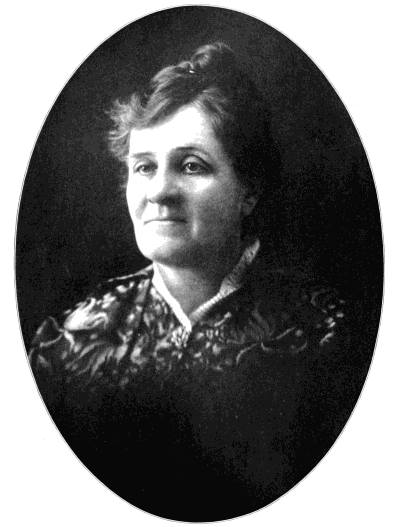
MRS. FRANK T. KEISER
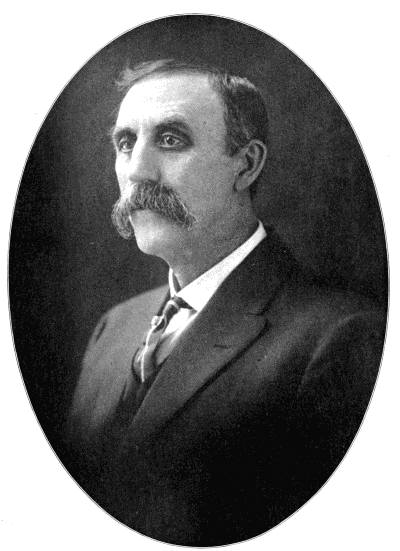
FRANK T. KEISER
To Mr. and Mrs. Keiser have been born nine children, eight of whom are yet living, namely: Mabel, the wife of H. A. Woodruff, of Waitsburg; Chester A., who is operating one of his father's farms; Hazel, the wife of Z. O. Atkinson, who is connected with the Farmers' Union and resides at Waitsburg; and Verl D. and Velma, twins, and Helen, Donald and Gordon J., all at home.
Mr. Keiser votes with the democratic party and has served as a member of the city council of Waitsburg. He stands for all that is progressive in public affairs and cooperates in many well defined plans and measures for the general good. He belongs to Touchet Lodge, No. 5, I. O. O. F., of Waitsburg, also to Coppei Encampment, No. 73, and to the Woodmen of the World. He is likewise connected with the Patriotic Order of the Sons of America. He and his wife attend the Christian church and they are generous supporters of many movements that seek to advance the material, intellectual and moral progress of the community. Mr. Keiser is a typical citizen of the west. His entire life has been actuated by a spirit of enterprise that recognizes and utilizes opportunities. His words and actions spell progress. He has continually taken a forward step and his efforts have contributed in large measure to the upbuilding and development of the section with which he is connected.
JENS ANDERSON.
Jens Anderson, a well known representative of industrial activity in Walla Walla, where he is now successfully conducting a wagon making shop, was born in Denmark, January 5, 1856, and is a son of Anders and Anna C. (Christenson) Jenson, both of whom were natives of that land, where they spent their entire lives. In their family were four children, of whom three are now living. These are Jens Anderson, of this review; Christ Anderson, a resident of Idaho; and Anne Sophie, who is still living in Denmark.
Jens Anderson was reared and educated in his native country and there learned the carriage and wagon making trade. Favorable reports reached him concerning the opportunities of the new world and in 1878, when a young man of twenty-two years, he bade adieu to friends and native country and sailed for the United States. He was located for a time in New Jersey and then continued on his westward way to Missouri, where he remained for eight years. On the expiration of that period he removed to Moscow, Idaho, where he resided until 1895. Throughout all this time he continued active in the wagon maker's trade and when he came to Walla Walla he started in business along the same line on his own account. He now has a splendidly equipped wagon shop and is doing a business of gratifying proportions. He is very energetic, is a man of persistent purpose, and his indefatigable effort has been the foundation on which he has built his success.
In 1882 Mr. Anderson was united in marriage to Miss Phoebe J. Davis, who was born in Missouri. They have become the parents of three children, Charles C., Nellie and Clarence D. That Mr. Anderson has prospered as the years have gone by is indicated in the fact that he is now the owner of an attractive residence and a substantial shop in Walla Walla, where he is living. He is highly respected as a man of genuine personal worth and one who in all matters of citizenship is loyal and progressive. In politics he is a republican.
GREEN SWINNEY.
Green Swinney is a retired farmer making his home in Pomeroy. A native of Indiana, he was born on Christmas day of 1841, his parents being Elijah and Hannah (Starks) Swinney. The father was a native of Virginia and in his boyhood removed with his parents to Indiana, where he attained his majority and was married. Later he became one of the early pioneers of Davis county, Iowa, his removal to that state occurring when his son Green was but an infant in arms. The father remained in Davis county until 1864 and then disposed of his property there, after which he crossed the plains with ox teams and wagon to Oregon, establishing his home in Lane county. There he spent eleven years and in 1875 made his way northward to what is now Garfield county, Washington. Within the borders of that county he took up a homestead, which he later turned over to his son James, who proved up on the property. The father resided upon that farm until his death and was widely known among the leading early settlers of his section of the state.
Green Swinney was reared and educated in Iowa, pursuing his studies in the public schools of that state. He was a young man of twenty-three years when he crossed the plains, driving one of the ox teams and thus making his way to a country which was to give him his opportunity. His school training had been limited to a few months' attendance in one of the old-time log schoolhouses of Iowa with its puncheon floor and slab benches, the methods of instruction being as primitive as were the furnishings. Upon his arrival in Oregon he began work as a farm hand and continued to work for wages until his removal to Washington in 1875. At that date he purchased a tract of railroad land in Columbia county, near Dayton, and four years later he disposed of that property and removed into what is now Garfield county, where he took up a preemption of one hundred and sixty-five acres eight miles east of Pomeroy. He resided upon that tract for a quarter of a century and his labors wrought a marked transformation in the appearance of the place, for he brought his land under high cultivation and divided it into fields of convenient size, annually gathering good crops. Year by year he carefully tilled the soil and became recognized as one of the representative farmers of his part of the state. In 1904 he left the farm and removed to Pomeroy, where he has since made his home, enjoying the fruits of former toil in a well earned rest.
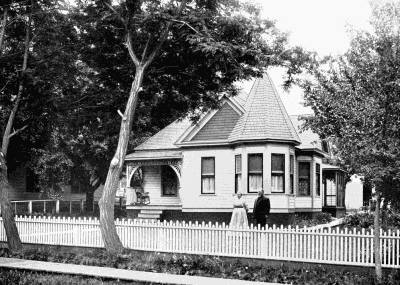
RESIDENCE OF GREEN SWINNEY
On the 1st of July, 1877, Mr. Swinney was united in marriage to Miss Catherine Smith, a daughter of Joseph Smith, who left his Ohio home as a boy of seventeen years, and after spending a short time in Iowa, he crossed the plains in 1846. On the journey he contracted mountain fever and when the train with which he was traveling reached Walla Walla, he was left with Dr. Whitman, who nursed him back to health. He spent the following winter and the next spring with Dr. Whitman, for whom he worked at splitting rails and also planted some small tracts to grain. In the summer of 1847, prior to Dr. Whitman's murder, he went to Oregon, settling in Lane county, where he was afterward married. There he lived until 1861, when he came to Washington and spent the summer in the Orofino mines. During the hard winter of 1861-2—a winter memorable in the history of the state—he was in Columbia county, living near Dayton. There he acquired land and later made that place his home. During the latter years of his life, however, he resided with Mr. and Mrs. Swinney, reaching the ripe old age of eighty-one years.
In politics Mr. Swinney has always been an advocate of democratic principles but has never been an office seeker. He and his wife are members of the Christian church and are most worthy people, honored and respected by all who know them and most of all by those who have known them longest and best—a fact which indicates that their strongest traits of character are those which ever command confidence and respect.
CLAUDE R. WILLIAMS
Claude R. Williams, one of the progressive agriculturists of the Walla Walla valley, was born July 8, 1888, upon the farm which is still his home, situated on section 26, township 8 north, range 36 east, Walla Walla county. Throughout his entire life he has been connected with farming interests and the careful management of his business affairs since he started out in life independently is bringing to him a gratifying measure of success. He is a son of Samuel C. and Ellen E. (Buroker) Williams, who are natives of Illinois. They came to the northwest at an early period in its development and are still living here, their home being at No. 522 East Sumach street, in Walla Walla.
Claude R. Williams was reared and educated in Walla Walla county, attending its common schools, while in the summer months he assisted in the work of the home farm. He continued to aid his father until he attained his majority, when he took charge of the old homestead, which he now cultivates. It comprises three hundred acres of valuable wheat land, splendidly adapted to the cultivation of that crop. His efforts have been an element in winning for Walla Walla county its well earned reputation as a wheat growing section. He is alert and enterprising in all that he does and follows most progressive methods of farming. He studies crop production from a scientific standpoint, keeps his fields in excellent condition and therefore when his crops are sent to market he receives a substantial reward for his labor.
On the 17th of April, 1913, Mr. Williams was united in marriage to Miss Goldie Fullerton, who was born in Carter, Illinois, and is a daughter of Washington Lawrance and Alice (Fyke) Fullerton. His father was a native of Tennessee, but the birth of her mother occurred in Illinois. In 1900 they came to Walla Walla county and settled on a farm near Dayton but now reside at Hadley, Washington. To Mr. and Mrs. Williams has been born a daughter, Lovetta May, whose birth occurred on the 15th of February, 1914.
Mr. Williams is connected fraternally with the Modern Woodmen of America, while politically he gives his allegiance to the republican party. He has no interest in politics as an office seeker although he keeps well informed on the questions and issues of the day and in matters of citizenship he stands for those interests which further progress and improvement along lines of general benefit. His own activities are concentrated upon his farming interests and the careful direction of his business affairs is bringing to him creditable and deserved prosperity.
HERBERT A. GARDNER.
Indefatigable enterprise and concentration of purpose have been salient features in winning for Herbert A. Gardner the creditable and honorable position which he occupies in business circles of Walla Walla and the Inland Empire. He has long been active in the conduct of the mercantile house now conducted under the name of Gardner & Company, Incorporated. This is one of the largest and finest commercial interests of Washington and is largely a monument to the business enterprise and progressive methods of him whose name introduces this review.
Mr. Gardner was born in Charlotte, Maine, June 6, 1860, so that the width of the continent separates him from his birthplace. He brought eastern enterprise and ingenuity to the west with its limitless resources, and the combination has wrought splendid results. His parents, Amos A. and Louisa M. (Jackman) Gardner, were also natives of the Pine Tree state and descendants of Stephen Gardner, who was one of the founders of Hingham, Massachusetts, and who later served his country in the Revolutionary war. The father, who was a farmer and shipbuilder, devoting his life to those two pursuits, died in Illinois, while the mother departed this life in Maine. In their family were eight children, of whom four are living, three being residents of Seattle, namely Mrs. L. M. Kent, Amy B. and Mrs. P. Pitt Shaw.
Herbert A. Gardner is indebted to the public school system of his native state for the educational opportunities which he enjoyed in youth and which prepared him for life's practical and responsible duties. He has always devoted his attention to mercantile pursuits and this concentration of purpose has undoubtedly been one of the strong elements in his growing success. He has not dissipated his energies over a wide field but has thoroughly mastered whatever he has undertaken, and long experience, well developed powers and unfaltering energy have brought to him notable success. For twenty-five years he was associated with the Schwabacher Company of Walla Walla and at length, in connection with others, he purchased the business, which has since been reorganized under the name of Gardner & Company, Incorporated. They own and control one of the largest and finest mercantile houses in the section of the country which covers southeastern Washington and northeastern Oregon. Mr. Gardner has been president of the company since its incorporation. His long experience in mercantile lines has splendidly qualified him for the duties and responsibilities which devolve upon him in this connection. He has not only become familiar with the best methods of purchase and of sale but also closely studies the market in every particular bearing upon his trade and he is now bending his efforts to administrative direction with the result that the business of the house has steadily increased. He has always been careful to surround himself with a corps of efficient assistants in the office and he has held to the highest standards in the personnel of the house, in the character of goods carried and in the business methods followed. In a word, he has made the firm name a synonym of progressiveness and of honorable dealing.
On the 28th of September, 1886, Mr. Gardner was married to Elizabeth Hungate, who died February 25, 1896. She was a native of California and a daughter of Harrison H. and Mary (Duncan) Hungate, the former deceased, while the mother is still living, making her home in Walla Walla. To Mr. and Mrs. Gardner were born three children: Geneva Hungate, who is the wife of W. J. Steele, of Walla Walla; Ward H., who married Irma Coleman and has one child, Shirley Elizabeth; and Elizabeth, at home. On the 23d of May, 1906, Mr. Gardner was again married, his second union being with Miss Anna M. Siler, who was born in Simcoe, Canada.
Fraternally Mr. Gardner is identified with the Masons, the Elks and the Odd Fellows and in his life exemplifies the basic principles which underlie those organizations. He is also identified with the Commercial Club. His political allegiance is given to the democratic party and for fifteen years he has served as a member of the board of education. While a most active and progressive business man, he has ever recognized his duties and obligations as well his privileges of citizenship and has cooperated in many well defined plans and measures for the public good, standing at all times for progress and improvement in relation to civic affairs and the welfare of the commonwealth.
L. NEACE.
L. Neace, deceased, was an early settler of Walla Walla county and was for years one of its leading stock raisers. He was born in Germany, September 27, 1835, and there received his education. When only twelve years old, however, he came to America and settled in Pennsylvania. For some time he worked in a sash and door factory in that state and later removed to Kansas City, Missouri, whence in 1857 he went to Oregon, crossing the plains by ox team. After remaining in Oregon for one winter he went to California and a few months later went to Fort Benton. In the latter part of 1859 he came to Waitsburg, Washington, and turned his attention to stock raising, as Walla Walla county was then chiefly devoted to that business. He owned a large tract of land and was very successful in the management of his affairs, gaining financial independence. He was a factor in banking circles, being for thirty years president of the National Bank of Waitsburg, which under his direction enjoyed the entire confidence of the community and a steady increase in deposits.
In 1864 Mr. Neace was united in marriage to Mrs. Elizabeth (Harrington) Sickler, widow of Daniel Sickler, who was a native of Pennsylvania and died in Walla Walla county, Washington, in 1863. To her first marriage one daughter was born, Minnie, now the wife of D. C. Eaton. Mr. and Mrs. Neace became the parents of the following children: John, Lewis and Isaac, all of whom are farming; Ellen, the wife of C. A. Hauber, of Portland, Oregon; Frank and James K., both of whom are farming; Sarah D., the wife of S. F. Patton, postmaster of Waitsburg, and the mother of two children, Serita F. and J. Lewis; and Charles, who is farming.
Mr. Neace was a democrat and was quite prominent in local political circles. He passed away January 12, 1916, and there were many who felt a personal sorrow at his demise, for during the more than half-century that he resided in Walla Walla county he had gained a large number of friends. When he came here he was without capital but possessed great energy and an unshakable determination to succeed and as the years passed his resources steadily increased. His widow still has large land holdings and personally supervises her business interests and is also one of the directors of the First National Bank, of which she is a large stockholder. She, too, is widely and favorably known throughout the county.
JOHN R. BLIZE.
Among the energetic and alert farmers who have made Columbia county the excellent agricultural region it is may be mentioned John R. Blize. His birth occurred in Missouri, October 4, 1869, and he was a son of James T. and Nancy (Beard) Blize, who passed their entire lives in that state. To them were born ten children, of whom four are now living.
John R. Blize was reared in Missouri and during his boyhood and youth attended the public schools there. In 1889, when about twenty years old, he made his way to Washington and for a number of years was employed as a laborer. In 1893 he rented land and engaged in farming on his own account. Although this was a marked step forward he was not satisfied to remain a renter and carefully saved his money with the object of purchasing a farm. At length he bought a tract of land on section 5, township 9 north, range 38 east, Columbia county, and resided thereon until his death, November 1, 1917. His practical methods and his close attention to all phases of farm work enabled him to harvest large crops, and from time to time he invested his capital in additional land so that he owned at his death four hundred and ninety-four acres, the value of which is enhanced by the excellent buildings thereon. He also operated rented land and altogether had about one thousand acres in wheat. He owned his own warehouse and was thoroughly equipped for taking care of the grain which he harvested.
On the 1st of October, 1894, Mr. Blize was married to Miss Hattie B. Chapman, a resident of Dallas county, Iowa. To them were born seven children, namely: James O., who is now in Battery D, Field Artillery, Washington National Guard; Ica T., deceased; Mildred C., now in high school; Clarence A.; Harold T.; John W.; and Roy E.
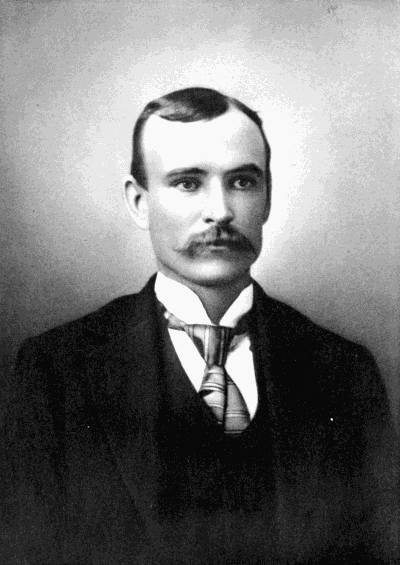
JOHN R. BLIZE
Mr. Blize was an advocate of republican principles and was loyal in his support of its candidates and measures. He served on the school board for a considerable period and was also county commissioner, in which connection he made an excellent record. He belonged to the Masonic lodge, the Knights of Pythias and the Woodmen of the World, and was well known in local fraternal circles. The signal measure of success which he gained is double creditable in that he made his own way from the early age of ten years. He thoroughly identified his interests with those of this section and was always glad that he decided to make his home here, for he believed that the opportunities for advancement are greater in the Pacific northwest than in other sections of the country.
GEORGE H. SNELL.
George H. Snell, president of the Walla Walla Construction Company, manufacturers of brick and tile, and also the second vice president of the Farmers Savings Bank, has through his important business connections contributed in substantial measure to the development, progress and upbuilding of the city in which he makes his home.
He was born in Niles, Cook county, Illinois, December 8, 1853, and is a son of Hamlet B. and Clarissa A. (Odell) Snell, the former a native of Syracuse, New York, while the latter was born in Cook county, Illinois, where they were married, the father having removed westward to Chicago with his parents when a lad of eight years. After his marriage he engaged in farming in Cook county, Illinois, and subsequently in Lake county, Indiana, about fifty miles from Chicago. He devoted many years to general agricultural pursuits with good success, winning a competence that enabled him at length to live retired. He then removed to Chicago, where his death occurred in 1913, when he had reached the age of eighty-seven years. His wife passed away in 1874 and later he was again married, his second union being with Mrs. Catherine McCarthy, who was called to her final rest in 1910. There were four children born of the first marriage.
George H. Snell whose name introduces this review spent his youthful days with his parents and acquired his education in the public schools of Chicago. He remained at home until he had reached his eighteenth year, making himself useful along various lines but then entered upon an apprenticeship to the lathing and plastering trade, with which he was identified for forty years. In 1878 he came west, making his way first to Sioux Falls, South Dakota, to which point he traveled by rail, and thence continued the journey through to Walla Walla by wagon and team. He was three months and ten days in making the journey across the plains. At that time the Indians were on the warpath but his party was fortunate in escaping trouble with the red men and they reached the Walla Walla valley unharmed. After arriving at his destination Mr. Snell took up the work of contracting in lathing and plastering and also in cement work and was prominently identified with activities of that character until recent years. He became one of the dominant factors in the building trades of Walla Walla, large demand being made upon his time and energies in connection with his chosen occupation. In 1904 he organized and incorporated the Walla Walla Construction Company, of which he became the president and which has been developed into one of the principal industries of the character in the city. In most of the best buildings, public and otherwise, in Walla Walla his work is to be seen. His thorough reliability and the excellence of his work have been the salient features in winning him his continued and growing success.
In 1891 Mr. Snell married Miss Clara J. Parkes, of Walla Walla, and they became the parents of a daughter, Laura, who is the wife of James Daugherty, of Walla Walla. The death of Mrs. Snell occurred September 26, 1911, and caused deep grief to her family and much sincere regret among her many friends.
Mr. Snell exercises his right of franchise in support of the men and measures of the republican party and always keeps well informed on the questions and issues of the day, but the honors and emoluments of office have had no attraction for him. He is a very prominent Mason, belonging to Blue Mountain Lodge, No. 13, F. & A. M.; Pendleton Chapter, No. 23, R. A. M., of Pendleton, Oregon; Washington Commandery, No. 1, K. T., of Walla Walla; Zabud Council, R. & S. M.; Spokane Consistory, A. & A. S. R., and is a charter member of El Katif Temple of the Mystic Shrine. He likewise holds membership with the Independent Order of Odd Fellows, belonging to Enterprise Lodge, No. 2.
Mr. Snell is identified with the Walla Walla Commercial Club and is in thorough sympathy with its purposes to further the interests of the city and exploit its possibilities and advantages, also to extend its trade relations and, more than all, to uphold the high civic standards which here prevail. He had no assistance when he started out in the business world, but he early came to a realization of the fact that industry wins and industry became the beacon light of his life. Persistency of purpose has been one of the foundation stones of his success.
THEODORE PERCY INGALLS.
Theodore Percy Ingalls is an honored pioneer of Washington and a veteran of the Indian wars. To him the story of frontier life in the northwest is a familiar one. The story of this great and growing section of the country has ever been an enticing one to all progressive young men who have sought the opportunities here offered and in their utilization have won success, while at the same time their labors have contributed in marked measure to the upbuilding and development of this region. Mr. Ingalls, now living retired in Waitsburg, was for a long period actively identified with farming in Walla Walla county. He was born September 13, 1835, and has therefore passed the eighty-second milestone on life's journey. His parents were Israel and Mary (Lord) Ingalls, both natives of Maine, where they were reared and married. Subsequently they removed to Ohio, settling near Dayton, where they resided for several years. Eventually they became residents of Bond county, Illinois, and the father died in Alton, Illinois, two months prior to the birth of his son, Theodore, his death being one that occurred in the great cholera epidemic that ravished the country. His widow subsequently crossed the plains to Oregon and in later years made her home with her sister, Mrs. J. V. B. Butler, her death occurring in March, 1871.
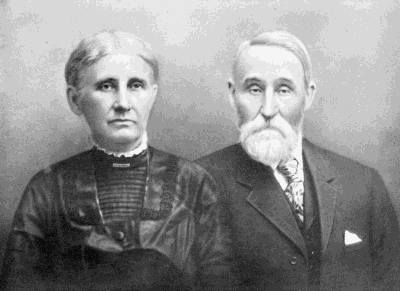
MR. AND MRS. THEODORE P. INGALLS
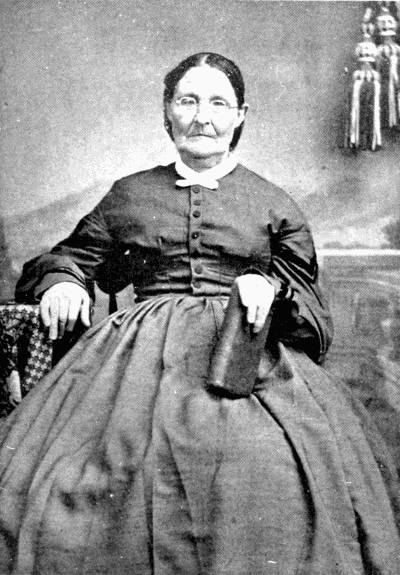
MRS. ISRAEL INGALLS
It was in 1852 that Theodore P. Ingalls accompanied his mother on the long journey to the northwest. He was then a youth of sixteen years. They made the trip with ox teams, there being fourteen wagons in the party. Cholera broke out en route and twenty-one members of the party died ere they reached their destination. Mr. Ingalls and his mother first took up their abode in Clackamas county, near Oregon City, Oregon, where a brother of our subject had preceded them. Here Theodore P. Ingalls worked at various occupations, much of his time being spent in the timber, in getting out saw logs and in splitting rails. He also worked in the sawmills and for a time he was in the mines and thus his experiences were broad and varied, acquainting him with every phase of pioneer life and development in the northwest.
On the 27th of February, 1867, Mr. Ingalls was united in marriage to Miss Catherine Smith, of Clackamas county, Oregon, who had come to the northwest with her sister, crossing the Isthmus in 1863 and thence proceeding up the coast. In the summer of 1871 Mr. and Mrs. Ingalls became residents of Walla Walla county, Washington, where he took up a preemption of one hundred and sixty acres, but money was scarce, and being unable to make payment upon his property, he turned it into a homestead of eighty acres. The place was located in Spring valley about three miles north of Dixie, and there he made his home and successfully engaged in farming for thirty-three years. During that period he added to his holdings from time to time as opportunity offered until his landed possessions were seven hundred and four acres. This property he recently sold, but already in 1904, on account of failing health, he retired from active farming operations and for a time spent his days largely in travel. He finally took up his abode in Waitsburg, where he has since remained and where he is now most comfortably situated. At the age of eighty-two years he is surrounded by many friends, enjoying the respect and warm regard of all who know him.
In 1856 Mr. Ingalls took part in the Yakima Indian war, serving under Colonel Cornelius. His political endorsement has long been given the democratic party, while fraternally he is connected with Waitsburg Lodge, No. 5, I. O. O. F., is a consistent member of the Christian church to which his wife also belonged, and their well-spent lives gained for them the warm regard and respect of all with whom they have been brought in contact. Mrs. Ingalls passed away quite recently, her lamented death causing deep grief to her husband and her many friends who greatly admired her for her high qualities of character.
The growth of the northwest has been marvelous but its resources stimulated the efforts and ambitions of the men who cast in their lot with the first settlers. At the time of Mr. Ingalls' arrival the red men had dominion over this entire section of the country. Only here and there had a little settlement been made along the rivers or the coast, for navigation alone could bring to man the things which he needed from other quarters. There were great broad areas that are now highly cultivated which at that time were unclaimed. The forests, too, stood in their primeval strength and the rivers were only used for an occasional trip. Today the powers of the land have been utilized for the benefit of man and with every phase of development from pioneer times down to the present Mr. Ingalls is familiar. He has lived to see the rude frontier cabins replaced by commodious and substantial homes, the tiny hamlets converted into thriving villages and cities and the work of progress carried forward along agricultural, industrial and commercial lines until the northwest has reason to be proud of her cities, her homes and her mines as well as her wonderful agricultural development, in which Mr. Ingalls took an active part as one of the leading farmers of Walla Walla county for many years.
JOHN F. ADAMS.
An upright, honorable man was John F. Adams, whose entire life measured up to high standards and whose association with public interests constituted an element of advancement and improvement in this section of the state.
He was born in Franklin county, Maine, July 20, 1835, a son of Joseph and Areta (Barrett) Adams, coming of the same ancestry as John Adams and John Quincy Adams, two of the early presidents of the United States. Both the parents were natives of Maine and spent their entire lives there. They had a family of seven children, all of whom have passed away.
John F. Adams was twenty-two years of age when in 1857 he became identified with the northwest, settling first in Douglas county, Oregon, where he took up the profession of teaching in the Umpqua Valley, which he followed for five years. He then exchanged the master's rod for the shepherd's crook, becoming extensively engaged in sheep raising in Umatilla county, Oregon, in 1865, where he resided for twenty-three years, and in addition to raising sheep engaged also in raising cattle and horses, handling only high bred stock. He became one of the foremost representatives of live stock interests in this section of the country, his business affairs being wisely and successfully managed. He was also one of the organizers of the Savings Bank at Pendleton, Oregon, and served as its president until his death. He shaped its policy and directed its activities, helping to make it one of the strong financial concerns of that section. He was devoted to the welfare of his town and his county and was actuated by a spirit of progress and improvement in all that he undertook.
On November 17, 1878, Mr. Adams was united in marriage to Miss Susan F. Fry, a native of Indiana and a daughter of Robert and Amanda (Francis) Fry. The father was a native of Virginia, while the mother's birth occurred in Kentucky, and in early life they removed westward to Indiana, where they were married. The mother died in that state but Mr. Fry afterward removed to Kansas, where his demise occurred. In their family were three children, of whom two are now living. To Mr. and Mrs. Adams were born five children: John R., who is a resident of Oregon; George H., who has passed away; Walter F., living in Walla Walla; Pauline, the wife of Walter Bemus, of Walla Walla; and Helen M., the wife of Frederick Morrison, of Oakland, California. She was in her girlhood days a student in Whitman College of Walla Walla.
The death of the husband and father occurred in McMinnville, Oregon, in March, 1899, but he was laid to rest in Mountain View cemetery in Walla Walla. He was a self-made man and deserved much credit for what he accomplished. At the time of his death he owned several hundred acres, constituting one of the excellent stock ranches of the Inland Empire. Since his demise his widow and her family have removed to Walla Walla, where they took up their abode in 1904, and she now owns an attractive home on Boyer avenue.
Mrs. Adams belongs to the Baptist church, of which Mr. Adams was also a devoted member and an active church worker, doing all in his power to further the cause and extend the influence of the church. In politics he was an earnest republican and took a helpful interest in promoting party successes. He held several county offices while in Umatilla county, Oregon, and at all times was true and loyal to the trust reposed in him. In a word, his was an honorable and upright career and his memory remains enshrined in the hearts of all who knew him. He possessed many sterling characteristics, was straightforward in every business transaction, was patriotic in citizenship, held friendship inviolable and was devoted to the happiness of his wife and children.
C. S. CREWS.
C. S. Crews, who is perhaps better known to his hundreds of friends on the Pacific coast as "Doc" Crews, has a most wide acquaintance as a theatrical manager. He is now manager of the Crews Amusement Company, operating the Liberty Theater in Walla Walla, which is the only vaudeville theater in the city.
He was born in Montrose, Henry county, Missouri, October 13, 1881, a son of Tyson M. and Elizabeth (Reed) Crews, the former a native of Winston-Salem, North Carolina, while the latter was born in Henry county, Missouri. The paternal grandfather, Edward Crews, was the owner of a large tobacco plantation and many slaves in North Carolina. In young manhood Tyson M. Crews removed westward to Henry county, Missouri, where he was married and resided until 1881, when he returned to North Carolina. In 1888 he came to Walla Walla, where he engaged in the coal and wood business, but the panic of 1892-3 forced him to suspend operations in that line. He then went to work as a stationary engineer in a laundry and subsequently removed to Olympia, Washington, where he established himself in the laundry business. In 1913 he went to Roy, Idaho, where he has since been engaged in farming.
C. S. Crews was educated in the public schools of Walla Walla, having been brought to the west during his early boyhood days. The spirit of western enterprise and progress has always been a dominant factor in his career. From an early age he has been dependent upon his own resources and whatever success he has achieved is the direct reward of his labors. As a boy he worked in a livery stable for a wage of twenty-five cents per day. Subsequently he was employed in a laundry at fifty cents per day and later he secured the position of cashier in the mercantile house of the Schwabacher Company. He was endowed by nature with musical talent and during these years he became identified with the Walla Walla Band as drummer and in the years following he accumulated musical instruments to the value of about a thousand dollars. These included xylophones, saxophones, aluminum chimes, bamboo chimes, marimbaphones and sonorophones. In fact he acquired everything in the musical novelty line. The mercantile company with which he was employed refusing to allow him vacations in order to attend to his band duties, he accordingly resigned and later took up a position with the Mottee-Wheeler Company as credit man, continuing his musical work. In 1903 and 1904 he toured the country on the vaudeville circuit as a novelty musical artist with pleasing success. He then returned to Walla Walla and again entered the employ of the Mottee-Wheeler Company. The moving picture business became a feature of entertainment and Mr. Crews associated himself therewith, opening up a moving picture house in a modest way, and from this small start was developed what is now the Strand, the Arcade and the Liberty, all of which Mr. Crews established, but in October, 1916, he sold the Strand and the Arcade and now operates only the Liberty, where he puts forth nothing but the highest class pictures and also gives a vaudeville show of equal worth. In the days of the Western Tri-State Baseball League, of which he was one of the organizers, he was the vice president and the secretary. He is thus well known in sporting as well as in entertainment circles.
In April, 1906, Mr. Crews was united in marriage to Miss Mary A. Connors, of Walla Walla, and to them have been born three sons and three daughters, known as the Golden Stairway, all being of blond complexion with golden hair, while Mr. Crews has black hair. The children are Naomi, Norma, Francis, Mignon, Clarence E. and John. Mrs. Crews is gifted musically, being a graduate in music of St. Vincent's Academy, and she possesses notable skill in piano playing.
Mr. Crews belongs to Walla Walla Lodge, No. 287, B. P. O. E. He is also a member of the Loyal Order of Moose and of the Knights of Columbus. He likewise belongs to the Turkey Reds, an organization comprising the most progressive men of the Commercial Club, and his religious faith is that of the Catholic church.
PETER R. WELLER.
Peter R. Weller, who is devoting his time and attention mainly to stock raising under the name of the Weller Live Stock Company, resides on an excellent tract of land on section 22, township 13 north, range 40 east, Garfield county. He was born in Livingston county, New York, September 1, 1862, and is a son of Andrew J. and Mary (Huff) Weller. The father was also a native of New York, while the mother was a native of Ireland, but both passed away in the Empire state. Two of their four children are now living, the one besides our subject being Mrs. Jennie Folnsbe, a resident of Garfield county, Washington.