Chapter XXV · BIOGRAPHICAL HISTORY (continued 8)
Reading edition
ROBERT F. BISHOP.
Robert F. Bishop, farmer, residing in Mt. Pleasant township, Atchison county, Kansas, and whose farm is located two and one-half miles west of Potter, is one of the most substantial and progressive agriculturists of his neighborhood. He was born August 16, 1861, in the town of Watkins, in Schuyler county, New York, at the foot of Watkins Glen, which is now a noted 597summer resort, and one of the most beautiful spots in all New York. He is a son of Freeman and Annie (Sims) Bishop, both of whom were born and reared in New York State and descendants of old eastern families. The Bishop family is of English origin and is descended from old colonial stock, members of which figured in the early wars in which America has been engaged. The Sims family is of Scotch and Irish extraction. The Bishops were early settlers in the section of New York where Robert F. Bishop was born. Freeman was a ship carpenter by trade who followed his trade in New York, and in 1872 came to Kansas, settling in Jefferson county on a farm, where he prospered and reared his family of four children, Robert F. being the eldest.
He of whom this review is written was a boy ten years of age when the family came to Kansas to make a permanent home. He lived on the home place and assisted his father in the cultivation of his farm until he was twenty-four years of age, then married, and two years later, in 1885, came to Mt. Pleasant township, Atchison county, and purchased the old Miller farm consisting of 180 acres of good, tillable land. Mr. Bishop has added to his original farm as he was able and now owns 261 1–2 acres all in one body and well improved. Besides his home farm he is also the owner of another tract of 208 acres, which makes his total acreage 469 1–2 acres in all. The accumulation of this amount of land in about thirty years is a considerable undertaking, in Kansas especially, when the possessor had very little of this world’s goods at the start of his career. Mr. Bishop began with very little capital but imbued with a determination to succeed and the willingness to work hard and deny himself the luxuries of life until he was well able to afford them. When he purchased his first farm his cash capital was so limited that he was forced to go in debt for two-thirds of the purchase price of the land. Since then he has risen to become one of the wealthy farmers of Atchison county, and has one of the finest and best improved places in Kansas, equipped with excellent buildings and a modern silo. His farm is considered a model one in the county and was one of the first to be visited by the county farm visitors for the purpose of ascertaining the progress made and using it as a model for others in the county. Mr. Bishop is a natural born agriculturist who has kept pace with the advancement made in the science of agriculture, and is blessed with an intuitive knowledge of the best methods of tilling the soil.
Mr. Bishop was married in 1883 to Elizabeth Shaw, a daughter of Henry Shaw, well-to-do farmer of Leavenworth county. To this union have been born seven children, namely: Caude, a farmer, in Atchison county; Curtis, a farmer; Robert, living at home and assisting his father in the farm operations; 598Myrtle S., Mable, Maude, and Irene, at home with their parents. The father of Mrs. Bishop is the owner of the old Penseneau farm, which is the first piece of land ever tilled in Atchison county.
The Republican party has generally had the allegiance of Mr. Bishop, and while he has not taken an active part in political matters, he was one of the stanch supporters of the movement which resulted in the establishment of the high school at Potter. It is only natural to learn that he, like others who have succeeded in Kansas, has always been a live stock man and believes in feeding the grains and grasses raised on his land to the live stock on his place, in order to preserve the fertility of the land and make marketing the output much more convenient. He maintains a dairy herd of thirty well bred Holstein milch cows and is a well known breeder of Duroc Jersey hogs, having 200 head or more on his farm.
HARRISON W. RUDOLPH.
Harrison W. Rudolph is not only a leading photographer of Atchison, but ranks among the best in his profession of the entire country. Mr. Rudolph is a native of the Keystone State, born at Allentown, Pa., May 30, 1866. He is a son of John and Levina (Messer) Rudolph. The Rudolphs are of old American stock of German descent. Sometime during the seventeenth century, two Rudolph brothers immigrated to America. One settled in Pennsylvania, and the other went farther West, locating in Ohio, and Harrison W. Rudolph, whose name introduces this review, is a descendant of the one who settled in Pennsylvania. Mrs. James A. Garfield bore the maiden name of Rudolph, and was a member of the Ohio branch of the Rudolph family, and James Rudolph Garfield, son of the former President, retains his mother’s maiden name as his middle name. John Rudolph, the father of H. W., is now living and has reached the ripe old age of eighty. He resides in Allentown, Pa.
Harrison W. Rudolph was reared in Allentown, and after receiving a good common school education served an apprenticeship at photography in his native city, and later completed a course in the Atchison Business College. About the time he was twenty years old he obtained a position from an Atchison photographer through correspondence. He came here and worked at his profession for M. A. Kleckner about nine years, when he opened a studio of his own at 509 1–2 Commercial street, where he has been located for twenty 599years. Mr. Rudolph is recognized as an artist and has a large patronage from all over northeastern Kansas, and he even gets work from Kansas City. The excellency of his work is readily recognized by particular people who know and appreciate art. Mr. Rudolph has been awarded five prizes and medals for his work by the Kansas State Photographers’ Association, and his work is always in great demand. He is a member of the Kansas Photographers’ Association, the National Photographers’ Association of America, the Missouri Valley Photographers’ Association, the Modern Woodmen of America, and the Methodist Episcopal church.
Mr. Rudolph was married in Denver April 9, 1889, to Miss Martha Hausser, of New York City, and two children have been born to this union, as follows: Rodney, born January 21, 1892, is a traveling representative for the Standard Oil Company, and Fred, born June 2, 1894, a clerk in the Atchison office of the Standard Oil Company. Mr. Rudolph is not only a successful artist, but has made good in a financial way and is one of the substantial business men of Atchison county. He is a member of the Atchison Commercial Club and the Young Men’s Christian Association.
EDWARD B. McCULLOUGH.
Edward B. McCullough, deputy sheriff of Atchison county, was born on a farm in Atchison county in 1880, and is a son of Hugh Elden and Sarah J. (Rankin) McCullough, both of whom were born and reared to maturity in Pennsylvania, married there and shortly afterward set out for the West, settling in Atchison county. Mr. McCullough bought a farm in Lancaster township, and improved it, but did not live long after settling here. He died at the age of twenty-eight years, leaving one son, Edward B. At the time of his father’s death, Edward B. was but fifteen months old, and soon afterward his mother moved to the village of Lancaster where she has since made her home, with the exception of some years spent on her cousin’s farm near Lancaster. Edward B. was reared to young manhood in Lancaster and attended the public school. When still a youth he learned to hustle for himself and became self-reliant and self-supporting at a time when most boys are still in the coddling stage. When but sixteen years of age he bought a team and outfit and engaged in business for himself. He continued as a teamster and in draying until 1914 when he removed to Atchison to enter upon his duties as deputy sheriff under Sheriff Roy Trimble. During the course of his teaming experience he became the proprietor of a livery barn in Lancaster.
600On October 28, 1903, he married Mildred May Lowe, a daughter of Austin and Anna Lowe, of Atchison county. They have one child, Gayle Mateel, born September 23, 1904. Mr. McCullough is a member of the Modern Woodmen, and is a Republican. Since early young manhood he has taken an active part in political affairs, and loves the game for its own sake, as well as he loves baseball and kindred sports, for he is and has been quite an athlete, being a proficient baseball player.
For the past eight years he has been one of the wheel horses of the Republican party in Atchison county and has naturally attained a wide acquaintance among the voters of both parties. He assiduously campaigned for his favorite candidates during the campaigns of 1912 and 1914, but has never been a candidate for office. He was appointed to the post of deputy sheriff in November, 1914, and took up the duties of his office January 11, of the following year. It is needless to state that he is faithfully performing the duties of his position and is gaining more friends as his general worth is becoming more widely known.
THOMAS E. BALLINGER.
Thomas E. Ballinger is one of the substantial and well respected residents of Atchison who has accomplished much in a material and civic way since first coming to the county in 1869. He has acquired and improved one of the finest farms of the county, served the people well and faithfully in an official capacity, and, best of all, has reared a fine family, every member of whom is a useful addition to society, and a credit to their parents and the communities in which they reside. What more could any man expect to accomplish during a long and busy life? A man who accomplishes so much with the assistance of an intelligent and faithful wife can well be content to retire to a pleasant home, imbued with the satisfaction of knowing that the future of himself and his is well provided for during the declining years which can be likened to a beautiful sunset at the end of a long and glorious day spent in gleaning from mother earth her treasures.
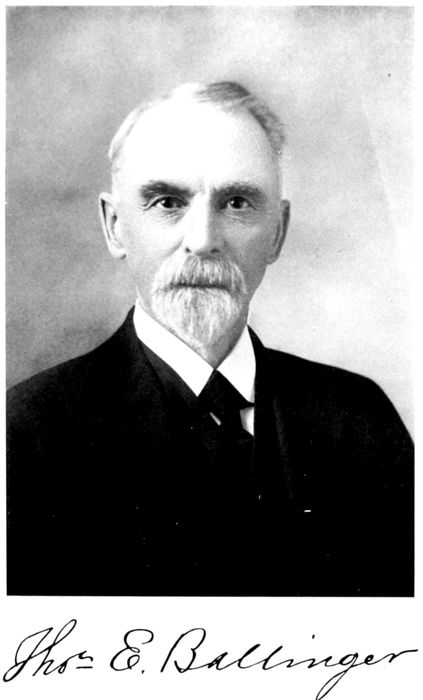
Thos. E. Ballinger
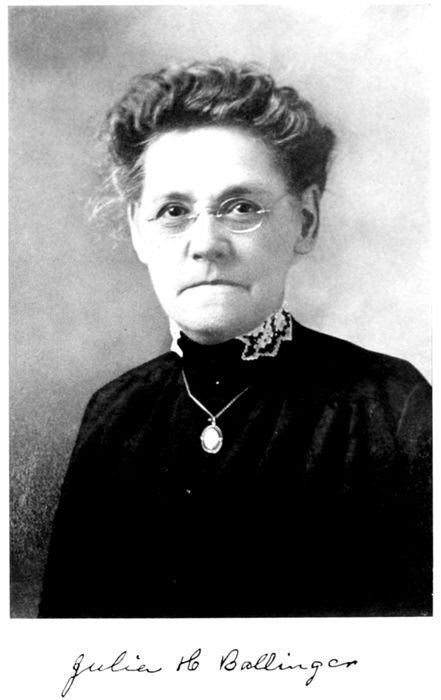
Julia H. Ballinger
601Mr. Ballinger is a native of New Jersey and comes of good, old English stock. He was born in Salem county, that State, November 21, 1845. His parents were John G. and Sarah Ann (Reeves) Ballinger, also natives of New Jersey. His paternal grandfather was John G. Ballinger, who married a Quaker woman and died when Thomas E. was but a boy. His mother was a daughter of Stephen Reeves, a scion of an old eastern family and a leading shipbuilder of New Jersey. The Reeves family settled in Alloway township, Salem county, New Jersey. John G. Ballinger, the father, was born in 1827, and died in 1906. He was a miller, and operated a mill during the active years of his long life. His wife, Sarah Ann, died in 1850, leaving three children: Stephen R., a miller, who resided in New Jersey, and died October 15, 1915; Samuel E., a retired farmer, living in the suburbs of Atchison, and Thomas E., with whose career this review is directly concerned. John G. Ballinger married a second time, to Sarah Austin, who bore him the following children: John, Charles, Walter, Ellen, Sadie, Emma and Minnie.
The elder Ballinger had both the means and the incentive to give his children an education. Accordingly, Thomas E. had the advantages of thorough schooling and, after attending the district school of his home neighborhood, he studied in the Cumberland County Academy at Bridgetown. N. J., the Crittendon School in Philadelphia and the Eastman Business College at Poughkeepsie, New York, completing his course in the latter institution in 1865. He then became a clerk in a grocery store at Glouster, N. J., and was later employed in a drug store. All the while, however, he was hearkening to the call of the West, which had reached the ears of thousands of young men in the East. The call proved so strong that in 1869 he made the long journey to Kansas to become one of the pioneers of the new State. For the first two years he worked out as a farm hand in Shannon township, Atchison county, saving his funds in order that he might begin farming for himself. In 1871 he made his first purchase of eighty acres of unimproved land in Lancaster township, Atchison county, at a cost of $15 per acre. On this tract he built a two room house in which he lived for two years, and was there joined by his brother, Samuel E. He then married, and the first five years of a happy wedded life were spent on this farm. He traded this farm for eighty acres of land in Shannon township, which served as the family home until 1888. He then exchanged the Shannon township farm for 240 acres, near Huron, Atchison county, which he retained for two years, and then made his last trade for 160 acres in the east central part of Lancaster township. For seventeen years, until his retirement to Atchison in 1907, this fine farm was the family home. Mr. Ballinger greatly improved this farm, added to it another forty acres, and with its two sets of buildings and well kept fields, is one of the finest and most productive agricultural plants in the county.
He was married on Saturday, March 21, 1874, to Julia H. Holland, and to this union have been born the following children: Ralph, a talented physician 602of Chicago, married Flora Groom, of Indiana; Mrs. Marie Shuffleberger, Doniphan county, Kansas, mother of three children, Dorothy, Reeves and Wayne; Adel, at home; Grace, wife of J. W. Coleman, of Atchison, having two children, John Ballinger, born June 14, 1911, and James Henry, born November 3, 1915; Thomas Edward, Jr., on the home farm, married Nellie Colgan and is the father of one child, John Edward; Julia Gladys resides at home with her parents. Father, mother and daughters reside in a handsome brick residence, erected by Mr. Ballinger at 210 North Eleventh street. Mrs. Ballinger was born December 29, 1853, in England, and is a daughter of Joshua and Maria (Relph) Holland, who immigrated to America in 1856, and first settled on an Illinois farm. The family came to Kansas in 1860, settling in Nemaha county, going from there to Ft. Leavenworth, where Joshua Holland followed his trade of stone mason. During the Civil war Mr. Holland served in the commissary department at Ft. Leavenworth. In 1870 he came to Atchison county and cultivated a farm of 120 acres near Lane until his death. Mr. Holland was born in April, 1822, and died in September, 1884. Mrs. Holland was born in November, 1824, and died in April, 1894. They were the parents of the following children: Emma, deceased; Misses Mary and Harriet Holland on a farm near Lancaster; Mrs. Julia Ballinger, and William, a retired farmer in Lancaster.
Thomas E. Ballinger has always been a Republican in politics and took an active part in political and civic affairs in his home township, serving as township clerk for a number of years. He was elected to the office of county commissioner in 1910, and served from January, 1911, to January, 1915. While a member of the board of county commissioners the best interests of the county were paramount with him, and he was an honest and capable public official. He and his family are members of the Presbyterian church.
ROGER PATRICK SULLIVAN.
The accounts of many of the prosperous and substantial families who are the backbone and substance of the rural population in Atchison county are very similar, beginning far away, across the ocean, in one of the older countries from whence the parents came to seek fortune in America. The Sullivan family had its origin in Ireland and it was from the Emerald Isle that the father of the family came when twelve years of age, struggled from poverty to comparative wealth and left his sons well provided for, as a reward for 603their filial devotion to the parents when old age came upon them. Roger Sullivan, a progressive farmer of Benton township, is one of the best known men in his section of the county. The Sullivan home is an attractive one, and the home farm of Mr. Sullivan is one of the most fertile and best kept in Atchison county.
Roger Patrick Sullivan was born December 4, 1862, in Atchison, a son of Michael and Bridget (Tobin) Sullivan, natives of Ireland. Michael Sullivan was born in 1826 and lived in his native land until he was twelve years of age when he made his way to America. His travels while seeking fortune in the new country took him ever westward and he was married in Keokuk, Iowa, to Bridget Tobin, who was his faithful helpmate during the years when he was rising from poverty to affluence. In 1860 they came to Atchison, Kan., where Mr. Sullivan engaged in railroad contract work and assisted in the grading of the Central Branch railroad. He made money in his railroad contract work and was enabled to purchase a farm in Grasshopper township, or rather traded for it. While living in Atchison, with true Irish thrift, he and his wife managed to become owners of a home which they exchanged for eighty acres of land in Grasshopper township, upon which they moved and developed it into a fine farm. Mr. Sullivan in the course of time bought an additional quarter section and with the help of his sturdy sons he increased his acreage to 320 acres of well improved farm land. When old age crept upon Michael and his wife they turned over the farms to their two sons, who cared for them in their declining years, which were spent in peace and comfort. Mr. Sullivan died at the home of his son. John Edward, December 24, 1906, and his wife followed him to the great beyond two years later, February, 1908. Three children were born to this worthy couple, namely: John Edward, a farmer residing in Grasshopper township; Roger Patrick, the subject of this review, and Mary, deceased.
Roger P. learned when a youth the art of cultivating the soil, and diligently applied himself to the task of helping to build up the family estate, and received as his share of the farm lands owned by his father a fine quarter section of land upon which he resided until his removal to his present location in the spring of 1908. Prosperity has smiled upon his efforts, and he is now the owner of 360 acres of land, 160 acres of which are comprised in his home farm, eighty acres is located five miles west of his home in Kapioma township, and he still retains 120 acres of the original Sullivan farm, which is entirely devoted to pasture. If one should ask Mr. Sullivan how he had managed to attain the considerable acreage which he now possesses, his answer would probably be, “By hard work,” which would be true, but the reviewer 604is also of the opinion that the “hard work” was also supplemented by intelligent effort, self-denial at times, sobriety, and good financial judgment.
Mr. Sullivan was married January 11, 1892, to Miss Mary Linehan, who was born in Atchison county, Kansas, in 1865, a daughter of James and Kathryn Linehan, natives of Ireland, and who were pioneer settlers in Atchison county. To this union four children have been born, namely: Catharine, aged seventeen years, and a student in the Atchison County High School, class of ’17; Daniel, fifteen years old, a freshman in the county high school; Mary, aged twelve years, and Helen, aged nine, pupils in the parochial school at Effingham.
The Democratic party has always claimed the allegiance of Mr. Sullivan and his father before him was a Democrat. He and his family are members of the Catholic church which was the faith of their fathers. He finds time to give attention to the social side of life, and is fraternally affiliated with the Knights of Columbus and the Benevolent and Protective Order of Elks, of Atchison. Mr. Sullivan is a thorough Kansan, and is proud to be numbered among the real pioneers of Atchison county, and in his opinion there is no better spot than the county which has always been his home.
JOHN FLEMING.
John Fleming, a successful merchant of Atchison, was born October 29, 1864, in Holland. When four years old his parents left the land of their birth and came to America in 1868. He was one of twins, the other twin brother dying during the ocean voyage to America. His parents were Lambert and Rosena (Johnson) Fleming, who set out from their native land imbued with the desire to better their condition in America and finally located in Atchison. The elder Fleming had been a skilled wooden-shoe maker in his native land, and he plied his trade in Atchison, being able to market the product of his skilled workmanship through the kindly assistance of John Ratterman, who exchanged groceries and the necessities of life for the shoes which Mr. Fleming made. The family finally located on a farm south of Atchison, and resided there until the death of the father in 1882, at which time John, his mother and two sisters, Bertha, now widow of Henry Nass, deceased: Ida Van Benthen, residing at Seventeenth and Atchison streets, removed to Atchison.
John Fleming was four years old when his parents took up their residence 605in Atchison county, and he was reared on the farm, south of the city, attending the district schools, and was able to secure a limited education in this manner. Upon coming to the city to reside he worked in various grocery stores for several years. With true thrift, for which those of Holland birth are noted the world over, he carefully saved his money over and above actual living expenses, and in 1898, equipped with a capital of $500, he started in business with this amount and some borrowed money. For over seventeen years he has been conducting a grocery business at 321 North Seventh street and his business has been constantly on the increase. The demands of his growing trade and the expansion of his business became such that in 1907 it became necessary for him to erect the modern brick buildings which now houses his excellent stock of goods at 321 North Seventh street. It is one of the most attractive and best kept establishments of the kind in the city, and is noted for the tasteful manner in which the goods of the very best quality are displayed and the unvarying courtesy with which the patrons are treated. Prosperity has come to Mr. Fleming, and in 1908 he invested his surplus in the erection of a four-suite apartment house, each apartment of which contains six rooms. He is also the owner of other real estate in north Atchison, and is rated as one of the city’s enterprising and progressive business men.
Mr. Fleming was married in 1889 to Emma C. Hilligoss, a daughter of Alfred and Anna Eliza (McLain) Hilligoss, who located in Atchison when she was twelve years of age. Seven children have been born to Mr. and Mrs. Fleming, four living: William J., associated with his father in the grocery business; Henry A., also his father’s assistant; Agnes R., John Edwin; Bertha died at the age of four years; Ruth died in infancy, and Theodore died at the age of four months.
Mr. Fleming is a member of St. Benedict’s Catholic Church, and is fraternally connected with the Modern Woodmen of America.
MARK H. HULINGS.
For an Atchison county man to start out in life with a capital of fifteen dollars, which was given to him by a loving mother, with the injunction that he purchase an article for personal adornment, and then to invest said fifteen dollars in a span of mules, which became the nucleus to a fortune, and for this citizen to rise to the position of being one of the large landed proprietors 606of Kansas, sounds like a tale from modern fiction. But the tale is true, and the incident which marked the starting point of the career of Mark H. Hulings, of Center township, is the keystone of the man’s character, and shows wherein lies the material from which he was created. Mr. Hulings decided that a pair of mules would do him more material good than adorning his person, and therein used rare and capable judgment. Mr. Hulings is a Kansas man, who during a career in agricultural pursuits embracing but little more than thirty years, has achieved a success which is truly remarkable. Not content with just common every-day farming, as has been practiced with indifferent success by others, Mr. Hulings became a specialist and has taken his rightful place among the many skilled cattle breeders of this county, who in time to come will receive the credit and honors which are theirs by right. By industry, persistence, intelligence, and keen financial judgment he has risen to become one of the leading farmers of Atchison county and Kansas. Born in the old Buckeye State, of Virginia parents, he is a loyal and steadfast Kansan, and takes pride in the fact that he is one of the real pioneers of this section of a great State.
Mark H. Hulings, farmer and stockman, of Center township, was born February 14, 1862, at Walnut Hill, a suburb of Cincinnati, Ohio. He is a son of Samuel and Louise (Brown) Hulings. They had four children, as follows: Mrs. Lillie High, widow, Atchison, Kan.; Cincinnatus, deceased; Mark, the subject of this sketch, and Ruth J., twins, the latter deceased. The father was born in what is now West Virginia in 1832. He was a baker by trade, and his early days were spent on a steamboat, where he was employed as a cook and baker. When a young man he came to Cincinnati, where he worked for some time, and then he began farming. In 1867 he came to Atchison county, Kansas, where he bought 160 acres of land, and built a seven-room house of brick, which was considered a fine residence in that day. He was a successful farmer and his crops were always good, with the exception of one year when they were destroyed by the grasshoppers. The father conducted his farm until his death in 1898. The mother was born in New York and died about 1905, aged about seventy years. An accident in an Atchison hardware store elevator which injured her leg led to her death.
Mark Hulings attended the school in District No. 28, Center township, and later the Pardee Seminary. When he started out in life for himself he had only fifteen dollars which his mother gave him to buy a ring for himself. But caring little for personal jewelry, bought a span of mules instead, for which he paid the fifteen dollars as the first payment. This was his first investment, but it was a profitable one, and he has continued to invest until 607he is now an extensive land owner. He and his brother, Cincinnatus, bought land of their own after their parents died, and farmed together about eight years when each bought a farm of his own. Mark bought land in Center township and now owns 810 acres, a large part of which is well improved. He was a breeder of registered Hereford cattle for a time, but now devotes his attention to Shorthorns. He has worked his way to the first rank of Atchison county farmers, and now holds land that makes him one of the largest land owners of the county. On April 27, 1890, he married Emma Sharpless, who was born September 22, 1871, in Delaware. (See sketch of U. B. Sharpless for a sketch of the Sharpless family history.) To Mr. and Mrs. Hulings have been born two children: Mark S. and Susie E., living at home. Mr. Hulings is a Republican. He and his wife and children are members of the Christian church at Farmington.
FRANK SUTTER.
Frank Sutter, owner of “Highlington,” a splendid farm of 245 acres, in Benton township, Atchison county, located one-half mile west of Effingham, is a native of Atchison county, and is one of its most successful and progressive farmers. A beautiful, modern farm home of eight rooms occupies a rise of land fronting the main highway, running east and west from Effingham, and is fully equipped with a water system and private gas plant installed by Mr. Sutter. A large red barn stands in the rear of the home. This farm is operated as a dairying plant, and Mr. Sutter maintains a herd of fifteen milch cows of the Jersey and Shorthorn breeds.
Frank Sutter was born January 8, 1871, on a pioneer farm in Walnut township, Atchison county, and is a son of Frederick Sutter, deceased, of whom a complete biography is written in this volume. Frank Sutter came with the family to Benton township in 1880 and lived on the home place, two miles west of Effingham, and after his father’s death he and his brothers, Fred and William, became the owners of the section of land which has since been divided, Frank taking a quarter section as his share when the division of land was made. The sons of Frederick Sutter farmed the family estate in common until 1902, and, after various changes following the division of the estate Frank became the proprietor of 245 acres in one tract, which he is now cultivating.
Mr. Sutter was married in 1909 to Mrs. Kate (Cook) Pitman, a widow, 608who is the mother of eight children by her first marriage, as follows: George, now in Montana; Ralph, living in Iowa; Mrs. Elsie Mann, of Nebraska; Mrs. Vera Blair, a resident of Effingham; Margaret, at home; Mrs. Geneva Perdue, of Huron, Kan.; Helen and Thomas reside at home. Mrs. Sutter was a daughter of E. F. Cook.
While Mr. Sutter is a Republican in politics, he votes independently in county and local matters, and supports the candidate who seems best fitted for the office, in his judgment. He is a member of the Ancient Free and Accepted Masons, and the Ancient Order of United Workmen. Mr. Sutter is of a high type of the successful farmer who has made good in his inherited vocation. The success of each individual member of the Sutter family is due, to a great extent, to their coöperation and ability to work together for the common good of the whole family, collectively and individually, while the family fortunes were in process of building.
BISHOP K. HAM.
Bishop K. Ham, one of the younger successful farmers and stockmen of Grasshopper township, Atchison county, is the last surviving representative of one of the oldest pioneer families of the western part of the county. He resides on the old homestead of the Ham family, consisting of 170 acres of land, upon which his father homesteaded in 1861. B. K. Ham was born on this farm July 23, 1882, a son of Martin W., and Margarette (Black) Ham, natives of Fleming county, Kentucky.
Martin W. Ham was born near the town of Flemingsburg, Ky., April 13, 1834, and was a son of George and Ruth Ham, also reared in Kentucky. The grandfather of Martin W. was John or “Jackie,” a native of Greenbrier county, Virginia, and was of Scotch-Irish lineage. The Ham family is a very old one in this country, and the great-grandfather of B. K. Ham was John, better known as “Jackie” Ham, who was one among the earliest pioneer settlers of Kentucky. Martin W. was reared to young manhood in Fleming county, Kentucky, and there married Jane Humphreys. In 1861 the Ham family left Kentucky in search of a home in the West, making the long trip overland to Missouri by wagon. After a short stay in Missouri they came to Atchison county, Kansas, and settled on the farm now owned by Mrs. Margarette Ham. All of Martin W. Ham’s worldly possessions when he landed in Kansas was his team and wagon and a few household necessities. The land was wild and there were few settlers on the prairies in Grasshopper township, where he made his settlement and eventually developed a fine farm. He became an extensive cattle and hog raiser and made considerable money in this manner.
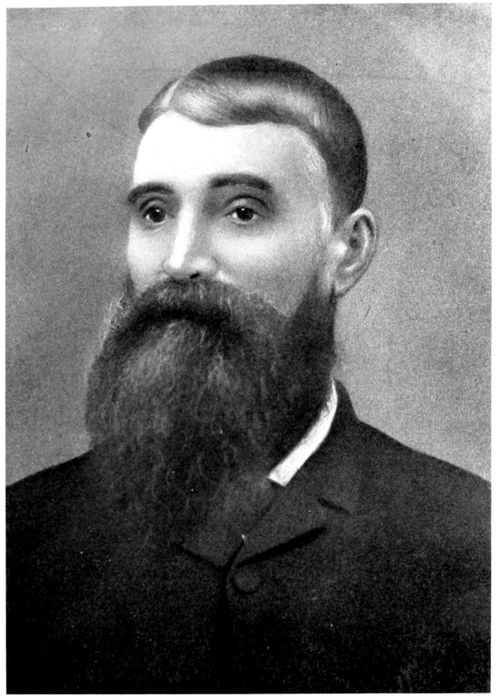
Hon. Martin W. Ham
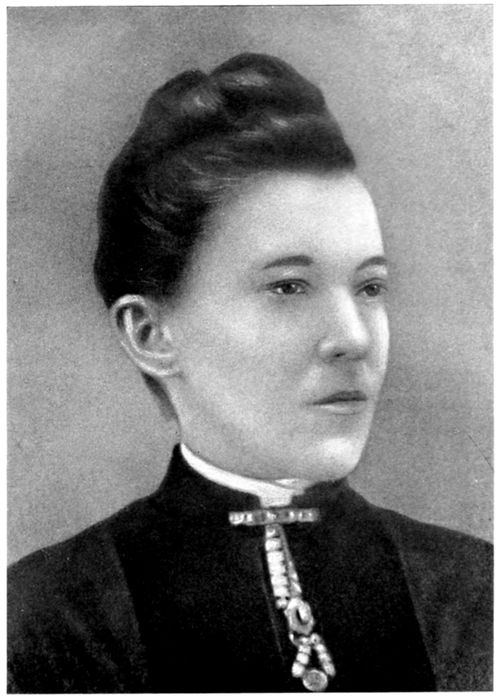
Mrs. Martin W. Ham
609Martin W. Ham was twice married, his first wife, Jane Humphreys Ham, dying May 18, 1879. He married his second wife, Margarette Black, June 28, 1880. One son was born of this second marriage, Bishop K. Mrs. Margarette (Black) Ham was born March 29, 1854, a daughter of M. M. and Rebecca (Simms) Black, the former a native of Virginia, and of Irish lineage. He was one of the early pioneer settlers of Kansas. Martin W. Ham died in 1908. From the start of his career in Kansas M. W. Ham took an active and influential part in civic and political affairs of his county and State. During the border ruffian days he was active in affairs and was a Free State man. He was captain of Company G, Kansas Home Guards, during the Civil war. He held various township offices and was elected a member of the Kansas State legislature in 1869, serving one term. He was a member of the Methodist Episcopal church, and was affiliated with the Masonic and Odd Fellows lodges.
Bishop K. Ham, with whom this review is directly concerned, received his education in the district school of his neighborhood and also studied in the college at Hiawatha, Kan., for one year. He then took up farming, and after his marriage lived on a neighboring farm until his father’s demise. He then came to the home farm which he has since been cultivating with considerable success. Mr. Ham has made a record as a breeder of horses and mules second to none in Atchison county. He is the owner of a magnificent, imported black stallion, “Illico,” six years old, which he purchased from the well known importer, Charles Kirk, of St. Joseph, Mo. He is the owner of a high class jack and is a successful breeder of mules. The pride of his farm is his fine herd of thirty thoroughbred Jerseys, headed by the pedigreed bull “Loren’s Lad,” both the sire and dam of which were imported. By means of holding annual sales Mr. Ham will dispose of the surplus stock of his herds of cattle and horses. The Ham farm is well improved in every way with good commodious buildings, silo, etc., a fine modern home, all grouped together on a beautiful location.
Mr. Ham was married October 19, 1905, to Miss Carrie B. McCubbins, and to this union has been born: Marguerite Ham, born April 17, 1907. Mrs. Carrie B. Ham is a daughter of Robert D. and Elizabeth (Tenry) McCubbins, who were early settlers in Atchison county. The McCubbins 610family first settled near the city of Atchison, and later came to Grasshopper township.
Mr. Ham is a Republican in politics, and is a member of the Ancient Free and Accepted Masons of Muscotah, the Modern Woodmen of America and the Fraternal Aid societies. He is one of the best known and rising young agriculturists of the county and will undoubtedly make a name for himself among the breeders of the State of Kansas and middle West.
CHARLES H. LINLEY.
Charles H. Linley, a prominent physician and surgeon, of Atchison, may very appropriately be called the dean of the Atchison county medical profession. Dr. Linley is a Kentuckian. He was born in Livingston county, Kentucky, June 19, 1847, and is a son of Dr. Thomas and Maria (Barker) Linley, natives of Lewis county, Kentucky. Maria Barker, the mother, was a daughter of Admiral Barker of the United States navy. Dr. Thomas Linley, the father, was born in 1806. He was a son of Thomas Linley, a native of England, who settled in Virginia at an early date and later removed to Kentucky, and was a pioneer of this State. Thomas Linley, the father of Dr. Charles H. Linley, was a large plantation owner and owned many slaves in Kentucky prior to the Civil war, but was a strong Union man and believed that slavery was wrong, and when the Civil war came on he was pronounced in his anti-slavery views, and notwithstanding the position of many of his neighbors and friends and life-long associates, he stood firmly by the Union. He was a graduate of the old Transylvania Medical College, at Lexington, Ky. He began the practice of his profession at the early age of nineteen years, and for forty-five years practiced most of the time in the vicinity of Salem, Ky. He came to Atchison, Kan., in 1866, but remained a short time, when he returned to Kentucky, where he died March 31, 1880. Dr. Thomas and Maria (Barker) Linley were the parents of thirteen children, three of whom died in infancy, and four are now living, as follows: Dr. Charles H., the subject of this sketch; Isaac resides on the old homestead in Salem, Ky.; Mrs. Laura Hill resides at Liberty, Mo., and Joseph W., now living retired in Atchison, Kan. After receiving a good academic and classical education, Dr. Charles H. Linley entered Miami Medical College, now known as the Ohio Medical College, at Cincinnati, and was graduated from that institution in 1877 with the degree of Doctor of Medicine. In 1880 he located in the city of Atchison 611where he has practiced his profession with uniform success for the past thirty-five years. He is one of the oldest physicians in the number of years in practice in Atchison.
Dr. Linley was married in 1879 to Miss Fannie W. Gregory, a native of Kentucky. She was born in 1854 and is a daughter of James Gregory and a member of a prominent Kentucky family. Her father died when Mrs. Linley was fourteen years of age. Dr. and Mrs. Linley are the parents of the following children: Maria, born in 1880, and died in 1909; Corinne, a teacher in the Atchison high school, and a graduate of Midland College and the State Normal school at Emporia; Ray G., traveling salesman for Blish, Mize & Silliman; Nora B., a graduate of Midland College, now a teacher in Colorado; Alice, a graduate of Midland College, now a teacher in the grades at Atchison, and Louis D., traveling salesman for Blish, Mize & Silliman.
Dr. Linley is a Democrat and has taken an active part in the welfare of his city and county. He has served as city health officer for several terms and was police commissioner for Atchison for one year. He served on the board of United States pension examiners for eight years during Cleveland’s administrations. He is a member of the Knights of the Maccabees, the Fraternal Aid, and the Foresters of America. The Linley family are members of the Christian church.
L. C. ARENSBERG.
L. C. Arensberg, one of the younger business men of Atchison, and member of the enterprising and successful firm of Babcock & Arensberg, shoe merchants, is a Hollander by birth, and a hustling American in every sense the word implies. It has long been a matter of note that the natives of Holland who became American citizens are more apt and take more kindly and quickly to the ways of this nation than the people of any other European country. This country seems to become their natural habitat, and they become citizens in both deed and word after a few years’ residence here. Mr. Arensberg was born in Holland, September 17, 1880, and is a son of William and Alegunde (Muskens) Arensberg, who immigrated to this country in 1885, actuated by a desire to locate in a land where their children would have more and better opportunities for success than their own little, crowded, native country afforded. They believed rightly and were successful in establishing a home in Atchison where they had relatives who had preceded them to the newer country. The Arensberg family established themselves in reasonably 612comfortable circumstances in Atchison in a short time. There were nine children in the family of William and Alegunde Arensberg.
L. C. Arensberg was educated in the parochial and high schools of Atchison. Then he obtained a position as all round man in Bradley & Ostertag’s shoe store. Here he was employed for ten years and thoroughly learned the ins and outs of the shoe business, becoming a very proficient salesman. In the meantime he carefully saved his money, with a view to eventually engaging in business for himself. His ambition was at last realized, and in 1906 he purchased an interest in the Babcock & Stallons shoe store, buying out the interest of Mr. Stallons. He is a full partner in the business and has won a place of merit and honor among the leading merchants of Atchison.
Politically, Mr. Arensberg is a Democrat, and is inclined to be liberal in his views and independent in his voting. He is a member of the Knights of Columbus and the Loyal Order of Moose, and is a member of St. Benedict’s Catholic Church. He is active in the affairs of the Atchison Commercial Club, and is recognized as one of the real “live wires” of the business and civic life of his home city.
W. B. COLLETT.
W. B. Collett, district agent for the Northwestern Mutual Life Insurance Company of Milwaukee, Wis., is one of the progressive business men of Atchison. He was born in Liverpool, England, in 1860, and is a son of John and Mary (Henston) Collett, the former a native of Wolverhampton, Staffordshire, England, and the latter of Tipperary, Ireland. John Collett was a prosperous importing provision merchant when the Civil war broke out in this country. The importing business fell off to such an extent in European ports that business was injured to such an extent that he failed, and came to the United States, and in 1862 sent for his family, consisting of his wife and three children. During his youth he served a seven-year apprenticeship in the provision trade. In 1879 he came to Atchison as head salesman for the Fowler Brothers Packing Company, and remained with that company until 1883. He then went with the Armour Packing Company, of Kansas City, in the same capacity, and was with that company for fourteen years, when he was made manager of their branch at St. Paul, Minn., and later he was the European representative for Jacob Dold Packing Company, of Buffalo, N. Y. In 1908 he retired from active business and took up his residence on a farm near Richards, Mo., where he died, in 1911, at the age of seventy-nine years. His wife survives him and resides on the farm where he died.
613John Collett was a man of unusual ability, and had few equals as a salesman. He was a capable executive and thoroughly understood handling large commercial enterprises. He was a master salesman and always commanded a large salary. He was a money maker, although he died possessed of but a small amount of this world’s goods; he was a money maker rather than a hoarder of dimes.
W. B. Collett, whose name introduces this sketch, was educated in the public schools, and when a young man went to work in the Elgin watch works, at Elgin, Ill., and in 1879, when the family came to Kansas, he went to work for the Fowler Brothers Packing Company, where he remained about a year. He then entered the employ of Bowman & Kellogg, millers, as bookkeeper, and later became a buyer and salesman for that company. In 1888 he engaged in the general insurance business, and three years later entered the employ of the Northwestern Mutual Life Insurance Company, and has been with that company ever since with headquarters at Atchison. Mr. Collett was married in December, 1886, to Miss Annie Heermance, who came to Atchison with her mother in 1883 from Hudson, N. Y. She was one of the old Holland families of New York and taught in the Atchison High School prior to her marriage.
Mr. and Mrs. Collett have two children as follows; Mary E., educated at Wellesley College, took her master degree at the University of Pennsylvania, then one year of post-graduate work at Brown University, at Providence, R. I., when she became instructor of biology at the Carnegie Institute, Pittsburgh, Pa., and W. B., Jr., who was educated in the Atchison public schools. Culver Military Academy, Culver, Ind., and the State Agriculture College at Manhattan, Kan.
Mr. Collett is an Episcopalian, a York Rite Mason and a member of the Young Men’s Christian Association, and has been active in the work of these organizations for years.
JAMES DOOLEY.
The late James Dooley, of Shannon township, left behind him a life’s record that is well worth recounting, and deserved an honored place in the memoirs of the county, in which he was for over forty years a prominent and well known figure. As a pioneer he did his part well in building up Atchison county. The story of his life is romantic in many ways, 614and he was always imbued with the idea of providing well for his beloved family, and leaving his affairs in such a stable condition that his descendants could earn on the great work which the father and founder of the family had so well begun and brought to such a substantial culmination.
James Dooley, deceased, was born January 6, 1835, in Ireland, a son of Irish parents, James and Catharine Dooley, who left their native land in 1847, and located in Canada, where the father, James Dooley, the elder, became ill and died in the city of Hamilton. Although the young Irish lad was but twelve years of age and immature, it was necessary for him to go to work and gain a livelihood the best way he could. He managed to get a job which paid him one dollar and a half per month with his board. He was knocked about from pillar to post while a youth, and managed to make his way. His adventures in making a struggle for an honest livelihood were similar to those of other poor orphan boys left in a strange land without friends or relatives, other than those who were as poor as himself. One bright rift in the lonely life of this orphan boy is to be noticed when he became a boarder in the Hurley home at Harrisburg, Canada. It was here that he met with a genuine kindness and formed an attachment for the noble-hearted girl who later became his inspiration, and was his faithful wife during the years in Kansas when he was working his way upward to wealth and affluence, aided and abetted by her wise counsel and assistance. Imbued with a desire to secure capital so that he could come to this new country and realize an inherent ambition to own a farm, he set out for the gold fields of Colorado during the Civil war years, and there amassed a small fortune of $500 in gold, saved during the months of his hard and unremitting labor in the gold mines of the western State. With this capital he felt able to make the venture which he and his sweetheart had planned, and, accordingly, after his marriage at Paris, Canada, with Catharine Hurley, he and his wife set out for Atchison in March of 1866. During the first few months of their residence in Atchison county they lived with a sister of Mr. Dooley, Mrs. Slattery, in Shannon township, and James worked in the city at any honest labor he could get. Their first investment was for eighty acres of school land in Shannon township, for which they paid cash, and it then became necessary for Mr. Dooley to borrow forty dollars in order to get the deed for the land. During the whole course of Mr. Dooley’s career in Atchison county, while the modest eighty acres were growing to the large total of 600 acres of some of the best agricultural land in the county, they never undertook a debt, but each time an additional tract of farm land was purchased, the savings were drawn upon and cash paid for the land. Each of three sons now has a fine farm of 615200 acres. The home place upon which Mrs. Dooley now resides, which consists of 200 acres, cost an even $10,000. This farm is one of the oldest in the county and was originally preëmpted by a Mr. Collins, who set out a large grove of forty acres or more in walnut and cottonwood trees which have become very valuable, having grown to considerable size.
Catharine (Hurley) Dooley, widow of James Dooley, was born April 28, 1847, in Ireland, a daughter of James and Bridget Hurley, who left their native land in 1847 while Katharine was but an infant, and located in Hamilton, Canada, later residing in Harrisburg, Canada. A brother of Mrs. Dooley, James Hurley, served three years and three months in the Union army. He was a member of a Pennsylvania reserve regiment of sharpshooters and was wounded during the battle of Richmond, Va. For six months, while the wound in his wrist was healing, he served as sergeant in the quartermaster’s department. Some years after the war he became an inmate of the National Soldiers’ Home at Dayton, Ohio, and lost his life while aboard an excursion boat which sank in Lake Michigan, near Chicago. Mr. and Mrs. Dooley were the parents of fourteen children: Mrs. James Baker, Huron, Kan., and mother of eight children, Celia Baker, a trained nurse in Chicago, Mary, wife of George Perdue, Joseph, William, Bertha, Ruth, Rita and James; Catharine, James and Mary, deceased; Sister Lucy, of Mt. St. Scholastica Academy; Lucy, wife of David Lawless, and mother of two sons, Harold and Clevett; Mrs. Celia Finnegan, wife of Thomas Finnegan, of Houston, Texas, who had two children, Thomas Lillis and Mary; Bertha, Sister Dorothy, of the Order of St. Benedict’s in Mt. St. Scholastica Academy; Nora, wife of Roger Finnegan; William, managing the home farm; John, deceased; James married Bertha Kistler, and has three children: Florence, Bernice, and Francis; Edward married Henrietta Kramer, and has two children, John and Gerard; Joseph, deceased; Irene, at home with her mother.
It is well to add here that James Dooley was one of the notable army of hardy freighters who crossed the plains with the long mule trains in the late sixties. This was in April of 1866, when he convoyed a train load of goods to Denver, Colo., in company with William Slattery. During his whole life, after attaining his majority, Mr. Dooley was a stanch Democrat and was ever loyal to Democratic principles. While a member of the Catholic church, he was a liberal supporter of all denominations, and took a broad and tolerant view of all religious matters as becoming a widely traveled and experienced man. His life-long wish to perpetuate his name and keep the family estate in the family was expressed while lying on his death bed. Calling his faithful helpmeet to his bedside, he said: “Mother, I am leaving you without having 616my dearest wish come true.” On being asked what it was, he said: “I have always longed for the time to come when I could see my sons settled on this farm of ours, with a Dooley here with his family, a Dooley there, and another son on that part of the farm.” He was at once assured by his wife that his wishes would be respected, and after his demise Mrs. Dooley at once took steps to carry out the plans of her husband with the result that within sight of her home the other two sons are comfortably located on 200 acres of land each and have attractive homes of their own.
ABRAHAM HOOPER.
Abraham Hooper, deceased, was one of the pioneer settlers of Atchison county. He was one of the well known and sturdy figures in the early days of the settlement of Kansas when strong and brave men were required, who were able to face the vicissitudes and hardships incident to the settlement of a new country and perform their tasks without succumbing, as weaker mortals were wont to do. Mr. Hooper was born in Platte county, Missouri, November 23, 1839, on a farm, near Parkville. His father was Abraham Hooper, a native of Tennessee and early settler of Missouri, who died in Mexico. Abraham Hooper, the subject of this review, was reared in Platte county and came to Atchison county in 1858, settling on a farm near Pardee. While engaged in farming he followed his trade of plasterer in the neighborhood of Pardee. For a distance of ten miles around his own residence he plastered all of the houses then building by the incoming settlers. During the Civil war he was enrolled in the State militia. In his younger days Mr. Hooper was a freighter and crossed the plains in charge of great trains on three different occasions. On one of his trips to Colorado he was placed in charge of a train load of twenty-five wagons, and one of his other trips was to Ft. Union, N. M. His affiliations were with the Christian church, the Ancient Order of United Workmen and the Knights of Pythias lodges.
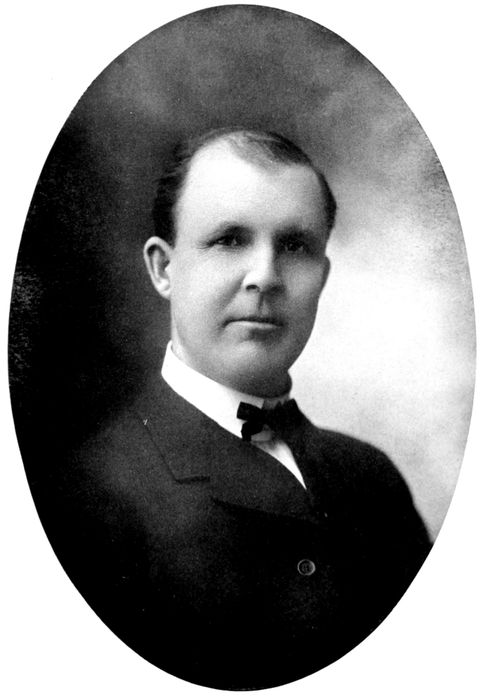
Daniel E. Hooper
617Mr. Hooper was married in 1863 to Louisa Campbell, born in Tennessee in 1842, a daughter of Daniel and Nancy Campbell. The Campbell family left Tennessee in 1854, and in 1855 removed to a farm which they preëmpted near Farmington in Atchison county. This was in a day when things were in a primitive state in Kansas. The Campbells lived in a cabin which was one of the first dwellings built in that section of the county. The mother of Mrs. Hooper lived and died on their farm, and her father died on the western plains while on a trip to the Black Hills. Mr. and Mrs. Hooper removed from the farm to Atchison in 1887, and here Mr. Hooper died February 18, 1914, at the advanced age of seventy-four years, having been born November 3, 1839. Three children were born to this well respected couple: Addie B. died at the age of six years; Daniel, deceased, and Nellie died at the age of one year. Mrs. Hooper lives all alone in her home, but remembers fondly the days of old and has many sweet memories of her husband and children to solace and comfort her during her declining years. Despite her age she is physically and mentally vigorous and is distinguished in being one of the oldest pioneer women now living in the county.
Her well beloved son, Daniel Hooper, was born in 1868, and died January 22, 1912. He was one of the most talented and best liked men in Atchison, and was far on the road to fame and prosperity when he was cut off in the prime of his vigorous and virile manhood. He received the rudiments of an elementary education in the district school near his country home and early developed ambitions which were partly realized during his life. After leaving school he studied shorthand and typewriting, and while holding a position in the law office of C. D. Walker he studied law and was admitted to the bar. A winning personality and his pronounced ability won him clients from the start of his legal career. His personal popularity and ambitious tendencies led him to enter politics, and he was elected to the office of probate judge of the county, serving the people well and faithfully for a period of six years, and then served two terms as city attorney. Just in the prime of his manhood and at the zenith of a career his health failed, and he died at Excelsior Springs, Mo., where he had gone in the hope of regaining his health. Judge Hooper was sincerely mourned by a large circle of friends and acquaintances and it is probable that there was not a man in his class better liked or more highly respected in Atchison county at the time of his demise. He was a Republican in politics and was fraternally connected with the Modern Woodmen, the Knights of Pythias, in whose councils he was very prominent, and an attendant at the Christian church. The most notable trait in Judge Hooper’s character was his sincere devotion to his parents. Because of the love he bore his mother he never married and cared for no woman but her. His constant thought was to make provision for her in the event of his own demise, and he carefully looked after her immediate and future wants. Such men as he are deserving of a greater tribute than that embodied in this brief review. A memorial window with his and the name of his father thereon was placed in the Christian church in his memory. Printed on this window are 618Judge Hooper’s words of faith often expressed: “I believe in a great and a good God.”
Mrs. Hooper is rearing and educating a girl, Ruth Jones, who serves as company for her in the home.
ALBERT J. SMITH.
Albert J. Smith, the efficient cashier of the State Bank of Lancaster, Kan., is a native son of Kansas, and has grown up with Atchison county. He is a son of one of the prominent early pioneer settlers of the county, and while yet, comparatively, a young man, he has made good at his chosen avocation and is considered one of the really successful banking men of this section of the State, his talents and ability seeming to be especially adapted to the profession of banking.
Mr. Smith was born on a farm in Brown county, Kansas, January 13, 1879, a son of Thomas B. and Mary E. (Woodruff) Smith. The father of Albert J. Smith was born August 16, 1843, in Grant county, Indiana, a son of William J. and Lucinda (Barkley) Smith, who were born and reared in Pennsylvania. The father of Lucinda Barkley Smith was a soldier in the War of 1812. William J. Smith removed with his family to Grant county, Indiana, and in 1851 migrated further westward to Bureau county, Illinois, where he made a permanent settlement, and died in that county in 1869. Lucinda (Barkley) Smith died in Illinois in 1862, at the age of sixty-two years. They were the parents of the following children: Mrs. Margaret Pugh; Alvah, a veteran of the Civil war; Mrs. Lucinda Spangler; Isaac, Joseph, and William R. Thomas B. Smith, the father of Albert J., was eight years old when the family removed to Bureau county, Illinois, where he spent his boyhood days and received a common school education, finishing in the Dover (Illinois) Academy. On the second call for volunteers issued by President Lincoln, he enlisted in Company B, Ninety-third regiment, Illinois infantry. He took part in a number of decisive and important battles and campaigns. Among them are, Jackson, Miss., and Dalton, Ga. On May 16, 1863, while serving in General McPherson’s corps, he fought at the battle of Champion Hill and was severely wounded in the left shoulder. He was forced to remain in the hospital for some time and after his recovery he was placed on guard duty for the purpose of guarding the railroad bridges. At the close of the war he was honorably discharged and returned to his home in Bureau county, 619Illinois. After his marriage in 1866, he continued to farm in Illinois until 1874, when he removed to Kansas, locating first in Brown county, where he and his family lived for six years, and then came to Atchison county, where Mr. Smith purchased a farm of 160 acres in Grasshopper township, northeast of the town of Muscotah. He resided on this farm for twenty years and then moved to Effingham in 1900. He died in Effingham, November 29, 1914. Mrs. Mary E. (Woodruff) Smith, his wife, was a native of New Jersey, and a daughter of Nathan and Delia Woodruff.
Thomas B. Smith was married January 24, 1866, to Mary E. Woodruff, at Princeton, Ill. They were the parents of nine children, six of whom are living: Mrs. M. E. Beven, of Muscotah. Kan.; Mrs. H. T. Reece, of Muscotah; Mrs. J. C. Harman, of Auburn, Neb.; Albert J., the subject of this review; C. E., cashier of the Huron Bank, and T. B., of the Exchange National Bank of Atchison. Three daughters are deceased: Lettie, Gracie and Goldie. Mr. Smith was an enterprising and progressive citizen who did his duty in whatever community he was located, during his long and useful life. While a resident of Grasshopper township he served as township trustee for four years. He was a member of the city council of Effingham one term, and filled the office of mayor for one term, and also proved his efficiency as a member of the Atchison County High School board for two terms. He was an honored member of the Independent Order of Odd Fellows, Ancient Order of United Workmen and the Grand Army of the Republic, at Effingham. He was a stockholder and director of the banks at Lancaster and Huron, Kan. Mr. Smith was a member of the Presbyterian church for over fifty years. Mrs. Smith, the widowed mother, was born in New Jersey, in November, 1845, and now resides in Atchison.
Albert J. Smith was reared on the farm of his father and attended the district school in District No. 23, Grasshopper township, and later entered the Atchison County High School, Effingham, and was graduated in 1897. After his graduation he taught school in his home district for two terms, and in 1900 he received an appointment as clerk in the census bureau at Washington, D. C., and served for two years in that capacity. He then returned to Effingham and entered the State Bank of Effingham, as assistant cashier and bookkeeper. He made a fine record for himself in this bank and in July, 1905, was one of the organizers of the Farmers and Merchants State Bank of Effingham, and held the office of cashier from the time of its opening until 1909, when he resigned his position and removed to Lancaster, where he became cashier of the Lancaster State Bank. Mr. Smith, in addition to his 620banking interests, is the owner of eighty acres of good land in Kapioma township, Atchison county.
Albert J. Smith was married in 1899 to Elizabeth R. Smith, and to this union have been born the following children: Dorothy, deceased; Gladys, Elizabeth and Albert, all living at home. Mrs. Elizabeth (Smith) Smith, was born on a farm in Grasshopper township, February 26, 1879, and, like her husband, is a graduate of the Atchison County High School. She also taught school for two years. She is a daughter of James K. and Elizabeth (Asquith) Smith, the former a native of Pennsylvania, and the mother a native of England, and early settlers of Atchison county. Both are now deceased.
Mr. Smith has identified himself with the civic affairs of Lancaster and is recognized as one of the town’s leading and enterprising citizens. He is a Republican and has served four years, from 1911 to 1915, inclusive, as mayor of Lancaster. His administration was successful and the affairs of the city were conducted with efficiency. He is a regular attendant of the Presbyterian church, and is affiliated with the Anti-Horse Thief Association, the Independent Order of Odd Fellows, the Modern Woodmen of America, and the Knights and Ladies of Security.
JOHN E. DUNCAN.
There is a proverbial saying that opportunity knocks once at every man’s door, and a classic has been written by a great Kansas statesman, since departed from among us, which tells in musical language that Kansas spells opportunity for the young man. Opportunity presented itself to John E. Duncan, Missouri Pacific agent, at Shannon, Kan., and Mr. Duncan seized it, and held on for all he was worth, and made a success of his venture. His ambition first was to become a railroad man and telegraph operator, and probably in the early stages of his career the post of telegraph operator seemed to him to be the great height of attainment. He realized his first dream, and when he came to Shannon, Kan., to take charge of the Missouri Pacific business at that place, he conceived the idea of engaging in the buying and shipping of grain. This idea grew and he became a grain buyer and shipper, built an elevator, established a general store, opened an implement establishment, and became a prosperous and trusted business man of his adopted county. It is a fact that more grain is shipped from the little village of Shannon through the agency of Mr. Duncan than any other point in Atchison 621county, outside of the city of Atchison. Mr. Duncan enjoys the respect, esteem and confidence of the prosperous farmers of the section tributary to Shannon, and they trade with him because of this confidence in his squareness. A few years ago, when real hard times struck Kansas as a result of the droughts, Mr. Duncan showed his hearty good will and confidence in the eventual betterment of conditions by placing his trust in his farmer friends, and supplying such of those who were not blessed with ready cash, with credit for supplies at his store, and carried them until they were able to pay. This kindness has been appreciated, and the most cordial relations exist between Mr. Duncan and his patrons.
John E. Duncan was born March 21, 1863, in Moro, Madison county, Illinois. He is a son of John and Mary (Hooley) Duncan, who had eight children, three of whom are now dead. The father was born in December, 1818, in Ireland. He left his native land in 1846 and sailed for New York. He engaged in farming in New York State, and was married two years later. In 1851 he came to Illinois and remained there until 1891. The mother of John Duncan was born in Ireland, also, in 1827. In 1848 she left there with a brother, William, and came to America. She died in 1907. Both parents were members of the Catholic church. The subject of this sketch was reared on the farm of his father and attended the grammar schools of Madison county, Illinois. When he grew to be a young man the long days of labor on the farm palled on him and he longed to get into different work. He had always had an ambition to become a telegrapher and when he was twenty-one years old he had a chance to learn that work. He worked as telegrapher for the Chicago & Alton Railroad Company until 1887, when he went to Everest, Brown county, Kansas, to become night operator for the Missouri Pacific Railroad Company. In the fall of 1887 he was sent by the same company to Shannon, Atchison county, Kansas, to become the agent for the Missouri Pacific there. In 1892 he went into the grain business. He bought and sold grain for eight years, and at the end of a successful business period he erected the grain elevator at Shannon. This proved a profitable investment, and in 1907 he invested in a general merchandise store which he conducted until August, 1915, when his store building and stock were destroyed by fire, which was caused by lightning. Mr. Duncan has recently completed a handsome new store building of cement blocks, 36×56 feet in size, which is attractively finished throughout and is well stocked with goods. In the fall of 1915 Mr. Duncan installed a line of agricultural implements and is the real merchant prince of his section of the county. Besides his business 622interests he is the owner of 200 acres of land in Macoupin county, Illinois, a nice residence in Shannon, and several town lots.
Mr. Duncan was married in 1890 to Margaret V. Clark, and to this union the following children have been born: John, associated with his father in business; Kathrine, aged sixteen years; Margaret, eleven years old; Bernadette, aged nine; and Dorothy, four years of age, all of whom are living at home with their parents. Mrs. Duncan is a daughter of Mathias and Katherine (O’Grady) Clark, both of whom were born and reared in Ireland, and emigrated from their native land to America. She was graduated from the school of telegraphy at St. Louis, Mo., in 1889, and assisted her husband in his work at Shannon. Mr. Duncan is a Democrat and he and his family are members of the Catholic church. He is a member of the Knights of Columbus, of Atchison, Kan.
WILLIAM SCHAPP.
William Schapp, a Civil war veteran and an Atchison county pioneer, is a native of Germany. He was born in Wyler, Germany, January 26, 1840, and is a son of Peter and Margaret (Bonns) Schapp. The Schapp family immigrated to America in 1854, landing at New Orleans, La. They remained there but a short time, however, when they came up the Mississippi and Missouri rivers by boat and located at Weston, Platte county, Missouri, where a brother of Mrs. Schapp had located some time previously. Here the father entered the dairy business and prospered and the parents moved to Atchison, Kan., in 1868 and died in Atchison.
William Schapp received a common school education and grew to manhood in Platte county. He entered the employ of James Steele, an extensive land owner, as overseer of his estate, and was thus employed when the Civil war broke out and soon after the beginning of hostilities, Mr. Schapp was drafted into the Confederate service. Four days after he became a Confederate soldier, his company was encamped on the banks of the Missouri river near Iatam, Mo. Young Schapp began to lay plans to escape, as he was a Union man at heart, and he had made up his mind that if he was going to serve in the army that he would serve under the stars and stripes. On the night he escaped the lieutenant of the company was killed accidentally while showing the men how to use a gun, and during the excitement incident to the killing, Mr. Schapp made his escape. During the night he secured a boat 623with one oar and drifted down the river, landing at Ft. Leavenworth. Here he lost no time in enlisting in Captain Black’s company which afterwards became a part of Company B, Eighth Kansas regiment. The following night he piloted this company across the river to Iatum where they surprised and captured the Confederate company of which he had been a member the day before. This act won from him the intense hatred of the members of the Confederate company, and even after the close of the war members of that company attempted to take his life. After serving about a month in Captain Black’s company, he joined Company H, Eighteenth Missouri regiment and participated in a number of important engagements. After the battle of Shiloh he was promoted to sergeant major. He was with Sherman on his march to the sea, and during that campaign, while at Decatur, Ala., his term of enlistment expired and he received special permission to accompany General Sherman’s army through the campaign. On arriving at Savannah, Ga., he was placed in charge of fourteen soldiers whose term of enlistment had expired and was the first to arrive in New York City, where they were met by bands of music and were treated royally by the people. He then returned to his former home in Platte county, but the secession spirit was so strong and so much antipathy was shown him on account of his loyalty to the Union that he decided not to remain, and accordingly, came to Atchison. The second night after arriving home he was warned by a friendly member of the Confederate company he had deserted to leave at once, as plans had been made to hang him. He left at once on the next train. He had saved about $800 during the war and loaned it to his uncle, John Bonns, who was engaged in the brewery business, and through a failure, Mr. Schapp lost every dollar of his savings. He then entered the employ of Julius Holthaus, who conducted a saloon and a grocery store. About a year later he engaged in the manufacture of brick in partnership with Jacob Nash. About five years later he engaged in the ice business, which he conducted about six years. He then bought a farm north of where the orphans’ home is located, where he remained for twelve years, when he sold his farm and removed to Atchison, and engaged in the real estate business and has since been engaged in that business. Mr. Schapp has been very successful and has accumulated considerable property.
He was married in February, 1865, to Miss Margaret, a daughter of Gearhardt Kunders, a pioneer settler of Weston, Mo. Eight children have been born to Mr. and Mrs. Schapp, as follows: Peter P. resides in California; Dora F. resides at home; Mrs. Theodore Geritz, Atchison county; Mrs. Theodora Arensberg, Atchison; Mrs. Henry Wersling, Atchison county, and Albert A.; William H., deceased; Maggie, deceased.
624Mr. Schapp is one of the old timers of Atchison, and has seen that town develop from a little settlement on the bank of the Missouri river to the great prosperous commercial center that it is today. He has taken an active part in the political life of Atchison, and for seven years was a member of the city council, and served two years on the Atchison school board. Mr. Schapp cast his first vote for Abraham Lincoln for President, and has been a stanch adherent to the policies and principles of the Republican party since that day. He is a member of the Grand Army of the Republic.
THOMAS LINCOLN BLODGETT.
The passing of a good, industrious citizen from this mundane sphere to the realms of a higher and better life beyond the grave is always saddening, especially if his demise occurs while yet in the prime of his vigorous manhood. Such a one was Thomas Lincoln Blodgett, late of Mt. Pleasant township, who, though not permitted to dwell upon this earth the allotted time decreed for mankind, accomplished in the brief time he was actively engaged in agricultural pursuits more than the average man, and will long be remembered for his many excellent qualities by those who knew him best.
Thomas Lincoln Blodgett, late of Mt. Pleasant township, was born July 27, 1860, and lived and died in the township in which he was born in Atchison county, his demise occurring May 4, 1905. He was a son of George M. and Mary (Cline) Blodgett, his father having been born and reared in Michigan and came to Kansas when the State was created in the late fifties.
George M. Blodgett, the father of Thomas Lincoln Blodgett, was born in Livingston county, New York, October 6, 1834, a son of George W. and Lucinda (Garfield) Blodgett, and was a grandson of Thomas Blodgett. Thomas Blodgett, who was a soldier under Washington and fought for the independence of the American colonies, lived in Vermont, where he was a blacksmith and a farmer. He went to Michigan in 1856 and remained there to be near his son, George W., who had settled at Kalamazoo about 1846. Mr. Rowel, the father of Thomas Blodgett’s wife, was also a Revolutionary soldier. The children of Thomas Blodgett were named George W., Riley and Jared. Riley went to Rhode Island and became connected with shipping interests, navigating waters in the vicinity of Newport. Thomas died in Michigan in 1850, aged ninety years.
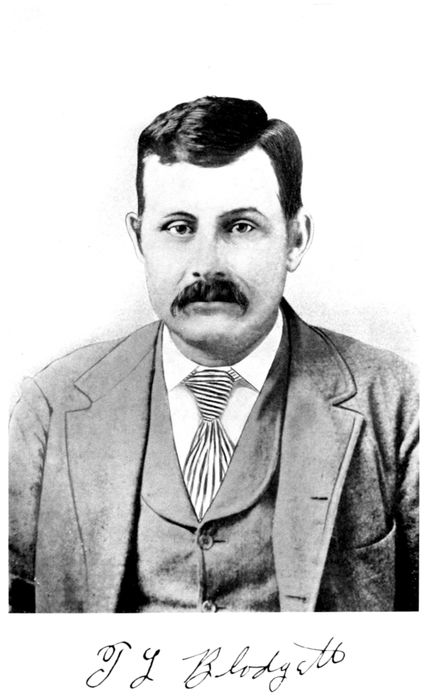
T L Blodgett
625George W. Blodgett, the father of George M., was born in Vermont in 1800, and died in 1880, aged eighty years. His wife, Lucinda, was a daughter of Solomon Garfield, of Ontario county, New York. She died in 1840, leaving the following named children: Orinda, who married Thomas Sanders; George M.; Emma, who was Mrs. Nathan Allen, of Michigan, and John, deceased.
The education of George M. Blodgett was limited and he became used to hard work at an early age. He worked as hired hand and at logging in the pine woods of Michigan. When twenty-one years of age he left home and went to Winnebago county, Illinois, and took charge of a quarter section of land for which he had traded. Not liking his prairie surroundings he traded his farm for a small tract now within the limits of the city of Moline, Ill. He remained here for four years; then he traded this farm for a farm in Iowa which he sold. With his small means he came to Kansas, arriving in Atchison April 5, 1855. He took up a claim and bought land from the Delaware Indian lands and began developing his farm.
When volunteers were called for at the outbreak of the Civil war, Mr. Blodgett offered himself for the defense of his country’s honor and was accepted as a member of Company F, Thirteenth regiment, Kansas infantry, (Colonel Bowen’s regiment), of the Seventh army corps, which was mustered into service at Leavenworth, Kan., and was in the military department of the West. Mr. Blodgett was a sergeant of his company and participated in many battles fought by his regiment in Missouri and eastern Arkansas and was once wounded by a bursting shell.
George M. Blodgett was married in 1857 to Mary E. Cline, a daughter of Henry Cline, an early settler of Atchison county. The children born to this union were: Thomas Lincoln, Frank F., Frederick, Luther, Mrs. Lavina Lawler, Mrs. Jessie Ellerman, and Lulu. The father of Thomas Lincoln Blodgett became quite wealthy and accumulated 500 acres of land. He served as deputy sheriff of the county in 1856 and filled many offices of trust in Mt. Pleasant township.
George M. settled on a pioneer farm in Mt. Pleasant township which he developed, reared a family, and died in the home which he built to house his family. He was the father of seven children, of whom Lincoln was the eldest.
Thomas Lincoln Blodgett was named in honor of Abraham Lincoln, who was greatly admired by the elder Blodgett. He was reared to young manhood on his father’s farm and learned to become an excellent farmer and stockman. After his marriage in 1881 he and his young wife lived on a farm owned by his father for four years, when they purchased 120 acres of 626land which formed the nucleus for a large farm which was later increased to 400 acres, now owned by Mrs. Blodgett. The first tract was bought on time, but by industry, economy and self-denial on the part of the ambitious couple, the debt was soon paid off and additional acreage was gradually added as the years went on. Mr. Blodgett was a successful live stock feeder and frequently fed one or two carloads of cattle on his farm each year. He was noted as a good judge of cattle and made money in his operations. The Blodgett farm is well improved and is considered to be one of the best in Atchison county.
He was married August 18, 1881, to Miss Ella Hudson, and to this marriage have been born five children, as follows: Robert, a farmer, near Cummings, Atchison county, Kansas; George, managing the home farm; Elmer, Mabel and Stella, at home with their mother. Stella is attending the high school at Potter. Mrs. Blodgett was born May 20, 1862, in Illinois, and is a daughter of Cyrenus and Elizabeth (Shaw) Hudson, the former of whom came to Kansas in 1867 with his family. Cyrenus Hudson was a native of Illinois who made good in Kansas, and at one time was the owner of 900 acres of land in Atchison and Jefferson counties, Kansas. In 1901 he removed to a home in Potter, where he is living retired. With other live citizens of the thriving town he has taken an active part in the upbuilding of his adopted city.
During his life and ever since he attained his majority, Thomas Lincoln Blodgett was allied with the Republican party and took a prominent part in political and civic affairs in his home township and county. He was a progressive citizen as well as a successful and progressive farmer who was always in favor of matters which had for their intent the betterment of the public welfare and the advancement of the citizenship of Atchison county. He was ever ready to do his part in educational matters and was a member of the local school board. He was fraternally allied with the Modern Woodmen lodge, and was blessed with many warm friends and well wishers who esteemed him as a man and citizen. He was a kind parent who loved his wife and children and highly prized his home life and surroundings, and was ever striving to make his family happy and comfortable.
JOHN R. OLIVER.
John R. Oliver, deceased pioneer of Atchison county, was born in Cayuga county, New York, April 5, 1825, and was a son of William Oliver, a native of Scotland, who emigrated from his native land when a youth. John R. 627was educated in the schools of his native county and State and learned the carpenter’s trade. He was married January 3, 1850, to Helen M. Packard, who was born in New York State February 17, 1832, a daughter of Thaxton Packard, of English extraction, who married a lady of Holland descent. After John R. and Helen Oliver were married they settled at Sterling Center, Cayuga county, New York, where Mr. Oliver worked at his trade of contractor and builder until 1856, when he and his wife and two children came west and settled on a farm near the western border of Atchison county, in Grasshopper township. They became a part of the Cayuga settlement, made up of several families who had migrated from their native county in New York State. There are only four of the original Cayuga colony living, as far as known: Fred L. Oliver, Frances Josephine Anderson, of Atchison; Mrs. Frank Boyington, of Atchison county, and brother, Samuel Adams. John R. Oliver came first, and in the fall of 1857 he sent back for his wife and two children to join him. Mrs. Oliver and the children boarded a steamboat on Lake Erie and made the voyage by way of the Great Lakes to Chicago, going from Chicago to Leavenworth, Kan., and thence by steamer to Atchison, from which place they were taken across the county to the new home in the Cayuga settlement, by a man named Sandy Coburn. The family lived in the settlement for about six years and then moved to Leavenworth, Kan., where they resided until Mr. Oliver’s death, in 1906; the wife and mother died in 1911. John R. Oliver served in the Kansas State militia during the Price invasion, but was unable physically to withstand the rigors of the campaign which resulted in Price’s army of invasion being driven southward. He was an ardent Republican in politics and was a follower and supporter of Abraham Lincoln, to whom he was related by marriage. Mr. and Mrs. Oliver were the parents of the following children: Fred L., born in Sterling Center, N. Y., November 8, 1851, now residing in Atchison with his sister, Mrs. Anderson; Parthenia K., widow of Wesley Chaffee, a nephew of General Chaffee, was born August 8, 1861, and now resides in Leavenworth, Kan.
Frances Josephine Oliver Anderson was born March 1, 1855, and was six years of age when the family moved to Leavenworth. She received her education in the public schools of Leavenworth and was married there on May 8, 1873, to James A. Anderson, who was born March 16, 1849, in Loudon county, Virginia, about twenty miles south of Washington, D. C. An anecdote which tells of the stirring and troublesome times in the beginning of the Civil war is here worth recording. When a child on the farm in Atchison county, Mrs. Anderson and her teacher, Miss Missouri Batsell stayed all night at the home of the Reece family, as it was unsafe to be abroad after 628dark. This was in the fall of 1861. Mr. Reece, the head of the family, was very ill. Along about dark the people of the Reece home heard a furious noise of yelling and shooting outside. The noise makers rapped on the door with the butts of their guns, and when Mrs. Reece opened the door it was ascertained that the night prowlers were a band of Bushwhackers who demanded a meal. She told them that her husband was very ill, and that she had nothing cooked which would suffice for a meal. They swore at her, and after talking the matter over decided to go to the barn and steal the horses for their own use. The gang went toward the barn, and another altercation arose among them which resulted in the killing of one of the men who had counseled them not to steal the horses. A dead body was thrust through the doorway and slid part way across the floor after a shot was fired. Mrs. Anderson has never forgotten the horrors of that night.
James A. Anderson was a son of Charles W. and Mary Francis (Hough) Anderson, both of whom were members of very old and prominent families in Virginia, the Hough family being large plantation and slave holders. Charles W. Anderson was profoundly opposed to the institution of slavery, and was high in the councils of the Democratic party. He was a thirty-second degree Mason and was a personal friend of men high in the Government affairs at Washington, D. C. A son, Fleming Anderson, was killed by Mosby’s guerrillas while at home from the war on a furlough, and was shot as he ran out of the door of his home. Charles W. Anderson was a paymaster in the Union army and was killed by robbers while on official duty. After the death of the father of the family, James A., with his widowed mother and sister. Mrs. Captain Spence, Charles W., and C. C. Anderson of the transfer company, of Atchison, came to Kansas, first residing at Topeka, then at Lawrence shortly after Quantrell’s raid. James was but seventeen years old at this time, and being the eldest son was the actual head of the family. When still a young man he engaged in the transfer business and took a contract from the Government to supply Ft. Leavenworth with fuel, and while fulfilling his contract with the Government, and transporting goods to and from the fort, he met and fell in love with his future wife, Frances Josephine Oliver, and the marriage took place as stated in the preceding paragraph. After the marriage Mr. and Mrs. Anderson lived in Lawrence, Kan., until their removal to Atchison, in July of 1873. Mr. Anderson continued in the transfer business and established the Anderson Transfer Company. He had associates at various times, but was always at the head of the company. He died July 12, 1906. His widow, Mrs. Frances Josephine Anderson, is one of the best known ladies of Atchison and is prominent in social and religious circles. 629When thirteen years of age she became a Christian and became a member of the Atchison Methodist Episcopal Church in 1883. She has been actively and prominently identified with the church work for many years, and has been especially successful as a teacher of boys. She is a class leader of the church and a member of the official board, and was captain of one of the teams which raised a $43,000 fund to provide for the erection of the new Methodist Episcopal church building. She is a charter member of the Epworth League and is a singer of ability, having sung in the Methodist Episcopal church choir for thirty years. In 1911 she began her evangelical career, in which chosen field she is achieving marked success. Mrs. Anderson is a member of the Knights and Ladies of Security and is affiliated with the home and foreign missionary societies of the Methodist Episcopal church.
LEO NUSBAUM.
Faithfulness to duty and perseverance invariably bring their reward. Give a truly ambitious young man an opportunity to advance himself, and he will succeed. The opportunity was given to Leo Nusbaum, vice-president of the Dolan Mercantile Company of Atchison, and he has made a success of the business in which he began at the lowest rung of the ladder. Entering the employ of the firm of which he is now one of the important heads, he worked his way steadily upward until he is now one of the recognized business factors in the city of Atchison.
Leo Nusbaum was born in Poweshiek county, Iowa, December 6, 1877, and is the son of Frederick and Eva (Link) Nusbaum, both natives of Germany. Frederick Nusbaum was born in the Fatherland in 1855, and came to America in 1869, when a boy fourteen years of age. He worked as a farm hand in Iowa, and eventually owned a farm of his own. From Iowa he moved to Nebraska where he purchased and operated a farm. From Nebraska he removed to St. Joseph, Mo., where he was employed in a grain elevator. He died in St. Joseph in 1903.
He, with whom this review is directly concerned, was educated in the schools of Council Bluffs, and St. Peter’s parochial school, and came to Atchison in 1898. On coming here he entered the employ of the Dolan Mercantile Company as office boy and packer. His first work consisted of preparing orders for shipment. After attaining proficiency in this department, he was promoted to the position of billing clerk and made a success in this department. 630being next advanced to the position of city salesman for the concern. All the while he was studying the wholesale business, and gaining such a knowledge as would best fit him to take a more responsible position in the affairs of the company. His next important service was as the secretary of the company. From this place it was but a step to the sales managership. Upon the demise of William F. Dolan, the founder of the wholesale business, in the year 1913, Mr. Nusbaum became vice-president and one of the managers. He and his associates, in charge of the Dolan Mercantile Company’s affairs, are capable and energetic men who are building up a more extensive business upon the broad and stable foundation erected by its late founder, whose example has been an inspiration and guide to the young men whom he took into his employ and educated in the details of his extensive business. Mr. Nusbaum has justified the confidence and faith held in his ability by his employer, and is an able and dignified executive.
Mr. Nusbaum was united in marriage with Gertrude Delaney, at Atchison, Kan., in 1900. She is a daughter of Mr. and Mrs. Martin Delaney. To this union four children have been born, who are the pride of their parents, namely: Leo, Mary Clare, Robert, and Frances. Mr. and Mrs. Nusbaum are members of the Catholic church and have a host of friends who esteem them for their many excellent qualities. Mr. Nusbaum is a director of the First National Bank of Atchison and a vice-president of the Atchison Commercial Club and the Atchison Hospital. He is politically allied with the Democratic party. His primary interests, however, are mainly concerned with the growing success of his firm, and the welfare and growth of his home city, and he is universally recognized as a citizen of worth and standing in the community. He was the most active force in the organization of the Atchison Commercial Club, called its first meeting and has been continuously one of its most aggressive members.
CHARLES J. KEITHLINE.
Charles J. Keithline, a prosperous farmer and stockman of Lancaster township, Atchison county, Kansas, is a native of the Keystone State, and is a descendant of an old American family which traces its ancestry back to the Revolutionary days, when the founder of the family in America, Colonel Keithline, came from Germany, his native land, to America with Baron De Kalb, and assisted the colonial army to achieve American independence. Charles J. was born in Luzerne county, Pennsylvania, July 9, 1857, a son of 631Samuel and Eliza (Hoover) Keithline, both of whom were born and reared in Pennsylvania and there married. Samuel Keithline was a son of John and Mary (Neyhart) Keithline, who also lived in Luzerne county, Pennsylvania. The great grandfather of Charles J. was Joseph Keithline, who served in the War of 1812, and made buckskin breeches for the United States Government, which were worn by the United States soldiers. He was a tailor by trade. Samuel Keithline learned the trade of wagon maker in his younger days and operated a wagon shop at Hanover, Penn. He lived in his native State until 1884, when he migrated to Kansas and invested his capital in land in Shannon township upon which he lived in retirement until his demise in 1900, at the advanced age of eighty-two years. Samuel and Eliza Keithline were the parents of the following children: John A. died May 17, 1915, in Atchison, Kan.; Samuel died in infancy; Joseph died at the age of three years; Charles J.; Augustus L., Lancaster township; Sarah E., in Shannon township; Emma Carlton, Franklin county, Kansas, and Mrs. Cora Riley, Atchison, Kan. The mother of Charles died in 1910, at the age of seventy-nine years.
Charles J. Keithline, with whom this narrative is directly concerned, was educated in the graded schools of Nanticoke, Penn., and worked as farm hand in Pennsylvania. In 1883, five years after his marriage in 1879, he migrated westward with his family to Kansas, and located on a farm in Shannon township on the old home place. He rented land for twenty-eight years and finally became the owner of the fine farm which he is now cultivating. This farm is fitted with excellent improvements consisting of an attractive farm residence and excellent out-buildings, much of which has been erected or remodeled by the proprietor. The 187 acres comprised in this farm are well and closely cultivated so as to yield the maximum of results. The farm is nicely located six miles west of Atchison on the Parallel road. Mr. Keithline has been a breeder of Poland China hogs for several years and takes pride in the animals bred and raised on his place.