ETHNOLOGICAL RESULTS OF THE POINT BARROW EXPEDITION.
Reading edition
By John Murdoch.
IMPLEMENTS FOR GENERAL USE.
TOOLS.
Knives.—
All the men are now supplied with excellent knives of civilized manufacture, mostly butcher knives or sheath knives of various patterns, which they employ for numerous purposes, such as skinning and butchering game, cutting up food, and rough whittling. Fine whittling and carving is usually done with the “crooked knife,” to be described further on. In whittling the knife is grasped so that the blade projects on the ulnar side of the hand and is drawn toward the workman. A pocketknife, of which they have many of various patterns, is used in the same way. I observed that the Asiatic Eskimo at Plover Bay held the knife in the same manner. Capt. Lyon, in describing a man whittling at Winter island, says: “As is customary with negroes, he cut toward the left hand and never used the thumb of the right, as we do, for a check to the knife.”273 This apparently refers to a similar manner of holding the knife. Before the introduction of iron, knives appear to have been always made of slate, worked by grinding. We obtained twenty-six more or less complete knives, most of which are genuine old implements, which have been preserved as heirlooms or amulets. These knives are either single or double edged, and the double-edged knives may be divided into four classes, according to their shape. The first class consists of rather small knives with the edges straight or only slightly curved, tapering to a sharp or truncated point, with the butt terminating in a short broad tang slightly narrower than the blade, which is inserted in the end of a straight wooden haft, at least as long as the blade. The commonest material is a hard, dark purple slate, though some are of black or dark gray slate. Of this class we have three complete knives and five blades without the haft.
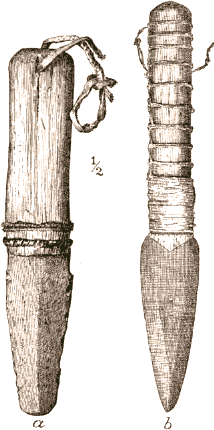
Fig. 99.—Slate knives.
No. 89584 [1107] (figured in Point Barrow Rept., Ethnology, Pl. III, Fig. 3), will represent this class. It is a blade of dark purple slate, ground smooth, 3.5 inches long, tapering from a width of 1.3 inches at the butt, with curved edges to a sharp point, and beveled on both faces from the middle line to the edges, and the flat tang is inserted into a cleft in the end of a straight haft of spruce. The blade is secured by a whipping of about fifteen turns of sinew braid lodged in a broad shallow groove round the end of the haft. In a hole in the other end of the haft is looped a short lanyard of seal thong. Fig. 99a, No. 89581 [1011], is a knife of the same class and about the same size, having a haft 4 inches and a blade 3 inches long. The blade is secured by two lashings, of which the first is a narrow strip of whalebone, and the other of sinew braid. The materials of blade and haft are the same as before. No. 89585 [1710] (Fig. 99b), has a blade of dark gray slate, and the haft, which appears to be of cotton wood, is in two longitudinal sections. The lashing which holds these two sections together is of braided sinew. Of the blades, the only sharp-pointed one, No. 56684 [228] (Fig. 100), is like the blade of 89584 [1107], but rather larger. The others all have rounded or truncated points and are not over 3½ inches long, including the tang, but otherwise closely resemble the blades already described. They all show signs of considerable age and several of them are nicked and gapped on the edge from use. Knives of this class are not like any in use at the present day, and it was not possible to learn definitely whether this shape served any special purpose. We were, however, given to understand that the sharp-pointed ones were sometimes, at least, used for stabbing. Perhaps they were used specially for cutting up the smaller animals.
The second class, of which there are four specimens, is not unlike the first, but the blade is short and broad, with strongly curved edges, and always sharp pointed, while the haft is always much longer than the blade. Instead of being evenly beveled off on both faces from the middle line to the edges, they are either slightly convex, worked down gradually to the edge, or flat with narrowly beveled edges. They are all small knives, the longest being 8.3 inches long, with the blade projecting 3.1 inches from the haft, and the shortest 4.9 inches, with the blade projecting only 1.4 inches.
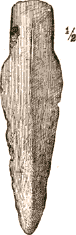
Fig. 100.—Slate knife-blade.
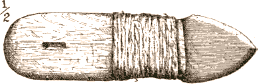
Fig. 101.—Slate knife.
Fig. 101, No. 89583 [1305], is a knife of this class, with the blade a nearly equilateral triangle (1.4 inches long and 1.3 inches wide at the base), with a flat wooden haft as wide as the blade and 3½ inches long, cleft at the tip and lashed with thirteen or fourteen turns of sinew braid. The holes near the butt of the haft were probably to receive a lanyard. Fig. 102, No. 89591 [1016], is another form of the same class. The blade is secured by a single rivet of wood.
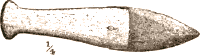
Fig. 102.—Slate knife.
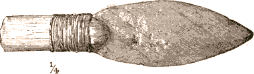
Fig. 103.—Slate hunting-knife.
The third class consists of large knives, with long, broad, lanceolate blades, and short straight hafts. There is only one complete specimen, No. 89592 [1002], Fig. 103. This has a blade of soft, light greenish slate, 6 inches long and 2.6 inches broad, with the edges broadly beveled on both faces. The haft of spruce is in two longitudinal sections, put together so as to inclose the short tang of the blade, and is secured by a tight whipping of eighteen turns of fine seal twine, and painted with red ocher. This knife is new and was made for sale, but is undoubtedly a correct model of an ancient pattern, as No. 56676 [204] (Fig. 104), which is certainly ancient, appears to be the blade of just such a knife. We were told that the latter was intended for cutting blubber. This perhaps means that it was a whaling knife. Mr. Nelson brought home a magnificent knife of precisely the same pattern, made of light green jade.
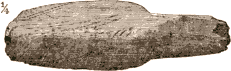
Fig. 104.—Blade of slate hunting-knife.
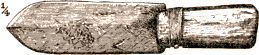
Fig. 105.—Large slate knife.
The two knives, representing the fourth class, are both new and made for sale, having blades of soft slate. As we obtained no genuine knives of this pattern, it is possible that they are merely commercial fabrications. The two knives are very nearly alike, but the larger, No. 89590 [984] (Fig. 105), is the more carefully made. The blade is of light greenish gray slate, 6.2 inches long and 2 inches broad, and is straight nearly to the tip, where it curves to a sharp point, making a blade like that of the Roman gladius. The haft is a piece sawed out of the beam of an antler, and has a cleft sawed in one end to receive the short broad tang of the blade. The whipping is of sinew braid.
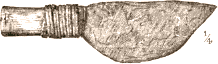
Fig. 106.—Large single-edged slate knife.
The single-edged knives were probably all meant specially for cutting food, and are all of the same general pattern, varying in size from a blade only 2½ inches long to one of 7 inches. The blade is generally more strongly curved along the edge than on the back and is usually sharp-pointed. It is fitted with a broad tang to a straight haft, usually shorter than the blade. There are in the collection four complete knives and five unhafted blades. No. 89597 [1052] (Fig. 106) is a typical knife of this kind. The blade is of black slate, rather rough, and is 5.6 inches long (including the tang). The tang, which is about one-half inch long and the same breadth, is lashed against one end of the flat haft of bone which is cut away to receive it, with five turns of stout seal thong. No. 89594 [1053] differs from the preceding only in having the tang inserted in a cleft in the end of the haft, and No. 89589a [1054] has the back more curved than the edge, the haft of antler and the lashing of whalebone. All three are of very rude workmanship. No. 89587 [1587], is a small knife with a truncated point and the tang imbedded without lashing in the end of a roughly made haft of bone.
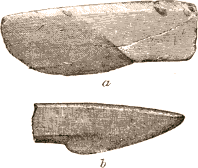
Fig. 107.—Blades of knives.
Most of the blades are those of knives similar to the type, more smoothly finished, but No. 56712 [226] (Fig. 107a) is noticeable for the extreme “belly” of the edge and the smoothness with which the faces are beveled from back to edge. Such knives approach the woman’s round knife (ulu, ulu´ra). No. 89601 [776] (Fig. 107b) is almost double-edged, the back being rounded off. Fig. 108, No. 89631 [1081], is a very remarkable form of slate knife, of which this was the only specimen seen. In shape it somewhat resembles a hatchet, having a broad triangular blade with a strongly curved cutting edge, along the back of which is fitted a stout haft of bone 12½ inches long. The blade is of soft, dark purple slate, ground smooth, and resembles the modern knives in having the sharp cutting edge beveled almost wholly on one face. The haft is the foreshaft of an old whale harpoon, and is made of whale’s bone. The back of the blade is fitted into a deep narrow saw cut, and held on by three very neat lashings of narrow strips of whalebone, each of which passes through a hole drilled through the blade close to the haft and through a pair of vertical holes in the haft on each side of the blade. These holes converge towards the back of the haft and are joined by a deep channel, so that the lashing is countersunk below the surface of the haft. This implement was brought down from Nuwŭk and offered for sale as a knife anciently used for cutting off the blubber of a whale. The purchaser got the impression that it was formerly attached to a long pole and used like a whale spade. On more careful examination after our return it was discovered that the haft was really part of an old harpoon and that the lashings and holes to receive them were evidently newer than the haft.
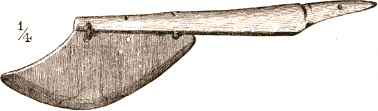
Fig. 108.—Peculiar slate knife.
It is possible that the blade may have been long ago fitted to the haft and that the tool may have been used as described. That knives of this sort were occasionally used by the Eskimo is shown by a specimen in the Museum from Norton Sound. This is smaller than the one described but has a slate blade of nearly the same shape and has a haft, for hand use only, put on in the same way.
With such knives as these the cut is made by drawing the knife toward the user instead of pushing it away, as in using the round knife. We found no evidence that these Eskimo ever used knives of ivory (except for cutting snow) or ivory knives with bits of iron inlaid in the edge, such as have been observed among those of the East.

Fig. 109.—Knife with whalebone blade.
Fig. 109, No. 89477 [1422], is a very extraordinary implement, which was brought down from Point Barrow and which has evidently been exposed alongside of some corpse at the cemetery. The blade is a long, flat, thin piece of whalebone wedged between the two parts of the haft, which has been sawed lengthwise for 6½ inches to receive it. The haft is a slender piece of antler. No other specimens of the kind were seen, nor have similar implements, to my knowledge, been observed elsewhere. The natives insisted that it was genuine, and was formerly used for cutting blubber.

Fig. 110.—Small iron knife.
I have introduced four figures of old iron or steel knives, of which we have six specimens, in order to show the way in which the natives in early days, when iron was scarce, utilized old case-knives and bits of tools, fitting them with hafts of their own make. All agree in having the edge beveled on the upper face only. All the knives which they obtain from the whites at the present day are worked over with a file so as to bring the bevel on one face only. Fig. 110, No. 89296 [970], from Nuwŭk, has a blade of iron, and the flat haft is made of two longitudinal sections of reindeer antler, held together with four large rivets nearly equidistant. The two which pass through the tang are of brass and the other two of iron. The blade is 3.6 inches long, the haft 4.1 long and 0.9 broad. Fig. 110, No. 89294 [901], from Utkiavwĭñ, has a short, thick, and sharp-pointed blade, and is hafted in the same way with antler, one section of the haft being cut out to receive the short, thick tang. The first two rivets are of iron, the other three of brass and not quite long enough to go wholly through the haft. The blade is barely 2 inches long. Fig. 111a, No. 89297 [1125], from Nuwŭk, has a short blade, 2½ inches long, and the two sections of the haft are held together, not by rivets, but by a close spiral lasting of stout seal thong extending the whole length of the haft. No. 89293 [1330], Fig. 111b, from Utkiavwĭñ, has a peculiarly shaped blade, which is a bit of some steel tool imbedded in the end of a straight bit of antler 4 inches long. One of these knives, not figured, is evidently part of the blade of an old-fashioned curved case knife. It is stamped with the name “Wilson,” and underneath this are three figures, of which only <> can be made out. This may be a table knife bought or stolen from the Plover in 1852-’54.
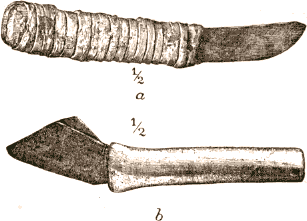
Fig. 111.—Small iron knives.
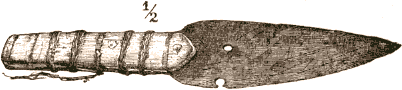
Fig. 112.—Iron hunting knife.
There is in the collection one large double-edged knife (Fig. 112, No. 89298 [1162]) of precisely the same form as the slate hunting knife (Fig. 103) and Mr. Nelson’s jade knife previously mentioned. The blade is of thick sheet iron, which has in it a couple of rivet holes, and the haft of reindeer antler in two sections, held together by a large copper rivet at each end and a marline of sinew braid. Each edge has a narrow bevel on one face only, the two edges being beveled on opposite faces. There are a small number of such knives still in use, especially as hunting knives (for cutting up walrus, one man said). They are considered to be better than modern knives for keeping off evil spirits at night. As is not unusual, the antiquity of the object has probably invested it with a certain amount of superstitious regard. These knives are undoubtedly the same as the “double-edged knives (pan´-na)” mentioned by Dr. Simpson (op. cit., p. 266) as brought for sale by the Nunatañmiun, who obtained them from the Siberian natives, and which he believes to be carried as far as the strait of Fury and Hecla. It would be interesting to decide whether the stone hunting knives were an original idea of the Eskimo, or whether they were copies, in stone, of the first few iron knives obtained from Siberia; but more material is needed before the matter can be cleared up.
The natives of Point Barrow, in ordinary conversation, call all knives savĭk, which also means iron, and is identically the same as the word used in Greenland for the same objects. If, then, there was a time, as these people say, when their ancestors were totally ignorant of the use of iron—and the large number of stone implements still found among them is strongly corroborative of this—the use of this name indicates that the first iron was obtained from the east, along with the soapstone lamps, instead of from Siberia. Had it first come from Siberia, as tobacco did, we should expect to find it, like the latter, called by a Russian or Siberian name.
Like all the Eskimo of North America from Cape Bathurst westward, the natives of Point Barrow use for fine whittling and carving on wood, ivory, bone, etc., “crooked knives,” consisting of a small blade, set on the under side of the end of a long curved haft, so that the edge, which is beveled only on the upper face, projects about as much as that of a spokeshave. The curve of blade and haft is such that when the under surface of the blade rests against the surface to be cut the end of the haft points up at an angle of about 45°. This knife differs essentially from the crooked carving knife so generally used by the Indians of North America. As a rule the latter has only the blade (which is often double edged) curved and stuck into the end of a straight haft. These knives are at the present time made of iron or steel and are of two sizes, a large knife, mĭ´dlĭñ, with a haft 10 to 20 inches long, intended for working on wood, and a small one, savigro´n (lit. “an instrument for shaving”), with a haft 6 or 7 inches long and intended specially for cutting bone and ivory. Both sizes are handled in the same way. The knife is held close to the blade between the index and second fingers of the right hand with the thumb over the edge, which is toward the workman. The workman draws the knife toward him, using his thumb as a check to gauge the depth of the cut. The natives use these knives with very great skill, taking off long and very even shavings and producing very neat workmanship.274
There are in the collection four large knives and thirteen small ones. No. 89278 [787] (Fig. 113) will serve as the type of the large knives. The haft is a piece of reindeer antler, flat on one face and rounded on the other, and the curve is toward the rounded face. The flat face is hollowed out by cutting away the cancellated tissue from the bend to the tip, and the lower edge is sloped off so that the end of the haft is flat and narrow, with a slight twist. The blade is riveted to the flat face of the haft with three iron rivets, and is a piece of a saw countersunk flush with the surface of the haft, so that it follows its curvature. The cutting edge is beveled only on the upper face. The lower edge of the haft, from the blade to the place where it begins to narrow, is pierced with eleven equidistant holes, through which is laced a piece of sealskin thong, the two parts crossing like a shoe-lacing, to prevent the hand from slipping. The ornamental pattern on the upper face of the haft is incised and was originally colored with red ocher, but is now filled with dirt.

Fig. 113.—Large crooked knife.
Fig. 114, No. 89780 [1004d], is a very long hafted knife (the haft is 12.3 inches long), but otherwise resembles the type, though not so elaborately ornamented. The blade is also a bit of a saw. It is provided with a sheath 3¼ inches long, made of black sealskin with the black side out, doubled over at one side, and sewed “over and over” down the other side and round one end. To the open end is sewed a bit of thong with a slit in the end of it, into which one end of a lanyard of seal twine 15 inches long is fastened with a becket-hitch. When the sheath is fitted over the blade the lanyard is passed through a hole in the haft and made fast by two or three turns around it. Such sheaths are often used by careful workmen. This particular knife was the property of the “inlander” Ilû´bwgɐ, previously mentioned. No. 89283 [967], from Nuwŭk, is interesting as being the only left-handed tool we obtained. The fourth knife has a blade with a cutting edge of 3½ inches, while that of each of the others is 3 inches.
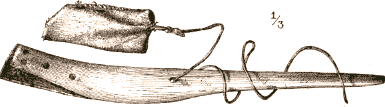
Fig. 114.—Large crooked knife, with sheath.
The small knife differs little from the mĭ´dlĭñ except in having the haft very much shorter and not tapered off at the tip. Fig. 115a, No. 56552 [145], from Utkiavwĭñ, shows a common form of this kind of knife, though the blade usually has a sharp point like those of the large knives, projecting beyond the end of the haft. This knife has a blade of iron riveted on with two iron rivets to a haft of reindeer antler. The edges of the haft close to the blade are roughened with crosscuts to prevent slipping.
The blades of the small knives are frequently inserted into a cleft in the edge of the haft, as in Fig. 115b, 89632 [827], and 89277 [1172]. The blade, in such cases, is secured by wedging it tightly, with sometimes the addition of a lashing of thong through a hole in the haft and round the heel of the blade. The blade is usually of steel, in most cases a bit of a saw and the haft of reindeer antler, generally plain, unless the circular hollows, such as are to be seen on No. 89277 [1172], which are very common, are intended for ornament. Fig. 116, No. 89275 [1183], from Utkiavwĭñ, is a rather peculiar knife. The haft, which is the only one seen of walrus ivory, is nearly straight, and the unusually long point of the blade is strongly bent up. The rivets are of copper. This knife, the history of which we did not obtain, was very likely meant both for wood and ivory. It is old and rusty and has been long in use.
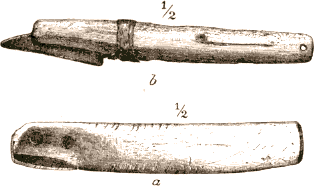
Fig. 115.—Small crooked knives.
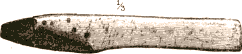
Fig. 116.—Crooked knife.
All of the crooked knives in the collection are genuine implements which have been actually in use, and do not differ in type from the crooked knives in the Museum from the Mackenzie district, Kotzebue Sound, and other parts of Alaska. Similar knives appear to be used among the Siberian Eskimo and the Chukches, who have adopted their habits. Hooper (Tents, etc., p. 175), mentions “a small knife with a bent blade and a handle, generally made of the tip of a deer’s horn,” as one in general use at Plover Bay, and handled in the same skillful way as at Point Barrow.275 Among the Eskimo of the central region they are almost entirely unknown. The only mention I have seen of such tools is in Parry’s Second Voyage (p. 504), where he speaks of seeing at Iglulik “several open knives with crooked wooden handles,” which he thinks “must have been obtained by communication alongshore with Hudson Bay.” I can find no specimen, figure, or description of the sa´nat (“tool”), the tool par excellence of the Greenlanders, except the following definition in Kleinschmidt’s “Grønlandsk Ordbog”: “2. Specially a narrow, long-hafted knife, which is sharpened on one side and slightly curved at the tip (and which is a Greenlander’s chief tool).” This seems to indicate that this knife, so common in the West, is equally common in Greenland.276
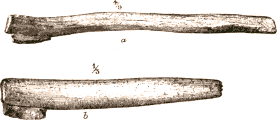
Fig. 117.—Crooked knives, flint bladed.
Whether these people used crooked knives before the introduction of iron is by no means certain, though not improbable. Fig. 117a, No. 89633 [1196], from Utkiavwĭñ, is a knife made by imbedding a flake of gray flint in the lower edge of a haft of reindeer antler, of the proper shape and curvature for a mĭdlĭñ handle. The haft is soiled and undoubtedly old, while the flaked surfaces of the flint do not seem fresh, and the edge shows slight nicks, as if it had been used. Had this knife been followed by others equally genuine looking, I should have no hesitation in pronouncing it a prehistoric knife, and the ancestor of the present steel one. The fact, however, that its purchase gave rise to the manufacture of a host of flint knives all obviously new and more and more clumsily made, until we refused to buy any more, leads me to suspect that it was fabricated with very great care from old material, and skillfully soiled by the maker.
Ten of these knives of flint were purchased within a fortnight before we detected the deceit. Fig. 117b, No. 89636 [1212] is one of the best of these counterfeits, made by wedging a freshly flaked flint blade into the haft of an old savigrón, which has been somewhat trimmed to receive the blade and soiled and charred to make it look old. Other more carelessly made ones had clumsily carved handles of whale’s bone, with roughly flaked flints stuck into them and glued in with oil dregs. All of these came from Utkiavwĭñ. Another suspicious circumstance is that a few days previously two slate-bladed crooked knives had been brought down from Nuwŭk and accepted without question as ancient. On examining the specimens since our return, I find that while the hafts are certainly old, the blades, which are of soft slate easily worked, are as certainly new. Fig. 118a, 118b, represent these two knives (89580 [1062], 89586 [1061]), which have the blades lashed on with deer sinew. It is worthy of note in this connection that there are no stone knives of this pattern in the museum from any other locality.
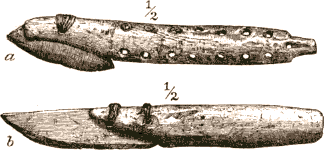
Fig. 118.—Slate-bladed crooked knives.
The women employ for all purposes for which a knife or scissors could be used a semicircular knife of the same general type as those described by every writer from the days of Egede, who has had to deal with the Eskimo. The knives at the present day are made of steel, usually, and perhaps always, of a piece of a saw blade, which gives a sheet of steel of the proper breadth and thickness, and are manufactured by the natives themselves. Dr. Simpson says277 that in his time they were brought from Kotzebue Sound by the Nunatañmiun, who obtained them from the Siberian Eskimo. There are in the collection three of these steel knives, all of the small size generally called ulúrɐ (“little úlu”). No. 56546 [14] has been picked out for description (Fig. 119). The blade is wedged into a handle of walrus ivory. The ornamentation on the handle is of incised lines and dots blackened. The cutting edge of the blade is beveled on one face only. This knife represents the general shape of knives of this sort, but is rather smaller than most of them. I have seen some knives with blades fully 5 or 6 inches long and deep in proportion. The handle is almost always of walrus ivory and of the shape figured. I do not remember ever seeing an úlu blade secured otherwise than by fitting it tightly into a narrow slit in the handle, except in one case, when the handle was part of the original handle of the saw of which the knife was made, left still riveted on.
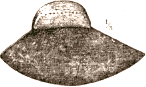
Fig. 119.—Woman’s knife, steel blade.
It is not necessary to specify the various purposes for which these knives are used. Whenever a woman wishes to cut anything, from her food to a thread in her sewing, she uses an úlu in preference to anything else. The knife is handled precisely as described among the eastern Eskimo, making the cut by pushing instead of drawing,278 thus differing from the long-handled round knife mentioned above. Knives of this pattern are very generally used among the western Eskimo, but in the east the blade is always separated from the handle by a short shank, as in our mincing knives.
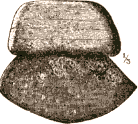
Fig. 120.—Woman’s knife, slate blade.
The natives of Point Barrow used round knives long before the introduction of iron. There are in the collection twenty-three more or less complete round knives of stone, most of which are genuine implements that have been used. Of these a few, which are perhaps the more recent ones, have blades not unlike the modern steel knife. For instance, No. 89680 [1106] Fig. 120, has a blade of hard gray mica slate of almost precisely the modern shape, but both faces are gradually worked down to the cutting edge without a bevel on either. The handle is very large and stout and made of coarse whale’s bone. This knife was said to have come from the ruined village at Pernyɐ. Fig. 121, No. 89679 [971], from Nuwŭk, was made for sale, but is perhaps a model of a form sometimes used. The shape of the blade is quite different from those now in use, in having the cutting edge turned so strongly to the front. The handle is of oak and the blade of rather hard, dark purple slate. Fig. 122, 89689 [985], also from Nuwŭk, and made for the market, is introduced to show a method of hafting which may have been formerly employed. The haft is of reindeer antler in two longitudinal sections, between which the blade is wedged. These two sections are held together by lashings of sinew at each end, passing through holes in each piece and round the ends. These lashings being put on wet, have shrunk so that the blade is very tightly clasped between the two parts of the handle. The commoner form of these stone knives, however, has the back of the blade much longer, so that the sides are straight instead of oblique and usually round off gradually at the ends of the cutting edge without being produced into a point at either end. No. 89682 [958] is a form intermediate between this and the modern shape, having a blade with a long back, but produced into a sharp point at one end. The handle is of reindeer antler and the blade rather soft black slate. This specimen is a very cleverly counterfeited antique.

Fig. 121.—Woman’s knife, slate blade.
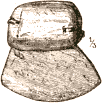
Fig. 122.—Woman’s knife, slate blade.
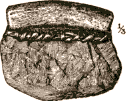
Fig. 123.—Woman’s knife, slate blade.
No. 89636 [1122], Fig. 123, approaches yet nearer the ancient shape, but still has one end slightly produced. The handle is also of reindeer antler, which seems to have been very commonly used with the slate blades. The lashing round the blade close to the handle is of seal thong, with the end wound spirally round all the parts on both sides and neatly tucked in. It seems to serve no purpose beyond enlarging the handle so as to make it fit the hand better. One beautiful blade of light olive green, clouded jade, No. 89675 [1170], belonged to a knife of this pattern. The older pattern is represented by No. 89676 [1586], a small knife blade from Ukiavwĭñ, which has been kept as an amulet. No. 56660 [129], is a blade of the same type, but elongated, being 7½ inches long and 2 broad. This is a very beautiful implement of pale olive jade, ground smooth. The bevel along the back of each of these blades indicates that they were to be fitted into a narrow slit in a long haft, like that of No. 89684 [886], Fig. 124, from Nuwŭk. Though both blade and handle of this specimen are very old, and have been put together in their present shape for a long time, the handle, which is of whale’s bone, evidently belonged to a longer blade, which fitted in the cleft without the need of any lashing. Fig. 125, No. 89693 [874], shows a form of handle evidently of very great antiquity, as the specimen shows signs of great age. It was purchased from a native of Utkiavwĭñ. It is made of a single piece of coarse whale’s bone. It was intended for a blade at least 7 inches long.
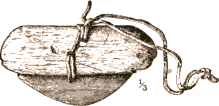
Fig. 124.—Woman’s ancient slate-bladed knife.
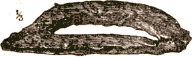
Fig. 125.—Ancient bone handle for woman’s knife.
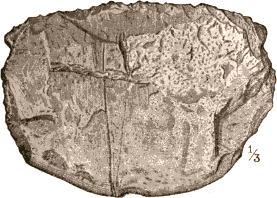
Fig. 126.—Large knife of slate.
Fig. 126, No. 56672 [191], from Utkiavwĭñ, is a very crude, large knife, intended for use without a handle. It is of rough, hard, dark purplish slate. The upper three-quarters of both faces are almost untouched cleavage surfaces, but the lower quarter is pretty smoothly ground down to a semicircular cutting edge, which is somewhat nicked from use. The angular grooves on the two faces were evidently begun with the intention of cutting the knife in two. We were told that this large knife was specially for cutting blubber. It is a genuine antique.
While ground slate is a quite common material for round knives, flint appears to have been rarely used. We obtained only three of this material. No. 89690 [1311] is a flint knife hafted with a rough, irregular lump of coarse whale’s bone. The blade is a rather thin “spall” of light gray flint, flaked round the edges into the shape of a modern ulúrɐ blade, with a very strongly curved cutting edge. Though the handle is new, the flaking of the blade does not seem fresh, so that it is possibly a genuine old blade fitted with a new haft for the market. A similar flint blade, more neatly flaked, was brought from Kotzebue Sound by Lieut. Stoney, U.S. Navy, in 1884. The other two flint knives are interesting from being made for use without handles.
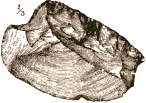
Fig. 127.—Woman’s knife of flaked flint.
No. 89691 [1360], Fig. 127, from Sidaru, is an oblong, wedge-shaped spall of gray flint, of which the back still preserves the natural surface of the pebble. It is slightly shaped by coarse flaking along the back and one end, and the edge is finely flaked into a curved outline rounding up at the ends. The specimen is old and dirty, and was probably preserved as a sort of heirloom or amulet. No. 89692 [1178] is a similar spall from a round pebble. Such knives as these are evidently the first steps in the development of the round knife. The shape of the spalls, produced by breaking a round or oval pebble of flint, would naturally suggest using them as knives, and the next step would be to improve the edge by flaking. The greater adaptability of slate, from its softness and easy cleavage, for making such knives would soon be recognized, and we should expect to find, as we do, knives like No. 56672 [191]. The next step would naturally be to provide such a knife with a haft at the point where the stone was grasped by the hand, while reducing this haft so as to leave only just enough for the grasp and cutting away the superfluous corners of the blade would give us the modern form of the blade. Round knives of slate are not peculiar to Point Barrow, but have been collected in many other places in northwestern America.279
The relationship between these knives and the semilunar slate blades found in the North Atlantic States has already been ably discussed by Dr. Charles Rau.280 It must, however, be borne in mind that while these are sufficiently “fish-cutters” to warrant their admission into a book on fishing, the cutting of fish is but a small part of the work they do. The name “fish-cutter,” as applied to these knives, would be no more distinctive than the name “tobacco-cutter” for a Yankee’s jackknife.281
Adzes (udlimau).—
Even at the present day the Eskimo of Point Barrow use no tool for shaping large pieces of woodwork, except a shorthandled adz, hafted in the same manner as the old stone tools which were employed before the introduction of iron. Though axes and hatchets are frequently obtained by trading, they are never used as such, but the head is removed and rehafted so as to make an adz of it. This habit is not peculiar to the people of Point Barrow. There is a hatchet head, mounted in the same way, from the Anderson River, in the Museum collection, and the same thing was noted in Hudson’s Strait by Capt. Lyon282 and at Iglulik by Capt. Parry.283 Mr. L. M. Turner informs me that the Eskimo of Ungava, on the south side of Hudson’s Strait, who have been long in contact with the whites, have learned to use axes. The collection contains two such adzes made from small hatchets. No. 89873 [972], Fig. 128, is the more typical of the two. The blade is the head of a small hatchet or tomahawk lashed to the haft of oak with a stout thong of seal hide. The lashing is one piece, and is put on wet and shrunk tightly on. This tool is a little longer in the haft than those commonly used, and the shape and material of the haft is a little unusual, it being generally elliptical in section and made of soft wood.
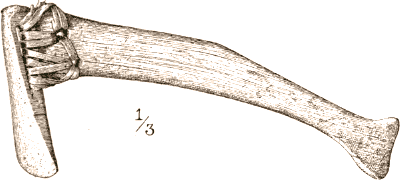
Fig. 128.—Hatchet hafted as an adz.
Fig. 129, No. 56638 [309], from Utkiavwĭñ, is a similar adz, but the head has been narrowed by cutting off pieces from the sides (done by filing part way through and breaking the piece off), and a deep transverse groove has been cut on the front face near the butt. Part of the lashing is held in this groove as well as by the eye, the lower half of which is filled up with a wooden plug. The haft is peculiar in being a piece of reindeer antler which has been reduced in thickness by sawing out a slice for 8 inches from the butt and bringing the two parts together with four stout wooden treenails about 1½ inches apart. This is preferable to trimming it down to a proper thickness from the surface, as the latter process would remove the compact tissue of the outside and expose the soft inside tissue. The whipping of seal thong just above the flange of the butt helps to give a better grip and, at the same time, to hold the parts together. As before, there are two large holes for the lashing. Adzes of this sort are used for all large pieces of wood work, such as timbers for boats, planks, and beams for houses, etc. After roughly dressing these out with the adz they are neatly smoothed off with the crooked knife, or sometimes, of late years, with the plane. The work of “getting out” the large pieces of wood is almost always done where the drift log lies on the beach. When a man wants a new stem or sternpost for his umiak, or a plank to repair his house, he searches along the beach until he finds a suitable piece of driftwood, which he claims by putting a mark on it, and sometimes hauls up out of the way of the waves. Then, when he has leisure to go at the work, he goes out with his adz and spends the day getting it into shape and reducing it to a convenient size to carry home, either slung on his back or, if too large, on a dog-sled. A man seldom takes the trouble to carry home more of a piece of timber than he actually needs for the purpose in hand.
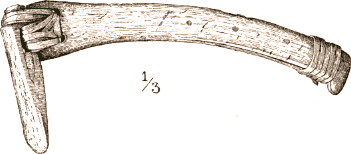
Fig. 129.—Hatchet hafted as an adz.
The adz was in general use long before the introduction of iron. There is in the collection a very interesting series of ancient tools, showing the gradual development of the implement from a rude oblong block of stone worked down to a cutting edge on one end, to the steel adzes of the present day. They have, however, not even yet learned to make an eye in the head of the tool in which to insert the haft, but all tools of this class—adzes, hammers, picks, and mattocks—are lashed, with one face resting against the expanded end of the haft. Firmness is obtained by putting the lashing on wet and allowing it to shrink tight. Nearly all these ancient adzes are of jade, a material well adapted for the purpose by its hardness, which, however, renders it difficult to work. Probably the oldest of these adzes is No. 56675 [69], Fig. 130, which has been selected as the type of the earliest form we have represented in the collection. This is of dark olive green, almost black, jade, 7.2 inches long, 2.8 wide, and 1.3 thick, and smoothly ground on the broader faces. The cutting edge is much broken from long use. One broad face is pretty smoothly ground, but left rough at the butt end. The other is rather flatter, but more than half of it is irregularly concave, the natural inequalities being hardly touched by grinding. Like the other dark-colored jade tools, this specimen is very much lighter on a freshly fractured surface. The dark color is believed to be due to long contact with greasy substances.
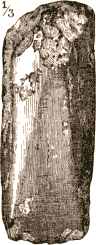
Fig. 130.—Adz-head of jade.
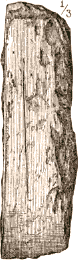
Fig. 131.—Adz-head of jade.
No. 89662 [900], from Nuwŭk, is an exceedingly rough adz of similar shape, but so slightly ground that it is probably one that was laid aside unfinished. From the battered appearance of the ends it seems to have been used for a hammer. It is of the same dark jade as the preceding. No. 89689 [792], from Utkiavwĭñ, is of rather light olive, opaque jade and a trifle better finished than the type, while No. 89661 [1155], Fig. 131, also from Utkiavwĭñ, is a still better piece of workmanship, the curve of the faces to the cutting edge being very graceful. The interesting point about this specimen is that a straight piece has been cut off from one side by sawing down smoothly from each face almost to the middle and breaking the piece off. We were informed that this was done to procure rods of jade for making knife sharpeners. We were informed that these stones were cut in the same way as marble and freestone are cut with us, namely, by sawing with a flat blade of iron and sand and water. A thin lamina of hard bone was probably used before the introduction of iron. Possibly a reindeer scapula, cut like the one made into a saw (No. 89476 [1206], Fig. 147), but without teeth, was used for this purpose.
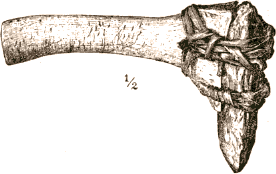
Fig. 132.—Hafted jade adz.
That such stone blades were used with a haft is shown by the only hafted specimen, No. 56628 [214], Fig. 132, from Nuwŭk. This is a rather small adz. The head of dark green jade differs from those already described only in dimensions, being 4 inches long, 2.1 wide, and 1.7 thick. The haft is of reindeer antler and in shape much like that of No. 56638 [309], but has only one hole for the lashing. The lashing is of the usual stout seal thong and put on in the usual fashion. No. 89673 [1423] is an old black adz from Sidaru of the same pattern as those described, but very smoothly and neatly made. About one-half of this specimen has been cut off for whetstones, etc.
The next step is to make the lashing more secure by cutting transverse grooves on the upper face of the head to hold the thong in place. This has been done on No. 56667 [215], figured in Point Barrow Rept., Ethnology, Pl. II, Fig. 5, an adz of dark olive green jade, from Utkiavwĭñ, which shows two such grooves, broad and shallow, running across the upper face. Of these two classes the collection contains thirteen unhafted specimens and one hafted specimen, all of jade. As cutting these grooves in the stone is a laborious process, the device of substituting some more easily worked substance for the back part of the head would naturally suggest itself.
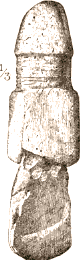
Fig. 133.—Adz-head of jade and bone.
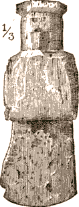
Fig. 134.—Adz-head of bone and iron, without eyes.
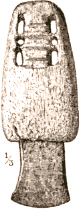
Fig. 135.—Adz-head of bone and iron, with vertical eyes.
Fig. 133, No. 89658 [1072], from Utkiavwĭñ, has a long blade of black stone with the butt slightly tapered off and imbedded in a body of whale’s bone, which has a channel 1 inch wide, for the lashing, cut round it and a shallow socket on the face to receive the end of the haft. Adz heads of this same type continued in use till after the introduction of iron, which was at first utilized by inserting a flat blade of iron into just such a body, as is shown in Fig. 134 (No. 89877 [752], from the cemetery at Utkiavwĭñ).
From this type to that shown in Fig. 135 (No. 89876 [696] brought by the natives from the ruins on the Kulugrua) the transition is easy. Suppose, for the greater protection of the lashings, we inclose the channels on the sides of the head—in other words, bore holes instead of cutting grooves—we have exactly this pattern, namely, vertical eyes on each side of the head joined by transverse channels on the upper face. The specimen figured has on each side two oblong slots with a round eye between them. The blade is of iron, Fig. 136, No. 56640 [260] has two eyes on each side, and shows a different method of attaching the blade, which is countersunk flush with the upper surface of the body and secured with three stout iron rivets. The next step is to substitute horizontal eyes for the vertical ones, so as to have only one set of holes to thread the lashings through. This is seen in No. 89869 [878], Fig. 137, from Nuwŭk, which in general pattern closely resembles No. 89876 [696], but has three large horizontal eyes instead of the vertical ones. The blade is of iron and the haft of whale’s bone. The lashing is essentially the same as that of the modern adz, No. 56638 [309].
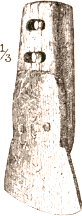
Fig. 136.—Adz-head of bone and iron, with vertical eyes.
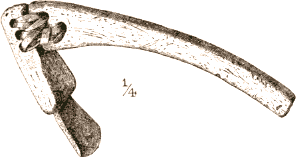
Fig. 137.—Hafted bone and iron adz.
That this final type of hafting was reached before stone had gone out of use for such implements is shown by Fig. 138, No. 89839 [769], from Utkiavwĭñ, which, while very like the last in shape, has a blade of hard, dark purple slate. The haft is of reindeer antler. The lashing has the short end knotted to the long part after making the first round, instead of being slit to receive the latter. Otherwise it is of the usual pattern. These composite adzes of bone and stone or iron seemed to have been common at the end of the period when stone was exclusively used and when iron first came into use in small quantities, and a good many have been preserved until the present day. We obtained four hafted and six unhafted specimens, besides seven jade blades for such composite adzes, which are easily recognizable by their small size and their shape. They are usually broad and rather thin, and narrowed to the butt, as is seen in Fig. 139, No. 56685 [71], a beautiful little adz of bright green jade 2.8 inches long and 2.3 wide, from Utkiavwĭñ. No. 56670 [246] also from Utkiavwĭñ, is a similar blade of greenish jade slightly larger, being 3.4 inches long and 2 inches wide. No. 89670 [1092] is a tiny blade of hard, fine-grained black stone, probably oil-soaked jade, only 1.7 inches long and 1.5 wide. It is very smoothly ground. Such little adzes, we were told, were especially used for cutting bone. The implement,284 which Nordenskiöld calls a “stone chisel,” found in the ruins of an old Eskimo house at Cape North, is evidently the head of one of these little bone adzes, as is plainly seen on comparing this figure with the larger adzes figured above.
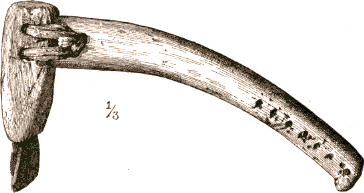
Fig. 138.—Hafted bone and stone adz.
I have figured two more composite adzes, which are quite different from the rest. No. 89838 [1109], Fig. 140, has a blade of neatly flaked gray flint, but this as well as the unusually straight haft is newly made. These are fitted to a very old bone body, which when whole was not over 3 inches long, and was probably part of a little bone adz. There is no evidence that these people ever used flint adzes. Fig. 141, No. 89872 [785], is introduced to show how the native has utilized an old cooper’s adz, of which the eye was probably broken, by fitting it with a bone body.
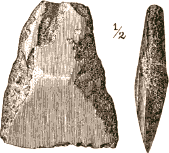
Fig. 139.—Small adz-blade of green jade.
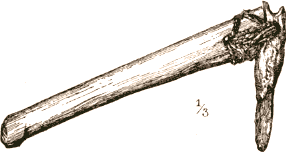
Fig. 140.—Hafted adz of bone and flint.
While the adzes already described appear to have been the predominating types, another form was sometimes used. Fig. 142, No. 89874 [964], from Nuwŭk, represents this form. The haft is of whale’s rib, 1 foot long, and the head of bone, apparently whale’s scapula, 5.6 inches long and 2.8 inches wide on the edge. There is an adze in the Museum from the Mackenzie River region with a steel blade of precisely the same pattern. That adzes of this pattern sometimes had stone blades is probable. No. 89840 [1317], is a clumsily made commercial tool of this type, with a small head of greenish slate. It has an unusually straight haft, which is disproportionately long and thick.
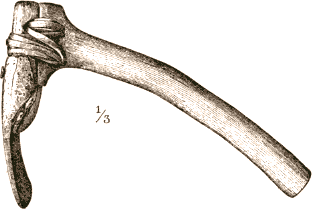
Fig. 141.—Old cooper’s adz, rehafted.
All these adzes, ancient and modern, are hafted upon essentially the same pattern. The short curved haft, the shape of which is sufficiently well indicated by the figures, seems to have been generally made of whale’s rib or reindeer antler, both of which have a natural curve suited to the shape of the haft. A “branch” of a reindeer’s antler is particularly well suited for the haft of a small adze. Not only does it have naturally the proper dimensions and a suitable curve, but it is very easy, by cutting out a small segment of the “beam” where the “branch” starts from it, to make a flange of a convenient shape for fitting to the head. Antler is besides easily obtained, not only when the deer is killed for food, but by picking up shed antlers on the tundra, and is consequently employed for many purposes. The haft usually has a knob at the tip to keep the hand from slipping, and the grip is sometimes roughened with cross cuts or wound with thong. There are usually as many holes for the lashing as there are eyes in the head, though there are two holes when the head has only one large eye. On the bone heads, the surfaces to which the haft is applied and the channels for the lashings are roughened with cross cuts to prevent slipping. The lashing always follows the same general plan, though no two adzes are lashed exactly alike. The plan may be summarized as follows: One end of the thong makes a turn through one of the holes in the haft, and around or through the head. This turn is then secured, usually by passing the long end through a slit in the short end and hauling this loop taut, sometimes by knotting the short end to the long part, or by catching the short end down under the next turn. The long part then makes several turns round or through the head and through the haft, sometimes also crossing around the latter, and the whole is then finished off by wrapping the end two or three times around the turns on one side and tucking it neatly underneath. This is very like the method of lashing on the heads of the mauls already described, but the mauls have only one hole in the haft, and there are rarely any turns around the latter.
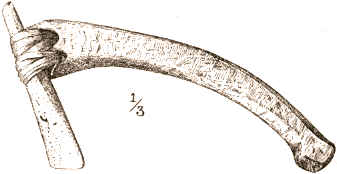
Fig. 142.—Adz with bone blade.
Jade adz blades, like those already described, have been brought by Mr. Nelson from Kotzebue Sound, the Diomedes, St. Michaels, etc., and one came from as far south as the Kuskoquim River.
Chisels.—
We collected a number of small short handled chisels, resembling the implements called “trinket makers,” of which there are so many in the National Museum. We never happened to see them in actual use, but were informed that they were especially designed for working on reindeer antler. Of the eight specimens collected No. 89302 [884], Fig. 143, has been selected as a type of the antler chisel (kĭ´ñnusa). The blade is of steel, and the haft is of reindeer antler, in two longitudinal sections, put together at right angles to the plane of the blade, held together by a stout round bone treenail 2½ inches from the butt. The square tip of the blade is beveled on both faces to a rough cutting edge. Fig. 144 (No. 89301) [1000] has a small blade with an oblique tip not beveled to an edge, and a haft of walrus ivory yellowed from age, and ornamented with rows of rings, each with a dot in the center, all incised and colored with red ocher. The two parts of the haft are fastened together by a stout wooden treenail and a stitch of whalebone.
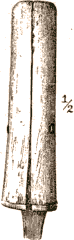
Fig. 143.—Antler chisel.
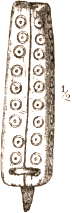
Fig. 144.—Antler chisel.
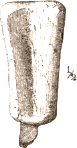
Fig. 145.—Spurious tool, flint blade.
The rest of the steel-bladed chisels, four in number, are all of about the same size and hafted with antler. The blades are somewhat irregular in shape, but all have square or oblique tips and no sharp edge. Three of them have the sections of the haft put together as described, and fastened by a treenail and a whipping of seal twine or sinew braid at the tip. One has the two sections put together in the plane of the blade and fastened with a large copper rivet, which also passes through the butt of the blade, and three stout iron ones. The hafts of all these tools show signs of much handling. The remaining two specimens have blades of black flint. No. 89637 [1207], has a haft of walrus ivory, of the usual pattern, fastened together by a bone treenail and two stitches, one of sinew braid and one of seal thong. The lashing of seal twine near the tip serves to mend a crack. The haft is old and rusty about the slot into which the blade is fitted, showing that it originally had an iron blade. The flint blade was probably put in to make it seem ancient, as there was a special demand for prehistoric articles. No. 89653 [1290], Fig. 145, is nothing but a fanciful tool made to meet this demand. The haft is of light-brown mountain sheep horn, and the blade of black flint. Such flint-bladed tools may have been used formerly, but there is no proof that they were.
Whalebone shaves.—
There is in use at Point Barrow, and apparently not elsewhere among the Eskimo, a special tool for shaving whalebone, a substance which is very much used in the form of long, thin strips for fastening together boat timbers, whipping spear shafts, etc. The thin, long shavings which curl up like “curled hair,” are carefully saved and used for the padding between stocking and boot. Whalebone is also sometimes shaved for this special purpose. The tool is essentially a little spokeshave about 4 inches long, which is held by the index and second finger of the right hand, one on each handle, with the thumb pressed against one end, and is drawn toward the workman. The collection contains three specimens of the ordinary form (sávigɐ), represented by No. 89306 [885] (figured in Point Barrow Report, Ethnology, Pl. III, Fig. 6). This has a steel blade and a haft of walrus ivory. The upper face of the haft is convex and the under flat, and the blade, which is beveled only on the upper face, is set at a slight inclination to the flat face of the haft. The edge of the blade projects 0.2 inch from the haft above and 0.3 below. The hole at one end of the haft is for a lanyard to hang it up by. The other two are of essentially the same pattern, but have hafts of reindeer antler.
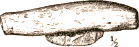
Fig. 146.—Whalebone shave, slate blade.
The collection also contains six tools of this description, with stone blades, but they are all new and very carelessly made, with hafts of coarse-grained bone. The shape of the tools is shown in Fig. 146, No. 89649 [1213], from Utkiavwĭñ, which has a rough blade of soft, light greenish slate. The other five have blades of black or gray flint, roughly flaked. All these blades are glued in with oil dregs. No. 89652 [1225] is like the others in shape, but more neatly made, and is peculiar in having a blade of hard, compact bone. This is inserted by sawing a deep, narrow slit along one side of the haft from end to end. The blade is wedged into the middle of the slit, the ends of which are neatly filled in with slips of the same material as the haft. This was the only tool of the kind seen. It is very probable that shaves of stone were formerly used, though we obtained no genuine specimens. The use of oblong chips of flint for this purpose would naturally suggest itself to a savage, and the convenience of fitting these flakes into a little haft would soon occur to him. No. 89616 [1176] is such an oblong flint, flaked to an edge on one face, which is evidently old, and which was said to have been used for shaving whalebone. The material is black flint. Whalebone is often shaved nowadays with a common knife. The slab of bone is laid upon the thigh and the edge of the knife pressed firmly against it, with the blade perpendicular to the surface of the slab, which is drawn rapidly under it.
Saws.—
If the Eskimo had not already invented the saw before they became acquainted with the whites they readily adopted the tool even when they had scanty materials for making it. Crantz285 speaks of “a little lock saw” as one of a Greenlander’s regular tools in his time, and Egede286 mentions handsaws as a regular article of trade. Capt. Parry287 found the natives of Iglulik, in 1821-1823, using a saw made of a notched piece of iron. On our asking Nĭkawa´alu, one day, what they had for tools before they got iron he said that they had drills made of seal bones and saws made of the shoulder blade of the reindeer. Some time afterwards he brought over a model of such a saw, which he said was exactly like those formerly used. Fig. 147, No. 89476 [1206], represents this specimen. It is made by cutting off the anterior edge of a reindeer’s scapula in a straight line parallel to the posterior edge and cutting fine saw teeth on this thin edge. The spine is also cut off nearly flat. This makes a tool very much like a carpenter’s backsaw, the narrow part of the scapula forming a convenient handle.
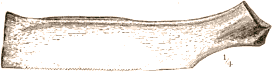
Fig. 147.—Saw made of deer’s scapula.
Fig. 148, No. 56559 [15], shows how other implements were utilized before it was easy to obtain saws in plenty. It is a common case knife stamped on the blade, “Wilson, Hawksworth, ——n & Co., Sheffield,” which perhaps came from the Plover, with saw teeth cut on the edge. It was picked up at the Utkiavwĭñ cemetery, where it had been exposed with a corpse. Saws are now a regular article of trade, and most of the natives are provided with them of various styles and makes. The name for saw is uluă´ktun.

Fig. 148.—Saw made of a case-knife.
Drills and borers.—
The use of the bow drill appears to be universal among the Eskimo. Those at present employed at Point Barrow do not differ from the large series collected at the Mackenzie and Anderson rivers by MacFarlane. The drill is a slender rod of steel worked to a drill point and imbedded in a stout wooden shaft, which is tapered to a rounded tip. This fits into a stone socket imbedded in a wooden block, which is held between the teeth, so that the point of the drill can be pressed down against the object to be drilled by the head, leaving both hands free to work the short bow, which has a loose string of thong long enough to make one turn round the shaft. The collection contains ten of these modern steel or iron drills, fifteen bows, and seven mouthpieces. No. 89502 [853], figured in Point Barrow Rept., Ethnology, Pl. II, Fig. 1, has been selected as a typical drill (niă´ktun). The drill is a cylindrical rod of steel beaten out into a small lanceolate point, which is filed sharp on the edges. The shaft is made of hard wood. The remaining drills are of essentially the same pattern, varying in total length from about 11 inches to 16½.
Fig. 149, No. 89499 [968] shows a somewhat unusual shape of shaft. The lashings round the large end are to keep it from splitting any more than it has done already. The drill is of iron and the shaft of spruce, which was once painted with red ocher.

Fig. 149.—Bow drill.
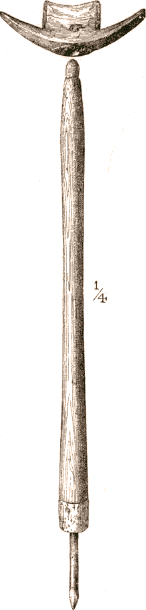
Fig. 150.—Bow drill and mouthpiece.

Fig. 151.—Bow drill.
No. 89497 [819] (Fig. 150) has a ferrule of coarse-grained bone neatly pegged on with two small pegs of the same material. This is unusual with steel drills. The shaft is of spruce and of the same shape as in the preceding specimen. No. 89595 [875] (Fig. 151) is figured to show the way in which the shaft has been mended. A wedge-shaped piece 3½ inches long and 0.3 to 0.4 inch wide has been split out of the large end and replaced by a fresh piece of wood neatly fitted in and secured by two tight whippings of sinew braid, each in a deep groove.
No. 89515 [861], figured in Point Barrow Report, Ethnology, Pl. II, Fig. 2, is a typical bow (pizĭksuá) for use with these drills. It is of walrus ivory, 16 inches long and oval in section. Through each end is drilled a transverse hole. A string of seal thong 21 inches long is looped into one of these holes by passing one end of the thong through the hole, cutting a slit in it, and passing the other end through this. The other end is passed through the other hole and knotted at the tip.
These bows vary slightly in dimensions, but are not less than a foot or more than 16 inches long, and are almost always of walrus ivory. No. 89508 [956] (Fig. 152), is an old and rudely made bow of whalebone, which is more strongly arched than usual, and has the string attached to notches at the ends instead of into holes. This was said to belong with an old bone drill, No. 89498 [956]. Both came from Nuwŭk. These bows are often highly ornamented both by carving and with incised patterns colored with red ocher or soot. The following figures are introduced to show some of the different styles of ornamentation.
Fig. 153a, No. 56506 [298] is unusually broad and flat and was probably made for a handle to a tool bag. Such handles, however, appear to be also used for drill bows. The tips of this bow represent seals heads, and have good sized sky-blue glass beads inserted for eyes. The rest of the ornamentation is incised and blackened. Fig. 153b, No. 89421 [1260], from Utkiavwĭñ, is a similar bow, which has incised on the back figures of men and animals, which, perhaps, tell of some real event. Mr. L. M. Turner informs me that the natives of Norton Sound keep a regular record of hunting and other events engraved in this way upon their drill bows, and that no one ever ventures to falsify these records. We did not learn definitely that such was the rule at Point Barrow, but we have one bag-handle marked with whales, which we were told indicated the number killed by the owner. Fig. 153c, No. 89425 [1732], from Utkiavwĭñ, is a similar bow, ornamented on the back with simply an incised border colored red. On the other side are the figures of ten bearded seals, cross-hatched and blackened. These are perhaps a “score.” Fig. 153d, No. 89509 [914], from Nuwŭk, is a bow of the common pattern, but ornamented by carving the back into a toothed keel.
Fig. 153e, No. 89510 [961], from Utkiavwĭñ, is ornamented on one side only with an incised pattern, which is blackened. Fig. 153f, No. 89511 [961], also from Utkiavwĭñ, has, in addition to the incised and blackened pattern, a small transparent sky-blue glass bead inlaid in the middle of the back. Fig. 153g, No. 89512 [836], from the same place, is a flat bow with the edges carved into scallops. The incised line along the middle of the back is colored with red ocher. The string is made of sinew braid.

Fig. 152.—Drill bow.
Fig. 154, No. 89777 [1004b], which belongs in the “kit” of Ilû´bw’ga, the Nunatañmiun, previously mentioned, is interesting from having been lengthened 3¼ inches by riveting on a piece of reindeer antler at one end. The two pieces are neatly joined in a “lap splice” about 2 inches long and fastened with three iron rivets. The owner appears to have concluded that his drill bow was too short when he was at home, in the interior, where he could obtain no walrus ivory. The incised pattern on the back is colored with red ocher.
The mouthpiece (kĭ´ñmia) consists of a block of hard stone (rarely iron), in which is hollowed out a round cup-like socket, large enough to receive the tip of the drill shaft, imbedded in a block of wood of a suitable size to hold between the teeth. This block often has curved flanges on each side, which rest against the cheeks. Such mouthpieces are common all along the coast from the Anderson River to Norton Sound, as is shown by the Museum collection. No. 89500 [800], figured in Point Barrow Report, Ethnology, Pl. II, Fig. 3, is a type of the flanged mouthpiece. The block is of pine, carved into a thick, broad arch, with a large block on the inside. Into the top of the arch is inlaid a piece of gray porphyry with black spots, which is slightly convex on the surface, so as to project a little above the surface of the wood. In the middle of the stone is a cup-shaped cavity one-half inch in diameter and of nearly the same depth. This is a rather large mouthpiece, being 6 inches across from one end of the arch to the other.
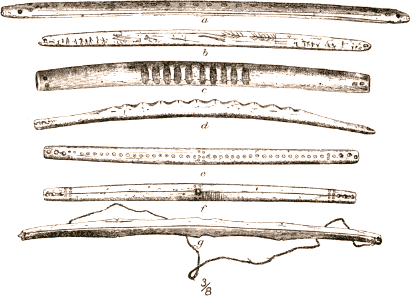
Fig. 153.—Drill bows.
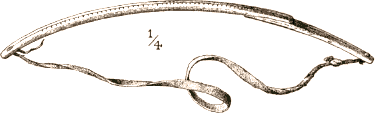
Fig. 154.—Spliced drill bow.
There are two other specimens of the same pattern, both rather smaller. No. 89503 [891], Fig. 150, from Nuwŭk, has the stone of black and white syenite. This specimen is very old and dirty, and worn through to the stone on one side, where the teeth have come against it. No. 89787 [1004c], Fig. 155, is almost exactly the same shape as the type, but has for a socket a piece of iron 1.1 inches square, hollowed out as usual. The outside of the wood has been painted with red ocher, but this is mostly worn off. This mouthpiece belonged to Ilû´bw’ga.
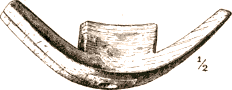
Fig. 155.—Drill mouthpiece, with iron socket.
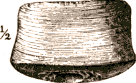
Fig. 156.—Drill mouthpiece without wings.
Fig. 156, No. 89505 [892], from Utkiavwĭñ, represents the pattern which is perhaps rather commoner than the preceding. The wood, which holds the socket of black and white syenite, is simply an elliptical block of spruce. The remaining three specimens are of the same pattern and of the same material as the last, except No. 89507 [908], from Nuwŭk, in which the wood is oak. As it appears very old, this wood may have come from the Plover.
When not in use, the point of the drill is sometimes protected with a sheath. One such sheath was obtained, No. 89447 [1112], figured in Point Barrow Report, Ethnology, Pl. II, Fig. 1. It is of walrus ivory, 3-6 inches long. The end of a piece of thong is passed through the eye and the other part fastened round the open end with a marline-hitch, catching down the end. This leaves a lanyard 9¼ inches long, which is hitched or knotted round the shaft of the drill when the sheath is fitted over the point.

Fig. 157.—Bone-pointed drill.
The drills above described are used for perforating all sorts of material, wood, bone, ivory, metal, etc., and are almost the only boring implements used, even awls being unusual. Before the introduction of iron, the point was made of one of the small bones from a seal’s leg. We obtained four specimens of these bone drills, of which two, at least, appear to be genuine. No. 89498 [956], Fig. 157, is one of these, from Nuwŭk. The shaft is of the ordinary pattern and made of some hard wood, but the point is a roughly cylindrical rod of bone, expanding at the point, where it is convex on one face and concave on the other and beveled on both faces into two cutting edges, which meet in an acute angle. The larger end of the shaft has been split and mended by whipping it for about three-quarters of an inch with sinew braid. No. 89518 [1174], is apparently also genuine, and is like the preceding, but beveled only on the concave face of the point, which is rather obtuse. No. 89519 [1258] was made for the market. It has a rude shaft of whale’s bone, but a carefully made bone point of precisely the pattern of the modern iron ones. No. 89520 [1182] has no shaft, and appears to be an old unfinished drill fitted into a carelessly made bone ferrule.
The drill at the present day is always worked with a bow, which allows one hand to be used for steadying the piece of work. We were informed, however, that formerly a cord was sometimes used without the bow, but furnished with a transverse handle at each end.
We collected six little handles of ivory, carved into some ornamental shape, each with an eye in the middle to which a thong could be attached. All were old, and we never saw them in use. The first two were collected at an early period of our acquaintance with these people, and from our imperfect knowledge of the language we got the impression that they were handles to be attached to a harpoon line.
We were not long, however in finding out that the harpoon has no such appendage, and when the other four came in a year later, at a time when the press of other work prevented careful inquiry into their use, we supposed that they were meant for handles to the lines used for dragging dead seals, as they somewhat resemble such an implement. On our return home, when I had opportunities for making a careful study of the collection, I found that none of the drag lines, either in our own collection or in those of the Museum, had handles of this description. On the other hand, I found many similar implements in Mr. Nelson’s collection labeled “drill-cord handles,” and finally one pair (No. 36319, from Kashunuk, near Cape Romanzoff), still attached to the drill cord. These handles are almost identical in shape with No. 89458 [835], from Utkiavwĭñ. This leaves no doubt in my mind that the so-called “drag-line handles” in our collection are nothing more than handles for drill cords, now wholly obsolete and supplanted by the bows already described. I have figured all six of these handles to show the different patterns of ornamentation. They are all made of walrus ivory, and are all “odd” handles, no two being mates. Fig. 158a (No. 56526) [86], is 5.2 inches long, and light blue beads are inserted for eyes in the seal’s heads. The eye for the drill cord is made by boring two median holes at the middle of one side so that they meet under the surface and make a longitudinal channel.
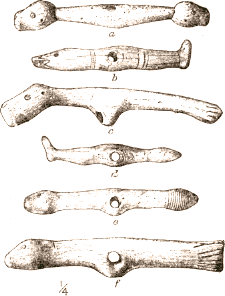
Fig. 158.—Handles for drill cords.
Fig. 158b (No. 56527 [23] from Utkiavwĭñ), is 4.3 inches long, and is very accurately carved into the image of a man’s right leg and foot, dressed in a striped deerskin boot. The end opposite to the foot is the head of some animal, perhaps a wolf, with bits of dark wood inlaid for eyes. The eye is a simple large transverse hole through the thigh.
Fig. 158c (No. 89455 [929] from Nuwŭk), is 5.9 inches long. The eye is drilled lengthwise through a large lump projecting from the middle of one side. Small blue beads are inlaid for the eyes, and one to indicate the male genital opening.
Fig. 158d (No. 89456 [930] from Nuwŭk) is like No. 56527 [23], but represents the left foot and is not so artistically carved. It is 3.7 inches long.
Fig. 158e (No. 89457 [925] from Nuwŭk) is 4.7 inches long, and resembles No. 89455 [929], but has instead of the seal’s tail and flippers a large ovoid knob ornamented with incised and blackened rings. The “eye” is bored transversely.
Fig. 158f (No. 89458 [835] from Utkiavwĭñ) differs from No. 89455 [925] in having a transverse eye, and being less artistically carved. Bits of lead are inlaid for the eyes. It is 4.4 inches long. The name of this implement is kû´ñ-i.
We obtained six specimens of an old flint tool, consisting of a rather long thick blade mounted in a straight haft about 10 inches long, of which we had some difficulty in ascertaining the use. We were at last able to be quite sure that they were intended for drilling, or rather reaming out, the large cavity in the base of the ivory head of a whale harpoon, which fits upon the conical tip of the fore-shaft. The shape of the blade is well fitted for this purpose. It is not unlikely that such tools, worked as these are, by hand, preceded the bone drills for boring all sorts of objects, and that the habit of using them for making the whale harpoon was kept up from the same conservatism founded on superstition which surrounds the whole whale fishery. (See under “Whale fishing,” where the subject will be more fully discussed.) No. 89626 [870], figured in Point Barrow Report, Ethnology, Pl. II, Fig. 4, is a typical implement of this class (ītaun, i´tûgetsau´). The blade is of black flint, flaked, 2 inches long, imbedded in the end of a haft of spruce, 10.5 inches long. The blade is held in place by whipping the cleft end of the haft with sinew braid.
Two of the other specimens, No. 89627 [937] and No. 89628 [912], are of essentially the same pattern and material, but have rounded hafts. No. 89629 [960] and No. 89630 [1068], Figs. 159a, 159b, have blades of the same pattern, but have hafts fitted for use with the mouthpiece and bow, showing that sometimes, at least in later times, these tools were so used. No. 89625 [1217] (Fig. 160) has no haft, but the blade, which is rather narrow in proportion to its length (2.3 inches by 0.5), is fitted into a short ferrule of antler, with a little dovetail on the edge for attaching it to the haft.
Of awls we saw only one specimen, which, perhaps, ought rather to be considered a little hand drill. This is No. 89308 [1292], Fig. 161, from Utkiavwĭñ. The point is the tip of a common three-cornered file, sharpened down. It is imbedded in a handle of fossil ivory which has turned a light yellowish brown from age. Its total length is 2.8 inches.
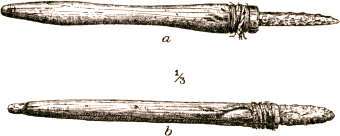
Fig. 159.—Flint-bladed reamers.
Hammers.—
At the present day nearly every man has been able to procure an iron hammer of some kind, which he uses with great handiness. Before the introduction of iron, in addition to the bone and stone mauls above described as bone crushers, unhafted pebbles of convenient shape were also employed. No. 56661 [274] is such a stone. It is an ovoid water-worn pebble of greenish gray quartzite, 3½ inches long. The ends are battered, showing how it had been used. It was brought from one of the rivers in the interior by one of the natives of Utkiavwĭñ.
Files.—
Files of all kinds are eagerly sought after by the natives, who use them with very great skill and patience, doing nearly all their metal work with these tools. For instance, one particularly ingenious native converted his Winchester rifle from a rim fire to a central fire with nothing but a file. To do this he had to make a new firing pin, as the firing pin of the rim-fire gun is too short to reach the head of the cartridge. He accomplished this by accurately cutting off, to the proper length, an old worn-out three-cornered file. He then filed off enough of each edge so that the rod fitted evenly in the cylindrical hole where the firing pin works. The work was done so carefully that the new firing pin worked perfectly, and he had only to complete the job by cutting off his central fire cartridge shells to a proper length to fit the chamber of the gun.
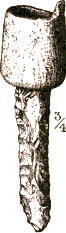
Fig. 160.—Flint-bladed reamer.
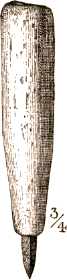
Fig. 161.—Awl.
They have almost no knowledge of working metal with the aid of heat, as is natural from the scarcity of fuel. I have, however, seen them roughly temper small articles, such as fire steels, etc., by heating them in the fire and quenching them in cold water. One native very neatly mended a musket barrel which had been cracked by firing too heavy a charge. He cut a section from another old barrel of somewhat larger caliber, which he heated until it had expanded enough to slip down over the crack, and then allowed it to shrink on.
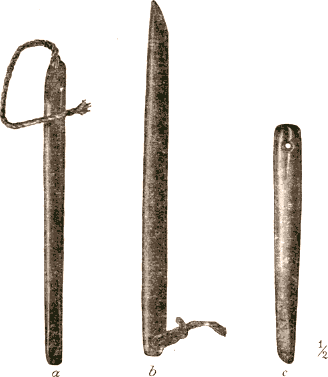
Fig. 162.—Jade whetstones.
Whetstones (ipiksaun).—
Knives are generally sharpened with a file, cutting a bevel, as before mentioned, on one face of the blade only. To “set” or “turn” the edge they use pieces of steel of various shapes, generally with a hole drilled in them so that they can be hung to the breeches belt by a lanyard. One man, for instance, used about half of a razor blade for this purpose, and another a small horseshoe magnet. In former times they employed a very elegant implement, consisting of a slender rod of jade from 3 to 7 inches long, with a lanyard attached to an eye in the larger end. These were sometimes made by cutting a piece from one of the old jade adzes in the manner already described. There are a few of these whetstones still in use at the present day, and they are very highly prized. We succeeded in obtaining nine specimens, of which No. 89618 [801], Fig. 162a, has been selected as the type. It is of hard black stone, probably jade, 6.3 inches long. Through the wider end is drilled a large eye, into which is neatly spliced one end of a stout flat braid of sinew 4¾ inches long.
The remaining whetstones are of very much the same pattern. I have figured five of them, to show the slight variations. Fig. 162b (No. 56662 [393], from Utkiavwĭñ) is of light grayish green jade, smoothly polished and 4.1 inches long. It is chamfered only on the small end at right angles to the breadth, and has the eye prolonged into ornamental grooves on the two opposite faces. The long lanyard is of common sinew braid. No. 56663 [229] (from the same village) is of olive green, slightly translucent jade, 6.8 inches long, and elliptical in section, also chamfered only at the small end. The lanyard, which is a strip of seal thong 9 inches long, is secured in the eye, as described before, with two slits, one in the standing part through which the end is passed and the other in the end with the standing part passed through it. No. 89617 [1262] (from Sidaru) is of olive green, translucent jade, 6.1 inches long, and shaped like the type, but chamfered only at the small end. The lanyard of seal thong is secured in the eye by a large round knot in one end. No. 89619 [837] (from Utkiavwĭñ) is of bright green, translucent jade, 5.1 inches long, and unusually thick, its greatest diameter being 0.6 inch. The tip is gradually worked off to an oblique edge, and it has ornamental grooves running through the eye like No. 56662 [393].
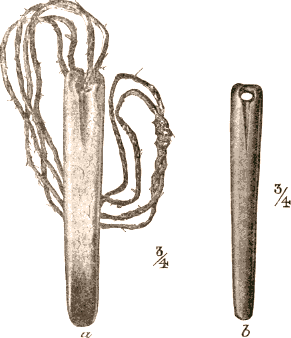
Fig. 163.—Jade whetstones.
No. 89620 [865] (from Nuwŭk) is shaped very much like the type, but has the tip tapered off almost to a point. It is of olive green, slightly translucent jade and is 7 inches long. The lanyard is a piece of sinew braid with the ends knotted together and the bight looped into the eye. A large sky-blue glass bead is slipped on over both parts of the lanyard and pushed up close to the loop. Fig. 163a (No. 89621 [757], from Utkiavwĭñ) is very short and broad (3.6 inches by 0.6), is chamfered at both ends, and has the ornamental grooves at the eye. The material is a hard, opaque, bluish gray stone, veined with black.
A whetstone of similar material was brought by Lieut. Stoney from Kotzebue Sound. The long lanyard is of sinew braid. Fig. 163b (No. 89622 [951], also from Utkiavwĭñ) is a very small, slender whetstone, 3.3 inches long, of dark olive green semitranslucent jade, polished. The tip is not chamfered, but tapers to a blunt point. It has the ornamental grooves at the eye. These are undoubtedly the “stones for making . . . whetstones, or these ready-made” referred to by Dr. Simpson (Op. cit., p. 266) as brought by the Nunatañmiun from the people of the “Ko-wak River.” A few such whetstones have been collected on other parts of the northwest coast as far south as the northern shore of Norton Sound. The broken whetstone mentioned above is of a beautiful bluish green translucent jade. Bits of stone are also used for whetstones, such as No. 89786 [1004f], which belong in Ilû´bw’ga’s tool bag. They are two rough, oblong bits of hard dark gray slate, apparently split off a flat, weathered surface.
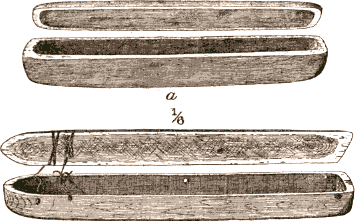
Fig. 164.—Wooden tool boxes.
Tool boxes and bags.—
We collected six specimens of a peculiarly shaped long, narrow box, carved from a single block of wood, which we were informed were formerly used for holding tools. They have gone out of fashion at the present day, and there are but few of them left. No. 89860 [1152], Fig. 164a, represents the typical shape of this box. It is carved from a single block of pine. The cover is slightly hollowed on the under side and is held on by two double rings of twine (one of seal twine and the other of sinew braid), large enough to slip over the end. Each ring is made by doubling a long piece of twine so that the two parts are equal, passing one end through the bight and knotting it to the other. The box and cover seem to have been painted inside and out with red ocher. On the outside this is mostly faded and worn off and covered with dirt, but inside it has turned a dark brown. Fig. 164b (No. 89858 [1319], from Utkiavwĭñ), is a similar box, 21.1 inches long. The cover is held on by a string passing over little hooked ivory studs close to the edge of the box. There were originally five of these studs, two at each end and one in the middle of one side. The string started from one of these studs at the pointed end. This stud is broken and the string fastened into a hole close to it. To fasten on the cover the string was carried over and hooked under the opposite stud, then crossed over the cover to the middle stud, then across to the end stud on the other side, and the loop on the end hooked onto the last stud.
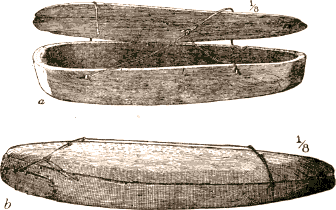
Fig. 165.—Large wooden tool boxes.
No. 89859 [1318] is a smaller box (19 inches long) of the same pattern, with only four studs. The cover has three large blue glass beads, like those used for labrets, inlaid in a line along the middle. No. 89858 [1144], from Utkiavwĭñ, is the shape of the type, but has a thicker cover and six stud holes in the margin. No. 89861 [1151], Fig. 165a, from the same place, is shaped something like a violin case, 22.2 inches long. The cover has been split and “stitched” together with whalebone, and a crack in the broader end of the box has been neatly mended by pegging on, with nine little wooden treenails, a strap of reindeer antler of the same width as the edge and following the curve of its outline. There are four studs, two at each end. The string is made fast to one at the smaller end, carried over to the opposite one, then crossed to the opposite stud at the other end and back under the last one, a bight of the end being tucked under the string between the two last-mentioned studs. The string is made of sinew braid, rope-yarns, and a long piece of seal thong. It was probably at first all of sinew braid, and, gradually growing too short by being broken and knotted together again, was lengthened out with whatever came to hand.
No. 89862 [1593], Fig. 165b, is a large box, of a very peculiar shape, best understood from the figure. The outside is much weathered, but appears to have been roughly carved, and the excavation of the box and cover is very rudely done, perhaps with a stone tool. A hole in the larger end is mended by a patch of wood chamfered off to fit the hole and sewed on round the edges with “over-and-over” stitches of whalebone. The string is arranged in permanent loops, under which the cover can be slipped off and on.
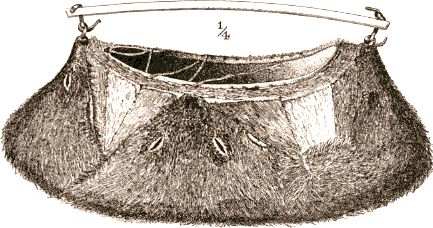
Fig. 166.—Tool bag of wolverine skin.
The arrangement, which is rather complicated, is as follows: On one side of the box, one-half inch from the edge and about 7 inches from each end, are two pairs of holes, one-half inch apart. Into each pair is fastened, by means of knots on the inside, a loop of very stout sinew braid, 3 inches long, and similar loops of seal thong, 5 inches long, are fastened into corresponding pairs of holes on the other side. A piece of seal thong is fastened with a becket-hitch into the loop of seal thong at the small end of the box, passes through both braid loops on the other side, and is carried over through the loop of seal thong at the large end. The end of the thong is knotted into one of the pairs of holes left by the breaking away of a stitch at the edge of the wooden patch above mentioned.
All these boxes are very old and were painted inside with red ocher, which has turned dark brown from age. Tools are nowadays kept in a large oblong, flat satchel, ĭkqûxbwĭñ, which has an arched handle of ivory or bone stretched lengthwise across the open mouth. These bags are always made of skin with the hair out, and the skins of wolverines’ heads are the most desired for this purpose. The collection contains four such bags. No. 89794 [1018], Fig. 166, is the type of these bags. The bottom of the bag is a piece of short-haired brown deerskin, with the hair out, pieced across the middle. The sides and ends are made of the skins of four wolverine heads, without the lower jaw, cut off at the nape and spread out and sewed together side by side with the hair outward and noses up. One head comes on each end of the bag and one on each side, and the spaces between the noses are filled out with gussets of deerskin and wolverine skin. A narrow strip of the latter is sewed round the mouth of the bag. The handle is of walrus ivory, 14½ inches long and about one-half inch square. There is a vertical hole through it one-half inch from each end, and at one end also a transverse hole between this and the tip. One end of the thong which fastens the handle to the bag is drawn through this hole and cut off close to the surface. The other end is brought over the handle and down through the vertical hole and made fast with two half-hitches into a hole through the septum of the nose of the head at one end of the bag. The other end of the handle is fastened to the opposite nose in the same way, but the thong is secured in the hole by a simple knot in the end above. On one side of the handle is an unfinished incised pattern.
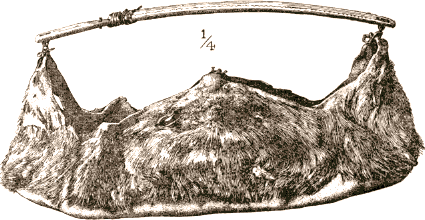
Fig. 167.—Tool bag of wolverine skin.
Fig. 167, No. 89776 [1004], is a similar bag, made of four wolverine heads with the lower jaws attached. The bottom is of stout leather without hair. The mouth is tied up by a bit of thong passed through the nostrils of the two side heads so that it can spread open only about 1¾ inches. The handle is broad and flat, made of walrus ivory, and ornamented with an incised border on top. One end is broken and pieced out with reindeer antler secured by a clumsy “fishing” of seal twine, which is passed through holes in the two parts. The pieces seem to have been riveted together as in the drill bow, No. 89777 [1004b] (Fig. 154), which belongs to this bag. There is a rivet still sticking in the antler. It is possible that the ivory may have broken in the process of riveting the two together. The handle has two vertical holes at each end for the thong, by which it is fastened to the end noses, both in the median line and joined by a short channel on top of the handle. This bag was the property of the Nunatañmiun Ilûbw’ga, so frequently mentioned, and was purchased with all its contents.
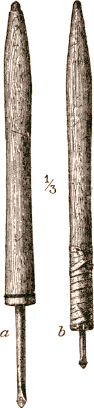
Fig. 168.—Drills belonging to the tool bag.
These are two bow drills, one large and one small (Figs. 168a and 168b, Nos. 89778 and 89779 [1004a]); a drill bow (Fig. 154, No. 89777 [1004b]); a mouthpiece (Fig. 155, No. 89787 [1004c]); a large crooked knife with a sheath (Fig. 114, No. 89780 [1004d]); a flint flaker (No. 89752 [1004e]); a comb for deerskins (Fig. 169, No. 89781 [1005]); a haircomb made of antler (No. 89785 [1006]); a fishhook (No. 89783 [1007]); and a small seal harpoon head (No. 89784 [1008]).
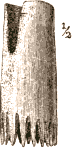
Fig. 169.—Comb for deerskins in the tool bag.
No. 89796 [1118], from Nuwŭk, is of rather unusual materials. The bottom is of brown reindeer skin and the sides and ends are the heads of two wolves and a red fox. The wolf heads meet on one side, and the fox head is put in between them on the other. The fox head has no lower jaw, and one wolf head has only the left half of the lower jaw. The vacant spaces around the mouth are filled by triangular gussets of wolf and reindeer skin. The eyeholes are patched on the inside with deerskin. It has no handle. No. 89795 [1309], the remaining bag, is of the usual pattern, but carelessly made of small pieces of deerskin, with a handle of coarse-grained whale’s bone. It was probably made for sale.
I have figured four handles of such bags to show the style of ornamentation. Fig. 170a(No. 89420 [1111], from Nuwŭk) has incised figures of men and reindeer on the back, once colored with ocher, of which traces can still be seen. This is perhaps a hunting score. (See remarks on this subject under “Bow drills.”) Fig. 170b (No. 89423 [996], from Utkiavwĭñ) is a very elaborate handle, with scalloped edges and fluted back, which is also ornamented with an incised pattern colored with red ocher. The other side is covered with series of the incised circles, each with a dot in the center, so frequently mentioned. Fig. 170c (No. 89424 [890], from Nuwŭk) has on the under side two rows of figures representing the flukes and “smalls” of whales. This is the specimen already mentioned, which the natives called an actual score. The series of twenty-six tails were said to be the record of old Yûksĭ´ña (“Erksinra” of Dr. Simpson), the so-called “chief” at Nuwŭk. All the above handles are of walrus ivory, and have been in actual use. Fig. 170c (No. 56513 [43], from Utkiavwĭñ) is a handle of different material (reindeer antler) and of somewhat different pattern. One end is neatly carved into an exceedingly accurate image of the head of a reindeer which has shed its antlers, with small blue beads inlaid for the eyes. The back of the handle is ornamented with an incised pattern colored with red ocher. We were told that such handles were sometimes fitted to the wooden buckets, but I never saw one so used.
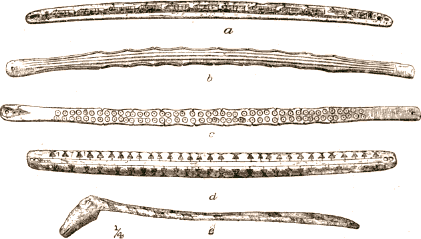
Fig. 170.—Bag handles.
No. 89798 [1075], Fig. 171, is a bag of rather unusual pattern, the only one of the kind we saw. The bottom is a single round piece, 9 inches in diameter, of what seems to be split skin of the bearded seal, flesh side out, and the rest of the bag is of white-tanned seal leather. The sides are of five broad pieces (6, 4½, 4, 5½, and 5 inches broad at the bottom, respectively, narrowing to 2½, 1½, 1¼, 2, and 2⅓, respectively, at the top), alternating with five straight strips, respectively 1½, 1, 1⅓, 1¼, and 1½ inches broad. The edges of these strips overlap the edges of the broad pieces, and are neatly stitched with two threads, as on the soles of the waterproof boots. The outer thread, which is caught in the loop of each stitch of the other, is a slender filament of black whale-bone. This produces a sort of embroidery. The neck is stitched to the bag with the same seam, but the hem at the mouth is merely “run” round with sinew. This bag was probably for holding small tools and similar articles.
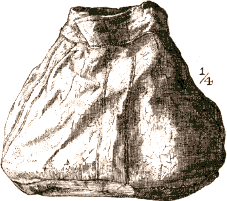
Fig. 171.—Bag of leather.
WEAPONS.
As would naturally be expected from what has been said of the peaceful character of these people, offensive weapons, specially intended for use against men, are exceedingly rare. In case of quarrels between individuals or parties the bows, spears, and knives intended for hunting or general use would be turned against their enemies. Even their rifles, nowadays, are kept much more for hunting than as weapons of offense, and the revolvers of various patterns which many of them have obtained from the ships are chiefly carried when traveling back and forth between the two villages as a protection against a possible bear. We, however, obtained a few weapons which were especially designed for taking human life. One of these was a little club (tĭ´glun) (No. 89492 [1310], Fig. 172, from Utkiavwĭñ) made of the butt end of an old pickax head of whale’s bone, with the point cut down to a blunt end. It is 6.4 inches long and meant to be clenched in the hand like a dagger, and used for striking blows, probably at the temple. The transverse grooves for hafting give a good hold for the fingers. This was the only weapon of the kind seen.