Front matter (continued 19)
Reading edition
Leaving details of form and structure to be considered under the several groups, some general features of the Hepaticae may be looked at here in relation to the conditions under which the plants live. The organization of the gametophyte stands in the closest relation to the factors of light and moisture in the environment. With hardly an exception the liverworts are dorsiventral, and usually one side is turned to the substratum and the other exposed to the light. In thalloid forms a thinner marginal expansion or a definite wing increasing the surface exposed to the light can be distinguished from a thicker midrib serving for storage and conduction. The leaves and stem of the foliose forms effect the same division of labour in another way. The relation of the plant to its water supply varies within the group. In the Marchantiales the chief supply is obtained from the soil by the rhizoids, and its loss in transpiration is regulated and controlled. In most liverworts, on the other hand, water is absorbed directly by the whole general surface, and the rhizoids are of subordinate importance. Many forms only succeed in a constantly humid atmosphere, while others sustain drying for a period, though their powers of assimilation and growth are suspended in the dry state. The cell-walls are capable of imbibing water rapidly, and their thickness stands in relation to this rather than to the prevention of loss of water from the plant. The large surface presented by the leafy forms facilitates the retention and absorption of water. The importance of prolonging the moistened condition as long as possible is further shown by special adaptations to retain water either between the appressed lobes of the leaves or in special pitcher-like sacs. In thalloid forms fimbriate or lobed margins or outgrowths from the surface lead to the same result. Sometimes adaptations to protect the plant during seasons of drought, such as the rolling up of the thallus in many xerophytic Marchantiales, can be recognized, but more often a prolonged dry season is survived in some resting state. The formation of subterranean tubers, which persist when the rest of the plant is killed by drought, is an interesting adaptation to this end, and is found in all three groups (e.g. in species of Riccia, Fossombronia and Anthoceros). No examples of total saprophytism or of parasitism are known, but two interesting cases of a symbiosis with other organisms which is probably a mutually beneficial one, though the nature of the physiological relation between the organisms is not clearly established, may be mentioned. Fungal hyphae occur in the rhizoids and in the cells of the lower region of the thallus of many liverworts, as in the endotrophic mycorhiza of higher plants. Colonies of Nostoc are constantly found in the Anthocerotaceae and in Blasia. In the latter they are protected by special concave scales, while in the Anthocerotaceae they occupy some of the mucilage slits between the cells of the lower surface of the thallus.
Other adaptations concern the protection of the sexual organs and sporogonia, and the retention of water in the neighbourhood of the archegonia to enable the spermatozoid to reach the ovum. In thalloid forms the sexual organs are often sunk in depressions, while in the foliose forms protection is afforded by the surrounding leaves. In addition special involucres around the archegonia have arisen independently in several series. The characters of the sporogonium have as their object the nutrition and effective distribution of the spores, and only exceptionally, as in the Anthocerotaceae, are concerned with independent assimilation. In most forms the capsule is raised above the general surface at the time of opening, usually by the rapid growth of the seta, but in the Marchantiaceae by the sporogonia being raised on a special archegoniophore. The elaters serve as lines of conduction of plastic material to the developing spores, and later usually assist in their dispersal. The spores, with few exceptions, are unicellular when shed, and may develop at once or after a resting period. In their germination a short filament of a few cells is usually developed, and the apical cell of the plant is established in the terminal cell. In other cases a small plate or mass of cells is formed. With one or two exceptions, however, this preliminary phase, which may be compared with the protonema of mosses, is of short duration.
The power of vegetative propagation is widely spread. When artificially divided small fragments of the gametophyte are found to be capable of growing into new individuals. Apart from the separation of branches by the decay of older portions, special gemmae are found in many species. In Aneura the contents of superficial cells, after becoming surrounded by a new wall and dividing, escape as bi-cellular gemmae. Usually the gemmae arise by the outgrowth of superficial cells, and become free by breaking away from their stalk. When separated they may be single cells or consist of two or numerous cells. In Blasia and Marchantia the gemmae are formed within tubular or cup-shaped receptacles, out of which they are forced by the swelling of mucilage secreted by special hairs.
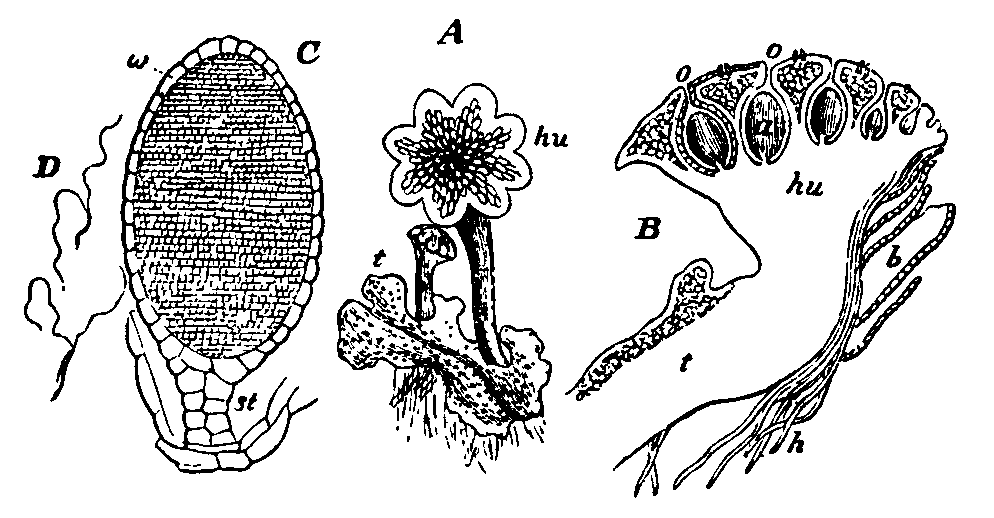
Fig.
5.—
Marchantia polymorpha
. (After Sachs.)
A. Portion of thallus (t) bearing two stalked antheridiophores (hu).
B. Longitudinal section through a young antheridiophore. The antheridia (a) are seated in depressions of the upper surface (o); b, scales; h, rhizoids.
C. Longitudinal section of antheridium; st, stalk; w, wall.
D. Two spermatozoids.
Marchantiales.—The plants of this group are most abundant in warm sunny localities, and grow for the most part on soil or rocks often in exposed situations. Nine genera are represented in Britain. Targionia is found on exposed rocks, but the other forms are less strikingly xerophytic; Marchantia polymorpha and Lunularia spread largely by the gemmae formed in the special gemma-cups on the thallus, and occur commonly in greenhouses. The large thallus of Conocephalus covers stones by the waterside, while Dumortiera is a hygrophyte confined to damp and shady situations. Among the Ricciaceae, most of which grow on soil, Ricciocarpus and Riccia natans occur floating on still water. The dorsiventral thallus is constructed on the same plan throughout the group, and shows a lower region composed of cells containing little chlorophyll and an upper stratum specialized for assimilation and transpiration. The lower region usually forms a more or less clearly marked midrib, and consists of parenchymatous cells, some of which may contain oil-bodies or be differentiated as mucilage cells or sclerenchyma fibres. Behind the apex, which has a number of initial cells, a series of amphigastria or ventral scales is formed. These consist of a single layer of cells, and their terminal appendages often fold over the apex and protect it. Usually they stand in two rows, but sometimes accessory rows occur, and in Riccia only a single median row is present. The thallus bears two sorts of rhizoids, wider ones with smooth walls which grow directly down into the soil, and longer, narrower ones, with peg-like thickenings of the wall projecting into the cell-cavity. The peg-rhizoids, which are peculiar to the group, converge under shelter of the amphigastria to the midrib, beneath which they form a wick-like strand. Through this water is conducted by capillarity as well as in the cell cavities. The upper stratum of the thallus is constructed to regulate the giving off of the water thus absorbed. It consists of a series of air-chambers (fig. 6, B) formed by certain lines of the superficial cells growing up from the surface, and as the thallus increases in area continuing to divide so as to roof in the chamber. The layer forming the roof is called the "epidermis," and the small opening left leading into the chamber is bounded by a special ring of cells and forms the "stoma" or air-pore. In most species of Riccia the air-chambers are only narrow passages, but in the other Marchantiales they are more extended. In the simplest cases the sides and base of the chambers perform the work of assimilation (e.g. Corsinia). Usually the surface is extended by the development of partitions in the chambers (Reboulia), or by the growth from the floor of the chamber of short filaments of chlorophyllous cells (Targionia. Marchantia, fig. 6). The stomata may be simply surrounded by one or more series of narrower cells, or, as in the thallus of Marchantia and on the archegoniophores of other forms, may become barrel-shaped structures by the division of the ring of cells bounding the pore. In some cases the lowermost circle of cells can be approximated so as to close the pore. In Dumortiera the air-chambers are absent, their formation being only indicated at the apex.
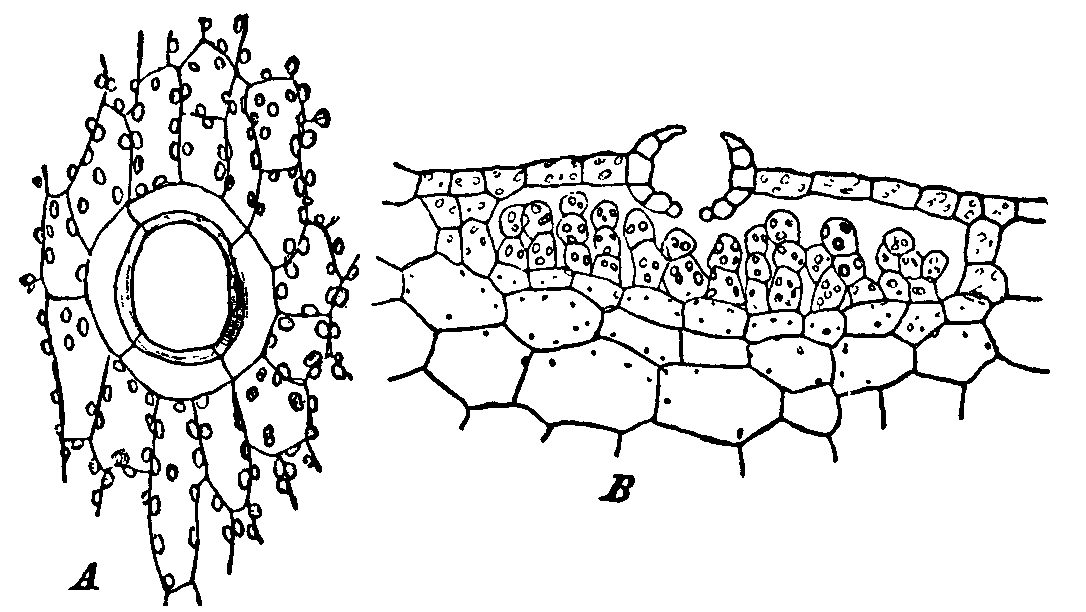
Fig. 6.—Marchantia polymorpha. A, Stoma in surface view. B, Air-chamber with the filaments of assimilating cells and stoma in vertical section.
From Strasburger's Text-book of Botany.
The sexual organs are always situated on the morphologically upper surface of the thallus. In Riccia they are scattered singly and protected by the air-chamber layer. The scattered position of the antheridia is also found in some of the higher forms, but usually they are grouped on special antheridiophores which in Marchantia are stalked, disk-shaped branch-systems (fig. 5). The individual antheridia are sunk in depressions from which the spermatozoids are in some cases forcibly ejected. The archegonial groups in Corsinia are sunk in a depression of the upper surface, while in Targionia they are displaced to the lower side of the anterior end of a branch. In all the other forms they are borne on special archegoniophores which have the form of a disk-shaped head borne on a stalk. The archegoniophore may be an upgrowth from the dorsal surface of the thallus (e.g. Plagiochasma), or the apex of the branch may take part in its formation. When the disk, around which archegonia are developed at intervals, is simply raised on a stalk-like continuation of the branch, a single groove protecting a strand of peg-rhizoids is found on the ventral face of the stalk (Reboulia). In the highest forms (e.g. Marchantia) the archegoniophore corresponds to the repeatedly branched continuation of the thallus, and the archegonia arise in relation to the growing points which are displaced to the lower surface of the disk. In this case two grooves are found in the stalk. The archegonia are protected by being sunk in depressions of the disk or by a special two-lipped involucre. In Marchantia and Fimbriaria an additional investment termed in descriptive works the perianth, grows up around each fertilized archegonium (fig. 1, 3, d). The simple sporogonium found in the Ricciaceae (fig. 4, A) has been described above; as the spores develop, the wall of the spherical capsule is absorbed and the spores lie free in the calyptra, by the decay of which they are set free. In Corsinia the capsule has a well-developed foot, but the sterile cells found among the spore-mother-cells do not become elaters, but remain thin-walled and simply contribute to the nutrition of the spores. In all other forms elaters with spirally thickened walls are found. The seta is short, the capsule being usually raised upon the archegoniophore. Dehiscence takes place either by the upper portion of the capsule splitting into short teeth or falling away as a whole or in fragments as a sort of operculum. The spores on germination form a short germ-tube, in the terminal cell of which the apical cell is established, but the direction of growth of the young thallus is usually not in the same straight line as the germ-tube. The Marchantiales are divided into a number of groups which represent distinct lines of advance from forms like the Ricciaceae, but the details of their classification cannot be entered upon here. The general nature of the progression exhibited by the group as a whole will, however, be evident from the above account.
Jungermanniales.—This large series of liverworts, which presents great variety in the organization of the sexual generation, is divided into two main groups according to whether the formation of archegonia terminates the growth of the branch or does not utilize the apex. The latter condition is characteristic of the more primitive group of the Anacrogynous Jungermanniaceae, in which the branch continues its growth after the formation of archegonia so that they (and later the sporogonia) stand on the dorsal surface of the thallus or leafy plant. In the Acrogynous Jungermanniaceae the plant is throughout foliose, and the archegonia occupy the ends of the main shoot or of its branches. The antheridia are usually globular and long-stalked. The capsule opens by splitting into four halves.
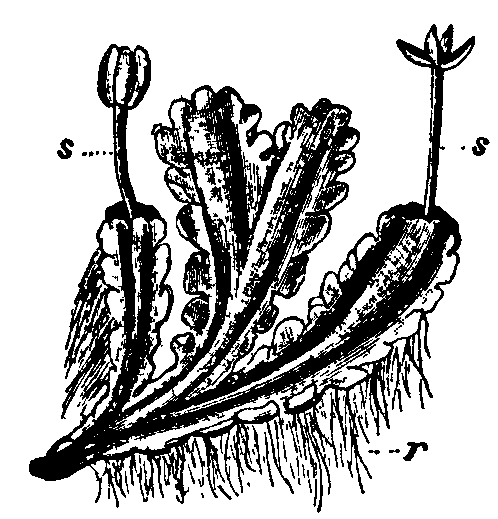
Fig. 7.—Blasia pusilla. The margin of the thallus bears leaf-life lobes. r, Rhizoids; s, sporogonium.
From Strasburger's Text-book of Botany.
Jungermanniaceae Anacrogynae.—The great range of form in the sexual plant is well illustrated by the nine genera of this group which occur in Britain. One thalloid form has already been described in Pellia (fig. 2). Sphaerocarpus, which occurs rarely in stubble fields, is in many respects one of the simplest of the liverworts. The small thallus bears the antheridia and archegonia, each of which is surrounded by a tubular involucre, on the upper surface of distinct individuals. The sporogonium has a small foot, but the sterile cells among the spores do not develop into elaters. The same is true of the capsule of Riella. The plants of this genus, none of the species of which are British, grow in shallow water rooted in the mud, and are unlike all other liverworts in appearance. The usually erect thallus has a broad wing-like outgrowth from the dorsal surface and two rows of rather large scales below. No provision for the opening of the capsule exists in either of these genera. In Aneura the form of the plant may be complicated by a division of labour between root-like, stem-like and assimilating branches of the thallus. The sexual organs are borne on short lateral branches, while in the related genus Metzgeria, which occurs on rocks and tree trunks, the small sexual branches spring from the lower surface of the midrib of the narrow thallus. In these two genera the elaters are attached to a sterile group of cells projecting into the upper end of the capsule, and on dehiscence remain connected with the tips of the valves. Pallavicinia and some related genera have a definite midrib and broad wings formed of one layer of cells, and are of interest owing to the presence of a special water-conducting strand in the midrib. This consists of elongated lignified cells with pitted walls. Blasia pusilla, which occurs commonly by ditches and streams, affords a transition to the foliose types. Its thallus (fig. 7) has thin marginal lobes of limited growth, which are comparable to the more definite leaves of other anacrogynous forms. The ventral surface bears flat scales in addition to the concave scales which, as mentioned above, are inhabited by Nostoc. This interesting liverwort produces two kinds of gemmae, and in the localities in which it grows is largely reproduced by their means. In Fossombronia, of which there are a number of British species, the plant consists of a flattened stem creeping on muddy soil and bearing two rows of large obliquely-placed leaves. The sexual organs are borne on the upper surface of the midrib, and the sporogonium is surrounded by a bell-shaped involucre which grows up after fertilization. Treubia, which grows on rotting wood in the mountain forests of Java, is similarly differentiated into stem and leaf, and is the largest liverwort known, reaching a length of thirty centimetres. Lastly Haplomitrium, a rare British genus, forms with the exotic Calobryum, an isolated group which is most naturally placed among the anacrogynous forms although the archegonia are in terminal groups. The erect branches bear three rows of leaves, and spring from a creeping axis from which root-like branches destitute of rhizoids extend into the substratum.
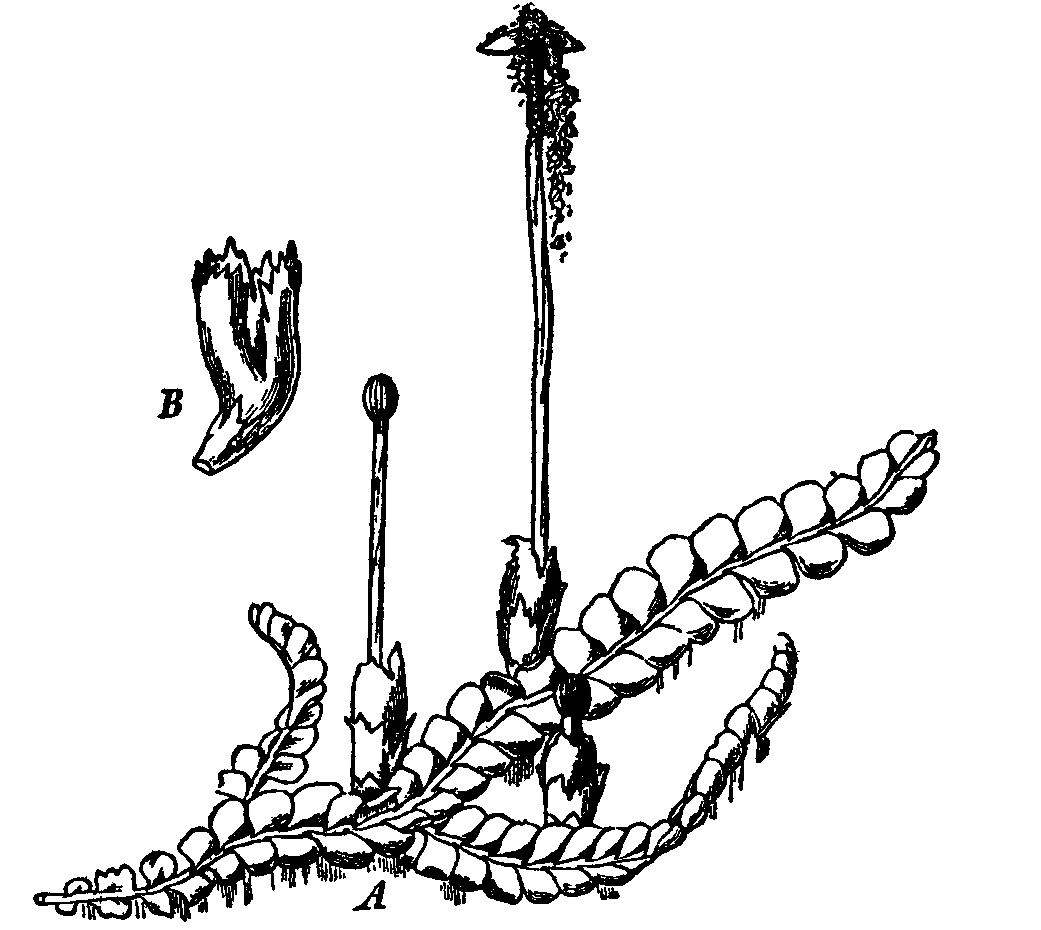
Fig. 8.—Chiloscyphus polyanthos. The plant bears three mature sporogonia which show the elongation of the seta. One of the sporogonia has opened. B, The "perianth" with the small perichaetial leaves below it. (After Goebel.)
Jungermanniaceae Acrogynae.—The plant consists of leafy shoots, the origin of which can be understood in the light of the foliose forms described above. The great majority of existing liverworts belong to this group, the general plan of construction of which is throughout very similar. In Britain thirty-nine genera with numerous species are found. With few exceptions the stem grows by means of a pyramidal apical cell cutting off three rows of segments. Each segment gives rise to a leaf, but usually the leaves of the ventral row (amphigastria) are smaller and differently shaped from those of the two lateral rows; in a number of genera they are wanting altogether. Sometimes the leaves retain their transverse insertion on the stem, and the two lobes of which they consist are developed equally. More often they come to be obliquely inserted, the anterior edge of each leaf lying under or over the edge of the leaf in front. The two lobes are often unequally developed. In Scapania the upper lobe is the smaller, while in Radula, Poretta and the Lejeuneae this is the case with the lower lobe. The folding of one lobe against another assists in the retention of water. Pitcher-like structures have arisen in different ways in a number of genera, and are especially common in epiphytic forms (Frullania, Lepidolaena, Pleurozia). In some forms the leaves are finely divided, and along with the hair-like paraphyllia form a loose weft around the stem (Trichocolea). The rhizoids spring from the lower surface of the stem, and sometimes from the bases of the leaves. The branches arise below and by the side of the leaves.
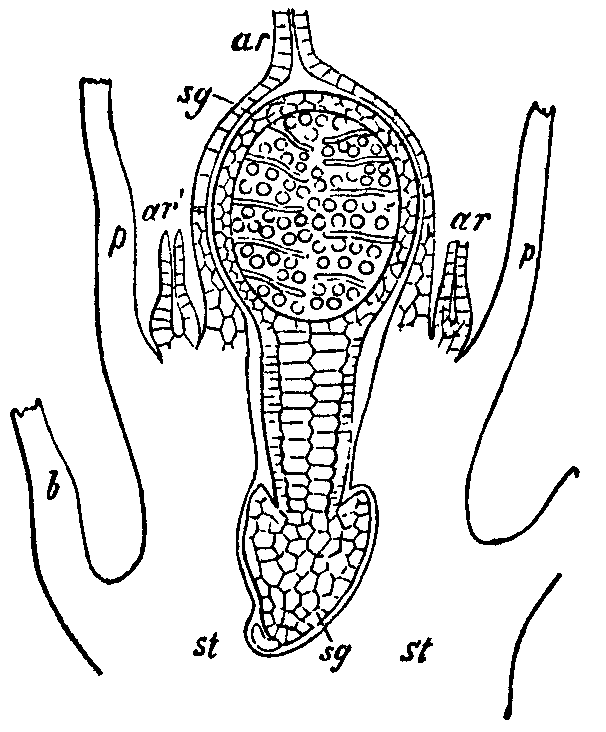
Fig. 9.—Cephalozia bicuspidata. Longitudinal section of the summit of a shoot bearing a nearly mature sporogonium, sg, still enclosed in the calyptra; ar′, archegonia which have remained unfertilized; st, stem; b, leaf; p, perianth. (After Hofmeister.)
The sexual organs may occur on the same or on distinct individuals. The antheridia are protected by leaves which are often modified in shape. The archegonia are borne at the apex of the main stem or of a lateral branch. A single archegonium may arise from the apical cell (Lejeunea); more commonly a number of others are formed from the surrounding segments. The leaves below the archegonial group are frequently modified in size and shape, but the chief protection is afforded by a tubular perianth, which corresponds to a coherent whorl of leaves and grows up independently of fertilization. The perianth serves also to enclose and protect the sporogonium during its development. In a number of forms belonging to different groups the end of the stem on which the sporogonium is borne grows downwards so as to form a hollow tubular sac enclosing the sporogonium; in other cases this marsupial sac is formed by the base of the sporogonium boring into the thickened end of the stem. The sac usually penetrates into the soil and bears rhizoids on its outer surface. Kantia, Calypogeia and Saccogyna are British forms, which have their sporogonia protected in this way. The sporogonium is very similar throughout the group (figs. 8, 9). At maturity the seta elongates rapidly, and the wall of the capsule splits more or less completely into four valves, allowing the elaters and spores to escape. In the Jubuloideae, which in other respects form a well-marked group, the seta is short and the elaters extend from the upper part of the capsule to the base; at dehiscence they remain fixed to the valves into which the capsule splits. The germinating spore usually forms a short filament, but in other cases a flat plate of cells growing by a two-sided apical cell is first formed (Radula, Lejeunea). In one or two tropical forms the pro-embryonic stage is prolonged, and leafy shoots only arise in connexion with the sexual organs. In Protocephalozia, which grows on bare earth in South America, this pro-embryo is filamentous, while in Lejeunea Metzgeriopsis, which grows on the leaves of living plants, it is a flat branched thallus closely applied to the substratum. Other cases of the plant being, with the exception of the sexual branches, apparently thalloid, are on the other hand to be explained as due to the reduction of the leaves and flattening of the stem of a shoot (Pteropsiella, Zoopsis).
The Acrogynous Jungermanniaceae fall into a number of natural groups, which cannot, however, be followed out here. They occur in very various situations, on the ground, on rocks and stones, on tree trunks, and, in the damp tropics, on leaves. Usually they form larger or smaller tufts of a green colour, but some forms have a reddish tint.
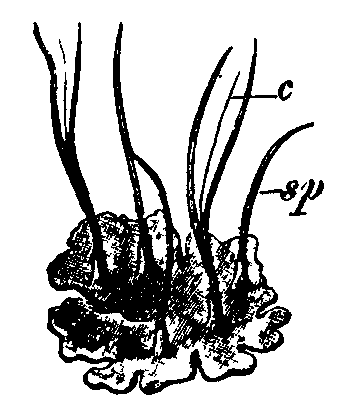
Fig. 10.—Anthoceros laevis. sp, Sporogonium; c, columella.
From Strasburger's Text-book of Botany.
Anthocerotales.—This small and very natural group includes the three genera Anthoceros, Dendroceros and Notothylas, and stands in many respects in an isolated position among the Bryophyta. Three species of Anthoceros occur in Britain, growing on the damp soil of fields, ditches, &c. The dark green thallus has an ill-defined midrib, and is composed of parenchymatous cells. In each assimilating cell there is usually a single large chloroplast. The apical region, which has a single initial cell, is protected by mucilage secreted by the mucilage slits, which are small pit-like depressions between superficial cells of the lower surface. Mucilage is also often formed in intercellular spaces within the thallus. Colonies of Nostoc are constantly found living in some of the mucilage slits which then become enlarged. The sexual organs are scattered over the upper surface. The stalked globular antheridia are exceptional in being formed endogenously, and are situated in groups in special intercellular spaces. The superficial layer of cells bounding the cavity does not break down until the antheridia are nearly mature. Occasionally antheridia develop on the surface of shaded portions of the thallus. The necks of the archegonia hardly project above the general surface of the thallus. In structure and development they agree with other Hepaticae, though differences of detail exist. The young sporogonium is protected by a thick calyptra derived from the tissue of the thallus around the archegonium. The sporogonium consists of a large bulbous foot, the superficial cells of which grow out into processes, and a long capsule, which continues to grow for months by the activity of a zone of cells between it and the foot, and may attain the length of an inch and a half. The wall of the capsule is several layers of cells thick, and since the epidermis contains functional stomata and the underlying cells possess chlorophyll it is capable of assimilation. In the centre of the capsule is a strand of narrow elongated cells forming the columella, and between this and the wall spores mixed with elaters are formed from the dome-shaped archesporium, the origin of which has already been described (fig. 4, D). The capsule opens by splitting into two valves from the apex downwards, and the mature spores escape while others are developing in succession below. In Dendroceros, which grows as an epiphyte in the tropics, the thallus has a well-defined midrib and broad wings composed of a single layer of cells. The capsule is similar to that of Anthoceros, but has no stomata, and the elaters have spirally thickened walls. Some species of Anthoceros agree with it in these respects. Notothylas resembles Anthoceros in its thallus, but the sporogonium is much smaller. In some species, although the columella and archesporium arise in the usual way, both give rise to mingled spores and elaters, and no sterile columella is developed.
Musci (Mosses).
Though the number of species of mosses is far greater than of liverworts, the group offers much less diversity of form. The sexual generation is always a leafy plant, which is not developed directly from the spore but is borne on a well-marked and usually filamentous protonema. The general course of the life-history and the main features of form and structure will be best understood by a brief account of a particular example.
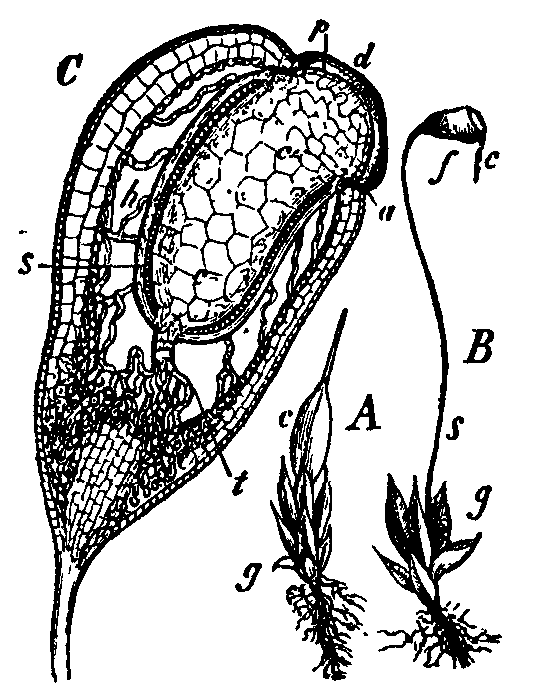
Fig.
11.—
Funaria hygrometrica.
A, Leafy shoot (g) bearing a young sporogonium enclosed in the calyptra (c).
B, Similar plant with an almost mature sporogonium; s, seta; f, capsule; c, calyptra.
C, Median longitudinal section of a capsule, with the seta gradually widening into the apophysis at its base; d, operculum; p, peristome; a, annulus; c, columella; s, archesporium; h, air-space between the spore-sac and the wall of the capsule.
(From Goebel's Pflanzenmorphologie, by permission of W Engelmann)
Funaria hygrometrica is a moss of very common occurrence even in towns on the soil of paths, at the foot of walls and in similar places. The small plants grow closely crowded in tufts, and consist of short leafy shoots attached to the soil by numerous fine rhizoids. The latter, in contrast to the rhizoids of liverworts, are composed of rows of elongated cells and are branched. The leaves are simple, and except for the midrib are only one layer of cells thick. The structure of the stem though simple is more complicated than in any liverwort. The superficial cells are thick-walled, and there is a central strand of narrow cells forming a water-conducting tissue. The small strand of elongated cells in the midrib of the leaf runs down into the stem, but is not usually connected with the central strand. The sexual organs are developed in groups at the apices, the antheridial group usually terminating the main axis while the archegonia are borne on a lateral branch. The brown tint of the hair-like paraphyses mixed with antheridia (fig. 15) makes the male branch conspicuous, while the archegonia have to be carefully looked for enclosed by the surrounding leaves (fig. 16, B). The sporogonium developed from the fertilized ovum grows by means of a two-sided apical cell (fig. 16 A), and is at first of uniform thickness. After a time the upper region increases in diameter and forms the capsule, while the lower portion forms the long seta and the foot which is embedded in the end of the stem. With the growth of the sporogonium the archegonial wall, which for a time kept pace with it, is broken through, the larger upper part terminated by the neck being carried up on the capsule as the calyptra, while the basal portion remains as a tubular sheath round the lower end of the seta (cf. figs. 16, C, and fig. 11, A, B). The seta widens out at the base of the capsule into a region known as the apophysis. The peripheral cells of the seta are thick-walled, and it has a central strand of elongated conducting cells. In the epidermis of the apophysis functional stomata, similar to those of the higher plants, are present and, since cells containing chlorophyll are present below the superficial layers of the apophysis and capsule, the sporogonium is capable of independent assimilation. The construction of the capsule will be best understood from the median longitudinal section (fig. 11, C). The central region extending between the apophysis and the operculum is composed of sterile tissue and forms the columella (c). Immediately around this is the layer of cells from which the spores will be developed (s), and the layers of cells on either side of this form the walls of the spore-sac, which will contain the spores. Between the wall of the capsule, which is composed of several layers of cells, and the spore-sac is a wide intercellular space (h) bridged across by trabeculae consisting of rows of chlorophyll-containing cells. At the junction of the operculum (d) with the rest of the capsule is a circle of cells forming the annulus (a), by help of which the operculum is detached at maturity as a small lid. Its removal does not, however, leave the mouth of the capsule wide open, for around the margin are two circles of pointed teeth forming the peristome. These are the thickened cell-walls of a definite layer of cells (p), and appear as separate teeth owing to the breaking down of the unthickened cell-walls. The numerous spores which have been developed in the spore sac can thus only escape from the pendulous capsule through narrow slits between the teeth, and these are closed in damp air. The unicellular spores when supplied with moisture germinate (fig. 12) and give rise to the sexual generation. A filamentous protonema is first developed, some of the branches of which are exposed to the light and contain abundant chlorophyll, while others penetrate the substratum as brown or colourless rhizoids. The moss-plants arise from single projecting cells, and numerous plants may spring from the protonema developed from a single spore.
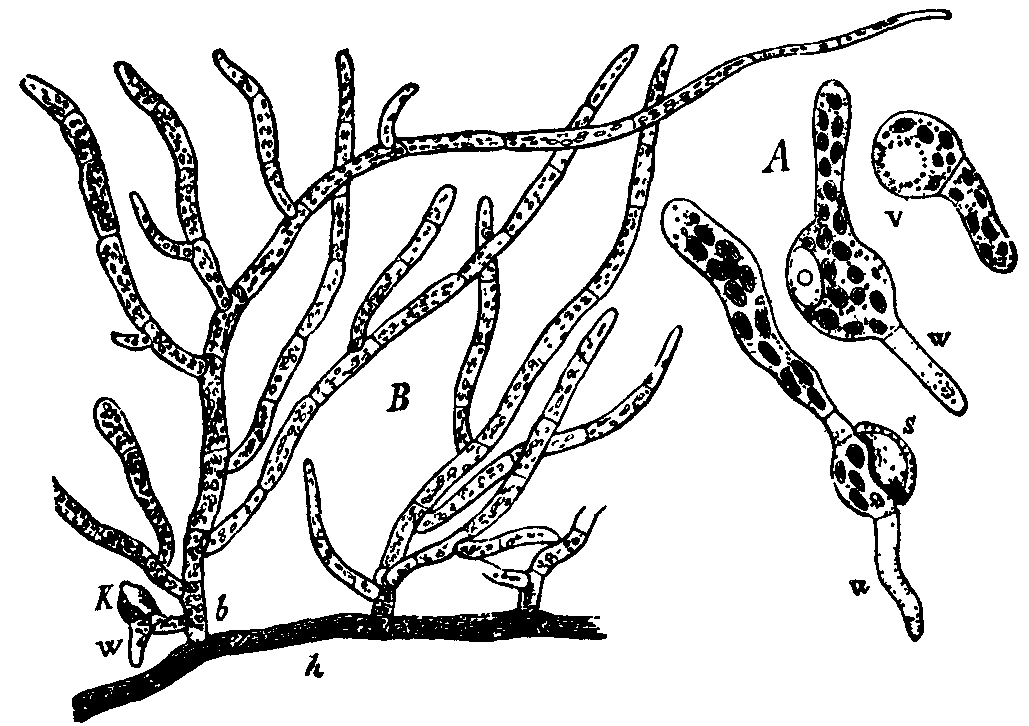
Fig.
12.—
Funaria hygrometrica.
(After Goebel.)
A, Germinating spores. s, Wall of spore; v, vacuole; w, rhizoid.
B, Part of a developed protonema. h, Creeping filament with brown walls from which the filaments of chlorophyll-containing cells (b) arise; k, young moss-plant; w, its first rhizoid.
The majority of the mosses belong to the same great group as Funaria, the Bryales. The other two subdivisions of the Musci are each represented by a single genus. In the Andreaeales the columella does not extend to the upper end of the capsule, and the latter opens by a number of lateral slits. The Sphagnales also have a dome-shaped spore-sac continued over the columella, and, though their capsule opens by an operculum, they differ widely from other mosses in the development of the sporogonium as well as in the characters of the sexual generation. The three groups are described separately below, but some more general features of the mosses may be considered here.
On the whole mosses grow in drier situations than the liverworts, and the arrangements they present for the conduction of water in the plant are also more complete and suggest in some cases comparisons with the higher plants. In spite of this, however, they are in great part dependent on the absorption of water through the general surface of the shoot, and the power of rapid imbibition possessed by their cell-walls, the crowded position of the small leaves on the stem, and special adaptations for the retention of water on the surface, have the same significance as in the foliose liverworts. The different appearance of exposed mosses in dry weather and after a shower illustrates this relation to the water supply. The protonema is always a well-marked stage in the life-history. Not only does a moss-plant never arise directly from the spore, but in all cases of vegetative reproduction, apart from the separation of branches by decay of older regions of the plant, a protonema is found. Usually the protonema is filamentous and ceases to be evident after the plants have developed. But in some small mosses (e.g. Ephemerum) it plays the chief part in assimilation and lives on from year to year. In Sphagnum, Andreaea and some genera of the Bryales the protonema or some of its branches have the form of flat plates or masses of cells. The formation of the moss-plant on the protonema is always from a single cell and is similar in all mosses. The first three walls in this cell intersect one another, and define the three-sided pyramidal apical cell by means of which the shoot continues to grow. In Fissidens and a few other mosses the apical cell is two-sided. The leaves formed by the successive segments gradually attain their normal size and structure. Each segment of the initial cell gives rise to a leaf and a portion of the stem; the branches arise from the lower portion of a segment and stand immediately below a leaf. The leaves may form three vertical rows, but usually their arrangement, owing to the direction of the segment walls at the apex, becomes more complicated. Their growth proceeds by means of a two-sided apical cell, and the midrib does not become more than one cell thick until later. In addition to the leaves the stem often bears hair-like structures of different kinds, some of which correspond to modified branches of protonema. The branched filamentous rhizoids which spring from the lower region of the stem also correspond to protonemal branches. The structure of both stem and leaf reaches a high grade of organization in some mosses. Not only are thick-walled sclerenchymatous cells developed to give rigidity to the periphery of the stem and the midrib of the leaf, but in many cases a special water-conducting tissue, consisting of elongated cells, the end walls of which are thin and oblique, forms a definite central strand in the stem. In the forms in which it is most highly developed (Polytrichaceae) this tissue, which is comparable with the xylem of higher plants, is surrounded by a zone of tissue physiologically comparable to phloem, and in the rhizome may be limited by an endodermis. The conducting strands in the leaves show the same tissues as in the central strand of the stem, and in the Polytrichaceae and some other mosses are in continuity with it. The independent origin of this conducting system is of great interest for comparison with the vascular system of the sporophyte of the higher plants.
The sexual organs, with the exception of the antheridia of Sphagnum, are borne at the apices of the main shoot or of branches. Their general similarity to the mature antheridia and archegonia of liverworts and the main difference in their development have been referred to. The antheridia open by means of a cap cell or groups of cells with mucilaginous contents. The details of construction of the sporogonium are referred to below. In all cases (except Archidium) a columella is present, and all the cells derived from the archesporium produce spores, no elaters being formed. In a few cases the germination of the spore commences within the capsule. The development of the sporogonium proceeds in all cases (except in Sphagnum) by means of an apical cell cutting off two rows of segments. The first periclinal division in the region forming the capsule separates an inner group of cells (the endothecium) form the peripheral layer (amphithecium). In Sphagnum, as in Anthoceros, the archesporium is derived from the amphithecium; in all other mosses it is the outermost layer of the endothecium.
Vegetative propagation is widely spread in the mosses, and, as mentioned above, a protonema is always formed in the development of the new plant. The social growth of the plants characteristic of many mosses is a result of the formation of numerous plants on the original protonema and on developments from the rhizoids. Besides this, gemmae may be formed on the protonema, on the leaves or at the apex, and some mosses have specialized shoots for their better protection or distribution. Thus in Georgia the stalked, multicellular gemmae are borne at the ends of shoots surrounded by a rosette of larger leaves, and in Aulacomnium androgynum they are raised on an elongated leafless region of the shoot. In other cases detached leaves or shoots may give rise to new plants, and when a moss is artificially divided almost any fragment may serve for reproduction.
Even in those rare cases in which the sexual generation can be developed without the intervention of spore production from the tissues of the sporogonium, a protonema is formed from cut pieces of the seta or in some cases from intact sporogonia still attached to the plant. This phenomenon of apospory was first discovered in mosses, but is now also known in a number of ferns (see Pteridophyta).
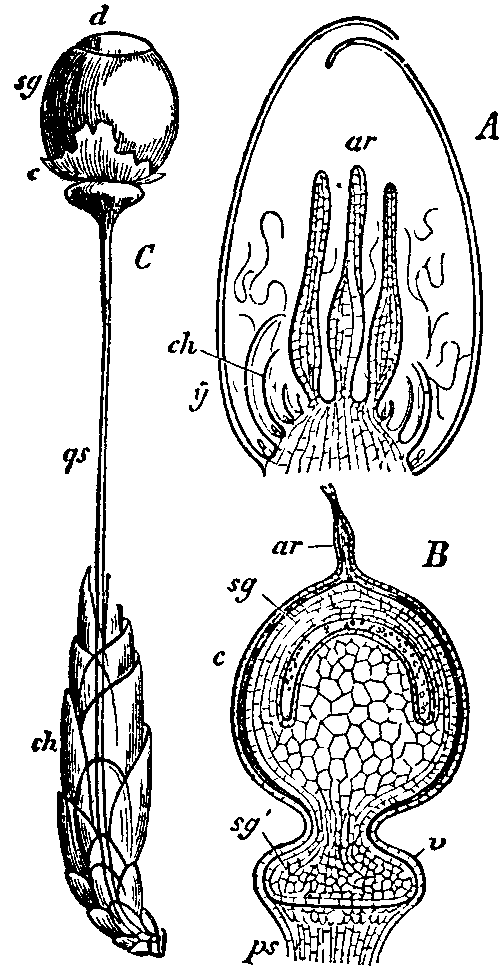
Fig. 13.—Sphagnum acutifolium. (After Schimper.)
A. Longitudinal section of apex of a bud bearing archegonia (ar), enclosed by the large leaves (y); ch, small perichaetial leaves.
B. Longitudinal section of the sporogonium borne on the pseudopodium (ps); c, calyptra; ar, neck of archegonium; sg′, foot; sg, capsule.
C. S. squarrosum. Ripe sporogonium raised on the pseudopodium (qs) above the enclosing leaves (ch); c, the ruptured calyptra; sg, capsule; d, operculum.
Sphagnales.—The single genus Sphagnum occupies a very distinct and isolated position among mosses. The numerous species, which are familiar as the bog-mosses, are so similar that minute structural characters have to be relied on in their identification. The plants occur in large patches of a pale green or reddish colour on moors, and, when filling up small lakes or pools, may attain a length of some feet. Their growth has played a large part in the formation of peat. The species are distributed in temperate and arctic climates, but in the tropics only occur at high levels. The protonema forms a flat, lobed, thalloid structure attached to the soil by rhizoids, and the plants arise from marginal cells. The main shoot bears numerous branches which appear to stand in whorls; some of them bend down and become applied to the surface of the main axis. The structure of the stem and leaves is peculiar. The former shows on cross-section a thin-walled central tissue surrounded by a zone of thick-walled cells. Outside this come one to five layers of large clear cells, which when mature are dead and empty; their walls are strengthened with a spiral thickening and perforated with round pores. They serve to absorb and conduct water by capillarity. The leaves have no midrib and similar empty cells occur regularly among the narrow chlorophyll-containing cells, which thus appear as a green network. The antheridia are globular and have long stalks. They stand by the side of leaves of special club-shaped branches. The archegonial groups occupy the apices of short branches (fig. 13, A.). The mature sporogonium consists of a wide foot separated by a constriction from the globular capsule (B). There is no distinct seta, but the capsule is raised on a leafless outgrowth of the end of the branch called a pseudopodium (C, qs). The capsule, the wall of which bears rudimentary stomata, has a small operculum but no peristome. There is a short, wide columella, over which the dome-shaped spore-sac extends, and no air-space is present between the spore-sac and the wall. In the embryo a number of tiers of cells are first formed. The lower tiers form the foot, while in the upper part the first divisions mark off the columella, around which the archesporium, derived from the amphithecium, extends. The sporogonium when nearly mature bursts the calyptra irregularly. The capsule opens explosively in dry weather, the operculum and spores being thrown to a distance. The spore on germination forms a short filament which soon broadens out into the thalloid protonema. Some twelve species of Sphagnum are found in Britain.
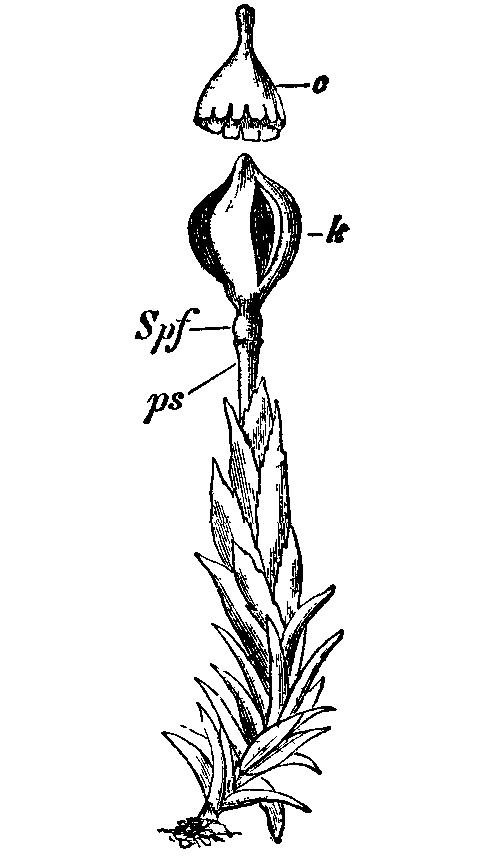
Fig. 14.—Andreaea petrophila. Plant bearing opened capsule.
(k) ps, Pseudopodium.
c, Calyptra.
spf, Foot of sporogonium.
From Strasburger's Textbook of Botany
Andreaeales.—The species of the single genus Andreaea (fig. 14) are small, dark-coloured mosses growing for the most part in tufts on bare rocks in alpine and arctic regions. Four species occur on alpine rocks in Britain. The spore on germination gives rise to a small mass of cells from which one or more short filaments grow. The filament soon broadens into a ribbon-shaped thallus, several cells thick, which is closely applied to the rock. Erect branches may arise from the protonema, and gemmae may be developed on it. The stem of the plant, which arises in the usual way, has no conducting strand and the leaves may or may not have midribs. The leaf grows by a dome-shaped instead of by the usual two-sided initial cell. The antheridia are long-stalked. The upper portion of the archegonial wall is carried up as a calyptra on the sporogonium, which, as in Sphagnum, has no seta and is raised on a pseudopodium. The development of the sporogonium proceeds as in the Bryales, but the dome-shaped archesporium extends over the summit of the columella and an air-space is wanting. The capsule does not open by an operculum but by four or six longitudinal slits, which do not reach either the base or apex. In one exotic species the splits occur only at the upper part of the capsule, and the terminal cap breaks away. This isolated example thus appears to approach the Bryales in its mode of dehiscence.
Bryales.—In contrast to the preceding two this group includes a very large number of genera and species. Thus even in Britain between five and six hundred species belonging to more than one hundred genera are found. They occur in the most varied situations, on soil, on rocks and trees, and, in a few instances (Fontinalis), in water. Although exhibiting a wide range in size and in the structural complexity of both generations, they all conform to a general type, so that Funaria, described above, will serve as a fair example of the group. The protonema is usually filamentous, and in some of the simplest forms is long-lived, while the small plants borne on it serve mainly to protect the sexual organs and sporogonia. This is the case in Ephemerum, which grows on the damp soil of clayey fields, and the plants are even more simply constructed in Buxbaumia, which occurs on soil rich in humus and is possibly partially saprophytic. In this moss the filamentous protonema is capable of assimilation, but the leaves of the small plants are destitute of chlorophyll, so that they are dependent on the protonema. The male plant has no definite stem, and consists of a single concave leaf protecting the antheridium. The female plant is rather more highly organized, consisting of a short stem bearing a few leaves around the group of archegonia. The sporogonium is of large size and highly organized, though it presents peculiar features in the peristome. Buxbaumia has been regarded by Goebel as representing a stage which other mosses have passed, and has been described by him as the simplest type of moss. In Ephemerum also we may probably regard the relation of the small plants to the protonema as a primitive one. On the other hand, in the case of Ephemeropsis, which grows on the leaves of living plants in Java, the high organization of the sporogonium makes it probable that the persistent protonema is an adaptation to the peculiar conditions of life. A highly developed protonema provided with leaf-like assimilating organs is found in Georgia, Diphyscium and Oedipodium, all of which show peculiarities in the sporogonium as well. The cells of the protonema of Schistostega, which lives in the shade of caves, are so constructed as to concentrate the feeble available light on the chloroplasts.
We may perhaps regard the persistent protonema bearing small leafy plants as a primitive condition, and look upon those larger plants which remain unbranched and bear the sexual organs at the apex (e.g. Schistostega) as representing the next stage. From this condition different lines of specialization in the form and structure of the plant can be recognized. A large number of mosses stand at about the same grade as Funaria, in that the plants are small, sparingly branched, usually radial, and do not show a very highly differentiated internal structure. In others the form of the plant becomes more complex by copious branching and the differentiation of shoots of different orders. In these cases the shoot system is often more or less dorsiventral, and the sexual organs are borne on short lateral branches (e.g. Thuidium tamariscinum). The Polytrichaceae, on the other hand, show a specialization in structure rather than in form. The high organization of their conducting system has been referred to above, but though many species are able to exist in relatively dry situations, the plants are still dependent on the absorption of water by the general surface. The parallel lamellae of assimilating cells which grow from the upper surface of the leaf in these and some other mosses probably serve to retain water in the neighbourhood of the assimilating cells and so prolong their activity. As common adaptive features in the leaves the occurrence of papillae or outgrowths of the cell-walls to retain water, and the white hairlike leaf tips, which assist in protecting the young parts at the apex of many xerophytic mosses, may be mentioned. The leaves of Leucobryum, which occurs in pale green tufts in shaded woods, show a parallel adaptation to that found in Sphagnum. They are several cells thick, and the small assimilating cells lie between two layers of empty water-storage cells, the walls of which are perforated by pores.
With the possible exception of Archidium, the sporogonium is throughout the Bryales constructed on one plan. Archidium is a small moss occurring occasionally on the soil of wet fields. The protonema is not persistent, and the plants are well developed, resembling those of Pleuridium. The sporogonium has a small foot and practically no seta, and differs in the development and structure of its capsule from all other mosses. The spores are derived from the endothecium, but no distinction of a sterile columella and an archesporium is established in this, a variable number of its cells becoming spore-mother-cells while the rest serve to nourish the spores. The layer of cells immediately around the endothecium becomes the spore-sac, and an air-space forms between this and the wall of the capsule. The very large, thin-walled spores escape on the decay of the capsule, which ruptures the archegonial wall irregularly. On account of the absence of a columella Archidium is sometimes placed in a distinct group, but since its peculiarities have possibly arisen by reduction it seems at present best retained among the Bryales. In all other Bryales there is a definite columella extending from the base to the apex of the capsule, the archesporium is derived from the outermost layer of cells of the endothecium, and an air space is formed between the spore-sac and the wall. In the Polytrichaceae another air space separates the spore-sac from the columella. There is great variety in the length of the seta, which is sometimes practically absent. The apophysis, which may be a more or less distinct region, usually bears stomata and is the main organ of assimilation. In the Splachnaceae it is expanded for this purpose, while in Oedipodium it constitutes most of the long pale stalk which supports the capsule. A distinct operculum is usually detached by the help of the annulus, and its removal may leave the mouth of the capsule widely open. More usually there is a peristome, consisting of one or two series of teeth, which serves to narrow the opening and in various ways to ensure the gradual shedding of the spores in dry weather. In most mosses the teeth are portions of thickened cell-walls but in the Polytrichaceae they are formed of a number of sclerenchymatous cells. In Polytrichum a membranous epiphragm stretches across the wide mouth of the capsule between the tips of the short peristome teeth, and closes the opening except for the interspaces of the peristome.
In a number of forms, which were formerly grouped together, the capsule does not open to liberate the spores. These cleistocarpous forms are now recognized as related to various natural groups, in which the majority of the species possess an operculum. In such forms as Phascum the columella persists, and the only peculiarity is in the absence of arrangements for dehiscence. In Ephemerum (and the closely related Nanomitrium which has a small operculum) the columella becomes absorbed during the development of the spores. Stomata are present on the wall of the small capsule. Such facts as these suggest that in many cases the cleistocarpous condition is the result of reduction rather than primitive, and that possibly the same holds for Archidium.
The former subdivision of the Bryales into Musci Cleistocarpi and Musci Stegocarpi according to the absence or presence of an operculum is thus clearly artificial. The same holds even more obviously for the grouping of the stegocarpous forms into those in which the archegonial group terminates a main axis (acrocarpi) and those in which it is borne on a more or less developed lateral branch (pleurocarpi). Modern classifications of the Bryales depend mainly on the construction of the peristome.
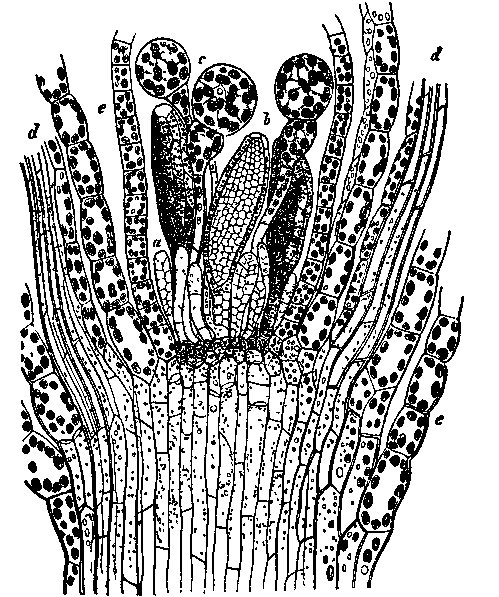
Fig. 15.—Funaria hygrometrica. Longitudinal section through the summit of a male branch. (After Sachs.)
e, Leaves.
d, Leaves cut through the mid-ribs.
c, Paraphyses.
b, Antheridia.
It remains to be considered to what extent the several natural groups of plants classed together in the Bryophyta can be placed in a phylogenetic relation to one another. Practically no help is afforded by palaeobotany, and only the comparison of existing forms can be depended on. The indications of probable lines of evolution are clearest in the Hepaticae. The Marchantiales form an obviously natural evolutionary group, and the same is probably true of the Jungermanniales, although in neither case can the partial lines of progression within the main groups be said to be quite clear. Such a form as Sphaerocarpus, which has features in common with the lower Marchantiales, enables us to form an idea of the divergence of the two groups from a common ancestry. The Anthocerotales, on the other hand, stand in an isolated position, and recent researches have served to emphasize this rather than to confirm the relationship with the Jungermanniales suggested by Leitgeb. The indications of a serial progression are not so clear in the mosses, but the majority of the forms may be regarded as forming a great phylogenetic group in the evolution of which the elaboration of the moss-plant has proceeded until the protonema appears as a mere preliminary stage to the formation of the plants. Parallel with the evolution of the gametophyte in form and structure, a progression can be traced in the sporogonium, although the simplest sporogonia available for study may owe much of their simplicity to reduction. The Andreaeales may perhaps be looked on as a divergent primitive branch of the same stock. On the other hand, the Sphagnales show such considerable and important differences from the rest of the mosses, that like the Anthocerotales among the liverworts, they may be regarded as a group, the relationship of which to the main stem is at least problematical. Between the Hepaticae, Anthocerotales, Sphagnales and Musci, there are no connecting forms known, and it must be left as an open question whether the Bryophyta are a monophyletic or polyphyletic group.
The question of the relationship of the Bryophyta on the one hand to the Thallophyta and on the other to the Pteridophyta lies even more in the region of speculation, on slender grounds without much hope of decisive evidence. In a general sense we may regard the Bryophyta as derived from an algal ancestry, without being able to suggest the nature of the ancestral forms or the geological period at which they arose. Recent researches on those Algae such as Coleochaete which appeared to afford a close comparison in their alternation of generations with Riccia, have shown that the body resulting from the segmentation of the fertilized ovum is not so strictly comparable in the two cases as had been supposed. The series of increasingly complex sporogonia among Bryophytes appears to be most naturally explained on an hypothesis of progressive sterilization of sporogenous tissue, such as has been advanced by Bower. On the other hand there are not wanting indications of reduction in the Bryophyte sporogonium which make an alternative view of its origin at least possible. With regard to the relationship of the Bryophyta and Pteridophyta the article on the latter group should be consulted. It will be sufficient to say in conclusion that while the alternating generations in the two groups are strictly comparable, no evidence of actual relationship is yet forthcoming.
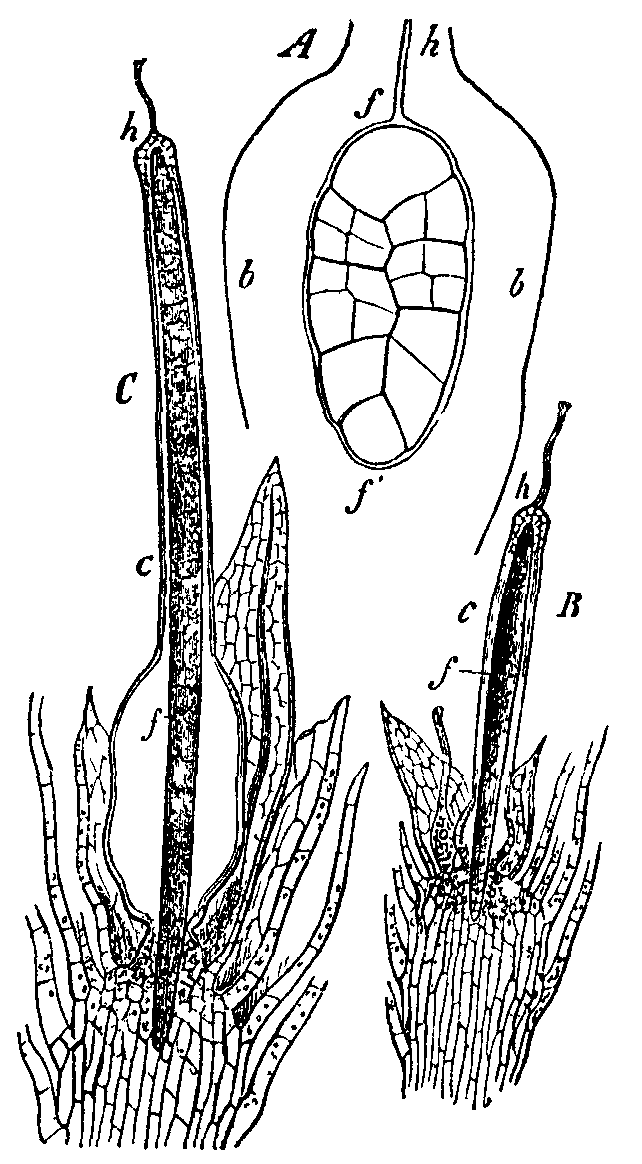
Fig. 16.—Funaria hygrometrica. (After Goebel.)
A. Longitudinal section of the very young sporogonium (f, f′) enclosed in the archegonial wall (b, h).
B, C. Further stages of the development of the sporogonium (f) enclosed in the calyptra formed from the archegonial wall (c) and still bearing the neck (h). The foot of the sporogonium has penetrated into the underlying tissue of the stem of the moss-plant.
For further information consult: Campbell, Mosses and Ferns (London, 1906); Engler and Prantl, Die naturlichen Pflanzenfamilien, Teil i. Abt. 3 (Leipzig, 1893-1907); Goebel, Organography of Plants (Oxford, 1905). Full references to the literature of the subject will be found in these works. For the identification of the British species of liverworts and mosses the following recent works will be of use: Pearson, The Hepaticae of the British Isles (London, 1902); Dixon and Jameson, The Student's Handbook of British Mosses (London, 1896); Braithwaite, British Moss Flora (London, 1887-1905).
(W. H. L.)
BRZOZOWSKI, THADDEUS (d. 1820), nineteenth general of the Jesuits, was appointed in succession to Gabriel Gruber on the 2nd of September 1805. In 1801 Pius VII. had given the Jesuits liberty to reconstitute themselves in north Russia (see Jesuits: History), and in 1812 Brzozowski secured the recognition of the Jesuit college of Polotsk as a university, though he could not obtain permission to go to Spain to agitate for the recognition of the Spanish Jesuits. In 1814 Pius VII., in accordance with the bull Sollicitudo omnium ecclesiarum, gave to Brzozowski among others full authority to receive those who desired to enter the society. The Russian government, however, soon began to be alarmed at the growth of the Jesuits, and on the 20th of December 1815 published an edict expelling them from St Petersburg. Brzozowski, having vainly requested to be allowed to retire to Rome, died on the 5th of February 1820. He is interesting mainly from the fact that he was general of the Society at the time of its restoration throughout Europe.
BUBASTIS, the Graecized name of the Egyptian goddess Ubasti, meaning "she of [the city] Bast" (B;s-t), a city better known by its later name, P-ubasti, "place of Ubasti"; thus the goddess derived her name Ubasti from her city (Bast), and in turn the city derived its name P-ubasti from that of the goddess; the Greeks, confusing the name of the city with that of the goddess, called the latter Bubastis, and the former also Bubastis (later Bubastos). Bubastis, capital of the 19th nome of Lower Egypt, is now represented by a great mound of ruins called Tell Basta, near Zagazig, including the site of a large temple (described by Herodotus) strewn with blocks of granite. The monuments discovered there, although only those in hard stone have survived, are more important than at any other site in the Delta except Tanis and cover a wider range, commencing with Khufu (Cheops) and continuing to the thirtieth dynasty.
Ubasti was one of many feline goddesses, figured with the head of a lioness. In the great development of reverence for sacred animals which took place after the New Kingdom, the domestic cat was especially the animal of Bubastis, although it had also to serve for all the other feline goddesses, owing no doubt to the scarcity and intractability of its congeners. Her hieratic and most general form was still lioness-headed, but a popular form, especially in bronze, was a cat-headed women, often holding in her right hand a lion aegis, i.e. a broad semicircular pectoral surmounted by the head of a lioness, and on the left arm a basket. The cat cemetery on the west side of the town consisted of numbers of large brick chambers, crammed with burnt and decayed mummies, many of which had been enclosed in cat-shaped cases of wood and bronze. Herodotus describes the festival of Bubastis, which was attended by thousands from all parts of Egypt and was a very riotous affair; it has its modern equivalent in the Moslem festival of the sheikh Said el Badawi at Tanta. The tablet of Canopus shows that there were two festivals of Bubastis, the great and the lesser: perhaps the lesser festival was held at Memphis, where the quarter called Ankhto contained a temple to this goddess. Her name is found on monuments from the third dynasty onwards, but a great stimulus was given to her worship by the twenty-second (Bubastite) dynasty and generally by the increased importance of Lower Egypt in later times. Her character seems to have been essentially mild and playful, in contrast to Sokhmi and other feline goddesses. The Greeks equated Ubasti with their Artemis, confusing her with the leonine Tafne, sister of Shöou (Apollo). The Egyptians themselves delighted in identifying together goddesses of the most diverse forms and attributes; but Ubasti was almost indistinguishable in form from Tafne. The name of her son Iphthimis (Nfr-tm), pronounced Eftem, may mean "All-good," and, in the absence of other information about him, suggests a reason why he was identified with Prometheus.
See K. Sethe in Pauly-Wissowa's Realencyclopädie; E. Naville, Bubastis, and Festival Hall of Osorkon II.; Herodotus ii. 67, 137-156; Grenfell and Hunt, Hibeh Papyri, i.
(F. Ll. G.)
BUCARAMANGA, a city of Colombia, capital of the department of Santandér, about 185 m. N.N.E. of Bogotá. Pop. (estimate, 1902) 25,000. It is situated on the Lebrija river, 3248 ft. above sea-level, in a mountainous country rich in gold, silver and iron mines, and having superior coffee-producing lands in the valleys and on the lower slopes. The city is laid out with wide, straight streets, is well built, and has many public buildings of a substantial character.
BUCCANEERS, the name given to piratical adventurers of different nationalities united in their opposition to Spain, who maintained themselves chiefly in the Caribbean Sea during the 17th century.
The island of Santo Domingo was one of several in the West Indies which had early in the 16th century been almost depopulated by the oppressive colonial policy of Spain. Along its coast there were several isolated establishments presided over by Spaniards, who were deprived of a convenient market for the produce of the soil by the monopolies imposed by the mother country. Accordingly English, Dutch and French vessels were welcomed and their cargoes readily bought. The island, thinned of its former inhabitants, had become the home of immense herds of wild cattle; and it became the habit of smugglers to provision at Santo Domingo. The natives still left were skilled in preserving flesh at their little establishments called boucans. The adventurers learned "boucanning" from the natives; and gradually Hispaniola became the scene of an extensive and illicit butcher trade. Spanish monopolies filled the seamen who sailed the Caribbean with a natural hate of everything Spanish. The pleasures of a roving life, enlivened by occasional skirmishes with forces organized and led by Spanish officials, gained upon them. Out of such conditions arose the buccaneer, alternately sailor and hunter, even occasionally a planter—roving, bold, unscrupulous, often savage, with an intense detestation of Spain. As the Spaniards would not recognize the right of other races to make settlements, or even to trade in the West Indies, the governments of France, England and Holland would do nothing to control their subjects who invaded the islands. They left them free to make settlements at their own risk. Each nation contributed a band of colonists, who selected the island of St Kitts or St Christopher, in the West Indies, where the settlers of both nations were simultaneously planted. The English and French were, however, not very friendly; and in 1629, after the retirement of several of the former to an adjoining island, the remaining colonists were surprised and partly dispersed by the arrival of a Spanish fleet of thirty-nine sail. But on the departure of the fleet the scattered bands returned, and encouragement was given to their countrymen in Santo Domingo. For buccaneering had now become a most profitable employment, operations were extended, and a storehouse secure from the attacks of the Spaniards was required. The small island of Tortuga (north-west of Hispaniola) was seized for this purpose in 1630, converted into a magazine for the goods of the rivals, and made their headquarters, Santo Domingo itself still continuing their hunting ground. A purely English settlement directed by a company in London was made at Old Providence, an island in the Caribbean Sea, now belonging to Colombia. It began a little before 1630, and was suppressed by the Spaniards in 1641.
Spain was unable to take immediate action. Eight years later, however, watching their opportunity when many buccaneers were absent in the larger island, the Spaniards attacked Tortuga, and massacred every settler they could seize. But the others returned; and the buccaneers, now in open hostility to the Spanish arms, began to receive recruits from every European trading nation, and for three-quarters of a century became the scourge of the Spanish-American trade and dominions.
France, throughout all this, had not been idle. She had named the governor of St Kitts "Governor-General for the French West India Islands," and in 1641 he took possession of Tortuga, expelled all English from the island, and attempted the same with less success in Santo Domingo. England was absorbed in the Civil War, and the buccaneers had to maintain themselves as best they could,—now mainly on the sea.
In 1654 the Spaniards regained Tortuga from the French, into whose hands it again, however, fell after six years. But this state of affairs was too insecure even for these rovers, and they would speedily have succumbed had not a refuge been found for them by the fortunate conquest of Jamaica in 1655 by the navy of the English Commonwealth. These conquests were not made without the aid of the buccaneers themselves. The taking and re-taking of Tortuga by the French was always with the assistance of the roving community; and at the conquest of Jamaica the English navy had the same influence in its favour. The buccaneers, in fact, constituted a mercenary navy, ready for employment against the power of Spain by any other nation, on condition of sharing the plunder; and they were noted for their daring, their cruelty and their extraordinary skill in seamanship.
Their history now divides itself into three epochs. The first of these extends from the period of their rise to the capture of Panama by Morgan in 1671, during which time they were hampered neither by government aid nor, till near its close, by government restriction. The second, from 1671 to the time of their greatest power, 1685, when the scene of their operations was no longer merely the Caribbean, but principally the whole range of the Pacific from California to Chile. The third and last period extends from that year onwards; it was a time of disunion and disintegration, when the independence and rude honour of the previous periods had degenerated into unmitigated vice and brutality.
It is chiefly during the first period that those leaders flourished whose names and doings have been associated with all that was really influential in the exploits of the buccaneers—the most prominent being Mansfield and Morgan. The floating commerce of Spain had by the middle of the 17th century become utterly insignificant. But Spanish settlements remained; and in 1654 the first great expedition on land made by the buccaneers, though attended by considerable difficulties, was completed by the capture and sack of New Segovia, on the mainland of America. The Gulf of Venezuela, with its towns of Maracaibo and Gibraltar, were attacked and plundered under the command of a Frenchman named L'Ollonois, who performed, it is said, the office of executioner upon the whole crew of a Spanish vessel manned with ninety seamen. Such successes removed the buccaneers further and further from the pale of civilized society, fed their revenge, and inspired them with an avarice almost equal to that of the original settlers from Spain. Mansfield indeed, in 1664, conceived the idea of a permanent settlement upon a small island of the Bahamas, named New Providence, and Henry Morgan, a Welshman, intrepid and unscrupulous, joined him. But the untimely death of Mansfield nipped in the bud the only rational scheme of settlement which seems at any time to have animated this wild community; and Morgan, now elected commander, swept the whole Caribbean, and from his headquarters in Jamaica led triumphant expeditions to Cuba and the mainland. He was leader of the expedition wherein Porto Bello, one of the best-fortified ports in the West Indies, was surprised and plundered.
This was too much for even the adverse European powers; and in 1670 a treaty was concluded between England and Spain, proclaiming peace and friendship among the subjects of the two sovereigns in the New World, formally renouncing hostilities of every kind. Great Britain was to hold all her possessions in the New World as her own property (a remarkable concession on the part of Spain), and consented, on behalf of her subjects, to forbear trading with any Spanish port without licence obtained.
The treaty was very ill observed in Jamaica, where the governor, Thomas Modyford (1620-1679), was in close alliance with the "privateers," which was the official title of the buccaneers. He had already granted commissions to Morgan and others for a great attack on the Isthmus of Panama, the route by which the bullion of the South American mines was carried to Porto Bello, to be shipped to Spain. The buccaneers to the number of 2000 began by seizing Chagres, and then marched to Panama in 1671. After a difficult journey on foot and in canoes, they found themselves nearing the shores of the South Sea and in view of the city. On the morning of the tenth day they commenced an engagement which ended in the rout of the defenders of the town. It was taken, and, accidentally or not, it was burnt. The sack of Panama was accompanied by great barbarities. The Spaniards had, however, removed the treasure before the city was taken. When the booty was divided, Morgan is accused of having defrauded his followers. It is certain that the share per man was small, and that many of the buccaneers died of starvation while trying to return to Jamaica. Modyford was recalled, and in 1672 Morgan was called home and imprisoned in the Tower. In 1674 he was allowed to come back to the island as lieutenant-governor with Lord Vaughan. He had become so unpopular after the expedition of 1671 that he was followed in the streets and threatened by the relations of those who had perished. During his later years he was active in suppressing the buccaneers who had now inconvenient claims on him.
From 1671 to 1685 is the time of the greatest daring, prosperity and power of the buccaneers. The expedition against Panama had not been without its influence. Notwithstanding their many successes in the Caribbean and on land, including a second plunder of Porto Bello, their thoughts ran frequently on the great expedition across the isthmus, and they pictured the South Sea as a far wider and more lucrative field for the display of their united power.
In 1680 a body of marauders over 300 strong, well armed and provisioned, landed on the shore of Darien and struck across the country; and the cruelty and mismanagement displayed in the policy of the Spaniards towards the Indians were now revenged by the assistance which the natives eagerly rendered to the adventurers. They acted as guides during a difficult journey of nine days, kept the invaders well supplied with food, provided them with canoes, and only left them after the taking of the fort of Santa Maria, when the buccaneers were fairly embarked on a broad and safe river which emptied itself into the South Sea. With John Coxon as commander they entered the Bay of Panama, where rumour had been before them, and where the Spaniards had hastily prepared a small fleet to meet them. But the valour of the buccaneers won for them another victory; within a week they took possession of four Spanish ships, and now successes flowed upon them. The Pacific, hitherto free from their intrusion, showed many sail of merchant vessels, while on land opposition south of the Bay of Panama was of little avail, since few were acquainted with the use of fire-arms. Coxon and seventy men returned as they had gone, but the others, under Sawkins, Sharp and Watling, roamed north and south on islands and mainland, and remained for long ravaging the coast of Peru. Never short of silver and gold, but often in want of the necessaries of life, they continued their practices for a little longer; then, evading the risk of recrossing the isthmus, they boldly cleared Cape Horn, and arrived in the Indies. Again, in 1683, numbers of them under John Cook departed for the South Sea by way of Cape Horn. On Cook's death his successor, Edward Davis, undoubtedly the greatest and most prudent commander who ever led the forces of the buccaneers at sea, met with a certain Captain Swan from England, and the two captains began a cruise which was disastrous to the Spanish trade in the Pacific.
In 1685 they were joined in the Bay of Panama by large numbers of buccaneers who had crossed the isthmus under Townley and others. This increased body of men required an enlarged measure of adventure, and this in a few months was supplied by the viceroy of Peru. That officer, seeing the trade of the colony cut off, supplies stopped, towns burned and raided, and property harassed by continual raids, resolved by vigorous means to put an end to it. But his aim was not easily accomplished. In this same year a Spanish fleet of fourteen sail met, but did not engage, ten buccaneer vessels which were found in the Bay of Panama.
At this period the power of the buccaneers was at its height. But the combination was too extensive for its work, and the different nationality of those who composed it was a source of growing discord. Nor was the dream of equality ever realized for any length of time. The immense spoil obtained on the capture of wealthy cities was indeed divided equally. But in the gambling and debauchery which followed, nothing was more common than that one-half of the conquerors should find themselves on the morrow in most pressing want; and while those who had retained or increased their share would willingly have gone home, the others clamoured for renewed attacks. The separation of the English and French buccaneers, who together presented a united front to the Spanish fleet in 1685, marks the beginning of the third and last epoch in their history.
The brilliant exploits begun by the sack of Leon and Realejo by the English under Davis have, even in their variety and daring, a sameness which deprives them of interest, and the wonderful confederacy is now seen to be falling gradually to pieces. The skill of Davis at sea was on one occasion displayed in a seven days' engagement with two large Spanish vessels, and the interest undoubtedly centres in him. Townley and Swan had, however, by this time left him, and after cruising together for some time, they, too, parted. In 1688 Davis cleared Cape Horn and arrived in the West Indies, while Swan's ship, the "Cygnet," was abandoned as unseaworthy, after sailing as far as Madagascar. Townley had hardly joined the French buccaneers remaining in the South Sea ere he died, and the Frenchmen with their companions crossed New Spain to the West Indies. And thus the Pacific, ravaged so long by this powerful and mysterious band of corsairs, was at length at peace.
The West Indies had by this time become hot enough even for the banded pirates. They hung doggedly along the coasts of Jamaica and Santo Domingo, but their day was nearly over. Only once again—at the siege of Carthagena—did they appear great; but even then the expedition was not of their making, and they were mere auxiliaries of the French regular forces. After the treachery of the French commander of this expedition a spirit of unity and despairing energy seemed reawakened in them; but this could not avert and scarcely delayed the rapidly approaching extinction of the community.
The French and English buccaneers could not but take sides in the war which had arisen between their respective countries in 1689. Thus was broken the bond of unity which had for three-quarters of a century kept the subjects of the two nations together in schemes of aggression upon a common foe. In the short peace of 1697-1700 England and France were using all their influence, both in the Old World and in the New, to ingratiate themselves into the favour of the king of Spain. With the resumption of hostilities in 1700 and the rise of Spain consequent upon the accession of the French claimant to the throne the career of the buccaneers was effectually closed.
But the fall of the buccaneers is no more accounted for fully by these circumstances than is their rise by the massacre of the islanders of Santo Domingo. There was that in the very nature of the community which, from its birth, marked it as liable to speedy decline.
The principles which bound the buccaneers together were, first the desire for adventure and gain, and, in the second place, hatred of the Spaniard. The first was hardly a sufficient bond of union, among men of different nationalities, when booty could be had nearly always by private venture under the colours of the separate European powers. Of greater validity was their second and great principle of union, namely, that they warred not with one another, nor with every one, but with a single and a common foe. For while the buccaneer forces included English, French and Dutch sailors, and were complemented occasionally by bands of native Indians, there are few instances during the time of their prosperity and growth of their falling upon one another, and treating their fellows with the savagery which they exulted in displaying against the subjects of Spain. The exigencies, moreover, of their perilous career readily wasted their suddenly acquired gains.
Settled labour, the warrant of real wealth, was unacceptable to those who lived by promoting its insecurity. Regular trade—though rendered attractive by smuggling—and pearl gathering and similar operations which were spiced with risk, were open in vain to them, and in the absence of any domestic life, a hand-to-mouth system of supply and demand rooted out gradually the prudence which accompanies any mode of settled existence. In everything the policy of the buccaneers, from the beginning to the end of their career, was one of pure destruction, and was, therefore, ultimately suicidal.
Their great importance in history lies in the fact that they opened the eyes of the world, and specially of the nations from whom these buccaneers had sprung, to the whole system of Spanish-American government and commerce—the former in its rottenness, and the latter in its possibilities in other hands. From this, then, along with other causes, dating primarily from the helplessness and presumption of Spain, there arose the West Indian possessions of Holland, England and France.
A work published at Amsterdam in 1678, entitled De Americaensche Zee Roovers, from the pen of a buccaneer named Exquemelin, was translated into several European languages, receiving additions at the hands of the different translators. The French translation by Frontignières is named Histoire des avanturiers qui se sont signalez dans les Indes; the English edition is entitled The Bucaniers of America. Other works are Raynal's History of the Settlements and Trade of the Europeans in the East and West Indies, book x., English translation 1782; Dampier's Voyages; Geo. W. Thornbury's Monarchs of the Main, &c. (1855); Lionel Wafer's Voyage and Description of the Isthmus of America (1699); and the Histoire de l'isle Espagnole, &c., and Histoire et description générale de la Nouvelle France of Père Charlevoix. The statements in these works are to be received with caution. A really authentic narrative, however, is Captain James Burney's History of the Buccaneers of America (London, 1816). The Calendar of State Papers, Colonial Series (London, 1860 et seq.), contains much evidence for the history of the buccaneers in the West Indies.
(D. H.)
BUCCARI (Serbo-Croatian Bakar), a royal free town of Croatia-Slavonia, Hungary; situated in the county of Modruš-Fiume, 7 m. S.E. of Fiume, on a small bay of the Adriatic Sea. Pop. (1900) 1870. The Hungarian state railway from Zákány and Agram terminates 2½ m. from Buccari. The harbour, though sometimes dangerous to approach, affords good anchorage to small vessels. Owing to competition from Fiume, Buccari lost the greater part of its trade during the 19th century. The staple industry is boatbuilding, and there is an active coasting trade in fish, wine, wood and coal. The tunny-fishery is of some importance. In the neighbourhood of the town is the old castle of Buccarica, and farther south the flourishing little port of Porto Ré or Kraljevica.
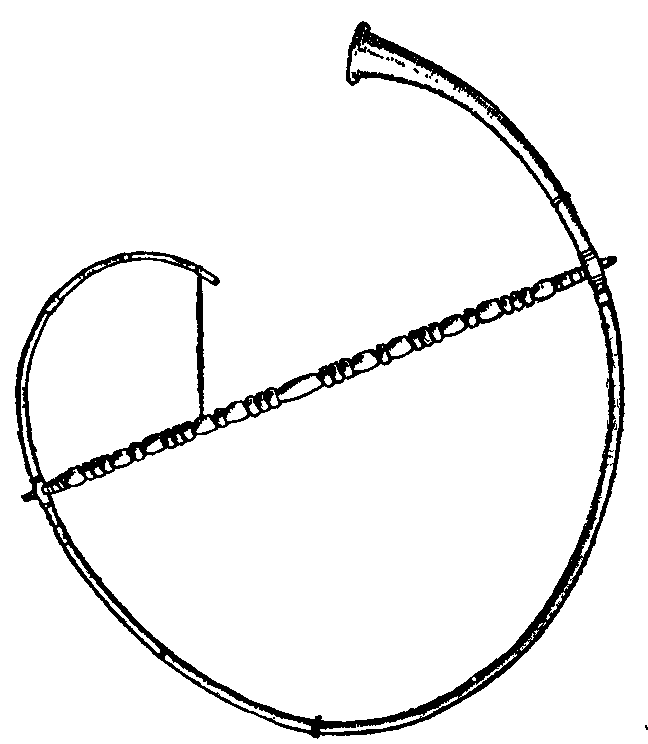
Fig.
1.—Buccina in the National Museum, Naples.
From a photo by Brogi.
BUCCINA (more correctly Būcĭna, Gr. Βυκάνη, connected with bucca, cheek, and Gr. Βύζω, a brass wind instrument extensively used in the ancient Roman army. The Roman instrument consisted of a brass tube measuring some 11 to 12 ft. in length, of narrow cylindrical bore, and played by means of a cup-shaped mouthpiece. The tube is bent round upon itself from the mouthpiece to the bell in the shape of a broad C and is strengthened by means of a bar across the curve, which the performer grasps while playing, in order to steady the instrument; the bell curves over his head or shoulder as in the modern helicon. Three Roman buccinas were found among the ruins of Pompeii and are now deposited in the museum at Naples. V. C. Mahillon, of Brussels[1] has made a facsimile of one of these instruments; it is in G and has almost the same harmonic series as the French horn and the trumpet. The buccina, the cornu (see Horn), and the tuba were used as signal instruments in the Roman army and camp to sound the four night watches (hence known as buccina prima, secunda, &c.), to summon them by means of the special signal known as classicum, and to give orders.[2] Frontinus relates[3] that a Roman general, who had been surrounded by the enemy, escaped during the night by means of the stratagem of leaving behind him a buccinator (trumpeter), who sounded the watches throughout the night.[4] Vegetius gives brief descriptions of the three instruments, which suffice to establish their identity; the tuba, he says, is straight; the buccina is of bronze bent in the form of a circle.[5]
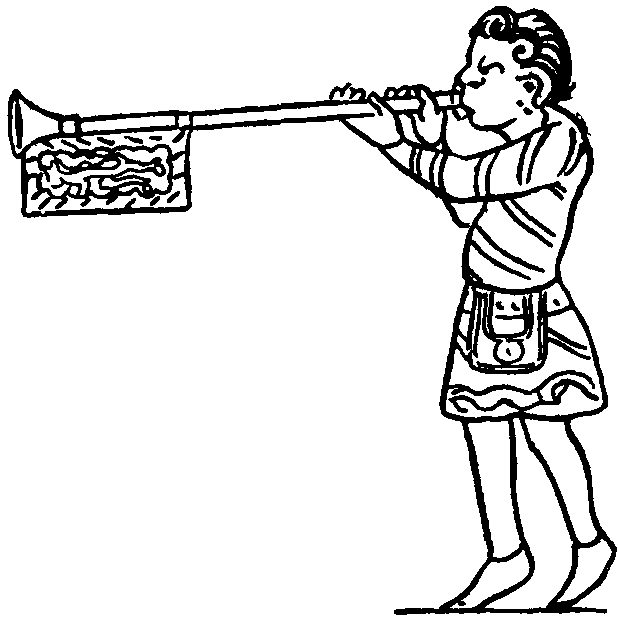
Fig. 3.—Busine, 14th century. (From MS. R. 10 E. IV. Brit. Mus.)
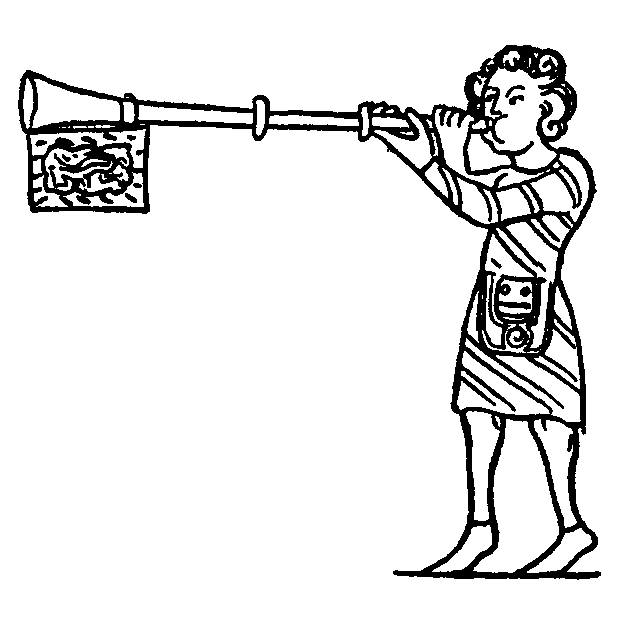
Fig. 2.—Busine, 14th century. (From MS. R. 10 E. IV. Brit. Mus.)
The buccina, in respect of its technical construction and acoustic properties, was the ancestor of both trumpet and trombone; the connexion is further established by the derivation of the words Sackbut and Posaune (the German for trombone) from buccina. The relation was fully recognized in Germany during the 15th and 16th centuries, as two translations of Vegetius, published at Ulm in 1470, and at Augsburg in 1534, clearly demonstrate: "Bucina das ist die trumet oder pusan"[6] ("the bucina is the trumpet or trombone") and ("Bucina ist die trummet die wirt ausz und eingezogen"[7] ("the bucina is the trumpet which is drawn out and in"). A French translation by Jean de Meung (Paris, 1488),[8] renders the passage (chap. iii. 5) thus: "Trompe est longue et droite; buisine est courte et reflechist en li meisme si comme partie de cercle." On Trajan's column[9] the tuba, the cornu and the buccina are distinguishable. Other illustrations of the buccina may be seen in François Mazois' Les Ruines de Pompéi (Paris, 1824-1838), pt. iv, pl. xlviii. fig. 1, and in J.N. von Wilmowsky's Eine römische Villa zu Nennig (Bonn, 1865), pl. xii. (mosaics), where the buccinator is accompanied on the hydraulus. The military buccina described is a much more advanced instrument than its prototype the buccina marina, a primitive trumpet in the shape of a conical shell, often having a spiral twist, which in poetry is often called concha. The buccina marina is frequently depicted in the hands of Tritons (Macrobius i. 8), or of sailors, as for instance on terra-cotta lamp shown by G.P. Bellori (Lucernae veterum sepulcrales iconicae, 1702, iii. 12). The highly imaginative writer of the apocryphal letter of St Jerome to Dardanus also has a word to say concerning the buccina among the Semitic races: "Bucca vocatur tuba apud Hebreos: deinde per diminutionem buccina dicitur." After the fall of the Roman empire the art of bending metal tubes was gradually lost, and although the buccina survived in Europe both in name and in principle of construction during the middle ages, it lost for ever the characteristic curve like a "C" which it possessed in common with the cornu, an instrument having a conical bore of wider calibre. Although we regard the buccina as essentially Roman, an instrument of the same type, but probably straight and of kindred name, was widely known and used in the East, in Persia, Arabia and among the Semitic races. After a lapse of years during which records are almost wanting, the buccina reappeared all over Europe as the busine, buisine, pusin, busaun, pusun, posaun, busna (Slav), &c.; whether it was a Roman survival or a re-introduction through the Moors of Spain in the West and the Byzantine empire in the East, we have no records to show. An 11th-century mural painting representing the Last Judgment in the cathedral of S. Angelo in Formis (near Capua), shows the angels blowing the last trump on busines.[10]
There are two distinct forms of the busine which may be traced during the middle ages:—(i) a long straight tube (fig. 2) consisting of 3 to 5 joints of narrow cylindrical bore, the last joint alone being conical and ending in a pommel-shaped bell, precisely as in the curved buccina (fig. 1); (2) a long straight cylindrical tube of somewhat wider bore than the busine, ending in a wide bell curving out abruptly from the cylindrical tube (fig. 3).
The history of the development of the trumpet, the sackbut and the trombone from the buccina will be found more fully treated under those headings; for the part played by the buccina in the evolution of the French horn see Horn.
(K. S.)
BUCCLEUCH, DUKES OF. The substantial origin of the ducal house of the Scotts of Buccleuch dates back to the large grants of lands in Scotland to Sir Walter Scott of Kirkurd and Buccleuch, a border chief, by James II., in consequence of the fall of the 8th earl of Douglas (1452); but the family traced their descent back to a Sir Richard le Scott (1240-1285). The estate of Buccleuch is in Selkirkshire. Sir Walter Scott of Branxholm and Buccleuch (d. 1552) distinguished himself at the battle of Pinkie (1547), and furnished material for his later namesake's famous poem, The Lay of the Last Minstrel; and his great-grandson Sir Walter (1565-1611) was created Lord Scott of Buccleuch in 1606. An earldom followed in 1619. The second earl's daughter Anne (1651-1732), who succeeded him as a countess in her own right, married in 1663 the famous duke of Monmouth (q.v.), who was then created 1st duke of Buccleuch; and her grandson Francis became 2nd duke. The latter's son Henry (1746-1812) became 3rd duke, and in 1810 succeeded also, on the death of William Douglas, 4th duke of Queensberry, to that dukedom as well as its estates and other honours, according to the entail executed by his own great-grandfather, the 2nd duke of Queensberry, in 1706; he married the duke of Montagu's daughter, and was famous for his generosity and benefactions. His son Charles William Henry (d. 1819), grandson Walter Francis Scott (1806-1884), and great-grandson William Henry Walter Montagu Douglas Scott (b. 1831), succeeded in turn as 4th, 5th and 6th dukes of Buccleuch and 6th, 7th, and 8th dukes of Queensberry. The 5th duke was lord privy seal 1842-1846, and president of the council 1846. It was he who at a cost of over £500,000 made the harbour at Granton, near Edinburgh. He was president of the Highland and Agricultural Society, the Society of Antiquaries and of the British Association. The 6th duke sat in the House of Commons as Conservative M.P. for Midlothian, 1853-1868 and 1874-1880; his wife, a daughter of the 1st duke of Abercorn, held the office of mistress of the robes.
See Sir W. Fraser, The Scotts of Buccleuch (1878).
BUCENTAUR (Ital. bucintoro), the state gallery of the doges of Venice, on which, every year on Ascension day up to 1789, they put into the Adriatic in order to perform the ceremony of "wedding the sea." The name bucintoro is derived from the Ital. buzino d' oro, "golden bark," latinized in the middle ages as bucentaurus on the analogy of a supposed Gr. βουκένταυρος, ox-centaur (from βοῦς and Κένταυρος). This led to the explanation of the name as derived from the head of an ox having served as the galley's figurehead. This derivation is, however, fanciful; the name bucentaurus is unknown in ancient mythology, and the figurehead of the bucentaurs, of which representations have come down to us, is the lion of St Mark. The name bucentaur seems, indeed, to have been given to any great and sumptuous Venetian galley. Du Cange (Gloss., s.v. "Bucentaurus") quotes from the chronicle of the doge Andrea Dandolo (d. 1354): cum uno artificioso et solemni Bucentauro, super quo venit usque ad S. Clementem, quo jam pervenerat principalior et solemnior Bucentaurus cum consiliariis, &c. The last and most magnificent of the bucentaurs, built in 1729, was destroyed by the French in 1798 for the sake of its golden decorations. Remains of it are preserved at Venice in the Museo Civico Correr and in the Arsenal; in the latter there is also a fine model of it.
The "Marriage of the Adriatic," or more correctly "of the sea" (Sposalizio del Mar) was a ceremony symbolizing the maritime dominion of Venice. The ceremony, established about A.D. 1000 to commemorate the doge Orseolo II.'s conquest of Dalmatia, was originally one of supplication and placation, Ascension day being chosen as that on which the doge had set out on his expedition. The form it took was a solemn procession of boats, headed by the doge's maesta nave, afterwards the Bucentaur (from 1311) out to sea by the Lido port. A prayer was offered that "for us and all who sail thereon the sea may be calm and quiet," whereupon the doge and the others were solemnly aspersed with holy water, the rest of which was thrown into the sea while the priests chanted "Purge me with hyssop and I shall be clean." To this ancient ceremony a sacramental character was given by Pope Alexander III in 1177, in return for the services rendered by Venice in the struggle against the emperor Frederick I. The pope drew a ring from his finger and, giving it to the doge, bade him cast such a one into the sea each year on Ascension day, and so wed the sea. Henceforth the ceremonial, instead of placatory and expiatory, became nuptial. Every year the doge dropped a consecrated ring into the sea, and with the words Desponsamus te, mare (We wed thee, sea) declared Venice and the sea to be indissolubly one (see H. F. Brown, Venice, London, 1893, pp. 69, 110).
BUCEPHALUS (Gr. βουκεφαλος), the favourite Thracian horse of Alexander the Great, which died in 326 B.C., either of wounds received in the battle on the Hydaspes, or of old age. In commemoration Alexander built the city of Bucephala (Boukephala), the site of which is almost certainly to be identified with a mound on the bank of the river opposite the modern Jhelum.
See especially Arrian v. 20; other stories in Plutarch, Alex. 6; Curtius vi. 8. For the identification of Bucephala, Vincent A. Smith, Early Hist. of India (2nd ed., 1908), pp. 65, 66 note.
BUCER (or Butzer), MARTIN (1491-1551), German Protestant reformer, was born in 1491 at Schlettstadt in Alsace. In 1506 he entered the Dominican order, and was sent to study at Heidelberg. There he became acquainted with the works of Erasmus and Luther, and was present at a disputation of the latter with some of the Romanist doctors. He became a convert to the reformed opinions, abandoned his order by papal dispensation in 1521, and soon afterwards married a nun. In 1522 he was pastor at Landstuhl in the palatinate, and travelled hither and thither propagating the reformed doctrine. After his excommunication in 1523 he made his headquarters at Strassburg, where he succeeded Matthew Zell. Henry VIII of England asked his advice in connexion with the divorce from Catherine of Aragon. On the question of the sacrament of the Lord's Supper, Bucer's opinions were decidedly Zwinglian, but he was anxious to maintain church unity with the Lutheran party, and constantly endeavoured, especially after Zwingli's death, to formulate a statement of belief that would unite Lutheran, south German and Swiss reformers. Hence the charge of ambiguity and obscurity which has been laid against him. In 1548 he was sent for to Augsburg to sign the agreement, called the Interim, between the Catholics and Protestants. His stout opposition to this project exposed him to many difficulties, and he was glad to accept Cranmer's invitation to make his home in England. On his arrival in 1549 he was appointed regius professor of divinity at Cambridge. Edward VI. and the protector Somerset showed him much favour and he was consulted as to the revision of the Book of Common Prayer. But on the 27th of February 1551 he died, and was buried in the university church, with great state. In 1557, by Mary's commissioners, his body was dug up and burnt, and his tomb demolished; it was subsequently reconstructed by order of Elizabeth. Bucer is said to have written ninety-six treatises, among them a translation and exposition of the Psalms and a work Deregno Christi. His name is familiar in English literature from the use made of his doctrines by Milton in his divorce treatises.
A collected edition of his writings has never been published. A volume known as the Tomus Anglicanus (Basel, 1577) contains those written in England. See J.W. Baum, Capito and Butzer (Strassburg, 1860); A. Erichson, Martin Butzer (1891); and the articles in the Dict. Nat. Biog. (by A.W. Ward), and in Herzog-Hauck's Realencyklopädie (by Paul Grünberg).
BUCH, CHRISTIAN LEOPOLD VON, Baron (1774-1853), German geologist and geographer, a member of an ancient and noble Prussian family, was born at Stolpe in Pomerania on the 26th of April 1774. In 1790-1793 he studied at the mining school of Freiberg under Werner, one of his fellow-students there being Alexander von Humboldt. He afterwards completed his education at the universities of Halle and Göttingen. His Versuch einer mineralogischen Beschreibung von Landeck (Breslau, 1797) was translated into French (Paris, 1805), and into English as Attempt at a Mineralogical Description of Landeck (Edinburgh, 1810); he also published in 1802 Entwurf einer geognostischen Beschreibung von Schlesien (Geognostische Beobachtungen auf Reisen durch Deutschland und Italien, Band i.). He was at this time a zealous upholder of the Neptunian theory of his illustrious master. In 1797 he met Humboldt at Salzburg, and with him explored the geological formations of Styria, and the adjoining Alps. In the spring of the following year, von Buch extended his excursions into Italy, where his faith in the Neptunian theory was shaken. In his previous works he had advocated the aqueous origin of basaltic and other formations. In 1799 he paid his first visit to Vesuvius, and again in 1805 he returned to study the volcano, accompanied by Humboldt and Gay Lussac. They had the good fortune to witness a remarkable eruption, which supplied von Buch with data for refuting many erroneous ideas then entertained regarding volcanoes. In 1802 he had explored the extinct volcanoes of Auvergne. The aspect of the Puy de Dôme, with its cone of trachyte and its strata of basaltic lava, induced him to abandon as untenable the doctrines of Werner on the formation of these rocks. The scientific results of his investigations he embodied in his Geognostische Beobachtungen auf Reisen durch Deutschland und Italien (Berlin, 1802-1809). From the south of Europe von Buch repaired to the north, and spent two years among the Scandinavian islands, making many important observations on the geography of plants, on climatology and on geology. He showed that many of the erratic blocks on the North German plains must have come from Scandinavia. He also established the fact that the whole of Sweden is slowly but continuously rising above the level of the sea from Frederikshald to Abo. The details of these discoveries are given in his Reise durch Norwegen und Lappland (Berlin, 1810). In 1815 he visited the Canary Islands in company with Christian Smith, the Norwegian botanist. His observations here convinced him that these and other islands of the Atlantic owed their existence to volcanic action of the most intense kind, and that the groups of islands in the South Sea are the remains of a pre-existing continent. The physical description of the Canary Islands was published at Berlin in 1825, and this work alone is regarded as an enduring monument of his labours. After leaving the Canaries von Buch proceeded to the Hebrides and the coasts of Scotland and Ireland. Palaeontology also claimed his attention, and he described in 1831 and later years a number of Cephalopods, Brachiopods and Cystidea, and pointed out their stratigraphical importance. In addition to the works already mentioned von Buch published in 1832 the magnificent Geological Map of Germany (42 sheets, Berlin). His geological excursions were continued without interruption till his 78th year. Eight months before his death he visited the mountains of Auvergne; and on returning home he read a paper on the Jurassic formation before the Academy of Berlin. He died at Berlin on the 4th of March 1853. Von Buch had inherited from his father a fortune more than sufficient for his wants. He was never married, and was unembarrassed by family ties. His excursions were always taken on foot, with a staff in his hand, and the large pockets of his overcoat filled with papers and geological instruments. Under this guise, the passer-by would not easily have recognized the man whom Humboldt pronounced the greatest geologist of his time.
A complete edition of his works was published at Berlin (1867-1885).
BUCHAN, EARLS OF. The earldom of Mar and Buchan was one of the seven original Scottish earldoms; later, Buchan was separated from Mar, and among the early earls of Buchan were Alexander Comyn (d. 1289), John Comyn (d. c. 1313), both constables of Scotland, and Henry Beaumont (d. 1340), who had married a Comyn. John Comyn's wife, Isabel, was the countess of Buchan who crowned Robert the Bruce king at Scone in 1306, and was afterwards imprisoned at Berwick; not, however, in a cage hung on the wall of the castle. About 1382 Sir Alexander Stewart (d. c. 1404), the "wolf of Badenoch," a son of King Robert II., became earl of Buchan, and the Stewarts appear to have held the earldom for about a century and a half, although not in a direct line from Sir Alexander.[1] Among the most celebrated of the Stewart earls were the Scottish regent, Robert, duke of Albany, and his son John, who was made constable of France and was killed at the battle of Verneuil in 1424. In 1617 the earldom came to James Erskine (d. 1640), a son of John Erskine, 2nd (or 7th) earl of Mar, whose wife Mary had inherited it from her father, James Douglas (d. 1601), and from that time it has been retained by the Erskines.
Perhaps the most celebrated of the later earls of Buchan was the eccentric David Steuart Erskine, 11th earl (1742-1829), a son of Henry David, 10th earl (d. 1767), and brother of Henry Erskine (q.v.), and of Thomas, Lord Erskine (q.v.). His pertinacity was instrumental in effecting a change in the method of electing Scottish representative peers, and in 1780 he succeeded in founding the Scottish Society of Antiquaries. Among his correspondents was Horace Walpole, and he wrote an Essay on the Lives of Fletcher of Saltoun and the Poet Thomson (1792), and other writings. He died at his residence at Dryburgh in April 1829, leaving no legitimate children, and was followed as 12th earl by his nephew Henry David (1783-1857), the ancestor of the present peer. The 11th earl's natural son, Sir David Erskine (1772-1837), who inherited his father's unentailed estates, was an antiquary and a dramatist.