The Shakespeares Identified.
Reading edition
In the “Florida” of Lucius Apuleius it is narrated that Socrates, having looked for a long time upon a certain handsome but silent youth, exclaimed, “Say something, that I may see you.” From this it is inferred that the grand old philosopher saw not with his eyes, and that he thought that men were to be considered rather with the rays of the intellect and with the gaze of the soul. In the practical times of the present, however, the Socratic theory goes for naught; and humanity, justified in so doing by the counsel of the law, holds to the opinion of the soldier mentioned by Plautus as having declared that “one eye-witness is worth more than ten ear-witnesses.” Therefore, it is remarkable, we think, that, while the scholars of these days are searching for clews to the authorship of certain works of antiquity, none of them has been pleased to accept and to make the most of the ocular evidence that has come down from remote times and that bears directly upon these things.
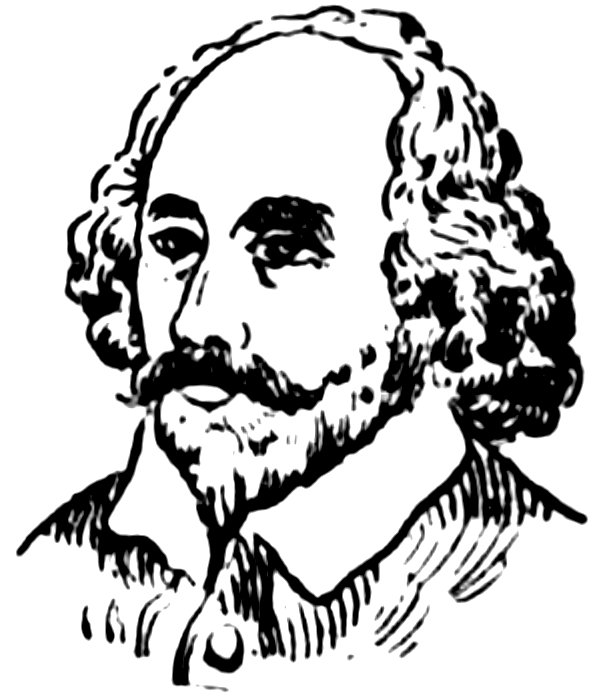
Several portraits of the much-discussed William Shakespeare are in existence: two corresponding closely are the Droeshout engraving and the Chandos painting. The Droeshout engraving was produced in 1623 in the first collected edition of the so-called Shakespearian plays; and it was eulogized 43by the critics of that time, and accepted as a true likeness by William Blake, the idealist poet and painter. This engraving represents Shakspere as an intellectual man with regular but strong features, a small, shapely mouth, large, speaking eyes, and a wondrous expanse of forehead. In all the authentic pictures, Shakespeare is represented as wearing a loose jerkin, about the top of which a broad, unstarched shirt-collar is turned down in a charmingly négligé fashion.
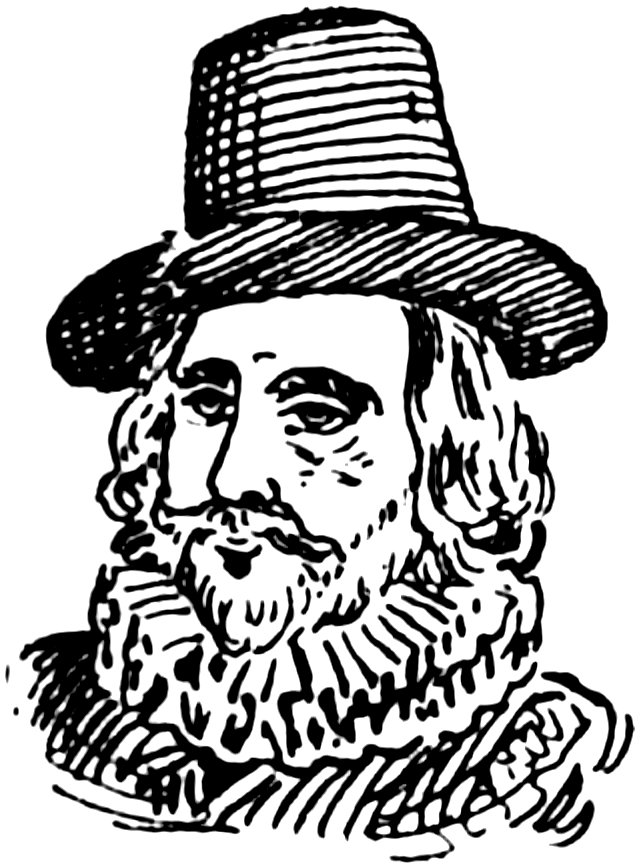
Of Sir Francis Bacon, so-called, but one portrait has come down to posterity. The original is now in possession of the British Museum, having been given to that institution by the Earl of Ripon, whose father had it from Katherine, Duchess of Marlborough, in payment of a debt. This portrait would seem to give us the duplicate of the facial features of Shakespere; the eyes, mouth, nose, and expression being the same, likewise the cut of the beard, the curl of the mustache, and the style of wearing the hair. But Bacon is pictured with his hat on,—a prim affair, worn cocked somewhat to one side,—and a ruffle about his neck, as was the fashion among 44courtiers and gentlemen of the Elizabethan time. It was to Bacon that the ingenious Jonson addressed the lines,—
“Him ruffs and ribands prettily become,
While at his learning stands the world adumb.”
Yet in his “Masque of the Roses,” which was performed under royal auspices, Jonson makes Bacon say,—
“Beshred me of these silken patches, you will find
A master wit, a wholesome soul, a generous mind:
What need of garters and what use of name
Sith these three fellows do atchieve such fame?”
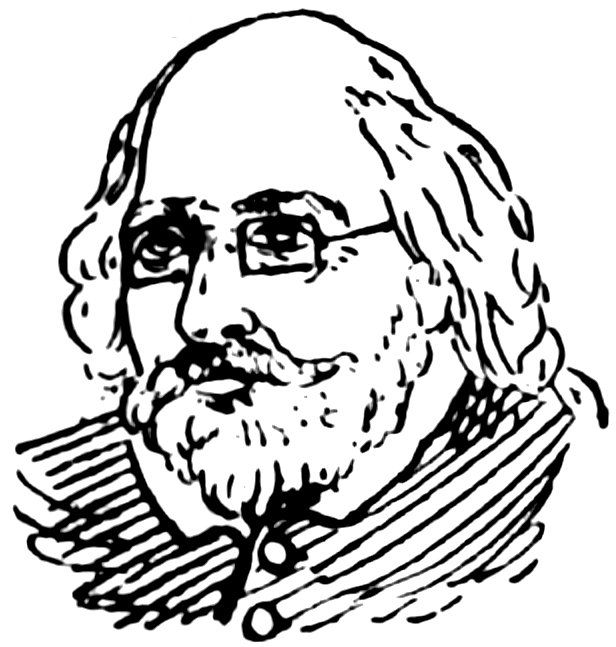
Of Ben Jonson, the author of these lines, there are three authentic portraits. That which is known as the Dinwiddie portrait is the most popular. It was made while Jonson was visiting his friend Herbert Latshawe at that fine old artist’s country-seat near Patmore. Jonson was then in his sixty-third year, and therefore the portrait is that of a man considerably beyond the prime of life. Yet, is there any so blind that he cannot detect under these spectacles the calm, intelligent eyes of Shakspur and Bacon, and cannot recognize in the other features, the features delineated in the Droeshout engraving of Shakspere and in the Marlborough 45portrait of Bacon? Several years before this picture was made by Latshawe, Jonson wrote his remarkable play of “The Fox.” In the course of this play (act 3, scene 1), one of the characters, a literary man, has this to say:—
“The gaping world shall see me in my age
Wearing the wit that lumined Shakspere’s page:
Bacon’s big learning, Beaumont’s virgin grace,
And Fletcher’s power shall sit upon my face.”
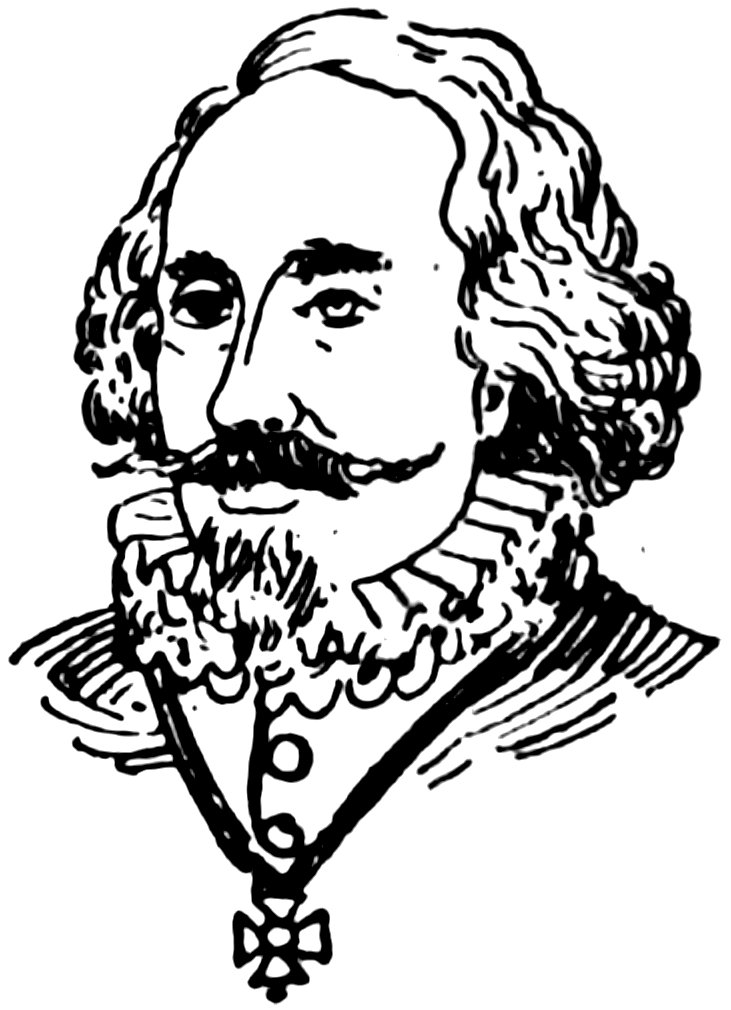
Francis Beaumont, thus prettily referred to, was a precocious creature. He is said to have died at the age of twenty-nine; yet during his short life, he earned so great a reputation as a poet and dramatist, that to this day he is accorded half the credit of the work which Fletcher really did. It is narrated that Ben Jonson had so high an opinion of the young man’s critical genius, that he used to refer his plays in manuscript to Beaumont for revision, when Beaumont was scarce turned of twelve. The only portrait of Beaumont is to be found in the collection of the Duke of Ayrshire: it is in a state of excellent preservation, and is, perhaps, the handsomest portrait that has come down from the sixteenth century. It is 46interesting to compare this picture with those of Shaxspere, Bacon, and Jonson. Leigh Hunt said, “When he was a boy, how much the poet of the Elizabethan period must have looked like the other fellow!” We think so too. Does it require more than a hasty glance to assure one that, at twenty-eight years of age, William Shakspeare, Francis Bacon, and rare Ben Jonson must have been the very counterparts of handsome, gifted, winning Francis Beaumont?
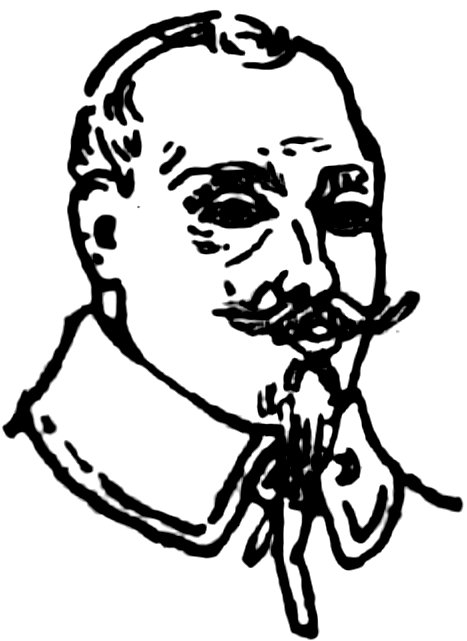
And how about John Fletcher? Well, there is but one portrait of him, and that is now in the British Museum. It was painted by a Hollander named Bruggmarx, and Fletcher was then sixty years old. The face, it will be noted, is still the face that we have seen in the authentic pictures of Shakspear, Bacon, and Jonson! An older face, perhaps, but the strong, inspired features are there, and we are forced to declare it the same face. The hair is scantier than in the other pictures, but the effect which is produced by curling the one surviving tuft over and about the bald cranium so as to give an appearance of hair—this effect, we say, is artistic.
In one of his letters which are still preserved for the edification of posterity, the gifted Walter Raleigh writes, “Right sorely hath her Majesty the queen been displeased with my lord Bacon for 47that he hath caused privily to be made a likeness of himself in the similitude of an old man, the which being carried to the Green Boar, and therein exhibited under the divers names of Jonson, Fletcher, Shakesper, and the like, hath brought a grievous scandal upon the queen, and such sorrow withal, that, hearing of the same, she did swound, and even now maintaineth secrecy in her closet, making great moan, and weeping beyond all measure.”
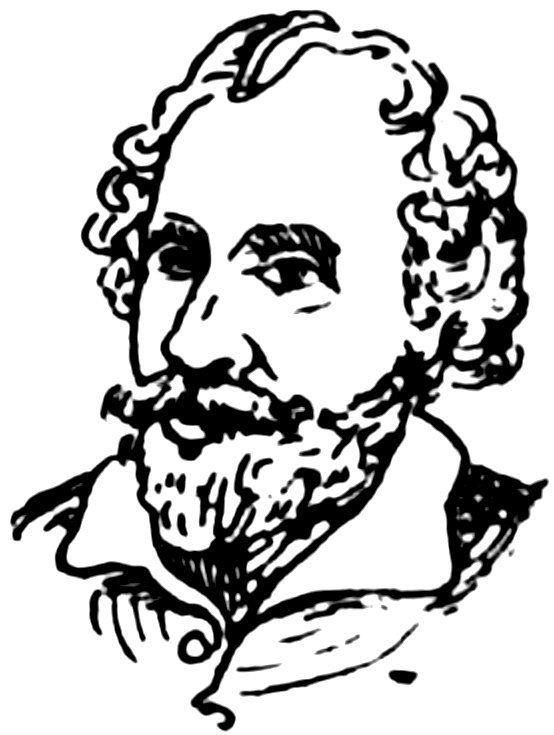
Two other so-called British dramatists are entitled to our attention. One is Robert Greene, and the other is George Peele, of whom capital portraits have been handed down. Greene is said to have been a dissipated, rakish fellow, and the picture we have of him would appear to confirm this story. It is not hard to detect traces of dissipation in this handsome face: it is such a face as old Ben Jonson might have had, if, instead of devoting himself to quiet symposiums at the Green Boar and the Blue Dragon, he had rioted about the slums of London with evil women. Such a face might William Shakspeare have been favored with if, instead of invading his neighbors’ preserves with his gum-shoes on, he had seen fit to debauch his talents in the ale-houses of the British metropolis. And such a face, too, might “that ponderous sink of learning,” Francis Bacon, have had, if he 48had abandoned the writing of Shakspear’s plays for the pursuit of Robert Greene’s midnight orgies. In a word, with the exception of the trifling detail of his coiffure, happy-go-lucky Bob Greene bears a striking personal resemblance to the other distinguished littérateurs who flourished in his time. And here is a curious extract from a letter which Greene wrote to his friend Raleigh shortly after the production of his tragedy of “James IV.” It is dated in London: “Vastly distraught is my good Anne Hathaway by the evil rumors that hath gained prevalence in these parts, and that do grievously belie me in that they make me to be a thief by night. But his grace hath signed and given into my hands a paper confessing it to be a libel and his bucks to be properly accounted, whereat methinketh my dame Anne should be set aright as touching her vexation.” The astute critic, Malone, wonders how it is that Robert Greene should have been accused of poaching, the same charge that was preferred against Shakspeare; he wonders, too, how Anne Hathaway, Shaxpeare’s wife, could be the wife of Robert Greene also. His wonderment is not amazing.
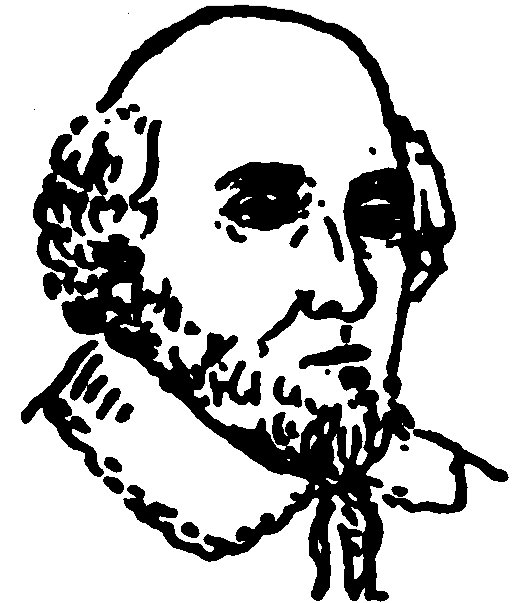
This interesting portrait is of George Peele; and its striking likeness to the portraits of Bacon, Jonson, Shakspur, Beaumont, Greene, and Fletcher has been remarked by critics from time immemorial. 49In short, the likeness which the pictures of all the dramatists of the Elizabethan period bear to each other is so marked that we think there is good reason for believing that Sheksper, Jonson, Beaumont, Greene, Fletcher, Peele, and Bacon were not different individuals, but one man.
It is quite true that the scholarly Donnelly and the learned Holmes have proved to their own satisfaction that Shaxpeare did not write the plays commonly imputed to Shaikspore; but they have not proved who wrote the plays commonly imputed to Jonson, Peele, and the other alleged dramatists of the glorious old days when a lady was designated as a lousy wench, and when liaisons were made the text of popular society plays. It seems to us that the pictures of these old dramatists fill this hiatus, if so we may term it, and these pictures teach us that once upon a time there was a humorous genius who figured under many names, who tossed off many plays, and who posed for many portraits. We do not know his name, but we know that he is variously called Shakspeare, Bacon, Jonson, Beaumont, Fletcher, Peele, and Greene. And we know, too, that his glory will illumine the world long after wiseacres and charlatans have abandoned the task of trying to determine his identity.
The old poet, George Chapman,—he who was the contemporary of these puzzlingly numerous one,—understood what he was about when he 50penned these lines to his friend, Francis Shaxpur:—
“Or seen in poacher’s guise or courtly robes of satin,
Or read in English verse or tomes of prosy Latin,
Or viewed in chiselled bust (the best the critic thinks it),
Or masking in a daub which some rude Dutchman pinxit—
In all thy verse, prose, portraits, effigies of plaster,
Shines the vast genius of one universal master.”