Chicago Hamlets.
Reading edition
The highly successful engagement which Mr. George C. Miln is playing in this city at this time, affords us the long-desired opportunity of paying that tribute of admiration and of respect which the genius of the eminent Chicago tragedian would seem to merit. We confess that we have viewed with considerable alarm the homage which certain foreign and Eastern actors (invading our territory with an audacity amounting almost to effrontery) have wrung from our populace, which we fear is too ready to depreciate the paramount work of home-production, and to fly into ecstasies over less meritorious, but more pretentious, importations. Recognizing it to be a lamentable truth, that, whether he be an actor or only a prophet, a man is not without honor save at home,—still we believe that Mr. Miln’s re-appearance in the city that claims him for her own will go a long way toward relieving the public mind hereabouts of that cruel misapprehension, that, when Mr. Miln quitted theology for theatrics, a good preacher was spoiled for a bad actor. We doubt not that if they were called upon to testify touching this matter, the large and enthusiastic church sociables which are crowding the Columbia Theatre this week, would heartily indorse us when we said that Mr. Miln’s personations evinced the possession of a 32genius that is rarely met with upon the dramatic stage.
Returning from a provincial tour, as vicissitudinous as it was extended, and heralded by the encomiums of the discriminating press of such intelligent communities as Topeka, Leadville, Cheyenne, Des Moines, Tipton, etc., it beliked Mr. Miln to inaugurate his engagement in Chicago with a presentation of his favorite tragedy, the chef d’œuvre of his long list of dramatic successes; namely, the sublime tragedy of “Hamlet.” Sombre as this play is, it has, nevertheless, become so popular in this city, that not infrequently are whole scenes of it enacted in the private theatres of our wealthy citizens; many of our people have committed to memory the beautiful soliloquies in which it abounds; our literati have composed ingenious screeds about its alleged author, and it is about this same author that distinguished Eastern scholars came here to discourse,—in short, the tragedy of “Hamlet” has become so well known in Chicago, that he who attempts its public production must possess rare powers in order to succeed in winning the public plaudits.
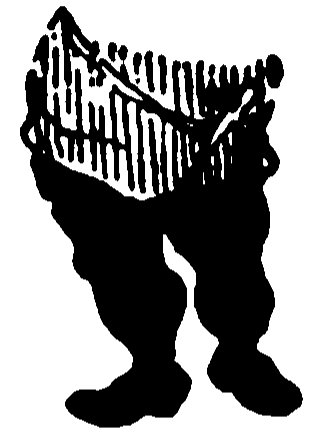
It was Edwin Forrest, we think, who first played “Hamlet” in Chicago. At that time this was but a ragged town—the rival of St. Louis. The muskrat and the wagtail snipe then frolicked and disported where now the palatial residence of George M. Pullman rears its pretentious front; at that 33time, too, Uncle Dick Hooley sang topical songs with great éclat; Col. J. H. McVicker flourished as the popular comedian; Dr. Patterson and Long John Wentworth snowballed each other on the bleak prairie where Marshall Field’s big wholesale stone fort now stands; and the untrammelled Indian coped with the buffalo on the rolling waste where now are to be found the packing-houses, the lard-refineries, and the rendering-establishments, of our most cultured fellow-townsmen, the members of the Chicago Literary Club. To this community, as it existed at that time, Edwin Forrest’s “Hamlet” was a revelation, and a delightful one. It came as a kind of encouragement to the ambitious, bustling, noisy Western town. It was a lusty Hamlet,—stout, stubborn, forceful, and vigorous as a prosperous butcher. It was not the boyish Hamlet of a Wilson Barrett, nor the melancholy Hamlet of a Booth, nor the impressive Hamlet of a Lawrence Barrett, nor yet the foundered Hamlet of an Irving: it was the sturdy, square-toed, honest, varicose-veined personation of the actor whose greatness is most keenly appreciated by those who have heard tell of him.

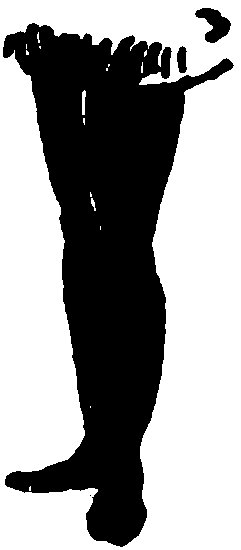
Mr. Edwin Booth has given Chicago two Hamlets,—the first many years ago, the second quite recently. His first Hamlet was of the cold-feet order: it was the particular admiration of young 34women who ate slate-pencils, and of men who believed in female suffrage. Having seen this Hamlet several times, we were convinced, that, if the original Hamlet were in reality what Mr. Booth represented, he could have been relieved of his malady by judicious prescriptions of vermifuge. Mr. Booth’s second Hamlet—the one he now presents—is a much healthier one; a trifle lame and a trifle slow, perhaps, but still a great improvement upon the morbid impersonation of twenty years ago.
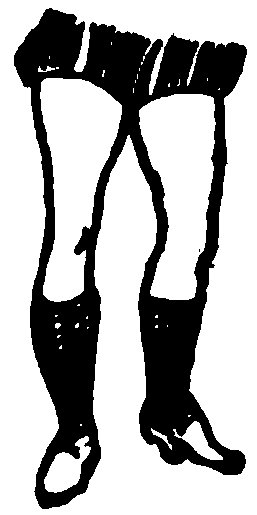
While Mr. Booth’s dyspeptic Dane was in the height of his popularity, along came a Frenchman from Alsace—a parley-voo of the name of Fechter—who startled us with a Hamlet which seemed to be the child of that heartless, prurient Dutchman Goethe’s imagination. This grotesque innovation shocked our sensitive optics with gaudy silk tights and colored hosiery. Yet there were those who professed to admire this refined blasphemy. Even so famous a critic as Miss Kate Field declared that Fechter’s Hamlet—the left one—was a poem. But this was many years ago: at that time Miss Field was a giddy, sentimental girl, just out of a 35convent. It is probable that her ideal Hamlet is no longer a strawberry blonde with Dolly Varden nether garments.
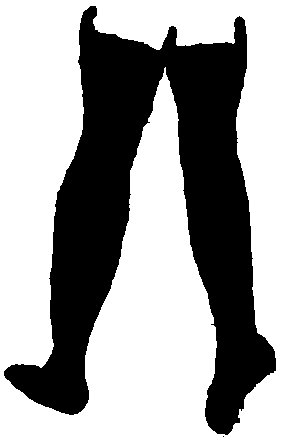
Another Hamlet which we must speak of is Mr. Lawrence Barrett’s; and, to quote a cant phrase, we speak of it more in sorrow than in anger. We regard it as a cold, passionless, bloodless Hamlet, with just the faintest suggestion of bronchitis. It is a self-conscious Hamlet, and a well-bred Hamlet: it never forgets the “l. u. e.,” nor neglects to measure off so much carpet to as much heptameter. It is our opinion,—the result of long and conscientious study,—that the most comfortable time in the year to hear Mr. Lawrence Barrett’s Hamlet is August; but even then, in order to insure against the hostile effects of low temperature, one should be provided with a lap-robe.
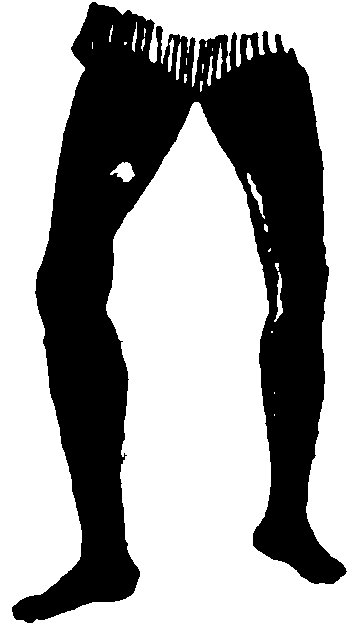
Two Hamlets have come over to us from England. The first was Mr. Henry Irving, who reaped a golden harvest as a reward for his admirable imitations of the young American comedian, Henry E. Dixey. Of this gentleman’s Hamlet we have little praise. It was stiff, halting, and jerky throughout. Perceiving how unevenly it ran, we would not have been surprised had the spavined Dane interrupted his death-soliloquy with Gloster’s lines,—
36“Where sits deformity to mock my body
And shape my legs of an unequal size?”

A much more symmetrical Hamlet was Mr. Wilson Barrett’s, yet even this performance was not without its defects. It was too reposeful, too undulating, too effeminate in its contours, and too sensuous in its movement. It was such a Hamlet as, we surmise, would create a profound sensation among the dudes if it were to appear at the head of the procession in the grand march in the third act of one of Col. John A. McCaull’s comic operas. Still, this kind of Hamlet has its admirers; and as it is called the boy Hamlet, we can at least hope that it will acquire the sharply defined angles of virility when it has put on the toga virilis.

We prefer not to speak of Miss Anna Dickinson’s Hamlet: we shall be content to give our readers a picture of it. The creation, as will be observed, is tolerably symmetrical; and, in spite of those environments which naturally and properly curtail a complete view of its merits, it is altogether of the substantial order.
But all these Hamlets fade into comparative nothingness when we place them beside Mr. Miln’s 37Hamlet, and attempt to judge them by those same rules and specifications and between the very lines which are required in a fair criticism of Mr. Miln’s genius and art.
How vividly occurs to us at this moment the heart-cry of Sir Andrew Aguecheek, “I had rather than forty shillings I had such a leg!” Or these others, quoting old Toby Belch, might say to our Chicago tragedian, “I did think by the excellent constitution of thy leg, it was formed under the star of a galliard!”
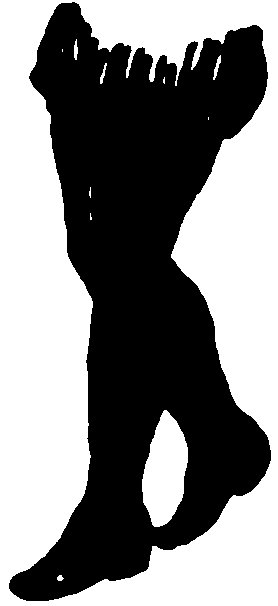
’Tis not hyperbole to say, that by as much as these shapely, sentient, palpitating columns exceed and surpass in grandeur and in beauty those other misshapen supports which the bard of Avon has stigmatized as riding-rods, by so much does the genius of our tragedian transcend the strutting, tottering pretences that are served up by his competitors. What strength, what decision, what grace, what durability, what forcefulness, what nobility, do we perceive herein! What breadth of understanding, what continuity, what power of endurance, what bottom, do we instantly recognize! And these beauties will continue to expand and to grow, just as they have in the past, provided that the distance between one-night stands is not shortened, and the walking holds out good. We remember, 38that, when we first saw Mr. Miln’s Hamlet, three years ago, it was crude and angular: now we behold it rounded out and symmetrized. This is the blossoming of our friend’s genius: what will the harvest be? Ah! who can say what a perfect art-picture will be presented when the whole nature of the actor becomes permeated with, and symmetrized by, the subtile beauty of that shapely calf? We hail the prospect with delight, and most cordially do we congratulate Melpomene thereupon.