Chapter II · (continued 3)
Reading edition
He next attacked and took Montereau from the Allies, but at a terrible cost of life. Finding then that the Austrians and Prussians were once more contemplating a junction, he sent an answer to the letter of the Allied sovereigns, but it was addressed only to the Emperor of Austria, and its tenor was to persuade the Emperor to make a separate peace. "Only gain the Austrians," he had said to Caulaincourt, on sending him to Châtillon, "and the mischief is at an end." The Emperor sent Prince Wenceslaus of Liechtenstein to Napoleon's headquarters, and it was agreed that a conference should be held at Lusigny, between him and Count Flahault, on the 24th of February. But Buonaparte did not cease for a moment his offensive movements. On the night of the 23rd he bombarded Troyes, and entered the place the next day. The Congress at Châtillon still continued to sit, Caulaincourt amusing the sovereigns and the ambassador of Great Britain, Lord Aberdeen, with one discussion after another, but having secret instructions from Buonaparte to sign nothing. At length he wrote to him, on the 17th of February, saying, "that when he gave him his carte-blanche it was for the purpose of saving Paris, but that Paris was now saved, and he revoked the powers which he had given him." The Allies, however, continued till the 15th of March their offer of leaving France its ancient limits, and then, the time being expired, they broke up the conference. It is said that as Caulaincourt left Châtillon he met the secretary of Buonaparte bringing fresh powers for treating, but it was now too late. On the 1st of March the Allies had signed a treaty at the town of Chaumont, pledging themselves to combined action against Napoleon, should he still prove to be obstinate.
A succession of battles now took place with varying success, but still leaving the Allies nearer to Paris than before. If Buonaparte turned against Blucher, Schwarzenberg made an advance towards the capital; if against Schwarzenberg, Blucher progressed a stage. To check Schwarzenberg whilst he attacked Blucher, Napoleon sent Oudinot, Macdonald, and Gerard against Schwarzenberg; but they were defeated, and Napoleon himself was repulsed with severe loss from Craonne and the heights of Laon. But Buonaparte getting between the two Allied armies, and occupying Rheims, the Austrians were so discouraged that Schwarzenberg gave orders to retreat. The Emperor Alexander strenuously opposed retreat; but the effectual argument was advanced by Lord Castlereagh, who declared that the moment the retreat commenced the British subsidies should cease. A sharp battle was fought on the 20th of March, between Schwarzenberg and Napoleon, at Arcis-sur-Aube, and Napoleon was compelled to retreat. Blucher, who had received the order to retreat from Schwarzenberg, had treated it with contempt, and replied to it by his favourite word, "Forwards!" Napoleon had now to weigh the anxious question, whether it was better to push on, and stand a battle under the walls of Paris, with his small, much-reduced force, against the Allies, and with the capital in a state of uncertainty towards him—or to follow and harass the rear of the enemy. He seems to have shrunk from the chance of a defeat under the eyes of his metropolis, and he therefore, finding a Prussian force in Vitry, crossed the Marne on the 22nd of March, and held away towards his eastern frontiers, as if with some faint, fond hope that the peasantry of Franche Comté and Alsace might rise and fly to his support. But no such movement was likely; all parts of France were mortally sick of his interminable wars, and glad to see an end put to them. The Allies had now taken the bold resolve to march on Paris and summon it to surrender.
The Emperor Francis determined to remain at Aube, with the division under General Ducca, not thinking it becoming him to join in the attack on the French capital where his daughter ruled as empress-regent; and a body of ten thousand cavalry, under command of Winzengerode and Czernicheff, was ordered to watch the motions of Napoleon and intercept his communications with Paris, whilst the Russian and Prussian light troops scoured the roads in advance, stopping all couriers. Blucher, at the same time, having thrown open the gates of Rheims, was moving on Châlons and Vitry, to form a junction with the army of Schwarzenberg. The flying parties captured, near Sommepuix, a convoy of artillery and ammunition; and, on another occasion, they fell in with a courier bearing a budget of the most melancholy intelligence to the Emperor—that the British had made a descent on Italy; that the Austrians had defeated Augereau, and were in possession of Lyons; that Bordeaux had declared for Louis XVIII.; and that Wellington was at Toulouse. These tidings gave immense confidence to the Allies. Near Fère-Champenoise the Allies met, finding Blucher in the act of stopping a body of infantry, five thousand in number, which was bearing provisions and ammunition to the army of Napoleon. The column consisted of young conscripts and National Guards, who had never been in action, but they bravely defended their charge till they were surrounded by the mingling forces of the two armies, and compelled to surrender.
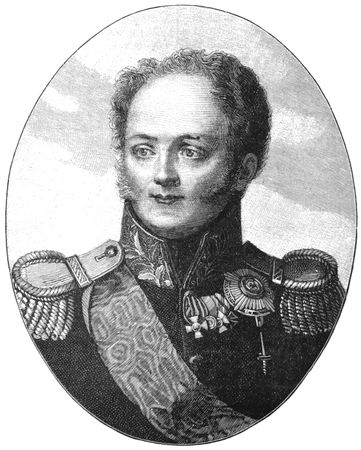
ALEXANDER I.
[See larger version]
The Allies now advanced in rapid march. They put to flight the divisions of Mortier and Marmont, whom Buonaparte had posted to give them a check. These divisions lost eight thousand men, besides a vast quantity of guns, baggage, and ammunition. A similar fate awaited a body of ten thousand National Guards. At Meaux Mortier and Marmont blew up a great powder-magazine as Blucher approached, and then retired beneath the walls of Paris. The Allies, in three days, had marched seventy miles. On the 28th of March they were in full view of Paris, and had driven Marmont and Mortier close under its walls. The north-east side of Paris, on which they were approaching, was the only one then fortified. A ridge of hills along that side, including the heights of Belleville, Romainville, and Montmartre, was defended by an old wall, and there the French authorities had placed the defenders of the city—the shattered forces of the two retreating marshals, bodies of the National Guard, and youths from the Polytechnic schools, many of them mere boys of from twelve to sixteen years old, some of whom served the guns on the batteries. The whole of the forces left to defend the great and wealthy city of Paris amounted to between thirty and forty thousand men.
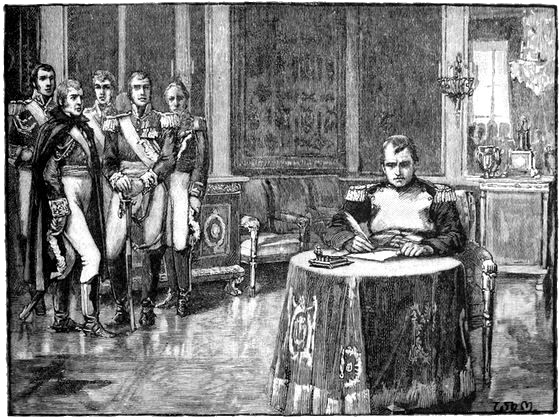
NAPOLEON SIGNING HIS ABDICATION. (See p. 83.)
[See larger version]
The other side of the city was only defended by the Seine, but the Allies, who had first to cross that river, feared that Buonaparte might come up and attack their rear while they were doing so. They determined, therefore, to attack the line of fortifications. The most lying proclamations were issued by the ex-King Joseph to assure the inhabitants that the bodies of the enemy who came in view were only stragglers who had managed to get past the army of the Emperor, who was dispersing the Allies most triumphantly. The forces in Paris—eight thousand troops of the line and thirty thousand of the National Guard—were reviewed in front of the Tuileries on a Sunday, to impress the people with a sense of security; but on the morning of the 29th the Empress and her child quitted the palace, attended by a regiment of seven hundred men, and fled to Blois, carrying with her the crown jewels and much public treasure, and followed by nearly all the members of Government. The population—unlike their fathers, who stopped Marie Antoinette in her attempt to escape—suffered this departure with murmurs, but without any attempt to prevent it. When she was gone they began heartily to curse Buonaparte for the trouble and disgrace he had brought upon them. That very morning Joseph issued a most flaming proclamation, assuring the Parisians that the Emperor was at hand, and would annihilate the last traces of the audacious enemy. But already the assault had commenced, and the next day, the 30th of March, it was general all along the line. The Parisians fought bravely, especially the boys from the Polytechnic schools; and as the Allies had to attack stone walls and batteries, their slaughter was great. Joseph rode along the line to encourage them in this useless, because utterly hopeless, waste of life. The Allied monarchs had, before commencing the assault, issued a proclamation, promising that all life and property should be strictly protected if the city quietly opened its gates; and, in the midst of the storming, they sent in again, by a French prisoner, the same offer, adding that, should the city be carried by assault, no power on earth could prevent it from being sacked by the enraged soldiers, and probably destroyed. Yet Joseph did not give the order for capitulation till the whole line was in the hands of the Allies, except Montmartre. The Cossacks were already in the Faubourg St. Antoine, and bombs flying into the Chaussée d'Antin. Then King Joseph, whose lying proclamation was still selling on the boulevards at a sou each, ordered Marmont to capitulate; and though he had vowed in his proclamation to stand by the Parisians to the last gasp, he then fled after the Empress to Blois. In this defence four thousand French were killed and wounded, and double that number of the Allies, as they had to face the towers and batteries crowded with soldiers and to fight their way up hill.
Meanwhile Buonaparte had taken the route for Troyes and Dijon, ignorant of the rapid advance of the Allies on Paris. Never in any of his campaigns does he seem to have been so ill-informed of the movements of the enemy as at this most momentous juncture. On the 26th of March he was attacked by the flying squadrons of Winzengerode. At Doulaincourt he was startled by learning that Paris was on the point of being assaulted by the Allies. From this place he dispatched one courier after another to command the forces in Paris to hold out, and, ordering the army to march with all speed, he himself entered his carriage and was driven in all haste to Fontainebleau. Thence he was driving to Paris, when, at an inn, called La Cour de France, he met General Belliard with his cavalry, who gave him the confounding information that the Empress, King Joseph, and the Court had fled; that the Allies were in Paris, and a convention was signed. At this news he began to rave like an insane man, blamed Marmont and Mortier—as, during his defeats, he had often bitterly upbraided his generals,—blamed Joseph, and everybody but himself, and insisted on going to Paris, and seeing the Allies himself, but was at length persuaded to return to Fontainebleau, and ordered his army to assemble, as it came up on the heights of Longjumeau, behind the little river Essonnes.
On arriving in Paris, the Emperor Alexander took up his quarters at the house of Talleyrand, and there the King of Prussia, Prince Schwarzenberg and others came to consult. Talleyrand now spoke out, and declared that it would be madness to treat with Buonaparte; the only course was to restore the Bourbons, under certain limits. As early as the 12th of March the Duke of Angoulême had entered Bourdeaux, and had there proclaimed, amid acclamations, Louis XVIII. The Comte d'Artois came along in the rear of the Allied army, and had everywhere issued printed circulars, calling on the people to unite under their ancient family, and have no more tyranny, no more war, no more conscriptions. This paper had also been extensively circulated in Paris. On the 1st of April the walls of Paris were everywhere placarded by two proclamations, side by side, one from the Emperor Alexander, declaring that the Allied sovereigns would no longer negotiate with Napoleon nor any of his family, and the other from the municipality of Paris, declaring that, in consequence of the tyranny of Napoleon, they had renounced the allegiance of the usurper, and returned to that of their legitimate sovereign. On the same day the Senate, under the guidance of Talleyrand, decreed that he had violated and suppressed the constitution which he had sworn to maintain; had chained up the press, and employed it to disseminate his own false statements; drained the nation, and exhausted its people and resources in wars of mere personal ambition; and, finally, had refused to treat on honourable conditions: for these and other plentifully-supplied causes, he had ceased to reign, and the nation was therefore absolved from all oaths sworn to him. This decree, on the 2nd and 3rd of April, was subscribed by the public bodies in and around Paris. A Provisional Government was appointed.
Caulaincourt, who had been sent by Buonaparte from Fontainebleau to the Allied sovereigns to treat on his behalf, returned, and informed Buonaparte of all these events. He declared that he would march on Paris; and the next day, the 4th of April, he reviewed his troops, and told them that some vile persons had insulted the tricolour cockade in Paris, and they would march there at once and punish them. The soldiers shouted, "Paris, Paris!" but, after the review, the marshals produced the Moniteur, told him what had taken place, and that it was necessary that he should submit. He appeared greatly agitated, and asked them what they wished. Lefebvre said, bluntly, that he had been advised by his best friends to make peace in time, when he would have saved everything; there was nothing for it now but to abdicate. Napoleon then called for a pen, and abdicated in favour of his son. Caulaincourt and Ney were to carry this to the Allied sovereigns. They inquired what terms they should ask for himself. He replied—"None: I ask nothing." Yet, the moment the commissioners were gone, he started up and vowed that he would fight with Marmont's corps and the Guards, and would be in Paris on the morrow.
When Ney and Caulaincourt saw Marmont at Essonnes, he informed them that he had entered into a convention with the Allied sovereigns on his own account. They begged him to suspend it and accompany them, and he consented. Whilst the three commissioners were with the Emperor Alexander, news was brought that Count Souham, with whom Marmont had left the command of his troops, had gone over, and marched the division into the lines of the Allies. On this the Emperor said they had better return to Napoleon, and assure him that the Allies would accept nothing short of an absolute and unqualified abdication. When they announced this to him, to their surprise, he exclaimed, "But what provisions are made for me? How am I to be disposed of?" They replied that it was proposed by the Emperor Alexander that he should retain the title of Emperor; should have the island of Elba, a guard, a small fleet, and all the attributes of royalty, with a suitable income. With a mood of mind incomprehensible in any other person, he immediately called for maps and books about Elba, and began contemplating his future position, as though he had only been changing one France for another; but there can be no doubt that he, in reality, was weighing the facilities of the place for that effort to regain the empire of France, which he certainly never renounced for a moment. On the 11th of April he drew up a form of unconditional abdication, signed, and dispatched it. Ney, Macdonald, and Caulaincourt arrived with the treaty to which the Allied sovereigns had agreed. Elba was assigned to him—an island twenty leagues in extent, with twelve thousand inhabitants—and he was to have an income of six millions of francs, besides the little revenue of the island. Two millions and a half more were assigned as annuities to Josephine, and the other members of his family. The Empress was to be created Duchess of Parma, Placentia, and Guastella, in full sovereignty. The marshals and other officers of his army were received into the same ranks and dignities in the army of the Bourbon sovereign. Lord Castlereagh, who had arrived after the conclusion of this treaty, pointed out the folly of it, which must have been apparent to every man of the slightest reflection; for, to a certainty, Napoleon would not for a day longer than he was compelled observe it in a place like Elba, in the very vicinity of France. He declined, on the part of Great Britain, any concern in it; but to avoid a renewal of the war, he offered no formal opposition. Napoleon arrived at Elba on the 4th of May.
The Provisional Government of France lost no time in framing a new constitution, in which the limited monarchy and the House of Lords of Great Britain were imitated. They declared Louis XVIII., the brother of the last king, Louis XVI., the rightful occupant of the throne, and his brothers and the other members of the House of Bourbon, after him in due succession. Talleyrand was the first to put his signature to this document; and the Abbé Siéyès, though he did not sign it, declared his adhesion to the abdication of Buonaparte. On the 11th of April, the same day that Napoleon signed his abdication, the brother of Louis, the Count d'Artois, arrived, and the next day was received by the new Government in a grand procession into Paris. There was a show of much enthusiasm on the part of the people, but this was more show than reality; the Bourbonist party was the only one that sincerely rejoiced at the restoration; and when it was seen that a troop of Cossacks closed the prince's procession, the people gave unequivocal signs of disapprobation. The Duke of Angoulême had already entered the city of Bourdeaux amid much acclamation, for the Bourbonist interest was strong in the south, and he now came on to Paris. The new king, who had been living, since the peace of Tilsit, at Hartwell, in Buckinghamshire, a seat of the Marquis of Buckingham assigned by the British Government for his residence, now went over. Louis was a quiet, good-natured man, fond of books, and capable of saying witty things, and was much better fitted for a country gentleman than for a throne. He was conducted into London by the Prince Regent, and by crowds of applauding people. The Prince Regent also accompanied him to Dover, where, on the 24th of April, he embarked on board a vessel commanded by the Duke of Clarence, afterwards William IV. He was accompanied by the Duchess of Angoulême, the Prince of Condé, and his son, the Duke of Bourbon. On landing at Calais, he embraced the Duchess of Angoulême, saying, "I hold again the crown of my ancestors; if it were of roses, I would place it upon your head; as it is of thorns, it is for me to wear it."
On the 2nd of May, two days only before Buonaparte entered his little capital of Elba, Louis made his public entry into Paris amid quite a gay and joyous-seeming crowd; for the Parisians are always ready for a parade and a sensation; and none are said to have worn gloomy looks on the occasion except the Imperial Guard, now, as they deemed themselves, degraded into the Royal Guard—from the service of the most brilliant of conquerors to that of the most pacific and unsoldierlike of monarchs, who was too unwieldy even to mount a horse. For a time all appeared agreeable enough; but there were too many hostile interests at work for it to remain long so. In the new constitution, by which the Senate had acknowledged Louis, they had declared him recalled on the condition that he accepted the constitution framed for him; and at the same time they declared the Senate hereditary, and possessed of the rank, honours, and emoluments which Buonaparte had conferred on the members. Louis refused to acknowledge the right of the Senate to dictate a constitution to him. He assumed the throne as by his own proper hereditary descent; and he then gave of his free will a free constitution. This was the first cause of difference between the king and the people. The Royalists condemned the new constitution as making too much concession, and the Republicans resented his giving a charter of freedom, because it made them the slaves of his will. The Royalists soon began to monopolise offices and honours, and to clamour for the recovery of their estates, now in the hands of the people, and these were naturally jealous of their prevailing on the king and his family to favour such reclamations. The clergy, who, like the Noblesse, had been stripped of their property, and had now to subsist on annuities of five hundred livres, or about twenty-six pounds sixteen shillings and eightpence a-year, looked with resentment on those who were in possession of the spoil; and the well-known disposition of the king and his family to restore the status and the substance of the Catholic Church, made those who had this property, and those—the greater part of the nation—who had no religion whatever, readily believe that ere long they would attempt to recall what the Revolution had distributed. These suspicions were greatly augmented by the folly and bigotry of the clergy. They refused to bury with the rites of the Church a Mademoiselle Raucour, simply because she was an actress. Great tumults arose on the occasion, and the Government was compelled to interfere and ensure the burial in due form. The more regular observance of the Sabbath was treated as bringing back the ancient superstitions; and the taking up of the remains of Louis XVI. and Marie Antoinette and conveying them to the royal place of sepulture in the Abbey of St. Denis was regarded as a direct censure of the Revolution. It was quite natural that Louis XVIII. should do this, and equally so that he should show some favour to the surviving chiefs of La Vendée; but these things had the worst effect on the public mind, as tending to inspire fears of vengeance for the past, or of restoration of all that the past had thrown down. In these circumstances, the Royalists were discontented, because they thought Louis did too little for them, and the rest of the community because he did too much. The Jacobins, who had been suppressed, but not exterminated, by Buonaparte, now again raised their heads, under so mild and easy a monarch, with all their old audacity. They soon, however, despaired of reviving the Republic, and turned to the son of their old partisan, Philip Égalité, the Duke of Orleans, and solicited him to become their leader, promising to make him king. But the present duke—afterwards King Louis Philippe—was too honourable a man for their purpose; he placed the invitation given him in the hands of Louis, and the Jacobins, then enraged, were determined to bring back Napoleon rather than tolerate the much easier yoke of the Bourbons. Carnot and Fouché soon offered themselves as their instruments. Carnot, who had been one of the foremost men of the Reign of Terror, had refused to acknowledge the rule of Buonaparte, who suppressed the Revolution, for a long time, but, so late as the present year, he had given in his adhesion, and was appointed engineer for carrying on the fortifications of Antwerp. He had now the hardihood to address a memorial to Louis XVIII., which, under the form of an apology for the Jacobins during the Revolution, was in truth a direct attack on the Royalists, describing them as a contemptible and small body, who had allowed Louis XVI. to be destroyed by their cowardice, and now had brought back the king by the hands of Englishmen and Cossacks to endeavour to undo all that had been done for the people. He represented kings as naturally prone to despotism, and priests and nobles as inciting them to slaughter and rapine. The pretence was to lead the monarch to rely only on the people; the object was to exasperate the people against kings, nobles, and the Church.
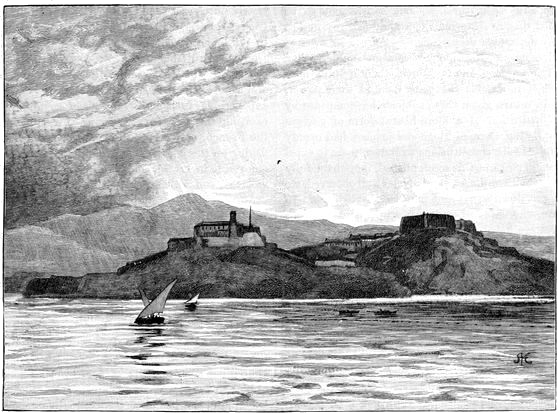
ELBA.
[See larger version]
Carnot pretended that this memorial had been published during his absence, and without his knowledge, but he did not deny the composition; and it was most industriously circulated throughout Paris from little carts, to avoid the penalties which would have fallen on the booksellers had they issued it. As for Fouché, he endeavoured to persuade Louis to declare himself attached to the Revolution—to assume the tricolour flag and cockade. For Louis to have ruled according to the more liberal ideas introduced by the Revolution would have been wise, without declaring himself formally the disciple of opinions which had sent so many of his family to the guillotine; but to have followed the invidious advice of Fouché would have let loose at once that terrible race of Jacobins which had never ceased to massacre all other parties and then their own so long as they had the power. The cannon of Buonaparte alone had arrested their career; the advice of Fouché would have recalled it in all its horrors. Not prevailing on Louis to do so foolish an act, he wrote to Napoleon, advising him to get away to America, or it would not be long before the Bourbons, in spite of the treaty, would seize and put him to death; and then Fouché entered heart and soul into the plots of the Jacobins for the restoration of Napoleon.
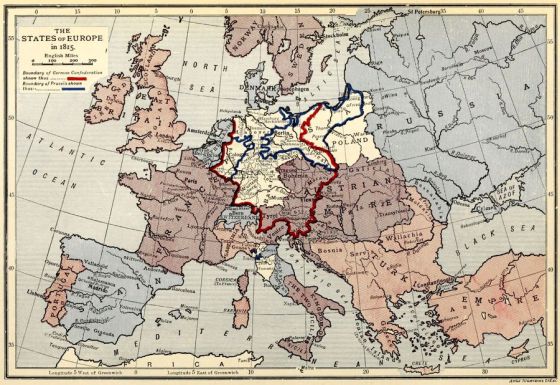
Whilst these elements of a new convulsion were in active operation, the Allies had settled to some extent the affairs of Europe, and had returned home. On the 30th of May a treaty had been signed at Paris, between Britain, Russia, Austria, and Prussia, with France. The boundaries of France were settled as they existed in 1792; it was decreed that Holland and Belgium should be united to form a strong barrier against France; the independence of Switzerland was restored; the north of Italy was again made over to Austria, including Venice, but not including Sardinia, which was enlarged by the addition of Genoa, out of which Lord William Bentinck, with a British army, had driven the French. Murat had assisted the Austrians to conquer Eugene Beauharnais, and hoped to be allowed to retain Naples, yet having many fears of his new allies, the Austrians, and of the Allies generally. The Pope was again in peaceful possession of his States; the arms and the money of Great Britain had triumphed over Buonaparte, and had restored the monarchs of Europe to their thrones; but it was not to be denied that in restoring them they had restored so many detestable despotisms.
Not one of these monarchs, whose subjects had shed their blood and laid down their lives by hundreds of thousands to replace them in their power, had in return given these subjects a recompense by the institution of a more liberal form of government. The German kings and princes had openly promised such constitutions to induce them to expel Buonaparte; and, this accomplished, they shamefully broke their word. As Lord Byron well observed, we had put down one tyrant only to establish ten. In Spain, where we had made such stupendous exertions to restore Ferdinand, that monarch entered about the end of March; and his arrival was a signal for all the old royalists and priests to gather round him, and to insist on the annihilation of the Constitution made by the Cortes. He went to Gerona, where he was joined by General Elio and forty thousand men. Thence he marched to Saragossa and Valencia. At that city Te Deum was sung for his restoration, and, surrounded by soldiers and priests, he declared that the Cortes had never been legally convoked; that they had deprived him of the sovereignty, and the nobles and clergy of their status; and that he would not swear to the Constitution which they had prepared. On the 12th of May he entered his capital, amid the most frantic joy of the ignorant populace, and proceeded at once to seize all Liberal members of the Cortes, and throw them into prison. Wellington hastened to Madrid, and with his brother, Sir Henry Wellesley, the British Ambassador, and General Whittingham, in vain urged on Ferdinand to establish a liberal constitution, and govern on liberal principles. It was clear there was a time of terrible and bloody strife before Spain between the old tyrannies and superstitions and the new ideas.
In balancing accounts at the Congress at Paris, there was a resignation on the part of Great Britain of the colonies which she had won with so much cost of money and men. Our statesmen never thought of placing some of the enormous sums we had bestowed on the Powers we helped against the islands we had conquered. We had dearly purchased them. But Great Britain gave back to France all the colonies possessed by her in 1792, except Tobago, St. Lucia, and the Isle of France. Still more absurdly, we returned Pondicherry, in the East Indies, as a focus for fresh annoyances there from the French, whom we had expelled at such cost for their meddling and exciting the natives against us. We restored to the French, under certain conditions, the right of fishing on the bank of Newfoundland, as they had enjoyed it in 1783; conditions which they boldly violated, and which the British Ministry did not venture to insist on being observed. We gave back also to Spain several islands and colonies; and the same to Holland—namely, Demerara, Essequibo, Berbice, the immense island of Java, and the rich one of Sumatra, retaining only the Cape of Good Hope and the settlements in Ceylon.
These arrangements having been made, the sovereigns of Russia and Prussia came over to London on a visit to the Prince Regent, and to take a look at that wonderful capital which had poured out such torrents of gold to bring up their armies to Paris. With them came the Duchess of Oldenburg, the sister of the Czar, the two sons of the King of Prussia, and a great number of the victorious field-marshals, generals, princes, dukes, barons, and the like. But the two grand favourites of the people were Platoff, whose Cossacks had charmed the British people so by their wild prowess, and the bluff old Marshal Blucher. This was a hero exactly after the British heart—blunt, uncompromising, and, like the British, never knowing when he was beaten.
[See larger version]