Italian Art of the 17th and 18th Centuries (Galleries 33, 34, 36, 37; Lobby A, West Stair Hall, and Rotunda Stair Hall)
Reading edition
The baroque period began around 1600, when the Church was engaged in a movement to curb the spreading of the Protestant Reformation. To appeal to the large numbers of ambivalent Christians torn between the two theologies, the Catholic clergy commissioned and supported a realistic but dramatic art designed to involve the populace in the teachings and the authority of the Church. Indeed, so appealing was the baroque style that it was quickly adapted to the worldly subjects of the secular arts. Representative of the Counter-Reformation era is Gian Lorenzo Bernini, an enormously successful and influential architect and sculptor. As world trade shifted to the Atlantic nations, however, Italy’s economic position declined, and by the eighteenth century many Italian painters had 9 to search for commissions elsewhere in Europe. Through their travels, decorative painters and muralists, such as Giovanni Battista Tiepolo, soon established an international style filled with brilliant colors and virtuoso brushwork.
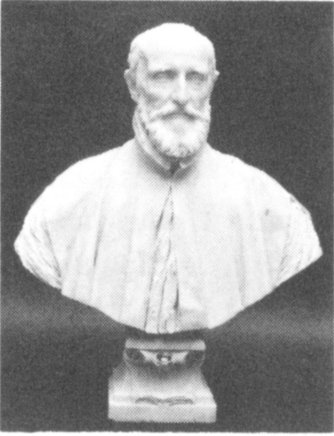
LOBBY A: Gian Lorenzo Bernini, Monsignor Francesco Barberini, carved c. 1624/1625
A masterful example of the immediacy of baroque art, this bust of the uncle of Matteo Barberini, who became Pope Urban VIII, captures the textural qualities of living flesh. Through Bernini’s virtuosity, the highly polished forehead gives the illusion of glossy skin, whereas the starched fabric has been left with a rough, light-absorbing surface. To create a thoughtful expression, Bernini has exaggerated the depth of the eye sockets, casting deep shadows. Such a convincing portrayal of aging flesh and stern character—commissioned by the pope as a tribute to his uncle—is all the more impressive since Bernini had never seen the long-dead Francesco Barberini. The bee on the pedestal is the emblem of the Barberini, a wealthy Roman family.
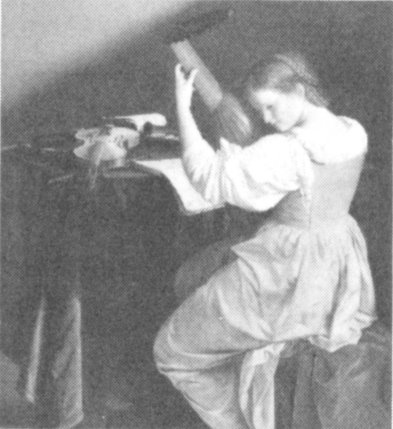
GALLERY 33: Orazio Gentileschi, The Lute Player, painted c. 1610
The most casual elements of this intimate portrait of human activity combine to create a masterful composition of complex and dynamic parts. The pose of the girl, shown with arm and head poised as she tunes her lute, generates a feeling of sustained movement. The intricate still life fading into shadowy depths at the left is in deliberate contrast to the brightly lit costume and solid figure of the lute player. The combination of abrupt spotlighting and suggested deep space was characteristic of baroque painting in seventeenth-century Rome, and Gentileschi, an international court artist, transmitted this robust style to Genoa, Paris, and London.
10
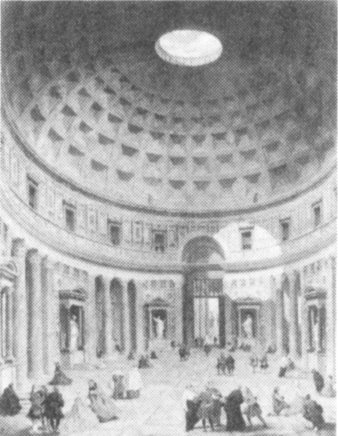
GALLERY 36: Giovanni Paolo Panini, The Interior of the Pantheon, painted c. 1740
In an era of travel, when men and women of wealth toured the continent as part of their education, factual renderings of interiors and cityscapes became important souvenirs. A major attraction on the Grand Tour during the eighteenth century was Rome; and in Rome, the Pantheon, a circular temple built in the second century. Converted to a Christian church, it became the burial spot of Renaissance authors and artists, such as Raphael, and has proved the source of inspiration for many later structures, including the central rotunda of the National Gallery. Panini was the greatest view painter in Rome during the 1700s, although his precise manner of painting was paralleled by his Venetian contemporaries, Canaletto and Guardi.