BAKST AND RUSSIA
Reading edition
We have followed Bakst through each of the fields with which he was familiar, whatever their nature. Each road in this labyrinth of styles brought us back to the native land of the artist. Throughout, the exotic or “Eurasiatic”—to use a word coined by a group of Russian dreamers in exile—dominated. For the common herd Bakst is over and above all the creator of an oriental fairyland. Even his very name, monosyllabic, quickly pronounced, and cutting like the blade of a Turkish simitar, seems to call up a fleeting but intense vision of Asia.
Bakst was bound forever to disconcert the lovers of convenient formulas. You think you have caught up with his jerky and lightning-like course, when, lo! he has already escaped, to the delight of one of the “four winds of the spirit”. There remains in your hand the sixth skin of the serpent which it divests itself of—only to clothe itself again in the seventh.
Recently, in the spring of 1922, we witnessed a new avatar of the artist. Ten years previously he had left his fatherland for a new fatherland that was more hospitable—for France. Now, under a splendid impulse of piety, of tender homesickness, of filial love he returned of his own accord to his Mother—Russia, bruised, trampled
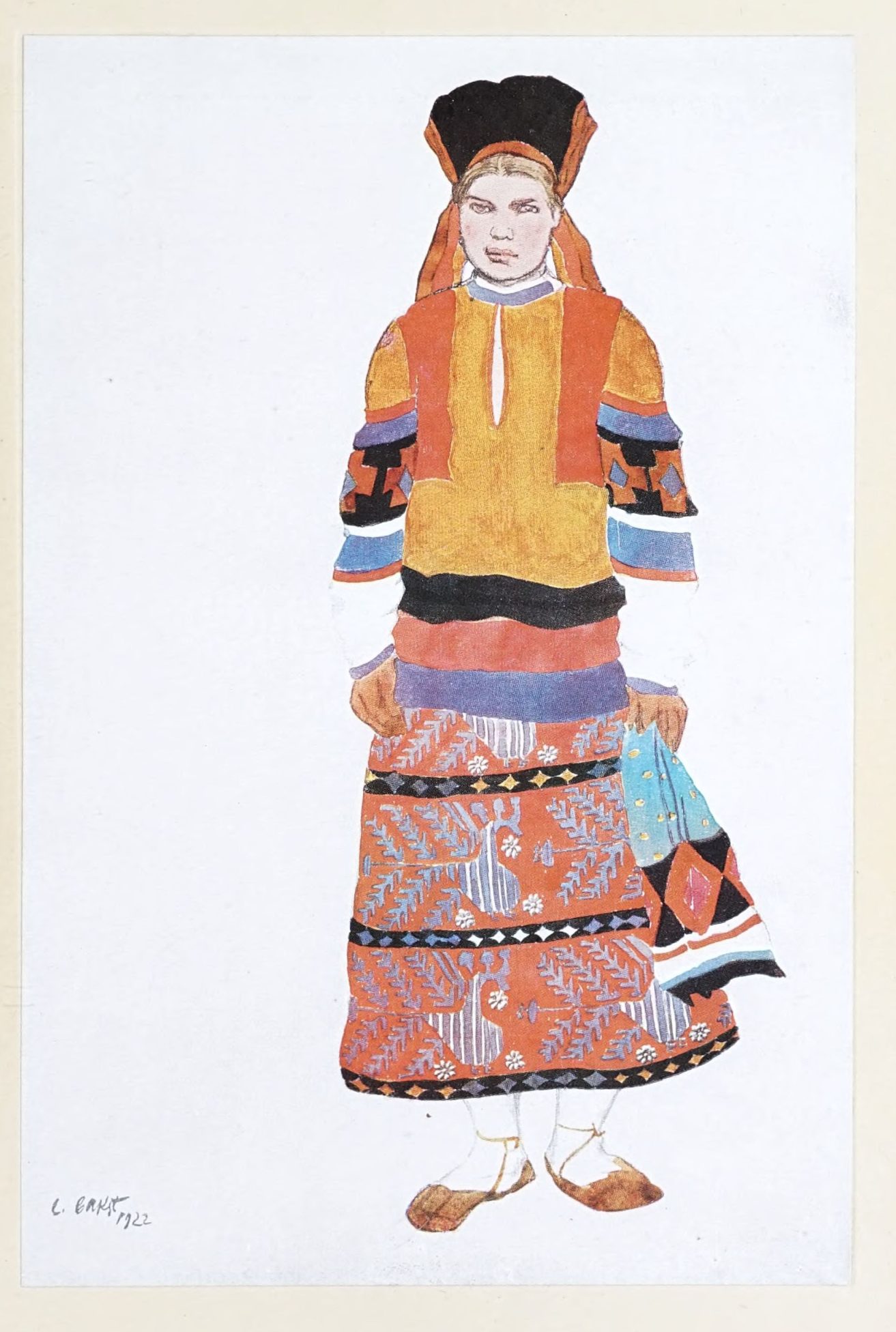
LXV
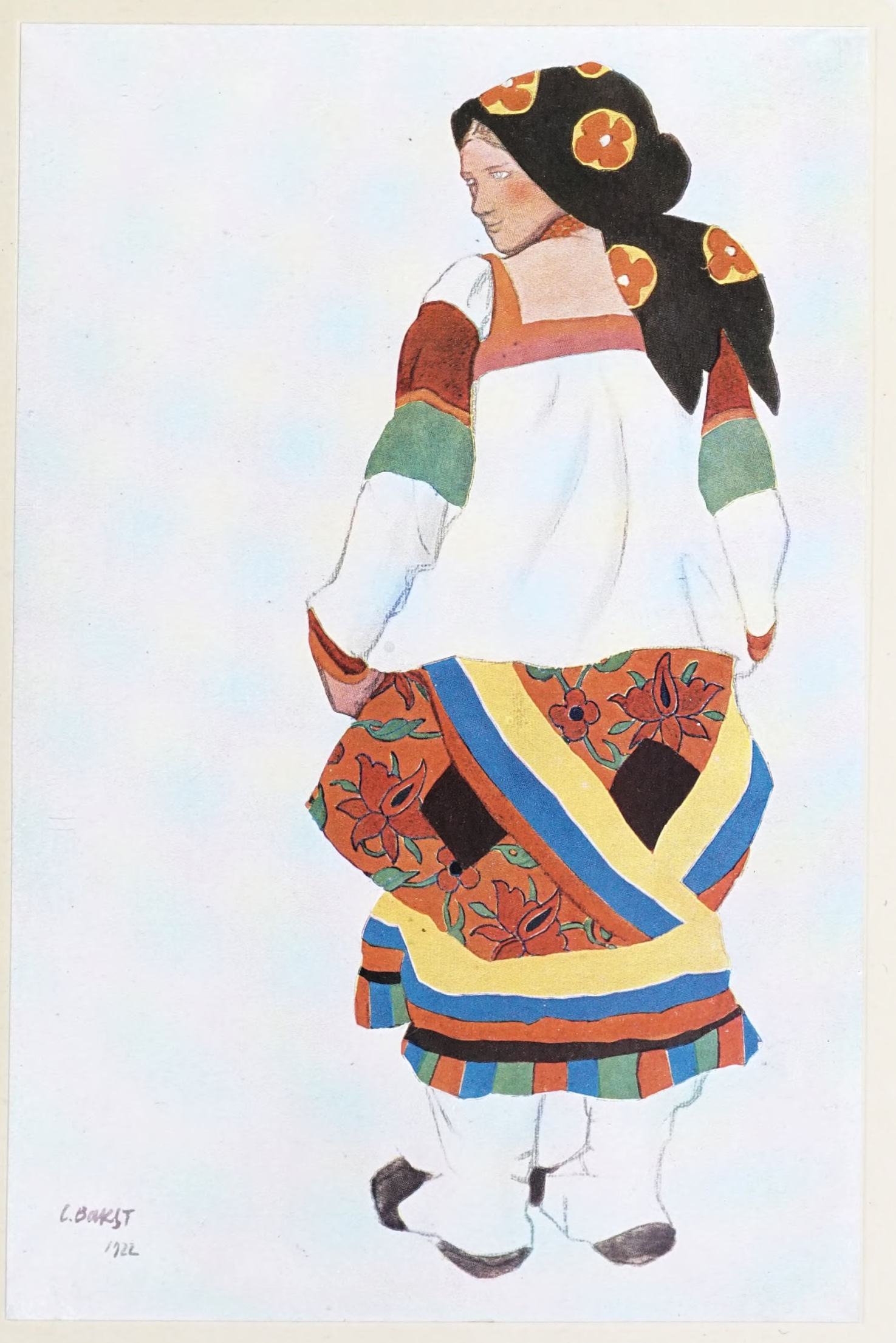
“A PEASANT WOMAN” (SKETCH BY POTEMKINE). GOUACHE
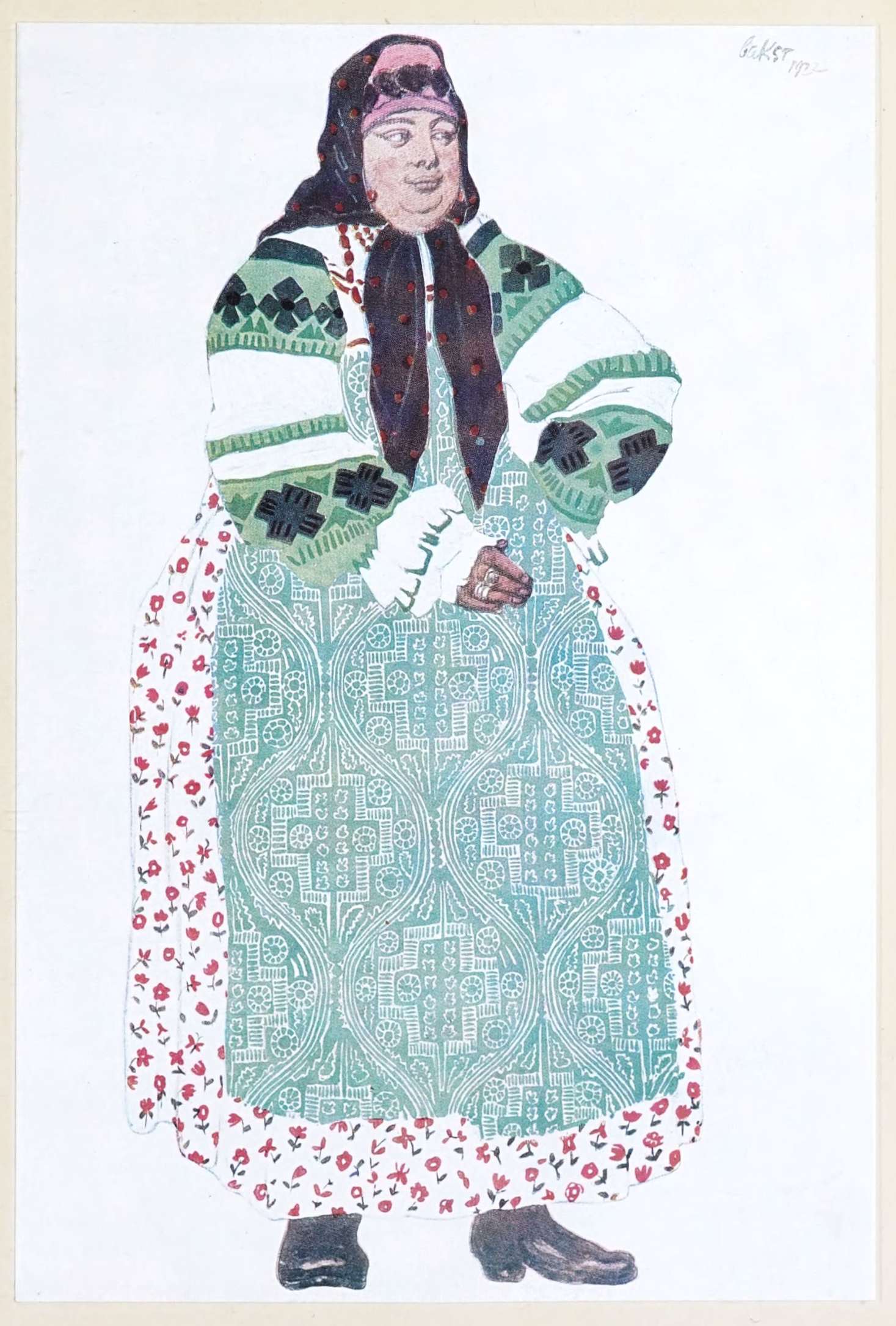
LXVI
“A PEASANT WOMAN” (SKETCH BY POTEMKINE). GOUACHE
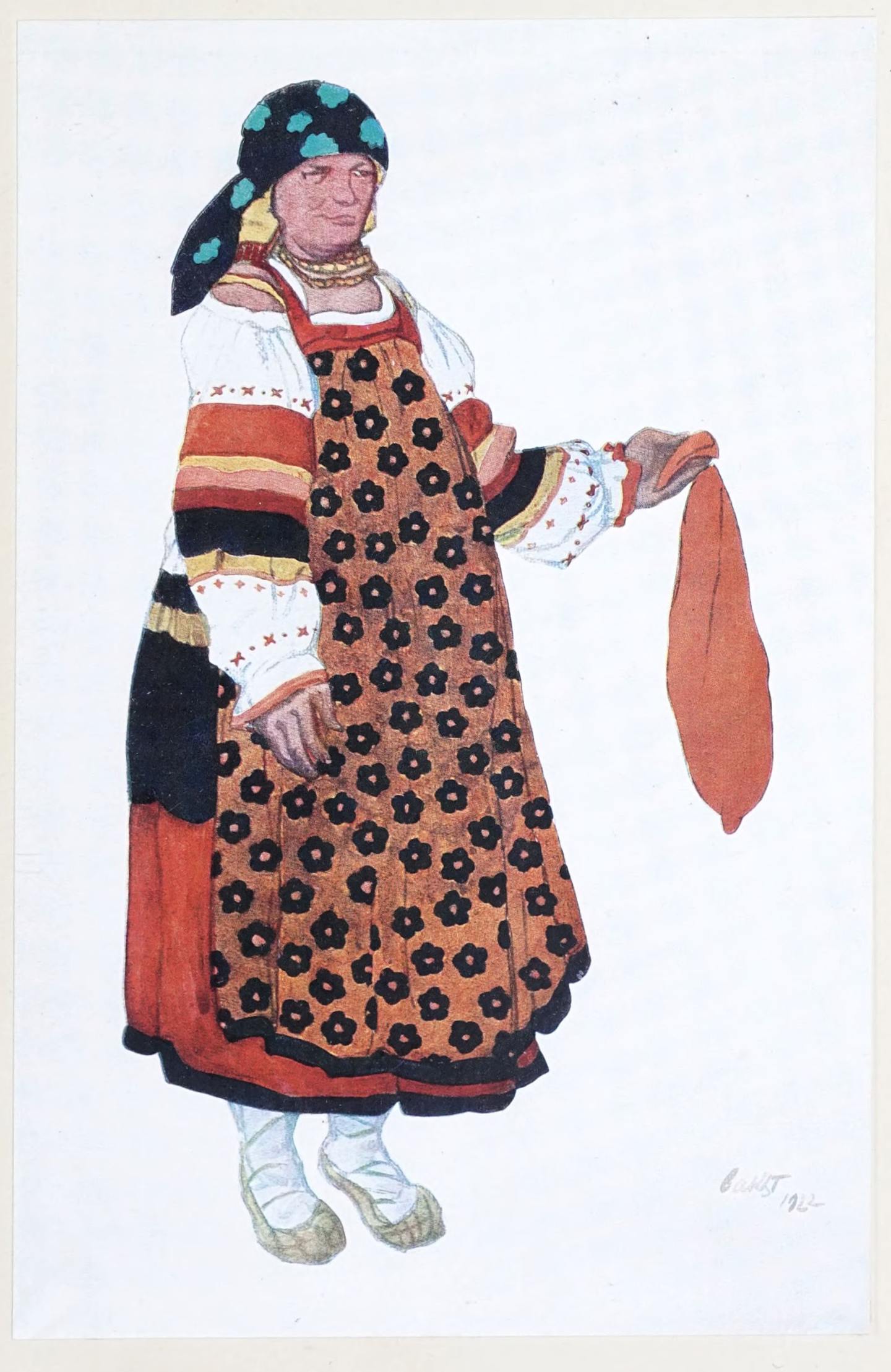
LXVII
COSTUME FOR “LE CHANTRE ET LA DÉVOTE”
LXVIII
COSTUME OF PEASANT WOMAN FOR POTEMKINE’S “VILLAGE”
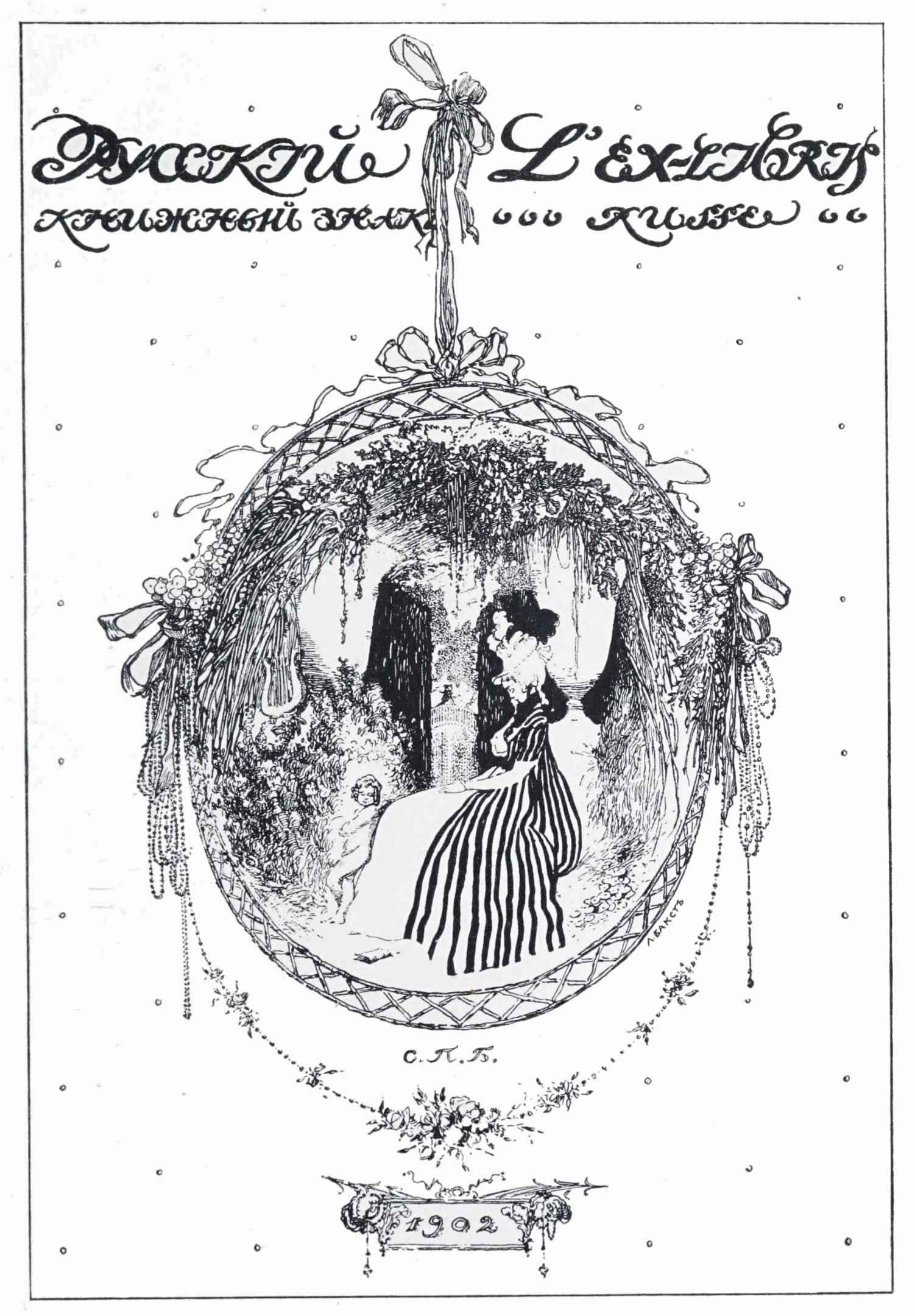
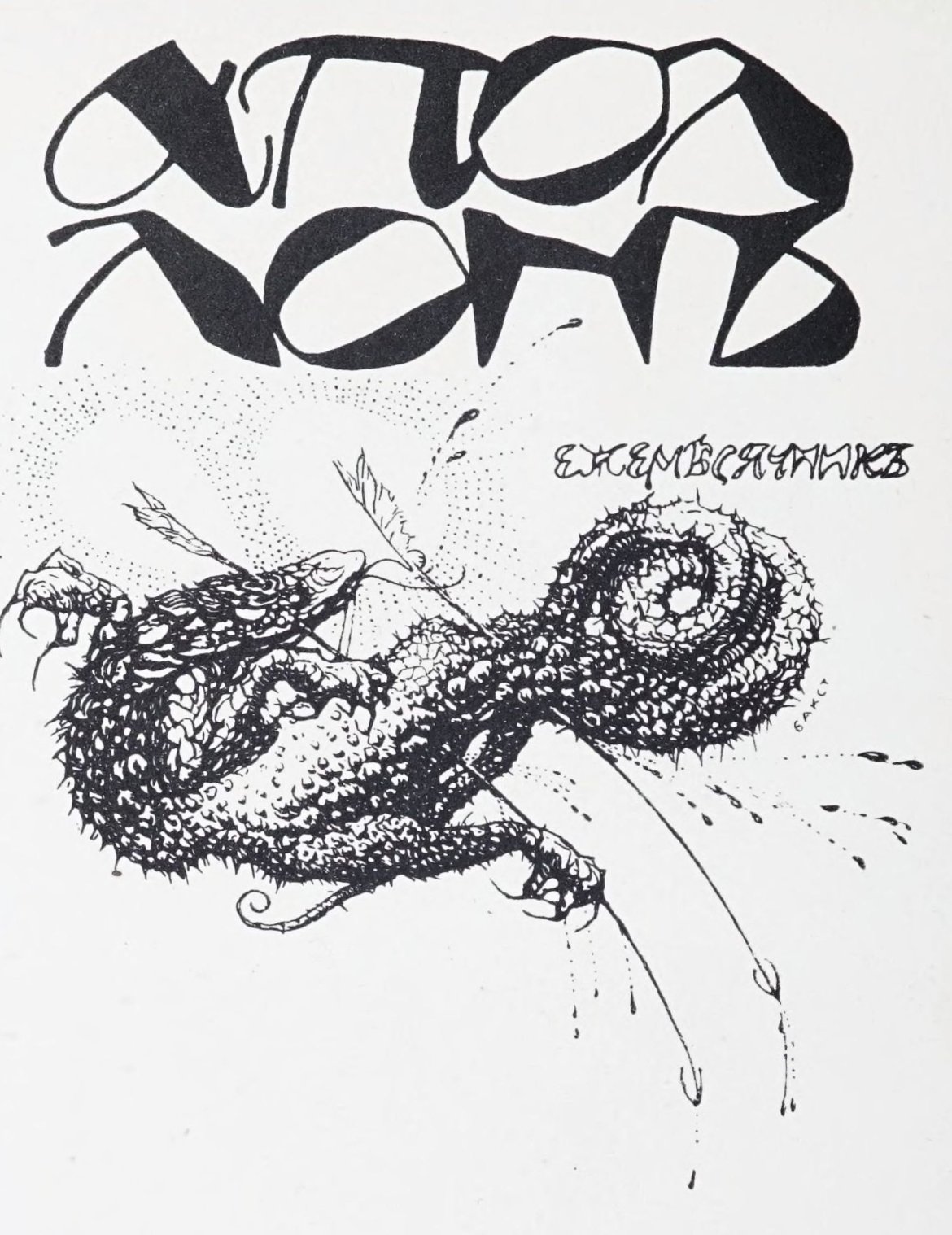
DRAWING OF COVER FOR THE BOOK “RUSSIAN EX-LIBRIS”
upon, dragged into the mud and blood by infamous villains. When all the world deserted her, he watched by her bedside.
Chance had it that, at the very moment when Alexander Benois’ masterpiece, “Petroushka” was produced at the Opera, a mimic drama by Bakst was played on the scanty stage of the Femina theater entitled “Lâcheté”. Between these two surprising plots lies nothing less than a half=century of Russian history—the fall of a throne and of a world.
The “burlesque scenes” of Benois seemed like the final blossoming=out of ancient Petrograd, like a nostalgic vision of the imperial city, called forth by an ardent lover of an abandoned past. A mob of people, truculent, jeering, deafeningly noisy, with an exuberant movement of cheerfulness, monopolizes the stage; a forceful, manifold, strikingly lively rhythm constitutes, properly speaking, the action. In the rigid and stiff scenery of the fated city, popular fancy has erected its paradise of outlandish hovels, its blue and red “balagani”, in the open air. Personages from the prints at ten kopecks and from the pictures of Epinal come to life again and bestir themselves; comely “nounous” strut about and try to attract; with noisy clatter of boots bearded coachmen hasten the step of their squatting dance. Russian rural life for one last time spends itself in these Slavic saturnalia. Even the dolls which are the protagonists of the grotesque drama try to shake off their mechanical torpor. They would like to become flesh and blood; they have a hungry desire to live; at times, indeed, they really do live.
The action of “Lâcheté”, likewise, is staged at St. Petersburg which, however, has become Petrograd—but not in the clear sunshine of a winter’s day; rather within the concrete walls of the “People’s House” which the last of the Czars erected to the glory of the modern capital. Here the wooden horses are moved by powerful dynamos under the searching light of electric lamps. But what has become of the mob in “Petroushka”,—the motley, varied crowd? The doll, the artificial, mechanical, automatic puppet has dispossessed the human being; it gets the better of the disabled actor. There remains enough soul, however, in this changed world to supply the bodies of five human
beings; and what a soul, good God! Nothing in these puppets reminds one of the smiling indifference of “Petroushka”. We are on the eve of terrible happenings, and we feel it with sadness; a dull ennui weighs upon us heavily, like the low cloud before a storm.
Ah! we are now in the Petrograd of 1916! How can we express all the trickiness in the apathetic inertia of these figures that are scarcely articulate, that are uniformly costumed and that skip about or sink down at the will of their wires that direct them? Before this pliability, this evil passivity of shapeless puppets, this cynical swaying motion of impotent figures, this “dance of death” of inertia, the mimicked action vanishes, and living men disappear. The drama of the passion—death which passes, hideous and sneering,—becomes pallid under the gaze without eyes of hostile faces.
How the inevitable closes about us! Everything in this atmosphere of anguish and of hallucination becomes a latent menace. The day is near at hand—one feels it with one’s whole soul, nervous with fear—when this mass, inert, blind, crushing, will hurl itself upon quivering Russia.
Happy the blond student in green blouse who finds death as he pursues a dream of love; he will not see it. He will not know hunger or exile or disgrace. Who of us Russians would not envy him?
Such were the two faces of Russia which were exhibited by two painters who are more than painters,—Benois who has the power of retrospective divination, Bakst who possesses an understanding of modern life and of its tumultuous forces.
But behold! the curtain which has just fallen on the bristling, rough, malicious scenery of “Lâcheté”, rises once more to unfold before our eyes a third Russia—a Russia debonair and drunken, ignorant and full of spirit.
The vaudeville act “Old Moscow” depicts a rich and opulent city of merchants wearing their kaftans, of free carousals, of a jovial savagery. Two frames, reaching to the knees of the actors, form the stage setting. On them is a miniature reproduction of the orphaned capital with its forty times forty cupolas, encircled by the crenelated walls of the Kremlin. And amidst this delightfully exaggerated parody of a stage full of moujik=bourgeois, we see funny human beings, overbubbling with good health, moving about dressed in wide, stiff skirts that are sky=blue or tri=colored; likewise country women weighing a hundred kilos.
The thing that is of importance above everything else in this caricature composed without any masked thought is that aroma of the land which, even in its funniest moments, makes the tears come to the eyes of Moscow émigrés.
Today Bakst is completely absorbed by this forgotten world which rises about him on a background of a distant past. He is consumed with an appetite for Russian memories, emotions and visions. Each day in his studio a population of Russian figures keeps multiplying—models and groups of which not only their costume but their very attitude has something indefinably national about them, something profoundly popular, in short, something authentic. And to what purpose? The artist as yet does not know. Once the actors are placed upon the stage, he says to himself, the play will start spontaneously. And in pursuing his enormous and unceasing labors he lets things take their course without hastening them.—
We have accompanied Bakst up to his last station. It is time, therefore, for this sketch to end. The writer takes leave of his readers and descends into the audience in order with his readers to await the rising of the curtain for the next act of the most beautiful of plays: the life of a grand and noble artist.