A SHOW IN AN ARMCHAIR
Reading edition
In 1906 or thereabouts, following immediately upon the first Russian revolution that failed so grievously, the group of young artists and poets marched side by side through the breach that had been opened in the citadel of public opinion. The “modernists” of “Mir Iskousstva”, who had been jeered by the common herd, came into their own. But a certain uneasiness troubles this rising power; it feels itself incomplete, limited in a fatal manner. It is not equipped to reestablish great painting; it can only count upon illustrators, decorators, and poets of the
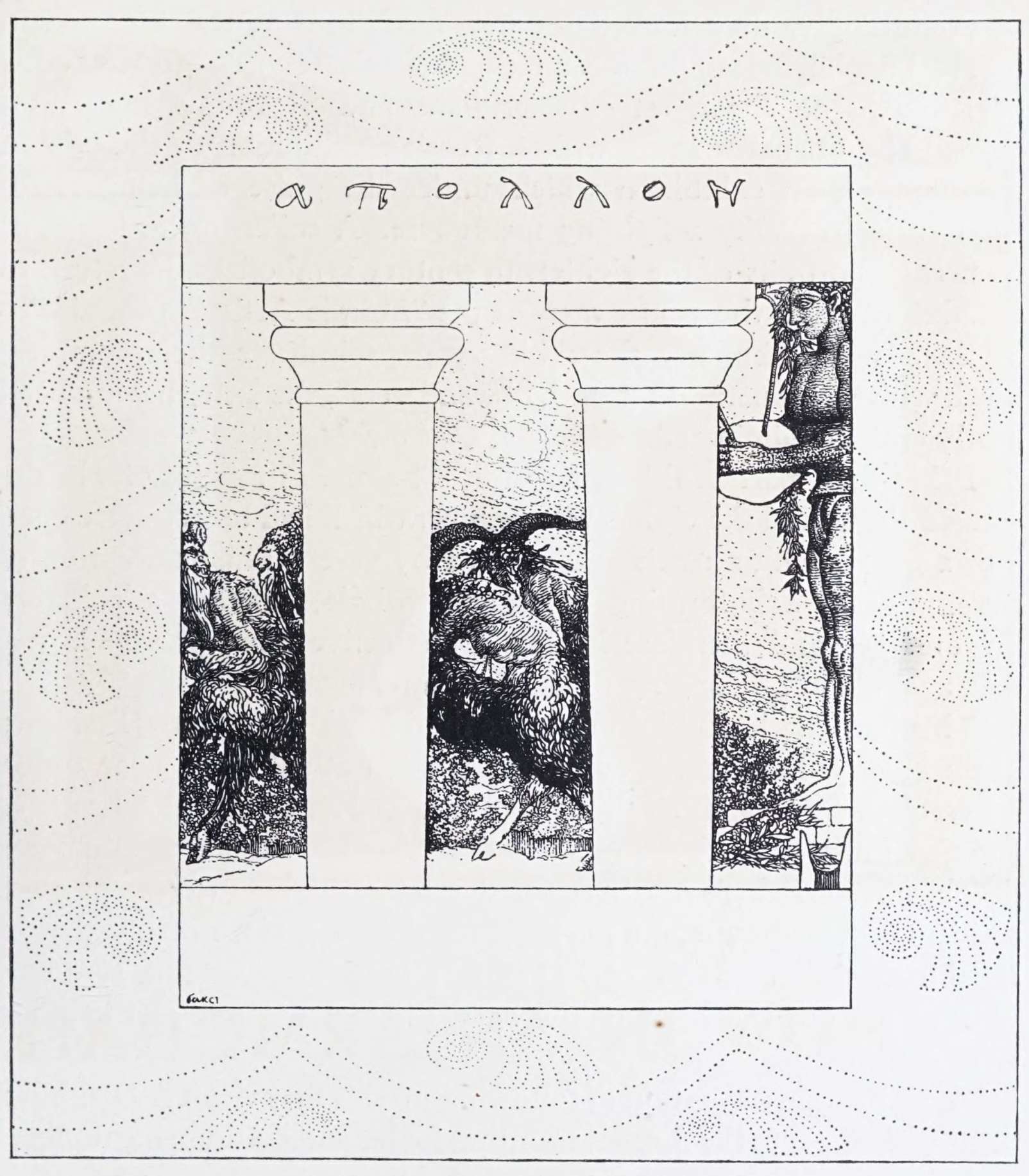
DRAWING OF COLOUR FOR THE REVIEW “APOLLO”
past. And, as is the case with authority everywhere when it feels itself threatened, so too this group, not being able to assert itself, was anxious to spread out.
Accordingly, they looked for new fields to conquer. Once again we see Diaghileff leading the attack. He releases that great exodus of Russians to the West—the brilliant and victorious march on Paris. The offensive starts with a Russian exhibition at the “Salon d’Automne”, an exhibition which under the guise of being retrospective is in reality a fighting manœuvre. A collection of icons, of numerous portraits of the eighteenth century symbolizes the return to a tradition which the young men of the “Monde Artiste” proclaim to be their own. Similarly the arbitrary gaps indicate their complete break with the unnatural art of the “wanderers”, the latter having been nearly entirely eliminated.
Bakst took part in this enterprise not alone as a painter. He decorated the hall of the eighteenth century, which had been transformed into a grove, with a trellis surmounted by vases. This conception of an exposition hall forming an organic whole, making a coherent ensemble, and therefore having a distinctive atmosphere—is not this, again, a gift belonging to the Russians?
This first attack could do no more than break through the first lines of the enemy. Painting, it was evident, was not sufficient as an object for combat. So Diaghileff thought of music. His historical concerts of Russian music caused the greatest excitement; Parisian opinion was deeply stirred. Bakst’s role in this first and formidable success was quite accidental. He drew some portraits for the program, notably that of Balakirev, the composer of “Thamar”: bold lines and a synthetic contour set out the head of the aged oriental sorcerer as though it were sculptured.
It now became a question of following up this first victory. Diaghileff turns once again to the theater, counting for his success upon its numbers and upon the wide range that it afforded. All circumstances are favorable for his project. His old group of co=workers surrounds him, abler through strife and experience. A galaxy of stars of the dance—Pavlova, Karsavina—await but the signal to make them gleam forth on the western sky. At the same time a marvellous dancer is discovered—Nijinsky. And, as a will is needed to give life to all these latent forces, behold, Michael Fokine presents himself,—Fokine, a young master of
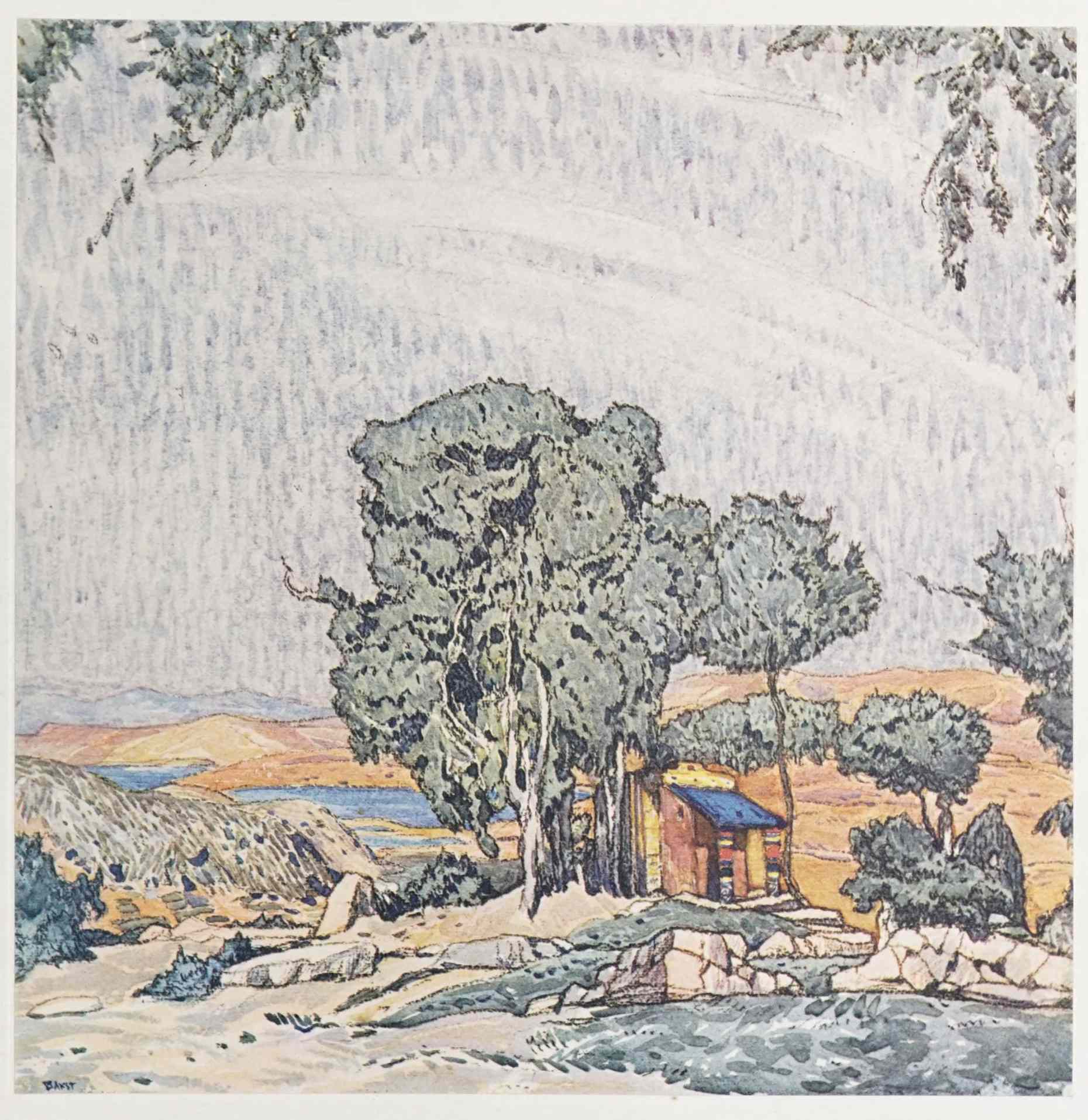
XXXVII
STAGE DECORATIONS FOR ACT 3rd OF VERHÆREN’S “HELEN OF SPARTA”. (GOUACHE)
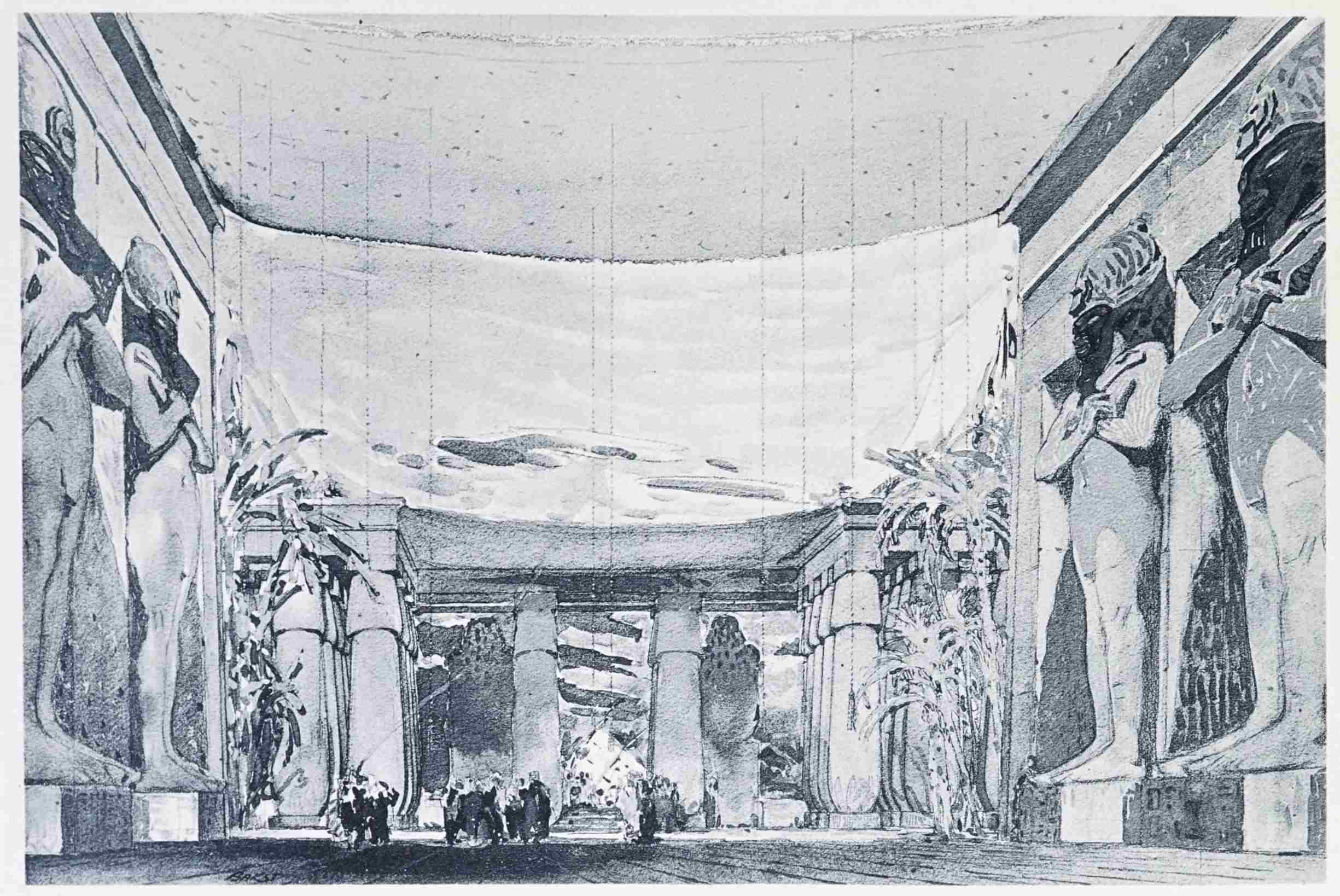
XXXVIII
STAGE DECORATIONS FOR THE “CLEOPATRA” BALLET. (GOUACHE)
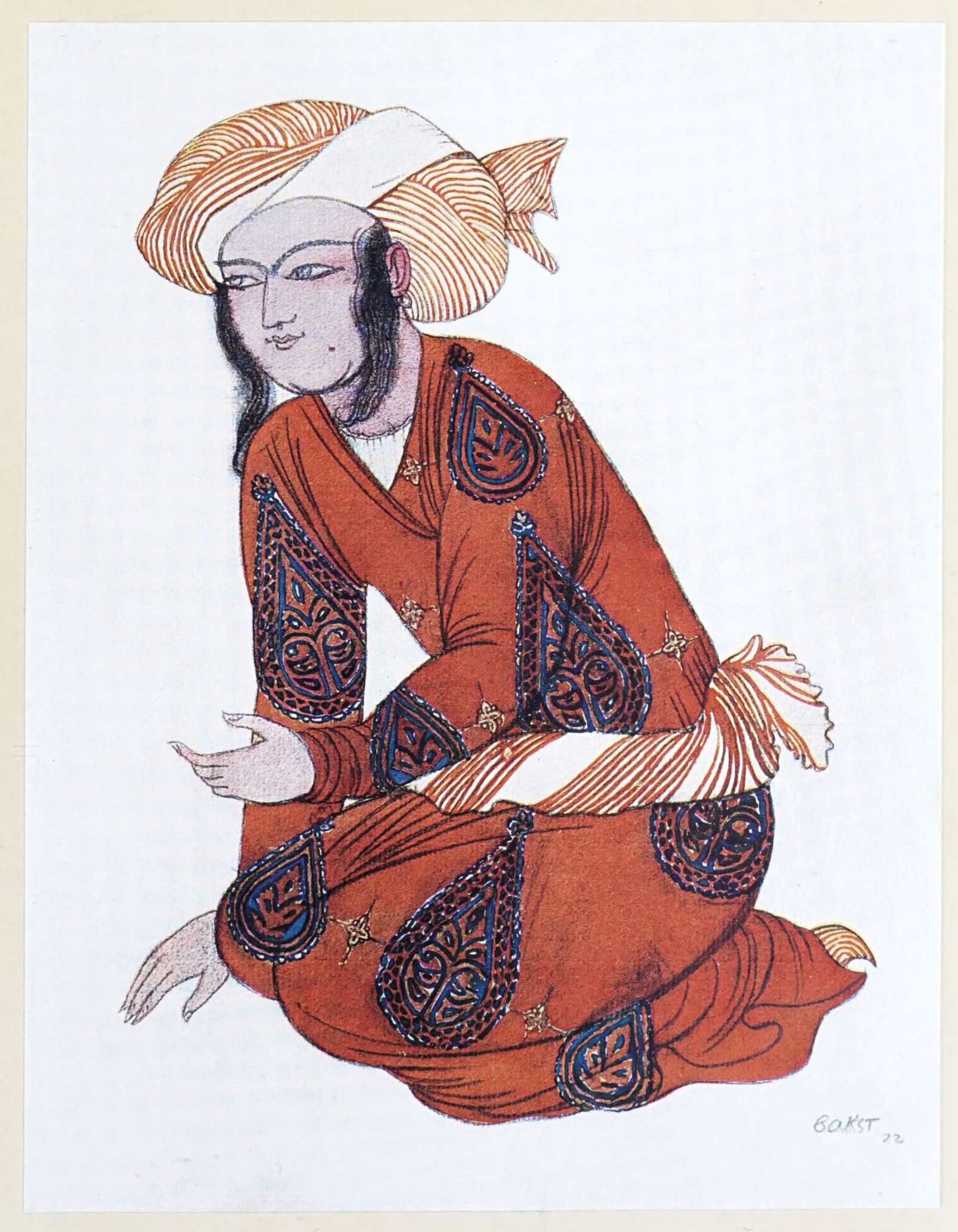
XXXIX
COSTUME FOR TCHEREPNINE’S “ADORATION”
XL
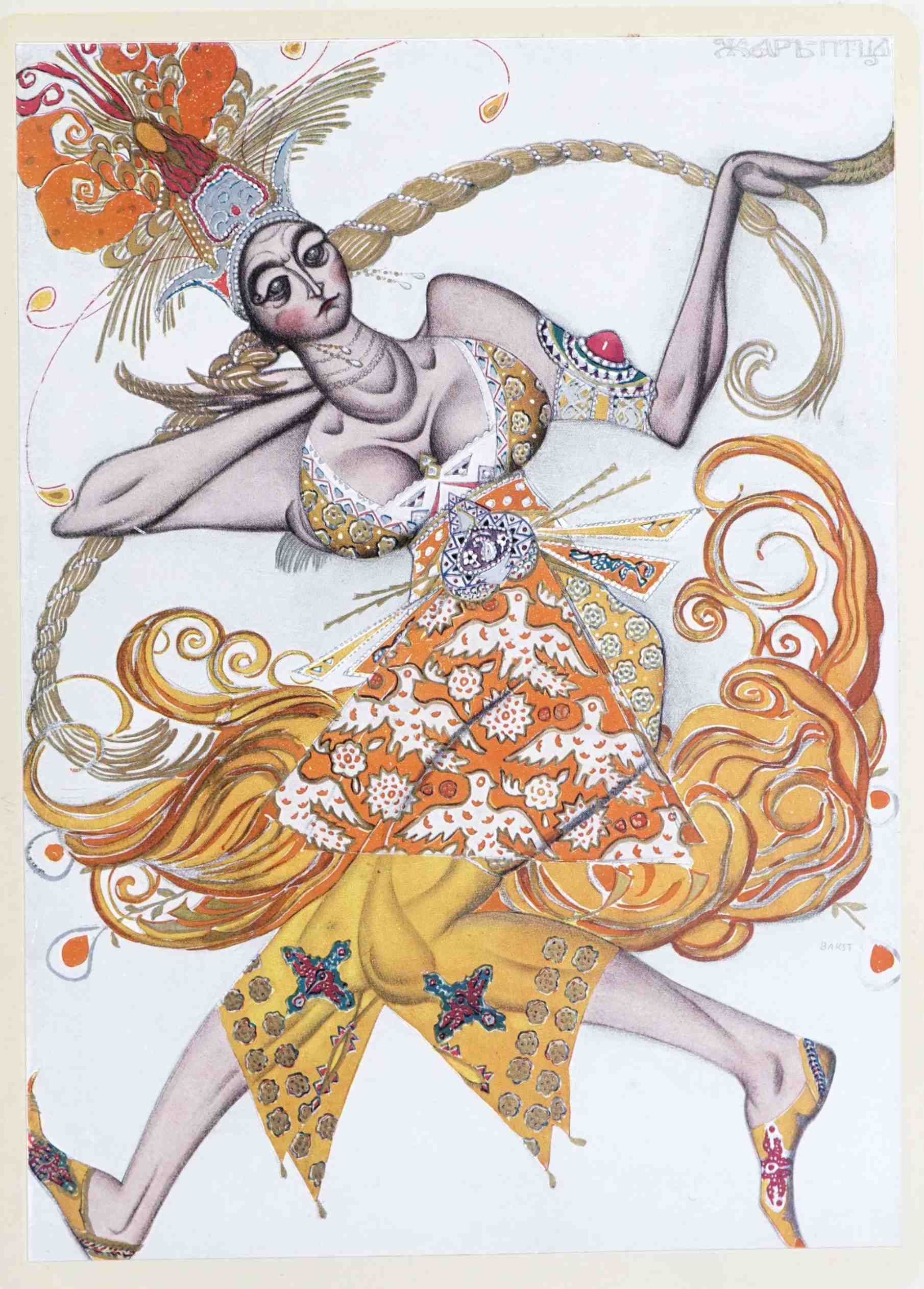
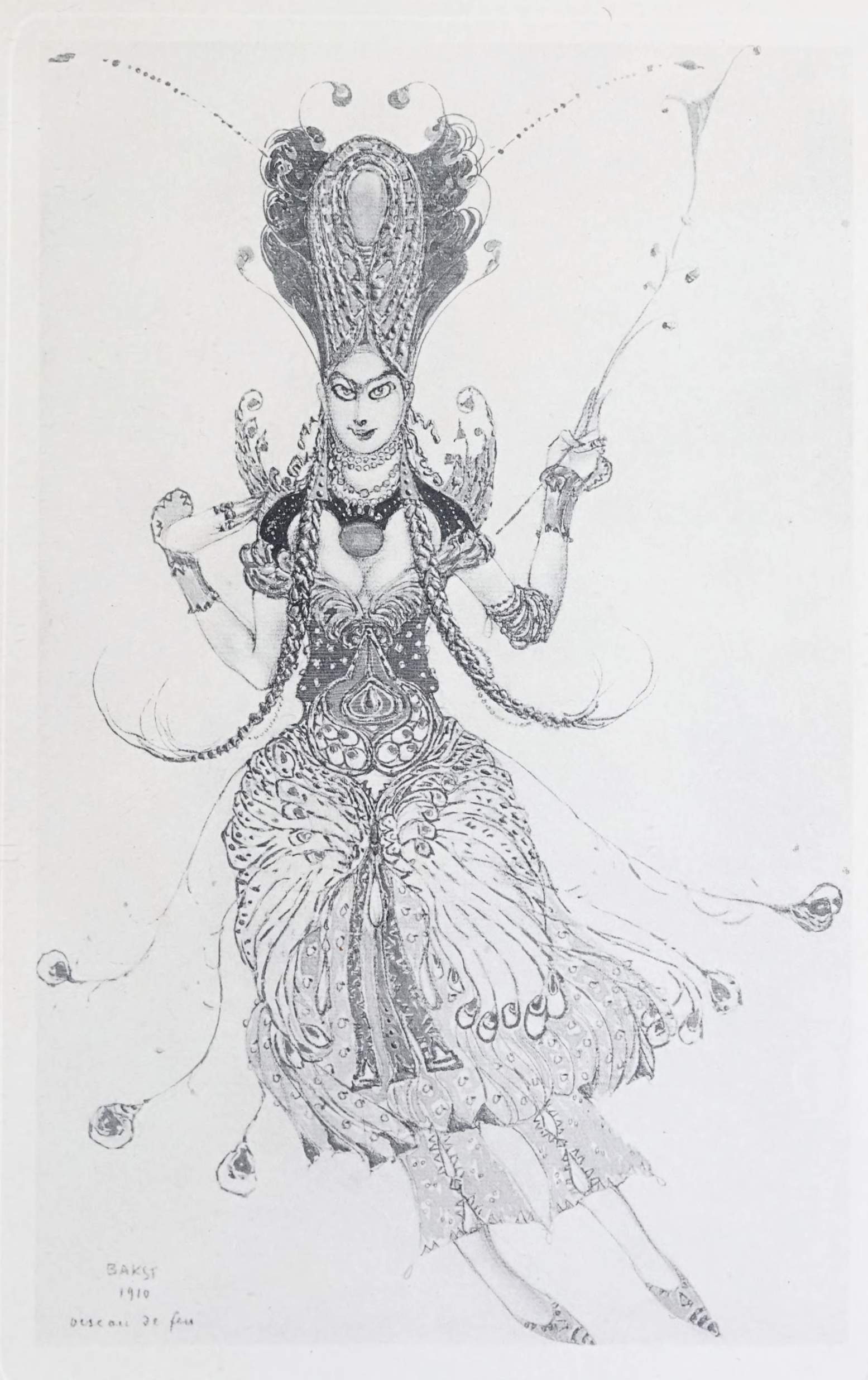
COSTUME FOR STRAVINSKY’S “BIRD OF FIRE”
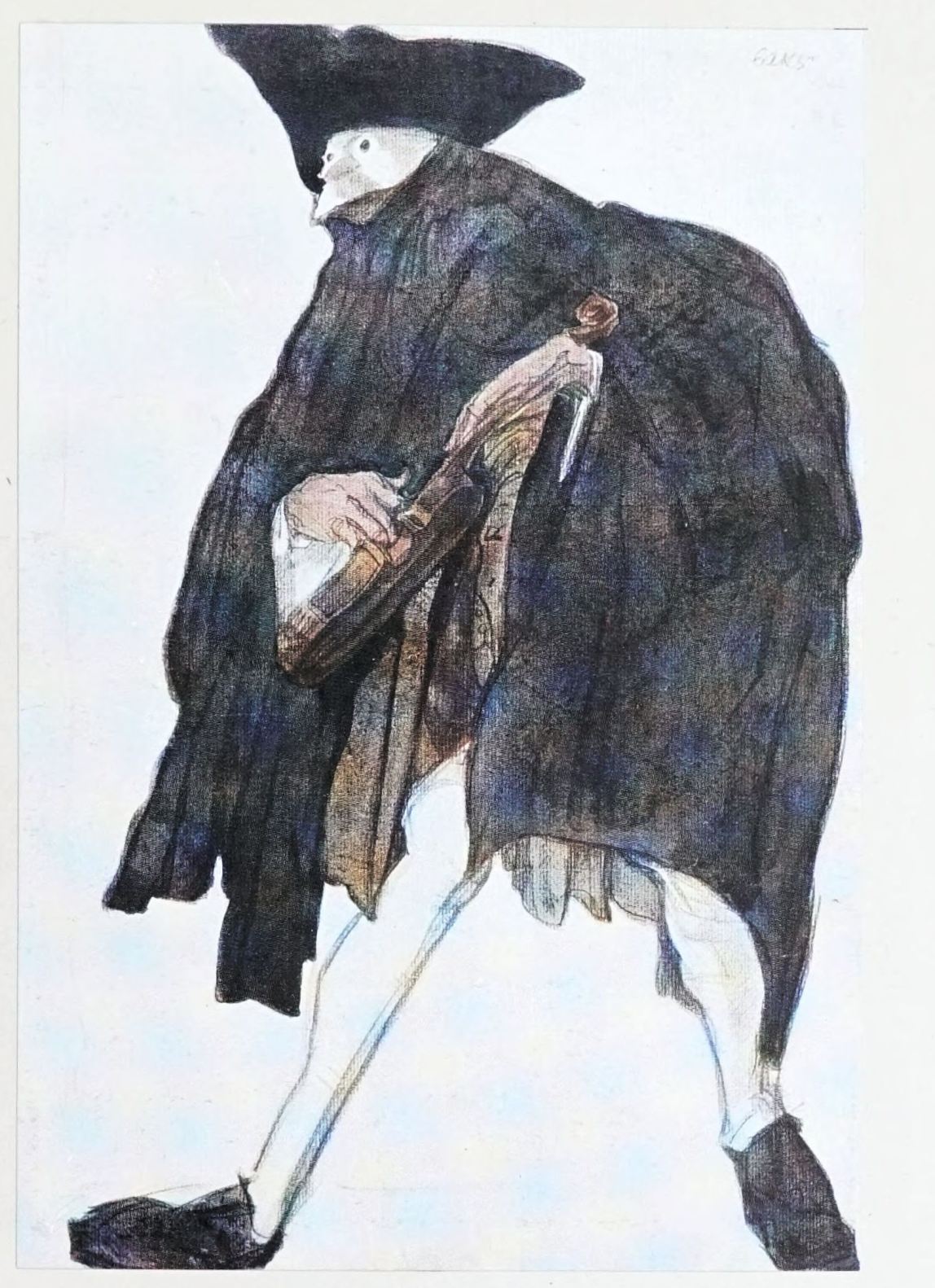
A WANDERING MUSICIAN’S COSTUME. (“WOMEN OF GOOD HUMOUR”)
the ballet, a rebel at the hundred=year=old tradition in vogue in the imperial theaters, who is ready to offer himself body and soul to the cause of the painters who take possession of the theater as masters. Into this renunciation of tradition he puts all the fervor of a neophyte and an infinite measure of talent. What was there that one could not dare to undertake with such a band of the élite?
What followed is well known: fifteen times the celebrated “Russian Seasons” have already borne in upon Paris like shining waves breaking into foam.
It is not for me here to trace in detail the fate of the “Seasons”,—the transformations which they underwent, their successes as well as their
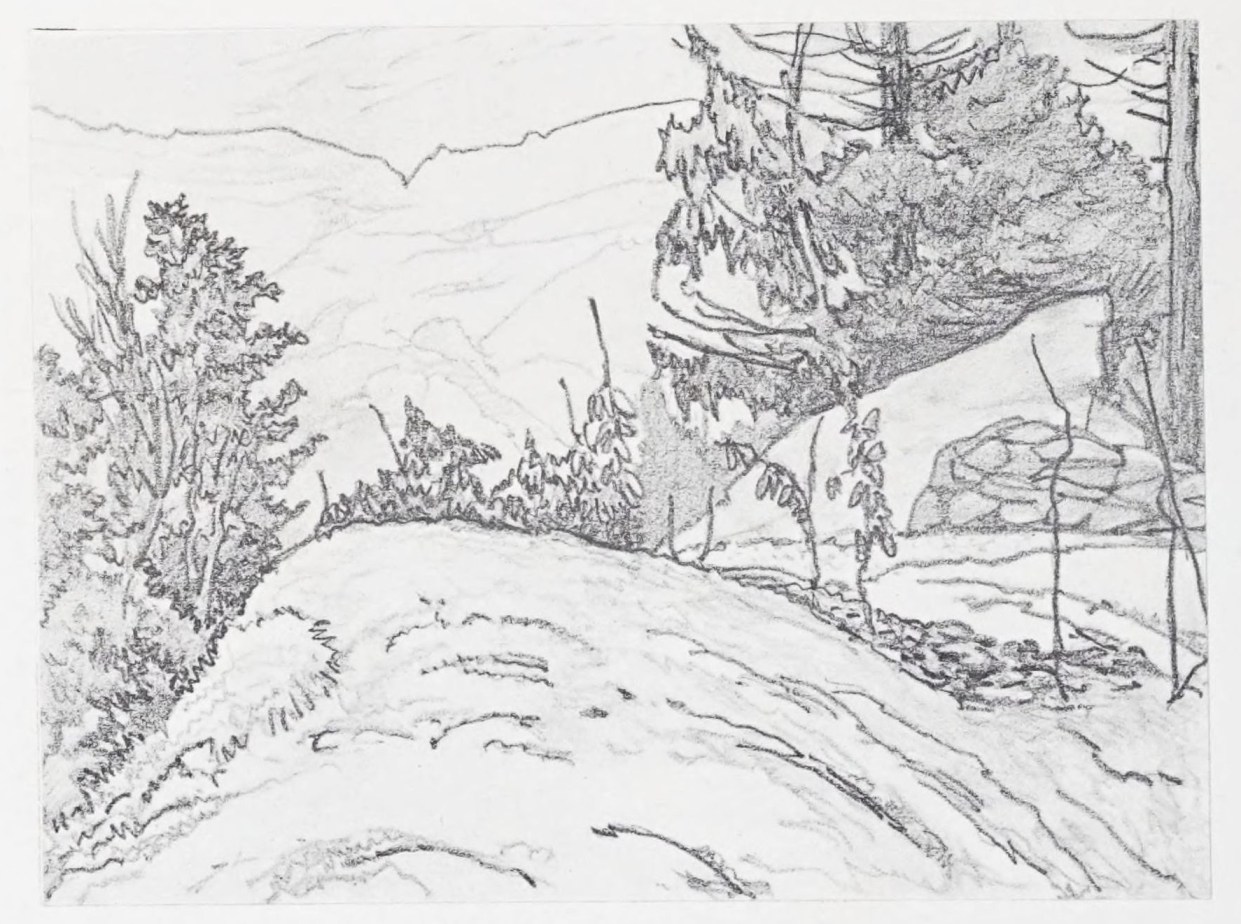
FACING THE MONT-BLANC. DRAWING
failures, the latter oftentimes being more creditable than the successes. Whatever else may have been their mission, certain it is that they brought two men forth into fame and glory: Stravinsky the musician and Leon Bakst the painter.
“Cleopatra” had caused extraordinary surprise. “Sheherazade” in 1910 surpassed everything. In recalling the annals of the modern theater, it is scarcely possible to recollect any production that was given a similar reception.
I had intended to sum up the successive stages of the fifteen years of productive work accomplished. Yet here I find myself, as I face my sources and my documents, overwhelmed with the almost magic
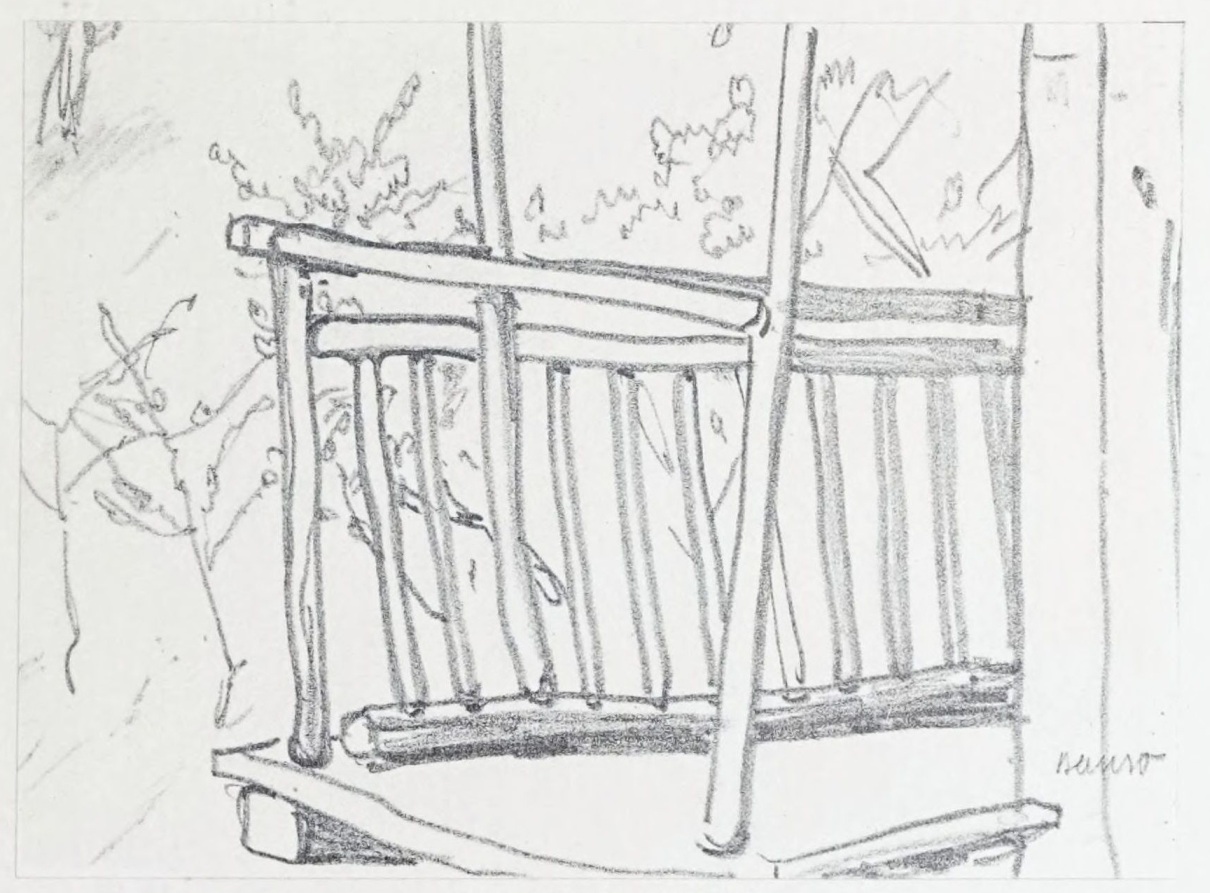
A VERANDAH. DRAWING
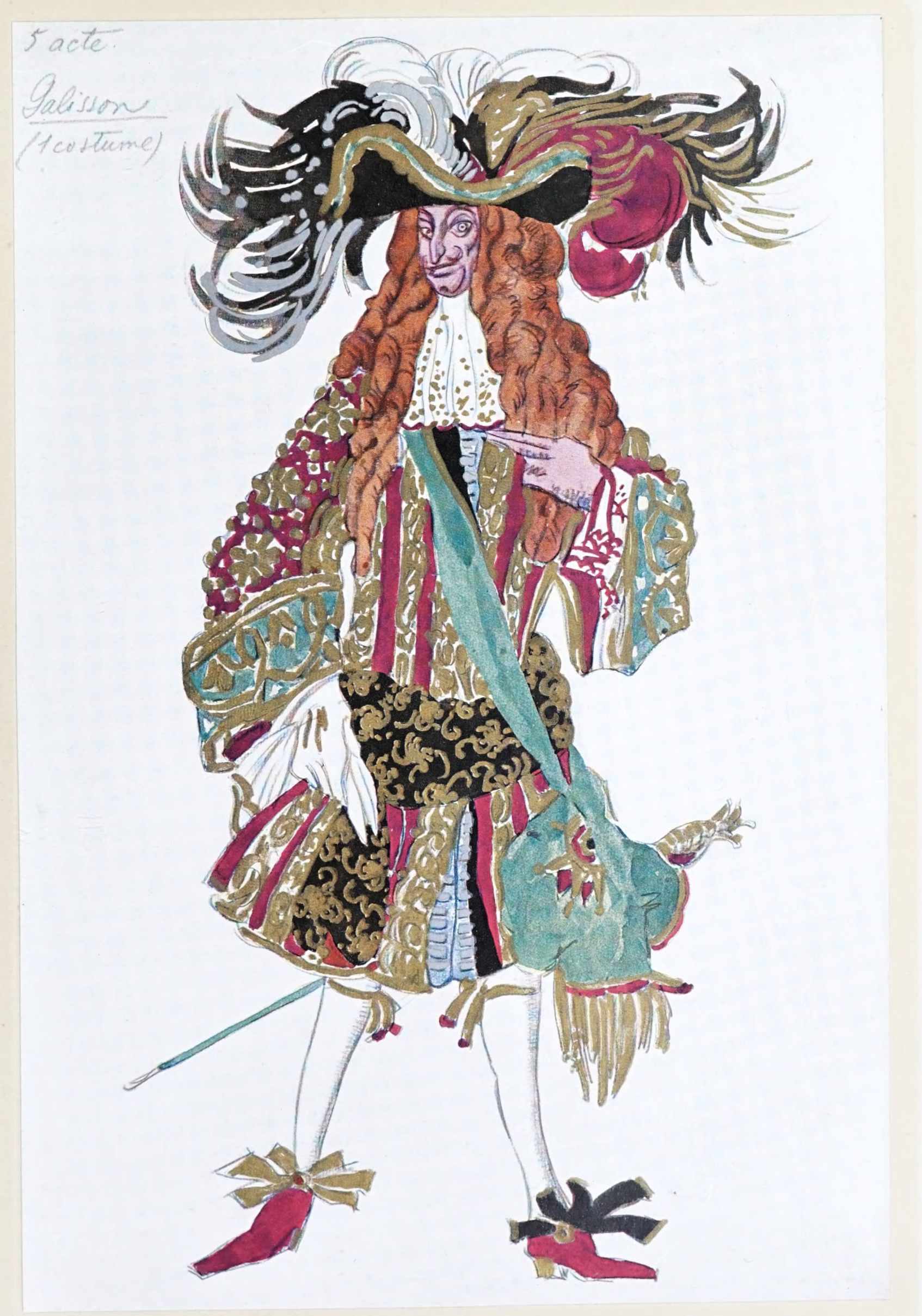
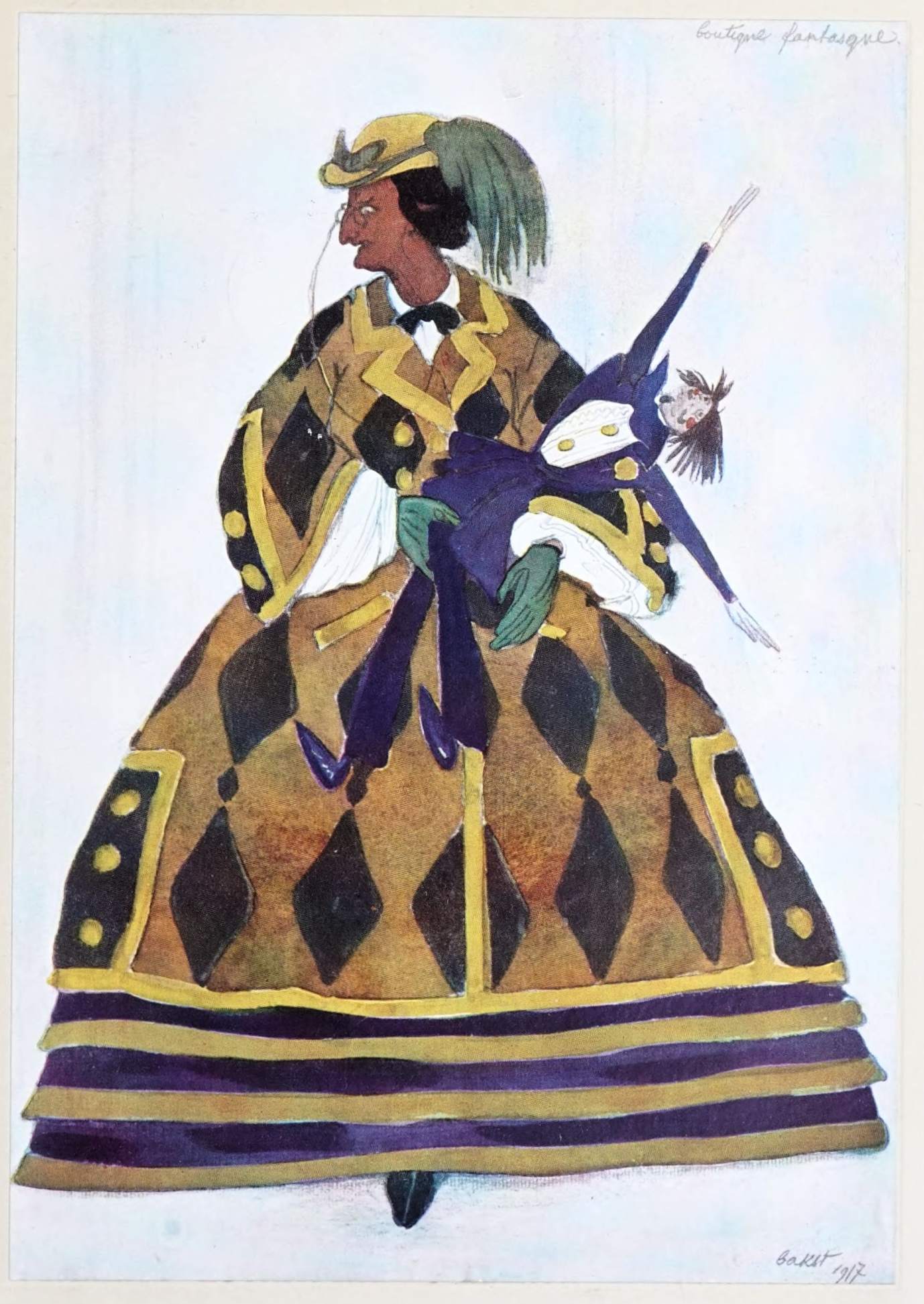
abundance of the material, the description, yes, the mere ordered enumeration of which would fill many a volume. These sources consist in part of numerous productions which maintain their place in the theater from season to season without losing their popularity because of the ever present memories of others. But on the other hand we also have the “dossiers” of these productions,—the sketches and models of the decorations and costumes. These sketches are without a doubt the most authentic references. But besides having value as documents they possess an intrinsic value as works of art. These water-colors or emphasized sketches are more than mere guide-lines for the scissors of the costume maker or the brush of the stage decorator. These statuettes of odalisques, of girls of the street, of a marquis each have an existence of their own, each possesses an individual rhythm. The artist imparts movement to them—the whole dynamic rhythm of the future ballet pre-exists there potentially. Jotted down upon a white sheet of Waltmann they energize and give life to this surface. More than that: they suggest the character of the particular role.
Think of the sensual passion of the Oriental dancers in pink or green or of the fragrance of the rustic idyll that breathes from the exquisite pages drawn for Daphne! Think of the Gothic and mournful sensuality of Sebastian! Indeed, what an inspiring “show in an armchair” it is to turn over these pages, which are a microcosm of a world come into reality upon the stage!
To this show I would invite the reader; as for myself, I would but turn the pages.
“Sheherazade” was Bakst’s real debut at Paris. “Cleopatra” had been a revival. It represented an attempt to utilize the small ballet inspired by a story of Théophile Gauthier’s and supported by a mediocre score composed by Arensky. On top of this score were grafted fragments from Rimsky-Korsakov, Moussorgsky, Glinka, and Glazounoff in order to transform it into an historic whole. Bakst undertook the thankless task of re-creating the unity of this heterogeneous collection. He created a monumental and sinister background, saturating the Egyptian granite with color. He wrought into an harmonious whole the motley crowd of brown slaves with white loin-cloths, the Greek young men raising the panther skin of Dionysos, the captive Jewesses with somber hooded cloaks punctuated by the white in which their single and troubled figure is draped.
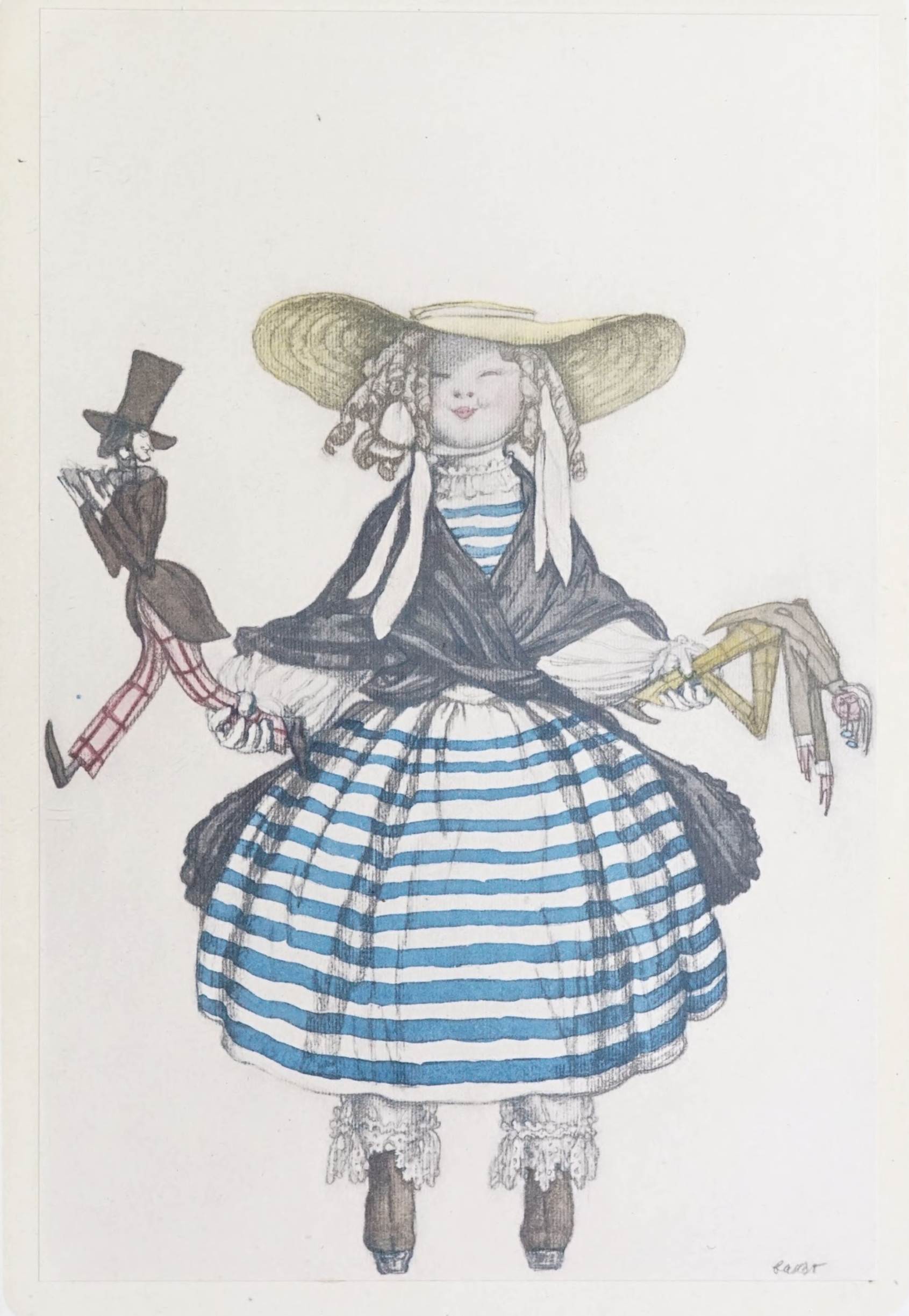
XLI
THE “BOUTIQUE FANTASQUE” BALLET THE CHILD WITH DOLLS
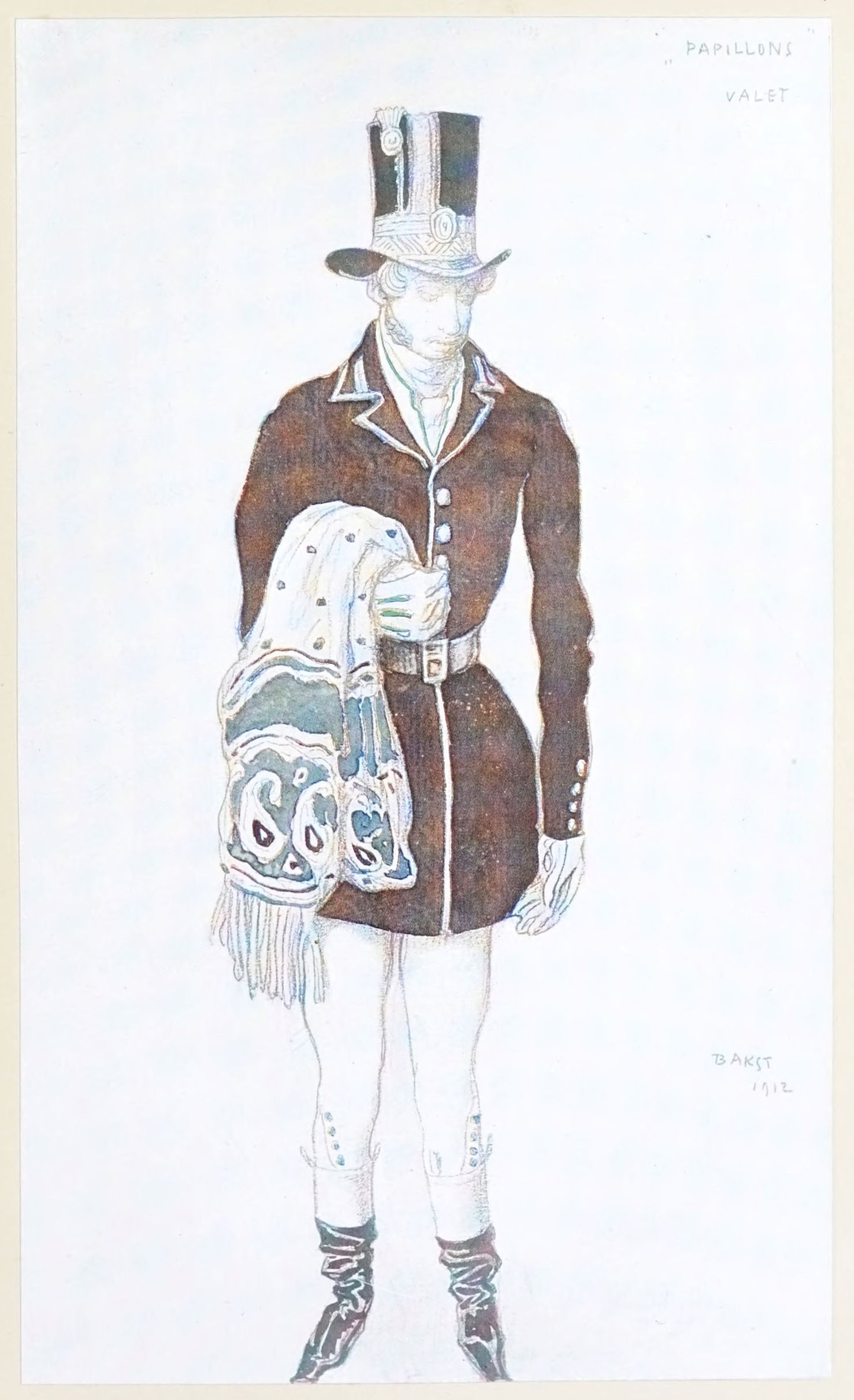
XLII
THE “BUTTERFLIES” BALLET. A VALET IN 1850
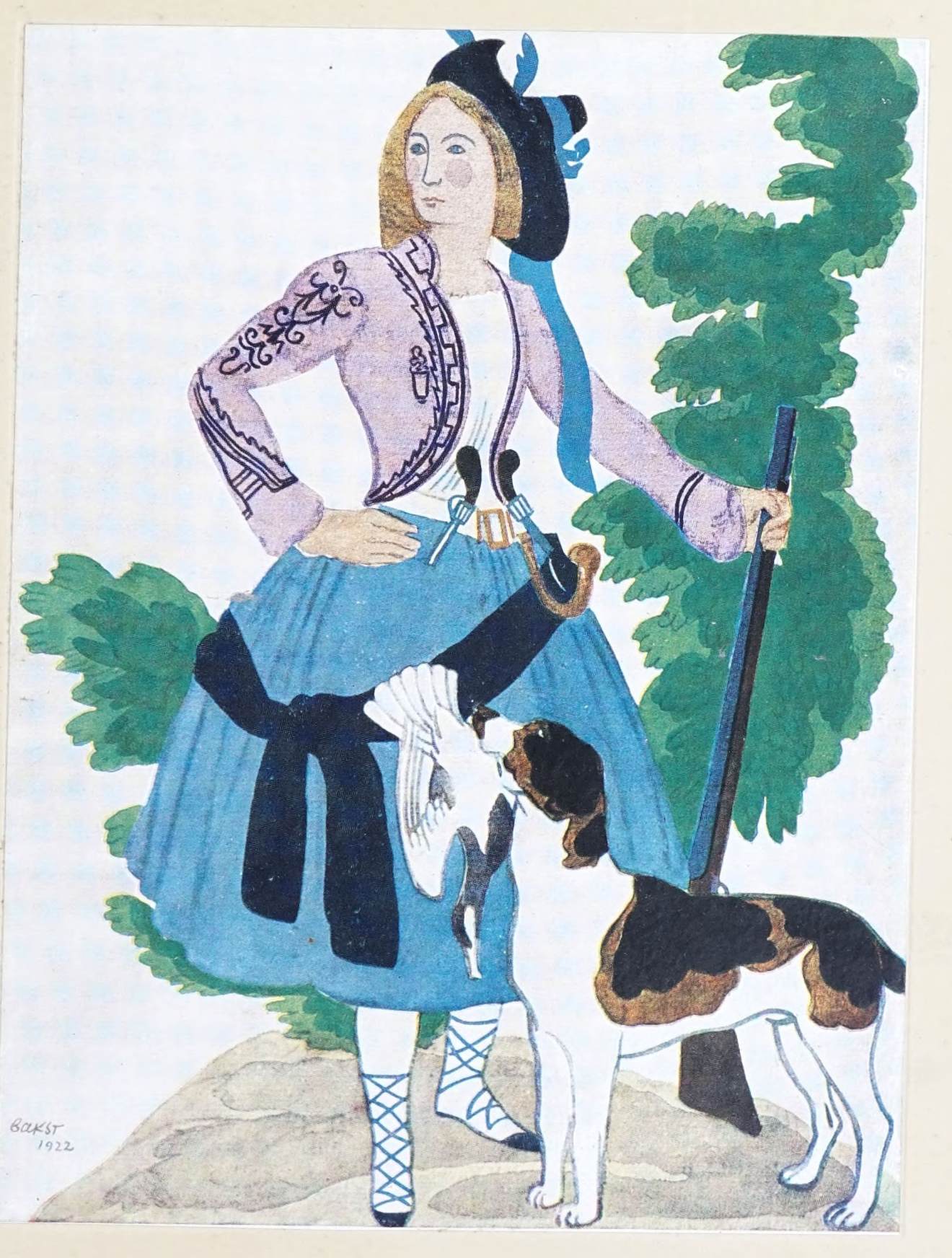
XLIII
A HUNTRESS. DECORATIVE PANEL
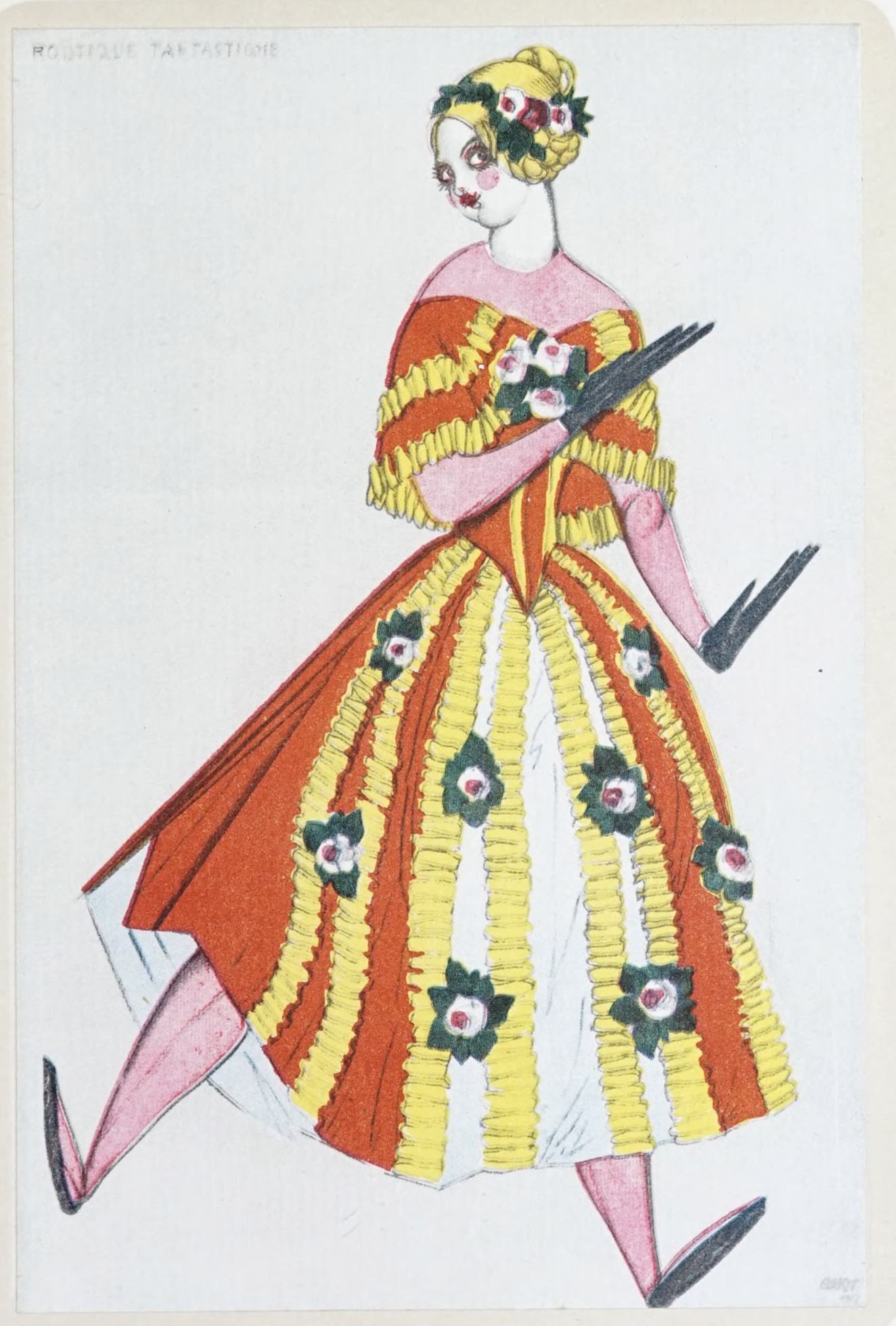
XLIV
THE “BOUTIQUE FANTASQUE” BALLET. A DOLL
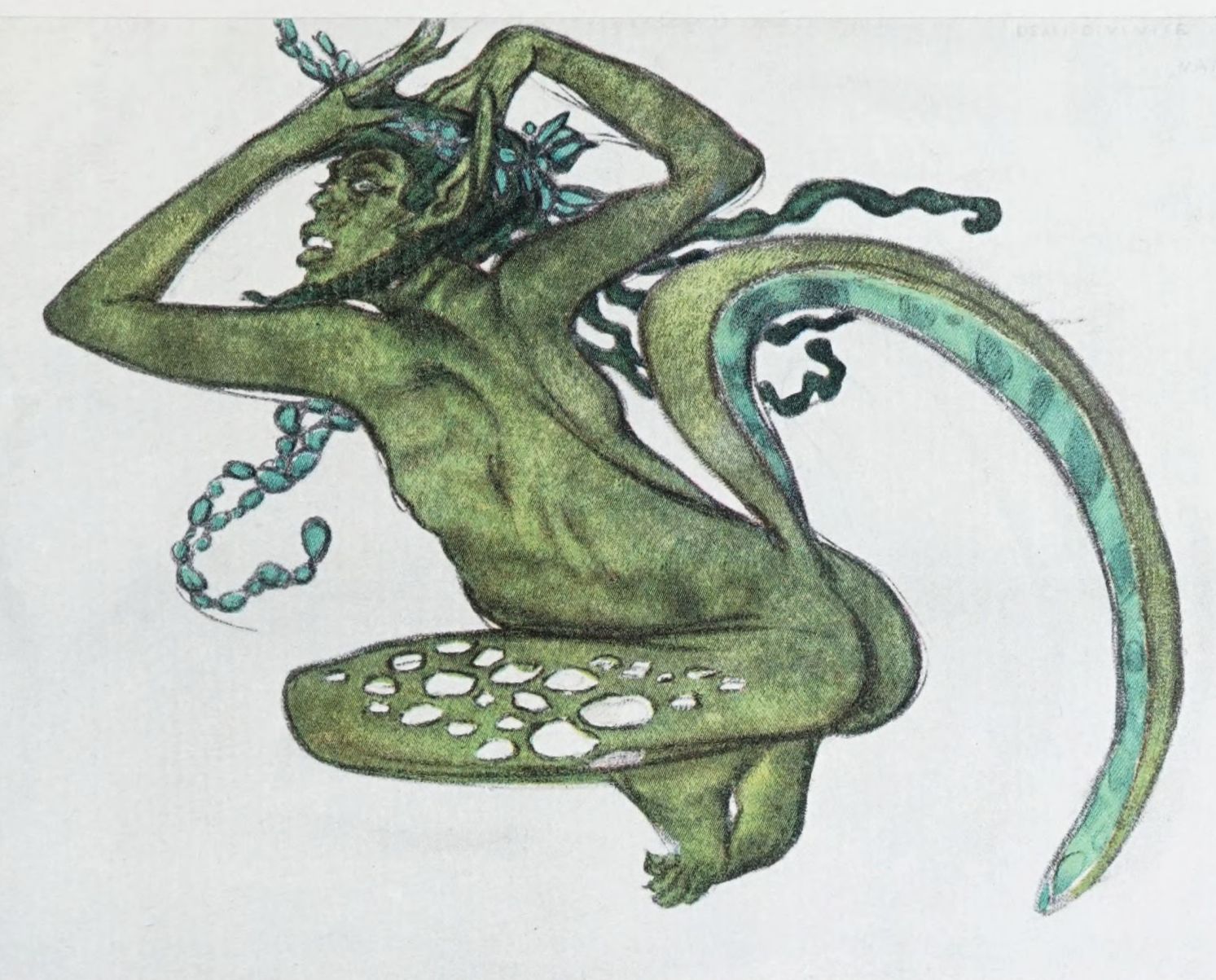
SILENUS. “NARCISSUS BALLET”
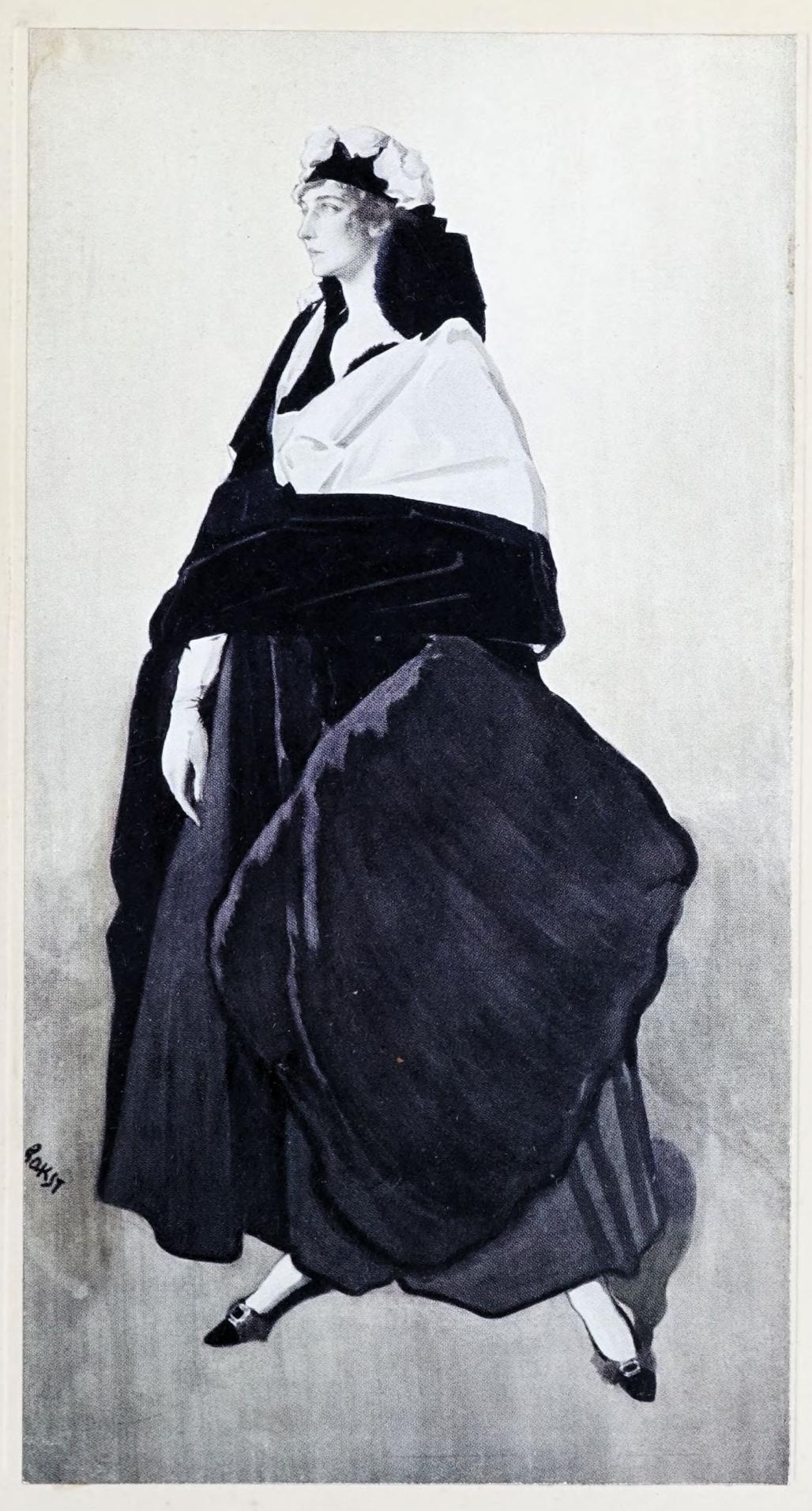
The action which begins as an idyll and which is lulled by the soft music of the violin is suddenly upset by the strident notes of the flutes. Preceded by musicians who carry instruments of antique and unusual design and by solemn guards, a number of slaves carry a long closed box upon a litter. One side of the palanquin slides down and a mummy is revealed, tall and motionless, whom the slaves stand upright upon its feet encased in cothurns of sculpted wood. The slaves, running around her, free her of the bandages in which she is wrapped, and when the last fetters have thus dropped, the queen steps down from the cothurns, unnaturally tall, her hair colored with blue powder. She walks toward the regal couch and in doing so, a nude limb is revealed, longer and bolder than those of the fairies in the pictures of English pre-Raphaelite artists. This female being, this queen is Ida Rubinstein.
It is not the first time in the life of Bakst that we see this haughty and pallid profile of the implacable empress appear. Several years previously Bakst had adapted the stage setting of Sophocles’ “Antigone”
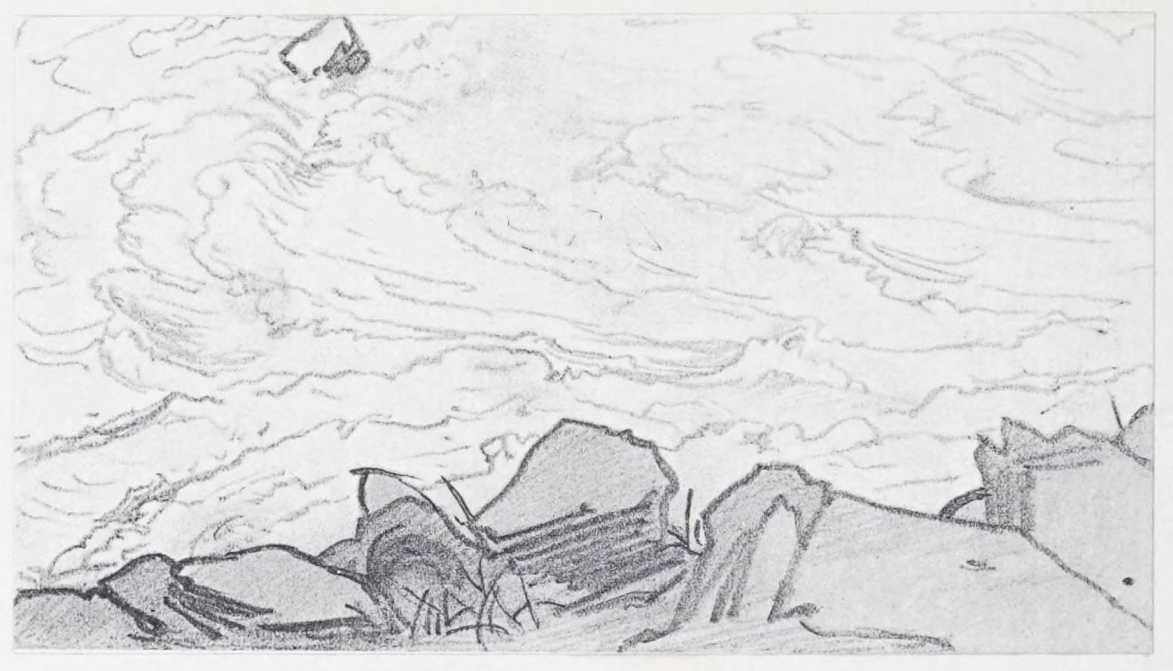
A BROOK IN THE MOUNTAINS. DRAWING
to this young débutante, who then appeared under an assumed name. I clearly remember this unique production. And I see again the proud maiden as she is wrapped in the numerous and complicated folds of her black mourning robe. In working out this conception Bakst had drawn his inspiration from a tombstone or else had deciphered the clever pattern from the sides of a Greek vase.
Later this young woman with her disconcerting and mysterious beauty, this mystical virgin, voluptuous yet frigidly cold, with a will
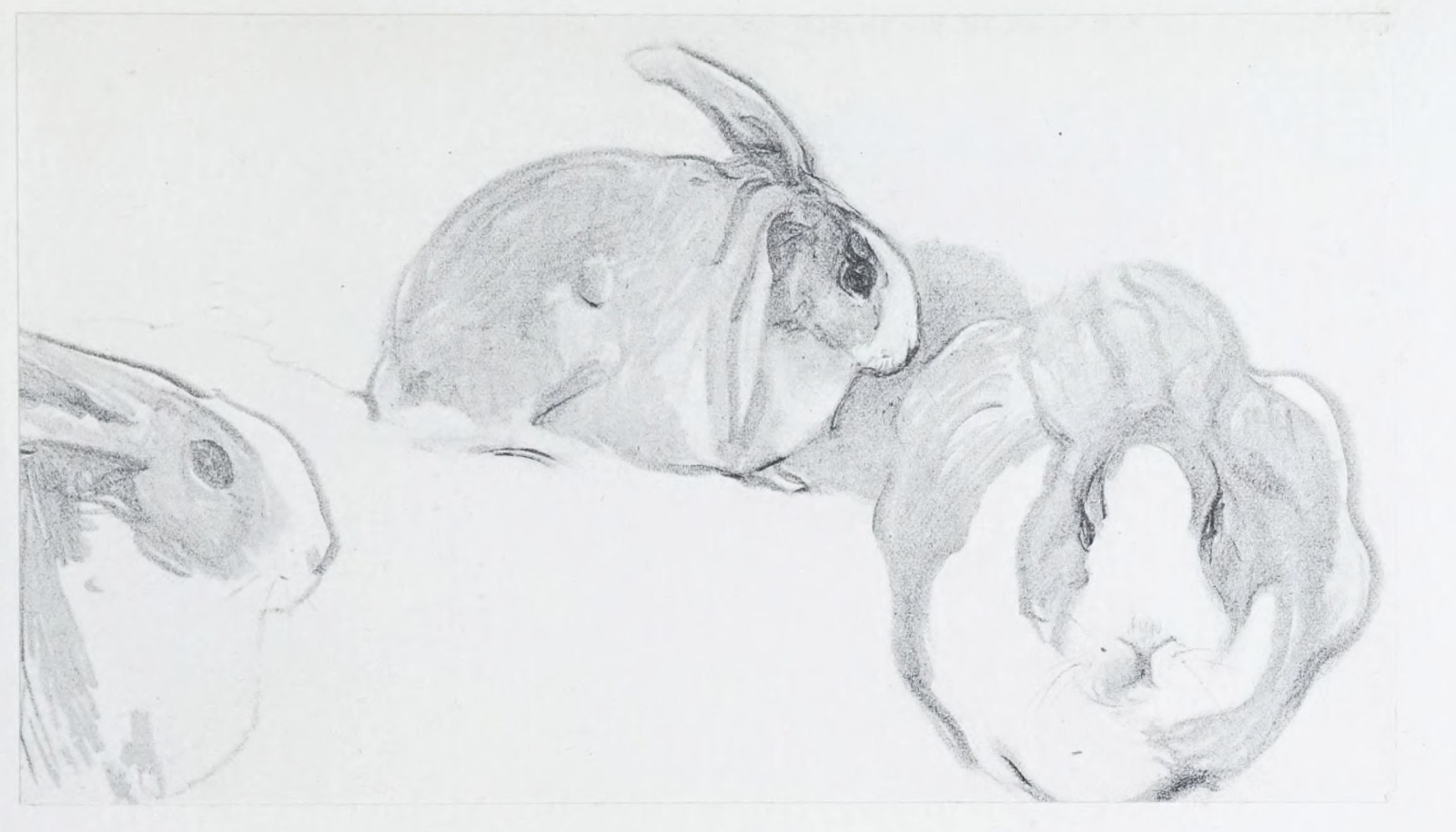
RABBITS. A SKETCH
of iron underneath a fragile frame, and possessed of a haughty and cold intelligence, who dressed in eccentric clothes, became one of the Muses of our artist. Hers was the gift of driving his imagination to exasperation. Even after many years had elapsed she still held for him the allpowerful attraction of the strange, of the unreal, of the supernatural. His Muse—perhaps that is not the right term: rather, his Friendly Demon.
Having once touched upon the chapter of the Muses, another female image rises in my mind’s eye—that of Mme. Marie Kousnetzoff, the opera star. She is not the white and lunar Lilith; she is the Eve of the terrestrial paradise. This Russian brunette, with a Levantine face, a blooming flower in human flesh, with full, muscular form, seemed to have been created for the very purpose of wearing the turbans and the revealing veils designed by Bakst. Those who have seen her in the “Legend of Joseph”, garbed as a Venetian of the Renaissance, and wearing the thick-soled shoes suggested to Bakst by the celebrated costume designer Cesare Vecellio, brother of Titian, will forever retain this wonderful picture of the Biblical story of lust. Thus Mme. Kousnetzoff was the very incarnation of the oriental mirage that many a time haunted Bakst. Was she his Muse? No—his female Double!
But enough of these parenthetical remarks! Why was it that “Sheherazade” established itself and retained its place? Why was it that it could keep its prestige undiminished, even after it had called forth innumerable imitations in a territory extending all the way from the Opera to the meanest of suburban music halls?
The reason for it is the fact that this Persian ballet, which adapts the prologue of the “Thousand and One Nights” to a subtle and decorative score composed by Rimsky-Korsakoff, the eminent colorist, is the affirmation and, what is still more important, the realization of a great principle—the optic unity of a production. The sides of a large green tent enriched with gold and black encase and encircle the ladies’ apartment which is peopled with a crowd dressed in orange, pink and green clothes, who surround the single royal jewel, the Sultana Zobeide, a blue sapphire in a setting of rubies and emeralds. Thus the costumes either blend with the scenery in an infinity of fine shades and gradations of value that have been carefully studied out, or they contrast with the scenery in accordance with the visible logic of complementary colors.
Is the result, then, a ballet? It is a living scenery with interchangeable elements.
Was I going to speak of optic unity? Do I mean by it that unity stops at the surface? Certainly not! This ardent and cruel magnificence of color, this effluvium of sensuality which emanates from the setting produces an action in which the very excess of passionate ecstacy can only be satiated by the spilling of blood. This harmonious giddiness, this measured paroxysm seems to recall the title which Maurice Barrès gave to a famous book: “Concerning Blood, Sensuality, and Death.”
“Sheherazade” remains as the model work in Bakst’s oriental sphere of endeavor; neither he himself nor his competitors surpassed it. But
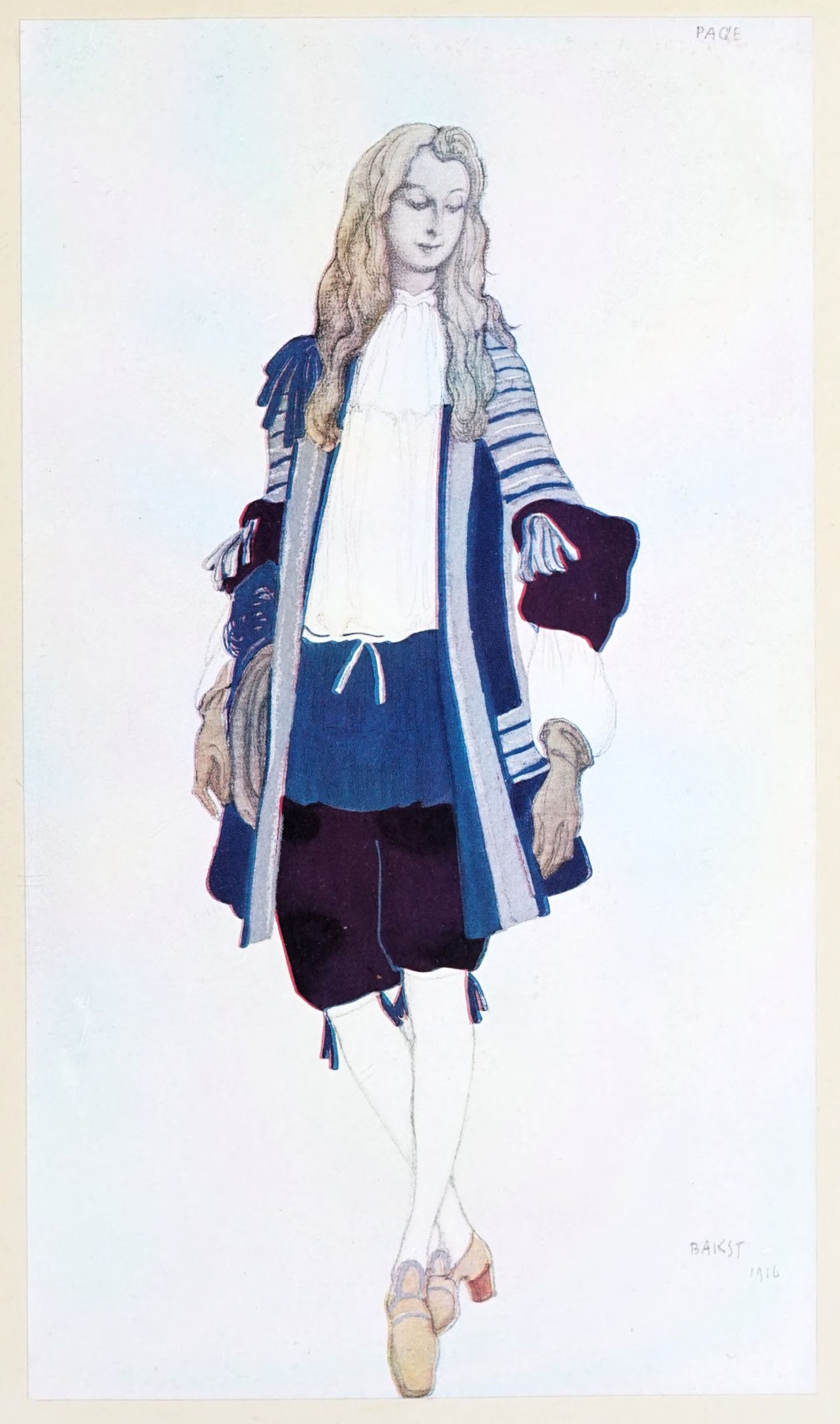
XLV
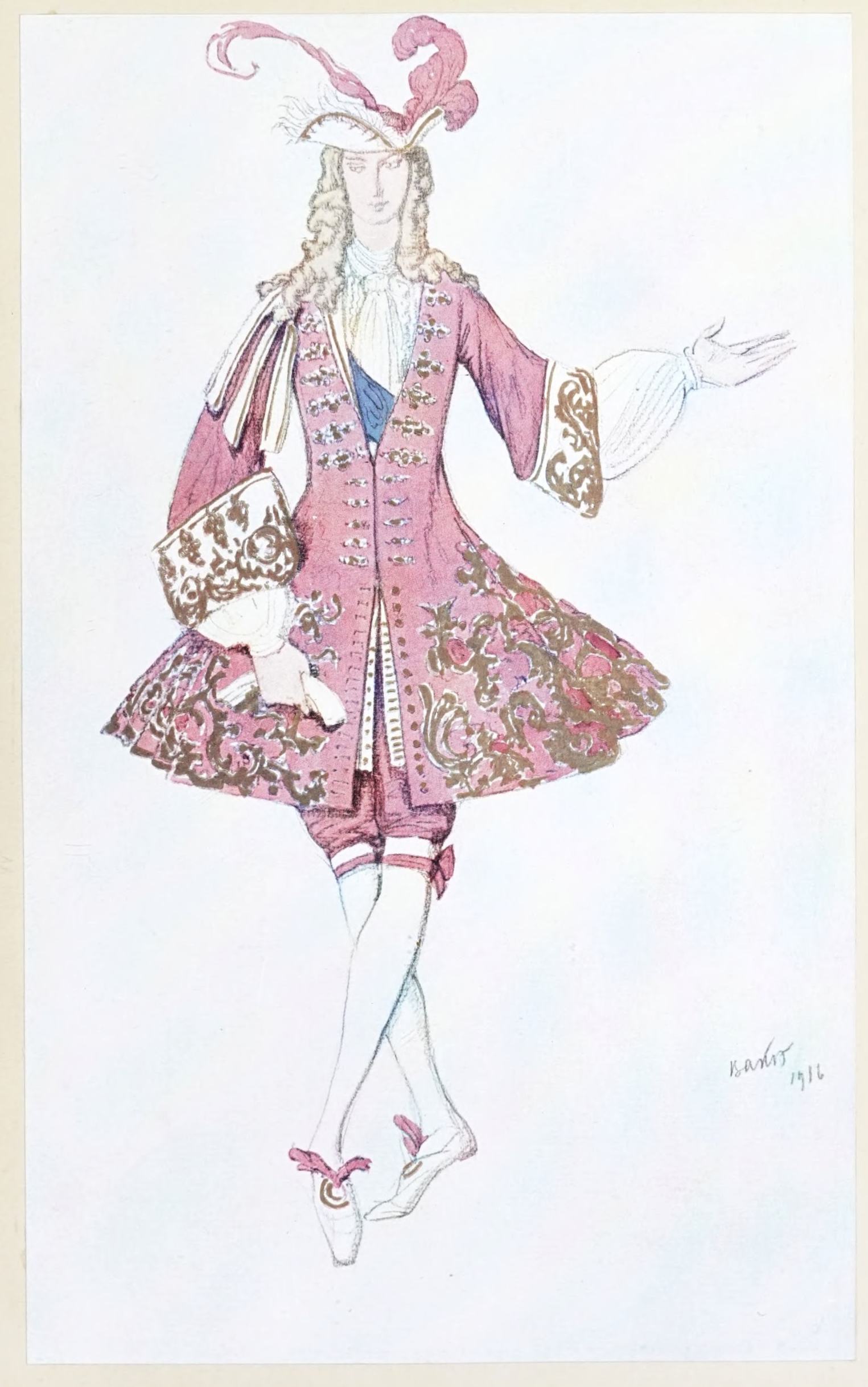
A PAGE. (“ALADIN” BALLET)
XLVI
A PAGE IN LOUIS XIV’s STYLE. (“ALADIN” BALLET)
XLVII
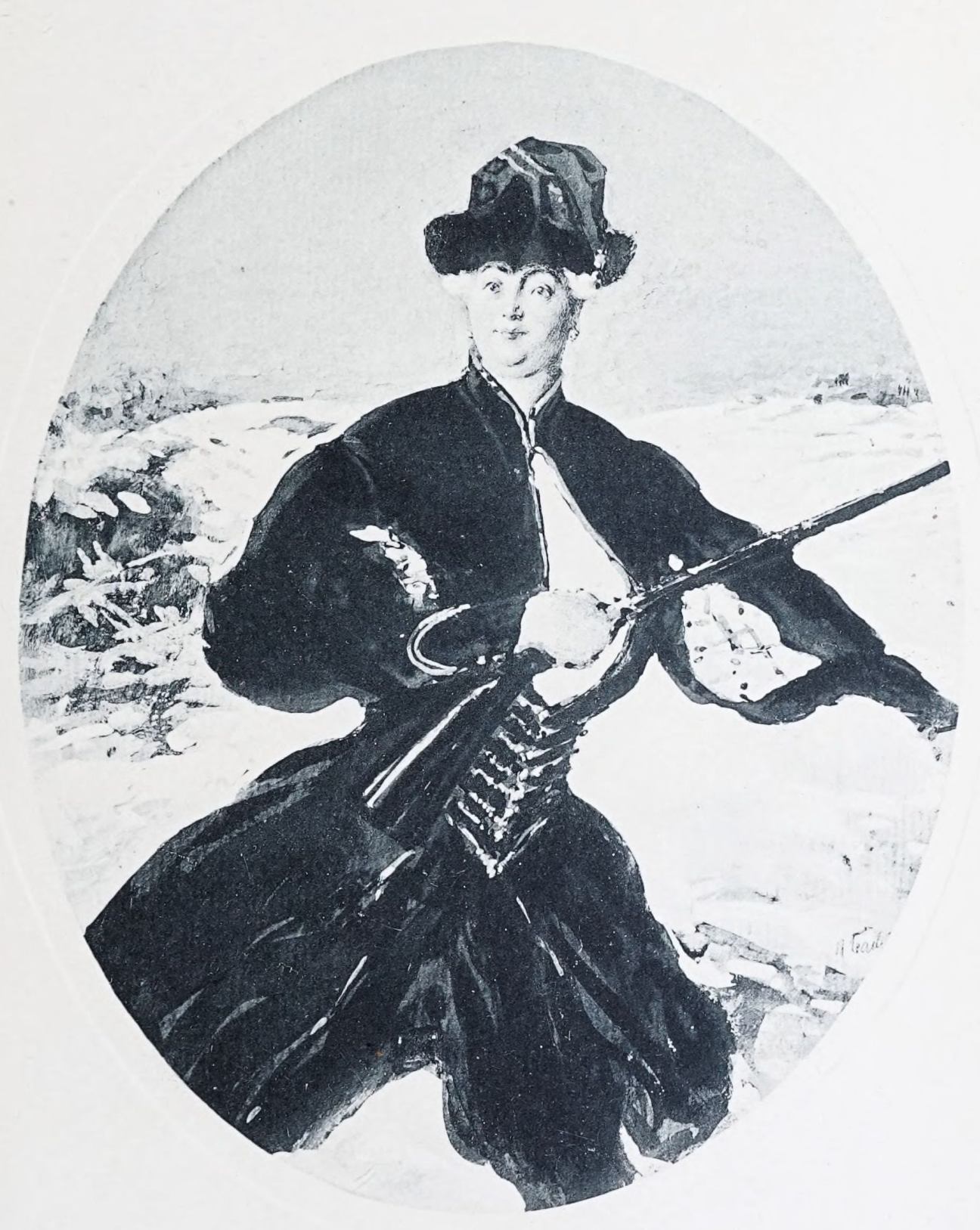
THE EMPRESS ELISABETH PETROVNA HUNTING. (GOUACHE)
XLVIII
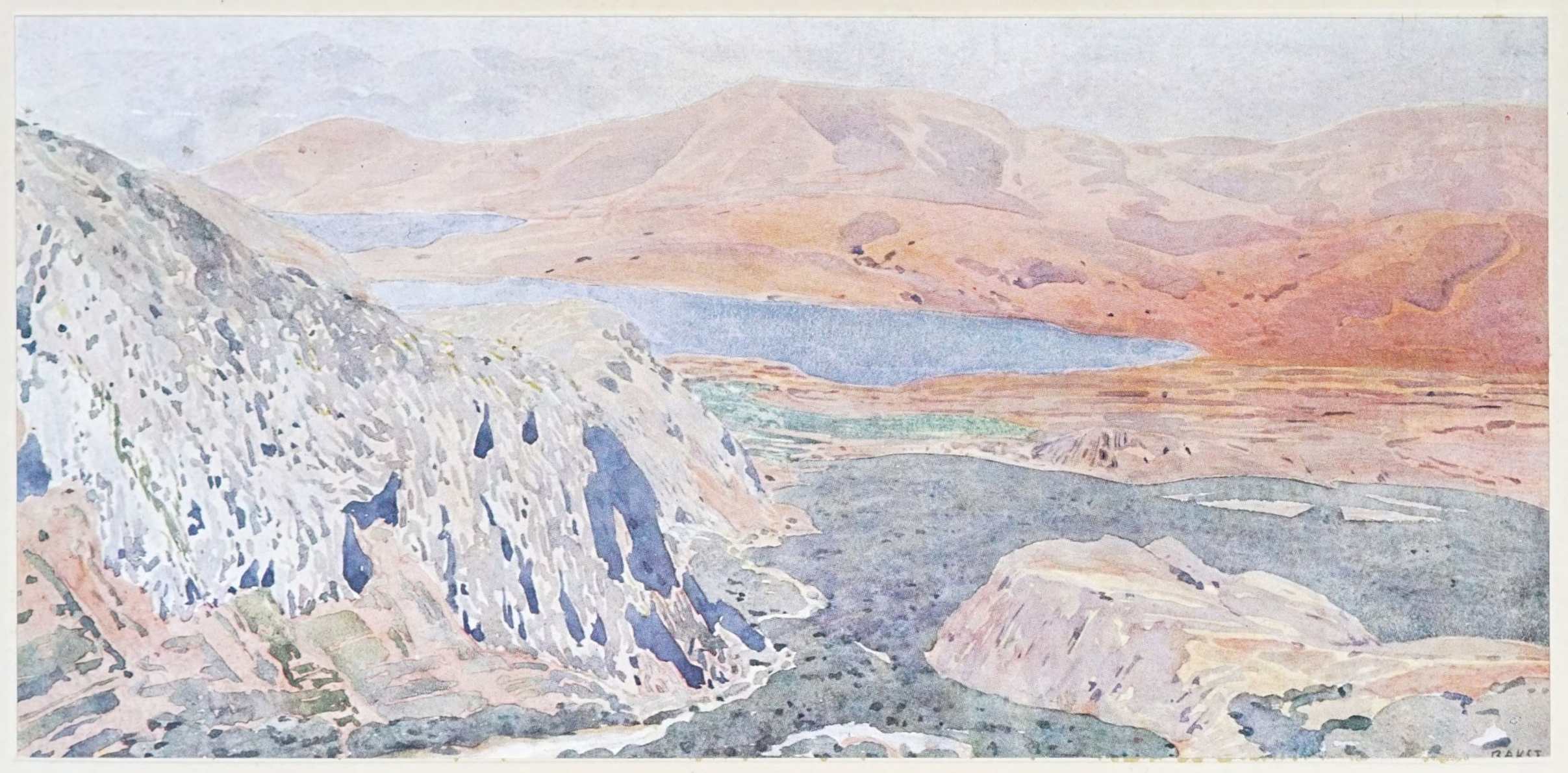
DELPHI. (GOUACHE)
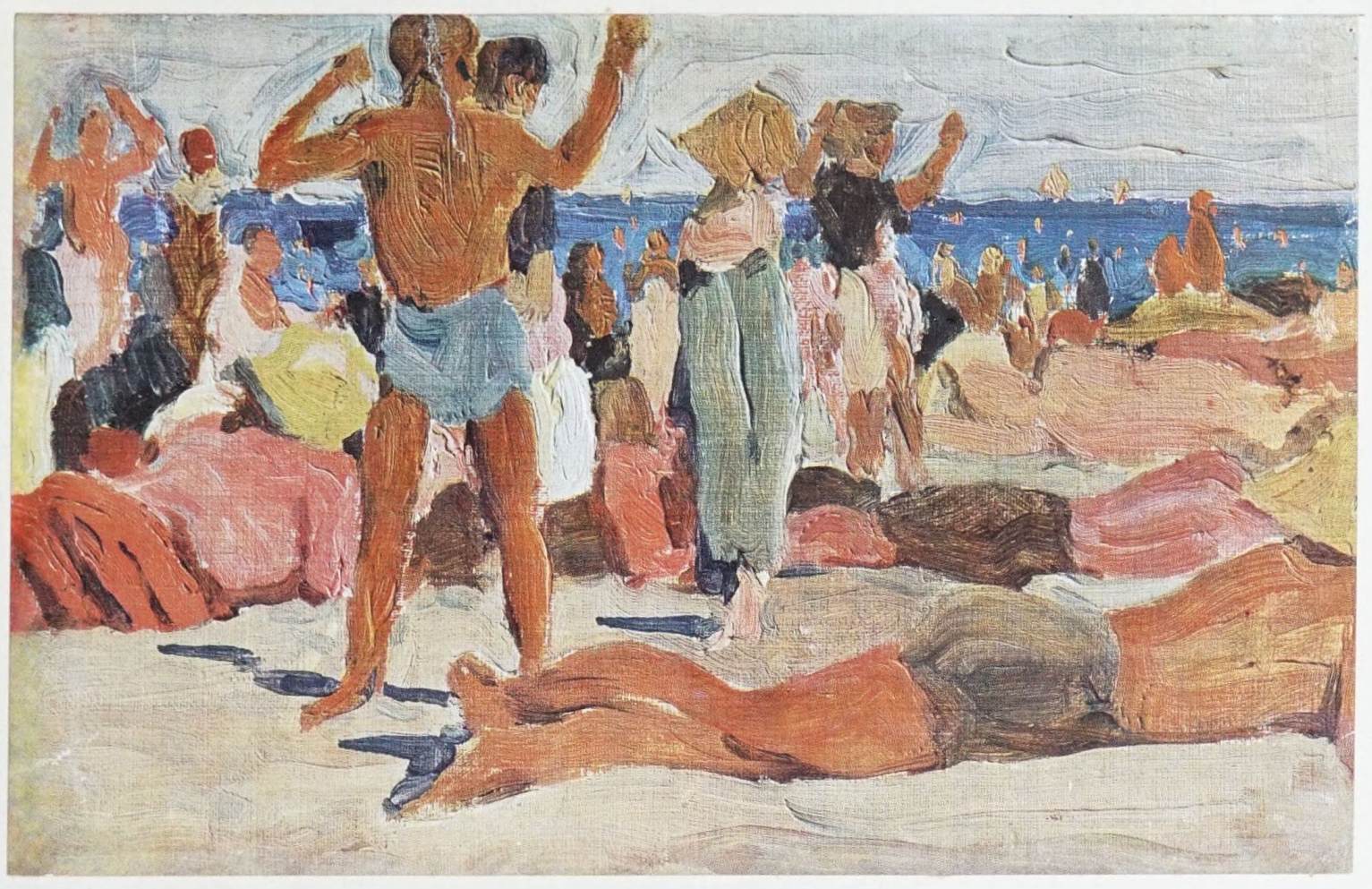
POPULAR BATHING AT LIDO
round about this luminous center other visions of hashish radiate forth: “Thamar”—a Cleopatra in Georgian style, a symphony in blue major; “The Blue God”, a Hindu fairy=tale; “Peri”, more recently, “Alladin”, and, only the other day, “The Adoration.” Astonishment takes hold of one as one tells the large pearls on this necklace that is worthy of the funeral=pile of Sardanapalus. Turn over the pages of the ballets that I have cited and look for the sketches; if you are in possession of the magic word of Ali=Baba, force open the sesame of the Museum of Decorative Arts in which are jealously guarded the most beautiful of these sketches; and you will find how justified was the saying of the late Joséfin Péladan, “Bakst, the Delacroix of the Costume.”
Consider the wisely arranged orgy of “Sheherazade”, (for Bakst has this supreme gift that great masters possess, of being concerned about the smallest button on a legging at the same time that they are getting a whole army to march) and in this whole eruption of vigorous colors you will not observe the slightest suggestion of white. There is, nevertheless, in the work of Bakst a whole corner, enveloped in sunshine, in which the white—shining and serene, virginal and fresh—dominates resolutely.
The sensual within him is duplicated by the romantic. We saw this come to the fore for the first time in the “Fairy of the Dolls”; Schumann’s “Carneval” revealed the “white Bakst” to the Parisians. They never grew tired of these adorable puppets, sentimental and crafty, who glide over the floor to the musical text of Schumann like the dolls on the cover of a music box. Harlequin and Pierrot, Chiarina or Colombine—they are not merely endless masks costumed in the styles of 1830, with furbelows and coiffures in ringlets; they are the incarnations of that playful and exquisite Viennese spirit; they are the descendants of Mozart and of Haydn. And the cut of their hazy cambrics, their whole bearing is in “Biedermayer” style—that quaint and charming style of bourgeois romanticism in the Germany of old. In order not to crush these fragile and delicate beings with the four walls of reality, as they flitted like butterflies about the stage. Bakst removed all stationary decoration: a background of drapery, a couch set off against this background—that was all. Nothing encumbers the view nor impedes the imagination of the spectator as he is enticed by the graceful or ironical episodes of the play to picture to himself a ball room or a boudoir or a park.
If the costumes of “Papillons”, which was connected with Schumann’s “Carneval” by Fokine, who discovered a certain aroma and dynamic rhythm common to both, are a continuation, so to speak, of the style of costumes employed in the first ballet, the “Spectre of the Rose”, on the other hand, carries us almost without our noticing it over to the land of France. The music is by Weber, the German composer who captivated Gèrard de Nerval, but it receives its orchestral form at the hands of Hector Berlioz, and the text is supplied by two lines from Théophile Gauthier, who had already inspired “Cleopatra” and the “Pavillon d’Armide” by Benois. This young girl in white flounced gown belongs more to Achille Dévéria and Eugène Lamy
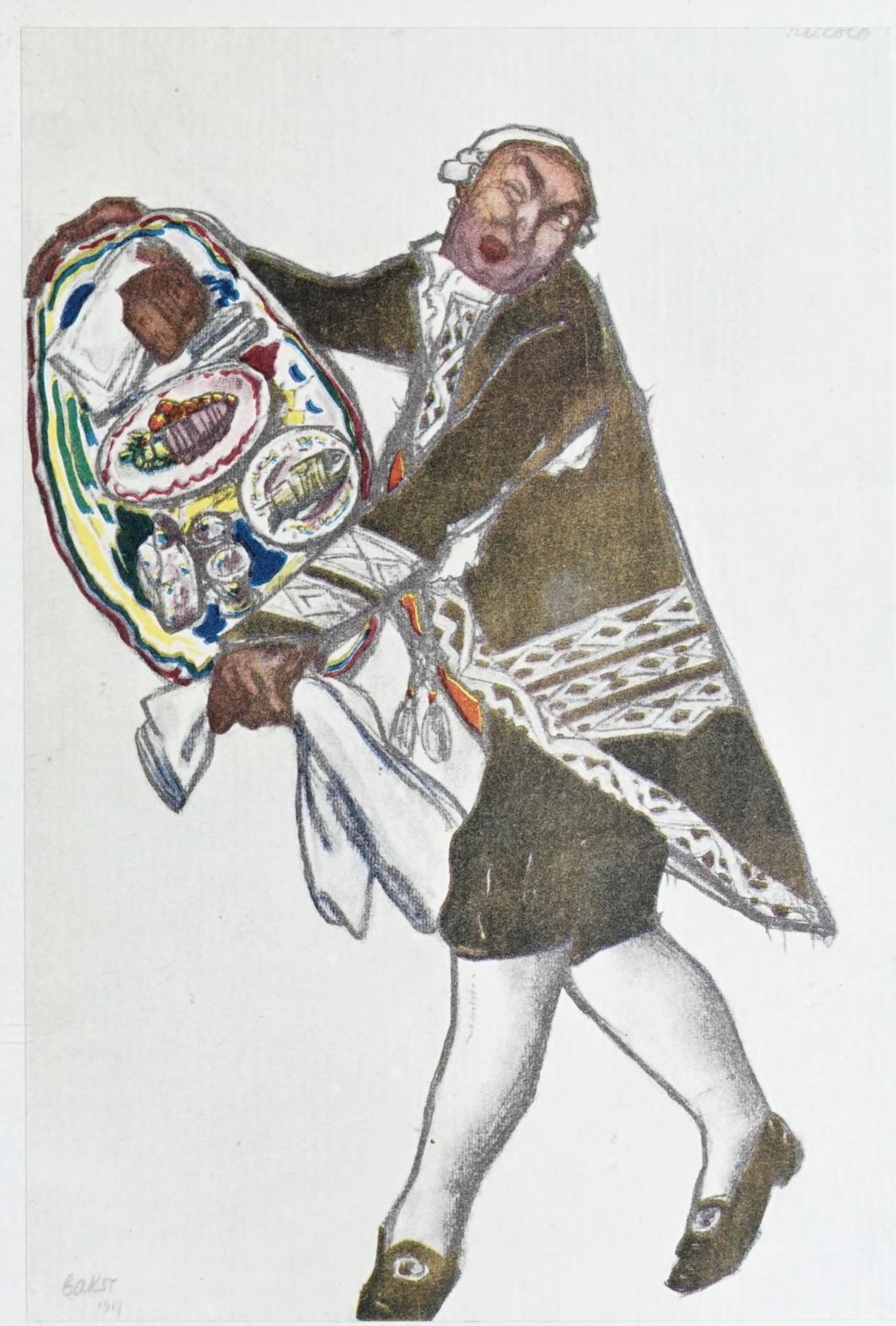
“WOMEN OF GOOD HUMOUR” BALLET. THE VALET NICCOLO. (GOUACHE)
than to Franz Krueger or Kriehuber; the ball from which she returns might be the ball at Sceaux of Honorè de Balzac; this night which filters through the glass door is a night in France; this dying rose which is impersonated by the divine ephebe Nijinsky is a rose of France. The young girls of times gone by, about whom the gentle Francis Jammes dreamed, would not be displeased at this airy pavilion with white wainscoting and white furniture in which, on the wall paper of blue cobalt, white bouquets are scattered about. Into this virginal quietude of soothing colors, detaching itself from the sombre verdure of the background, the human flower projects itself—a flower of purplish pink, feverish and consumed with amorous languor. The setting for a comic opera, “The Secret of Suzanne”, develops the same theme more in detail.
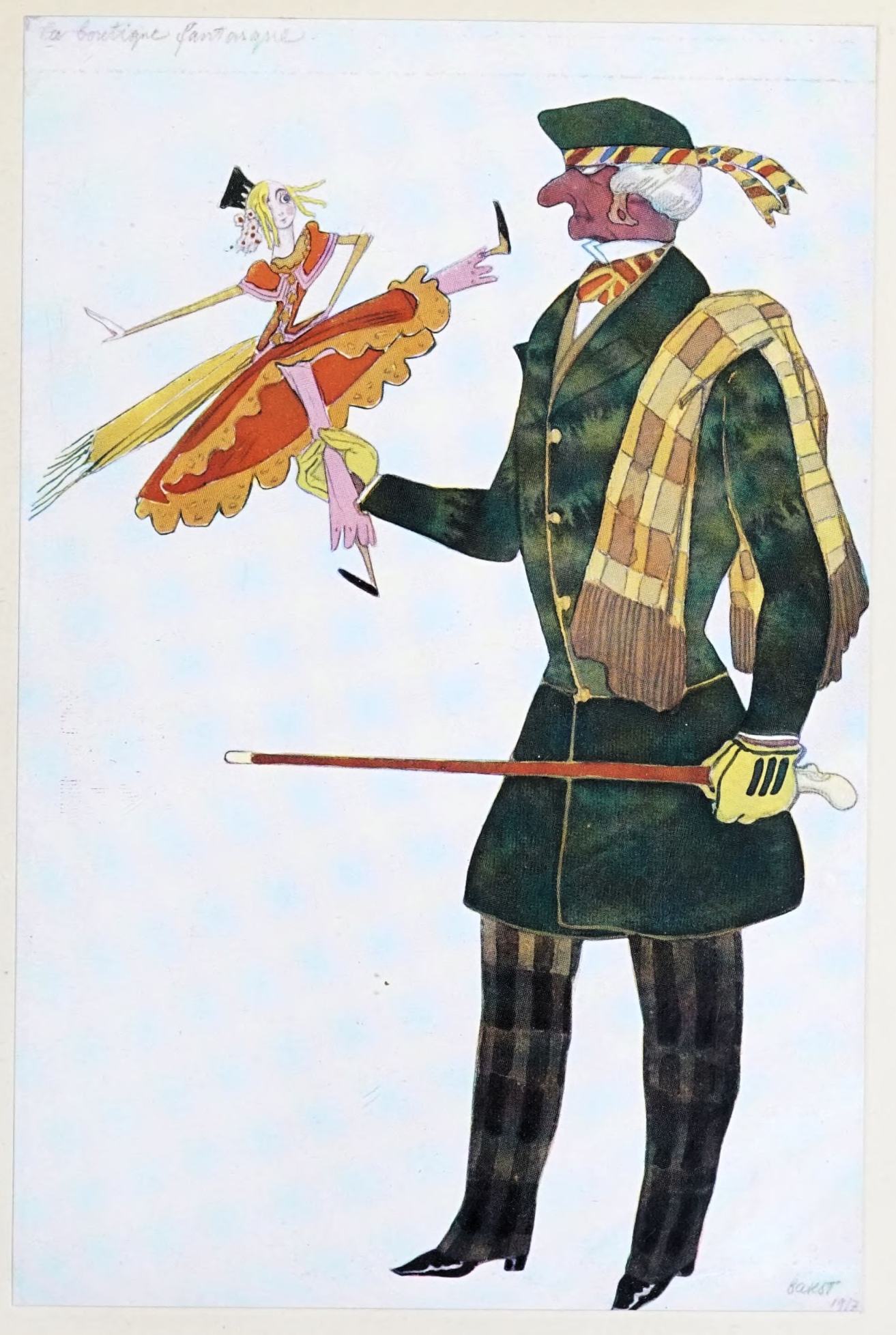
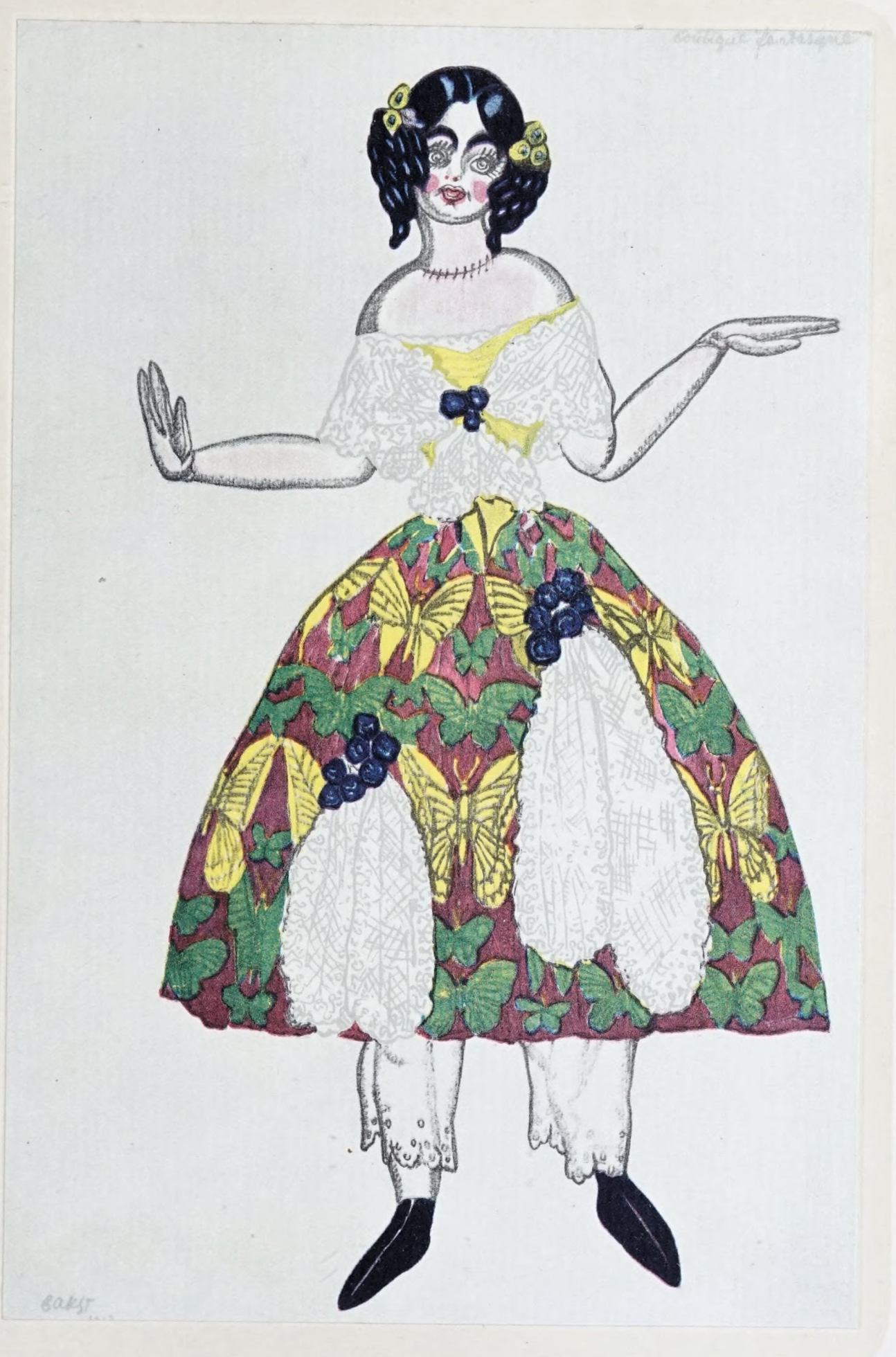
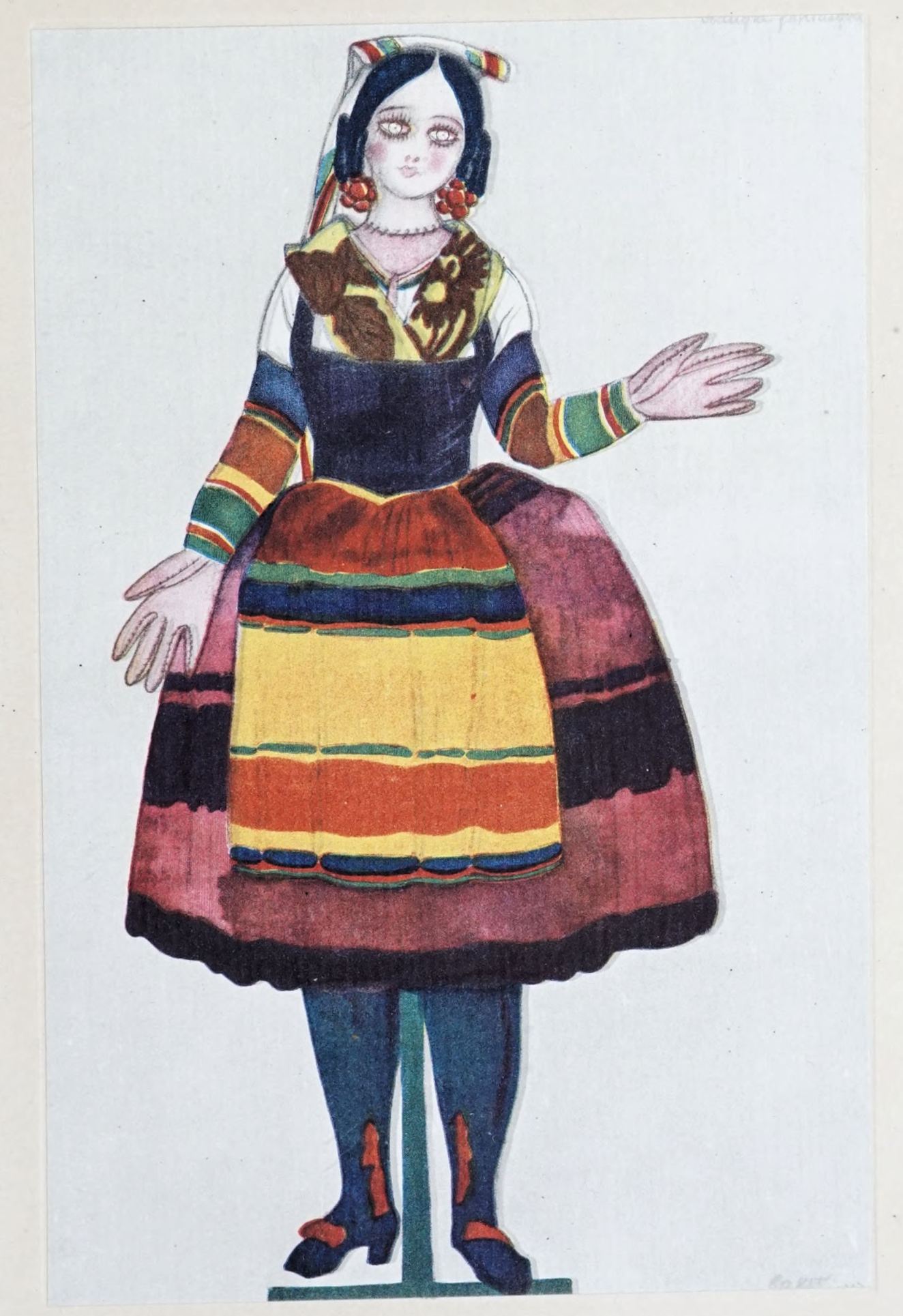
This brief catalogue of Bakst’s romantic cycle would, however, be incomplete were I not to mention the costumes of the “Boutique fantasque” which is in fact chiefly a sketch, but more centered, more pointed, more compressed than the “Fairy of the Dolls” which marks the beginning of Bakst’s career. This was a memorable enterprise, for it was marked by the collaboration of two great artists: the dolls by Bakst perform evolutions against a background painted by André Derain.
We have already seen how Bakst discovered the tragic and magnificently barbaric Greece of pre=Hellenic and ante=European times which he brought to the stage, by designing stage settings the rude grandeur of which formed a fit background for the growing despair of Antigone or for the doom that overwhelmed Oedipus. Once again he brings out all the anguish in the fear of the ancients, the primitive hysteria of people bewildered by the cruel play of unfathomable forces—the hot wind which blows from the Asiatic desert and which leashes the blood almost into insanity, the triumph of Eros in the midst of fratricide and horror. He staged this “Helen of Sparta” by Verhaeren for Mme. Rubinstein—this play in which a great modern poet incarnates his intent, violent and prophetic soul in the characters of a legend which had already absorbed the Grand Old Man of Weimar. The return of Helen, however, which for Goethe had been the symbol of restored and re=born classical antiquity, to the Flemish poet seemed a passionate and terribly human dilemma hidden under an archaic guise.
XLIX
GALISSON, PRINCE CHARMANT’S TUTOR LOUIS XIV BALLET (PAVLOVA TOURNEE). GOUACHE
L
THE BIRD OF FIRE (ANOTHER VERSION). GOUACHE
LI
THE “BOUTIQUE FANTASQUE” BALLET. THE ENGLISHWOMAN
LII
THE “BOUTIQUE FANTASQUE” BALLET. THE ENGLISHMAN
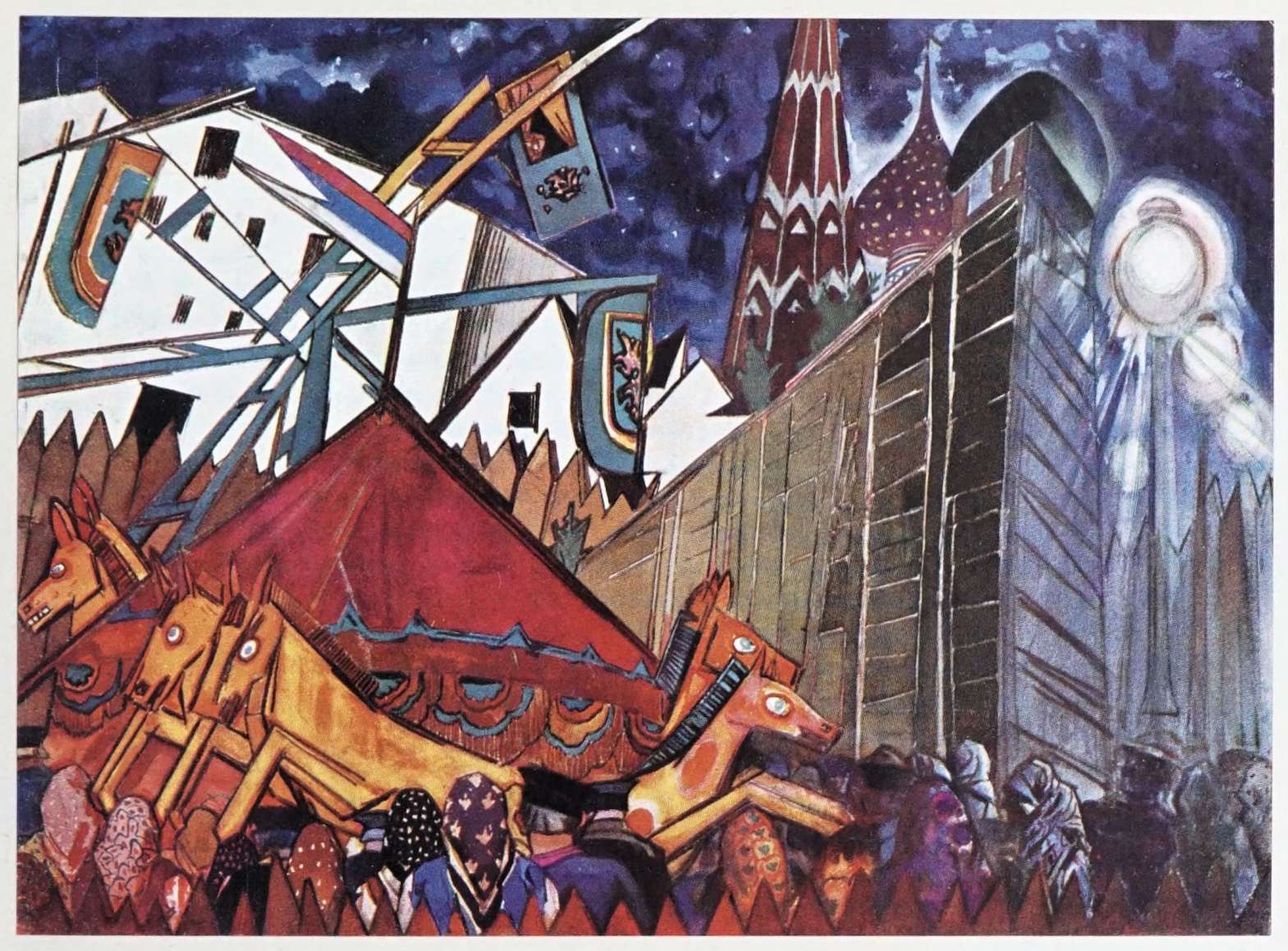
STAGE DECORATION FOR “LÂCHETÉ”
Now, Bakst designed a bare and harsh setting for the martyrdom of Helen, who is condemned to be coveted unto death by all who come in contact with her: the ground reduced to lime, stones that have a burnt smell, heavy gates of the royal fortress, smoke of woodpiles—in short, everything in this volcanic landscape is a latent menace.
This grim and desolate face of Hellas is seen for the last time in an act of “Daphnis and Chloe” where one sees the pirates dancing a war-dance among the steep declivities of the red rocks. But how sweet is the idyll which they disturb! All that there is of Ionic sweetness envelops this pastoral scene. I know nothing in the entire work of Bakst that is equal to these tender, fresh, damp greens of the meadow and of the forest where the two children walk about displaying the charming torment of love that knows nothing of itself. It is a sketch for the first act, but in it lies all of the Greece of Theocritus, of Moschus, and also of André Chenier’s Aoristys. Thus the short novel by Longus
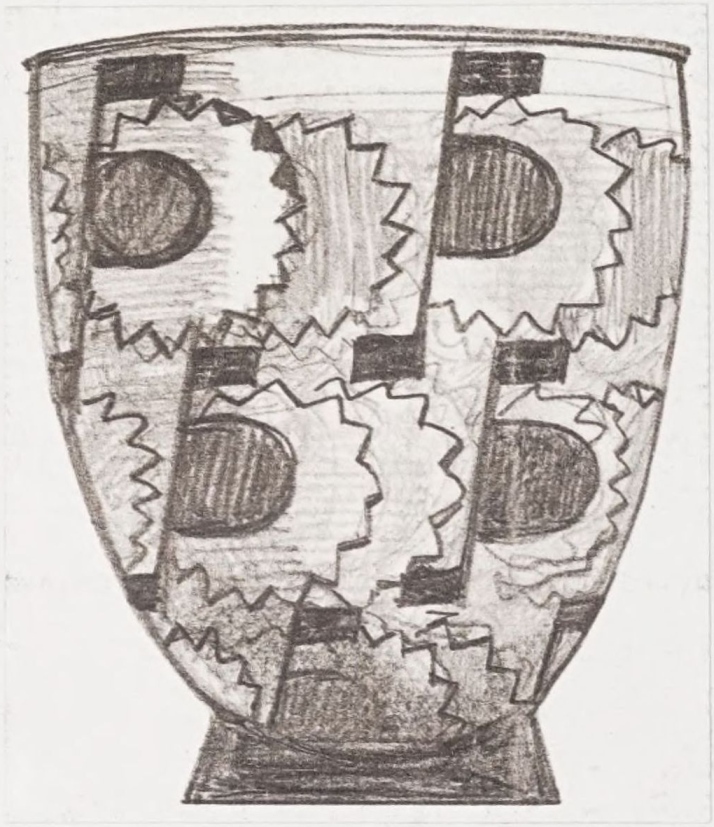
PROJECT OF A CRYSTAL CUP
which had already inspired the painter Pierre Bonnard to draw the lithographs which constitute the lyric flower of his work, live once more through the brush of the great Russian.
The mythological world had, besides, already been displayed in another work of Bakst’s,—“Narcissus”. The setting is unique: in the foreground is a spring bordered by large somber rocks and shaded by branches of trees which droop into a brook of emerald. Through an
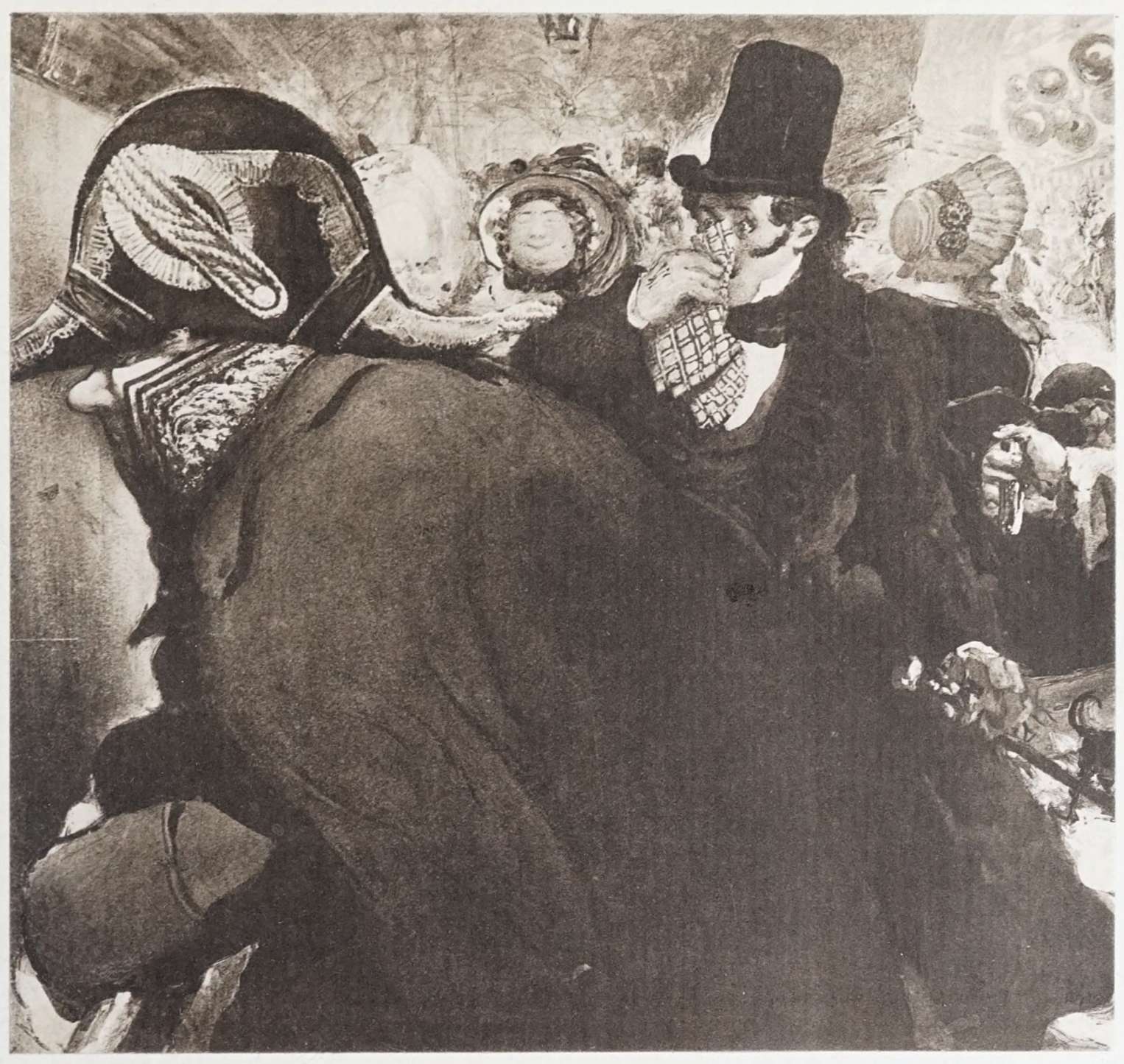
GOGOL’S “NOSE”. AN ILLUSTRATION
opening of the rocks one sees a meadow upon which a tropical heat lies heavy. The natural bridge over which we presently see the nymph Echo pass lamenting and garbed in a mourning robe of violet, forms the second tier, raised above the scenery of the foreground in much the same manner as one sees it raised in the stage settings of Torelli in the seventeenth century, or as one also sees it in the “Parnassus” of Andrea Mantegna at the Louvre. And it is the vivacious and manycolored figures of the Greece on the terra=cottas that monopolize the scene, clad in fresh and simple colors—blue and green that match with the color of the sky and the forest, lemon=yellow and brick=red that form patches on the short white tunics.
Bakst reserved, however, for the “Afternoon of a Faun”, the pastoral poem for which Debussy received his inspiration from a poem by Stéphane Mallarmé, his attempt at solving the paradox of setting forth upon the stage the authentic rhythm of the figures that keep turning forever on the sides of Greek vases. The background is an old forest; a convenient hill, on which the Faun reclines, narrows the platform and leaves only a small proscenium free. On this proscenium the dancers project themselves in profile, dressed in long tunics with frilled folds like the fluting of an Ionic column. Moving on a single elevation they convey the idea of having but two dimensions like the arabesques that decorate a surface.
Bakst does not, however, allow himself to be imprisoned in this three=fold domain. His imagination is forever travelling along thousands of crossing paths. And quite willingly he stops at the great crossroads of civilization, where hostile worlds confront each other and establish themselves.
Of such a character is the exuberant “Martyrdom of St. Sebastian”, where the Rome of Heliogabalus, closed about by Asia, conveys to us both the naiveness of the mediæval mysteries and the imagination of the Quatrocentrist painters. Again, there is “Pisanelle”, another French work from the pen of Gabriele d’Annunzio. It is a poem of the Mediterranean, in which the Latin West, feudal and mystic, clashes with the rigid and solemn Byzantium, while the imperishable perfume of Hellas rises from the land of Cyprus from which Aphrodite sprang forth.
It would take volumes to enumerate all the pictorial elements in these productions, and even then one could not construct a component whole.
But the large architectural outlines, the clusters of small black and gold columns which form the portal for the “Jeu de la Sainte Courtisane”,
LIII
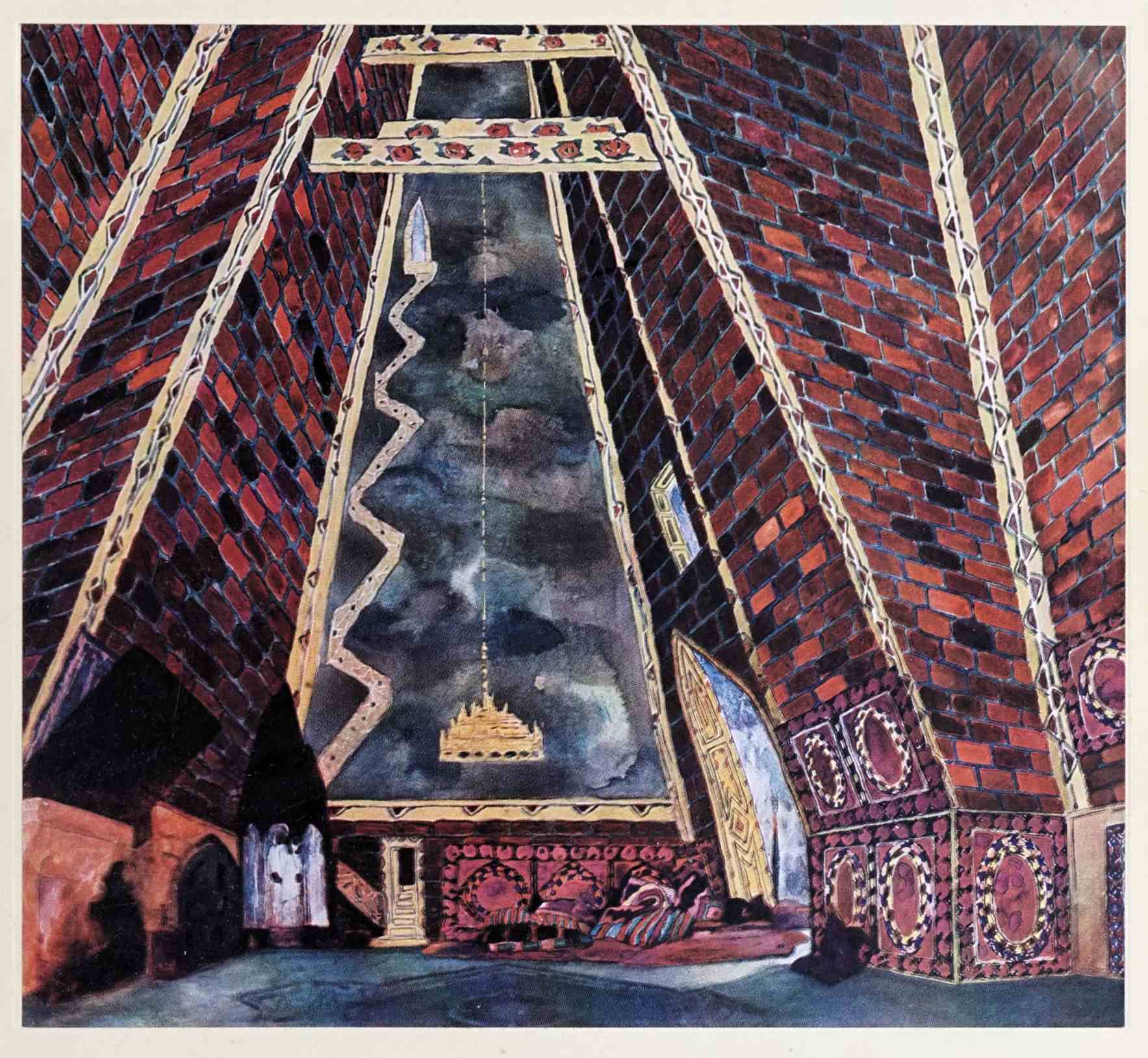
STAGE DECORATIONS FOR “THAMAR”
LIV
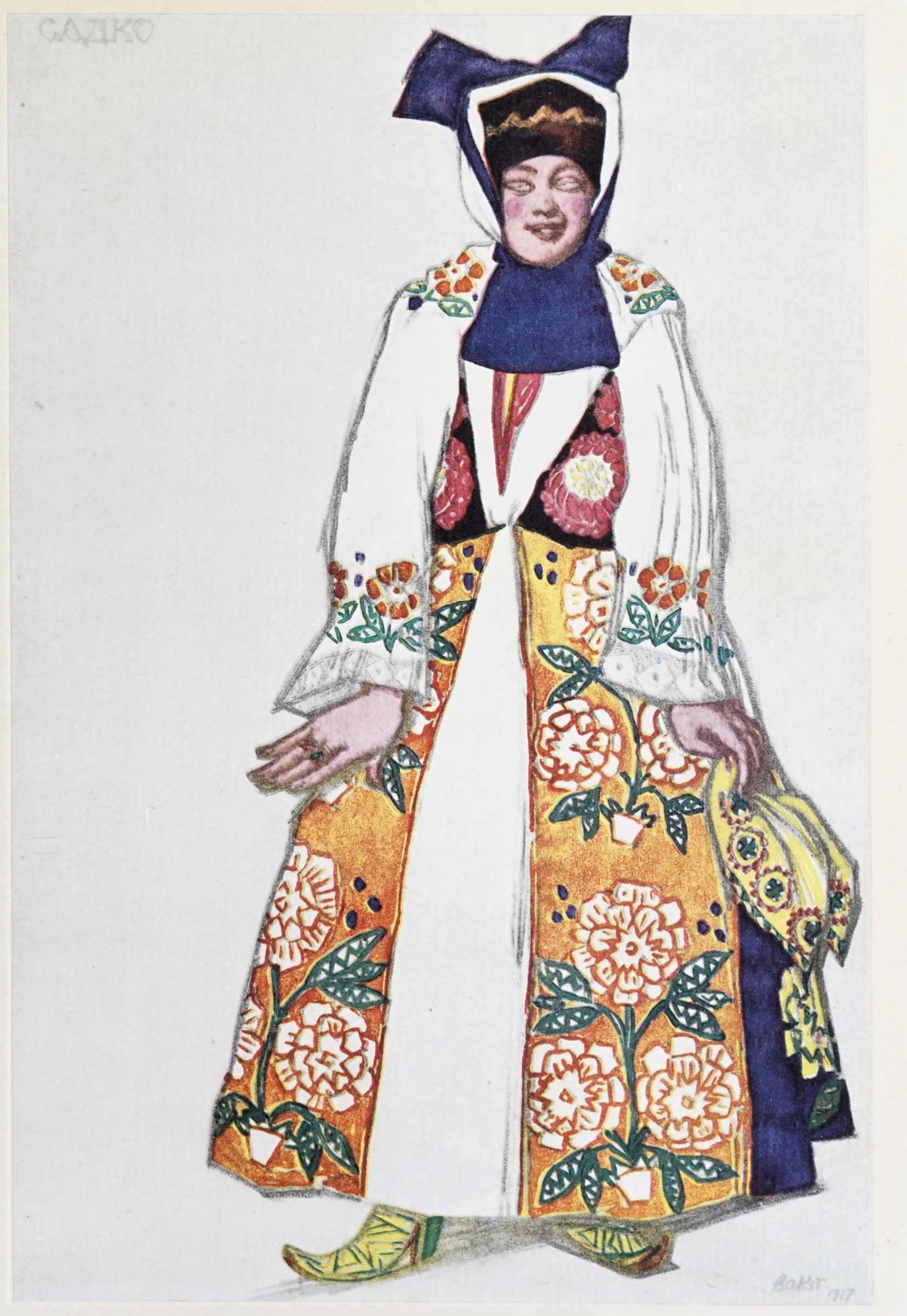
SADKO
LV
THE “BOUTIQUE FANTASQUE” BALLET “LA POUPÉE AUX DENTELLES”
LVI
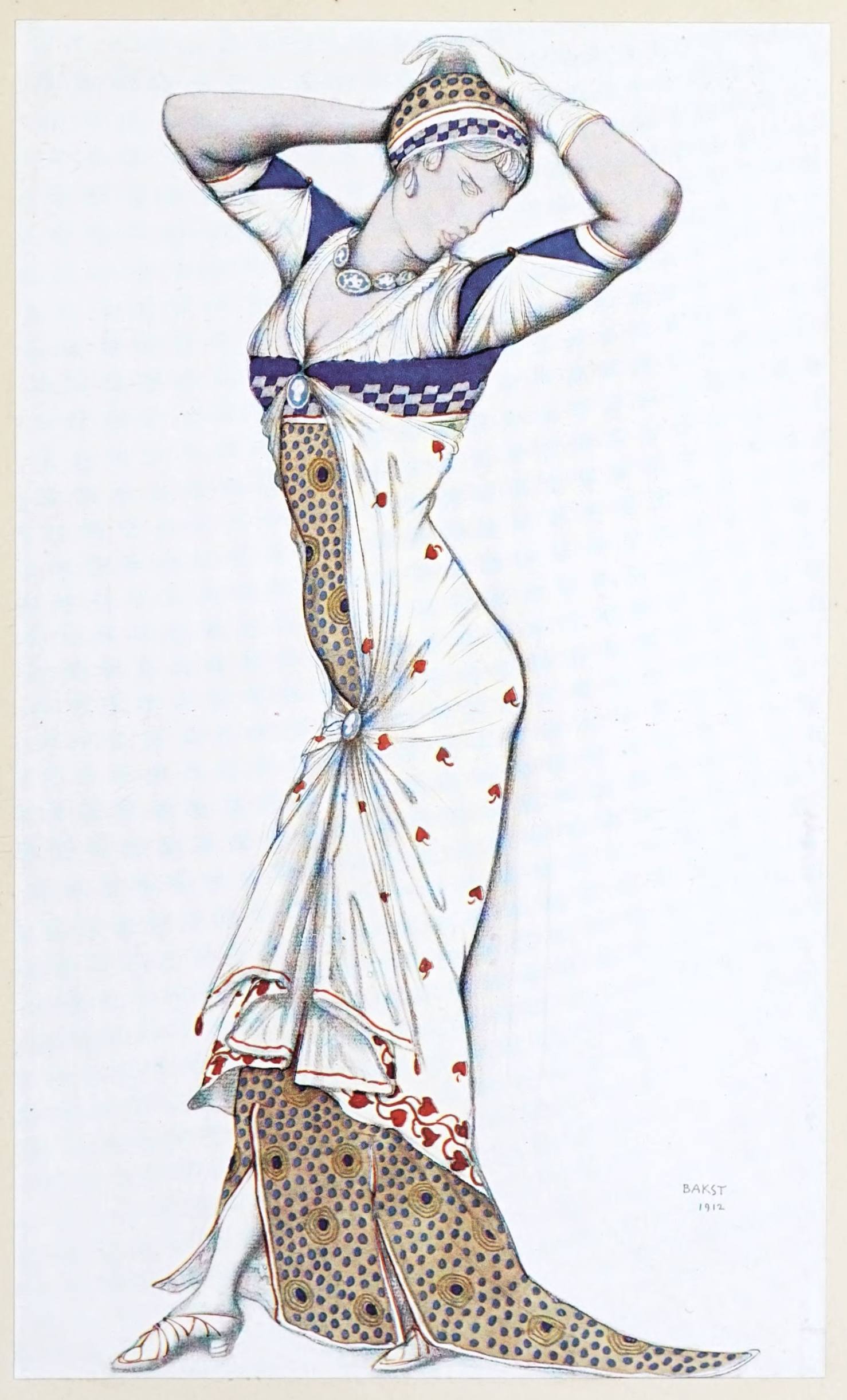
MODERN COSTUME (A “FANTAISIE”). (GOUACHE)
the enormous twisted columns in the “Conseil des faux Dieux”, over whom Sebastian triumphs—these impress themselves indelibly upon one’s memory.
This architectural conception, the best possible setting for the actor and for the “round relief” which the human body forms, especially determined the grandiose and graceful setting for the ballet “The Sleeping Beauty”,—this French masterpiece born of the soil of Russia which is fertile in miracles. In this work, the production of which was reserved for London, Bakst returns squarely to the surprises afforded by extraordinary short=cuts, to the harmony of masses that are organized, to the magic play of stage elevations raised in tiers, to the severe splendors of linear perspective.
We see him, after a century of realistic still=life deception, taking up again the work of the great decorators and architects, of the geometricians
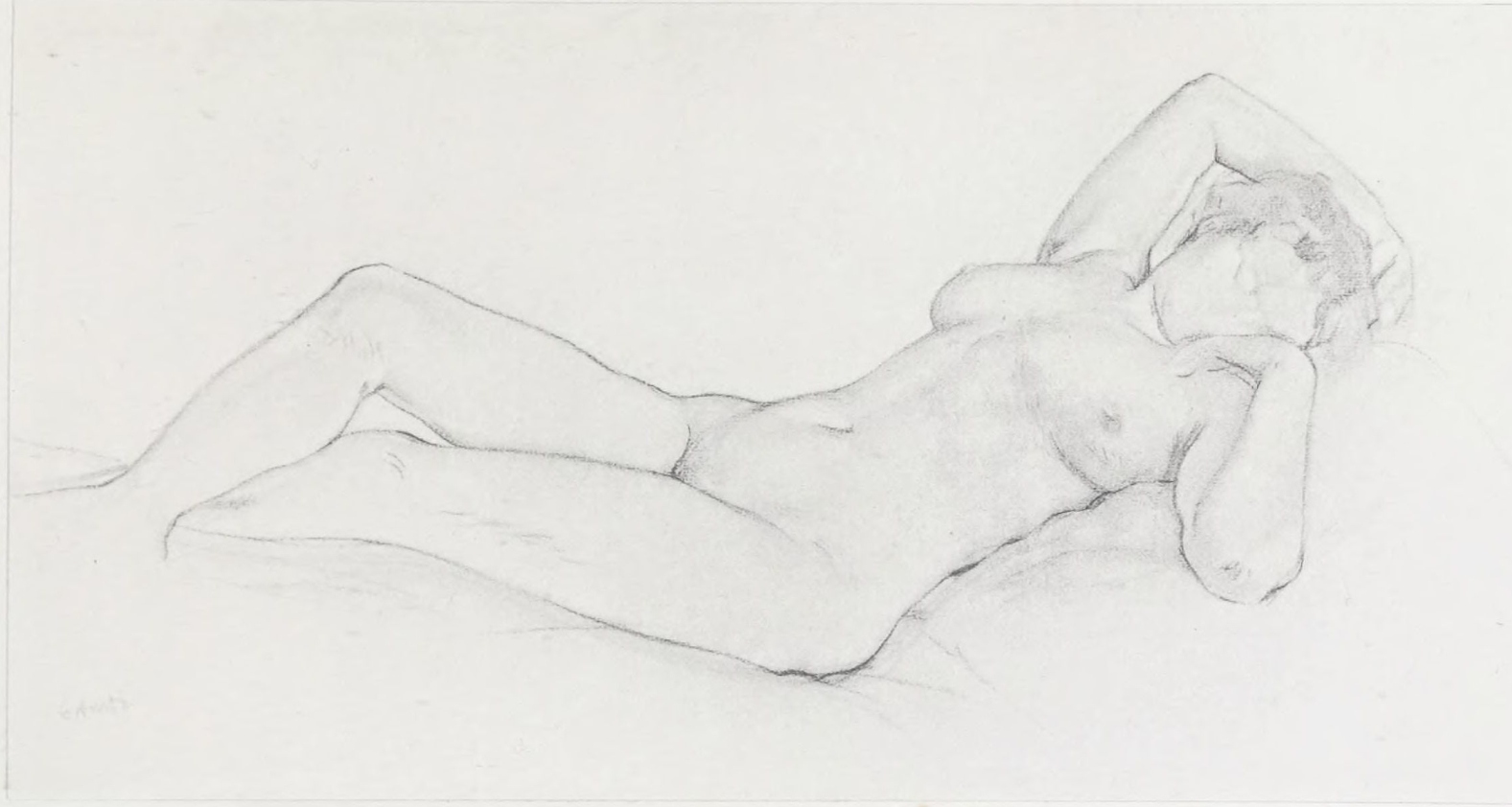
A WOMAN LYING. TOUCHED UP DRAWING
of theatrical vision, whether their names be Gonzaga or Bibiena, whether Sanquirico or Ciceri.
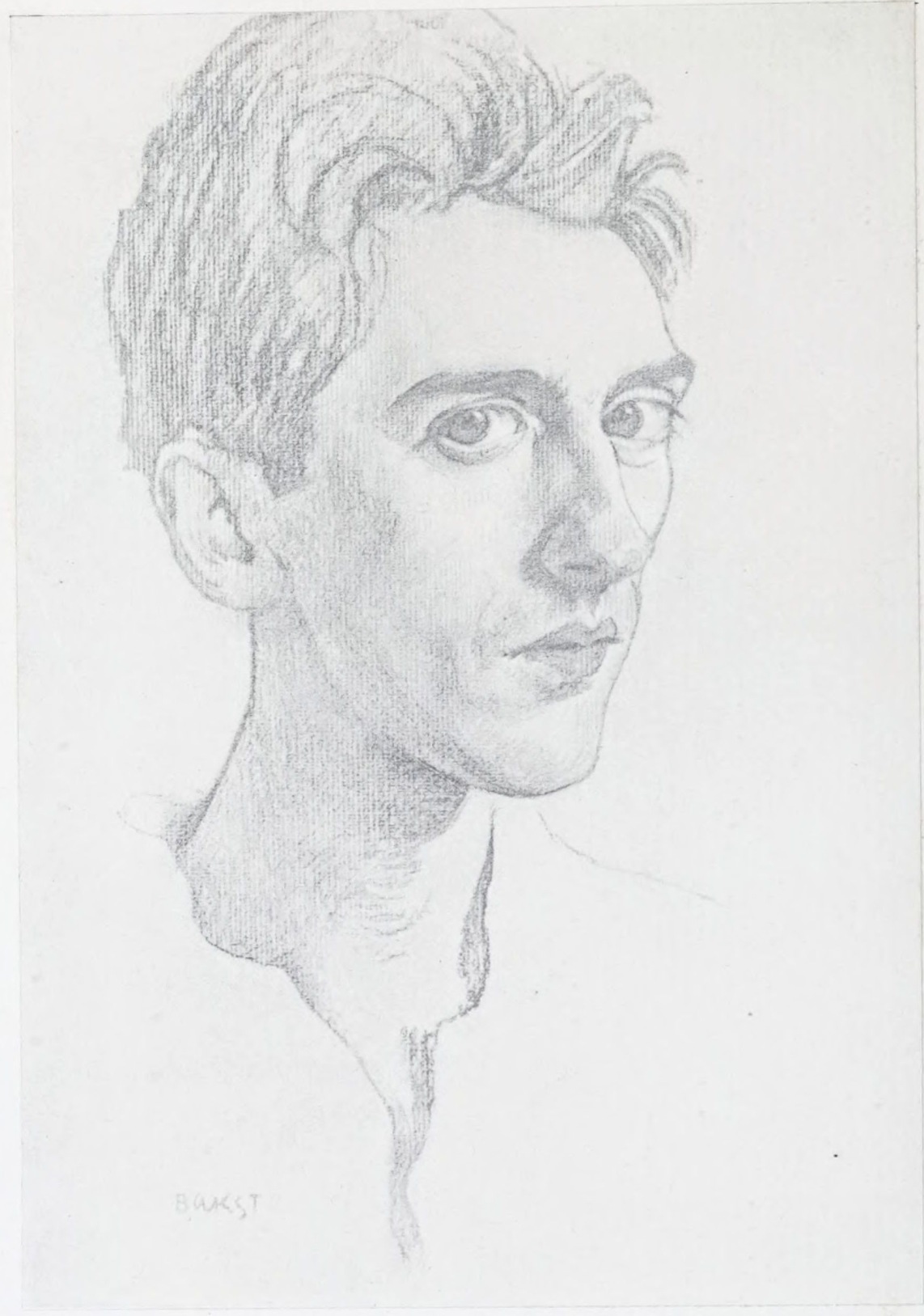
PORTRAIT OF THE POET JEAN COCTEAU
This masterpiece, concerning which the author of these lines has written a book, is a free “capriccio” of the Great Age when Tiepolo
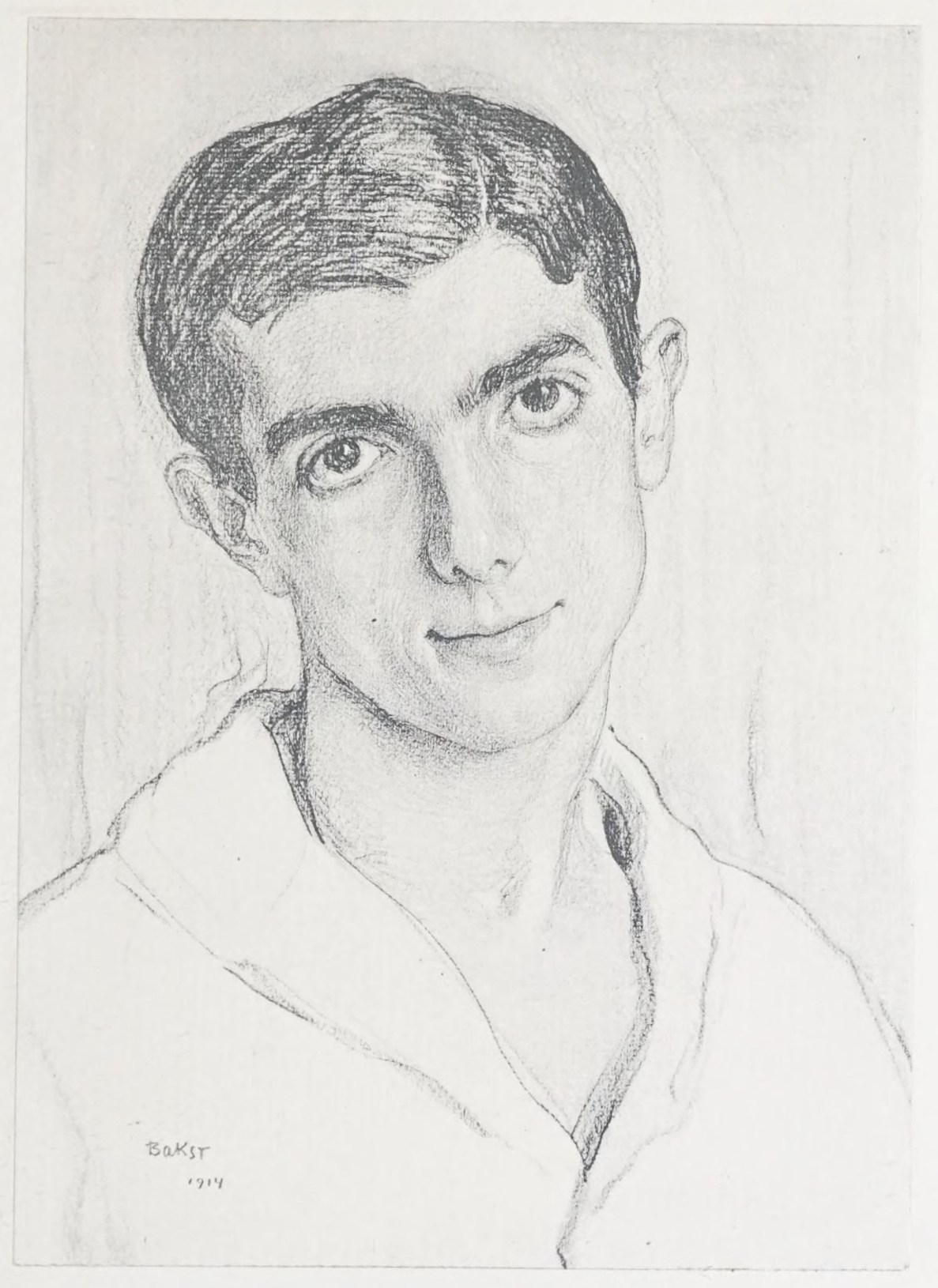
PORTRAIT OF THE DANCER M.
brushed elbows with Mansart. “Artémis troublée”, a ballet produced at the Opera during the spring of the present year, is a graceful mythological play springing from a similar set of ideas.
I am far from having exhausted the plentiful material of these innumerable works, for during almost a quarter of a century Bakst has
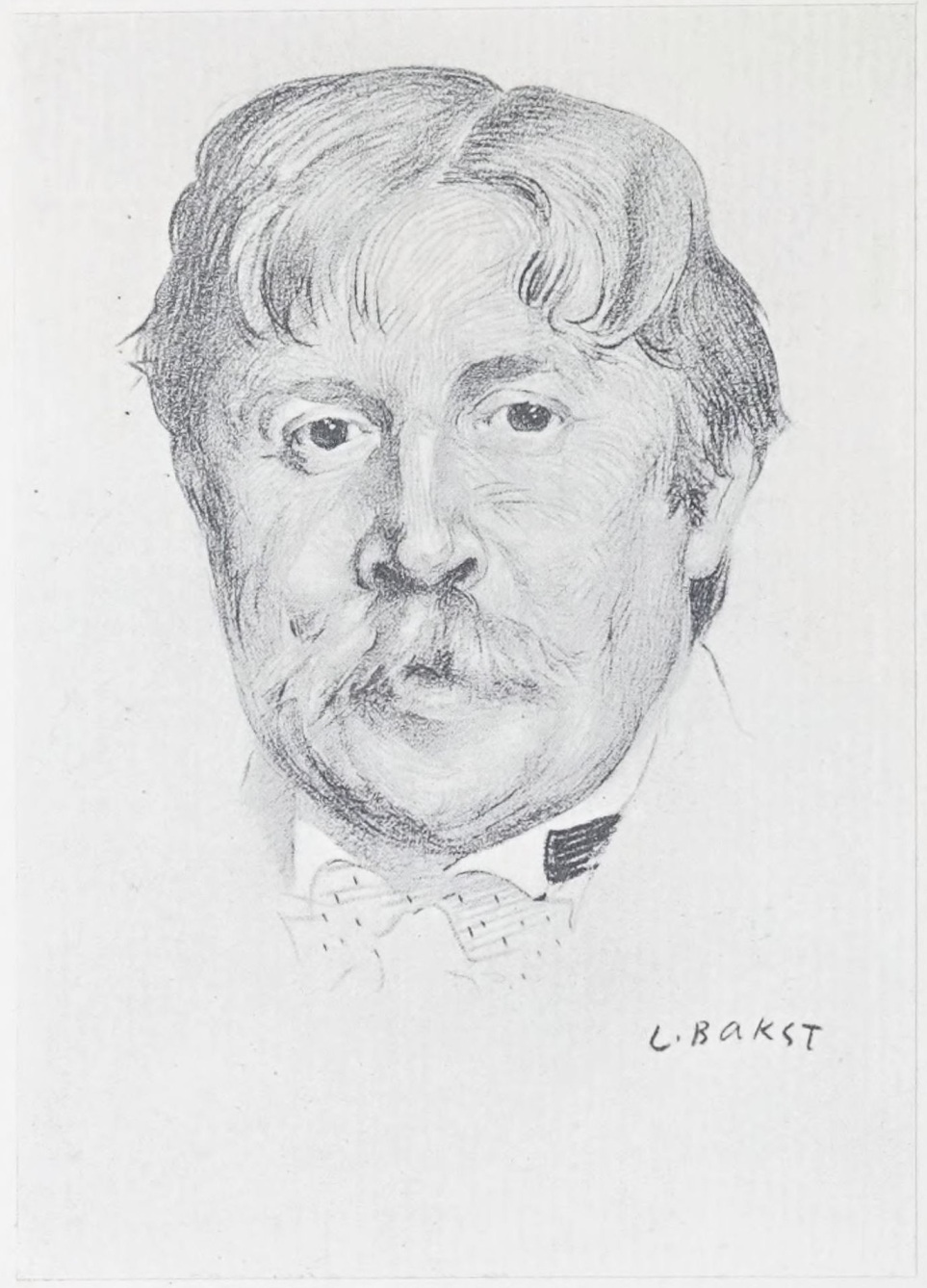
PORTRAIT OF THE PAINTER GOLOVINE
initiated numerous productive ideas. He discovers new veins but is ever ready, after a few blows with the pick=axe, to abandon them to those who follow him.
Is it not he who dares introduce the modern sportive costume to the lyric stage as a decorative and expressive element? Remember the “Jeux” which he undertook with Nijinsky! And was not this vogue for things Venetian of the eighteenth century, for the Venice of Pietro
LVII
PORTRAIT OF IDA RUBINSTEIN
LVIII
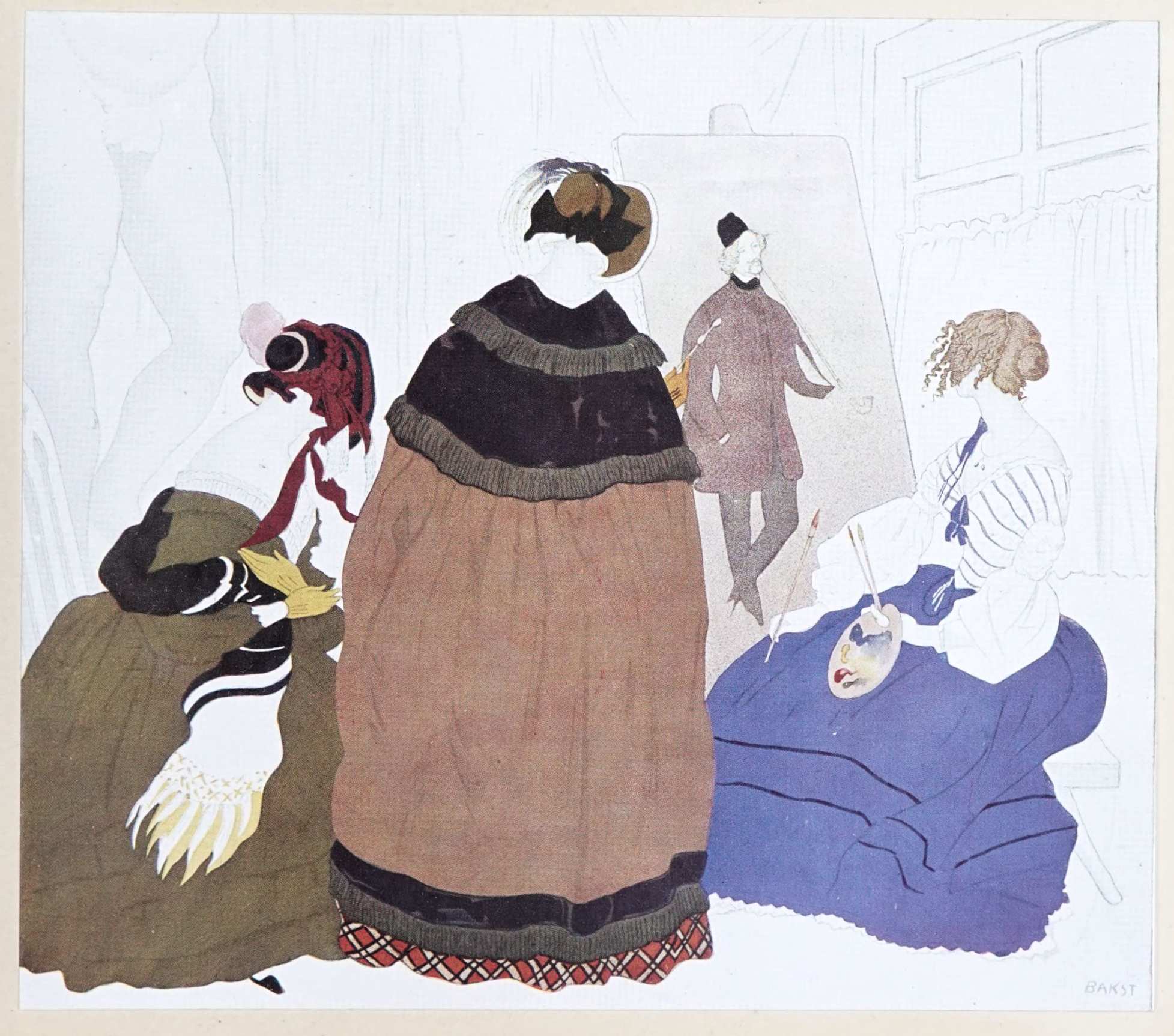
A CALL (POSTER FOR AN EXHIBITION AT VIENNA). (GOUACHE)
LIX
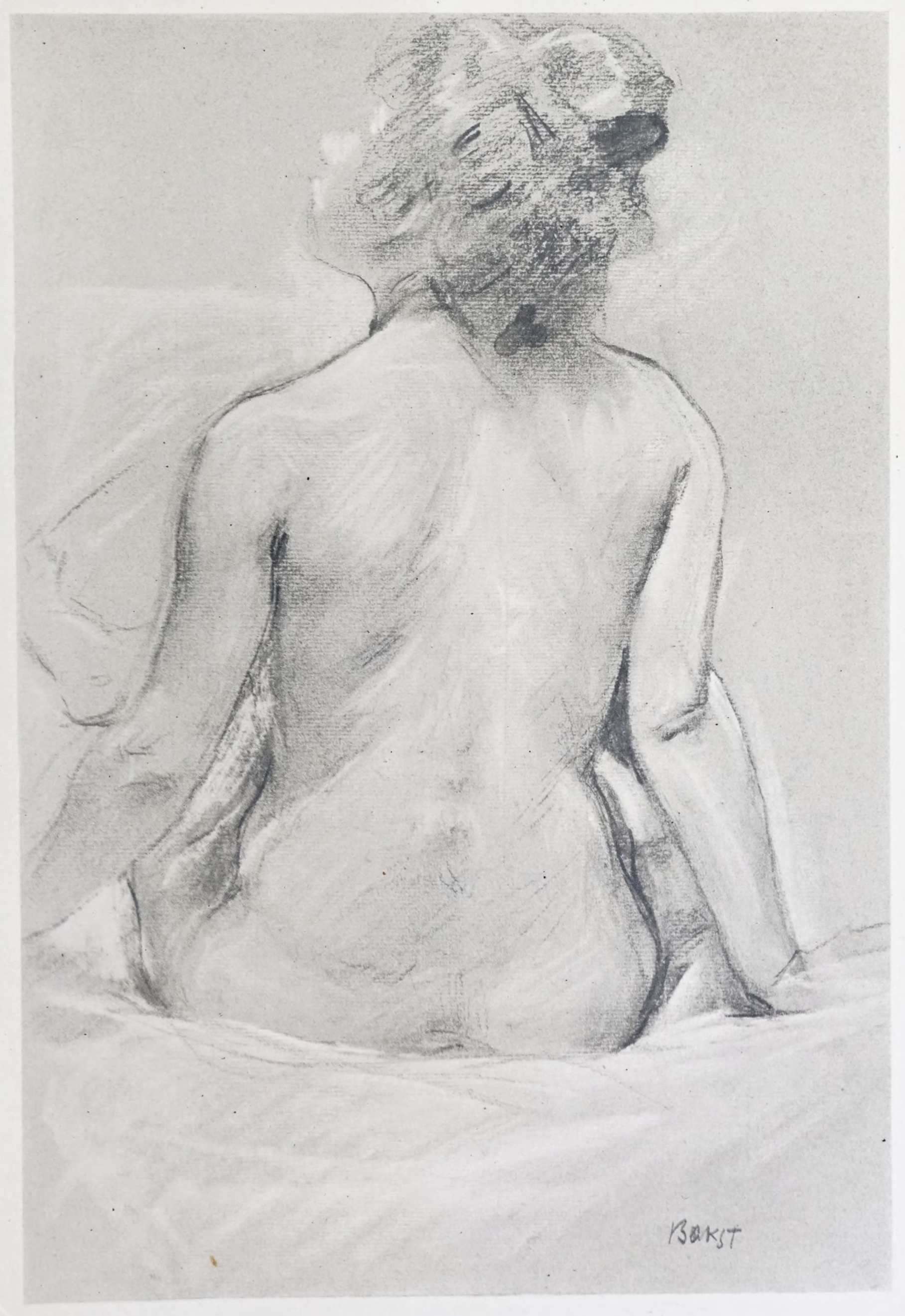
A LIVING MODEL. RED CHALK AND CHALK
LX
THE “BOUTIQUE FANTASQUE” BALLET. AN ITALIAN DOLL
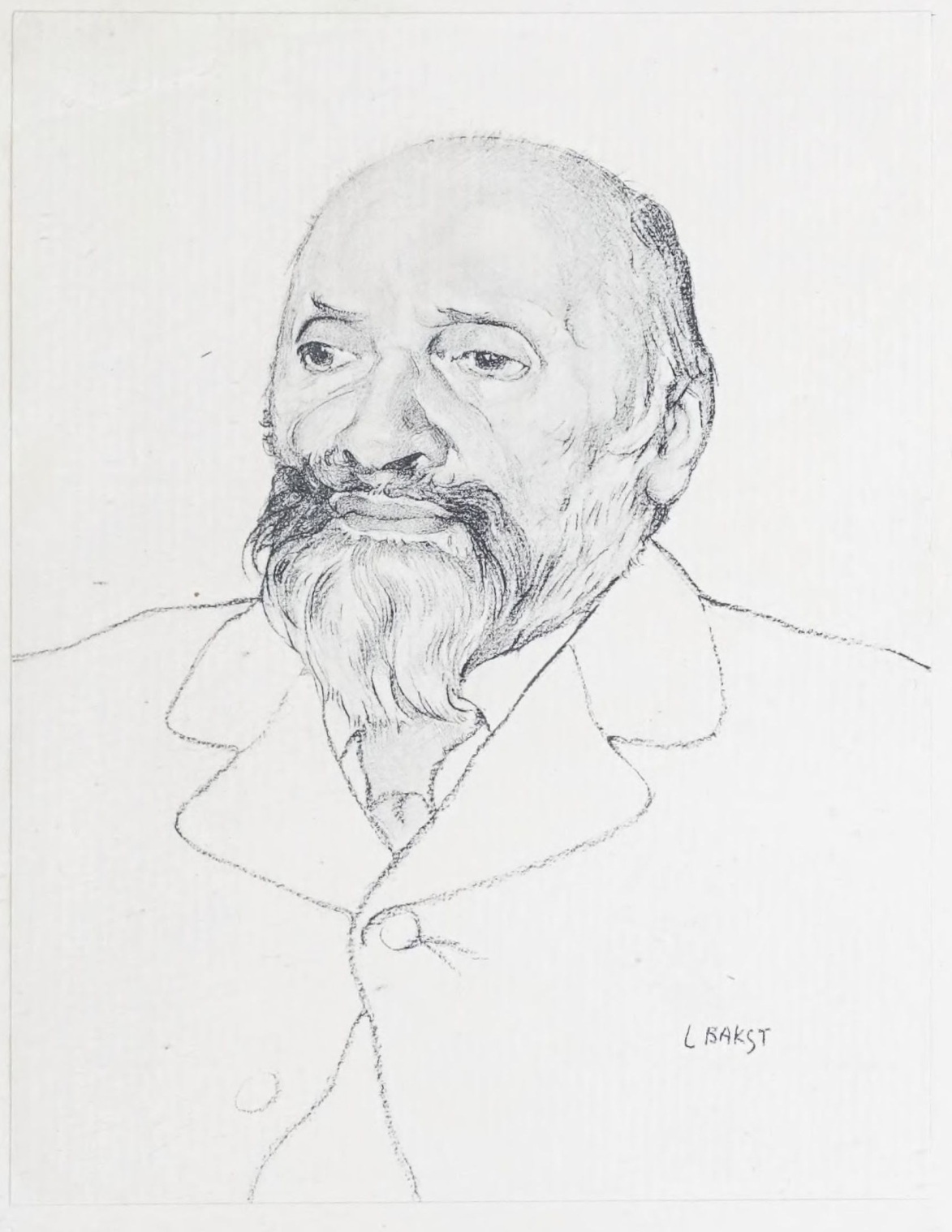
THE COMPOSER BALAKIREV. DRAWING. (THE TRETIAKOFF MUSEUM, MOSCOW)
Longhi and of Guardi, this vogue for beauty and for the fan called forth by his exhilarating “Women of Good Humour” in which, with the greatest unconcern, Bakst exchanges the toe=slippers of the pasha with the red shoe=heels of Giacomo Casanova?
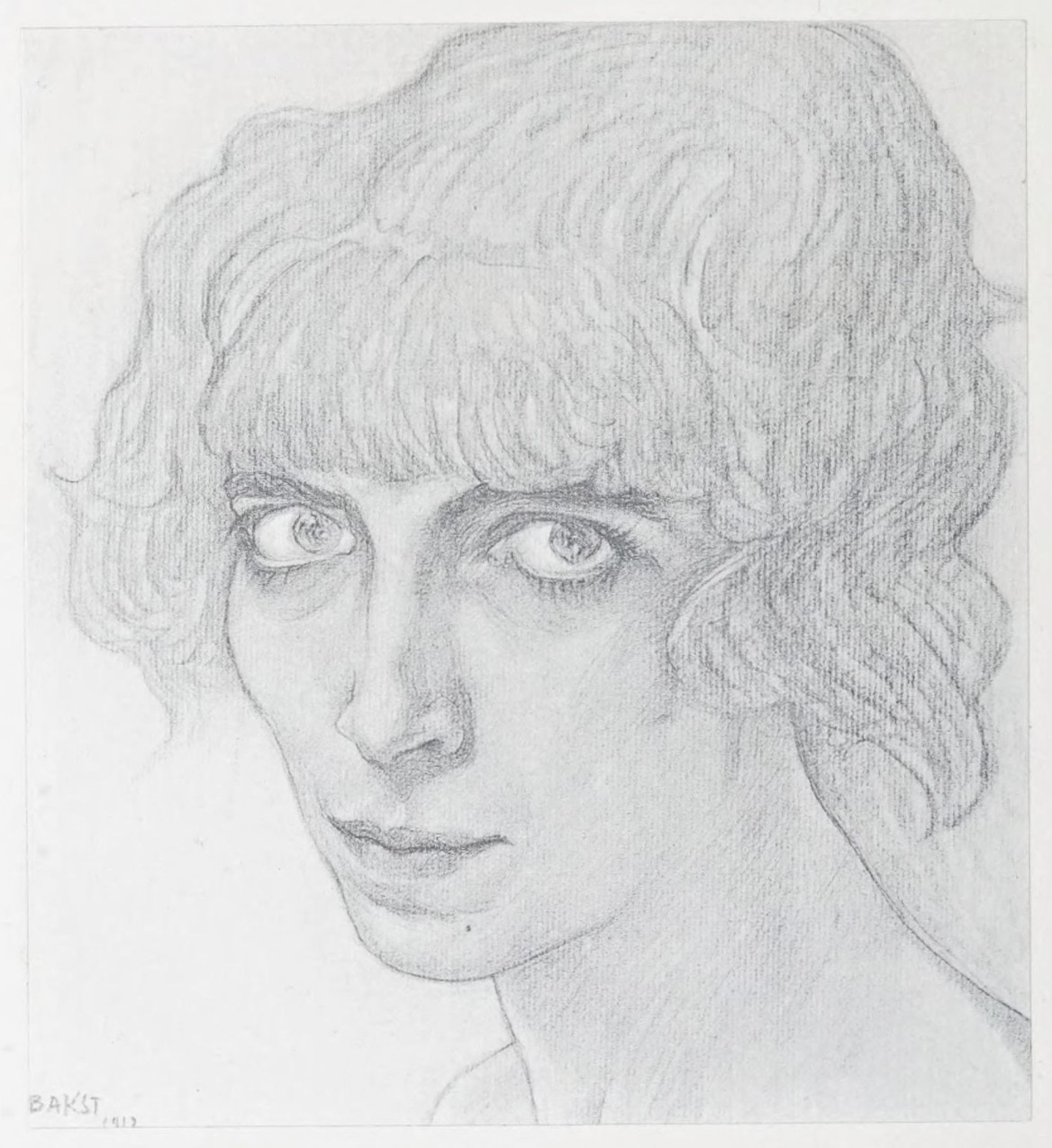
PORTRAIT OF THE MARCHESA CASATI TOUCHED UP DRAWING
And lastly, was not his intervention decisive in bringing about a transformation of feminine costumes?
These sketches of gowns constitute an epoch in the history of fashion, and they afford an access to painters into this domain from which they have been excluded ever since the days of Gavarni. For
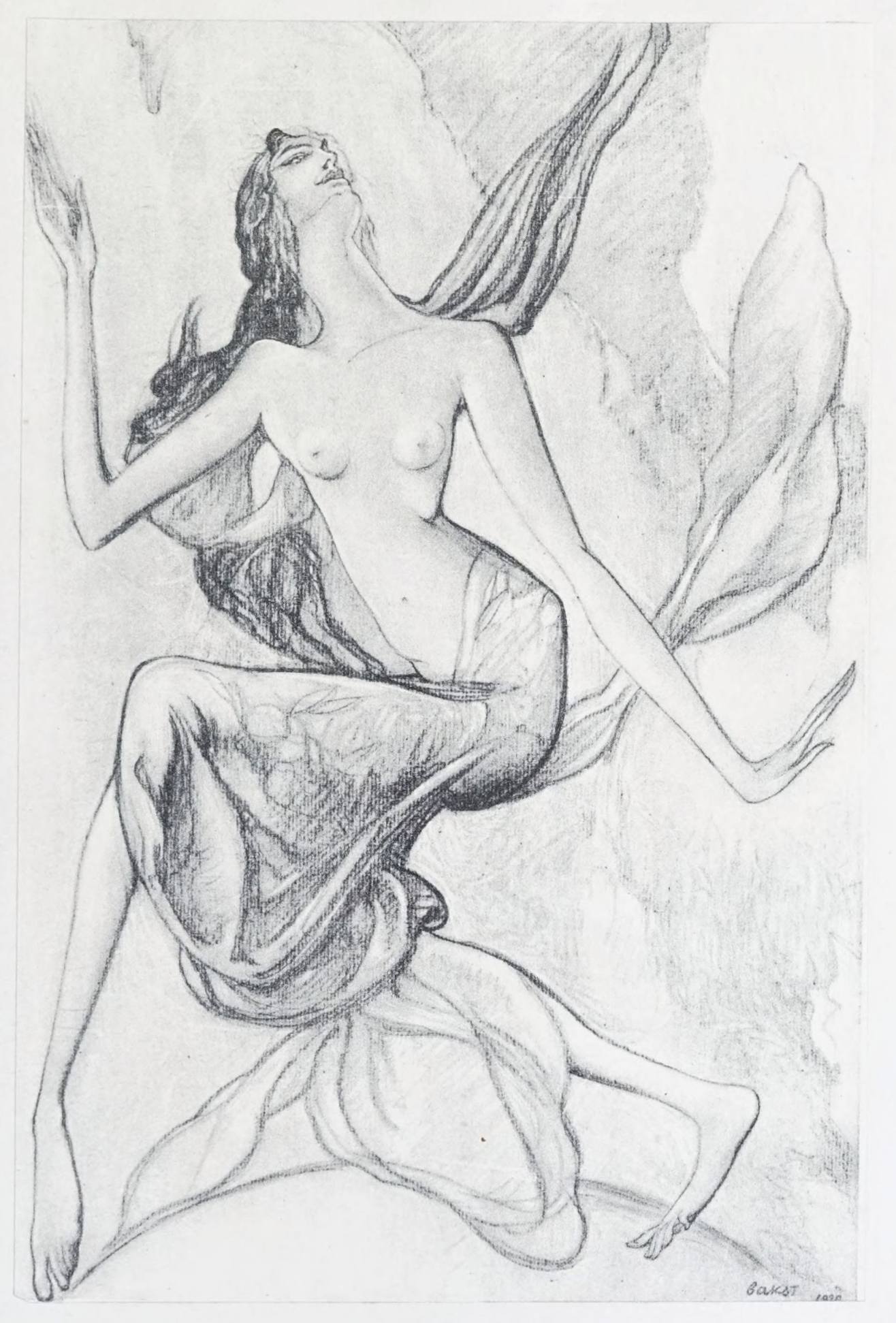
SKETCH
Bakst is more than an a solitary creator. He is an inspirer whose influence radiates forth over a huge periphery. How numerous are the aspects
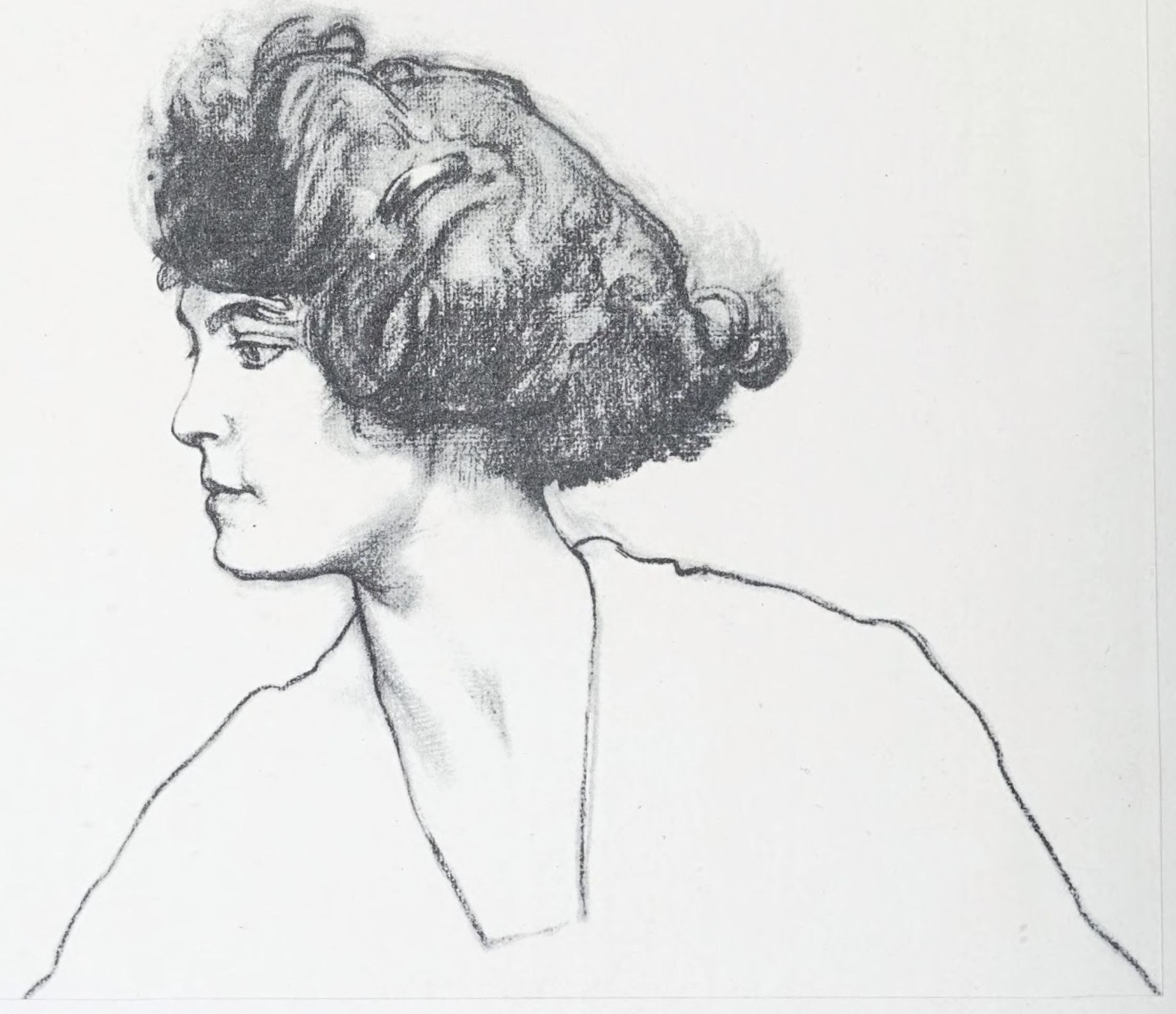
SKETCH
of modern life that bear Bakst’s indelible seal, which is a label of greatness and which confers an air of nobility in which one is never mistaken!
These are the things of which I am thinking as I turn over with you, my readers, the pages of this book. And as we have finished, we must begin again—this time, however, in silent meditation, which is even more gratifying.
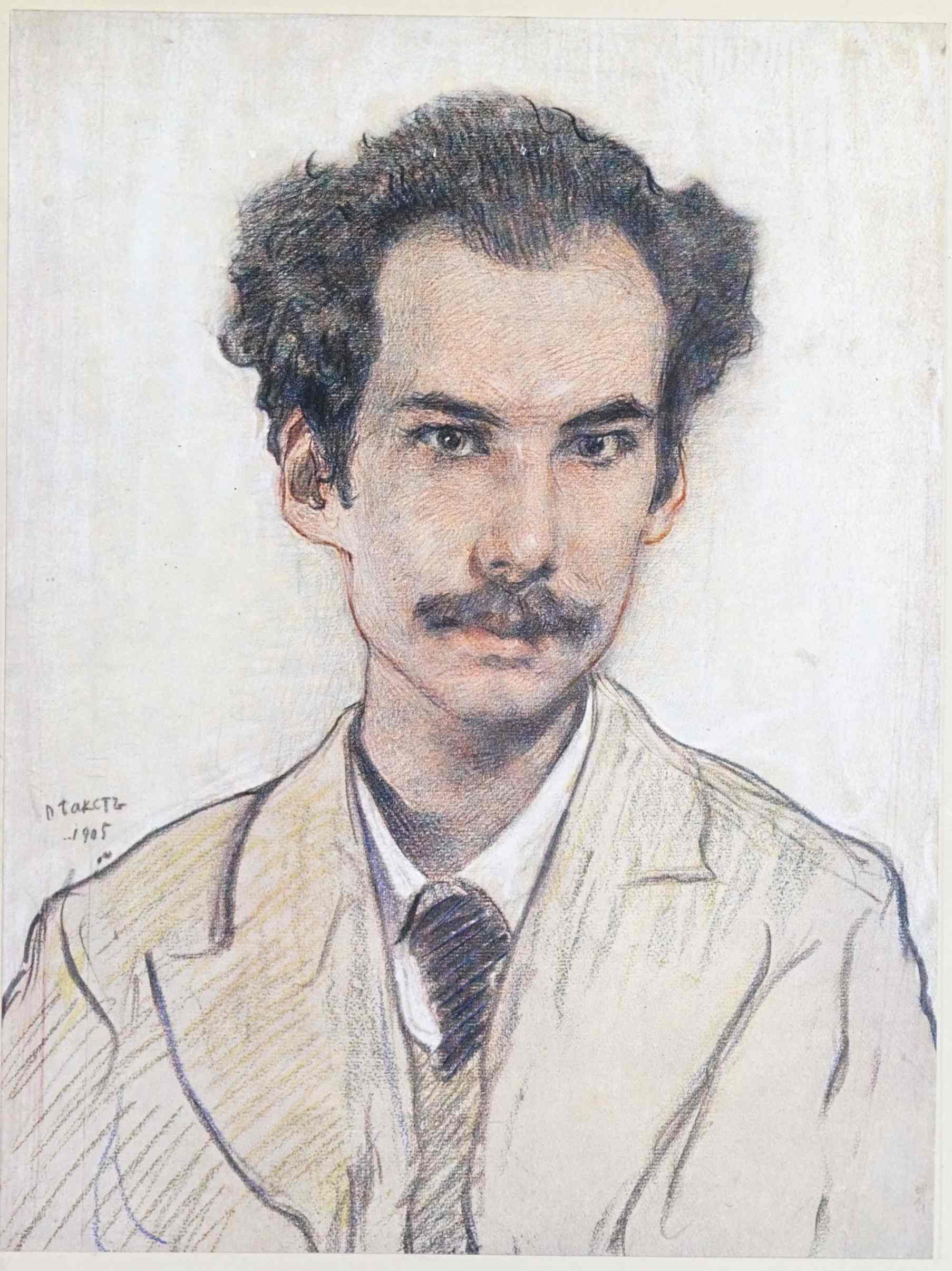
LXI
PORTRAIT OF THE POET ANDREI BELY. CRAYON AND PENCIL
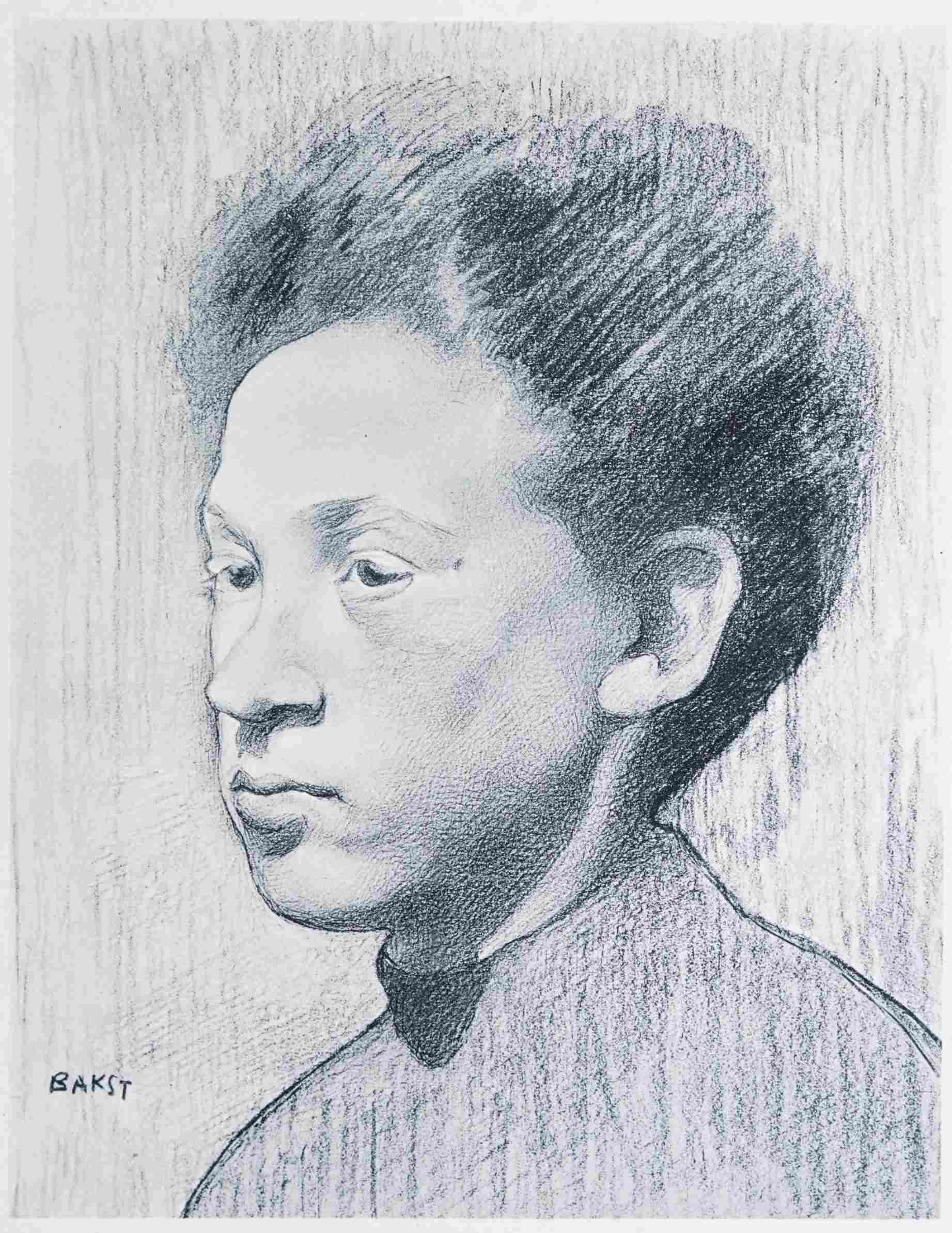
LXII
A PORTRAIT
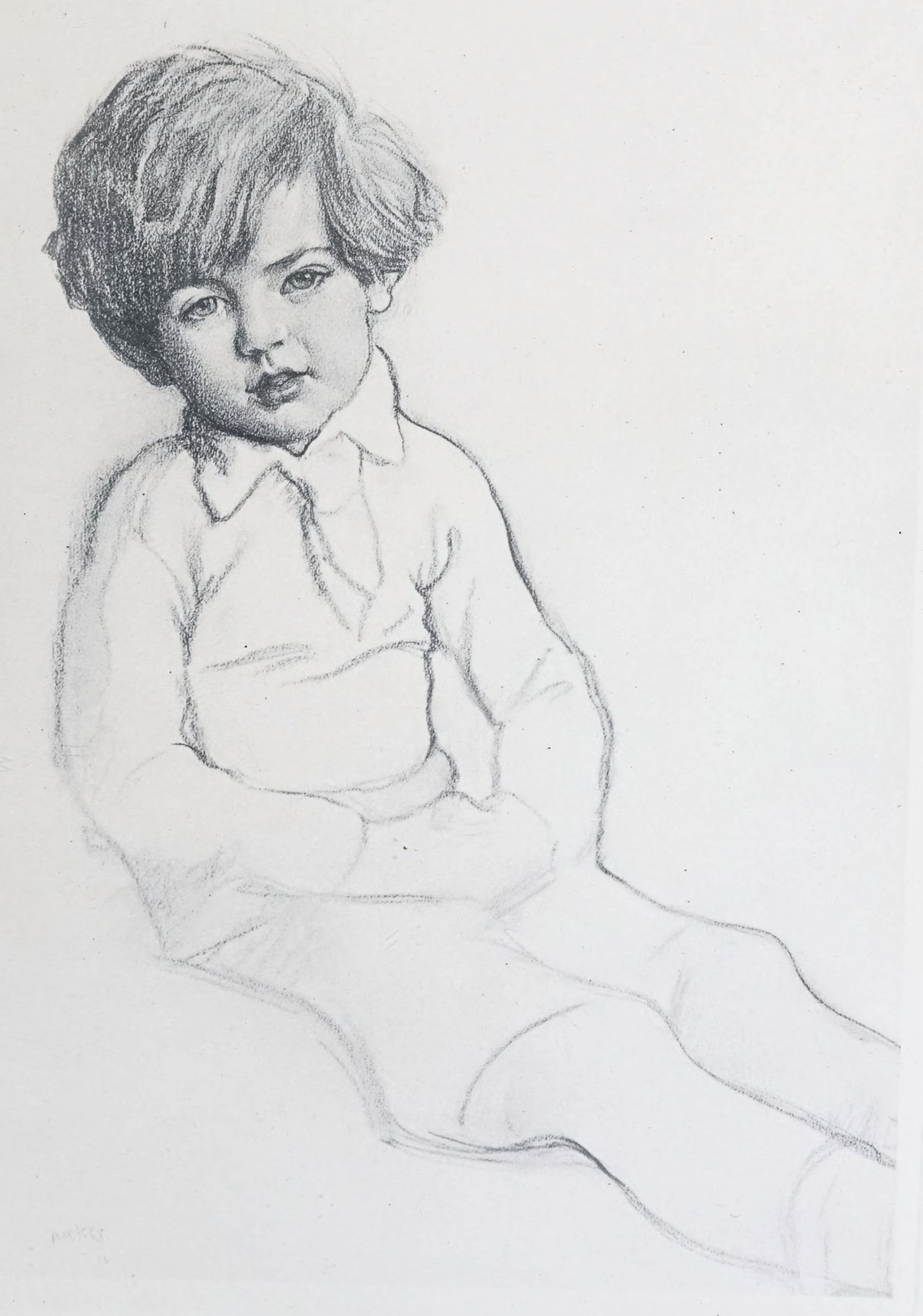
LXIII
PORTRAIT OF THE BOY Z. RED CHALK
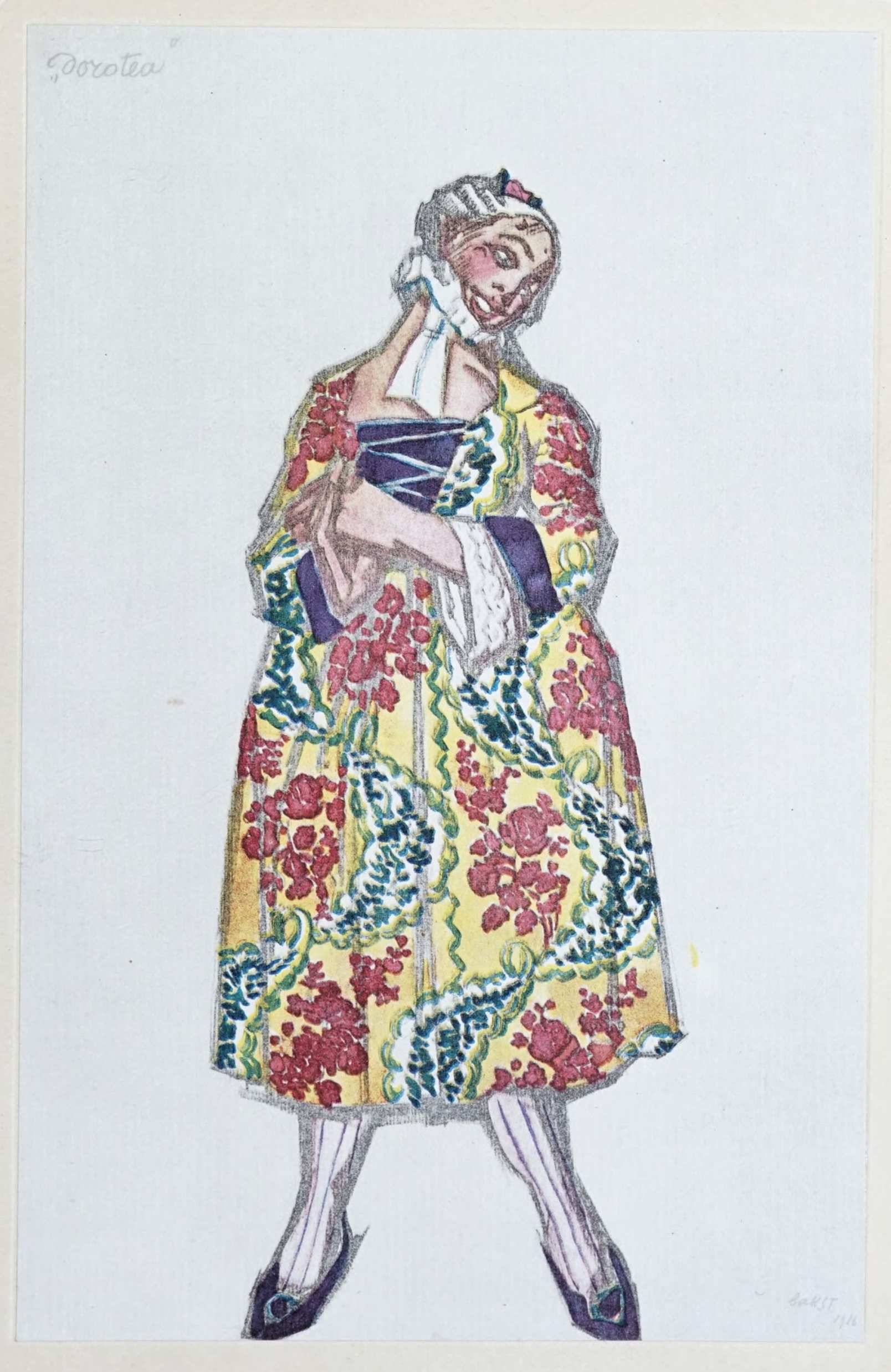
LXIV
THE “WOMEN OF GOOD HUMOUR” BALLET. DOROTHEA