T
Reading edition
TĂBELLA, dim. of TĂBŬLA, a billet or tablet, with which each citizen and judex voted in the comitia and courts of justice. For details see pp. 107, 236.
TĂBELLĀRĬUS, a letter-carrier. As the Romans had no public post, they were obliged to employ special messengers, who were called tabellarii, to convey their letters (tabellae, literae), when they had not an opportunity of sending them otherwise.
TĂBERNĀCŬLUM. [Templum.]
TABLĪNUM. [Domus.]
TĂBŬLAE. This word properly means planks or boards, whence it is applied to several objects, as gaming-tables, pictures, but more especially to tablets used for writing. Generally, tabulae and tabellae signify waxen tablets (tabulae ceratae), which were thin pieces of wood, usually of an oblong shape, covered over with wax (cera). The wax was written on by means of the stilus. These tabulae were sometimes made of ivory and citron-wood, but generally of the wood of a more common tree, as the beech, fir, &c. The outer sides of the tablets consisted merely of the wood; it was only the inner sides that were covered over with wax. They were fastened together at the back by means of wires, which answered the purpose of hinges, so that they opened and shut like our books; and to prevent the wax of one tablet nibbing against the wax of the other, there was a raised margin around each, as is clearly seen in the woodcut on p. 354. There were sometimes two, three, four, five, or even more, tablets fastened together in the above-mentioned manner. Two such tablets were called diptycha (δίπτυχα), which merely means “twice-folded” (from πτύσσω, “to fold”), whence we have πτυκτίον, or with the τ omitted, πυκτίον. The Latin word pugillares, which is the name frequently given to tablets covered with wax, may perhaps be connected with the same root, though it is usually derived from pugillus, because they were small enough to be held in the hand. Three tablets fastened together were called triptycha; in the same way we also read of pentaptycha, and of polyptycha or multiplices (cerae). The pages of these tablets were frequently called by the name of cerae alone; thus we read of prima cera, altera cera, “first page,” “second page.” In tablets containing important legal documents, especially wills, the outer edges were pierced through with holes (foramina), through which a triple thread (linum) was passed, and upon which a seal was then placed. This was intended to guard against forgery, and if it was not done such documents were null and void. Waxen tablets were used among the Romans for almost every species of writing, where great length was not required. Thus letters were frequently written upon them, which were secured by being fastened together with packthread and sealed with wax. Legal documents, and especially wills, were almost always written on waxen tablets. Such tablets were also used for accounts, in which a person entered what he received and expended (tabulae or codex accepti et expensi), whence novae tabulae mean an abolition of debts either wholly or in part. The tablets used in voting in the comitia and the courts of justice were also called tabulae, as well as tabellae. [Tabella.]
TĂBŬLĀRĬI were notaries or accountants, who are first mentioned under this name in the time of the empire. Public notaries, who had the charge of public documents, were also called tabularii. They were first established by M. Antoninus in the provinces, who ordained that the births of all children were to be announced to the tabularii within thirty days from the birth.
TĂBŬLĀRĬUM, a place where the public records (tabulae publicae) were kept. These records were of various kinds, as for instance senatusconsulta, tabulae censoriae, registers of births, deaths, of the names of those who assumed the toga virilis, &c. There were various tabularia at Rome, all of which were in temples; we find mention made of tabularia in the temples of the Nymphs, of Lucina, of Juventus, of Libitina, of Ceres, and more especially in that of Saturn, which was also the public treasury.
TAGUS (ταγός), a leader or general, was more especially the name of the military leader of the Thessalians. He is sometimes called king (βασιλεύς). His command was of a military rather than of a civil nature, and he seems only to have been appointed when there was a war or one was apprehended. We do not know the extent of the power which the Tagus possessed constitutionally, nor the time for which he held the office; probably neither was precisely fixed, and depended on the circumstances of the times and the character of the individual.
TĀLĀRĬA, small wings, fixed to the ancles of Hermes and reckoned among his attributes (πέδιλα, πτηνοπέδιλος). In many works of ancient art they are represented growing from his ancles (see cut, p. 63); but more frequently he is represented with sandals, which have wings fastened to them on each side over the ancles.
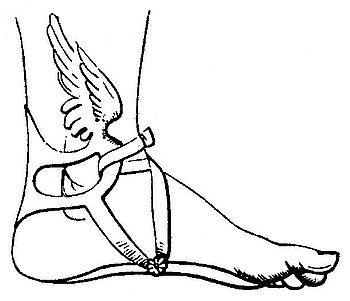
Talaria. (From a Statue of Hermes at Naples.)
TĂLASSĬO. [Matrimonium.]
TĂLENTUM (τάλαντον) meant originally a balance [Libra], then the substance weighed, and lastly and commonly a certain weight, the talent. The Greek system of money, as well as the Roman [As], was founded on a reference to weight. A certain weight of silver among the Greeks, as of copper among the Romans, was used as a representative of a value, which was originally and generally that of the metal itself. The talent therefore and its divisions are denominations of money as well as of weight. The Greek system of weights contained four principal denominations, which, though different in different times and places, and even at the same place for different substances, always bore the same relation to each other. These were the talent (τάλαντον), which was the largest, then the mina (μνᾶ), the drachma (δραχμή), and the obolus (ὀβολός). [See Tables.] The Attic and Aeginetan were the two standards of money most in use in Greece. The Attic mina was 4l. 1s. 3d., and the talent 243l. 15s. The Aeginetan mina was 5l. 14s. 7d., and the talent 343l. 15s. The Euboic talent was of nearly the same weight as the Attic. A much smaller talent was in use for gold. It was equal to six Attic drachmae, or about ¾ oz. and 71 grs. It was called the gold talent, or the Sicilian talent, from its being much used by the Greeks of Italy and Sicily. This is the talent always meant when the word occurs in Homer. This small talent explains the use of the term great talent (magnum talentum), which we find in Latin authors, for the silver Attic talent was great in comparison with this. But the use of the word by the Romans is altogether very inexact. Where talents are mentioned in the classical writers without any specification of the standard, we must generally understand the Attic.
TĀLĬO, from Talis, signifies an equivalent, but it is used only in the sense of a punishment or penalty the same in kind and degree as the mischief which the guilty person has done to the body of another. Talio, as a punishment, was a part of the Mosaic law.
TĀLUS (ἀστράγαλος), a huckle-bone. The huckle-bones of sheep and goats were used to play with from the earliest times, principally by women and children, occasionally by old men. To play at this game was sometimes called πενταλιθίζειν, because five bones or other objects of a similar kind were employed; and this number is retained among ourselves. When the sides of the bone were marked with different values, the game became one of chance. [Alea; Tessera.] The two ends were left blank, because the bone could not rest upon either of them on account of its curvature. The four remaining sides were marked with the numbers 1, 3, 4, 6; 1 and 6 being on two opposite sides, and 3 and 4 on the other two opposite sides. The Greek and Latin names of the numbers were as follows:—1. Μονάς, εἶς, κύων, Χῖος; Ion. Οἴνη: Unio, Vulturius, canis: 3. Τρίας, Ternio; 4. Τετράς, Quaternio; 6. Ἑξάς, ἑξίτης, Κῷος; Senio. Two persons played together at this game, using four bones, which they threw up into the air, or emptied out of a dice-box, and observing the numbers on the uppermost sides. The numbers on the four sides of the four bones admitted of thirty-five different combinations. The lowest throw of all was four aces (jacere vultorios quatuor). But the value of a throw was not in all cases the sum of the four numbers turned up. The highest in value was that called Venus, or jactus Venereus, in which the numbers cast up were all different, the sum of them being only fourteen. It was by obtaining this throw that the king of the feast was appointed among the Romans [Symposium], and hence it was also called Basilicus. Certain other throws were called by particular names, taken from gods, illustrious men and women, and heroes. Thus the throw, consisting of two aces and two trays, making eight, which number, like the jactus Venereus, could be obtained only once, was denominated Stesichorus.
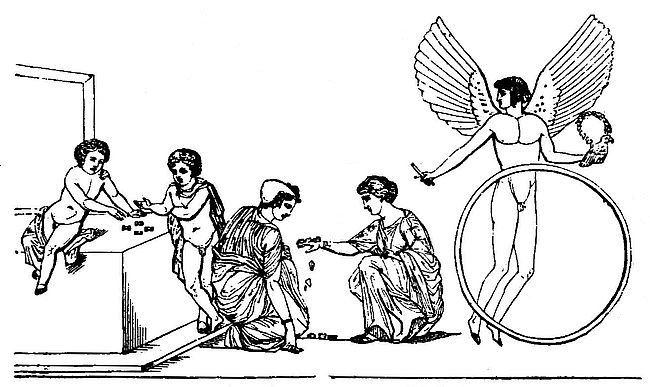
Game of Tali. (From an ancient Painting.)
TĂMĬAE (ταμίαι), the treasurers of the temples and the revenue at Athens. The wealthiest of all the temples at Athens was that of Athena on the Acropolis, the treasures of which were under the guardianship of ten tamiae, who were chosen annually by lot from the class of pentacosiomedimni, and afterwards, when the distinction of classes had ceased to exist, from among the wealthiest of Athenian citizens. The treasurers of the other gods were chosen in like manner; but they, about the 90th Olympiad, were all united into one board, while those of Athena remained distinct. Their treasury, however, was transferred to the same place as that of Athena, viz., to the opisthodomus of the Parthenon, where were kept not only all the treasures belonging to the temples, but also the state treasure (ὅσια χρήματα, as contra-distinguished from ἱερά), under the care of the treasurers of Athena. All the funds of the state were considered as being in a manner consecrated to Athena; while on the other hand the people reserved to themselves the right of making use of the sacred monies, as well as the other property of the temples, if the safety of the state should require it. Payments made to the temples were received by the treasurers in the presence of some members of the senate, just as public monies were by the Apodectae; and then the treasurers became responsible for their safe custody.—The treasurer of the revenue (ταμίας or ἐπιμελητής τῆς κοινῆς προσόδου) was a more important personage than those last mentioned. He was not a mere keeper of monies, like them, nor a mere receiver, like the apodectae; but a general paymaster, who received through the apodectae all money which was to be disbursed for the purposes of the administration (except the property-taxes, which were paid into the war-office, and the tribute from the allies, which was paid to the hellenotamiae [Hellenotamiae]), and then distributed it in such manner as he was required to do by the law; the surplus (if any) he paid into the war-office or the theoric fund. As this person knew all the channels in which the public money had to flow, and exercised a general superintendence over the expenditure, he was competent to give advice to the people upon financial measures, with a view to improve the revenue, introduce economy, and prevent abuses; he is sometimes called ταμίας τῆς διοικήσεως, or ὁ ἐπὶ τῆς διοικήσεως, and may be regarded as a sort of minister of finance. He was elected by vote (χειροτονία), and held his office for four years, but was capable of being re-elected. A law, however, was passed during the administration of Lycurgus, the orator, prohibiting re-election; so that Lycurgus, who is reported to have continued in office for twelve years, must have held it for the last eight years under fictitious names. The power of this officer was by no means free from control; inasmuch as any individual was at liberty to propose financial measures, or institute criminal proceedings for malversation or waste of the public funds; and there was an ἀντιγραφεὺς τῆς διοικήσεως appointed to check the accounts of his superior. Anciently there were persons called Poristae (πορίσται), who appear to have assisted the tamiae in some part of their duties. The money disbursed by the treasurer of the revenue was sometimes paid directly to the various persons in the employ of the government, sometimes through subordinate pay offices. Many public functionaries had their own paymasters, who were dependent on the treasurer of the revenue, receiving their funds from him, and then distributing them in their respective departments. Such were the τριηροποιοί, τειχοποιοί, ὁδοποιοί, ταφροποιοί, ἐπεμεληταὶ νεωρίων, who received through their own tamiae such sums as they required from time to time for the prosecution of their works. The payment of the judicial fees was made by the Colacretae (κωλακρέται), which, and the providing for the meals in the Prytaneium, were the only duties that remained to them after the establishment of the apodectae by Cleisthenes. The tamiae of the sacred vessels (τῆς Παράλου and τῆς Σαλαμινίας) acted not only as treasurers, but as trierarchs, the expenses (amounting for the two ships together to about sixteen talents) being provided by the state. They were elected by vote. Other trierarchs had their own private tamiae.—The war fund at Athens (independently of the tribute) was provided from two sources: first, the property-tax (εἰσφορά), and secondly, the surplus of the yearly revenue, which remained after defraying the expenses of the civil administration. Of the ten strategi, who were annually elected to preside over the war department, one was called στρατηγὸς ὁ ἐπὶ τῆς διοικήσεως, to whom the management of the war fund was entrusted. He had under him a treasurer, called the ταμίας τῶν στρατιωτικῶν, who gave out the pay of the troops, and defrayed all other expenses incident to the service. So much of the surplus revenue as was not required for the purposes of war, was to be paid by the treasurer of the revenue into the theoric fund; of which, after the archonship of Euclides, special managers were created. [Theorica.]—Lastly, we have to notice the treasurers of the demi (δήμων ταμίαι), and those of the tribes (φυλῶν ταμίαι), who had the care of the funds belonging to their respective communities, and performed duties analogous to those of the state treasurers. The demi, as well as the tribes, had their common lands, which were usually let to farm. The rents of these formed the principal part of their revenue.
TAXIARCHI (ταξίαρχοι), military officers at Athens, next in rank to the strategi. They were ten in number, like the strategi, one for each tribe, and were elected by vote (χειροτονία). In war each commanded the infantry of his own tribe, and they were frequently called to assist the strategi with their advice at the war-council. In peace they assisted the strategi in levying and enlisting soldiers, and seem to have also assisted the strategi in the discharge of many of their other duties. The taxiarchs were so called from their commanding taxeis (τάξεις), which were the principal divisions of the hoplites in the Athenian army. Each tribe (φυλή) formed a taxis. As there were ten tribes, there were consequently in a complete Athenian army ten taxeis, but the number of men contained in each would of course vary according to the importance of the war. Among the other Greeks, the taxis was the name of a much smaller division of troops. The lochus (λόχος) among the Athenians was a subdivision of the taxis, and the lochagi (λοχαγοί) were probably appointed by the taxiarchs.
TĒGŬLA (κέραμος, dim. κεραμίς), a roofing-tile. Roofing-tiles were originally made, like bricks, of baked clay (γῆς ὀπτῆς). Byzes of Naxos first introduced tiles of marble about the year 620 B.C. A still more expensive and magnificent method of roofing consisted in the use of tiles made of bronze and gilt. At Rome the houses were originally roofed with shingles, and continued to be so down to the time of the war with Pyrrhus, when tiles began to supersede the old roofing material.
TEICHŎPOII (τειχοποιοί), magistrates at Athens, whose business it was to build and keep in repair the public walls. They appear to have been elected by vote (χειροτονία), one from each tribe, and probably for a year. Funds were put at their disposal, for which they had their treasurer (ταμίας) dependent on the treasurer of the revenue. They were liable to render an account (εὐθύνη) of their management of these funds, and also of their general conduct, like other magistrates. This office has been invested with peculiar interest in modern times, on account of its having been held by Demosthenes, and its having given occasion to the famous prosecution of Ctesiphon, who proposed that Demosthenes should receive the honour of a crown before he had rendered his account according to law.
TĒLA (ἱστός), a loom. Although weaving was among the Greeks and Romans a distinct trade, carried on by a separate class of persons (ὑφάνται, textores and textrices, linteones), yet every considerable domestic establishment, especially in the country, contained a loom, together with the whole apparatus necessary for the working of wool (lanificium, ταλασία, ταλασιουργία). [Calathus.] These occupations were all supposed to be carried on under the protection of Athena or Minerva, specially denominated Ergane (Ἐργάνη). When the farm or the palace was sufficiently large to admit of it, a portion of it called the histon (ἱστῶν) or textrinum was devoted to this purpose. The work was there principally carried on by female slaves (quasillariae), under the superintendence of the mistress of the house. Every thing woven consists of two essential parts, the warp and the woof, called in Latin stamen and subtegmen, subtemen, or trama; in Greek στήμων and κροκή. The warp was called stamen in Latin (from stare) on account of its erect posture in the loom. The corresponding Greek term στήμων, and likewise ἱστός, have evidently the same derivation. For the same reason, the very first operation in weaving was to set up the loom (ἱστὸν στήσασθαι); and the web or cloth, before it was cut down or “descended” from the loom, was called vestis pendens or pendula tela, because it hung from the transverse beam, or jugum. These particulars are all clearly exhibited in the picture of Circe’s loom given in the annexed cut. We observe in the preceding woodcut, about the middle of the apparatus, a transverse rod passing through the warp. A straight cane was well adapted to be so used, and its application is clearly expressed by Ovid in the words stamen secernit arundo. In plain weaving it was inserted between the threads of the warp so as to divide them into two portions, the threads on one side of the rod alternating with those on the other side throughout the whole breadth of the warp. In a very ancient form of the loom there was a roller underneath the jugum, turned by a handle, and on which the web was wound as the work advanced. The threads of the warp, besides being separated by a transverse rod or plank, were divided into thirty or forty parcels, to each of which a stone was suspended for the purpose of keeping the warp in a perpendicular position, and allowing the necessary play to the strokes of the spatha. Whilst the comparatively coarse, strong, and much-twisted thread designed for the warp was thus arranged in parallel lines, the woof remained upon the spindle [Fusus], forming a spool, bobbin, or pen (πήνη). This was either conveyed through the warp without any additional contrivance, or it was made to revolve in a shuttle (radius). This was made of box brought from the shores of the Euxine, and was pointed at its extremities, that it might easily force its way through the warp. All that is effected by the shuttle is the conveyance of the woof across the warp. To keep every thread of the woof in its proper place, it is necessary that the threads of the warp should be decussated. This was done by the leashes, called in Latin licia, in Greek μίτοι. By a leash we are to understand a thread having at one end a loop, through which a thread of the warp was passed, the other end being fastened to a straight rod called liciatorium, and in Greek κανών. The warp, having been divided by the arundo, as already mentioned, into two sets of threads, all those of the same set were passed through the loops of the corresponding set of leashes, and all these leashes were fastened at their other end to the same wooden rod. At least one set of leashes was necessary to decussate the warp, even in the plainest and simplest weaving. The number of sets was increased according to the complexity of the pattern, which was called bilix or trilix, δίμιτος, τρίμιτος, or πολύμιτος, according as the number was two, three, or more. The process of annexing the leashes to the warp was called ordiri telam, also licia telae addere, or adnectere. It occupied two women at the same time, one of whom took in regular succession each separate thread of the warp, and handed it over to the other (παραφέρειν, παραδίδοναι, or προσφωρεῖσθαι); the other, as she received each thread, passed it through the loop in proper order; an act which we call “entering,” in Greek διάζεσθαι. Supposing the warp to have been thus adjusted, and the pen or the shuttle to have been carried through it, it was then decussated by drawing forwards the proper rod, so as to carry one set of the threads of the warp across the rest, after which the woof was shot back again, and by the continual repetition of this process the warp and woof were interlaced. Two staves were occasionally used to fix the rods in such a position as was most convenient to assist the weaver in drawing her woof across her warp. After the woof had been conveyed by the shuttle through the warp, it was driven sometimes downwards, as is represented in the woodcut, but more commonly upwards. Two different instruments were used in this part of the process. The simplest, and probably the most ancient, was in the form of a large wooden sword (spatha, σπάθη). The spatha was, however, in a great degree superseded by the comb (pecten, κερκίς), the teeth of which were inserted between the threads of the warp, and thus made by a forcible impulse to drive the threads of the woof close together.—The lyre, the favourite musical instrument of the Greeks, was only known to the Romans as a foreign invention. Hence they appear to have described its parts by a comparison with the loom, with which they were familiar. The terms jugum and stamina were transferred by an obvious resemblance from the latter to the former object; and, although they adopted into their own language the Greek word plectrum, they used the Latin pecten to denote the same thing, not because the instrument used in striking the lyre was at all like a comb in shape and appearance, but because it was held in the right hand, and inserted between the stamina of the lyre, as the comb was between the stamina of the loom.
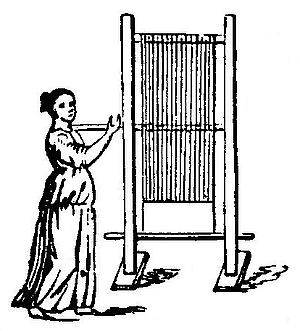
Tela, Loom. (From the Vatican MS. of Virgil.)
TĔLAMŌNES. [Atlantes.]
TĔLŌNES (τελώνης), a farmer of the public taxes at Athens. The taxes were let by auction to the highest bidder. Companies often took them in the name of one person, who was called ἀρχώνης or τελωνάρχης, and was their representative to the state. Sureties were required of the farmer for the payment of his dues. The office was frequently undertaken by resident aliens, citizens not liking it, on account of the vexatious proceedings to which it often led. The farmer was armed with considerable powers: he carried with him his books, searched for contraband or uncustomed goods, watched the harbour, markets, and other places, to prevent smuggling, or unlawful and clandestine sales; brought a phasis (φάσις) or other legal process against those whom he suspected of defrauding the revenue; or even seized their persons on some occasions, and took them before the magistrate. To enable him to perform these duties, he was exempted from military service. Collectors (ἐκλογεῖς) were sometimes employed by the farmers; but frequently the farmer and the collector were the same person. The taxes were let by the commissioners (πωλῆται), acting under the authority of the senate. The payments were made by the farmer on stated prytaneias in the senate-house. There was usually one payment made in advance, προκαταβολή, and one or more afterwards, called προσκατάβλημα. Upon any default of payment, the farmer became atimus, if a citizen, and he was liable to be imprisoned at the discretion of the court, upon an information laid against him. If the debt was not paid by the expiration of the ninth prytaneia, it was doubled; and if not then paid, his property became forfeited to the state, and proceedings to confiscation might be taken forthwith. Upon this subject, see the speech of Demosthenes against Timocrates.
TĔLOS (τέλος), a tax. The taxes imposed by the Athenians, and collected at home, were either ordinary or extraordinary. The former constituted a regular or permanent source of income; the latter were only raised in time of war or other emergency. The ordinary taxes were laid mostly upon property, and upon citizens indirectly, in the shape of toll or customs; though the resident aliens paid a poll-tax (called μετοίκιον), for the liberty of residing at Athens under protection of the state. There was a duty of two per cent. (πεντηκοστή), levied upon all exports and imports. An excise was paid on all sales in the market (called ἐπωνία), though we know not what the amount was. Slave-owners paid a duty of three obols for every slave they kept; and slaves who had been emancipated paid the same. This was a very productive tax before the fortification of Deceleia by the Lacedaemonians. The justice fees (πρυτανεῖα, παραστασις, &c.) were a lucrative tax in time of peace. The extraordinary taxes were the property-tax, and the compulsory services called liturgies (λειτουργίαι). Some of these last were regular, and recurred annually; the most important, the trierarchia, was a war-service, and performed as occasion required. As these services were all performed, wholly or partly, at the expense of the individual, they may be regarded as a species of tax. [Eisphora; Leitourgia; Trierarchia.] The tribute (φόρος) paid by the allied states to the Athenians formed, in the flourishing period of the republic, a regular and most important source of revenue. In Olymp. 91 2, the Athenians substituted for the tribute a duty of five per cent. (εἰκοστή) on all commodities exported or imported by the subject states, thinking to raise by this means a larger income than by direct taxation. This was terminated by the issue of the Peloponnesian war, though the tribute was afterwards revived, on more equitable principles, under the name of σύνταξις. Other sources of revenue were derived by the Athenians from their mines and public lands, fines, and confiscations. The public demesne lands, whether pasture or arable, houses or other buildings, were usually let by auction to private persons. The conditions of the lease were engraven on stone. The rent was payable by prytaneias. These various sources of revenue produced, according to Aristophanes, an annual income of two thousand talents in the most flourishing period of Athenian empire. Τελεῖν signifies “to settle, complete, or perfect,” and hence “to settle an account,” and generally “to pay.” Thus Τέλος comes to mean any payment in the nature of a tax or duty. The words are connected with zahlen in German, and the old sense of tale in English, and the modern word toll. Though τέλος may signify any payment in the nature of a tax or duty, it is more commonly used of the ordinary taxes, as customs, &c. Ἰσοτέλεια signifies the right of being taxed on the same footing, and having other privileges, the same as the citizens; a right sometimes granted to resident aliens. Ἀτέλεια signifies an exemption from taxes, or other duties and services; an honour very rarely granted by the Athenians. As to the farming of the taxes, see Telones.
TEMPLUM is the same word as the Greek Temenos (τέμενος, from τέμνω, to cut off); for templum was any place which was circumscribed and separated by the augurs from the rest of the land by a certain solemn formula. The technical terms for this act of the augurs are liberare and effari, and hence a templum itself is a locus liberatus et effatus. A place thus set apart and hallowed by the augurs was always intended to serve religious purposes, but chiefly for taking the auguries. The place in the heavens within which the observations were to be made was likewise called templum, as it was marked out and separated from the rest by the staff of the augur. When the augur had defined the templum within which he intended to make his observations, he fixed his tent in it (tabernaculum capere), and this tent was likewise called templum, or, more accurately, templum minus. The place chosen for a templum was generally an eminence, and in the city it was the arx, where the fixing of a tent does not appear to have been necessary, because here a place called auguraculum was once for all consecrated for this purpose. Besides this meaning of the word templum in the language of the augurs, it also had that of a temple in the common acceptation. In this case, however, the sacred precinct within which a temple was built, was always a locus liberatus et effatus by the augurs, that is, a templum or a fanum; the consecration was completed by the pontiffs, and not until inauguration and consecration had taken place, could sacra be performed or meetings of the senate be held in it. It was necessary then for a temple to be sanctioned by the gods, whose will was ascertained by the augurs, and to be consecrated or dedicated by the will of man (pontiffs). Where the sanction of the gods had not been obtained, and where the mere act of man had consecrated a place to the gods, such a place was only a sacrum, sacrarium, or sacellum. The ceremony performed by the augurs was essential to a temple, as the consecration by the pontiffs took place also in other sanctuaries which were not templa, but mere sacra or aedes sacrae. Thus the sanctuary of Vesta was not a templum, but an aedes sacra, and the various curiae (Hostilia, Pompeia, Julia) required to be made templa by the augurs before senatusconsulta could be made in them. It is impossible to determine with certainty in what respects a templum differed from a delubrum.—Temples appear to have existed in Greece from the earliest times. They were separated from the profane land around them (τόπος βέβηλος or τὰ βέβηλα), because every one was allowed to walk in the latter. This separation was in early times indicated by very simple means, such as a string or a rope. Subsequently, however, they were surrounded by more efficient fences, or even by a wall (ἕρκος, περίβολος). The whole space enclosed in such a περίβολος was called τέμενος, or sometimes ἱερόν; and contained, besides the temple itself, other sacred buildings, and sacred ground planted with groves, &c. Within the precincts of the sacred enclosure no dead were generally allowed to be buried, though there were some exceptions to this rule, and we have instances of persons being buried in or at least near certain temples. The religious laws of the island of Delos did not allow any corpses to be buried within the whole extent of the island, and when this law had been violated, a part of the island was first purified by Pisistratus, and subsequently the whole island by the Athenian people. The temple itself was called ναός or νεώς, and at its entrance fonts (περιῤῥαντήρια) were generally placed, that those who entered the sanctuary to pray or to offer sacrifices might first purify themselves. The act of consecration, by which a temple was dedicated to a god, was called ἵδρυσις. The character of the early Greek temples was dark and mysterious, for they had no windows, and they received light only through the door, which was very large, or from lamps burning in them. Architecture in the construction of magnificent temples, however, made great progress even at an earlier time than either painting or statuary, and long before the Persian wars we hear of temples of extraordinary grandeur and beauty. All temples were built either in an oblong or round form, and were mostly adorned with columns. Those of an oblong form had columns either in the front alone, in the fore and back fronts, or on all the four sides. Respecting the original use of these porticoes see Porticus. The friezes and metopes were adorned with various sculptures, and no expense was spared in embellishing the abodes of the gods. The light, which was formerly let in at the door, was now frequently let in from above through an opening in the middle. Most of the great temples consisted of three parts: 1. the πρόναος or πρόδομος, the vestibule; 2. the cella (ναός, σηκός); and 3. the ὀπισθόδομος. The cella was the most important part, as it was, properly speaking, the temple or the habitation of the deity whose statue it contained. In one and the same cella there were sometimes the statues of two or more divinities, as in the Erechtheum at Athens, the statues of Poseidon, Hephaestus, and Butas. The statues always faced the entrance, which was in the centre of the prostylus. The place where the statue stood was called ἕδος, and was surrounded by a balustrade or railings. Some temples also had more than one cella, in which case the one was generally behind the other, as in the temple of Athena Polias at Athens. In temples where oracles were given, or where the worship was connected with mysteries, the cella was called ἄδυτον, μέγαρον, or ἀνάκτορον, and to it only the priests and the initiated had access. The ὀπισθόδομος was a building which was sometimes attached to the back front of a temple, and served as a place in which the treasures of the temple were kept, and thus supplied the place of θησαυροί, which were attached to some temples.—Quadrangular Temples were described by the following terms, according to the number and arrangement of the columns on the fronts and sides. 1. Ἄστυλος, astyle, without any columns. 2. Ἐν παραστάσι, in antis, with two columns in front between the antae. 3. Πρόστυλος, prostyle, with four columns in front. 4. Ἀμφιπρόστυλος, amphiprostyle, with four columns at each end. 5. Περίπτερος or ἀμφικίων, peripteral, with columns at each end and along each side. 6. Δίπτερος, dipteral, with two ranges of columns (πτερά) all round, the one within the other. 7. Ψευδοδίπτερος, pseudodipteral, with one range only, but at the same distance from the walls of the cella as the outer range of a δίπτερος. To these must be added a sort of sham invented by the Roman architects, namely: 8. Ψευδοπερίπτερος, pseudoperipteral, where the sides had only half-columns (at the angles three-quarter columns), attached to the walls of the cella, the object being to have the cella large without enlarging the whole building, and yet to keep up something of the splendour of a peripteral temple. Names were also applied to the temples, as well as to the porticoes themselves, according to the number of columns in the portico at either end of the temple: namely, τετράστυλος, tetrastyle, when there were four columns in front, ἑξάστυλος, hexastyle, when there were six, ὀκτάστυλος, octastyle, when there were eight, δεκάστυλος, decastyle, when there were ten. There were never more than ten columns in the end portico of a temple; and when there were only two, they were always arranged in that peculiar form called in antis (ἐν παραστάσι). The number of columns in the end porticoes was never uneven, but the number along the sides of a temple was generally uneven. The number of the side columns varied: where the end portico was tetrastyle, there were never any columns at the sides, except false ones, attached to the walls: where it was hexastyle or octastyle, there were generally 13 or 17 columns at the sides, counting in the corner columns: sometimes a hexastyle temple had only eleven columns on the sides. The last arrangement resulted from the rule adopted by the Roman architects, who counted by intercolumniations (the spaces between the columns), and whose rule was to have twice as many intercolumniations along the sides of the building as in front. The Greek architects on the contrary, counted by columns, and their rule was to have twice as many columns along the sides as in front, and one more, counting the corner columns in each case. Another set of terms, applied to temples and other buildings having porticoes, as well as to the porticoes themselves, was derived from the distances between the columns as compared with the lower diameters of the columns. They were the following:—1. Πυκνόστυλος, pycnostyle, the distance between the columns a diameter of a column and half a diameter. 2. Σύστυλος, systyle, the distance between the columns two diameters of a column. 3. Εὔστυλος, eustyle, the distance between the columns two diameters and a quarter, except in the centre of the front and back of the building, where each intercolumniation (intercolumnium) was three diameters; called eustyle, because it was best adapted both for beauty and convenience. 4. Διάστυλος, diastyle, the intercolumniation, or distance between the columns, three diameters. 5. Ἀραιόστυλος, araeostyle, the distances excessive, so that it was necessary to make the epistyle (ἐπιστύλιον), or architrave, not of stone, but of timber. These five kinds of intercolumniation are illustrated by the following diagram.
⬤ 1½ ⬤
⬤ 2 ⬤
⬤ 2¼ ⬤
⬤ 3 ⬤
⬤ { 4 } {or more} ⬤
Independently of the immense treasures contained in many of the Greek temples, which were either utensils or ornaments, and of the tithes of spoils, &c., the property of temples, from which they derived a regular income, consisted of lands (τεμένη), either fields, pastures, or forests. These lands were generally let out to farm, unless they were, by some curse which lay on them, prevented from being taken into cultivation. Respecting the persons entrusted with the superintendence, keeping, cleaning, &c., see Aeditui. In the earliest times there appear to have been very few temples at Rome, and on many spots the worship of a certain divinity had been established from time immemorial, while we hear of the building of a temple for the same divinity at a comparatively late period. Thus the foundation of a temple to the old Italian divinity Saturnus, on the Capitoline, did not take place till B.C. 498. In the same manner, Quirinus and Mars had temples built to them at a late period. Jupiter also had no temple till the time of Ancus Martius, and the one then built was certainly very insignificant. We may therefore suppose that the places of worship among the earliest Romans were in most cases simple altars or sacella. The Roman temples of later times were constructed in the Greek style. As regards the property of temples, it is stated that in early times lands were assigned to each temple, but these lands were probably intended for the maintenance of the priests alone. [Sacerdos.] The supreme superintendence of the temples of Rome, and of all things connected with them, belonged to the college of pontiffs. Those persons who had the immediate care of the temples were the Aeditui.
TĔPĬDĀRĬUM. [Balneum, p. 56.]
TERMĬNĀLĬA, a festival in honour of the god Terminus, who presided over boundaries. His statue was merely a stone or post stuck in the ground to distinguish between properties. On the festival the two owners of adjacent property crowned the statue with garlands, and raised a rude altar, on which they offered up some corn, honeycombs, and wine, and sacrificed a lamb or a sucking-pig. They concluded with singing the praises of the god. The public festival in honour of this god was celebrated at the sixth mile-stone on the road towards Laurentum, doubtless because this was originally the extent of the Roman territory in that direction. The festival of the Terminalia was celebrated on the 23rd of February, on the day before the Regifugium. The Terminalia was celebrated on the last day of the old Roman year, whence some derive its name. We know that February was the last month of the Roman year, and that when the intercalary month Mercedonius was added, the last five days of February were added to the intercalary month, making the 23rd of February the last day of the year.
TĔRUNCĬUS. [As.]
TESSĔRA (κύβος), a square or cube; a die; a token. The dice used in games of chance were tesserae, small squares or cubes, and were commonly made of ivory, bone, or wood. They were numbered on all the six sides, like the dice still in use; and in this respect as well as in their form they differed from the tali. [Talus.] Whilst four tali were used in playing, only three tesserae were anciently employed. Objects of the same materials with dice, and either formed like them, or of an oblong shape, were used as tokens for different purposes. The tessera hospitalis was the token of mutual hospitality, and is spoken of under Hospitium. This token was probably in many cases of earthenware, having the head of Jupiter Hospitalis stamped upon it. Tesserae frumentariae and nummariae were tokens given at certain times by the Roman magistrates to the poor, in exchange for which they received a fixed amount of corn or money. From the application of this term to tokens of various kinds, it was transferred to the word used as a token among soldiers. This was the tessera militaris, the σύνθημα of the Greeks. Before joining battle it was given out and passed through the ranks, as a method by which the soldiers might be able to distinguish friends from foes.
TESTĀMENTUM, a will. In order to be able to make a valid Roman will, the Testator must have the Testamentifactio, which term expresses the legal capacity to make a valid will. The testamentifactio was the privilege only of Roman citizens who were patresfamilias. The following persons consequently had not the testamentifactio: those who were in the Potestas or Manus of another, or in Mancipii causa, as sons and daughters, wives In manu and slaves: Latini Juniani, Dediticii: Peregrini could not dispose of their property according to the form of a Roman will: an Impubes could not dispose of his property by will even with the consent of his Tutor; when a male was fourteen years of age, he obtained the testamentifactio, and a female obtained the power, subject to certain restraints, on the completion of her twelfth year: muti, surdi, furiosi, and prodigi “quibus lege bonis interdictum est” had not the testamentifactio. In order to constitute a valid will, it was necessary that a heres should be instituted, which might be done in such terms as follow:—Titius heres esto, Titium heredem esse jubeo. [Heres (Roman.)] Originally there were two modes of making wills; either at Calata Comitia, which were appointed twice a year for that purpose; or in procinctu, that is, when a man was going to battle. A third mode of making wills was introduced, which was effected per aes et libram, whence the name of Testamentum per aes et libram. If a man had neither made his will at Calata Comitia nor In procinctu, and was in imminent danger of death, he would mancipate (mancipio dabat) his Familia, that is, his Patrimonium to a friend and would tell him what he wished to be given to each after his death. There seems to have been no rule of law that a testament must be written. The heres might either be made by oral declaration (nuncupatio) or by writing. Written wills however were the common form among the Romans at least in the later republican and in the imperial periods. They were written on tablets of wood or wax, whence the word “cera” is often used as equivalent to “tabella;” and the expressions prima, secunda cera are equivalent to prima, secunda pagina. The will must have been in some way so marked as to be recognized, and the practice of the witnesses (testes) sealing and signing the will at last became common. It was necessary for the witnesses both to seal (signare), that is, to make a mark with a ring (annulus) or something else on the wax and to add their names (adscribere). Wills were to be tied with a triple thread (linum) on the upper part of the margin which was to be perforated at the middle part, and the wax was to be put over the thread and sealed. Tabulae which were produced in any other way had no validity. A man might make several copies of his will, which was often done for the sake of caution. When sealed, it was deposited with some friend, or in a temple, or with the Vestal Virgins; and after the testator’s death it was opened (resignare) in due form. The witnesses or the major part were present, and after they had acknowledged their seals, the thread (linum) was broken and the will was opened and read, and a copy was made; the original was then sealed with the public seal and placed in the archium, whence a fresh copy might be got, if the first copy should ever be lost.
TESTIS, a witness.—(1) Greek. [Martyria.]—(2) Roman. [Jusjurandum.]
TESTŪDO (χελώνη), a tortoise, was the name given to several other objects.—(1) To the Lyra, because it was sometimes made of a tortoise-shell.—(2) To an arched or vaulted roof.—(3) To a military machine moving upon wheels and roofed over, used in besieging cities, under which the soldiers worked in undermining the walls or otherwise destroying them. It was usually covered with raw hides, or other materials which could not easily be set on fire. The battering-ram [Aries] was frequently placed under a testudo of this kind, which was then called Testudo Arietaria.—(4) The name of testudo was also applied to the covering made by a close body of soldiers who placed their shields over their heads to secure themselves against the darts of the enemy. The shields fitted so closely together as to present one unbroken surface without any interstices between them, and were also so firm that men could walk upon them, and even horses and chariots be driven over them. A testudo was formed (testudinem facere) either in battle to ward off the arrows and other missiles of the enemy, or, which was more frequently the case, to form a protection to the soldiers when they advanced to the walls or gates of a town for the purpose of attacking them. Sometimes the shields were disposed in such a way as to make the testudo slope. The soldiers in the first line stood upright, those in the second stooped a little, and each line successively was a little lower than the preceding down to the last, where the soldiers rested on one knee. Such a disposition of the shields was called fastigata testudo, on account of their sloping like the roof of a building. The advantages of this plan were obvious: the stones and missiles thrown upon the shields rolled off them like water from a roof; besides which, other soldiers frequently advanced upon them to attack the enemy upon the walls. The Romans were accustomed to form this kind of testudo, as an exercise, in the games of the circus.
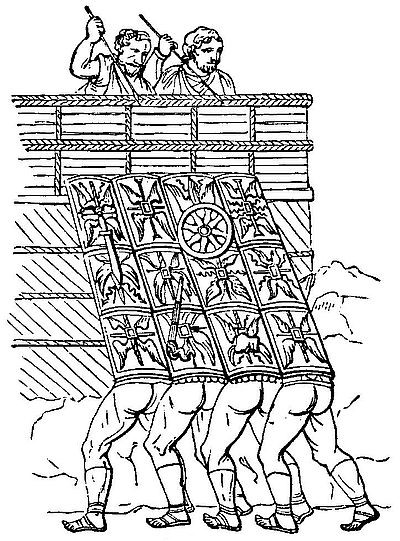
Testudo. (From the Antonine Column.)
TĔTRARCHĒS or TĔTRARCHA (τετράρχης). This word was originally used, according to its etymological meaning, to signify the governor of the fourth part of a country (τετραρχία or τετραδαρχία). We have an example in the ancient division of Thessaly into four tetrarchies, which was revived by Philip. Each of the three Gallic tribes which settled in Galatia was divided into four tetrarchies, each ruled by a tetrarch. Some of the tribes of Syria were ruled by tetrarchs, and several of the princes of the house of Herod ruled in Palestine with this title. In the later period of the republic and under the empire, the Romans seem to have used the title (as also those of ethnarch and phylarch) to designate those tributary princes who were not of sufficient importance to be called kings.
TETTĂRĂKONTA, HOI (οἱ τετταράκοντα), the Forty, were certain officers chosen by lot, who made regular circuits through the demi of Attica, whence they are called δικασταὶ κατὰ δήμους, to decide all cases of αἰκία and τὰ περὶ τῶν βιαίων, and also all other private causes, where the matter in dispute was not above the value of ten drachmae. Their number was originally thirty, but was increased to forty after the expulsion of the thirty tyrants, and the restoration of the democracy by Thrasybulus, in consequence, it is said, of the hatred of the Athenians to the number of thirty.
THARGĒLĬA (θαργήλια), a festival celebrated at Athens on the 6th and 7th of Thargelion, in honour of Apollo and Artemis. The real festival, or the Thargelia in a narrower sense of the word, appears to have taken place on the 7th; and on the preceding day, the city of Athens or rather its inhabitants were purified. The manner in which this purification was effected is very extraordinary, and is certainly a remnant of very ancient rites, for two persons were put to death on that day, and the one died on behalf of the men and the other on behalf of the women of Athens. The name by which these victims were designated was pharmaci (φαρμακοί). It appears probable, however, that this sacrifice did not take place annually, but only in case of a heavy calamity having befallen the city, such as the plague, a famine, &c. The victims appear to have been criminals sentenced to death. The second day of the thargelia was solemnized with a procession and an agon, which consisted of a cyclic chorus, performed by men at the expense of a choragus. The prize of the victor in this agon was a tripod, which he had to dedicate in the temple of Apollo which had been built by Pisistratus. On this day it was customary for persons who were adopted into a family to be solemnly registered, and received into the genos and the phratria of the adoptive parents. This solemnity was the same as that of registering one’s own children at the Apaturia.
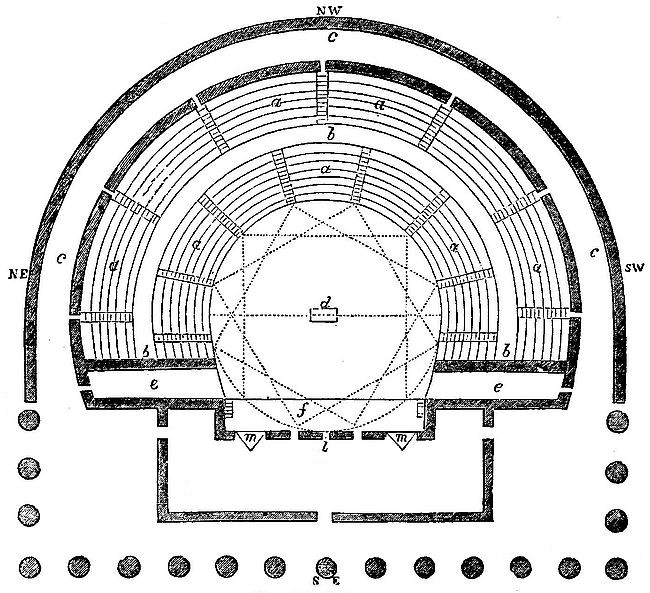
Plan of Greek Theatre.
THĔĀTRUM (θέατρον), a theatre. The Athenians before the time of Aeschylus had only a wooden scaffolding on which their dramas were performed. Such a wooden theatre was only erected for the time of the Dionysiac festivals, and was afterwards pulled down. The first drama that Aeschylus brought upon the stage was performed upon such a wooden scaffold, and it is recorded as a singular and ominous coincidence that on that occasion (500 B.C.) the scaffolding broke down. To prevent the recurrence of such an accident, the building of a stone theatre was forthwith commenced on the south-eastern descent of the Acropolis, in the Lenaea; for it should be observed, that throughout Greece theatres were always built upon eminences, or on the sloping side of a hill. The new Athenian theatre was built on a very large scale, and appears to have been constructed with great skill in regard to its acoustic and perspective arrangements. Subsequently theatres were erected in all parts of Greece and Asia Minor, although Athens was the centre of the Greek drama, and the only place which produced great masterworks in this department of literature. All the theatres, however, which were constructed in Greece were probably built after the model of that of Athens, and, with slight deviations and modifications, they all resembled one another in the main points, as is seen in the numerous ruins of theatres in various parts of Greece, Asia Minor, and Sicily. The Attic theatre was, like all the Greek theatres, placed in such a manner that the place for the spectators formed the upper or north-western, and the stage with all that belonged to it the south-eastern part, and between these two parts lay the orchestra. The annexed plan has been made from the remains of Greek theatres still extant, and from a careful examination of the passages in ancient writers which describe the whole or parts of a theatre.—1. The place for the spectators was in a narrower sense of the word called theatrum. The seats for the spectators, which were in most cases cut out of the rock, consisted of rows of benches rising one above another; the rows themselves (a) formed parts (nearly three-fourths) of concentric circles, and were at intervals divided into compartments by one or more broad passages (b) running between them, and parallel with the benches. These passages were called διαζώματα, or κατατομαί, Lat. praecinctiones, and when the concourse of people was very great in a theatre, many persons might stand in them. Across the rows of benches ran stairs, by which persons might ascend from the lowest to the highest. But these stairs ran in straight lines only from one praecinctio to another; and the stairs in the next series of rows were just between the two stairs of the lower series of benches. By this course of the stairs the seats were divided into a number of compartments, resembling cones from which the tops are cut off; hence they were termed κεοκίδες, and in Latin cunei. The whole of the place for the spectators (θέατρον) was sometimes designated by the name κοῖλον, Latin cavea, it being in most cases a real excavation of the rock. Above the highest row of benches there rose a covered portico (c), which of course far exceeded in height the opposite buildings by which the stage was surrounded, and appears to have also contributed to increase the acoustic effect. The entrances to the seats of the spectators were partly underground, and led to the lowest rows of benches, while the upper rows must have been accessible from above.—2. The orchestra (ὀρχήστρα) was a circular level space extending in front of the spectators, and somewhat below the lowest row of benches. But it was not a complete circle, one segment of it being appropriated to the stage. The orchestra was the place for the chorus, where it performed its evolutions and dances, for which purpose it was covered with boards. As the chorus was the element out of which the drama arose, so the orchestra was originally the most important part of a theatre: it formed the centre around which all the other parts of the building were grouped. In the centre of the circle of the orchestra was the thymele (θυμέλη), that is, the altar of Dionysus (d), which was of coarse nearer to the stage than to the seats of the spectators, the distance from which was precisely the length of a radius of the circle. In a wider sense the orchestra also comprised the broad passages (πάροδοι, e) on each side, between the projecting wings of the stage and the seats of the spectators, through which the chorus entered the orchestra. The chorus generally arranged itself in the space between the thymele and the stage. The thymele itself was of a square form, and was used for various purposes, according to the nature of the different plays, such as a funeral monument, an altar, &c. It was made of boards, and surrounded on all sides with steps. It thus stood upon a raised platform, which was sometimes occupied by the leader of the chorus, the flute-player, and the rhabdophori. The orchestra as well as the theatrum lay under the open sky; a roof is nowhere mentioned.—3. The stage. Steps led from each side of the orchestra to the stage, and by them the chorus probably ascended the stage whenever it took a real part in the action itself. The back side of the stage was closed by a wall called the scena (σκηνή), from which on each side a wing projected which was called the parascenium (παρασκήνιον). The whole depth of the stage was not very great, as it only comprised a segment of the circle of the orchestra. The whole space from the scena to the orchestra was termed the proscenium (προσκήνιον), and was what we should call the real stage. That part of it which was nearest to the orchestra, and where the actors stood when they spoke, was the logeium (λογείον), also called ocribas (ὀκρίβας), in Latin pulpitum, which was of course raised above the orchestra, and probably on a level with the thymele. The scena was, as we have already stated, the wall which closed the stage (proscenium and logeium) from behind. It represented a suitable background, or the locality in which the action was going on. Before the play began it was covered with a curtain (παραπέτασμα, προσκήνιον, αὐλαίαι), Latin aulaea or siparium. When the play began this curtain was let down, and was rolled up on a roller underneath the stage. The proscenium and logeium were never concealed from the spectators. As regards the scenery represented on the scena, it was different for tragedy, comedy, and the satyric drama, and for each of these kinds of poetry the scenery must have been capable of various modifications, according to the character of each individual play; at least that this was the case with the various tragedies, is evident from the scenes described in the tragedies still extant. In the latter however the back-ground (scena) in most cases represented the front of a palace with a door in the centre (i) which was called the royal door. This palace generally consisted of two stories, and upon its flat roof there appears to have been some elevated place from which persons might observe what was going on at a distance. The palace presented on each side a projecting wing, each of which had its separate entrance. These wings generally represented the habitations of guests and visitors. All the three doors must have been visible to the spectators. The protagonistes always entered the stage through the middle or royal door, the deuteragonistes and tritagonistes through those on the right and left wings. In tragedies like the Prometheus, the Persians, Philoctetes, Oedipus in Colonus, and others, the back-ground did not represent a palace. There are other pieces again in which the scena must have been changed in the course of the performance, as in the Eumenides of Aeschylus and the Ajax of Sophocles. The dramas of Euripides required a great variety of scenery; and if in addition to this we recollect that several pieces were played in one day, it is manifest that the mechanical parts of stage performance, at least in the days of Euripides, must have been brought to great perfection. The scena in the satyric drama appears to have always represented a woody district with hills and grottos; in comedy the scena represented, at least in later times, the fronts of private dwellings or the habitations of slaves. The art of scene-painting must have been applied long before the time of Sophocles, although Aristotle ascribes its introduction to him. The whole of the cavea in the Attic theatre must have contained about 50,000 spectators. The places for generals, the archons, priests, foreign ambassadors, and other distinguished persons, were in the lowest rows of benches, and nearest to the orchestra, and they appear to have been sometimes covered with a sort of canopy. The rows of benches above these were occupied by the senate of 500, those next in succession by the ephebi, and the rest by the people of Athens. But it would seem that they did not sit indiscriminately, but that the better places were let at a higher price than the others, and that no one had a right to take a place for which he had not paid. The usual fee for a place was two obols, which was subsequently given to the poorer classes by a law of Pericles. [Theorica.] Women were allowed to be present during the performance of tragedies, but not of comedies.—The Romans must have become acquainted with the theatres of the Italian Greeks at an early period, whence they erected their own theatres in similar positions upon the sides of hills. This is still clear from the ruins of very ancient theatres at Tusculum and Faesulae. The Romans themselves, however, did not possess a regular stone theatre until a very late period, and although dramatic representations were very popular in earlier times, it appears that a wooden stage was erected when necessary, and was afterwards pulled down again, and the plays of Plautus and Terence were performed on such temporary scaffoldings. In the mean while, many of the neighbouring towns of Rome had their stone theatres, as the introduction of Greek customs and manners was less strongly opposed in them than in the city of Rome itself. Wooden theatres, adorned with the most profuse magnificence, were erected at Rome even during the last period of the republic. In B.C. 55 Cn. Pompey built the first stone theatre at Rome, near the Campus Martius. It was of great beauty, and is said to have been built after the model of that of Mytilene; it contained 40,000 spectators. The construction of a Roman theatre resembled, on the whole, that of a Greek one. The principal differences are, that the seats of the spectators, which rose in the form of an amphitheatre around the orchestra, did not form more than a semicircle; and that the whole of the orchestra likewise formed only a semicircle, the diameter of which formed the front line of the stage. The Roman orchestra contained no thymele, and was not destined for a chorus, but contained the seats for senators and other distinguished persons, such as foreign ambassadors, which are called primus subselliorum ordo. In B.C. 68 the tribune L. Roscius Otho carried a law which regulated the places in the theatre to be occupied by the different classes of Roman citizens: it enacted that fourteen ordines of benches were to be assigned as seats to the equites. Hence these quatuordecim ordines are sometimes mentioned without any further addition, as the honorary seats of the equites. They were undoubtedly close behind the seats of the senators and magistrates, and thus consisted of the rows of benches immediately behind the orchestra.
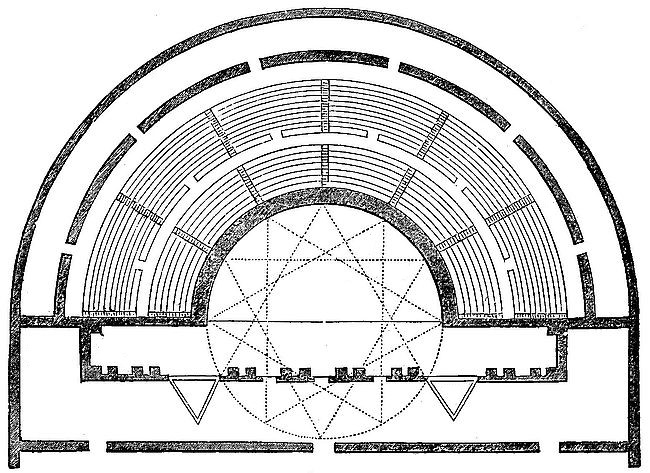
Plan of Roman Theatre.
THENSAE or TENSAE, highly ornamented sacred vehicles, which, in the solemn pomp of the Circensian games, conveyed the statues of certain deities with all their decorations to the pulvinaria, and after the sports were over bore them back to their shrines. We are ignorant of their precise form. We know that they were drawn by horses, and escorted (deducere) by the chief senators in robes of state, who, along with pueri patrimi [Patrimi], laid hold of the bridles and traces, or perhaps assisted to drag the carriage by means of thongs attached for the purpose (and hence the proposed derivation from tendo). So sacred was this duty considered, that Augustus, when labouring under sickness, deemed it necessary to accompany the tensae in a litter. If one of the horses knocked up, or the driver took the reins in his left hand, it was necessary to recommence the procession, and for one of the attendant boys to let go the thong, or to stumble, was profanation. The only gods distinctly named as carried in tensae are Jupiter and Minerva, though others appear to have had the same honour paid them.
THĔŎPHĂNĬA (θεοφάνια), a festival celebrated at Delphi, on the occasion of which the Delphians filled the huge silver crater which had been presented to the Delphic god by Croesus.
THĔŌRĬA. [Theori.]
THĔŌRĬCA (θεωρικά). Under this name at Athens were comprised the monies expended on festivals, sacrifices, and public entertainments of various kinds; and also monies distributed among the people in the shape of largesses from the state. There were, according to Xenophon, more festivals at Athens than in all the rest of Greece. At the most important of the public festivals, such as the Dionysia, Panathenaea, Eleusinia, Thargelia, and some others, there were not only sacrifices, but processions, theatrical exhibitions, gymnastic contests, and games, celebrated with great splendour and at a great expense. A portion of the expense was defrayed by the individuals upon whom the burden of the liturgies devolved; but a considerable, and perhaps the larger, part was defrayed by the public treasury. Demosthenes complains, that more money was spent on a single Panathenaic or Dionysiac festival than on any military expedition. The religious embassies to Delos and other places, and especially those to the Olympian, Nemean, Isthmian, and Pythian games, drew largely upon the public exchequer, though a part of the cost fell upon the wealthier citizens who conducted them. The largesses distributed among the people had their origin at an early period, and in a measure apparently harmless, though from a small beginning they afterwards rose to a height most injurious to the commonwealth. The Attic drama used to be performed in a wooden theatre, and the entrance was free to all citizens who chose to go. It was found, however, that the crushing to get in led to much confusion and even danger. On one occasion, about B.C. 500, the wooden scaffolding of the theatre fell down, and caused great alarm. It was then determined that the entrance should no longer be gratuitous. The fee for a place was fixed at two obols, which was paid to the lessee of the theatre, (called θεατρώνης, θεατροπώλης, or ἀρχιτέκτων), who undertook to keep it in repair, and constantly ready for use, on condition of being allowed to receive the profits. This payment continued to be exacted after the stone theatre was built. Pericles, to relieve the poorer classes, passed a law which enabled them to receive the price of admission from the state; after which all those citizens who were too poor to pay for their places applied for the money in the public assembly, which was then frequently held in the theatre. In process of time this donation was extended to other entertainments besides theatrical ones; the sum of two oboli being given to each citizen who attended; if the festival lasted two days, four oboli; and if three, six oboli; but not beyond. Hence all theoric largesses received the name of diobelia (διωβελία). It is calculated that from 25 to 30 talents were spent upon them annually. So large an expenditure of the public funds upon shows and amusements absorbed the resources, which were demanded for services of a more important nature. By the ancient law, the whole surplus of the annual revenue which remained after the expense of the civil administration (τὰ περίοντα χρήματα τῆς διοικήσεως) was to be carried to the military fund, and applied to the defence of the commonwealth. Since the time of Pericles various demagogues had sprung up, who induced the people to divert all that could be spared from the other branches of civil expenditure into the theoric fund, which at length swallowed up the whole surplus, and the supplies needed for the purpose of war or defence were left to depend upon the extraordinary contributions, or property-tax (εἰσφοραί). An attempt was made by the demagogue Eubulus to perpetuate this system. He passed a law, which made it a capital offence to propose that the theoric fund should be applied to military service. The law of Eubulus was a source of great embarrassment to Demosthenes, in the prosecution of his schemes for the national defence; and he seems at last, but not before B.C. 339, to have succeeded in repealing it. In the earlier times there was no person, or board of persons, expressly appointed to manage the theoric fund. The money thus appropriated was disbursed by the Hellenotamiae. After the anarchy, the largess system having been restored by Agyrrhius, a board of managers was appointed. They were elected by show of hands at the period of the great Dionysia, one from each tribe.
THĔŌRI (θεωροί), persons sent on special missions (θεωρίαι) to perform some religious duty, as to consult an oracle, or to offer a sacrifice, on behalf of the state. There were among some of the Dorian states, as the Aeginetans, Troezenians, Messenians, and Mantineans, official priests called Theori, whose duty it was to consult oracles, interpret the responses, &c., as among the Spartans there were men called Pythii, chosen by the kings to consult the oracle at Delphi. At Athens there were no official persons called Theori, but the name was given to those citizens who were appointed from time to time to conduct religious embassies to various places; of which the most important were those that were sent to the Olympian, Pythian, Nemean, and Isthmian games, those that went to consult the God at Delphi, and those that led the solemn procession to Delos, where the Athenians established a quadriennial festival, in revival of the ancient Ionian one, of which Homer speaks. The expense of these embassies was defrayed partly by the state, and partly by wealthy citizens, to whom the management of them was entrusted, called Architheori (ἀρχιθέωροι), chiefs of the embassy. This was a sort of liturgy, and frequently a very costly one; as the chief conductor represented the state, and was expected to appear with a suitable degree of splendour; for instance, to wear a golden crown, to drive into the city with a handsome chariot, retinue, &c. The Salaminian, or Delian, ship was also called θεωρὶς ναῦς, and was principally used for conveying embassies to Delos, though, like the Paralus, it was employed on other expeditions besides.
THERMAE. [Balneum.]
THĒSAURUS (θησαυρός), a treasure-house. Tradition points to subterranean buildings in Greece, of unknown antiquity and of peculiar formation, as having been erected during the heroic period, for the purpose of preserving precious metals, arms, and other property (κειμήλια). Such are the treasury of Minyas, at Orchomenus, of which some remains still exist, and those of Atreus and his sons at Mycenae, the chief one of which, the so-called Treasury of Atreus, still exists almost in a perfect state. It is, however, very questionable whether these edifices were treasuries at all: some of the best archaeologists maintain that they were tombs. In the historical times, the public treasury was either in a building attached to the agora, or in the opisthodomus of some temple. Respecting the public treasury at Rome, see Aerarium.
THĒSEIA (θησεῖα), a festival celebrated by the Athenians in honour of their national hero Theseus, whom they believed to have been the author of their democratical form of government. In consequence of this belief donations of bread and meat were given to the poor people at the Theseia, which was thus for them a feast at which they felt no want, and might fancy themselves equal to the wealthiest citizens. The day on which this festival was held was the eighth of every month (ὀγδόαι), but more especially the eighth of Pyanepsion, whence the festival was sometimes called ὀγδόδιον. It is probable that the festival of the Theseia was not instituted till B.C. 469, when Cimon brought the remains of Theseus from Scyrus to Athens.
THESMŎPHŎRĬA (θεσμοφόρια), a great festival and mysteries, celebrated in honour of Demeter in various parts of Greece, and only by women, though some ceremonies were also performed by maidens. It was intended to commemorate the introduction of the laws and regulations of civilised life, which was universally ascribed to Demeter. The Attic thesmophoria probably lasted only three days, and began on the 11th of Pyanepsion, which day was called ἄνοδος or κάθοδος, because the solemnities were opened by the women with a procession from Athens to Eleusis. In this procession they carried on their heads sacred laws (νόμιμοι βίβλοι or θεσμοί), the introduction of which was ascribed to Demeter (Θεσμοφόρος), and other symbols of civilised life. The women spent the night at Eleusis in celebrating the mysteries of the goddess. The second day, called νηστεία, was a day of mourning, during which the women sat on the ground around the statue of Demeter, and took no other food than cakes made of sesame and honey. On this day no meetings either of the senate or the people were held. It was probably in the afternoon of this day that the women held a procession at Athens, in which they walked barefooted behind a waggon, upon which baskets with mystical symbols were conveyed to the thesmophorion. The third day, called καλλιγένεια, from the circumstance that Demeter was invoked under this name, was a day of merriment and raillery among the women themselves, in commemoration of Iambe, who was said to have made the goddess smile during her grief.
THESMŎTHĔTAE. [Archon.]
THĒTES. [Census.]
THOLOS (θόλος, also called σκιάς), a name given to any round building which terminated at the top in a point, whatever might be the purpose for which it was used. At Athens the name was in particular applied to the new round prytaneium near the senate-house, which should not be confounded with the old prytaneium at the foot of the acropolis. It was therefore the place in which the prytanes took their common meals and offered their sacrifices. It was adorned with some small silver statues, and near it stood the ten statues of the Attic Eponymi.
THŌRAX. [Lorica.]
THRĀCES. [Gladiatores.]
THRANĪTAE. [Navis.]
THRŎNUS (θρόνος), a throne, is a Greek word, for which the proper Latin term is Solium. This did not differ from a chair (καθέδρα) [Cathedra; Sella] except in being higher, larger, and in all respects more magnificent. On account of its elevation it was always necessarily accompanied by a foot-stool (subsellium, ὑποπόδιον, θράνιον). The accompanying cut shows two gilded thrones with cushions and drapery, intended to be the thrones of Mars and Venus, which is expressed by the helmet on the one and the dove on the other.
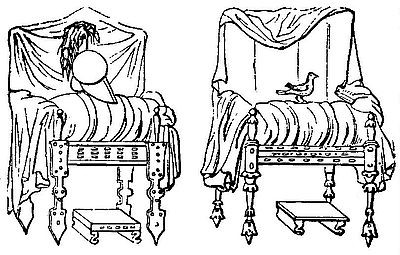
Throni. (From an ancient Painting.)
THỸMĔLĒ. [Theatrum.]
THỸRSUS (θύρσος), a pole carried by Bacchus, and by Satyrs, Maenades, and others who engaged in Bacchic festivities and rites. [Dionysia.] It was sometimes terminated by the apple of the pine, or fir-cone, that tree (πεύκη) being dedicated to Bacchus in consequence of the use of the turpentine which flowed from it, and also of its cones, in making wine. The monuments of ancient art, however, most commonly exhibit, instead of the pine-apple, a bunch of vine or ivy-leaves, with grapes or berries, arranged into the form of a cone. The fabulous history of Bacchus relates that he converted the thyrsi carried by himself and his followers into dangerous weapons, by concealing an iron point in the head of the leaves. Hence his thyrsus is called “a spear enveloped in vine-leaves,” and its point was thought to incite to madness.

Tiara. (From a Coin in the British Museum.)
TĬĀRA or TĬĀRAS (τιάρα or τιάρας: Att. κυρβασία), a hat with a large high crown. This was the head-dress which characterised the north-western Asiatics, and more especially the Armenians, Parthians, and Persians, as distinguished from the Greeks and Romans, whose hats fitted the head, or had only a low crown. The king of Persia wore an erect tiara, whilst those of his subjects were soft and flexible, falling on one side. The Persian name for this regal head-dress was cidaris.
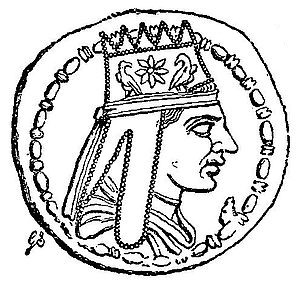
Tiara. (From a Coin in the British Museum.)
TĪBĬA (αὐλός), a pipe, the commonest musical instrument of the Greeks and Romans. It was very frequently a hollow cane, perforated with holes in the proper places. In other instances it was made of some kind of wood, especially box, and was bored with a gimblet. When a single pipe was used by itself, the performer upon it, as well as the instrument, was called monaulos. Among the varieties of the single pipe the most remarkable were the bagpipe, the performer on which was called utricularius or ἀσκαύλης; and the ἀυλὸς πλάγιος or πλαγίαυλος, which, as its name implies, had a mouth-piece inserted into it at right angles. Pan was the reputed inventor of this kind of tibia as well as of the fistula or syrinx [Syrinx]. But among the Greeks and Romans it was much more usual to play on two pipes at the same time. Hence a performance on this instrument (tibicinium), even when executed by a single person, was called canere or cantare tibiis. This act is exhibited in very numerous works of ancient art, and often in such a way as to make it manifest that the two pipes were perfectly distinct, and not connected, as some have supposed, by a common mouth-piece. The mouth-pieces of the two pipes often passed through a capistrum. Three different kinds of pipes were originally used to produce music in the Dorian, Phrygian, and Lydian modes. It appears, also, that to produce the Phrygian mode the pipe had only two holes above, and that it terminated in a horn bending upwards. It thus approached to the nature of a trumpet, and produced slow, grave, and solemn tunes. The Lydian mode was much quicker, and more varied and animating. Horace mentions “Lydian pipes” as a proper accompaniment, when he is celebrating the praise of ancient heroes. The Lydians themselves used this instrument in leading their troops to battle; and the pipes employed for the purpose are distinguished by Herodotus as “male and female,” i.e. probably bass and treble, corresponding to the ordinary sexual difference in the human voice. The corresponding Latin terms are tibia dextra and sinistra: the respective instruments are supposed to have been so called, because the former was more properly held in the right hand and the latter in the left. The “tibia dextra” was used to lead or commence a piece of music, and the “sinistra” followed it as an accompaniment. The comedies of Terence having been accompanied by the pipe, the following notices are prefixed to explain the kind of music appropriate to each: tibiis paribus, i.e. with pipes in the same mode; tib. imparibus, pipes in different modes; tib. duabus dextris, two pipes of low pitch; tib. par. dextris et sinistris, pipes in the same mode, and of both low and high pitch. The use of the pipe among the Greeks and Romans was three-fold, viz. at sacrifices (tibiae sacrificae), entertainments (ludicrae), and funerals. The pipe was not confined anciently, as it is with us, to the male sex, but αὐλητρίδες, or female tibicines were very common.
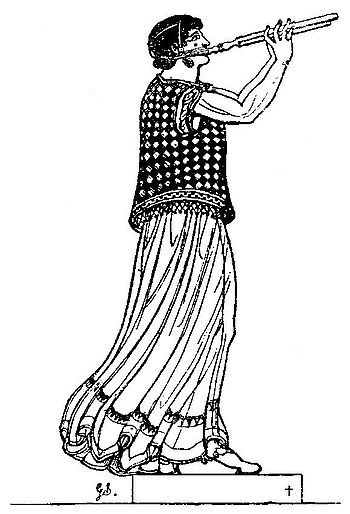
Woman Playing on two Pipes, Tibiae. (From a Vase in the British Museum.)
TIMĒMA (τίμημα). The penalty imposed in a court of criminal justice at Athens, and also the damages awarded in a civil action, received the name of Τίμημα, because they were estimated or assessed according to the injury which the public or the individual might respectively have sustained. The penalty was either fixed by the judge, or merely declared by him according to some estimate made before the cause came into court. In the first case the trial was called ἀγὼν τιμητὸς, in the second case ἀγὼν ἀτίμητος, a distinction which applies to civil as well as to criminal trials. Where a man sought to recover an estate in land, or a house, or any specific thing, as a ring, a horse, a slave, nothing further was required, than to determine to whom the estate, the house, or the thing demanded, of right belonged. The same would be the case in an action of debt, χρέους δίκη, where a sum certain was demanded. In these and many other similar cases the trial was ἀτίμητος. On the other hand, wherever the damages were in their nature unliquidated, and no provision had been made concerning them either by the law or by the agreement of the parties, they were to be assessed by the dicasts. The following was the course of proceeding in the τιμητοὶ ἀγῶνες. The bill of indictment (ἔγκλημα) was always superscribed with some penalty by the person who preferred it. He was said ἐπιγράφεσθαι τίμημα, and the penalty proposed is called ἐπίγραμμα. If the defendant was found guilty, the prosecutor was called upon to support the allegation in the indictment, and for that purpose to mount the platform and address the dicasts (ἀναβαίνειν εἰς τίμημα). If the accused submitted to the punishment proposed on the other side, there was no further dispute; if he thought it too severe, he made a counter proposition. He was then said ἀντιτιμᾶσθαι, or ἑαυτῷ τιμᾶσθαι. He was allowed to address the court in mitigation of punishment. After both parties had been heard, the dicasts were called upon to give their verdict. Sometimes the law expressly empowered the jury to impose an additional penalty (προστίμημα) besides the ordinary one. Here the proposition emanated from the jury themselves, any one of whom might move that the punishment allowed by the law should be awarded. He was said προστιμᾶσθαι, and the whole dicasts, if (upon a division) they adopted his proposal, were said προστιμᾷν.
TINTINNĀBŬLUM (κώδων), a bell. Bells were of various forms among the Greeks and Romans, as among us.
TĪRO, the name given by the Romans to a newly enlisted soldier, as opposed to veteranus, one who had had experience in war. The mode of levying troops is described under Exercitus. The age at which the liability to military service commenced was 17. From their first enrolment the Roman soldiers, when not actually serving against an enemy, were perpetually occupied in military exercises. They were exercised every day, the tirones twice, in the morning and afternoon, and the veterani once. The state of a tiro was called tirocinium; and a soldier who had attained skill in his profession was then said tirocinium ponere, or deponere. In civil life the terms tiro and tirocinium were applied to the assumption of the toga virilis, which was called tirocinium fori [Toga], and to the first appearance of an orator at the rostrum, tirocinum eloquentiae.
TĪRŌCĬNĬUM. [Tiro.]
TĬTĬI SODĀLES, a sodalitas or college of priests at Rome, who represented the second tribe of the Romans, or the Tities, that is, the Sabines, who, after their union with the Ramnes or Latins, continued to perform their own ancient Sabine sacra. To superintend and preserve these, T. Tatius is said to have instituted the Titii sodales. During the time of the republic the Titii sodales are no longer mentioned, as the sacra of the three tribes became gradually united into one common religion. Under the empire we again meet with a college of priests bearing the name of Sodales Titii or Titienses, or Sacerdotes Titiales Flaviales; but they had nothing to do with the sacra of the ancient tribe of the Tities, but were priests instituted to conduct the worship of an emperor, like the Augustales.
TĬTĬES or TĬTĬENSES. [Patricii.]
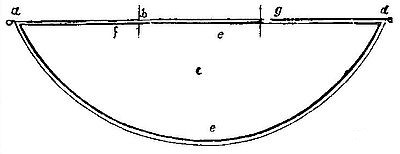
Fig. 1.—Form of the Toga spread out.
TŎGA (τήβεννος), a gown, the name of the principal outer garment worn by the Romans, seems to have been received by them from the Etruscans. The toga was the peculiar distinction of the Romans, who were thence called togati or gens togata. It was originally worn only in Rome itself, and the use of it was forbidden alike to exiles and to foreigners. Gradually, however, it went out of common use, and was supplanted by the pallium and lacerna, or else it was worn in public under the lacerna. [Lacerna.] But it was still used by the upper classes, who regarded it as an honourable distinction, in the courts of justice, by clients when they received the Sportula, and in the theatre or at the games, at least when the emperor was present. The exact form of the toga, and the manner of wearing it, have occasioned much dispute; but the following account, for which the writer is indebted to his friend Mr. George Scharf, jun., will set these matters in a clearer light than has hitherto been the case. The complete arrangement of this dress may be seen in many antique statues, but especially in that of Didius Julianus, in the Louvre, and a bronze figure of the elder Drusus discovered at Herculaneum. (See figs. 2, 3.)
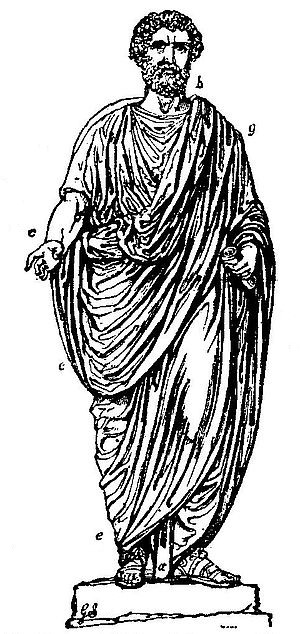
Fig. 2.—Statue of Didius Julianus. (From the Louvre.)
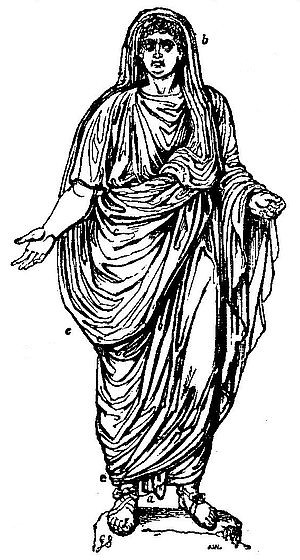
Fig. 3.—Bronze of the elder Drusus. (From Herculaneum.)
The letters upon particular parts of the illustrations correspond with each other, and refer to the same places upon the general form of the toga given above. The method of adjusting the toga is simply this: the straight edge (a b g d) being kept towards the neck, and the rounded towards the hand, the first part of the toga hangs in front over the left shoulder to the ground (a, fig. 4), so as to cover that entire half of the figure viewed in front. The remainder falling behind is wrapped round the body, being carried under the right arm, and brought upwards, like a belt, across the chest, covering the left arm and shoulder for a second time. It again falls behind, and terminates in the point d (fig. 5), somewhat higher than the front portion (a).
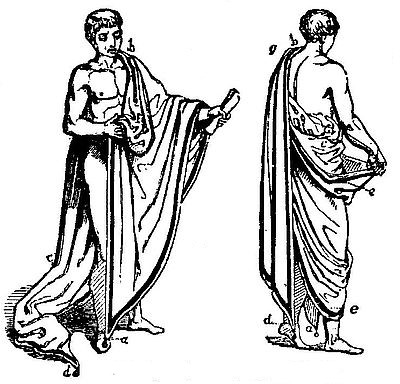
Fig. 4. Fig. 5. Mode of putting on the Toga.
So far any mantle of sufficient length might be folded, but two distinctive features of Roman dress, the umbo (f) and the sinus (c e), have yet to be considered. The sinus (c e) is that upper hanging portion with the curved edge downwards which shows conspicuously upon the right thigh. When the toga has been brought round to the front of the right leg, it has attained its greatest width (e c e), although on the figure less space is required for it. It is therefore folded over at the top, the upper part falling forward, down almost to the knee. It may be easily raised (see fig. 5) and used as a lap—hence the name sinus—to carry fruits and flowers, so often represented in ancient art. The fold at c thus becomes the upper edge, and forms the balteus, which may be made still more effective by being rolled round and slightly twisted, as in figs. 2 and 5. A variety again was sometimes produced by lifting the hanging edge (e) of this sinus up on to the shoulder, so as to cover the right arm with that alone, and Quintilian hints that it is not ungraceful to throw back the extreme edge of that again, an effect still to be admired in some of the ancient sculptures. Fig. 5 is in the act of raising the edge. The umbo (f), a projecting mass of folds in front of the body, like the boss of a shield, was formed after the rest of the dress had been put on in a very simple manner: a part of the front upright line (a b), almost covered up by the adjustment of the upper shoulder portion (g), was pulled out and made to hang down over the balteus or belt-like part (fig. 6). It is clearly traceable in both statues here given (figs. 2 and 3), and fig. 4 is intended to show the formation of the umbo more clearly by the right hand holding the edge, which falls over the fingers instead of the balteus. In proportion as the umbo (f) projects, so of course the end (a) is raised from the ground. The smaller figures (4 and 5) are both drawn without under-garments in order to avoid confusion. During sacrifice, when necessary to cover the head, the edge (b) nearest the neck was pulled up and made to cover the head, as in fig. 3, where the entire length of the edge, passing from the umbo into the sinus, is very clearly visible. The dress here is very ample, and can spare an extra length, but in the statue of a priest in the Louvre the head is covered at the expense of the umbo, which has entirely disappeared. Fig. 6 is intended to show the interlacing and arrangement of the toga by following the course of the straight edge alone from a to d.
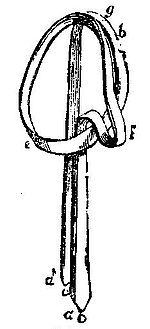
Fig. 6.
In many ancient statues the sleeves and folds of the tunic, being very full, are apt to be confounded with the rest, but in the best style of art this is not the case. Quintilian cautions his orators against these incumbrances. A difference in size and fulness of the toga, modified according to the rank of the wearer, may be detected in coins and sculpture, but in all cases the mode of adjustment appears to be the same.—One mode of wearing the toga was the Cinctus Gabinus. It consisted in forming a part of the toga itself into a girdle, by drawing its outer edge round the body and tying it in a knot in front, and at the same time covering the head with another portion of the garment. It was worn by persons offering sacrifices, by the consul when he declared war, and by devoted persons, as in the case of Decius. Its origin was Etruscan, as its name implies. Persons wearing this dress were said to be procincti (or incincti) cinctu (or ritu) Gabino.—The colour of the toga worn by men (toga virilis) was generally white, that is, the natural colour of white wool. Hence it was called pura or vestimentum purum, in opposition to the praetexta mentioned below. A brighter white was given to the toga of candidates for offices (candidati from their toga candida) by rubbing it with chalk. There is an allusion to this custom in the phrase cretata ambitio. White togas are often mentioned as worn at festivals, which does not imply that they were not worn commonly, but that new or fresh-cleaned togas were first put on at festivals. The toga was kept white and clean by the fuller. When this was neglected, the toga was called sordida, and those who wore such garments sordidati. This dress (with disarranged hair and other marks of disorder about the person) was worn by accused persons, as in the case of Cicero. The toga pulla, which was of the natural colour of black wool, was worn in private mourning, and sometimes also by artificers and others of the lower orders.—The toga picta, which was ornamented with Phrygian embroidery, was worn by generals in triumphs [Triumphus], and under the emperors by the consuls, and by the praetors when they celebrated the games. It was also called Capitolina. The toga palmata was a kind of toga picta.—The toga praetexta had a broad purple border. It was worn with the Bulla, by children of both sexes. It was also worn by magistrates, both those of Rome, and those of the colonies and municipia; by the sacerdotes, and by persons engaged in sacred rites or paying vows. Among those who possessed the jus togae praetextae habendae, the following may be more particularly mentioned: the dictator, the consuls, the praetors (who laid aside the praetexta when about to condemn a Roman citizen to death), the augurs (who, however, are supposed by some to have worn the trabea), the decemviri sacris faciundis, the aediles, the triumviri epulones, the senators on festival days, the magistri collegii, and the magistri vicorum when celebrating games. In the case of the tribuni plebis, censors, and quaestors, there is some doubt upon the subject. The toga praetexta is said to have been derived from the Etruscans, and to have been first adopted, with the latus clavus [Clavus Latus], by Tullus Hostilius as the royal robe, whence its use by the magistrates in the republic. The toga praetexta and the bulla aurea were first given to boys in the case of the son of Tarquinius Priscus, who, at the age of fourteen, in the Sabine war, slew an enemy with his own hand. Respecting the leaving off of the toga praetexta, and the assumption of the toga virilis, see Impubes and Clavus Latus. The occasion was celebrated with great rejoicings by the friends of the youth, who attended him in a solemn procession to the Forum and Capitol. This assumption of the toga virilis was called tirocinium fori, as being the young man’s introduction to public life. Girls wore the praetexta till their marriage.—The trabea was a toga ornamented with purple horizontal stripes. There were three kinds of trabeae; one wholly of purple, which was sacred to the gods, another of purple and white, and another of purple and saffron, which belonged to augurs. The purple and white trabea was a royal robe, and is assigned to the Latin and early Roman kings, especially to Romulus. It was worn by the consuls in public solemnities, such as opening the temple of Janus. The equites wore it at the transvectio, and in other public solemnities. Hence the trabea is mentioned as the badge of the equestrian order. Lastly, the toga worn by the Roman emperors was wholly of purple. It appears to have been first assumed by Julius Caesar.—The material of which the toga was commonly made was wool. It was sometimes thick and sometimes thin. The former was the toga densa, pinguis, or hirta. A new toga, with the nap neither worn off nor cut close, was called pexa, to which is opposed the trita or rasa, which was used as a summer dress. The toga was originally worn by both sexes; but when the stola came to be worn by matrons, the toga was only worn by the meretrices, and by women who had been divorced on account of adultery. [Stola.] In war the toga was laid aside, and replaced by the Paludamentum and Sagum. Hence togatus is opposed to miles.
TONSOR. [Barba.]
TORCŬLAR, TORCŬLUM. [Vinum.]
TORMENTUM (ἀφετήρια ὄργανα), a military engine, so called from the twisting (torquendo) of hairs, thongs, and vegetable fibres. The principal military engines were the balista and catapulta. The balista (πετροβόλος) was used to shoot stones; the catapulta (καταπέλτης, καταπελτική) to project darts, especially the falarica [Hasta], and a kind of missile, 4½ feet long, called trifax. Whilst in besieging a city the ram [Aries] was employed in destroying the lower part of the wall, the balista was used to overthrow the battlements (propugnacula, ἐπαλξεῖς), and the catapult to shoot any of the besieged who appeared between them: the forms of these machines being adapted to the objects which they were intended to throw; the catapult was long, the balista nearly square. Instances are recorded in which the balista threw stones to the distance of a quarter of a mile. Some balistae threw stones weighing three hundredweight. Of the scorpio or onager, which was also a species of tormentum, we know next to nothing.
TORMENTUM (βάσανος), torture. (1) Greek.—By a decree of Scamandrius it was ordained that no free Athenian could be put to the torture, and this appears to have been the general practice. The evidence of slaves was, however, always taken with torture, and their testimony was not otherwise received. From this circumstance their testimony appears to have been considered of more value than that of freemen. Any person might offer his own slave to be examined by torture, or demand that of his adversary, and the offer or demand was equally called πρόκλησις εἰς βάσανον. The parties interested either superintended the torture themselves, or chose certain persons for this purpose, hence called βασανισταὶ, who took the evidence of the slaves. (2) Roman.—During the time of the republic freemen were never put to the torture, and slaves only were exposed to this punishment. Slaves, moreover, could not be tortured to prove the guilt of their own master, except in the case of incestus, which was a crime against the gods, or unless the senate made an exception in some special instance. At a later time slaves might be tortured to bear witness against their masters in cases of majestas and adultery. Under the emperors even free persons were put to the torture to extract evidence from them in cases of majestas; and although this indignity was confined for the most part to persons in humble circumstances, we read of cases in which even Roman senators and equites were exposed to it.